UC Berkeley tries to dodge environmental impact review of its FEMA projects

On March 1, 2016, UC Berkeley published an Addendum to the Environmental Impact Report (EIR) for its Long Range Development Plan. They claim the Addendum is a substitute for an EIR for its portion of the FEMA Grant projects in Strawberry and Claremont Canyons.  The Addendum is available HERE.

Public comments on the Addendum are accepted prior to 5:00 pm on Tuesday March 22, 2016.  Send public comments to planning@berkeley.edu.  The announcement of the Addendum says, “The University will consider whether to approve the proposed project, as described and analyzed in the addendum, as well as all comments received, in the spring of 2016.”

The project is unchanged

Our reading of this document is that it makes no changes in the project as described by the Environmental Impact Statement for the FEMA Grants (available HERE).  Therefore, whatever comments you submitted on the EIS for the FEMA Grants are equally relevant to UC’s Addendum. 
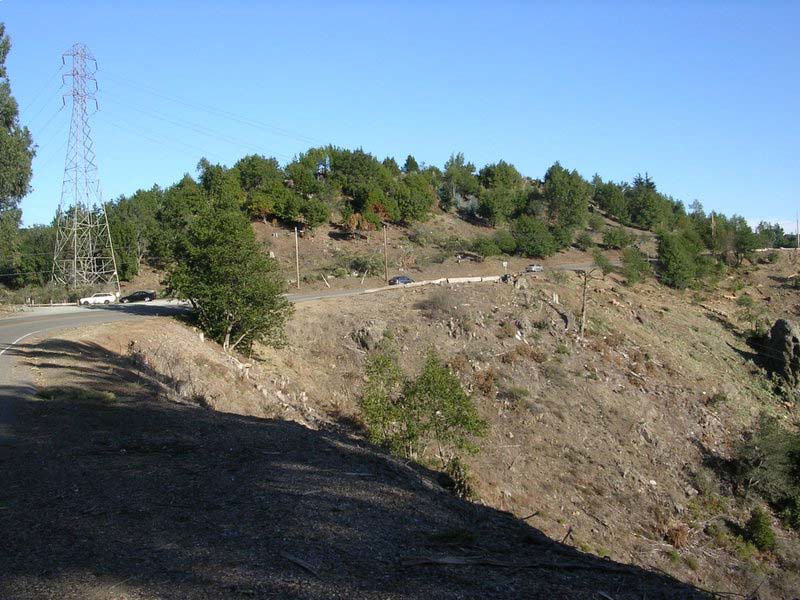
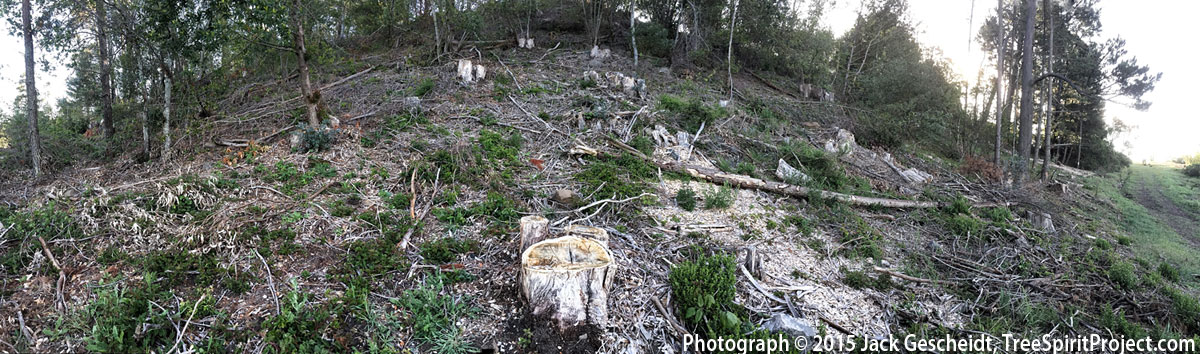
Frowning Ridge after 1,900 trees were removed from 11 acres in 2004

Additional justification for the project

We read only the “guts” of the Addendum, Sections I to V.   We did not read sections regarding “Mitigating Monitoring Program” or “Biological Opinion Post Treatment Monitoring Plan.”  Therefore, our comments here should not be considered comprehensive.  However, we noted new justifications for the project that seem legally bogus in some cases and scientifically unsound in others.
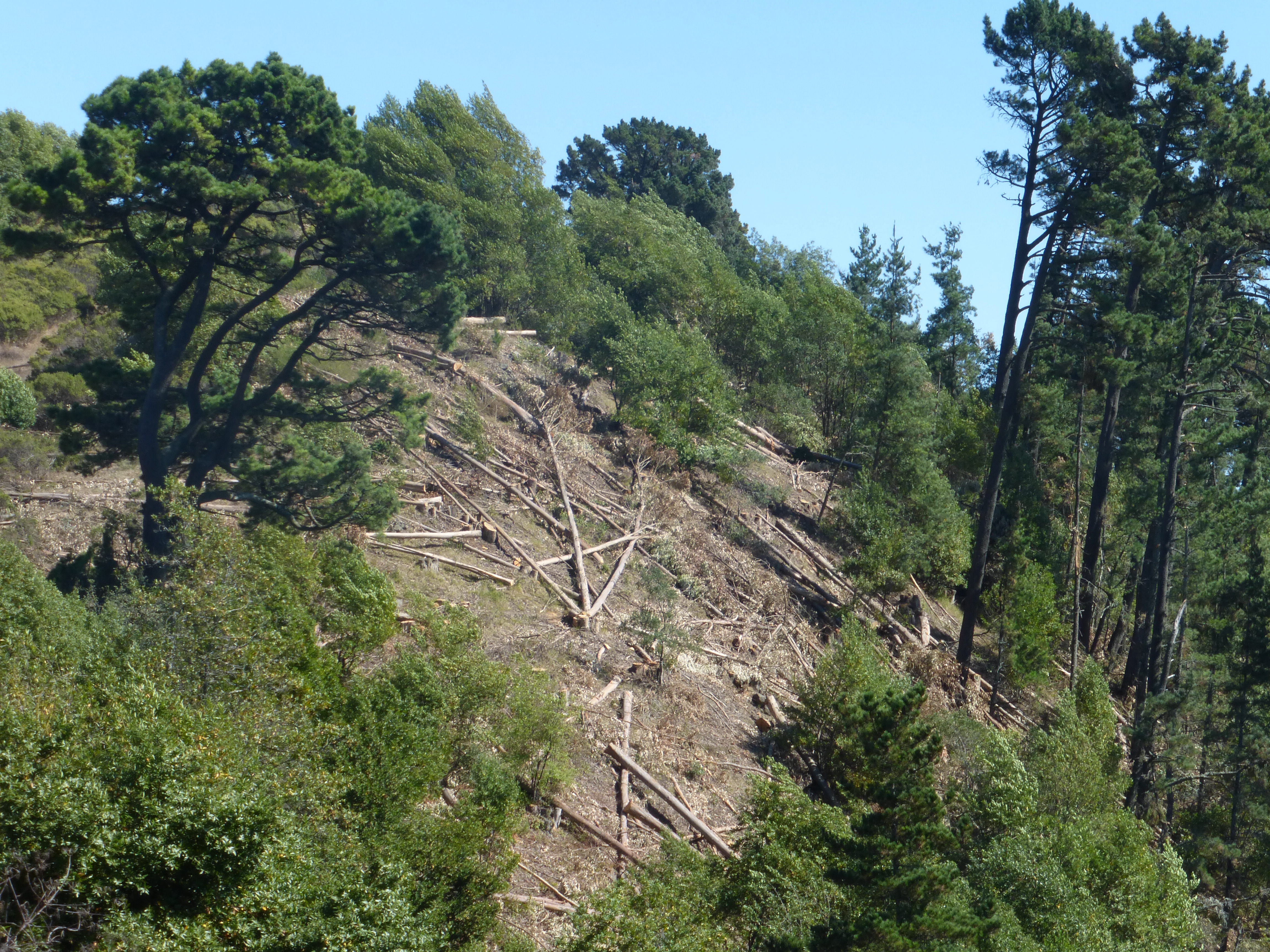
UC Berkeley destroyed about 600 trees on Frowning Ridge in August 2014, before the Environmental Impact Statement was complete. FEMA has therefore refused to fund that portion of the grant.

Justification for carbon loss

The Addendum cites Cal-FIRE policy regarding quantifying carbon loss.  Cal-FIRE states that although “There is not an approved forest carbon protocol for fuel reduction projects,” it suggests:  “On an acre treated for fuels the carbon balance emitted from the treatment subtracted from the carbon retained multiplied by its reduced probability of loss [by fire] over the time of treatment is effective.”  (Addendum page 18)

In other words, Cal-FIRE suggests that if the probability of fire is lowered by the project, carbon loss associated with such a theoretical fire can be subtracted from the carbon loss resulting from the destruction of trees by the project.

There are several problems with this justification for the carbon loss associated with the destruction of trees by the project:

  • The claim that the probability of fire will be lowered by the proposed project is entirely theoretical. Many highly qualified analysts of this project believe that the project will increase the probability of fire, not decrease it.  For example, the US Forest Service said, “Removal of the eucalyptus overstory would reduce the amount of shading on surface fuels, increase the wind speeds to the forest floor, reduce the relative humidity at the forest floor, increase the fuel temperature, and reduce fuel moisture.  These factors may increase the probability of ignition over current conditions.”
  • The law that defines and regulates environmental impact reviews is the California Environmental Quality Act (CEQA), not Cal-FIRE policy. CEQA requires that environmental impact is defined by a comparison of existing conditions with post-project conditions.  In other words, environmental impact is not measured by comparing some theoretical landscape in which a theoretical fire occurred with the post-treatment landscape.  Therefore, the methods used by the Addendum to quantify carbon loss do not conform to the law (CEQA) that regulates environmental impact reviews.
  • The Cal-FIRE policy defines its fuels reduction program as follows: “vegetation treatment…will focus on selectively removing understory trees and brush to reduce fire hazards, improve tree growth, and increase forest health and resilience.”  Therefore, the Cal-FIRE policy is not relevant to the project of UC Berkeley, which intends to destroy ALL non-native canopy trees and does not intend to remove understory brush and trees.  Consequently, carbon loss will be significantly greater than the projects proposed by Cal-FIRE because carbon storage is greater in the large, mature trees that will be destroyed than carbon stored in the understory.

The science of carbon storage

We have heard many absurd statements about carbon storage in the many years we have defended our urban forest, such as “grass stores more carbon than trees.”  But the explanations provided by UC’s Addendum that their project will not cause carbon loss enter the realm of science fiction:

  • UC claims, “The report concluded that the HCFRR project area currently stores an estimated 61,565 CO2e tons, the majority of which will remain stored in the project area in the form of post-treatment chips.” (Addendum, page 19)

When questioned by the consultant (URS Corporation) that was hired to complete the Environmental Impact Statement for the FEMA projects about the flammability of 2 feet of wood chip mulch in the project area, UCB responded that the chips would decay within 3 to 5 years (available HERE).  Now UCB wishes us to believe that the wood chips will not decay, but will continue to store carbon forever.  UCB contradicts itself or it is ignorant of the role of decomposition in the release of carbon stored during the life of the tree.  As the wood decomposes, the carbon stored in the wood is released into the atmosphere:

“Two common tree disposal/utilization scenarios were modeled:  1) mulching and 2) landfill.  Although no mulch decomposition studies could be found, studies on decomposition of tree roots and twigs reveal that 50% of the carbon is lost within the first 3 years.  The remaining carbon is estimated to be lost within 20 years of mulching.  Belowground biomass was modeled to decompose at the same rate as mulch regardless of how the aboveground biomass was disposed” (1)

  • UC claims, “Remaining native trees will continue to grow and sequester carbon at a rate of ~ 530 ton equivalents per decade therefore…this will increase to 10,560 in year l00.” (Addendum, page 19) In other words, UC assumes, without factual support and in defiance of reality that native trees will not burn for 100 years.  UC also ignores the much larger amounts of carbon that the eucalypts would sequester if left in place because larger trees store more carbon than smaller, younger trees.
  • UC claims that a project area currently storing 61,565 CO₂ₑ tons will release 50,000 tons of CO₂ₑ if it burns. That is a gross over-estimate of the degree of carbon loss from trees in a fire.  According to the National Park Service, 2/3rd of the fuel load in a eucalyptus forest is in the trunks and only 1/3rd in fine fuels (branches, twigs, leaves, etc). (2)  The trunks of the trees do not burn in a fire, which is why they are left lying on the ground after they are destroyed.  Therefore only 1/3rd of the wood burns in the fire and only 1/3rd of the carbon stored in the tree – approximately 20,000 tons – would be lost in the fire.

We are profoundly disappointed that a world-class scientific institution, such as UC, would make such scientifically unsound claims in defense of its destructive project in the East Bay Hills.

If you read UC’s Addendum and you see other issues that we don’t mention here, we hope you will post a comment to inform others of what you have found.  This is a collaborative effort that we invite everyone to participate in.  The Hills Conservation Network believes the strongest criticism of UC’s Addendum to the EIR for their Long Range Development Plan is that it is not a legally acceptable substitute for a complete EIR.  You can read their arguments on their website.  There is also a petition to UCB on their website.

Status of lawsuit of Hills Conservation Network

 Meanwhile, the lawsuit of the Hills Conservation Network (HCN) against the UC Berkeley and City of Oakland portions of the FEMA grants projects in the East Bay Hills is moving forward.  HCN Informed its supporters of the current status of its lawsuit on March 2, 2016:

“Hills Conservation Network took a momentous step yesterday with the filing of our opening brief for the lawsuit against FEMA, the City of Oakland, UC, EBRPD and Cal OES. Despite extensive efforts to find another solution we decided this was the only reasonable course of action open to us.

While this is a complex matter and we are told that one never knows how a NEPA suit will turn out, we believe we have a very strong case and hope that we will prevail and these forests will be saved. If you are interested you can read the brief at http://www.hillsconservationnetwork.org

Needless to say, this has been expensive. We have spent well over $10,000 on legal fees in the past 3 months and expect that it will take at least that much more to see this through the process, which is expected to result in a ruling in the summer.

Yesterday we were notified by UC that they intend to obtain CEQA clearance for their projects (which we hope will not be funded by FEMA) by issuing an addendum to their 2020 Long Range Development Plan. We are consulting with our lawyers on how best to respond to this and expect to propose a strategy to the public by Monday.

Again, your contributions are what makes all this possible. Were it not for your support these forests would have been long gone, but with your support we are able to prevent this environmental disaster from unfolding.

Please do what you can to support this important cause.” [You can make a donation to the lawsuit at http://www.hillsconservationnetwork.org]


  1. Nowak, David, et.al., “Effects of urban tree management and species selection on atmospheric carbon dioxide,” Journal of Arboriculture 28(3) May 2002
  2. http://www.nps.gov/pore/learn/management/upload/firemanagement_fireeducation_newsletter_eucalyptus.pdf

Mopping up the last load of Sierra Club propaganda

This is the last in a series of rebuttals to the Sierra Club’s “pre-buttal” to a letter from a Sierra Club member to members of the San Francisco Bay Chapter of the Sierra Club about the Club’s support for deforestation and pesticide use on our public lands.

The truth about how much herbicide will be used

Sierra Club misrepresents volume of herbicide use:  “If used, herbicide would be applied in minute quantities under strict environmental controls.”  (1)

Courtesy Hills Conservation Network

East Bay Regional Park District (EBPRD) informs us in the Draft Environmental Impact Statement (DEIS) for the FEMA project in the East Bay Hills that it intends to use 2,250 gallons of herbicide on its project acres to destroy non-native vegetation and prevent the trees they destroy from resprouting.  You can see the detailed table of their intended herbicide use for yourself by looking at the DEIS. (2)  On what planet would 2,250 gallons be called “minute quantities?”

EBRPD intentions were to “thin” non-native trees, not destroy them all.  The Sierra Club has sued EBRPD to force them to destroy ALL non-native trees on their project acres.  If the Sierra Club lawsuit is successful, EBRPD will be forced to destroy MORE trees than it wanted to destroy.  That means it will be forced to use EVEN MORE herbicide than it intended to use, i.e., MORE than 2,250 gallons.

EBRPD is only ONE of the three public land owners that are participating in the FEMA project.  The other two public land owners (UC Berkeley and City of Oakland) intend to destroy ALL non-native trees on their project acres.  That means they will have to use EVEN MORE herbicide than EBRPD intended to use per acre of project area.

Sierra Club fabricates an argument we have not made:  “Comparing this use of herbicide to the regular broadcast spraying of farmland elsewhere is a misrepresentation of fact.” (1)

This is a red herring, intended to confuse you with an argument that no one has made in opposition to this project.  We have not likened pesticides used for these projects with agricultural use of pesticides.  We aren’t being given a choice between agricultural pesticides and pesticides in our parks.  The Sierra Club is asking us to accept additional pesticides in our parks on top of the agricultural pesticides we are already exposed to and over which we have no control.  Since many pesticides accumulate in our bodies over our lifetimes, additional pesticide exposure results in greater toxicity and potential for damage to our health.

Horticultural fiction

Sierra Club fantasizes about the post-project landscape: “Concerns about not planting trees to replace those being removed miss the mark. Replanting is not necessary. (1)

Knowledgeable organizations do not share the Sierra Club’s fantasy that native trees will magically emerge from 2 feet of eucalyptus wood chip mulch to colonize the bare ground.  Here is a partial list of the environmental consultants, governmental agencies, and environmental organizations that have refuted this fiction:

  • URS Corporation is the environmental consultant initially hired to complete the environment impact review of the FEMA projects. Their report said:  “However, we question the assumption that the types of vegetation recolonizing the area would be native.  Based on conditions observed during site visits in April 2009, current understory species such as English ivy, acacia, vinca sp., French broom, and Himalayan blackberry would likely be the first to recover and recolonize newly disturbed areas once the eucalyptus removal is complete.”
  • The US Forest Service evaluated the FEMA projects. This is their prediction of the post-project landscape: “a combination of native and non-native herbaceous and chaparral communities.”
  • The California Native Plant Society predicted the post-project landscape in its written public comment on the Draft Environmental Impact Statement (DEIS) with this rhetorical question: “What mechanism is being instituted by FEMA in this DEIS to guarantee a commitment of money and personnel for management of greatly increased acreages of newly created annual weedy grassland?”
  • The Audubon Society predicted the post-project landscape in its written public comment on the DEIS: “There is no support for the conclusion that native vegetation will return on its own.  This plan may not result in an increase in native trees and plants…Heavy mulching will delay or prevent the growth of native species.”
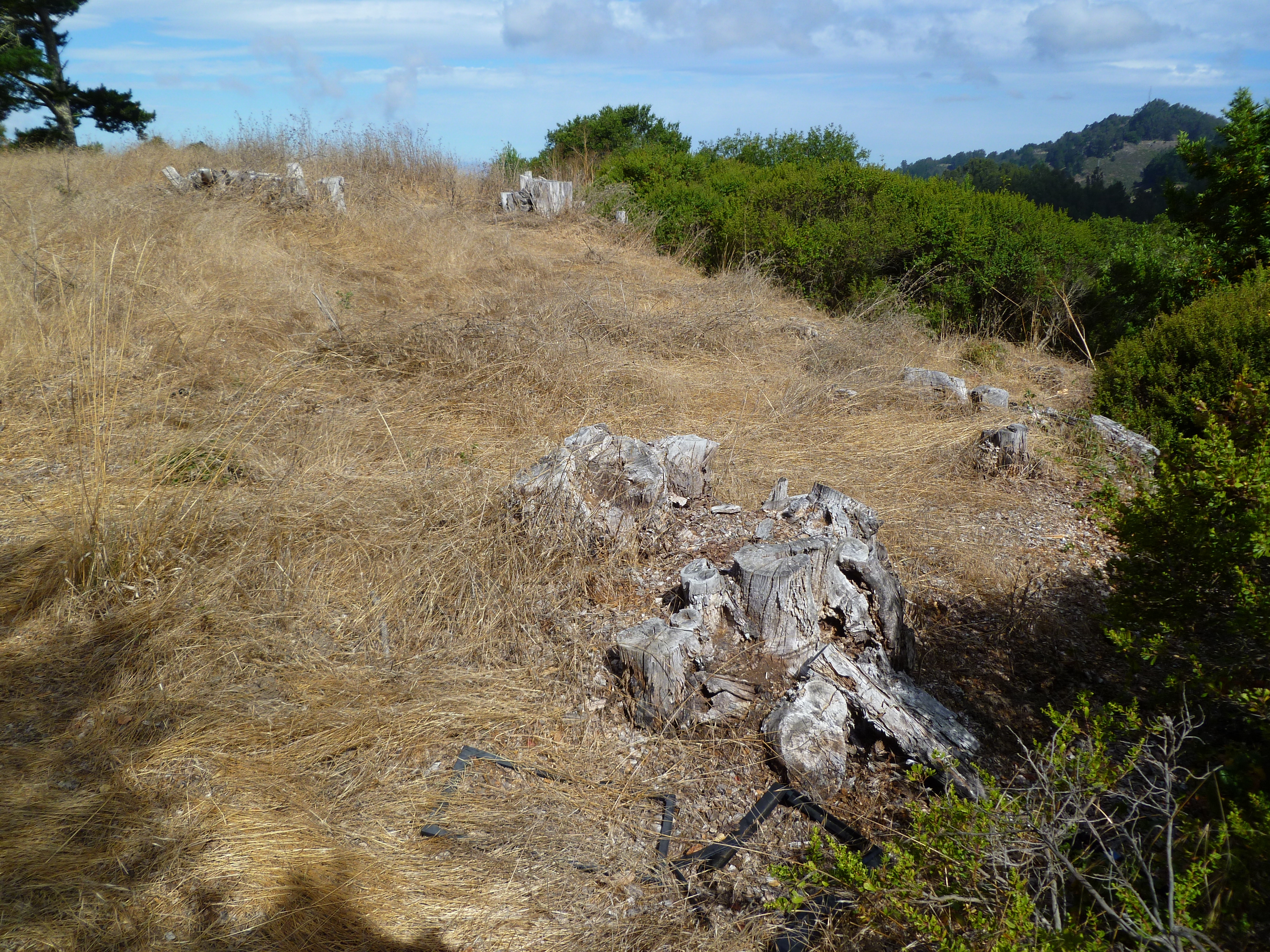
Trees were destroyed here by UC Berkeley over 10 years ago. The landscape is now non-native annual grasses. This is the typical outcome of tree removals on sunny hills without a water source.

Sierra Club and Claremont Canyon Conservancy (CCC) repeatedly refer to Site 29 on Claremont Blvd as a model for the FEMA projects.  They fail to acknowledge that Site 29 is not representative of most FEMA project areas because CCC planted native trees (primarily redwoods) on Site 29 and the microclimate of Site 29 is not typical of other project areas.  Site 29 is a riparian corridor—there is a creek running through it—so there is more available water than in most project areas.  It is also protected from wind and sun by hills on north and south sides of the site.  CCC has not made a commitment to plant native trees on 2,000 acres of the FEMA project areas and even if it did, it could not expect the same results in radically different microclimates such as sunny, windy ridge lines with no available water source.

Fundamentals of carbon storage

Sierra Club does not understand the fundamentals of carbon storage:  “Carbon sequestering and erosion control will not be reduced by removing eucalyptus trees… Indeed, reducing the fire danger by removing the eucalyptus will do much to prevent the release of tons of carbon that occurs during a wildfire. [x]” (1)

Sierra Club continues with the fiction that non-native trees will burn while native trees will not.  There is no evidence behind that story, and much evidence to the contrary.  The numerous wildfires throughout California each summer demonstrate that native trees and shrubs are extremely flammable—easily ignited and burning vigorously once ignited.  Native trees, shrubs, and grasses also release their stored carbon when they burn.  The NSF article cited by the Sierra Club in support of its bogus statement does not suggest that prospectively destroying forests is a means of preventing carbon loss.

Destroying eucalyptus trees will release hundreds of thousands of tons of carbon stored in those trees. That’s a simple, inarguable fact.  There are no plans to replace the eucalyptus with “native trees.”  A small portion of the carbon released by eucalyptus destruction may be recaptured by the grasses and shrubs that will grow in place of the eucalyptus, but the net loss of stored carbon to the atmosphere from the eucalyptus is huge and permanent.  Further, the eucalyptus would have continued to store even more carbon if left in place.  That future carbon sequestration is also lost.

The DEIS for the FEMA-funded projects tries to minimize the loss of stored carbon from destruction of eucalyptus by quantifying only carbon loss from the destruction of tree trunks, ignoring leaves, branches, roots, understory, forest floor litter, and soil.  But even they acknowledge, “…the planned growth of oak and bay woodlands and successional grassland containing shrub islands would not sequester as much carbon as the larger eucalyptus and pines and the denser coastal scrub that would be removed.”  (DEIS 5.6-11)

Killing habitat needed by wildlife

Sierra Club does not know who lives in our urban landscapes:  “Native landscapes provide habitat for much more diverse ecosystems.” (1)

There are many studies that find that our non-native landscape provides valuable habitat and no studies that say otherwise:

  • Most California natives in cultivation are of no more butterfly interest than nonnatives, and most of the best butterfly flowers in our area are exotic.” (3)
  • “[T]he science does not support the supposition that native plantings are required for biodiversity…it is clear that an automatic preference for native trees when planning in urban areas is not a science-based policy.” (4)
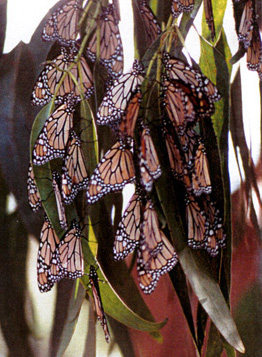
  • “Three types of trees were used most frequently by roosting monarchs [in California]: eucalyptus (75% of the habitats primarily Eucalyptus globulus), pine (20% of the habitats primarily Pinus radiata), and cypress (16% of the habitats primarily Cupressus macrocarpa)” (5)
  • “In the first half of the 20th century, the Anna’s Hummingbird bred only in northern Baja California and southern California. The planting of exotic flowering trees provided nectar and nesting sites, and allowed the hummingbird to greatly expand its breeding range…Anna’s Hummingbird populations increased by almost 2% per year between 1966 and 2010, according to the North American Breeding Bird Survey…Thanks to widespread backyard feeders and introduced trees such as eucalyptus, it now occurs in healthy numbers all the way to Vancouver, Canada.” (6)
  • Red-tailed hawk nesting in eucalyptus. Courtesy urbanwildness.org
    Red-tailed hawk nesting in eucalyptus. Courtesy urbanwildness.org

    “Fourteen of 27 nests in 1994 and 38 of 58 nests in 1995 were in exotic trees, predominantly eucalyptus. Nesting and fledging success were higher in exotic trees than in native trees in both years, owing in part to greater stability and protective cover.  Most nest trees in upland areas were exotics, and even in riparian habitats, where tall native cottonwoods and sycamores were available, Red-shouldered Hawks selected eucalyptus more often than expected based on availability.”  (7)

  • A study that compared species diversity and abundance of plants, invertebrates, amphibians, birds, and rodents in eucalyptus forest with oak-bay woodland in Berkeley, California reported this finding: “Species richness was nearly identical for understory plants, leaf-litter invertebrates, amphibians and birds; only rodents had significantly fewer species in eucalypt sites.  Species diversity patterns…were qualitatively identical to those for species richness, except for leaf-litter invertebrates, which were significantly more diverse in eucalypt sites during the spring.” (8)

We could provide many more citations from studies that consistently find that our existing non-native landscape is essential to wildlife and that destroying it will be harmful to wildlife, particularly considering the enormous amount of herbicide that will be used.  We ask this common-sense, rhetorical question, “How could destroying most of our landscape provide a more diverse ecosystem?”  It defies logic.

Environmentalism gone awry

If the Sierra Club would replace a few of its lawyers with a few scientists, perhaps we would not be having this debate.  Environmentalism has gone astray because it is not knowledgable about some basic scientific issues, such as carbon storage, the toxicity of herbicides, and the habitat needed by our wildlife.  Climate change is the environmental issue of our time.  If an environmental organization does not understand the fundamentals of carbon storage it is not capable of doing its job.  The Sierra Club must improve its knowledge of the Bay Area environment or it will fade into irrelevance in the struggle to protect that environment.


(1) http://sierraclub.org/san-francisco-bay/hillsfacts

(2) See Table 2.1 in Appendix F: http://www.fema.gov/media-library-data/1416861356241-0d76d1d9da1fa83521e82acf903ec866/Final%20EIS%20Appendices%20A-F_508.pdf

(3) Arthur Shapiro, Field Guide to Butterflies of the San Francisco Bay and Sacramento Valley Regions, University of California Press, 2007

(4) Linda Chalker-Scott, “Nonnative, Noninvasive Woody Species Can Enhance Urban Landscape Biodiversity,” Arboriculture & Urban Forestry, 2015, 41(4): 173-186

(5) Dennis Frey and Andrew Schaffner, “Spatial and Temporal Pattern of Monarch Overwintering Abundance in Western North America,” in The Monarch Butterfly Biology and Conservation, Cornell University Press, 2004.

(6) Cornell Ornithology Laboratory https://www.allaboutbirds.org/guide/annas_hummingbird/id

(7) Stephen Rottenborn, “Nest-Site selection and reproductive success of urban red-shouldered hawks in Central California,” J. Raptor Research, 34(1):18-25

(8) Dov Sax, “Equal diversity in disparate species assemblages:  a comparison of native and exotic woodlands in California,” Global Ecology and Biogeography, 11, 49-52, 2002.

Will the real “gasoline tree” please stand up?

The Sierra Club has said many silly things in defense of its lawsuit demanding 100% destruction of all non-native trees on 2,000 acres of public land in the East Bay Hills, and Million Trees has responded to many of them (1).  Now Sierra Club has provided a new batch of ridiculous statements in its “pre-buttal” to the letter from a Chapter member to fellow Chapter members.

The winner of the intense competition for silliest statement

Sierra Club’s silliest statement:  “Eucalyptus trees are called “gasoline trees” in Australia for their tendency to explode in fireballs at very high temperatures.[ii]” (2)

You would not hear such a statement in Australia about ANY tree (eucalyptus or otherwise) because Australians do not use the word “gasoline.”  What Americans call “gasoline,” is called “petrol” in Australia (and Britain, New Zealand, etc.).  (3)

So, the next question is, do Australians call eucalyptus trees “petrol trees?”  The answer is, “NO, they do NOT call eucalyptus trees “petrol trees.”  A Google search for “petrol tree” directs the searcher to an article about a tree that is being grown in Australia as a source of diesel fuel.  The Brazilian tree Copaifera langsdorfii produces “natural diesel.”  Australian farmers have planted 20,000 of these trees with the expectation that “in 15 or so years they’ll have their very own oil mine growing on their farmland.” (4)

The Sierra Club provides a citation for its statement about “gasoline trees.”  The citation is a paper by Carol Rice, the primary author of the East Bay Regional Park District’s “Wildfire Hazard Reduction and Resource Management Plan.”  So, we might expect her to claim that eucalyptus is very flammable and she does.  However, she does not call them “gasoline trees” (nor does she claim that Australians do) nor does she claim that eucalyptus “explodes in fireballs.”

Wildfires in Mediterranean climates

The Sierra Club also provides a brief film clip of a wildfire in Australia.  The film clip is narrated by an American who claims that “firemen call eucalyptus gasoline trees.”  We hear Australians describing the fire, but they don’t say anything about “gasoline trees.”

Let’s compare that film clip in Australia with wildfires here in California.  Our most recent local wildfire was in September 2015, in Lake County about 100 miles north of San Francisco.  The Lake County fire destroyed about 1,200 buildings, killed 4 people, and burned over 76,000 acres.  HERE is a film clip of that fire, taken from the dashboard camera of a county sheriff driving through the fire.

Wildfire in California. Bureau of Land Management
“Native” trees burning in a Wildfire in California. Bureau of Land Management.

As we would expect, the Lake County fire looks very much like the fire in Australia because that’s what wildfires look like.  Most start in dry grass and move quickly through the fine fuel.  If it is a wind-driven fire, it will move into tree canopies and it will jump over roads.  The fire in Lake County burned predominantly native vegetation.  You will not see any eucalyptus trees burning in the film clip of the fire.

Wildfire behavior in California and southern portions of Australia are similar because their climates are similar.  They share a Mediterranean climate in which winter rains produce copious herbaceous vegetation that dries out during the long, dry summer months.  The green grass of winter becomes the fine fuel of summer.  It ignites easily and if conditions are right (high winds and temperatures and low humidity) quickly becomes a wildfire in which everything burns.  The native vegetation that survives these conditions must be adapted to periodic fire.  Therefore, native vegetation in California and in Australia are both adapted to periodic fire.  Destroying our non-native vegetation will not reduce fire hazards because native vegetation is equally flammable.

Many native trees are as flammable as eucalyptus trees. The leaves of native bay laurel trees contain twice as much oil as eucalyptus leaves.  A cord of native oak wood contains more BTUs (measure of heat energy) than a cord of eucalyptus wood.  Native redwoods are taller than eucalyptus and are therefore as likely to cast embers over long distances.  There is as much fine fuel in the oak-bay woodland as there is in the eucalyptus forest.

What is a “gasoline tree?”  It is a rhetorical device.

A Google search for “gasoline tree” turns up a mixed bag of American nativists using that term to describe eucalyptus, and sites about tree species being grown for biofuel as a substitute for gasoline.

Calling eucalyptus trees “gasoline trees” is a rhetorical device.  A native plant advocate probably made it up, then it was shared in their closed community until it became a “fact” in their minds.  It is a means of generating fear.  It is a tool used by native plant advocates to support their demand to destroy all non-native trees in California.   Name-calling does not alter the fact that if the trees are removed, the landscape will be much more flammable. They will be replaced by grasses and shrubs that will be easily-ignited fine fuels and result in fast-moving fires.

Preview

This is the second of a series of articles, debunking the latest batch of inaccurate statements made by the Sierra Club in its “pre-buttal” to the letter from a Club member to other Club members.  Stay tuned!


(1) https://milliontrees.me/2015/10/09/sierra-club-cannot-hide-behind-its-smokescreen/

https://milliontrees.me/2015/10/30/who-are-the-climate-change-deniers/

https://milliontrees.me/2016/02/12/despicable-behavior-the-sierra-club-sinks-to-a-new-low-2/

(2) http://sierraclub.org/san-francisco-bay/hillsfacts

(3)  Australian dictionary:  http://www15.uta.fi/FAST/US1/REF/aust-eng.html

(4)  http://www.treehugger.com/renewable-energy/the-diesel-tree-grow-your-own-oil.html


Sierra Club cannot hide behind its smokescreen

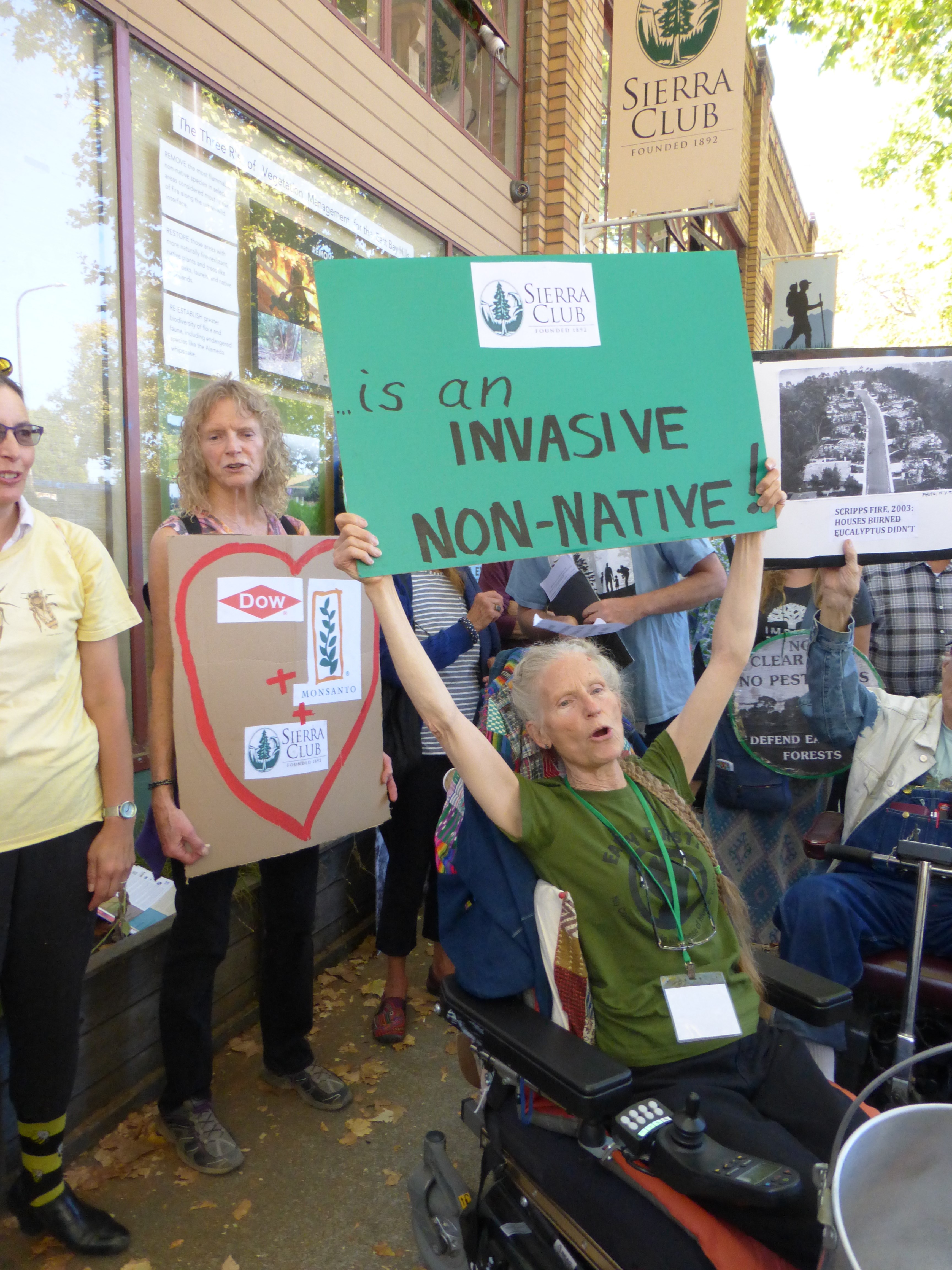
On August 25, 2015, opponents of the projects in the East Bay Hills which will destroy hundreds of thousands of trees staged a protest at the headquarters of the Bay Area chapter of the Sierra Club and delivered a petition.  The petition (available HERE) asks the Sierra Club to quit advocating for deforestation and pesticide use in the San Francisco Bay Area and to drop its lawsuit which demands eradication of 100% of all non-native trees on 2,059 acres of public land in the East Bay.  The protest was successful as measured by the size of the crowd and the even-handed media coverage of the protest.

Sierra Club protest, August 25, 2015. About 80 people attended the peaceful protest.

Update:  HERE is a 14 minute video of the demonstration at Sierra Club headquarters on August 25, 2015.  The video includes an attempt to discuss the issue with a Sierra Club staff member.  Note the factual rebuttals to some of the claims the staff member makes in that conversation.  Also, note the final rallying cry, “Poll your membership on this issue.”  We will report soon on the follow up to that request.  Please stay tuned.  

However, although the protest has produced a flurry of defensive propaganda from the Sierra Club, it has not created new opportunities for dialogue with them.  We tried to get the issue on the agenda of the Conservation Committee following the protest and once again our request was denied. We were also denied the opportunity to publish a rebuttal to articles in their newsletter about the projects. It is still not possible to post comments on the on-line version of the Yodeler, although each article dishonestly invites readers to “leave a comment.”

And so, open letters to the Sierra Club are the only means of communication available to us.  Here are our replies to the latest round of propaganda published in the Yodeler on September 16, 2015 (available HERE).  Excerpts from the Sierra Club article are in italics and our replies follow.


“The preferred strategy for vegetation management in the East Bay hills entails removing the most  highly flammable, ember-generating trees like eucalyptus in phases — only in select areas considered most at risk for fire along the urban-wild interface.”

Preferred by whom?  Neither fire experts nor the public think this project is a good idea, let alone the Sierra Club’s more extreme version of the project demanded by its suit.  Over 13,000 public comments on the Environmental Impact Statement were sent to FEMA, of which 90% were opposed to this project according to FEMA.  More recently, a petition in opposition to this project has over 64,000 signatures on it.  This project is NOT the “preferred strategy for vegetation management in the East Bay hills.”

Eucalyptus is not more flammable than many other trees, including native trees: 

  • A study by scientists in Tasmania found that the leaves of blue gum eucalypts were more resistant to ignition than other species of Tasmanian vegetation tested. The study credits the “hard cuticle” of the leaf for its ability to resist ignition. (1)
  • The National Park Service, which has destroyed tens of thousands of eucalypts and other non-native trees, states that eucalyptus leaves did not ignite during a major fire on Mount Tam.  (2)
  • The leaves of native bay laurel trees contain twice as much oil as eucalyptus leaves (3)  and the fuel ladder to their crowns is much lower than eucalyptus, increasing the risk of crown fires. The “Wildfire Hazard Reduction and Resource Management Plan” of the East Bay Regional Park District states explicitly that bay laurel is very flammable and recommends selective removal.
  • Eucalyptus contributed more fuel to the 1991 fire in Oakland because a deep and prolonged freeze the winter before the fire caused eucalyptus and other exotic vegetation to die back. The dead leaf litter was not cleaned up, which contributed to the fire hazard.  Such deep freezes are rare in the Bay Area.  There has not been such a freeze for 25 years and another is unlikely in the warming climate.

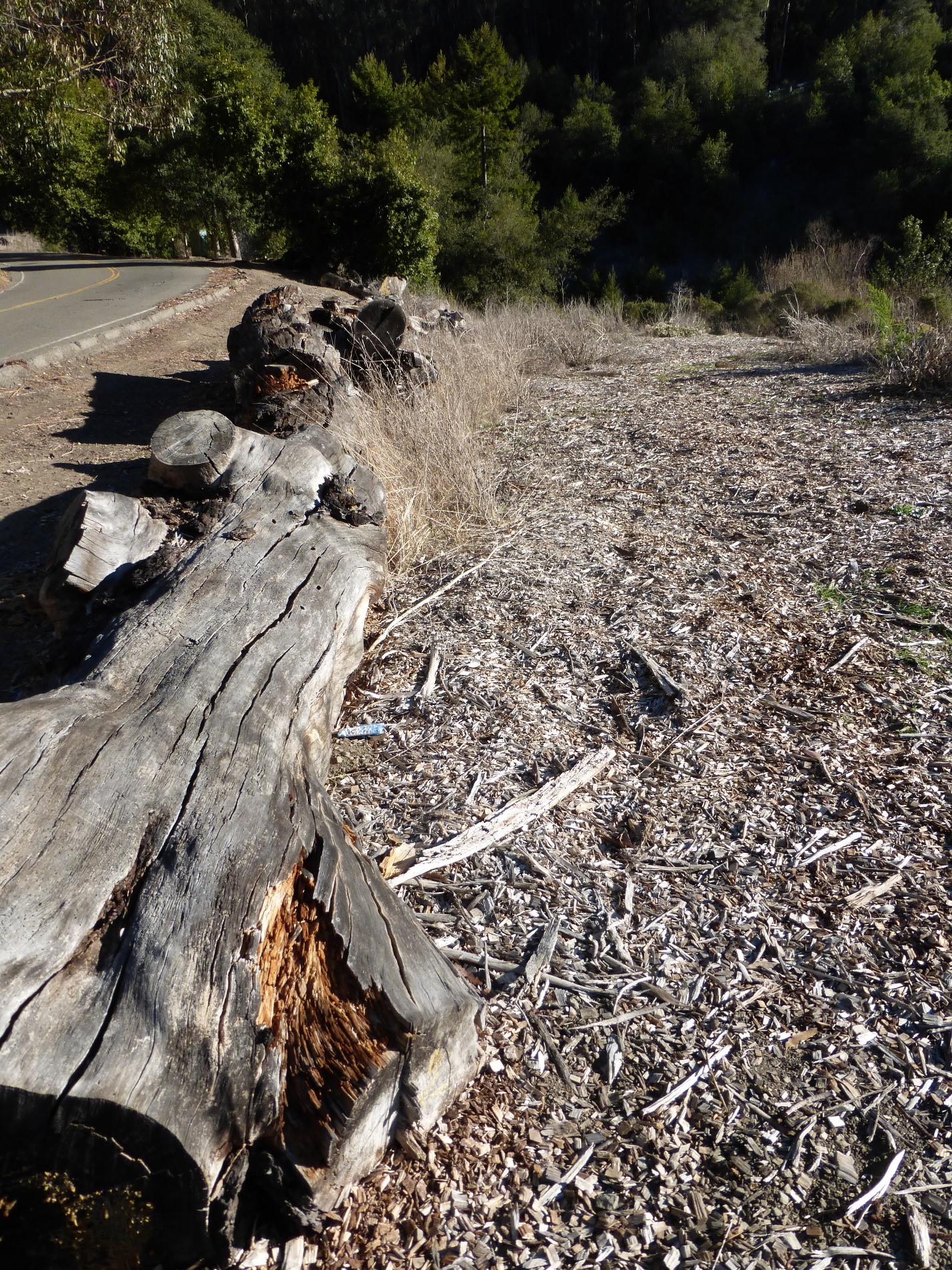
    Eucalyptus logs line the roads where UC Berkeley has destroyed trees. Do they look less flammable than living trees?
    Eucalyptus logs line the roads where UC Berkeley has destroyed trees. Do they look less flammable than living trees?
  • Ordinarily, eucalyptus does not contribute more fuel to the forest floor than native oak-bay woodland. This is confirmed by the National Park Service, which includes logs in the calculation of fuel loads. (2) Logs are extremely difficult to ignite.  The so-called “fire hazard mitigation projects” are leaving all the eucalyptus logs on the ground when the trees are destroyed, suggesting that they aren’t considered a fire hazard.  The National Park Service also separates the fuel loads of oaks and bays, which when combined are equal to the fuel load of eucalyptus.  Since our native woodland in the East Bay is a mixture of oaks and bays, it is appropriate to combine them when comparing their fuel loads to eucalyptus.
  • Eucalypts are sometimes blamed for casting more embers than native trees because they are taller than the oak-bay woodland. However, redwoods are as tall, if not taller, and they were also observed burning in the 1991 fire:  On Vicente Road, “Two redwoods up the street caught fire like matchsticks.” (4)  Yet, the Sierra Club is not suggesting that redwoods be destroyed to eliminate the risk of casting embers.

The Sierra Club now says the trees will be removed “in phases,” yet in its suit against the FEMA grants it objects to the phasing of tree removals.  The main focus of their suit is opposition to the “unified methodology” which proposes to remove trees over the 10 year period of the grant on only 29 acres of the total project acreage of 2,059.  To those who objected to this project, that small concession is little consolation, but for the Sierra Club it was a deal-breaker.  Their suit demands that all non-native trees be removed immediately on all project acres. 

If the Sierra Club withdraws its suit against the FEMA projects, it is free to tell another story, as it attempts to do in its Yodeler article.  As long as that suit remains in play, the Sierra Club is stuck with that version of reality.

“Once the flammable non-native trees are removed, less flammable native species can reclaim those areas and provide for a rebound of biodiversity. This model of fire prevention can summarized as the the [sic] “Three R’s”:

REMOVE the most flammable non-native trees in select areas most at risk for fire;

RESTORE those areas with more naturally fire-resistant native trees and plants; and

RE-ESTABLISH greater biodiversity of flora and fauna, including endangered species like the Alameda whipsnake.”

This is a stunning display of ignorance of the project as well as the natural history of the San Francisco Bay Area:

  • The FEMA projects do not provide for any planting or funding for planting after the trees are removed. FEMA’s mission is fire hazard mitigation, not landscape transformation.  The scientists who evaluated the FEMA projects said that a native landscape is not the likely result of the project:  “However, we question the assumption that the types of vegetation recolonizing the area would be native.  Based on conditions observed during site visits in April 2009, current understory species such as English ivy, acacia, vinca sp., French broom, and Himalayan blackberry would likely be the first to recover and recolonize newly disturbed areas once the eucalyptus removal is complete.  These understory species are aggressive exotics, and in the absence of proactive removal there is no evidence to suggest that they would cease to thrive in the area, especially the French broom which would be the only understory plant capable of surviving inundation by a 2-foot-deep layer of eucalyptus chips.” (5)
  • The US Forest Service evaluation of the FEMA projects stated that the resulting landscape would be more flammable than the existing landscape: “Removal of the eucalyptus overstory would reduce the amount of shading on surface fuels, increase the wind speeds to the forest floor, reduce the relative humidity at the forest floor, increase the fuel temperature, and reduce fuel moisture.  These factors may increase the probability of ignition over current conditions.” (6)
  • The US Forest Service evaluation predicts that the resulting landscape will be “a combination of native and non-native herbaceous and chaparral communities.” Despite the overwhelming evidence that wildfires in California start and spread rapidly in herbaceous vegetation such as dry grass, the myth persists that all non-native trees must be destroyed to reduce fire hazards.  An analyst at CAL FIRE has explained to the Center for Investigative Reporting that the reason why wildfires were so extreme this summer is because of the heavy rains in December 2014, which grew a huge crop of grass:  “The moisture did little to hydrate trees and shrubs. But it did prompt widespread growth of wild grasses, which quickly dry out without rain.  ‘They set seed, they turn yellow and they are done,’ said Tim Chavez, a battalion chief and fire behavior analyst with CAL FIRE. ‘All that does is provide kindling for the bigger fuels.’” (7) We know that more dry grass starts more wildfires, yet the Sierra Club demands that we destroy the tree canopy that shades the forest floor and produces leaf litter, which together suppress the growth of the grasses in which fires ignite. 
  • The claim that native plants are “naturally fire resistant” is ridiculous. Native vegetation in California—like all Mediterranean climates—is fire adapted and fire dependent. The wildfires all over the west this summer occurred in native vegetation.  There are over 200 species of native plants in California that will not germinate in the absence of fire and persist for only 3-5 years after a fire. (8) Although all native vegetation is not equally flammable, many species are considered very flammable, such as coyote brush, bay laurel, and chamise.  To say otherwise is to display an appalling ignorance of our natural history.

    When did "environmentalism" devolve into demonizing trees?
    When did “environmentalism” devolve into demonizing trees?
  • There is no evidence that the destruction of our urban forest will result in greater “biodiversity.” There are many empirical, scientific studies that find equal biodiversity in eucalyptus forest compared to native forests.  There are no studies that say otherwise, yet the Sierra Club and their nativist friends continue to make this claim without citing any authority other than their own opinions.  (9, 10, 11)  Bees, hummingbirds, and monarch butterflies require eucalyptus trees during the winter months when there are few other sources of nectar. Raptors nest in our tall “non-native” trees and an empirical study finds that their nesting success is greater in those trees than in native trees.

The Sierra Club’s 3Rs can best be summarized as “repeat, repeat, repeat.”  Their 3Rs are based on 3 Myths:  (1) eucalyptus trees are the most serious fire hazard; (2) “native” vegetation is categorically less flammable than “non-native” vegetation, and (3) native vegetation will magically return to the hills when trees are clearcut and the hills are poisoned with herbicide.  All available evidence informs us that these are fictions that exist only in the minds of the Sierra Club leadership and their nativist friends.

 “The Sierra Club’s approach does NOT call for clearcutting. Under “Remove, Restore, Re-establish” thousands of acres of eucalyptus and other non-natives will remain in the East Bay hills. Our proposal only covers areas near homes and businesses where a fire would be most costly to lives and property. In fact, removing monoculture eucalyptus groves and providing for the return of native ecosystems will create a much richer landscape than the alternative — thinning — which requires regularly scraping away the forest floor to remove flammable debris.”

The Sierra Club’s suit against FEMA demands that all eucalyptus and Monterey pine be removed from 2,059 acres of public property.  While it is true that the project acres are not 100% of all land in the East Bay, with respect to the project acres, it is accurate to describe the Sierra Club’s suit as a demand for an immediate clearcut of all non-native trees.

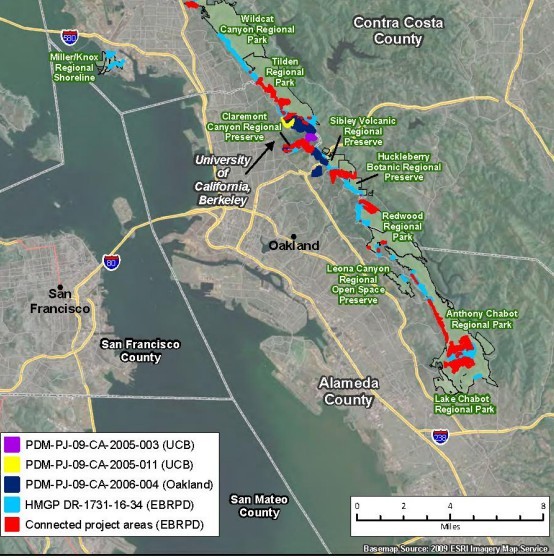
FEMA Project Areas
FEMA Project Areas

Most of the project acres are nowhere near homes and buildings.  They are in parks and open spaces with few structures of any kind.  CAL FIRE defines “defensible space” required around buildings to reduce property loss in wildfires.  CAL FIRE requires property owners to clear flammable vegetation and fuel within 100 feet of structures.  Using that legal standard, the FEMA project should not require the removal of all trees from project acres.

As we said earlier, Sierra Club’s description of the landscape that will result from the removal of the tree canopy is contradicted by scientists who evaluated the FEMA project.  And their prediction that “thinning” would “require regularly scraping away the forest floor to remove flammable debris” is not consistent with the predictions of those scientists who have advised that the loss of shade and moisture resulting from the complete loss of the tree canopy will encourage the growth of flammable vegetation and require more maintenance than the existing landscape.

“Our preferred approach does NOT focus on eucalyptus merely because they are non-natives. Rather, it is because they pose a far higher fire risk than native landscapes. Eucalyptus shed ten to fifty times more debris per acre than grasslands, native live oak groves, or bay forests — and that debris, in the form of branches, leaves, and long strips of bark, ends up draped in piles that are a near-optimal mixture of oxygen and fuel for fire. Eucalyptus trees ignite easily and have a tendency to dramatically explode when on fire. Also, eucalyptus embers stay lit longer than embers from other vegetation; coming off trees that can grow above 120 feet tall, those embers can stay lit as the wind carries them for miles.”

The Sierra Club’s suit demands the eradication of Monterey pine as well as eucalyptus.  The scientists who evaluated the FEMA projects stated that there is no evidence that Monterey pine is particularly flammable and they questioned why they were targeted for eradication:  “The UC inaccurately characterizes the fire hazard risk posed by the two species however…Monterey pine and acacia trees in the treatment area only pose a substantial fire danger when growing within an eucalyptus forest [where they provide fire ladders to the eucalyptus canopy].  In the absence of the eucalyptus overstory, they do not pose a substantial fire hazard.”  (5)  It is not credible that the Sierra Club’s demand that these tree species be entirely eradicated has nothing to do with the fact that they are not native to the Bay Area.  If flammability were truly their only criterion, they would demand the eradication of native bay laurel trees.  If fear of lofting embers from tall trees were their only concern, they would demand the eradication of redwoods.

As we said earlier, redwoods looked as though they were exploding when they ignited in the 1991 fire.  And we are seeing wildfires all over the west this fire season in which native trees look as though they are exploding when they ignite.  That’s what a crown fire looks like, regardless of the species.

It defies reason to think that an ember is capable of traveling miles and still be in flames on arrival.  In fact, Sierra Club’s suit says “non-native trees can cast off burning embers capable of being carried up to 2,000 feet in distance.”  That’s a fraction of the distance the Sierra Club now claims in its hyperbolic description of the issues in the Yodeler.  Surely we can all use a little common sense to consider how unlikely it is that a fragment of a tree small enough to be carried in the wind could travel miles while remaining on fire.  Likewise, we must ask why fragments of eucalyptus trees are likely to burn longer than any other ember of equal size.  We are not provided with any reference in support of these fanciful claims other than the opinions of the authors.

“Any herbicide use to prevent the regrowth of eucalyptus once they’ve been cut down (they quickly sprout suckers otherwise) would be hand applied in minimal amounts under strict controls. Any herbicide application must undergo a full environmental review to prevent impacts on humans, wildlife, and habitat. There are also methods other than herbicide that can be used to prevent regrowth, and the Sierra Club encourages the agencies that manage the land where fire mitigation occurs to explore these alternatives to find the most sustainable, responsible option.”

Once again, the Sierra Club is stuck with the public record which describes the FEMA projects:

  • East Bay Regional Park District has stated in the Environmental Impact Statement for the FEMA project that it intends to use 2,250 gallons of herbicide to prevent the regrowth of eucalyptus.  (12)  This estimate does not include the herbicides that will be used by UC Berkeley or the City of Oakland.  Nor does it include the herbicides that will be needed to kill flammable non-native vegetation such as fennel, hemlock, broom, radish, mustard, etc.  Surely, we can all agree that thousands of gallons of herbicide cannot be accurately described as “minimal.”
  • The Sierra Club now seems to be suggesting that further environmental review will be required for herbicide use by this project. They are mistaken in that belief.  The Environmental Impact Statement for this project is completed and it admits that the project will have “unavoidable adverse impacts” on “human health and safety” and that there will be “potential adverse health effects of herbicides on vegetation management workers, nearby residents, and users of parks and open space.”  The Sierra Club’s smoke screen cannot hide that conclusion.
  • The FEMA grants have been awarded to the three public land owners and they explicitly provide for the use of herbicides to prevent eucalyptus and acacia from re-sprouting. There is nothing in the Environmental Impact Statement that indicates that “methods other than herbicide can be used to prevent regrowth,” as the Sierra Club now belatedly opines in its latest propaganda.  If the Sierra Club wants other methods to be considered, we could reasonably expect they would make such a demand in their suit against FEMA, along with all their other demands.  They do not make such a demand in their suit.  Therefore, claims that other methods are being explored are not credible.
  • Sierra Club’s claim that herbicides will be applied “with strict controls” is not credible because there is no oversight of pesticide application or enforcement of the minimal regulations that exist in the United States. After 25 years of working for the EPA, E.G. Vallianatos wrote in 2014 of his experience with pesticide regulation in Poison Spring:  “…the EPA offered me the documentary evidence to show the dangerous disregard for human health and the environment in the United States’ government and in the industries it is sworn to oversee…powerful economic interests have worked tirelessly to handcuff government oversight.”

The Sierra Club has also explicitly endorsed the use of herbicides in the public comments they have submitted on these projects and in other articles in the Yodeler:

  • Sierra Club’s written public comment on Scoping for the FEMA EIS: “We are not currently opposed to the careful use of Garlon as a stump treatment on eucalyptus or even broom when applied by a licensed applicator that will prevent spread into adjacent soils or waters.”  Norman La Force (on Sierra Club letterhead), September 12, 2010
  • “There is no practical way to eliminate eucalyptus re-sprouting without careful use of herbicides.” Yodeler, May 25, 2013

Obfuscation and insincere backpedaling

The latest Yodeler article about the FEMA projects is a lot of hot air.  It makes claims about the issues for which it provides no evidence and for which considerable contradictory evidence exists.  It contradicts previous statements the Sierra Club has made.  Most importantly, as long as Sierra Club’s suit remains in play, the demands the Sierra Club makes in that public document cannot be denied.  If the Sierra Club wishes to back away from its previous positions, it must start by withdrawing its suit, which demands that 100% of all non-native trees in the FEMA project areas be destroyed immediately.  Withdrawal of the suit would be a most welcome start on the long healing process that is required to mend the damage the Sierra Club has done to its reputation as an environmental organization in the San Francisco Bay Area.  However, the Sierra Club will not be able to reclaim its status as an environmental organization without renouncing all pesticide use on our public lands. 

The Sierra Club has isolated itself from reality.  Its leadership refuses to speak with anyone with whom they disagree.  They have become the victims of incestuous amplification.  They apparently do not read the documents they use to support their opinions.  For example, the Sierra Club suit claims the California Invasive Plant Council (Cal-IPC) has classified blue gum eucalyptus as “moderately” invasive.  In fact, Cal-IPC’s rating of blue gum eucalyptus is “limited.”  This reflects the fact that a study of aerial photographs of Bay Area parks and open spaces, taken over a 60 year period find that eucalyptus and Monterey Pine forests were smaller in the 1990s than they were in the 1930s.  (13)

We will send our petition soon to the national leadership of the Sierra Club.  If you have not yet signed our petition, we hope you will consider doing so now. 


  1. Dickinson, K.J.M. and Kirkpatrick, J.B., “The flammability and energy content of some important plant species and fuel components in the forests of southeastern Tasmania,” Journal of Biogeography, 1985, 12: 121-134.
  2. “The live foliage proved fire resistant, so a potentially catastrophic crown fire was avoided.” http://www.nps.gov/pore/learn/management/upload/firemanagement_fireeducation_newsletter_eucalyptus.pdf
  3. Ron Buttery et. al., “California Bay Oil. I. Constituents, Odor Properties,” Journal Agriculture Food Chemistry, Vol. 22, No 5, 1974.
  4. Margaret Sullivan, Firestorm: the study of the 1991 East Bay fire in Berkeley, 1993
  5. URS evaluation of UCB and Oakland FEMA projects
  6. FEMA DEIS – evaluation of US Forest Service
  7. https://www.revealnews.org/article/rampant-california-wildfires-can-be-blamed-on-last-decembers-rain/?utm_source=Reveal%20Newsletters&utm_campaign=2d4c52ebf5-The_Weekly_Reveal_09_24_159_23_2015&utm_medium=email&utm_term=0_c38de7c444-2d4c52ebf5-229876797
  8. Jon Keeley, Fire in Mediterranean Ecosystems, Cambridge University Press, 2012
  9. https://milliontrees.me/2011/02/04/biodiversity-another-myth-busted-2/
  10. https://milliontrees.me/2013/04/09/biodiversity-of-the-eucalyptus-forest/
  11. https://milliontrees.me/2013/11/22/invertebrates-such-as-insects-are-plentiful-in-the-eucalyptus-forest/
  12. See Table 2.1 in Appendix F: http://www.fema.gov/media-library-data/1416861356241-0d76d1d9da1fa83521e82acf903ec866/Final%20EIS%20Appendices%20A-F_508.pdf
  13. William Russell and Joe McBride, “Vegetation Change and Fire Hazard in the San Francisco Bay Area Open Spaces,” Landscape and Urban Planning, 2003

Wise words about fire hazards

The Hills Conservation Network has published a new petition addressed to the mayor and city council members of the City of Oakland:

“To Mayor Libby Schaaf and all members of the Oakland City Council:

We request you stand up for the community, the environment, the trees and all the animals who live in the urban forest. Clear-cutting pine, eucalyptus and acacia and then dousing the hills with a decade of TOXIC herbicides is a bad idea. Species neutral fire prevention, backed by good science that focuses on ground fuels is where FEMA money should go”

That petition is available HERE.

This is a very astute comment by a recent signer of the petition:

“I work with a recently retired fire chief and spoke at length with him about this tree cutting plan. He has decades of experience with urban, suburban and forest/wildland fires. He was clear that cutting the trees WILL INCREASE the fire hazard because ALL wildland fires START in dry grass/underbrush, not in trees. Fires spread to trees  ONLY when they are allowed to get out of control. This is not a new concept. That is why the underbrush is cut in forests.

I lived in Montclair during the firestorm. Those of us here then know the real reasons the fire got out of control: A) The original small GRASS fire was not fully put out or watched; B) many hoses could not be hooked up so there was NO water in a number of places; C) they fought it house to house rather than setting – as they did days later- a perimeter to stop it; D) there were NO evacuation orders; E) the streets are narrow and in many places the fire trucks could not get through because of the parked cars.

After the fire there were specific plans to widen the roads, allow parking on only one side of narrow roads, change the hydrant connections, limit the size of homes as well as many other preventative measures. The streets are the same and it appears other lessons from that fire have not been learned.

Ours is a FOREST environment. The solution to forest fires is NOT to clear cut the forest.

I also lived in Lake Tahoe. A forest fire started near our home. The fire department had a full perimeter set up within 15 minutes and fought the fire in from the perimeter to keep if from spreading. It was out in 30 minutes. THEY are TRAINED to fight these types of fires. The Oakland Fire Department was NOT. Hopefully they are now.

I also lived in Reno Nevada where there is only scrub brush and grass. I lived through the worst fires imaginable during those years. I have never seen such fast spreading, out-of-control fires as those created by dry grass and scrub brush. It was MUCH harder to put out, must faster moving and YES those fires burn many homes just as quickly.

The Eucalyptus in our hills keep the ground WET, YEAR ROUND, just feel under them, even now, in this drought because they collect and drip the moisture from the air. They also PREVENT the highly dry grass from growing. They are very dense and not fast burning, Pine are especially resistant to fire. All around our hills are mosses, ferns, molds and damp soils because of the Pine and Eucalyptus forests. This moisture is key to protecting our forest.

If these trees are cut down they cannot be put back when the reality of the error is recognized. If you truly wish to restore the area to its ‘natural’ state then either replant redwoods or perhaps flood with sea water to bring it back to ‘what it was.’

This planned tree cutting will live in history as one of the most devastating destructions of a unique, beautiful and rare environment. This is an area that hundreds of thousands of folks visit for its serenity, wildlife, and forest shade.

It is has also been the cherished home to many of us residents for decades; a home we choose in large part because of the trees.”

Million Trees and the San Francisco Forest Alliance also published a petition to the Sierra Club about their support for deforestation and poisoning of our urban forests in the San Francisco Bay Area.  Here is one of the comments that was posted by a signer of that petition:

Tyehimba Peyton from Lathrop, CA signed this petition on Aug 25, 2015.

“I am a retired Oakland Fire Department Fire Chief and believe that removing the trees does not reduce, but in fact increases fire danger to the Oakland hills.”

It is a fiction that native plants are less flammable than non-native plants.  All the fires raging in Western states this summer are occurring in native vegetation.  They start in dry grass, which ignites easily and they move rapidly through the dry grass.  When they reach shrubs, they generate more heat.  Trees are rarely involved unless it is a wind-driven fire.  Anyone with knowledge of fires in California and without a nativist agenda knows that the planned projects in the East Bay Hills will increase fire hazards, not decrease them.

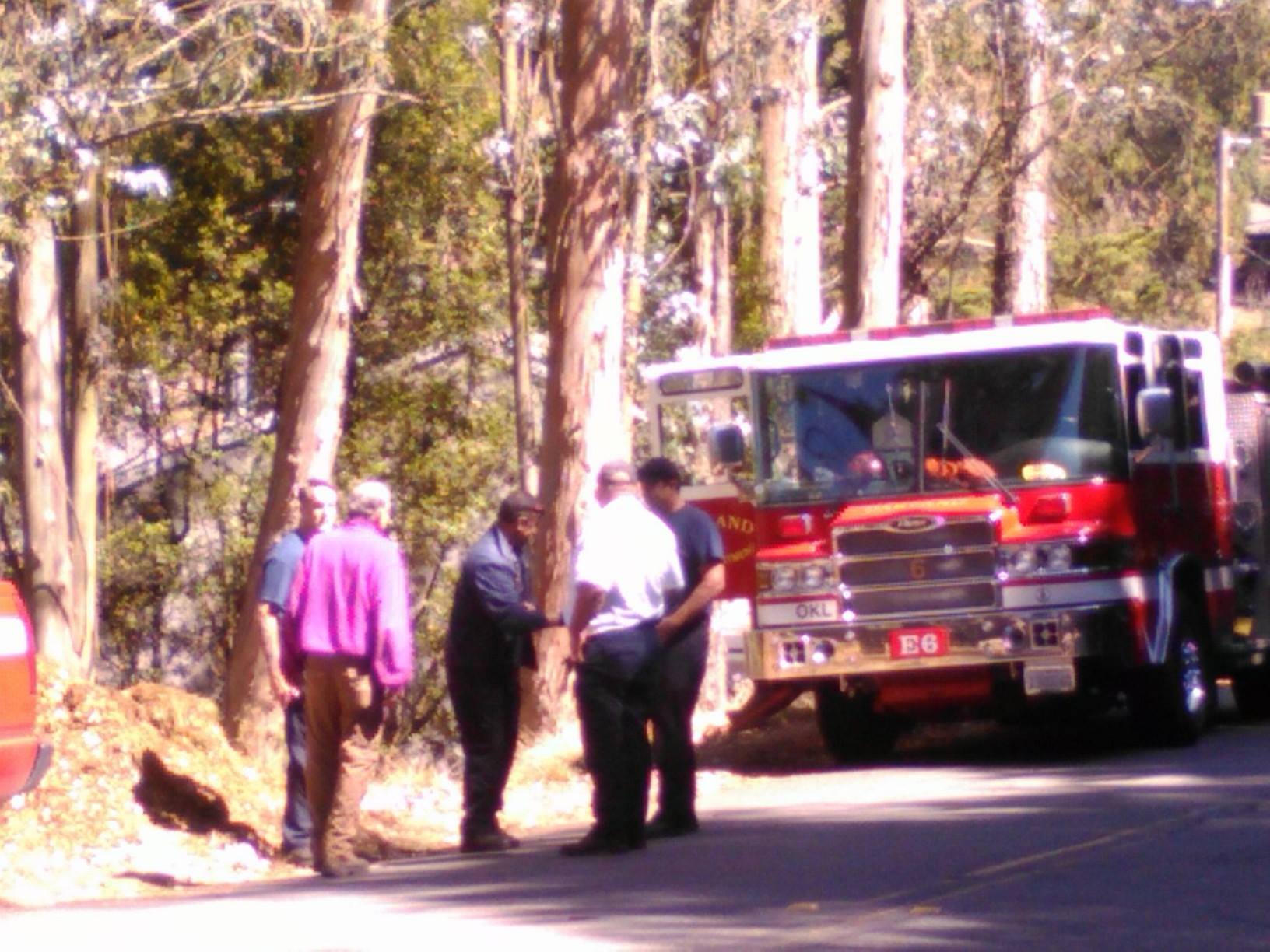
Fire truck called to hose down steaming pile of wood chips, September 3, 2015
Fire truck called to hose down steaming pile of wood chips, September 4, 2015

Save the East Bay Hills recently reported on their Facebook page an incident, which demonstrates that creating huge piles of dead wood chips will also contribute to fire hazards.  The planned projects will chip the hundreds of thousands of trees they intend to destroy and spread them on the ground.  These huge piles of wood chips have the potential for spontaneous combustion as illustrated by this incident:

“Today on Skyline Blvd. in Oakland, we witnessed an incident that demonstrates just how much the plan to cut down 400,000 trees in the East Bay Hills and spread their chipped remains in thick carpets will imperil the welfare of hills residents by vastly increasing the risk of fire.

At noon, just down the street from Redwood Regional Park, Oakland Fire Chief Vegetation manager, Vince Crudele, and several firefighters were called to the scene after a neighbor reported that a large mulch pile from a pine tree that was recently cut down had begun steaming. Firefighters hosed down the mulch pile with water to cool it and explained to us that the steam was the result of heat from the composting debris. 

This, of course, begs the question: if the heat from just one tree composting (on a very cool day) is sufficient to warrant the intervention of the Oakland Fire Department, what is going to happen when thick piles of mulch from many thousands of trees and spanning thousands of acres begin to compost in direct sunlight and on hot days? Or, more to the point, how on earth is the current “fire abatement” plan a fire abatement plan?

In fact, it isn’t. It is, according to former Oakland firefighter and Chief of Fire Prevention for the Oakland Army base, ‘a land transformation disguised as a wildfire hazard mitigation plan.. [that] will endanger firefighters and the general public.’

Please sign our petitions to prevent this dangerous plan from being implemented.

The Sierra Club must STOP advocating for deforestation and pesticide use in San Francisco Bay Area

Monarch butterflies over-winter in California's eucalyptus groves
Monarch butterflies over-winter in California’s eucalyptus groves

Million Trees is sponsoring a petition to the national leadership of the Sierra Club in collaboration with San Francisco Forest Alliance.  The petition asks the Sierra Club to quit advocating for the destruction of the urban forest and the use of pesticides in the San Francisco Bay Area.  It also asks the Sierra Club to withdraw its suit against FEMA, which demands the destruction of 100% of all “non-native” trees (eucalyptus, Monterey pine, acacia).  This is an on-line petition which can be signed HERE.  If you are signing this petition and you are a present or former member of the Sierra Club, please mention it in your comments.

sign petition to sierra club

There will be a demonstration by supporters of this petition at the headquarters of the San Francisco Bay Area Chapter of the Sierra Club on Tuesday, August 25, 2015, at 4 pm, 2530 San Pablo Ave, Suite I, Berkeley, CA.  Please join us if you can.

If you are a regular reader of Million Trees, you probably understand why we are making this request of the Sierra Club.  For the benefit of newer readers, we recap the long history of trying to convince the San Francisco Bay Area Chapter of the Sierra Club that its support for the destruction of our urban forest, as well as the pesticides used to prevent its return, contradicts the mission of the Sierra Club as a protector of the environment.

  • This “open letter” was sent to the leadership of the local chapter of the Sierra Club. It informs the Sierra Club of many misstatements of fact in the chapter’s newsletter about the “Wildfire Hazard Reduction and Resource Management Plan” of the East Bay Regional Park District.
  • This article is about the Sierra Club’s public comment on the “Wildfire Hazard Reduction and Resource Management Plan” of the East Bay Regional Park District. The Sierra Club instructs EBRPD to put the “restoration of native plant communities” on an equal footing with fire hazard reduction.  It also specifically endorses the use of pesticides for this project.  In other words, native plants are more important than public safety in the opinion of the Sierra Club. 
  • This “open letter” is about misstatements of fact in the chapter newsletter about San Francisco’s Natural Areas Program. We wrote that “open letter” because the newsletter refused to publish our letter to the editor.
  • This article is about misstatements of fact in the chapter newsletter about the FEMA projects in the East Bay Hills. This incident occurred during the brief period of time when the on-line version of the newsletter was accepting on-line comments.  That opportunity to communicate with the chapter enabled a correction of inaccurate statements in the newsletter.

Sierra Club’s suit against FEMA, which demands the destruction of 100% of all “non-native” trees in the East Bay Hills was the proverbial straw that broke the camel’s back.  Chronic annoyance at the club’s endorsement of destructive and poisonous projects was suddenly elevated to outrage.  HERE is the Club’s description of its suit, which is available in its on-line newsletter.  Attempts to communicate our outrage to the Club by posting comments on that article failed.  That is, the Club is no longer publishing comments it doesn’t like, thereby cutting off any means of communicating with them.  Our petition is the only means of communication left to us.  The text of the petition follows and it can be signed HERE.  Please distribute this petition to your friends and neighbors who share our concern about the destruction and poisoning of our public lands in the San Francisco Bay Area.


Title:     Sierra Club must STOP advocating for deforestation and pesticide use in San Francisco Bay Area

Petition by:        Million Trees and San Francisco Forest Alliance

To be delivered to:
Michael Brune, Executive Director, Sierra Club, michaelbrune@sierraclub.org
Aaron Mair, President, Board of Directors, Sierra Club, aaronmair@gmail.com

We are environmentalists who ask the Sierra Club to quit advocating for the destruction of the urban forest and the use of pesticides in the San Francisco Bay Area.  We also ask that the Sierra Club withdraw its suit against FEMA, which demands the destruction of 100% of all “non-native” trees (eucalyptus, Monterey pine, acacia).  If you are signing this petition and you are a present or former member of the Sierra Club, please mention it in your comments.

Over the past 15 years, tens of thousands of trees have been destroyed on public lands in the San Francisco Bay Area.  Now hundreds of thousands of trees in the East Bay are in jeopardy of being destroyed by a FEMA grant to three public land managers.  The Bay Area Chapter of the Sierra Club has actively supported all of these projects and now it has sued FEMA to demand the destruction of 100% of all “non-native” trees.

These projects have already used hundreds of gallons of herbicide to prevent the trees from resprouting and to kill the weeds that grow when the shade of the canopy is destroyed.  Now, the FEMA project intends to use thousands of gallons of herbicide for the same purpose.  These herbicides (glyphosate, triclopyr, imazapyr) are known to be harmful to wildlife, pets, and humans.

This environmental disaster will release tons of carbon into the atmosphere, thereby contributing to climate change.  It will destroy valuable habitat for wildlife, introduce poisons into our watershed, cause erosion, and eliminate our windbreak.  We call on the national leadership of the Sierra Club to prevent the active participation of the Bay Area Chapter of the Sierra Club in this environmental disaster.

Petition background:

The San Francisco Bay Area was virtually treeless prior to the arrival of Europeans.  The landscape was predominantly grassland, scrub, and chaparral.  Trees grew only in ravines where they were sheltered from the wind and water was funneled to them.  The trees that were brought from other areas of California and from other countries were chosen because they are the species that are best adapted to our local conditions.  John Muir, the Founder of the Sierra Club, also planted these tree species around his home in Martinez and was as fond of those trees as many of us are still today.

The Sierra Club has now turned its back on this cosmopolitan view of nature in favor of returning our landscape to the pre-settlement landscape of grassland, scrub, and chaparral.  This approach has led to the destruction of tens of thousands of trees and the use of herbicides to prevent them from resprouting.

In the East Bay, native plant advocates have also falsely claimed that “non-native” trees are more flammable than native plants.  Although fire hazard reduction was the stated purpose of the FEMA grants, fire hazards will be increased by the clear-cuts of our urban forest for the following reasons:

  • Tons of dead, dry wood chips will be scattered on the ground to a depth of 24 inches.
  • The fog drip which is condensed by the tall trees moistens the ground and will be lost when the canopy is destroyed. The ground vegetation will therefore be drier and more likely to ignite.
  • The tall trees provide a windbreak which has been demonstrated repeatedly to be capable of stopping a wind-driven fire, which is typical of California wildfires.
  • The project does not intend to plant any replacement plants or trees. Therefore, the most likely colonizers of the bare ground are annual grasses which ignite easily during the dry season and in which most fires in California start and spread.
Hummingbird in eucalyptus flower.  Courtesy Melanie Hoffman
Hummingbird in eucalyptus flower. Courtesy Melanie Hoffman

Many empirical studies document the rich biodiversity of our urban forest today.  Bees, hummingbirds, and monarch butterflies require eucalyptus trees during the winter months when there are few other sources of nectar.  Raptors nest in our tall “non-native” trees and an empirical study finds that their nesting success is greater in those trees than in native trees.

In short, the Bay Area Chapter of the Sierra Club is promoting an environmental disaster that is adamantly opposed by tens of thousands of people.  FEMA received over 13,000 public comments on its draft Environmental Impact Statement, over 90% in opposition to this project, according to FEMA’s own estimate.  The signers of this petition are also opposed to this project as presently described by FEMA grant applications and its Environmental Impact Statement.

Environmentalists in the San Francisco Bay Area have been denied due process by the local chapter of the Sierra Club.  The Bay Area Chapter has blocked every effort to communicate with them:  they ignore our emails, block our comments on their blog, refuse our letters to the editor of their newsletter, and do not answer our phone calls.  We believe that the national leadership has an obligation to consider our complaint because the actions of the local chapter are inconsistent with the mission of the Sierra Club.  The local chapter is actively contributing to climate change and endorsing the use of toxic pesticides in our environment.

More public comments on FEMA projects in the East Bay Hills

We are publishing a few more of our favorite public comments on the Draft Environmental Impact Statement for the FEMA projects in the East Bay Hills which will destroy nearly a half-million trees if implemented as presently described.

Over 13,000 public comments were submitted to FEMA.  FEMA estimates that 90% of the comments are opposed to the project.  We have selected a few which demonstrate expertise as well as knowledge of the areas that will be irreparably harmed by the destruction of hundreds of thousands of trees and the spraying of toxic herbicides.  All of the comments are in the public record and can be read HERE.

You can help to prevent this project from being implemented as presently planned by making a contribution to the suit of the Hills Conservation Network.  Visit the HCN website HERE to make a contribution.

clearcut-East-Bay-hills-Jack Gescheidt


From:                    [Name redacted by Million Trees]

To:                          EBH-EIS-FEMA-RIX

Subject:               Berkeley Hills

Date:                     Friday, June 14, 2013 11:52:35 PM

I am a resident of Berkeley, California. I oppose the use of FEMA funds to cut trees in the Berkeley and Oakland Hills. I am an environmental science teacher at Berkeley High School. We know that these trees provide important habitat for many kinds of wildlife, and cutting them down will not prevent fires. Clear-cutting in the Berkeley and Oakland Hills is a very bad idea. It may cause mud slides, destroy the landscape, harm wildlife, destroy hikers’ aesthetic enjoyment of our wildlands; the planned use of pesticides is unconscionable. Please do not fund any of this clear-cutting. It is a waste of money, will not prevent fires, and will cause harm.


From:                    [Name redacted by Million Trees]

To:                          EBH-EIS-FEMA-RIX

Subject:               FEMA “fire hazard reduction” NO!!!!

Date:                     Friday, May 17, 2013 11:45:15 AM

Hello,

As a trained wildlands firefighter, I am familiar with the management techniques of wildland fires. Clear-cutting is not one of them. I could potentially support implementing a permanent firebreak of the standard size: about the width of a road. Cutting more than that is unnecessarily destructive, and destroys natural heritage which belongs to our children. Applying herbicide is likewise completely unrelated to standard, approved wildlands fire management, and presents unknown environmental dangers. I recommend consulting the county fire department for their recommendations, which based on my experience, will likely consist of bringing out a CCC or convict crew to cut a firebreak seasonally.

My family and I STRONGLY OPPOSE the current plan.

[Name redacted by Million Trees]

Berkeley resident


From:                    [Name Redacted by Million Trees]

To:                          EBH-EIS-FEMA-RIX

Subject:               Halt the land clearing!

Date:                     Friday, May 17, 2013 2:30:22 PM

Absolutely do not go forward with plans to clearcut the Strawberry and Claremont Canyons. These trees provide far more beneficial ecosystem services, like cooling, attracting moisture, and providing beauty, oxygen and habitat.

Do not use Round up on this land, it is an extremely hazardous toxic pollution.

The proposed management is extremely misguided and very irresponsible destruction, and would cause far greater ecological harm. The loss of this forest would be a great impoverishment to all the surrounding communities. Leave these trees alone!!

[Name redacted by Million Trees], Natural Areas Manager

A retired university planner critiques the FEMA projects in the East Bay Hills

We recently finished reading all of the 13,000 public comments on the FEMA draft EIS.  FEMA says that about 90% of the comments are opposed to the project and having read the comments that seems about right. 

It was a very rewarding experience to read the comments and we recommend it to anyone who is discouraged or doubtful that we can prevent the destruction of our urban forest in the East Bay (available HERE).

There were many excellent comments, many from people with specific expertise and knowledge of the issues that inform our opposition to these projects.  We plan to publish a few of them, as we obtain permission from their authors.  Today, we publish the public comment of Christopher Adams, with his permission.  We hope you are as impressed with his astute analysis as we are.


 Comments on Hazardous Fire Risk Reduction, East Bay Hills, CA,

Draft EIS

Prepared by Christopher Adams

Introduction:

My comments here are made solely in my capacity as a private citizen, but I think it is germane to state my background. I am a retired university planner, and for several years I directed the office which was responsible for review of every environmental document prepared by all the campuses and other facilities of the University of California. In addition, I was directly involved with the drafting, the public hearings, and the response to comments and preparation of two major Environmental Impact Reports, prepared under the California Environmental Quality Act for a UC campus. I also live near the EB Hills in an area subject to wild fires and share the concerns of others about the risk of fire.

Summary:

The Hazardous Fire Risk Reduction, East Bay Hills, CA, Draft EIS is a deficient document, beginning with its basic premise. While purportedly for the purposes of fire management, the proposed actions appear to be mostly motivated by a dream of a restoring the EB Hills to some imagined Eden prior to the European and American colonization of California. Instead of applying scientific and policy analysis to the impacts of the proposed actions the DEIS authors appear to have decided that the proposed clear cutting and herbicide measures are the right ones for fire protection and then cherry‐picked evidence, whether in the description of existing conditions or the possible alternatives solutions, which supports this conclusion. The DEIS rejects out of hand fire management alternatives that do not involve clear cutting and massive application of herbicides. In so doing the DEIS is a classic example of post hoc rationalization. Unless the DEIS is re‐issued with corrections and additions responding to the comments below, I believe that FEMA is seriously exposed to potential litigation. More significantly, if FEMA does not consider other less draconian and less expensive fire management measures, it will not be serving the interests of the citizens most impacted by fire danger, not to mention the taxpayers who will ultimately foot the bill.

Specific Comments:

The DEIS fails to note the existence of native trees which are specifically susceptible to the effects of one of the herbicides proposed for use. Section 4.2.2.2.1 notes that the native trees in the woodlands include madrone (Arbutus menziesii). However, in Section 3.4.2.1.1 Strawberry Canyon‐PDM there is no mention of madrones in the list of trees in the “native forest” (first paragraph of section). This is a significant omission, because there are madrones in Strawberry  Canyon, yet in the third paragraph of this same section one of the two herbicides proposed for use to stifle stump regeneration is Stalker (imazapyr) which has been identified elsewhere as being used specifically to eliminate madrones. According to the EPA Reregistration Eligibility Decision for Imazapyr: “Imazapyr use at the labeled rates on non‐crop areas when applied as a spray or as a granular to forestry areas present risks to non‐target plants located adjacent to treated areas.” (1)

The DEIS fails to acknowledge the growing threat of French broom in the UCB area.

While the presence of eucalyptus, Monterey pine, and acacia is repeatedly discussed, there is almost no mention of the rapid invasion of French broom. It is mentioned only in passing and without its scientific name in the discussion in Section 4.2.2.2.3 under “Northern Coastal Scrub.” While French broom has been rapidly increasing in the upper slopes of the Strawberry Canyon PDM and Claremont PDM areas, there is no mention of it at these locations in the DEIS. This plant is an active pyrophyte which chokes out native vegetation, can be poisonous to livestock, and is of limited benefit to native animals. The increase in sunlight from the proposed removal of large amounts of eucalyptus will encourage its spread. There is no mention of the fire risk from French broom in the discussion of fire risk in Northern Coastal Scrub, Section 4.3.3.2.5, and I could find no mention of its removal anywhere in the document.

The UCB project description does not explain if a fuel break is planned in the UCB areas and if so to describe it.

Section 1.1.1 UCB states that it will follow the “same general approach…which is included in Oakland’s grant application (see Section 1.1.2 below).” In Section 1.1.2 it is stated there the Oakland PDM would “create a fuel break on the west side of Grizzly Peak Boulevard north and east of the Caldecott Tunnel [presumably this means the west entrance to the tunnel].” UCB Strawberry Canyon properties also abut Grizzly Peak Boulevard, so the statement of “the same general approach” implies that UCB also proposes a “fuel break,” but none is described. Since the term “fuel break” implies clearing to the bare soil, with potential significant environmental impacts, this is a serious omission.

The DEIS fails to consider the impact on global climate change by the wholesale destruction of trees. The DEIS states that for UCB Strawberry Canyon alone 12,000 trees will be destroyed. Because trees absorb CO2 at an average rate of 13 pounds per year, this represents a potential loss in CO2 absorption of 78 tons per year. Given the growth patterns of native trees in Berkeley, which tend to be riparian or to grow on north facing slopes in a widely scattered pattern, the number of replacement trees will not come close to compensating for those destroyed. The difference should be estimated and calculated.

The DEIS fails to consider an actual and accomplished fuel management program when dismissing the alternative described in Section 3.3.1.1.

The Lawrence Berkeley National Laboratory (LBNL) is located on 175 acres on the north side of Strawberry Canyon immediately adjacent to the UCB and EBRPD areas described in the DEIS. LBNL, which is managed by the University of California, employs more than 4,000 persons on this site in laboratory buildings and with equipment that is worth several billion dollars. LBNL has recently completed a fire management program which is essentially what is described in Section 3.3.1.1 of the DEIS, Removal of Brush, Surface Fuels, Lower Limbs and Small Trees. The entire project was completed within the LBNL maintenance budget without special grants and has given the laboratory a great deal of fire security, according to its professional fire personnel. Yet there is no reference to this in the DEIS. The LBNL program is further described in the following links. This first links to a powerpoint slides; the second to a video discussion of the slides. http://www.lbnl‐cag.org/docManager/1000000159/Berkeley%20Lab%20Fire%20Safe%20Vegetati on%2C%20Lab%20Fire%20Marshal.pdf

http://www.lbnl‐cag.org/Content/10024/preview.html

The links convey much more effectively than my comments how an alternative to massive clear cutting and massive application of herbicides will effectively accomplish the goal of managing fire in the East Bay Hills.

The DEIS is incomplete and verging on the dishonest about the use of herbicides.

“Management of resprouts without herbicides is expensive….and thus was removed from further study.” This ignores the management of resprouts used successfully by LBNL as described in the above referenced powerpoint and video. There is no study about the use of herbicides at the scale proposed, e.g. 12,000 trees in Strawberry Canyon alone, on human populations, let alone native plants and animals.

The DEIS fails completely to discuss the realities of encouraging native plants after the clear cutting and heavy and repeated application of herbicides.

1) Restoration ecology is barely in its infancy, yet this DEIS expects us to accept on faith alone that when the clear cutting is done and the slopes sprayed with herbicides the native vegetation will miraculously reappear.

2) At the present time live oaks and bays are common on the north side (south facing side) of Strawberry Canyon under eucalyptus. This is probably because the fog drip from the eucalyptus and the shade encourage their growth in what would otherwise be a very dry area. Compare, for example, on slopes of similar aspect in portions of the EB Hills behind El Cerrito or Fremont. There is nothing in the DEIS to explain how native trees will increase or survive after the clear cutting has destroyed their source of water and shade.

3) Because of the abundance of deer in Strawberry Canyon and adjacent areas, small trees need to be protected against browsing. (See the LBNL powerpoint for an illustration of wire protective cages. http://www.lbnl‐ cag.org/docManager/1000000159/Berkeley%20Lab%20Fire%20Safe%20Vegetati on%2C%20Lab%20Fire%20Marshal.pdf) The DEIS says nothing about preventing deer browsing.

4) California native oaks of several species, including Quercus agrifolia are subject to the fungal disease Sudden Oak Death Syndrome (SODS), which has been found in the East Bay Hills. The DEIS fails to discuss the existence of SODS or its impact on replacement vegetation after the clear cutting and application of herbicides.

5) The DEIS states that “alleopathic oils” in the leaves and bark of eucalyptus suppress the growth of other vegetation. Yet the DEIS fails to state how covering slopes two feet deep with eucalyptus slash will not inhibit growth of new “native” plants.

6) Native California bunch grasses have largely been supplanted by European annual grasses, many of which form mats which choke out other plants. Similarly native shrubs such as coyote bush (Baccharis species) are being supplanted by invasive plants such as broom. The DEIS fails to explain how native plants will succeed in competition for sun and water with these plants.

The DEIS fails to consider the aesthetic impact to views from the trails and roads within the canyon and from houses near it after the clear cutting.

Section 4.12.2 of the DEIS states that a goal of the UCB LRDP (2005) is to “Maintain the visual primacy of the natural landscape in the hill campus” but there is no mention of the impact of clear cutting on this natural landscape. The north side of the lower portion of Strawberry Canyon forms the main campus of Lawrence Berkeley National Laboratory (LBNL). While individual buildings at LBNL are attractive in design, the overall effect of the site is essentially industrial, similar to an office park one might see along a freeway. The views of LBNL from the fire road that winds through the canyon are now largely screened by the large trees which will be destroyed by clear cutting. The trees also offer cooling shade to those using the area for recreation. The fire road is a major recreation amenity for UCB students, employees, and neighbors, used daily by hundreds of hikers, joggers, dog walkers, and mountain bikers. Removal of most of the trees as proposed will completely change the views enjoyed from the fire road. The DEIR provides absolutely no analysis of this impact either verbally or by providing illustrations of any viewing point in Strawberry Canyon. Most of the discussion of Section 5.8 is oriented to views over the hills from high points to the bay, which indeed may be improved by clear cutting. There is no discussion of views from within the areas to be clear cut and no reference to Strawberry Canyon.

The DEIS bases its list of plant species slated for destruction on incomplete and inaccurate botanical and fire danger information.

The authors of the DEIS seem not to understand the difference between “native” and “endemic” and they seem to have arbitrarily selected some “native” plants to extirpate while keeping others based on criteria having little or no relationship to fire hazards. Section 3.4.2.1.1 states that “Non native trees, including all eucalyptus, Monterey pine, and acacia would be cut down.” The Jepson Manual  (2), which is the definitive source for California plants divides the state into geographic areas. According to Jepson Monterey pines (Pinus radiata) are native to California, and while not endemic to the EB Hills, they are native in the geographic area CCo, which includes both portions of Monterey County and the EB Hills with similar climatic conditions. Coast redwoods (Sequoia sempervirens) are also found in Strawberry Canyon but not as an endemic. They are also native to the geographic area (CCo). In contrast to Monterey pines, however, Coast Redwoods appear to escape destruction by clear cutting; at least there is no mention of such action in the DEIS. Another native and Strawberry Canyon endemic, California Bay (Umbellularia californica), is specifically listed in the DEIS to be retained. But in a publication of the University of California Cooperative Extension (3) it is listed as a “High Fire Hazard Native Tree.” Note that these comments are not meant to imply favoring destruction of redwoods or bay trees but to further illustrate the inaccurate information and the arbitrary nature of the DEIS conclusions. Similarly cypress species which grow in parts of Strawberry Canyon are also listed as pyrophites in this UC document, but the DEIS does not propose their extirpation.

The DEIS fails to consider the impact on Strawberry Creek of run‐off from the predicted massive amounts of slash, from the standpoint of hydrology and flood control or the impact on the biota of the creek.

Section 3.4.2.1 of the DEIS states within Strawberry Canyon there will be clear cutting on 56 acres and that the downed trees will be chipped and left on 20% of the site at a depth of 2 feet. Based on these numbers the cumulative amount of material on the ground will be 975,744 cubic feet (.2 x 56 x 43,560 x 2). If merely 1% of this material is washed away in a storm, which seems a very conservative estimate considering the slopes where the material would be placed, there could be more than 1,000 cubic yards of slash material washed into Strawberry Creek. The DEIS does not discuss the impact on the biota of the creek of this potential massive amount of new material. Nor does the DEIS discuss the impact of this material on stream flow in storm conditions. Given that the culverts in the lower levels of the creek, near the Haas Clubhouse and the University Botanic Garden, are only about 9.5 square feet in cross section (See Figure 1.), there is a strong likelihood that the slash material would block the culverts and cause flooding. Section 3.4.2.1 states that “if the site yields a large number of large tree trunks,” some “may” be removed or used for other purposes than left on the site; however, the DEIS fails to state the criteria for determining what the “large number” is that would trigger such action. The hydrologic and ecological impacts are presumably left to the loggers to evaluate.

FEMA comment - Adams 1 copy

Figure 1, Culvert on lower fire trail, near Botanic Garden


The DEIS implies that trees other than eucalyptus, Monterey pines, and acacias will not be cut, but current actions in Strawberry Canyon suggest that UCB will cut anything at any time regardless of environmental regulations. The DEIS must be amended and re‐issued to include other UCB actions as part of cumulative impacts.

During the past week (June 6‐13, 2013) I have personally observed the cutting of at least six healthy, mature California live oaks, bays, and cypresses in Strawberry Canyon. (See Figures 2 and 3.) The oaks were particularly magnificent, and their destruction is tragic. I am familiar with the needs for passage of fire trucks as I own woodland property on a narrow privately maintained road. None of the trees just cut would have prevented passage of trucks, but I was told by one of the tree cutters that the excuse was “Fireman.” To my knowledge this cutting was done without any compliance with the California Environmental Quality Act (CEQA), which is the state equivalent of NEPA and applies to all UCB actions. This cutting constitutes a violation of the CEQA Guidelines Section 15304, which states that exemptions from CEQA apply only to actions “which do not involve the removal of healthy, mature, scenic trees.” If UCB is flagrantly cutting trees now, while the DEIS is out for public comment, what can we expect once the NEPA process is completed?

FEMA comment - Adams 2 copy

Figure 2. Bay stump on lower fire trail, cut on or about June 11 2013, diameter +/‐42”

FEMA comment - Adams 3 copy

Figure 3. Live oak stump on lower fire trail, cut on June 10, 2013, diameter +/‐ 38”

(1) EPA 738‐R‐06‐007, 2006

(2) The Jepson Manual of Vascular Plants of California, 2nd Edition, UC Press, 2012

(3) Pyrophytic vs. Fire Resistant Plants, FireSafe Marin in Cooperation with University of California Cooperative Extension, October 1998


Thank you, Mr. Adams, for taking the time and trouble to write this excellent public comment on the FEMA draft EIS.


“Drought-Adapted Eucalyptus NOT Dying by the Thousand”

Native plant advocates in the Bay Area have always had trouble convincing the public and their elected representatives that it is necessary to destroy every non-native tree in our urban forest.  They have therefore resorted to fear-mongering to convince the public that it is necessary to eradicate all non-native trees for public safety. 

Fear of fire has been effective in the East Bay where there have been fires, although claims they were caused by non-native trees are a distortion of the facts.  For the past year, native plant advocates in San Francisco have been using a variation on that theme to support their demands to destroy all non-native trees.  They now claim our eucalyptus forest is dying of drought and must be destroyed before it causes a disastrous fire.  You can read that story line in Jake Sigg’s Nature News (here) or in his recent public comments to San Francisco’s Urban Forestry Council (here), which is in the process of developing Best Management Practices for San Francisco’s urban forest.

It is our pleasure to republish this post from Save Mount Sutro Forest, responding to those claims.  As usual, it is meticulously researched and documented.  We only wish to add this small bit of common sense: The drought is hard on all plants.  If the drought were capable of singling out one species of tree to kill, it would not be the drought-tolerant eucalyptus. 


Jake Sigg, retired San Francisco Recreation and Parks Department (SFRPD) gardener who is considered the doyen of the Native Plant movement in San Francisco, has a widely circulated email newsletter. In it, he has been pushing the argument that thousands of eucalyptus trees in San Francisco are dying of drought, as evidenced by epicormic growth on these trees: “2015 is the year of decision, forced upon us by 20,000 to 30,000 dead trees.” He is suggesting they will be a fire hazard and that SFRPD must act, presumably by cutting down the trees. In a recent post, he published a picture of a tree covered in young blue-green leaves, and predicted it would be dead within a year.

But he’s mistaken.

Eucalyptus trees are drought-adapted, and the shedding of mature leaves followed by sprouting of juvenile leaves (epicormic sprouting) is one of their defense mechanisms. These trees survive in areas far drier than San Francisco, where fog-drip provides an important source of summer moisture.

2015-05-27 ab eucalyptus with epicormic growth wordEUCALYPTUS RESPONSE TO DROUGHT

Eucalyptus trees are adapted to drought. They shed mature leaves and twigs so they don’t lose water through transpiration (the tree version of breathing, which takes place mainly in the leaves.) Later, they can replace the lost branches and leaves through “epicormic sprouting.”

Blue gum eucalyptus trees have buds buried deep under their bark. When the tree is stressed, they may shed adult leaves and later sprout new leaves along their branches. When you see a eucalyptus tree that seems to have shaggy light bluish-green new leaves along its branches or trunk – that’s epicormic sprouting.

Here’s what Jake Sigg said in a recent newsletter: “According to arborists, the trees produce these abnormal shoots from epicormic buds when their lives are seriously threatened. In this case, the tree is expected to be dead by the end of 2015. On Bayview Hill, barring heavy unseasonal rain, hundreds of the trees will be dead this year. Yet the City continues to not see a problem.”

We asked UC Berkeley Professor Emeritus Joe McBride and California’s leading expert on eucalyptus for his opinion. He’s observed this condition in trees along the edge of the Presidio forest and explains, “This response is common in blue gum as a mechanism to reduce transpiration rates in order to survive drought years.”

He continues: “I am not convinced that the trees will die in large numbers.

bayview-hill-2010 smTHE GIRDLED TREES OF BAYVIEW HILL

As an aside, we find it ironic that Mr Sigg should be so concerned with dead trees on Bayview Hill, given that’s where nativists girdled hundreds of healthy eucalyptus trees to kill them. Two girdled trees

(This is done by cutting around the tree, thus starving it of nutrients that are carried only in the outer layers of the tree-trunk.) It’s clearly visible in the two photographs here, both taken on Bayview Hill.

EUCALYPTUS ADAPTS

In fact, one of the reasons eucalyptus is so widely planted – including in climates both hotter and drier than in San Francisco – is that it adapts to a wide range of conditions.

Eucalyptus globulus thrives in Southern California, Spain, Portugal, India – all places hotter and drier than San Francisco.

Here’s a quote from R.G. Florence’s textbook, Ecology and Silviculture of Eucalyptus Forests:

florence quoteFrom p.121 of the same book: “… they regulate their water usage in hot dry summers by closing their stomata [breathing pores in the leaves] during the day and lowering their rates of gaseous exchange. They adapt by their elastic cell structure to water stress.”

EPICORMIC SPROUTING IS IMPORTANT IN EUCALYPTUS

Mr Sigg describes “how to identify a dying blue gum” as follows: “Look for trees with thinning foliage and copious juvenile leaves (called coppice shoots) hugging the main stems. These coppice shoots are easy to see because of their blue color and tight clustering, as opposed to the adult leaves, which are 6-8 inches-long, dull-olive-colored and sickle-shaped and which hang from the ends of long branches. These coppice shoots are the give-away that the tree is in trouble and is destined to die soon…” (He later corrected “coppice shoots” to epicormic growth.)

But again, this is not actually true.

In fact, epicormic sprouting allows eucalyptus to survive not only drought, as described above, but even fire. The epicormic sprouting grows into new branches to replace the ones that have been damaged in the fire. This is from Wikipedia: “As one of their responses to frequent bushfires which would destroy most other plants, many Eucalypt trees found widely throughout Australia have extensive epicormic buds which sprout following a fire, allowing the vegetative regeneration of branches from their trunks.[4][5] These epicormic buds are highly protected, set deeper beneath the thick bark than in other tree species, allowing both the buds and vascular cambium to be insulated from the intense heat.[4]”

(The references are: [4] “Effects of fire on plants and animals: individual level”. Fire ecology and management in northern Australia. Tropical Savannas CRC & Bushfire CRC. 2010. Retrieved 27 December 2010. [5] “Learn about eucalypts”. EUCLID – Eucalypts of Australia. Centre for Plant Biodiversity Research. Retrieved 27 December 2010.)

And sometimes, dead branches and leaves and epicormic growth don’t even indicate stress – it’s part of the normal growth cycle. R.G. Florence’s book on eucalyptus says: the “mature crown of a eucalypt maintains itself by the continual production of new crown units, which die in turn. There will always be some dead branches in a healthy mature crown.” He goes on to say an “undue proportion of dead branches is an unhealthy sign” but a “reasonable proportion of death of crown units should be accepted as normal.” He also discusses the “epicormic shoots from dormant buds on the top and sides of the branch develop into leaf-bearing units of the mature crown.” (p.13) Eucalypts go through stages of development that include extensive self-thinning, particularly in younger trees. (p. 194)

Another reason for epicormic sprouts on eucalyptus is increased light. From Wikipedia, with references: “Epicormic buds lie beneath the bark, their growth suppressed by hormones from active shoots higher up the plant. Under certain conditions, they develop into active shoots, such as when damage occurs to higher parts of the plant or light levels are increased following removal of nearby plant. Epicormic buds and shoots occur in many woody species, but are absent from many others, such as most conifers.” [The Wikipedia article references the Encyclopedia Britannica.]

We have seen these epicormic sprouts in eucalyptus trees around the clubhouse in Glen Canyon after many trees were removed.

epicormic sprouts on eucalyptus when nearby trees removed

We also saw them on Mount Sutro near where 1,200 trees were removed for “fire safety.”

MISTAKING DEFENSES FOR DEATH THROES

In summary, then, epicormic sprouting does not indicate that the tree is near death. It may indicate that the tree is responding to drought (or even to other stresses like pesticide use or damage to its root systems) with defensive measures. It’s like declaring that everyone who has a fever is bound to die of it. The trees below are the same ones featured in the picture at the start of this article – one year later, they’re surviving, not dying.

Epicormic sprouting on eucapyptus 2014In some cases, epicormic sprouting may indicate nothing at all, except that the tree is going through a normal growth phase, or changed light conditions following removal of nearby trees.

LIVING WITH A FEW DEAD TREES

We asked Dr McBride if it made sense to cut down these trees. “I do not think the city would be justified in cutting trees down as a fire prevention action,” he says. “Cutting down drought-stressed trees at this point would be much more costly, sprouting would be difficult to control without herbicides, and the litter on the ground would have to be removed to decrease the fire hazard.”

“The problem as I see it is the accumulation of leaves, bark, and small branches on the ground. This material presents a serious fuel problem when it dries out sufficiently.” However, he points out that “In many eucalyptus stands in San Francisco the eucalyptus ground fuel (leaves, bark, and small branches) seldom dries to a point that it can be ignited because of summer fog and fog drip.” In dry areas, the best course is to “launch a program of ground fuel reduction by removing the litter from beneath eucalyptus stands.”

The eucalyptus-tree nest hole of the red-shafted flicker - San Francisco. Janet Kessler
Eucalyptus-tree nest hole of red-shafted flicker – San Francisco. Copyright Janet Kessler

A few trees may indeed die, with the drought or without it. If you think of a forest as a normal population, you expect to find some trees that are thriving and some that are hanging on, and some that are dying – just like in any population. And dead and dying trees are very valuable to wildlife: They’re more likely to have cavities that are suitable for nesting (and are easier to excavate for woodpeckers and other cavity-building species). They also have bugs that come to feast on the decaying wood, and that’s bird-food.

Hills Conservation Network files suit to stop FEMA grants in East Bay Hills

Ten years after UC Berkeley, City of Oakland, and East Bay Regional Park District applied for FEMA grants to fund the destruction of hundreds of thousands of non-native trees on 1,000 acres of public open space, FEMA announced its final decision on Thursday, March 5, 2015.  FEMA’s announcement of that final decision, which was sent to those who commented on the draft plans, implied that the projects had been revised to be less destructive.  In fact, those who take the time to read the final version of the plans will learn that the original plans are fundamentally unchanged in the final version.

East Bay Regional Park District (EBRPD) will destroy about 90% of the trees in its project area, as originally planned.  “Thinning” is not an accurate description of EBRPD’s project.  UC Berkeley (UCB) and City of Oakland will destroy 100% of all non-native trees on their project properties.  On a small portion of UCB and Oakland property (29 of 460 acres), tree removals will be phased over the 10-year project period.  In other words, the final version of these projects will destroy as many trees as originally proposed by the grant applicants.  However, FEMA has refused to fund tree removals on Frowning Ridge (185 acres) because UC Berkeley removed hundreds of trees there before the Environmental Impact Statement was complete, in violation of FEMA policy.

UC Berkeley destroyed hundreds of trees on Frowning Ridge in August 2014, before the Environmental Impact Statement was complete.

The Hills Conservation Network (HCN) filed suit to prevent the funding and implementation of these projects on March 6, 2015.  Below is the press release announcing HCN’s suit.  Please contact the Hills Conservation Network if you wish to contribute to the cost of this suit:    http://www.hillsconservationnetwork.org/HillsConservation3/Blog/Blog.html or email inquiries@hillsconservationnetwork.org


Hills Conservation Network

Preserving the East Bay Hills

March 6, 2015                                                                                                          

For Immediate Release

HCN announces lawsuit against FEMA EIS

Today the Hills Conservation Network, an Oakland, CA based environmental non-­‐profit, filed suit against the Federal Emergency Management Agency, also naming the Regents of the University of California, the City of Oakland, and East Bay Regional Park District in the suit.

The suit was filed in opposition to the Record of Decision released March 5, 2015 finalizing FEMA’s decision to award approximately $7.5 million in fire risk mitigation grants. The suit contends that the Environmental Impact Study used as part of the grant process was significantly flawed, and as such cannot be used to justify awarding these funds.

The lawsuit argues that FEMA did not consider a reasonable range of alternatives and reached unsupportable conclusions in deciding to allow the three agencies named in the suit to remove large numbers of healthy trees, with the goal of eradicating certain species of non-­‐native trees (acacia, Monterey pine, eucalyptus) by the end of ten years.  HCN proposed a more nuanced approach that would have resulted in higher levels of fire risk mitigation at a much lower cost and with far less environmental damage than the current plan that calls for the removal of well in excess of 100,000 healthy trees that provide shade canopy (preventing the growth of highly flammable weeds) as well as storing tons of carbon that contribute to the greenhouse gases warming our planet.

This step marks the latest chapter in this process that began in 2005. During the Draft EIS review in 2013 approximately 13,000 comment letters were received by FEMA, 90% of them opposed to the proposed projects. In response to this public outcry FEMA reworked the EIS, and while the Final EIS is somewhat less destructive than the Draft EIS, it essentially calls for the same level of environmental damage, but over a longer time period.

The Hills Conservation Network is an Oakland, California based 501c3 comprised of residents of the Oakland hills that were directly affected by the 1991 fire. Several members of the group lost their homes in this conflagration and have committed themselves to driving change in Oakland to ensure that similar events never happen again. Members of HCN have been involved in the Grand Jury investigation of the ’91 fire and in developing enhanced emergency response capabilities in Oakland.

Please direct inquiries to Dan Grassetti at 510-­‐849-­‐2601.

################