Renewal of Measure CC is an opportunity to determine the future of parks in the East Bay

In 2004, voters in Alameda and Contra Costa counties approved Measure CC, a parcel tax, to provide additional funding to East Bay Regional Park District for “Park Access, Infrastructure and Safety Improvements, Resource-Related Projects, and Reserve for Unknown Events.”  Measure CC also stipulated that “the overall commitment to natural resources shall be no less than 30% of the revenue raised by the entire measure.” (1) Measure CC is projected to provide about $47 million in the 15 years of its life. (2)

The park district is planning to put Measure CC on the ballot for renewal next year.  It’s time to look at how the park district spent our tax dollars and decide if we want to continue to give them our tax dollars for another 15 years.  If you want Measure CC funding to be used differently, now is the time to tell East Bay Regional Park District what you want…BEFORE the ballot measure is written.

Fuels Management vs. Resource Management?

The park district budgeted $10.2 million of Measure CC funding for “fuels management,” about 22% of the total available funding from Measure CC.  To date, the park district has appropriated $8.8 million of that budget allocation and spent $6.3 million.

The park district describes “fuels management:”  “All vegetation/fuels management projects for fuels reduction are in coordination with the protection and enhancement of wildlife habitat in fuel break areas and are therefore considered to be resource related.” (2)  In other words, the park district considers destroying vegetation and cutting down trees a part of its “commitment to natural resources.”

These descriptions of Measure CC projects illustrate the close relationship between fuels management and resource management: 

  • “Assess and remove hazardous trees, promote native tree regeneration.” (2)
  • “Manage exotic plant species and promote fire resistant natives to reduce the risk of wildfires.” (2)
  • “Manage vegetation for fuels reduction in coordination with the protection and enhancement of wildlife habitat in fuel break areas to provide defensible space and meet Hills Emergency Forum flame length standard.” (2)

The park district’s policies and practices are based on mistaken assumptions:

  • There is no evidence that native plants and trees are less flammable than non-native plants and trees. In fact, available evidence suggests that native landscapes in California are highly flammable.
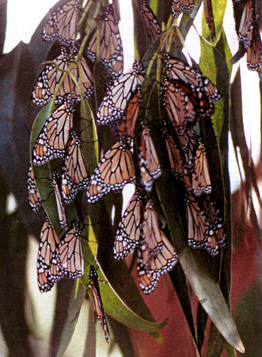
  • Most monarchs in California spend the winter months roosting in eucalyptus trees. These trees are being destroyed in East Bay parks where monarchs have roosted in the past, such as Point Pinole.

    There is no evidence that destroying non-native trees will “enhance wildlife habitat.” In fact, wildlife habitat is being destroyed by “fuels management” projects.

The destruction of non-native trees is also controversial because the stumps of the trees and shrubs that are cut down must be sprayed with herbicide to prevent them from resprouting.  The park district used an average of 26 gallons of Garlon each year from 2000 to 2015 and 39 gallons in 2016, for that purpose.

There is a wide range of opinions about the tree removals that the park district has done since their program began in 2011, after approval of the “Wildfire Hazard Reduction and Resource Management Plan” and the associated Environmental Impact Report.  At one extreme, some people want the park district to destroy ALL non-native trees on its property.  They consider “thinning” inadequate. The Sierra Club is in that camp and has sued to enforce their wishes.  At the other extreme, some people don’t want any trees to be removed, although most would make an exception for dead and hazardous trees.
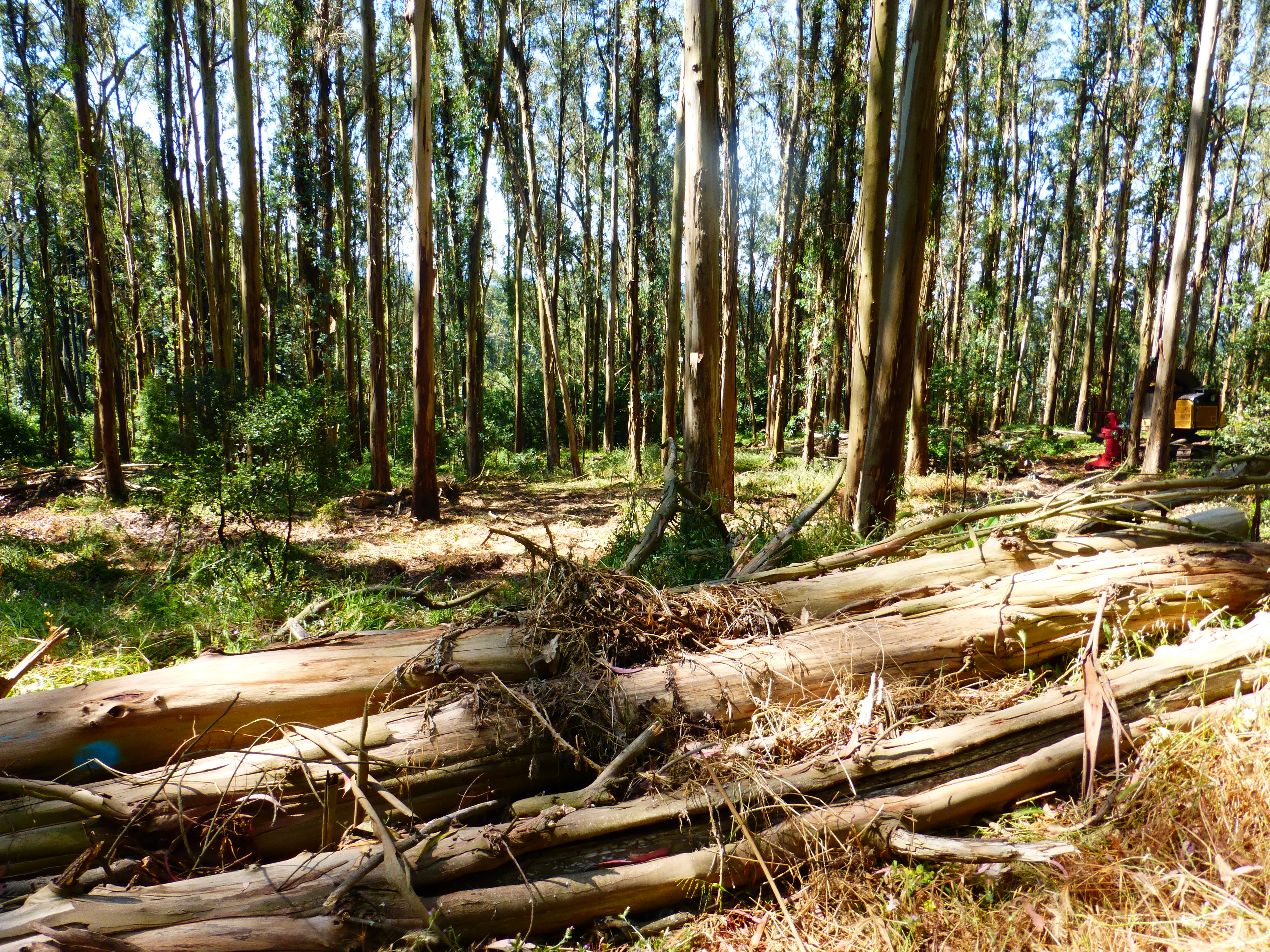
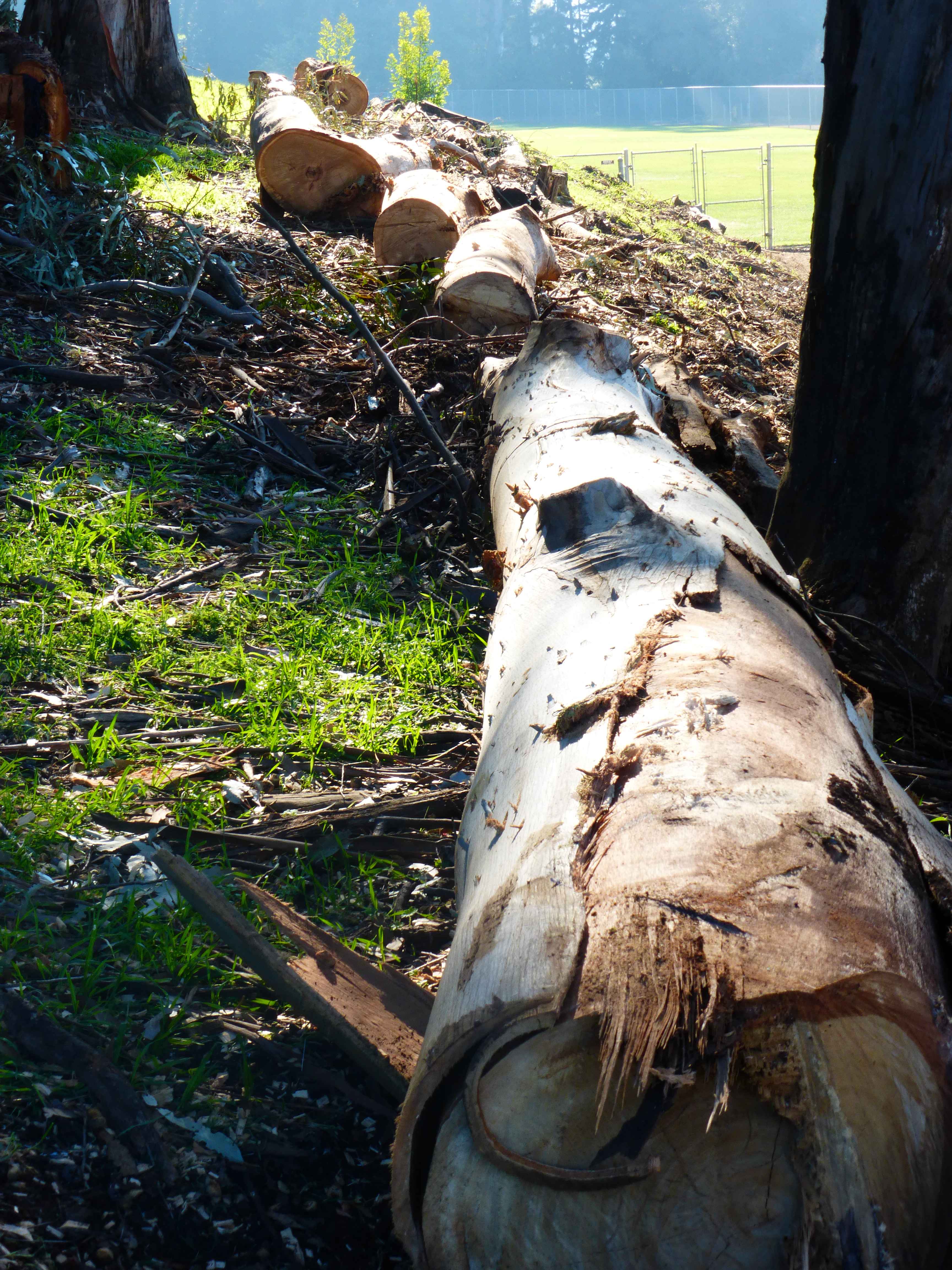
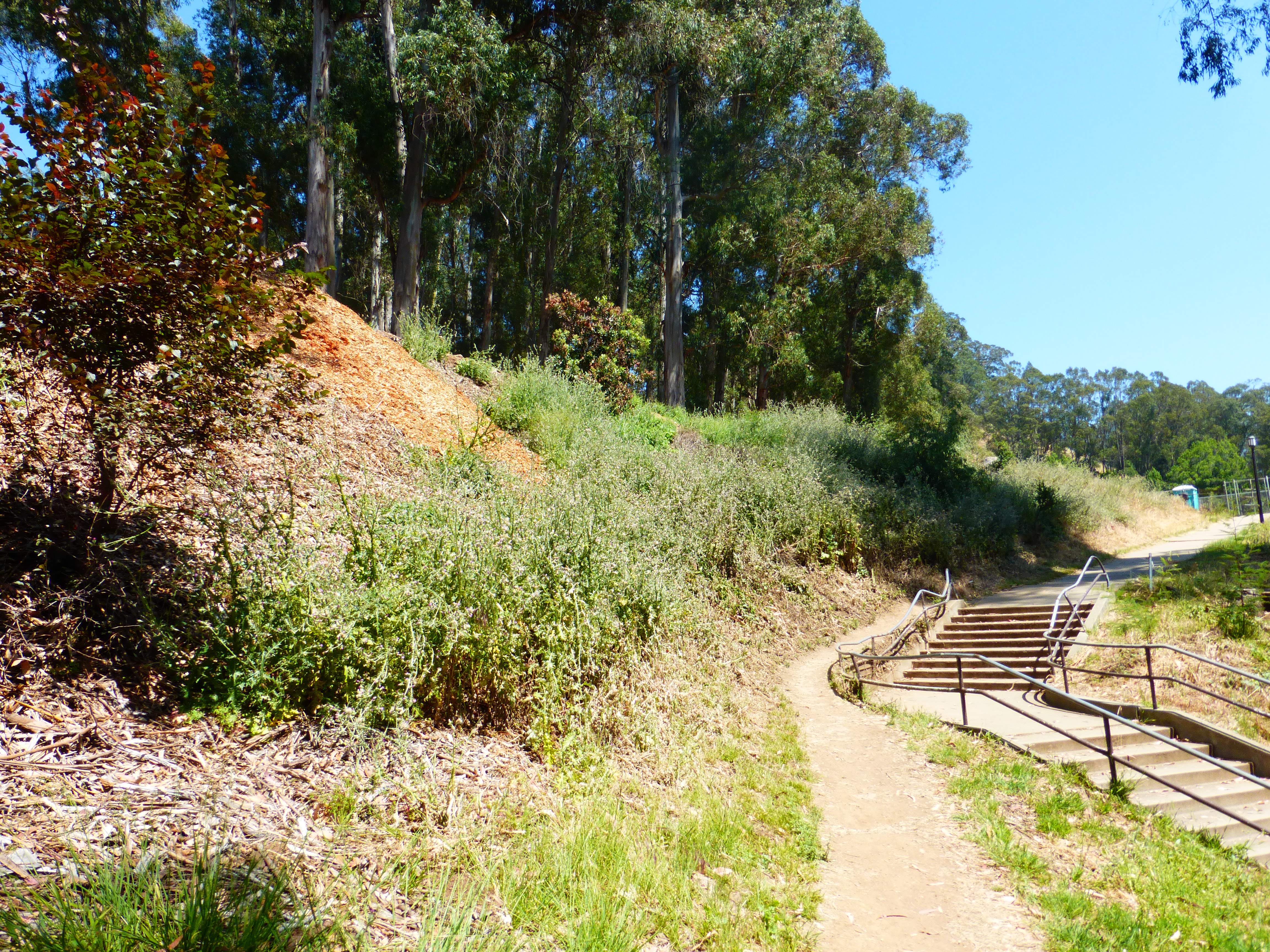
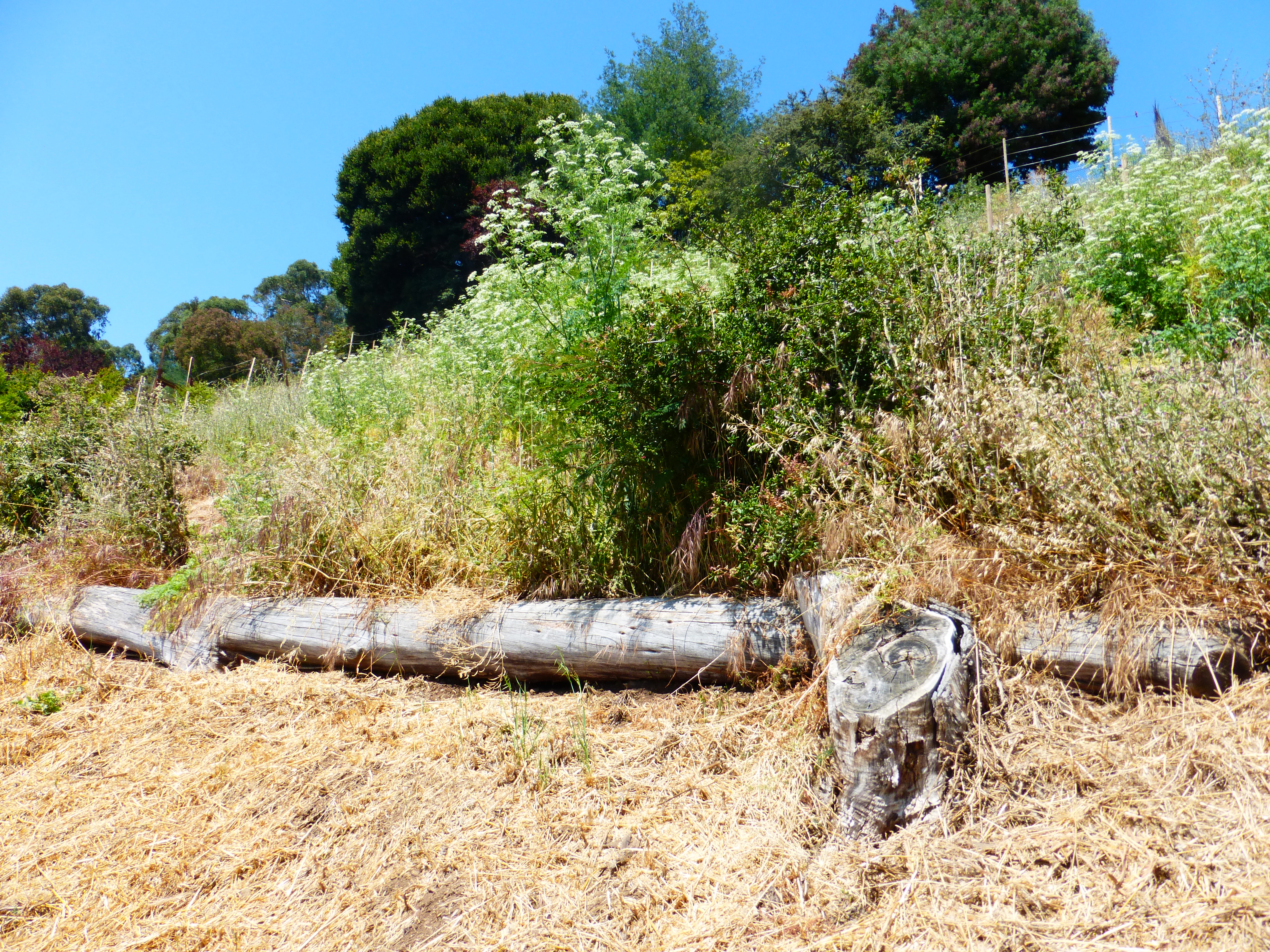
Tilden Park, Recommended Treatment Area TI001, June 5, 2016. This in one of the projects of East Bay Regional Park District, in process

After observing the park district’s tree removal projects, I have reached the conclusion that they represent a middle ground that I can accept because in many cases the canopy is intact and the forest floor is still shaded.  The shade retains the moisture that retards fire ignition as well as suppresses the growth of weeds that ignite more easily during the dry season.  In the 20+ years that I have defended our urban forest, I was always willing to accept a compromise and the park district’s methods look like a compromise to me.  I still have concerns about tree removals and they are explained HERE.  You must reach your own conclusions.

So, what’s the beef?

Unfortunately, coming to terms with the park district’s tree removals has not resolved my misgivings about how Measure CC money has been used.  In a nutshell, I believe that the park district’s “resource management” projects are based on outdated conservation practices.  I believe the park district is trying to re-create historic landscapes that are no longer adapted to environmental conditions.  Their projects are often not successful because they do not take the reality of climate change into consideration, nor do they look to the future of our environment.  They are stuck in the past.

One of the projects funded by Measure CC is typical: the effort to eradicate non-native spartina marsh grass from all park properties. The park district has been participating in the effort to eradicate all non-native spartina marsh grass from the entire West Coast for 14 years.  In the first few years, EBPRD aerial sprayed from helicopters several hundred gallons of herbicide per year.  Now the quantity of herbicide is about 25 gallons per year.

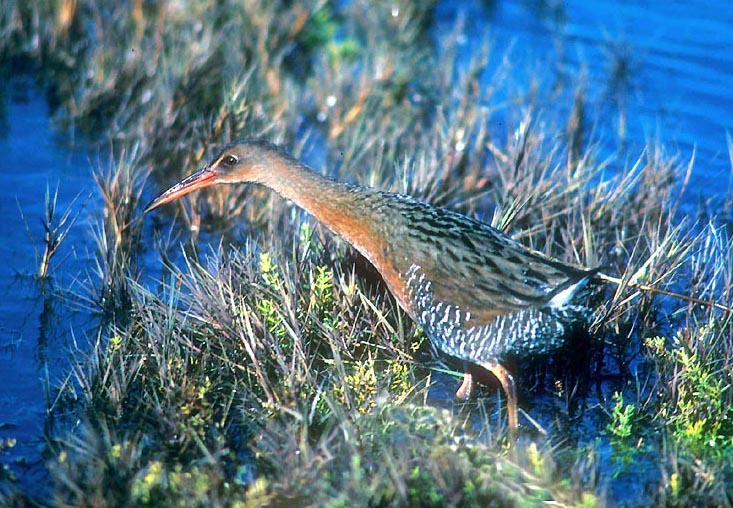
California Clapper Rail

We have known for several years that the eradication of non-native spartina has decimated the population of endangered California rails.  In 2016, a paper was published in a peer reviewed scientific journal about the huge declines in the rail population that were caused by the eradication of spartina.

The reason why the rails have been harmed by the eradication of their habitat is that non-native spartina provides superior cover for the rail.  The non-native species of spartina grows taller, more densely, and it doesn’t die back in the winter as the native species of spartina does.  When the rail begins its nesting season, there is no cover for the birds.  They are therefore being killed by their many predators.

The fact that non-native spartina provides superior cover for the birds is related to a second issue.  Non-native spartina provides superior protection from winter storm surges compared to the native species which provides no protection, even when it grows and it is NOT growing.

The US Geological Survey recently reported that sea level on the Coast of California is predicted to rise as much as 10 feet in just 70 years.  USGS predicted that 67% of Southern California’s beaches are expected to be lost by the end of the century.  Marsh grass for coastal protection is more important than ever.

The third issue is that eradicating non-native spartina has not resulted in the return of native spartina.  Even when extensive planting has been done, native spartina does not provide habitat or storm surge protection in the San Francisco Bay Area.  We should be asking if pouring hundreds of gallons of herbicide on the ground might be a factor in the unsuccessful attempt to bring native spartina back to the Bay Area.

Finally, recently published studies that compared native with non-native marsh grasses and aquatic plants with respect to the ecological functions they perform.  These studies both say, “If you look at the role of exotic water plants in an ecosystem, you won’t find any significant differences compared to indigenous species.”

The spartina eradication project is an example of conservation that no longer makes sense.  It damages the environment with herbicides.  It destroys the habitat of rare birds.  It exposes our shoreline to strong storm surges and rising sea levels.  Native vegetation does not return when it is eradicated.

Looking forward, not back

The parks are very important to me.  I visit them often and I treasure those visits.  I would like to vote for Measure CC.  I hope that the measure on the ballot will give me a reason to vote for it.

I will be looking for a revised definition of “resource management” in the ballot measure, one that acknowledges that climate change is the environmental issue of our time and that conservation must be consistent with the changes that have already occurred, as well as look forward to the changes that are anticipated in the future.  Specifically, “resource management” must respect the landscape we have now, which means not trying to eradicate it, particularly by spraying it with herbicides.  Resource management projects must be based on reality, rather than on fantasies about the past.

Opportunities to tell EBRPD what you want from Measure CC

East Bay Regional Park District is holding public meetings about Measure CC to give the public the opportunity to provide input regarding future park needs and priorities:

November 4, 10-12, Harrison Recreation Center, 1450 High St, Alameda

November 8, 2:30-4:30 pm, David Wendel Conference Center, 1111 Broadway, 19th Floor, Oakland

EBRPD asks that the public RSVP by sending an email to Monique Salas at msalas@ebparks.org or call 510-544-2008.

If you can’t attend, please send written feedback here:  publicinformation@ebparks.org.  Please tell East Bay Regional Park District what you want Measure CC funding to pay for. 

  1. Full Text of Measure CC
  2. Agenda of Park Advisory Committee, June 26, 2017. Scroll down to Measure CC Renewal Spending Plan

Sierra Club: Puppetmaster of Destruction

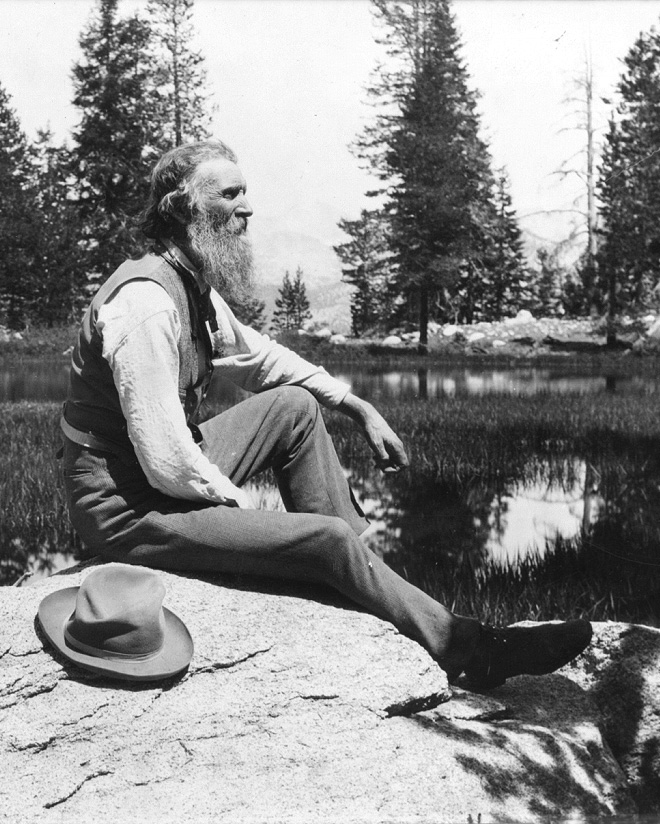
John Muir is the founder of the Sierra Club. He would disgusted by the Club's advocacy for deforestation. He planted eucalyptus trees on his property in Martinez. He was as fond of eucalyptus as those who fight for their preservation.
John Muir is the founder of the Sierra Club. He would be disgusted by the Club’s advocacy for deforestation. He planted eucalyptus trees on his property in Martinez. He was as fond of eucalyptus as those who fight for their preservation.

We are grateful to Marg Hall, member of the Forest Action Brigade for this guest post about the role the Sierra Club is playing in the destruction of our urban forest and the poisoning of our public lands.


For the past year, members of the Forest Action Brigade have been spotlighting the Sierra Club as part of a larger campaign to stop the destruction of the trees in the East Bay Hills. This article answers the question: “Why focus on the Sierra Club?”

Long associated with environmental stewardship, the Sierra Club is a major player in local politics. Because so many Bay Area residents prioritize environmental protection, the Sierra Club enjoys lots of political capital, a ton of money, a deep bench of litigators, and the respect and fear of local politicians. They also have an entrenched leadership that pretends to be democratic, but in fact pushes around grass roots environmentalists, suppresses internal debate and dictates to local land managers.

As readers of Million Trees well know, the SF Bay Chapter of the Sierra Club supports deforestation and the use of pesticides in the East Bay Hills. Some of us have concluded that they not only support this project, but are a major behind-the-scenes driver.

I first heard about the Club’s support for local deforestation about 6 years ago at a FEMA scoping hearing for the project Environmental Impact Statement.  Naïve me, I thought, “Oh good! the Sierra Club is here, and certainly they will weigh in on the right side of this issue.”   This is where my education began. The speaker representing the Sierra Club explained that they support this project and of course they will use pesticides, because that’s the only way to rid our parks of unwanted vegetation.  Wow! Pesticides?  “Unwanted plants”?

Until then, I had been a Club member for a number of years, thinking that the Sierra Club did good things. Before voting in our very complicated local elections, I’d check to see who and what they endorsed.  I supported bond measure CC (which the EBRPD uses in part to fund their eucalyptus tree removal) back in 2004 because, well, what could be wrong with increasing funding for the East Bay Regional Parks District (EBRPD)? Nowhere in the ballot measure did they mention pesticides.  And as a former building inspector, the “fire hazard” reduction part sounded good. I thought the discussion in favor of native plants meant not planting English style lawns or plants in your garden that need lots of water. That sounded reasonable for a water scarce region.

Like so many of my neighbors, I’m neither a botanist nor a wildlife biologist, but I love the local parks and visit them almost daily.  I trusted the Sierra Club to “protect” the environment. I suspect a lot of folks do the same.  Now, after delving deeply into this local issue, I know better.  The local Sierra Club has a fanatical obsession with eradication, with waging a war on non-native plants in our local parks. This agenda drives much of their work. Many voters follow their lead, basing decisions in the voting booth on blind faith. Politicians go along with the Sierra Club agenda in order to gain Club endorsement.  Land managers must follow the lead of their elected bosses.  All one needs to do is invoke the label “non-native,” and weapons of war are deployed: ground troops of weed pullers, tree cutters, pesticide sprayers, imported “biologics” (bugs and germs), and even, on occasion, aerial bombardment of pesticides. Other mainstream environmental organizations (The World Wildlife Fund, Audubon Society) also participate in this war, but it’s the local Sierra Club that provides the propaganda and the political clout behind this horrible deforestation plan. It’s the Sierra Club that sits down on a regular basis with the managers of the East Bay Regional Park District to dictate the terms under which they must operate.  And when the EBRPD fails to fall in line, the Sierra club pulled out the big guns and sued in an attempt to force them to cut down all of the eucalyptus trees in the project areas, rather than a “thinning” plan that EBRPD preferred.

Here’s an example of the kind of hold that the Sierra Club has over the EBRPD.  Through a public records request, we obtained a letter (dated April 28, 2015) to the parks district governing board from Norman LaForce, long time Chairperson of the Sierra Club’s Public Lands Committee. The letter laid out in great detail the kind of compliance he expects in order for the EBRPD to obtain Sierra Club endorsement of Measure CC renewal (which expires in 2020).  Mr LaForce is perhaps the single most influential person promoting the local club’s nativist agenda. (emphasis added)

“The Sierra Club played a major and key role in the creation of Measure CC and the projects for which money would be spent….

“…Vegetation management that restores native habitat is less costly than programs that merely thin non-natives.  Native habitat that is restored in the fire prone areas that are currently eucalyptus plantations is less costly to maintain on an annual basis than a program of thinning non-native eucalyptus and other non-native trees.

“Hence, the Sierra Club believes it is critical that in any renewal of Measure CC funding for vegetation management should be increased for the removal of non-natives such as eucalyptus and their replacement with restored native habitat. If the Park District wants to continue with a program that merely thins the non-native ecualyputs (sic) and other non-ntaive (sic) trees, then it must find other funds for those purposes. Future tax money from a renewal of Measure CC funds should not be used to thin eucalyptus but must be allocated to the restoration of native habitat.”

The letter goes on to detail the Sierra Club’s position on a variety of other issues and projects, most of which involve “restoration”, which sounds good, but is a code word for removal of non-native plants by any means necessary, including the use of herbicides. Here’s a link to the complete letter:  Sierra Club dictates terms of Measure CC endorsement

I want to it make clear that we are environmentalists.  We support some of the same goals as the Sierra Club: opposition to XL pipeline, fracking, refinery expansion, use of coal, environmental racism.  We are not right wing climate deniers—one of the arguments Sierra Club uses to marginalize us.  The Sierra Club is on the wrong side of this issue and we want them to stop bullying local officials into this war against trees. John Muir, who loved eucalyptus trees, would weep at this travesty.

Marg Hall, Forest Action Brigade

Land Management: The Good, the Bad, and the Ugly

In January 2015, UC Berkeley destroyed about 25 eucalyptus trees at the top of Dwight Way, above the intersection of Sports Lane.  We visited the area shortly after the trees were destroyed and told our readers about the project.  We also reported that the project was an example of the huge gap between policy and practice in UC Berkeley’s tree removal projects.  The following is an excerpt from a letter that a member of the public sent to FEMA about this project, detailing the discrepancies between UC Berkeley’s theoretical commitments to “best management practices” and their actual land management practices:

  • Green dye is added to Garlon and sprayed on the stump of the tree shortly after it is cut down. January 2015
    Green dye is added to Garlon and sprayed on the stump of the tree shortly after it is cut down. January 2015

    “The stumps of the trees that were removed have been dribbled with green dye, indicating they were sprayed with herbicide to prevent them from resprouting.  However, no herbicide application notices were posted at the site as required by law* and as described in the Final Environment Impact Statement for the FEMA grants: “In addition to the herbicide application measures, the subapplicants would follow procedures for public notification and education, including posting the timing, location, and appropriate amounts and types of pesticides or other chemicals to be applied at least 24 hours in advance.” (EIS, page 5.10-14)

  • “The Final EIS also states that “in general” most tree removals will be done “from August to November to avoid the wet season and the bird nesting and fledging season.” (EIS page 3-34) This commitment made by UC Berkeley in the EIS has been violated by this round of tree removals in January after heavy rains.
  • “In addition to the approximately 25 trees that were recently destroyed, we counted over 100 stumps that have been destroyed in this area in the past. This area is not described in the Cumulative Impact Section (EIS 6.0) of the EIS. In other words, cumulative impact of the proposed FEMA projects is underestimated by the EIS.
Tree removals, Dwight Way and Sports Lane. January 2015

Consequences of tree removals

One of our readers contacted us in late May 2016, suggesting that we revisit this location to see the consequences of tree removals in January 2015.  So, we went to take a look.  The scene some 18 months later is a stark reminder of why we are opposed to the destruction of all non-native trees in the East Bay Hills.

Dwight Way and Sports Lane. May 2016

Where all of the trees were destroyed in January 2015, the ground is now completely covered in non-native weeds.  There are several species of thistle and poison hemlock that are over 6 feet tall.

Dwight Way and Sports Lane. May 2016

In some places, the trees were only thinned and the tree canopy is still intact.  The shaded forest floor is significantly less covered in tall weeds.

Dwight Way and Sports Lane. May 2016

We also saw the evidence of attempts at weed control.  In some places there was a sharp dividing line between dead weeds and green weeds, suggesting that the brown areas had been sprayed with herbicide.  In other places, the grassy weeds seemed to be have been cut down, perhaps with a weed whacker.  A sign indicated that goats were also being used to graze the weeds.

Dwight Way and Sports Lane. May 2016

Misguided choices create more maintenance issues

When the tree canopy is destroyed, increased sunlight creates opportunities for weeds to colonize the bare ground.  Once the weeds take over, land managers are forced to use herbicides to reduce the weed growth.  The only alternatives to using herbicide are more costly, such as hand-operated mechanical methods or renting goat herds.  This is a man-made problem that could have been avoided by leaving the tree canopy intact.

However, we don’t want to leave our readers with the impression that we support the radical thinning of our eucalyptus forest.  We are opposed to such thinning because the herbicide that is used to prevent the trees from resprouting is mobile in the soil.  It kills the tree by killing its roots.  In a dense eucalyptus forest, the roots of the trees are intertwined.  The herbicide used on one tree travels through the intertwined roots and damages surrounding trees that were not destroyed.

The herbicide also damages mycorrhizal fungi in the soil because they are extensions of the tree’s roots.  Mycorrhizal fungi play an important role in forest health because they transfer moisture and nutrients from the soil to the tree.  Therefore, the success of a succession landscape is handicapped by the damage done to the soil.

Also, the trees develop their defenses against the wind as they grow in a specific location with specific wind conditions.  If they are suddenly exposed to a great deal more wind because they have lost the protection provided by their neighbors, the result is often catastrophic windthrow.  That is, the chance that a tree will fall down greatly increases when it is exposed suddenly to more wind than it grew in.

The idea of “thinning” is an appealing compromise to a heated controversy.  However, the consequences of thinning must be weighed against the entirely theoretical benefit of reduced fire hazard.  The cost/benefit analysis does not make a strong argument in favor of radical thinning.

The continuum from Good to Bad land management

East Bay Regional Park District began to implement its “Wildfire Hazard Reduction and Resource Management Plan” in 2011, after the Environmental Impact Report for the plan was approved.  According to a presentation made by Fire Chief McCormack to the Executive Committee of the Board of Directors on June 3rd, there are 3,100 acres of park land to be treated for fuels management over the life of the plan, of which 863 acres will be done by the end of 2016 and 64 acres will be done in 2017.  The Fire Chief said, in answer to a question, that 1,360 acres (44%) of the total acres are forested with eucalyptus.

Tilden Park, Recommended Treatment Area TI001, June 5, 2016

We went to see one of the “initial treatment” projects in Tilden Park on June 5th.  “Recommended Treatment Area” TI001 is along Nimitz Way, which is a paved road/path on the ridgeline.  About 17 acres of it is heavily forested in eucalyptus on both sides of the road.  The project apparently started recently and is not yet completed, judging by the presence of a lot of heavy equipment still on site.  So, these observations of this project should be considered preliminary:

  • The smallest trees are being cut down and those immediately adjacent to the road.
  • The tree canopy is intact. That is, the forest floor is still shaded.
  • The stumps were sprayed with herbicide, judging by the blue dye on the stumps.
  • There were pesticide application notices, but they had been wiped clean. Presumably there was information on those notices during the spraying and perhaps for some time after the spraying, then the information was removed.

P1030688

P1030677

We must say that we were not horrified by what we saw.  There are still a lot of trees left and we are encouraged that the forest floor is still shaded.  As we have reported, when the eucalyptus forest is clear-cut the bare ground is quickly colonized by non-native weeds, which then must be sprayed with herbicide.  Since we don’t know the tree density prior to the project and what it will be when the project is complete, we can’t say what percentage of the trees were destroyed.

We plan to visit this area again after a year or so to answer these questions:

  • Is there evidence that the trees that remain were damaged or killed by the use of herbicides on the neighboring trees that were destroyed?
  • Is there evidence of fallen trees, suggesting that increased wind in the forest caused windfall?

One of our concerns about these projects was not addressed by what we saw.  The beginning of June is still in the height of bird breeding and nesting season.  We heard the calls of many nesting birds, including quail.  We are surprised and disappointed that this project began before the end of nesting season, which is the end of July.  We also wonder if some effort was made to check for nesting birds before trees were cut down.  There is no mention in the requests for proposal that the company doing the work was required to do such nest surveys before the work began.

We are describing a project that is not yet complete.  If many more trees are destroyed, it’s possible that the tree canopy will be destroyed and the forest floor will not be shaded.  If the tree canopy is intact when the project is complete, we consider this project less damaging than the clear-cuts being done by UC Berkeley and being demanded by the lawsuit of the Sierra Club.  On the continuum from Good to Bad projects, East Bay Regional Park District is closer to Good than to Bad.  EBRPD also deserves credit for supplying more information to the public about their projects than other land managers, including posting pesticide application notices.


*Last week we reported that we recently learned that pesticide application notices are not required by California law before, during, or after the spraying of Garlon or glyphosate for non-agricultural purposes.  You can read about that HERE.


Update:  On October 18, 2016, we went to see the result of “initial treatment” of Recommended Treatment Area TI001 in Tilden Park.  We confirmed with East Bay Regional Park District that initial treatment is complete, although they reserve the right to destroy more trees “if we discover something we missed this summer.” 

Our over-all impression of the project is not substantially changed from our first visit in June 2016, shortly after the project began.  These are our observations:

  • The project is accurately described by the “prescription” for the Recommended Treatment Area TI001. The prescription is available on EBRPD’s website HERE.
  • With the exception of a few small areas at the ends of the project area, trees were thinned rather than clear-cut. The trees are on average about 25 feet apart.
  • The canopy is still intact and the forest floor is shaded, though not heavily.
  • New growth of poison oak and blackberry is already emerging from the leaf litter.
Initial treatment of Recommended Treatment Area TI001 in Tilden Park, October 2016
New sprouts of poison oak in TI 001.

As we have said before, maintaining the canopy should suppress the growth of weeds and retain moisture in the leaf litter.  If so, fire hazards are not substantially increased by this type of treatment.

However, a few of our objections to these projects remain:

  • Pesticides were used to prevent the trees from resprouting and also sprayed on the understory to destroy the fuel ladder to the trees.
  • The pesticides that are used are known to damage the soil, which could damage the trees that remain as well as whatever plants remain.
  • The trees that remain are now more vulnerable to windthrow.
  • Valuable habitat has been lost and wildlife may have been harmed by the pesticides that were used and will be used going forward.

In conclusion, even radical thinning is preferable to clear cuts.  However, the benefits of thinning are questionable, particularly because of the pesticides used by these projects.

Bees are harmed by nativism

As our readers know, there are many reasons why we are opposed to the projects that are billed as native plant “restorations” but, in fact, often do a great deal of damage to the environment.  Of the many bogus justifications for these harmful projects, one of the most patently false is that the projects benefit wildlife.  Today, we are publishing a letter from one of our readers about the many ways in which nativism is harmful to bees.

“I thought of you, and your ongoing fight against short-sighted nativism, yesterday as I was doing research for a project on bees. I was interviewing a second-generation beekeeper, who’s working closely with geneticists and entomologists to develop hardy strains of bees, and he mentioned two things I thought might help to highlight how the actions of groups like the NAP may actually be contributing to colony collapse:

  1. The chemicals they use. Of course, it’s been broadly publicized that glyphosate and neonicotinoids are harmful to bees, and the AG industry folks (and possibly the native plant folks?) counter that they are far less deadly to honey bees than other types of herbicides and pesticides…but the beekeeper I spoke with indicated that saying something is “less deadly” to bees misses the harm these chemicals do to colonies by weakening their ability to fight viruses, mites, etc. Bees foraging in chemical-laden fields bring residues of these compounds back to the hive, to the queen, which he likened to “placing a pregnant woman in a refinery.” The result is a dramatically shortened lifespan for the queen and a colony that’s less strong and healthy, with lower resistance to common diseases. So the chemical may not kill the bees outright, but it still contributes to their death in the end.
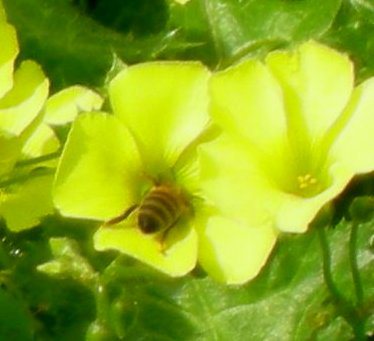
  2. Honeybee on oxalis flower, another non-native plant being eradicated with herbicide.
    Honeybee on oxalis flower, another non-native plant being eradicated with herbicide.

    Honey bees are not native to America; they’re European. And the push to eradicate non-native “weeds” has decimated their forage…essentially starving them out. He cited the case of yellow star thistle, which, he said, may have come over from Europe in the wool of sheep. Highly invasive, it used to be everywhere in CA, and it was an important source of nectar and pollen for honeybees. Then, a few decades ago, the government introduced weevils to control the plant, in the process depriving the bees of a vital food source. Beekeepers have had to range further and further afield to find areas with adequate forage for their bees.

Bumblebee on Cotoneaster, Albany Bulb. Another target for eradication.

Of course, big agriculture (subsidized by the government) has contributed to the problem as well, by plowing up land that used to grow clover and alfalfa in favor of corn (for ethanol) and soybeans. But, for me anyway, this information about non-native bees needing non-native plants was a revelation…. a real ‘a-ha’ moment that I thought could be useful in waking up well-meaning folks who may equate “native plants” with “good for bees.”

Oh, and the beekeeper also told me that one third of the food Americans eat is pollinated by honey bees….are we willing to reduce our food supply by 1/3 for the sake of “restoring” a landscape native to a time when agriculture was not prominent in California?”

The value of yellow star-thistle to bees is but one example of the value of non-native plants to insects and other animals.  In the case of bees, the eradication of hundreds of thousands of eucalyptus trees all over California has deprived bees and hummingbirds of one of the few sources of winter nectar in California.  Eucalyptus blooms from December to May, at a time when there are few other sources of nectar.  HERE is an article about the loss of this important resource to bee keepers in California.

Eucalyptus and bee. Painting by Brian Stewart.

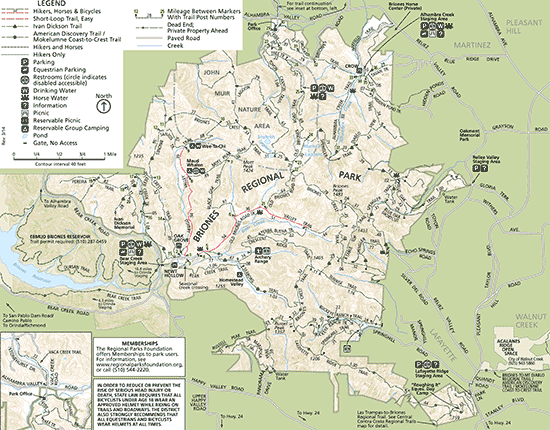
Yellow star-thistle is one of many eradication targets of nativists in California.  East Bay Regional Park District (EBRPD) has been trying to eradicate it in their parks for decades.  We recently learned that EBRPD was planning an aerial spraying of herbicide from a helicopter on 200 acres of yellow star thistle in Briones Park.   This was a particularly controversial herbicide application for several reasons:

  • Briones Park is adjacent to the watershed surrounding Briones Reservoir, which stores the drinking water of surrounding communities.briones_450w_32c
  • The herbicide EBRPD was planning to use was Milestone, which is known to be very mobile and persistent in the soil. For that reason, the State of New York refused to approve the sale of Milestone because they were concerned about contamination of ground water.
  • Aerial spraying of pesticides by helicopter is the most dangerous application method because it greatly increases the chances of drift into non-target areas, including residential areas.

Our team of collaborators jumped into action to prevent this spraying from being done.  We organized a telephone and email campaign directed to responsible staff and Board members at both East Bay Regional Park District and East Bay Municipal Water District, which is responsible for drinking water in the East Bay.

I am pleased to report that EBRPD announced within a few days of our campaign that they were permanently cancelling this aerial application of herbicides at Briones Park.  They will continue to try to eradicate yellow star thistle using other methods.

Lessons learned

When pesticides are used in native plant “restorations,” the claim that such projects are beneficial seem utterly dishonest.  Beneficial to whom?  Certainly not the animals and humans who are exposed to these toxic chemicals.

If the public does not want public land managers to use pesticides on our public lands, we must object when they do.  If we don’t object, we get the land management we deserve.  You will be alerted to such opportunities to participate in these campaigns to influence land managers by “liking” Facebook pages:  “Death of a Million Trees” and “Save the East Bay Hills.”

It is a team effort to learn about what is happening in our public lands and to participate in the decisions that affect our communities.  We are therefore grateful to the reader who shared her conversation with a beekeeper.  We encourage others to share their knowledge so that we can be as effective as possible.  Knowledge is power!

Hills Conservation Network files suit to stop FEMA grants in East Bay Hills

Ten years after UC Berkeley, City of Oakland, and East Bay Regional Park District applied for FEMA grants to fund the destruction of hundreds of thousands of non-native trees on 1,000 acres of public open space, FEMA announced its final decision on Thursday, March 5, 2015.  FEMA’s announcement of that final decision, which was sent to those who commented on the draft plans, implied that the projects had been revised to be less destructive.  In fact, those who take the time to read the final version of the plans will learn that the original plans are fundamentally unchanged in the final version.

East Bay Regional Park District (EBRPD) will destroy about 90% of the trees in its project area, as originally planned.  “Thinning” is not an accurate description of EBRPD’s project.  UC Berkeley (UCB) and City of Oakland will destroy 100% of all non-native trees on their project properties.  On a small portion of UCB and Oakland property (29 of 460 acres), tree removals will be phased over the 10-year project period.  In other words, the final version of these projects will destroy as many trees as originally proposed by the grant applicants.  However, FEMA has refused to fund tree removals on Frowning Ridge (185 acres) because UC Berkeley removed hundreds of trees there before the Environmental Impact Statement was complete, in violation of FEMA policy.

UC Berkeley destroyed hundreds of trees on Frowning Ridge in August 2014, before the Environmental Impact Statement was complete.

The Hills Conservation Network (HCN) filed suit to prevent the funding and implementation of these projects on March 6, 2015.  Below is the press release announcing HCN’s suit.  Please contact the Hills Conservation Network if you wish to contribute to the cost of this suit:    http://www.hillsconservationnetwork.org/HillsConservation3/Blog/Blog.html or email inquiries@hillsconservationnetwork.org


Hills Conservation Network

Preserving the East Bay Hills

March 6, 2015                                                                                                          

For Immediate Release

HCN announces lawsuit against FEMA EIS

Today the Hills Conservation Network, an Oakland, CA based environmental non-­‐profit, filed suit against the Federal Emergency Management Agency, also naming the Regents of the University of California, the City of Oakland, and East Bay Regional Park District in the suit.

The suit was filed in opposition to the Record of Decision released March 5, 2015 finalizing FEMA’s decision to award approximately $7.5 million in fire risk mitigation grants. The suit contends that the Environmental Impact Study used as part of the grant process was significantly flawed, and as such cannot be used to justify awarding these funds.

The lawsuit argues that FEMA did not consider a reasonable range of alternatives and reached unsupportable conclusions in deciding to allow the three agencies named in the suit to remove large numbers of healthy trees, with the goal of eradicating certain species of non-­‐native trees (acacia, Monterey pine, eucalyptus) by the end of ten years.  HCN proposed a more nuanced approach that would have resulted in higher levels of fire risk mitigation at a much lower cost and with far less environmental damage than the current plan that calls for the removal of well in excess of 100,000 healthy trees that provide shade canopy (preventing the growth of highly flammable weeds) as well as storing tons of carbon that contribute to the greenhouse gases warming our planet.

This step marks the latest chapter in this process that began in 2005. During the Draft EIS review in 2013 approximately 13,000 comment letters were received by FEMA, 90% of them opposed to the proposed projects. In response to this public outcry FEMA reworked the EIS, and while the Final EIS is somewhat less destructive than the Draft EIS, it essentially calls for the same level of environmental damage, but over a longer time period.

The Hills Conservation Network is an Oakland, California based 501c3 comprised of residents of the Oakland hills that were directly affected by the 1991 fire. Several members of the group lost their homes in this conflagration and have committed themselves to driving change in Oakland to ensure that similar events never happen again. Members of HCN have been involved in the Grand Jury investigation of the ’91 fire and in developing enhanced emergency response capabilities in Oakland.

Please direct inquiries to Dan Grassetti at 510-­‐849-­‐2601.

################

Spartina eradication: Herbicides are their dirty little secret

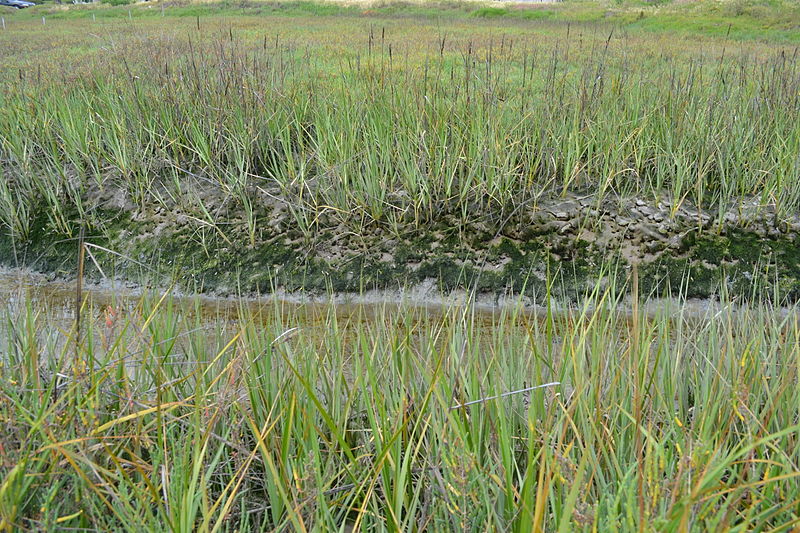
This is a good news/bad news story about the eradication of non-native Spartina marsh grass and the impact it has had on the population of endangered California Clapper Rail:

  • Spartina alterniflora, Smooth Cordgrass.  USDA photo
    Spartina alterniflora, Smooth Cordgrass. USDA photo

    The good newsUS Fish & Wildlife has temporarily halted efforts to eradicate non-native Spartina (Spartina alterniflora) in the San Francisco Bay Area because the population of endangered California Clapper Rail has declined by 50% during the period of eradication efforts from 2005 to 2011. (1)  This problem was identified several years ago and was attributed to the lack of cover for the rail as a result of eradication of non-native Spartina, which grows more densely, taller, and doesn’t die back in winter as the native Spartina does. (2)

  • The bad news:  US Fish & Wildlife attributes this negative impact on the Clapper Rail population on the slow recovery of native Spartina (Spartina foliosa). 
    Spartina foliosa - USFWS
    Spartina foliosa – USFWS

    They do not acknowledge that non-native Spartina provides superior cover compared to the native species.  Nor do they acknowledge that non-native Spartina was killed with herbicides.  Therefore, they do not consider the possibility that the slow recovery of native Spartina may be attributable to the herbicides that were used to kill the non-native plant.  They also continue to claim that the recovery of the endangered California Clapper Rail depends upon the return of native Spartina, despite the overwhelming evidence to the contrary.  The California Clapper Rail is a sub-species of Clapper Rail; the Clapper Rail is abundant on the East and Gulf Coasts and not endangered perhaps because of the superior cover provided by Spartina alterniflora on those coasts. (3)  Based on these fictions, US Fish & Wildlife proposes a new strategy that will simultaneously eradicate non-native Spartina while intensively planting native Spartina.  (1)

We have been following the Spartina eradication project since 2011.  For the benefit of new readers, we will review the issues with a few excerpts from previous posts on Million Trees.

Spartina alterniflora:  Treasured on the East Coast, reviled on the West Coast

Spartina alterniflora (Smooth Cordgrass) is a species of marsh grass native to the Atlantic and Gulf coasts of the United States, where it is considered a valuable plant making important contributions to the coastal ecology:

  • Its dense growth provides protection against storm surge and “erosion control along shorelines, canal banks, levees, and other areas of soil-water interface.” (4)
  • It filters nutrients, sediments and toxins from the water that flows off the land before reaching the ocean, acting as a natural water treatment facility.
  • It provides cover and food for birds, mammals and marine animals that live in the coastal marsh.

Where Smooth Cordgrass has died back in its native range, the dieback has been considered a serious environmental threat:

  • In 2001 the Governor of Louisiana declared a “state of emergency” when Smooth Cordgrass declined and the state obtained $3 million of federal funding to study and hopefully reverse the decline.  This study resulted in the development of a method of aerial seeding of Smooth Cordgrass to restore declining areas of marshland. (5)
  • A similar, but smaller dieback of Smooth Cordgrass in Georgia led to a collaborative research and on-going monitoring effort by 6 research institutions in Georgia.
  • Similar dieback of Smooth Cordgrass has been reported as far north as the coast of Maine.  A researcher at the Connecticut Agricultural Experiment Station is quoted in that report as saying, “In New Orleans, if their marshes were intact, the storm surge of Katrina would not have reached the levees.” (6)

 The war on Smooth Cordgrass on the West Coast

Smooth Cordgrass is not native on the Pacific Coast of the United States.  Therefore it is treated as an alien invader to be eradicated with herbicides:

  • $24 million was spent to eradicate Smooth Cordgrass in San Francisco Bay and Willapa Bay from 2000 to 2010 (7)
  • $16.3 million is projected to be spent on the entire West Coast from 2011 to 2020 (7)

Spartina is being eradicated with an herbicide, imazapyr.  This is a new herbicide about which little is known.  The analysis that was done to justify its use in the Spartina eradication project admits that no studies have been done on its effect on shorebirds, including the endangered Clapper Rail. 

The Material Safety Data Sheet mandated by the Environmental Protection Agency tells us that imazapyr is “not readily biodegradable.”  So, in the event that we eventually learn that this herbicide is harmful to shorebirds and/or to us, we probably should assume that it will still be in the environment in the nearly 200 sites in the San Francisco Estuary on which it has been sprayed.  Imazapyr is also being sprayed–sometimes from helicopters–in hundreds of places along the West Coast, including Oregon and Washington.

Imazapyr is often mixed with glyphosate by the Spartina eradication project.  Glyphosate is a non-selective herbicide.  That is, it kills any plant it is sprayed on at the right stage of its growth.  But imazapyr is far more insidious as a killer of plants because it is known to travel from the roots of the plant that has been sprayed to the roots of other plants.  For that reason, the manufacturer cautions the user NOT to spray near the roots of any plant you don’t want to kill.  For example, the manufacturer says explicitly that imazapyr should not be sprayed under trees, because that tree is likely to be killed, whether or not that was the intention. 

Furthermore, no tests have been conducted on the toxicity of combining multiple pesticides in a single application.  Therefore, we know nothing about the possible synergistic effects of combining imazapyr and glyphosate. 

These facts about the herbicides used to eradicate non-native Spartina bear repeating.  The main herbicide being used is known to be mobile in the soil and persistent in the environment.  The herbicide with which it is often mixed is an indiscriminate killer of any plant on which it is sprayed.  Therefore, the likelihood that these herbicides will prevent the establishment of the new plantings of native Spartina should be taken into consideration.  The entire enterprise seems deeply flawed, both harmful and futile. 

Bringing it home to the Bay Area

So, what does this have to do with you?  If you are concerned about pesticide use, you might be interested in the fact the East Bay Regional Park District (EBRPD) used 203 gallons of imazapyr in 2009 and 121 gallons in 2010 for the sole purpose of eradicating Spartina on their properties.  We don’t know how much imazapyr EBRPD used in 2011, 2012 and 2013, because they haven’t published a report of pesticide use since 2010.  Since their properties are only on the east side of the San Francisco Bay, we should assume that at least that much imazapyr was used by land managers on the west side of the Bay.

 Displacement of Clapper Rails in San Francisco

California Clapper Rail.  British Wikipedia
California Clapper Rail. British Wikipedia

In July 2011, a Clapper Rail was seen and photographed at Heron’s Head in southeastern San Francisco.  There was quite a bit of excitement about this sighting because a Clapper Rail had not been seen in San Francisco for decades.  That excitement dissipated when we learned more about where this bird came from, which provided a probable reason for its arrival.

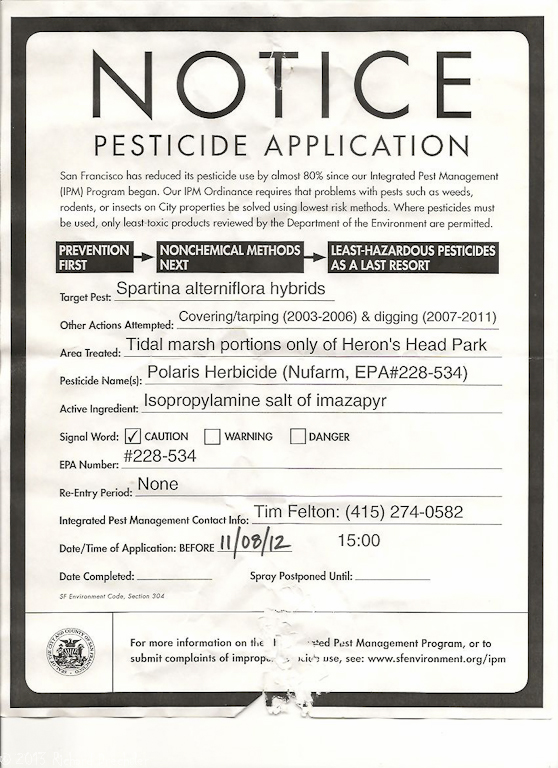
The Clapper Rail was wearing a radio collar that had been put on him and 109 other rails by the USGS to track their movements.  He had moved from Colma Creek, 11 km south of Heron’s Head, which is one of nearly 200 Spartina “control sites” in the San Francisco Estuary.  The bird sighted at Heron’s Head is one of three Clapper Rails that have left Colma Creek since 2007, when the radio collars were placed.  The Spartina control project has been going on for over 10 years, so we have no way of knowing how many Clapper Rails were displaced prior to 2007.  In 2012, non-native Spartina at Heron’s Head was sprayed with herbicides.  Where did the Clapper Rails go from there?  Was there anywhere left for them to hide?

Pesticide Application Notice, Heron's Head, 2012
Pesticide Application Notice, Heron’s Head, 2012

As our readers know, native plant advocates claim their “restoration” projects benefit wildlife.  They can offer no evidence for this claim.  But there is considerable evidence that proves them wrong.  The endangered California Clapper Rail is one such case.


(1)     Adam Lambert et.al., “Optimal approaches for balancing invasive species eradication and endangered species management,” Science, May 30, 2014, vol. 344 Issue 6187

(2)     “West Coast Governors’ Agreement on Ocean Health, Spartina Eradication Action Coordination Team Work Plan,” Released May 2010, page 12

(3)     Cornell Ornithology Lab:  http://www.allaboutbirds.org/guide/clapper_rail/id

(4)     “Smooth Cordgrass,” USDA/NRCS Plant Fact Sheet.

(5)  Dorset Hurley, “Geogia’s Marsh Die Back and Louisiana’s Marsh Browning,” Altamaha Riverkeeper

(6)  “What’s killing off our salt marshes,” Going Coastal Magazine, September 15, 2008

(7) “West Coast Governor’s Agreement on Ocean Health,” May 2010, page 5-6

Media coverage of FEMA projects: The good, the bad, and the ugly

Anise Swallowtail butterfly in non-native fennel

The public comment period for the FEMA project in the East Bay that proposes to destroy nearly half a million trees will close on Monday, June 17, 2013, at midnight.  If you want to express your opinion of these projects, it’s time to do so.  Detailed information about the projects and how to comment on them is available HERE.

The projects have drawn quite a bit of media coverage, starting with Beyond the Chron blog in mid-May and quickly picked up by many other internet sources of information.  Most of those internet sources referred their readers to the Million Trees blog for more information.  In May we had over 12,000 visitors to our articles about these projects.

Both the Oakland Tribune and the San Francisco Chronicle covered the story.  The Tribune coverage was appallingly inaccurate and biased.  The Chronicle coverage was more balanced than it usually is about native plant restoration projects, which the Chronicle usually supports without reservation.

The winner of the booby prize for balanced and fair reporting of the projects goes to the Sierra Club Yodeler which expressed its unqualified support for the projects at the same time it demonstrated total ignorance of the projects (or chose to misrepresent them):

  • Sierra Club said, We want to avoid past mistakes, when agencies simply stripped off vegetation and then walked away, leaving the land clear for exotic and even more-flammable vegetation.”  This is precisely what these projects plan to do…destroy everything then walk away without planting anything.
  • Sierra Club said, The Park District is now implementing that program, and we are monitoring the progress.”  If they are monitoring that program, why don’t they know what the Park District is doing?
  • Sierra Club said, The preferred alternative involves application of the herbicide glyphosate (trade name Roundup) to the stumps to prevent re-sprouting. There is no practical way to eliminate eucalyptus infestations without herbicide, and glyphosate is relatively low in toxicity.”  The Sierra Club is simply wrong.  These projects will use Garlon (with active ingredient triclopyr) and/or Stalker (with active ingredient imazapyr)—not glyphosate (Roundup)–to prevent the trees from resprouting.  Both products are rated by the EPA as more toxic, more persistent, and more mobile in the soil than glyphosate.  Glyphosate (Roundup) will be foliar sprayed on non-native vegetation.  Recent studies report that glyphosate (Roundup) is not a benign pesticide.

There are some scathing comments on the Yodeler article from people who know enough about the project plans to inform the Club that they have run off the rails…into the weeds!!  The Club seems not to have noticed this attempt to set them straight.  When someone called them weeks later to ask about the projects, they repeated the same misinformation to the caller.

(Update:  One of our readers informed the Sierra Club of the inaccuracy of its Yodeler report about the FEMA projects in the East Bay (see comment below).  We are pleased to report that the Sierra Club has revised its Yodeler report on June 19, 2013.  It now acknowledges that native plants will not be planted by these projects.  Consistent with the Draft Environmental Impact Statement for these projects, the Yodeler now claims that native plants will be “recruited” into the areas in which non-native plants and trees will be destroyed. 

We think that is an unlikely outcome of these projects and FEMA’s environmental consultant agrees with us about that (explained here).  However, at least the Yodeler article is now consistent with the written plans for the project. 

The Yodeler also acknowledges the use of Garlon to kill the roots of the trees that will be destroyed.

Thanks to our readers for alerting the Sierra Club to the inaccuracy of their description of this project.  We are sorry that the Sierra Club continues to support the project now that they have a better understanding of the written plans. 6/19/13) 

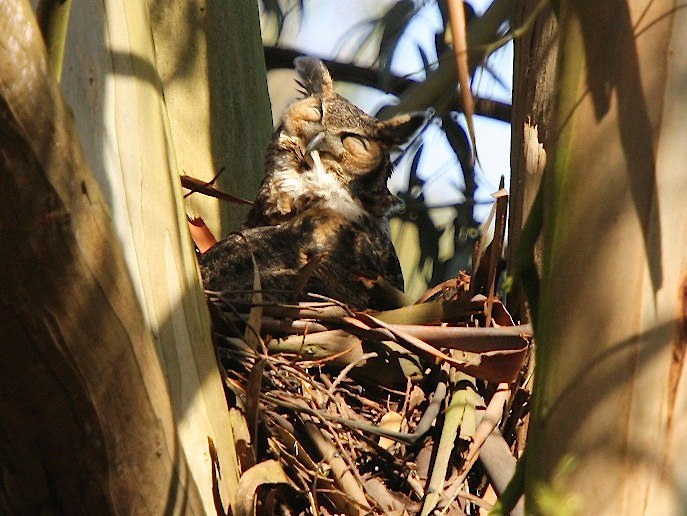
Owl nesting in eucalyptus, courtesy urbanwildness.com

On the positive side of the ledger, we commend the East Bay Express for its article about these projects.  The author deserves credit for actually reading about the projects before she wrote her report!!!  She read the letter from FEMA’s environmental consultant which we reported to our readers here.  In a nutshell, the consultant said that UC Berkeley’s project could increase fire hazards by leaving a 2-foot wood chip mulch on the ground and that conversion to a native landscape was an improbable outcome of the project since nothing will be planted.

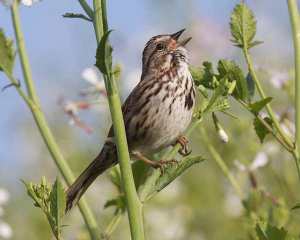
Song Sparrow in non-native wild radish

Our personal favorite for coverage of this project is Nathan J. Winograd’s article, “Biological Xenophobia:  The Environmental Movement’s War on Nature,” which was published by the Huffington Post.   Mr. Winograd is highly qualified to express his opinion of these projects.  He has devoted his personal and professional life to the welfare of animals. He is best known for his advocacy for “no-kill” shelters for our animals.  He was the lawyer for the SPCA in San Francisco when the GGNRA started to destroy non-native trees and fence the public out of their properties to protect their fragile native plant museums.  So, he has been a long-time observer of the destructive and restrictive consequences of native plant projects.  He was prompted to write this article by this latest round of destruction, that is, the FEMA projects in the East Bay.

Here are a few choice phrases from Mr. Winograd’s excellent article:

“Invasion biologists believe that certain plants and animals should be valued more than others if they were at a particular location ‘first.”  When the species that were there ‘first’ are in the same habitat with a species that came later, they assert that the latter should be eradicated.”

 “And the nativist movement is getting worse and increasingly violent, both in rhetoric (fish they don’t value are called ‘missiles with fins’) and in deeds.  At a time of climate change, in a country that needs more trees, not less, nativists in the San Francisco Bay Area are proposing the clear cutting of upwards of half a million trees on San Francisco’s Mount Sutro and in the Oakland and Berkeley hills as part of their ongoing war against the Eucalyptus.  After the trees are clear-cut thousands of gallons of toxic herbicides, will be spread throughout wildlife corridors in order to prevent resprouting.”

An authentic environmentalism would not advocate that humans seek out and destroy living things for simply obeying the dictates of the natural world, such as migration and natural selection. It would not condone the killing of those plants and animals who find themselves in parts of the world where, for whatever arbitrary reason — be they economic, commercial or aesthetic — some humans do not want them to be. An authentic environmentalism would not exacerbate suffering, call for killing and seek the destruction of natural places.”

“Indeed, “invasion biology” is a faux environmentalism, used to disguise the ugly truth about what is really motivating its adherents: an intolerance of the foreign that we have rejected in our treatment of one another, a biological xenophobia that seeks to scapegoat plants and animals for the environmental destruction caused by one species and one species alone: humans.”

There are nearly 500 comments on Mr. Winograd’s article and they are as interesting as the article itself.  They are a microcosm of this debate between nativists and those with a more cosmopolitan view of nature.  We aren’t disinterested observers, so our opinion of the comments of nativists may not be entirely objective.  However, we find many of their comments condescending and uninformed, a contradictory mix of sentiments.

We thank our readers for informing themselves about the FEMA projects and we hope that you now have the information you need to write your public comment by the deadline, June 17, 2013.  Here is where you can send your comment:

  1. Via the project website: http://ebheis.cdmims.com
  2. By email: EBH-EIS-FEMA-RIX@fema.dhs.gov
  3. By mail: P.O. Box 72379, Oakland, CA 94612-8579
  4. By fax: 510-627-7147

These public lands belong to you and the money that will be used to implement these projects is your tax dollars.  So, please tell the people who work for you what you think of these projects.

FEMA projects in the East Bay deny carbon loss

Hummingbird in eucalyptus flower.  Courtesy Melanie Hoffman
Hummingbird in eucalyptus flower. Courtesy Melanie Hofmann

Our readers know that one of many reasons why we object to the destruction of healthy trees is that they are sequestering and storing carbon which is released as carbon dioxide into the atmosphere when the trees are killed and as wood decays.  Carbon dioxide is the predominant greenhouse gas that is causing climate change.  We believe that addressing climate change should be considered our highest environmental priority.

Although we like native plants and would like to conserve them, they will not survive in their historical ranges in a changing climate.  Therefore, native plant advocates should join us in making climate change a higher priority than destroying our existing landscape in places where native plants may no longer be adapted if that destruction contributes to climate change.

Federal and State policies and laws have been adopted to address climate change and the main point of an environmental impact study is to assure the public that the project complies with all laws.  Therefore, the Draft Environmental Impact Study (DEIS) for the FEMA projects in the East Bay that will destroy tens of thousands of healthy trees stands on its proverbial head trying to deny that carbon loss resulting from these projects will not violate these laws.  These projects are described in detail HERE.

The point of this article is to inform the public of some of the flaws in the DEIS with respect to its analysis of carbon loss resulting from these projects.  (This will not be a complete list of omissions and errors in the DEIS regarding carbon loss.  A complete list would be too technical and lengthy.)

Only 15% of carbon storage in the existing forest has been quantified by the DEIS

The DEIS quantifies only two sources of carbon dioxide emissions resulting from this project:  the fossil fuels used by motorized equipment during the project and the trunks of the trees greater than 5” in diameter that will be destroyed.  Calculating loss of stored carbon based solely on the trunks of the trees that will be destroyed excludes the following sources of stored carbon in the forest:  the understory, the forest floor layer (e.g., duff and litter), the bark, roots, and branches of the trees, and the soil.  RA Birdsey of the US Forest Service reports (1) that only 15% of total carbon stored in forest ecosystems in the United States is contained in the trunk:

Allocation of carbon in forest ecosystems and trees

                              US Forests, 1992

1%

Foliage

5%

Roots

15%

Bole (trunk)

9%

Other wood above ground

29%

Tree

61%

Soil

8%

Forest floor

1%

Understory

99%

Total

Although the soil will remain when the trees are destroyed, there is scientific evidence that there will be some loss of soil carbon as a result of this project“…a major forest disturbance, such as a clearcut harvest, can increase coarse litter and oxidation of soil organic matter.  The balance of these two processes can result in a net loss of 20% of the initial carbon over a 10-15 year period following harvest.” (1)  The destruction of all non-natives trees on 400 acres of UC Berkeley and the City of Oakland properties and 90% of the trees on 1,600 acres of East Bay Regional Park District, surely qualifies as a “major forest disturbance” which will result in loss of carbon stored in the soil of the forest.

The DEIS pretends there is no carbon loss from prescribed burns

East Bay Regional Park District plans to chip the trees that are destroyed and distribute them on 20% of the project areas to a depth of 4-6 inches.  They plan to burn the wood that cannot be distributed on the ground without exceeding these limits.  This excess wood will be burned in piles.  In addition to pile burns, EBRPD also plans to conduct broadcast burns for the purpose of destroying non-native vegetation and vegetation debris considered potential fuel for a fire.

The DEIS does not quantify the carbon that will be released by these burns, citing an EPA policy of 1996:  “It should be noted that the emission of CO₂ from burning has not been calculated since the removal of the vegetation would allow new vegetation to grow, eventually consuming at least a portion [of] the CO₂ released during burning, as noted in EPA emission factor guidance (EPA 1996)”

This EPA policy regarding CO₂ emissions from prescribed burns has been revised to include carbon emissions from prescribed burns.   In response to climate change, the EPA established an “Emission Inventory Improvement Program” (EIIP) in 1997.  Since then, the EIIP has continuously expanded and improved the National Emissions Inventory (NEI).  The NEI for 2008 is available on the EPA website.  It includes reporting of CO₂ emissions resulting from prescribed burns.  Data for each type of emission is available on the internet.  It can be sorted by state.  The 2008 NEI reports that the State of California emitted 2,156,547 tons of carbon dioxide from prescribed burns in 2008.

Obviously, the DEIS is mistaken in its outdated claim that the EPA excludes emissions from prescribed burns from calculations of greenhouse gas emissions.  Furthermore, whether or not the carbon released by prescribed burns must technically be reported, that carbon is, in fact, released to the atmosphere.  Such a legalistic quibble ignores the fact that carbon released by prescribed burns has the same harmful environmental consequences as any other carbon release.   

Loss of the ability of the existing forest to sequester carbon in the future is not quantified

In addition to the grossly underestimated loss of carbon stored in the existing forest ecosystem, the DEIS does not quantify the loss of the ability of the existing forest to sequester carbon in the future.  The DEIS acknowledges that the post-treatment landscape will be less capable of sequestering carbon than the existing landscape:

“The proposed and connected actions would also be self-mitigating to some degree in the absence of a wildfire, because native vegetation would partially replace the non-native vegetation removed. However, the planned growth of oak and bay woodlands and successional grassland containing shrub islands would not sequester as much carbon as the larger eucalyptus and pines and the denser coastal scrub that would be removed.”  (DEIS 5.6-11)

The DEIS cannot claim that legal thresholds for carbon loss are not violated without quantifying this decrease in the ability to sequester carbon.

Blue gums live in Australia from 200 to 500 years. (2)  They live toward the longer end of the range in milder climates such as the San Francisco Bay Area.   Most Blue Gum eucalypts were planted in the East Bay between 1886 and 1913, according to David Nowak of the US Forest Service. (3)  Therefore, they are not more than 130 years old.  They can be expected to continue to sequester carbon for at least 100 years and perhaps 300 years.

The native trees that the proposed projects claim will occupy the ground now occupied by non-native trees are significantly smaller than the existing trees.  Since carbon sequestration and storage are proportionate to biomass, the native trees will not compensate for the loss of the ability of the existing forest to sequester carbon.  The DEIS reports in Table 4.7-1 that the oak-bay woodland in the project areas is storing only 8.97 metric tons of CO2 per acre, compared to 325.91 metric tons per acre in the eucalyptus forest and 184.61 metric tons per acre in the Monterey pines.

Furthermore, the predominant native tree is being killed by Sudden Oak Death (SOD) at an epidemic rate, so its future is both unlikely and unknown.  SOD exists in the project areas, which is reported HERE.

Misinterpreting or misrepresenting science

The DEIS sets up a straw man to support its claim that the FEMA projects will not increase carbon dioxide emissions by offering a false choice between theoretical carbon loss from a wildfire vs. carbon loss from destruction of the non-native forest.  This false choice violates both federal and state law regulating environmental impact studies because the measure of environmental impact as defined by those laws require that the study compare the existing, baseline condition to the potential impact resulting from the proposed project.  In other words, the existing condition is the forest that exists now, not a theoretical forest that has been destroyed by fire.

Adding insult to injury, the DEIS tries to prove its theoretical straw man by misinterpreting or misrepresenting scientific studies:

“Studies indicate that if a wildfire occurs, the proposed type of vegetation management sequesters more carbon in the long term than leaving the sites untreated. Two wildfire modeling studies indicated that thinning would reduce damage caused by wildfires, allowing faster regrowth after a fire (Hurteau and North 2010; Wiedinmyer and Hurteau 2010). The Wiedinmyer and Hurteau (2010) study included the use of prescribed burning as a treatment method.” (DEIS 5.6-11)

In fact, these studies don’t say what the DEIS claims they say:

In “Prescribed fire as a means of reducing forest carbon emissions in the Western United States,” (4) the authors compare carbon loss from prescribed burns with carbon loss from wildfires in the same locations and reach the conclusion that prescribed burns result in less carbon loss than wildfires without prescribed burns.  However, the prescribed burns they are considering were restricted to the understory and did not include any trees:  “The fraction of fuel consumed in prescribed fires was applied only to the surface fuel fraction (including herbaceous, fine, and coarse fuels of the total fuel loading model…); no live or standing dead trees are assumed to burn in prescribed fires.”  Therefore, this study is not applicable to the proposed project which intends to burn the remains of hundreds of thousands living trees which will obviously release far more carbon into the atmosphere than the prescribed burns in this study as well as reduce carbon sequestration into the foreseeable future.

In “Carbon recovery rates following different wildfire risk mitigation treatments,” (5) the authors compare several different methods of fuel reduction with respect to how long it takes for the forest to recoup the carbon loss from those methods.  It finds that the forest is unable to recoup the loss of carbon when the destruction of the overstory canopy is the method used because of the large amount of carbon stored in large trees:  “Overstory tree thinning treatments resulted in a large carbon deficit and removed many of the largest trees that accumulate the most carbon annually, thereby increasing carbon stock recovery time.”  In fact, this is precisely the method that will be used by the proposed project.  Therefore, this study makes the point that this project will permanently reduce the ability to sequester carbon by destroying large trees that will not be replaced.  In other words, this study contradicts rather than supports the assumptions of the DEIS regarding carbon storage.

In “High-severity wildfire effects on carbon stocks and emissions in fuels treated and untreated forests,” (6) the authors compare carbon loss from wildfires in a thinned forest (both loss from treatment and loss from subsequent wildfires) with carbon loss from wildfires in the same locations without thinning.  They conclude that such thinning results in more total carbon loss than wildfires without such thinning in the short run.  However, because more trees remain after wildfire in a treated forest, the ability of the forest to sequester carbon in the long term can recoup much of the loss of the treatment.  The forests they are considering have average densities of 1536 stems per hectare and thinning is limited to stems of less than 18 inches in diameter.  This study is therefore not relevant to the proposed project because the forests in the proposed project are significantly less dense and are being completely destroyed by UCB and Oakland and more drastically thinned by EBRPD compared to the study.  In other words, a much greater percentage of total carbon storage will be lost by the proposed projects in the short run because a higher percentage of total trees will be destroyed, including all large trees which store more carbon than smaller trees.  In addition much more capability to sequester carbon will be lost in the long run because few trees will remain.

All of these studies have in common that they have measured all sources of carbon in the forest:  carbon in the soil and roots, in the branches and leaves, in the understory, in the duff and leaf litter.  In contrast, the DEIS quantifies only the amount of carbon stored in the trunks of the trees.  All other sources of carbon are ignored.

It’s time to send your public comment on these projects

Remember that public comments are due by June 17, 2013.  You may submit written comments in several ways:

  1. Via the project website: http://ebheis.cdmims.com
  2. By email: EBH-EIS-FEMA-RIX@fema.dhs.gov
  3. By mail: P.O. Box 72379, Oakland, CA 94612-8579
  4. By fax: 510-627-7147

These public lands belong to you and the money that will be used to implement these projects is your tax dollars.  So, please tell the people who work for you what you think of these projects.

***********************************

(1)     “Carbon Changes in US Forests,” RA Birdsey and LS Heath, US Forest Service Gen. Tech. Report RM-GTR-271, 1995

(2)     Eucalypt ecology: Individuals to ecosystems, by Jann Elizabeth Williams, John Woinarski ,Cambridge University Press, 1997

(3)     David Nowak, “Historical vegetation change in Oakland and its implications for urban forest management,” Journal of Arboriculture, 19(5), September 1993,

(4)     Christine Wiedinmyer and Matthew Hurteau, “Prescribed fire as a means of reducing forest carbon emissions in the Western United States,” Environmental Science Technology, 2010, 44, 1926-1932

(5)     Matthew Hurteau and Malcolm North, “Carbon recovery rates following different wildfire risk mitigation treatments,” Forest Ecology and Management, 260 (2010) 930-937

(6)     Malcolm North and Matthew Hurteau, “High-severity wildfire effects on carbon stocks and emissions in fuels treated and untreated forest,” Forest Ecology and Management, 261 (2011) 1115-1120

Nearly a HALF MILLION trees will be destroyed if these East Bay projects are approved

This is a revision of an article that was published on May 5, 2013.  In our haste to inform our readers of these projects during the public comment period, we published before we had read the entire Environmental Impact Study.  We are forced to revise our estimates based on further reading of the document.  We apologize for the confusion and thank you for your patience.

On May 29, 2013, we found an error in the number of trees that will be removed at Frowning Ridge.  We show our corrections so as not to mislead our readers.  Again, our apologies.

*******************************

The Federal Emergency Management Agency (FEMA) has been considering grant applications for “fire hazard mitigation” in the East Bay since 2005, when the first of these applications was submitted. After years of debate about whether or not the projects achieve the stated purpose and at what cost to the taxpayers and the environment, FEMA finally agreed to resolve the controversial issues by mandating an environmental impact review, which began in 2010. Although FEMA paid for the environmental review, the grant applicants conducted it and it represents their opinions of their projects.

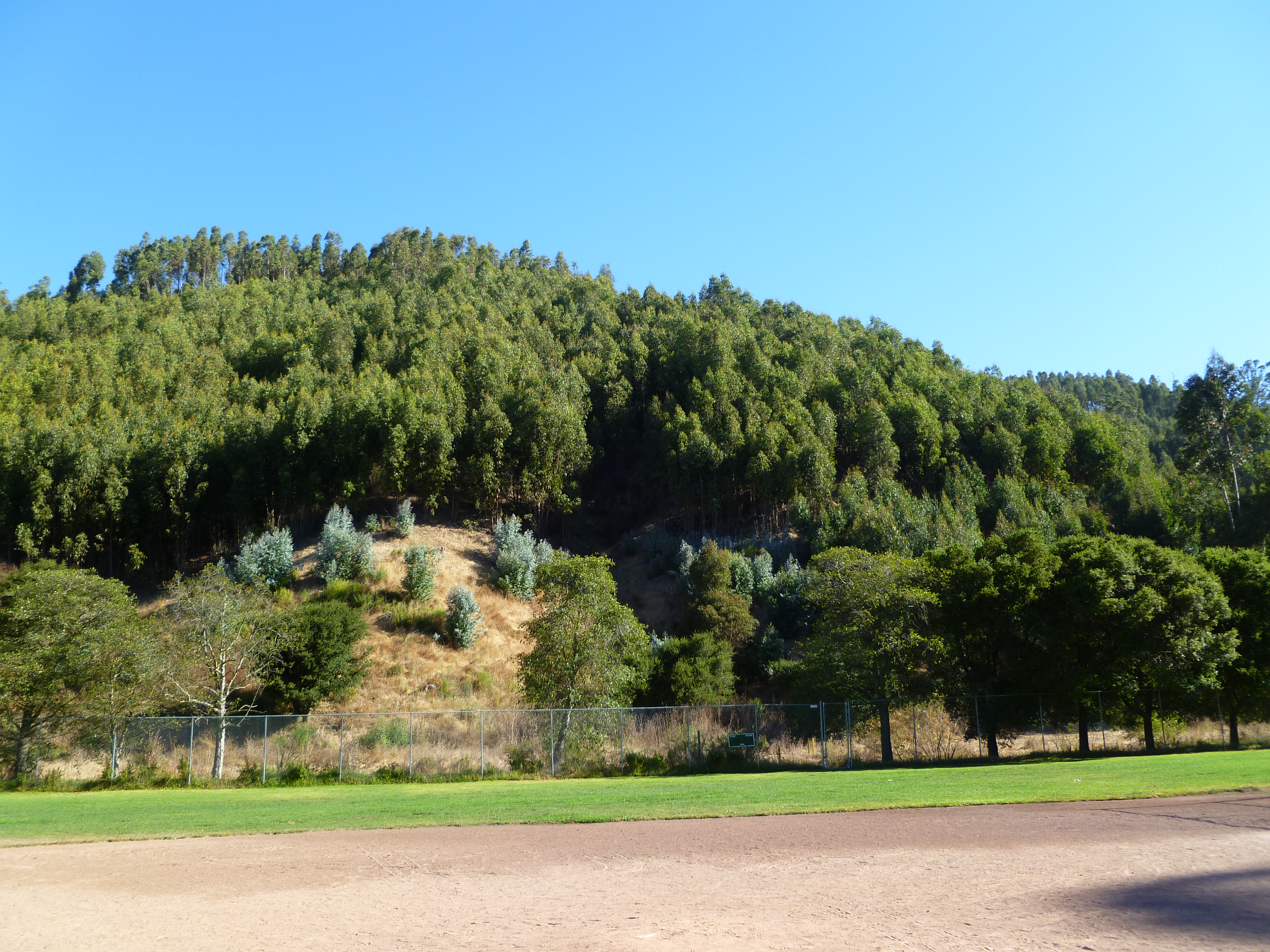
This eucalyptus forest at the North Oakland Sports Facility will be entirely destroyed.

These are the projects for which the Million Trees blog was created and for which it was named. Our opinion of these projects is unchanged by the environmental impact review. These projects will not achieve their stated objectives. Instead they will damage the environment and endanger the public.

The Draft Environmental Impact Statement (DEIS) for these projects was published by FEMA on April 25, 2013. It is available here. This is a brief description of the projects, our initial assessment of the DEIS, and information about how you can participate in the decision-making process which will ultimately determine the fate of these projects.

Description of the projects in the East Bay

Three different owners of public land have applied for these grants: University of California at Berkeley (UCB), City of Oakland, and East Bay Regional Park District (EBRPD). The projects of UCB and Oakland are similar and they are different from the projects of EBRPD, so we will describe them separately. These are the locations of the projects of UCB and Oakland, their acreage, and the estimated number of trees that will be removed by these projects:

Project Area

Project Acreage

Estimated Tree Removals*

UCB
  Strawberry Canyon

56.3

22,000

  Claremont

42.8

  Frowning Ridge (in Oakland)

185.2

38,000 32,000

Sub-Total

284.3

60,000 54,000

Oakland
  North Hills Skyline

68.3

  Caldecott Tunnel

53.6

Sub-Total

121.9

25,735 23,161

TOTAL

406.2

85,735 77,161

*UCB estimated tree removals are provided by the DEIS; Oakland estimated tree removals are extrapolated assuming the same number of trees per acre (60,000 54,000 ÷ 284.3 = 211 190 trees per acre X 121.9 acres = 25,735 23,161 trees removed by the projects of the City of Oakland)

UCB and Oakland plan to remove all non-native trees (eucalyptus, Monterey pine, acacia, etc.) and vegetation from the project area. All non-native trees up to approximately 24 inches in diameter at breast height (DBH) will be cut into wood chips and scattered on the ground of the project area. They estimate that 20% of the project area will be covered with wood chips to a depth of 24 inches. The DEIS estimates that the wood chips will take from 5 to 10 years to decompose. Larger trees will be cut up and scattered on the site.

Although UCB and Oakland do not intend to plant the project areas (unless erosion subsequent to tree removals demands seeding of native grasses and herbaceous plants), they predict that the project area will eventually become native grassland, scrub, and forest of coast live oak, California bay laurel, big-leaf maple, California buckeye, and California hazelnut. They predict that this conversion from non-native to native vegetation will be accomplished by “recruitment” from areas where these plants exist, into the areas where non-native plants and trees will be removed.

The stumps of eucalypts and acacia will be sprayed with an herbicide (Garlon with the active ingredient triclopyr) soon after the trees are cut down to prevent resprouting. An estimated 1 – 2 ounces of formulated herbicide will be required for each stump. Based on an experiment conducted by East Bay Regional Park District, an estimated 5% of the trees will require retreatment of subsequent resprouts. They are therefore predicting that between 703 633 and 1,407 1,266 gallons of herbicide will be required to prevent resprouting if only 5% of the stumps require retreatment as they claim. Monterey pines will not require herbicide treatment which reduces this estimate proportionately, although we are not provided with enough information to make this calculation. Herbicide (Roundup with active ingredient glyphosate) will also be sprayed to control non-native vegetation, but no estimates of quantities required for that purpose are provided by the DEIS.

The fire hazard mitigation projects of the East Bay Regional Park District were described in detail in its “Wildfire Hazard Reduction and Resource Management Plan” of 2009. EBRPD has applied for FEMA funding for about one-third of the “recommended treatment areas” in that plan. The FEMA DEIS considers all recommended treatment areas on EBRPD property, including those for which FEMA funding has not been requested. The recommended treatment areas for which FEMA funding has not been requested are called “Connected Action Acres.” The “Connected Action Acres” have undergone environmental review under California law (CEQA) and are therefore approved for implementation, which has already begun.

Project Area

Project Acres

Connected Action Acres

Total Acres

Estimated Tree Removals*

EBRPD
Sobrante Ridge

4.1

0

Wildcat Canyon

65.6

46.6

Tilden Park

132

194.2

Claremont Canyon

35.3

130.4

Sibley Volcanic

47.5

118.4

Huckleberry

17.8

.3

Redwood Park

58.4

92.8

Leona Canyon

4.6

0

Anthony Chabot

200

478.2

Lake Chabot

4.8

0

Miller-Knox

22.2

0

TOTAL

592.3

1,060.7

1,653

400,602 409,176

*Estimated Tree Removals: Neither the DEIS nor EBRPD’s “Wildfire Plan” provides an estimate of the number of trees they plan to destroy. Furthermore their plans for tree removals are complex and variable. All non-native trees (eucalypts, Monterey pines, acacia) will be removed in some recommended treatment areas, but in most they will be thinned to spacing of 25 to 30 feet. The final Environmental Impact Report for the “Wildfire Plan” provides an estimate of the existing tree density of existing eucalypts on EBRPD property (page 392). Acres of eucalypts in the entire project area are provided by the DEIS (page 4.2-6).  Our estimate of tree removals is based on those figures (1).

This eucalyptus forest at Chabot Park will be thinned to about 60 trees per acre.

This estimate does not include the Monterey pines and acacia that will be removed by EBRPD, for which inadequate information is available to provide an estimate.

EBPRD plans to cut the trees into wood chips which will be scattered to cover 20% of the project to maximum depth of 4-6 inches. The remainder of the wood will be burned in piles. Other non-native vegetation will be destroyed with herbicides and/or prescribed burns. These prescribed burns will not be funded by FEMA.

EBRPD’s plans to convert the project area to native vegetation are similar to the plans of both UCB and Oakland. EBRPD also does not plan to plant project areas with native vegetation. EBRPD also plans to use herbicides on the stumps of eucalypts and acacia which we estimate will require a mind-boggling 3,286 3,356 to 6,572 6,713 gallons of herbicide.

Million Trees’ assessment of these projects

We have surely exhausted your patience with the mind-numbing detail needed to describe these projects accurately. Therefore, we will provide only a brief outline of our assessment of these projects:

*  These projects are more likely to increase the risk of wildfires than to reduce that risk.

By distributing tons of dead wood onto bare ground

By eliminating shade and fog drip which moistens the forest floor, making ignition more likely

By destroying the windbreak that is a barrier to wind driven fires typical of wildfires in California

By expanding the oak-bay woodland being killed by Sudden Oak Death, thereby adding more dead wood

*  These projects will damage the environment by releasing hundreds of thousands of tons of carbon dioxide into the atmosphere from the destroyed trees, thereby contributing to climate change.

*  These projects will endanger the public by dousing our public lands with thousands of gallons of toxic herbicides.

Erosion is likely on steep slopes when the trees are destroyed and their roots are killed with herbicides.

Non-native vegetation such as broom, thistle, and hemlock are more likely occupants of the unshaded, bared ground than native vegetation which will not be planted by these projects.

Prescribed burns will pollute the air and contribute to the risk of wildfire, endangering lives and property.

*  These projects are an inappropriate use of the limited resources of the Federal Emergency Management Agency which are for the expressed purpose of restoring communities destroyed by disasters such as floods and other catastrophic events and preparing communities for anticipated catastrophic events. Most of the proposed projects in the East Bay are miles away from any residences.

Update:  Please visit THIS post for the current status of these projects.  In summary:  East Bay Regional Park District is implementing its original plans.  City of Oakland is developing a new “Vegetation Management Plan.”  UC Berkeley is suing to re-instate its FEMA grant funding so that it can implement its original plans.

How to participate in this decision-making process

The Hills Conservation Network has created a petition to oppose these projects. It is available HERE.

You can also participate in this decision. FEMA will host three public meetings in May 2013:

Tuesday, May 14, 2013, 2:00 p.m. – 4:00 p.m., Richard C. Trudeau Center, 11500 Skyline Boulevard Oakland, CA 94619

Tuesday, May 14, 2013, 6:00 p.m. – 8:00 p.m., Richard C. Trudeau Center, 11500 Skyline Boulevard Oakland, CA 94619

Saturday, May 18, 2013, 10:00 a.m. – 12:00 p.m., Claremont Middle School, 5750 College Avenue Oakland, CA 94618

Comments on this document must be submitted by June 17, 2013. You may submit written comments in several ways:

  1. Via the project website: http://ebheis.cdmims.com
  2. At the public meetings listed above
  3. By email: EBH-EIS-FEMA-RIX@fema.dhs.gov
  4. By mail: P.O. Box 72379, Oakland, CA 94612-8579
  5. By fax: 510-627-7147

These public lands belong to you and the money that will be used to implement these projects is your tax dollars. So, please tell the people who work for you what you think of these projects.

*********************************

(1)           Calculation of estimated tree removals by East Bay Regional Park District,  Update:  We understand the weakness of this estimate.  Unfortunately, the DEIS does not provide sufficient information to improve its accuracy.  Again, our apologies.

Existing average density of eucalypts 650 trees per acre
minus Planned average density of eucalypts 60 trees per acre
equals Number of eucalypts removed 590 trees per acre
times Total acres of eucalypts in project areas 824.3
equals Total number of eucalypts removed 486,337
minus Trees removed by UCB & Oakland 85,735 77,161
equals Eucalypts removed by EBRPD 400,602 409,176

Franciscan manzanita: The confiscation of public land

Update:  US Fish & Wildlife published the final rule designating critical habitat for Franciscan manzanita on December 20, 2013.  230.2 acres of land in San Francisco have been designated as critical habitat:  46.6 acres of federal land, 172.8 acres of parks owned by San Francisco’s Recreation and Parks Department, and 10.8 acres of private land.  The complete document is available here.  The document responds to public comments and explains any differences between the proposed designation and the final rule.  It makes interesting reading. 

******************************

On September 5, 2012, US Fish & Wildlife (USFWS) announced that Franciscan manzanita is now an endangered species.  In 2009 the single plant known to exist in the wild was discovered during the reconstruction of Doyle Drive.  It was transplanted to an undisclosed location in the Presidio in San Francisco.

In addition to the conferral of endangered status, US Fish & Wildlife has designated 318 acres of  land in San Francisco as critical habitat for the Franciscan manzanita.   Critical habitats are places where the endangered plant is either known to have existed in the past or they are places that provide what the plant needs to survive.

Five of the eleven places in San Francisco designated as critical habitat are on federal land in the Presidio.  (Details about all the critical habitats are available here.)  Forty of the 318 acres are on private land.  Six of the critical habitats are in 196 acres of San Francisco’s city parks:

  • Corona Heights
  • Twin Peaks
  • Mount Davidson
  • Glen Canyon Park (erroneously called Diamond Heights by US Fish & Wildlife)
  • Bernal Hill Park (erroneously called Bernal Heights by US Fish & Wildlife)
  • Bayview Hill Park

The taxonomy of manzanita is ambiguous

There are 96 species of manzanita in California (1).  The ranges of most of these species are extremely small because the manzanita hybridizes freely and therefore adaptive radiation has resulted in a multitude of species, sub-species, and varieties that are adapted to micro-climates.  Many of these species are locally rare, which is consistent with the fact that 6 species of manzanita have already been designated as endangered, two of which are limited to the San Francisco peninsula:  Raven’s manzanita and Franciscan manzanita.

The genetic relationship between these two species of manzanita is ambiguous, which is reflected in the constantly shifting opinions of biologists about the taxonomy (species classification) of manzanita.  The 2003 Recovery Plan for Raven’s manzanita recounted the long history of these shifting views.  For some time, Raven’s and Franciscan manzanitas were considered the same species.  Then, for an equally long time, they were considered sub-species of the same species, Arctostaphylos hookeri.  It was not until 2007, that Raven’s was reclassified as a sub-species of Arctostaphylos montana.  Presently, Franciscan manzanita is classified as its own species, Arctostaphylos franciscana. 

Clearly, this history of the biological opinion regarding these two species of manzanitas suggests they are closely related and morphologically (AKA anatomically) similar.  The Recovery Plan concludes, “The idea of ‘pure’ species in Arctostaphylos, with its many poorly defined taxa and prevalent hybridization has often been difficult to apply over the history of taxonomic work in the genus.”

To add to the confusion regarding the provenance of Franciscan manzanita, some biologists are of the opinion that the individual plant that was discovered on Doyle Drive is actually a hybrid, not a pure-bred Franciscan manzanita.  The East Bay Regional Park District botanical garden in Tilden Park has planted a clone of the individual plant from Doyle Drive.  It is labeled as a hybrid of Arctostaphylos uva-ursi, which is one of the few species of manzanita with a wide range.

This is the label on the “Doyle Drive” manzanita in Tilden Park Botanical Garden, indicating that it is a hybrid.

The park ranger who led us to this plant in the Tilden garden, pointed out that the plant is morphologically distinct from the Franciscan manzanita that has been resident in that garden for about 50 years.  He expressed his opinion that the Doyle Drive manzanita was properly labeled as a hybrid.

In what sense is the Franciscan manzanita “endangered?”

Franciscan manzanita has been available for purchase in nurseries for about 50 years.  It has been propagated by taking cuttings and therefore they are presumed to be genetically identical clones.  However, given that this plant has been sold to the public for a long time, we have no way of knowing exactly where they have been planted or if some have successfully reproduced by germinating seeds.  For all we know, this plant is thriving somewhere, perhaps even in a place we might call “wild.”  Perhaps the plant found on Doyle Drive was purchased in a nursery!

The individual plant found on Doyle Drive has been defined by USFWS as Franciscan manzanita despite the fact that some biologists consider it a hybrid of another species.  We understand that the motivation for designating this individual as an endangered species and providing it with critical habitat is based on an assumption that it is genetically different from the Franciscan manzanita that can be purchased in nurseries and that the chances of survival of the species may be improved by cross-fertilization of these two plants such that greater genetic diversity results from their union.

Yet we are offered no evidence of the genetic composition of the Doyle Drive individual or Franciscan manzanita sold in nurseries.  Nor are we provided any evidence that the Doyle Drive individual is even a genetically “pure” Franciscan manzanita rather than a hybrid of another species altogether.

If we weren’t being asked to devote 318 acres of land to the propagation of a plant with such ambiguous taxonomy, we might not question how little information we have been provided.  The technology of mapping the genome of this plant is available to us.  Why aren’t we making use of this technology to resolve these ambiguities?  The cost of planting 318 acres with this endangered plant far exceeds the cost of such genetic analysis.

We aren’t told what it will cost to plant 318 acres with this endangered plant, but we know that the cost of the recovery plan for Raven’s manzanita and lessingia was estimated as $23,432,500 in 2003.  Presumably that is an indication that the proposal for Franciscan manzanita will be a multi-million dollar effort.  The cost of transplanting the single plant from Doyle Drive to the Presidio was reported as over $200,000. (1)

Thirty years of endangered status for Raven’s manzanita has not saved this plant

We have already made the point that Raven’s and Franciscan manzanitas are closely related.  In its proposal for the designation of critical habitat for Franciscan, USFWS confirms this close relationship by referring us to the Recovery Plan for Raven’s.  In other words, the characteristics and horticultural requirements of these two species are so similar that a separate Recovery Plan for Franciscan is not necessary.  The Recovery Plan for Raven’s is applicable to Franciscan.

Therefore, we should assume that the fate of the recovery effort for Franciscan will be similar to that for the Raven’s.  Raven’s was designated as endangered in 1979.  Its first recovery plan was published in 1984 and the second in 2003.  Many 5-year reviews of its endangered status have been done during this 33 year period.  The most recent 5-year review was published in June 2012; that is, very recently.

So what does USFWS have to show for 33 years of effort to save Raven’s manzanita from extinction?  Almost nothing:

  • Clones of the single plant in the wild exist in several botanical gardens.  These clones are genetically identical and their growth in maintained gardens does not meet ESA standards for recovery.
  • “The wild plant has been observed to set seed although no natural seedling establishment is known to have occurred.” (6)
  • The plant has been the victim of twig blight several times, but the fungus cannot be treated because it would damage the mycorrhizal fungi in the soil upon which the plant is dependent.
  • The seeds depend upon animal predators for dispersal which are largely absent in an urban area.
  • The pollinators of manzanita have not been identified and therefore there is no assurance that they still exist in this location.
  • The 5-year review concludes that:  “…recovery sufficient to warrant full delisting is not projected in the foreseeable future for [Raven’s manzanita] and may not be possible.”

We can’t appreciate the significance of the utter failure of this effort without some mention of the extreme methods used to overcome these obstacles.

The seed of manzanita is germinated by fire.  However, the exact relationship between fire and germination is not known.  Therefore, many complex experiments have been conducted on the few viable seeds produced by the Raven’s manzanita in a futile effort to determine the winning combination.  These experiments are described in detail in an article in Fremontia (1).  In short, various combinations of fire, heat, cold, smoke, liquid smoke, etc., were tried and failed to determine exactly what triggers germination of manzanita seeds.

We should remind our readers of the legal definition of “recovery” according to the Endangered Species Act.  According to the 5-year review for Raven’s manzanita, here are two of the criteria for recovery toward which there has been no progress in 33 years:

  • “At least five spontaneously reproducing variable populations are established in reserves…in San Francisco…”
  • “At least two sexually reproduced generations are established within the Presidio.”

Frankly, it is no longer credible to expect the recovery of Raven’s manzanita and this failure implies the same fate for Franciscan manzanita.

Can the public parks of San Francisco meet the horticultural requirements of Franciscan manzanita?

The public parks of the City of San Francisco cannot meet the horticultural requirements of the Franciscan manzanita because it requires fire to germinate its seeds. 

All of the critical habitats proposed by USFWS in San Francisco’s public parks are designated “natural areas.”  According to the DRAFT Environmental Impact Report of the “Significant Natural Resource Areas Management Plan,” prescribed burns are prohibited in the natural areas.  Therefore, unless there are unplanned wildfires in the six public parks proposed as critical habitat, it will not be physically possible to “spontaneously reproduce” this plant, as required by the Endangered Species Act. 

Granted, the City of San Francisco could revise its management plan for the natural areas to allow—or even require—prescribed burns in the six parks proposed as critical habitat.  In that case, the citizens of San Francisco would be subjected to air pollution and risk of causing an uncontrolled wildfire in surrounding residential communities.  The Natural Areas Program would be subject to even more criticism than it already endures.

The Natural Areas Program is extremely controversial in the City of San Francisco because it destroys healthy non-native trees, it sprays pesticides on non-native vegetation in public areas, it destroys the habitat of wildlife, and it limits the public’s recreational access to trails which are often fenced.  Subjecting the natural areas to prescribed burns is surely the bridge too far for the public which would jeopardize the future of the entire program.  Why would the City of San Francisco be willing to push the public over the edge by requiring prescribed burns in six urban parks in densely populated residential communities?

Furthermore, some of the proposed critical habitat is in heavily forested areas, which are not compatible with the requirement of manzanita for full sun.  As they were on behalf of Raven’s manzanita, these trees would be destroyed.  The City of San Francisco is already planning to destroy 18,500 trees over 15 feet tall to accommodate its desire to reintroduce native plants to forested areas. (3)  How many more trees would need to be destroyed to accommodate Franciscan manzanita?  How much more carbon dioxide would be released into the atmosphere by the destroyed trees?

Bayview Hill is one of the proposed critical habitats which are heavily forested.  According to SNRAMP (3), 17.16 acres of Bayview Hill is forested.  Given that Bayview Hill is the only proposed critical habitat which is outside the known historic range of Franciscan manzanita, the loss of 17 acres of trees does not seem a fair trade for a plant with few prospects for survival.

The proposed critical habitat in Glen Canyon Park (inaccurately called Diamond Heights by the proposal) is also forested in a portion of the 34 proposed acres of critical habitat.  This is a park in which the destruction of trees is being hotly contested.  The community in this park does not need the additional controversy of tree destruction for the sole purpose of planting an endangered species.

Proposed critical habitat in other city parks is likely to be controversial for other reasons, primarily because additional restrictions on recreational access will undoubtedly be required to protect this endangered plant.  Bernal Hill is an example of a city park with a huge community of visitors who will undoubtedly be enraged by further loss of recreational access.  They have already been squeezed by the restrictions imposed by the Natural Areas Program.

This proposal for critical habitat is not good public relations for the Endangered Species Act

The City of San Francisco is the second most densely populated city in the country.  It is comprised of only 29,888 acres.   There are only 3,317 acres of City-managed parks in the city. (2) The proposed critical habitat in City-managed parks is 196 acres, 6% of total City-managed park land in San Francisco.

Please ask yourself these questions:

  • Does it make sense for 6% of all City-managed park land to be permanently committed to planting an endangered plant which can be purchased in nurseries?
  • Does it make sense to confiscate 6% of all public parks for a plant the identity of which we are not certain?
  • Does it make sense to throw the public out of 6% of all public parks on behalf of a plant that will never be able to spontaneously reproduce unless there is an accidental wildfire?

We think the answers to these questions are no, no, and no.  This is an ill-advised proposal which makes a mockery of the Endangered Species Act.  This is an important law that is trivialized by a proposal that will be physically impossible to implement without endangering the public and damaging the environment. 

Comments on the proposed critical habitats will be accepted until November 5, 2012. Comments may be submitted online at the Federal eRulemaking Portal at http://www.regulations.gov (Docket Number FWS–R8–ES–2012–0067) or by U.S. mail to:

Public Comments Processing
Attn:  FWS–R8–ES–2012–0067
Division of Policy and Directives Management
U.S. Fish and Wildlife Service
4401 N. Fairfax Drive, MS 2042-PDM
Arlington, VA 22203.

*********************************

Bibliography

(1)      Gluesenkamp, Michael, et al., “Back from the Brink:  A Second Chance at Discovery and Conservation of the Franciscan Manzanita,” Fremontia, V37:4/38:1, 2009-2010

(2)      Harnik, Peter, Inside City Parks, Trust for Public Land, 2000

(3)      San Francisco Recreation and Park Department, “Significant Natural Research Area Management Plan (SNRAMP),” 2006

(4)      San Francisco Recreation and Park Department, “DRAFT Environmental Impact Report for SNRAMP,” 2011

(5)      USFWS, “Designation of Critical Habitat for Franciscan Manzanita,” September 5, 2012

(6)      USFWS, “5-Year Review of Endangered Status of Raven’s Manzanita,” June 2012

(7)      USFWS, “Recovery Plan for Coastal Plants of the Northern San Francisco Peninsula,” 2003