We are publishing a “progress report” from a member of our tree team who attended a Weed Management Workshop on June 3, 2017. This report suggests that the goal of local ecological “restorations” may be more realistic than they were in the past and potentially less destructive.
Friends,
I attended a Weed Management Workshop this morning that was co-sponsored by East Bay Regional Park District and the California Invasive Plant Council. It was attended by about 70 people, representing many of the “stewardship” organizations engaged in native plant “restorations.” The main speakers were Doug Johnson, Executive Director of the California Invasive Plant Council and Pam Beitz, a member of the Integrated Pest Management staff of the East Bay Regional Park District.
The primary purpose of the workshop was to recruit new volunteers for the many “restoration” projects in the East Bay. Similar workshops will be offered in Mill Valley (June 17), San Jose (June 24), and Portola Valley (July 15). Since volunteers do not use pesticides or heavy equipment, those methods of eradicating “invasive” plants were not discussed. [Information about remaining workshops available HERE.]
Although the usual accusations about the negative impact of “invasive” plants were discussed, the speakers made several acknowledgements about limitations on their objectives that represent significant progress in the 25-year debate about invasion biology.
In the spirit of encouragement, I will tell you about a few of them.
Doug Johnson set the tone at the beginning of the workshop when he said, “Non-native plants aren’t evil. It’s important not to get ideological about this.” The audience did not react negatively to his appeal to base judgments about non-native plants on their ecological function and impacts on ecosystems.
Pam Beitz acknowledged that the historical landscapes, which “restorations” attempt to recreate were, in fact, manmade. She provided several observations from Kat Anderson’s Tending the Wild to illustrate that point. Native Americans intensively gardened the landscape to foster the plants they needed for food, shelter, and tools. The implication of that history of our landscape is that ecological “restoration” must make a permanent commitment to managing the landscape. [HERE is an article on Million Trees about “Tending the Wild.”]
Beitz said the goal of these weed management projects is to eliminate “invasive” plants from a small enough area that it can be managed for the long term. She said it is no longer considered feasible to eradicate “invasive” plants.
In answer to the question, “Why manage the wildlands?” Beitz said, “Because we are driven to alter our environment.” She also said that human disturbance maximizes biodiversity, citing a study by Joe Connell that found the greatest diversity where there are intermediate levels of disturbance. This is a radical departure from the earlier view that the most effective conservation eliminates all human activities.
There were also many representatives of local “restoration” projects who described their projects and recruited more volunteers. Some of their presentations indicated the shifting emphasis of native plant “restorations.”
Margot Cunningham of Friends of Albany Hill said that 50% of the 300 plants on Albany Hill are natives, despite the fact that it is heavily forested in eucalyptus, and that many of those native plants are growing under the eucalypts. She said there are 100 species of butterflies and moths and that monarchs roost in the eucalyptus trees. There are 80 species of birds. Her organization is trying to eliminate plants they consider invasive, such as ivy. [HERE is an article on the Million Trees blog about Albany Hill, which corroborates the view of Friends of Albany Hill.]
Native toyon under eucalyptus on Albany Hill
Wendy Tokuda is one of the most prominent native plant advocates in the East Bay. She described several of the projects she has been working on for about 10 years, such as trying to eliminate broom along 3 miles of a trail in EBRPD. She emphasized the importance of focusing one’s effort on a small enough area that the goal can be both attained and sustained. [HERE is an article on the Million Trees blog about the 10-year attempt to eradicate broom on a trail in the East Bay Regional Park District.]
Broom on EBRPD trail after 10 years of effort, April 2017
Friends of Five Creeks said, “In a city, stewardship is forever.”
I have been following the native plant movement for over 20 years. I believe this workshop articulated some significant departures from their original agenda:
There is a new understanding that the historical landscape was created by humans.
Any attempt to recreate the historic landscape will require a permanent commitment to manage the landscape.
Because of the scale of such an undertaking, it is not realistic to transform all open space to pre-settlement conditions. Projects must be scaled to match available resources.
Anonymous member of the tree team
The observation that humans are “driven to alter our environment” struck a chord. We are in the camp that prefers not to interfere with the workings of nature any more than necessary because we believe that human knowledge is inadequate to presume to make better management decisions than natural processes. There are pros and cons to every change in nature. Some plant and animal species will benefit and some will be harmed. It’s like flipping a coin. I prefer to put the coin in the hands of nature, rather than the hands of humans. However, we understand and are sympathetic to the human desire to “help” nature.
Robin and chicks. Courtesy SF Forest Alliance
A recent article in the New York Times provided a good example of how the good intentions of humans often lead to intrusions into the natural world. The author explained how she became the self-appointed guardian of birds nesting in her garden. Her small dog was a predator of fledgling birds. She felt obligated to identify all the nests in her garden so that she could keep her dog indoors when the birds left the nest.
When her dog died, she discovered that she could not give up that role. If one bird was competing with another for a nesting spot, she found herself choosing sides, although she knew she had no business choosing winners and losers in the natural world: “It is wrongheaded to interfere in nature when something is neither unnatural nor likely to upset the natural order. I can’t help myself…It’s humiliating, all the ways I’ve interfered.”
We know that volunteers in “restoration” projects mean well. Since they don’t use pesticides or have access to the heavy equipment needed to destroy trees, we don’t argue with them directly. Our advocacy for the preservation of our urban forest is aimed at the managers of our public lands because we are as much the owners of those lands as anyone else and our tax dollars are used to fund their projects.
This article is our Christmas present to our readers. We celebrate the holidays with good news about the birds living in cities all over the world.
Subirdia was written by John Marzluff, an academic ornithologist at University of Washington. (1) He reports many years of his research and that of his graduate students about the birds that live in urban and suburban Seattle as well as surrounding forest reserves. He also reports on countless studies of bird populations in similar settings all over the world. All of those studies reach remarkably similar conclusions.
It took me a long time to read this book because its introduction was off-putting. Virtually every plant and animal was preceded by the qualifier of “native” or “non-native.” The implication of the introduction was that the most important feature of every plant and animal is whether or not it is native. As our readers know, we consider the nativity of plant and animal species largely irrelevant. All plants and animals are at home in our ideal nature.
Owl nesting in eucalyptus, courtesy urbanwildness.com
When I finally got around to reading Subirdia I was pleasantly surprised. Although the author has a preference for native plants and animals, in fact, his research and that of others does not justify his obsession. Where birds are actually found in the greatest numbers is where the habitat is most diverse, not necessarily exclusively native.
Suburbia is very birdy
The conventional wisdom is that cities are inhospitable places for birds and other wildlife. After all, haven’t we paved over much of their habitat, interrupted their movements by fragmenting their habitat, and drained or covered water resources? In fact, bird populations in urban areas all over the world are both plentiful and diverse.
After years of counting numerous bird species in his hometown of Seattle, the author of Subirdia wondered if Seattle might be unique because it is heavily forested. After conducting similar surveys in 10 cities around the world, Marzluff is convinced that birds are successfully adapting to rapid urbanization of human society. The urban centers of cities in North and Central America, New Zealand and Europe support an average of 23 bird species. He found the least number of bird species (11) in Auckland, New Zealand and the greatest number (31) in St. Andrews, Scotland.
Starling in breeding plumage. Creative Commons – Share Alike
Another popular myth about the loss of bird diversity in the Anthropocene is that the globalization of human civilization produces “homogenized” nature. That is, many people believe that bird populations may not be in decline, but there are a few hardy species that dominate everywhere. Again, Marzluff’s studies do not corroborate that belief. Five bird species are found in cities all over the world (house sparrows, starlings, Canadian geese, mallard ducks, and rock pigeons). However, these ubiquitous species are not the predominant bird species he found in cities. Of the 151 different bird species he found in the 10 cities he visited, 75% of them were unique to each of the cities. “Homogenization is barely perceptible.” (1)
Comparing bird populations in cities with nature reserves
Marzluff also compared bird populations in cities with undeveloped nature preserves. Once again, cities still look like good homes for birds. He finds twice as many bird species in Ketchikan, Alaska as in the nearby wildlands along the Naha River, “a remote wilderness fifty miles away…that required powerboat, kayak, and hiking to attain.” (1)
He also visited Yellowstone National Park, a 2.2 million acre protected area within an undeveloped ecosystem of nearly 20 million acres, where he counted 26 bird species in four days. From there, he flew to New York City where he counted 31 bird species in Central Park in only three days. Historical records of bird surveys in Central Park and Yellowstone National Park indicate that about 200 bird species have been found in both parks since the late 19th century. “From a bird’s perspective, a large park created by human hands or by nature is not all that different.” (1)
Accommodating birds in cities
Marzluff’s concluding chapters advise city dwellers how to encourage and support birds. His “ten commandments” for accommodating birds make no mention of planting native plants or eradicating non-native plants:
“Do not covet your neighbor’s lawn.”
“Keep your cat indoors.”*
“Make your windows more visible to birds that fly near them.”
“Do not light the night sky.”
“Provide food and nest boxes.”
“Do not kill native predators.”
“Foster a diversity of habitats and natural variability within landscapes.”
“Create safe passage across roads and highways.”
“Ensure that there are functional connections between land and water.”
“Enjoy and bond with nature where you live, work, and play!”
Marzluff expresses a strong preference for native plants throughout his book, but his research in Seattle is inconsistent with that preference: “The forests of Seattle and its suburbs now embrace 141 species of trees, including 30 native species and ornamentals from North and South America, Europe, Asia, and Africa. Some are problematic invaders, but in total they provide a diverse menu of foods and nesting and roosting sites for birds.” (1)
Why a preference for natives?
Garter snake in eucalyptus leaf litter. Courtesy Urban Wildness
Another academic scientist in Washington State, Linda Chalker-Scott, directly addresses the vexing question of why public policies which mandate the use of native plants have proliferated despite the lack of evidence that they are superior in any way. She focuses on this question: “Do native and nonnative woody species differ in how they affect species diversity?” Her literature search found 120 studies from 30 countries that quantified the biodiversity of birds, insects, mammals, reptiles, and other plants in woody plants and trees in urban landscapes.
The analysis of these studies reveals that “the science does not support the supposition that native plantings are required for biodiversity…it is clear that an automatic preference for native trees when planning in urban areas is not a science-based policy.” (2) The assumption that native plants are superior to non-native plants is based on these misconceptions:
The definitions of native and alien species are value judgments, not science-based concepts.
Native plants are often poorly suited to environmental conditions in urban areas, such as compacted soil and changes in the climate. Conversely, introduced plants are often well suited to these urban conditions.
Many introduced plants provide valuable ecological benefits. For example, they often provide food, pollen, and nectar resources during winter months when native plants are dormant.
Tropical milkweed is not native to California. (Asclepias curassavica) Creative Commons
Doug Tallamy is the academic scientist most closely associated with the native plant ideology. His claim that insects require native plants is based on his mistaken assignment of nativity to an entire genus, when only a few species within that genus are actually native. For example, there are over 35 species of milkweed in the genus Asclepias, but only two species are native to California. Most members of the milkweed family are useful to monarch butterflies. It is therefore not accurate to claim that monarchs require native plants. They have lived all over the world for over 200 years in some places where there are no native species of milkweed.
Chalker-Scott’s meta-analysis of 120 studies concurs with Mr. Marzluff: “The published research overwhelmingly identifies diversity, structure, and function as the most important vegetation characteristics for enhancing community biodiversity…In fact, sometimes landscapes require the inclusion of exotic trees and control of natives to maintain diversity.” (2)
Doing more harm than good
Our readers know that we do not begrudge the preference of native plant advocates for native plants. We encourage them to plant whatever they want. We only ask that they stop destroying the plants they don’t like. That request is based on our belief that they are doing far more harm to our public lands than any perceived benefit of native plants. Much of that harm is caused by the widespread use of herbicides to destroy non-native vegetation. These herbicides are known to damage the soil and they migrate in the soil, damaging neighboring plants that are not targeted. These issues are surely a factor in the conspicuous lack of success of their “restorations.” There is also mounting evidence of the toxicity of herbicides to bees, birds, and other animals including humans.
But there is another, equally important reason why we object to the futile attempts to eradicate non-native plants. They are providing valuable habitat for wildlife. Even when they are replaced by native plants after being destroyed, the animals that depended upon them are not necessarily restored to the landscape. In fact, few projects plant natives after the eradication of non-natives.
Japanese honeysuckle. Attribution William Rafti
A recently published study (3) of the removal of Amur honeysuckle (Lonicera maackii) is an example of the loss of valuable habitat. The hypothesis of this study was that “invasion of urban habitats by exotic plants was the underlying mechanism driving changes in bird-plant networks.” The study tested this hypothesis by comparing forest plots dominated by honeysuckle with those in which honeysuckle had been removed and the surrounding forest habitat replicated. They measured nesting birds, nest predators, and nest survival.
They found that the lowest overall nest survival rates were found in the plots in which honeysuckle had been removed. In other words, “…removal of invasive honeysuckle from urban forests did not restore network structure to that of rural landscapes.” The authors concede, “This finding was not consistent with our original hypothesis that invasion of forests by the exotic Amur honeysuckle was responsible for the urban-associated changes in bird-plant networks.” They conclude, “The degree to which native communities can be restored following removal of exotic plants remains unclear.”
Actually, we think it is quite clear that eradicating non-native plants does not benefit man or beast. We marvel that the fantasy persists that there is some theoretical benefit to killing harmless plants, despite the consistent lack of evidence of any benefit and the considerable evidence of the harm of such attempts.
*Like most ornithologists, Marzluff comes down hard on cats as killers of birds in his book. However, he cites just one study about predation of fledglings. The study used radio transmitters to determine the fate of 122 newly fledged birds over a period of two years.
The results do not justify the demonization of cats: “Only 20 percent of radio-tagged birds died during our study. Birds such as Cooper’s hawks and mammals such as Townsends’ chipmunks, ermine, and Douglas squirrels were the most likely predators. The most notorious of all bird predators, the out-of-the-house cat, was implicated in only one death, though we could never be entirely sure which mammal or which bird had killed the fledging.” (1) Marzluff credits a neighborhood coyote for controlling the cat population. Frankly, that doesn’t make sense. Chipmunks and squirrels are just as likely to be prey for the coyotes.
We have reported on similar studies which reach the same conclusions. A meta-analysis of 8 studies of nest predators of song birds in North America used video cameras to identify the predators of 242 depredation events. Only one of those nest predators was a cat.
We have no objection to the general advice to keep your cat indoors. (We have never had a cat and don’t plan to.) However, we think that estimates of birds killed by cats are greatly exaggerated. Humans seem to have an unfortunate desire to look for scapegoats and cats seem to fit the bill for bird lovers.
John M. Marzluff, Welcome to Subirdia, Yale University Press, 2014
Linda Chalker-Scott, “Nonnative, Noninvasive Woody Species Can Enhance Urban Landscape Biodiversity,” Arboriculture & Urban Forestry, 2015, 41(4): 173-186
Amanda D. Rodewald, et. al., “Does removal of invasives restore ecological networks? An experimental approach,” Biological Invasions, March 2015
On August 25, 2015, opponents of the projects in the East Bay Hills which will destroy hundreds of thousands of trees staged a protest at the headquarters of the Bay Area chapter of the Sierra Club and delivered a petition. The petition (available HERE) asks the Sierra Club to quit advocating for deforestation and pesticide use in the San Francisco Bay Area and to drop its lawsuit which demands eradication of 100% of all non-native trees on 2,059 acres of public land in the East Bay. The protest was successful as measured by the size of the crowd and the even-handed media coverage of the protest.
Sierra Club protest, August 25, 2015. About 80 people attended the peaceful protest.
Update: HERE is a 14 minute video of the demonstration at Sierra Club headquarters on August 25, 2015. The video includes an attempt to discuss the issue with a Sierra Club staff member. Note the factual rebuttals to some of the claims the staff member makes in that conversation. Also, note the final rallying cry, “Poll your membership on this issue.” We will report soon on the follow up to that request. Please stay tuned.
However, although the protest has produced a flurry of defensive propaganda from the Sierra Club, it has not created new opportunities for dialogue with them. We tried to get the issue on the agenda of the Conservation Committee following the protest and once again our request was denied. We were also denied the opportunity to publish a rebuttal to articles in their newsletter about the projects. It is still not possible to post comments on the on-line version of the Yodeler, although each article dishonestly invites readers to “leave a comment.”
And so, open letters to the Sierra Club are the only means of communication available to us. Here are our replies to the latest round of propaganda published in the Yodeler on September 16, 2015 (available HERE). Excerpts from the Sierra Club article are in italics and our replies follow.
“The preferred strategy for vegetation management in the East Bay hills entails removing the most highly flammable, ember-generating trees like eucalyptus in phases — only in select areas considered most at risk for fire along the urban-wild interface.”
Preferred by whom? Neither fire experts nor the public think this project is a good idea, let alone the Sierra Club’s more extreme version of the project demanded by its suit. Over 13,000 public comments on the Environmental Impact Statement were sent to FEMA, of which 90% were opposed to this project according to FEMA. More recently, a petition in opposition to this project has over 64,000 signatures on it. This project is NOT the “preferred strategy for vegetation management in the East Bay hills.”
Eucalyptus is not more flammable than many other trees, including native trees:
A study by scientists in Tasmania found that the leaves of blue gum eucalypts were more resistant to ignition than other species of Tasmanian vegetation tested. The study credits the “hard cuticle” of the leaf for its ability to resist ignition. (1)
The National Park Service, which has destroyed tens of thousands of eucalypts and other non-native trees, states that eucalyptus leaves did not ignite during a major fire on Mount Tam. (2)
The leaves of native bay laurel trees contain twice as much oil as eucalyptus leaves (3) and the fuel ladder to their crowns is much lower than eucalyptus, increasing the risk of crown fires. The “Wildfire Hazard Reduction and Resource Management Plan” of the East Bay Regional Park District states explicitly that bay laurel is very flammable and recommends selective removal.
Eucalyptus contributed more fuel to the 1991 fire in Oakland because a deep and prolonged freeze the winter before the fire caused eucalyptus and other exotic vegetation to die back. The dead leaf litter was not cleaned up, which contributed to the fire hazard. Such deep freezes are rare in the Bay Area. There has not been such a freeze for 25 years and another is unlikely in the warming climate.
Eucalyptus logs line the roads where UC Berkeley has destroyed trees. Do they look less flammable than living trees?
Ordinarily, eucalyptus does not contribute more fuel to the forest floor than native oak-bay woodland. This is confirmed by the National Park Service, which includes logs in the calculation of fuel loads. (2) Logs are extremely difficult to ignite. The so-called “fire hazard mitigation projects” are leaving all the eucalyptus logs on the ground when the trees are destroyed, suggesting that they aren’t considered a fire hazard. The National Park Service also separates the fuel loads of oaks and bays, which when combined are equal to the fuel load of eucalyptus. Since our native woodland in the East Bay is a mixture of oaks and bays, it is appropriate to combine them when comparing their fuel loads to eucalyptus.
Eucalypts are sometimes blamed for casting more embers than native trees because they are taller than the oak-bay woodland. However, redwoods are as tall, if not taller, and they were also observed burning in the 1991 fire: On Vicente Road, “Two redwoods up the street caught fire like matchsticks.” (4) Yet, the Sierra Club is not suggesting that redwoods be destroyed to eliminate the risk of casting embers.
The Sierra Club now says the trees will be removed “in phases,” yet in its suit against the FEMA grants it objects to the phasing of tree removals. The main focus of their suit is opposition to the “unified methodology” which proposes to remove trees over the 10 year period of the grant on only 29 acres of the total project acreage of 2,059. To those who objected to this project, that small concession is little consolation, but for the Sierra Club it was a deal-breaker. Their suit demands that all non-native trees be removed immediately on all project acres.
If the Sierra Club withdraws its suit against the FEMA projects, it is free to tell another story, as it attempts to do in its Yodeler article. As long as that suit remains in play, the Sierra Club is stuck with that version of reality.
“Once the flammable non-native trees are removed, less flammable native species can reclaim those areas and provide for a rebound of biodiversity. This model of fire prevention can summarized as the the [sic] “Three R’s”:
REMOVE the most flammable non-native trees in select areas most at risk for fire;
RESTORE those areas with more naturally fire-resistant native trees and plants; and
RE-ESTABLISH greater biodiversity of flora and fauna, including endangered species like the Alameda whipsnake.”
This is a stunning display of ignorance of the project as well as the natural history of the San Francisco Bay Area:
The FEMA projects do not provide for any planting or funding for planting after the trees are removed. FEMA’s mission is fire hazard mitigation, not landscape transformation. The scientists who evaluated the FEMA projects said that a native landscape is not the likely result of the project: “However, we question the assumption that the types of vegetation recolonizing the area would be native. Based on conditions observed during site visits in April 2009, current understory species such as English ivy, acacia, vinca sp., French broom, and Himalayan blackberry would likely be the first to recover and recolonize newly disturbed areas once the eucalyptus removal is complete. These understory species are aggressive exotics, and in the absence of proactive removal there is no evidence to suggest that they would cease to thrive in the area, especially the French broom which would be the only understory plant capable of surviving inundation by a 2-foot-deep layer of eucalyptus chips.” (5)
The US Forest Service evaluation of the FEMA projects stated that the resulting landscape would be more flammable than the existing landscape: “Removal of the eucalyptus overstory would reduce the amount of shading on surface fuels, increase the wind speeds to the forest floor, reduce the relative humidity at the forest floor, increase the fuel temperature, and reduce fuel moisture. These factors may increase the probability of ignition over current conditions.” (6)
The US Forest Service evaluation predicts that the resulting landscape will be “a combination of native and non-native herbaceous and chaparral communities.” Despite the overwhelming evidence that wildfires in California start and spread rapidly in herbaceous vegetation such as dry grass, the myth persists that all non-native trees must be destroyed to reduce fire hazards. An analyst at CAL FIRE has explained to the Center for Investigative Reporting that the reason why wildfires were so extreme this summer is because of the heavy rains in December 2014, which grew a huge crop of grass: “The moisture did little to hydrate trees and shrubs. But it did prompt widespread growth of wild grasses, which quickly dry out without rain. ‘They set seed, they turn yellow and they are done,’ said Tim Chavez, a battalion chief and fire behavior analyst with CAL FIRE. ‘All that does is provide kindling for the bigger fuels.’” (7) We know that more dry grass starts more wildfires, yet the Sierra Club demands that we destroy the tree canopy that shades the forest floor and produces leaf litter, which together suppress the growth of the grasses in which fires ignite.
The claim that native plants are “naturally fire resistant” is ridiculous. Native vegetation in California—like all Mediterranean climates—is fire adapted and fire dependent. The wildfires all over the west this summer occurred in native vegetation. There are over 200 species of native plants in California that will not germinate in the absence of fire and persist for only 3-5 years after a fire. (8) Although all native vegetation is not equally flammable, many species are considered very flammable, such as coyote brush, bay laurel, and chamise. To say otherwise is to display an appalling ignorance of our natural history.
When did “environmentalism” devolve into demonizing trees?
There is no evidence that the destruction of our urban forest will result in greater “biodiversity.” There are many empirical, scientific studies that find equal biodiversity in eucalyptus forest compared to native forests. There are no studies that say otherwise, yet the Sierra Club and their nativist friends continue to make this claim without citing any authority other than their own opinions. (9, 10, 11) Bees, hummingbirds, and monarch butterflies require eucalyptus trees during the winter months when there are few other sources of nectar. Raptors nest in our tall “non-native” trees and an empirical study finds that their nesting success is greater in those trees than in native trees.
The Sierra Club’s 3Rs can best be summarized as “repeat, repeat, repeat.” Their 3Rs are based on 3 Myths: (1) eucalyptus trees are the most serious fire hazard; (2) “native” vegetation is categorically less flammable than “non-native” vegetation, and (3) native vegetation will magically return to the hills when trees are clearcut and the hills are poisoned with herbicide. All available evidence informs us that these are fictions that exist only in the minds of the Sierra Club leadership and their nativist friends.
“The Sierra Club’s approach does NOT call for clearcutting. Under “Remove, Restore, Re-establish” thousands of acres of eucalyptus and other non-natives will remain in the East Bay hills. Our proposal only covers areas near homes and businesses where a fire would be most costly to lives and property. In fact, removing monoculture eucalyptus groves and providing for the return of native ecosystems will create a much richer landscape than the alternative — thinning — which requires regularly scraping away the forest floor to remove flammable debris.”
The Sierra Club’s suit against FEMA demands that all eucalyptus and Monterey pine be removed from 2,059 acres of public property. While it is true that the project acres are not 100% of all land in the East Bay, with respect to the project acres, it is accurate to describe the Sierra Club’s suit as a demand for an immediate clearcut of all non-native trees.
FEMA Project Areas
Most of the project acres are nowhere near homes and buildings. They are in parks and open spaces with few structures of any kind. CAL FIRE defines “defensible space” required around buildings to reduce property loss in wildfires. CAL FIRE requires property owners to clear flammable vegetation and fuel within 100 feet of structures. Using that legal standard, the FEMA project should not require the removal of all trees from project acres.
As we said earlier, Sierra Club’s description of the landscape that will result from the removal of the tree canopy is contradicted by scientists who evaluated the FEMA project. And their prediction that “thinning” would “require regularly scraping away the forest floor to remove flammable debris” is not consistent with the predictions of those scientists who have advised that the loss of shade and moisture resulting from the complete loss of the tree canopy will encourage the growth of flammable vegetation and require more maintenance than the existing landscape.
“Our preferred approach does NOT focus on eucalyptus merely because they are non-natives. Rather, it is because they pose a far higher fire risk than native landscapes. Eucalyptus shed ten to fifty times more debris per acre than grasslands, native live oak groves, or bay forests — and that debris, in the form of branches, leaves, and long strips of bark, ends up draped in piles that are a near-optimal mixture of oxygen and fuel for fire. Eucalyptus trees ignite easily and have a tendency to dramatically explode when on fire. Also, eucalyptus embers stay lit longer than embers from other vegetation; coming off trees that can grow above 120 feet tall, those embers can stay lit as the wind carries them for miles.”
The Sierra Club’s suit demands the eradication of Monterey pine as well as eucalyptus. The scientists who evaluated the FEMA projects stated that there is no evidence that Monterey pine is particularly flammable and they questioned why they were targeted for eradication: “The UC inaccurately characterizes the fire hazard risk posed by the two species however…Monterey pine and acacia trees in the treatment area only pose a substantial fire danger when growing within an eucalyptus forest [where they provide fire ladders to the eucalyptus canopy]. In the absence of the eucalyptus overstory, they do not pose a substantial fire hazard.” (5) It is not credible that the Sierra Club’s demand that these tree species be entirely eradicated has nothing to do with the fact that they are not native to the Bay Area. If flammability were truly their only criterion, they would demand the eradication of native bay laurel trees. If fear of lofting embers from tall trees were their only concern, they would demand the eradication of redwoods.
As we said earlier, redwoods looked as though they were exploding when they ignited in the 1991 fire. And we are seeing wildfires all over the west this fire season in which native trees look as though they are exploding when they ignite. That’s what a crown fire looks like, regardless of the species.
It defies reason to think that an ember is capable of traveling miles and still be in flames on arrival. In fact, Sierra Club’s suit says “non-native trees can cast off burning embers capable of being carried up to 2,000 feet in distance.” That’s a fraction of the distance the Sierra Club now claims in its hyperbolic description of the issues in the Yodeler. Surely we can all use a little common sense to consider how unlikely it is that a fragment of a tree small enough to be carried in the wind could travel miles while remaining on fire. Likewise, we must ask why fragments of eucalyptus trees are likely to burn longer than any other ember of equal size. We are not provided with any reference in support of these fanciful claims other than the opinions of the authors.
“Any herbicide use to prevent the regrowth of eucalyptus once they’ve been cut down (they quickly sprout suckers otherwise) would be hand applied in minimal amounts under strict controls. Any herbicide application must undergo a full environmental review to prevent impacts on humans, wildlife, and habitat. There are also methods other than herbicide that can be used to prevent regrowth, and the Sierra Club encourages the agencies that manage the land where fire mitigation occurs to explore these alternatives to find the most sustainable, responsible option.”
Once again, the Sierra Club is stuck with the public record which describes the FEMA projects:
East Bay Regional Park District has stated in the Environmental Impact Statement for the FEMA project that it intends to use 2,250 gallons of herbicide to prevent the regrowth of eucalyptus. (12) This estimate does not include the herbicides that will be used by UC Berkeley or the City of Oakland. Nor does it include the herbicides that will be needed to kill flammable non-native vegetation such as fennel, hemlock, broom, radish, mustard, etc. Surely, we can all agree that thousands of gallons of herbicide cannot be accurately described as “minimal.”
The Sierra Club now seems to be suggesting that further environmental review will be required for herbicide use by this project. They are mistaken in that belief. The Environmental Impact Statement for this project is completed and it admits that the project will have “unavoidable adverse impacts” on “human health and safety” and that there will be “potential adverse health effects of herbicides on vegetation management workers, nearby residents, and users of parks and open space.” The Sierra Club’s smoke screen cannot hide that conclusion.
The FEMA grants have been awarded to the three public land owners and they explicitly provide for the use of herbicides to prevent eucalyptus and acacia from re-sprouting. There is nothing in the Environmental Impact Statement that indicates that “methods other than herbicide can be used to prevent regrowth,” as the Sierra Club now belatedly opines in its latest propaganda. If the Sierra Club wants other methods to be considered, we could reasonably expect they would make such a demand in their suit against FEMA, along with all their other demands. They do not make such a demand in their suit. Therefore, claims that other methods are being explored are not credible.
Sierra Club’s claim that herbicides will be applied “with strict controls” is not credible because there is no oversight of pesticide application or enforcement of the minimal regulations that exist in the United States. After 25 years of working for the EPA, E.G. Vallianatos wrote in 2014 of his experience with pesticide regulation in Poison Spring: “…the EPA offered me the documentary evidence to show the dangerous disregard for human health and the environment in the United States’ government and in the industries it is sworn to oversee…powerful economic interests have worked tirelessly to handcuff government oversight.”
The Sierra Club has also explicitly endorsed the use of herbicides in the public comments they have submitted on these projects and in other articles in the Yodeler:
Sierra Club’s written public comment on Scoping for the FEMA EIS: “We are not currently opposed to the careful use of Garlon as a stump treatment on eucalyptus or even broom when applied by a licensed applicator that will prevent spread into adjacent soils or waters.” Norman La Force (on Sierra Club letterhead), September 12, 2010
“There is no practical way to eliminate eucalyptus re-sprouting without careful use of herbicides.” Yodeler, May 25, 2013
Obfuscation and insincere backpedaling
The latest Yodeler article about the FEMA projects is a lot of hot air. It makes claims about the issues for which it provides no evidence and for which considerable contradictory evidence exists. It contradicts previous statements the Sierra Club has made. Most importantly, as long as Sierra Club’s suit remains in play, the demands the Sierra Club makes in that public document cannot be denied. If the Sierra Club wishes to back away from its previous positions, it must start by withdrawing its suit, which demands that 100% of all non-native trees in the FEMA project areas be destroyed immediately. Withdrawal of the suit would be a most welcome start on the long healing process that is required to mend the damage the Sierra Club has done to its reputation as an environmental organization in the San Francisco Bay Area. However, the Sierra Club will not be able to reclaim its status as an environmental organization without renouncing all pesticide use on our public lands.
The Sierra Club has isolated itself from reality. Its leadership refuses to speak with anyone with whom they disagree. They have become the victims of incestuous amplification. They apparently do not read the documents they use to support their opinions. For example, the Sierra Club suit claims the California Invasive Plant Council (Cal-IPC) has classified blue gum eucalyptus as “moderately” invasive. In fact, Cal-IPC’s rating of blue gum eucalyptus is “limited.” This reflects the fact that a study of aerial photographs of Bay Area parks and open spaces, taken over a 60 year period find that eucalyptus and Monterey Pine forests were smaller in the 1990s than they were in the 1930s. (13)
We will send our petition soon to the national leadership of the Sierra Club. If you have not yet signed our petition, we hope you will consider doing so now.
Dickinson, K.J.M. and Kirkpatrick, J.B., “The flammability and energy content of some important plant species and fuel components in the forests of southeastern Tasmania,” Journal of Biogeography, 1985, 12: 121-134.
In 2000, we wrote a public comment about plans to close areas at Fort Funston for native plant restoration that began with this quotation from Henry David Thoreau:
It is in vain to dream of a wildness distant from ourselves. There is none such. It is the bog in our brain and bowels, the primitive vigor of Native in us, that inspires that dream.Thoreau
We chose that quote to introduce our comment about Fort Funston because it is a place that was entirely altered to serve as a military fort, its sand dunes stabilized with ice plant and studded with gun bunkers; it is not a place that is easily imagined as a pristine native landscape. As with most poetry, Thoreau’s exact meaning escaped us, but what resonated was the suggestion that “wildness” exists in our minds, not in the material world. We found comfort in knowing that over 150 years ago, Thoreau was as mystified by the concept of wildness as we are today.
Fort Funston San Francisco 2011
Today, we revisit the question of the meaning of wildness or wilderness, prompted by the publication of an op-ed by Mark Dowie in the Point Reyes Light. (1)Dowie is a journalist who is best known as the author of Conservation Refugees, in which he informs us that hundreds of thousands of indigenous people all over the world have been evicted from their ancestral lands by public and private land owners who believe humans are antithetical to their conservation goals. Dowie tells us that the tradition of evicting humans in the interests of preserving “wilderness” began with the eviction of Native Americans from Yosemite Valley as advocated by John Muir. This concept of preserving land by excluding all human activities is aptly called fortress conservation.
Dowie begins his op-ed in the Light with the observation that some words have “attained such a vague and ambiguous definition that [they have] become virtually meaningless.” The word “sustainability” has attained such status, he says and we agree. But his focus in his op-ed is on the word “wilderness” because it is a word that has become a tool in a dispute about land use in Point Reyes, where Dowie lives.
The National Park Service defines “wilderness”
Drakes Estero. NPS photo
After a protracted battle that lasted years, the National Park Service was finally successful in shutting down the Drakes Bay Oyster Company based on its contention that the existence of the oyster farm violated a commitment to return the Point Reyes National Seashore to “wilderness.” This was a battle that tore a small community apart and the wounds from that fight are still deep.
Within days of the oyster farm closing its retail operation, those who demanded its closure were on the warpath again. In an op-ed published by the Oakland Tribune, William Katz asked the National Park Service to evict ranchers and dairy farmers in Point Reyes: “The European invasion of this side of the continent over just the last 200 years is obviously a done deal. This fact makes it especially necessary to complete the original mandate of the park’s creation by removing the ranchers and their bovine accoutrements and re-establishing a natural area in which we may only be visitors.” The connection between those two sentences eludes us. In fact, they seem contradictory.
Dowie searches for the meaning of “wilderness”
And so, the question of what defines a “wilderness” is still very much alive in Point Reyes. Mark Dowie tells us that he has been actively seeking a meaningful definition for some years. He turned to several indigenous cultures based on the modern assumption that pre-European cultures occupied the elusive “wilderness:”
“Over the next four years of research, I met and conversed with many indigenous people who thrived in landscapes that looked as wild as anywhere I had ever been, whose language had no words for ‘wild,’ or ‘wildness,’ or ‘wilderness.’ Naturally, I began to wonder why societies populated by urbane people who spend most of their lives, if not all of them, on the streets of places like New York City, London, Rome, Los Angeles and Winnipeg do have a word for wilderness. And I wondered what exactly they meant by it, if anything.”
“What I finally figured out about ‘wilderness’ was that it’s really a concept that does not translate well from language to language, especially from western to indigenous languages. So it’s really not the word that has to be translated, but an entire ecological enthnography.”
And so, Dowie turns to those who use the word “wilderness” as their definition of the goal for what our public lands and open spaces should look like and what activities should be allowed in them:
“I recently overheard a debate in which to refine and defend his own personal definition, a local wilderness romantic divided the whole concept into two separate categories—uppercase and lowercase wilderness. Uppercase, he said, was “real” wilderness: vast roadless, trail-free areas occupied by many species, including large predators that want to eat humans. Lowercase wilderness could be found in state and national parks; as virtual or abstract wilderness, it was a cunning, managed artifice of the uppercase version designed to convince eco-tourists that they are having a true wilderness experience. The argument descended from there into such ridiculous semantic subterfuge that I walked away mumbling to myself that wilderness may not be a word at all, or a place for that matter, but as Roderick Nash concludes at the end of his 400-page tome on the subject, merely “a state of mind.” And that if wilderness exists at all, it could be as easily found and appreciated under a bench in Central Park as on the barrens of Baffin Island.”
Some of the stumps of the trees that were destroyed in Glen Canyon Park in 2013. Taken June 2014
Yes, Mr. Dowie, you have indeed found the mysterious meaning of the word “wilderness” as a “bog in the brain,” to quote Mr. Thoreau. We have our own example of a similar debate with native plant advocates about the future of Glen Canyon Park in San Francisco. Our readers will remember Glen Canyon as the scene of the devastating removal of many huge, old trees and the repeated spraying of herbicides to prevent the trees from resprouting and destroy the non-native understory. To those who objected to this destructive project, a native plant advocate responded:
“Please note the term “wilderness.” It implies natural, native flora and fauna; the wild plants and the bird and animal populations that support one another. That is what we want to have if we want a wild retreat. A morass of garden escapes and foreign invasive species is to be deplored. Let’s progress toward returning the area to a REAL wilderness. Do not let the concept that a plant’s becoming established in an area is a sign of its becoming native to the area. It remains an invasive element, a weed. It disrupts and destroys the normal habitat of native plants, animals, and insects in its surroundings. It will be a huge and long term task, but we can restore the entire canyon to a truly wilderness state. Let’s get started!”
In this version of “wilderness,” trees and plants must be sprayed with herbicide and a new landscape planted. The result—if it is successful—will be an entirely artificial landscape. There will be nothing “REAL” about it.
Language is an obstacle to agreement
One of many obstacles to reaching agreement with native plant advocates about the future of our public lands and open spaces is that we don’t share a vocabulary. “Wilderness” is one of many words that cannot be defined by our mutual understanding.
“Sustainability” is another word that is used by native plant advocates, which we believe is inappropriately applied to the projects they demand because it is inconsistent with the realities of climate change and evolution. The landscapes they are creating are no longer adapted to current environmental conditions. They are not sustainable.
“Integrity” has recently become a favorite buzzword of nativists, used to describe their idealized landscape. We have absolutely no idea what that word means in the context of the contrived landscapes they attempt to create.
And so the debate continues with no end in sight. Meanwhile our public lands are being destroyed in response to the demands of native plant advocates. For us the word “wilderness” is now synonymous with “destruction,” which creates a fortress in which humans are not welcome.
(1) Mark Dowie, “The tortured semantics of wilderness,” Point Reyes Light, September 4, 2014
We must tell our readers about the collateral damage of misguided attempts to manage nature more often than we would like. We prefer positive stories, but in the hope of a better future we must also inform the public of the unintended consequences of the many projects that are killing one species of plant or animal based on the mistaken assumption that another plant or animal will benefit.
Trumpeter swan by James Audubon
In this case, a project sponsored by the Nature Conservancy decimated the population of rare Arctic grayling fish in Centennial Valley, Montana, by damming the streams to create ponds for the benefit of the equally rare trumpeter swan. The grayling had spawned in those streams and the population plummeted when the streams were dammed.
Unfortunately, they ARE trying it again. Now the scientists are trying to compensate for the damage to the grayling population by killing cutthroat trout that is considered a predator to the grayling. The cutthroat is not native, so that also makes it a candidate for eradication. It’s as though we are on a killing treadmill. One mistake seems to lead to another.
Stop and think before you shoot!
Cockatoo. Creative Commons
A bird lover in Hawaii takes a more thoughtful approach to the suggestion that introduced cockatoos and African parrots should be shot, based on the assumption that they are competing with the dwindling population of native birds. He points out that the native birds nest in the ground, while the cockatoos and parrots nest in cavities in the trees. Most of the native birds are nectar eaters, while the cockatoos and parrots eat seeds and nuts. So, he wonders if the introduced birds are really a threat to the native birds.
The exotic birds are either escaped pets or the descendents of them. The author of the article urges pet owners to take care of their pets and make a permanent commitment to their care. Releasing them into the forest is making them a target for people who think killing them would benefit other birds.
The author is not opposed to killing non-native animals when absolutely necessary, but he is at least willing to carefully consider if it is necessary, in his opinion. He is comfortable with the killing of rats, pigs, and feral cats, for example.
Million Trees takes this question a step further. We don’t think humans should micromanage nature. We don’t have enough information to presume to know better than nature what is best. We also have our own anthropomorphic criteria for which species is more important than another. Our judgment is self-serving and is not a substitute for the even-hand of nature. Nature follows the simple rule of “survival of the fittest.” Nature is as likely to save the lowly spider as it is to save the beautiful trumpeter swan.
A parable to illustrate the point
This parable, retold in Fanaticism of the Apocalypse (1) illustrates the futility of man’s attempt to control nature:
“Noah, as he is loading the animals onto the Ark, is alarmed by the large number of candidates. Mammals, birds, marsupials, penguins, primates, and lizards have already gone on board. The ass, the ox, the giraffe, the elk, the stag, the lion, and the cat urge the patriarch to raise the gangplank and close the hatches. The boat is chock-full, the cedar hull is about to crack open, the Deluge is threatening. Outside, a crowd of harmful or misshapen pests—cockroaches, toads, slugs, spiders—asks to be taken on. The toad speaks on behalf of his unsightly comrades: he pleads their cause with eloquence, pointing out to the Patriarch that they perform a useful function in nature. In God’s design, nothing is ugly or repugnant: everything is ingenious, even invertebrates, mollusks are necessary. No one has the right to destroy these creatures of the Lord. But Noah turns on his heel and decides to raise the anchor. Then a cloud of insects and pests assails him: fleas climb on his legs, crabs crawl in his pubic hair, lice swarm on his head, leeches, stinkbugs, and mosquitoes stick to his skin without him noticing them. Snakes slip into his flowing hair, spiders take up residence in his beard. That is how the whole bestiary was spared.”
We fiddle with nature at our own peril.
*****************************
(1) Pascal Bruckner, The Fanaticism of the Apocalypse, Polity, May 2013
This is a story that passes for good news at a time of global warming. A new study based on data from 21 broadleaf forests in northern latitudes over a 20 year period reports that forests in some places seem to be capable of achieving normal rates of growth while using less water. For the moment, the assumption is that increased levels of carbon dioxide are essentially acting as a fertilizer, promoting growth with less water. This suggests that at least in some locations, it might be possible for forests to survive through the droughts caused by climate change.
Broadleaf forest. Blue Ridge Parkway
Like most changes in the environment, there are pros and cons to forests using less water because forests recycle the water into the atmosphere where it becomes rain clouds. If the forests take up less water, they will probably supply less moisture to agricultural areas downwind of the forests.
Where forests exist on the perimeters of their climatic ranges, they are not faring as well. In the American West, for example, there are massive tree die-offs caused by less rainfall and snow as well as beetle infestations where temperatures are no longer cold enough to kill them in the winter.
Scientists had predicted some growth benefit from higher levels of carbon dioxide, but this study found the benefit to be far greater than previously predicted. Higher growth rates also predict that forests will be capable of absorbing more carbon dioxide because carbon storage is mainly proportionate to biomass.
Trees absorb carbon dioxide through the pores in their leaves, called stomata. Scientists hypothesize that trees don’t need to open their pores as wide when carbon dioxide levels are higher. Since moisture is lost when the pores open, less moisture is lost if the pores don’t open as wide. That’s the working theory of this new research.
Harvard Arboretum
The forest at the Harvard arboretum was one of the forests included in this study. It has the longest continuous record of forest growth in the world.
Many questions remain. Which species are becoming more efficient in their water use? Are there intervening factors that are reducing water use? Will this trade-off between water use and carbon dioxide levels have an upper limit?
The public comment period for the FEMA project in the East Bay that proposes to destroy nearly half a million trees will close on Monday, June 17, 2013, at midnight. If you want to express your opinion of these projects, it’s time to do so. Detailed information about the projects and how to comment on them is available HERE.
The projects have drawn quite a bit of media coverage, starting with Beyond the Chronblog in mid-May and quickly picked up by many other internet sources of information. Most of those internet sources referred their readers to the Million Trees blog for more information. In May we had over 12,000 visitors to our articles about these projects.
Both the Oakland Tribune and the San Francisco Chronicle covered the story. The Tribune coverage was appallingly inaccurate and biased. The Chronicle coverage was more balanced than it usually is about native plant restoration projects, which the Chronicle usually supports without reservation.
The winner of the booby prize for balanced and fair reporting of the projects goes to the Sierra Club Yodelerwhich expressed its unqualified support for the projects at the same time it demonstrated total ignorance of the projects (or chose to misrepresent them):
Sierra Club said, “We want to avoid past mistakes, when agencies simply stripped off vegetation and then walked away, leaving the land clear for exotic and even more-flammable vegetation.” This is precisely what these projects plan to do…destroy everything then walk away without planting anything.
Sierra Club said, “The Park District is now implementing that program, and we are monitoring the progress.” If they are monitoring that program, why don’t they know what the Park District is doing?
Sierra Club said, “The preferred alternative involves application of the herbicide glyphosate (trade name Roundup) to the stumps to prevent re-sprouting. There is no practical way to eliminate eucalyptus infestations without herbicide, and glyphosate is relatively low in toxicity.” The Sierra Club is simply wrong. These projects will use Garlon (with active ingredient triclopyr) and/or Stalker (with active ingredient imazapyr)—not glyphosate (Roundup)–to prevent the trees from resprouting. Both products are rated by the EPA as more toxic, more persistent, and more mobile in the soil than glyphosate. Glyphosate (Roundup) will be foliar sprayed on non-native vegetation. Recent studies report that glyphosate (Roundup) is not a benign pesticide.
There are some scathing comments on the Yodeler article from people who know enough about the project plans to inform the Club that they have run off the rails…into the weeds!! The Club seems not to have noticed this attempt to set them straight. When someone called them weeks later to ask about the projects, they repeated the same misinformation to the caller.
(Update: One of our readers informed the Sierra Club of the inaccuracy of its Yodeler report about the FEMA projects in the East Bay (see comment below). We are pleased to report that the Sierra Club has revised its Yodeler report on June 19, 2013. It now acknowledges that native plants will not be planted by these projects. Consistent with the Draft Environmental Impact Statement for these projects, the Yodeler now claims that native plants will be “recruited” into the areas in which non-native plants and trees will be destroyed.
We think that is an unlikely outcome of these projects and FEMA’s environmental consultant agrees with us about that (explained here). However, at least the Yodeler article is now consistent with the written plans for the project.
The Yodeler also acknowledges the use of Garlon to kill the roots of the trees that will be destroyed.
Thanks to our readers for alerting the Sierra Club to the inaccuracy of their description of this project. We are sorry that the Sierra Club continues to support the project now that they have a better understanding of the written plans. 6/19/13)
Owl nesting in eucalyptus, courtesy urbanwildness.com
On the positive side of the ledger, we commend the East Bay Expressfor its article about these projects. The author deserves credit for actually reading about the projects before she wrote her report!!! She read the letter from FEMA’s environmental consultant which we reported to our readers here. In a nutshell, the consultant said that UC Berkeley’s project could increase fire hazards by leaving a 2-foot wood chip mulch on the ground and that conversion to a native landscape was an improbable outcome of the project since nothing will be planted.
Song Sparrow in non-native wild radish
Our personal favorite for coverage of this project is Nathan J. Winograd’s article, “Biological Xenophobia: The Environmental Movement’s War on Nature,” which was published by the Huffington Post. Mr. Winograd is highly qualified to express his opinion of these projects. He has devoted his personal and professional life to the welfare of animals. He is best known for his advocacy for “no-kill” shelters for our animals. He was the lawyer for the SPCA in San Francisco when the GGNRA started to destroy non-native trees and fence the public out of their properties to protect their fragile native plant museums. So, he has been a long-time observer of the destructive and restrictive consequences of native plant projects. He was prompted to write this article by this latest round of destruction, that is, the FEMA projects in the East Bay.
Here are a few choice phrases from Mr. Winograd’s excellent article:
“Invasion biologists believe that certain plants and animals should be valued more than others if they were at a particular location ‘first.” When the species that were there ‘first’ are in the same habitat with a species that came later, they assert that the latter should be eradicated.”
“And the nativist movement is getting worse and increasingly violent, both in rhetoric (fish they don’t value are called ‘missiles with fins’) and in deeds. At a time of climate change, in a country that needs more trees, not less, nativists in the San Francisco Bay Area are proposing the clear cutting of upwards of half a million trees on San Francisco’s Mount Sutro and in the Oakland and Berkeley hills as part of their ongoing war against the Eucalyptus. After the trees are clear-cut thousands of gallons of toxic herbicides, will be spread throughout wildlife corridors in order to prevent resprouting.”
“An authentic environmentalism would not advocate that humans seek out and destroy living things for simply obeying the dictates of the natural world, such as migration and natural selection. It would not condone the killing of those plants and animals who find themselves in parts of the world where, for whatever arbitrary reason — be they economic, commercial or aesthetic — some humans do not want them to be. An authentic environmentalism would not exacerbate suffering, call for killing and seek the destruction of natural places.”
“Indeed, “invasion biology” is a faux environmentalism, used to disguise the ugly truth about what is really motivating its adherents: an intolerance of the foreign that we have rejected in our treatment of one another, a biological xenophobia that seeks to scapegoat plants and animals for the environmental destruction caused by one species and one species alone: humans.”
There are nearly 500 comments on Mr. Winograd’s article and they are as interesting as the article itself. They are a microcosm of this debate between nativists and those with a more cosmopolitan view of nature. We aren’t disinterested observers, so our opinion of the comments of nativists may not be entirely objective. However, we find many of their comments condescending and uninformed, a contradictory mix of sentiments.
We thank our readers for informing themselves about the FEMA projects and we hope that you now have the information you need to write your public comment by the deadline, June 17, 2013. Here is where you can send your comment:
These public lands belong to you and the money that will be used to implement these projects is your tax dollars. So, please tell the people who work for you what you think of these projects.
A few days ago we received a comment from a fellow tree-lover and student of the forest that deserves our attention. He visited the project areas that may soon be cleared of all non-native trees and expressed his opinion of this planned devastation. With his permission, we are posting his comment as an article.
His name is Deane Rimerman and he describes himself as “Hybrid Car Geek, PNW Landscape Restorationist, Web Builder, Arborist, Writer, Poem Performer, Life-long Photographer & Audio Engineer” on his website.
************************************
Frowning Ridge before “vegetation management”
Yesterday I toured the Oakland hills for the first time since I visited it a week after the 1991 fires. That torched landscape turned me into a lifelong student of the forest. So after my visit back to those hills yesterday I started reading everything I could about these FEMA plans!
In the interest of providing the most value I’ll focus on what’s not been mentioned yet in the debates I’ve read on this website thus far. Primarily it revolves around moisture and the value of tall standing trees for the purpose of capturing fog drip during the dry season.
I once worked with a forester named Rudolph Becking on studies that show 200 foot tall old growth redwoods can capture up to 7 inches of fog drip during the dry season. The biggest tallest eucalyptus,and pines, invasive or not also have the ability to do this. And if we’re talking about fire safety don’t we want to increase humidity in soil and in the air during the hottest driest times of the year? If the answer is yes, that can be done by protecting sites that are most exposed to fog in the dry season.
Frowning Ridge after 1,900 trees were removed from 11 acres in 2004
Also eucalyptus are huge water users only when they are young and exposed to full sun, but like most trees, once in a closed canopy forest they consume far less water during the dry season compared to open canopy forests.
Point being, we need to maintain landscapes that don’t dry out because plant and tree diversity won’t thrive and really aggressive invasive weeds will take over if we don’t intentionally map out and seek to protect the highest existing levels of soil moisture. The SF Bay Area climate is very arid. If a time of drought were to coincide with this fire hazard removal plan, we could have a mass die-off native species and an even greater shift to drought tolerant non-native weeds that will eliminate most biodiversity.
And regardless of drought, desert like alterations to the landscape is what happens when we lose too much shade and moisture all at once. Many native plants growing under semi-shade conditions right now can’t survive if all the non-natives are clearcut or near clearcut as proposed in this plan.
Also what is missing from this landscape is lots of tall dead trees that act as bioreactors for flora fauna and rhizo diversity. Tall dead trees are like a bank account for future healthy soil, homes for so many birds and bugs too. There is a great poverty of standing deadwood on this landscape, yet no significant mention of snag retention and snag creation in this plan. If we cut down all the largest live and dead standing trees there will be no large downed log recruitment for another century and that would be a misguided tragedy that will further impoverish the soil.
In a word: DIVERSITY. You don’t have to cut down all the trees to increase diversity. We could have thousands of us spending every winter in these hills replanting hundreds of different species of native plants, as well as clearing weeds away from existing native plants in a low-impact site-specific way. This of course is a labor intensive approach and humans have been manipulating these hills for thousands of years in very labor intensive ways.
In my view we’ve neglected these lands for too long and it’s about time we get back to all of us working together as volunteers meant to cultivate a garden of biodiversity with an eye toward carbon absorption and keeping as high as possible soil moisture and air moisture in order to prevent catastrophic fires.
But instead in this plan we see the usual lazy, super aggressive approach in which a forester, whose job is to cut down forests, is asked to solve our problems. And without any site-specific observation of fog drip and areas of high soil moisture in the dry season we log the forests as quickly and cheaply as possible thinking if we do it severely enough we won’t ever have to come in and fix anything ever again.
The homeowner version of these two approaches is akin to one homeowner who makes their landscape beautiful with hard work and lots of hands-on low impact cultivation of plant and tree diversity without herbicides. And then we have the other lazy homeowner who hates his yard and weedwacks his yard to bare ground every other year thinking once he does it one more time (and even more severely this time with extra herbicide) he won’t ever have to do it again.
And habitat-wise, if we inoculate eucalyptus and pine with heart wood rot to create cavities for habitat we will help fuel the whole food chain, not to mention create homes for myriad species.
And to all the folks who say these hills were mostly shrub oak and grassland I say that natural ecosystems in this region were mosaics of conifer and hardwood woodlands amongst mosaics of shrublands and small grassy meadows and it was all maintained by humans who for thousands of years used fire to maximize productivity in traditional cultivation areas. Those cultivation practices were based on specific sites where species grew best. The current plan as proposed is the antithesis of this. The current plan treats the whole landscape as if there’s very little variability of moisture levels and species compositions. It’s as if the planners know more about growing corn in Iowa than they do about growing an ecosystem in the arid San Francisco Bay Area.
Frowning Ridge 2013
Lastly, the Monterey Pine is entirely native to a landscape that’s less than 100 miles away. And yes some of these pines might be a hybridized New Zealand variety but so what?
I’ll have more to say on all this soon… Maybe a whole website or book perhaps? 🙂
****************************
Remember that public comments are due by June 17, 2013. You may submit written comments in several ways:
These public lands belong to you and the money that will be used to implement these projects is your tax dollars. So, please tell the people who work for you what you think of these projects.
Hummingbird in eucalyptus flower. Courtesy Melanie Hofmann
Our readers know that one of many reasons why we object to the destruction of healthy trees is that they are sequestering and storing carbon which is released as carbon dioxide into the atmosphere when the trees are killed and as wood decays. Carbon dioxide is the predominant greenhouse gas that is causing climate change. We believe that addressing climate change should be considered our highest environmental priority.
Although we like native plants and would like to conserve them, they will not survive in their historical ranges in a changing climate. Therefore, native plant advocates should join us in making climate change a higher priority than destroying our existing landscape in places where native plants may no longer be adapted if that destruction contributes to climate change.
Federal and State policies and laws have been adopted to address climate change and the main point of an environmental impact study is to assure the public that the project complies with all laws. Therefore, the Draft Environmental Impact Study (DEIS) for the FEMA projects in the East Bay that will destroy tens of thousands of healthy trees stands on its proverbial head trying to deny that carbon loss resulting from these projects will not violate these laws. These projects are described in detail HERE.
The point of this article is to inform the public of some of the flaws in the DEIS with respect to its analysis of carbon loss resulting from these projects. (This will not be a complete list of omissions and errors in the DEIS regarding carbon loss. A complete list would be too technical and lengthy.)
Only 15% of carbon storage in the existing forest has been quantified by the DEIS
The DEIS quantifies only two sources of carbon dioxide emissions resulting from this project: the fossil fuels used by motorized equipment during the project and the trunks of the trees greater than 5” in diameter that will be destroyed. Calculating loss of stored carbon based solely on the trunks of the trees that will be destroyed excludes the following sources of stored carbon in the forest: the understory, the forest floor layer (e.g., duff and litter), the bark, roots, and branches of the trees, and the soil. RA Birdsey of the US Forest Service reports (1) that only 15% of total carbon stored in forest ecosystems in the United States is contained in the trunk:
Allocation of carbon in forest ecosystems and trees
US Forests, 1992
1%
Foliage
5%
Roots
15%
Bole (trunk)
9%
Other wood above ground
29%
Tree
61%
Soil
8%
Forest floor
1%
Understory
99%
Total
Although the soil will remain when the trees are destroyed, there is scientific evidence that there will be some loss of soil carbon as a result of this project: “…a major forest disturbance, such as a clearcut harvest, can increase coarse litter and oxidation of soil organic matter. The balance of these two processes can result in a net loss of 20% of the initial carbon over a 10-15 year period following harvest.” (1) The destruction of all non-natives trees on 400 acres of UC Berkeley and the City of Oakland properties and 90% of the trees on 1,600 acres of East Bay Regional Park District, surely qualifies as a “major forest disturbance” which will result in loss of carbon stored in the soil of the forest.
The DEIS pretends there is no carbon loss from prescribed burns
East Bay Regional Park District plans to chip the trees that are destroyed and distribute them on 20% of the project areas to a depth of 4-6 inches. They plan to burn the wood that cannot be distributed on the ground without exceeding these limits. This excess wood will be burned in piles. In addition to pile burns, EBRPD also plans to conduct broadcast burns for the purpose of destroying non-native vegetation and vegetation debris considered potential fuel for a fire.
The DEIS does not quantify the carbon that will be released by these burns, citing an EPA policy of 1996: “It should be noted that the emission of CO₂ from burning has not been calculated since the removal of the vegetation would allow new vegetation to grow, eventually consuming at least a portion [of] the CO₂ released during burning, as noted in EPA emission factor guidance (EPA 1996)”
This EPA policy regarding CO₂ emissions from prescribed burns has been revised to include carbon emissions from prescribed burns. In response to climate change, the EPA established an “Emission Inventory Improvement Program” (EIIP) in 1997. Since then, the EIIP has continuously expanded and improved the National Emissions Inventory (NEI). The NEI for 2008 is available on the EPA website.It includes reporting of CO₂ emissions resulting from prescribed burns. Data for each type of emission is available on the internet. It can be sorted by state. The 2008 NEI reports that the State of California emitted 2,156,547 tons of carbon dioxide from prescribed burns in 2008.
Obviously, the DEIS is mistaken in its outdated claim that the EPA excludes emissions from prescribed burns from calculations of greenhouse gas emissions. Furthermore, whether or not the carbon released by prescribed burns must technically be reported, that carbon is, in fact, released to the atmosphere. Such a legalistic quibble ignores the fact that carbon released by prescribed burns has the same harmful environmental consequences as any other carbon release.
Loss of the ability of the existing forest to sequester carbon in the future is not quantified
In addition to the grossly underestimated loss of carbon stored in the existing forest ecosystem, the DEIS does not quantify the loss of the ability of the existing forest to sequester carbon in the future. The DEIS acknowledges that the post-treatment landscape will be less capable of sequestering carbon than the existing landscape:
“The proposed and connected actions would also be self-mitigating to some degree in the absence of a wildfire, because native vegetation would partially replace the non-native vegetation removed. However, the planned growth of oak and bay woodlands and successional grassland containing shrub islands would not sequester as much carbon as the larger eucalyptus and pines and the denser coastal scrub that would be removed.”(DEIS 5.6-11)
The DEIS cannot claim that legal thresholds for carbon loss are not violated without quantifying this decrease in the ability to sequester carbon.
Blue gums live in Australia from 200 to 500 years. (2) They live toward the longer end of the range in milder climates such as the San Francisco Bay Area. Most Blue Gum eucalypts were planted in the East Bay between 1886 and 1913, according to David Nowak of the US Forest Service. (3) Therefore, they are not more than 130 years old. They can be expected to continue to sequester carbon for at least 100 years and perhaps 300 years.
The native trees that the proposed projects claim will occupy the ground now occupied by non-native trees are significantly smaller than the existing trees. Since carbon sequestration and storage are proportionate to biomass, the native trees will not compensate for the loss of the ability of the existing forest to sequester carbon. The DEIS reports in Table 4.7-1 that the oak-bay woodland in the project areas is storing only 8.97 metric tons of CO2 per acre, compared to 325.91 metric tons per acre in the eucalyptus forest and 184.61 metric tons per acre in the Monterey pines.
Furthermore, the predominant native tree is being killed by Sudden Oak Death (SOD) at an epidemic rate, so its future is both unlikely and unknown. SOD exists in the project areas, which is reported HERE.
Misinterpreting or misrepresenting science
The DEIS sets up a straw man to support its claim that the FEMA projects will not increase carbon dioxide emissions by offering a false choice between theoretical carbon loss from a wildfire vs. carbon loss from destruction of the non-native forest. This false choice violates both federal and state law regulating environmental impact studies because the measure of environmental impact as defined by those laws require that the study compare the existing, baseline condition to the potential impact resulting from the proposed project. In other words, the existing condition is the forest that exists now, not a theoretical forest that has been destroyed by fire.
Adding insult to injury, the DEIS tries to prove its theoretical straw man by misinterpreting or misrepresenting scientific studies:
“Studies indicate that if a wildfire occurs, the proposed type of vegetation management sequesters more carbon in the long term than leaving the sites untreated. Two wildfire modeling studies indicated that thinning would reduce damage caused by wildfires, allowing faster regrowth after a fire (Hurteau and North 2010; Wiedinmyer and Hurteau 2010). The Wiedinmyer and Hurteau (2010) study included the use of prescribed burning as a treatment method.” (DEIS 5.6-11)
In fact, these studies don’t say what the DEIS claims they say:
In “Prescribed fire as a means of reducing forest carbon emissions in the Western United States,” (4) the authors compare carbon loss from prescribed burns with carbon loss from wildfires in the same locations and reach the conclusion that prescribed burns result in less carbon loss than wildfires without prescribed burns. However, the prescribed burns they are considering were restricted to the understory and did not include any trees: “The fraction of fuel consumed in prescribed fires was applied only to the surface fuel fraction (including herbaceous, fine, and coarse fuels of the total fuel loading model…); no live or standing dead trees are assumed to burn in prescribed fires.” Therefore, this study is not applicable to the proposed project which intends to burn the remains of hundreds of thousands living trees which will obviously release far more carbon into the atmosphere than the prescribed burns in this study as well as reduce carbon sequestration into the foreseeable future.
In “Carbon recovery rates following different wildfire risk mitigation treatments,” (5) the authors compare several different methods of fuel reduction with respect to how long it takes for the forest to recoup the carbon loss from those methods. It finds that the forest is unable to recoup the loss of carbon when the destruction of the overstory canopy is the method used because of the large amount of carbon stored in large trees: “Overstory tree thinning treatments resulted in a large carbon deficit and removed many of the largest trees that accumulate the most carbon annually, thereby increasing carbon stock recovery time.” In fact, this is precisely the method that will be used by the proposed project. Therefore, this study makes the point that this project will permanently reduce the ability to sequester carbon by destroying large trees that will not be replaced. In other words, this study contradicts rather than supports the assumptions of the DEIS regarding carbon storage.
In “High-severity wildfire effects on carbon stocks and emissions in fuels treated and untreated forests,” (6) the authors compare carbon loss from wildfires in a thinned forest (both loss from treatment and loss from subsequent wildfires) with carbon loss from wildfires in the same locations without thinning. They conclude that such thinning results in more total carbon loss than wildfires without such thinning in the short run. However, because more trees remain after wildfire in a treated forest, the ability of the forest to sequester carbon in the long term can recoup much of the loss of the treatment. The forests they are considering have average densities of 1536 stems per hectare and thinning is limited to stems of less than 18 inches in diameter. This study is therefore not relevant to the proposed project because the forests in the proposed project are significantly less dense and are being completely destroyed by UCB and Oakland and more drastically thinned by EBRPD compared to the study. In other words, a much greater percentage of total carbon storage will be lost by the proposed projects in the short run because a higher percentage of total trees will be destroyed, including all large trees which store more carbon than smaller trees. In addition much more capability to sequester carbon will be lost in the long run because few trees will remain.
All of these studies have in common that they have measured all sources of carbon in the forest: carbon in the soil and roots, in the branches and leaves, in the understory, in the duff and leaf litter. In contrast, the DEIS quantifies only the amount of carbon stored in the trunks of the trees. All other sources of carbon are ignored.
It’s time to send your public comment on these projects
Remember that public comments are due by June 17, 2013. You may submit written comments in several ways:
These public lands belong to you and the money that will be used to implement these projects is your tax dollars. So, please tell the people who work for you what you think of these projects.
***********************************
(1) “Carbon Changes in US Forests,” RA Birdsey and LS Heath, US Forest Service Gen. Tech. Report RM-GTR-271, 1995
(2) Eucalypt ecology: Individuals to ecosystems, by Jann Elizabeth Williams, John Woinarski ,Cambridge University Press, 1997
(3) David Nowak, “Historical vegetation change in Oakland and its implications for urban forest management,” Journal of Arboriculture, 19(5), September 1993,
(4) Christine Wiedinmyer and Matthew Hurteau, “Prescribed fire as a means of reducing forest carbon emissions in the Western United States,” Environmental Science Technology, 2010, 44, 1926-1932
(5) Matthew Hurteau and Malcolm North, “Carbon recovery rates following different wildfire risk mitigation treatments,” Forest Ecology and Management, 260 (2010) 930-937
(6) Malcolm North and Matthew Hurteau, “High-severity wildfire effects on carbon stocks and emissions in fuels treated and untreated forest,” Forest Ecology and Management, 261 (2011) 1115-1120
We described the projects that will destroy tens of thousands of trees on public lands in the San Francisco East Bay in recent posts available here and here. In this post we will focus on the projects on the property of the University of California, Berkeley (UCB) which will destroy 60,000 54,000 trees on 284 acres, cover 20% of those acres in 2 feet of chipped wood, and spray hundreds of gallons of herbicides on the stumps as well as foliar spray non-native vegetation.
The first consultant that was hired by FEMA to conduct the environmental impact review was URS Corporation. We know that URS Corporation was the consultant at the time of the scoping process in 2010 because we spoke to their representatives at that meeting. We were able to obtain the evaluation of UCB’s project by the URS Corporation with a public records request (Freedom of Information Act, AKA FOIA). In this post we will tell you what URS said about UCB’s project in a letter to FEMA dated May 27, 2009. FEMA posed 6 specific “issues” and we will briefly describe how URS evaluated these issues. (The issues are quoted verbatim from that letter.)
Issue 1: Evidence that the supposed habitat restoration benefit will occur, since no plans for revegetation is included in this grant.
URS agrees with UC that the “project will provide better growing conditions for plants in the understory because the plants will have increased access to resources (e.g., sunlight and soil nutrients).” But they emphatically do not agree with UCB that the post-treatment landscape will be exclusively native:
French broom in Oakland, CA. Beautiful but hated by native plant advocates. Share alike
“However, we question the assumption that the types of vegetation recolonizing the area would be native. Based on conditions observed during site visits in April 2009, current understory species such as English ivy, acacia, vinca sp., French broom, and Himalayan blackberry would likely be the first to recover and recolonize newly disturbed areas once the eucalyptus removal is complete. These understory species are aggressive exotics, and in the absence of proactive removal there is no evidence to suggest that they would cease to thrive in the area, especially the French broom which would be the only understory plant capable of surviving inundation by a 2-foot-deep layer of eucalyptus chips.”
URS also observes that wood chip mulch is unlikely to encourage native revegetation over non-native revegetation:
“As written, the current plan assumes native vegetation will reclaim the treatment areas but does not include any plans for native revegetation. Instead, in order to ‘reduce undesirable weed invasion’ and thus encourage the development of native grasslands, chaparral, and bay/redwood communities, UC plans to apply chip mulch to the ground…It is not clear how the mulch would prevent the proliferation of invasive species while simultaneously encouraging the growth of existing native species. Despite thorough research, we were unable to find documentation of the ability of exotic chip mulch to suppress undesirable species while encouraging favorable species.”
Issue 2: Relative fire risk of current vegetation versus chip dominated landscape: there is no scientific evidence to support the project as proposed.
Although URS agrees with UC that eucalypts are a fire hazard, they question that the eucalypts are more flammable than distributing their dead wood on the ground as wood chips, branches and logs:
“However, the comparative risk between eucalyptus in the form of a dense standing forest versus the form of a 2-foot-deep mulch layer on the ground is not well documented. Studies have shown that mulch layers actually can pose a fire risk depending upon the type of material, the depth of the mulch, and the climate of the mulch site….Fire Engineering Magazine recommends that, to reduce the potential for fire in mulch, one should recognize that mulches high in oils ignite more easily and that mulch fires start more readily in hot climates where rain is scarce…Eucalyptus material is high in oils, and the East Bay Hills are subject to long annual periods that are hot and dry.”
Issue 3. Potential for introduction of chaparral-dominated landscape and issues associated with fuel-driven fires versus climate-driven fires.
URS notes that the post-treatment landscape is unknown. However, if UC is right in predicting the return of a native landscape, this is URS’s evaluation of the fire hazard in a native landscape:
“…grasslands fuels burn cooler and faster than eucalyptus material, yet they are easier to ignite and carry fire quickly across a landscape. Chaparral is one of the most hazardous wildland fuel types in California due to the woody, persistent nature of the plants. A chaparral-dominated landscape in the post-treatment project area would create a fire hazard profile with its own suite of risks and concerns for fire protection, including flame lengths that far exceed those of the other possible vegetation types.”
URS concludes the analysis of this issue by repeating its concerns regarding the flammability of wood chip mulch:
“…it may be inaccurate to assume that the chip layer, given its depth, can be ignored as a potential fuel source. However, such a deep chip layer may have the potential to not only sustain a localized burn but to connect fuels in vegetation types located adjacent to the treatment areas.”
Issue 4. Justification of two species (Monterey pine and acacia) targeted for removal are a risk.
URS does not believe that Monterey pine and acacia will contribute to fire hazards in the post-treatment project areas:
“The UC inaccurately characterizes the fire hazard risk posed by the two species however…Monterey pine and acacia trees in the treatment area only pose a substantial fire danger when growing within an eucalyptus forest [where they provide fire ladders to the eucalyptus canopy]. In the absence of the eucalyptus overstory, they do not pose a substantial fire hazard.”
Issue 5. Complete analysis of other practical alternatives…
URS agrees with UC that the cost of annual clearance of ground litter would be prohibitive. They also agree that “creating strategic fuelbreaks” would not be effective. However, they say that “thinning targeted species rather than removing all and regularly clearing the understory”should be considered a viable alternative to the proposed project.
Issue 6. Document chips will decompose in 3 to 5 years.
UCB’s project intends to distribute wood chips on the forest floor to a depth of 2 feet. UCB claims that the wood chips will decompose in 3 to 5 years. URS does not think this is a realistic assessment:
“…literature search did not identify any studies documenting decomposition rates in eucalyptus mulch deeper than 4 inches, which notably is the maximum recommended depth for landscaping…Best scientific judgment suggests that a deeper chip layer would decompose more slowly than a shallow chip layer because it would be more insulated from moisture and less of its surface area would be in contact with decomposing bacteria and fungi found in the soil.”
UCB has ignored the advice of FEMA’s consultant
We have read most of the Draft Environmental Impact Study (DEIS) for this project. It is about 3,000 pages long, so we won’t claim to have digested it entirely. However, we can say with some confidence that UCB has ignored most of URS’s scathing criticism of their project. The only concession that we can see is that UCB now says they will cover only 20% of the project with 2 feet of wood mulch. However, they intend to cut the remainder of the wood into pieces 2-3 feet long and leave them lying around on the remaining 80% of the project area. That doesn’t seem like a significant improvement, with respect to fire hazard. Dead wood is dead wood and tons of it will be lying around when tens of thousands of trees are destroyed.
Why was the Environment Impact Study written by different consultants?
Given that URS was obviously telling UCB something they didn’t want to hear when the process of preparing an environmental impact study began in 2009, we aren’t surprised that URS was not involved in the final preparation of this document. According to the Draft Environmental Impact Study, the consultants who prepared the report are entirely different. (DEIS, Section Eight) URS Corporation is conspicuously absent from the list of preparers of the DEIS.
We rarely subscribe to conspiracy theories. We usually find incompetence a more realistic explanation for the strange things that happen in our messy world. However, in this case, let’s just say that this change in the consultants who prepared the DEIS smells bad.
Please tell FEMA your opinion of these projects
Comments on this document must be submitted by June 17, 2013. You may submit written comments in several ways:
These public lands belong to you and the money that will be used to implement these projects is your tax dollars. So, please tell the people who work for you what you think of these projects.
Please sign the petition of the Hills Conservation Network in opposition to these projects which is available HERE.
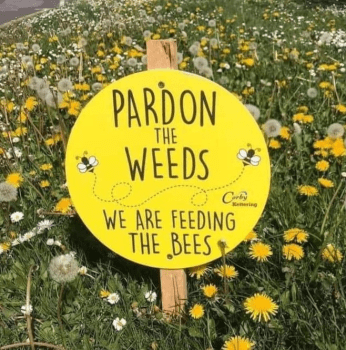
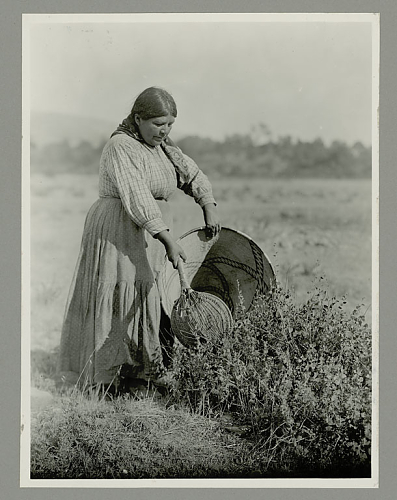

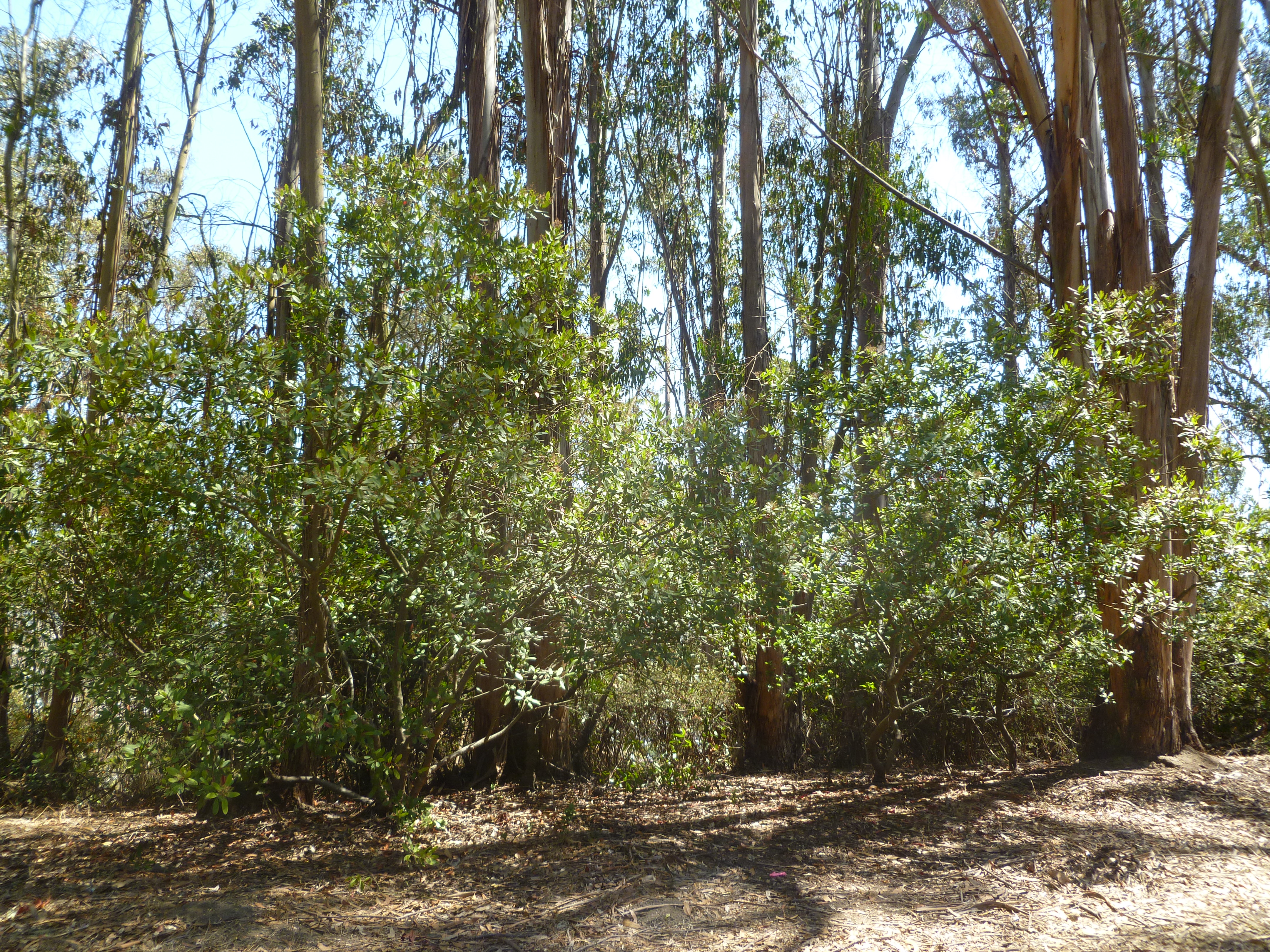
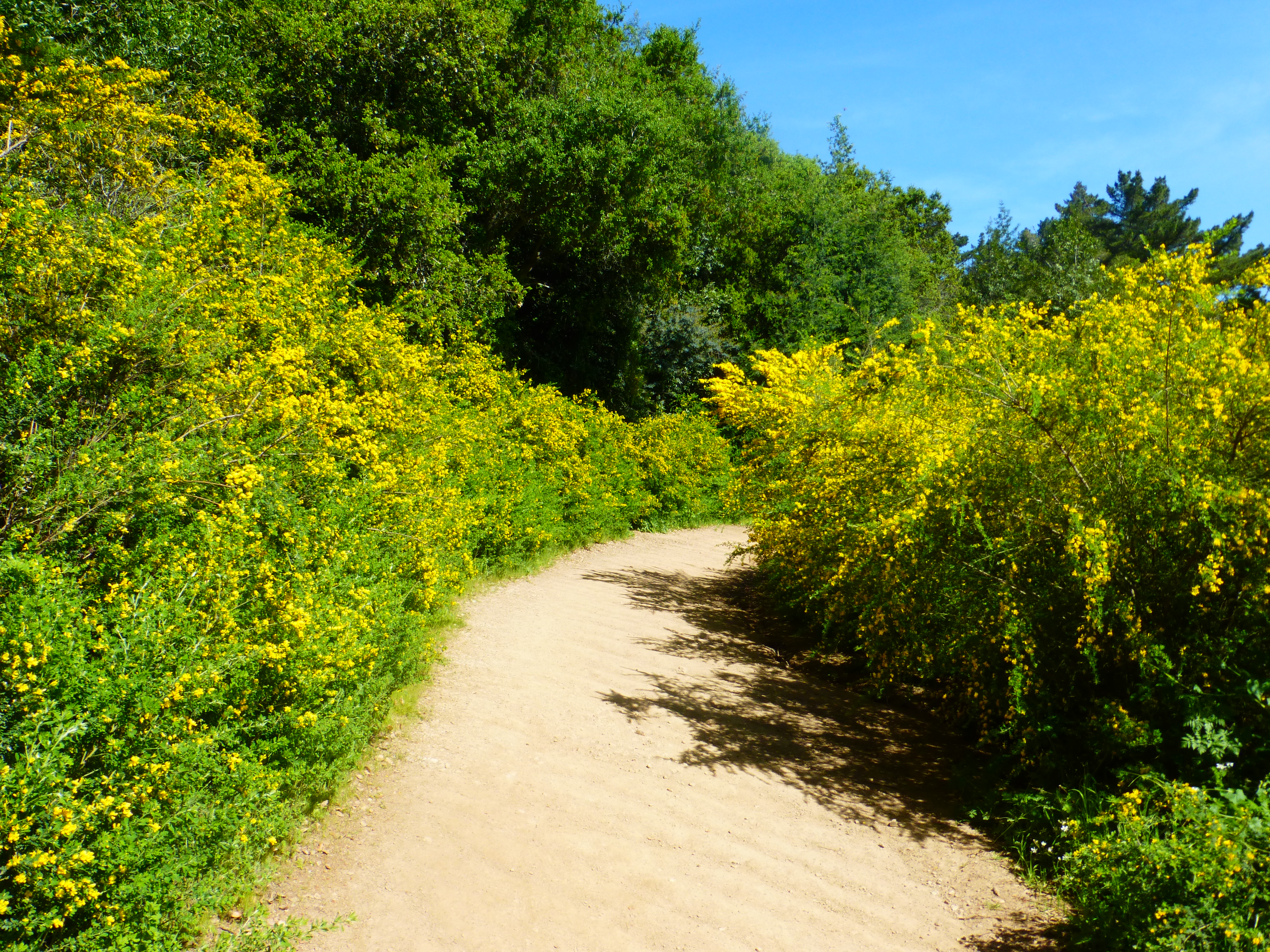
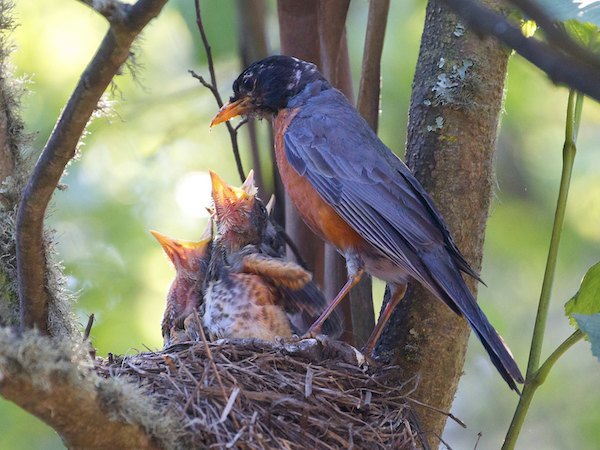

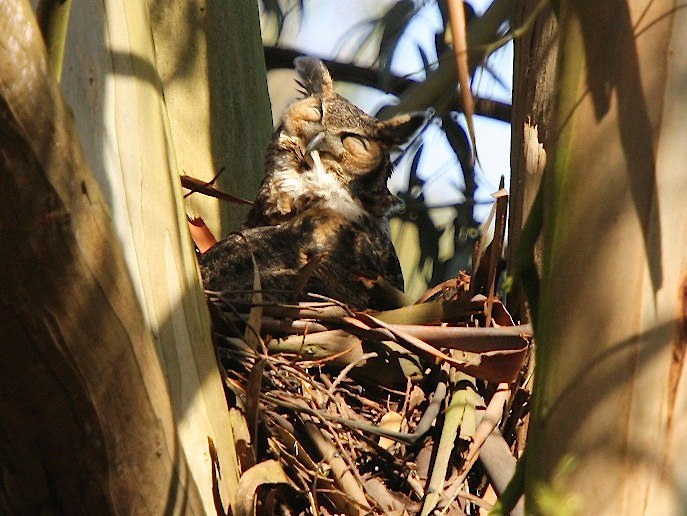
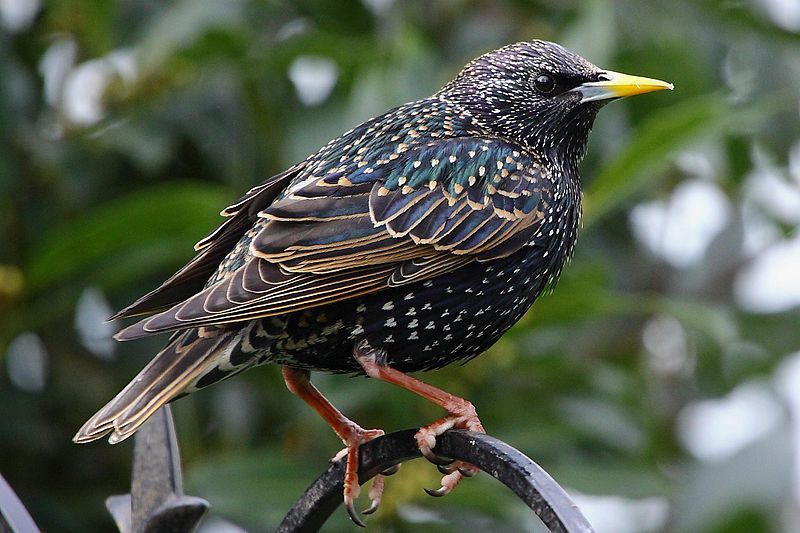
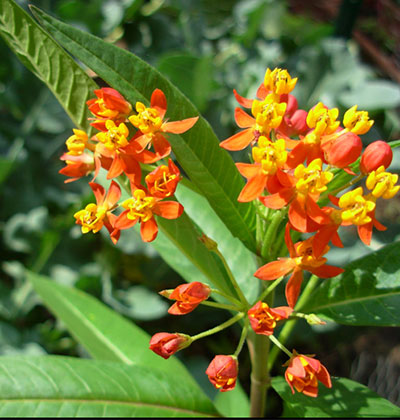
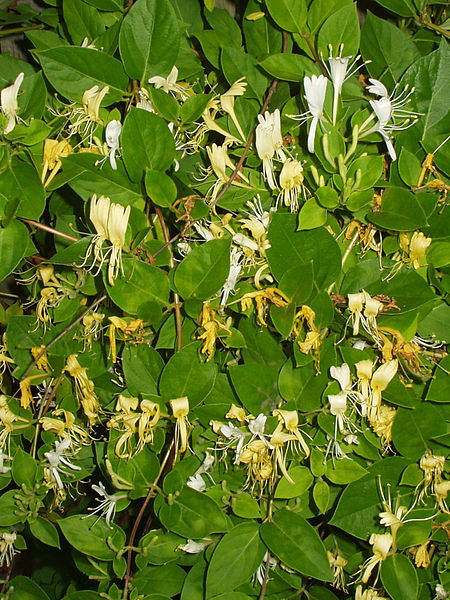
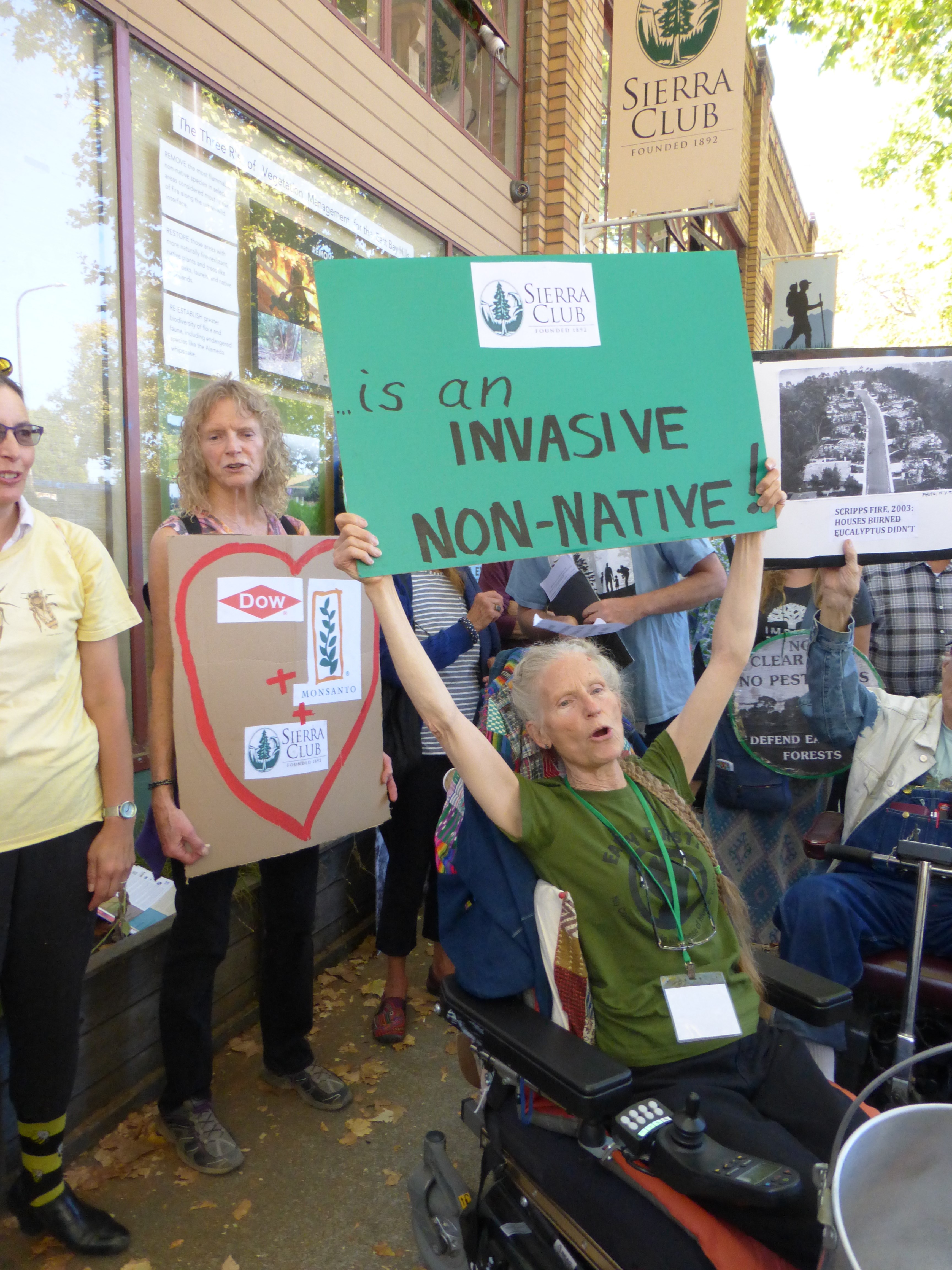
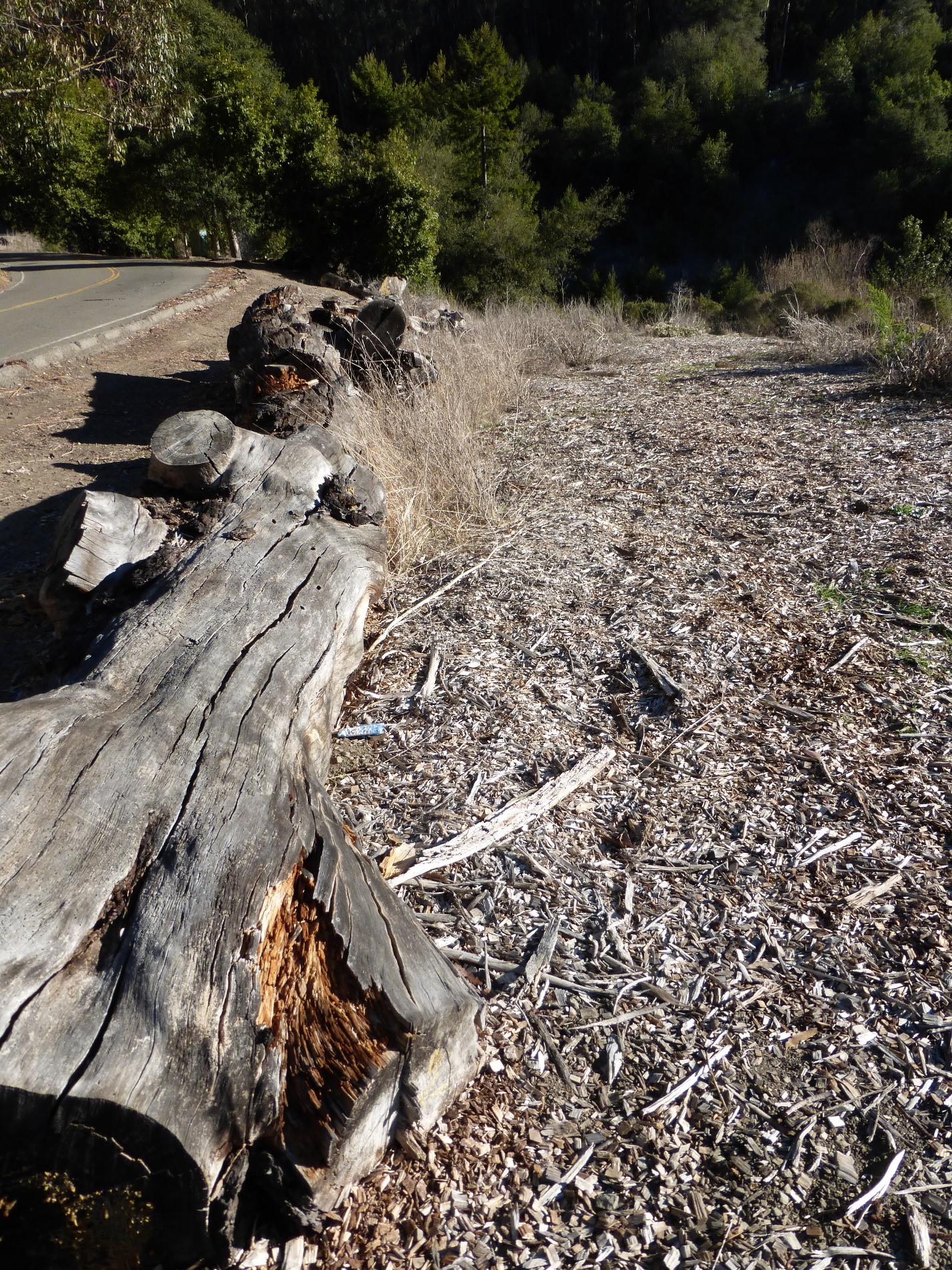
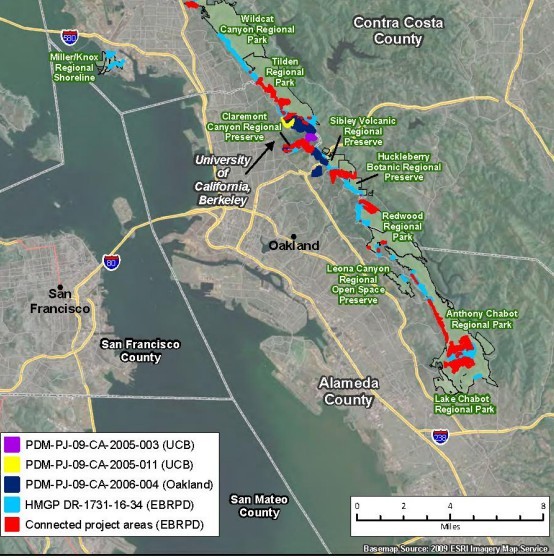
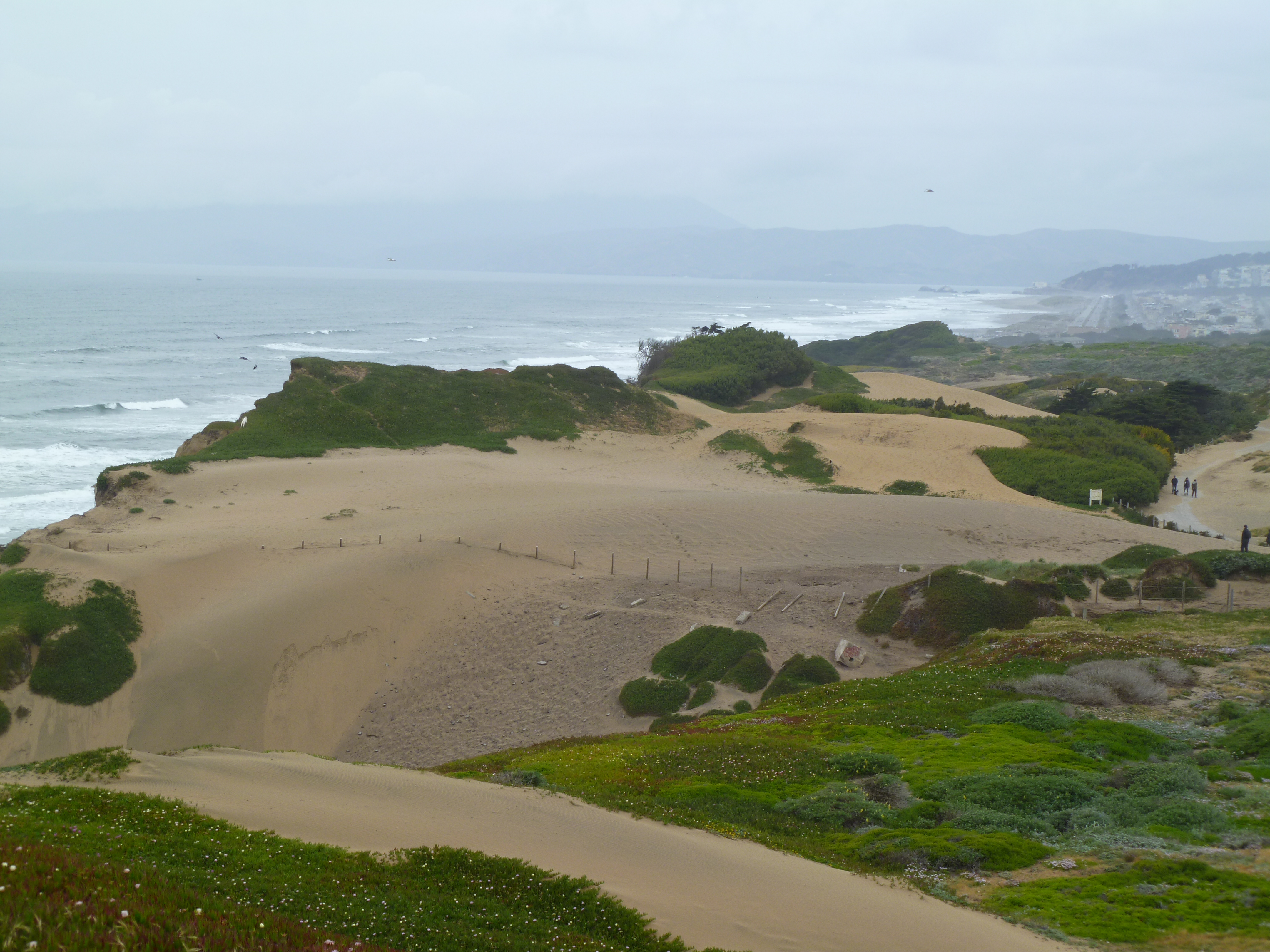
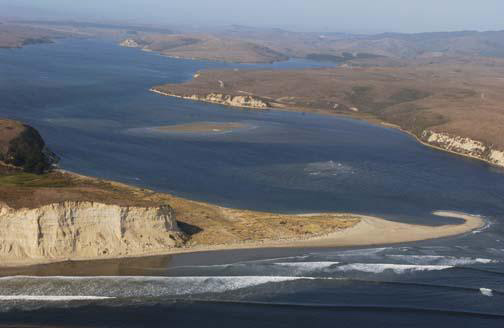
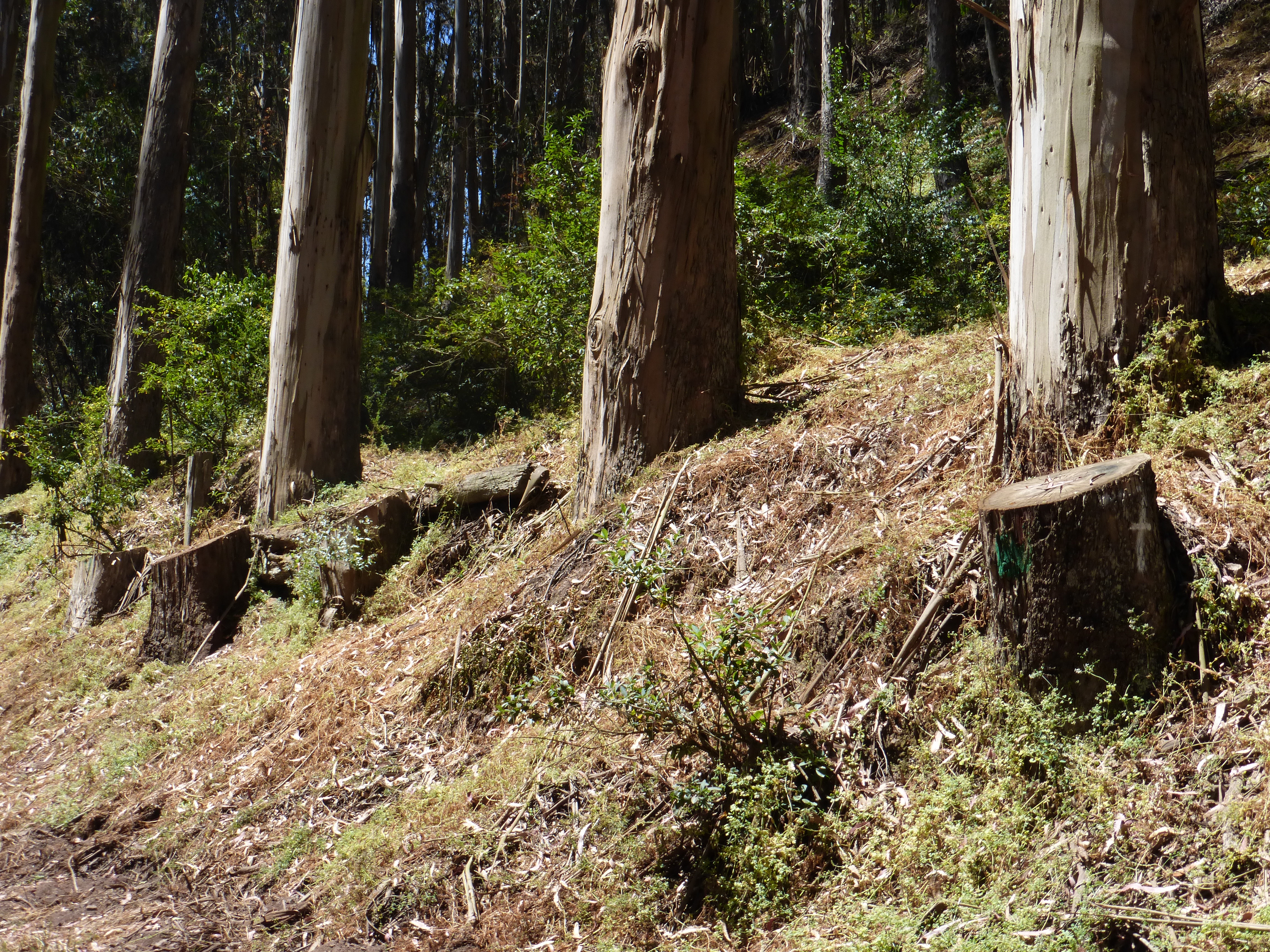
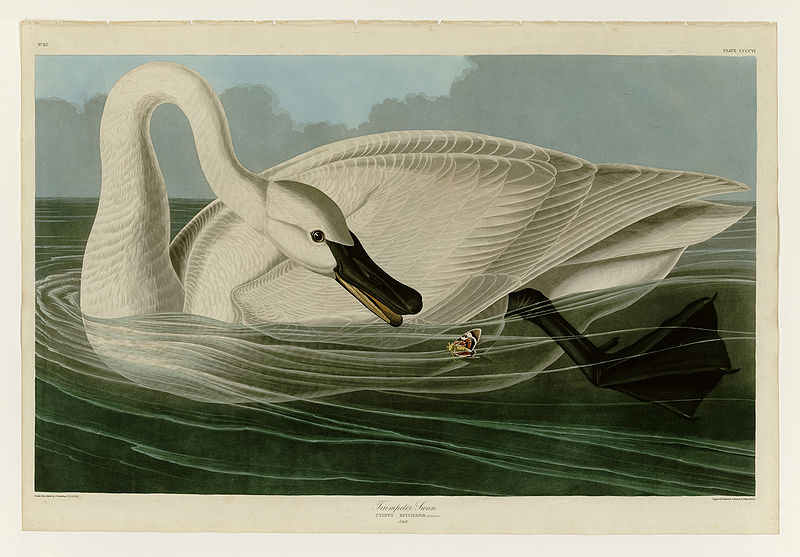
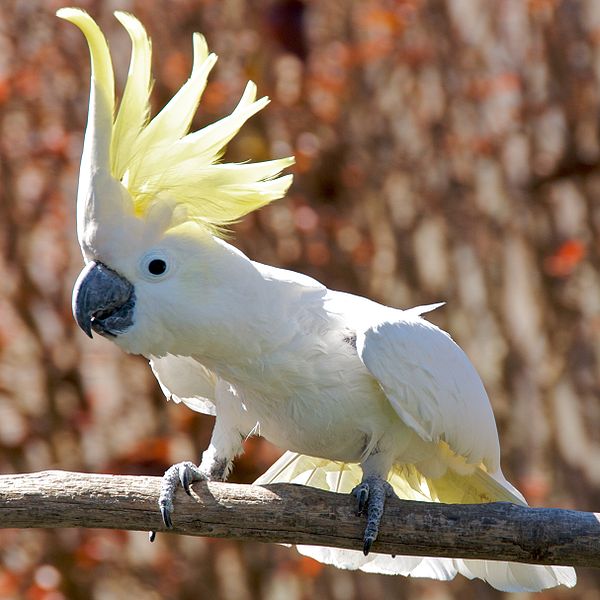
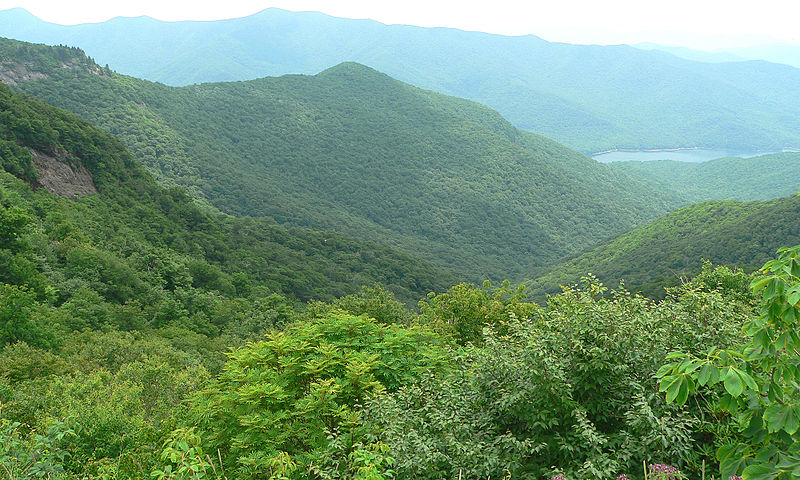
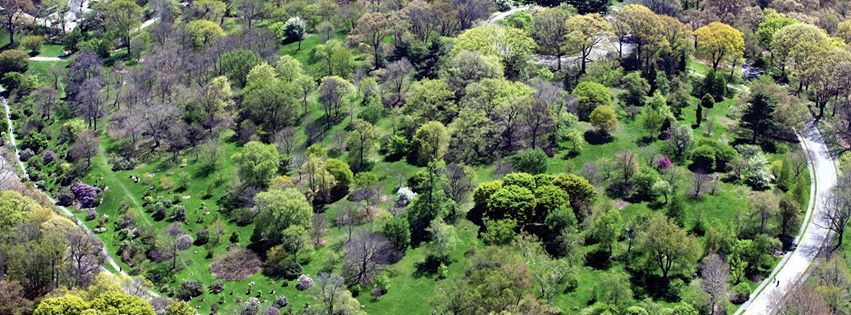
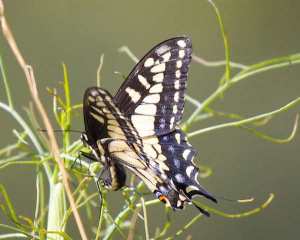
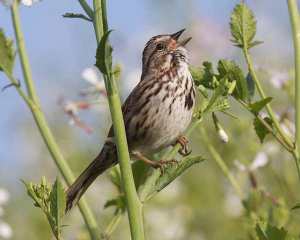
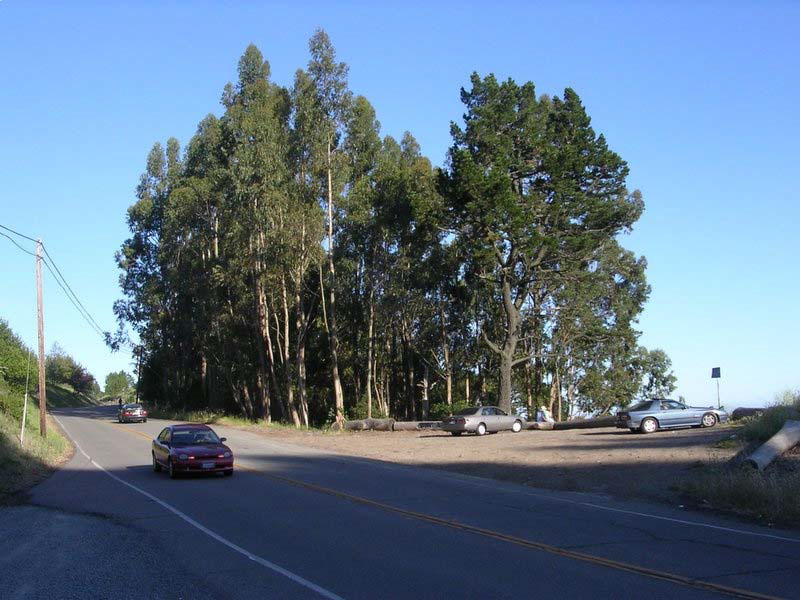
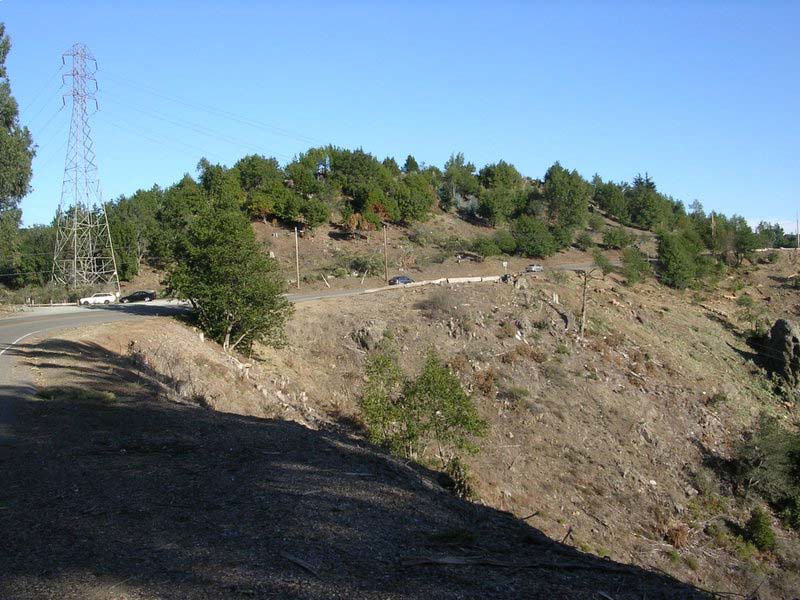
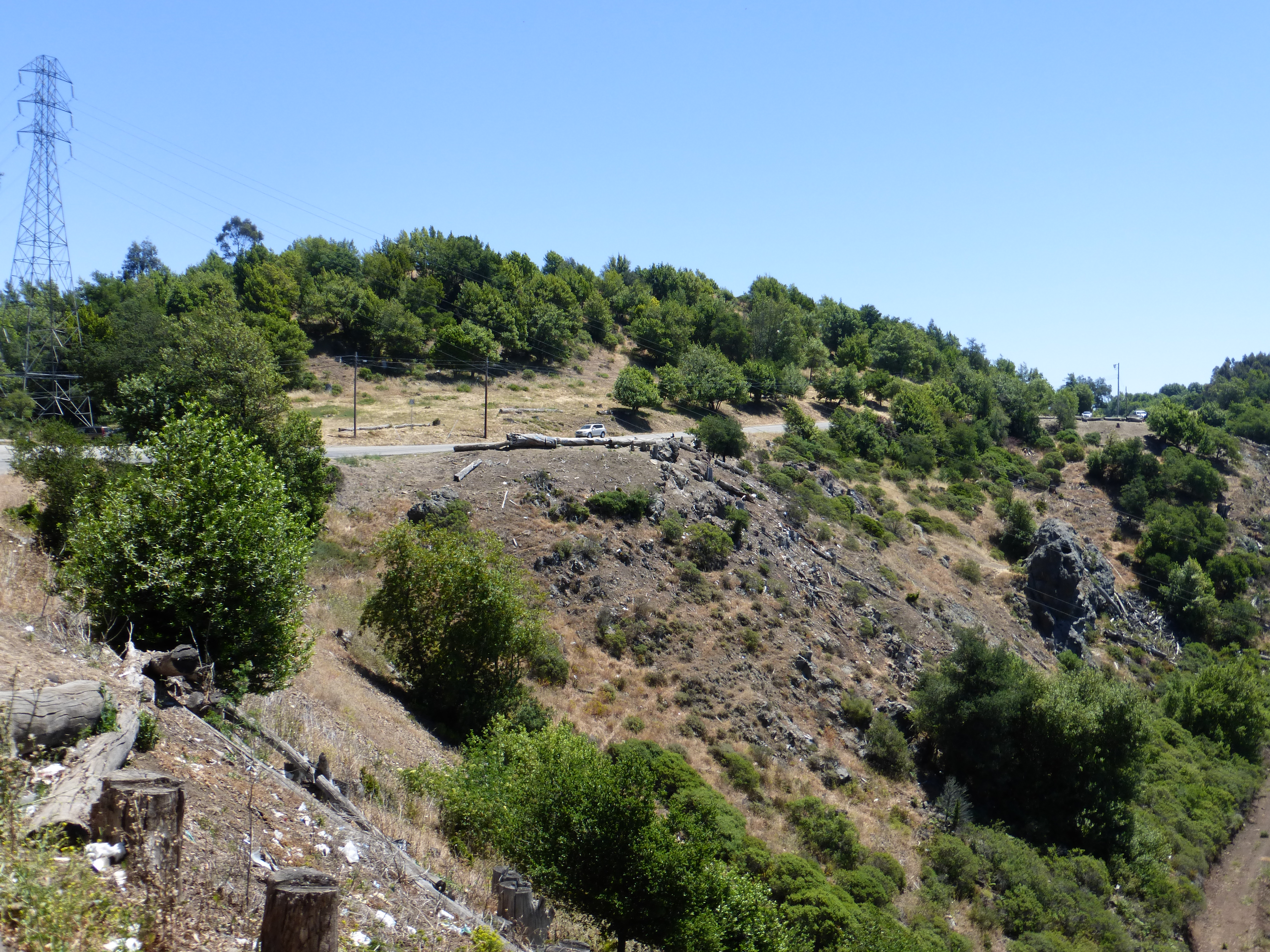

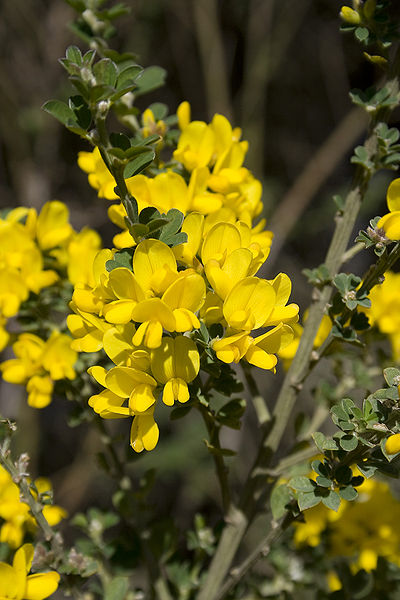
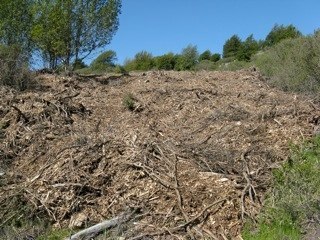
 Conservation Sense and Nonsense