Luther Burbank: The Plant Inventor

Luther Burbank was born in Massachusetts in 1849, the 13th of 15 children.  As a child, he had an interest in nature.  With an inheritance from his father, who died when Burbank was 18 years old, he purchased a 17-acre farm in Massachusetts. 
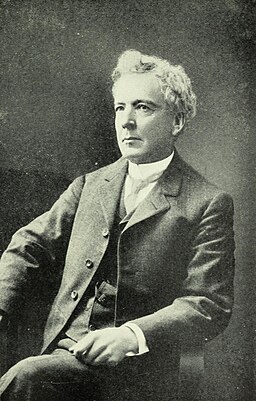
Luther Burbank, ca. 1915

Burbank bought his small farm intending to be a market farmer, selling seasonal fruits and vegetables.  He was handicapped by challenging climate and growing conditions and competition from other market farmers with a head start.  He could see that he would have to produce the best produce and offer it before his competitors could, which pushed him down the path of improving the plants he grew.

Burbank’s methods for improving plants

Burbank found his inspiration as a breeder of improved plants in his local library where he found the writings of Charles Darwin.  He could see that the concept of natural selection described by Darwin, applied equally to breeding plants.  He wrote, “It opened a new world to me.  It told me, in plain simple sentences, as matter-of-fact as though its marvelous and startling truths were commonplace that variations seemed to be susceptible, through selection, of permanent fixture in the individual…I doubt if it is possible to make anyone realize what this book meant me.” (1)

Burbank quickly put his new understanding of selection to use as a means to improve the food crops he grew.  He developed the Burbank potato that is known today as the Burbank russet potato.  He found a seed ball on his potato plants containing 23 seeds.  He grew the seeds, selecting the plants that produced the best potatoes in successive crops until he had a potato with smooth skin and few eyes that tasted good and stored well. It was also mildly resistant to the blight that caused the potato famine in Ireland, which killed one million people and caused a mass exodus from Ireland.

He understood that he had created a valuable commodity, but he couldn’t see how he could profit from it because he couldn’t produce it at scale on his small property and he didn’t have the commercial infrastructure to market it widely.  At the time, it wasn’t possible to patent new plant varieties, so he sold his new variety to an established seed merchant for $150. It was a paltry sum, even at the time, but it was the beginning of a business model that financed most of Burbank’s career as a plant inventor. 

Charles Darwin also introduced Burbank to another method of improving plants in his publication, “The Effects of Cross and Self-Fertilization in the Vegetable Kingdom.”  Burbank described how Darwin led him to the realization that hybridization is another means of improving the quality and performance of plants:  “One sentence in the very introductory chapter of that volume opened the door of my mind and took possession of my fancy.  After discussing briefly the marvel of cross- and self-fertilization in plants, Darwin said: ‘As plants are adapted by such diversified and effective means for cross-fertilization, it might have inferred from this fact alone that they derive some great advantage from the process; and it is the object of the present work to show the nature and importance of the benefits thus derived [from hybridization].’” (1)
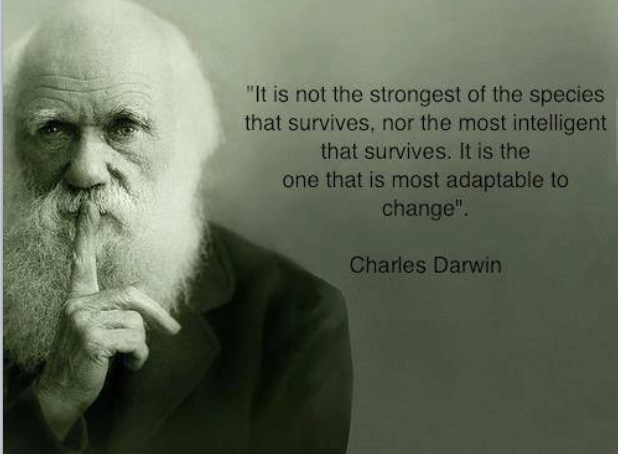
Darwin identified natural selection and hybridization as tools of evolution that produced plants and animals best adapted to current environmental conditions.  When environmental conditions changed, as they have constantly over 4.2 billion years of the Earth’s existence, natural selection and hybridization enabled the survival of plants and animals best adapted to changed conditions. Using the same methods, but different criteria, Burbank bred the plants that conformed to the needs of humans:  the most flavorful fruit, sturdy enough to be transported from fields to tables and the most beautiful flowers, in the opinion of humans.  Burbank directed and accelerated evolution to serve humans, using the tools of natural evolution. 

Grafting the branches of one type of fruit onto the root stock of another species of tree was the third method Burbank used to create new plants.  Most orchard fruit is grown from grafting because growing fruit trees from seeds is unpredictable.  The seeds of a flavorful apple, don’t necessarily grow into a tree that produces an equally flavorful apple.  It takes years for some fruit trees to produce fruit, which can ultimately produce disappointing fruit.  Grafting is a means of reducing risk and accelerating production.

California’s Bounty

After years of economic hardship, Burbank moved to California in 1875 at the age of 26 to join his brothers.  Instantly, he was an enthusiastic promoter of the ideal climate and growing conditions of his new home in Santa Rosa. He bought 4 acres of land where he built a greenhouse, nursery, and experimental fields.  Later, he bought an 18-acre plot of land in nearby Sebastopol he called the Gold Ridge Farm, where his experiments expanded.

In California, Burbank had the climate and the acreage needed to run many experiments on fruit and nut trees as well as vegetables and flowers simultaneously.  Each experiment required planting thousands of individual plants, grown through many generations.  These experiments produced hundreds of varieties of many species of plants:

Fruits
113 plums and prunes
69 nuts
35 fruiting cactus
16 blackberries
13 raspberries
11 quinces
11 plumcots
10 cherries
10 strawberries
10 apples
8 peaches
6 chestnuts
5 nectarines
4 grapes
4 pears
3 walnuts
2 figs
1 almond
Grains, grasses, forage
9 types
Vegetables
26 types
Ornamentals
91 types
Source:  Wikipedia
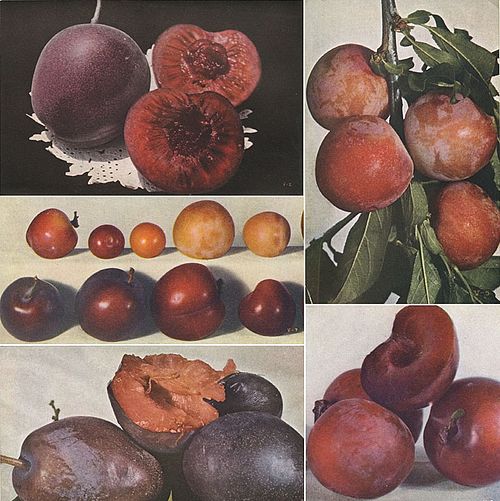
Cross between Burbank and Satsuma plums

Finding His Tribe:  Scientist or Businessman?

By the turn of the century, Burbank had made his reputation as the creator of new plant varieties.  He captured the attention of scientists who wanted to adopt him into their community, learn his methods, and teach them to their students:  “The San Francisco Chronicle advocates the seizing of Luther Burbank at his home in Santa Rosa and placing him in a chair at Stanford University….The main thing is to get the recluse away from his practical experiments long enough to tell people what he has done.”  Los Angeles Times, June 7, 1901.

Burbank was invited to give a series of lectures at Stanford University at a time when botanical scientists were newly influenced by the discovery of the role of genetics in producing individual variations in plants and animals. Gregor Mendel’s studies of genetic variation done in the 1860s was buried in the archives of Mendel’s local botanical society until 1900, when they were rediscovered.

Burbank’s audience at Stanford was expecting his lecture to reflect the mechanistic determinism of Mendelian genetics.  Instead, they got a dose of Burbank’s almost mystical view of the workings of nature “…as an intricate web of vibrations and magnetic forces where ‘all motion, all life, all force, all so-called matter are following the same law of heredity found in plants and animals, a forward movement toward attraction through lines of least resistance.’” (1)

Today, our understanding of genetics is more nuanced than it was over one hundred years ago and it is more consistent with Burbank’s observations.  With the help of molecular analysis, we now know that there are hundreds of unexpressed genes that are latent unless triggered in response to specific growing conditions as well as random mutations.  Burbank’s view of variation in nature was based on close, persistent observation and his own subjective intuition, based on decades of experience.

The Carnegie Institute of Technology tried to bridge this gap between science and Burbank’s art of creating new plant varieties by giving him a generous grant of $10,000 per year on the condition that a botanical scientist would trail Burbank in the field and turn his art into a data-driven algorithm capable of replicating Burbank’s accomplishments. 

The scientist assigned to that task was immediately frustrated by the haphazard jumble of Burbank’s sketchy record-keeping.  Watching Burbank in the field was equally frustrating.  Burbank couldn’t translate the choices he made into words because his judgment was intuitive.  Finally, The Carnegie Institute lost patience with the project and terminated the grant.

Henry Ford and Thomas Edison came to visit Luther Burbank in 1915 after their visit to the Panama-Pacific Exposition in San Francisco.  It was a meeting of the minds and kindred spirits. They were businessmen whose commercial success was based on tireless effort, continuous incremental improvement, and practical invention. They were Burbank’s tribe, who became fast friends for the rest of their lives. 
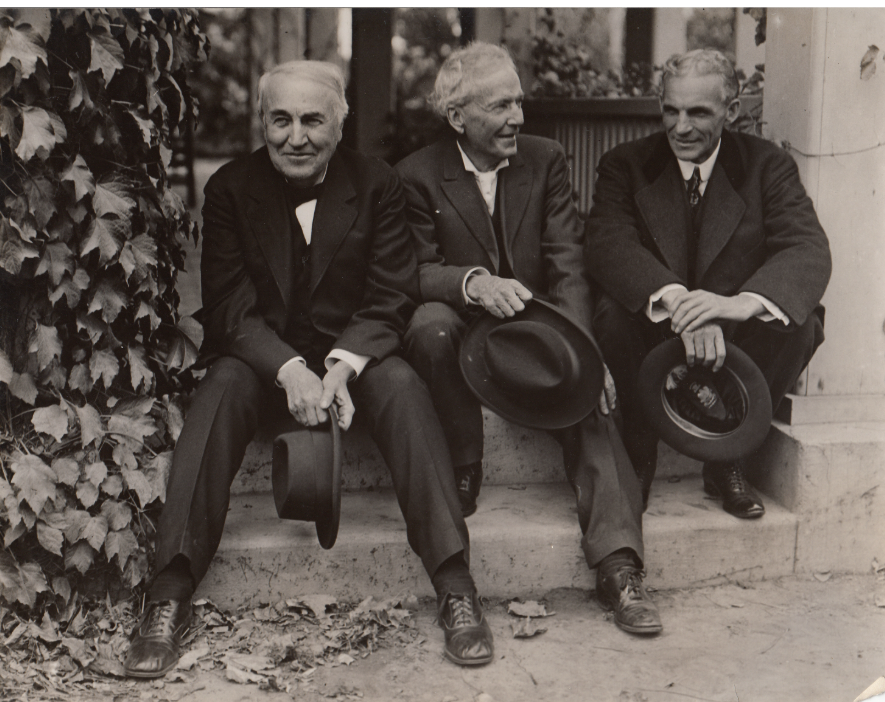
Thomas Edison, Luther Burbank, Henry Ford.  Santa Rosa, 1915

Burbank Defends Evolution

It took Charles Darwin nearly 20 years to publish his treatise on evolution, On the Origin of Species, partly because he knew it challenged some of the basic premises of organized religion to which his family was committed.  The evidence that life on Earth evolved over millions of years directly contradicted the religious belief that God created all life on Earth, as it presently exists, only 6,000 years ago.  Evolution is also inconsistent with the religious belief that humans are chosen by God to rule the world and that all other creatures are subservient to our command. 

In fact, pushback to the concept of evolution was minimal in the 19th century after Origin of Species was published in 1859.  Full-throated opposition to evolution emerged in the 20th century and is epitomized by the Scopes trial that occurred in 1925, just one year before Burbank’s death. 

The Scopes trial occurred because the state of Tennessee banned the teaching of evolution in public schools. The ACLU persuaded a high school teacher, John Scopes, to test the law.  Two of the greatest orators of the time, stepped forward to try this important case.  Clarence Darrow, defended Scopes for the ACLU.  William Jennings Bryon was the prosecutor for the state of Tennessee. 

Both Darrow and Bryon asked Luther Burbank to appear as a witness at the trial, which was an indication that the public was confused about Burbank’s close relationship with the natural world.  Much to the disappointment of William Jennings Bryon, who considered himself a personal friend of Burbank’s, Burbank came down unequivocally in support of the teaching evolution.

In a letter submitted as evidence in the trial, Burbank said, “Those who would legislate against the teaching of evolution should also legislate against the teaching of gravity, electricity, and the unreasonable velocity of light, and also introduce a clause to prevent the use of the telescope, the microscope…or any other instrument of precision which in the future may be invented…for the discovery of truth.” (1)

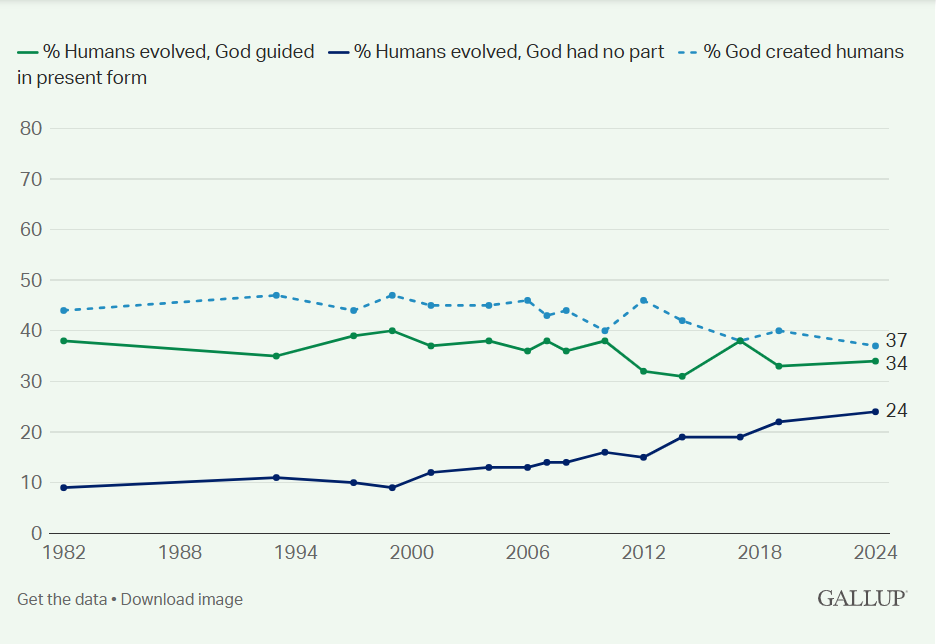
Despite Burbank’s effort, Scopes was found guilty and the ban on teaching evolution in Tennessee remained in effect until 1967.  In 2024, the Gallup Poll reported that only 24% of Americans believe in evolution unguided by God, a percentage that has increased steadily since 2000.  The dominate view—at 37%–is that humans were created by God in their present form:
In a series of interviews with the news media, Burbank expressed his doubts about the afterlife and his admiration and kinship with Christ as a man rather than a deity:  “[Christ] was an infidel of his day because he railed against the prevailing religions and his government.  I am a lover of Christ as a man, and his work and all things that help humanity, but nevertheless just as he was an infidel then, I am an infidel today.” (1)

Burbank’s Last Success

By any measure, Burbank must be considered a success.  Although he managed to make a living, he was not wealthy because his plant inventions could not be patented.  Without patent protection, profits were realized by seed merchants, nurseries, and agricultural operations. 

Burbank made many appeals to the US Patent Office for patent protection.  His appeals sounded desperate and angry about the unfairness that often threatened him with economic ruin.  His death in 1926 at the age of 77 sparked another campaign by other plant breeders to extend patent law to the development of new plant varieties. 

The effort to extend patent law to plants was boosted by the Great Depression, which began in 1929.  Farmers are always in debt as they must borrow money to plant their next crop.  When commodity prices collapsed during the depression, many farmers lost their farms. 

The proposal to extend patent law to plant “inventions” was perceived by many politicians as a way to help farmers, although the logic of that connection is questionable because patented seeds are likely to be more expensive.  Despite that concern, the Plant Patent Act was passed with little opposition in 1930.  There were many limitations on the first patent law, many of which have since been revised.

Sixteen of Burbank’s creations received patents, a small fraction of the plants being developed at the time of Burbank’s death.

We can still learn from Luther Burbank

I encourage readers to visit Luther Burbank’s home and garden in Santa Rosa, which is now a free public park, and the museum that is open during summer months.  You will find many informational signs throughout the garden about Burbank’s inventions.  You won’t find any hint of a nativist bias in the signs.  This sign about creating a garden for butterflies makes it clear that these lovely creatures have no preference for native plants:
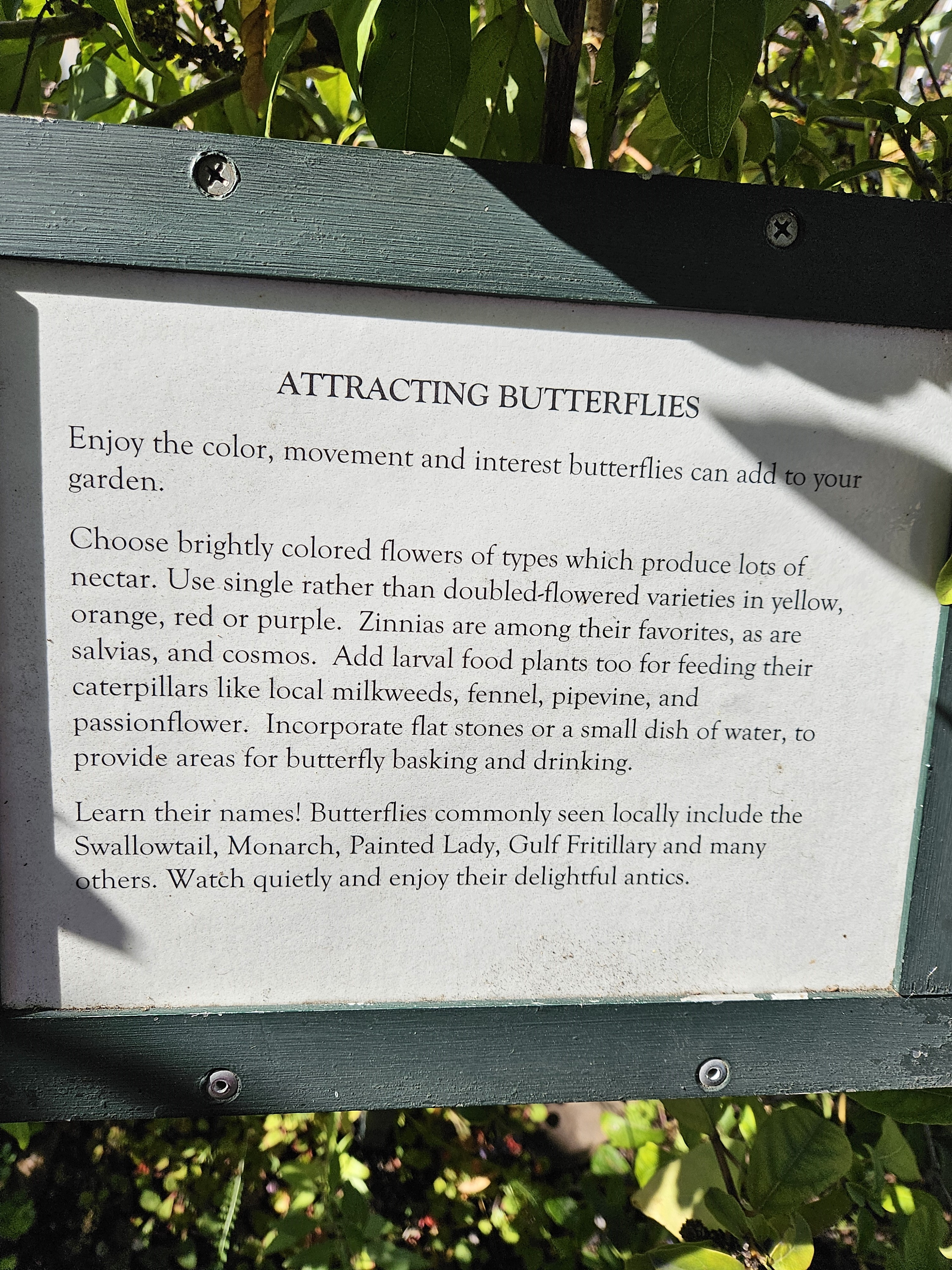
Luther Burbank Garden, Santa Rosa, CA. 2025

(1) The Garden of Invention:  Luther Burbank and the Business of Breeding Plants, Jane S. Smith, Penguin Books, 2009
California’s Wildlife Conservation Board needs to hear from you!

Although I have stopped writing original articles for Conservation Sense and Nonsense, I am still actively engaged in local environmental issues.  When there are opportunities to influence public policies that affect the environment, I often participate. 

Today, I am sharing my public comment on the update of the strategic plan of California’s Wildlife Conservation Board (WCB) in the hope that it might inspire you to write your own comment on the draft plan, which is available HEREThe deadline for submitting comments is May 16, 2025.  Comments may be sent to this email address:  wcb@wildlife.ca.gov

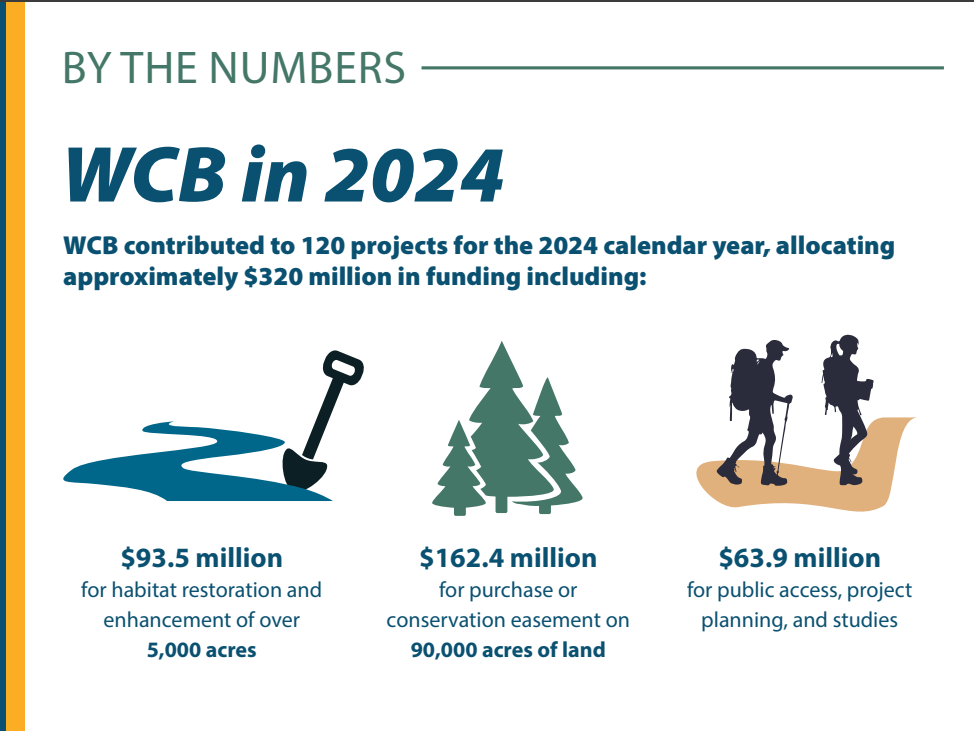
The mission of the Wildlife Conservation Board is to “protect, restore and enhance California’s spectacular natural resources for wildlife and for the public’s use and enjoyment…”  In service of that mission, WCB awards grants of millions of dollars every year for “restoration” projects.  According to WCB’s annual report for 2024, WCB awarded $93.5 million for “habitat restoration and enhancement of 5,000 acres” of land in California in 2024.

Source: “WCB 2024 Year in Review”

Over the life of the updated strategic plan, from 2025 to 2030, the Wildlife Conservation Board will distribute grants of $1.02 billion ($204 million per year) from funding made available by Proposition 4, the $10 billion “California Climate Bond,” which was approved by voters in November 2024.   Because most federal funding of climate and ecological restoration has been cancelled by the Trump administration (and being litigated, as we speak), the “California Climate Bond” will be one of the few sources of funding for these projects. 

This is my public comment on the strategic plan update for California’s Wildlife Conservation Board:


WCB Strategic Plan Update

Thank you for this opportunity to comment on the draft of WCB’s update of its strategic plan (SP).  I am writing to suggest that WCB consider the addition of a few over-arching principles that would apply to all of its programs.  These principles would enhance the plan’s stated goals of climate resilience and biodiversity protection by ensuring projects are evaluated based on their actual ecological outcomes rather than adherence to historical conditions.

  • All projects funded by WCB should be more constructive than they are destructive.  For example, a project that proposes to destroy more habitat than it creates should be less competitive than a project that will create more habitat than it destroys. A project that reduces carbon storage by destroying vegetation does not “reduce and remove carbon pollution,” as the SP proposes.
  • Projects that do not propose to use pesticides to destroy habitat should be more competitive than those that use pesticides because pesticides damage the soil and are harmful to wildlife and human life.   The success of projects is jeopardized by pesticide use.
  • Projects that apply for additional funding for a continuing project must address the fundamental question of the viability of the project.  In other words, if a project has been funded for 20 years, WCB should consider if the goals of the project are still realistic in a rapidly changing climate and environment (e.g., Invasive Spartina Project).
  • Projects should be consistent with the basic principles of science, such as:
    • The scientific definition of biodiversity includes both native and non-native plants and animals.
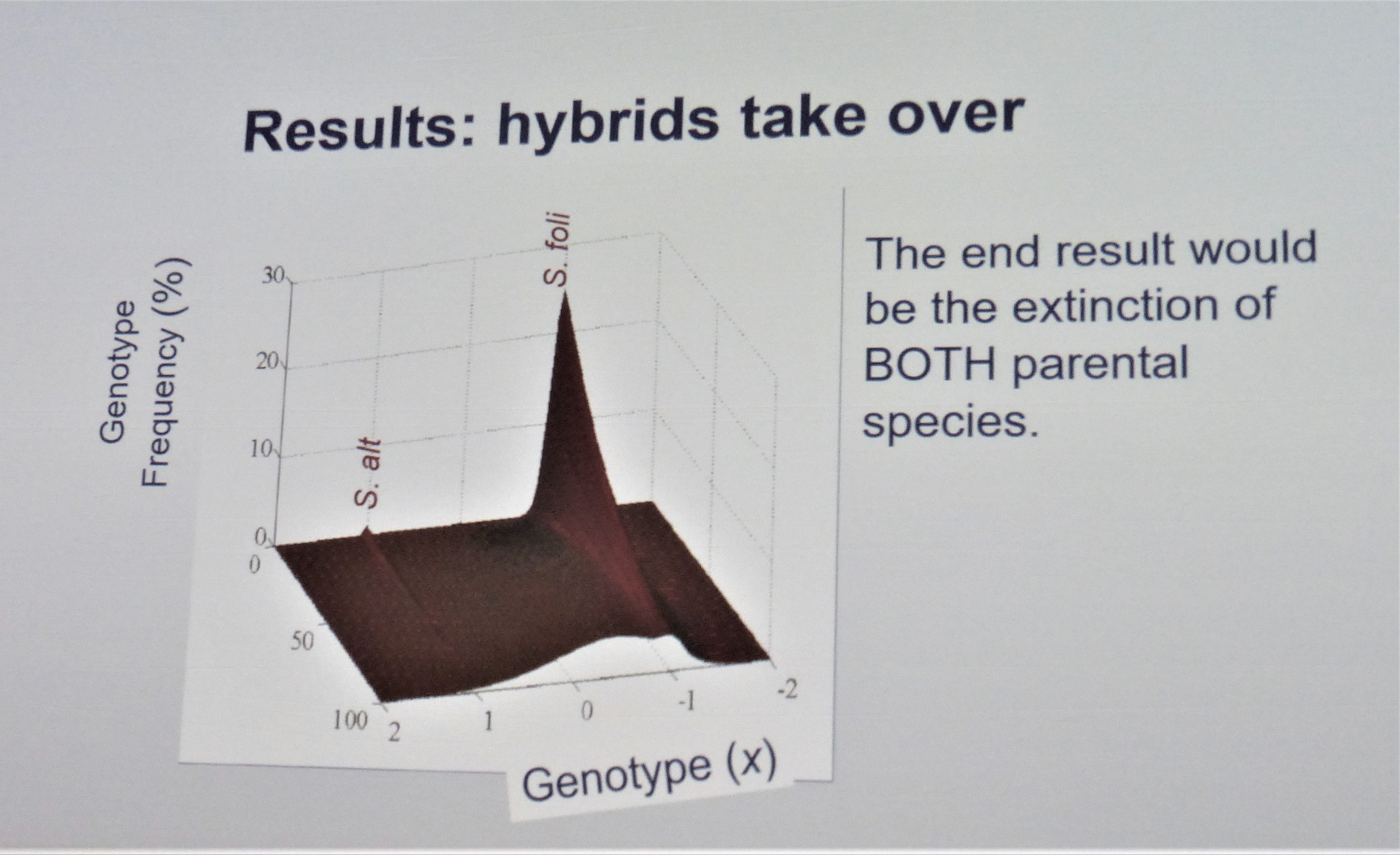
    • Hybridization is one of the tools of evolution that enables adaptation and speciation in response to changes in the climate and the environment.
    • The flammability of vegetation varies, but the variation is unrelated to the nativity of the plant.  Native plants are not inherently less flammable than non-native species.
    • The native ranges of California’s native plants have changed in response to the changing climate and they must continue to change if they are to survive.
    • Our changing environment dictates that historical landscapes cannot be replicated.  Humans cannot stop evolution, nor should we try.

I recommend that the WCB consider incorporating these principles into its project evaluation criteria to ensure that funded projects align with current ecological knowledge and maximize benefits for California’s biodiversity in a changing climate. Incorporating these principles into the SP would strengthen the plan’s objectives related to climate resilience (C2.1, C2.2), biodiversity protection (B1.1, B2.1), and program evaluation (D2.1, D2.2).

In support of these principles, I offer the following scientific studies for your consideration:

On pesticides damaging soil and harming wildlife and human health

  • Wan et al. (2025):  Pesticides affect a diverse range of non-target species and may be linked to global biodiversity loss. This study presents a synthesis of pesticide (insecticide, herbicide and fungicide) impacts on multiple non-target organisms across trophic levels based on 20,212 effect sizes from 1,705 studies. For non-target plants, animals (invertebrate and vertebrates) and microorganisms (bacteria and fungi), we show negative responses of the growth, reproduction, behavior and other physiological biomarkers within terrestrial and aquatic systems. Negative effects were more pronounced in temperate than tropical regions but were consistent between aquatic and terrestrial environments.  Results question the sustainability of current pesticide use and support the need for enhanced risk assessments to reduce risks to biodiversity and ecosystems.
  • Klein et al. (2024):  New Roundup formulations are 45 times more toxic to human health,on average, following long-term, chronic exposures. The study identified eight Roundup products in which Bayer has replaced glyphosate with combinations of four different chemicals: diquat dibromide, fluazifop-P-butyl, triclopyr, and imazapic. All four chemicals pose greater risk of long-term and/or reproductive health problems than glyphosate, based on the EPA’s evaluation of safety studies. Diquat dibromide and imazapic are banned in the EU. Diquat dibromide – present in all the new formulations – is 200 times more toxic than glyphosate in terms of chronic exposure and is classified as a highly hazardous pesticide.  New Roundup formulations pose significantly more harm to the environment. The chemicals replacing glyphosate in Roundup are significantly more likely to harm bees, birds, fish, earthworms, and aquatic organisms, on average. They are also significantly more persistent in the environment and more likely to leach down into groundwater, increasing the risk of contaminating waterways and drinking water.

On biodiversity including non-native species:

  • Schlaepfer et al. (2011): This pivotal paper challenges the automatic negative classification of non-native species by documenting their potential conservation benefits. The authors present evidence that some non-native species provide ecosystem services, habitat, and resources for native species, particularly in human-modified landscapes where native species may struggle. They advocate for conservation approaches that evaluate species based on their ecological functions rather than origin alone.
  • Mascaro et al. (2012): This study examines novel forests in Puerto Rico dominated by the non-native Castilla elastica tree. The research demonstrates that these novel ecosystems maintain key ecological processes such as productivity, nutrient cycling, and carbon storage at levels comparable to native forests. The findings suggest that novel ecosystems composed of non-native species can maintain essential ecosystem functions even after native tree species decline.

On hybridization as an adaptive mechanism:

  • Hamilton & Miller (2016): This paper reframes hybridization as a potential adaptive resource rather than a conservation threat. The authors present evidence that hybridization can introduce genetic variation that helps species adapt to changing environmental conditions, particularly relevant in the context of climate change. They suggest that conservation strategies should sometimes protect hybrid zones as sources of evolutionary potential rather than trying to eliminate them.
  • Fitzpatrick et al. (2015): This study examines how hybridization challenges traditional conservation approaches based on species preservation. The authors argue that hybridization is a natural evolutionary process that can generate biodiversity and adaptive potential. They present a framework for evaluating conservation value that considers genetic, ecological, and evolutionary factors rather than focusing solely on taxonomic “purity.”

On flammability unrelated to nativity:

  • Zouhar et al. (2008): This comprehensive technical report examines relationships between non-native plants and fire regimes. While acknowledging that some non-native plants can alter fire behavior, the report emphasizes that flammability is determined by plant structure, chemistry, and arrangement rather than nativity status. It provides detailed case studies showing both native and non-native plants can increase or decrease fire risk depending on specific traits.
  • Pausas & Keeley (2014): This study documents abrupt changes in fire regimes that occur independently of climate changes. The authors demonstrate that shifts in vegetation structure and fuel characteristics—which can be caused by both native and non-native species—are often more important determinants of fire behavior than plant origin. The research challenges simplistic assumptions about the relationship between native plants and fire resilience.

On changing native ranges:

  • Pecl et al. (2017): This influential paper documents how species are naturally shifting their ranges in response to climate change. The authors present global evidence of species redistributions across latitudinal, longitudinal, and elevational gradients. The study emphasizes that these range shifts are necessary adaptations to changing conditions and argues that conservation strategies need to accommodate these natural movements rather than trying to maintain historical distributions.
  • Bonebrake et al. (2018): This paper synthesizes research on climate-driven species redistribution and its implications for conservation. The authors highlight how traditional conservation approaches focused on preserving species in their historical ranges are becoming increasingly unviable under climate change. They advocate for more dynamic approaches that facilitate range shifts and species movements as adaptive responses to changing conditions.

On novel ecosystems and historical conditions:

  • Hobbs et al. (2014): This seminal paper introduces a framework for categorizing landscapes as historical, hybrid, or novel ecosystems. The authors argue that many ecosystems have been irreversibly altered by human influences and climate change, making restoration to historical conditions impossible in many cases. They advocate for pragmatic management approaches that focus on ecosystem functions and services rather than historical composition.
  • Stralberg et al. (2020): This study examines climate refugia in North America’s boreal forests. The research demonstrates that even supposedly pristine ecosystems will undergo significant changes due to climate change, with some areas serving as temporary refugia. The authors emphasize that conservation strategies need to recognize the transient nature of these refugia and plan for ongoing ecological transitions rather than static preservation.

In Conclusion

As you know, the mission of the Wildlife Conservation Board is to “protect, restore and enhance California’s spectacular natural resources for wildlife and for the public’s use and enjoyment…”  In addition, the Wildlife Conservation Board “envisions a future in which California’s wildlife, biodiversity and wild places are effectively conserved for the benefit of present and future generations.”  My suggestions for improvements in the draft strategic plan are consistent with the mission of the WCB. 

There was a time when academic scientists believed that the goal of conservation was to replicate historical landscapes by destroying plants and animals that were not here prior to European settlement.  Although many of these plants and animals found their way to California by natural means, without human assistance, they were perceived as “alien invaders” that didn’t belong here.  The assumption was that ecosystems can achieve an equilibrium state that represents an ideal that can be sustained by preventing change.  Science has long ago abandoned that notion in favor of acknowledging that nature is constantly changing in response to constant change in the environment. 

The belief that destroying such “alien invaders” would restore the landscape persisted for decades.  In many cases, no replanting was done after introduced plants were destroyed.  After poisoning our public land for decades, it has become clear to those who are not ideologically committed to historical landscapes that the original goal is not attainable because the plants and animals that survive are those that are best adapted to current environmental conditions, particularly the rapidly changing climate that is expected to continue to change.  In most cases, the newcomers are performing the same ecological functions of their predecessors and the harm that was presumed is usually balanced by benefits of their existence. 

Most academic scientists acknowledge this reality, but cultural lag has left the public behind as science has moved on.  Non-profit organizations that survive by the grace of their donors, have contributed to the pressure on public land managers such as the Wildlife Conservation Board.  Academic scientists are unwilling to participate in such grass-roots policy politics and their publications are often incomprehensible and inaccessible to the public and public land managers, leaving public land managers at the mercy of those with the least amount of information and the most amount of passionate belief.

The Wildlife Conservation Board has a responsibility to the public to inform itself of the consequences of conservation practices that are damaging the environment and are no longer realistic.  I respectfully ask that the WCB read the scientific studies I have provided and take them into consideration as it distributes over a billion taxpayer dollars made available by the passage of Proposition 4. 

Conservation Sense and Nonsense
May 1, 2025

References for cited studies

On pesticides harming soil and damaging wildlife and human health:

On biodiversity including non-native species:

  • Schlaepfer, M.A., Sax, D.F., & Olden, J.D. (2011). The potential conservation value of non-native species. Conservation Biology, 25(3), 428-437.
  • Mascaro, J., Hughes, R.F., & Schnitzer, S.A. (2012). Novel forests maintain ecosystem processes after the decline of native tree species. Ecological Monographs, 82(2), 221-228.

  On hybridization as an adaptive mechanism:

  • Hamilton, J.A., & Miller, J.M. (2016). Adaptive introgression as a resource for management and genetic conservation in a changing climate. Conservation Biology, 30(1), 33-41.
  • Fitzpatrick, B.M., Ryan, M.E., Johnson, J.R., Corush, J., & Carter, E.T. (2015). Hybridization and the species problem in conservation. Current Zoology, 61(1), 206-216.

  On flammability unrelated to nativity:

  • Zouhar, K., Smith, J.K., Sutherland, S., & Brooks, M.L. (2008). Wildland fire in ecosystems: fire and nonnative invasive plants. General Technical Report RMRS-GTR-42-vol. 6. USDA Forest Service.
  • Pausas, J.G., & Keeley, J.E. (2014). Abrupt climate-independent fire regime changes. Ecosystems, 17(6), 1109-1120.

  On changing native ranges:

  • Pecl, G.T., et al. (2017). Biodiversity redistribution under climate change: Impacts on ecosystems and human well-being. Science, 355(6332).
  • Bonebrake, T.C., et al. (2018). Managing consequences of climate-driven species redistribution requires integration of ecology, conservation and social science. Biological Reviews, 93(1), 284-305.

  On novel ecosystems and the impossibility of recreating historical conditions:

  • Hobbs, R.J., et al. (2014). Managing the whole landscape: historical, hybrid, and novel ecosystems. Frontiers in Ecology and the Environment, 12(10), 557-564.
  • Stralberg, D., et al. (2020). Climate-change refugia in boreal North America: what, where, and for how long? Frontiers in Ecology and the Environment, 18(5), 261-270.

The Forever War on Non-Native Plants

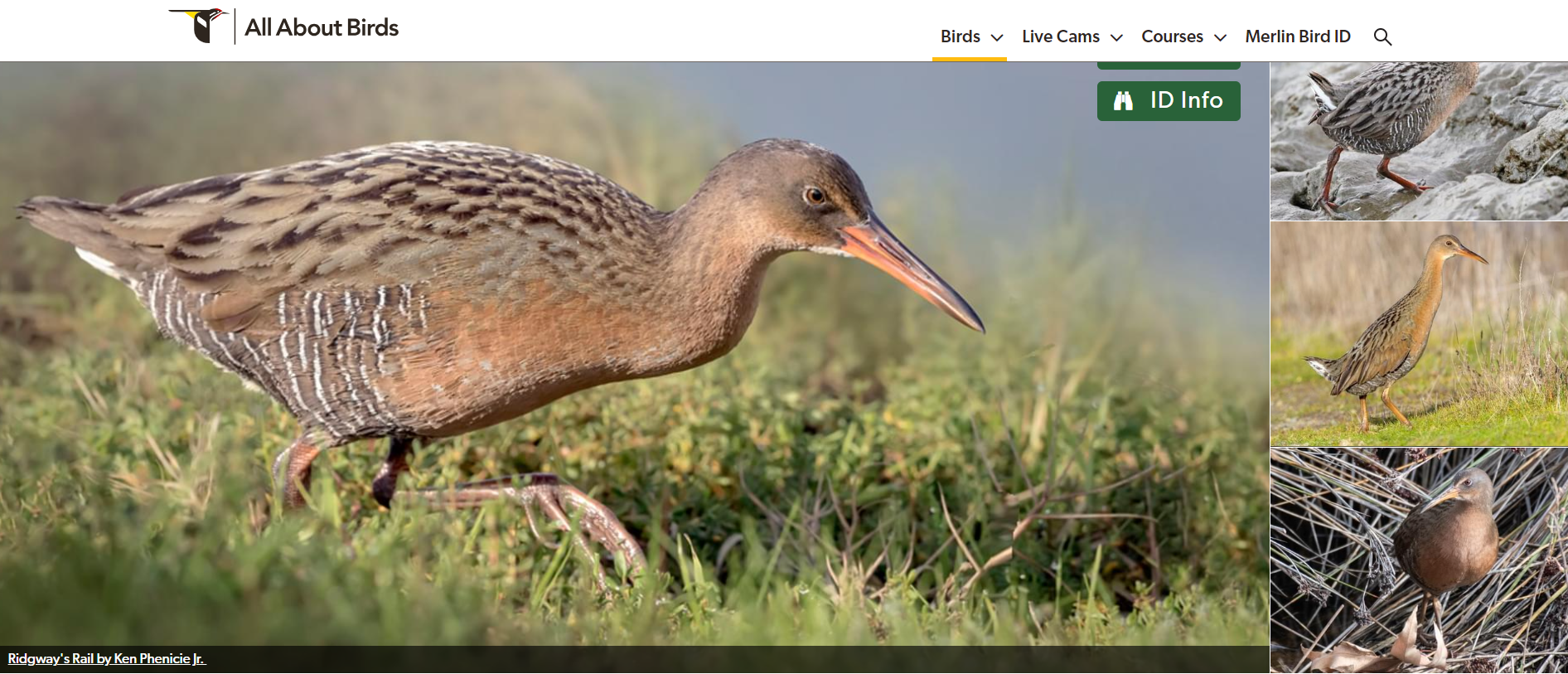
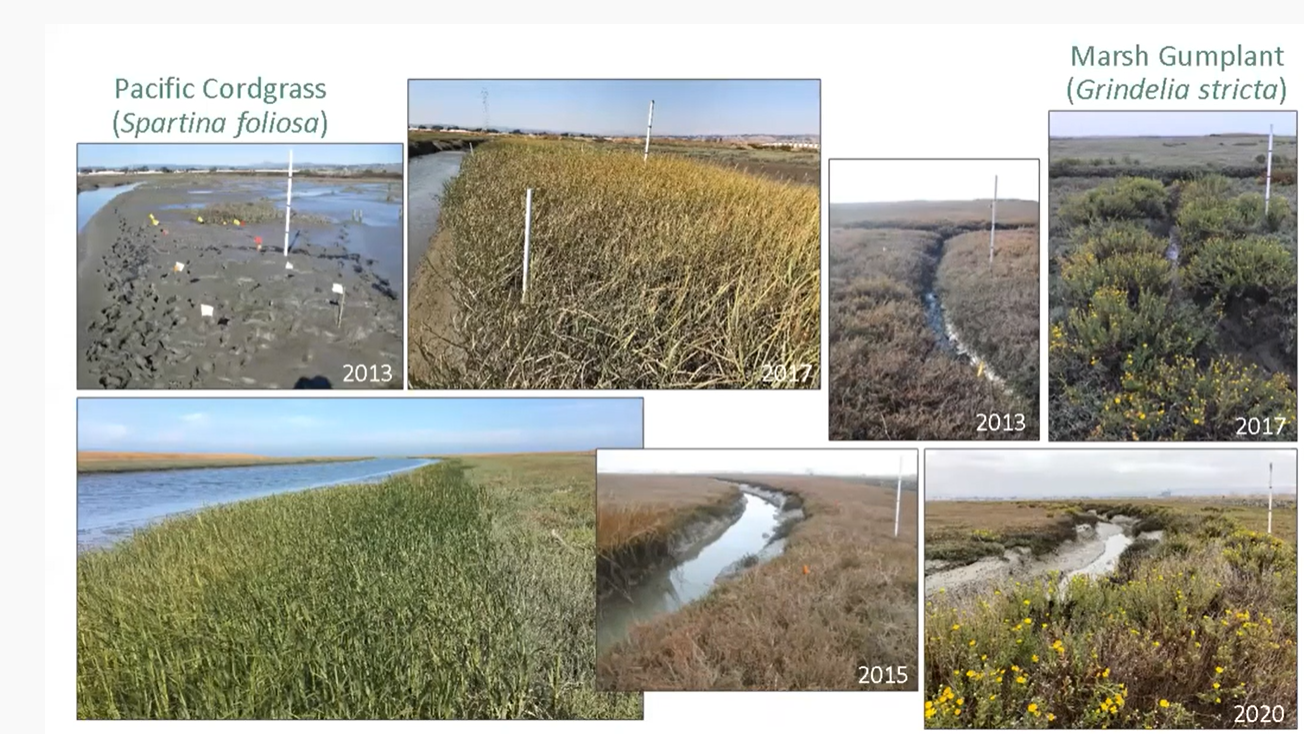
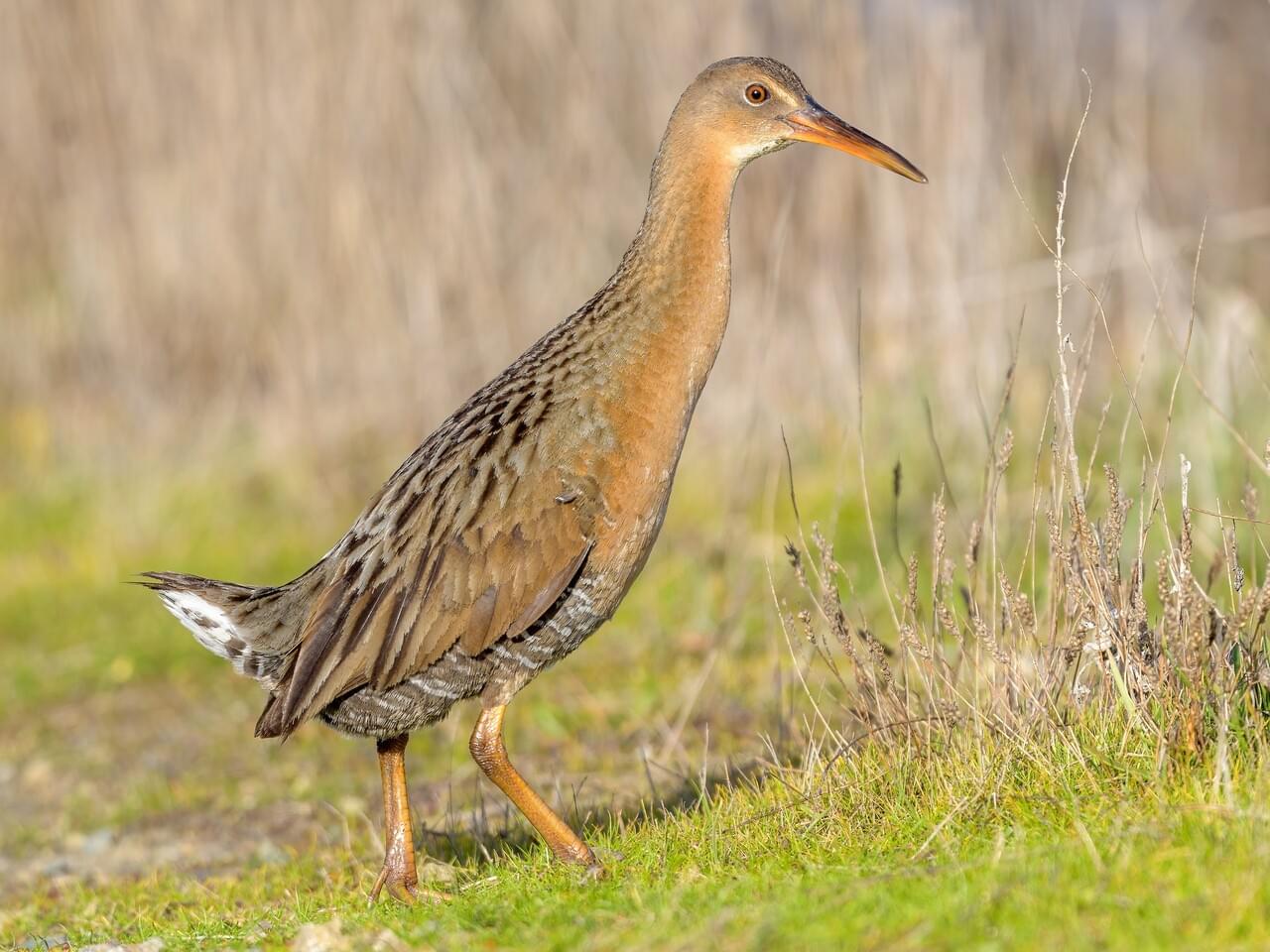
I spoke to California’s Wildlife Conservation Board at their August 2024 meeting about the Invasive Spartina Project. I asked the Board not to fund the eradication of non-native spartina and its hybrid, using herbicide. This project, which began 20 years ago, had cost over $50 million by 2023. (1)  Non-native spartina, native to the East and Gulf coasts (2), provides crucial habitat for Clapper rails (3), closely related to our endangered Ridgway rails.

Source: Cornell Laboratory of Ornithology

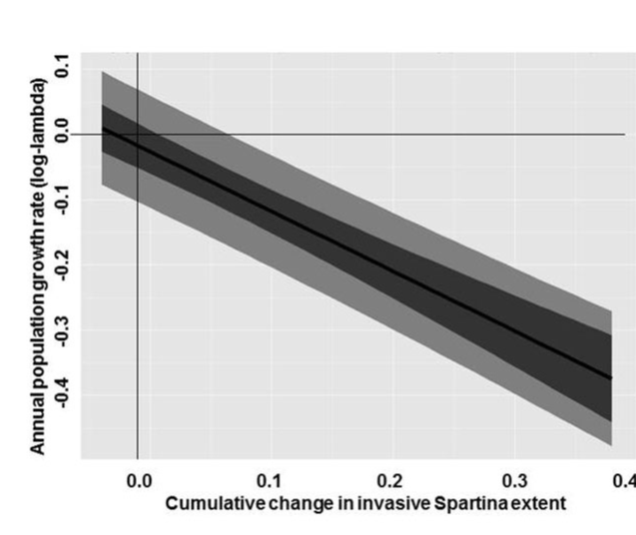
Non-native spartina grows taller, denser, and doesn’t die back in winter as native spartina does. Because early aerial spraying of herbicide eradicated most non-native spartina by 2010, Ridgway rail populations declined by 50% due to habitat loss. (4)

The project was temporarily paused in 2014 to plant native marsh plants and stabilize rail populations. When the project was resumed in most places the rail population continued to decline from 2018-2023. There were approximately 1,200 Ridgway rails in the Bay estuary before the project began. (5)  The most recent survey in 2022 found about 500. (6)

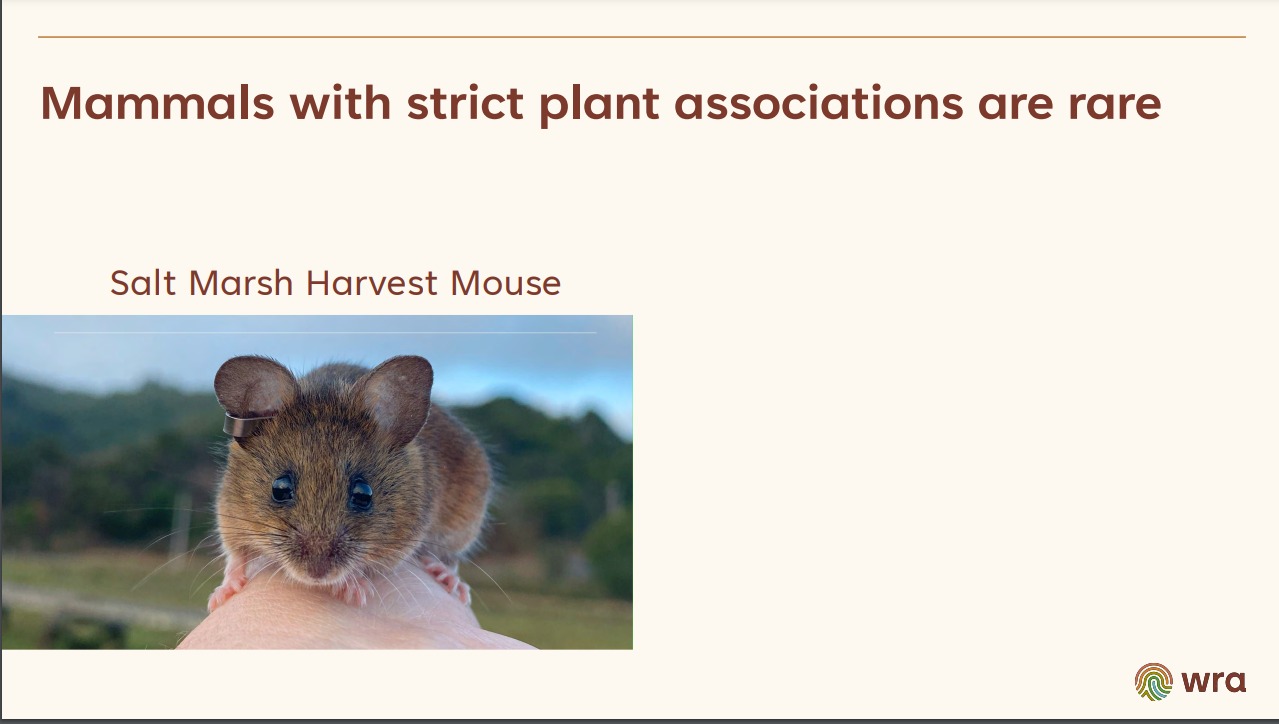
Native pickleweed was planted based on the mistaken assumption it would benefit endangered salt marsh harvest mice.  Recent studies show there are more mice in areas with less pickleweed and they eat both native and non-native plants. (7)

For the past 10 years, the focus has been on eradicating a hybrid of spartina, though it is indistinguishable from native spartina and 7,200 genetic tests were required from 2010 to 2022 to identify it. Hybridization is a natural evolutionary process that supports natural selection. (8)

Hybrid spartina could help to protect the Bay’s shoreline as sea level rises and extreme storm events cause erosion.  Where it is eradicated, gaps in vegetation are difficult to revegetate because the herbicide (imazapyr) that is used is very mobile and persistent in the soil. Imazapyr is also a non-selective herbicide that kills both native and non-native plants growing closely together, as they do in the San Francisco Bay Estuary. (9)

Although others spoke with me, there were an equal number of people who spoke in favor of granting nearly $7 million to continue the project for another 10 years. Some of the funding is granted to California Invasive Plant Council to administer the grants. Several of those speakers (including Marin Audubon) actually claimed that the project is benefiting endangered Ridgway rails, despite the fact that the project has killed at least 600 of them by destroying their nesting habitat and probably contaminating the food they eat, such as crustaceans and mollusks.

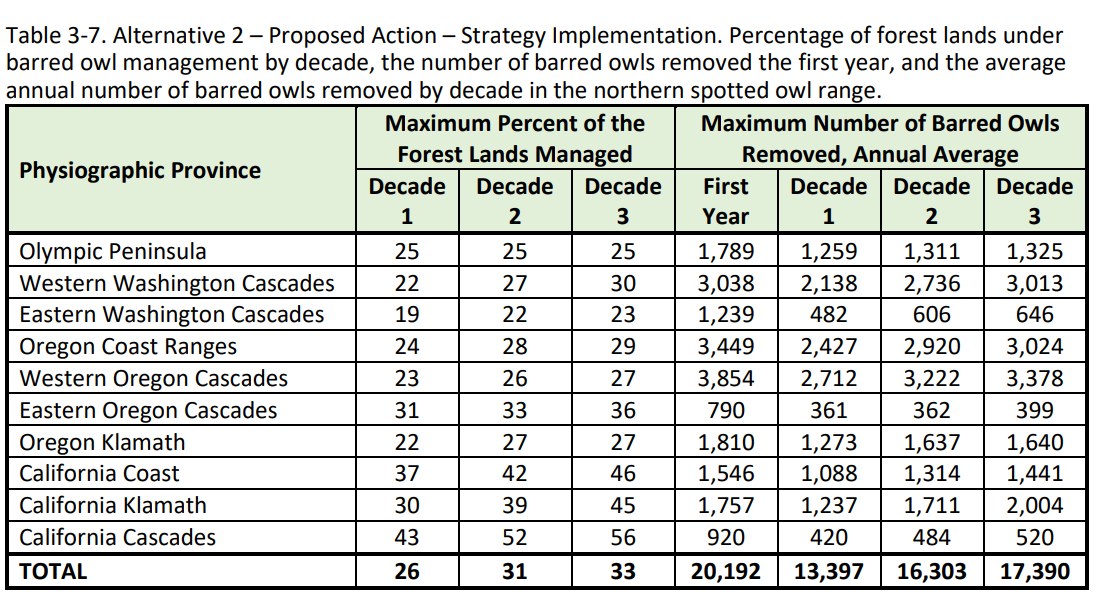
You might wonder why an organization such as Marin Audubon, which is committed to protecting birds, would advocate to continue a project that has killed at least 600 endangered birds, until you remember that Marin Audubon is also supportive of the project that plans to kill 500,000 barred owls. Marin Audubon also wants the Barred Owl Management Strategy to be mandatory instead of voluntary as proposed by USFWS.

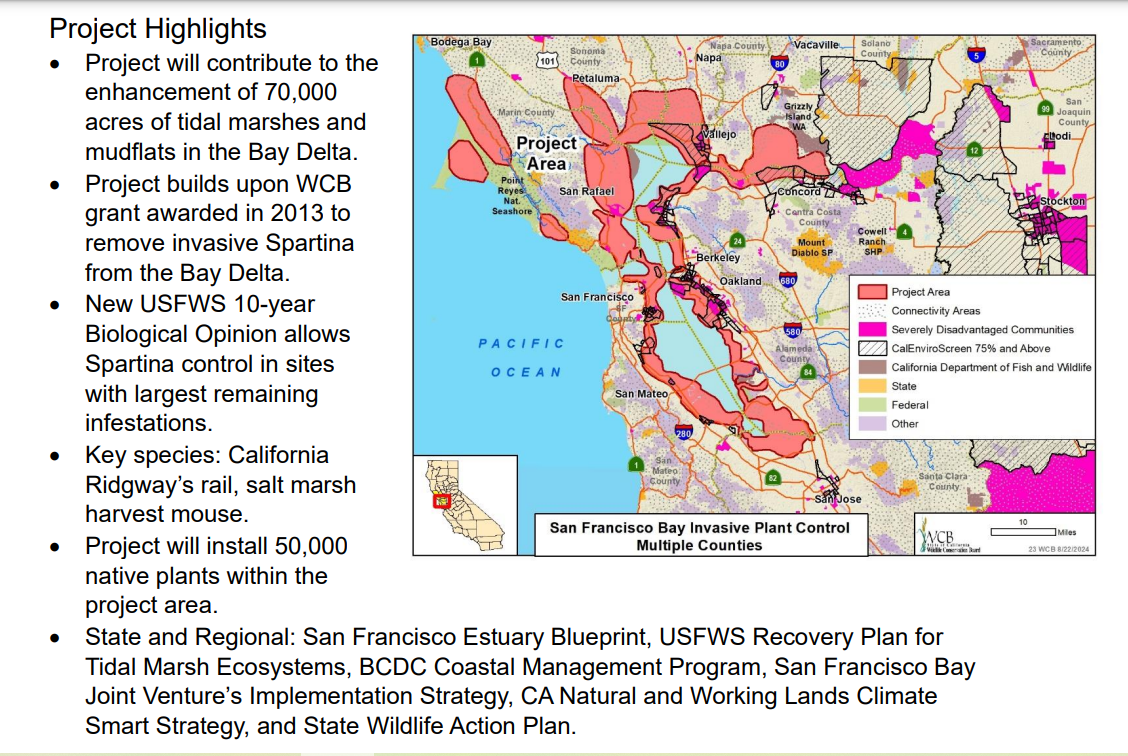
Source: Staff Report for Invasive Spartina Project, WCB Board Meeting, August 22, 2024

The Wildlife Conservation Board approved grants to the Invasive Spartina Project with one dissenting vote. The dissenting Board member voted, “Hell, NO!” Her term on the Board will end after the May 2025 meeting.  She does not expect to be reappointed.  Her departure will be the end of the effort to prevent the Wildlife Conservation Board from granting funds to projects that use pesticides.  It’s another dead end for those who advocate on behalf of wildlife and against the use of pesticides on public lands.

Funding sources to continue the Invasive Spartina Project are the Greenhouse Gas Reduction Act and Climate Change Resilience fund. These funding sources are as inappropriate as the project itself.  Destroying vegetation does not reduce greenhouse gas emissions.  Destroying non-native vegetation that grows taller, denser, and doesn’t die back in winter does not make our shoreline more resilient as sea-levels rise and winter storms become more intense.

Invasive Spartina Project is typical, not unique

The Invasive Spartina Project is typical of other “restoration” projects in California that have been trying, unsuccessfully, to eradicate non-native plants for 20 years and more.  Thanks to the California Invasive Plant Council (Cal-IPC), we now have survey data that tells us where these projects have been done and for how long. (10)

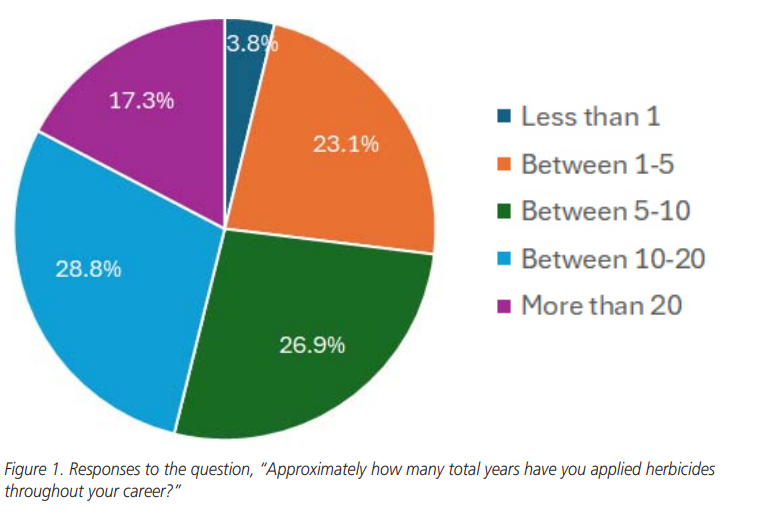
Cal-IPC sent more than 300 survey questionnaires to “practitioners” who had registered for Continuing Education credits for Cal-IPC classes and “land manager staff of organization throughout California.”  Over 100 practitioners replied to the survey.  This graph depicts their replies to the question, “Approximately how many total years have you applied herbicides throughout your career?”

Source: California Invasive Plant Council

Clearly, the Invasive Spartina Project is one of many “restoration” projects that have been applying herbicides for 20 years or more.  And the Invasive Spartina Project has secured State funding to continue spraying herbicides for another 10 years.  Spraying herbicides on public lands has created stable, life-long employment for an army of weed warriors. 

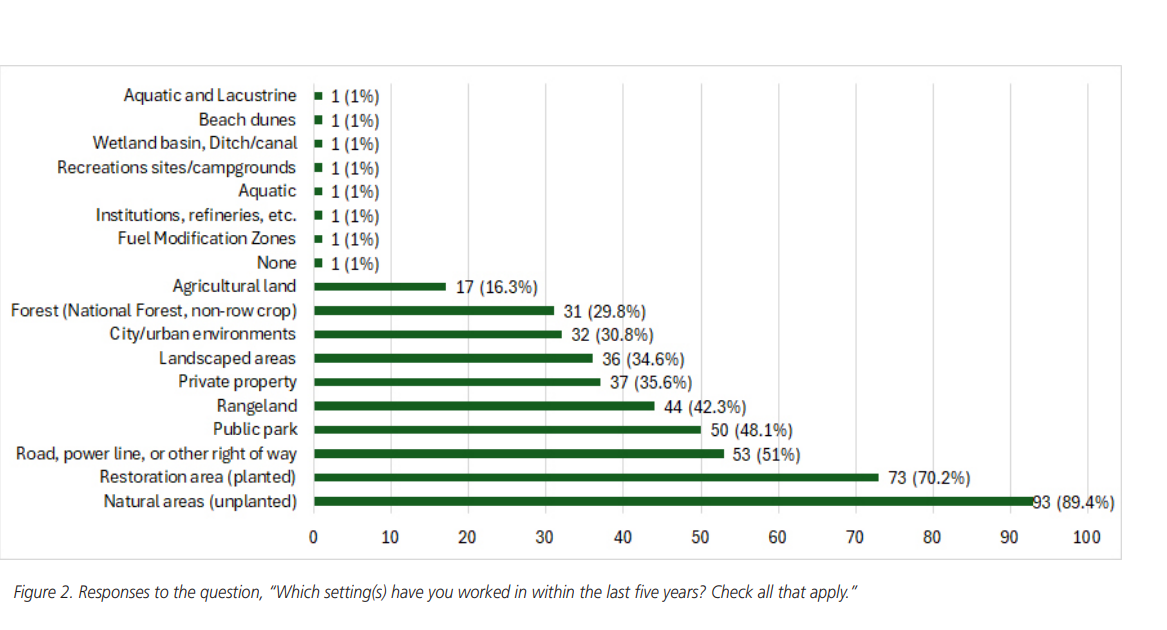
The survey also tells us where herbicides are being sprayed:

Source: California Invasive Plant Council

Virtually all (89%) herbicide applicators are spraying herbicides in “natural areas”—which we assume are wildlands—where no attempt has been made to plant native plants.  Most projects are more destructive than they are constructive. Nearly 50% of herbicide applicators are spraying in public parks.  70% of herbicide applicators spray in “restoration areas,” presumably to sustain the native plants that were planted.  If they are using non-selective herbicides, such as glyphosate and imazapyr, they are probably killing native plants too.

There are many other revelations in this survey and the details are available in the Cal-IPC publication (10):

  • Only 1.9% of respondents had not used herbicides or been part of a project that used herbicides.
  • The top three application methods were spot spraying (100%), cut stump (87%), and broadcast spray (70%).
  • 40% of respondents were not calibrating their herbicide use.  “Calibration is the process of adjusting and measuring the amount of pesticide that a piece of equipment will apply to a target area. It’s an important step in the pesticide application process to ensure that the equipment is applying the correct amount of pesticide at the right rate and in a uniform manner.” (Google search)
  • 28% of respondents had never received calibration training.  20% of respondents said they did not calibrate their herbicide application because “they did not know how.” Cal-IPC often claims that herbicides are being applied “judiciously.” If you don’t know how to apply herbicides, you are unlikely to apply them “judiciously.”

The Forever War on Non-Native Plants

Cal-IPC’s survey of “restoration” practitioners confirms our observations of their efforts in the past 25 years in the San Francisco Bay Area:

  • Attempts to eradicate non-native plants are a Forever War that has poisoned our public lands without eradicating non-native plants or restoring native vegetation, in most cases.
  • The war is futile because it is attempting to stop evolution, which is trying to help flora and fauna adapt to the changing climate and environment.  Humans cannot stop evolution, nor should we try.  The Forever War is a losing battle against evolution, which has sustained life on Earth for 3.7 billion years, without human “assistance.” 
  • The plants that we are trying to kill are also adapting to the poisonous war we pointlessly wage against them.  They have evolved and will continue to evolve resistance to the poisons we spray on them. Herbicides are less effective than they were 40 years ago and they will be continuously less effective. 
  • We are poisoning ourselves and other animals in our futile attempt to kill the plants that feed them.  Claims that wildlife eat only native plants is a fiction and a lie that sustains an industry with vested economic interests in that myth.
  • Many pesticide applicators are not properly trained or they are not following legally mandated instructions for pesticide applications on product labels. They are hurting themselves when they don’t wear legally required personal protection equipment. They are hurting the environment and everyone who lives in it when they use too much pesticide because they have not calibrated their applications as required by the product label. When they don’t post pesticide application notices in advance of their applications, they deprive the public of the opportunity to protect themselves by avoiding the area.  Even when they do, such signs would not be helpful to wildlife.
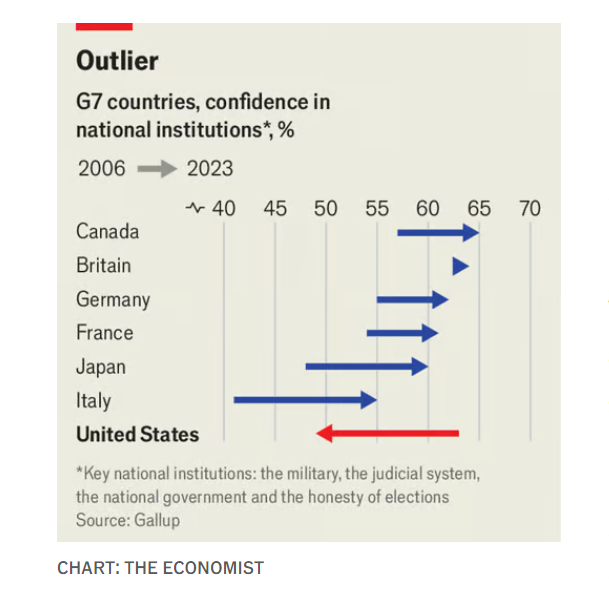
  • The money that is wasted on this Forever War could be used to address a multitude of other pressing needs.  For example, the lead pipes in Oakland that are delivering drinking water contaminated with lead to children in our public schools could be replaced with a fraction of what has been spent to eradicate non-native spartina marsh grass in the past 20 years. (11)  It’s no wonder that the public does not trust the American government:
Source: Economist Magazine

References:

  1. San Francisco Estuary News, “The Battle for Native Cordgrass,” Jacoba Charles, March 2023
  2. USDA Plant Database:  Spartina alterniflora  When the Invasive Spartina Project began, the USDA Plant Database  map of this species indicated that the species was introduced on the West Coast.  The current version of the map shows that this species is now native to the West Coast.
  3. Clapper rail, Cornell Laboratory of Ornithology  Status of Clapper rail is “Low Concern”
  4. Adam Lambert et.al., “Optimal approaches for balancing invasive species eradication and endangered species management,” Science, May 30, 2014, vol. 344 Issue 6187
  5. “Effects of Predation, Flooding, and Contamination on Reproductive Success of California Clapper Rails (Rallus Longirostris Obsoletus) in San Francisco Bay,” Steven E. Schwarzbach, Joy D. Albertson, Carmen M. Thomas, The Auk, 1 January 2006
  6. 2023 California Ridgway’s Rail Surveys for the San Francisco Estuary Invasive Spartina Project  (page 9)
  7. “Evaluating the plasticity of a ‘specialized’ rodent in a highly-invaded estuary,” Katie R. Smith, et.al.,  Presentation to California Invasive Plant Council Symposium, October 2023
  8. San Francisco Estuary Invasive Spartina Project   2021‐2022 Monitoring and Treatment Report (Appendix II, page 3)
  9. Journal of Pesticide Reform: https://assets.nationbuilder.com/ncap/pages/26/attachments/original/1428423389/imazapyr.pdf?1428423389#:~:text=Imazapyr%20can%20persist%20in%20soil,aerial%20and%20ground%20forestry%20applications
  10. Dispatch, Newsletter of California Invasive Plant Council, Spring 2024  (page 10-11)
  11. “In 2018, Oakland Unified School District (OUSD) estimated that it would cost $38 million to fix lead contamination in its schools. This included $22 million to replace water lines and $16 million to replace drinking water and sink fixtures. The OUSD blamed the aging infrastructure for the high lead levels and sought help from the state and federal government.” (Google Search)

Let Evolution Lead the Way to Adaptation and Survival of Life

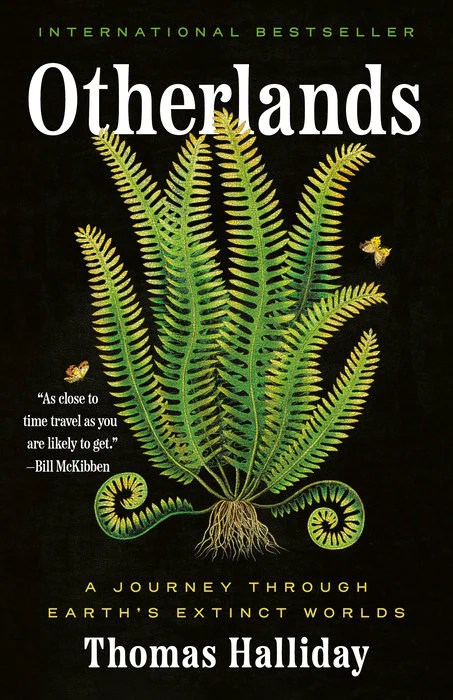
“What exists now can only ever come from what came before.” –Thomas Halliday, Otherlands

Otherlands, A Journey Through Earth’s Extinct Worlds was written by a paleontologist using the latest scientific techniques available. (1)  Paleontology has advanced far beyond digging up fossils.  Computer and DNA analysis enables paleontologists to reconstruct models of whole animals from bone fragments as well as describe the lifestyle of extinct animals such as what they ate and what ate them. 

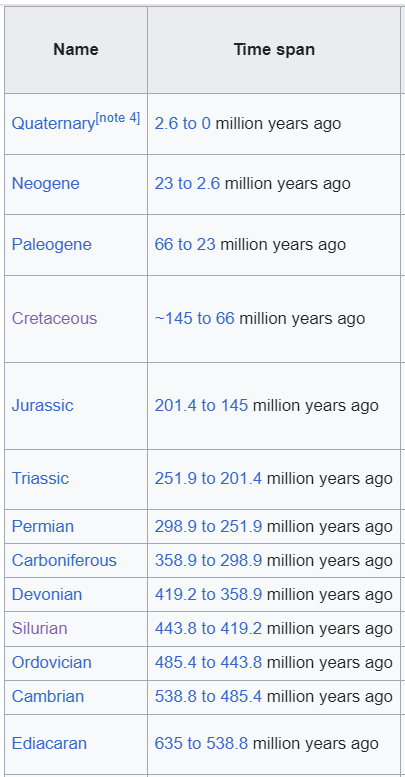
Geologic periods described by Otherlands. Source: Wikipedia

Thomas Halliday puts this knowledge of some of the 5 billion species that have gone extinct in the 4.6 billion years that Earth has existed into the context of geological and biological changes that caused their extinction.  He describes vivid scenes of specific places at specific times, starting 500 million years ago (mya), a geological period when we can recognize most of the phyla (major groups of animals sharing characteristics) that exist today. These snapshots of deep time illustrate that “Environments shape their inhabitants as much as their inhabitants shape them.” (1)

In this article, we will visit a few of these scenes that demonstrate the biological innovations resulting from evolution and the associated geological and atmospheric events.  And we will tell you about how modern conservation methods are often working at cross purposes against evolution and adaptation of life as it copes with catastrophic challenges. 

Biological Innovation

Primitive life is said to have existed on Earth 3.7 billion years ago (bya).  All life that presently exists on Earth is said to have evolved from the first life forms, although the common ancestor is yet to be identified.  No life on Earth is truly alien.

The diversification of life on Earth began to accelerate when cyanobacteria developed the ability to photosynthesize about 3 bya.  Photosynthesis converts sunlight to energy by consuming carbon dioxide, creating carbohydrates that feed plants and storing carbon in plants and the soil, while emitting oxygen into the atmosphere as a by-product.

This evolutionary innovation is responsible for the abundance and diversity of plants today. It is an important factor in the balance of carbon dioxide and oxygen in the atmosphere, which is one of the most important factors in the Earth’s climate.  More plants also mean more food for animals that evolve alongside plants, often forming relationships with one another. 

The first mass extinction, roughly 445 million years ago (mya), is the only mass extinction caused by a rapid change in the Earth’s climate from tropical to glacial, which is equivalent to saying the atmosphere changed from predominantly carbon dioxide to predominantly oxygen, the opposite of our currently changing atmosphere and climate. 

Carbon dioxide levels are said to have dropped from 7,000 parts per million (ppm) to 4,400 ppm during the Ordovician extinction event that killed about 85% of plant and animal species.  Currently our carbon dioxide level is about 420 ppm, just a fraction of what it was during the Ordovician period.  In the context of the history of Earth, the climate we are experiencing is mild, a reminder of the potential for a much more extreme climate in the near future.

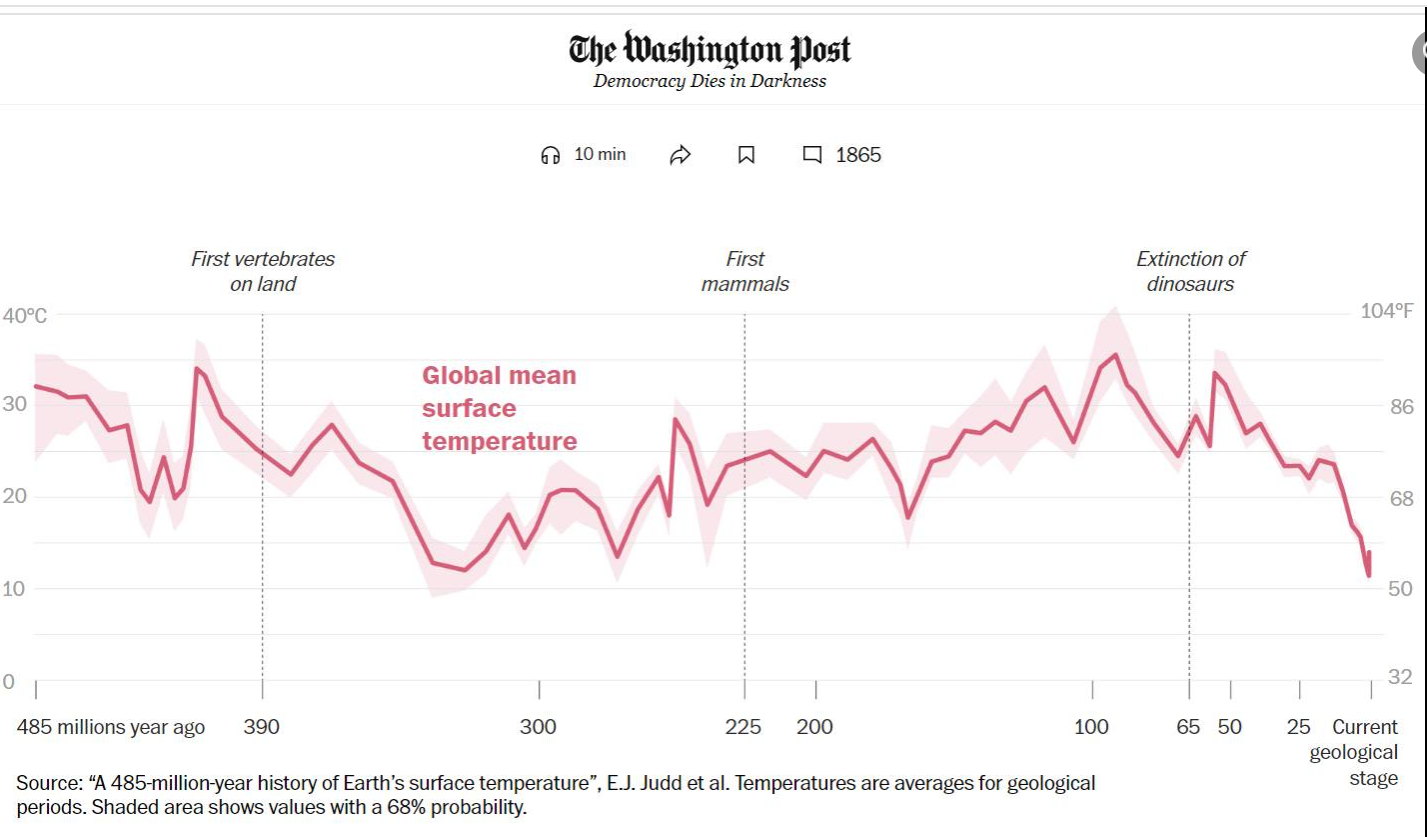
This graph of global mean surface temperature on Earth in the past 485 million years tells us the Earth’s climate has been mild since humans evolved. The graph should help us understand the potential for the Earth’s climate to increase beyond the tolerance for human life.

Comparing contemporary sea levels with those in deep time is another way to appreciate the potential for devastating changes in the future.  20,000 years ago, at the height of the last ice age, sea levels were 120 meters lower than they are now.  Conversely, sea levels were highest during the mid-Silurian period, 430 mya, when sea levels were between 100-200 meters higher than they are now and atmospheric carbon dioxide concentrations were high. 

Although the causes of the drastic change in the atmosphere and therefore the climate during the Ordovician period are still debated, the advent of photosynthesis is considered a factor.  The development of fungi enabled plants to move from water to land by delivering moisture from soil to roots of plants, greatly increasing abundance and diversity of plants. About 80% of plants today receive much of their nutrients and moisture through mycorrhizal fungi. 

The photosynthesizing capabilities of plants is one of the ways greenhouse gas emissions, currently causing global warming, can be reduced.  Yet, we are using pesticides to kill plants that native plant advocates have arbitrarily decided “don’t belong.”  Pesticides also kill fungi in the soil that enable plants to survive during drought conditions created by global warming.  This is one of many examples of how management strategies used by humans are counteracting the accomplishments of evolution that occurred long before humans existed or began to think they were competent to “manage” nature.

Plant Evolution Timeline

To make a long, complicated story short, we’ll focus on the major plant groups we recognize today by starting with seedless land plants that reproduce by dispersing spores, such as mosses and ferns that evolved from algae about 460 mya. 

Gymnosperms, which we recognize today as conifers, cycads, and Gingkos, are seed-producing plants that evolved about 300 mya.  Early species of gymnosperms formed huge forests. The carbon they stored became the coal fields of today when they died during the Carboniferous period (360-300 mya).   Today, we draw our fossil fuels from these coal and oil basins.  They provide most of our energy, while releasing greenhouse gases causing climate change.

Continents were close together during the Cretaceous geologic period when angiosperms evolved. Source: Australian Museum

Angiosperms evolved from gymnosperms about 130 mya.  They are flowering plants whose seeds are often encased in fruit. They are by far the most diverse group of land plants.  The evolution of bees around the same time is an example of co-evolution: the flowers feed the bees and the bees pollinate the flowers, delivering pollen from the male anther to the female stigma.   This sexual method of reproduction creates greater genetic diversity than self-pollination.  Greater genetic diversity creates more opportunities for natural selection to operate on plant variations, which may result in species that are better adapted to existing conditions.   

A recent study (2) found that the decline in the population of bees has increased the frequency of self-pollination of some plant species that are capable of both methods of pollination.  This is an example of evolution at work today.  Plants are responding to the existential need to reproduce in the absence of bees by self-pollinating.   

What evolution has accomplished in the past can be undone.  In this case, our indiscriminate use of pesticides such as neonicotinoids has decimated bee populations. Some plants will adapt to the loss of bees by self-pollinating, but not without some loss of genetic diversity provided by sexual reproduction and consequently the long term fitness of plants to face challenges in the future. 

There’s another trade-off for both plants and bees. Producing nectar and attracting bees with colorful flowers is a big energy expense for plants.  Plants therefore save energy by reducing flower size and color, when they can rely solely on self-pollination for reproduction.  Obviously, self-pollination ultimately results in a loss of food for bees and may accelerate the decline in bee populations, a negative feed-back loop, if you will.

This example is a reminder that evolution is neither positive nor negative.  It is simultaneously both positive and negative.  It is what it is:  an inexorable force for change. 

Evolution of grasses

Grasses and grasslands are late comers to the Earth’s plant kingdom.  Grasses evolved from angiosperms about 70 mya, during the Age of Dinosaurs that abruptly ended 66 mya when an enormous asteroid collided with Earth.  Grasses are wind pollinated and their seeds are dispersed by the wind, which enables them to spread rapidly and widely. 

Grasslands became dominant ecosystems about 30 mya, replacing many forest ecosystems.  With the optimal combination of fuel, heat, and oxygen, wildfires were a factor in the transition from forests to grasslands in many places.  Once again, wildfires in conifer forests are presently playing a role in converting forests to grasslands, suitable to a warmer and drier climate.

The development of enhanced photosynthesis by C4 grasses gave them a competitive advantage in hot, dry places where photosynthesis is suppressed. C4 grasses are more drought tolerant and they store more carbon than their predecessors, C3 grasses. There are only about 60 groups of C4 grasses, including several important food crops, such as maize, sugarcane, and sorghum.  They are found in tropical and sub-tropical regions of Africa and South America and some deserts.  California’s native grasses as well as introduced grasses considered “invasive” are not C4 grasses, according to a list of C4 grasses available on Wikipedia. (3)

Because of their potential to improve drought tolerance and increase productivity and carbon storage, there is great scientific interest in converting C3 grasses to C4 grasses.  Despite decades of effort, agricultural science has not been able to duplicate what the natural forces of evolution have accomplished, reminding us that evolution is more powerful than we are.

The transition from forests to grasslands had a corresponding impact on the evolution of animals.  Some browsers of woody plants learned to be grazers, if they could, while others went hungry, and the diversity and abundance of grazers increased. 

Native plant advocates in California have selected grassland as their preferred ecosystem because it was the dominant ecosystem prior to the arrival of Europeans at the end of the 18th century. They have consistently failed to convert non-native grassland to native grassland in California.  Nor is it clear that there would be any benefit to the environment or to its inhabitants to return to the treeless landscapes of California that existed prior to settlement in the late 18th century.

Where populations of native grazers of grassland were reduced by the activities of humans, many grasslands in California naturally succeeded to shrubs and trees. “Restoration” projects attempt to prevent succession of grasslands. Some of these projects destroy native trees and shrubs (e.g. Douglas fir, coyote brush, juniper, etc.) mechanically and with pesticides to maintain ecosystems as grassland.  

Nativists also want to reintroduce the grazing animals of the pre-colonial period to replace domesticated animals humans introduced because nativists see them as competitors of native animals they consider superior. Where top predators have been killed, these herds of grazing animals outgrow available vegetation unless their numbers are controlled as domesticated animals are.

A recent meta-analysis of 221 studies of the impact of megafauna on plant abundance found, “no evidence that megafauna impacts were shaped by nativeness, “invasiveness,” “feralness,” coevolutionary history, or functional and phylogenetic novelty. Nor was there evidence that introduced megafauna facilitate introduced plants more than native megafauna. Instead, we found strong evidence that functional traits shaped megafauna impacts, with larger-bodied and bulk-feeding megafauna promoting plant diversity. Our work suggests that trait-based ecology provides better insight into interactions between megafauna and plants than do concepts of nativeness.”  (4)

The author of Otherlands agrees that the concept of nativeness is not a useful way to understand the environment or conduct conservation because:  “Where an animal or a plant from one part of the world appears in another, some might use the language of invasion, of a native ecosystem despoiled and rendered lesser by newcomers…In reality, species do move, and the notion of ‘native’ species is inevitably arbitrary, often tied to national identity…There is no such thing as a fixed ideal for an environment…To look into deep time is to see only an ever-changing list of inhabitants of one ecosystem or another…The concept of native that we so easily tie to a sense of place also applies to time…We must avoid putting our own ahistorical spin on what was, although certainly dangerous and unlikely, a journey guided entirely by chance.”  (1)

Migration

The history of evolution is also a history of migration.  The oscillation of the Earth’s climate between freezing cold and blistering heat created and destroyed land bridges that enabled or blocked migration as sea levels rose and fell.  When North America and South America were connected by Central America as a result of lower sea levels and geological events about 3 mya, the plants and animals of those continents were mixed by migration.  Likewise, aquatic life of the Pacific Ocean was separated from the Atlantic Ocean by the Central American land bridge until the Panama Canal was built in 1914.

Geological events also created or destroyed the same opportunities for migration.  The opening and closing of the Strait of Gibraltar is a case in point.  The Mediterranean Sea exists because the Strait of Gibraltar exists.  When the narrow Strait is open, the Atlantic Ocean flows into the Mediterranean Basin, creating the Mediterranean Sea, which is an obstacle for migration of plants and animals between Europe and Africa. 

About 6 mya the Strait of Gibraltar closed because the African tectonic plate moved north, colliding with the European tectonic plate.  The Mediterranean Sea slowly evaporated, concentrating ocean salt from the Atlantic Ocean, laying down a sea bed of salt in the Mediterranean Basin and ultimately creating a migration corridor between Africa and Europe. There is every reason to believe that the Strait could close again.  The Earth’s tectonic plates are in constant motion and there is no reason to believe they will stop moving.

The obsession with “where plants belong” seems to be based on ignorance of the history of dispersal and migration.  Much of China and North America have been in the same latitude since the evolution of angiosperms.  As a result, many of our plant species considered native in Eastern North America are also considered native in China.  These paired species in the same genus are called disjuncts.  There are many woody disjuncts in China and North America (magnolias, persimmons, hickory, catalpa, dogwood, sweetgum, tuliptree, tupelo, sassafras, Virginia creeper, etc) as well as many herbaceous disjuncts (ginseng, lopseed, mayapple, skunk cabbage, etc.). (5) They are different species because they have been separated long enough to change as a result of genetic drift, but are in the same plant lineage, therefore chemically similar and presumably used by the same insects.  The study of these disjuncts says, “Most scientists do not consider long-distance dispersal to have played much of a role.  The prevailing view is that most disjuncts are remnants of genera that were once widely distributed in the northern temperate zone during the Tertiary period [66 mya to 2.6 mya per Wikipedia].  These broad distributions in the northern hemisphere were made possible by recurring land bridges.” (5)

Lateral migration patterns of the past are changing in response to contemporary patterns of climate change.  The temperatures at different latitudes are becoming more similar because Polar Regions are warming at a much faster pace than temperate and tropical latitudes.  Plants and animals escaping extreme heat and associated changes in vegetation are moving to higher latitudes in the Northern Hemisphere and lower latitudes in the Southern Hemisphere.  The increasing similarity of the Earth’s climate is changing wind and ocean currents and contributing to the extreme weather events of our changing climate.  Although there are lessons in the events of deep time, we cannot assume that events in the past are entirely predictive of future events because of the complexity of natural processes and our limited understanding of them. 

Of all the nonsensical conservation strategies humans are presently using, perhaps one of the most damaging is the futile attempt to stop migration. It is one of few survival strategies of plants and animals needed in a rapidly changing climate and it cannot be stopped. 

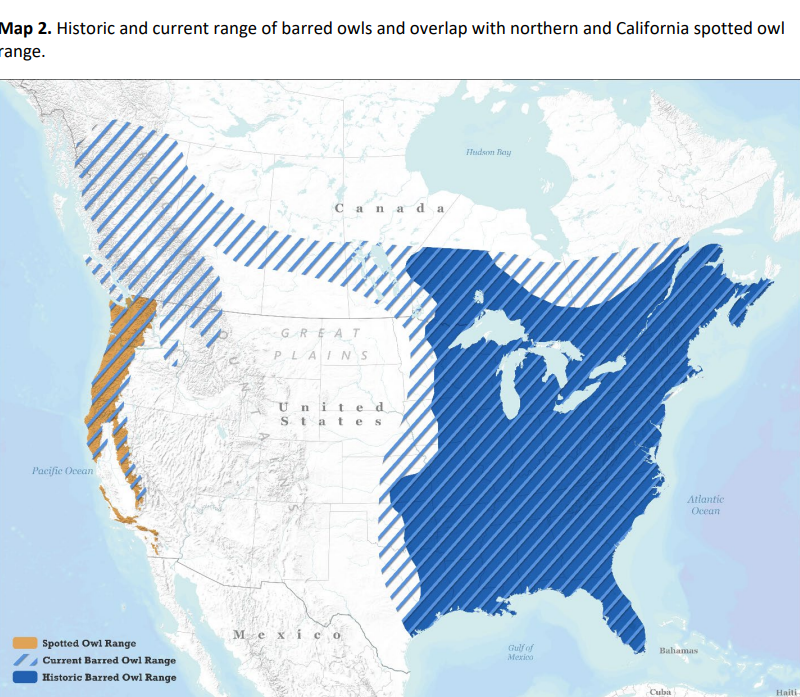
The project that proposes to shoot barred owls in the Pacific Northwest is an example of a “conservation” project that does not deserve that honorific.  Barred owls have migrated from the East to the West Coasts of North America via the boreal forests of Canada.  This is another instance in which large contiguous stretches of land at the same latitude facilitate the migration of life because there is less variation in climate at the same latitude. 

Source: USFWS

Specialists vs. Generalists

Barred owls are more adaptable than their closely related relative in the same genus, spotted owls.  Barred owls have a more varied diet, they are willing to nest in less dense, second-growth forest, and they have greater reproductive success.  They are therefore perceived as competitors of endangered spotted owls. Instead of letting natural selection identify the winner of that competition, the US Fish & Wildlife Service intends to shoot 500,000 barred owls in the next 30 years based on their belief that spotted owls will benefit.  They do not expect to eradicate barred owls and they made a commitment to continue shooting barred owls in perpetuity.  While we continue to log old-growth forests in which spotted owls live, we will kill barred owls with no expectation that they can be eradicated.

This project is typical of American “conservation” projects that attempt to save a specialist species by killing a generalist species.  This strategy was enshrined in American law by the Endangered Species Act, which is now 50 years old.  Like many 50-year-old public policies, we now know that this conservation strategy is not working because it is inconsistent with evolutionary principles.  Change in nature is inexorable.  Legal mandates are not capable of stopping evolution.  If we had a functional political system, we could stop the greenhouse gas emissions causing climate change, but we don’t.  Therefore, we must rely on evolution to cope with the changes in the environment that we have caused.

The most recent mass extinction occurred 66 mya when an asteroid hit the Earth, ending the Age of Dinosaurs.  About 80% of all plant and animal species became extinct.  The species that survived were the most versatile and the most mobile.  Flying dinosaurs were the only dinosaurs that survived, as birds, perhaps because they were the most mobile.  “Of the specialized insects, 85% were lost and it was the generalists that survived.” (1) 

Mass extinctions have created many vacant ecological niches that are opportunities for experimentation, creating new species.  Some were better adapted than others.  Natural selection determined the winners of competition within ecological niches.  The end of the Age of Dinosaurs created the opportunity for the Age of Mammals, as well as bony fish, marsupials, and lizards. 

In other words, our outdated conservation strategy is wasting our limited resources to save specialized species that are probably doomed to extinction.  And we are doing so at the expense of generalist species that might survive if we would quit killing them.  Keep in mind that 99% of all life forms that have existed on Earth have gone extinct.  At a time when the climate is changing rapidly, the goal of saving every endangered species seems both unrealistic and wasteful of limited conservation resources.

Hybridization

Hybridization is one of the tools of evolution.  Closely related species, usually in the same genus and even family often mate and their offspring often survive to eventually give rise to new species.  Successful hybridization is a means of increasing biodiversity.  Hybridization is sometimes a means of improving adaptability and therefore survival.

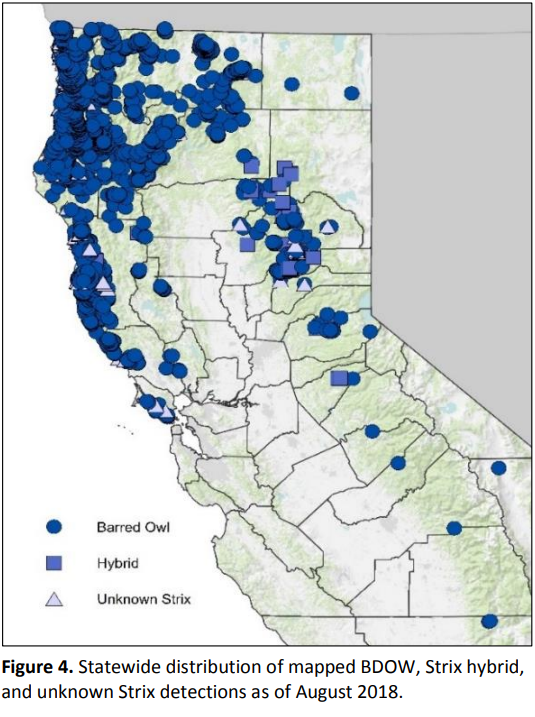
Unfortunately, nativists see hybridization as a loss of biodiversity rather than an opportunity to improve adaptability and increase biodiversity.  Their “conservation” projects often attempt to prevent hybridization by killing hybrids.  For example, the plan to kill 500,000 barred owls includes all hybrids of barred and spotted owls.  Because barred owls are more versatile, hybridization with spotted owls could even the playing field with barred owls by expanding food sources and nesting habitats of spotted owls. 

The Spartina eradication project is another example of the pointless eradication of hybrids.  In the case of Spartina, the non-native species grows more densely and it doesn’t die back in winter.  Non-native Spartina provides better storm protection and better habitat for nesting birds.  The Invasive Spartina Project has been spraying hybrid Spartina with herbicides for over 20 years, without total success.  The hybrid looks so similar to native Spartina that 600 genetic tests are required every year to confirm their identification as hybrids before they are sprayed.  The Invasive Spartina Project is a waste of limited conservation resources and it serves no useful purpose.

Evolution vs. Conservation

Otherlands should be required reading for those who are engaged in the “restoration” industry.  Some of the methods and goals of conservation are at odds with the mechanisms of evolution that have ensured the survival of life on Earth for nearly 4 billion years. 

  • The use of pesticides by “restoration” projects is antithetical to the goal of conservation because they do more harm than good.
  • Migration is a means of species survival.  Natural migration of plants and animals cannot and should not be stopped.
  • Humans cannot duplicate the forces of evolution.  Natural selection is the most powerful, efficient, and effective method of determining the winners of competition.
  • Hybridization has the potential to improve adaptability of closely related plants and animals.  Hybridization cannot and should not be stopped.
  • Resources being wasted in the attempt to stop the natural forces of evolution should be redirected to reducing greenhouse gas emissions causing climate change.  Such efforts are appropriately called “conservation.”

  1. Thomas Halliday, Otherlands, A Journey Through Earth’s Extinct Worlds, Random House, 2023
  2. https://www.nytimes.com/2024/01/04/science/flower-sex-evolution-bees.html?searchResultPosition=1
  3. https://en.wikipedia.org/wiki/List_of_C4_plants
  4. Erik Lundgren et.al., “Functional traits—not nativeness-shape the effects of large mammalian herbivores on plant communities,” Science, February 2, 2024
  5. David Yih, “Land Bridge Travels of the Tertiary:  The Eastern Asian-Eastern North American Floristic Disjunction, Arnoldia, 2012

For US Fish & Wildlife Service “Management” Means Killing

“It makes me sad, but range expansions are a part of natural systems. We just happened to be watching when one occurred. Even if [we’re to blame], we’re probably going to have to live with it.”
Eric Forsman, US Forest Service

US Fish & Wildlife Service (USFWS) proposes to kill 470,000 barred owls in the next 30 years in an effort to save the northern spotted owl (NSO) and a closely related sub-species in California.  The deadline for making a comment on this proposal is January 16, 2024.  Instructions for making comments are available HERE

Today, I will tell you about this proposal, how it came about, and why I am opposed to the proposal.  I provide links to the source documents so you can read them yourself.  I hope this information will help you reach your own conclusions about the plan and submit a public comment. 

USFWS Barred Owl Management Strategy

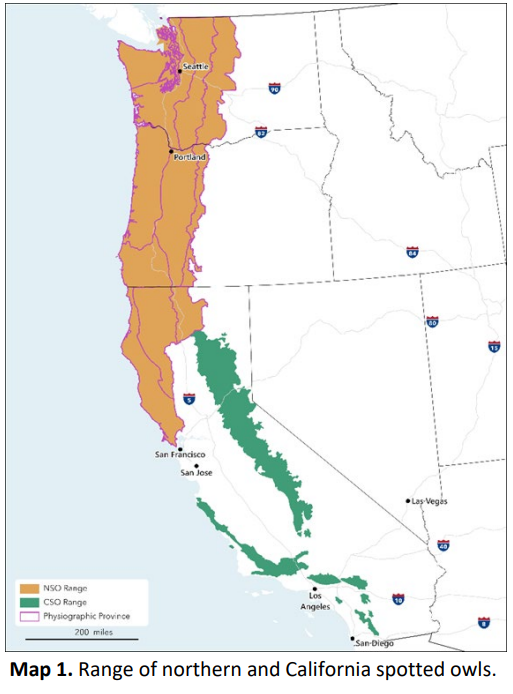
The purpose of the Barred Owl Management Strategy is protection for the dwindling population of northern spotted owls (NSO) in the Pacific Northwest (Washington, Oregon, and Northern California).  NSOs were classified as a threatened species by USFWS in 1990.  The first Recovery Plan for NSO, published in 2011, identified habitat loss and barred owls as the primary threats to NSOs.  The most recent Recovery Plan has added “past habitat loss, continued timber harvest, and wildfire” to the list of threats to NSOs.

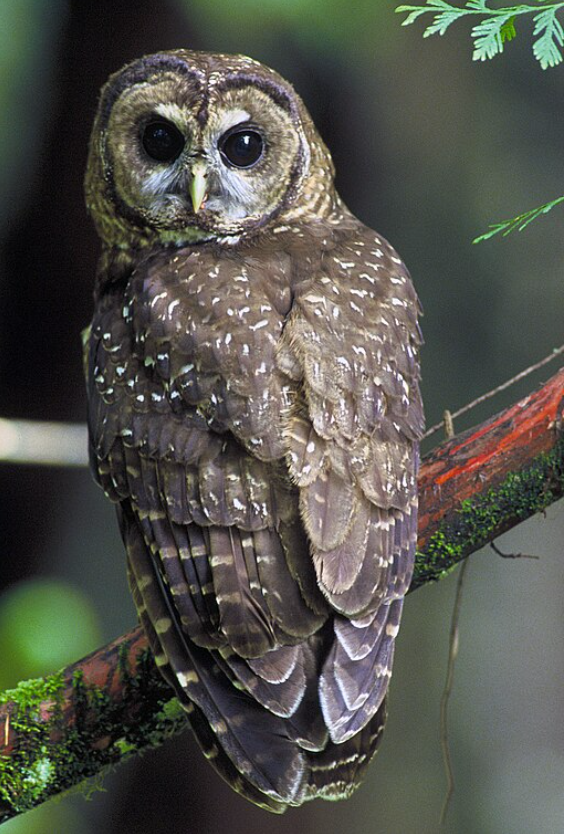
Northern spotted owl. USFWS

The Barred Owl Management Strategy also proposes “management” of barred owls to protect the California spotted owl (CSO), which is a subspecies of NSOs.  Although endangered status for CSO was proposed in February 2023, endangered status has not been granted.  Yet, USFWS proposes to extend the same lethal removal measures used to protect NSOs to CSOs.  In addition to the threats to NSOs, California spotted owls are also threatened by fragmented habitat and forest mortality caused by drought and correlated disease, which have killed over 300 million conifers in California in the past 10 years.

Despite the many threats to spotted owls, the Management Strategy intended to protect them addresses only one of those threats:  barred owls.   It makes no proposals for improving or expanding habitat or addressing the impact of climate change on forests.

The Barred Owl Management Strategy is a voluntary plan.  Federal agencies in spotted owl territory (Bureau of Land Management, US Forest Service, and National Park Service) will be “encouraged” to implement the plan.  If state, commercial, private property, and tribal land owners choose to participate they will be granted the same “take” permits required by the Migratory Bird Treaty Act that federal land managers will be granted, so long as they agree to follow the protocol for “removing” barred owls from their properties.

The word “removal” in the context of the Management Strategy means “lethal removal.”  The protocol requires that barred owls be found by playing a recording of their distinctive call (described as “who cooks for you?”) and shooting the owl as it flies toward the call and the shooter.  If guns are not allowed where barred owls are found, they must be captured and euthanized.  Hybrids of barred owls and spotted owls will also be killed, despite the fact that accurately identifying hybrids is considered difficult, particularly in subsequent generations.    

Because the Management Strategy is not mandatory, the total number of birds that will be killed can only be estimated.  If all property managers choose to implement the Strategy, approximately 470,000 barred owls would be killed in the next 30 years.  Although the Strategy covers only a 30 year time frame, “barred owl management will be required at same level for the long term” because “Their populations will continue to produce young that can disperse within and beyond the current range of barred owls.” (1)  The estimated current population of barred owls in study areas of the Management Strategy is only 102,000.  Clearly the lethal removal of barred owls is not expected to keep pace with the reproductive success of barred owls.  The killing of barred owls will continue forever, although there is no expectation that they will be eliminated.

How were barred owls selected as the scapegoat?

When northern spotted owls were designated as “threatened” in 1990 it triggered the legal protections conferred by the Endangered Species Act. In 1994, the Forest Service and the Bureau of Land Management published the EIS for the Northwest Forest Plan.  It created 24 million acres of reserve areas where logging was prohibited to preserve spotted owl habitat.  The reserve areas protected approximately 80 percent of the remaining old growth forests in the Pacific Northwest from timber harvesting.  Obviously, the plan had a negative impact on the timber industry and those who were employed by the industry.  Between 1980 and 1998, 23% of logging jobs were lost, triggering the Timber Wars.

The rate of decline of spotted owl populations in the Pacific Northwest decreased when most logging in old-growth forest was stopped by the Northwest Forest Plan, but began to accelerate again in about 2008.  USFWS attributes that increase in the rate of population decline to competition from barred owls and that theory is supported by several studies.

Barred Owl. GNU Free Documentation License

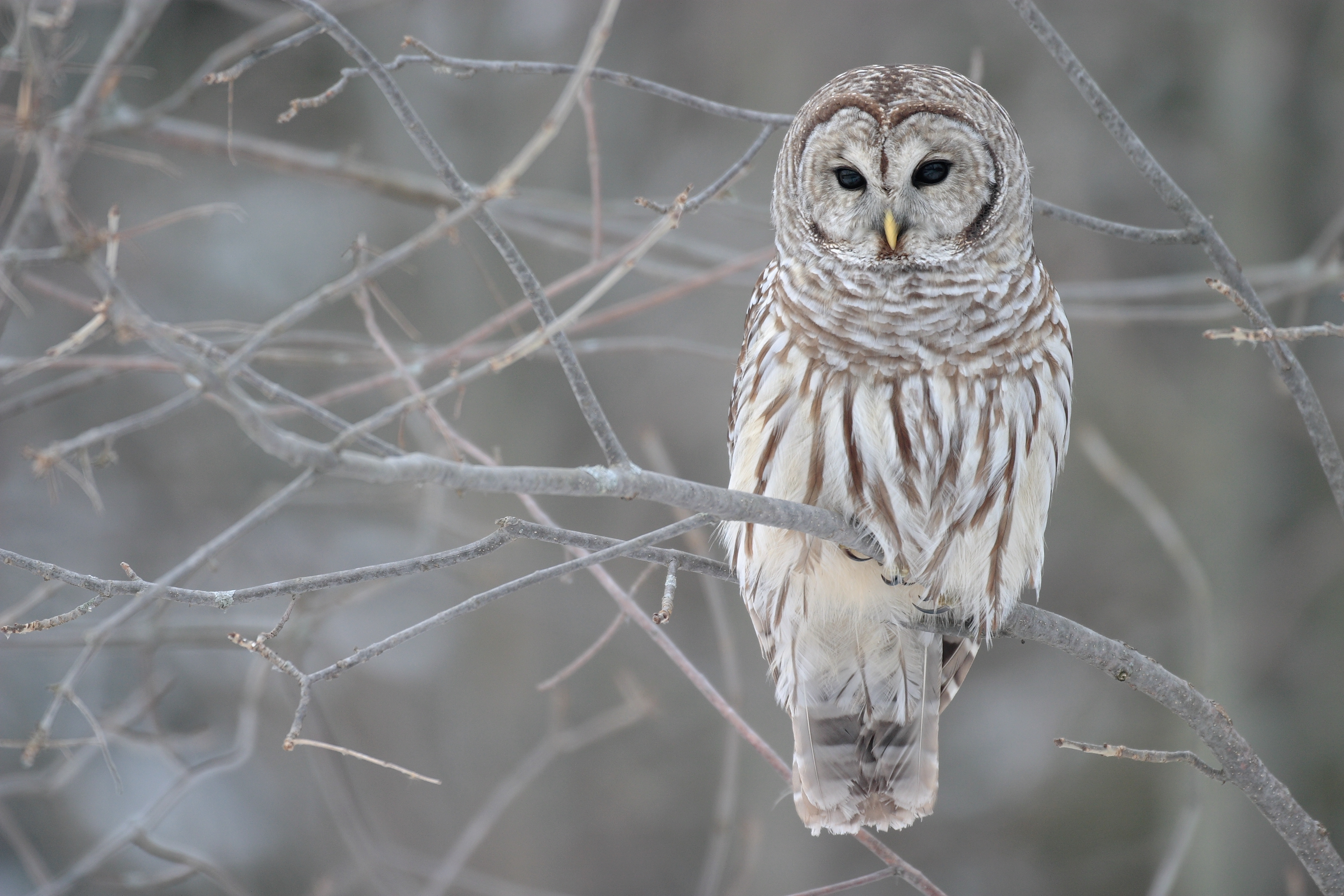
Barred owls are native to North America.  They have been migrating from their historic range in the north and south east of the US to the west coast of North America since about 1900.  Barred owls were first seen on the west coast of North America in British Columbia, Canada around 1959.  They were first documented in Washington in the 1970s and have continued moving south from there. 

Barred owls have successfully competed with spotted owls in their expanding territory because they are larger than spotted owls, they eat a wider variety of prey, they have greater reproductive success, and they are able to live in forests where spotted owls cannot.  Spotted owls are restricted to old-growth forests with large trees and dense canopies, while barred owls often live in second-growth (previously logged) forests and even wooded urban areas. 

The Management Strategy speculates that the omnivorous diet of barred owls will devastate the food webs in the new territory they occupy, although the Strategy offers no evidence to support that theory.  In fact, as barred owls expanded their territory through the Canadian boreal forest, such devastation was not reported.  Barred owls are not considered “invasive” in Canada.

The impact of barred owls on spotted owls was first observed by Lowell Diller, a wildlife biologist who worked as a consultant to Green Diamond Resource Co., a logging company managing timberland in Humboldt and Del Norte counties in Northern California.  Mr. Diller was also an adjunct professor in the Department of Wildlife at Humboldt State University.

Owls, including barred owls, are protected by the Migratory Bird Treaty Act.  Mr. Diller applied for permits to kill barred owls on the property of Green Diamond Resource Co. as an experiment to determine the impact of barred owls on spotted owls.  He described his project in an article in the Marin Independent Journal“In 2009,…Diller set aside patches of timberland to remove barred owls.  In other patches, he did nothing.  After four years, he would see how northern spotted owl numbers differed in the areas with and without barred owls…The study is the first to prove his treatment works.” To be clear, his “treatment” was to shoot barred owls. Mr. Diller also described how upsetting it was to kill birds. 

Green Diamond applied for permits and has continued to kill barred owls on its property.  That commitment has ensured that Green Diamond’s current rate of logging can continue.  The Green Diamond spokesman explained:  “’When you can protect and sustain a business and jobs and also conserve the northern spotted owl,’ he said, ‘why not do it.’” (Marin Independent Journal)

Sierra Pacific Industries is also killing barred owls on its property.  Sierra Pacific Industries in Shasta County is the largest private land holder in California and the second largest lumber producer in America.   

On the basis of the success of Diller’s study, USFWS approved a pilot project to kill barred owls in other places where spotted owls live.  The pilot project killed about 3,000 barred owls.  When the project was completed in 2021, they reported, “The removal of barred owls had a strong, positive effect on the survival of northern spotted owls and a positive, but weaker, effect on recruitment of spotted owls.” (2) The Barred Owl Management Strategy is based on the success of the pilot study. 

In other words, killing barred owls has enabled the timber industry in Northern California to continue their logging operations.  It has also removed the pressure to expand reserve areas to protect spotted owls, even though many scientists believe such expansion would be more effective than killing barred owls to save spotted owls“’The bottom line is that extinction rates went down when the amount of habitat went up,’ U.S. Geological Survey biologist Katie Dugger, lead author of the 2015 demographic study, said in a presentation on the findings last fall. ‘Spotted Owls cannot exist without old-growth forest. And now we’re talking about two species trying to use the same space, so in fact we need more of it.’” (3)

Specific Flaws in Barred Owl Management Strategy

The Barred Owl Management Strategy is based on several outdated notions about nature that have been cast in the concrete of American law. The Endangered Species Act is based on assumptions about nature that were conventional wisdom at the time the law was passed 50 years ago, in 1973.  Evolution was considered a series of events that occurred in the distant past and is no longer actively changing plants and animals.  At the time the ESA was passed, evolution was not believed to occur within a time frame observable by humans.  Nature was perceived as reaching an “equilibrium state” that was stable over long periods of time.  Early conservation efforts were therefore based on the assumption that once achieved, an equilibrium state could be sustained if left undisturbed in nature preserves. (4)

We now know that these assumptions are mistaken.  In the past 50 years, climate change and advances in paleontology have taught us that nature is inherently dynamic and we are usually powerless to stop it from changing even when we try.  When a law is designed to control nature, we should expect some conflict between static law and dynamic nature.  Fifty years after the Endangered Species Act was passed, that conflict is becoming progressively more apparent and problematic. 

These are the specific flaws in the Barred Owl Management Strategy that are the result of mistaken assumptions about nature:

  • Barred owls should not be considered “invasive” on the west coast of the US because the expansion of its range is a natural phenomenon that cannot and should not be stopped.

USFWS designates barred owls on the west coast as “invasive” by fabricating a story about the route barred owls took from their historic range in the east to their expanded range in the west that is not consistent with the facts.  Although USFWS admits that the route that facilitated expansion is “not well documented,” they claim there is evidence of anthropogenic change across the Midwestern Prairie that supports that specific route:  “…the historical lack of trees in the Great Plains acted as a barrier to the range expansion and that increases in forest caused by the anthropogenic impact of European settlement enabled the westward extension of the barred owl range. These include anthropogenic impacts such as fire exclusion and suppression, bison and beaver extirpation, deer and elk overhunting, establishment of riparian forests, and extensive planting of trees and shelterbelts in the northern Great Plains…” (2)    Although that is an accurate description of anthropogenic changes in the Midwestern Prairie, it is irrelevant to the expansion of the range of barred owls, because that wasn’t the route they took to the west coast.

The legal definition of invasive species enables USFWS to designate barred owls on the west coast as “invasive” based on their claim that the expansion route was through the American Midwest as a result of anthropogenic change. If non-indigenous humans are considered the cause of a change in ranges of plants and animals, the species is considered “invasive” where it did not exist prior to the arrival of Europeans. Labelling any plant or animal “invasive” makes it a target for eradication.   However, the theory of a midwestern expansion route for barred owls is not consistent with the facts:

This map clearly shows that the route used by barred owls to expand their range to the west coast was through the boreal forests of Canada, which were not the result of anthropogenic change.  The boreal forests of Canada have existed since the Ice Age ended 10,000 years ago.  The map does not show the historic or current existence of barred owls in the American Midwest. 

The expansion route of barred owls to the west coast through Canadian forests is also consistent with the record of their arrival on the west coast.  They were seen first in the west in 1959 in British Columbia, Canada, at the northern edge of their current range.  They were first seen in the US in Washington in the 1970s.  Their range expansion continues to the south.  This sequence of events is not consistent with the claim that they arrived on the west coast via the American Midwest.
Claiming that barred owls are “invasive” enables USFWS to justify their extermination, as many of their eradication projects do:  “Yes, wildlife removal has been used as a management tool by many agencies across the country to control invasive species such as invasive carp, Burmese python, feral hogs, rats, mongoose, and nutria. Invasive species can thrive in areas where they do not naturally occur.” (1) That list of animals being killed by USFWS is far from complete. 

This is not a trivial matter.  Climate change requires that plants and animals move to find the conditions needed for their survival.  Preventing the migration of plants and animals as the climate and the environment change will doom them to extinction.  Designating barred owls on the west coast “invasive” has dangerous implications for many plants and animals that must move to survive in a rapidly changing climate.  The Management Strategy should not set this dangerous precedent. 

  • Interbreeding of spotted owls and barred owls is a natural phenomenon that cannot and should not be stopped.  Hybrids of spotted and barred owls should not be killed.

Hybridization is not only common, it can result in the creation of new species more rapidly than other forces of evolution, such as mutation and natural selection:  “Hybridisation also offers shortcuts on the long march to speciation that do not depend on natural selection at all.” (5)

More than 99% of all species that ever lived on Earth, amounting to over five billion species, are estimated to have died out. Yet there are currently around 8.7 million species of eukaryote (organisms whose cells have a membrane-bound nucleus) globally. (Wikipedia) Biodiversity on Earth has increased partly because of hybridization, which has often enabled adaptation to changed environmental conditions.

There are many important examples of hybridization among animal species, most notably the history of hybridization of our species, Homo sapiens.  Humans are now the sole surviving species of genus Homo.  Our genome contains the relicts of the genes of other members of our genus that are now extinct, which indicates hybridization with other hominoid species.  The modern human genome contains 1-4% of Neanderthal genes. (5)

There are also many examples of hybridization of plant species that contributed to biodiversity.  In a recently published study of the evolution of oaks, scientists traced the 56 million year evolutionary history of roughly 435 species of oak across 5 continents where they are found todayHybridization was instrumental in the formation of oak species and the ability of oaks to survive in different climate conditions.  The article in Scientific American about the genetic study of oak species concludes:  “A firm grasp of when, where and how oaks came to be so diverse is crucial to understanding how oaks will resist and adapt to rapidly changing environments. Oaks migrated rapidly as continental glaciers receded starting around 20,000 years ago, and hybridization between species appears to have been key to their rapid response. The insights we can gain from elucidating the adaptive benefits of gene flow are critical to predicting how resilient oaks may be as climate change exposes them to fungal and insect diseases with which they did not evolve.”

The bias against hybrids is a reflection of nativist ideology in the natural world.  Nativists call hybridization “genetic pollution.”  Unfortunately, hybridization is seen by nativists as the loss of a “pure” native species rather than the potential for a new species that is better adapted to changing environmental conditions.  The proposal to kill hybrids of barred and spotted owls is a symptom of the nativist bias that is typical of most public agencies. 

Barred and spotted owls are closely related.  They are in the same genus, just as Neanderthals and Homo sapiens were in the same genus.  Their interbreeding is both predictable and potentially beneficial to spotted owls because barred owls are better adapted to current conditions. The hybrid has the potential to produce a new species that is better adapted to compromised forest conditions than the spotted owl.  Although there is risk in hybrids, in the case of spotted owls the risk is worth taking because many scientists predict that the northern spotted owl will soon be extinct.  Hybridization may be more helpful to the spotted owl species than killing barred owls.

  • The Barred Owl Management Strategy should not be extended to California spotted owls.

The Barred Owl Management Strategy depends on the legal protections of the Endangered Species Act.  Both barred owls and spotted owls are protected by the Migratory Bird Treaty Act.  Therefore, “take” permits must be granted to kill barred owls.  The protected status of northern spotted owls justifies take permits, but should not be extended to California spotted owls (CSO) that are not legally protected.  Issuing take permits to kill barred owls to save California spotted owls makes a mockery of both the ESA and the Migratory Bird Treaty Act.  It implies that USFWS can find loopholes in environmental laws intended to protect nature, whenever they wish.  It undermines the public’s faith in government when public agencies are perceived as arbitrary and capricious.

Killing barred owls in CSO territory cannot be justified because there are few barred owls in their territory and threats to the CSO population are unrelated to the existence of a few barred owls. (See map of barred owl distribution in California below.) Shooting barred owls will not stop the wildfires, droughts and diseases killing their habitat.  The proposed Management Strategy is irrelevant to the survival of CSO. 

  • There is no reason to kill barred owls in Marin and Sonoma counties in the San Francisco Bay Area because the population of Northern Spotted Owls is stable and there are very few barred owls. 

The Marin/Sonoma County Management Zone designated by the Management Strategy includes all lands within the named counties. Conditions in Marin and Sonoma County are substantially different from the rest of the northern spotted owl range. This is the only portion of the northern spotted owl range where barred owls are very uncommon.

The recently completed survey of northern spotted owls in Marin County reports that the population is stable. The survey found nesting pairs of NSOs in all 48 inventory sites.  A small decline in nesting success was not statistically significant.  Two unpaired barred owls were detected on or near Marin County Property or Marin Watershed Property in 2023.  One was removed, the other was not detected a second time. (6)

Source:  Northern Spotted Owl Monitoring on Marin County Parks and Marin Municipal Water Department lands, 2023 Report, Point Blue Conservation.

Despite the lack of evidence that northern spotted owls are threatened by barred owls in Marin County, the Barred Owl Management Strategy considers it the highest priority to kill the few transitory barred owls detected in Marin County.  This is unnecessary overkill that should be removed from the Management Strategy.  It contributes to the public’s perception that the strategy of USFWS is extreme and inconsistent with environmental laws that protect nature.

In conclusion, the Barred Owl Management Strategy is a reflection of the extreme nativist bias of USFWS.  Like many of their projects, USFWS has selected an animal scapegoat for the declining population of northern spotted owls that are not well adapted to changed forest conditions. Selecting an animal scapegoat enables timber companies to continue logging and it is an easy way to avoid addressing the much more complex reasons for challenges to northern spotted owls. For example, killing barred owls won’t do anything to reduce the greenhouse gases causing climate change or restore logged or burned forests. The Barred Owl Management Strategy will employ an army of snipers, but is unlikely to benefit the environment or its inhabitants.  USFWS cannot stop evolution, nor should it try.

Although I have low expectations that 2024 will be more peaceful than last year, in the spirit of hope, I wish you Happy New Year.  Thank you for your readership.

Update, July 2025:  The Northwest Forest Plan has been amended.  The amendment to the plan will enable more logging in the Pacific Northwest.  Https://www.chronline.com/stories/proposed-changes-would-allow-more-logging-on-federal-land-in-the-pacific-northwest,372393

The amendment began during the Biden administration and was approved in May 2025.  The point of the amendment is to “manage” the forest to reduce wildfire hazards.  https://www.fs.usda.gov/r06/planning/northwest-forest-plan-amendment

The stated purposed of the USFWS plan to kill 500,000 barred owls was to save endangered spotted owls.  The plan was created by the timber industry in the Pacific Northwest because killing barred owls on their properties enabled them to get permits needed to continue logging on their properties.

On October 30, 2025, the US Senate rejected an effort to halt the implementation of the Barred Owl Management Plan by a vote of 25-72: https://worldanimalnews.com/2025/10/30/stop-the-slaughter-450000-barred-owls-face-mass-killing-for-so-called-conservation/

However, The Trump administration has also cancelled some grants that funded the plan to kill barred owls in the Pacific Northwest:  https://washingtonstatestandard.com/2025/07/22/plans-to-shoot-thousands-of-barred-owls-in-doubt-after-feds-cancel-grants/

Confusing, isn’t it? The plan lives, but some of the funding for implementation is gone. That’s my best guess.

There is some logic to this sequence of events.  However, I doubt that logic was used to reach this conclusion.  In any case, I am pleased that barred owls will be spared the planned massacre.  However, the loss of federal funding to kill barred owls will not prevent private land owners from killing barred owls.  The revision of the Northwest Forest Plan to enable more logging might make killing barred owls on private land unnecessary. 


  1. Frequently Asked Questions about the Barred Owl Management Strategy
  2. Barred Owl Management Strategy
  3. Sarah Gilman, “Evidence of Absence:  Northern Owls are still vanishing from the Northwest,” Living Bird, April 12, 2016
  4. Holly Doremus, “The Endangered Species Act:  Static Law Meets Dynamic World,” Journal of Law & Policy, Vol. 32: 175-235, 2010.
  5. The Economist, “Match and mix, hybrids and evolution,” October 3-9, 2020, page 67-70. 
  6. Northern Spotted Owl Monitoring on Marin County Parks and Marin Municipal Water Department lands, 2023 Report, Point Blue Conservation.

Money and Fire: 2022 Conference of California Native Plant Society

The California Native Plant Society (CNPS) held a conference in October for the first time since 2018.  There were two main themes of the conference:

Money:  The State of California is making a huge investment in the environment with many interrelated goals:

  • “30 X 30” is shorthand for the goal of protecting 30% of California’s land and coastal waters by 2030.
  • Developing “nature-based solutions” to address the threats of climate change.
  • Vegetation and forest management to reduce wildfire hazards.
  • Protecting and enhancing California’s biodiversity.

Fire:  The frequency and intensity of wildfire is of concern to all Californians, but the California Native Society has a particular interest in fire because it is viewed as a tool to enhance native plant abundance and control the spread of non-native plants that outcompete native plants.

Money

If attendance were the sole measure of success, the conference was a resounding success.  The conference was sold out with record-breaking attendance of 1,200 people.  That’s a 50% increase in attendance since 2018, when 800 people attended.  People came to learn about the many opportunities for public funding of their “restoration” projects and they were not disappointed.

Jennifer Norris, Deputy Secretary for Biodiversity and Habitat for the California Natural Resources Agency (CNRA) was one of the keynote speakers.  She and many other staff of CNRA made presentations at the conference to inform the community of native plant advocates about the many new opportunities to obtain grants for their projects.  This slide (below) shown at the conference, itemized by state agencies the $1.631 Billion budget for just the 30 X 30 portion of the CNRA’s environmental grant programs.  It does not include Cal-Fire funding for forestry projects to reduce wildfire hazards and address climate change.  Nor does it include $10 million of new funding for Weed Management Areas, which funds projects that attempt to eradicate non-native plants and $10 million of new funding for the state council for invasive species. State funding is also supplemented by new federal funding in support of a national goal of achieving 30 X 30. 

But money isn’t the only element of this state program that native plant advocates are excited about.  They have also been gifted a three-year moratorium on requirements for Environmental Impact Reports for their projects.  There will therefore be no requirements for a public process to review plans and comment on them. 

An anxious applicant for state grant funding asked a speaker representing the Wildlife Conservation Board about a rumor that projects using herbicides would not be funded.  The speaker’s reassuring answer was, “We are not rejecting projects using herbicides.” Applicants are being asked to complete a questionnaire about herbicides they plan to use, but the speaker was quick to add, “We have not rejected any [such applications] so far.”  She assured the audience that “You are all careful” in your use of herbicides.

Huge buckets of money are being distributed with no restrictions on the use of herbicides and no vetting process such as an environmental impact review with opportunities for the public to comment.  It seems inevitable that some of the projects will unintentionally do more harm than good, and the public will have nothing to say about which projects are funded. 

Fire

Alexii Sigona was the first keynote speaker for the conference.  He is a member of the Amah Mutsun-Ohlone Tribal Band (not a federally recognized tribe) and a Ph.D. candidate at UC Berkeley in the Department of Environmental Science.  He explained that there are 600 recognized members of the Amah Mutsun Band in a wide region around Pescadero, Hollister, and San Juan Bautista.  They collaborate with organizations such as CNPS because they don’t have the resources to manage their ancestral tribal lands.  He described some of the projects they engage in:

  • Landscape scale removal of “invasive” plants.
  • Plug planting of 120,000 native grass plants.
  • Creating “native hedgerows” for food sources.
  • Removal of native Douglas Firs “encroaching” on grassland.  They have removed 5,000 native Douglas fir trees.  He acknowledged that this project caused some concern about erosion and aesthetics.  Removal of native Douglas fir was mentioned by several other speakers during the conference.  It is an example of the preference of native plant advocates for grassland because it is the pre-settlement vegetation.  Native coyote brush is another target of eradication projects that attempt to prevent natural succession of grassland to other vegetation types. 

There is great interest among native plant advocates in the land management practices of Native Americans because controlled burns were Native Americans’ most important tool to maintain grassland species needed for food and for their prey.  Controlled burns are important to native plant advocates because they believe they are beneficial to native plants and help to control non-native plants.  Prescribed burns are also currently popular with many public land managers and they are the current fad among many fire scientists. 

Two presentations at the conference suggest that prescribed burns are not compatible with the preservation of native chaparral, nor are they capable of converting non-native grassland to native grassland.

This (above) is the concluding slide of Jon E. Keeley’s presentation.  Dr. Keeley is a respected fire scientist with US Geological Service with expertise in chaparral species.  He explained that 60% of native chaparral species (notably manzanita and ceanothus) are obligate seeders that do not resprout after fire and therefore depend on the existence of their dormant seed bank for regeneration.  In recent decades the fire interval in chaparral has decreased due to climate change and associated drought.  In many places, the fire interval has become too short to establish the seed bank needed for regeneration.  In those places Dr. Keeley has observed vegetation type conversion to non-native annual grasses. 

Dr. Keeley Is concerned that vegetation type conversion from forests in some cases and shrublands in others to non-native annual grassland may be the result of shortening fire intervals further “because of the upsurge in state and federal programs to utilize prescription burning to reduce fire hazard.” (1) This concern extends to some conifer species that do not resprout.  Some are serotinous conifers whose cones are sealed shut and do not release their seeds in the absence of fire. 

This is a familiar theme for much of Dr. Keeley’s research.  He asks that land managers balance the conflicting goals of resource management and fire hazard reduction. 

This (above) is the concluding slide (sorry for the poor quality of my photo) of a presentation about a 20-year effort at the Santa Rosa Plateau Ecological Reserve to convert non-native annual grassland to native grassland, using annual (sometimes bi-annual) prescribed burns.  Many different methods were used, varying timing, intensity, etc.  The abstract for this presentation reports failure of the 20-year effort:  “Non-native grass cover significantly decreased after prescribed fire but recovered to pre-fire cover or higher one year after fire.  Native grass cover decreased after prescribed fire then recovered to pre-burn levels within five years, but never increased over time.  The response of native grass to fire (wild and prescribed) was different across time and within management units, but overall native grass declined.” (1)

The audience was audibly unhappy with this presentation.  One person asked if the speaker was aware of other places where non-native grass was successfully converted to native grass.  The speaker chuckled and emphatically said, “NO.  I am not aware of any place where native grasses were successfully reintroduced.” 

Another questioner prefaced her question with the admission that “I’m new here and all this is new to me.”  Then she suggested that Native Americans are having some success using prescribed fire and that they should be consulted.  The speaker graciously replied that she planned to do so. 

Keep in mind that Native Americans weren’t historically using prescribed fire to convert annual grasses to native grasses.  Their burns were intended to maintain native grassland in the absence of competing non-native annual grassland.  Their objectives were different and they were operating in a very different climate and environment. 

Estimates of the pre-settlement population of Native Americans in California range from 138,000 to 750,000.  The population of Native Americans is estimated to have been reduced to as few as 25,000 after the arrival of Europeans due to disease and violence.  There are now over 39 million Californians and only 630,000 of them were Native Americans in the 2020 census.  Land management practices that are suitable for a population of less than 1 million seasonally migrating Californians are not necessarily suitable for a population of over 39 million sedentary Californians.   

The futility of trying to eradicate non-native plants

The Invasive Spartina Project (ISP) is another 20-year eradication project that is doomed to failure.  The presentation about the ISP was bravely made by Dr. Debra Ayres, one of the creators of the ISP in 1998.  With intensive effort and hundreds of gallons of herbicide (imazapyr), non-native spartina marsh grass has been greatly reduced in the San Francisco Bay, but the hybrid of non-native S. alterniflora and native S. foliosa persists.  Dr. Ayres explained why:

The spartina hybrid is reproductively stronger in every way than either of its parent species.  Dr. Ayres predicts that the hybrid will eventually replace both of its parent species:

If the goal of this project was to eradicate non-native spartina, hybrid spartina will accomplish that goal. You might think that this prediction would end the futile attempt to eradicate the hybrid, but you would be wrong.  There is no intention of abandoning this 20-year project.  More funding is assured by the California Coastal Conservancy and the project continues to provide well-paid jobs. 

Dr. Ayres ended her presentation with this enigmatic statement:  Evolution doesn’t stop just because we think it has to.”  She seems to acknowledge that humans cannot stop evolution, yet she seems to recommend that we continue to try doing so.  If those positions seem contradictory, that’s because they are.  The bottom line is that as long as public funding continues to be available, this project will continue.

A central theme of the nativist agenda is the futile desire to prevent hybridization because it has the potential to replace a species considered “native.”  They fail to understand that hybridization is an important evolutionary tool that helps plant and animal species adapt to changes in environmental conditions by favoring traits that are better adapted to new conditions.  Humans cannot stop evolution, nor should we try.

San Francisco

I have a special interest in San Francisco because I lived there for nearly 30 years.  The native plant movement is very strong in San Francisco and there were several presentations about the success of the movement at the conference.

Sunset Blvd being built on barren sand in 1931

One of the projects is trying to turn Sunset Blvd on the western side of San Francisco into a native plant garden.  I lived in that district and am therefore familiar with Sunset Blvd as the major north-south traffic artery through the district.  It is important as the only wind break in the windiest district of the city, which is only 13 short blocks from the ocean.  The district is virtually treeless because of wind conditions and the pre-settlement landscape of barren sand.  Sunset Blvd is therefore the oasis of the Sunset District.  In the past, it was the only place to take a long walk in the shelter of the tall Monterey pines and cypress and tall-shrub understory.  The lawn beneath the trees was the only place for children to play close to their homes.

San Francisco’s Department of Public Works (DPW) is responsible for maintaining the medians in San Francisco.  It was therefore DPW’s responsibility to replace the wind break on Sunset Blvd that is dying of old age.  That’s not what they chose to do.  They are replacing the lawn with native shrubs and the tall trees with small native trees that won’t provide shelter from the wind. 

The spokesperson for DPW acknowledged that the project is controversial.  Neighbors of Sunset Blvd valued the sheltered recreational space provided by the 2.5 mile-long and wide median.  Native plant advocates and their allies want to create a wildlife corridor through the western edge of the city.  The spokesperson for DPW said that their plans are a compromise between these different viewpoints.  I don’t know if the neighbors agree, but I can say that native plant advocates are thrilled with the new native plant gardens on Sunset Blvd based on their presentation at the CNPS conference.

Planting Sunset Blvd. with native plants, December 2020

Native plant advocates prevailed on Sunset Blvd because CNPS bought or raised all the native plants and provided volunteers to plant them and maintain them for 3 years.  DPW couldn’t look their gift horse in the mouth. DPW hired 6 new gardeners to support maintenance of Sunset Blvd. This is an example of how the money that is flowing into such projects will transform many places into native plant gardens. 

Sunset Blvd and Taraval, spring 2022

So, let’s look at the result of these projects.  Presenters of these projects showed many beautiful pictures of newly planted native gardens on Sunset Blvd (above).  The pictures were taken in spring, when native plants briefly flower.  But that’s not what these places look like most of the year.  They will look better if they are irrigated year-round, but that would defeat the purpose of replacing the lawn to reduce water usage.  Unlike native plants, lawn turns brown during the dry season if it isn’t watered, but it is still functional as walkable ground. 

Here’s what that garden at Sunset Blvd and Taraval looks like most of the year:

Sunset Blvd & Taraval, October 23, 2022

There was also a presentation by a spokesperson from San Francisco’s Public Utilities Commission (PUC) about the creation of rain gardens in San Francisco.  San Francisco’s sewer system was built long ago when regulations did not require the separation of street run off from residential sewage.  When it rains, the sewage treatment plant is overwhelmed by street run off.  The sewage treatment plant releases untreated sewage and run off into the ocean, in violation of federal standards for water treatment. 

Rain garden on Sunset Blvd as shown at the CNPS Conference
Rain Garden on Sunset Blvd in August 2022. They aren’t pretty year around.

The PUC is developing rain gardens to redirect street run off away from sewage treatment plants into the ground so that treatment plants are not overwhelmed during heavy rain.  The San Francisco Chronicle recently reported that 151 rain gardens have been installed so far. It seems a very good idea, but native plant advocates are not happy with the rain gardens because the PUC has not made a commitment to plant exclusively native plants in the rain gardens.  The audience pressured the speaker about this issue.  He advised them to lobby the PUC to make a commitment to plant only native plants in the rain gardens.  I have no doubt that they will take his advice.  Given their influence and their access to public funding, I would be surprised if the PUC continues to resist their demands.

Conclusion

I have undoubtedly exhausted your patience, although there is much more I could tell you about, including several projects that look promising because they are exploring the importance of soil health to achieve successful results.

The conference themes in 2022 were consistent with the previous two conferences I have attended since 2015.  This is my summary of the fundamental errors of the nativist agenda in the natural world.  They are as apparent in 2022 as they were in 2015: 

  • The futility of trying to eradicate non-native plants that are better adapted to current environmental conditions.
  • The futile and harmful attempts to prevent natural succession and hybridization.
  • The contradictory goals of fuels management and resource management.
  • The lack of understanding that vegetation changes when the climate changes.  The ranges of native plants have changed and will continue to change.  The pre-settlement landscape of the 18th century cannot be recreated.
  • The lack of understanding of the importance of soil health to ecological restoration and associated ignorance (or denial) of the damage that pesticides do to the soil. 

(1) Abstracts for all presentations are available on the CNPS website.

Spartina eradication is now a zombie project

Over 20 years ago the governors of California, Oregon, and Washington made a commitment to eradicate non-native spartina marsh grass on the entire West Coast of the country.  Intensive aerial spraying of herbicide killed over 95% of non-native spartina about 10 years ago, but the project continues in the San Francisco Bay.  The goal is now the eradication of hybrid spartina that grows at the same marsh elevations as native spartina and is so visually similar that it requires 500 genetic tests every year to determine that it is a hybrid before it is sprayed with herbicide (1). This article will explain why the Invasive Spartina Project in the San Francisco Bay Estuary is now a zombie project, a project that is dead, but is not being allowed to rest in peace.

Click on the picture to see the presentation of the Invasive Spartina Project to the California Invasive Plant Council on June 11, 2021. This is the source of some of the information in this article. Answers to questions at the end of the presentation are particularly important.

Hybridization is the boogey man of plant nativism

Hybrid spartina is being hunted because it outcompetes native spartina.  Nativists fear the loss of native spartina as a distinct species.  Rather than seeing the potential for a new, improved species of spartina, they see it as a loss of biodiversity, rather than an increase in biodiversity. 

Non-native spartina is also accused of “invading” mudflats where some animal species require that type of environment. However, that accusation is contradicted by these photos where native spartina has been planted on mudflats at Eden Landing. The source of these photos is the June 2021 presentation of the Invasive Spartina Project.

Hybridization is an important evolutionary tool that frequently increases biodiversity by creating new species on the margins of ranges where closely related species encounter one another.  For example, hybridization is credited with creating over 500 species of oaks all over the world that are well-adapted to their respective microclimates.  The rapidly changing climate and the globalization of trade have created more opportunities for hybridization and resulting speciation. 

Advances in molecular analysis has informed us of the frequency of hybridization and its benefits to biodiversity:

“With the growing availability of genomic tools and advancements in genomic analyses, it is becoming increasingly clear that gene flow between divergent taxa can generate new phenotypic diversity, allow for adaptation to novel environments, and contribute to speciation. Hybridization can have immediate phenotypic consequences through the expression of hybrid vigor. On longer evolutionary time scales, hybridization can lead to local adaption through the introgression of novel alleles and transgressive segregation and, in some cases, result in the formation of new hybrid species.” 

Restoration and expansion of wetlands is extremely important as we prepare for anticipated rising sea levels.  If hardier, denser, stronger hybrid species of marsh grass are available why would we reject that opportunity?  Nativist ideology should not deprive us of this opportunity. 

Native species are not inherently superior to species that are better adapted to present environmental conditions.  The rapidly changing climate requires corresponding changes in vegetation to adapt to present conditions.  Extreme weather events are natural selection events that kill species that are no longer adapted to the climate.  We cannot stop evolutionary change, nor should we try.

Why does this matter?

If herbicides were not required to eradicate hybrid spartina perhaps I could shrug and move on.  Hundreds of gallons of imazapyr herbicide were used by East Bay Regional Park District to aerial spray non-native spartina for the first few years of the eradication project.  In 2020, EBRPD used 43 gallons of imazapyr for “ecological function,” a nebulous category that includes spartina eradication. 

When the Invasive Spartina Project (ISP) made a presentation to the California Invasive Plant Council in June 2021, the public asked several questions about the toxicity of the herbicide (imazapyr) that is used to eradicate spartina (1). The ISP mistakenly claimed that imazapyr is not harmful to humans and wildlife because it uses a different metabolic pathway to kill plants that does not exist in animals.  They probably believe that claim, but they are wrong.

 A similar claim was made for glyphosate for 40 years.  We now know that the claim about a “unique pathway” for glyphosate existing only in plants is not true.  In 2020, plaintiffs in a class-action suit against Monsanto alleging that it falsely advertised that the active ingredient in Roundup only affects plants were awarded $39.5 million.  The settlement also requires that the inaccurate claim be removed from the labels of all glyphosate products: “…[plaintiff] says Monsanto falsely claimed through its labeling that glyphosate, the active ingredient in Roundup, targets an enzyme that is only found in plants and would therefore not affect people or pets. According to the suit, that enzyme is in fact found in people and pets and is critical to maintaining the immune system, digestion and brain function.”

I asked Beyond Pesticides for help to determine if the exclusive pathway claim was true of imazapyr.  Beyond Pesticides informs me that both imazapyr and glyphosate use metabolic pathways that exist in animals. I summarize their response:  “You asked about the ALS pathway that is the target of imazapyr—is there a comparison to glyphosate?  [According to] the research I found, I think the comparison is valid.  This early paper appears to clearly state that ALS is a pathway found in yeast and bacteria as well as plants (2). Another early paper which identified ALS as coming from bacteria, fungi, and plants (3).”  These pathways exist in bacteria that reside in our bodies and perform important functions, particularly in our digestive and immune systems.  When we damage those bacteria, we are damaging our health.

Please note that both of these studies of imazapyr are nearly 40 years old.  If pesticides were being evaluated and regulated, the public and the users of imazapyr might know that it is harmful to animals.  I provided this information to the Invasive Spartina Project.  They responded that their use of imazapyr is legal.  Unfortunately, they are right.  Because there is no regulation of pesticide use in the United States, the Invasive Spartina Project has the legal right to use it.  But is it ethical?  I asked the Invasive Spartina Project to quit making the inaccurate claim that imazapyr kills plants, but cannot harm animals.  They did not respond to that request.

Unfortunately the judicial system is our only recourse to take dangerous chemicals off the market.  For example, chlorpyrifos that is known to damage children’s brains was finally banned as the result of a court order.  The EPA refused to ban chlorpyrifos, but a lawsuit finally resulted in a judge requiring that the EPA either provide studies proving its safety or ban its sale.  The EPA could not prove its safety, so it had no choice but to finally ban it. 

What about the animals?

Ridgway rail. Source: Cornell Ornithology Laboratory

The only issue that temporarily brought the spartina eradication project to a halt was the impact it has had on endangered Ridgway rail. Ridgway rail is a close relative to the Clapper rail on the East and Gulf coasts where the spartina species considered non-native here (S. alterniflora) is native.  Clapper rails are abundant where S. alterniflora resides.

“Fig. 2.  In marshes where invasive Spartina was present in large densities, populations declined rapidly commensurate with the amount of Spartina removed [from 2005 to 2011].” (4)

The eradication of Ridgway rail breeding habitat in the San Francisco Bay reduced the rail population significantly by 2011, according to the US Geological Service and the US Fish and Wildlife Service (4). The loss of rails was greatest where the most non-native spartina was killed with herbicide.  In response, USFWS mandated a moratorium on eradication in areas where rails were nesting (5). According to the ISP 2020 survey of rails in the project areas, the rail population rebounded where eradication was stopped.  When treatment resumed in 2018, the number of Ridgway rails in the previously restricted areas declined by 9% in the following year.  That outcome was predicted by the USFWS Biological Opinion: “In the 2018 Biological Opinion, the Service estimated that rails inhabiting the nine previously-restricted sub-areas may be lost due to mortality or exhibit decreased reproductive success due to loss of hybrid Spartina cover when treatment of these sub-areas resumed.”

Clearly, the endangered Ridgway rail has been harmed by spartina eradication, as USGS and USFWS concluded in their analysis that was published in 2016 (4):

“California [now known as Ridgway rail] rail survival was higher prior to invasive Spartina eradication than after eradication or compared to survival in a native marsh. The combined indication of these studies is that tall vegetation structure provides California rails with both higher quality nesting substrate and refuge cover from predation, particularly during high tides. Thus, habitat structure provided by invasive Spartina in heavily infested marshes may facilitate California rail survival, and continued efforts to remove invasive Spartina from tidal salt marshes could lead to further California rail population declines….” (4)

Given that Ridgway rail is protected by the Endangered Species Act, it is difficult to understand why this project is allowed to continue.  Much like the unregulated use of pesticides, it will probably take a lawsuit to enforce the Endangered Species Act on behalf of endangered Ridgway rail. When government is not functional, the judicial system can sometimes compensate.

Let’s bury this zombie project

The US Geological Service and the US Fish and Wildlife Service have put their finger on the failure of the Invasive Spartina Project.  The same could be said of many other pointless eradication projects:

“Removing the source of that novel habitat without addressing pre-existing native habitat quality limitations threatens to re-create an ailing landscape for California rails by dogmatically adhering to specific management approaches. In essence, the conservation community is choosing the winners and losers in this ecosystem by failing to solve the underlying problems that will support a healthy species community with all constituent members.” (4)

The spartina eradication project serves no useful purpose.  In fact, it damages the environment and the animals that live in it.  We cannot stop evolution, nor should we try.  Let natural selection determine the plant species that are best adapted to our environment and the animals that live in it.  Not only would we benefit from better protection for our coastline from rising sea levels, we could reduce our exposure to dangerous pesticides that are harmful to our health, as well as improve habitat for wildlife.  This project is doing more harm than good. 


  1. Presentation of Invasive Spartina Project to California Invasive Plant Council, June 2021 
  2. Falco, S.C., Dumas, K.S. and Livak, K.J., 1985Nucleotide sequence of the yeast ILV2 gene which encodes acetolactate synthase
  3. LaRossa, R.A. and Smulski, D.R., 1984. ilvB-encoded acetolactate synthase is resistant to the herbicide sulfometuron methylJournal of bacteriology160(1), pp.391-394.
  4. M.L. Casazza, et.al., “Endangered species management and ecosystem restoration: finding the common ground,” Ecology and Society, 2016, 21(1):19. http://dx.doi.org/10.5751/ES-08134-210119
  5. Adam Lambert et.al., “Optimal approaches for balancing invasive species eradication and endangered species management,” Science, May 30, 2014, vol. 344 Issue 6187

Hybridization, a post script

We recently published an article in defense of hybridization, inter-breeding of two different species.  Conservation Sense and Nonsense defends hybridization because it is under fire from the native plant movement.  Many projects that needlessly destroy non-native plants (or one locally perceived as such) do so to prevent them from hybridizing with a native plant, which has the potential to cause a localized loss of a variant of a  native plant species.

This classic California poppy is eradicated in the Presidio in San Francisco because of fear it could hybridize with a sub-species of poppy that is considered “native” to the Presidio.

We are revisiting the topic because The Economist magazine recently published a comprehensive article about recent discoveries of the prevalence of hybrids among both plants and animals.  Until the advent of DNA analysis in the 1970s, the extent to which plant and animal species were the result of inter-breeding was largely unknown.  Also, conventional wisdom was that such inter-breeding was usually an evolutionary dead-end because offspring were often sterile, as exemplified by mules, the offspring of horses and donkeys.  In general, the consequences of hybridization were assumed to be negative.

Recent advances in DNA analysis have largely disproved these assumptions.  Hybridization is not only common, it can result in the creation of new species more rapidly than other forces of evolution, such as mutation and natural selection:  “Hybridisation also offers shortcuts on the long march to speciation that do not depend on natural selection at all.” (1)

Both the positive and negative effects of hybridization are real. In plants, the effects of hybridization are often beneficial because of plants’ unusually flexible genetics.  Plants, for instance, are frequently polyploid—meaning that each nucleus contains genomic copies in greater multiples than those of animals.  Polyploidy provides spare copies of genes for natural selection to work on, providing additional possibilities for selection.

Polyploidy confers another advantage. It creates a barrier to breeding with either parent species. That gives a new, emerging species a chance to establish itself without being reabsorbed into one of the parental populations. Recent evidence suggests that hybridization between two plant species in the distant past, followed by a simple doubling of the number of chromosomes in their offspring, may be responsible for much of the diversity in flowering plants that is seen today.

Plants seem to benefit from hybridization more often than animals. “For many animals, however—and for mammals in particular—extra chromosomes serve not to enhance things, but to disrupt them. Why, is not completely clear. Cell division in animals seems more easily confounded by superfluous chromosomes than it is in plants, so this may be a factor. Plants also have simpler cells, which are more able to accommodate extra chromosomes. Whatever the details, animal hybrids appear to feel the effects of genetic incompatibility far more acutely than do plants.” (1)

The Economist provides many important examples of hybridization among animal species, most notably the history of hybridization of our species, Homo sapiens.  We are now the sole surviving species of genus Homo.  Our genome contains the relicts of the genes of other members of our genus that are now extinct, which indicates hybridization with other hominoid species.  The modern human genome contains 1-4% of Neanderthal genes. 

The Economist article concludes, “This is a more complex conception of evolutionary history, but also a richer one. Few things in life are simple—why should life itself be?”   Keep your eyes and your mind open to new scientific knowledge that improves our understanding of life.

The bottom line

Biodiversity is the mantra of the native plant movement.  Native plant advocates claim that the primary purpose of saving native plants is preserving biodiversity.  But is it?  When non-native plants are eradicated, aren’t we depriving native plants of the opportunity to breed with a hardy new comer?  Are we preventing the creation of a new species by eliminating potential mates?  Are we dooming the native plant that is not adapted to survive the changing climate by depriving it of the opportunity to improve its survivability?


  1. The Economist, “Match and mix, hybrids and evolution,” October 3-9, 2020, page 67-70.  Available here:  Economist – hybridization and evolution


Doug Tallamy’s Nature’s Best Hope denies the value of hybridization

In Nature’s Best Hope, Doug Tallamy concedes that there is no evidence of extinctions of native plants being caused by the introduction of non-native plants in the Continental US.  However, he accuses non-native plants of something more nefarious:  “There is one biological phenomenon associated with some plant invasions that is so pernicious, even continental scales are not protecting natives from invasive species.  I speak of…introgressive hybridization, where the invasive species hybridizes with a closely related native, and then through repeated backcrosses and directional gene flow, the gene pool moves closer and closer to that of the invader.” 

Jake Sigg calls this phenomenon, genetic pollution.  Both Tallamy and Sigg consider such hybridization a loss of the native species and, indeed, it can be the end of localized variants of a species.  However, hybridization is often instrumental in the creation of a new species, one that is often superior to its ancestors because it is better adapted to present environmental conditions.

In a recently published study of the evolution of oaks, scientists traced the 56 million year evolutionary history of roughly 435 species of oak across 5 continents where they are found today.  Oaks are wind-pollinated, leaving pollen fossil records of their presence where they may no longer live.  Using DNA analysis of fossil pollen, scientists tell us when and where oaks have lived.  Their presence or absence was determined by changes in climate that created or eliminated land bridges between continents enabling movement of plants and animals, as well as providing the climate conditions in which oaks can survive.

Hybridization was instrumental in the formation of oak species and the ability of oaks to survive in different climate conditions.  The article in Scientific American about the genetic study of oak species concludes:  “A firm grasp of when, where and how oaks came to be so diverse is crucial to understanding how oaks will resist and adapt to rapidly changing environments. Oaks migrated rapidly as continental glaciers receded starting around 20,000 years ago, and hybridization between species appears to have been key to their rapid response. The insights we can gain from elucidating the adaptive benefits of gene flow are critical to predicting how resilient oaks may be as climate change exposes them to fungal and insect diseases with which they did not evolve.”  

In fact, a recent study suggests that assisted species migration and intentional hybridization are necessary to prevent the extinction of plants in Arctic regions, where the climate is warming the fastest.  Intentionally planting species from warmer regions into colder regions in anticipation of climate warming is called assisted migration.  It is not a new concept.  The study acknowledges that intentional hybridization is a radical suggestion that contradicts conventional wisdom:  “Traditionally, hybridization is viewed as negative and leading to a loss of biodiversity, even though hybridization has increased biodiversity over geological times.  This study acknowledges the role that hybridization plays in increasing biodiversity.

In the Bay Area, we are surrounded by examples of hybridization, some intentional and tolerated and some natural, but not tolerated:

Sycamore. Selectree.

  • Sycamores are the most common street tree in the United States and we have many here in the Bay Area. They are a hybrid of London Plane Trees and our native Sycamore.  The California native was intentionally bred with the London Plane Tree to increase its drought tolerance.   Sycamore street trees are one of the most popular because they are extremely hardy and tolerant of challenging conditions in urban settings.  They are also the host trees of one of our native butterflies, Western Tiger Swallowtail.  The Tiger Swallowtail probably used our native Sycamore in the past, but made a seamless transition to the hybrid.

Update:  I learned about the hybrid origins of our local Sycamore street tree in an urban forestry class at UC Berkeley.  Peter Del Tredici has sent me this correction: “The london plane tree, Platanus x acerifolia is generally considered to be a hybrid between the european species, P. orientalis and the eastern species, P. occidentalis. the west coast species, P. racemosa is not part of the mix.”   

Western tiger swallowtail. Wikimedia

  • Spartina alterniflora is a marsh grass that is native on the East Coast. It grows taller and denser than our native marsh grass, Spartina foliosa that also dies back in winter, unlike the East Coast native that does not.  In other words, non-native spartina is superior protection from winter storm surges compared to native spartina.  Yet, non-native spartina is being eradicated using herbicides along the entire West Coast of the country because it hybridizes with the native spartina species.  The herbicide used for that purpose has been sprayed for about 15 years, which is probably why attempts to plant native spartina as a replacement have been unsuccessful.  The result of the eradication project has been bare mud that provides no protection from erosion caused by rising sea levels and more intense winter storms.  In other words, if non-native spartina were permitted to hybridize with native spartina on the West Coast, the result would be a new species that is better adapted to face the threats of rising sea levels and intense storm surges.

Doug Tallamy’s closing photo of his keynote speech to the California Native Plant Society Conference, 2018

Fear of hybridization is akin to fear of mongrelization–the mixing of races–by racists and xenophobes.  It is closely related to the fear of non-native plant and animal species, a short-step away from the fear of human immigrants.  Concern about racial purity is not far from fear of “genetic pollution.”  State laws in the US prohibiting interracial marriage were not repealed until 1967, when the US Supreme Court ruled in Loving v. Virginia that such laws were unconstitutional in the 16 states in which these laws still remained.  These are cultural fears, not grounded in biological science. 

In conclusion

Doug Tallamy’s intended audience is home gardeners.  Although he urges his readers to remove invasive species, he does not endorse the use of herbicides.  Unfortunately, his work is used by public land managers to justify their eradication projects that usually use herbicides.  If Tallamy’s work stayed in its home gardening lane, it would do less damage to the environment.

Conference of the California Native Plant Society

In January 2015, the California Native Plant Society (CNPS) celebrated its 50th anniversary by holding a gigantic conference.  About 700-1,000 people attended.  There were several hundred short presentations and many posters describing research and “restoration” projects.  The abstracts of these presentations are available on the CNPS website.  We are publishing a brief description of a few of the presentations sent to us by one of our readers who attended the conference.  We publish with permission but without attribution, on request.  We have added a few edits in brackets and italics as well as a few links to relevant articles on Million Trees.


I was very impressed with the quality of the presentations at the CNPS conference.  Some were given by academic scientists or their graduate students. Many were given by land managers and managers of “restoration” projects.  There were about 225 presentations in 5 simultaneous sessions, so it was possible to hear only about 45 of them. There were also many short “lightning” presentations and nearly 50 posters.  Please consider this an impression of the conference, rather than a comprehensive report.

Michael Soulé was the opening speaker.  You might recognize his name as one of the proponents of invasion biology who is angry about growing acceptance of “novel ecosystems” and the ecological functions they perform.  [Million Trees has posted articles about this debate among academic scientists.  Soulé is one of the invasion biologists who demanded that the Nature Conservancy abandon their support for novel ecosystems.]   His objection to any acceptance of non-native plants was the main focus of his presentation.  He closed by saying that he “cannot live” without wild nature.  Since his definition of “nature” seems to exclude non-native plants, one wonders how he will manage to survive.   Perhaps he lives in an alternate universe populated solely by native plants.

Trees in Paradise, by Jared Farmer

Jared Farmer was the speaker at the conference dinner.  His subject was the history of eucalyptus in California.  His presentation was similar to his treatment of the subject in his book, Trees in Paradise.  [Million Trees has posted articles about Farmer’s book.]  Like his book, his presentation was even-handed in its treatment of eucalyptus.  That enraged the audience, which booed every time he said something positive about eucalyptus.  One wonders why he was invited to speak to this audience.  Were the organizers of the conference interested in promoting a more balanced view of eucalyptus?  Or did they just want a provocative speaker to wake up a sleepy audience after hours of a fund-raising auction?

Many of the presentations were surprisingly frank about the difficulties experienced by “restoration” projects.  CNPS deserves credit for inviting speakers who described some stunning failures of their effort to “restore” native landscapes.  I’ll describe just a few of the themes of speakers I heard.

San Francisco’s Public Utilities Commission

I was surprised to learn that San Francisco’s Public Utilities Commission (PUC) is heavily engaged in native plant “restorations.”  The PUC is responsible for managing thousands of acres of open space in the watershed that supplies San Francisco’s drinking water.  Common sense suggests that the PUC’s top priority would be the purity and safety of the water supply.  The PUC presentations at the conference suggest otherwise.  The PUC’s commitment to native plant “restorations” seems to trump the goal of clean water.

The PUC attempted to “restore” 100 acres of wetland and riparian habitat in San Mateo, Alameda, and Santa Clara counties by planting over 500,000 native plants, obtained from several different nurseries.  They claim to have followed a strict protocol which theoretically should have prevented the introduction of diseased plants.  Their protocol obviously failed.  The fact that many of the plants were infected with Phytophthora was not discovered until they were planted in the ground.  Phytophthora is the pathogen that is causing Sudden Oak Death.  The PUC is now faced with the difficult—if not impossible—task of trying to contain the spread of a fatal pathogen for which there is no known cure.

This project was funded by a “mitigation” grant for capital projects elsewhere in San Francisco.  Environmental laws require the builders of new development to “mitigate” for the impact they have on the environment by funding projects elsewhere, which are considered beneficial to the environment.  This often looks like legalized extortion to me.  It also increases the cost of infrastructure improvements, which limits the number of improvements we can make.  In this case, there clearly was no benefit to the environment.  It was both money down the drain and a poke in the environment’s eye.

As pointless as that project seemed, the other project presented by the PUC seemed even more pointless.  They presented a poster describing an experiment intended to determine the most effective application method and type of herbicide to eradicate coyote brush.  They used several different methods and types of herbicide, including Garlon (triclopyr) [which is known to be very toxic to aquatic life] and Milestone (aminopyralid) [which is banned in the State of New York because it is persistent and very mobile in the soil].

Detail of poster about PUC project, CNPS Conference

As you know, coyote brush is a native plant, so one wonders why it was necessary to eradicate it.  According to PUC’s poster, it’s another example of trying to prevent natural succession from grassland to scrub.  You might ask why the PUC is obligated to maintain grassland?  You might also ask how the PUC can justify using toxic herbicides in our watershed?  I can’t answer those questions.  It doesn’t make sense to me.

San Bruno Mountain

Mission Blue butterfly. Wikimedia Commons

There was also a discouraging presentation by the folks who have been engaged in the effort to “restore” San Bruno Mountain in order to preserve and maintain a population of several species of rare butterflies, including the endangered Mission Blue butterfly.  This project officially began 32 years ago when the Habitat Conservation Plan was created by federal environmental protection laws.  The goal was to restore native grassland required by the rare butterflies.  The speaker said this goal remains largely unfulfilled.  As for the butterflies, their current status is largely unknown because monitoring efforts are not sufficient to determine the size of the population.

While non-native plants considered “invasive” are a part of the problem in achieving the goal of this project, the biggest problem is, in fact, a native plant.  Once again, natural succession from grassland to native scrub, dominated by coyote brush, is the main reason why grassland continues to shrink on San Bruno Mountain:

“Although the last mapping effort in 2004 reported 1296 acres of grassland, we believe that many of these areas are in imminent threat of scrub encroachment and could be converted to scrub after a good coyote brush recruitment year. Large patches of contiguous grassland with less than 2% scrub cover are quickly vanishing…Baccharis pilularis (coyote brush) accounts for the majority of the scrub encroachment observed on San Bruno. It seems to follow the well documented pattern of episodic establishment in wet seasons when roots can more quickly tap into needed soil water. Once seedlings have survived the first critical year, mortality drops quickly and full establishment plays out over the next 5-7 years (Williams et al. 1987). During this process of establishment, grassland resources decline and eventually disappear. Soil changes such as increased nitrogen and allelopathic compounds often follow scrub encroachment (Zavaleta and Kettley 2006, Weidenhamer and Callaway 2010) reducing the ability of grasslands to successfully re-establish without an intermediate disturbance such as a fire or intensive browsing (Hobbs and Mooney 1986).” (1)

San Bruno Mountain from Daly City. Wikimedia Commons

It’s seems almost comic that when all is said and done, the main threat to native grassland “restoration” is apparently a native plant that is just doing what comes naturally…”invading” grassland in the absence of fire or grazing.

Hybridization:  Friend or foe?

Dieteria canescens variety canescens, native to Wyoming and other western states. Photo by Stephen Perry.
Dieteria canescens variety canescens, native to Wyoming. Photo by Stephen Perry.

I also attended the presentation of a native plant advocate from Mammoth Lake, on the eastern side of the Sierras.  She is engaged in a futile crusade to prevent the hybridization of a new plant, which she considers non-native, with a closely related native plant.  When this new plant arrived in her neighborhood, she recognized that it was different, but she was unable to identify it.  It wasn’t easy to find someone who could identify it.  Eventually, she found a botanist in Wyoming (where it is native) who was able to tell her that the new plant is a variety of a plant that is native at Mammoth Lake.  These plants are in the aster family.  The native is Dieteria canescens.  The new plant considered a non-native invader is Dieteria canescens var. canescens.  In other words, they are the same species!

From a horticultural standpoint, the new plant is superior to the native in every way: it is a bigger plant with more flowers; the flowers are bigger with more rays; the flowers are a deeper color.  So, why must it be eradicated?  Because native plant advocates fear that it will hybridize with the native aster and “swamp” it genetically, i.e., wipe it out.  Would that be such a terrible thing?  That is a matter of opinion.

Dieteria canescens, native to Mammoth Lake. Photo by Steve Mason

One person in the audience asked why the new plant was not being accepted as an adaptation to climate change that would probably increase the likelihood of the survival of the species.  The speaker’s answer was that she could not accept the loss of the variety she considers native.  Another person in the audience asked this rhetorical question:  “What is our narrative here?  How can we expect the public to understand that it is necessary to eradicate a plant that is the same species?” The speaker agreed that it is not an easy sell.  I was encouraged by these questions.  They seem to be a glimmer of common sense.  I hope they are prophetic of the future of the native plant movement.

On that happy note, I close with an invitation to visit the CNPS website to read the abstracts of the hundreds of posters and presentations at this excellent conference.


  1. “Assessment of the past 30 years of habitat management and covered species monitoring efforts associated with the San Bruno Mountain Habitat Conservation Plan (Draft),” Creekside Science, October 21, 2014.