
I always attend the conferences of the California Invasive Plant Council (Cal-IPC) and the California Native Plant Society because I feel obligated to understand their viewpoint so I can accurately report on the controversies of invasion biology. Ironically, the more I learn about the native plant movement and the “restoration” industry it spawned, the less sense it makes. The October 2024 Symposium of the California Invasive Plant Council has provided yet more evidence that attempts to eradicate well-established non-native landscapes and replace them with native plants are futile.
Tricks of the “Restoration” Trade
Every Cal-IPC Symposium has wrestled with the question of how to convert non-native grassland to native grassland. A study of 37 grassland “restorations” in coastal California answers that question. (1) It’s really quite simple. All you need to do is define success as 25% native plants after “restoration” and limit post-project monitoring to 5 years or less: “Monitoring is done ≤5 years after project-implementation, if at all, and rarely assesses the effects of management practice on project success.”
It also helps if public land managers in charge of the projects won’t allow the academic researcher to enter the land to conduct a survey of the results. 43% of the projects that were studied were “statutory,” i.e., they were mandated by laws such as county general plans or legally required mitigation for projects elsewhere that Environment Impact Reports determined were harmful to the environment. 30% of the managers of the statutory projects would not allow the academic researcher to survey their projects.
It is also easier to achieve success if the project goal is downgraded mid-project as were many of the statutory projects because they weren’t able to meet the original goal.
Project managers can also reduce their risks of failure by planting a small number of native species that are particularly easy to grow: “Ninety-two percent of restoration managers preferentially use one or more of the same seven [native] species.” Seven projects planted only one native species.
According to the study, the result of planting only a few hardy native plants is “biotic homogenization.” Call it what you will, but this risk-averse strategy is inconsistent with claims that the goal of native plant restorations is to increase biodiversity.
The study did not ask project managers about the methods they used to eradicate non-native plants or plant native plants. The study tells us nothing about the methods that were used or whether or not some methods were more effective than others. Since results of the projects were all very similar, should we assume that the methods that were used didn’t matter?
The presentation of this study concluded with this happy-face slide. (see below) It looks like a cartoonish marketing ad to me:

Harmless aquatic plants being pointlessly eradicated
A USDA research ecologist stationed at UC Davis made a presentation about the most effective way to kill an aquatic plant with herbicides, but that wasn’t the message I came away with.
Jens Beets told us about a species of aquatic plant that is native to the East and Gulf coasts of the US, but is considered a “noxious weed” in California, solely because it isn’t native. He said the plant is considered very useful where it is native. (see below)
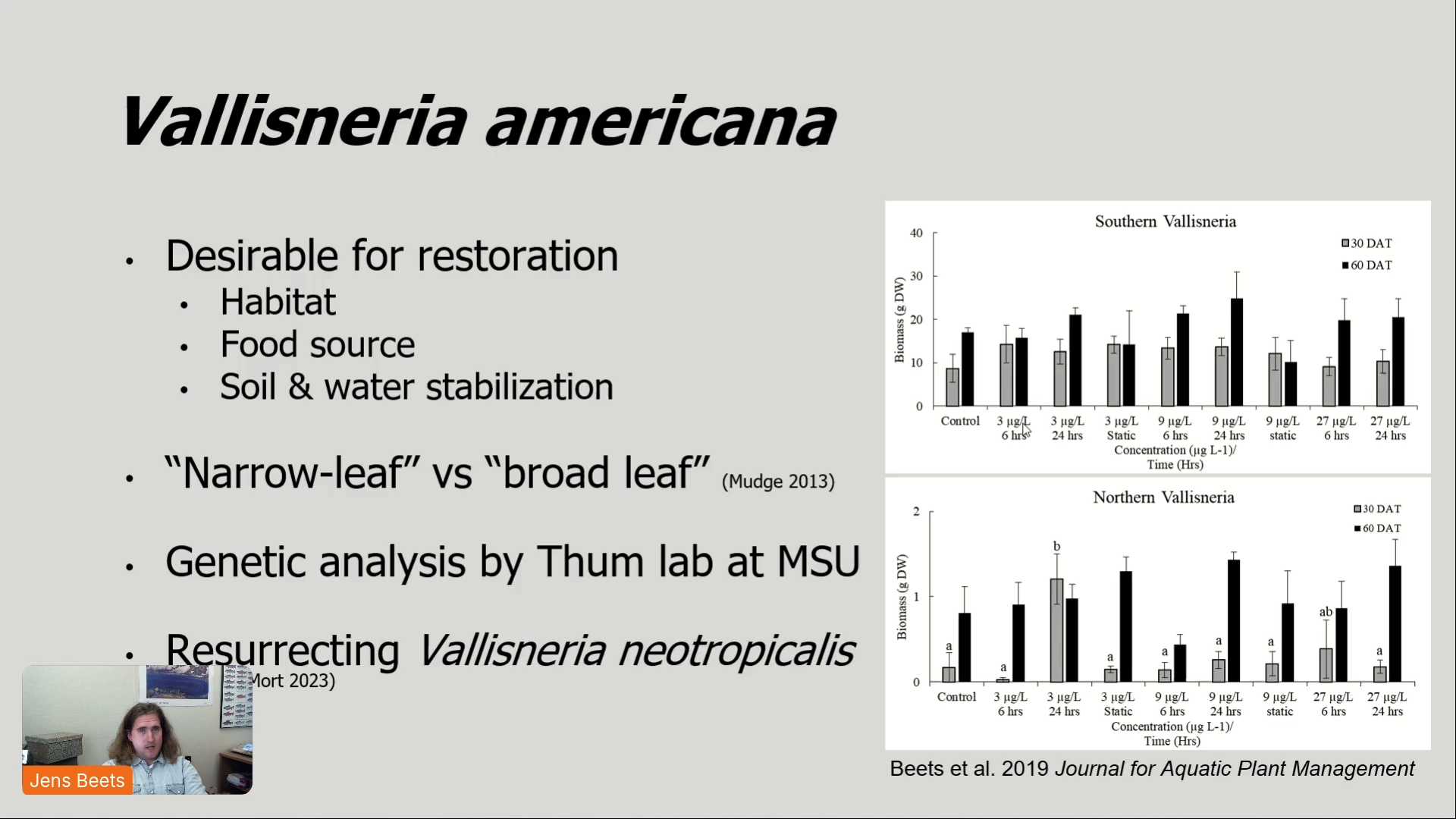
Where Vallisneria americana is native, it is considered a valuable plant for habitat restoration because it is habitat for vertebrates and invertebrates and it stabilizes soil and water levels. The canvasback duck is named for this plant species because it is preferred habitat for the native duck that is found in California during the winter.
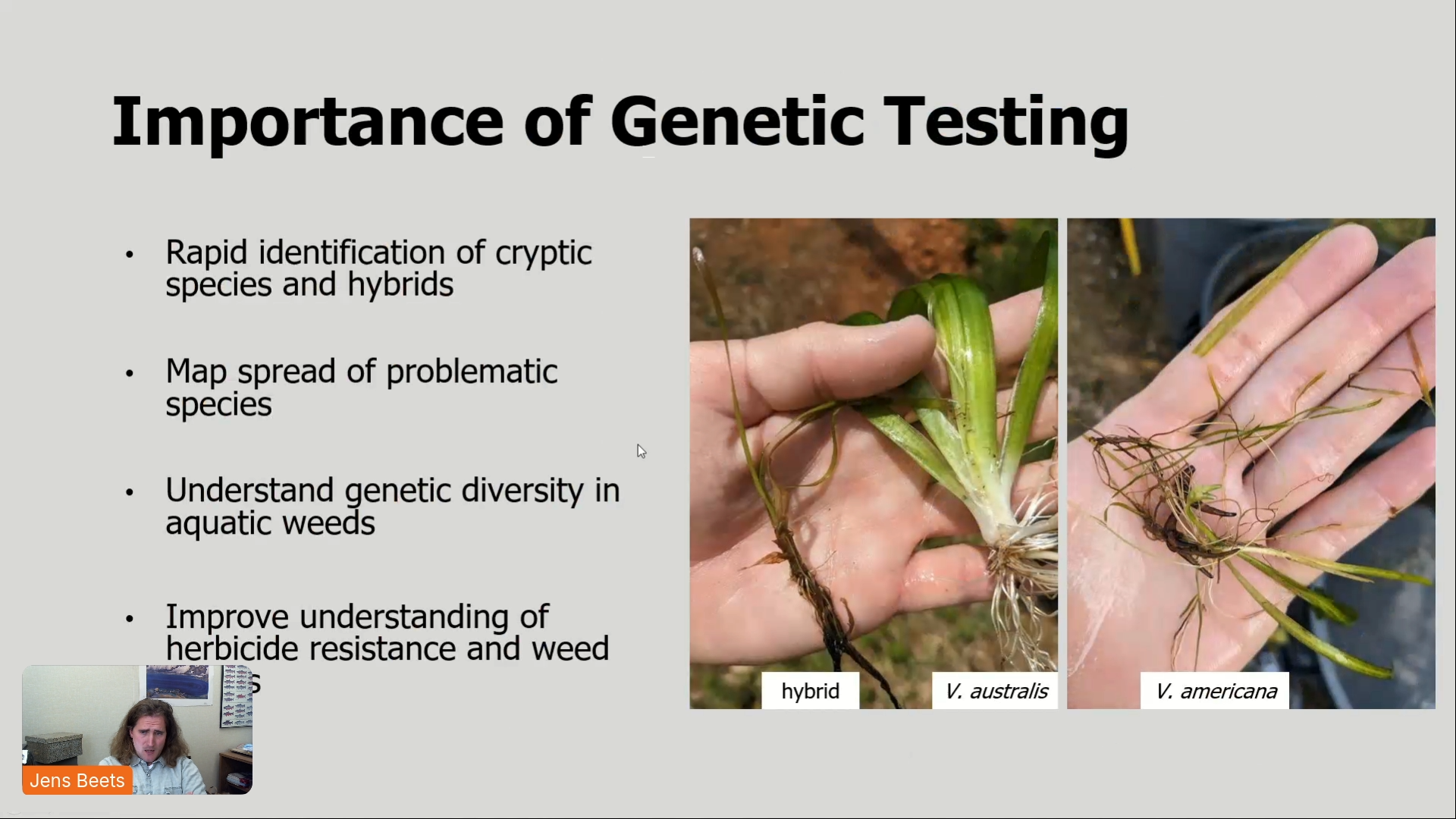
Vallisneria americana looks very similar to other species in the genus considered native in California. For that reason, native species of Vallisneria have been mistakenly killed with herbicide because applicators didn’t accurately identify the target plant as native. Jens Beets recommended that genetic tests be performed before plants in this genus are sprayed with herbicide.
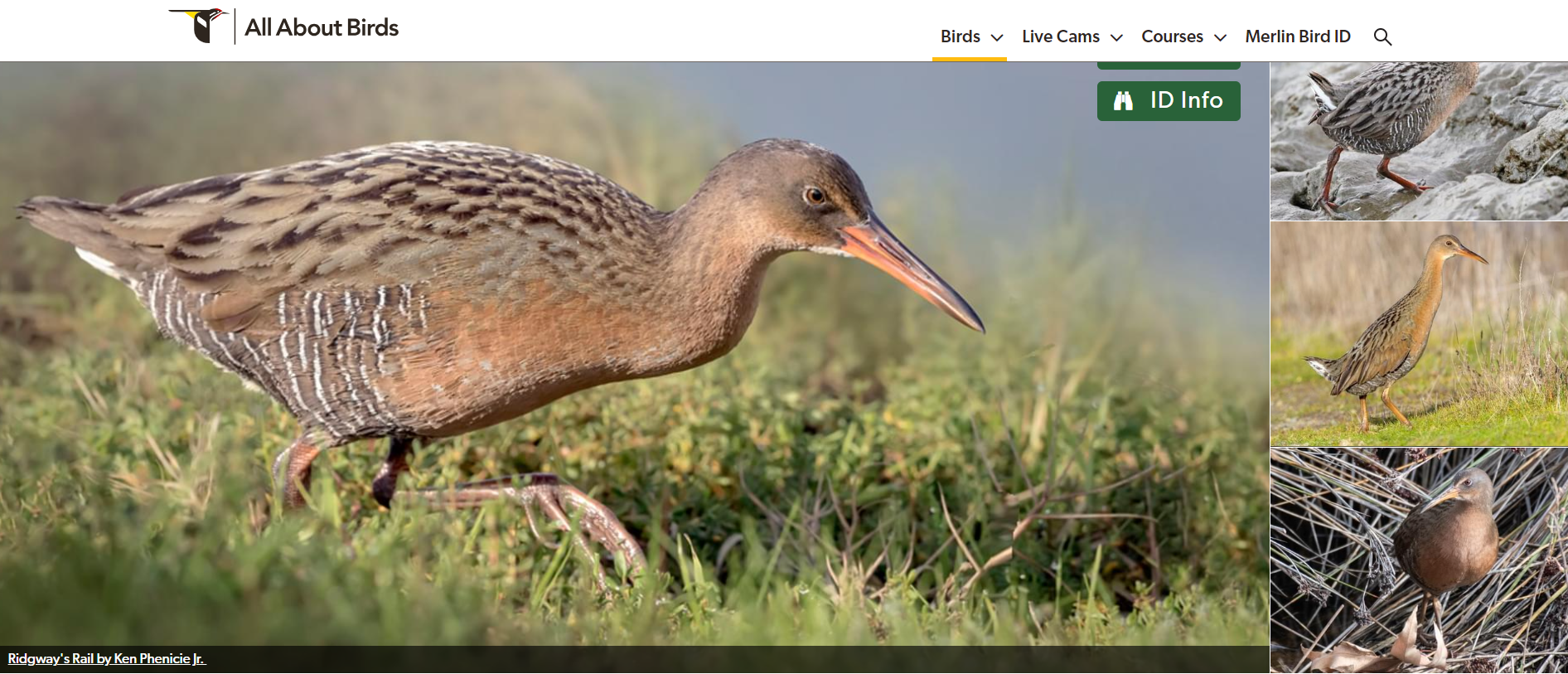
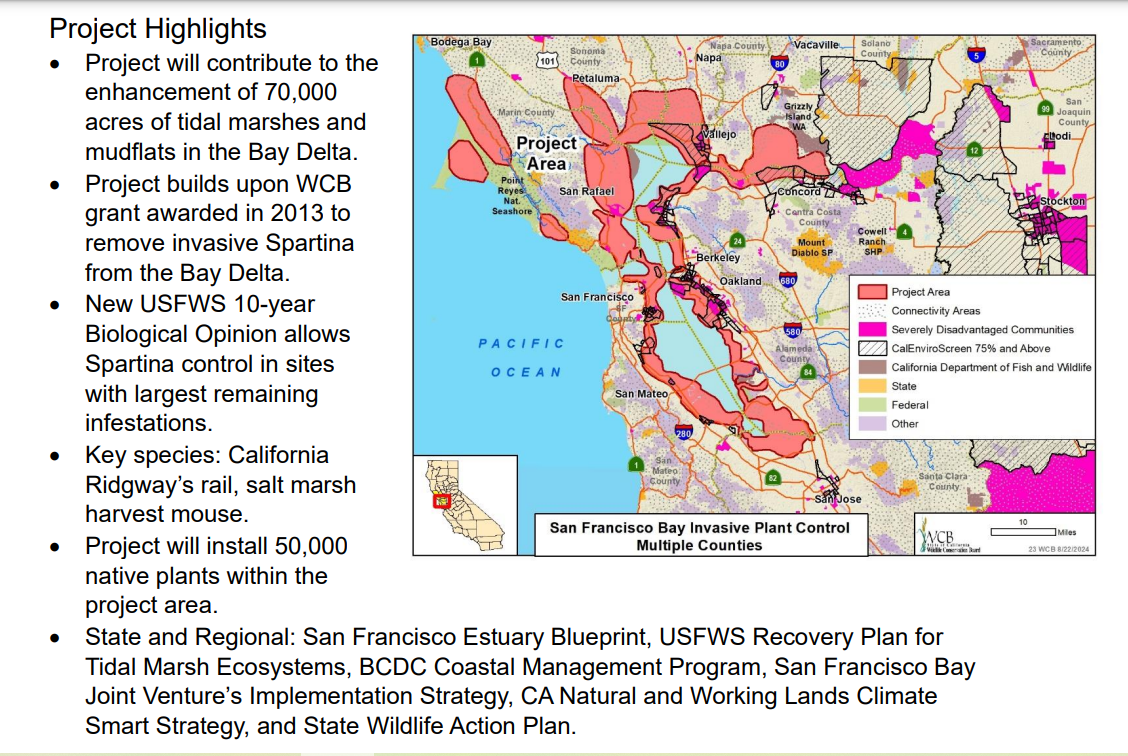
This story probably sounds familiar to regular readers of Conservation Sense and Nonsense. The story is identical to the pointless and futile effort to eradicate non-native species of Spartina marsh grass in the San Francisco Bay. The species being eradicated in California is native to the East and Gulf coasts, where it protects the coasts from extreme storm surges and provides valuable habitat for a genus of bird that is plentiful on the East Coast, but endangered in California. The 20-year effort to eradicate non-native Spartina has killed over 50% of the endangered bird species in the San Francisco Bay.
Throwing good money after bad
Because the hybrid is indistinguishable from the native species of Spartina on the West Coast. 7,200 genetic tests have been performed in the past 12 years before hybrid Spartina was sprayed with herbicide. Taxpayers have spent $50 million to eradicate Spartina over 20 years. Recently, California state grants of $6.7 million were awarded to continue the project for another 10 years. A portion of these grants are given to the California Invasive Plant Council to administer the grants.
Plants are sprayed with herbicide because they aren’t native, not because they are harmful. Even if the target species is needed by birds and other animals, it is still killed and animals along with it. The target species looks the same as the native species and only genetic testing can identify it is as a non-native. The non-native is the functional equivalent of the native. It is only genetically different because natural selection has adapted it to the conditions of a specific location.
Pesticide regulation in the US is a hit or miss proposition
The final session of the symposium was a carefully orchestrated apologia for herbicides, a defensive tirade that suggested Cal-IPC believes its primary tool is in jeopardy. Two presentations were made by employees of regulatory agencies. Their assignment was to reassure the public that pesticides are safe because they are regulated by government agencies.
The fact that many countries have banned pesticides that are routinely used in the US does not speak well for our regulatory system. America’s pesticide regulators rarely deny market access to new pesticides. A recent change in policies of California’s Department of Pesticide Regulation made a commitment to the continued use of pesticides for another 25 years.
In 1996, Congress ordered the U.S. Environmental Protection Agency (EPA) to test all pesticides used on food for endocrine disruption by 1999. The EPA still doesn’t do this today. Twenty-five years later, the EPA has not implemented the program, nor has it begun testing on 96% of registered pesticides. In 2022, an organization that represents farm workers sued the EPA to conduct the legally mandated evaluation of chemicals. The lawsuit has forced the EPA to make a commitment to conduct these evaluations of chemicals for hormone disruption.
The Cal-IPC presenters got some badly needed push back from attendees. One attendee informed the audience that all the testing of herbicides is bought by the manufacturers, not the regulators who don’t do any testing. Another attendee pointed out that herbicides have not been evaluated for the damage they are doing to the soil, damage that makes it difficult to grow native plants in the dead soil. The “pesticide regulator” agreed with those observations.
Fire safety or native plant restoration?
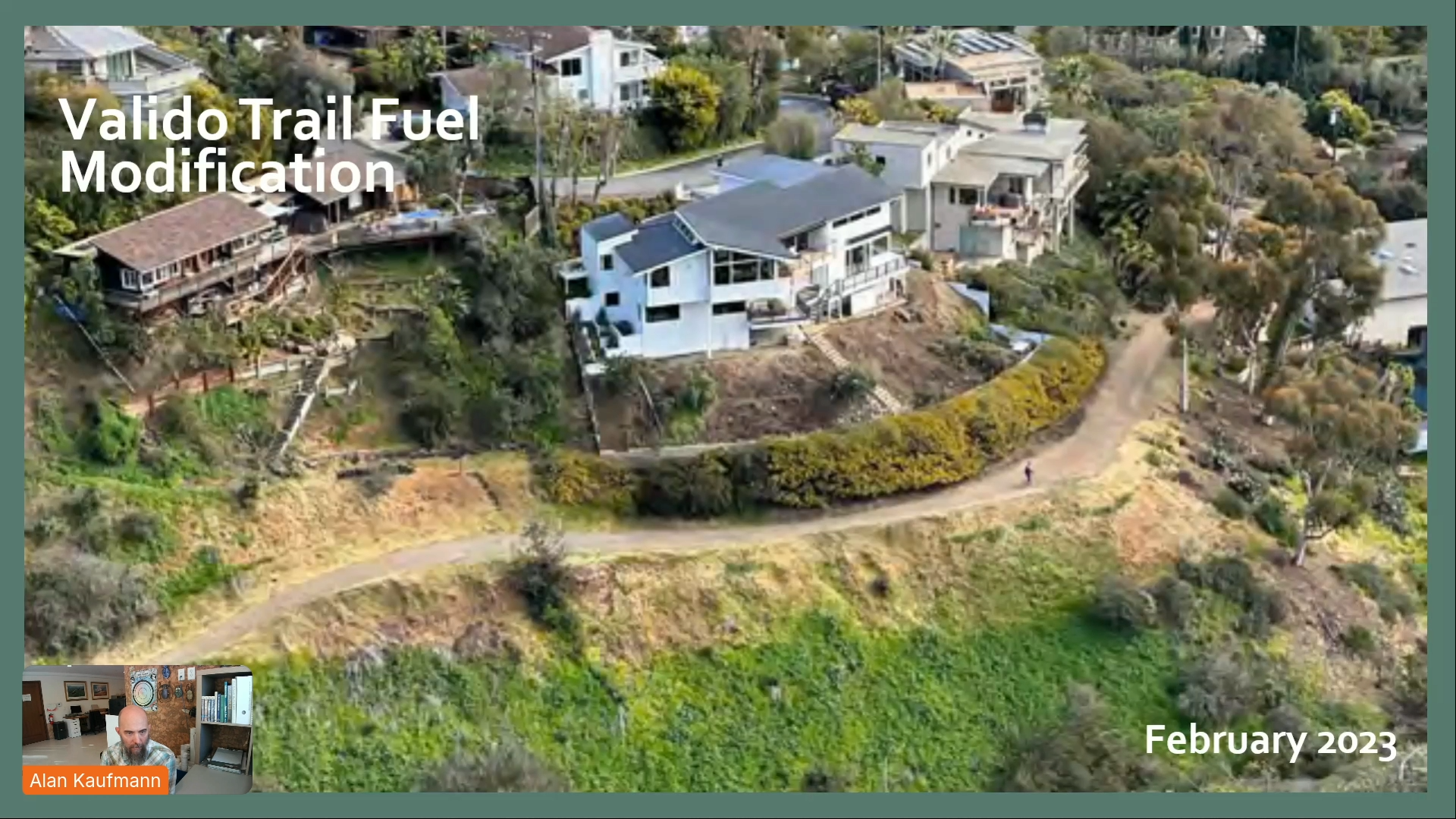
The Interim Deputy Director of the Laguna Canyon Foundation was the final presenter for the Symposium, speaking on a Friday afternoon at 4:30 pm, when there were less than 100 attendees left of the 690 registrants. His presentation was about the blow back that his organization gets from the public about herbicide applications. Criticism of herbicides escalated after a wet year that increased vegetation considered a fire hazard. This photo (below) is an example of the visible effects of fuels management by Laguna Canyon Foundation using herbicides.
It seems likely that a fuels management project was selected for this presentation because it’s easier to justify herbicide use for fuels management than for eradicating harmless plants solely because they aren’t native.
I recently supported Oakland’s Vegetation Management Plan that will use herbicides for the first time on 300 miles of roadsides and 2,000 acres of public parks and open space in Oakland. Previously, herbicide applications were only allowed on medians in Oakland. I tracked the development of the Vegetation Management Plan for 7 years through 4 revisions to avoid nativist versions of fuels management such as leaving dead thatch after herbicide applications on grassland or destroying non-native trees, while leaving highly flammable bay laurel trees behind or destroying broom, while leaving more flammable coyote brush behind.
However, using herbicides for the sole purpose of killing non-native plants is much harder to justify. The irrational preference for native species has put us on the pesticide treadmill. Every plant species now targeted for eradication with herbicides should be re-evaluated, taking into consideration the following criteria:
- Is it futile to attempt to eradicate a plant species that is deeply entrenched in plant communities?
- Will the attempt to eradicate the plant species do more harm than good?
- Is the targeted plant species better adapted to current environmental and climate conditions?
- Is the targeted non-native plant making valuable contributions to the ecosystem and its animal inhabitants?
If these questions cannot be satisfactorily answered, the bulls-eye on the targeted plant should be removed. Limiting the number of plants now being sprayed with herbicide is the only way to reduce pesticide use. If the plant isn’t a problem, there is no legitimate reason to spray it with herbicide.
Pot calls kettle black
The Cal-IPC presentation was a detailed criticism of the public’s complaints about herbicides used in their community. The intention of the presentation was to arm herbicide applicators with defenses against the public’s complaints. Herbicide applicators were encouraged to recognize these arguments (below) and participate in the “education” of the public about the righteousness of their task.
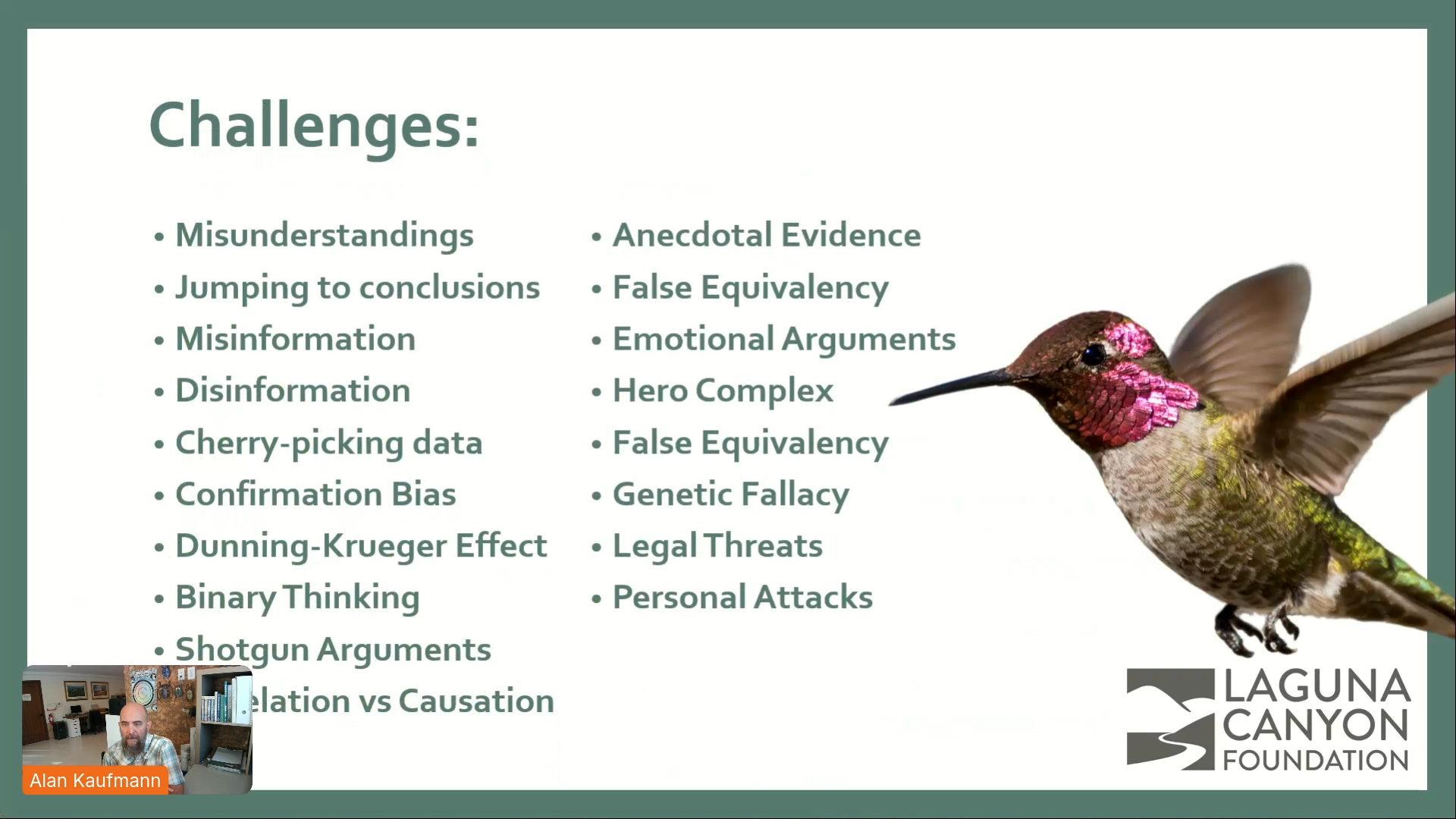
The presenter then showed a series of slides making specific accusations, such as these: (see below)
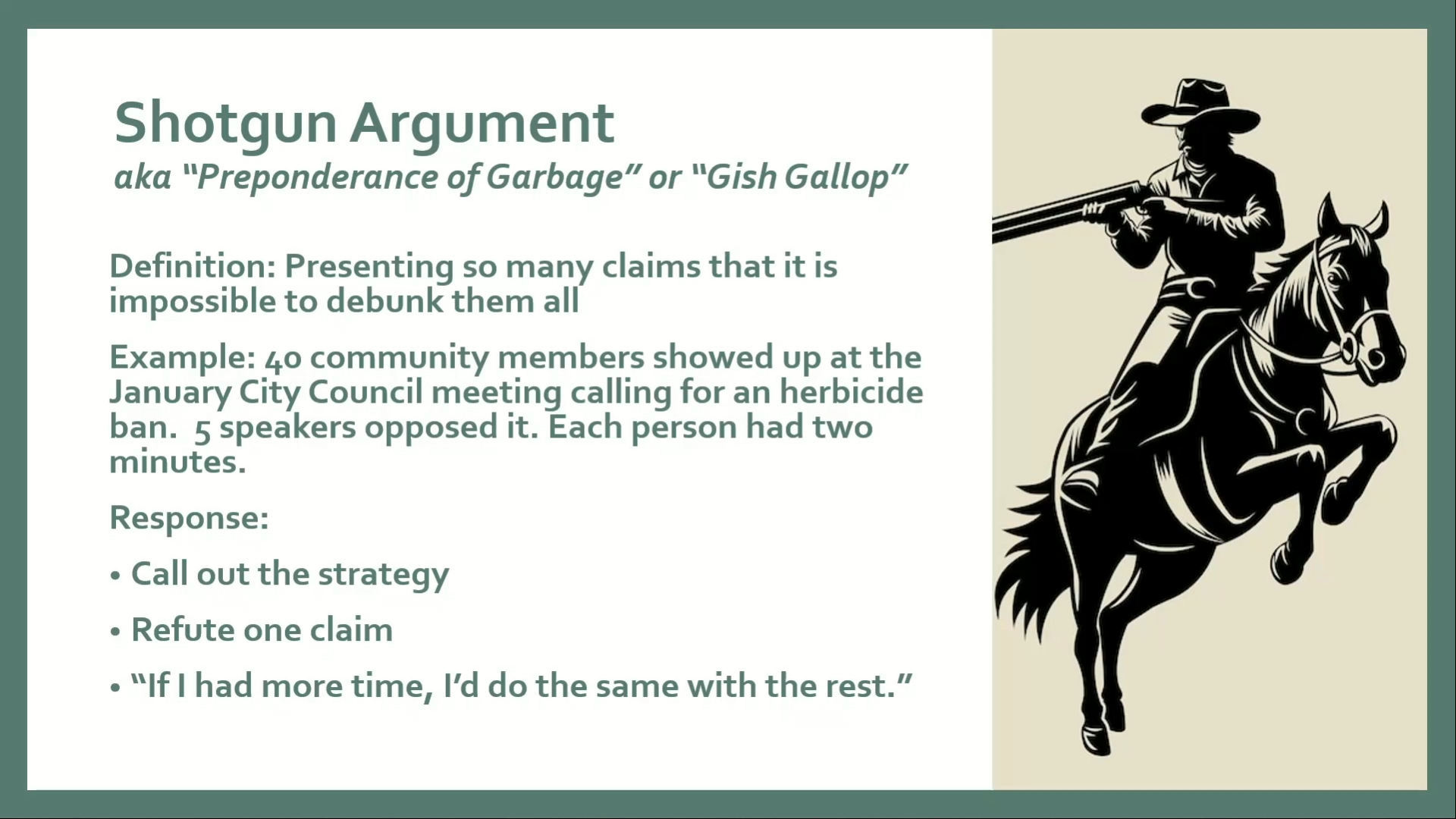
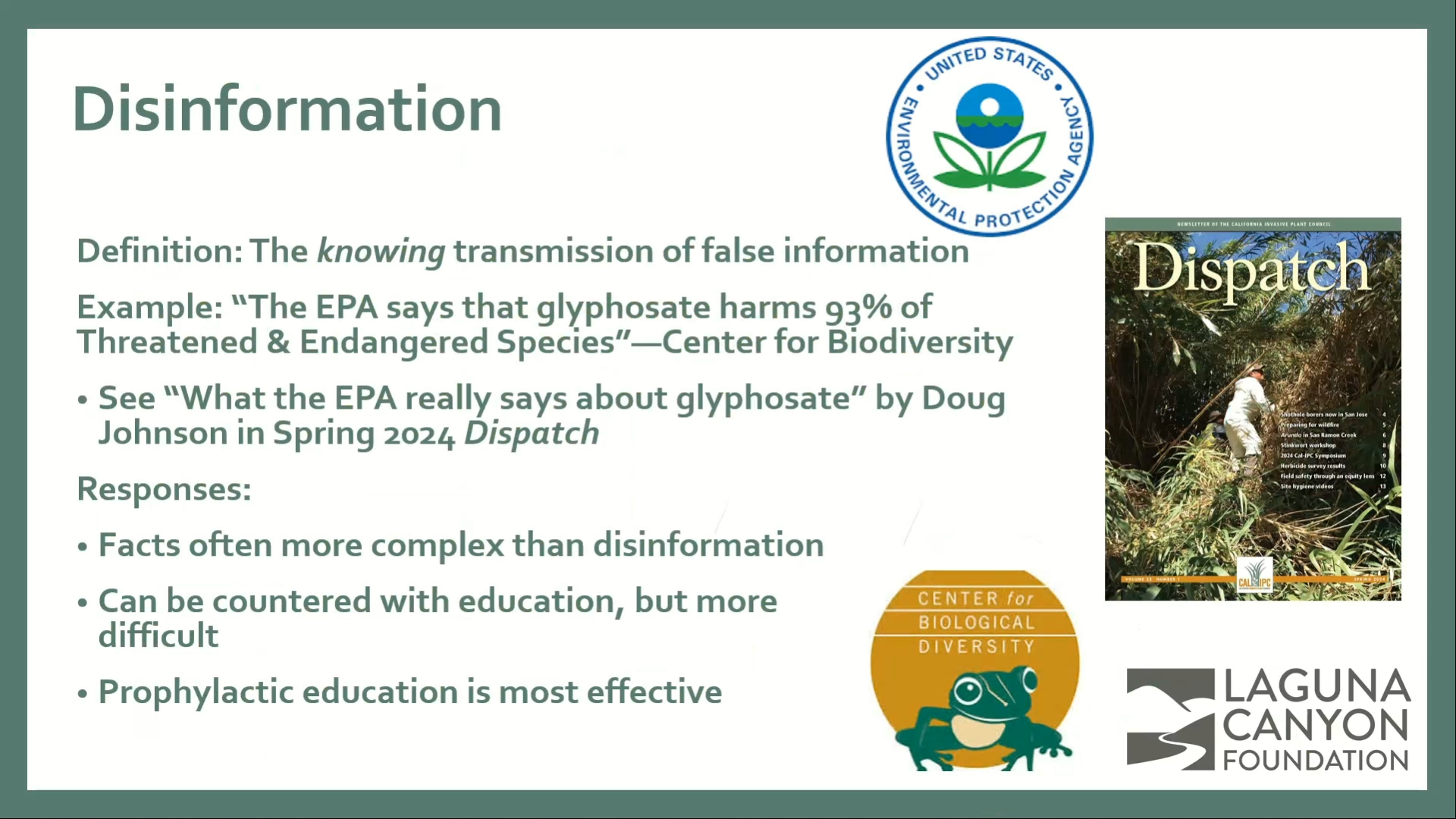
Those who object to the pointless destruction of nature can also cite similar distortions and misrepresentations of facts (AKA lies) by those who engage in these destructive projects;
- Nativists fabricated a myth that eucalyptus kills birds to support their demand that eucalyptus in California be destroyed. There is no evidence that myth is true.
- Nativists also fabricated a myth that burning eucalyptus in the 1991 firestorm in the East Bay cast embers that started spot fires 12 miles away from the fire front. There is no evidence that myth is true.
- Nativists exaggerate the success of their projects by setting a low bar for success, conducting no post-project monitoring, and restricting access to their completed projects.
- The EPA justified the dumping of rodenticides on off-shore islands by inaccurately claiming that the rodenticides do not end up in the water, killing marine animals. There is ample evidence that island eradications have killed many marine animals because rodenticide lands in the water when applied by helicopters.
- USFWS justified the killing of 500,000 barred owls in western forests by claiming they are an “invasive species.” In fact, barred owls migrated from the East to the West Coasts via the boreal forests of Canada. These forests were not planted by humans and have existed since the end of the last Ice Age, some 10,000 years ago. The arrival of barred owls on the West Coast was a natural phenomenon. Barred owls are therefore not “invasive species.” In a rapidly changing climate, many animals must move to survive.
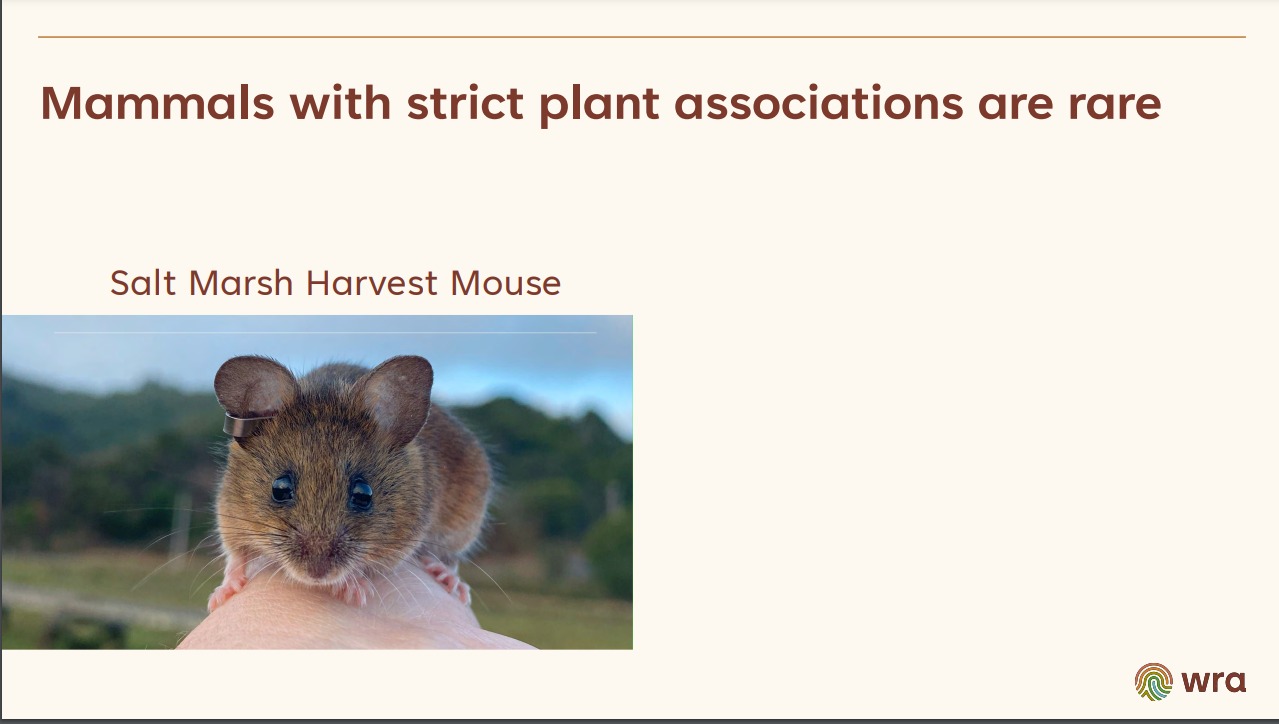
- Nativists claim that most insects are “specialists” that require native plants. That claim is a gross exaggeration of the dependence of insects on native plants, which are sometimes confined to a family of plants containing thousands of both native and non-native species.
- Pesticide applicators also complain about “personal attacks.” They are not alone. I (and others) have been called “nature haters,” “chemophobes,” and “climate change deniers.” Pesticide applicators feel abused. So do I.
I could go on. The list of bogus claims of the superiority of native plants and animals is long and getting longer as more and more public money is available to conduct misnamed “restorations.” Suffice to say, there is plenty of misinformation floating around invasion biology and most of it is used to defend destructive “restoration” projects. The war on nature is also a war of words.
(1) Justin Luong, et.al., “Lessons learned from an interdisciplinary evaluation of long-term restoration outcomes on 37 coastal grasslands in California.” Biological Conservation, February 2022.
 Conservation Sense and Nonsense