This is a good news/bad news story. First the bad news, because it contains kernels of good news. The federal budgets of the entire National Wildlife Refuge System are being cut, including the budget for the Farallon Islands, which has funded the research of Point Blue Conservation on the islands for over 50 years. This cut comes on the heels of a long-term decline in funding of the wildlife refuge system from $765 million in 2010 to $527 million in 2023. It seems safe to assume that this loss of funding will have a negative impact on these fragile ecosystems, but in the case of the Farallon Islands, we also foresee some benefit to wildlife.
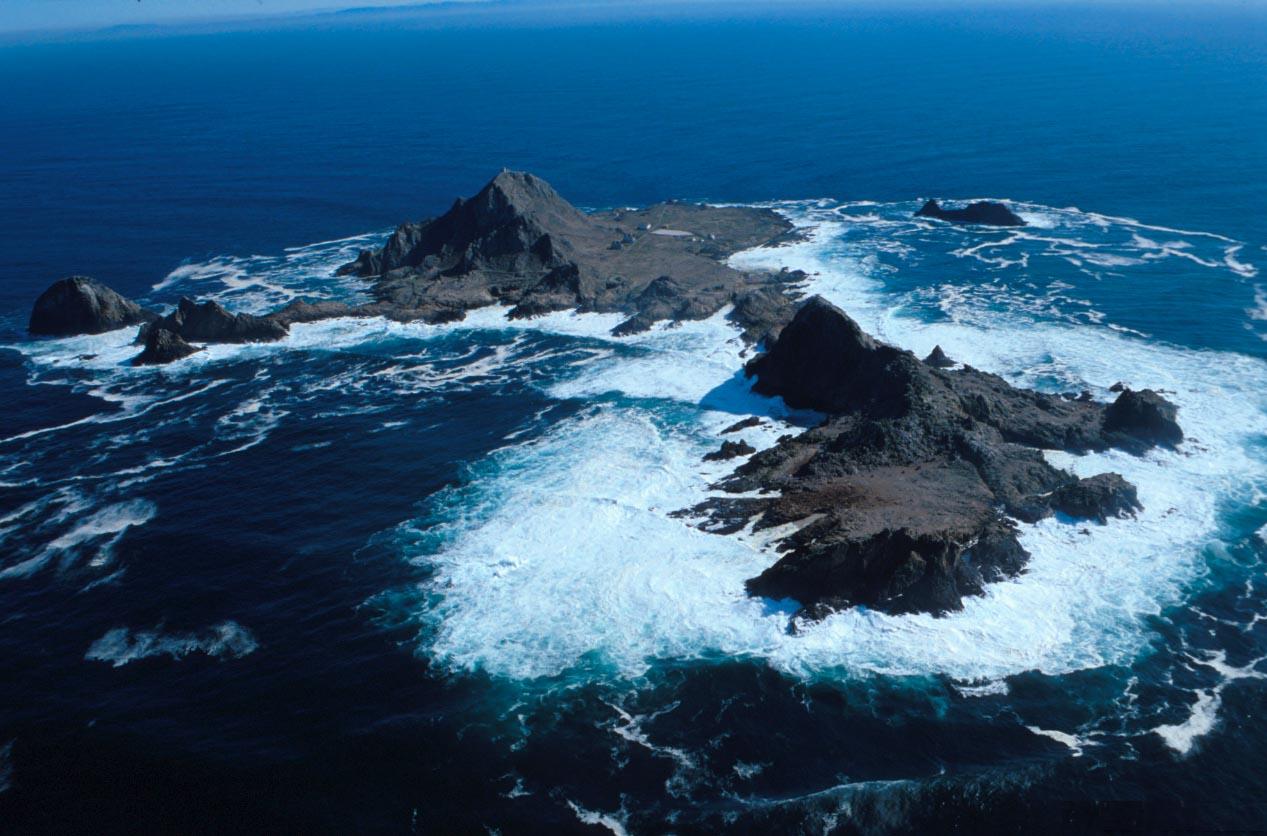
Farallon Islands, NOAA
Point Blue has maintained a year-round presence on the Farallons that will be curtailed in 2025 due to the loss of funding, leaving the island vulnerable to unauthorized visitors and activities in the winter. It will reduce the ability to monitor wildlife populations and maintain long-term datasets that identify trends in wildlife populations.
So, what is the good news? For the moment, the plan to aerial broadcast nearly 2 tons of rodenticide bait on the islands to kill harmless house mice has been abandoned because it cannot be financed. A brief reminder of why that is good news:
Thousands of non-target birds and marine animals are likely to have been killed by eating the bait directly or by eating poisoned house mice. The plan and its Environmental Impact Statement (which has not been certified), predict 1,100 collateral deaths of Western gulls. Delayed and inadequate reporting of non-target deaths by similar projects suggest numbers may be greater.
House mice on the Farallons do not need to be eradicated because there is no evidence that they harm birds on the Farallons. The only evidence of mice eating bird chicks of which I am aware were albatross chicks, a naive species that spends their life in the air except to nest in a few places in the Southern Hemisphere, but not on the Farallons. Native mice live unmolested on other off-shore islands in California. Native mice were removed from Anacapa Island prior to the rodenticide drop to kill rats and were returned after the drop. House mice on the Farallons are targeted solely because they are non-native (and anecdotally because they are an annoyance to research staff who stay in dilapidated housing from which mice cannot be excluded).
The bizarre explanation for killing house mice is that they attract a small population of burrowing owls, who allegedly eat bird chicks. The burrowing owls could be removed from the Farallons, as Golden Eagles were removed from Santa Cruz Island to save the Channel Island Fox.
More Good News
It seems likely that the budget cut will also reduce the application of herbicides on the islands to kill non-native vegetation. Roundup (glyphosate) has been used by Point Blue Conservation on the Farallon Islands every year since 1988. Between 2001-2005, an average of 226 gallons of herbicide were used annually (5.4 gallons per acre per year), according to the annual report of the Farallon National Wildlife Refuge. (1)
63%-80% of the vegetation on the Farallons is non-native. (2) The non-native vegetation that is being needlessly sprayed with herbicide was brought to the islands by birds who ate them elsewhere and/or by wind and ocean currents. They cannot be eradicated because they cannot be excluded from an open ecosystem, just as house mice cannot be excluded from a dilapidated building. They are useful to wildlife and it is pointless to contaminate the ecosystem with herbicide.
House mice on the Farallons are also accused of eating rare insects and competing with rare salamanders for food. The study of the diet of mice on the Farallons (2) reports that mice also eat insects when vegetation becomes scarce in the fall. If useful non-native vegetation weren’t being killed, there would be more food for all animals on the islands, including house mice, who prefer vegetation to insects.
In Conclusion
I am not in a position to evaluate the over-all impact of cuts in the budget to the National Wildlife Refuge System. It seems likely that the overall impact on our refuges is negative. I can only evaluate the impact on the only wildlife refuge system that I know well enough to say that the budget cut will be a reprieve for wildlife on the Farallon Islands because it is likely to reduce the unnecessary use of herbicides and it will spare the entire ecosystem from the planned aerial broadcast of anti-coagulant rodenticide bait.
I am one of thousands of people who have vocally opposed the planned rodenticide drop for over 10 years. We cannot claim credit for this reprieve. The budget cut was not a surgical removal of the poison drop. Rather it was a hatchet job. That should not prevent us from celebrating the good fortune of the animals who will be spared.
Going Forward
I do not consider the issue of island eradications with rodenticides resolved, but I am grateful for a delay on the Farallon Islands. The drop is likely to happen if private funding can be found for it and the federal budget for wildlife refuges could be increased in the future.
I always have hope that those who believe non-native plants and animals are harmful will come to their senses one day. Non-native plants and animals are integral members of the food web. As newcomers, they represent new opportunities for natural selection to find the adaptations needed to survive in our changed and changing environment. We hope that US Fish and Wildlife Service will be deprived of the funding to continue their crusade against house mice long enough to figure this out. They are smart, highly educated, and well-meaning people. Surely they will figure it out eventually, hopefully in time to save wildlife on the Farallons.
Here are the articles about the mouse eradication project on the Farallons that I have published. They provide more details about the damage done by other island eradications around the world:
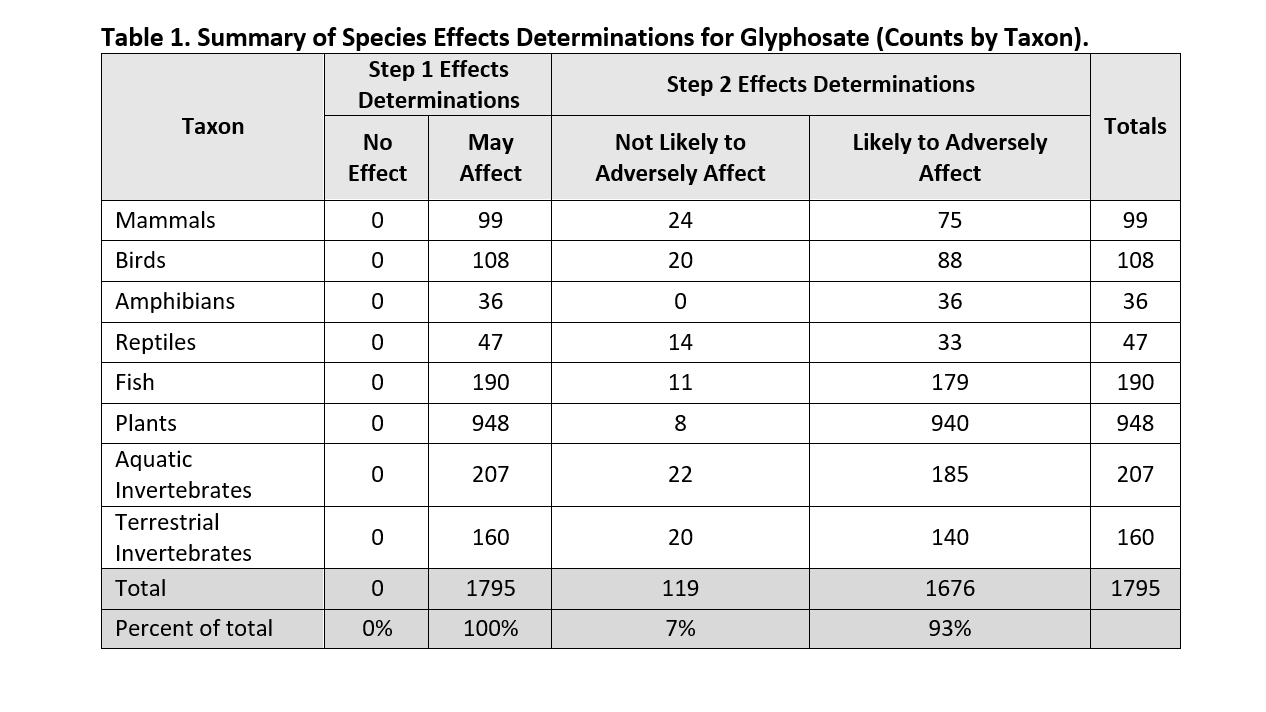
The Endangered Species Act requires that the Environmental Protection Agency (EPA) conduct biological evaluations (BE) of the impact of pesticides on threatened and endangered species protected by the ESA. For example, when the EPA published its final evaluation of glyphosate in 2021, it informed us that glyphosate is “likely to adversely affect” 93% of legally protected endangered and threatened plants and animals.
Source: EPA Biological Evaluation for Glyphosate
The EPA published a draftof a biologicalevaluation (BE) of 11 rodenticides in November 2023, which is a free gift to the island eradication industry. The deadline for making comment on this draft is February 13, 2024. Public comment can be made HERE.
The EPA’s biological evaluation for rodenticides reached the conclusion that rodenticides used in island eradications have “no effect” on any aquatic plant or animal, including birds in the aquatic food web and amphibians with a fully aquatic lifestyle. They made this “no effect” determination without evaluating any of those species, based on their claim that the Product Label for the rodenticide used in island eradications prohibits its use in water, which is not true. EPA also extended this “no effect” determination to all species under the jurisdiction of National Marine Fisheries Services. (1)
In fact, the standard Product Label for brodifacoum does not explicitly prohibit the use of the product in water. It merely warns of the deadly consequences for aquatic species if used in water: “This product is extremely toxic to birds, mammals, and aquatic organisms. Predatory and scavenging mammals and birds might be poisoned if they feed upon animals that have eaten bait. Runoff may be hazardous to aquatic organisms in water adjacent to treated areas. DO NOT contaminate water when disposing of equipment wash water or rinsafe.” The standard Product Label also explicitly allows aerial broadcast of rodenticides for island eradications.(2) In other words, it’s dangerous to apply rodenticides to water, but, in fact, it often happens during island eradications. The biological evaluation asks the public to believe the EPA’s claim that rodenticides are not used in water despite ample evidence that rodenticides land in water during aerial broadcasts on islands.
Although the standard Product Label acknowledges the potential that rodenticide runoff “may be hazardous to aquatic organisms in water adjacent to treated areas,” EPA’s biological evaluation dismisses that possibility by claiming that “use patterns preclude spray drift and runoff exposure.” EPA’s biological evaluation provides no evidence in support of that claim and that claim is explicitly contradicted by the EPA in its evaluation of the proposed island eradication on the Farallon Islands as well as the considerable record of contamination of the aquatic food web during completed island eradications, as explained below.
Supplemental Product Labels are required for island eradications because they require greater quantities of rodenticide bait than allowed by standard Product Labels and modifications in application methods. The Supplemental Product Label required for island eradications explicitly permits the use of brodifacoum on water (3):
Elevated and floating bait stations are allowed in intertidal zones above the mean low tide mark and below the mean high tide water mark.
Broadcast applications are allowed in coastal areas above the mean high tide water mark. Conversely broadcast applications are prohibited below the mean high tide water mark.
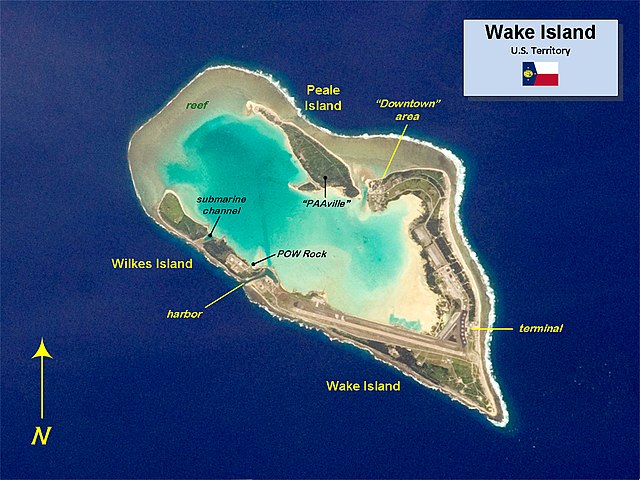
The cited Supplemental Product Label for Wake Island was recently published in preparation for a second attempt to eradicate rats on Wake and 2 adjacent islands. The first attempt in 2012 was a failure. Here is a photo of this complex of islands:
Wake Island. Source: NASA
As you can see, Wake Island is a narrow strip of land surrounding a lagoon that is open to the ocean. Two-thirds of the island is surrounded by sandy, tidal beaches. Scrub vegetation is in the intertidal zone. A portion of the island’s vegetation is wetland. It defies belief that it is possible to aerial broadcast rodenticide from helicopters (or float bait boxes in the intertidal zone) on Wake Island without getting rodenticide in the water.
The published study about the failure of the first attempt to eradicate rats on Wake Island was written by the organizations that conducted the project. It reports that rats were found on the island less than a year after the aerial broadcast and supplemental hand-applications were done. The study makes no mention of non-target deaths of any animals. The study speculates that the failure of the attempt was the result of not applying the rodenticide everywhere rats were living. They will soon try again, using the same methods. Rodenticide bait will surely end up in the water. More non-target animals will undoubtedly be killed. But the public will not learn about either of those issues, because the monitoring and reporting is entirely controlled by the perpetrators of these projects. (4)
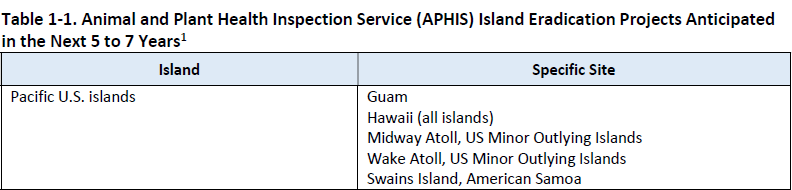
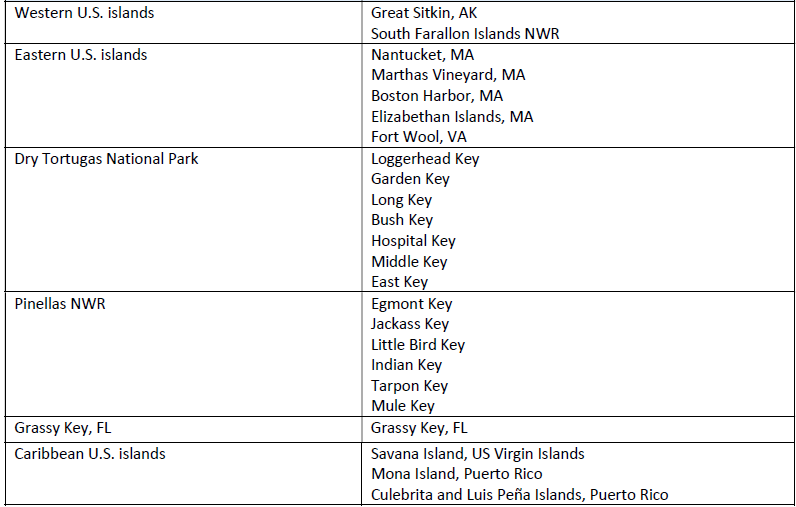
Keep in mind that there are 239 taxa living in the intertidal zone around the Farallon Islands, according to Appendix J of the Final Draft of the Environmental Impact Statement for the proposed Farallon Islands. No Supplemental Product Label has been granted yet for the proposed island eradication on the Farallon Islands, but the Farallones are included on the list of 29 island eradications (below) in the EPA’s biological evaluation, which the BE says will be done within the next 5-7 years.
Source: EPA Biological Evaluation of Rodenticides
Contamination of the aquatic food web during island eradications is inevitable
EPA made a public record of its concerns about contaminating the aquatic food web during island eradications in its letter of December 9, 2013 regarding “EPA comments on the Revised Draft Environmental Impact Statement for the South Farallon Islands Invasive House Mouse Eradication Project.” (5) In response to the claims of the DEIS for the proposed island eradication that “the bait deflector will minimize, and in several places, prevent bait drift into the marine environment,” the EPA said, “The EIS should be clear that bait drift would occur.”
The EPA’s letter of December 9, 2013, goes on to report previous experience with aerial broadcast applications on Palmyra Island and states: “For future operations, the potential for bait to enter the marine environment must be a factor in the aquatic risk assessment and further methods to minimize the amount of bait entering the marine environment should be fully explored. The amount of bait that enters the aquatic environment from an aerial broadcast depends on shoreline configuration, island topography, overhanging vegetation, bird activity affecting flight lines, wind strength and direction, weather conditions, and pilot experience. On islands where these factors increase the potential for bait to enter marine environments, additional mitigation measures may be needed to protect sensitive marine environments.” (5)
Based on those concerns about contamination of the marine food web, the EPA’s letter of December 9, 2013 expresses these specific concerns about the proposed aerial broadcast application on the Farallon Islands: “Discuss and consider the factors that increase the potential for bait to enter marine environments that are identified above. Especially relevant are the irregular shoreline, the excessive bird activity from gulls, and the proposal to fly steep areas a second time (shorelines on the Farallones are steep) to increase the application rate in these areas.” (5)
Given the EPA’s explicit admission that aerial broadcast of rodenticides on islands have contaminated the marine food web in the past and are likely to do so in the future, the EPA is not in a position to now categorically deny that “use patterns preclude spray drift and runoff exposure,” as it attempts to do in the draft biological evaluation. Nor is the EPA in a position to categorically deny that aquatic species will be adversely affected by rodenticide bait that will inevitably land in the water surrounding the Farallon Islands, as it attempts to do in the draft biological evaluation.
Farallon Islands, NOAA
The deadly track record of island eradications
The aerial application of rodenticide to kill rats on Anacapa Island in 2001-2002 was the first of its kind in North America. The project was complicated by the need to spare a population of endemic native mice on Anacapa. Over 1,000 native mice were captured before the aerial application of rodenticide and released back on the island after the poison was no longer effective. Clearly, mice aren’t considered a problem on islands, unless they have the bad luck of being non-native. Whether native or non-native, they are prey for many bird species.
Most of the raptors on Anacapa were removed before the rodenticide drop. Of those that were left behind, 3 barn owls, 6 burrowing owls, and a kestrel likely died from rodenticide bait or eating poisoned mice. 94 seed-eating birds were also found dead after the poison drop. The study says that these collateral kills were consistent with other similar projects.
Bird scavengers such as gulls, vultures, and condors are also vulnerable to secondary poisoning by poisoned rodents. Shortly after the Anacapa poison drop, dead seabirds washed up on the shore near the Santa Barbara harbor. UC Santa Barbara’s daily newspaper said, “…a strong correlation exists between the National Park Service’s most recent airdrop of pesticide on Anacapa Island and the dead birds.” These deaths weren’t reported by the study of the success of the poison drop. As usual, the study was done by supporters of the project, with little interest in finding more collateral death from the drop. The public is not allowed to observe island eradications. Therefore, the public’s only source of information is those who are directly involved in the aerial application of rodenticides.
“In October 2008, two helicopters dropped approximately 46 metric tons of Brodifacoum 25-W bait on Rat Island’s 2800 hectares, supplemented by hand application of bait around the island’s freshwater lakes. This rodenticide is known to be highly toxic to birds. Some nontarget mortality was expected, but the actual mortality exceeded the predicted mortality. Forty six Bald Eagles died (exceeding the known population of 22 Bald Eagles on the island); toxicological analysis revealed lethal levels of brodifacoum in 12 of the sixteen carcasses tested. Of the 320 Glaucous winged Gull carcasses, toxicology tests implicated brodifacoum in 24 of the 34 tested. Carcasses of another 25 bird species were found; of these 54 individuals, three were determined by necropsy to have died of brodifacoum poisoning.” (6)
Palmyra Atoll was aerially broadcasted twice with brodifacoum rodenticide in 2011 as well as a follow-up hand broadcast application. The study of that project reported: “We documented brodifacoum residues in soil, water, and biota, and documented mortality of non-target organisms. Some bait (14–19% of the target application rate) entered the marine environment to distances 7 m from theshore. After the application commenced, carcasses of 84 animals representing 15 species of birds, fish, reptiles and invertebrates were collected opportunistically as potential non-target mortalities. In addition, fish, reptiles, and invertebrates were systematically collected for residue analysis. Brodifacoum residues were detected in most (84.3%) of the animal samples analyzed. Although detection of residues in samples was anticipated, the extent and concentrations in many parts of the food web were greater than expected.”
These published studies are helpful to understand the scale of water contamination and collateral deaths of non-target animals, including aquatic animals. However, they are just the tip of the toxic iceberg because little monitoring and testing is done on the many marine animals that have been killed in proximity of these projects. Robert Boesch is a retired pesticide regulator for the EPA and the Hawaii Department of Agriculture. Presently, he is Visiting Colleague at University of Hawaii at Manoa. He has written an unpublished discussion paper (7) that reports:
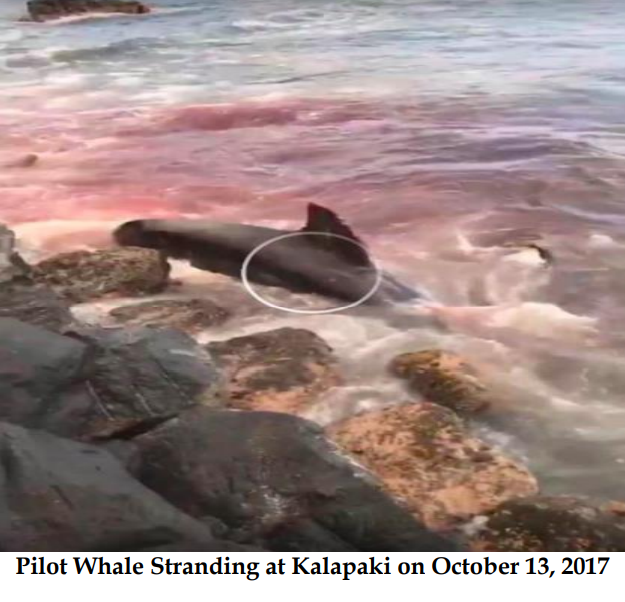
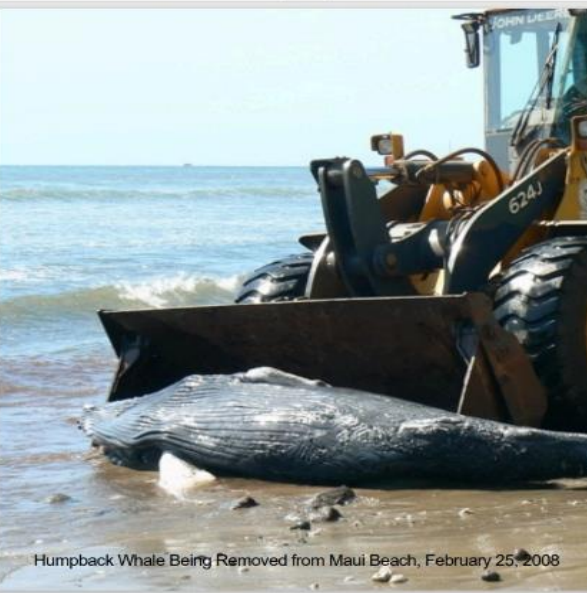
Strandings of whales, some hemorrhaging, occurred within 60 days following anticoagulant bombardment.
Unusual mass strandings of hemorrhaging dolphins occurred in San Diego and Hawaii years after anticoagulant bombardment.
There is very little known about the fate of anticoagulant residues in the oceans.
Source: Robert Boesch discussion paper available HERE .
The documented deaths of non-target animals caused by island eradications are direct poisonings by eating bait on the ground or by secondary poisoning by eating poisoned rodents. The EPA biological evaluation attempts to dismiss the potential for secondary poisonings by citing a study (Baldwin 2021) that claims most rodents die in their burrows after eating the poison, making them unavailable to be eaten by other animals. This study is not relevant to island eradications because it was conducted on ground squirrels (not rats or mice), it used a first generation rodenticide (diaphacinone) which is not used in island eradications, and most applications were burrow baits, rather than aerial broadcast.
What’s at stake?
About 1,200 island eradications have been done all over the world over the last 30 years, with mixed success. The EPA’s biological evaluation announces the intention to approve 29 new island eradications in US waters within the next 5-7 years, including the Farallones. In the case of Hawaii, the list says “all islands.” Many of the listed islands are actually a complex of islands, such as those in Boston Harbor. Many of the islands are residential communities, such as Nantucket and Martha’s Vineyard. As presently drafted, the biological evaluation will make it possible to approve those projects without addressing the considerable evidence that these projects are killing thousands of birds and animals and contaminating the ocean surrounding island eradications.
The Bottom Line
The draft biological evaluation is unacceptable because it gives the public the false impression that island eradications with rodenticides are harmless, when they clearly are not. It confers EPA’s blessing on island eradications by refusing to evaluate endangered species that may be harmed by island eradications. It ignores the evidence that rodenticide applications have killed many terrestrial and aquatic animals and contaminated the water.
The biological evaluation must be revised to correct these flaws in the present draft:
Exposure to rodenticides during island eradications must be based on Supplemental Product Labels for island eradications, not standard Product Labels that do not apply to island eradications.
The revised biological evaluation must evaluate all legally protected animals exposed to rodenticides during island eradications, including aquatic animals. Both bioconcentration and bioaccumulation must be considered in the determination of exposure to rodenticides. “No effect” cannot be assumed without such evaluation.
The revision must provide evidence in support of the claim that there is no drift or run-off of pesticide from aerial broadcasts done on islands or delete that claim, which is contradicted by actual experience with island eradications.
The revision must remove the claim that rodents die in their burrows after eating rodenticide bait (Baldwin 2021) because the study was done on a different animal, using a different rodenticide, and a different application method.
Update: The final version of the EPA biological evaluation of rodenticides is unchanged from the draft. It continues to make “no effect” determinations for all aquatic species and critical habitats under the jurisdiction of the National Marine Fisheries Service. It continues to list the same off-shore islands (including the Farallons) where “APHIS is planning to conduct rodent eradication projects for the benefit of seabirds and other wildlife on these islands in the next five to seven years.”
The only changes it acknowledges making are the removal of some of the mitigation measures from the draft. December 9, 2024
“The more we know about plans to eradicate harmless mice on the Farallon Islands with rodenticide, the less sense it makes.” – Conservation Sense and Nonsense
Plans to eradicate mice on the Farallon Islands with rodenticide were approved by the California Coastal Commission (CCC) two years ago, on December 16, 2021. Although CCC approval was contingent on a few conditions intended to reduce the inevitable death of non-target birds and marine animals, it is unclear if CCC will be able to enforce the conditions. Plans seem to be moving forward behind closed doors, so Conservation Sense and Nonsense continues to be concerned about this project.
First a brief reminder of the project and our objections to it. House mice were introduced to the Farallon Islands over 100 years ago by ships visiting the island. There is no evidence that mice harm birds on the Farallons. The mice are an integral part of the food web, eating primarily vegetation and supplementing that diet with insects during summer months when vegetation is sparse. The mice are also the prey of hundreds of thousands of birds that live on the islands as well as birds that stop over on their migratory routes. The mouse population varies throughout the year, dwindling during winter months and increasing in the fall. When the mouse population declines, food sources for their predators also decline. That’s when burrowing owls are said to prey on the nestlings of ashy storm petrels. Though the mice are blameless, the project proposes to kill them all based on the assumption that burrowing owls will not overstay their migratory stop over if food sources are significantly reduced. The project is expected to kill hundreds—perhaps thousands—of non-target birds who will eat poisoned pellets directly and/or poisoned mice.
The project has always seemed absurd and nothing we’ve learned about it in the past 2 years has made it seem otherwise. Our last article of 2023 will report new information learned since the project was approved.
Contamination of the food web
Robert Boesch is a retired Pesticide Regulator for the Environmental Protection Agency, region 9 and the Hawaii Department of Agriculture. Presently, he is Visiting Colleague at University of Hawaii at Manoa. Based on his research and experience, he has written a discussion paper about island eradications using rodenticides, which he has shared with the California Coastal Commission and many other agencies and organizations. This entire discussion document is available below as a footnote and this is his summary of “Eradication Programs Eliminating Invasives and their Predators and Scavengers!”
Eradication programs for mice and Polynesian Rats are planned for the Farallon Islands, Midway and Wake Island.
Brodifacoum, a potent, persistent and bioaccumulative anticoagulant poison is the toxicant. [This is the rodenticide that will be used on the Farallon Islands to kill mice. There are no rats on the Farallons.]
Brodifacoum residues have been detected in almost all fish that were collected following treatment of Palmyra, and trace levels were found in 10 percent of the fish after treatment of Wake.
Brodifacoum residues in fish caught at Wake increased from trace levels to detectable residues over 3 years.
Diphacinone is a greater threat of secondary poisoning to mammals than brodifacoum.
Strandings of whales, some hemorrhaging, occurred within 60 days following anticoagulant bombardment.
Unusual mass strandings of hemorrhaging dolphins occurred in San Diego and Hawaii years after anticoagulant bombardment.
There is very little known about the fate of anticoagulant residues in the oceans.
Our knowledge of contamination of the food web caused by rodenticide drops on islands is limited because monitoring is usually short-term and frequently done by the same contractors who implemented the project, with little motivation to report the extent or persistence of contamination. For the same reasons, we have limited knowledge of how successful the projects are.
Track record of island eradications
About 1,200 island eradications have been done all over the world over the last 30 years. Our evaluation of the proposed project on the Farallon Islands is based on the success or failure of those projects.
The aerial application of rodenticide to kill rats on Anacapa Island in 2001-2002 was the first of its kind in North America. The project was also unique because it was complicated by the need to spare a population of endemic native deer mice on Anacapa. Over 1,000 native mice were captured before the aerial application of rodenticide and released back on the island after the poison was no longer effective. Although post-project monitoring reported successful eradication of rats, they were not confident that all of the mice that were left on the island had been killed. (1)
Attempts to eradicate mice have been consistently less successful than attempts to eradicate rats. A study of 139 attempted eradications of animals on 107 Mediterranean islands in eight countries found that eradication projects targeted 13 mammal species. The black rat was the target of over 75% of the known attempted eradications in the Mediterranean Basin. The most widely used technique was poisoning (77% of all eradications), followed by trapping (15%) and hunting (4%). Techniques were largely target-specific.
The average failure rate of the projects was about 11%, but success was defined only as the death of animals living on the islands at the time of the project. However, this percentage varied according to species. The failure rate of house mouse eradication was 75%. Reinvasion occurred after 15% of eradications initially considered successful. (2)
Island eradications considered initially successful, are often failures in the long run. A recent visitor to Anacapa Island has reported seeing two dead rodents as her escorted group was leaving the island. One was identified as a deer mouse. The other rodent was not identified. Have rats returned to Anacapa? Are native deer mice still being killed by residues of rodenticide? (3)
The eradication of rats on Anacapa Island is relevant to the planned project on the Farallon Islands because rats were killed, but mice were saved. Although the Anacapa project considered rats a threat to birds, it did not consider mice a problem. Rats were killed, but mice were saved by trapping and removing them from the island before the rodenticide was dropped. Mice on the Farallon Islands are not a threat to birds. They will be killed only because they are non-native.
Mice are members of the food web
Mice on the Farallon Islands are as much a part of the food web as they are on Anacapa Island. They are prey of the birds and they are mainly predators of vegetation. On the Farallon Islands, mouse predation of vegetation is considered a problem, but on Anacapa Island it is not considered a problem. On the Farallon Islands, the study of the diet of mice reports that mice also eat insects when vegetation becomes scarce in the fall. (4)
The study of the mouse diet on the Farallons also reports that 63%-80% of the vegetation on the Farallons is non-native. That’s why Roundup (glyphosate)has been used on the Farallon Islands every year since 1988. Between 2001-2005, an average of 226 gallons of herbicide were used annually (5.4 gallons per acre per year), according to the annual report of the Farallon National Wildlife Refuge. (5)
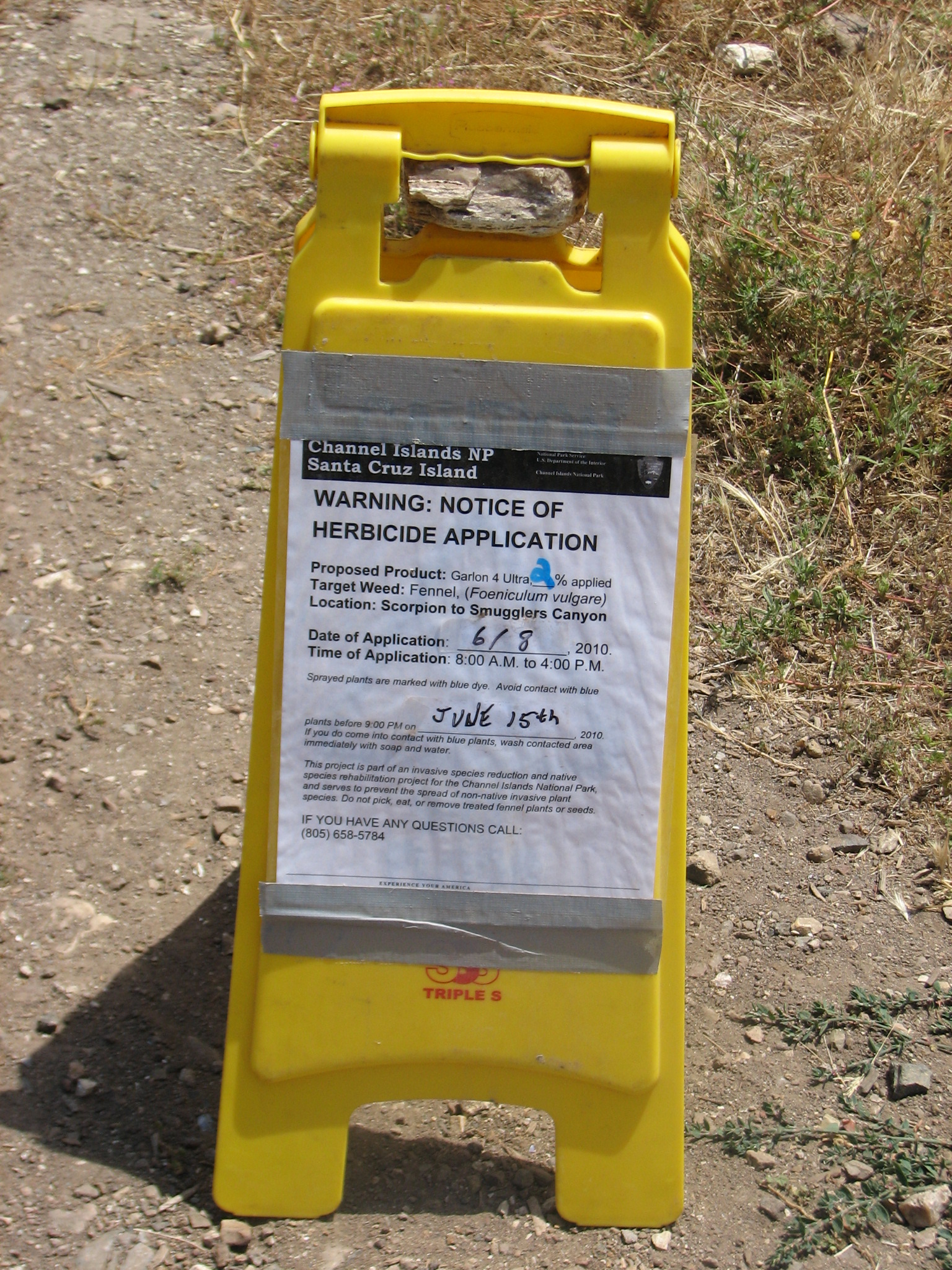
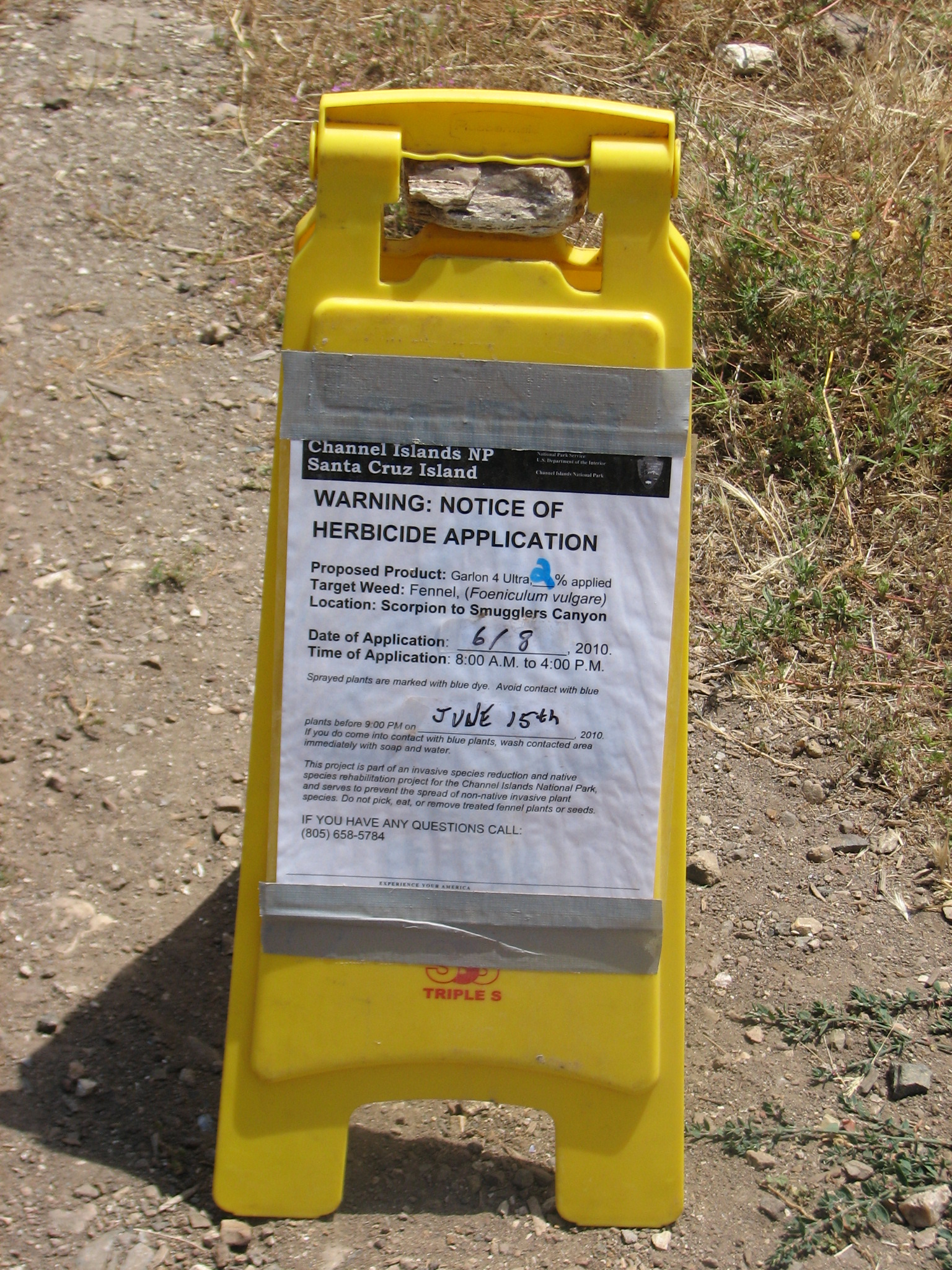
I took this photo on Santa Cruz Island in 2010, while visiting with an escorted group.
The Farallon Islands have never been inhabited and there has been no public access to the islands for over 100 years. Non-native plants were not brought to the Farallons by humans. Their seeds were brought by birds in their stomachs, in their feathers, on their feet and by wind and ocean currents. Non-native plants dominate vegetation on the Farallons partly because non-native plants are eaten by birds. The plants are members of the food web and their eradication is depriving birds and other animals in the ecosystem of food. If non-native plants were not being eradicated with herbicides, it probably would not be necessary for mice to eat insects, which are not their preferred food. We can safely assume that herbicides are harmful to the animals that consume plants that have been sprayed. (6)
Consequences of fiddling with the food web
There were also feral cats on the Farallons before they were killed. Predictably, the population of mice increased after the cats were killed. When 6,000 feral pigs were killed by sharp shooters on Santa Cruz Island, Golden Eagles substituted for that plentiful food source by preying on the rare, native Channel Island Fox. Golden Eagles were captured and relocated to the mainland. The fox population was restored to the island by a captive breeding problem. The same could be done on the Farallons to eliminate the only known threat to ashy storm petrels. The small population (approximately 6-10) of burrowing owls that are the only known predators of the petrels could be trapped and removed to the mainland as the Golden Eagles were on Santa Cruz Island.
Restoration plans for any ecosystem should begin with a thorough analysis of the food web. Plucking single species of plants and animals out of complex ecosystems without understanding their role in the food web results in unintended and harmful consequences.
The Farallons project is based on mistaken assumptions
The Farallons project is based on the mistaken assumptions of invasion biology. Most of the vegetation on the island is being killed with herbicide because it is non-native. The vegetation is clearly essential to all the animals living on the island, but invasion biology asks us to believe that it is not, solely because it is non-native. If the mice are killed on the island, it is only because they are non-native, not because they are harmful to birds. They are an important source of food for the birds, but invasion biology asks us to believe they are not, solely because they are not native. These assumptions are wrong, yet 50 years of nativist ideology still has a death grip on our public lands.
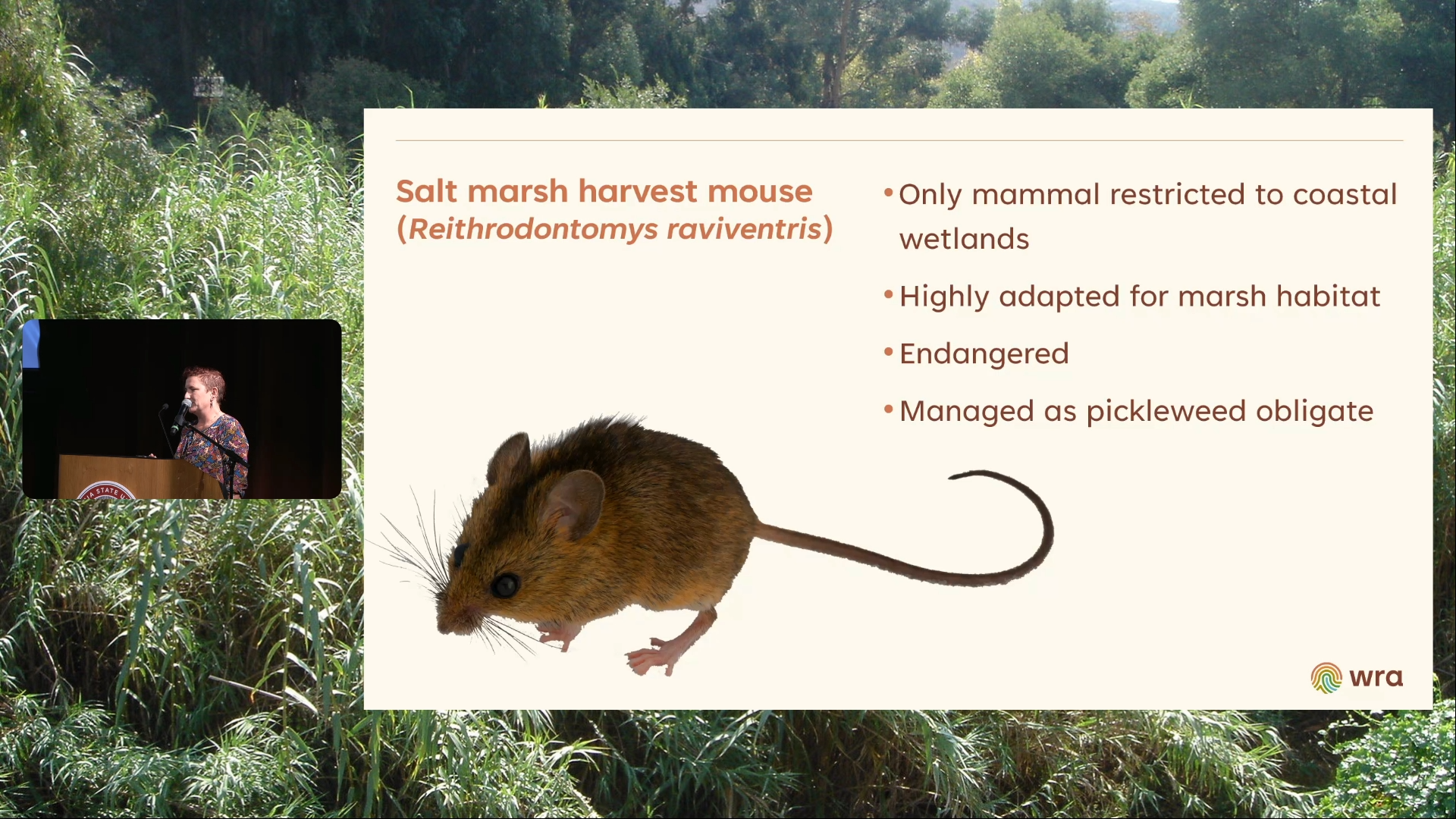
This deadly dogma is losing its grip, but apparently too slowly to prevent the destruction of the food web on the Farallon Islands. I always attend the conferences of the California Invasive Plant Council (Cal-IPC) and the California Native Plant Society (CNPS) to give native plant advocates every opportunity to convince me of their ideology. Consistently, I find more support for my contrarian viewpoint than I do for invasion biology. A presentation about the salt marsh harvest mouse at the Cal-IPC conference in October 2023, is an example.
California Department of Fish and Wildlife collaborated with UC Davis to study the food preferences of salt marsh harvest mouse (SMHM), an endangered native animal that lives in the wetlands of the San Francisco Bay. It has always been presumed to be entirely dependent on native pickleweed for food and habitat. The legally mandated recovery plan is based on that mistaken assumption.
Presentation to California Invasive Plant Council conference in October 2023
The study reported to Cal-IPC shows clearly that SMHM is NOT dependent on pickleweed for either food or habitat. SMHM is an extreme omnivore. SMHM ate 39 species of native and non-native plants as well as insects in empirical trials. In fact, it ate EVERY plant it was offered. A fecal study of SMHM living in the wild confirmed that finding. Fecal analysis found SMHM had eaten 48 native and non-native plant genera as well as some insects.
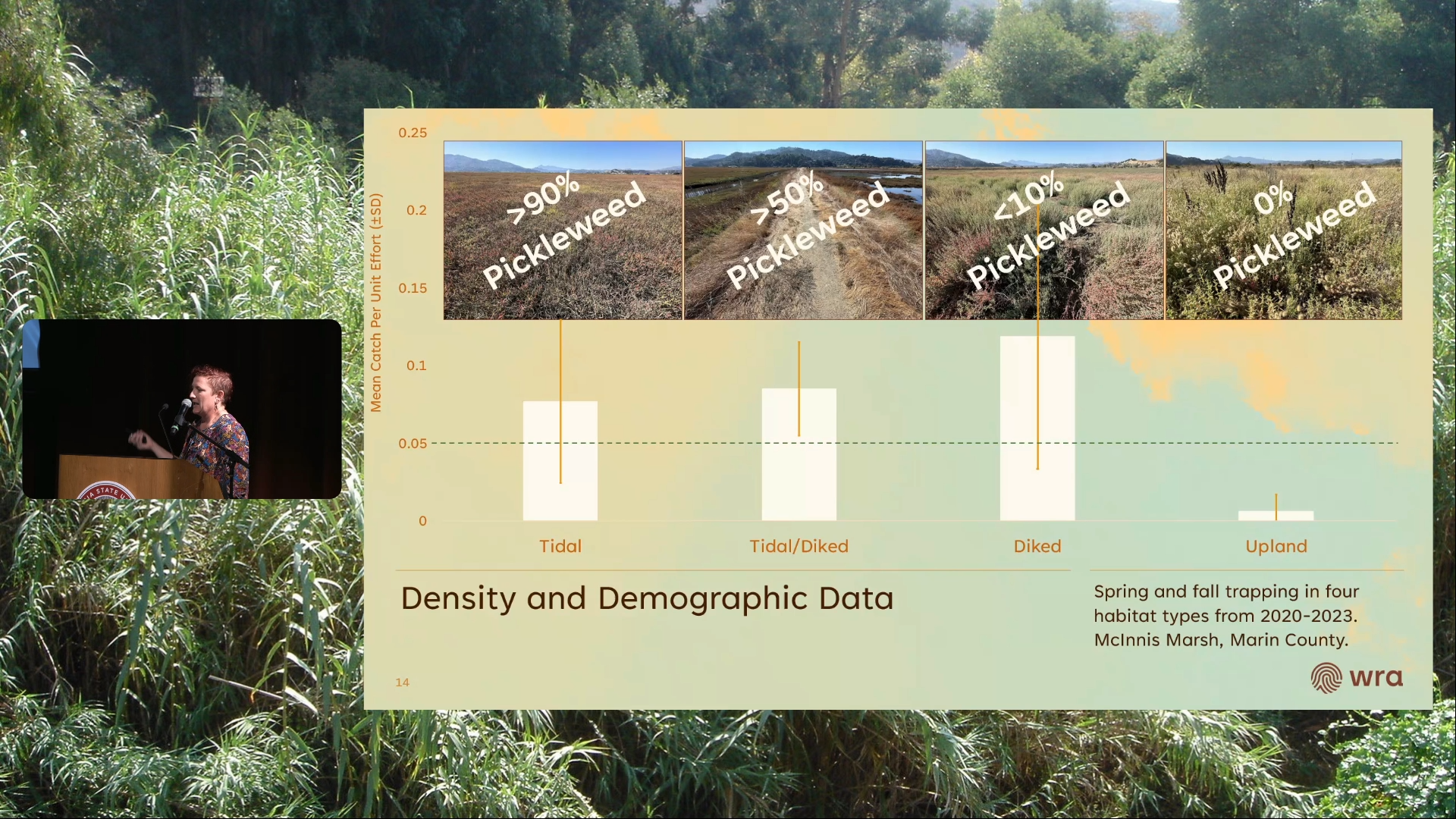
Presentation to California Invasive Plant Council conference in October 2023
SMHM have no preference for native plants for either food or nesting habitat. The most SMHM’s captured in the study were found where there was less than 10% pickleweed.
This was an absurdly simple experiment in which SMHM were captured and fed a variety of plants. It could have been done by anyone with little knowledge or fancy equipment. Why does this foolish mistake, caused by nativist bias, matter? Because “restoration” projects all around the San Francisco Bay have been eradicating non-native plants, claiming it would benefit the endangered SMHM.
Nativism in the natural world is not benefiting wildlife. Rather it seems to benefit only the army of “restorationists” who earn their living killing harmless plants and animals. As long as they continue to receive public funding for their projects, they have job security because they have spent over 20 years trying to do something that cannot be done. Evolution moves inexorably forward. The puny efforts of humans to regress landscapes to arbitrarily selected historical standards cannot change the forward trajectory.
There were two presentations about difficulties with native plant restorations on Anacapa and Santa Rosa Islands at the CNPS conference in October 2022. More than 20 years after non-native iceplant, rabbits, and rats were killed on Anacapa, native flora and fauna are still described as degraded, “Due to the cumulative and severe impacts to the soil and native seedbank, native vegetation communities have not recovered on their own…” On Santa Rosa Island the “restoration” community has installed artificial fog fences to replicate a historical cloud forest to improve survival of native chaparral plants. (7)
Alternatives to rodenticide drop on Farallon Islands
It is not necessary to kill mice on the Farallon Islands because they are not harmful to birds. If non-native vegetation weren’t killed with herbicides, there would probably be enough vegetation for omnivorous house mice as well as birds. Both mice and vegetation are being killed only because they are non-native. If the nativist ideology were removed from the agenda, dumping rodenticides on mice and herbicides on non-native vegetation would not be necessary.
If the protection of ashy storm petrels really were the goal of the proposed project on the Farallon Islands, the most obvious solution would be to remove the small population of burrowing owls that are the only known predators of the petrels. Keep in mind that ashy storm petrels are not considered threatened or endangered and that two applications for protected status have been denied. (8)
There is a non-lethal alternative to reducing populations of rodents using rodenticides that kill non-target birds and other animals. Academic scientists at Arizona State University have developed birth control for rodents that can be used on the Farallons to reduce the population of mice. (WISDOM Good Works)
In Summary
Killing house mice on the Farallon Islands with rodenticide is unnecessary and will be harmful to the ecosystem and its inhabitants because:
Aerial dropping 1.5 tons of rodenticide will poison the entire ecosystem, killing hundreds of non-target birds and marine animals.
House mice on the Farallon Islands do not need to be killed because they are food for birds and they are harmless.
If burrowing owls are killing nestlings of ashy storm petrels, they could be removed and relocated.
The nearly 40-year attempt to kill non-native vegetation with herbicide should be stopped because the vegetation is a vital element in the food web of the Farallon Islands.
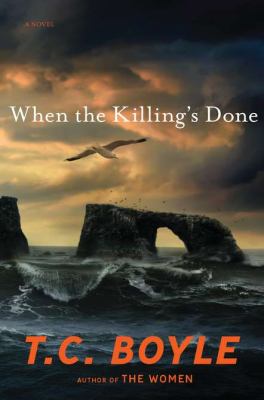
I have few opportunities to read fiction because most of my time is spent trying to keep up with rapidly evolving ecological science. I was grateful for the chance to read the fictional account of island eradications on the Channel Islands because it closely relates to my interest in the planned eradication of mice on the Farallon Islands, which is still pending and as controversial as similar projects on the Channel Islands. TC Boyle’s book foretells the Farallones project as he sends a member of the fictional project team to the Farallon Islands after completion of the project on the Channel Islands.
When the Killing’s Done by TC Boyle is not entirely fictional. (1) It is impressively accurate in its description of the eradication projects themselves, but Boyle weaves a tight fictional plot around the key players who implemented the project and those who fought like hell to prevent it from happening. Like other books by Boyle that I have read, When the Killing’s Done creates intense suspense that moves the reader along at top speed. His characters are vivid and complex.
Boyle lives in Montecito, near Santa Barbara, close to the Channel Islands. No doubt he followed the projects closely as they were debated and resisted by opponents, who were primarily animal rights activists according to Boyle’s account. In interviews after the publication of the book in 2011, Boyle claimed not to have a personal opinion of the projects: “I’m not an activist in any way. With certain exceptions, I don’t think politics and art mix very well.” He sees value in both sides of the debate and the characters in his story have much in common. The antagonists are vegetarians who value nature and care deeply about the environment and the animals who live in it. I believe this common ground is also true of the adversaries in the debate about the Farallones project and others like it.
However, the ending of the book suggests that Boyle doubts the ability of humans to control nature. Although the projects on the Channel Islands were completed to the satisfaction of the land managers–National Park Service and The Nature Conservancy—the final image in Boyle’s story is of animals considered non-native on the Islands making their way to the shore of the Island. The implication is that maybe the killing is never done and that is the crux of the problem with island eradications in general and the planned mice eradication on the Farallon Islands in particular.
Rat eradication on Anacapa Island
The aerial application of rodenticide to kill rats on Anacapa Island in 2001-2002 was the first of its kind in North America. The project was also unique because it was complicated by the need to spare a population of endemic native mice on Anacapa. Over 1,000 native mice were captured before the aerial application of rodenticide and released back on the island after the poison was no longer effective.
Anacapa Island is the usual success story cited by supporters of the Farallones project where non-native mice are the target for eradication. Native mice on Anacapa were not considered a threat to birds, but non-native mice on the Farallones are, although there is no evidence that mice actually harm birds on the Farallones either. The operative word here is “native.” The mice on the Farallones are targets only because they aren’t native. The mice on Anacapa undoubtedly eat vegetation too, but that’s not considered a problem so long as they are native. The mice on Anacapa are probably an important source of food for birds, just as they on the Farallones.
If mice are not harmful to birds, there is no legitimate reason to poison them, along with untold numbers of non-target animals. The mice on the Farallones are targets only because they aren’t native.
Killing of non-target animals
Rodenticides are indiscriminate killers of warm blooded animals, including birds. An animal who eats rodenticide slowly bleeds to death. The grisly process of dying takes about 10-20 days. If poisoned mice are eaten by other animals that animal is also poisoned. It is therefore inevitable that non-target birds who are predators of mice will be killed by widespread dispersal of rodenticide pellets on the ground that can also be directly eaten by birds and other animals. This deadly sequence of events has been demonstrated many times by island eradications using rodenticides all over the world and the project on Anacapa Island is no exception.
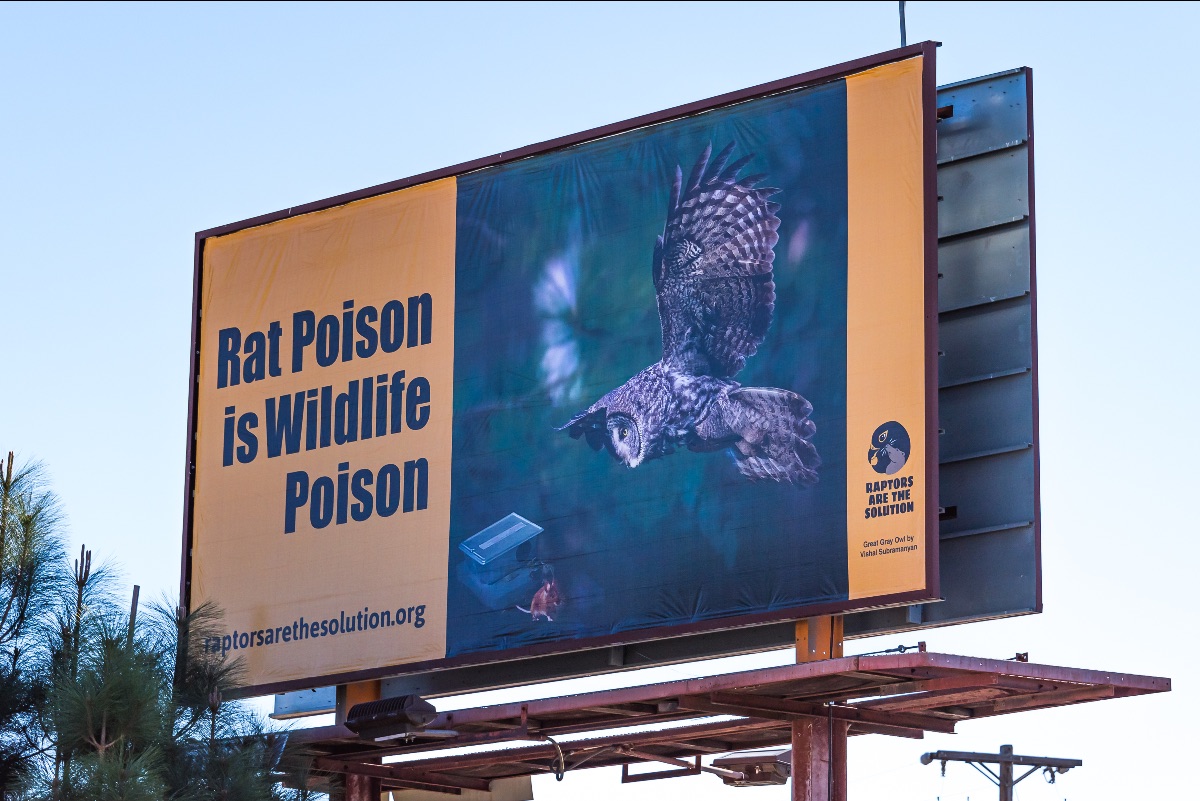
Billboard sponsored by Raptors Are The Solution (RATS)
Raptors are the main predators of mice. Therefore, 63% of raptors on Anacapa Island (37 of 59 individual birds) were captured and either relocated or kept in captivity until the project was done, according to the first study of the project published in 2005. According to that study, “The fate of the remaining birds of prey on the island is unclear. There is evidence that some birds survived the bait application… However, three barn owls, six burrowing owls and an American kestrel either died while in captivity or were found dead on the island. The American kestrel and a burrowing owl that were captured in 2001, after the bait application, likely died from brodifacoum poisoning.” The analysis of the project considers these deaths “negligible.”
A total of 94 seed-eating birds were also found dead after the poison drop. Most were song birds, but an additional 6 birds were too decomposed to identify the species. The study notes that these collateral kills were consistent with other similar projects.
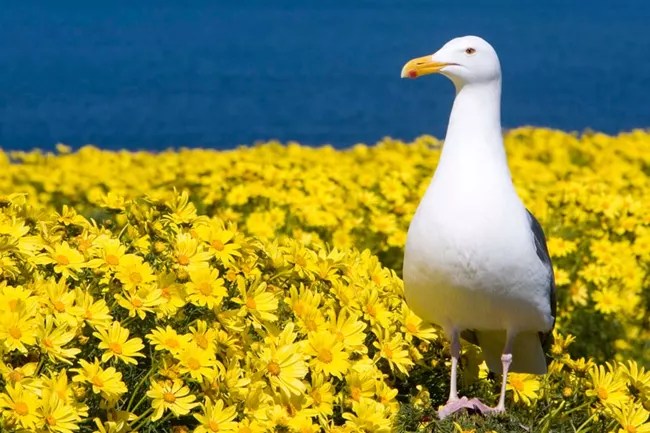
Western Gull on Channel Islands. NPS photo
The study makes no mention of gulls that were undoubtedly killed by the project. Gulls are omnivorous scavengers for whom dead and dying mice are ideal food, preferable to dive bombing for French fries on your picnic table. According to the National Park Service, “Western gulls are the most abundant breeding seabird in the Channel Islands National Park, with a population estimated at more than 15,000.” Shortly after the poison drop, dead seabirds washed up on the shore near the Santa Barbara harbor. UC Santa Barbara’s daily newspaper said, “…a strong correlation exists between the National Park Service’s most recent airdrop of pesticide on Anacapa Island and the dead birds.”
In other words, those who implemented the eradication project on Anacapa are probably not telling the full story about the death of non-target birds. The death of hundreds of gulls is anticipated by the promoters of the project on the Farallones. If the organization that implements the project is the same organization that monitors and reports on the project (as was the case for the projects on the Channel Islands), we may never know the actual impact on the birds living on the Farallones.
Those who promote these poisonous projects justify the death of non-target birds by saying they are “incidental” and have no lasting impact on the species population. They will apply for and receive “incidental take permits” in advance of the Farallones project that will satisfy legal requirements of the Migratory Bird Treaty Act and the Endangered Species Act. The lawsuit that was filed to prevent the Anacapa project was overturned on those grounds.
The killing is never done
Rat eradication on Anacapa and pig eradication on Santa Cruz (where over 5,000 pigs were shot by sharpshooters and 54 Golden Eagles were removed because they were predators of endemic foxes) are the focus of TC Boyle’s masterful book. Both were implemented and considered successful by the organizations that implemented the projects. Although land managers are no longer killing animals (to our knowledge) in the Channel Islands they are waging a continuous war on non-native plants by spraying them with herbicide.When we visited Santa Cruz Island in 2010, we witnessed the application of Garlon on non-native fennel.
Roundup (glyphosate) has been used on the Farallon Islands every year since 1988. Between 2001-2005, an average of 226 gallons of herbicide were used annually (5.4 gallons per acre per year), according to the annual report of the Farallon National Wildlife Refuge. Given that these islands are not far from the California coast and are visited by thousands of migratory birds every year, we must expect that the arrival of new plants to the islands will be continuous: seeds are eaten and carried by birds; seeds are carried by birds in their feathers and feet; wind and storms carry seeds to the islands, etc.
The Environmental Protection Agency recently published a Biological Evaluation of glyphosate products. EPA reports that glyphosate is “likely to adversely affect” 93% of legally protected endangered and threatened plants and animals. That finding applies equally to all plants and animals, whether they are legally protected or not because the physiological processes of species in the same order are similar.
The Environmental Impact Statement for the Farallones project accuses mice of eating vegetation, although far more vegetation is probably killed by herbicides. Non-native vegetation arrives on the Farallones partly because birds eat it and carry it to the Farallones. Animals do not care if edible vegetation is native. Nativism is a human prejudice not shared by animals who seek food and shelter wherever they can find it.
The constant poisoning of plants is perhaps a trivial consideration in comparison to the futility of trying to eradicate mice. Although rats have been successfully (leaving aside the death of non-target animals) eradicated by some projects, attempts to eradicate mice have been significantly less successful.
A study of 139 attempted eradications on 107 Mediterranean islands in eight countries, with Greece, Italy, and Spain accounting for the highest number found that eradication projects targeted 13 mammal species. The black rat was the target of over 75% of the known attempted eradications in the Mediterranean Basin; other species targeted were feral goat, house mouse, European rabbit, and domestic cat. The most widely used technique was poisoning (77% of all eradications), followed by trapping (15%) and hunting (4%). Techniques were largely target-specific.
The average failure rate of the projects was about 11%, but success was defined only as the death of animals living on the islands at the time of the project. However, this percentage varied according to species. The failure rate of house mouse eradication was 75%. Reinvasion occurred after 15% of eradications considered initially successful.
Farallon Islands, NOAA
The proposed project on the Farallon Islands is a dead end in many ways. It will kill many non-target animals. It will probably not be successful in the short run or the long run. Every time it is repeated it will kill more animals. Furthermore, it is pointless because mice do not harm birds on the Farallon islands.
T.C. Boyle, When the Killing’s Done, Viking, 2011.
“This is a book about people trying to solve problems created by people trying to solve problems.”
Elizabeth Kolbert’s earlier book, The Sixth Extinctionwas ground-breaking, not because it described the consequences of climate change in the 21st Century, but because it put modern climate change into the context of similar events in the past 500 million years of life on Earth. Although the current episode of climate change is man-made, five previous mass extinctions were natural events. What past extinction events have in common with the sixth extinction is the inevitable consequence of such changes in climate: when the climate changes, all life on Earth changes with it. Plants and animals will adapt, change, or they will go extinct as they have for 500 million years. (1)
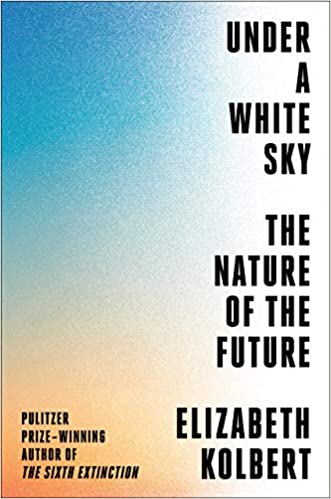
Kolbert’s new book, Under a White Sky, turns the page on this cataclysmic event in the Earth’s history to focus on the efforts being made to control nature to address environmental problems, including climate change. To say that Kolbert is skeptical of those efforts is to understate her critical evaluation of them.
Controlling Nature
In 1990, I was introduced to the human delusion that we can control nature by John McPhee’s The Control of Nature.His book had a profound influence on my thinking about nature. It was the basis for my belief that attempts to turn back the botanical clock to 500 years ago to a pre-settlement landscape, mistakenly believed to be pristine, are futile, misguided, and often damaging. Kolbert’s latest book is written from the same perspective as McPhee’s seminal work and she gives him credit for his pioneering work.
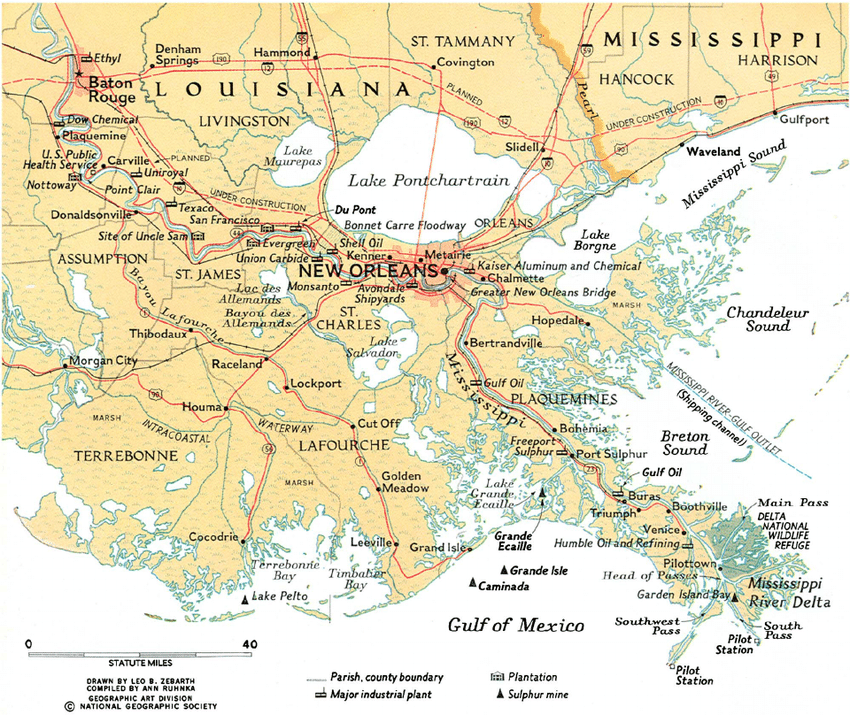
Map of Mississippi River Delta
McPhee’s book predicted the catastrophic flooding of New Orleans by hurricane Katrina in 2005. Human engineering of the Mississippi River for over 100 years set the stage for that disaster. New Orleans sits at the Gulf end of the Mississippi River. Historically, the river flowed from Minnesota to the Gulf, accumulating sediment along its way and depositing it as it entered the Gulf, fanning out into streams and swamps that created the Mississippi Delta. The labyrinth of land and marsh created by the sediment deposited by the river created a barrier that protected New Orleans from storms.
However, the uncontrolled and episodic flow of the river caused periodic flooding that was not convenient for the human inhabitants of New Orleans and the Delta community. So, the flow of the river was controlled by levees and pumps were used to return water from the land to the river. Sediment from the river could no longer replenish the land because it was confined to the constrained river, which put the human engineers onto a never-ending treadmill of building higher levees and bigger pumps. It was inevitable that the river would eventually overwhelm the defenses built by the engineers and so it did during Katrina in 2005.
Kolbert updates this untenable situation in the Mississippi Delta in her new book. The underlying cause, as told by McPhee is recapped by Kolbert. Then new manmade environmental issues are added to the catastrophic circumstances that will inevitably doom the human inhabitants. Rising sea levels caused by climate change are one factor. The incursion of salt water into fresh water swamps killed vegetation that acts as a buffer during storms. Oil and gas exploration and extraction in the Delta has caused the land to drop further.
Many Delta communities and some neighborhoods in New Orleans have been abandoned because they are essentially underwater. Since Katrina, no serious effort has been made to change the approach to the issues. Bigger, more powerful pumps have been built and levees have been made higher and stronger. No one is seriously considering the need to relocate New Orleans or surrounding communities to higher ground. The delusion that humans can outsmart the river continues.
A comedy of errors
Kolbert introduces the many projects that are trying to solve problems that were created by bad decisions made earlier by other humans with a quote from Albert Einstein: “We cannot solve our problems with the same thinking we used when we created them.” These wise words from a wise man are clearly not being heeded by the masterminds of the projects Kolbert describes in her book:
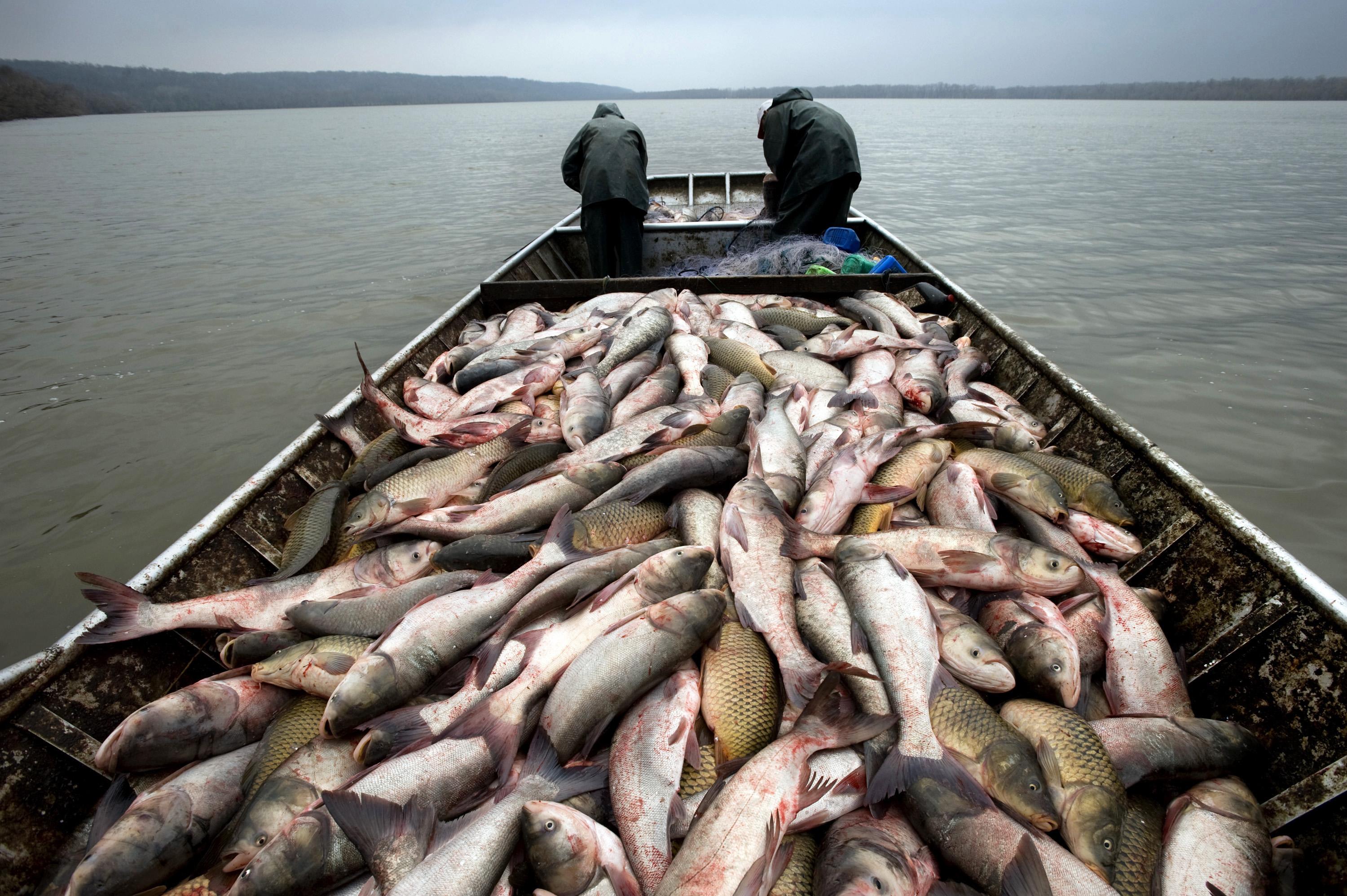
Dead carp
High on the list of projects in which society is heavily investing is the attempt to prevent carp from entering the Great Lakes from the Mississippi River. After many different approaches were tried and failed, the current strategy is an electrified fence separating the Chicago River (connecting to the Mississippi River) from Lake Michigan that kills untold thousands of fish every day. This deadly project is the end stage of previous bad decisions. A link between Lake Michigan and the Mississippi River was created by a massive engineering project that reversed the flow of the Chicago River in 1887. Later, carp was introduced to the Mississippi River from China as biological control to address pollution issues. One species of carp was introduced to control aquatic weeds and another carp species was introduced to consume nutrients in sewage ponds. Kolbert says such biological controls became popular after Silent Spring was published because Rachel Carson considered pesticides a curse and biological control a panacea. (Which is not to say that pesticides aren’t a curse.) In other words, we traded one problem for another.
Island eradications of introduced mammals such as rats and mice are also popular projects (with some people). Genetic engineering is being aggressively pursued as a possible substitute for the rodenticides that are being used for these projects. These projects have the potential to drive an entire species into extinction or alter their physiology such that they could become killers or prevent them from being killers. Kolbert buys a genetic engineering kit for $209 from a young entrepreneur in Oakland that enables her to make E.coli cells resistant to an antibiotic. E.coli is a deadly bacteria that can be fatal if untreated by antibiotics. In other words, anyone with $209 can turn bacteria into killers with no special training or equipment. What could possibly go wrong, Kolbert asks rhetorically.
The promise and threat of geoengineering
Kolbert visits several different geoengineering projects that are trying to prevent the consequences of climate change without reducing greenhouse gas emissions, the underlying cause of climate change. One such project is turning CO₂ into stone. Apparently it CAN be done, but to do it on a scale that would actually prevent climate change would be to devote much of the surface of the Earth to that purpose.
Kolbert visits a project that believes injecting aerosols into the atmosphere to block the sun is the best bet to stop climate change. The proposal strikes Kolbert as both preposterous and dangerous. The researcher detects her skepticism and retorts, “People think of all the bad examples of environmental modification. They forget all the ones that are more or less working. There’s a weed, tamarisk, originally from Egypt. It’s spread all around the desert Southwest and has been destructive. After a bunch of trials, they imported some bug that eats the tamarisk, and apparently it’s kind of working.”
Tamarisk defoliation along Colorado River, near Needles, California
In fact, the introduced tamarisk beetle is working too well. It has spread far beyond the regions where it was introduced and produced wastelands of dead trees in Arizona and Southern California. Since one of the rarest desert birds depends upon tamarisk there isn’t much to celebrate about this over-achiever beetle.
I share Kolbert’s skepticism about the projects she describes for the same reasons she gives. Every “fix” has the potential to create new problems that could be more disastrous than the problems they are meant to resolve. And the resources used to develop new techniques such as massive geoengineering projects could be used instead to address the underlying cause of the problem, which is the greenhouse gas emissions causing climate change. We don’t want to give up our fossil-fuel driven economy, so instead we conjure up even more damaging ways to ameliorate the inconveniences of climate change. It’s a fantasy that prolongs and exacerbates the consequences of climate change.
Finally, let’s give Kolbert the last word: “This has been a book about people trying to solve problems created by people trying to solve problems…Geoengineering may be ‘entirely crazy and quite disconcerting,’ but if it could slow the melting of the Greenland ice sheet, or take some of ‘the pain and suffering away,’ or help prevent no-longer-fully-natural ecosystems from collapsing, doesn’t it have to be considered?…But to imagine that ‘dimming the fucking sun’ could be less dangerous than not dimming it, you have to imagine not only that the technology will work according to plan but it will be deployed according to plan. And that’s a lot of imagining…But let’s just say the record here isn’t strong.” (2)
Thank you, Elizabeth Kolbert, for calling out the grand delusions of humans who mistakenly believe it is possible to control nature to avoid inconveniencing human society.
Elizabeth Kolbert, The Sixth Extinction, Henry Holt and Co., 2014
Elizabeth Kolbert, Under a White Sky, Crown New York, 2021


 Conservation Sense and Nonsense