Let Evolution Lead the Way to Adaptation and Survival of Life

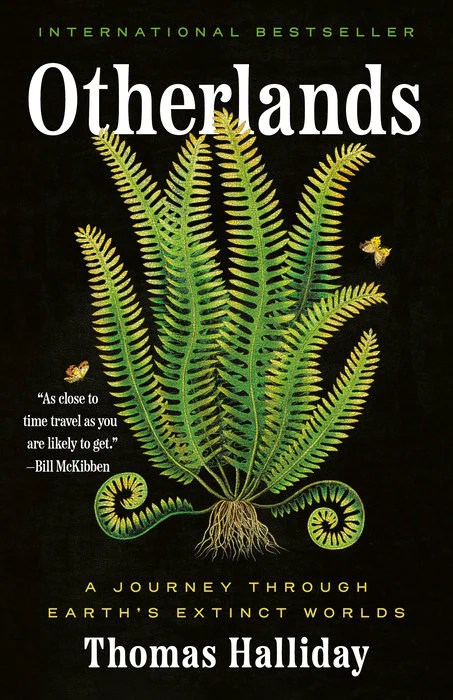
“What exists now can only ever come from what came before.” –Thomas Halliday, Otherlands

Otherlands, A Journey Through Earth’s Extinct Worlds was written by a paleontologist using the latest scientific techniques available. (1)  Paleontology has advanced far beyond digging up fossils.  Computer and DNA analysis enables paleontologists to reconstruct models of whole animals from bone fragments as well as describe the lifestyle of extinct animals such as what they ate and what ate them. 
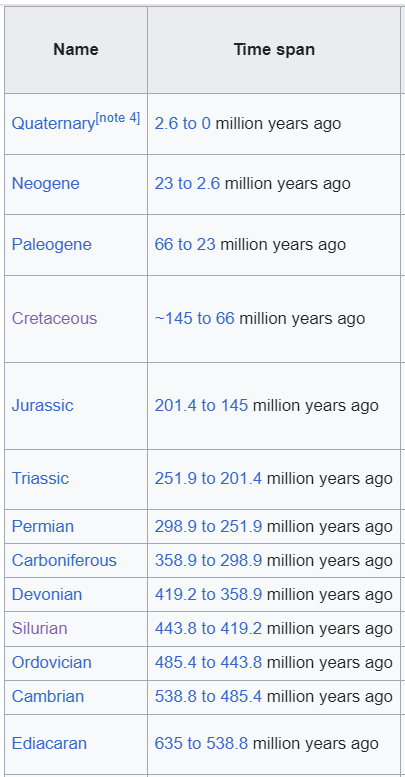
Geologic periods described by Otherlands. Source: Wikipedia

Thomas Halliday puts this knowledge of some of the 5 billion species that have gone extinct in the 4.6 billion years that Earth has existed into the context of geological and biological changes that caused their extinction.  He describes vivid scenes of specific places at specific times, starting 500 million years ago (mya), a geological period when we can recognize most of the phyla (major groups of animals sharing characteristics) that exist today. These snapshots of deep time illustrate that “Environments shape their inhabitants as much as their inhabitants shape them.” (1)

In this article, we will visit a few of these scenes that demonstrate the biological innovations resulting from evolution and the associated geological and atmospheric events.  And we will tell you about how modern conservation methods are often working at cross purposes against evolution and adaptation of life as it copes with catastrophic challenges. 

Biological Innovation

Primitive life is said to have existed on Earth 3.7 billion years ago (bya).  All life that presently exists on Earth is said to have evolved from the first life forms, although the common ancestor is yet to be identified.  No life on Earth is truly alien.

The diversification of life on Earth began to accelerate when cyanobacteria developed the ability to photosynthesize about 3 bya.  Photosynthesis converts sunlight to energy by consuming carbon dioxide, creating carbohydrates that feed plants and storing carbon in plants and the soil, while emitting oxygen into the atmosphere as a by-product.

This evolutionary innovation is responsible for the abundance and diversity of plants today. It is an important factor in the balance of carbon dioxide and oxygen in the atmosphere, which is one of the most important factors in the Earth’s climate.  More plants also mean more food for animals that evolve alongside plants, often forming relationships with one another. 

The first mass extinction, roughly 445 million years ago (mya), is the only mass extinction caused by a rapid change in the Earth’s climate from tropical to glacial, which is equivalent to saying the atmosphere changed from predominantly carbon dioxide to predominantly oxygen, the opposite of our currently changing atmosphere and climate. 

Carbon dioxide levels are said to have dropped from 7,000 parts per million (ppm) to 4,400 ppm during the Ordovician extinction event that killed about 85% of plant and animal species.  Currently our carbon dioxide level is about 420 ppm, just a fraction of what it was during the Ordovician period.  In the context of the history of Earth, the climate we are experiencing is mild, a reminder of the potential for a much more extreme climate in the near future.
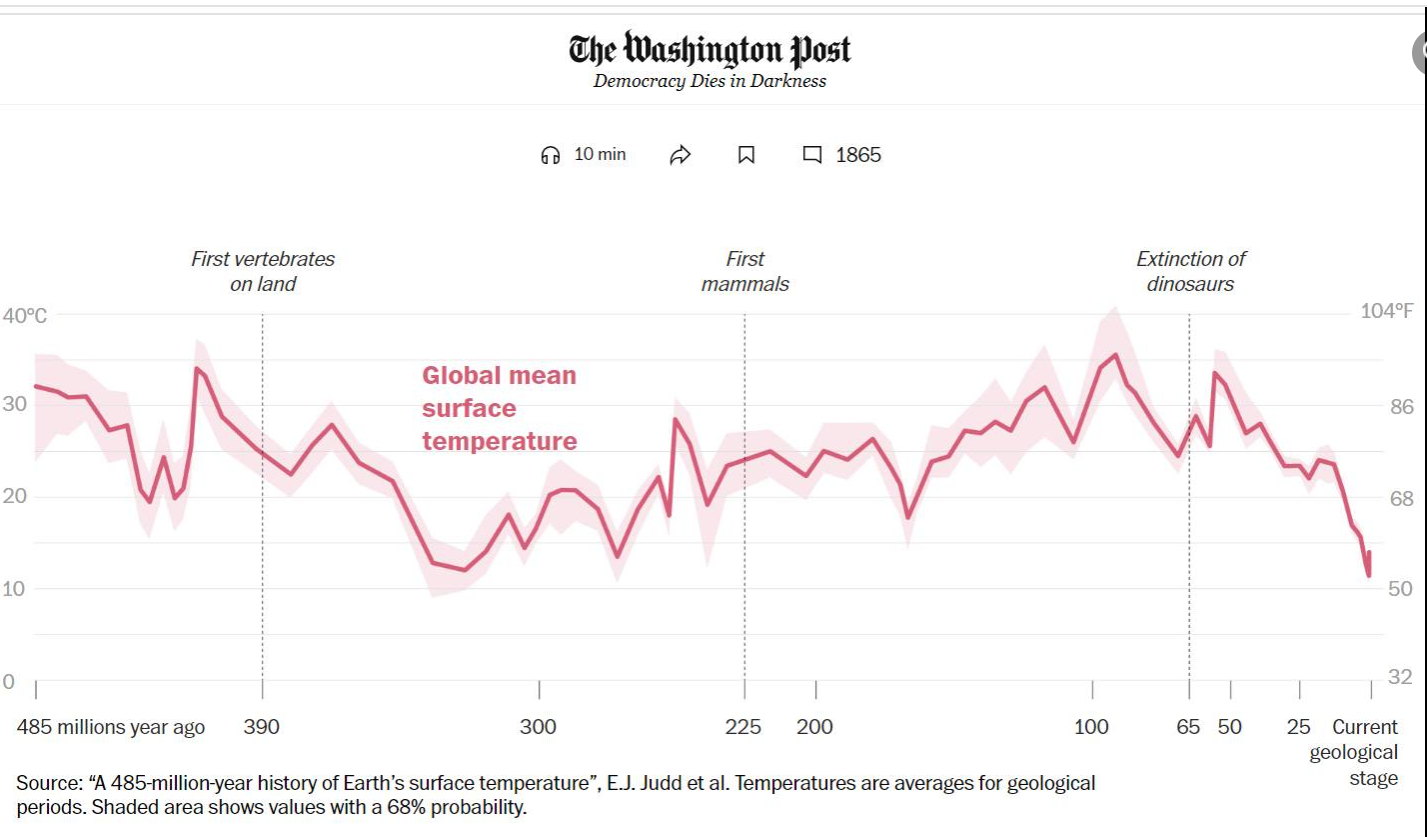
This graph of global mean surface temperature on Earth in the past 485 million years tells us the Earth’s climate has been mild since humans evolved. The graph should help us understand the potential for the Earth’s climate to increase beyond the tolerance for human life.

Comparing contemporary sea levels with those in deep time is another way to appreciate the potential for devastating changes in the future.  20,000 years ago, at the height of the last ice age, sea levels were 120 meters lower than they are now.  Conversely, sea levels were highest during the mid-Silurian period, 430 mya, when sea levels were between 100-200 meters higher than they are now and atmospheric carbon dioxide concentrations were high. 

Although the causes of the drastic change in the atmosphere and therefore the climate during the Ordovician period are still debated, the advent of photosynthesis is considered a factor.  The development of fungi enabled plants to move from water to land by delivering moisture from soil to roots of plants, greatly increasing abundance and diversity of plants. About 80% of plants today receive much of their nutrients and moisture through mycorrhizal fungi. 

The photosynthesizing capabilities of plants is one of the ways greenhouse gas emissions, currently causing global warming, can be reduced.  Yet, we are using pesticides to kill plants that native plant advocates have arbitrarily decided “don’t belong.”  Pesticides also kill fungi in the soil that enable plants to survive during drought conditions created by global warming.  This is one of many examples of how management strategies used by humans are counteracting the accomplishments of evolution that occurred long before humans existed or began to think they were competent to “manage” nature.

Plant Evolution Timeline

To make a long, complicated story short, we’ll focus on the major plant groups we recognize today by starting with seedless land plants that reproduce by dispersing spores, such as mosses and ferns that evolved from algae about 460 mya. 

Gymnosperms, which we recognize today as conifers, cycads, and Gingkos, are seed-producing plants that evolved about 300 mya.  Early species of gymnosperms formed huge forests. The carbon they stored became the coal fields of today when they died during the Carboniferous period (360-300 mya).   Today, we draw our fossil fuels from these coal and oil basins.  They provide most of our energy, while releasing greenhouse gases causing climate change.

Continents were close together during the Cretaceous geologic period when angiosperms evolved. Source: Australian Museum

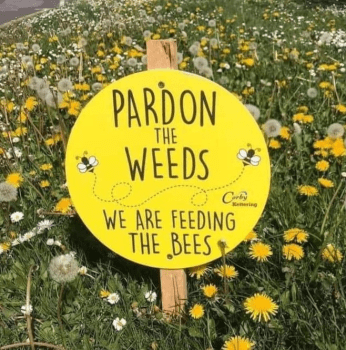
Angiosperms evolved from gymnosperms about 130 mya.  They are flowering plants whose seeds are often encased in fruit. They are by far the most diverse group of land plants.  The evolution of bees around the same time is an example of co-evolution: the flowers feed the bees and the bees pollinate the flowers, delivering pollen from the male anther to the female stigma.   This sexual method of reproduction creates greater genetic diversity than self-pollination.  Greater genetic diversity creates more opportunities for natural selection to operate on plant variations, which may result in species that are better adapted to existing conditions.   

A recent study (2) found that the decline in the population of bees has increased the frequency of self-pollination of some plant species that are capable of both methods of pollination.  This is an example of evolution at work today.  Plants are responding to the existential need to reproduce in the absence of bees by self-pollinating.   

What evolution has accomplished in the past can be undone.  In this case, our indiscriminate use of pesticides such as neonicotinoids has decimated bee populations. Some plants will adapt to the loss of bees by self-pollinating, but not without some loss of genetic diversity provided by sexual reproduction and consequently the long term fitness of plants to face challenges in the future. 

There’s another trade-off for both plants and bees. Producing nectar and attracting bees with colorful flowers is a big energy expense for plants.  Plants therefore save energy by reducing flower size and color, when they can rely solely on self-pollination for reproduction.  Obviously, self-pollination ultimately results in a loss of food for bees and may accelerate the decline in bee populations, a negative feed-back loop, if you will.

This example is a reminder that evolution is neither positive nor negative.  It is simultaneously both positive and negative.  It is what it is:  an inexorable force for change. 

Evolution of grasses

Grasses and grasslands are late comers to the Earth’s plant kingdom.  Grasses evolved from angiosperms about 70 mya, during the Age of Dinosaurs that abruptly ended 66 mya when an enormous asteroid collided with Earth.  Grasses are wind pollinated and their seeds are dispersed by the wind, which enables them to spread rapidly and widely. 

Grasslands became dominant ecosystems about 30 mya, replacing many forest ecosystems.  With the optimal combination of fuel, heat, and oxygen, wildfires were a factor in the transition from forests to grasslands in many places.  Once again, wildfires in conifer forests are presently playing a role in converting forests to grasslands, suitable to a warmer and drier climate.

The development of enhanced photosynthesis by C4 grasses gave them a competitive advantage in hot, dry places where photosynthesis is suppressed. C4 grasses are more drought tolerant and they store more carbon than their predecessors, C3 grasses. There are only about 60 groups of C4 grasses, including several important food crops, such as maize, sugarcane, and sorghum.  They are found in tropical and sub-tropical regions of Africa and South America and some deserts.  California’s native grasses as well as introduced grasses considered “invasive” are not C4 grasses, according to a list of C4 grasses available on Wikipedia. (3)

Because of their potential to improve drought tolerance and increase productivity and carbon storage, there is great scientific interest in converting C3 grasses to C4 grasses.  Despite decades of effort, agricultural science has not been able to duplicate what the natural forces of evolution have accomplished, reminding us that evolution is more powerful than we are.

The transition from forests to grasslands had a corresponding impact on the evolution of animals.  Some browsers of woody plants learned to be grazers, if they could, while others went hungry, and the diversity and abundance of grazers increased. 

Native plant advocates in California have selected grassland as their preferred ecosystem because it was the dominant ecosystem prior to the arrival of Europeans at the end of the 18th century. They have consistently failed to convert non-native grassland to native grassland in California.  Nor is it clear that there would be any benefit to the environment or to its inhabitants to return to the treeless landscapes of California that existed prior to settlement in the late 18th century.

Where populations of native grazers of grassland were reduced by the activities of humans, many grasslands in California naturally succeeded to shrubs and trees. “Restoration” projects attempt to prevent succession of grasslands. Some of these projects destroy native trees and shrubs (e.g. Douglas fir, coyote brush, juniper, etc.) mechanically and with pesticides to maintain ecosystems as grassland.  

Nativists also want to reintroduce the grazing animals of the pre-colonial period to replace domesticated animals humans introduced because nativists see them as competitors of native animals they consider superior. Where top predators have been killed, these herds of grazing animals outgrow available vegetation unless their numbers are controlled as domesticated animals are.

A recent meta-analysis of 221 studies of the impact of megafauna on plant abundance found, “no evidence that megafauna impacts were shaped by nativeness, “invasiveness,” “feralness,” coevolutionary history, or functional and phylogenetic novelty. Nor was there evidence that introduced megafauna facilitate introduced plants more than native megafauna. Instead, we found strong evidence that functional traits shaped megafauna impacts, with larger-bodied and bulk-feeding megafauna promoting plant diversity. Our work suggests that trait-based ecology provides better insight into interactions between megafauna and plants than do concepts of nativeness.”  (4)

The author of Otherlands agrees that the concept of nativeness is not a useful way to understand the environment or conduct conservation because:  “Where an animal or a plant from one part of the world appears in another, some might use the language of invasion, of a native ecosystem despoiled and rendered lesser by newcomers…In reality, species do move, and the notion of ‘native’ species is inevitably arbitrary, often tied to national identity…There is no such thing as a fixed ideal for an environment…To look into deep time is to see only an ever-changing list of inhabitants of one ecosystem or another…The concept of native that we so easily tie to a sense of place also applies to time…We must avoid putting our own ahistorical spin on what was, although certainly dangerous and unlikely, a journey guided entirely by chance.”  (1)

Migration

The history of evolution is also a history of migration.  The oscillation of the Earth’s climate between freezing cold and blistering heat created and destroyed land bridges that enabled or blocked migration as sea levels rose and fell.  When North America and South America were connected by Central America as a result of lower sea levels and geological events about 3 mya, the plants and animals of those continents were mixed by migration.  Likewise, aquatic life of the Pacific Ocean was separated from the Atlantic Ocean by the Central American land bridge until the Panama Canal was built in 1914.

Geological events also created or destroyed the same opportunities for migration.  The opening and closing of the Strait of Gibraltar is a case in point.  The Mediterranean Sea exists because the Strait of Gibraltar exists.  When the narrow Strait is open, the Atlantic Ocean flows into the Mediterranean Basin, creating the Mediterranean Sea, which is an obstacle for migration of plants and animals between Europe and Africa. 

About 6 mya the Strait of Gibraltar closed because the African tectonic plate moved north, colliding with the European tectonic plate.  The Mediterranean Sea slowly evaporated, concentrating ocean salt from the Atlantic Ocean, laying down a sea bed of salt in the Mediterranean Basin and ultimately creating a migration corridor between Africa and Europe. There is every reason to believe that the Strait could close again.  The Earth’s tectonic plates are in constant motion and there is no reason to believe they will stop moving.

The obsession with “where plants belong” seems to be based on ignorance of the history of dispersal and migration.  Much of China and North America have been in the same latitude since the evolution of angiosperms.  As a result, many of our plant species considered native in Eastern North America are also considered native in China.  These paired species in the same genus are called disjuncts.  There are many woody disjuncts in China and North America (magnolias, persimmons, hickory, catalpa, dogwood, sweetgum, tuliptree, tupelo, sassafras, Virginia creeper, etc) as well as many herbaceous disjuncts (ginseng, lopseed, mayapple, skunk cabbage, etc.). (5) They are different species because they have been separated long enough to change as a result of genetic drift, but are in the same plant lineage, therefore chemically similar and presumably used by the same insects.  The study of these disjuncts says, “Most scientists do not consider long-distance dispersal to have played much of a role.  The prevailing view is that most disjuncts are remnants of genera that were once widely distributed in the northern temperate zone during the Tertiary period [66 mya to 2.6 mya per Wikipedia].  These broad distributions in the northern hemisphere were made possible by recurring land bridges.” (5)

Lateral migration patterns of the past are changing in response to contemporary patterns of climate change.  The temperatures at different latitudes are becoming more similar because Polar Regions are warming at a much faster pace than temperate and tropical latitudes.  Plants and animals escaping extreme heat and associated changes in vegetation are moving to higher latitudes in the Northern Hemisphere and lower latitudes in the Southern Hemisphere.  The increasing similarity of the Earth’s climate is changing wind and ocean currents and contributing to the extreme weather events of our changing climate.  Although there are lessons in the events of deep time, we cannot assume that events in the past are entirely predictive of future events because of the complexity of natural processes and our limited understanding of them. 

Of all the nonsensical conservation strategies humans are presently using, perhaps one of the most damaging is the futile attempt to stop migration. It is one of few survival strategies of plants and animals needed in a rapidly changing climate and it cannot be stopped. 

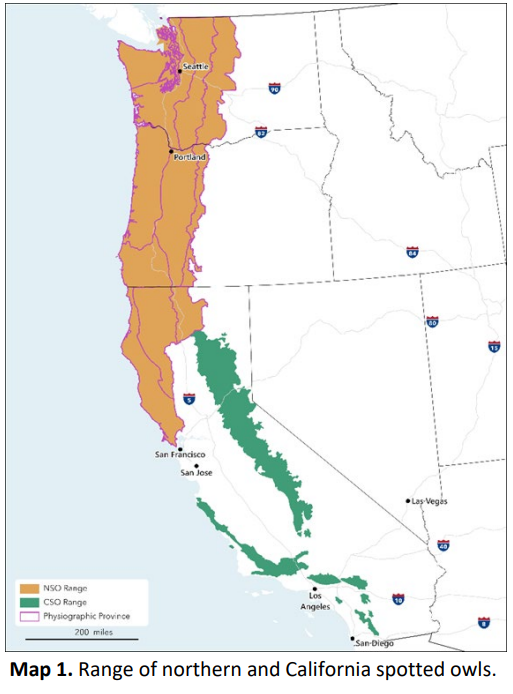
The project that proposes to shoot barred owls in the Pacific Northwest is an example of a “conservation” project that does not deserve that honorific.  Barred owls have migrated from the East to the West Coasts of North America via the boreal forests of Canada.  This is another instance in which large contiguous stretches of land at the same latitude facilitate the migration of life because there is less variation in climate at the same latitude. 
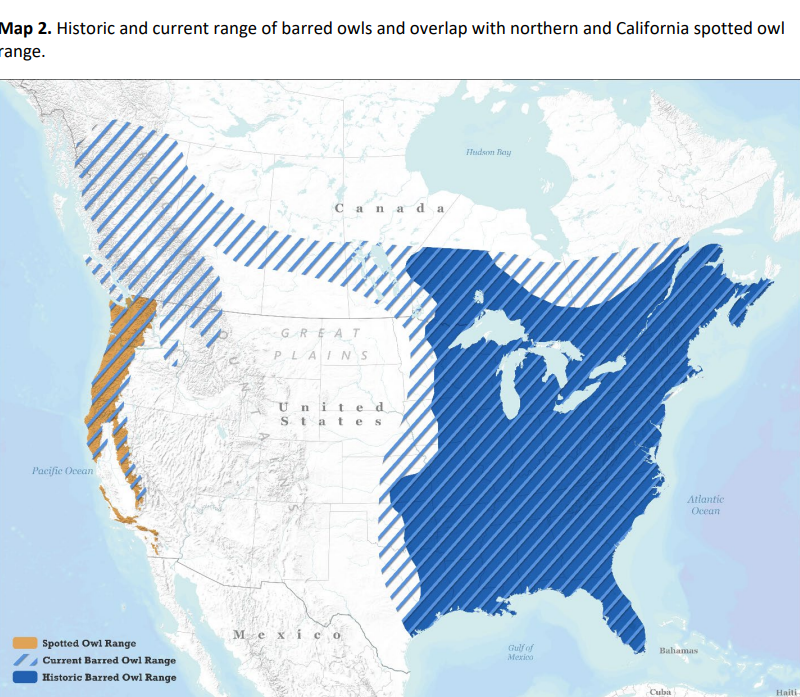
Source: USFWS

Specialists vs. Generalists

Barred owls are more adaptable than their closely related relative in the same genus, spotted owls.  Barred owls have a more varied diet, they are willing to nest in less dense, second-growth forest, and they have greater reproductive success.  They are therefore perceived as competitors of endangered spotted owls. Instead of letting natural selection identify the winner of that competition, the US Fish & Wildlife Service intends to shoot 500,000 barred owls in the next 30 years based on their belief that spotted owls will benefit.  They do not expect to eradicate barred owls and they made a commitment to continue shooting barred owls in perpetuity.  While we continue to log old-growth forests in which spotted owls live, we will kill barred owls with no expectation that they can be eradicated.

This project is typical of American “conservation” projects that attempt to save a specialist species by killing a generalist species.  This strategy was enshrined in American law by the Endangered Species Act, which is now 50 years old.  Like many 50-year-old public policies, we now know that this conservation strategy is not working because it is inconsistent with evolutionary principles.  Change in nature is inexorable.  Legal mandates are not capable of stopping evolution.  If we had a functional political system, we could stop the greenhouse gas emissions causing climate change, but we don’t.  Therefore, we must rely on evolution to cope with the changes in the environment that we have caused.

The most recent mass extinction occurred 66 mya when an asteroid hit the Earth, ending the Age of Dinosaurs.  About 80% of all plant and animal species became extinct.  The species that survived were the most versatile and the most mobile.  Flying dinosaurs were the only dinosaurs that survived, as birds, perhaps because they were the most mobile.  “Of the specialized insects, 85% were lost and it was the generalists that survived.” (1) 

Mass extinctions have created many vacant ecological niches that are opportunities for experimentation, creating new species.  Some were better adapted than others.  Natural selection determined the winners of competition within ecological niches.  The end of the Age of Dinosaurs created the opportunity for the Age of Mammals, as well as bony fish, marsupials, and lizards. 

In other words, our outdated conservation strategy is wasting our limited resources to save specialized species that are probably doomed to extinction.  And we are doing so at the expense of generalist species that might survive if we would quit killing them.  Keep in mind that 99% of all life forms that have existed on Earth have gone extinct.  At a time when the climate is changing rapidly, the goal of saving every endangered species seems both unrealistic and wasteful of limited conservation resources.

Hybridization

Hybridization is one of the tools of evolution.  Closely related species, usually in the same genus and even family often mate and their offspring often survive to eventually give rise to new species.  Successful hybridization is a means of increasing biodiversity.  Hybridization is sometimes a means of improving adaptability and therefore survival.

Unfortunately, nativists see hybridization as a loss of biodiversity rather than an opportunity to improve adaptability and increase biodiversity.  Their “conservation” projects often attempt to prevent hybridization by killing hybrids.  For example, the plan to kill 500,000 barred owls includes all hybrids of barred and spotted owls.  Because barred owls are more versatile, hybridization with spotted owls could even the playing field with barred owls by expanding food sources and nesting habitats of spotted owls. 

The Spartina eradication project is another example of the pointless eradication of hybrids.  In the case of Spartina, the non-native species grows more densely and it doesn’t die back in winter.  Non-native Spartina provides better storm protection and better habitat for nesting birds.  The Invasive Spartina Project has been spraying hybrid Spartina with herbicides for over 20 years, without total success.  The hybrid looks so similar to native Spartina that 600 genetic tests are required every year to confirm their identification as hybrids before they are sprayed.  The Invasive Spartina Project is a waste of limited conservation resources and it serves no useful purpose.

Evolution vs. Conservation

Otherlands should be required reading for those who are engaged in the “restoration” industry.  Some of the methods and goals of conservation are at odds with the mechanisms of evolution that have ensured the survival of life on Earth for nearly 4 billion years. 

  • The use of pesticides by “restoration” projects is antithetical to the goal of conservation because they do more harm than good.
  • Migration is a means of species survival.  Natural migration of plants and animals cannot and should not be stopped.
  • Humans cannot duplicate the forces of evolution.  Natural selection is the most powerful, efficient, and effective method of determining the winners of competition.
  • Hybridization has the potential to improve adaptability of closely related plants and animals.  Hybridization cannot and should not be stopped.
  • Resources being wasted in the attempt to stop the natural forces of evolution should be redirected to reducing greenhouse gas emissions causing climate change.  Such efforts are appropriately called “conservation.”

  1. Thomas Halliday, Otherlands, A Journey Through Earth’s Extinct Worlds, Random House, 2023
  2. https://www.nytimes.com/2024/01/04/science/flower-sex-evolution-bees.html?searchResultPosition=1
  3. https://en.wikipedia.org/wiki/List_of_C4_plants
  4. Erik Lundgren et.al., “Functional traits—not nativeness-shape the effects of large mammalian herbivores on plant communities,” Science, February 2, 2024
  5. David Yih, “Land Bridge Travels of the Tertiary:  The Eastern Asian-Eastern North American Floristic Disjunction, Arnoldia, 2012
For US Fish & Wildlife Service “Management” Means Killing

“It makes me sad, but range expansions are a part of natural systems. We just happened to be watching when one occurred. Even if [we’re to blame], we’re probably going to have to live with it.”
Eric Forsman, US Forest Service

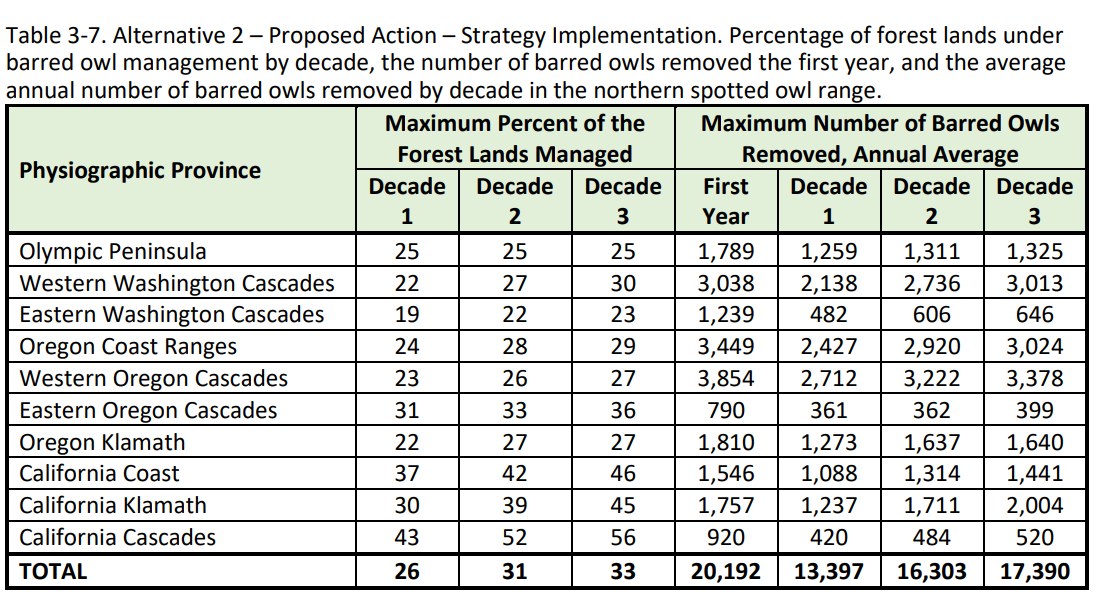
US Fish & Wildlife Service (USFWS) proposes to kill 470,000 barred owls in the next 30 years in an effort to save the northern spotted owl (NSO) and a closely related sub-species in California.  The deadline for making a comment on this proposal is January 16, 2024.  Instructions for making comments are available HERE

Today, I will tell you about this proposal, how it came about, and why I am opposed to the proposal.  I provide links to the source documents so you can read them yourself.  I hope this information will help you reach your own conclusions about the plan and submit a public comment. 

USFWS Barred Owl Management Strategy

The purpose of the Barred Owl Management Strategy is protection for the dwindling population of northern spotted owls (NSO) in the Pacific Northwest (Washington, Oregon, and Northern California).  NSOs were classified as a threatened species by USFWS in 1990.  The first Recovery Plan for NSO, published in 2011, identified habitat loss and barred owls as the primary threats to NSOs.  The most recent Recovery Plan has added “past habitat loss, continued timber harvest, and wildfire” to the list of threats to NSOs.

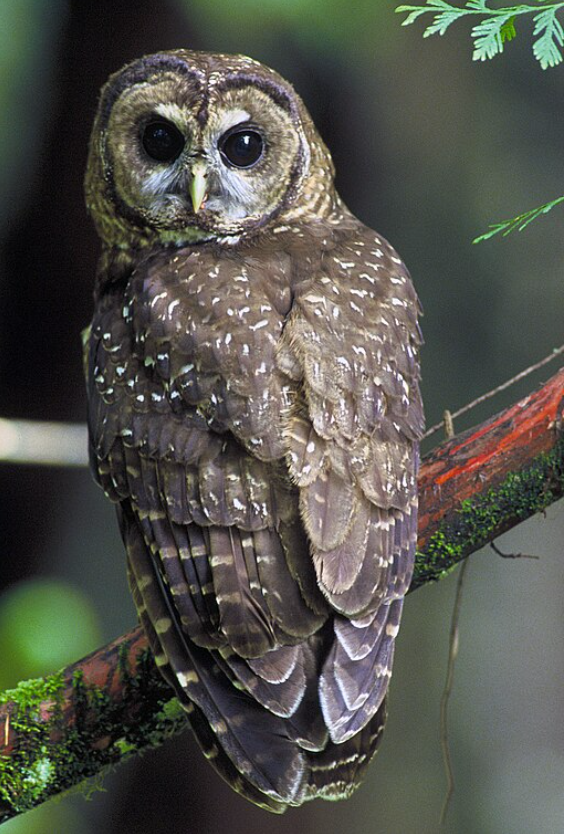
Northern spotted owl. USFWS

The Barred Owl Management Strategy also proposes “management” of barred owls to protect the California spotted owl (CSO), which is a subspecies of NSOs.  Although endangered status for CSO was proposed in February 2023, endangered status has not been granted.  Yet, USFWS proposes to extend the same lethal removal measures used to protect NSOs to CSOs.  In addition to the threats to NSOs, California spotted owls are also threatened by fragmented habitat and forest mortality caused by drought and correlated disease, which have killed over 300 million conifers in California in the past 10 years.

Despite the many threats to spotted owls, the Management Strategy intended to protect them addresses only one of those threats:  barred owls.   It makes no proposals for improving or expanding habitat or addressing the impact of climate change on forests.

The Barred Owl Management Strategy is a voluntary plan.  Federal agencies in spotted owl territory (Bureau of Land Management, US Forest Service, and National Park Service) will be “encouraged” to implement the plan.  If state, commercial, private property, and tribal land owners choose to participate they will be granted the same “take” permits required by the Migratory Bird Treaty Act that federal land managers will be granted, so long as they agree to follow the protocol for “removing” barred owls from their properties.

The word “removal” in the context of the Management Strategy means “lethal removal.”  The protocol requires that barred owls be found by playing a recording of their distinctive call (described as “who cooks for you?”) and shooting the owl as it flies toward the call and the shooter.  If guns are not allowed where barred owls are found, they must be captured and euthanized.  Hybrids of barred owls and spotted owls will also be killed, despite the fact that accurately identifying hybrids is considered difficult, particularly in subsequent generations.    

Because the Management Strategy is not mandatory, the total number of birds that will be killed can only be estimated.  If all property managers choose to implement the Strategy, approximately 470,000 barred owls would be killed in the next 30 years.  Although the Strategy covers only a 30 year time frame, “barred owl management will be required at same level for the long term” because “Their populations will continue to produce young that can disperse within and beyond the current range of barred owls.” (1)  The estimated current population of barred owls in study areas of the Management Strategy is only 102,000.  Clearly the lethal removal of barred owls is not expected to keep pace with the reproductive success of barred owls.  The killing of barred owls will continue forever, although there is no expectation that they will be eliminated.

How were barred owls selected as the scapegoat?

When northern spotted owls were designated as “threatened” in 1990 it triggered the legal protections conferred by the Endangered Species Act. In 1994, the Forest Service and the Bureau of Land Management published the EIS for the Northwest Forest Plan.  It created 24 million acres of reserve areas where logging was prohibited to preserve spotted owl habitat.  The reserve areas protected approximately 80 percent of the remaining old growth forests in the Pacific Northwest from timber harvesting.  Obviously, the plan had a negative impact on the timber industry and those who were employed by the industry.  Between 1980 and 1998, 23% of logging jobs were lost, triggering the Timber Wars.

The rate of decline of spotted owl populations in the Pacific Northwest decreased when most logging in old-growth forest was stopped by the Northwest Forest Plan, but began to accelerate again in about 2008.  USFWS attributes that increase in the rate of population decline to competition from barred owls and that theory is supported by several studies.

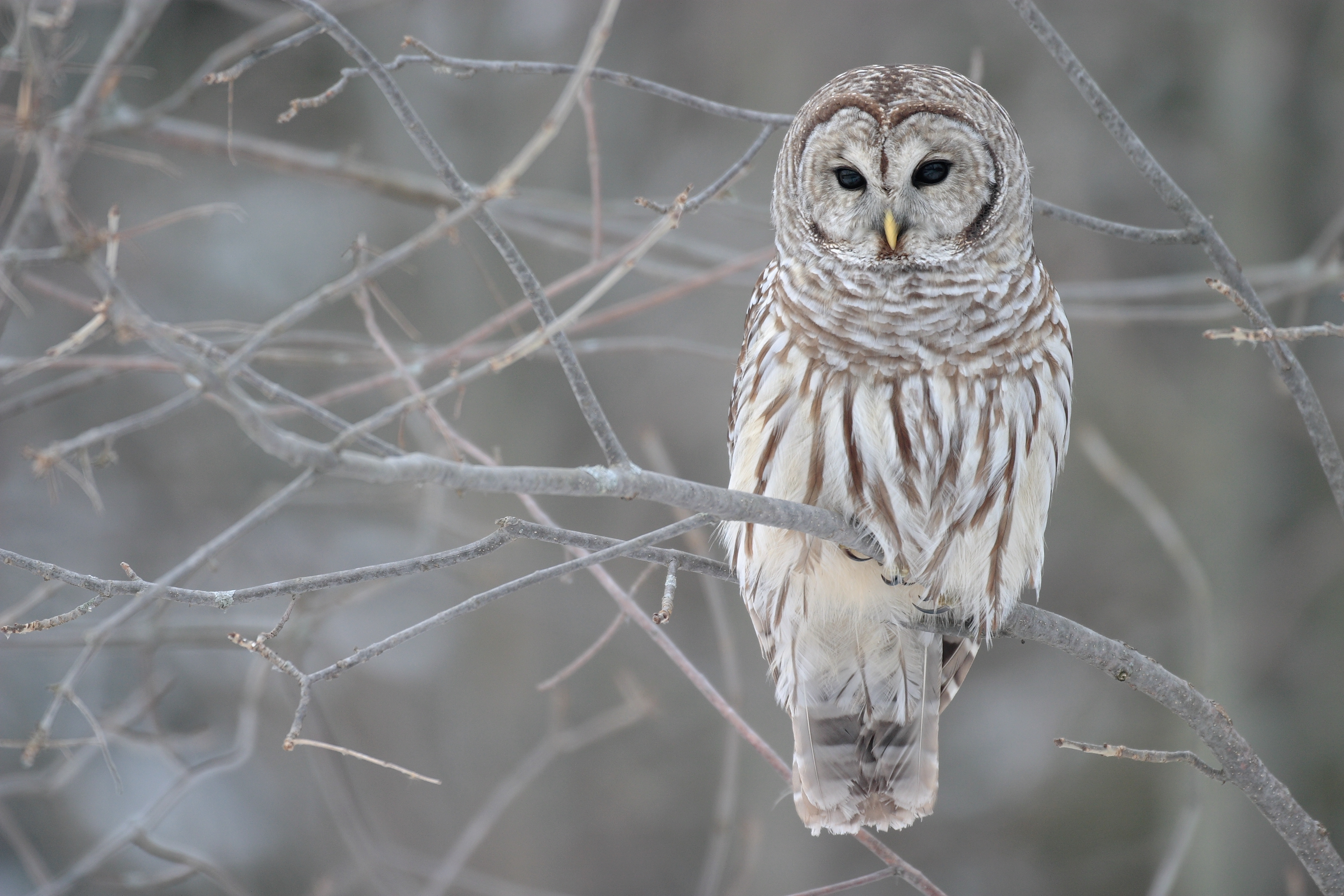
Barred Owl. GNU Free Documentation License

Barred owls are native to North America.  They have been migrating from their historic range in the north and south east of the US to the west coast of North America since about 1900.  Barred owls were first seen on the west coast of North America in British Columbia, Canada around 1959.  They were first documented in Washington in the 1970s and have continued moving south from there. 

Barred owls have successfully competed with spotted owls in their expanding territory because they are larger than spotted owls, they eat a wider variety of prey, they have greater reproductive success, and they are able to live in forests where spotted owls cannot.  Spotted owls are restricted to old-growth forests with large trees and dense canopies, while barred owls often live in second-growth (previously logged) forests and even wooded urban areas. 

The Management Strategy speculates that the omnivorous diet of barred owls will devastate the food webs in the new territory they occupy, although the Strategy offers no evidence to support that theory.  In fact, as barred owls expanded their territory through the Canadian boreal forest, such devastation was not reported.  Barred owls are not considered “invasive” in Canada.

The impact of barred owls on spotted owls was first observed by Lowell Diller, a wildlife biologist who worked as a consultant to Green Diamond Resource Co., a logging company managing timberland in Humboldt and Del Norte counties in Northern California.  Mr. Diller was also an adjunct professor in the Department of Wildlife at Humboldt State University.

Owls, including barred owls, are protected by the Migratory Bird Treaty Act.  Mr. Diller applied for permits to kill barred owls on the property of Green Diamond Resource Co. as an experiment to determine the impact of barred owls on spotted owls.  He described his project in an article in the Marin Independent Journal“In 2009,…Diller set aside patches of timberland to remove barred owls.  In other patches, he did nothing.  After four years, he would see how northern spotted owl numbers differed in the areas with and without barred owls…The study is the first to prove his treatment works.” To be clear, his “treatment” was to shoot barred owls. Mr. Diller also described how upsetting it was to kill birds. 

Green Diamond applied for permits and has continued to kill barred owls on its property.  That commitment has ensured that Green Diamond’s current rate of logging can continue.  The Green Diamond spokesman explained:  “’When you can protect and sustain a business and jobs and also conserve the northern spotted owl,’ he said, ‘why not do it.’” (Marin Independent Journal)

Sierra Pacific Industries is also killing barred owls on its property.  Sierra Pacific Industries in Shasta County is the largest private land holder in California and the second largest lumber producer in America.   

On the basis of the success of Diller’s study, USFWS approved a pilot project to kill barred owls in other places where spotted owls live.  The pilot project killed about 3,000 barred owls.  When the project was completed in 2021, they reported, “The removal of barred owls had a strong, positive effect on the survival of northern spotted owls and a positive, but weaker, effect on recruitment of spotted owls.” (2) The Barred Owl Management Strategy is based on the success of the pilot study. 

In other words, killing barred owls has enabled the timber industry in Northern California to continue their logging operations.  It has also removed the pressure to expand reserve areas to protect spotted owls, even though many scientists believe such expansion would be more effective than killing barred owls to save spotted owls“’The bottom line is that extinction rates went down when the amount of habitat went up,’ U.S. Geological Survey biologist Katie Dugger, lead author of the 2015 demographic study, said in a presentation on the findings last fall. ‘Spotted Owls cannot exist without old-growth forest. And now we’re talking about two species trying to use the same space, so in fact we need more of it.’” (3)

Specific Flaws in Barred Owl Management Strategy

The Barred Owl Management Strategy is based on several outdated notions about nature that have been cast in the concrete of American law. The Endangered Species Act is based on assumptions about nature that were conventional wisdom at the time the law was passed 50 years ago, in 1973.  Evolution was considered a series of events that occurred in the distant past and is no longer actively changing plants and animals.  At the time the ESA was passed, evolution was not believed to occur within a time frame observable by humans.  Nature was perceived as reaching an “equilibrium state” that was stable over long periods of time.  Early conservation efforts were therefore based on the assumption that once achieved, an equilibrium state could be sustained if left undisturbed in nature preserves. (4)

We now know that these assumptions are mistaken.  In the past 50 years, climate change and advances in paleontology have taught us that nature is inherently dynamic and we are usually powerless to stop it from changing even when we try.  When a law is designed to control nature, we should expect some conflict between static law and dynamic nature.  Fifty years after the Endangered Species Act was passed, that conflict is becoming progressively more apparent and problematic. 

These are the specific flaws in the Barred Owl Management Strategy that are the result of mistaken assumptions about nature:

  • Barred owls should not be considered “invasive” on the west coast of the US because the expansion of its range is a natural phenomenon that cannot and should not be stopped.

USFWS designates barred owls on the west coast as “invasive” by fabricating a story about the route barred owls took from their historic range in the east to their expanded range in the west that is not consistent with the facts.  Although USFWS admits that the route that facilitated expansion is “not well documented,” they claim there is evidence of anthropogenic change across the Midwestern Prairie that supports that specific route:  “…the historical lack of trees in the Great Plains acted as a barrier to the range expansion and that increases in forest caused by the anthropogenic impact of European settlement enabled the westward extension of the barred owl range. These include anthropogenic impacts such as fire exclusion and suppression, bison and beaver extirpation, deer and elk overhunting, establishment of riparian forests, and extensive planting of trees and shelterbelts in the northern Great Plains…” (2)    Although that is an accurate description of anthropogenic changes in the Midwestern Prairie, it is irrelevant to the expansion of the range of barred owls, because that wasn’t the route they took to the west coast.

The legal definition of invasive species enables USFWS to designate barred owls on the west coast as “invasive” based on their claim that the expansion route was through the American Midwest as a result of anthropogenic change. If non-indigenous humans are considered the cause of a change in ranges of plants and animals, the species is considered “invasive” where it did not exist prior to the arrival of Europeans. Labelling any plant or animal “invasive” makes it a target for eradication.   However, the theory of a midwestern expansion route for barred owls is not consistent with the facts:

This map clearly shows that the route used by barred owls to expand their range to the west coast was through the boreal forests of Canada, which were not the result of anthropogenic change.  The boreal forests of Canada have existed since the Ice Age ended 10,000 years ago.  The map does not show the historic or current existence of barred owls in the American Midwest. 

The expansion route of barred owls to the west coast through Canadian forests is also consistent with the record of their arrival on the west coast.  They were seen first in the west in 1959 in British Columbia, Canada, at the northern edge of their current range.  They were first seen in the US in Washington in the 1970s.  Their range expansion continues to the south.  This sequence of events is not consistent with the claim that they arrived on the west coast via the American Midwest.

Claiming that barred owls are “invasive” enables USFWS to justify their extermination, as many of their eradication projects do:  “Yes, wildlife removal has been used as a management tool by many agencies across the country to control invasive species such as invasive carp, Burmese python, feral hogs, rats, mongoose, and nutria. Invasive species can thrive in areas where they do not naturally occur.” (1) That list of animals being killed by USFWS is far from complete. 

This is not a trivial matter.  Climate change requires that plants and animals move to find the conditions needed for their survival.  Preventing the migration of plants and animals as the climate and the environment change will doom them to extinction.  Designating barred owls on the west coast “invasive” has dangerous implications for many plants and animals that must move to survive in a rapidly changing climate.  The Management Strategy should not set this dangerous precedent. 

  • Interbreeding of spotted owls and barred owls is a natural phenomenon that cannot and should not be stopped.  Hybrids of spotted and barred owls should not be killed.

Hybridization is not only common, it can result in the creation of new species more rapidly than other forces of evolution, such as mutation and natural selection:  “Hybridisation also offers shortcuts on the long march to speciation that do not depend on natural selection at all.” (5)

More than 99% of all species that ever lived on Earth, amounting to over five billion species, are estimated to have died out. Yet there are currently around 8.7 million species of eukaryote (organisms whose cells have a membrane-bound nucleus) globally. (Wikipedia) Biodiversity on Earth has increased partly because of hybridization, which has often enabled adaptation to changed environmental conditions.

There are many important examples of hybridization among animal species, most notably the history of hybridization of our species, Homo sapiens.  Humans are now the sole surviving species of genus Homo.  Our genome contains the relicts of the genes of other members of our genus that are now extinct, which indicates hybridization with other hominoid species.  The modern human genome contains 1-4% of Neanderthal genes. (5)

There are also many examples of hybridization of plant species that contributed to biodiversity.  In a recently published study of the evolution of oaks, scientists traced the 56 million year evolutionary history of roughly 435 species of oak across 5 continents where they are found todayHybridization was instrumental in the formation of oak species and the ability of oaks to survive in different climate conditions.  The article in Scientific American about the genetic study of oak species concludes:  “A firm grasp of when, where and how oaks came to be so diverse is crucial to understanding how oaks will resist and adapt to rapidly changing environments. Oaks migrated rapidly as continental glaciers receded starting around 20,000 years ago, and hybridization between species appears to have been key to their rapid response. The insights we can gain from elucidating the adaptive benefits of gene flow are critical to predicting how resilient oaks may be as climate change exposes them to fungal and insect diseases with which they did not evolve.”

The bias against hybrids is a reflection of nativist ideology in the natural world.  Nativists call hybridization “genetic pollution.”  Unfortunately, hybridization is seen by nativists as the loss of a “pure” native species rather than the potential for a new species that is better adapted to changing environmental conditions.  The proposal to kill hybrids of barred and spotted owls is a symptom of the nativist bias that is typical of most public agencies. 

Barred and spotted owls are closely related.  They are in the same genus, just as Neanderthals and Homo sapiens were in the same genus.  Their interbreeding is both predictable and potentially beneficial to spotted owls because barred owls are better adapted to current conditions. The hybrid has the potential to produce a new species that is better adapted to compromised forest conditions than the spotted owl.  Although there is risk in hybrids, in the case of spotted owls the risk is worth taking because many scientists predict that the northern spotted owl will soon be extinct.  Hybridization may be more helpful to the spotted owl species than killing barred owls.

  • The Barred Owl Management Strategy should not be extended to California spotted owls.

The Barred Owl Management Strategy depends on the legal protections of the Endangered Species Act.  Both barred owls and spotted owls are protected by the Migratory Bird Treaty Act.  Therefore, “take” permits must be granted to kill barred owls.  The protected status of northern spotted owls justifies take permits, but should not be extended to California spotted owls (CSO) that are not legally protected.  Issuing take permits to kill barred owls to save California spotted owls makes a mockery of both the ESA and the Migratory Bird Treaty Act.  It implies that USFWS can find loopholes in environmental laws intended to protect nature, whenever they wish.  It undermines the public’s faith in government when public agencies are perceived as arbitrary and capricious.

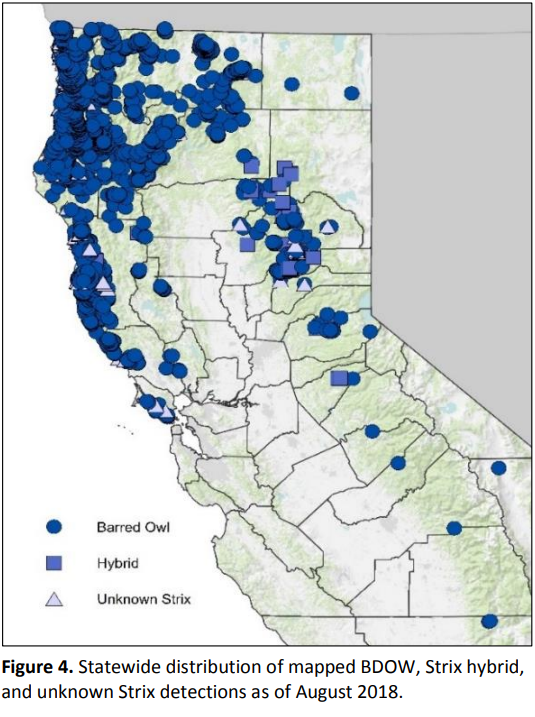
Killing barred owls in CSO territory cannot be justified because there are few barred owls in their territory and threats to the CSO population are unrelated to the existence of a few barred owls. (See map of barred owl distribution in California below.) Shooting barred owls will not stop the wildfires, droughts and diseases killing their habitat.  The proposed Management Strategy is irrelevant to the survival of CSO. 

  • There is no reason to kill barred owls in Marin and Sonoma counties in the San Francisco Bay Area because the population of Northern Spotted Owls is stable and there are very few barred owls. 

The Marin/Sonoma County Management Zone designated by the Management Strategy includes all lands within the named counties. Conditions in Marin and Sonoma County are substantially different from the rest of the northern spotted owl range. This is the only portion of the northern spotted owl range where barred owls are very uncommon.

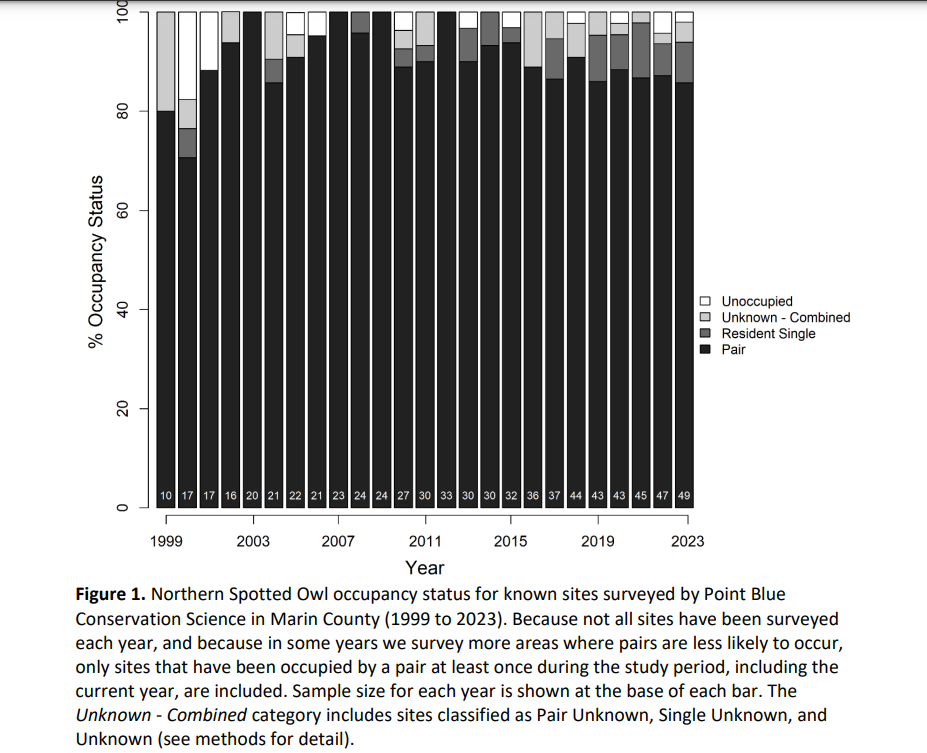
The recently completed survey of northern spotted owls in Marin County reports that the population is stable. The survey found nesting pairs of NSOs in all 48 inventory sites.  A small decline in nesting success was not statistically significant.  Two unpaired barred owls were detected on or near Marin County Property or Marin Watershed Property in 2023.  One was removed, the other was not detected a second time. (6)

Source:  Northern Spotted Owl Monitoring on Marin County Parks and Marin Municipal Water Department lands, 2023 Report, Point Blue Conservation.

Despite the lack of evidence that northern spotted owls are threatened by barred owls in Marin County, the Barred Owl Management Strategy considers it the highest priority to kill the few transitory barred owls detected in Marin County.  This is unnecessary overkill that should be removed from the Management Strategy.  It contributes to the public’s perception that the strategy of USFWS is extreme and inconsistent with environmental laws that protect nature.

In conclusion, the Barred Owl Management Strategy is a reflection of the extreme nativist bias of USFWS.  Like many of their projects, USFWS has selected an animal scapegoat for the declining population of northern spotted owls that are not well adapted to changed forest conditions. Selecting an animal scapegoat enables timber companies to continue logging and it is an easy way to avoid addressing the much more complex reasons for challenges to northern spotted owls. For example, killing barred owls won’t do anything to reduce the greenhouse gases causing climate change or restore logged or burned forests. The Barred Owl Management Strategy will employ an army of snipers, but is unlikely to benefit the environment or its inhabitants.  USFWS cannot stop evolution, nor should it try.

Although I have low expectations that 2024 will be more peaceful than last year, in the spirit of hope, I wish you Happy New Year.  Thank you for your readership.

Update, July 2025:  The Northwest Forest Plan has been amended.  The amendment to the plan will enable more logging in the Pacific Northwest.  Https://www.chronline.com/stories/proposed-changes-would-allow-more-logging-on-federal-land-in-the-pacific-northwest,372393

The amendment began during the Biden administration and was approved in May 2025.  The point of the amendment is to “manage” the forest to reduce wildfire hazards.  https://www.fs.usda.gov/r06/planning/northwest-forest-plan-amendment

The stated purposed of the USFWS plan to kill 500,000 barred owls was to save endangered spotted owls.  The plan was created by the timber industry in the Pacific Northwest because killing barred owls on their properties enabled them to get permits needed to continue logging on their properties.

On October 30, 2025, the US Senate rejected an effort to halt the implementation of the Barred Owl Management Plan by a vote of 25-72: https://worldanimalnews.com/2025/10/30/stop-the-slaughter-450000-barred-owls-face-mass-killing-for-so-called-conservation/

However, The Trump administration has also cancelled some grants that funded the plan to kill barred owls in the Pacific Northwest:  https://washingtonstatestandard.com/2025/07/22/plans-to-shoot-thousands-of-barred-owls-in-doubt-after-feds-cancel-grants/

Confusing, isn’t it? The plan lives, but some of the funding for implementation is gone. That’s my best guess.

There is some logic to this sequence of events.  However, I doubt that logic was used to reach this conclusion.  In any case, I am pleased that barred owls will be spared the planned massacre.  However, the loss of federal funding to kill barred owls will not prevent private land owners from killing barred owls.  The revision of the Northwest Forest Plan to enable more logging might make killing barred owls on private land unnecessary. 


  1. Frequently Asked Questions about the Barred Owl Management Strategy
  2. Barred Owl Management Strategy
  3. Sarah Gilman, “Evidence of Absence:  Northern Owls are still vanishing from the Northwest,” Living Bird, April 12, 2016
  4. Holly Doremus, “The Endangered Species Act:  Static Law Meets Dynamic World,” Journal of Law & Policy, Vol. 32: 175-235, 2010.
  5. The Economist, “Match and mix, hybrids and evolution,” October 3-9, 2020, page 67-70. 
  6. Northern Spotted Owl Monitoring on Marin County Parks and Marin Municipal Water Department lands, 2023 Report, Point Blue Conservation.

Migration: Life on the move

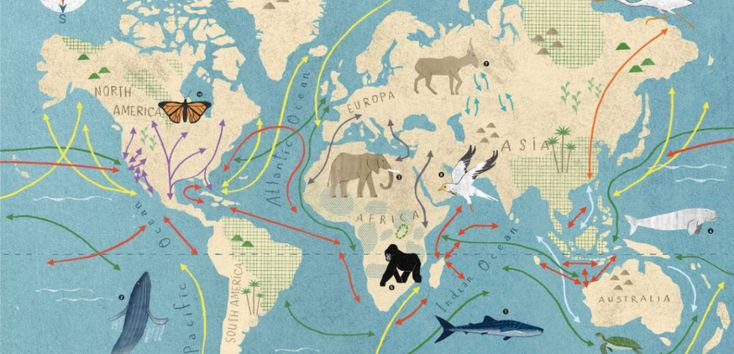
Sonia Shah’s recently published book, The Next Great Migration: The Beauty and Terror of Life on the Move, takes a deep dive into the past to trace the ancient history of migrating life on Earth. For as long as life has existed on Earth, life has been on the move, as needed to survive the constantly changing environment in which all plants and animals live.

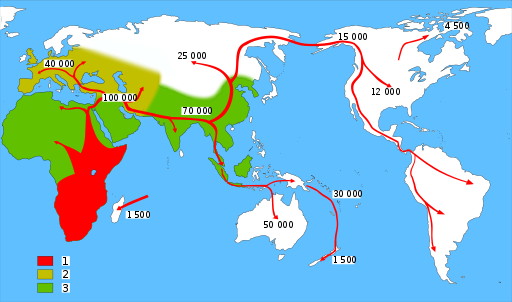
1 Homo sapiens
2 Neanderthals
3 Homo erectus

Shah’s is an ambitious attempt to tell this story, not confined to human migration, but encompassing plants and animals as well because all of these migrations are connected. Scientists speculate the earliest migrations of human ancestors, some 100,000 years ago out of Africa, were in pursuit of the migrating animals that humans hunted.  On balance, the movements of plants and animals are beneficial to life on Earth because they are necessary to survive. When they aren’t beneficial, the problems are usually short-lived and humans are usually unable to stop them because nature is more powerful than we are.

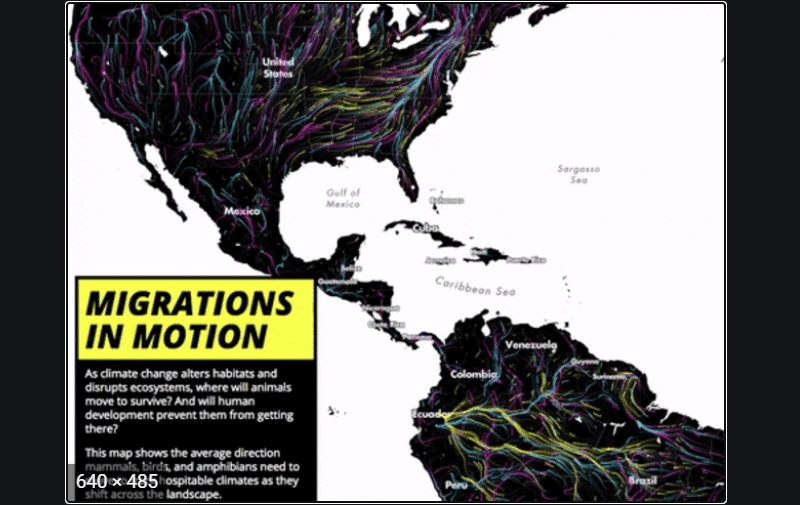
Click on map for animated movement of animals in response to changing climate conditions.

Migrations are even more frequent at a time of rapid and extreme climate change. As crops fail in the withering heat and drought caused by global warming, farmers are abandoning their farms to find the food they need to survive. Hence, Shah’s prediction that we are about to witness the “next great migration” because of the challenges of climate change. When the climate changes, the vegetation changes. When the vegetation changes, animals must move to find the food they need. Humans wish to put ourselves in a special category that denies our kinship with animals. But we are as dependent upon our food as any animal and the changing climate will challenge our existence as much as other forms of life.

Shah also traces the brief history of human knowledge of migrations about which little was known before the development of the scientific tools to study it.  Paleontology could dig up fossils that would raise more questions than answers about the residents of deep time, but it wasn’t until the development of molecular analysis that fossils could inform scientists of the evolutionary history of and close relationships among plants and animals that reflect migrations in the distant past.  New technology is capable of tracing the movements of animals that were unknown in the distant past, when animals seemed to mysteriously disappear at the end of one season and returned at the beginning of another season.

Invasion Biology is based on ignorance of migration

The fact that animal migration was largely unknown led to some fundamental misunderstandings about nature, including the unfortunate rise of nativism in the natural world that was spawned by the mistaken hypotheses of invasion biology. Shah explained the consequences of inadequate knowledge of migration in a recently published article in New York Times Magazine:

“When scientists considered movements across barriers and borders, they characterized them as disruptive and outside the norm, even in the absence of direct evidence of either the movements themselves or the negative consequences they purportedly triggered…Influential subdisciplines of biological inquiry focused on the negative impact of long-distance translocations of wild species, presuming that the most significant of these occurred not through the agency of animals on the move but when human trade and travel inadvertently deposited creatures into novel places.  The result, experts in invasion biology and restoration biology said, could be so catastrophic for already-resident species that the interlopers should be repelled or, if already present, eradicated, even before they could cause any detectable damage.”

In turn, Invasion Biology spawned pointless and destructive eradication projects

Conservation Sense and Nonsense has followed the destructive and futile attempts to eradicate plants and animals that nativists say “don’t belong here:”

  • Hawaii is an extreme case of attempts to eradicate non-native plants and animals: frogs, owls, egrets, seals, fruit trees, mangroves, parrots, etc.  These eradication projects often do more harm than good.  The “logic” for these projects is muddled, partly because the Hawaiian Islands emerged from the sea as barren volcanoes.  The question of “what belongs there” is a matter of opinion and debate in Hawaii and elsewhere.

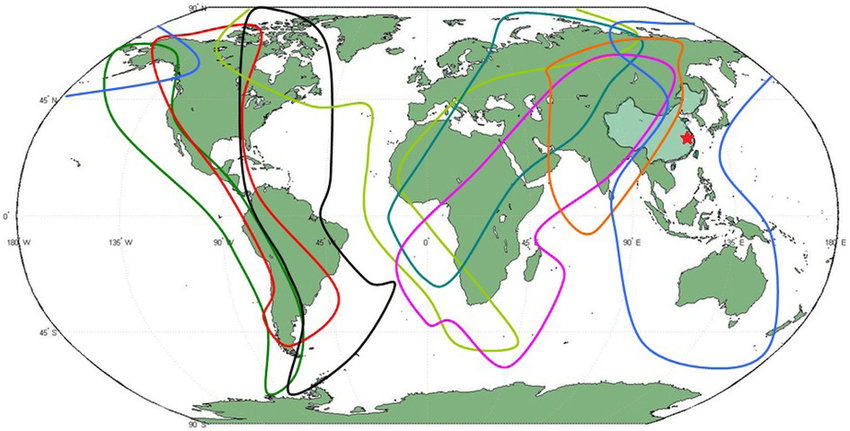
Bird migration routes

Migration enables survival

I hope that improved knowledge of migration will help people understand that migration is a natural phenomenon that is essential to the survival of all life on Earth.  Migration enables life to adapt to changes in the environment, facilitating evolution and reducing frequency of extinction.