Deforestation in San Francisco

I am publishing an article today that was published by the San Francisco Forest Alliance, with permission.  Many thanks to SFFA for reporting about the continuing assault on San Francisco’s urban forest. You can express your opinion about these tree removals by calling 800-801-2661 Ext 4.

Conservation Sense and Nonsense


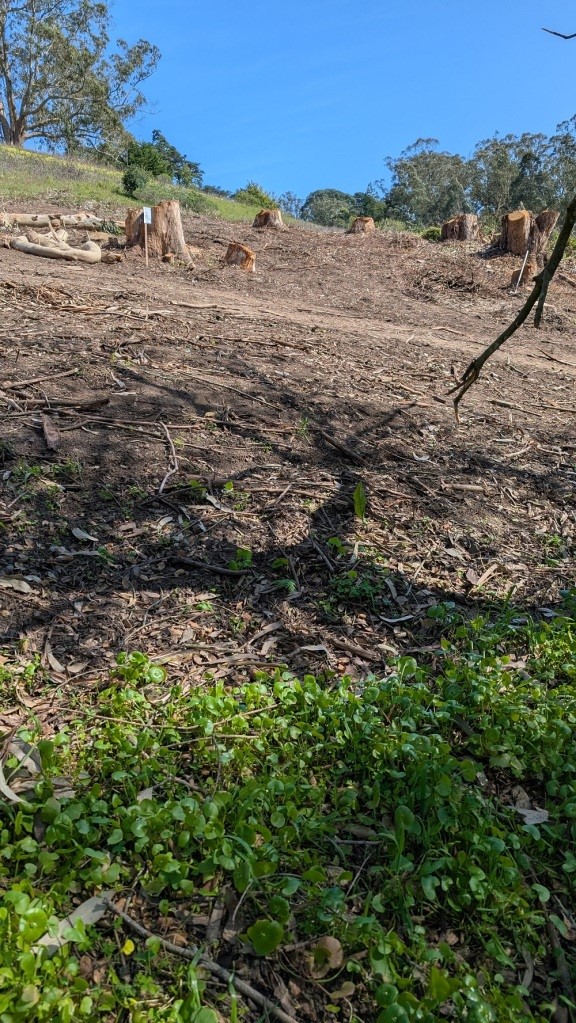
Deforestation on Clarendon Avenue

Posted on March 31, 2025 by SF Forest Alliance

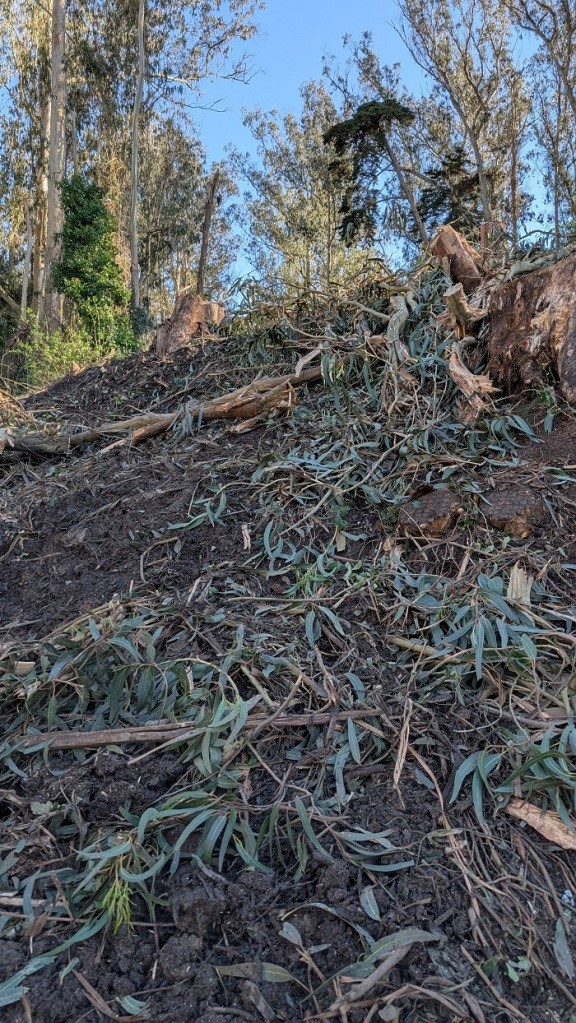
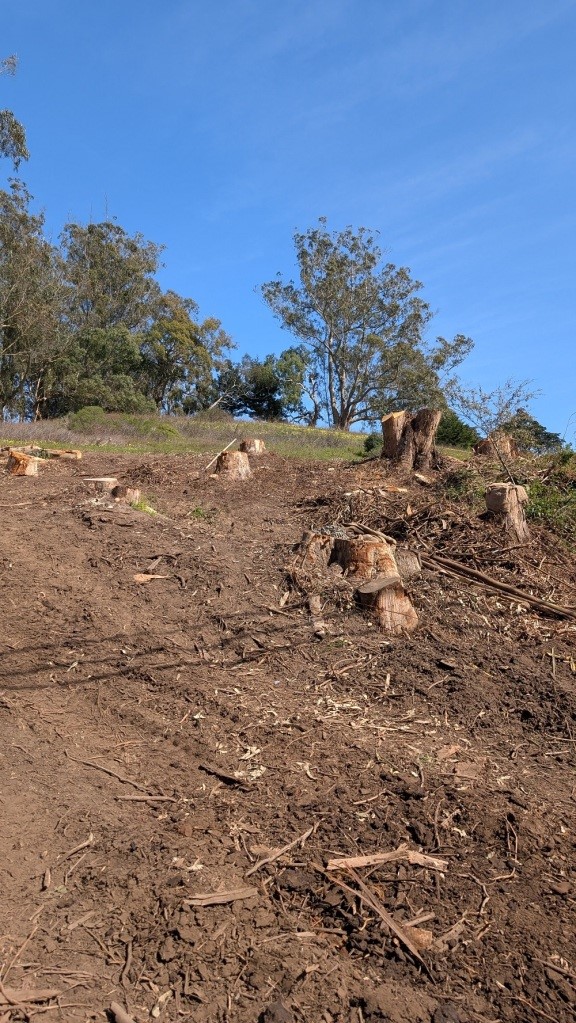
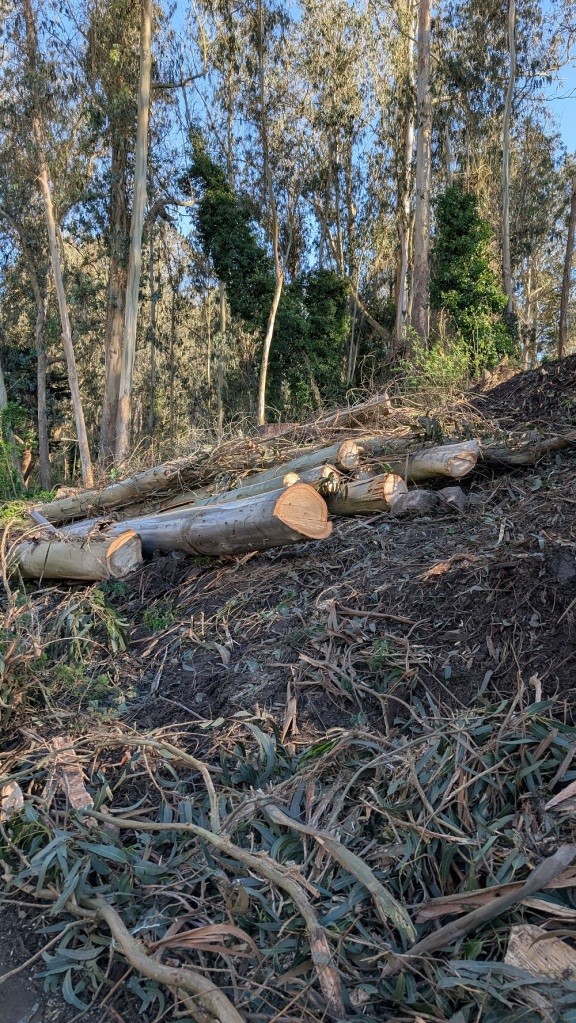
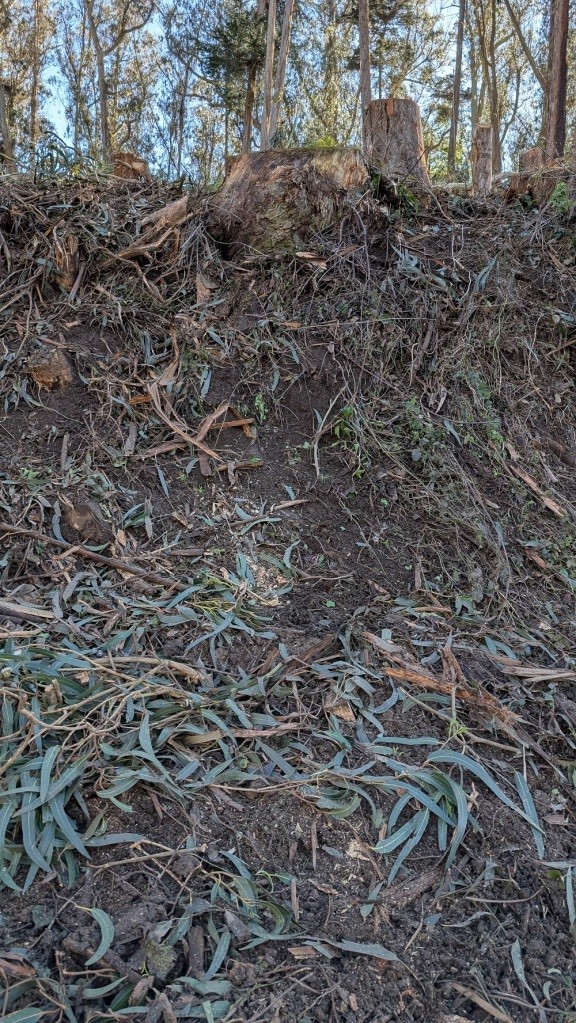
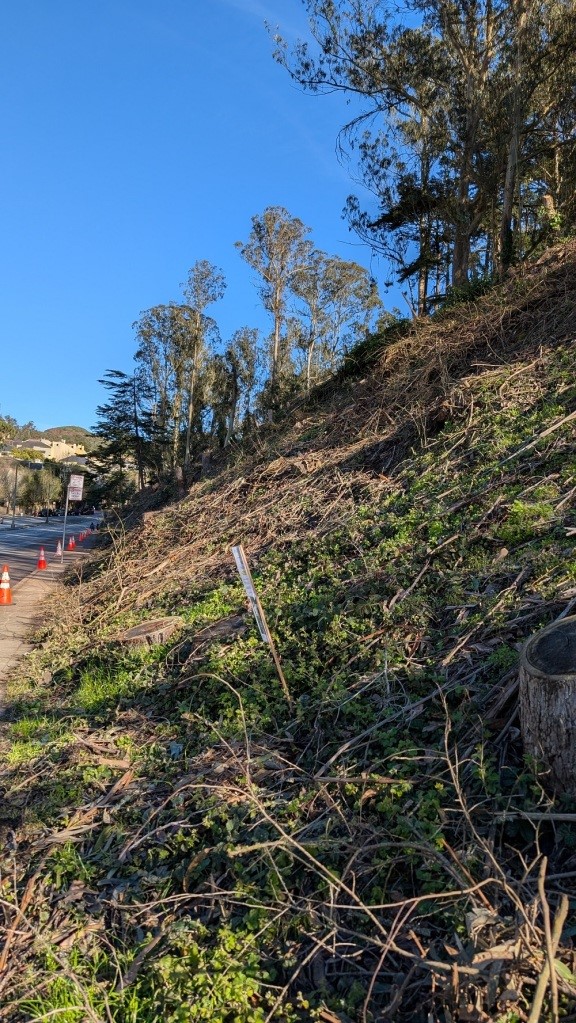
There’s a lot of deforestation on both sides of Clarendon Avenue, above the Laguna Honda, and on the slope below Laguna Honda Hospital. This time it’s courtesy of SFPUC –  San Francisco Public Utilities Commission (which our followers would recall is managed in the same way as SFRPD – San Francisco Recreation and Parks Department’s  “Natural Resources Division.”)

Indeed, Lisa Wayne, who for many years spearheaded the SFRPD effort, moved to SFPUC in 2021.

Note: All pictures in this post copyright Anastasia Glikshtern
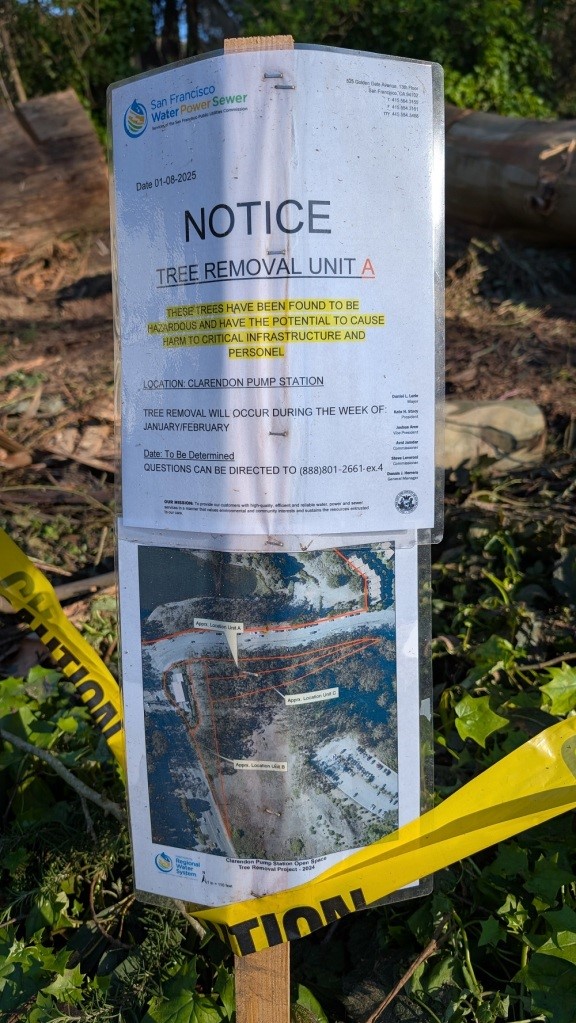
SAN FRANCISCO FOREST ALLIANCE WROTE TO  SFPUC

San Francisco Forest Alliance is following up with SFPUC for evidence that the trees have indeed been evaluated as hazardous. We also pointed out that the bird nesting season has started on February 1 (it runs through August 31, 2025). It appears that the work continued through mid-February.

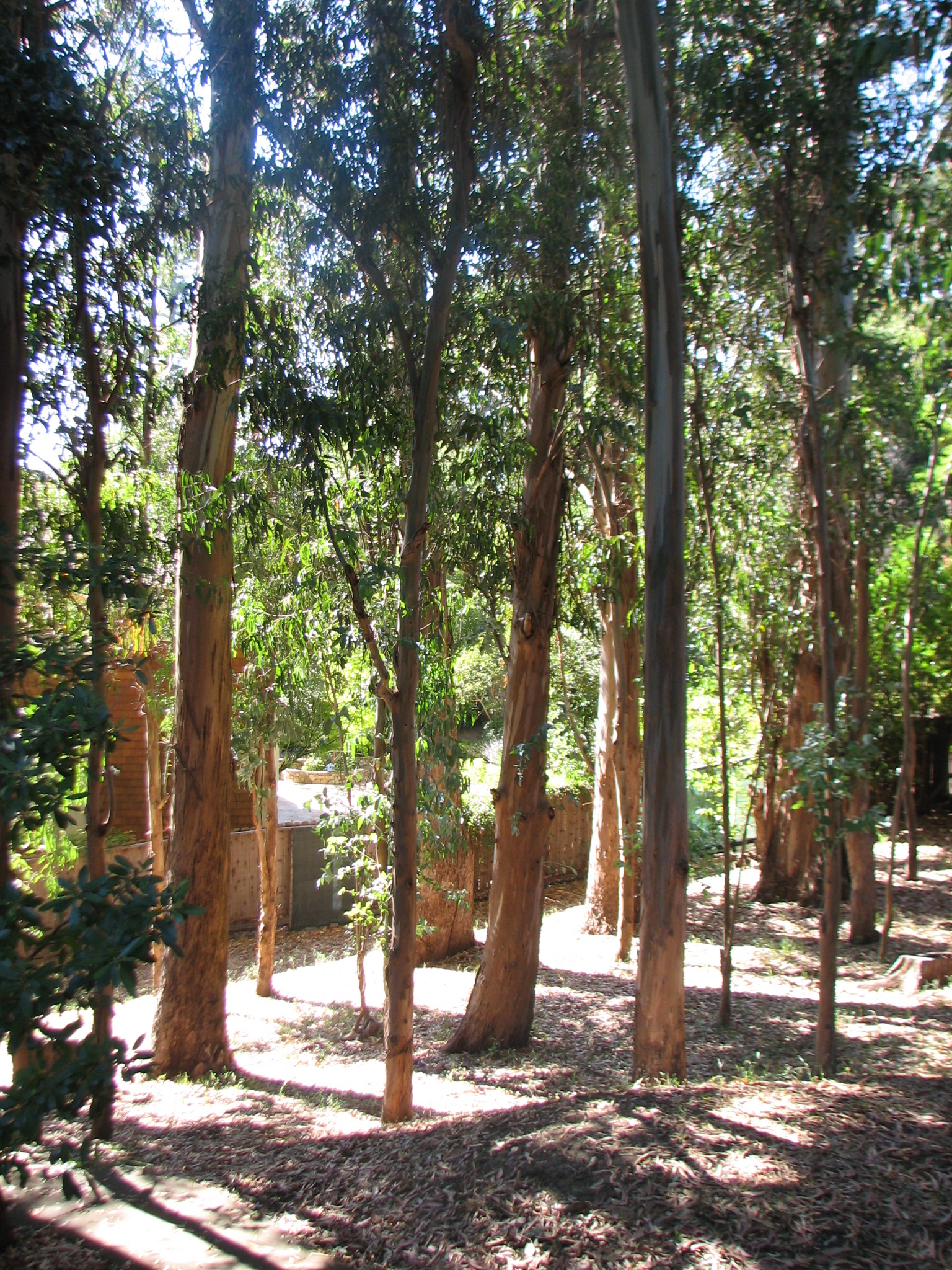
This forest added much to the beauty, privacy, and air quality of the neighborhoods around it. It’s historic: This charming article by Rex Bell described it in 2011 and compared it to the same places in 1896, where it was described as “A Genuine Old-Fashioned Country Road Within the Limits of the City of San Francisco.”

RISKS AND ISSUES

Quite aside from the historic beauty of this urban forest, and the many benefits of urban trees , there are issues of risk. One is slope stability – and we wonder if SFPUC actually assessed the risk of that steep slope above Clarendon Avenue being destabilized by this deforestation. The second is flammability. This is an area of the city that gets summer fog, and the fog moisture harvested by these trees kept the area below damp and cool. Now it will be dry and covered in fine fuels; we can only hope we do not face a hot dry summer any time soon.

Finally, since SFPUC uses herbicides as freely as does SFRPD’s Natural Resources Division, we can expect a lot more pesticides flowing into the groundwater.

San Francisco seems to have moved forward quickly with its war on trees. They have been felled everywhere where the urban forest exists in the city: Mount SutroMcLaren Park, and now Clarendon Avenue. Ironically, they call it “Restoration.”
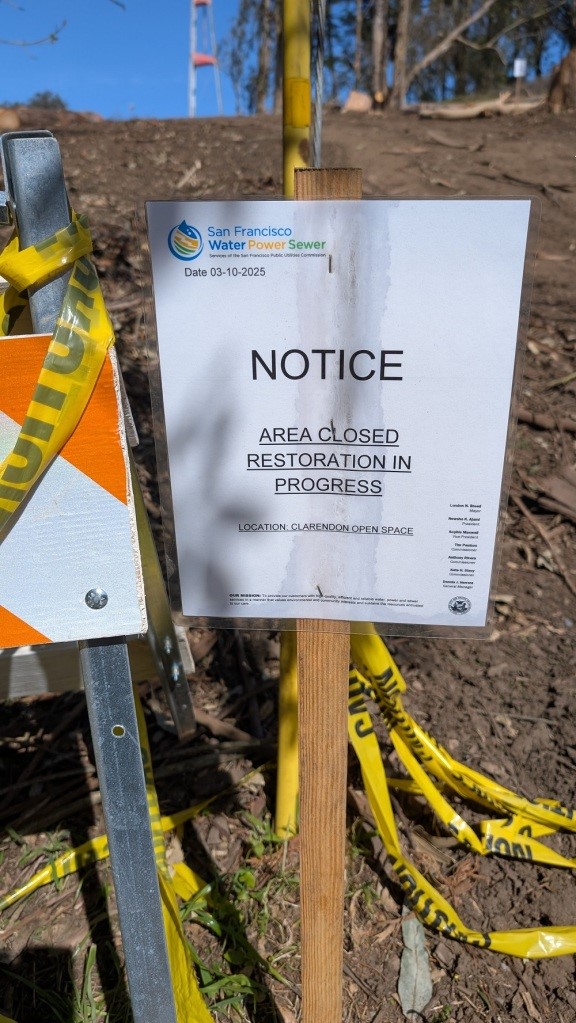
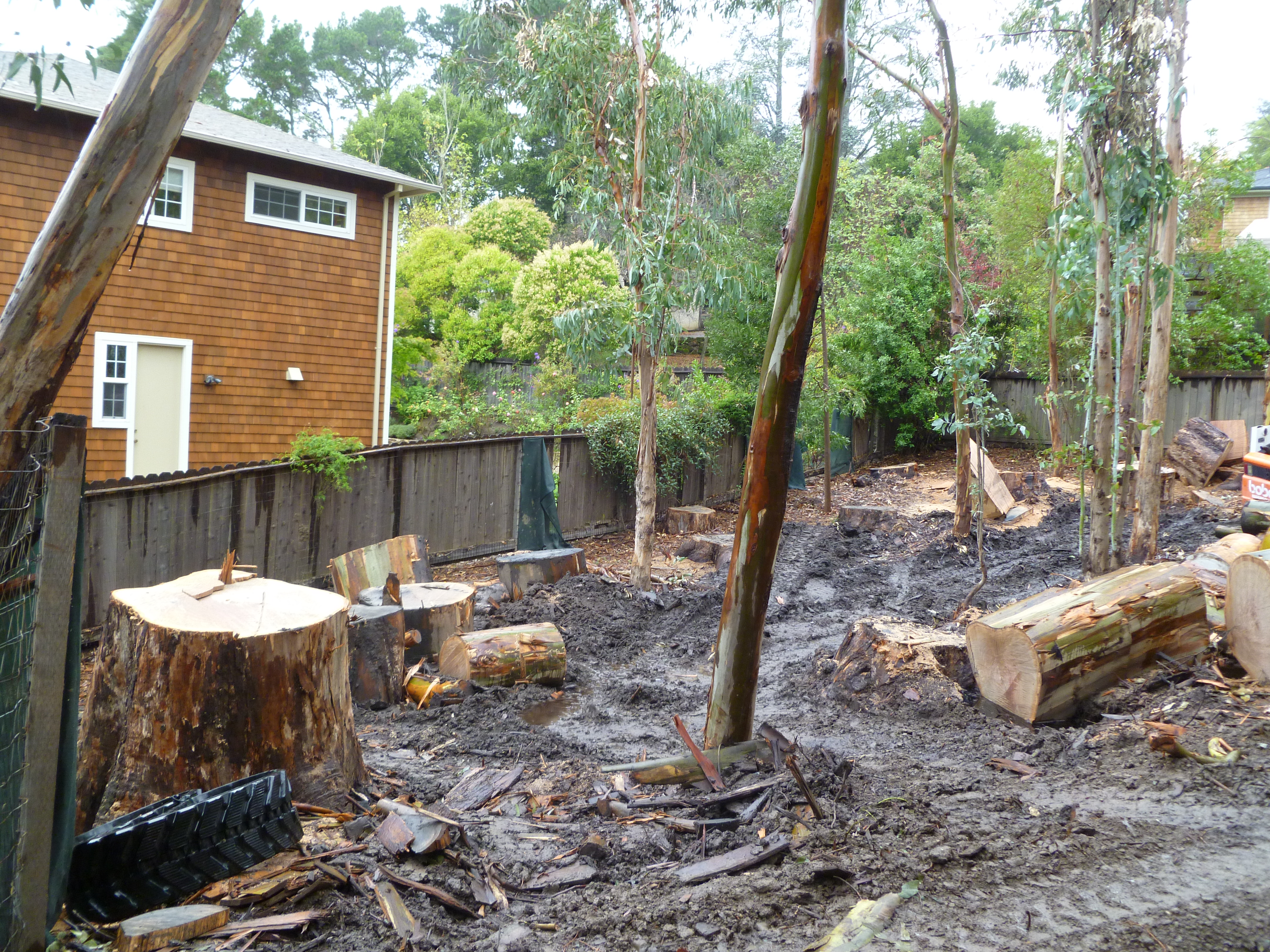
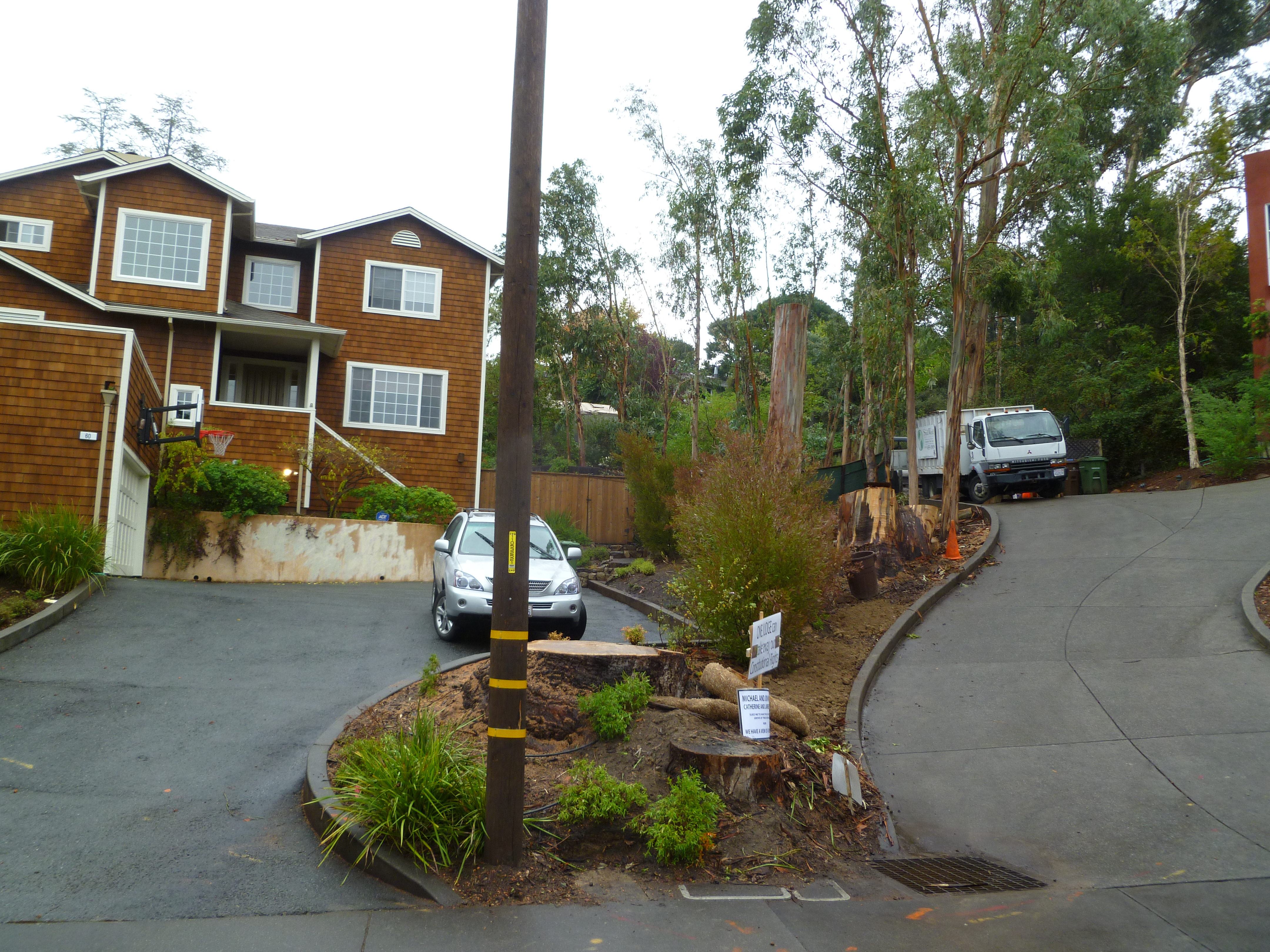
“Restoration” in progress
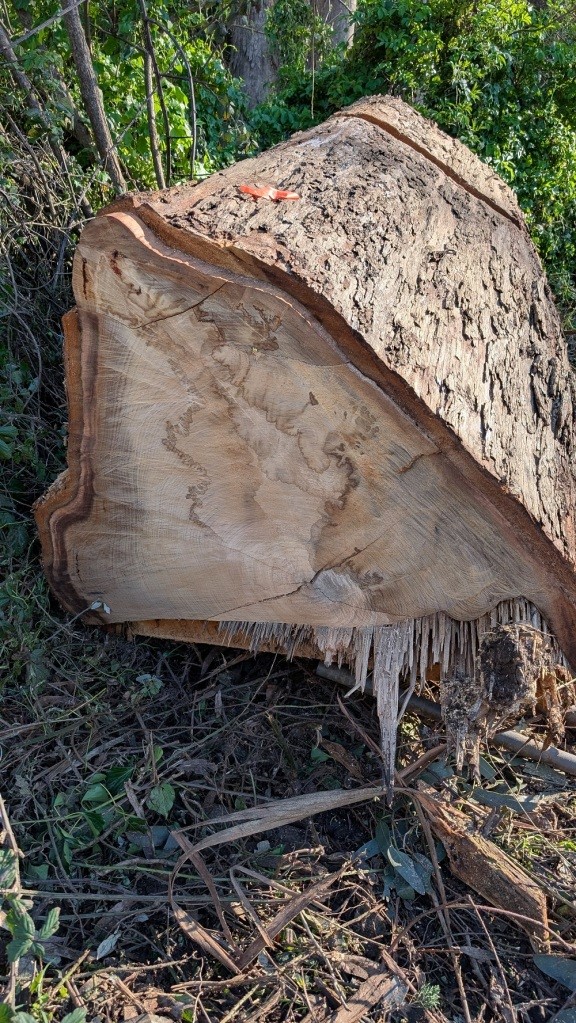
Formerly a beautiful tree

Losing Battles to Save our Trees

In our posts “They can destroy your trees”   and “KILLER TREES!! Scare Tactic #3”  we told you about two efforts to save eucalyptus trees that were threatened with destruction.  Today we must tell you that those battles have been lost.

In Larkspur, 25 trees that have been destroyed were on private property.  The owner of that property was sued by her neighbors who demanded that the trees be destroyed because they believed them to be dangerous.  The owner of the trees made every effort to save her trees, even appealing unsuccessfully to the California Supreme Court for reversal of the court order to destroy most of her trees.  She organized demonstrations in a fruitless effort to interest local politicians to come to the defense of her trees.  Finally, when she was cited for contempt of court, she had her beautiful trees cut down.  

Before

After


Yesterday we attended a memorial for her trees.  We find it hard to believe that her neighbors would prefer the barren landscape that remains or the PG&E pole that was installed to hold the electrical wires that had previously been held by the trees. 

In San Leandro, the neighbors worked equally hard to save the eucalyptus trees on the banks of the San Leandro Creek from being destroyed.  They faithfully attended a series of community meetings which were theoretically an opportunity for them to defend the health, safety, and beauty of their trees.  As is often the case when we advocate on behalf of our trees, we may be successful in demanding a public process, but that rarely seems to save our trees.

 That was the case in San Leandro.  Neighbors were informed at the last public meeting that 31 of the 47 trees originally in jeopardy will be removed and 2 will be “trimmed” to stumps, but allowed to regenerate (1).  After months of effort, neighbors have saved only 14 of their trees and the assumption is that the remaining 1,000 eucalypts on the banks of the creek remain in jeopardy. 

However, the county has made a commitment to an environmental review, which it had originally intended to avoid by destroying the trees piecemeal.  This environmental review will give the neighbors another opportunity to document the negative environmental impacts of tree destruction, whether the trees are native or non-native. 

As the needless destruction of non-native trees continues unabated, millions of native  oaks are being killed by Sudden Oak Death, millions of native pines are being killed by bark-beetles, and the ranges of native plants and trees are shifting to higher elevations as the climate changes.  Those who demand the destruction of non-native trees which are adapted to current climate, soil, and air quality conditions will doom us to a barren, treeless environment. 

It is long past time for environmentalists to reorder their priorities to put climate change mitigation ahead of their commitment to native plants.  Their crusade against non-native trees is contributing to climate change by releasing tons of sequestered carbon into the atmosphere.  Ironically, as the climate changes, the native plants to which they are devoted are dying.  In other words, they are shooting themselves and the plants they prefer in the proverbial foot.

 (1) San Leandro Times, 9/2/10