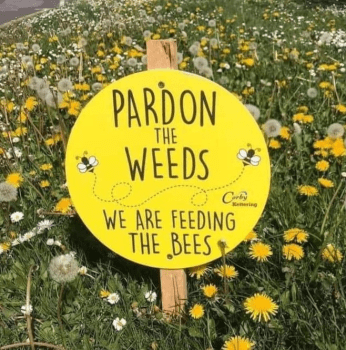
Farmers have been battling with weeds since the advent of agriculture, about 6,000 years ago. Most of the weapons used against weeds were mechanical until the last century or so when herbicides became the primary weapon. At the same time that the weapon became more lethal, farming techniques changed to give weeds the advantage. Farms became huge monocultures and crop rotations were abandoned in favor of the most profitable crop.
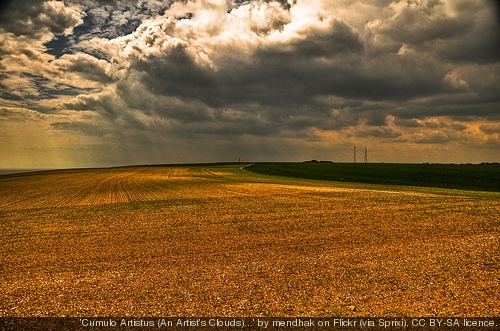
Cornfield
When weeds evolved defenses against the herbicides, farmers responded by increasing doses and manufacturers created new products to which weeds hadn’t yet evolved resistance. Finally, the use of herbicides skyrocketed when crop seeds were invented that weren’t killed by the herbicides, so that huge amounts of herbicides can be used without killing the crop.
When Roundup with the active ingredient glyphosate went on the market in the 1970s, its manufacturer, Monsanto, claimed that weeds would not be able to evolve resistance to it. And apparently that was initially true until Roundup was used on a huge scale when herbicide-resistant seeds were put on the market in the 1980s. Norman Ellstrand of UC Riverside explains why: “He argues that the reason was that farmers applied glyphosate to relatively little farmland. As they applied it to more and more acreage, they raised the evolutionary reward for mutations that allowed weeds to resist glyphosate. ‘That ups the selection pressure tremendously,’ he said.” *
There are now 24 species of weeds that are resistant to glyphosate and they are rapidly expanding their range in agricultural areas all over the world. In 2012, an agricultural consulting firm reported that 34% of farms in the US had glyphosate-resistant weeds. In the first half of 2013, half of all farms in the US are reporting glyphosate-resistant weeds.
Let’s take another approach
Obviously, we are losing the war against weeds. So, let’s examine the strategy we have been using and try another approach. Weed ecologists are now studying the strategies that weeds have used to cope with the weapons we have been using against them. Here are a few of those strategies:
Some weeds have changed color so that they are indistinguishable from the crop they are hiding in.
Weeds that grew in dry ground, evolved to thrive in wet ground in rice fields that are flooded much of the crop season.
Some weeds became shorter to escape the mowing and harvesting of the agricultural crop.
Some weeds drop their seeds and go dormant before the crop is harvested and create seed banks that can sprout when conditions are more favorable for them.
Parasitic weeds wrap around their host and steal nutrients from them.
Some weed ecologists believe that a better understanding of the mechanisms used by weeds to foil our attempts to control them will enable us to devise better weapons against them. They believe that developing new herbicides and/or using more of them will always be a short-term solution.
For example, David Mortensen of Penn State is “investigating controlling weeds by planting crops like winter rye that can kill weeds by blocking sunlight and releasing toxins. ‘You want to spread the selection pressure across a number of things that you’re doing so that the selection pressure is not riding on one tactic,’ he said.”*
Regardless of what method is used to control weeds in the future, let’s consider the toxicity of the method the most important criterion for judging their effectiveness. Even if it kills fewer weeds, the least toxic alternative is the best alternative in our opinion.
********************************
*Carl Zimmer, “Looking for Ways to Beat the Weeds,” New York Times, July 15, 2013.
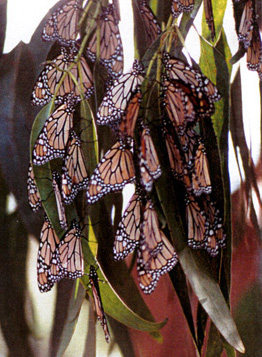
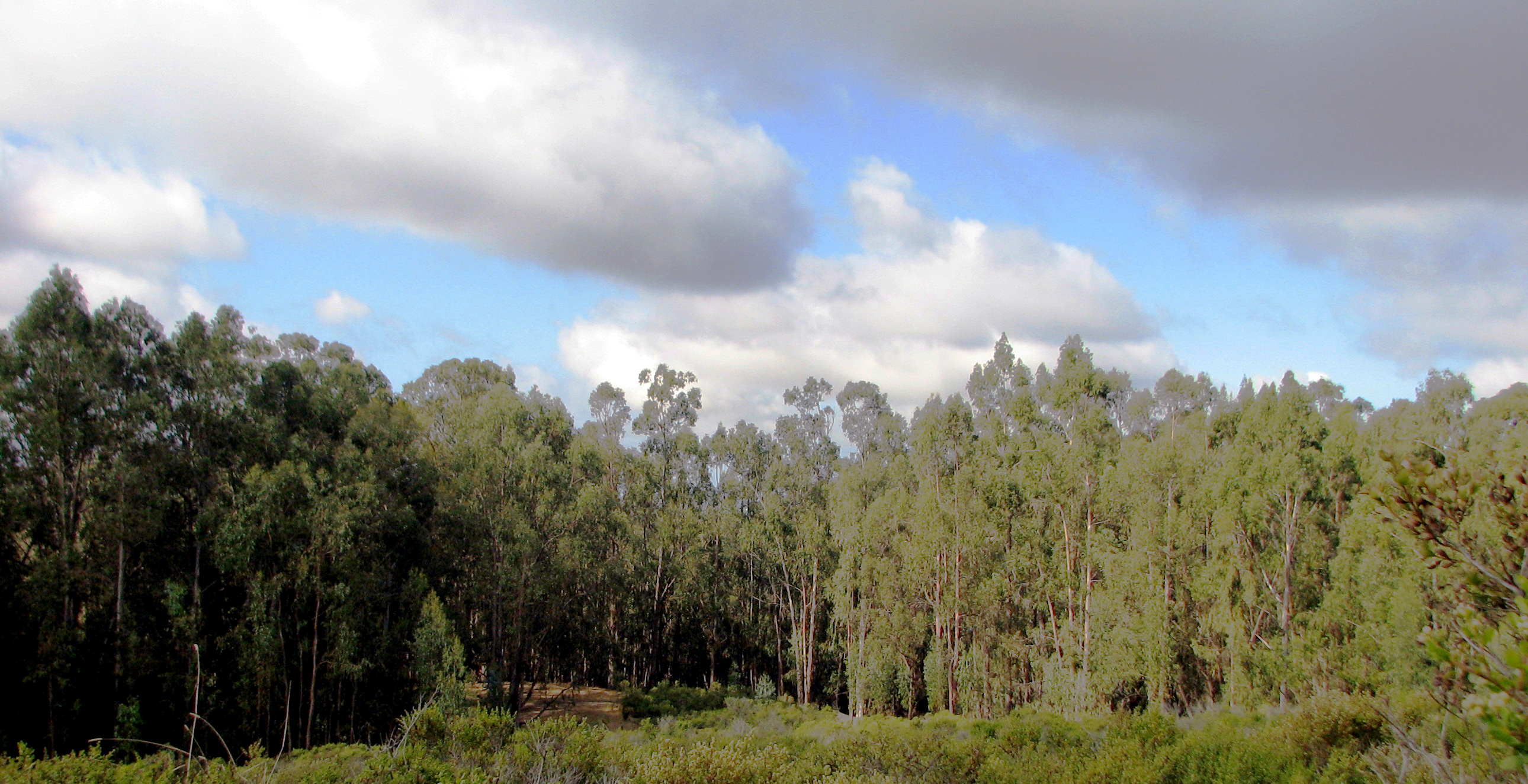
Monarch butterflies over-winter in California’s eucalyptus groves
The East Bay Express has published an op-ed in defense of the much maligned eucalyptus. “The Eucalyptus is Part of California” is by Gregory Davis, a Berkeley resident. We summarize the main points for our readers:
University of California, Berkeley’s plan to destroy all non-native trees—primarily eucalyptus, Monterey pine, and acacia—is characterized as a “meat-axe approach.”
Applying herbicides repeatedly to prevent regrowth of non-natives is “tantamount to opening a can of worms.” We don’t know the consequences of dousing our public land with toxic chemicals, just as we didn’t know that using Agent Orange during the War in Vietnam would permanently damage that country and its citizens.
The moderate approach advocated by the Hills Conservation Network is more reasonable. Thinning and selective removal will do less damage.
Flammability of eucalyptus groves has been greatly exaggerated.
Eucalyptus has lived in California longer than most of us have been alive. They are more native than we are.
The loss of the “beauty and majesty” of eucalyptus in the hills will make hiking in the East Bay hills a less pleasant experience. “Anyone who has hiked up the trail under the green canopy of these tall, stately, plumed-top, evergreen trees knows how precious they are.”
Thank you, Mr. Davis, for writing this article and to the East Bay Express for publishing it. Critics of the native plant movement are learning that they must speak up if we are to save our trees. The projects that destroy our trees finally became so big and so visible, that more people are aware of them and are more willing to defend our trees.
We must tell our readers about the collateral damage of misguided attempts to manage nature more often than we would like. We prefer positive stories, but in the hope of a better future we must also inform the public of the unintended consequences of the many projects that are killing one species of plant or animal based on the mistaken assumption that another plant or animal will benefit.
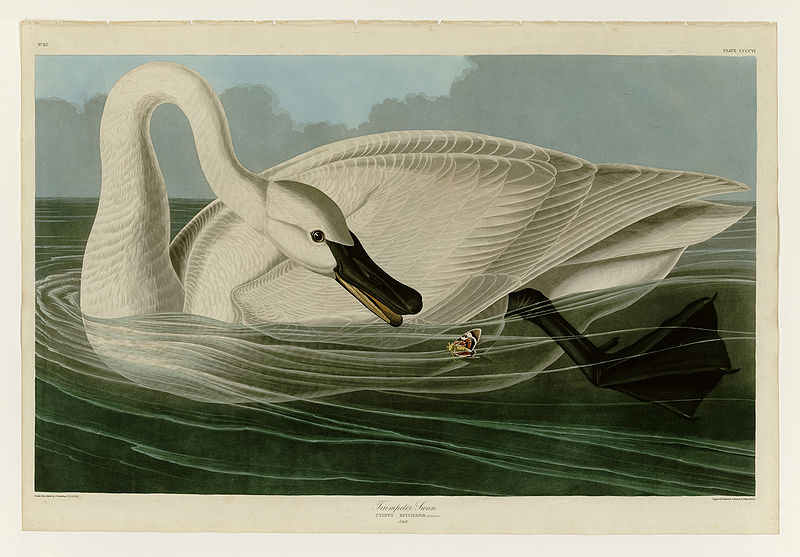
Trumpeter swan by James Audubon
In this case, a project sponsored by the Nature Conservancy decimated the population of rare Arctic grayling fish in Centennial Valley, Montana, by damming the streams to create ponds for the benefit of the equally rare trumpeter swan. The grayling had spawned in those streams and the population plummeted when the streams were dammed.
Unfortunately, they ARE trying it again. Now the scientists are trying to compensate for the damage to the grayling population by killing cutthroat trout that is considered a predator to the grayling. The cutthroat is not native, so that also makes it a candidate for eradication. It’s as though we are on a killing treadmill. One mistake seems to lead to another.
Stop and think before you shoot!
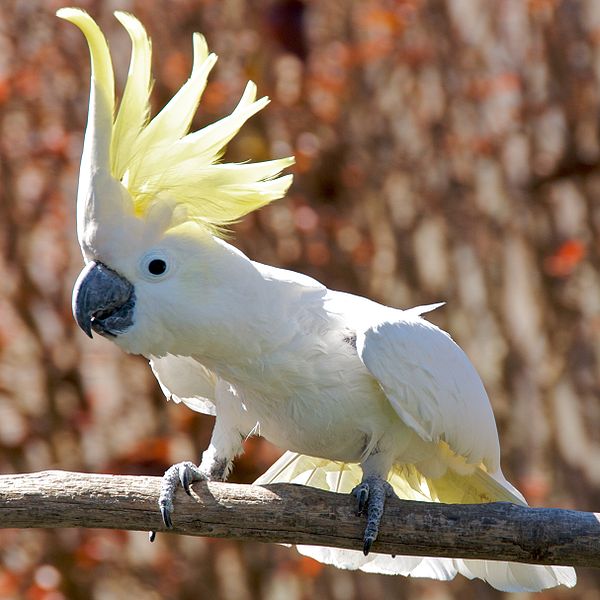
Cockatoo. Creative Commons
A bird lover in Hawaii takes a more thoughtful approach to the suggestion that introduced cockatoos and African parrots should be shot, based on the assumption that they are competing with the dwindling population of native birds. He points out that the native birds nest in the ground, while the cockatoos and parrots nest in cavities in the trees. Most of the native birds are nectar eaters, while the cockatoos and parrots eat seeds and nuts. So, he wonders if the introduced birds are really a threat to the native birds.
The exotic birds are either escaped pets or the descendents of them. The author of the article urges pet owners to take care of their pets and make a permanent commitment to their care. Releasing them into the forest is making them a target for people who think killing them would benefit other birds.
The author is not opposed to killing non-native animals when absolutely necessary, but he is at least willing to carefully consider if it is necessary, in his opinion. He is comfortable with the killing of rats, pigs, and feral cats, for example.
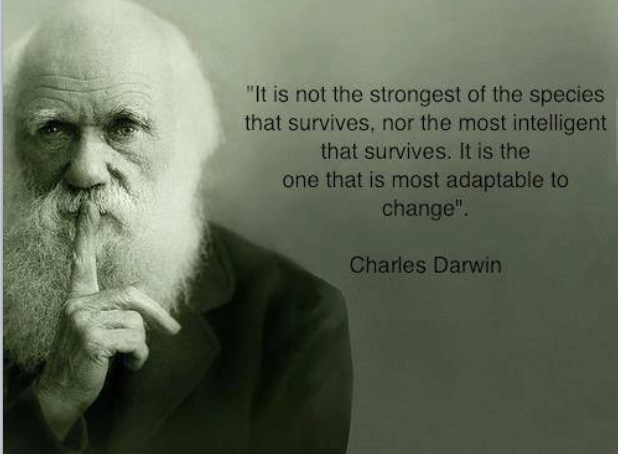
Million Trees takes this question a step further. We don’t think humans should micromanage nature. We don’t have enough information to presume to know better than nature what is best. We also have our own anthropomorphic criteria for which species is more important than another. Our judgment is self-serving and is not a substitute for the even-hand of nature. Nature follows the simple rule of “survival of the fittest.” Nature is as likely to save the lowly spider as it is to save the beautiful trumpeter swan.
A parable to illustrate the point
This parable, retold in Fanaticism of the Apocalypse (1) illustrates the futility of man’s attempt to control nature:
“Noah, as he is loading the animals onto the Ark, is alarmed by the large number of candidates. Mammals, birds, marsupials, penguins, primates, and lizards have already gone on board. The ass, the ox, the giraffe, the elk, the stag, the lion, and the cat urge the patriarch to raise the gangplank and close the hatches. The boat is chock-full, the cedar hull is about to crack open, the Deluge is threatening. Outside, a crowd of harmful or misshapen pests—cockroaches, toads, slugs, spiders—asks to be taken on. The toad speaks on behalf of his unsightly comrades: he pleads their cause with eloquence, pointing out to the Patriarch that they perform a useful function in nature. In God’s design, nothing is ugly or repugnant: everything is ingenious, even invertebrates, mollusks are necessary. No one has the right to destroy these creatures of the Lord. But Noah turns on his heel and decides to raise the anchor. Then a cloud of insects and pests assails him: fleas climb on his legs, crabs crawl in his pubic hair, lice swarm on his head, leeches, stinkbugs, and mosquitoes stick to his skin without him noticing them. Snakes slip into his flowing hair, spiders take up residence in his beard. That is how the whole bestiary was spared.”
We fiddle with nature at our own peril.
*****************************
(1) Pascal Bruckner, The Fanaticism of the Apocalypse, Polity, May 2013
Update: US Fish & Wildlife published the final rule designating critical habitat for Franciscan manzanita on December 20, 2013. 230.2 acres of land in San Francisco have been designated as critical habitat: 46.6 acres of federal land, 172.8 acres of parks owned by San Francisco’s Recreation and Parks Department, and 10.8 acres of private land. The complete document is available here. The document responds to public comments and explains any differences between the proposed designation and the final rule. It makes interesting reading.
************************************
We have just learned—belatedly—that US Fish & Wildlife has reopened the public comment period for the designation of critical habitat for the endangered Franciscan manzanita in San Francisco’s public parks. The new public comment deadline is July 29, 2013. The announcement tells us that public comment period has been reopened for the following reasons:
Acreage of critical habitat has been revised to correct previous errors
Seventy-three acres of San Francisco’s city-managed parks have been added “at the request of the staff of the Recreation and Park Department.”
The National Park Service and the Presidio have both asked that some of their property be removed from the designation of critical habitat.
A Draft Economic Analysis has been added: “…total potential incremental economic impacts in areas proposed as critical habitat over the next 20 years (2013 to 2032) will be approximately $28,222 ($1,411 annualized)…” Given that the cost estimate for the recovery plan for the closely related Raven’s manzanita (and lessingia) was estimated as $23,432,500 in 2003, we consider this cost estimate for reintroduction of Franciscan manzanita ridiculous.
Does San Francisco’s Recreation and Park Department understand that the Endangered Species Act provides the same legal protection for reintroduced species as it does naturally occurring endangered species, such as the red-legged frog and the San Francisco garter snake at Sharp Park? The Recreation and Park Department was recently ordered by a federal judge to pay $386,000 of legal expenses of organizations that sued the Department on behalf of these endangered species. The Department would be wise to consider that such suits on behalf of Franciscan manzanita would be likely if the Department does not conduct prescribe burns and/or does not destroy all trees in critical habitat because both are required for the survival of this species.
We are reprinting below our original article of October 23, 2012, describing the horticultural requirements of Franciscan manzanita and our concerns about its reintroduction in the city-managed parks of San Francisco.
In addition to the conferral of endangered status, US Fish & Wildlife has designated 318 acres of land in San Francisco as critical habitat for the Franciscan manzanita. Critical habitats are places where the endangered plant is either known to have existed in the past or they are places that provide what the plant needs to survive.
Five of the eleven places in San Francisco designated as critical habitat are on federal land in the Presidio. (Details about all the critical habitats are available here.) Forty of the 318 acres are on private land. Six of the critical habitats are in 196 acres of San Francisco’s city parks:
Corona Heights
Twin Peaks
Mount Davidson
Glen Canyon Park (erroneously called Diamond Heights by US Fish & Wildlife)
Bernal Hill Park (erroneously called Bernal Heights by US Fish & Wildlife)
Bayview Hill Park
The taxonomy of manzanita is ambiguous
There are 96 species of manzanita in California (1). The ranges of most of these species are extremely small because the manzanita hybridizes freely and therefore adaptive radiation has resulted in a multitude of species, sub-species, and varieties that are adapted to micro-climates. Many of these species are locally rare, which is consistent with the fact that 6 species of manzanita have already been designated as endangered, two of which are limited to the San Francisco peninsula: Raven’s manzanita and Franciscan manzanita.
The genetic relationship between these two species of manzanita is ambiguous, which is reflected in the constantly shifting opinions of biologists about the taxonomy (species classification) of manzanita. The 2003 Recovery Plan for Raven’s manzanita recounted the long history of these shifting views. For some time, Raven’s and Franciscan manzanitas were considered the same species. Then, for an equally long time, they were considered sub-species of the same species, Arctostaphylos hookeri. It was not until 2007, that Raven’s was reclassified as a sub-species of Arctostaphylos montana. Presently, Franciscan manzanita is classified as its own species, Arctostaphylos franciscana.
Clearly, this history of the biological opinion regarding these two species of manzanitas suggests they are closely related and morphologically (AKA anatomically) similar. The Recovery Plan concludes, “The idea of ‘pure’ species in Arctostaphylos, with its many poorly defined taxa and prevalent hybridization has often been difficult to apply over the history of taxonomic work in the genus.”
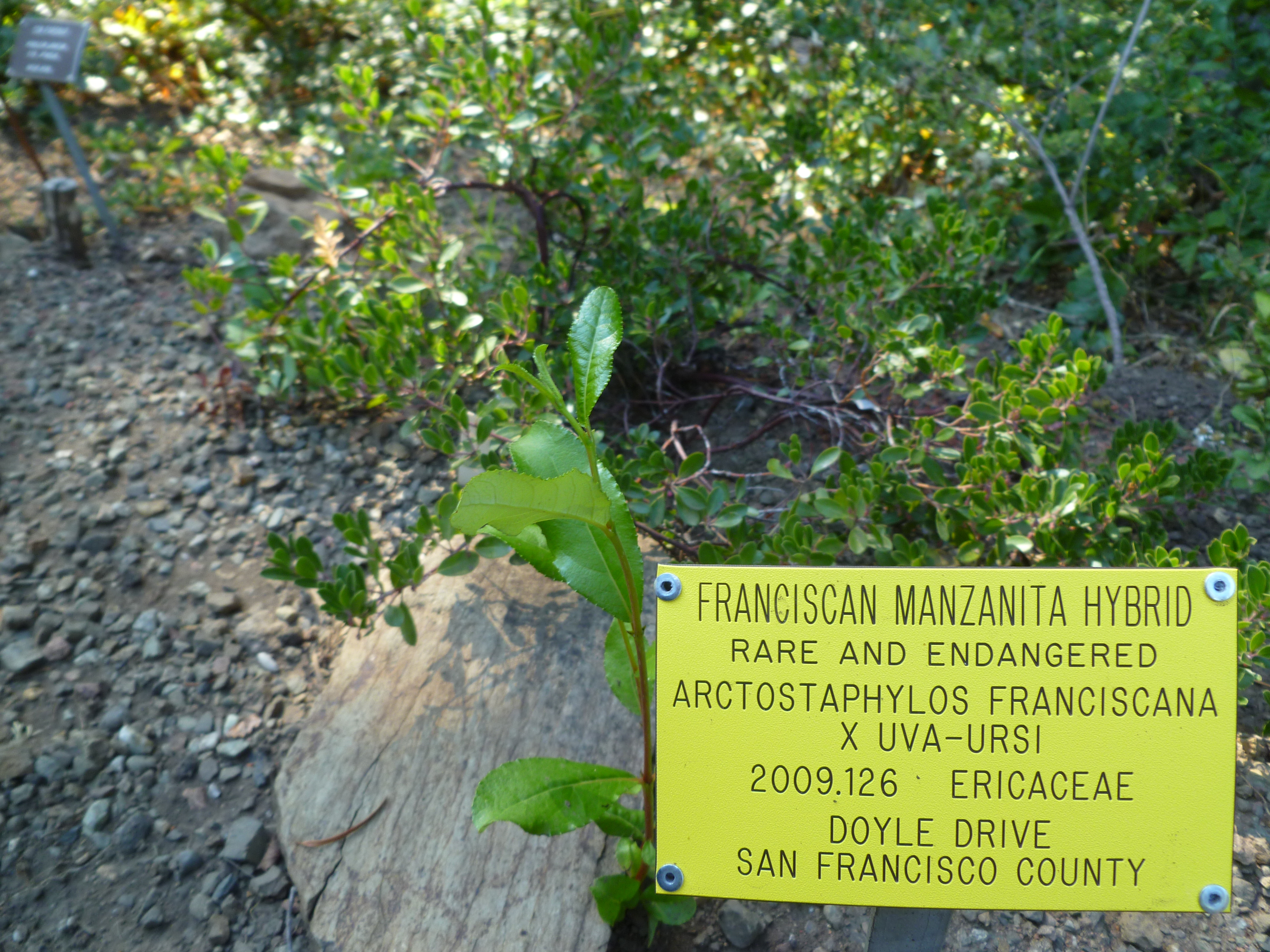
To add to the confusion regarding the provenance of Franciscan manzanita, some biologists are of the opinion that the individual plant that was discovered on Doyle Drive is actually a hybrid, not a pure-bred Franciscan manzanita. The East Bay Regional Park District botanical garden in Tilden Park has planted a clone of the individual plant from Doyle Drive. It is labeled as a hybrid of Arctostaphylos uva-ursi, which is one of the few species of manzanita with a wide range.
This is the label on the “Doyle Drive” manzanita in Tilden Park Botanical Garden, indicating that it is a hybrid.
The park ranger who led us to this plant in the Tilden garden, pointed out that the plant is morphologically distinct from the Franciscan manzanita that has been resident in that garden for about 50 years. He expressed his opinion that the Doyle Drive manzanita was properly labeled as a hybrid.
In what sense is the Franciscan manzanita “endangered?”
Franciscan manzanita has been available for purchase in nurseries for about 50 years. It has been propagated by taking cuttings and therefore they are presumed to be genetically identical clones. However, given that this plant has been sold to the public for a long time, we have no way of knowing exactly where they have been planted or if some have successfully reproduced by germinating seeds. For all we know, this plant is thriving somewhere, perhaps even in a place we might call “wild.” Perhaps the plant found on Doyle Drive was purchased in a nursery!
The individual plant found on Doyle Drive has been defined by USFWS as Franciscan manzanita despite the fact that some biologists consider it a hybrid of another species. We understand that the motivation for designating this individual as an endangered species and providing it with critical habitat is based on an assumption that it is genetically different from the Franciscan manzanita that can be purchased in nurseries and that the chances of survival of the species may be improved by cross-fertilization of these two plants such that greater genetic diversity results from their union.
Yet we are offered no evidence of the genetic composition of the Doyle Drive individual or Franciscan manzanita sold in nurseries. Nor are we provided any evidence that the Doyle Drive individual is even a genetically “pure” Franciscan manzanita rather than a hybrid of another species altogether.
If we weren’t being asked to devote 318 acres of land to the propagation of a plant with such ambiguous taxonomy, we might not question how little information we have been provided. The technology of mapping the genome of this plant is available to us. Why aren’t we making use of this technology to resolve these ambiguities? The cost of planting 318 acres with this endangered plant far exceeds the cost of such genetic analysis.
We aren’t told what it will cost to plant 318 acres with this endangered plant, but we know that the cost of the recovery plan for Raven’s manzanita and lessingia was estimated as $23,432,500 in 2003. Presumably that is an indication that the proposal for Franciscan manzanita will be a multi-million dollar effort. The cost of transplanting the single plant from Doyle Drive to the Presidio was reported as over $200,000. (1)
Thirty years of endangered status for Raven’s manzanita has not saved this plant
We have already made the point that Raven’s and Franciscan manzanitas are closely related. In its proposal for the designation of critical habitat for Franciscan, USFWS confirms this close relationship by referring us to the Recovery Plan for Raven’s. In other words, the characteristics and horticultural requirements of these two species are so similar that a separate Recovery Plan for Franciscan is not necessary. The Recovery Plan for Raven’s is applicable to Franciscan.
Therefore, we should assume that the fate of the recovery effort for Franciscan will be similar to that for the Raven’s. Raven’s was designated as endangered in 1979. Its first recovery plan was published in 1984 and the second in 2003. Many 5-year reviews of its endangered status have been done during this 33 year period. The most recent 5-year review was published in June 2012; that is, very recently.
So what does USFWS have to show for 33 years of effort to save Raven’s manzanita from extinction? Almost nothing:
Clones of the single plant in the wild exist in several botanical gardens. These clones are genetically identical and their growth in maintained gardens does not meet ESA standards for recovery.
“The wild plant has been observed to set seed although no natural seedling establishment is known to have occurred.” (6)
The plant has been the victim of twig blight several times, but the fungus cannot be treated because it would damage the mycorrhizal fungi in the soil upon which the plant is dependent.
The seeds depend upon animal predators for dispersal which are largely absent in an urban area.
The pollinators of manzanita have not been identified and therefore there is no assurance that they still exist in this location.
The 5-year review concludes that: “…recovery sufficient to warrant full delisting is not projected in the foreseeable future for [Raven’s manzanita] and may not be possible.”
We can’t appreciate the significance of the utter failure of this effort without some mention of the extreme methods used to overcome these obstacles.
The seed of manzanita is germinated by fire. However, the exact relationship between fire and germination is not known. Therefore, many complex experiments have been conducted on the few viable seeds produced by the Raven’s manzanita in a futile effort to determine the winning combination. These experiments are described in detail in an article in Fremontia (1). In short, various combinations of fire, heat, cold, smoke, liquid smoke, etc., were tried and failed to determine exactly what triggers germination of manzanita seeds.
We should remind our readers of the legal definition of “recovery” according to the Endangered Species Act. According to the 5-year review for Raven’s manzanita, here are two of the criteria for recovery toward which there has been no progress in 33 years:
“At least five spontaneously reproducing variable populations are established in reserves…in San Francisco…”
“At least two sexually reproduced generations are established within the Presidio.”
Frankly, it is no longer credible to expect the recovery of Raven’s manzanita and this failure implies the same fate for Franciscan manzanita.
Can the public parks of San Francisco meet the horticultural requirements of Franciscan manzanita?
The public parks of the City of San Francisco cannot meet the horticultural requirements of the Franciscan manzanita because it requires fire to germinate its seeds.
All of the critical habitats proposed by USFWS in San Francisco’s public parks are designated “natural areas.” According to the DRAFT Environmental Impact Report of the “Significant Natural Resource Areas Management Plan,” prescribed burns are prohibited in the natural areas. Therefore, unless there are unplanned wildfires in the six public parks proposed as critical habitat, it will not be physically possible to “spontaneously reproduce” this plant, as required by the Endangered Species Act.
Granted, the City of San Francisco could revise its management plan for the natural areas to allow—or even require—prescribed burns in the six parks proposed as critical habitat. In that case, the citizens of San Francisco would be subjected to air pollution and risk of causing an uncontrolled wildfire in surrounding residential communities. The Natural Areas Program would be subject to even more criticism than it already endures.
The Natural Areas Program is extremely controversial in the City of San Francisco because it destroys healthy non-native trees, it sprays pesticides on non-native vegetation in public areas, it destroys the habitat of wildlife, and it limits the public’s recreational access to trails which are often fenced. Subjecting the natural areas to prescribed burns is surely the bridge too far for the public which would jeopardize the future of the entire program. Why would the City of San Francisco be willing to push the public over the edge by requiring prescribed burns in six urban parks in densely populated residential communities?
Furthermore, some of the proposed critical habitat is in heavily forested areas, which are not compatible with the requirement of manzanita for full sun. As they were on behalf of Raven’s manzanita, these trees would be destroyed. The City of San Francisco is already planning to destroy 18,500 trees over 15 feet tall to accommodate its desire to reintroduce native plants to forested areas. (3) How many more trees would need to be destroyed to accommodate Franciscan manzanita? How much more carbon dioxide would be released into the atmosphere by the destroyed trees?
Bayview Hill is one of the proposed critical habitats which are heavily forested. According to SNRAMP (3), 17.16 acres of Bayview Hill is forested. Given that Bayview Hill is the only proposed critical habitat which is outside the known historic range of Franciscan manzanita, the loss of 17 acres of trees does not seem a fair trade for a plant with few prospects for survival.
The proposed critical habitat in Glen Canyon Park (inaccurately called Diamond Heights by the proposal) is also forested in a portion of the 34 proposed acres of critical habitat. This is a park in which the destruction of trees is being hotly contested. The community in this park does not need the additional controversy of tree destruction for the sole purpose of planting an endangered species.
Proposed critical habitat in other city parks is likely to be controversial for other reasons, primarily because additional restrictions on recreational access will undoubtedly be required to protect this endangered plant. Bernal Hill is an example of a city park with a huge community of visitors who will undoubtedly be enraged by further loss of recreational access. They have already been squeezed by the restrictions imposed by the Natural Areas Program.
This proposal for critical habitat is not good public relations for the Endangered Species Act
The City of San Francisco is the second most densely populated city in the country. It is comprised of only 29,888 acres. There are only 3,317 acres of City-managed parks in the city. (2) The proposed critical habitat in City-managed parks is 196 acres, 6% of total City-managed park land in San Francisco.
Please ask yourself these questions:
Does it make sense for 6% of all City-managed park land to be permanently committed to planting an endangered plant which can be purchased in nurseries?
Does it make sense to confiscate 6% of all public parks for a plant the identity of which we are not certain?
Does it make sense to throw the public out of 6% of all public parks on behalf of a plant that will never be able to spontaneously reproduce unless there is an accidental wildfire?
We think the answers to these questions are no, no, and no. This is an ill-advised proposal which makes a mockery of the Endangered Species Act. This is an important law that is trivialized by a proposal that will be physically impossible to implement without endangering the public and damaging the environment.
Comments on the proposed critical habitats will be accepted until November 5, 2012. Comments may be submitted online at the Federal eRulemaking Portal at http://www.regulations.gov (Docket Number FWS–R8–ES–2012–0067) or by U.S. mail to:
Public Comments Processing
Attn: FWS–R8–ES–2012–0067
Division of Policy and Directives Management
U.S. Fish and Wildlife Service
4401 N. Fairfax Drive, MS 2042-PDM
Arlington, VA 22203.
*********************************
Bibliography
(1) Gluesenkamp, Michael, et al., “Back from the Brink: A Second Chance at Discovery and Conservation of the Franciscan Manzanita,” Fremontia, V37:4/38:1, 2009-2010
(2) Harnik, Peter, Inside City Parks, Trust for Public Land, 2000
(3) San Francisco Recreation and Park Department, “Significant Natural Research Area Management Plan (SNRAMP),” 2006
(4) San Francisco Recreation and Park Department, “DRAFT Environmental Impact Report for SNRAMP,” 2011
(5) USFWS, “Designation of Critical Habitat for Franciscan Manzanita,” September 5, 2012
(6) USFWS, “5-Year Review of Endangered Status of Raven’s Manzanita,” June 2012
(7) USFWS, “Recovery Plan for Coastal Plants of the Northern San Francisco Peninsula,” 2003
Some years ago we set up a few Google alerts on the topics we cover on Million Trees so that we would be informed of new developments. One of those Google alerts was “invasive species.” We receive a daily barrage of articles about the international crusade against non-native plants. Once in a great while we are also treated to a small voice of reason in this otherwise unreasonable crusade.
Nanaimo, Briish Columbia
Here is a letter to the editor of the Nanaimo News Bulletinin Nanaimo, British Columbia, Canada written by someone responding to a local attempt to eradicate non-native plants, AKA “invasive species.” We could have written this letter ourselves. It represents our viewpoint perfectly.
Published: April 23, 2013 7:00 AM
“To the Editor,
Re: City leading attack on invasive plants, April 18.
Once they were weeds, and we got rid them when they were in our way.
Now they’re “invasive species”, and we’re urged to get rid of them even when they’re not in the way.
Why? Because they’re “alien.”
This, of course, is nonsense.
Nature doesn’t recognize man-made boundaries or discriminate between “native” and “alien” plants. Apart from a few well-known examples, most people don’t know the difference either. Most of the plants in our gardens are “alien.”
One of the favourite targets is Scotch broom. It’s claimed that broom crowds out native species, though we’re never told what they are. No wonder, since broom thrives on ground disturbed by human activity such as roadways and abandoned fields.
Far from being a nuisance, it’s a nitrogen-fixing plant that enriches the soil. One of the many myths spread about broom is that its pollen is an allergen.
Not so. A University of B.C. study has shown that its pollen grains are too large to cause an allergic reaction.
Now the City of Nanaimo wants to get rid of the blackberries that we look forward to in August and September. It’s the wrong kind of blackberry, apparently.
It has decided to designate May as “Invasive Plant Awareness Month” and is encouraging residents to remove the aliens from wherever they are.
Goodness knows what the city will look like after the eco-warriors have gone on the rampage with their brushhooks.
We do not live in an unchanging Garden of Eden. Nature is dynamic. Birds carry seeds over hundreds of miles and new plants grow where they didn’t grow before.
Human attempts to halt natural growth and development are arrogant and doomed to failure. By all means get rid of weeds on your property or on public land where they’re a nuisance.
Otherwise, let nature take its course, and don’t feel you’re somehow saving the planet by hacking away at a plant just because it’s on an “alien” hit list.
Gregory Roscow
Nanaimo”
If you share this viewpoint without expressing it when confronted with the relentless public relations campaign in support of destructive “restoration” projects, we urge you to speak up. There are many of us who object to these destructive projects, but few are expressing their concern about the loss of ecologically valuable plants and trees.
Many thanks to Mr. Roscow for his eloquent defense of defenseless plants in Nanaimo, British Columbia.
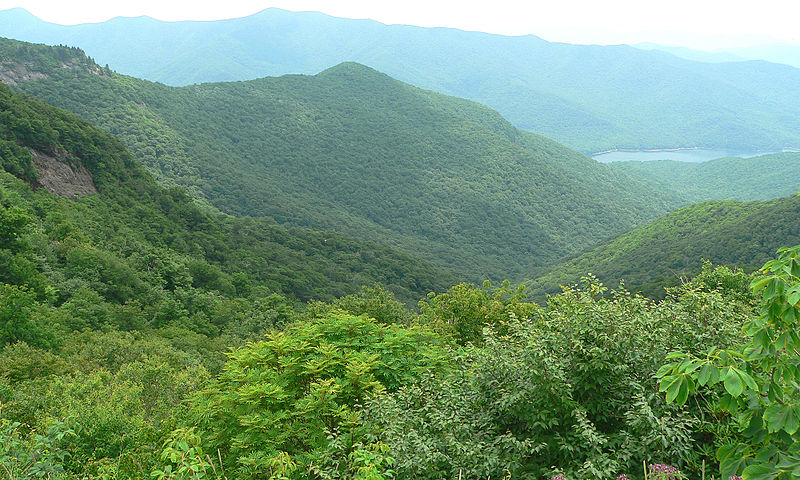
This is a story that passes for good news at a time of global warming. A new study based on data from 21 broadleaf forests in northern latitudes over a 20 year period reports that forests in some places seem to be capable of achieving normal rates of growth while using less water. For the moment, the assumption is that increased levels of carbon dioxide are essentially acting as a fertilizer, promoting growth with less water. This suggests that at least in some locations, it might be possible for forests to survive through the droughts caused by climate change.
Broadleaf forest. Blue Ridge Parkway
Like most changes in the environment, there are pros and cons to forests using less water because forests recycle the water into the atmosphere where it becomes rain clouds. If the forests take up less water, they will probably supply less moisture to agricultural areas downwind of the forests.
Where forests exist on the perimeters of their climatic ranges, they are not faring as well. In the American West, for example, there are massive tree die-offs caused by less rainfall and snow as well as beetle infestations where temperatures are no longer cold enough to kill them in the winter.
Scientists had predicted some growth benefit from higher levels of carbon dioxide, but this study found the benefit to be far greater than previously predicted. Higher growth rates also predict that forests will be capable of absorbing more carbon dioxide because carbon storage is mainly proportionate to biomass.
Trees absorb carbon dioxide through the pores in their leaves, called stomata. Scientists hypothesize that trees don’t need to open their pores as wide when carbon dioxide levels are higher. Since moisture is lost when the pores open, less moisture is lost if the pores don’t open as wide. That’s the working theory of this new research.
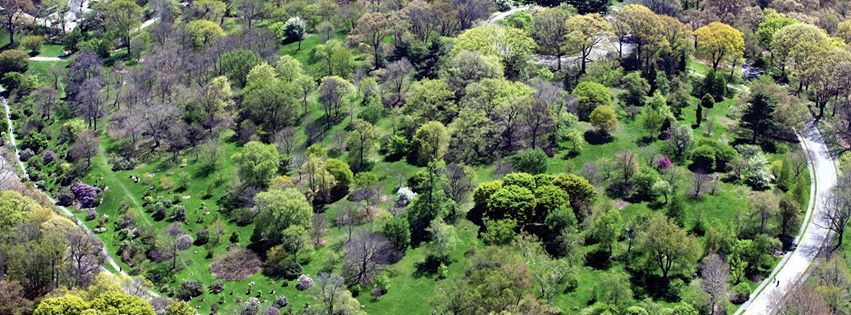
Harvard Arboretum
The forest at the Harvard arboretum was one of the forests included in this study. It has the longest continuous record of forest growth in the world.
Many questions remain. Which species are becoming more efficient in their water use? Are there intervening factors that are reducing water use? Will this trade-off between water use and carbon dioxide levels have an upper limit?
With great pleasure we share with our readers the following letter from Professor Joe R. McBride to Phil Ginsburg, the General Manager of San Francisco’s Recreation and Park Department, expressing his criticism of the plans of the Natural Areas Program to destroy 1,600 trees on Mount Davidson.
Joe McBride is Professor of Environmental Science in the College of Natural Resources at University of California, Berkeley and an expert on urban forestry in the San Francisco Bay Area and around the world. He is the author of many studies of urban forests, several of which he cites in his letter to the General Manager. He is particularly expert on the failure of trees caused by extreme wind conditions.
Professor McBride kindly accepted the invitation of several neighbors of Mount Davidson to read the plans of the Natural Areas Program (SNRAMP) for Mount Davidson and tour the mountain with them to evaluate those plans within the context of the actual conditions there. The neighbors and all lovers of the urban forest are extremely grateful to him for his time and willingness to share his expertise and decades of experience with us to help us save this beautiful forest from being needlessly destroyed.
*************************
June 29, 2013
Mr. Phil Ginsburg
General Manager
San Francisco Recreation and Park Dept.
San Francisco, CA 94117
Re: Significant Natural Resource Areas Management Plan for Mt. Davidson Park
Dear Mr. Ginsburg,
I am writing to express my concern over the plan for removal of trees on Mt. Davidson. This concern is based on the historical importance of the trees, their contribution to San Francisco landscape, and several specific aspects of the Significant Natural Resource Areas Management Plan for San Francisco. As a Professor of Urban Forestry at the University of California I have for many years studied plantations of trees in the city and compiled several reports for the U.S. Army, National Park Service, Presidio Trusts, and the Golden Gate Conservancy concerning the condition and management of eucalyptus, Monterey pine, and Monterey cypress stands. My concern over the proposed management plan for Mt. Davidson is based both on my experience in urban forestry and on my experience as a citizen of the Bay Area who has enjoyed the urban forests of San Francisco for many years. These concerns are elaborated in the following paragraphs.
The eucalyptus and Monterey cypress on Mt. Davidson were planted under the direction of the former Mayor of San Francisco, Adolph Sutro. He was also responsible for planting other areas in the city that have subsequently become city parks. The plantations he established have served to protect park users from the wind, provide wildlife habitat, and in some cases define the visual character of the San Francisco landscape. They present an important historical heritage that I think should not be discarded lightly. I found no mention of the historical significance of the Mt. Davidson forest in justification for the proposed management in the Natural Areas Resource Management Plan for San Francisco. San Francisco might review the vegetation management plan developed by the Presidio Trust for the National Park Service to see the approach taken at the Presidio to maintain and manage historically significant forest plantations.
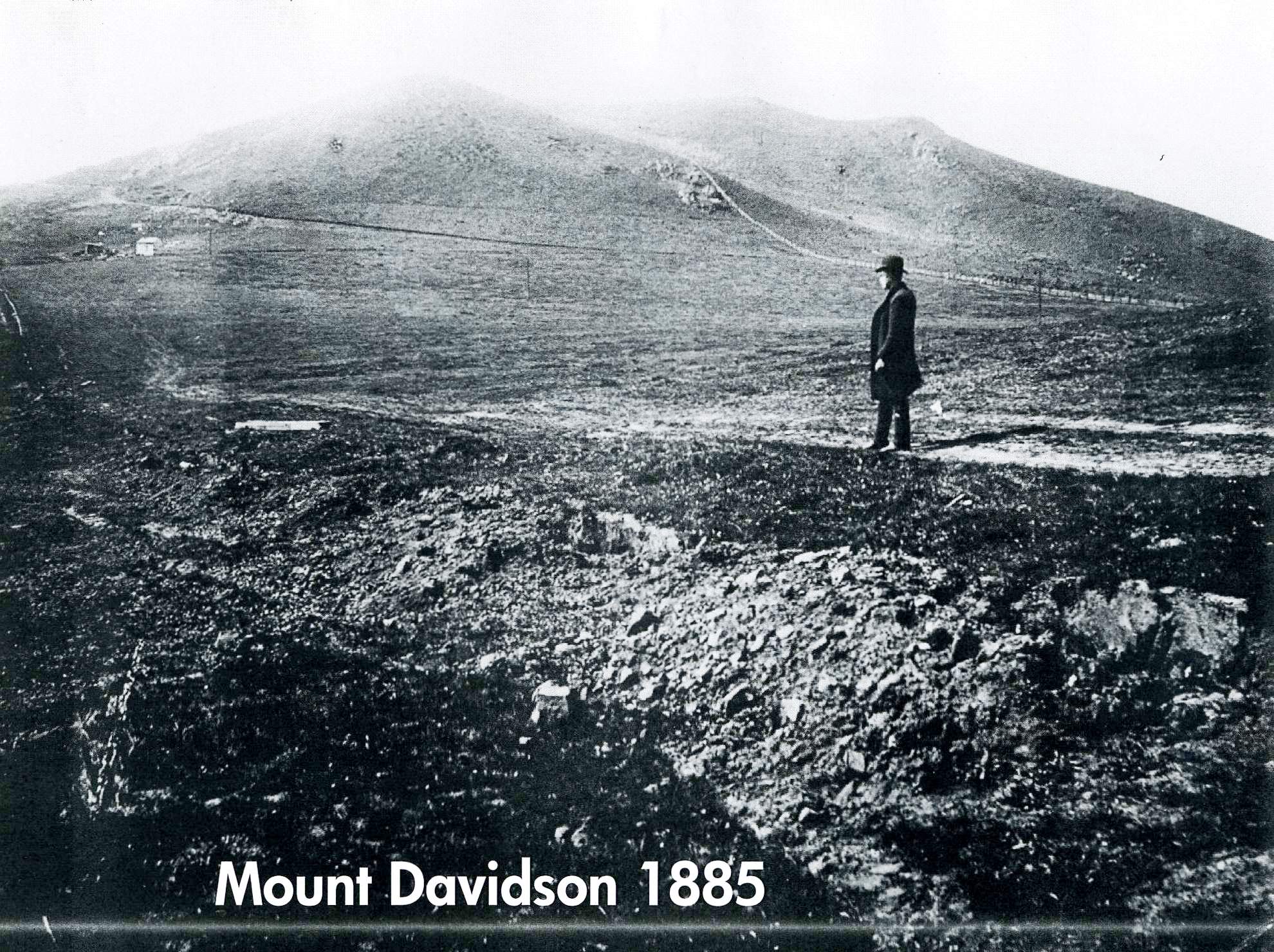
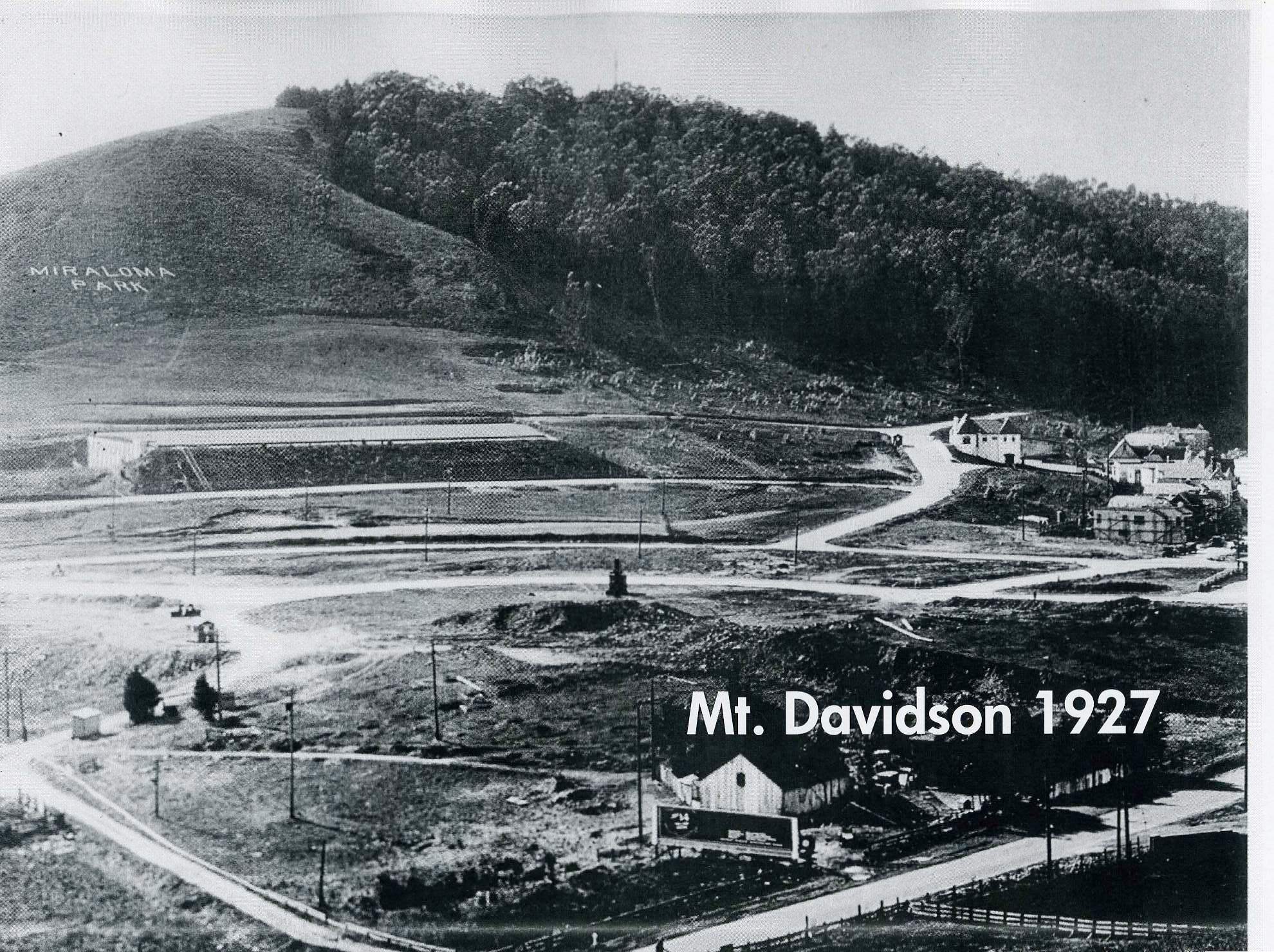
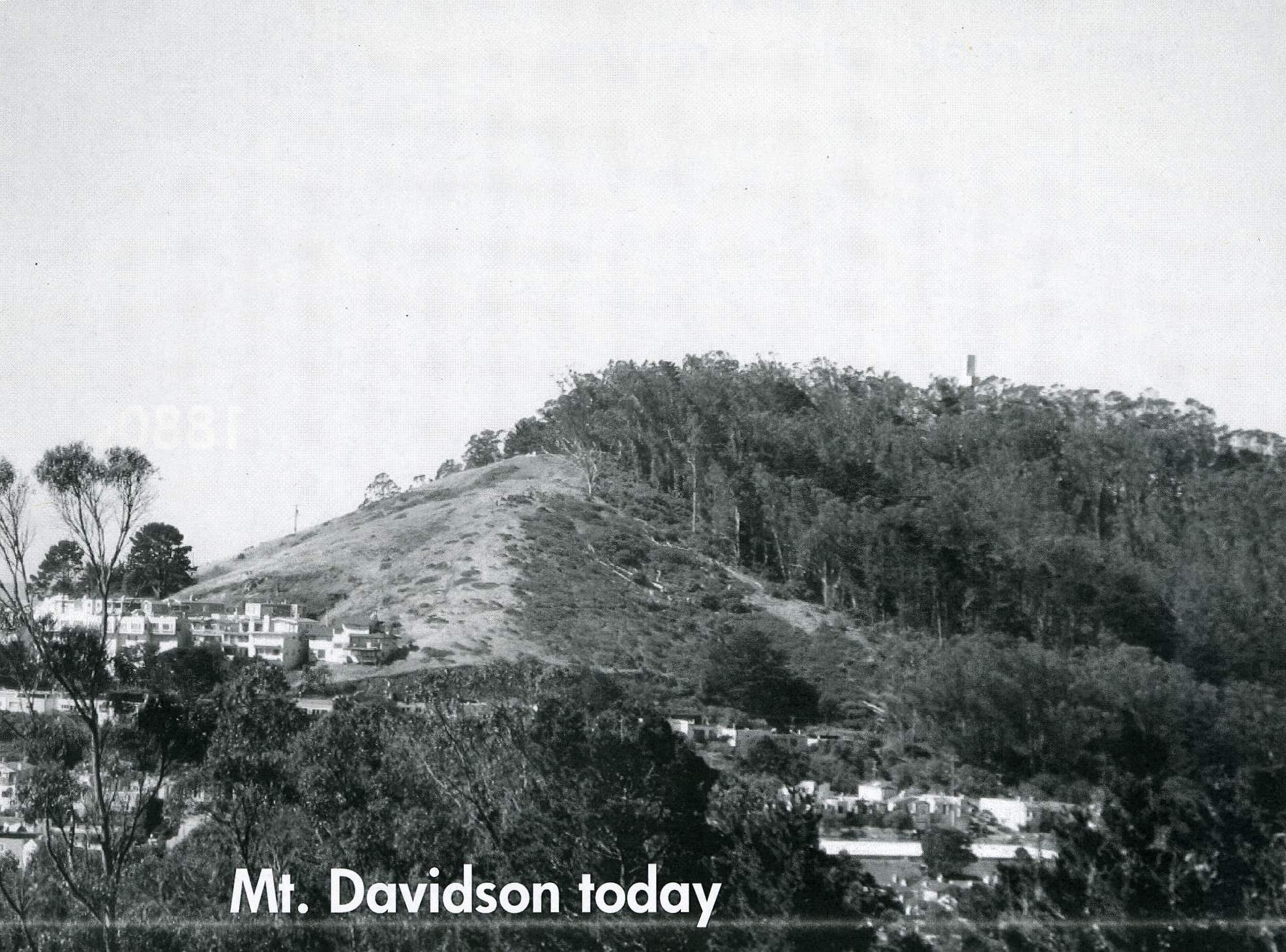
From a number of vantage points in San Francisco one can see several of the city’s hilltops covered in plantations of eucalyptus and Monterey cypress. These plantations stand in contrast to the architecture that surrounds them. They have been part of the San Francisco landscape for over one hundred years. Eucalyptus plantations are as much a part of the California landscape as the coastal grassland, chaparral, and oak woodland plant communities for many people growing up in the Bay Area. I did not find the visual value of the eucalyptus and Monterey cypress plantations on Mt. Davidson addressed in the plan. I was, however, alarmed by the use of the term ”invasive forest” in reference to eucalyptus plantations. This is a pejorative term that should not be applied to eucalyptus plantations. I have found little evidence of eucalyptus invading adjacent areas of grassland or other native vegetation types in the San Francisco Bay areas in studies I conducted in open space areas (McBride, Sugihara, and Amme, 1987; McBride, Cheng, and Chorover, 1989; Cheng and McBride, 1992; Russell and McBride, 2003). Comparison of photographs of Mt Davidson taken in the 1920s and 1950s show no evidence of the eucalyptus invading the adjacent grassland area (Proctor, 2006). These photographs indicate that a stable boundary exists between the eucalyptus plantation and the adjacent grassland. I see no justification for the establishment of a stable boundary between the eucalyptus and grassland habitats as called for in the “Site Improvements” section of the Significant Natural Resource Areas Management Plan.
My concerns over the management plan for the eucalyptus and Monterey cypress plantation on Mt. Davidson are based on portions of the Significant Natural Resources Areas Management Plan : 5. General Recommendations, 6.2 Mount Davidson, Appendix F Urban Forestry Statements. I am concerned with the justification for tree removal and the proposed levels (%) of trees to be removed.
Justification for Tree Removal
The primary justification for tree removal in the documents is the restoration of native habitat. Various statements are made concerning the minimal amount of habitat within the eucalyptus urban forest. This assumption is not supported by any data or reference to publications on this topic. Stebbins (1976) concluded that eucalyptus plantations in the East Bay were far richer habitats for vertebrates than either redwood or Monterey forest and that they vie with ‘dry’ chaparral and grasslands in species diversity and ’attractiveness’ to vertebrate species.
The general recommendation to maintain a basal area between 200 and 600 square feet per acre is appropriate. However, a conflict exists at Mt. Davidson where some stands (MA-1c) within the plantation currently have basal areas less than 200 square feet yet the plan proposes the removal of 82% of the trees. I think there is a problem with the use of tree density measured in eucalyptus stands in Glen Canyon Park in developing the proposed cutting of trees at Mt. Davidson. The point-quarter survey mentioned in Appendix F (Urban Forest Statements) of the Significant Natural Resources Areas Management Plan indicates a tree density of 353 trees per acre. Three eucalyptus plantations measured in the Golden Gate National Recreation Area had tree densities of 50, 98, and 726 trees per acre (McBride, Cheng, and Clausen, 2004). These numbers demonstrate the wide range of tree densities found within eucalyptus plantations in San Francisco. I estimated the tree density in stand MA-1c from Google Earth images of Mt. Davidson to range from 24 to 33 trees per acre. Trees in this stand average about 24 inches in diameter. Trees of this size with a density of 33 trees per acre would have a basal area of a little over 100 square feet per acre (103.6 square feet). No trees from the area designated MA-1c could be removed if the basal area recommendation was followed. The same would apply to stands MA-2e and MA-2c where recommendations are for removal of 23% and 31% respectively. I think a major shortcoming of the Plan is thatlack of stand-specific tree density data.
Various sections of the Significant Natural Resource Areas Management Plan justify tree removal as a means of allowing re-vegetation with native understory vegetation. Species commonly found in the understories of native forests and woodlands of the Bay Area are adapted to the low light intensity of these forests and woodlands. Removing the eucalyptus overstory up to 82% as proposed for area MA-1c will expose the ground surface to light levels that most native understory plants will not be able to tolerate. The management plan also points out that removal of eucalyptus will result in the promotion of growth of existing exotic understory species. These will no doubt, compete with any native species for the site. The suggestion that these exotic species will be controlled by manual removal and the use of herbicides indicates the City is prepared for a large investment of time and labor to combat these plants. Projects to eliminate exotic understory plants at the Presidio after overstories of Eucalyptus and Monterey cypress have been removed have proved to be very expensive and only partially successful.
The Significant Natural Resource Areas Management Plan states that the proposed forest management will not result in long-term changes in recreational use of the natural areas. I cannot agree with this conclusion. The proposed cutting of trees will increase the windthrow and wind breakage of the remaining trees. Trees that have grown up together in a plantation have buffered each other from the wind. When individuals are exposed by the removal of surrounding trees they are very vulnerable to the wind. This is well documented in studies of native forests and forests which have been thinned or opened for subdivision development (Franklin and Forman, 1987; McBride, 1999, 2002, 2003; Sinton et al, 2000). The tree fall and wind breakage hazard to walkers using the Mt. Davidson area after the proposed tree removal and thinning would, I believe, seriously compromise the use of the area for recreational purposes. The existing forest plantations currently contribute to the use of Mt. Davidson by walkers because of the reduction in wind velocity by the trees. Forest plantations studied at the Presidio and at Lands End significantly reduce wind velocity and protect people walking from uncomfortable wind chill effects (McBride, 2002; McBride and Leffingwell, 2003). Choice of coastal bluff trails at the Sea Ranch made by walkers is often dependent on the amount of protective cover from the wind provided by areas planted with Monterey cypress. The exposure of Mt. Davidson to winds from the ocean will result in a less pleasant recreational experience if trees are removed.
There is an assumption in the Significant Natural Resource Areas Management Plan that minimal impact will occur to species such as hawks and owls as a result of tree removal because the overall acreage of the forest will remain high. This is not a valid assumption for two reasons. First, hawks and owls choose specific trees for nesting and perching. These trees are chosen on the basis of their position in a forest stand and the structure of the tree. Nests are used by some species year after year so that the removal of a nesting tree can present a major problem for the specific bird using the tree. Avoiding the cutting of nest trees during the nesting season, but felling of these trees after the nesting season is a major impact that should not be part of the management plan. It is also important to not remove trees surrounding nesting trees. Most recovery plans for rare and threatened tree nesting birds require a protected area with a minimum radius of 300’ around a nesting tree. No trees can be removed within this zone.
In the “Site Improvements” section of the Significant Natural Resource Areas Management Plan it is suggested that the management proposals will improve the health of the eucalyptus forest. It is suggested that tree thinning will promote a more healthy forest. This certainly is true in densely stocked forest stands, but I did not observe conditions in the eucalyptus plantations where tree density required thinning. Several standing dead eucalyptus trees are present at Mt. Davidson, but the standing dead trees I examined had all been girdled. It was evident that some individual or individuals have had a vendetta against eucalyptus trees and had girdled trees in the past. I did not see any indication of natural mortality in the overstory of the plantations. Concern has been raised over the potential for ivy to grow up the trunks and eventually smother the eucalyptus trees. I have not observed this taking place in eucalyptus plantations in the East Bay. Ivy (English and Algerian) may climb the trunks of trees, but in my experience it does not have the capacity to grow over the smaller limbs and branches. There were a couple of eucalyptus snags completely covered by ivy at Mt. Davidson, but these snags were the result of girdling of the trees snags, not the growth of ivy. The ivy, Cape ivy, and the Himalayan blackberry in the under story of the eucalyptus plantation are restricting establishment of eucalyptus seedlings. I do not see this as a problem at the current age of the plantation. Perhaps in another hundred years an examination of the plantation could establish the need for regeneration. At this time in the life of the Mt. Davidson plantation I do not consider the lack of regeneration a problem.Removal of the exotic understory species at this time would reduce the habitat quality of the plantation, especially the removal of Himalayan blackberry that provides a valuable food source for many species.
I conclude that the Significant Natural Resource Areas Management Plan for the removal and thinning of different portions of the eucalyptus plantation on Mt. Davidson is not justified. The plantation serves an important role in the history and visual characteristics of the city. Trees and the existing understory provide habitat for wildlife and wind protection for walkers. The justifications for the management prescriptions have not been properly developed. Furthermore, the cost of removal of the trees seems unjustified in view of other priorities in the San Francisco budget.
Sincerely,
Joe R. McBride
Professor
CC: Mayor Edwin M. Lee
City and County of San Francisco Board of Supervisors
San Francisco Recreation and Park Commission
San Francisco Planning Commission
San Francisco Urban Forestry Council
Park, Recreation and Open Space Advisory Committee
Bill Wycko, Environmental Review Officer (Case No. 005.1912E)
Literature Cited
Cheng, S. and J.R. McBride. 1992. Biological Assessment of Mills Creek Riparian Corridor. Report to the California Department of Parks and Recreation. Monterey Co., CA 89p.
Franklin, J. and R.T.T. Forman. 1987. Creating landscape patterns by forest cutting: ecological consequences and principles. Landscape ecology 1:5-18.
McBride, J. R. 1999. Identification of areas of high windthrow potential at the Sea Ranch. McBride and McBride. Consulting Landscape Ecologists. Berkeley, CA.
McBride, J. R. 2002. Presidio of San Francisco Wind Study, First Phase. Report to the Presidio Trust. San Francisco, CA. 35 p.
McBride, J. R. 2003. Re-evaluation of the windthrow problem at The Sea Ranch. Report to the Planning Department. The Sea Ranch, CA. 6 p.
McBride, J. R. and J. Leffingwell. 2003. Effects of Forest Stands on the Microclimates of the Presidio. Report to the Presidio Trust. San Francisco, CA. 27 p.
McBride, J.R., N. Sugihara and D. Amme. 1987. Vegetation Assessment. In: D. Boyd (Ed.) Environmental assessment for Eucalyptus Removal on Angel Island. California Dept. Parks and Recreation, Sacramento, CA. pp 23-45
McBride, J.R., S. Cheng and J. Chorover. 1989. Natural Resources Assessment – Jack London State Park. Calif. Dept. Parks and Recreation. Sacramento, CA. 432 p.
Proctor, J. 2006. San Francisco’s West of Twin Peaks. Charleston, SC: Arcadia Publishing.
Russell, W. H. and J. R. McBride. 2003. Landscape scale vegetation-type conversion and fire hazard in the San Francisco Bay Area open spaces. Landscape and Urban Planning 64:201-208.
McBride, J. R. , S. Cheng, and J. Clausen. 2004. Vegetation management Strategy for Lands End, GGNRA. Report to the Golden Gate National Park Conservancy. San Francisco, CA
Sinton, D. S. et al. 2000. Windthrow disturbance, forest composition, and structure in the Bull Run Basin, Oregon. Ecology 81(9): 2539-2556.
Stebbins, R. 1976. Use of habitats in the East Bay Regional Parks by free-living vertebrate animals. August 1975. In “Vegetation Management Principles and Policies for the East Bay Regional Park District”. East Bay Regional Parks District. Oakland, CA.

 Conservation Sense and Nonsense