Parks for the future, not the past

East Bay Regional Park District is preparing to put a parcel tax on the ballot in 2018 that will extend the funding of park improvements for another 15 years.  The public has been invited to tell the park district what improvement projects should be funded by the parcel tax in the future.  We are publishing a series of such public comments that we hope will inspire the public to submit their own suggestions to the park district. 


TO:         publicinformation@ebparks.org

CC:         Board of Directors

FROM:  Park Advocate

RE:          Suggestion for Measure CC Projects

Climate change is the environmental issue of our time.  The climate has changed and it will continue to change.  If park improvement projects are going to be successful, they must have realistic goals that take into consideration the changes that have occurred and the changes anticipated in the future.

The restoration of native grassland is an example of a project that is not realistic, given current environmental conditions.  Grassland in California has been 98% non-native annual grasses for over 150 years.  Mediterranean annual grasses were brought from Mexico to California by the cattle of the Spaniards in the early 19th century.

David Amme is one of the co-founders of The California Native Grass Association and was one of the authors of East Bay Regional Park District’s “Wildfire Hazard Reduction and Resource Management Plan” while employed by EBRPD. In an article he wrote for Bay Nature he listed a few small remnants of native grasses in the East Bay and advised those who attempt to find them, “As you go searching for these native grasses, you’ll see firsthand that the introduction of the Mediterranean annual grasses is the juggernaut that has forever changed the balance and composition of our grasslands.”   That article is available HERE.

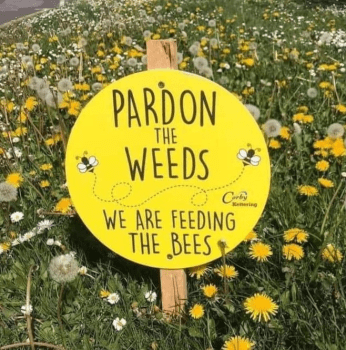
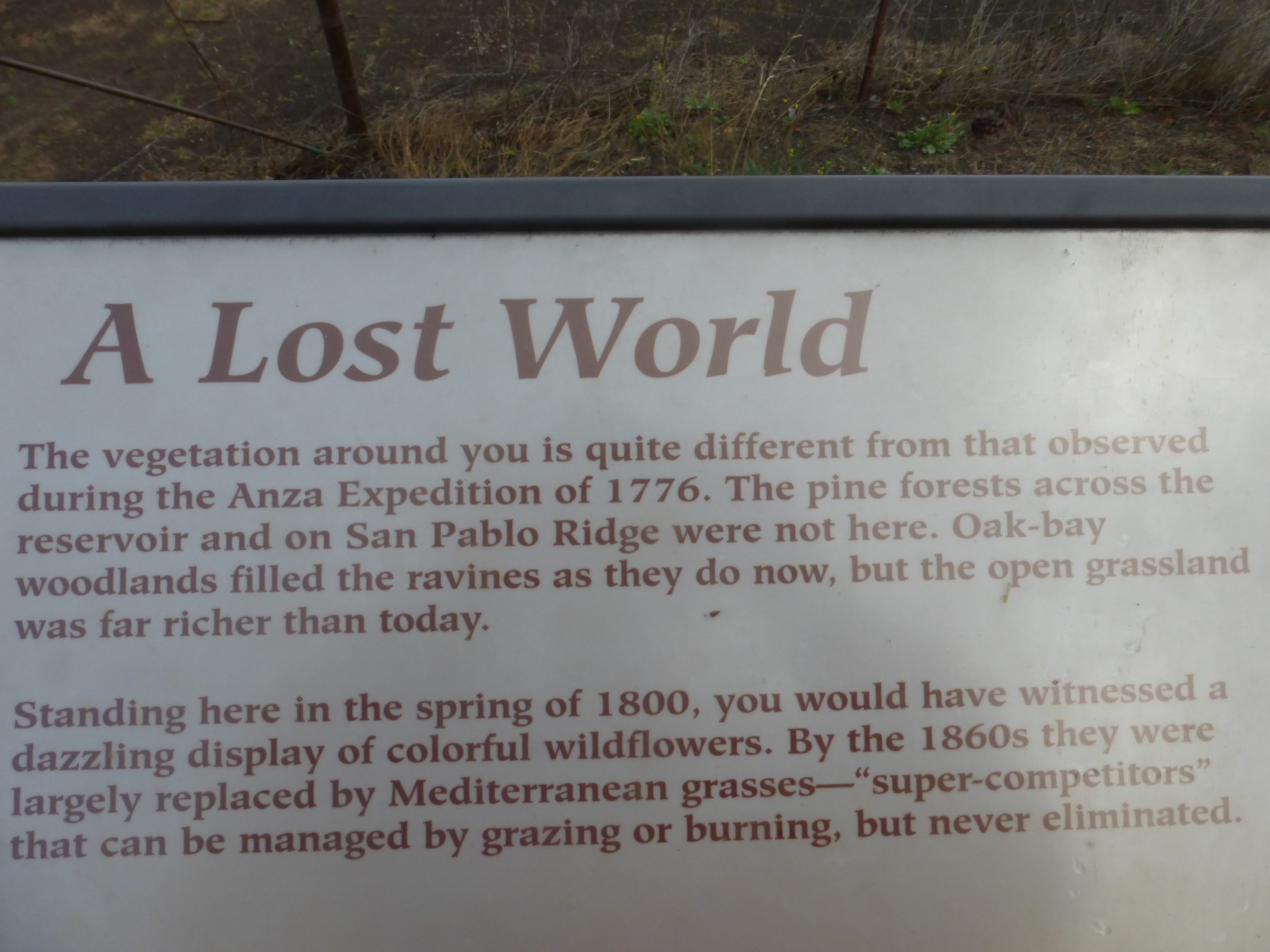
The park district seems to understand the futility of trying to transform non-native annual grassland to native bunch grasses.  Here are two signs in two of the EBRPD’s parks that acknowledge the reality of California’s grassland.
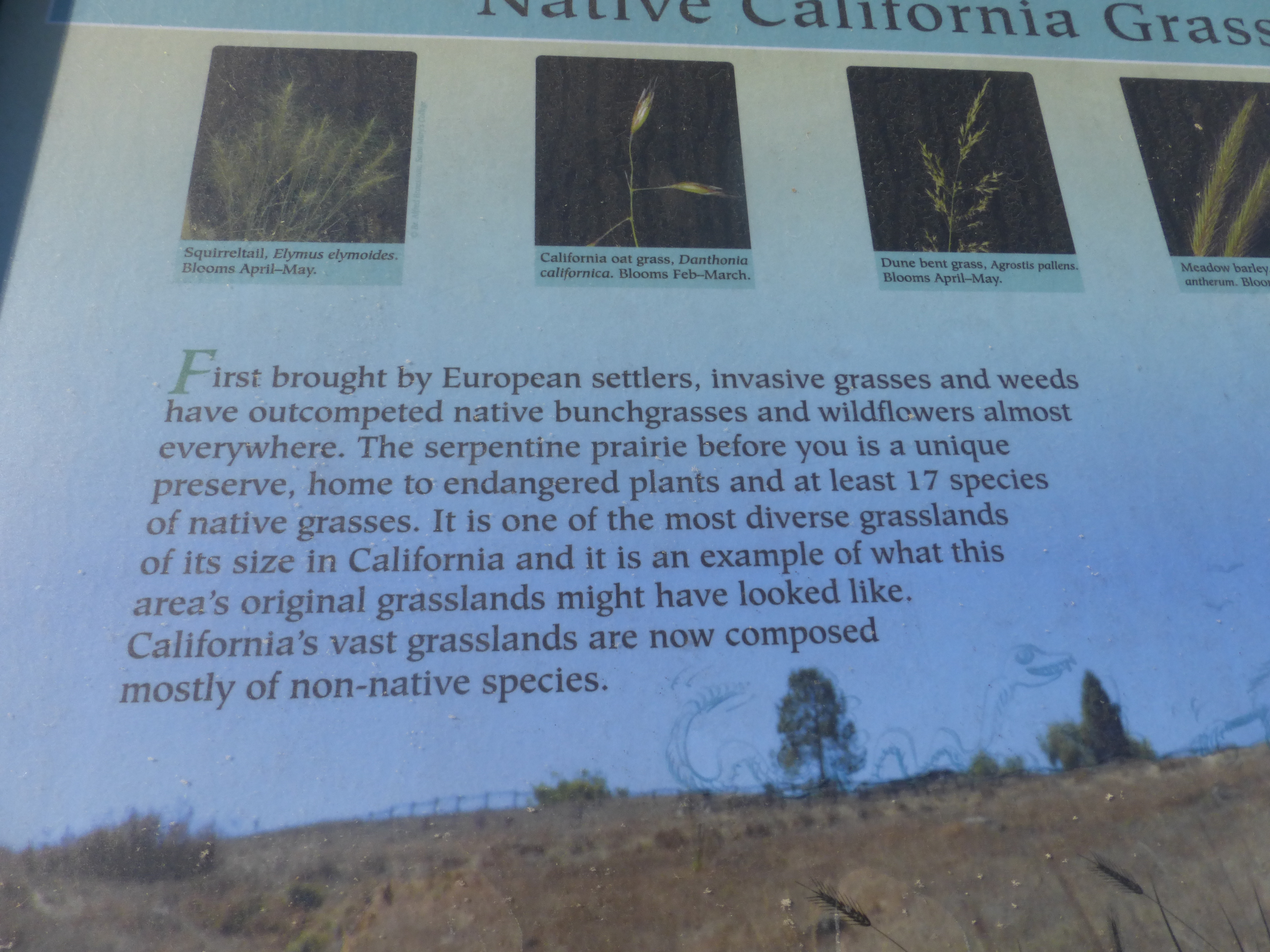
Serpentine Prairie, April 2017
Tilden Park, Inspiration Point, October 2016

Yet, despite this acknowledgement, the park district continues to expand its efforts to transform the parks into native grassland.  Park visitors recently observed a failed experiment to introduce native grasses to one of the parks.  Six plots of ground were fenced.  Two of the plots were control plots in which whatever non-native weeds had naturalized were allowed to grow unmolested.  Two of the plots were mulch/seeded with native grasses and two of the plots were fabric/seeded with native grasses.  There was no observable difference in plant composition or abundance between the seeded and unseeded plots.  There was no observable difference in the outcome of the two different seeding methods that were used.  In other words, native grasses were not successfully introduced to this park.  My correspondence with the EBRPD employee who was responsible for this project is attached.
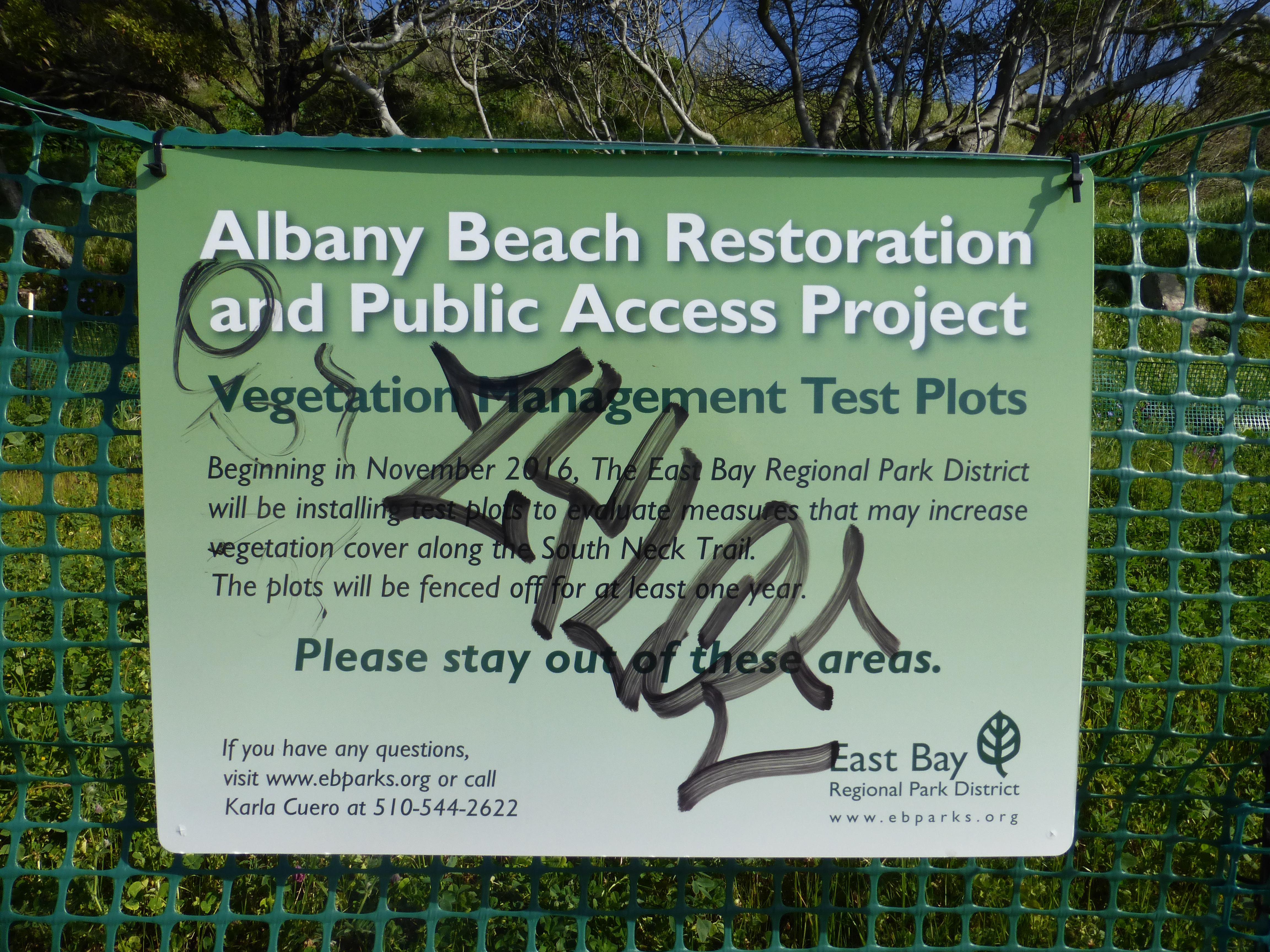
Albany Bulb, April 2017

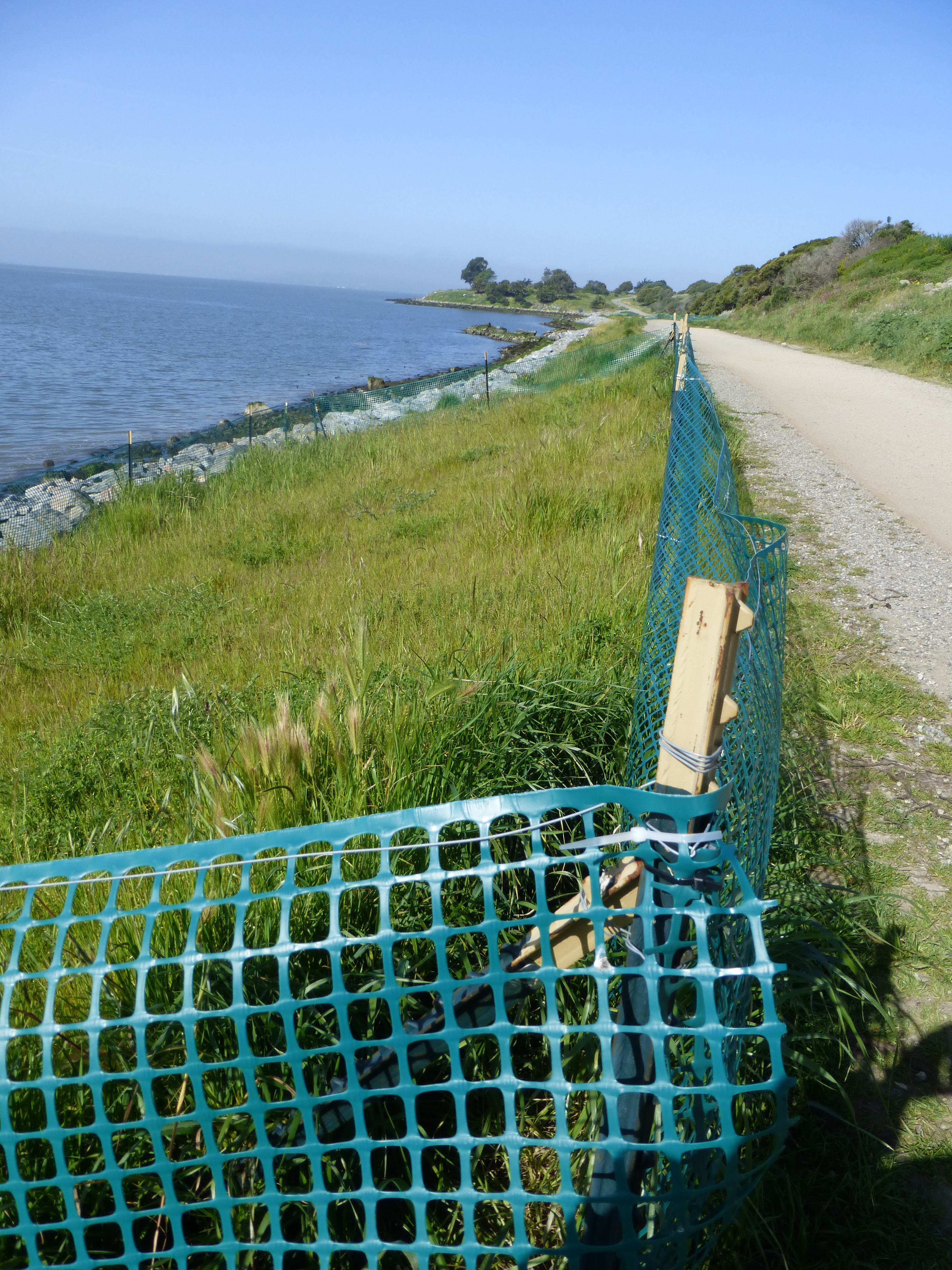
The park in which this experiment was conducted is Albany Bulb.  Albany Bulb is the former garbage dump of the City of Albany.  It was built on landfill in the bay.  The soil is not native and there were never any native plants on it.  It does not seem a promising candidate for a native plant “restoration.”  Unfortunately, Albany Bulb is not an atypical park along the bay.  There are many other parks along the bay that were built on landfill and in which the park district is attempting to establish native plant gardens.  This does not seem a realistic objective for these parks.
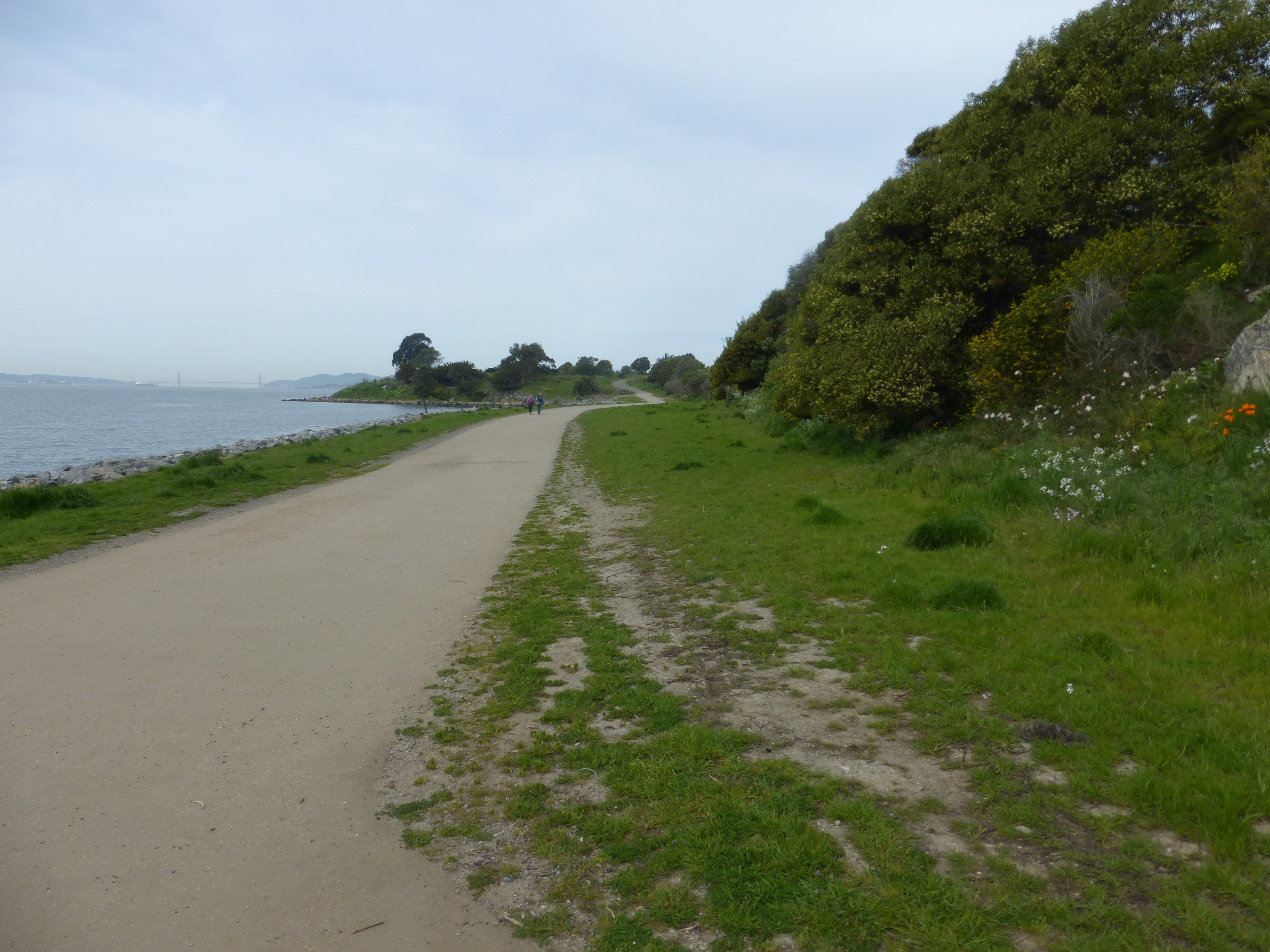


Albany Bulb April 2018

Update:  One year after the experimental planting of native wildflowers at Albany Bulb, there is no evidence of that effort.  The trail-sides are mowed weeds and the upslope from the trail is studded with blooming non-native oxalis and wild radish. 
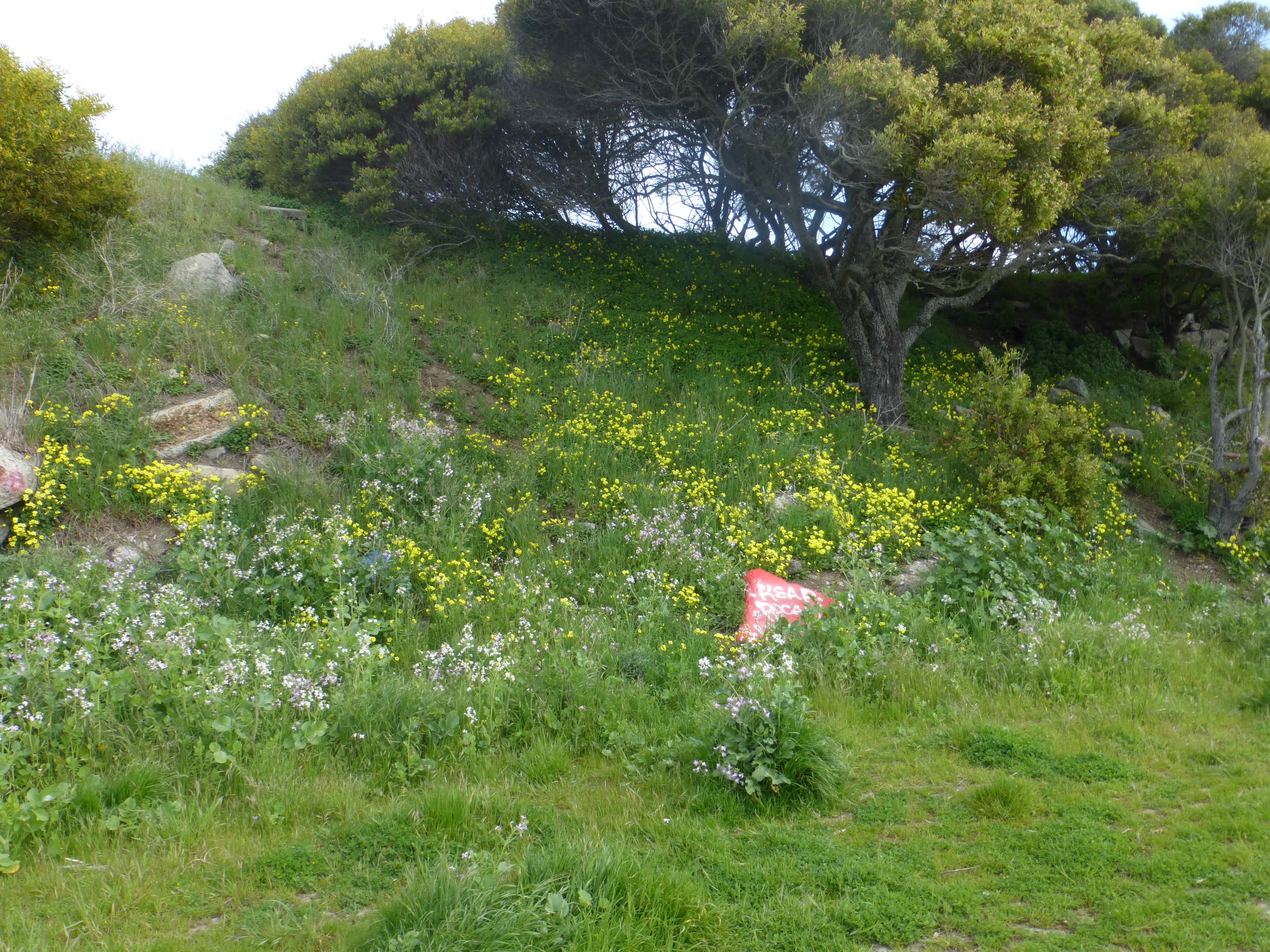
Albany Bulb. Non-native wildflowers. April 2018

Albany Bulb will soon be closed to the public for a major “improvement” project.   Albany Landfill Dog Owners Group and Friends expects the park to be closed for about one year.  They are unsure if the park will allow dogs off leash when the park re-opens.  More information about the “improvement” project is available on their website:  http://www.aldog.org/announcements-2.  They suggest that you sign up on their website to be notified of the progress of the project and the status of the re-opening of the park.


This is not to say that there aren’t many worthwhile park improvement projects that are both realistic and needed.  Dredging Lake Temescal is an example of a worthy project.  As you know, Lake Temescal was a popular place for people to swim until recently.  In the past few years it often has been closed to the public because of toxic algal blooms.  The algal blooms are caused by two closely related factors.  The water is warmer than it was in the past because of climate change and the lake is shallower than it was in the past because of sediment deposited into the lake.
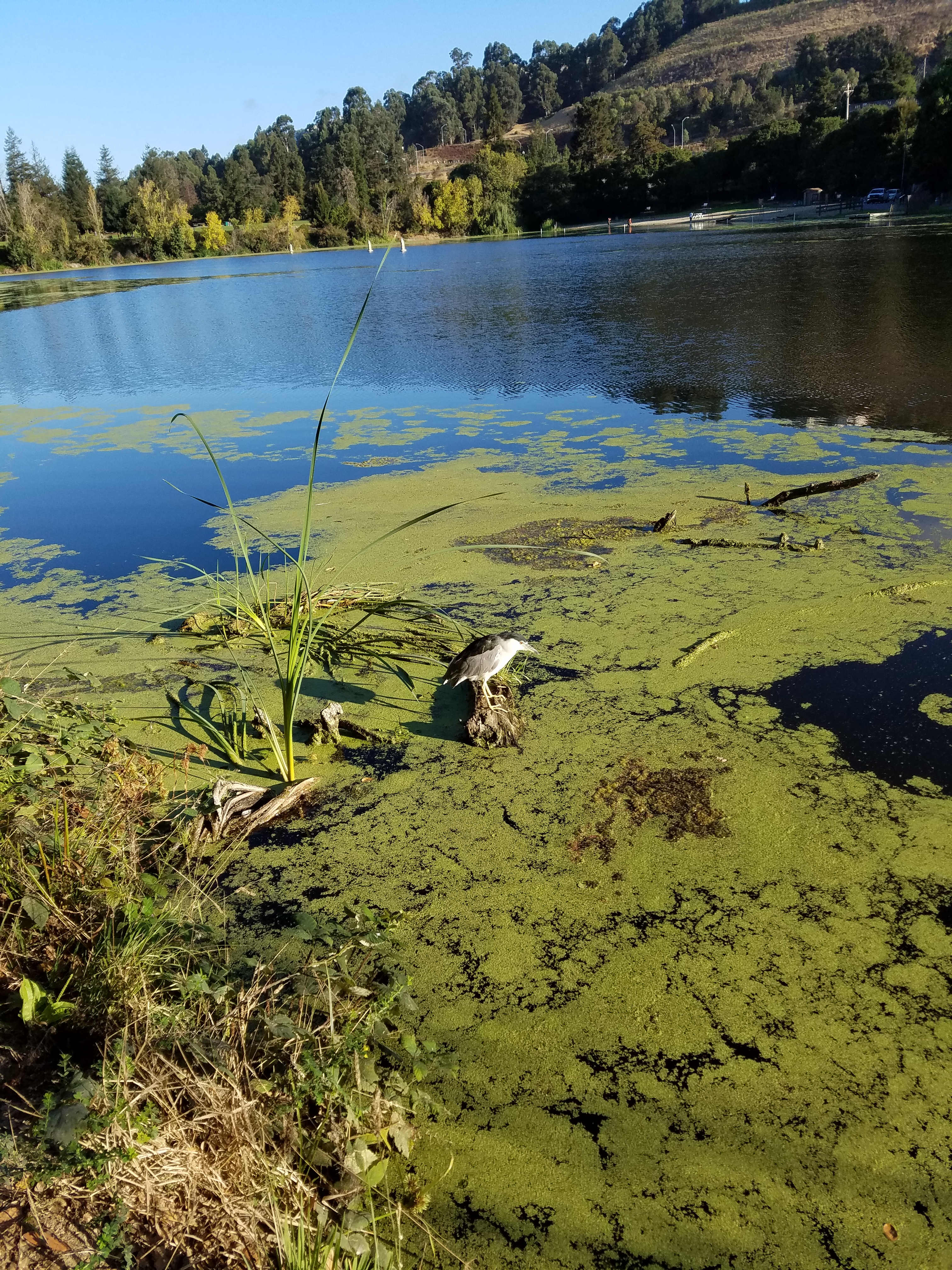
Black crowned night heron in algal bloom, Lake Temescal, April 2017

The park district has tried to address this issue by using various chemicals to control the growth of the algae.  Although that has occasionally been successful for brief periods of time, it is not a long term solution to the problem.  Furthermore, it is a good example of why the park district uses more chemicals than necessary.  If the park district would address the underlying cause of the problem—that is, the depth of the lake—it would not be necessary to keep pouring chemicals into the lake.  Dredging Lake Temescal should be a candidate for Measure CC funding.

And so I return to the point of this suggestion for Measure CC:  Please plan projects that take into consideration the reality of climate change, that address the underlying causes of environmental issues, and that have some prospect for success.

Thank you for your consideration.


Send your comments regarding Measure CC renewal to publicinformation@ebparks.org

Send copies to staff and board members of East Bay Regional Park District
Robert Doyle, General Manager rdoyle@ebparks.org
Ana Alvarez, Deputy General Manager aalvarez@ebparks.org
Casey Brierley, Manager of Integrated Pest Management cbrierley@ebparks.org

Board of Directors:
Beverly Lane, Board President blane@ebparks.org
Whitney Dotson wdotson@ebparks.org
Dee Rosario drosario@ebparks.org
Dennis Waespi dwaespi@ebparks.org
Ellen Corbett ecorbett@ebparks.org
Ayn Wieskamp awieskamp@ebparks.org
Colin Coffey ccoffey@ebparks.org

Measure CC: It’s not over ’til it’s over

The public meetings held by East Bay Regional Park District about the renewal of Measure CC are over. Thanks to everyone who attended.  Our viewpoint was well represented.  We patiently waited in line to get our wishes on their flip charts and when they were read to the crowd, our message was loud and clear:  “QUIT destroying healthy trees, DON’T use pesticides.”

If you weren’t able to attend the meetings, you can still tell the park district what you are hoping for in the renewal.  Voters will be given an opportunity in 2018 to vote to continue for another 15 years the parcel tax that has been used for park improvements.  The park district is inviting the public to submit written public comments about the projects they want to see funded by Measure CC.  We will publish a series of such comments that we hope will inspire you to write your own comments. 

Send your comments to publicinformation@ebparks.org.  Depending on the subject, copies to specific members of the Board or the staff are also appropriate.  You will find a list of staff and board members at the bottom of this post. 


TO:        Rick Seal, EBRPD Fire Chief rseal@ebparks.org

CC:        publicinformation@ebparks.org

FROM:  Park Advocate

RE:         Renewal of Measure CC

I understand that you are responsible for implementing the park district’s “Wildfire Hazard Reduction and Resource Management Plan.”  Much of that plan has already been implemented and most of it was funded by Measure CC.  Therefore, I am writing to ask that the plans to reduce wildfire hazards be revised, as required by the plan’s commitment to “Adaptive Management.”

Adaptive Management is the sensible strategy to make needed adjustments in plans as required by changes in conditions and in response to the results of completed portions of the projects.  There are two significant changes in conditions that require adjustments to the plans:

  • The consequences of climate change are significantly worse than were evident when the plan was written in 2009. For example, a severe drought killed 102 million native conifers in California.  Higher temperatures and other changes in the environment are altering our landscape.  Plants and trees that lived here prior to European settlement are no longer adapted to the changed climate and further changes are anticipated in the future.
  • Sudden Oak Death has killed between 5 and 10 million oak trees in California and the pathogen causing Sudden Oak Death spread exponentially in 2016 and 2017 because of heavy rain. There are significant SOD infections throughout the park district, including in urban areas.  HERE is a map of those infections in Alameda and Contra Costa counties.

These changes in the environment require the park district to revise its strategies for fire hazard reduction because dead trees are significantly more flammable than living trees that contain more moisture. HERE is a San Francisco Chronicle article that explains how Sudden Oak Death contributed to recent fires in the North Bay.

Removing trees infected with or killed by Sudden Oak Death should now be a higher priority than continuing to destroy healthy trees, as the park district has done in the past.  Protocols for removing the dead wood must be developed because the wood is fuel when left on the ground; presently, the official protocol for the wood of trees killed by SOD is to leave it on the ground, in place.  That practice is not consistent with EBRPD’s commitment to reduce fire hazards.

Scientists tell us that wildfires are becoming more frequent and more intense all over the world because of climate change.  Therefore, addressing the causes of climate change should be the top priority of a program designed to reduce fire hazards.  Since deforestation is the second greatest source of the greenhouse gases causing climate change, the park district should reconsider its program of destroying healthy trees storing carbon.  The park district should also plant more trees, which have a future in our changed and changing climate and that will sequester carbon and reduce air pollution.

Thank you for your consideration.  I will be looking for appropriate revisions of fuels management projects when making my decision about voting for renewal of Measure CC.


Send your comments regarding Measure CC renewal to publicinformation@ebparks.org

Send copies to staff and board members of East Bay Regional Park District
Robert Doyle, General Manager rdoyle@ebparks.org
Ana Alvarez, Deputy General Manager aalvarez@ebparks.org
Casey Brierley, Manager of Integrated Pest Management cbrierley@ebparks.org

Board of Directors:
Beverly Lane, Board President blane@ebparks.org
Whitney Dotson wdotson@ebparks.org
Dee Rosario drosario@ebparks.org
Dennis Waespi dwaespi@ebparks.org
Ellen Corbett ecorbett@ebparks.org
Ayn Wieskamp awieskamp@ebparks.org
Colin Coffey ccoffey@ebparks.org

Renewal of Measure CC is an opportunity to determine the future of parks in the East Bay

In 2004, voters in Alameda and Contra Costa counties approved Measure CC, a parcel tax, to provide additional funding to East Bay Regional Park District for “Park Access, Infrastructure and Safety Improvements, Resource-Related Projects, and Reserve for Unknown Events.”  Measure CC also stipulated that “the overall commitment to natural resources shall be no less than 30% of the revenue raised by the entire measure.” (1) Measure CC is projected to provide about $47 million in the 15 years of its life. (2)

The park district is planning to put Measure CC on the ballot for renewal next year.  It’s time to look at how the park district spent our tax dollars and decide if we want to continue to give them our tax dollars for another 15 years.  If you want Measure CC funding to be used differently, now is the time to tell East Bay Regional Park District what you want…BEFORE the ballot measure is written.

Fuels Management vs. Resource Management?

The park district budgeted $10.2 million of Measure CC funding for “fuels management,” about 22% of the total available funding from Measure CC.  To date, the park district has appropriated $8.8 million of that budget allocation and spent $6.3 million.

The park district describes “fuels management:”  “All vegetation/fuels management projects for fuels reduction are in coordination with the protection and enhancement of wildlife habitat in fuel break areas and are therefore considered to be resource related.” (2)  In other words, the park district considers destroying vegetation and cutting down trees a part of its “commitment to natural resources.”

These descriptions of Measure CC projects illustrate the close relationship between fuels management and resource management: 

  • “Assess and remove hazardous trees, promote native tree regeneration.” (2)
  • “Manage exotic plant species and promote fire resistant natives to reduce the risk of wildfires.” (2)
  • “Manage vegetation for fuels reduction in coordination with the protection and enhancement of wildlife habitat in fuel break areas to provide defensible space and meet Hills Emergency Forum flame length standard.” (2)

The park district’s policies and practices are based on mistaken assumptions:

  • There is no evidence that native plants and trees are less flammable than non-native plants and trees. In fact, available evidence suggests that native landscapes in California are highly flammable.
  • Most monarchs in California spend the winter months roosting in eucalyptus trees. These trees are being destroyed in East Bay parks where monarchs have roosted in the past, such as Point Pinole.

    There is no evidence that destroying non-native trees will “enhance wildlife habitat.” In fact, wildlife habitat is being destroyed by “fuels management” projects.

The destruction of non-native trees is also controversial because the stumps of the trees and shrubs that are cut down must be sprayed with herbicide to prevent them from resprouting.  The park district used an average of 26 gallons of Garlon each year from 2000 to 2015 and 39 gallons in 2016, for that purpose.

There is a wide range of opinions about the tree removals that the park district has done since their program began in 2011, after approval of the “Wildfire Hazard Reduction and Resource Management Plan” and the associated Environmental Impact Report.  At one extreme, some people want the park district to destroy ALL non-native trees on its property.  They consider “thinning” inadequate. The Sierra Club is in that camp and has sued to enforce their wishes.  At the other extreme, some people don’t want any trees to be removed, although most would make an exception for dead and hazardous trees.

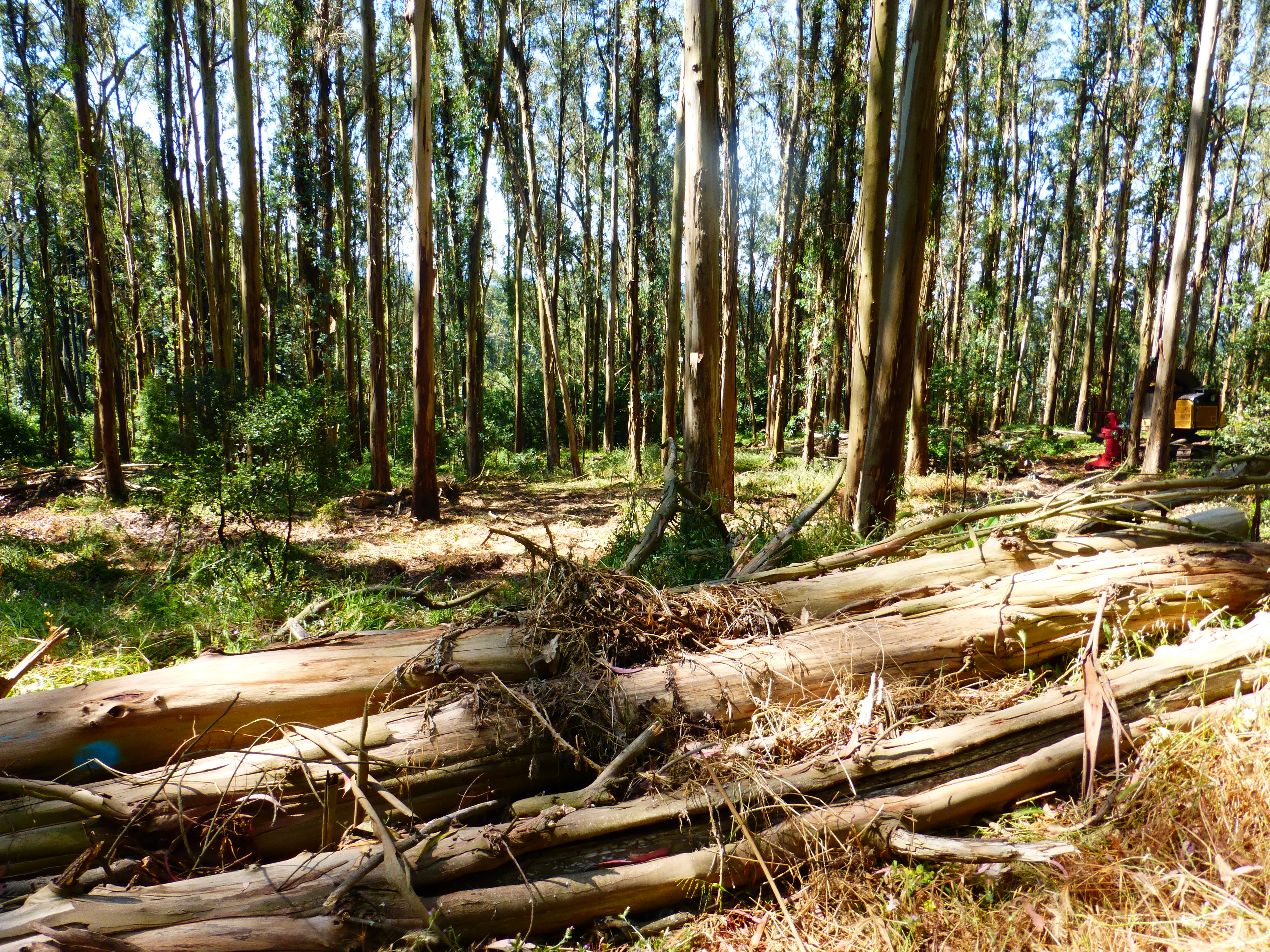
Tilden Park, Recommended Treatment Area TI001, June 5, 2016. This in one of the projects of East Bay Regional Park District, in process

After observing the park district’s tree removal projects, I have reached the conclusion that they represent a middle ground that I can accept because in many cases the canopy is intact and the forest floor is still shaded.  The shade retains the moisture that retards fire ignition as well as suppresses the growth of weeds that ignite more easily during the dry season.  In the 20+ years that I have defended our urban forest, I was always willing to accept a compromise and the park district’s methods look like a compromise to me.  I still have concerns about tree removals and they are explained HERE.  You must reach your own conclusions.

So, what’s the beef?

Unfortunately, coming to terms with the park district’s tree removals has not resolved my misgivings about how Measure CC money has been used.  In a nutshell, I believe that the park district’s “resource management” projects are based on outdated conservation practices.  I believe the park district is trying to re-create historic landscapes that are no longer adapted to environmental conditions.  Their projects are often not successful because they do not take the reality of climate change into consideration, nor do they look to the future of our environment.  They are stuck in the past.

One of the projects funded by Measure CC is typical: the effort to eradicate non-native spartina marsh grass from all park properties. The park district has been participating in the effort to eradicate all non-native spartina marsh grass from the entire West Coast for 14 years.  In the first few years, EBPRD aerial sprayed from helicopters several hundred gallons of herbicide per year.  Now the quantity of herbicide is about 25 gallons per year.

California Clapper Rail

We have known for several years that the eradication of non-native spartina has decimated the population of endangered California rails.  In 2016, a paper was published in a peer reviewed scientific journal about the huge declines in the rail population that were caused by the eradication of spartina.

The reason why the rails have been harmed by the eradication of their habitat is that non-native spartina provides superior cover for the rail.  The non-native species of spartina grows taller, more densely, and it doesn’t die back in the winter as the native species of spartina does.  When the rail begins its nesting season, there is no cover for the birds.  They are therefore being killed by their many predators.

The fact that non-native spartina provides superior cover for the birds is related to a second issue.  Non-native spartina provides superior protection from winter storm surges compared to the native species which provides no protection, even when it grows and it is NOT growing.

The US Geological Survey recently reported that sea level on the Coast of California is predicted to rise as much as 10 feet in just 70 years.  USGS predicted that 67% of Southern California’s beaches are expected to be lost by the end of the century.  Marsh grass for coastal protection is more important than ever.

The third issue is that eradicating non-native spartina has not resulted in the return of native spartina.  Even when extensive planting has been done, native spartina does not provide habitat or storm surge protection in the San Francisco Bay Area.  We should be asking if pouring hundreds of gallons of herbicide on the ground might be a factor in the unsuccessful attempt to bring native spartina back to the Bay Area.

Finally, recently published studies that compared native with non-native marsh grasses and aquatic plants with respect to the ecological functions they perform.  These studies both say, “If you look at the role of exotic water plants in an ecosystem, you won’t find any significant differences compared to indigenous species.”

The spartina eradication project is an example of conservation that no longer makes sense.  It damages the environment with herbicides.  It destroys the habitat of rare birds.  It exposes our shoreline to strong storm surges and rising sea levels.  Native vegetation does not return when it is eradicated.

Looking forward, not back

The parks are very important to me.  I visit them often and I treasure those visits.  I would like to vote for Measure CC.  I hope that the measure on the ballot will give me a reason to vote for it.

I will be looking for a revised definition of “resource management” in the ballot measure, one that acknowledges that climate change is the environmental issue of our time and that conservation must be consistent with the changes that have already occurred, as well as look forward to the changes that are anticipated in the future.  Specifically, “resource management” must respect the landscape we have now, which means not trying to eradicate it, particularly by spraying it with herbicides.  Resource management projects must be based on reality, rather than on fantasies about the past.

Opportunities to tell EBRPD what you want from Measure CC

East Bay Regional Park District is holding public meetings about Measure CC to give the public the opportunity to provide input regarding future park needs and priorities:

November 4, 10-12, Harrison Recreation Center, 1450 High St, Alameda

November 8, 2:30-4:30 pm, David Wendel Conference Center, 1111 Broadway, 19th Floor, Oakland

EBRPD asks that the public RSVP by sending an email to Monique Salas at msalas@ebparks.org or call 510-544-2008.

If you can’t attend, please send written feedback here:  publicinformation@ebparks.org.  Please tell East Bay Regional Park District what you want Measure CC funding to pay for. 


  1. Full Text of Measure CC
  2. Agenda of Park Advisory Committee, June 26, 2017. Scroll down to Measure CC Renewal Spending Plan

Lessons learned from fires in the North Bay

Recent wildfires in the North Bay were devastating.  44 people were killed by the fires and over 8,000 structures were destroyed, including homes and businesses.  We don’t want to portray that fire as anything other than a tragedy.  However, for those with a sincere interest in fire safety, there are many lessons to be learned from that fire.  If people will open their eyes and their minds to the reality of those fires, there are opportunities to reduce fire hazards revealed by those fires.

What burned?

Watching videos of the fires is the best way to answer the question, “What burned?”  Here are two videos of the fires that we found on the internet by doing a search for “videos of wildfires in Napa and Sonoma counties.”  If you weren’t watching the news during the fires, you might start by looking at these videos.  There are many more videos on the internet of those fires.

Here’s what we can see in these videos:

  • The fire front moved rapidly through native conifers and oaks as well as through grassland and chaparral. After watching hours of these videos, we did not see any eucalyptus trees on fire.
  • Many homes burned without igniting the trees and vegetation around them. If the photo was taken while the home was still burning, the vegetation is rarely engaged in the fires.  If the photo was taken after the home burned, much of the vegetation is burned as well.  In other words, the vegetation was ignited by the burning homes, not vice versa.
  • In videos of actively burning homes, the air is filled with burning embers. The source of those embers cannot be determined from the videos.

Nothing in these videos suggests that native vegetation is less flammable than non-native vegetation.  Nothing in these videos suggests that the vegetation is more flammable than the structures that burned. 

CalFire has identified the specific locations where four of the fires originated.  Two are in groves of oak trees and two are in grassland and chaparral.  Photos of those specific locations are available HERE.


UPDATE:  On November 16, 2017, the Bay Area Open Space Council held a symposium about the fires in the North Bay that was billed as a “Community discussion on the impacts of the recent wildfires.”  Bay Nature magazine moderated a panel of experts representing CalFire and 8 managers of public and private open space reserves. 

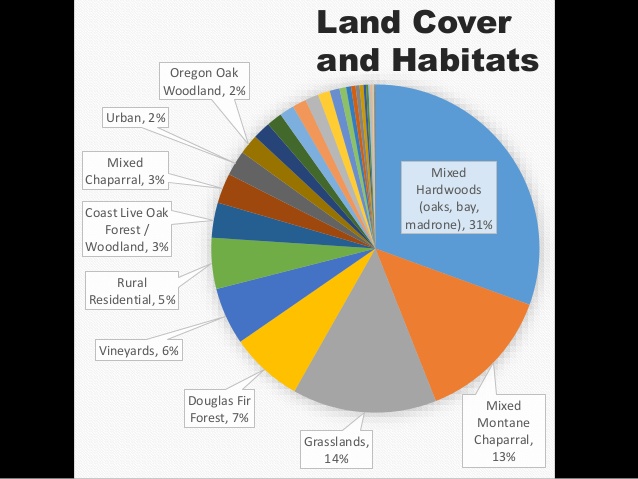
The Director of Conservation for the Bay Area Open Space Council showed a slide of the vegetation types that burned in the fires.  With the exception of vineyards, only 2% of the burned vegetation was “urban.”  All other vegetation was native grassland, chaparral, and native trees. 

Vegetation that burned in the North Bay files of October 2017. Source: Bay Area Open Space Council

The speaker from CalFire said that we must learn to live with fire.  He suggested that the way to accomplish that goal is with better land use planning, using fire and ember resistant building materials, creating defensible space, and improving the health of our forests. 

The slides of the presenters and an audio recording of their presentations is available  HERE


What role did the weather play in the fire?

All sources of information about the fire reported that strong winds were the biggest factor in the rapid advance of the fire.  The wind was associated with very high temperatures and it came from the east.  This type of wind is called a Diablo Wind in Northern California.  In Southern California it is called Santa Ana Winds.  In the Mediterranean, it is called Mistral Winds.

In coastal Mediterranean climates such as California and the Mediterranean regions of France and Spain, the wind ordinarily comes off of the ocean.  Because the ocean is cooler than the land, the wind is usually a source of moisture and cooler temperatures.  During periods of high summer temperatures, the wind sometimes shifts direction and starts to blow off the hot interior, drying the vegetation and increasing temperatures.

Such winds were also the main cause of the wildfire in the Oakland/Berkeley hills in 1991Jan Null was the lead forecaster for the National Weather Service in the Bay Area in 1991.  He recently said of the 1991 fire:  “At the time a fire starts, the really relevant conditions are the wind speeds, the temperature and the humidity. Again, the humidity goes to the dryness of the fuel. The temperatures also go to the dryness of the fuels and the wind speeds go to what the spread of the fire is. If we’d had that same Oakland Hills fire without any wind, we wouldn’t be talking about it now.”

Most wildfires in California are caused by strong, dry, hot winds.  Everything burns in a wind-driven fire.  Both native and non-native vegetation burns in a wind-driven fire.  Homes in the path of a wind-driven fire are more likely to burn than the vegetation that surrounds the homes because the vegetation contains more moisture.

Why are wildfires becoming more frequent and more intense?

Wildfires are becoming more frequent and more intense all over the world because of climate change.  Temperatures are higher, drought is more frequent, strong winds are more frequent.

Wildfires in the west have become more severe because of increased temperatures and lower humidity at night.  When it doesn’t cool off at night, the trees don’t have an opportunity to regain the moisture they have lost during the high daytime temperatures.  In the past, firefighters could count on wildfires to die down at night.  Now they can’t count on colder nights to make the fires less severe. (2)  Since the fires in the North Bay started in the middle of the night and did the most damage that first night, this observation about warmer nights is particularly relevant to those fires.

Deforestation is the second greatest source of the greenhouse gases causing climate change Every healthy tree we destroy releases its stored carbon as it decomposes.  Every tree that dies of drought releases its carbon as it decomposes.  Every tree that burns in a wildfire releases its carbon as it burns.

What role did power lines play in the fire?

The investigation of the recent wildfires in the North Bay is not complete, but early indications suggest that power lines probably ignited some of the fires.  Some power poles fell over in the strong winds, causing the power lines to break and spark ignitions.  Some trees were blown into the power lines, causing them to break or spark.

California State law requires that trees be pruned at least 4 feet from the power lines.  Although PG&E says they are inspecting thousands of miles of power lines to identify potential interference with trees, these inspections are apparently not adequate.  After the fires started, PG&E claimed they had removed 236,000 “dead and dying” trees and “destroyed or pruned” 1.2 million healthy trees in 2016.  These destroyed trees contribute to climate change.

California State law also requires that power poles are capable of withstanding winds of a certain velocity.  However, power poles fell over during the recent fires when wind speeds were below that standard set by State law.

Apparently PG&E’s efforts to inspect and maintain power lines were inadequate and State laws intended to ensure the safety of power lines are not being enforced.

Did Sudden Oak Death contribute to the fire?

Sudden Oak Death (SOD) killed 5 million oak trees in California from 1994 to 2016, when that number was reported by a study.  The study also said that the SOD epidemic could not be stopped and would eventually kill all oaks in California.  More recent estimates are that 5 to 10 million oaks have been killed by SOD. (2)

SOD is caused by a pathogen that is spread by rain and wind.  We had a great deal of rain in 2016 and 2017, which has greatly increased the spread of SOD.  In the past, SOD has been mostly confined to wildlands.  Now it is found in many urban areas, including San Francisco and the East Bay.  In the most recent SOD survey done in spring 2017, new infections were found on the UC Berkeley campus, the UC arboretum, and the San Francisco Presidio. (2)

The scientist at UC Berkeley who conducts the annual survey of SOD infections reports that “A dramatic increase this year in the number of oaks, manzanita and native plants infected by the tree-killing disease known as sudden oak death likely helped spread the massive fires that raged through the North Bay…” (3)

Dead trees are more flammable than living trees because living trees contain more moisture.  In addition to more than 5 million dead oak trees in California, 102 million native conifer trees in the Sierra Nevada foothills were killed by drought, warming temperatures and native beetle infestations during the drought years. All of these trees are native to California.  This is another indication that native trees are not less flammable than living non-native trees.

The ranges of native plants and animals are changing because of climate change.  They must move to find the climate conditions to which they are adapted.  Native plant “restorations” that attempt to reintroduce plants where they existed 250 years ago, prior to the arrival of Europeans, do not take into consideration that the plants may no longer be adapted to those locations.  That’s why many “restorations” are not successful.

If you haven’t seen the Sutro Forest, you should do so soon. The plans are to destroy about 50% of the trees and most of the understory.

Native plant advocates have their heads in the sand about Sudden Oak Death.  The recently published Environmental Impact Report for San Francisco’s Sutro Forest announced UCSF’s intention to destroy about 50% of the non-native trees on Mount Sutro and replace some of them with native trees, including oaks and bays.  Bays are the vector of the pathogen causing SOD.  The EIR said NOTHING about Sudden Oak Death, nor did it acknowledge the existence of the disease in Golden Gate Park and the arboretum, less than a mile away from Mount Sutro.  What’s the point of destroying healthy trees and replacing them with trees that are likely to die in the near future?

Where to go from here?

We are not powerless against bad decisions of public utilities and the forces of nature.  There are things we can do to address these causes of wildfires in California:

  • We must address the causes of climate change. We must stop destroying healthy trees and we must plant more trees.  We must choose species of trees that have a future in the changed climate.  The trees must be adapted to current and anticipated climate conditions.  We must quit destroying trees simply because they are not native.  Non-native trees are not more flammable than native trees and many are better adapted to current climate conditions.
  • We must regulate our public utilities and demand that regulations be enforced. The Public Utilities Commission initiated an effort to improve the safety of power lines in 2007, after destructive wildfires. The utility companies have been actively dragging their feet to prevent new regulations because they would increase costs, despite the fact that they would improve safety.
  • Improved regulation of utilities should minimize the need to destroy healthy trees, by undergrounding power lines in the most high-risk areas, improving insulation of the wires, replacing wooden power poles with metal and/or concrete poles, installing sensors that identify breaks in the power lines, etc.

Demonizing non-native trees is preventing us from addressing the causes of climate change and the closely related issue of increasing frequency and intensity of wildfires.  Let’s open our eyes and our minds to the reality of wildfires in California and develop the policies that will reduce fire hazards.


(1) The Detwiler Fire is active at night, and a scientist says that’s relatively new,” Fresno Bee, July 22, 2017

(2) “Disease killing oaks spreads,” East Bay Times, October 24, 2017

(3) “Disease in trees pointed at in fires,” San Francisco Chronicle, October 20, 2017