Trophic cascades are initiated by pesticide use

Although the Environmental Protection Agency requires that pesticides be tested before they can be sold in the US, we know that the required tests are inadequate to determine if the pesticide is dangerous to human health and the environment.  The tests are only as accurate as the test protocols and procedures.  There are many flaws in the testing methods required by federal law.  Here are a few of them:

  • Tests are conducted on laboratory animals in which the dose is limited to a single chemical. In the real world, humans and other animals are subjected to many chemicals simultaneously in doses that are unknown and unknowable, because little testing is done of contamination in the environment. Only the active ingredient in pesticide is tested, not the formulated product that is a cocktail of many chemicals.
  • Tests are done for relatively short periods of time, compared to the long lives of humans during which chemicals accumulate in our bodies.
  • The chemical threshold deemed “safe” is not the dose at which no adverse effect occurred. It is only the dose at which no adverse effect was observed:  “Subclinical affects—reduced fertility, compromised immune systems, and reduced intelligence, for example—are not observed not because they have not occurred but because they are seldom sought.” (1) In other words, the testing regimen does not test for many potential health problems.
  • The testing regimen is also limited to a few animal species at certain stages of development. For example, bees are the only species of insect on which pesticide tests are required and they are only tested at the adult stage.  Bee keepers will tell you that larvae stages of bee development are far more vulnerable to pesticides than adult bees, yet no tests are required on that stage of development.  Bees are probably less vulnerable to pesticides than caterpillars which eat vegetation, but caterpillars are not tested.  If caterpillars are killed, there are no moths and butterflies.

A proposal for a new testing standard of the impact on the entire ecosystem

Beyond Pesticides has published a review of many scientific studies about the impact of pesticides on the entire ecosystem in which they are applied.  The article reports substantial empirical evidence that pesticides are initiating trophic cascades in the entire ecosystem in which pesticides are used.  The article concludes that such studies of the entire food web are needed to identify and prevent such damage. (2)

What is a trophic cascade?

A change in the population of one member of an ecosystem can trigger a trophic cascade by altering the balance of the entire food web. 
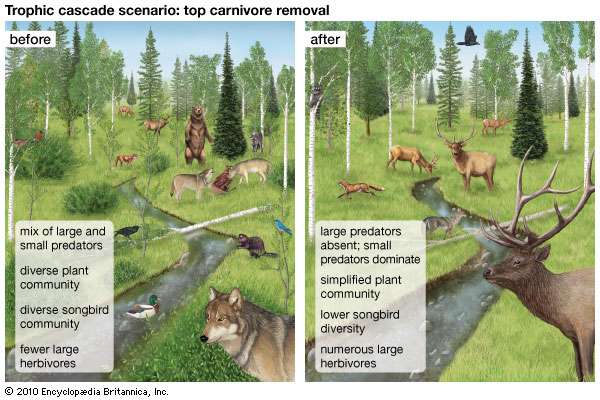
The classic example of a “top-down” trophic cascade is the sequence of events in Yellowstone National Park when wolves were exterminated in the park.  In the absence of the top predator in the ecosystem, the population of elk that were their prey exploded.  The grazing animals ate trees and shrubs that were the food of the beavers.  The beaver population declined, which altered the hydrology of the ecosystem.  Wetlands maintained by beaver dams dried up and the community of plants and animals in the wetlands died off.  Although there were other predators of the grazing animals, such as bears and mountain lions, the packs of wolves subjected the herds of grazing animals to harassment that kept them moving, reducing damage to the vegetation.

Wolves have returned to Yellowstone National Park because of the Endangered Species Act that protected them and the ecosystem has been restored by the natural forces of predator and prey relationships.  The endangered status that protected wolves was recently rescinded in response to the demands of ranchers with domesticated animals.  Although wolves may not be killed inside Yellowstone, they may be killed when they leave the park.  We may eventually see a reversal of the improvements in an ecosystem ruled by wolves.


Update:  Emma Marris has critiqued the theory that the absence of wolves in Yellowstone National Park caused a trophic cascade that damaged the entire ecosystem in Yellowstone National Park and the reintroduction of wolves restored the ecosystem.  Her article, entitled “A good story:  Media bias in trophic cascade research in Yellowstone National Park,” was published in Peter Kareiva’s et al. new book, Effective Conservation Science, Data not Dogma.

Marris details the lack of data supporting the existence of a trophic cascade or its reversal when wolves were reintroduced.  She calls those claims speculative, an unproven hypothesis.  More importantly, Marris believes that proof of that hypothesis is unattainable:  “…even ecosystems as well studied as Yellowstone remain beyond our ken…lifetimes will be required to understand them and even then they may always remain, by virtue of changing faster than we are able to follow, essentially unknowable.”

More humility is needed to guide conservation.  If we are to avoid damaging the environment further, we need to keep in mind how little we know.  Nature may be far wiser in managing itself than humans presume to be. 


There are also examples of “bottom-up” trophic cascades when increases or decreases in the abundance of microscopic plants and animals disrupt the entire food web, ultimately impacting the top of the food chain.

Insects are also near the bottom of the food chain.  They are essential food for birds, particularly to young nestlings.  Scientists began noticing that insect populations were disappearing some time ago, but their anecdotal observations were not empirically tested until 2016 when an entomological society in Germany published a study about the decline:  “The German study found that, measured simply by weight, the overall abundance of flying insects in German nature reserves had decreased by 75 percent over just 27 years.” (3)  Although there are undoubtedly many reasons for this rapid disappearance of insects, including pesticides, there is almost no research being done to determine the causes:  “Rob Dunn, an entomologist at North Carolina State University…recently searched for studies showing the effect of pesticide spraying on the quantity of insects living in nearby forests.  He was surprised to find that no such studies existed.  ‘We ignored really basic questions,’ he said.  ‘It feels like we’ve dropped the ball in some giant collective way.’” (3)  Professor Dunn should not feel badly.  Almost no research is being done on the effects of pesticides on anyone, any animal or anything in the environment  Turning a blind eye to the possibility of such harm done by pesticides is one of the ways in which the industry is shielded from regulation.

Trophic cascades caused by pesticides

The review article published by Beyond Pesticides reports that many empirical studies have discovered trophic cascades initiated by pesticide applications.  Here is one example from agriculture:

“Mesleard et al. (2005) found that the insecticide fipronil, used to control midge pests in conventional rice fields, causes a trophic cascade that reduces the nutritional value of the area for waterfowl. Comparing a chemical intensive rice field to one managed organically, the trophic cascade ultimately neutralized the efficacy of synthetic pesticide use in the first place.

“Direct toxicity from fipronil reduced the number of invertebrate predators in chemical-intensive rice fields. This led to a trophic cascade that allowed herbivorous animals to flourish. On the surface, organic and chemically-managed rice fields both contained the same amount of invertebrate biomass. However, in chemical-intensive fields, this biomass was primarily in the form of gastropods (snails and slugs). When researchers surveyed the fields in late summer, only 12% of the invertebrate community were predators, while in organic fields that proportion was 70%. Slugs and snails are not a major food source for the most common waterfowl in the region studied, the heron, making organic plots a more valuable source of sustenance.” (2)

The review article also provides examples of trophic cascades initiated by pesticides in aquatic environments and in “invasive species” control projects.  Both herbicides and insecticides have initiated trophic cascades.  The effect on the food web of one pesticide is sometimes different from another.  The timing of a pesticide application sometimes has different impacts on the food web.  The effects of pesticides vary widely and are very complex.

A local example of a trophic cascade

There are many aquatic weeds in the Delta where the Sacramento and San Joaquin rivers slowly meander into the San Francisco Bay.  The weeds come from warmer climates and they are thriving here because of climate change.  Lower water levels are also a factor because shallower water is warmer.  The water level is lower because of drought and the diversion of water from the rivers and the Delta to irrigate agricultural crops.  Annual spring floods that cleansed the Delta system in the distant past have been stopped by upstream dams that keep water levels constant.

Instead of addressing the underlying reasons why the aquatic weeds have become a problem, the powers that be (State Parks Division of Boating and Waterways and approved by US Fish & Wildlife Service) have been spraying the aquatic weeds with pesticide and dumping pesticide pellets into the water.  These pesticide applications have been steadily increasing:  “Charts provided by the state show a 50 percent hike in the amount of pellets used from 2014 to 2017 and a 66 percent increase in the amount of spray that was administered during the same time period.” 

Fortunately, there are thousands of fishermen in the Delta who have noticed massive die-offs of fish, turtles, goats, ducks, muskrats, and otters since the spring. They have reported these deaths to California State Parks, who deny knowledge of such die-offs.

The fishermen have formed an organization, Norcal Delta Anglers Coalition.  They have organized to document this trophic cascade that was probably initiated by unnecessary pesticide applications.  We wish them luck.  We hope they have more success than we have had convincing public land managers that they are damaging the environment and its inhabitants with pesticides.

Testing and evaluation of pesticides must be improved

This important review article (1) concludes that pesticides can upset and imbalance ecosystem health and stability.  Studies find “increased risk of disease transmission, dangers to declining species, algae blooms, the loss of ecosystem services like nutrient cycling, and importantly, ineffective pest management.”  Therefore, there is a “critical need for EPA to consistently assess ecosystem level trophic effects as part of the pesticide registration process.” In the absence of a truly precautionary system where independent science is adequately considered by regulators, pesticides are likely to cause trophic cascades or other ecosystem disruption.

Such ecosystem evaluations of pesticides are not going to happen in the foreseeable future.  The 180-degree turn in American politics that would be required to improve pesticide regulation is unlikely.  Although most of the meager federal regulation we had in place prior to 2017 has been dismantled, regulation in the prior administration was also inadequate.
Courtesy Beyond Pesticides

Therefore, our fallback position should be DON’T USE ANY MORE PESTICIDE THAN ABSOLUTELY NECESSARY.  Buy organic food to protect your family and to put industrial agriculture using pesticides out of business.  Fight for rigorous pesticide regulation locally, in your city, your county and your state.

The end of another nativist myth

Native plant advocates promote the use of pesticides to eradicate non-native plants.  The myth they use to justify their use of pesticides is that damage is confined to the target plant or animal.  Clearly that is not true. Pesticides can be aimed at a specific plant, but non-target plants are often killed unintentionally because pesticides are mobile in the soil, they drift in the air and they are carried by the roots of the target plant to the intertwined roots of non-target plants.

Furthermore, killing one plant or animal in an ecosystem ultimately effects the entire community of plants and animals.  The collateral damage to the entire ecosystem caused by pesticides can be devastating to the entire food web.  Clearly the word “restoration” is a misnomer when used to describe eradication projects using pesticides.

Given the inevitable damage to entire ecosystems, the claim that native plant “restorations” benefit wildlife is clearly unlikely, if not patently false. 


  1. Joe Thornton, Pandora’s Poison, MIT Press, 2000
  2. Drew Toher, “Pesticide Use Harming Key Species Ripples through the Ecosystem,” Pesticides and You, Summer 2018.
  3. Brooks Jarvis, “The Insect Apocalypse Is Here,” New York Times, November 27, 2018
Action Opportunity: Speak up about Oakland’s Vegetation Management Plan

The stated purpose of Oakland’s Vegetation Management is to reduce fire hazards in Oakland.  Oakland’s Vegetation Management Plan will determine the fate of 2,000 acres of public parks and open spaces and 300 miles of roadside in Oakland.  It will also substantially increase the use of pesticides if approved in its present form.  Two public meetings will take place in November to discuss revisions of the draft plan:

Date: Thursday, November 15, 2018
Time: 5:30-7:30 PM
Location: Richard C. Trudeau Training Center, 11500 Skyline Blvd, Oakland, CA 94619

Date: Tuesday, November 20, 2018
Time: 5:30-7:30 PM
Location: Oakland City Hall, 1 Frank Ogawa Plaza, Hearing Room 2, Oakland, CA 94612

The agenda for these meetings has been carefully crafted to accommodate the wishes of native plant advocates, as expressed in their public comments on the draft plan.  This is the agenda for these public meetings:

  1. “The Plan should better incorporate the role of volunteers and stewardship groups that actively maintain vegetation at various City-managed parks/open space areas. The City should conduct additional outreach to such groups to continue to receive their input and feedback.”
  2. “The Plan should include more specificity regarding vegetation management recommendations at each City-managed parcel.”
  3. “The Plan should include cost estimates, or a range of potential costs, for the recommended treatments to assist the City for longer-term work budgeting and planning. The cost estimates and site-specific plans for City-managed parks would also help identify activities that volunteers can conduct.”

The first meeting on November 15th is “targeted towards the park steward/volunteer groups working on City-owned parcels.”  The second meeting on November 20th “will focus on the issue of plan specificity.  It is requested that participants come prepared to discuss their recommended edits/comments.  At each meeting we will briefly discuss each project site/area, and your feedback will be collected and considered for the revised draft Plan to be released in 2019.”

In other words, the public process that will result in a Vegetation Management Plan for Oakland is now entirely in the hands of native plant advocates (“park stewards/volunteer groups”), despite the fact that there were other important issues raised in the public comments.  Only the public comments of native plant advocates are being considered in the revision of the draft.  None of their requested revisions have anything to do with reducing fire hazards.  Their revisions are intended to greatly increase Oakland’s commitment to native plant “restorations.”

These are the issues being ignored

If you are an Oakland resident with a sincere interest in fire hazard mitigation, who does not believe the draft plan will reduce fire hazards, please attend one of these meetings.  These are the issues we believe are being ignored and must be addressed by the City of Oakland.

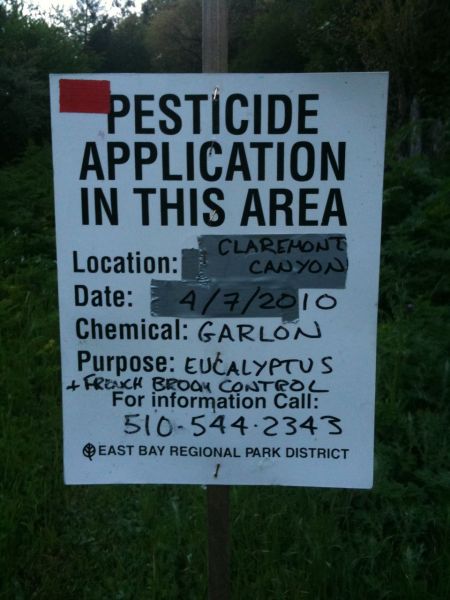
  • Pesticides are being used in the parks of the East Bay Regional Park District after completion of an Environmental Impact Report in 2009. The pesticide applications of the Park District are a preview of what will happen in Oakland city parks if the Vegetation Management Plan is approved as presently drafted.

    Pesticide use in Oakland city parks and open spaces is presently prohibited by Oakland’s city ordinance because no Environmental Impact Report has been completed for a revision of the ordinance that was proposed by the City Council in 2005. If the draft Vegetation Management Plan is approved and an Environmental Impact Report is completed as planned, pesticides will be permitted in Oakland’s parks, open spaces, and roadsides. 

  • Pesticide use will increase greatly because pesticides are required to prevent the tens of thousands of trees that the draft plan proposes to destroy from resprouting. Pesticides will also be needed to eradicate the flammable weeds that will colonize the unshaded ground.
  • Native plant advocates are opposed to goat grazing because goats eat both native and non-native plants. Goat grazing is a non-toxic alternative to pesticides.  Shade is the most benign method of weed control.
  • Native plant “restorations” do not mitigate fire hazards because native vegetation is as flammable as non-native vegetation. When non-native trees are destroyed, as proposed by the plan, no native trees will be planted to replace them.  Therefore, the moist forest will be replaced by grassland that ignites more easily than forests.
  • Every wildfire we have witnessed in California in the past 20 years has occurred exclusively in native vegetation. Wildfires in California have become more frequent and more intense because of climate change.  Deforestation is the second greatest cause of climate change because trees release the carbon they have stored throughout their lives, and in their absence carbon storage is reduced in the future.

The native plant movement has a death grip on our public lands in the San Francisco Bay Area.  Few would object to their advocacy if their projects were as constructive as they are destructive.  They are welcome to plant whatever they want, but they should not have the right to destroy everything that is non-native, particularly using pesticides, which is their preferred method.

I would like to believe that public policy is in our hands if we will participate in the political process.  It is becoming more difficult to believe in that ideal.  Please attend one of these meetings, if only to keep our democracy alive and well.

All life on Earth is related

Today we will take a deep dive into evolutionary history to talk about the origins of life on Earth.  Drawing from David Quammen’s new book, The Tangled Tree, we will tell you about “a radical new history of life,” as promised by the subtitle of his book. (1)

Categorizing Nature

Throughout written history, humans have demonstrated a compelling need to name and categorize everything in our world, including nature.  Naming and categorizing passes for understanding and enables us to talk about issues using commonly understood definitions.

Linnaean taxonomy was one of the first and most influential attempts to classify the natural world into three kingdoms:  plants, animals, and minerals.  Since Systema naturae was published by Carl Linnaeus in the 18th century, many other classification systems have been proposed by subsequent generations of scientists.

The conventional wisdom about classifying nature changed radically after the discovery of the molecular structure of DNA in the 1950s and the molecular analysis that it enabled in the 1960s.  Genetic analysis revealed the evolutionary relationships between organisms, enabling the development of phylogenetic “trees” depicting those relationships.

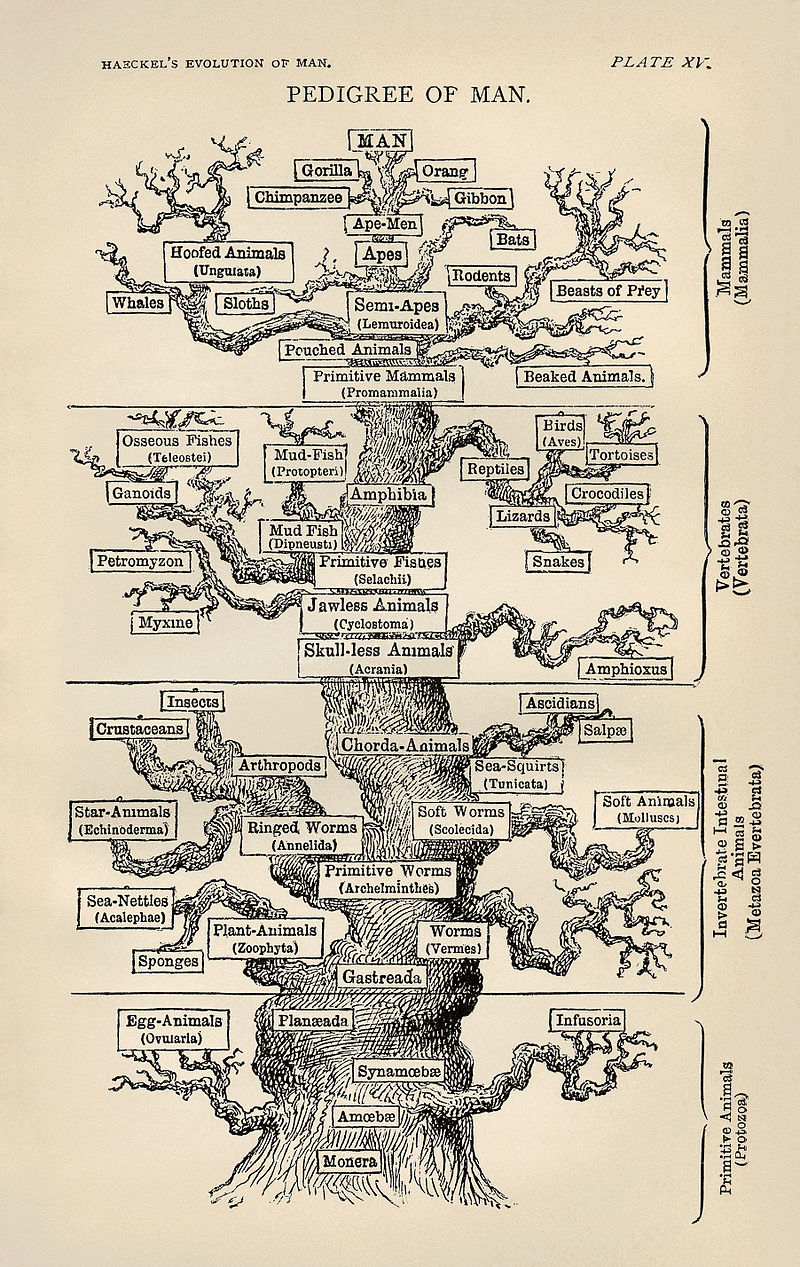
Haeckel’s Tree of Life, 1879

The revolutionary work of Charles Darwin was instrumental in initiating such speculation about evolutionary history.  Such theories about the history of life on Earth were often depicted as “trees of life,” showing the progression of evolution.  One of the earliest of such “trees” was published in the 1870s, shortly after the publication of Darwin’s Origin of Species in 1859.

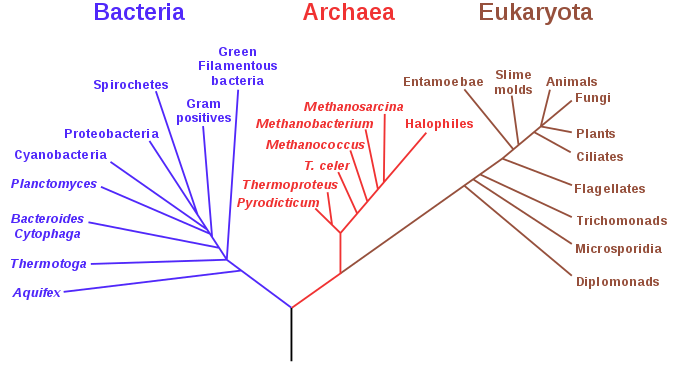
In 1977, using molecular analysis, Carl Woese published his hypothesis of a new kingdom of life, Archaea.  He proposed a new categorization of all life on Earth, which he called domains:  Bacteria, Archaea, Eucarya.  Bacteria and Archaea are one-celled organisms without a nucleus.  Eucarya are every other living organism, including plants, animals, and fungi. Kingdoms of life were relegated to the second level of taxonomy (the classification of organisms).

The hypothesis of Woese was challenged, often contentiously, for decades, but is now conventional wisdom among scientists of phylogenetics, as the genetics of evolution is called.  However, as tidy as these new categories might appear, they aren’t.  As human intellectual constructs often are, many species of life defy neat categorization.  Around the edges of every domain there are many species of life that don’t entirely fit the criteria.  Likewise, around the edges of every genus and species, there are many gray areas.  Just as the distinction between “native” and “non-native” is often ambiguous, so is the categorization of many organisms.  This is a reminder that we must use such definitions with humility, always being prepared to consider a new hypothesis that improves our understanding.

Domains of life

Revising the mechanisms of evolution

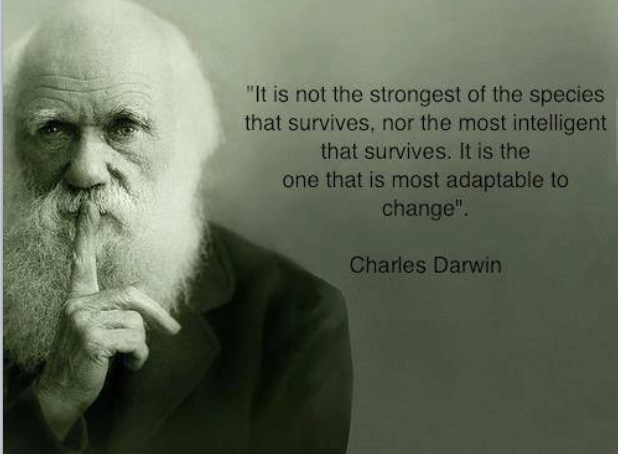
Molecular analysis has also radically altered our understanding of how evolution proceeds.  Charles Darwin’s hypothesis about evolution was that change in organisms occurs through genetic variation from one generation to the next.  Occasional genetic mutations from one generation to the next was later added to what is called “vertical evolution.”  Each subsequent generation of a species is tested by the environment and that test is called natural selection.  The individual member of a species that is best adapted to the environment survives to reproduce, while less well-adapted individuals do not survive to reproduce.

Scientists have more recently observed that species in one domain of life also exchange genetic material with another domain of life, as well as exchanges between different species within domains.  This is called “horizontal gene transfer.”  The discovery of horizontal gene transfer (HGT) has revolutionized how we think about evolution.  Natural selection remains as the mechanism that confers success or failure on such changes in genes from one generation to another.

Significance of horizontal gene transfer

Horizontal gene transfers occurred in deep time, but are known to be a significant issue at the present time.  Horizontal gene transfer is the primary mechanism for the spread of antibiotic resistance in bacteria and plays an important role in the evolution of bacteria that can degrade synthetic compounds such as pesticides. Antibiotic resistance in one species of bacteria can be transferred to another species of bacteria, multiplying the incidence of antibiotic resistance. (2)

The introduction of chloroplasts into plant cells roughly 3.5 billion years ago was one of the most significant events in the evolution of life on Earth.  The introduction of chloroplasts into plant cells was an example of a horizontal gene transfer from a bacteria cell into eucarya cells.  Chloroplasts are the organelles (specialized structures inside eucarya cells that perform specific functions) that perform photosynthesis in plant cells.  Photosynthesis enables plants to convert the energy of the sun into carbohydrates that feed the plant and emit oxygen as its waste product.  Photosynthesis converts carbon dioxide into oxygen.  This neat trick of photosynthesis radically altered the atmosphere by reducing carbon dioxide and increasing oxygen.  Just as increased carbon dioxide in the atmosphere is now increasing temperatures on Earth, lower carbon dioxide levels in the atmosphere reduced temperatures.  This so-called “Great Oxidization Event” was the probable cause of one of the five great extinctions hundreds of millions of years ago. (3)

The horizontal gene transfer of mitochondria from bacteria cells to eucarya cells was equally significant to the evolution of life on Earth.  Mitochondria are organelles in eucarya cells that perform respiration and energy production functions in most eucarya species of both plants and animals. (2)

The list of such horizontal gene transfers is long.  Here are some examples to help you understand that HGT is an extremely important evolutionary mechanism, perhaps even more important than vertical evolution (2):

• From bacteria to fungi
• From bacteria to plants
• From organelle to organelle
• From plant to plant
• Fungi to insects
• From bacteria to insects
• From viruses to plants
• From bacteria to animals
• From plants to animals
• From plant to fungus

Implications of horizontal gene transfer

Our bodies contain more microbes, such as bacteria, than they do human cells.  Those microbes are interacting with our own cells.  Sometimes the microbes cause problems and sometimes they solve problems.  The microbes in our bodies cannot be called enemies or friends.  Sometimes their interactions with our cells permanently alter our genes and are inherited by our offspring.  Such permanent alterations of our genes are called horizontal gene transfer.  Such interactions between microbes and cells occurs in all life forms, altering plants, animals, etc. 

What are the implications of these interactions?

  • All life forms on Earth are related. No life form on Earth can be considered “alien.”  Every organism on Earth is constantly undergoing change, as it interacts with other organisms.  No “species” is immutable in the long term.
  • Critics of genetic engineering say it is “unnatural” and risky because it introduces genes into organisms in which they did not evolve naturally. But horizontal gene transfer does exactly the same thing and it is a “natural” process.  Genetic engineering is risky, just as HGT is, but it is mimicking a natural process.
  • Many pesticides are known to kill bacteria. Since bacteria are resident in our bodies in huge numbers and are known to sometimes be beneficial, it seems unnecessarily risky to kill them with pesticides.   As with genetic engineering, the risk should be weighed against potential benefits.  Are the risks worth taking?
  • Epidemiological studies report correlation between increased pesticide applications and increased birth defects in humans. Laboratory studies on rats report birth defects in rats exposed to low doses of glyphosate as well as birth defects in subsequent generations of the exposed rats: “A 2018 study of pregnant rats exposed to low doses of glyphosate-based herbicides revealed that the rats had difficulties in getting pregnant and surviving the pregnancy. The second generation offspring suffered from being smaller than normal. They were also afflicted with abnormalities developed before birth. This means the glyphosate-based weed killers inoculate their victims with monstrosities.” (4) These studies suggest that genes may have been altered by pesticide exposure.

  1. David Quammen, The Tangled Tree: A radical new history of life, Simon & Schuster, 2018
  2. Specific examples of these HGTs are available HERE.
  3. http://www.growingpassion.org/2010/04/evolution-of-chloroplasts-endosymbiosis.html
  4. https://sustainablepulse.com/2018/10/24/the-specter-of-genetic-catastrophe/?utm_source=newsletter&utm_medium=email&utm_campaign=gmos_and_pesticides_global_breaking_news&utm_term=2018-10-24#.W9B55ktKg2x