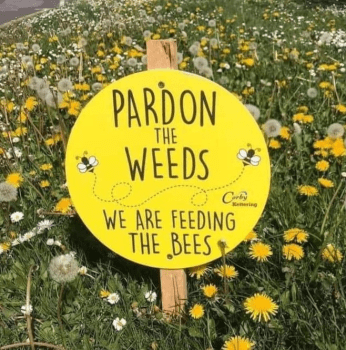
Nobody cares where a pretty wildflower is from

The feel-good ending of the local news broadcast on Channel 7 (ABC) on February 17, 2021, featured this video of a huge field of oxalis (Bermuda buttercup, Oxalis pes-caprae) blooming on the roadside of Highway 1 in Santa Cruz County.  People were stopping along the road to admire the bright yellow blooms of spring and photograph them.  No one said anything about where the plant “belongs,” and no bad words were spoken about this useful plant that native plant advocates love to hate.
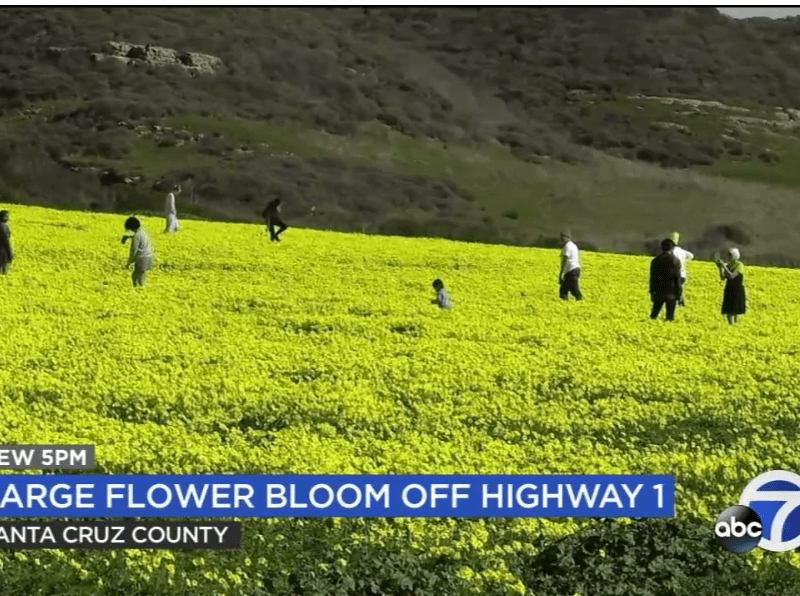
Click on the picture to activate the video

Despite its beauty and utility, oxalis is sprayed with one of the most toxic herbicides on the market in public parks and open spaces in the Bay Area.  San Francisco’s Recreation and Parks Department has been spraying oxalis in several public parks for over 15 years.  San Francisco Forest Alliance (SFFA) published a brilliant article about this pointless and destructive crusade that was republished by Conservation Sense and Nonsense in 2015.  That article about the many benefits of oxalis is one of the most popular articles on this blog; it has been viewed by over 10,000 readers and many more on the SFFA website.  We invite you to visit it and we summarize it briefly here:

  • Oxalis blooms briefly in early spring and dies back before summer begins, leaving the ground to other plants. It does not kill other plants, rather it co-exists briefly during its annual bloom.
  • Oxalis is very useful to pollinators and its tuberous roots (bulbils) are eaten by ground dwelling animals such as gophers.
  • Oxalis is called sour-grass because of its pleasant-tasting tang and it is often eaten by children.
  • Triclopyr is the active ingredient in the herbicide that is used on oxalis during its blooming season. It damages the soil by killing beneficial fungi and microbes, and it is toxic to many animals.

The annual poisoning of oxalis on Mount Davidson was recently videotaped by Ron Proctor and published by the San Francisco Forest Alliance. A crew of 5 men was hired to do the deed.  Ironically, this spraying of oxalis on Mount Davidson in San Francisco was taking place at the same time that tourists were admiring oxalis in a neighboring county.

Click on picture to activate the video.

Oxalis is not an isolated example of a non-native plant that is admired by the public, but hated by native plant advocates and public land managers who do their bidding.  As a member of the Sierra Club, I receive emails alerting me to opportunities to advocate for the protection of the environment.  The most recent email featured a picture of a yellow wildflower in the foreground of a photograph of a Bay Area landscape:

The yellow wildflower in the foreground is Black Mustard (Brassica nigra).  I responded to the Sierra Club’s email:

“The plant in the foreground of your photograph appears to be Brassica nigra:  ‘Brassica nigra, or black mustard, is an annual plant cultivated for its black or dark brown seeds, which are commonly used as a spice. It is native to tropical regions of North Africa, temperate regions of Europe, and parts of Asia.’ Wikipedia

“I hope the use of this photo in this Sierra Club email to its members means that the Sierra Club is finally prepared to accept the reality of the presence of non-native plants in our public parks and open spaces.  The Sierra Club’s support for unnecessary and destructive eradication projects has been regrettable, particularly because they require the use of harmful herbicides.  I hope this email is an indication that the Sierra Club is finally ready to reconsider this futile crusade.”

I received this disappointing reply from the Sierra Club:  The staffer who puts together our newsletter isn’t a plant buff and wouldn’t have known the difference. But I am a plant buff and review the newsletter and know the difference between a mustard and a native plant. I somehow just overlooked that photo entirely. Thanks for bringing it to my attention. I’ll be more careful in my review of the newsletter in the future (look more carefully at the photos). And we’ll change the online version.”

The beauty and resilience of weeds

Dandelion by Mona Caron. Click on the picture to see more murals by Mona Caron.  Mona is a Swiss artist who became a muralist in her adoptive hometown San Francisco, California.  She is best known for her multi-story murals celebrating the rebellious resilience of weeds.

 The Bottom Line

The general public doesn’t care where plants came from.  The public recognizes and values beauty wherever it is found.  Unfortunately, our public lands are in the death grip of the native plant movement and environmental organizations that should be objecting to the use of herbicides in our public parks and not promoting that destructive agenda.  The crusade against non-native plants has been responsible for spraying our public lands with dangerous pesticides for over 20 years.  They have little to show for their toxic crusade, perhaps because the herbicides damage the soil and make the survival of native plants even less likely.


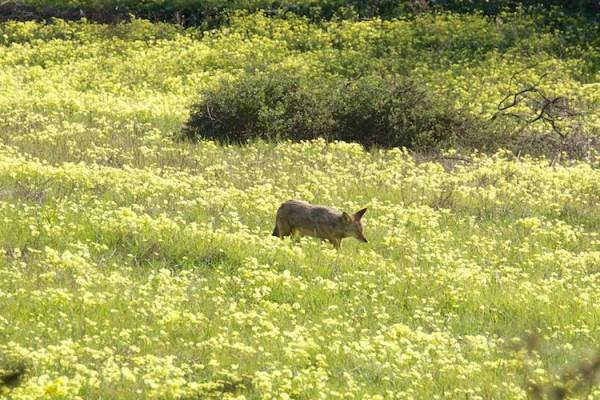
The featured photo at the top of this article was taken in Glen Canyon, another public park in San Francisco where oxalis has been sprayed annually for many years.  The copyright photo of a coyote in a field of oxalis was taken by Janet Kessler and is shown with her permission.
Fact vs. Fiction: The real threats to native plants in California

The enduring fiction of the native plant movement is that the existence of non-native plants threatens the existence of native plants by “crowding out” native plants.  If that were true, we should expect to see some evidence of such a causal relationship after 250 years of steadily increasing numbers of non-native plant species.  But we don’t. 

Marcel Rejmanek (UC Davis) is the author of the most recent report on plant extinctions in California, published in 2017.  At that time there were 13 plant species and 17 sub-species native to California known to be globally extinct and another 30 species and sub-species extirpated in California but still found in other states.  Over half the globally extinct taxa were reported as extinct over 100 years ago.  Although grassland in California had been converted to Mediterranean annual grasses by grazing domesticated animals decades before then, most of the plants now designated as “invasive” in California were not widespread over 100 years ago.

Most of the globally extinct plant species had very small ranges and small populations.  The smaller the population, the greater the chances of extinction.  Most of the globally extinct plants were originally present in lowlands where most of the human population and habitat destruction are concentrated. Although there are many rare plants at higher altitudes, few are extinct.  Plants limited to special habitats, like wetlands, seem to be more vulnerable to extinction. The primary drivers of plant extinction in California are agriculture, urbanization and development in general.

Non-native plants are the innocent bystanders to disturbance

“Invasive species” are mentioned only once in the inventory of extinct plants published by California Native Plant Society and only in combination with several other factors. However, the identity of this “invasive species” is not clear.  Rejmanek suggests that the “invasive species” rating refers to animal “invasions” by predators and grazers.  He says, “Indeed, one needs quite a bit of imagination to predict that any native plant species may be driven to extinction by invasive plants per se.” (1)

Although climate change is not cited as the cause of any of the known plant extinctions in California, Rejmanek predicts that climate change is likely to be a factor in the future, not only because of the impact of drought and higher temperatures, but also because non-native plants may be better adapted to changed conditions.

There are over 1,000 naturalized non-native plant species in California.  Their presence is associated with human disturbance.  Naturalized non-native plants are a symptom of disturbance, not the cause.  The impact of non-native plants on native plants cannot be separated from other factors that created the conditions for success of non-native plants.

Specialized insects are exaggerated

Another popular fiction among native plant advocates who love to hate non-native plants is that specialized insects—especially pollinators—require specific native plant species. Again, the record of plant extinctions in California does not support that myth:  “…there is no indication that the loss of pollinators was an important factor in plant species extinctions in California. [For example, one of the native plant species extirpated in California] has many documented non‐specialized pollinators. There does not seem to be any particular dispersal mode associated with presumably extinct plants in California.” (1)

Putting plant extinctions into context

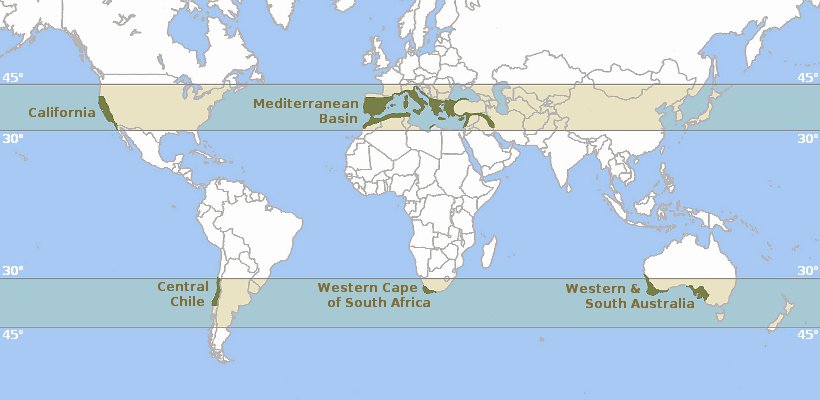
Mediterranean Climates are found in coastal temperate zones. Mediterranean climates are characterized by hot dry summers and mild wet winters.

Setting sub-species aside, there are 5,280 identified native plant species in California and 28 known extinctions of native plant species, including 15 plant species known to still exist in other states.  Only .53% of California native plants are known to be extinct in California, about one-half of one-percent.  Does that seem like a lot?  Rejmanek compared the extinction rate in California with other Mediterranean climates.  The extinction rate of native plants in California is similar to those in the European Mediterranean Basin, South Africa, and Australia, but a little greater than the rate in Chile, where there are fewer endemic plants that exist only in Chile.  Endemism is associated with small native ranges and small populations that are more vulnerable to extinction.

Why are there many endemic plants in California?

About 40% of native plant species in the California Floristic Province are endemic, found only in California and in most cases only in small areas within California, including our off-shore islands.  Their small populations in isolated geographic areas, sometimes within unique ecosystems, such as alkaline sinks, make them particularly vulnerable to extinction.

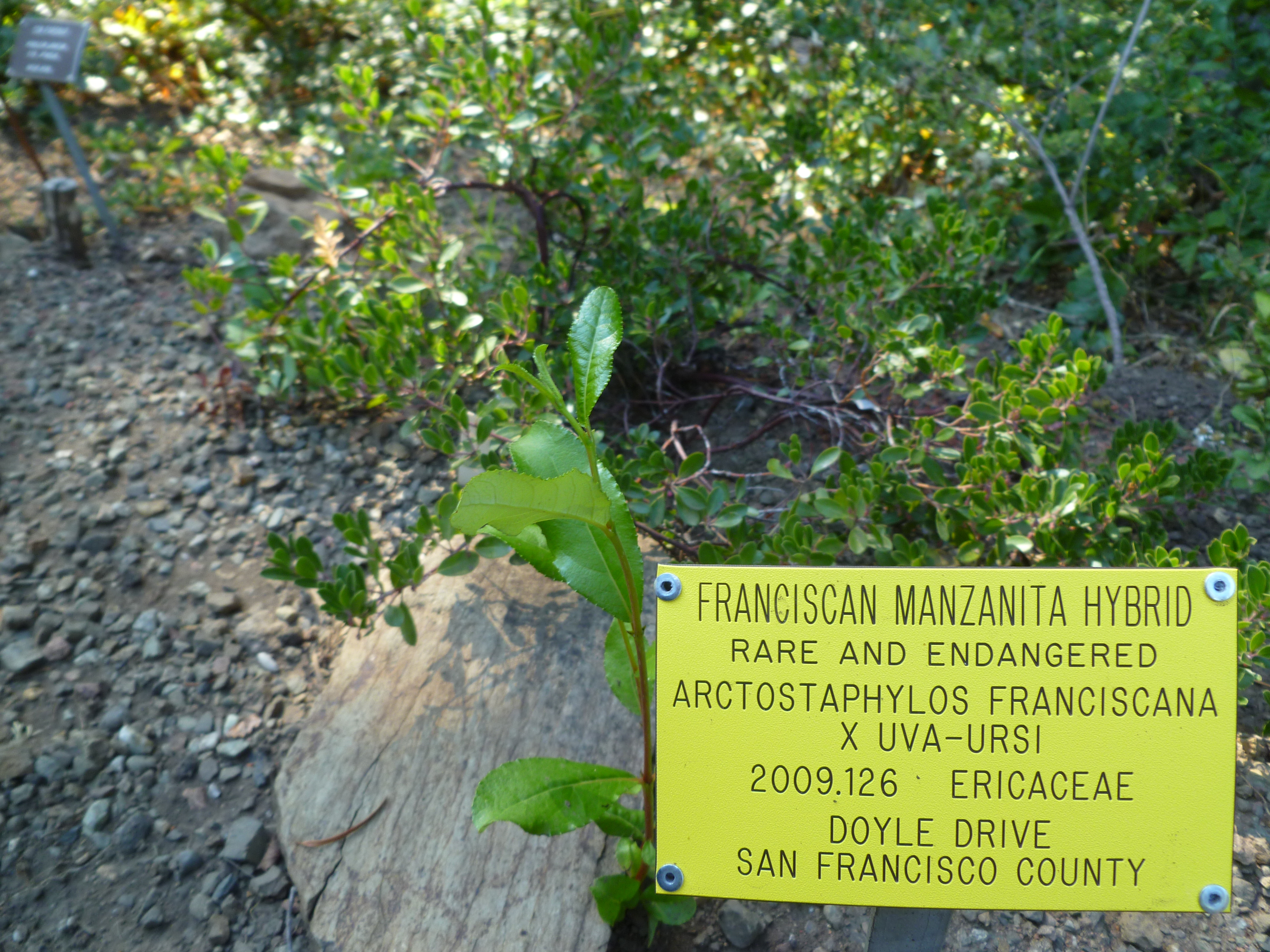
The evolutionary history of endemic plant species explains why there are so many in California.  Endemic plants are close relatives to plants that exist elsewhere and are sometimes plentiful where they came from.  For example manzanita is a genus of chaparral shrub that is plentiful in California, but there are also many rare endemic manzanita species that occur only in small areas and small populations.  There are several endangered manzanita species in the Bay Area (pallid, Raven’s, Franciscan).

Franciscan manzanita is one of 2 endangered manzanita species in San Francisco. There is one individual plant left of each of these two manzanita species. There are many endemic plants and insects in San Francisco and several are now extinct. San Francisco has a complex, diverse geology and topography and it is surrounded on 3 sides by water, creating many small, isolated microclimates in which many endemics have evolved.

The geography of California explains why the evolution of a plant species diverged from its plentiful ancestors to become an endemic species in a small geographic area.  Plants move around in a wide variety of ways, most natural, without the aid of humans.  Their seeds are dispersed by animals and birds that eat them or inadvertently carry them to another location.  Sometimes their seeds are carried on the wind or brought to islands by storms and currents.

When a plant arrives in a new location that is isolated from its original home and therefore cannot mate with its relatives, it begins its own, independent evolutionary history.  Each successive generation is reacting to its new environment, rewarding its fitness with its new home with a successful new generation.  Each generation rolls the genetic dice, its genome drifting away from its ancestors in a random way.  Occasionally a mutation will occur that alters the evolutionary trajectory.  Eventually, the plant in its new home is sufficiently genetically distinct that taxonomists are ready to call it a separate species.  Naming a new species is a judgment call, often questioned by some taxonomists, called “lumpers” as opposed to the “splitters” who are ready to name it a new species.

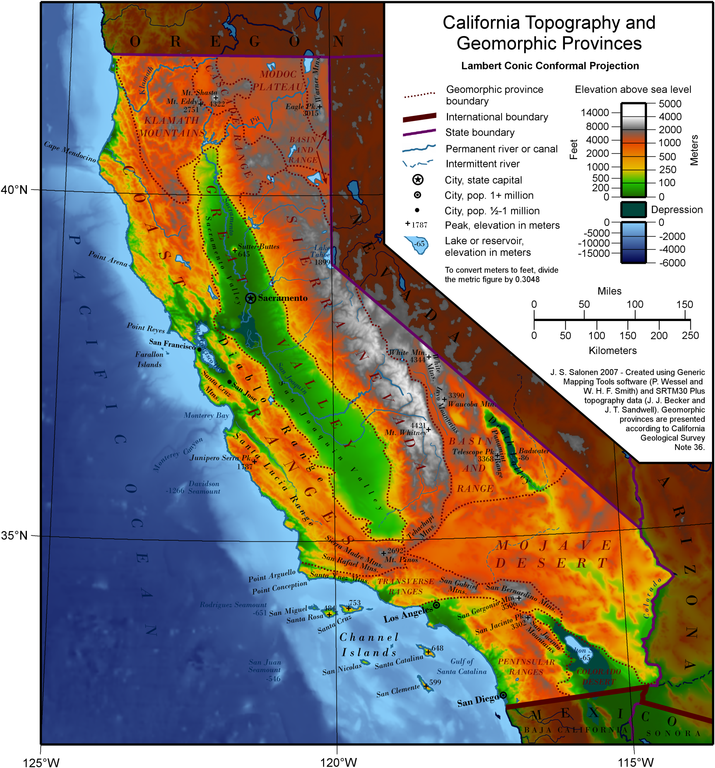
The factors that result in endemic species are many, but broadly speaking they are mobility and, ironically, isolation.  California is one of the most geographically diverse states in the country, with corridors for mobility, but many barriers that create isolation.  Gordon Leppig describes California’s geographic diversity in Beauty and the Beast:  California Wildflowers and Climate Change, published by California Native Plant Society:  “The state’s natural wonders include five deserts, the highest and lowest points in the continental United States, the third-longest state coastline (about one thousand miles), the most national parks (nine), the most federally designated wilderness areas (more than 140), the highest percentage of wilderness in the contiguous United States (14%), the most diverse conifer assemblage outside the Himalayas, the most federally listed species….”  The multitude of different ecosystems with unique microclimates produces one of the most diverse floras in the world.

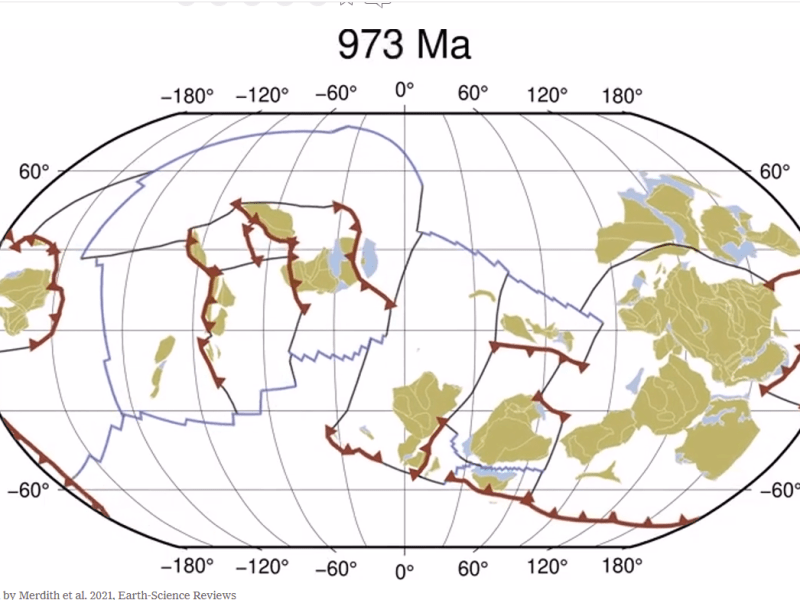
Click on the picture to watch the movement of tectonic plates over one billion years. Watch California slowly emerge as the jigsaw puzzle takes shape. California is the edge of two tectonic plates that collide and grind past one another perpetually, uplifting and dropping the land into fractured geomorphic pieces.

Human activities penetrate the barriers that created genetic isolation in the past.  Our roads become corridors for the biological exchange that threatens small, isolated pockets of rare plants.  Trade and travel has ended the isolation of off-shore islands.  Our roads and dams also create new barriers for mobility.  In other words, we are altering pre-settlement corridors and creating new ones.  We should expect consequences for our ecosystems for the changes we have made.

Given the number of rare and endemic plants in California and the changes in the environment required to accommodate nearly 40 million human Californians, it seems that extinction of less than one-half of one percent of native plants is a surprisingly small loss. 


(1) Marcel Rejmanek, “Vascular plant extinctions in California: A critical assessment,” Diversity and Distributions, Journal of Conservation Biogeography, 2017

Migration: Life on the move

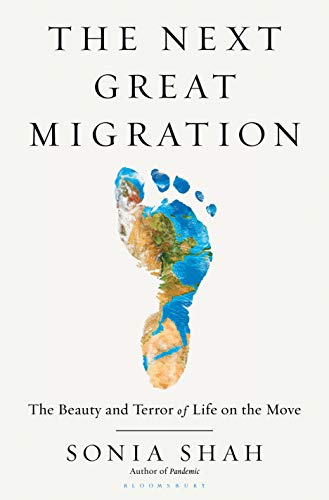
Sonia Shah’s recently published book, The Next Great Migration: The Beauty and Terror of Life on the Move, takes a deep dive into the past to trace the ancient history of migrating life on Earth. For as long as life has existed on Earth, life has been on the move, as needed to survive the constantly changing environment in which all plants and animals live.

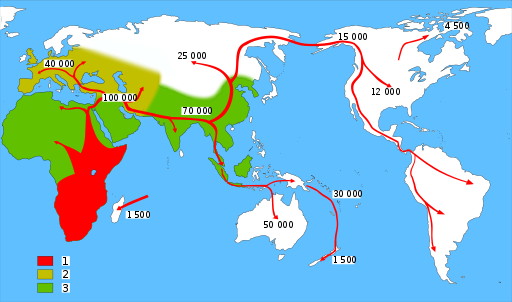
1 Homo sapiens
2 Neanderthals
3 Homo erectus

Shah’s is an ambitious attempt to tell this story, not confined to human migration, but encompassing plants and animals as well because all of these migrations are connected. Scientists speculate the earliest migrations of human ancestors, some 100,000 years ago out of Africa, were in pursuit of the migrating animals that humans hunted.  On balance, the movements of plants and animals are beneficial to life on Earth because they are necessary to survive. When they aren’t beneficial, the problems are usually short-lived and humans are usually unable to stop them because nature is more powerful than we are.

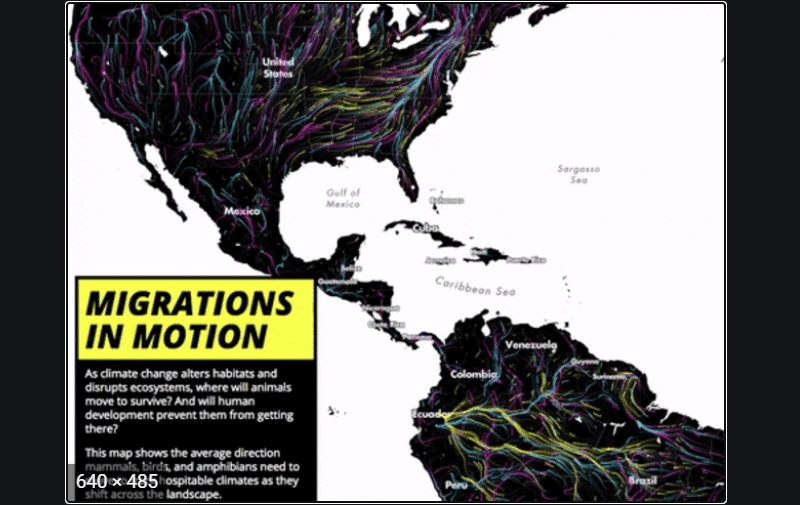
Click on map for animated movement of animals in response to changing climate conditions.

Migrations are even more frequent at a time of rapid and extreme climate change. As crops fail in the withering heat and drought caused by global warming, farmers are abandoning their farms to find the food they need to survive. Hence, Shah’s prediction that we are about to witness the “next great migration” because of the challenges of climate change. When the climate changes, the vegetation changes. When the vegetation changes, animals must move to find the food they need. Humans wish to put ourselves in a special category that denies our kinship with animals. But we are as dependent upon our food as any animal and the changing climate will challenge our existence as much as other forms of life.

Shah also traces the brief history of human knowledge of migrations about which little was known before the development of the scientific tools to study it.  Paleontology could dig up fossils that would raise more questions than answers about the residents of deep time, but it wasn’t until the development of molecular analysis that fossils could inform scientists of the evolutionary history of and close relationships among plants and animals that reflect migrations in the distant past.  New technology is capable of tracing the movements of animals that were unknown in the distant past, when animals seemed to mysteriously disappear at the end of one season and returned at the beginning of another season.

Invasion Biology is based on ignorance of migration

The fact that animal migration was largely unknown led to some fundamental misunderstandings about nature, including the unfortunate rise of nativism in the natural world that was spawned by the mistaken hypotheses of invasion biology. Shah explained the consequences of inadequate knowledge of migration in a recently published article in New York Times Magazine:

“When scientists considered movements across barriers and borders, they characterized them as disruptive and outside the norm, even in the absence of direct evidence of either the movements themselves or the negative consequences they purportedly triggered…Influential subdisciplines of biological inquiry focused on the negative impact of long-distance translocations of wild species, presuming that the most significant of these occurred not through the agency of animals on the move but when human trade and travel inadvertently deposited creatures into novel places.  The result, experts in invasion biology and restoration biology said, could be so catastrophic for already-resident species that the interlopers should be repelled or, if already present, eradicated, even before they could cause any detectable damage.”

In turn, Invasion Biology spawned pointless and destructive eradication projects

Conservation Sense and Nonsense has followed the destructive and futile attempts to eradicate plants and animals that nativists say “don’t belong here:”

  • Hawaii is an extreme case of attempts to eradicate non-native plants and animals: frogs, owls, egrets, seals, fruit trees, mangroves, parrots, etc.  These eradication projects often do more harm than good.  The “logic” for these projects is muddled, partly because the Hawaiian Islands emerged from the sea as barren volcanoes.  The question of “what belongs there” is a matter of opinion and debate in Hawaii and elsewhere.
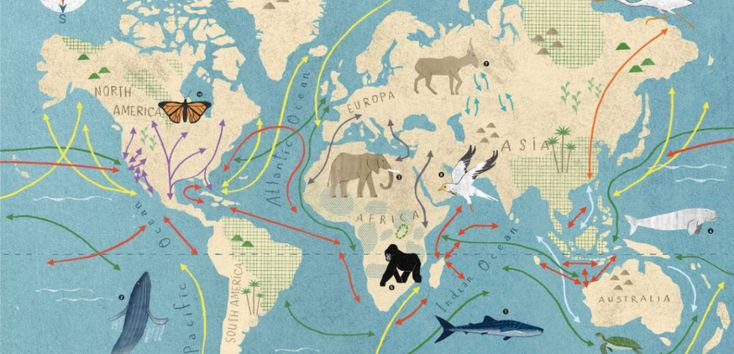
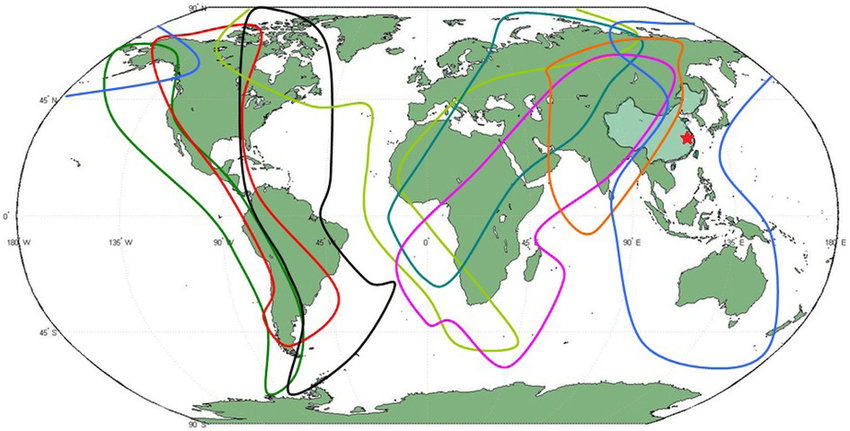
Bird migration routes

Migration enables survival

I hope that improved knowledge of migration will help people understand that migration is a natural phenomenon that is essential to the survival of all life on Earth.  Migration enables life to adapt to changes in the environment, facilitating evolution and reducing frequency of extinction.