Nativism turns a blind eye to climate change

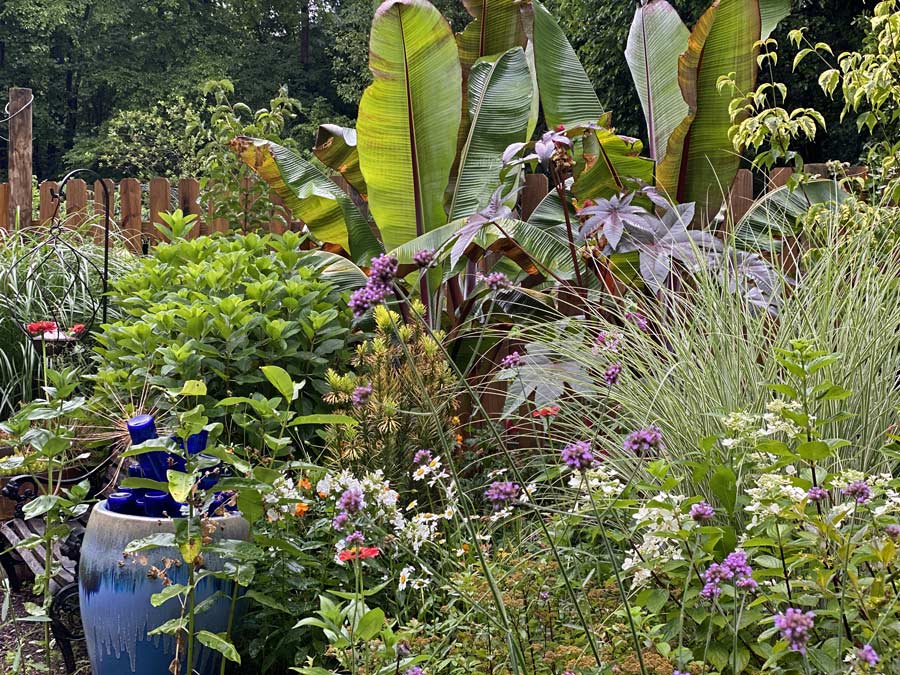
“Reflexive demonization of alien species ignores the beautiful but complex truth that nature fights to find a way—and for a planet navigating the pressures of climate change and overpopulation, that just might be our saving grace.” – Marianne Willburn, Garden Rant

Margaret Renkl writes an opinion column for the New York Times that I usually enjoy because she frequently writes about nature, often based on observations of wildlife in her own garden.  She lives in her childhood home in Nashville, Tennessee.  Much of her garden was planted with non-native plants and trees decades ago by her deceased mother.  Yet, in a recent column, Ms. Renkl blames non-native plants for a variety of crimes against nature. 

  • She suggests that non-native trees are blooming earlier than native trees, which she says has “skewed our experience of spring.”  She is apparently unaware that spring does indeed arrive earlier than it has in the past because of climate change.  Warmer weather arrives earlier, triggering the blooms of spring, not vice versa.  Both native and non-native plants are blooming earlier than they did in the past. 
  • She suggests that gardens planted with non-native plants are “blooming wastelands where the flowers feed nobody at all,” yet her columns are usually filled with the wildlife that lives in her own garden, with introduced plant species.
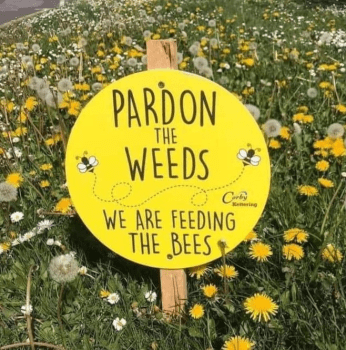
  • Although she does not use pesticides in her own garden, she believes that her neighbors’ non-native gardens require them to use pesticides that kill wildlife.  She says, “The typical suburban yard is actually worse than a wasteland. It’s a death trap.” She does not seem to know that most herbicide is used to kill non-native plants, not native plants nor does she seem to realize the contradiction in her indictment of gardening with non-native plants.  If there are more insects living in native gardens than non-native gardens, why would more pesticide be needed in non-native gardens?  If people could learn to love the clover, dandelions, and English daisies in their lawns as much as I do, they would use less “weed killers” on their lawns.

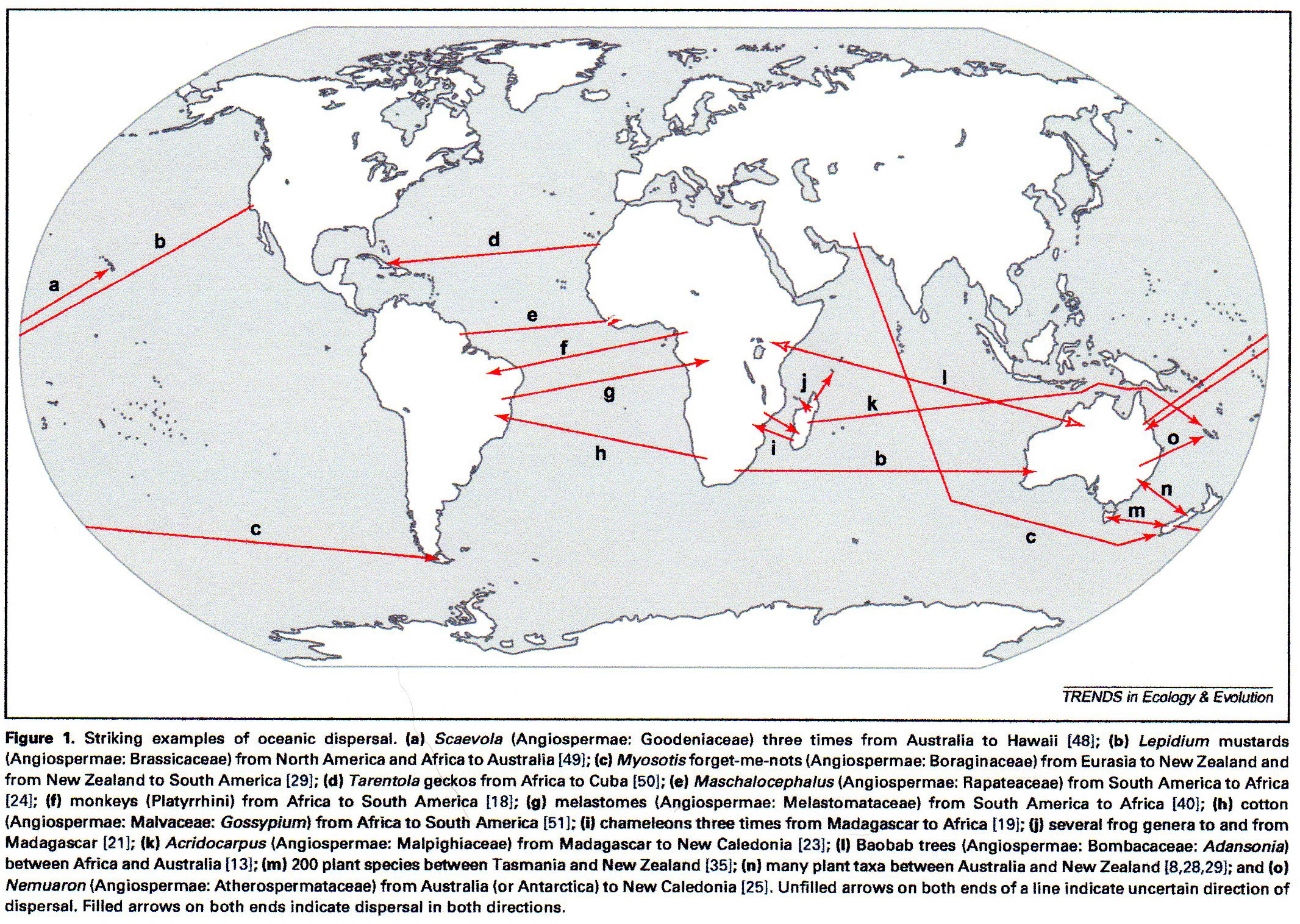
Ms. Renkl’s misperceptions about non-native plants seem to be based on a mistaken belief in their origins.  She says, “Ambulatory and omnivorous, human beings are a migratory species. That’s not true for the vast majority of plants.”  In fact, plants are just as mobile as animals, including humans.  Plants are carried by birds, animals, wind, ocean currents, etc.  They come and go as the climate changes, as it has many times in the past 500 million years that plants have existed on Earth.  Plants now considered non-native existed here in the distant past, in a different climate.  Here are a few examples of such dispersals; most occurred before humans even existed:

The ability to migrate is essential to the survival of plant and animal species.  As the climate changes, this survival strategy is quickly becoming even more important.  When we demand that plants be restricted to their historical “native” ranges, we doom them to extinction because when the climate changes, the vegetation must change.

Where did Ms. Renkl learn these myths?

Ms. Renkl’s cites Doug Tallamy’s Nature’s Best Hope as one of the sources of her mistaken beliefs.  Tallamy considers the existence of non-native plants the root of all evil in nature.  He calls them “ecological tumors.” He blames non-native plants for declining populations of both native plants and insects, and by extension to declining populations of birds that eat insects. 

In Nature’s Best Hope, Tallamy says, “…we must not use climate change as an excuse to do nothing.  Most species of plants and animals are far more resilient to climate variability than we give them credit for.  Besides, increasing the number and biomass of the plantings in our yards and public spaces is one of our most accessible and convenient tools to fight climate change.”  The problem with Tallamy’s dogma is that it inspires the public and land managers to eradicate established landscapes that are not native based on Tallamy’s claims that non-natives are “crowding out” native species and depriving wildlife of food. All native plant “restorations” begin by eradicating non-native plants, usually with herbicides that retard new growth.  In other words, the native plant ideology is causing the loss of vegetation and therefore the loss of stored carbon and the reduced capacity for carbon sequestration in the future.  The native plant ideology is not increasing biodiversity, nor is it “fighting climate change.”  It is more destructive than constructive. 

I’m not looking for “an excuse to do nothing.”  On the contrary, I believe every effort must be made to stop or at least slow down the inexorable advance of climate change.  The most basic effort we can make is to stop destroying functional vegetation, especially trees.  Then, there is a lengthy list of what we should be doing to reduce greenhouse gas emissions, which is another, equally important topic. 

Native plant advocates consider climate change irrelevant because they believe the existence of non-native plants is the sole culprit of all problems in the environment.  They see every environmental issue through the narrow lens of their dogma.  This comment on an article about the value of non-native plants by Marlene Condon published in [Chesapeake] Bay Journal is an example of such a misinterpretation of an environmental issue:

“English ivy is an evergreen, non-native, invasive groundcover that has demolished undisturbed natural areas…In salmon country that’s the difference between clean, cold streams and warmer streams filled with sediment.”

Eradicating ivy on stream banks is likely to produce more sediment because it will take some time for replacement vegetation to cover the ground, especially if herbicides are used to eradicate the ivy. Water is warmer in streams because of climate change and because there is less water due to water diversion and droughts. There are many other reasons for declining populations of salmon, particularly dams that prevent salmon from reaching their spawning grounds upstream.

Treat the cause, not the symptom

The native plant ideology ignores the underlying causes of changing ecosystems. Most changes are caused by the activities of humans, such as agriculture, development, water diversion, and pesticides.  Climate change is the underlying cause of some changes in nature and it will steadily become a more important factor.  Eradicating non-native plants will not reverse any of those changes nor will it prevent changes in the climate.    


  1. Alan de Queiroz, “The resurrection of oceanic dispersal in historical biogeography,” Trends in Ecology and Evolution, 20 No. 2, February 2005

Photo credit for featured photo: Garden Rant, Marianne Willburn
Science meets the “restoration” industry

I was encouraged to hear a presentation by an academic scientist at the recent Beyond Pesticides Forum that was another indication of the paradigm shift in invasive species management toward a less destructive approach.  Dr. Bernd Blossey is a Professor at Cornell University, where he directs the Ecology and Management of Invasive Plants Program in the Department of Natural Resources.  His many years of studying invasive plants, such as purple loosestrife, garlic mustard, water chestnut, Japanese knotweed, and phragmites have convinced him that there are often “multiple stressors” that contribute to such invasions.  Some factors such as the presence of earthworms and deer can be more important factors in the Northeast than the non-native plants themselves. 

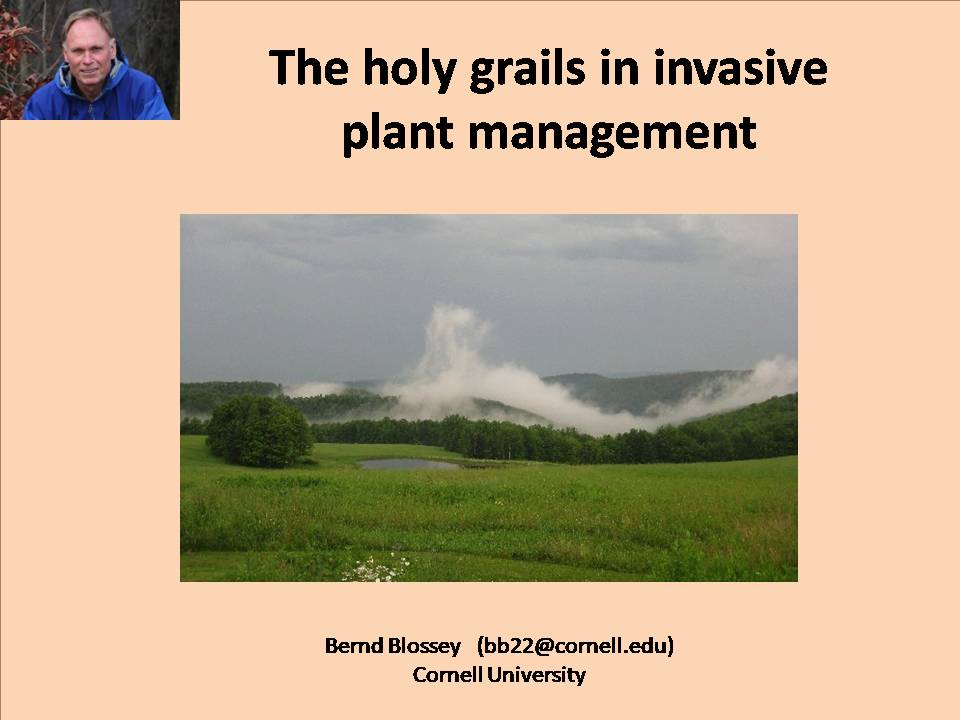
Based on his research experience, Dr. Blossey delivered wise advice to land managers at the Beyond Pesticide Forum.  The featured photo at the top of this article was his introductory slide. 

Before a restoration project begins, these questions should be asked and answered:

Source: Dr. Blossey’s presentation to Beyond Pesticides Forum on June 8, 2021

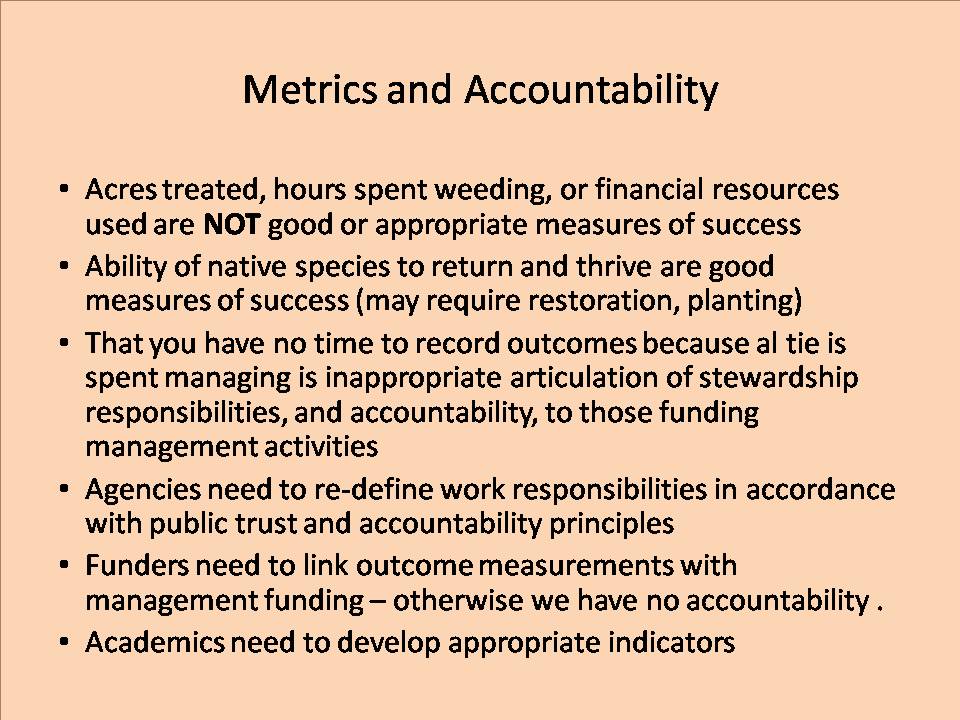
If the project seems worthwhile after such analysis is done, this is Dr. Blossey’s advice about monitoring the project and measuring its success:

Source: Dr. Blossey’s presentation to Beyond Pesticides Forum on June 8, 2021

Practicing what he preaches

Dr. Blossey used these principles in his study of garlic mustard in the forests of the northeast. (1) Over a period of more than 10 years, Dr. Blossey and his collaborators measured the abundance of garlic mustard in 16 plots from New Jersey to Illinois where no attempt had been made to control or eradicate it.  They found that growth rates initially increased, but decreased over time and eventually the population started to decline.  Dr. Blossey explained their findings in a recent webinar that is available HERE:

Garlic mustard was first recorded in North America in 1868 on Long Island, New York.  It spread west from there and is now found from southern Canada to Georgia and from New York and Quebec to Oregon, British Columbia and Alaska.  Because land managers believed that garlic mustard suppresses populations of native plants, they have been trying to eradicate garlic mustard in northern forests for decades, with little long term success.  Dr. Blossey addressed that concern in his webinar. 

Source: Dr. Blossey’s webinar about garlic mustard

Earthworms are the prerequisite for garlic mustard invasion.  Earthworms in northern forests are also considered alien invaders because they were killed, along with forests, by advancing glaciers during the Ice Age.  When forests returned after the Ice Age over 10,000 years ago, they evolved without earthworms that were reintroduced by European settlers less than 500 years ago. 

When deer are excluded from areas by fencing plots with garlic mustard populations, abundance of native vegetation does not decline.  Deer have a strong preference for native vegetation.  Absent deer, garlic mustard does not seem to suppress the growth of native plants in northern forests.

In other words, garlic mustard is not guilty as charged.  Dr. Blossey explains the disadvantages of attempting to eradicate it.  The decline of garlic mustard abundance over time is attributed to negative soil feedback that builds over time as the soil microbial community responds to the new plant. Removing garlic mustard episodically prolongs the process of building that negative soil feedback.  When groups of well-meaning young people are sent into the forest to pull garlic mustard, they trample the very native plants they are trying to save. 

Are there lessons for land managers in the Bay Area?

Because garlic mustard doesn’t exist in California and our native earthworms are considered beneficial to soil health, you might wonder if this study is relevant here.  California was not glaciated during the Ice Age.  Our earthworms survived the Ice Age and they evolved with our forests. 

So, what can we learn from this study?  The pattern of initial growth and eventual decline of populations of introduced plants is not unique to garlic mustard“A phenomenon that has received increased attention is whether introduced species go through boom and bust cycles, ultimately becoming non-threatening members of local communities.” (1)  One recently published study was based on nearly 5,000 vegetation inventories collected in 49 National Parks in the eastern United States.  It reported that non-native plants appeared to decline after 100-200 years: 

Residence time appears a core part of invasion that interacts with other mechanisms, such as climate matching, propagule pressure and empty niche. Initially, time appears to benefit non-native species as they establish in a novel range. They likely face low enemy loads, and any successful dispersal increases their populations and invaded range. As they spread, initial barriers, such as distance or suboptimal habitat, were overcome, as was resistance from native relatives. However, their biggest challenge appeared to be time, as they all declined after ~1 to 2 centuries, suggesting that pathogens and herbivores caught up with them.” (2)

The message for land managers everywhere is that patience is needed to judge the impact of introduced species.  Most will fit into ecosystems eventually and attempts to speed up that process often do more harm than good.  We can’t judge changes in nature by the short-term perspective of human lifetimes because the evolution of nature is a continual process that began long before humans existed and is likely to persist long after we are gone. 

Applying Dr. Blossey’s “Core Knowledge” to local projects

What if Dr. Blossey’s “Core Knowledge” had been applied to projects in the San Francisco Bay Area?  Here are examples of local eradication projects that might have benefitted:

  • San Francisco has been trying to eradicate oxalis in its parks for over 20 years by spraying a selective herbicide (Garlon).  There seems to be more oxalis now than there was 20 years ago.  Oxalis is visible only about 2 months of the year.  When it dies back in the spring it leaves behind the native plants with which it co-exists.  If a control plot had been set aside before they started eradicating oxalis perhaps we would know the answer to these important questions:  Does oxalis suppress the growth of native plants?  Does attempting to eradicate oxalis produce more or less oxalis?
  • California, Oregon, and Washington have been trying to eradicate non-native spartina marsh grass along the entire West Coast for over 20 years.  Here in the Bay Area, non-native species of spartina have been 99% eradicated, but a hybrid of the native and the non-native remains and is poisoned with imazapyr annually.  According to a recent presentation by the Invasive Spartina Project, the hybrid is visually indistinguishable from the native and it occupies the same elevation of the marsh.  Over 500 genetic tests are needed every year to distinguish the hybrid from the native in order to poison the hybrid.  Dr. Blossey’s approach might ask these important questions:  What harm is hybrid spartina doing?  Do more or fewer animals live in hybrid spartina?  What effect has 20 years of spraying imazapyr had on the soil and the microbes that live in it?  Is the eradication project doing more harm than good? 
oxalis bloom, February 2021

We don’t know the answers to these important questions because projects were initiated and implemented without the analysis and monitoring metrics needed to answer the questions.  The projects continue without being accountable for the damage they are doing.  Public money is funding these projects without requiring the projects to be accountable for the consequences. 

California has made a commitment to spend billions of dollars on “nature based solutions” and achieving “biodiversity goals.”  This is an opportunity to start new projects off on the right foot by:

  • Requiring the analysis needed to determine the impacts and causes of perceived problems in the environment.
  • Requiring control plots so that the effects of the project can be compared with the option of not doing the project.
  • Requiring that projects be monitored, using established metrics so that the success of the project can be measured.

  1. Bernd Blossey, et. al., “Residence time determines invasiveness and performance of garlic mustard (Alliaria petiolota) in North America, Ecology Letters, February 2021.  
  2. Robert Warren, et. al., “Multiple mechanisms in woodland plant species invasion,”  Plant Ecology, April 2019.