The Forever War on Non-Native Plants

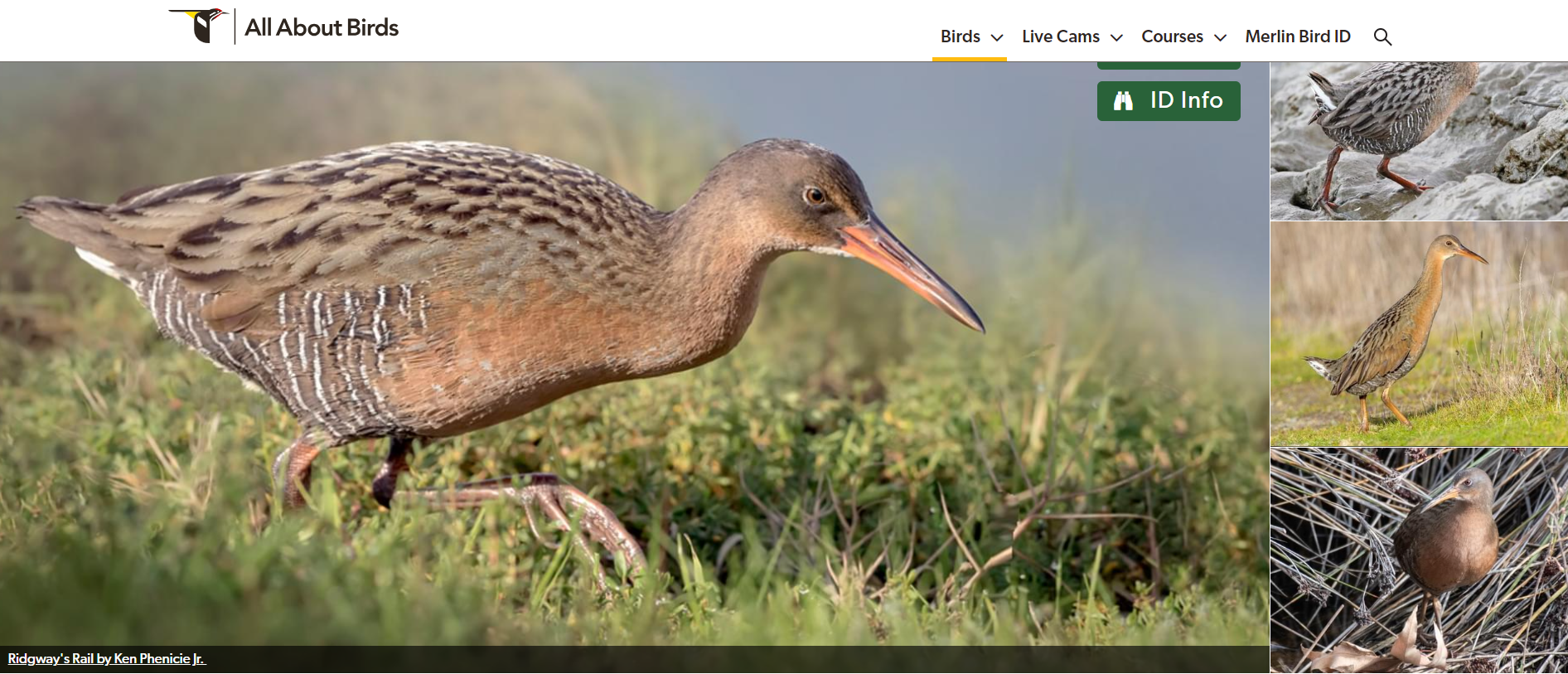
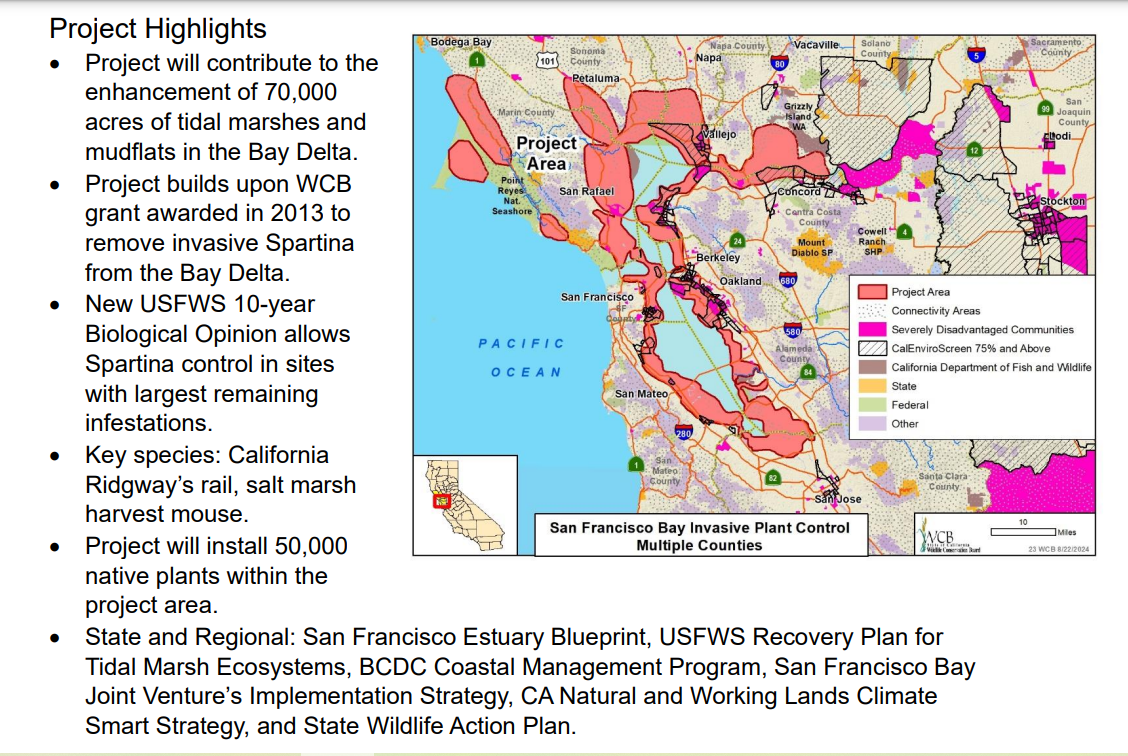
I spoke to California’s Wildlife Conservation Board at their August 2024 meeting about the Invasive Spartina Project. I asked the Board not to fund the eradication of non-native spartina and its hybrid, using herbicide. This project, which began 20 years ago, had cost over $50 million by 2023. (1)  Non-native spartina, native to the East and Gulf coasts (2), provides crucial habitat for Clapper rails (3), closely related to our endangered Ridgway rails.

Source: Cornell Laboratory of Ornithology

Non-native spartina grows taller, denser, and doesn’t die back in winter as native spartina does. Because early aerial spraying of herbicide eradicated most non-native spartina by 2010, Ridgway rail populations declined by 50% due to habitat loss. (4)

The project was temporarily paused in 2014 to plant native marsh plants and stabilize rail populations. When the project was resumed in most places the rail population continued to decline from 2018-2023. There were approximately 1,200 Ridgway rails in the Bay estuary before the project began. (5)  The most recent survey in 2022 found about 500. (6)

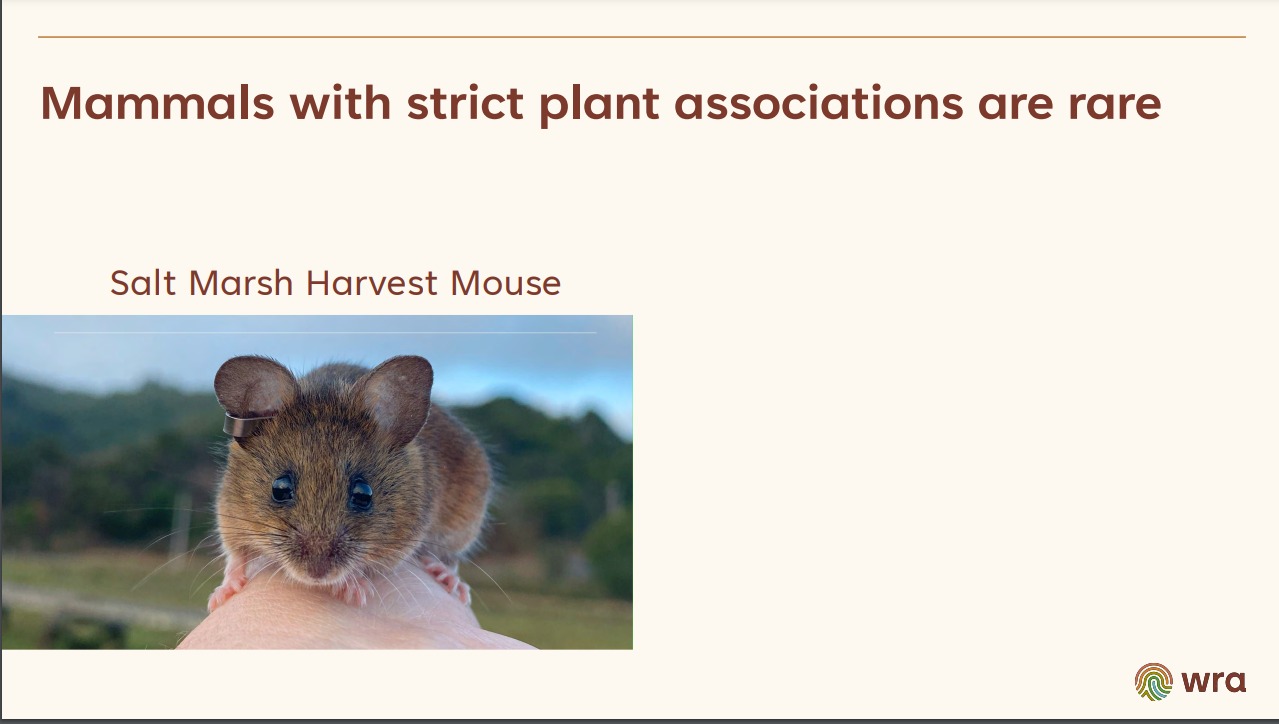
Native pickleweed was planted based on the mistaken assumption it would benefit endangered salt marsh harvest mice.  Recent studies show there are more mice in areas with less pickleweed and they eat both native and non-native plants. (7)

For the past 10 years, the focus has been on eradicating a hybrid of spartina, though it is indistinguishable from native spartina and 7,200 genetic tests were required from 2010 to 2022 to identify it. Hybridization is a natural evolutionary process that supports natural selection. (8)

Hybrid spartina could help to protect the Bay’s shoreline as sea level rises and extreme storm events cause erosion.  Where it is eradicated, gaps in vegetation are difficult to revegetate because the herbicide (imazapyr) that is used is very mobile and persistent in the soil. Imazapyr is also a non-selective herbicide that kills both native and non-native plants growing closely together, as they do in the San Francisco Bay Estuary. (9)

Although others spoke with me, there were an equal number of people who spoke in favor of granting nearly $7 million to continue the project for another 10 years. Some of the funding is granted to California Invasive Plant Council to administer the grants. Several of those speakers (including Marin Audubon) actually claimed that the project is benefiting endangered Ridgway rails, despite the fact that the project has killed at least 600 of them by destroying their nesting habitat and probably contaminating the food they eat, such as crustaceans and mollusks.

You might wonder why an organization such as Marin Audubon, which is committed to protecting birds, would advocate to continue a project that has killed at least 600 endangered birds, until you remember that Marin Audubon is also supportive of the project that plans to kill 500,000 barred owls. Marin Audubon also wants the Barred Owl Management Strategy to be mandatory instead of voluntary as proposed by USFWS.

Source: Staff Report for Invasive Spartina Project, WCB Board Meeting, August 22, 2024

The Wildlife Conservation Board approved grants to the Invasive Spartina Project with one dissenting vote. The dissenting Board member voted, “Hell, NO!” Her term on the Board will end after the May 2025 meeting.  She does not expect to be reappointed.  Her departure will be the end of the effort to prevent the Wildlife Conservation Board from granting funds to projects that use pesticides.  It’s another dead end for those who advocate on behalf of wildlife and against the use of pesticides on public lands.

Funding sources to continue the Invasive Spartina Project are the Greenhouse Gas Reduction Act and Climate Change Resilience fund. These funding sources are as inappropriate as the project itself.  Destroying vegetation does not reduce greenhouse gas emissions.  Destroying non-native vegetation that grows taller, denser, and doesn’t die back in winter does not make our shoreline more resilient as sea-levels rise and winter storms become more intense.

Invasive Spartina Project is typical, not unique

The Invasive Spartina Project is typical of other “restoration” projects in California that have been trying, unsuccessfully, to eradicate non-native plants for 20 years and more.  Thanks to the California Invasive Plant Council (Cal-IPC), we now have survey data that tells us where these projects have been done and for how long. (10)

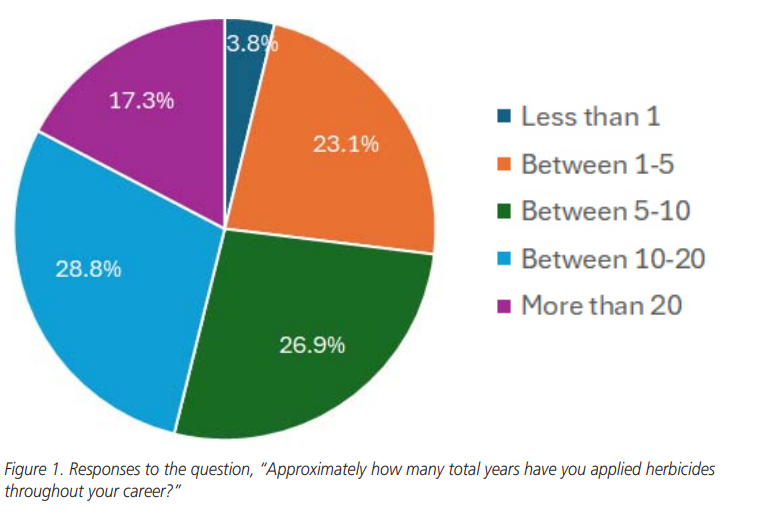
Cal-IPC sent more than 300 survey questionnaires to “practitioners” who had registered for Continuing Education credits for Cal-IPC classes and “land manager staff of organization throughout California.”  Over 100 practitioners replied to the survey.  This graph depicts their replies to the question, “Approximately how many total years have you applied herbicides throughout your career?”

Source: California Invasive Plant Council

Clearly, the Invasive Spartina Project is one of many “restoration” projects that have been applying herbicides for 20 years or more.  And the Invasive Spartina Project has secured State funding to continue spraying herbicides for another 10 years.  Spraying herbicides on public lands has created stable, life-long employment for an army of weed warriors. 

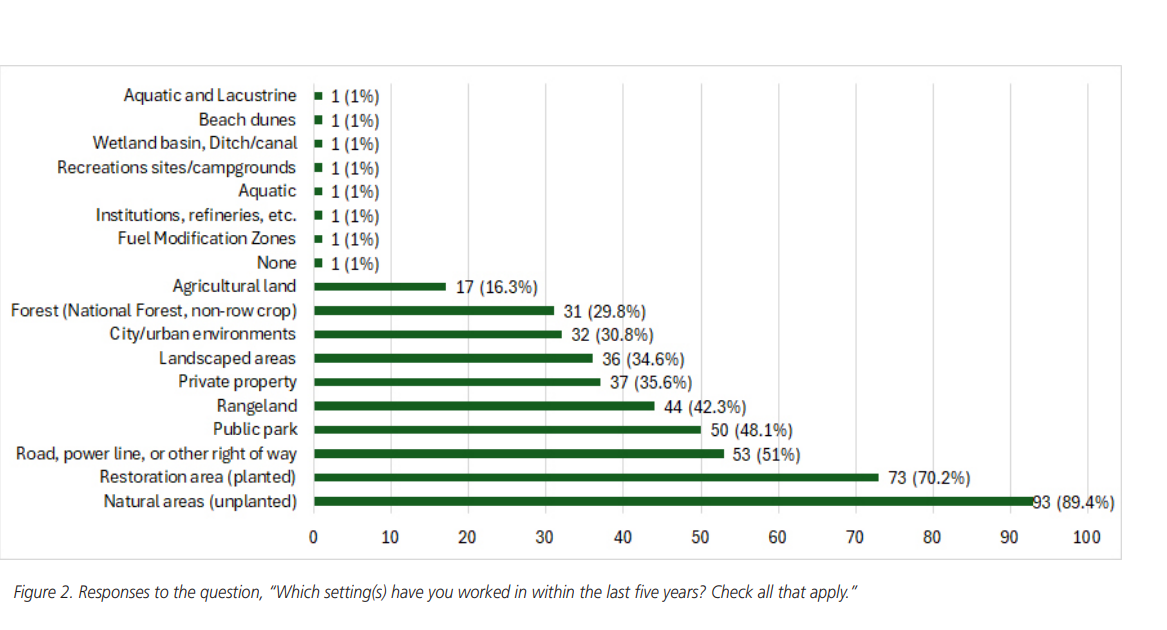
The survey also tells us where herbicides are being sprayed:

Source: California Invasive Plant Council

Virtually all (89%) herbicide applicators are spraying herbicides in “natural areas”—which we assume are wildlands—where no attempt has been made to plant native plants.  Most projects are more destructive than they are constructive. Nearly 50% of herbicide applicators are spraying in public parks.  70% of herbicide applicators spray in “restoration areas,” presumably to sustain the native plants that were planted.  If they are using non-selective herbicides, such as glyphosate and imazapyr, they are probably killing native plants too.

There are many other revelations in this survey and the details are available in the Cal-IPC publication (10):

  • Only 1.9% of respondents had not used herbicides or been part of a project that used herbicides.
  • The top three application methods were spot spraying (100%), cut stump (87%), and broadcast spray (70%).
  • 40% of respondents were not calibrating their herbicide use.  “Calibration is the process of adjusting and measuring the amount of pesticide that a piece of equipment will apply to a target area. It’s an important step in the pesticide application process to ensure that the equipment is applying the correct amount of pesticide at the right rate and in a uniform manner.” (Google search)
  • 28% of respondents had never received calibration training.  20% of respondents said they did not calibrate their herbicide application because “they did not know how.” Cal-IPC often claims that herbicides are being applied “judiciously.” If you don’t know how to apply herbicides, you are unlikely to apply them “judiciously.”

The Forever War on Non-Native Plants

Cal-IPC’s survey of “restoration” practitioners confirms our observations of their efforts in the past 25 years in the San Francisco Bay Area:

  • Attempts to eradicate non-native plants are a Forever War that has poisoned our public lands without eradicating non-native plants or restoring native vegetation, in most cases.
  • The war is futile because it is attempting to stop evolution, which is trying to help flora and fauna adapt to the changing climate and environment.  Humans cannot stop evolution, nor should we try.  The Forever War is a losing battle against evolution, which has sustained life on Earth for 3.7 billion years, without human “assistance.” 
  • The plants that we are trying to kill are also adapting to the poisonous war we pointlessly wage against them.  They have evolved and will continue to evolve resistance to the poisons we spray on them. Herbicides are less effective than they were 40 years ago and they will be continuously less effective. 
  • We are poisoning ourselves and other animals in our futile attempt to kill the plants that feed them.  Claims that wildlife eat only native plants is a fiction and a lie that sustains an industry with vested economic interests in that myth.
  • Many pesticide applicators are not properly trained or they are not following legally mandated instructions for pesticide applications on product labels. They are hurting themselves when they don’t wear legally required personal protection equipment. They are hurting the environment and everyone who lives in it when they use too much pesticide because they have not calibrated their applications as required by the product label. When they don’t post pesticide application notices in advance of their applications, they deprive the public of the opportunity to protect themselves by avoiding the area.  Even when they do, such signs would not be helpful to wildlife.
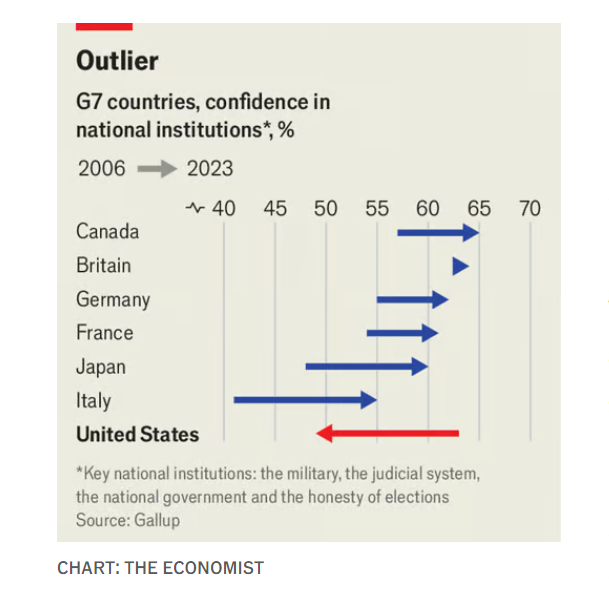
  • The money that is wasted on this Forever War could be used to address a multitude of other pressing needs.  For example, the lead pipes in Oakland that are delivering drinking water contaminated with lead to children in our public schools could be replaced with a fraction of what has been spent to eradicate non-native spartina marsh grass in the past 20 years. (11)  It’s no wonder that the public does not trust the American government:
Source: Economist Magazine

References:

  1. San Francisco Estuary News, “The Battle for Native Cordgrass,” Jacoba Charles, March 2023
  2. USDA Plant Database:  Spartina alterniflora  When the Invasive Spartina Project began, the USDA Plant Database  map of this species indicated that the species was introduced on the West Coast.  The current version of the map shows that this species is now native to the West Coast.
  3. Clapper rail, Cornell Laboratory of Ornithology  Status of Clapper rail is “Low Concern”
  4. Adam Lambert et.al., “Optimal approaches for balancing invasive species eradication and endangered species management,” Science, May 30, 2014, vol. 344 Issue 6187
  5. “Effects of Predation, Flooding, and Contamination on Reproductive Success of California Clapper Rails (Rallus Longirostris Obsoletus) in San Francisco Bay,” Steven E. Schwarzbach, Joy D. Albertson, Carmen M. Thomas, The Auk, 1 January 2006
  6. 2023 California Ridgway’s Rail Surveys for the San Francisco Estuary Invasive Spartina Project  (page 9)
  7. “Evaluating the plasticity of a ‘specialized’ rodent in a highly-invaded estuary,” Katie R. Smith, et.al.,  Presentation to California Invasive Plant Council Symposium, October 2023
  8. San Francisco Estuary Invasive Spartina Project   2021‐2022 Monitoring and Treatment Report (Appendix II, page 3)
  9. Journal of Pesticide Reform: https://assets.nationbuilder.com/ncap/pages/26/attachments/original/1428423389/imazapyr.pdf?1428423389#:~:text=Imazapyr%20can%20persist%20in%20soil,aerial%20and%20ground%20forestry%20applications
  10. Dispatch, Newsletter of California Invasive Plant Council, Spring 2024  (page 10-11)
  11. “In 2018, Oakland Unified School District (OUSD) estimated that it would cost $38 million to fix lead contamination in its schools. This included $22 million to replace water lines and $16 million to replace drinking water and sink fixtures. The OUSD blamed the aging infrastructure for the high lead levels and sought help from the state and federal government.” (Google Search)

Seeking Compassionate Conservation

Peter Keilty is a reader of Conservation Sense and Nonsense because he shares my interest in a constructive approach to conservation that is less deadly and destructive than current approaches often are.  Peter has written an article about the need for a more compassionate approach to conservation, which he has kindly offered as a guest post for Conservation Sense and Nonsense. 

Peter grew up in Belfast, Northern Ireland, which he sarcastically describes as a “hotbed of religious tolerance and progressive values.”  He moved to New York City in 2004 to pursue a legal career and has lived part of the year in the small city of Bee Cave, near Austin, Texas since 2012. 

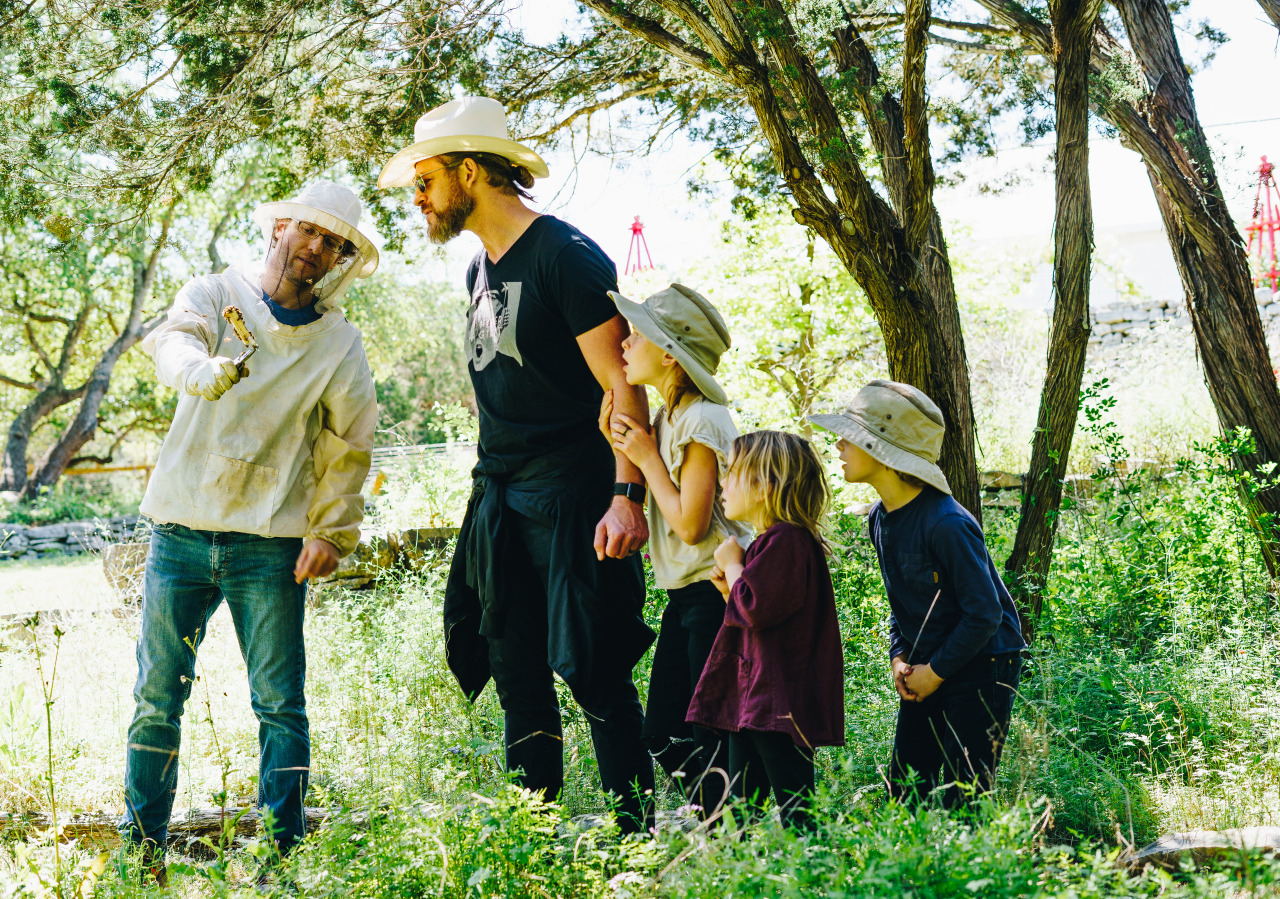
Peter Keilty talking about bees with a family. Source: Bees for All

His childhood experience in beekeeping inspired him to return to that interest when bee colony collapse became a public concern.  He keeps a honeybee hive on his small rural property primarily as a teaching tool to tell children about bees and how to help them by not using pesticides in their gardens, for example.  He takes his show on the road to the annual Books and Bees Festival in Bee Cave. 

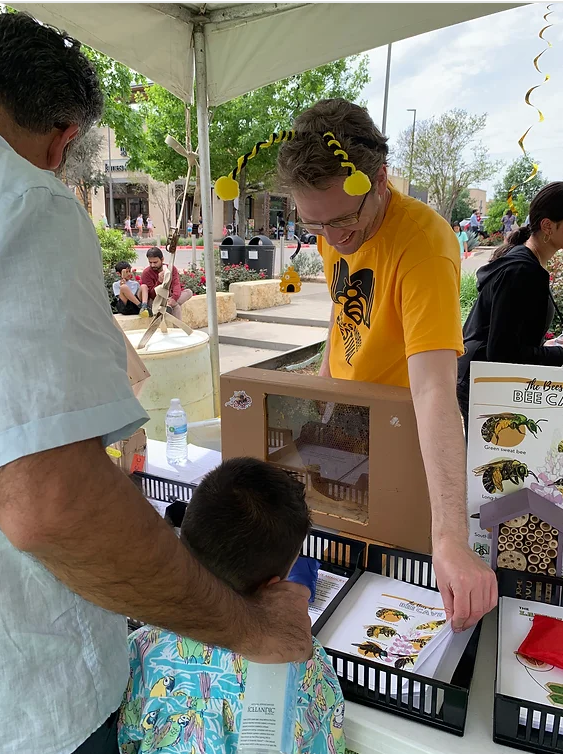
Peter Keilty at Books and Bees Festival. Source: Books and Bees Festival

Peter helped to convince the city of Bee Cave to pass a resolution that gives bees and pollinators honorary citizenship to encourage people to rethink their relationships with animals.  He also does some pro bono legal work in the realm of animal personhood and the rights of nature. 

Peter Keilty is a passionate defender of wildlife and he walks the talk. I am grateful that he has selected Conservation Sense and Nonsense for publication of his article about the need for a more compassionate approach to conservation.

-Conservation Sense and Nonsense


(Don’t) Kill Them With Kindness

Crouching over her fresh kill, a little girl inspected the wreckage of a life ended. “I got it, Mommy!” she triumphed. Her mother congratulated her in the distracted way of an exhausted parent, before leading the child away. It was 2023 in New York City and the much-maligned lanternfly was at the forefront of public consciousness. Its “invasion” promised destruction not only to valuable crops, such as grapes, but also to the nation’s hardwood forests. If you like wine and trees, we were told, these guys are bad news. At the time I worried that the official response would be the mass application of pesticides, which would have posed significant collateral damage to other insects. Thankfully, this didn’t come to pass, but the long-term effects of the squash-on-sight policy, touted as a solution, could turn out to have a half-life much longer than any insecticide.

The public, rather than taking to the task grudgingly or – a boy can dream – with a measure of regret, jumped in feet-first. Bug-squishing competitions [1] became the norm and an app, Squishr, helped the smartphone generation “turn bug squishing into a game”. Many urban children’s first meaningful encounter with a wild creature may have been through the act of killing – even the youngest were taught not to spare a thought for this latest arrival, whose unwanted presence on our shores rendered its life worthless. That this generation might not grow into bug-loving adults seems more than possible, and the lesson it has imparted – the devaluation of lives based on national origin – is more insidious still.

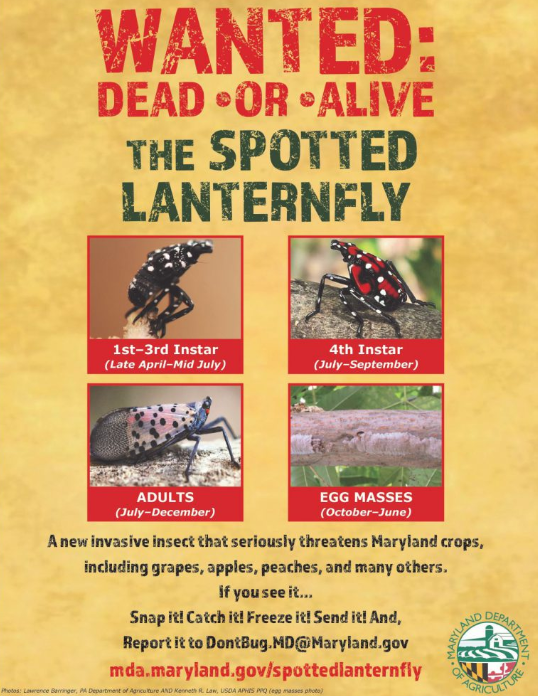
Source: Maryland Department of Natural Resources

The fervor barely had time to die down before studies, led by Penn State [2], began to indicate that lanternflies do not pose significant risk to hardwood forests or even to homeowners’ ornamental trees. The public’s bloody work to save native trees on public lands had been unnecessary, but private agriculture was grateful. Every hateful, non-native bug ground underfoot had bought some time for their valued, non-native crops. Studies and articles on the issue or cruelty, however, were harder to locate. I initially put this down to the nature of the animal in question – not only an interloper but also a bloodless, hard-shelled insect. Surely we would not kill fellow mammals with such impunity.

Under New Zealand’s Predator Free 2050 initiative the public are engaged in a nationwide effort to “despatch” stoats, possums and even the UK’s most cherished animal, the hedgehog. As an archipelago that evolved without mammals, Aotearoa (the country’s indigenous name) became dominated by a varied suite of bird life, many of whom had no defenses against wily mammals, due to their flightless nature. The country has set itself the, some conservationists argue, highly unrealistic target of eliminating every one of these predators in a matter of decades. As a young nation, it is argued that this mobilization has helped consolidate their national identity by uniting them against a common group of “enemies,” much like in wartime. Ecologist and Kiwi Jamie Steer [3] is one of the few dissenting voices among his country folk. He has observed that the country’s crusade against introduced species which displace natives does not apply to all “invaders” – deer, ducks and trout are not targeted for extermination since they provide jobs and revenue. Unlike those who take a contrarian position to advance powerful interests, Mr. Steer has gained nothing from making his observations public – rather, he has faced ostracism by his peers, as well as verbal abuse and threats from members of the public. Author Laura McLauchlan [4], too, felt a dizzying level of cognitive dissonance when researching hedgehogs in both the UK and her native New Zealand. In England, her care for the creatures brought respect and acceptance from the community. Back home she was mocked and chided for daring to suggest that the annihilation of a long-established animal may not be the only way to move forward.

How could it be that questioning environmental orthodoxy, to ask if we might incorporate elements of compassion, could open someone to mockery and threats of physical violence? Attitudes toward the environment, although shaped by science, still require a certain level of belief. Once beliefs become entrenched, we feel invested in them and are loath to consider that there may be viable alternatives. James Murray of Business Green, writing for the Guardian [5] stated that: “Some environmentalists are guilty of the worst excesses of religion. There is a tendency to drown out legitimate criticism in the most forceful of terms (and) and inclination toward proselytization that can alienate many people…” Some of my encounters have been similarly fraught, especially in the no-holds-barred variety of discourse that is common online. When suggesting alternatives to the language used in comments about non-native species such as “they deserve murder” and “smash them with prejudice” the responses ran the gamut from dismissing me as a “hippie” to suggesting my mental health was not in order – “I hope you get better” read one comment, dripping with faux-concern.
Perhaps in response to such views, there now exists a nascent movement dubbed “compassionate conservation” which prioritizes kindness and views it as a strength, rather than a weakness. It is “an interdisciplinary field which promotes the treatment of all wildlife with respect, justice and compassion” [6] by combining conservation and animal welfare, two disciplines long viewed as being at odds. In any conservation action there will necessarily be winners and losers, and it has been an ongoing frustration for me that I operate in a field with no concrete “right” decisions. In choosing kindness as a compass point to guide our actions, however, it may be possible to navigate our dealings with other species while causing the least amount of harm.

“Kindness” can be interpreted in many ways. For some, it could mean refusing to allow imperiled species to wink out of existence. For others, it could be tolerance or even acceptance of our other-than-human neighbors, regardless of their national origin. Actions such as glorifying the act of killing, prioritizing strict genetic purity or placing populations over the suffering of individuals, however, are unlikely to fall under its aegis. The US Fish and Wildlife Service (I use the word “service” reluctantly) has drawn widespread criticism for its plan to kill almost half a million barred owls in order to help spotted owls, which are being crowded out of their home range. Both animals are native to the United States, but the barred owl has been able to migrate west and encroach on its smaller relative. Perhaps due to the extreme charisma of owls, as well as the sickeningly high number of planned kills, this proposal has drawn outcry regardless of its, presumably, well-meaning intent. “Sparred” owls, the hybrid offspring of the two species, are also devalued due to their “impure” nature and are routinely “culled” – a word which hides behind a veneer of kindness.

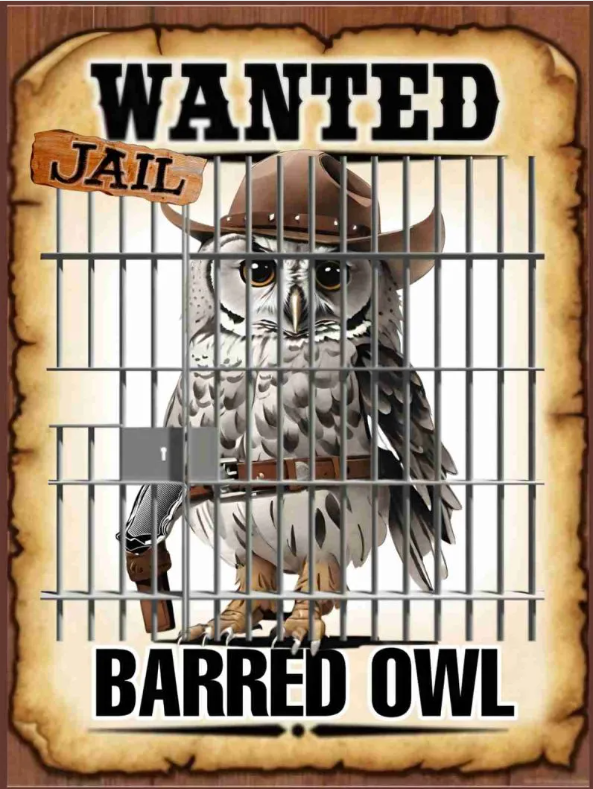
Source: Animals 24-7

Valuing populations over individuals has no analogy in the human world, save for in some of the darkest periods of our history. We do not console ourselves over the loss of thousands of human lives to war or disease by noting that, nonetheless, a “robust” population of that racial or ethnic group still survives.

Valuing genetic purity or denouncing the admixture of different races evokes disgust when it is applied to our own species, and yet it is a cornerstone of modern conservation. When we place value on populations rather than individuals it is easy to justify cruelty to achieve our goals. Journalist Emma Marris argues that animals care nothing for genetic “purity” or even the continuation of their species as a fixed, unchanging snapshot in time – their worries, like ours, are focused on raising their young and making it through the day. It is unlikely an animal would ever view its death in a positive light, despite whatever lofty justifications we might make.

A kindness-centered approach to conservation will garner attacks from many directions. It will draw derision for its softness, perhaps even femininity, in that it demands that the element of suffering be factored into decisions of policy. It will be called vague, and too open to interpretation, and yet it provides a powerful compass in navigating an uncertain world, where doing our best for an animal might not actually be the best thing for that creature. Kindness applies not only in respect to how we treat our other-than-human kin, but also in our willingness to enter into respectful, open- minded discourse with each other about the future of these creatures. Being able to communicate without clinging to unhelpful beliefs will be crucial in forging a healthy future. In a complex world we can never know if we are doing quite the “right” thing, but decisions which prioritize kindness may temper our actions and help avoid cruel and, ultimately, ineffective measures. Kindness is truly viral, and it freely transfers from our interactions with other species to our dealings with each other. After all, can you think of a time that you practiced kindness and it steered you wrong? Lending money to family members does not count – that one is on you.

Peter Keilty
beesforall@gmail.com


Footnotes:

1. https://council.nyc.gov/joseph-borelli/2022/10/28/as-spotted-lanternflies-continue-to-plague-staten-island-residents-invited-to-insect-stomping-event-on-sunday/

2. https://www.psu.edu/news/research/story/invasive-spotted-lanternfly-may-not-damage-hardwood-trees-previously-thought/

3. https://independent.academia.edu/JamieSteer/

4. McLauchlan, Laura. 2024. Hedgehogs, Killing and Kindness. MIT Press.

5. Murray, James. 2012. Environmentalism is Not a Religion. The Guardian.

6. https://www.uts.edu.au/research-and-teaching/our-research/centre-compassionate-conservation/about-us/what-compassionate-conservation#:~:text=Compassionate%20conservation%20is%20an%20interdisciplinary,respect%2C%20justice%2C%20and%20compassion.


Update: According to the NY Times, the population of spotted lantern flies has virtually disappeared from many neighborhoods in NY City.  NYT doesn’t give the campaign to literally stomp-out lantern flies credit for this disappearance of lantern flies.  They offer a few other explanations, but none is more credible than this explanation for the waxing and waning of so-called “invasions” from the book, The Light Eaters:

“Natural systems are really complex. [There are always many variables operating simultaneously in nature.] Every single shift in these variables appears to cause a shift in the makeup of the neighborhoods.  A species that was formerly a minority becomes dominant, a dominant species suddenly becomes rare.  No single species wins for very long, and never long enough to take over or eliminate their neighbors…This isn’t survival of the fittest in the traditional sense.  Or rather, it is survival of the fittest, but “fittest” here doesn’t mean what we thought it meant—it’s not about whoever manages to demolish their neighbors.  This is more like survival for a while, until something changes.”

Humans need to be more patient with nature to solve problems for herself.  Instead of a full-on killing campaign, usually fueled by pesticides, humans need to step back and watch nature heal itself.

Webmaster, Conservation Sense and Nonsense
September 22, 2024

Effective, Humane Wildlife Removal and Safe Solutions for Coexistence

Humane wildlife removal is essential for anyone facing unwanted animal guests in their home. This approach focuses on safely relocating wildlife without causing harm, ensuring your peace of mind and the animals’ well-being. You may encounter raccoons in your attic or squirrels in your walls, and knowing your options can help resolve these situations effectively.

Understanding the importance of humane methods can guide your decision-making process. Many traditional removal techniques can lead to stress, injury, or even death for wildlife, which poses ethical concerns. By choosing humane wildlife removal, you protect the local ecosystem and create a safer environment for yourself and the animals.

As you navigate the complexities of wildlife interactions, you must consider the benefits of humane practices. Educating yourself will empower you to make choices that align with your values while ensuring effective solutions to wildlife issues.

Principles of Humane Wildlife Removal

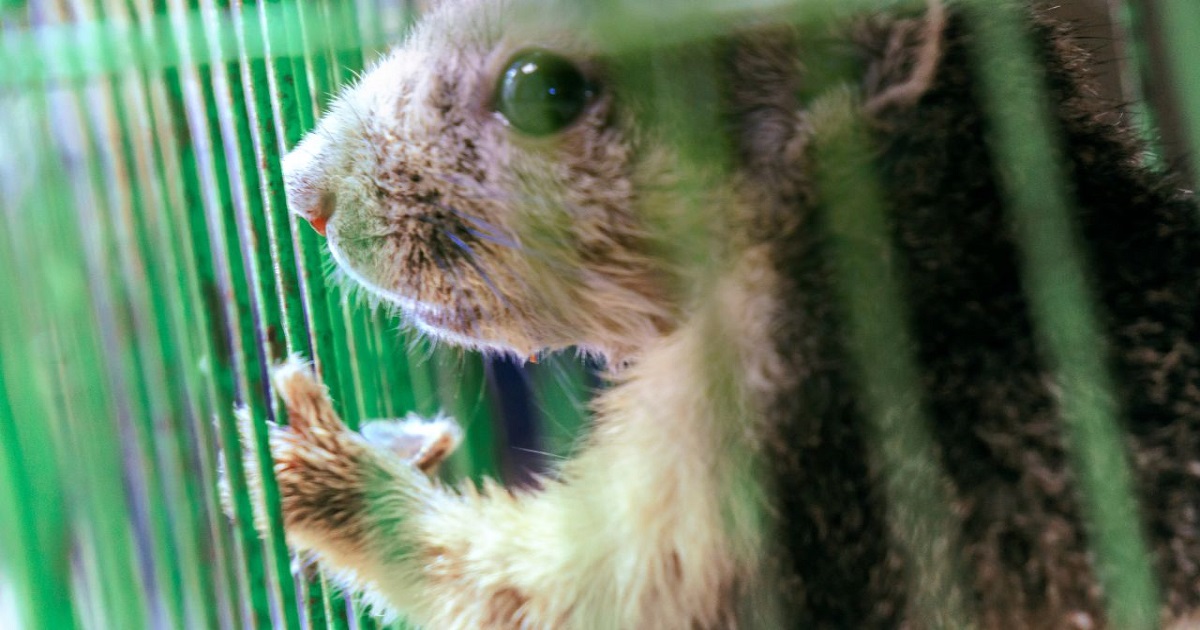
Squirrel

Humane wildlife removal focuses on ethical practices and effective methods for managing animal populations without harm. Understanding these principles is crucial for environmental sustainability and animal welfare.

Ethical Animal Control

Ethical animal control prioritizes the well-being of wildlife while addressing human-animal conflicts. It involves assessing the situation to determine the most appropriate response, ensuring the chosen method minimizes stress and suffering for the animals involved.

Key practices include:

Assessment: Evaluate the specific circumstances, including identifying the species and their behavior.

Relocation: If necessary, relocate animals to suitable habitats away from urban areas, ensuring they can access food and shelter.

Monitoring: Follow up on relocated animals to ensure they adapt well to their new environment.

Choosing ethical methods helps maintain ecological balance while respecting the lives of all creatures.

Non-Lethal Pest Management

Non-lethal pest management utilizes strategies that deter or remove animals without causing harm. This approach emphasizes prevention and humane removal techniques.

Important methods include:

Exclusion: Seal entry points to prevent wildlife from accessing your property.

Habitat Modification: Change the environment to make it less attractive, such as removing food sources or shelter.

Repellents: Use eco-friendly substances that deter animals without harming them.

Implementing these practices fosters a respectful coexistence with wildlife, reducing conflicts and maintaining biodiversity in the area.

Methods and Techniques

Racoon in Central Park (where he probably isn’t doing any harm). Source: Wikipedia

Using humane techniques is essential when dealing with wildlife removal. This approach minimizes animal stress and ensures safe relocation or exclusion from your property. Below are effective methods for removing raccoons, squirrels, and opossums and safe practices for wildlife exclusion.


Update: There are regulations regarding trapping and relocating wild animals in California. Thanks to a reader who brought these regulations to my attention. This is a summary of those laws done by Google, using AI:

“In California, trapping and relocating wildlife is generally illegal. However, there are some exceptions and circumstances where relocation may be a better option than killing the animal. Here are some regulations regarding trapping and relocating wild animals in California:

  • Trapping license. Only a licensed trapper can trap animals. Traps must have a state-issued and registered trap number.
  • Trapping methods. Leg-hold traps are prohibited, except for government agencies to protect human health and safety. Poison is also not permitted.
  • Trapped animals. Trapped animals must be released immediately on site or killed by the trapper. If the animal is not released, it must be killed by shooting if local ordinances, landowners, and safety permit. Government employees can use chemical euthanasia.
  • Relocation. Written permission from the state is required to relocate trapped animals. Some say that relocating wildlife is often ineffective and can be detrimental to the animal. For example, relocating a squirrel in the winter could be fatal because it would no longer have access to its food cache. However, relocating an opossum, which often has no fixed home range, might be more acceptable.
  • Nuisance wildlife. Nuisance wildlife that is trapped cannot be bought or sold. The pelts of animals caught in body-gripping traps also cannot be sold

Raccoon Humane Removal

Raccoons are known for invading attics and basements. To remove them humanely, follow these steps:

Live Traps: To capture the raccoon safely, use a large, baited live trap. Common baits include fruits, cat food, or peanut butter.

Check Traps Frequently: Inspect traps multiple times daily to prevent stress or injury to the trapped animal.

Relocation: After capture, relocate the raccoon to a suitable habitat at least 10 miles away, avoiding urban areas.

Prevent Access: Seal entry points with materials like hardware cloth or strong metal sheeting to prevent future invasions.

Squirrels: Humane Removal Methods

Squirrels can easily find their way into homes and may cause damage while searching for food or nesting sites. To manage their removal humanely, consider the following techniques:

Live Traps: Live traps are an effective and humane method for capturing squirrels. Place them where you’ve noticed squirrel activity, such as near nests or feeding sites. Check the traps frequently to minimize stress for the captured animal.

Baits: Use appealing baits like peanut butter, sunflower seeds, or fruits to attract squirrels to the traps. These tasty options can help ensure that the traps are successful.

Seal Entry Points: To prevent squirrels from entering your home, identify and seal any cracks or gaps larger than a quarter-inch. This proactive measure can help keep them out and reduce the likelihood of future encounters.

By employing these humane removal methods, you can effectively manage squirrel populations while ensuring their welfare.

Opossum Humane Removal

Opossums are generally non-aggressive but can create a mess in your yard. Here’s how to remove them humanely:

Live Traps: Like raccoons, use live traps baited with cat food or fruits.

Monitor Traps: Check traps frequently to minimize stress and provide food and water if the capture lasts longer than a few hours.

Release: Release them in a wooded area away from residential neighborhoods to allow for their natural behaviors.

Keep Outdoor Spaces Clean: Remove pet food, garbage, and fallen fruit from yards to reduce attracting opossums.

Safe Wildlife Exclusion

Exclusion is a proactive approach to keeping wildlife away from your property. Consider these methods:

Inspect and Seal: Regularly inspect your home for entry points and seal any holes or gaps with durable materials.

Use Humane Deterrents: Utilize natural repellents like cayenne pepper or vinegar around entry points. Motion-sensitive sprayers can also startle wildlife.

Outdoor Maintenance: Keep yards tidy by trimming bushes and removing debris. Store food in sealed containers.

Regular Monitoring: Continuously check for signs of wildlife presence to address issues before they escalate.

Implementing these methods ensures effective, humane wildlife removal, protecting your home and the animals involved.

Wildlife Awareness and Control

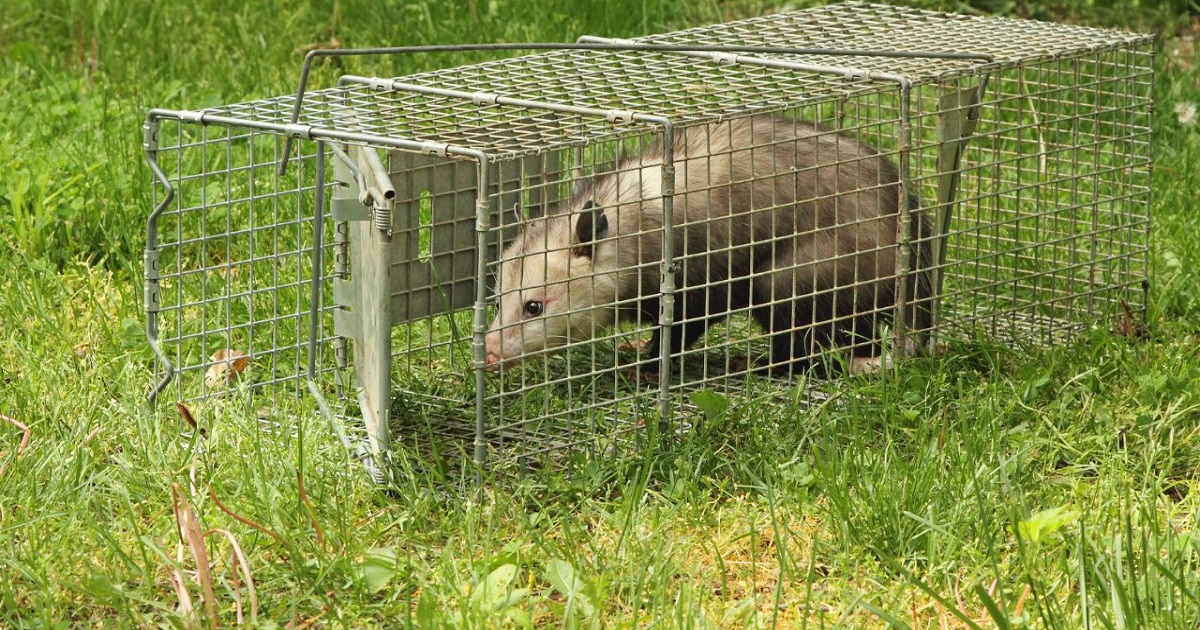
Opossum

Being aware of local wildlife dynamics can significantly reduce the risk of infestations. Employing safe wildlife exclusion methods ensures that animals are kept at bay without harming the ecosystem or the creatures themselves.

Preventing Infestation

To prevent infestations, it’s essential to identify and eliminate food and shelter sources around your property. Here are key strategies:

Secure Garbage: Use tightly sealed bins to deter animals from scavenging.

Seal Entry Points: Inspect your home for gaps in windows, doors, and vents. Use materials like steel wool or caulk to close these openings.

Remove Attractants: Regularly clean up fallen fruit, birdseed, and pet food to minimize draw for wildlife.

Trim Vegetation: Keep shrubs and trees away from structures to eliminate accessible pathways.

Implementing these steps fosters a less inviting environment for wildlife, reducing potential conflicts.

Promoting Coexistence

Promoting coexistence involves understanding wildlife behavior and utilizing humane animal deterrents. You can achieve this by:

Using Natural Repellents: Certain scents, like citrus or vinegar, can deter animals without harming them.

Installing Fencing: A well-placed fence can help keep larger wildlife at bay while allowing smaller beneficial creatures to pass.

Educating Neighbors: Share information about wildlife awareness with your community to build a collective approach.

By adopting eco-friendly pest solutions, you protect your property and respect local ecosystems. This balance leads to a healthier environment for both wildlife and humans.

Closing Thoughts

Humane wildlife removal is essential for both safety and environmental balance. When dealing with unwanted wildlife, remember that effective solutions prioritize humane practices.

Choosing a reliable service makes a significant difference. Critter Stop specializes in humane wildlife removal, ensuring efficient and ethical techniques. Their commitment to customer satisfaction is evident through numerous positive reviews. 

If you’re facing issues like ant infestation in your bedroom, contacting Critter Stop should be your first step. You can reach them at (214) 234-2616 for a free inspection. Making the call protects your home and promotes a responsible approach to wildlife management. Remember, professional assistance often leads to long-lasting results. Trust Critter Stop for high-quality work and great customer service.

Sam Patrick
Critter Stop
Dallas-Fort Worth, TX


Disclaimer:  Conservation Sense and Nonsense has published this article as a guest post.  It is not a paid advertisement.  Although the article is consistent with the mission of Conservation Sense and Nonsense, its publication does not constitute an endorsement of Critter Stop because we have no personal experience with Critter Stop and we have not researched the quality or effectiveness of their services.
-Webmaster, Conservation Sense and Nonsense

Isle Royale: Long-term study of predator/prey dynamics

“Natural history might be much like human history — explainable, but not predictable.” – Isle Royale Wolf-Moose Project

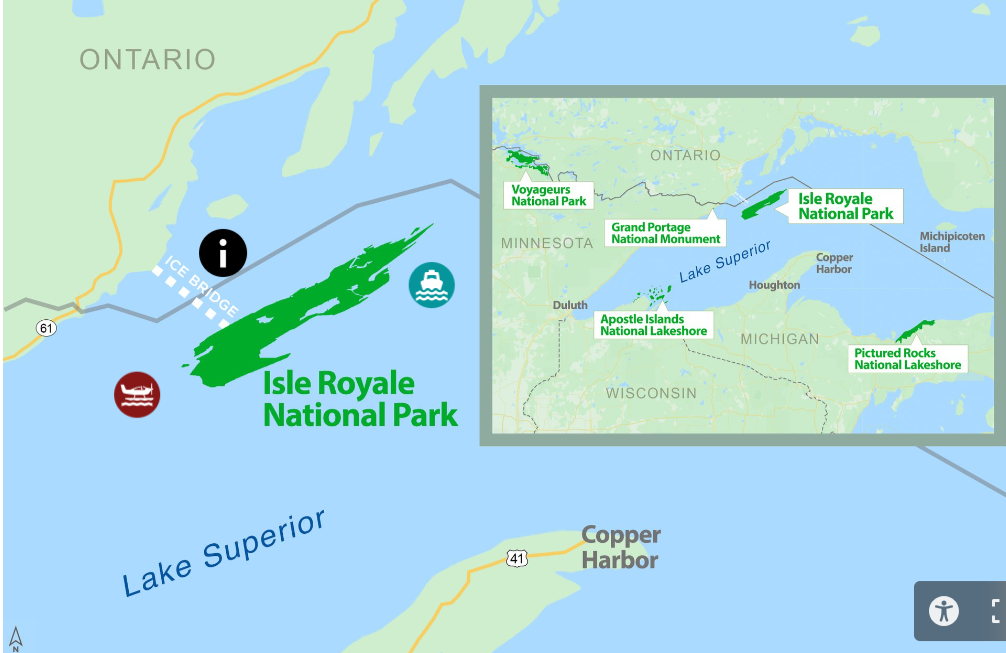
Isle Royale is an island and US National Park in Lake Superior.  It is 45 miles long and 9 miles wide.  Big enough to be the home of many animals, but small enough to be intensively studied and well understood. 

The closest land is 24 miles away, in Canada.  Far enough away to limit opportunities for animal migrations and control public access to the island, but close enough that ice bridges from the land to the island have formed in the past that animals used to migrate to the island. It is isolated, but not totally isolated, which contributes to the dynamism of the ecosystem. 

Source: National Park Service

The animals at the top of the food web on Isle Royale are wolves and moose.  Moose are said to have arrived via an ice bridge at the beginning of the 20th century.  Wolves arrived using another temporary ice bridge in the late 1940s.  The predator/prey relationship between moose and wolves has been studied on Isle Royale continuously since 1958, making it the longest-running predator/prey study.

When the study began 66 years ago, scientists expected to find an equilibrium balance point between populations of wolves and moose that would be stable in the long term.  That’s not what they found on Isle Royale.  Instead, they observed continuous, unpredictable change, such as disease, tick outbreaks, immigrant wolves, severe winters and hot summers. 

Scientists recorded the population dynamics of wolves and moose on Isle Royale for 66 years, as depicted in this graph:

Source:  2023-2024 Annual Report of Ecological Studies of Wolves on Isle Royale

As we would expect, moose populations increased when wolf populations decrease and vice versa.  Scientists can explain the turning points in the population curves of both wolves and moose, but in many cases they could only do so long after the fact as they identified the causal factors:

  • Between 1958 and 1969, the moose population doubled, while the wolf population declined from 30 to 15. 
  • Between 1969 and 1980, the wolf population increased as the moose population decreased until 1982, when canine parvovirus was introduced to the island by a visiting dog. 
  • The wolf population decreased from 50 to 14 until parvovirus died out, but the wolf population did not rebound.   The wolves had become inbreed because they were all descendants of a single breeding pair.  The wolf population suffered spinal deformities that handicapped their hunting until a single new male introduced new genes in 1997.
  • Between 1982 and 1996 the moose population increased to an all-time high of 2,400 until 1996 when their over-population caught up with them.  The population plummeted because of lack of forage, an increase in the tick population and a severe winter.  Ticks cause moose to lose their hair during winter, at a time when they were already thin because of over-browsing of vegetation.  
  • When the moose population plummeted in 1996, there was a corresponding decrease in the wolf population, until a new wolf arrived via a temporary ice bridge.  In 1997 a single male wolf made his way to the island on an ice bridge during the extreme winter.  He was very prolific and infused new genes into the wolf population that enabled the wolf population to rebound to 30 by 2005.  The arrival of the new wolf was not identified by the scientists who study Isle Royale until 14 years later, as the result of genetic tests. 
  • Between 2000 and 2005 there was a series of hot summers, which increased the tick population and suppressed the moose population, causing a corresponding decline in the wolf population.
  • Between 2005 and 2011, the moose population rebounded, but the wolf population continued to decline.  By 2011 there were only 15 wolves with only 2 females and most males were without functioning packs.  Inbreeding was probably contributing to the inability of the wolf population to recover. 

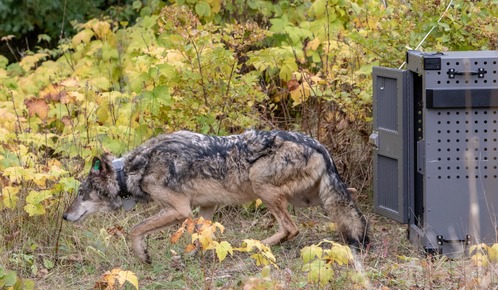
In 2018, the National Park Service decided to take matters into their own hands.   There were only 2 wolves left at that point and over-population of moose was taking its toll on vegetation on the island.  New migration of wolves was no longer expected because the warming climate prevents the formation of new ice bridges to the island. NPS adopted an interventionist policy for the first time.  They made a commitment to introduce 20-30 new wolves to the island over 3-5 years.

The first introduced female wolf arrives from Minnesota, 2018. Source: NPS

The graph depicts the arrival of new wolves on Isle Royale in 2018.  The wolf population has increased and it is more genetically diverse because of the arrival of wolves from distant genetic pools.  Greater genetic diversity will improve the resiliency of the wolf population.  The moose population is decreasing in response to restoration of wolves to a population of 30. 

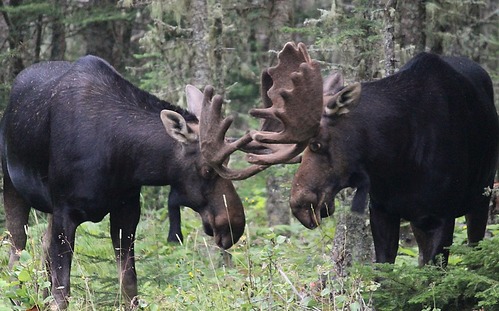
Dueling bull moose on Isle Royale, 2001. Source: NPS

The dynamic predator/prey relationship between moose and wolves in Isle Royale will continue in unpredictable ways. Climate change is expected to play a bigger role.  Hotter weather will increase tick populations and cause more moose mortality.  Changes in the climate will effect vegetation.  Balsam fir that are the preferred food of moose are being killed by spruce budworm.  Ice bridges that bring newcomers to the island will no longer form. 

Scientific Humility

However, the scientists who have studied Isle Royale for decades don’t want to leave you with the mistaken impression that they understand everything that has happened in the past or that they can predict everything that will happen in the future on Isle Royale.  Their humility is refreshing: 

“For 50 years, the focused purpose of the Isle Royale wolf-moose project has been to predict and understand a relatively simple natural system.  But the more we studied, the more we came to realize how poor our previous explanations had been.” (1)

These scientists want us to understand the limits of our understanding of nature because if and when we don’t, we make serious mistakes: 

“If we see Nature as a system whose future we can predict, then we will be confident in our efforts to control and manage Nature.  If, in Nature, we are more impressed by its essentially contingent, and hence unpredictable character, then our relationship will be more strongly rooted in striving to live within the boundaries of Nature’s beautifully dynamic variation.” (1)

Readers of Conservation Sense and Nonsense know that I believe humans cannot control nature.  We don’t understand nature well enough to control it and the forces of nature are far more powerful than we are. When we try, we often do more harm than good.  The scientists who have studied Isle Royale for 66 years seem to agree with me.  I am grateful for their work and their wisdom.


(1) Wolves & Moose on Isle Royale, Project Overview

Sources for this article:

              Wolves & Moose on Isle Royale, Project Overview
              Wolves & Moose on Isle Royale, Ticks
              Isle Royale National Park
              Isle Royale, Wikipedia

Mid-Summer Visit to the Sierra Nevada

We spent a few days in a small family-owned resort in Sierra City in mid-July.  It’s an area we know well because we have visited many times in the past 25-years and taken many birding and geology courses at the nearby San Francisco State University Sierra Nevada Field Station. 

It has been about 12 years since our last visit and we were expecting to see significant changes after a decade of drought.  Our previous visits were also earlier in the summer, during nesting season in June, when birds are more active and vocal.  As expected, the weather was much warmer than previous visits.

The Setting

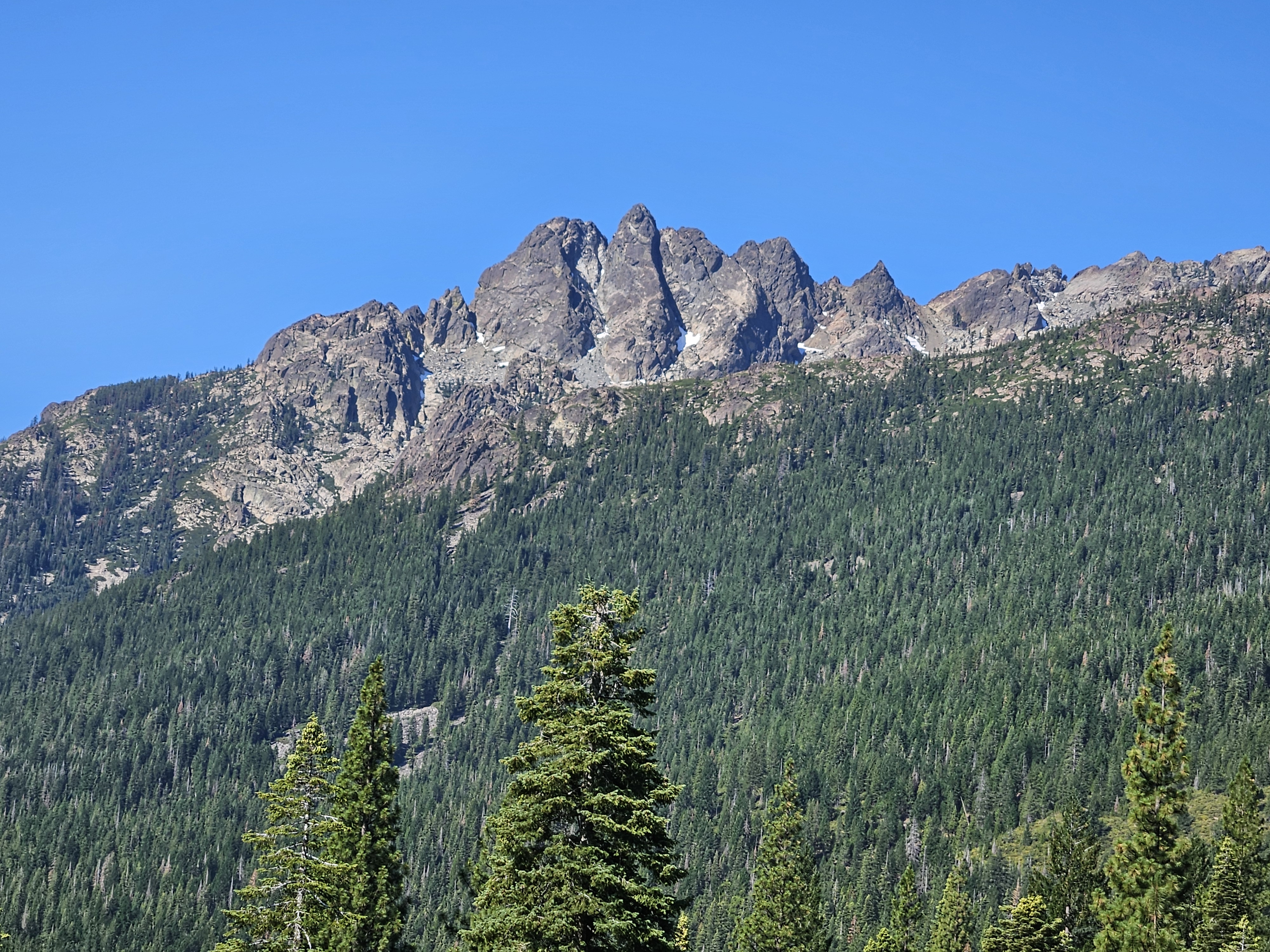
Sierra City sits at the base of Sierra Buttes at 4,200 feet elevation.  Sierra Buttes tower above at 8,560 feet.  The Buttes are the remains of the lava flow of an ancient volcano.  The soft rock surrounding the lava flow eroded away long ago and the harder rock has been sculpted several times by glaciers during past ice ages.  The glaciers sculpted rocks on the valley floor into the basins of many lakes that remain today. 

Sierra Buttes

This area was occupied by a hunter-gatherer culture of Indigenous people for thousands of years.  They migrated according to the seasonal harvests of plants and animals until Europeans arrived in 1850 to mine for gold.  The first generation of the owners of the resort arrived as miners.  When gold was exhausted, ranching became the family enterprise.  When the recreational treasures of the area were discovered in the 1960s, the family converted the ranch to a resort in 1967.  The economy of this area has evolved, just as its flora and fauna have.

Fire Hazard Mitigation?

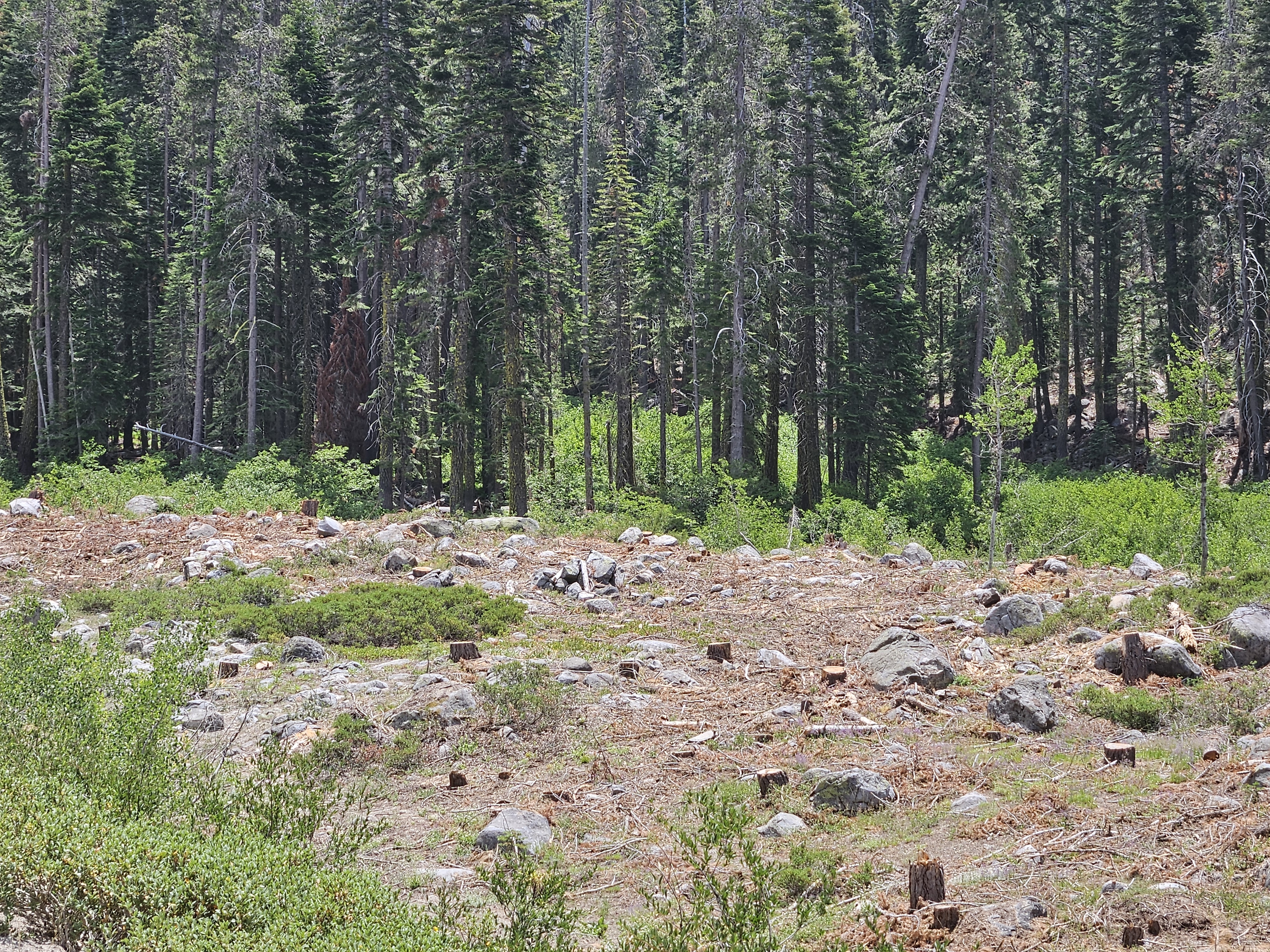
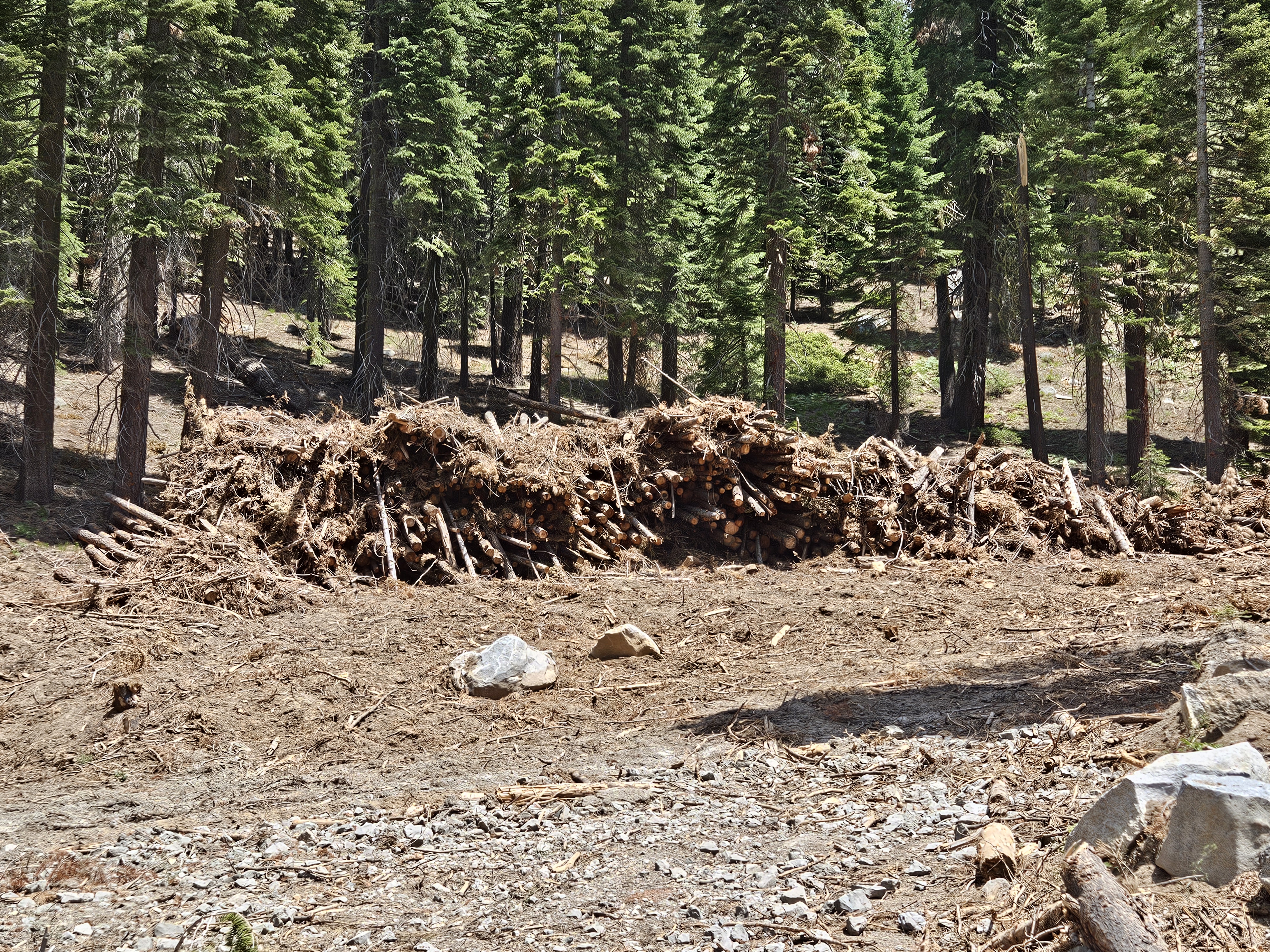
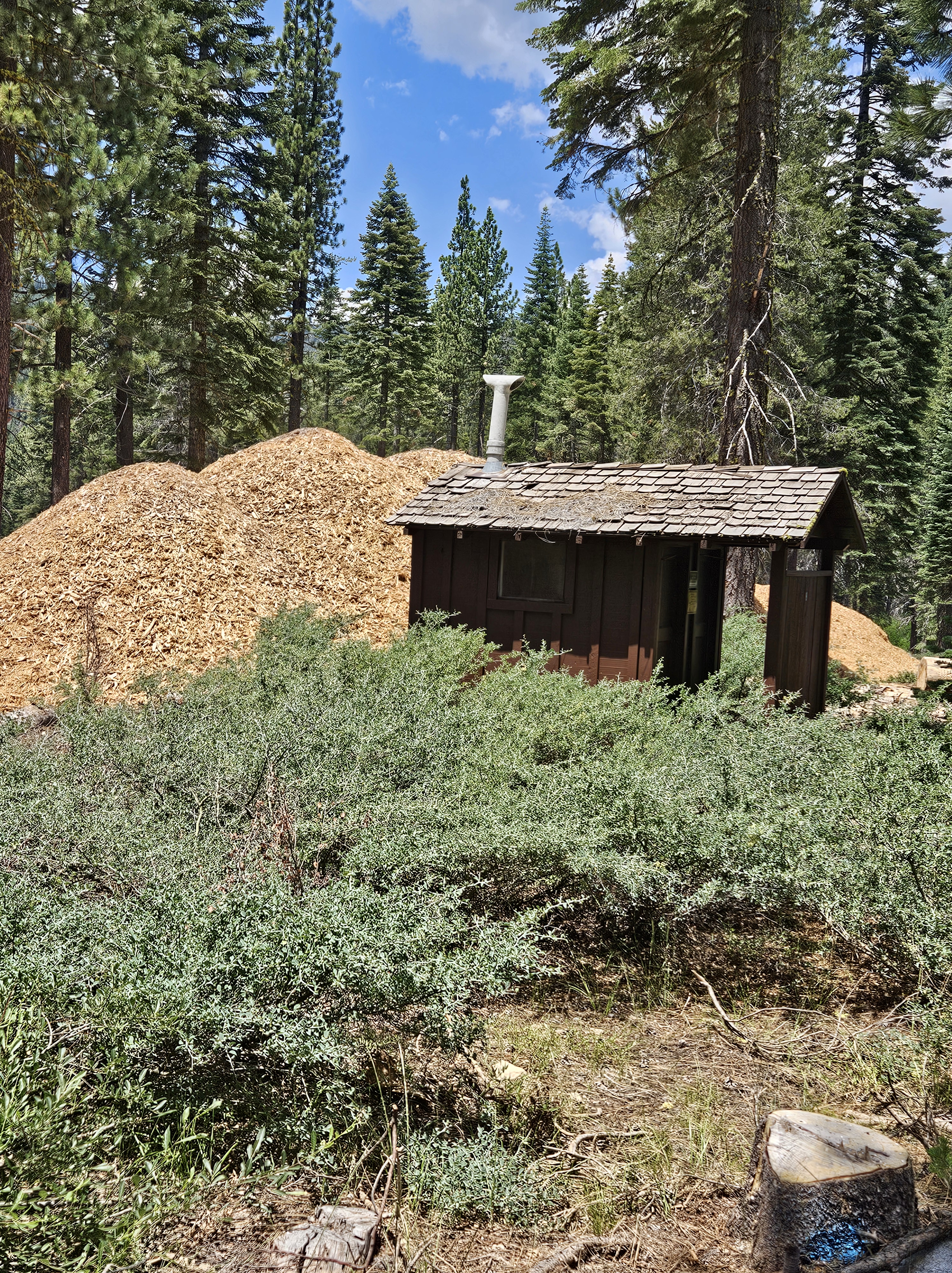
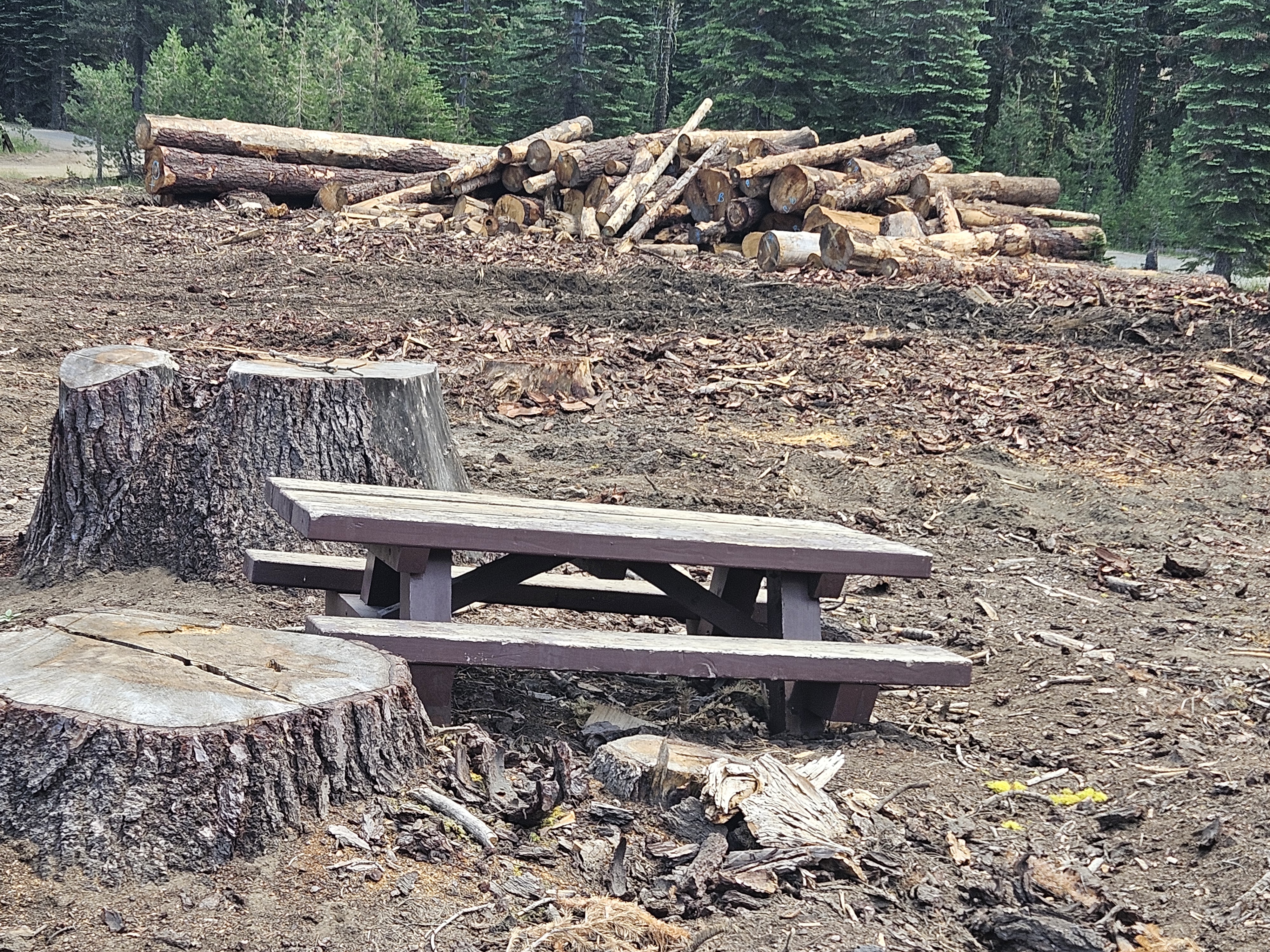
The most significant change we observed since we were last in the Sierras is the massive timber operations.  In the 12 miles from Sierra City to Yuba Pass at 6,700 feet, we saw roadside clearings created by cutting young trees.  Huge piles of small-diameter logs and wood chips were stacked in the clearings (see below).

Chapman Creek Campground

These clearings looked like fire hazard mitigation partly because of their proximity to the road and to campgrounds, but also because they destroyed small trees, which are more likely to ignite than big trees.  On the other hand, the piles of logs and wood chips are more flammable than any living tree, big or small. 

Thinning the forests is also a strategy to reduce competition for available moisture at a time of extreme drought.  Extreme drought stress in the conifer forests of the Sierra Nevada is one of the primary causes of tree mortality in California in the past decade. 

Commercial Logging?

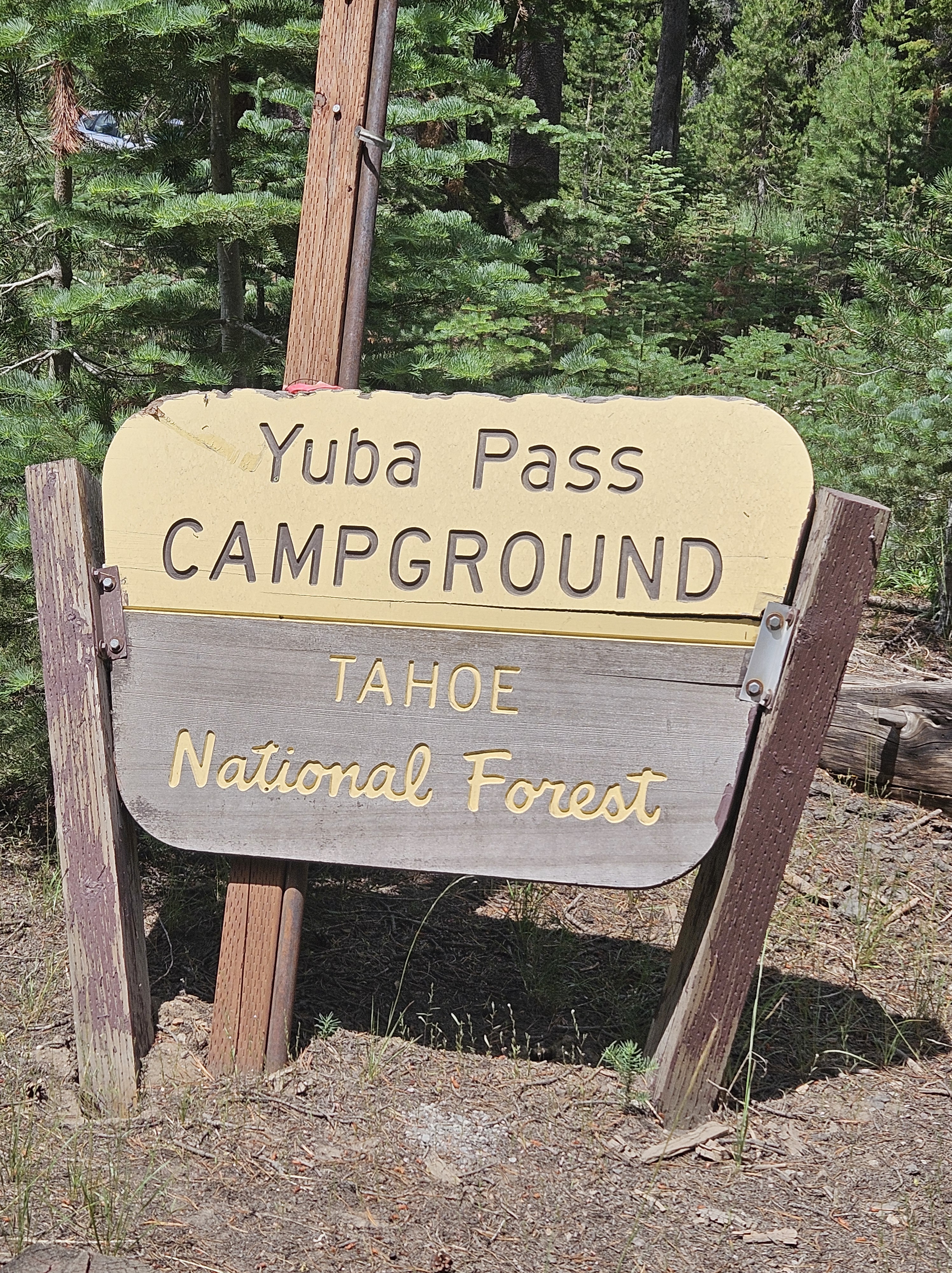
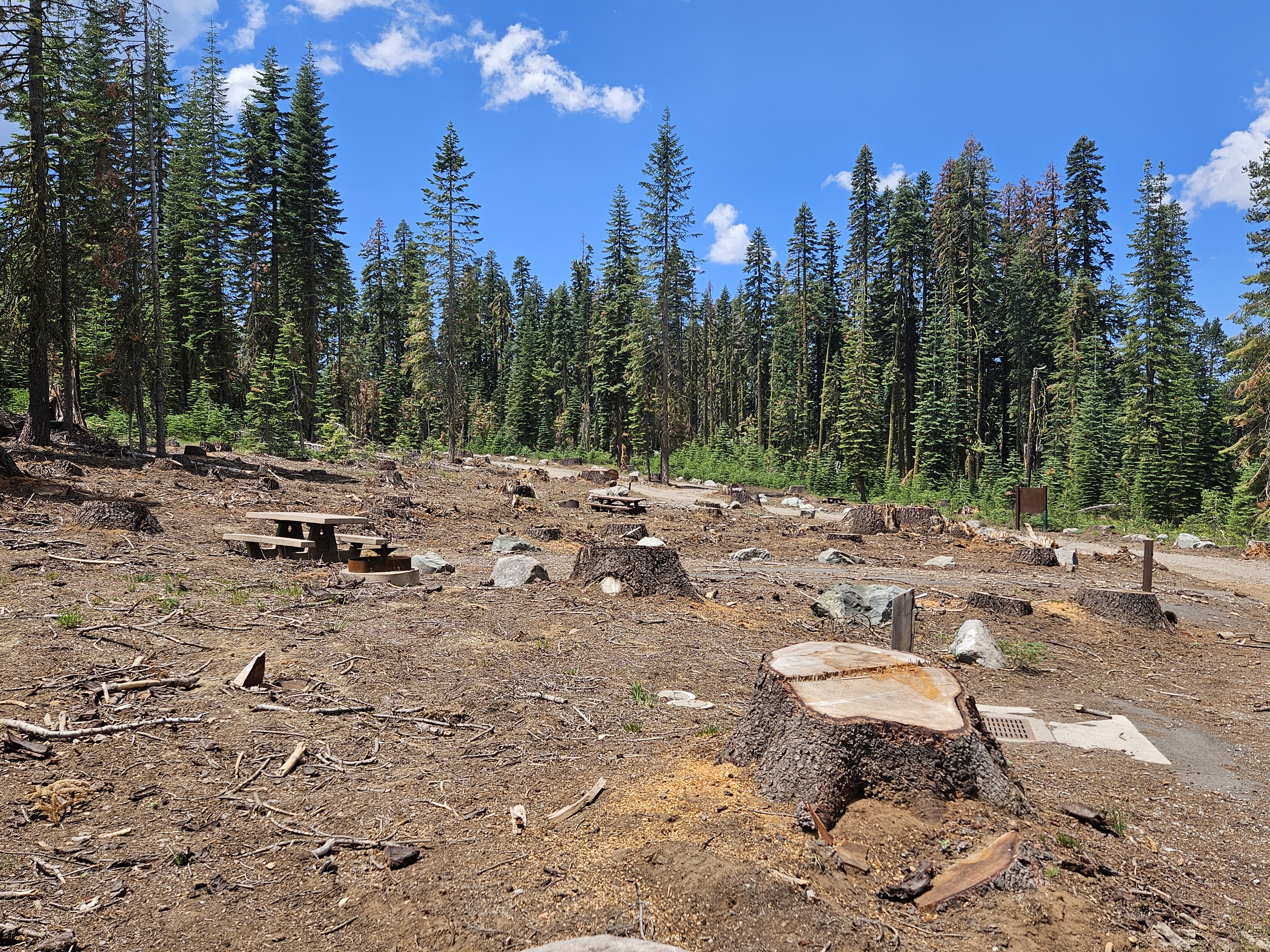
When we reached the summit of the road at Yuba Pass, we saw another clearing that used a different strategy than those we had passed.  The campground at Yuba Pass was entirely clear cut of all of its trees, big and small.  Lonely picnic tables were surrounded by the stumps of large trees.  Appropriately, the campground was closed and its bathroom locked (see below).  No one would want to camp there now.

This destruction of the campground at Yuba Pass looks like a fire hazard mitigation project gone bad or a commercial logging operation at the expense of a campground at an important trail head that is used for winter cross-country skiing and summer hiking. 

We visited the bar at our resort at the end of the day to get the perspective of the locals about these logging operations on Highway 49.  We learned that they are controversial with the locals, but there is no vocal opposition to them in a small community of only 200 year-round residents. (The bartender said the community was more concerned about AT&T’s threats to disconnect their landline phones because the community does not have a cell phone tower.)

However, the public’s reaction to the destruction of the campground at Yuba Pass was much stronger than to the thinning of young trees.  The rumor is that the contractor who clear cut the campground at Yuba Pass did not do what they were supposed to do.  The Yuba Pass project is considered a rogue operation by the locals. 

We also learned that the piles of logs and wood chips will eventually be hauled away to be used as biofuels to generate electricity.  As the wood is burned, the carbon stored in the wood will be released into the atmosphere, contributing to greenhouse gases that cause climate change.  Some of the dead wood has already been removed.  Nine months after the trees were destroyed, much still remains to be removed.  Meanwhile, the piles are clearly a fire hazard.  Fire hazards are increased in the short term by dead wood and in the long term by contributing to global warming. 

Tree Mortality

At Yuba Pass, we began to see first-hand the tree mortality in the Sierra Nevada we had been reading about in the media for years.  We saw many dead red firs as well as one of the symptoms of more red fir deaths in the near future. 

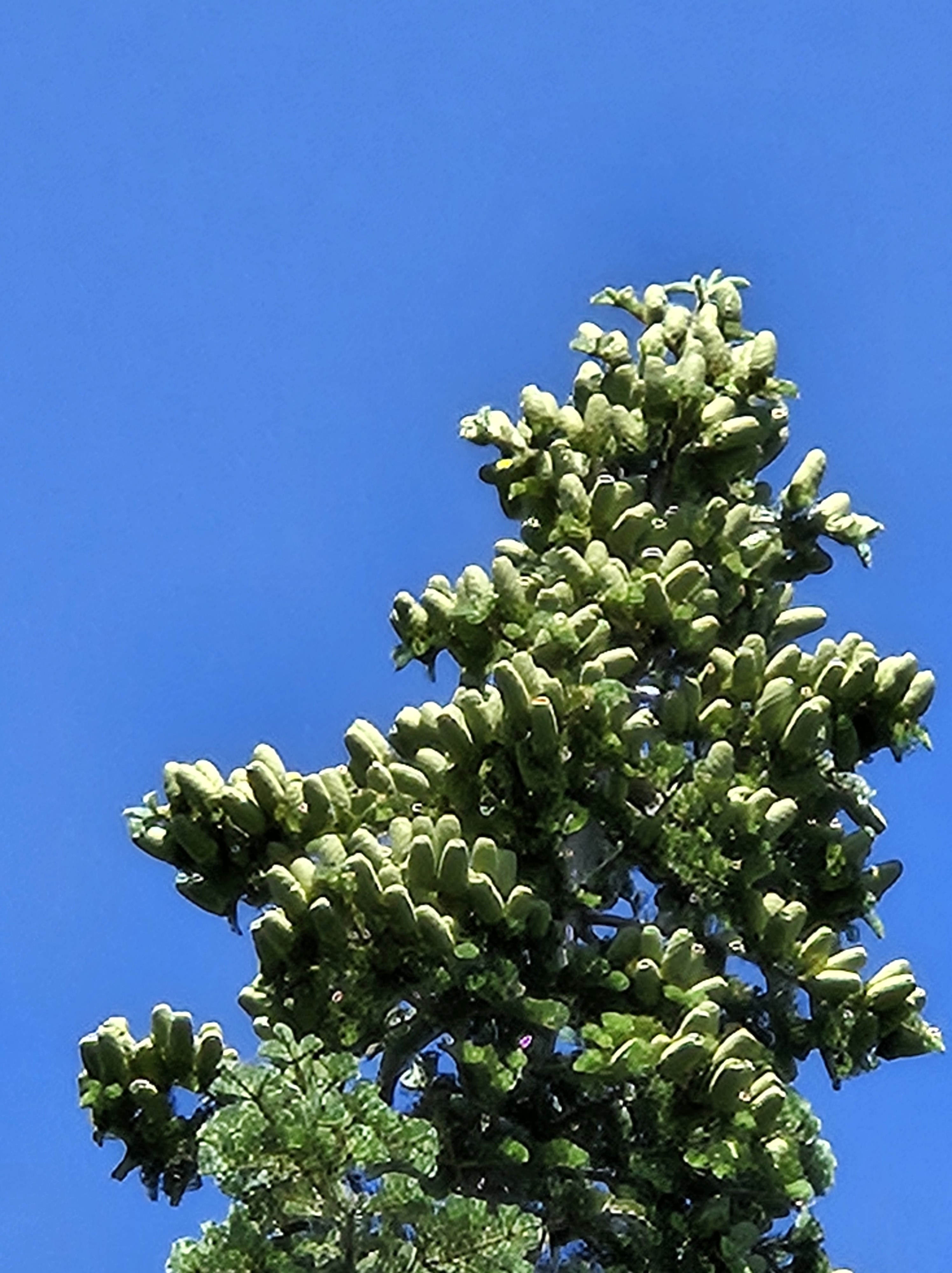
Adjacent to dead red fir trees, younger red fir trees were heavily loaded with cones, which are an indication that the tree is making a last gasp for survival of the species by trying to produce a big, new generation of trees (see above).

As we drove over the summit to the eastern side of the Sierra Nevada we could see the scale of the death of red and white firs.  The eastern side of the Sierras is drier than the gently-sloping western side, which receives the moist air from the ocean.  The Sierras drop steeply on the eastern side to the Great Basin, which extends into Nevada as a dry, hot desert.  (see below)

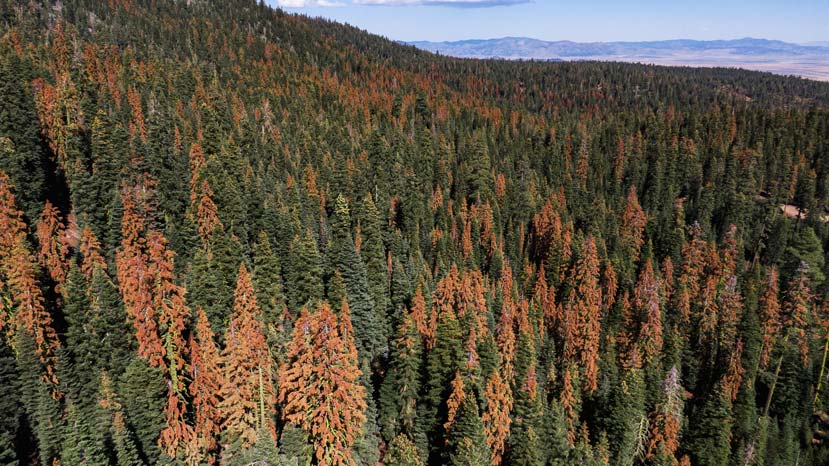
Dead conifers at Yuba Pass in October 2022. Source: Sierra Nevada Conservancy

Until 2022, tree mortality in the Sierra Nevada range was confined to southern and central portions of the range and at lower elevations.  An aerial survey of trees in the northern portions of the range in October 2022 found 28 million dead red and white firs at higher elevations.  Red and white firs are higher elevation conifers and were therefore harder hit than lower elevation conifers in this portion of the range.* 

Ecological “restorations” are never done

We visited a restoration project on the eastern side of Yuba Pass at Carmen Meadow.  The project was done about 20 years ago.  We wanted to see how it was progressing.

The meadow had been the home of rare willow flycatchers until it dried out, killing the willows that were home to the flycatchers.  A berm had been built as the roadbed of a railroad. The berm diverted water into the creek, digging its channel lower than the meadow, draining water from the meadow into the creek. A check-dam was built to divert water channeled by the berm from the creek into the meadow, restoring water to the meadow. The flycatchers returned when the willows returned. 

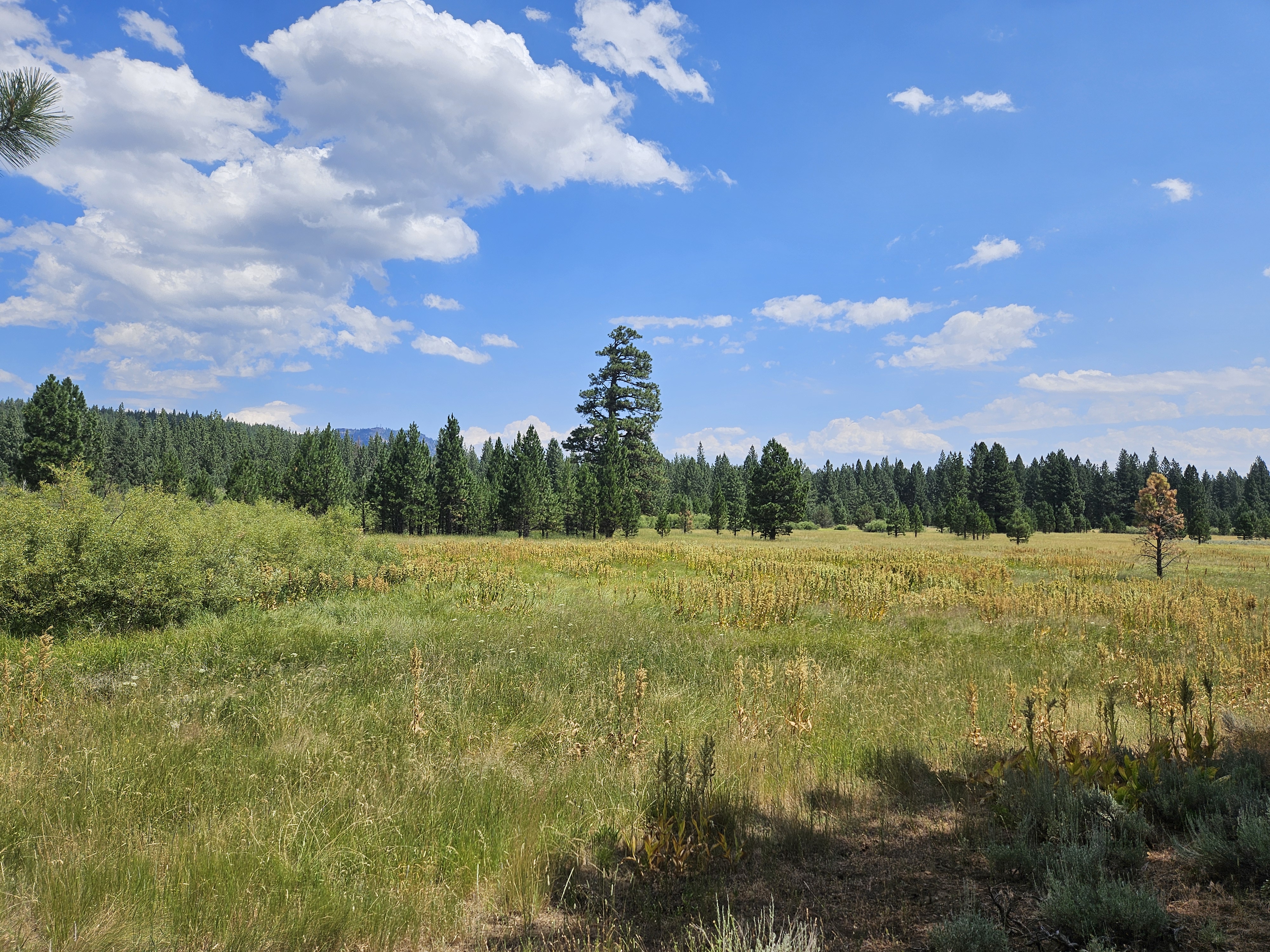
We had last seen Carmen Meadow over 12 years ago.  Although willows remained, there were also young Jeffrey pines on the perimeter of the meadow as well as dotted throughout the meadow.  Thus, natural succession from pond, to meadow, to forest is in progress. (see below) Restoration projects are never done because nature is dynamic and evolution is never done.

Carmen Meadow

Must this natural succession of the Carmen Meadow be stopped?  That is probably a matter of opinion.  My readers know that my opinion is probably “NO.”  In defense of my opinion, I offer my readers an alternative scenario.

Willow flycatchers are also rare in the Southwest, where the loss of water also caused the loss of willows that are home to the flycatchers.  But, in Southwestern desert, the solution is not so easy and painless as diverting water into Carmen Meadow. 

Water in the Southwest has been diverted from riparian areas for agriculture and drinking water for large and growing residential communities.  As you might imagine, few are willing to divert water supporting human activities to support a rare bird. 

In the Southwest, willow flycatchers solved their own problem by making the necessary transition from willows to non-native tamarisk trees that require significantly less water than willows.  And in this case, native plant advocates resisted this transition by trying to eradicate tamarisk solely because they are not native trees.  The birds were willing and able to transition to a non-native tree, but the nativists wouldn’t accommodate their preference. 

The Message

We had a wonderful time on our brief trip to Sierra City at Yuba Pass.  We hope to go again and we expect to see more changes when we do.  We took these messages away with us.

  • Yes, the Sierra Nevada range is changing, but it remains beautiful.  We encourage you to visit and if you have, visit again because it is never the same twice.
  • There is a fine line between fire hazard mitigation and commercial logging and it isn’t always clear what the objective is. 
  • The short-term objectives of any landscape project are sometimes at odds with the long-term objectives.
  • Change is the only constant in nature.

*Sources:
https://www.sfchronicle.com/climate/article/california-tree-deaths-17770026.php
https://sierranevada.ca.gov/signs-of-a-new-tree-mortality-event-showing-up-in-the-sierra-nevada/

A Reprieve for Wildlife on the Farallon Islands

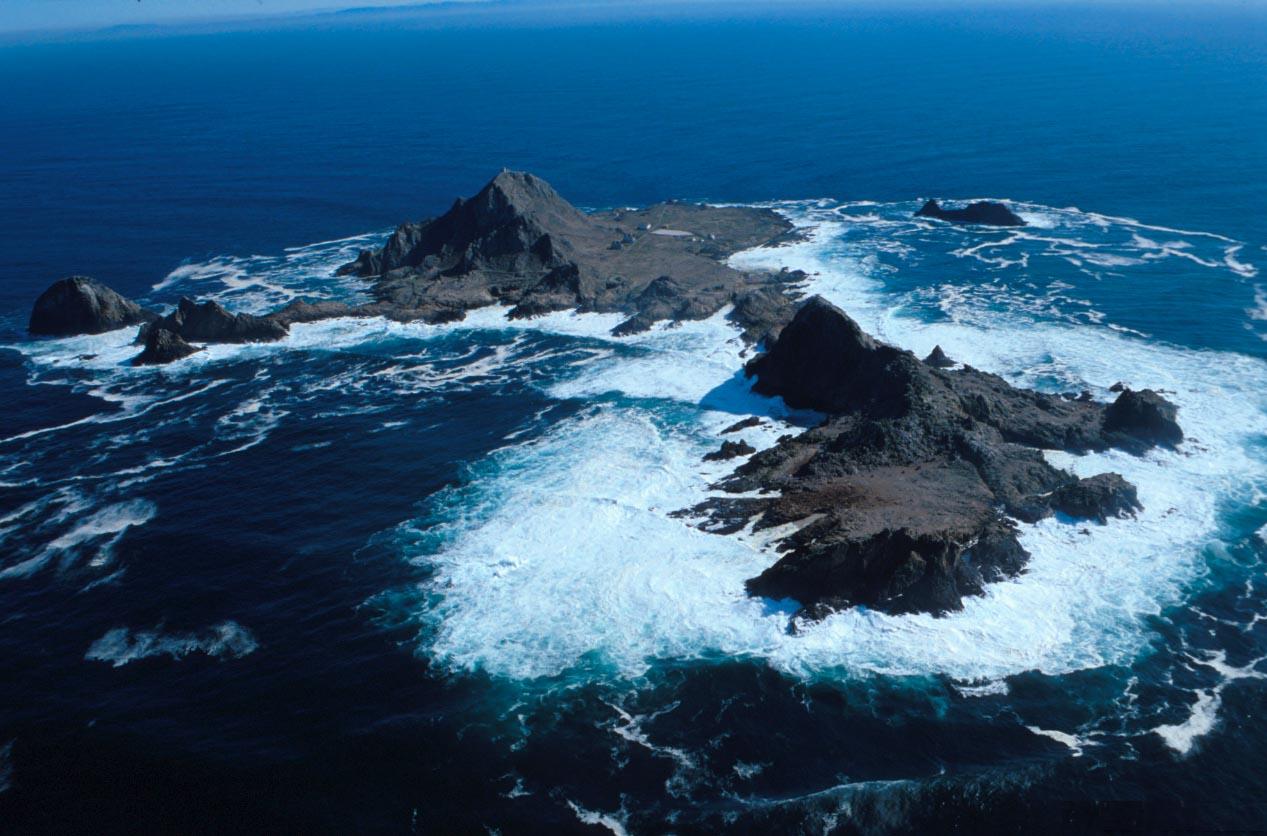
This is a good news/bad news story.  First the bad news, because it contains kernels of good news.  The federal budgets of the entire National Wildlife Refuge System are being cut, including the budget for the Farallon Islands, which has funded the research of Point Blue Conservation on the islands for over 50 years.  This cut comes on the heels of a long-term decline in funding of the wildlife refuge system from $765 million in 2010 to $527 million in 2023.  It seems safe to assume that this loss of funding will have a negative impact on these fragile ecosystems, but in the case of the Farallon Islands, we also foresee some benefit to wildlife.

Farallon Islands, NOAA

Point Blue has maintained a year-round presence on the Farallons that will be curtailed in 2025 due to the loss of funding, leaving the island vulnerable to unauthorized visitors and activities in the winter.  It will reduce the ability to monitor wildlife populations and maintain long-term datasets that identify trends in wildlife populations. 

So, what is the good news?  For the moment, the plan to aerial broadcast nearly 2 tons of rodenticide bait on the islands to kill harmless house mice has been abandoned because it cannot be financed.  A brief reminder of why that is good news:

  • Thousands of non-target birds and marine animals are likely to have been killed by eating the bait directly or by eating poisoned house mice.  The plan and its Environmental Impact Statement (which has not been certified), predict 1,100 collateral deaths of Western gulls.  Delayed and inadequate reporting of non-target deaths by similar projects suggest numbers may be greater. 
  • House mice on the Farallons do not need to be eradicated because there is no evidence that they harm birds on the Farallons.  The only evidence of mice eating bird chicks of which I am aware were albatross chicks, a naive species that spends their life in the air except to nest in a few places in the Southern Hemisphere, but not on the Farallons.  Native mice live unmolested on other off-shore islands in California.  Native mice were removed from Anacapa Island prior to the rodenticide drop to kill rats and were returned after the drop.  House mice on the Farallons are targeted solely because they are non-native (and anecdotally because they are an annoyance to research staff who stay in dilapidated housing from which mice cannot be excluded).   
  • The bizarre explanation for killing house mice is that they attract a small population of burrowing owls, who allegedly eat bird chicks.  The burrowing owls could be removed from the Farallons, as Golden Eagles were removed from Santa Cruz Island to save the Channel Island Fox. 

More Good News

It seems likely that the budget cut will also reduce the application of herbicides on the islands to kill non-native vegetation.  Roundup (glyphosate) has been used by Point Blue Conservation on the Farallon Islands every year since 1988.  Between 2001-2005, an average of 226 gallons of herbicide were used annually (5.4 gallons per acre per year), according to the annual report of the Farallon National Wildlife Refuge. (1)

63%-80% of the vegetation on the Farallons is non-native. (2) The non-native vegetation that is being needlessly sprayed with herbicide was brought to the islands by birds who ate them elsewhere and/or by wind and ocean currents.  They cannot be eradicated because they cannot be excluded from an open ecosystem, just as house mice cannot be excluded from a dilapidated building. They are useful to wildlife and it is pointless to contaminate the ecosystem with herbicide. 

House mice on the Farallons are also accused of eating rare insects and competing with rare salamanders for food.  The study of the diet of mice on the Farallons (2) reports that mice also eat insects when vegetation becomes scarce in the fall.  If useful non-native vegetation weren’t being killed, there would be more food for all animals on the islands, including house mice, who prefer vegetation to insects.

In Conclusion

I am not in a position to evaluate the over-all impact of cuts in the budget to the National Wildlife Refuge System.  It seems likely that the overall impact on our refuges is negative.  I can only evaluate the impact on the only wildlife refuge system that I know well enough to say that the budget cut will be a reprieve for wildlife on the Farallon Islands because it is likely to reduce the unnecessary use of herbicides and it will spare the entire ecosystem from the planned aerial broadcast of anti-coagulant rodenticide bait. 

I am one of thousands of people who have vocally opposed the planned rodenticide drop for over 10 years.   We cannot claim credit for this reprieve.  The budget cut was not a surgical removal of the poison drop.  Rather it was a hatchet job.  That should not prevent us from celebrating the good fortune of the animals who will be spared.

Going Forward

I do not consider the issue of island eradications with rodenticides resolved, but I am grateful for a delay on the Farallon Islands.  The drop is likely to happen if private funding can be found for it and the federal budget for wildlife refuges could be increased in the future.

I always have hope that those who believe non-native plants and animals are harmful will come to their senses one day.  Non-native plants and animals are integral members of the food web.  As newcomers, they represent new opportunities for natural selection to find the adaptations needed to survive in our changed and changing environment.  We hope that US Fish and Wildlife Service will be deprived of the funding to continue their crusade against house mice long enough to figure this out.  They are smart, highly educated, and well-meaning people.  Surely they will figure it out eventually, hopefully in time to save wildlife on the Farallons.


Here are the articles about the mouse eradication project on the Farallons that I have published.  They provide more details about the damage done by other island eradications around the world:

The mouse eradication project on the Farallon Islands: The “con” in conservation
Island eradications in the Bay Area rear their ugly head again
It’s time to comment on the deadly project on the Farallon Islands
“When the Killing’s Done”  Maybe never
Deadly Dogma:  Revisiting the unnecessary project on the Farallon Islands
EPA’s biological evaluation of rodenticides is green wash for island eradications

References:
(1)https://drive.google.com/file/d/1XoPcS104SeOUIyfbPT_NbardctNyWAgs/view
(2) https://www.biorxiv.org/content/10.1101/2022.02.23.481645v1.full

Sources for this article: 
https://www.sfchronicle.com/climate/article/farallon-islands-research-19444987.php
https://www.pointblue.org/our-work/oceans/support-our-national-wildlife-refuges/
https://www.marinij.com/2024/06/04/farallon-islands-wildlife-research-is-in-trouble-2/

Taxonomy: Past, Present, and Future

Taxonomy is the naming and classification of life.  Although it is now considered a scientific endeavor, it began as the hobby of naturalists who worked independently, outside the confines of academia, at a time when botany and biology were not scientific disciplines. 

This is not to say that naturalists who created the classification system in the 18th century, and which is still used today, were without social constraints.  Their work was influenced by and sometimes constrained by religion.  We will trace the nearly 300-year history of taxonomy, from its inception to modern analytical methods, within the context of social change.

Linnaen Taxonomic System

Carl Linnaeus is considered the creator of the taxonomic system.  He was born in Sweden in 1707 to a family of modest means, unlike most naturalists of the time who were typically members of wealthy families, with freedom to pursue their personal interests. 

Linnaeus had an intense interest in nature, particularly plants, from an early age.  He was a mediocre student, who mastered Latin and Greek in preparation for a career as a pastor, but he spent his time in nature, where he developed deep observational knowledge of plants.  After failing to achieve credentials as a pastor, his knowledge of plants suggested a career as a doctor because the use of medicinal plants was the primary method of medical treatment. 

Technically, Linnaeus qualified to practice and teach medicine after a brief 2-day visit to a diploma mill of the time, but he never practiced medicine.  At a time when he was extremely poor, nearly destitute, his knowledge of plants came to the attention of wealthy mentors who took him in and gave him the opportunity to begin his life’s work as the classifier of life.

Linnaeus was a person of supreme confidence in his own abilities as well as a shameless self-promoter of his accomplishments.  He set himself the ambitious task of naming and classifying all kingdoms of life known at the time.  That may seem an arrogant goal, but at the time it seemed entirely doable because the Bible told Linnaeus the task was finite and static. 

According to the Bible, God created the Earth in 7 days.  Everything God created was assumed to be perfect and therefore unchanged from the time of its creation.  Nature was considered static and the possibility of extinction was blasphemy.  Theologians of the time calculated that a maximum of 2,000 animals could have been accommodated on Noah’s Ark, saved from the impending Great Flood. There were presumed to be similar limitations on the number of plants carried on the ark to feed the animals. 

An index of all known plants published in 1703 identified about 18,000 plants.  However, new plants discovered by early explorers of the New World were arriving in the Old World in greater numbers, creating pressure to name them and fit them into the known natural order.  The time was right for Linneaus to set his life’s goal that seemed possible at the time, within the confines of religious dogma. 

The scale of the task did not seem to be an obstacle, but the dispersal of species was.  Linneaus himself took only one field trip to Lapland to collect specimens.  He hated the uncomfortable conditions of the journey, found little of interest, and his report of his trip was ignored, despite his exaggerated telling of the story.  Linneaus sent 17 of his students and collaborators, whom he called his apostles, on ill-fated expeditions to collect specimens.  Many of them died and others returned empty-handed. 

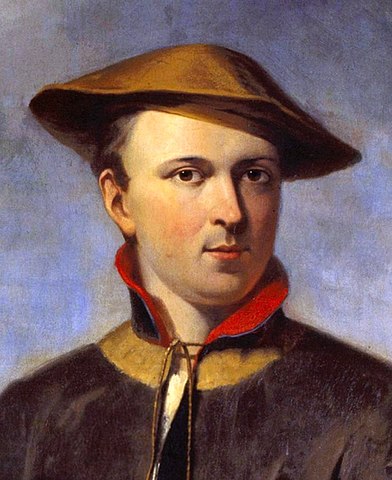
Linneaus commissioned this portrait of himself wearing a hat from Lapland to illustrate the report of his trip.  Unfortunately, the hat is typically worn only by women in Lapland.  Public domain.

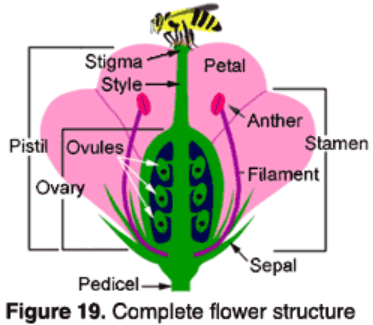
Linnean taxonomy is based entirely on observation of the physical characteristics of plants that were known at the time, such as shape, form, texture, odor, taste, etc.  His system emphasized reproductive organs of plants, such as the number of stamens and pistils.

Source: Oregon State University

Linneaus named each species with binomial nomenclature, of which genus is the first word, and species is the second.  His system nested species into a hierarchy of 5 groups of similar species:  species/genus, family, order, class, and kingdom.  At that time, there were only 3 identified kingdoms:  plants, animals, and minerals.  Linneaus planned to catalogue all three kingdoms, although plants were his primary interest.

The first edition of Linneaus’s Systema Naturae was published in 1735.  It was a mere 15 pages long, more pamphlet than book.  In addition to a list of species, nested in their families, orders, classes, and kingdoms, he provided brief descriptions of species as well as rules for naming new species. 

By including the name of the discoverer of the species, Linneaus motivated early plant explorers to give their specimens to him for naming. This arrangement also resulted in the duplication of many species that had already been classified. He wrote lavish praise for his book in anonymous reviews and distributed them to book sellers.

The 12th and last edition of Linneaus’s Systema Naturae was published in 1765, when Linneaus was 58 years old. It was 2,600 pages long compared to the first edition with only 15 large pages.  Altogether, Systema Naturae described 10,000 organisms, of which about 6,000 were plants. He was beginning to show signs of mental deterioration by then.  By the time he died at the age of 71, he was unable to speak or communicate.   

Critics of Linnean Taxonomy

Although Linneaus’s classification system was well received in Europe, it was not universally praised.  The British were resistant to the sexual metaphors used by Linneaus to describe plant species, but the chief critic of Linnean taxonomy was Georges-Louis LeClerc de Buffon, usually called simply, Buffon. 

Buffon was born in 1707, the same year as Linneaus and there the similarity ends.  He was independently wealthy and a person of wide-ranging interests, from mathematics to all natural sciences. 

He is best known as the chief of the king’s Parisian garden, Jardin du Roi.  The garden was the king’s personal apothecary and natural history museum.  It was not part of the Sorbonne, the French university (much to the chagrin of the Sorbonne), which gave Buffon greater independence in his research and publications.

Buffon dismantled the Linnean system in a point-by-point critique delivered to the French Academy of Sciences in 1743.  He described the system as an artificial human construct that over-simplifies the complexity of nature.  He said Linnean categories are abstractions, created for convenience, rather than naturally occurring categories. 

The first 3 volumes of Buffon’s competing description of nature, Histoire Naturelle, were published in 1759.  In contrast to Linneaus’s brief Systema Naturae, the first installment was 1,600 pages long, beginning with a critique of Linnean taxonomy.   

Buffon’s 4th volume, published in 1753, described just 3 domesticated animals—the horse, the donkey, and the bull—in 544 pages.  He began with domesticated animals because of their close relationship with humans, presumed to be of most interest to the public.  Each animal was depicted in engravings of the animal’s skeletal structure as well as in its habitat and described in detail.  He gave equal attention to the temperament of each animal. 

36 volumes of Histoire Naturelle were published between 1749 and 1789.  Eight more volumes by his collaborators were published after his death.  He died at the age of 81 in 1788, just one year before the French Revolution. Buffon’s life’s work was no simple list of species.  Rather it reported all available knowledge about the natural sciences, including physics, chemistry, and metallurgy.  It broke new ground by offering many novel interpretations of Buffon’s observations.

Buffon stepped on the toes of theologians several times in his long career.  He described the creation of Earth and other planets as a lengthy process, which is in “gradual decay” and he predicted that “the sun will die out probably for the same reason in some future age.”  This prediction contradicts religious dogma about the time-scale of creation and its permanence.  He was promptly scolded and he promptly apologized: “I disapprove of my behavior and I repent, by covering myself with dust and ashes.” 

He learned from that experience.  In later volumes of Histoire Naturelle, he was vaguer when contradicting religious dogma.  Still, later generations of naturalists recognized the first known explanation of evolution in Buffon’s work: “…we should not be wrong in supposing that she [nature] knew how to draw through time all other organized forms from one primordial type.”  This carefully worded speculation was a thinly disguised statement that all species can be traced back to a common ancestor, which is the core of evolutionary theory, but the process is unseen because of its slow pace:  “Nature’s great workman is Time.  He marches ever with an even pace, and does nothing by leaps and bounds, but by degrees, gradations and succession he does all things; and the changes which he works—at first imperceptible—become little by little perceptible, and show themselves eventually in results about which there can be no mistake.”

Buffon recognized fossils as the remains of living species, of which many were now extinct:  “…it is these petrifications that we recognize her [nature’s] oldest productions, and that we have an idea of these species now annihilated, whose existence preceded that of all beings now living…” 

Taxonomy meets evolution

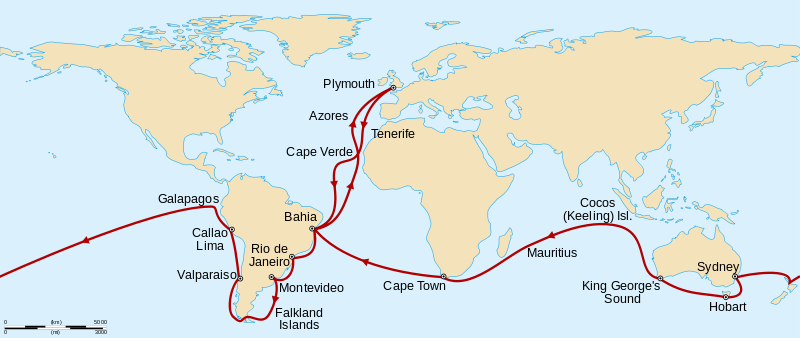
Charles Darwin had not read Buffon’s Histoire Naturelle before sailing around the globe from 1831-1836 to study nature in distant places. He arrived at his conclusion that natural selection is the mechanism driving the evolution of life on Earth independently, based on what he saw on his journey down the coast of Africa, across the Atlantic, down the coast of South America, around the horn, to many islands in the Pacific Ocean, to New Zealand, Australia, islands in the Indian Ocean, and around the horn of Africa to home.

Voyage of the HMS Beagle, 1831-1836. Creative Commons – Share Alike

Darwin collected plant and animal specimens during his journey, including many fossils that suggested to him the existence of animals no longer occupying the land.  He also observed many similar plants and animals with slightly different forms around the world.  These similarities suggested a common ancestry to Darwin. 

After experimental testing of his theories, such as the ability of plants to be dispersed by wind, ocean currents, and animals, Darwin shared his theories with close friends long before he was willing to publish them. One of his readers, Thomas Henry Huxley, had read Buffon’s Histoire Naturelle and alerted Darwin to its similarity to Darwin’s theory.  After reading Histoire Naturelle himself, Darwin agreed that his theory was “laughably similar” to Buffon’s. 

Although Darwin was confident of the accuracy of his theory, he delayed publication of his master work, Origin of Species, until 1859, over 20 years after his return from his voyage.  He understood the implications of evolution, which removed humans from our previously exalted status as separate and above all other forms of life.  He knew that the suggestion that humans are the descendants of primates, would outrage the church and the academic establishment.  He wasn’t wrong in that prediction and was therefore overly cautious. Fortunately, Darwin was finally pushed to publish Origin when he received a letter from Alfred Russel Wallace about reaching the same conclusions about natural selection and evolution during his foreign travels as a collector of specimens.   

Evolution revises taxonomy

Darwin believed that taxonomy would need to be revised to reflect evolutionary relationships.  Categories should group together all the descendants of a single, common ancestor.   Once evolution was accepted, he expected that knowledge to “clear away an immense amount of rubbish” in taxonomy.  The morphological variations among individuals of a single species that had mistakenly been seen in the past as different species, would be recognized as the natural variation of individual members of a species on which natural selection operates. 

Buffon had speculated that variations between individuals of a species create opportunities for natural selection to identify the individuals best adapted to specific environmental conditions, who will successfully reproduce.  He called that unidentified hand an “internal shaping matrix,” yet to be identified. 

The invisible hand that produces variation among individuals in the same species was revealed by the work of Gregor Mendel, an Austrian monk whose gardening experiments in the 1860s demonstrated the operation of genetics. 

Once again the church got in the way of scientific advancement when Mendel was ordered out of his garden into church administration by his superiors.  A report of his findings was buried deep in the archives of his local botanical society and found in 1900 by a botany professor who tried to appropriate it as his work, but didn’t get away with it.

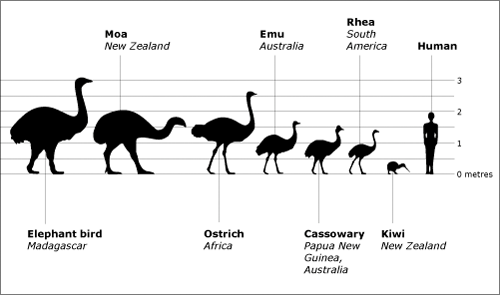
Genetics explains why species that are dispersed to new locations by natural and human means are different from the individuals they left behind because of genetic drift of isolated populations, mutations, and natural selection operating in different environmental conditions.  The classic example of genetic divergence of closely related, but widely dispersed animals is a family of large, flightless birds:  the ratite family. 

Family of ratite birds

Taxonomy becomes a modern science

The development of new analytical tools in the 20th century has enabled the revision of traditional taxonomy to reflect evolutionary relationships:

  • Computers have removed some of the subjective judgements of human taxonomists.  Numerical taxonomy uses the same lists of observed characteristics of closely related species to find the most similar species.  Although the results of these calculations are in most cases similar to those of traditional taxonomy, in some cases the results have been illuminating.
  • DNA analysis has revealed some close evolutionary relationships that were previously unknown.  Molecular analysis has been particularly helpful when morphology was misleading in the past.
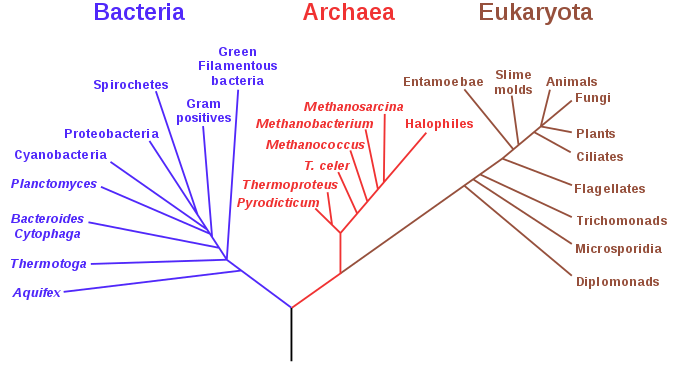
  • Cladistics radically altered the schematic of the “tree of life.”   Each branch, or clade (Greek for “branch”), includes a group of species with one common ancestor and excludes those that are not descendants of that ancestor. Cladistics has organized these branches into three domains of life that finally reveal the importance of fungi and microbes on the “tree of life.”  Cladistics has done for biology what plate tectonics did for geology.
Domains of life according to cladistics

However, traditional taxonomy continues to exist, more or less unchanged.  Perhaps corrected on the margins by modern analytical methods.  The designation of new species remains largely a matter of opinion as “splitters” and “lumpers” debate where to draw the nebulous line between similar species.

The public continues to use the traditional system and refer to it when identifying species.  It’s the system the public knows and it is based on observable characteristics the public can understand, as opposed to modern methods based on computer and laboratory analysis. Although there is some coincidental correspondence of evolutionary taxonomy with cladistics, traditional taxonomy is not based on evolutionary relationships.

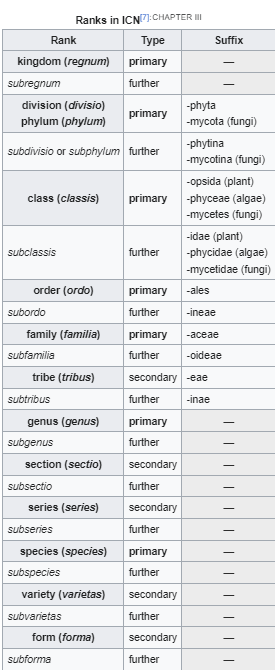
As our knowledge of the complexity of life has increased, a great number of new boxes in which to nest species into larger categories have been created, in addition to Linnaeus’s original 5.

Taxonomic categories of International Code of Cultivated Plants.  Source:  Wikipedia

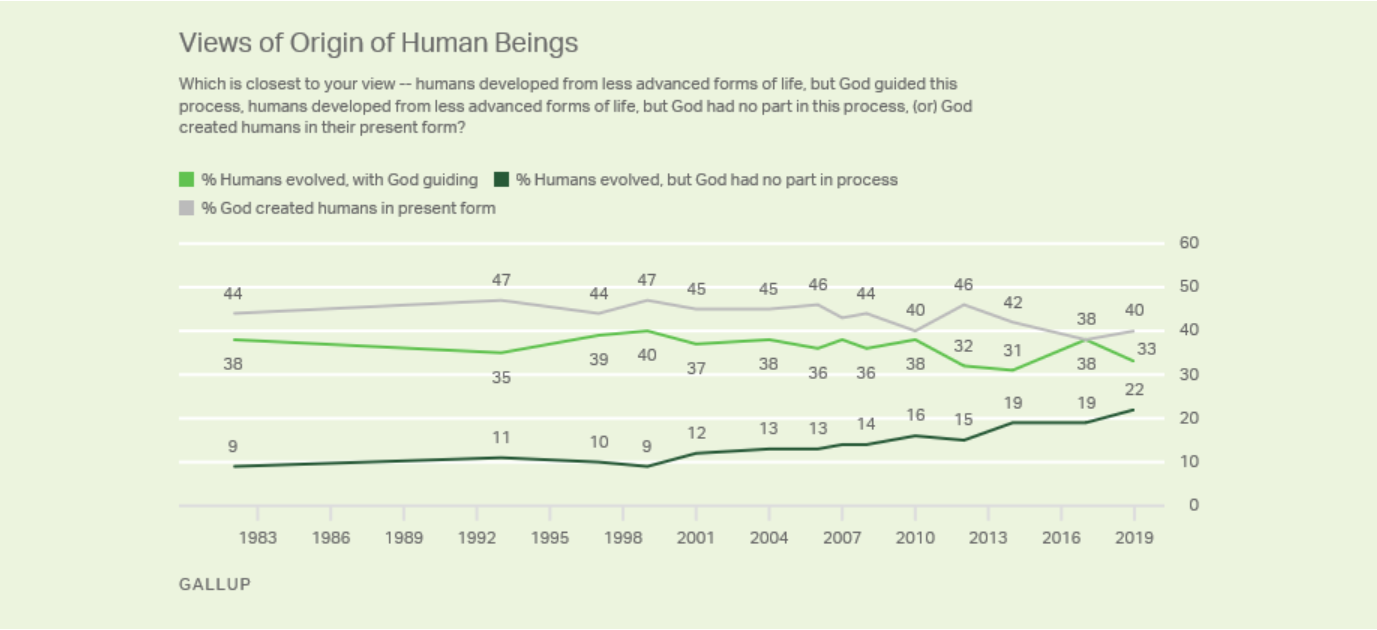
Religion remains an obstacle to the public’s understanding and acceptance of evolution as the natural process that enables life to change in response to changes in the environment: “The status of creation and evolution in public education has been the subject of substantial debate and conflict in legal, political, and religious circles.  In the United States, creationists and proponents of evolution are engaged in a long-standing battle over the legal status of creation and evolution in the public school science classroom” (3)  In 2019, only 22% of Americans believed that “humans evolved but God had no part in the process” compared to 40% of Americans who believed that “God created humans in present form.” 

Source: Gallup Poll

It is the public’s deep ignorance of evolution that explains the nativist ideology, which assumes that species are immutable, native plants are inherently different from non-native plants, and that plants and insects co-evolved their relationships long after native plants diverged from their ancestors, now considered non-native.  All of these assumptions are mistaken.  While nativists wish to divide all life into just two categories—native and non-native—none of the existing taxonomic systems even mentions that meaningless distinction. 

Traditional taxonomists are a dying breed.  Retiring taxonomists are not being replaced and academic taxonomy programs are disappearing, as are herbarium collections.  The recent closure of the herbarium at Duke University is a case in point.  Duke tried unsuccessfully to find a new home for the collection before deciding to close it.

Academic scientists are using modern analytical techniques to categorize species according to their evolutionary relationships.  Given the new understanding of the colossal task of collecting rapidly evolving life, most accept that it can’t be done.  About 1.2 million species have been identified and named.  Estimates of the total number of species range from 8.7 million to 3 trillion.  More importantly, species of life are constantly changing and dying out as they try to adapt to a rapidly changing world.  Naming dynamic life is a constantly moving target, a task that is never done because life never stops evolving. 

Many academic scientists believe that traditional taxonomy should be abandoned and replaced by a new system that reflects evolutionary relationships.  But neither of the books on which this article is based (1,2) is specific about what form that would take and neither suggests that such a transition is imminent. 


This article is based on these (1,2) books.  All quotes in this article are from these sources:

  1. Every Living Thing, Jason Roberts, Random House, 2024
  2. Naming Nature, Carol Kaesuk Yoon, W.W. Norton, 2009
  3. Wikipedia, “Creation and evolution in public education”

Flawed Data: Garbage in, garbage out

Even the most dedicated academic invasion biologists—such as Daniel Simberloff and Doug Tallamy—concede that not all introduced plants are invasive.  However, they claim that all introduced plants have the potential to become invasive. 

Early in the rise of invasive biology, over 25 years ago, much research effort was devoted to determining the factors that could predict which plants would become invasive.  Theoretically, if we could predict an invasive future for an introduced plant we could make an early effort to eradicate them before they became entrenched, naturalized members of an ecosystem.  At that point, most invasion biologists concede that landscape-scale attempts to eradicate non-native plants are futile.

The most recent attempt to identify the factors that contribute to “invasability” is a study led by Assistant Professor Moshen Mesgaran in the Department of Plant Sciences at UC Davis:  “Invading plants remain undetected in a lag phase while they explore suitable climates.” (1)  This study claims that it can take hundreds of years for non-native plants to become “invasive,” which the authors call “lag time.” 

The study got my attention because it seemed obvious that the behavior of all plants, whether native or non-native, has changed greatly in the past 300 years, because of many changes in the environment, most notably climate change.  What is described by the study as “lag time” between the time of the introduction of a non-native plant and its invasive behavior, seems primarily the predictable response of plants to climate and other changes that we should expect. 

When I mentioned this study to one of my scientific advisors, he pointed out the most obvious flaw in the study, which casts doubt on the study’s conclusions.  The study claims that plantain (Plantago lanceolata) had lag time of 177 years, the longest of any introduced plant in the United States:  “Consider the common lawn weed Plantago lanceolata, otherwise known as ribwort or buckhorn plantain, which has the longest dormancy in the United States, according to the report. Noxious to livestock and native plants, the plant was introduced in the United States in 1822 and is found widely here.” (2)

Plantago lanceolata. Source: Wikipedia

In fact, plantain arrived in the US long before 1822 and was quickly widespread shortly after its arrival in the 17th century.  Plantain arrived first to the East Coast with early settlers, along with many other weeds.  John Josselyn visited New England in 1638 and 1663 and made a record of English weeds in New England—including Plantago lanceolata—that was published in the 19th century. 

 Native Americans of the Northeast also made a record of the arrival and spread of plantain in New England:  Plantain “was called ‘Englishman’s foot’ by the Amerindians of both New England and Virginia, who believed in the seventeenth century that it would grow only where the English ‘have trodden & was never known to grow before the English came into this country.’” (3)

The arrival and rapid spread of plantain in the US is also immortalized by American popular literature.  Henry Wadsworth Longfellow described the simultaneous arrival of white people and plantain, in the epic poem, Song of Hiawatha, published in 1855:  “Wheresoe’er they tread, beneath them/Springs a flower unknown among us/Springs the White-man’s Foot in bloom.”

More recently, Daniel Mason described in his novel, North Woods, the arrival of plantain in the ballast of an English ship and its subsequent spread in the New World:   “And there are seeds, uncountable, scattered in the humid loam:  red clover, groundsel, spurrey, trefoil, meadow fescue, dandelion, hedge parsley, nonesuch, plantain. The voyage takes two months. On landing, the ballast is removed and dumped into the harbor.  Much of it—the stones, the shells, the beads, the spectacles—sinks to the bottom of the bay.  But the seeds, many of the seeds, enough of the seeds, rinsed loose of their swaddling earth, are freed into the breakers and float to shore.” (4)

Plantain arrived in the western US in the early 19th century, when the Spanish brought many weeds to the West from Mexico along with their herds of cattle.  Weeds from the Old World were noticed and recorded by John C. Fremont when he visited the Sacramento Valley in 1844.  He also mentioned that his horses ate the weeds, and “even the squaws he met ate it [red-stemmed filaree].” (3)

English plantain “was one of the nine sacred herbs of the Anglo-Saxons, and Chaucer and Shakespeare cited its medicinal qualities.  It grows wild today in all the continents but Antarctica, as well as in New Zealand and a number of islands.  It rates as one of the very hardiest of weeds in the world, and it will be with us forever, apparently.” (3)

Buckeye butterfly. Source: Wikipedia

“English plantain is a major host of the buckeye butterfly from coast to coast, and in New York and perhaps elsewhere it is being used by the Eastern Baltimore Checkerspot, Euphydryas phaeton, previously considered monophagous on the wetland Scroph Turtlehead, Chelone glabra. This provided an escape from a very narrow niche!” (5)  There are many instances of butterflies using plantain as their host plant in scientific literature (6)

We also question the characterization of plantain by Professor Mesgaran’s research team as a “noxious weed” that is harmful to livestock.  English plantain is not listed as a “noxious weed” by the state of California (7) and its “invasiveness” is considered “Limited” by the California Invasive Plant Council. English plantain is not considered toxic to horses or cattle, according to the results of internet searches. 

Plantain arrived in the New World soon after it was discovered by the Old World.  It spread quickly and is now a valued member of American ecosystems, as well as most ecosystems all over the world.  As we often say in defense of harmless non-native plants, “What’s the beef?” 

Professor Mesgaran’s study used herbarium and climate data to analyze “over 5,700 time series (species × regions) in 3,505 naturalized plant species from nine regions in temperate and tropical climates to quantify lags and test whether there have been shifts in the species’ climatic space during the transition from the lag phase to the expansion phase.” (1) This source of information was clearly not accurate in the case of English plantain, which has been in the US over 400 years and immediately spread everywhere.  I can’t speak to the study’s report of “lag times” in other global regions.

Putting aside the inaccuracy of data used by the study to report the “lag time” between the arrival of introduced plants and evidence of invasive behavior, I summarize the findings of this study:

  • The behavior of plants vary from one place to another because growing conditions vary.
  • When the climate changes, vegetation changes in response.

This study claims that it can take hundreds of years for non-native plants to become “invasive.”  The concept of “lag time” seems to suggest that all introduced plants have the potential to become invasive.  This is not a new idea among invasion biologists who consider all introduced species a problem even when there is little evidence that they are.  That school of thought expects us to prevent all plant introductions because they assume that all of them will be a problem in the future.  The contrarian view is:

  • It is impossible to prevent all introductions of non-native plants because most are dispersed unintentionally or naturally.
  • The damage that is done to the environment by futile attempts to destroy non-native species is worse than the theoretical risks that some of them will eventually become a problem. 
  • The resources used in the attempt to eradicate non-native species could be put to better use to benefit the environment, such as addressing the causes of climate change.
  • Every non-native plant contributes to biodiversity, which creates evolutionary opportunities to adapt to the changing environment.  There is far more opportunity lost when harmless non-native plants are eradicated compared to their potential to contribute to biodiversity.   
  • Many non-native plants are beneficial and are frequently functional substitutes for native species that are no longer adapted to the changed environmental conditions and climate.

Unfortunately, what might have been a straight-forward study (embedded in arcane jargon and complex statistical analysis) is flawed by inaccurate information about the “lag time” of specific plants in specific countries.  The study claims that it took 177 years for plantain to become “invasive” in the US.  In fact, plantain spread everywhere immediately after it was introduced in the 17th century and there is no evidence that it has done any harm where it lives.  If we learn anything new from this study, it is that herbarium records are not a reliable source of information about the arrival and dispersal of introduced plants. 

Much like the fossil record, herbarium collections can establish that a plant or animal lived in a specific place at a specific time, but they cannot provide negative evidence that the plant or animal wasn’t there or elsewhere prior to the time the specimen was collected.  In any case, when plantain arrived in the US, there were few herbarium collections available to record its arrival.

This is not to say that herbarium collections are not useful for botanical research.  Here are two specific examples of how herbarium collections have been used appropriately by scientists:

  • Angela Moles, an Australian scientist, used the collection of a university herbarium to measure the changes in plants that were introduced to Australia. The herbarium had samples of the same species of plants collected over a 60 year period from the same location. Professor Moles found that the plants had changed in significant ways. In a sense, they were becoming Australian plants in response to the biotic (other plants and animals) and abiotic (climate, soil, etc.) conditions of their new home. She predicted that if they weren’t yet genetically distinct from their ancestors, they soon would be. Professor Moles made a TED presentation 11 years ago about her findings that is available HERE.
  • Scientists used seeds in France’s National Botanical Conservatories collected in the 1990s and early 2000s to study how the plant had changed over a period of less than 30 years.  The plant species they studied was capable of both self-pollination and cross-pollination by insects and other animals.  They germinated the old seeds and compared their flowers with those now growing in the French countryside.  They discovered that self-pollination by that plant species had increased 27 percent since the 1990s, probably in response to the significant decline in bee populations.  That study was described by the New York Times.

No amount of obscure jargon and statistical analysis can compensate for flawed data: garbage in, garbage out.


  1. “Invading plants remain undetected in a lag phase while they explore suitable climates,” Mohsen B. Mesgaran, Nature Ecology & Evolution, February 6, 2024
  2. https://scitechdaily.com/invasive-time-bombs-scientists-uncover-hidden-ecological-threat/
  3. Alfred Crosby, Ecological Imperialism, Cambridge University Press, 2004 (second edition).  The source of the quote within the quote of Crosby is from the published writings of Reverend John Clayton, a Parson with a Scientific Mind.
  4. Daniel Mason, North Woods, Random House, 2023
  5. Email communication with Professor Emeritus Arthur M. Shapiro (UCD) with permission
  6. “Matthew and Jonathan Douglas explicitly record oviposition on plantain in “Butterflies of the Great Lakes Region” (2005). I’m sure there are earlier such mentions.” Email communication with Professor Emeritus Arthur M. Shapiro (UCD) with permission
  7. https://www.cdfa.ca.gov/plant/ipc/encycloweedia/pdf/CaliforniaNoxiousWeeds.pdf

Assembly Bill 2509 has the potential to reduce pesticide use, IF it is revised

Below is my letter to California Assemblymember, Ash Kalra (District 25, San Jose), asking him to consider revising Assembly Bill 2509 so that it will reduce the use of pesticides in California to eradicate harmless and useful non-native plants.  Please consider making this suggestion to your elected representatives in the California Legislature.  AB2509 has the potential to reduce pesticide use in California if we make an effort to revise it as needed to accomplish that goal.


Dear Assemblymember Kalra

AB2509, your bill being considered by the California Legislature, will define “Integrated Pest Management” (IPM) and “invasive species.”  The bill has the potential to reduce pesticide use in California’s parks and open spaces, but only if it is revised to accomplish that purpose. AB2509 is also an opportunity to improve the success of ecological restorations that begin by eradicating non-native plants considered “invasive,” by narrowing the target to those few species that are actually doing any harm.

In its present form (April 4, 2024), AB2509 defines invasive species, “to mean nonnative organisms that cause, or are likely to cause, economic or environmental harm, excluding humans, domestic livestock, specified domestic or domesticated species, and nonharmful nonnative organisms.”

That definition is based on Federal Executive Order 13112, which was passed 25 years ago, in 1999.  We have learned a lot in the past 25 years about invasive species and the attempt to control them:

  • The climate has changed a great deal since 1999, and with it the environment, including the plants and animals that live in it.  The native ranges of many plants and animals have changed and will continue to change.
  • We have learned that many introduced plants are often functional substitutes for native plants that are no longer adapted to the changed environment. 
  • We have learned that insects are capable of rapidly adapting and evolving to make use of introduced plants.
  • We have learned, after trying to eradicate them for over 25 years, that most naturalized introduced plants cannot be eradicated.
  •  We have learned that the herbicides being used to eradicate introduced plants are doing a great deal of harm to the environment and the animals who live in it.  We now know that herbicides damage the soil, making it difficult for new plants to survive in sterilized soil, devoid of beneficial microbes and fungi. 
  • We have learned that native plants don’t necessarily return after introduced plants have been eradicated. The damage done by eradication projects is often greater than the anticipated benefit.
  • Despite dire predictions to the contrary, there is no evidence that any introduced plant species has caused the extinction of a native plant species in California.

We need a new definition of invasive species that reflects these changes and accommodates the movement of plant and animal species needed for survival.  We need a definition that does not attempt to stop adaptation and evolution.  Like dynamic nature, our attempts to conserve nature must constantly evolve in response.  We need a definition that distinguishes between actual harm and theoretical predictions of harm.  We need a definition that does not require us to poison our public lands unnecessarily.

Please consider revising the definition of “invasive species” in AB2509 to reflect what we now know about introduced plants, such as:

“AB2509 defines invasive species to mean pathogens, diseases, and insects that are known to cause harm to plants and animals, including humans.”

In its present form, AB2509 also defines Integrated Pest Management as:  “’Integrated pest management’ means an ecosystem-based strategy that focuses on long-term prevention of pests or their damage through a combination of techniques such as biological control, habitat manipulation, modification of cultural practices, and use of resistant varieties. Pesticides are used only after monitoring indicates they are needed according to established guidelines, and treatments are made with the goal of removing only the target organism. Pest control materials are selected and applied in a manner that minimizes risks to human health, beneficial and nontarget organisms, and the environment.”

Integrated Pest Management (IPM) is not a new concept.  Most public land managers have had IPM programs for over 25 years.  Some have resulted in reduced herbicide use in developed areas, without corresponding reductions in public open space and wildlands.

San Francisco’s IPM program has significantly reduced herbicide use on developed public land, but herbicide used to eradicate non-native plants in one-third of park acreage known as “natural areas” has changed little, as shown in this graph:

Source:  San Francisco Integrated Pest Management Program

East Bay Regional Park District has also reduced its use of herbicides in developed areas of the park, such as parking lots, picnic areas, and playgrounds, without reducing their use in wildlands where non-native plants and trees are eradicated:

If we want Integrated Pesticide Management Programs to reduce the use of pesticides in our public lands, we must define IPM to achieve that purpose by:

  • Changing the definition of “invasive species” to focus only on those introduced species that are known to cause actual harm.  The expectation of “likely” harm without evidence of actual harm should not be used to justify pesticide use. 
  • Explicitly defining the “guidelines” that determine if pesticides are needed in order to prevent their use on harmless and beneficial plants.
  • Avoiding the use of vague terms that can be interpreted differently from different perspectives, such as “use of resistant species.”  Resistant to what? In whose opinion? 
  • By not making empty promises such as claiming that pesticides can be used on non-native plants without doing any damage to non-target species.  Because of drift, persistence, and mobility of pesticides in the soil, it is not possible to make such assurances, which give the public the mistaken impression that herbicides can be used without unintended consequences

Please consider a revised definition of Integrated Pesticide Management that will reduce pesticide use and preserve the vegetation that is capable of growing in today’s environment, such as:

“’Integrated pest management’ means an ecosystem-based strategy that focuses on long-term prevention of pests or their damage through a combination of techniques such as biological control, habitat manipulation, and modification of cultural practices.  Pesticides are used only after harm is documented, benefits of existing vegetation have been identified and weighed against harm, the health risks and environmental damage caused by herbicides is considered, and the outcome of eradication is determined to be positive, on balance.”

In conclusion, I will briefly describe my interest in invasion biology and the ecological restoration industry it spawned.  My interest began over 25 years ago when my neighborhood park was designated a “natural area” by San Francisco’s Recreation and Park Department.  When I moved to the East Bay, I learned that the native plant movement is equally committed to the eradication of introduced plants and the pesticides needed to accomplish that goal.  I have visited many of these projects all over the Bay Area and elsewhere in California.  I read the publications and attend the conferences of California Invasive Plant Council and California Native Plant Society so that I am as informed of their objectives and beliefs as I am of the academic criticism of invasion biology.  I have had a website since 2010 that reports to the general public what I have learned about specific projects and the scientific evaluations of them.  I invite you to visit my website to help you evaluate the advice I am sending to you today about AB2509.  I can provide references for every statement I make in this letter, on request.

Thank you for your consideration and for your effort to reduce pesticide use in California.

Sincerely,
Webmaster, Conservation Sense and Nonsense

CC:
Patty Clary, Californians for Alternatives to Toxics
Damon Connolly, Assembleymember, District 12
Jay Feldman, Beyond Pesticides
Angel Garcia, Californians for Pesticide Reform
Doug Johnson, California Invasive Plant Council
Megan Kaun, Sonoma Safe, Ag Safe Schools
Melinda MacNaughton, El Granada Advocates
Margaret Reeves, Pesticide Action Network
Jane Sellen, Californians for Pesticide Reform
Nancy Skinner, Senator, District 9
Buffy Wicks, Assemblymember, District 15
Wildlife Conservation Board


Update, April 24, 2024: 

The Assembly Agriculture Committee voted unanimously to pass AB2509 to the Appropriations Committee with no amendments. 

Doug Johnson, Executive of Cal-IPC and Marc Landgraf, Santa Clara Valley Open Space Authority, spoke in favor of AB2509.  Johnson claimed that only “small amounts of pesticide are used.”  Landgraf said most plants are killed by grazing, mowing, and volunteers pulling my hand; herbicides are used only “when needed.” 

Damon Connolly was the only committee member to speak.  He expressed concern that AB2509 not conflict with his continuing support for AB99, which has the potential to reduce roadside spraying of herbicide by Cal Trans.

There were no speakers in opposition to AB2509.  There was no acknowledgment of the public’s concern about AB2509 or of the public’s concern about herbicides being used on our public lands.


Nature is the backdrop for our lives

“North Woods is a love poem to the human and natural history of Western Massachusetts . . . wise, profound, chilling, carnal and funny.”—BookPage

North Woods was written by Daniel Mason.  He is a physician and assistant professor of psychiatry at Stanford University.  He is the author of several works of fiction.  In North Woods he demonstrates his knowledge of human behavior and his interest in the spiritual and natural worlds, which are the backdrop for his story. 

He traces the 400 year story of human occupation of a small patch of land in Western Massachusetts, beginning with a young eloping couple, escaping the conventions of puritan society. 

Each occupant uses the land in a different way.  An apple orchard sustains the family of an English soldier during the Revolutionary War.  His children replace some of the apple trees to create a pasture for Merrino sheep when their father dies.

When the sheep are killed by subsequent land owners, you might expect the land to return to “some ungrazed Eden,” but you would be wrong, because human occupation has put the land on a different trajectory.  This creates an opportunity for Daniel Mason to demonstrate his interest in ecology: 

“But lo! For while there is wisdom to this old saying, what now rises in the field is not a gentle return to some ungrazed Eden, but, rather the irruption of a strange, besieging army that has been lying in wait.

“For this particular pasture, the invasion can be said to have begun one autumn morning two centuries before the birth of the Merrino Cristobal, when a ship departs from Yarmouth on the Isle of Wight.  To keep steady through the North Atlantic, the sailors fill the hold with ballast from the wastelands near the Yarmouth docks.  There are stones and loam and sand, insects and earthworms, bird bones and crushed snail shells, roly-polies and tufts of grass that wilt within the darkness beneath the deck.  There is a half-decayed mole, and a live one, broken jugs, a Roman coin that will be rediscovered by a young boy walking on the shoreline 317 years later, and another, a “crown of the double rose” bearing an image of Edward VI on horseback, that will sift down into the silty depths of Massachusetts Bay and disappear forever.  There is a beaded necklace dropped by a longshoreman’s wife during a moment of indiscretion, a splintered lens from a bookkeeper’s spectacles, stray curls blown from a barber’s market stall by an offshore breeze, peach pits, rotting broadsheets of forgotten songs.  And there are seeds, uncountable, scattered in the humid loam:  red clover, groundsel, spurrey, trefoil, meadow fescue, dandelion, hedge parsley, nonesuch, plantain.

“The voyage takes two months. On landing, the ballast is removed and dumped into the harbor.  Much of it—the stones, the shells, the beads, the spectacles—sinks to the bottom of the bay.  But the seeds, many of the seeds, enough of the seeds, rinsed loose of their swaddling earth, are freed into the breakers and float to shore.

“It is warm:  within weeks, they have germinated, begun to grow, to flower, to set seed of their own.

“Then, one by one, and by the millions, they make their way west.

“In the felted boots of a young girl, traveling to Albany with her mother:  hedge parsley.

“In a hemp sack, dropped by a Dutch settler, after his murder on a lonely road near Hoosick Falls, and then on the wind:  common groundsel.

“In feed sold one late September to a farmer passing through the Deerfield market, who spills some from his carriage:  meadow fescue.

“In the ticking of a mattress discovered by a minister to be the locus of his wife’s betrayal, fury-scythed to pieces and released from the Plymouth field:  Scotch thistle.

“In the pocket of a milkmaid who had thought it was a carrot:  Queen Anne’s lace.

“In the cracks of an old shoe, and the hem of a skirt, and the stockings of a soldier:  The seeds that to the soil take, will presently our pasture make. 

“One by one they nestle in among the native grasses, some so swiftly that it will seem like they have always been there (for it is hard to imagine there was a time before dandelions, before thistle) Others creep up the valley slowly, field by field, until they reach the yellow house. Where they grow, unnoticed, humbled by the constant grazing of the Merinos, waiting in the soil for the cat.”

A landscape painter is a subsequent owner of the land and its yellow house.  He makes a detailed record of the vegetation on the land because he is an astute observer and faithful renderer of nature.  Some two-hundred years later, his paintings become the basis for a museum exhibit of how the landscape has been changed by its occupants, but also by the natural succession of nature.  Chestnut trees are killed by blight.  Elms are killed by disease.  Ash trees are killed by insects.  And so on.  It’s a story of change that will not end.

Daniel Mason’s story ends with the brief visit of an ecologist who studies trees.  Trees are her passion and she has made sacrifices to follow that passion.  Her life ends shortly after participating in creating the virtual reality depiction of the transition of the forest to treeless meadows of wild flowers for a museum exhibit of the painter’s work.  While helping to create the exhibit, the ecologist suddenly realizes that the forests that have sustained her are doomed:

“She felt as if she had fallen in love with someone only to learn that they were dying.  She could recall the winter day in the forest outside the library at Amherst when she first began to sense the possibility of an enchantment.  And a decade had passed, and every day she’d felt the wonder grow deeper, and every day, reading the journals, attending conferences, she found herself confronted by the mounting evidence that she was losing the very thing that had saved her.  Standing in the museum and looking skyward, she realized that even she had never really grasped how astonishing these forests were.”

We rarely notice the arrival of a new plant or the disappearance of another and when we do it is only within the context of our brief lives.  North Woods gives us a rare opportunity to “see” the landscape over 400 years.  We see how the human occupants of the land interact with the land and how the land is impacted by those interactions. 

North Woods is a brilliant book, written by a remarkable person.  The story is a subtle reminder of how our lives are intertwined with nature.  We influence nature and nature influences us. Nature is our partner and our sustenance.