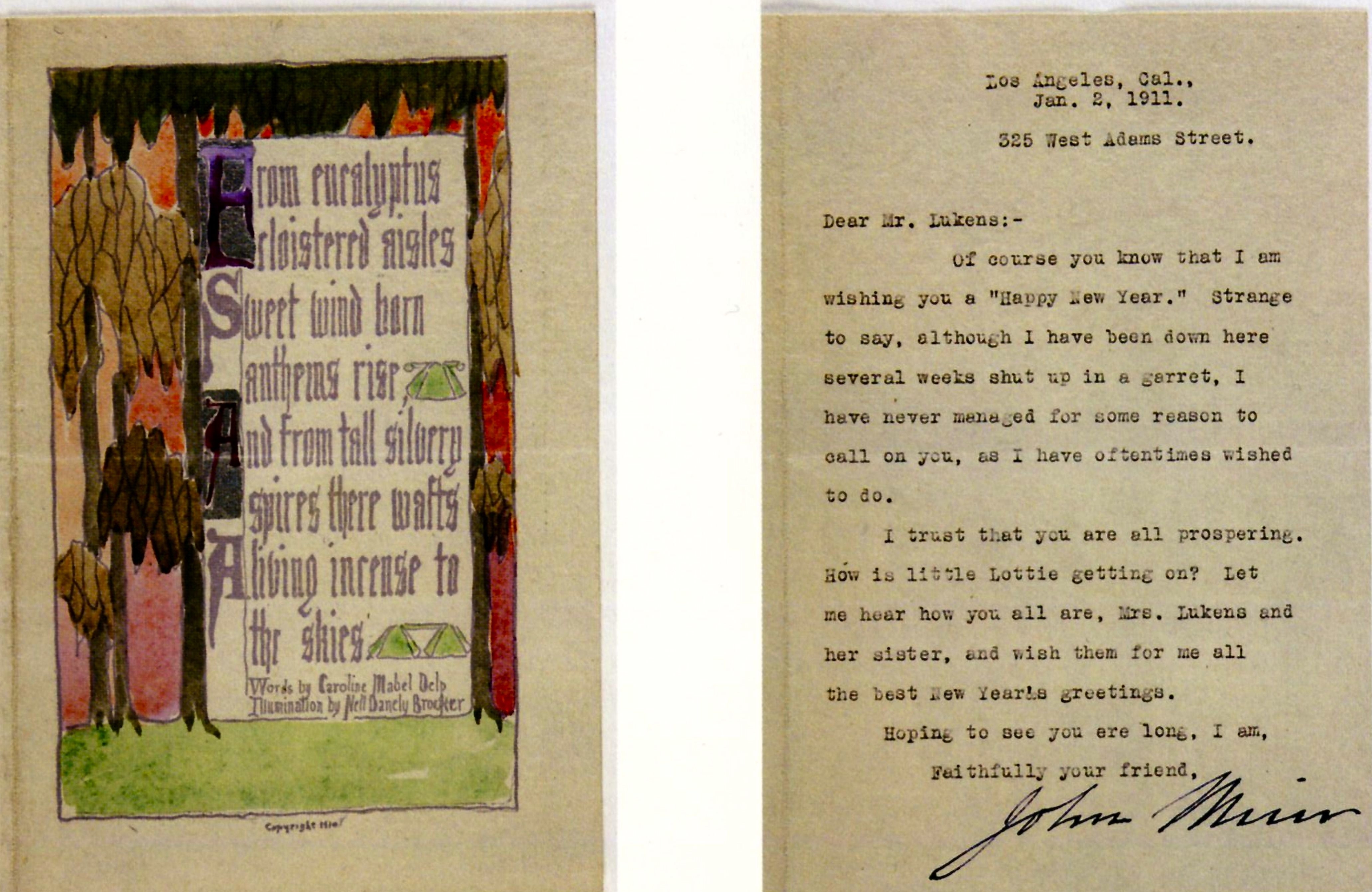
“From eucalyptus cloistered aisles sweet wind born anthems rise and from tall silvery spires there wafts a living incense to the skies.” (1)
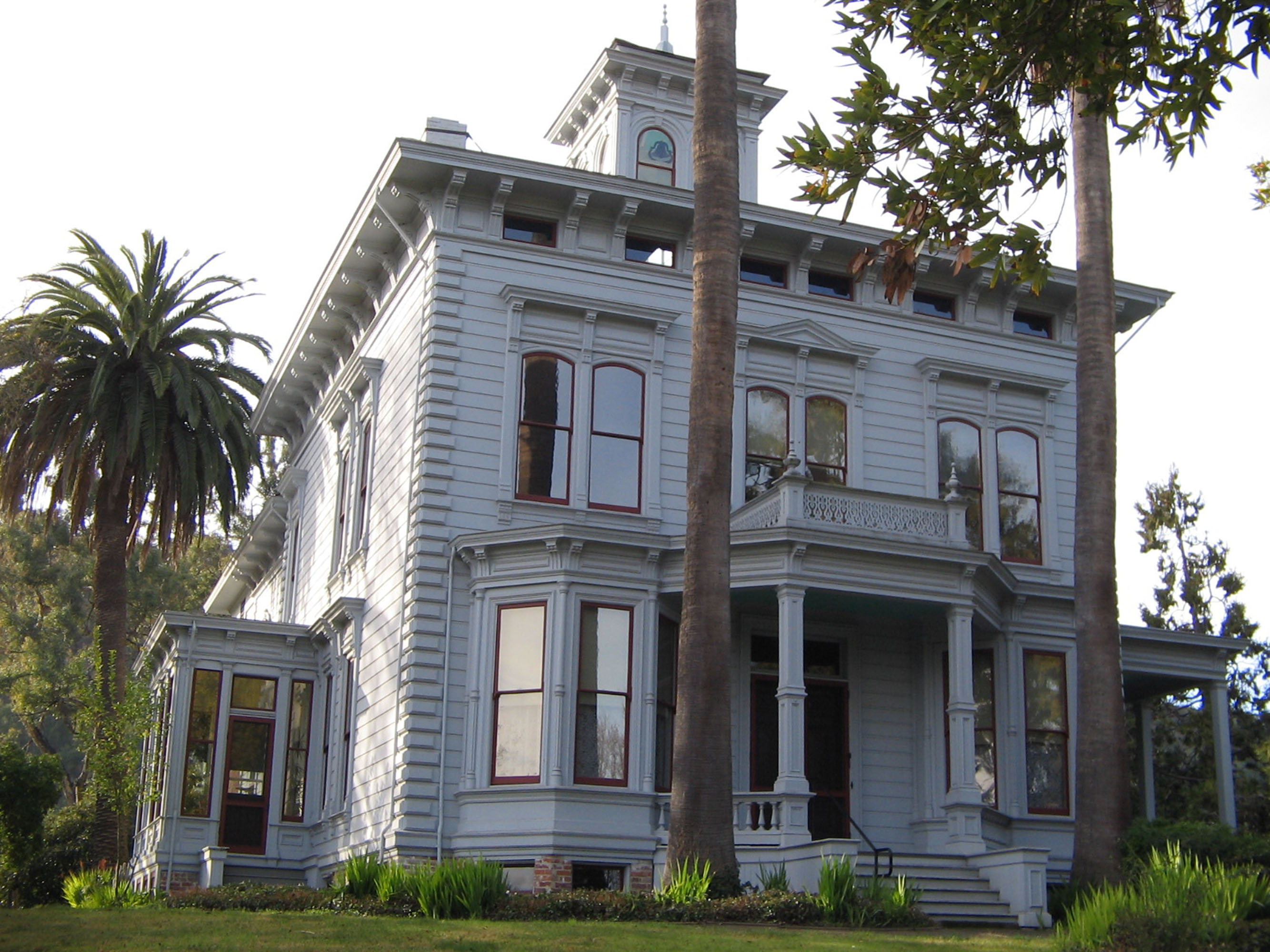
This 1911 New Year’s greeting from John Muir is a reflection of his fondness for eucalyptus. He planted eucalypts around his home in Martinez, California. Muir’s daughter reported that her father bought about a dozen different varieties of eucalyptus from a neighbor and she helped to plant them on the property. The property was planted with many non-native plants and trees, including palms that now tower over the property.
John Muir National Historical Site, NPS photo
Muir’s home was built by his wife’s parents in 1882. Muir and his wife moved into the home in 1890 after his wife’s father died. Muir lived in that home for the last 24 years of his life. It is now The John Muir National Historic Site.
The site is administered by the National Park Service which unfortunately actively engages in ecological “restorations” that destroy non-native species. In the San Francisco Bay Area, eucalypts are one of their highest priority targets for destruction. According to the Martinez News Gazette, the Park Service destroyed the eucalypts on Muir’s property in about 1991 and replaced them with redwoods. Twenty years later, they destroyed the redwoods because they decided they weren’t historically accurate. The Park Service has a contradictory mission of ecological “restoration” to a native landscape which is inconsistent with its mission of maintaining the historical integrity of the properties it manages.
John Muir was co-founder of the Sierra Club. He is also given credit for convincing President Teddy Roosevelt to protect Yosemite, Sequoia, Grand Canyon and Mt. Rainier as National Parks. Wouldn’t Muir be appalled by the current policies of the Sierra Club and the National Park Service which advocate for the destruction of eucalyptus in our public lands?
Theodore Lukens was another eucalyptus aficionado
The recipient of John Muir’s New Year’s greeting was another eucalyptus aficionado. Jared Farmer mentions Muir’s holiday card to Theodore Lukens in Trees in Paradise: “In 1911 Muir sent a holiday card to his friend Lukens with a watercolor depicting gum trees and a poem evoking the ‘cloistered aisles,’ ‘silvery spires,’ and ‘living incense’ of eucalypts.” (2)
According to Farmer’s excellent historical account of eucalyptus in California, Lukens was a “banker, real estate developer, one-time mayor, and self-taught forester” in Southern California who “worked tirelessly on behalf of afforestation.” Lukens and Muir shared the belief that “forest cover was key to the whole hydrological system: trees and tree litter encouraged rainfall, captured fog drip, increased rainfall retention, decreased transpiration and regulated stream flow.”
We recommend Jared Farmer’s book to our readers. This is a serious history of eucalyptus in California. It’s a complex story that requires an understanding of scientific as well as historical documents. Although we would quibble about some details, it is also a fair treatment of a controversial subject. Mr. Farmer is an historian, not a tree or native plant advocate.
Mr. Farmer tells the story in an engaging way and he puts it into a social context that deserves respect from both tree and native plant advocates. We are grateful to Mr. Farmer for bringing some solid information to an otherwise emotional debate. If it is widely read it could contribute to the resolution of a conflict that has been intractable.
We wish our readers a Merry Christmas and a Happy New Year. We are hopeful that the New Year will bring more success to our mission to save healthy trees from destruction which will also reduce the needless use of pesticides in our public open spaces.
******************************
(1) Published in Images of the Pacific Rim by Erika Esau, Power Publishing, February 2011.
(2) Jared Farmer, Trees in Paradise: A California History, Norton & Company, 2013.
As we approach the end of the year, let’s review the progress we’ve made in 2013 on our mission to save healthy trees and prevent the unnecessary use of herbicides in our public open spaces. It’s been a good year:
University of California San Francisco (UCSF) has decided to scale back its plans to destroy about 30,000 trees and the forest understory on Mount Sutro. They have also made a commitment to NOT use herbicides in the forest in the future. (Visit Save Sutro for details.)
UCSF’s plans to destroy most of the trees on Mount Sutro were criticized by the mainstream press, i.e. the New York Times and Nature magazine.
Thousands of citizens in the Bay Area signed our petitions to object to the Mount Sutro project and the projects in the East Bay which FEMA is considering funding. Likewise, critics of these destructive projects overwhelmed a handful of supporters at the public hearings about these projects.
The California Invasive Plant Council has noticed the public’s opposition
Anise Swallowtail butterfly in non-native fennel
Another barometer of our progress is the latest edition of the newsletter of the California Invasive Plant Council (Cal-IPC) which is available here. Readers are immediately alerted to a change of attitude by the photograph on the cover of a native butterfly and a native bee feeding on a non-native thistle. As anyone who has debated the issues with native plant advocates or read their propaganda knows, they usually deny that non-native plants are useful to native insects.
Native bumblebee on Cotoneaster, Albany Bulb
The cover photograph makes a concession and sets the tone of the Cal-IPC newsletter. The opening message from the Cal-IPC Executive Director begins with a quote from Invasive and Introduced Plants and Animals: Human Perceptions, Attitudes and Approaches to Management: “…intervention in conservation practice hides behind a veneer of pseudoscience and certainly challenges democratic processes.”We told our readers about that book and ironically we selected the same sentence to describe its conclusion. So, have we found some common ground with native plant advocates, as represented by Cal-IPC?
Not quite. The title of the Director’s message is “A ‘cottage industry of criticisms.’” This is the phrase used to describe those who criticize invasion biology. Speaking for Million Trees and those with whom we collaborate, it is not accurate to call us an “industry” because we derive no economic benefit from our advocacy on behalf of non-native species. In contrast, the ecological “restorations” that are based on the assumptions of invasion biology are an industry. The economic interests of those who are employed by “restoration” projects are one of the reasons they cling desperately to the ideology that supports their employment.
The Cal-IPC Director tells us that, “Though they raise critical issues to address, such critiques underestimate the degree to which these issues are already being addressed.” He claims that “Cal-IPC’s workshop asked participants to consider ecological services offered by top weeds of concern. Weighing such information will become increasingly important as land stewards design management approaches to meet long-termconservation goals in an age of great environmental change.”
Cal-IPC can demonstrate this new management approach
What an excellent idea!! And we hope that Cal-IPC will start that new approach by revisiting its outdated assessment of Blue Gum eucalyptus which presently contains nothing but demerits, most of which are not even accurate. If Cal-IPC takes into consideration the significant ecological services provided by Blue Gum eucalyptus, they will surely remove it from their long list of “invasive species.” Here is a brief list of the ecological services provided by Blue Gum eucalyptus in California:
These large, hard-wood trees are storing millions of tons of carbon which will be released into the atmosphere as carbon dioxide when they are destroyed and as their wood decays on the ground, thereby contributing to climate change.
These trees are expected to live another 200-300 years, which means that this ecological service would be needlessly terminated by their premature destruction.
These trees are providing windbreaks on windy hills and for agricultural crops.
The roots of these trees stabilize the soil on hills that will erode when the trees are destroyed and roots die.
These trees are the nesting and roosting habitat of raptors and owls.
We urge Cal-IPC to demonstrate its professed willingness to consider the benefits of non-native species by revising their assessment of Blue Gum eucalyptus, which is rarely invasive and is providing valuable ecological services to animals as well as humans.
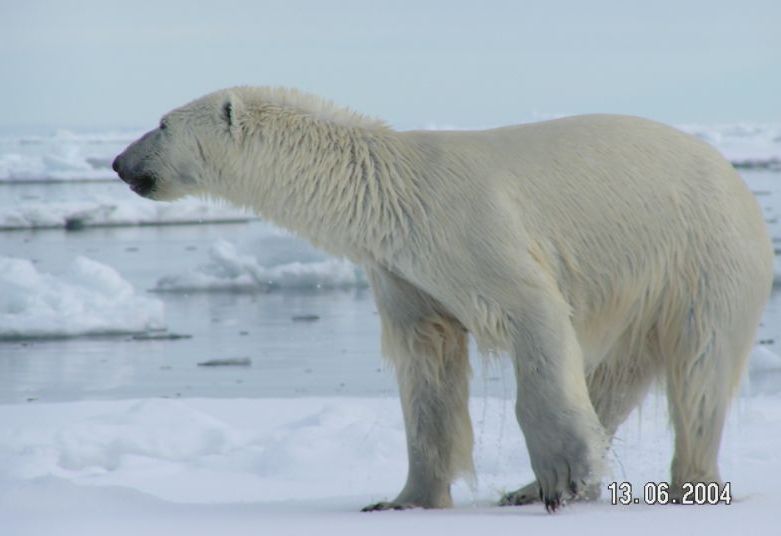
The sub-title of Jon Mooallem’s Wild Ones is A Sometimes Dismaying, Weirdly Reassuring Story About Looking at People Looking at Animals in America. His chapters about polar bears in Churchill, Manitoba fit that description perfectly. The story is both disturbing and reassuring. It is disturbing because there can be no happy ending for these polar bears, but we are reassured to learn that other polar bear populations far north of Churchill are probably in better shape.
Polar bear. Creative Commons
Churchill, Manitoba is on the shore of Hudson Bay. It is the only place in the Arctic where polar bears are easily seen because it was a Cold War military installation with an airport and facilities to accommodate visitors. The photographs we have seen of polar bears were undoubtedly taken there by the hordes of tourists, conservationists, photographers, media that come to Churchill to witness the most photogenic illustration of the consequences of climate change.
There were about 950 polar bears in the Churchill area when Mooallem visited in 2010. In 20 years, the bear population in Churchill had declined by about 20%. Churchill is at the southern edge of polar bear range. Eighteen distinct populations of polar bears live north of Churchill. Needless to say, Churchill is warmer than those northern locations and for that reason it is experiencing warmer winters.
Polar bears hunt for seals by finding their breathing holes in the ice on Hudson Bay. When the seal emerges for air, the polar bear snatches it, making a meal of the fatty layer that insulates the seal from the icy water. As winter temperatures rise, the length of time the Hudson Bay is frozen becomes shorter. Although polar bears may find “snacks” such as geese during the long thaw, they are essentially without food until the Hudson Bay freezes again.
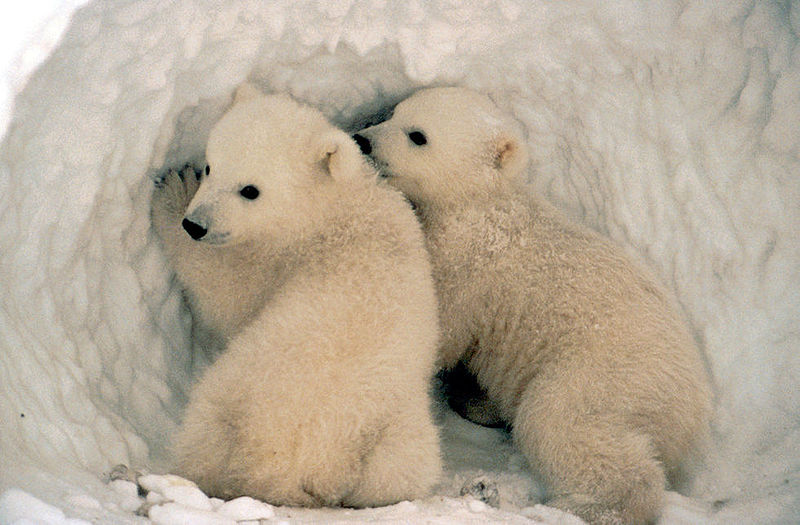
Polar bear cubs are typically nursed by their mothers for 2-1/2 years. USFWS
As the thaw gets longer and the freeze shorter, polar bears are starving to death in Churchill. Mooallem describes grim scenes of gaunt bears engaging in cannibalism and cubs in their death throes. But Mooallem wants his readers to think more deeply about the bears, beyond the horrible spectacle of their suffering in Churchill. He wants us to know why there is so little we can do to help the bears and he asks us to think about our ambivalent attitude toward wildlife.
Legal mechanisms for addressing climate change
Our political system is incapable of addressing climate change by regulating greenhouse gas emissions. In the absence of any substantive federal effort, the Center for Biological Diversity (CBD) tried to parlay the Endangered Species Act into a tool to address climate change. They applied for endangered status for polar bears which would have legally obligated the government to provide the habitat necessary for their survival. Since global warming is the primary threat to the bears, ensuring their survival would theoretically require us to reduce the greenhouse gas emissions that cause global warming.
This seemed a worthy effort at the time. Watching that attempt play out in a series of legal battles was another opportunity to understand the weaknesses of the Endangered Species Act (ESA). The response of US Fish & Wildlife Service (USFWS) was to designate polar bears as “threatened.” This status enabled USFWS to invoke an amendment that applies only to a particular species. That amendment was that USFWS is not required to address the underlying threat to the bears: climate change.
Since this loophole is not available for species listed as “endangered,” the response of CBD was to engage in a protracted battle about the definition of “threatened” and “endangered.” This arcane dialogue between CBD and USFWS revealed that there is no clear-cut definition of these categories in the ESA or its administration. This is one of many ambiguities in the ESA, as we have reported earlier on Million Trees.
Why can’t we help the bears?
Although there is no doubt that our political system is presently dysfunctional, our apparent inability to address the underlying causes of climate change is also a reflection of the wishes of the public. You might think that the residents of Churchill, surrounded by this living evidence of the consequences of global warming, would be actively engaged in the effort to address the causes of climate change. You would be mistaken. Although the residents of Churchill agree that the climate is warming, according to Mooallem they see it as a natural phenomenon, a cycle for which humans are not responsible and are powerless to change. Since it is a “natural” phenomenon, they also assume that the bears will survive in the long run.
Mooallem reminds us that the attitude of the residents of Churchill is the prevailing opinion of the American public. He doesn’t presume to explain the attitude of the residents of Churchill, but we will speculate. They are subjected on a daily basis to the sad spectacle of starving bears. Since it is illegal to feed the bears, there is nothing they can do about it. Putting ourselves in their shoes, it seems that one way to cope with that barrage of grim reality would be to slip into the unreal world of belief that you are not responsible for the suffering of the bears. Ironically, proximity to the bears has resulted in an apathetic attitude toward their plight.
Our ambivalent attitude toward wildlife
It may be difficult for us to understand the apathy of the residents of Churchill toward the fate of the bears because we are not witnesses to the suffering of the bears nor to the potential for the bears to become dangerous as they try to find food to survive. So, Mooallem tries to help us understand our attitude toward wildlife by putting it into a historical context:“There is a purely cultural dimension to the way we think about wild animals; their meanings can shift and float in and out of fashion over times…the stories we tell about animals depend on the times and places in which we tell them.” (1)
As American settlers moved west they had many dangerous encounters with wildlife such as bears and wolves. During this phase of American history, fear was the prevailing attitude toward such predators. Large carnivores were demonized and systematically exterminated by both land owners and government employees hired expressly for that task.
As urban populations grew, relative to rural populations, there was a growing tendency to romanticize wildlife amongst those not threatened by wildlife. Mooallem illustrates this turning point in the attitude of Americans toward wildlife with a specific incident that occurred in 1902.
Teddy bear. Creative Commons
Teddy Roosevelt was president at the time and hunting was one of his favorite pastimes. He went bear hunting in Mississippi to hunt bears in the company of a famous bear hunter who was said to have killed three thousand bears. The bear hunter tracked down a bear and roped it to a tree so that Roosevelt could shoot it. Roosevelt declined to shoot the bear because it didn’t seem sporting to him, but he instructed his companions to kill the bear with a knife, perhaps because the bear was in terrible shape at that point. Roosevelt always enjoyed an excellent relationship with the media, which is perhaps why the reporters following this expedition chose not to mention the ultimate death of the bear in their reporting of this incident.
The media coverage of Roosevelt’s merciful sparing of the bear sparked the birth of the beloved teddy bear. Two companies made cuddly replicas of the bear to commemorate this event and ever after the teddy bear has been America’s favorite stuffed animal for children. That was the turning point for bears to make the transition from enemy to friend.
However, that attitude could easily flip back and Mooallem provides an example: “No single piece of research demonstrates this cycle of fear and reverence more clearly than a study…that examined how cougars were written about in the Los Angeles Times between 1985 and 1995.” By 1970 cougars had been nearly exterminated in the Los Angeles area. The cougar population began to rebound as a result of a hunting ban in 1990. During the intervening period, cougars were portrayed by the media as “majestic” and “innocent.” After just two fatal attacks, media coverage shifted to describe cougars as “efficient four-legged killers.”
Food for thought
Ultimately, human attitudes toward wildlife are self-serving. In the case of the polar bears of Churchill, the bears derive no benefit from the prevailing sympathetic human sentiment about them. Thousands of tourists have flocked to Churchill to see them, using untold quantities of fossil fuels to get there by air and to roam around on the tundra in buses to see the bears. The greenhouse gas emissions have provided entertainment for humans and a livelihood for the residents of Churchill, but theyexacerbate climate change which will ultimately kill the bears of Churchill.
Jon Mooallem has given us a feast of food for thought. Thank you, Mr. Mooallem.
****************************
(1) Jon Mooallem, Wild Ones, A Sometimes Dismaying, Weirdly Reassuring Story About Looking at People Looking at Animals in America, Penguin Press, 2013.
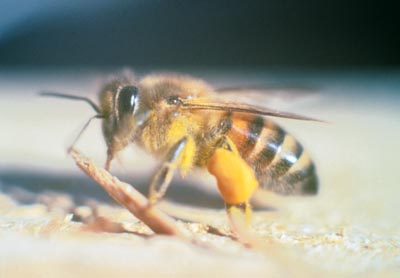
Bees were imported from Africa to Latin America in the 1950s by Brazilian researchers. They planned to breed them with European honeybees to improve honey production because the African bees were believed to be hardier than their European cousins. When the bees escaped from the laboratory, researchers learned that the African bees were also more aggressive than European honeybees.
When African bees began to spread throughout Latin America, they became one of the first media-promoted panics about “invasive” species. The media reported that the bees were capable of swarming and killing people and animals and they predicted that the bees would eventually spread throughout the United States.
Like most of the media-promoted panics about “invasive” species, predictions about Africanized bees were eventually discredited. The “invasion” stopped in Texas because cold winters prevented their movement further north. And the extreme aggressiveness of the bees also proved to be an exaggeration, partially because interbreeding with the European honeybee moderated the behavior of the African bees.
The benefits of new species
Scientific American reports that after 60 years of interbreeding, bee researchers say the original goal of an improved bee species for Latin America has been achieved. Hybridized bees have benefited from some of the characteristics of their African cousins.
Africanized bees are more resistant to parasites because they groom themselves more often than European bees.
Africanized bees are more aggressive foragers and are capable of finding nectar and pollen sources where European bees would not.
This interbreeding was accomplished by the bees themselves: “…it is not even accurate to call them Africanized bees anymore. After decades of a massive and uncontrollable continent-wide wild breeding experiment, the African-Italian hybrid has morphed into a totally new bee unlike either parent species.” (1)
Now bee researchers are trying to breed new varieties of bees that are tailor made for specific conditions. For example, where humans are stealing honey, a more aggressive bee with more of the characteristics of the African bees may be best suited. In places where mites are a problem, bee keepers will want a “bee that obsessively cleans itself.”
Personally, we prefer the earlier scenario, in which the bees sorted it out amongst themselves. We are deeply suspicious of the claims of humans that we are capable of producing better results than nature can accomplish on its own. More often than not, the results of human interference are unintended consequences, if not disastrous.
Does this sound familiar?
This story is a familiar refrain for the readers of Million Trees:
New species should not be assumed to be “bad” species.
Problems caused by new species are often resolved without our interference.
New species often make positive contributions to ecosystems.
Methods used to eradicate new species are often futile as well as more harmful than the mere existence of new species.
Hybridization should not be viewed as a problem. Particularly at a time of a rapidly changing climate, hybridization often facilitates natural selection, resulting in a new species which is better adapted to current conditions than its predecessors.
**************************
(1) Erik Vance, “Bee Researchers Make Friends with a Killer,” Scientific American, December 11, 2013
Who is Peter Kareiva and why do we care about his definition of conservation biology? Kareiva has been the Chief Scientist at the Nature Conservancy since 2002. That’s a BIG job, given that the Conservancy employs about 600 scientists. The huge number of scientists at the Conservancy is one of the reasons why it is unique amongst environmental organizations. Most environmental organizations employ more lawyers than scientists.
The Nature Conservancy is the “leading conservation organization working around the world to protect ecologically important lands and waters for nature and people,” according to its website. These measures of its scale are an indication that they aren’t exaggerating:
There are over one million members of the Nature Conservancy (of which our household is one).
They have protected more than 119 million acres of land, thousands of miles of rivers and created over 100 marine reserves worldwide.
They have projects in all 50 states of the US and 35 countries around the world.
The Conservancy restores as well as conserves
Trees destroyed in Chicago for prairie “restoration”
Another reason why we are interested in the opinions of Peter Kareiva is that the Nature Conservancy engages in some of the most aggressive restorations of which we are aware. One of their famous projects is the return of tall grass prairie around Chicago, Illinois, which required the destruction of untold thousands of trees, many of which were native. These projects began decades ago and have generated a great deal of conflict amongst those who value the trees and object to the methods used to kill them, including herbicides and prescribed burns.
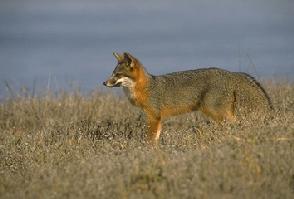
Another famous Conservancy restoration is on the Channel Islands, off the coast of California. Thousands of non-native animals were removed or killed. Native mice were rounded up in order to carpet-bomb the islands with rodenticides to kill rats. Feral pigs had been the preferred food of the Golden Eagle, which then turned to the rare Channel Island fox as a substitute when the feral pigs were exterminated. So, the Golden Eagles were captured and shipped elsewhere. Thanks to a captive breeding program the Channel Island fox was spared extinction. Feral honeybees are also being exterminated because they are not native. This is but a brief description of the extreme measures taken on the Channel Island to rid them of all traces of human habitation.
Channel Island Fox
Peter Kareiva defines conservation goals
We were introduced to Peter Kareiva shortly after he joined the Conservancy, after a long career in academia. In 2002, he was quoted in an article in the New York Times entitled, “As Alien Invaders Proliferate, Conservationists Change their Focus.” As the title implies, this article reported on the emerging scientific consensus regarding ecological restorations: “…a growing chorus of biologists is proposing a new approach to the fast-blending biosphere. They also say change should be accepted as largely inevitable and choices for managing nature should be based on what is desirable and undesirable, not what is native and foreign.” Peter Kareiva was one of the scientists supporting this new viewpoint: “’Conservation biologists are too romantic,’ Dr. Kareiva said, ‘They think what’s good is what’s natural. Let’s be serious. A better vision is something that functions and has habitat quality and aesthetic quality.’”
We have been following Kareiva’s career since that interview and he has become increasingly vocal in his opposition to out-dated notions of creating “pristine” historical landscapes. He is now one of the proponents of naming the current geological era the Anthropocene in recognition of the reality of man’s pervasive impact on the environment.
In 2012, Kareiva and a co-author published a manifesto redefining conservation biology, which was defined by Michael Soulé in 1985. (1) As defined by Soulé, it was solely a biological science focused on biodiversity, and human influence was perceived as detrimental to its goals. It was considered a “crisis science” which advocated for action in the absence of data because of the urgency of reversing environmental damage.
The world has changed significantly since 1985. Human population has increased from 4.8 billion to more than 7 billion in 2011. Energy consumption has also increased significantly as developing countries approach the standard of living of developed countries. There is a growing understanding that human activities have altered even remote corners of the earth. The preponderance of novel ecosystems has rendered irrelevant earlier notions of the importance of co-evolution in static ecosystems. There is also waning political will to impose standards for conservation that are antithetical to the interests of humans.
Kareiva therefore proposes a new approach to conservation, which he calls conservation science. It must be a multidisciplinary science which incorporates social science because it must accommodate both biodiversity and the needs of humans. These are the core principles of conservation science:
”First, ‘pristine nature’ untouched by human influences, does not exist.”
“Secondly, the fate of nature and that of people are deeply intertwined. Human health and well-being depend on clean air, clean water, and an adequate supply of natural resources for food and shelter.”
“Third, nature can be surprisingly resilient.”
“Fourth…sustainable conservation can be achieved by empowering local people to make decisions for themselves.”
These are the values of an ecological philosophy to guide conservation actions:
“First, conservation must occur within human-altered landscapes.”
“Second, conservation will be a durable success only if people support conservation goals.”
”Third, conservationists must work with corporations” because they “drive much of what happens to our lands and waters.”
“Fourth, only by seeking to jointly maximize conservation and economic objectives is conservation likely to succeed.”
“Finally, conservation must not infringe on human rights and must embrace the principles of fairness and gender equality.”
Kareiva concludes:
“Our vision of conservation science differs from earlier framings of conservation biology in large part because we believe that nature can prosper so long as people see conservation as something that sustains and enriches their own lives. In summary, we are advocating conservation for people rather than from people.”
Bringing this message home
We hope that Kareiva’s viewpoint is driving the Nature Conservancy’s projects, but we don’t have enough detailed knowledge of those projects to know if this is the case. However, we do know that the many “restoration” projects on our public lands in the San Francisco Bay Area do not conform to Kareiva’s standards because:
Local projects do not reflect the wishes of the community. In most cases, the community was not even aware of the projects until they were completed. When the public has had an opportunity to object to the projects, their objections are largely ignored.
Local projects use pesticides and many conduct prescribed burns. These methods used to eradicate non-native plant species are harmful to the environment and the people and animals that live in it.
Local projects often exclude people by building fences around projects, closing trails, and restricting all recreational access to the trails. Our local projects treat the public like intruders.
If the world’s largest conservation organization can redefine its goals to accommodate the needs of humans, what possible excuse do managers of our public lands have to ignore the public’s wishes? The Nature Conservancy is responsible for lands acquired with the voluntary charitable contributions of its donors. In contrast, the public owns our public lands and pays for the management of those public lands with our tax dollars. Shouldn’t the managers of our public lands be more accountable to the public (who pay taxes whether they want to or not) than the Nature Conservancy is to its donors (who can choose not to donate)?
*****************************
(1) Peter Kareiva and Michelle Marvier, “What is Conservation Science?” BioScience, November 2012, Vol. 62, No. 11
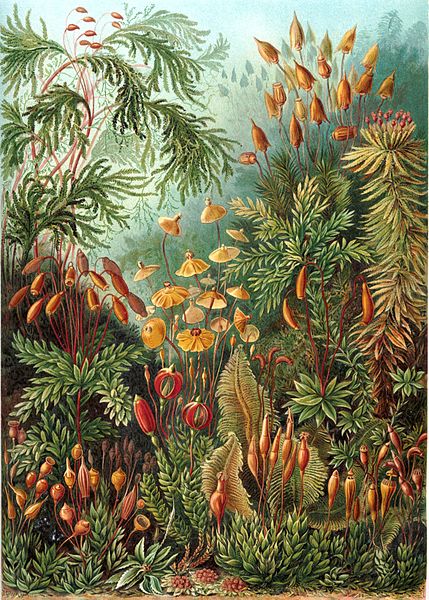
Organisms classified as mosses. 72nd plate from Ernst Haeckel’s “Kunstformen der Natur” (1904, public domain)
We have read little fiction in the past few years, as we struggle to keep pace with the scientific literature that is revising conservation biology. Happily, we were recently given the opportunity to read a charming work of fiction that is firmly in the center of our interest in botanical issues.
The Signature of All Things was written by Elizabeth Gilbert. Its title refers to a botanical myth about which we have published an article that is available here. The Doctrine of Signatures seemed a logical botanical belief at a time when plants were one of man’s few medicinal tools and religion was a powerful influence in human society. The Doctrine of Signatures, which was actively promoted by the church in 17thcentury Europe, was based on a belief that God had “signed” plants with certain suggestive shapes and colors to inform humans of their medicinal properties. For example, a heart-shaped leaf was considered God’s message to us that a particular plant would be beneficial to the human heart and this message was strengthened by a flesh-colored flower. Every plant was believed to be useful in some way if man could only discern its purpose. Else why would they have been created, since the Garden of Eden was created for the benefit of man? The church encouraged man’s study of plants as a way to worship God’s creation.
After reading a rave review by one of our favorite authors, Barbara Kingsolver, we were unable to resist the diversion to this story that is inspired by botanical history. Kingsolver concludes, “The Signature of All Things is a bracing homage to the many natures of genius and the inevitable progress of ideas, in a world that reveals its best truths to the uncommonly patient minds.”
Signature begins in Kew Garden in London during the 18th Century reign of one of our great horticultural heroes, Joseph Banks.We featured Banks in an article about the English garden. He began his career as an intrepid collector of exotic plants when he joined one of Captain Cook’s voyages into the Pacific. He returned with thousands of plants from all over the world and they became the core of Kew Gardens, one of the greatest horticultural collections in the world.
The hero of Signature is sent by Banks on expeditions to collect valuable plants and his adventures are an historical account of early explorations of the New World. We learned from Richard Henry Dana’s Two Years Before the Mast that the physical hardships of these voyages are not exaggerated by Signature’s fictional account. The hero of Signature eventually makes his home in Pennsylvania and his extensive garden there is reminiscent of the garden of John Bartram, the Early American collector of plants about whom we have also written.
So you see, Signature covers familiar ground for us and we enjoyed revisiting it in the company of an extraordinary heroine, Alma Whittaker. She is gifted with a remarkable mind and her equally intelligent parents provided her with the education and tools needed to make life-long good use of her talents. She “discovered” her own version of evolutionary theory based on a deep understanding of mosses, which model the mechanics of natural selection.
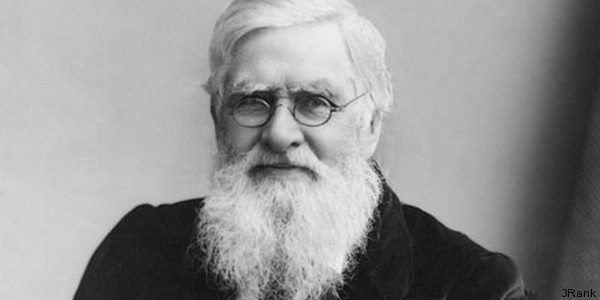
We don’t wish to give away too much of the plot because we hope you will be intrigued to read it. Readers will have the privilege of eavesdropping on a fascinating (fictional) conversation with Alfred Russel Wallace, a contemporary of Darwin. Although Darwin and Wallace shared a belief in evolution, they diverged on a variety of other topics. Wallace’s busy mind strayed into spiritualism, hypnotism, and mesmerism as well as left-wing politics. Wallace was as eccentric as Darwin was sensible and cautious.
Alfred Russel Wallace
Our heroine, Alma, confides to Wallace that despite a tortuous path in life, she considers herself lucky: “I am fortunate because I have been able to spend my life in study of the world…This life is a mystery, yes, and it is often a trial, but if one can find some facts within it, one should always do so—for knowledge is the most precious of all commodities.”
Alma’s confession was a welcome reminder of why we persist in our effort to inform the public of the destruction of our public lands by native plant “restorations.” Although we make little visible progress, we have learned a great deal about nature. That is our reward. Thank you, Alma, for the reminder of our mission to understand and inform and to Elizabeth Gilbert for the very pleasant entertainment of The Signature of All Things.
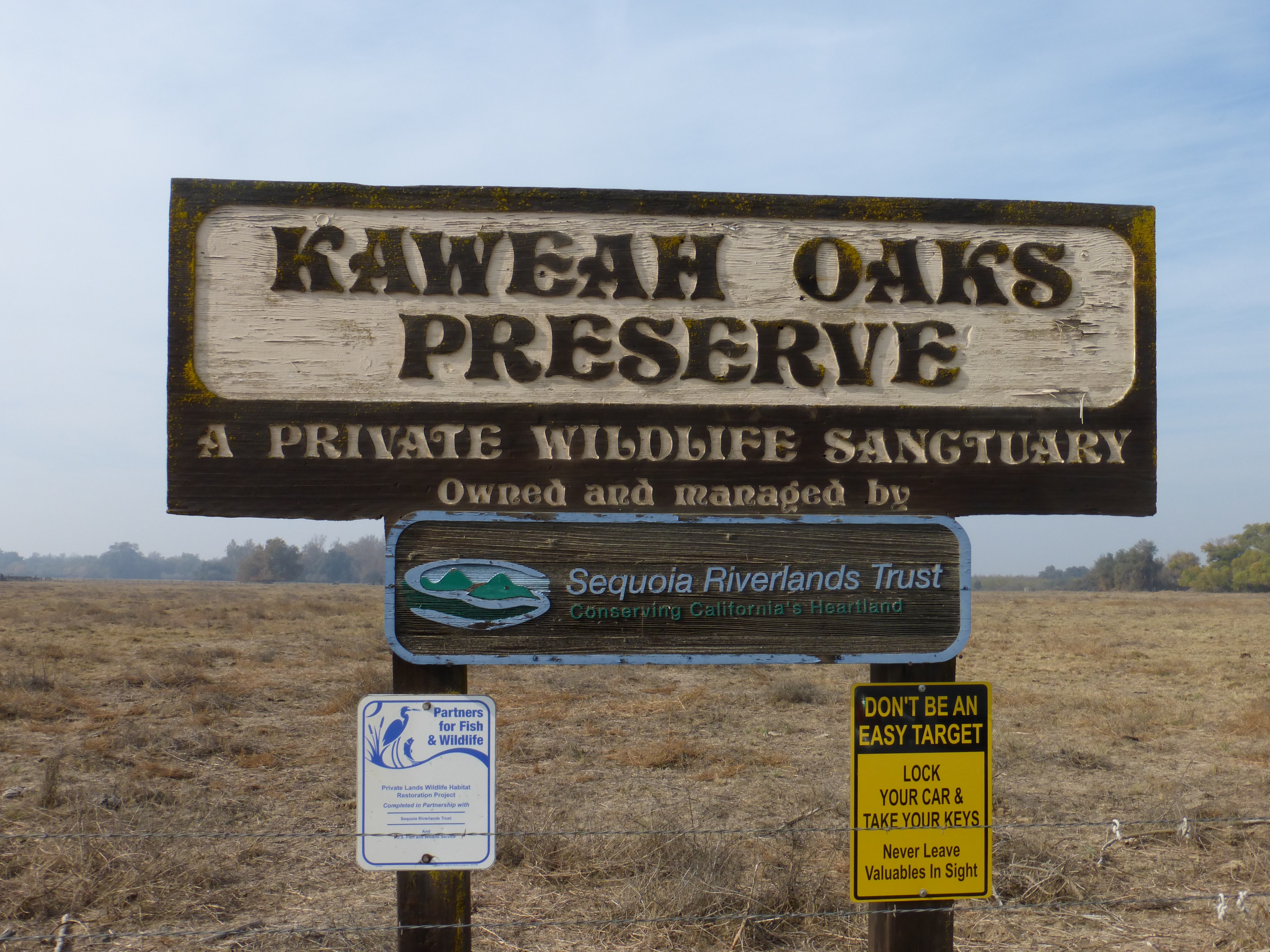
Kaweah Oaks Preserve is a 322-acre remnant of riparian woodland in the Central Valley of California, near the town of Visalia. The land was purchased by the Nature Conservancy in 1983 and turned over to a land trust 14 years later. That’s the usual Conservancy strategy. They buy the land to preserve it, engage in an initial restoration to its pre-settlement condition if necessary, but they look for partners to maintain the land for the long-term.
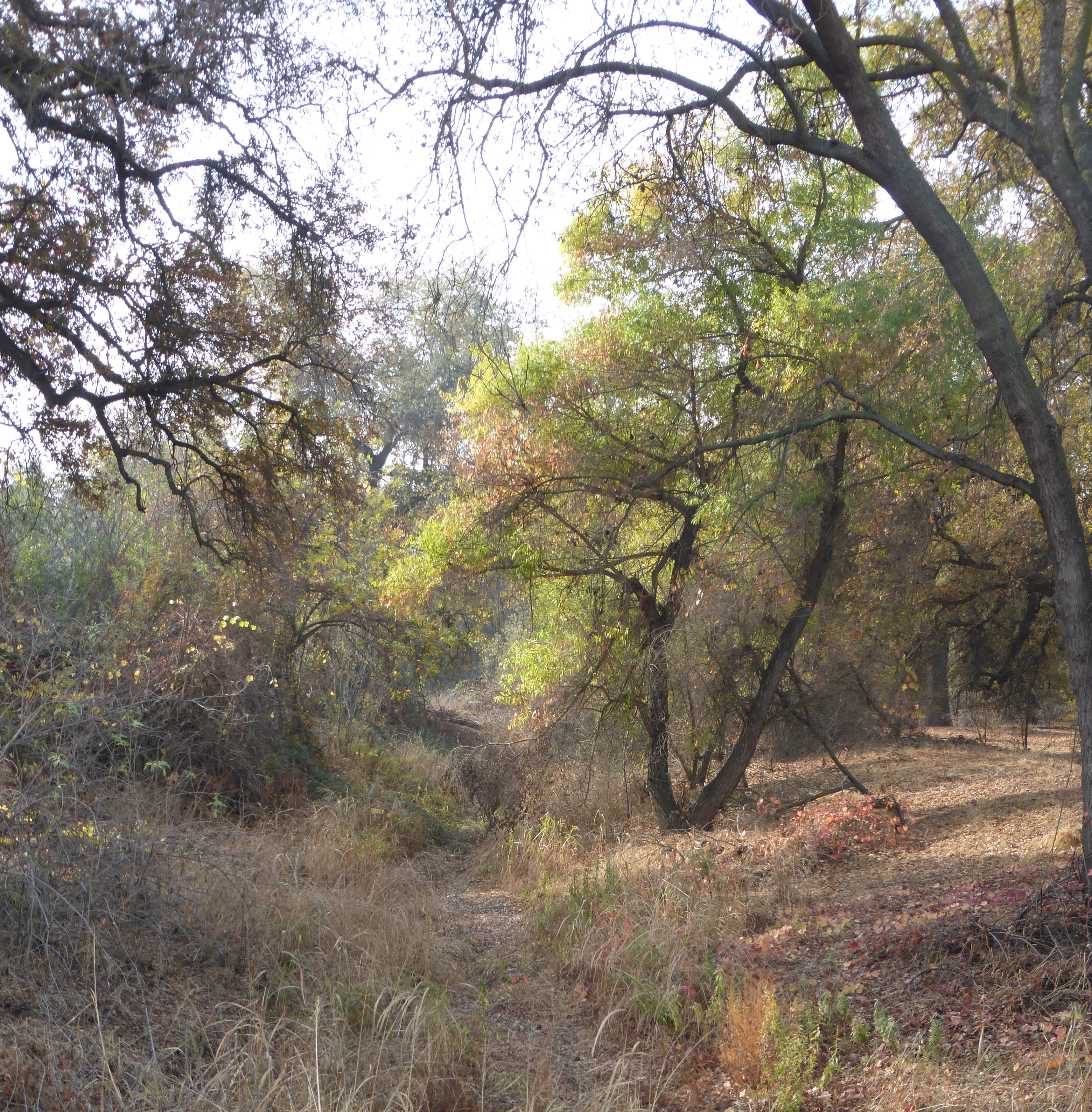
When we parked our car, we were instantly greeted by the chatter of birds. In a brief visit of less than 2 hours, we saw or heard 15 species of birds. (1) In late fall, many of the plants were dormant, but there was still much of interest to see.
There was no water in the creek. We wondered if we would find water in the creek in the late fall during a more typical rain year. We have had almost no rain in California yet this year.
Valley Oak
Valley Oak (Quercus lobata) is the tallest oak in California, reaching 70 feet or more according to Sunset Western Garden.
California wild cucumber, also called manroot (Marah fabacea)
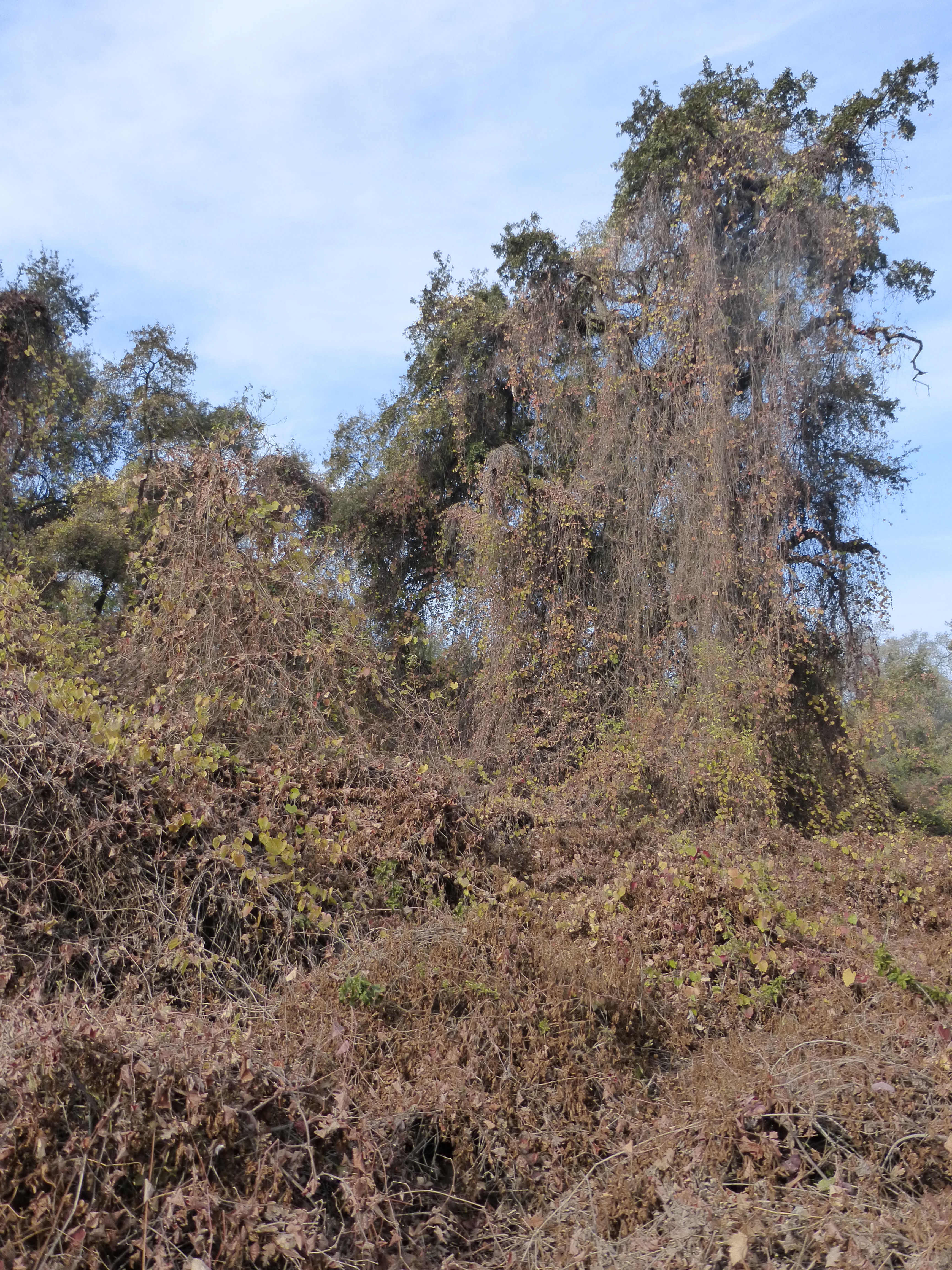
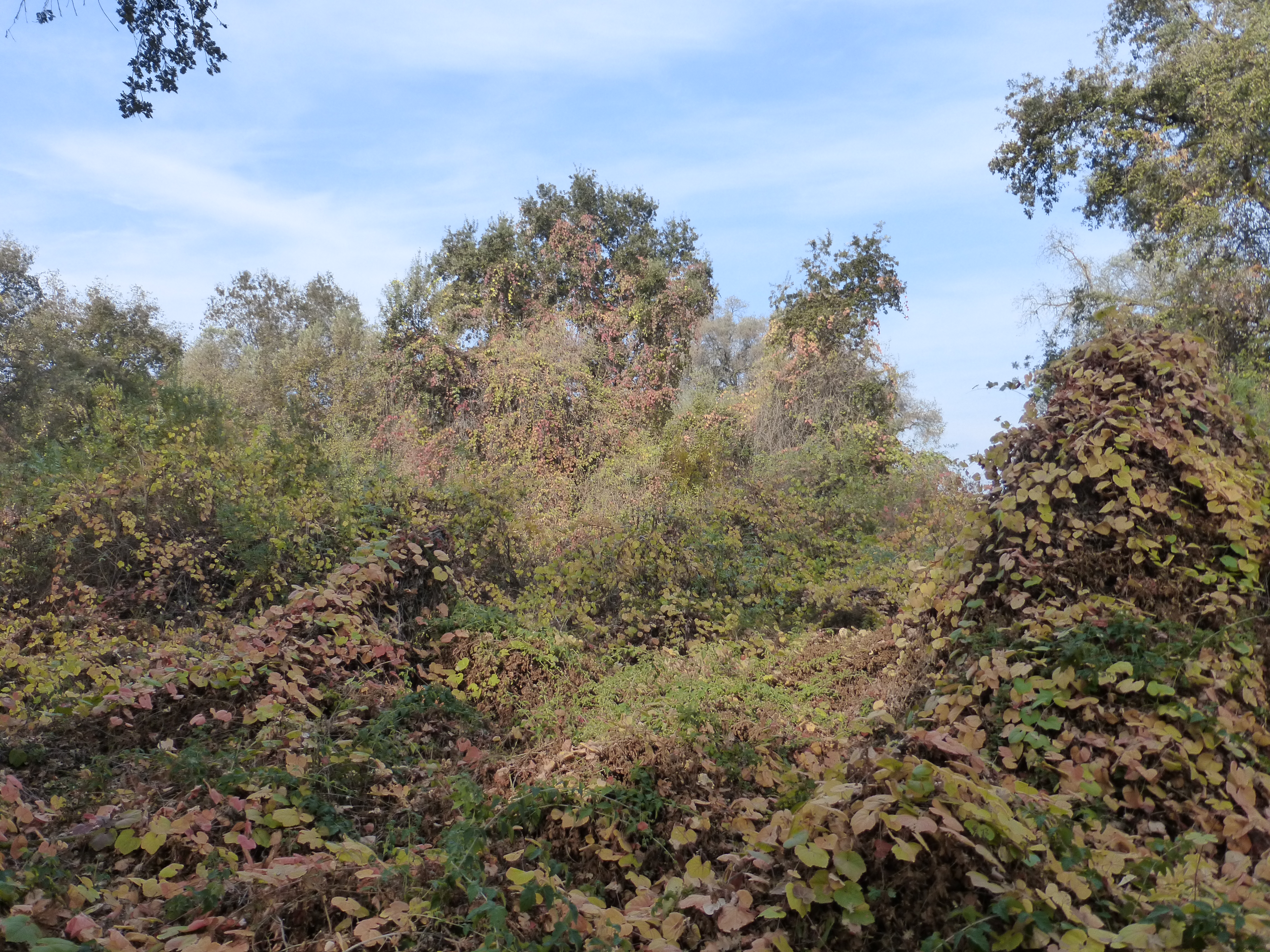
California wild cucumber covered much of the ground and climbed high into the trees.
Native blackberry was also thriving in the understory. We were reminded of its non-native cousin, Himalayan blackberry, which is eradicated for the same “invasive” behavior exhibited here by its native counterpart.
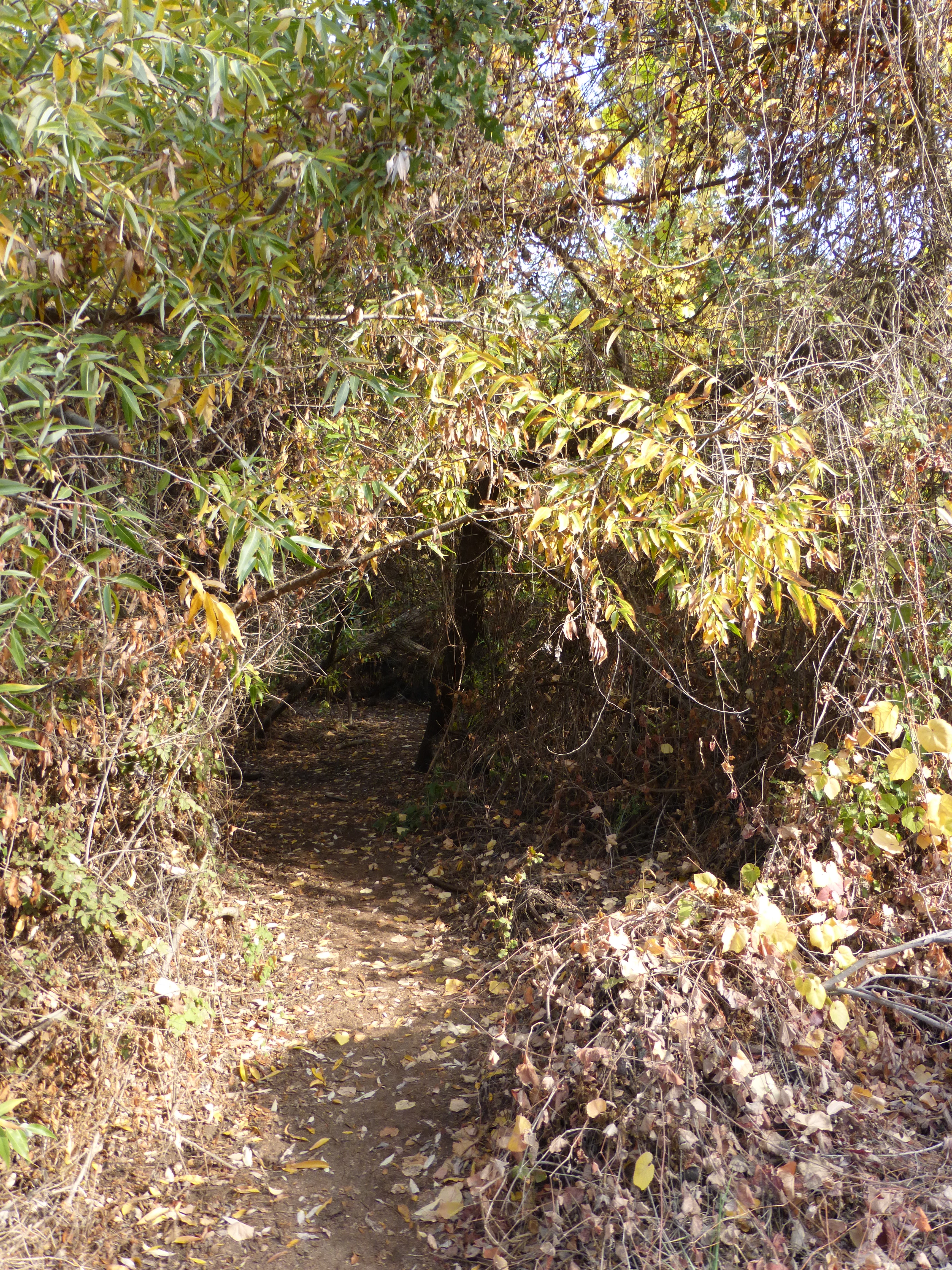
Native willow grows densely near the creek, sprawling on the ground, creating tunnels on the trails.
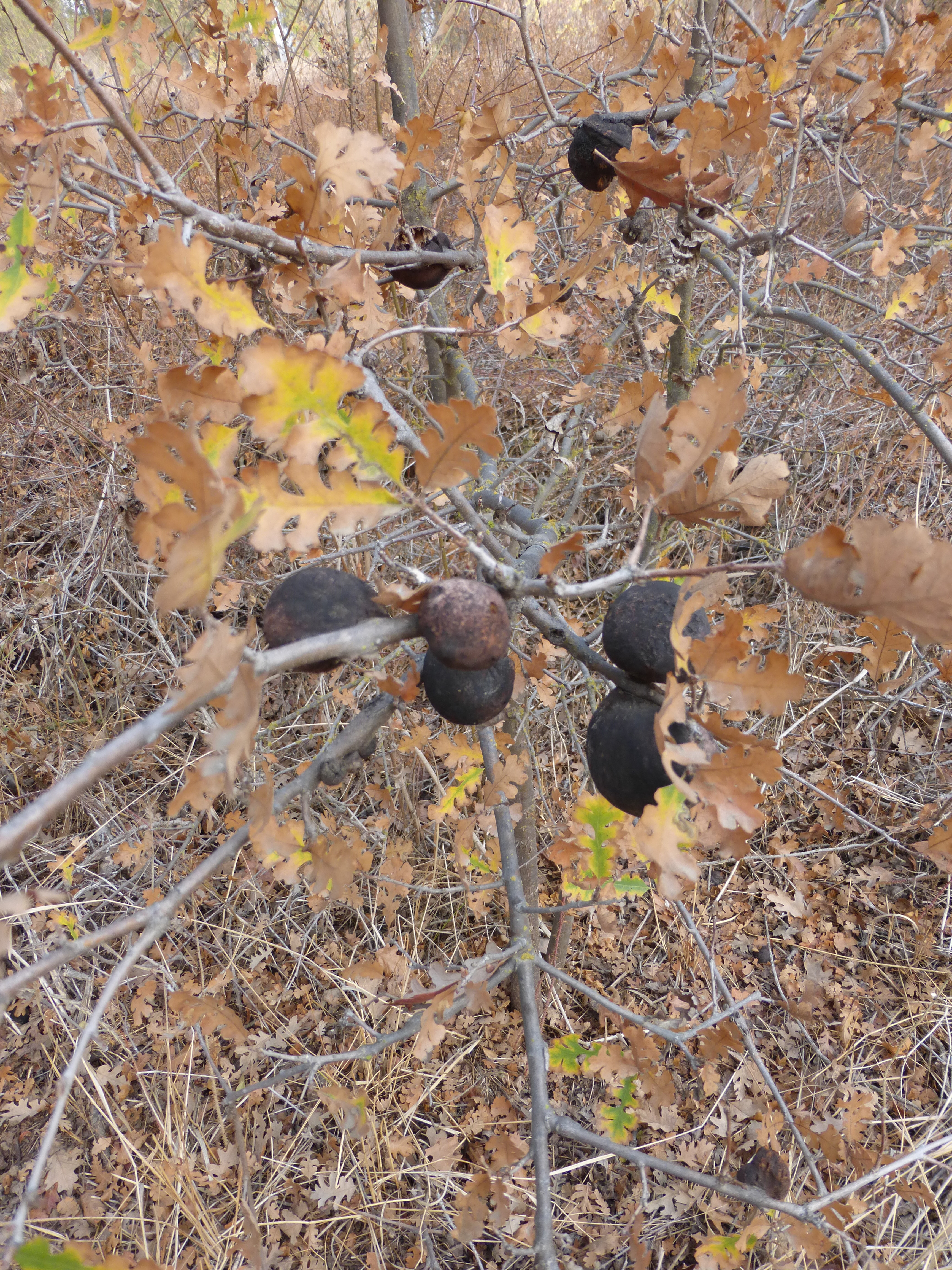
There were oak galls on the trees and lying on the ground under the trees. “The valley oak trees on the Preserve are hosts to at least nine different kinds of gall wasps. These tiny cynipid wasps sting the stems of oak leaves in the early spring and lay their eggs there. The tree responds to the chemicals the wasp leaves behind and quickly produces a growth that the wasp larva live in and consume until they become adult wasps and chew their way out. The oaks can look like an apple, a tiny pink-and-white chocolate kiss, a wooly ball, a bright pink sea urchin, a brain or even a tiny ball the size of a pinhead that jumps around!” (2)
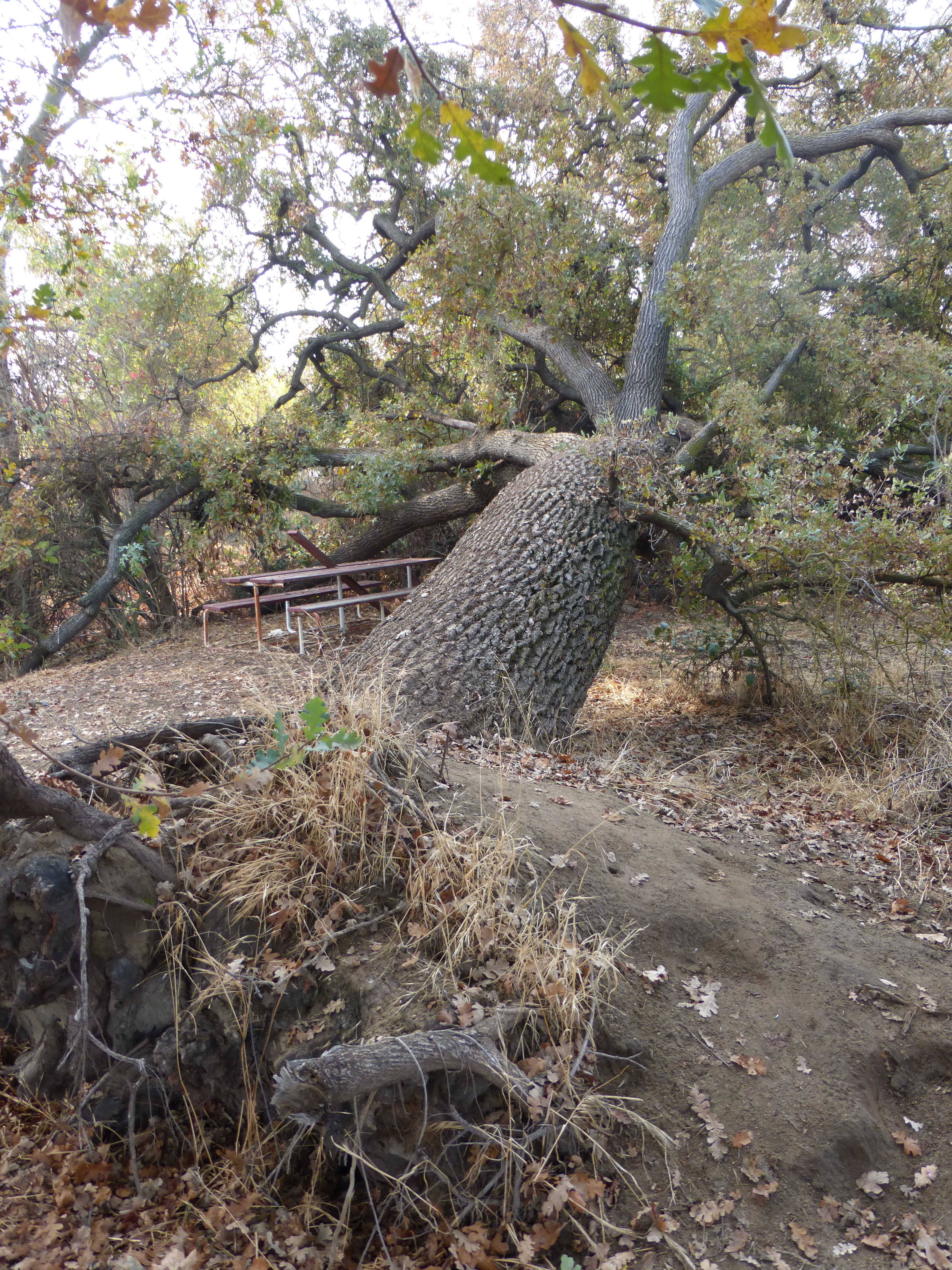
This Valley Oak fell over a long time ago, but doesn’t appear to be dead yet. It is left on the ground to continue to contribute to the ecosystem. Dead trees are valuable members of the forest community. As they slowly decay, the nutrients they have accumulated during their long lives will be returned to the soil.
The lessons of the Kaweah Oaks Preserve
These were our thoughts, as we ended our late fall walk in the woods:
Native plants sometimes spread just as non-native plants do. However, they are never called “invasive” as non-native plants are. We would like to retire the word “invasive” from our horticultural vocabulary. We don’t wish to call native or non-native plants “invasive.”
Nature is wild and free in the Kaweah Oaks Preserve. It isn’t being manicured to suit the preconceived notions of humans. Why can’t we leave our public lands in the Bay Area alone to grow as nature dictates? Human “management” of nature does not achieve better results than nature left to its own devices.
An occasional downed tree or trail obstructed by a sprawling limb adds to the adventure of a walk in the forest. The resulting tangle provides superior habitat for every creature in the forest.
Toby Hemenway is the author of Gaia’s Garden: A Guide to Home-Scale Permaculture and the founder of Pattern Literacy, an organization which sponsors courses and workshops in permaculture design and practice. We share many of the same opinions about the native plant movement. Visit one of our earlier posts to learn more about permaculture.
We are republishing an article from Toby’s Pattern Literacy website today with his permission. Readers of Million Trees will find many of the themes in Toby’s article familiar, but his examples are from Oregon, rather than our usual examples in the San Francisco Bay Area. We hope Toby’s examples help to make the point that the native plant ideology doesn’t make much sense wherever it is applied.
********************************* Native Plants: Restoring to an Idea
Let me tell you about the invasive plant that scares me more than all the others. It’s one that has infested over 80 million acres in the US, usually in virtual monocultures. It is a heavy feeder, depleting soil of nutrients. Everywhere it grows, the soil is badly eroded. The plant offers almost no wildlife habitat, and since it is wind pollinated, it does not provide nectar to insects. It’s a plant that is often overlooked on blacklists, yet it is responsible for the destruction of perhaps more native habitat than any other species. Research shows that when land is lost to this species, native plants rarely return; they can’t compete with it. It should go at the top of every native-plant lover’s list of enemies. This plant’s name: Zea mays, or corn. Corn is non-native. It’s from Central America. Next on my list is the soybean, with 70 million acres of native habitat lost to this invasive exotic. Following those two scourges on this roll call of devastating plants is the European invader called wheat.
Cornfield
Wait, you say: these plants are deliberately spread by people; that’s different! But to an ecologist, it is irrelevant that the dispersion vector of these plants is a primate. After all, we don’t excuse holly or Autumn olive, even though without bird dispersal, they could not spread. Why are corn, soy, and wheat not on any blacklists? Because we think of them differently than plants spread by non-humans. This suggests that an invasive species is an idea, a product of our thinking, not an objective phenomenon. When we restore land, we restore to an idea, not to objective criteria.
Let me give another example of how our ideas dictate which species we’ll tolerate and which we won’t. The wooded hillside in rural Oregon where I once lived was thick with 40- to 120-year-old Douglas fir and hemlock. But as I walked these forests, I noticed that scattered every few acres were occasional ancient oak trees, four to six feet in diameter, much older than the conifers and now being overtopped by them. I realized that in these ancient oaks I was seeing the remnants of the oak savanna that had been maintained for millennia by fire set by the original inhabitants, the Calapuya people. The fir forest moved in when the whites arrived and drove off the Calapuya, and suppressed fire. So what I was seeing was a conifer forest created by human-induced fire-suppression, and it had replaced the oak savanna that had been preserved by human fire setting. Which was the native landscape? Both were made by people. If we say, let’s restore to what existed before humans altered it, we’d need to go back to birches and willows, since humans arrived as the glaciers retreated. But clearly that’s not appropriate.
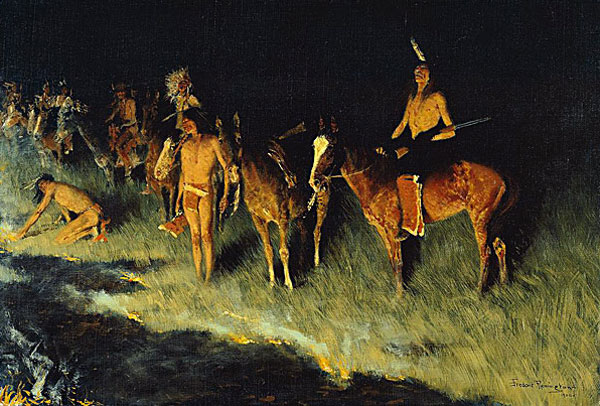
Native Americans setting grass fire, painting by Frederic Remington, 1908Willamette Valley, Oregon. Creative Commons
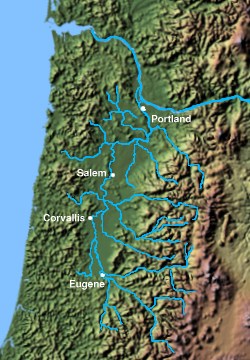
In a similar vein, one of the rarest and most valued ecosystems in the Northwest are the native prairies, such as those found in the Willamette and other valleys. Yet these prairies are also the product of human manipulation. Prairies were predominant in the Willamette over 5000 years ago, but began to disappear not long after that. Ecologist Mark Wilson has written “As climate turned cooler and moister 4,000 years ago, oak savanna and prairie ecosystems were maintained only by frequent fires set by native people to stimulate food plants and help in hunting.” The local people used fire technology to maintain an environment that supported them even when the climate no longer supported that ecosystem.
So I applaud and encourage efforts to preserve native prairie in the region—they are valuable as endangered species habitat, examples of cultural heritage, and a way of preserving planetary biological wisdom. But we should restore these prairies with the strict recognition that we are creating—not recreating or restoring–a state that can not be supported by current climate and other conditions. Prairies are artificial in the Willamette Valley. The preservation of prairies there isn’t a matter of simply repairing and replanting a degraded landscape and then watching the prairie thrive, but constructing a species community and an environment for it that must remain on intensive life support, with constant intervention, for it to survive at all, as long as the climate remains unsuitable to it. The Willamette prairie remnants can’t be considered native; the only criteria they meet is that they were here in small patches when botanists first catalogued them. But so were dandelions. Botanists knew dandelions weren’t native, but they didn’t know that the prairies were human created, so the prairies were catalogued as native. Prairies in the Northwest haven’t been indigenous for 4000 years.
We love the local prairies and I firmly believe in the efforts to preserve them. But I want us to be clear that we are restoring to an idea. We are restoring because we want these things here, and not because there is a master blueprint that says they are the right ecosystem for the place. Ecosystems exist because current conditions favor those particular assemblages. Change the conditions, and the ecosystems will, absolutely, change. Both the climate and humans have changed the conditions plenty. Environmental change is the driving force behind shifting species makeup. With plants and most animal species, no evil species showed up and through sheer cussedness, killed off the locals. Instead, the conditions changed.
The very concept of wild land, for most Americans, is founded on a misunderstanding: a very brief ecological moment during which a once-managed ecosystem was at the height of its degradation due to loss of its keystone species. The dark and tangled primeval forests, written about by Thoreau and Emerson, are simply the declining remnants of open and spacious Eastern food forests, turned to thicket after a century or two of neglect once their human tenders were killed. But this idea of wilderness is deep in our mythology, national imagery, and consciousness.
Let’s look at some of the causes of species change. First: terminology. The word “invasive” is loaded. We hate invaders. The term also places focus solely on the incoming species, yet the ability of a species to survive is due to interactions with the biological and physical environment. So I prefer a more neutral, and I think, ecological more correct and descriptive term, such as opportunistic. Kudzu is not a problem in its native habitat, but it will take advantage of opportunities.
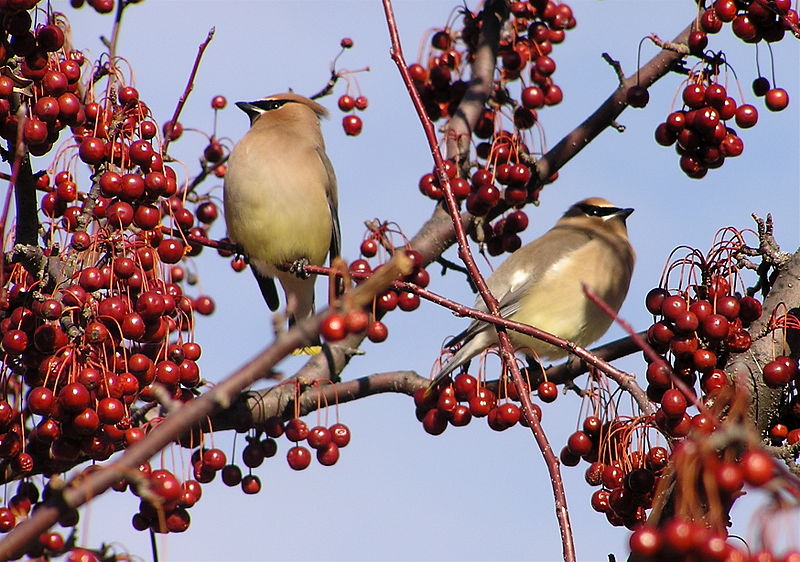
Cedar Waxwings in crab apple tree. Wikimedia Commons
What creates those opportunities for species shifts? Intact ecosystems are notoriously hard to invade. We know this because, for example, seed dispersal rates are truly astounding. Birds are a major dispersal agent. They can carry seeds from multiple plant species in their gut, stuck to their feathers, and in mud on their feet. So picture billions and billions of birds, for 60 million years or so, traveling tens to thousands of miles, seeds dropping off of them every wing-beat of the way. Add to that bats, which are actually more effective at seed dispersal, per bat, than birds. Plus land-animal dispersals, not as far-ranging as birds but bringing much larger seed loads via droppings and fur. Include water-rafted trees and other plants, wind-dispersed species, and more.
This gives a picture of the whole planet crisscrossed with billions of birds and animals for millions of years, seeds and spores going everywhere, eggs being carried to new environments, dispersal, dispersal, dispersal! So why isn’t the whole planet a weedy thicket? Because the mere arrival of a new species, even in large numbers, is not what causes a successful colonization. Ecosystems are very hard to invade, and several conditions must be present for that to happen.
A major reason for ecosystems being tough to invade is that nearly all the resources in undisturbed ecosystems are being exploited. Nearly every niche is filled, every nutrient flow is being consumed, almost every opportunity is taken. Two major changes make ecosystems invasible: disturbance, and the appearance of new resources. Take disturbance. Perennially disturbed places, like riparian zones, are sensitive to opportunistic species. So is farmland, or developed areas, or anywhere that humans or nature cause disturbance. It drives me nuts when I read that “species X” has destroyed 50,000 acres of habitat. When you do a little digging you find that, no, that area was farmed, or new roads cut, or logged, or polluted, or otherwise disturbed, and then the new species moved in.
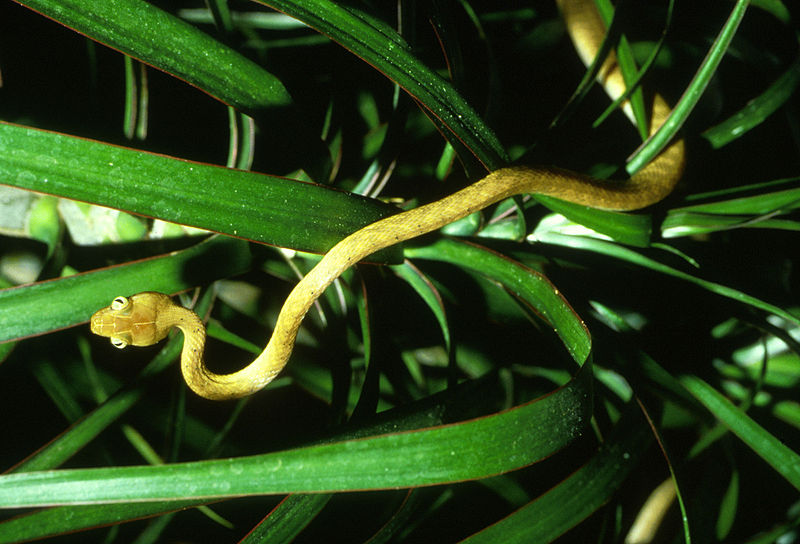
Brown tree snake, Guam. Wikimedia Commons
For example, one poster child of invasion biologists is the brown tree snake, blamed for invading Guam and killing off several species of birds. The untold story is that for decades the US Navy used over half of the island as a bombing range, leaving most of it unfit for life. Much of what remained was crowded by displaced people, and developed by the military, and thus turned into poor and disturbed habitat. The tree snake just cleaned up the struggling remnants that were vulnerable in their poor habitat and already in serious decline.
Stop the disturbance, and you’ll almost always eliminate or reduce the effect of the new species. Land I lived on was clear-cut in the early 1970s and not replanted with fir until the 1980s, and was covered with patches of Himalayan blackberry and Scotch broom when I arrived in the early 1990s. By the late 1990s, both species were gone from most places and nearly dead everywhere else, because the trees had grown back and shaded them out. The problem is disturbance, not that a species pushes out others because it’s tough or mean.
This suggests that we need to take care of naturally disturbed areas like riverbanks, since most of the species we’ve labeled as problematical thrive on disturbance. Even in these riparian zones, though, conditions are altered from what they once were because of the loss of the beaver and from damming. Thus nature is just trying to deal with our changes as best as she can, and she’ll use whatever resources she can find. A return to the former, natural disturbance regime may allow the once-present vegetation to return, if that is our choice for that land,
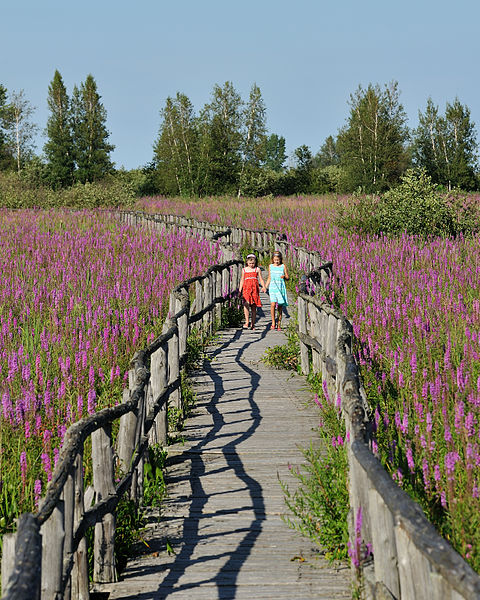
Purple loosestrife, Cooper Marsh, Cornwall, Ontario. GNU Free
The second cause of successful invasion is the appearance of new resources. Often the new resources that allow an otherwise intact ecosystem to be colonized are pollution and fertilizer runoff. For example, a number of aquatic opportunists, such as purple loosestrife, thrive in more polluted and higher-nutrient environments than the plants they replace. Many species that evolved in clean water are harmed by pollutants and they then decline. Loosestrife, though, has high rates of nutrient uptake, and this trait allows it to out-compete many other species in polluted water. But in permaculture, we say that every problem carries within it the seeds of its own solution. And so loosestrife can be used in constructed wetlands and in natural environments to clean nutrient-rich water. They are an indicator of a problem, a response to it, and nature’s way of solving a problem, not the problem itself. If you really hate loosestrife and want it to go away, clean up the water. Without doing that, you’ll be flailing away at the problem forever. Spraying and yanking is not an effective strategy to remove unwanted species. Nature is far more patient and persistent, and has a bigger budget, than we do. To remove an unwanted species, change the conditions that made it more favored than the desired vegetation.
Unwanted species generally arrive because humans have changed the environment to make conditions more favorable for the new species. And when we “restore” landscapes, or more often, introduce a set of species that we have decided are the ones we want to see there, we are altering the landscape to suit our idea of what should be there, not to match some divine plan. These two understandings burden us with a huge responsibility to make intelligent choices, but more importantly, to recognize that we are often arbitrarily making a choice based on our own preferences, not because there is only one right choice for a landscape, When we put resources into landscape management, however, we direct the shape of that landscape toward only one choice. That’s the best we can do. Thus I’d like to see us be less dogmatic in the way we cling to those choices.
Unfortunately, dogma is present on all sides. Friends of mine approached the Portland city government with a plan to create some edible plant corridors along Springwater Trail, a 40-mile bicycle and pedestrian loop around the city. Their idea was for bikers and pedestrians to be able to snack on berries and fruit. The city official in charge said, “Nope, we have a natives-only policy on the trail.” The trail is a paved pathway that goes through industrial areas and along backyards, road right-of-ways, and scrubby vacant lots. It probably goes through a dozen or more different environments, based on soil, water, sunlight, and all the other factors that determine what plant communities will grow there. But the policy is natives only. Wouldn’t it make sense for the primary species that will be using that trail to have a habitat that suits that species’ needs for food and comfort, particularly since it’s in a busy urban area? But instead the landscaping is to be driven by an idea, by dogma. I totally support the idea of having natives-only areas on the trail. But let’s allow the new landscaping to serve those that it’s being built for, too.
I began this with corn and soybeans. One of my favorite snarky questions for natives-only people is: “What did you eat for breakfast?” I ask that because it is our choices that determine how much of our landscape is going to be consumed by non-native species. I didn’t eat camas cakes with pink-flowering currant syrup this morning, and I’ll bet you didn’t eat any local plants either. Of course, I’d rather see someone growing indigenous species in their yard rather than having a sterile, resource gobbling lawn. But my urban yard is not, in my or several other lifetimes, going to be part of a natural ecosystem. I might be able to cultivate some endangered native species in an attempt to pull a rare plant back from extinction. That’s one good reason I can see for growing indigenous plants in my yard. But the most frequent native plants I see grown in yards are salal, Oregon grape, and others that are in no danger of extinction and don’t, to my knowledge, support specialist species dependent only upon them. And since much of my yard is watered, it is inappropriate for me to grow natives that are adapted to our dry summers. It’s always struck me as bizarre to see Northwest natives being irrigated.
But even more than indigenous plants, I’d rather see someone providing for some of their own needs from their yard. When we eat a bowl of cornflakes for breakfast, or oatmeal, or store-bought eggs, we are commissioning with our dollars the conversion of wild land into monoculture farms. I’ll bet that a large percentage of people reading this buy local food, shop organic, and so forth. But the farms growing that food are almost all moncultures, and out of the urban matrix. In other words, it is farmland that, if consumption decreased, has a far better chance of being restored to a functioning ecosystem than does a home lot. If I grow some of my own food, that means that somewhere out in the country, a farmer won’t have to plow so close to the riverbank, or could let some of that back field go wild. That land has a far better chance of functioning as an ecosystem than my yard will. Oh, I have visions of how city and suburban landscapes could be functional ecosystems, but that’s another subject. My point is, we need to be putting money and energy into growing indigenous species where they will do the most good, where they can truly contribute to ecosystems and their functions. Many of our efforts in eliminating exotics are a terrible waste of resources at best, and at worst are repeated use of poisons to destroy a hybrid habitat whose function we don’t yet grasp. Let’s be honest at what we are restoring to: an idea of what belongs in a place. If we want to get rid of an invasive exotic, let’s get rid of some monocultured corn, and let a bit of farmland return to being a real ecosystem.
Recommended Viewing: Video: Native Plants and Permaculture
Copyright 2007 by Toby Hemenway
(presented at the Native Plants and Permaculture Conference, Lost Valley Educational Center, Dexter, Oregon, in May 2007.)
In the fifteen years that we have debated with native plant advocates about their desire to destroy our non-native urban forest, the arguments they use to justify their plans have changed many times in response to our push-back against their plans. In the latest round of argument about plans for the Sutro Forest in San Francisco, the justification devolved to the claim that “thinning” the forest would improve its health and reduce fuel loads. We will set aside the claim about fuel loads in this post because we have published many articles to address the bogus claim that the existing Sutro Forest is a fire hazard. Although we don’t agree that “thinning” is an accurate description of a project that intends to destroy 90% of the trees on 75% of the Sutro Forest, we will set that issue aside for the moment as well.
The dense and healthy Sutro Forest. Courtesy Save Sutro
As we often do on Million Trees, we will challenge the conventional wisdom that a “forest” with few trees is healthier than a dense forest, based on the assumption that the trees are released from competition with their neighbors for available resources. We will report on a new argument for the advantages of dense forest for optimal forest health, i.e., that the forest is essentially a community which functions best when it is densely populated:
“It is the evolutionary nature of a tree to be part of a forest or plant community. Trees do not grow as lone individuals under natural conditions. This principle of cooperation referred to by biologists as mutualism appears to have governed organisms from their beginnings.
“Despite the universal gregarious nature of trees, they are almost always discussed and depicted as solitary specimens. Children’s books, technical publications, and literature on gardening only illustrate and discuss the atypical form of a tree—the symmetrical, low-branched, open grown form. All of our knowledge about trees is colored by this cultural archetype. We celebrate the singular specimen.
“Observe trees growing on a natural woodland site. The tall erect trunks of closely spaced forest trees and branch configurations shaped to admit light are two of the more obvious adaptive responses of trees to forest conditions. Each layer of the forest contains examples of this kind of adaptive geometry. The result is that trees can grow very well in dense forest conditions, and in fact are uniquely suited to what we regard as close spacing. For example, it is not unusual to find northeastern forests growing at densities of 400 trees per acre. This is equivalent to trees ten feet apart in both directions. Much higher and lower densities also occur naturally. It is significant that trees can adapt to such a wide range of conditions. A group of Maple trees growing five feet apart is just as healthy or at least better able to survive than a single tree growing in an open meadow. The slower growth rate of trees growing close together is part of their adaptive response and does not indicate that they are less healthy than faster growing trees.
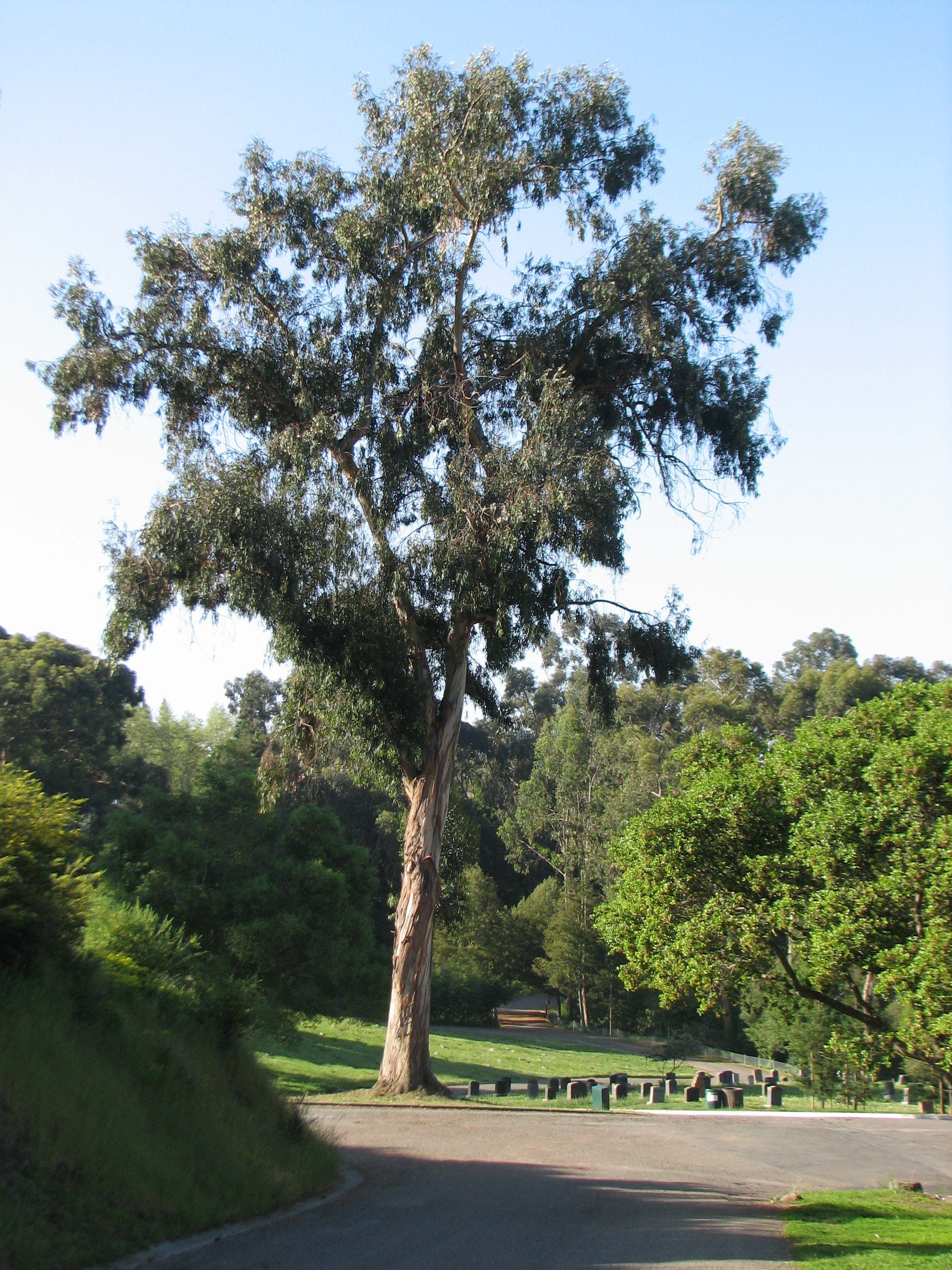
A lone eucalyptus trees in the Mountain View Cemetery.
“The popularized open grown individual tree has an adapted form that is not as sturdy as the forest shaped tree.The tree needs the lower, more spreading branching as protection for its trunk and roots. Its faster growth rate actually produces less sturdy wood.
“To retain their vitality when growing close together, trees adjust their form and growth rate. In this way, they are able to share the more limited amount of sunlight and root space. Trees of the same species do not kill each other off in a fight for survival. This more dramatic image has greater popular appeal but limited accuracy. In the natural process of forest succession, a certain species will dominate all other trees for a given soil type and climate. This is a long term process that occurs because less tolerant trees tend to grow on a site first and would not occur if the climax species were planted first. It is true that in natural repropagation of a clear area, a superabundance of seedlings is often produced, and later thinned by competitive survival of the stronger individuals. This process is limited for the most part to the seedling and early stages of forest succession, and is a lesser factor to later development of the forest when the adaptive process assumes a more important role than competition…
“Through observation of trees growing in natural habitats, a designer can conclude that there is no biological basis for keeping trees far apart, since they grow at every possible spacing” (1) (emphasis added)
An analogy to human society
The community of trees in a forest reminds us of a civilized human society in which individuals cooperate for the collective benefit of society. Like a healthy forest, a civilized human society is one in which cooperation trumps competition. It doesn’t seem to be a coincidence that native plant advocates consider competition more powerful than cooperation both in a forest of trees and in human society. Many native plant advocates seem to share a dark outlook about both human society and our healthy urban forest.
Update: We are pleased to report that UCSF announced on Thursday, November 21, 2013, a significant revision of their plans. Onlytrees 6″ in diameter will be destroyed,* which means fewer trees will be destroyed than originally planned. Only the perimeter of the forest will be thinned to reduce perceived fire hazards to the surrounding residential neighborhood. They do not plan to use herbicides. The details of the revised plan and the timeline for its approval and implementation are available on the Save Sutro website.
*Update: UCSF has corrected this information in response to an inquiry from the Save Sutro webmaster: “The correct information is that the proposed Hazard Reduction Measures recommend removing trees with a stem diameter of less than 10” in the North and South project areas, and to remove trees with a stem diameter less than 6” in the West project area.”
******************************
(1) H.F. Arnold, Trees in Urban Design, 1993, pgs 49-50
Still, the myth persists that eucalyptus forest is devoid of life. In this article we will address this specific statement in the assessment of the California Invasive Plant Council (Cal-IPC) of Blue Gum eucalyptus:“loss of native plant forage and migratory disruptions may have greater long-term impact on wider diversity of wildlife species, including invertebrates and microorganisms in soil.” Cal-IPC provides no studies to support this speculative statement. Therefore, we will tell you about a specific study that refutes the assumption of Cal-IPC: “Similar breakdown rates and benthic macroinvertebrate assemblages in native and Eucalyptus globulus leaf litter in Californian streams” (1)
First, we will provide a few definitions for our readers who may not have encountered some of the more esoteric jargon before. The benthic zone is the sub-surface layer of bodies of water. Here is a brief list of some of the common names of macroinvertebrates that lay their eggs in water that were found in this study: mayflies, caddisflies, stoneflies, and midges. These insects and their larva are food for fish and birds and in turn, fish are food for other animals.
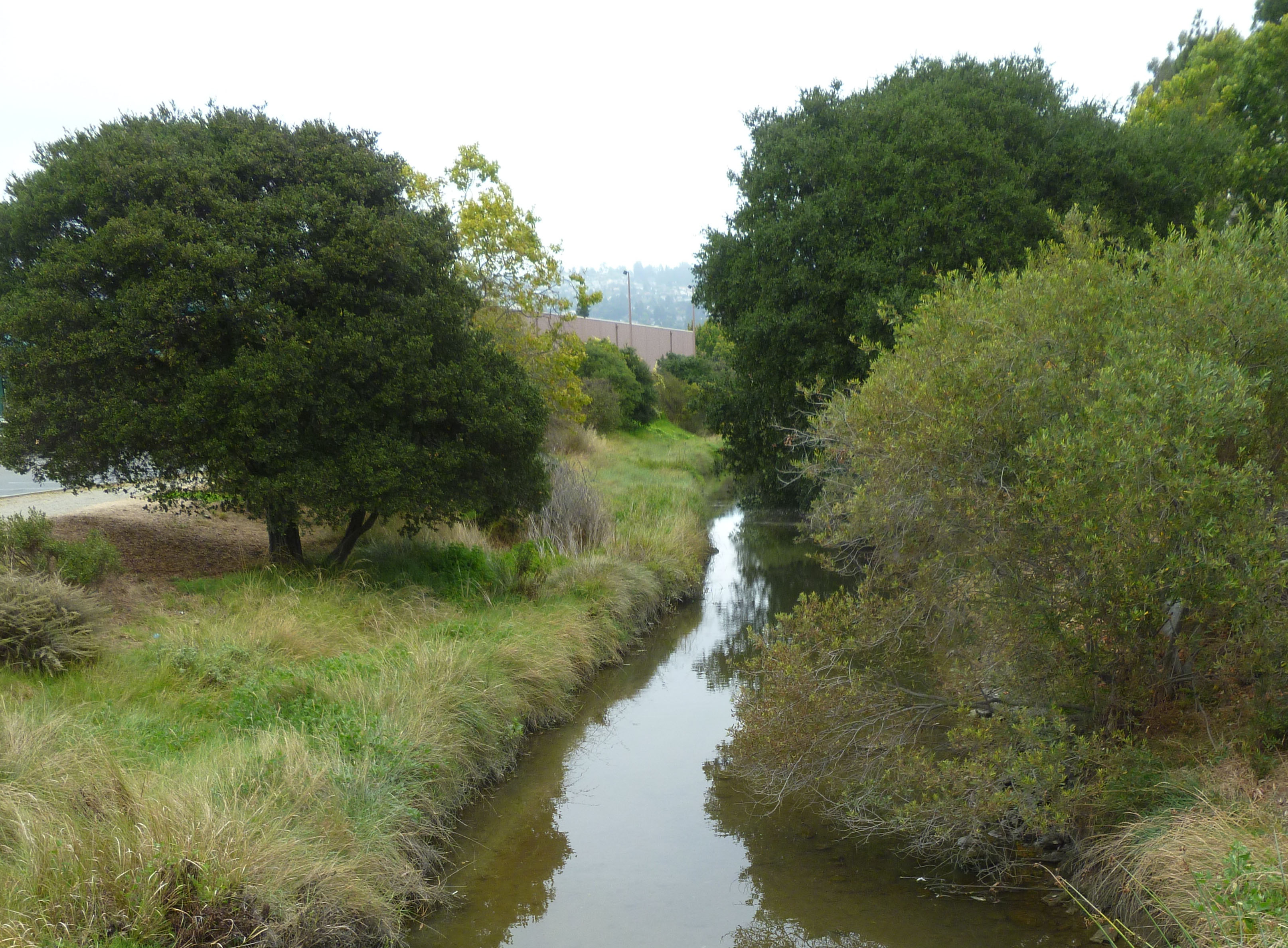
Cerritos Creek. Not one of the creeks in the study, but typical of an East Bay creek with native vegetation.
Three small streams in Alameda and Contra Costa counties in the East Bay were selected for this study because they have sections of shore with eucalyptus forest and sections with native trees (oak, bay, big leaf maple, and alder). Like many ecological studies we have read over the years, this study hypothesized that it would find reduced abundance and diversity of insect populations in the streams bordered by eucalyptus based on the assumption that eucalyptus is “lower-quality food resource for macroinvertebates than a mixture of native litter.” As we will, see, they did not find evidence that supported their theory. We are fortunate that their study was published, because the chances that a negative finding will be published are significantly smaller than studies with positive results.
We will briefly describe the methods used by this study because they establish the credibility of the study. They sampled insect populations directly from the streams as well as using mesh bags of the litter of the two types of forest: eucalyptus forest and an assemblage of native tree species. The sampling was done in three different seasons and the litter bags were sampled after 26, 56, and 90 days. They used two measures of diversity and two metrics related to pollution tolerance, as well as two measures of abundance of invertebrate species in litter bag samples to describe the insect population.
Here are their key findings:
“[Differences in y]early litter input rates in reaches bordered by Eucalyptus and by native vegetation were not statistically significant.”
Species diversity and pollution tolerance did not differ significantly between eucalyptus and native sites, with one exception. There was a higher proportion of one complex of insects (Ephemeroptera, Trichoptera, Plecoptera) in the eucalyptus samples.
The abundance of the five most common taxa (species or genus) did not differ significantly between eucalyptus and native sites with the exception of mayflies which were on average twice as abundant in eucalyptus sites.
One metric of diversity (Shannon Diversity Index) found greater species diversity in eucalyptus sites compared to native sites.
The decay of litter in the bags of eucalyptus litter was similar to the bags of native litter, i.e., “leaf mass loss was not significantly different between eucalyptus and native leaves.” Decay of litter is a proxy for the amount of litter consumed by insects and microorganisms in the litter and by extension the population of these organisms in the litter: “…the importance of biotic factors (bacteria, fungi, macroinvertebrates) in litter breakdown is greater than that of the physical fragmentation.”
The study then compared these findings with similar studies conducted all over the world. When they found differences between their results of those of other scientists, they explained them in terms of local differences in conditions. For example, in European native forests, more deciduous trees are found than in Californian native forests.
Only one similar study was conducted in North America, specifically in two streams in southern California: “… [it] compared the decomposition of Eucalyptus litter to native species and found it slower than that of Alnus [alder], faster than that of Rhus [sumac] and similar to Quercus agrifolia [coast live oak]. Both the decomposition rate and the biomass of macroinvertebrate colonizers differed much more between…two streams than among the litter species.”
Both the results of their study, and the review of the literature of similar studies, led the researchers to this conclusion:
“In coastal California, we conclude that presence of small patches of riparian Eucalyptus even though it influences the species composition of plant litter in streams, has no noticeable influence on diversity and composition of benthic macroinvertebrates that colonize the litter. Furthermore, based on similarities in leaf decomposition, Eucalyptus litter appears likely to be as suitable a substratum for macroinvertebrate colonization as some of the components of the native litter in the three streams tested. Thus, the overall condition of these small streams is not markedly degraded by the presence of patches of riparian Eucalyptus and is unlikely to be improved by their removal.”
Looking for Godot
Looking for evidence of the harm that eucalyptus does to our ecosystems is like waiting for Godot. No one has found any evidence yet. We venture to say that they can keep looking, but we think they are looking for something that isn’t there. If we keep pointing out that there is no evidence to support their indictment against eucalyptus, will they give it up eventually? All we can do is keep trying.
We congratulate those with the tenacity to slog through this tedious post. Your reward is more good news for our harmless eucalyptus.
*********************************
Igor Lacan, Vincent Resh, Joe McBride, “Similar breakdown rates and benthic macroinvertebrate assemblages in native and Eucalyptus globulus leaf litter in Californian streams,” Freshwater Biology, 55, 739-752, 2010.





 Conservation Sense and Nonsense