California Invasive Plant Council fails to make the case that eucalyptus is allelopathic

In this post we will continue to critique the assessment of the California Invasive Plant Council (Cal-IPC) that Blue Gum eucalyptus (Eucalyptus globulus) is invasive.  One of the arguments that Cal-IPC used to reach this conclusion is that chemicals in the leaves of eucalyptus suppress the germination of native plant species:  “[E. globulus] inhibits germination and growth of native plant species.”   This property is called allelopathy.

Many plants, both native and non-native have such allelopathic properties.  Therefore it is important both to determine if eucalyptus has such properties, and to compare eucalyptus to native tree species to determine if suppression of germination of competing species is any more likely under eucalyptus than native tree species.  One of the references provided by Cal-IPC compares germination success of three native plant species using both eucalyptus leaves and oak leaves:  “The Effect of Eucalyptus and Oak Leaf Extracts on California Native Plants” (1)

This unpublished master’s degree thesis does not prove that eucalyptus leaf extracts inhibit growth of native plants.  The study uses two different methods to test the hypothesis that eucalyptus leaf extracts inhibit growth of native plants.

In the first method, the seeds of three native species (two bunch grasses and a perennial forb) were germinated in petri dishes in sand soaked with a solution of the masticated leaves of eucalyptus and oak.  Two of the species of seeds grew shorter roots in the eucalyptus solution than in the oak solution.  The third species of seed grew longer roots in the eucalyptus solution than in the oak solution.  The percent of germination was lower in the eucalyptus solution than in the oak solution for two of three of the species of seeds and the same in the third species of seed.

The second method used by this study was to test germination success in the soil of eucalyptus compared to oak soil.  No significant difference was found in germination success when seeds were planted in the soil:

“The Eucalyptus soil treatment did not result in germination inhibition relative to the control which suggests that allelochemicals present in the leaves are reduced or absent in the soil.”  (1)

Since natural germination occurs in the soil rather than in petri dishes soaked in concentrated solutions, this study does not substantiate the statement that E. globulus “inhibits germination and growth of native species.”

Using our eyes to test the theory

We don’t doubt that the leaves of eucalyptus contain chemicals.  But the leaves of other trees do as well.  The question is not whether or not the leaves of trees contain chemicals, but rather do they prevent the germination and growth of other species of plants?  The fact is no study has proved that the chemicals in the leaves of eucalyptus are more likely to prevent the survival of native species of plants than any other tree species, whether native or non-native.  We can see with our own eyes that eucalyptus forests often have a thriving understory of both native and non-native plants.  Here are just a few examples of local eucalyptus forests that have such an understory:

The management plan for San Francisco’s Natural Areas Program describes the eucalyptus forest on Mount Davidson as follows:

“Although the overstory is dominated by eucalyptus, when all species were considered within the urban forest at Mount Davidson (point data), native species accounted for 36 percent of the understory cover and 21 out of 50 species were native…Pacific reed grass (Calamagrostis nutkaensis) does not have a state or federal special-status rating, but San Francisco is at the southern edge of this species’ range. This species can be found in several locations on Mount Davidson”
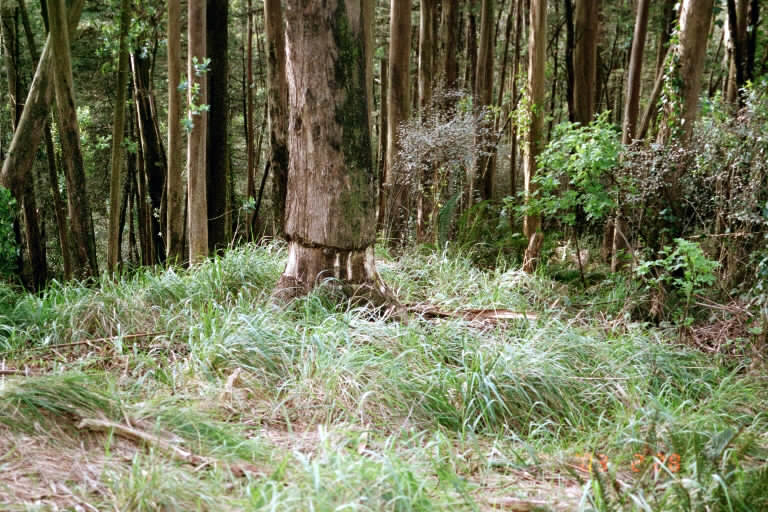
Native Pacific reed grass under girdled eucalyptus tree on Mount Davidson

The 2011 “Albany Hill Creekside Master Plan” describes the understory of the eucalyptus forest on Albany Hill as follows:

“The eastern portion of the eucalyptus forest has a [native] toyon understory as identified in 1991.  The toyon appears to be a wider band than shown in 1991 and covers approximately 2.0 acres…It was noted in a 1972 article in the California Native Plant Society publication Fremontia that the toyon has been introduced by either man or birds.  Native species [in the eucalyptus forest] include toyon, coast live oak, coyote brush, blue wild rye grass, and poison oak.”  
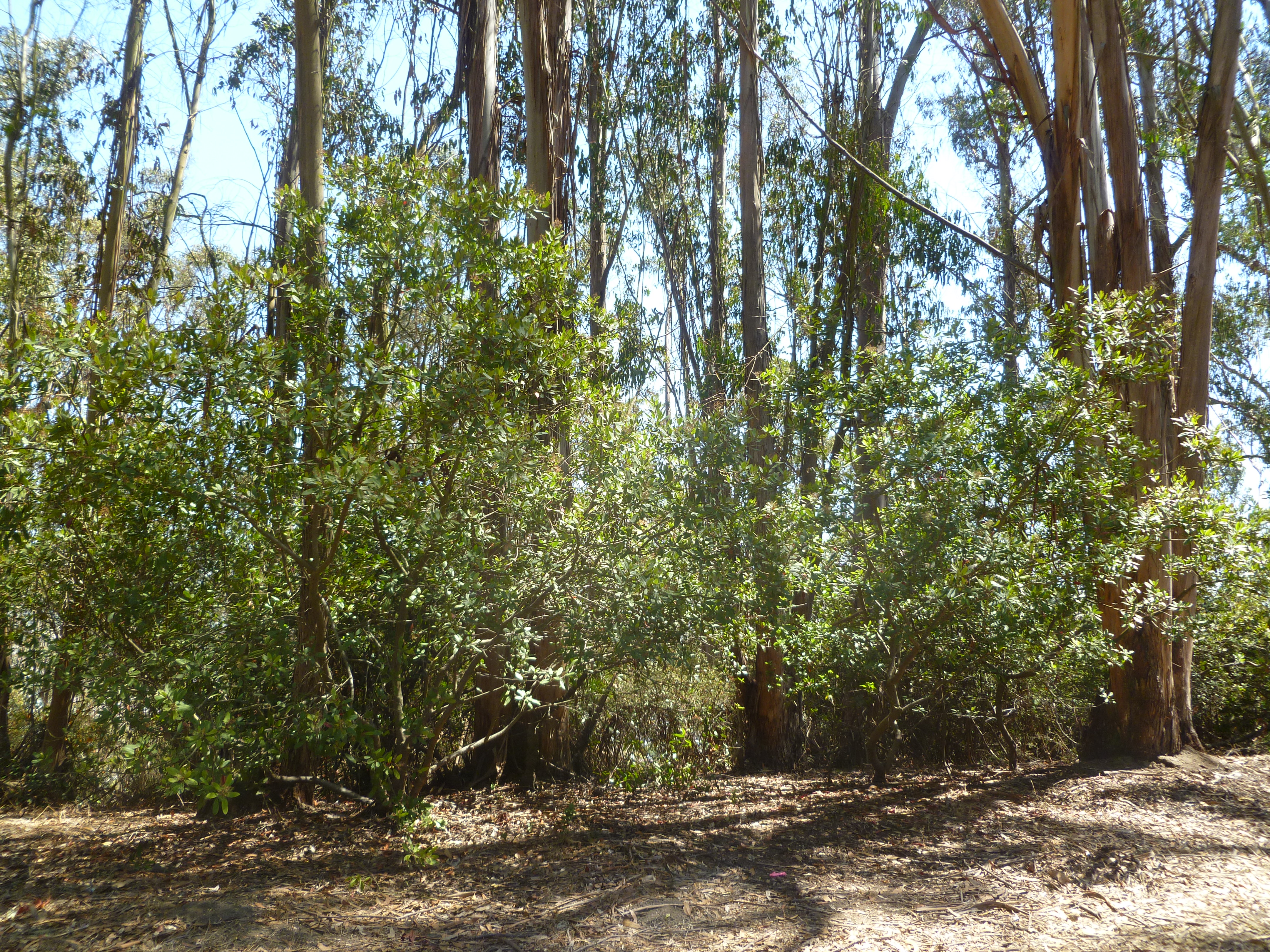
Native toyon under eucalyptus on Albany Hill

Finally, the understory of the dense eucalyptus forest on Mount Sutro is the richest understory we have personally witnessed.  Its understory is composed of both native (most notably elderberry) and non-native species.
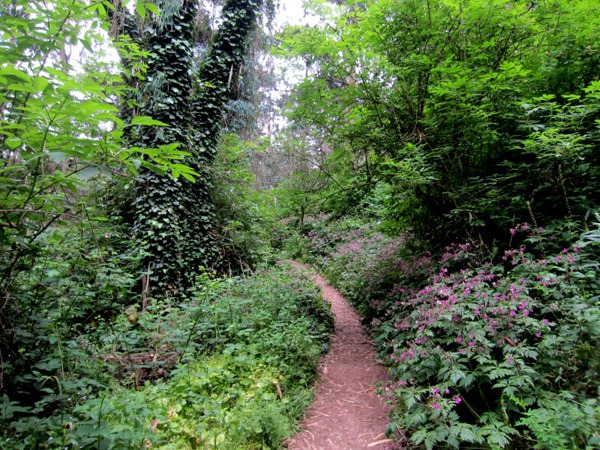
The lush, green understory on Mount Sutro.  Courtesy Save Sutro Forest.
The lush, green understory on Mount Sutro. Courtesy Save Sutro Forest.

We give the last word on the scientific question of the allelopathic properties of eucalyptus to R.G. Florence of the Department of Forestry at The Australian National University.  An Australian scientist is not under the same pressure to find a negative story to tell about eucalyptus.  Professor Florence reports that a world survey of 3,000 articles about allelopathy found “…that the phenomenon of direct chemical interaction in natural communities, in the face of natural selection pressure, must be regarded as rare.”  And further, “While [allelopathy] is an attractive concept, there is no certainty that this occurs to any appreciable extent in nature.” (2)  These observations are certainly consistent with the reality of the eucalyptus forest in the San Francisco Bay Area, where an understory of both native and non-native plants is often found.

If not allelopathy, then what suppresses understory growth?

We have hiked as often in oak woodland in California as we have eucalyptus forests.  We find the understory in the oak woodland as varied as any eucalyptus forest.  Sometimes we don’t find much understory in either type of forest.  A redwood forest has the sparsest understory of any of these three tree species.

What these forest types have in common is that there is a layer of leaf litter under them that suppresses germination and growth of other plants because it forms a physical barrier to the soil.  And the limited sunlight on the floor of both forests is surely a factor in suppressing the development of an understory.  When an understory persists through the limiting factors of low light and heavy leaf mulch, there are obviously mitigating factors such as more moisture, better soil, and other resources that understory plants need.  Furthermore, some species of native plants seem to be suited to conditions in the eucalyptus forest.

The leaves of eucalyptus contain chemicals–as do the leaves of all plants– but if they do not prevent the growth of an understory or they are not any more likely to suppress the growth of competing plants than chemicals in native tree species, this is not a legitimate argument against eucalyptus.  Cal-IPC has not provided any scientific justification for indicting eucalyptus based on its allelopathic properties.

*********************************

(1)    Kam Watson, “The Effect of Eucalyptus and Oak Leaf Extracts on California Native Plants,” 2000.

(1)    R.G. Florence, Ecology and Silviculture of the Eucalypt Forest, CSIRO, 1992?, pgs 71 & 103

Aesthetic considerations in the debate with native plant advocates

Recently, we have been writing about the classification of eucalyptus as “invasive” by the California Invasive Plant Council (Cal-IPC). Judging by the traffic to those posts and the volume of comments, this topic has been of interest to our readers.  Therefore, we plan to continue mining the Cal-IPC assessment of eucalyptus.

However, we are making a brief digression today to discuss an interesting comment we received from one of our subscribers that speculates that the “aesthetics” of the native compared to the non-native landscape is yet another reason why it is so difficult to find common ground.  Here is the comment from Presley Martin:

“It was the eucalyptus page on the Cal IPC that made me realize that much of this debate comes down to aesthetics. They don’t like it because it’s “encroaching on the ocean view.” And from the Cal IPC website, “Stature and growth form are distinctive and unlike native tree species, which compromises the visual quality of natural landscapes.” They’re upset about the “visual quality” of the landscape, which I see as, man those trees are tall, they’re blocking my precious view. This is not really about loss of habitat and dead birds, it’s about what we think our view of the land should look like. That is why I think art can be one of the most effective tools in this fight to stop the destruction of living plants and animals. You can see my efforts to this end here: http://presleymartin.com/invasive-species-project.html

We visited Mr. Martin’s website and were even more intrigued by his suggestion that “art can be one of the most effective tools in this fight to stop the destruction of living plants and animals.”  Here is his explanation from his website of how art can be a weapon to fight against the pointless eradication of non-native species.

“With the precariousness of our environmental situation ever more apparent, the cultural discourse surrounding our place in the environment is still dominated by an outdated paradigm. My works present images, forms, and performances that are contrary to the dominant environmental discourse surrounding so called invasive plants and animals. They highlight the inseparability of natural and man-made phenomena.

Snail Tenement at Montalvo Arts Center.  By Presley Martin with permission
Snail Tenement at Montalvo Arts Center. By Presley Martin with permission

The work provides documentation of the pockets or gaps in the urban metropolitan environment, under freeways, along rivers, so called waste places. These are places where the disaffected, and homeless congregate, and also where nature stakes a claim. Most of the plants and animals that are willing and able to grow in such places are non-native. Plants and animals that have wandered the globe and taken up residence far from where they originated. It should be pointed out that the movement of plants and animals is tied directly to the movement of people. These “invasive” species are global citizens of the non-human world. The places they occupy are the newest “wild” places, and they are precisely the breeding ground of a new relationship with the environment and way out of our environmental predicament. These works are examples, sign-posts on the path to a future where our culture no longer suffers an invisible impoverishment because of looming environmental catastrophe. If our culture is to survive we will need a blossoming of empathy for all living creatures”

We applaud the generosity of spirit expressed in Mr. Martin’s explanation of his work.  It brings to mind the open arms of the Statue of Liberty and the poem engraved on it:  “Give me your tired, your poor, Your huddled masses yearning to breathe free, The wretched refuse of your teeming shore  Send these, the homeless, tempest-tost to me,  I lift my lamp beside the golden door!”  We welcomed our immigrants at one time and they have made us a great nation.  Why not welcome the plants and animals that inevitably made the trip with them? 

The aesthetics of native vs. non-native landscapes

We have rarely discussed the question of aesthetic judgment of native compared to non-native landscapes on Million Trees.  The one exception to that general rule is a report of the reaction of early explorers to the Bay Area to the dry, summer landscape.  Frankly, they didn’t think it was very appealing.  Visit that post HERE to see what they said.

Although we happen to agree with the opinions of the early explorers, we have rarely used that argument on Million Trees because we consider aesthetics strictly a matter of opinion.  As they say, “beauty is in the eye of the beholder.”   Consistent with that opinion, we always urge native plant advocates to plant whatever they want, but just quit destroying everything else and we always say, “we respect your horticultural preferences.”  We have horticultural preferences too, but it never occurred to us that we had the right to impose them on those who don’t share them.

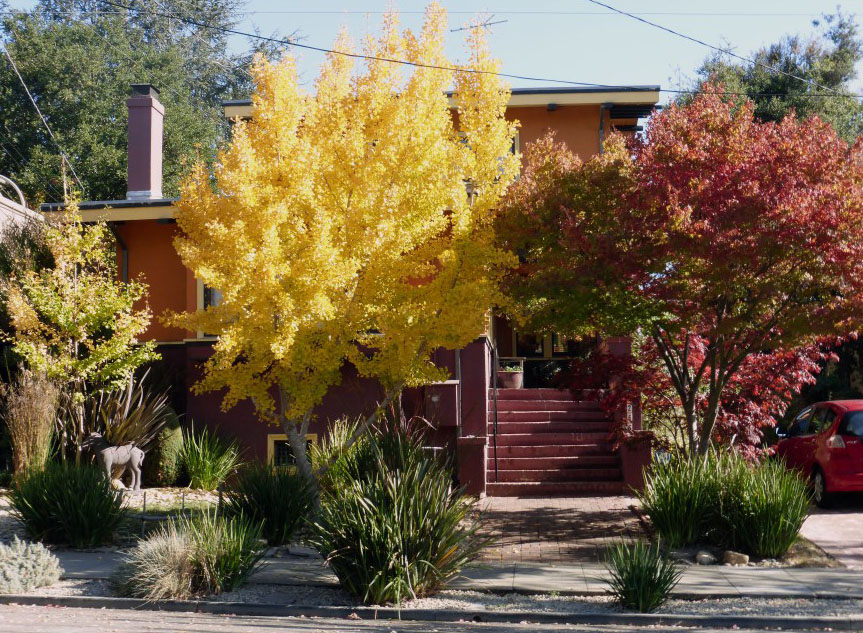
Although we believe those statements and stand by them, fall is a good time of year to illustrate the stark contrast between the native and non-native landscapes.  Virtually all of our fall color is absent in the native landscape.  Here are a couple of photos to illustrate that point.  The first photo was taken recently.  It shows a colorful house flanked by colorful trees that complement the color scheme of the house.  Could anyone dispute that this house would not be nearly so lovely without its surrounding landscape?

fall-color-3
Ginkgos & Japanese Maple

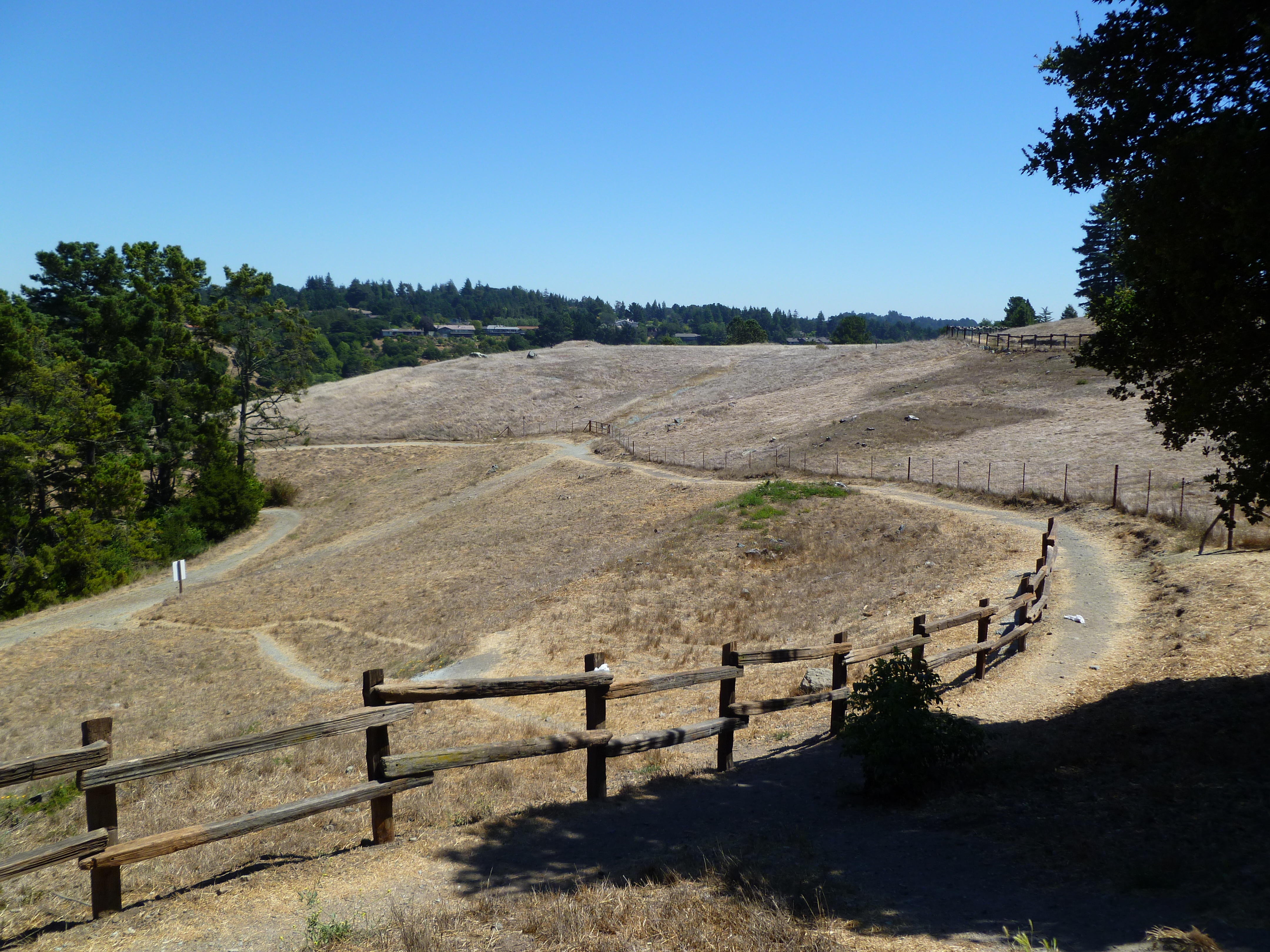
The second photo is of the Serpentine Prairie in Oakland.  The photo was actually taken in June, but that landscape will continue to look brown and dead until the rains start.  As Bay Area residents know, the rain is late this year and so our brown natural landscape persists.

Serpentine Prairie restoration.  East Bay Regional Park District
Serpentine Prairie restoration. East Bay Regional Park District

The Serpentine Prairie is one of many “restorations” by the East Bay Regional Park District.  EBRPD destroyed 500 trees to return the landscape to a treeless prairie.  Many of the trees were native oaks and bays.  The prairie is predominantly non-native annual grasses, but the hope is that native bunch grasses can be restored there because the serpentine rock suppresses the growth of plants that would otherwise compete with the bunch grasses and other rare native plants.  The prairie will have to be burned periodically to prevent natural succession to shrubs and eventually trees.

We assume native plant advocates like the look of the Serpentine Prairie.  Since they demanded this particular “restoration,” they are surely obligated to defend it.  But what do you think?  Do you think it was worth destroying 500 trees, including many oaks and bays?  And do you think aesthetic arguments against the destruction of non-native species deserve more coverage on Million Trees?  If so, please give us some examples of suitable comparisons that support your viewpoint?

Jake Sigg closes his “Nature News” blog

Jake Sigg is the most well known native plant advocate in the San Francisco Bay Area.  He was a gardener in San Francisco’s Recreation and Park Department for decades.  He was the leadership of the local chapter of the California Native Plant Society for years and is still active in it.  He was equally active in the California Invasive Plant Council.

He published a blog called “Nature News” since 2011, in which he announced many nature-related events and expressed his opinion on a wide range of topics, some only tangentially related to his primary interest in the preservation of native plants.  His October 30, 2013 edition of “Nature News” was the last he posted to his blog.  He said, This is the last posting to this blog, based on lack of feedback from it, and from the notices I have posted in last two weeks.  Keeping it up takes too much work for me.  I began it in hopes of making life easier for me, but it has had the opposite effect.”   Back issues of his blog are still accessible here.

Jake Sigg continues to write his “Nature News” but now its distribution is to an email list of 2,400 people.  His blog says that people can ask to be added to his email list.

Sorry to see it go

We were saddened by the loss of ‘Nature News’ as a source of information.  We often try to engage native plant advocates in a dialogue, but they are rarely willing to speak with those with whom they disagree.  Therefore, reading Jake Sigg’s “Nature News” was one of the few ways we could learn what was on the minds of native plant advocates.  We often reported to our readers what we learned from the “Nature News” blog because it was available for anyone to read and verify what we were reporting.  Here are a few examples of our articles about Jake Sigg’s viewpoint as expressed on “Nature News:”

Bay Nature honors Jake Sigg

Bay Nature is a quarterly magazine about nature in the Bay Area, as its title implies.  Perhaps to commemorate the end of Jake Sigg’s publically available “Nature News” they have published an interview with him about his publication.  You can read the entire interview here.

We were primarily interested in Jake Sigg’s strange explanation for why he started “Nature News:”

Nature News started in 2002 by accident, when I started an email group to inform people about upcoming public meetings concerning San Francisco’s threatened Natural Areas Program.

In 1997 the National Park Service began to crack down on dogs running off-leash at Fort Funston, but evidently they did so too suddenly, which set off a backlash by the off-leash dog activists, who became an organized force. They attacked not only the National Park Service but the Recreation and Park Department’s infant Natural Areas Program (NAP) as well, telling community groups that the NAP was going to fence off their neighborhood park and people couldn’t use it anymore–and people actually believed this.  By the time we found out about it the damage had been done, and we are still suffering from it”

We have heard Jake Sigg say many times that all criticism of the Natural Areas Program comes from dog owners who are concerned about the loss of their recreational access that has been the result of native plant “restorations” all over the Bay Area.  Fort Funston is just one of many areas in which recreational access has been restricted by these “restorations.”  However, we were flabbergasted that Jake Sigg continues to believe that this is the only issue.

We will let a commenter on the Bay Nature article about Jake Sigg’s interview speak for the critics of native plant “restorations” in the Bay Area.  His list of the many reasons why these projects are controversial looks fairly complete to us:

“The contentious nature of the discussion of San Francisco’s Natural Areas Program seems intractable. Jake Sigg illustrates why it remains so contentious when he continues to say that opposition to the program comes solely from dog owners. Unfortunately, that demonstrates that he hasn’t been listening for ten years. Thousands of people have questioned the program for many reasons, including:

1.            Loss of thousands of trees that people like in their neighborhood parks.

2.            Use of toxic pesticides to kill non-native plants in public parks.

3.            Lack of success. Repeatedly restored areas rapidly become weedy messes.

4.            Green areas are deliberately turned into areas that are brown and dead-looking for more than half the year.

5.            Loss of public access when fences are erected around native plant gardens and recreational access is restricted to trails in public parks.

6.            Loss of habitat and food resources for wildlife.

7.            Loss of thousands of tons of stored carbon. The carbon released when large trees are destroyed will never be reabsorbed by the grass and scrub that replace the trees.

8.            The misrepresentations of the Natural Areas Program that its supporters offer to the public, e.g. that all destroyed non-native trees will be replaced by native trees. Nothing in the management plan says or implies that; in some areas the plan specifically calls for forest to be replaced by grassland and scrub. These misrepresentations are sometimes deliberate, sometimes because NAP supporters haven’t bothered to read the NAP management plan.

9.            The un-scientific mythology offered by self-styled “ecologists” in support of the Natural Areas Program, e.g. that grasslands store more carbon than forests.

We can’t have fruitful discussions when we refuse to listen to what is said by people who disagree with us. We can’t even learn the many areas of agreement”.

Interior Greenbelt Natural Area, 2010. Courtesy SaveSuro

Day of the Dead Trees

This is a guest post by a member of Communities United in Defense of Olmstead (CUIDO)  Olmstead is a 1999 Supreme Court decision affirming the civil rights of people with disabilities.  We have added links to articles about the issues about which they were demonstrating.

************************************

CUIDO demonstration on November 2, 2013.  Photo by Luke Hauser
CUIDO demonstration on November 2, 2013. Photo by Luke Hauser

Eighteen activists –including a blind woman, a deaf man, numerous wheelchair riders, people with invisible disabilities, and nondisabled allies–paraded single file through the Farmers Market and downtown Berkeley, California on Saturday, November 2, 2013.  The action was called by CUIDO, a local disability action organization.

The protesters carried signs —“DEAF SAY: READ OUR HANDS! NO CLEAR CUTS, NO PESTICIDES, DEFEND EAST BAY FORESTS” and “DEATH BY 1,000,000 CUTS!!”— as they passed out hundreds of leaflets warning of the impending destruction. Protesters also carried, attached to their wheelchairs, enlarged photographs of graceful tall trees that are targeted for elimination, including a photo of a bald eagle parent and chick, nesting in a “non-native” eucalyptus tree.

Among the activists were individuals with chemical injury whose disabilities were caused by pesticide exposure. Their leaflet warned readers of the dangers posed by the two highly toxic pesticides which UC Berkeley, East Bay Regional Parks District, and the City of Oakland intend to apply for up to 10 years.

Their action took place on All Souls Day, El Dia de los Muertos. Protesters identified with the souls of the trees and forest life endangered by this plan.  Stephanie Miyashiro’s wheelchair bore a photo of large trees. A paper chain connected her heart with the trees. Her sign proclaimed: “Our lives are inextricably linked.”

The activists’ flyer also focused on the massive amount of carbon which will be released into the atmosphere if this plan is allowed to go forward, contributing to global warming. Deforestation is one of the principle causes of climate change, which already threatens the planet.

Additionally, they implore Oakland residents to vote NO on the Wildfire Prevention Assessment District special tax. Mail-in ballots are due November 13, 2013.

Two CUIDO activists will discuss the issue in greater detail at 2:30 pm Friday, November 15, 2013, on “Pushing Limits,” a radio program on KPFA (94.1 FM) which addresses issues relevant to the disability community.  Update:  Marg Hall and Jean Stewart did a terrific job with this interview which is available HERE

More protests are planned. Community members who would like to join in future CUIDO actions are encouraged to contact the group at: cuidoaction@gmail.com.

For more photos of this protest, please go to: http://reclaimingquarterly.org/web/berktrees13/

CUIDO, Communities United in Defense of Olmstead, is a grassroots rights organization of people with disabilities, including chemical injuries caused by pesticides. Olmstead is a 1999 Supreme Court decision affirming the civil rights of people with disabilities.

This is the flyer that CUIDO distributed at their demonstration:

Defend East Bay Forests - colorDAY OF THE DEAD TREES

Trees are sacred and beloved friends; ancient living trees link us to our ancestors.

A plan is afoot to cut down hundreds of thousands of tall trees on over 2000 acres of forest, from Richmond to Castro Valley. A great many have already been destroyed. In observing Day of the Dead, we mourn their loss, celebrate their spirits, and treasure—and pledge to protect—those that remain.

Some of our most popular parks will have almost no trees left. In place of tall trees we will see vast acres of woodchips, as there are no plans for replanting. Similar projects are proposed for other Bay Area locations, such as Sutro Forest (SF).
The pretext is fire hazard mitigation, but the result will be a dry and barren landscape which will actually increase fire danger. A complex, delicate ecosystem will be destroyed, and massive amounts of carbon will be released, contributing to global warming. Deforestation is one of the principle causes of climate change, which already threatens the planet.

There are alternative approaches to fire hazard mitigation, but project sponsors (UC Berkeley, East Bay Regional Parks District, and the City of Oakland) have dismissed safer and less destructive alternatives. Instead, they propose clear-cutting and long-term, extensive use of toxic herbicides, which they intend to apply for up to 10 years. One of these pesticides has been shown to cause acute skin, eye, & respiratory illnesses; the other has been linked to blood, kidney, liver, & nervous system toxicity. One of the targeted tree species is listed as Endangered. The funding for this project is all public money, including a Wildfire Prevention Assessment District special tax on Oakland residents. (mail-in ballot due Nov. 13-VOTE NO!) IS THIS HOW YOU WANT YOUR TAX DOLLARS SPENT?

You can join the fight to stop this madness.
For action ideas and information, including links to the EPA’s critical comments:
http://www.milliontrees.me/2013/05/09/ (link to EPA’s comments is HERE)
http://www.SutroForest.com
http://www.HillsConservationNetwork.org
http://www.EastBayPesticideAlert.org

Distributed by: CUIDO (Communities United in Defense of Olmstead)
Contact: cuidoaction@gmail.com ; http://www.cuido.org
CUIDO is a grassroots rights organization of people with disabilities, including chemical injuries caused by pesticides.

Photographic evidence that eucalyptus is NOT invasive

Our subscribers have probably noticed that we are studying the case the California Invasive Plant Council (Cal-IPC) has made to classify Blue Gum eucalyptus (Eucalyptus globulus) as “invasive.”  We have reported to our readers that Cal-IPC has made speculative claims about harm to wildlife that are unsupported by scientific evidence:

Is Blue Gum eucalyptus invasive?

In this post, we will look at the “evidence” provided by Cal-IPC that Blue Gum eucalyptus is invasive in California.  Here is how Cal-IPC described the “local rate of spread with no management” of Blue Gum eucalyptus:

“Once a tree matures and produces seed, it can produce a profusion of progeny within a few years; doubling of stand area within 10 years possible but not well documented Without quantitative data, this response is conservative; stands have certainly expanded far beyond initial plantings in many locations, based on unpublished photodocumentation (1, 2) and personal observations (3)”  [numbers refer to cited “references”]

And here is the “evidence” Cal-IPC provides in support of this rather dire prediction of the invasiveness of Blue Gum in California:

 “Potts, Michael. 2003. About this edition. Caspar News. Online @ http://casparcommons.org/Press/News0305.htm. 2. Site Stewardship Program, Parks Conservancy. Unpublished photographs of Oakwood Valley, Marin Headlands, Golden Gate National Recreation Area. 3. Warner, PJ. 2004. Personal observations from 1980-2004 working in and adjacent to Eucalyptus stands in Marin, Sonoma, and Mendocino Counties, CA. 707/937-9172; pwarner@mcn.org.”

With the exception of an article in “Caspar News,” all evidence provided by Cal-IPC is unpublished.  Although the one written source is described as “Caspar News,” in fact its title is “Caspar Newsletter.”  The edition of this newsletter that is cited is the first unprinted edition of the “Caspar Newsletter.” Some of the unpublished “evidence” cited by Cal-IPC is described as “personal observations” of Peter Warner, who is the author of the Cal-IPC assessment for Blue Gum eucalyptus. 

Therefore, the only source of information about the invasiveness of Blue Gum that we can evaluate is the one that is available on the internet HERE.

First a word about the town of Caspar, which is located 4 miles north of Mendocino on the coast of California.  According to the 2010 census, it has a population of 509 souls.  We celebrated New Years Eve there many years ago in a rocking bar, so we have fond memories of it.  It is a lovely little town.  We mention its small size to put its newsletter into perspective.  It’s hardly mainstream journalism.

The article in the “Caspar Newsletter” starts with the recommendation of Peter Warner to eradicate all eucalyptus in Caspar:

“In this newsletter you find several articles written by strong advocates of dire means, including the authoritative Eucalyptus indictment written by State Parks’ expert on managing exotics Peter Warner, who advocates a draconian solution:  cutting and then careful application of a dire chemical to eliminate every tree.”

In other words, the “Caspar Newsletter” is merely a repetition of Peter Warner’s agenda to eradicate eucalyptus and poison them with herbicides to prevent them from resprouting.  It’s not an independent source of information.

Photographic evidence of invasiveness?

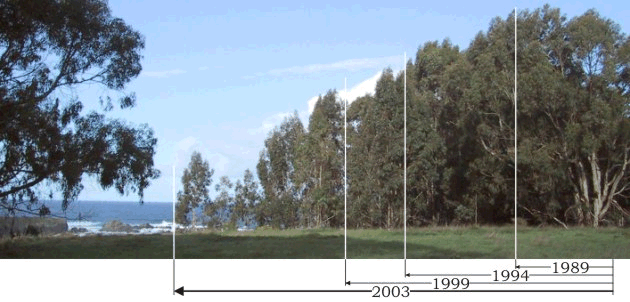
The only photographic evidence of the invasiveness of Blue Gum eucalyptus provided by Cal-IPC’s assessment is in the article in “Caspar News:”

"Eucalyptus encroaching on the ocean view"
“Eucalyptus encroaching on the ocean view”

There are three problems with this photograph with respect to the claim that it is evidence of the invasiveness of eucalypts:

  • We are asked to trust the memory of the photographer about the history of this eucalyptus grove.  Credible evidence of spread of the eucalyptus grove would provide dated photographs taken at each period of time represented in this photo, i.e., 1989, 1994, 1999, and 2003.
  • We see the ocean in the far distance, west of this grove of trees.  As the forest approaches the ocean, we see that the trees are smaller.  This is as we would expect, because the wind from the ocean has suppressed the growth of the trees on the windward side of the grove.  The fact that wind suppresses the growth of trees was established by Joe R. McBride in his study of trees in the San Francisco Presidio which the Presidio contracted with him to conduct:  “Wind at the Presidio affects tree growth, form, and mortality. Exposure to winds in excess of 5 mph usually results in the closure of the stomata to prevent the desiccation of the foliage (Kozlowski and Palhardy, 1997) Photosynthesis is thereby stopped during periods of moderate to high wind exposure resulting in a reduction in tree growth…Eucalyptus showed the greatest reduction in growth with trees at the windward edge being only 46 percent as tall as trees on the leeward side.” (1) (emphasis added)
  • The photographer asks us to believe that the eucalyptus forest is spreading towards the ocean.  Given that the seeds of eucalyptus are dispersed by gravity and wind and that the wind is coming from the ocean, we would not expect the eucalypts to spread towards the ocean, but rather on the leeward side of the forest.

In other words the “evidence” provided by the Cal-IPC assessment that E. globulus is very invasive is not supported by the evidence that is provided.

It is possible to document invasiveness with photographic evidence.  We have provided our readers with two such examples that indicate that Blue Gum eucalyptus is not invasive in the San Francisco Bay Area:

  • In “Vegetation Change and Fire Hazard in the San Francisco Bay Area Open Spaces,” William Russell (USGS) and Joe McBride (UC Berkeley) used aerial photos of Bay Area parks taken over a 60 year period from 1939 to 1997, to study changes in vegetation types.  They studied photos of 3 parks in the East Bay (Chabot, Tilden, Redwood), 2 parks in the North Bay (Pt Reyes, Bolinas Ridge), and one on the Peninsula (Skyline).  These photos revealed that grasslands are succeeding to shrubland, dominated by native coyote brush and manzanita.  Eucalyptus and Monterey pine forests actually decreased during the period of study.  In those cases in which forests increased in size, they were native forests of oaks or Douglas fir.  In other words, they found no evidence that non-native trees are invading native trees or shrubs.
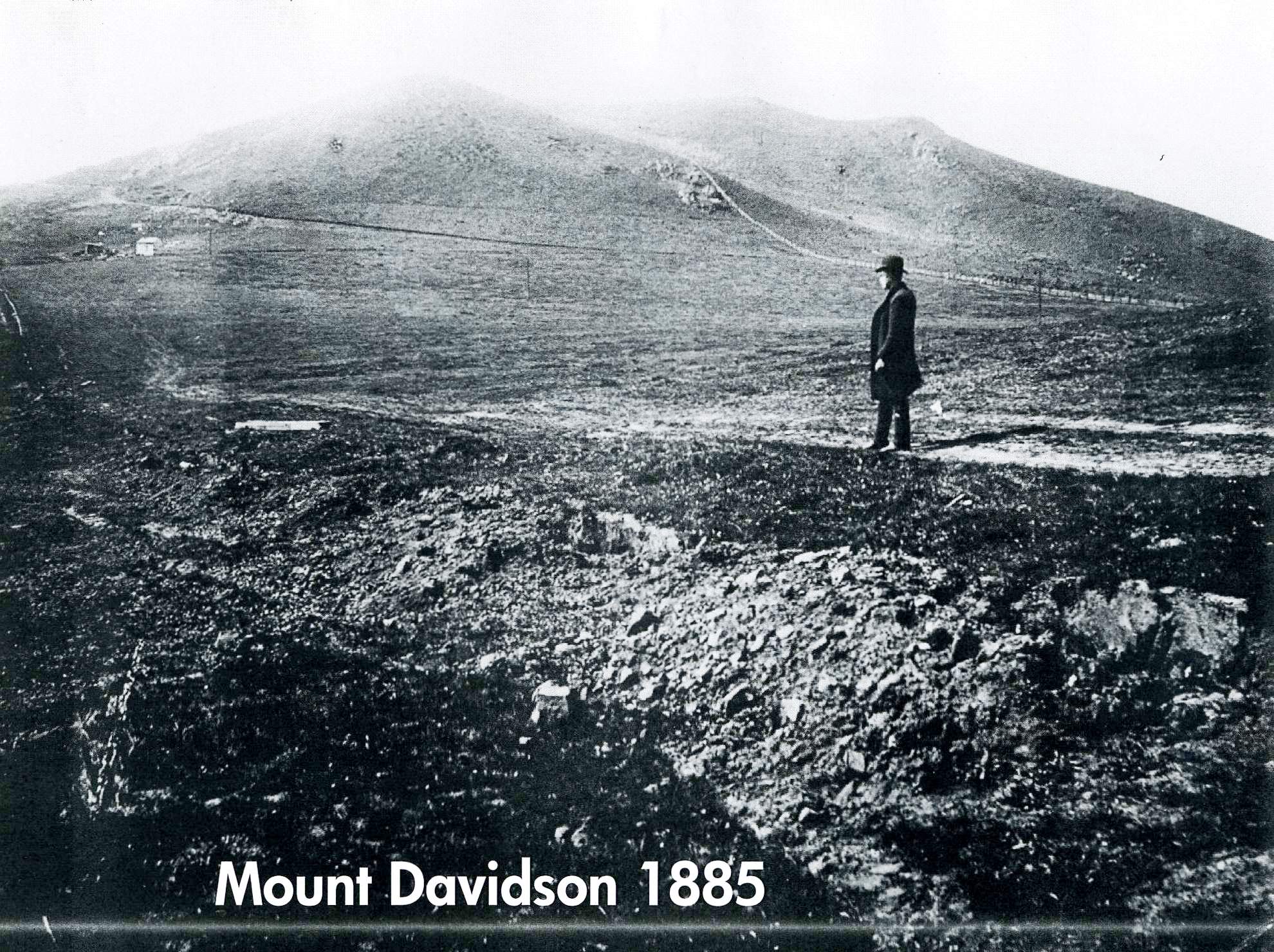
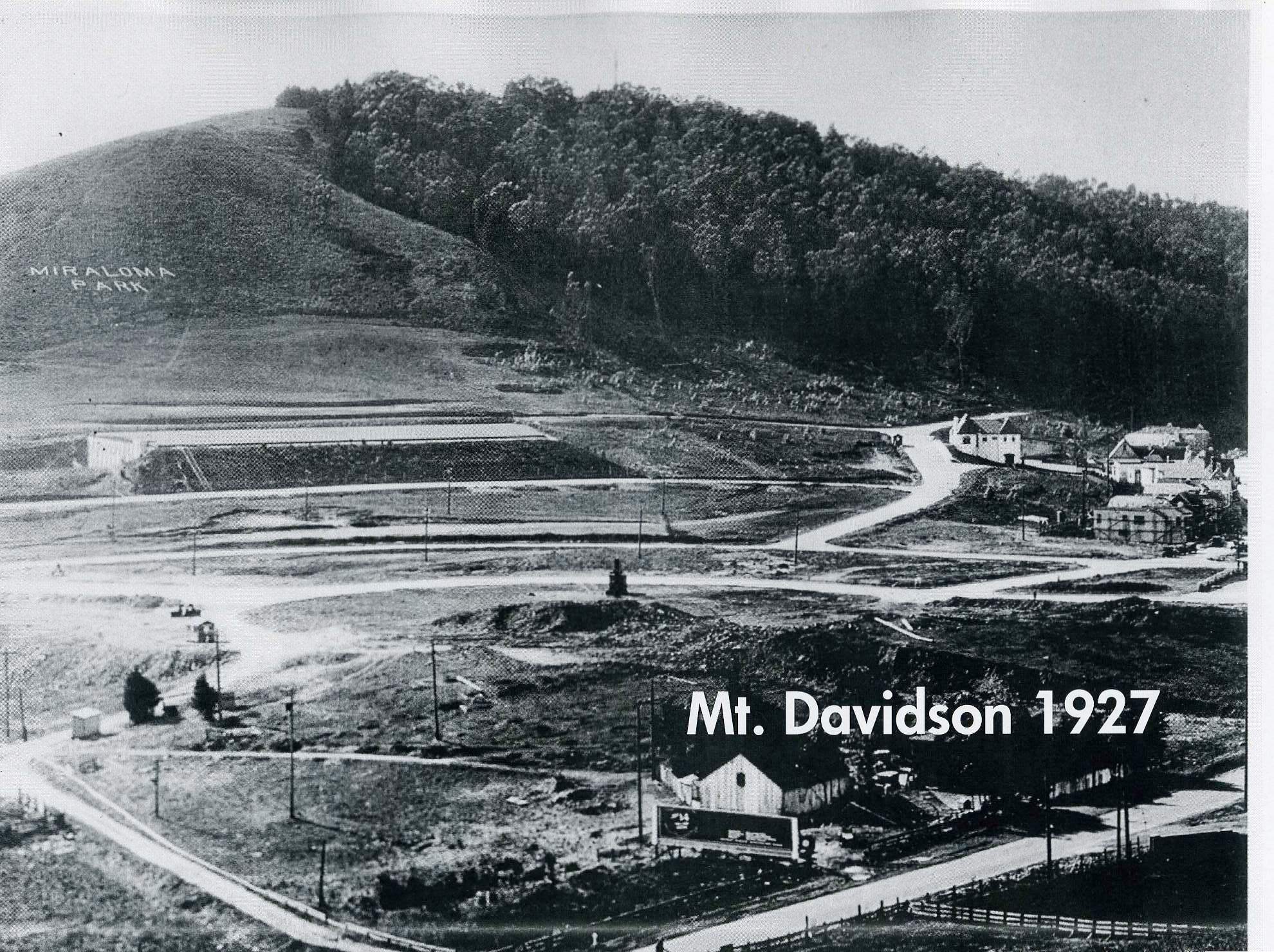
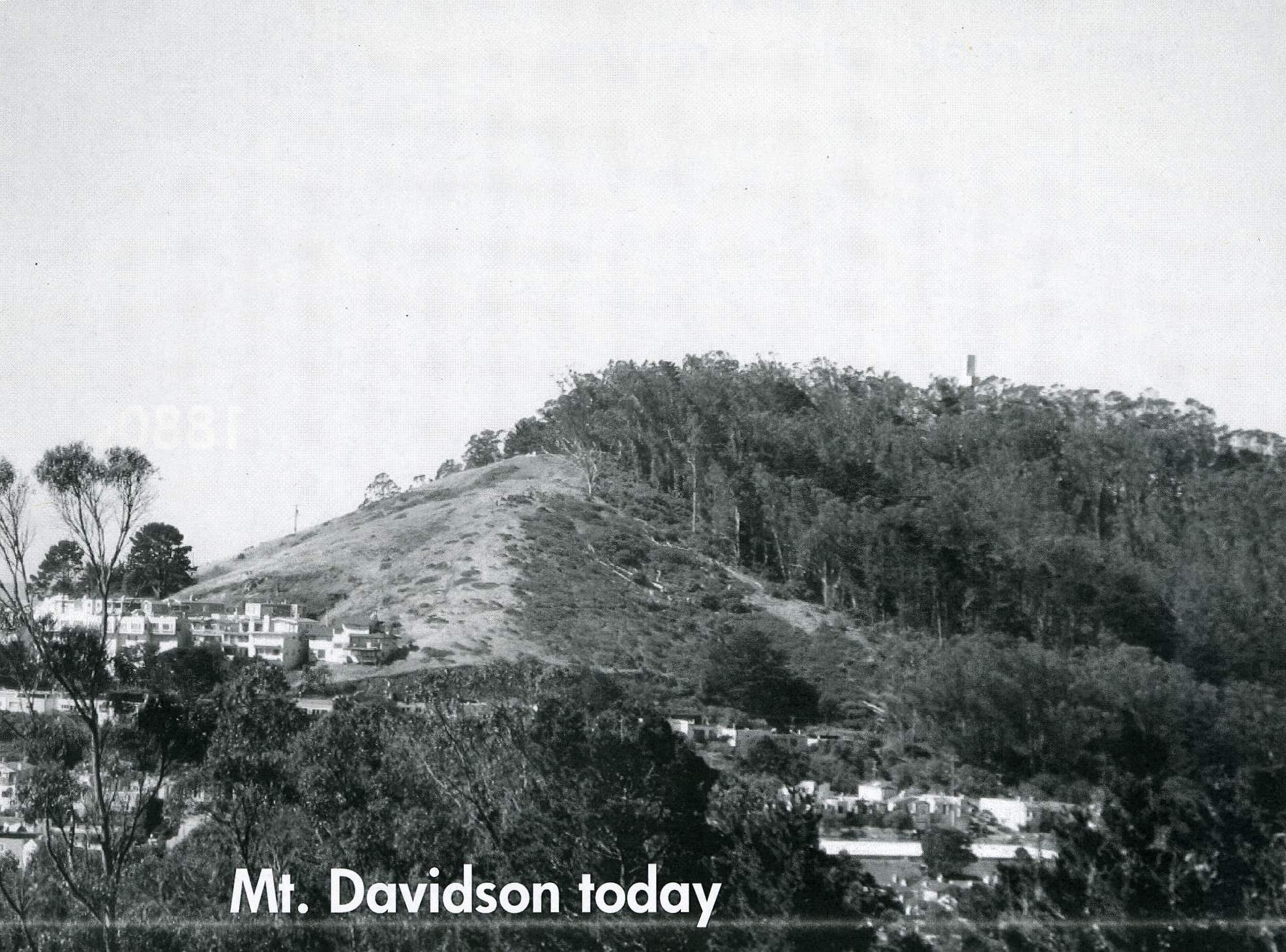
  • Another example of photographic evidence that E. globulus is not invasive is from Mount Davidson in San Francisco.  Adolph Sutro purchased Mount Davidson in 1881.  He planted it—and other properties he owned in San Francisco—with eucalyptus because he preferred a forest to the grassland that is native to the hills of San Francisco.  Here are historical photos of what Mt. Davidson looked like in 1885, 1927 and 2010:

Mt Davidson 1885

Since Sutro didn’t own all of Mt. Davidson, there was a sharp line between the forest and the grassland when this photo was taken in 1927.

MD 1927 RPD presentation

Over 80 years later, in a photo taken in 2010, there is still a sharp line between the forest and the grassland.  We see more trees in the foreground where residential areas have been developed and home owners have planted more trees, but the dividing line on the mountain is nearly unchanged.

MD 2010 RPD

There is one well-documented case of significant expansion of planted E. globulus on Angel Island.  Using historical records of planting of E. globulus on 23.6 acres as well as observations of uniform spacing of those plantings, McBride et. al., determined that E. globulus spread to 86.1 acres.  The trees were planted starting in the mid-1870s to 1933 and their spread was measured in 1988.  The authors of the study reported that most spreading occurred in areas of high soil moisture, such as swales, and in disturbed areas such as road cuts.  This is also the only documented case of significant expansion of planted E. globulus mentioned in the US Forest Service plant data base. (2)

The one exception to the general rule that Blue Gum eucalyptus has not been invasive in California is consistent with what we know about Angel Island and about the limitations of seed dispersal and germination rates of Blue Gum eucalyptus:

  • Angel Island is an extremely windy and foggy place because it is located in the San Francisco Bay, close to the Golden Gate to the Pacific Ocean, where wind and fog enter the bay.
  • Eucalyptus seeds are dispersed by gravity and wind.  Therefore we can expect seeds to travel further in a very windy place.
  • Optimal soil moisture increases the success of seed germination.  Fog drip increases soil moisture and spreading of the eucalyptus forest on Angel Island occurred in drainage swales, where moisture would be greatest.

How invasive is Blue Gum eucalyptus?

Blue Gum eucalyptus is rarely invasive.  The only documented case of significant spread of eucalyptus forest occurred in ideal conditions for seed dispersal and germination.  Therefore, Cal-IPC’s claim that Blue Gum eucalyptus is extremely invasive is exaggerated at best and fabricated at worst. 

If our readers are aware of any other documented cases of spreading of eucalyptus, we invite them to inform us.  We are committed to accurately informing ourselves and our readers of the reality of invasiveness of Blue Gum eucalyptus.

**************************

(1)	“Presidio of San Francisco, Wind Study, First Phase,” Joe R. McBride, circa 2002, page 6.  (unpublished, contracted study) 
(2)	“Focused Environmental Study, Restoration of Angel Island Natural Areas Affected by Eucalyptus,” California State Parks and Recreation, July 1988, pg 47 & 51.

Eucalyptus trees do NOT kill birds!

The claim that eucalyptus trees kill birds originates with an article in the publication of the Point Reyes Bird Observatory, written by Rich Stallcup.  (1)  Mr. Stallcup was well known as a knowledgeable birder, but he was not a scientist.  He based his claim that eucalyptus trees kill birds on his observation of two dead birds in two different eucalyptus forests over a period of many years.   

Bird mortality rates

Given that Mr. Stallcup was a serious birder who spent much of his time in the field observing birds, we begin our critique of his hypothesis by pointing out that a sample of two is absurdly small from which to extrapolate to a general rule about bird mortality in eucalyptus forests.

Furthermore, the scientific literature about bird mortality informs us that a sample of two does not justify the assumption that these deaths were caused by eucalyptus trees.  For example, the annual survival rate of adult song sparrows has been reported as only 30%.  That is, in a single year, 70% of adult song sparrows will die of predation, disease, starvation, or other factors including old-age. Mortality rates are greater for small birds.  (2)

Mortality rates for young birds are substantially greater than for adult birds.  For example, a longitudinal study of Eurasian kestrels found that 51% of 245 kestrels were dead within their first year.  All of the 245 kestrels in this study were dead by the end of 10 years.  (2)

We have a beautiful Coast Live Oak tree on our property, under which we have found dead birds. Yet we have not concluded from those observations that the birds were killed by the tree.  Of course, they were not.  Although there were probably many different causes of death of these birds, we don’t feel the need to speculate about those causes because bird death is not a rare or unusual event unless, of course, you are looking for an excuse to blame the tree.

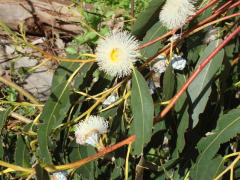
Flowers of Blue Gum eucalyptus
Flowers of Blue Gum eucalyptus. Photo by John Hovland

Stallcup’s Theory

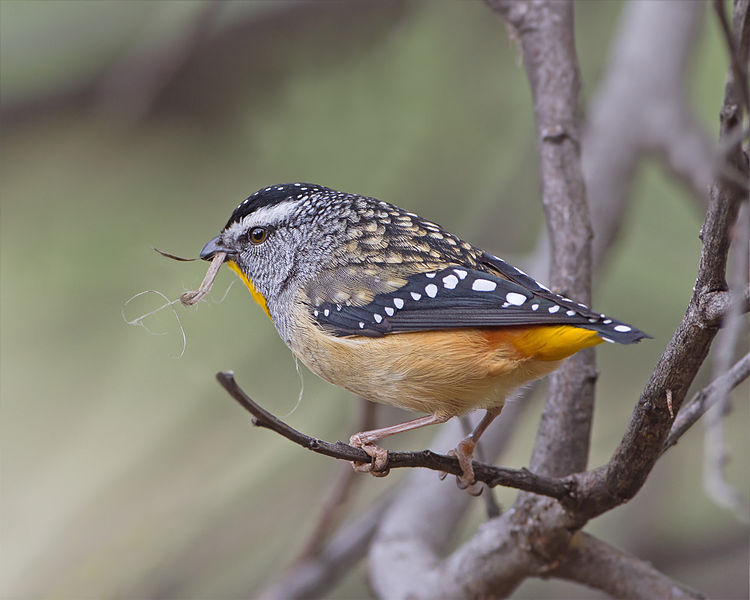
Spotted pardalote is an Australian bird with a short beak that feeds in eucalyptus forests in Australia.  Creative Commons
Spotted pardalote is an Australian bird with a short beak that feeds in eucalyptus forests in Australia. Creative Commons

Stallcup speculated that eucalyptus trees kill birds by “gumming” up their beaks or nostrils with the nectar of the eucalyptus flower which blooms from about December to May in California.  He supports this theory by claiming that the birds that are found in Australia, where eucalyptus is native, have long, curved beaks which enable them to eat nectar from the flower without gumming up their beaks or nostrils. 

This theory is not consistent with the “evidence” that Mr. Stallcup uses to support his theory:

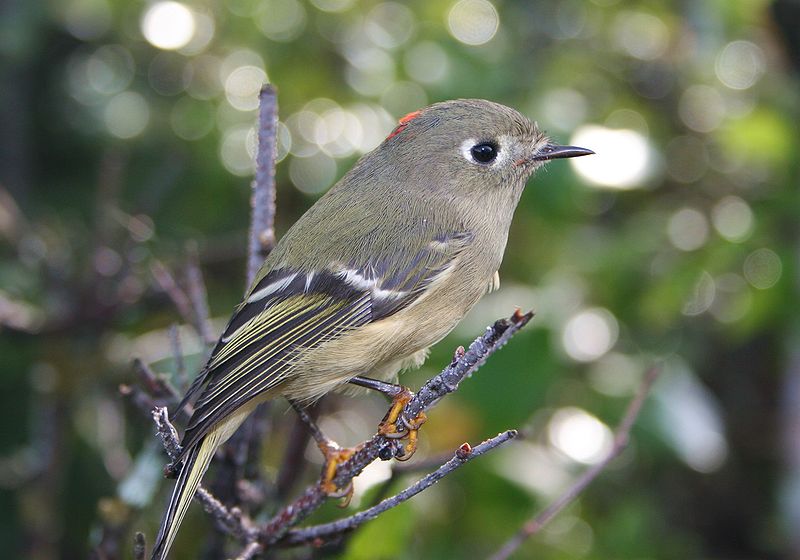
  • He found a dead ruby-crowned kinglet.  The kinglet is an insect-eating bird, not a nectar eating bird.
  • Years before that sighting, he found a dead hummingbird.  Hummingbirds eat nectar, but they have long beaks.
  • Many Australian birds that feed in eucalyptus forests do not have long, curved beaks; e.g., spotted pardalote, striated thornbill, and white-naped honeyeater. (3)
  • One study in Santa Cruz, California found many small birds feeding on insects in red gum eucalyptus, including yellow-rumped warblers, Townsend’s warblers, ruby-crowned kinglets, and bushtits.  The beaks of these birds are not shorter than those found in eucalyptus trees in Australia mentioned by the same study.  The study reported no dead birds or gummed beaks. (3)
  • The nectar of eucalyptus flowers is not “gummy.”  It feels watery to the touch.  Eucalypts are not called “gum” trees because of the nectar in their flowers.  They are named for the sap under their bark.
Ruby-crowned kinglet is a North American bird that feeds in the eucalyptus forest in California.  USFWS
Ruby-crowned kinglet is a North American bird that feeds in the eucalyptus forest in California. USFWS

We can compare Mr. Stallcup’s “data” of two dead birds with a database of a local wildlife hospital.  The report of this database was posted to SFBIRD (San Francisco Bird is an email listserve that anyone can subscribe to and report the birds they see in San Francisco) by Richard Drechsler on March 12, 2012 and is quoted here with his permission:

“I have access to a database containing 56,960 records of birds brought to a local wildlife hospital between 1992 and 2010.  During this period this facility also accepted 2500 birds who were classified as DOA (dead on arrival).  I volunteered in that facility for seven months during 2010 where I worked with ‘small birds’ in order to get a better idea of how birds are being injured.  I was aware then of the belief that resin, gum, nectar, etc. from Eucalyptus trees might harm feeding birds.  During my time there I did not encounter any birds whose passages were blocked with any natural resins that would have prevented them from eating or breathing.  This evening I compared my observations with the 19 years of data by searching on the following words:  ‘euc,’ ‘euk,’ ‘bill,’ ‘beak,’ ‘tree,’ ‘asphy,; ‘breath,’ ‘mouth,; ‘nar,’ ‘gum,’ ‘resin,’ ‘nectar,’ ‘nostril,’,’ starv,’ ‘horn,’ ‘stick,’ ‘stuck,’ ‘glue.’ 

Preliminary Data Findings:

(1)    There is no reference to Eucalyptus or any of its byproducts.

(2)    There is one reference to a bill or mouth being restrained…by a synthetic adhesive.

(3)    There is one vague reference to an Anna’s Hummingbird that was “Stuck in Resin”…treated and released one day later.

(4)    Querying on ‘sticky,’ ‘stuck,’ or ‘glue’ yields many records and a wide variety of species being trapped by synthetic adhesives such as rodent traps and building adhesives.”

 Given the ubiquitous presence of Eucalyptus in this area and the birds craving for its nectar one would expect more incidents of starving birds or ones surrendered DOA.  Also, if birds did not have the capacity to preen or molt away this nectar, wouldn’t every (indulging) bird ultimately display this residue?”

 Bird anatomy trumps the absence of data

There is no empirical evidence to support the claim that eucalyptus trees kill birds, but the most compelling evidence that this claim is not factually correct is that it contradicts the basic facts of bird physiology and anatomy.  That is, birds can and do clear their beaks and nostrils with their feet or by rubbing their beaks on branches when necessary.  If their nostrils are obstructed, they can breathe through their mouth and vice versa.

Ask yourself this question to appreciate the absurdity of the claim that birds would passively suffocate rather than using the tools they have at hand:  If you were suffocating because there was something stuck in your mouth or nose, wouldn’t you raise your hands to your face and clear the offending obstacle?  Is there any reason to assume that birds are not physically or mentally capable of the same defensive behavior?  If you have a cold and your nose is stuffed up, don’t you breathe through your mouth?

In 2010, a student taking the Cornell Lab of Ornithology correspondence course on bird biology asked his instructor this question:  Do eucalyptus trees kill North American birds?”  This is the email reply from his instructor:

“I have no firsthand knowledge of the effect of eucalyptus gum suffocating birds (or not), but I share your skepticism for the reasons you mention. The story has birds feeding in flowers and getting gum on their faces. The first bird mentioned in this saga appears to have been a Ruby-crowned Kinglet. They don’t feed on or in flowers much; they’re leaf gleaners and flycatchers. Is there even “gum” to be picked up on the flowers? Again, that seems unlikely. Birds can breathe through their mouths, so just plugging up the nostrils won’t kill them. (Nestling crows often get the feathers covering their nostrils so encrusted with food matter that there is no way they could breathe through them, but the young are fine. I chip it off when I band them.) It seems like this story could be investigated rather easily, but I see nothing about it in the scientific literature. I would need to see evidence before I believed it.”  

Those who love to hate eucalyptus

The Cornell ornithologist would need to see evidence before he believed the claim that eucalyptus trees kill birds.  Native plant advocates apparently don’t need any evidence.  They have been repeating this absurd, baseless claim since 1996, when it was originally fabricated.  One subscriber to the SFBIRD email listserve mentions this claim often, although he never offers any new actual dead birds to add to the two that were used to fabricate the story. 

 So, why do we try, once again, to set the record straight despite the stone wall built around this fable by native plant advocates?  Because we find this claim in the “assessment form” used by the California Invasive Plant Council to justify its classification of eucalyptus as “invasive:” “purported to cause mortality in native bird species.”  The California Invasive Plant Council classifies eucalyptus as “invasive” based partly on the existence of two dead birds. 

This story has been repeated by native plant advocates for nearly 20 years without any supporting evidence.  It has taken on a life of its own until those who repeat it apparently are unaware that there is no evidence to support the myth.

The US Forest Service social scientist, Dr. Paul Gobster, interviewed native plant advocates while a visiting professor at UC Berkeley about ten years ago.  At the end of his visit, he delivered a lecture at the Randall Museum about his observations of the local native plant movement.  He said they were victims of “incestuous amplification,” the trading of misinformation in a vacuum caused by their isolation.  The ridiculous story about eucalyptus trees killing birds is surely an example of incestuous amplification.   

*****************************

(1)    Rich Stallcup, “Deadly Eucalyptus,”  Point Reyes Bird Observatory, Fall 1996

(2)    Handbook of Bird Biology, Cornell Lab of Ornithology, Princeton University Press, 2004

(3)    Julie Lockhart and James Gilroy, “The portability of food-web dynamics:  reassembling an Australian psyllid-eucalypt-bird association within California,” Global Ecology and Biogeography, 2004, 13, 445-450

Monarch butterflies in California need eucalyptus trees for their winter roost

Monarchs are probably the best-known butterfly in North America, partially because they are distinctively beautiful, but also because of their epic migration.  East of the Rocky Mountains, monarchs migrate from the Canadian border and the Atlantic Coast to spend the winter months in fir trees in Michoacan State in Mexico.  West of the Rockies, monarchs migrate from the Canadian border and the Pacific Coast to overwinter along the coast of California from Mendocino County to San Diego County, near the Mexican border.

Monarch Butterfly.  Creative Commons
Monarch Butterfly. Creative Commons

No single monarch makes the entire journey.  It takes two to three generations of monarchs to make the entire round trip.  How each successive generation knows the route remains largely a mystery, although theories exist.  There are a couple of fascinating books about the migration that we recommend to our readers.  Four Wings and a Prayer is a book about the 38-year effort of Canadian entomologists, Fred and Norma Urquhart, to understand the migration.  It reads more like a suspenseful mystery than the non-fiction book that it is.  Flight Behavior is by Barbara Kingsolver, one of our favorite novelists because nature is often the subject of her work.  Although it is fiction, it has been carefully researched by Kingsolver who studied biology before becoming a writer.  It is engaging both as a cautionary tale for environmentalists and as a personal redemption story.

The western migration of the monarch

Monarch butterflies roosting in eucalyptus tree.

We will focus on the western migration of the monarch because that’s our neck of the woods, but also because this migration is one of the reasons why many people who care about nature and wildlife object to the destruction of eucalyptus trees.  Eucalypts are the preferred trees for over-wintering monarchs“Three types of trees were used most frequently by roosting monarchs:  eucalyptus (75% of the habitats primarily Eucalyptus globulus), pine (20% of the habitats primarily Pinus radiata), and cypress (16% of the habitats Cupressus macrocarpa).  Twelve other tree species were identified…with a combined prevalence of only 10%…habitats had smaller populations when the roosting tree type was a species other than eucalyptus, pine, or cypress.” (Three different studies by different authors are the source of these data, therefore they don’t add up to 100%.) (1)

For those who may not know the botanical names, that’s Monterey pine and Monterey cypress that are the runners-up to eucalypts as the most popular trees for over-wintering monarchs.  Although monarchs roost in those trees in their native range on the Monterey peninsula, they also use those species outside their native range.  Unfortunately, just as the eucalyptus is a target of native plant advocates who demand their destruction because they are not native, both Monterey pine and Monterey cypress are targeted for destruction outside their native range.  For example, both Monterey pine and Monterey cypress will be eradicated from hundreds of acres of public land if the FEMA grants are funded in the East Bay.  This is just 150 miles away from where those trees are native and there is fossil evidence that they existed in the East Bay in the distant past.  In other words, most of the trees used by monarchs for their winter homes are in jeopardy of being destroyed by the native plant movement.

Another nativist myth BUSTED!

One of the reasons why we are telling this story is that it is a tidy little example of the justifications fabricated by native plant advocates to support their destructive agenda.  In the case of the monarch, native plant advocates claim that prior to the arrival of Europeans, before eucalypts were planted and Monterey pines and cypresses were planted outside their native range, the monarch used native trees for their over-wintering habitat.  The “assessment form” used by the California Invasive Plant Council to classify Blue Gum eucalyptus as invasive says,  “[The Blue Gum] provides roost sites for migratory monarch butterflies…ecological niches for butterflies and raptors probably formerly filled by native plant species.”  No evidence is provided in support of that statement.  We have also read that claim in comments of native plant advocates on internet articles in response to those who defend eucalypts because they are needed by monarchs.

Like many of the “cover stories” of native plant advocates, this is just not true.  A search of the scientific literature about monarchs enables us to bust this particular myth to smithereens.  It would be simple enough for native plant advocates to look at the evidence before spinning their tales, but it is apparently easier to make it up, especially when they are rarely questioned.  Million Trees exists to fill this informational void.

The historical record of the western migration of monarchs

The earliest record of over-wintering monarchs in California is from 1864, when monarchs were observed over-wintering in Monterey pines in their native range.  Richard Vane-Wright, the scientist who reports this record, explains why he believes it is probably the first incidence of over-wintering monarchs in California:

“’Previous to that, no mention has been found of this interesting phenomenon…The early Spanish chronicles and traditions make no mention of it, although Monterey, a scant three miles distant, was gay with life when the last century came in…even David Douglas, the world famed botanist, and the keenest-eyes of all the strangers who came [to California] is silent regarding it.’…Douglas, the indefatigable fir tree collector, appears to have made no mention of the phenomenon in 1830-1832, despite spending two winters at Monterey.” (2)

Vane-Wright believes the eastern monarch migration to Mexico also began around the same time.  His theory is that the agricultural practices of early settlers, which cleared trees, created a population explosion of the milkweed that is the host plant of monarchs.  More milkweeds resulted in more monarchs and monarchs began to migrate in response to population pressure, he believes.  He calls this the “Columbus Hypothesis.”  (2)

Biological facts explain why monarchs choose these species of trees

Aside from the historical record, the biology of monarchs and the physical characteristics of the trees in which they over-winter explain why these species of trees are required by the over-wintering monarch.  During the late fall and winter, monarchs enter a dormant phase called diapause.  They continue to need nectar and moisture during that period, but they are not very active, so these resources must be close by.  Although they migrate to the coast from Mendocino to Mexico, they are most abundant around the mid-point of that range, where temperatures and rainfall are moderate.  Most of the approximately 250 roosting sites are within 2.4 kilometers of the ocean, so wind protection is important for them while they are roosting.  All of these factors predict the ideal conditions provided by eucalyptus trees:

  • Monarchs need tall trees (of at least 60 feet) because they roost in the intermediate level of the canopy where wind protection is greatest (3)
  • The forest must be dense enough to provide wind protection,
  • The tree canopy must be open so that the roosting monarchs receive filtered sunlight to keep their bodies warm enough.
  • The monarchs need enough moisture for hydration, but not so much that they are soaked and lose their body heat.  So, dew and/or fog provide the ideal amount of moisture.   (1 & 4)

All of these requirements for the monarch’s winter roost point to their dependence on eucalyptus, pines and cypress.  The trees that are native to the narrow strip of the coast of California do not meet these criteria.  They are not tall enough and they do not grow that close to the ocean because they do not tolerate wind.  The native vegetation of that narrow strip of California coast is predominately dune scrub and coastal grassland prairie.  And these are the vegetation types that the ecological “restorations” in the Bay Area are trying to re-create.  These vegetation types will not be suitable habitat for over-wintering monarchs.  Furthermore, plans to drastically thin eucalyptus forests on hundreds of acres of the East Bay Regional Park District will render those habitats useless for over-wintering monarchs.

In addition to the physical properties of eucalyptus, the monarch benefits from the fact that it is flowering from about December to May, while the monarch is roosting in the tree.  The flowers of eucalyptus contain a copious amount of nectar which is also important to the honeybee because it is flowering at a time when there are few other sources of nectar.  One study reported observing monarchs feeding on the flowers of Eucalyptus globulus. (5)

Risky Business

We have mixed feelings about reporting this research about monarchs to our readers because there is some risk to the monarchs in doing so.  The evidence suggests that monarchs did not over-winter in California prior to 1864, after the magical date that nativists have selected to freeze-frame California’s landscape to their nativist ideal.  Here in the San Francisco Bay Area, this magical date is 1769, when the expedition of Portola laid eyes on the San Francisco Bay.  Will nativists declare the monarch an alien invader to be eradicated along with the hundreds of plants and animals they claim “don’t belong here?”  This may seem a far-fetched conjecture, but keep in mind that the European honeybee is being eradicated in some “restorations” because it is not native.  The honeybee is essential to the survival of American agriculture, yet its existence is threatened by the radical agenda of the native plant movement.

That’s the risk we take in reporting this evidence because we hope that it helps our readers to understand the absurdity of the nativist agenda.

Update:  Monarchs have returned to Natural Arches State Beach in Santa Cruz in big numbers.  Here is a link to a report that includes a lovely video of the roosting Monarchs.  

***********************************

(1)    Dennis Frey and Andrew Schaffner, “Spatial and Temporal Pattern of Monarch Overwintering Abundance in Western North America,” in The Monarch Butterfly Biology and Conservation, Cornell University Press, 2004.

(2)    Richard Vane-Wright, “The Columbus Hypothesis:  An Explanation for the Dramatic 19th Century Range Expansion of the Monarch Butterfly,” in Biology and Conservation of the Monarch Butterfly, Natural History Museum of Los Angeles County, 1993.

(3)    Andres Kleiman and Miguel Franco, “Don’t See the Forest for the Butterflies:  The Need for Understanding Forest Dynamics at Monarch Overwintering Sites,” in The Monarch Butterfly Biology and Conservation, Cornell University Press, 2004.

(4)    Kingston Leong, et. al., “Analysis of the Pattern of Distribution and Abundance of Monarch Overwintering Sites along the California Coastline.” in The Monarch Butterfly Biology and Conservation, Cornell University Press, 2004.

(5)    Susan Chaplin and Patrick Wells, “Energy reserves and metabolic expenditures of monarch butterflies overwintering in southern California,” Ecological Entomology, 7:249-256, 1982

The American Prairie Reserve: Why is it controversial?

Our mission often obligates us to tell our readers about problems that we see with local “restoration”  projects in the San Francisco Bay Area, so when we see an opportunity to tell a positive story, we like to take it.  The New York Times recently published an article about the American Prairie Reserve that we think is probably a good example.  We say “probably” because this is a project in northern Montana that we won’t be able to visit and we don’t have first-hand access to the supporters or the critics of the project, so we have to admit that we could be wrong.

Missouri River from American Prairie Reserve.  Creative Commons.
Missouri River from American Prairie Reserve. Creative Commons.

The non-profit organization that operates the American Prairie Reserve is a group of conservationists who are funded by millionaire city-slickers who would like to see a hefty slice of the American prairie preserved, along with the wildlife that roamed free there when Lewis and Clark passed through in the early 1800s.  Their goal is to preserve 3 million acres of land.  So far, they have stitched together federal grazing leases on 215,000 acres of federal land and purchased 58,000 acres of former ranches.  They have removed 37 miles of fence and introduced 275 bison, a small start on what they hope will eventually be a huge herd.  They have planted native grasses.

American Bison.  NPS photo.
American Bison. NPS photo.

Their project is described in detail on their website which we encourage you to visit to see stunning photos of this beautiful land and its rare inhabitants.  We can’t share their photos with you because they are not in the public domain.

Here’s what appeals to us about this project:

  • Public access to the land is encouraged.  Hiking, hunting, and camping are allowed.
  • The project describes planting, not eradicating existing plants.  As we say repeatedly on Million Trees, we encourage native plant advocates to plant whatever they wish.  We ask only that they quit destroying everything else.
  • The project describes introducing new animals, rather than exterminating existing animals.
  • The project is being paid for by the people who support the project.  Taxpayers are not being asked to fund someone else’s hobby.

The caveats

Unfortunately, the ranchers in the neighborhood are worried that this project threatens their way of life.  Some of them have indicated that they will not sell their land to the project.  They are concerned that the loss of ranch properties will slowly diminish their community.  They worry that wealthy outsiders could price their families out of the market.  They don’t want their agricultural community transformed into a pricey tourist destination that would radically alter the character of their community.

The ranchers also consider themselves good stewards of the land“They rotate their herds to encourage a healthy mix of prairie grass and set aside ample room for sage grouse, plovers and heron.  They are trying to till less ground, which can destroy an underground ecosystem.  Some even allow small colonies of prairie dogs, which many farmers exterminate as pests.”  (1)

The conservationists who are supporting the project say they are trying their best to be good neighbors.  They buy land only when it goes on the market and then only at market-rate prices.  They installed electric fences so the bison do not disturb their neighbors.  They have even leased back some of the land they purchased to be grazed by ranchers.

The bottom line:  Is conflict inevitable?

The American Prairie Reserve looks as though it has everything going for it, including a remote location with a very low population of fewer than 5,000.  Yet, even when private money is used and every effort is made to accommodate those who live there, the project is controversial.  So, we should not be surprised that the “restoration” projects in the Bay Area are controversial:

  • Our projects ask the public to pay for projects that they often do not support.
  • Our projects often restrict the public’s access to the land that theoretically belongs to them.
  • Our projects eradicate plants and exterminate animals.
  • We live in a densely populated, urban environment where every acre of public space is precious.

*********************************

(1)    Jack Healy, “Vision of Prairie Paradise Troubles Some Montana Ranchers,” New York Times, October 26, 2013

Oakland voters say “NO” to renewal of Wildfire Prevention Tax Assessment

Citizens for Responsible Oakland Government recommend that residents of Oakland’s Wildfire Prevention District (WPD) vote NO on a 10-year extension of the parcel tax that funds the assessment district in the Oakland Hills.  Here’s their opinion of the parcel tax:

  • This tax does nothing to fund fire fighting personnel or equipment
  • This tax asks us to pay again for services that we already pay for
  • This WPD has been mismanaged for the past 10 years
  • This tax has not made us safer and has not helped reduce insurance rates
  • Don’t get ripped off for another 10 years.”

Please visit their website for more information:  http://cfrog.info

Click HERE to see a video of interviews with Oakland residents who have decided to vote NO on this parcel tax.  Ballots were mailed to property owners in the assessment district two weeks ago and must be mailed back by November 13, 2013.

WPD Video Image

Update:  Voters in the Wildfire Prevention Assessment District narrowly defeated the ballot measure to renew the tax that funds WPAD.  Thanks to those who participated in the effort to defeat this measure and especially to CFROG for organizing that effort.  Here is the article in the Oakland Tribune announcing the outcome:   http://www.insidebayarea.com/news/ci_24533813/oakland-hills-voters-reject-wildfire-prevention-tax

It takes a lot of noise to stop the spraying of pesticides

Hawaiians have been subjected to more than their fair share of the toxic methods used to eradicate non-native species because the justification for such projects is strongest on islands.  Islands contain the most endemic species, unique to those islands, because they evolved in geographical isolation.  More extinction has occurred on islands than on the mainland of the United States because species that evolved in isolation are more vulnerable to new competition than species that have evolved with more competition.  Theoretically, if you can eradicate a non-native species, it is more possible to prevent reintroduction on an isolated island.

We have reported earlier on Million Trees, a few of the many projects on the Hawaiian Islands to eradicate non-native species:

  • The coqui frog is from Puerto Rico.  There are no native frogs in Hawaii,
    Coqui frog
    Coqui frog

    so the coqui is not competing with a native, which is the usual justification for eradicating a species.  In this case, the promoters of this project claim that the frog is eating all of the insects, depriving other animals of food.   A concentrated caffeine solution has been the poison of choice for the coqui.

  • The strawberry guava is a fruit tree that has been a valuable source of food for both animals and humans.  It was brought to Hawaii by Polynesian ancestors in the distant past.  It is being eradicated with an imported non-native insect.
  • The importation of non-native insects for the purpose of killing a non-native plant has often had unintended consequences.  Although extensive research is done, once introduced, the insect often chooses a host that was not the target species.  Biological control introductions are considered the cause of 15 moth extinctions in Hawaii.

We have also reported that there is considerable push back from Hawaiians who consider some of these species valuable and in any case, don’t appreciate being poisoned.   That push back is the point of this post.

The new threat to the health and safety of Hawaiians

Pineapple and sugar cane plantations were the mainstay of Hawaiian agriculture.  They have moved operations to places where it’s cheaper to do business.  They have been replaced with thousands of acres of corn and soy beans which have been genetically modified to produce plants resistant to herbicides.  The plantations produce seeds, which carry the genetic modification for pesticide resistance, to be sold to farmers all over the world.

These small farms are being replaced by huge fields of corn and soya.  Kauia, Hawaii
These small farms are being replaced by huge fields of corn and soya. Kauia, Hawaii

Hawaii is an attractive place to grow these valuable seeds because the weather allows for three crops to be grown each year.  That not only speeds up production, but also reduces the time needed for testing and development of new hybrids.  Naturally, pesticides are used on those crops.  After all, the crop is immune to the pesticides.

The scale of these operations, their year-around activity, and the pesticides sprayed on the crops have become intolerable to the neighbors of these operations who are bothered by both dust and pesticides.  They have been demanding that the operations be scaled-back or at least controlled.  Naturally, there are also people who are making their living from this profitable enterprise, and these people fight back.

A legislative committee on Kauai considered an ordinance in early October that would have restricted the operations of these companies.  Between 1,500 and 4,000 supporters of the bill demonstrated at that hearing.  Opponents of the bill were said to be more numerous.  The bill was amended and passed by the committee and considered for approval by the legislative body last week.  The hearing started at 9 am and lasted until 3:30 am the following day.  The ordinance was passed as amended:

“The ordinance requires the seed companies to disclose which pesticides they use and establishes no-spray zones around schools, medical facilities, homes, public roads and waterways.  The original bill would also have limited the planting of genetically modified crops, but those provisions were removed during deliberations.”  (1)

These restrictions seem rather minimal, yet it took thousands of people attending several days of hearings to accomplish this small improvement.  That’s the commitment that is required for the public to be heard over the voices of corporate and economic interests.

In the San Francisco Bay Area we marvel that we are unable to convince our public policy makers that they should stop poisoning our public parks.  Supporters of these local projects are not large, powerful corporations, so shouldn’t it be easier to make ourselves heard?  Apparently we are just not making enough noise.  

************************************
(1)    Andrew Pollack, “Limits Approved for Genetically Modified Crops in Kauai, Hawaii,” New York Times, October 16, 2013