Environmental Impact Report of Natural Areas Program proposes aggressive expansion

Fifteen years after San Francisco’s Natural Areas Program (NAP) began operation and 5 years after its management plan was approved, the Draft Environmental Impact Report (EIR) has finally been published.  We will briefly summarize the history of NAP, describe the plans as they were approved in 2006, and conclude with a comparison between those plans and the proposal in the EIR to aggressively expand NAP.

The Management Plan for the Natural Areas Program

In 1995 the Recreation and Park Commission approved the designation of 31“natural areas” in parks managed by the city of San Francisco. This designation committed 25% of the city’s park acreage in San Francisco, 33% including the city of Pacifica to the Natural Areas Program.  

Most park visitors were unaware of this designation until 5 years later when they finally had access to a draft of the management plan after a lengthy battle to make it available.  At that point, many park visitors could see where the Natural Areas Program was headed and many of them reacted negatively to the prospect of the destruction of non-native trees and restrictions on recreational access in popular, heavily visited parks.

The result of the long debate with the public was a revised management plan that separated the natural areas into three “management areas.”  These management areas (MAs) set priorities for the restoration of parkland to native plants:  MA-1 was the highest priority, MA-2 the second priority, and MA-3 the lowest priority.  The appeal of these priorities to critics of NAP was the commitment that there would be no tree removals in the MA-3 areas and that no legally protected species would be planted or reintroduced there, which might require further access restrictions in the future.  Forty-two percent of the total 1,080 acres of natural areas was designated as MA-3.

The management plan* was approved in 2006, after two days of public hearings at which about 200 public comments were heard by the Recreation and Park Commission.  Supporters of NAP outnumbered critics of the program.  The main message of the critics of the program was that the acreage committed to natural areas should be reduced to places in which native plants existed, which would not include acreage designated MA-3.

There were two trivial caveats to the approval of the program:  defining the circumstances under which cats could be removed from the natural areas and specifying that tree removals must be done by the Urban Forestry Division of the Recreation and Park Department (RPD).  These are some of the main features of the approved management plan:

  • Tree removals.  18,500 trees over 15 feet tall were designated for removal in MA-1  and   MA-2 areas.   In addition, non-native trees under 15 feet tall would be removed in these areas, but were not quantified because the plan did not define them as “trees”
  • Trails.  10.3 miles of trails were designated for closure in these areas.  That represented 26% of all trails in the natural areas.
  • Dog Play Areas are those areas in parks that have been officially designated for off-leash recreation.  The NAP management plan identified several dog play areas that would be monitored for possible closure in the future if necessary to protect native plants.  Those dog play areas were in Bernal Hill, McLaren and Lake Merced parks. 
  • Golf Course at Sharp Park will be reconfigured to accommodate populations of two endangered species.

The Environmental Impact Report of the Natural Areas Program

Five years after the approval of the management plan, the Environmental Impact Report (EIR) has finally been published.  The EIR identifies 4 alternatives to move forward with the implementation of the plan. The EIR identifies the “Maximum Restoration Alternative” as the “Environmentally Superior Alternative” described as follows:

“This alternative seeks to restore native habitat and convert nonnative habitat to native habitat wherever possible throughout the Natural Areas, including all management areas.”

[ETA:  This article has been updated by a more recent post which reports that a mistake has been found in the Draft Environmental Impact Report (DEIR):  The “Maximum Restoration Alternative” is not the “Environmentally Superior Alternative” as the DEIR claims on page 2.  The “Maintenance Alternative” is the “Environmentally Superior Alternative” as the DEIR says on page 526.  The mistake on page 2 has been reported to the Planning Department.  The Planning Department has acknowledged the error on page 2 and has made a written commitment to correct the error in the Final Environmental Impact Report.  Unfortunately, this correction will not be made until the public comment period is over.]

In other words, the preferred alternative would do away with the priorities identified in the management plan and treat all three management areas the same.  These are the specific implications of this proposal as described by the EIR:

  • Trees.  Non-native trees would also be removed in the MA-3 areas.  The number of trees over 15 feet tall that will be removed will exceed 18,500, but the EIR does not quantify how many trees will be removed.
  • Trails.  More trails would be closed in the MA-1 and MA-2 areas, but the EIR is not specific about how many miles of trail will be closed.
  • Dog Play Areas.  All dog play areas in MA-1 and MA-2 areas would be closed.  This will close the dog play areas in Buena Vista and Golden Gate (Southeast) parks and what little remained of McLaren (Shelley Loop) and Bernal Hill after the closures mandated by the management plan.  Dog play areas in MA-3 areas will be monitored and closed in the future if necessary to protect native plants.  The EIR predicts that all of these closures in addition to the anticipated closures of GGNRA properties to off-leash dogs will result in heavier usage of the dog play areas that remain.
  • Golf Course at Sharp Park would be further reduced by expanded habitat for endangered species.
  • Other access restrictions.  Legally protected species will be introduced in MA-3 areas, which may require further restrictions on access in the future.

The other alternatives identified in the EIR are:

  • “No Project Alternative – Under this alternative, the SFRPD would continue with the management activities authorized under the 1995 management plan.”  This alternative will close the dog play areas that were monitored since the management plan was approved in 2006: the Mesa at Lake Merced, portions of Bernal Hill and McLaren (Shelley Loop).
  • “Maximum Recreation Alternative – This alternative seeks to restore and improve recreational access to the Natural Areas wherever it does not interfere with the continued existence of native species and federally or state-listed sensitive species.”
  • “Maintenance Alternative – This alternative seeks to maintain the current distribution of native and nonnative habitat and species throughout the Natural Areas.  Under this alternative there would be no conversion of nonnative habitat to native habitat; other features of the Natural Areas would be retained.”

Rewarding Failure

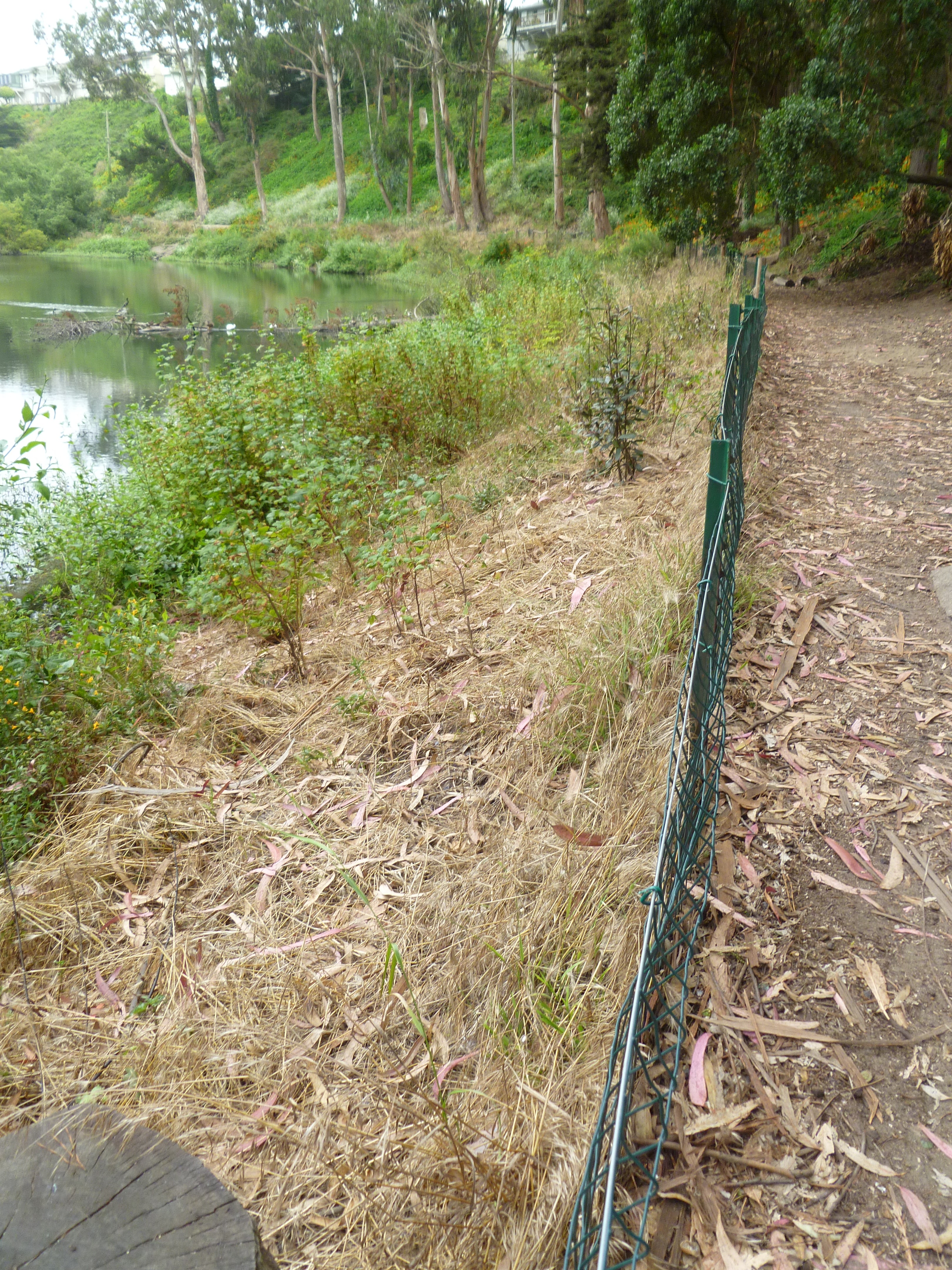
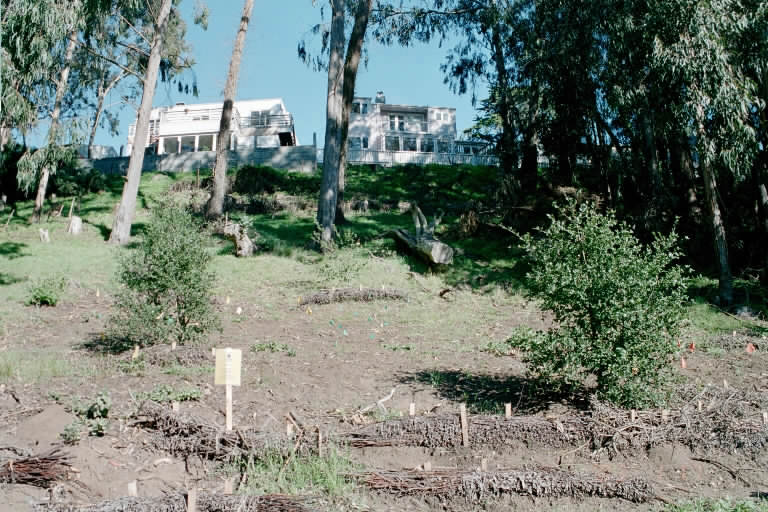
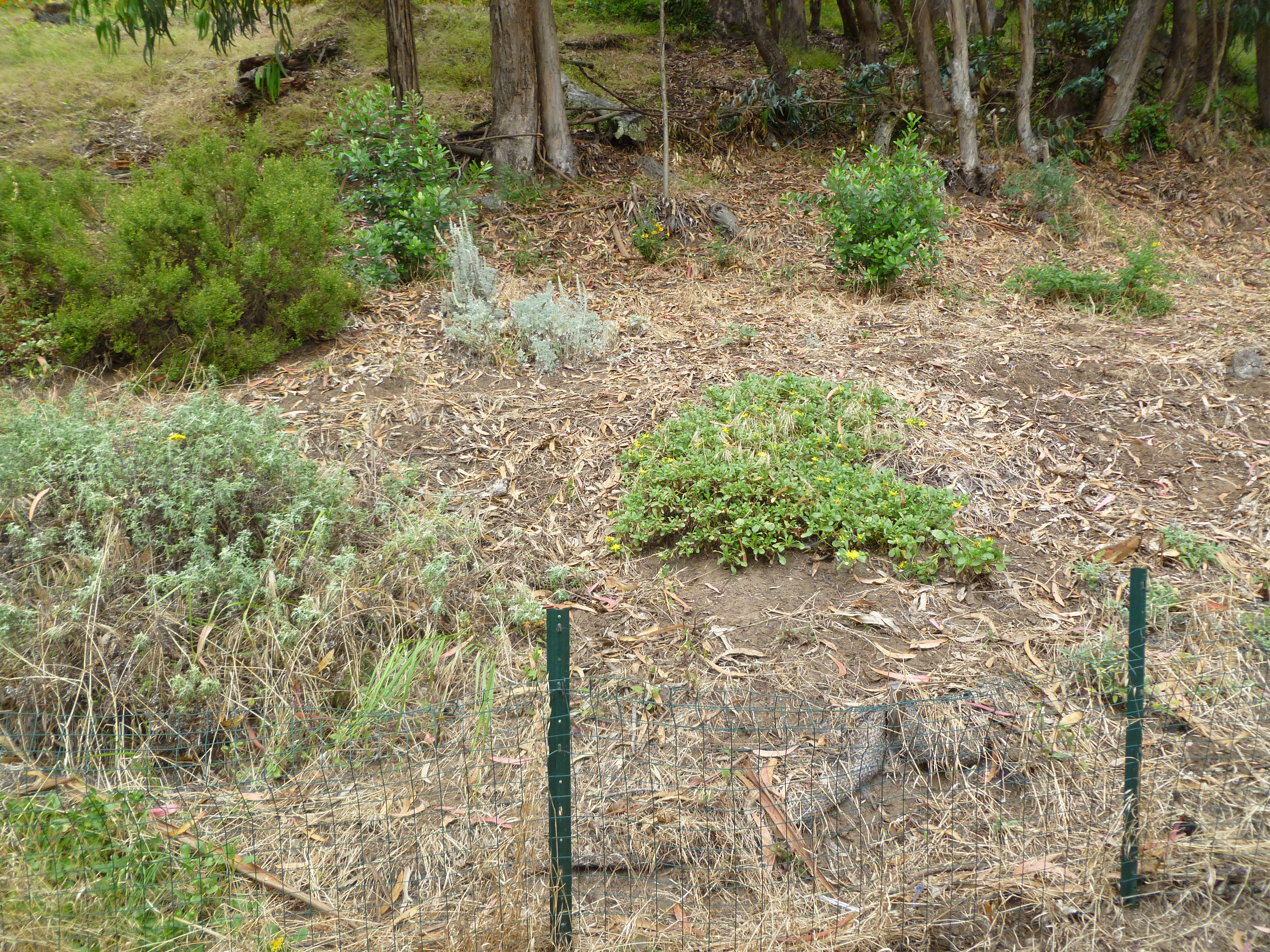
Park visitors who have been watching the restoration efforts of the Natural Areas Program for the past 15 years might be surprised that NAP apparently wishes to expand its restoration efforts.  Repeated clearing of non-native plants and planting of native plants has been spectacularly unsuccessful.  Here’s a photo history of the effort at Pine Lake in Stern Grove:
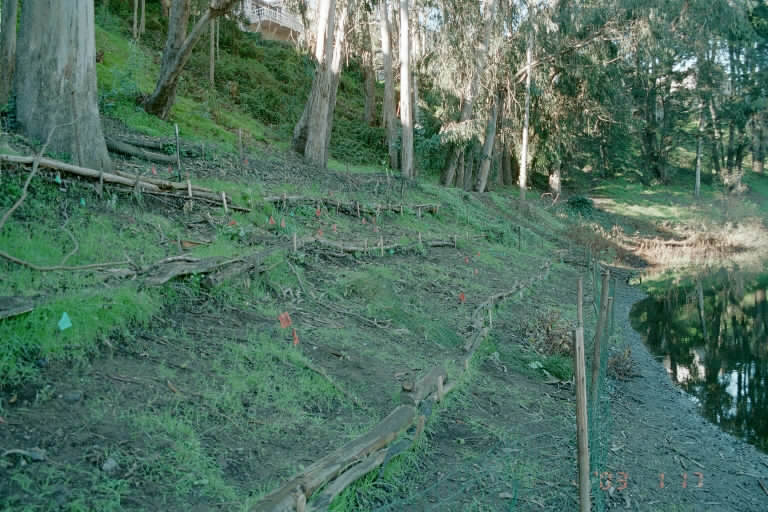
One of several clearing and plantings of south shore of Pine Lake, 2003
The results, south shore of Pine Lake, 2011
North shore of Pine Lake, 2003
 
Results, north shore Pine Lake, 2011

If NAP has been unable to successfully restore 58% of acres of natural areas (MA-1 and MA-2) they have been actively working on for the past 15 years, why would they want to expand their empire by adding MA-3 acreage to their agenda, committing them to actively restoring all 1,080 acres of natural areas?  Aren’t they biting off more than they can chew?

Where will the money come from to fund this expanded effort?

Although NAP and its many supporters believe that this lack of success is because they haven’t been adequately funded, the NAP staff is one of the only divisions in the Recreation and Park Department that hasn’t been cut in the past 10 years.  While other gardeners have been laid off, the NAP staff has remained the same size.  How many gardeners will it take to expand their restoration efforts to the MA-3 areas as the EIR proposes?  Remember that the MA-3 areas are 42% of the total NAP acreage.  Will NAP be given a 42% increase in their staff?  One wonders where the money for such an increase in staff would be taken from.

How much more herbicide will be used in this expanded effort?

Will a 42% increase in actively management NAP acreage require more herbicide use?  The Natural Areas Program applied herbicides to the so-called “natural areas” 69 times in 2010. Most of those applications were of the most toxic herbicide (Garlon) for which the Natural Areas Program was granted exceptional permission to use by the Department of the Environment.  How much more herbicide must be used by NAP if they actively manage the MA-3 areas?  The EIR is curiously silent on this question.

Public Comment Opportunities

The public will have two opportunities to comment on the EIR and its “environmentally superior alternative” which will aggressively expand the restoration efforts of the Natural Areas Program, require more tree removals and recreational access restrictions, probably cost much more, and probably increase the use of herbicides.

  • “A public hearing on this Draft EIR and other matters has been scheduled by the City Planning Commission for October 6, 2011, in Room 400, City Hall, 1 Dr. Carlton B. Goodlett Place, beginning at 1:30 p.m. or later. (Call 558‐6422 the week of the hearing for a recorded message giving a more specific time.)”
  • “Public comments will be accepted from August 31, 2011 to 5:00 p.m. on October 17, 2011*. Written comments should be addressed to Bill Wycko, Environmental Review Officer, San Francisco Planning Department, 1650 Mission Street, Suite 400, San Francisco, CA 94103. Comments received at the public hearing and in writing will be responded to in a Summary of Comments and Responses document.”
  • “If you have any questions about the environmental review of the proposed project, please call Jessica Range at 415‐575‐9018.”

*[ETA:  The deadline for written comments has been extended to October 31, 2011, at the request of the Planning Commission.]

If you have an opinion about the expansion of the Natural Areas Program proposed by the Environmental Impact Report  you would be wise to speak/write now.  It is your last opportunity to do so.

———————————
*Type in search box:  Natural Areas Program management plan

Are native species inherently superior to non-native species?

The native plant movement is based on the fundamental assumption that native species of plants and animals are inherently superior to non-native species.  The basis of this assumption seems to vary.  Sometimes the explanation offered is as simple as “the non-native doesn’t belong here.”  It’s not clear what that statement means.  Putting it in the best light, it implies that there is some optimal ecology that is best represented by exclusively native species.  A less generous interpretation would be that non-native plant and animal species are the non-human equivalent of illegal immigrants

We will examine this claim of the superiority of native species in the context of bees to make the point that nature is complex and cannot be oversimplified by such a sweeping generalization.

Professor Gordon Frankie, our local expert on the bees of the Bay Area, says that native bees are superior pollinators to the European honeybee.  If that were true, we would consider that a legitimate basis for the judgment that, in this case, the native bee is superior to the non-native bee.  However, the evidence available to us suggests that a comparison of the native to the non-native bee is more complicated.

In considering this question, we will focus on agriculture rather than residential gardens, because agriculture is economically more important and for the same reason more is known about the role of bees in agriculture.

Why would native bees be superior pollinators than non-native bees?

We know of two specific examples of native bees that are more effective pollinators of agricultural crops.  Both cases illustrate the pros and cons of native bees as agricultural pollinators.

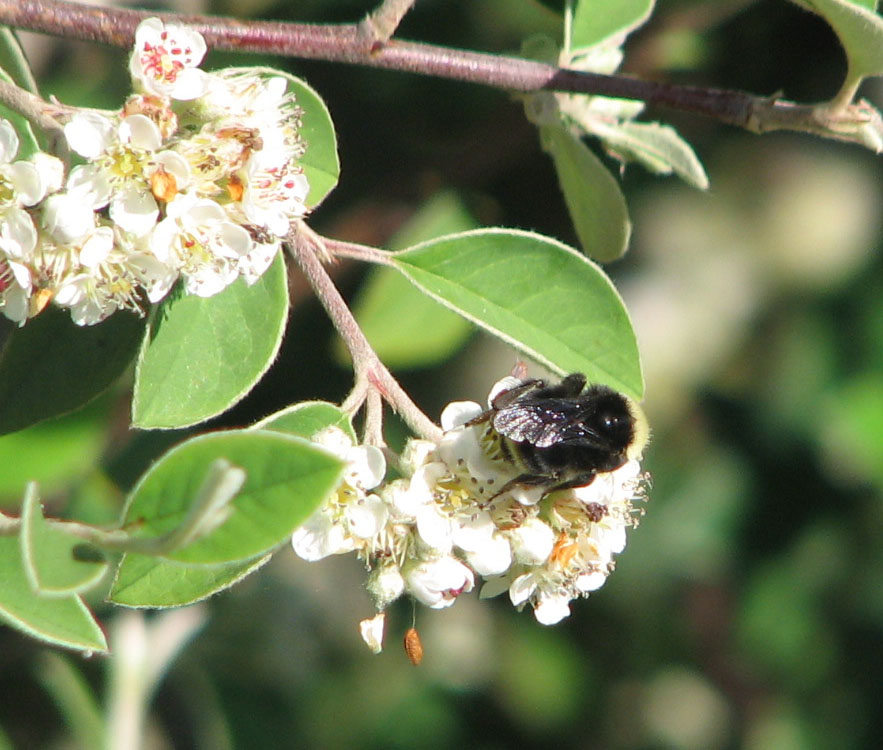
Bumblebee on Cotoneaster, Albany Bulb

There are some crops—tomatoes, cranberries, blueberries, eggplants, and kiwi fruits—that are effectively pollinated by native bumblebees (Bombus) because of their unique method of pollination.  This method is called “buzz-pollination” or “sonication” and it is described as “an intense vibration, like a tuning fork being struck, pollen gathered from other flowers literally exploded off Bombus.”(1)

Unfortunately, though its pollination technique is superior, other characteristics of the native bumblebee have limited its usefulness in agriculture.  The crops with which it is most effective produce only pollen.  Therefore, the bumblebee must be provided with an alternate source of nectar to fulfill its dietary needs.(2)  

The bumblebee, like most native bees, is solitary.  It does not live in hives like the social European honeybee.  Therefore, it cannot be transported where and when it is needed, as the honeybee can.  An attempt at a high-tech solution to this limitation ended in disaster:  “In the 1990s, a bumblebee species Bombus occidentalis, was made extinct when experimenting breeders mixed species in Europe and shipped queens back to America.  The queens carried with them an exotic disease that Bombus occidentalis has no immunity for.”   Growers of tomatoes are now “forced to resort to less efficient pollinators.”  (Schacker 2008). 

Another example of a native bee that is a superior pollinator of an agricultural crop is the alkali bee which is the most efficient pollinator of alfalfa, a crop that is essential to the dairy and beef industries.  “Alfalfa flowers…keep their sexual parts hidden, under tension like a spring.  Bees must trip the spring to get at the pollen, and in so doing, they are hit on the head—something honey bees are not particularly fond of.  The alkali bees…don’t mind getting hit on the noggin and will happily pollinate a field of alfalfa.”  (Schacker 2008). 

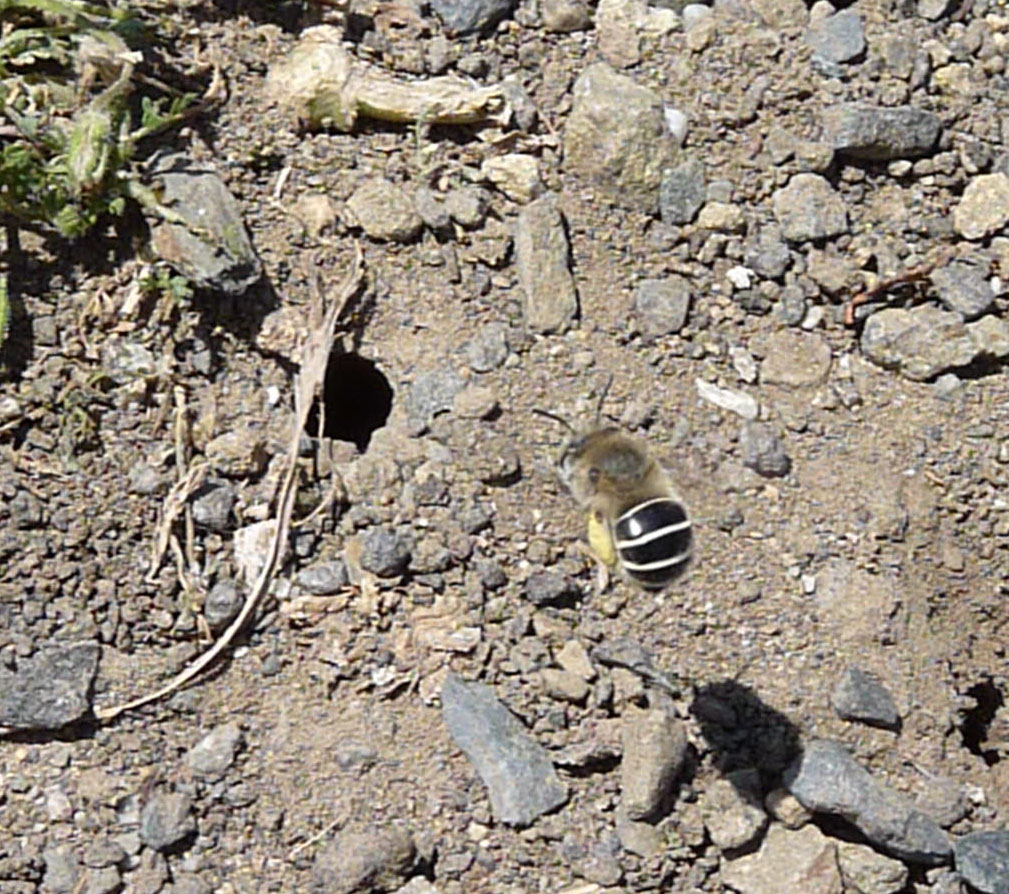
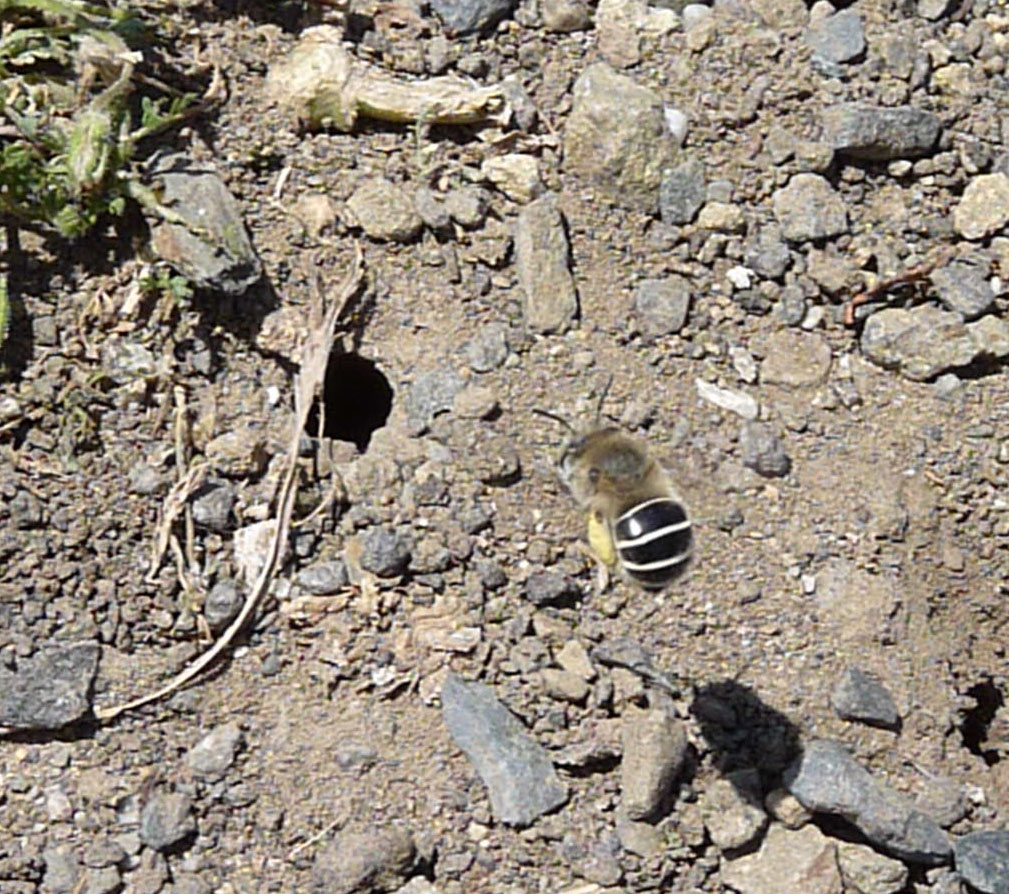
Native bee approaching nest in ground, Albany Bulb

Unfortunately, the alkali bee, like 85% of native bees in the US, nests in the ground, in particular the alkaline soils of the western US for which it is named.  As cropland in the west expanded, the alkali bee was virtually wiped out by plowing up the ground in which it nested.  A leafcutter bee was imported from Canada as a substitute, but a fungus is now infecting its larvae. (Schacker 2008)

These disadvantages of native bees can be compensated for by providing nesting and nectar sources adjacent to croplands.  These hedgerows must be large enough to provide sufficient nesting opportunities and nectar sources. 

However, such hedgerows do not solve all the potential problems of using native bees as pollinators.  Because the bees are resident year around and cannot be transported, they cannot be removed when the crops are sprayed with pesticides.  And the pesticides are very damaging to the bees.  Therefore, a commitment to providing hedgerows for a resident bee population is also a commitment to organic agriculture, i.e., without using pesticides. 

This is not to say that the honeybees aren’t being adversely affected by the use of pesticides in the crops they are pollinating.  The impact of pesticides on  honeybees would be exacerbated if they were resident when pesticides were applied to the crop.  As it is, the honeybee is being affected by the residues of the pesticides on the crops they pollinate.  This is considered one of the primary reasons for Colony Collapse Disorder of commercial honeybees which has been destroying about one-third of commercial honeybee hives in the past few years.

Unlike most native bees, the European honeybee does not hibernate.  It is therefore available year around to be transported where and when it is needed.  Most native bees hibernate, but not necessarily at the same time.  Different species of native bees hibernate at different times and are therefore available for pollination at different times. 

Most native bees are more selective in their pollination than the European honeybee which is an extreme generalist:  “honeybees have the greatest pollen dietary range…of any known pollinator.” Although there are “only a handful of well-documented cases in North America of truly monolectic bees [a bee that visits only one kind of flower]” (Buchmann 1996), the flower preferences of native bees are narrower than that of the European honeybee.  While some native bees may prefer native plants, honeybees are willing to pollinate both native and non-native plants.  This is important because virtually all of our agricultural crops are non-native.

Native bees are not inherently superior to non-native bees

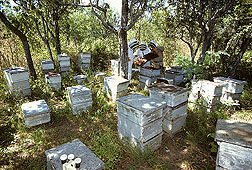
Honeybee hives, USDA photo

In summary, the European honeybee has several important advantages over native bees as pollinators of agricultural crops:

  • Because the honeybee is a social bee that lives in hives, it can:
    • Be transported where and when it is needed
    • Be removed from the agricultural crop when it is sprayed with pesticides
    • Does not need to be provided with nesting space and an alternate food supply
  • The honeybee is available for pollination services year around because it does not hibernate.
  • The honeybee pollinates a wider range of flowers than most native bees.

While native bees may be more efficient pollinators of residential gardens, there are a number of disadvantages to using native bees for agricultural pollination.  Although many of these obstacles can be overcome with greater use of resources, we cannot agree with the assumption of native plant advocates that native bees are inherently superior to the non-native European honeybee.  As with all sweeping generalizations, the truth is usually more complicated because nature is complex and man’s understanding of it is limited.


(1) Schacker, Michael, A Spring without Bees, Lyons Press, Guilford, Conn, 2008.

(2) Buchmann, S, and Nabhan, G, The Forgotten Pollinators, Island Press, 1996

“Museumification” of our parks separates children from nature

The Berkeley Meadow

We recently published an article about the Berkeley Meadow, a 72-acre fenced pen for native plants and animals.  In response, one of our readers alerted us to a video cartoon about the Berkeley Meadow which we recommend to you.  “Grandpa Takes the Kids to the Plant Zoo” captures the absurdity of this “restoration” project.

The sentiments expressed by the children in this video remind us of an article published in 2004 about similar restoration projects in Chicago and San Francisco.  “Urban Park Restoration and the ‘Museumification’ of Nature” was written by Dr. Paul Gobster after he visited the Bay Area as a visiting professor at UC Berkeley, collaborating with colleagues in landscape architecture.

Dr. Gobster is a social scientist with the US Forest Service, stationed in the Chicago area and the editor of a book* about the restoration movement there.  The restorations in Chicago are similar to those in the San Francisco Bay Area because both places were primarily grassland prior to the arrival of Europeans.   Restorations in both areas therefore require the destruction of most trees.  In the Chicago area, many of the trees are native because of the natural succession of grassland to shrubland and finally to forest.  The fires of Native Americans that sustained the grassland were stopped at the time of settlement.

In “Museumification,” Dr. Gobster expresses his opinion of the restorations in the San Francisco Bay Area and in Chicago:

“…it is my contention that little headway has been made in exploiting the key role urban parks might have in strengthening the ties between nature and culture.  To the contrary, some current attempts at ecological restoration in urban parks may distance people from the experience of nature even further than did earlier naturalistic designs, leading to a form of detached observation not unlike what one might experience in a museum.  Instead of providing a bridge between nature and the city…park restoration can lock nature inside the gates of paradise and leave people on the outside looking in.”

Dr. Gobster is particularly concerned about the impact of “museumification” of parks on children who should be the primary beneficiaries of our parks.  Their earliest experiences with nature may foster a lifelong interest in nature or an alienation from it.

“The wild and weedy nature that existed in many of these urban park areas prior to restoration provided [a setting for unstructured play]…Now displaced by a more ecologically diverse yet more fragile nature, these kinds of activities are discouraged just as they are in more manicured park settings.  Children are much less likely to attain satisfying nature experiences through passive forms of interaction and thus may be disproportionately affected by such changesThe result of this museumification is that we are creating a significant gap in the spectrum of nature experiences available to urban children precisely at the nearby places where children stand the best chances for getting acquainted with nature.  Thus while striving to achieve authenticity in the restoration of ecosystems we may be sacrificing the authenticity of children’s nature experiences.

Children discovering nature. NPS photo

In “Grandpa Takes the Kids to the Plant Zoo,” we see that the kids are uninterested in looking at the plants on the other side of the fence.  They ask Grandpa to take them elsewhere so they can play.  Grandpa must also ask them not to touch the few plants within reach because they have been sprayed with herbicides.  The park is not accessible to the kids because it is behind a fence and it has also been sprayed with herbicides, so it’s not a safe place for them to play.  In the East Bay Regional Park District, for example, herbicide use in its restoration projects (AKA “resource management”) increased 300% in 2009.  Herbicides had not been sprayed in the Serpentine Prairie prior to 2009, when it was fenced for “restoration.”  Now it is sprayed with herbicides, mowed, planted, and is due for periodic prescribed burns to prevent its succession to shrubs and subsequently to oak woodland.

When we alienate children from nature, we jeopardize the future of our parks.  If parks are not viewed as useful places, they will not enjoy the support needed to sustain them.  And if nature is not viewed as valuable, we undermine the public’s support for preservation of the environment.  As adults debate the merits of native plant restorations, they should keep in mind the needs of children because the future of our public lands is in their hands and children are unable to speak for themselves in the public policy arena. 


* Gobster & Hull, eds., Restoring Nature, Washington DC, Island Press, 2000

“Mulch Madness” and other restoration mistakes

Thanks to Professor Gordon Frankie (UC Berkeley), we have learned a lot about the bees in the Bay Area.  He has been studying our bees for over 20 years and has made a wealth of interesting information available on his website.

Native bee (Anthrophora urbana) approaching nest in ground at Albany Bulb

Unlike the European honeybee, our native bees are usually solitary.  That is, they do not live in social colonies such as the hives of the European honeybee.   Most (60-70%) California native bees live in small nests in the ground.  Although they may produce enough honey to feed their own young, they don’t store an excess of honey like the honeybee.

Professor Frankie has identified one of the biggest challenges to native bees in urban gardens, “Mulch Madness.” 

“[If] you happen to be one of the many ground-nesting bees that looks for garden sites for digging small tunnels where you will lay your eggs in individually-made brood cells that you will provision with pollen and some nectar, [you have a new problem in urban gardens]…Something has happened in recent years to those favored bare dirt sites that makes your task much harder and oftentimes impossible.  MULCH MADNESS has arrived and has become a highly promoted ‘eco-friendly’ method for suppressing weeds, conserving water, and unknowingly discouraging ground-nesting bees!”

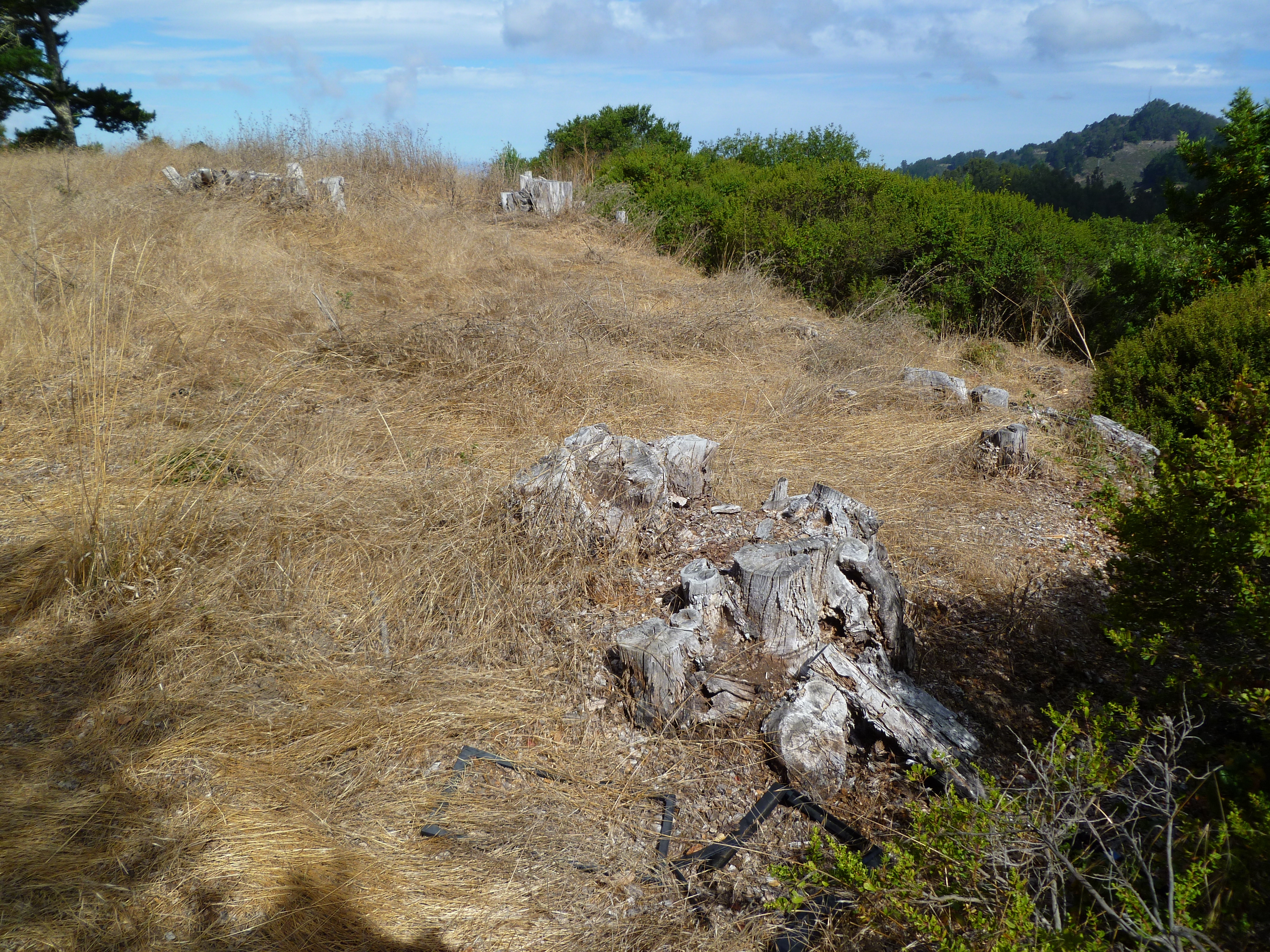
Anyone who is familiar with native plant restorations knows that most are covered in a thick layer of mulch.  When tree removals are required for a restoration, the mulch is usually composed of the chips of the trees that have been cut down.  The projects of UC Berkeley for which UC is applying for FEMA funding (based on its claim that the clear-cutting of all non-native trees will reduce fire hazards) say specifically that the clear-cut areas will be covered with 24 inches of mulch composed of the chips of the destroyed trees.

The UC Berkeley projects also claim that native vegetation will return to these clear-cut areas without being planted, based on an assumption that the seeds of native plants are dormant in the soil.  One wonders how these seeds would be able to germinate when covered with 24 inches of mulch, or how the sprouts could penetrate it.  Their proposal contains the fanciful suggestion that squirrels will plant the acorns of oaks in the mulch, which may be true of the oaks, but is an unlikely scenario for the many other native plants and trees which UC claims will populate their “restorations” without being planted.

Accommodating bees in native plant restorations

In the unlikely event that native plants would emerge from this tomb of mulch, they won’t find a population of bees to pollinate them in the future because bees will not be able to populate these projects:  “bees will not dig through a thick layer of mulch.”  Frankie suggests that “about 50% of your garden be left in bare dirt for the bees and other organisms.”  Studies indicate that it will take between 10 and 15 years for 24 inches of mulch to decompose.

Native plant restorations also require the use of herbicides.  A particularly toxic herbicide, Garlon, is used to kill the roots of the non-native trees after they have been cut down.  If the stump isn’t sprayed with this herbicide immediately, the tree will resprout.  The plans for the UC Berkeley projects say that retreatment with this herbicide is required twice per year for 10 years.  Although insecticides are considered one of the primary reasons why bee populations are declining in the United States, less is known about the effect of herbicides on bees and other insects, because testing of these chemicals is minimal. Some scientists believe that all pesticides (both insecticides and herbicides) are more harmful to bees and other animals than we presently know.*  Professor Frankie recommends against the use of all “synthetic chemicals” in a garden in which bees are welcome.

Would native plant restorations benefit from more bees?

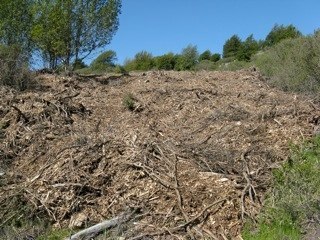
The restorations with which we are familiar in the San Francisco Bay Area are often unsuccessful.  That is, they are not usually populated by native plants unless they have been intensively planted, weeded, and irrigated.  Few managers of public lands have the resources for such intensive gardening.  UC Berkeley has been clear-cutting non-native trees on its properties for about 10 years, so we can visit some of those areas to see the results of such projects.  They are now weedy messes, as shown in this photograph.

Results of clear-cutting non-native trees, UC Berkeley project

The use of heavy mulches and herbicides in native plant restorations raises these questions:    Would using less mulch and herbicide attract more bees?  Would more bees benefit the native plants?  Would restorations be more successful if they were more attractive places for bees?  We don’t claim to know the answers to these questions.  However, we don’t think that the managers of these projects know the answers either.

Would scientific methods produce more successful native plant restorations?

What the managers of these projects call “adaptive management,” we call “trial-and-error.”  There is no science involved in these projects.  Control areas are not set up to test questions such as “Will a more bee-friendly environment benefit our projects?”    We think a more methodical approach to these efforts would be less wasteful and more successful.  If we could see more success, perhaps we would be less opposed to what seems like the needless destruction of non-native trees.  As it is, the consistently poor results do not justify the destruction that we witness.


* Schacker, Michael, A Spring without Bees, Lyons Press, Guilford, Connecticut, 2008.

Nature is resilient, animals can adapt to change

We are always puzzled by the widespread belief amongst native plant advocates that native animals are dependent upon native plants and the corollary argument that non-native plants are invasive because they have no predators.  We suspect that one of many reasons for this assumption is a lack of understanding about evolution.  That is, if you believe that animals are unable to adapt to new plant species, then you probably assume that the new plant species are not useful nor are they prey to native animals.  

The Gallup Poll tracks the opinions of Americans regarding evolution.  In 2010 a surprisingly small percentage of Americans (16%) believed in the evolution of man unguided by God.  Even amongst those who believe in evolution, it is often seen as an historical process that moves too slowly to be perceived.  Science has only recently found living examples of on-going evolution:

“A growing appreciation that organic evolution, like mountain building, is an ongoing rather than simply historical process has stimulated an infusion of evolutionary thinking into mainstream ecology.”(1)

The Soapberry Bug

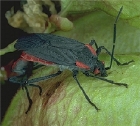
Soapberry bug on balloon vine. Scott Carroll, UC Davis

The soapberry bug (Jadera haematoloma) is an example of a native insect that has changed genetically in less than 100 generations over a period of 20 to 50 years in response to a new non-native plant host. 

The soapberry bug is named for the plant upon which it depends for both food and reproduction, the Sapindaceae family (‘Soapberry’ family).  In southern Florida, the native host plant of the soapberry bug was the balloon vine (Cardiospermum corindum).  As its name suggests, its seed is large and round.  The soapberry bug that feeds on that seed has a large jaw–up to about 70% of its body length–that enables it to get the seed into its mouth. 

In the 1950s a new member of the Sapindaceae family of plants was introduced to southern Florida, the Chinese flametree (Koelrueleria elegans) as an ornamental.  Its seed is much smaller than the seed of the balloon vine.  The soapberry bug quickly made a transition to its new host and over time it evolved several adaptations to it.  The jaw of the soapberry bug that feeds on the flametree is much smaller, as little as 50% of its body length. 

The life cycle of the soapberry bug has also changed and is better suited to the brief, simultaneous availability of seeds of its new host, the flametree:  “The flametree-specialized race [of soapberry bug] has a briefer development time (and thus an earlier age at first reproduction), greater fecundity, and exhibits greater expenditure of effort towards reproduction than the balloon vine race of J. haematoloma from which they originated.”(2)

In south Florida, the soapberry bug now has two genetically distinct races that are suited to their specific hosts–one native, one not.  The original race has not changed where its host is the native balloon vine.  The soapberry bug is not very mobile, so these two populations are physically separated.  This is an example of increased genetic biodiversity in response to an introduced plant. 

There are 400 genera and 1,500 species of plants in the Sapindaceae family all over the world(3), so we should not be surprised to find many other examples in the scientific literature of insect hosts that are adapted to them, whether they are native or introduced plants, as well as differences in those insects that are suited to the specific plants and/or their locations.  The soapberry bug isn’t an isolated example of an insect that has rapidly evolved to adapt to new hosts.  On the other hand, science cautions us against generalizing to all insects. 

We offer our readers three sources of information, depending upon their scientific knowledge.  The National Public Radio story about soapberry bug evolution is addressed to the layman.  At the opposite extreme, the citation in our footnotes is addressed to scientists with expertise in genetics.  The middle ground, from which we drew most heavily, is a website about soapberry bugs

Cheerful conclusion

As we often do, we conclude cheerfully that nature is remarkably resilient.  Although nature is less fragile than native plant advocates believe it to be, we don’t take that as an invitation to abuse it.  We treat nature with respect, and that includes taking care of what is here, whether it is native or non-native.  


(1) Carroll, Scott P., et. al., “Genetic architecture of adaptive differentiation in evolving host races of the soapberry bug, Jadera haematoloma,” Genetica, 112-113: 257-272, 2001

The Bees of Berkeley

Gordon Frankie is a Professor in the Department of Environmental Science, Policy and Management at UC Berkeley.  He has been studying the preferences of bees in northern California for over 20 years.  In 2002 he published an article in Fremontia, the journal of the California Native Plant Society, reporting on the preliminary results of his study.*

First, a word about the methods used in his study.  His research team visited the residential gardens of north Berkeley and Albany twice per week for three years, 1999 to 2002.  In the first stage of the study, the team identified the plants that were being visited by bees.  In the third year, they focused on counting the number of visits made to the identified “bee plants” by each species of bee.

The plants of Berkeley

Frankie’s team reports having identified 600-700 different varieties of non-native plants in the study area.  Native plants were defined as those that occur historically only in northern California.  Only 50 species of native plants were identified in the study area.

The bees of Berkeley

Frankie was surprised by the diversity of the bee population found by his research team.  They report having identified 74 different species of bees (updated on his website to 81).  Of those, only two were non-native bees (the European honeybee and the leaf cutting alfalfa bee).  Putting these numbers into perspective, there are approximately 1,600 species of bees in California and about 4,000 known to occur in the U.S.  Frankie reported that the population of European honeybees in the study area has declined significantly in the past 10 to 15 years.

What do the bees of Berkeley want?

The bees were observed visiting a small number of the total number of flowering plants available to them.  Only 72 species of flowering plants were visited by bees often enough to be counted by this study as “bee plants,” about 10% of the total number of flowering plants available to them.  Fifty-three of the “bee plants” were non-native and 19 were natives. 

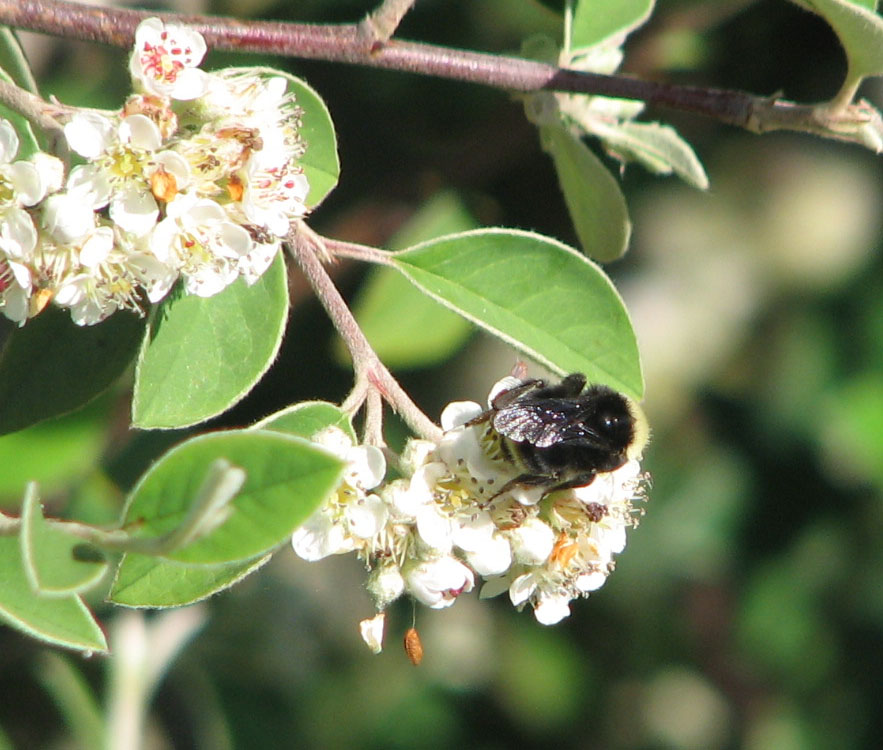
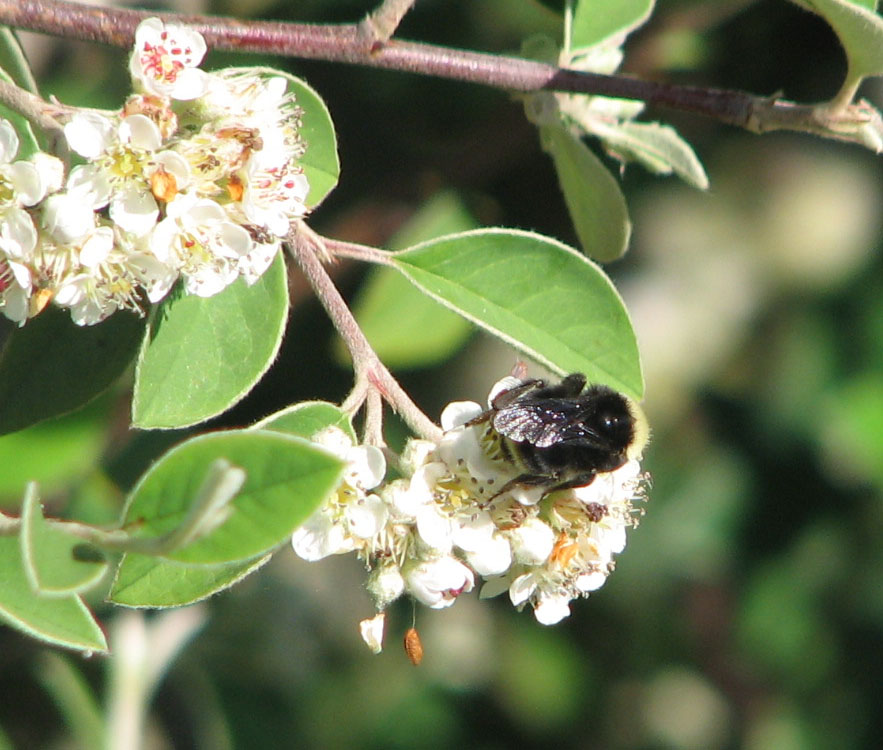
Native bumblebee on non-native cotoneaster, Albany Bulb, Albany, California

While the bees of Berkeley are using a higher percentage of the available native plants (38%) than they are of non-native plants (8%), the percentage of non-native plants they are using is nearly 75% of all the flowers they are using.   Clearly, the non-native plants are important to the bees of Berkeley.

Frankie explains that many non-native plants are not useful to bees because they have been cultivated for looks, rather than for the nectar and pollen needed by the bees.  However, on his website, he updates his research with some strong recommendations to include both natives and non-natives in our gardens both for the benefit of the bees and the benefit of native plants.

Non-native plants extend the blooming period in our gardens, which provides food to the bees for a longer period of time:

“California native [plants] tend to flower in early spring and summer, while non-native ornamentals bloom mainly in late summer to fall, so a combination of both would be ideal for attracting the highest potential density of bees.”

Also, when our gardens attract more bees, all the plants in our gardens benefit from their pollination services, which will also benefit the native plants in our gardens:

“If your priority is a healthy garden, it makes good ecological sense to consider your plants’ bee-attractiveness, rather than focusing exclusively on whether one hundred percent of your plants are natives.  Even if your priority is to have a native garden, it can be highly advantageous to include even a couple of exotic plants on the basis of their bee-attractiveness.  The bees they attract will help your natives thrive.”

Frankie reminds us that the bees don’t care about the nativity of the plants that they use. 

Insects and other wild animals make no distinction between weeds and plants we put in our gardens.  From the perspective of the bee, any plant that provides quality pollen and nectar is attractive.  For the short period they are in bloom, weeds such as dandelions and white clover provide bees with good sources of pollen and nectar.”

Opening our minds to the benefits of non-native plants

The bees of Berkeley remind us that the obsession with native plants is a human hang up that is not shared by animals.  They consider the nativity of the plants that are useful to them to be irrelevant.  So should we. 


* Gordon Frankie, et al, “Bees in Berkeley,” Fremontia, July/October 2002

Evolution didn’t stop in 1492

One of the most appealing of the many arguments used by native plant advocates in support of their ideology is the evolutionary concept of “co-evolution.”  Co-evolution is defined by Forgotten Pollinators(1) as “The idea in evolutionary ecology that certain mutualistic organisms have directed or redirected each other’s evolutionary trajectory.”  The implication of this theory is that plants and animals that have evolved together are interdependent and that loss of a particular plant will result in the loss of the animals with which it evolved.  Native plant advocates sometimes describe these relationships as “a lock and key,” implying that native plants and animals fit together in a mutually beneficial relationship which is exclusive. 

Those who believe this theory are obviously deeply committed to saving all native plants because they believe the loss of any single plant would inevitably lead to the loss of the animals that are dependent upon it.  Likewise, non-native animals are often exterminated based on the assumption that they compete with native animals and that loss of native animals will lead to the loss of native plants.

There are three problems with this theory. First, while there are some examples of truly exclusive co-evolved relationships in which both species cannot survive without the presence of the other, the number of such relationships is quite small.  Second, even these relationships are not immutable because evolution has not stopped, and therefore other species may develop mutualistic relationships with the prior exclusively mutualistic species.  And third, organisms are opportunistic and are quick to take advantage of any new opportunities, meaning that many interactions observed between species in the wild are not co-evolved at all.  For example, the honeybee pollinates hundreds of species of North American plants and it didn’t evolve with any of them (since honeybees were introduced into North America from Europe, which had introduced them from Africa).

Why is “co-evolution” rare in nature?

When defining “co-evolution” Forgotten Pollinators adds this caveat, “Good examples of truly reciprocal coevolution are difficult to find.”  Although the concept of “co-evolution” has a certain logical appeal, the explanation for why it is rare in nature is even more logical:  it is a risky survival strategy in a world that is constantly changing.  If, for example, the specific plant upon which a specific animal depends doesn’t bloom or doesn’t return from its dormant phase because of a sudden, even temporary, change in the climate, the animal that is dependent upon that plant is out of luck.  Since such fluctuations of environmental conditions are common, natural selection does not favor the animal that is restricted to a single plant for which there is no substitute.  Such exclusive relationships therefore do not persist in nature.

Nature provides “back-ups” that will enable plants and animals to respond to fluctuating environmental conditions.  For example, few plants have a single pollinator.  Most have several, usually of several different types.  One bee may be a particularly effective pollinator of a particular plant, but that plant is probably also visited by a fly, a butterfly, a bird, a beetle, etc.  As humans do, plants and animals don’t just give up when conditions change.  We all look for and usually find other alternatives. 

Native bumblebee gathering nectar and/or pollen from non-native cotoneaster. Albany Bulb, Albany, California

“Evolution right under our nose”

The Science Section of yesterday’s New York Times features an article about evolution of animals in New York City In the most densely populated city in the country, founded nearly 400 years ago, 74% of the native plant species that existed when the city was founded in 1624, still exist there.(2)  San Francisco has an even lower rate of extirpation of its native plants since it was founded in 1850.  Ninety-seven percent of the 714 plant species known to exist in San Francisco in 1850 are still found in San Francisco

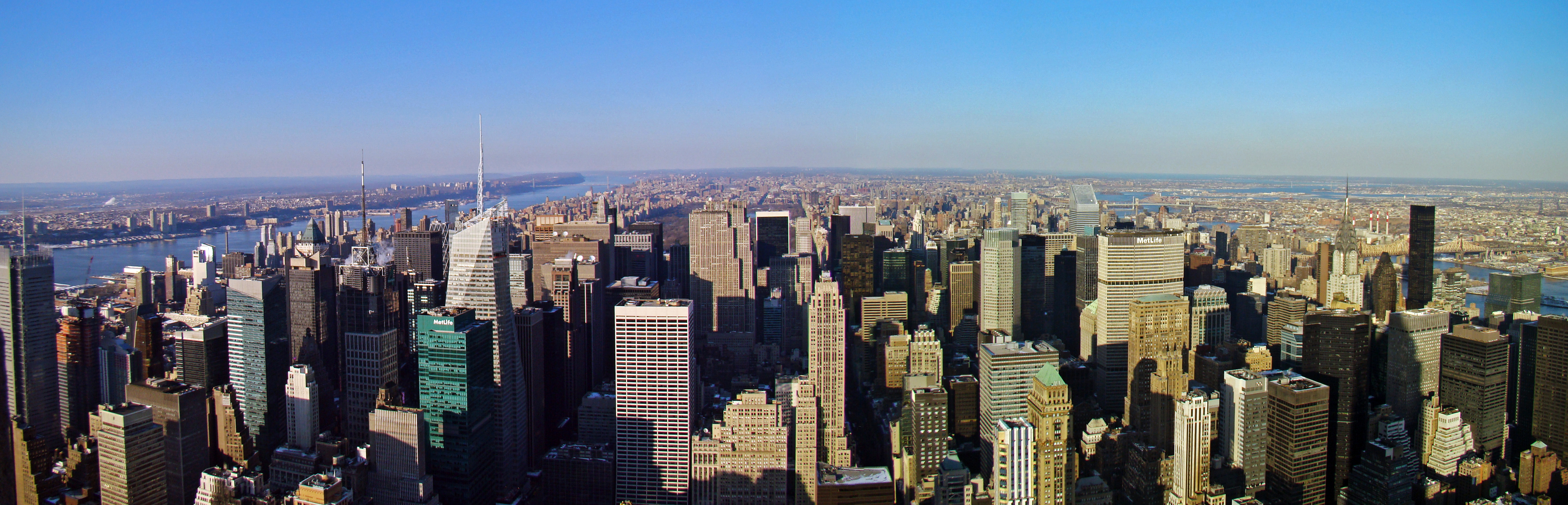
Midtown Manhattan as seen from the Empire State Building. Creative Commons Attribution Share Alike

The fascinating article in the New York Times reports that the ability of animals to evolve in response to changing environmental conditions has enabled their survival in the urban environment. 

The white-footed mouse is an example of a native animal that is thriving in New York City.  The urban environment creates isolated urban islands, such as parks.  Scientists find that virtually every park in New York City has a population of genetically unique white-footed mice.  In fact, “The amount of [genetic] differences you see among populations of mice in the same borough is similar to what you’d see across the whole southeastern United States,” according to the scientist studying this mouse in New York City.

It’s difficult to imagine a more altered, artificial environment than the road medians on Broadway on the Upper West Side of Manhattan, which are composed of landfill used to cover the subway tunnel.  However, scientists have found 13 species of ants living in some of these medians.  Nine of the thirteen species are native. 

Nature is opportunistic and resilient.  It isn’t necessary to eradicate non-native plants and animals to ensure the survival of native plants and animals.  What greater laboratory to illustrate the resilience of nature than New York City? 


(1) Buchmann and Nabhan, The Forgotten Pollinators, Island Press, 1996

(2) Duncan et al, “Plant traits and extinction in urban areas:  a meta-analysis of 11 cities,” Global Ecology and Biogeography, July 2011

The Sierra Club redefines “recreation”

In the current edition of the newsletter of the local chapter of the Sierra Club, the Club explains why it doesn’t like the revised Recreation and Open Space Element (ROSE) of San Francisco’s General Plan.  The Club has a long list of complaints about the new ROSE, but the one that caught our eye was this particular criticism:

“The draft ROSE talks about the benefits of open space for physical fitness through exercise and recreation, but these one can do on city streets and in gyms.”

–          The Yodeler, June 29, 2011

In the same article, the Sierra Club redefines “recreation” as follows:

“…the draft [ROSE] neglects the values of respite, quiet contemplation, and undisturbed wildlife viewing… The document does not talk about the one thing that only parks can provide, the experience of nature.”  Ibid.

In other words, in the opinion of the Sierra Club, public parks are for the benefit of plants and animals.  The public is welcome to look at the plants and animals, so long as they do not disturb them in doing so.  However, if the public seeks more active forms of recreation, such as playing ball, hiking, or riding a bike, the Club invites them to take to the streets or join a gym.

Having debated park issues with the leadership of the Sierra Club many times and observing their advocacy closely, we are well aware of their rather narrow view of the purpose of parks.  However, we think it is unlikely that most Sierra Club members realize that their organization is actively trying to prevent all traditional forms of recreation in their parks.  We therefore shine a bright light on the role that the Sierra Club plays in turning urban parks into native plant museums.  In “Fortress Conservation:  The loss of recreational access” we described three specific examples of parks in the San Francisco Bay Area in which recreational access has been restricted as the result of advocacy and lawsuits by the Sierra Club and other organizations which share their view.

“Active” vs “Passive” Recreation

We were originally introduced to the Sierra Club’s objectives for our urban parks in the Bay Area with the terms, “active” and “passive” recreation.  The Sierra Club advocates for “passive” recreation, which it defined in its article about the ROSE as “respite, quiet contemplation, and undisturbed wildlife viewing.”

The Berkeley Meadow

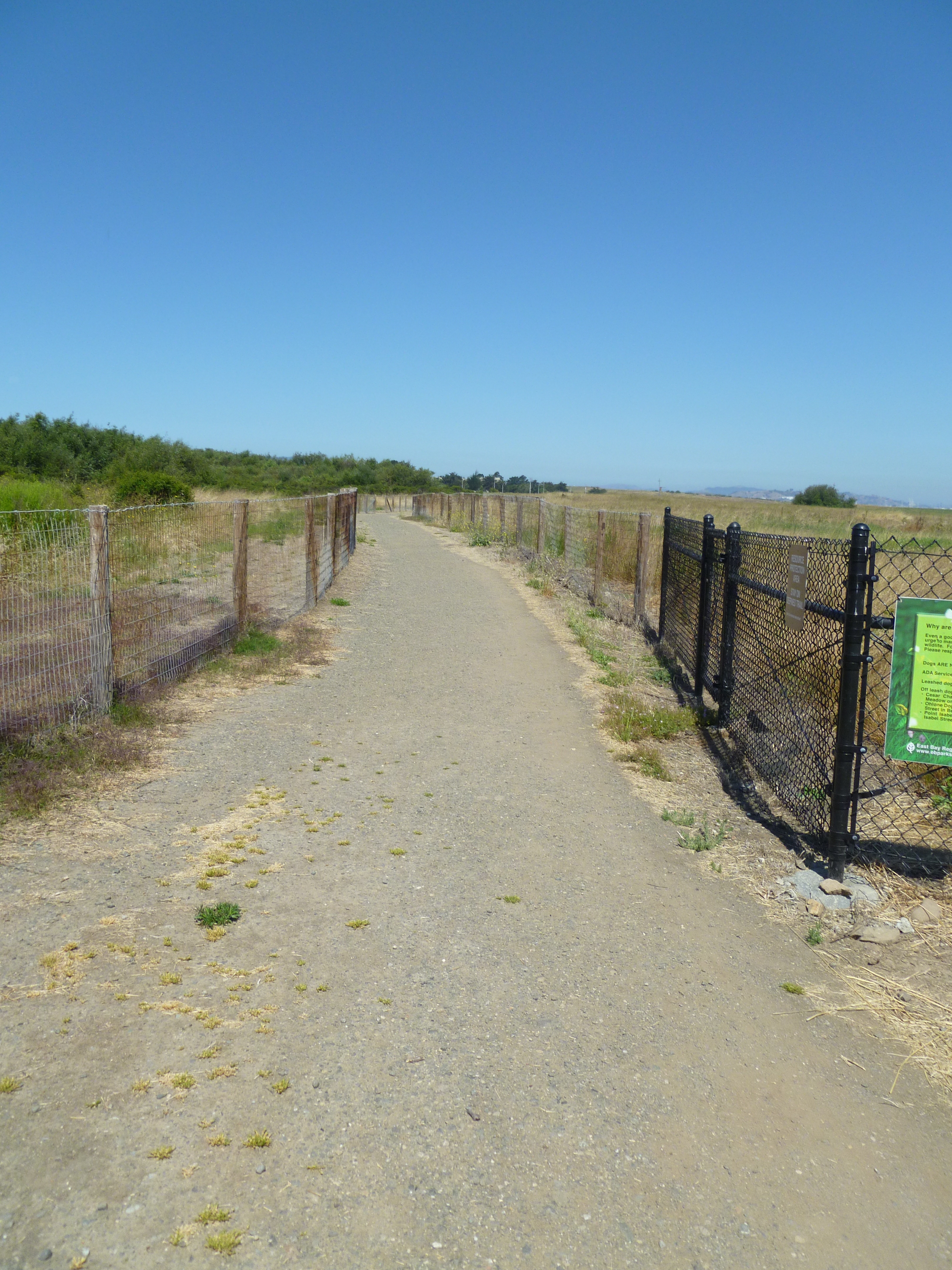
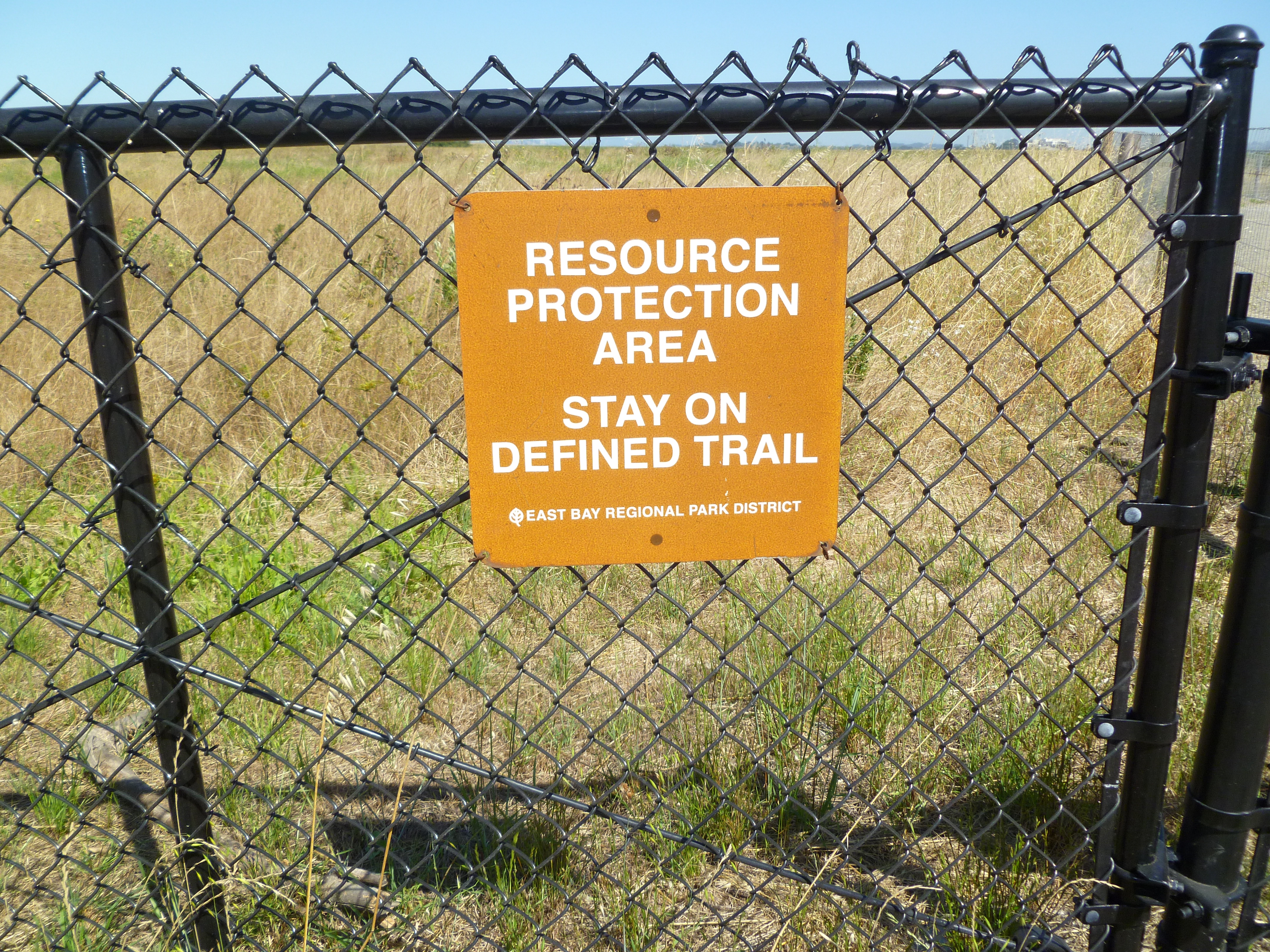
We visited a park today which is an example of what the Sierra Club has in mind.  The 72-acre Berkeley Meadow at the foot of University Ave in Berkeley is one of many parks in the Bay Area that reflects the wishes of the Sierra Club.  The Berkeley Meadow is part of the Eastshore State Park that is owned by the State of California, but operated by East Bay Regional Park District.  The Berkeley Meadow was at one time part of the San Francisco Bay, until it was created with landfill and used as a city dump until the 1960s.  The East Bay Regional Park District “restored” the meadow over a period of 5 years at a cost of $6 million.  It is now a huge fenced pen with a fenced trail running diagonally through it.  Bicycles and dogs on leash are both prohibited from using this fenced path.  One wonders what harm could come to the plants and animals that reside on the other side of the fence.  The meadow is predominantly non-native annual grassland, with willows in wetter portions of the meadow and some coyote bush scrub in the grassland.  (see video cartoon about the Berkeley Meadow:  “Grandpa takes the kids to the plant zoo.”)

The Berkeley Meadow

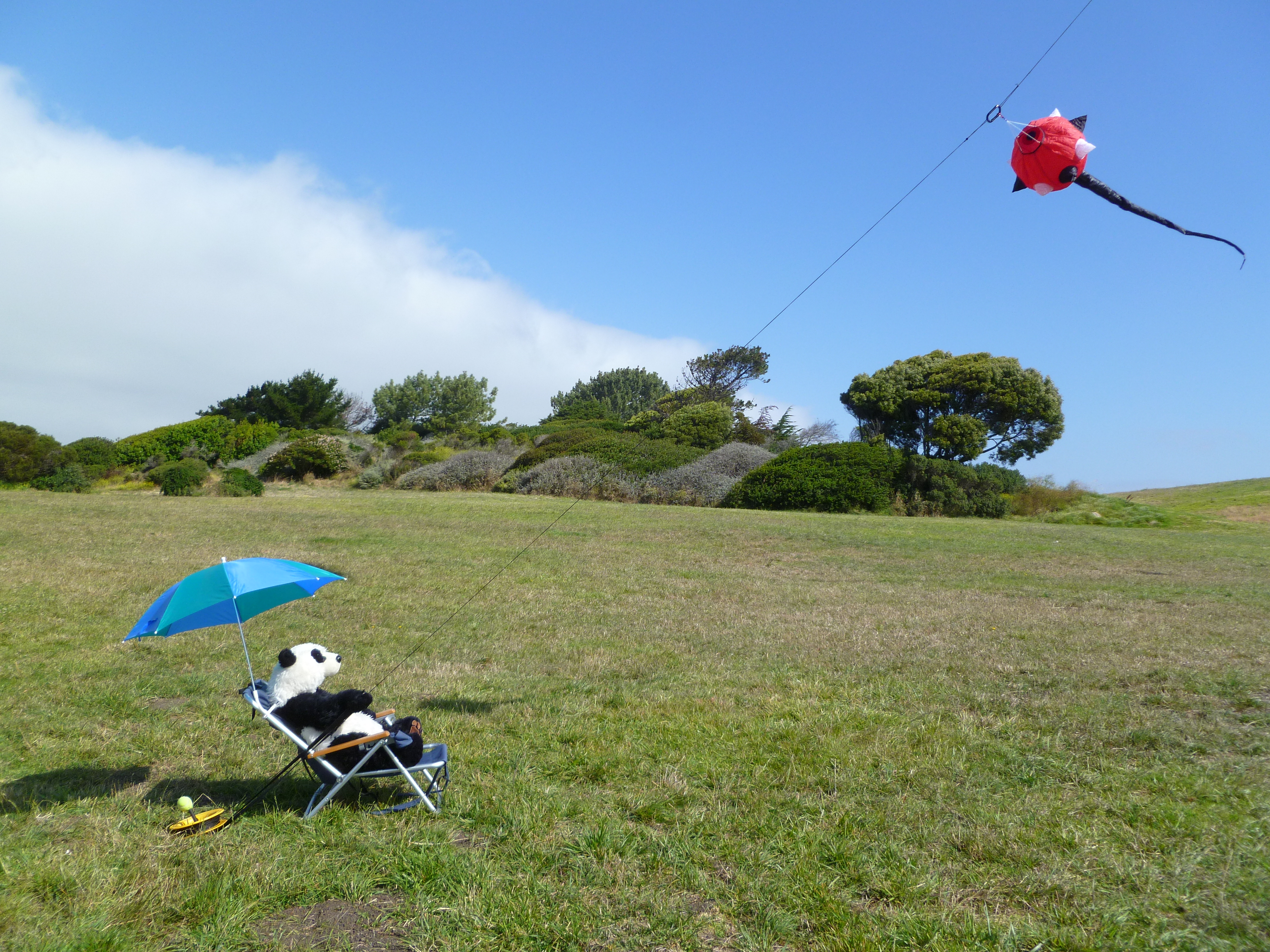
Cesar Chavez Park due west of the Berkeley Meadow provides a multiuse contrast.  Cesar Chavez Park is a Berkeley city park, NOT a park owned by East Bay Regional Park District.  This 90-acre park provides a wide variety of recreational opportunities, including a popular kite-flying area, an off-leash dog park, a restricted “natural area” (predominantly non-native plants), and a fenced area in which burrowing owls nest half of the year.  The unfenced paths are used by bicycles, joggers, people walking, some with dogs on leash.  Cesar Chavez is a successful park, enjoyed by a wide variety of visitors every day.  The Sierra Club made every effort to prevent this multi-use park from accommodating all forms of “active” recreation.

Multiuse recreation at Cesar Chavez Park: a panda flying a kite

Environmentalism has been hijacked by extremists

Let us be perfectly clear about our opinion of “active” vs “passive” recreation.  We do not object to parks such as the Berkeley Meadow in which human access is severely restricted.  What we object to is that the Sierra Club wishes to turn all parks in the Bay Area into native plant and animal reserves in which humans are not welcome, except as passive observers.  This is an example of the extremism that has earned environmentalists the reputation of being unreasonable.

In 2004, the authors of the controversial paper entitled, “Death of Environmentalism” reported that “The number of Americans who agreed that, ‘Most of the people actively involved in environmental groups are extremists, not reasonable people,’ leapt from 32 percent in 1996 to 41 percent in 2000.”  Peter Kareiva, Chief Scientist of the Nature Conservancy, in his recent talk in San Francisco sponsored by the Long Now Foundation (a summary of this talk is available on the Save Sutro website), reported that over half of those surveyed in 2011 now agree that “environmental groups are extremists, not reasonable people.”  This loss of support for environmentalism is a great tragedy, for there is much legitimate work to be done by environmental organizations which are now distracted by tangential issues such as creating native plant museums in our urban parks.

Contradictory Mission of the National Park Service

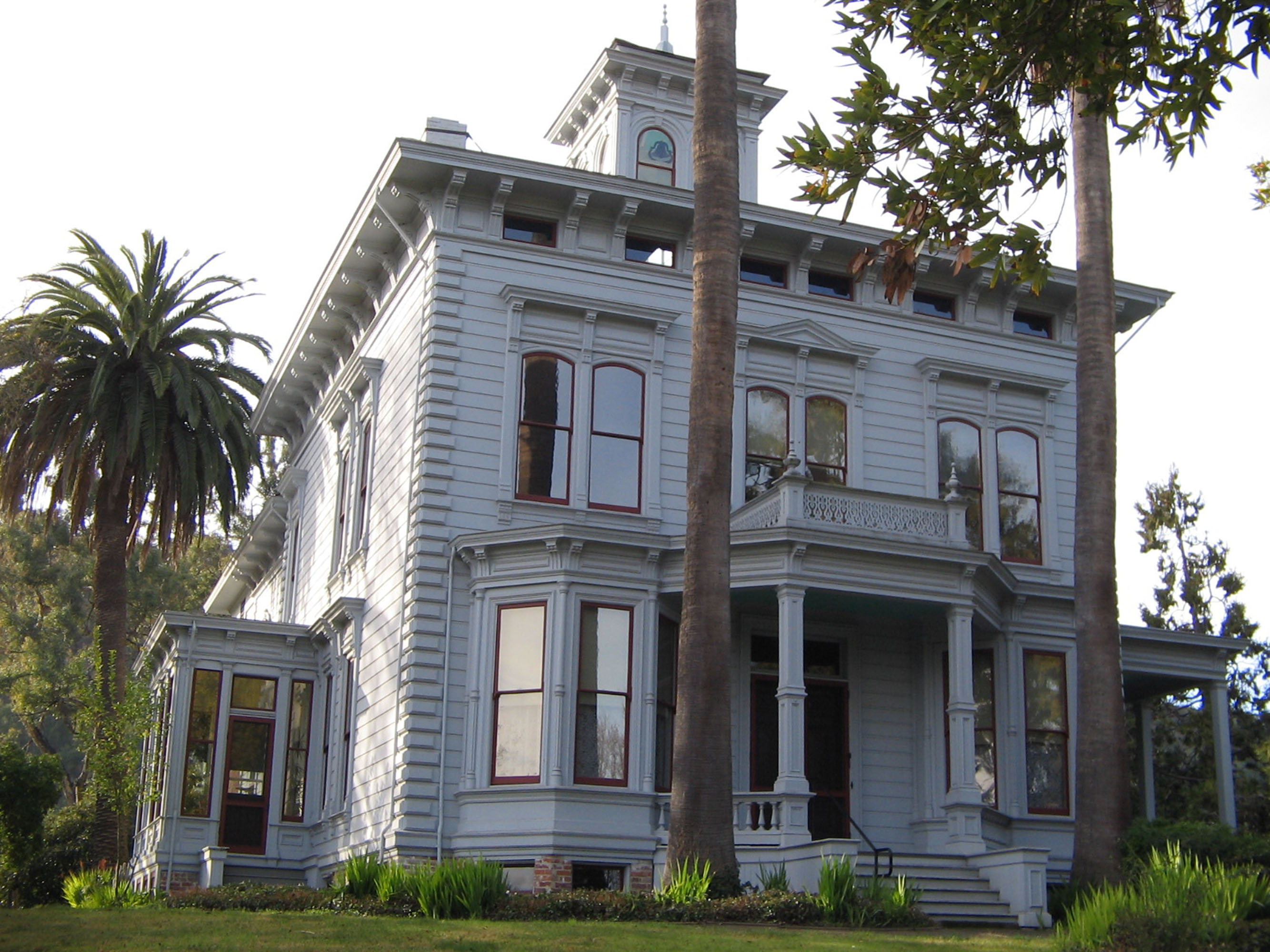
As we have reported on Million Trees, the National Park Service (NPS) is eradicating most non-native trees on its properties in the Bay Area.  (see “Our Mission”)  We were therefore taken aback when we stumbled on a news report in the Martinez News-Gazette about the NPS destroying 20 redwoods at the John Muir National Historic Site, which is an NPS property.  It seems these redwoods are the victim of the confused, sometimes contradictory mission of the NPS.

Update:  The links in this article are no longer functional.  We therefore provide a new link that corroborates the statements we have made in this article:  “John Muir National Historic Site:  Strentzel-Muir Gravesite Plan”

Redwoods are, of course, one of California’s most revered native trees.   However, in this particular location, the NPS chooses to destroy them because they were not planted by Muir’s family.  Therefore, the NPS does not consider them “historically accurate.”  NPS says their mission requires that they cut them down.

Ironically, it is the NPS that planted those particular redwoods only 20 years ago.  They planted them after destroying the non-native eucalyptus trees that were in fact historically accurate because they were planted during Muir’s lifetime.  The eucalyptus trees were presumably destroyed because they aren’t native to California.  The redwood trees were planted in their place because NPS says their policies require them to replace every tree they destroy.

Are you confused by this story?  So are we.  We think NPS must be confused as well.  They seem to have several contradictory policies.  Their obsession with native vegetation required them to destroy eucalyptus trees 20 years ago.  Their policy requiring them to replace every tree they destroy obligated them to plant native redwoods.  Twenty years later their policy requiring them to adhere to the historical record has obligated them to cut the redwoods down.  Presumably, that same policy will require them to replant eucalyptus trees.  Where will they go from there?  One wonders.

John Muir National Historical Site, NPS photo

A little historical perspective

The NPS website for the John Muir National Historic Site describes John Muir as the “Father of the National Park Service.”  They also credit him with the creation of the Sierra Club and as the person who convinced President Teddy Roosevelt to create many of our most famous national parks:  Yosemite, Grand Canyon, Sequoia, and Mt. Rainier.  Is the destruction of two generations of mature trees any way for the NPS to honor its father?

The John Muir National Historic Site in Martinez is the home that was built by Muir’s wife’s parents in 1882.  Muir and his wife moved into the home in 1890 after his wife’s father died.  Muir lived in the home for the last 24 years of his life.

Muir’s daughter reported that her father bought about a dozen different varieties of eucalyptus from a neighbor and she helped to plant them on the property.  The property was planted with many non-native plants and trees, including palms that now tower over the property.  Clearly, the Muir family didn’t share the NPS obsession with native plants.  Nor did he think too highly of those who destroy trees:

Any fool can destroy trees.  They cannot run away; and if they could, they would still be destroyed, chased and hunted down as long as fun or a dollar could be got out of their bark hides, branching horns, or magnificent bole backbones.”

–John Muir, Our National Parks, pg 364

As public policy and horticultural fads lurch from one extreme to another, the trees are the losers in man’s conceit.   And those who love trees stand helplessly by, watching the destruction, powerless to prevent it, although we pay for it with our taxes.

The aesthetics of native plant restorations in the San Francisco Bay Area

The goal of native plant restorations in the San Francisco Bay Area is to replicate the landscape prior to the arrival of Europeans.  This strategy is based on the assumption that the landscape was not radically altered by  Native Americans that lived in the Bay Area for approximately 13,000 years before Europeans arrived.

Though there were a few early explorers sailing along the coast of California, none were known to have entered the bay or set foot on the San Francisco peninsula until Don Gaspar Portolá in 1769.  Portolá, a captain in the Spanish army, was appointed governor of Alta and Baja California and assigned the task of establishing colonies here.

When Portolá set out on that mission in 1769, his destination was Monterey, which had been described in “glowing terms” by an explorer 167 years earlier.  Only because Portolá lost his way, did his party travel further north to stumble onto San Francisco Bay.  When Portolá realized he had gone too far north, he sent his men ahead.  They walked along Ocean Beach until they reached the Golden Gate, where they could see from the headland cliffs the entire panorama of San Francisco Bay in November 1769. (1)

This was not the destination Portolá was looking for.  They quickly turned around and left.  San Francisco was not occupied by Europeans until 1776 when the presidio (Spanish for “fort”) and mission were established.  Ironically, the same year that America declared its independence from Britain on the East Coast, the West Coast was just being occupied by the Spanish. 

The first European settlement on the East Coast was in Jamestown, Virginia in 1607, nearly 200 years earlier than the West Coast.  Therefore the target landscape of native plant restorations on the East Coast is nearly 200 years earlier than those on the West Coast.

These pre-settlement dates are selected by native plant advocates as the “ideal landscape” based on their assumption that the population of Native Americans was small and their impact on the landscape minimal.  However, many archaeologists have concluded that by the time of the first European settlement on the East Coast in 1607, the native population had been nearly eradicated by disease brought to them by the earliest European explorers over one hundred years earlier.  This suggests that the landscape found in 1607 was in fact not the pristine landscape it is presumed to have been because the Native American population had been significantly larger than that which early settlers found when they arrived. (2)

Although there is less evidence of such early epidemics on the West Coast, archaeologists speculate that there may have been a similar decimation of the native population by disease introduced by early explorers before European settlement of the Bay Area in 1776.

We have an interest in what Bay Area landscape looked like in 1769/1776 because this is the landscape that native plant restorations are aiming for.  The oldest surviving description of the San Francisco Bay is by a sailor into San Francisco Bay, Don José Canizares in August 1775. He described the East Bay as “broken hill country with very little woodland, bay trees and oaks here and there making up what there is.”   He described San Pablo Bay asbordered by rough hill country without trees except for woodlands in two coves to the southwest, the rest is barren, irregular, and of melancholy aspect.” (3)


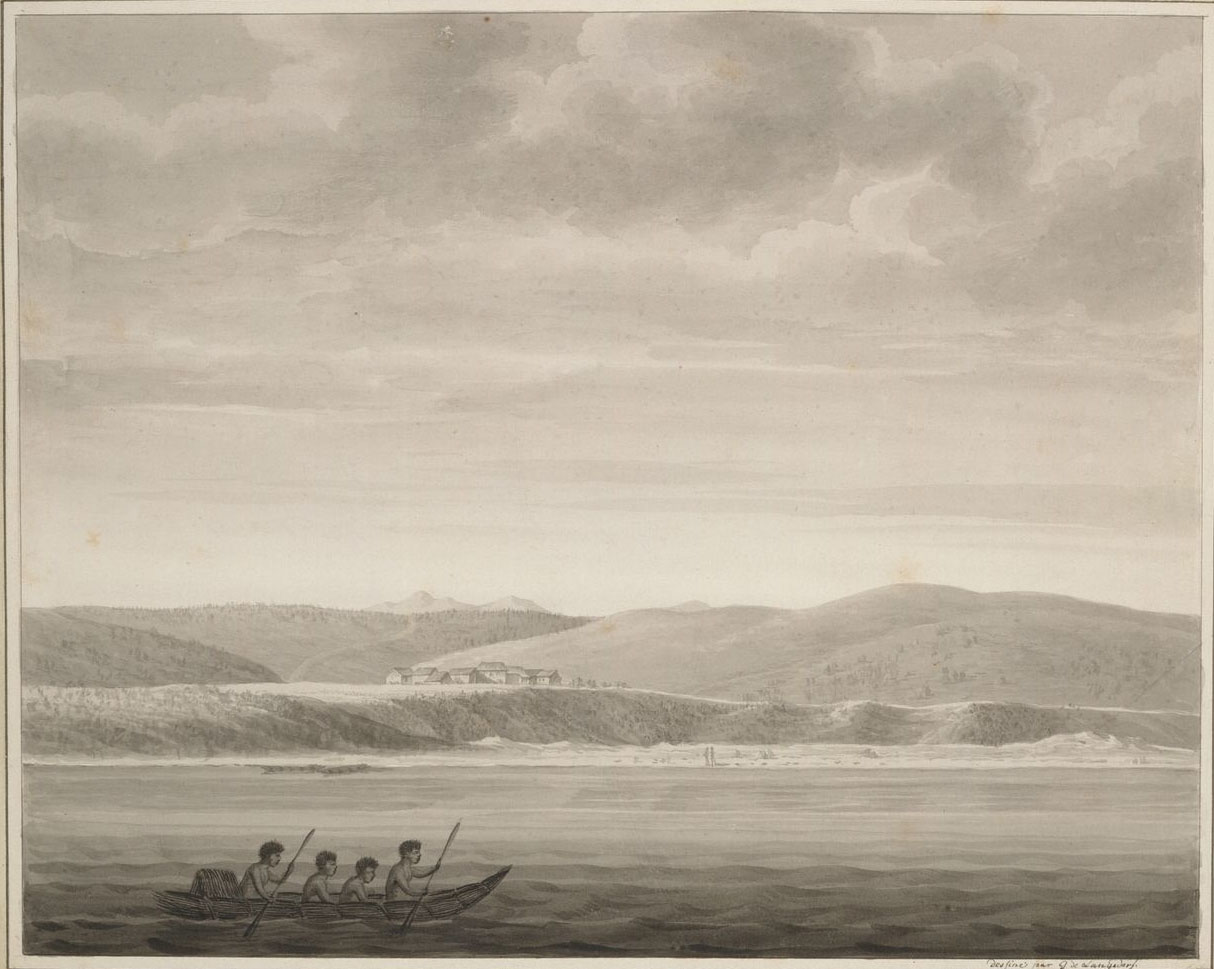
“Spanish establishment of San Francisco in New California” artist to von Langsdorff expedition, 1806. Bancroft Library

Other early visitors to San Francisco described the landscape they saw:

“…the sides of the hills, though but moderately elevated, seemed barren, or nearly so; and their summits were composed of naked uneven rocks.”

–          George Vancouver, 1792

“…we rode onward to the Mision [sic].  The road thither is through loose sand, and is not good for either walking or riding.  The surroundings are mostly bare, and the hills covered in places with low shrubs, afford but little of anything interesting.”

–          George Heinrich von Langsdorff, 1806

“The fogs, which the prevailing sea-winds blow over the coast, dissolve in summer over a heated and parched soil, and the country exhibits in autumn only the prospect of bare scorched tracts, alternating with poor stunted bushes, and in places with dazzling wastes of drift sand.”

–          Otto von Kotzebue, 1815

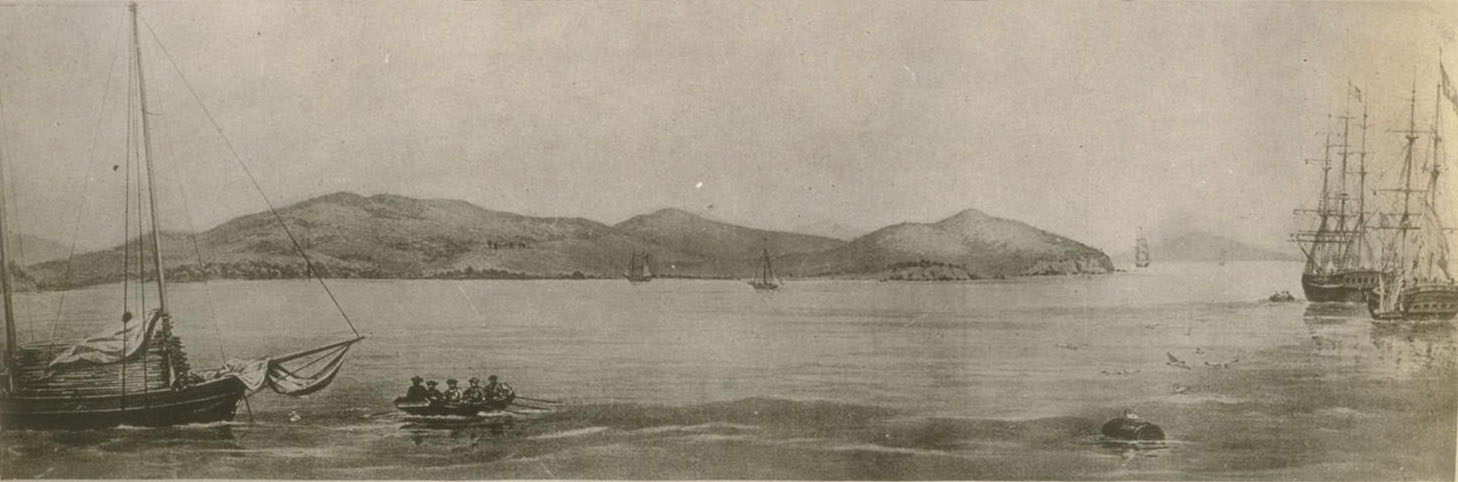
Yerba Buena (now San Francisco) in the Spring of 1837. First known print of San Francisco. Bancroft Library

 “Beyond, to the westward of the landing-place, were dreary sand-hills, with little grass to be seen, and few trees, and beyond them higher hills, steep and barren, their sides gullied by the rains.”

–          Richard Henry Dana, in Two Years Before the Mast, 1835

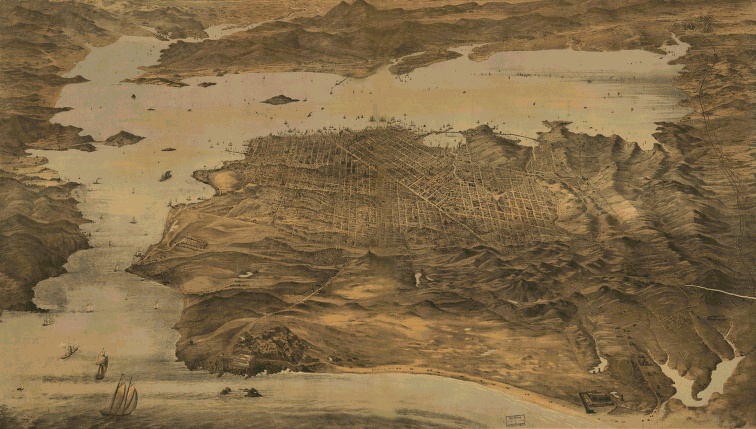
Bird’s eye view of San Francisco in 1868. US Library of Congress

These historical facts and observations of early visitors to the San Francisco Bay Area raise these questions in our minds:

  • Is there any historical or horticultural logic in selecting the landscape of 1769/1776 as the goal of native plant restorations?
  • Is the landscape of 1776 more aesthetically pleasing than the landscape of today?
  • Does the landscape of 1776 seem to be more “biodiverse” than the landscape of today?
  • How have conditions changed since 1776?  How do air quality, climate, and soil conditions compare to those that existed at that time? 
  • If growing conditions have changed significantly since then, can we expect the same plants to survive?


(1) Lewis, Oscar, San Francisco:  Mission to Metropolis Howell-North Books, Berkeley, CA, 1966

(2) Mann, Charles, 1491:  New Revelations of the Americas Before Columbus, Vintage Books, New York, 2005

(3) Cunningham, Laura, A State of Change:  Forgotten Landscapes of California, Heydey Books, Berkeley, CA, 2010