Oakland’s Vegetation Management Plan Is Headed in a Destructive Direction

Oakland has been trying to adopt a vegetation management plan (VMP) to mitigate fire hazards since November 2016.  The plan has been drafted three times in 2018, 2019, and 2020 and a draft Environmental Impact Report was also published in 2020.  All three versions of the plan were acceptable to me and many others.  Every version would have removed dead trees and thinned non-native trees on 2,000 acres of public land and 300 miles of roadsides in Oakland, leaving the tree canopy intact so that the forest floor would be shaded, suppressing the growth of weedy vegetation that ignites easily and keeping the forest floor moist, which retards fire ignition. 

Unfortunately, none of the proposed vegetation management plans were acceptable to native plant advocates who want all non-native trees in project areas in Oakland to be destroyed and the land replanted with native plants and trees.  The plan they are demanding is a native plant restoration, not a wildfire hazard mitigation plan.  Since they have successfully prevented Oakland from addressing wildfire hazards for eight years, we might assume they aren’t concerned about wildfire. 

A fourth version of the plan and a new Environmental Impact Report are expected to be published in September 2023 and there will be a new public comment period in October.  Based on written and oral public comments at public hearings, we predict that the revised plan is likely to be far more destructive than previous drafts of the plan.  Based on that prediction, I am alerting you to the need to read the revision and write a public comment.  Please ask to be notified of the publication of the plan by sending an email to info@oaklandvegmanagement.org .


Update:  The revised Oakland Vegetation Management Plan and revised Draft Environmental Impact Report were published on September 20, 2023.  These documents are available HERE.  There will be a public hearing by the Oakland Planning Commission on November 1, 2023.  The deadline for public comment will be November 4, 2023.  Comments can be submitted by email DEIR-comments@oaklandvegmanagement.org or by mail to Montrose Environmental, attention Ken Schwarz, 1 Kaiser Plaza, Suite 340, Oakland CA 94612.

When I have read the revised plan and its revised EIR, I will post a draft of my public comment on the draft by October 1st

– Webmaster, Conservation Sense and Nonsense, September 20, 2023


What do opponents of previous plans want?

There is a wide range of opinions about a vegetation management plan for Oakland.  I will use the public comment of the California Society of American Foresters (SAF) on the third version of the VMP as a representative opinion and the best available predictor of where the fourth revision is likely headed.  The entire comment of the Society of American Foresters (SAF) is available HERE and here are some of the revisions SAF is asking for

  • “Ecological restoration should be a goal of the VMP, including the establishment of native plant species where nonnative species dominate…Thinning of dense stands of nonnative tree species should only be done as part of an overall strategy of restoration, i.e., the goal of any tree removals should always be to eventually convert these stands to native tree or vegetation cover in order to build greater ecological resiliency.
  • “In concert with the goal of ecological restoration, adaptive management in light of climate change should guide management practices and restoration plans. Adaptive management strategies that incorporate new information and changing conditions will be critical to ecosystem restoration. Annual grasslands may become more dominant, oak woodlands less so in the planning area in the future as climate changes. Management targets in many cases will have to be based on anticipated future conditions.”
  • “However, if thinning is kept as the desired practice, we ask that you design each entry to be sufficiently intensive to assure that tree crowns will not close before the next thinning entry (10 years from now?) and indeed is sufficiently thinned to allow work towards establishing native vegetation in these stands.”
  • “The use of prescribed fire as a vegetation maintenance tool should have been considered and included in the VMP especially on ridges where fire moving from adjacent jurisdictions might occur, or along power-line transmission corridors.”
  • “The vegetation management zones along roadsides, especially along routes of egress, should be modified to extend 100 feet from roadside edges and should include any trees with underlying structural or health conditions that are tall enough to fall onto streets and roads. This may in some cases require looking outside of the 100-foot roadside clearance.”
  • “It is important that the use of triclopyr herbicides is included to treat cut stumps in eucalyptus to prevent sprouting. Glyphosate herbicides will not be effective in treating eucalyptus stumps and will result in resprouts.”
  • “There should be an Ecological Restoration Guide added to the appendices…This new appendix would outline the City of Oakland’s current ecological restoration efforts, identify stakeholders (e.g., city departments, Oakland Wildlands Stewards, etc.) and their roles…”

Native plant restoration, NOT wildfire hazard mitigation

The Society of American Foresters (SAF) is asking the City of Oakland to make a commitment to eradicating all non-native trees in project areas and replacing them with native plants.  Such a plan would not reduce wildfire hazards in Oakland because native vegetation is not inherently less flammable than non-native vegetation.  Most wildfires in California occur in native chaparral and native conifer forests.

The plan proposed by the Society of American Foresters (SAF) is a native plant restoration plan, NOT a wildfire hazard mitigation plan.  Their proposal would destroy much of Oakland’s urban forest, which would not be replaced by native trees:

  • Non-native trees were planted in Oakland in the 19th century because there were few native trees: “Vegetation before urbanization in Oakland was dominated by grass, shrub, and marshlands that occupied approximately 98% of the area.” (1)  Non-native tree species in the East Bay are adapted to soil and microclimate conditions that are not suitable for native species.
  • Grassland was the dominant vegetation type of pre-settlement Oakland partly because of the land management practices of Native Americans and the stock grazing of early settlers:  “Native Americans played a major role in creation of grasslands through repeated burning and these disturbance-dependent grasslands were maintained by early European settlers through overstocking of these range lands with cattle and sheep. Twentieth century reduction in grazing, coupled with a lack of natural fires and effective suppression of anthropogenic fires, have acted in concert to favor shrubland expansion.” (2)
  • Grassland in California is not native to California.  Mediterranean annual grasses were brought to California in the early 19th century by the grazing herds of Spanish-Mexicans.  California’s native bunch grasses are not adapted to heavy grazing by herds of domesticated animals.  The grassland of California is about 99% non-native (Allan Schoenherr, A Natural History of California, UC Press, 1992).  Attempts to convert annual grasslands to native bunch grass have not been successful.  A team of scientists at UC Davis spent $450,000 and 8 years trying to convert 2 acres of grassland to native bunch grasses without success.  Grassland that will replace our urban forest will not be native. 
  • Grass is easily ignited and fires move quickly through grassland, particularly in a wind-driven fire.  The deadly, destructive fires in Maui, Hawaii are a case in point.  When agricultural fields of sugar cane, pineapple and other tropical fruit left Maui they were quickly succeeded by non-native grass that was considered a factor in the spread of fire. (3)  Dormant, dry annual grassland in the East Bay Hills will be more flammable than the living vegetation that native plant advocates want to destroy.
  • A small redwood grove was the only pre-settlement exception to the otherwise treeless Oakland hills:  “…for thousands of years [the Oakland hills] were treeless meadows, visited seasonally under Indigenous management…The one exception was the redwood groves of the southern Oakland Hills, a restricted forest that extended a few miles eastward from upper Dimond Canyon over the ridgetop to the outskirts of Moraga.” (4) Much of this grove still exists today because coastal redwoods are vigorous resprouters when they are burned or cut down.
  • SAF also predicts a vegetation type-conversion from forest to grassland:   “Annual grasslands may become more dominant, oak woodlands less so in the planning area in the future as climate changes.” Grassland will naturally succeed to shrubland without regular burning, which SAF recommends to reduce fuel loads.
  • Prescribed burns in densely populated urban areas are rarely approved by Bay Area Air Quality Management District because they pollute the air and often cause uncontrolled wildfires. California law regarding liability for damage caused by prescribed burns was revised in 2022 to provide legal protections for those who manage prescribed burns.  The revised law lowers the standard for liability to gross negligence from a previous standard of simple negligence. (5)

Consequences of landscape conversion to grass and shrubs

Destroying thousands of trees will increase air pollution and reduce air quality.  Destroying thousands of trees will increase greenhouse gas emissions causing climate change by releasing the carbon stored by the trees that are destroyed and reducing carbon sequestration going forward because the destroyed forest will not be replaced by a forest of native trees.

There was little biodiversity in Oakland’s pre-settlement forest“Oakland’s original species composition has increased from approximately 10 tree species to more than 350…Today [1993], only 31% of existing trees are native to Oakland, the plurality of trees (38%) are native to Australia/New Zealand.”  (1)  Destroying thousands of non-native trees in Oakland will reduce the biodiversity of our forest.  A more diverse forest is more resilient, particularly in a changing climate, with extreme and variable weather conditions.

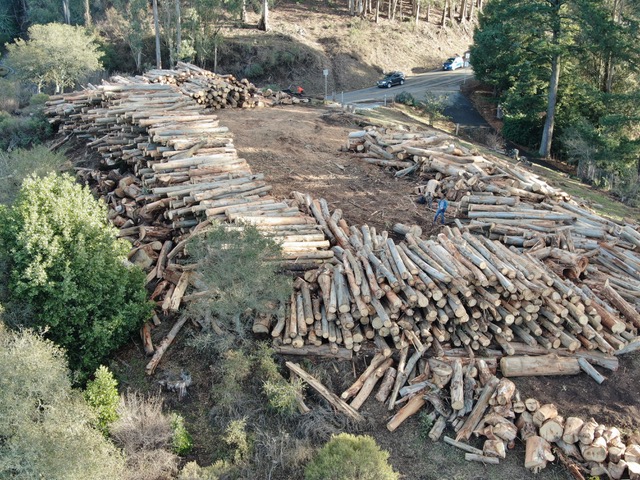
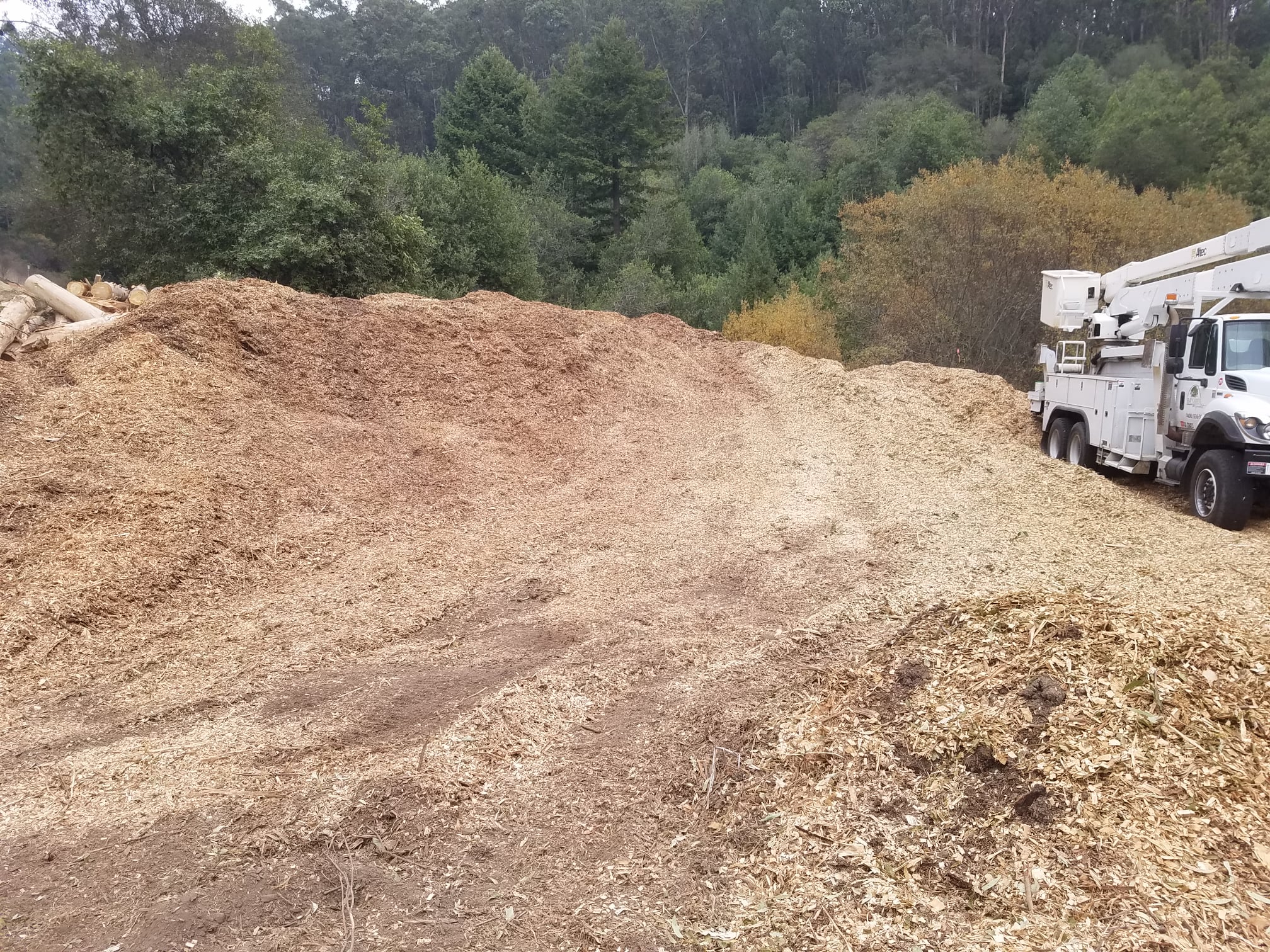
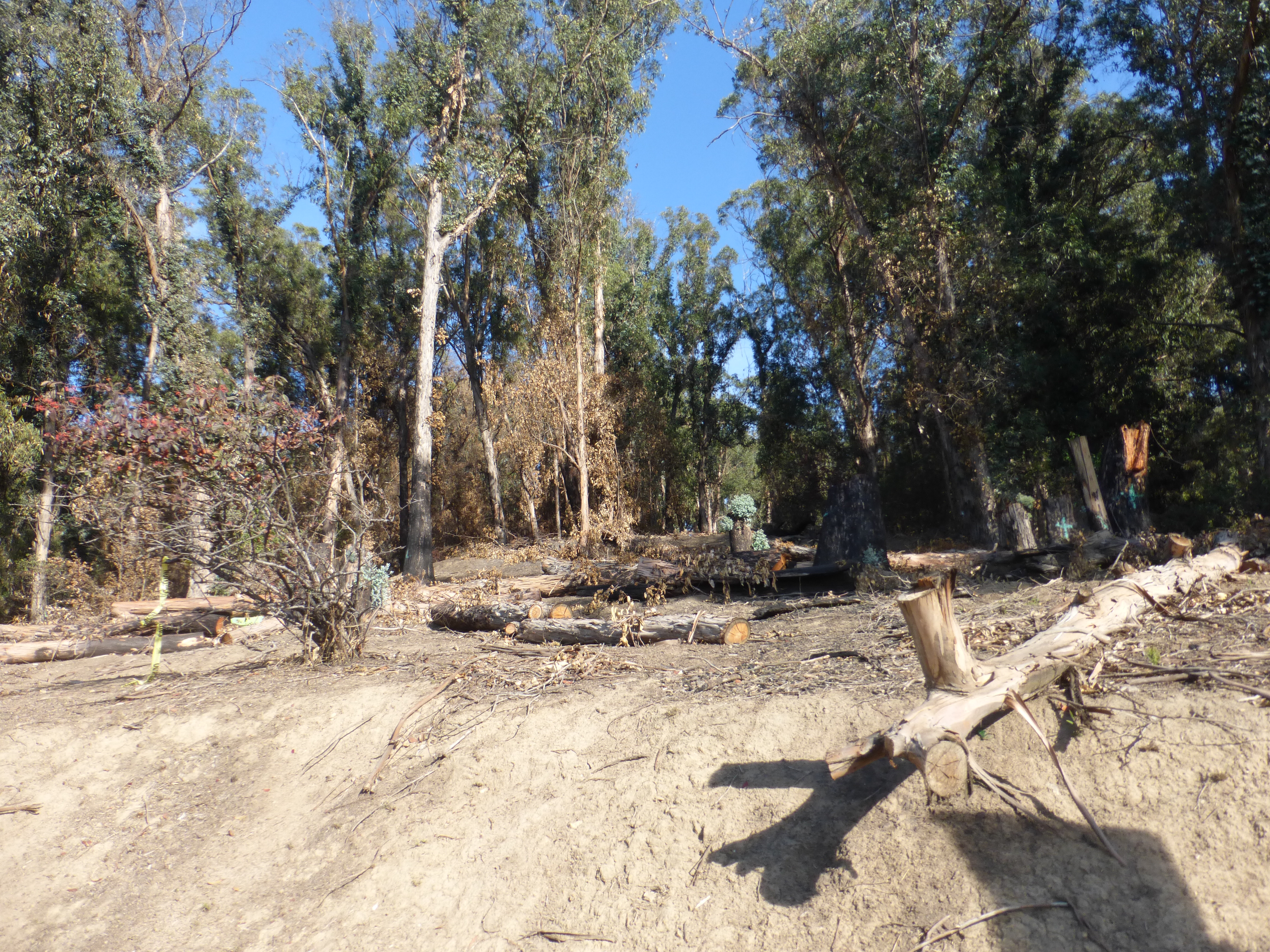
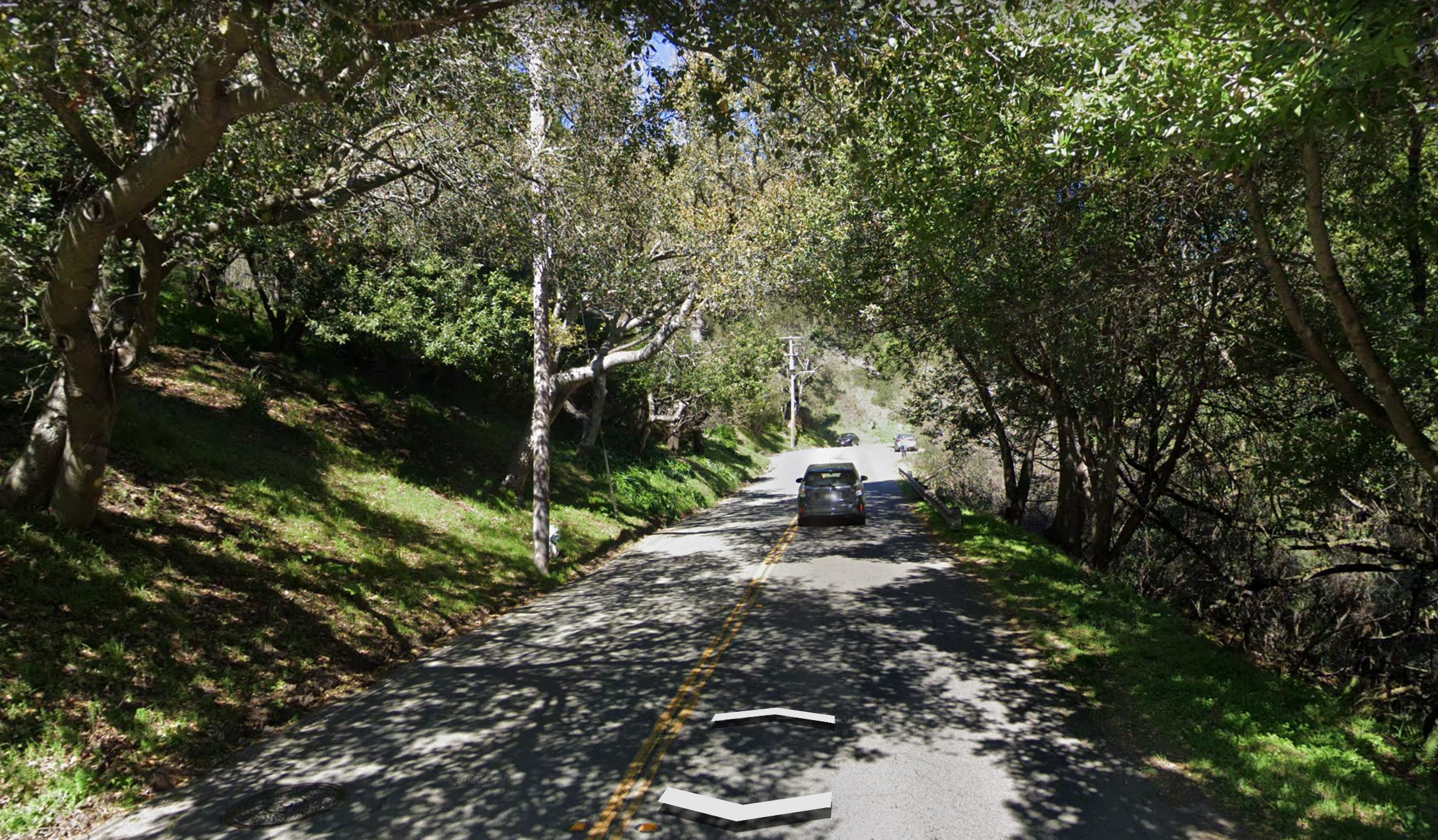
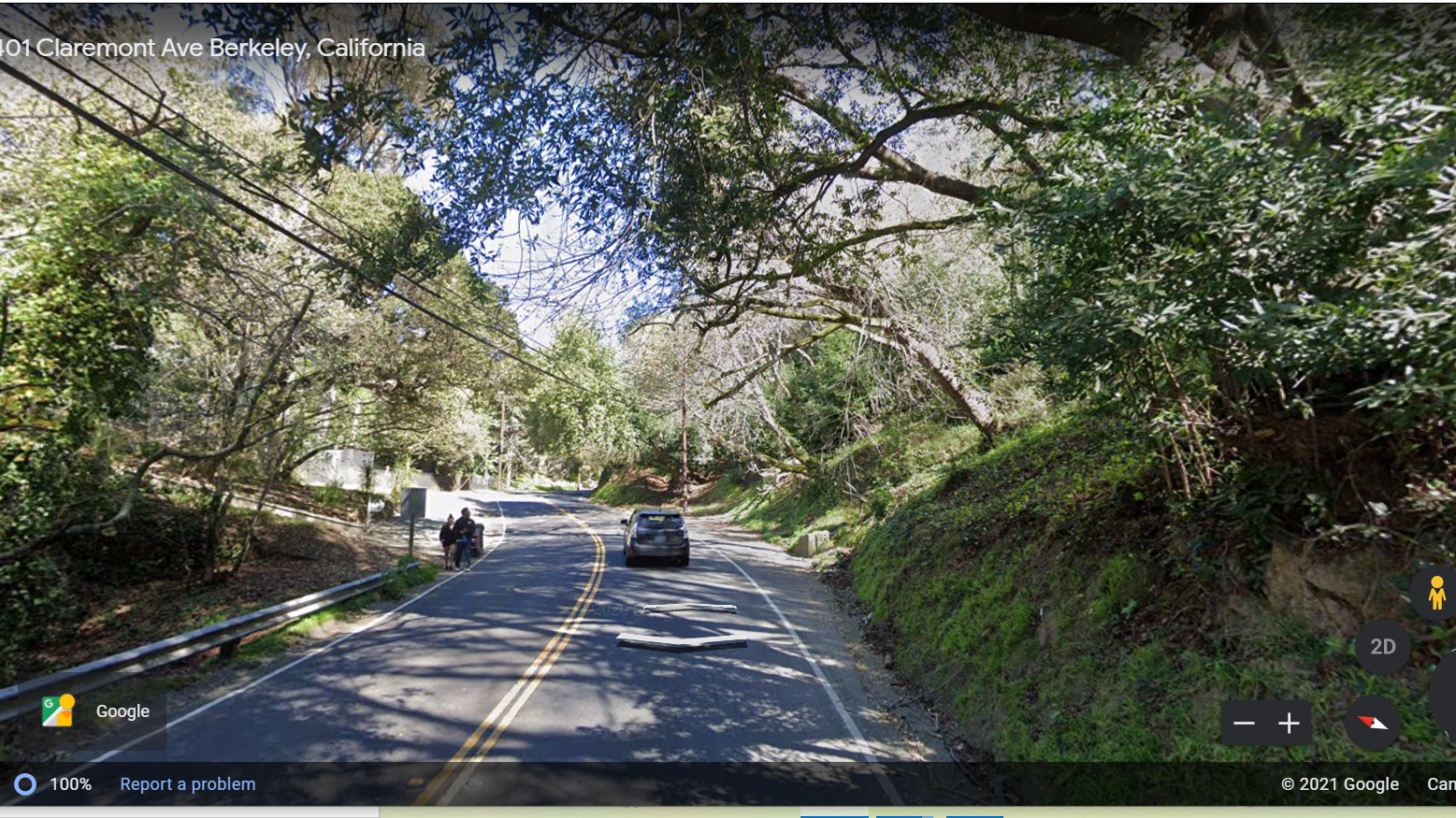
Increasing 300 miles of roadside clearance from 30 feet (as proposed by the 3rd version of the VMP) to 100 feet (as proposed for the 4th version of the VMP) will produce wood debris on a scale that cannot be disposed of.  We know what the outcome will be because of a similar project on Claremont Ave, where eucalyptus was clear cut 100 feet from the north side of 1.1 miles of the road in fall 2020.  Below are pictures of the piles of wood chips and logs that remained along that stretch of road for about 9 months while project managers tried to figure out what to do with the wood debris, which was eventually dispersed throughout the hills.  UC Berkeley implemented the project with funding from Cal-Fire. 
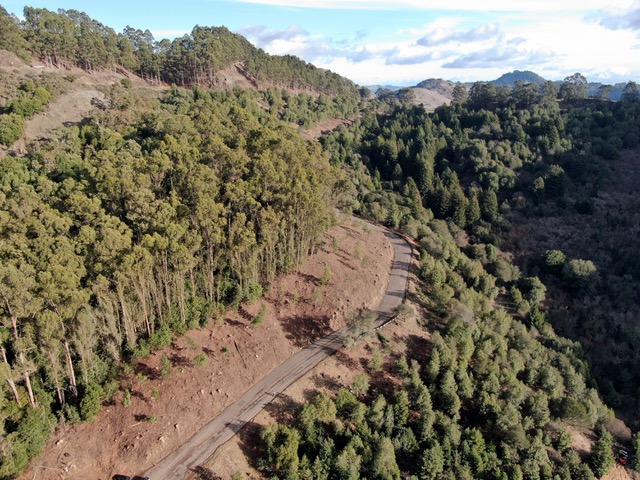
The north side of Claremont Ave. was clear cut 100 feet from the road. The south side of the road was not cut because the trees are native.   There is a creek flowing at the bottom of the canyon that creates the moist conditions needed for native trees, which will not grow where non-native trees now grow. Photo by Doug Prose, courtesy Hills Conservation Network.
One of many piles of logs, Claremont Ave, November 2020. It took about 9 months for the logs to be dispersed along roads in the hills. Photo by Doug Prose, courtesy Hills Conservation Network.
One of many piles of wood chips, Claremont Ave, November 2020

The roads in the East Bay hills are now lined with logs, preventing people from pulling off the road. No native plants or trees were planted after the trees were destroyed. Three years later, the clear cut roadside is vegetated with non-native annual grasses and coyote brush, a pioneer native shrub.

The project on the property of UC Berkeley was very small in comparison to the Oakland vegetation management plan that will clear cut 300 miles of roads, producing at least 300 times the amount of wood debris.  What will Oakland do with the wood debris that is produced from the destructive VMP that native plant advocates demand?  Tons of wood debris lying on the ground is far more flammable than living trees, which is another indication that the VMP that native plant advocates demand is not about mitigating fire hazards. It’s about their preference for a native landscape that is not less flammable than the landscape they demand be destroyed.  Like all Mediterranean climates, our native vegetation is fire adapted and fire dependent.  A significant number of our native species will not regenerate in the absence of fire.  Most wildfires in California in the past 5-10 years have occurred in native chaparral and native conifer forests. 

NY Times reported that 150 homes burned in this wind-driven fire in San Diego in 2003, but the eucalyptus surrounding the neighborhood did not burn. The flammability of eucalyptus trees is exaggerated to justify their destruction. NY Times photo

The more trees that are destroyed, the more herbicide will be required to prevent the trees from resprouting.  SAF is correct in saying that tricopyr will be needed to kill the roots of the trees to prevent them from repsouting.  Glyphosate will not accomplish that task.  Triclopyr is more toxic than glyphosate. Triclopyr has a signal word of “warning” and glyphosate has a less toxic signal word of “caution.”  Triclopyr kills the roots of woody plants by traveling from the cut stump to the roots of the plant in the soil.  Triclopyr is known to kill mycorrhizal fungi in the soil, which are essential to the health of plants growing in the soil.  The more herbicide that is used to kill the roots of destroyed trees, the less likely a newly planted native landscape is to survive.  All the more reason to assume that the destroyed forest will not be replaced by a native landscape.

In Summary

  • The landscape that native plant advocates demand for Oakland will be predominantly non-native annual grasses.
  • Native trees will not replace the trees that are destroyed because they are not adapted to most places where non-native trees now live and because there is no available funding to purchase native plants, plant them on thousands of acres of public land, and irrigate them until they are established.  Similar fuels management projects done by East Bay Regional Parks District, East Bay Municipal Utilities District, and UC Berkeley have not planted a native landscape to replace trees that have been destroyed.
  • Non-native annual grasses will naturally succeed to shrubs in the absence of frequent fire.  Shrublands are more flammable than the existing urban forest because fire travels on the ground, unless wind-driven fire ignites tree canopies.  In that case everything burns, both native and non-native trees.  The wind-driven fire in Oakland in 1991 spared no trees in burned areas, whether native or non-native.  
  • The project would produce many tons of flammable wood debris that has no commercial value and no place to be safely disposed of.
  • The loss of our urban forest will increase air pollution in Oakland, contribute to greenhouse gas emissions causing climate change, and raise temperatures in a city that is already a heat-island. 
  • Herbicides needed to prevent the urban forest from resprouting will poison the soil and suppress the growth of a new landscape.

If you live in Oakland City Council District 4 or 6, you are likely to be directly affected by Oakland’s vegetation management plan.  The most effective way to influence the VMP is to express your opinion to your representative on the City Council, as well as our at-large representative on the Council.  Contact information for members of the Oakland City Council is available HERE.


(1) David Nowak, “Historical vegetation change in Oakland and its implications for urban forest management,” Journal of Arboriculture, September 1993
(2) Jon E. Keeley, “Fire history of San Francisco East Bay Region and implications for landscape patterns,” International Journal of Wildland Fire, September 2005.
(3) https://www.nytimes.com/2023/08/13/us/hawaii-wildfire-factors.html
(4) Andrew Alden, Deep Oakland: How geology shaped a city, Heyday, 2023.
(5) https://kion546.com/news/2022/01/04/new-california-law-changes-liability-for-out-of-control-prescribed-burns/
Calaveras Big Trees State Park: To burn or not to burn?

Coast redwoods (Sequoia sempervirens) and sierra redwoods, often called giant sequoias (Sequoiadendron giganteum), are members of the Sequoioideae family, a sub-family of the Cypress family.  Both are native to California.  Dawn redwood (Metasequoia) is the third genus in the small Sequoioideae family.  Although there is fossil evidence that dawn redwoods lived in California some 40 million years ago they are now native only to a small region in China. 

Coast and sierra redwoods have a common ancestor that is now extinct.  They evolved into different genera in response to the creation of microclimates by geologic changes that isolated their gene pools and gradually drifted apart in directions adapted to their respective regions. (1)

Coast redwoods live in wetter climates than sierra redwoods and they are heavily dependent on coastal fog that maintains a moist environment when interior regions of California are hot and dry.  As our climate continues to change, the future of coast redwoods will depend on whether or not our coastal fog persists.  In turn, the fog depends on the coolness of the ocean relative to the warmth of the land.  The greater that difference in temperature, the more fog is created as water in warm air condenses when it meets cold ocean air.

Sierra redwoods tolerate a much drier climate than coast redwoods, but they have been tested by our prolonged drought.  They are also threatened by wildfires that have ravaged California during our long drought.  Only about 70 small, isolated groves of sierra redwoods still exist on the western slope of the Sierra Nevada.  In 2020 and 2021, wildfires killed 13 percent to 19 percent of the world’s giant sequoias, according to the U.S. Forest Service. (2) The Mariposa Grove of giant sequoias in Yosemite National Park burned in 2022, but none of the sequoias were killed. 

Public land managers are under intense pressure to do whatever is necessary to save our sierra redwoods.  Extreme measures have been taken, such as wrapping their huge trunks in fire resistant foil, spraying trunks with water and canopies with gel when fires approach.  (3)

The prevailing opinion about conserving sierra redwoods is that prescribed burns will reduce fuel loads and therefore fire hazards as well as kill shrubby understory that can carry fire from the ground into tree canopies. The understory is also considered competition for moisture in the soil. Kevin McCarthy, the speaker of the US House of Representatives, has introduced a bill titled Save our Sequoias Act (SOSA) that would enable logging to reduce fuel loads in giant sequoia groves without requiring environmental impact reviews. Many experts disagree about that strategy.  We visited the sierra redwood grove in Calaveras Big Trees State Park at the end of May to see for ourselves and consider the pros and cons of the strategy that is being used there to save the big trees.

Calaveras Big Trees State Park

Calaveras Big Trees State Park is located near the town of Arnold at an elevation of about 4,700 feet.  It is near the northern end of the narrow range of giant sequoias.  The southern end of the range is near the city of Visalia in Sequoia National Park at about 6,000 feet elevation.  Most of the big trees that were destroyed by recent wildfires are at the southern edge of the native range.  Recent wildfires have not reached Calaveras Big Trees, but several giant sequoias in the park were badly damaged by prescribed burns and may not survive.  These damaged trees are a testament to the risks of prescribed burns.

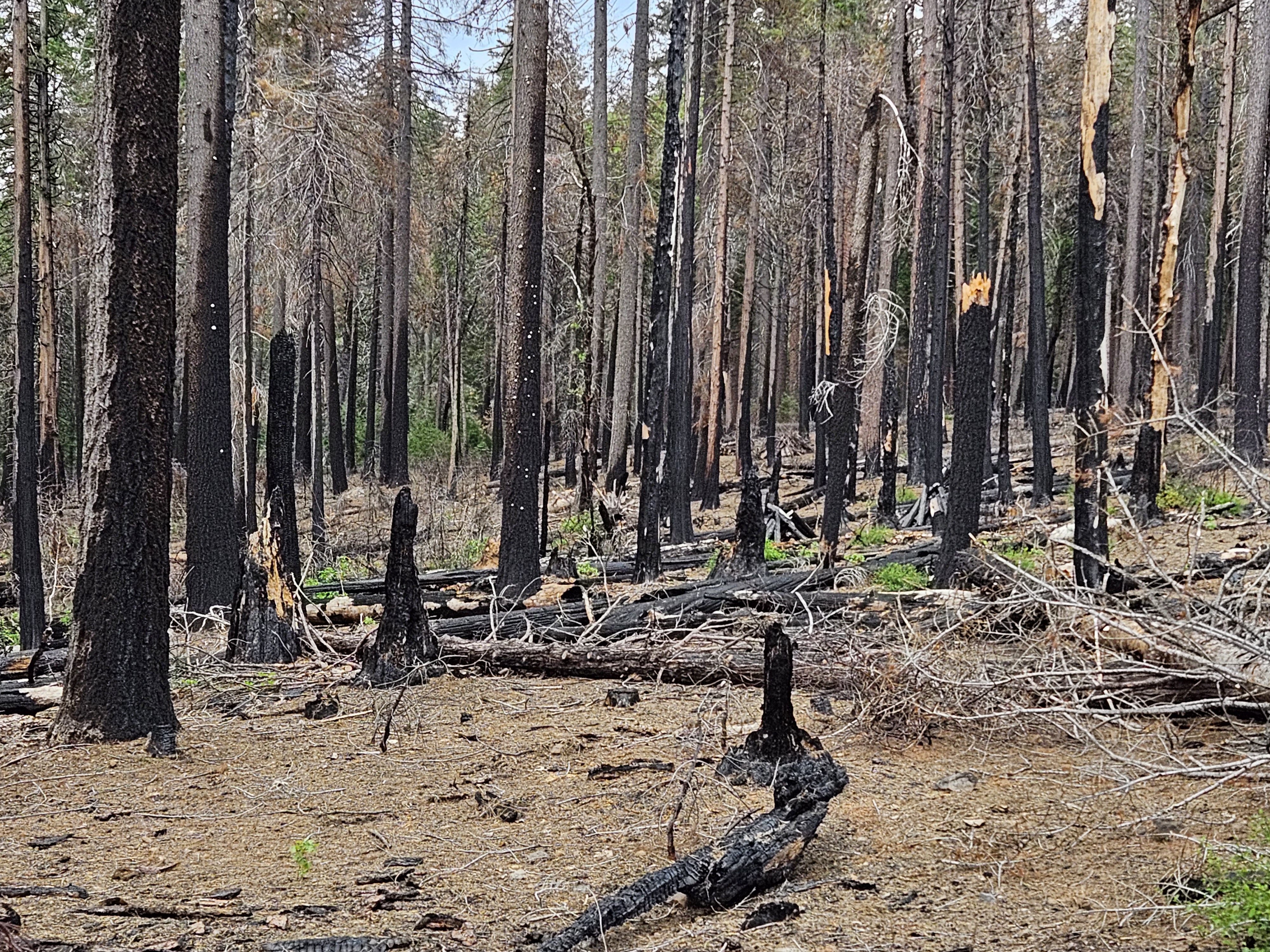
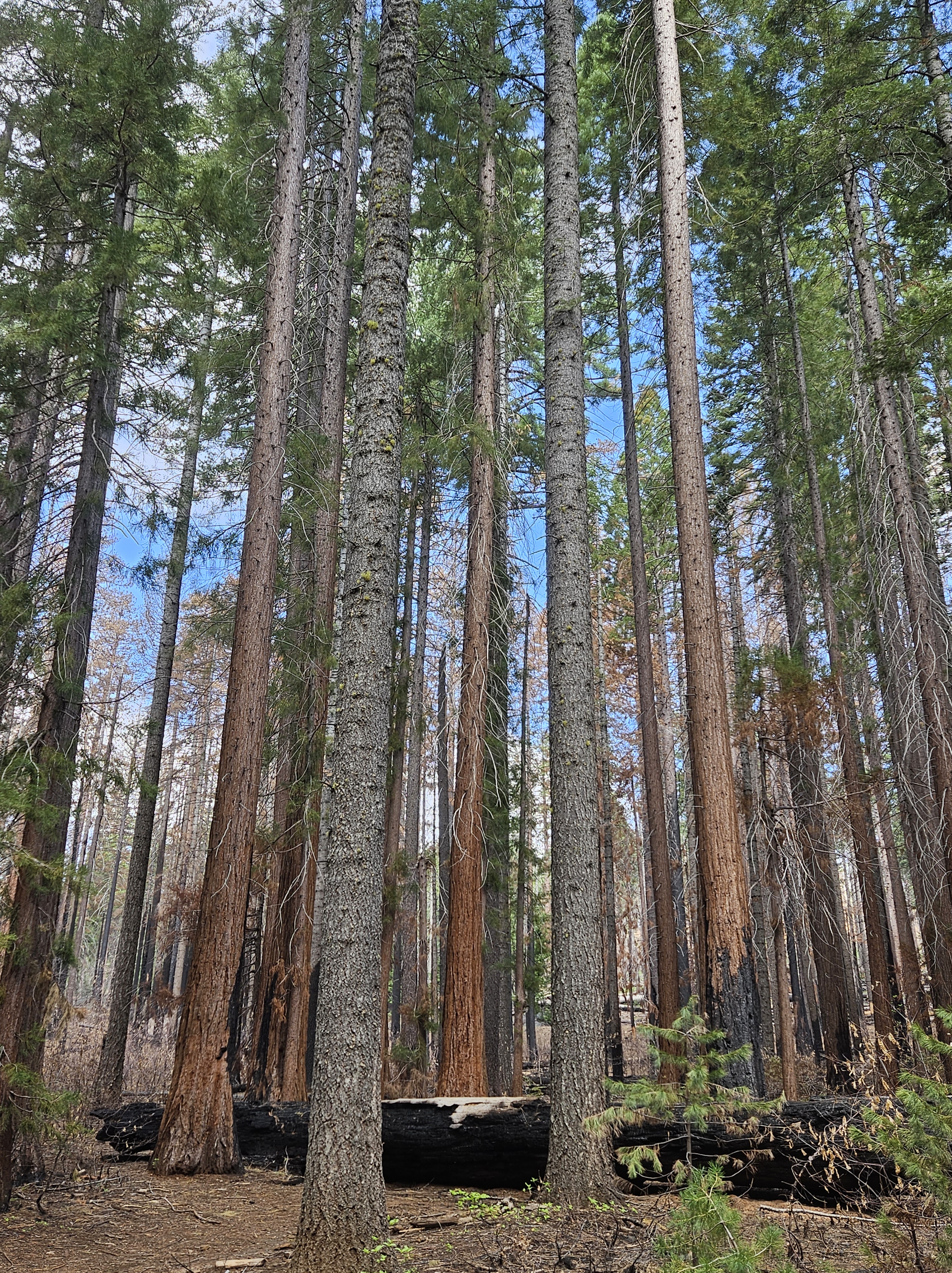
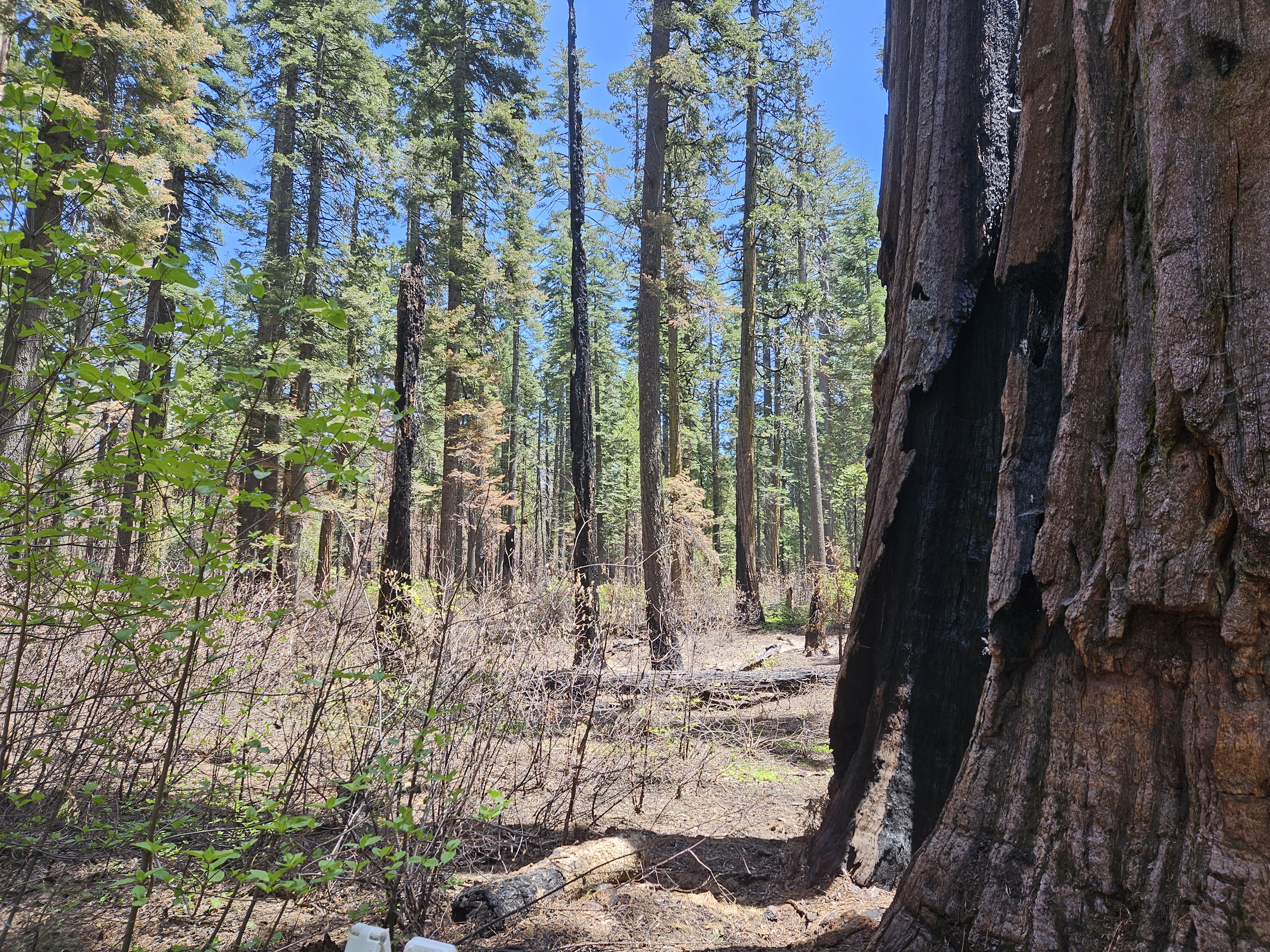
Below is a picture of one of the areas that was intentionally burned in 2022 to reduce fuel loads:

Calaveras Big Trees State Park, May 25, 2023

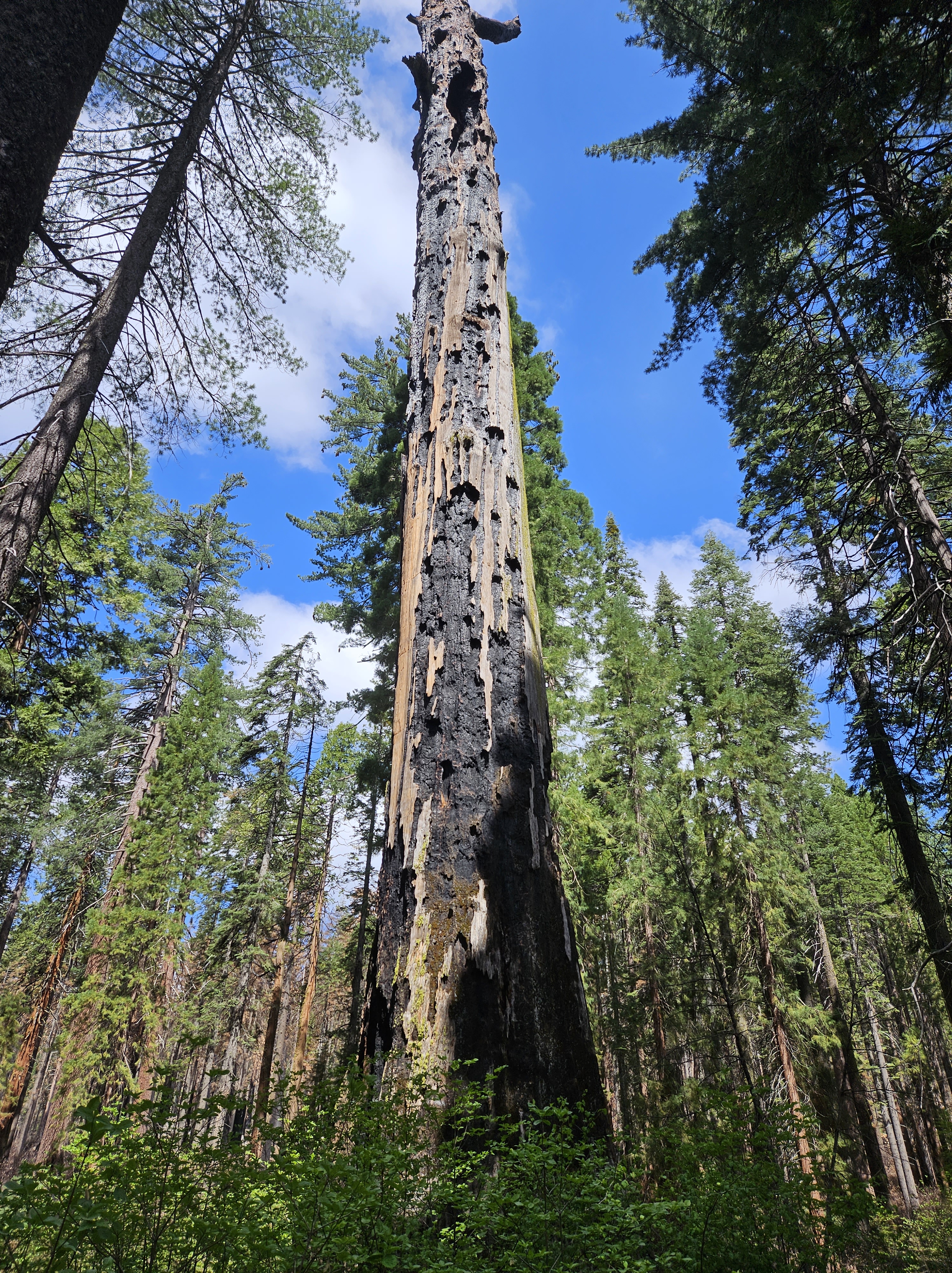
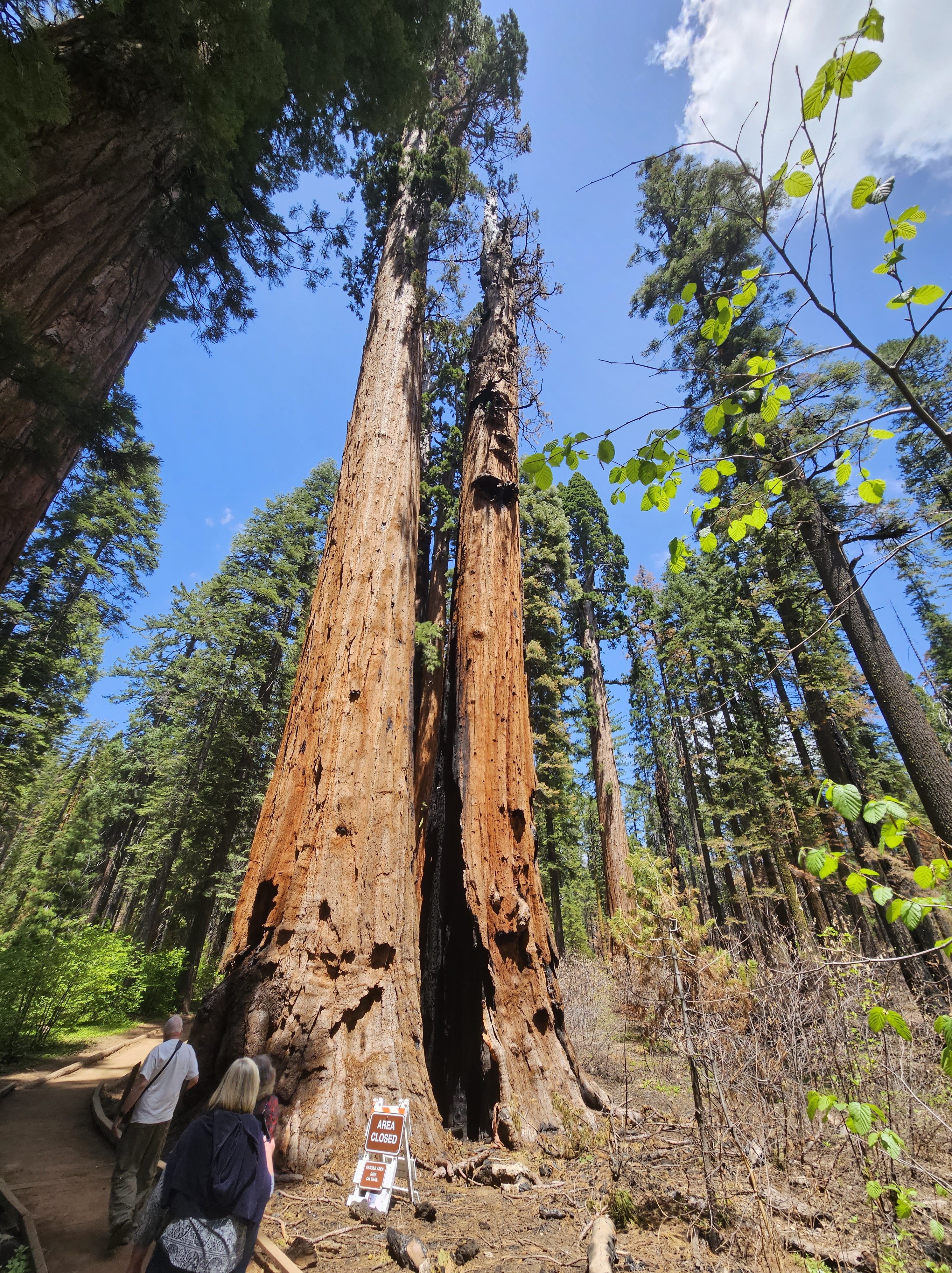
Below is a picture of a giant sequoia that was scorched by that fire. The right-hand side of the tree looks seriously damaged, suggesting that the tree may not survive:

Calaveras Big Trees State Park, May 25, 2023

Larger prescribed burns were also conducted on the northern edge of the park, where there are few sequoias.  Below is a picture of one of several large areas of the park that were intentionally burned:

Calaveras Big Trees State Park, May 25, 2023

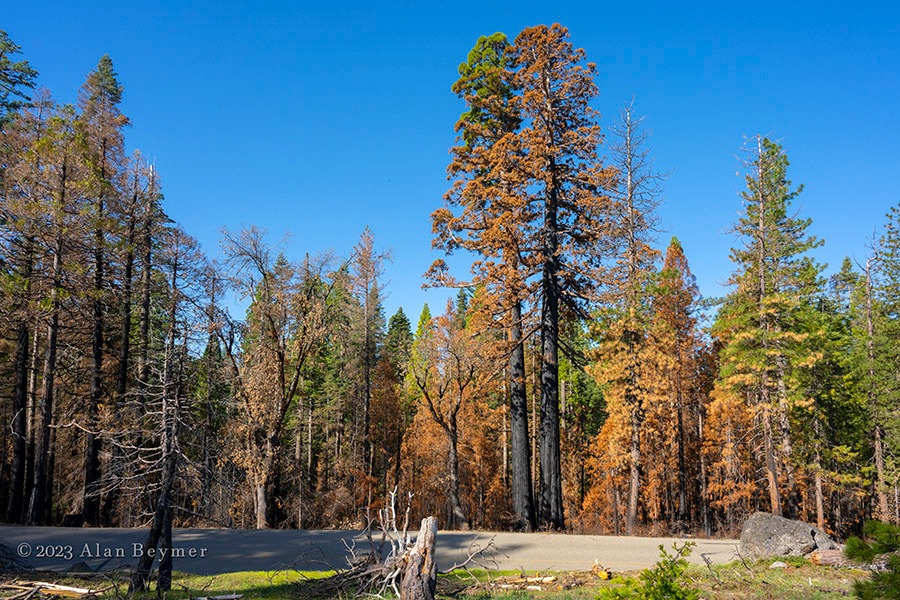
There are only two sequoias in this part of the park, named the Orphans because of their isolation from other sequoias in the park.  The Orphans were severely burned by this fire. (see below) It isn’t clear if the Orphans will survive.

The Orphans, Calaveras Big Trees State Park. Photo by Alan Beymer with permission.

Land management or mismanagement?

The potential loss of a few giant sequoias at Calaveras Big Trees may seem trivial, but their loss must be put in the context of the small and shrinking population of giant sequoias as well as their very long lifespan of roughly 3,000 years.  The survival of the species is threatened by these unintentional deaths that could have been avoided. 

Many major wildfires have been started when burn crews lost control of prescribed burns. In April 2022, the US Forest Service conducted two prescribed burns in the Santa Fe National Forest in New Mexico that merged and became a major wildfire that burned for months, ultimately destroying over 341,000 acres of forest.  Although it was one of the most destructive of wildfires started by a prescribed burn, it is only one of many. 

Logging to thin the forest is another strategy used by public land managers to reduce fuel loads, but we did not see any evidence of logging at Calaveras Big Trees. The giant sequoias in Calaveras County reside in a mixed conifer forest of ponderosa pine, incense cedar, white fir, and sugar pine.  These tree species are valuable timber and therefore vulnerable to pressure from the logging industry.  It seems likely that the Save our Sequoias Act sponsored by Republicans is a gift to the logging industry, rather than to the sequoias.

In 2017, the National Academy of Sciences published an evaluation of fuels management projects in the US.  The authors of this publication reported that managing forest fuels has been ineffective:  “Mechanical fuels treatments on the US federal lands over the last 15 years totaled almost 7 million hectares, but the annual area burned has continued to set records.  Regionally, the area treated has little relationship to trends in the area burned, which is influenced primarily by patterns of drought and warming.”  Where fuels treatment was done, wildfires subsequently occurred:“10% of the total number of US Forest Service forest fuels treatments completed in the 2004-2013 period in the western United States subsequently burned in the 2005-2014 period.”  This suggests that “most treatments have little influence on wildfire.” In any case, only 40% of wildfires occurred in forests since 1984, with most fires burning grasslands and shrublands. 

The authors of the study published by the National Academy of Sciences, recommend a new approach to forest management.  Whereas past policies were designed to maintain forest conditions to historical conditions, this is no longer considered a realistic goal.  The recommended goal is now “supporting species compositions and fuel structure that are better adapted to a warming, drying climate with more wildfire.” 

The other, equally important new goal is to reduce the vulnerability of communities to wildfire by “changing building codes to make structures more fire-resistant…and providing incentives, education, and resources to reduce vulnerability to future wildfire.”  The only tree removals that make sense to the authors are those immediately around residential communities, “strategically located to protect homes and the surrounding vegetation.”  That is the principle of creating “defensible space” immediately around structures:  “fuels management for home and community protection will be most effective closest to homes…where ignition probabilities are likely to be high.”  The strategies used in Calaveras Big Trees to protect giant sequoias may not be the best strategies for surrounding residential communities. 

Land managers who conduct prescribed burns in sequoia groves also believe they are assisting forest regeneration because the heat of fires is said to release the seed-carrying female cones from the tree canopy and open the cones to release their seeds.  The track record on forest regeneration after wildfires depends partly on the severity of fire, but the results of studies are mixed. (4)

The purpose of prescribed burns is to reduce fuel loads with low-severity fire in order to prevent more destructive high-severity fires.  However, in the case of giant sequoias, high-severity fires may be necessary for long-term survival of the species:  “High-severity fires create robust seedling establishment and survival. For example, in a report on sequoia ecology, NPS researcher Nate Stephenson concluded: ‘Before the arrival of European settlers, successful recruitment of mature sequoias depended on fires intense enough to kill the forest canopy in small areas. Thus, sequoia is a pioneer species, and this conclusion has specific management implications.’” (5)

We saw an example of forest regeneration after a severe wildfire in the sequoia grove in Calaveras Big Trees.  Below is a photo of the Mother of the Forest that was burned by a wildfire in 1908.  That tree was particularly vulnerable to wildfire because the thick, spongy bark layer that protects sequoias from fire (as well as insects and disease) had been removed by entrepreneurs (more accurately called vandals) who reassembled the bark as a tree replica for display and profit.

Calaveras Big Trees State Park, May 25, 2023

The Mother of the Forest is surrounded by a young forest of trees, including many giant sequoias.  (See below. Trees with reddish bark are young giant sequoias.)  “The [1908] fire created ideal growing conditions for giant sequoia seedlings and today there is a healthy stand of young sequoias there.  Many of these trees are the result of natural regeneration that happens after a fire, while others were planted during the 1930s by members of the Civilian Conservation Corps.” (6)

Calaveras Big Trees State Park, May 25, 2023

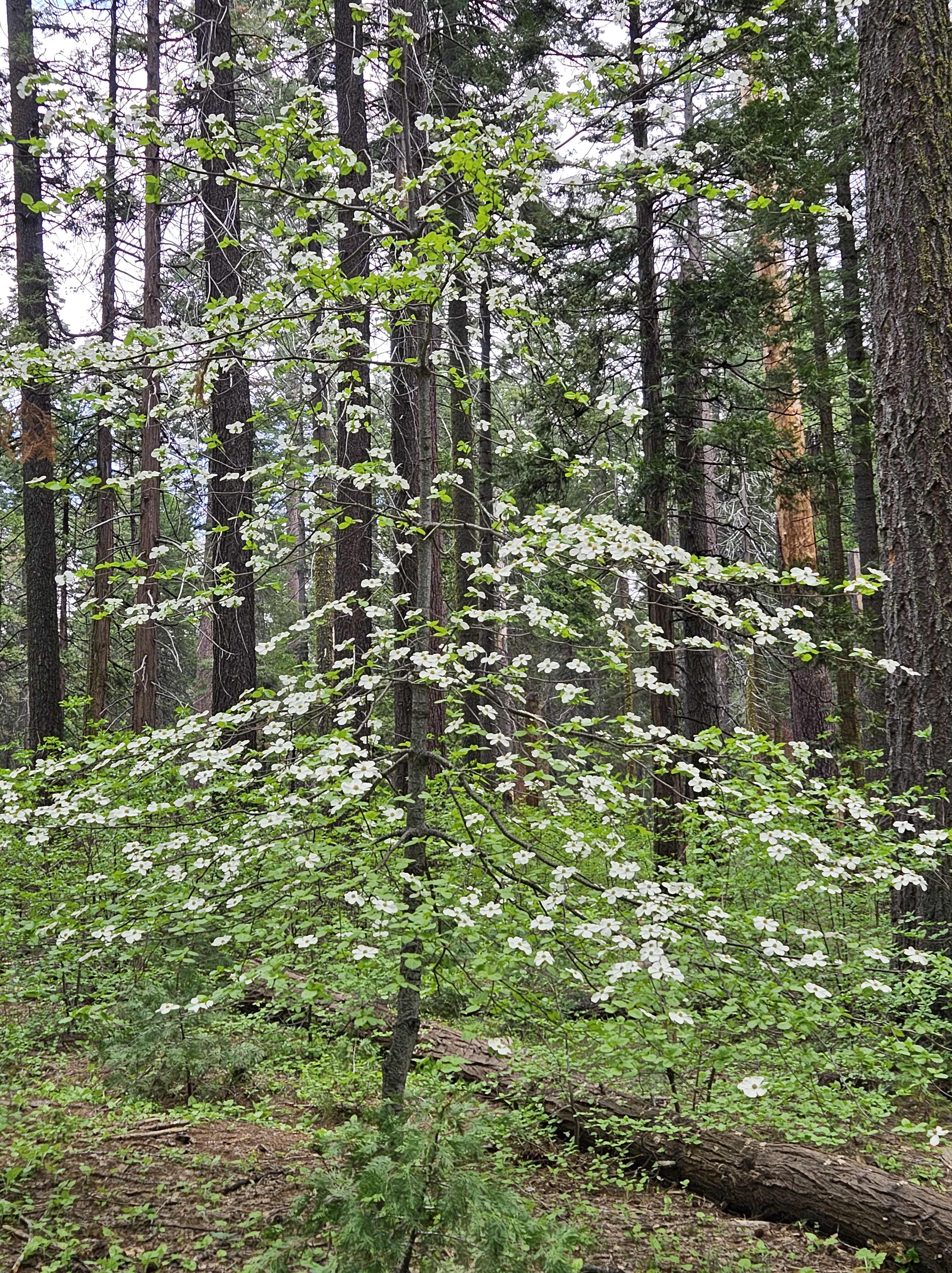
Mountain dogwood (Cornus nuttalli) and hazelnut (Corylus cornuta) are the predominant understory shrubs in the forest of Calaveras Big Trees.  After an unusually long, cold winter most weren’t blooming yet at the end of May.  A few dogwoods were blooming where sunshine penetrated the tree canopy.  (see below)

Calaveras Big Trees State Park, May 25, 2023

Unfortunately, these lovely small trees are seen as competitors of the giant sequoias for available water and nutrients in the soil.  Therefore, destroying the understory in Calaveras Big Trees is one of the management goals.  According to the Calaveras Big Trees Association, most of the dogwoods were chopped down by park staff about 9 years ago.  Dogwoods are vigorous resprouters, so they quickly grew back more densely than their taller predecessors.  Pesticides (including herbicides) aren’t used in Calaveras Big Trees, so resprouting was inevitable.  I wonder if those who destroyed the dogwoods understood that would be the outcome of their effort. 

Management strategies of the timber industry are based on an assumption of competition.  When clear-cut harvests are done by the timber industry they are typically sprayed with herbicides from helicopters to destroy the understory that they assume competes with the tree seedlings they plant for the next timber crop.  Public land managers often use the same strategy.

The research of Suzanne Simard has informed us that there is more cooperation in the forest than there is competition.  A lifetime of observing healthy forests taught her that the soil is occupied by vast networks of fungi that connect the plants and trees.  These mycorrhizal fungi transfer moisture and nutrients from the soil to the trees and plants, to their benefit.  She speculated that the destruction of all vegetation in clear cuts was eliminating that support structure and she designed experiments to test her hypothesis. 

The specifics of fungal associations between tree species varies, which requires that we describe a specific relationship.  Simard’s original studies focused on the fungal associations between Douglas fir and birch trees in the understory.  Birch trees were destroyed in the clear cuts that were then planted with Douglas fir seedlings that were not doing well.  Simard’s experiments eventually revealed that birch trees and firs mutually benefit one another through their fungal networks.  Carbon stored and the sugar produced by photosynthesis by firs are shared with deciduous birch during winter months while they are leafless.  In summer months when birch are foliated, they store more carbon that is shared with firs.  Birch is resistant to a root pathogen to which firs are susceptible.  In a sharing fungal relationship between birch and firs, birch confers some of that resistance to the root pathogen onto their fir neighbors.  Is there a similar relationship between dogwoods and sequoias and other conifers in the forest at Big Trees? 

The understory also shades the forest floor, which retains moisture in the soil that would otherwise evaporate in the absence of shade. The canopy of giant sequoias is near the top of mature trees and doesn’t cast much shade.  In other words, the shaded forest floor provides more moisture for all members of the plant community in sequoia groves.  Furthermore, a shaded forest floor is less likely to ignite a fire because of the moisture it retains. 

More questions than answers

I don’t know the answers to the questions I have raised about management strategies in Calaveras Big Trees:

  • Is there a mutually beneficial relationship between dogwood and hazelnut and giant sequoia?  Is it necessary or beneficial to destroy the understory in the sequoia groves of Calaveras Big Trees?
  • Are there more risks than rewards in conducting prescribed burns in Calaveras Big Trees?
  • Would thinning the trees in sequoia groves benefit the timber industry more than the sequoias?
  • Are severe fires more effective than low-severity fires to germinate the seeds of giant sequoias and regenerate the forest after fires?

However, I am sure that when there is uncertainty and great risk, there must be caution.  I also know that Calaveras Big Trees State Park is a treasure.  If you haven’t visited, I suggest you put it on your bucket-list.


  1. Gary D. Lowe, “Geologic History of Giant Sequoia and the Coast Redwood,” North America Research Group, Beaverton, Oregon, 2013-2014.
  2. Twilight Greenaway, “In California, a race to save the world’s largest trees from megafires,” Inside Climate News, September 23, 2022.
  3. “‘It could be a big tree in 1,000 years’:  tiny seedlings of giant sequoias rise from ashes of wildfire,” The Guardian, November 1, 2021
  4. Kristen Shive, et.al., “2021 Fire Season Impact in Giant Sequoias, National Park Service.
  5. George Wuerthner, “Save Our Sequoias Act:  A Stealth Attack on NEPA-EAS and Our Sequoia Groves,”  Wildlife News, May 21, 2023.
  6. “A Guide to the Calaveras North Grove Trail,” Calaveras Big Trees State Park.  Much of the information in this article comes from this trail guide. 

Part III: Appealing to the City of Albany to save its eucalyptus forest

I am publishing my letter to the Albany City Council about the City’s plans to destroy most of the eucalyptus forest on Albany Hill.  I am publishing it in three segments because it is long.  The first segment explained why it is not necessary to destroy the forest.  The second segment explained the consequences of destroying the forest.  The third and final segment explains why it is unlikely that the forest can be replaced by native trees.

Now you have my version of the full story. If this is a place or an issue you care about, please consider writing a letter of your own to the City Council of the City of Albany.

Conservation Sense and Nonsense

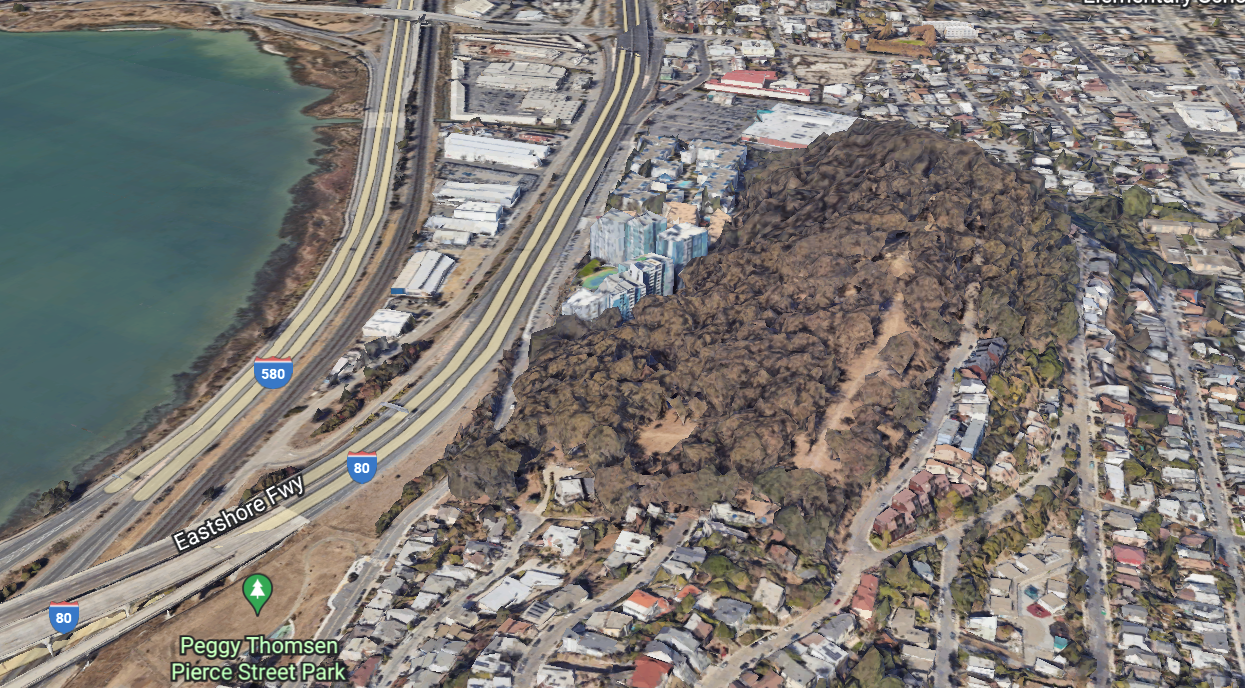
Albany Hill. Source: Google Earth


December 5, 2022

Albany City Council
1000 San Pablo Ave.
Albany, CA 94706

Dear Albany City Council:

SEE Part I and Part II of Appealing to the City of Albany to save its eucalyptus forest.  Part III is the concluding segment:

The uncertain fate of monarchs on Albany Hill is a suitable introduction to my final issue.  The proposed plans for Albany Hill claim the destroyed eucalyptus forest will be replaced by new trees. I will explain why it is unlikely that the eucalyptus forest can be replaced by another forest. Plans for a newly planted forest are described in various ways, some of which seem contradictory:

  • “[Margot] Cunningham’s [Albany’s Natural Areas Coordinator] team is pursuing grants to cut down most of the blue gums and plant the city’s side of the hill with a mix of native species and more drought tolerant trees for monarchs to roost.” (1)
  • “WHEREAS, the City is investigating consultants to design a plan to remove eucalyptus in a way that retains and restores more fire-resilient native plant communities and minimizes soil disturbance and soil erosion.” (2)
  • “More droughty Eucalyptus species can be planted to preserve the butterfly habitat.” (3)
  • “This plan will include but is not limited to: plantings of other tall trees in areas of the hill where monarchs have traditionally clustered; survey of the existing native understory which will be allowed to grow after eucalyptus removal; and analysis and design of additional plants of Albany Hill-sourced native plants.” (4)

Somehow, this diverse, drought-tolerant, fire-resilient, tall, native (with droughty eucalyptus species?) forest is expected to survive without irrigation:  “If drought-tolerant tree species are planted as seedlings, in the fall with sufficient planting site preparation and adequate rain fall, minimal if any irrigation will be required.” (5)  When predicting the fate of the existing eucalyptus forest, the plans assume that the drought will continue.  When predicting the fate of a replacement forest, the plans assume that the drought will end. 

Most public land managers irrigate newly planted trees (whether native or non-native) for at least 3 years.  Established trees rarely require irrigation to survive because they have extensive root systems that have better access to moisture in the soil than newly planted trees without extensive root systems.  Tree species that are drought-tolerant when mature trees, require irrigation as they grow their root systems.  Replacing healthy trees that don’t require irrigation with new trees that require irrigation seems an unwise choice in the middle of an extreme drought. 

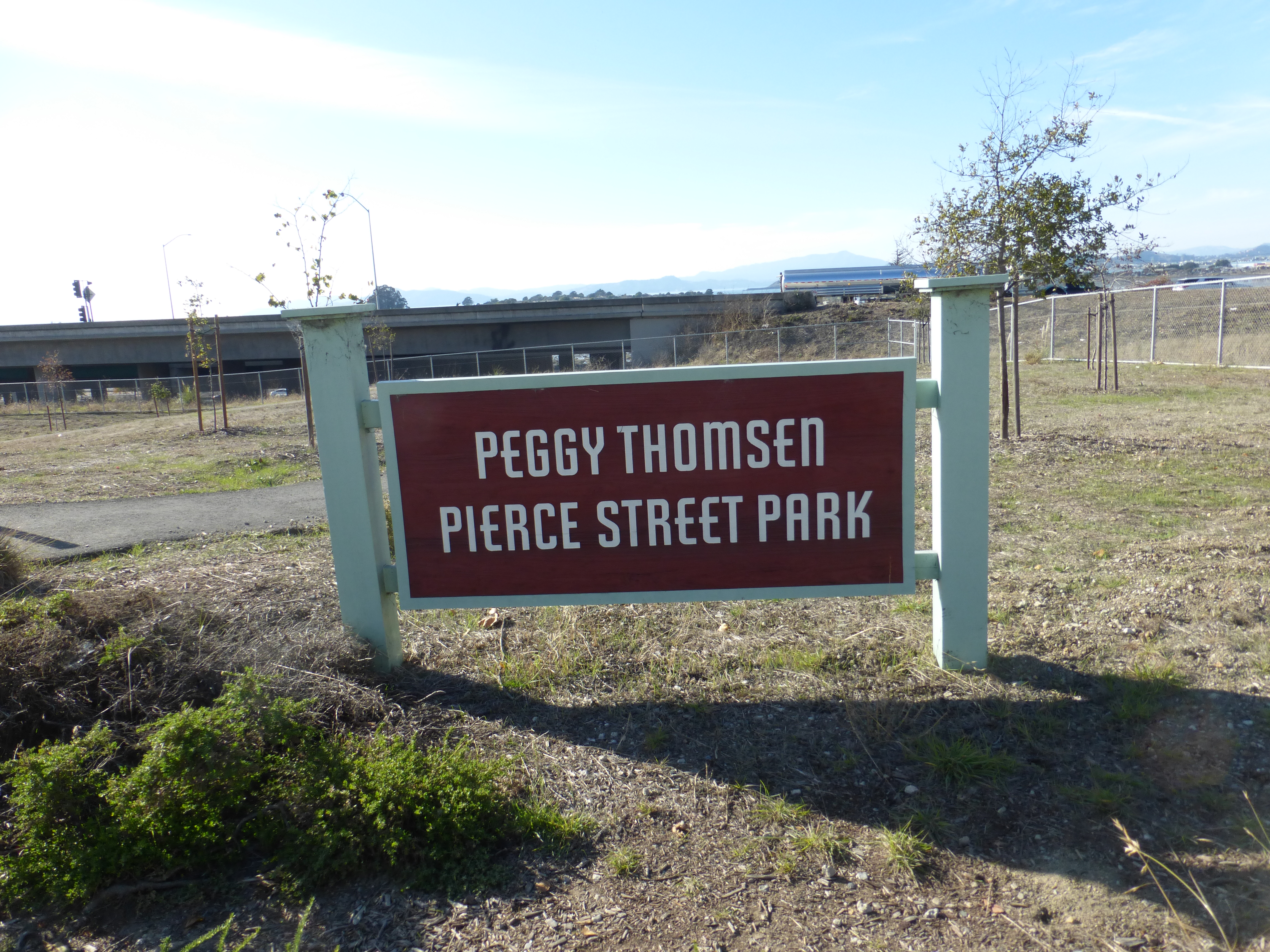
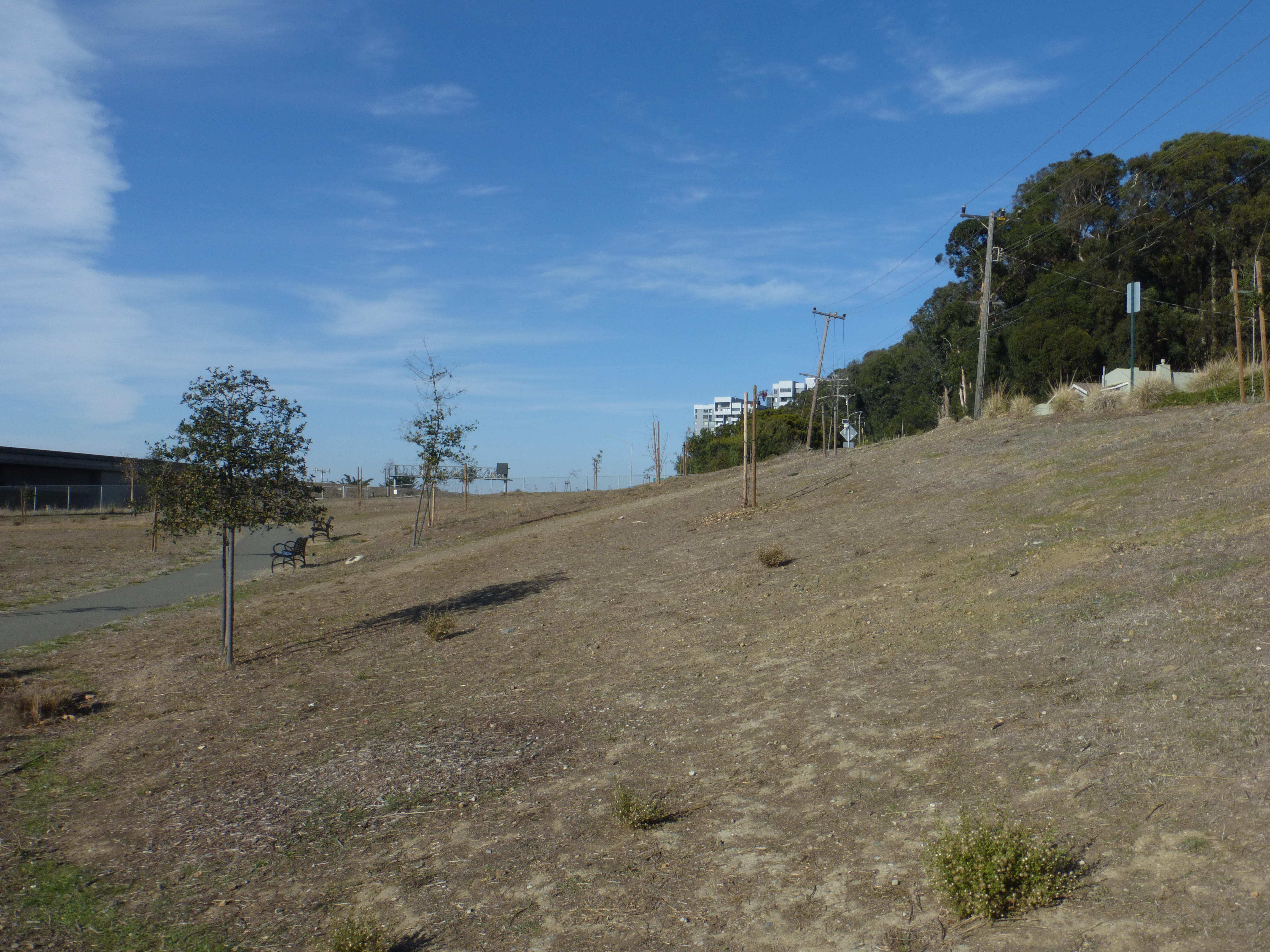
The City of Albany should have learned that lesson when they built Peggy Thomsen Pierce Street Park at the western foot of Albany Hill.  Only native trees were planted in that park.  They weren’t irrigated.  Five years after the park opened in 2017, most of the trees are dead (see below):

Peggy Thomsen Pierce Street Park, November 2022.  Conservation Sense and Nonsense

The City of Albany’s list of approved street trees is a valuable source of information about what tree species are capable of growing in Albany.  A tree species that cannot survive conditions for street trees is also unlikely to survive on the ridgeline of Albany Hill, where wind conditions are extreme and there is little moisture.  There are about 65 tree species approved for planting as street trees in Albany.  Five are native to California, but only three are native to the Bay Area.  Native big leaf maples are said to be “in decline.”  Buckeyes aren’t suitable street trees, but may be suitable for open space.  None of the listed native trees are suitable monarch habitat for a variety of reasons:  canopy too dense to provide sufficient sunshine; deciduous therefore bare in winter; short stature, etc. 

Historically, areas on Albany Hill that are now forested with eucalyptus were treeless because native trees are not adapted to the challenging climate conditions.  If the eucalyptus forest on Albany Hill is destroyed, Albany Hill is likely to be treeless again.  That is the horticultural reality of Albany Hill. 

In conclusion:

  • It is not necessary to destroy the eucalyptus forest on Albany Hill because it is not dead.
  • Destroying the eucalyptus forest on Albany Hill will increase fire hazards and safety hazards.
  • Destroying the eucalyptus forest will destroy habitat of monarch butterflies.
  • Plans to replace the eucalyptus forest with native trees are unrealistic.

Please consider reinstating the 2012 Albany Hill Creekside Master Plan.  It is still a good plan that will not do unnecessary damage to Albany Hill and its human and animal visitors.

cc: Albany Fire Chief
Albany Natural Areas Coordinator
Albany Urban Forester
Creekside Science


Update:  Shortly after I sent my letter to officials of the City of Albany about their plans to destroy most eucalyptus on Albany Hill, they revised their plans because of two updated reports that were done in November and December 2022.  Basically, they no longer plan to destroy most eucalyptus on Albany Hill for two main reasons:

  • Eucalyptus trees are the overwintering habitat of monarch butterflies. They cannot be replaced by native trees of short stature without the open canopy that filters sunlight but also provides a windbreak the monarchs need.
  • Epicormic sprouts on the eucalyptus trees indicate they are recovering from drought and are expected to survive and eventually replace their canopies.

These are the sources of information that corroborate my brief summary of the main reasons Albany is no longer planning to destroy most eucalyptus trees on Albany Hill:

They still intend to remove dead trees to reduce fuel loads, to which I have no objection.  Some dead eucalyptus may be replaced with more drought tolerant species of eucalyptus from Western Australia. 

To be clear, I don’t think my letter about their original plans for Albany Hill were influential in their revising their plans.  My letter is consistent with the advice they received from an ecologist with expertise in monarch butterflies and a consultant in fuels management.  Credit belongs to the preference of monarchs for eucalyptus and to eucalyptus for being indestructible.

April 2023


  1. Bay Nature:  https://baynature.org/2022/10/20/the-nearly-unkillable-eucalyptus-meets-its-match/
  2. Resolution No. 2021-105.  A resolution of the Albany City Council, authorizing the appropriation of funds to the Albany Hill Eucalyptus Project in the amount of $100,000
  3. https://www.albanyca.org/home/showpublisheddocument/52453/638028259461770000
  4. Staff Report to City Council regarding Albany Hill Eucalyptus Project, May 2, 2022
  5. https://www.albanyca.org/home/showpublisheddocument/52453/638028259461770000

Part II: Appealing to the City of Albany to save its eucalyptus forest

I am publishing my letter to the Albany City Council about the City’s plans to destroy most of the eucalyptus forest on Albany Hill.  I am publishing it in three segments because it is long.  The first segment explained why it is not necessary to destroy the forest.  The second segment explains the consequences of destroying the forest.  The final segment will explain why it is unlikely that the forest can be replaced by native trees. 

Conservation Sense and Nonsense

Albany Hill. Source: Google Earth


December 5, 2022

Albany City Council
1000 San Pablo Ave
Albany, CA 94706

Dear Albany City Council:

SEE Part I:  Appealing to the City of Albany to save its eucalyptus forest.  Part II continues:

The premature destruction of the eucalyptus forest will have many negative consequences:

  • The loss of significant amounts of fog drop from the tall trees.
  • The creation of tons of wood debris that will contribute to fire hazards
  • The regrowth of the trees into unstable multi-stemmed trees with lower fire ladders
  • The loss of habitat for overwintering monarch butterflies

Harold Gilliam in Weather of the San Francisco Bay Area informs us that tall non-native trees in the East Bay produce significant amounts of water by condensing fog drip: “Eucalyptus and pine groves planted there long ago intercept large amounts of fog and cause a rainlike deposit of moisture. The fog drip during the summer months has been measured at a surprising 10 inches, an amount nearly half as great as the total rainfall…”  Average rainfall in the East Bay is 21 inches per year, so this fog precipitation adds nearly 50% to total precipitation.  

Foggy morning, Redwood Park. Conservation Sense and Nonsense

One of the planning documents for the tree removal project on Albany Hill speculates that there is less fog than in the past in the San Francisco Bay Area.  According to an article in the New York Times, many people disagree with that assumption.

By precipitating fog drip during the otherwise dry time of the year, tall non-native trees reduce fire danger during the fire season.  Moisture on the forest floor helps to retard ignition and slow the spread of fire.  This was observed recently on the west side of Albany Hill when an arsonist set the forest afire in June 2022:  “The Albany Hill fire, which was initially estimated around three acres with a slow rate of spread…”  The fire was quickly extinguished.

This is where the fire in June 2022 occurred on Pierce St.  Note resprouts of the burned trees in November 2022.  Conservation Sense and Nonsense

Fog drip from the eucalyptus overstory is also irrigating the forest understory of many native shrub species, predominantly toyon.  Historical records of Albany Hill tell us toyon was not there before eucalyptus was planted.  The top of the hill is the driest area because it does not benefit from run off compared to lower elevations of the hill.  The side of the hill facing the southwest is drier than northeast face of the hill because it is exposed to more sun and wind.  Historically, oaks grew only on the northeast side of the hill where they were sheltered from the wind and the soil was moister.  One of many questions about the new plans for Albany Hill that should be asked and answered is how the existing native understory can survive without fog drip and the wind shelter of the tall trees. 

The City of Albany’s application for a grant from the California Coastal Conservancy predicts this future for Albany Hill: “The project will create more fire-resilient and healthy ecosystems by allowing native plant communities to return after eucalyptus removal…”  In fact, the opposite outcome seems more likely.  Without the benefit of fog drop from the tall trees and shelter from the wind, the existing native understory is unlikely to survive.  The existing native understory did not exist on Albany Hill prior to the planting of eucalyptus. 

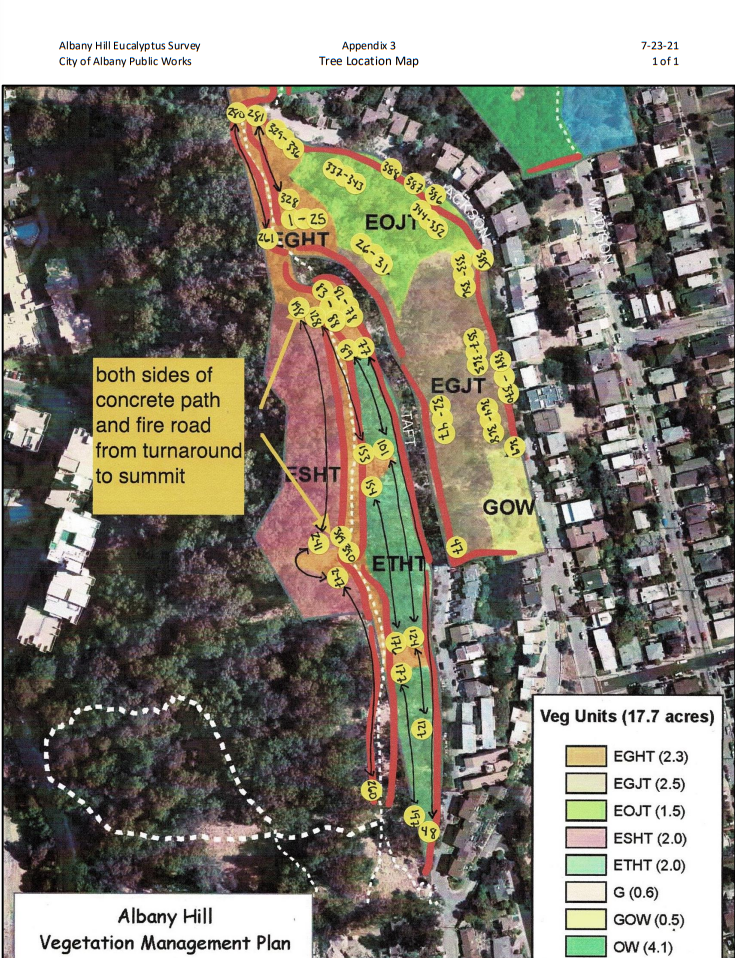
This map (see below) of tree removal plans for Albany Hill shows where approximately 400 trees will be removed at the top of the hill.  (The number of each tree planned for removal is listed on this map, some in sequences such as 1-25, indicating that 25 trees will be removed between the arrows on the map.)

Source:  Arborist Report, SBCA Tree Consulting

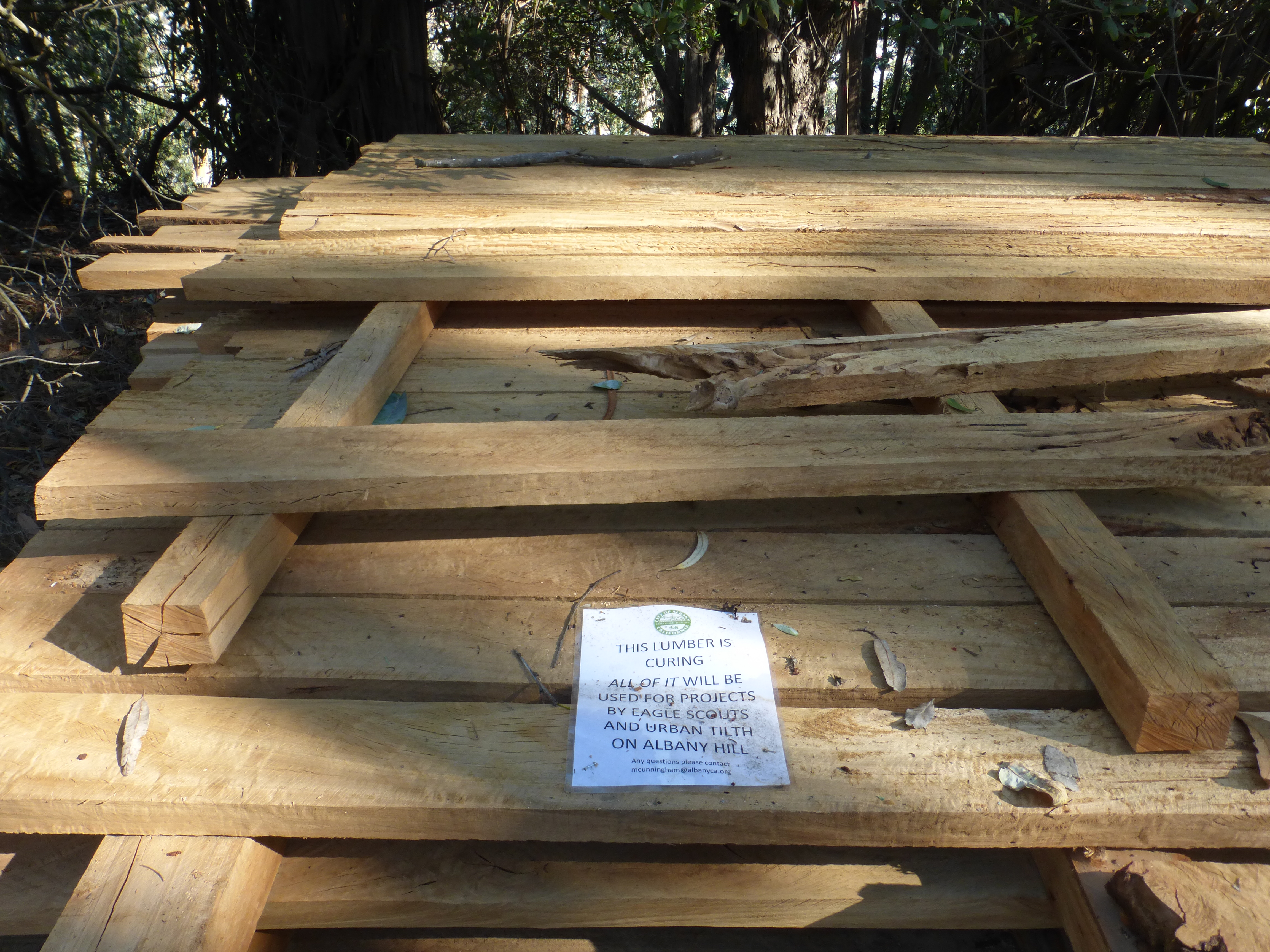
Returning to the question of fire hazards, what will happen to all that dead wood?  We get a preview of the answer to that question because the City of Albany recently destroyed between 14 and 20 eucalyptus trees (reports on the number of destroyed trees vary).  We can see what happened to some of the wood (see below):

Some of the destroyed trees are still lying on the ground (see below).  This tree has already resprouted.

Multiply that flammable wood debris by 400 to get a picture of the amount of wood debris the proposed project on Albany Hill will create.  The arborist’s report for the eucalyptus removal project makes this recommendation regarding wood debris:  “Logs and chips to remain – Cut trees, chip brush and allow mulch and logs to remain on the slope.”

We had a recent experience with the wood debris created by similar projects when UC Berkeley destroyed all non-native trees within 100 feet of the north side of Claremont Ave in fall 2020.  Huge piles of wood chips and logs were stacked along the road, which the grant application claimed would be disposed of by generating electricity in a biofuels plant.  No such biofuels plant exists and there are no plans to build it.  Here is a photo (see below) of one of the wood piles that remained along the road for about 9 months before being distributed elsewhere throughout the Berkeley hills:          

One of many piles of logs, Claremont Ave, November 2020. Photo by Doug Prose, courtesy Hills Conservation Network.

Bay Nature recently explained why we are unable to dispose of wood debris from the many fuels management projects being done in California. If you ever wondered why there are piles of wood chips in your parks or why the roads in the hills are lined with logs, this article explains. There aren’t enough lumber mills in California to keep up with all the logs or biofuel plants to keep up with the wood chips. Most of the trees killed by bark beetles or by wildfire can’t be salvaged because of the shortage of mills. The wood debris is the fuel for the next wildfire. Turning living trees into dead wood debris does not reduce fire hazards. 

In addition to reducing fire hazards, Albany’s new plans for the eucalyptus forest on Albany Hill are also intended to address safety concerns.  Based on the assumption that the eucalyptus trees will soon die, Albany wishes to reduce public safety hazards by pre-emptively taking trees down before they fall down.  As I’ve said before, the assumption that the trees will soon be dead is mistaken.  Furthermore, Albany does not intend to use herbicides on the tree stumps to prevent resprouts, which guarantees that they will resprout, creating multi-stemmed trees that will be less stable than the trees are now. 

According to the arborist’s report for Albany Hill, there is also a history of unstable trees that grew from resprouts of destroyed trees:  Stump sprouts – Sixty-nine (69) trees have developed as stump sprouts, or trees that have grown back from the stump after being cut down. Because the prior tree stump eventually rots, the new growth is not always well anchored.” The staff report to the City Council on May 13, 2021 about the project said, “Multi-trunk trees are weaker structurally and produce more fire-hazardous debris than single-trunk trees.”

Trees develop their defenses against the wind as they grow in a particular environment.  When their tree neighbors are destroyed, they are suddenly subjected to more wind than they can withstand. The arborist employed by the City of Albany acknowledges the potential for increased risk of windthrow: “Stands of trees act together to resist wind forces.  When trees are removed from a stand or grove, the wind forces on the remaining trees are increased.  This can be a concern when trees, which are currently considered low risk, receive increased wind exposure due to adjacent tree removal.”

 The unstable multi-stemmed trees that grow from resprouts will also be subjected to more wind without the protection of other trees that have been destroyed.  The proposed plans for extensive tree removals will result in a more dangerous forest of resprouts that are vulnerable to windthrow. 

Destroying 400 eucalyptus trees on Albany Hill would create an overwhelming commitment to control resprouts mechanically. It is a challenge that the City of Albany has not been able to meet in the past, as evidenced by recent resprouts and multi-stemmed trees from past resprouts. However, I don’t mean to imply that I prefer the use of herbicides to prevent resprouts.  A new forest of young, unstable eucalyptus trees with lower fire ladders is better than a forest that has been poisoned and the understory with it.  Herbicides are also harmful to monarch butterflies and other insects.

My last visit to the City park at the top of Albany Hill was on Sunday, November 20th, the weekend before Thanksgiving, which is the optimal time to see monarch butterflies in their winter roost.  We saw many monarchs in the trees that are slated for destruction and as it got warmer in the early afternoon, we watched them flutter to nearby trees.  There were many other park visitors.  Some were frequent visitors who helped us find the biggest clusters.  Other visitors were as excited as we were to find the monarchs for the first time.  This is to say, the disappearance of monarchs on Albany Hill would be a disappointment to the visitors to the park.

Monarchs roosting in epicormic sprouts of eucalyptus on the top of Albany Hill, November 20, 2022.  Conservation Sense and Nonsense

According to Stuart Weiss of Creekside Science, that’s where monarchs begin their visit to Albany Hill:  “…monarchs begin the season on the ridgetop, likely attracted by high insolation [sunshine].  Following the first storms of the season accompanied by strong winds, they move down the SW slope when storm winds (generally southerly) are too strong.  The structure of the forest in the Cluster zone consists of a series of openings surrounded by denser forest, allowing some insolation with adequate wind shelter.  These cluster sites tend to have visible sky overhead with relatively few canopy openings toward the horizon and moderate exposure to the SW (which may be related to afternoon insolation.”

Stuart Weiss was also interviewed by Bay Nature about the monarch butterflies on Albany Hill:  “Weiss wants to preserve the eucalyptuses—invasive non-natives that they are—for the butterflies’ sake. The monarchs made their choice,’ says Weiss. ‘They go for the eucalyptus, so we have to honor that.’ The key to a cozy roost, according to Weiss, is a configuration of mature trees that provide just the right mix of sunshine and protection from wind and storms. Monarchs prefer to cluster along Albany Hill’s city-owned ridgetop early in the season. Later in winter, they cluster on the hill’s privately owned southwestern slope, and near the condos at the foot of the hill’s western flank. The fate of the trees and the butterflies roosting on that land is unclear.”

Eucalypts are the preferred trees for over-wintering monarchs in California according to an analytical study of 205 over-wintering sites:  “Three types of trees were used most frequently by roosting monarchs:  eucalyptus (75% of the habitats primarily Eucalyptus globulus), pine (20% of the habitats primarily Pinus radiata), and cypress (16% of the habitats Cupressus macrocarpa).  Twelve other tree species were identified…with a combined prevalence of only 10%…habitats had smaller populations when the roosting tree type was a species other than eucalyptus, pine, or cypress.”(1) (Three different studies by different authors are the source of these data, therefore they don’t add up to 100%.) In other words, virtually all of the trees used by monarchs for their winter roost are not native to the San Francisco Bay Area. 


The third and final segment of my letter to the Albany City Council will be published tomorrow. It will explain why the eucalyptus forest cannot be replaced by native trees. Thank you for your visit today.


Update:  Shortly after I sent my letter to officials of the City of Albany about their plans to destroy most eucalyptus on Albany Hill, they revised their plans because of two updated reports that were done in November and December 2022.  Basically, they no longer plan to destroy most eucalyptus on Albany Hill for two main reasons:

  • Eucalyptus trees are the overwintering habitat of monarch butterflies. They cannot be replaced by native trees of short stature without the open canopy that filters sunlight but also provides a windbreak the monarchs need.
  • Epicormic sprouts on the eucalyptus trees indicate they are recovering from drought and are expected to survive and eventually replace their canopies.

These are the sources of information that corroborate my brief summary of the main reasons Albany is no longer planning to destroy most eucalyptus trees on Albany Hill:

They still intend to remove dead trees to reduce fuel loads, to which I have no objection.  Some dead eucalyptus may be replaced with more drought tolerant species of eucalyptus from Western Australia. 

To be clear, I don’t think my letter about their original plans for Albany Hill were influential in their revising their plans.  My letter is consistent with the advice they received from an ecologist with expertise in monarch butterflies and a consultant in fuels management.  Credit belongs to the preference of monarchs for eucalyptus and to eucalyptus for being indestructible.

April 2023


  1. Dennis Frey and Andrew Schaffner, “Spatial and Temporal Pattern of Monarch Overwintering Abundance in Western North America,” in The Monarch Butterfly Biology and Conservation, Cornell University Press, 2004.

Part I: Appealing to the City of Albany to save its eucalyptus forest

I am publishing my letter to the Albany City Council about the City’s plans to destroy most of the eucalyptus forest on Albany Hill.  I will publish it in three segments because it is long.  The first segment explains why it is not necessary to destroy the forest.  The second segment will explain the consequences of destroying the forest.  The final segment will explain why it is unlikely that the forest can be replaced by native trees. 

Conservation Sense and Nonsense

Albany Hill. Source: Google Earth


December 5, 2022

Albany City Council
1000 San Pablo Ave
Albany, CA 94707

RE:  Albany Hill Eucalyptus Project

Dear Albany City Council:

I have a sentimental attachment to the City of Albany because I lived there for 5 years at the beginning of my marriage.  We still enjoy regular visits to the city’s beauty spots of Albany Hill and the Albany Bulb, as well as Albany’s great restaurants. 

As you know, many public land managers have destroyed eucalyptus trees, but the City of Albany was not planning to destroy the eucalyptus forest on Albany Hill until recently.  According to the 2012 “Albany Hill Creekside Master Plan,” the eucalyptus forest would be “phased out” slowly over time by removing hazardous trees as necessary to ensure public safety, removing new seedlings where the forest interfaces with native oak woodland, and not replacing trees that die of old age.  I expressed my support for this approach to management of the eucalyptus forest on Albany Hill on my website, Conservation Sense and Nonsense.

The recently published Bay Nature article about Albany Hill alerted me to Albany’s new plans to destroy most of the eucalyptus forest on Albany Hill.  I’ve studied the documents about these new plans and I’m writing to express my reservations about the feasibility of the plans.  I ask for your consideration of these concerns:

  • Is it necessary to destroy the eucalyptus forest on Albany Hill?
  • What are the consequences of destroying the eucalyptus forest?
  • Is it possible to replace the eucalyptus forest with native trees?

All plants and trees in California are showing signs of drought stress and many are dead because of drought stress, especially in unirrigated parks and open spaces.  Eucalyptus trees are not immune to drought stress, although they are coping better than some species that require more water, such as redwood trees.

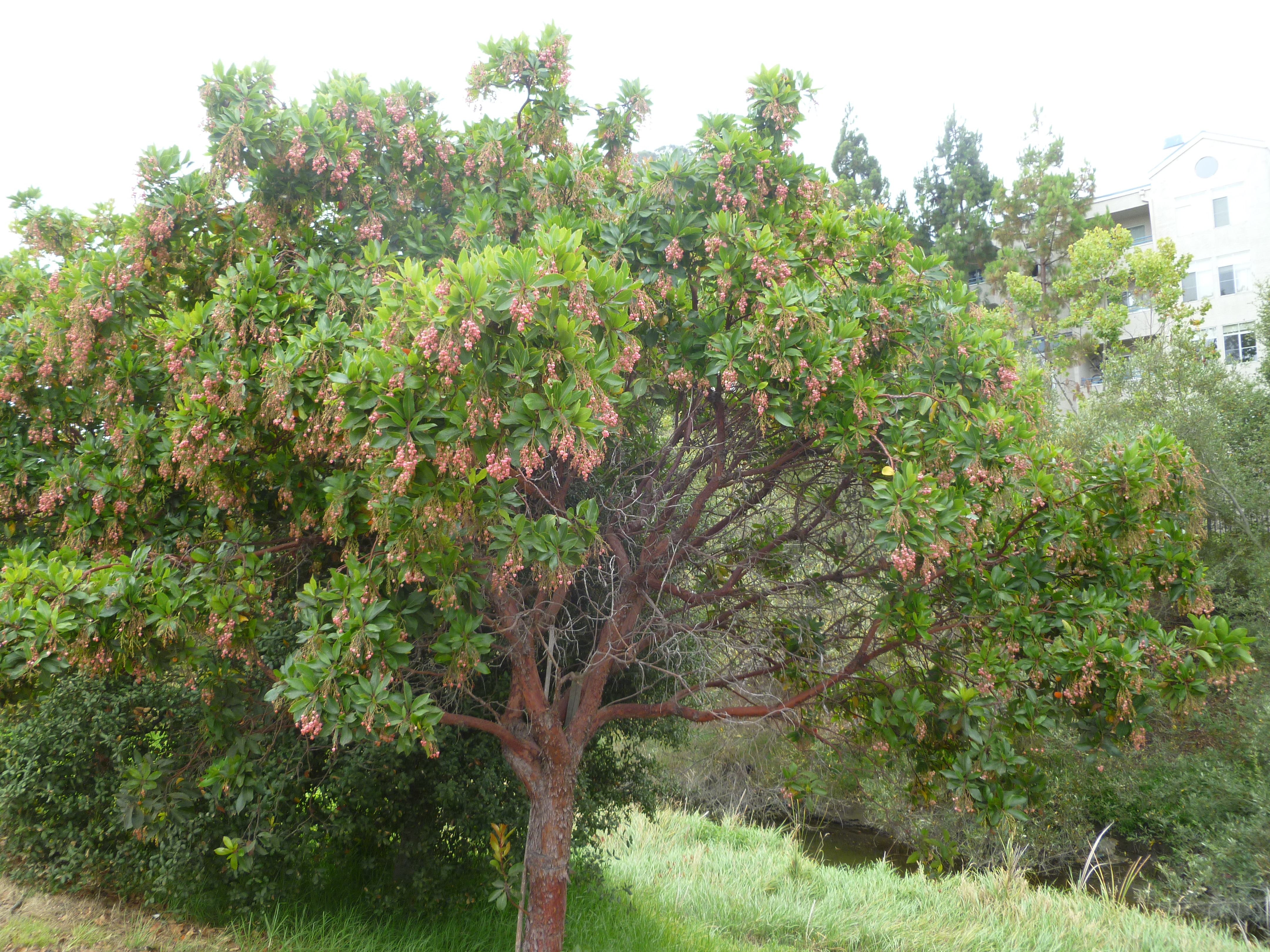
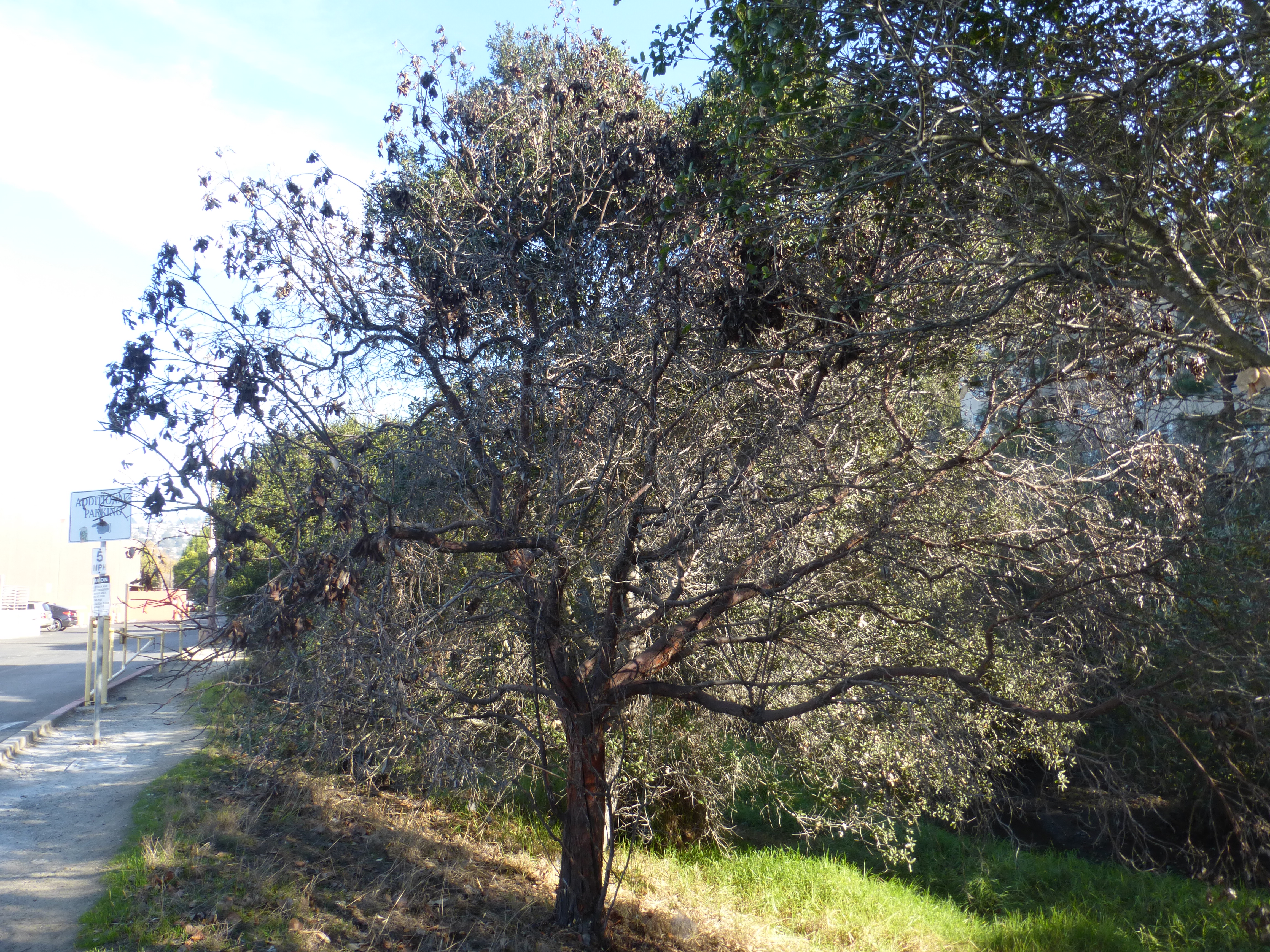
Native Madrone, north side of Cerritos Creek, 2013.  Conservation Sense and Nonsense

SAME Native Madrone on north side of Cerritos Creek is now dead, November 2022.  Conservation Sense and Nonsense.

According to the San Francisco Chronicle, over 160 million native conifers have been killed by bark beetles in California’s Sierra Nevada in the past 10 years. As the climate continues to warm, bark beetles are moving north and west into coastal counties. The worst outbreak has been in Lake County, followed by Napa County. 15-25% of conifers on the east side of Napa Valley are dead. Drought conditions are so extreme that oaks are succumbing to drought stress: “That’s how you know things are kind of really bad, when you see oaks succumb to drought stress.’”

Plans to destroy most eucalyptus on Albany Hill are based on observed die-back of the eucalyptus tree canopy.  The trees were studied by Matteo Garbelotto’s pathology lab at UC Berkeley.  Their report described the impact of the infection:  “First, symptoms observed in Eucalyptus were more markedly limited to the foliage and twigs. Leaf blight and twig necrosis were the only symptoms common across all the six areas surveyed and sampled. Branch and stem cankers, wood discoloration and fungal mats were present, but generally were site-specific or shared by trees only in 2 or 3 cases. Extensive heartrot (i.e. decay of the stem core) was not observed in any tree, although, some wood decay was observed both at the base of stems and on branches.”

The City of Albany’s application for a grant from the California Coastal Conservancy assumes that the eucalyptus trees will never recover:  “The scientific analysis…determined the trees were in irreversible decline due to drought stress and resulting vulnerability of pathogen attack…”  Since all unirrigated trees and plants are showing the same signs of stress, such a verdict would obligate us to destroy most trees in our open space.  Given the remarkable regenerative abilities of eucalyptus, they are more likely to survive than most tree species. 

Top of Albany Hill, 2015.  Conservation Sense and Nonsense

Top of Albany Hill, November 2022.  The tops of the canopy are a little thinner than they were in 2015, but not significantly.  Conservation Sense and Nonsense

These symptoms were caused by a fungus that infects most eucalyptus in California.  The fungus does not usually cause visible damage.  Damage is now visible because the trees are stressed by drought.  The situation is similar to the death of native conifers in California; native bark beetles have always been present but are now capable of killing the conifers because the trees are weakened by drought.  The difference is that it’s not clear the fungus is capable of killing eucalyptus.

Eucalyptus has remarkable regenerative ability to resprout after it has been cut down or burned.  One of the goals of the proposed project is a “fire-resilient” ecosystem, which suggests a landscape that is capable of recovering from the inevitable wildfires in a Mediterranean climate.  In fact, eucalyptus is a fire-resilient tree species because it resprouts after it is burned.  When it is under stress, it drops mature leaves and recovers by producing epicormic sprouts.  Eucalyptus trees on the top of Albany Hill are covered in epicormic sprouts, which indicate the trees are not dead and they are trying to recover.  Albany’s plans to destroy most of the eucalyptus forest on Albany Hill is based on the mistaken assumption that the trees will eventually die.  That is an assumption that is not consistent with the present status of the trees on Albany Hill or with comparable situations in the Bay Area.

Source:  Mount Sutro Forest That Was

This picture (see above) was taken in Glen Canyon Park in San Francisco in 2015.  The eucalyptus trees were producing epicormic sprouts in response to drought and a few had been girdled by those who want all eucalyptus in San Francisco destroyed.  Native plant advocates predicted that the trees would die and they advocated for their destruction.  The trees survived.


Part II of my letter to the Albany City Council will be published tomorrow. Part II will describe the negative consequences of destroying the eucalyptus forest on the top of Albany Hill. Please visit again tomorrow for the next segment of my letter to the Albany City Council. Thank you for your visit today.


Update:  Shortly after I sent my letter to officials of the City of Albany about their plans to destroy most eucalyptus on Albany Hill, they revised their plans because of two updated reports that were done in November and December 2022.  Basically, they no longer plan to destroy most eucalyptus on Albany Hill for two main reasons:

  • Eucalyptus trees are the overwintering habitat of monarch butterflies. They cannot be replaced by native trees of short stature without the open canopy that filters sunlight but also provides a windbreak the monarchs need.
  • Epicormic sprouts on the eucalyptus trees indicate they are recovering from drought and are expected to survive and eventually replace their canopies.

These are the sources of information that corroborate my brief summary of the main reasons Albany is no longer planning to destroy most eucalyptus trees on Albany Hill:

They still intend to remove dead trees to reduce fuel loads, to which I have no objection.  Some dead eucalyptus may be replaced with more drought tolerant species of eucalyptus from Western Australia. 

To be clear, I don’t think my letter about their original plans for Albany Hill were influential in their revising their plans.  My letter is consistent with the advice they received from an ecologist with expertise in monarch butterflies and a consultant in fuels management.  Credit belongs to the preference of monarchs for eucalyptus and to eucalyptus for being indestructible.

April 2023

Money and Fire: 2022 Conference of California Native Plant Society

The California Native Plant Society (CNPS) held a conference in October for the first time since 2018.  There were two main themes of the conference:

Money:  The State of California is making a huge investment in the environment with many interrelated goals:

  • “30 X 30” is shorthand for the goal of protecting 30% of California’s land and coastal waters by 2030.
  • Developing “nature-based solutions” to address the threats of climate change.
  • Vegetation and forest management to reduce wildfire hazards.
  • Protecting and enhancing California’s biodiversity.

Fire:  The frequency and intensity of wildfire is of concern to all Californians, but the California Native Society has a particular interest in fire because it is viewed as a tool to enhance native plant abundance and control the spread of non-native plants that outcompete native plants.

Money

If attendance were the sole measure of success, the conference was a resounding success.  The conference was sold out with record-breaking attendance of 1,200 people.  That’s a 50% increase in attendance since 2018, when 800 people attended.  People came to learn about the many opportunities for public funding of their “restoration” projects and they were not disappointed.

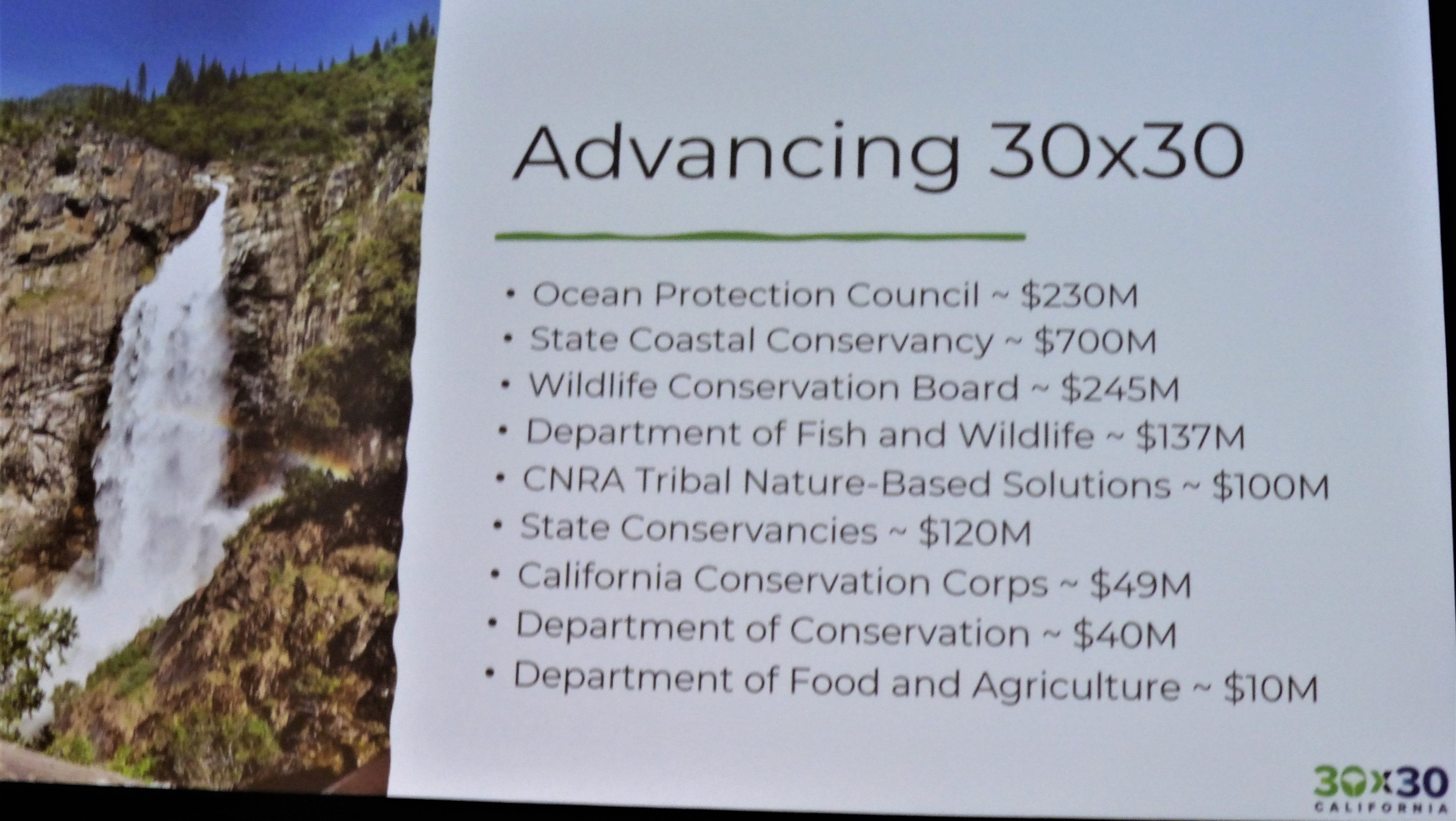
Jennifer Norris, Deputy Secretary for Biodiversity and Habitat for the California Natural Resources Agency (CNRA) was one of the keynote speakers.  She and many other staff of CNRA made presentations at the conference to inform the community of native plant advocates about the many new opportunities to obtain grants for their projects.  This slide (below) shown at the conference, itemized by state agencies the $1.631 Billion budget for just the 30 X 30 portion of the CNRA’s environmental grant programs.  It does not include Cal-Fire funding for forestry projects to reduce wildfire hazards and address climate change.  Nor does it include $10 million of new funding for Weed Management Areas, which funds projects that attempt to eradicate non-native plants and $10 million of new funding for the state council for invasive species. State funding is also supplemented by new federal funding in support of a national goal of achieving 30 X 30. 

But money isn’t the only element of this state program that native plant advocates are excited about.  They have also been gifted a three-year moratorium on requirements for Environmental Impact Reports for their projects.  There will therefore be no requirements for a public process to review plans and comment on them. 

An anxious applicant for state grant funding asked a speaker representing the Wildlife Conservation Board about a rumor that projects using herbicides would not be funded.  The speaker’s reassuring answer was, “We are not rejecting projects using herbicides.” Applicants are being asked to complete a questionnaire about herbicides they plan to use, but the speaker was quick to add, “We have not rejected any [such applications] so far.”  She assured the audience that “You are all careful” in your use of herbicides.

Huge buckets of money are being distributed with no restrictions on the use of herbicides and no vetting process such as an environmental impact review with opportunities for the public to comment.  It seems inevitable that some of the projects will unintentionally do more harm than good, and the public will have nothing to say about which projects are funded. 

Fire

Alexii Sigona was the first keynote speaker for the conference.  He is a member of the Amah Mutsun-Ohlone Tribal Band (not a federally recognized tribe) and a Ph.D. candidate at UC Berkeley in the Department of Environmental Science.  He explained that there are 600 recognized members of the Amah Mutsun Band in a wide region around Pescadero, Hollister, and San Juan Bautista.  They collaborate with organizations such as CNPS because they don’t have the resources to manage their ancestral tribal lands.  He described some of the projects they engage in:

  • Landscape scale removal of “invasive” plants.
  • Plug planting of 120,000 native grass plants.
  • Creating “native hedgerows” for food sources.
  • Removal of native Douglas Firs “encroaching” on grassland.  They have removed 5,000 native Douglas fir trees.  He acknowledged that this project caused some concern about erosion and aesthetics.  Removal of native Douglas fir was mentioned by several other speakers during the conference.  It is an example of the preference of native plant advocates for grassland because it is the pre-settlement vegetation.  Native coyote brush is another target of eradication projects that attempt to prevent natural succession of grassland to other vegetation types. 

There is great interest among native plant advocates in the land management practices of Native Americans because controlled burns were Native Americans’ most important tool to maintain grassland species needed for food and for their prey.  Controlled burns are important to native plant advocates because they believe they are beneficial to native plants and help to control non-native plants.  Prescribed burns are also currently popular with many public land managers and they are the current fad among many fire scientists. 

Two presentations at the conference suggest that prescribed burns are not compatible with the preservation of native chaparral, nor are they capable of converting non-native grassland to native grassland.

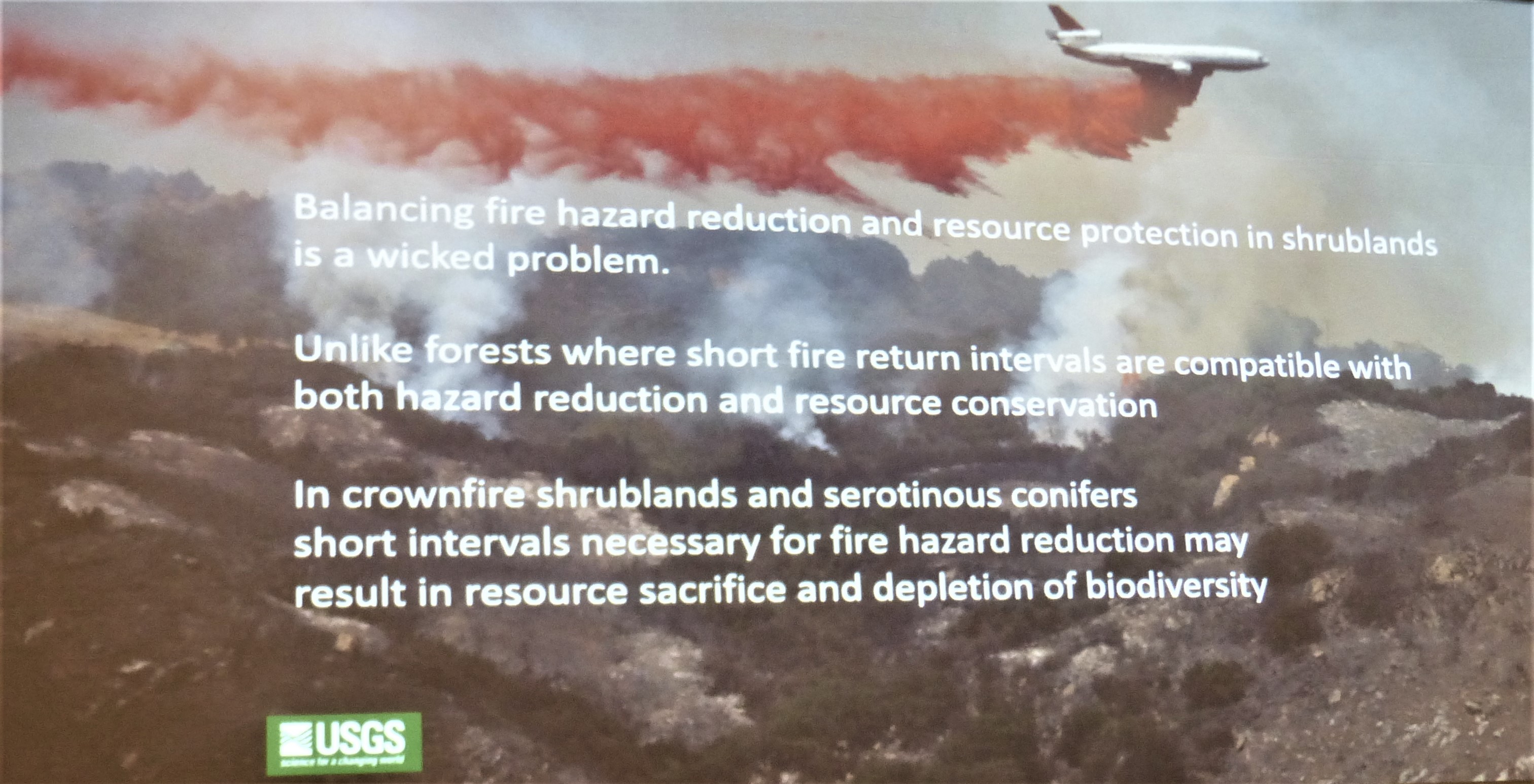
This (above) is the concluding slide of Jon E. Keeley’s presentation.  Dr. Keeley is a respected fire scientist with US Geological Service with expertise in chaparral species.  He explained that 60% of native chaparral species (notably manzanita and ceanothus) are obligate seeders that do not resprout after fire and therefore depend on the existence of their dormant seed bank for regeneration.  In recent decades the fire interval in chaparral has decreased due to climate change and associated drought.  In many places, the fire interval has become too short to establish the seed bank needed for regeneration.  In those places Dr. Keeley has observed vegetation type conversion to non-native annual grasses. 

Dr. Keeley Is concerned that vegetation type conversion from forests in some cases and shrublands in others to non-native annual grassland may be the result of shortening fire intervals further “because of the upsurge in state and federal programs to utilize prescription burning to reduce fire hazard.” (1) This concern extends to some conifer species that do not resprout.  Some are serotinous conifers whose cones are sealed shut and do not release their seeds in the absence of fire. 

This is a familiar theme for much of Dr. Keeley’s research.  He asks that land managers balance the conflicting goals of resource management and fire hazard reduction. 

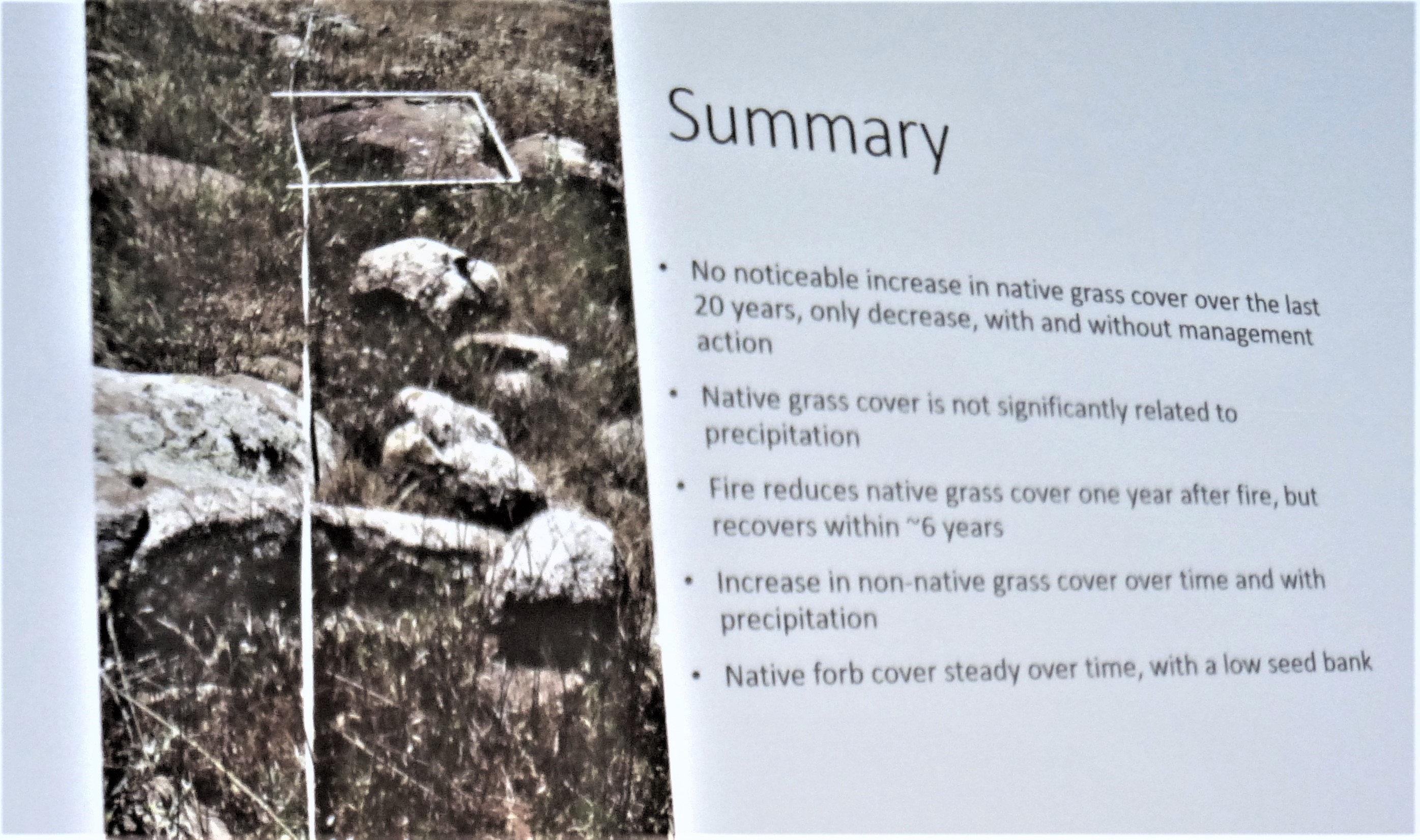
This (above) is the concluding slide (sorry for the poor quality of my photo) of a presentation about a 20-year effort at the Santa Rosa Plateau Ecological Reserve to convert non-native annual grassland to native grassland, using annual (sometimes bi-annual) prescribed burns.  Many different methods were used, varying timing, intensity, etc.  The abstract for this presentation reports failure of the 20-year effort:  “Non-native grass cover significantly decreased after prescribed fire but recovered to pre-fire cover or higher one year after fire.  Native grass cover decreased after prescribed fire then recovered to pre-burn levels within five years, but never increased over time.  The response of native grass to fire (wild and prescribed) was different across time and within management units, but overall native grass declined.” (1)

The audience was audibly unhappy with this presentation.  One person asked if the speaker was aware of other places where non-native grass was successfully converted to native grass.  The speaker chuckled and emphatically said, “NO.  I am not aware of any place where native grasses were successfully reintroduced.” 

Another questioner prefaced her question with the admission that “I’m new here and all this is new to me.”  Then she suggested that Native Americans are having some success using prescribed fire and that they should be consulted.  The speaker graciously replied that she planned to do so. 

Keep in mind that Native Americans weren’t historically using prescribed fire to convert annual grasses to native grasses.  Their burns were intended to maintain native grassland in the absence of competing non-native annual grassland.  Their objectives were different and they were operating in a very different climate and environment. 

Estimates of the pre-settlement population of Native Americans in California range from 138,000 to 750,000.  The population of Native Americans is estimated to have been reduced to as few as 25,000 after the arrival of Europeans due to disease and violence.  There are now over 39 million Californians and only 630,000 of them were Native Americans in the 2020 census.  Land management practices that are suitable for a population of less than 1 million seasonally migrating Californians are not necessarily suitable for a population of over 39 million sedentary Californians.   

The futility of trying to eradicate non-native plants

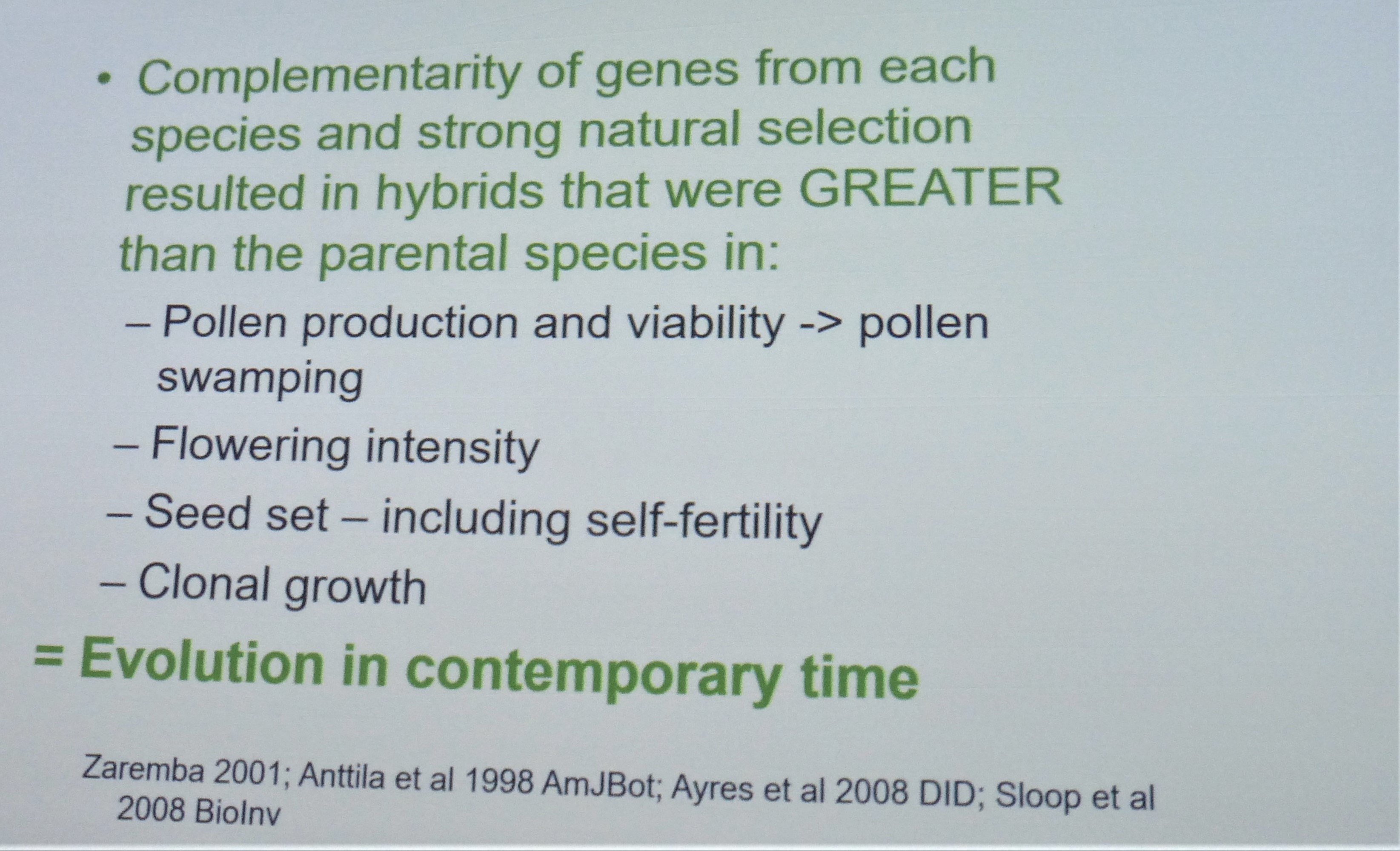
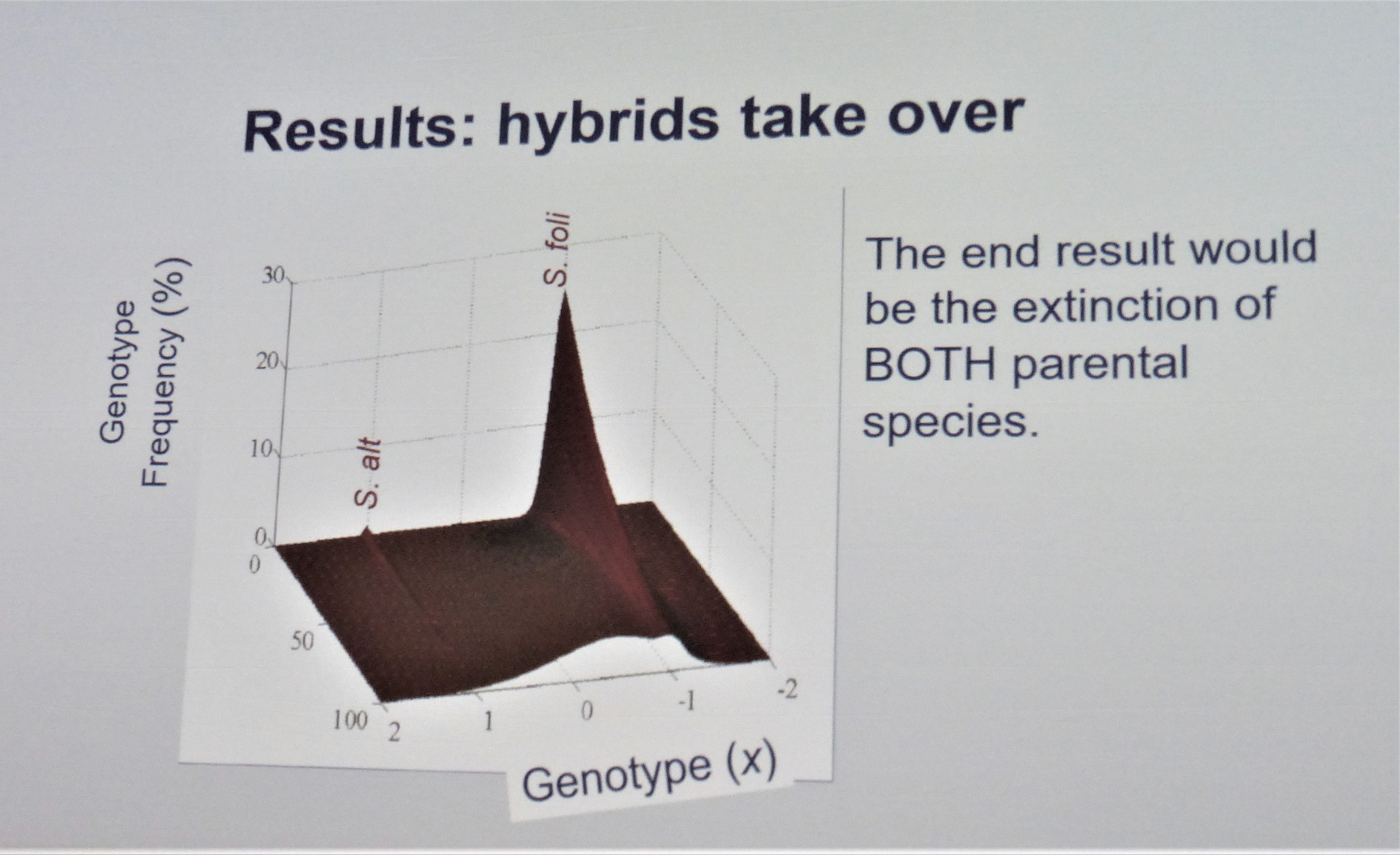
The Invasive Spartina Project (ISP) is another 20-year eradication project that is doomed to failure.  The presentation about the ISP was bravely made by Dr. Debra Ayres, one of the creators of the ISP in 1998.  With intensive effort and hundreds of gallons of herbicide (imazapyr), non-native spartina marsh grass has been greatly reduced in the San Francisco Bay, but the hybrid of non-native S. alterniflora and native S. foliosa persists.  Dr. Ayres explained why:

The spartina hybrid is reproductively stronger in every way than either of its parent species.  Dr. Ayres predicts that the hybrid will eventually replace both of its parent species:

If the goal of this project was to eradicate non-native spartina, hybrid spartina will accomplish that goal. You might think that this prediction would end the futile attempt to eradicate the hybrid, but you would be wrong.  There is no intention of abandoning this 20-year project.  More funding is assured by the California Coastal Conservancy and the project continues to provide well-paid jobs. 

Dr. Ayres ended her presentation with this enigmatic statement:  Evolution doesn’t stop just because we think it has to.”  She seems to acknowledge that humans cannot stop evolution, yet she seems to recommend that we continue to try doing so.  If those positions seem contradictory, that’s because they are.  The bottom line is that as long as public funding continues to be available, this project will continue.

A central theme of the nativist agenda is the futile desire to prevent hybridization because it has the potential to replace a species considered “native.”  They fail to understand that hybridization is an important evolutionary tool that helps plant and animal species adapt to changes in environmental conditions by favoring traits that are better adapted to new conditions.  Humans cannot stop evolution, nor should we try.

San Francisco

I have a special interest in San Francisco because I lived there for nearly 30 years.  The native plant movement is very strong in San Francisco and there were several presentations about the success of the movement at the conference.

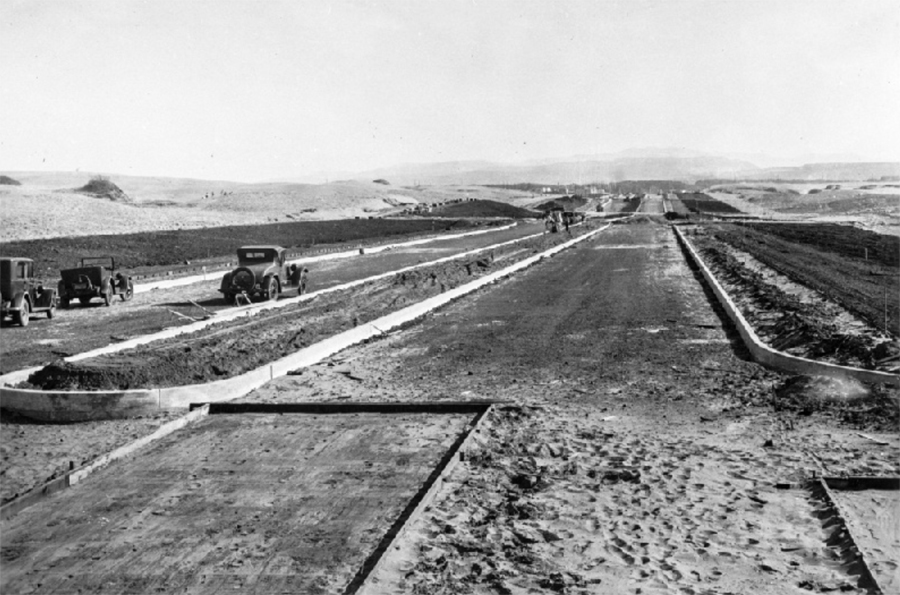
Sunset Blvd being built on barren sand in 1931

One of the projects is trying to turn Sunset Blvd on the western side of San Francisco into a native plant garden.  I lived in that district and am therefore familiar with Sunset Blvd as the major north-south traffic artery through the district.  It is important as the only wind break in the windiest district of the city, which is only 13 short blocks from the ocean.  The district is virtually treeless because of wind conditions and the pre-settlement landscape of barren sand.  Sunset Blvd is therefore the oasis of the Sunset District.  In the past, it was the only place to take a long walk in the shelter of the tall Monterey pines and cypress and tall-shrub understory.  The lawn beneath the trees was the only place for children to play close to their homes.

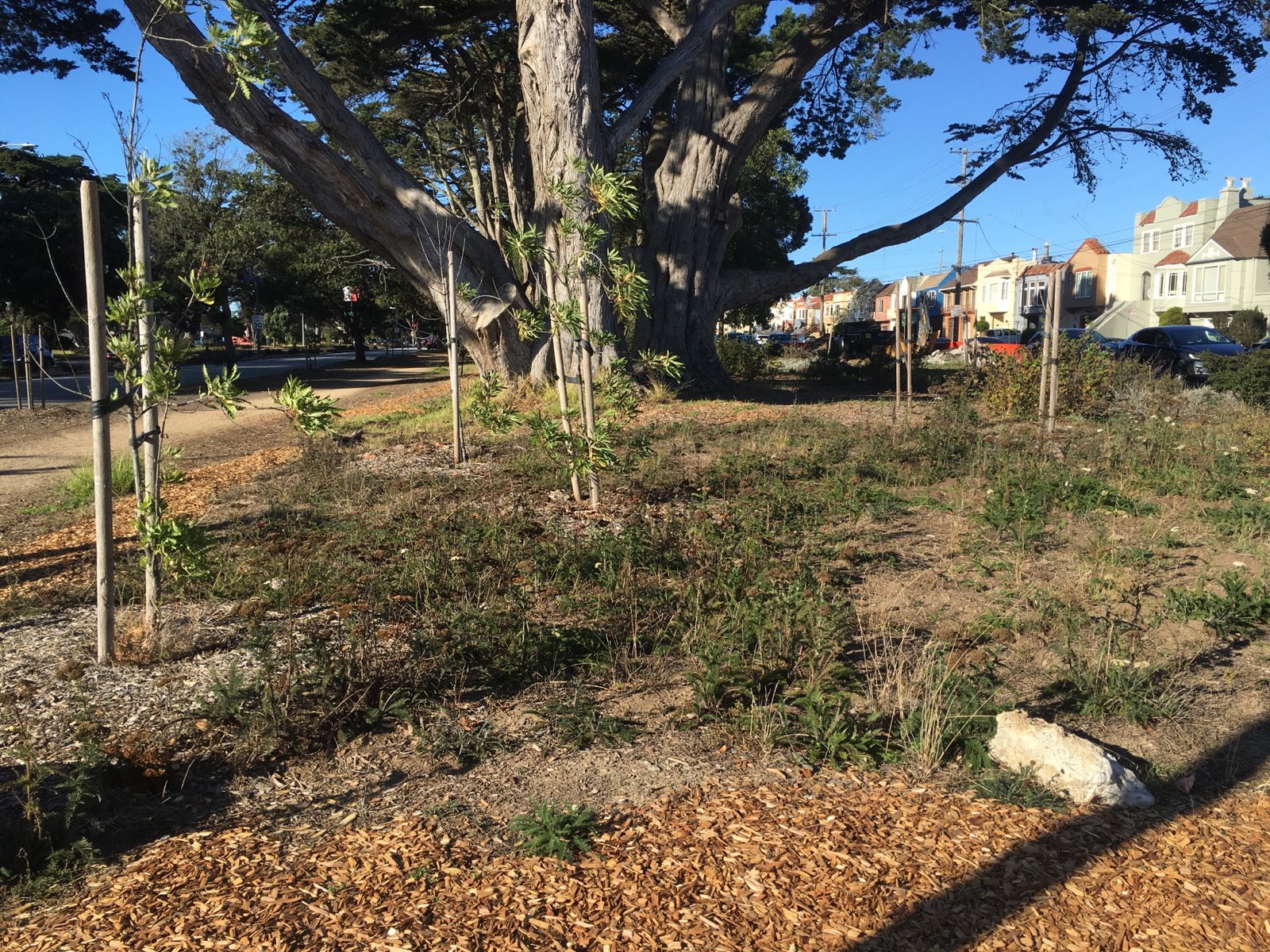
San Francisco’s Department of Public Works (DPW) is responsible for maintaining the medians in San Francisco.  It was therefore DPW’s responsibility to replace the wind break on Sunset Blvd that is dying of old age.  That’s not what they chose to do.  They are replacing the lawn with native shrubs and the tall trees with small native trees that won’t provide shelter from the wind. 

The spokesperson for DPW acknowledged that the project is controversial.  Neighbors of Sunset Blvd valued the sheltered recreational space provided by the 2.5 mile-long and wide median.  Native plant advocates and their allies want to create a wildlife corridor through the western edge of the city.  The spokesperson for DPW said that their plans are a compromise between these different viewpoints.  I don’t know if the neighbors agree, but I can say that native plant advocates are thrilled with the new native plant gardens on Sunset Blvd based on their presentation at the CNPS conference.

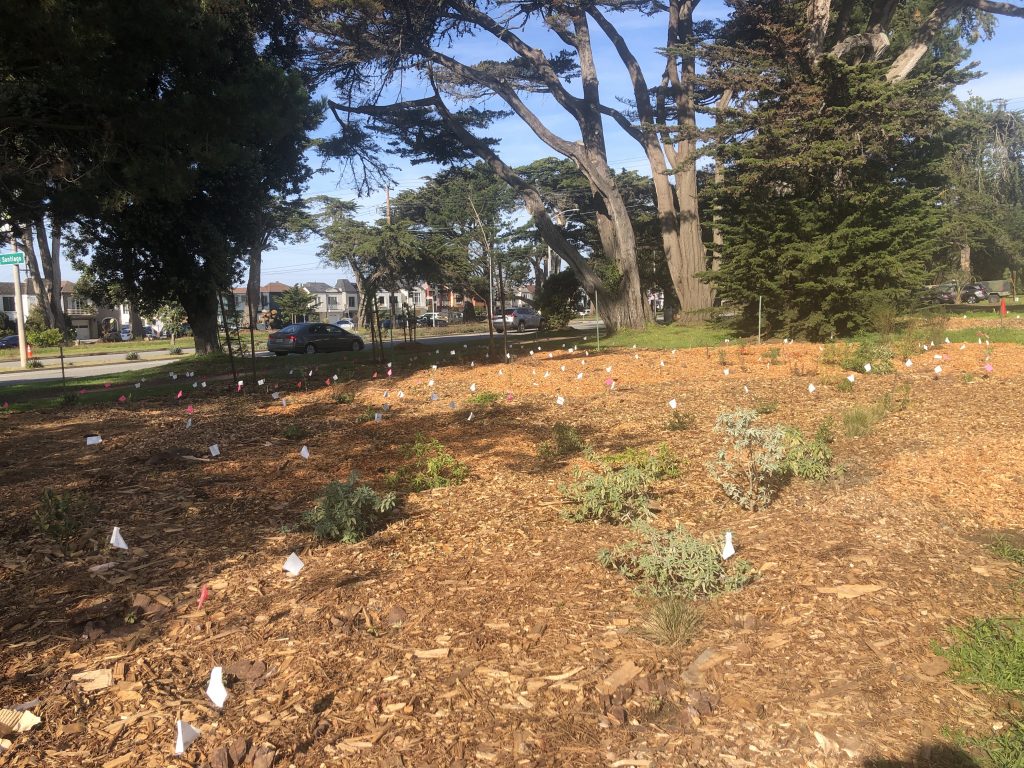
Planting Sunset Blvd. with native plants, December 2020

Native plant advocates prevailed on Sunset Blvd because CNPS bought or raised all the native plants and provided volunteers to plant them and maintain them for 3 years.  DPW couldn’t look their gift horse in the mouth. DPW hired 6 new gardeners to support maintenance of Sunset Blvd. This is an example of how the money that is flowing into such projects will transform many places into native plant gardens. 

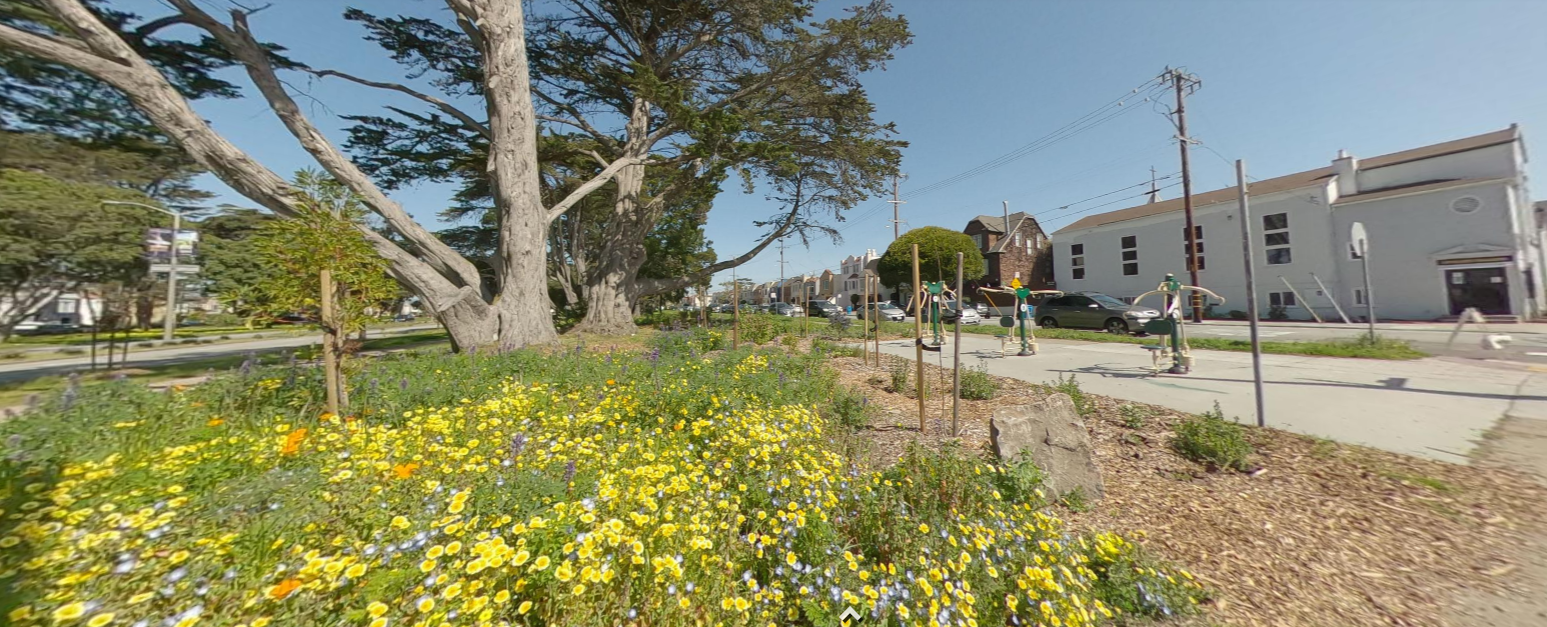
Sunset Blvd and Taraval, spring 2022

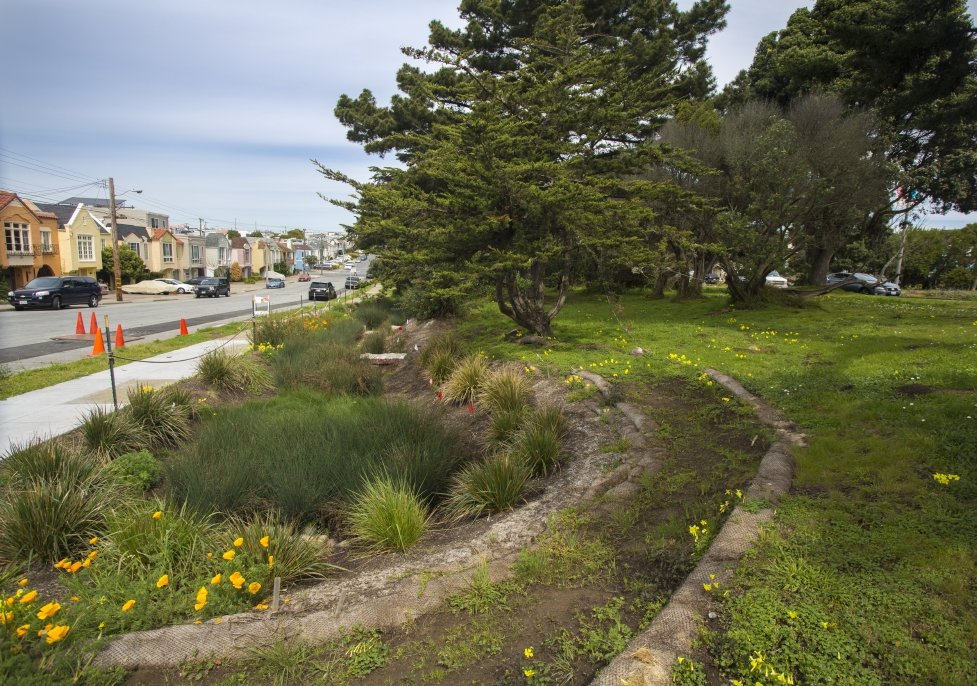
So, let’s look at the result of these projects.  Presenters of these projects showed many beautiful pictures of newly planted native gardens on Sunset Blvd (above).  The pictures were taken in spring, when native plants briefly flower.  But that’s not what these places look like most of the year.  They will look better if they are irrigated year-round, but that would defeat the purpose of replacing the lawn to reduce water usage.  Unlike native plants, lawn turns brown during the dry season if it isn’t watered, but it is still functional as walkable ground. 

Here’s what that garden at Sunset Blvd and Taraval looks like most of the year:

Sunset Blvd & Taraval, October 23, 2022

There was also a presentation by a spokesperson from San Francisco’s Public Utilities Commission (PUC) about the creation of rain gardens in San Francisco.  San Francisco’s sewer system was built long ago when regulations did not require the separation of street run off from residential sewage.  When it rains, the sewage treatment plant is overwhelmed by street run off.  The sewage treatment plant releases untreated sewage and run off into the ocean, in violation of federal standards for water treatment. 

Rain garden on Sunset Blvd as shown at the CNPS Conference
Rain Garden on Sunset Blvd in August 2022. They aren’t pretty year around.

The PUC is developing rain gardens to redirect street run off away from sewage treatment plants into the ground so that treatment plants are not overwhelmed during heavy rain.  The San Francisco Chronicle recently reported that 151 rain gardens have been installed so far. It seems a very good idea, but native plant advocates are not happy with the rain gardens because the PUC has not made a commitment to plant exclusively native plants in the rain gardens.  The audience pressured the speaker about this issue.  He advised them to lobby the PUC to make a commitment to plant only native plants in the rain gardens.  I have no doubt that they will take his advice.  Given their influence and their access to public funding, I would be surprised if the PUC continues to resist their demands.

Conclusion

I have undoubtedly exhausted your patience, although there is much more I could tell you about, including several projects that look promising because they are exploring the importance of soil health to achieve successful results.

The conference themes in 2022 were consistent with the previous two conferences I have attended since 2015.  This is my summary of the fundamental errors of the nativist agenda in the natural world.  They are as apparent in 2022 as they were in 2015: 

  • The futility of trying to eradicate non-native plants that are better adapted to current environmental conditions.
  • The futile and harmful attempts to prevent natural succession and hybridization.
  • The contradictory goals of fuels management and resource management.
  • The lack of understanding that vegetation changes when the climate changes.  The ranges of native plants have changed and will continue to change.  The pre-settlement landscape of the 18th century cannot be recreated.
  • The lack of understanding of the importance of soil health to ecological restoration and associated ignorance (or denial) of the damage that pesticides do to the soil. 

(1) Abstracts for all presentations are available on the CNPS website.

New funding creates new threats to eucalyptus trees

I recently received a message, asking for help to save a grove of eucalyptus trees on the Napa River from destruction:  “I live in Napa on the river where eucalyptus trees are going to be cut down that are home to owls, ravens, herons, egrets and more for over 50 years.  Could you please help save these beautiful trees and wildlife? Any suggestions or ideas would be greatly appreciated.”

Eucalyptus trees on Milton Road on the Napa River
Owls nest in the trees on Milton Road

I learned a few more details by speaking with the neighbor of the trees.  The trees are on State property and the project was going to be funded by California Department of Fish & Wildlife (CDFW).  There are few trees in this neighborhood and therefore few alternatives for the birds that roost and nest in the eucalyptus trees

Eucalyptus grove on the Napa River in which many birds nest and roost

The neighbors asked if herbicides would be used to prevent the trees from resprouting.  That was a concern partly because the well that supplies their drinking water is within 60 feet of the trees.  Before they received an answer to that question, they were informed that “CDFW has decided to halt their project of cutting down the eucalyptus trees on Milton Road!”  We don’t know why CDFW changed its mind, but we would like to believe the questions raised by the neighbors may have helped.  Thanks and congratulations to the neighbors of the eucalyptus grove on the Napa River.

Eucalyptus trees threatened in El Granada

Shortly before I heard from folks in Napa, I learned about a project to destroy eucalyptus in a small community on the coast of San Mateo County.  It’s a foggy coastal location, much like Mount Sutro in San Francisco, where fog drip from the trees during summer months keeps the ground moist and reduces fire hazards. 

The community has made a video (available HERE) about the project and the issues it raises.  It is an even-handed presentation that acknowledges the fire hazards of dense forests in the hills surrounding their community and contrasts that risk with the lower risk of the widely spaced trees in the medians of their village on flat land.  The video explains the many important functions that trees perform to store carbon, improve air quality, provide wind protection and habitat for birds.  The people of El Granada would like the project to reduce fire hazards in the hills, but retain the trees in their street medians because of their ecological value.  It’s a reasoned and reasonable approach.

Source: El Granda Advocates. http://egadvocates.org

The people of El Granada ask for your help to save some of their trees.  Their website (available HERE) invites you to sign their petition.

Predictable…and probably only the beginning

The State of California has committed billions of dollars in fire hazard mitigation, climate change, and biodiversity.  We watched the budgetary plans for these projects being developed in the past year and the plans were recently approved.  Now communities all over California are applying for State grants to implement projects like the two I have described today.  Now it’s up to communities to watch as plans are developed and participate in the process to ensure that the plans reflect their wishes.  It’s your money and your community.  Pay attention and engage in the process.

Postscript…different, but the same

Days before publishing this article, I received an email from Santa Barbara:  Well it is with great sadness we have to report that The University of California at Santa Barbara (UCSB) is again trying to destroy hundreds of Eucalyptus trees here at the University.  They want to destroy what is known as “The Eucalyptus Curtain” the boundary between the University and Isla Vista the college town here.” 

“Eucalyptus Curtain,” UC Santa Barbara. Source: localwiki.org

Some people who are trying to save this grove of eucalyptus are appealing to the California Coastal Commission.  They suggest those who share their opinion contact the CCC HERE.

In this case, the motivation for destroying these trees is not the usual allegation that they are a fire hazard.  According to this article in localwiki, the trees will be destroyed to build more student and faculty housing.  There is no question in my mind that we need more housing and I am rarely opposed to any housing project, including this one.  However, the consequences of destroying these trees are the same regardless of the motivation:

Eucalyptus and Bee, painting by Brian Stewart

What does this mean: “Nature-based solutions to achieve California’s climate change and biodiversity goals”?

In October 2020, Governor Newsom signed Executive Order N-82-20 “enlisting California’s vast network of natural and working lands – forests, rangelands, farms, wetlands, coast, deserts and urban greenspaces – in the fight against climate change. A core pillar of Governor Newsom’s climate agenda, these novel approaches will help clean the air and water for communities throughout the state and support California’s unique biodiversity.”

The California Natural Resources Agency has invited the public to tell them what you think that means.  They are holding a series of virtual on-line workshops (register here) and they are inviting the public to complete a survey (available here) by the deadline of May 14, 2021.  Recordings of workshops that have already taken place are available HERE.   Email address for feedback and questions is californianature@resources.ca.gov.

Click on picture to see San Francisco Bay Area regional workshop

I attended one of the workshops and I’ve read the material available on their website.  This is what little I can tell you about the project.  There seem to be three elements to this initiative:

  • The Natural and Working Lands Climate Smart Strategy will “expand climate smart land management across California to achieving carbon neutrality and reduce climate risks to communities and ecosystems and build climate resilience across California.”
  • The 30X30 initiative establishes a state goal of conserving at least 30 percent of California’s land and coastal waters by 2030, while “safeguarding our State’s economic sustainability and food security, protecting and restoring biodiversity.” Conservation measures will focus on a “broad range of landscapes, including natural areas and working lands, in partnership with land managers and natural resource user groups while building climate resilience and reducing risk from extreme climate events.”  Projects will also “expand equitable outdoor access and recreation for all Californians.”  Approximately 22% of land in California is presently protected, but only 16% of our coastal waters. 
  • “The California Biodiversity Collaborative will bring together groups and leaders from across our state to take bold action to maintain California’s extraordinary natural richness. This Collaborative was a directive set forth in Governor Newsom’s 30×30 Executive Order and is the next generation of the State’s Biodiversity Initiative.”

I have no idea what these vague commitments mean when they are translated into specific land acquisitions and funded projects, but I know that non-governmental organizations see this as an opportunity to obtain funding for what they want. 

Only 10% of the audience for the San Francisco Bay Region workshop was the general public. Over 50% of the 280 people at the workshop (by far the largest constituency at the workshop) I attended were employees of non-governmental organizations.  The California Invasive Plant Council (Cal-IPC) asked their members to attend the workshops and participate in them:  “This is a critical opportunity to make sure the need for invasive plant management is heard, loud and clear. We encourage you to attend to learn more about 30×30 and share your ideas.”  These are Cal-IPC’s suggestions for participants:  “Several points to consider making: (1) the definition of “protected” — and the metrics used to measure 30×30 success — need to include adequate funding for ongoing stewardship; (2) funding for the Weed Management Area (WMA) program is critical for county collaborations staying on top of high priority invasive plants across jurisdictional boundaries; (3) wildfire fuels reduction should follow best practices, including control of invasive plants, so that habitat is enhanced, not damaged.” California Native Plant Society is also asking its membership to participate in the 30 X 30 public outreach effort in support of CNPS objectives.

If you have your own priorities for how your tax dollars are used, you may want to participate in this public process as well because the projects will have an impact on land management practices throughout the State of California.  Please consider attending a workshop and completing the long, complex, and vague on-line survey by May 14, 2021.  I have no idea if the California Natural Resources Agency will take the public’s input into consideration, but I know this:  If you don’t participate, you will take whatever you get. 

What I WANT it to mean

This initiative is going to be a major public investment and non-governmental non-profit organizations see it as an opportunity to fund their projects.  The disparate goals of this initiative are often in conflict.  If climate change solutions and related wildfire hazard reduction goals conflict with biodiversity goals, addressing climate change hazards must be the top priority because all life is threatened by the consequences of climate change.  The public must understand that when the climate changes, the vegetation changes.  The ranges of native plants and animals have changed and will continue to change in response to climate change.  Native vegetation is not inherently less flammable than non-native vegetation.

On August 18, 2020, the CZU Lightning Complex Fire swept through Big Basin Redwoods State Park, burning over 97% of the land, forested in native redwood trees. (AP Photo/NicCoury published by CA State Parks)

The native plant movement is a form of climate change denial.  We cannot replicate the landscape of 250 years ago, as native plant advocates wish, because it is not adapted to the current and anticipated climate.  Biodiversity is appropriately defined as all species of plants and animals, regardless of their origins.  Forests are major carbon sinks, whether they are native or considered non-native by people with a short-term perspective of nature and evolution.

Over 160 million native conifers have died in California in the past 8 years. They were killed by high temperatures, drought, and native bark beetles. All of these factors are consequences of climate change.

The survey for this project is not user friendly.  Within its constraints, here is a sample of the specific points I was able to make:  “Do not fund projects that use pesticides, including herbicides.  Do not replace established vegetation that does not require irrigation with vegetation that will require irrigation to become established.  Do not fund projects that will require recreational access restrictions. Stop eradicating non-native spartina marsh grass with herbicides because it protects wetlands year around from storm surges.  Where afforestation is possible, plant only trees that are adapted to the current and anticipated climate. Fund projects that protect residential communities from coastal flooding and salt-water incursion into ground water. Fuels management projects must assume that native and non-native vegetation is equally flammable because flammability is unrelated to the origin of plants.  If climate solutions conflict with biodiversity goals, climate solutions should be the top priority because all life is threatened by climate change.  If fuels management goals conflict with biodiversity goals, fire safety should be the top priority.”

An Australian friend of eucalyptus

An Australian sheep farmer (we would say “rancher”), Jane Pye, spotted our defense of eucalyptus and got in touch:

“G’day, I stumbled across the SFFA website researching ‘allelopathy’ in eucalypts and was amazed to find so much antipathy towards gum trees over there – like an arboreal cane toad! What I really wanted to know is do you have any evidence of ‘positive allelopathy’ re eucalypts?  I live in the Australian outback with areas of dry sclerophyll forest. The commonest eucalypt here (Eucalyptus populnea) is often surrounded by native scrub trees & bushes. Strangely some of these box trees also have other trees growing out of their trunks which I think were planted there by the traditional owners (Aboriginal). These Tree in Trees are found in clusters around the old indigenous campsites, which are in turn found around good natural water catchments or native wells.”

My article debunking the popular myth that eucalyptus is allelopathic was republished by the San Francisco Forest Alliance (SFFA).  The myth of allelopathy is that eucalyptus emits a chemical that prevents the germination of other species, eliminating competition with eucalyptus for resources such as water.  But Jane’s experience with eucalyptus goes beyond debunking allelopathy in eucalyptus.  She has documented many examples of different tree species that have seemingly been planted inside the cavities of eucalyptus trees.  The eucalypts are a sheltering host to the guest tree species.  Clearly, eucalyptus is not inhospitable to other plant species.

Wilga (Geijera parviflora) guest in Bimblebox (Eucalyptus populnea) host.

Apophyllum anomalum guest growing from Bimblebox (Eucalyptus populnea) host

Jane believes that these “trees in trees” were intentionally planted by indigenous Aboriginal “farmers.”  She believes that this is one of many techniques that were developed by Aboriginal people to manage the land and vegetation to provide food and cultural implements.  She explains on her website:

“After years of admiring and speculating about these scar trees, I have finally gotten around to photographing most of them. I spend many days in the paddocks mustering sheep and some of these trees are like old friends. They are an important link to our Aboriginal past and a reflection on how innovative and resilient these people were. Surviving out here west of Walgett with our unpredictable climate of harsh droughts and random floods is still tough but these people managed their environment and thrived.

“So I dedicate this website to Freddie Walford, an Aboriginal stockman we had who taught us some bush lore and like many of his people, died too young. I will always remember his natural affinity with livestock, his love of polocrosse and his quiet humour and grace. He never spoke much about the scar trees but did say if I was ever to see bones inside an old coolabah [Eucalyptus coolabah], I should go as fast as possible in the opposite direction! This website aims to increase knowledge and record these trees but not to display any pictures or information that is culturally secret or sacred.”

Australian aborigines. Photo by Thomas Dick, 1920

The land management practices of Australian Aborigines were very similar to those of indigenous Californians for much the same reason.  These were hunter-gatherer cultures living in similar climates with seasonal drought.  They moved around as seasons changed and their diets changed accordingly.  Both cultures used fire as one of their primary tools.  Periodic fires refreshed the grasses that fed the grazing animals they hunted.  The primary grazers in Australia were kangaroos and other marsupials; deer and other ungulates are the original grazers in California.

Native Americans setting grass fire, painting by Frederic Remington, 1908

The land management practices of indigenous people are enjoying a renaissance.  A recent study of Aboriginal land management in Australia said, “Indigenous agency and governance is driving innovations in land management worldwide that provide more equitable solutions and strategic approaches to looking after the lands, waters and all living things, particularly in the face of climate change.”

Such intentional burns are now seen as a way to keep the brushy fuels that carry fire to a minimum, reducing wildfire hazards.  Cal Fire’s new “Wildfire and Forest Resilience Plan” and the Governor’s recent annual budget proposal tell us that more prescribed burns are planned in California to reduce fuel loads and fire hazards:  “CAL FIRE will expand its fuels reduction and prescribed fire programs to treat up to 100,000 acres by 2025, and the California Department of Parks and Recreation and other state agencies will also increase the use of prescribed fire on high risk state lands.”

It has taken hundreds of years to appreciate the value of indigenous land management and its context in their culture.  When Europeans arrived in both America and Australia, settlers assumed that their culture was superior to indigenous culture.  Early settlers made no attempt to learn from indigenous people, which was the settler’s loss.  Indigenous people had learned to live off the land, in most cases without cultivating crops and without domesticated animals.  Rather, indigenous people learned what was edible and what had medicinal value.  The first European settlement in America, Jamestown, ended quickly with starvation, because the settlers weren’t able to understand what the land offered them.  In Australia, knowledge of indigenous land management was also delayed by the cultural taboos of the indigenous people that prohibited the revelation of many of their cultural practices outside their ancestral clans.

 Wildfire in Australia

Jane also had some interesting observations about wildfires in Australia that are consistent with our experience in California:

I’m sorry to hear eucalypt forests are being destroyed over there as they are wonderfully useful trees. We don’t have many fires in inland Australia. It’s more of a coastal / high rainfall problem. We just don’t get the fuel build up as it’s a semi-arid region and we have thousands of merino sheep eating the grass and shrubs. There have been no fires on this property in over a century and probably much longer. We also have efficient native grazers – kangaroos and wallabies and now also goats that are increasingly common as an alternative to sheep.”

Jane Pye’s home. Gingie Station, Walgett, NSW, Australia. There are many places in California’s Central Valley that look much the same.

This is the strategy that I promote on this website.  If we reduce ground fuels that ignite easily, we can prevent most fires from igniting tree canopies that are harder to ignite.  Fire travels fast on the ground if given a continuous field of dry grass during the dry season.  Grazing animals are a far safer way of reducing these grassy ground fuels than the herbicides that are often used.  Herbicides leave a dead, dry thatch on the ground that is very flammable and grazing does not.

Walgett, Australia. Average Hi Temp 80 degrees. Average Lo Temp 54 degrees. Average rainfall 19 inches.

“Also we are very used to fire over here and many people regard those foolish enough to build in fire prone areas have only themselves to blame. Some of our small coastal towns are totally surrounded by National park and State forest and only have one road in – that’s why there were so many images of people sheltering on beaches last summer. It’s a hard issue but better hazard reduction burns and more fire fighting aircraft seem to be the way forward here. Also better fire retardant building materials.”

These observations are also consistent with the strategy that makes sense to me.  We must learn to live with fire because it is an essential element in Mediterranean ecosystems.  We can’t prevent it, but we can work around it with zoning that prevents building in extremely hazardous areas, using fire retardant building materials, and creating safe evacuation routes.

Thanks, mate!

 Alerted by Jane, I noticed this woody shrub sprouting from a eucalyptus stump in Stern Grove a few days after I heard from Jane.  Clearly, eucalyptus does not retard the growth of other species.

Stern Grove, San Francisco

Many thanks to Jane for getting in touch with us.  Thanks for her admiration of eucalyptus and Aboriginal culture.  I’ve had some lovely email chats with Jane.  Perhaps you would like to drop her a line to thank her as well:  janepye6@gmail.com

Cal Fire grant has created fire hazards in the East Bay Hills

Hoping to get the public’s attention, I will begin this story with its ending.  This is the concluding paragraph of my formal complaint to Cal Fire about its grant to UC Berkeley for a project that has increased fire hazards in the East Bay Hills, caused other significant environmental damage, and created conditions for further damage:

“In conclusion, the grant application for this project makes a commitment to reducing greenhouse gas emissions that is based on the assumption that a biofuels plant will generate electricity from the wood debris.  Such a plant has not been built and UC Berkeley apparently does not intend to build such a plant.  Other claims made in the grant application about carbon storage are based on inaccurate claims about carbon storage.  Grant guidelines state, “Failure to meet the agreed upon terms of achieving required GHG reduction may result in project termination and recovery of funds.”  In other words, Cal Fire should terminate this project and recover any funds that have been remitted to UC Berkeley.  The project is a misuse of grant funds because it will increase fire hazards and increase greenhouse gas emissions.  Without imputing motives, on the face of it, the grant application looks fraudulent.”

I published an article about this project last week that I invite you to revisit if you need a reminder of a project that has clear cut all non-native trees 100 feet on the north side of Claremont Ave. in Berkeley, leaving equally flammable native trees in place on the south side.  Huge piles of wood chips and logs are stacked along the road that were supposed to have been disposed of by generating electricity in a biofuels plant.  No such biofuels plant exists and there are no plans to build it.  The disposition of these potential bonfires is at the moment unknown.

The source of the funding for Cal Fire grants is California’s carbon cap-and-trade law that is intended to reduce greenhouse gas emissions, primarily carbon emissions.  Therefore, the grant application required the applicant to prove that the project would reduce greenhouse gas emissions to qualify for the grant.  The grant application submitted by UC Berkeley claimed to meet this requirement by making a commitment to use the grant to build a biofuels plant. The biofuels plant would have generated electricity by burning wood fuel instead of burning fossil fuels. In fact, the project has significantly increased greenhouse gas emissions by destroying large, mature, healthy trees.  The carbon the trees have stored throughout their lifetimes is now being released into the atmosphere as the wood debris decays along the roadside.

UC Berkeley made other inaccurate claims about carbon storage in order to qualify for the grant:

  • Statements made in the grant application about carbon loss and storage by planting oaks are not accurate:
    1. Coast Live Oaks (CLO) do not live for “hundreds of years,” as erroneously claimed by the grant application. USDA plant data base says CLOs live about 250 years in the wild.  However, that estimate of longevity does not take into account that Sudden Oak Death has killed over 50 million oaks (CLOs and tan oaks) in California in the past 15 years.
    2. Blue Gum eucalyptus lives in its native range 200-400 years. It has lived in California for 160 years, where it has fewer predators than in its native range.
    3. The grant application states that carbon storage will be increased by “changing species composition to hardwoods.” In fact, eucalyptus is also a hardwood tree, making this an inaccurate, discriminatory distinction.
    4. Above-ground carbon storage in trees is largely a function of biomass of the tree. Therefore, larger trees store more carbon.  It follows that carbon storage is not increased by destroying large, mature, healthy trees and replacing them with saplings of smaller trees, such as oaks.  The carbon lost by destroying mature trees is never recovered by their smaller replacements with shorter lifespans.
  • Plans to plant oaks where non-native trees have been clear cut willfully ignore the realities of the accelerating epidemic of Sudden Oak Death (SOD) in the East Bay Hills. According to the press release for the 2020 SOD Blitz, “…overall the rate of SOD infections increased in the wildland urban interface, in spite of reduced rainfall. This is the first time in 13 years of SOD Blitz survey that infection rates increase in spite of reduced rainfall, suggesting SOD is becoming endemic at least on the Central coast of California.”  As Cal Fire knows, dead trees are a greater fire hazard than living trees.
  • The grant budget commits the grantee (UCB) to pay “volunteers” to plant oaks.  That budget line item is described in the budget narrative as being funded by volunteer, non-profit organizations over which UC Berkeley has no authority. A “volunteer” is, by definition, not required to perform the assigned task.  It follows, that calculations regarding carbon storage resulting from this project are not ensured by the project because the planting of oak trees is not ensured by the project.  The “cost” of this line item in the budget seems more theoretical than real.
  • Planting young trees will require frequent irrigation that is not funded by the grant. Given continuing and worsening drought, planting young trees without making a commitment to irrigating them is throwing good money after bad.  Rainfall to date is 26% of the previous year.  Rainfall the previous year was less than half the year before that.  Oaks are not more drought tolerant than eucalyptus that are native to an equally dry climate.

The grant application also displays ignorance of trees and the functions they perform in the environment. 

  • The trees that remain on the north side of the road are now more vulnerable to windthrow because they have lost protection from their neighbors on their windward side. Trees develop their defenses against the wind while they grow in response to the wind to which they are exposed.  In California, most wildfire events are associated with high winds, making windthrow and wildfire probable simultaneous events.
  • The run off from the eroded hillside will undoubtedly pollute the creek on the south side of the road with sediment and road run off.

Claremont Ave. west of Grizzly Peak Blvd, December 2020. Photo by Doug Prose.

The project is not a suitable evacuation route

Claremont Ave, west of the Cal Fire/UCB project is a residential neighborhood, heavily wooded with native trees that overhang the road.   Source Google Earth.

The justification for this project was to provide an evacuation route. It is a premise that makes little sense. There are no residences east of Grizzly Peak Blvd, where the project begins. The residential community on Claremont Ave. is downhill, west of the project. If the residential community needs to evacuate, it won’t be fleeing up hill. Residents will need to flee downhill, through a tunnel of native trees. The roadside through the residential community is heavily wooded in native oaks, bays, and buckeyes. High voltage power lines overhang the road.  Nothing has been done to clear that road for possible evacuation.  This residential community would benefit from the creation of a safe evacuation route, not the pointless project that was done.

Claremont Ave, west of Cal Fire/UCB project is heavily wooded with native trees that overhang the road.  There are also high-voltage power lines hanging over the road.  Source Google Earth.

What’s next?

I received the following promising reply from Cal Fire by the end of the day I sent the complaint:  We are in receipt of your email dated 1/14/2021 in regards to a Fire Prevention Grant awarded to the University of California Berkeley (UCB).  We will promptly begin investigating your concerns and allegations of UCB non-compliance with the grant’s guidelines and contractual agreement.  I will respond to you within 30 days with the results of our findings.  CAL FIRE takes the grant assistance programs very seriously so we will investigate thoroughly.”

What’s done cannot be undone.  The best we can hope for is that the strategy used to reduce fuel loads on Claremont Ave. won’t be used elsewhere.  My primary goal is to prevent this destructive approach from being used on 300 miles of roadside in Oakland, as the supporters of the UCB project on less than one mile on Claremont Ave are demanding.

Governor Newsom has proposed that the State budget should invest an additional $1 billion in reducing fire hazards in California.  The proposal includes $512 million for landscape-scale vegetation projects.  Cal Fire will probably administer those grants.  It is critically important that Cal Fire improve its evaluation of grant applications to avoid funding disastrous projects such as the project done by UC Berkeley on Claremont Ave.  There are many worthwhile projects that deserve funding, such as providing the residential community on Claremont Ave a safe evacuation route.