An epilogue to the saga of the San Francisco Natural Areas Program

On December 15, 2016, the San Francisco Planning Commission approved the Environmental Impact Report for the Natural Areas Program and the Recreation and Parks Commission approved the management plan for the Natural Areas Program.  The public hearing was over 6 hours long and is available for viewing HERE.  Although we watched the hearing, we won’t try to summarize it here because readers can watch it if they wish.  Rather we will comment on a few conspicuous observations about the hearing.

The most noteworthy feature of the hearing was that virtually all of the supporters of the EIR and the Natural Areas Program were allowed to speak first.  Critics of the program were called on last.  If you have spoken at such a hearing, you know that speakers submit a speaker’s card on which they indicate their support or opposition for the agenda item when they arrive.  Typically, speakers are called in the order in which they arrive at the hearing.  This usual procedure was apparently not followed in this case.

The main disadvantage of not being called upon in the order in which speakers arrive is that when a hearing is 6 hours long, many people with other responsibilities—such as work or family obligations—are forced to leave before their names are called.  In the case of this hearing, I heard a number of names called of people whom I knew to be critics of NAP, who did not speak, presumably because they waited their turn but weren’t called in the order of their arrival.

Another conspicuous feature of this hearing was that the vast majority of speakers in favor of the EIR and the management plan either work directly for the program or are affiliated with it.  Many supporting speakers were representatives of non-profits that conduct similar projects or they bring children into the parks to “educate” them about native plants.  Their presence at the hearing was therefore a work responsibility which enabled them to spend an unlimited amount of time at the hearing.

This is an illustration of the biggest obstacle to the realization that nativism is a destructive agenda based on outdated scientific hypotheses for which there is no empirical evidence.  In a word, “restoration” ecology is now a multi-million dollar industry in which many people are employed.  Therefore, there is vested economic interest in continuing such efforts whether or not they are successful or beneficial.

Criticisms of the Natural Areas Program and its EIR

The speakers who opposed the approval of the management plan and its EIR were members of the general public who are neighbors of the so-called “natural areas.”  They mentioned the destruction of trees (and the subsequent loss of sequestered carbon) and the use of herbicides as their primary objection to the plans.  Another important issue was the restrictions on recreational access such as the closure of 10 miles of trails and the requirement that all access be confined to the trails that remain.  These are issues with which our readers are familiar, so we won’t elaborate.

Comments based on personal experience with specific “natural areas” seemed most effective.  One fellow said he had participated as a volunteer in several big plantings of native plants in a natural area.  The plants died each time and presently few plants have survived several attempts to “restore” this so-called natural area.  This experience had led this speaker to conclude that attempts to “restore” this park to native plants were futile.

A neighbor of Glen Canyon Park showed pictures of the impact on her neighborhood of the destruction of trees in the park several years ago.  Her neighborhood has lost its windbreak and therefore dust from the bare ground is blowing into their homes.  Their beautiful view of the trees has been replaced by bare ground.

The Natural Areas Program began 20 years ago and has been fully staffed and funded since its inception.  Therefore, it should be judged by what it has accomplished.  It has closed trails, destroyed trees, and built fences.  It has repeatedly destroyed vegetation with herbicides and planted those areas with native plants.  The native plants have died, in some cases several times in 20 years.  In other words, it has little useful to show for 20 years of investment of effort and money.  Since it has not been successful after 20 years, it seems insane to invest another 20 years of money and effort.  Remember that one definition of insanity is doing the same thing over and over and expecting a different outcome.

Support for the Natural Areas Program

We hesitate to use the word “lie” to describe the justifications for the Natural Areas Program, but after listening to hours of testimony by its supporters, we will use that word to describe a few of their claims:

  • The most effective lie is that all the trees they destroy will be replaced with native trees. In fact, no such commitment is made in the management plan, which says explicitly that the natural areas will be converted to grassland and dune scrub.  This “replacement” fiction is mentioned in the EIR.  However, the EIR makes no commitment to planting the replacement trees in the areas or even the same parks where the trees are destroyed.  This important caveat to the commitment to replace the trees was not mentioned by any of the speakers in support of the plans, including NAP’s leadership.  In the case of the 15,000 trees that will be destroyed at Sharp Park, calling those removals anything other than a clear-cut is a lie.
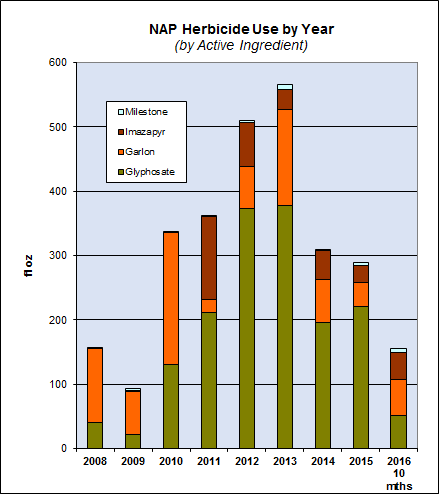
  • Inaccurate descriptions of NAP’s use of herbicides also qualify as lies. The executive director claimed during the hearing that only 2.67 quarts of “active ingredient” were used in the natural areas in 2016. In fact, public records requests inform us that NAP used 1 gallon (4 quarts) of active ingredient from January 2016 to October 2016.  The “active ingredient” is only a fraction of the amount of the formulated product.  The “inert” ingredients in the formulated product are often considered hazardous.  In other words, reporting only the volume of active ingredient underestimates the amount of herbicide being applied.  The number of pesticide applications done by NAP is another way to evaluate the magnitude of pesticides used by NAP.  From January 2016 to October 2016, pesticides were applied in the natural areas 111 times, which is 85% of all pesticide applications in park areas other than Harding Park (which is a golf course maintained to professional competition standards with contractual obligations regarding turf maintenance).  A full report of NAP’s pesticide use is available HERE.
    Courtesy San Francisco Forest Alliance
    Courtesy San Francisco Forest Alliance
  • Claims that the forest in the natural areas will be “managed” for forest health are false. The management plan says explicitly that the trees will be removed for the purpose of expanding native plant gardens that require full sun.  These areas will not be “thinned” as supporters claim.  Rather they will be removed along the leading edge of the forest in order to create more unshaded ground for planting native plants.  The health of the trees is not the criterion for their removal.  These tree removals will not benefit the forest.
However, most of the statements made by supporters are not lies.  Rather they are faithful repetitions of an ideology that most of them probably believe.  Here are a few examples:

  • Nativists believe that native animals require native plants. There is no empirical evidence to support that belief.  All empirical studies find equal numbers of insects, birds, amphibians, etc., using non-native plants.
  • Nativists claim that native pollinators require specific native plants. With few exceptions this belief is mistaken.  The monarch butterfly, for example, is as willing and able to use one of the many non-native species of milkweed as it is a native species.  Some butterflies require a specific genus of plant as its host, but a genus is typically composed of hundreds of species of which many are not native.
  • Nativists believe that the immutable relationship between specific animals and specific plants has evolved over “thousands of years.” They are mistaken.  Animals adapt much more quickly to changes in the environment.  Many changes in plants and animals have been observed over a period of years, rather than a period of centuries, let alone millennia.

Many of the supporters of the NAP plans mentioned that native plants would somehow mitigate climate change.  This is a mysterious notion that I cannot explain.  If we are destroying tens of thousands of trees that store tons of carbon, how can we claim this will reduce climate change?  The grassland that is the goal of these “restoration” projects will store a small fraction of the amount of carbon stored by the trees.  Is this absurd claim a reflection of ignorance about carbon storage?  Or is it a strategy intended to confuse the public?  Whatever the motivation, the claim that native plants mitigate climate change is NOT true.

The nativists apparently do not understand that the ranges of native plants and animals have changed in response to changes in the climate and they will continue to change.  They aren’t stopping climate change by planting native plants.  In fact, climate change requires that the concept of “native” be redefined.  That’s why their projects are unrealistic and futile because they are based on a climate that no longer exists.

The epilogue

The San Francisco Forest Alliance has announced its intention to appeal the certification of the Environmental Impact Report to the San Francisco Board of Supervisors.  This appeal will be heard sometime in 2017.  You will be notified of the hearing if you will subscribe to the Forest Alliance website:  http//sfforest.org.

Meanwhile, the Forest Alliance will ask the City of San Francisco to prohibit the use of the most toxic herbicides in the city’s parks.  There will be two public hearings regarding the city’s pesticide policies and practices:

  • Monday, December 19, 2016, 5 pm. This is a public hearing by San Francisco’s Integrated Pest Management (IPM) Program.  Details about that hearing are available HERE.
  • Tuesday, January 24, 2017. The Commission on the Environment will consider the recommendations of the IPM Program at this hearing.  The Forest Alliance will publish the details of that hearing when they are available.

Best Wishes for a BETTER 2017

The certification of the EIR and the approval of the NAP management plan is not the holiday gift that we were hoping for.  In fact, the entire year of 2016 wasn’t much of a gift to those who believe government has an important and valuable job to do.  We look forward to a better year in 2017 and we wish our readers all the best for the New Year.

christmas-holly-4

An announcement from the San Francisco Forest Alliance about their plans

We are publishing the following email message from the San Francisco Forest Alliance.  They are thanking their supporters for their help at the public hearing about the Natural Areas Program and its Environmental Impact Report.  They are announcing their intention to appeal that decision to the San Francisco Board of Supervisors.  And they inform their supporters of an opportunity to ask the Integrated Pest Management (IPM) Program to prohibit the use of the most toxic types of herbicide in the city’s so-called “natural areas.”  That hearing will take place on Monday, December 19, 2016.  Please help them if you can.


San Francisco SFFA supporters / concerned residents:

Thank you for sending in your letters and braving the rain to sit through the hours long joint meeting of the Planning Commission and SF Recreation and Parks Commission.

Yes, we lost last Thursday and now, with a heavy heart, but with a sense of pride and integrity, please rest assured that we did everything we could to convince the two commissions to see our side.

Thank you for your efforts and for working together, in solidarity and with gratitude from the SFFA leadership.  We will appeal the decision to approve the EIR and will go before the Board of Supervisors next year with an emotional plea that they do the right thing. The City cannot implement the SNRAMP while the EIR is under appeal.

In the meantime, and because the SNRAMP cannot operate without the use of herbicides in city parks, there is something we can now do:

Attend an important hearing on Monday Dec 19th in City Hall at 5 PM.

San Francisco’s Integrated Pest Management (IPM) Program is hearing public input on the guidelines for Tier 1 herbicides and on the approved pesticide list for 2017.

This hearing on the Integrated Pest Management program will be at City Hall on Monday, Dec. 19th at 5 pm, room 408.

We hope you can come because this is our main chance to influence any policy decisions about herbicides for the coming year.

If you plan to attend and make public comment please use our email box  sfforestnews@gmail.com  and leave us your name and phone number so we can coordinate our public input – it is not too late

Important Reading Materials: For those who are planning to speak – those of us who are concerned about pesticide use in our city, please read Attachments B and C(click to access the documents)

B. Draft 2017 San Francisco Reduced Risk Pesticide List, including Draft Restrictions on “most hazardous” (Tier I) herbicides

C. Summary of issues raised regarding pest management for City properties, with agency responses

Note:  It is important that you read these documents prior to making any public comments!

Public opinion does make a difference!

San Francisco Forest Alliance

BE INFORMED – GET INVOLVED – TELL YOUR NEIGHBORS

If you’re on Facebook, please “like” our page: https://www.facebook.com/ForestAlliance

Please sign our petition if you have not already done so.


The final episode in the 20-year saga of San Francisco’s “Natural Areas Program”

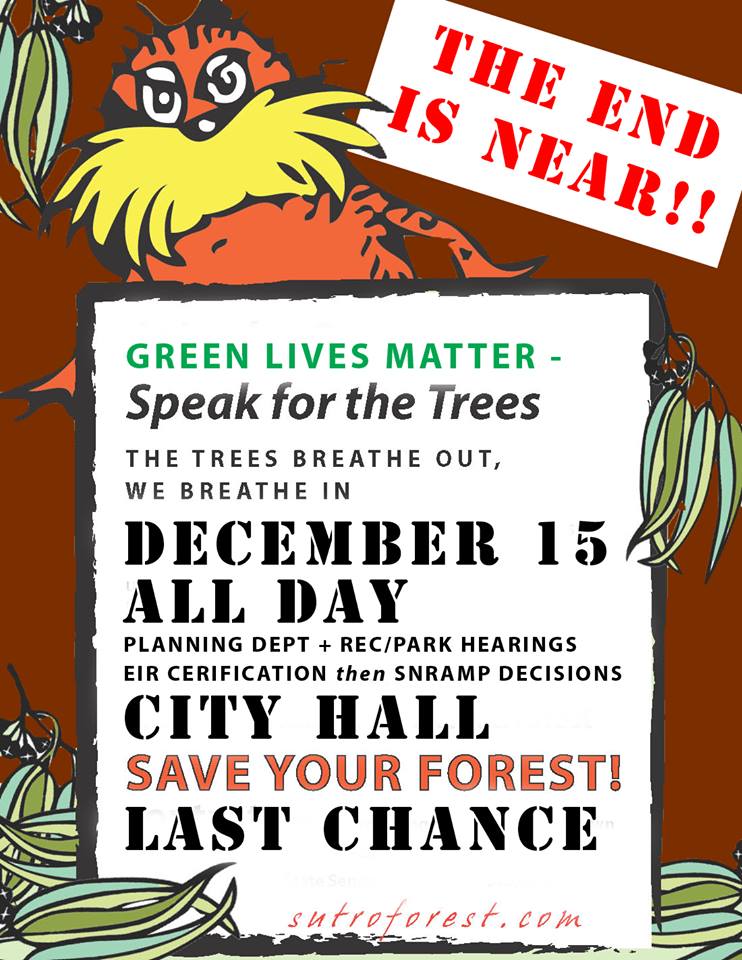
the-end-is-nearOn December 15, 2016, the San Francisco Planning commission will hold a public hearing to consider certification of the Environmental Impact Report for the Natural Areas Program. If the EIR is certified, the Recreation and Park Commission will consider formally adopting the management plan for the Natural Areas Program at the same hearing.  The Recreation and Park Commission will have the option of adopting one of the alternatives to the management plan.  The San Francisco Forest Alliance will ask that the Maintenance Alternative be adopted by the Recreation and Park Commission because it is the “environmentally superior” alternative which will destroy the least number of trees and use the least amount of pesticides. 

If you can attend this hearing and make public comment, please contact the SF Forest Alliance (sfforestnews@gmail.com) for the details about where and when the hearing will take place.  If you can’t attend the hearing, please consider sending an email to the Recreation and Park Commission (recpark.commission@sfgov.org) by Monday, December 12, 2016 (the deadline for submission of written public comments to be included in the agenda packet of the commissioners). 

We lived in San Francisco for nearly 30 years and our local park was designated a “natural area” in 1997.  Based on our experience with the Natural Areas Program, we have sent the following email to the Recreation and Park Commission.  We hope that our letter will help you write your own public comment.


Subject:  Approve the Maintenance Alternative for SNRAMP

Dear Recreation and Park Commissioners,

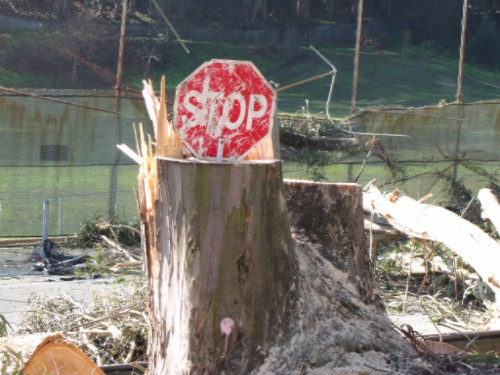
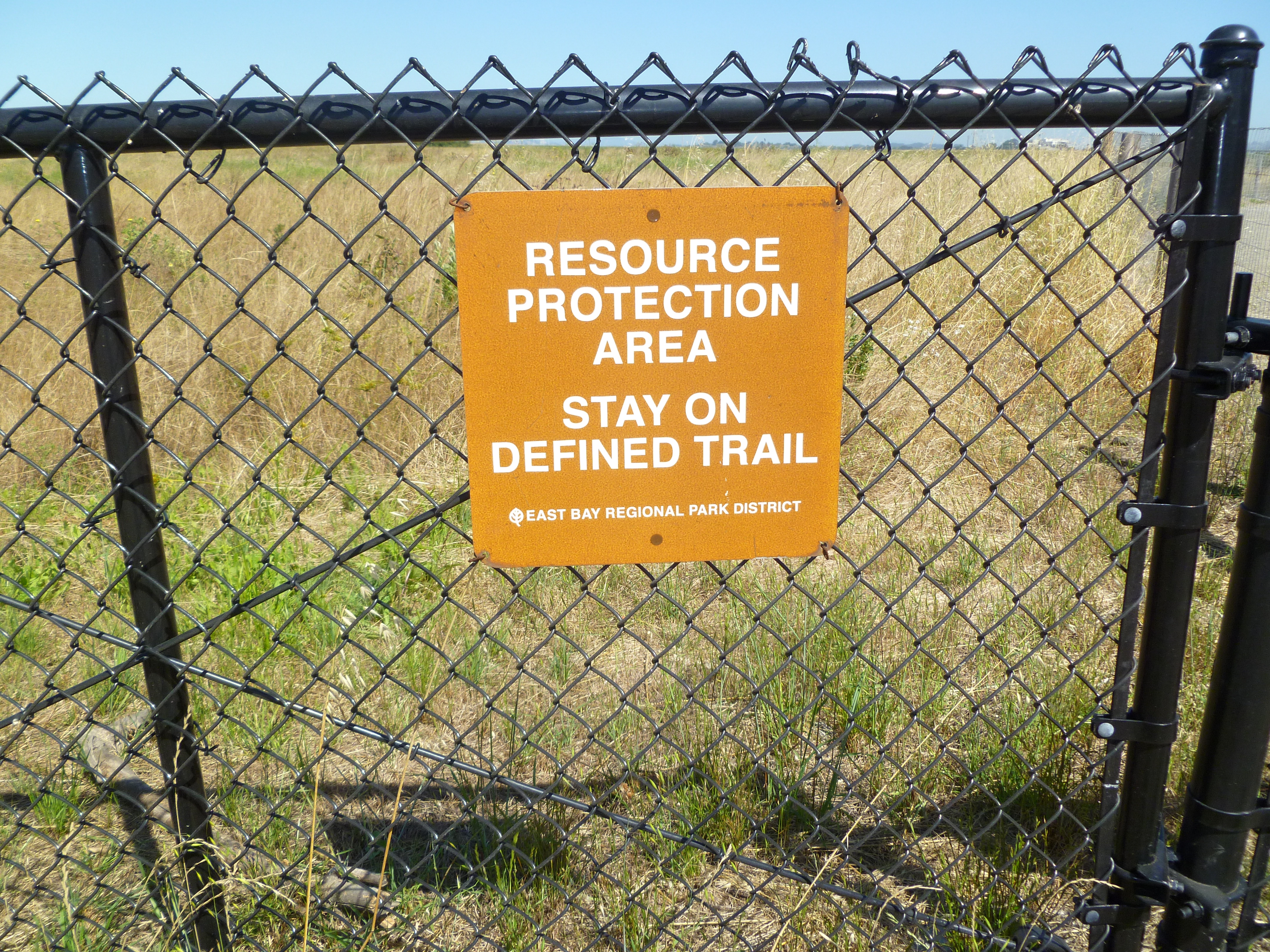
Since the Natural Areas Program was created 20 years ago, hundreds of healthy trees have been destroyed and over one thousand trees died slowly after being surreptitiously girdled by vandals calling themselves native plant advocates in the 32 so-called “natural areas.”  Hundreds of gallons of herbicide have been sprayed on harmless plants, many that provided valuable habitat and food for wildlife.  Trails have been closed and big signs installed instructing park visitors to stay on the trails that remain. Fences have been installed in some parks to enforce those restrictions.

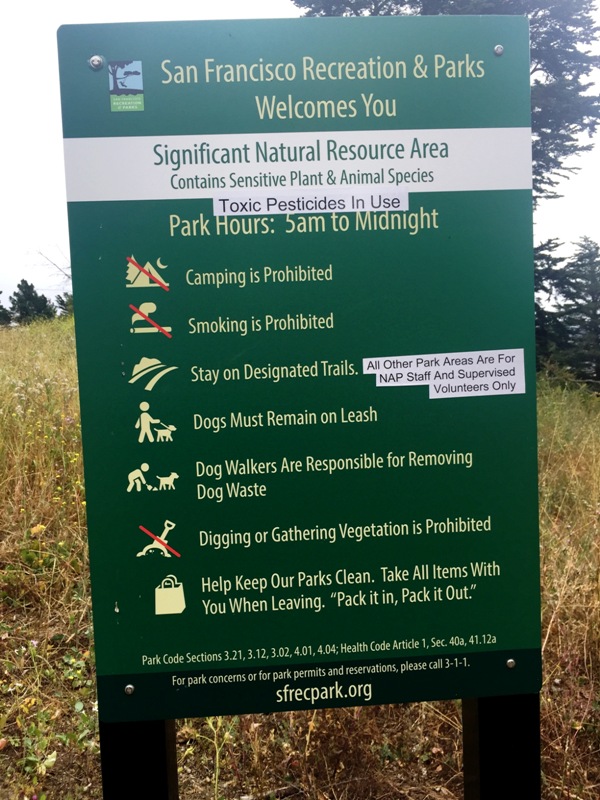
This sign in a "natural area" has been altered to express the public's opinion of the Natural Areas Program. Courtesy San Francisco Forest Alliance.
This sign in a “natural area” has been altered to express the public’s opinion of the Natural Areas Program. Courtesy San Francisco Forest Alliance.

After all that destruction and restriction, what has been accomplished?  Non-native plants have been repeatedly eradicated in the “natural areas” and native plants were planted.  These native plant gardens have repeatedly failed:  the native plants die and the non-native plants return, in some cases many times.  Native trees have been planted in a few “natural areas” but most have died, despite being irrigated during an extreme drought.  After wasting millions of dollars and the associated labor, there is little to show for that investment after 20 years.

Therefore, I am writing to ask the Recreation and Park Commission to vote to adopt the Maintenance Alternative as provided by the Environmental Impact Report that was 10 years in the making.  The Maintenance Alternative would enable the Recreation and Park Department to continue to take care of the “natural areas” they have already created, but it would prevent further tree destruction, further restrictions on recreational access, and require fewer pesticide applications.

Besides the obvious lack of success of the Natural Areas Program after 20 years of effort, there are many other reasons why it would be wise for the Recreation and Park Department to quit throwing good money after bad money.  Here are some of those reasons:

  • The Natural Areas Program was predicated on the mistaken assumption that native plants are superior to non-native plants as habitat for animals. In fact, in the past 20 years multitudes of empirical studies have been conducted that prove that wildlife has no preference for native plants.  Wildlife is just as likely to use non-native plants as they are native plants.
  • The Natural Areas Program also assumed that greater biodiversity would be achieved by eradicating non-native plants. They were mistaken in that assumption as well.  Studies have been conducted all over the world in the past 20 years that find no decrease in plant biodiversity resulting from introduced plants.
  • The climate has changed since Europeans arrived in the Bay Area in 1769 and it will continue to change. The plants that existed here in the distant past are no longer adapted to current conditions.  The ranges of native plants and animals must change if they are to survive in the long run.  Therefore, demanding that historical landscapes be re-created serves no useful purpose.
  • The native trees of California are dying by the millions. The US Forest Service informs us that 102 million native conifers have died in the Sierra Nevada in the past 6 years.  University of Cambridge recently published a study about Sudden Oak Death in which they reported that 5 million oak trees have died in California since 1995 and that the epidemic is “unstoppable.”  There are SOD infections in Golden Gate Park and the Arboretum.  The US Forest Service tells us that Coast Live Oaks will be virtually gone from California by 2060.  A study of redwoods predicts that its native range will shift north into Oregon by the end of this century.  In other words, if we want trees in California, many of them will have to be non-native trees adapted to a hotter, drier climate. 
  • Environmental conditions in a densely populated urban area such as San Francisco are also incompatible with the unrealistic goals of the Natural Areas Program. The heat island effect of urban areas exacerbates climate change.  Increased levels of soil nitrogen caused by the burning of fossil fuels promotes the growth of weeds.

The Natural Areas Program was a good idea that has outlived its usefulness.  We may try to keep it alive for sentimental reasons, but expanding it would be rewarding failure.  Please adopt the Maintenance Alternative.

Thank you for your consideration.

stop-destroying-trees

FEMA funding for East Bay tree destruction is cancelled!

We republish with permission a Huffington Post article by Jennifer and Nathan Winograd about the cancellation of FEMA funding for the destruction of hundreds of thousands of trees on the properties of UC Berkeley and the City of Oakland.  We are grateful to the Winograds and to the thousands of people who participated in the effort to prevent these projects from being implemented, including the Hills Conservation Network, which bravely filed the expensive lawsuit that resulted in this outcome.

It remains to be seen if the City of Oakland and UC Berkeley will implement their plans using other fund sources.  We therefore urge our readers to continue to follow the issue until we have some assurance that the plans have been abandoned.

The Winograds have also provided the following introduction to their Huffington Post article, which explains that this outcome could have been avoided if those who demanded the destruction of our urban forest had been willing to engage in a meaningful dialogue about the projects.

“Many of us tried to engage in meaningful dialog with Bay Area politicians and land managers about our objections to the clear cutting and poisoning of the hills. We were rebuffed. Some, like Mayor Libby Schaaf, did not even extend the courtesy of a reply. Others, like Dan Kalb, Oakland City Councilmember, calls anyone who disagrees with him “stupid.” We tried to engage the media — local newspapers, television and radio, magazines — and with few exceptions, our objections were largely ignored. When we were mentioned, we were ridiculed. Refusing to give us a fair hearing, the Contra Costa Times and San Francisco Chronicle claimed we were indifferent to public safety. Regardless of how many experts — including the U.S. Forest Service, the EPA, and former firefighters — substantiated our concerns, they remained defiant, insisting that even more forests should be clear cut and more poisons be spread. With local politicians, the media, and proponents refusing to engage in reasonable dialog, this left opponents no choice but to force the discussion in a court of law. That lawsuit, filed by Hills Conservation Network, ultimately prevailed with FEMA, which withdrew millions of dollars in funding to the City of Oakland and UC Berkeley. That’s a good thing and here’s why:”


FEMA Pulls Funding for Oakland, Berkeley Clear Cutting

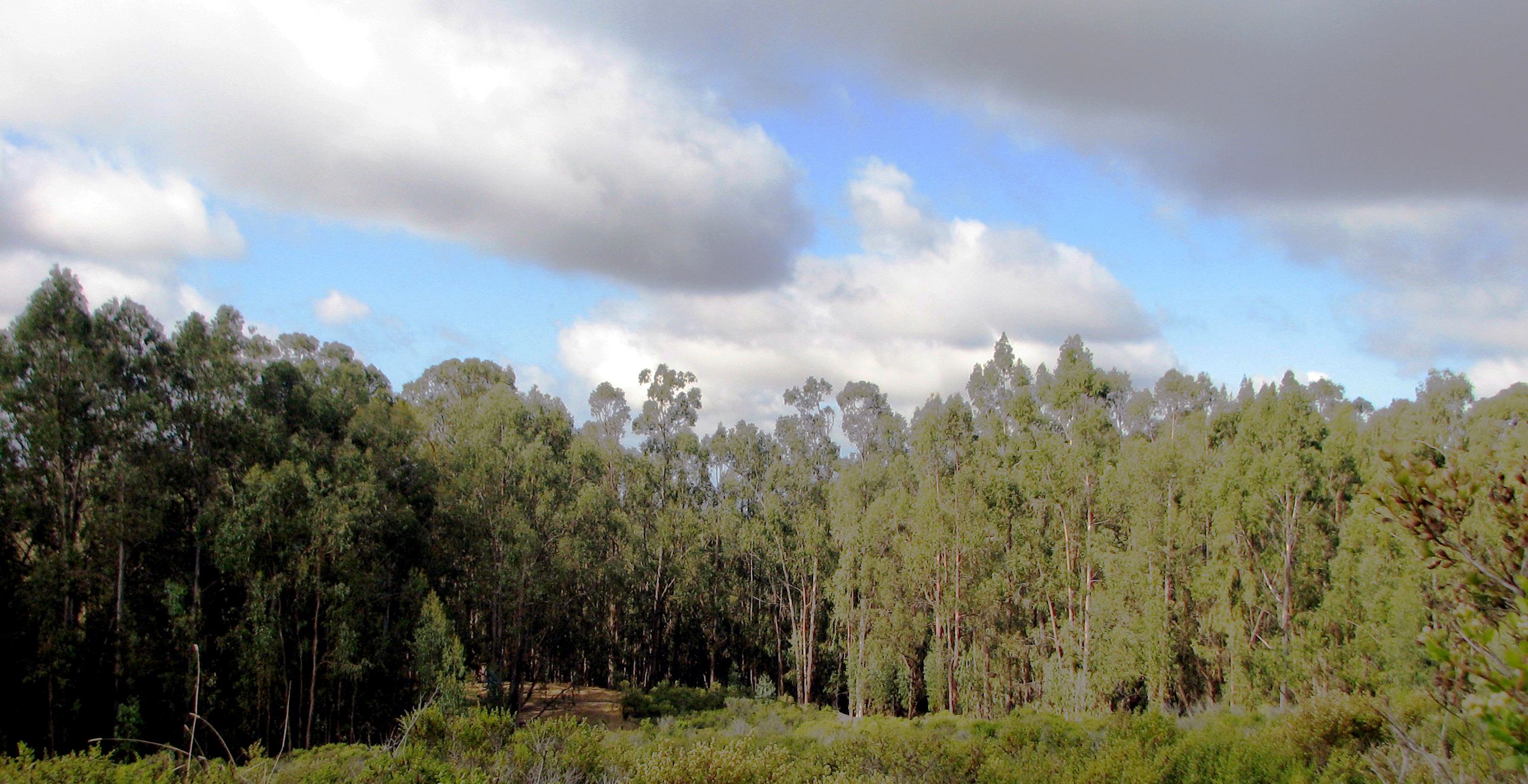
Eucalyptus forest, Lake Chabot

The City of Oakland just lost millions of dollars in federal funding. Given what the intended use of that money was for, that’s a good thing. Combined with similar funding for UC Berkeley and the East Bay Regional Parks District (EBRPD), over 400,000 trees across seven Bay Area cities were to be chopped down and thousands of gallons of cancer-causing herbicides spread on their stumps to prevent regrowth. Slated for eradication were the vast forests above the Caldecott Tunnel and Caldecott Field, North Hills Skyline, Strawberry and Claremont Canyons in Berkeley, and 11 regional parks including Sibley, Huckleberry, and Redwood in Oakland. Costing nearly $6 million, the plan would have radically transformed the character and appearance of the Oakland hills. Why?

The Scripps Ranch Fire of 2003 burned 150 homes but none of the Eucalyptus abutting those homes.

If you believe proponents, it is because the trees pose a heightened risk of fire. Since the infamous Firestorm of 1991 which burned scores of homes and killed 25 people, they have worked tirelessly to turn public opinion in the East Bay against Eucalyptus and Monterey Pine trees. Chief among their claims is that these trees were to blame for the ferocity of that fire because they are alleged to possess unusually high quantities of volatile oils that make them more flammable and prone to shooting off embers which enable the spread of fire. These claims have been repeated so many times they are often regarded as self-evident, even though the evidence does not support them, nor does the history relating to the ignition and spread of past fires. Indeed, the 1991 fire itself (and a later 2008 fire) started in grasses, the very sort of vegetation that clearcutting is intended to proliferate throughout the hills. In fact, the stated aim of the deforestation effort is to replace Oakland forests containing species of trees that are among some of the tallest in the world with shallow grasses that are highly susceptible to fire and which the EBRPD admits are “one of the most dangerous vegetation types for firefighter safety due to the rapid frontal spread of fire that can catch suppression personnel off guard.”

In a report highlighting the heightened fire risk which would have resulted from this plan, David Maloney, former Chief of Fire Prevention at the Oakland Army Base, criticized the spread of misinformation about these trees as motivated by native plant ideology, calling it “a land transformation plan disguised as a wildfire hazard mitigation plan” that will “endanger firefighters and the general public” and “be an outrageous waste of taxpayer money.” And he’s not alone in his concerns.

The U.S. Forest Service objected, saying it would “increase the probability of [fire] ignition over current conditions” because “removal of the overstory trees can introduce changes to the environment which increase fire behavior in undesirable ways.”

The U.S. Fire Administration Technical Report on the 1991 Fire led to the conclusion that removal of the trees would lead to growth of highly flammable brush species, noting that “brush fuel types played a significant role in the progression of the fire” and that brushland made up “a large portion of the available fuel.”

The Environmental Protection Agency stated that it is predicated on “extensive use of herbicides” and “risks posed to human health and the environment from that use.” It went on to express concern about the “potential impacts of climate change,” including “the length and severity of the fire season.”

FEMA itself admitted that the plan would result in “unavoidable adverse impacts … to vegetation, wildlife and habitats, protected species, soils, water quality, aesthetics, community character, human health and safety, recreation, and noise.”

During the summer, 5,200 California firefighters battled 14 fires across the state. The vast majority of the fires were in grass and brush, with a few in so-called “native” Oak woodlands.

But you would not know any of this by reading Bay Area newspapers, watching Bay Area television news programs, listening to local radio stations, reading local magazines, or hearing Bay Area politicians. These are discussions those who oppose this plan tried to engage in with the Mayor, the Oakland City Council, the media and even plan supporters in order to find a compromise, but were rebuffed. Instead, the “need” for deforestation and herbicide use was deemed “self-evident” and opponents were labeled as indifferent to public safety who debased the memory of those who died in the 1991 Firestorm.

In the absence of public discussion about the expertly substantiated criticism that the plan would have increased rather than reduced fire risk, exposed citizens to huge amounts of dangerous chemicals, released over 17,000 metric tons of greenhouse gases into our environment, poisoned and displaced wildlife, radically altered the appearance of our parks, threatened homeowners values by degrading the aesthetics upon which those values depended, eliminated erosion control for hillside homes, and caused a variety of other harms, the public was denied information that would have allowed them to make a sound and informed choice. This troubling bias does not honor the memory of those who died in that tragic fire 25 years ago; it shames it. Their loss should have served to embolden our resolve to prevent a recurrence of their tragedy through rigorous public debate, rather than hobbled us with emotionally charged rhetoric that stifled discussion before it was allowed to begin and threatened to turn the response to that fire into the root cause of yet another disaster.

For while opponents sought to elevate the discussion on this plan to prevent a future tragedy, local media, politicians, and supporters proved themselves incapable of moving beyond a narrative that was so sensationalist and even after more than two decades, so raw, that the abandonment of caution, reason, and critical analysis were paradoxically and counterproductively portrayed as the moral high ground. It left opponents no choice but to force the discussion in a court of law, a point of view that ultimately prevailed with FEMA. Whether the Mayor, City Council, deforestation advocates, and Bay Area media outlets learn from their failings going forward remains to be seen. But one thing is abundantly clear. If the result of the lawsuit proves anything, it proves opponents of deforestation and poisoning were right.

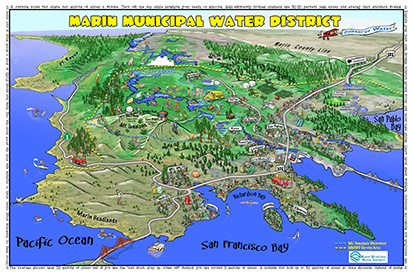
Why did Marin Municipal Water District stop using herbicides?

The Marin Municipal Water District stopped using herbicides on its properties in about 2005, in response to the public’s concerns.  MMWD then hired consultants to evaluate the risks of using herbicides.  As a result of those studies, MWWD decided in 2015 to make a permanent commitment to NOT using herbicides on its properties.

A member of the Board of Directors of MMWD has written a public comment for the East Bay Municipal Utilities District Master Plan in which he explains why MMWD made this decision.  His letter is available here:  MMWD – public comment from Board member

Here is a summary of the reasons why MMWD no longer uses herbicides on its properties:

  • The International Agency for Research on Cancer reclassified glyphosate as a “probable carcinogen.”
  • The California Office of Environmental Health Hazard Assessment has recommended that glyphosate be listed under Proposition 65.
  • A study conducted by researchers at UC Davis found that glyphosate persisted for at least 84 days when applied to foliage. “The clear inference from this study is that glyphosate could well migrate to water courses and streams which feed MMWD’s reservoirs.”
  • The toxicity of herbicides to aquatic life and habitat is well documented.
  • The persistent toxicity of many herbicides decreases soil biota which reduces CO2 absorption. “Hence, it appears that the non-pesticide approach may well assist with society’s ongoing efforts to remediate GHG through regenerative forestry practices.”

MMWD

Thank you, MMWD, for writing this letter to EBMUD about their use of pesticides on our watershed in the East Bay.  EBMUD should follow your lead!

Please write your own public comment on the East Bay Municipal Utilities District Master Plan.  Public comments are due by Friday, September 16, 2016.  Comments should be sent to watershedmasterplan@ebmud.com or by mail to Doug Wallace, EBMUD, 375 11th St, Oakland, CA 94607.

There is also a petition to EBMUD that we encourage you to sign:  

Sign the petition!
Sign the petition!

“Environmentalism” has been hijacked by nativism

Our family contributed to several mainstream environmental organizations for decades.  We were Sierra Club members because we wanted clean water and clean air.  We were Audubon Society members because we care about birds and other wildlife.

About ten years ago, we learned that these organizations were actively participating in projects demanded by native plant advocates to destroy our non-native urban forest and fence the public out of its public parks in order to turn our parks into native plant museums.  When we learned about the huge quantities of pesticides used by these projects that was the last straw.

The Berkeley Meadow is a 72-acre native plant garden on a former garbage dump on landfill.

We spent several years trying to convince these organizations that they were making a mistake by supporting projects that are doing far more damage to the environment than any theoretical benefit of native plants.  Much of our effort was directed to the Sierra Club because they claim to be a democratically run organization.  After several years of futile attempts to change the policies of these organizations, we quit because we did not want to contribute to the damage they are doing to the environment.

Logo of The Nature Conservancy.

The Nature Conservancy was the only environmental organization to which we were still contributing.  Below is our “resignation” letter to The Nature Conservancy, which explains why we finally gave up on them as well.  This was not an easy letter to write because we care deeply about the environment and the animals who live in it.  We believe that environmentalism has an extremely important role to play in society and we would like to participate in an organization that is focusing on the environmental issues of our time, particularly climate change.


September 2016

Mark Tercek, Executive Director
The Nature Conservancy

Dear Mr. Tercek,

We have been contributors to The Nature Conservancy for decades.  In the past few years we increased our donations because of the publications of TNC’s former Chief Scientist, Peter Kareiva.

While other mainstream environmental organizations were actively supporting destructive and restrictive ecological “restorations,” Mr. Kareiva was questioning that conservation strategy.  In his publication, “What is Conservation Science?” Mr. Kareiva said, “Our vision of conservation science differs from earlier framings of conservation biology in large part because we believe that nature can prosper so long as people see conservation as something that sustains and enriches their own lives.  In summary, we are advocating conservation for people rather than from people.”  Mr. Kareiva was also articulating that revised mission for conservation in presentations around the country (which we attended), in TNC’s publications, and in mainstream media.

As you know, Kareiva’s viewpoint was in conflict with the old guard of conservation biologists who subscribe to the tenets of invasion biology.  This conflict resulted in a confrontation of the old guard against TNC that was reported by the New Yorker in 2014.   TNC resolved that conflict by making a commitment to quit publishing Mr. Kareiva’s viewpoint in mainstream media and by restoring eradication of “invasive” plants to its budget.  That agreement foretold Kareiva’s departure from TNC.  Not publishing is tantamount to career suicide for scientists.  Mr. Kareiva has left TNC, as any self-respecting scientist would who has been deprived of his freedom to publish.

While this battle between competing visions of conservation played out, the country’s foremost invasion biologist, Daniel Simberloff, conducted a survey of TNC project managers to determine what, if any, impact Kareiva’s leadership was having on TNC’s conservation strategies.  Most survey respondents (95%) reported that they “manage” non-native species and nearly all reported that they would devote more effort to that task if more resources were made available.  Project managers devote a “substantial proportion” of their resources to “managing” non-native species and they expressed skepticism about “academic research and the invasion management controversy in particular.”  Simberloff did not ask project managers what methods they are using and so we have no insight into the use of pesticides by TNC.  This is probably information that Simberloff would rather we not have. Invasion biologists prefer to ignore the destructive methods that are used in the fruitless attempt to eradicate non-native plants.

Ecological “restorations” are damaging the environment by destroying useful habitat, poisoning open spaces with pesticides, and killing animals perceived to be competitors of native animals.  These projects are usually futile because the plants and animals that are being eradicated are adapted to current environmental conditions that are not reversed by their elimination.  The “native” ranges of plants and animals must change in response to changes in the environment, most notably climate change.  So-called “invasive” species are symptoms of change, not causes of change.

Here in the San Francisco Bay Area, our urban forest is being destroyed because it is predominantly non-native.  Native plant advocates have fabricated an elaborate cover story to mask nativism because widespread destruction of plants and animals does not appeal to the public.  Our public lands and open spaces are being poisoned with pesticides to kill vegetation and prevent trees from resprouting after they are destroyed.  We are unwilling to support that agenda by contributing to organizations that engage in these projects.

Therefore, we will not renew our TNC membership and we will not contribute further to TNC.  If and when TNC abandons its attempts to eradicate plants and animals that are performing valuable ecological functions, we would gladly renew our contributions.

Sincerely,

[Former Members of The Nature Conservancy]


Referenced sources:

  • D.T. Max, “Green is Good,” New Yorker, May 12, 2014
  • Sara Kuebbing and Daniel Simberloff, “Missing the bandwagon:  Nonnative species impacts still concern managers,” NeoBiota , April 14, 2015


East Bay Municipal Utilities District is using a LOT of pesticide and its new Master Plan will require that they use a LOT MORE

East Bay Municipal Utilities District (EBMUD) is the public utility that supplies our water in the East Bay.  To accomplish that task, EBMUD manages thousands of acres of watershed land.  Like most open space in the Bay Area, the vegetation on EBMUD’s land is a mix of native and non-native species.

EBMUD is revising its Master Plan.  The draft Master Plan makes a commitment to destroy all eucalyptus and Monterey pines in favor of native vegetation.  The draft Master Plan is available HEREEBMUD is accepting written public comments on the draft Master Plan until September 2, 2016 extended to Friday, September 16, 2016.  Comments should be sent to watershedmasterplan@ebmud.com or by mail to Doug Wallace, EBMUD, 375 11th St, Oakland, CA 94607.

There is also a petition to EBMUD that we encourage you to sign:

Sign the petition!
Sign the petition!

One of the reasons why we are concerned about the revised East Bay Watershed Master Plan (EBWMP) is that EBMUD is using a lot of pesticide now.  The draft Master Plan says that “pesticides have been detected in District reservoirs.”  The Master Plan renews its commitment to “replace non-native forests with native species over the long term.”  In this post, we will tell you about the pesticides that EBMUD is using now and explain how destroying trees is likely to increase their pesticide use.

How much pesticide is EBMUD using now?

We have obtained the Pesticide Use Reports (PURs) that EBMUD submitted to Alameda and Contra Costa Agriculture Departments, as required by law.  According to these Pesticide Use Reports, EBMUD applied herbicides 647 times in 2015.  It used 700.91 gallons and 205.75 lbs. of herbicide in 2015.  Of that total herbicide quantity, 255 gallons were glyphosate products. 

That is probably an underestimate of the amount of pesticide EBMUD used because:

  • Many of the PURs did not provide any information about the number of applications. Therefore, the total number of applications is higher than 647.
  • EBMUD (and all other “permittees”) is not required to report to the county pesticide applications done by contractors.  For example, EBMUD’s PURs do not include any rodenticide applications, which EBWMP says it uses.  That is an indication that the reports are not complete.

Is that a lot of pesticide?

Compared to other public land managers, EBMUD is using a LOT of pesticide.  East Bay Regional Park District (EBRPD) is an appropriate reference point.  EBRPD used 193 gallons of herbicide (glyphosate, Garlon, Oryzalin) in 2015 (and smaller quantities of specialty herbicide for specific projects).  EBRPD has 120,536 acres of propertyEBRPD’s reports include most pesticide applications done by contractors, according to EBPRD.

In contrast, EBMUD used 700.91 gallons and 205.75 lbs of herbicide on only 28,000 acres of property.  In other words, EBMUD pesticide use looks extreme when compared to EBRPD pesticide use.  The fact that EBMUD is responsible for supplying our drinking water (and the park district is not) makes the discrepancy that much more disturbing.  It seems that they should be using significantly less than they are using now.

The loss of shade will put EBMUD onto the pesticide treadmill

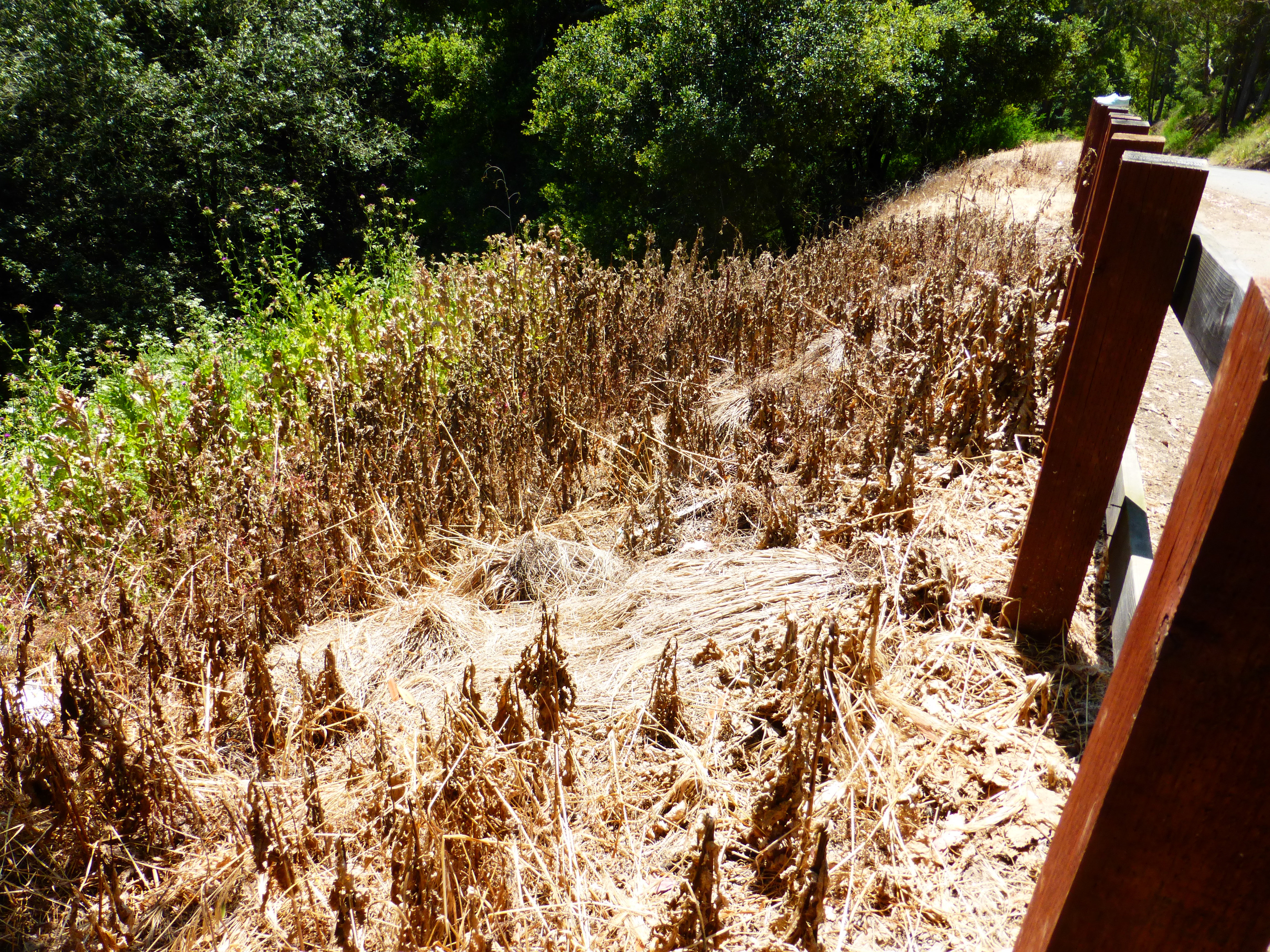
Destroying all non-native trees will promote the growth of weeds because shade is the most benign method of suppressing weed growth.  Most herbicide applications are for the purpose of killing weeds.  We have experience in the East Bay with the rampant growth of weeds where trees have been destroyed.  UC Berkeley destroyed all eucalyptus on the south side of Claremont Blvd at signpost 29 about 10 years ago.  They spread several feet of wood chips on the ground where they destroyed the trees, hoping to suppress the growth of weeds.  Signpost 29 is now dominated by weeds, including where wood chips were piled high.  Here are a few pictures that illustrate that weeds quickly colonize the bare ground when trees are destroyed.  Note that the weeds are dead where they have been sprayed with herbicide.  Dead weeds are more flammable than weeds that are still green, so killing them before they are dormant needlessly increases fire hazards.

Logs of trees that were destroyed line the road. Weeds are brown where they have sprayed with herbicide. Site 29, May 2016
Logs of trees that were destroyed line the road. Weeds are brown where they were sprayed with herbicide. Site 29, May 2016
Milk thistle was sprayed with herbicide., Site 29, May 2016
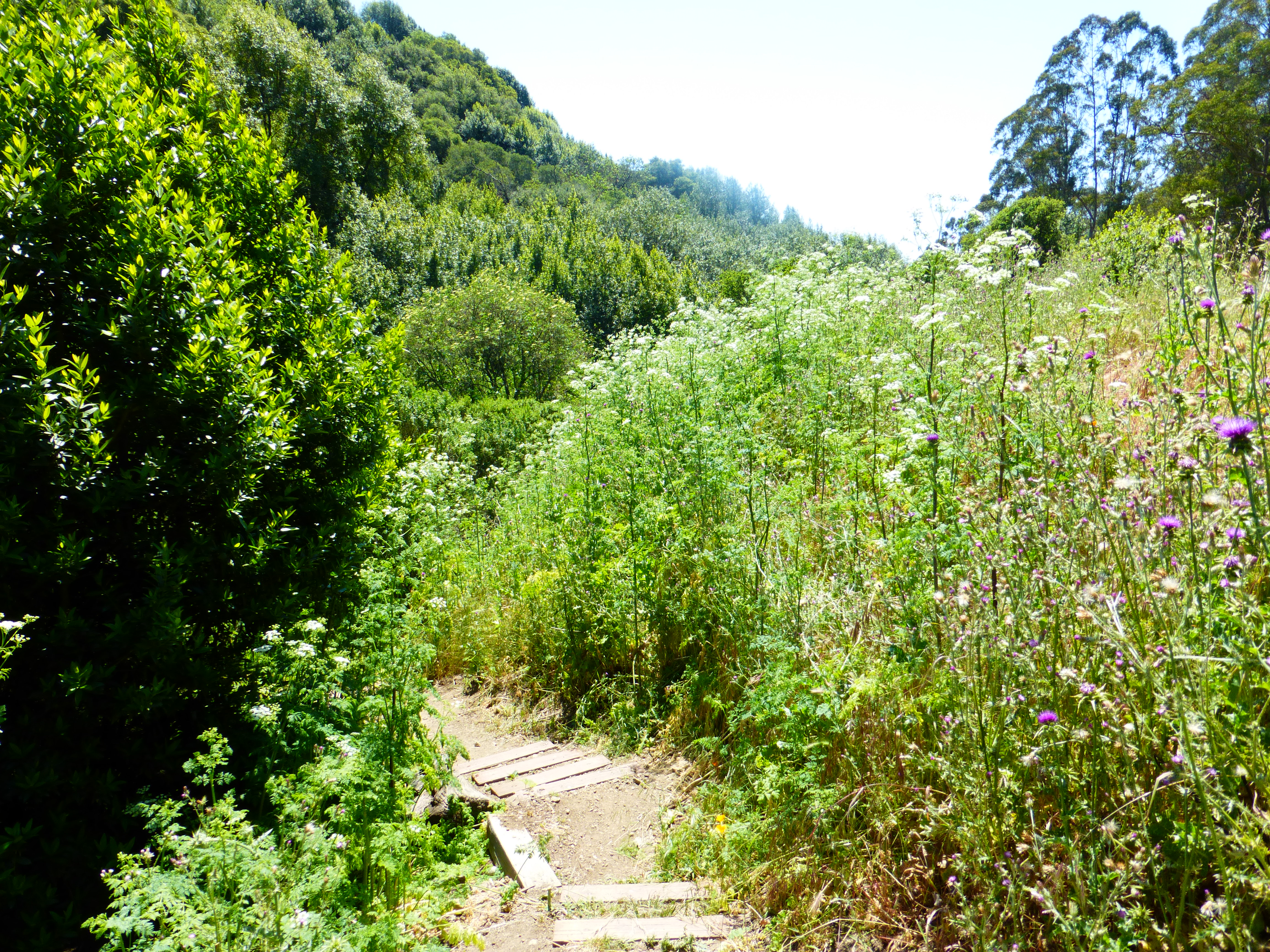
Poison hemlock and thistle are 8 feet tall where not sprayed with herbicide. Site 29, May2016.
Poison hemlock and thistle are 8 feet tall where not sprayed with herbicide. Site 29, May 2016.

Destroying trees will eliminate shade.  The loss of shade will increase the growth of weeds.  More weeds will require more herbicide applications to destroy the weeds.  Using more herbicide will contaminate the watershed and reduce water quality.  Shade is the most benign method of controlling weeds.

How will EBMUD prevent resprouts without using more pesticide?

One of the “Guidelines for Eucalyptus Management” in the Master Plan is:  “Prior to any harvest activities, ensure that adequate stump-sprouting control methods are available to reduce fire hazards and protect water quality.”  This is an artful and fundamentally dishonest dodge.  EBMUD must inform the public of the methods they intend to use.  If herbicides are used for this purpose, EBMUD’s use of pesticides will increase substantially.

Courtesy Hills Conservation Network

The majority of public land managers are now using Garlon to prevent eucalyptus resprouts, i.e., East Bay Regional Park District, City of Oakland, UC Berkeley, and National Park Service.  East Bay Regional Park District said in the Environmental Impact Statement for the FEMA project that it planned to use 2,250 gallons of Garlon for that purpose.

Garlon, with the active ingredient triclopyr, is one of the most toxic herbicides on the market.  The risk assessment of triclopyr that was done for Marin Municipal Water District says that Garlon is acutely toxic to aquatic life and moderately toxic to birds and bees.  It is also known to damage mycorrhizal fungi in the soil, which will retard the growth of anything planted when the trees are destroyed.  The risk assessment done for the California Invasive Plant Council says that Garlon “poses developmental and reproductive risks” to female applicators.

Garlon is sprayed on the tree stump shortly after the tree is destroyed, while the cambium layer is still alive and capable of transporting the herbicide into the roots of the trees.  It prevents resprouts by killing the roots.  This usually has to be done several times.   Garlon is known to be mobile in the soil, which is why it frequently damages non-target trees that are growing closely enough that their root structure intertwines with the roots of eucalyptus.

The only public land manager that has made a commitment to destroy approximately 15,000 eucalyptus without using herbicides is UCSF for its open space on Mount Sutro in San Francisco (to our knowledge).  They have been destroying eucalyptus on their properties for several years.  You can visit their property to see that they are not successfully controlling resprouts of the trees they have destroyed.

Marin Municipal Water District (MMWD) recently made a commitment to not using any herbicides on its properties.  It did not make that commitment willingly.  It was forced to make that commitment by its customers, who fought for years to accomplish that ban on herbicide use.  EBMUD should take heed.   The more pesticide EBMUD uses, the more likely the public will protest that use.  I don’t know if MMWD has stopped destroying eucalyptus on its property.  Given that it cannot use pesticides, it would be wise to stop destroying eucalyptus trees.

If EBMUD persists with its plans to destroy all eucalyptus trees on its properties it must inform the public of what method it intends to use to prevent resprouts.  EBMUD must choose between two bad options if it destroys the trees.  If it uses herbicides to prevent resprouts, it will contaminate our water supply.  If it controls resprouts by cutting them down once or twice a year, it will substantially increase its labor costs. The best option is to abandon the foolish plan to destroy all eucalyptus on its property.

What is EBMUD’s job?

The main mission of EBMUD is to supply clean drinking water to communities in the East Bay.  Any other objective—such as conservation of native plants—must be considered secondary to the mission of providing clean water.  If the conservation or restoration of native plants is in conflict with EBMUD’s obligation to provide clean drinking water, it must abandon or revise that commitment so that it is consistent with EBMUD’s main mission.

Please sign the petition and send a written public comment to EBMUD by September 2, 2016 extended to Friday, September 16, 2016.  Thank you for your help.

Sign the petition!
Sign the petition!

Another attack on our urban forest by a public land manager

East Bay Municipal Utilities District (EBMUD) is the public utility that supplies our water in the East Bay.  To accomplish that task, EBMUD manages thousands of acres of watershed land.  Like most open space in the Bay Area, the vegetation on EBMUD’s land is a mix of native and non-native species.

Lafayette Reservoir, one of many EBMUD properties in the East Bay

EBMUD is revising its Master Plan.  The draft Master Plan renews its commitment to destroying all eucalyptus and Monterey pines in favor of native vegetation.  The draft Master Plan is available HEREEBMUD is accepting written public comments on the draft Master Plan until September 2 extended to Friday, September 16, 2106.   Comments should be sent to watershedmasterplan@ebmud.com or by mail to Doug Wallace, EBMUD, 375 11th St, Oakland, CA 94607.

EBMUD held a public meeting about its draft Master Plan on Monday, August 15, 2016.  That meeting was attended by over 200 people.  Most of the crowd seemed to be there to defend their access to EBMUD trails by bicycles. 

There were 10 speakers who defended our trees against pointless destruction and the consequent pesticide use to prevent their resprouting.  As usual, the Sierra Club came to object to increased access for bicycles and to demand the eradication of our trees.  As usual, claims of extreme flammability of non-native trees was their stated reason for demanding the destruction of the trees.  Update:  HERE is a video of speakers at the EBMUD meeting for and against tree destruction and pesticide use. 

If you are watching the news, you know that there are now eight wildfires raging in California.  All of these wildfires are occurring in native vegetation.  The claim that non-native trees are more flammable than native trees and vegetation is nativist propaganda. 

Furthermore, our native trees are dying of drought and disease.  This article in the East Bay Times informs us that 70 million native trees have died in the past four drought years and that the millions of dead trees have substantially increased fire hazards.  In other words, it is profoundly stupid to destroy healthy, living trees at a time when our native trees are dying and pose a greater fire hazard.

We are grateful to Save the East Bay Hills for permitting us to publish their excellent letter to EBMUD about their misguided plans to destroy our urban forest.  We hope that their letter will inspire others to write their own letters to EBMUD by September 2, 2016.  Save the East Bay Hills is a reliable source of information about our issue.  Thank you, Save the East Bay Hills for all you do to defend our urban forest against pointless destruction.

Update:  Save the East Bay Hills has also created a petition to EBMUD that we hope you will sign and share with others.  The petition is available HERE.

Sign the petition!
Sign the petition!

saveeastbayhills

August 15, 2016

Douglas I. Wallace
Environmental Affairs Officer
Master Plan Update Project Manager
East Bay Municipal Utility District
375 11th Street
Oakland, CA 94607

Dear Mr. Wallace,

This letter serves as our response to the East Bay Municipal Utility District’s invitation for the public to review and comment on the draft of the East Bay Watershed Master Plan (“Draft Master Plan”) update. There is much in the plan to recommend itself and much that leaves a lot to be desired.

We are grateful that the Draft Master Plan recognizes the value of trees regardless of their historical antecedents, specifically noting that,

“Eucalyptus trees provide a source of nectar and pollen that attracts insects, which in turn serve as a prey base for birds and other animals. Hummingbirds and many migratory bird species feed extensively on the nectar. In addition, eucalyptus trees produce an abundant seed crop. These tall trees are used as roosting sites for birds. Bald eagles have roosted in eucalyptus groves in the San Pablo Reservoir watershed, and a great blue heron rookery exists in the eucalyptus trees at Watershed
Headquarters in Orinda. A great blue heron and great egret rookery was active near the northern arm of Chabot Reservoir in the recent past.”

The Draft Master Plan recognizes, “the ecological value and likely permanence of certain nonnative species and habitats,” including Eucalyptus and Monterey Pine. It recognizes that these two species of trees, especially Monterey Pine “provide stability to watershed soils” and “provide erosion control with a widespreading root system.”

It recognizes that they provide “protection from solar exposure, wind, and noise.”

It recognizes that they “provide biodiversity value (bald eagle and other raptor species) on District watershed lands.” For example, “Monterey Pine seeds provide food for small rodents, mammals and birds…”

It cites to the EBMUD Fire Management Plan which recognizes the value of trees in mitigating fire: “They do not represent a significant fire hazard when the understory is maintained for low fire intensities… Stands that are well spaced with light understory, proper horticultural practices, and maintenance of trees, e.g. spacing and above-ground clearance, can serve to minimize fire hazard.”

It admits that removing the trees would lead to inevitable grasses and shrubs which increase the risk of fire: “The most susceptible fuels are the light fuels (grasses, small weeds, or shrubs)…”

Finally, it recognizes that these tall trees occupy a very small portion of District lands: 1% for Eucalyptus and 2% for Monterey Pines.

Given their immense beauty, the habitat they provide, their mitigation against fire, the erosion control, all the other recognized benefits, and the fact that they occupy such a small percentage of overall District lands, why does the Draft Master Plan propose that they be eradicated over time?

The answer appears to be nothing more than perceived public will:

“As this species is considered a nonnative pyrophyte, regional pressure is present to reduce the number of Monterey Pine stands.”

“As a nonnative pyrophyte, eucalyptus plantations are a target of regional public pressure for removal.”

This is a misreading of the public will. The Draft Master Plan is elevating the nativist agenda of a loud, vocal minority over good sense, good science, ecological benefit, protection against fire, and the desires of the vast majority of residents and users of District lands. How do we know?

The City of Oakland, the University of California, and the East Bay Regional Park District have also proposed eradicating Monterey Pine and Eucalyptus trees and of the 13,000 comments received by FEMA during the public comment period following its draft plan, roughly 90% were in opposition by FEMA’s own admission. Moreover, over 65,000 people have petitioned the City of Oakland to abandon its effort to remove the trees.

That EBMUD does not hear from people who find beauty, shade, and benefit in the trees is not because they do not care; rather, it is because most members of the public do not understand the extent to which these trees are under siege by nativists, nor the level of cooperation these individuals are receiving from public lands managers to see their vision prevail.

For most members of the public, it simply strains credulity that those tasked with overseeing our public lands would cooperate with efforts to destroy not only large numbers of perfectly healthy trees, but given their height and beauty, trees that are the most responsible for the iconic character of East Bay public lands and the appeal of our most beloved hiking trails. And for what end? To treat our public lands as the personal, native plant gardens of those who subscribe to such narrow views. In short, there is no widespread desire to get rid of these trees and they should not be removed.

Indeed, the Draft Master Plan recognizes several “emerging challenges” as a result of climate change including, but not limited to, “increasing average temperatures, prolonged droughts, erosion, decreased soil moisture, and augmented risk of fires.” Tall trees like Eucalyptus and Monterey Pine help mitigate these challenges. For example, fog drip falling from Monterey Pines in the East Bay has been measured at over 10 inches per year. In San Francisco, fog drip in the Eucalyptus forest was measured at over 16 inches per year.

Moreover, Eucalyptus trees are an important nesting site for hawks, owls and other birds and are one of the few sources of nectar for Northern California bees in the winter. Over 100 species of birds use Eucalyptus trees as habitat, Monarch butterflies depend on Eucalyptus during the winter, and Eucalyptus trees increase biodiversity. A 1990 survey in Tilden Park found 38 different species beneath the main canopy of Eucalyptus forests, compared to only 18 in Oak woodlands. They also prevent soil erosion in the hills, trap particulate pollution all year around, and sequester carbon.

Many of these benefits are especially important in light of Sudden Oak Death which the Draft Master Plan admits is an ongoing challenge and is likely to increase because of climate change. If Sudden Oak Death impacts oak woodlands and EBMUD intentionally cuts down Eucalyptus and Monterey Pine which are proving themselves more suitable for the environment, it risks a treeless landscape, which would not only be a loss of beauty and loss of wildlife habitat, but exacerbate the challenges already faced by EBMUD as a result of climate change.

We also object to the Draft Master Plan accepting the labels “native” and “non-native” and making decisions based on that fact alone. “Non-native” and “invasive species” are terms that have entered the lexicon of popular culture and become pejorative, inspiring unwarranted fear, knee-jerk suspicion, and a lack of thoughtfulness and moral consideration. They are language of intolerance, based on an idea we have thoroughly rejected in our treatment of our fellow human beings — that the value of a living being can be reduced merely to its place of ancestral origin.

Each species on Earth, writes Biology Professor Ken Thompson, “has a characteristic distribution on the Earth’s land surface… But in every case, that distribution is in practice a single frame from a very long movie. Run the clock back only 10,000 years, less than a blink of an eye in geological time, and nearly all of those distributions would be different, in many cases very different. Go back only 10 million years, still a tiny fraction of the history of life on Earth, and any comparison with present-day distributions becomes impossible, since most of the species themselves would no longer be the same.”

This never-ending transformation — of landscape, of climate, of plants and animals — has occurred, and continues to occur, all over the world, resulting from a variety of factors: global weather patterns, plate tectonics, evolution, natural selection, migration, and even the devastating effects of impacting asteroids. The geographic and fossil records tell us that there is but one constant to life on Earth, and that is change.

Even if one were to accept that the terms “native” and “non-native” have value, however, not only do they not make sense as it relates to Monterey Pine and Eucalyptus, but the outcome would not change for three reasons. First, Monterey Pine and Eucalyptus provide numerous tangible benefits as previously discussed, while the claimed “problem” of their foreign antecedents is entirely intangible. That a plant or animal, including the millions of humans now residing in North America, may be “non-native” is a distinction without any practical relevance beyond the consternation such labels may inspire in those most prone to intolerance; individuals, it often seems, who demand that our collectively owned lands be forced to comply to their rigid and exiguous view of the natural world. What does it matter where these trees once originated if they provide such tremendous beauty and benefit here and now?

Second, the fossil record demonstrates that Monterey Pine are, in fact, “native” to the East Bay. (See, e.g., http://evolution.berkeley.edu/evolibrary/article/montereypines_01.) Monterey Pine fossils from the middle Miocene through the Pleistocene have been found in several East Bay locations. Similarly, since Eucalyptus readily hybridizes with other species, many experts now claim that California Eucalyptus hybrids could rightly be considered native, too.

Of more immediate concern, however, is that the five narrowly defined “native” stands of Monterey Pine — the Año Nuevo-Swanton area in San Mateo and Santa Cruz Counties, the Monterey Peninsula and Carmel in Monterey County, Cambria in San Luis Obispo County, and Guadalupe and Cedros Islands off Baja California in Mexico — are in danger. In light of escalating temperatures due to climate change, to save Monterey Pine requires “a new foundation for conservation strategies of the species and its associated ecosystems. If Monterey pine has long existed in small, disjunct populations and if these have regularly shifted in location and size over the California coast in response to fluctuating climates… then it would be consistent to extend our conservation scope…” “Areas not currently within its [narrowly defined so-called] native range could be considered suitable habitats for Monterey pine conservation.” (Millar, C., Reconsidering the Conservation of Monterey Pine, Fremontia, July 1998.)

As tree lovers and environmentalists in Cambria are banding together to determine how, if at all, they can save their precious remaining Monterey Pines now dying from drought in record numbers, here in the East Bay – less than 224 miles away – land managers at EBMUD are considering plans to willfully destroy them in record numbers. It is ecologically irresponsible and for those of us who dearly love the stunning, even arresting, beauty of these trees, it is also truly heartbreaking.

Third, and perhaps more importantly, removing Eucalyptus and restoring “native” plants and trees is not only predicated on the ongoing use of large amounts of toxic pesticides, it does not work, a fact acknowledged by cities across the country. In the last ten years, the City of
Philadelphia has planted roughly 500,000 trees, many of which are deemed “non-native” precisely because “native” trees do not survive. “[R]ather than trying to restore the parks to 100 years ago,” noted the City’s Parks & Recreation Department, “the city will plant non-native trees suited to warmer climates.”

For all these reasons, we oppose the elimination of Monterey Pine and Eucalyptus, even if phased over time as proposed, and likewise oppose EBMUD’s participation in the destruction of similar Pine and Eucalyptus forests in the Caldecott Tunnel area, in partnership with outside agencies. We ask that these be stricken from the Master Plan.

Finally, we oppose the ongoing and, if the trees are cut down, potentially increasing use of pesticides and ask that a ban on their use be put in effect in the final Master Plan, for the following reasons:

● Extremely low levels of pesticide exposure can cause significant health harms, particularly during pregnancy and early childhood.

● Children are more susceptible to hazardous impacts from pesticides than are adults and compelling evidence links pesticide exposures with harms to the structure and functioning of the brain and nervous system and are clearly implicated as contributors to the rising rates of attention deficit/hyperactivity disorder, widespread declines in IQ, and other measures of cognitive function.

● Cancer rates among children are increasing at an alarming rate and pesticide exposure contributes to childhood cancer, as well as other increasingly common negative health outcomes such as birth defects and early puberty.

● Approximately 4,800,000 children in the United States under the age of 18 have asthma, the most common chronic illness in children, and the incidence of asthma is on the rise. Emergence science suggests that pesticides may be important contributors to the current epidemic of childhood asthma.

● Animals, including wildlife and pets, are at great risk from exposure to pesticides, including lethargy, excessive salivation, liver damage, blindness, seizures, cancer, and premature death.

● Pesticides contain toxic substances, many of which have a detrimental effect on animal health, including pets, raptors, deer, and other wildlife, which is compounded when the bodies of poisoned animals are ingested by subsequent animals.

● The U.S. Environmental Protection Agency has recommended non-chemical approaches, such as sanitation and maintenance.

These concerns are compounded by the fact that pesticides are to be administered near reservoirs, threatening the safety and integrity of our water supply and the water supply of the plants and animals who also depend on it. These reasons are why the Marin Municipal Water District removed the use of herbicides from further consideration in its Draft Plan and maintained the pesticide ban it has had in place for several years.

Pesticides are not only dangerous, they are also incredibly cruel. Rodenticides, for example, are opposed by every animal protection group in the nation because not only do they kill animals, but they do so in one of the cruelest and most prolonged ways possible, causing anywhere from four to seven days of suffering before an animal finally comes to the massive internal bleeding these poisons facilitate. This long sickness period often includes abnormal breathing, diarrhea, shivering and trembling, external bleeding and spasms, suffering and death that is perpetuated when their dead bodies are ingested by subsequent animals, such as owls and raptors. Put simply, EBMUD should not be in the business of targeting any healthy animals, trees, and plants for elimination; and doing so by pesticides harms animals well beyond the target species, including humans.

In summary, public agencies overseeing public lands have a responsibility to minimize harm and reject radical transformations of those lands and the ecosystems they contain, especially in absence of any clear public mandate. Not only have these lands been handed down in trust from prior generations for us to enjoy, preserve, and bequeath to future generations, but there is a reasonable expectation on the part of most citizens that those overseeing our collectively owned lands not undertake agendas to destroy large numbers of healthy trees, kill healthy animals, and poison our environment. Regardless of how Eucalyptus and Monterey Pine trees may be maligned by the extreme few, they are beloved by the many, being in large part responsible for the East Bay’s beauty, iconic character and treasured, shady walking trails and picnic areas.

In the case of EBMUD, this orientation is even more alarming and a violation of the public trust because it elevates the ideological driven, nativist agenda of the few above the agency’s primary mandate and interests of the many: ensuring the integrity and safety of our water supply and the plants and animals who reside there. Adopting plans to alter pre-existing landscapes through the use of toxic pesticides in order to placate unreasonable and xenophobic demands on lands that contain the public’s precious reserves of drinking water is a deep inversion of priorities.

We respectfully request that these proposed ends and means be stricken from the Master Plan.

Very truly yours,
Save the East Bay Hills

Island eradications in the Bay Area rear their ugly head again

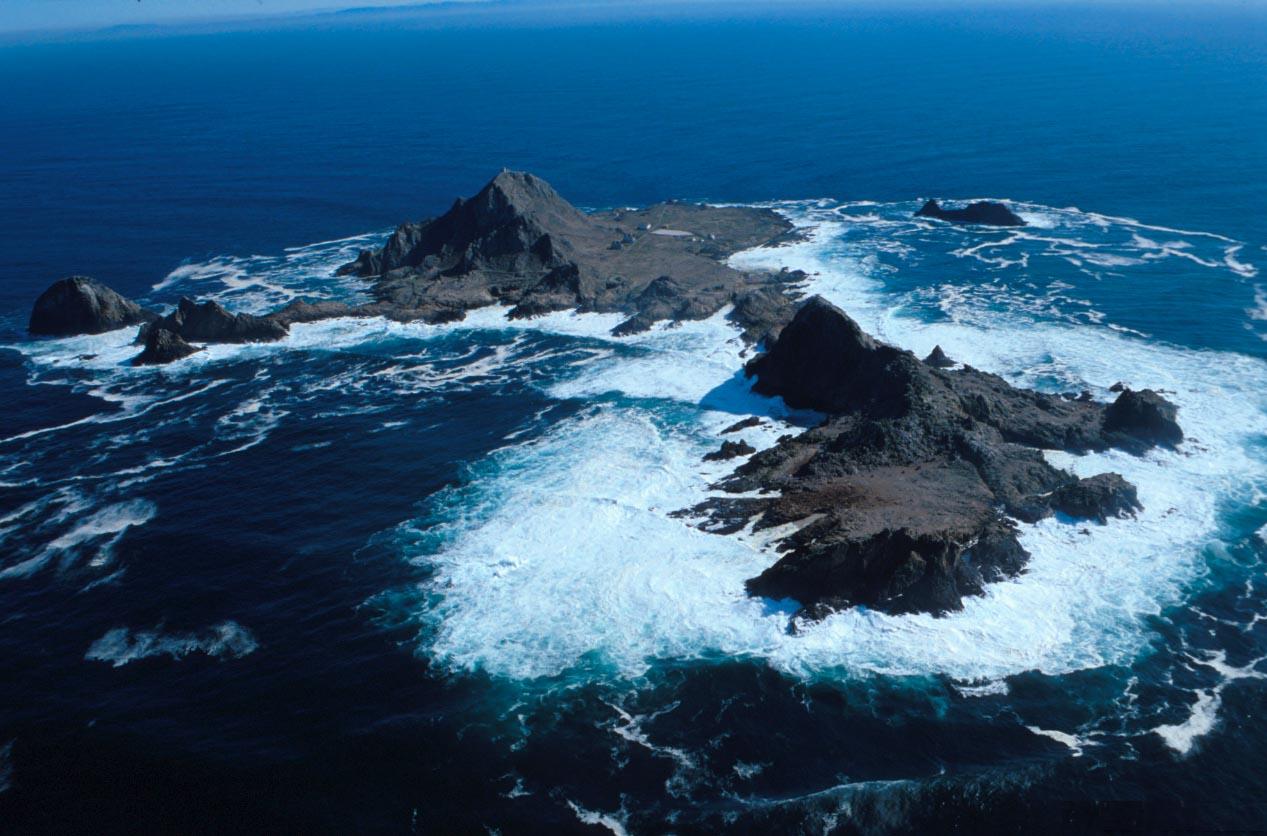
The Farallon Islands are a National Wildlife Sanctuary just 27 miles off the coast of San Francisco, where millions of birds and marine animals are legally protected.  Plans of the US Fish and Wildlife Service (USFWS) to aerial bomb 1.3 metric tons of rodenticide to kill mice on the Farallon Islands originated over 5 years ago.

Farallon Islands, NOAA

The stated purpose of this project was to protect the ashy storm petrel, a legally protected species of concern.  The mice are not a direct threat to the petrel.  Rather, USFWS claims that another legally protected species of concern, the burrowing owl, eats the chicks of the petrel when the population of mice dwindles.  Because the average population of burrowing owls on the Farallons is said to be only 6 burrowing owls, the scale of their predation of petrel chicks seems minimal given that their preferred prey is mice.  USFWS theorizes that if the mice are killed, the burrowing owls will leave the Farallons.  This rather fanciful scenario is less credible than the more likely outcome that the burrowing owls will either be killed by the poison or eat yet more petrel chicks if their mice diet is eliminated.

Aside from the convoluted and questionable rationale for this project, the main concern is the anticipated collateral damage caused by aerial bombing huge quantities of rodenticide (brodifacoum).  The planned rodenticide is an anti-coagulant that is highly persistent and causes all vertebrate animals (mammals, reptiles, birds, fish, etc.) to bleed to death.  Death is not quick; the poisoned animals stumble around before dying and are easy prey for other animals that are then killed by the poison.  Dead, poisoned mice are equally attractive food for some birds.  The poison pellets are also as appealing to other animals as to mice.  Even the supporters of this project readily admit that many animals other than mice are likely to be killed directly by the rodenticide or as secondary victims.  “Stuff happens,” they say with a shrug.

The author of the Environmental Impact Statement is the same organization—Island Conservation—that will implement the project, if and when it is approved.  This conflict of interest seems one of many unwise decisions made by US Fish and Wildlife Service.

The opposition to this project has been loud and clear.  Maggie Sergio, who reported this project on Huffington Post, published a petition in opposition to the project that was signed by over 32,000 people.  And many prestigious organizations including the EPA, American Bird Conservancy, City of San Francisco, The Ocean Foundation, and several retired USFWS scientists, have also criticized the project.  Yet, five years later approval of the Revised Draft Environmental Impact Statement is still pending. Theoretically this project is still alive.

Farallons project comes to life again

The Farallons project has always seemed to us so ill-advised and misconceived that we could not believe it would materialize.  We have therefore not covered it since 2014 when we republished Maggie Sergio’s Huffington Post article and asked people to sign her petition.

Unfortunately, we were under-estimating the power and influence of the supporters of this project.  Bay Nature, a local nature magazine, recently published an article about the Farallons project and island eradications in general.  That article seems to assume there is consensus that mice must be eradicated on the Farallons and that the only question is the method that will be used (more about Bay Nature’s proposed method later).  And the California Invasive Plant Council (Cal-IPC) has published an endorsement of island eradications—including the Farallons—in its most recent newsletter (available here: Cal-IPCNews_Summer2016).  Cal-IPC’s preferred strategy for eradications is aerial application of rodenticide.  Therefore, our concern about the proposed Farallons project has once again been elevated to crisis levels.  When two local organizations, which claim to advocate for conservation endorse the Farallons project, we must take it seriously.

History of island eradications

Since learning about plans to eradicate mice using rodenticides, we have learned that the practice originated in New Zealand, where poison applications began over 60 years ago to kill a wide range of non-native animals.  Bill Benfield tells the entire story of eradications in New Zealand in his book, At War With Nature.  (1) We have relied on that valuable resource for this article.  That history is relevant to us because there are some striking similarities between the North American and New Zealand versions of invasion biology, the ideology that drives eradication attempts in North America and New Zealand.

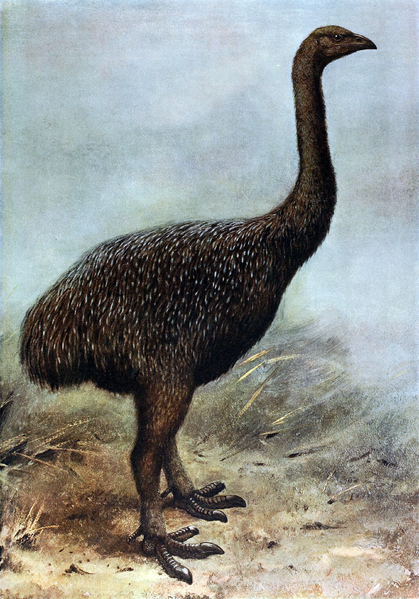
The moa was a huge flightless bird that was hunted to extinction by Polynesians when they occupied New Zealand.

Humans occupied New Zealand more recently than their arrival in North America.  Prior to their arrival, New Zealand was inhabited by many flightless birds that were successful because they had no predators.  The moa was the largest of those birds.  Although it has been extinct for hundreds of years, palaeontologists tell us the moa was about 12 feet tall and weighed about 500 pounds.  It was easy prey for the first humans who arrived in New Zealand about 800 hundred years ago from Polynesian islands.  As most sea-faring humans do, they unintentionally brought with them a species of rat, the kiore.

The climate of New Zealand is much colder than the Polynesian home of the first humans and their agriculture was not well suited to the climate of their new home.  The moa quickly became the main source of food for the humans. The moa were rapidly driven to extinction by hunting, which forced the humans to retreat to the northern end of New Zealand where the climate is milder and their agriculture was more successful.

Although there is some debate about the size and range of the moa population, Dr. Graeme Caughley reported that the moa population was very large and widely spread, based on a calculation of the available sustainable bio-mass.  He believes moa populations existed in all vegetation types, including forests where they would have browsed the forests.  Intense browsing of the forests would have encouraged the growth of the slower growing and unpalatable browse-resistant trees that became the forest giants. The faster growing species of trees were the palatable browse- tolerant species that were held back by browse, allowing the growth of slower growing trees that would in time become the forest giants.  The moa also would have spread the seeds of the trees they ate and inhibited the growth of an understory.  In other words, the forest that humans found when they arrived in New Zealand around 1200 AD was adapted to the big population of moa.

In the absence of moa the composition of the forest quickly responded to the absence of browsing.  Fast growing trees that were formerly held back by browse were no longer at a disadvantage compared to slow growing and unpalatable browse-resistant trees; the forest under-story became denser.  The composition of the forest that was found by Europeans when they arrived in New Zealand several hundred years later was in transition. 

Forest in New Zealand

The first humans on New Zealand did not have a written language.  The landscape they found when they arrived is not recorded in history and is only known to the extent that archaeological and paleontological evidence is accurately used to reconstruct it.  As all human science does, these disciplines are continually evolving and therefore did not inform the earliest versions of ecology that spawned the eradication movement on New Zealand.  In other words, the forest found by Europeans when they arrived in New Zealand is still considered the pristine ideal that ecologists wish to replicate.  In fact, that landscape was just as modified by human habitation as any modern, “novel” ecosystem.

This fantasy of a pristine, pre-human landscape is similar to the fantasy in North America that the landscape found by Europeans when they arrived on the East Coast in the 16th century and the West Coast in the 18th Century was the “natural” landscape, unaltered by humans.  They are just as mistaken in that assumption as they are in New Zealand. Native Americans actively managed the landscape to serve their horticultural and cultural needs.  The consequences of that fantasy have been just as deadly and destructive in New Zealand as they have been here in California.

The deadly crusade in New Zealand

Europeans brought many animals with them to New Zealand, just as they did to North America.  They brought both domesticated animals such as sheep and wild animals such as deer that they could hunt.  The deer browse the forest, just as they do here, and the impact they have on the forest is similar to the impact moa had on the forest. The deer and other browsers are the functional substitute for the extinct moa. Fast growing palatable species of trees are disadvantaged by browsing and these are the trees that early ecologists considered the “natural” forests of New Zealand because they were the trees that were found when Europeans arrived. 

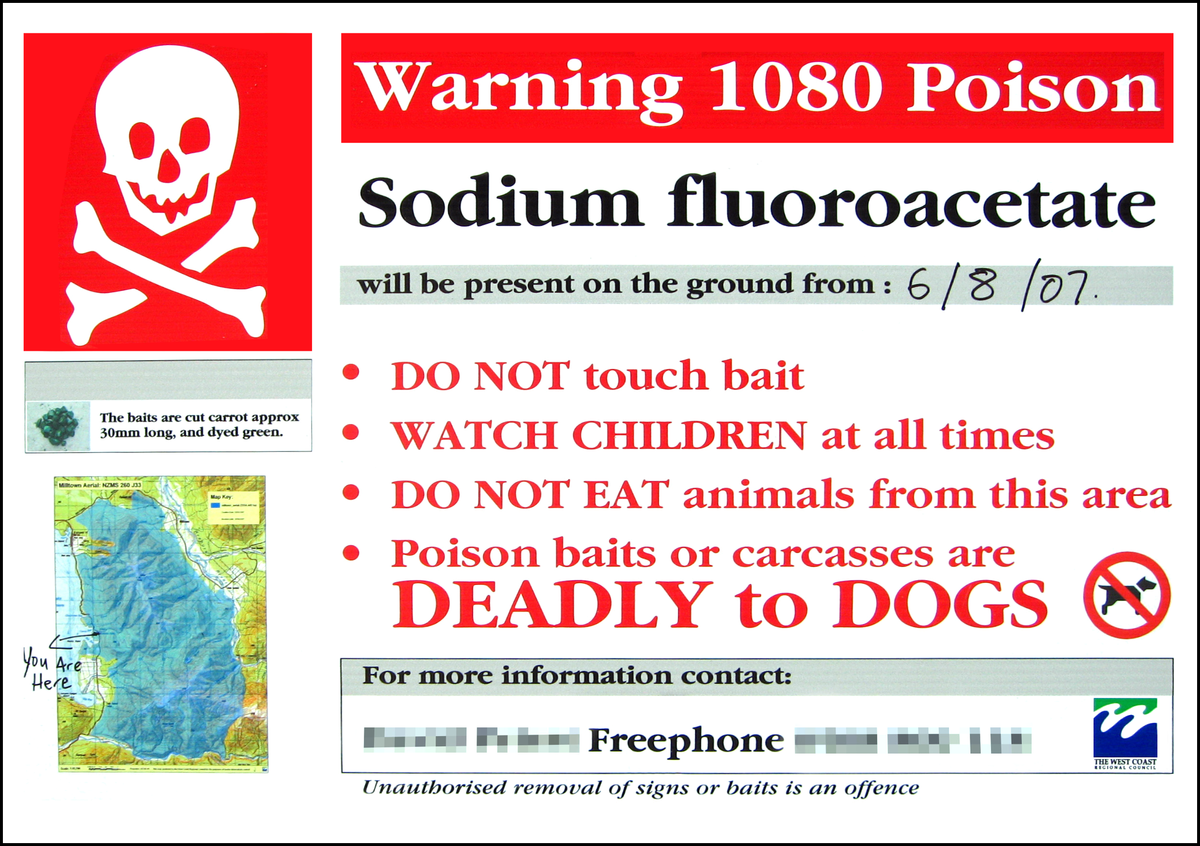
1080 Poison Warning in New Zealand
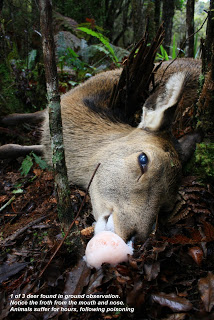
Deer poisoned by 1080. Graff Brothers, New Zealand
Graf Brothers, New Zealand

Hence, aerial poisoning of the land began over 60 years ago to kill all browsing animals in New Zealand except domesticated animals kept behind fences.  Smaller non-native animals such as possum are also targets for eradication because they are assumed to be predators of the few flightless birds that remain in New Zealand.  This accusation is refuted by Bill Benfield who tells us that possum are primarily vegetarians and that a study of the contents of possum stomachs found no evidence of bird predation.  Possum are also accused of being carriers of bovine TB, a disease that infects domesticated animals.  However, recent laboratory tests find no evidence that possum are infected with bovine TB, beyond minute levels.  In any case, the possum population is small because it is a species that rears only one pup per year, so its population would grow only slowly if they weren’t being exterminated in New Zealand.

The killing fields

A different poison is used in New Zealand–called Compound 1080–that operates in a different way than anti-coagulant rodenticide.  It kills indiscriminately any life form that requires oxygen.  It was developed as an insecticide in Europe, and was initially used in the US where it was briefly used to kill coyotes and other wildlife considered inconvenient predators until its use was severely restricted because of its extreme toxicity.  It is entirely banned in California, which is why our local version of island eradications use anti-coagulant rodenticide instead of 1080.

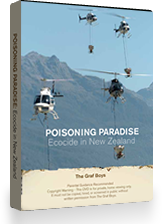
Graff Brothers DVD available on Amazon
Graf Brothers DVD available on Amazon

1080 is a slow, grisly killer of EVERYTHING: insects, fish, mammals, birds, amphibians, etc.  It is just as likely to kill native animals as non-native animals and it does.  This indiscriminate killing of every living thing in New Zealand was described in chilling detail by Elizabeth Kolbert in the New Yorker.  It is also visible in the videos of the Graf brothers for those with a strong stomach.  HERE is one of many of their videos.

Exporting death

We could turn a blind eye to what is happening in New Zealand if this strategy were not being exported all over the “civilized” world.  Amazingly, such island eradications have happened in many places and are being proposed in many places where local resistance is trying to prevent them from being implemented.  What have we learned from the projects that have been done?  The record is sketchy because very little after-the-fact monitoring of completed projects has been done.  What we DO know, suggests that it is not in the interests of the promoters of these projects to monitor the outcome of their projects because the results are consistently deadly and unsuccessful.

Killing one species of plant or animal does not restore an ecosystem

Readers of Million Trees will not be surprised to learn that killing one species does not magically “restore” an ecosystem to some historic ideal because ecosystems are very complex and their occupants live in communities with many, complex interactions that are not perfectly understood by humans, even humans calling themselves invasion biologists.

One study of islands off the coast of New Zealand compared the vegetation structure and ecosystems of three island systems: islands that never had rats, islands with rats, and islands on which rats had been “controlled.” They concluded that, “The extent to which structure and function of islands where rats have been eradicated will converge on uninvaded islands remains unclear…Since most impacts of rats were mediated through seabird density, the removal of rats without seabird recolonization is unlikely to result in a reversal of these processes. Even if seabirds return, a novel plant community may emerge.” (2)

There are many other factors that prevent the re-creation of historical landscapes, such as climate change.  There are undoubtedly many factors that are not known to us, which prevents us from “fixing” something we do not understand.  In any case, many of us don’t consider it necessary to “fix” something that we don’t consider broken.

Collateral damage and incompetent execution

In those few cases when after-the-fact monitoring was done, there is considerable evidence that many non-target animals were killed and the water was polluted.

In the case of Rat Island, off the coast of Alaska, no monitoring was planned after the aerial bombing of 46 metric tons of anti-coagulant rodenticide to kill rats.  However, neighbors of Rat Island demanded an investigation when they saw dead birds and animals floating in the vicinity of the island after the project was done.  That investigation (available HERE) was done by USFWS Law Enforcement.  The investigation found that the manufacturer’s recommendations regarding dosage were exceeded, that instructions to collect dead rats so they would not be eaten by birds were not followed, and that hundreds of birds died, including many legally protected bald eagles.  The investigation was not done until 7 months after the project was completed.  We should assume that the number of dead animals found would have been greater if the investigation had been done promptly after the project was completed.

Palmyra Atoll. USFWS

In the case of Palmyra Island, off the coast of Hawaii, the scientific study conducted after the aerial bombing of rodenticides reported, “We documented brodifacoum [rodenticide] residues in soil, water, and biota, and documented mortality of non-target organisms. Some bait (14–19% of the target application rate) entered the marine environment to distances 7 m from the shore. After the application commenced, carcasses of 84 animals representing 15 species of birds, fish, reptiles and invertebrates were collected opportunistically as potential non-target mortalities. In addition, fish, reptiles, and invertebrates were systematically collected for residue analysis. Brodifacoum residues were detected in most (84.3%) of the animal samples analyzed. Although detection of residues in samples was anticipated, the extent and concentrations in many parts of the food web were greater than expected.” (3)

The rats return

The most damning evidence of all is that after killing untold numbers of animals, including those not meant to be killed, and poisoning the environment with a deadly toxin that bioaccumulates and persists in our bodies, the rat population often returns to pre-project levels within a few years. 

Henderson atoll in the Pacific is an example of such a failure.  Eighty tons of rodenticide pellets were aerial bombed on Henderson in 2011.  Apparently, at least two rats survived, one presumably male and one presumably female.  Within a few years the rat population had returned to pre-projects levels of 50,000 to 100,000 rats.

The rats were said to have been introduced to Henderson over 800 years ago.  Surely they had reached some balance between population size and available food sources.  Rats are an ancient species that would not be here if they completely wiped out their food sources.  Rat population growth is modulated by available food sources.  Hence, when almost completely eradicated, the rats rapidly reproduced back to equilibrium with food sources.

Claims that the Henderson project was urgently needed to prevent the extinction of a bird species with which rats had co-existed for over 800 years were bogus.  If rats had not exterminated the birds within 800 years, they weren’t likely to do so before this pointless project killed tens of thousands of animals, probably including many birds.

Like most “restoration” projects, claims are made about a conservation crisis that is often just an emotional appeal without any scientific basis.  Money is raised and spent in response to these fabricated crises and many “non-profit,” untaxed organizations subsist on these campaigns.  In the case of New Zealand, the poison they are using is manufactured by the government, creating an unholy financial incentive for these eradication projects. 

The failure of the extermination attempt on Henderson is not an isolated incident.  Lehua is one of the Hawaiian islands on which extermination was attempted and failed.  An evaluation of that attempt was published in 2011 to determine the cause of the failure so that a subsequent attempt would be more successful.  That evaluation included this report on the success of similar attempts all over the world:  “An analysis of 206 previous eradication attempts against five species of rodents on islands using brodifacoum or diphacinone is presented in an appendix to this report. For all methods, 19.6% of 184 attempts using brodifacoum failed, while 31.8% of 22 attempts using diphacinone failed.”  Brodifacoum and diphacinone are both anti-coagulant rodenticides.  Diphacinone is considered less toxic and less persistent than brodifacoum.

The silver bullet?

The “restoration” industry is meeting with a great deal of public opposition.  Because some of the opposition is based on concerns about polluting the environment with pesticides–such as herbicides used to kill plants and rodenticides used to kill animals–the “restoration” industry is looking for a less controversial method of accomplishing their deadly goals.

This brings us back to the recently published article in Bay Nature about island eradications.  The article informs us that a genetic modification of mice is now being developed, which would drive that species to extinction by ensuring that all off-spring would be males, thereby ending reproduction of the species. This method has a seductive appeal because it would not poison the environment.  However, it is an insidious proposal and we will let some of the commenters on the Bay Nature article tell us why, because some of them sound like knowledgeable scientists with ethical concerns:

  • Has the conservation movement lost its mind? Gene drive is unsafe, unproven and unethical. It is the most insane idea I have heard of in my 20 years reporting on genetic engineering. And it is presented here with no critical analysis, scientific, ethical, or environmental. I have spent my life in conservation and want to do all I can for to stop extinction but using extinction to stop extinction? Gene Drive is a technology that says one species (us) gets to decide which other species live or die. This is not populations that will be eradicated, it is aimed at an entire species. Who likes pests like rats or mosquitoes? But think. What’s next? Could this be a cynical ploy to use conservation to test this dangerous technology? Because once accepted it can then be used for many far less “acceptable purposes – such as a bioweapon.” – Claire Cummings
  • “The Alison Hawkes article reminds me (as a Kiwi i.e. New Zealander) of the mad and dangerously flawed science that is rampant in New Zealand. And just because it’s labelled science, don’t unquestioningly believe in it. Scientists here have to operate under a commissioned, paid science regime. The science becomes warped and inaccurate. Too often pseudo science (e.g. New Zealand’s destructive 1080 programme) intrudes and disrupts the natural ecosystem with disastrous consequences.  In NZ, objectives are often founded on unrealistic goals, i.e. turning NZ ‘s ecological clock back to 500AD. That’s impossible while humans and mad science remain.” – Tony Orman
  • It is extremely disappointing to see Bay Nature carry an article on such a controversial and risky plan with such lack of balance or even basic journalistic diligence. Contrary to the impression presented here CRISPR CAS9 gene drives are highly immature – it being barely 15 months since the first proof of principle of the ‘mutagenic chain reaction’s shown and they already have generated enormous controversy including a 200 page National Academy of Sciences Study that warned against open release and growing discussions at the Convention on Biological Diversity where there have been strong calls for a moratorium on this risky new technology.” – Jim Thomas

It seems that destructive “restoration” techniques are developing faster than human common sense can keep up with.  What can we do to slow it down?  What can we do to prevent the pointless poisoning of our environment and the needless killing of defenseless animals and harmless plants?  I don’t know the answer, but I will keep asking the questions and I hope my readers will as well. 

Update:  The Final Environmental Impact Statement for the mouse eradication project on the Farallon Islands was published on March 15, 2019.  The Final Environmental Impact Statement recommends the original plan as the “preferred alternative.”  In other words, despite intense opposition to this plan, its implementation is now eminent. 

No public comments are allowed on a Final Environmental Impact Statement, so there’s nothing further we can say about what seems to be an unnatural disaster in the making.  At this stage of a project, lawsuits are the only way to stop it.  I don’t know if anyone is willing and able to sue. 


  1. William F Benfield, At War With Nature: Corporate Conservation and the Industry of Extinction, 2015, available on Amazon.com in digital format
  2. Christa Mulder et.al., “Direct and indirect effects of rats: does rat eradication restore ecosystem functioning of New Zealand seabird islands?” Biological Invasions, August 2009, 1671-1688
  3. William Pitt, et. al., “Non-target species mortality and the measurement of brodifacoum rodenticide residues after a rat (Rattus rattus) eradication on Palmyra Atoll, tropical Pacific,” Biological Conservation, May 2015, 36-46

Sierra Club: Puppetmaster of Destruction

John Muir is the founder of the Sierra Club. He would disgusted by the Club's advocacy for deforestation. He planted eucalyptus trees on his property in Martinez. He was as fond of eucalyptus as those who fight for their preservation.
John Muir is the founder of the Sierra Club. He would be disgusted by the Club’s advocacy for deforestation. He planted eucalyptus trees on his property in Martinez. He was as fond of eucalyptus as those who fight for their preservation.

We are grateful to Marg Hall, member of the Forest Action Brigade for this guest post about the role the Sierra Club is playing in the destruction of our urban forest and the poisoning of our public lands.


For the past year, members of the Forest Action Brigade have been spotlighting the Sierra Club as part of a larger campaign to stop the destruction of the trees in the East Bay Hills. This article answers the question: “Why focus on the Sierra Club?”

Long associated with environmental stewardship, the Sierra Club is a major player in local politics. Because so many Bay Area residents prioritize environmental protection, the Sierra Club enjoys lots of political capital, a ton of money, a deep bench of litigators, and the respect and fear of local politicians. They also have an entrenched leadership that pretends to be democratic, but in fact pushes around grass roots environmentalists, suppresses internal debate and dictates to local land managers.

As readers of Million Trees well know, the SF Bay Chapter of the Sierra Club supports deforestation and the use of pesticides in the East Bay Hills. Some of us have concluded that they not only support this project, but are a major behind-the-scenes driver.

I first heard about the Club’s support for local deforestation about 6 years ago at a FEMA scoping hearing for the project Environmental Impact Statement.  Naïve me, I thought, “Oh good! the Sierra Club is here, and certainly they will weigh in on the right side of this issue.”   This is where my education began. The speaker representing the Sierra Club explained that they support this project and of course they will use pesticides, because that’s the only way to rid our parks of unwanted vegetation.  Wow! Pesticides?  “Unwanted plants”?

Until then, I had been a Club member for a number of years, thinking that the Sierra Club did good things. Before voting in our very complicated local elections, I’d check to see who and what they endorsed.  I supported bond measure CC (which the EBRPD uses in part to fund their eucalyptus tree removal) back in 2004 because, well, what could be wrong with increasing funding for the East Bay Regional Parks District (EBRPD)? Nowhere in the ballot measure did they mention pesticides.  And as a former building inspector, the “fire hazard” reduction part sounded good. I thought the discussion in favor of native plants meant not planting English style lawns or plants in your garden that need lots of water. That sounded reasonable for a water scarce region.

Like so many of my neighbors, I’m neither a botanist nor a wildlife biologist, but I love the local parks and visit them almost daily.  I trusted the Sierra Club to “protect” the environment. I suspect a lot of folks do the same.  Now, after delving deeply into this local issue, I know better.  The local Sierra Club has a fanatical obsession with eradication, with waging a war on non-native plants in our local parks. This agenda drives much of their work. Many voters follow their lead, basing decisions in the voting booth on blind faith. Politicians go along with the Sierra Club agenda in order to gain Club endorsement.  Land managers must follow the lead of their elected bosses.  All one needs to do is invoke the label “non-native,” and weapons of war are deployed: ground troops of weed pullers, tree cutters, pesticide sprayers, imported “biologics” (bugs and germs), and even, on occasion, aerial bombardment of pesticides. Other mainstream environmental organizations (The World Wildlife Fund, Audubon Society) also participate in this war, but it’s the local Sierra Club that provides the propaganda and the political clout behind this horrible deforestation plan. It’s the Sierra Club that sits down on a regular basis with the managers of the East Bay Regional Park District to dictate the terms under which they must operate.  And when the EBRPD fails to fall in line, the Sierra club pulled out the big guns and sued in an attempt to force them to cut down all of the eucalyptus trees in the project areas, rather than a “thinning” plan that EBRPD preferred.

Here’s an example of the kind of hold that the Sierra Club has over the EBRPD.  Through a public records request, we obtained a letter (dated April 28, 2015) to the parks district governing board from Norman LaForce, long time Chairperson of the Sierra Club’s Public Lands Committee. The letter laid out in great detail the kind of compliance he expects in order for the EBRPD to obtain Sierra Club endorsement of Measure CC renewal (which expires in 2020).  Mr LaForce is perhaps the single most influential person promoting the local club’s nativist agenda. (emphasis added)

“The Sierra Club played a major and key role in the creation of Measure CC and the projects for which money would be spent….

“…Vegetation management that restores native habitat is less costly than programs that merely thin non-natives.  Native habitat that is restored in the fire prone areas that are currently eucalyptus plantations is less costly to maintain on an annual basis than a program of thinning non-native eucalyptus and other non-native trees.

“Hence, the Sierra Club believes it is critical that in any renewal of Measure CC funding for vegetation management should be increased for the removal of non-natives such as eucalyptus and their replacement with restored native habitat. If the Park District wants to continue with a program that merely thins the non-native ecualyputs (sic) and other non-ntaive (sic) trees, then it must find other funds for those purposes. Future tax money from a renewal of Measure CC funds should not be used to thin eucalyptus but must be allocated to the restoration of native habitat.”

The letter goes on to detail the Sierra Club’s position on a variety of other issues and projects, most of which involve “restoration”, which sounds good, but is a code word for removal of non-native plants by any means necessary, including the use of herbicides. Here’s a link to the complete letter:  Sierra Club dictates terms of Measure CC endorsement

I want to it make clear that we are environmentalists.  We support some of the same goals as the Sierra Club: opposition to XL pipeline, fracking, refinery expansion, use of coal, environmental racism.  We are not right wing climate deniers—one of the arguments Sierra Club uses to marginalize us.  The Sierra Club is on the wrong side of this issue and we want them to stop bullying local officials into this war against trees. John Muir, who loved eucalyptus trees, would weep at this travesty.

Marg Hall, Forest Action Brigade