The Light Eaters: Plants will find a way to survive…if we let them

“Life finds a way, if given a chance.” – The Light Eaters

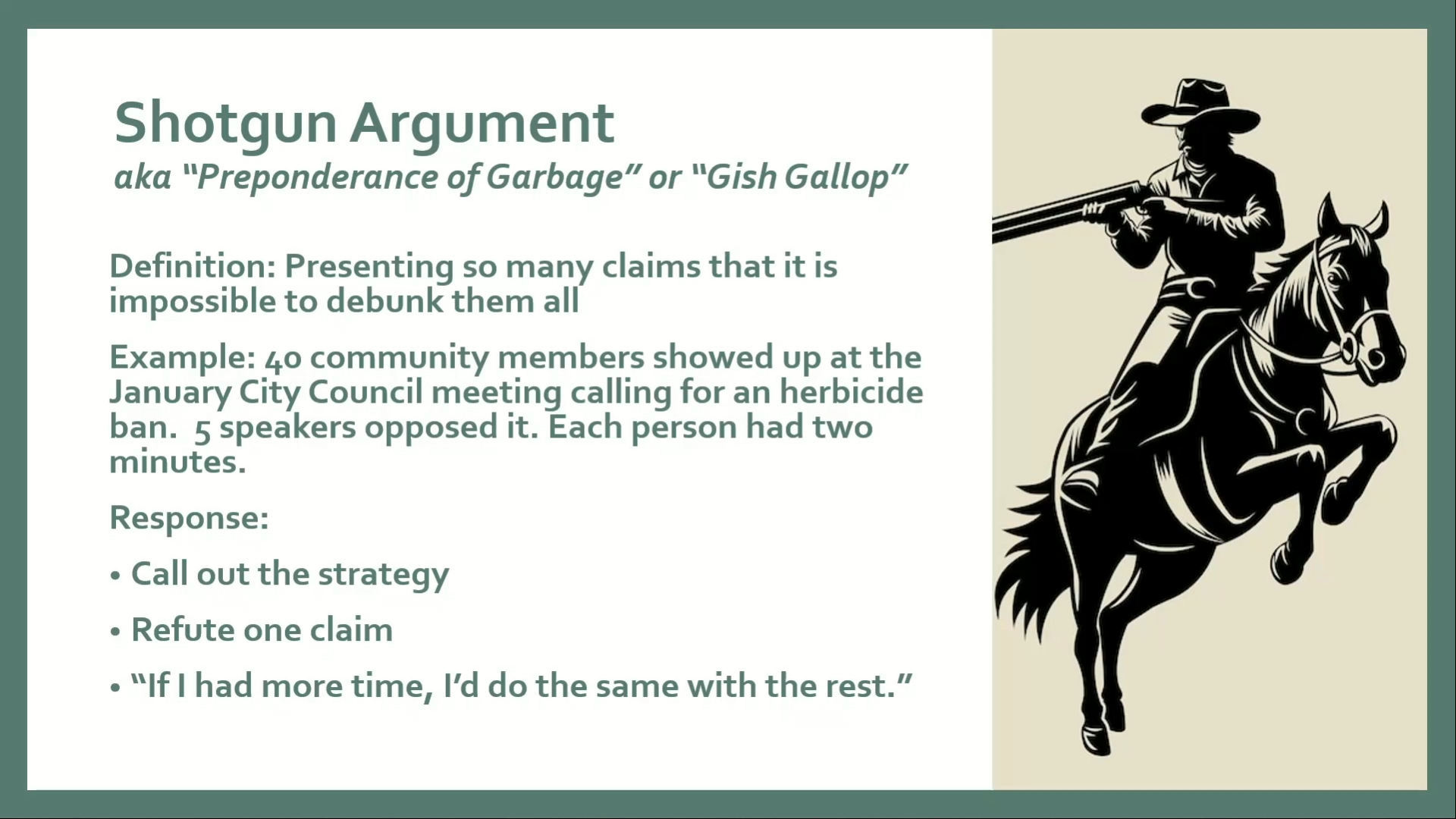
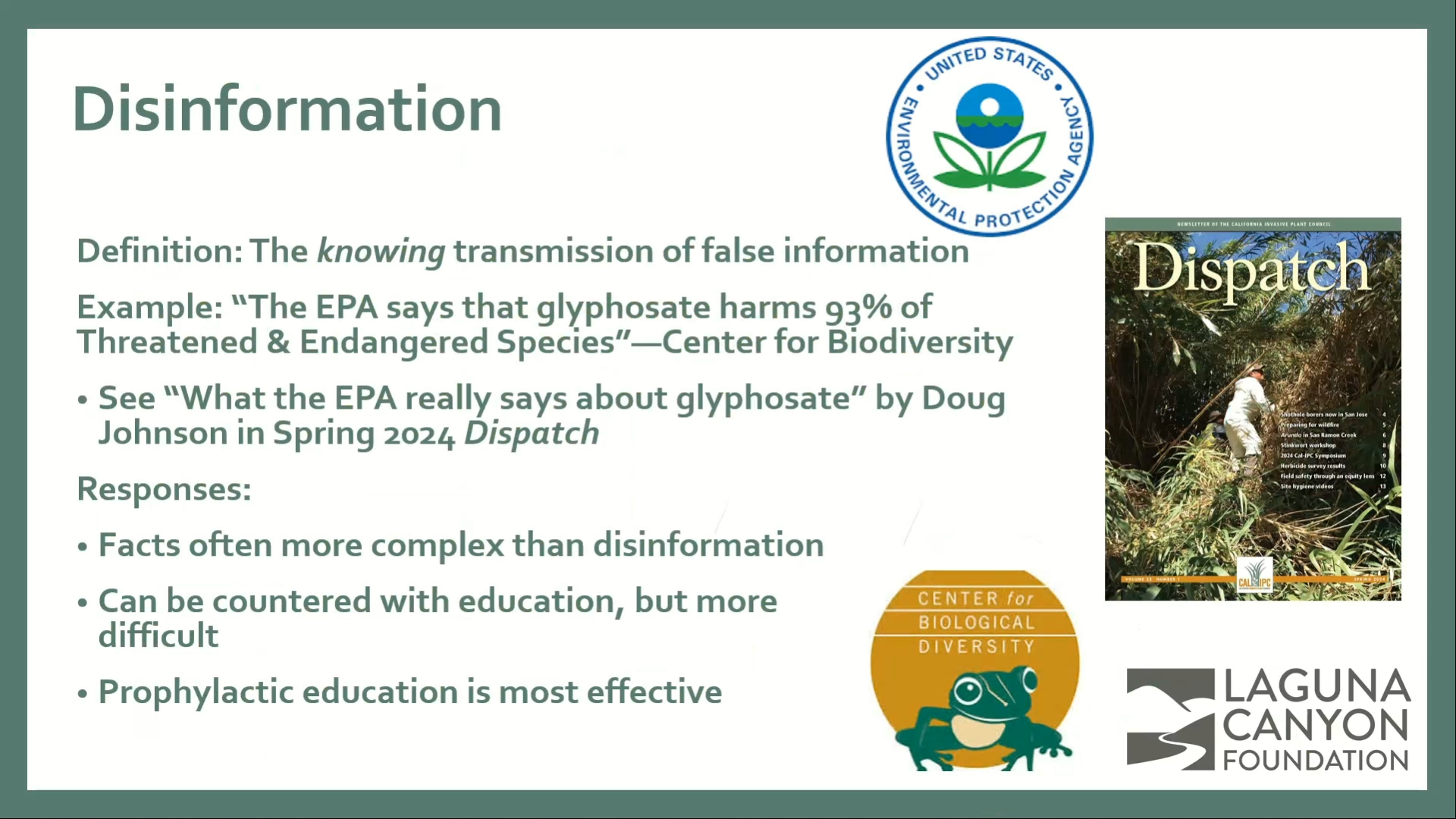
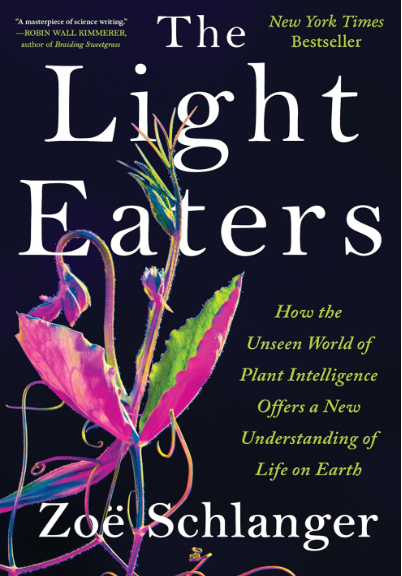
The Light Eaters was written by Zoë Schlanger, a science journalist who covered climate change before writing Light Eaters. (1)  She explains her pivot to botanical science as a retreat from the oppressive gloom of climate change.  It proved a wise choice, as she found much to cheer us in the remarkable capabilities of plants to adapt to challenges, defend themselves against their predators and competitors, and collaborate with their plant and animal neighbors. 

Ms. Schlanger believes that botanical research has lagged behind other biological inquiry partly because of a detour unwisely taken by journalists in the 1960s and 70s that projected human traits onto plants, such as intelligence and consciousness.  Humanizing animals and plants is considered a dangerous source of bias by scientists.  When scientists described plant behavior in human terms, they were often ridiculed by their colleagues and their research projects weren’t funded.  Researchers of the capabilities of plants have been trained to avoid anthropomorphic terms to describe plant behavior.  Although Ms. Schlanger tried to observe that rule, I will give myself more leeway because most of my readers are not scientists.

Plants don’t have the mobility that enables them to fly or run away from threats.  We might think of them as handicapped compared to the mobility of animals.  But what they lack in mobility, they more than make up for with their ability to make they own food from sunlight by photosynthesizing. And with the energy that sunlight provides, plants can create the food—such as pollen, nectar, and fruit—that entices insects and other animals to help them reproduce.  So how do plants protect themselves without fleeing from their predators?  That’s what Light Eaters is about.

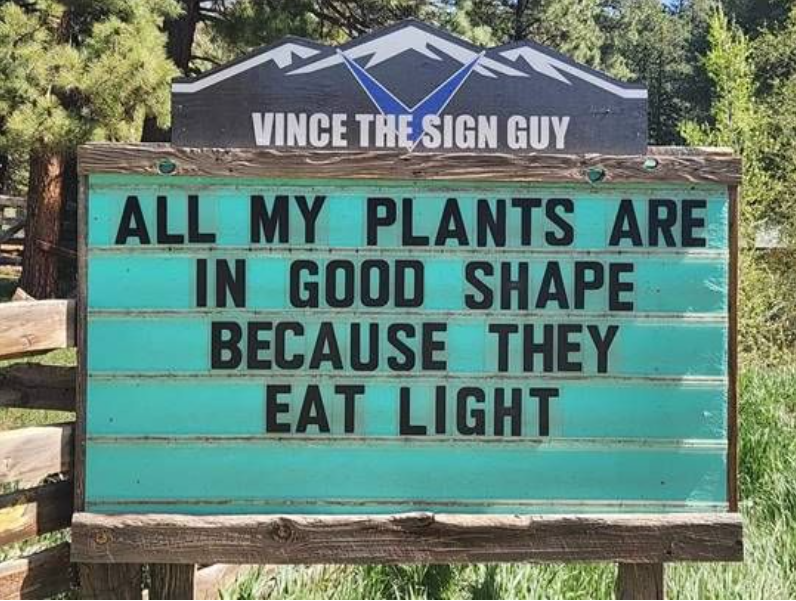
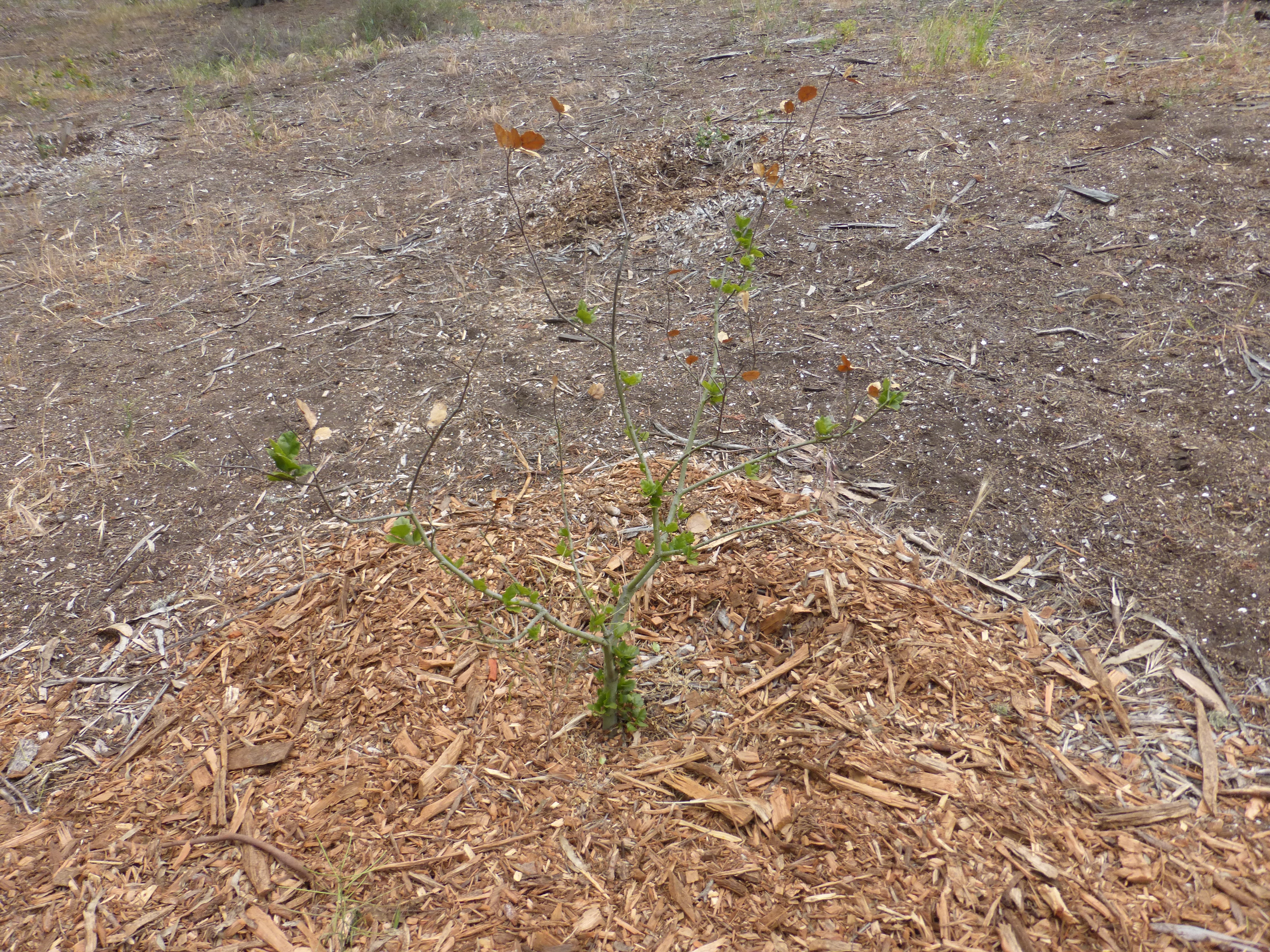
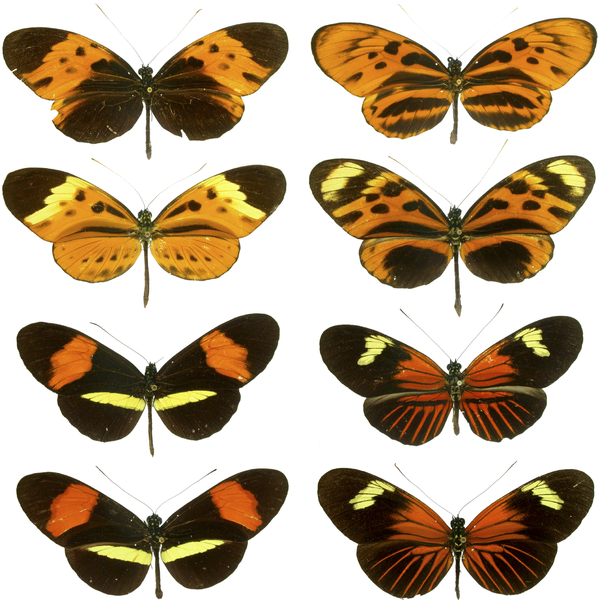
I don’t know the source of this photo. It was sent to me in an email by someone who found it on Facebook.

How do plants perceive threats and react to them?

Plants can sense that they are being attacked by an insect in a variety of ways.  They can sense the vibration of the chewing, which is closely related to how animals hear.  The attack can also trigger an electrical impulse which can travel throughout the entire plant. 

Plants emit chemicals in response to the attack on their leaves and roots. The chemicals can repel the insect by making the plant unpalatable.  In a sense, the plant is producing its own pesticide, which has the potential to replace synthetic pesticides. 

The chemicals are also wafted into the air to serve as warning signals to their plant neighbors, who can then produce their own chemicals in preparation for attack. Some plants can distinguish between an attack that threatens individuals and those that threaten the entire community. They can tailor their warning messages accordingly, to send messages only to their relatives or to the entire plant community.  When plants are sprayed with herbicides, these chemical messages are masked by herbicides. (2)  Likewise, pollution can also muddle the chemical messages of plants and reduce their ability to perceive and respond to threats. (3)

Plants sometimes demonstrate a preference for their relatives in other functions as well.  They can make room for the roots of close by relatives and move branches to avoid shading their relatives.  They can also vary these accommodations depending on available resources, making room when there is plenty of water, nutrients, and light, but not when there’s not enough.

Such warning signals can also be sent via the underground root network, which connects plants in a community to one another through the network of mycorrhizal fungi that attach themselves to plant roots.  That network is also used by the community of plants to share resources, such as moisture and carbohydrates produced by photosynthesis.  The fungal network enables both communication and sharing of resources.  Herbicides that are carried to the roots of trees damage the fungal network, depriving trees of the nutrients they need to survive. (4) The widespread use of these herbicides by native plant “restorations” is one of many reasons why these projects rarely result in new landscapes of native plants. 

Can plants hear?

One of the first discoveries of the ability of plants to find what they need is the ability of tree roots to grow in the direction of water sources.  Mycorrhizal fungi attached to the roots of plants are clearly involved in guiding that connection.  Over 450 million years ago, the evolution of fungi enabled plants to move from water to land by delivering moisture from soil to roots of plants, greatly increasing abundance and diversity of plants. About 80% of plants today receive much of their nutrients and moisture through mycorrhizal fungi. (5)

Now there is evidence that plants may also be able to hear the sound of water to direct the growth of roots.  The researcher who made that discovery encased the roots of a plant in plastic pipe so that the roots could not sense the availability of moisture.  The plastic pipe formed a “Y” to give the roots the option of growing in one direction or the other.  The researcher played a recording of running water at the end of one pipe.  The roots grew in the direction of the recording of running water.  This is still a controversial discovery, because other researchers have found it difficult to replicate. 

The replication of breakthrough scientific discoveries is one of the ways that science moves forward.  It is a not a reliable method of confirming or rejecting a new discovery because there are always many variables operating simultaneously that are difficult to control, particularly in field studies, and researchers have rarely identified all the variables involved in the phenomenon they are observing.

The academic career of David Rhoades is an example of the dangers of being too far ahead of your academic colleagues and a reminder of the conservatism inherent in academic science.  Rhoades was a chemist at University of Washington and the author of a study that made the first report of warning signals that plants under attack send to their neighbors via volatile chemicals in the atmosphere. 

The forest on Rhoades’ campus was being killed by tent caterpillars.  He studied the spread of the caterpillars until the insect infestation was stopped by the chemicals that the unaffected trees infused into their leaves.  The chemicals killed the caterpillars and the spread of the insect in the forest was stopped.  Backed by a mountain of carefully accumulated data, Rhoades concluded:  “This suggests that the results may be due to airborne pheromonal substances!”

Rhoades was met with resistance to this new information from his colleagues.  Then he had trouble replicating his original study.  When his grant applications were rejected, he gave up.  He left academia and taught chemistry in a local community college to make a living.  Years later, other researchers figured out why he was unable to replicate his original study.  The airborne chemicals that trees produce are seasonal.   Rhoades’ original study was done in the spring and Rhoades was trying to replicate the study in the fall.  The scientists who eventually confirmed Rhoades’ finding did so in the laboratory where conditions are easier to control.

Plants collaborate with animals to protect themselves and reproduce

The Light Eaters reports many remarkable observations of interactions of plants and animals.  Here is a sampling of these stories:

  • If bumblebees emerge from hibernation before plants begin to bloom, the hungry bee bites the plant’s leaves to trigger the bloom that delivers the nectar the bees need.
  • Plants must use their limited resources to make pollen and nectar.  Some plants can ration the delivery of the pollen and nectar that attracts their pollinators by timing the delivery with the anticipated arrival of the pollinator.  The plant estimates the time of arrival of the insects based on its memory of past visits. 
  • Bats find the plants they pollinate by using echolocation sonar to locate them in the dark.  Some plants that are pollinated by bats have evolved saucer-like petals that act like a satellite dish to receive the sonar ping to help bats find them. 
  • Some corn, cotton, tomato and tobacco plants can emit chemical distress signals to summon tiny parasitic wasps to kill caterpillars such as tobacco budworm and corn ear worm.
  • Many orchids are pollinated by wasps.  Some orchids attract wasps by mimicking the chemical pheromones of the female wasp.  The orchid is pollinated by the attempt of the male wasp to mate with what he supposes is a female wasp.
  • Some plants form partnerships with ants by secreting a sugary substance that feeds the ants, who eat the insect predators of the plant. 

Can plants see?

The observation that plants are capable of mimicking animals and other plants is not new.  In the early 1900s, a Russian agronomist observed that weeds in food crops have sometimes mimicked the food crop and thereby evaded the hand-weeding that was the method used by farmers to eliminate competition for their crop.  Rye, oats, and lentils were initially considered weeds of wheat and rice.  Over time, they evolved the seed heads that qualified them as food crops. 

More recently, weeds that are killed by herbicides within crops that have been genetically modified to be resistant to the herbicide have engaged in mimicry at the biochemical level to also become resistant to the herbicide.  Those who engage in chemical warfare against plants do not seem to understand that it’s a war they can’t win because evolution will enable plants to develop resistance to their poison. 

Like many of the remarkable capabilities of plants, scientists can observe the phenomenon, but they are rarely able to explain the mechanism that makes it possible, beyond the evolutionary force of natural selection, which achieves a better adapted plant or animal through a series of mutations and genetic and epigenetic drift.  Each change in the species is a trial balloon.  If the change works, it’s a keeper.  If it doesn’t, it’s in the dustbin with some 99% of the estimated 5 billion species that have lived on Earth.  The dominant evolutionary force is random, irrepressible, complex change.  The notion that humans are capable of stopping evolution is absurd.

In 2014, a Peruvian ecologist discovered a vine in the Chilean rain forest that is capable of quickly taking on the shape of almost any plant that it grows beside.  Nicknamed the chameleon plant, many tests proved that the vine can mimic many different species of plants.  Presumably this mimicry enables the vine to become invisible in the sense that it blends in with whatever plants it grows amongst.  It’s a disguise, if you will, that protects the plant from its predators. 

The chameleon vine is able to mimic plants that are native to their locations as well as plants that are foreign to the region.  In other words, mimicry is not the result of a long evolutionary co-existence.  This finding is another blow to the nativist myth that plant and insect associations are the result of co-evolution that makes insects dependent on native plants.  The associations between plants and insects evolved long before the plants and insects moved into new regions.  Plants and insects retain that association as they change in response to their new environment and as the result of mutations and genetic drift. 

Until recently, there was a debate among scientists about how the chameleon plant morphs itself into an entirely different shape.  One school of thought speculates that plants have an organ that performs much like our eyes.  Another school of thought is that horizontal gene transfer (6) from the bacteria inhabiting the plant being copied to the plant doing the copying achieves this transformation. 

A study (7) published in 2022 seems to support the hypothesis that some plants have some type of organ that functions like our eyes.  The study found that the chameleon vine was capable of mimicking an artificial leaf.  The plastic leaf contains no chemicals or bacteria. 

In conclusion

The Light Eaters reports many other capabilities of plants that aren’t covered in this article.  If it’s a topic of interest to you, the book is well worth reading.  It’s well researched and well written.  It is also thoughtful because it asks us to ponder the philosophical question of whether or not this new(ish) knowledge of plants adds up to intelligence, consciousness, and agency.  Ms. Schlanger dodges that question by reminding us that there is not consensus agreement about what any of those descriptions actually mean.

Now we must add a few caveats that we hope will put this important topic into perspective:

  • Not every plant species has all of the capabilities described in The Light Eaters.
  • Those that do have such capabilities may not consistently use them because every plant is responding to a specific environment in a specific place.  Plants are inseparable from their environment.  A plant that has plenty of water and plenty of light behaves differently than plants with less resources.  Sweeping generalizations about plants are usually ridiculous.  For example, it makes no sense to claim that native berries are more nutritious than non-native berries. (8)
  • Plants have the potential to develop such capabilities, depending on their specific circumstances.
  • Without a brain or a nervous system, plants seem to organize a response to stimuli by functioning as a decentralized network.    

The Light Eaters says as much about science as it does about plants.  There are fads in science, just as there are fads in every human endeavor.  Presently, much scientific investigation of botanical phenomenon is focused on genetics, which has misled the public to underestimate the plasticity of plants and animals.  In fact, the genome of a species is a flexible repertoire, with many genes unexpressed until triggered by a change in the environment in which the plant lives.  For many characteristics of species, the environment is a more powerful influence than genes. 

Science is better at observing than it is at explaining.  Explaining requires speculation and academic science studiously avoids speculation.  The reader of scientific studies is often left in a quandary.  Conclusions are often a contradictory list of maybes with a plea for funding for further investigations. That’s one of many reasons why science journalism is important to the general public’s understanding of scientific issues.  Ms. Schlanger goes out on a limb for us by speaking in comprehensible terms that many scientists refuse to use.  Thank you, Ms. Schlanger, for helping the public understand the plant world.


Shortly before publishing this article and after I had drafted my article, I received the following review of The Light Eaters from Arthur M. Shapiro, Professor Emeritus of Ecology and Evolution, UC Davis.  He has given permission to add his review to my article.
– Conservation Sense and Nonsense

Elizabeth Kolbert has a collective review of Schlanger and two other, similar books–“The Nation of Plants” by Gregory Conti and “Planta Sapiens” by Calso and Lawrence–in the new NY Review of Books (Oct.3). Her review is only lightly snarky because it’s clear she doesn’t know quite what to make of the “plant neurobiology” fad.

“When I read Schlanger (I haven’t read the others) I dug back into my library to find my copy of “The Secret Life of Plants” by Peter Tompkins and Christopher Bird (1973). I doubt that Kolbert realizes that the current fad is a rerun of the 70s!  Unlike Schlanger and perhaps the others reviewed by Kolbert, Tompkins and Bird is packed with overt woo-woo and makes little attempt to be “science-based.” The frank woo-woo is very 70s. But the underlying motivation for both waves is the same: philosophical panpsychism, the notion that consciousness is ubiquitous in Nature.

“There is nothing in the actual data discussed by Schlanger that obliges one to embrace panpsychism. The main reason to do so is that one WANTS to. That is, for some (many?) people it is very reassuring to believe that at least the biosphere, if not the entire universe, is sentient. (This has resonances with the Gaia Hypothesis.) This notion is an integral part of a number of cultural cosmologies, of which the most familiar to most Americans is probably Native American, broadly speaking. In the 70s many hippies embraced the Native American notions of “tree people,” “stone people,” etc. Some still do.

“Remember that I have taught community ecology for some 50 years, with an emphasis on coevolution. Things like inducible anti-herbivore defenses (chemical or morphological) and communicable defensive messages (plant pheromones, if you will) come as no surprise. Rather, they are predictable consequences of natural selection: if something can evolve, it probably will.  There is no logical necessity to invoke intelligence or consciousness to account for them. If you want to, go right ahead. But don’t call it science!

“I have never had a chance to pull up a mandrake plant. In the Middle Ages it was widely believed that if you did it would shriek, and the sound if heard would drive one mad. Thus one must cover one’s ears when doing so. Now, that is framed as a testable hypothesis!

“Are you familiar with the walking fern? If not, Google it. I am very fond of it, but never for a moment would I claim it has the property of wanderlust.

Arthur M. Shapiro, Professor Emeritus of Ecology and Evolution, UC Davis


  1. Zoë Schlanger, The Light Eaters: How the Unseen World of Plant Intelligence Offers a New Understanding of Life on EarthHarper Collins, 2024. The Light Eaters is the source of information in this article unless otherwise noted.
  2. Behrend*, J.E., & A.L. Rypstra (2018) Contact with a glyphosate-based herbicide has long-term effects on activity and foraging of an agrobiont wolf spider.  Chemosphere 194:714-721   doi: 10.1016/j.chemosphere.2017.12.038
  3. “Polluted Flowers Smell Less Sweet to Pollinators,” New York Times, February 16, 2024
  4. K. Hage-Ahmed, “Arbuscular mycorrhizal fungi and their responses to pesticides,” Pest Management Science, September 25, 2018
  5. Thomas Halliday, Otherlands, A Journey Through Earth’s Extinct Worlds, Random House, 2023
  6.  Conservation Sense and Nonsense, “All Life on Earth is Related
  7. Jacob White and Felipe Yamashita, “Boquila trifoliolata Mimics leaves of an artificial plastic host plant,” Plant Signaling Behavior, 2022
  8. Conservation Sense and Nonsense, “Baseless Generalizations in Doug Tallamy’s Nature’s Best Hope”

Going Toe to Toe with Doug Tallamy

In June 2023, Washington Post published an opinion piece advocating for the use of herbicides to kill non-native plants, in which Doug Tallamy was quoted as saying that spraying herbicide on non-native plants is “chemotherapy,”  equating non-native plants with cancer and pesticides with medical therapy.  Tallamy. and more broadly his viewpoint, received some blowback from Conservation Sense and Nonsense and others.

Thomas Christopher and Doug Tallamy collaborate on their shared mission of promoting the use of native plants and the closely related goal of eradicating non-native plants they consider a threat to native plants and insects. In October 2023, Tom Christopher (TC) gave Doug Tallamy (DT) an opportunity to respond to criticism of native plant dogma on his Growing Greener podcast that is available HERE.  Christopher also invited listeners to send him feedback on the podcast.  Professor Art Shapiro, whose work was central to the interview, has responded separately and his response is available as a footnote.  Conservation Sense and Nonsense (CSN) sent Christopher an email, which I hope he shared with Tallamy.  The following is an excerpt from that email. 


Hi Tom, Thanks for the air time for opposition to eradicating non-native plants in your interview with Doug Tallamy and for this opportunity to respond.  I’m flattered that criticism of native plant dogma has attracted some attention on the East Coast.  I’ve transcribed most of your interview with Doug Tallamy as best I can and provided some feedback to Tallamy’s viewpoint.  I sent Art Shapiro the podcast and he has responded separately.

TC:  Some people say that non-native plants are just as effective as natives in supporting food webs.  For example, buddleia that is spreading throughout the East and West is used by butterflies.

CSN:  Buddleia davidii is on California’s list of invasive plants, but it is not considered invasive in California.  It was put on California’s list because it is considered invasive elsewhere, making the point that invasive plant behavior varies depending on local conditions, such as climate.  Sweeping generalizations about invasiveness are rarely accurate. If gardeners are concerned about the potential for invasive behavior, they can plant a cultivar of buddleia that does not reproduce. 

DT:  We shouldn’t call all insects pollinators.  Just because an insect visits a flower for nectar doesn’t mean it’s pollinating that flower.  There are more visitors to flowers than there are pollinators.  Butterflies visiting buddleia are just there to sip nectar.

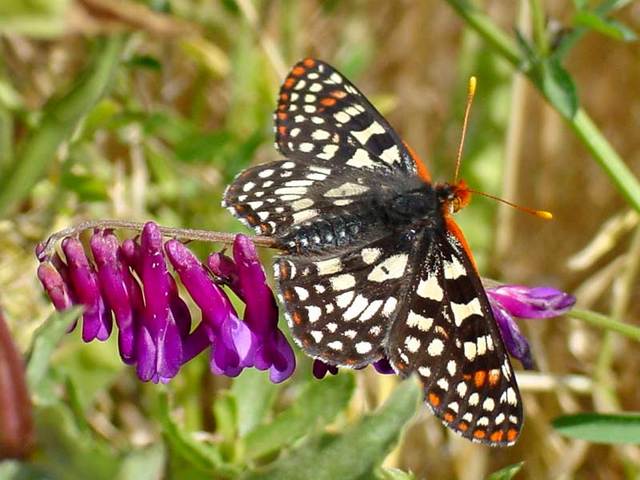
Euphydryas chalcedona
Variable checkerspot. Photo by Roger Hall

CSN:  Buddleia davidii is native to Central China.  Non-native buddleia is used by a butterfly species that is native to California and other states in the Western US.

The first actual observation of checkerspot butterflies breeding spontaneously and successfully on buddleia was in Mariposa County, California in the Sierra Nevada foothills.  Checkerspot bred there successfully on buddleia in 2005 and in subsequent years.  This colony of checkerspot on buddleia was reported in 2009:  “We conclude that buddleia davidii [and other species of buddleia] represents yet another exotic plant adopted as a larval host by a native California butterfly and that other members of the genus may also be used as the opportunity arises.” (1)

In 2017, a gardener in Mendocino County, California also reported the use of buddleia as the host plant of checkerspot:  “By now I am questioning how it was that butterfly larvae were using my butterfly bush as a host plant, completely against everything I’d ever heard. How was this possible? I emailed Art Shapiro, a very well-known butterfly expert and author, sending him a pic. He wrote back to confirm they were butterfly larvae, but added, ‘These are not mourning cloak butterflies. They are checkerspots. And the only time I’m aware this has happened [like, ever, except one in a lab in 1940…] is in Mariposa County.’” (2)

Buddleia is available as the host plant of checkerspot butterflies with a native range from Alaska south along the Pacific Coast through California and Arizona to Baja California and Mexico; east to Montana, the Dakotas, Wyoming, Colorado, New Mexico.  This is a clear case of a widespread native butterfly choosing a non-native plant as its host. 

  1.  Arthur M. Shapiro and Katie Hertfelder, “Use of Buddleia as Host Plant by Euphydryas chalcedona in the Sierra Nevada foothills, California,” News of the Lepidopterists’ Society, Spring 2009
  2. http://plantwhateverbringsyoujoy.com/never-pull-up-and-discard-what-you-cannot-identify/

DT:  Most bees that people see in their gardens are honeybees that are there to get pollen and sometimes nectar.  These are generalist bees but specialist bees that require pollen from particular plants (always native plants) can’t be supported by those at all. 

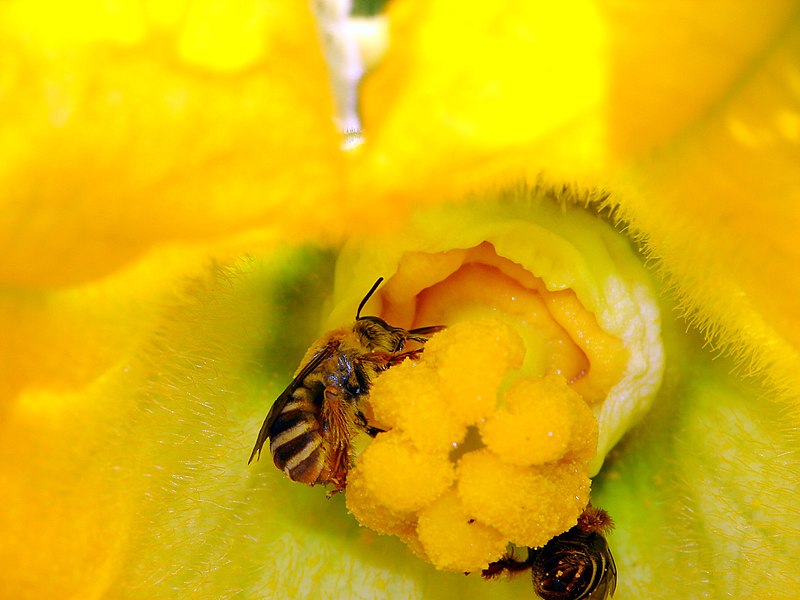
Squash bee. USDA public domain

CSN:  Specialization of insects is exaggerated by Tallamy.  For example, he would probably call a squash bee a specialist.  As its name implies, its host plant is squash plants in the squash family, with 98 genera and 975 species.  The squash bee is considered an excellent pollinator of zucchini and butternut squash, both native to Central and South America.  However, they do not usually visit melon plants, according to Wikipedia.  Again, we are reminded to avoid broad generalizations when describing the complex and diverse natural world. 

Likewise, the native alkali bee is a particularly effective pollinator of alfalfa, which is native to the Mediterranean region. Alkali bees also pollinate members of the large legume family with over 16,000 species that are native all over the world.  If you are interested in such associations, you can find an exhaustive list of native butterflies and their many non-native host plants in Art Shapiro’s butterfly guide for Central California and the Bay Area.  It is not true that bees Tallamy considers “specialists” require pollen from only native plants.

DT:  Sometimes butterflies adopt a new host plant as a caterpillar host.  For example, black swallowtail butterflies caterpillars eat carrots or parsley or dill.  What’s going on?   There are two different kind of hosts:  1) The caterpillar has not adopted a new host at all because it was already adapted to that particular host.  2) Actual host switching from one plant to another is very rare.  It happens on a time-scale of thousands of years.  It requires a mutation or an adaptation to chemical defenses of new host plants.

CSN:  Tallamy tries to make a distinction to avoid acknowledging that insects make use of introduced plants because they are chemically similar to the native plants they have used in the past, which in some cases are no longer available. The butterfly has, in fact, adopted a new host, a plant that wasn’t there before and is now hosting the caterpillar. There are many cases of rapid evolution that enable such transitions, but both cases are clearly transitions from native to non-native plants.  If the original native host is still available, it isn’t necessarily abandoned in favor of a non-native.  Such transitions are useful because they increase the population of available insect hosts and are essential if the original native host is no longer available.

TC:  Pushback from California cites research of Professor Art Shapiro reporting that spontaneous spread of non-native plants has benefited native butterflies.  He reports that 82 of 236 California native butterfly species (34%) are laying their eggs on introduced plant taxa, so caterpillars feed on them and many more butterflies use introduced plants as nectary sources.

DT:  Great!  These are host range expansions.  Agriculture in California has eliminated the host plants of a lot of butterflies and it’s a good thing we had close relatives of natives so butterflies could expand their host range and use them.  But if 34% of native butterflies are using introduced plants that means 66% are not.  If all plants were introduced, we would lose 66% of butterflies in California.  This is not the direction I want to go.  I would choose 60% rather than 34%.

CSN:  Christopher and Tallamy seem to have read one sentence in the abstract of Shapiro’s study without reading subsequent sentences: “Interactions with introduced plant taxa are not distributed evenly among butterfly species. Alpine and desert butterflies interact with relatively few introduced plants because few exotic plant species have reached and successfully colonized these habitats. Other California butterfly species are specialists on particular plant families or genera with no exotic representatives in California and have thus far failed to recognize any introduced plants as potential foodplants. Some California butterflies have expanded their geographic ranges and/or extended their flight seasons by feeding on exotic plants.”  In other words, where there are more introduced plants and some are closely related to native plant hosts, more native butterflies use introduced plants.   

TC:  What do you say to the claims that introduced plants stay greener longer than native plants adapted to wet or dry seasons so that introduced plants give rise to extra generations of caterpillars?

DT:  This is only true if caterpillars can use those plants and in host range expansions they can.  Shapiro is also right about extending availability of nectar.  For example, monarchs that migrate need forage along the way.  The minus is that we’ve been so hard on native flora.  These insects were doing just fine before we brought in non-native plants.  It’s a Band-Aid we’re putting on an environment that has been ravaged by taking out native species that were here before.  Let’s put native species back too.

CSN:  The claim that non-native plants are driving native plants to extirpation or extinction goes to the heart of the controversy.  Native plant advocates believe that accusation, although there is little evidence to support it.  The greatest threat to native plants and insects is habitat loss, particularly converting wildlands to agricultural fields.  The second greatest threat is the pesticides that are used by agriculture.  Remember that Tallamy is an enthusiastic promoter of herbicides to eradicate non-native plants.  He calls it “chemotherapy” in a recent opinion column in the Washington Post.  Pesticides kill both plants and the animals that feed on them, they are anathema to biodiversity and the food web that Tallamy believes he is supporting. 

Marcel Rejmanek (UC Davis) is the author of the most recent report on plant extinctions in California, published in 2017.  At that time there were 13 plant species and 17 sub-species native to California known to be globally extinct and another 30 species and sub-species extirpated in California but still found in other states.  Over half the globally extinct taxa were reported as extinct over 100 years ago.  Although grassland in California had been converted to Mediterranean annual grasses by grazing domesticated animals decades before then, most of the plants now designated as “invasive” in California were not widespread over 100 years ago.

Most of the globally extinct plant species had very small ranges and small populations.  The smaller the population, the greater the chances of extinction.  Most of the globally extinct plants were originally present in lowlands where most of the human population and habitat destruction are concentrated. Although there are many rare plants at higher altitudes, few are extinct.  Plants limited to special habitats, like wetlands, seem to be more vulnerable to extinction. The primary drivers of plant extinction in California are agriculture, urbanization and development in general.  Non-native plants are the innocent bystanders to disturbance.

“Invasive species” are mentioned only once in the inventory of extinct plants published by California Native Plant Society and only in combination with several other factors. However, the identity of this “invasive species” is not clear.  Rejmanek suggests that the “invasive species” rating refers to animal “invasions” by predators and grazers.  He says, “Indeed, one needs quite a bit of imagination to predict that any native plant species may be driven to extinction by invasive plants per se.” (Marcel Rejmanek, “Vascular plant extinctions in California: A critical assessment,” Diversity and Distributions, Journal of Conservation Biogeography, 2017)

TC:  90% of all insect species are specialists that have evolved in concert with only one or a few plant lineages.  How can they cope with the loss of native plants?

DT:  Native plants are adapting in evolutionary time.  Specialization is a continuum.  Few insects are confined to a single plant species, some are confined to one or two genera, and others are confined to one or two families of plants.  But if you are looking at the number of plants available to them, only about 7% of plants they are adapted to are available to them.   93% of available plants are not viable hosts for insects.  Everything is a specialist on one level of another.

CSN:  That sounds like an argument for a diverse garden, with many plant species that offer more food sources for insects.  That doesn’t seem a sound argument for eradicating non-native plants. 

TC:  I understand that some native plants are more useful to insects than others?

DT:  These are the keystone species.  Many native plants don’t support insects because plants are well-defended against them.  Keystone species are making most of the food for the food web.  Just 14% of native plants across the country are making 90% of food that drive the food web.  86% of the native plants are not driving the food web.  Insect food comes from the big producers, like oaks, black cherries, hickories, and birches.

CSN:  That is a mind-boggling admission!!  Earlier Tallamy complained that non-native plants are hosting only 34% of butterflies in California.  Now he says that only 14% of native plants are useful to insects.  He asks home gardeners to plant only native plants as well as limit our plantings to a small subset of native plants. 

Tallamy’s ideology is antithetical to the goal of biodiversity, which could be the salvation of ecosystems in a changing climate. Since we can’t predict the climate of the future, biodiversity provides more evolutionary options, which increases the chances that some species will survive. Tallamy asks us to put a few eggs in the huge basket of our ecosystems, reducing their ability to survive the challenges of our changing climate. 

For example, in Oakland, California, where I live, there were approximately 10 species of native trees prior to settlement.  In 1993, there were 350 tree species in Oakland. (David Nowak, “Historical vegetation change in Oakland and its implications for urban forest management,” Journal of Arboriculture, September 1993)  The recently published draft of Oakland’s Urban Forest Plan reports that there are now over 500 tree species in Oakland.  I can’t fathom why Oakland would want to limit the planting of trees to only 10 native species. 

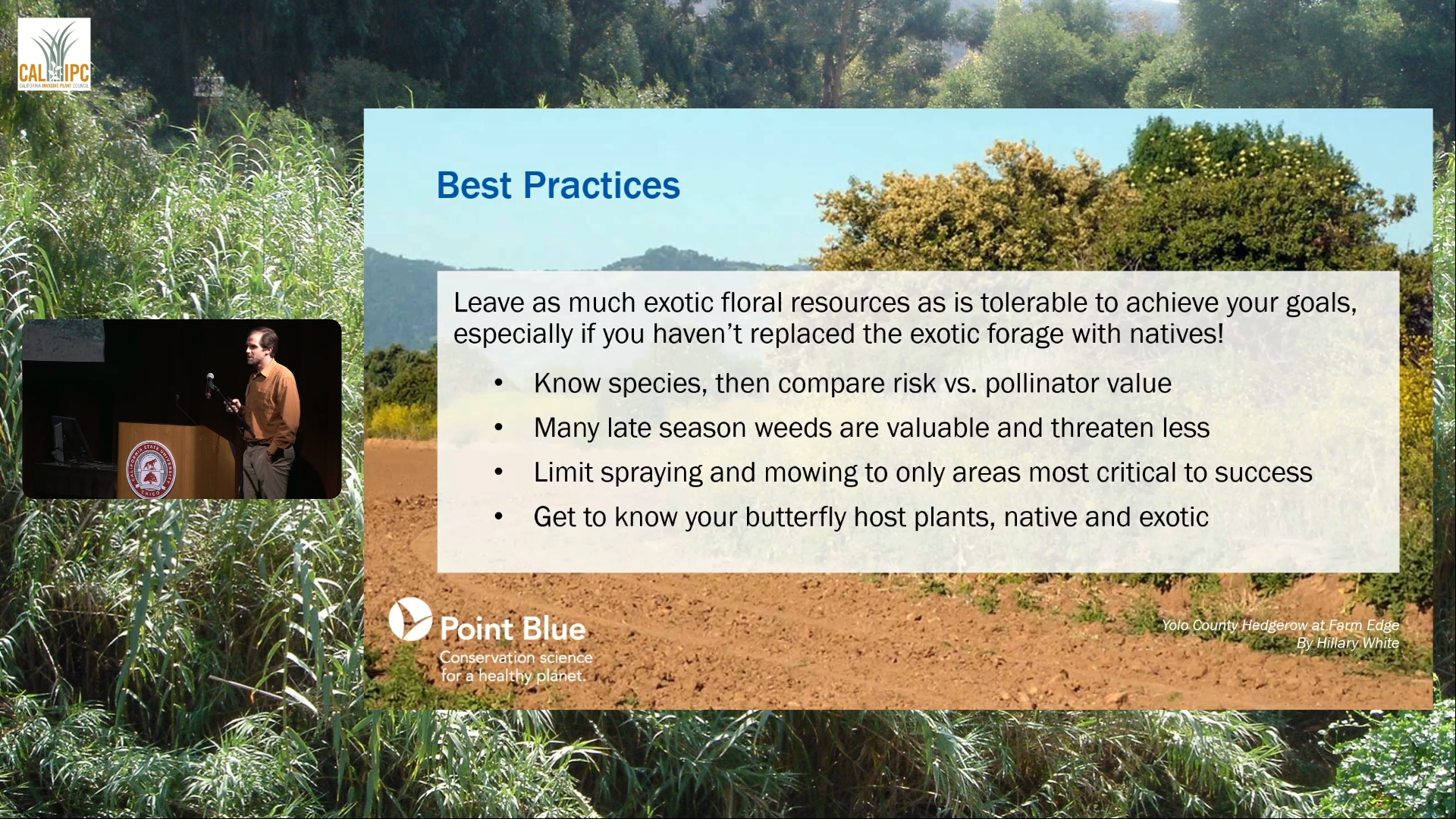
I agree with Tallamy that many native plants are not useful to insects.  I attend the annual conference of California Invasive Plant Council to give native plant advocates every opportunity to convince me of their viewpoint.  At the most recent conference at the end of October, Corey Shake of Point Blue Conservation made a presentation about his project to “Evaluate native bee preference for common native and exotic plants.” 

He designed 16 hedgerows around agricultural fields in Yolo County to determine if native bees have a preference for native plants or exotic plants, by controlling for availability of native plants compared to exotic plants.  Here is his abstract:

“Farm edge restoration monitoring in Sacramento Valley highlights native bee use of some exotic plant floral resources. Corey Shake. Point Blue Conservation Science. cshake@pointblue.org

“Research of native bee preference for native versus exotic plant floral resources in California’s Sacramento Valley has shown mixed results. No studies have demonstrated a preference for exotic plants by native bees there, but some have highlighted the importance of exotic plant floral resources in plant-pollinator networks and expressed concern that rapid removal of exotic plants without restoring native plant populations could have negative impacts on native bees. We have been collecting native bee flower visitation, plant species, and floral abundance data on 16 farm edge restoration projects in Yolo County, California since 2019, which will allow us to assess bee preferences for some key native and exotic plants relative to their floral abundance. In our preliminary analysis, we see some important trends: (1) relative to their floral abundance in our plots, some native plant species are more frequently visited by native bees than other native plants that are infrequently or rarely visited, and (2) there is significant native bee visitation to some exotic plants relative to their floral abundance. We will further evaluate these data as well as our butterfly diversity and abundance data to provide plant-species specific insights to restoration practitioners and weed management specialists to help them reduce harmful impacts to native pollinators when executing restoration projects and managing weeds.” 

In other words, not all species of native plants are useful to native bees and some species of non-native plant species are useful to native bees.  Tallamy’s sweeping generalizations about the usefulness of native plants to insects are not supported by empirical or field studies.  Although the characteristics of plants vary widely, the variation is unrelated to the national origins of plants. 

From Micro to Macro Perspective

I recognize my voice in the questions Tom Christopher asked of Doug Tallamy, as well as Art Shapiro’s.  Speaking for myself, not for Art, this interview misses the point of my criticism of native plant ideology.  I like native plants as much as I like any plant and I encourage everyone to plant whatever they prefer.  I only object to the pointless destruction of harmless non-native plants that thrive because they are best adapted to the conditions where they have naturalized.  Non-native plants do particularly well in the wake of disturbance.  Where they have replaced native plants, the natives were destroyed by disturbance, not by the hardy non-native plants that can tolerate disturbance. Non-native plants are a symptom of change, not the cause. 

I object to destructive eradication projects because they poison the soil with herbicides, making it even less likely that non-native plants will be replaced by fragile native plants.  I object to the loss of biodiversity which is a hedge against extinction in a rapidly changing climate.  We don’t know which plants will be capable of surviving in the changed climate.  We should not be taking cards out of the deck while we gamble with the future of the environment and everything that lives in it.

Unfortunately, native plant advocates take offense when anything positive is said about introduced plants.  A positive statement about a non-native is routinely interpreted as a negative statement about native plants.  It shouldn’t be.  The emphasis on the negative assessment of introduced plants results in harmful land management decisions.  The pros and cons of all plants should be considered before we condemn non-natives with a death sentence.  Like our justice system for human society, all plants should be presumed innocent until proven guilty.

Thanks again for airing this debate on your podcast. I hope you will forward my email to Doug Tallamy

Webmaster, Conservation Sense and Nonsense


The Destructive Origins of Ecological Field Studies

Laura J. Martin is an environmental historian at Harvard University.  She wrote two articles (1,2) about the origins of ecological field studies that might help explain the destructive methods still used today by some ecologists.  Professor Martin “contends that the history of ecosystem science cannot be separated from the history of nuclear colonialism and environmental devastation in the Pacific [Nuclear Testing] Grounds” (2)

When the US dropped two atomic bombs on Japan in 1945, little thought was given to the consequences of atomic bombs because ending the war in the Pacific was the only consideration.  Japan surrendered to the US less than one month after the bombs were dropped, effectively ending World War II. 

Few doubt that the use of atomic weapons was instrumental in ending World War II.  After the war, there was a more sober effort to determine the consequences of using atomic weapons.  Some believed that nuclear weapons might replace conventional warfare.  Others wanted to understand the impact on life on the planet before making such a momentous decision.  This effort was focused on practical considerations such as the impact on the world’s fisheries and food supply.  The objective of their initial studies was less concerned about long-term consequences for the environment such as the duration of impacts on living creatures and the environment in which they live.

The US federal government invested heavily in the sciences after World War II. The Atomic Energy Commission (AEC) was established in 1946 and the National Science Foundation (NSF) in 1950.  The availability of federal grant funding for academic institutions “dramatically reconfigured the relationships among federal, academic, and corporate spheres.” (2) Increased federal funding greatly increased the number of academic research projects.

Between 1945 and 1970, the US detonated 105 nuclear weapons. The Atomic Energy Commission and later the National Science Foundation paid academic ecologists to conduct field studies at the test sites to determine the impact on animals. 

In 1963 the US, Soviet Union, and Great Britain signed a Partial Test Ban Treaty that prohibited all non-wartime detonations except for those done below ground.  Testing of the effects of radiation by academic scientists continued because the AEC mass produced radioisotopes and distributed them to American institutions.  Scientists were no longer constrained to field sites where atomic bombs had been detonated.

“Thus began a period in which ecologists purposefully destroyed ‘ecosystems’ to study how they recovered.”

Laura Martin, “The World in Miniature”

The availability of radioisotopes made laboratory testing possible, but it also enabled large-scale atomic irradiation experiments such as a forest irradiation project in Georgia that exposed 300 acres of forest to an air-shielded reaction (?) that produced radiation levels comparable to expected fallout following a nuclear catastrophe.  The purpose of that experiment was to determine the impact of radiation on forests.  The findings were that some tree species were more vulnerable to radiation than others.  This finding contributed to the hypothesis “that the greater number of species in an ecosystem, the better that system will be ‘adjusting to stress.’” (1) This is the familiar theory that greater biodiversity enhances resiliency of ecosystems against stressors such as climate change.  It remains a cornerstone of conservation science. 

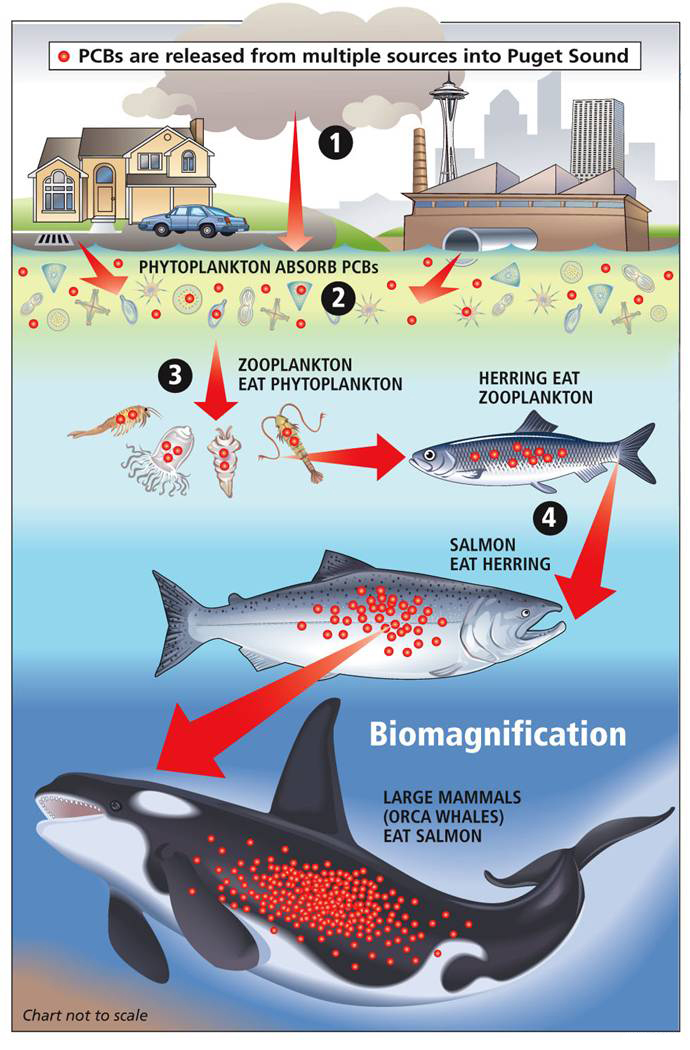
These studies are also responsible for the knowledge that radiation—and many other toxic substances such as chemicals—bioaccumulate, first described publicly in 1955, according to Martin.  Many toxic substances persist in our bodies throughout our lifetime.  The longer we are exposed to them, the more dangerous they are to our health.  Women who were exposed to DDT before it was banned in 1972 still have higher levels of DDT in their bodies than women born after 1972.  Many toxic chemicals also bioaccumulate in food webs.  Top predators in the food web are more heavily burdened with poison than animals at the bottom of the food web because of biomagnification

Using pesticides to study impacts and recovery

The concept of destroying an ecosystem for the purpose of studying impacts and recovery from impacts was soon extended to using pesticides.  In a study funded by NSF in the 1960, herbicides were repeatedly applied to clear-cut plots in the White Mountain National Forest to compare the runoff from “disturbed” watershed with “undisturbed” control watersheds.  “They concluded that forest clear-cutting led to the leaching of nutrients from the soil, and ultimately, algal blooms in downstream waters.” (1) (Yet, 60 years later, spraying clear-cuts with herbicides is still the norm in the timber industry.) 

Destructive methods used by Daniel Simberloff

The first publication (3) in 1969 of Daniel Simberloff’s academic career was a report of his Ph.D. dissertation project under the direction of EO Wilson at Harvard University.  He tented and fumigated with methyl bromide 6 mangrove islands off the Eastern shore of Florida to kill all the insects.  His objective was to study how long it would take for insects to recolonize the islands.

Although Simberloff monitored the islands for only one year, he concluded, “The colonization curves plus static observations on untreated islands indicate strongly that a dynamic equilibrium number of species exists for any island.” (3)  This is an example of the generalized conclusions of ecological studies noted by Professor Martin:  “With ecosystem studies, ecologists claimed that fieldwork conducted in one place could be used to understand other distant and different places.  The Pacific Proving Grounds became a model for lakes in Wisconsin, rain forests in Panama, deserts in China…” (2) 

Some 60 years and thousands of ecological studies later, such generalizations are rarely considered credible.  To quote one of the academic scientists who advises me, “If you study a specific site, you know something about THAT site at THAT specific point in time.”  Nature is too dynamic to reach a sustainable equilibrium and its complexity cannot be accurately generalized.  The concept of a sustainable equilibrium ecosystem was rejected by scientists long ago.

Laura Martin says of Simberloff’s study, “Destruction thus became a method of studying ecosystems. As Eugene Odum put it: ‘ecologists need not feel bashful about attacking ecosystems so long as they observe the rules of good science.’” (1)

Methyl bromide used by Simberloff in his thesis project is known to deplete the ozone layer of the atmosphere that shields the Earth from harmful Ultraviolet light that causes skin cancer.  Its use was severely restricted by an international treaty in 1989.  However, it is still used in the US for agricultural crops as a soil sterilant that kills all living organisms in the soil. 

The federally mandated Material Safety Data Sheet for methyl bromide says it is acutely toxic to aquatic life at the highest danger rating (Category 1). 

Nearly 60 years after the publication of his Ph.D. study, Daniel Simberloff remains one of the most vocal advocates for the eradication of non-native plants and animals.  With few exceptions, those eradications require the use of pesticides.  Simberloff may not have known the damage that methyl bromide does in the environment at the time of his study, but surely he knows or should know now.  Yet, he is still committed to the eradication of non-native plants, projects that require the use of pesticides.

Many ecological studies and associated “restoration” projects adopt the same viewpoint that destruction is a justifiable method of studying and “restoring” ecosystems.  “Restoration” projects often begin by killing all non-native plants with herbicides before attempting to create a native landscape.   Rodenticides and insecticides are used to kill non-native animals with the understanding that many native animals will inevitably and unintentionally be killed.  The Endangered Species Act accommodates the by-kills of these projects by issuing permits for “incidental takes.”  The law and the scientific community make a distinction between killing individual animals and killing animals on a scale that threatens the survival of the species. 

Killing and destruction were established as legitimate scientific tools over 70 years ago.  Given what we know now about pesticides and radiation and at a time when habitats are being destroyed by human activities and climate change, is it time to question the legitimacy of habitat destruction as a scientific tool?

A Preview

Professor Martin is also the author of her recently published book, Wild by Design:  The Rise of Ecological Restoration.  I look forward to reading it.  Meanwhile, I hope Professor Martin’s papers about the destructive origins of ecological field studies are a preview of her book. 

Update: I have read and summarized Wild by Design in this article, published January 7, 2023.

Happy New Year! We hope 2023 will be a more peaceful year.

  1. Laura J. Martin, “The World in Miniature”: Ecological Research at the Pacific Proving Grounds and the Materialization of Ecosystems, 2016 (unpublished)
  2. Laura J. Martin, “Proving Grounds: Ecological Fieldwork in the Pacific and the Materialization of Ecosystems,” Environmental History 23 (2018): 567–592
  3. Daniel Simberloff, EO Wilson, “Experimental zoogeography of islands: the colonization of empty islands,” Ecology, 1969

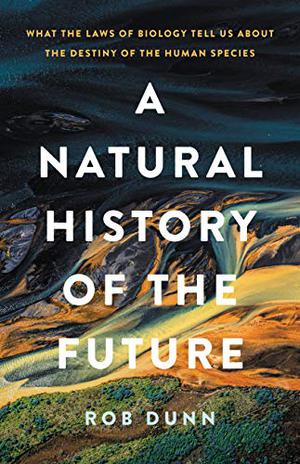
A Natural History of the Future

“The way out of the depression and grief and guilt of the carbon cul-de-sac we have driven down is to contemplate the world without us. To know that the Earth, that life, will continue its evolutionary journey in all its mystery and wonder.” Ben Rawlence in The Treeline

Using what he calls the laws of biological nature, academic ecologist Rob Dunn predicts the future of life on Earth. (1)  His book is based on the premise that by 2080, climate change will require that hundreds of millions of plant and animal species—in fact, most species–will need to migrate to new regions and even new continents to survive.  In the past, conservation biologists were focused on conserving species in particular places.  Now they are focused on getting species from where they are now to where they need to go to survive.

In Dunn’s description of ecology in the future, the native plant movement is irrelevant, even an anachronism.  Instead of trying to restore native plants to places where they haven’t existed for over 100 years, we are creating wildlife corridors to bypass the obstacles humans have created that confine plants and animals to their historical ranges considered “native.” 

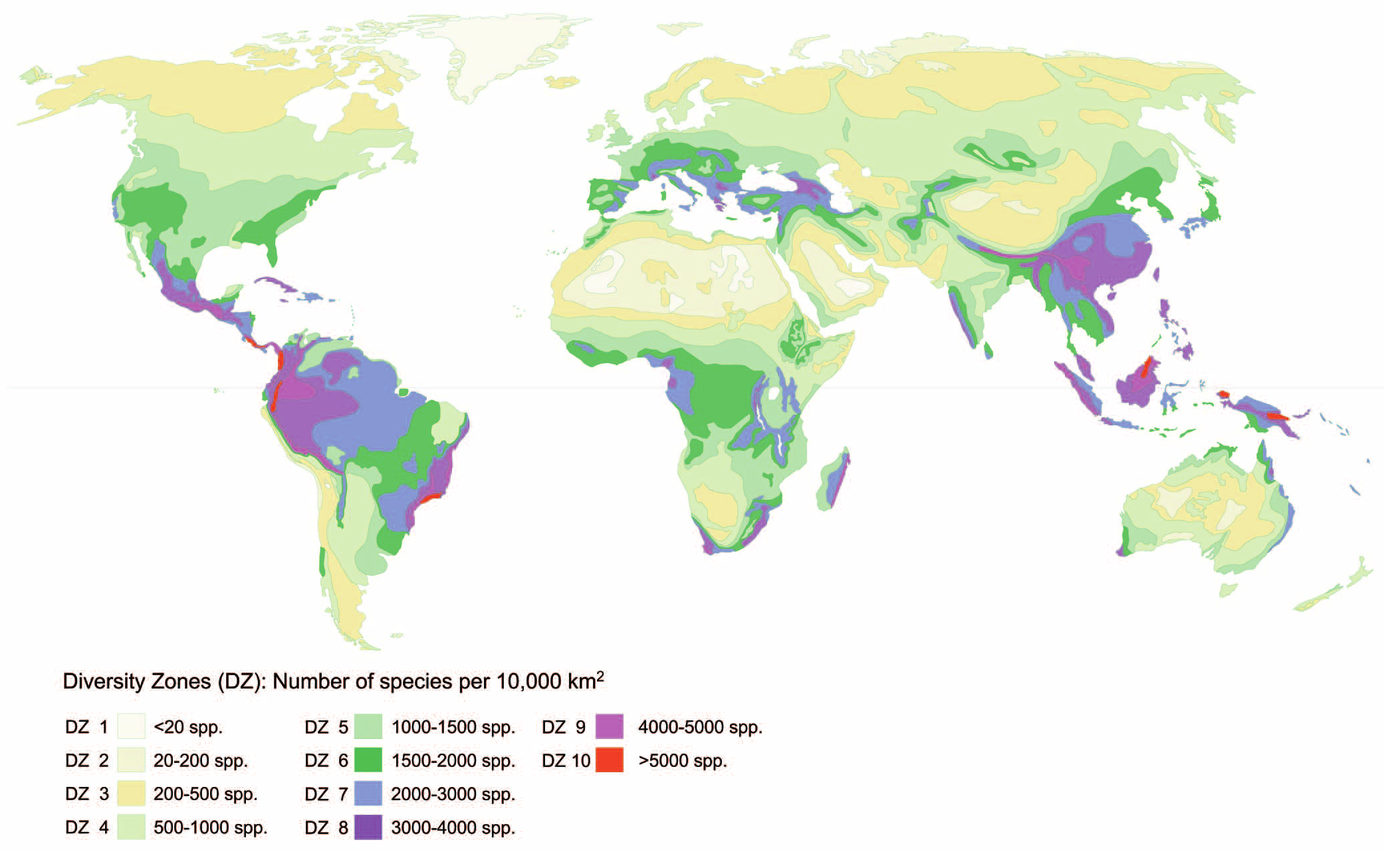
The past is the best predictor of the future. Therefore, Dunn starts his story with a quick review of the history of the science that has framed our understanding of ecology.  Carl Linnaeus was the first to create a widely accepted method of classifying plants and animals in the 18th century.  Ironically, he lived in Sweden, one of the places on the planet with the least plant diversity.  Colombia, near the equator, is twice the size of Sweden but has roughly 20 times the number of plant species because biodiversity is greatest where it is hot and wet.

Global Diversity of Vascular Plants. Source: Wilhelm Barthlott, et. al., “Global Centers of Vascular Plant Diversity,” Nova Acta Leopoldina, 2005


Humans always have paid more attention to the plants that surround us and the animals most like us.  Dunn calls this the law of anthropocentrism.  We are the center of our own human universe.  Consequently, our awareness of the population of insects that vastly outnumber us came late to our attention in the 20th century.  In the 21st century we learned that all other forms of life are outnumbered by the microbial life of bacteria, viruses, and fungi that preceded us by many millions of years.  Our knowledge of that vast realm of life remains limited although it is far more important to the future of the planet than we realize because those forms of life will outlast our species and many others like us.

Tropical regions are expanding into temperate regions

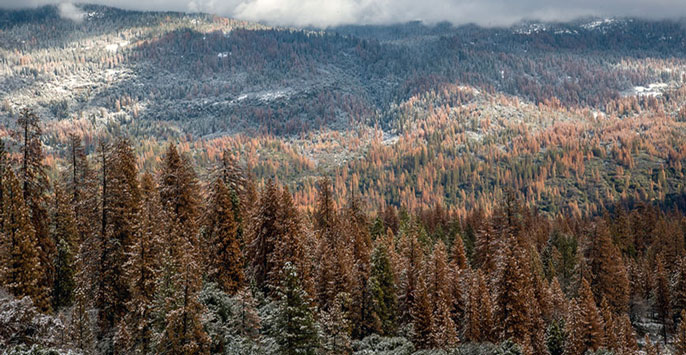
The diversity and abundance of life in hot and wet tropical climates give us important clues about the future of our warming climate.  We tend to think of diversity as a positive feature of ecosystems, but we should not overlook that tropical regions are also the home of many diseases, such as malaria, dengue fever, zika, and yellow fever that are carried by insects that prey on animal hosts, including humans.  In the past, the range of these disease-carrying insects was restricted to tropical regions, but the warming climate will enable them to move into temperate regions as they warm. The warming climate will also enable the movement of insects that are predators of our crops and our forests into temperate regions.  For example, over 180 million native conifers in California have been killed in the past 10 years by a combination of drought and native bark beetles that were killed during cold winters in the past, but no longer are.  Ticks are plaguing wild animals and spreading disease to humans in the Northeast where they did not live in the cooler past. 

Human populations are densest in temperate regions“The ‘ideal’ average annual temperature for ancient human populations, at least from the perspective of density, appears to have been about 55.4⁰F, roughly the mean annual temperature of San Francisco…” (1) This is where humans are most comfortable, free of tropical diseases, and where our food crops grow best.  As tropical regions expand into temperate regions, humans will experience these issues or they will migrate to cooler climates if they can.

Our ability to cope with the warming climate is greatly complicated by the extreme variability of the climate that is an equally important feature of climate change.  It’s not just a question of staying cool.  We must also be prepared for episodic extreme cold and floods alternating with droughts. Animals stressed by warmer temperatures are more easily wiped out by the whiplash of sudden floods or drought.

Diversity results in resiliency

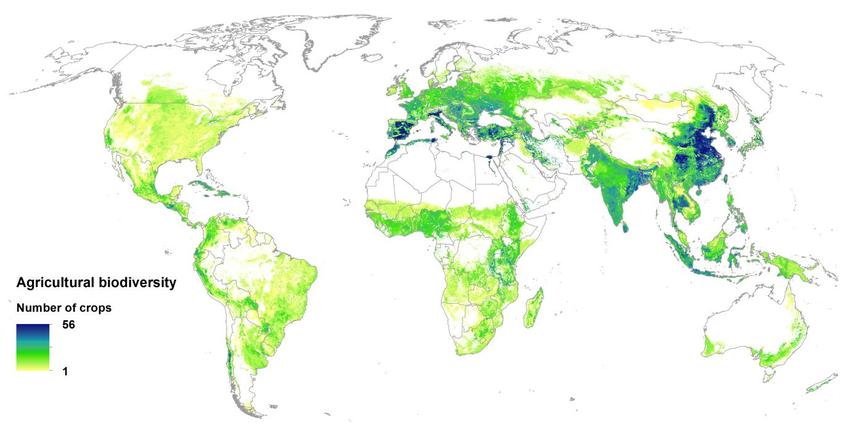
Diversity can be insurance against such variability.  If one type of crop is vulnerable to an insect predator, but another is not, growing both crops simultaneously increases resiliency.  That principle applies equally to crops that are sensitive to heat, cold, drought, or floods. 

Agricultural biodiversity. Source: Number of harvested crops per hectar combining 175 different crops. Source: Monfreda et al. 2008. “Farming the planet: Geographic distribution of crop areas, yields, physiological types, and net primary production in the year 2000”. Global Biogeochemical Cycles, Vol. 22.

Historically, cultures that grew diverse crops were less likely to experience famine than those that cultivated monocultures.  The Irish potato famine of the mid-19th century is a case in point.  The Irish were dependent upon potatoes partly because other crops were exported to Britain by land owners. When the potato crop was killed by blight, more than one million people died in Ireland and another million left Ireland.  The population dropped about 20-25% due to death and emigration.  The diversity of crops in the United States (where corn is the commodity crop) and Brazil (where soy is the commodity crop) is very low, compared to other countries.  This lack of diversity makes us more vulnerable to crop failure and famine, particularly in an unpredictable climate.

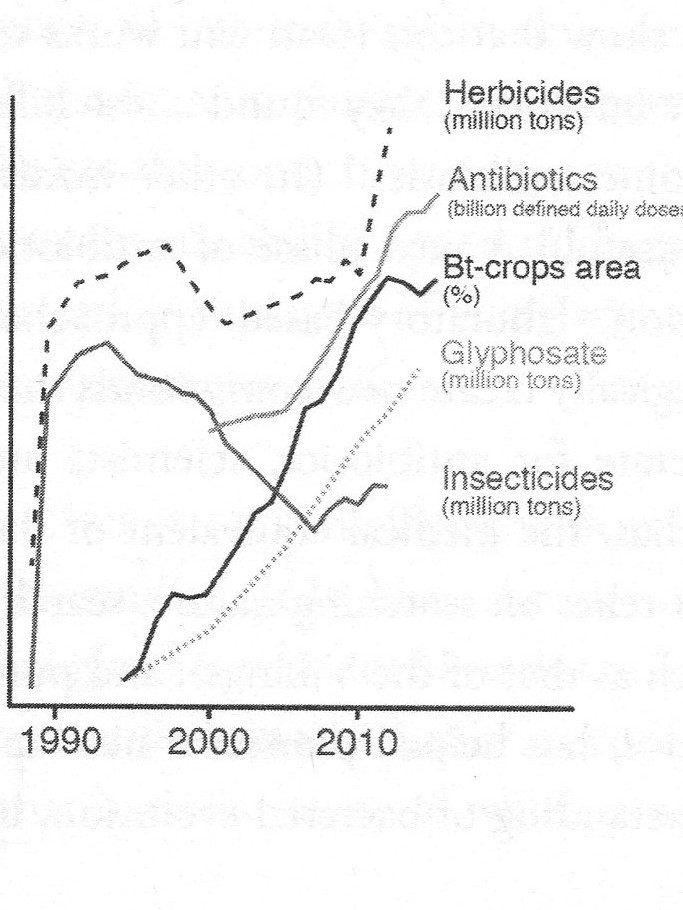
Change in total use of herbicides, antibiotics, transgenic pesticide producing crops, glyphosate, and insecticides globally since 1990. Source: A Natural History of the Future

Instead of increasing crop diversity, we have elected to conduct chemical warfare on the predators of our crops by using biocides, such as pesticides for agricultural weeds and insects and antibiotics for domesticated animals.  The scale of our chemical warfare has increased in response to growing threats to our food supply.  This is a losing strategy because as we increase the use of biocides we accelerate evolution that creates resistance to our biocides. We are breeding superweeds, insects, and bacteria that cannot be killed by our chemicals.  This strategy is ultimately a dead end.

Evolution determines winners and losers

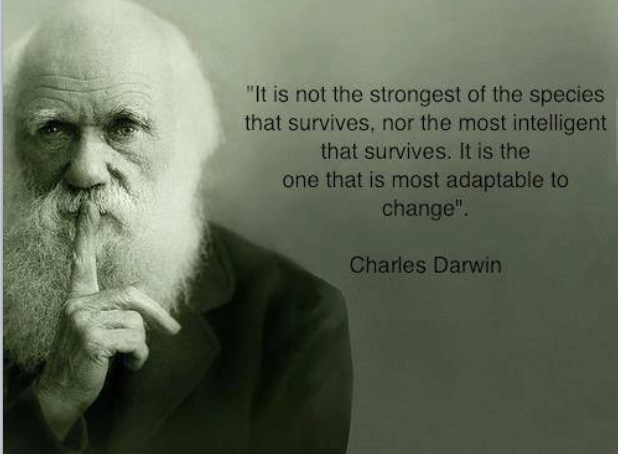
Inevitably, evolution will separate the survivors of climate change from its victims. Dunn reminds us that “The average longevity of animal species appears to be around two million years…” for extinct taxonomic groups that have been studied.  In the short run, Dunn bets on the animals that are most adaptable, just as Darwin did 160 years ago.  The animals most capable of inventing new strategies to cope with change and unpredictability will be more capable of surviving.  In the bird world, that’s corvids (crows, ravens, jays, etc.) and parrots.  In the animal world that’s humans and coyotes.  We aren’t helping adaptable animals survive because we are killing abundant animals based on a belief it will benefit rare animals.  Even in our urban setting, the East Bay Regional Park District contracts Federal Wildlife Services to kill animals it considers “over-abundant,” including gulls, coyotes, free-roaming cats, non-native foxes, and other urban wildlife throughout the Park District.  We are betting on evolutionary losers.


If and when humans create the conditions that cause our extinction, many of our predators are likely to disappear with us.  Bed bugs and thousands of other human parasites are unlikely to survive without us.  Many domestic animals will go extinct too, including our dogs.  On the bright side, Dunn predicts that cats and goats are capable of surviving without us.             

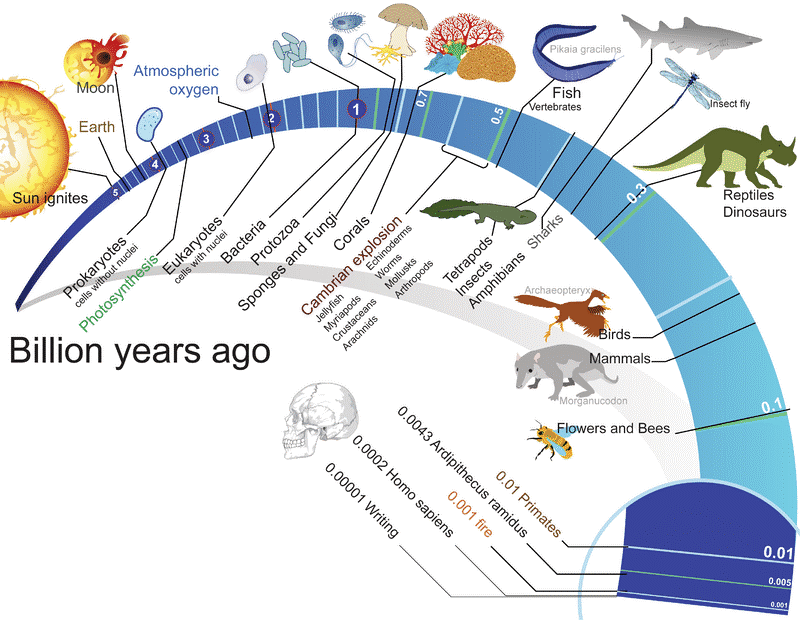
Timeline of the evolution of life. Source: CK-12 Foundation

However, in the long run Dunn bets on microbial life to outlast humans and the plants and animals with which we have shared Earth.  Humans are late to the game, having evolved from earlier hominoids only 300,000 years ago, or so.  The plants and animals that would be recognizable to us preceded us by some 500 million years, or so.  But microbial life that is largely invisible to us goes back much further in time and will undoubtedly outlast us.  Dunn says microbial life will give a big, metaphorical sigh of relief to see us gone and our environmental pollutants with us.  Then microbial life will begin again the long process of rebuilding more complex life with their genetic building blocks and the tools of evolution. 

Some may consider it a sad story.  I consider it a hopeful story, because it tells me that no matter what we do to our planet, we cannot kill it.  For the moment, it seems clear that even if we are not capable of saving ourselves at least we can’t kill all life on Earth.  New life will evolve, but its features are unfathomable because evolution moves only forward, not back and it does not necessarily repeat itself. 


  1. A Natural History of the Future, Rob Dunn, Basic Books, 2021

What does this mean: “Nature-based solutions to achieve California’s climate change and biodiversity goals”?

In October 2020, Governor Newsom signed Executive Order N-82-20 “enlisting California’s vast network of natural and working lands – forests, rangelands, farms, wetlands, coast, deserts and urban greenspaces – in the fight against climate change. A core pillar of Governor Newsom’s climate agenda, these novel approaches will help clean the air and water for communities throughout the state and support California’s unique biodiversity.”

The California Natural Resources Agency has invited the public to tell them what you think that means.  They are holding a series of virtual on-line workshops (register here) and they are inviting the public to complete a survey (available here) by the deadline of May 14, 2021.  Recordings of workshops that have already taken place are available HERE.   Email address for feedback and questions is californianature@resources.ca.gov.

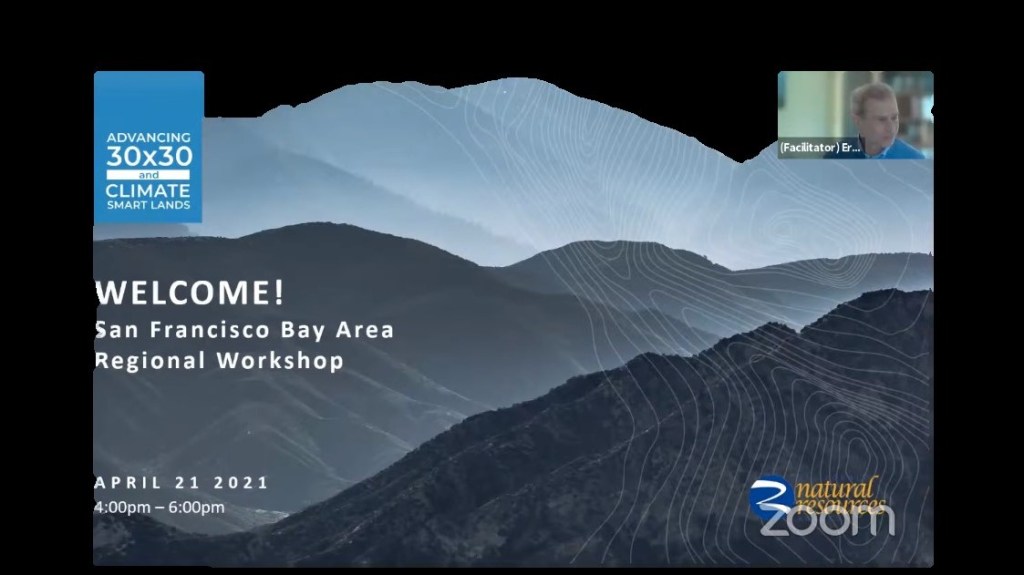
Click on picture to see San Francisco Bay Area regional workshop

I attended one of the workshops and I’ve read the material available on their website.  This is what little I can tell you about the project.  There seem to be three elements to this initiative:

  • The Natural and Working Lands Climate Smart Strategy will “expand climate smart land management across California to achieving carbon neutrality and reduce climate risks to communities and ecosystems and build climate resilience across California.”
  • The 30X30 initiative establishes a state goal of conserving at least 30 percent of California’s land and coastal waters by 2030, while “safeguarding our State’s economic sustainability and food security, protecting and restoring biodiversity.” Conservation measures will focus on a “broad range of landscapes, including natural areas and working lands, in partnership with land managers and natural resource user groups while building climate resilience and reducing risk from extreme climate events.”  Projects will also “expand equitable outdoor access and recreation for all Californians.”  Approximately 22% of land in California is presently protected, but only 16% of our coastal waters. 
  • “The California Biodiversity Collaborative will bring together groups and leaders from across our state to take bold action to maintain California’s extraordinary natural richness. This Collaborative was a directive set forth in Governor Newsom’s 30×30 Executive Order and is the next generation of the State’s Biodiversity Initiative.”

I have no idea what these vague commitments mean when they are translated into specific land acquisitions and funded projects, but I know that non-governmental organizations see this as an opportunity to obtain funding for what they want. 

Only 10% of the audience for the San Francisco Bay Region workshop was the general public. Over 50% of the 280 people at the workshop (by far the largest constituency at the workshop) I attended were employees of non-governmental organizations.  The California Invasive Plant Council (Cal-IPC) asked their members to attend the workshops and participate in them:  “This is a critical opportunity to make sure the need for invasive plant management is heard, loud and clear. We encourage you to attend to learn more about 30×30 and share your ideas.”  These are Cal-IPC’s suggestions for participants:  “Several points to consider making: (1) the definition of “protected” — and the metrics used to measure 30×30 success — need to include adequate funding for ongoing stewardship; (2) funding for the Weed Management Area (WMA) program is critical for county collaborations staying on top of high priority invasive plants across jurisdictional boundaries; (3) wildfire fuels reduction should follow best practices, including control of invasive plants, so that habitat is enhanced, not damaged.” California Native Plant Society is also asking its membership to participate in the 30 X 30 public outreach effort in support of CNPS objectives.

If you have your own priorities for how your tax dollars are used, you may want to participate in this public process as well because the projects will have an impact on land management practices throughout the State of California.  Please consider attending a workshop and completing the long, complex, and vague on-line survey by May 14, 2021.  I have no idea if the California Natural Resources Agency will take the public’s input into consideration, but I know this:  If you don’t participate, you will take whatever you get. 

What I WANT it to mean

This initiative is going to be a major public investment and non-governmental non-profit organizations see it as an opportunity to fund their projects.  The disparate goals of this initiative are often in conflict.  If climate change solutions and related wildfire hazard reduction goals conflict with biodiversity goals, addressing climate change hazards must be the top priority because all life is threatened by the consequences of climate change.  The public must understand that when the climate changes, the vegetation changes.  The ranges of native plants and animals have changed and will continue to change in response to climate change.  Native vegetation is not inherently less flammable than non-native vegetation.

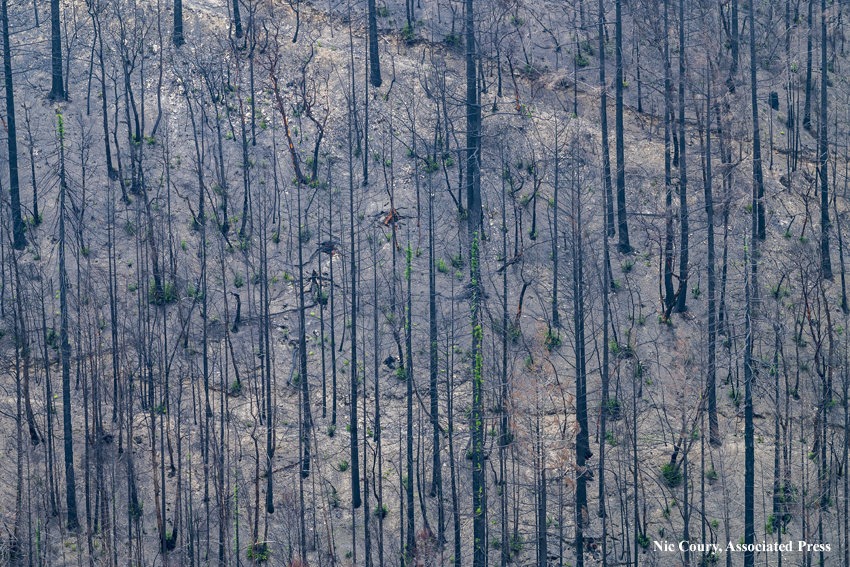
On August 18, 2020, the CZU Lightning Complex Fire swept through Big Basin Redwoods State Park, burning over 97% of the land, forested in native redwood trees. (AP Photo/NicCoury published by CA State Parks)

The native plant movement is a form of climate change denial.  We cannot replicate the landscape of 250 years ago, as native plant advocates wish, because it is not adapted to the current and anticipated climate.  Biodiversity is appropriately defined as all species of plants and animals, regardless of their origins.  Forests are major carbon sinks, whether they are native or considered non-native by people with a short-term perspective of nature and evolution.

Over 160 million native conifers have died in California in the past 8 years. They were killed by high temperatures, drought, and native bark beetles. All of these factors are consequences of climate change.

The survey for this project is not user friendly.  Within its constraints, here is a sample of the specific points I was able to make:  “Do not fund projects that use pesticides, including herbicides.  Do not replace established vegetation that does not require irrigation with vegetation that will require irrigation to become established.  Do not fund projects that will require recreational access restrictions. Stop eradicating non-native spartina marsh grass with herbicides because it protects wetlands year around from storm surges.  Where afforestation is possible, plant only trees that are adapted to the current and anticipated climate. Fund projects that protect residential communities from coastal flooding and salt-water incursion into ground water. Fuels management projects must assume that native and non-native vegetation is equally flammable because flammability is unrelated to the origin of plants.  If climate solutions conflict with biodiversity goals, climate solutions should be the top priority because all life is threatened by climate change.  If fuels management goals conflict with biodiversity goals, fire safety should be the top priority.”

Subirdia: Birds adapt to the Anthropocene

christmas-holly-4This article is our Christmas present to our readers.  We celebrate the holidays with good news about the birds living in cities all over the world.

Subirdia was written by John Marzluff, an academic ornithologist at University of Washington. (1)  He reports many years of his research and that of his graduate students about the birds that live in urban and suburban Seattle as well as surrounding forest reserves.  He also reports on countless studies of bird populations in similar settings all over the world.  All of those studies reach remarkably similar conclusions.

It took me a long time to read this book because its introduction was off-putting.  Virtually every plant and animal was preceded by the qualifier of “native” or “non-native.”  The implication of the introduction was that the most important feature of every plant and animal is whether or not it is native.  As our readers know, we consider the nativity of plant and animal species largely irrelevant.  All plants and animals are at home in our ideal nature.

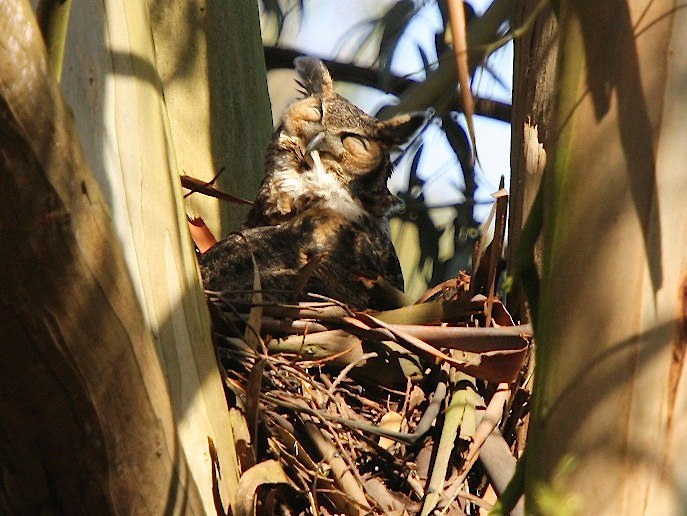
Owl nesting in eucalyptus, courtesy urbanwildness.com

When I finally got around to reading Subirdia I was pleasantly surprised.  Although the author has a preference for native plants and animals, in fact, his research and that of others does not justify his obsession.  Where birds are actually found in the greatest numbers is where the habitat is most diverse, not necessarily exclusively native.

Suburbia is very birdy

The conventional wisdom is that cities are inhospitable places for birds and other wildlife.  After all, haven’t we paved over much of their habitat, interrupted their movements by fragmenting their habitat, and drained or covered water resources? In fact, bird populations in urban areas all over the world are both plentiful and diverse.

After years of counting numerous bird species in his hometown of Seattle, the author of Subirdia wondered if Seattle might be unique because it is heavily forested.  After conducting similar surveys in 10 cities around the world, Marzluff is convinced that birds are successfully adapting to rapid urbanization of human society.  The urban centers of cities in North and Central America, New Zealand and Europe support an average of 23 bird species.  He found the least number of bird species (11) in Auckland, New Zealand and the greatest number (31) in St. Andrews, Scotland.

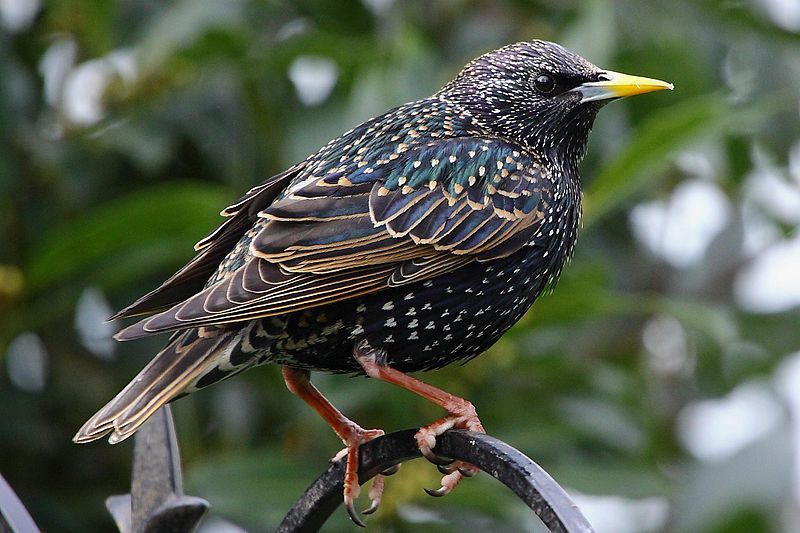
Starling in breeding plumage. Creative Commons - Share Alike
Starling in breeding plumage. Creative Commons – Share Alike

Another popular myth about the loss of bird diversity in the Anthropocene is that the globalization of human civilization produces “homogenized” nature.  That is, many people believe that bird populations may not be in decline, but there are a few hardy species that dominate everywhere.  Again, Marzluff’s studies do not corroborate that belief.  Five bird species are found in cities all over the world (house sparrows, starlings, Canadian geese, mallard ducks, and rock pigeons).  However, these ubiquitous species are not the predominant bird species he found in cities.  Of the 151 different bird species he found in the 10 cities he visited, 75% of them were unique to each of the cities.   “Homogenization is barely perceptible.” (1)

Comparing bird populations in cities with nature reserves

Marzluff also compared bird populations in cities with undeveloped nature preserves.  Once again, cities still look like good homes for birds.  He finds twice as many bird species in Ketchikan, Alaska as in the nearby wildlands along the Naha River, “a remote wilderness fifty miles away…that required powerboat, kayak, and hiking to attain.” (1)

He also visited Yellowstone National Park, a 2.2 million acre protected area within an undeveloped ecosystem of nearly 20 million acres, where he counted 26 bird species in four days.  From there, he flew to New York City where he counted 31 bird species in Central Park in only three days.  Historical records of bird surveys in Central Park and Yellowstone National Park indicate that about 200 bird species have been found in both parks since the late 19th century.  “From a bird’s perspective, a large park created by human hands or by nature is not all that different.”  (1)

Accommodating birds in cities

Marzluff’s concluding chapters advise city dwellers how to encourage and support birds.  His “ten commandments” for accommodating birds make no mention of planting native plants or eradicating non-native plants:

  • “Do not covet your neighbor’s lawn.”
  • “Keep your cat indoors.”*
  • “Make your windows more visible to birds that fly near them.”
  • “Do not light the night sky.”
  • “Provide food and nest boxes.”
  • “Do not kill native predators.”
  • “Foster a diversity of habitats and natural variability within landscapes.”
  • “Create safe passage across roads and highways.”
  • “Ensure that there are functional connections between land and water.”
  • Enjoy and bond with nature where you live, work, and play!”

Marzluff expresses a strong preference for native plants throughout his book, but his research in Seattle is inconsistent with that preference:  “The forests of Seattle and its suburbs now embrace 141 species of trees, including 30 native species and ornamentals from North and South America, Europe, Asia, and Africa.  Some are problematic invaders, but in total they provide a diverse menu of foods and nesting and roosting sites for birds.”  (1)

Why a preference for natives?

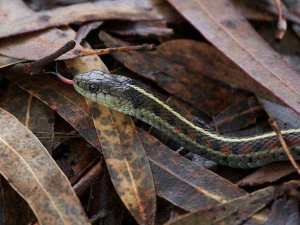
Garter snake in eucalyptus leaf litter. Courtesy Urban Wildness

Another academic scientist in Washington State, Linda Chalker-Scott, directly addresses the vexing question of why public policies which mandate the use of native plants have proliferated despite the lack of evidence that they are superior in any way.  She focuses on this question:  “Do native and nonnative woody species differ in how they affect species diversity?”  Her literature search found 120 studies from 30 countries that quantified the biodiversity of birds, insects, mammals, reptiles, and other plants in woody plants and trees in urban landscapes.

The analysis of these studies reveals that “the science does not support the supposition that native plantings are required for biodiversity…it is clear that an automatic preference for native trees when planning in urban areas is not a science-based policy.” (2) The assumption that native plants are superior to non-native plants is based on these misconceptions:

  • The definitions of native and alien species are value judgments, not science-based concepts.
  • Native plants are often poorly suited to environmental conditions in urban areas, such as compacted soil and changes in the climate. Conversely, introduced plants are often well suited to these urban conditions.
  • Many introduced plants provide valuable ecological benefits. For example, they often provide food, pollen, and nectar resources during winter months when native plants are dormant.
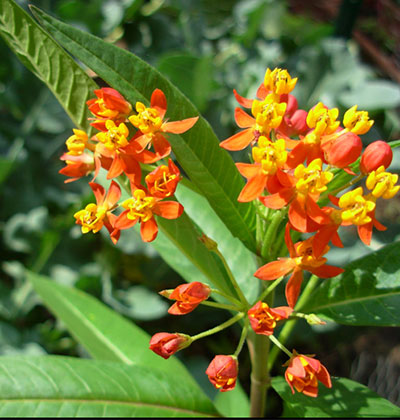
  • Tropical milkweed is not native to California. (Asclepias curassavica) Creative Commons
    Tropical milkweed is not native to California. (Asclepias curassavica) Creative Commons

    Doug Tallamy is the academic scientist most closely associated with the native plant ideology. His claim that insects require native plants is based on his mistaken assignment of nativity to an entire genus, when only a few species within that genus are actually native.  For example, there are over 35 species of milkweed in the genus Asclepias, but only two species are native to California.  Most members of the milkweed family are useful to monarch butterflies.  It is therefore not accurate to claim that monarchs require native plants.  They have lived all over the world for over 200 years in some places where there are no native species of milkweed.

Chalker-Scott’s meta-analysis of 120 studies concurs with Mr. Marzluff:  “The published research overwhelmingly identifies diversity, structure, and function as the most important vegetation characteristics for enhancing community biodiversity…In fact, sometimes landscapes require the inclusion of exotic trees and control of natives to maintain diversity.” (2)

Doing more harm than good

Our readers know that we do not begrudge the preference of native plant advocates for native plants.  We encourage them to plant whatever they want.  We only ask that they stop destroying the plants they don’t like.  That request is based on our belief that they are doing far more harm to our public lands than any perceived benefit of native plants.  Much of that harm is caused by the widespread use of herbicides to destroy non-native vegetation.  These herbicides are known to damage the soil and they migrate in the soil, damaging neighboring plants that are not targeted.  These issues are surely a factor in the conspicuous lack of success of their “restorations.”  There is also mounting evidence of the toxicity of herbicides to bees, birds, and other animals including humans.

But there is another, equally important reason why we object to the futile attempts to eradicate non-native plants.  They are providing valuable habitat for wildlife.  Even when they are replaced by native plants after being destroyed, the animals that depended upon them are not necessarily restored to the landscape.  In fact, few projects plant natives after the eradication of non-natives.

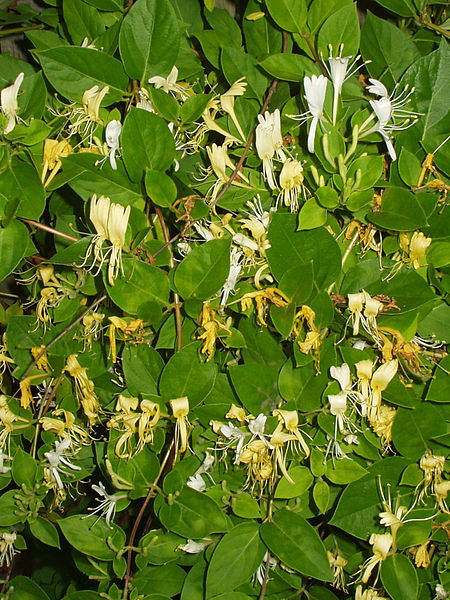
Japanese honeysuckle. Attribution William Rafti

A recently published study (3) of the removal of Amur honeysuckle (Lonicera maackii) is an example of the loss of valuable habitat.  The hypothesis of this study was that “invasion of urban habitats by exotic plants was the underlying mechanism driving changes in bird-plant networks.”  The study tested this hypothesis by comparing forest plots dominated by honeysuckle with those in which honeysuckle had been removed and the surrounding forest habitat replicated.  They measured nesting birds, nest predators, and nest survival.

They found that the lowest overall nest survival rates were found in the plots in which honeysuckle had been removed.  In other words, “…removal of invasive honeysuckle from urban forests did not restore network structure to that of rural landscapes.”  The authors concede, “This finding was not consistent with our original hypothesis that invasion of forests by the exotic Amur honeysuckle was responsible for the urban-associated changes in bird-plant networks.”  They conclude, “The degree to which native communities can be restored following removal of exotic plants remains unclear.” 

Actually, we think it is quite clear that eradicating non-native plants does not benefit man or beast. We marvel that the fantasy persists that there is some theoretical benefit to killing harmless plants, despite the consistent lack of evidence of any benefit and the considerable evidence of the harm of such attempts. 


*Like most ornithologists, Marzluff comes down hard on cats as killers of birds in his book.  However, he cites just one study about predation of fledglings.  The study used radio transmitters to determine the fate of 122 newly fledged birds over a period of two years.

The results do not justify the demonization of cats:  “Only 20 percent of radio-tagged birds died during our study.  Birds such as Cooper’s hawks and mammals such as Townsends’ chipmunks, ermine, and Douglas squirrels were the most likely predators.  The most notorious of all bird predators, the out-of-the-house cat, was implicated in only one death, though we could never be entirely sure which mammal or which bird had killed the fledging.”  (1) Marzluff credits a neighborhood coyote for controlling the cat population.  Frankly, that doesn’t make sense.  Chipmunks and squirrels are just as likely to be prey for the coyotes.

We have reported on similar studies which reach the same conclusions.  A meta-analysis of 8 studies of nest predators of song birds in North America used video cameras to identify the predators of 242 depredation events.  Only one of those nest predators was a cat.

We have no objection to the general advice to keep your cat indoors. (We have never had a cat and don’t plan to.)  However, we think that estimates of birds killed by cats are greatly exaggerated.  Humans seem to have an unfortunate desire to look for scapegoats and cats seem to fit the bill for bird lovers.

  1. John M. Marzluff, Welcome to Subirdia, Yale University Press, 2014
  2. Linda Chalker-Scott, “Nonnative, Noninvasive Woody Species Can Enhance Urban Landscape Biodiversity,” Arboriculture & Urban Forestry, 2015, 41(4): 173-186
  3. Amanda D. Rodewald, et. al., “Does removal of invasives restore ecological networks? An experimental approach,” Biological Invasions, March 2015

Global increases in biodiversity resulting from new species

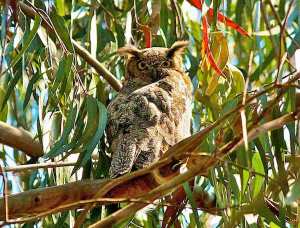
Great horned owl in eucalyptus.  Courtesy urbanwildness.org
Great horned owl in eucalyptus. Courtesy urbanwildness.org

One of the most popular justifications for eradicating non-native plants is the claim that they will out-compete native plants, ultimately causing their extinction.  Innumerable studies have found no evidence to support that claim, but the belief persists amongst those who demand the eradication of non-native plants.

Islands have been considered particularly vulnerable to extinctions because they contain many endemic species (found only on that island) that have evolved in physical isolation from their ancestors from other places and become unique species.  And there were many animal extinctions–particularly of flightless birds–with the arrival of humans who were both their predators and brought predators with them.

However, despite the conventional wisdom that the introduction of new species of plants to islands would result in extinction of their predecessors, there is no evidence that this is indeed the case with introduced plants.  In 2008, Dov Sax and Steven Gaines published a study of species diversity on islands.  This is what they found:

Honeybee on wild mustard.  Courtesy urbanwildness.org
Honeybee on wild mustard. Courtesy urbanwildness.org

Predation by exotic species has caused the extinction of many native animal species on islands, whereas competition from exotic plants has caused few native plant extinctions…By analyzing historical records, we show that the number of naturalized plant species has increased linearly over time on many individual islands. Further, the mean ratio of naturalized to native plant species across islands has changed steadily for nearly two centuries. These patterns suggest that many more species will become naturalized on islands in the future.” (1)

In other words, the introduction of new plants to islands has not resulted in extinctions of the plants that preceded them.  Therefore, the result of plant introductions has been greater plant diversity on islands.

But what about the continents?

Painted lady butterfly on Weigela.  Courtesy urbanwildness.org
Painted lady butterfly on Weigela. Courtesy urbanwildness.org

Recently a new study was published that asked the same question on a global scale:  Has the introduction of new plants and animals resulted in the extinction of their predecessors?  The answer is a resounding NO!  (2)

The study was conducted on a huge scale by an international team of scientists:

  • “6.1 million species occurrence records from 100 individual time scales”
  • “35,613 species were represented…including mammals, birds, fish, invertebrates, and plants”
  • “The geographical distribution of study location is global, and includes marine, freshwater, and terrestrial biomes, extending from the polar regions to the tropics in both hemispheres.”
  • “The collective time interval represented by these data is from 1874 to the present, although most data series are concentrated in the past 40 years.”

Like most scientists who expect to find evidence of decline, this team of researchers was surprised to find little evidence of loss.  Here are some of their key findings:

  • “Surprisingly, we did not detect a consistent negative trend in species richness or in any of the other metrics of α diversity.”
  • “There is no evidence of consistent loss of biodiversity among terrestrial plants.”
  • “Time series for terrestrial plants exhibit, on average, a positive slope for species richness.”
  • “Collectively, these analyses reveal local variation in temporal α diversity but no evidence for a consistent or even an average negative trend.”  (Alpha diversity is species richness at the local level.)
  • “An analysis of slopes by climate regions reveals that temperate time series have a significantly positive trend…”

In other words, new plants result in more plants, particularly where we live, in the temperate zone.  There is no empirical evidence that new plants have resulted in the loss of the plants that were there before they arrived.

So what’s the beef?

Song sparrow in wild radish.  Courtesy urbanwildness.org
Song sparrow in wild radish. Courtesy urbanwildness.org

You might think that this huge new study would put the controversy to rest.  You would be wrong.  For every answer we find, there is a new question from nativists.  The response of native plant advocates to the good news that the plants they prefer will not disappear if new plants are allowed to live in their company is that the plant world is being “homogenized.”  They say that if new plants are permitted to remain, all landscapes will become the same, resulting in the loss of unique landscapes that existed in the past.

They are, of course, mistaken.  Their dire prediction will not come to pass because the biotic and abiotic conditions of every landscape are unique.  The climates are different.  The soils are different.  The atmosphere is different.  The plants and animals that are there when they arrive are different.  If the new plant survives in its new home, it will be capable of adapting to these local conditions and over time it will change, ultimately becoming a unique species.  When the first family of monkeys made the voyage from Africa to South America, they were the same species as those they left behind.  Now they are unique species as a result of genetic drift and genetic divergence.

The process of adaptation and evolution is often more rapid than we expect.  Sometimes such changes have occurred within the lifetimes of scientists who were able to witness these changes.  More often, the changes occur more slowly and are only visible in museum collections or fossil records.

Consider the consequences

Garter snake in eucalyptus leaf litter.  Courtesy urbanwildness.org
Garter snake in euclypatus leaf litter

It is physically impossible to prevent the arrival of new species.  Even when they are not intentionally introduced they find a way to piggy back on the daily activities of humans.  They arrive on our airplanes and cargo ships.  We aren’t going to stop importing or exporting our products all over the world.  Nor are we going to quit traveling.  We must accept the consequences of the way we live and quit blaming plants and animals for their passive participation in our movements.

Aside from the question of whether or not it is physically possible to stop the arrival of new plants and animals, let’s acknowledge that at least in the case of plants no great harm has come from their introductionSince we now enjoy more plants than were here when they arrived, just what is it that we’re griping about?  We seem to be griping about change.  Change will occur whether we like it or not.  We can’t prevent change, so we must quit fighting against something that we are powerless to prevent.  That is the definition of wisdom.

Finally, we must consider the consequences of trying to eradicate non-native plants that are firmly entrenched in our landscapes.  Huge amounts of herbicide are being used in the futile attempt to eradicate them.  Fires that pollute the air and endanger our homes are set for the same purpose.  Trees that are performing valuable ecological functions are being destroyed.  The animals that use these plants and trees for food and cover are being deprived of their homes and their food.  We are doing more harm than good.


  1. Dov Sax and Steven Gaines, “Species invasions and extinctions: The future of native biodiversity on islands,” Proceedings of the National Academy of Sciences, August 12, 2008
  2. Maria Dornelas, et. al., “Assemblage times series reveal biodiversity change but not systematic loss,” Science, April 18, 2014

Climate Change vs. Biodiversity: NOT!!

A new study reported changing public and scientific interest in biodiversity compared to climate change.  Using reports in the media and scientific journals in the United Kingdom and the US, as well as funding of scientific studies by the World Bank and the National Science Foundation, the study reports that the interest in climate change has increased and the interest in biodiversity has decreased in the past 25 years.

This analytical approach seems to suggest that these two environmental issues are mutually exclusive, that the interest in one is at the expense of the other.  We find this both unfortunate and unnecessary because we consider these two issues intimately related.  Climate change is increasingly the biggest threat to biodiversityIf plants and animals are unable to adapt to climate change, they are doomed to extinction. 

Therefore, we believe that science should study these topics together.  In fact, the study on which we are reporting acknowledges the relationship between these topics:  “Dual-focus projects are being funded more often, but… ‘this is relatively small and does not mitigate the plateauing expenditure on biodiversity research.’” (1)

Conservation in a changed climate

As long as conservation and “restoration” projects are devoted to replicating historic landscapes, they are likely to be unsuccessful.  The climate, atmosphere, and soil conditions are no longer suited to a landscape that existed hundreds of years ago, particularly in urban environments.  Therefore, if biodiversity is to be preserved by conservation and restoration, such projects must look forward, not backwards. 

We have been watching the Nature Conservancy closely for signs that it is adapting to climate change.  We look to the Nature Conservancy to lead the way because they employ hundreds of scientists.  In contrast, many mainstream environmental organizations employ more lawyers than scientists.

We have reported that the Conservancy’s Chief Scientist, Peter Kareiva, is at least paying lip service to an approach to conservation that takes into consideration the profound changes in the environment caused by the activities of man.  This acknowledgement of the irreparably altered environment is encapsulated by the proposal to name a new geologic era, the Anthropocene.

Unfortunately, the old guard of conservation biology has engaged in a vigorous campaign to silence the Conservancy’s new approach.  This conflict between the old guard and scientists who have proposed a more realistic approach to conservation was recently reported by the New Yorker. (2)  According to that article, Peter Kareiva has made a commitment to the old guard to quit publishing anything regarding the Anthropocene and its implications for conservation practices.

The Nature Conservancy has responded to the article in the New Yorker in its on-line blog.  It doesn’t explicitly address the question of whether or not a commitment has been made to quit advocating for a more realistic approach to conservation.  However, it implies that the Conservancy plans to continue on a course of scientific innovation and experimentation, which it describes as “practical.”  Here is a specific choice made by the Conservancy that typifies this approach:

Monarch butterflies roosting in eucalyptus tree.

“We know it was worth spending millions of dollars to rid Santa Cruz Island of non-native pigs.  But we are pretty sure it would not be worth spending what could be hundreds of millions of dollars to rid California of non-native Eucalyptus trees (which also happen to harbor wildlife and monarch butterflies.)” (3)

Although the Nature Conservancy’s Chief Scientist may have agreed to “shut up,” we see signs of the Conservancy’s new approach in its latest magazine.  In a brief article entitled “Forests of the Future,” the magazine reports that they are no longer planting the species of trees that existed in the past in one of their properties in Minnesota, because they don’t believe that species is adapted to current or predicted future conditions.  Instead they are actively engaged in reforestation of the land with new species:

Over the past two springs, the team planted 88,000 tree seedlings across 2,000 acres in the northeastern corner of the state.  The seedlings consisted of species that should survive better in a warmer and drier climate—trees, such as red oak, found in higher numbers just south of the area. For a team accustomed to restoring forests to match historical landscapes, helping the North Woods [of Minnesota] adapt to a predicted future climate is a new but necessary idea.  [The Conservancy’s science director in Minnesota] says, ‘All of our modeling is saying the same thing,’ she adds, ‘We needed someone to actually go out and start trying some of this stuff.’” (4)

Looking forward not back

We are very encouraged by the Conservancy’s new approach and we hope that other land managers will be inspired by it.  We are also reminded of a recent visit to a nature reserve near San Luis Obispo managed by the local chapter of the Audubon Society.  We reported about this reserve in a recent article because the land managers had planned to destroy all eucalyptus trees on that property but were forced to scale back their plans in response to a noisy negative reaction from the public.

Dying oak tree, Sweet Springs Nature Reserve

On our recent visit, we learned that this was a wise choice because many of the oak trees that were planted on this reserve by those who wish to “restore” it are quite dead despite the fact that the reserve has an extensive irrigation system.  These land managers looked back and the result of that retrospective thinking is a landscape of dead native trees.

Irrigated native plant garden, Sweet Springs Nature Reserve

Climate change requires land managers to wake up to the realities of what will grow where.  Land managers in the San Francisco Bay Area appear to be blind to that reality.  They repeatedly plant species where they grew hundreds of years ago and we are forced to watch the plants die repeatedly. 


(1)    “Climate change beats biodiversity as a press, scientific, and funding priority,” Science Daily, June 11, 2014

(2)    D.T. Max, “Green is Good,” New Yorker, May 12, 2014

(3) Mark Tercek and Peter Kareiva, “Green is Good:  Science-Based Conservation in the 21st Century,” May 5, 2014

(4)    “Forests of the Future,” Nature Conservancy, June/July 2014

What is “biodiversity?”

We are republishing an article from the San Francisco Forest Alliance with their permission and the permission of the author of the article, Professor Arthur Shapiro, UC Davis. 


 There’s been a lot of talk of ‘biodiversity’ in San Francisco recently. The city’s ‘Recreation and Open Space Element’ (ROSE) mentions it without clearly defining it. The Natural Areas Program claims to preserve it. There’s a new position, the Biodiversity Coordinator (currently Peter Brastow, formerly of Nature in the City) within San Francisco’s Department of the Environment.

One of our readers, puzzled by all the discussion, asked a simple question of UC Davis Professor Arthur Shapiro, who gave a talk at the Commonwealth Club a few days ago. Instead of the two-line answer they expected, he sent this detailed response — which he kindly permitted us to publish.

WHAT IS BIODIVERSITY? BY ARTHUR M.SHAPIRO
A buzzword. Biodiversity means whatever you want it to mean. I hate the word. Here’s why.

The following is from the introductory biology textbook we use at U.C. Davis, Life: The Science of Biology, (10th edition, Sadava et al., p.1229 — yes, I said p. 1229!):

“…the term BIODIVERSITY, a contraction of ‘biological diversity,’ has multiple definitions. We may speak of biodiversity as the degree of genetic variation within a species….Biodiversity can also be defined in terms of species richness in a particular community. At a larger scale, biodiversity also embraces ecosystem diversity–particularly the complex interactions within and between ecosystems….One conspicuous manifestation of biodiversity loss is species extinction…”

Got that?

The glossary at the back of the book defines “biodiversity hot spot” (itself ambiguous, conflating numbers of species and degree of endemism), but NOT biodiversity itself. One can see why.

Where did this verbal monstrosity come from?

Heliconius mimicry.  Creative Commons Generic 2.0
Heliconius mimicry. Creative Commons Generic 2.0

The raw number of species in a defined area or system – what many of us call “species richness“–is a useful number. There are more species of butterflies in Brazil than in California, and more in California than in Alaska. That is true even if we pro-rate species number by area, and it is not trivial to ask why.

But there is more to biodiversity than mere numbers of species.  Ecologists are also interested in how individuals are divided among species, that is, the distribution of commonness and rarity among species. You can have a  “community” consisting of exactly two species.  It could have, say, 50 individuals of each species, or it could have 99 of one and 1 of the other–or any ratio in between. Does this matter? Why? What can those numbers tell us?

QUANTIFYING DIVERSITY – A DIVERSITY INDEX

A century ago a Danish plant ecologist named Christen Raunkiaer observed that there was a statistical regularity to this; he called it the “law of frequency.” In subsequent years it was found to hold for bird censuses and moths collected at lights, as well as for old-field plants. A whole series of mathematical models developed over the years attempted to account for this regularity by means of assumptions about how species interacted–competing for resources, for example.  These exercises were at the core of community ecology for several decades, and were seen as immensely important.

During World War II an applied mathematician named Claude Shannon, working on war-related communications problems at Bell Labs, developed a formula that concisely expressed the information content of a message. Ecologists discovered the Shannon formula in the 1960s and realized it could easily be adapted to give a single number that combined the number of species in a community and their relative abundances.

Thus whole communities could be compared efficiently, a potentially informative and useful tactic in trying to understand how multispecies systems worked. The number generated by the Shannon formula came to be called diversity, and the formula became the first and most widely-used of several diversity indices. I learned it in high school and I still use it in teaching. Diversity had two components, then:

  • Species richness and
  • “Equitability,” (the difference between a 50:50 and a 99:1 community).

And we were off and running. Now everything could be quantified with a diversity index: “foliage height diversity” in a forest canopy, or “aspect diversity” in moth faunas (how many wing shape-pattern themes could be recognized?). The number of uses and abuses of the term multiplied like rabbits. By 1971 things had gotten so bad that a paper was published caustically titled “The nonconcept of species diversity.” It was widely applauded for its candor.  Unfortunately, the author ended up inventing his own new measure of diversity–one he thought was better than the old ones.

MORE LEVELS OF ‘BIODIVERSITY’

But things could get worse. And they did. With the passage of the Endangered Species Act, which opened the door to protection of endangered subspecies (keep in mind that there is no concept of the subspecies; a subspecies is whatever some taxonomist says it is) and even “distinct population segments” (no one knows what that means), genetics got in on the diversity game. Now we would not be content with diversity at the species level; we needed to
get inside species.

In the scramble to define what might be protectable, a search was launched for “evolutionarily significant units.” With modern molecular-genetic tools, we quickly learned that taxonomic subspecies may be genomically nearly identical, while organisms indistinguishable by the naked eye may be wildly different. Defining diversity at the genetic level is still, well, challenging.

One very useful dimension of biodiversity is known as alpha, beta and gamma diversity:

  • Alpha diversity is species richness at the local level.
  • Beta diversity is a measure of how much the biota of different localities within a region differ among themselves–that is, how quickly species composition “turns over” in space [i.e. when you have many different little ecosystems next to each other].
  • Gamma diversity is at a large spatial scale.

The Bay Area has phenomenally high beta diversity in almost everything.

THE BOTTOM LINE

So what is biodiversity? It’s species richness, plus the distribution of abundance and rarity, plus the geography of all that, plus the amount of genetic variation in selected species of interest, plus whatever you please.

Somehow or other concepts of “quality” have gotten mixed in, too. When you clear-cut a redwood forest (which has very low species richness), the early-successional communities that develop on the site, which may be dominated by “invasive weeds,” will have both much higher species numbers and a richer distribution of species abundances than the forest they replaced. But early-successional communities don’t get any respect despite being more diverse and despite the supposition that biodiversity is good. Because they’re made up of the ‘wrong’ species–whatever that means.

Because biodiversity, after all, is only a buzzword.


Dunnigan Test Plot, Augusst 2011.  The result of an eight-year effort to restore native grassland.  Does it look "biodiverse?"  ecoseed.com.
Dunnigan Test Plot, August 2011. The result of an eight-year effort to restore native grassland. Does it look “biodiverse?” ecoseed.com.

Addendum:  We have recently learned that Peter Brastow, San Francisco’s Biodiversity Program Coordinator, has applied for an Urban Greening Planning Grant for the City of San Francisco to fund the creation of a Biodiversity and Ecology Master Plan.  This grant application was submitted to the State of California’s Strategic Growth Council for $250,000.

This Master Plan would “identify land owners at the parcel level” (including your backyard;  see below*) for “consolidating ownership and/or management of wild lands and natural areas into as few departments as possible in order to facilitate coherent and higher quality habitat restoration and management.”  The Natural Areas Program “serves as a model for extending this work beyond Recreation and Park Department lands.”  (Quotes are directly from the grant application.)  In other words, the Biodiversity and Ecology Master Plan will extend the work of the Natural Areas Program to all open space in San Francisco, regardless of the current ownership of the land.

The complete document is available here:  Biodiversity Action Plan – grant application questions.final.  We find this a horrifying prospect.  The Natural Areas Program is extremely controversial because it destroys existing habitat, uses large quantities of toxic herbicides, and restricts access to designated trails.  Applying these policies into all open space in the city is a bad idea

– Million Trees

*The grant application says, “We will review the potential of rear yard open space, green roofs, green walls, landscaping, street trees, mini and pocket parks, and other urban design potential to enhance biodiversity in the urban landscape.”

Scientists critique UCSF’s plans for Mount Sutro and native plant advocates react

Nature is considered one of the top journals in science globally.  So, we were very excited about the article they published in their September 2013 edition about Mount Sutro. (1) The article starts with every bogus claim UCSF makes to justify the destruction of the forest, i.e., that it is flammable, that it is diseased, that it will store more carbon when most of it is destroyed.  We have responded to those claims many times on Million Trees, so we won’t repeat those arguments here.  (We have provided links to our articles about each of these issues, so you can read them if you wish by clicking on each issue.)

Sutro forest before recent tree removals.  Courtesy Save Sutro
Sutro forest before recent tree removals. Courtesy Save Sutro

After faithfully repeating UCSF’s storyline, Nature turns to the opposite side of this debate, starting with the welcome introduction of critics of the Sutro project as “environmentalists and ecologists” for whom “a hardline devotion to preserving native ecosystems is giving way to a more post-modern idea of what constitutes a natural landscape.”  The author of the Nature article interviewed scientists who agree with this new perspective:

  • “’Mount Sutro is part of a larger story,’ says Richard Hobbs, an ecolo­gist at the University of Western Australia in Crawley. ‘What some people see as a weed-filled blot on the landscape, others see as something extremely valuable, worthy of managing in its own right. People are increasingly moving away from the belief that a native ecosystem is always best….There is a lot of tension about how to deal with situations like these right now,’ he says. ‘With so much non-native habitat, the old views — that everything must be natural — no longer apply.’”
  • “In the early 1990s, Patricia Kennedy of Oregon State University in Corvallis helped to develop management guidelines for northern goshawks. She found that the raptors do not strictly need old-growth forests; land used for timber harvesting can work, too. She says that, at the time, accept­ing the idea felt like a move to the ‘dark side’. ‘The whole culture in wildlife biology and conservation circles has been that you can’t approximate Mother Nature,’ she says.  But those ideas are changing today, with altered ecosystems such as Mount Sutro’s providing a case in point.”
  • Joe Mascaro, an ecologist at Stanford University in California [2] who has been publicly critical of UCSF’s management plans, says that Mount Sutro has long since given way to a completely new ecosystem. ‘Restoring it to an original state would be borderline impossible, so why stop the succession that is already in place?’”
  • “Resistance to such a heretical idea runs deep among ecologists, but growing num­bers are embracing altered ecosystems in the name of pragmatism. ‘You can reach more win–win situations if you don’t insist on purity,’ says Katharine Suding, an ecologist at the University of Califor­nia, Berkeley, who specializes in restoring human-affected areas. ‘It doesn’t have to be a natural versus non-natural dichotomy.’”

Same section of Sutro forest after tree and understory removal at the end of August 2013.  Courtesy Save Sutro
Same section of Sutro forest after tree and understory removal at the end of August 2013. Courtesy Save Sutro

The reaction of native plant advocates

As pleased as we were to hear from the international scientific community, we didn’t fully appreciate the significance of the article until we read the reaction of native plant advocates in Jake Sigg’s Nature News:

“On Sep 15, 2013, at 4:13 PM, Peter Brastow wrote (re NYT editorial on Mt Sutro):
‘Yes, and recall that the NYT article linked to an awful piece in Nature. I see this as PhD Academicians liking the sound of their own voice, and certain members of the media who, likewise, don’t actually know anything about on-the-ground land management. To boot, their arguments support continued environmental destruction around the world, whether for palm plantations, bio-fuel production, cattle grazing, suburban development, you name it. Do you think these same people advocate letting the Amazon rainforest be clearcut from end to end?’” 
(Jake Sigg’s Nature News, September 21, 2013)

It seems that native plant advocates disliked the Nature article as much as we liked it. This comment from a prominent native plant advocate in San Francisco is more evidence of the growing gap between restorationists and the scientists of invasion biology who spawned the native plant movement.  We have noted before the inevitable tension between theoretical science and its practical application and in the case of ecological restoration in the Bay Area, it is becoming more and more distant from its scientific underpinnings.

What is San Francisco’s Biodiversity Program?

You might think that the loss of scientific support for the projects in the Bay Area which are attempting to convert non-native to native landscapes would weaken the local native plant movement.  You would be mistaken.  Peter Brastow, the author of this comment, is employed by the City of San Francisco as the Director of Biodiversity in the Department of the Environment.  The creation of this program and the selection of Mr. Brastow as its first director suggest official endorsement of these projects and imply their expansion beyond their present footprint.  This is the mission of San Francisco’s Biodiversity Program according to the Department of Environment’s website:

“The mission of the Biodiversity Program is to conserve the biodiversity, habitats and ecological integrity of San Francisco’s natural environment, toward a comprehensive watershed- and ecosystem-based natural resources management, stewardship and education program.

Our approach is to advance collaboration and coordination for biodiversity policy development and interagency conservation planning and management.

San Francisco’s indigenous biodiversity exists among diverse open lands and habitats in a complex urban geography of parklands, natural areas, urban forests, community gardens and backyards. The scope of the program includes protection of all of the City’s biological diversity and natural lands, and for strategic integration of nature conservation best practices into planning, implementation and education for the built environment.

We hope to raise the bar on integrating considerations for nature and biodiversity into the operations of every City Department as well as into every aspect of city life, including making significant increases in public and City employee awareness.”

Our interpretation of this vague, abstract description is that the goal of San Francisco’s Biodiversity Program is to extend the native plant restorations of the Recreation and Park Department’s Natural Areas Program to all city departments and all city-owned open space, perhaps even to your backyard.

Since we think the Natural Areas Program has been a miserable failure, with respect to successfully converting naturalized non-native landscapes to native plant gardens, we have serious doubts about expanding the program to the entire city.  And since the Natural Areas Program is using a great deal of pesticide, destroying many healthy trees, and plans to destroy thousands more, we are not enthusiastic about subjecting more public land to such damage.

We are equally alarmed by the dismissal of scientists by the Director of Biodiversity, Peter Brastow, as people who like to hear themselves talk.  This suggests that the Director of Biodiversity isn’t listening to the rapidly changing science of invasion biology.  You might wonder what Peter Brastow’s qualifications are to enable him to dismiss academic scientists as a resource for the application of invasion biology to native plant restorations.  You can visit his resume on the internet to satisfy that curiosity.

Pot-calls-kettle-black

For the record, we are not supporters of the “environmental destruction” of which Mr. Brastow accuses the scientists who are quoted in the Nature article.  We do not “advocate letting the Amazon rainforest be clearcut from end to end,” as Mr. Brastow claims.  We are confident that no one else with whom we collaborate does so either.  The only clearcutting we have witnessed first-hand was done in response to the demands of native plant advocates; these projects have already destroyed 18,000 non-native trees in the East Bay hills and are determined to clearcut about 80,000 more.  This looks like a classic case of “pot-calls-kettle-black.”

**************************************

(1)    Danielle Venton, “Forest management plans in a tangle,” Nature, September 2013, Vol. 501

(2)    When Mr. Mascaro was interviewed, he was at the Carnegie Institute of Research in Stanford, California.