Defining “Success” so “Success” can be achieved

I always attend the conferences of the California Invasive Plant Council (Cal-IPC) and the California Native Plant Society because I feel obligated to understand their viewpoint so I can accurately report on the controversies of invasion biology.  Ironically, the more I learn about the native plant movement and the “restoration” industry it spawned, the less sense it makes.  The October 2024 Symposium of the California Invasive Plant Council has provided more evidence that attempts to eradicate well-established non-native landscapes and replace them with native plants are futile.

Tricks of the “restoration” trade

Every Cal-IPC Symposium has wrestled with the question of whether or not it’s possible to convert non-native grassland to native grassland. A study of 37 grassland “restorations” in coastal California addresses that question. (1)  It’s really quite simple.  All you need to do is define success as 25% native plants after “restoration” and limit post-project monitoring to 5 years or less:  “Monitoring is done ≤5 years after project-implementation, if at all, and rarely assesses the effects of management practice on project success.” 

It also helps if public land managers in charge of the projects won’t allow the academic researcher to enter the land to conduct a survey of the results.  43% of the projects that were studied were “statutory,” i.e., they were mandated by laws such as county general plans or legally required mitigation for projects elsewhere that Environmental Impact Reports determined were harmful to the environment.  30% of the managers of the statutory projects would not allow the academic researcher to survey their projects. 

It is also easier to achieve success if the project goal is downgraded mid-project as were many of the statutory projects because they weren’t able to meet the original goal.

Project managers can also reduce their risks of failure by planting a small number of native species that are particularly easy to grow:  “Ninety-two percent of restoration managers preferentially use one or more of the same seven [native] species.”  Seven projects planted only one native species. 

According to the study, the result of planting only a few hardy native plants is “biotic homogenization.”  Call it what you will, but this risk-averse strategy is inconsistent with claims that the goal of native plant restorations is to increase biodiversity. 

The study did not ask project managers about the methods they used to eradicate non-native plants or plant native plants.  The study tells us nothing about the methods that were used or whether or not some methods were more effective than others.  Since results of the projects were all very similar, should we assume that the methods that were used didn’t matter? 

The presentation of this study concluded with this happy-face slide. (see below) It looks like a cartoonish marketing ad to me:

Harmless aquatic plants being pointlessly eradicated

A USDA research ecologist stationed at UC Davis made a presentation about the most effective way to kill an aquatic plant with herbicides, but that wasn’t the message I came away with. 

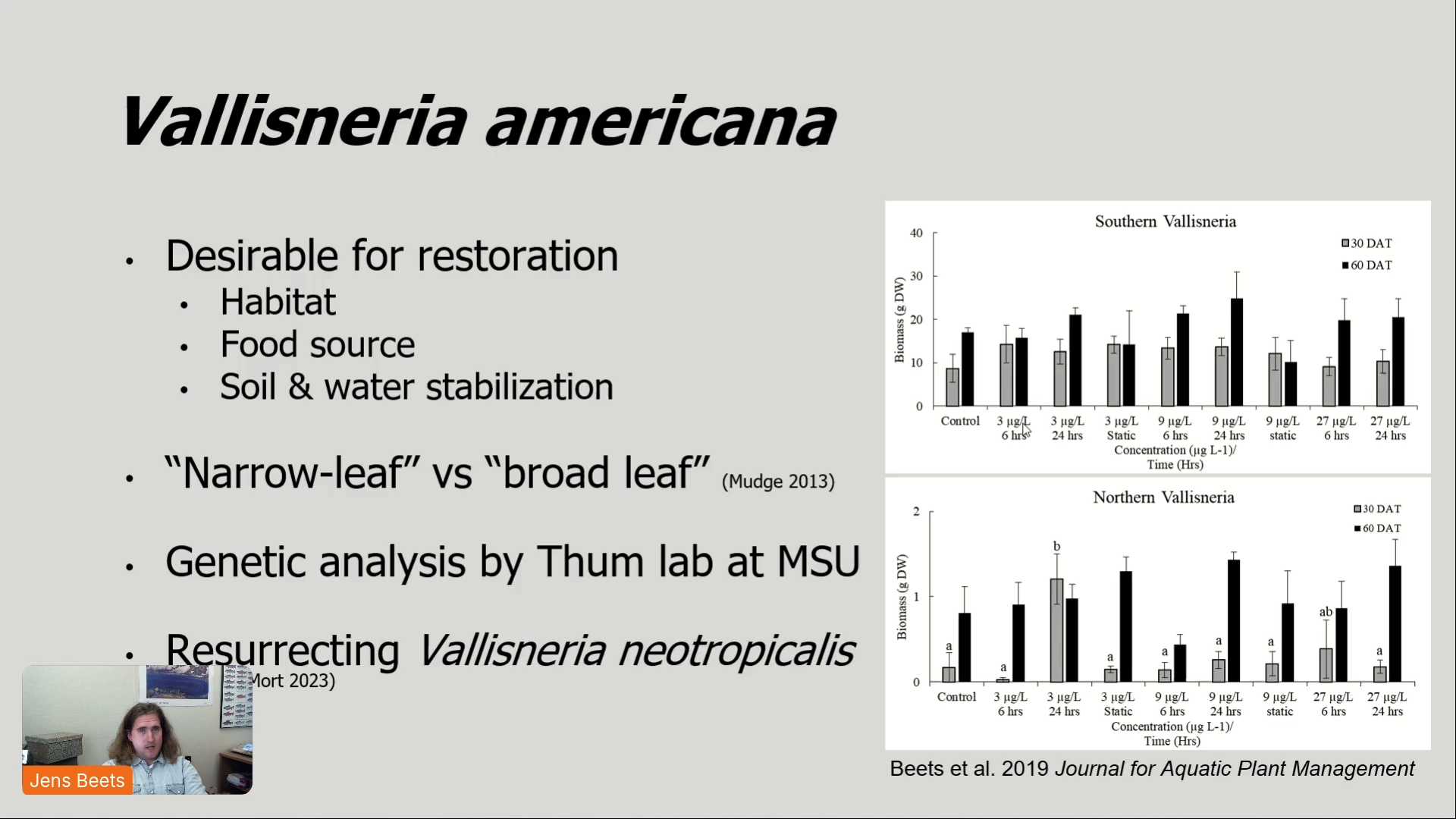
Jens Beets told us about a species of aquatic plant that is native to the East and Gulf coasts of the US, but is considered a “noxious weed” in California, solely because it isn’t native.  He said the plant is considered very useful where it is native.  (see below)

Where Vallisneria americana is native, it is considered a valuable plant for habitat restoration because it is habitat for vertebrates and invertebrates and it stabilizes soil and water levels.  The canvasback duck is named for this plant species because it is preferred habitat for the native duck that is found in California during the winter.

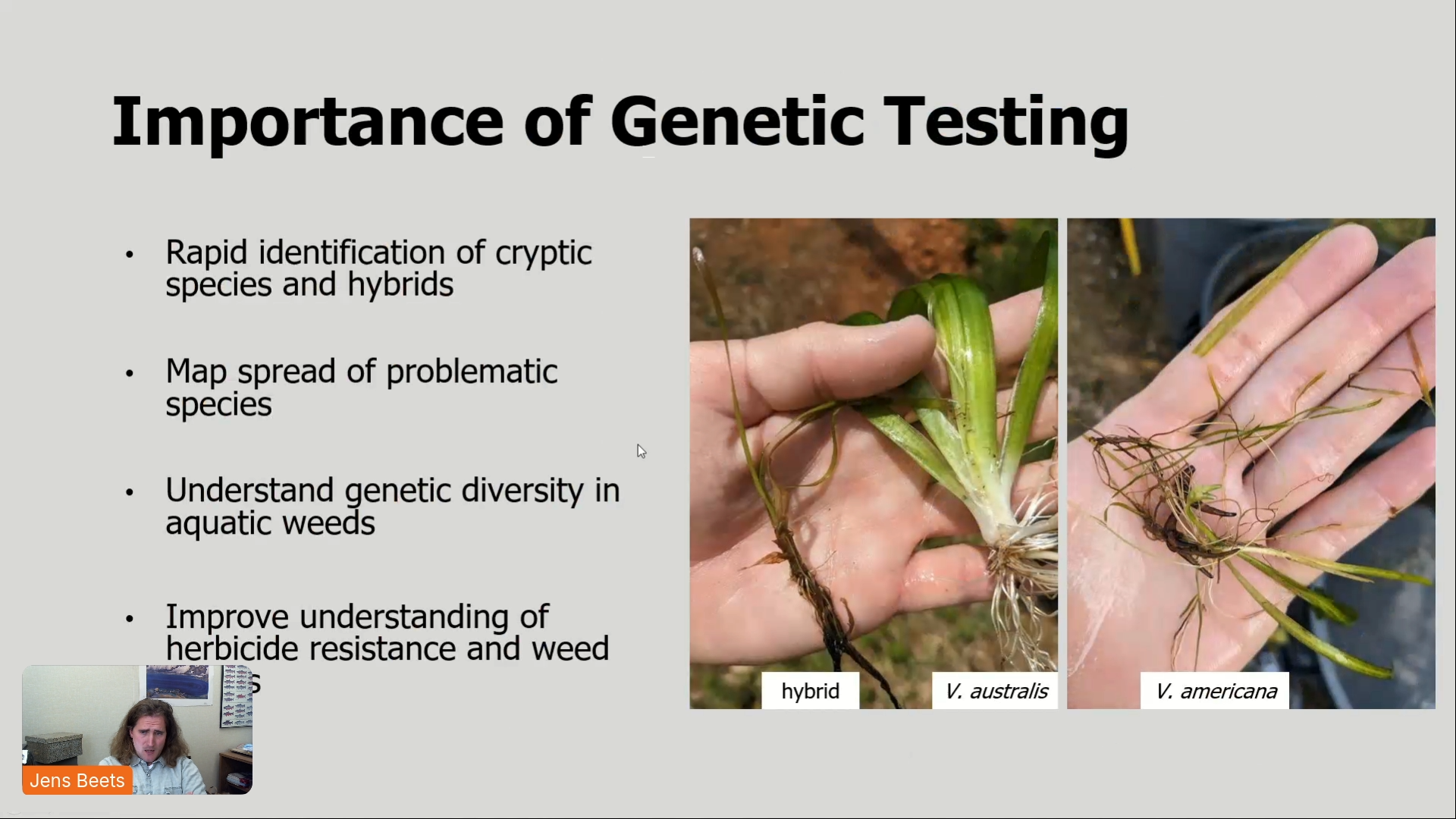
 Vallisneria americana looks very similar to other species in the genus considered native in California.  For that reason, native species of Vallisneria have been mistakenly killed with herbicide because applicators didn’t accurately identify the target plant as native.  Jens Beets recommended that genetic tests be performed before plants in this genus are sprayed with herbicide.

This story probably sounds familiar to regular readers of Conservation Sense and Nonsense.  The story is identical to the pointless and futile effort to eradicate non-native species of Spartina marsh grass in the San Francisco Bay.  The species being eradicated in California is native to the East and Gulf coasts, where it protects the coasts from extreme storm surges and provides valuable habitat for a genus of bird that is plentiful on the East Coast, but endangered in California.  The 20-year effort to eradicate non-native Spartina has killed over 50% of the endangered bird species in the San Francisco Bay. 

Throwing good money after bad

Because the hybrid is indistinguishable from the native species of Spartina on the West Coast, 7,200 genetic tests have been performed in the past 12 years before hybrid Spartina was sprayed with herbicide. Taxpayers have spent $50 million to eradicate Spartina over 20 years.  Recently, California state grants of $6.7 million were awarded to continue the project for another 10 years.  A portion of these grants is given to the California Invasive Plant Council to administer the grants.

Plants are sprayed with herbicide because they aren’t native, not because they are harmful.  Even if the target species is needed by birds and other animals, it is still killed and animals along with it.  The target species looks the same as the native species and only genetic testing can identify it is as a non-native.  The non-native is the functional equivalent of the native.  It is only genetically different because natural selection has adapted it to the conditions of a specific location. 

Pesticide regulation in the US is a hit or miss proposition

The final session of the symposium was a carefully orchestrated apologia for herbicides, a defensive tirade that suggested Cal-IPC believes its primary tool is in jeopardy.  Two presentations were made by employees of regulatory agencies.  Their assignment was to reassure the public that pesticides are safe because they are regulated by government agencies. 

The fact that many countries have banned pesticides that are routinely used in the US does not speak well for our regulatory system.  America’s pesticide regulators rarely deny market access to new pesticides.  A recent change in policies of California’s Department of Pesticide Regulation made a commitment to the continued use of pesticides for another 25 years. 

In 1996, Congress ordered the U.S. Environmental Protection Agency (EPA) to test all pesticides, used on food, for endocrine disruption by 1999. The EPA still doesn’t do this today. Twenty-five years later, the EPA has not implemented the program, nor has it begun testing on 96% of registered pesticides.  In 2022, an organization that represents farm workers sued the EPA to conduct the legally mandated evaluation of chemicals for endocrine disruption.   The lawsuit has forced the EPA to make a commitment to conduct these evaluations of chemicals for hormone disruption.   

The Cal-IPC presenters got some badly needed push back from attendees.   One attendee informed the audience that all the testing of herbicides is bought by the manufacturers, not the regulators who don’t do any testing.  Another attendee pointed out that herbicides have not been evaluated for the damage they are doing to the soil, damage that makes it difficult to grow native plants in the dead soil.  The “pesticide regulator” agreed with those observations.

Fire safety or native plant restoration?

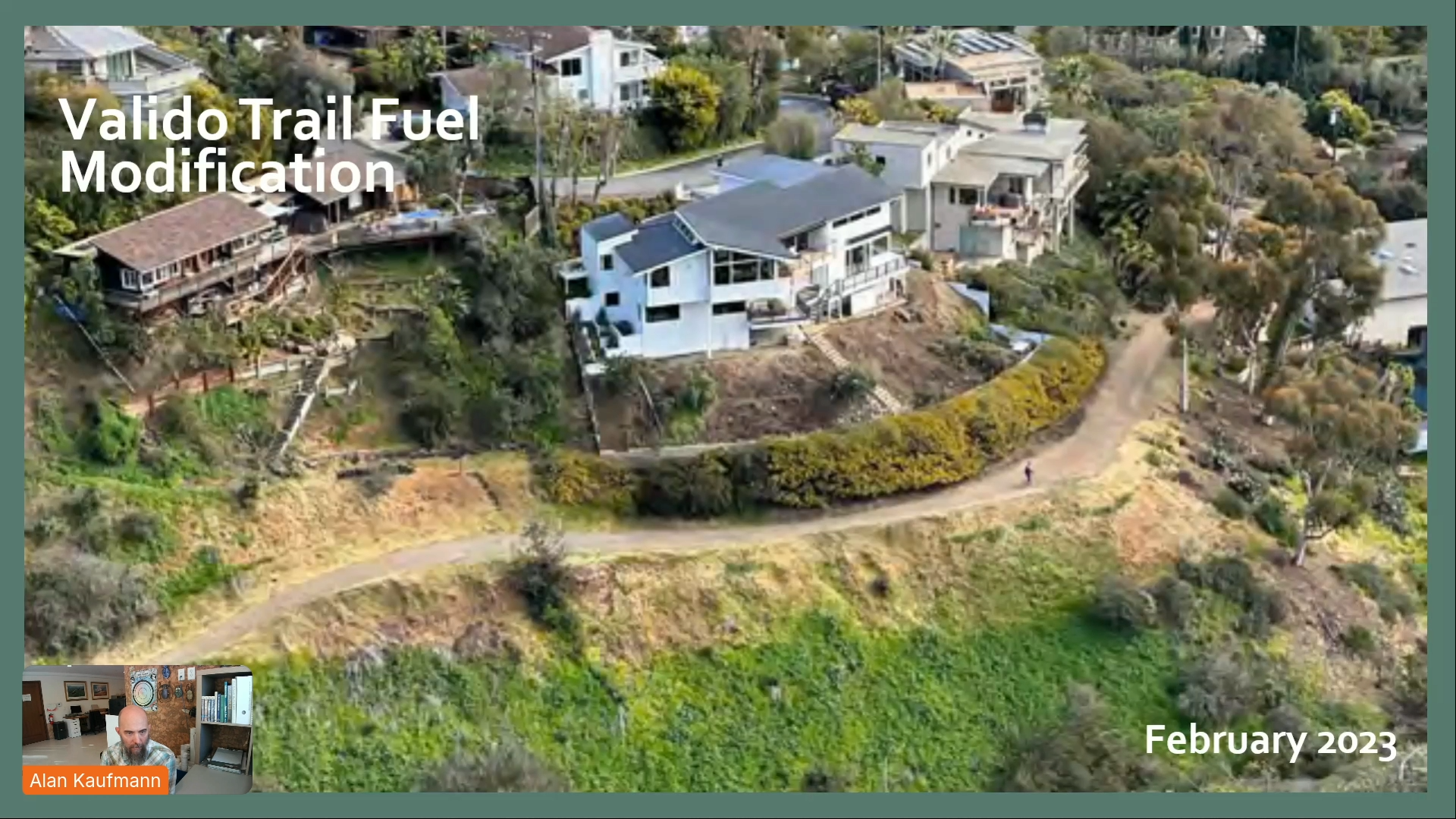
The Interim Deputy Director of the Laguna Canyon Foundation was the final presenter for the Symposium, speaking on a Friday afternoon at 4:30 pm, when there were less than 100 attendees left of the 690 registrants.  His presentation was about the blow back that his organization gets from the public about herbicide applications.  Criticism of herbicides escalated after a wet year that increased vegetation considered a fire hazard.  This photo (below) is an example of the visible effects of fuels management by Laguna Canyon Foundation using herbicides.

It seems likely that a fuels management project was selected for this presentation because it’s easier to justify herbicide use for fuels management than for eradicating harmless plants solely because they aren’t native. 

I recently supported Oakland’s Vegetation Management Plan that will use herbicides for the first time on 300 miles of roadsides and 2,000 acres of public parks and open space in Oakland.  Previously, herbicide applications were only allowed on medians in Oakland.  I tracked the development of the Vegetation Management Plan for 7 years through 4 revisions to avoid nativist versions of fuels management such as leaving dead thatch after herbicide applications on grassland or destroying non-native trees, while leaving highly flammable bay laurel trees behind or destroying broom, while leaving more flammable coyote brush behind.

However, using herbicides for the sole purpose of killing non-native plants is much harder to justify.  The irrational preference for native species has put us on the pesticide treadmill. Every plant species now targeted for eradication with herbicides should be re-evaluated, taking into consideration the following criteria:

  • Is it futile to attempt to eradicate a plant species that has naturalized in an ecosystem?
  • Will the attempt to eradicate the plant species do more harm than good?
  • Is the targeted plant species better adapted to current environmental and climate conditions?
  • Is the targeted non-native plant making valuable contributions to the ecosystem and its animal inhabitants?

If these questions cannot be satisfactorily answered, the bulls-eye on the targeted plant should be removed. Limiting the number of plants now being sprayed with herbicide is the only way to reduce pesticide use. If the plant isn’t a problem, there is no legitimate reason to spray it with herbicide.

Pot calls kettle black

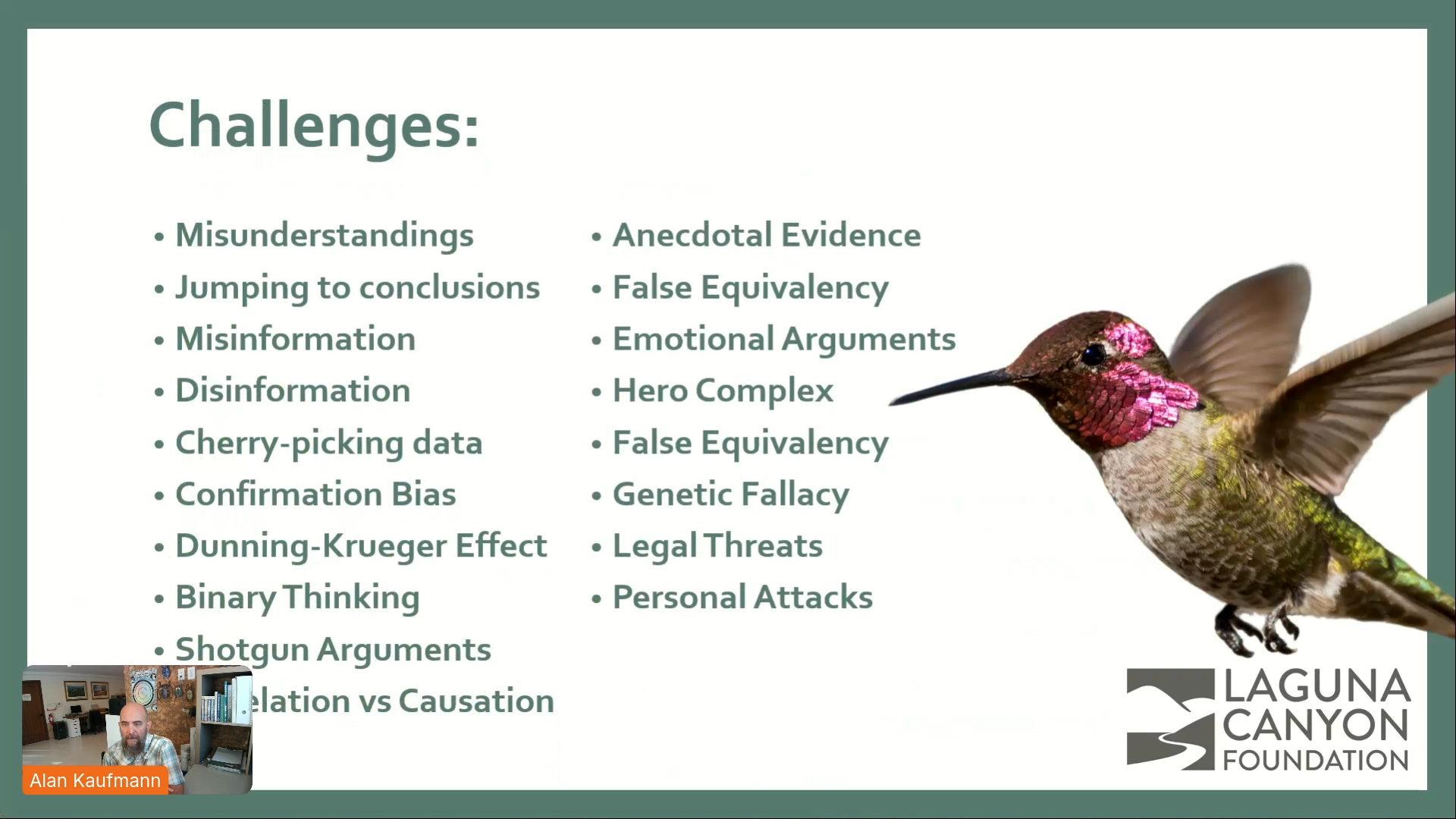
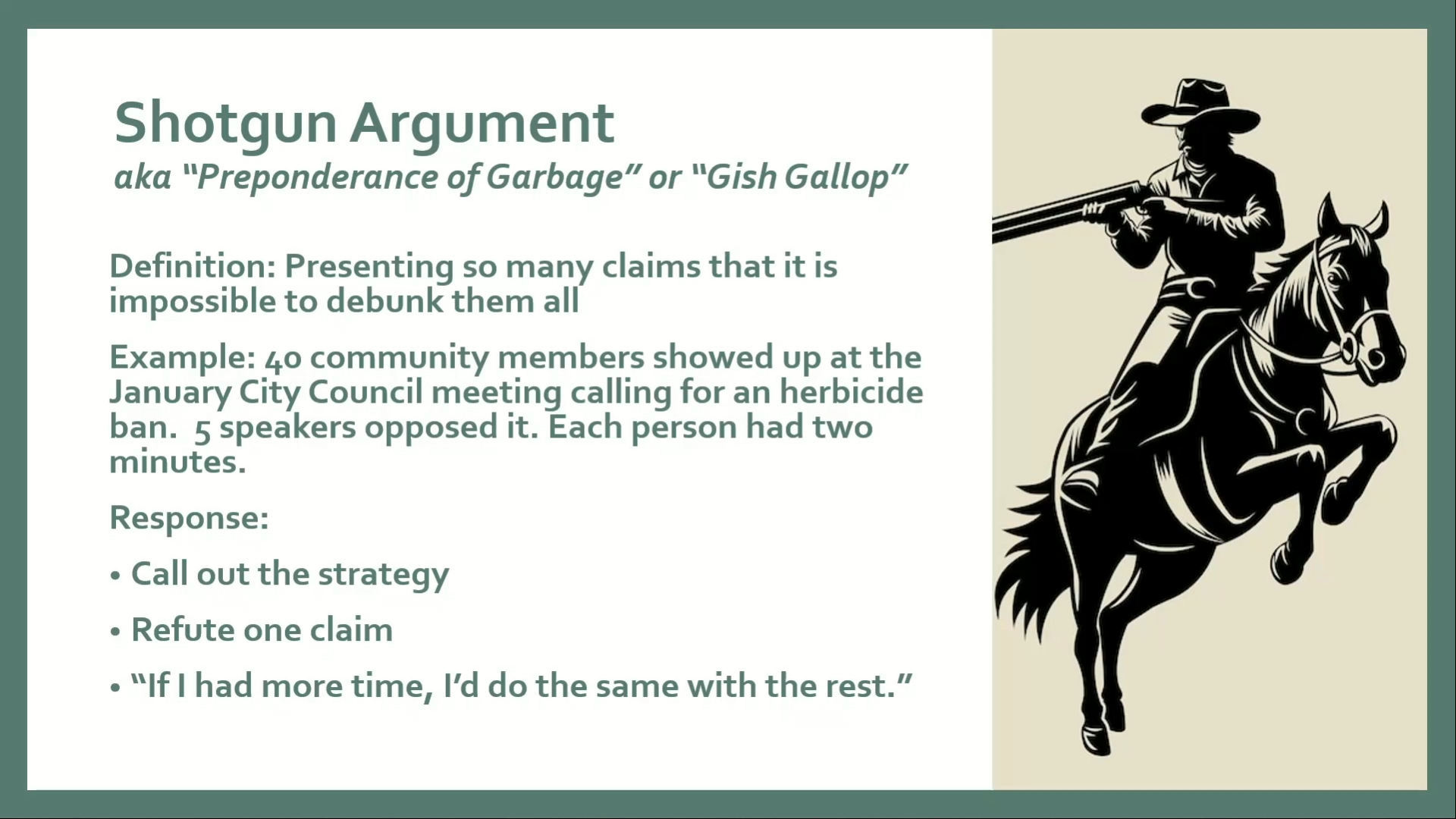
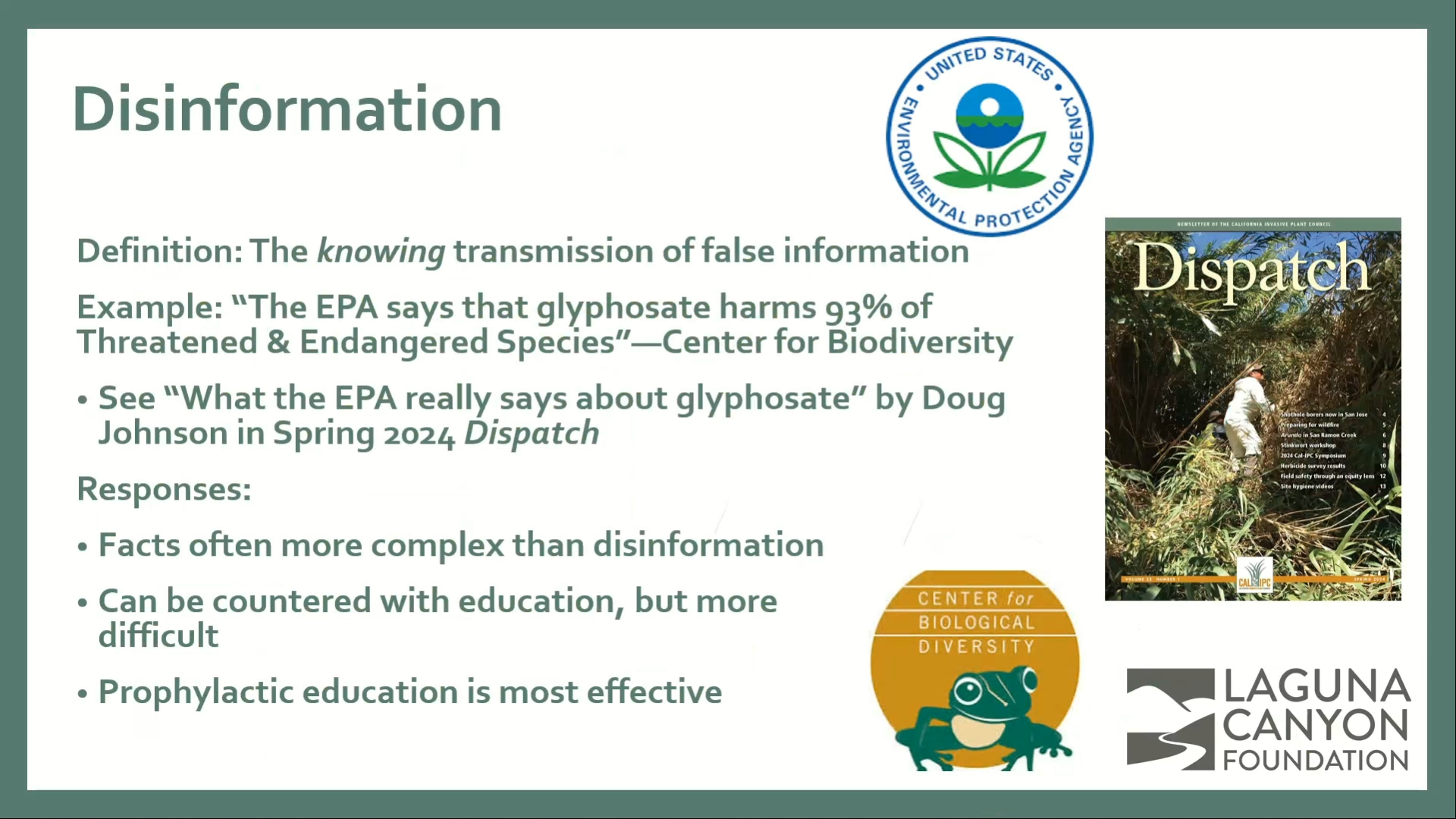
The Cal-IPC presentation was a detailed criticism of the public’s complaints about herbicides used in their community.  The intention of the presentation was to arm herbicide applicators with defenses against the public’s complaints.  Herbicide applicators were encouraged to recognize these arguments (below) and participate in the “education” of the public about the righteousness of their task.

The presenter then showed a series of slides making specific accusations, such as these:  (see below)

Those who object to the pointless destruction of nature can also cite distortions and misrepresentations of facts (AKA lies) by those who engage in these destructive projects;

  • Nativists fabricated a myth that eucalyptus kills birds to support their demand that eucalyptus in California be destroyed.  There is no evidence that myth is true. 
  • Nativists also fabricated a myth that burning eucalyptus in the 1991 firestorm in the East Bay cast embers that started spot fires 12 miles away from the fire front.  There is no evidence that myth is true.
  • Nativists exaggerate the success of their projects by setting a low bar for success, conducting no post-project monitoring, and restricting access to their completed projects.  
  • The EPA justified the dumping of rodenticides on off-shore islands by inaccurately claiming that the rodenticides do not end up in the water, killing marine animals.  There is ample evidence that island eradications have killed many marine animals because rodenticide lands in the water when applied by helicopters. 
  • USFWS justified the killing of 500,000 barred owls in western forests by claiming they are an “invasive species.”  In fact, barred owls migrated from the East to the West Coasts via the boreal forests of Canada.  These forests were not planted by humans and have existed since the end of the last Ice Age, some 10,000 years ago.  The arrival of barred owls on the West Coast was a natural phenomenon.  Barred owls are therefore not “invasive species.” In a rapidly changing climate, many animals must move to survive.
  • Nativists claim that most insects are “specialists” that require native plants.  That claim is a gross exaggeration of the dependence of insects on native plants, which are sometimes confined to a family of plants containing thousands of both native and non-native species. 
  • Pesticide applicators also complain about “personal attacks.”  They are not alone.  I (and others) have been called “nature haters,” “chemophobes,” and “climate change deniers.”  Pesticide applicators feel abused.  So do I. 

I could go on.  The list of bogus claims of the superiority of native plants and animals is long and getting longer as more and more public money is available to conduct misnamed “restorations.”  Suffice to say, there is plenty of misinformation floating around invasion biology and most of it is used to defend destructive “restoration” projects.  The war on nature is also a war of words. 


(1) ­Justin Luong, et.al., “Lessons learned from an interdisciplinary evaluation of long-term restoration outcomes on 37 coastal grasslands in California.” Biological Conservation, February 2022.

The program for the Cal-IPC 2024 Symposium is available HERE.  Abstracts and presentation slides have not yet been posted to the website, but they will eventually be available to the general public. 

Dana Milbank: The evolution of a native plant advocate

Dana Milbank is a political columnist for the Washington Post.  Like many Americans, Milbank moved his family from urban Washington D.C. to a derelict farm in the foothills of the Blue Ridge Mountains in Virginia, seeking refuge in nature from urban confinement imposed by the Covid pandemic.  So began his war on nature, dictated by native plant ideology.

In a series of columns, WaPo readers observed how his battle against non-native plants developed:

  • The first installment of his “restoration” saga described the over-grown property that he believed he was obligated to tame:  “an entire civilization of invasive vines and weeds had cruelly exploited the inattention [of previous elderly owners].”  The vines were “murdering defenseless native trees.”   He hired a crew to clear brush, until the cost challenged his budget.  Then he bought equipment and tried to do it himself.  He concluded that he could not “restore order” to his land without using herbicides.  Even then, he was doubtful of ultimate success:  “Clearly, I won’t be defeating these invaders.  At best, I’ll battle them to a temporary truce, holding them at bay until I lose the will to fight them.”  Like many city-slickers, Milbank has an unrealistic vision of what nature looks like when allowed to take its course.
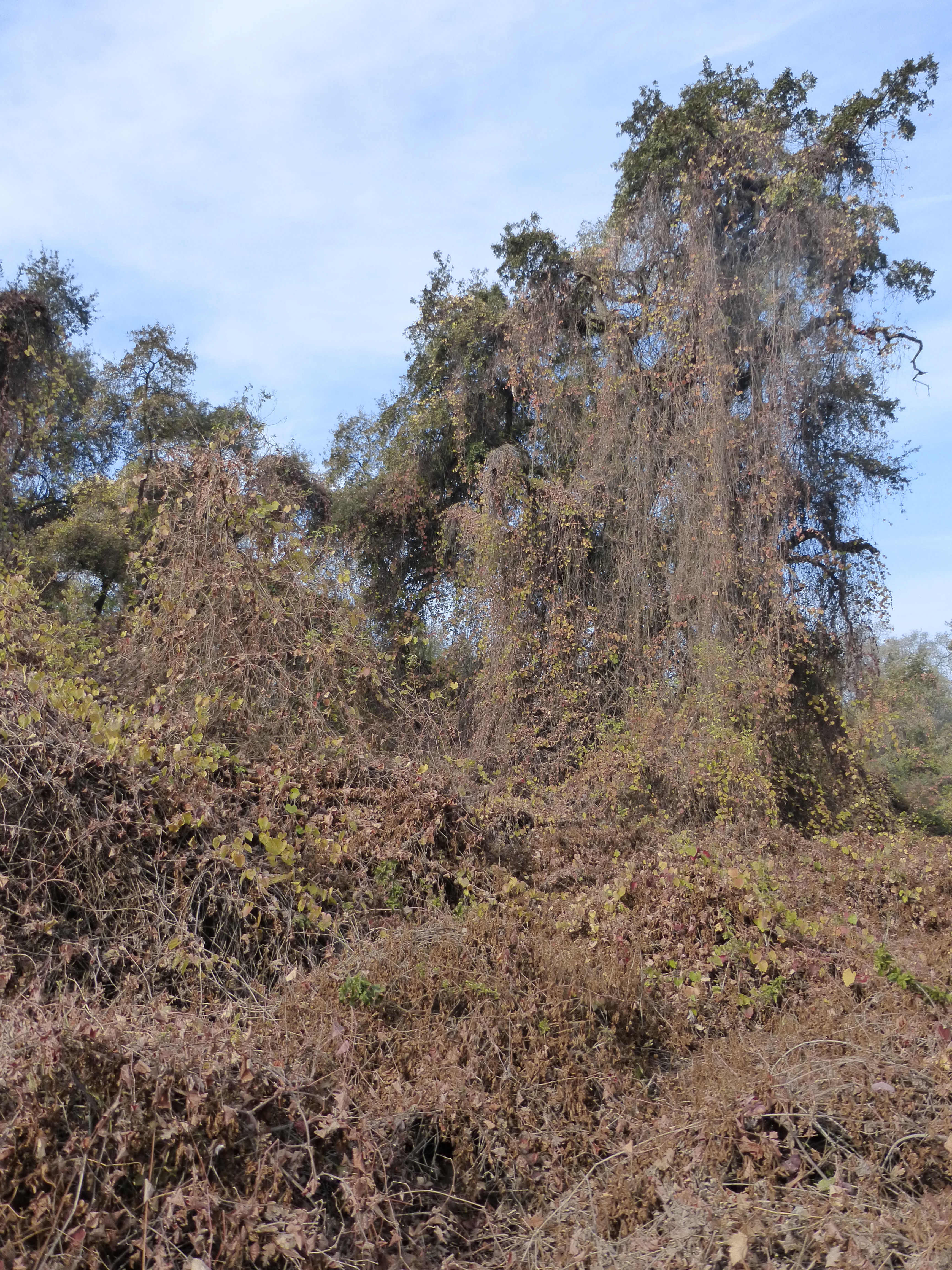
Kaweah Oaks Preserve, Visalia, CA.  November 2013.  California Wild Cucumber, also called manroot (Marah fabacea), climbing over a native valley oak.  Both native and non-native plants can be “invasive.” 
  • In the second episode of Milbank’s battle plan, deer were his target:  “I will be wielding my gun against a brutal foe—one that destroys our forests, kills our wildflowers, sickens humans and threatens the very survival of birds, mammals, insects and amphibians.  I am becoming a deer hunter.”   Where top predators, such as wolves and bears, have been eliminated by humans, there is an over-population of deer who browse vegetation, depriving other animals of the food and cover they need.  Again, Milbank has his doubts about the effectiveness of hunting deer on his property:  “I can’t pretend that my hunting will make a dent in the deer population.” 
  • After taking Virginia’s Master Naturalist Program, Milbank’s third episode expresses his regrets as a gardener:  “I’ve been filling my yard with a mix of ecological junk food and horticultural terrorists” and he warns urban and suburban gardeners that their gardens are “dooming the Earth.”  He takes aim at cultivars in general and many specific species of introduced plants.  Conservation Sense and Nonsense explains why most of these accusations are exaggerated, if not, patently false. 
  • In Milbank’s column, “How I learned to love toxic chemicals,” he expresses frustration about how hard it is to eradicate non-native plants:  “I was losing, badly, to the invasive vines and noxious weeds…I’d cut them back, but they would return in even greater numbers.”  He fully embraces the use of herbicides to escalate his war on nature:  “I have become a reluctant convert to chemicals.”  He acknowledges that glyphosate is toxic, but he claims that the cut-stump application method he uses is “surgical.” He wears protective clothing, including a respirator, which is not required by the product label or California law for glyphosate applications.  He is encouraged by Doug Tallamy, who calls herbicides “chemotherapy.”  Conservation Sense and Nonsense explains why herbicides are doing more harm than good to the environment and everything that lives in it.  

Throwing caution to the winds

In the latest installment of Milbank’s crusade against non-native plants, he tosses caution about herbicides aside. He hires a drone to spray a hayfield with glyphosate in preparation for creating a meadow of native grasses and forbs:

“To save the birds, I brought in this big bird: a 10-foot-square, Chinese-made drone with 8 propellers, capable of carrying 10 gallons of fluid, in this case glyphosate, to kill the grass in my hayfield. (It might seem counterintuitive to douse a field in herbicide to help nature, but conservationists broadly endorse the practice.)”

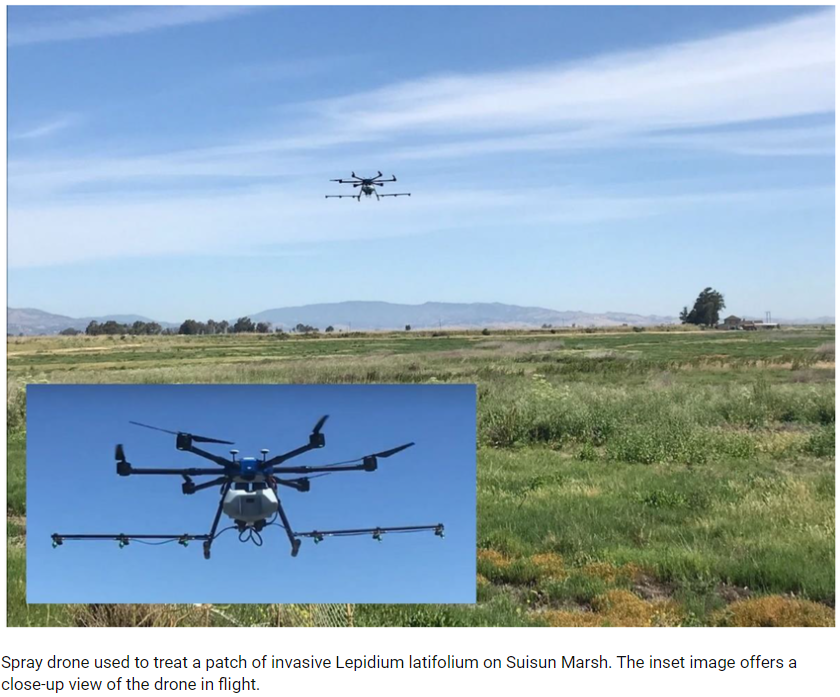
Herbicides are often sprayed from drones to eradicate non-native plants considered “invasive.” Source: https://www.researchgate.net/figure/Spray-drone-used-to-treat-a-patch-of-invasive-Lepidium-latifolium-on-Suisun-Marsh-The_fig3_372867398https://www.researchgate.net/figure/Spray-drone-used-to-treat-a-patch-of-invasive-Lepidium-latifolium-on-Suisun-Marsh-The_fig3_372867398

Milbank has abandoned his cautious use of herbicide and is now aerial spraying from a drone 30 feet over his head, while he watches, without wearing any protective gear:

“Shanley, in shorts, sneakers and fishing shirt, plopped in a lawn chair in the shade of my barn and, using a control pad with two joysticks, sent the drone into the sky… In a moment, the beast was airborne and, from a height of about 30 feet, spraying death on my hayfield. It sprayed the fescue. It sprayed the Johnson grass. It sprayed the foxtail. It returned, flew over the barn — and sprayed me with glyphosate. Programming error. “Sorry about that,” Shanley said. My eyes burned for two days.”

If he had been wearing safety goggles, as required for glyphosate applicators in California, he would have been spared. Milbank has the right to poison himself, his land, and the animals that live on his land.  Although the applicator may be breaking laws (he would be in California) by not wearing any protective equipment, Milbank isn’t doing anything illegal. 

If I weren’t reading his story in the mainstream media with a national following, I wouldn’t be writing about what he’s doing. I’m writing about Milbank’s dangerous use of herbicides because he has a big audience and his audience displays their ignorance of the dangers in over 1,400 comments.

The reader comments on Milbank’s latest article are uniformly positive, as were comments on his earlier installments about his war on nature.  Most comments are short expressions of unqualified praise, such as “You are doing holy work,” or “God bless you.”

A handful of comments (including mine) express concern about the indiscriminate use of glyphosate.  The few dissenting readers are blasted by Milbank’s supporters.  Some of their responses betray ignorance of herbicides: 

  • It’s not Round Up; it’s a safe herbicide.”  In fact, Milbank says he’s using glyphosate, which is the active ingredient in Round Up.
  • “He said nothing about dousing. It looks like a selective approach. In some cases, there is no practical alternative.”  In fact, Milbank says explicitly that he’s spraying 10 gallons of herbicide 30 feet over the ground from an aerial drone.  Does that sound selective?

The reader comments claiming that glyphosate is harmless brought to mind a recent article about the army of paid apologists for pesticides.  The pesticide industry, in collaboration with the US government, has “established a ‘private social network’ to counter resistance to pesticides and genetically modified (GM) crops in Africa, Europe and other parts of the world, while also denigrating organic and other alternative farming methods. More than 30 current government officials are on the membership list, most of whom are from the US Department of Agriculture (USDA).”

The most common defense of Milbank’s herbicide spraying was that it only needs to be done once, with an occasional follow up prescribed burn.  Milbank doesn’t actually claim that herbicide only needs to be sprayed once, but his supporters wish to believe that.  Here are a few actual attempts to convert non-native grass to native grass that illustrate that such a conversion is unlikely to be possible, even after a persistent, long-term attempt.

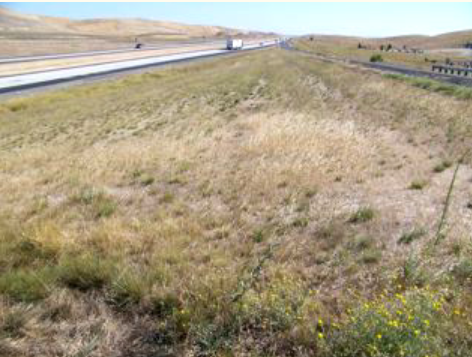
Dunnigan plot in August 2011, after 9 years of effort, described below. Source: https://www.ecoseeds.com/road.test.html
  • A team of academic scientists at UC Davis attempted to convert non-native grasses to native grasses on 2 acres of roadside.  At a cost of $450,000, they tried every available method (herbicides, plowing, plug planting, mowing, burning) for 9 years.  When they ran out of money, they declared success, which they defined as 35% native grasses that they expected to last for no more than 10 years. (See above)
  • The Invasive Spartina Project in the San Francisco Bay has been trying to eradicate non-native spartina marsh grass with herbicide for 20 years at a cost of $50 million.  The project was recently granted another $6.7 million to continue the project for another 10 years.  The project has killed over 600 endangered birds (Ridgway rails) in the San Francisco Bay because of the loss of habitat. 
  • One of the presentations at the 2022 conference of the California Native Plant Society was about a 20-year effort at the Santa Rosa Plateau Ecological Reserve to convert non-native annual grassland to native grassland, using annual prescribed burns.  Many different methods were used, varying timing, intensity, etc.  The abstract for this presentation reports failure of the 20-year effort:  “Non-native grass cover significantly decreased after prescribed fire but recovered to pre-fire cover or higher one year after fire.  Native grass cover decreased after prescribed fire then recovered to pre-burn levels within five years, but never increased over time.  The response of native grass to fire (wild and prescribed) was different across time and within management units, but overall native grass declined.”  The audience was audibly unhappy with this presentation.  One person asked if the speaker was aware of other places where non-native grass was successfully converted to native grass.  The speaker chuckled and emphatically said, “NO.  I am not aware of any place where native grasses were successfully reintroduced.”
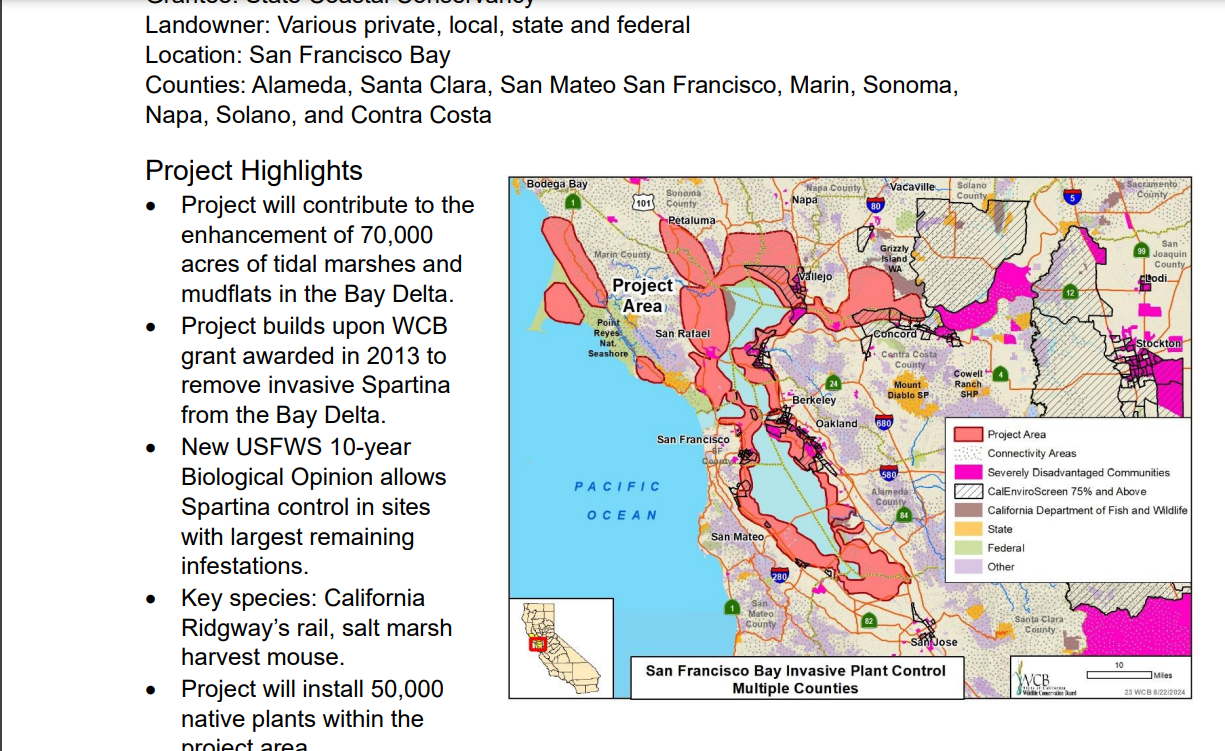
This map of the San Francisco Bay shows where herbicides have been sprayed on non-native marsh grass for 20 years. It is a BIG project!

Anyone with a little knowledge of how herbicides work, would know that glyphosate kills only the top-growth of an actively growing plant.  Glyphosate won’t kill the seed bank of Milbank’s hayfield, which he says has been growing there for decades, perhaps as long as 100 years.  That’s why glyphosate must be applied annually as the seed bank continues to produce new top-growth annually.  If Milbank plants native plants after the initial spraying, they will be killed by subsequent spraying because glyphosate is a non-selective herbicide, which kills whatever it touches, both native and non-native plants. Perhaps Milbank knows this, but his readers don’t.  It might explain why Milbank is not particularly optimistic about the prospects of achieving his goal of a native meadow:  “Will it work? I have no idea. It could become the field of my dreams…Or it could be a costly and time-consuming failure.”

Only two of Milbank’s readers mention the damage that herbicide does to the soil, making future plantings even less likely to survive.  One of those comments is from a farmer who has reason to know this important information: 

The number of things you screwed up, from possibly destroying that old man’s life, family, and farm, to messing up the winter food supply with a cascading effect for farms in your region, to obliterating a small farm, were appalling until you got to the part where you killed your soil microbes with poison. You actually killed topsoil with the idea you were going to grow healthy plants! If I were to write a caricature of a [sub]urbanite transplanted to a farming community and with the best intentions absolutely destroying everything, couldn’t have done any better than you have with your self-congratulatory actions. Farms are complex systems embedded in even more complex natural systems. Farms interact with and depend on each other. It’s where food comes from. When you kill one, you hurt all the others. You also hurt animals and plants that depend on the farm. Creating a farm, and a farming community, is hard. Destroying one is easy, and you just did it.”

This comment brought to mind a recent study about the damage that pesticides do to the soil.  A meta-analysis of 600 studies “…published in the journal iScience found that soil pollution was the leading cause of declines among organisms living underground. The finding has surprised scientists, who expected farming intensification and climate change to have much greater impacts.”  The co-author of the study said, “Above ground, land use, climate change and invasive species have the greatest impact on biodiversity, so we assumed that this would be similar below ground,” Victoria says. “Our results show, however, that this isn’t the case. Instead, we found that pesticide and heavy metal pollution caused the most damage to soil biodiversity. This is worrying, as there hasn’t been a lot of research into the impacts of soil pollution, so its effects might be more widespread than we know.”

A familiar story

Dana Milbank’s plans to transform a derelict farm into a native plant garden are the mirror image of the native plant movement in the San Francisco Bay, the region where I live and have observed failed native plant “restorations” for over 25 years:

  • Native plant “restoration” projects in the Bay Area began over 25 years ago based on the mistaken assumption that if non-native plants were destroyed, native plants would magically emerge without being planted.  In other words, nativists originally believed that the only obstacle to native plants was the mere existence of non-native plants.
  • After 25 years of applying herbicides repeatedly, there are no more native plants in the San Francisco Bay Area than there were 25 years ago.  The soil has been poisoned by herbicides and climate change and associated drought makes native plants progressively less well adapted to current environment conditions.
  • Despite the obvious failure of these “restoration” attempts, they continue unabated because vast sums of public money are available to keep them going.  Dana Milbank will run out of money eventually, but the public coffers are never empty.  Milbank is 56 years old.  When he gets too old to do the work or when he dies, whatever he has accomplished will quickly revert to its previous unmanaged state.  Nature will prevail and his brief conceit that humans can control nature will be history. 
  • The public is unaware of how much herbicide is used by public land managers because application notices are not required for most pesticides.  In California, for example, if the manufacturer of the pesticide claims that the pesticide will dry within 24 hours, application notices are not required by law.  Glyphosate is one of many herbicides for which application notices are not required.  Some land managers post application notices anyway, but many do not.  The public is also ignorant of the damage that pesticides do to the environment and everything that lives in it. 

Defining “Success” So That “Success” Can Be Achieved

I always attend the conferences of the California Invasive Plant Council (Cal-IPC) and the California Native Plant Society because I feel obligated to understand their viewpoint so I can accurately report on the controversies of invasion biology.  Ironically, the more I learn about the native plant movement and the “restoration” industry it spawned, the less … Continue reading “Defining “Success” So That “Success” Can Be Achieved”

I always attend the conferences of the California Invasive Plant Council (Cal-IPC) and the California Native Plant Society because I feel obligated to understand their viewpoint so I can accurately report on the controversies of invasion biology.  Ironically, the more I learn about the native plant movement and the “restoration” industry it spawned, the less sense it makes.  The October 2024 Symposium of the California Invasive Plant Council has provided yet more evidence that attempts to eradicate well-established non-native landscapes and replace them with native plants are futile.

Tricks of the “Restoration” Trade

Every Cal-IPC Symposium has wrestled with the question of how to convert non-native grassland to native grassland. A study of 37 grassland “restorations” in coastal California answers that question. (1)  It’s really quite simple.  All you need to do is define success as 25% native plants after “restoration” and limit post-project monitoring to 5 years or less:  “Monitoring is done ≤5 years after project-implementation, if at all, and rarely assesses the effects of management practice on project success.” 

It also helps if public land managers in charge of the projects won’t allow the academic researcher to enter the land to conduct a survey of the results.  43% of the projects that were studied were “statutory,” i.e., they were mandated by laws such as county general plans or legally required mitigation for projects elsewhere that Environment Impact Reports determined were harmful to the environment.  30% of the managers of the statutory projects would not allow the academic researcher to survey their projects. 

It is also easier to achieve success if the project goal is downgraded mid-project as were many of the statutory projects because they weren’t able to meet the original goal.

Project managers can also reduce their risks of failure by planting a small number of native species that are particularly easy to grow:  “Ninety-two percent of restoration managers preferentially use one or more of the same seven [native] species.”  Seven projects planted only one native species. 

According to the study, the result of planting only a few hardy native plants is “biotic homogenization.”  Call it what you will, but this risk-averse strategy is inconsistent with claims that the goal of native plant restorations is to increase biodiversity. 

The study did not ask project managers about the methods they used to eradicate non-native plants or plant native plants.  The study tells us nothing about the methods that were used or whether or not some methods were more effective than others.  Since results of the projects were all very similar, should we assume that the methods that were used didn’t matter? 

The presentation of this study concluded with this happy-face slide. (see below) It looks like a cartoonish marketing ad to me:

Harmless aquatic plants being pointlessly eradicated

A USDA research ecologist stationed at UC Davis made a presentation about the most effective way to kill an aquatic plant with herbicides, but that wasn’t the message I came away with. 

Jens Beets told us about a species of aquatic plant that is native to the East and Gulf coasts of the US, but is considered a “noxious weed” in California, solely because it isn’t native.  He said the plant is considered very useful where it is native.  (see below)

Where Vallisneria americana is native, it is considered a valuable plant for habitat restoration because it is habitat for vertebrates and invertebrates and it stabilizes soil and water levels.  The canvasback duck is named for this plant species because it is preferred habitat for the native duck that is found in California during the winter.

 Vallisneria americana looks very similar to other species in the genus considered native in California.  For that reason, native species of Vallisneria have been mistakenly killed with herbicide because applicators didn’t accurately identify the target plant as native.  Jens Beets recommended that genetic tests be performed before plants in this genus are sprayed with herbicide.

This story probably sounds familiar to regular readers of Conservation Sense and Nonsense.  The story is identical to the pointless and futile effort to eradicate non-native species of Spartina marsh grass in the San Francisco Bay.  The species being eradicated in California is native to the East and Gulf coasts, where it protects the coasts from extreme storm surges and provides valuable habitat for a genus of bird that is plentiful on the East Coast, but endangered in California.  The 20-year effort to eradicate non-native Spartina has killed over 50% of the endangered bird species in the San Francisco Bay. 

Throwing good money after bad

Because the hybrid is indistinguishable from the native species of Spartina on the West Coast. 7,200 genetic tests have been performed in the past 12 years before hybrid Spartina was sprayed with herbicide. Taxpayers have spent $50 million to eradicate Spartina over 20 years.  Recently, California state grants of $6.7 million were awarded to continue the project for another 10 years.  A portion of these grants are given to the California Invasive Plant Council to administer the grants.

Plants are sprayed with herbicide because they aren’t native, not because they are harmful.  Even if the target species is needed by birds and other animals, it is still killed and animals along with it.  The target species looks the same as the native species and only genetic testing can identify it is as a non-native.  The non-native is the functional equivalent of the native.  It is only genetically different because natural selection has adapted it to the conditions of a specific location. 

Pesticide regulation in the US is a hit or miss proposition

The final session of the symposium was a carefully orchestrated apologia for herbicides, a defensive tirade that suggested Cal-IPC believes its primary tool is in jeopardy.  Two presentations were made by employees of regulatory agencies.  Their assignment was to reassure the public that pesticides are safe because they are regulated by government agencies. 

The fact that many countries have banned pesticides that are routinely used in the US does not speak well for our regulatory system.  America’s pesticide regulators rarely deny market access to new pesticides.  A recent change in policies of California’s Department of Pesticide Regulation made a commitment to the continued use of pesticides for another 25 years. 

In 1996, Congress ordered the U.S. Environmental Protection Agency (EPA) to test all pesticides used on food for endocrine disruption by 1999. The EPA still doesn’t do this today. Twenty-five years later, the EPA has not implemented the program, nor has it begun testing on 96% of registered pesticides.  In 2022, an organization that represents farm workers sued the EPA to conduct the legally mandated evaluation of chemicals.   The lawsuit has forced the EPA to make a commitment to conduct these evaluations of chemicals for hormone disruption.   

The Cal-IPC presenters got some badly needed push back from attendees.   One attendee informed the audience that all the testing of herbicides is bought by the manufacturers, not the regulators who don’t do any testing.  Another attendee pointed out that herbicides have not been evaluated for the damage they are doing to the soil, damage that makes it difficult to grow native plants in the dead soil.  The “pesticide regulator” agreed with those observations.

Fire safety or native plant restoration?

The Interim Deputy Director of the Laguna Canyon Foundation was the final presenter for the Symposium, speaking on a Friday afternoon at 4:30 pm, when there were less than 100 attendees left of the 690 registrants.  His presentation was about the blow back that his organization gets from the public about herbicide applications.  Criticism of herbicides escalated after a wet year that increased vegetation considered a fire hazard.  This photo (below) is an example of the visible effects of fuels management by Laguna Canyon Foundation using herbicides.

It seems likely that a fuels management project was selected for this presentation because it’s easier to justify herbicide use for fuels management than for eradicating harmless plants solely because they aren’t native. 

I recently supported Oakland’s Vegetation Management Plan that will use herbicides for the first time on 300 miles of roadsides and 2,000 acres of public parks and open space in Oakland.  Previously, herbicide applications were only allowed on medians in Oakland.  I tracked the development of the Vegetation Management Plan for 7 years through 4 revisions to avoid nativist versions of fuels management such as leaving dead thatch after herbicide applications on grassland or destroying non-native trees, while leaving highly flammable bay laurel trees behind or destroying broom, while leaving more flammable coyote brush behind.

However, using herbicides for the sole purpose of killing non-native plants is much harder to justify.  The irrational preference for native species has put us on the pesticide treadmill. Every plant species now targeted for eradication with herbicides should be re-evaluated, taking into consideration the following criteria:

  • Is it futile to attempt to eradicate a plant species that is deeply entrenched in plant communities?
  • Will the attempt to eradicate the plant species do more harm than good?
  • Is the targeted plant species better adapted to current environmental and climate conditions?
  • Is the targeted non-native plant making valuable contributions to the ecosystem and its animal inhabitants?

If these questions cannot be satisfactorily answered, the bulls-eye on the targeted plant should be removed. Limiting the number of plants now being sprayed with herbicide is the only way to reduce pesticide use. If the plant isn’t a problem, there is no legitimate reason to spray it with herbicide.

Pot calls kettle black

The Cal-IPC presentation was a detailed criticism of the public’s complaints about herbicides used in their community.  The intention of the presentation was to arm herbicide applicators with defenses against the public’s complaints.  Herbicide applicators were encouraged to recognize these arguments (below) and participate in the “education” of the public about the righteousness of their task.

The presenter then showed a series of slides making specific accusations, such as these:  (see below)

Those who object to the pointless destruction of nature can also cite similar distortions and misrepresentations of facts (AKA lies) by those who engage in these destructive projects;

  • Nativists fabricated a myth that eucalyptus kills birds to support their demand that eucalyptus in California be destroyed.  There is no evidence that myth is true
  • Nativists also fabricated a myth that burning eucalyptus in the 1991 firestorm in the East Bay cast embers that started spot fires 12 miles away from the fire front.  There is no evidence that myth is true.
  • Nativists exaggerate the success of their projects by setting a low bar for success, conducting no post-project monitoring, and restricting access to their completed projects.  
  • The EPA justified the dumping of rodenticides on off-shore islands by inaccurately claiming that the rodenticides do not end up in the water, killing marine animals.  There is ample evidence that island eradications have killed many marine animals because rodenticide lands in the water when applied by helicopters. 
  • USFWS justified the killing of 500,000 barred owls in western forests by claiming they are an “invasive species.”  In fact, barred owls migrated from the East to the West Coasts via the boreal forests of Canada.  These forests were not planted by humans and have existed since the end of the last Ice Age, some 10,000 years ago.  The arrival of barred owls on the West Coast was a natural phenomenon.  Barred owls are therefore not “invasive species.” In a rapidly changing climate, many animals must move to survive.
  • Nativists claim that most insects are “specialists” that require native plants.  That claim is a gross exaggeration of the dependence of insects on native plants, which are sometimes confined to a family of plants containing thousands of both native and non-native species. 
  • Pesticide applicators also complain about “personal attacks.”  They are not alone.  I (and others) have been called “nature haters,” “chemophobes,” and “climate change deniers.”  Pesticide applicators feel abused.  So do I. 

I could go on.  The list of bogus claims of the superiority of native plants and animals is long and getting longer as more and more public money is available to conduct misnamed “restorations.”  Suffice to say, there is plenty of misinformation floating around invasion biology and most of it is used to defend destructive “restoration” projects.  The war on nature is also a war of words. 


(1) ­Justin Luong, et.al., “Lessons learned from an interdisciplinary evaluation of long-term restoration outcomes on 37 coastal grasslands in California.” Biological Conservation, February 2022.

The Light Eaters: Plants will find a way to survive…if we let them

“Life finds a way, if given a chance.” – The Light Eaters

The Light Eaters was written by Zoë Schlanger, a science journalist who covered climate change before writing Light Eaters. (1)  She explains her pivot to botanical science as a retreat from the oppressive gloom of climate change.  It proved a wise choice, as she found much to cheer us in the remarkable capabilities of plants to adapt to challenges, defend themselves against their predators and competitors, and collaborate with their plant and animal neighbors. 

Ms. Schlanger believes that botanical research has lagged behind other biological inquiry partly because of a detour unwisely taken by journalists in the 1960s and 70s that projected human traits onto plants, such as intelligence and consciousness.  Humanizing animals and plants is considered a dangerous source of bias by scientists.  When scientists described plant behavior in human terms, they were often ridiculed by their colleagues and their research projects weren’t funded.  Researchers of the capabilities of plants have been trained to avoid anthropomorphic terms to describe plant behavior.  Although Ms. Schlanger tried to observe that rule, I will give myself more leeway because most of my readers are not scientists.

Plants don’t have the mobility that enables them to fly or run away from threats.  We might think of them as handicapped compared to the mobility of animals.  But what they lack in mobility, they more than make up for with their ability to make they own food from sunlight by photosynthesizing. And with the energy that sunlight provides, plants can create the food—such as pollen, nectar, and fruit—that entices insects and other animals to help them reproduce.  So how do plants protect themselves without fleeing from their predators?  That’s what Light Eaters is about.

I don’t know the source of this photo. It was sent to me in an email by someone who found it on Facebook.

How do plants perceive threats and react to them?

Plants can sense that they are being attacked by an insect in a variety of ways.  They can sense the vibration of the chewing, which is closely related to how animals hear.  The attack can also trigger an electrical impulse which can travel throughout the entire plant. 

Plants emit chemicals in response to the attack on their leaves and roots. The chemicals can repel the insect by making the plant unpalatable.  In a sense, the plant is producing its own pesticide, which has the potential to replace synthetic pesticides. 

The chemicals are also wafted into the air to serve as warning signals to their plant neighbors, who can then produce their own chemicals in preparation for attack. Some plants can distinguish between an attack that threatens individuals and those that threaten the entire community. They can tailor their warning messages accordingly, to send messages only to their relatives or to the entire plant community.  When plants are sprayed with herbicides, these chemical messages are masked by herbicides. (2)  Likewise, pollution can also muddle the chemical messages of plants and reduce their ability to perceive and respond to threats. (3)

Plants sometimes demonstrate a preference for their relatives in other functions as well.  They can make room for the roots of close by relatives and move branches to avoid shading their relatives.  They can also vary these accommodations depending on available resources, making room when there is plenty of water, nutrients, and light, but not when there’s not enough.

Such warning signals can also be sent via the underground root network, which connects plants in a community to one another through the network of mycorrhizal fungi that attach themselves to plant roots.  That network is also used by the community of plants to share resources, such as moisture and carbohydrates produced by photosynthesis.  The fungal network enables both communication and sharing of resources.  Herbicides that are carried to the roots of trees damage the fungal network, depriving trees of the nutrients they need to survive. (4) The widespread use of these herbicides by native plant “restorations” is one of many reasons why these projects rarely result in new landscapes of native plants. 

Can plants hear?

One of the first discoveries of the ability of plants to find what they need is the ability of tree roots to grow in the direction of water sources.  Mycorrhizal fungi attached to the roots of plants are clearly involved in guiding that connection.  Over 450 million years ago, the evolution of fungi enabled plants to move from water to land by delivering moisture from soil to roots of plants, greatly increasing abundance and diversity of plants. About 80% of plants today receive much of their nutrients and moisture through mycorrhizal fungi. (5)

Now there is evidence that plants may also be able to hear the sound of water to direct the growth of roots.  The researcher who made that discovery encased the roots of a plant in plastic pipe so that the roots could not sense the availability of moisture.  The plastic pipe formed a “Y” to give the roots the option of growing in one direction or the other.  The researcher played a recording of running water at the end of one pipe.  The roots grew in the direction of the recording of running water.  This is still a controversial discovery, because other researchers have found it difficult to replicate. 

The replication of breakthrough scientific discoveries is one of the ways that science moves forward.  It is a not a reliable method of confirming or rejecting a new discovery because there are always many variables operating simultaneously that are difficult to control, particularly in field studies, and researchers have rarely identified all the variables involved in the phenomenon they are observing.

The academic career of David Rhoades is an example of the dangers of being too far ahead of your academic colleagues and a reminder of the conservatism inherent in academic science.  Rhoades was a chemist at University of Washington and the author of a study that made the first report of warning signals that plants under attack send to their neighbors via volatile chemicals in the atmosphere. 

The forest on Rhoades’ campus was being killed by tent caterpillars.  He studied the spread of the caterpillars until the insect infestation was stopped by the chemicals that the unaffected trees infused into their leaves.  The chemicals killed the caterpillars and the spread of the insect in the forest was stopped.  Backed by a mountain of carefully accumulated data, Rhoades concluded:  “This suggests that the results may be due to airborne pheromonal substances!”

Rhoades was met with resistance to this new information from his colleagues.  Then he had trouble replicating his original study.  When his grant applications were rejected, he gave up.  He left academia and taught chemistry in a local community college to make a living.  Years later, other researchers figured out why he was unable to replicate his original study.  The airborne chemicals that trees produce are seasonal.   Rhoades’ original study was done in the spring and Rhoades was trying to replicate the study in the fall.  The scientists who eventually confirmed Rhoades’ finding did so in the laboratory where conditions are easier to control.

Plants collaborate with animals to protect themselves and reproduce

The Light Eaters reports many remarkable observations of interactions of plants and animals.  Here is a sampling of these stories:

  • If bumblebees emerge from hibernation before plants begin to bloom, the hungry bee bites the plant’s leaves to trigger the bloom that delivers the nectar the bees need.
  • Plants must use their limited resources to make pollen and nectar.  Some plants can ration the delivery of the pollen and nectar that attracts their pollinators by timing the delivery with the anticipated arrival of the pollinator.  The plant estimates the time of arrival of the insects based on its memory of past visits. 
  • Bats find the plants they pollinate by using echolocation sonar to locate them in the dark.  Some plants that are pollinated by bats have evolved saucer-like petals that act like a satellite dish to receive the sonar ping to help bats find them. 
  • Some corn, cotton, tomato and tobacco plants can emit chemical distress signals to summon tiny parasitic wasps to kill caterpillars such as tobacco budworm and corn ear worm.
  • Many orchids are pollinated by wasps.  Some orchids attract wasps by mimicking the chemical pheromones of the female wasp.  The orchid is pollinated by the attempt of the male wasp to mate with what he supposes is a female wasp.
  • Some plants form partnerships with ants by secreting a sugary substance that feeds the ants, who eat the insect predators of the plant. 

Can plants see?

The observation that plants are capable of mimicking animals and other plants is not new.  In the early 1900s, a Russian agronomist observed that weeds in food crops have sometimes mimicked the food crop and thereby evaded the hand-weeding that was the method used by farmers to eliminate competition for their crop.  Rye, oats, and lentils were initially considered weeds of wheat and rice.  Over time, they evolved the seed heads that qualified them as food crops. 

More recently, weeds that are killed by herbicides within crops that have been genetically modified to be resistant to the herbicide have engaged in mimicry at the biochemical level to also become resistant to the herbicide.  Those who engage in chemical warfare against plants do not seem to understand that it’s a war they can’t win because evolution will enable plants to develop resistance to their poison. 

Like many of the remarkable capabilities of plants, scientists can observe the phenomenon, but they are rarely able to explain the mechanism that makes it possible, beyond the evolutionary force of natural selection, which achieves a better adapted plant or animal through a series of mutations and genetic and epigenetic drift.  Each change in the species is a trial balloon.  If the change works, it’s a keeper.  If it doesn’t, it’s in the dustbin with some 99% of the estimated 5 billion species that have lived on Earth.  The dominant evolutionary force is random, irrepressible, complex change.  The notion that humans are capable of stopping evolution is absurd.

In 2014, a Peruvian ecologist discovered a vine in the Chilean rain forest that is capable of quickly taking on the shape of almost any plant that it grows beside.  Nicknamed the chameleon plant, many tests proved that the vine can mimic many different species of plants.  Presumably this mimicry enables the vine to become invisible in the sense that it blends in with whatever plants it grows amongst.  It’s a disguise, if you will, that protects the plant from its predators. 

The chameleon vine is able to mimic plants that are native to their locations as well as plants that are foreign to the region.  In other words, mimicry is not the result of a long evolutionary co-existence.  This finding is another blow to the nativist myth that plant and insect associations are the result of co-evolution that makes insects dependent on native plants.  The associations between plants and insects evolved long before the plants and insects moved into new regions.  Plants and insects retain that association as they change in response to their new environment and as the result of mutations and genetic drift. 

Until recently, there was a debate among scientists about how the chameleon plant morphs itself into an entirely different shape.  One school of thought speculates that plants have an organ that performs much like our eyes.  Another school of thought is that horizontal gene transfer (6) from the bacteria inhabiting the plant being copied to the plant doing the copying achieves this transformation. 

A study (7) published in 2022 seems to support the hypothesis that some plants have some type of organ that functions like our eyes.  The study found that the chameleon vine was capable of mimicking an artificial leaf.  The plastic leaf contains no chemicals or bacteria. 

In conclusion

The Light Eaters reports many other capabilities of plants that aren’t covered in this article.  If it’s a topic of interest to you, the book is well worth reading.  It’s well researched and well written.  It is also thoughtful because it asks us to ponder the philosophical question of whether or not this new(ish) knowledge of plants adds up to intelligence, consciousness, and agency.  Ms. Schlanger dodges that question by reminding us that there is not consensus agreement about what any of those descriptions actually mean.

Now we must add a few caveats that we hope will put this important topic into perspective:

  • Not every plant species has all of the capabilities described in The Light Eaters.
  • Those that do have such capabilities may not consistently use them because every plant is responding to a specific environment in a specific place.  Plants are inseparable from their environment.  A plant that has plenty of water and plenty of light behaves differently than plants with less resources.  Sweeping generalizations about plants are usually ridiculous.  For example, it makes no sense to claim that native berries are more nutritious than non-native berries. (8)
  • Plants have the potential to develop such capabilities, depending on their specific circumstances.
  • Without a brain or a nervous system, plants seem to organize a response to stimuli by functioning as a decentralized network.    

The Light Eaters says as much about science as it does about plants.  There are fads in science, just as there are fads in every human endeavor.  Presently, much scientific investigation of botanical phenomenon is focused on genetics, which has misled the public to underestimate the plasticity of plants and animals.  In fact, the genome of a species is a flexible repertoire, with many genes unexpressed until triggered by a change in the environment in which the plant lives.  For many characteristics of species, the environment is a more powerful influence than genes. 

Science is better at observing than it is at explaining.  Explaining requires speculation and academic science studiously avoids speculation.  The reader of scientific studies is often left in a quandary.  Conclusions are often a contradictory list of maybes with a plea for funding for further investigations. That’s one of many reasons why science journalism is important to the general public’s understanding of scientific issues.  Ms. Schlanger goes out on a limb for us by speaking in comprehensible terms that many scientists refuse to use.  Thank you, Ms. Schlanger, for helping the public understand the plant world.


Shortly before publishing this article and after I had drafted my article, I received the following review of The Light Eaters from Arthur M. Shapiro, Professor Emeritus of Ecology and Evolution, UC Davis.  He has given permission to add his review to my article.
– Conservation Sense and Nonsense

Elizabeth Kolbert has a collective review of Schlanger and two other, similar books–“The Nation of Plants” by Gregory Conti and “Planta Sapiens” by Calso and Lawrence–in the new NY Review of Books (Oct.3). Her review is only lightly snarky because it’s clear she doesn’t know quite what to make of the “plant neurobiology” fad.

“When I read Schlanger (I haven’t read the others) I dug back into my library to find my copy of “The Secret Life of Plants” by Peter Tompkins and Christopher Bird (1973). I doubt that Kolbert realizes that the current fad is a rerun of the 70s!  Unlike Schlanger and perhaps the others reviewed by Kolbert, Tompkins and Bird is packed with overt woo-woo and makes little attempt to be “science-based.” The frank woo-woo is very 70s. But the underlying motivation for both waves is the same: philosophical panpsychism, the notion that consciousness is ubiquitous in Nature.

“There is nothing in the actual data discussed by Schlanger that obliges one to embrace panpsychism. The main reason to do so is that one WANTS to. That is, for some (many?) people it is very reassuring to believe that at least the biosphere, if not the entire universe, is sentient. (This has resonances with the Gaia Hypothesis.) This notion is an integral part of a number of cultural cosmologies, of which the most familiar to most Americans is probably Native American, broadly speaking. In the 70s many hippies embraced the Native American notions of “tree people,” “stone people,” etc. Some still do.

“Remember that I have taught community ecology for some 50 years, with an emphasis on coevolution. Things like inducible anti-herbivore defenses (chemical or morphological) and communicable defensive messages (plant pheromones, if you will) come as no surprise. Rather, they are predictable consequences of natural selection: if something can evolve, it probably will.  There is no logical necessity to invoke intelligence or consciousness to account for them. If you want to, go right ahead. But don’t call it science!

“I have never had a chance to pull up a mandrake plant. In the Middle Ages it was widely believed that if you did it would shriek, and the sound if heard would drive one mad. Thus one must cover one’s ears when doing so. Now, that is framed as a testable hypothesis!

“Are you familiar with the walking fern? If not, Google it. I am very fond of it, but never for a moment would I claim it has the property of wanderlust.

Arthur M. Shapiro, Professor Emeritus of Ecology and Evolution, UC Davis


  1. Zoë Schlanger, The Light Eaters: How the Unseen World of Plant Intelligence Offers a New Understanding of Life on EarthHarper Collins, 2024. The Light Eaters is the source of information in this article unless otherwise noted.
  2. Behrend*, J.E., & A.L. Rypstra (2018) Contact with a glyphosate-based herbicide has long-term effects on activity and foraging of an agrobiont wolf spider.  Chemosphere 194:714-721   doi: 10.1016/j.chemosphere.2017.12.038
  3. “Polluted Flowers Smell Less Sweet to Pollinators,” New York Times, February 16, 2024
  4. K. Hage-Ahmed, “Arbuscular mycorrhizal fungi and their responses to pesticides,” Pest Management Science, September 25, 2018
  5. Thomas Halliday, Otherlands, A Journey Through Earth’s Extinct Worlds, Random House, 2023
  6.  Conservation Sense and Nonsense, “All Life on Earth is Related
  7. Jacob White and Felipe Yamashita, “Boquila trifoliolata Mimics leaves of an artificial plastic host plant,” Plant Signaling Behavior, 2022
  8. Conservation Sense and Nonsense, “Baseless Generalizations in Doug Tallamy’s Nature’s Best Hope”

The Great Lakes: A story of man-made invasions

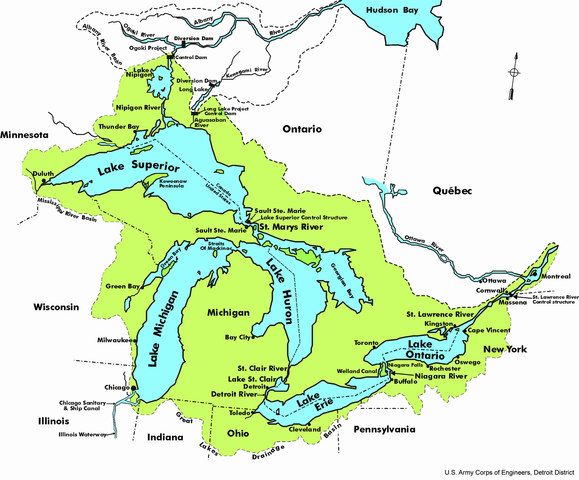
I’m reading about the Great Lakes in preparation for a cruise on the Great Lakes from Chicago to Toronto. (1,2)  It’s a story of continuous invasions of aquatic creatures, one after the other, with many more expected in the future.  Every one of those invasions was caused by the removal of natural barriers from isolated bodies of water to accommodate human activities such as shipping of goods.

Connecting the Great Lakes to the Atlantic Ocean

The St. Lawrence River is the natural gateway into the Great Lakes from the Atlantic Ocean.  The salty water of the ocean and the fresh water of the lakes was part of the natural barrier that protected the lakes from invasive species because, for the most part, the marine creatures that live in salty water are different from those that live in fresh water. 

The St. Lawrence River was steep and narrow, creating white-water rapids that limited travel from the ocean to the lakes (or vice versa) in anything but a birch bark canoe that could be carried around the rapids.  The natural barrier was penetrated by building the St. Lawrence Seaway in 1959 that widened the river and used locks to climb the steep incline of the river into Lake Ontario. 

The St. Lawrence Seaway was instantly obsolete because of the unforeseen container revolution that transformed global shipping.  The transition from traditional to container shipping was instantaneous because the advantages are so great. Container ships are huge in comparison to the small ships that had been loaded by hand for centuries. The St. Lawrence Seaway is too narrow to accommodate container ships.  The loans given to the builders of the seaway by Canada and the US were eventually forgiven because the tolls on the seaway will never pay for the expense.

But the damage was done, although much of it could have been avoided.  The ships that start their voyage in fresh water ports on rivers take on their ballast water when they start their voyage and with it freshwater aquatic creatures that don’t live in the Great Lakes.  When they arrive in the Great Lakes they dump their ballast water to take on their cargo.  The dumping of ballast water in the Great Lakes could have been regulated in 1959, but it wasn’t.  Only very recently have ships from fresh water ports been asked to exchange their ballast water in the ocean, before entering the Great Lakes and those regulations weren’t mandatory until 2021.  Such is the power of commercial interests that the consequences of introducing new species into the Great Lakes were not considered.

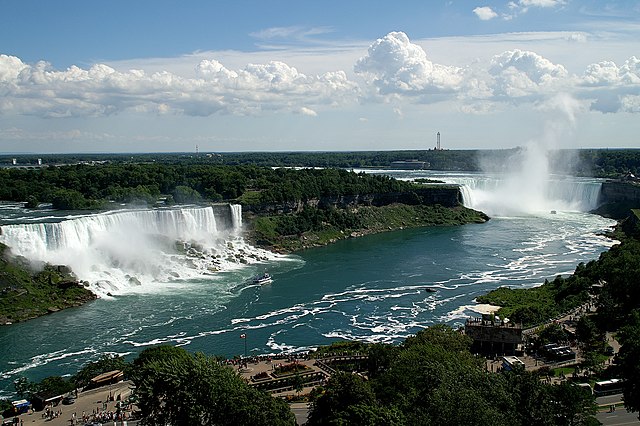
Niagara Falls, Canadian side Source

The second natural barrier that protected the Great Lakes was Niagara Falls in New York with a vertical drop of 160 feet.  That steep cliff across the Niagara River prevented the movement of marine animals from the Atlantic Ocean, through Lake Ontario and into the other four lakes.  It was one of the first barriers to be penetrated by the Erie Canal in 1825 and the Welland Canal in 1829.  The Erie Canal connects the Hudson River that flows into the Atlantic Ocean to Lake Erie, bypassing Niagara Falls and creating a gateway from the Atlantic Ocean into the Great Lakes.  The Welland Canal connects Lake Ontario to Lake Erie, which also bypassed Niagara Falls and created another gateway from the Atlantic Ocean to all of the Great Lakes.

Connecting the Great Lakes to the Mississippi River Basin

The St. Lawrence Seaway, Erie, and Welland canals opened the front door of the Great Lakes to salt water creatures in the Atlantic Ocean and the ships that brought foreign aquatic animals into the Great Lakes. The reversal of the Chicago River that connected Lake Michigan to the entire Mississippi River basin, opened the back door to the Great Lakes to all of the freshwater aquatic animals that live in the vast Mississippi River basin, east of the Continental Divide. 

When Chicago was built, it dumped its sewage into Lake Michigan and it also took its drinking water from Lake Michigan.  As the population of Chicago grew it became more vulnerable to typhoid epidemics caused by the polluted water Chicago was drinking.  The Chicago River had sent a dribble of water into Lake Michigan from its headwaters not far west of Chicago before it was reengineered.   

In 1900, Chicago built a huge sanitary canal that connected Lake Michigan to the Mississippi River.  The sanitary canal carried Chicago’s sewage into the Mississippi River and created a shipping lane to the Mississippi River while giving Chicago a clean source of water from Lake Michigan.  The sanitary canal reversed the flow of the Chicago River, which now flows out of Lake Michigan.  

The Consequences

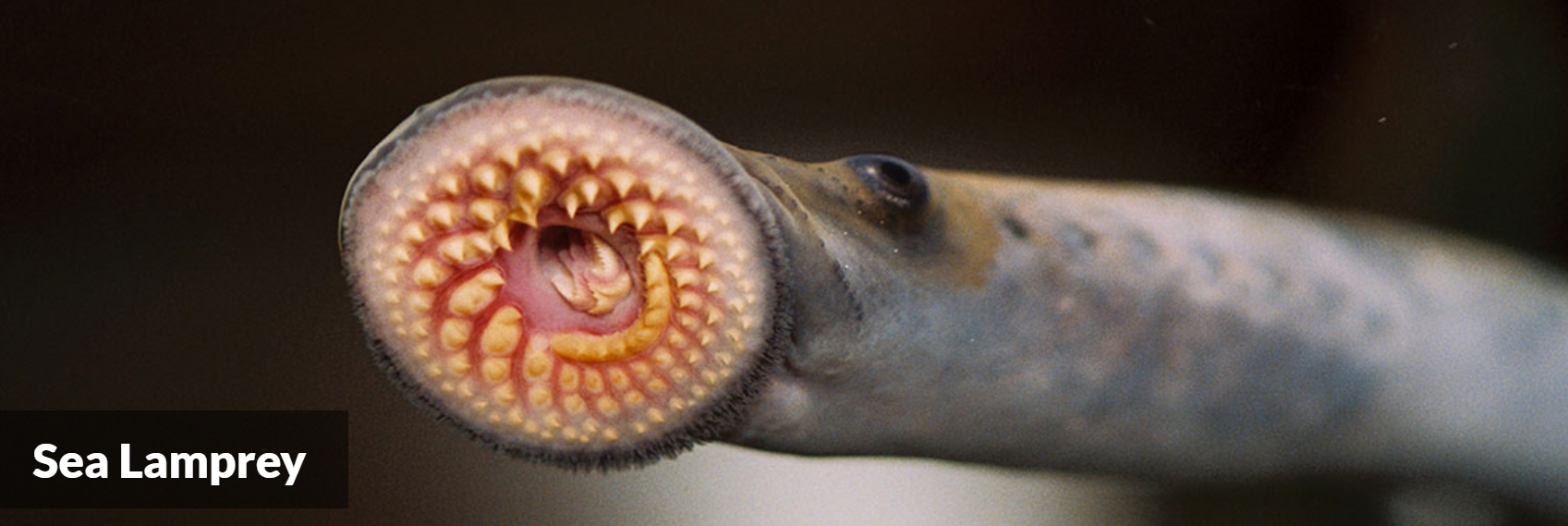
The first invasive predator of native fish arrived in the Great Lakes via the canals built early in the 19th century.  The sea lamprey is a parasite that attaches itself to the bellies of fish and slowly sucks the blood out of it.  Its suction-cup mouth is the stuff of nightmares. 

Source: Great Lakes Fishery Commission

Lampreys, like salmon and sturgeon, are born in freshwater rivers and streams before living in the ocean and finally returning to their freshwater birth place to spawn and die.  They are capable of living in both fresh and salty water.  In the Great Lakes lampreys did not need to migrate to the ocean as their ancestors had because there was sufficient food in the lakes. 

As late as the 1940s commercial fishermen in the Great Lakes were harvesting 100 million pounds of native fish, such as lake trout and whitefish, annually.  Lampreys were first reported in Lake Michigan in 1936.  By 1950, the commercial fishery had all but collapsed as the lamprey population reached its peak. 

Lampreys met their match when a graduate student at University of Michigan wrote his Ph.D. thesis about the life cycle of lampreys.  He spent several years stalking lampreys in Lake Michigan and its tributaries, finding out where and when they spawn and at what point in their life cycle they become parasites of fish. 

The lamprey population had been so vast that it was impossible to target an attack on them.  An understanding of their life cycle enabled the development of a strategy to eradicate them.  More than 5 of their 7-year lifespan is spent burrowed in the gravel of small streams that feed into the lakes.  At that stage they are not yet fish predators. 

Armed with the knowledge of when and where lampreys were most vulnerable, the strategy was to build mesh barriers that prevented the lampreys from returning to the streams to spawn.  There was some success with the barriers, but not sufficient to reduce the huge population. 

The final solution to lamprey control was the use of a chemical that would poison lampreys without killing native fish. Finding the chemical that would do the job was a classic case of trial-and-error without regard for the consequences of using poisons in the environment.  Chemicals were solicited from all over the country and the world for study as candidates.  The tests, done in uncontrolled environments with no safety precautions for low-level workers, consisted of dumping hundreds of different chemicals into three jars, one containing a lamprey, another native lake trout, and a third native blue gill.  After hundreds of trials, a chemical that killed only the lampreys was selected for the job of eradicating the lamprey population.  No thought was given to the possible effect on all the other native fish in the lakes—such as whitefish and sturgeon—or humans, or plants. (3) The same chemical is still used today to control the lamprey population, which remains but is no longer considered a problem. 

There are many invasions into the Great Lakes.  The lampreys were followed by alewives, a species of small fish.  The population of alewives boomed at first, then busted, resulting in massive rafts of millions of dead alewives.  Finally, the population of alewives stabilized and now are considered the primary prey of salmon that were introduced in the 1960s to serve the sport fishermen who are the backbone of Michigan’s tourist industry. 

Zebra and quagga mussels proved to be one of most damaging of the invaders in the Great Lakes, partly because of how widely they spread. They were brought to the lakes in the ballast water of ocean-going ships.  The open back door of the Great Lakes into the vast Mississippi River basin enabled the inevitable spread of quagga mussels throughout the country, eventually crossing the Continental Divide into western states.  Those who tried to prevent that spread, spent many years imposing strict regulations about decontaminating and moving boats into places where mussels weren’t yet found.  Today, places like Lake Powell have given up enforcing the regulations. 

The mussels are filter feeders of phytoplankton that is food for creatures at the bottom of the food chain, depriving them of food, as well as their predators higher in the food chain. The mussels have turned sandy beaches into foot-slicing no-go zones.  They improve the water clarity of the lakes, but that’s a mixed blessing for other inhabitants of the lakes. 

Quagga and zebra mussels are now part of the food web.  Populations of diving ducks have increased where mussels are found.  A species of non-native fish—the goby—thrives on quaggas.  And native whitefish, yellow perch, and chub have slowly developed the ability to digest quaggas, a story not fit for the squeamish.  Whitefish don’t have the jaws needed to crack the mussel open, so they swallow them whole and leave it to their digestive system to deal with it:  “the typical whitefish has an anus about the size of a ‘swizzle stick.’  But the fish excrement, a paste of crushed mussel shell thick as unset concrete, stretched the whitefish’s underside orifice to the diameter of his pinky.” (1)

The latest arrival is Asian carp via the Chicago River and sanitary canal from the Mississippi River into Lake Michigan. Asian carp were introduced to the Mississippi River to eat sewage pollution drained into the river by many rural communities.  The prediction is that Asian carp will decimate the commercial fishery of the Great Lakes, though it is still early in that story.

More man-made problems

Not all problems in the Great Lakes are caused by the arrival of foreign aquatic species, but other problems are also man-made.  Lake Erie is the most polluted of the Great Lakes.  In summer months, when temperatures are high, there are toxic algal blooms that kill fish and pollute drinking water.  Although the sources of pollution are man-made, the shallow lake bottom contributes to the problem.  Lake Erie is the shallowest of the Great Lakes. 

The Great Black Swamp at the western edge of Lake Eric slowly drained the watershed into Lake Erie, filtering and cleansing the water as it flowed through the swamp.  The swamp was drained and filled to create more land for agriculture and remove an obstacle to westward travel and migration.  Now the rich agricultural land that surrounds Lake Erie drains run-off of chemical fertilizers into the lake, providing the nutrients that produce algal blooms.

Climate change has already created chaos in the Great Lakes and the damage is expected to accelerate in the future.  While the climate has warmed on land, the temperature of the water in the Great Lakes has climbed even higher, promoting growth of toxic algae. Winter temperatures are no longer low enough to freeze the lakes during the winter because the dark water of the lakes in the winter absorbs more heat than reflective white snow and ice.  The higher temperature of the water in the lakes also increases evaporation of the water, lowering water levels, causing erosion of the exposed shore, and destroying infrastructure on the shore.

Moral of the Story

Problems in the Great Lakes were caused by humans who were accommodating their own needs.  The aquatic animals blamed for the problems were only symptoms of the changes made by humans.  They were not the cause.  Eradicating them will not prevent new invasions in the future, so long as the gateways to other bodies of water remain open.  And over time, many of the species that cause problems at first will enter the food web and become contributing members of the ecosystem.  We fear change, but in many cases that is because our time frame for evaluating change is too short.

We should assume that similar problems have occurred wherever isolated bodies of water have been connected to serve human activities. The Suez Canal connected the Mediterranean Sea to the Red Sea in 1869.  The Panama Canal connected the Atlantic Ocean to the Pacific Ocean in 1914.  I can only imagine the consequences of removing the impassable barriers between those vast bodies of water. 

To be clear, I don’t regret the building of most of the canal passages, with the possible exception of the St. Lawrence Seaway. However, it is not realistic to expect that the environment will not be altered by removing impassable barriers on water or land and it is pointless to blame the plant and animal species that are merely responding to the changes we have made.   


(1) Dan Egan, Death and Life of the Great Lakes, W.W. Norton & Co., 2017

(2) Jerry Dennis, The Living Great Lakes, St. Martin’s Press, 2003

(3) The pesticide 3-trifluoromethyl-4-nitrophenol (TFM) is used to control sea lamprey (Petromyzon marinus) populations in the Great Lakes through its application to nursery streams containing larval sea lampreys. TFM uncouples oxidative phosphorylation, impairing mitochondrial ATP production in sea lampreys and rainbow trout (Oncorhynchus mykiss). However, little else is known about its sub-lethal effects on non-target aquatic species. The present study tested the hypotheses that TFM exposure in hard water leads to (i) marked depletion of energy stores in metabolically active tissues (brain, muscle, kidney, liver) and (ii) disruption of active ion transport across the gill, adversely affecting electrolyte homeostasis in trout. Exposure of trout to 11.0 mg l− 1 TFM (12-h LC50) led to increases in muscle TFM and TFM-glucuronide concentrations, peaking at 9 h and 12 h, respectively. Muscle and brain glycogen was reduced by 50%, while kidney and muscle lactate increased with TFM exposure. Kidney ATP and phosphocreatine decreased by 50% and 70%, respectively. TFM exposure caused no changes in whole body ion (N a+, Cl, Ca2 +, K+) concentrations, gill Na+/K+ ATPase activity, or unidirectional Na+ movements across the gills. We conclude that TFM causes a mismatch between ATP supply and demand in trout, leading to increased reliance on glycolysis, but it does not have physiologically relevant effects on ion balance in hard water.” (Oana Birceanu, et.al., “The effects of the lampricide 3-trifluoromethyl-4-nitrophenol (TFM) on fuel stores and ion balance in a non-target fish, the rainbow trout,” Comparative Biochemistry and Physiology, March 2014)

California’s “Sustainable Pest Management Roadmap” is a 25-year poisonous pathway

California’s Department of Pesticide Regulation (DPR) has published a draft of a policy that would replace its Integrated Pest Management policy with a Sustainable Pest Management (SPM) policy that is different in name only.  SPM makes a commitment to continue using pesticides in California until 2050, and by implication, beyond.  It makes NO commitment to reduce pesticide use or reconsider the current targets of pesticide applications.  It claims that the health hazards and damage to the environment will be reduced by identifying “Priority Pesticides” for possible substitution or “eventual elimination.”  It doesn’t commit to identifying any specific number of dangerous pesticides nor does it provide specific criteria for selecting these dangerous products.  It claims that increased testing and development of new products will result in safer products and puts these judgments into the hands of “stakeholders” with “experiential and observational knowledge” rather than scientists with expertise in soil science, endocrinology, toxicology, epidemiology, biology, botany, horticulture, etc.  The “stakeholder” committee that wrote the SPM proposal for urban areas included the manufacturer of pesticides and other users and promoters of pesticides. 

That’s not an exhaustive list of the many faults of SPM and the dangers that lurk in it.  I hope you will read it yourself and consider writing your own public comment by the deadline on Monday, March 13, 2023, at 5 pm.  The document is available HERE.  It’s less than 100 pages long and it is a quick read because it is basically a collection of bullet-points.

This is how to comment:  “DPR is accepting public comments to inform the prioritization and implementation of the Roadmap’s recommendations through March 13, 2023 at 5 p.m. Comments can be shared in writing to alternatives@cdpr.ca.gov or by mail to the department at 1001 I Street, P.O. Box 4015, Sacramento, CA 95812-4015.” Please note that Department of Pesticide Regulations is not offering revisions, only “prioritization and implementation.” 

My public comment on California’s “Sustainable Pest Management Roadmap”

 A summary of my public comment is below.  A link to the entire comment is provided at the end of the summary:

Public Comment on
“Sustainable Pest Management Roadmap”
(AKA “Pathway to poisoning the environment for another 25 years”)

My public comment is focused on pesticide use in urban areas because of my personal experience and knowledge of pesticide use where I live.  These are the broad topics I will cover in detail with specific examples later in my comment:

  • Since glyphosate was classified as a probable carcinogen by the World Health Organization in 2015 and the manufacturer of glyphosate settled 100,000 product liability lawsuits by awarding $11 billion to those who were harmed by glyphosate, public land managers have been engaged in the process of substituting other, usually equally or more dangerous herbicides for glyphosate to deflect the public’s concerns.  The Sustainable Pest Management Roadmap (SPM) formalizes this process of substitution without addressing the fundamental problems caused by pesticides. 
  • SPM endorses the status quo that exists now.  Affixing the word “Accelerating” to SPM is an extreme case of double-speak that deliberately obscures, disguises, distorts, or reverses the meaning of words.  SPM ensures that toxic pesticides will be used in California for more than 25 years, to 2050, and likely beyond.  SPM therefore accelerates the damage to the environment that is occurring now.  Given that climate change will enable the movement of more pests into areas where they are now suppressed by weather, greater use of pesticides should be anticipated so long as the underlying issue is not addressed.
  • The underlying issue is that pests have been identified for eradication that in some cases cannot be eradicated and in other cases should not have been identified as pests either because they are innocuous or because of the valuable ecological functions they perform.  The key question that SPM does not address is whether pesticide use is truly necessary in the first place.  Unless we focus on whether a pesticide is actually necessary, all other issues are merely window dressing for perpetual pesticide use. 
  • SPM proposes to identify “Priority Pesticides” for possible substitution without any clear definition of “Priority Pesticides,” a process that is ripe for manipulation. Given the substitutions that are occurring now, we cannot assume that further substitutions would be less toxic. SPM puts the classification of “Priority Pesticides” into the hands of “stakeholders” without clearly identifying who stakeholders are.  SPM says “stakeholders” were involved in the development of the proposed policy.  Those stakeholders included only users and promoters of pesticide use.  There was no representation on the Urban Sub-Group of organizations such as Californians for Pesticide Reform, California Environmental Health Initiative, Beyond Pesticides, Center for Environmental Health, Environmental Working Group, etc.  Nor was there any visible expertise in the fields of science that are capable of analyzing and evaluating the impact of pesticides, such as soil science, endocrinology, toxicology, entomology, botany, biology, or horticulture.  SPM ensures that this exclusion will continue during the implementation phase by suggesting that “experiential and observational” knowledge should be represented on an equal footing with undefined “science.”  The word “science” is being used and abused by advocates for pesticide use who dangle it as a magic talisman, conferring fraudulent credibility. 

My entire public comment is available here:

A Milestone for Million Trees

As the Million Trees blog approaches the anniversary of its eighth year, we are celebrating a milestone. Yesterday, Million Trees reached a total of 250,000 individual views of posts on Million Trees.  We now have over 300 subscribers and we are averaging about 150 views per day.  About 25% of our readers are outside the United States.  Since nativism in the natural world is an international fad, we are gratified that Million Trees is being read by people in other countries.  Million Trees is also proud and grateful for the participation of several academic scientists who have written informative guest posts for Million Trees in the past year.  Thank you, Dr. Matt Chew, Professors Mark Davis and Art Shapiro, and Dr. Jacques Tassin for your help!

Our most popular posts have each been visited by over 10,000 readers.  They are, in the order of their popularity:

  • “Darwin’s Finches: An opportunity to observe evolution in action.”  This article about the speed with which adaptation and evolution occur in a rapidly changing environment is the bedrock of the Million Trees blog.  Nativists mistakenly believe that evolution is much slower than it is.  Therefore, nativists believe plant and animal species are nearly immutable and that they are locked into mutually exclusive relationships, which are, in fact, extremely rare in nature.
  • “Nearly a HALF MILLION trees will be destroyed in the East Bay if these projects are approved.” The Million Trees blog was created to inform the public that nativism is destroying our urban forest in the San Francisco Bay Area.  Our urban forest is composed of predominantly non-native trees.  If they are destroyed, we will not have an urban forest because native trees will not survive in our changed and rapidly changing environment.  Non-native trees were planted here because people wanted trees and native trees existed only in riparian corridors where they were sheltered from the wind and there was sufficient water.
  • “Falling from Grace: The history of eucalyptus in California.”  Because people wanted trees, they planted non-native trees that were capable of surviving in the San Francisco Bay Area.  Non-native trees were valued for nearly one hundred years until nativism got a death grip on our public lands. This article on Million Trees tells the history of why eucalypts were planted and why they “fell from grace.”

In the past year, one of the most popular posts on Million Trees was “Krakatoa:  A case study for species dispersal.”  This post has been viewed by over 7,000 readers.  Understanding how plants and animals were dispersed around the world by natural means–such as by birds, wind, and ocean currents—is another way to realize that the concept of “native vs. non-native” is an artificial construct with little practical meaning.  Plants and animals have always moved and they will continue to move.  In fact, as the climate changes, they MUST move if they are to find the environmental conditions in which they can survive.

Million Trees Commitment

Million Trees will continue to advocate for the preservation of our urban forest in the San Francisco Bay Area.  Our strategy is to inform the public of the many projects that are destroying our forests and to describe the damage that is being done by those projects.  We are particularly concerned about the use of pesticides to eradicate non-native plants and trees.  We are equally committed to providing our readers the latest scientific discoveries that relegate invasion biology to a scientific back-water.  We are hopeful that the gap between public policy and the scientific knowledge discrediting invasion biology will eventually be bridged and bring an end to this destructive fad.

Public reactions to conferences on invasive species are always illuminating

I am publishing a guest post by Jacques Tassin, who tells us of his personal experiences with presenting his findings about invasive species in public forums.  Jacques Tassin is a French ecologist. He has been working on invasive species for more than twenty years, especially on islands in the West Indian Ocean and Pacific Ocean.

Jacques Tassin

Dr.Tassin agreed to tell us about his interactions with the public because he believes the public’s views of invasive species are poorly understood and that improved understanding of the public’s views would improve communication about this controversial topic. 

I must add that my personal experiences with such interactions have revealed the same themes.  The public feels strongly that it is possible—even necessary—to control nature.  And much of that sentiment is based on guilt about the damage that humans have done to nature and a desire for redemption.  I prefer to respond to that viewpoint by informing the public of the damage being done in the name of “restoration.”  We cannot redeem ourselves by doing yet more damage.  However, I share Dr. Tassin’s frustration with scientists who are unwilling to speak to the public in ways that the public can comprehend.

Jacques Tassin is a new voice on Million Trees.  I am grateful for his participation in our discussion of invasion biology.

Million Trees


It takes much energy for a scientist to go down to the arena to meet the general public, for example in the form of a conference. But it is well worth it. On the one hand, because it allows scientists to hear a different kind of discourse than media coverage of the issue. On the other hand, because the comments and questions from the public are often very significant.

Following the publication of my book La Grande invasion: qui a peur des espèces invasives ? (The Great Invasion: Who Fears Invasive Species?) published in editions Odile Jacob in 2014, I was often invited to such meetings. I can distinguish several types of public reactions to my conferences.

The main one is the public’s seeming intolerance of the idea that we can agree to do nothing about the progression of an invasive species, even if it is proven that nothing can be done about it, or that the species in question does not have a clearly negative ecological or economic impact. Farmers and hunters are particularly opposed to this view of not intervening and therefore not controlling the environment. For these people, it is a question of putting nature in its place.

The public also strongly rejects the possibility that we cannot redeem our faults, or that we may not be able to undo what we have done, if we do not deal with invasive species. This reaction is the result of an activist stance that is particularly present in nature conservation associations. The remark that comes up most often is “we’re not going to sit back and watch.”

Finally, the third most frequent reaction is the belief that each invasive species introduced somewhere necessarily takes the place of another species. This principle of musical chairs seems deeply rooted in everyone’s mind. It is not certain that this is due to the theories of Robert MacArthur and E.O. Wilson’s about island biogeography. It seems much more likely that, deep in our imagination, the arrival of an intruder will end up with the departure of one of us.

In any case, it seems to me that the debate about invasion biology is far more concerned with social psychology than with the science of invasions. I am now certain that those who focus their discourse on the biological and ecological dimension of invasive species are headed in the wrong direction. Today, invasion biology is more in the field of psychology and beliefs than it is a question of a rational discourse. But it is clear that scientists are particularly ill-suited for this dialogue. Journalists who are used to talking to hundreds of thousands of listeners on the radio or in the press are much better equipped to do so. Scientists must learn from journalists how to communicate with the public about invasive species, whatever the public’s opinion of invasive species.

Jacques Tassin

Further Reading:

Tassin J., Thompson K., Carroll S.P., Thomas C.D. (2017). Determining whether the impacts of introduced species are negative cannot be based solely on science: a response to Russell and Blackburn. Trends in Ecology and Evolution, 32 (4) : 230-231.

Tassin, J. and C. Kull (2015). Facing the boader dimensions of biological invasions. Land Use Policy 42 : 165-169.

Tassin, J. (2014). La grande invasion. Qui a peur des espèces invasives ? Editions Odile Jacob. Paris, 216 p.

Another legal victory in the long fight to save our urban forest

The Hills Conservation Network (HCN) has won the third legal battle against the many attempts to destroy the urban forest in the East Bay.  Every lawsuit they have filed has resulted in significant victories that have prevented three public land managers from destroying as many trees as they wanted.  We will briefly describe HCN’s early victories and end by telling you about their most recent victory.  Finally, we will explain the implications of those legal successes for the threats to the urban forest that are still anticipated.

East Bay Regional Park District

Frowning Ridge after 1,900 trees were removed from 11 acres in 2004.  This is one of UC Berkeley’s first projects to destroy all non-native trees on its properties.

When UC Berkeley clear cut all non-native trees on about 150 acres of their properties in the hills over 10 years ago, there was no opportunity for the public to object to those projects because there was no environmental impact review.  Those projects were a preview of the damage that other public land managers intended and they helped to mobilize opposition to the projects when they were formally presented to the public.

The East Bay Regional Park District (EBRPD) published its “Wildfire Hazard Reduction and Resource Management Plan” in 2009.  That plan proposed to radically thin and/or clear cut all non-native trees on several thousand park acres.  Along with HCN, I was one of the members of the public who objected to those plans for many reasons:  the loss of stored carbon and carbon storage going forward, the pesticides used to poison the non-native trees and vegetation, the increased fire hazard resulting from grassy vegetation that occupies the unshaded forest floor when the trees are destroyed.

Tilden Park, Recommended Treatment Area TI001, June 5, 2016. This in one of the projects of East Bay Regional Park District, in process.

EBRPD chose to ignore our objections and published an Environmental Impact Report based on the unrevised plans.  We repeated our objections to the project when the EIR was published.  The Hills Conservation Network filed their first lawsuit against the EBRPD EIR, which did not adequately address the environmental impacts of the plans.  HCN and EBRPD engaged in a long and arduous negotiation which resulted in a settlement that saved many trees in Claremont Canyon and some in other project areas.  EBRPD continues to implement their plans as revised by the HCN settlement. 

UC Berkeley and City of Oakland

Meanwhile, UC Berkeley and City of Oakland wrote their own plans and applied to FEMA for grants to implement their plans.  Their plans were more extreme than those of EBPRD.  They proposed to clear cut ALL non-native trees on their project acres. 

Once again, along with HCN, I asked that FEMA not fund those grants to UC Berkeley and City of Oakland because of the environmental damage they would do and the increased fire hazard that would result if the projects were implemented.  FEMA’s response to our objections was to require an Environmental Impact Study (the federal equivalent of an EIR) for the projects.

I joined HCN in recruiting over 13,000 public comments on the Draft Environmental Impact Study (EIS).  About 90% of those public comments were opposed to the projects.  Despite that public opposition, the EIS was approved with a few small concessions.  A few project acres would be “thinned” over a 10-year period, but ultimately all non-native trees would be destroyed on the project acres of UC Berkeley and City of Oakland.

HCN sued FEMA to prevent the funding of the projects as described by the EIS.  The Sierra Club prevented any negotiation from taking place by counter-suing.  The Sierra Club lawsuit demanded that EBRPD clear-cut ALL non-native trees.  The Sierra Club was not satisfied with the radical thinning that EBRPD is doing on most project acres.  These competing lawsuits produced a stalemate that lasted until September 2016, when FEMA cancelled all grant funding to UC Berkeley and City of Oakland in settlement of HCN’s lawsuit against FEMA.

That was truly a fantastic victory that was not anticipated.  In fact HCN’s lawsuit only asked that UC Berkeley and City of Oakland scale back their plans to use the same “thinning” strategy being used by EBRPD.  To this day, it feels like a gift.

Sierra Club’s lawsuit to force EBRPD to clear cut non-native trees on their property was dismissed by the same judge who approved the FEMA settlement.  The Sierra Club has filed an appeal of that dismissal.  Sierra Club remains fully committed to its agenda of destroying all non-native trees and using pesticides to prevent them from resprouting.

UC Berkeley’s response to losing FEMA grant

UC Berkeley attempted to satisfy CEQA requirements for an Environmental Impact Report for their FEMA project by writing an addendum to their Long Range Development Plan.  They claimed that their Long Range Development Plan adequately evaluated environmental impacts of their planned tree removals.  If they had succeeded, they would have been in a position to implement their plan without FEMA funding. 

The Hills Conservation Network filed their third lawsuit against UC Berkeley on the grounds that a brief addendum to UC’s long-range development plan did not meet legal requirements for an EIR.  The judge who heard arguments for a permanent injunction to delay implementation of the project until completion of a full EIR, agreed with HCN.  He pointed out to UC Berkeley’s lawyer that the description of the project in the long-range development plan bore little resemblance to the project presently planned.  The judge had done his homework.

The final chapter in this legal saga was that UC Berkeley attempted to avoid paying HCN’s legal fees.  California’s environmental law (CEQA) requires that the losing party pay the legal fees of the winning party.  This provision is intended to enable small citizen groups to challenge deep pocket corporations and institutions.  HCN (and its legal representative) had been adequately compensated in its first two legal battles, but UC Berkeley thought it could refuse.

The judge thought otherwise.  Not only did he require UC Berkeley to pay for its illegal attempt to avoid environmental impact review, he commended HCN for its public service:  “The Court determines that Petitioners were a successful party in this action, and that this case resulted in enforcement of important public rights and conferred a significant benefit on the public.” Yes, indeed, HCN has performed a valuable public service and we are grateful for the judge’s recognition.

For the moment, we believe that UC Berkeley’s plans to destroy all non-native trees are on hold.  They have several options.  They can complete an EIR for the original plans.  Or they can revise or abandon their plans.  We will watch them closely.

Update:  On June 14, 2017, UC Berkeley filed a lawsuit against FEMA and California Office of Emergency Services to reverse the settlement that cancelled the FEMA grants to destroy all non-native trees on UC Berkeley project acres.  (Media report on UCB lawsuit is available HERE.)  HCN is developing a legal strategy to address this latest move by UC Berkeley.  UC Berkeley’s lawsuit implies that they are still committed to their original plans to destroy all non-native trees. 

City of Oakland’s response to loss of FEMA grants

The reaction of City of Oakland to the cancellation of their FEMA grant was thankfully very different from UC Berkeley’s reaction.  In November 2016, they signed a contract to write a vegetation management plan for the purpose of reducing fire hazards.  That contract makes a commitment to conducting a complete public process, including an environmental impact review.  The contractor has already held two public meetings and an on-line survey.  We will participate in this process and we urge others to participate.  Sign up HERE to be notified of the public meetings.

The Oakland Fire Department has announced the next public meeting regarding the development of the vegetation management plan on Thursday, June 29, 2017 to provide project updates and offer an opportunity to ask questions/provide feedback. Project staff will be available to give a summary of the community survey responses received in March/April 2017, and to provide an update on Vegetation Management Plan development, methodologies, and work completed and underway.

  • Public Meeting: June 29, 2017, 5:30 PM – 7:30 PM
    Richard C. Trudeau Conference Center
    11500 Skyline Blvd
    Oakland, CA 94619

These are the Oakland city properties that will be covered by the vegetation management plan: 1,400 acres of parks and open spaces and 300 miles of roadsides.  Interactive map is available here: https://oaklandvegmanagement.org/

We are hopeful that Oakland’s vegetation management plan will be one that we can live with.  The City of Oakland should understand that another lawsuit is an alternative if the vegetation management plan is as destructive as their original plans. 

Although I contributed to the cost of HCN’s lawsuits (along with many others), I don’t have the stomach to engage in them.  Therefore, I am deeply grateful to HCN for their courage and fortitude in preventing the total destruction of our urban forest.  Although I was skeptical of legal challenges as the way to prevent the destruction of our urban forest, I am now a convert.  The HCN lawsuits were the most effective tool we had.

The evolving goals of ecological “restorations”

We are publishing a “progress report” from a member of our tree team who attended a Weed Management Workshop on June 3, 2017.  This report suggests that the goal of local ecological “restorations” may be more realistic than they were in the past and potentially less destructive. 


Friends,

I attended a Weed Management Workshop this morning that was co-sponsored by East Bay Regional Park District and the California Invasive Plant Council.  It was attended by about 70 people, representing many of the “stewardship” organizations engaged in native plant “restorations.”  The main speakers were Doug Johnson, Executive Director of the California Invasive Plant Council and Pam Beitz, a member of the Integrated Pest Management staff of the East Bay Regional Park District.

The primary purpose of the workshop was to recruit new volunteers for the many “restoration” projects in the East Bay.  Similar workshops will be offered in Mill Valley (June 17), San Jose (June 24), and Portola Valley (July 15).  Since volunteers do not use pesticides or heavy equipment, those methods of eradicating “invasive” plants were not discussed. [Information about remaining workshops available HERE.]

Although the usual accusations about the negative impact of “invasive” plants were discussed, the speakers made several acknowledgements about limitations on their objectives that represent significant progress in the 25-year debate about invasion biology.

In the spirit of encouragement, I will tell you about a few of them.

Doug Johnson set the tone at the beginning of the workshop when he said, “Non-native plants aren’t evil.  It’s important not to get ideological about this.”  The audience did not react negatively to his appeal to base judgments about non-native plants on their ecological function and impacts on ecosystems.

Pomo gathering seeds, 1924. Smithsonian photo archieve

Pam Beitz acknowledged that the historical landscapes, which “restorations” attempt to recreate were, in fact, manmade.  She provided several observations from Kat Anderson’s Tending the Wild to illustrate that point.  Native Americans intensively gardened the landscape to foster the plants they needed for food, shelter, and tools.  The implication of that history of our landscape is that ecological “restoration” must make a permanent commitment to managing the landscape. [HERE is an article on Million Trees about “Tending the Wild.”]

Beitz said the goal of these weed management projects is to eliminate “invasive” plants from a small enough area that it can be managed for the long term.  She said it is no longer considered feasible to eradicate “invasive” plants.

In answer to the question, “Why manage the wildlands?” Beitz said, “Because we are driven to alter our environment.”  She also said that human disturbance maximizes biodiversity, citing a study by Joe Connell that found the greatest diversity where there are intermediate levels of disturbance.  This is a radical departure from the earlier view that the most effective conservation eliminates all human activities.

There were also many representatives of local “restoration” projects who described their projects and recruited more volunteers.  Some of their presentations indicated the shifting emphasis of native plant “restorations.”

  • Margot Cunningham of Friends of Albany Hill said that 50% of the 300 plants on Albany Hill are natives, despite the fact that it is heavily forested in eucalyptus, and that many of those native plants are growing under the eucalypts.  She said there are 100 species of butterflies and moths and that monarchs roost in the eucalyptus trees.  There are 80 species of birds.  Her organization is trying to eliminate plants they consider invasive, such as ivy. [HERE is an article on the Million Trees blog about Albany Hill, which corroborates the view of Friends of Albany Hill.]  

    Native toyon under eucalyptus on Albany Hill
  • Wendy Tokuda is one of the most prominent native plant advocates in the East Bay.  She described several of the projects she has been working on for about 10 years, such as trying to eliminate broom along 3 miles of a trail in EBRPD.  She emphasized the importance of focusing one’s effort on a small enough area that the goal can be both attained and sustained. [HERE is an article on the Million Trees blog about the 10-year attempt to eradicate broom on a trail in the East Bay Regional Park District.]  

Broom on EBRPD trail after 10 years of effort, April 2017

  • Friends of Five Creeks said, “In a city, stewardship is forever.”

I have been following the native plant movement for over 20 years.  I believe this workshop articulated some significant departures from their original agenda:

  • There is a new understanding that the historical landscape was created by humans.
  • Any attempt to recreate the historic landscape will require a permanent commitment to manage the landscape.
  • Because of the scale of such an undertaking, it is not realistic to transform all open space to pre-settlement conditions.  Projects must be scaled to match available resources.

Anonymous member of the tree team


The observation that humans are “driven to alter our environment” struck a chord.  We are in the camp that prefers not to interfere with the workings of nature any more than necessary because we believe that human knowledge is inadequate to presume to make better management decisions than natural processes.  There are pros and cons to every change in nature.  Some plant and animal species will benefit and some will be harmed.  It’s like flipping a coin.  I prefer to put the coin in the hands of nature, rather than the hands of humans.  However, we understand and are sympathetic to the human desire to “help” nature. 

Robin and chicks. Courtesy SF Forest Alliance

A recent article in the New York Times provided a good example of how the good intentions of humans often lead to intrusions into the natural world.  The author explained how she became the self-appointed guardian of birds nesting in her garden.  Her small dog was a predator of fledgling birds.  She felt obligated to identify all the nests in her garden so that she could keep her dog indoors when the birds left the nest. 

When her dog died, she discovered that she could not give up that role.  If one bird was competing with another for a nesting spot, she found herself choosing sides, although she knew she had no business choosing winners and losers in the natural world:   “It is wrongheaded to interfere in nature when something is neither unnatural nor likely to upset the natural order.  I can’t help myself…It’s humiliating, all the ways I’ve interfered.”

We know that volunteers in “restoration” projects mean well.  Since they don’t use pesticides or have access to the heavy equipment needed to destroy trees, we don’t argue with them directly.  Our advocacy for the preservation of our urban forest is aimed at the managers of our public lands because we are as much the owners of those lands as anyone else and our tax dollars are used to fund their projects.

Million Trees