Some “alien invasions” are a bust!

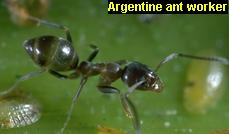
The Argentine ant is one of a gazillion non-native species that have been labeled “invasive species.”  Like most non-native species, they are considered aggressive competitors of native ants.  The usual tools are employed to eradicate them, e.g., pesticides. 

Argentine ant. UC Davis

But wait!  Now scientists are suddenly noticing that the Argentine ant is disappearing from some of their colonial haunts.  Scientists in New Zealand have recently reported the disappearance of the Argentine ant from 40% of sites they populated in the past and their populations have shrunk significantly where they are still found.  Native ants have “reinvaded” the areas vacated by the Argentine ant.  The scientists reporting this finding “concluded the species naturally collapses after 10 to 20 years.”

The scientists in New Zealand don’t claim to know why the populations of Argentine ant have disappeared.  They speculate that a virus is to blame.  They don’t claim “pest control” deserves credit for the disappearance which is estimated to have cost $53 million (NZ$68) per year since the Argentine ant was originally found there in 1990. That’s right, New Zealand spent approximately $53 million per year trying to eradicate the Argentine ant, which apparently is disappearing on its own.

This is apparently not an isolated phenomenon.  An entomologist at UC Davis reports that the Argentine ant has been declining in California as well.  How much pesticide was poured on Argentine ants before they showed the good grace to just disappear?

The Africanized Bee:  Another scary story that didn’t materialize

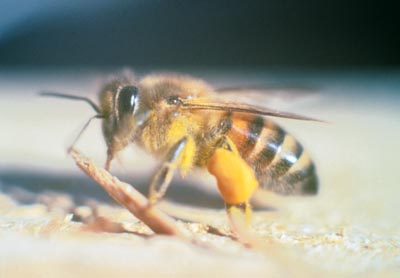
Another example of an “invasion” that seems to have resolved itself is the Africanized bee.  Do you remember about 15 years ago when the media created a panic about the Africanized bee?  We were told that it was spreading rapidly from Latin America, headed our way and that it was so dangerous that it was capable of swarming people and animals and stinging them to death! 

Africanized honeybee USDA

What happened to that particular “alien invasion” story?  Professor Gordon Frankie (UC Berkeley), our local expert about bees, was asked that question in a lecture he was giving to Cal Alumni in October 2011.  He said that the Africanized bee didn’t turn out to be as aggressive as it was originally thought to be and that it didn’t spread as far or as fast as predicted.

Does “Invasion Biology” make more problems than it solves?

Some months ago we created a Google alert for “invasive species.”  Now we are treated to a daily barrage of scary “alien invasion” stories from all over the world.  We wonder how many of these “invasions” will eventually prove to be benign.  We wonder how much money will be spent, how many animals will be killed, how much pesticide will be poured on our public lands, before we figure out that we need not be afraid of everything that is new in the environment.  We wonder how many people are making their living on these eradication efforts and what role they play in frightening the public into funding their projects and tolerating the destruction they inflict on the environment.

Quibbling with the terminology of invasion biology

We believe the key word in Invasion Biology—invasion—is overused and that the adjective—invasive—is used indiscriminately to describe non-native plants, whether they are invasive or not.  We have already told our readers about photographic evidence of open space in the Bay Area taken over decades which proves the eucalypts and Monterey pines are not expanding their range.  Yet, these are two of the nearly 200 species of non-native plants on the California Invasive Plant Council’s list of “invasive species.”

Now we will use another non-native species as an example of how invasiveness is exaggerated by invasion biology.  Apparently many earthworms in the United States are non-native.  That’s because much of the population of native earthworms was wiped out by the glaciers that receded about 10,000 years ago. 

When Europeans began to colonize the country 500 years ago, earthworms were one of many species of plants and animals that they brought with them.  Like many non-native species, earthworms were transported unwittingly, first in the ballast of ships and then in the soil that accompanied plants that were purposefully transported.  In modern times, most earthworms are said to be introduced into new areas primarily by fishermen who use them as bait and then dispose of their surplus bait by throwing them on the ground.

Some 500 years later, invasion biologists are concerned about the impact that non-native earthworms are having on the ecology that evolved without earthworms.  Since glaciers did not extend as far south and west as California and the Bay Area, we don’t know if there are native earthworms here.  So, as you read about the impact that earthworms are said to have on the northern hardwood forests of the Great Lakes Region (Minnesota, Wisconsin, Michigan) and the northeast, you can’t assume that these observations apply locally.

The last period of glaciation in the United States

Since the hardwood forests of the northern and eastern states of the country evolved without earthworms for about 10,000 years, the duff (organic matter) on the forest floor is essential to the sustainability and health of the understory as well as the regeneration of the forest.  Earthworms digest the duff, incorporating it into the soil, and thereby deprive the native plants and trees of the nutrients that they depend upon for germination and survival. 

Although we accept that non-native earthworms may be having a negative impact on the native forests in these areas, we don’t think it is appropriate to call the earthworms invasive because they aren’t moving.  They exist only where man has introduced them.  Genetic studies have determined that isolated populations of non-native earthworms are unrelated to one another.  Their location in urban areas and around lakes and streams where fishermen visit implies that the earthworms are dispersed by man.  And they move very slowly, one-half to 1 kilometer (5/8th of a mile) every 100 years!*

Yet, those who study the earthworms and the managers of public lands who are trying to prevent the further introductions of earthworms consistently describe the worms as “invasive.”  Granted, it is a quibble, but we think this is a misleading description because it implies that the earthworm is to blame for whatever damage is being done to the native ecology when the blame clearly belongs to man.  The earthworms aren’t going anywhere.  Wherever they are found, they were put there by man.  The earthworm is another scapegoat for the harmful activities of man. 

On the bright side, invasion biologists and land managers aren’t trying to eradicate the non-native earthworm.  They are merely trying to educate fishermen to dispose of their surplus worms in the trash, rather than leaving them on the ground.  They concede that it’s impossible to get rid of earthworms where they now exist.  So, at least the soil isn’t being poisoned with pesticides in a futile attempt to return the land to its wormless history.

Once again, we urge invasion biologists to be more discriminating with their designation of “invasive species.”  We believe this term should only be applied to species that are expanding their ranges rapidly and that are actually causing damage in the environment.  Given the impact of climate change, native species are as likely to become invasive as non-native species.  If the term is used more accurately and less often, fewer efforts to eradicate hundreds of plant and animal species would be required.  Therefore those eradication efforts that are truly necessary would be less destructive and more successful.  The field of invasion biology would be more credible and enjoy more public support.

————————————————

* Hale, Cindy, “Evidence for human-mediated dispersal of exotic earthworms:  support for exploring strategies to limit further spread,” Molecular Ecology, (2008) 17, 1165-1169

Nativism is shooting us in the foot

A few months ago, we told you about one of the many projects to eradicate a plant species that is considered non-native.  In this case, smooth cordgrass (Spartina alterniflora) is native to the East and Gulf coasts of the US, but is considered non-native on the West Coast, despite the fact that it has been here for over one hundred years.  About $12 million was spent in the past 10 years on this effort, and the projection is that another $16 million will be spent in the next 10 years.

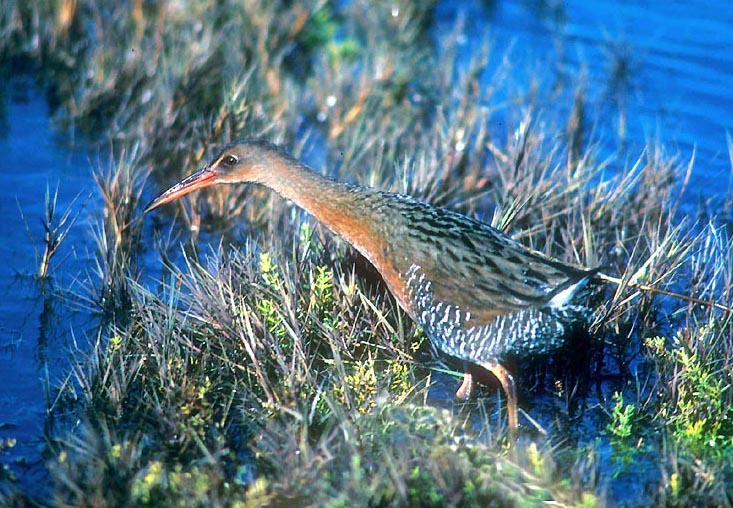
California Clapper Rail. British Wikipedia

When we told you about this project, we speculated that it was having a negative effect on an endangered species, the Clapper Rail.  The non-native Spartina provides cover that is superior to the native variety of Spartina.  It grows more densely and it doesn’t die back during the winter months, as the native variety does.  We also pointed out that the Clapper Rail is abundant on the East and Gulf coasts and is only considered endangered on the West Coast. 

Since we told you about this eradication project, we’ve learned a few things about the Clapper Rail that we hope will interest you, as it does us. 

  • This seems to be another case in which native plant advocates are looking for a scapegoat, when they should be looking at themselves.  Native plant advocates would like you to believe that the Clapper Rail is endangered on the West Coast because of the introduction of non-native red fox.  The red fox is yet another creature that nativists wish to eradicate in the Bay Area.  Apparently it has not occurred to them that the red fox is native to the East Coast, where the Clapper Rail is thriving.  Hmmm, that seems like a bit of contradiction, No?
  • We have learned of the displacement of Clapper Rails from marshes in which the non-native Spartina in being eradicated.
  • The Point Reyes Bird Observatory, a nationally recognized institution that conducts research on birds, has concluded that the Spartina eradication project is having a negative effect on the Clapper Rail.

Evidence that eradication of Spartina alterniflora is harmful to Clapper Rails

In July, a Clapper Rail was seen and photographed at Heron’s Head in southeastern San Francisco.  There was quite a bit of excitement about this sighting because a Clapper Rail had not been seen in San Francisco for decades.  That excitement dissipated when we learned more about where this bird came from, which provided a probable reason for the move. 

The Clapper Rail was wearing a radio collar that had been put on him and 109 other rails by the USGS to track their movements.  He had moved from Colma Creek, 11 km south of Heron’s Head, which is one of nearly 200 Spartina “control sites” in the San Francisco Estuary.  The bird sighted at Heron’s Head is one of three Clapper Rails that have left Colma Creek since 2007, when the radio collars were placed.  The Spartina control project has been going on for nearly 10 years, so we have no way of knowing how many Clapper Rails were displaced prior to 2007.

In October 2011, the Point Reyes Bird Observatory issued the first-ever “State of the Birds Report for San Francisco Bay:”  “Based on decades of monitoring, 29 partners detail the actions needed to keep birds and their habitats thriving as sea levels rise and extreme storm events increase due to global climate change.”  This report acknowledges the role that the Spartina eradication project plays in the continuing decline of the population of Clapper Rails in the Bay Area:

The Clapper Rail’s rebound during the 1990’s was possibly due to fox control but also coincided with the rapid invasion of a tall non-native plant (invasive Spartina).  This invader benefited rails because it provided nesting habitat and protection from predators and high tides.  Beginning in the mid-2000s, the rail population declined sharply, due in part to the removal of invasive Spartina, which threatens tidal flat and marsh ecosystems as a whole.  This recent decline may be leveling off, but the future of Clapper Rails in San Francisco Bay remains tenuous.”

This is another example of the harmful obsession with non-native plants, which seems to trump other considerations, such as the welfare of the animals that benefit from the plants.  As is often the case with such eradication projects, Spartina is being eradicated with an herbicide, imazapyr.  This is a new herbicide about which little is known.  The analysis which was done to justify its use in the Spartina eradication project admits that no studies have been done on its effect on shorebirds, including the endangered Clapper Rail.  The Material Safety Data Sheet mandated by the Environmental Protection Agency tells us that imazapyr is “not readily biodegradable.”  So, in the event that we eventually learn that this herbicide is harmful to shorebirds and/or to us, we can be assured that it will still be in the environment, in the nearly 200 sites in the San Francisco Estuary on which it is currently being sprayed.  Imazapyr is also being sprayed–sometimes from helicopters–in hundreds of places along the West Coast, including in other states.  (A new post on Save Sutro reports more alarming information about imazapyr.)

The cost of nativism

This is an example of the harmful effects of attempting to eradicate non-native species.  It reminds us of a recent editorial in the New York Times about the new law in Alabama which is considered the most extreme anti-immigration law in the country.  The opponents of immigration are delighted with the new law.  The farmers of Alabama are warning us that they cannot replace the immigrants who are fleeing the state. Most of the work in the country’s agriculatural fields and orchards is being done by immigrants.  These are jobs that Americans are no longer willing to do.  This is just one of many unintended consequences of such xenophobic extremism.   We consider the Spartina eradication project another example of nativism run amok.

Professor Arthur Shapiro’s comment on the Environmental Impact Report for the Natural Areas Program

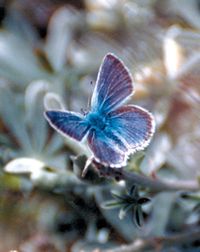
Mission blue butterfly Wikimedia Commons

With permission and in its entirety we are publishing the comment of Arthur M. Shapiro.  He is Distinguished Professor of Evolution and Ecology at UC Davis and a renowned expert on the butterflies of California.  We hope that you will take his credentials into consideration as you read his opinion of native plant restorations in general and the Natural Areas Program in San Francisco in particular.  We hope that Professor Shapiro’s comment will inspire you to write your own comment by the deadline,  which has been extended to October 31, 2011.  Details about how to submit your comment are available here.

*************************

October 6, 2011

Mr. Bill Wycko

San Francisco Planning Department

                              Re: DRAFT EIR, NATURAL AREAS PROGRAM

Dear Mr. Wycko:

Consistent with the policy of the University of California, I wish to state at the outset that the opinions stated in this letter are my own and should not be construed as being those of the Regents, the University of California, or any administrative entity thereof. My affiliation is presented for purposes of identification only. However, my academic qualifications are relevant to what I am about to say. I am a professional ecologist (B.A. University of Pennsylvania, Ph.D. Cornell University) and have been on the faculty of U.C. Davis since 1971, where I have taught General Ecology, Evolutionary Ecology, Community Ecology, Philosophy of Biology, Biogeography, Tropical Ecology, Paleoecology, Global Change, Chemical Ecology, and Principles of Systematics. I have trained some 15 Ph.D.s, many of whom are now tenured faculty at institutions including the University of Massachusetts, University of Tennessee, University of Nevada-Reno, Texas State University, and Long Beach State University, and some of whom are now in government agencies or in private consulting or industry. I am an or the author of some 350 scientific publications and reviews. The point is that I do have the bona fides to say what I am about to say.

 At a time when public funds are exceedingly scarce and strict prioritization is mandatory, I am frankly appalled that San Francisco is considering major expenditures directed toward so-called “restoration ecology.” “Restoration ecology” is a euphemism for a kind of gardening informed by an almost cultish veneration of the “native” and abhorrence of the naturalized, which is commonly characterized as “invasive.” Let me make this clear: neither “restoration” nor conservation can be mandated by science—only informed by it. The decision of what actions to take may be motivated by many things, including politics, esthetics, economics and even religion, but it cannot be science-driven.

In the case of “restoration ecology,” the goal is the creation of a simulacrum of what is believed to have been present at some (essentially arbitrary) point in the past. I say a simulacrum, because almost always there are no studies of what was actually there from a functional standpoint; usually there are no studies at all beyond the merely (and superficially) descriptive. Whatever the reason for desiring to create such a simulacrum, it must be recognized that it is just as much a garden as any home rock garden and will almost never be capable of being self-sustaining without constant maintenance; it is not going to be a “natural,” self-regulating ecosystem. The reason for that is that the ground rules today are not those that obtained when the prototype is thought to have existed. The context has changed; the climate has changed; the pool of potential colonizing species has changed, often drastically. Attempts to “restore” prairie in the upper Midwest in the face of European Blackthorn invasion have proven Sisyphean. And they are the norm, not the exception.

The creation of small, easily managed, and educational simulacra of presumed pre-European vegetation on San Francisco public lands is a thoroughly worthwhile and, to me, desirable project. Wholesale habitat conversion is not.

A significant reaction against the excesses of the “native plant movement” is setting up within the profession of ecology, and there has been a recent spate of articles arguing that hostility to “invasives” has gone too far—that many exotic species are providing valuable ecological services and that, as in cases I have studied and published on, in the altered context of our so-called “Anthropocene Epoch” such services are not merely valuable but essential. This is a letter, not a monograph, but I would be glad to expand on this point if asked to do so.

I am an evolutionary ecologist, housed in a Department of Evolution and Ecology. The two should be joined at the proverbial hip. Existing ecological communities are freeze-frames from a very long movie. They have not existed for eternity, and many have existed only a few thousand years. There is nothing intrinsically sacred about interspecific associations. Ecological change is the norm, not the exception. Species and communities come and go. The ideology (or is it faith?) that informs “restoration ecology” basically seeks to deny evolution and prohibit change. But change will happen in any case, and it is foolish to squander scarce resources in pursuit of what are ideological, not scientific, goals with no practical benefit to anyone and only psychological “benefits” to their adherents.

If that were the only argument, perhaps it could be rebutted effectively. But the proposed wholesale habitat conversion advocated here does serious harm, both locally (in terms of community enjoyment of public resources) and globally (in terms of carbon balance-urban forests sequester lots of carbon; artificial grasslands do not). At both levels, wholesale tree removal, except for reasons of public safety, is sheer folly. Aging, decrepit, unstable Monterey Pines and Monterey Cypresses are unquestionably a potential hazard. Removing them for that reason is a very different matter from removing them to actualize someone’s dream of a pristine San Francisco (that probably never existed).

Sociologists and social psychologists talk about the “idealization of the underclass,” the “noble savage” concept, and other terms referring to the guilt-driven self-hatred that infects many members of society. Feeling the moral onus of consumption and luxury, people idolize that which they conceive as pure and untainted. That may be a helpful personal catharsis. It is not a basis for public policy.

Many years ago I co-hosted John Harper, a distinguished British plant ecologist, on his visit to Davis. We took him on a field trip up I-80. On the way up several students began apologizing for the extent to which the Valley and foothill landscapes were dominated by naturalized exotic weeds, mainly Mediterranean annual grasses. Finally Harper couldn’t take it any more. “Why do you insist on treating this as a calamity, rather than a vast evolutionary opportunity?” he asked. Those of us who know the detailed history of vegetation for the past few million years—particularly since the end of Pleistocene glaciation—understand this. “Restoration ecology” is plowing the sea.

Get real.

                                    Sincerely,

                                     Arthur M. Shapiro

                                     Distinguished Professor of Evolution and Ecology

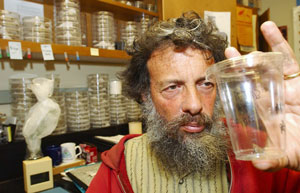
Professor Arthur M. Shapiro, at work, UC Davis

Evolution didn’t stop in 1492

One of the most appealing of the many arguments used by native plant advocates in support of their ideology is the evolutionary concept of “co-evolution.”  Co-evolution is defined by Forgotten Pollinators(1) as “The idea in evolutionary ecology that certain mutualistic organisms have directed or redirected each other’s evolutionary trajectory.”  The implication of this theory is that plants and animals that have evolved together are interdependent and that loss of a particular plant will result in the loss of the animals with which it evolved.  Native plant advocates sometimes describe these relationships as “a lock and key,” implying that native plants and animals fit together in a mutually beneficial relationship which is exclusive. 

Those who believe this theory are obviously deeply committed to saving all native plants because they believe the loss of any single plant would inevitably lead to the loss of the animals that are dependent upon it.  Likewise, non-native animals are often exterminated based on the assumption that they compete with native animals and that loss of native animals will lead to the loss of native plants.

There are three problems with this theory. First, while there are some examples of truly exclusive co-evolved relationships in which both species cannot survive without the presence of the other, the number of such relationships is quite small.  Second, even these relationships are not immutable because evolution has not stopped, and therefore other species may develop mutualistic relationships with the prior exclusively mutualistic species.  And third, organisms are opportunistic and are quick to take advantage of any new opportunities, meaning that many interactions observed between species in the wild are not co-evolved at all.  For example, the honeybee pollinates hundreds of species of North American plants and it didn’t evolve with any of them (since honeybees were introduced into North America from Europe, which had introduced them from Africa).

Why is “co-evolution” rare in nature?

When defining “co-evolution” Forgotten Pollinators adds this caveat, “Good examples of truly reciprocal coevolution are difficult to find.”  Although the concept of “co-evolution” has a certain logical appeal, the explanation for why it is rare in nature is even more logical:  it is a risky survival strategy in a world that is constantly changing.  If, for example, the specific plant upon which a specific animal depends doesn’t bloom or doesn’t return from its dormant phase because of a sudden, even temporary, change in the climate, the animal that is dependent upon that plant is out of luck.  Since such fluctuations of environmental conditions are common, natural selection does not favor the animal that is restricted to a single plant for which there is no substitute.  Such exclusive relationships therefore do not persist in nature.

Nature provides “back-ups” that will enable plants and animals to respond to fluctuating environmental conditions.  For example, few plants have a single pollinator.  Most have several, usually of several different types.  One bee may be a particularly effective pollinator of a particular plant, but that plant is probably also visited by a fly, a butterfly, a bird, a beetle, etc.  As humans do, plants and animals don’t just give up when conditions change.  We all look for and usually find other alternatives. 

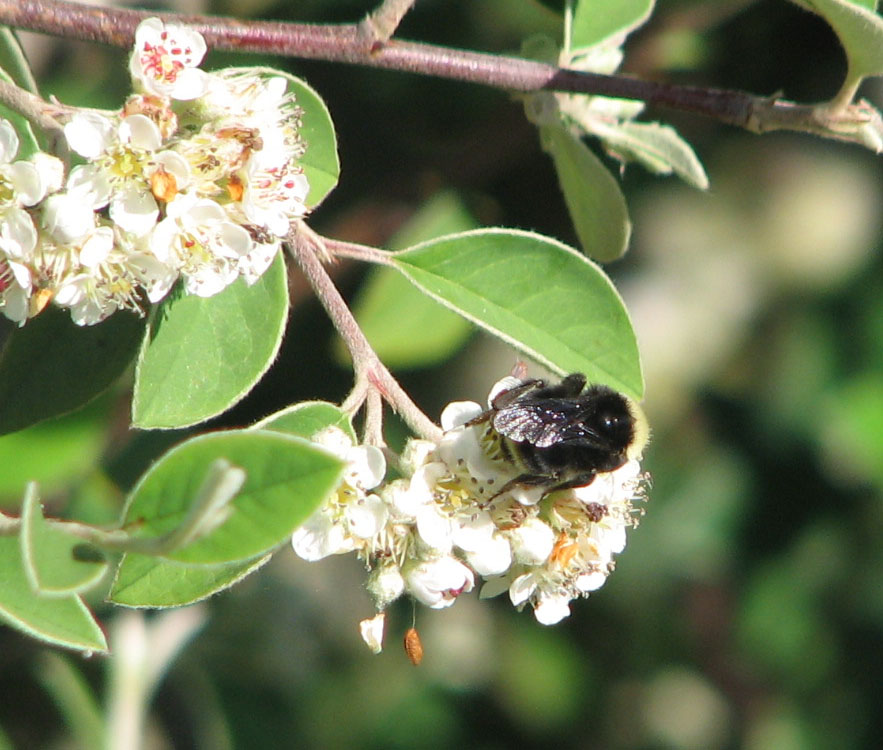
Native bumblebee gathering nectar and/or pollen from non-native cotoneaster. Albany Bulb, Albany, California

“Evolution right under our nose”

The Science Section of yesterday’s New York Times features an article about evolution of animals in New York City In the most densely populated city in the country, founded nearly 400 years ago, 74% of the native plant species that existed when the city was founded in 1624, still exist there.(2)  San Francisco has an even lower rate of extirpation of its native plants since it was founded in 1850.  Ninety-seven percent of the 714 plant species known to exist in San Francisco in 1850 are still found in San Francisco

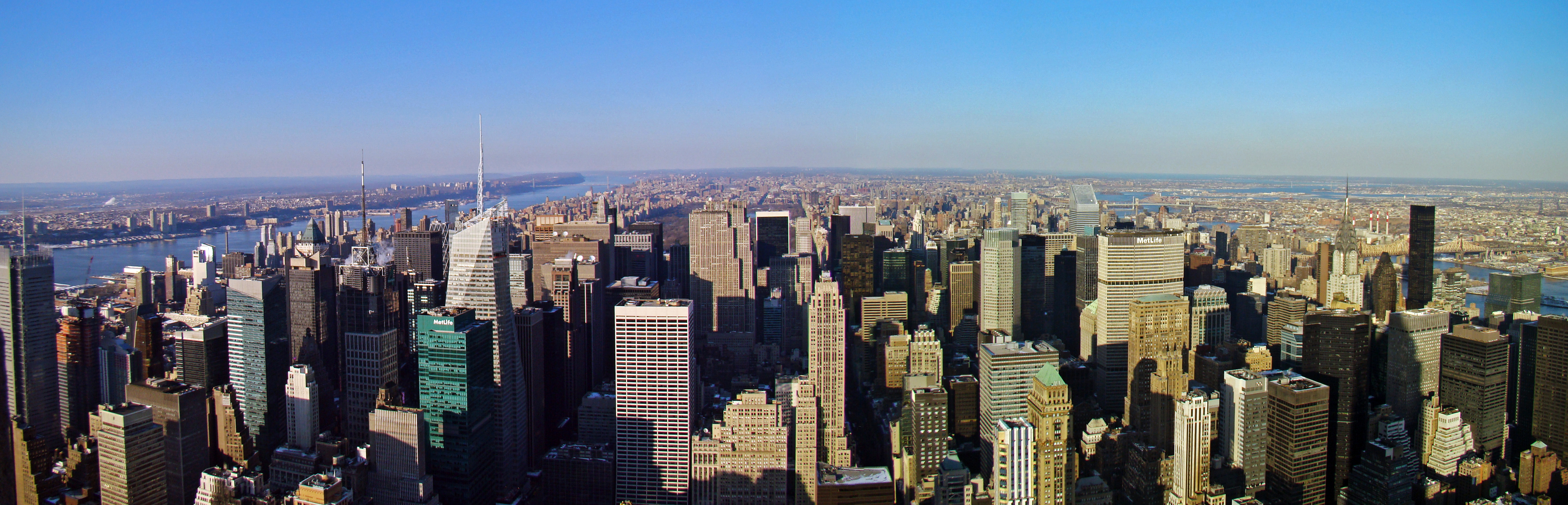
Midtown Manhattan as seen from the Empire State Building. Creative Commons Attribution Share Alike

The fascinating article in the New York Times reports that the ability of animals to evolve in response to changing environmental conditions has enabled their survival in the urban environment. 

The white-footed mouse is an example of a native animal that is thriving in New York City.  The urban environment creates isolated urban islands, such as parks.  Scientists find that virtually every park in New York City has a population of genetically unique white-footed mice.  In fact, “The amount of [genetic] differences you see among populations of mice in the same borough is similar to what you’d see across the whole southeastern United States,” according to the scientist studying this mouse in New York City.

It’s difficult to imagine a more altered, artificial environment than the road medians on Broadway on the Upper West Side of Manhattan, which are composed of landfill used to cover the subway tunnel.  However, scientists have found 13 species of ants living in some of these medians.  Nine of the thirteen species are native. 

Nature is opportunistic and resilient.  It isn’t necessary to eradicate non-native plants and animals to ensure the survival of native plants and animals.  What greater laboratory to illustrate the resilience of nature than New York City? 


(1) Buchmann and Nabhan, The Forgotten Pollinators, Island Press, 1996

(2) Duncan et al, “Plant traits and extinction in urban areas:  a meta-analysis of 11 cities,” Global Ecology and Biogeography, July 2011

Cultural Lag: Public policy lags behind science regarding “invasion biology”

This is a good-news-bad-news story.  The good news is that the most successful environmental organization devoted to the preservation and conservation of wildlands, The Nature Conservancy, has announced its intention to reorder its priorities in what we hope will be a less destructive direction.  The Conservancy is a science-based environmental organization that is unique in that regard.  It employs over 600 scientists to guide and inform its projects, in contrast to many other organizations that employ more lawyers than scientists.  The scientific orientation of the Conservancy undoubtedly puts it in a position to reflect and respond to the increasingly loud voices of other scientists who are expressing concern about the costs and environmental damage that are the unintended consequences of the “restorations” which have evolved out of invasion biology.

The bad news is that public policy regarding native plant “restorations” lags far behind the developing scientific consensus regarding invasion biology, namely that original theories require revision.  This is the consequence of the cultural lag that is inevitable when science moves forward, but communication of its findings to the general public lags behind. 

The Nature Conservancy redefines its goals

In the past few months, the Chief Scientist of the Nature Conservancy, Peter Kareiva, has written several articles in the Conservancy’s publications expressing his views about the future of conservation.  In “Beyond Man vs Nature,”(1) Kareiva is quoted as saying that species preservation should not be the top priority of the Conservancy.  He admits he is “not a biodiversity guy.”  Rather, he says, “The ultimate goal [should] be better management of nature for human beings.”  He does not agree with those who claim that the earth is fragile and man must be excluded from nature in order to protect it.  He considers nature resilient.  He calls the concept of “biodiversity hot spots” sham science and he rejects the notion that conservation and development are mutually exclusive.  We wants conservation efforts to focus on the things that people need from nature such as clean water and clean air.  If and when people experience the benefits of conservation, they will support and participate in those efforts.  The Conservancy can’t save the world alone.  The active participation of the human population is required to achieve the Conservancy’s conservation goals. 

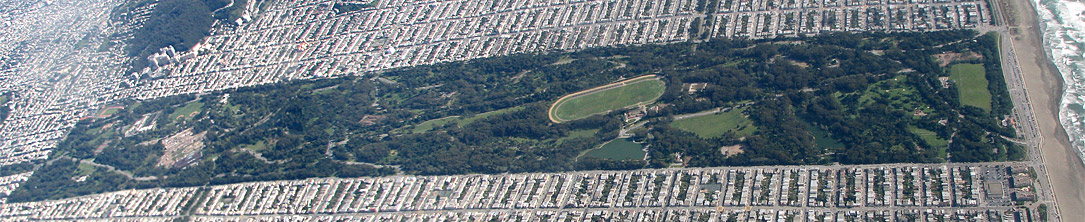
Golden Gate Park San Francisco. Most plants and trees in GG Park are not native. Creative Commons Attribution - Share Alike

In “Conservation should be a walk in the park, not just in the woods,”(2) Kareiva says that the Conservancy should participate in more urban conservation projects because that’s where most people live and even more will live in the future.  He wants conservation to be more visible to people and he wants people to benefit directly from the projects.

In his most recent publication, “Invasive Species:  Guilty until proven innocent?” Kareiva acknowledges the debate about invasive species.  On the one hand, a few invasive species have done a great deal of harm, particularly on islands.  On the other hand, many invasive species aren’t doing any harm and some are benefitting native species, even endangered species in some cases (e.g., Southwestern Willow Flycatcher in Tamarisk).  He concludes, “Science-based conservation cannot be about knee-jerk platitudes and simple views of good and evil…the fact is we cannot control all invasive species, and in many cases, yesterday’s invaders have become plants and animals that are beloved by local people.” 

There is nothing scientifically new to us in what Kareiva has said recently.  What’s new is that he speaks as a representative of one of the most important environmental organizations in the world.  Therefore, he makes a connection between scientific theory and action.  That is new….very, very, new and very encouraging.

Public policy always lags behind science

Public policy is inherently conservative.  It usually reflects consensus and consensus occurs late in every scientific debate.  Once that consensus is finally reached, changing it is a slow process.  And so, we are not surprised by the most recent example of a local community continuing the crusade to eradicate non-native trees.  Two ordinances were recently passed in the Los Altos Hills on the San Francisco peninsula, to do just that. 

  • Citizens building or expanding buildings on their properties will be required by ordinance 10-2.802 to cut down all eucalypts within 150 feet of any roadway or structure.
  • “Town guidelines concerning restoration action” (5-8.08) “deems certain trees undesirable,” including Monterey pine and cypress, as well as eucalyptus.

We are heartened by the publication which announces these new policies.  The author objects to being dictated to regarding her tree preferences.   She also responds to the usual myths regarding the negative qualities of eucalyptus.  In response to the usual justification for its eradication, that it is not native, the author says, “Who cares?”  Indeed, who cares?  We certainly don’t care and we speculate that the vast majority of people in Los Altos Hills don’t care either.  When we speak up on behalf of our trees, we speed the process of changing public policy to reflect the considerable scientific evidence that non-native trees are not harming anything or anyone.   Indeed, their eradication is causing far more harm to the environment by releasing tons of sequestered carbon and requiring greater herbicide use.    


(1) Nature Conservancy, Spring 2011

(2) Nature Conservancy, Issue 2, 2011

Mark Davis, “A Friend to Aliens”

Mark Davis, Professor of Biology at Macalester College is interviewed in the February issue of Scientific American.  He tells us that invasion biology must distinguish between change and harm when labeling non-native species as “invasive,” a term which he believes should be used only in those rare cases when the non-native species pose “health threats” or economic harm.  With the exception of isolated places, such as islands, Mr. Davis tells us that non-natives have not been the cause of extinctions of native species.

 He believes it is irresponsible to label non-native species as “invaders” if they do not cause such harm because attempts to eradicate them are wasteful of scarce resources and often harm the environment more than the mere existence of non-natives.   He advises us to learn to live with those species that are not harmful. 

 He also points out that the eradication of non-natives is often futile and is likely to become even more futile in the future as global travel and commerce increase and the climate continues to change.  All species are going to move, both natives and non-natives and in fact, natives are as likely to cause problems in their expanded range as the non-natives in those regions.  He offers the example of the mountain pine beetle in Western coniferous forests, which is killing half the timber forest in British Columbia as it expands its range, probably in response to increasing temperatures.

Mr. Davis was also interviewed by Environment 360, a publication of Yale University, in November 2009.  In that interview, he is joined by Dov Sax, assistant professor of biology at Brown University, one of the growing number of biologists who are questioning the assumptions of invasion biology.  He provides a local example  of exaggerated claims of invasiveness:  “Dr. Sax says he began to question exotic species orthodoxy as an undergraduate at the University of California, Berkeley.  A professor leading a field trip described the Bay Area’s abandoned plantations of Australian eucalyptus trees as a “biological desert.”  Says, Sax, ‘There was all kinds of stuff growing in there.  I found there were really a similar number of species in both [native oak and eucalyptus] woodland types.  Exotics weren’t always doing the awful things people seemed to think they were doing.’” 

 
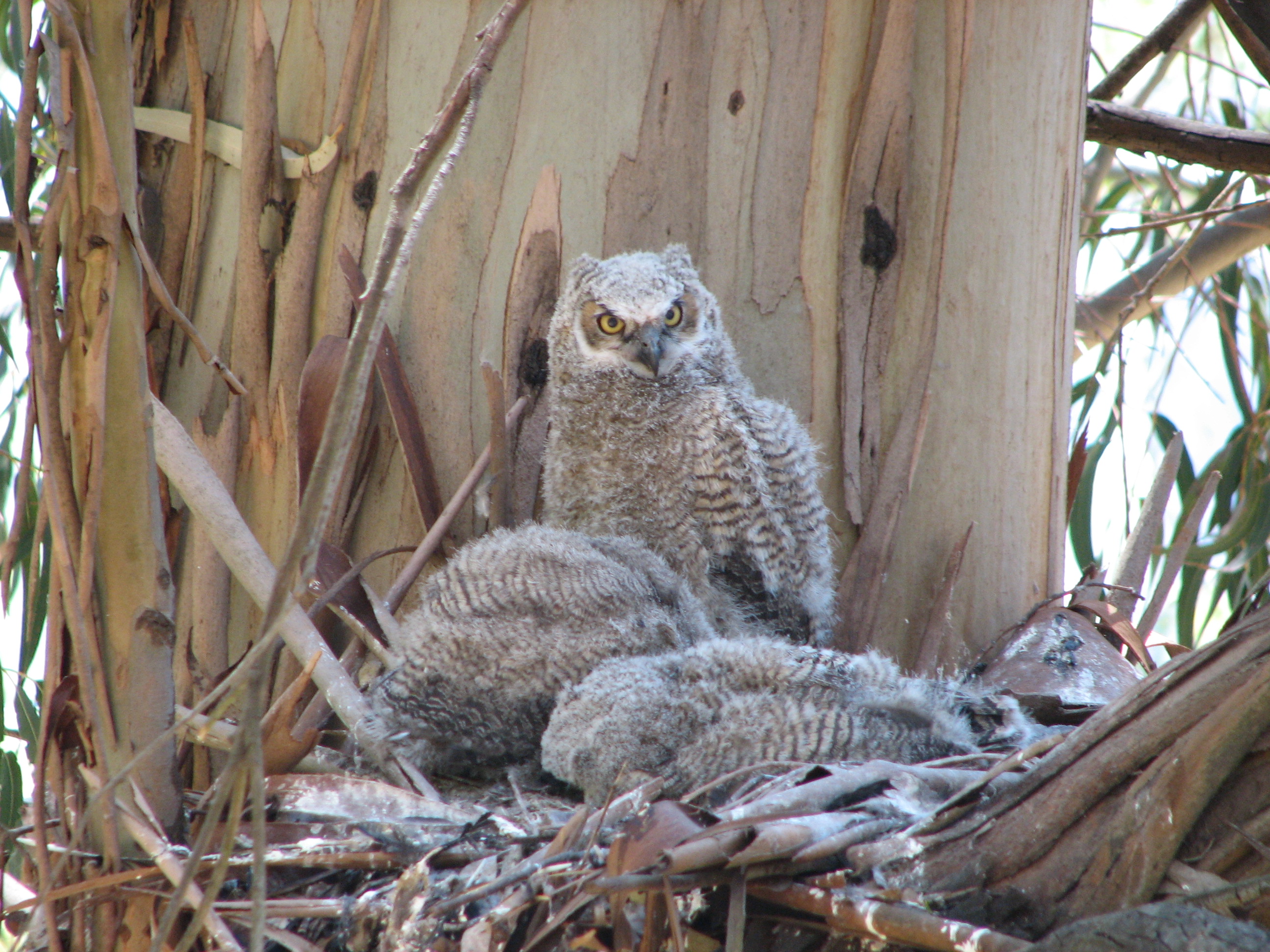
Owlets in eucalyptus, Claremont Canyon, Oakland

We attended a few lectures of an undergraduate course at UC Berkeley that fit with Dr. Sax’s experience.  Students in this undergraduate course were required to “volunteer” in a variety of different “restoration” projects in the Bay Area.  One of the projects on the property of UC Berkeley focused on the eradication of eucalypts.  The leader of this project and supervisor of the students who chose his project had an undergraduate degree in “natural resources” and an MBA in “operations management.”  He made a number of unsubstantiated claims to justify the eradication of eucalypts, but the most flagrantly stupid statement was this:  “The carbon sequestered in non-natives doesn’t count.  Only the carbon sequestered in natives counts.”  This statement has no scientific meaning.  We assume it is intended as a philosophical statement.  In any case, students aren’t learning any science from such a statement. 

Critics of native plant ideology are accustomed to criticism from true believers and Mark Davis is no exception.  In an interview available on the Macalester College website, Mr. Davis says he,  “…received rebuttals that, he felt, veered toward ad hominem attacks on his inexperience in the field.”  But he has not backed down and has come to view this debate as an example of the “values and age-old religious attitudes toward nature [that] frame scientific study and debates more than most scientists would acknowledge.”  He concludes that interview with this observation:  “People can get addicted to paradigms.  Then paradigms become an ideology.  Belief and conviction are very difficult adversaries since they are little affected by data and evidence.”   

Invasion Biology: Confusion about cause and effect

We have said before on Million Trees that eradicating non-native plants will not result in the return of native plants because the underlying conditions that supported those native plants have changed and they are no longer competitive within their historic ranges.  In those earlier posts we have focused on higher levels of CO₂ and the resulting climate change as the environmental variables to which non-natives are better adapted.  Changes in water quality and flows have also resulted in changes in animal and plant populations and we will provide a few specific examples in this post. 

Water levels in the Sacramento River delta have been hotly debated for decades and that debate has recently heated up as a commission gets close to making recommendations that will be legally binding.(1)  On one side of the debate, the cities of Southern California and agriculture throughout the state want more water from the delta.  They have been getting a lot of it for decades, but they want much more of it.  On the other side of the debate, environmentalists object to exporting “our” water because they believe that the decline in the populations of native fish such as smelt and salmon is a direct result of the reduction in water flow from the delta to the ocean via the San Francisco bay.   They object to further diversion of delta water and have legally challenged historic levels of water diversion using the Endangered Species Act. 

USFWS Recovery Plan for Native Fish in the Sacramento River Delta

The non-native bass in the delta are the proverbial red herring in this debate.  Those who want yet more water diverted to agriculture claim that the bass are to blame for the declining salmon population.  They demand that the bass be eradicated and they predict that the salmon population will recover once their non-native competitor is removed.(2)  

The diversion of fresh water flow from the delta reduces the speed of the flow of the water, making it turbid and brackish as the ocean water overwhelms the fresh water from the Sacramento River.  The warmer temperature of the water also promotes the growth of water weeds and algae.  The bass benefit from these conditions, but the salmon do not.  Eradicating the bass will not change these underlying conditions.  Salmon populations are unlikely to rebound unless these underlying conditions are changed.

This is not an isolated example of the fallacy of invasion biology.   There are as many examples of similar arguments as there are non-native animal and plant species now occupying spaces previously occupied by natives.  Native plant advocates and their allies want non-native turtles eradicated because they believe they are responsible for declining populations of native turtles.  They want to eradicate non-native bull frogs which they believe would benefit the native red-legged frogs.  Etc., etc., etc., ad nauseum.

And there are as many examples of how such eradication strategies may not benefit natives as there are demands for eradication efforts.  Here are just a couple. 

The Tamarisk or saltcedar tree is one of hundreds of non-native trees that are considered invasive by native plant advocates.  Here’s a description of an expedition on the Colorado River to eradicate Tamarisk that was published by the Sierra Club magazine.(3)

“’Kamikase!’  The most enthusiastic team members start to yell…and fall upon the larger plants with samarai fervor…’Kill tammys!’  someone yells.  ‘Boy, that was satisfying.’ says a fellow tammy warrior…”  And these are their tools of the trade:  “…a veritable armory of tamarisk-killing tools, 32 gallons of herbicide, more than 40 cases of beer…and a Virgin Mary votive candle that…the camp cook has christened with a label reading, ‘Our Lady of Biodiversity.’”

Herbicide is being used in one of the country’s most important watersheds, yet there is no evidence that the Tamarisk is harming the environment:

  • One study found the “mean values for 22 of 30 soil, geomorphology, and vegetation structure traits did not differ significantly between saltcedar and Fremont cottonwood stands.”(4)
  • The same study found that saltcedar increased floristic biodiversity.
  • Another study stated, “As for the claim that salt cedar has little or no value to insects, birds, and mammals, that has been obliterated by available data.”(5)
Tamarisk in natural habitat in Isreal, taken by Michael Baranovsky, Wikimedia Commons

But more importantly, eradicating the saltcedar is not likely to result in the return of the native cottonwoods because the natural flood cycle upon which the cottonwood depends has been altered by man.  The saltcedar thrives in the reduced water flow.  Unless the water flow is restored, the native trees will not return no matter how many saltcedar are destroyed.  Not only are we wasting our time and effort trying to eradicate saltcedar, we are also poisoning our water in the process.

In our final example, cause and effect were not confused, and a restoration was successful.   The Yuba Pass area in California is one of the most important migratory bird routes in the state.  The breeding population of Willow flycatchers disappeared from one of the wet meadows east of the pass.  The native willows upon which the flycatcher is dependent were disappearing from the meadow because channels caused by man along the edge of the meadow diverted water out of the meadow and dried it up.  Ponderosa pines and sage, which prefer the drier conditions, were taking over the meadow.  If native plant advocates had been in charge of remediating this situation their reaction may have been to eradicate the “invading” pines and sage.  That would have been fruitless effort; conditions in the meadow were suitable for pines and sage, not for willows.   But in this case biologists provided a more sophisticated solution.  They eradicated no plants.  They redirected the water from the channel back into its original slow flow through the meadow.  The meadow is again wet, the willows are now thriving, and the Willow flycatcher has returned.

Willow flycatcher, USFWS

“Invasion biology” is an ideology, not a science.  It frequently confuses cause with effect.  A proper diagnosis of what may superficially appear to be an “invasion” requires an understanding of the complexity of nature.  Most often the underlying reasons for an “invasion” are man-made conditions such as pollution and competition for scarce resources that are extremely difficult to fix.  It may be convenient to scapegoat a plant or animal for what man has caused, but it is unlikely to reverse the conditions that create an opportunity for a non-native plant or animal that is better adapted to those new conditions.


(1) “Delta plan may do more harm than good,” Oakland Tribune, 11/5/10

“Effort Falters on San Francisco Bay Delta,” NY Times, 12/15/10

(2) http://www.sfgate.com/cgi-bin/article/article?f=/c/a/2010/12/11/EDG21GN1MJ.DTL

(3) http://www.sierraclub.org/sierra/200407/grand_canyon.asp

(4) Stromberg, JC 1998, “Dynamics of Fremont cottonwood and saltcedar populations along the San Pedro River,” Journal of Arid Environments, 40:133-155

(5) Anderson, BW 1998, “The Case for Salt cedar,” Restoration and Management Notes, 16: -130-134, 138

Restoration or Destruction?

A recent trip to the Channel Islands off the coast of California inspires us to consider the pros and cons of restorations.  Islands are particularly attractive targets for restorations. They often contain endemic species that do not exist anywhere else because they have adapted to unique conditions in isolation.  And the relative isolation of islands implies that once non-native species of plants and animals are eradicated, re-introduction of those species can be prevented.

Santa Cruz Island, Wikimedia Commons

Some of the Channel Islands were inhabited by Native Americans as long as 13,000 years ago.  Ranching by Europeans began on some of the islands in the 1850s. Europeans brought sheep, cattle, pigs, mule deer, and elk to some of the islands.  Five of the eight Channel Islands were designated as a National Park about 30 years ago. 

Restoration began in earnest in the 1990s when ranching operations were ceased and tens of thousands of sheep and cattle were either removed from the islands or destroyed.  Black rats were eradicated from some islands after native mice were herded into protective enclosures so the rats could be poisoned.  Rabbits were eradicated from another island.  We don’t know how that was achieved. 

The next big effort was the eradication of about 6,000 feral pigs. When this was accomplished by sharp shooters, the first unintended consequence of this ambitious restoration was revealed.  It seems that the feral pigs had been the chief diet of a population of Golden Eagles, considered non-native to the Channel Islands.  When the pigs were removed from their menu, they turned to the rare, endemic Channel Island Fox. 

Channel Island Fox, Wikimedia Commons

The population of Channel Island Foxes plummeted.  Those that remained were captured so they could breed in protected conditions while the Golden Eagles were captured and removed to a remote location.  The Channel Island Fox is making a come-back, but the Golden Eagles are apparently gone for good. 

The eagle considered native to the Channel Island, the Bald Eagle, has been reintroduced.  It apparently lives in peace with the Channel Island Fox because it eats fish. 

Mule deer and elk are next up on the eradication agenda for fauna.  Non-native plants are also doomed.  Ice-plant and fennel are the top priorities for eradication by 2011.  Herbicides and prescribed burns are used for this purpose.   

Prescribed burn, Santa Cruz Island, NPS photo

We were surprised to see notice of herbicide application for Garlon 4 Ultra during our visit to this fragile place.  Someone dressed from head to toe in protective clothing was spraying this chemical on a steep hillside.  We have reported the toxic effects of Garlon in our post about herbicides.

This is a complex ecosystem in which simplistic solutions—such as killing all the non-natives—can result in a big mistake.  For example, do we know if there are native Anise Swallowtail Butterflies on the islands that are now dependent upon non-native fennel for their survival?  Do we know how the application of Garlon will impact the survival of the rare, endemic Island Jay?  The US Forest Service found in its risk assessment done for the EPA that the application of Garlon had a significant negative impact on the reproductive success of birds.  Are those who decided to spray Garlon aware of this study?

Herbicide application notice, Santa Cruz Island

We went to the Channel Islands with open minds.  We thought the strongest arguments could be made for restorations on islands.  However, when we learned of the thousands of animals who were sacrificed to this effort and the dangerous and toxic methods used to accomplish the restorations, we were not convinced.  We nearly lost the Channel Island Fox because of the unforeseen consequences of killing feral pigs.  Man would like to believe that he is capable of managing nature.  But can he do so without causing more harm than good?