Today, I’m publishing an excerpt of “The Post-Native World,” which was originally published by Ground Up, the Landscape Architecture and Environmental Planning Journal of the University of California, Berkeley.
The author of the article, Mark Wessels, received his Master in Landscape Architecture at UC Berkeley. He is a licensed landscape architect and certified arborist. He is a Senior Associate with PGAdesign in Oakland, California.
Mark sent the following excerpt of his article in Ground Up to the members of the Oakland Urban Forest Forum, of which I am a member. Mark’s article reflects my own belief that resilience of urban landscapes in a changing climate requires diversity, redundancy, and flexibility that can only be achieved with both native and introduced plants.
Conservation Sense and Nonsense
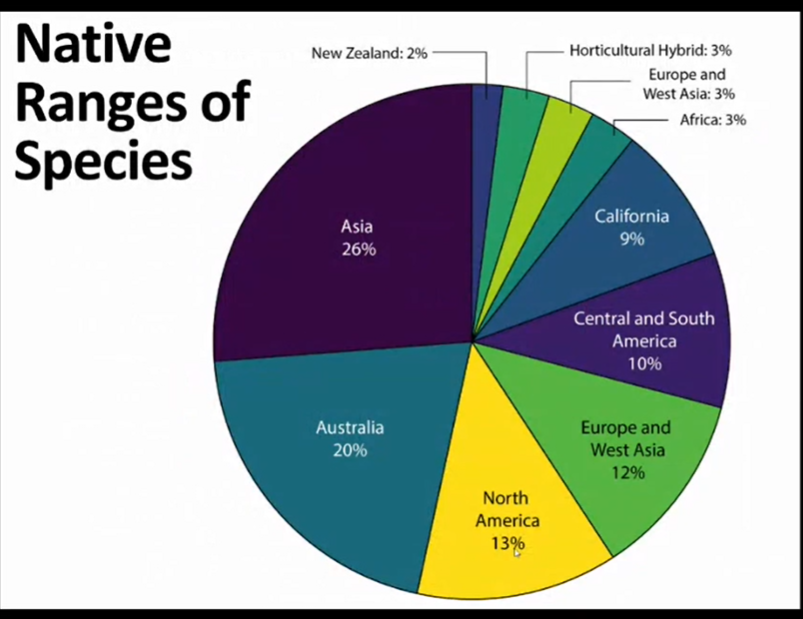
Native ranges of trees in California’s urban forests. Source: Matt Ritter, Professor of Forestry, Cal Poly, SLO
CITIES AS HARBINGERS OF A POST-NATIVE WORLD Native plant enthusiasts argue that native plants have evolved for thousands of years to be optimized for their environments. This is based on the assumption that environmental factors like soil type, climate, and ecological communities change very slowly, at the rate of geologic time. The fitness advantage of native plants depends on a relatively static, unchanging environment.
Yet cities are anything but static. Urban soils are altered by construction, compaction, and contamination. Impermeable surfaces and water infrastructure change urban hydrology. Urban heat island effect and microclimates affect soil and air temperatures. Cities are defined more by how urban they are than by where on the planet they are located. A tree adapted to urban environments, for example, is much more likely to flourish in San Francisco than one adapted to coastal dunes. In short, cities are post-native; they no longer reflect the environmental conditions for which native plants evolved. They are something new.
Cities are not the only places irreversibly altered by human activity. Human influence ripples out through resource extraction, food and energy production, and global climate change. Cities are already several degrees warmer than their historical temperatures, and many native plants cannot survive in this altered environment. Climate models predict several degrees of warming globally in the next 50 years. Native plants face challenges in urban settings today, and 50 years from now they will face challenges everywhere. As the effects of climate change spread beyond cities, landscape architects will need to move beyond geographic provenance to find plants adapted to a post-native world.
DIVERSITY OF APPROACHES VS. SINGLE STRATEGY Globalization has irreversibly altered the planet, but it may also hold the key to surviving climate change. Designers today have unprecedented access to plants from around the world. For millennia, plants have been continuously evolving new, more efficient ways to survive in an astounding array of environmental conditions. In a post-native world, we will have to reconsider the idea that each plant is custom-evolved for a particular place on the earth, and instead think of global biodiversity as a library of adaptation. This library holds the key to successful planting in urban areas today, and hope for an uncertain future.
What I’m suggesting is that we embrace global biodiversity while we still have it; that our cities become hotbeds of plant species richness, hybridization, and cross-pollination; that we start a thousand divergent experiments, in small and controlled ways; and that we embrace this moment of globalization to produce an unprecedented explosion of diversity with which we can begin to replant and repopulate this irreversibly altered planet.
The resilience of natural systems lies in diversity, redundancy, and flexibility. Individual plants, and even individual species, die off frequently, but there is always another individual or another species to fill the void. Relying on a small set of native trees without embracing the redundancy and diversity of natural systems is a recipe for disaster.
“How could intelligent beings seek to control a few unwanted species by a method that contaminated the entire environment and brings the threat of disease and death even to their own kind?” – Rachel Carson
I am pleased to publish a guest article about a grassroots effort to reduce the use of pesticides in Malibu, California, a community of about 10,000 on the coast of Southern California. Malibu is famous as the residence of Hollywood celebrities and executives and surfers attracted by 21 miles of beaches with world-class surfing conditions.
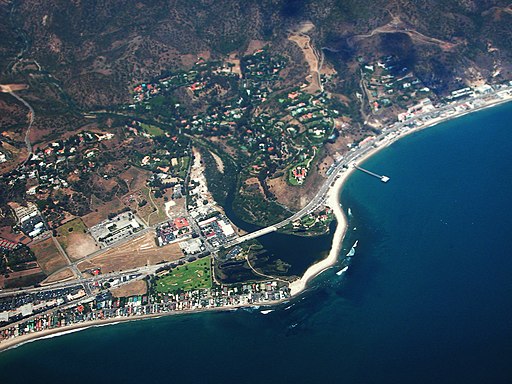
City of Mallibu. Wikipedia – Creative Commons
The author, Kian Schulman, and her husband, Joel Schulman, are founding members of the Malibu-based nonprofit Poison Free Malibu, a group that has had much success protecting local wildlife, children and pets in the Santa Monica Mountains and throughout California by educating the public and policy makers about the dangers associated with pesticides.
I hope the impressive accomplishments of Poison Free Malibu will inspire readers to participate in such efforts in your community in 2025.
Happy New Year! Best wishes for a more peaceful 2025.
Conservation Sense and Nonsense
Grassroots Power is a Strong Voice!
In the fight against harmful pesticides, the coastal community of Malibu, California is a model for the power of grassroots activism and persistent community engagement, which has significantly reduced the use of pesticides in Malibu.
Chemical companies like Bayer (Monsanto), Dow, Syngenta, and others have expanded beyond agricultural markets, targeting “invasive” and “non-native” species in nature preserves with toxic pesticides. The Santa Monica Mountains surrounding Malibu are replete with “invasive species,” targets for eradication with herbicides, downplayed by claims of so-called Integrated Pest Management policies.
The Santa Monica Mountains are wildfire prone. In December 2024, the Franklin Fire threatened the campus of Pepperdine University in Malibu, burned over 4,000 acres, multiple homes, and displaced many residents. Various methods of fuels management are available, but herbicide is the primary tool because it is the cheapest method. I ask, “What is the price tag to our health and the entire ecosystem?”
The Pesticide Problem
The impacts of pesticide exposure on our health are profound. Pesticide exposure has been linked to a rising tide of serious health problems, including cancer, Parkinson’s disease, diabetes, reproductive failures, developmental disorders, and autism. (1)
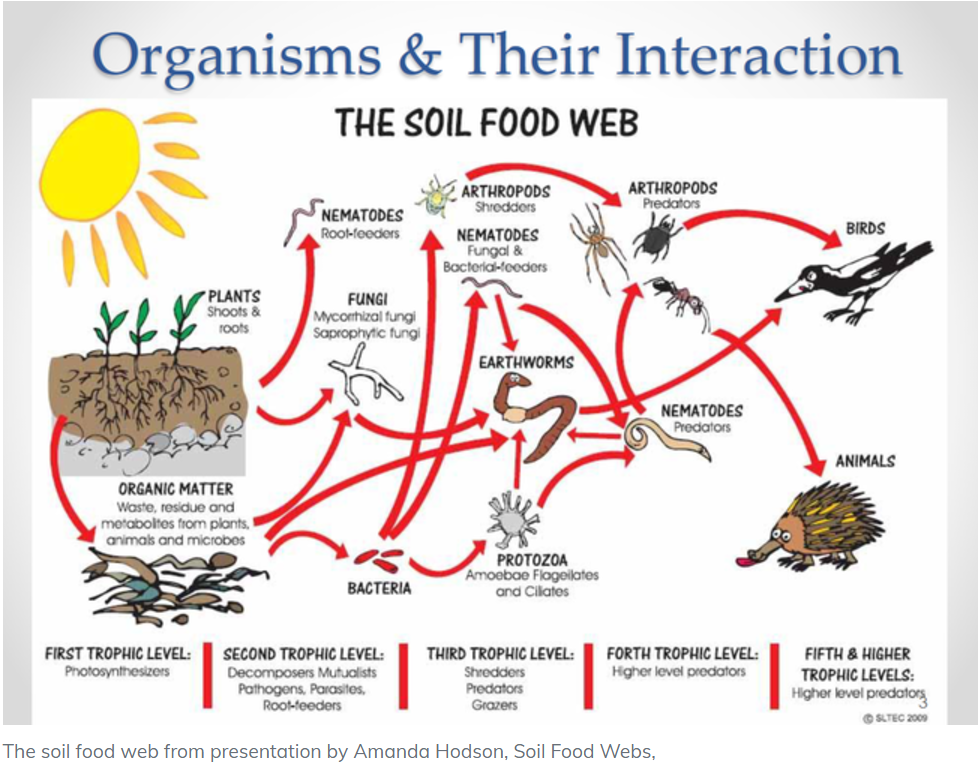
Pesticides and other chemicals can persist in soil for decades, contaminating soil and watersheds with toxic breakdown products. In 2021, Scientific American published an article about a meta-analysis of nearly 400 studies that examined 275 soil organisms and 294 different pesticides. In 70% of those experiments, pesticides were found to harm the organisms that are critical to maintaining healthy soils. Tens of thousands of subterranean species of invertebrates, nematodes, bacteria and fungi are filtering our water, recycling nutrients, and helping to regulate the planet’s temperature. The EPA, which is responsible for approving chemicals for the market, is not presently required by law to test the effects of chemicals on the soil.
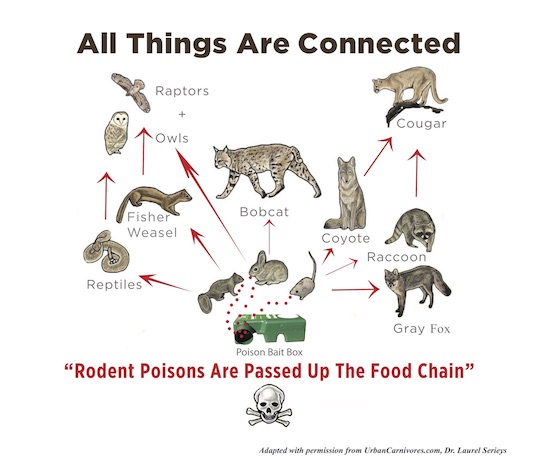
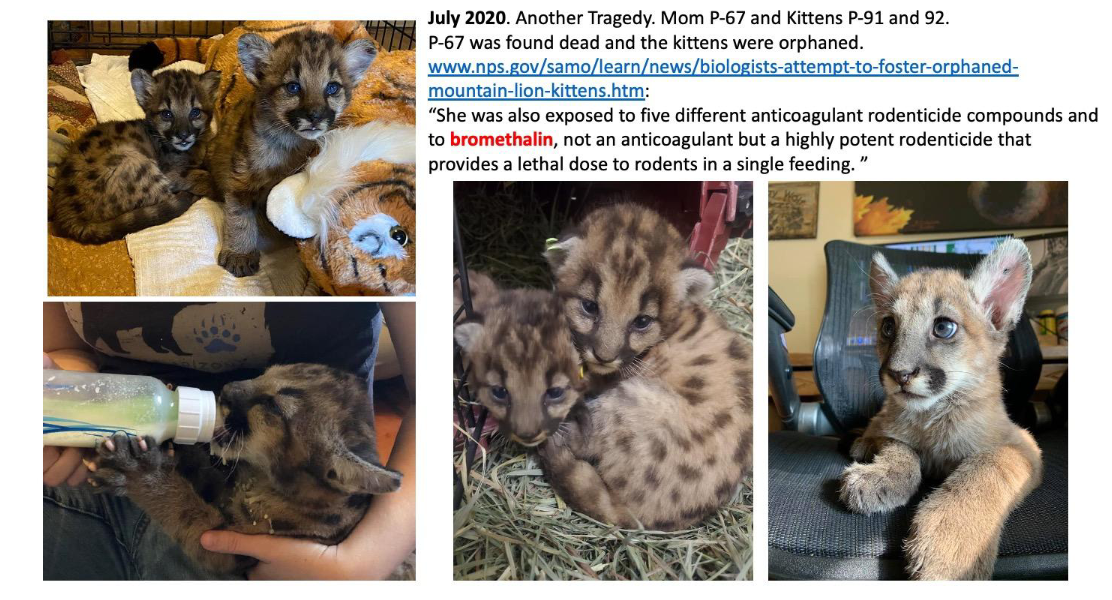
The widespread use of these poisons are also harming wildlife. Rodent poisons used to kill small rodents don’t stop there. Other non-target animals are often killed as well, either by eating the bait directly or eating the poisoned rodents. Many top predators, such as mountain lions and bald eagles, have been killed by rodent poisons that work their way up the food chain.
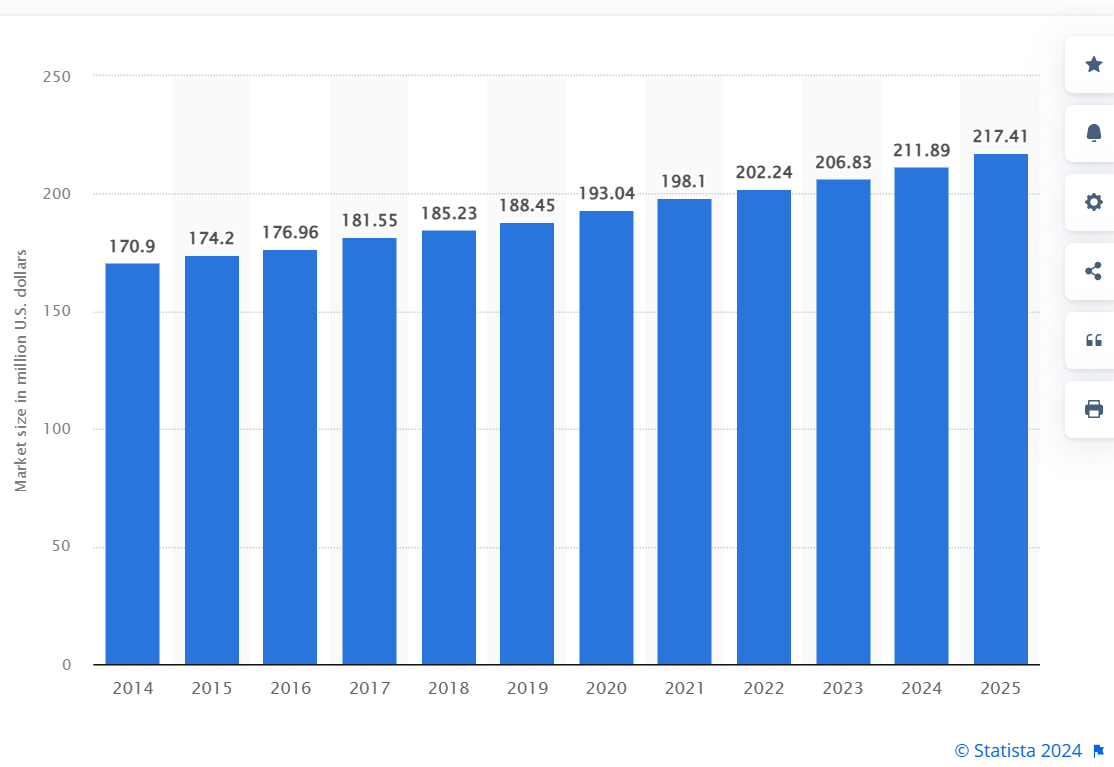
Market size of rodenticides in the US, 2014 to 2025 (in million US dollars)
Malibu’s Transformative Journey
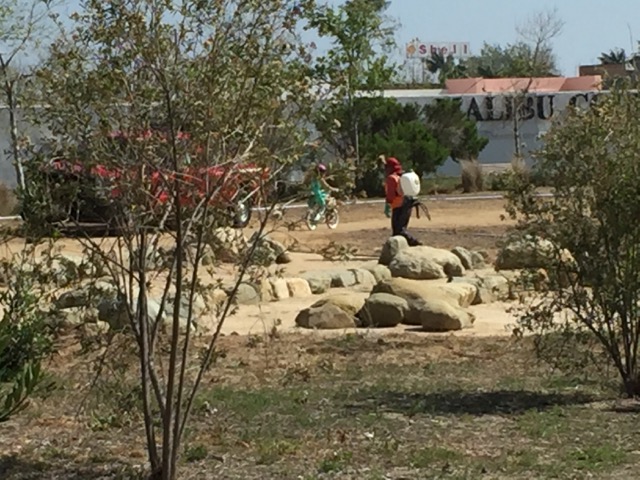
In 2012, local activists began investigating the city’s pesticide use, discovering a shocking reality. Malibu’s parks and public spaces were being treated with a cocktail of toxic chemicals, including glyphosate (RoundUp), 2,4-D, triclopyr (Garlon), pre-emergents and others, often applied in areas where children and pets play.
RoundUp being sprayed in a Malibu public park while child cycles nearby.
Protecting Wildlife
Poison Free Malibu was activated in 2012, after a mountain lion was found dead in a local park with rodent poison detected in the autopsy. Reducing rodent poison exposure has always been one of our primary objectives. All top predators of rodents are at risk of rodent poisoning: “The vast majority of bald and golden eagles in the United States are contaminated with toxic anticoagulant rodenticides…” (2)
Poison Free Malibu addressed this issue in a variety of ways:
We asked local businesses selling rodent poisons to quit selling them. No stores in Malibu now sell rodent poisons.
We asked businesses and organizations to remove bait boxes from their premises.
We approached 10 neighboring cities to suggest that they pass resolutions banning the use of rodent poisons in their communities. Animals are on the move, so broader protections are needed for them.
We helped pass three state bills to prohibit the use of 3 specific rodent poisons in California. Unfortunately, these laws have exceptions, including one for using rodent poisons on off-shore islands to kill rodents. The pesticide industry was quick to respond to the new restrictions by promoting other, still allowed but extremely dangerous rodent poisons such as bromethalin and cholecalciferol. Both of these have NO antidote, endangering wildlife and pets. According to the National Park Service, bromethalin was detected in 10 out of 16 mountain lions tested in the Santa Monica Mountains from July 2020 to August 2022.
We helped to pass a Dumpster Lid Lock Ordinance in Malibu. In both commercial and residential areas, this ordinance was key to eliminating rodent issues.
Changing Public Policy
As we learned about the extensive use of a wide range of pesticides in Malibu it became clear that a broader effort was needed. We petitioned our city for an Earth Friendly Management Policy, which bans the use of all toxic chemical pesticides in EPA 1, 2, and 3 categories of toxicity. The city now relies on organic solutions, environmental enrichment, and “Expel, Deter, and Repel” tactics.
There is a National Park and a State Park in Malibu that also use pesticides on our public lands. We had to negotiate directly with those organizations that are not subject to our city policies. Following numerous meetings with State and National officials, we reached an agreement to establish hand weed-pulling events. This initiative has proven highly successful.
Public Education
The support of the public is needed to achieve changes in public policy. Educating the public about the dangers of pesticides is therefore an important part of our strategy:
We reached out to school systems, other local cities, and counties, to bring these issues to their attention. Many have adopted pesticide-free policies, most recently Ojai just on December 10, 2024.
We received grants from our city and county to help us with our outreach efforts, such as developing coloring books, distributing hundreds of yard signs, and putting up billboards throughout Los Angeles.
Not the end of the story
Despite these many important accomplishments, our work is never done. Legislative hurdles to our progress exist because of opposition from various government agencies, such as the Wildlife Conservation Board, the Department of Pesticide Regulation, the Environmental Protection Agency, CalTrans, and the California Department of Food and Agriculture. There is regrettable opposition from many non-profit organizations that champion the use of pesticides to kill so-called “invasive” species, such as the California Invasive Plant Council and the American Chemistry Council, a trade association representing manufacturers of chemicals.
Our work is never done, but the grassroots movement in Malibu proves that collective action can transform seemingly insurmountable challenges into opportunities for positive change.
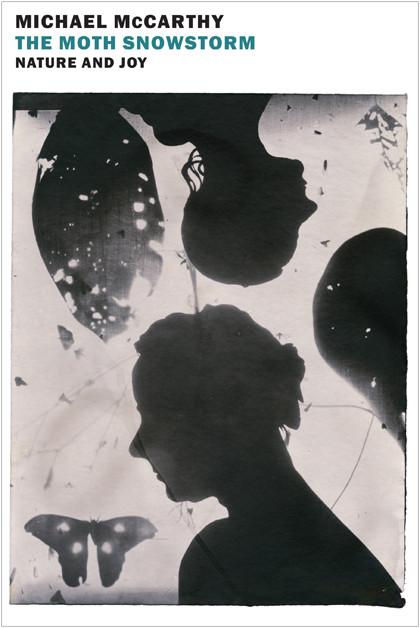
Michael McCarthy is a British environmental journalistwhose love of nature originates with personal loss. When he was only 7 years old, his mother had a mental breakdown that forced her to abandon him and his brother. This traumatic experience caused irreparable psychological damage to his brother, but not to him because he withdrew from the family and found refuge in nature.
Fortunately, he lived close enough to wild land, where he could spend endless hours wandering on his own, watching birds, insects and animals. He found peace there and because it was 1954, he also found an abundance of creatures. The title of his book, The Moth Snowstorm, is a metaphor for the abundance of nature when he was a child:
“There were lots of many things, then. Suburban gardens were thronged with thrushes. Hares galumphed across every pasture. Mayflies hatched on springtime rivers in dazzling swarms. And larks filled the air and poppies filled the fields, and if the butterflies gilled the summer days, the moths filled the summer nights, and sometimes the moths were in such numbers that they would pack a car’s headlight with beams like snowflakes in a blizzard, there would be a veritable snowstorm of moths, and in the end of your journey you would have to wash your windscreen, you have to sponge away the astounding richness of life. It was to this world, the world of the moth snowstorm, that I pledged my youthful allegiance.” (1)
Mr. McCarthy laments the loss of the natural abundance of his childhood and he places most of the blame for that loss on the explosion of agriculture in post-WW II Britain. One of the lessons of the war was that there is greater national security in food independence. Government policies began to subsidize agriculture to such an extent that it became profitable to cultivate every square inch of the British countryside, producing an agricultural surplus of which much is wasted. The hedgerows of the past that had provided habitat for wildlife were plowed under.
In addition to the loss of habitat, the widespread use of chemical fertilizers and pesticides by the growing agricultural enterprise was a culprit: “Agricultural poisons [were also to blame]. Poisons for this, poisons for that. Kill off the insects. Kill off the snails. Kill off the wild flowers. Kill off anything that isn’t your money-making crop with herbicides, pesticides fungicides, molluscidides.” (1)
Initially this chemical warfare was waged with DDT. It took many years for the world to understand that DDT was killing birds and decades more for most countries to be willing to stop using DDT and other organochlorine pesticides. It was a short-lived victory because, “They were replaced with new generations of pesticides which generally did not kill birds directly…Certainly, however, they all killed insects, and they did not just kill ‘target’ insects, they killed almost all insects, just as herbicides usually killed almost all herbs…” (1)
Defending nature
The damage done to nature in the past 100 years is well known. The environmental advocacy of the past 50 years to stop—if not reverse—that damage is equally well known. Mr. McCarthy briefly summarizes recent strategies to defend the environment and dismisses them as ineffective:
The sustainability movement was based on the theory that human development will not damage nature if it is “sustainable.” The word “sustainable” quickly became a buzzword with little meaning beyond its value as a public relations cover to justify whatever development, timber, mining projects are desired by humans. Every project is now advertised as being “sustainable.”
More recently, environmentalists have tried to defend nature by quantifying its economic value to human society. This was a “fight-fire-with-fire” strategy and it has not proved to be more effective than affixing the word “sustainable” onto every intrusion into wild lands. As we calculate the economic value of pollination by insects we hope to save, scientists are probably “designing” agricultural crops that are pollinated by wind.
Mr. McCarthy believes those strategies failed because they “engage the intellect [without] engaging the imagination.” He believes that the only effective defense of nature is based on the “joy and wonder” that nature brings to humans. He shares his personal experiences in nature that have made him a devoted advocate for its preservation.
Nostalgia for the nature of our childhood
Mr. McCarthy describes his first encounters with specific landscapes and species of birds, butterflies, and plants and the joy and wonder they brought to him. Most of those encounters were in Britain, where he grew up, and so most are landscapes and species with which I am unfamiliar. It was therefore, difficult to empathize with Mr. McCarthy’s emotional attachment to them.
And so I reflected on my own early experiences in nature and how they shaped my own aesthetic and horticultural preferences. I was raised in a densely populated, suburban, working class community in Southern California by a single mother. We did not own a car until I was a teenager and so our trips into wild nature were rare and memorable. There were a few treasured trips to Catalina Island and one unforgettable trip to Yosemite in a Studebaker coupe packed with 4 children and 2 single moms.
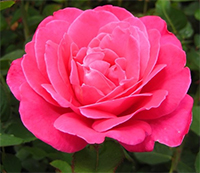
Charlotte Armstrong rose. 1001 Landscaping Ideas. com
As much as I enjoyed those trips, most of my childhood experience with nature was in my own small backyard, which was populated by a few fruit trees and flowering shrubs. One of my most rewarding experiences in the garden was successfully growing a Charlotte Armstrong rose from cuttings given to me by a teacher when I was about 11 years old. In retrospect, I now know that nothing in our garden was “native” although at the time I had no reason to know that they weren’t.
As different as my childhood experience in nature was from Mr. McCarthy’s, it was no less meaningful to me. My childhood was as chaotic as Mr. McCarthy’s after the unexplained disappearance of my father when I was 2. I built my ideal home in the dirt in my backyard and played out peaceful scenarios with my small plastic dolls under the canopy of the avocado tree. The neighbor’s lantana bushes attracted swarms of skippers. We puffed out our cheeks and put as many skippers in our mouths as we could, for the pure pleasure of watching them flutter out of our mouths, seemingly unharmed. (I wouldn’t do that today, but I don’t begrudge my childhood self that pleasure.) I bristle when I hear claims that lantana is “invasive” and must be eradicated as well as the claim that non-native plants are not useful to wildlife. I know otherwise.
Unless they are limbed up, the canopy of avacado trees grow nearly to the ground, creating a private “green room” under the canopy.
Skipper on lantana
There are as many personal experiences in nature as there are people and they obviously vary widely depending upon location, lifestyle and a multitude of other variables. Predictably, there are therefore a multitude of opinions about “ideal” nature.
Must nature be exclusively “native” or is a cosmopolitan mix of plants and animals equally valuable? This is just one of many debates that rage within the community of people who all consider themselves environmentalists. In our own gardens we can indulge our personal preferences, but the differences of opinion become a source of conflict when public open space is at stake.
Acknowledging the ways in which nostalgia influences our preferences should help us to resolve those conflicts. Chris Thomas is a British academic scientist who addresses this question in his new book, Inheritors of the Earth in which he calls out “conservationists for holding viewpoints that seem more driven by nostalgia than by logical thinking about the biological future of our planet.” (2) He believes that conservation efforts inappropriately focus on trying to defend the losers in nature’s great competition for survival, rather than backing the winners that are probably the species that are the future of our biological communities.
If we can acknowledge that our preferences are based on the past, rather than the future of nature, it is more difficult to justify the use of pesticides to destroy the future. As Mr. McCarthy tells us, pesticides are one of the primary reasons why the abundance of nature is rapidly disappearing. Using pesticides to kill existing landscapes is contributing to the loss of nature, not enhancing it.
Please give some thought to how your personal experiences have helped to shape your preferences in nature. We hope that your reflections will help you to respect the preferences of others.
Michael McCarthy, The Moth Snowstorm, New York Review of Books, 2015
In 2000, we wrote a public comment about plans to close areas at Fort Funston for native plant restoration that began with this quotation from Henry David Thoreau:
It is in vain to dream of a wildness distant from ourselves. There is none such. It is the bog in our brain and bowels, the primitive vigor of Native in us, that inspires that dream.Thoreau
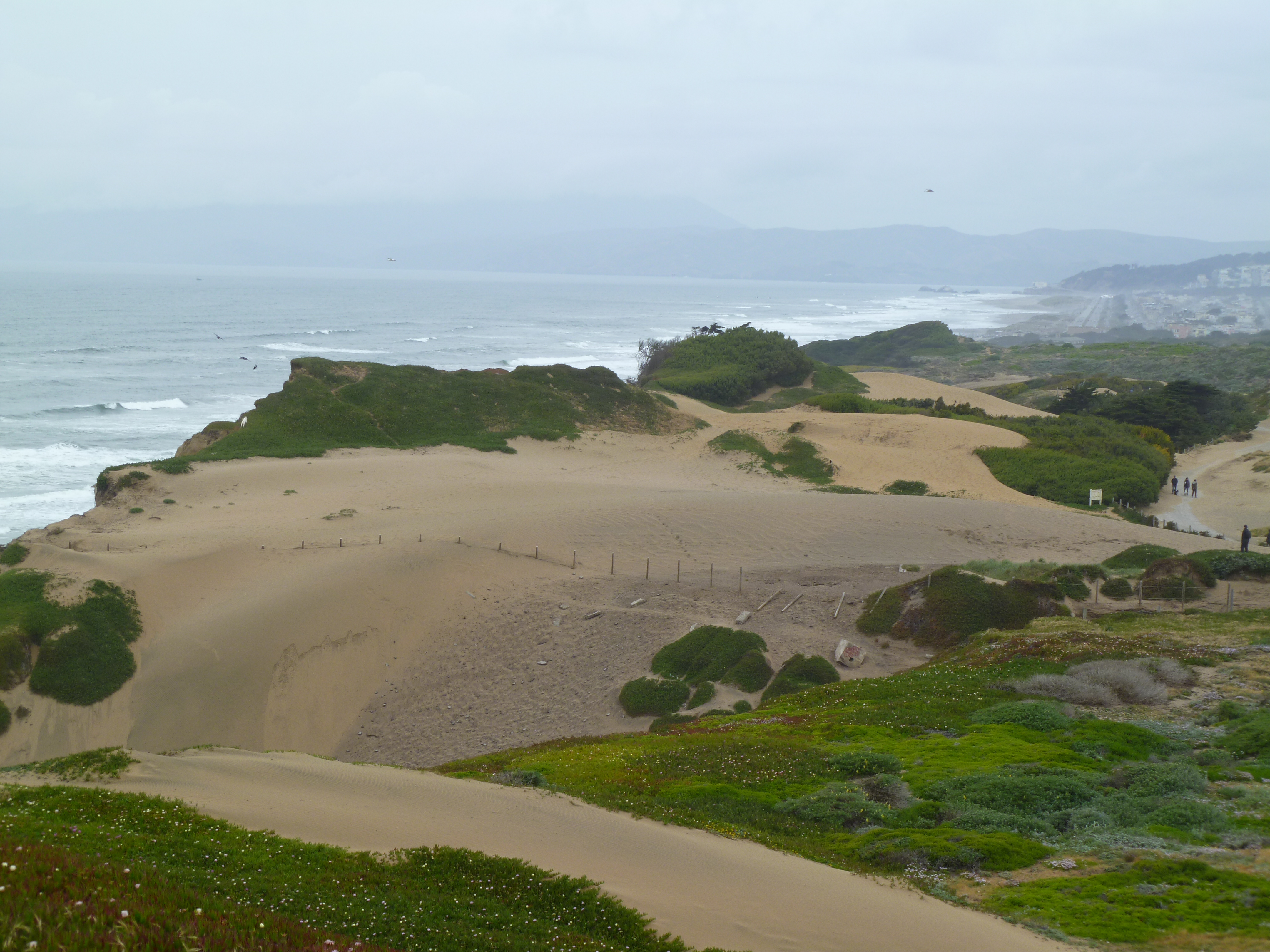
We chose that quote to introduce our comment about Fort Funston because it is a place that was entirely altered to serve as a military fort, its sand dunes stabilized with ice plant and studded with gun bunkers; it is not a place that is easily imagined as a pristine native landscape. As with most poetry, Thoreau’s exact meaning escaped us, but what resonated was the suggestion that “wildness” exists in our minds, not in the material world. We found comfort in knowing that over 150 years ago, Thoreau was as mystified by the concept of wildness as we are today.
Fort Funston San Francisco 2011
Today, we revisit the question of the meaning of wildness or wilderness, prompted by the publication of an op-ed by Mark Dowie in the Point Reyes Light. (1)Dowie is a journalist who is best known as the author of Conservation Refugees, in which he informs us that hundreds of thousands of indigenous people all over the world have been evicted from their ancestral lands by public and private land owners who believe humans are antithetical to their conservation goals. Dowie tells us that the tradition of evicting humans in the interests of preserving “wilderness” began with the eviction of Native Americans from Yosemite Valley as advocated by John Muir. This concept of preserving land by excluding all human activities is aptly called fortress conservation.
Dowie begins his op-ed in the Light with the observation that some words have “attained such a vague and ambiguous definition that [they have] become virtually meaningless.” The word “sustainability” has attained such status, he says and we agree. But his focus in his op-ed is on the word “wilderness” because it is a word that has become a tool in a dispute about land use in Point Reyes, where Dowie lives.
The National Park Service defines “wilderness”
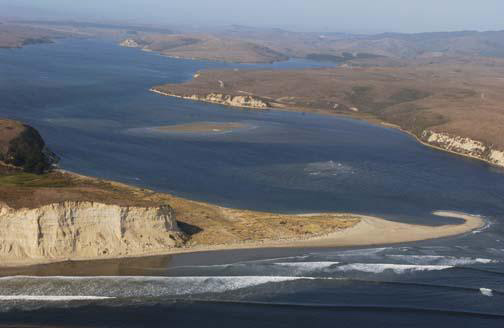
Drakes Estero. NPS photo
After a protracted battle that lasted years, the National Park Service was finally successful in shutting down the Drakes Bay Oyster Company based on its contention that the existence of the oyster farm violated a commitment to return the Point Reyes National Seashore to “wilderness.” This was a battle that tore a small community apart and the wounds from that fight are still deep.
Within days of the oyster farm closing its retail operation, those who demanded its closure were on the warpath again. In an op-ed published by the Oakland Tribune, William Katz asked the National Park Service to evict ranchers and dairy farmers in Point Reyes: “The European invasion of this side of the continent over just the last 200 years is obviously a done deal. This fact makes it especially necessary to complete the original mandate of the park’s creation by removing the ranchers and their bovine accoutrements and re-establishing a natural area in which we may only be visitors.” The connection between those two sentences eludes us. In fact, they seem contradictory.
Dowie searches for the meaning of “wilderness”
And so, the question of what defines a “wilderness” is still very much alive in Point Reyes. Mark Dowie tells us that he has been actively seeking a meaningful definition for some years. He turned to several indigenous cultures based on the modern assumption that pre-European cultures occupied the elusive “wilderness:”
“Over the next four years of research, I met and conversed with many indigenous people who thrived in landscapes that looked as wild as anywhere I had ever been, whose language had no words for ‘wild,’ or ‘wildness,’ or ‘wilderness.’ Naturally, I began to wonder why societies populated by urbane people who spend most of their lives, if not all of them, on the streets of places like New York City, London, Rome, Los Angeles and Winnipeg do have a word for wilderness. And I wondered what exactly they meant by it, if anything.”
“What I finally figured out about ‘wilderness’ was that it’s really a concept that does not translate well from language to language, especially from western to indigenous languages. So it’s really not the word that has to be translated, but an entire ecological enthnography.”
And so, Dowie turns to those who use the word “wilderness” as their definition of the goal for what our public lands and open spaces should look like and what activities should be allowed in them:
“I recently overheard a debate in which to refine and defend his own personal definition, a local wilderness romantic divided the whole concept into two separate categories—uppercase and lowercase wilderness. Uppercase, he said, was “real” wilderness: vast roadless, trail-free areas occupied by many species, including large predators that want to eat humans. Lowercase wilderness could be found in state and national parks; as virtual or abstract wilderness, it was a cunning, managed artifice of the uppercase version designed to convince eco-tourists that they are having a true wilderness experience. The argument descended from there into such ridiculous semantic subterfuge that I walked away mumbling to myself that wilderness may not be a word at all, or a place for that matter, but as Roderick Nash concludes at the end of his 400-page tome on the subject, merely “a state of mind.” And that if wilderness exists at all, it could be as easily found and appreciated under a bench in Central Park as on the barrens of Baffin Island.”
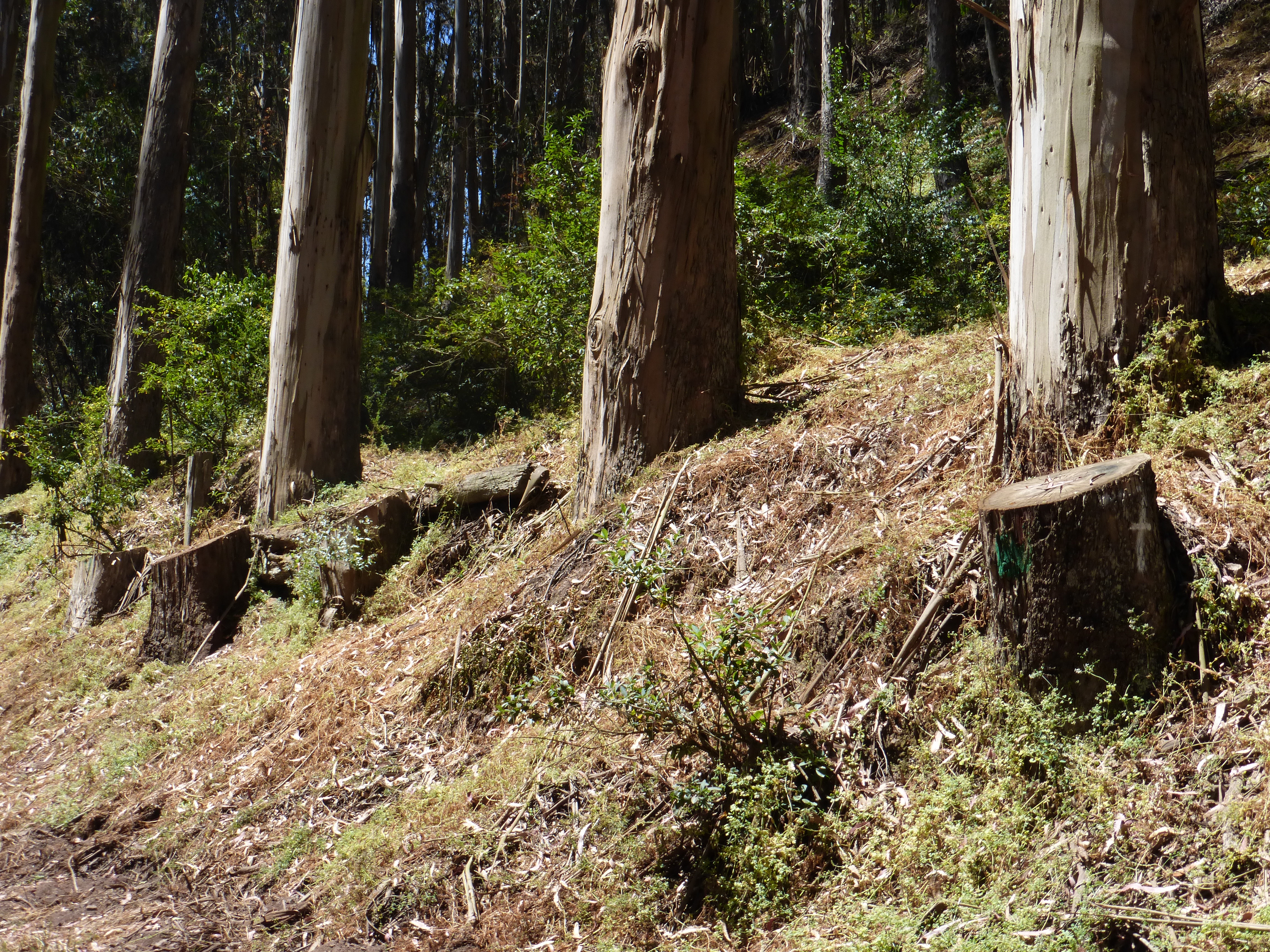
Some of the stumps of the trees that were destroyed in Glen Canyon Park in 2013. Taken June 2014
Yes, Mr. Dowie, you have indeed found the mysterious meaning of the word “wilderness” as a “bog in the brain,” to quote Mr. Thoreau. We have our own example of a similar debate with native plant advocates about the future of Glen Canyon Park in San Francisco. Our readers will remember Glen Canyon as the scene of the devastating removal of many huge, old trees and the repeated spraying of herbicides to prevent the trees from resprouting and destroy the non-native understory. To those who objected to this destructive project, a native plant advocate responded:
“Please note the term “wilderness.” It implies natural, native flora and fauna; the wild plants and the bird and animal populations that support one another. That is what we want to have if we want a wild retreat. A morass of garden escapes and foreign invasive species is to be deplored. Let’s progress toward returning the area to a REAL wilderness. Do not let the concept that a plant’s becoming established in an area is a sign of its becoming native to the area. It remains an invasive element, a weed. It disrupts and destroys the normal habitat of native plants, animals, and insects in its surroundings. It will be a huge and long term task, but we can restore the entire canyon to a truly wilderness state. Let’s get started!”
In this version of “wilderness,” trees and plants must be sprayed with herbicide and a new landscape planted. The result—if it is successful—will be an entirely artificial landscape. There will be nothing “REAL” about it.
Language is an obstacle to agreement
One of many obstacles to reaching agreement with native plant advocates about the future of our public lands and open spaces is that we don’t share a vocabulary. “Wilderness” is one of many words that cannot be defined by our mutual understanding.
“Sustainability” is another word that is used by native plant advocates, which we believe is inappropriately applied to the projects they demand because it is inconsistent with the realities of climate change and evolution. The landscapes they are creating are no longer adapted to current environmental conditions. They are not sustainable.
“Integrity” has recently become a favorite buzzword of nativists, used to describe their idealized landscape. We have absolutely no idea what that word means in the context of the contrived landscapes they attempt to create.
And so the debate continues with no end in sight. Meanwhile our public lands are being destroyed in response to the demands of native plant advocates. For us the word “wilderness” is now synonymous with “destruction,” which creates a fortress in which humans are not welcome.
(1) Mark Dowie, “The tortured semantics of wilderness,” Point Reyes Light, September 4, 2014




 Conservation Sense and Nonsense