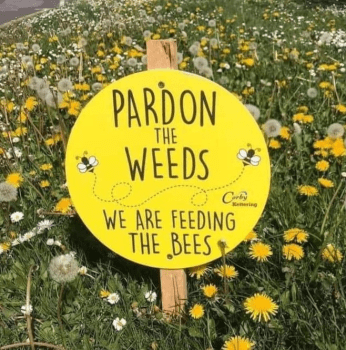
Garden Rant recently published an article by garden-writer, Marianne Willburn, defending gardeners who prefer a diverse garden over an exclusively native garden. This issue has been hotly debated for several decades, generating conflict in gardens and garden societies. These are places where people seek refuge from life’s many challenges. Some mourn the loss of peace in the garden and wish for a return to peaceful co-existence between gardeners regardless of which plants they prefer. As American politics have become increasingly polarized, all the more reason to foster peace in our gardens.
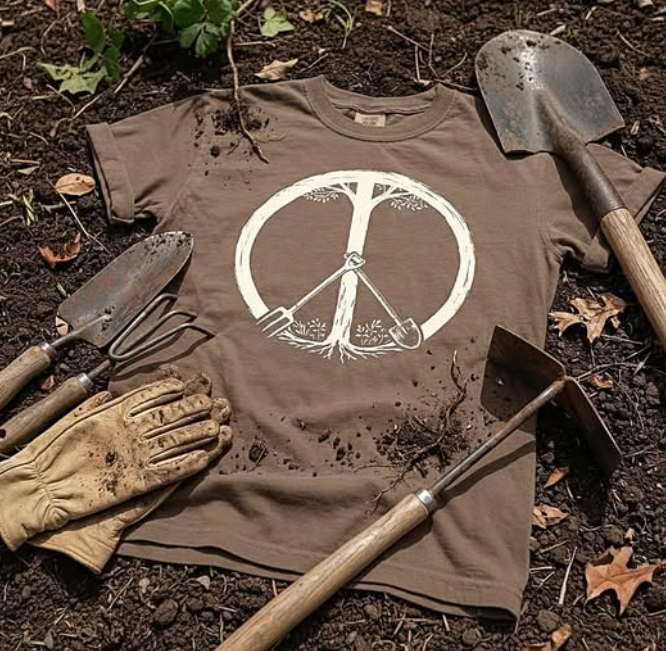
Conflicting Goals in the Garden
The primary goal of home gardeners was beauty prior to the advent of the native plant movement. As the saying goes, beauty is in the eye of the beholder, which is a way of saying everyone has their personal definition of beauty. In the garden, some prefer order and symmetry while others prefer naturalistic chaos and abundance.
The native plant movement brought an entirely different goal to the garden about 30 years ago. Native plant advocates want a garden that they believe will best serve the wildlife that lives in it, from the insects at the bottom of the food web, to the birds that eat insects and beyond, to the top of the food web. Beauty is not their goal. In fact, a beautiful garden is considered by some the antithesis of a native garden, judging by the gardens of some of my neighbors whose gardens look dead half the year in our Mediterranean climate that is without rain half the year.
Dictators in the Garden
Such different viewpoints about the purpose of our gardens could have lived peacefully side-by-side if native plant advocates had respected the opinions of cosmopolitan gardeners, but they didn’t.
To quote the Garden Rant article, the native plant movement “saddles everyman gardeners (whether they wished to grow Hemerocallis [daylilies] or fill a raised bed with herbs) with the burdens of past and present ecological damage to our planet, the saving of species from extinction, and the reversal of climate change.”
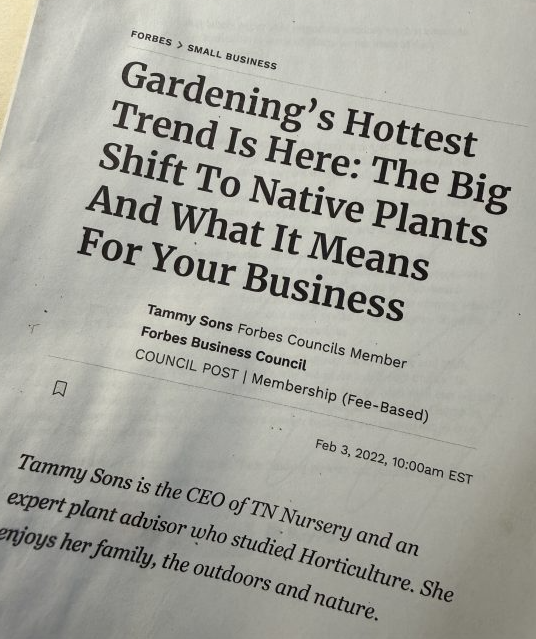
If you haven’t been on the receiving end of such a moralistic lecture from a native plant advocate, you may think that’s an exaggeration. Here are a few examples of such condescending lectures from native plant advocates about the obligations of gardeners to save the planet:
Gardens planted with non-native plants are “blooming wastelands where the flowers feed nobody at all.”
“The typical suburban yard is actually worse than a wasteland. It’s a death trap.”
Margaret Renkle, NY Times, March 28, 2021
“It turns out I’ve been filling my yard with a mix of ecological junk food and horticultural terrorists.”
“I’m sorry to say that if you have a typical urban or suburban landscape, your lawn and garden are also dooming the Earth.”
Dana Milbank becomes a native plant gardener, Washington Post, April 7, 2023
“’I think of it as chemotherapy,’ said Doug Tallamy, a University of Delaware entomologist and guru of the native-plant movement. ‘We have ecological tumors out there. If we don’t control them, we have ecological collapse. We have the collapse of the food web.’”
Doug Tallamy, Washington Post, June 30, 2023
“…no other “don’t” has been shouted more loudly lately than the list of plants to avoid, the various nonnative, longtime nursery-industry standards that are now understood to cause environmental harm.”
Margaret Roach, NY Times, March 17, 2026
Such dire predictions of ecological collapse are overheard among neighbors, over garden fences, in garden society meetings, and in conferences of the California Invasive Plant Council and the California Native Plant Society. Articles with similar themes are found in garden magazines and in the publications of environmental organizations such as the Sierra Club and the Xerces Society.
If the extravagant claims of advocates about the superiority of native plants received the scrutiny and analysis they need, the native plant movement would not have the power and influence that it presently has. Now let’s turn a bright light on the claims of nativism in the natural world.
Debunking Nativist Myths
Nathan Lambstrom is a botanist and professional landscape designer who has given us an example of how nativist myths persist. He reports that Doug Tallamy supports his claim that insects require native plants by obscuring the many contributions non-native plants make to moths and butterflies. He manipulates his data set to hide the documented contributions of non-native plants, including plants considered “invasive.”
I was introduced to the nativist myth that native plants store more carbon than non-native plants nearly 20 years ago in an undergraduate ecology class at UC Berkeley. The University’s land manager who was responsible for destroying non-native trees on the University’s open space told the class that “carbon storage in non-native trees doesn’t count.” I was horrified that the class as well as the professor teaching the class accepted this nonsensical statement without comment. The truth is that both native and non-native plants and trees store carbon while they are alive that would otherwise be released into the atmosphere, contributing to climate change. As long as native plant advocates continue to demand the destruction of non-native plants and trees, they cannot claim that their projects reduce greenhouse gases that cause climate change.
Academic Ecologists Retreat from Invasion Biology
Recently, Thomas Christopher (one of Doug Tallamy’s co-authors and allies) interviewed James Hitchmough, a British ecologist on his Growing Greener podcast. The title of the podcast suggests that Mr. Hitchmough’s viewpoint “challenges the US Consensus” regarding the relative value to insects of natives compared to non-natives. Mr. Hitchmough’s response was that the claimed preference of insects for native plants was conventional wisdom among ecologists in the past, but that “when they did the [field] work, they changed their view.” He also said that the singular focus on the needs of lepidoptera skews the issues because lepidoptera are only 15% of all insects. Other taxa of insects have less restricted host plant preferences than lepidoptera.
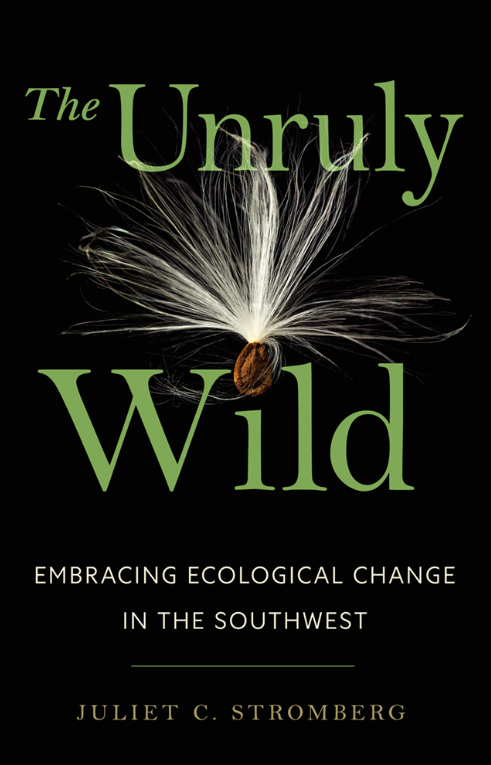
That change in viewpoint has occurred among academic ecologists in the US, but continues to be resisted by many gardeners, such as Thomas Christopher. Professor Emeritus Juliet Stromberg recently published a book about her journey from her graduate education, which was deeply steeped in invasion biology, to her present viewpoint, based on decades of fieldwork and as expressed by the title of her book: The Unruly Wild: Embracing Ecological Change in the Southwest.
Stromberg’s book is representative of the opinions of many academic ecologists today. Change in nature is inevitable and it is usually both good and bad, from the perspective of other members of the ecological community and no matter the geographic origins of plants and animals. When judging the impact of new members of an ecological community, the most likely answer is “it depends.”
Endorsements of Stromberg’s book suggest that she is not alone in her realization of the value of introduced plants, which are adapted to the conditions humans have imposed on them:
“An erudite love story of nature in the American Southwest.”
Fred Pearce, author of The New Wild
“Stromberg has written a masterful treatise on why a knee-jerk response to eradicating nonnative plants is not just misguided but counterproductive.”
Dov F. Sax, co-editor of Species Invasions
“Julie Stromberg articulates, with personal knowledge and deep love, a new way to understand and care for a changing world.”
Erick Lundgren, University of Alberta, Canada
Climate change, human activities, and evolution force us to embrace ecological change. Juliet Stromberg helps us to face this reality without fear, but with hope that nature can continue to cope with the demands that humans have made of it. Our efforts to prevent change are futile and they often cause more damage than the environmental changes themselves.
Restoring Peace to Our Gardens
We encourage gardeners to restore peace to our gardens by respecting our cosmopolitan preferences in our gardens, as we respect the preference of others for native plants.
 Conservation Sense and Nonsense
Wonderful article. Thank you! The horrific nature-hating comments reminds me of other cults with their lack of logic and obsession with killing. As Zoe Schlanger showed in her beautiful book about plants, The Light Eaters, plants think and feel and are connected. Like you say, we can see how the native animals need and use introduced plants. Lepidoptera? Monarch Butterflies now have a survival-based relationship with Eucalyptus. How far will these maniacs go in their effort to kill beautiful plants — kill endangered animals, including insects, also?
I heard people recently saying how beautiful the Calla Lilies (very popular South African Arums who have a light sweet scent) growing by the ocean are and shouldn’t someone make posters of them? Actually, there are posters and also cards sold years ago because of how loved they are, yet they are being killed illegally by nativist fanatics. We have only one native Arum species that few have seen in the wild. Field of gorgeous golden mustard that blooms where nothing else will are admired and loved, while nativists call them “trash.” There is so much death already, so why not love and nurture whatever nature there is.
People keep repeating the lies, and clearly money is behind some of it. But my main concern is the plants themselves and all the animals needing them, and us, also, who love them.
A very interesting and well-written article!
Thank you for this article. We’re building a firewise demo garden here in El Sobrante/Richmond CA, a new way of gardening for most people. I’m meeting so much resistance from some native-plants-only people, because we’re planning a garden split into four themes—the wind-blasted/full sun succulent, low water and rock garden, then a habitat garden (quashed the “pollinator” term because that forgets the rest of the wildlife in the area), then a bouquet garden (with many traditional bouquet plantings such as dahlias, camellias and roses), and then a garden of low growing and groundcovers (< 18″ height). Natives and other plants mixed together. All “right place, right plant, right care.” That is, they’ll thrive while the gardener can maintain them safely for fire risk. I insisted that we have to include fire resistant plants that people ALREADY HAVE IN THEIR GARDENS. My premise is that we want people to ADAPT their gardens, not rip everything out, especially not cutting down mature trees or tall shrubs that they love that are lower flammability or easy to mitigate for fire—especially as they do have to take out a number of trees and shrubs because of too dense vegetation, or the vegetation impinges on the house dangerously. Too much financial and emotional cost to residents who have to adapt to the increased wildfire risk.
We gardeners receive so many contrary and judgmental messages—grow natives only, grow all of your food, plant only coastal live oaks, grow big trees to prevent heat islands, take out evil lawns. Now, as we are asking people to change garden design to reduce the risk of their or their neighbors’ homes burning down, the last thing I want to do is add these critical messages that get in the way of gardens that are both firewise and beloved by owner. I prefer to ask, “What do you like in your garden now?” and go from there.
Yes, we gardeners are an opinionated bunch! And opinions also vary about wildfire mitigation. But know this: the native landscape of California is highly flammable, as is the vegetation in all Mediterranean climates that are without rain half the year and are subject to drought. Alan Schoenherr’s A Natural History of California (UC Press, 1992) is a reliable source of information on this topic because it was published before the native plant movement got a death grip on ecology.
Your plans sound great to me! I encourage you to stick to it. When Oakland published an Urban Forest Plan in 2024, it was resisted by native plant advocates who don’t want non-native trees. Here’s one of my articles about that controversy: https://milliontrees.me/2024/11/21/natures-best-hope-nope/
Oakland Tree Services and Oakland politicians stuck to their plans (very politely). Oakland has made a commitment to preserve its diverse urban forest. There are over 500 tree species in Oakland, although there were only 10 native tree species prior to settlement. As you say, destroying more trees than necessary to achieve fire safety should be avoided because trees are performing many valuable functions.
Thank you for your comment and good luck.