Six months ago, an ecologist friend and mentor alerted me that Ferris Jabr was writing an article about Doug Tallamy for The New York Times Magazine. They spoke by phone for about an hour, during which my friend recommended that Jabr also speak with me. I was hopeful that the Times would publish an even-handed assessment of Doug Tallamy’s nativist ideology. I’m a subscriber who trusts NYT to report fairly on controversial issues. I’m sorry to say that in this case, NYT let its readers down. (1)
In contrast to that brief phone interview, Jabr reports spending several days visiting Doug Tallamy at his home in Delaware, months before he spoke with dissenting voices. That disproportionate time shows in the resulting article, which lands firmly in Tallamy’s camp. Jabr also spoke by phone with several other academic ecologists whom I know, but quoted none of them.
Preparation
I began preparing for an interview I hoped to be granted by Ferris Jabr. I read his book, Becoming Earth: How Our Planet Came to Life, about how life and Earth coevolved. It examines the concept that our world is a single, interconnected, self-regulating living system, and argues that all living things are not just inhabitants, but active participants in the planet’s evolution.
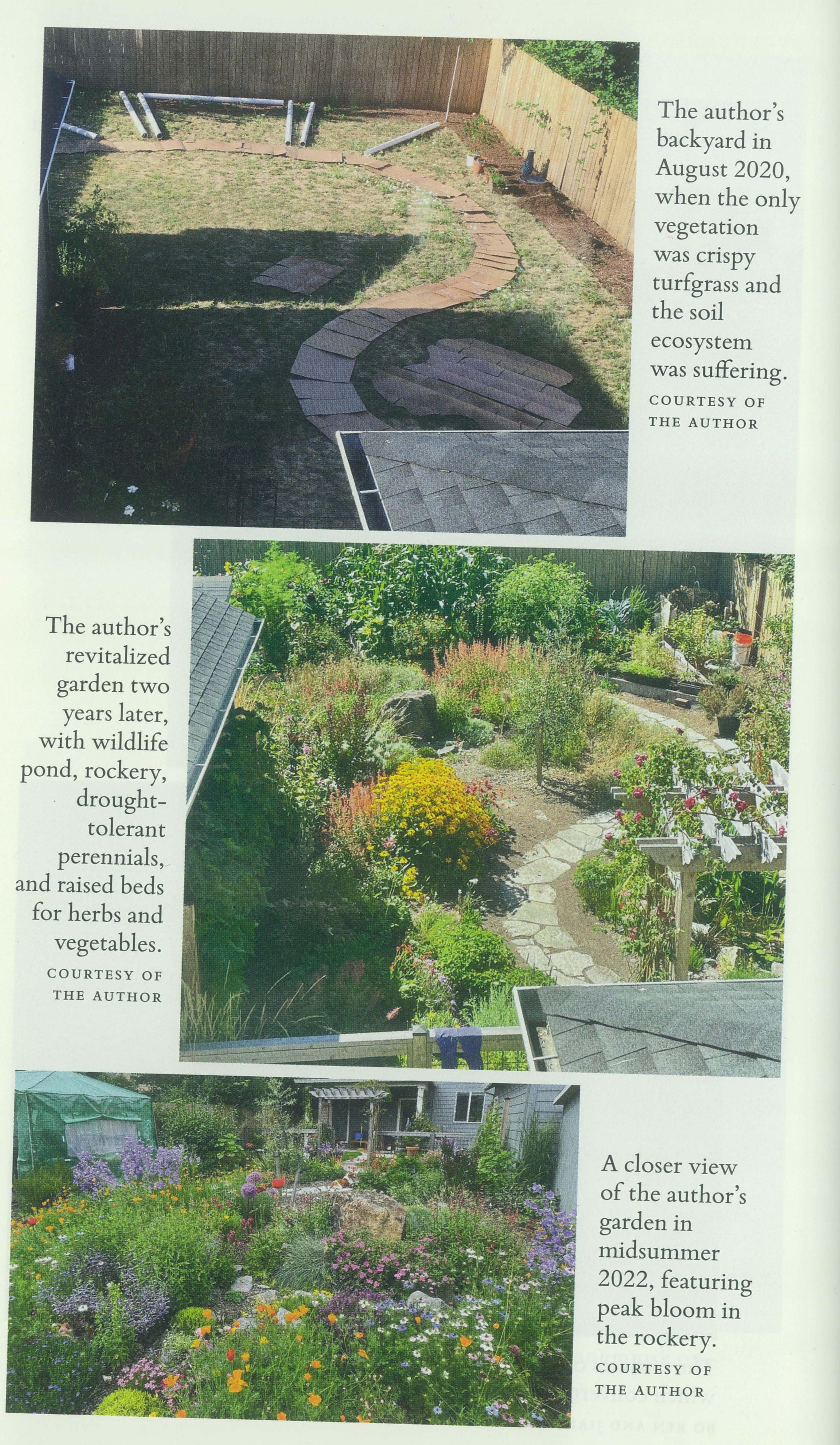
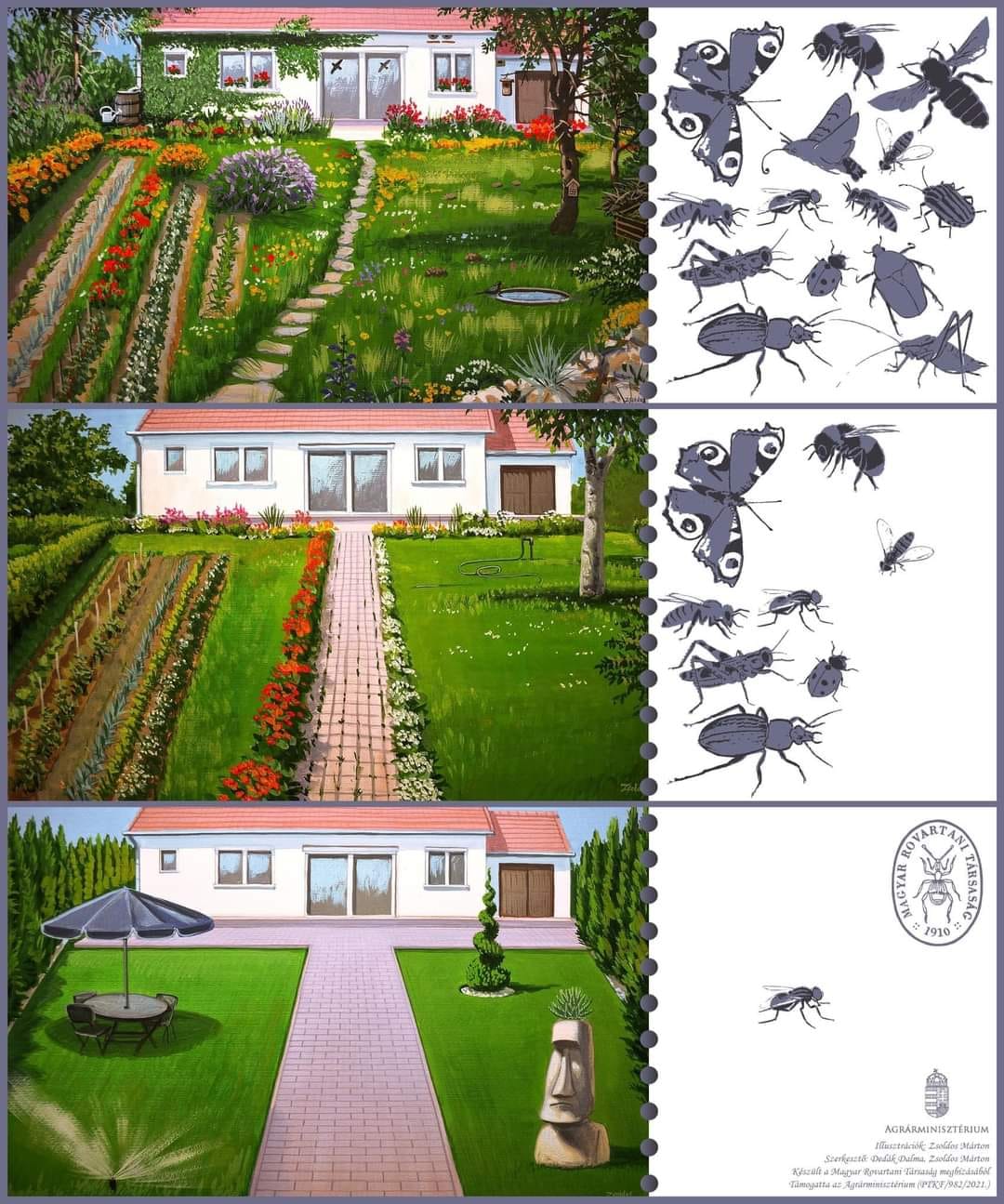
Jabr’s life-long interest in gardening contributed to his understanding of the intertwined fates of life and Earth. He describes how he transformed the barren lawn of his new home into diverse wildlife habitat, with the help of contractors and tons of soil amendments, shown in before, transition, and after photos (see below). He says he and his partner planted native species and a vegetable garden, but he also mentions planting traditional ornamentals such as peonies and dahlias.
The book demonstrates a solid grasp of evolution and events in deep time that illustrate how life changes as the environment changes. I was hopeful that knowledge would enable him to write a balanced article about Tallamy’s nativist ideology in which evolution plays no role. The public’s poor understanding of evolution is the main obstacle to grasping a simple truth: when the climate changes, vegetation must move, adapt, or die.
Plants that lived in pre-European America 500 years ago are unlikely to be the best adapted to our changed and changing climate. I encourage home gardeners to plant whatever they want, but be prepared to watch plants die if you insist on exclusively species native to your region. I wince when Tallamy rails against hybrid plants, which he insists must be eradicated. Hybridization is one of the most powerful evolutionary tools that enables life to adapt to environmental change.
I watched a video of Jabr presenting his book at Yale Law School. When he gave the same talk at a Bioneers Conference at UC Berkeley in March, I asked to speak with him there. It became clear he wouldn’t speak with me. He implied I lacked the required “credentials.” I changed tactics.
Bringing the Mountain to Mohammed
I asked a collaborator with unimpeachable credentials — a horticultural professional and university instructor — to reach out to Jabr. She did, but he did not interview her.
I also recruited an academic botanist to write a guest post for my website about data manipulation he’d found in one of Tallamy’s studies, manipulation that effectively hid the many contributions non-native plants make to lepidoptera (butterflies and moths). Nathan Lambstrom is a busy university lecturer and designer of ecological gardens, but he wrote the piece, published here. Jabr interviewed Lambstrom after that article ran, but didn’t quote him, nor did he mention the data manipulation underlying Tallamy’s ideology in his article.
Where Does Jabr Land?
Jabr’s article centers on Tallamy’s thirty-year transformation of his 10-acre Pennsylvania farm into a native garden. To his credit, Jabr offers some mild qualifiers to Tallamy’s version of nativism:
- Despite applying herbicides, Tallamy was unable to eliminate all introduced species: multiflora rose still forms a few thickets, and Japanese stiltgrass carpets the forest floor. As a witness to such attempts to eradicate non-native plants on public land, I can confirm that they are rarely successful.

- Tallamy concedes that “on average just 14% of the natives in a given region feed more than 90% of local butterflies and moths.” That’s a striking admission: it means a small set of keystone natives is doing nearly all the ecological work, while the remaining 86% of native species contribute comparatively little. That’s hard to square with the blanket claim that gardeners must plant natives indiscriminately. The data suggest that keystone status, not native origin itself, is what matters.
- Jabr takes issue with some of Tallamy’s “grandiose claims” and notes that “polarized attitudes toward native and introduced species” are controversial. He says that “introduced species have few noticeable effects or provide ecological benefits” and names a few examples.
- He quotes Professor Emeritus Art Shapiro as saying that more than 30% of California’s butterfly species use introduced plants as hosts for their larvae, because those plants have leaf chemistry similar to their native hosts, and that “some North American butterflies have even expanded their geographic ranges and reproductive seasons by adapting to foreign plants.”
- Jabr also quotes Professor Emily Meineke (UC Davis) about a project seeking the most suitable street trees from warmer regions to tolerate the warming, drier climate in Davis, California.
- Jabr acknowledges that “all life is equally Earthly” because all “extant species are branches of a single ancient trunk.” That’s the fundamental truth missing from Tallamy’s ideology: all life on Earth is related. Jabr also advises ecologically minded gardeners to focus on what plants do rather than where they’re from.
Ultimately, Jabr lands firmly in Tallamy’s camp. His concluding paragraphs describe how, after visiting Tallamy, he began replacing introduced plants in his own garden with natives and he believes the swap has brought more wildlife to his yard.
An Alternative Perspective
Two days after the Times published Jabr’s article, Garden Rant published a piece by Nathan Lambstrom, the same academic botanist who reported data manipulation in a Tallamy study. “The War on Invasive Species” offers a contrasting view of nativist purism. It is grounded in extensive, cited documentation and provides numerous examples of non-native plants’ contributions to wildlife. It also documents the harmful consequences — especially from herbicide use — of attempts to eradicate non-native plants.
Lambstrom concludes, in his usual even-handed way: “I do not dispute that invasive plants and animals, especially predators, are associated with ecological change, sometimes quite significant. Though we often must intervene to mitigate that change, my hope is that we can move past a dichotomous framing of natives versus non-natives and invasives, and move towards recognizing ecological value wherever it occurs, responding carefully and appropriately while our ecosystems adapt to the presence of these new residents. I believe this is the soundest and only realistic way forward.”
Jabr interviewed Lambstrom for his Times article, but didn’t quote him or mention the data manipulation in Tallamy’s study. Times readers were denied the chance to learn more about a genuinely controversial issue.
Public Reaction
Comments on Jabr’s article are overwhelmingly favorable. Most are from gardeners thrilled with the results of replacing their lawns with native plants. It stands to reason that more plants bring more life to a garden. It’s less obvious that a purely native garden brings more life than a diverse garden that prolongs blooming and provides a bigger menu for wildlife. Native vegetation looks dead during our long California summer dry season. A few all-native gardens in my neighborhood look more like vacant lots than intentional gardens from May to November. Many of my neighbors have made a transition to drought and heat tolerant succulents and cactus, not native to our region.
Many commenters are angry about Jabr’s few mild misgivings about Tallamy’s version of nativism. Their comments display the kind of bullying that less purist gardeners find intimidating.
What’s Missing
Here’s what I think is missing from Jabr’s article. I offer what I believe are the strongest arguments against Tallamy’s version of nativism in the natural world.
Global warming is a far greater threat to life on Earth than any single plant species, native or not. All plants — native and non-native alike — remove carbon dioxide from the atmosphere, store carbon in the soil, and emit oxygen. Tallamy’s ideology encourages gardeners, and the public land managers who’ve adopted his approach, to eradicate non-native plants in favor of natives. But public land managers rarely have the resources to replace what they remove, and eradication on public land is typically done with herbicides. Herbicides kill the fungi and microbes in the soil that facilitate carbon storage and plant growth. In that sense, Tallamy’s ideology, as currently practiced on public land, contributes to the very climate change that threatens plant and animal life with extinction.
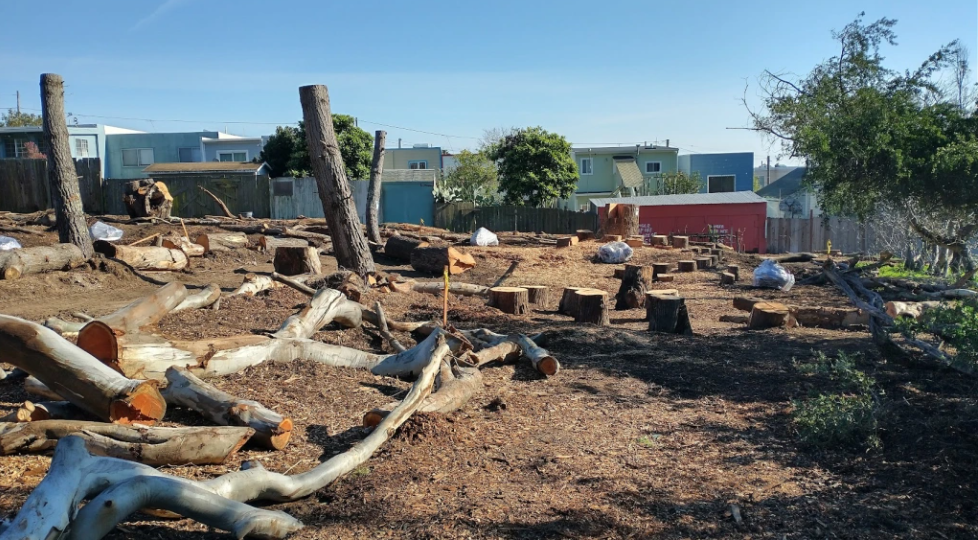
I encourage home gardeners to plant whatever they want. If they prefer an exclusively native garden, that’s their prerogative. The native plant movement becomes controversial only when it drives destructive eradication projects on public land — parks, in particular — that rely on herbicides because herbicides require less labor and cost less. Such projects expose the public to toxic chemicals and damage the soil by killing beneficial fungi and microbes. Non-selective herbicides such as RoundUp are as likely to kill natives as non-natives.
“Nature’s Best Hope” is evolution, not native plants. For roughly 3.5 billion years — since not long after Earth itself formed, 4.6 billion years ago — life has survived by evolving adaptations to changing climate and environmental conditions, including cataclysmic events like the asteroid that struck Earth 66 million years ago, wiping out the dinosaurs and accelerating the evolution of mammals. It is not the strongest or most intelligent species that survives, but the one most able to adapt to change. Ninety-eight percent of all plant and animal species that have ever existed on Earth have gone extinct as the Earth continuously changes. What exists here now is adapted to present conditions that are now undergoing rapid, accelerating change.
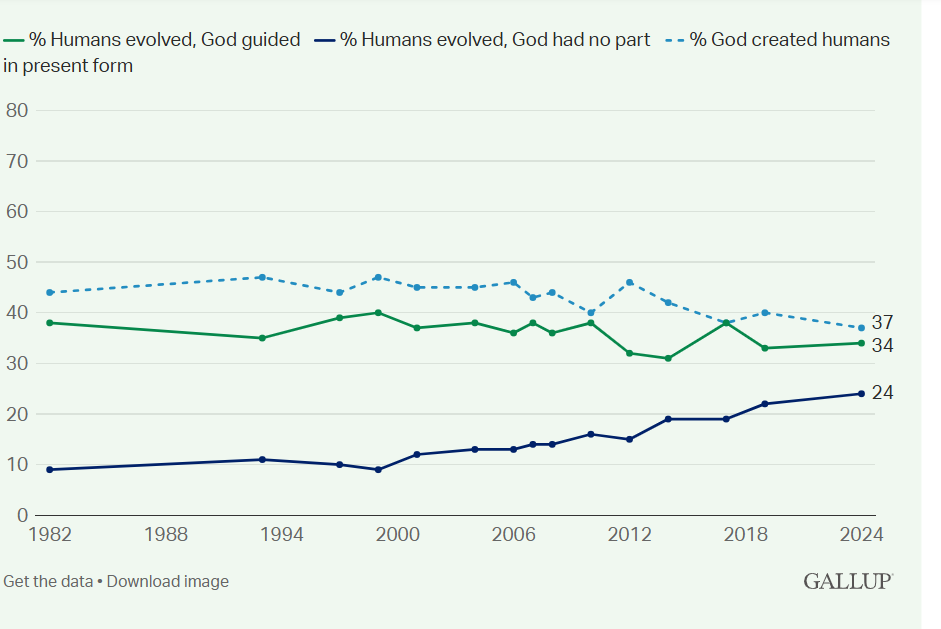
In a rapidly changing climate, it’s unlikely that plants native to pre-European, pre-industrial North America 500 years ago are best adapted to current conditions. That fiction is sustained by American ignorance of evolution. In 2024, a Gallup poll found that only 24% of Americans believe humans evolved without God’s involvement, a share that has risen steadily since 2000. Thirty-seven percent of the public still believes that God created humans in their present form. That ignorance of evolution also obscures how closely related plants are: entire plant families, most containing both native and non-native species, share similar chemistry, enabling insects to use both natives and non-natives within the same family.
Humans cannot stop evolution, nor should we try. Doug Tallamy has won this round. The ultimate victor will be climate change, because we’ve decided to do nothing about it. Unless we get a grip on climate change, it’s senseless to quibble about native plants.