Monarch butterflies in California need eucalyptus trees for their winter roost

Monarchs are probably the best-known butterfly in North America, partially because they are distinctively beautiful, but also because of their epic migration.  East of the Rocky Mountains, monarchs migrate from the Canadian border and the Atlantic Coast to spend the winter months in fir trees in Michoacan State in Mexico.  West of the Rockies, monarchs migrate from the Canadian border and the Pacific Coast to overwinter along the coast of California from Mendocino County to San Diego County, near the Mexican border.

Monarch Butterfly.  Creative Commons
Monarch Butterfly. Creative Commons

No single monarch makes the entire journey.  It takes two to three generations of monarchs to make the entire round trip.  How each successive generation knows the route remains largely a mystery, although theories exist.  There are a couple of fascinating books about the migration that we recommend to our readers.  Four Wings and a Prayer is a book about the 38-year effort of Canadian entomologists, Fred and Norma Urquhart, to understand the migration.  It reads more like a suspenseful mystery than the non-fiction book that it is.  Flight Behavior is by Barbara Kingsolver, one of our favorite novelists because nature is often the subject of her work.  Although it is fiction, it has been carefully researched by Kingsolver who studied biology before becoming a writer.  It is engaging both as a cautionary tale for environmentalists and as a personal redemption story.

The western migration of the monarch

Monarch butterflies roosting in eucalyptus tree.

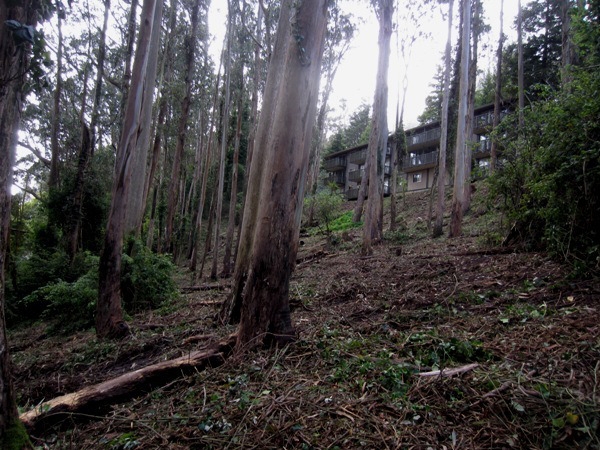
We will focus on the western migration of the monarch because that’s our neck of the woods, but also because this migration is one of the reasons why many people who care about nature and wildlife object to the destruction of eucalyptus trees.  Eucalypts are the preferred trees for over-wintering monarchs“Three types of trees were used most frequently by roosting monarchs:  eucalyptus (75% of the habitats primarily Eucalyptus globulus), pine (20% of the habitats primarily Pinus radiata), and cypress (16% of the habitats Cupressus macrocarpa).  Twelve other tree species were identified…with a combined prevalence of only 10%…habitats had smaller populations when the roosting tree type was a species other than eucalyptus, pine, or cypress.” (Three different studies by different authors are the source of these data, therefore they don’t add up to 100%.) (1)

For those who may not know the botanical names, that’s Monterey pine and Monterey cypress that are the runners-up to eucalypts as the most popular trees for over-wintering monarchs.  Although monarchs roost in those trees in their native range on the Monterey peninsula, they also use those species outside their native range.  Unfortunately, just as the eucalyptus is a target of native plant advocates who demand their destruction because they are not native, both Monterey pine and Monterey cypress are targeted for destruction outside their native range.  For example, both Monterey pine and Monterey cypress will be eradicated from hundreds of acres of public land if the FEMA grants are funded in the East Bay.  This is just 150 miles away from where those trees are native and there is fossil evidence that they existed in the East Bay in the distant past.  In other words, most of the trees used by monarchs for their winter homes are in jeopardy of being destroyed by the native plant movement.

Another nativist myth BUSTED!

One of the reasons why we are telling this story is that it is a tidy little example of the justifications fabricated by native plant advocates to support their destructive agenda.  In the case of the monarch, native plant advocates claim that prior to the arrival of Europeans, before eucalypts were planted and Monterey pines and cypresses were planted outside their native range, the monarch used native trees for their over-wintering habitat.  The “assessment form” used by the California Invasive Plant Council to classify Blue Gum eucalyptus as invasive says,  “[The Blue Gum] provides roost sites for migratory monarch butterflies…ecological niches for butterflies and raptors probably formerly filled by native plant species.”  No evidence is provided in support of that statement.  We have also read that claim in comments of native plant advocates on internet articles in response to those who defend eucalypts because they are needed by monarchs.

Like many of the “cover stories” of native plant advocates, this is just not true.  A search of the scientific literature about monarchs enables us to bust this particular myth to smithereens.  It would be simple enough for native plant advocates to look at the evidence before spinning their tales, but it is apparently easier to make it up, especially when they are rarely questioned.  Million Trees exists to fill this informational void.

The historical record of the western migration of monarchs

The earliest record of over-wintering monarchs in California is from 1864, when monarchs were observed over-wintering in Monterey pines in their native range.  Richard Vane-Wright, the scientist who reports this record, explains why he believes it is probably the first incidence of over-wintering monarchs in California:

“’Previous to that, no mention has been found of this interesting phenomenon…The early Spanish chronicles and traditions make no mention of it, although Monterey, a scant three miles distant, was gay with life when the last century came in…even David Douglas, the world famed botanist, and the keenest-eyes of all the strangers who came [to California] is silent regarding it.’…Douglas, the indefatigable fir tree collector, appears to have made no mention of the phenomenon in 1830-1832, despite spending two winters at Monterey.” (2)

Vane-Wright believes the eastern monarch migration to Mexico also began around the same time.  His theory is that the agricultural practices of early settlers, which cleared trees, created a population explosion of the milkweed that is the host plant of monarchs.  More milkweeds resulted in more monarchs and monarchs began to migrate in response to population pressure, he believes.  He calls this the “Columbus Hypothesis.”  (2)

Biological facts explain why monarchs choose these species of trees

Aside from the historical record, the biology of monarchs and the physical characteristics of the trees in which they over-winter explain why these species of trees are required by the over-wintering monarch.  During the late fall and winter, monarchs enter a dormant phase called diapause.  They continue to need nectar and moisture during that period, but they are not very active, so these resources must be close by.  Although they migrate to the coast from Mendocino to Mexico, they are most abundant around the mid-point of that range, where temperatures and rainfall are moderate.  Most of the approximately 250 roosting sites are within 2.4 kilometers of the ocean, so wind protection is important for them while they are roosting.  All of these factors predict the ideal conditions provided by eucalyptus trees:

  • Monarchs need tall trees (of at least 60 feet) because they roost in the intermediate level of the canopy where wind protection is greatest (3)
  • The forest must be dense enough to provide wind protection,
  • The tree canopy must be open so that the roosting monarchs receive filtered sunlight to keep their bodies warm enough.
  • The monarchs need enough moisture for hydration, but not so much that they are soaked and lose their body heat.  So, dew and/or fog provide the ideal amount of moisture.   (1 & 4)

All of these requirements for the monarch’s winter roost point to their dependence on eucalyptus, pines and cypress.  The trees that are native to the narrow strip of the coast of California do not meet these criteria.  They are not tall enough and they do not grow that close to the ocean because they do not tolerate wind.  The native vegetation of that narrow strip of California coast is predominately dune scrub and coastal grassland prairie.  And these are the vegetation types that the ecological “restorations” in the Bay Area are trying to re-create.  These vegetation types will not be suitable habitat for over-wintering monarchs.  Furthermore, plans to drastically thin eucalyptus forests on hundreds of acres of the East Bay Regional Park District will render those habitats useless for over-wintering monarchs.

In addition to the physical properties of eucalyptus, the monarch benefits from the fact that it is flowering from about December to May, while the monarch is roosting in the tree.  The flowers of eucalyptus contain a copious amount of nectar which is also important to the honeybee because it is flowering at a time when there are few other sources of nectar.  One study reported observing monarchs feeding on the flowers of Eucalyptus globulus. (5)

Risky Business

We have mixed feelings about reporting this research about monarchs to our readers because there is some risk to the monarchs in doing so.  The evidence suggests that monarchs did not over-winter in California prior to 1864, after the magical date that nativists have selected to freeze-frame California’s landscape to their nativist ideal.  Here in the San Francisco Bay Area, this magical date is 1769, when the expedition of Portola laid eyes on the San Francisco Bay.  Will nativists declare the monarch an alien invader to be eradicated along with the hundreds of plants and animals they claim “don’t belong here?”  This may seem a far-fetched conjecture, but keep in mind that the European honeybee is being eradicated in some “restorations” because it is not native.  The honeybee is essential to the survival of American agriculture, yet its existence is threatened by the radical agenda of the native plant movement.

That’s the risk we take in reporting this evidence because we hope that it helps our readers to understand the absurdity of the nativist agenda.

Update:  Monarchs have returned to Natural Arches State Beach in Santa Cruz in big numbers.  Here is a link to a report that includes a lovely video of the roosting Monarchs.  

***********************************

(1)    Dennis Frey and Andrew Schaffner, “Spatial and Temporal Pattern of Monarch Overwintering Abundance in Western North America,” in The Monarch Butterfly Biology and Conservation, Cornell University Press, 2004.

(2)    Richard Vane-Wright, “The Columbus Hypothesis:  An Explanation for the Dramatic 19th Century Range Expansion of the Monarch Butterfly,” in Biology and Conservation of the Monarch Butterfly, Natural History Museum of Los Angeles County, 1993.

(3)    Andres Kleiman and Miguel Franco, “Don’t See the Forest for the Butterflies:  The Need for Understanding Forest Dynamics at Monarch Overwintering Sites,” in The Monarch Butterfly Biology and Conservation, Cornell University Press, 2004.

(4)    Kingston Leong, et. al., “Analysis of the Pattern of Distribution and Abundance of Monarch Overwintering Sites along the California Coastline.” in The Monarch Butterfly Biology and Conservation, Cornell University Press, 2004.

(5)    Susan Chaplin and Patrick Wells, “Energy reserves and metabolic expenditures of monarch butterflies overwintering in southern California,” Ecological Entomology, 7:249-256, 1982

The American Prairie Reserve: Why is it controversial?

Our mission often obligates us to tell our readers about problems that we see with local “restoration”  projects in the San Francisco Bay Area, so when we see an opportunity to tell a positive story, we like to take it.  The New York Times recently published an article about the American Prairie Reserve that we think is probably a good example.  We say “probably” because this is a project in northern Montana that we won’t be able to visit and we don’t have first-hand access to the supporters or the critics of the project, so we have to admit that we could be wrong.

Missouri River from American Prairie Reserve.  Creative Commons.
Missouri River from American Prairie Reserve. Creative Commons.

The non-profit organization that operates the American Prairie Reserve is a group of conservationists who are funded by millionaire city-slickers who would like to see a hefty slice of the American prairie preserved, along with the wildlife that roamed free there when Lewis and Clark passed through in the early 1800s.  Their goal is to preserve 3 million acres of land.  So far, they have stitched together federal grazing leases on 215,000 acres of federal land and purchased 58,000 acres of former ranches.  They have removed 37 miles of fence and introduced 275 bison, a small start on what they hope will eventually be a huge herd.  They have planted native grasses.

American Bison.  NPS photo.
American Bison. NPS photo.

Their project is described in detail on their website which we encourage you to visit to see stunning photos of this beautiful land and its rare inhabitants.  We can’t share their photos with you because they are not in the public domain.

Here’s what appeals to us about this project:

  • Public access to the land is encouraged.  Hiking, hunting, and camping are allowed.
  • The project describes planting, not eradicating existing plants.  As we say repeatedly on Million Trees, we encourage native plant advocates to plant whatever they wish.  We ask only that they quit destroying everything else.
  • The project describes introducing new animals, rather than exterminating existing animals.
  • The project is being paid for by the people who support the project.  Taxpayers are not being asked to fund someone else’s hobby.

The caveats

Unfortunately, the ranchers in the neighborhood are worried that this project threatens their way of life.  Some of them have indicated that they will not sell their land to the project.  They are concerned that the loss of ranch properties will slowly diminish their community.  They worry that wealthy outsiders could price their families out of the market.  They don’t want their agricultural community transformed into a pricey tourist destination that would radically alter the character of their community.

The ranchers also consider themselves good stewards of the land“They rotate their herds to encourage a healthy mix of prairie grass and set aside ample room for sage grouse, plovers and heron.  They are trying to till less ground, which can destroy an underground ecosystem.  Some even allow small colonies of prairie dogs, which many farmers exterminate as pests.”  (1)

The conservationists who are supporting the project say they are trying their best to be good neighbors.  They buy land only when it goes on the market and then only at market-rate prices.  They installed electric fences so the bison do not disturb their neighbors.  They have even leased back some of the land they purchased to be grazed by ranchers.

The bottom line:  Is conflict inevitable?

The American Prairie Reserve looks as though it has everything going for it, including a remote location with a very low population of fewer than 5,000.  Yet, even when private money is used and every effort is made to accommodate those who live there, the project is controversial.  So, we should not be surprised that the “restoration” projects in the Bay Area are controversial:

  • Our projects ask the public to pay for projects that they often do not support.
  • Our projects often restrict the public’s access to the land that theoretically belongs to them.
  • Our projects eradicate plants and exterminate animals.
  • We live in a densely populated, urban environment where every acre of public space is precious.

*********************************

(1)    Jack Healy, “Vision of Prairie Paradise Troubles Some Montana Ranchers,” New York Times, October 26, 2013

Are critics of invasion biology pessimists or realists?

The California Department of Food and Agriculture held a symposium about invasive pest management in the 21st Century on October 17, 2013, at UC Davis.  This second in a series was focused on insects and diseases.  The first symposium held in Oakland in June 2013, focused on “invasive” plants.

The keynote speaker at the second symposium was Professor Daniel Simberloff of University of Tennessee.  He is a prominent invasion biologist and a self-appointed defender of that scientific discipline.  When the assumptions of invasion biology are questioned by other scientists, Professor Simberloff often publishes a heated response and recruits others to join him.  (For an example, see our recent post about Ascension Island and visit his “Counterpoint” to the article on which our post was based.)

Given the many recent defections of scientists from the central assumptions of invasion biology, we anticipated that Professor Simberloff would acknowledge that invasion biology is under siege.  We were not disappointed.  He started his talk by showing a quote from a scientist on the Galapagos Islands who, after decades of trying to eradicate non-native blackberry, was admitting defeat.  To paraphrase the scientist, he no longer believes that eradication is possible.  Therefore, he is now willing to call it a native plant.

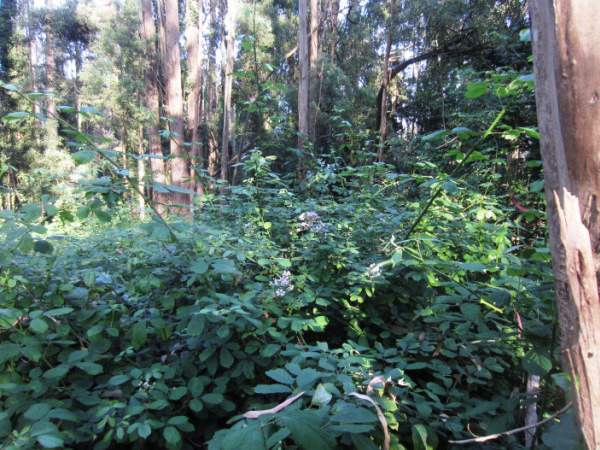
These blackberries were mowed to the ground sometime in the past year.  Herbicides haven't been used in the Sutro forest for several years, but UCSF plans to use them in the future.  Courtesy Save Sutro
These blackberries in the Sutro forest were mowed to the ground sometime in the past year. Herbicides haven’t been used in the Sutro forest for several years, but UCSF plans to use them in the future. Courtesy Save Sutro

We were reminded of Professor Matt Chew’s criterion for what species “belong” in any particular location.  If the species persists unassisted in that location, Professor Chew believes it belongs there.  Surely a corollary to that criterion should be, “if you can’t eradicate it, it belongs there.”

Professor Simberloff diagnoses this acceptance of non-native species as pessimism.  He is not alone in this characterization of people who are no longer willing to spend unlimited amounts of time and money trying to kill non-native species.  This is the standard criticism of that viewpoint.  We are called defeatists who have “given up” in the internet debates we read.

Why are we critics of invasion biology?

Although we agree that it is usually futile to try to eradicate non-native plants with large, well-established populations that have long ago naturalized in our environment, this is not the primary reason why we reject the notion that there is some benefit to trying anyway.  The main reason why we reject the fruitless crusade against non-native plants is because of the damage it does:  the herbicides that are sprayed on our public lands; the release of tons of carbon dioxide into the atmosphere when trees are destroyed; the loss of habitat for wildlife, etc.

At the same time, we acknowledge that some invasions of insects and diseases have posed such serious economic and health threats that we have no choice but to make every effort to eradicate them.  The species of mosquitoes that carry yellow fever and malaria are examples of justified eradication efforts.  We hope that those who are engaged in that effort are also mindful that the methods used are not more harmful than the targets.

Scientists defend “novel” ecosystems

We harp on these issues because they are not discussed by the scientists who either defend or critique invasion biology.  Their concerns are, so to speak, academic.

mount-sutro-forest-greenery
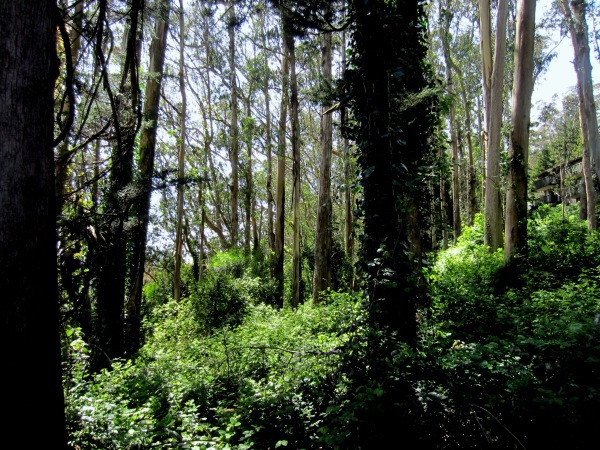
Sutro Forest is a novel ecosystem. Courtesy Save Sutro

There is an excellent description of the scientific debate about “invasive species” in the on-line newsletter of the American Society of Landscape Architecture (ASLA).  They report that novel ecosystems were featured at the recent conference of the Society for Ecological Restoration (SER) held in Madison, Wisconsin.  Novel ecosystems were defined by one of the speakers (Eric Higgs, University of Victoria) as ecosystems in which changes from historical conditions are considered irreversible: “Even if plants are removed, ‘the system will revert back immediately’ to a state of invasion.”  This is an accurate description of 15 years of effort by San Francisco’s so-called Natural Areas Program.  Non-native plants are repeatedly yanked out and/or poisoned, native plants are planted, native plants die, non-native plants return.  That cycle is repeated annually in some high-priority locations.

Apparently, we are not alone in observing this futile cycle.  The ASLA description of the conference of the Society of Ecological Restoration summarizes current thinking of practitioners of that profession:

“In the face of this overwhelming struggle against novelty, there has been a shift in values among society. Years ago, restoration ecologists wanted to restore ecosystems to their “historic fidelity” as much as possible. Now, ecologists, scientists, and landscape architects discuss the value of novel ecosystems’ services, which to some extent are plant-agnostic.”

While this viewpoint is a welcome improvement over the previous fantasies of restorationists, this information has not yet reached managers of public lands in the San Francisco Bay Area.  Nor does it acknowledge the very real damage that is being done by those who cling to the fantasy that non-native plants can be eradicated and replaced with native species, particularly in an urban setting such as the Bay Area.

The mission of Million Trees is not an academic exercise.  Our objective is to stop the damage being inflicted on our environment and the animals that live in it.  And we don’t intend to shut up until the damage has stopped.  We hope to be put out of business within our lifetime.

The importance of soil microbes for forest health

Yale Environment 360, the on-line science blog, published an interesting article last week about new discoveries in forest ecology regarding the importance of microbes in the soil for forest health.  These root fungi—called mycorrhizal fungi— form a symbiotic relationship with many plants and trees, both native and non-native.  They provide water and mineral nutrients in exchange for plant carbohydrates.  Scientists have known of the existence of these microorganisms for some time, but recent advances in DNA analysis has enabled scientists to identify thousands of different species of mycorrhizae and their association with certain tree species.

Scientists at Yunnan University in China had been trying for some time to save a critically endangered tree that had dwindled to only 200 individuals.  They had been transplanting seedlings into protected areas, with little success.  Finally, they discovered that inoculating the seedlings with mycorrhizae increased survival rates from 46% to 80%

Certified arborists evaluating the Sutro Forest called it "mycorrhizal heaven."  Courtesy Save Sutro
Certified arborists evaluating the Sutro Forest called it “mycorrhizal heaven.” Courtesy Save Sutro

Root fungi and our urban forest in the Bay Area

We learned of the importance of these root fungi to our urban forest from Colin Tudge’s book, The Tree, nearly ten years ago:  “Most forest trees and many other plants too, make use of mycorrhizae; some, like oaks and pines, seem particularly reliant on them.”  And eucalypts are also dependent upon mycorrhizae:  “Many trees have mycorrhizae, but pines and eucalypts seem particularly adept.” (1)

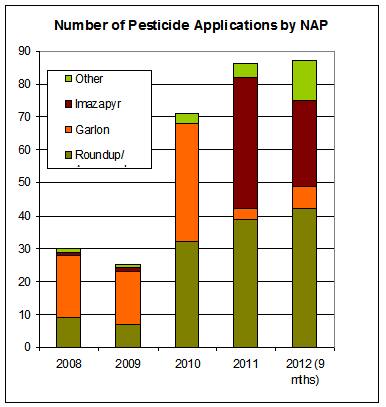
Volume of pesticide use by San Francisco's Natural Areas Program,  Courtesy Save Sutro
Volume of pesticide use by San Francisco’s Natural Areas Program, Courtesy Save Sutro

And in 2010, we learned from the Marin Municipal Water District’s “Herbicide Risk Assessment,” that one of the most frequently used herbicides sprayed on the stumps of eucalypts when they are cut down is known to be harmful to mycorrhizal fungi in the soil.  This herbicide is also foliar sprayed on non-native vegetation such as broom, Himalayan blackberry, ivy, etc.  The active ingredient in Garlon 3A and Garlon 4 Ultra—triclopyr–is known to be toxic to microrganisms such as mycorrhizae:

 “Mycorrhizal fungi are symbionts with plants that provide water and mineral nutrients in exchange for plant carbohydrates. Cenococcum geophilum, the slowest growing fungus, was least sensitive to the effects of triclopyr, exhibiting decreased growth at 742 ppm a.e. A similar study found that triclopyr (formulation not reported) could inhibit growth in five mycorrhizal species: Hebeloma crustuliniforme, Laccaria laccata, Thelophora americana, Thelophora terrestris, and Suillus tomentosus.94Fungi were kept in liquid culture for 30 days and the reduction of biomass with increasing triclopyr concentrations was measured. A 90% reduction in biomass was observed for all species at concentrations of 720 ppm; greater than 50% reduction biomass was observed in four of the five species at 36 ppm. The most sensitive species, Thelophora americana, exhibited a 6% decrease in growth rates relative to controls at triclopyr concentrations of 0.072 ppm (this result was statistically significant). In other species, statistically significant decreases in growth were reported between 0.72 ppm and 7.2 ppm.” (2)

These studies tested this herbicide on only six species of mycorrhizal fungi.  We should probably assume that other species would also be harmed and it is likely that other herbicides would also be harmful, though no tests have apparently been conducted.  Testing of pesticides is woefully inadequate because legal requirements for testing are minimal and most testing is funded by manufacturers with little motivation for learning more bad news.

Here is one of the comments posted on the Yale Environment 360 article by an academic at University of Philippines, about presumed damage to agricultural soils by pesticide and fertilizer use:

“The article on microbes by Conniff follows what I pointed out earlier to Yale e360, that there is a group in the Philippines, of which one is a geneticist trained in the U.S. and two are foresters trained in the Philippines, who believe in fertilizer- and pesticide-free agriculture methods that do not kill off microorganisms in the soil that are much needed by the plants. They (the three happen to be brothers) applied this principle to rice and other crops and are harvesting more with less input. They have a growing following among farmers as well as a flourishing broadcasting business. They fight an uphill battle against fertilizer and pesticide multinationals and their local partners. They are slowly winning their battles and will later win the war for food security. Advances in tropical forestry will broaden horizons. Thank you Yale e360!”

Posted by Bienvenido R. Rola, PhD on 10 Oct 2013

 Implications for ecological “restorations” in the Bay Area

It seems likely that the huge amounts of herbicide that are used by local projects to eradicate non-native vegetation are damaging the microbes in the soil that are essential to forest health.  This is probably one of many explanations for the lack of success of these projects.  Here is a recap of the many reasons why these projects are rarely successful unless they are intensively planted and gardened:

  • Higher levels of CO₂ and associated climate change are promoting the growth of non-native plants. 
  • The growth of non-native annual grasses is encouraged by higher levels of nitrogen in the soil found in urban environments as a result of the burning of fossil fuels. 
  • Hundreds of species of California native plants require fire to germinate their seeds and most of the population will die within 5 years of the fire.  Prescribed burns are prohibited in San Francisco and are severely limited in most urban areas because of air quality standards and safety concerns.
  • Herbicides are damaging the soil.

***************************************

(1)     Colin Tudge, The Tree, Three Rivers Press, 2005

(2)    Chapter 4, Marin Municipal Water District, “Herbicide Risk Assessment,” 2010

Australian Dingo: A controversial predator

The dingo is a wild dog in Australia.  It is a controversial animal in Australia for several reasons.  Some of the issues about the dingo are similar to controversies in our country about wild animals, so perhaps we may learn something about our own debates by taking a closer look at the dingo.

Dingo.  Creative Commons
Dingo. Creative Commons

Is the dingo a wild, native animal?

One of the questions about the dingo was this:  “Is the dingo more closely related to wolves or to domestic dogs.”  Wolves are considered wild animals, but a domestic dog that runs free—as the dingo does—does not enjoy that status.  A loose domestic dog is generally rounded up by animal control agencies and probably euthanized if not quickly adopted. 

The advent of DNA analysis has recently settled this question.  The dingo is said to be more closely related to domestic dogs that came from Southeast Asia, probably brought by migrating humans about 5,000 years ago.  This is not good news for the dingo, because it confers two demerits on the hapless dingo: 

  • As a relatively recent arrival, its status as a native species is now challengedThe mammals’ curator of the Queensland Museum said, “If they want to preserve pure dingoes they should send them back to Thailand where they came from.  Many people don’t realize that Australia’s so-called native dog isn’t native at all.”
  • If the dingo had arrived on its own, rather than in the company of humans, its status as a native species might not have been challenged.  Ironically, when human agency is a factor in the arrival of species of plant or animal, it is often categorized as an “invasive species.”  The fact that the dingo has been in Australia for over 5,000 years, does not exonerate it from this pejorative label.

Competition with human enterprise

Although the dingo is not closely related to the wolf they have in common that they are both top predators.  In addition to killing feral animals, they both kill animals domesticated by humans, such as sheep, cattle, and goats.  Consequently, both dingoes and wolves are a problem for ranchers and farmers who raise animals for a living.  Ranchers actively advocate controlling populations of wolves and dingoes. 

In the United States, dwindling populations of wolves were given endangered status to protect wolves from being killed by ranchers.  Wolf populations in the United States have increased since wolves were given protected status.  Ranchers are therefore aggressively lobbying to end that protected status and environmentalists are just as aggressively lobbying to continue that status. 

Poisoned dingoes.  Gnu Free Licencse
Poisoned dingoes. Gnu Free Licencse

The dingo has not been granted such protected status in Australia.  Dingoes are being poisoned to reduce their numbers, but the species is not presently considered threatened with extinction.

Those who defend wolves and dingoes do so by explaining the role they play as apex predators.  They help to balance many animal populations that might otherwise become too numerous.  For example, the return of wolves to Yellowstone National Park is said to have reduced the population of deer, which has enabled the recovery of some types of vegetation eaten by deer.  In Australia, dingoes control populations of feral cats and red foxes that prey on small native animals. 

Scapegoating animal competitors

Until recently, dingoes were also accused of hunting rare native animals to extinction, in particular the Tasmanian tiger and the Tasmanian devil on the Australian mainland:  “Perhaps because the public perception of dingoes as ‘sheep-killers’ is so firmly entrenched, it has been commonly assumed that dingoes killed off the [tigers] and devils on mainland Australia.”  (1)

Female dingo.  Creative Commons.
Female dingo. Creative Commons.

Australian scientists have recently exonerated dingoes of this accusation.  Using mathematical models, they have decided that the disappearance of the tigers and devils was probably caused by an abrupt change in the climate at the same time that the Aboriginal population on the mainland increased significantly.   The climate change reduced vegetation that had supported prey populations.  Increased numbers of Aboriginal hunters meant there was insufficient prey for tigers and devils.  They were the losers in the increased competition for a reduced food supply because they hunt alone, unlike humans and dingoes who hunt cooperatively together.

Familiar Themes

The case of the dingo recapitulates many themes on Million Trees:

  • The definition of “native” is illusive.  It seems to shift to suit the purposes of the person assigning that label.
  • When the economic interests of humans conflict with the needs of animals, the animals are usually the losers.
  • Animals are sometimes scapegoated by humans for environmental issues that are not caused by animals.
  • Human understanding of environmental issues is often inadequate to accurately identify the cause of environmental problems.

We wish the dingo the best of luck for its survival in Australia.

************************

(1) http://www.sciencedaily.com/releases/2013/09/130910095413.htm

Sudden Oak Death (SOD) Update 2013

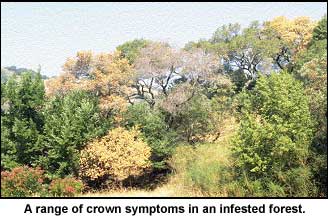
Scientists at UC Berkeley held a public workshop last week to announce the results of the 2013 SOD Blitz.  A video of the workshop is available here.  The annual SOD Blitz engages citizen volunteers in identifying bay laurel trees infected with the pathogen that causes Sudden Oak Death.  Bays are tested because the infection is more easily identified in bays than oaks.  Scientists who study SOD believe that although the pathogen doesn’t kill bays, they are considered the primary vector of the disease to oaks that are killed by the pathogen.   

SOD mortality - Sonoma County
SOD mortality – Sonoma County

About 500 volunteers participated in the 2013 SOD Blitz which took place last spring.  The pathogen is most easily identified in the spring when it is still wet and cool.  Over 13,000 samples were taken from about 2,000 trees.  The samples were tested in laboratories for the pathogen.  Thirty-one percent of the samples were symptomatic for the disease. 

The infection rate was lower in 2013 than some previous years because it was a dry year.  The infection rate was highest in 2011, which was a particularly wet year.  Infection rate correlates positively with rainfall and lower temperatures.  Therefore, infection rates are higher in coastal locations and lower in inland locations.  Infection rates increased significantly in 2013 in Santa Cruz and South Skyline Blvd in San Mateo County.

SOD mortality - US Forest Service
SOD mortality – US Forest Service

Mortality rates vary by oak species.  Tan oaks are most vulnerable to the disease, which is expected to kill 100% of infected tan oaks.  Coast live oaks are slightly less vulnerable to the disease.  About 90% of infected coast live oaks are expected to die.

The results of five years of SOD Blitzes have been mapped and can be viewed here

SOD Workshops are scheduled all over California in October and November to advise the public about preventative treatments for oaks: 

10/12 Sat 10am Burlingame Hills – 120 Tiptoe Lane (off Canyon Rd.), Burlingame, CA Steve Epstein – steve@burlingamehills.org

10/20 Sun 10am East Bay – Spillway picnic area, Tilden Regional Park (near Lake Anza) Map Link Amelia Marshall – Amelia.marshall@att.net

10/23 Wed 1pm UC Berkeley – UC Berkeley Campus, SOD Treatment Training Workshop Webpage Link

11/1 Fri 7:30pm Atherton – Los Altos Library, S. San Antonio Rd, Los Altos, CA Arvind Kumar – arvind.kumar@cnps.org

11/2 Sat 10am Sonoma – Location TBA, Lisa Bell – lkbell@ucanr.edu

11/9 Sat 10am Los Altos Hills – Foothills Park 3300 Page Mill Road, Los Altos Hills, CA Sue Welch – sodblitz09@earthlink.net

 11/12 Tue 8:30am San Francisco Presidio – Location TBA

11/12 Tue 6:30pm Mendocino – Fort Bragg Town Hall, Fort Bragg, CA Lori Hubbart – lorih@mcn.org

11/13 Wed Santa Lucia Preserve – Time and Location TBA

11/14 Thur 6 pm Potluck, 7 pm talk by Matteo Garbelotto from UCB on “Biology of the SOD pathogen and disease control strategies”, UCSC Arboretum, 1156 High St, Santa Cruz, CA Map Link Brett Hall – brett@ucsc.edu

11/16 Sat 10am Marin – Dominican University, 155 Palm Ave., Joseph R. Fink Science Center, Room 102, San Rafael, CA Kristin Jacob – kristinjakob@att.net

11/16 Sat 1pm Napa – Pelusi Building, 2296 Streblow Drive at Kennedy Park, Napa, CA Bill Pramuk – info@billpramuk.com

11/17 Sun 10am South Skyline – Saratoga Summit Forestry and Fire Protection (CalFire) CDF fire station, Jane Manning – skyline_sod@yahoo.com

11/23 Sat 10am Montalvo – Montalvo Arts Center, 15400 Montalvo Road, Saratoga, CA Kelly Sicat – KSicat@montalvoarts.org

11/24 Sun 1pm Oakland – Joaquin Miller Park, Oakland, CA Kimra McAfee – coordinator@sausalcreek.org

Implications of climate change for ecological restorations

The Intergovernmental Panel on Climate Change (IPCC) is a committee of hundreds of scientists from all over the world that has been reporting since 1990 to the United Nations its consensus predictions of the future of climate change.  They made their latest report recently and these are their primary findings:

  • They report with 95% certainty that current climate change is being caused by the activities of humans, particularly burning fossil fuels.
  • They predict that sea level could rise as much as 3 feet by the end of this century if current levels of greenhouse gas emissions continue.
  • During the same timeframe and in the same conditions, the temperature is expected to rise between 2.7 to 8.1 degrees Fahrenheit.
  • If carbon dioxide emissions double by the end of the century, as the current trajectory predicts, the IPCC says current climate trends will be irreversible.

The Earth’s constantly changing climate

The public is preoccupied with the current round of climate change as well as predictions of its trajectory and consequences partly because it may be within our power to stop the trend by reducing greenhouse gas emissions.  But we should not lose sight of the fact that the 4.5 billion year history of the Earth is a history of a constantly changing climate which humans did not influence.  Conventional wisdom is that current climate change is unique in that it is a more rapid change than past changes, making adjustment to the change more difficult for the Earth’s inhabitants.  In fact, many historical changes in the climate occurred even more rapidly when they were precipitated by cataclysmic events such as the impact of huge asteroids or volcanic eruptions.

Our readers may wonder where we are headed with this train of thought.  We hasten to preview our point lest our readers think our goal is to dismiss the seriousness of the current round of climate change.  Our intention in this article is to invite our readers to consider the absurdity of the concept of “native plant and animal species” in the context of the dynamism of nature, climate changes being one of the many factors in producing that dynamism.  We will use the last ice age as an example to illustrate this point, drawing from an excellent book on that subject:  After the Ice Age.  (1)

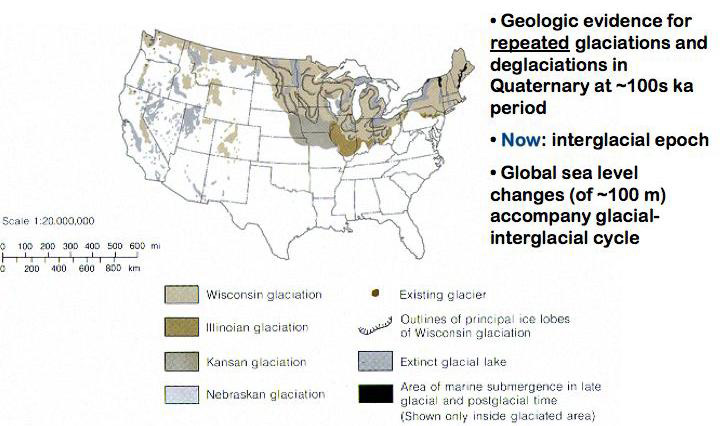
Glaciers in the US in past 100,000 years.

The Last Glacial Age

In the past billion years, there have been many glacial periods, popularly called ice ages.  It’s worthwhile to consider their cause to understand that they are as likely to occur in the future as they did in the past.  They are thought to be a consequence of the constantly shifting tectonic plates that change ocean currents as well as cycles in the rotation of the Earth and its orbit around the sun.  The former pattern is unpredictable, even random, and the latter is a more predictable sequence.  There are intervening variables that make this an oversimplification of the causes, but this is a sufficient explanation to make the main point: 

At no time has there been a return to ‘things as they were.’  It is true that there must have been times when average temperatures were similar to those of the present.  Thus, before the beginning and after the end of the warmer-than-now hypsithermal interval [the warmest time interval between glacial periods], the average annual temperature must, for a while, have been much the same as now.  But in other respects, conditions would have been radically different, as there were still extensive ice sheets that would have cooled their immediate neighborhoods, and sea level was still about twenty-to twenty-five meters lower than at present” (1)

In other words, the changes in the Earth are always moving forward.  To suggest that a past period represents some ideal to be reified, is to treat nature as a still life painting rather than the motion picture it is.  Particularly at a time of rapidly changing climate, attempting to replicate a landscape that existed 250 years ago on the West Coast and 500 years ago on the East Coast is a fool’s errand (the pre-European landscape is selected by native plant advocates to define “native”).  The naturalized landscape that exists presently is surely better adapted to current conditions than whatever landscape existed hundreds of years ago.  As Matt Chew (Arizona State University) says, “belonging” is when the organism is capable of persisting. (2) The Natural Areas Program in San Francisco has demonstrated in the past 15 years that the plants that existed here 250 years ago are not capable of persisting here without intensive gardening.  Therefore, using Matt Chew’s definition, we might say they no longer “belong.”

The last ice age on the North American continent

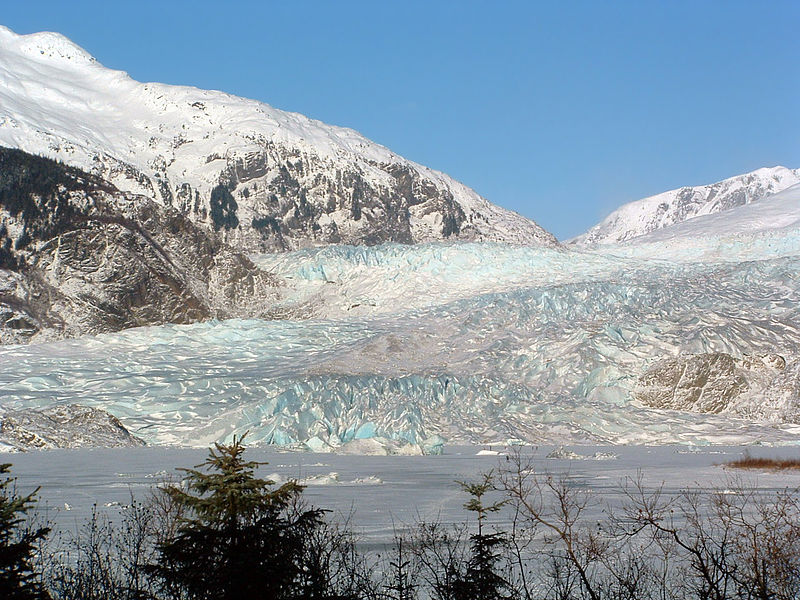
Mendenhall Glacier, Alaska.  Creative Commons
Mendenhall Glacier, Alaska. Creative Commons

The most recent ice age in North America was at its height 20,000 years ago and a tiny fraction of those glaciers persist in the Arctic today.  The climate oscillated many times in the past 20,000 years, but the over-all pattern was a gradual melting.  As the glaciers receded, they left a barren landscape, scraped of all vegetation and sculpted by the enormous weight of the ice and the eroding action of the rocks carried within the ice.  The ice was so heavy that it actually weighed down the land, lowering its elevation relative to the ocean.  As the ice melted, the land returned to its previous elevations when relieved of the weight of the ice.

As the ice melted, the land was slowly vegetated by seeds blowing onto the bare land, germinating, and growing.  The strength and direction of the wind was therefore an important factor in the process.  Which seeds blow in depends upon what plants are close by and the mobility of the seeds which varies by species.  Which seeds germinate depends upon the soil conditions where they land as well as the resource requirements of the seed species.  Local climate conditions will also determine which seeds survive:  the temperature, the hours of light, the amount of moisture and precipitation, etc. 

Add to this complexity of variables, the interaction of the plants as they grow, some hindering the growth of their neighbors by shading them, for example.  In other words, there are many different factors at play as the bare land is vegetated and those factors vary enormously from one place to another.  The outcome is random, largely unpredictable, and outside the control of human witnesses to the process. 

The initial vegetation of the bare ground as the ice melts is only the beginning of the story.  The rocky surface lacks nutrients initially.  Nitrogen-fixing plants are needed to begin the process of building soil from which subsequent species of plants will benefit.  Bacteria and fungi slowly populate the soil, contributing to its fertility for later plant arrivals.   Animals participate in the process by distributing seeds as well as selectively eating vegetation.

This is a severely truncated version of a far more complex story none of which humans could control.  We hope we have not exhausted your patience, but have given sufficient background to help you understand the most important point as explained by After the Ice Age:

 “There is a wealth of evidence, however, showing that climatic change is never ending.  Even if major climatic ‘steps’ are comparatively quick, it is almost certain that the climate in the intervals between steps undergoes continual lesser changes.  In the light of present knowledge, therefore, [Margaret] Davis’s view, that disequilibrium in ecological communities is much commoner than equilibrium, is the more acceptable.  It should lead, in time, to a much needed change in popular thought.  The notion espoused by so many nonprofessional ecologists—that the living world is ‘marvelously’ and ‘delicately’ attuned to its environment—is not so much a scientifically reasonable theory as a mystically satisfying dogma.  Its abandonment might lead to a useful fresh start in environmental politics.” (3)

We conclude with a nota bene:  this remarkable book was published in 1991!!!   Isn’t it long past time for the public to be aware of scientific information that has been available for over 20 years?  When will we abandon the mystical fiction that there is some ideal landscape that may or may not have existed hundreds of years ago that we must attempt to re-create?  Even if we thought such an effort would be of some benefit, what makes us think that it is physically possible, given the changes that have occurred in our environment?

*****************************************

(1)    E.C. Pielou, After the Ice Age:  The Return of Life to Glaciated North America, University of Chicago Press, 1991

(2)    Matthew Chew, “Anekeitaxonomy:  Botany, Place and Belonging,” chapter in Invasive & Introduced Plants and Animals:  Human Perspectives, Attitudes, and Approaches to Management, editors Ian D. Rotherham and Robert A Lambert, Earthscan, 2011

(3)    Margaret Davis is “one of North America’s leading palynologists,” who studied the development of eastern forests after glaciers melted.

Shelterbelt: Protector or Destroyer of Nature?

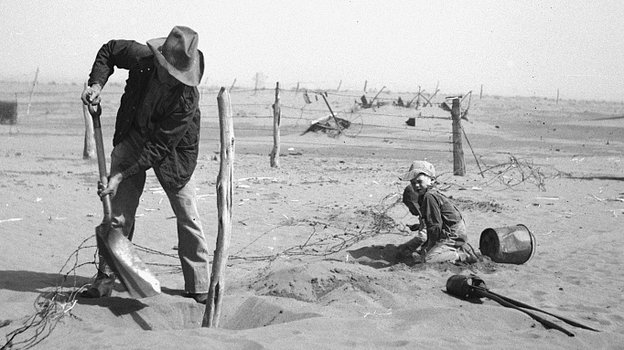
In the 1930s, during the Great Depression, the entire country experienced extreme poverty.  In the Midwest, the drought and the dust storms it caused contributed to the suffering.  The Dust Bowl was a result of decades of intensive farming on marginal land that was made possible by atypical years of heavy rain and high commodity prices.  When the drought hit that is more typical of the climate in that region, the crops died and the depleted, sandy soil was free to blow in the wind in what were called “black blizzards.” 

The Dust Bowl
The Dust Bowl

Franklin D. Roosevelt had a lifelong interest in and fondness for trees.  Prior to entering politics, he had forested his property at Hyde Park in New York.  So, when confronted with the Dust Bowl, a tree-based solution came naturally to him while on the campaign trail for the presidency.  He was visiting a desolate town in Montana that had been deforested by mining operations when the idea of a massive windbreak to protect agricultural land from the wind and stabilize the soil came to him. 

This windbreak came to be known as the Shelterbelt.  The story of the planting of the Shelterbelt is one of many interesting stories about American forests told in American Canopy:  Trees, Forests, and the Making of a Nation. (1)

The idea of windbreaks to protect agricultural lands was not new at the time: 

“For instance, California citrus growers routinely planted stands of fast-growing, imported eucalyptus trees to shield their precious orange trees from gusts coming off the Pacific Ocean.  As a 1908 pamphlet on eucalyptus explained, ‘In unprotected orchards, nearly the entire crop is frequently blown from the trees, or so scarred and bruised that the grade and market value are much reduced.’” (1)

Despite this track record of the value of trees to protect agricultural crops, President Roosevelt met with fierce political resistance to his proposal to create the Shelterbelt.  At every turn, the project was repeatedly starved of the funding needed to complete the project.  The detailed story of that resistance is reminiscent of the political theater we are now witnessing that is attempting to prevent the implementation of the Affordable Care Act. 

Although the Shelterbelt never reached the scale that President Roosevelt had envisioned, much of it was eventually planted in Oklahoma, Texas, Kansas, Nebraska, and the Dakotas:

“A 1954 evaluation of the Shelterbelt determined that over 220 million trees had been planted on thirty thousand farms.  The Forest Service had laid down in total more than 18,600 linear miles of tree strips—and a majority of these, more than 70 percent, survived for decades.  During the 1950s and 1960s many of the original Shelterbelt plantings were reinforced or expanded through the private actions of farmers who had come to appreciate the value of tree windbreaks.”  (1)

Despite the huge scale of that project, only $14 million was spent in the eight years that the project existed.  “An article in American Forests estimated, somewhat optimistically, ‘On a fifty-year basis, the cost to the government of an acre [of agricultural land] protected a year is estimated at four cents.’”  That’s a bargain at ten times that estimated price. 

The description of the trees and how they were planted helps us to appreciate that a windbreak is more than a single row of trees on the perimeter of a field:

“Tree strips in the Shelterbelt typically included ten rows of vegetation.  The outer row contained small trees or shrubs, most commonly chokeberry, lilac, mulberry, Russian olive, and wild plum.  The inner rows featured quick-growing, long-lived, taller trees that had been selected for their tolerance of the unwelcoming climate.  Some tree varieties were native, while others had been discovered abroad, often the result of research first conducted by plant explorers…The most widely planted species were cottonwood, green ash, and Chinese elm, which each appeared in all six participating states.” (1)

After planting, the trees and shrubs had to be protected from grazing animals with fences. 

Drought strikes again

National Public Radio (NPR) recently broadcast an update about the Shelterbelt.  It’s not good news.  The drought in the Midwest that is considered a consequence of climate change is killing the Shelterbelt:

“Now [the] trees [in the Shelterbelt] are dying from drought, leaving some to worry whether another Dust Bowl might swirl up again.” 

A farmer in Oklahoma describes the dying Shelterbelt: 

“He pointed to a line of trees as he drove along the shelterbelt trees that flank his farmhouse.  ‘You can see the tops of those trees?’ he asked.  ‘You see how they’re dying?  You can see how it’s almost deteriorated to nothing.’”

Oklahoma State Forester, Tom Murray, told NPR what the Shelterbelt accomplished there

“’This used to be cotton field, if I remember right, looking back at the history,’ he says.  ‘And it just blew—it’s sand and it blew.  By putting this [windbreak] here, it stopped that south wind from blowing across the field.’”

We wonder if the native plant advocates who are determined to destroy tens of thousands of our non-native trees in the Bay Area understand that those trees are protecting us from the harsh winds that blow in from the ocean. 

Shelterbelt the Destroyer

When we read the story of the creation of the Shelterbelt, we were immediately struck by the irony of its name.  Here in the San Francisco Bay Area, the most widely used sub-contractor for the destruction of non-native plants and trees is named Shelterbelt.  They are responsible for many of the herbicide applications in the so-called “natural areas” in San Francisco.  Here is a description of their organization from their website:

“Shelterbelt Builders was founded in 1978 in Berkeley, CA as a general building and landscaping company completing over 600 commercial and residential projects during the subsequent 15 years…After an exhaustive effort rebuilding residential homes following the 1991 Oakland Hills firestorm, management realized there was no locally available organization specializing in the management, stewardship and restoration of native landscapes in the San Francisco Bay Area.  At that time, Shelterbelt abandoned traditional construction and restructured itself into a specialty contracting company dedicated exclusively to restoration of native landscapes and open land management.  We are now one of the leading companies in California devoted to this task.”

Shelterbelt began the eradication of non-natve vegetation in Glen Canyon in November 2011

The Shelterbelt company began as a builder.  Now they are a destroyer of non-native trees and plants.  Their name is now a misnomer in our opinion.  The name, Shelterbelt, was coined in 1935 to describe a massive windbreak composed of non-native and native trees that was responsible for helping to stabilize the agricultural land in the American Midwest and end the era of the Dust Bowl.  To see that name appropriated by a company that actively engages in the destruction and poisoning of non-native vegetation is very sad indeed.  It is also a reminder that ecological “restorations” have become an industry, with vested economic interest in the continuation of the destructive crusade against non-native plants and trees.

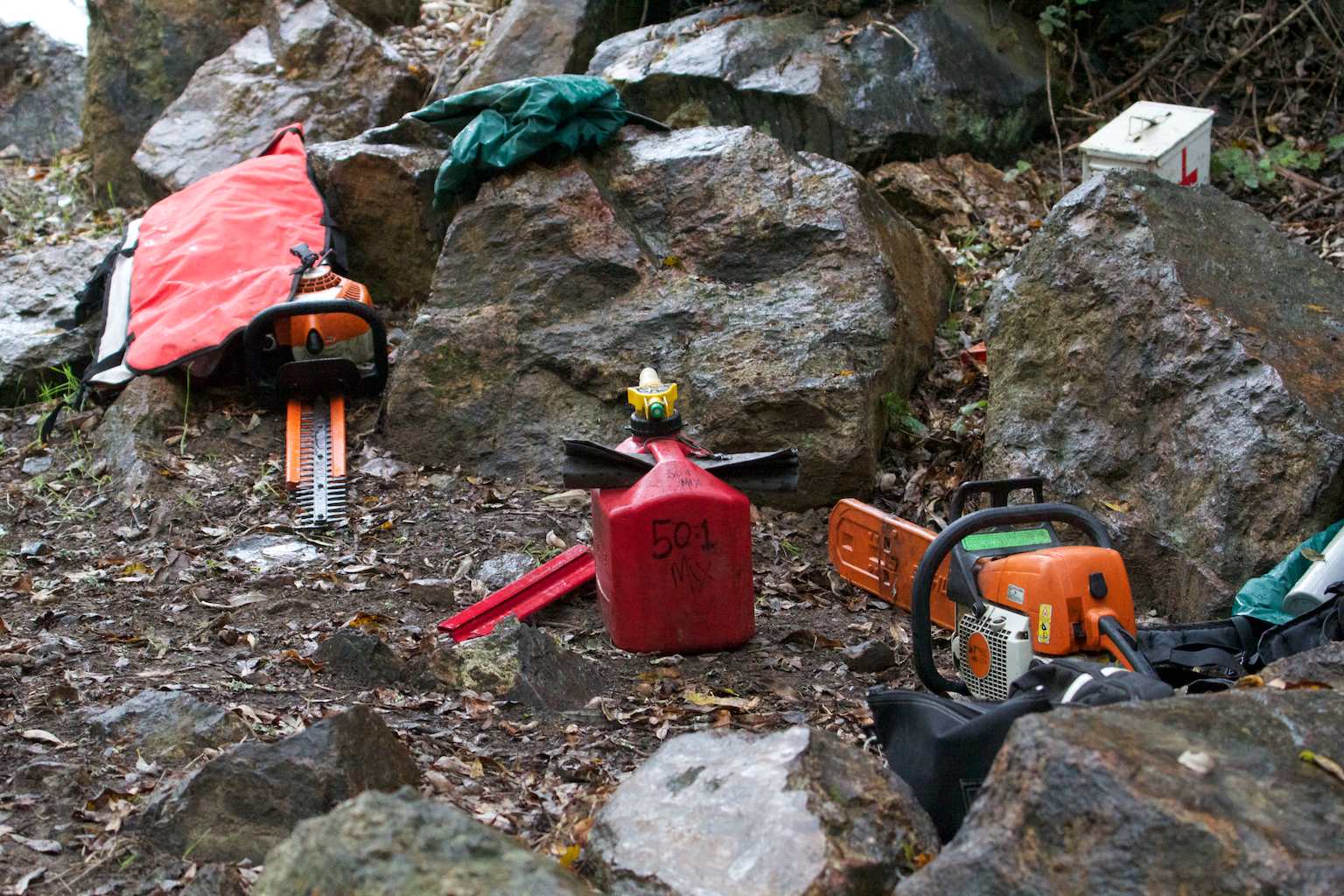
Shelterbelt's tools:  chainsaws and equipment to spray herbicides
Shelterbelt’s tools: chainsaws and equipment to spray herbicides

***************************************

(1)    Eric Rutkow, American Canopy:  Trees, Forests, and the Making of a Nation, Scribner, 2012

Scientists critique UCSF’s plans for Mount Sutro and native plant advocates react

Nature is considered one of the top journals in science globally.  So, we were very excited about the article they published in their September 2013 edition about Mount Sutro. (1) The article starts with every bogus claim UCSF makes to justify the destruction of the forest, i.e., that it is flammable, that it is diseased, that it will store more carbon when most of it is destroyed.  We have responded to those claims many times on Million Trees, so we won’t repeat those arguments here.  (We have provided links to our articles about each of these issues, so you can read them if you wish by clicking on each issue.)

Sutro forest before recent tree removals.  Courtesy Save Sutro
Sutro forest before recent tree removals. Courtesy Save Sutro

After faithfully repeating UCSF’s storyline, Nature turns to the opposite side of this debate, starting with the welcome introduction of critics of the Sutro project as “environmentalists and ecologists” for whom “a hardline devotion to preserving native ecosystems is giving way to a more post-modern idea of what constitutes a natural landscape.”  The author of the Nature article interviewed scientists who agree with this new perspective:

  • “’Mount Sutro is part of a larger story,’ says Richard Hobbs, an ecolo­gist at the University of Western Australia in Crawley. ‘What some people see as a weed-filled blot on the landscape, others see as something extremely valuable, worthy of managing in its own right. People are increasingly moving away from the belief that a native ecosystem is always best….There is a lot of tension about how to deal with situations like these right now,’ he says. ‘With so much non-native habitat, the old views — that everything must be natural — no longer apply.’”
  • “In the early 1990s, Patricia Kennedy of Oregon State University in Corvallis helped to develop management guidelines for northern goshawks. She found that the raptors do not strictly need old-growth forests; land used for timber harvesting can work, too. She says that, at the time, accept­ing the idea felt like a move to the ‘dark side’. ‘The whole culture in wildlife biology and conservation circles has been that you can’t approximate Mother Nature,’ she says.  But those ideas are changing today, with altered ecosystems such as Mount Sutro’s providing a case in point.”
  • Joe Mascaro, an ecologist at Stanford University in California [2] who has been publicly critical of UCSF’s management plans, says that Mount Sutro has long since given way to a completely new ecosystem. ‘Restoring it to an original state would be borderline impossible, so why stop the succession that is already in place?’”
  • “Resistance to such a heretical idea runs deep among ecologists, but growing num­bers are embracing altered ecosystems in the name of pragmatism. ‘You can reach more win–win situations if you don’t insist on purity,’ says Katharine Suding, an ecologist at the University of Califor­nia, Berkeley, who specializes in restoring human-affected areas. ‘It doesn’t have to be a natural versus non-natural dichotomy.’”
Same section of Sutro forest after tree and understory removal at the end of August 2013.  Courtesy Save Sutro
Same section of Sutro forest after tree and understory removal at the end of August 2013. Courtesy Save Sutro

The reaction of native plant advocates

As pleased as we were to hear from the international scientific community, we didn’t fully appreciate the significance of the article until we read the reaction of native plant advocates in Jake Sigg’s Nature News:

“On Sep 15, 2013, at 4:13 PM, Peter Brastow wrote (re NYT editorial on Mt Sutro):
‘Yes, and recall that the NYT article linked to an awful piece in Nature. I see this as PhD Academicians liking the sound of their own voice, and certain members of the media who, likewise, don’t actually know anything about on-the-ground land management. To boot, their arguments support continued environmental destruction around the world, whether for palm plantations, bio-fuel production, cattle grazing, suburban development, you name it. Do you think these same people advocate letting the Amazon rainforest be clearcut from end to end?’” 
(Jake Sigg’s Nature News, September 21, 2013)

It seems that native plant advocates disliked the Nature article as much as we liked it. This comment from a prominent native plant advocate in San Francisco is more evidence of the growing gap between restorationists and the scientists of invasion biology who spawned the native plant movement.  We have noted before the inevitable tension between theoretical science and its practical application and in the case of ecological restoration in the Bay Area, it is becoming more and more distant from its scientific underpinnings.

What is San Francisco’s Biodiversity Program?

You might think that the loss of scientific support for the projects in the Bay Area which are attempting to convert non-native to native landscapes would weaken the local native plant movement.  You would be mistaken.  Peter Brastow, the author of this comment, is employed by the City of San Francisco as the Director of Biodiversity in the Department of the Environment.  The creation of this program and the selection of Mr. Brastow as its first director suggest official endorsement of these projects and imply their expansion beyond their present footprint.  This is the mission of San Francisco’s Biodiversity Program according to the Department of Environment’s website:

“The mission of the Biodiversity Program is to conserve the biodiversity, habitats and ecological integrity of San Francisco’s natural environment, toward a comprehensive watershed- and ecosystem-based natural resources management, stewardship and education program.

Our approach is to advance collaboration and coordination for biodiversity policy development and interagency conservation planning and management.

San Francisco’s indigenous biodiversity exists among diverse open lands and habitats in a complex urban geography of parklands, natural areas, urban forests, community gardens and backyards. The scope of the program includes protection of all of the City’s biological diversity and natural lands, and for strategic integration of nature conservation best practices into planning, implementation and education for the built environment.

We hope to raise the bar on integrating considerations for nature and biodiversity into the operations of every City Department as well as into every aspect of city life, including making significant increases in public and City employee awareness.”

Our interpretation of this vague, abstract description is that the goal of San Francisco’s Biodiversity Program is to extend the native plant restorations of the Recreation and Park Department’s Natural Areas Program to all city departments and all city-owned open space, perhaps even to your backyard.

Since we think the Natural Areas Program has been a miserable failure, with respect to successfully converting naturalized non-native landscapes to native plant gardens, we have serious doubts about expanding the program to the entire city.  And since the Natural Areas Program is using a great deal of pesticide, destroying many healthy trees, and plans to destroy thousands more, we are not enthusiastic about subjecting more public land to such damage.

We are equally alarmed by the dismissal of scientists by the Director of Biodiversity, Peter Brastow, as people who like to hear themselves talk.  This suggests that the Director of Biodiversity isn’t listening to the rapidly changing science of invasion biology.  You might wonder what Peter Brastow’s qualifications are to enable him to dismiss academic scientists as a resource for the application of invasion biology to native plant restorations.  You can visit his resume on the internet to satisfy that curiosity.

Pot-calls-kettle-black

For the record, we are not supporters of the “environmental destruction” of which Mr. Brastow accuses the scientists who are quoted in the Nature article.  We do not “advocate letting the Amazon rainforest be clearcut from end to end,” as Mr. Brastow claims.  We are confident that no one else with whom we collaborate does so either.  The only clearcutting we have witnessed first-hand was done in response to the demands of native plant advocates; these projects have already destroyed 18,000 non-native trees in the East Bay hills and are determined to clearcut about 80,000 more.  This looks like a classic case of “pot-calls-kettle-black.”

**************************************

(1)    Danielle Venton, “Forest management plans in a tangle,” Nature, September 2013, Vol. 501

(2)    When Mr. Mascaro was interviewed, he was at the Carnegie Institute of Research in Stanford, California.

“How economic growth will help prevent extinction”

Earth.  NASAThe latest issue of The Economist magazine contains a special report about biodiversity which is previewed on its cover as “How economic growth will help prevent extinctions.” (1)  That’s a counterintuitive statement, but one we might expect from The Economist because it is an unashamed promoter of capitalism.  Although it has a viewpoint, its readers also rely on it for accurate reporting about international issues and events.  So, we read the special report about biodiversity with great interest.

How does economic development support biodiversity?

At the early stages of development, biodiversity suffers from the inevitable pollution associated with industrialization.  As development progresses and a society becomes more affluent, biodiversity benefits from the regulation that people begin to demand from their governments. 

In the United States, for example, tremendous progress has been made in cleaning up our water and air since the 1970s, an era of environmental regulation.  Two-thirds of our rivers were considered unsafe for swimming or fishing 40 years ago.  Only one-third are still considered unsafe. (That still seems like a lot.)   Likewise, the development of the Chinese economy has produced horrendous levels of pollution and their prosperity is just recently creating the demand to address the problem.   When we clean up our air and water, the animals with which we share the planet benefit as much as we do.

In the initial stages of development, population often increases as death rates from treatable diseases decline, which is Africa’s current stage of development.  However, education becomes more widely available as a society becomes more affluent and birth rates decline when more women are educated.  

Agricultural methods are improved by greater economic resources and education.  Improved agricultural techniques make land more productive so that less land is used for agricultural purposes.  More land becomes available for preservation and recreation.  Less labor required by agriculture increases urbanization which also uses less land.  In 1985, a study reported that “protected areas” were only 3.5% of the planet’s land area.  By 2009, another study reported that “protected areas” had increased to 13% of total land area.   In the Northeast of the US, forest is expanding on abandoned agricultural land.

Although modern agricultural methods use pesticides and fertilizer, The Economist cites two studies that report net benefit of these techniques to the environment compared to traditional methods.  That claim probably deserves more scrutiny.  We wonder, for example, to what extent our ignorance of the long-term effects of the use of synthetic chemicals made it possible to reach that conclusion.

Greater prosperity also creates leisure time and with it a demand for recreation in nature, resulting in an appreciation of nature.  This respect for nature has also promoted a less utilitarian attitude toward animals.  Animals are no longer viewed as the servants of humans.  Rather they are widely considered our neighbors in the environment in prosperous countries.  This changing attitude toward nature has produced many Non-Governmental Organizations that advocate for the preservation of land and the welfare of the plants and animals that live there. 

Brazil is a case in point because its prosperity is more recent than our own.  Its appreciation of its rainforests is quite new.  Deforestation in the Brazilian Amazon has declined from 28,000 sq kilometers in 2004 to less than 5,000 sq kilometers last year.  The attitude toward the value of the tropical forest has changed and the government’s new regulatory tools reflect that change. 

More prosperous countries are also usually more peaceful.  Wars and conflict often harm the environment, as well as its occupants.  For similar reasons, governments are usually more effective in prosperous countries.  Without competent government, environmental regulations are useless.

Do the facts fit the theory?

Extinction is considered the final test of the preservation of biodiversity.  So, have the rates of extinction decreased as many countries have become more prosperous?  The Economist tells us they have. 

First we must acknowledge our imperfect knowledge of extinction rates because we have identified a small fraction of the total number of species on our planet.  We have identified more of the large species of animals than we have of smaller species such as bacteria and microbes.  So trends in extinctions rates are easier to identify amongst vertebrates, especially birds for which detailed records are more available. 

The moa was a huge flightless bird that was hunted to extinction by Polynesians when they occupied New Zealand.

Around 10,000 bird species have been identified.  Some extinctions are an inevitable result of natural selection, considered the “background” rate of extinction, which is estimated for birds to be about one extinction per century.  Bird extinctions attributed to man are exemplified by the disappearance of approximately 1,000 bird species on islands after they were occupied by Polynesians, which is at least 100 times above the background rate of extinction. 

The extinction rate for birds has decreased considerably in recent times.  Nine species of birds are known to have become extinct during the period 1980 to 2000.  Given our imperfect knowledge of all species, there may be extinctions that have not been noticed and recorded. 

The Economist article mentions the potential for climate change to accelerate rates of extinction.  In our opinion, its optimistic view of the future of biodiversity does not adequately account for that threat.  We attribute that to the viewpoint of the publication, which tends to support economic development by emphasizing its benefits more than its costs. 

The lesson for us in The Economist article is that climate change is the biggest threat to biodiversity.  As long as we continue to turn a blind eye to its causes, we should expect an acceleration of extinction rates in the future.  Eradicating non-native plant species is a diversion from this task.  If non-native plant species are better adapted to a changing climate, they are more likely to support the long-term survival of wildlife.

*********************

(1)    “Special Report:  Biodiversity,” The Economist, September 14-20, 2013.