“The mouse eradication project on the Farallon Islands: The ‘con’ in conservation”

We are republishing the following article published by Huffington Post on January 7, 2013, with permission of the author, Maggie Sergio.  Maggie has done some impressive research about the appalling project to aerial bomb the Farallon Islands with rodenticides to kill mice.  We shudder to think about how many other animals will be killed by this project.  Please sign the petition to US Fish and Wildlife to abandon this horrible plan.  The petition is available HERE.

*************************************************

I first heard the term “island eradication” back in 2011, when a colleague sent me an email that contained a project scoping notice from U.S. Fish & Wildlife (USFWS), San Francisco Bay National Wildlife Refuge Complex. This public notice announced a non-native mouse eradication project for the Farallon Islands, which are located 27 miles off the coast of San Francisco. The solemn tone of his words — “Have you seen this?” — quickly caught my attention.

As I read the document I couldn’t believe what was being contemplated. USFWS wants to use helicopters to drop 1.3 metric tons of brodifacoum (in the form of loose rat poison pellets) over the Farallon Islands, an area that has been designated as a National Wildlife Refuge. Nonnative mice are the issue. The ashy storm-petrel, a seabird that is considered a species of special concern, is being indirectly impacted by the presence of mice.

Photo of ashy storm-petrel courtesy of Wikipedia images. Photo taken by Duncan Wright
2014-01-04-ASPDWrightresize.jpeg

It is Fish and Wildlife’s assumption that the population of the ashy storm-petrel, a bird that is naturally a slow breeder, would recover if the mice could be eliminated. The rationale being used is that the mice are the food source that attracts an average of six burrowing owls–which also eat petrels–to the Farallon Islands every year. USFWS scientists believe the burrowing owls are staying longer than they normally would if the mice were not there. It is believed that the owls show up to feast on the mice when the mouse population spikes during the fall and early winter. The burrowing owl is also a species of special concern.

Photo of burrowing owl courtesy of Wikipedia images. Photo taken by Dori Merr

2014-01-04-BurrOwlresiz.jpg
When the mouse population dips during the winter months, the few burrowing owls that remain on the island can, and do, turn to eating the chicks of the ashy storm-petrel. In reading the data provided by USFWS, I found it very interesting that out of 1,618 prey items analyzed in 679 owl pellets, only 82 storm-petrels were found. Based on the data from USFWS the majority of the owls’ diet appears to be invertebrates and mice.

It is important to add that the owls are not the only animals consuming the ashy storm-petrel chicks. Western gulls, one of the most opportunistic birds I have ever worked with as a wildlife rehabilitator, also consume ashy storm-petrel chicks. I can’t help but wonder when the Western gulls or any other species on the Farallones will be targeted next by USFWS in this unsettling fable of environmental ethics that pitches one species of animal against another.

If this 1.3 metric ton poison drop is allowed to move forward, thousands of wild animals will be inhumanely poisoned, and in turn, those killed become a poisoned food source for other animals. This is how the food web becomes contaminated. Since USFWS is chartered with the mission to protect ALL living resources within the public trust, the casual tone conveyed by this agency regarding collateral damage and “non-target species” is deplorable and unacceptable. I reached out to USFWS and asked for a comment with respect to that mission and how this project is contradictory. I have yet to receive a response.

There is also the potential for long term damage to the environment. Sub lethal impacts of anticoagulant rodenticides on wildlife are a threat that has the potential to impact future generations of birds, fish, sea lions, elephant seals, raptors, sharks, insects, crabs and other marine life. If the poison does not kill them outright, it can affect their behavior, reproduction, and survivability. Information on sub lethal poisoning was completely bypassed in the revised draft environmental impact statement (RDEIS) released this past October. Page 139 contains the statement that “Adverse effects as a result of possible sub-lethal exposure are unknown for brodifacoum or diphacinone.” The EPA also makes mention of this omission on page 11 of their 18 page comment letter found here

Information on sub lethal impacts of anticoagulants is readily available to anyone with access to the internet and web browser. This report tells the story of a dog exposed to brodifacoum at one point in her life, though her owners don’t know when, as this dog never displayed any acute symptoms of exposure. This dog was bred and the result was eight of her eleven puppies died soon after birth. Three were necropsied. Two of the puppies were found to be bleeding internally and brodifacoum was detected in the livers of two of the dead puppies. This is how brodifacoum and other anticoagulant rodenticides work. After animals ingest the poison, the animal bleeds to death because the active ingredient interferes with the blood’s natural ability to clot. This is the type of scientific documentation that is required to be disclosed in an environmental impact statement. The exclusion of this critical information equates to “cherry picking” of science. What happened to this dog has the potential to be replicated by a number of species that live in, or close to the fragile ecosystem of the Farallon Islands, if brodifacoum or other anticoagulants were to be aerially broadcast across the terrain.

Here’s the really scary thing. If this same event were to occur in nature as the result of brodifacoum permeating the food chain, the public and scientific community would not even be aware of it since the post project monitoring does not include monitoring for the presence of rodenticides or residues in the environment, except for intertidal invertebrates and then ONLY ‘If greater than negligible bait drift into the marine environment is detected.” (pg. 72 of the DEIS)

I started researching island eradication projects over two years ago and quickly learned of what happened on Rat Island in Alaska, a previous rodent eradication project that resulted in the poisoning of at least 46 bald eagles and over 420 seabirds. I found this highly critical report written by the Ornithological Council of USFWS and Island Conservation, and this story by Nature magazine.

I also received several emails urging me to investigate what was happening with the eradication project at Palmyra Atoll, which is located about 1000 miles from Hawaii. I have since learned that the eradication attempt at Palmyra Atoll resulted in bait getting into the water and fish becoming a contaminated food supply. The final report is available here.

first wrote about this topic for the Huffington Post back in 2011, after members of the public were denied the opportunity to make public comments at the first public scoping meeting held in Fort Mason, San Francisco in May of 2011. We were given a presentation by the officials about the problem of non-native mice on the island, and the indirect impact these mice were having on the ashy storm-petrel, the farallon arboreal salamander, and the caramel cricket. We learned that an environmental impact statement was underway and that USFWS had engaged with two partners for this project; Island Conservation and PRBO (now Point Blue Conservation Science). After a presentation on how these projects are carried out and why one is needed at the Farallon Islands, we were divided into groups and sent to separate corners of the large room. Without a doubt, this was a technique for crowd control. There was a healthy turnout of concerned citizens and most were shocked and opposed at the prospect of using helicopters to carpet bomb the Farallones with a type of rat poison (brodifacoum) that has come under heavy scrutiny from the EPA and the California Dept of Pesticide Regulation.

In each of the room corners were representatives from USFWS, Island Conservation and Point Blue Bird Science. They had flip charts and wrote down questions, concerns and suggestions. In speaking with one representative from USFWS, I raised the question of other animals being poisoned in the process, something continually referred to as “non-target species.” The response was casual and dismissive. “Nobody likes it, but it happens” one USFWS employee shrugged.

Conflict of Interest
Fast forward to the fall of 2013 and a 741 page Revised Draft Environmental Impact Statement (RDEIS) is released. Written by Island Conservation under two Cooperative Agreements found here, and here. The creation of the environmental impact statement netted the Santa Cruz based nonprofit a total of $481,883. Island Conservation is also the contractor that will get the eradication business if the decision is made to move forward with this project. And since Island Conservation is a registered 501c3, income earned from eradication projects is tax free. Details surrounding the financial relationship between Island Conservation and USFWS didn’t surface until I asked Gerry McChesney, USFWS Refuge Manager for the Farallon Islands, how much Island Conservation has been paid to write the environmental impact statement. My request was handled under the Freedom of Information Act.

The blatant conflict of interest is disturbing, but what angers me is that it took my questioning before this information became public knowledge. Island Conservation has been paid $481,883 by USFWS to write the environmental impact statement for an eradication project they will be awarded worth approximately 1.3 million dollars. This explains the end result of a highly biased and misleading environmental impact statement.

According to NEPA’s (National Environmental Policy Act) rules of engagement, financial interests of parties involved need to be disclosed in the environmental impact statement. This is something the EPA pointed out in their lengthy comment letter dated 12/09/13.

” In our scoping comments, we raised potential conflict of interest issues if Island Conservation were to prepare the impact assessment and also carry out the eradication project. Since the DEIS does not include the disclosure statement, required by 40 CFR 1506.5(c), specifying that Island Conservation has no financial or other interest in the outcome of the project, it is unclear whether this issue has been addressed.” ~ EPA comment letter on the Farallones mouse eradication project, 12/09/13

Speaking of the EPA…..When they write an 18 Page Comment Letter with Concerns, We Need to Listen

This letter dated 12/09/13 from the EPA identified the numerous issues the EPA has with the draft environmental impact statement. What is unfortunate is that the EPA has no jurisdiction to stop this project. Only to give opinion and point out any potential NEPA violations, such as the conflict of interest issue.

The tone of the EPA’s letter was serious and expressed great concern about this project moving forward. Points raised by the EPA include the fact that the amount of bait proposed for use violates federal law, that predictions with respect to the success of hazing of wildlife are overly optimistic and do not mention how hazing activities would affect the mice, and fails to include any information about the failures of several previous island eradication projects.

“Much information can be obtained from previous rodent eradication attempts and it is not clear that lessons learned from these projects have been integrated into the planning for the proposed project. We are aware that three recent rodent eradication attempts – Wake Atoll, Henderson Island, and Desecheo Island – have failed. These efforts all attempted to eradicate rat species. The Wake Atoll Rat Eradication Review concluded that planning and associated research did not seem to adequately address some of the key issues and the general complexities of the project, and that the number of information gaps noted during the planning process should have led to serious consideration of postponing the project until those issues were more fully addressed. This is our main concern for the Farallon project.” ~ EPA comment letter, 12/09/13

Retired USFWS Biologist Weighs In
Biologist Sonce DeVries recently retired from USFWS after 22 years. During her tenure as Acting IPM Coordinator from 2010-2012, she reviewed proposals for a number of island eradication projects. While she fully agrees that invasive species are an issue that need to be addressed, she feels strongly that the approach that has been used in the past by USFWS and Island Conservation is not the way to do it. Her six page comment letter found herereflects many of the same concerns I have regarding the inaccurate and misleading science behind this proposed project.

“My review of the references cited in this DEIS shows that some significant misinterpretations of the original references have occurred. The authors of this environmental impact statement must accurately quote the scientific literature and not insert words or phrases that imply or state a different conclusion from that of the original reference being cited. While the DEIS states that no choice of alternatives has been made, the text clearly indicates that the reader is being strongly encouraged to select Alternative B, the use of Brodifacoum as the preferred alternative. Well written EISs go to great lengths to present a completely neutral discussion of the facts and allow the reviewer to reach their own conclusions. The DEIS does not meet that requirement.” ~ Sonce DeVries, retired biologist and former Acting IPM Coordinator, USFWS.

The Ocean Foundation
Richard Charter is a Senior Fellow with The Ocean Foundation and Vice Chair of the Gulf of the Farallones National Marine Sanctuary Advisory Council. When it comes to protecting our oceans and marine life, Richard is a seasoned advocate on issues such as marine spatial planning and the prevention and mitigating of industrial impacts on ocean ecosystems. His environmental work has helped to create the Gulf of the Farallones, Cordell BankChannel Islands and the Monterey Bay National Marine Sanctuaries.

Richard has many concerns about the proposed project that he outlined in this four page comment letter here from the Ocean Foundation. Richard has a wealth of experience surrounding Natural Resource Damages Assessments (NRDA) and has requested that USFWS and/or Island Conservation post a surety bond in the event of accidental rat poison spills into the ocean (which occurred during a New Zealand project) and the inevitable deaths of non-target animals due to exposure to brodifacoum.

“The Revised DEIS is inadequate in reflecting a casual and dismissive attitude throughout the document regarding the inevitable mortality of public trust living resources, such as numerous non-target species, including birds and marine life, in a manner which hardly presents a fairly-considered cost-benefit analysis. Throughout the DEIS the document instead attempts to rationalize the unnecessary killing of a lot of innocuous wildlife in the process of eradication of one species – the mice – but the document provides no conclusive evidence that the Ashy Storm Petrel will benefit over the long term from all of this collateral damage throughout the overall ecosystem.” ~ Richard Charter, Senior Fellow, The Ocean Foundation.

American Bird Conservancy
American Bird Conservancy is the only bird conservation organization that hasn’t been drinking the USFWS/Island Conservation Kool-Aid about this proposed project. I think they are the only birding group that took the time to read and think critically about what USFWS wants to do. Below is a quote from the ten page comment letter submitted last month.

“American Bird Conservancy is concerned about the tenuous and indirect connection between the stated goals of the Project and the proposed means of achieving them. The conclusions in the RDEIS are founded on what we deem to be a faulty and incomplete analysis. We are concerned about poisoning the Farallon food web, including migrating raptors, sea birds, native terrestrial species, and marine mammals, and about what we consider an unacceptable level of projected incidental mortality of Western Gulls. We are also worried about the potential to cause long-term damage to the very practice of eradication of non-native mammals from islands. Related concerns include, but are not limited to, the inflated projection of effectiveness of gull hazing operations, the inadequate consideration of alternative methods of bait delivery, the biased selection of modeling assumptions, the exclusion of data from Rat Island, the under-estimation of brodifacoum toxicity, and the unorthodox and potentially biased risk assessment assumptions for diphacinone.” ~ George H. Fenwick, PhD, American Bird Conservancy

Dolphins and Penguins Die Following Drops in New Zealand
To better understand what happens with island eradication projects, watch this news report which tells what happened on two islands in New Zealand after brodifacoum was aerially dropped over two islands. Notice how Richard Griffiths with the New Zealand Department of Conservation dances around the repeated question with respect to the testing of dead dolphins and penguins for exposure to brodifacoum. Richard is now employed by Island Conservation.


Despite the critical data and the many voices of opposition, USFWS may still decide to move forward. My plea to USFWS is to remember the work of one of their own most influential biologists, Rachel Carson. Her revolutionary book, Silent Spring, published in 1962, sounded the alarm about the environmental impacts of pesticides and the penetrating influence the chemical industry has on commercial agriculture. Fifty two years later, the dominion of the pesticide industry continues and has now expanded beyond the confines of agriculture to include invasive species as another market opportunity to exploit. With respect to the South Farallon Islands Mouse Eradication Project, this is the “con” in conservation.


Update:  The Final Environmental Impact Statement for the mouse eradication project on the Farallon Islands was published on March 15, 2019.  The Final Environmental Impact Statement recommends the original plan as the “preferred alternative.”  In other words, despite intense opposition to this plan, its implementation is now eminent. 

No public comments are allowed on a Final Environmental Impact Statement, so there’s nothing further we can say about what seems to be an unnatural disaster in the making.  At this stage of a project, lawsuits are the only way to stop it.  I don’t know if anyone is willing and able to sue. 

Marketing creates a need where none exists

On December 14, 2013, the New York Times published an article entitled “The Selling of Attention Deficit Disorder.”  Attention Deficit Hyperactivity Disorder (ADHD) is a neurological disorder that was identified about 50 years ago.  The number of children taking medication for ADHD has soared from 600,000 in 1990 to 3.5 million presently.

Advertising in popular magazines such as People and Good Housekeeping suggest that medication for ADHD is needed to cure childhood forgetfulness and impatience and promises that schoolwork will improve and family tensions will be reduced.  These are empty promises for symptoms that are normal child behavior.  One of the manufacturers of ADHD medication recently paid to publish 50,000 copies of a comic book that uses superheroes to convince children that these medications will make life easier for them.

These seductive promises have proved very profitable for the pharmaceutical industry:  “Sales of stimulant medication in 2012 were nearly $9 billion, more than five times the $1.7 billion a decade before.”  But the industry is not satisfied with these results.  Now they are marketing these medications to adults.  Sixteen million prescriptions for ADHD medications were written for adults between the ages of 20-39 in 2012, nearly triple the number of prescriptions written just five years before.

As disturbing as this example of the insidious power of advertising is to convince us that we need something they are selling, it is hardly an isolated example.  On a typical evening in front of the TV, men are told that a variety of medications will improve their sex lives and women will be told that a good night’s sleep is just a pill away.

Advertising is also used to improve the image of industries that the public would otherwise think badly of.  For example, energy ratepayers are paying for a television campaign that tells us how much P.G. & E.– the monopoly provider of electricity and natural gas in Northern California–cares about our safety.  Yet, the mainstream media informs the public of the many breaches of public safety by P.G. & E.  In 2010, 37 homes and 8 lives were lost in San Bruno when an underground gas pipeline exploded.  The pipeline had been badly built, not inspected, and not repaired.  Subsequent investigations of P.G. & E.’s records proved that such neglect and incompetence is rampant throughout their system and continues to this day.  Money that could be spent on our safety is being spent on advertising.  Such manipulation of the public’s attitudes with advertising is the American industry standard.

Is the pesticide industry fueling the demand for ecological “restorations?”

Readers are surely wondering by now what this has to do with the mission of Million Trees.  Clearly the manufacturers of pesticides are the beneficiaries of the ecological “restorations” that destroy non-native vegetation with herbicides (herbicides are one type of pesticide).  From the standpoint of the industry, the more plants that are labeled “invasive” the better.  And since new plants are always being introduced—either intentionally or unintentionally—it’s a winning business model to label every new plant “invasive.”

National Invasive Species Council

We don’t have a lot of evidence to support our theory that the pesticide industry is one of the sources of support for invasion biology and ecological “restorations.”    Two of the 31 members of the National  Invasive Species Advisory Committee are employed by companies that manufacture pesticides.  One member is employed by Dow AgroSciences which manufactures Garlon, the most frequently used herbicide to prevent the resprouting of non-native trees after they are destroyed.  The other member is employed by Syngenta which manufactures pesticides and biocontrols which are another method used to destroy vegetation by introducing insects or plant diseases.

Is it inappropriate for the pesticide industry that benefits from the designation of “invasive” species to participate in setting federal policy regarding those species?  Undoubtedly there are arguments on both sides of that question.

We also know that pesticide manufacturers and other types of companies that engage in ecological “restorations” are financial supporters of the California Invasive Plant Council (Cal-IPC).  In its latest newsletter, Cal-IPC reports that Dow AgroSciences was one of the supporters of their annual symposium in 2013.  They also reported that Shelterbelt Builders is an “organizational member” of Cal-IPC.  Shelterbelt Builders is the company that does most of the major “vegetation management” projects for the so-called Natural Areas Program in San Francisco as well as doing many of their herbicide applications.

Shelterbelt began the eradication of non-natve vegetation in Glen Canyon in November 2011

Admittedly, it’s a stretch to say that invasion biology was created to increase demand for pesticides and other products and services needed for ecological “restorations.”  We can’t and won’t say that.  But we invite our readers to wonder with us if some aggressive investigative reporting would find more evidence that it’s a factor.  Wouldn’t it help to explain why invasion biology persists despite the lack of scientific evidence to support it?

Day of the Dead Trees

This is a guest post by a member of Communities United in Defense of Olmstead (CUIDO)  Olmstead is a 1999 Supreme Court decision affirming the civil rights of people with disabilities.  We have added links to articles about the issues about which they were demonstrating.

************************************

CUIDO demonstration on November 2, 2013.  Photo by Luke Hauser
CUIDO demonstration on November 2, 2013. Photo by Luke Hauser

Eighteen activists –including a blind woman, a deaf man, numerous wheelchair riders, people with invisible disabilities, and nondisabled allies–paraded single file through the Farmers Market and downtown Berkeley, California on Saturday, November 2, 2013.  The action was called by CUIDO, a local disability action organization.

The protesters carried signs —“DEAF SAY: READ OUR HANDS! NO CLEAR CUTS, NO PESTICIDES, DEFEND EAST BAY FORESTS” and “DEATH BY 1,000,000 CUTS!!”— as they passed out hundreds of leaflets warning of the impending destruction. Protesters also carried, attached to their wheelchairs, enlarged photographs of graceful tall trees that are targeted for elimination, including a photo of a bald eagle parent and chick, nesting in a “non-native” eucalyptus tree.

Among the activists were individuals with chemical injury whose disabilities were caused by pesticide exposure. Their leaflet warned readers of the dangers posed by the two highly toxic pesticides which UC Berkeley, East Bay Regional Parks District, and the City of Oakland intend to apply for up to 10 years.

Their action took place on All Souls Day, El Dia de los Muertos. Protesters identified with the souls of the trees and forest life endangered by this plan.  Stephanie Miyashiro’s wheelchair bore a photo of large trees. A paper chain connected her heart with the trees. Her sign proclaimed: “Our lives are inextricably linked.”

The activists’ flyer also focused on the massive amount of carbon which will be released into the atmosphere if this plan is allowed to go forward, contributing to global warming. Deforestation is one of the principle causes of climate change, which already threatens the planet.

Additionally, they implore Oakland residents to vote NO on the Wildfire Prevention Assessment District special tax. Mail-in ballots are due November 13, 2013.

Two CUIDO activists will discuss the issue in greater detail at 2:30 pm Friday, November 15, 2013, on “Pushing Limits,” a radio program on KPFA (94.1 FM) which addresses issues relevant to the disability community.  Update:  Marg Hall and Jean Stewart did a terrific job with this interview which is available HERE

More protests are planned. Community members who would like to join in future CUIDO actions are encouraged to contact the group at: cuidoaction@gmail.com.

For more photos of this protest, please go to: http://reclaimingquarterly.org/web/berktrees13/

CUIDO, Communities United in Defense of Olmstead, is a grassroots rights organization of people with disabilities, including chemical injuries caused by pesticides. Olmstead is a 1999 Supreme Court decision affirming the civil rights of people with disabilities.

This is the flyer that CUIDO distributed at their demonstration:

Defend East Bay Forests - colorDAY OF THE DEAD TREES

Trees are sacred and beloved friends; ancient living trees link us to our ancestors.

A plan is afoot to cut down hundreds of thousands of tall trees on over 2000 acres of forest, from Richmond to Castro Valley. A great many have already been destroyed. In observing Day of the Dead, we mourn their loss, celebrate their spirits, and treasure—and pledge to protect—those that remain.

Some of our most popular parks will have almost no trees left. In place of tall trees we will see vast acres of woodchips, as there are no plans for replanting. Similar projects are proposed for other Bay Area locations, such as Sutro Forest (SF).
The pretext is fire hazard mitigation, but the result will be a dry and barren landscape which will actually increase fire danger. A complex, delicate ecosystem will be destroyed, and massive amounts of carbon will be released, contributing to global warming. Deforestation is one of the principle causes of climate change, which already threatens the planet.

There are alternative approaches to fire hazard mitigation, but project sponsors (UC Berkeley, East Bay Regional Parks District, and the City of Oakland) have dismissed safer and less destructive alternatives. Instead, they propose clear-cutting and long-term, extensive use of toxic herbicides, which they intend to apply for up to 10 years. One of these pesticides has been shown to cause acute skin, eye, & respiratory illnesses; the other has been linked to blood, kidney, liver, & nervous system toxicity. One of the targeted tree species is listed as Endangered. The funding for this project is all public money, including a Wildfire Prevention Assessment District special tax on Oakland residents. (mail-in ballot due Nov. 13-VOTE NO!) IS THIS HOW YOU WANT YOUR TAX DOLLARS SPENT?

You can join the fight to stop this madness.
For action ideas and information, including links to the EPA’s critical comments:
http://www.milliontrees.me/2013/05/09/ (link to EPA’s comments is HERE)
http://www.SutroForest.com
http://www.HillsConservationNetwork.org
http://www.EastBayPesticideAlert.org

Distributed by: CUIDO (Communities United in Defense of Olmstead)
Contact: cuidoaction@gmail.com ; http://www.cuido.org
CUIDO is a grassroots rights organization of people with disabilities, including chemical injuries caused by pesticides.

It takes a lot of noise to stop the spraying of pesticides

Hawaiians have been subjected to more than their fair share of the toxic methods used to eradicate non-native species because the justification for such projects is strongest on islands.  Islands contain the most endemic species, unique to those islands, because they evolved in geographical isolation.  More extinction has occurred on islands than on the mainland of the United States because species that evolved in isolation are more vulnerable to new competition than species that have evolved with more competition.  Theoretically, if you can eradicate a non-native species, it is more possible to prevent reintroduction on an isolated island.

We have reported earlier on Million Trees, a few of the many projects on the Hawaiian Islands to eradicate non-native species:

  • The coqui frog is from Puerto Rico.  There are no native frogs in Hawaii,
    Coqui frog
    Coqui frog

    so the coqui is not competing with a native, which is the usual justification for eradicating a species.  In this case, the promoters of this project claim that the frog is eating all of the insects, depriving other animals of food.   A concentrated caffeine solution has been the poison of choice for the coqui.

  • The strawberry guava is a fruit tree that has been a valuable source of food for both animals and humans.  It was brought to Hawaii by Polynesian ancestors in the distant past.  It is being eradicated with an imported non-native insect.
  • The importation of non-native insects for the purpose of killing a non-native plant has often had unintended consequences.  Although extensive research is done, once introduced, the insect often chooses a host that was not the target species.  Biological control introductions are considered the cause of 15 moth extinctions in Hawaii.

We have also reported that there is considerable push back from Hawaiians who consider some of these species valuable and in any case, don’t appreciate being poisoned.   That push back is the point of this post.

The new threat to the health and safety of Hawaiians

Pineapple and sugar cane plantations were the mainstay of Hawaiian agriculture.  They have moved operations to places where it’s cheaper to do business.  They have been replaced with thousands of acres of corn and soy beans which have been genetically modified to produce plants resistant to herbicides.  The plantations produce seeds, which carry the genetic modification for pesticide resistance, to be sold to farmers all over the world.

These small farms are being replaced by huge fields of corn and soya.  Kauia, Hawaii
These small farms are being replaced by huge fields of corn and soya. Kauia, Hawaii

Hawaii is an attractive place to grow these valuable seeds because the weather allows for three crops to be grown each year.  That not only speeds up production, but also reduces the time needed for testing and development of new hybrids.  Naturally, pesticides are used on those crops.  After all, the crop is immune to the pesticides.

The scale of these operations, their year-around activity, and the pesticides sprayed on the crops have become intolerable to the neighbors of these operations who are bothered by both dust and pesticides.  They have been demanding that the operations be scaled-back or at least controlled.  Naturally, there are also people who are making their living from this profitable enterprise, and these people fight back.

A legislative committee on Kauai considered an ordinance in early October that would have restricted the operations of these companies.  Between 1,500 and 4,000 supporters of the bill demonstrated at that hearing.  Opponents of the bill were said to be more numerous.  The bill was amended and passed by the committee and considered for approval by the legislative body last week.  The hearing started at 9 am and lasted until 3:30 am the following day.  The ordinance was passed as amended:

“The ordinance requires the seed companies to disclose which pesticides they use and establishes no-spray zones around schools, medical facilities, homes, public roads and waterways.  The original bill would also have limited the planting of genetically modified crops, but those provisions were removed during deliberations.”  (1)

These restrictions seem rather minimal, yet it took thousands of people attending several days of hearings to accomplish this small improvement.  That’s the commitment that is required for the public to be heard over the voices of corporate and economic interests.

In the San Francisco Bay Area we marvel that we are unable to convince our public policy makers that they should stop poisoning our public parks.  Supporters of these local projects are not large, powerful corporations, so shouldn’t it be easier to make ourselves heard?  Apparently we are just not making enough noise.  

************************************

(1)    Andrew Pollack, “Limits Approved for Genetically Modified Crops in Kauai, Hawaii,” New York Times, October 16, 2013

The importance of soil microbes for forest health

Yale Environment 360, the on-line science blog, published an interesting article last week about new discoveries in forest ecology regarding the importance of microbes in the soil for forest health.  These root fungi—called mycorrhizal fungi— form a symbiotic relationship with many plants and trees, both native and non-native.  They provide water and mineral nutrients in exchange for plant carbohydrates.  Scientists have known of the existence of these microorganisms for some time, but recent advances in DNA analysis has enabled scientists to identify thousands of different species of mycorrhizae and their association with certain tree species.

Scientists at Yunnan University in China had been trying for some time to save a critically endangered tree that had dwindled to only 200 individuals.  They had been transplanting seedlings into protected areas, with little success.  Finally, they discovered that inoculating the seedlings with mycorrhizae increased survival rates from 46% to 80%

Certified arborists evaluating the Sutro Forest called it "mycorrhizal heaven."  Courtesy Save Sutro
Certified arborists evaluating the Sutro Forest called it “mycorrhizal heaven.” Courtesy Save Sutro

Root fungi and our urban forest in the Bay Area

We learned of the importance of these root fungi to our urban forest from Colin Tudge’s book, The Tree, nearly ten years ago:  “Most forest trees and many other plants too, make use of mycorrhizae; some, like oaks and pines, seem particularly reliant on them.”  And eucalypts are also dependent upon mycorrhizae:  “Many trees have mycorrhizae, but pines and eucalypts seem particularly adept.” (1)

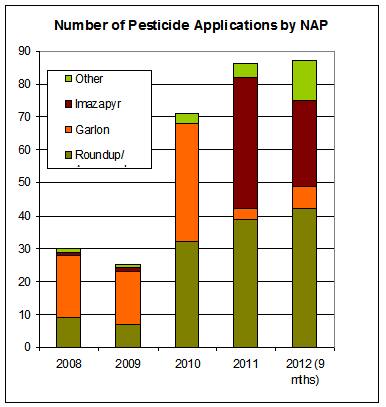
Volume of pesticide use by San Francisco's Natural Areas Program,  Courtesy Save Sutro
Volume of pesticide use by San Francisco’s Natural Areas Program, Courtesy Save Sutro

And in 2010, we learned from the Marin Municipal Water District’s “Herbicide Risk Assessment,” that one of the most frequently used herbicides sprayed on the stumps of eucalypts when they are cut down is known to be harmful to mycorrhizal fungi in the soil.  This herbicide is also foliar sprayed on non-native vegetation such as broom, Himalayan blackberry, ivy, etc.  The active ingredient in Garlon 3A and Garlon 4 Ultra—triclopyr–is known to be toxic to microrganisms such as mycorrhizae:

 “Mycorrhizal fungi are symbionts with plants that provide water and mineral nutrients in exchange for plant carbohydrates. Cenococcum geophilum, the slowest growing fungus, was least sensitive to the effects of triclopyr, exhibiting decreased growth at 742 ppm a.e. A similar study found that triclopyr (formulation not reported) could inhibit growth in five mycorrhizal species: Hebeloma crustuliniforme, Laccaria laccata, Thelophora americana, Thelophora terrestris, and Suillus tomentosus.94Fungi were kept in liquid culture for 30 days and the reduction of biomass with increasing triclopyr concentrations was measured. A 90% reduction in biomass was observed for all species at concentrations of 720 ppm; greater than 50% reduction biomass was observed in four of the five species at 36 ppm. The most sensitive species, Thelophora americana, exhibited a 6% decrease in growth rates relative to controls at triclopyr concentrations of 0.072 ppm (this result was statistically significant). In other species, statistically significant decreases in growth were reported between 0.72 ppm and 7.2 ppm.” (2)

These studies tested this herbicide on only six species of mycorrhizal fungi.  We should probably assume that other species would also be harmed and it is likely that other herbicides would also be harmful, though no tests have apparently been conducted.  Testing of pesticides is woefully inadequate because legal requirements for testing are minimal and most testing is funded by manufacturers with little motivation for learning more bad news.

Here is one of the comments posted on the Yale Environment 360 article by an academic at University of Philippines, about presumed damage to agricultural soils by pesticide and fertilizer use:

“The article on microbes by Conniff follows what I pointed out earlier to Yale e360, that there is a group in the Philippines, of which one is a geneticist trained in the U.S. and two are foresters trained in the Philippines, who believe in fertilizer- and pesticide-free agriculture methods that do not kill off microorganisms in the soil that are much needed by the plants. They (the three happen to be brothers) applied this principle to rice and other crops and are harvesting more with less input. They have a growing following among farmers as well as a flourishing broadcasting business. They fight an uphill battle against fertilizer and pesticide multinationals and their local partners. They are slowly winning their battles and will later win the war for food security. Advances in tropical forestry will broaden horizons. Thank you Yale e360!”

Posted by Bienvenido R. Rola, PhD on 10 Oct 2013

 Implications for ecological “restorations” in the Bay Area

It seems likely that the huge amounts of herbicide that are used by local projects to eradicate non-native vegetation are damaging the microbes in the soil that are essential to forest health.  This is probably one of many explanations for the lack of success of these projects.  Here is a recap of the many reasons why these projects are rarely successful unless they are intensively planted and gardened:

  • Higher levels of CO₂ and associated climate change are promoting the growth of non-native plants. 
  • The growth of non-native annual grasses is encouraged by higher levels of nitrogen in the soil found in urban environments as a result of the burning of fossil fuels. 
  • Hundreds of species of California native plants require fire to germinate their seeds and most of the population will die within 5 years of the fire.  Prescribed burns are prohibited in San Francisco and are severely limited in most urban areas because of air quality standards and safety concerns.
  • Herbicides are damaging the soil.

***************************************

(1)     Colin Tudge, The Tree, Three Rivers Press, 2005

(2)    Chapter 4, Marin Municipal Water District, “Herbicide Risk Assessment,” 2010

Shelterbelt: Protector or Destroyer of Nature?

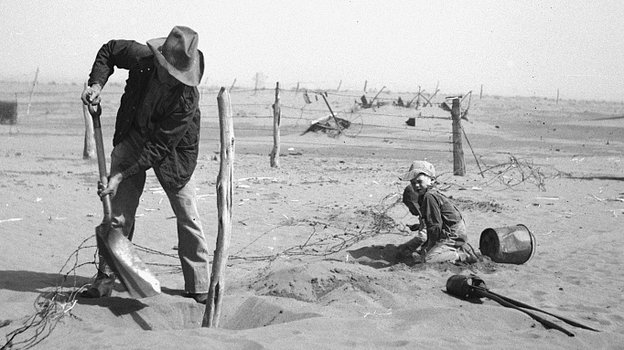
In the 1930s, during the Great Depression, the entire country experienced extreme poverty.  In the Midwest, the drought and the dust storms it caused contributed to the suffering.  The Dust Bowl was a result of decades of intensive farming on marginal land that was made possible by atypical years of heavy rain and high commodity prices.  When the drought hit that is more typical of the climate in that region, the crops died and the depleted, sandy soil was free to blow in the wind in what were called “black blizzards.” 

The Dust Bowl
The Dust Bowl

Franklin D. Roosevelt had a lifelong interest in and fondness for trees.  Prior to entering politics, he had forested his property at Hyde Park in New York.  So, when confronted with the Dust Bowl, a tree-based solution came naturally to him while on the campaign trail for the presidency.  He was visiting a desolate town in Montana that had been deforested by mining operations when the idea of a massive windbreak to protect agricultural land from the wind and stabilize the soil came to him. 

This windbreak came to be known as the Shelterbelt.  The story of the planting of the Shelterbelt is one of many interesting stories about American forests told in American Canopy:  Trees, Forests, and the Making of a Nation. (1)

The idea of windbreaks to protect agricultural lands was not new at the time: 

“For instance, California citrus growers routinely planted stands of fast-growing, imported eucalyptus trees to shield their precious orange trees from gusts coming off the Pacific Ocean.  As a 1908 pamphlet on eucalyptus explained, ‘In unprotected orchards, nearly the entire crop is frequently blown from the trees, or so scarred and bruised that the grade and market value are much reduced.’” (1)

Despite this track record of the value of trees to protect agricultural crops, President Roosevelt met with fierce political resistance to his proposal to create the Shelterbelt.  At every turn, the project was repeatedly starved of the funding needed to complete the project.  The detailed story of that resistance is reminiscent of the political theater we are now witnessing that is attempting to prevent the implementation of the Affordable Care Act. 

Although the Shelterbelt never reached the scale that President Roosevelt had envisioned, much of it was eventually planted in Oklahoma, Texas, Kansas, Nebraska, and the Dakotas:

“A 1954 evaluation of the Shelterbelt determined that over 220 million trees had been planted on thirty thousand farms.  The Forest Service had laid down in total more than 18,600 linear miles of tree strips—and a majority of these, more than 70 percent, survived for decades.  During the 1950s and 1960s many of the original Shelterbelt plantings were reinforced or expanded through the private actions of farmers who had come to appreciate the value of tree windbreaks.”  (1)

Despite the huge scale of that project, only $14 million was spent in the eight years that the project existed.  “An article in American Forests estimated, somewhat optimistically, ‘On a fifty-year basis, the cost to the government of an acre [of agricultural land] protected a year is estimated at four cents.’”  That’s a bargain at ten times that estimated price. 

The description of the trees and how they were planted helps us to appreciate that a windbreak is more than a single row of trees on the perimeter of a field:

“Tree strips in the Shelterbelt typically included ten rows of vegetation.  The outer row contained small trees or shrubs, most commonly chokeberry, lilac, mulberry, Russian olive, and wild plum.  The inner rows featured quick-growing, long-lived, taller trees that had been selected for their tolerance of the unwelcoming climate.  Some tree varieties were native, while others had been discovered abroad, often the result of research first conducted by plant explorers…The most widely planted species were cottonwood, green ash, and Chinese elm, which each appeared in all six participating states.” (1)

After planting, the trees and shrubs had to be protected from grazing animals with fences. 

Drought strikes again

National Public Radio (NPR) recently broadcast an update about the Shelterbelt.  It’s not good news.  The drought in the Midwest that is considered a consequence of climate change is killing the Shelterbelt:

“Now [the] trees [in the Shelterbelt] are dying from drought, leaving some to worry whether another Dust Bowl might swirl up again.” 

A farmer in Oklahoma describes the dying Shelterbelt: 

“He pointed to a line of trees as he drove along the shelterbelt trees that flank his farmhouse.  ‘You can see the tops of those trees?’ he asked.  ‘You see how they’re dying?  You can see how it’s almost deteriorated to nothing.’”

Oklahoma State Forester, Tom Murray, told NPR what the Shelterbelt accomplished there

“’This used to be cotton field, if I remember right, looking back at the history,’ he says.  ‘And it just blew—it’s sand and it blew.  By putting this [windbreak] here, it stopped that south wind from blowing across the field.’”

We wonder if the native plant advocates who are determined to destroy tens of thousands of our non-native trees in the Bay Area understand that those trees are protecting us from the harsh winds that blow in from the ocean. 

Shelterbelt the Destroyer

When we read the story of the creation of the Shelterbelt, we were immediately struck by the irony of its name.  Here in the San Francisco Bay Area, the most widely used sub-contractor for the destruction of non-native plants and trees is named Shelterbelt.  They are responsible for many of the herbicide applications in the so-called “natural areas” in San Francisco.  Here is a description of their organization from their website:

“Shelterbelt Builders was founded in 1978 in Berkeley, CA as a general building and landscaping company completing over 600 commercial and residential projects during the subsequent 15 years…After an exhaustive effort rebuilding residential homes following the 1991 Oakland Hills firestorm, management realized there was no locally available organization specializing in the management, stewardship and restoration of native landscapes in the San Francisco Bay Area.  At that time, Shelterbelt abandoned traditional construction and restructured itself into a specialty contracting company dedicated exclusively to restoration of native landscapes and open land management.  We are now one of the leading companies in California devoted to this task.”

Shelterbelt began the eradication of non-natve vegetation in Glen Canyon in November 2011

The Shelterbelt company began as a builder.  Now they are a destroyer of non-native trees and plants.  Their name is now a misnomer in our opinion.  The name, Shelterbelt, was coined in 1935 to describe a massive windbreak composed of non-native and native trees that was responsible for helping to stabilize the agricultural land in the American Midwest and end the era of the Dust Bowl.  To see that name appropriated by a company that actively engages in the destruction and poisoning of non-native vegetation is very sad indeed.  It is also a reminder that ecological “restorations” have become an industry, with vested economic interest in the continuation of the destructive crusade against non-native plants and trees.

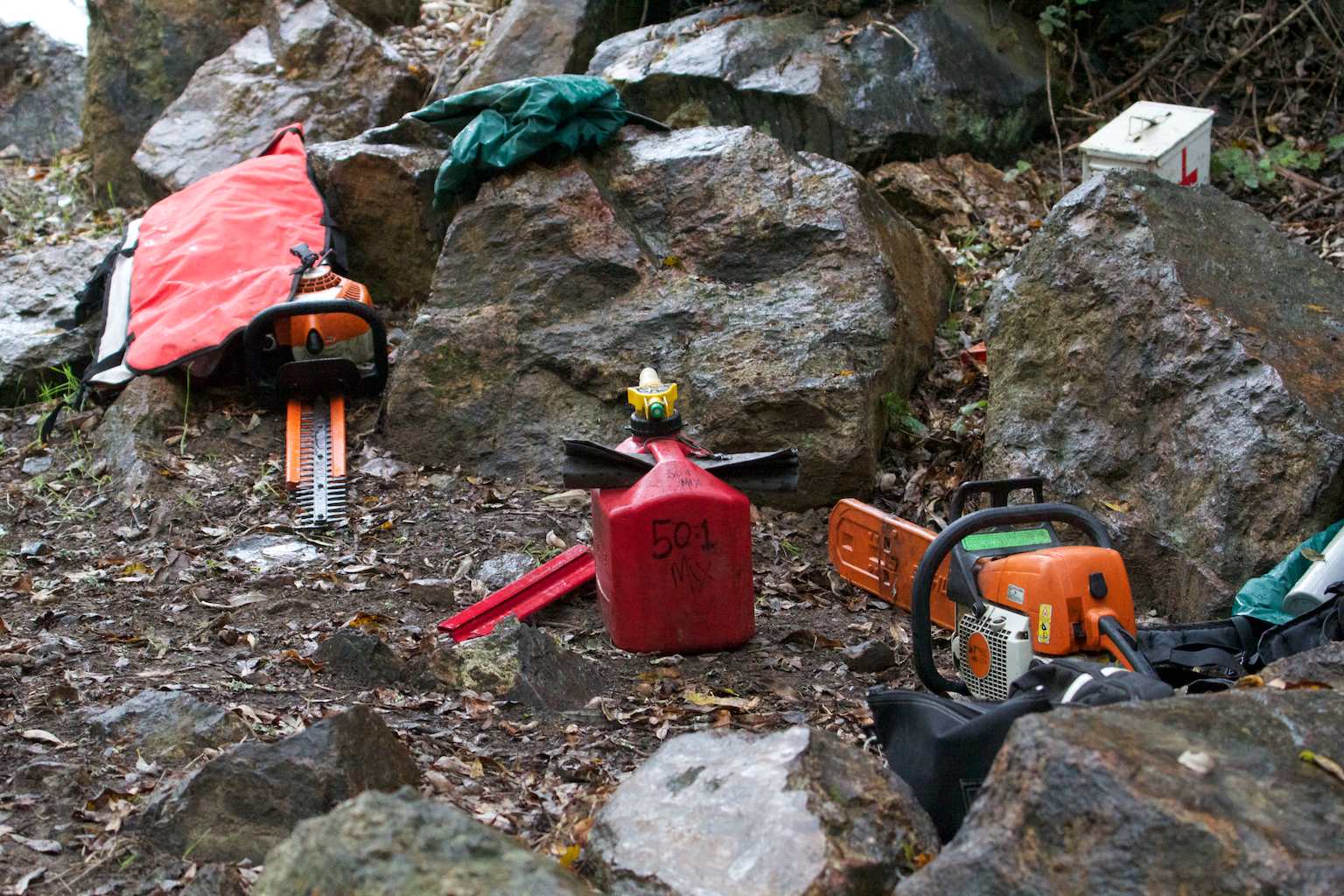
Shelterbelt's tools:  chainsaws and equipment to spray herbicides
Shelterbelt’s tools: chainsaws and equipment to spray herbicides

***************************************

(1)    Eric Rutkow, American Canopy:  Trees, Forests, and the Making of a Nation, Scribner, 2012

Glyphosate (AKA Roundup) is damaging the soil

Glyphosate application, Glen Park, San Francisco.

The use of the herbicide, glyphosate (AKA Roundup) has skyrocketed since genetically modified seeds were introduced which enable farmers to spray their crops with unlimited amounts of glyphosate without damaging their crops.  We have been reading with increasing alarm the mounting evidence of the damage that is being done to the environment by this indiscriminate use of glyphosate as well as evidence of the impact on human health.  We’ve been holding out for an unimpeachable source to inform our readers of this evidence because our critics often accuse us of being alarmist. 

On Friday, September 20, 2013, the New York Times published an article about the damage that is being done to agricultural soil by glyphosate use.  When the Times reports on an issue, that information has entered the media mainstream.  Here are the issues reported by the Times regarding glyphosate use:

  • Farmers who do not use herbicides report that their crop is often damaged by aerial drift and water runoff from their neighbors who use herbicides.
  • “Superweeds” that are resistant to any herbicide are becoming more numerous.  Million Trees reported on this issue recently.  The reaction of the Environmental Protection Agency to these superweeds was to increase the amount of glyphosate that can be legally used on agricultural crops.  This is a very unfortunate response to the problem in our opinion and will surely prove to be self-defeating in the end.
  • The herbicide binds with minerals in the soil—manganese, calcium, boron, etc.—to reduce run off.  The herbicide is competing with the plant for these minerals which the plant needs for its growth.  These minerals are also important to human nutrition.  If the plant contains fewer minerals, its nutritional value is reduced. 
  • This binding of the minerals in the soil is changing the physical quality of the soil, making it very hard and difficult to cultivate.  Farmers report that plowing their fields sprayed with glyphosate has become increasingly difficult.  If the roots of the plant can’t penetrate the soil, the growth of the plant is retarded.
  • The herbicide is killing fungi and microbes in the soil.  These plants and creatures also benefit crop plant growth by facilitating the transfer of nutrients from the soil to the crop plant.
  • Another study reports that glyphosate residues in the food we eat are also interfering with the operation of the microbes in our bodies.  Many of these microbes are beneficial to us, especially essential to our digestion.  If you have had a course of antibiotics, you may have had the opportunity to experience the discomfort of losing beneficial microbes in your gut.  Antibiotics often kill both the bacteria that make us sick and the microbes that are essential to your digestive health.
  • Most of the genetically modified crops are corn and soy.  These crops are widely used as animal feed.  We speculate that if these crops are harmful to humans, they are probably also harmful to animals. 
Cornfield
Cornfield

The manufacturer of glyphosate, Monsanto, has refuted these observations.  You can read the New York Times article if you are interested in their version of the story.  We close with the words of a farmer who tried Monsanto’s genetically modified seeds.  After several years of spraying his crop with glyphosate he has returned to conventional seeds and he is no longer spraying glyphosate:  “Although a neighbor told him that he would go broke growing conventional crops, Mr. Verhoef has no plans to go back to genetically engineered varieties.  ‘So far so good,’ Mr. Verhoef said, ‘I’m not turning back, because I haven’t seen anything that is going to change my mind about glyphosate.’”  We consider this farmer a more credible source of information than Monsanto.

East Bay Regional Park District fuels management projects

Sibley "fuels management" 2012
Sibley “fuels management” 2012

On Thursday, August 29, 2013, the Executive Committee of the Board of Directors of the East Bay Regional Park District will consider the District’s plans for fuels management in 2014.  In April 2010, the District’s Board of Directors approved the “Wildfire Hazard Reduction and Resource Management Plan” and its Environmental Impact Report.  That plan provided for an annual progress report as well as budget and project planning for each forthcoming year. 

Here is the District’s report of what has been accomplished so far and the projects planned for completion by the end of 2013:

“In 2012, initial entry work was undertaken at Anthony Chabot and Sibley, for a total of 153 acres, including 140 acres of eucalyptus thinning in and around the Anthony Chabot Family Campground and 13 acres of eucalyptus thinning in the steep slopes of Sibley Triangle.  Approximately 1,500 tons of hazardous wildland fuels were treated.

 The District’s resource management prescribed broadcast burn program is continuing in 2013.  Approximately 50 acres of native prairie grassland in Point Pinole and 80 acres of invasive plants in Round Valley are scheduled for burning this year.

By the end of 2013, a total of 160 acres of initial entry work are expected to be completed at Anthony Chabot, Claremont Canyon, Kennedy Grove, Lake Chabot, Sibley, Tilden, and Wildcat Canyon. Approximately 900 acres across 16 parks will be maintained using goat grazing, prescribed burns, and chemical, mechanical, and hand labor as described in the 2012 report, and in accordance with the prescriptions and treatment protocols adopted in the Plan.” (1)

We would like to be able to tell our readers about the pesticides required to accomplish these tasks.  Unfortunately, the District has not posted an annual report of its pesticide use since 2010.  The District says it does not expect to complete the annual report of pesticide use for 2011 until late in 2014.  Meanwhile, you can see the latest report for 2010 that is available here.

Here are the District’s plans for implementation of fuels management projects in 2014 (Attachment B of report available here): 

Project Description

Estimated Cost

Estimated Acres

Annual maintenance of light, flashy fuels and eucalyptus sprouts in Fuels Plan area

$500,000

671

Annual maintenance of light, flashy fuels OUTSIDE of Fuels Plan area

$175,000

268

Periodic maintenance of heavy fuels (brush and ladder fuels) in Fuels Plan area

$250,000

70

Sub-Total Fuels Maintenance

$925,000

1009

Initial treatment of heavy fuels and eucalyptus in Fuels Plan area (Chabot, Claremont Canyon, Huckleberry, Leona, Redwood, Sibley, Sobrante Ridge, Tilden, Wildcat)

$1,200,000

544

Initial treatment OUTSIDE Fuels Plan area

$50,000

15

Sub-Total Initial Treatment

$1,250,000

559

Resource/habitat prescribed burns

$25,000

126


TOTAL FUELS MANAGEMENT

$2,200,000

1694

You can see exactly what will be done and where by looking at Attachment C of the report (available here).  All the “recommended treatment areas” are listed where the work is planned.  There are maps of the “recommended treatment areas” in the “Wildfire Hazard Reduction and Resource Management Plan” which is available here.

The District expects to complete initial treatment on all 3,000+ acres of the fuels management project in 2019.   The District estimates that the annual cost of maintaining those treated acres will be between $2,055,000 and $5,400,000 per year in perpetuity. If you read our recent post about the Marin County Parks and Open Space “Vegetation and Biodiversity Management Plan” you know that all managers of public land in the Bay Area report the mounting costs of maintaining the fuel breaks they have created because when vegetation is cleared, the ground is quickly occupied by non-native weeds.  Our readers will recall that the author of that report recommends that fuels management projects be sharply curtailed so as to reduce the maintenance problems that are created by them.  The report also states that fire hazards will not be increased by curtailing vegetation management projects as recommended.  The projected costs of maintaining fuel breaks in the East Bay Regional Park District are an example of the maintenance nightmare that is being created by these projects. 

The meeting of the Board Executive Committee will take place at 12:45 pm on Thursday, August 29, 2013, at District headquarters:  2950 Peralta Court, Oakland, California.  The public has an opportunity to comment at these meetings.  You could, for example, ask why the District’s annual report of pesticide use hasn’t been made available to the public since 2010.   Your tax money is being used to fund these projects.  So, you have a right to know how your money is being spent.

********************************

(1)    Background Information for the August 29, 2013 Board Executive Committee Meeting, 2014 Fuels Management Program of Work and Fuels Cost Analysis.

BREAKTHROUGH: Separating fuel management from resource management

Marin County hired an environmental consultant, Loran May, to evaluate its policies and practices regarding vegetation management in parks and open spaces for the purpose of reducing fire hazard.   The consultant describes the purpose of her report as follows:

“The primary purpose of this Vegetation and Biodiversity Management Plan for the Marin County preserves is to provide comprehensive, long-term guidance for a new science-based approach to vegetation management that will (1) maintain the natural biodiversity of the vegetation within the preserves, (2) maintain emergency and public access, and (3) manage fuel loads to reduce the threats of the spread of natural and human-caused fires.”

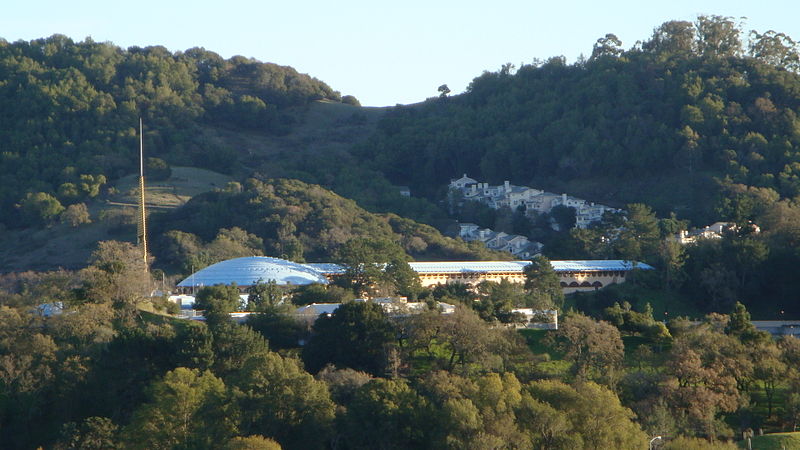
Marin County Civic Center

In other words, her report attempts to reconcile fire hazard reduction with resource management.  The report is therefore of interest to readers of Million Trees, because many of the ecological restoration projects in the San Francisco Bay Area with which we are familiar claim to achieve these goals simultaneously.  Loran May’s report acknowledges that there is a conflict between vegetation management for fuel reduction and the conservation of native habitat.  Separating these two goals is a big step forward, in our opinion, because reducing fire hazard has been the most influential argument with the public and decision-makers for destroying non-native vegetation.      

The consultant read the written policies regarding vegetation management of most of the owners of public lands all over the San Francisco Bay Area and interviewed the managers of those organizations regarding their experiences with the application of those policies.  The consultant’s report is based in part on what she learned from all the major owners of public land in the Bay Area:

  • Audubon Canyon Ranch (ACR)
  • California State Parks (CSP)
  • East Bay Municipal Utilities District (EBMUD)
  • East Bay Regional Park District (EBRPD)
  • Golden Gate National Recreation Area (GGNRA)
  • Marin Municipal Water District (MMWD)
  • Marin County Open Space District (MCOSD)
  • Midpeninsula Regional Open Space District (MROSD)
  • Shelterbelt Builders, Inc. (SBI)
  • Santa Clara County Parks (SCCP)
  • Santa Clara Fire Safe Council (SCFSC)
  • Santa Clara County Open Space Authority (SCCOSA)

Here is what she learned about the current status of policies and practices regarding vegetation management for the purpose of reducing fire hazard and the impact it is having on natural resources in the San Francisco Bay Area:

  • All agencies indicated that the eradication of non-native species is a high priority for their organizations and that a big portion of their resources is devoted to that task.  However,”They stressed that eradication of some well-established populations may not be feasible.”
  • Since total eradication is not considered a realistic goal, agencies prioritize removal of non-natives as follows:  new “infestations,” control at “leading edge” into wildlands, “noxious weeds” as defined by California law, and non-native plants considered threats to legally protected native plant species.
  • Mechanical removal such as mowing or brush cutting followed by herbicide application is considered the most effective and most cost effective method of destroying non-native vegetation.  However, organizations that are responsible for water supplies, have some constraints on the use of herbicides.
  • “… the interviewees overwhelmingly indicated that the most effective approach to reducing fire risk and protecting structures and adjacent communities is the establishment of defensible space zones along the wildland-urban interface.  Interviewees stressed that defensible space zones are an important and often underutilized tool in helping slow the spread of fires from or onto preserves.”
  • Land managers indicated that large fuel breaks distant from properties were difficult to maintain because they are quickly dominated by non-native plants:  “A recurring theme during interviews about fuel modification zones was the need to address and minimize invasive plant spread and establishment within these zones. Most agencies indicated that they have had to redirect a large portion of their fuel management funding away from construction of new fuel modification zones to controlling or containing infestations of invasive plants, such as French broom, within already constructed fuel modification zones.”
  • Public agencies agree that fuel reduction should occur only in the perimeter that separates developed from undeveloped land because ignition is more likely to occur in developed areas and buildings are more likely to ignite than wildland fuels.  Most agencies have adopted a 100-foot standard for creating defensible space around properties. 
  • In wildland fires, most structures are ignited by embers. Building an ignition-resistant structure is the most effective defense against structure ignition and loss, since there will almost always be numerous embers in a wildfire.”
  • The experience of managers of public land with wildfires indicates that fuel breaks are generally ineffective in stopping the spread of fireFires have been stopped by fuelbreaks only in instances where fire intensity was low.”
  • Agencies agreed that, “…ridgetop fuelbreaks typically have limited effectiveness for stopping the spread of fire during large fire events… Interviewees raised concerns that constructing and maintaining fuelbreaks is cost prohibitive and is a major cause of rising program costs for many land management agencies. All agencies noted that fuelbreaks are also strongly linked to the spread of invasive plants within their lands. For these reasons, interviewees strongly recommended that fuelbreaks be minimized, and resources reapplied to defensible space zones.”

This report sounds familiar!

None of these experiences of the managers of public lands in the Bay Area sound new to the readers of Million Trees.  We have been telling our readers about these issues for over three years.  We have written public comments on all of the written plans and environmental impact reports and statements for the plans many times.  Just for fun, let us itemize our agreement:

  • When vegetation is removed—whether it is native or non-native—the vegetation that will soon occupy the bare ground will be non-native vegetation because it is more competitive than native vegetation.  Unless the bare ground is intensively planted, irrigated, weeded, etc., native plants will not occupy land cleared of vegetation.  The projects on public lands that are clearing vegetation for the purpose of reducing fuel loads never plant or garden after the land is cleared.   When the goal of a project is to convert the land from non-natives to natives, some planting is sometimes done, but the gardening effort is rarely sufficient to achieve anything but a temporary result.
  • The huge projects in the East Bay for which FEMA funding has been requested, are based on the fantasy that eradication of all non-native plants and trees from hundreds of acres of public land with no subsequent replanting will magically result in a native landscape.  The Marin County report is evidence that this assumption is not realistic.
  • Reducing fuel loads far from property will not reduce the risk of property loss from wildfire.  Such vegetation removal must be close to the property to provide protection.  Most fuel reduction projects in the East Bay are far from any property and therefore will not reduce fire hazards to people or property.
  • It will not be physically possible to eradicate all non-native vegetation.  It is a fool’s errand to try because the most effective method of control requires herbicide use.  By the time the land has been sufficiently poisoned to eradicate all non-native plants, our watershed will be poisoned and our public lands will not be fit to visit safely.  In other words, it’s just not worth it to try to eradicate all non-native plants with herbicides.

We don’t wish to leave our readers with the mistaken idea that the Marin County report “Vegetation and Biodiversity Management Plan” is the silver bullet that will loosen the native plant movement’s tight grip on our public lands.  In fact, it is first and foremost, a plan that is devoted to the preservation of native plants.  All of its recommendations are aimed at that goal.  It advocates for the destruction of non-native plants and trees wherever they are considered a threat to rare native plants or occur in small enough populations that eradication is physically possible.

However, for the first time in our long experience with similar written plans around the Bay Area, this report acknowledges that destroying vegetation for the purpose of reducing fire hazard is not the same thing as conserving native plants.  This represents a significant reversal from previous plans which were based on the fictitious premise that fire hazards can be reduced by converting non-native to native landscapes.  Therefore, we consider it a BREAKTHROUGH!

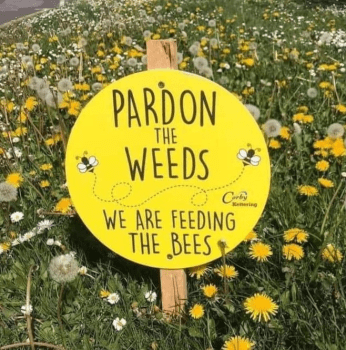
Wily weeds win the war

Farmers have been battling with weeds since the advent of agriculture, about 6,000 years ago.  Most of the weapons used against weeds were mechanical until the last century or so when herbicides became the primary weapon.  At the same time that the weapon became more lethal, farming techniques changed to give weeds the advantage.  Farms became huge monocultures and crop rotations were abandoned in favor of the most profitable crop. 

Cornfield
Cornfield

When weeds evolved defenses against the herbicides, farmers responded by increasing doses and manufacturers created new products to which weeds hadn’t yet evolved resistance.  Finally, the use of herbicides skyrocketed when crop seeds were invented that weren’t killed by the herbicides, so that huge amounts of herbicides can be used without killing the crop. 

When Roundup with the active ingredient glyphosate went on the market in the 1970s, its manufacturer, Monsanto, claimed that weeds would not be able to evolve resistance to it.  And apparently that was initially true until Roundup was used on a huge scale when herbicide-resistant seeds were put on the market in the 1980s.   Norman Ellstrand of UC Riverside explains why:  “He argues that the reason was that farmers applied glyphosate to relatively little farmland.  As they applied it to more and more acreage, they raised the evolutionary reward for mutations that allowed weeds to resist glyphosate.  ‘That ups the selection pressure tremendously,’ he said.” *

There are now 24 species of weeds that are resistant to glyphosate and they are rapidly expanding their range in agricultural areas all over the world.  In 2012, an agricultural consulting firm reported that 34% of farms in the US had glyphosate-resistant weeds.  In the first half of 2013, half of all farms in the US are reporting glyphosate-resistant weeds.

Let’s take another approach

Obviously, we are losing the war against weeds.  So, let’s examine the strategy we have been using and try another approach.  Weed ecologists are now studying the strategies that weeds have used to cope with the weapons we have been using against them.  Here are a few of those strategies:

  • Some weeds have changed color so that they are indistinguishable from the crop they are hiding in.
  • Weeds that grew in dry ground, evolved to thrive in wet ground in rice fields that are flooded much of the crop season.
  • Some weeds became shorter to escape the mowing and harvesting of the agricultural crop.
  • Some weeds drop their seeds and go dormant before the crop is harvested and create seed banks that can sprout when conditions are more favorable for them.
  • Parasitic weeds wrap around their host and steal nutrients from them.

Some weed ecologists believe that a better understanding of the mechanisms used by weeds to foil our attempts to control them will enable us to devise better weapons against them.  They believe that developing new herbicides and/or using more of them will always be a short-term solution. 

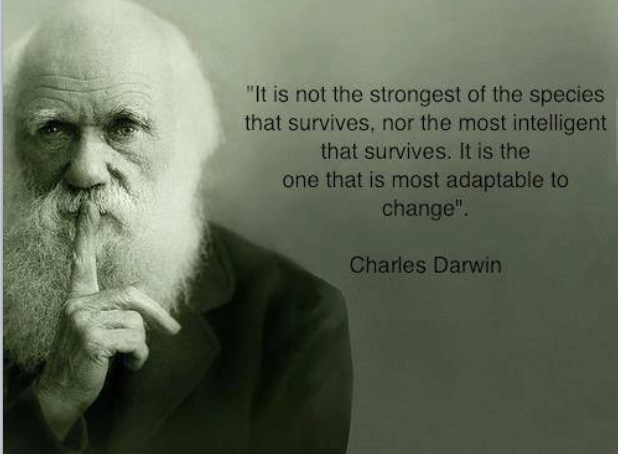
Darwin2

For example, David Mortensen of Penn State is “investigating controlling weeds by planting crops like winter rye that can kill weeds by blocking sunlight and releasing toxins.  ‘You want to spread the selection pressure across a number of things that you’re doing so that the selection pressure is not riding on one tactic,’ he said.”*

Regardless of what method is used to control weeds in the future, let’s consider the toxicity of the method the most important criterion for judging their effectiveness.  Even if it kills fewer weeds, the least toxic alternative is the best alternative in our opinion.

********************************

*Carl Zimmer, “Looking for Ways to Beat the Weeds,” New York Times, July 15, 2013.