Why are we poisoning ourselves?

Americans banned DDT in 1972 and PCBs a few years later. We pat ourselves on the back for banning these and other toxic chemicals, but should we? Recent research suggests that though they were banned forty years ago, they are still making us sick.

Although these chemicals were banned, the chemical industry continues to churn out new products about which we know little. Will we find out decades later that these new chemicals are just as likely to poison us as their predecessors? The history of their predecessors suggests that is a likely outcome.

Living with the consequences of our folly

The National Research Council recently published a report (1) that informed us that at least 126,000 sites throughout the country have contaminated groundwater that requires remediation. About 10% of those sites are considered “complex” which is a euphemism for the fact that the technology required to clean them up does not presently exist, meaning that restoration is unlikely to be achieved in the next 50 to 100 years. The report estimates the cost of cleaning up these sites will be from $110 billion to $127 billion. However, the report also acknowledges that both the estimate of the number of sites and the cost of the clean up are probably underestimates.

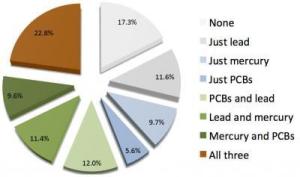
What are the consequences of living with toxic chemicals? Researchers at Brown University tested the blood of over 3,000 women between the ages of 16-49 for levels of mercury, lead, and PCBs. These three chemicals are known to harm brain development of fetuses and babies. The sample was designed to represent the national population of 134.4 million women of childbearing age. Here’s what they found:

  • “Nearly 23 percent of American women of childbearing age met or exceeded the median blood levels for all three chemical pollutants.” (2)
  • “All but 17.3 percent of the women aged 16 to 49 were at or above the median blood level for one or more of these chemicals, which are passed to fetuses through the placenta and to babies through breast milk.” (2)
  • “As women grew older, their risk of exceeding the median blood level in two or more of these pollutants grew exponentially to the point where women aged 30 to 39 had 12 times greater risk and women aged 40-49 [born before these chemicals were banned] had a risk 30 times greater than those women aged 16 to 19.” (2)
  • “Fish and alcohol consumption also raised the risk of having higher blood levels. Women who ate fish more than once a week during the prior 30 days had 4.5 times the risk of exceeding the median in two or more of these pollutants.” (2)
The body burden of multiple pollutants

While these findings are horrifying, they pale in comparison to the stunning finding that “One risk factor significantly reduced a woman’s risk of having elevated blood levels of the pollutants, but it was not good news: breastfeeding. Women who had breastfed at least one child for at least a month sometime in their lives had about half the risk of exceeding the media blood level for two or more pollutants. In other words, …women pass the pollutants that have accumulated in their bodies to their infants.” (2)

This particular study emphasizes the consequences of these pollutants for the children of the women who were tested. What about the women themselves? Surely these pollutants are also affecting their health and well-being. We turn to an outstanding book—Living Downstream– by an ecologist and cancer survivor (so far) for an answer to this question.(3)

First we must acknowledge how little we know about the connection between chemical pollution and its consequences to our health. The damage being done to our bodies by pollutants is not immediate nor is our exposure usually quantifiable which makes cause and effect very difficult to prove. Circumstantial evidence of the connection is therefore easily dismissed as anecdotal: women born in the United States between 1948 and 1958 had almost three times the rates of breast cancer in 1997 than their great-grandmothers did when they were the same age. Coincidentally, pesticide use in the United States had doubled between 1952 and 1997. (3, page 13)

Ironically, although DDT and PCBs were banned forty years ago, the connection between breast cancer and these pesticides was not discovered until after they were banned. The first study was conducted 4 years after DDT was banned on only 14 women with breast cancer. Significantly higher levels of DDT and PCBs were found in their tumors than in the surrounding healthy tissues. It took another 17 years to replicate that study on a statistically significant number of women: 14,200 women in New York City who had mammograms. The 58 women in that sample who were diagnosed with breast cancer had higher levels of DDT and PCB in their blood than women without breast cancer. (3)

It took nearly 50 years to prove that women with breast cancer have higher levels of DDT and PCB in their bodies than women without breast cancer. How long will it take us to learn what damage we are doing to ourselves with the pesticides that we are using now?

We aren’t testing for chemical pollution
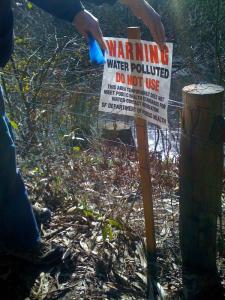
Bacterial pollution at Pine Lake, San Francisco.  February 2012
Bacterial pollution at Pine Lake, San Francisco. February 2012. Courtesy Save Sutro

In San Francisco, the Department of Public Health tests the water bodies in the city for bacteria. In February 2012 they closed Pine Lake to the public because of bacterial levels. This incident prompted us to ask about San Francisco’s testing of water bodies. We learned that testing for bacteria is the ONLY test conducted in San Francisco. The watershed of Twin Peaks and Glen Canyon into Islais Creek was sprayed with pesticides over 30 times in 2011 by the Natural Areas Program, yet the water in the creek was not tested for pesticide levels. Islais Creek flows into the bay.

The need for more testing of water bodies was recently recognized by the European Science Foundation. (4) They conducted a poll of 10,000 citizens from 10 European countries which found that pollution is the top concern of the public among all concerns regarding the marine environment.

The public has good reason for their concern. There are presently about 30,000 chemicals available on the European market with production volume exceeding one ton per year. The volume of these chemicals entering rivers, streams, estuaries, and seas is increasing and potentially damaging marine organisms, ecosystems, and processes. Yet the testing of waters for these chemicals lags far behind the increasing number of chemicals being introduced to the environment.

We are on a pesticide treadmill

The tests required to put new chemicals on the market are minimal. The testing of pollution levels in the environment is also minimal. Yet, we continually introduce new pesticides about which we know little. Why? We speculate about the motivation for introducing new pesticides into the environment:

  • As the patents on pesticides expire, the manufacturers must introduce new pesticides in order to maintain their profit margins.
  • The longer a pesticide is in use, the more likely its target is to build up a resistance to it. Hundreds of weeds are resistant to available herbicides. Hundreds of insects are resistant to available insecticides.
  • The less the public knows about a pesticide, the less likely they are to be afraid of it and the less likely they are to object to its use..

Why is this issue relevant to Million Trees?

Our regular readers might wonder what this has to do with the mission of Million Trees to inform the public of the destruction of non-native trees for the purpose of creating native plant gardens. The connection is that the use of pesticides by these projects is skyrocketing as the war on non-native plants escalates.
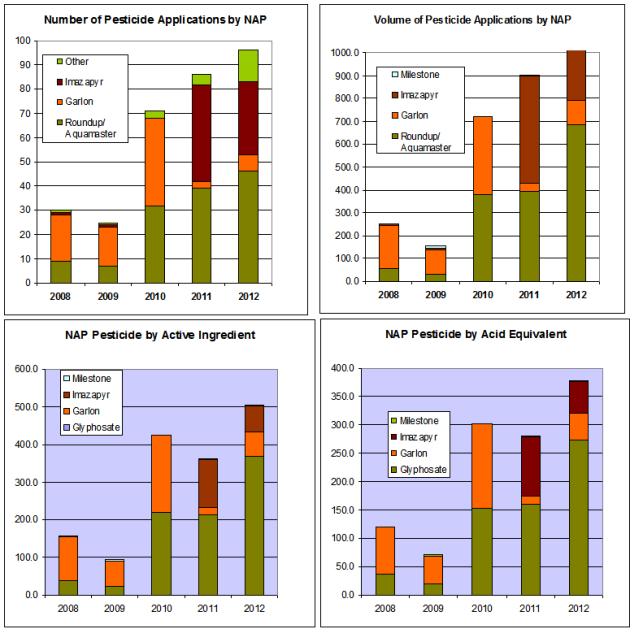
Volume of pesticide use by San Francisco's "Natural Areas Program."  Courtesy San Francisco Forest Alliance
Volume of pesticide use by San Francisco’s “Natural Areas Program.” Courtesy San Francisco Forest Alliance

Those who work for these projects and those who support them defend their use of pesticides in our public parks by telling us they are following the rules, and the rules guarantee no harm will be done by the pesticides. What they don’t seem to understand is that many of the pesticides—and other chemicals—that we now know are harmful to us and the animals that we live with, were legal when they were used. They were legal because we did not know yet that they were harmful.

It took decades for us to understand that the pesticides we were using were harmful. We see no reason to believe that the pesticides we are using now will not also prove to be harmful. By the time we learned how harmful they are, a great deal of damage had already been done. And although many were banned decades ago, they persist in the environment and in our bodies. Therefore, we object to the frivolous use of pesticides in our public parks. Using pesticides for the purpose of killing vegetation solely because it is non-native is irresponsible, given the potential damage they can do to humans and wildlife.

*******************************

(1) National Academy of Sciences, “Clean-up of some U.S. contaminated groundwater sites unlikely for decades,” November 8, 2012

(2) Marcella Remer Thompson, Kim Boekelheide, “Multiple environmental chemical exposures to lead, mercury, and polychlorinated biphenyls among child-bearing-aged women: Body burden and risk factors,” Elsevier, November 16, 2012

(3) Sandra Steingraber, Living Downstream, Addison-Wesley, 1997

(4) European Science Foundation, “Chemical pollution in Europe’s Seas: The monitoring must catch up with the science,” March 21, 2012
Why are native plant installations often failures?

We have been watching attempts to eradicate non-native plants and replace them with native plants on public lands in the San Francisco Bay Area for over 15 years.  Few of these efforts have been successful.  Non-native plants are repeatedly eradicated, then natives are planted.  Within months the natives are dead and non-natives have returned. 

The few projects that are successful are usually fenced, irrigated, and intensively planted and weeded.  Few managers of public lands have the resources to achieve success.  We have identified here on the Million Trees blog many reasons why attempts to return native plants to places in the Bay Area where they have not existed for over 100 years are often failures.  Many of those reasons are related to the changes in the environment:

  • Higher levels of CO2 and associated climate change are promoting the growth of non-native plants.  A USDA weed ecologist (1) studied the effects of higher temperatures and CO2 on the growth of non-natives (AKA weeds) by growing identical sets of seeds in a rural setting and an urban setting with higher temperatures and CO2 levels.  Seeds grown in the urban setting produced substantially larger plants with much more pollen and therefore greater reproductive capability.
  • The growth of non-native annual grasses is encouraged by higher levels of nitrogen in the soil found in urban environments as a result of the burning of fossil fuels. (2)

 The methods used by the projects undermine success

With the exception of the project on Mount Sutro in San Francisco, all of the projects use herbicides to eradicate the non-native plants and trees.  Most of the non-native trees will resprout if their stumps are not sprayed immediately with herbicide and this must be done repeatedly to kill the roots of the trees.  Many of these herbicides persist in the ground for years and probably suppress subsequent plant growth.

This problem is illustrated by a USDA study of the effects of a one-time aerial spraying of herbicides on grassland after 16 years.  Although the herbicide is assumed to “dissipate” within a few years, the negative effect on the natives persisted 16 years later:  “…the invasive leafy spurge may have ultimately increased due to spraying.  Conversely, several desirable native herbs were still suffering the effects of the spraying,,,” 

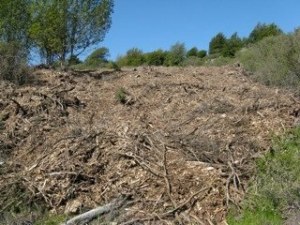
Anyone who is familiar with native plant restorations in the Bay Area knows that most are covered in a thick layer of mulch.  When tree removals are required for a project, the mulch is usually composed of the chips of the trees that have been cut down.  The projects of UC Berkeley for which UC is applying for FEMA funding (based on its claim that the clear-cutting of all non-native trees will reduce fire hazards) say specifically that the clear-cut areas will be covered with 24 inches of mulch composed of the chips of the destroyed trees. 

The UC Berkeley projects also claim that native vegetation will return to these clear-cut areas without being planted based on an assumption that the seeds of native plants are dormant in the soil.  One wonders how these seeds would be able to germinate when covered with 24 inches of mulch, or how the sprouts could penetrate it.  Their proposal contains the fanciful suggestion that squirrels will plant the acorns of oaks in the mulch, which may be true of the oaks, but is an unlikely scenario for the many other native plants and trees which UC claims will populate their “restorations” without being planted. 

Chips of destroyed trees, UC Berkeley project.  Photo courtesy Hills Conservation Network
Chips of destroyed trees, UC Berkeley project. Photo courtesy Hills Conservation Network

These heavy mulches prevent native bees from nesting in the ground, as most native bees do.  This reduces the population of pollinators which are essential to the germination of a new generation of the plants.  If long-term sustainability is the goal of these projects, an environment that is friendlier to pollinators would be helpful.

Lack of horticultural knowledge is also handicapping these projects

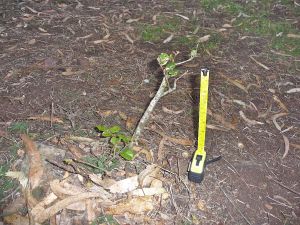
One of 5 native oaks that survive on Tank Hill 10 years after 25 oaks were planted.

The managers of these projects often display a profound ignorance of basic horticultural knowledge.  For example, we have seen them plant natives that require full sun in the deep shade of trees where they will not survive.  We have seen them plant native trees that will not tolerate wind on the slopes of windy hills, only to watch the trees wither and die.

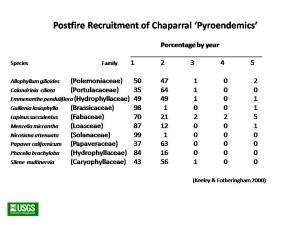
The managers of these projects are apparently unaware of the fact that hundreds of species of California native plants require fire to germinate their seeds and that most of the population will die within 5 years of the fire. (3) These are examples of such “pyroendemics” that sprout after a fire and are almost entirely gone within 5 years:

 Keeley - pyroendemics

UC Berkeley and East Bay Regional Park District do not plan to plant any natives after eradicating non-native plants and trees.  Their plans say that they expect seeds that are dormant in the ground to sprout when the ground is cleared of non-native plants.  Unless they set fire to that ground, many seeds will not germinate and most of the plants that are germinated by that fire will disappear within 5 years unless another fire germinates another generation of plants.  

UC Berkeley does not use prescribed burns on its property.  East Bay Regional Park District (EBRPD) conducts only a handful of small prescribed burns every year, which they claim are solely for the purpose of reducing fuel loads.  In an article about prescribed burns conducted by EBRPD, the District’s “Resource Analyst” is quoted as saying, “’This is not a restoration project.  Our primary goal is fuels reduction.’” (4) Ironically, both of these owners of public lands claim that their objective in the eradication of non-native plants is to reduce fire hazard, yet they are trying to reintroduce a landscape that is dependent upon fire for survival. 

The Natural Areas Program in San Francisco has never conducted a prescribed burn and the DRAFT Environmental Impact Report for their plan says they do not intend to do so in the future.

New and growing evidence that soil is altered by plants

 In addition to these issues which have contributed to the failed attempts to reintroduce an historical landscape to the San Francisco Bay Area, we are reporting today on a new issue.  Plants can change the microbial composition of the soil, including mycorrhizal fungi which have symbiotic relationships with plants. 

Researchers tested soil for changes in composition after just three growth cycles.  Several species of non-native annual grasses were grown in native soils.  They reported that the non-native species reduced the population and changed the composition of the mycorrhizal fungi, which reduced the ability of native species to establish and persist in modified soils. (5)

The Berkeley Meadow is a 72-acre native plant garden on a former garbage dump on landfill.

These changes in the soil were observed after only three growth cycles.  Our local projects are attempting to eradicate plants which occupied the soil for more than 100 years.  In some cases such as the former garbage dumps in the East Bay on landfill, the soil was never occupied by native plants.  Surely, the alteration of soil composition is a likely factor in the failure of attempts to turn these properties into native plant gardens. 

How many more decades and how much more taxpayers’ money must we spend on these projects before land managers acknowledge their failures? 

***********************

(1)    Lewis Ziska, USDA Scientist, Beltsville, MD

(2)    US Fish & Wildlife, Recovery Plan for Mission Blue butterfly

(3)    Jon Keeley, et. al., Fire in Mediterranean Ecosystems, Cambridge University Press, 2012

(4)    Wendy Tokuda, “Taming the Flames,” Bay Nature, July-September 2012

(5)    Nicholas Jordan, et. al., “Soil-Occupancy Effects of Invasive and Native Grassland Plant Species Composition and Diversity of Mycorrhizal Associations,” Invasive Plant Science and Management, October-December 2012

“It’s not nice to fool Mother Nature”

Southern sea otter
Southern sea otter. Creative Commons

U.S. Fish & Wildlife Service recently announced that after a 25-year effort, they are finally giving up on the fantasy that they can relocate otters from the coast of California to one of the Channel Islands off the coast.  From 1987 to 1991, they captured and relocated 140 otters in a futile attempt to create a “no-otter zone.”  (1)

Only 40 otters remain near the Channel Islands.  Fish & Wildlife claims that most of the otters returned to the coast.  We’ll never know how many otters died in the process of relocation and subsequent repatriation.  Clearly, even if they survived the pointless ordeal, they didn’t benefit from it.   

Otters were nearly hunted to extinction because of their soft fur.  Their population plummeted from 16,000 in the late 1700s to only 50 in the 1930s.  They were listed by the Endangered Species Act as a threatened species in 1977 and their population has stabilized at about 2,800.

Because of their status as a legally protected species, U.S. Fish & Wildlife decided to move them based on their belief that they would be safer.  They claimed to be concerned that the otters might be harmed by off-shore oil drilling.  One wonders if their concern might have had more to do with the fishermen who say that otters are depriving them of their catch of abalone and sea urchins. 

Fish & Wildlife published a study of their project in 2005, which acknowledged the failure of the effort, yet it took 7 years for them to get around to officially ending it.

Killing one animal to save another

Such attempts to control nature and the animals that live in it are the stock and trade of U.S. Fish & Wildlife as well as their colleagues in state agencies with a similar mission.  Here are a couple of local examples.

Northern spotted owl

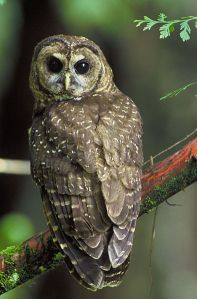
The spotted owl was given endangered species status over 25 years ago.  Logging was substantially reduced in the Pacific Northwest in an effort to save the habitat of the spotted owl, with devastating consequences for the timber-based economy.  Despite that effort, the population of spotted owls declined over 40% in the past 25 years.

So, now US Fish & Wildlife has selected a new scapegoat for the decline of the spotted owl population.  They have decided that another owl, the barred owl, is the culprit.  The barred owl is larger and its range is apparently expanding.  So, in its infinite wisdom, Fish & Wildlife recently announced that it will begin shooting barred owls where they don’t “belong” based on their assumption that the spotted owl will benefit from the removal of its competitor. (2)

Carpet bombing with rodenticides

As crazy as the plan to shoot barred owls is, here’s a plan that strikes us even worse.  In April 2011, U.S. Fish & Wildlife announced its intention to evaluate a plan to aerial bomb the Farallon Islands off the coast of San Francisco with rodenticides to kill resident mice.  (3)

Ashy storm petrel. Creative Commons

Here’s their logic for this strategy:  the mice are eaten by burrowing owls which don’t “belong” on the Farallones, in their opinion.  They claim that they don’t want to kill the burrowing owls because they acknowledge that they are just as rare in their historic range as the birds they claim will be saved by this bizarre plan.  They claim that when the burrowing owls eat all the mice, they start eating the eggs of the ashy storm petrel which is an equally rare bird, but it “belongs” on the Farallones, so its perceived needs trump those of the equally rare burrowing owl.  They believe that if the mice are killed, the burrowing owls will return to where Fish & Wildlife believes they belong. 

There is so much wrong with this plan that it’s difficult to know where to start.  The Farallones are an important bird sanctuary, home to many species of birds many of which are rare.  Can Fish & Wildlife guarantee that the burrowing owl is the only species of bird that will eat the poisoned mice?  How many burrowing owls will die from eating the poisoned mice?  If they don’t die, won’t they eat even more eggs of the storm petrel?  Will the death of the mice deprive other species of birds of their food?   As the rodenticide washes off the islands into the ocean, will it kill the marine life around the island?  Will it enter the food web of the entire island, killing unintended targets such as the birds that eat fish?

As crazy as this plan sounds, it is not a new strategy for Fish & Wildlife.   In 2008, 46 tons of rodenticides were dumped on an island in the Aleutian chain off the coast of Alaska.  That carpet bombing is known to have killed a total of 420 birds, including 40 bald eagles. (4)

The outcry about the birds being killed by rodenticides has been getting louder recently.  The San Francisco Chronicle reports that a coalition of wildlife and public health advocates has asked California’s regulator of pesticides to take rosenticides off the market.  We hope these pleas for sanity will be heeded before the Farallones are bombed with rodenticides. 

Nature is on the move

Just as humans have moved around the Earth in search of more hospitable conditions—more food, better climate, less competition—animals have done the same.  Now humans have decided that the animals must stay put.  Wherever they existed in the historic past is where they “belong.”  When animals move, man has decided they are “invasive” and they must be stopped. 

Man’s war on invasive species is accelerating because as the climate changes there is greater pressure on animals to move to find the food and habitat they need and on plants to find suitable growing conditions.  Humans are apparently unwilling or unable to do anything to stop climate change, yet they are willing and able to try to prevent plants and animals from adjusting to climate change. 

As senseless as it seems to deprive plants and animals of their survival mechanisms, this harmful approach has been immortalized in U.S. law by the Endangered Species Act.  The ESA is about 40 years old and was enacted at a time when the consequences of climate change were largely unknown.  It defines endangered species as any plant or animal that becomes rare within its historic range.  So, for example, if an animal or plant moves in response to climate change, it is often designated as an endangered species even though it may be plentiful in its new home to which it is better adapted.  And Fish & Wildlife comes to its “rescue” by trying to force it to return to its historic range to which it is no longer adapted.

As we pondered this conundrum, we were reminded of a television commercial in 1970.  Mother Nature is telling stories to her animal friends in the forest, when someone hands her a tub of margarine to taste.  She smiles sweetly and congratulates herself on how delicious butter is.  She is informed that it isn’t butter, but rather an artificial substitute.  She rises from her throne, raises her voice to scold, shoots lightning from her fingers and warns us, “It’s not nice to fool Mother Nature.”  (see this charming video here).    

Will nature punish humans for their refusal to allow it to change as needed to survive? No, not literally, of course, but perhaps we will suffer the unintended consequences of our arrogant attempts to control natural processes we do not understand.

****************************

(1)    Peter Fimrite, “Feds scrap ‘dumb idea’ of relocating otters,” San Francisco Chronicle, December 18, 2012

(2)    Associated Press, “U.S. plans to kill Barred owls to save spotted owls,” San Francisco Chronicle, February 29, 2012

(3)    Kelly Zito, “Pesticide bombing of Farallones mice stirs debate,” San Francisco Chronicle, May 12, 2011

(4)    Peter Fimrite, “Concern over fallout of bombing mice,” San Francisco Chronicle, October 17, 2011

Sierra Club cranks up the smoke machine

The San Francisco Forest Alliance has made considerable progress in informing the public of the destructive projects of San Francisco’s Natural Areas Program (NAP).  NAP and its supporters have taken notice of the growing opposition to their plans to transform our public parks into native plant museums.  They are cranking up their public relations effort to confuse the public.

The Recreation and Park Department of the City of San Francisco is the sponsor of the Natural Areas Program.  They have recently created a cynical video about NAP which misrepresents the reality of what NAP has done to our parks and what they plan to do in the future.  The San Francisco Forest Alliance has produced a rebuttal to this video which is available here.  Because the Recreation and Park Department disabled the ability to post comments to their video, we call the  rebuttal the “Free Speech Version.”

The Sierra Club has also published an article about the Natural Areas Program in their newsletter, The Yodeler.  This article is also chock full of misinformation both about NAP and about its critics.  This is our rebuttal to this article.  These are issues that we have covered in the past, so we’re not providing much detail here, but we’ve included links to previous Million Trees posts.  (The Yodeler article is italicized and in quotes and our rebuttal is not italicized.)

[Edited to add:  The SF Forest Alliance has posted a letter written by a Sierra Club member which the Yodeler Editor has refused to print. ]

********************************

“San Francisco Natural Areas Management Plan in peril”

“In San Francisco, where nearly everyone claims to be an environmentalist, how can there be opposition to certifying environmental review for the city’s Significant Natural Resource Areas Management Plan (SNRAMP) to guide the care of the city’s natural areas?

The plan covers all aspects of preservation for the city’s natural areas, which include many of the most vital remnants of the city’s original ecosystems, including a diverse array of landscapes and habitat types.”

Webmaster:  There is no opposition to an environmental review of the Natural Areas Program.  Rather there is opposition to the Draft EIR because it is a white wash.  The Draft EIR fabricates a plan which is easy to defend but bears little relationship to the written plan (SNRAMP) that it is legally obligated to evaluate.

Most of the natural areas had no native plants in them when they were designated as natural areas.  The claim that the natural areas are “remnants of original ecosystems” is bogus.  Some were essentially building rubble from the constructions of former occupants of the land.

Balboa Natural Area under construction

“Much of the conflict surrounding the plan has to do with concerns about tree removal. Most of the trees in the designated natural areas will remain where they are. The vast majority of lands—including almost all the lands within the less critical MA-2 and MA-3 management subareas—will remain forested.”

Webmaster:  Native plant advocates killed approximately 1,200 trees by girdling them before they were caught and stopped.  Since then NAP has destroyed hundreds of trees in many natural areas.  Their written plans (SNRAMP) state that they plan to destroy 18,500 trees over 15 feet tall and countless smaller trees which they choose not to define as trees.

“However, many trees are in sorry shape, suffering from old age, disease, beetle infestations, and cumulative damage from years of neglect.”

Webmaster:  The trees that NAP plans to remove are not hazardous or unhealthy.  They have been selected for removal solely because they are shading native plants or areas where NAP wishes to expand existing native plant gardens.  Most of the plants that are native to San Francisco require full sun.  The written plan makes this reason for tree removals perfectly clear.  Those who claim that the trees are unhealthy have either not read the written plan or they willfully misrepresent it.

Critics of NAP are not opposed to the removal of hazardous trees.  The City of San Francisco has the right and the obligation to identify hazardous trees and remove them.  Neither a written management plan for NAP nor an Environmental Impact Report is required to remove hazardous trees.

“Some trees are the wrong species in the wrong places, displacing habitat needed by native birds, pollinators, and other critters. A stand of planted blue gum or Monterey cypress may be large and “majestic”, but take up space needed for native habitat (grassland, dune-scrub, oak woodlands, etc.)”

Webmaster:  This is the heart of the controversy.  Most of the trees will be destroyed only because they are the “wrong species,” not because they are hazardous.  Those who know both the science of ecology and the reality of wildlife in San Francisco do not believe that wildlife benefits from the destruction of existing trees and vegetation.  Animals have long ago adapted to the existing landscape which has been here for over 150 years.  We also make no distinction between native and non-native wildlife.  Both are equally valuable to us and we find the distinction distasteful, just as we find racial prejudice distasteful.

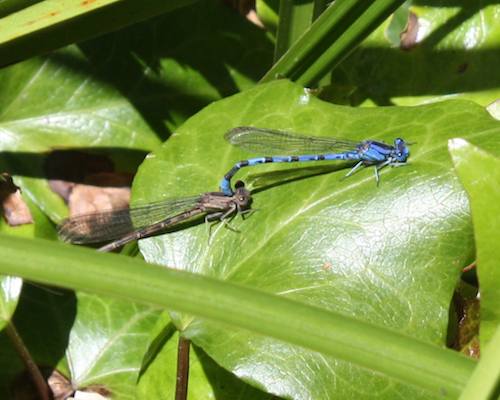
Damselflies mating on ivy in Glen Canyon Park

“The SNRAMP is designed to strike a balance, making the most of the ecological value of existing forested areas while in certain critical areas (such as small patches on Mount Davidson), the plan calls for limited tree removal.”

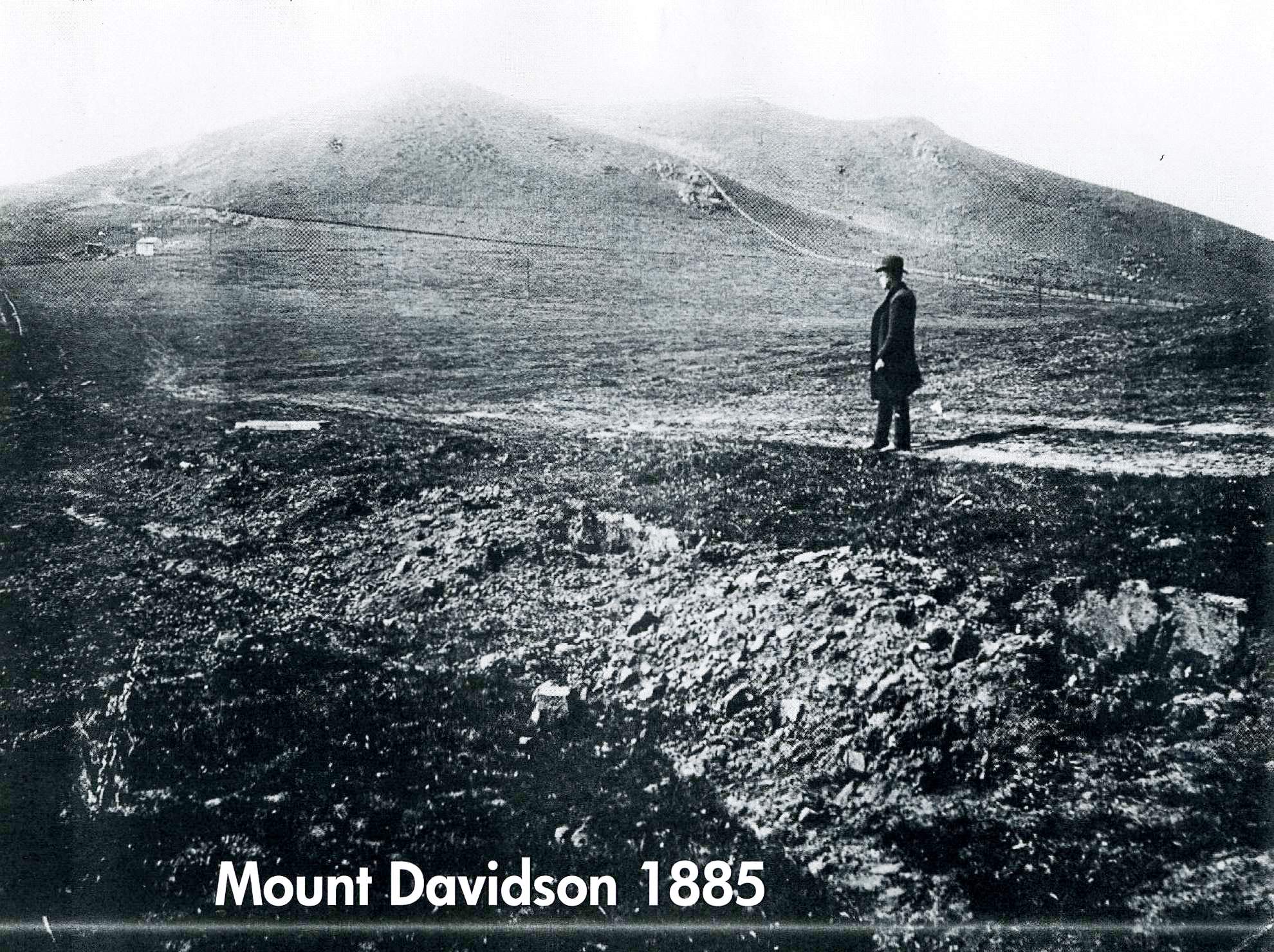
Webmaster:  Mt. Davidson will lose 1,600 trees over 15 feet tall when SNRAMP is implemented in addition to about 200 trees that have already been destroyed by NAP or its supporters.  Most of the trees on 10.2 acres of Mt. Davidson will be destroyed.  This is not a “small patch.”

“Unfortunately, a small but vocal group of “tree advocates” has been campaigning loudly against any tree removal in any park, anywhere in the city. They have exaggerated the envisioned amounts of tree-removal, and promulgated disinformation about the scope and objectives of the plan, wildly accusing advocates of ecological restoration of wanting to revert the entire park system to its former “wasteland” of dunes and scrub.”

Webmaster:  Critics of NAP are not a “small group.”  Several thousand people have signed the petitions of the San Francisco Forest Alliance, asking the City’s policy-makers to stop the destruction in San Francisco’s parks.

Here is a quote from the management plan for NAP which clearly states its objectives:  “Prior to colonization and the stabilization of dunes and introduction of invasive species, trees were not a dominant feature of the San Francisco peninsula…Much of the area probably resembled the coastal scrub habitats of San Bruno Mountain or the grassland scrub mosaics of the Marin Headlands…The long-term goal of urban management in MA-1 and MA-2 areas…is to slowly convert those areas to native scrub and grassland.

It is not necessary to exaggerate the objectives of NAP for the 1,100 acres of park land they have claimed as natural areas.  Their objectives are clearly stated in their management plan.

“Contention has also come from segments of the well-organized off-leash-dog advocates. Partly because of continuing disagreements with the Golden Gate National Recreation Area over management of Crissy Field and Fort Funston (see September-October 2005, page 23). Some oppose any environmental restriction on dogs, and some seem to object to any fencing anywhere or any attempt to route pedestrian and canine traffic into well-defined paths—even to protect erosion-prone areas or sensitive plantings. We don’t believe that these represent the majority of responsible dog-owners, but they have been the most vocal.”

Webmaster:  People who visit San Francisco’s parks with their dogs are impacted by NAP because NAP has claimed 80% of all off-leash areas as “natural areas.  Only 118 acres of park land in San Francisco have been designated for off-leash areas.  In other words, there are 1,100 acres of “natural areas” but only 118 acres of off-leash areas and NAP has claimed 80% of those 118 acres. (SNRAMP 5-8)

The Draft Environmental Impact Report (DEIR) for NAP proposes to close or reduce the size of several off-leash areas.  The DEIR offers no evidence that these areas have been negatively impacted by dogs.  It also states that all off-leash areas in the natural areas are subject to closure in the future if it is deemed necessary to protect native plants.  Since NAP has offered no evidence that the proposed immediate closures are necessary, one reasonably assumes it will offer no evidence if it chooses to close the remainder of the 80% of all off-leash areas in San Francisco located in natural areas.  We know from the DEIR public comments that NAP supporters demand their closure.

Given these facts, no one should be surprised that people who wish to walk their dog in the parks have reacted to the Natural Areas Program and the restrictions it has proposed.  The Sierra Club’s representation of dog owners as being unreasonable is unfair and misrepresents the nature of their opposition.

“Some feral-cat advocates have objected to reductions in large feral-cat colonies on park lands. There are also some people who object to the use of any herbicide. Then there are those who argue against the plan from a posture of ecological nihilism. They maintain that under the new conditions informing evolution in the “anthropocene” era, it makes little sense to spend money and resources trying to save native ecosystems which are inevitably doomed to extinction. Rather, they suggest, we should embrace the “rambunctious” exuberance of weeds gone wild.”

Webmaster:  The Sierra Club finally acknowledges that NAP uses herbicides.  What a breakthrough!  However, it tells us nothing about NAP’s herbicide use, which would explain why park visitors object.  NAP’s herbicide use has increased over 300% in the past three years.  It used herbicides 86 times in 2011 and it has sprayed 87 times in the first 9 months of 2012.  Most of the herbicides it uses are classified by the City’s Integrated Pest Management Program (IPM) as “Most Hazardous” and “More Hazardous.”

In addition to NAP’s herbicide use, volunteers have been seen and photographed spraying herbicides in Glen Park without posting as required by the City’s IPM policy.

The Draft Environmental Impact Report (DEIR) for NAP says next to nothing about NAP’s pesticide use.  It does not report either the volume of pesticide use or the types of pesticide used.  This is one of the conspicuous omissions in the DEIR for which it is criticized.  If that omission is not corrected in the final version, you can be sure that the public will object.

In naming a new geologic era the Anthropocene, scientists are merely acknowledging man’s pervasive impact on the Earth.  Acknowledging this fact does not “give up” on the Earth.  Rather it offers us the opportunity to adopt more realistic goals of what we can accomplish while making a commitment to stop damaging the environment further with the pesticides and prescribed burns that are used by the restoration industry and its sponsors in the chemical industry.

“All these concerns have already been addressed in the planning process leading up to the issuance and approval of the management plan, during countless public meetings. The purpose of environmental review is to assess the environmental impacts of the plan. The current Draft Environmental Impact Report (EIR) does this in a reasonable fashion, and to that extent—at least for the San Francisco portions of the plan—it is adequate and complete. It is beyond the scope of an EIR to resolve all the underlying conflicts”

Webmaster:  There were three public meetings prior to the approval of the management plan in 2006.  The Recreation and Park Commission held one public hearing (in two sessions) when they approved the management plan.  All other public hearings were demanded by critics of NAP in a fruitless attempt to convince the Recreation and Park Department to revise its plans so that NAP would be less destructive.

“The final draft of the SNRAMP was published in 2006, but the environmental review process has been continuously delayed. As a result, a whole new cast of characters has come into play, including new planning commissioners, new staff, and new voices among the advocacy groups. These each have had to be brought up to speed, inevitably some protest that their voices were not heard, and the whole process gets delayed even more.”

Webmaster:  Any delays in the environmental review process were not caused by critics of NAP.  They were caused by supporters of NAP who want an even more extreme version of NAP and are suing to get it. 

There is new opposition to NAP because the public has had six more years of experience with NAP.  They have watched the plans being implemented in their parks even though there is still no approved Environmental Impact Report and they don’t like what they see.

Critics of NAP do not need to be “brought up to speed.”  We can see with our own eyes the destruction of our parks and the conflict caused by the extremist vision of recreating wilderness in the second most densely populated city in the country.

No amount of smoke can obscure the reality of the Natural Areas Program.

More vandalism in our public parks

We recently reported the history of vandalism by native plant advocates in public parks in San Francisco such as cutting down trees as well as killing trees by girdling them.  We were prompted to recount this history by a recent study reporting the probable intentional and unauthorized introduction of Australian insect pests of eucalyptus. 

Now we must report a more recent incident in San Francisco’s parks.  A park visitor observed and photographed a “volunteer” spraying herbicide on non-native plants early in the morning (6:30 am).  The herbicide that he was spraying is not included in the city’s list of approved pesticides.  We are reprinting with permission the story of this incident published recently by the San Francisco Forest Alliance (with 3 edits in brackets).

Native plant advocates are treating San Francisco’s parks like their personal property, destroying plants they don’t like and endangering the public with pesticides that are not approved for use in the city.

******************************************

Some time back, we’d posted an article about the puzzling brown spot in Glen Canyon Park, around a rock near a trail. It looked like herbicide use, but regular visitors to the park hadn’t seen the signs SF Rec and Park must post before spraying herbicides. Also, as the picture below shows, it was close to a trail. Both the Natural Areas Program and the Department of the Environment had said there would be no spraying for 15 feet on either side of a trail. We asked them what was going on, and got no answer.

Now we know.

A “volunteer” was spotted spraying the area early one morning.We’d heard anecdotal reports, but this time, an actual incident was reported to us with evidence of unsupervised use of unapproved products without warning notices, and without public records, in a place where pesticides are not supposed to be sprayed.

Rock formation in Glen Canyon Park

These pictures show the pesticide being used in precisely the area we were concerned about.

So in addition to the recorded herbicide use by the Natural Areas Program, there’s unrecorded and unquantified toxins being used in Glen Canyon by sympathizers.

The herbicide in use – at least on this occasion, as far as we could gauge [by reading the label on the pesticide being sprayed by the person who was seen spraying] – was Roundup Ready-to-Use Plus. The product is described on sale websites as not “pet and livestock-friendly.”

It is not on the Department of the Environment’s approved list of pesticides for use on city-owned properties.

WHAT IS ROUNDUP READY-TO-USE PLUS?

[ETA: This is an actual photograph of the person seen spraying herbicide in Glen Park.]
This product contains Glyphosate (the main ingredient in all types of Roundup products, which we’ve described in an earlier article). It also contains Pelargonic Acid, which the University of Florida IFAS extension described as “like diquat.”

About pelargonic acid, the Material Safety Data Sheet (linked here as a PDF) says “Potential for mobility in soil is very high.” This means it doesn’t stay where it’s sprayed. It moves around.It also says it is slightly toxic to marine organisms – fish and amphibians.

Besides glyphosate and pelargonic acid, Roundup Ready-to-Use Plus contains “other ingredients” that the manufacturer, Monsanto, does not (and is not required to) reveal.

HOW MUCH TOXIN IN GLEN CANYON?

This makes it clear that no one actually knows how much (or what) pesticides are being sprayed in Glen Canyon.

The Natural Areas Program (NAP) sprayed this park at least 6 times in 2011. Clearly, sympathizers are also spraying it with unapproved products not safe for pets and wildlife, without posting warning notices, and without keeping any public records. It’s likely that they are spraying even more frequently than the NAP [judging by the many dead spots scattered around the park for which no signs were posted] – which is apparently turning a blind eye to the problem.

The NAP is based on community “stewardship.” Evidently, this has encouraged its “volunteers” to take matters into their own hands and work unsupervised in ways that threaten our environment.

Regretting the use of pesticides

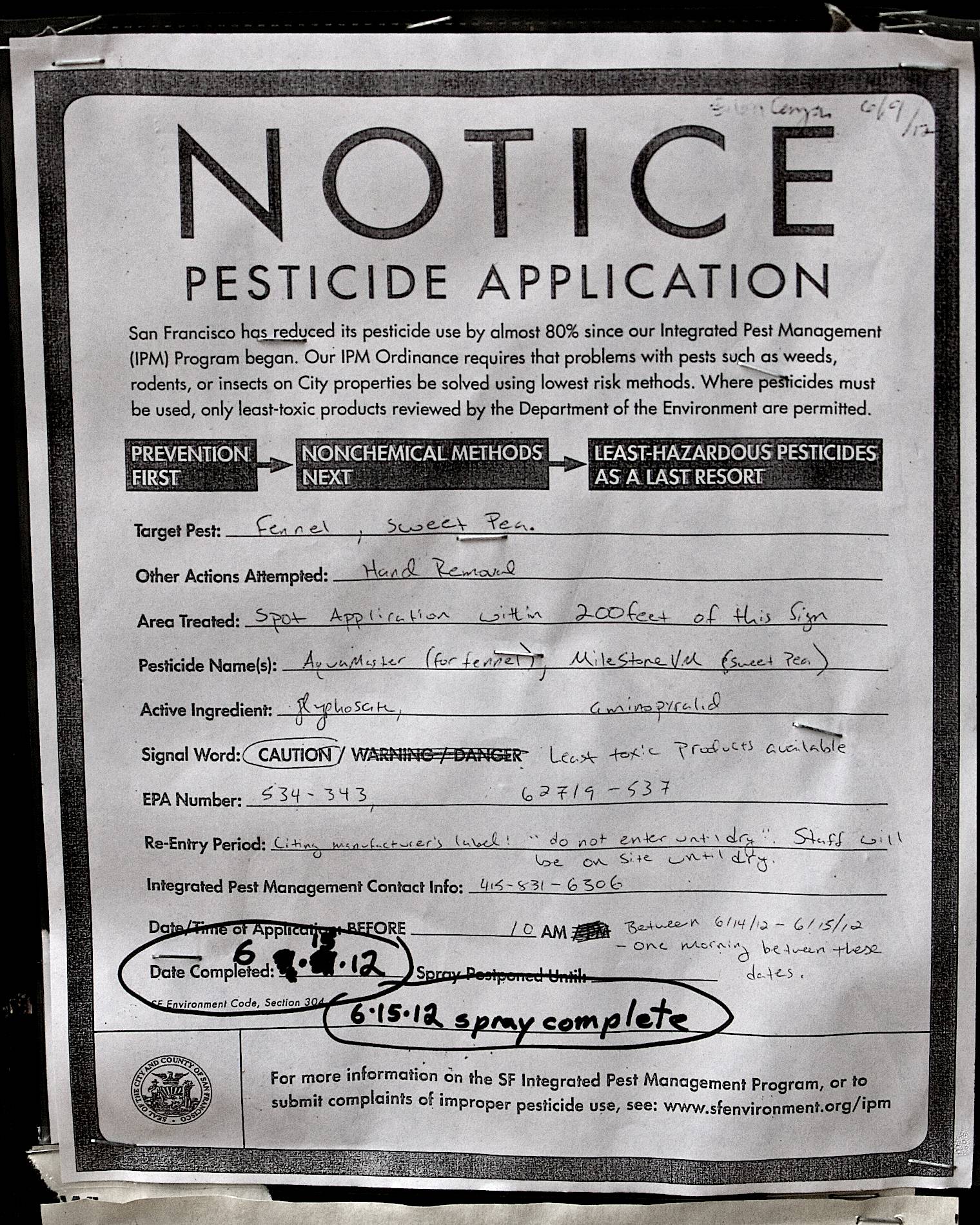
Spraying Milestone in Glen Canyon Park, June 2012

Recently visitors to Glen Canyon Park in San Francisco spotted a Pesticide Application Notice in their park, which states that Milestone herbicide was used on “sweet pea.”  Sweet pea is not classified as an invasive plant by the California Invasive Plant Council.  Milestone herbicide is classified as Tier I “Most Hazardous” pesticide by San Francisco’s IPM program because it persists in the ground for a long time.  The City’s IPM policy states that it is approved for use on “invasive species.”  Since sweet pea is not an invasive plant, we assume this pesticide application violated San Francisco’s IPM policy.

The federally mandated Material Safety Data Sheet (MSDS) for Milestone advises users to, “Prevent [Milestone] from entering into soil, ditches, sewers, waterways and/or groundwater.”  The MSDS also says that Milestone “is not readily biodegradable according to OECD/EEC guidelines.”

For these reasons, the manufacturer of Milestone herbicide withdrew its application to sell Milestone in the State of New York, after the State of New York determined, “The [New York State] Department [of Environmental Conservation] could not ensure that the labeled use of aminopyralid [the active ingredient in Milestone] would not negatively impact groundwater resources in sensitive areas of New York State.”  In other words, the sale of Milestone herbicide is banned in the State of New York.

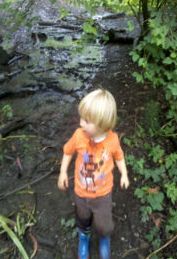
Kid playing in Glen Canyon Park. Courtesy San Francisco Forest Alliance

Since Glen Canyon is a watershed to Islais Creek, we believe it is irresponsible to use Milestone in that park.  And clearly there is no justification for using this persistent herbicide on a plant as benign as sweet peas.  Since Glen Canyon park is the home of a year-round day care center as well as a summer camp which leads children throughout the park, it is outrageous that these pointless risks were taken there.

We have learned nothing….

As we celebrate the 50th anniversary of Rachel Carson’s ground-breaking book, Silent Spring, there is renewed media interest in this issue.  We welcome this reminder that Rachel Carson informed the public in 1962 that DDT was having a devastating impact on wildlife.  DDT had been used for about 20 years, but it took that long for us to notice that some species of birds had been poisoned nearly to extinction.  And it took another 10 years for DDT to finally be banned in 1972.

Rachel Carson was vilified for her revelations, just as critics of the so-called Natural Areas Program are being vilified by supporters of that program.  We have been called “chemophobes” and “anti-chemical crazies.” 

Frank Graham, editor of Audubon Magazine, recently wrote an article for Yale University’s “environment 360” blog about the abuse that Rachel Carson endured after the publication of Silent Spring.  He recounts several anecdotes about the attacks on her character.  For example, “An official with the federal Pest Control Review Board drew laughter from his audience when he remarked, ‘I thought she was a spinster.  What’s she so worried about genetics for?’”

Forty years after DDT was banned in the United States we have a local example of the persistence of this dangerous chemical in our environment.  From 1947 to 1966, several companies on the harbor in Richmond, California formulated, packaged, and shipped pesticides, including DDT.  The site was designated a State Superfund site in 1982, and in 1990 the EPA placed the site on a national priorities list for clean up.  “Remedial actions took place on the site from 1990 to 1999.”  Twelve years later, the EPA tells us, “Although actions were taken to reduce the risk from the pesticides found on site…sediments and the water [in that location] are still contaminated with pesticides, primarily DDT and dieldrin.”

In other words, we fouled our water with dangerous pesticides; we then spent many years and probably a lot of money trying to clean up after ourselves, and 40 years later we are still living with the consequences of our foolishness.

What have we learned from that experience?  Now we are using a very persistent chemical (Milestone) on a benign plant (sweet pea) in our public parks.  We have learned nothing.  And those who have some economic gain from poisoning our parks—or are clueless about the risks they are taking—are defending the use of pesticides and trying to shut us up, just as they tried to shut Rachel Carson up 50 years ago.  We are proud to be in her company and we are inspired by her leadership.

Some people have learned

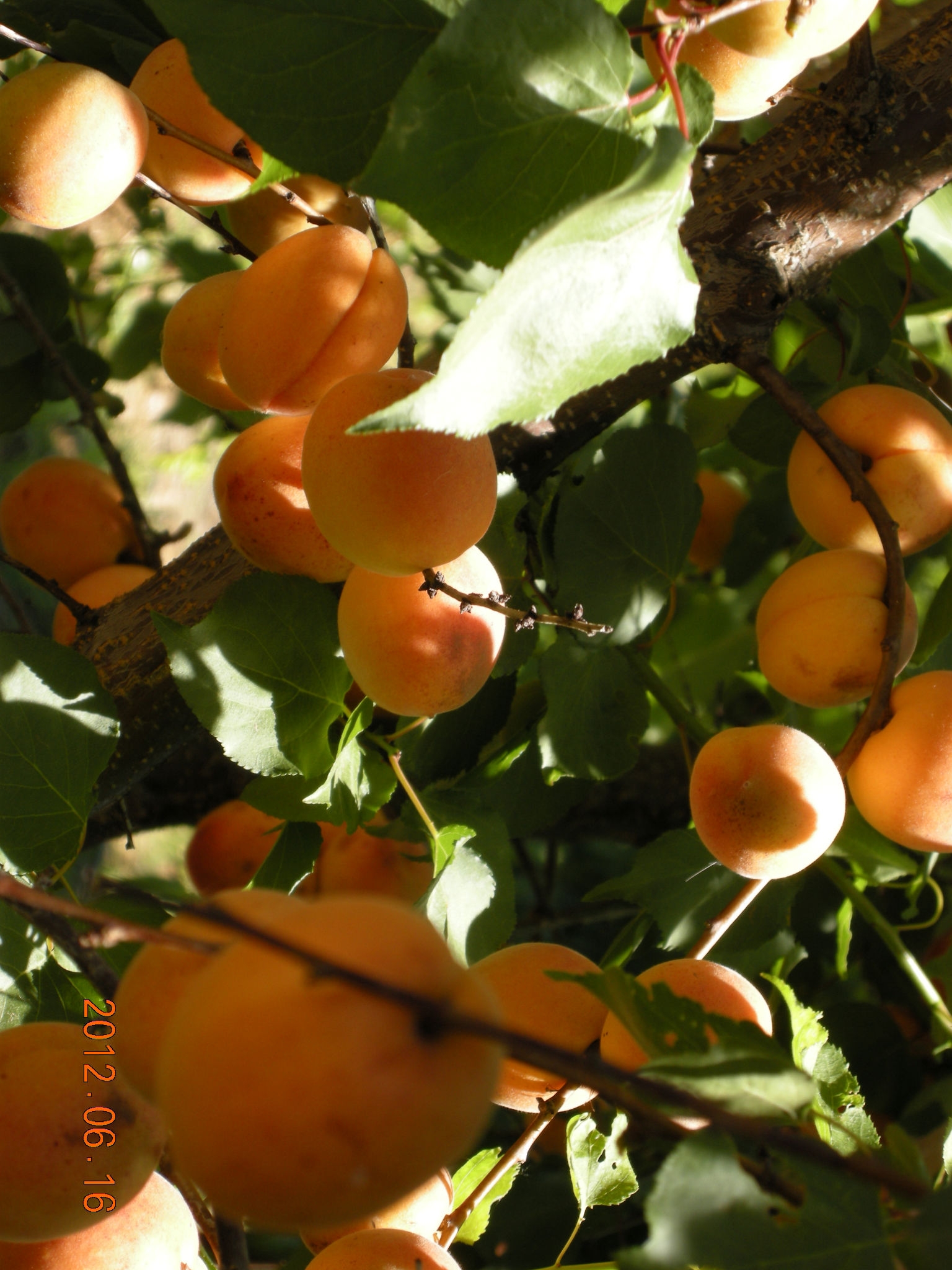
Peaches at “Organic U-Pick” Courtesy Arnita Bowman

We prefer to end our stories on a positive note when we can, so we turn to a book we read recently about a fruit farmer in California’s Central Valley.  David Mas Masumoto wrote Epitaph for a Peach to tell us about his transition from the traditional farming methods used by his father to organic methods.  He has abandoned rigorous weed and pest control and he is learning to live in harmony with his orchards rather than fighting against nature.  He tells us about the difficult decision to quit using pesticides:

“I am reminded that in some valley wells they have found traces of a chemical called DBCP in ground water aquifers.  DBCP was linked to sterility in males and is now banned in the United States.  My dad used some DBCP years ago…No one knew it would contaminate drinking water.  Neighboring city folks are angry with farmers for damaging their water supply.  ‘How could you farmers poison the water?’ they ask.  My dad didn’t choose to pollute the water table.  He did nothing illegal.  He simply trusted the chemical company and the governmental regulatory agencies.

Mr. Masumoto has learned from bitter experience.  What we know about pesticides today is not necessarily what we will learn about them tomorrow.  We often look back on our use of pesticides with regret.  So, shouldn’t we at least avoid using them when we don’t need to—such as on flowers just because they aren’t native—or in places where the risks are great—such as public parks occupied by children?

Let’s turn that rhetorical question into the affirmative statement that it deserves to be:  We should not be using pesticides in our public parks or on plants that aren’t doing any harm.  We will live to regret it when we do.  And let’s express our gratitude to Rachel Carson for inspiring us to keep informing the public of the needless risks that are being taken in their parks. 

“Do Not Destroy: Trees, Art, and Jewish Thought”

We treated ourselves to a visit to an exhibit at the Contemporary Jewish Museum in San Francisco, entitled “Do Not Destroy:  Trees, Art, and Jewish Thought.”  The title is taken from a commandment in the Torah (Deuteronomy 20:19):

“When in your war against a city you have to besiege it a long time in order to capture it, do not destroy its trees, wielding an ax against them.  You may eat of them but you must not cut them down.  Are trees of the field human to withdraw before you into the besieged city?  Only trees that you know do not yield food may be destroyed…”

This admonition is expanded by modern Jewish thought to encompass man’s responsibility to protect all of nature from harm.  The tree is a universal symbol of all nature. 

The Jewish Museum invited over 50 international artists to create original works of art inspired by the Jewish holiday which honors trees, Tu B’Shevat.  One of these works of art was awarded first prize by a public popularity contest. 

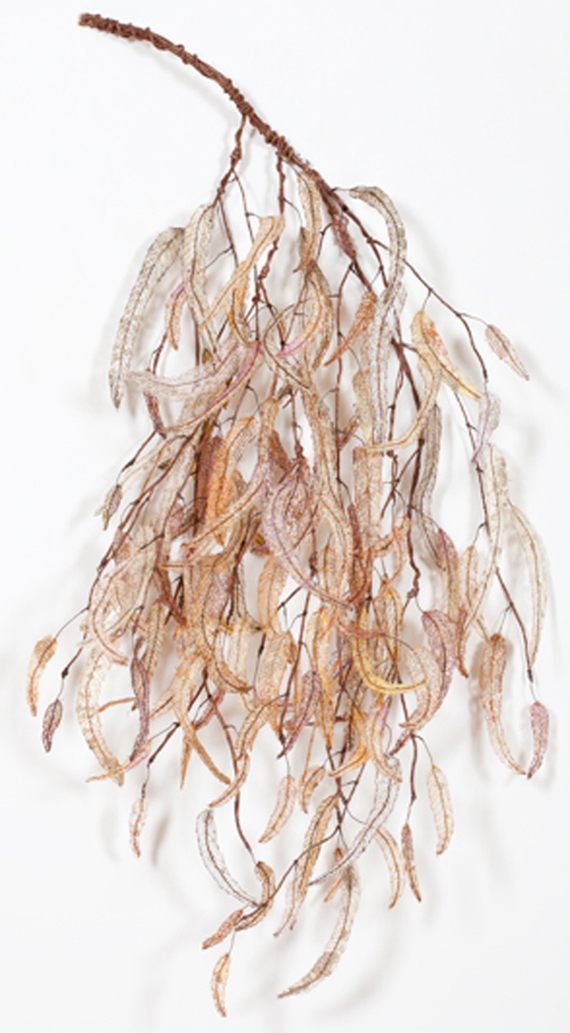
“Fauxliage: No Birds Sing” by Lisa Kokin. with permission. Photograph by Lia Roozendaal

At first glance, the viewer sees a branch of a eucalyptus tree with its graceful sickle-shaped leaves in a skeletal state, seemingly long-since dead. 

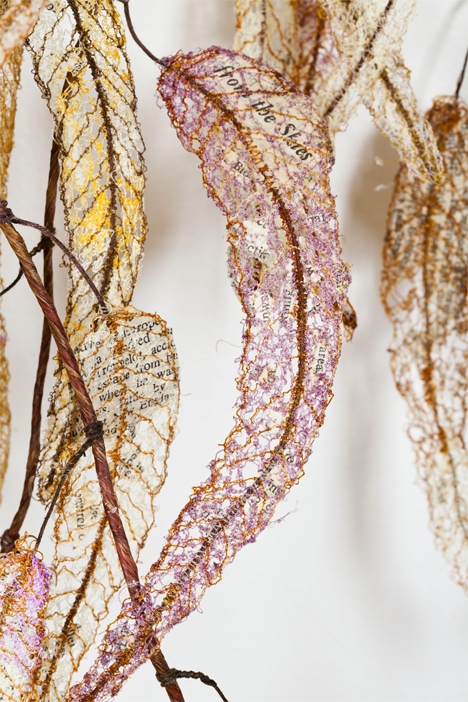
We must look more closely to appreciate the symbolic message of this evocative piece.  The leaves are in fact made of the pages of Rachel Carson’s Silent Spring.   Silent Spring was published in 1962, so we are celebrating the 50th anniversary of the publication of this ground-breaking book.  The pages have been shredded and wired together with thread and wire to create the delicate skeletal frame of each leaf. 

“Foliage: No Birds Sing” Detail with permission. Photo by Lia Roozendaal

The poetic justice of this piece took our breath away.   Silent Spring forever changed the public’s perception of the pesticides that were used in the environment at that time.  Rachel Carson informed us that these pesticides—particularly DDT—were killing our birds, silencing our springs when birds should be singing as they claim their nesting territories and attract their mates.  Although DDT was banned long ago, and many birds have recovered from the damage it caused, new pesticides have been developed and are being used to kill eucalyptus and many other non-native plants and trees.

 We have no way of knowing the artist’s intention in creating this work of art, but we commend her for celebrating the beauty of the eucalyptus and for the deeply ironic reference to the pesticides being used to kill them.  The public’s vote for first prize for this beautiful piece is evidence that there are many fans of the much-maligned eucalyptus.

[Edited to add:  We have received this comment from the artist, Lisa Kokin:  “The only thing that struck me was the sentence that begins, ‘We have no way of knowing the artist’s intention…’  It seems a bit paradoxical, given that you do understand why I chose Silent Spring to embed in the piece.  It is my concern about the environment and its destruction by corporate greed that motivated me to use Carson’s book and create a piece that speaks of that destruction in a poetic, rather than didactic, way.”]

We urge all lovers of trees to visit this exhibit which will continue until September 9, 2012.  And we ask native plant advocates to consider the commandment of the Torah and the Old Testament:  Do Not Destroy our Trees!

Formidable odds against reintroduction of Mission Blue butterfly

Mission Blue butterfly. Wikimedia Commons

The Mission Blue butterfly is a federal endangered species which existed historically on Twin Peaks in San Francisco.  San Francisco’s Natural Areas Program has been trying to reintroduce the Mission Blue to Twin Peaks for several years, so far with limited success.  Visit the Save Sutro website for a detailed description of these efforts which began in 2009.

The “Recovery Action Plan for the Mission Blue Butterfly at Twin Peaks Natural Area” acknowledges the difficulty of this undertaking.  It cites a study of 226 attempts to reintroduce butterflies where they have been extirpated (locally extinct).  These attempts lasted an average of 15 years.  Only 29 of the attempts were ultimately successful.  So what are the odds of success on Twin Peaks?

Identified obstacles to success

The federal Endangered Species Act requires that a recovery plan be written for each endangered species.  These recovery plans are a valuable source of information about each endangered species, the factors that resulted in their endangered status, and the plans to promote the recovery of the population.  From the recovery plan for the Mission Blue, we learn of several issues that make its reintroduction problematic at best:

  • The Mission Blue is dependent upon just 3 species of lupine for its development.  Two of these exist on Twin Peaks, but the predominant species is infected with a fungal pathogen which flares up during warmer, wetter weather.  The small population of Mission Blues on Twin Peaks crashed in 1998 when the fungal pathogen killed many of the lupines. 
  • The lupine is crowded out by scrub species if natural disturbances such as fire do not prevent natural succession from grassland to scrub such as native coyote brush.
  • Non-native species of plants are also competitors of the native lupines and their growth is encouraged by higher levels of nitrogen in the soil found in urban environments as a result of the burning of fossil fuels. 

The Natural Areas Program cannot control these factors:

  • There is no known cure for the fungal pathogen that is killing lupine.  In wetter years, it is likely to kill some of the lupine on Twin Peaks again, as it has in the past.
  • The Draft Environmental Impact Report for the Natural Areas Programs says that prescribed burns will not be conducted in the “natural areas.”  Prescribed burns are conducted by the State parks department periodically on San Bruno Mountain, where a viable population of Mission Blue butterflies exists.  This method of preventing natural succession to scrub in order to maintain a population of the butterfly’s host plant will not be an option on Twin Peaks. 
  • We should probably assume that existing automobile traffic in San Francisco will continue to contribute to nitrogen in the soil for the foreseeable future.  Higher levels of nitrogen will promote the growth of the non-native vegetation that competes with the native lupine upon which the Mission Blue depends.

Unidentified obstacles to success

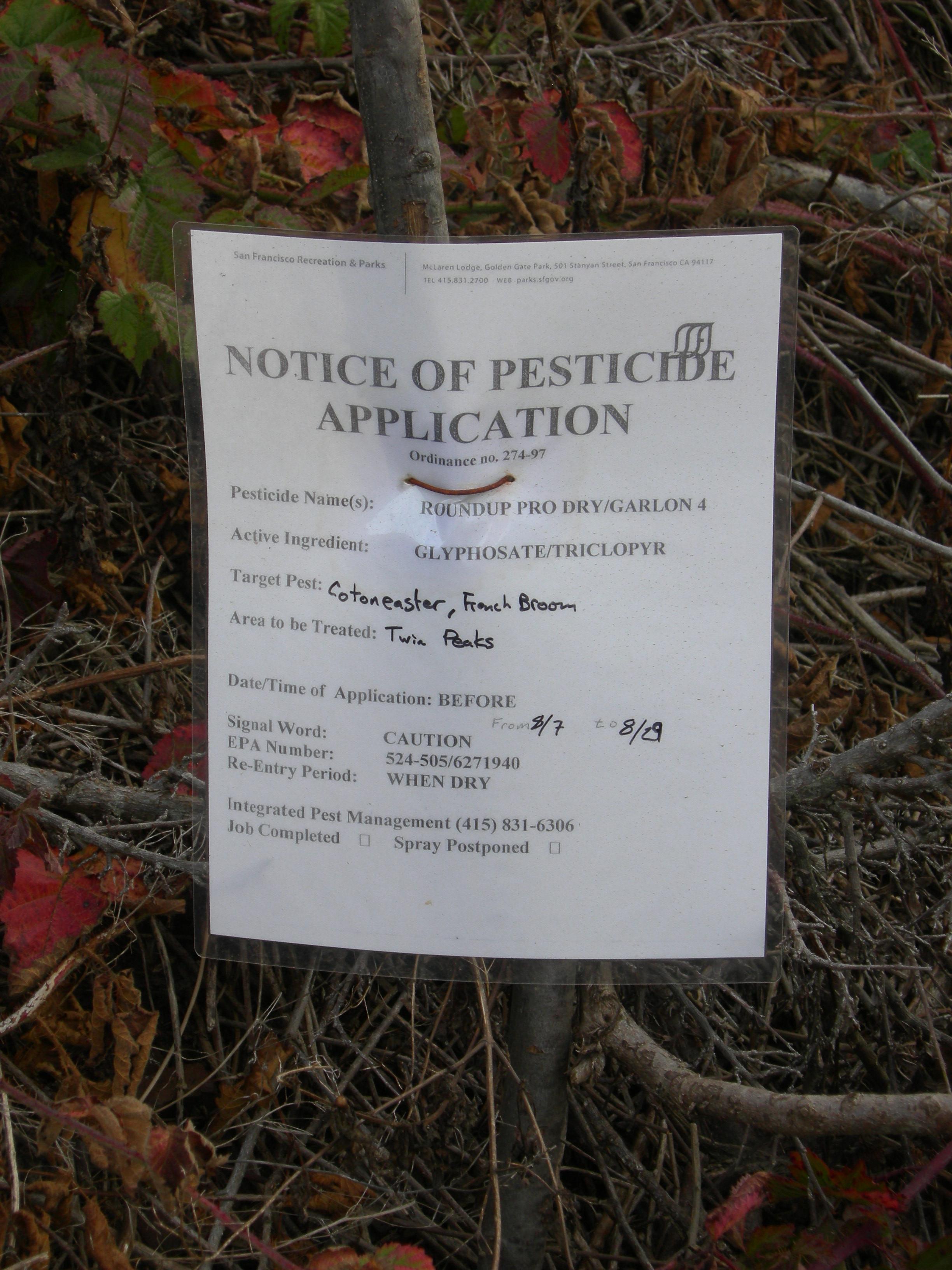
Pesticide Application Notice, Twin Peaks

In addition to the issues that have been identified by federal and local recovery plans, the Natural Areas Program has introduced a new threat to the Mission Blue.  Herbicides are being used on Twin Peaks to control non-native vegetation.  Twin Peaks was sprayed with herbicides 16 times in 2010 and 19 times in 2011.  Are these herbicides a factor in the limited reproductive success of the Mission Blues that have been reintroduced to Twin Peaks?

A recently published study reports that the reproductive success of the Behr’s metalmark butterfly was significantly reduced (24-36%) by herbicides used to control non-native vegetation.  Two of those pesticides are used on Twin Peaks, imazapyr and triclopyr.  Triclopyr was used most often on Twin Peaks in 2010 and imazapyr in 2011.

The study does not explain how this harm occurs.  It observes that the three herbicides that were studied work in different ways.  It therefore speculates that the harm to the butterfly larva may be from the inactive ingredients of the pesticides which they have in common, or that the harm comes to the larva from the plant which is altered in some way by the herbicide application.  Either theory is potentially applicable to the herbicides used on Twin Peaks and consequently harmful to the Mission Blue.

Native plant advocates would like us to believe that the herbicides used to eradicate non-native plants are not harmful to animals, including humans. In fact, they don’t know that. The truth is that no one knows if herbicides are harmful to animals because there is almost no research that would answer this question.  The tests required by law by the Environmental Protection Agency to put new chemicals on the market are very limited.  The honeybee is the only insect on which the EPA is required to test chemicals before they are put on the market.  No tests are required for butterflies or any other insect. 

US Fish & Wildlife funded the research on the Behr’s metalmark butterfly which suggests that herbicides are harmful to butterflies.  US Fish & Wildlife is also the co-sponsor and co-funder of the reintroduction of the Mission Blue butterfly on Twin Peaks.  Will US Fish & Wildlife advise the Natural Areas Program that herbicide use on Twin Peaks should be stopped? 

In a more perfect world we would have the wisdom to stop using pesticides until we had some scientific evidence that they are not harmful to us and the animals with which we share the planet.

Low doses of pesticides are also hazardous to our health

We are reprinting, with permission, an article on the Save Sutro website about recent research reporting that even low doses of chemicals can be harmful to our health.  This research has serious implications for the pesticides being used by the many “restoration” projects in the San Francisco Bay Area.  This article is focused on pesticide use by San Francisco’s misnamed Natural Areas Program.  In fact, every manager of public land in the Bay Area that engages in native plant “restorations” uses pesticides to eradicate non-native species. 

*******************************

When we speak up against the Natural Area Program’s frequent pesticide use, its supporters frequently tell us that – compared with say commercial agriculture – the Natural Areas Program (NAP) uses small amounts of toxic chemicals. “The dose makes the poison,” they argue.

But it’s not true.

For now, we’ll leave aside the question of whether it’s reasonable to compare NAP to  commercial agriculture (where fears of chemicals are driving a growing Organic movement). What we’d like to talk about today is recent research about pesticides, specifically, endocrine disruptors. Here’s a quote from the abstract of a study by a group of scientists:

“For decades, studies of endocrine-disrupting chemicals (EDCs) have challenged traditional concepts in toxicology, in particular the dogma of “the dose makes the poison,” because EDCs can have effects at low doses that are not predicted by effects at higher doses….

“…Whether low doses of EDCs influence certain human disorders is no longer conjecture, because epidemiological studies show that environmental exposures to EDCs are associated with human diseases and disabilities. We conclude that when nonmonotonic dose-response curves occur, the effects of low doses cannot be predicted by the effects observed at high doses.”

[Ref: Hormones and Endocrine-Disrupting Chemicals: Low-Dose Effects and Nonmonotonic Dose Responses, Vandeberg et al, in Endocrine Reviews, March 2012]

WHY WE’RE CONCERNED

The NAP uses several pesticides rated as “Hazardous” or “Most Hazardous” by San Francisco’s Department of the Environment. But the one they’ve favored is glyphosate — better known as Roundup or Aquamaster.

It’s strongly suspected of being an endocrine disruptor.

Here’s a 2009 study: Glyphosate-based herbicides are toxic and endocrine disruptors in human cell lines.

Another study, also published in 2009, looked at puberty and testosterone: Prepubertal exposure to commercial formulation of the herbicide glyphosate alters testosterone levels and testicular morphology. The abstract of the study ends with this sentence, “These results suggest that commercial formulation of glyphosate is a potent endocrine disruptor in vivo, causing disturbances in the reproductive development of rats when the exposure was performed during the puberty period.”

And here’s a study published in 2007, reflecting the research of a group of scientists from Texas A&M: Alteration of estrogen-regulated gene expression in human cells induced by the agricultural and horticultural herbicide glyphosate

THE NATURAL AREAS PROGRAM DEFENDS PESTICIDE USE

Most people weren’t aware that pesticides were being used in so-called “Natural Areas.” The notices were small and well below eye-level. You had to be looking for them, which isn’t likely for most people out hiking or jogging by, or keeping an eye on small kids. In recent months, the labeling has improved, with taller posts and clearer information.

Now that people are beginning to notice, they’re also objecting. The response we hear most often is “Why would they use herbicides in a natural area?”

So the NAP has started posting explanations, justifying its use of toxic herbicides justifiable against “invasive plants.”

These plants, they say, are “a handful of non-native species” that are “displacing the rich biodiversity of native flora and degrading our natural heritage.”

WHY WE DISAGREE

We have several problems with this statement.

  • If it’s a “handful,” the NAP must have very big hands. From the pesticide application records, we’ve counted nearly twenty-five different plant species under attack by chemicals — including a couple that aren’t actually non-native.
  • There’s no evidence that all these plants are invasive and that they’re “displacing the rich biodiversity.” Native plants and non-native plants thrive together in natural mixed ecosystems. NAP can never eliminate all the non-native plants; the best it can achieve is a different mix, precariously maintained through intensive gardening.
  • There’s also no evidence it’s working. Using chemicals to kills things is cheap and easy, but it leaves a gap where something else will grow. Given that San Francisco’s environment has changed greatly since the 1776 cut-off used to define “native” plants, it’s not going to be those plants. Rather, what will naturally grow back will be the most invasive plant at the site. An excuse for more herbicides.
  • The NAP is destroying habitat in its quest to kill native plants. Many of the plants destroyed are bushes that provide cover and nesting places, or flowering plants that offer nectar to butterflies, bees and other pollinators and the birds and animals that feed on them. The “native flora” don’t necessarily provide much of either, even if they can be successfully gardened.

Escalating pesticide use by the unnatural Natural Areas Program

Webmaster: We are grateful to Save Mount Sutro Forest for their research on pesticide use by San Francisco’s misnamed Natural Areas Program and for giving us permission to reprint this update on NAP’s pesticide use in 2011.

********************************************

We spent a couple of hours, the other day, in the beautiful McLaren Lodge, leafing through a thick binder of pesticide reports for the San Francisco Rec and Park Department. It was so thick in part because it contained a lot of nil reports… supervisors of various sections writing in to say things like “No Roundup used in this complex.

The monthly reports from the Natural Areas weren’t nil. Far from it.

Some months ago, we wrote that the pesticide use in the Natural Areas seemed to have increased sharply in 2010 compared with 2009. Oh, said a critic, don’t focus on an individual year. It might go back down next year, it might just be a blip.

If so, we’re not blip-free yet. According to our preliminary figures (which we will update if we get better information) pesticide applications in 2011 were up 20% from 2010.

The NAP continues to use glyphosate regularly (38 39 times in 2011). It’s mostly switched from Roundup to a different formulation, Aquamaster. This alternative provides better control over the adjuvant, the stuff that the pesticide is mixed with. It still contains glyphosate, with its attendant risks.

GLYPHOSATE IS STILL TOXIC

Part of the reason for switching to Aquamaster is that POEA, the adjuvant in Roundup, is actually toxic instead of being inert. But it’s not just the POEA. Glyphosate itself has problems, particularly in terms of pregnancy problems and birth defects. A 2005 article published in the journal of the National Institutes of Health noted that glyphosate was toxic to placental cells (and Roundup was even more so):

“… glyphosate is toxic to human placental JEG3 cells within 18 hr with concentrations lower than those found with agricultural use, and this effect increases with concentration and time or in the presence of Roundup adjuvants.”

In addition, it’s an endocrine disruptor. French scientists published an article in the journal Toxicology titled, “Glyphosate-based herbicides are toxic and endocrine disruptors in human cell lines.”

According the the guidelines from San Francisco’s Department of the Environment, Aquamaster is to be used “Only as a last resort when other management practices are ineffective.” Since this last resort occurs some 40 times in a year, we suggest the DoE consider reclassifying Aquamaster as Tier I to reflect the latest research on glyphosate.

FROM THE FIRE INTO THE FRYING PAN

The big change this year was the move from Garlon (triclopyr) to Polaris or Habitat (imazapyr). According to the record, Garlon was only used thrice in 2011, while imazapyr was used 40 times.

This is somewhat of an improvement in that Garlon is a very toxic chemical, classified as Tier I; imazapyr is less toxic and classified as Tier II.

Unfortunately, it’s possible that the best thing about imazapyr is that it isn’t as bad as Garlon. It is very persistent, and doesn’t degrade easily. It moves around, being exuded by the roots of the plants it’s meant to poison. And its break-down product is a neurotoxin – it poisons the nervous system. It’s banned in the European Union.

The NAP also used Milestone four times. (That does sound like a last resort.) Fortunately. Milestone is an extraordinarily persistent chemical that has been withdrawn from sale in the UK, and is rightly classified as Tier I, Most Hazardous.

MORE VIOLATIONS OF POLICY

The NAP also continued to violate pesticide guidelines. In August 2011, they used Aquamaster against ludwigia (water primrose) in Lake Merced — a lake that is considered red-legged frog habitat. The guidelines ask for a 60-foot buffer zone. Since the water primrose is in the water (and so, we presume is the frog), this buffer zone’s not happening.

Some readers will remember this post about the dateless sign threatening pretty much all the vegetation near the Twin Peaks reservoir with Garlon and Aquamaster. We never got to the bottom of that. The pesticide records don’t mention it.

[Edited to Add (22 Jan 2012): One of our readers asked about this Glen Canyon notice, too, listing the use of Glyphosate and Imazapyr against ivy and acacia.

Again, we don’t know what happened but it’s not in the pesticide records.]

MORE MONEY FOR SHELTERBELT

Shelterbelt Builders, the contractor the Natural Areas uses for pesticide application, earned more fees from Rec & Park as pesticide applications increased:

  • In fiscal 2009-10 (year ending June 30), it earned $51 thousand;
  • In fiscal 2010-11, it was paid $78 thousand;
  • In fiscal 2011-12, it’s been paid (or is owed) a total of $84 thousand, and the fiscal year is only half-finished.

[Edited to Add: This is public information from the SF Controller’s website. You can see it here. ETA2: The report on the SF Controller’s website has been changed. Here is the new link. Also, the picture here can be enlarged by clicking on it until it’s readable.]

On Mount Sutro, though the Sutro Stewards’ volunteers have been gutting the understory and destroying habitat, we are glad to say there is still no use of herbicides. Again, our thanks to UCSF for preserving possibly the last pesticide-free wildland in San Francisco. Even if only temporarily.

DOES SAN FRANCISCO HATE ITS TREES?

It’s not a good time to be a plant or a tree in San Francisco. The San Francisco Chronicle reports that the city is handing off 23,000 street trees to homeowners to care for. It estimates it will save $300 thousand. The kind of comments people made on the article don’t bode well for the future of those trees. Meanwhile, it seems to be able to find funding to destroy trees in Natural areas across the city, trash habitat needed by the city’s wildlife, and take out quirky old trees that give some of these wild areas their character.