Environmentalism in the Rear-View Mirror

One year ago, less than a month after Donald Trump was re-elected President, I announced on Conservation Sense and Nonsense my intention to “hunker down and watch the changes [in the federal government] play out.”  Although I predicted major changes in federal public policies, I did not foresee the scale and speed of changes in environmental policies that we have witnessed in the past year.  The uncomfortable reality is that some of what is being destroyed deserved to be destroyed, but at the expense of some valuable environmental protections. 

In describing the changes we have witnessed, I will focus primarily on environmental issues in the following main categories.  Please keep in mind that changes in environmental policies are but a small fraction of the changes that have occurred in all aspects of American life and global geopolitics, e.g., education, public health, arts and entertainment, architecture, science, economics, immigration, media sources, judicial system, disaster relief, social safety net, foreign aid, tariffs, etc. 

The Trump administration has left the international Paris Agreement, the legally binding treaty adopted in 2015 to limit global warming to below 2 degrees Celsius.  The US was not represented at the November 2025 meeting of the UN Conference of the Parties (COP30) to the agreement in Brazil, but the US actively campaigned against the new commitment on the agenda to limit pollution from cargo ships by using fines.  According to the New York Times, “…the United States launched a pressure campaign that officials around the world have called extraordinary, even by the standards of the Trump administration’s combativeness, according to nine diplomats on its receiving end.” US diplomats and officials were successful in threatening countries with loss of US port access and other onerous penalties if they voted for the proposal. The Trump administration hasn’t just dropped out of the Paris Agreement.  It is also actively engaged in preventing other countries from reducing greenhouse gas emissions that cause climate change. COP30 ended without any new commitments to reduce the sources of greenhouse gas emissions, or even explicit mention of fossil fuels as the primary greenhouse gas.   

America Accommodates

Many of these changes have been delayed by legal challenges, but until appeals reach the Supreme Court, the final verdict on most issues is not known at this time.  However, the Supreme Court has signaled their intentions with many emergency orders, also known as the shadow docket.  These decisions have upheld most of the federal government’s actions, without providing any legal reasoning for doing so.  These preliminary decisions foretell the ultimate victory of the actions of the Trump administration.

Other segments of American society are contributing to the control the President has over the implementation of his agenda. At his request, Congress has completely defunded National Public Radio and the Public Broadcasting Service.  They are scrambling to find other sources of revenue, while cutting programs and staff as well as closing stations. Associated Press was banned from White House press briefings when they refused to call the Gulf of Mexico the Gulf of America, as renamed by President Trump. Legal challenges have not restored AP’s access to White House press briefings.

Mainstream media has paid multi-million dollar settlements to resolve defamation lawsuits (ABC and CBS) brought by President Trump over perceived slights.  One major network (CBS) has changed ownership and is now owned by Trump supporters (Larry & David Ellison).  The Department of Defense (now calling itself the Department of War) has restricted access of the press to department staff and now requires department approval of press releases prior to publication.  Most members of the Pentagon press corps refused to agree to these restrictions and have left their offices in the Pentagon.  Self-censorship is a more insidious threat because the public no longer knows when the media is pulling its punches to avoid retribution, which is the President’s modus operandi.

The legal profession has also been brought to its knees by the President’s threats of punishment if they participate in lawsuits that try to prevent the implementation of the administration’s policies.  Many major law practices have been forced to provide pro bono legal services for President Trump after being threatened with access restrictions to the judicial system.  Major law practices are refusing to represent plaintiffs who are trying to protect themselves from government prosecution, hoping to stay out of the line of fire.

California Responds

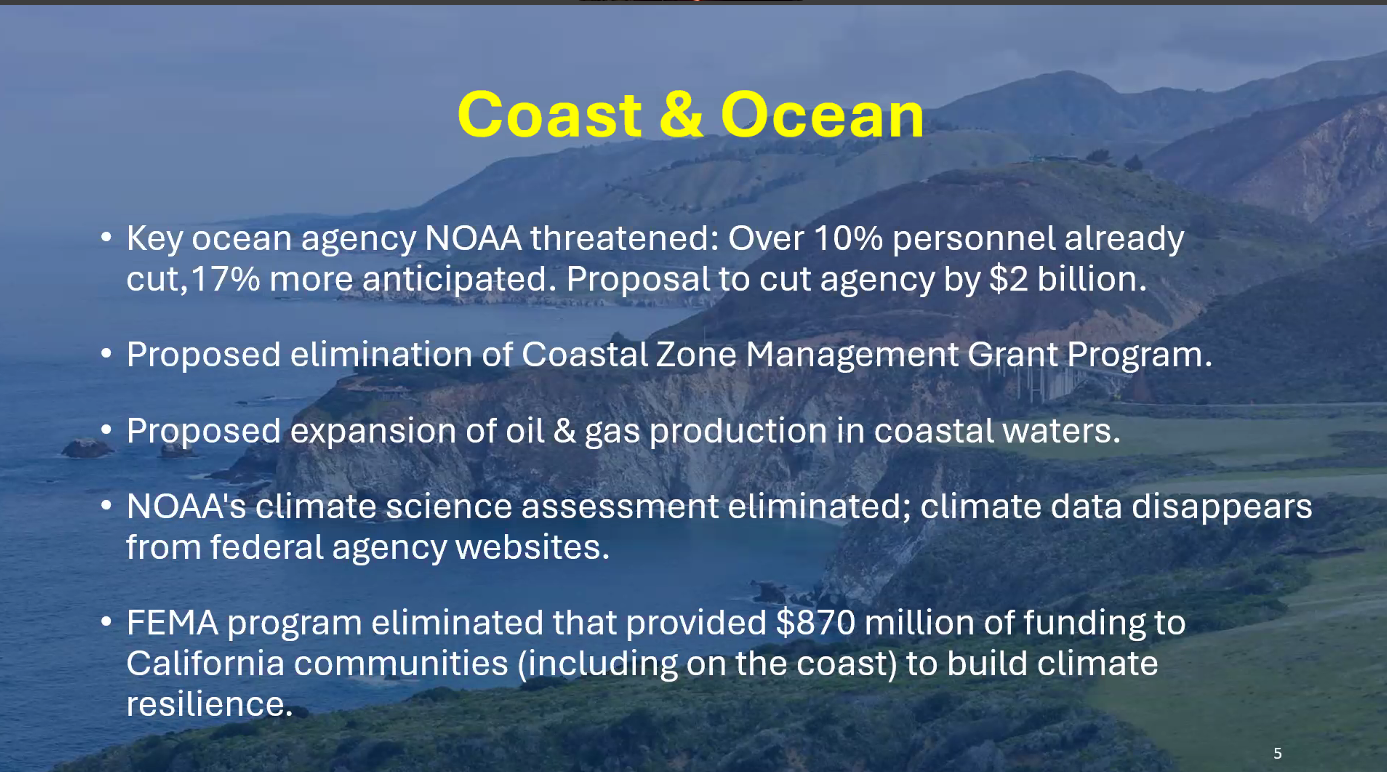
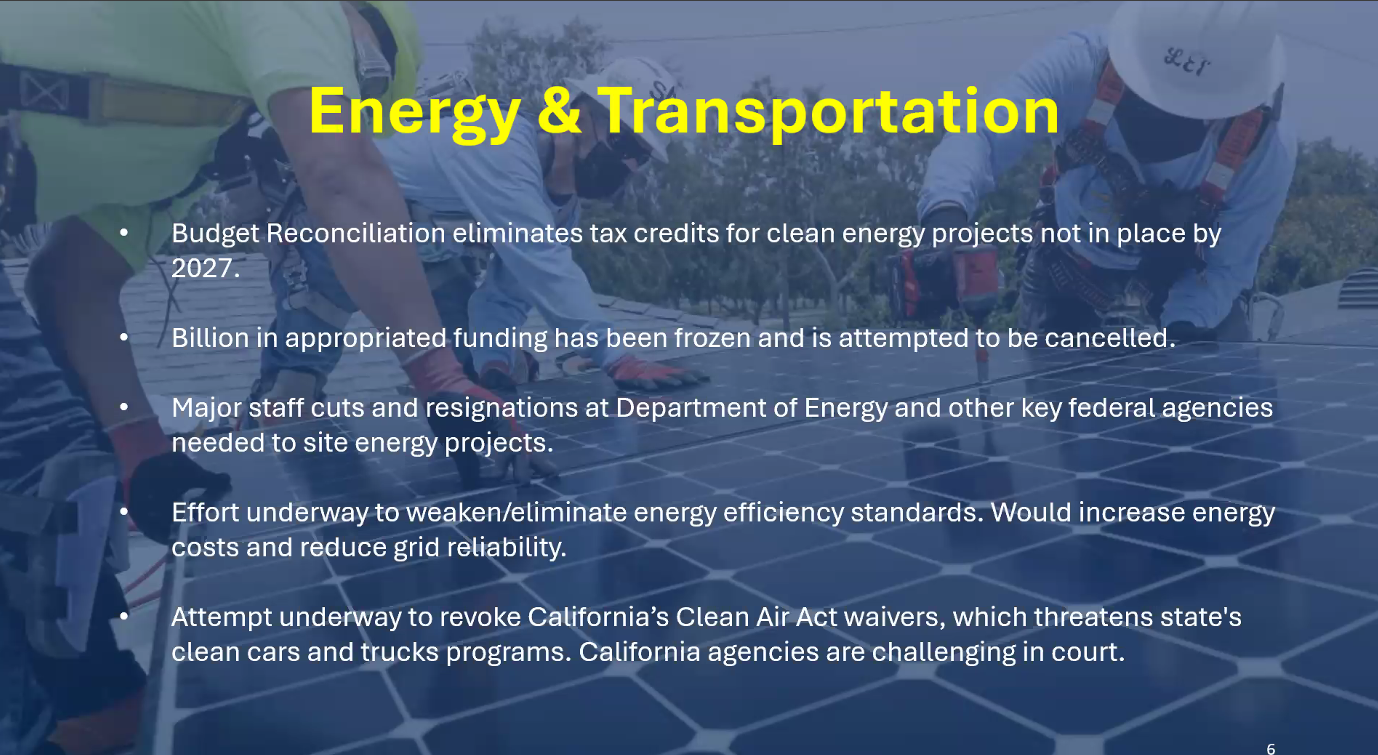
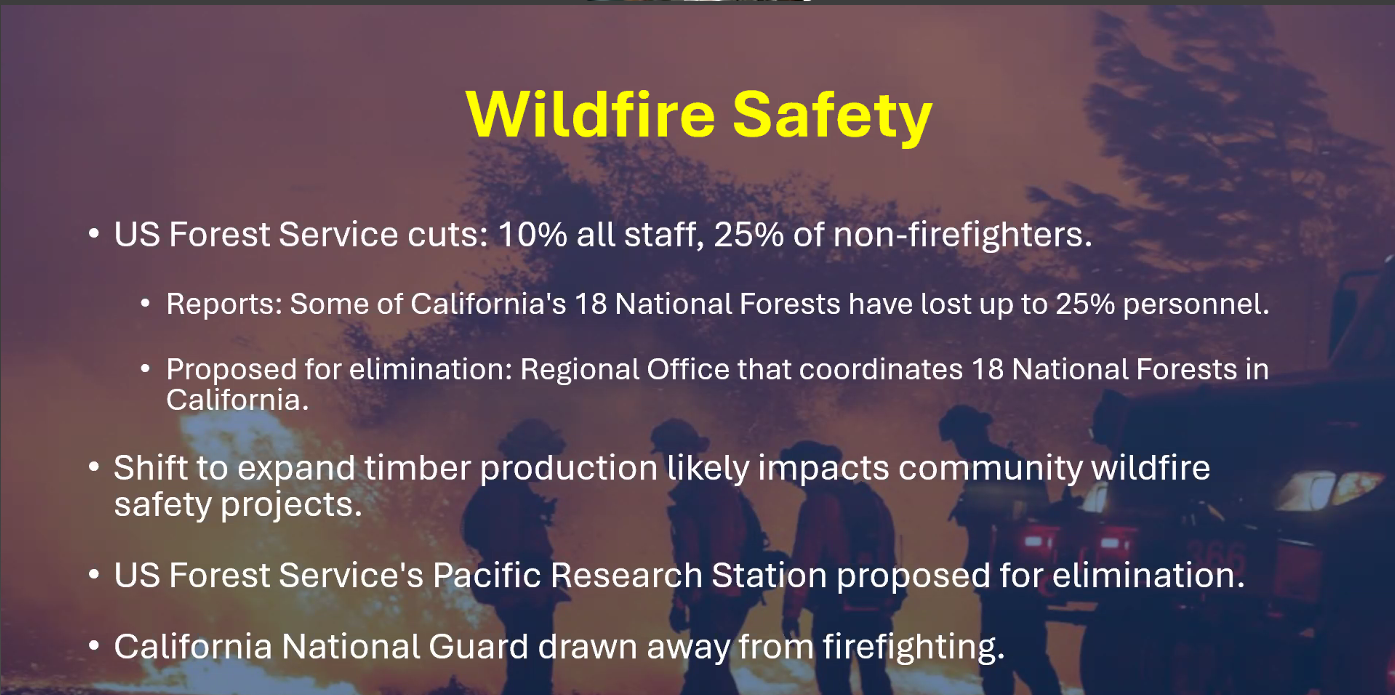
The same day that Americans re-elected Donald Trump in November 2024, California voters passed Proposition 4, the $10 billion bond that funds climate change mitigation and ecological restoration in California.  California’s bond funding will help to compensate for the loss of federal funding of ecological and climate mitigation projects in California. California Natural Resources Agency reported the cancellation of federal funding for these projects in California:
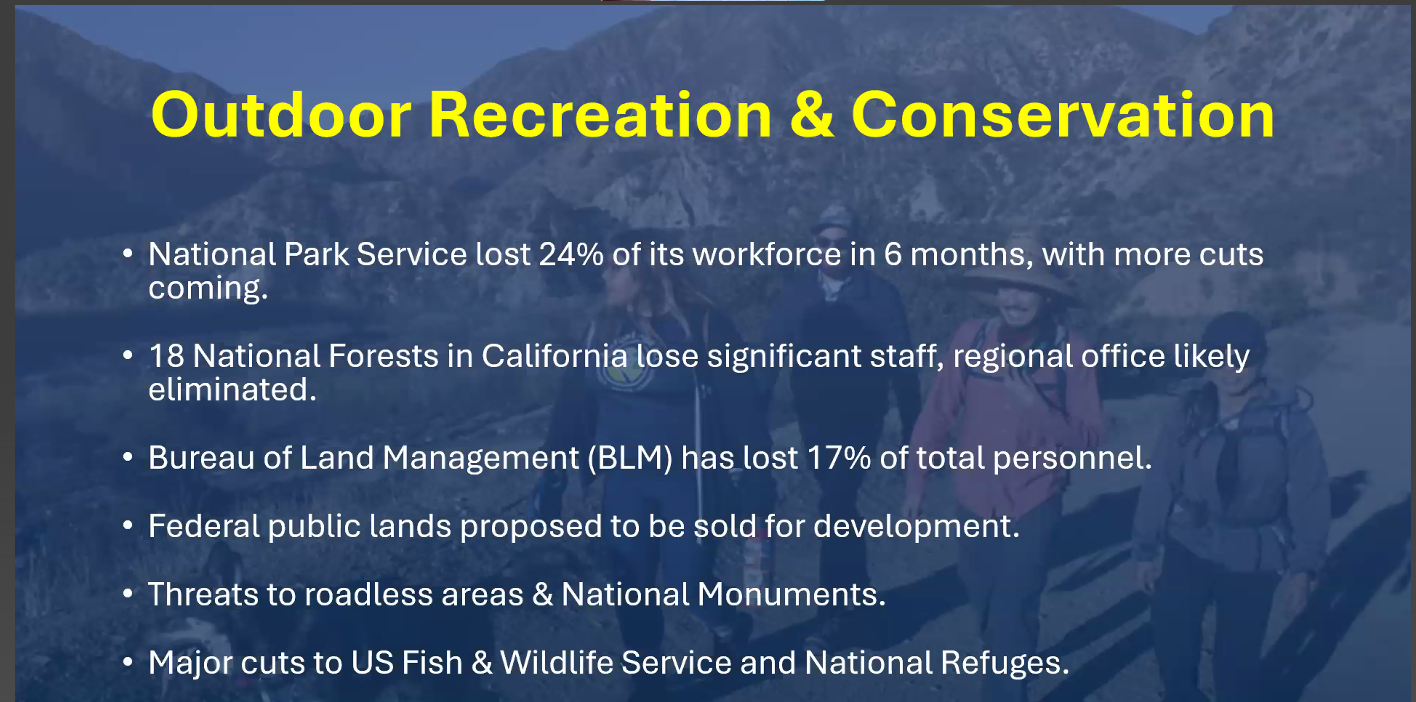
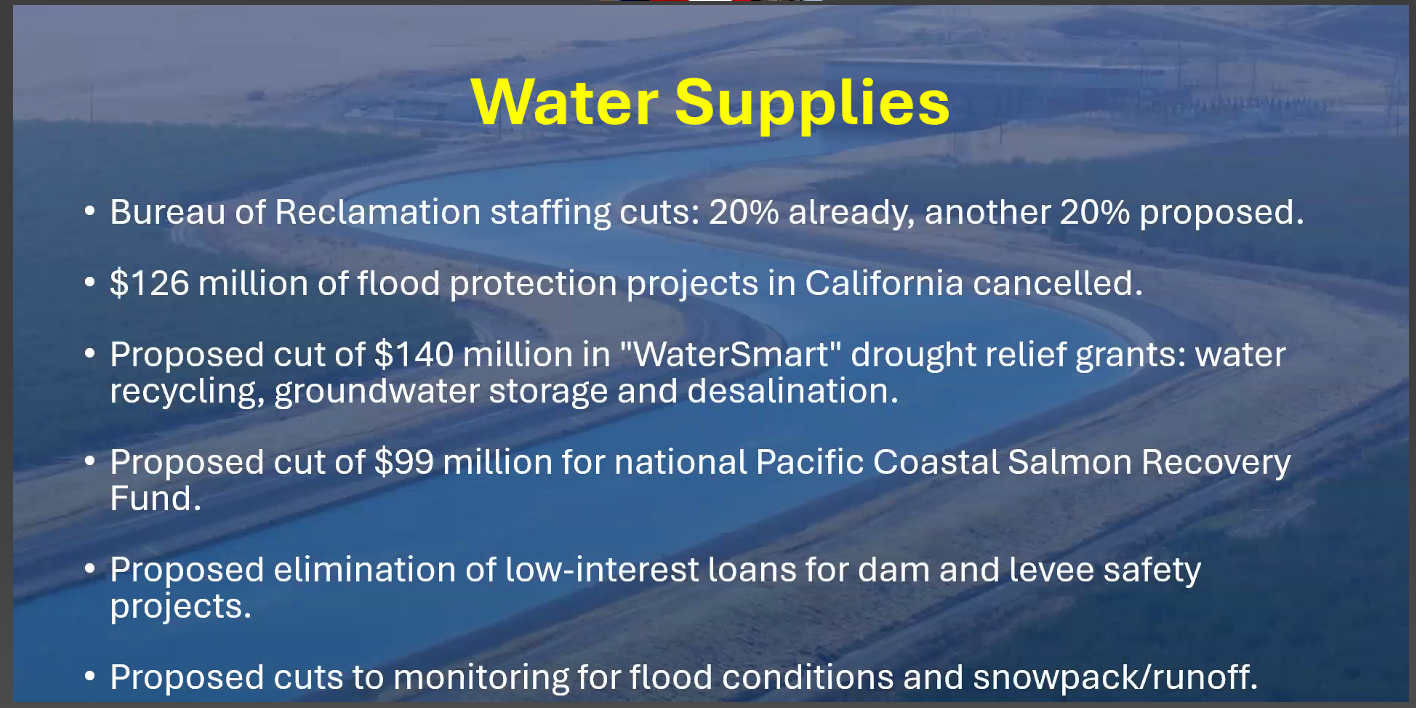
Source: California Natural Resources Agency, July 2025

Does California have enough money to compensate for the loss of federal funding of climate change mitigation and ecological restoration in California?  I don’t know, but I do know that federal funding is also being lost for many other purposes that are important to Californians, such as subsidies for health insurance and food assistance needed by many Californians.  Some municipalities are responding by raising sales and property taxes to backfill the loss of federal funding in many sectors of the economy.  While federal taxes are being cut, California’s taxes may rise.

Meanwhile, California is challenged by related issues such as the need to build more housing in order to reduce the cost and house our growing homeless population.  In July 2025, California responded to that issue by revising the California Environmental Quality Act (CEQA), which will remove many obstacles to building new housing and allow more aggressive fire hazard mitigation. 

The cost of gas in California has been consistently higher than in most states because of voters’ desire for clean air.  Regulations have made drilling for and refining oil in California costlier than in other states, which makes gas more expensive for consumers.  Refineries have responded to California’s restrictive regulations by leaving the state, which reduces supply, raises prices further and is expected to restrict availability of fuel. California’s Senate Bill 237, signed into law in September 2025, addressed these concerns by streamlining approval of drilling permits, including idle pipelines, in an “environmentally responsible and safe manner.” 

In other words, California has been forced to adapt to new economic and environmental realities. At the same time, California is aggressively fighting back.  As of October 1st, California has filed 46 lawsuits against the 2nd Trump administration, “contesting the Trump administration’s executive orders, agency decisions and even recent laws that Trump himself signed.”

Americans Shrug

Composite opinion polls reported a persistent negative approval rating of 11% for the Trump presidency until the government shutdown in October, when the approval rating dropped to negative 15% before returning to negative 11% when the government re-opened.  Over 40% of American voters still approve of the Trump presidency.  Many voters have made up their mind and are not responsive to the daily onslaught of alarming information.  I understand and am sympathetic to the public’s dilemma, summarized in a recent social media post:  “My desire to be well informed is presently at odds with my desire to remain sane.” 
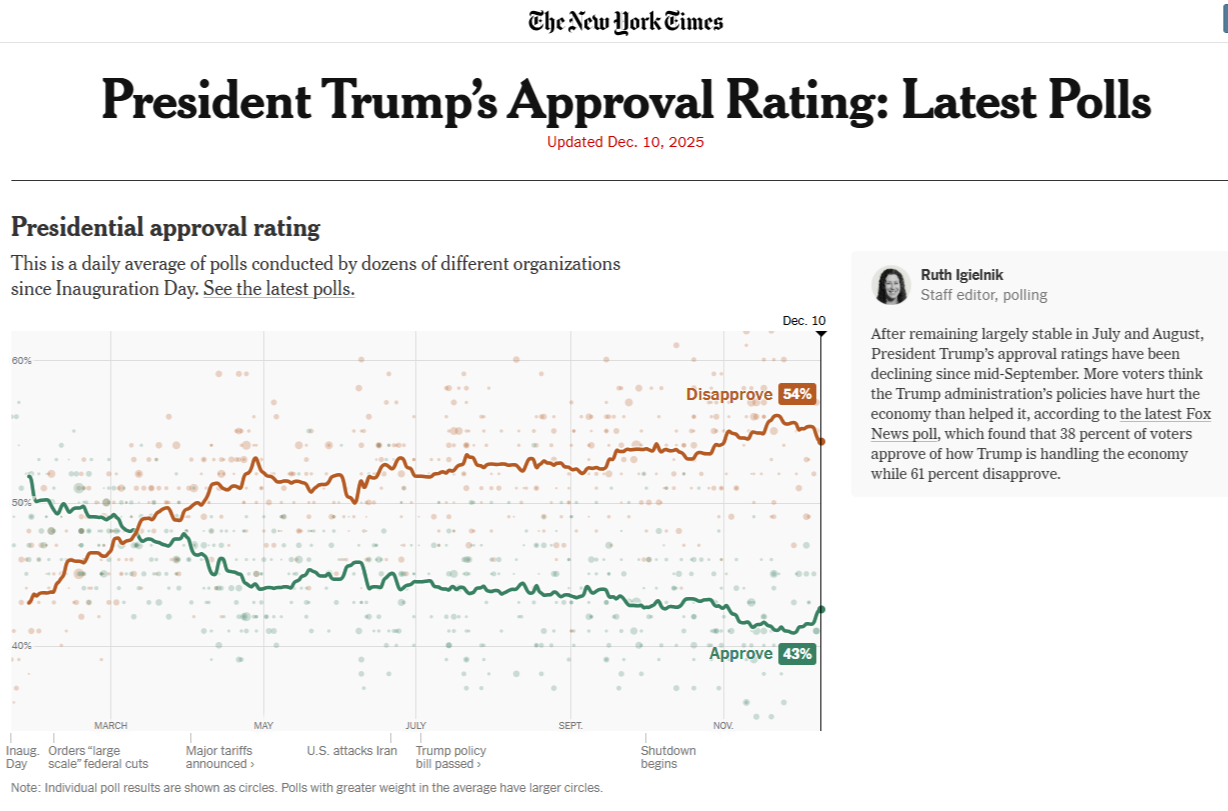
Updated 12/10/25

For perspective, consider that President Biden’s composite approval poll on July 6, 2024 was negative 19.3%, just 15 days before Biden dropped out of the presidential race on July 21, 2024. 

The demonstrations I have attended are another window into the mood of the American public.  The NO Kings demonstration on June 14, 2025 is said to have drawn 5 million people.  The second NO Kings demonstration on October 18th claims to have drawn 7 million people.  Although these seem impressive numbers, they don’t add up to a change-making revolt.  The lack of young people participating in these demonstrations is dispiriting.  The future is in their hands, yet their commitment to democracy is lukewarm compared to my generation, the boomer generation that still feels a strong commitment to the peace and prosperity that democracy has delivered to us.

On the other hand, Democrats aren’t dead yet.  In November 2025, moderate Democrats won governorships in New Jersey and Virginia and a Democratic Socialist won the mayoral election in New York City.  In response to Republican gerrymandering of congressional districts in Texas, 64% of Californians voted to gerrymander congressional districts in favor of Democratic candidates.  A recent Marist poll indicated that registered voters in the US plan to vote for Democratic candidates for congressional seats in 2026 by a margin of 14%. 

Changes in the elected leadership of the Bay Area chapters of the Sierra Club are an indication of a change in the public’s commitment to the environment.  The San Francisco Bay Area Chapter is now led by activists who want more housing and more active recreational opportunities.  The old guard, who were committed to restricting recreational access in favor of native plant restorations in public parks, has been replaced.  The Lomo Prieta Chapter, which represents the South Bay, is now undergoing a similar transition to new leadership with new priorities.
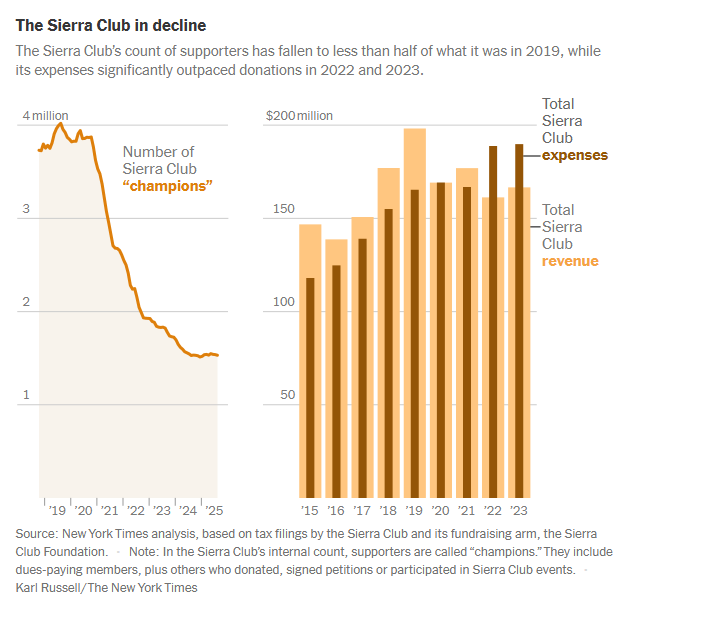
Changes in the leadership of the San Francisco Bay Area chapters of the Sierra Club are symptomatic of the Club’s much broader decline on a national scale.  According to the New York Times, the Club has lost 60% of the 4 million members it had in 2019.  The Times attributes this loss of support to the change of the Club’s advocacy focus from environmental issues, most prominently climate change, to progressive social justice issues such as racial justice, gay rights, labor rights, and immigration rights. In 2019, one of the Board Directors objected to the proposed budget, but was voted down: “I said, ‘We have two F.T.E.s devoted to Trump’s war on the Arctic refuge, and we have 108 going to D.E.I., and I don’t think we have our priorities straight,’” Mr. Dougherty said.

Finally, wealthy American philanthropists are providing clues of a fundamental change in the political climate in America.  Bill Gates, former owner of Microsoft and supporter of global health initiatives, recently announced that it is time for a “strategic pivot” in the global climate fight from focusing on limiting rising temperatures to fighting poverty and preventing disease.  Gates still believes climate change is a serious problem, but it won’t be the end of civilization because he thinks scientific innovation will contain it.  Unfortunately, federal support for finding such scientific innovations has been withdrawn.  Gates’ message seems to be that we aren’t able to stop climate change, so we must cope with it.  It’s another way of accommodating the environmental policies of the Trump administration.

Looking Ahead

I am deeply troubled by the many threats to America’s treasured democracy.  However, many of the changes in environmental policies in the past year are aligned with the mission of Conservation Sense and Nonsense.  Since its inception in 2010, the mission of Conservation Sense and Nonsense has been the preservation of our predominantly non-native urban forest, opposition to the use of pesticides on public lands and advocacy for mitigating the causes of climate change.  Some of the changes in environmental policy in the past year are consistent with those goals:

  • Many projects that use pesticides and kill harmless animals and vegetation have been defunded by the federal government. The State of California is trying to compensate for the loss with state funding, but its ability to do so will be challenged by many other new demands on state resources, such as subsidies for health care and food.

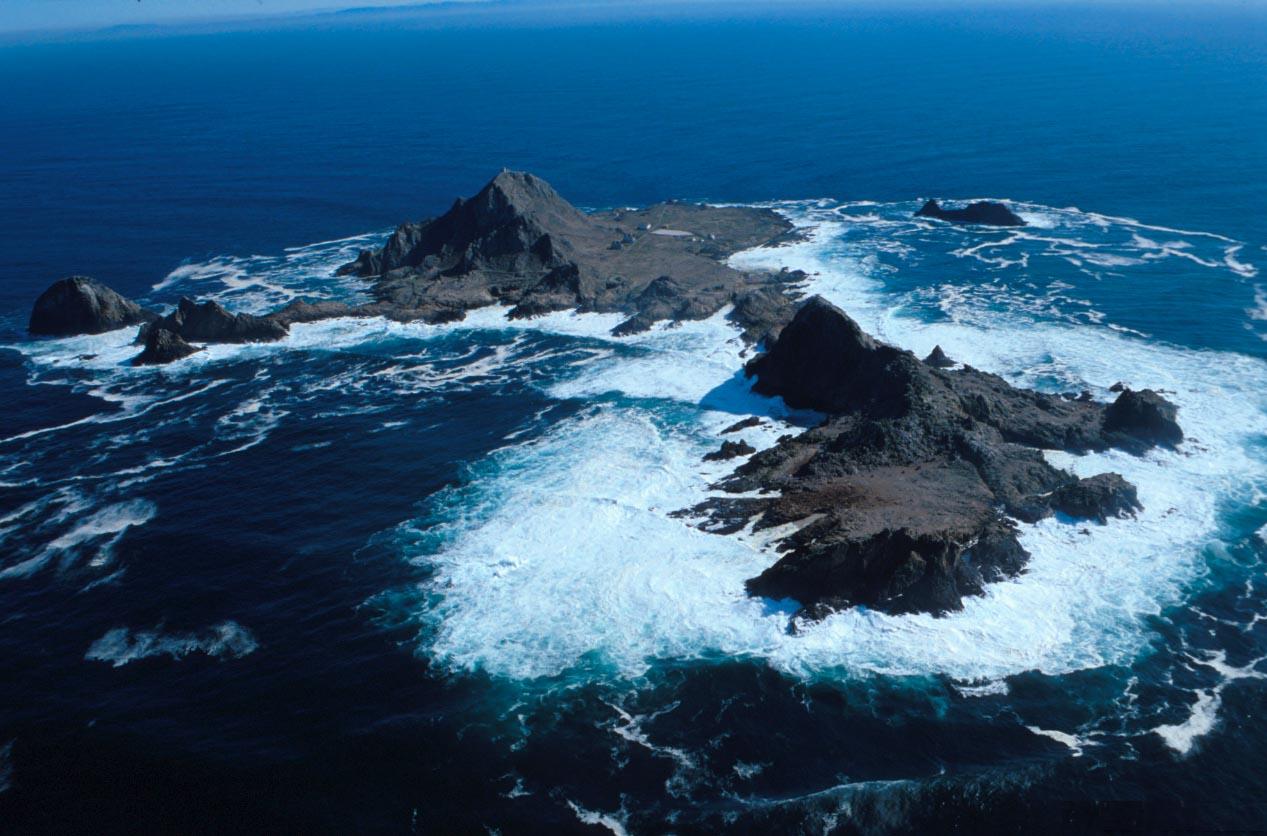
When wildlife refuges and marine sanctuaries lost much of their funding and staff, many of their projects were abandoned.  Many of those projects may have been beneficial, but the plans to aerially drop rodenticides on the Farallon Islands to kill harmless mice is an example of a project that is better off dead.

  • Prevailing public opinion that native plants and animals are superior and the corresponding belief that non-natives are a threat to them is unlikely to change in the near-term.  I do not begrudge the horticultural preferences of home gardeners.  However, native plant advocates will have limited ability to demand that public land managers eradicate non-native plants if there is no public money available to fund landscape-scale “restorations.”
  • As public money for ecological “restorations” on public land dries up, the “restoration” industry and the jobs it creates will probably dwindle over time. As economic interests in “restoration” evaporate, the advocacy that supports it is likely to as well. College students are likely to make other educational choices with more promising career prospects, which will further reduce the labor force engaged in “restorations.”
  • When forest “restoration” projects that involve clear-cutting or removing healthy trees are defunded, existing carbon storage is preserved.  Every mature tree—native or non-native—sequesters carbon at a time when we need every available carbon sink to compensate for the loss of limits on greenhouse gas emissions causing climate change.
  • Climate change will accelerate as we abandon our efforts to reduce greenhouse gas emissions that cause climate change. The landscape that survives the changed climate will be best adapted to the changed environment.  When the climate changes, vegetation changes or dies.  No amount of human intervention can alter that ultimate reality because nature always bats last.

In 2026, Conservation Sense and Nonsense will continue to report major developments relevant to my mission.  In other words, I will continue to “hunker down and watch it play out.”  Guest posts consistent with my mission and civil comments, both pro and con, are always welcome here. Thank you for your readership. 

Happy Holidays and best wishes for a more peaceful year in 2026.

Deadly Dogma:  Revisiting the Farallon Islands Unnecessary Eradication Project

“The more we know about plans to eradicate harmless mice on the Farallon Islands with rodenticide, the less sense it makes.” – Conservation Sense and Nonsense

Plans to eradicate mice on the Farallon Islands with rodenticide were approved by the California Coastal Commission (CCC) two years ago, on December 16, 2021.  Although CCC approval was contingent on a few conditions intended to reduce the inevitable death of non-target birds and marine animals, it is unclear if CCC will be able to enforce the conditions. Plans seem to be moving forward behind closed doors, so Conservation Sense and Nonsense continues to be concerned about this project. 

First a brief reminder of the project and our objections to it.  House mice were introduced to the Farallon Islands over 100 years ago by ships visiting the island.  There is no evidence that mice harm birds on the Farallons.  The mice are an integral part of the food web, eating primarily vegetation and supplementing that diet with insects during summer months when vegetation is sparse.  The mice are also the prey of hundreds of thousands of birds that live on the islands as well as birds that stop over on their migratory routes.  The mouse population varies throughout the year, dwindling during winter months and increasing in the fall.  When the mouse population declines, food sources for their predators also decline.  That’s when burrowing owls are said to prey on the nestlings of ashy storm petrels.  Though the mice are blameless, the project proposes to kill them all based on the assumption that burrowing owls will not overstay their migratory stop over if food sources are significantly reduced.  The project is expected to kill hundreds—perhaps thousands—of non-target birds who will eat poisoned pellets directly and/or poisoned mice.

The project has always seemed absurd and nothing we’ve learned about it in the past 2 years has made it seem otherwise.  Our last article of 2023 will report new information learned since the project was approved.

Contamination of the food web

Robert Boesch is a retired Pesticide Regulator for the Environmental Protection Agency, region 9 and the Hawaii Department of Agriculture.  Presently, he is Visiting Colleague at University of Hawaii at Manoa.  Based on his research and experience, he has written a discussion paper about island eradications using rodenticides, which he has shared with the California Coastal Commission and many other agencies and organizations.  This entire discussion document is available below as a footnote and this is his summary of “Eradication Programs Eliminating Invasives and their Predators and Scavengers!”

  • Eradication programs for mice and Polynesian Rats are planned for the Farallon Islands, Midway and Wake Island.
  • Brodifacoum, a potent, persistent and bioaccumulative anticoagulant poison is the toxicant. [This is the rodenticide that will be used on the Farallon Islands to kill mice. There are no rats on the Farallons.]
  • Brodifacoum residues have been detected in almost all fish that were collected following treatment of Palmyra, and trace levels were found in 10 percent of the fish after treatment of Wake.
  • Brodifacoum residues in fish caught at Wake increased from trace levels to detectable residues over 3 years.
  • Diphacinone is a greater threat of secondary poisoning to mammals than brodifacoum.
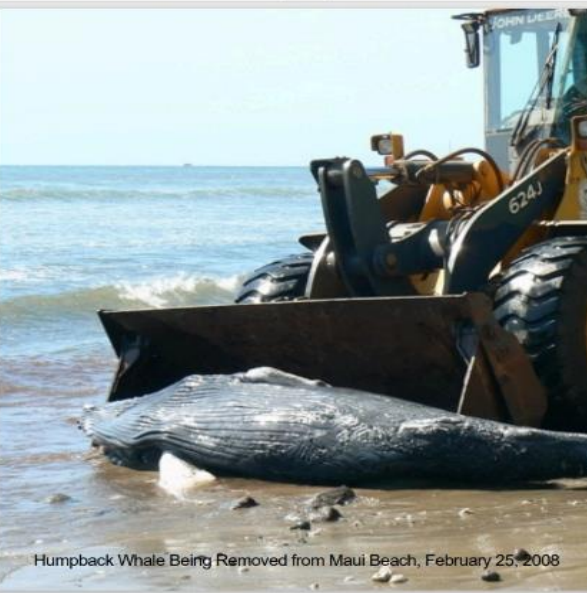
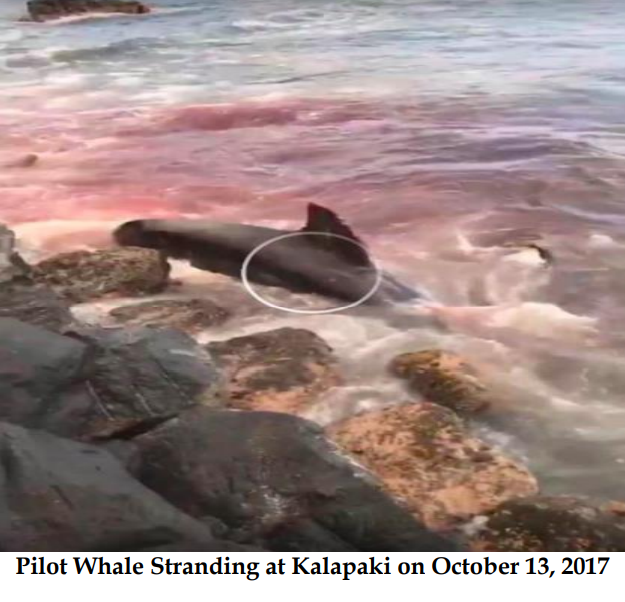
  • Strandings of whales, some hemorrhaging, occurred within 60 days following anticoagulant bombardment.
  • Unusual mass strandings of hemorrhaging dolphins occurred in San Diego and Hawaii years after anticoagulant bombardment.
  • There is very little known about the fate of anticoagulant residues in the oceans.

Our knowledge of contamination of the food web caused by rodenticide drops on islands is limited because monitoring is usually short-term and frequently done by the same contractors who implemented the project, with little motivation to report the extent or persistence of contamination.  For the same reasons, we have limited knowledge of how successful the projects are.

Track record of island eradications

About 1,200 island eradications have been done all over the world over the last 30 years.  Our evaluation of the proposed project on the Farallon Islands is based on the success or failure of those projects.

The aerial application of rodenticide to kill rats on Anacapa Island in 2001-2002 was the first of its kind in North America.  The project was also unique because it was complicated by the need to spare a population of endemic native deer mice on Anacapa.  Over 1,000 native mice were captured before the aerial application of rodenticide and released back on the island after the poison was no longer effective.  Although post-project monitoring reported successful eradication of rats, they were not confident that all of the mice that were left on the island had been killed. (1)

Attempts to eradicate mice have been consistently less successful than attempts to eradicate rats.  A study of 139 attempted eradications of animals on 107 Mediterranean islands in eight countries found that eradication projects targeted 13 mammal species. The black rat was the target of over 75% of the known attempted eradications in the Mediterranean Basin. The most widely used technique was poisoning (77% of all eradications), followed by trapping (15%) and hunting (4%).  Techniques were largely target-specific.

The average failure rate of the projects was about 11%, but success was defined only as the death of animals living on the islands at the time of the project. However, this percentage varied according to species. The failure rate of house mouse eradication was 75%. Reinvasion occurred after 15% of eradications initially considered successful. (2)

Island eradications considered initially successful, are often failures in the long run.  A recent visitor to Anacapa Island has reported seeing two dead rodents as her escorted group was leaving the island. One was identified as a deer mouse. The other rodent was not identified. Have rats returned to Anacapa?  Are native deer mice still being killed by residues of rodenticide? (3)

The eradication of rats on Anacapa Island is relevant to the planned project on the Farallon Islands because rats were killed, but mice were saved.  Although the Anacapa project considered rats a threat to birds, it did not consider mice a problem.  Rats were killed, but mice were saved by trapping and removing them from the island before the rodenticide was dropped.  Mice on the Farallon Islands are not a threat to birds.  They will be killed only because they are non-native.

Mice are members of the food web

Mice on the Farallon Islands are as much a part of the food web as they are on Anacapa Island.  They are prey of the birds and they are mainly predators of vegetation.  On the Farallon Islands, mouse predation of vegetation is considered a problem, but on Anacapa Island it is not considered a problem.  On the Farallon Islands, the study of the diet of mice reports that mice also eat insects when vegetation becomes scarce in the fall.  (4)

The study of the mouse diet on the Farallons also reports that 63%-80% of the vegetation on the Farallons is non-native.  That’s why Roundup (glyphosate) has been used on the Farallon Islands every year since 1988.  Between 2001-2005, an average of 226 gallons of herbicide were used annually (5.4 gallons per acre per year), according to the annual report of the Farallon National Wildlife Refuge. (5)

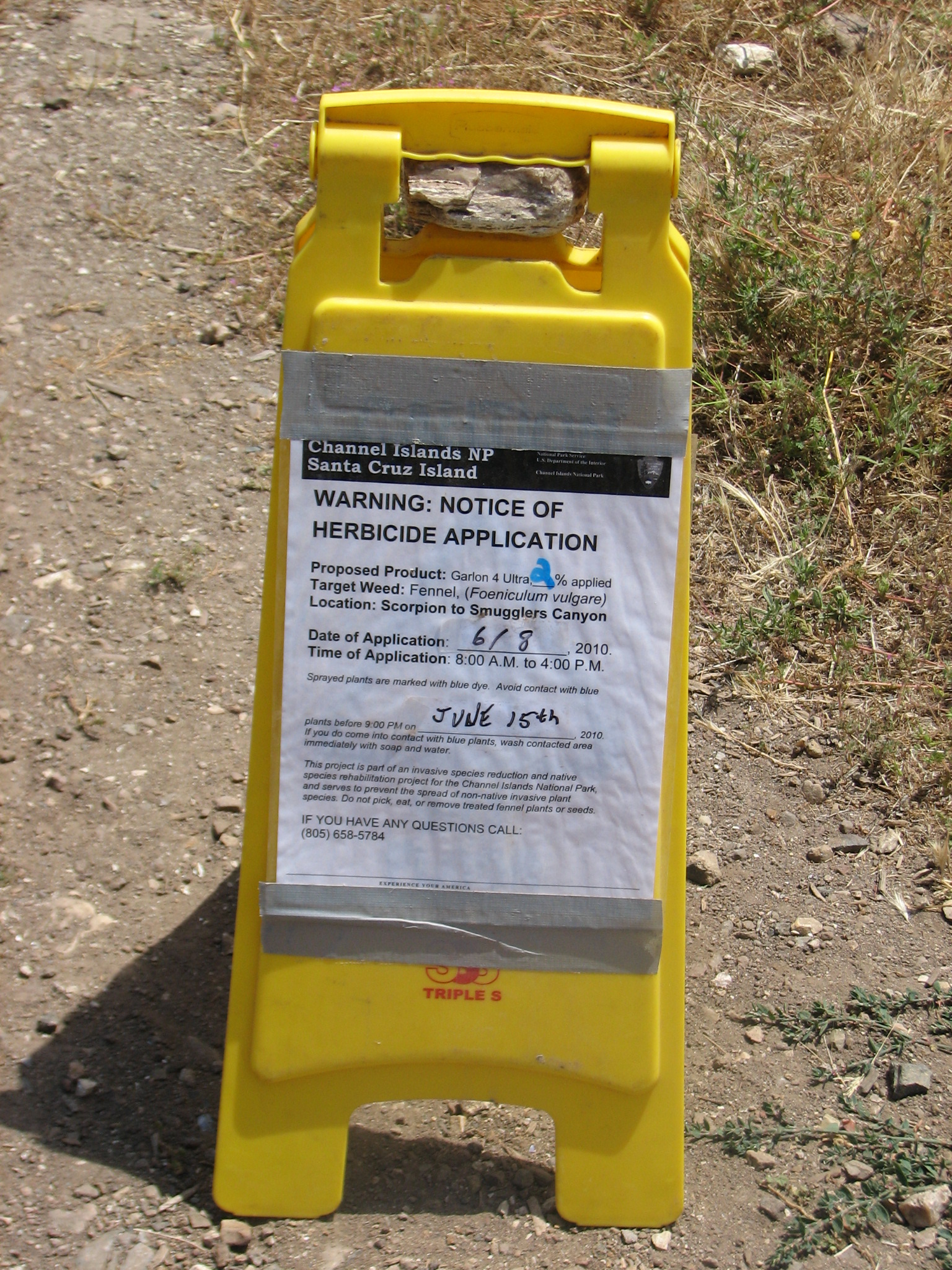
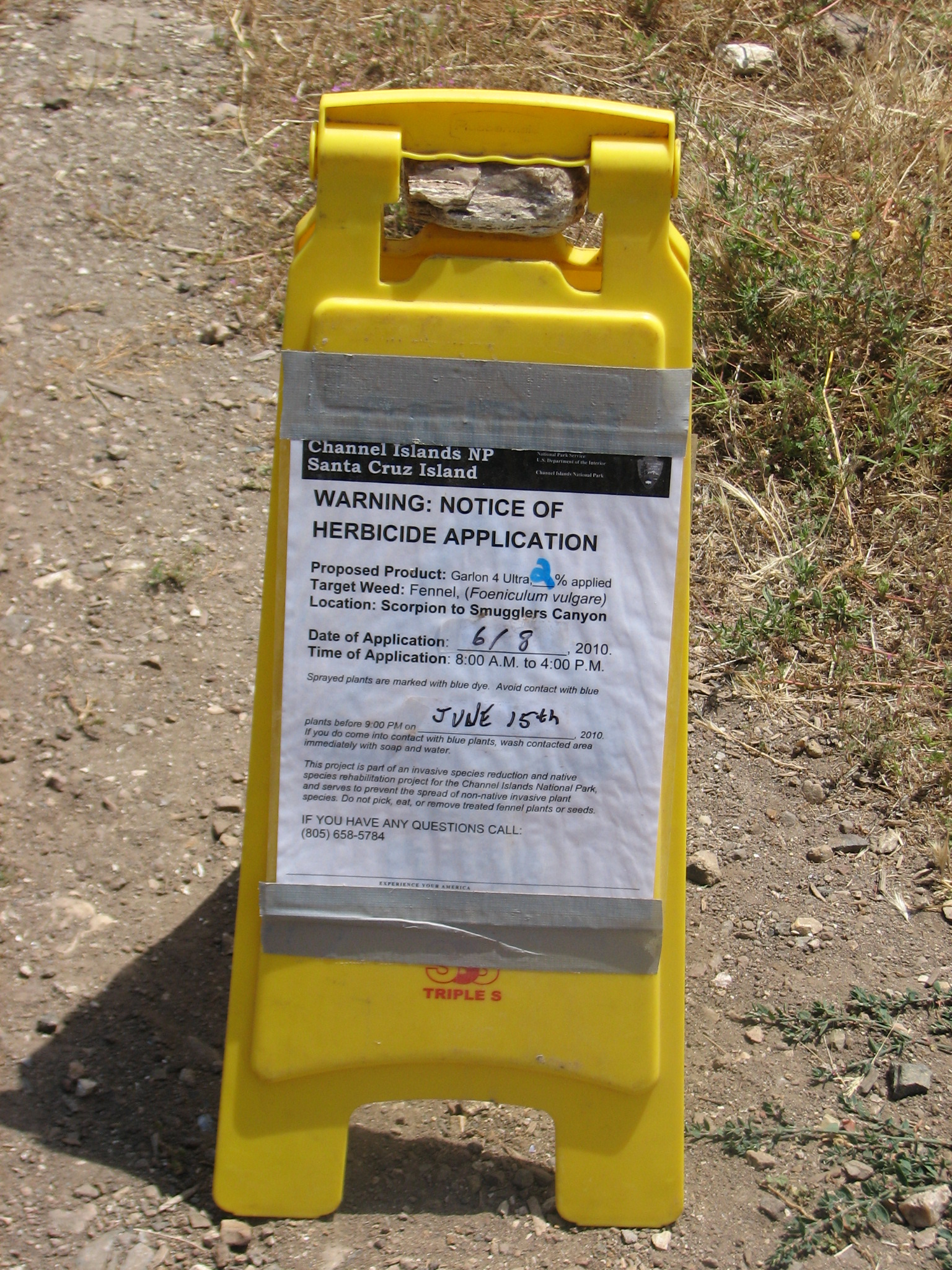
I took this photo on Santa Cruz Island in 2010, while visiting with an escorted group.

The Farallon Islands have never been inhabited and there has been no public access to the islands for over 100 years.  Non-native plants were not brought to the Farallons by humans.  Their seeds were brought by birds in their stomachs, in their feathers, on their feet and by wind and ocean currents.  Non-native plants dominate vegetation on the Farallons partly because non-native plants are eaten by birds.  The plants are members of the food web and their eradication is depriving birds and other animals in the ecosystem of food.  If non-native plants were not being eradicated with herbicides, it probably would not be necessary for mice to eat insects, which are not their preferred food.  We can safely assume that herbicides are harmful to the animals that consume plants that have been sprayed. (6)

Consequences of fiddling with the food web

There were also feral cats on the Farallons before they were killed.  Predictably, the population of mice increased after the cats were killed.  When 6,000 feral pigs were killed by sharp shooters on Santa Cruz Island, Golden Eagles substituted for that plentiful food source by preying on the rare, native Channel Island Fox.  Golden Eagles were captured and relocated to the mainland.  The fox population was restored to the island by a captive breeding problem.  The same could be done on the Farallons to eliminate the only known threat to ashy storm petrels.  The small population (approximately 6-10) of burrowing owls that are the only known predators of the petrels could be trapped and removed to the mainland as the Golden Eagles were on Santa Cruz Island.

Restoration plans for any ecosystem should begin with a thorough analysis of the food web.  Plucking single species of plants and animals out of complex ecosystems without understanding their role in the food web results in unintended and harmful consequences.

The Farallons project is based on mistaken assumptions

The Farallons project is based on the mistaken assumptions of invasion biology.  Most of the vegetation on the island is being killed with herbicide because it is non-native.  The vegetation is clearly essential to all the animals living on the island, but invasion biology asks us to believe that it is not, solely because it is non-native.  If the mice are killed on the island, it is only because they are non-native, not because they are harmful to birds.  They are an important source of food for the birds, but invasion biology asks us to believe they are not, solely because they are not native.  These assumptions are wrong, yet 50 years of nativist ideology still has a death grip on our public lands. 

This deadly dogma is losing its grip, but apparently too slowly to prevent the destruction of the food web on the Farallon Islands.  I always attend the conferences of the California Invasive Plant Council (Cal-IPC) and the California Native Plant Society (CNPS) to give native plant advocates every opportunity to convince me of their ideology.  Consistently, I find more support for my contrarian viewpoint than I do for invasion biology.  A presentation about the salt marsh harvest mouse at the Cal-IPC conference in October 2023, is an example.

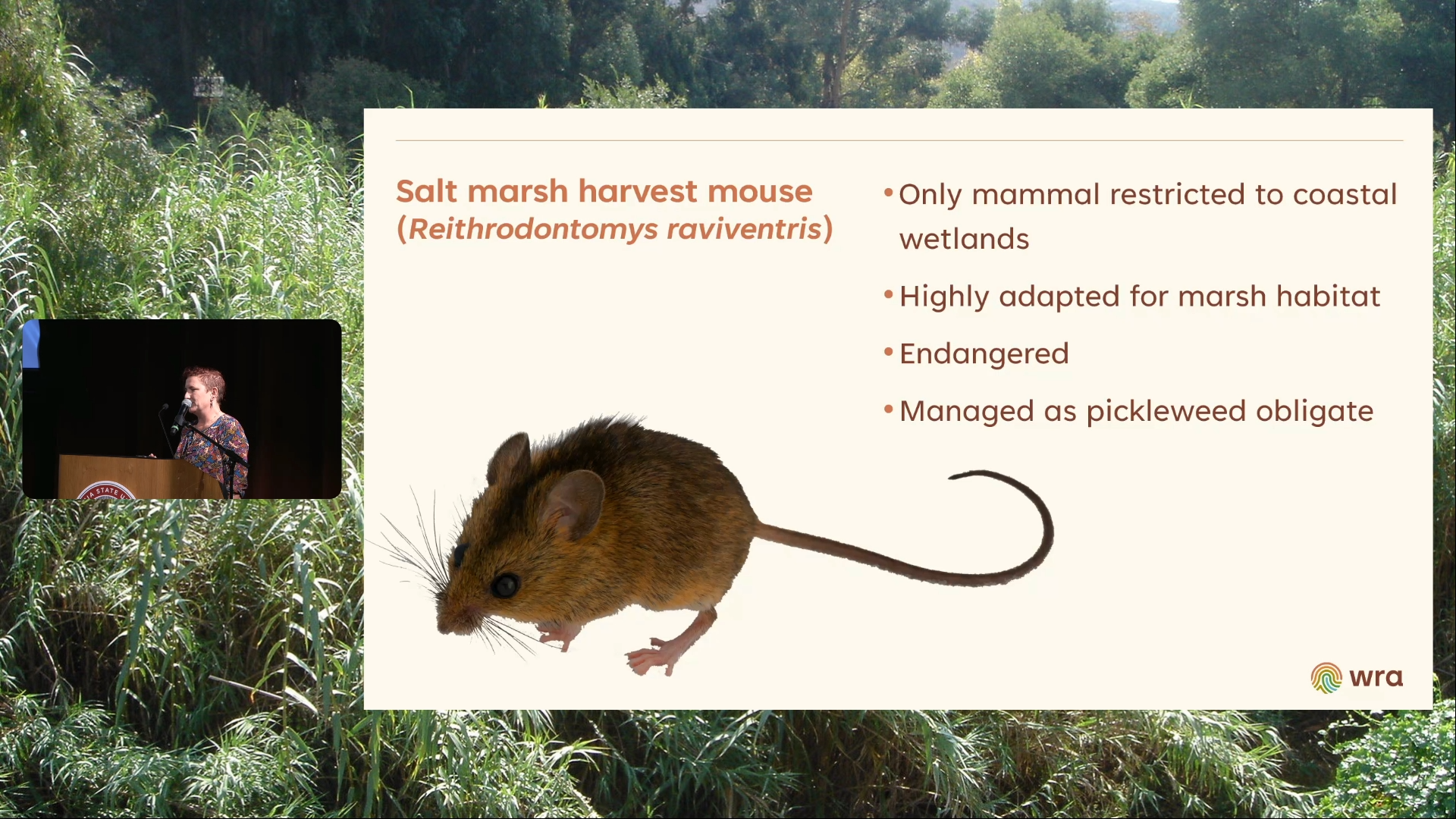
California Department of Fish and Wildlife collaborated with UC Davis to study the food preferences of salt marsh harvest mouse (SMHM), an endangered native animal that lives in the wetlands of the San Francisco Bay. It has always been presumed to be entirely dependent on native pickleweed for food and habitat. The legally mandated recovery plan is based on that mistaken assumption.

Presentation to California Invasive Plant Council conference in October 2023

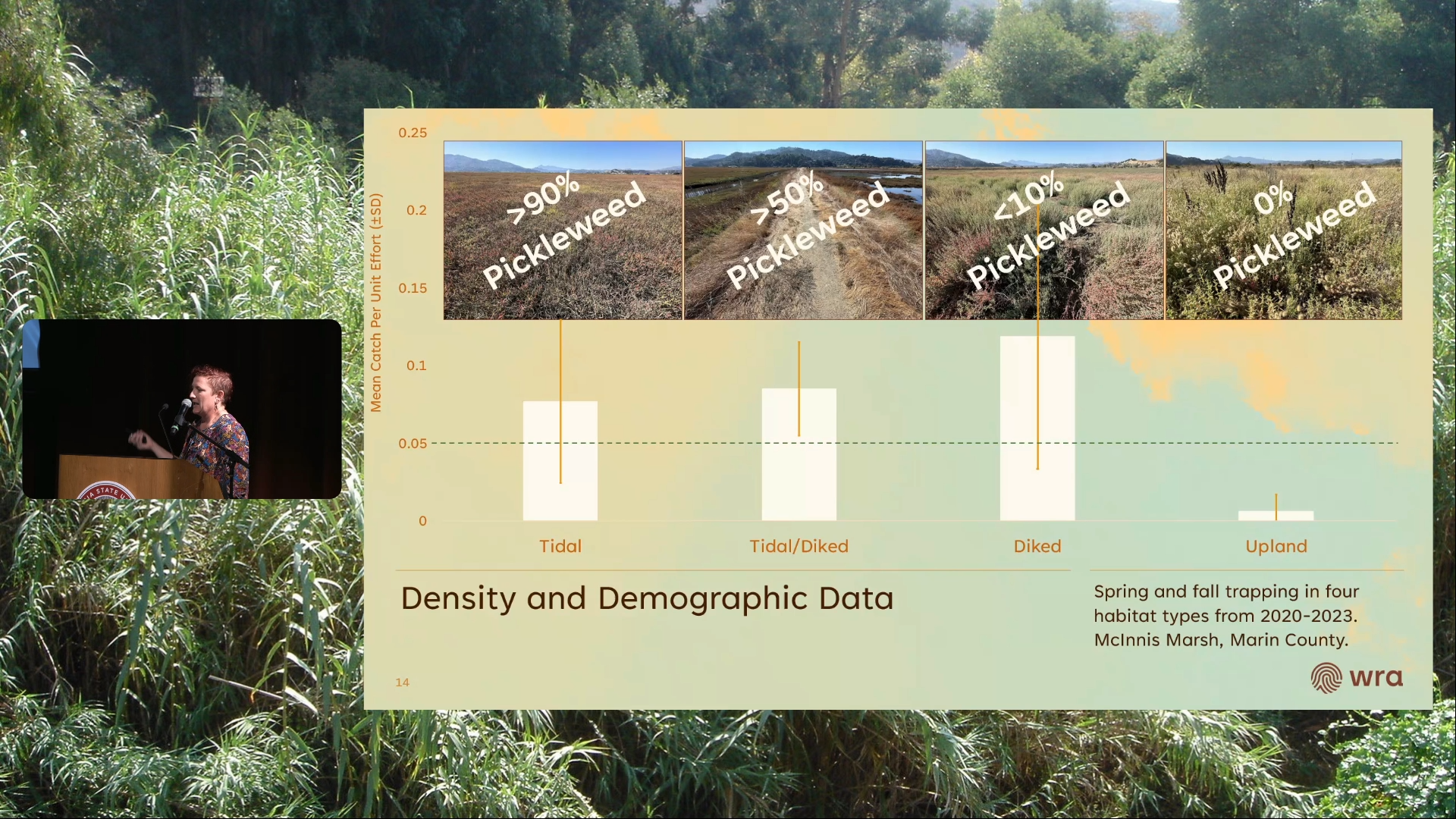
The study reported to Cal-IPC shows clearly that SMHM is NOT dependent on pickleweed for either food or habitat. SMHM is an extreme omnivore. SMHM ate 39 species of native and non-native plants as well as insects in empirical trials. In fact, it ate EVERY plant it was offered. A fecal study of SMHM living in the wild confirmed that finding. Fecal analysis found SMHM had eaten 48 native and non-native plant genera as well as some insects.

Presentation to California Invasive Plant Council conference in October 2023

SMHM have no preference for native plants for either food or nesting habitat. The most SMHM’s captured in the study were found where there was less than 10% pickleweed.

This was an absurdly simple experiment in which SMHM were captured and fed a variety of plants. It could have been done by anyone with little knowledge or fancy equipment. Why does this foolish mistake, caused by nativist bias, matter? Because “restoration” projects all around the San Francisco Bay have been eradicating non-native plants, claiming it would benefit the endangered SMHM.

For example, the spartina eradication project has been hunting for and poisoning hybrid spartina marsh grass for nearly 20 years, as well as planting pickleweed for SMHM. Since herbicides are used to kill non-native plants before pickleweed is planted, there’s little doubt that SMHM populations were harmed by the eradication of their food and shelter, if not directly harmed by the pesticides that are used.

Nativism in the natural world is not benefiting wildlife. Rather it seems to benefit only the army of “restorationists” who earn their living killing harmless plants and animals.  As long as they continue to receive public funding for their projects, they have job security because they have spent over 20 years trying to do something that cannot be done. Evolution moves inexorably forward. The puny efforts of humans to regress landscapes to arbitrarily selected historical standards cannot change the forward trajectory.

There were two presentations about difficulties with native plant restorations on Anacapa and Santa Rosa Islands at the CNPS conference in October 2022.  More than 20 years after non-native iceplant, rabbits, and rats were killed on Anacapa, native flora and fauna are still described as degraded, “Due to the cumulative and severe impacts to the soil and native seedbank, native vegetation communities have not recovered on their own…”  On Santa Rosa Island the “restoration” community has installed artificial fog fences to replicate a historical cloud forest to improve survival of native chaparral plants. (7)

Alternatives to rodenticide drop on Farallon Islands

It is not necessary to kill mice on the Farallon Islands because they are not harmful to birds.  If non-native vegetation weren’t killed with herbicides, there would probably be enough vegetation for omnivorous house mice as well as birds.  Both mice and vegetation are being killed only because they are non-native.  If the nativist ideology were removed from the agenda, dumping rodenticides on mice and herbicides on non-native vegetation would not be necessary.

If the protection of ashy storm petrels really were the goal of the proposed project on the Farallon Islands, the most obvious solution would be to remove the small population of burrowing owls that are the only known predators of the petrels.  Keep in mind that ashy storm petrels are not considered threatened or endangered and that two applications for protected status have been denied. (8)

There is a non-lethal alternative to reducing populations of rodents using rodenticides that kill non-target birds and other animals.  Academic scientists at Arizona State University have developed birth control for rodents that can be used on the Farallons to reduce the population of mice.  (WISDOM Good Works)

In Summary

Killing house mice on the Farallon Islands with rodenticide is unnecessary and will be harmful to the ecosystem and its inhabitants because:

  • Aerial dropping 1.5 tons of rodenticide will poison the entire ecosystem, killing hundreds of non-target birds and marine animals.
  • House mice on the Farallon Islands do not need to be killed because they are food for birds and they are harmless.
  • If burrowing owls are killing nestlings of ashy storm petrels, they could be removed and relocated.
  • The nearly 40-year attempt to kill non-native vegetation with herbicide should be stopped because the vegetation is a vital element in the food web of the Farallon Islands.

Happy Holidays and thank you for your readership.


  1. https://www.cambridge.org/core/journals/oryx/article/eradication-of-black-rats-rattus-rattus-from-anacapa-island/F1E46767D0EEC9A6357D414DD84ABE28
  2. https://onlinelibrary.wiley.com/doi/abs/10.1111/mam.12190
  3. https://myricopia.com/2023/11/21/anacapa-island-conservation/
  4. https://www.biorxiv.org/content/10.1101/2022.02.23.481645v1.full
  5. https://drive.google.com/file/d/1XoPcS104SeOUIyfbPT_NbardctNyWAgs/view
  6. https://www.nrdc.org/sites/default/files/opinion-glyphosate-20220617.pdf “As to ecological risk, it finds potential risks to animals and plants and ‘requires’ mitigation in light of those risks, laying out specific language for glyphosate product labels.”
  7. https://www.nps.gov/chis/learn/nature/cloud-forest.htm
  8. https://www.endangeredspecieslawandpolicy.com/u-s-fish-and-wildlife-service-denies-endangered-species-act-protection-for-ashy-storm-petrel

https://wisdomgoodworks.org/2023/10/611/

Redefining Ecological Restoration

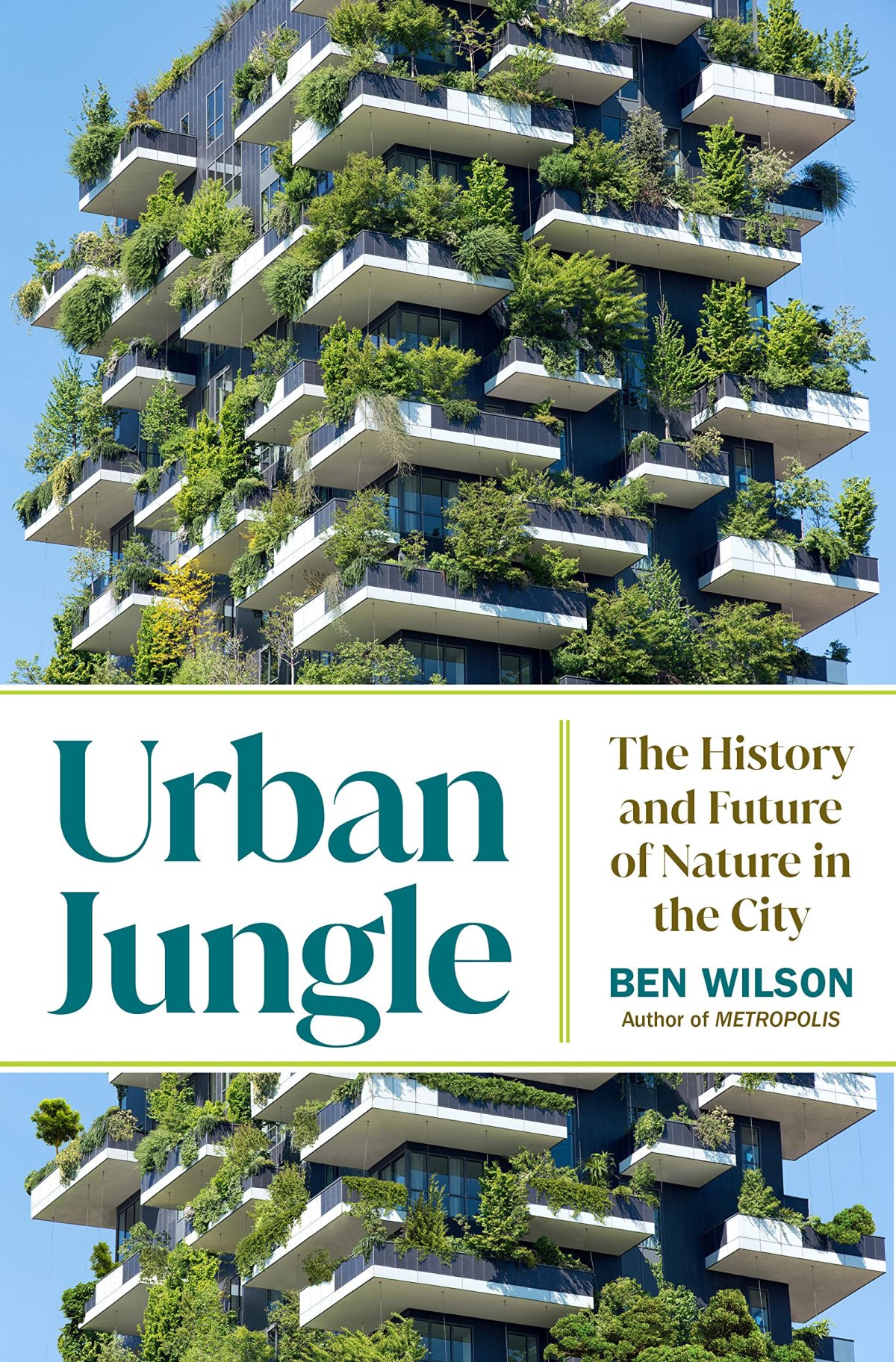
“Urban Jungle is breathtaking in its scope, both geographic and temporal… I can say I probably learned more per page in Urban Jungle than in any other book I have read at all recently.” –Professor Art Shapiro

As climate change makes many places uninhabitable, there is a new urgency to restore natural habitats damaged by human activities. 

After a lengthy and contentious battle, the European Union narrowly voted to make a commitment to restore 20% of nature areas on land and sea within their borders.  Farmers were the primary opposition to making this commitment, claiming it would severely reduce their ability to produce sufficient food.  6,000 scientists from several countries disagreed:  “They argued that in the long term, it was climate change and nature degradation that constituted the highest threat, and that the proposed policy would ensure sustainable food production.” (1)

The Biden administration has issued an executive order to conserve 30% of US lands and oceans by 2030.  This 30X30 commitment has been funded by the State of California and is in the early stages of implementation.  In the US, the commitment to “restore” land is often interpreted as a commitment to destroy non-native species with pesticides with the goal of restoring native plants and animals. 

“Restoration” could mean something entirely different and a recently published book, Urban Jungle:  The History and Future of Nature in the City, invites us to redefine restoration in a very different way.  In a nutshell, Urban Jungle proposes to let nature heal itself without a preconceived goal to replicate historical landscapes that aren’t adapted to the climate and the challenging conditions of the urban environment.  Left to its own devices, nature creates novel ecosystems, plant communities that are biodiverse and self-sustaining. 

World War II created a case study of novel ecosystems

When World War II ended in 1945, the Potsdam Agreement determined that Germany would be occupied by the allies that won the war:  United States, United Kingdom, France, and Soviet Union.  The map of post-war Germany (see below) shows the division of Germany among the allies.  The white portion of the map was administered by the Western Allies and the gray portion of the map by the Soviet Union.  Berlin (in red) was deep in Soviet controlled East Germany and was likewise divided into East and West Berlin.  The Soviet Union did whatever it could to isolate West Berlin by restricting access routes to West Berlin and ultimately building a wall around it in 1961.

Berlin was heavily bombed during the war and was largely a pile of rubble at the end of the war.  While other European cities were able to clear the rubble within a few years, West Berlin could not because the Soviets would not let them dispose of rubble outside city limits. 

The physical isolation of West Berlin and the restricted access of the population to the countryside turned West Berlin into an ecological island.  Scientists in West Berlin, with few other opportunities to pursue their interests in botany and ecology, studied and recorded the transition of many tons of building rubble into novel ecosystems populated by whatever plants could find their way there and survive the challenging conditions.  West Berlin was physically isolated from 1945 until the reunification of West and East Germany in 1990, creating a unique opportunity to study natural succession in an urban setting when nature is left alone for nearly 50 years. 

One of the first pioneer plants in West Berlin arrived with the Ukrainian army in the hay brought to feed their horses.  Salsola collina, a tumbleweed, is native to southern Russia and central Asia.  Its arrival was a preview of what was to come, a landscape that would be radically different from the pre-urban landscape.  The plants best adapted to the harsh conditions of the ruined city were hardy non-native species.

Non-native plants that thrived in West Berlin were more tolerant of higher temperatures in an urban setting, where hard surfaces absorb more solar radiation, buildings block the wind, and greater pollution traps heat.  This is known as the heat island effect.  By the 1960s, the temperature in Berlin was on average over 4⁰F higher than the surrounding countryside.

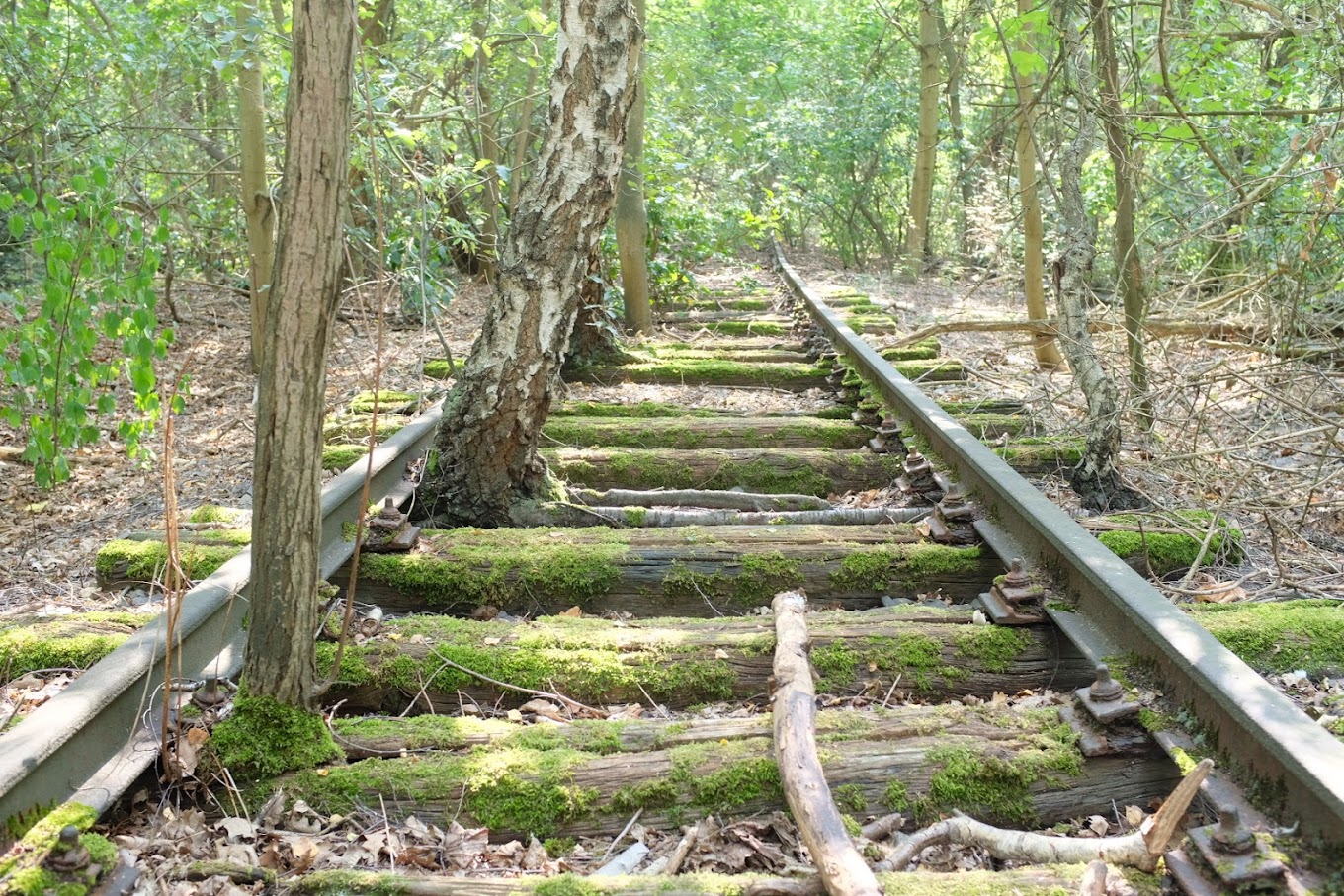
Südgelände Nature Park in Berlin was a railway yard that was abandoned in 1952 as a result of the division of East and West Berlin.  By 1984 there were 334 ferns and flowering plants and many animals, birds, and insects living in the park.  It is a novel ecosystem that was shaped by human activities then left to natural processes. It remains as a nature park today because the people of Berlin fought against developing it into a train station again. They had come to love its wild beauty during their long confinement during the Cold War and they weren’t willing to give it up. Source: Südgelände Natur Park

The naturally evolving novel ecosystems in West Berlin were also surprisingly biodiverse.  Where natural succession was allowed to occur over many years, 140 different plant species and 200 insect species were found in the 21st Century.  In nearby Tiergarten Park, which is carefully maintained as a park, only one-quarter as many insects were found in an area of comparable size.  By the end of the 20th century, 1,392 naturalized plant species were growing in Berlin, compared to 822 in the 18th century. 

21st Century equivalent to World War II

Climate change is the 21st Century equivalent of World War II in its potential to cause death and destruction.  Climate change will create similar requirements to restore environments that are destroyed.  Urban settings will be particularly vulnerable to the consequences of climate change because they are population centers and they are already compromised by urbanization. 

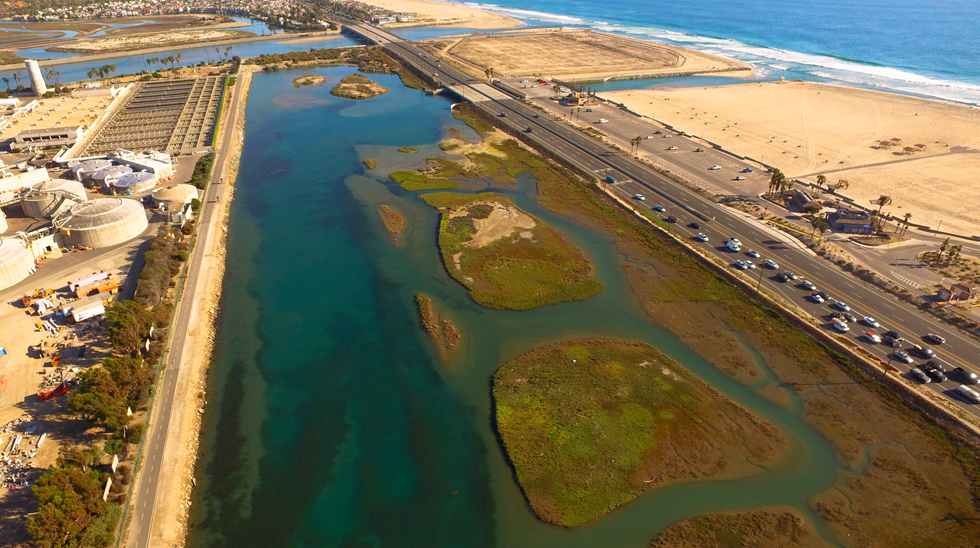
Tidal estuaries and wetlands are one of many ecosystems that are threatened by climate change, as sea-levels rise in a warming climate and intensity and frequency of storms increases flooding.  These threats are greater in urbanized areas because most of our largest cities were built on coastlines and rivers at a time when transportation and shipping was easier by water than by land.

Historically, cities were protected from storms by surrounding marshlands that filtered and cleansed runoff from the land, polluted by human waste. But as cities grew, marshlands were often destroyed to create more land.  In many cases, the landfill was composed of the garbage produced by city-dwellers. 

The closure of urban garbage landfills and the restoration of wetlands to buffer the city from the rising sea and extreme weather events is another opportunity to redefine restoration as a natural process that uses the healing powers of nature.  Urban Jungle uses Fresh Kills Landfill in New York City as an example of restoring nature by leaving it alone.

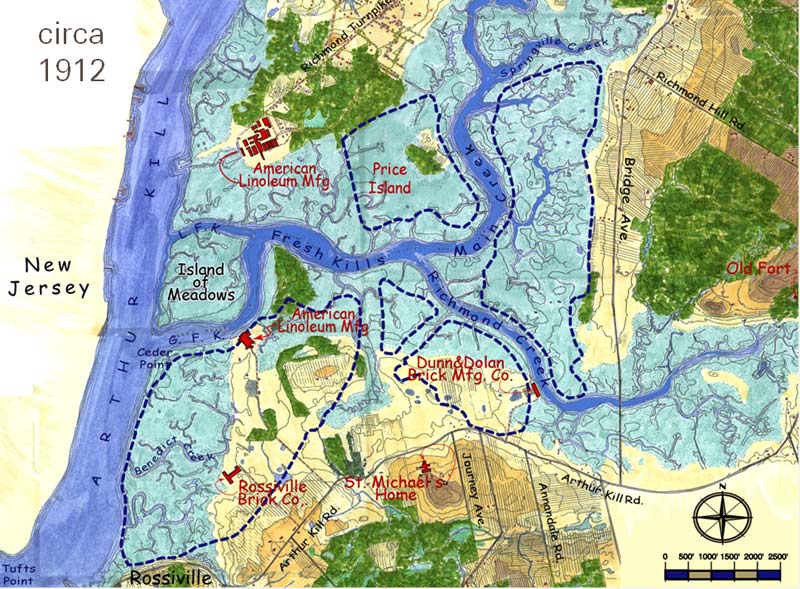
Historical map of Freshkills Park in 1912, before it was a landfill garbage dump. Source: https://www.nycgovparks.org/park-features/freshkills-park/about-the-site

Fresh Kills was a tidal estuary and marshland on the west side of Staten Island in New York City.  It was opened as a landfill to accept residential garbage in 1948.  By 1986 it had reached peak volume, receiving 26,000 tons of residential garbage per day.  When it was closed in March 2001, the garbage was from 90 to 225 feet tall, weighing 150 million short tons.  It was reopened in September 2001 to accept about one-third of the rubble from the collapse of the World Trade Center on September 11, 2001.  It was the largest garbage landfill in the world when it finally closed.

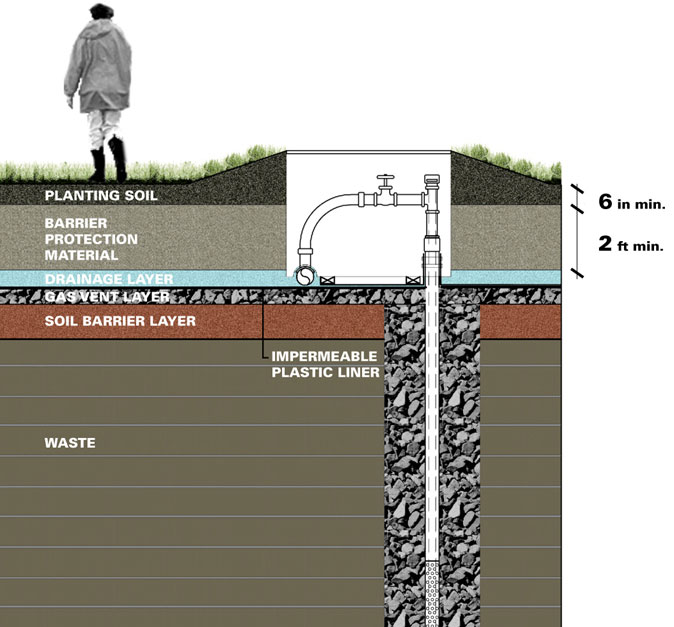
Fresh Kills Landfill is now in a 30-year process of being restored as a park, renamed Freshkills Park.  The garbage was capped (see below) and methane produced by the decomposing garbage is being captured and used to heat about 22,000 homes on Staten Island. 

The productive wetland ecosystem that was destroyed by the landfill cannot be restored.  Instead, a new ecosystem will slowly emerge on top of the toxic garbage.  The process began by seeding the slopes of garbage with fast-growing plants that were then plowed repeatedly back into the soil to add organic matter.  Then tough native grassland species were planted to provide habitat for initial colonizers, such as insects, small mammals and birds.  Now that basic conditions for life have been established, what happens next is in the hands of nature:  “Freshkills Park will be reclaimed by whatever species are attracted to the foundation of grasses.  Nature will do the bulk of the work, not human beings.  Biodiversity will steadily build as winds and birds bring seeds to the site.  This process of spontaneous successional growth is how nature rebounds from natural disasters such as forest fires, earthquakes, volcanic activity and climate upheaval.  Only in the case of Freshkills Park, the disaster was humanmade.” (2)

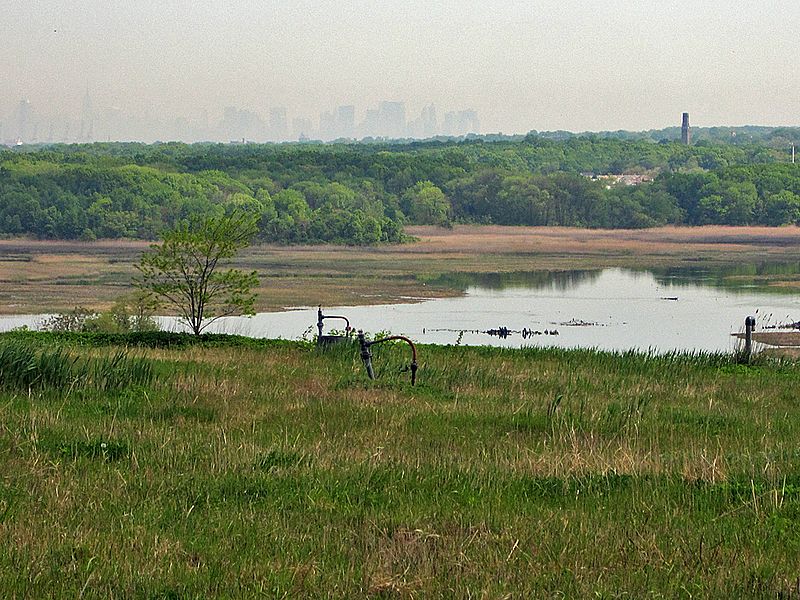
View of Downtown Manhattan from Freshkills Park. Licensed by Creative Commons

Getting off the pesticide treadmill

Allowing nature to heal the places humans have damaged is also an opportunity to get off the pesticide treadmill.  The natural process of succession does not require the use of herbicides to eradicate non-native plants that arrive naturally on the wind, in water currents, and in the stomachs of animals and birds.  When all plants are welcome, there is no need for herbicides and there is more biodiversity that supports more animals and is more resilient as the climate changes in unpredictable ways. 

In a place like Freshkills Park, it would defeat the purpose of turning a toxic landfill into a park public to use herbicides, insecticides, or rodenticides.  New York City banned the use of most pesticides in its public parks in 2021.   

In 2019, France banned the use of glyphosate-based herbicides for non-agricultural use.  The French city of Blois imposed the ban before the national ban was adopted:  “A study published in 2019 found more than 300 species of urban plants sprouting out of the pavements of the French city of Blois, which had recently phased out glyphosate weedkiller.”  (2)

Allowing nature to “manage” our public parks, makes them safer for us and for wildlife as well as more biodiverse than human management that wages a never-ending war on so-called “invasive” plants. There are more bees and bee species in cities than in surrounding countryside because there is more available food in its diverse vegetation:  “Analysis of honey from a bee in Boston, Massachusetts, found it had pollen taken from 411 different species of plants; nearby country honey contained traces from just eighty-two plants.  Cities are islands of biodiversity compared to rural monocultures, with a bigger and more diverse source of nectar even than nature reserves and forests…”  (2)

The takeaway message

Successful restoration of damaged land will take these facts into consideration:

  • Many hardy non-native plants are better adapted to challenging urban conditions than native plants: “If native plants can’t hack it in the metropolis, their place should be taken by specialist species drawn from around the world that find niches in the various microclimates of the concrete jungle.”  (2)
  • A diverse landscape of native and non-native plants is more resilient in a changing, variable, and unpredictable climate.
  • Novel ecosystems created by natural succession are more biodiverse than their historical predecessors.
  • When pesticides are used to kill non-native plants, disturbed land is damaged further and is even less likely to support a native landscape.  Killing non-native plants with herbicide also reduces biodiversity. 

(1) https://www.nytimes.com/2023/07/12/climate/europe-nature-restoration-law.html?searchResultPosition=1

(2) Urban Jungle:  The History and Future of Nature in the City, Ben Wilson, Doubleday, 2023

Gardening with the help of nature

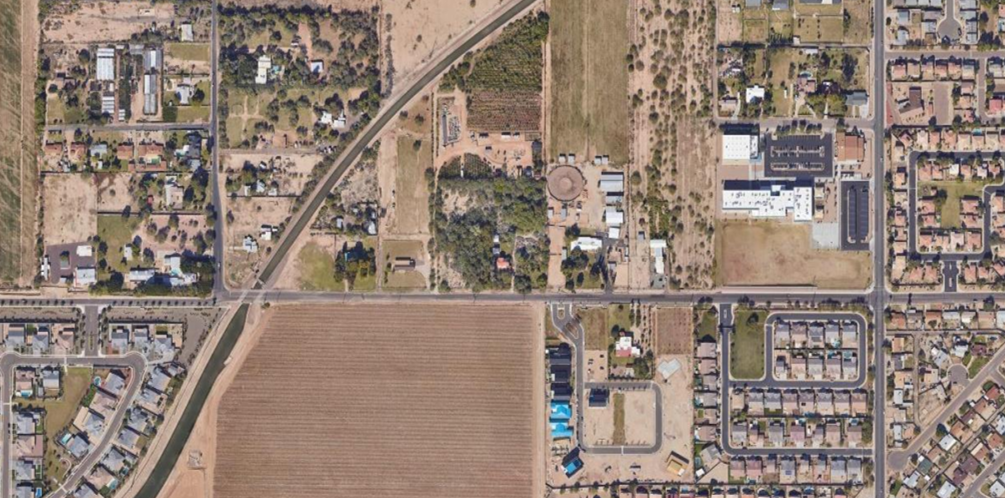
Juliet Stromberg is a plant ecologist who specialized in wetland and riparian ecosystems of the American Southwest.  Her friends call her Julie and I will presume to do the same.  She has retired from her position at Arizona State University, but her husband, Matt Chew, is still teaching ecology from a historical perspective at ASU.  He is very much her partner in their 20-year project to restore 4-acres of dead citrus grove and an 80-year old Spanish colonial house, long abandoned and derelict.  The property came with water rights, without which their project would not have been possible.

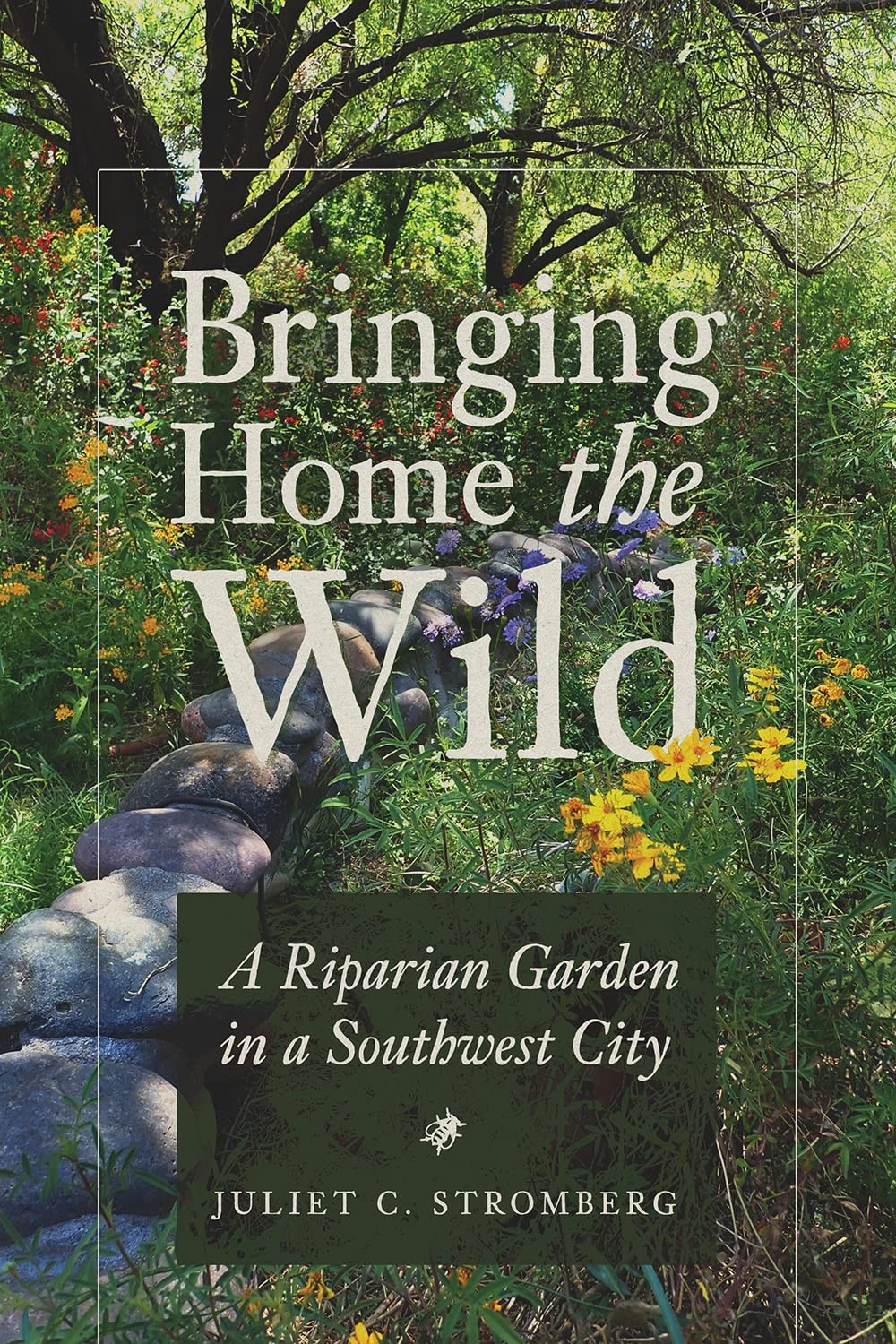
In her recently published book, Bringing Home the Wild:  A Riparian Garden in a Southwest City, Julie tells us how she and her partner transformed—with the help of natural processes–this dead patch of land in South Phoenix, Arizona into the oasis that it is today.  The first step was to restore the irrigation system, which immediately brought much of the dormant seed bank back to life. 

Julie & Matt’s garden is in the center of this aerial view

Using the riparian vegetation of the Salt River—the source of their water—as her reference, she chose a half-dozen tree species as the foundation of their garden, such as Fremont cottonwood, Gooding’s willow, and velvet mesquite.  Twenty years later, there are now 300 trees, sheltering a community of plants and animals.  How did they get there? 

The seeds of some trees such as blue elderberry and mulberry were brought from neighboring gardens by birds and small animals. Julie and Matt have seen 157 species of birds in their garden, so we can assume birds have done some of the planting.  The seeds of some plants are aerodynamically shaped and were blown in by the wind, adding to the diversity of the garden.

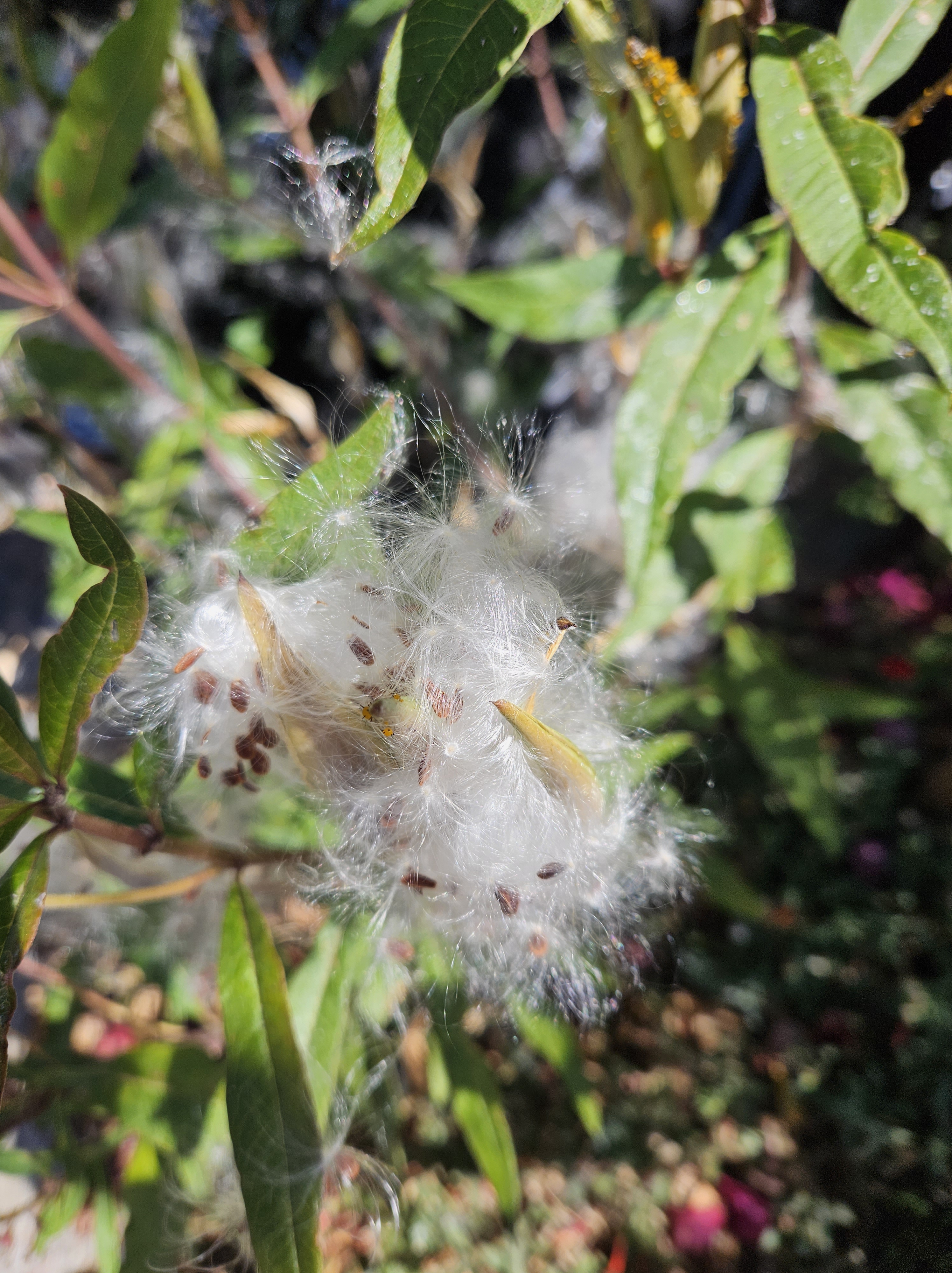
Tropical milkweed seeds ready to be launched by the wind from a neighbor’s front yard.  Conservation Sense and Nonsense, Oakland, CA, October 2023

Many of the trees are American in origin, but others are not.  Regardless of the method of dispersal, most introductions are welcome in Julie’s garden. She spares her readers the tedious recitation of which plants are considered native and which are not.  The Southwestern desert is not an ecosystem with which I am familiar.  I was glad to have a tour of Julie’s garden without irrelevant information about the nationality of every plant.  For the same reason, I like to travel in distant places where I can’t distinguish natives from non-natives.  Everything looks great to me and nothing brings me down more than a guide who wants to inform us of what “belongs” and what doesn’t. 

Julie and Matt also planted a fruit orchard and a vegetable garden that bring more birds, insects, and animals to the garden as well as providing food for their table. Eating the fruits of our labors in the garden deepens our respect for what plants do for us and establishes our working relationship with the land. 

Managing a wild garden

In keeping with Julie’s opinion that ecological restoration is a form of “glorified gardening,” she actively manages her garden.  A few plants that annoy members of her community of plants and animals—such as puncture vine and tumbleweed—are not welcome. 

When the delicate balance between predator and prey becomes unbalanced, some protective measures are necessary.  If coyotes and dogs can’t keep up with the rabbit population, it’s sometimes necessary to put vulnerable plants into cages to protect them.  The root balls of some plants are covered in wire mesh to protect them from hungry gophers. 

Plants also assist in their own defense.  Where mesquite is grazed by cattle, the tree responds by growing longer thorns to repel the cattle.  When plants are attacked by plant-eating insects, some emit a toxin to render themselves inedible.  The scent of the chemical wafts to neighboring plants, alerting them to the arrival of predators.  These natural defenses are an important line of scientific inquiry that has potential to substitute nature-based solutions for synthetic chemicals. 

The population of roof rats in Julie’s home is kept in check with liquid birth control, lest they chew on electrical wires or build nests in car engines. 

Gardening with the help of friends

Julie’s is not a manicured garden, but it requires constant pruning to keep trails clear and provide light and space for plants to thrive. The annual scouring of the flood plain by spring floods is one of the natural processes that Julie and Matt could not use to restore their land because irrigation water is channelized and confined by concrete.  Julie has come to appreciate the flies and other insects who are the decomposing crew, helping to reduce the accumulation of debris in the absence of annual scouring floods.  Sixty-six species of flies assist with decomposition as well as pollination in Julie’s garden. 

Julie is happy to have coyotes in her garden, but her dogs disagree.  Violent and fatal confrontations between these closely related species required building a wall that confines dogs close to the house at night, while coyotes safely roam most of the garden. 

Dogs are an important part of Julie and Matt’s life.  Early in the book’s introduction Julie warns readers that they should put her book down “NOW!” if they don’t want to hear dog stories.  Julie has walked thousands of dogs in a nearby animal shelter.  In addition to her own 4 dogs, there are also occasional foster dogs who need to recover from traumatic experiences to be adoptable.  In Julie’s refuge, these traumatized dogs learn to trust again. 

Peaceful co-existence

Julie is a recovering academic scientist.  Before she retired, she felt that her focus on the accumulation of data needed for scientific analysis was causing her to lose track of the big picture.  She needed to stop and smell the flowers, so to speak. 

She received her graduate education during the heyday of invasion biology. Julie slowly shifted away from native purism based on her experiences in the field.  She has rejected that doctrine, and regrets teaching her students to fear “those who came from somewhere else.” 

Julie has a vivid memory of the first step she took on that journey to her gardening ethic of peaceful coexistence.  She had been instructed to pull tree tobacco from land along the Salt River that was being restored.  The nicotine in the plant was making her feel sick, which seemed to bring her to her senses.  She began to wonder what she was doing, “following orders to kill creatures she barely knew.” 

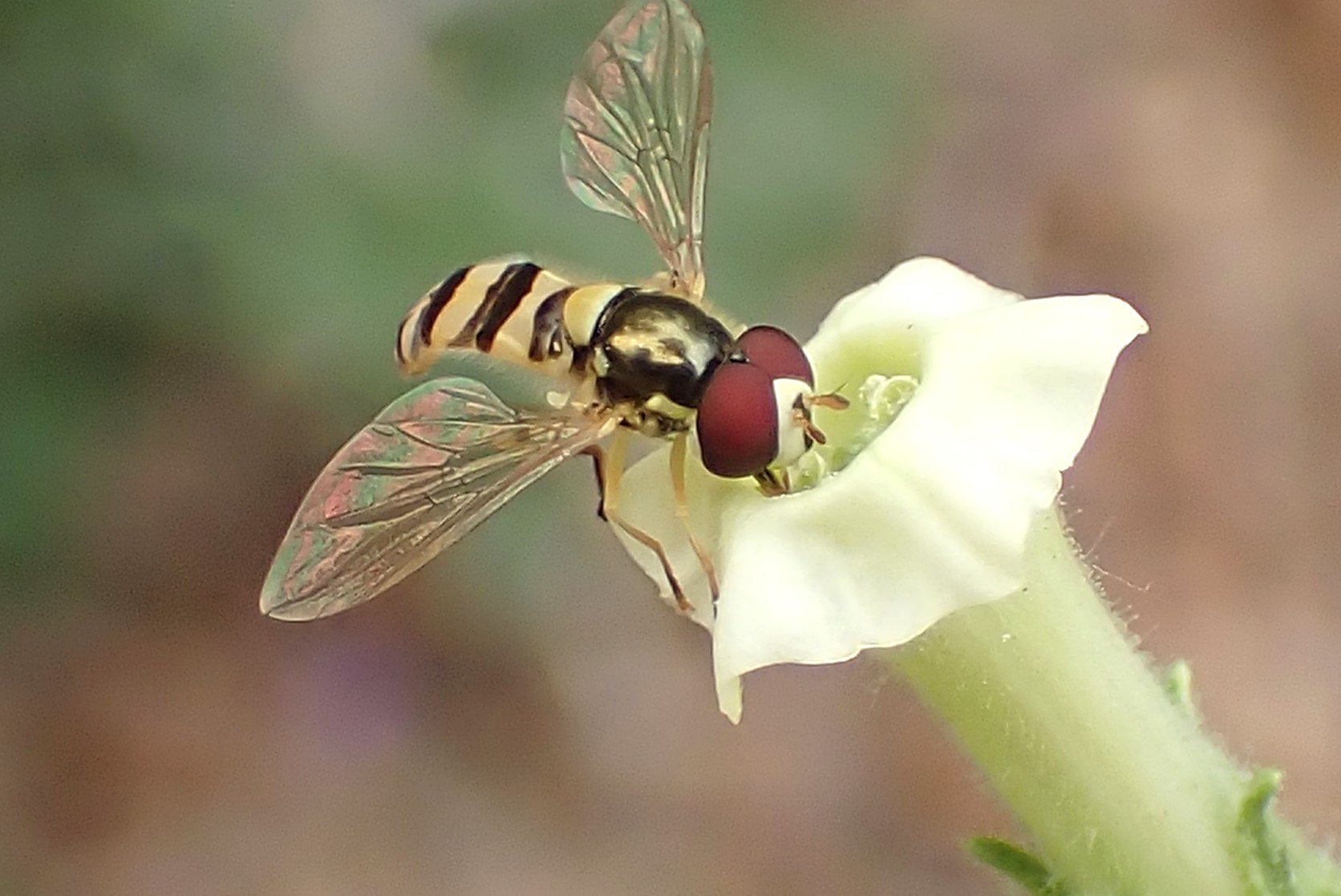
Fly on desert tobacco. Photo courtesy Juliet Stromberg

Part of Julie’s skepticism about such eradication projects is based on her understanding of how little we know.  She realizes that the harm done by non-native species is exaggerated and their benefits are underestimated.  Given the limits of our knowledge, we should be obligated to give introduced plants the benefit of the doubt before killing them.  She now appreciates the beauty of tree tobacco, which also feeds birds, fixes carbon, and stabilizes the soil.   Its seeds were naturally dispersed to Julie’s garden and tree tobacco is welcome there.

Imperatives imposed by climate change

Julie says, “The preoccupation with provenance diverts conservationists and gardeners from critical issues,” such as climate change, food security, and extinction (which, studies show, are not caused by introduced plants).  Living in the Southwest, Julie has a front row seat on climate change.  It’s always (within the context of our lifetime) been hot there, but now it is blisteringly hot during summer months.  She watches hummingbirds in her garden seek shelter in the shade, close to the irrigation drip.  She watches dogs panting, birds gasping for breath and plants wither and die in the heat.  And she knows that both native and non-native plants store carbon that would otherwise contribute to greenhouse gases causing climate change. Carbon storage varies according to certain plant characteristics, but those characteristics are unrelated to the nationality of plants. 

Those who insist on replicating the landscape that existed 200-400 years ago in America are depriving nature of the evolutionary opportunities that will enable survival.  We don’t know what life will be capable of living in the climate of the near-future.  Nature needs as many alternatives as possible to find the species that can survive.  Plants and animals are blameless in this struggle of survival of the fittest.  The least we can do is to get out of their way as natural selection finds the life that is adapted to the current and future climate.

Showing respect for nature

Julie does not use any pesticides in her garden….no herbicides, fungicide, or insecticide.  She is concerned about the pesticides used by her neighbor across the road who grows cotton.  She notices the blue cotton seeds scattered on the ground and surmises that they were coated in insecticide or herbicide that will infuse pesticide into the plant as it grows.  The poisoned seed can kill seed-eating birds and other animals and the plant itself will be poisonous as it grows.  The dust from the cotton field blows into her property when the field is plowed and after the cotton is harvested because no cover crops are grown to tamp down the dust and prevent the loss of carbon stored in the soil.  Julie can see firsthand the damage caused by industrial agriculture and is confirmed in her commitment to avoid using pesticides.

Julie shows her respect for everything living in her garden by her choice of pronouns to describe them:  “who” not “what,”  “she/her” not “it.”  She asks her readers to show the same respect for plants and animals, regardless of their nationality.  Avoiding the use of pesticides in our gardens is another way to show our respect for the plants and animals on which we depend, with the added benefit of not poisoning ourselves.

Thank you, Juliet Stromberg, for telling us about your garden and congratulations for what you have accomplished and learned from the experience of nurturing it back to life with the help of nature. 

Wild by Design: A history of ecological restoration in the U.S.

“This is a superb book. Laura Martin’s research takes us where no restoration literature has gone before, asking, ‘Who gets to decide where and how wildlife management occurs?’ Martin tackles this question with unmatched clarity and insight, illuminating the crucial discussions we must have to secure a future with thriving natural species and spaces.”—Peter Kareiva, President and CEO, Aquarium of the Pacific

The author of Wild by Design, Laura J. Martin, is a professor of environmental history at Williams College.(1) She has written a comprehensive history of ecological restoration in the US that is consistent with my own observations of the restoration industry in the past 25 years.  It’s a story of the gradual transition from a conservation ethic to a preservation ethic and finally to the restoration ethic that we see today.  The story is punctuated by milestone federal laws and actions that facilitated the transition.  Environmental non-profits and academic ecologists used those laws to professionalize and monetize the restoration industry that exists today. 

By the end of the 19th Century, the public began to react to the environmental degradation caused by unregulated resource extraction.  In 1902, a survey of naturalists around the country determined there were 1,143 bison left in the country; virtually all were in captivity.   The American Bison Society was founded in 1905 in reaction to the disappearance of bison in America.  Their activism led to the creation of federal game reserves on former Indian reservations where captive bison were introduced.  The game reserves were the model for the National Wildlife Refuge system that was greatly expanded by President Teddy Roosevelt.

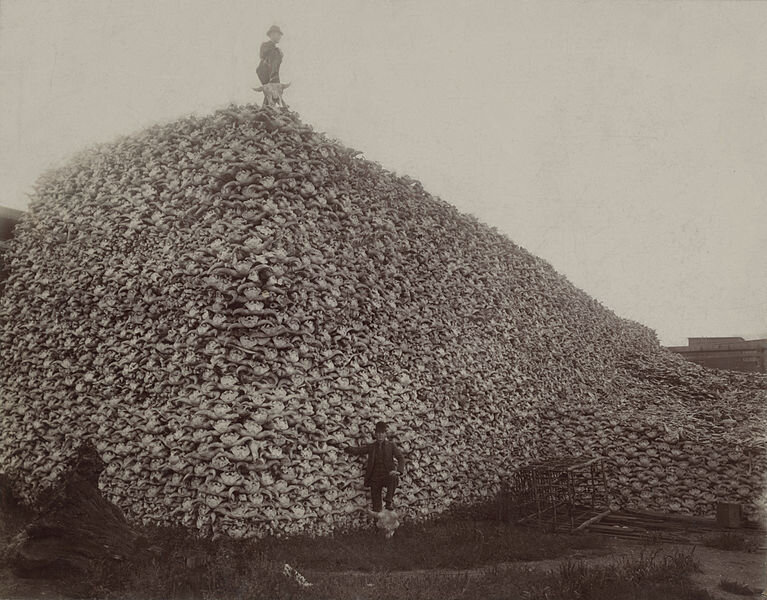
A photograph from 1892 of a pile of American bison skulls in Detroit, Michigan waiting to be ground for fertilizer or charcoal. (Photo Wikimedia Commons)

The creation of the Wild Flower Preservation Society (WFPS) in 1901 was modeled on the successful campaign of the Audubon Society to save birds killed to serve as ornaments on fancy hats.  It was as much a campaign to shame women into abandoning the fashion fad as it was an effort to legally ban the practice.  Likewise, the Wildflower Preservation Society applied social pressure.  They were critical of organized excursions to visit wildflowers because they picked and trampled the wildflowers.  WFPS said that “Weddings are a new menace to our native plants” because of their use of wild flowers. Their criticism was initially aimed at their own community, but “it moved toward policing the behavior of so-called new immigrants to the United States—especially children.”  The moralistic scolding by these early native plant advocates was a preview of the finger-wagging now aimed at those who choose to plant a diverse garden. 

These advocacy organizations are precursors to the many environmental non-governmental organizations that are influential in pressuring government to invest in ecological restorations today.

Conservation and Preservation

The goals of conservation and preservation are similar, but some differences were observable in the past 200 years.  Both ethics are committed to protecting the environment, but conservation allows the sustainable use of natural resources while preservation protects nature from use.  The presidencies of both Teddy and Franklin Roosevelt were committed to conservation. 

Teddy Roosevelt created the US Forest Service based on the premise that government can and should regulate public lands to manage natural resources.  Franklin Roosevelt’s conservation programs were based on the same principle, but were motivated by the economic emergency of the depression as well as the environmental disaster of the Dust Bowl in the Midwest.  The Civilian Conservation Corp (CCC) was created to provide jobs as well as to plant a “shelter belt” of trees across the Midwest of the country as a windbreak to stop dust storms (and many other projects).  Ecologists were critical of CCC projects because they expanded recreational opportunities and put “a stamp of man’s interference on every natural area they invade.” They preferred to exclude humans and their activities from nature. This is another early indicator of the conflicts between preservation and conservation that persist to the present day.

Sharp Park, Pacifica, CA. Photo by Erica Reder, SF Public Press

Government investment in ecological research

Ecological research in the United States was fundamentally altered after World War II, which ended with the beginning of the atomic era.  Atomic bombs were dropped on Japan to end the war without much thought given to the consequences.  After WWII, the federal government made big investments in science, creating the Atomic Energy Commission and the National Science Foundation, which funded ecological research to study the impact of radiation on the environment and those who live in it.  Conservation Sense and Nonsense published an article about those studies and the impact they had on ecological research. 

These studies legitimatized destruction of ecosystems to study effects of the destruction and the concept was expanded from radiation to pesticides in the 1960s.  They also provided funding to the academic profession of ecology that was small and is now enormous.  The dependence of ecological studies on government funding remains to this day and government funding of ecological projects has created the restoration industry that now extends far beyond academia.  Destruction of existing habitat is still considered the prerequisite to restoring a historical landscape.  Often, destruction is the first and only stage of the project because of the persistent fantasy that the native landscape will regenerate without further help. 

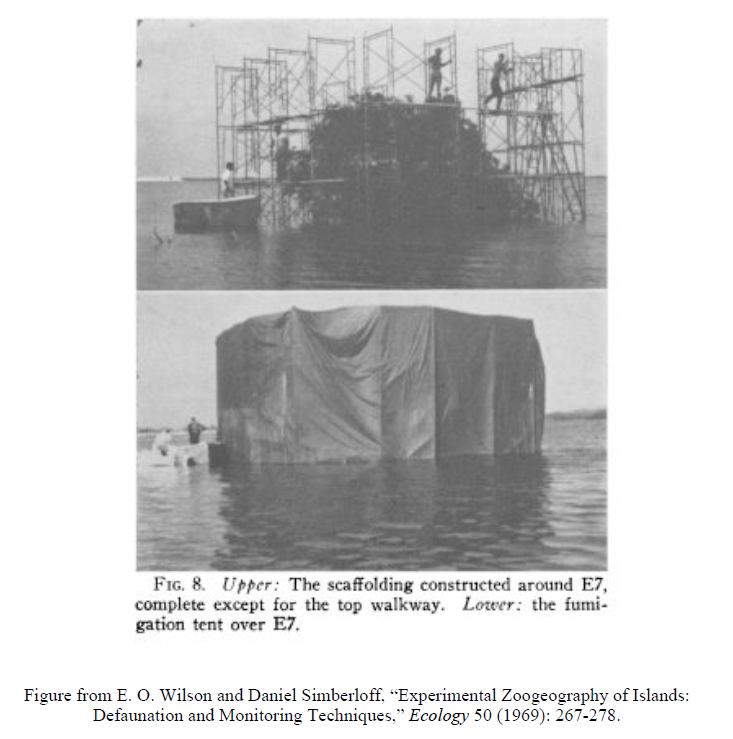
In the late 1960s Daniel Simberloff tented and fumigated 6 mangrove islands off the eastern short of Florida with methyl bromide to kill all life on the islands.  The objective of the project was to study how long it would take to repopulate the islands with insects.

From Conservation to Restoration

The post-war economic boom of the 50s and 60s greatly increased the impact of human activities on the environment.  The federal government built a vast highway system that fragmented and disrupted ecosystems.  We built huge dams, and channeled riparian ecosystems.  Open space was rapidly covered by housing and industrial development.  Wetlands were drained and filled with rubble to create more land.

People who cared about the environment began to react to the loss of nature and wildlife that lives in nature.  Although Aldo Leopold is idolized by the native plant movement, his concern about the degradation of nature was primarily for wildlife.  His interest in vegetation was as habitat for wildlife.  He was opposed to government programs devoted to killing animals perceived as predators of game animals because he believed that wildlife is best served by expanding their habitat.  In fact, he was opposed to the expansion of government’s role in conservation because “he believed restoration would be most efficient and effective if pursued by private citizens.” He did not prefer native plants because “Farmers had the opportunity to conserve plants such as ragweed and foxtail (an introduced grass), ones ‘on which game, fur, and feather depend for food.’”  In other words, in the 1940s one of the icons of the native plant movement knew that wildlife is not dependent upon native plants for food.  One wonders if native plant advocates have actually read Leopold’s treatise, A Sand County Almanac. 

Aldo Leopold’s son, Starker Leopold, had as much impact on conservation in the United States as his father.  In 1963, he published the Leopold Report that changed the direction of conservation in the National Park Service.  The Leopold Report recommended a goal for national parks of maintaining historical conditions as closely as possible to those of “primitive America.”  When the Leopold Report was adopted as official policy by the National Park Service in 1967, it committed NPS to restoring park lands to pre-settlement conditions. NPS officially changed this policy in 2021, but we don’t see any change locally in their projects because NPS is decentralized and local parks are autonomous.

Restoration Goals

Professor Martin says that “historical fidelity did not become a widespread restoration goal among ecologists and environmental organizations until the 1980s.”  The arrival of Columbus in the new World in 1492 was arbitrarily selected as the date after which all new plant species were “deemed nonnative, unwanted reminders of human (colonist) presence and activity.”  On the West Coast, 1769 is the equally arbitrary date to confer non-native status because it is the date of the first Spanish expedition to California. 

Many now question the goal of replicating historical landscapes.  After 40 years of effort, there is a growing recognition that it is not a realistic goal, especially in a rapidly changing climate.  The Society for Ecological Restoration has changed its definition of ecological restoration from “the goal of intentionally altering a site to establish a defined, indigenous, historic ecosystem” in 1990 to “the process of assisting the recovery of an ecosystem that has been degraded, damaged, or destroyed” in 2002.  Try telling that to the restorationists on the ground who are still trying to eradicate naturalized non-native plants that have been here for nearly 200 years.  Non-native annual grassland in California is a case in point. It has been repeatedly burned, mowed, plowed, and poisoned for 25 years without any visible progress toward native perennial grassland.   

Blaming non-native species

Around the same time that historical fidelity was identified as the goal of “restorations,” land managers and ecologists decided that the existence of non-native species is the main threat to native species.  I suppose the “logic” was that the main difference between historical landscapes and present landscapes is the existence of non-native species.  Concern about non-native species spread among federal agencies such as the National Park Service and The Nature Conservancy (TNC) began aggressive campaigns to kill non-natives, “which were newly framed as the main threat to wild species…nativity would become a precondition to wildness—of plants and animals both.”   TNC’s methods have become increasingly deadly and destructive: using fire and herbicides to kill plants, poisoning honeybees, aerial hunting of sheep, pigs, and goats.  As a former donor to TNC, their methods finally became intolerable to me.

Professor Martin believes that the identification of non-native species as the scapegoat was not based on experimental evidence, but merely a description of the strategies used by public land managers, as well as The Nature Conservancy.  Non-native species were a convenient scapegoat because they were easily identified and were an easy substitute for identifying and remediating the underlying conditions causing so-called “invasions.”  “Although the role of invasive species in native species extinction has since been challenged by some ecologists, the influence of this fear on species management has been enormous…The US federal budget for invasive species management increased by $400 million between 2002 and 2005, for example.”   

Endangered Species Act

The Endangered Species Act (ESA) was passed in 1973, along with companion laws such as the National Environmental Protection Act and others.  These federal laws created more funding opportunities for ecological projects as well as the legal justification for ecological restoration projects.

Federal laws permit the reintroduction of legally protected plant and animal species to places where they no longer exist.  The ESA confers the same protections for reintroduced species as it does for naturally occurring species.  Such reintroductions have become a tool for the restoration industry.  I have seen that strategy used in the San Francisco Bay Area.  If we had not been successful in preventing the reintroduction of a legally protected turtle, it would have justified the destruction of the non-native forest in my neighborhood park because the turtle requires unshaded nesting habitat within 500 feet of the water source in the park. The park remains largely forested because that is one of the few battles we have won in 25 years. Reintroduced, legally protected species are the Trojan horses of ecological restorations.

Compensatory mitigation is an equally powerful tool for the restoration industry.  Federal law requires an Environmental Impact Statement (EIS) for projects that will have a significant impact on the environment, such as big developments like building Disney World in Florida.  Disney World was built on an enormous wetland that was lost by the development of the park.  The EIS for the project agreed that the impact would be great, but it “mitigated” the impact by requiring Disney to fund the creation of a new wetland in a distant location.   

The funding generated to create fake wetlands built a new industry of commercial companies to design and build them.  Academic restoration ecologists questioned the functional equivalency between created and natural wetlands:  “’however accurate [the Comprehensive Everglades Restoration Plan] is the restored community can never be authentic.’”  The tension between commercial and academic restorationists continues today.

The Society for Ecological Restoration published findings that mitigation wetlands were not functionally equivalent to the wetlands they were meant to replace.  In Florida only half of the promised mitigation projects were actually built. Those that were built were colonized by “undesirable plant species” such as cattail and melaleuca in 32 of 40 projects.    

Projects that earn carbon credits are creating the same opportunities to generate funding for restoration projects in distant locations.  The Nature Conservancy was successful in defining carbon offsets as an international market when the Kyoto Protocols were signed in 1997.  They understood that a reforestation project would be cheaper in Costa Rica (for example) than a comparable energy efficiency project in the US.  Such distant projects don’t benefit those in the US who now have a power plant in their backyard that is being offset by a forest in Costa Rica. 

It’s a game for those who know how to play.  I have witnessed local examples in the Bay Area.  An oil spill in the bay generated millions of dollars of compensatory damages to fund unrelated “restoration” projects.  How does planting eel grass compensate for hundreds of birds killed by the oil spill?  When the San Francisco airport expanded runways, the airport had to pay compensatory mitigation that funded the restoration of native plants at India Basin in San Francisco that hardly compensates for the increased air traffic enabled by the new runway.   

Conclusion

Professor Martin is surprisingly frank about the future of ecological restoration in America:

“Whatever paths restorationists choose, restorations must happen in tandem with other changes in human behavior.  If we don’t reduce the ongoing harms of racism, fossil fuel burning, overconsumption by the wealthy, and toxic industrial chemicals, restoration will offer no more than a temporary repair, a way to move a problem to some other place or time.”

I would go one step further in my assessment of the restoration industry.  I would say that the methods used by restorationists are directly contributing to environmental degradation. 

Professor Martin asks the right questions in her concluding chapter:  “Who benefits from restoration?  Who is harmed?”  Those who earn their living in the restoration industry are the primary beneficiaries. According to a 2015 study entitled “Estimating the Size and Impact of the Ecological Restoration Economy,” environmental regulation has created a $25 billion-per-year restoration industry that directly employs more people than coal mining, logging or steel production.  Given recent investments in restoration projects of billions of dollars by California and federal infrastructure funding, this figure is undoubtedly an underestimate. 

Who is harmed?  Wildlife and humans are harmed by the destruction of useful habitat with herbicides.  Harmless animals and plants are killed because they have been arbitrarily classified as “invasive.” And all Americans are harmed by the waste of public funds that could be used to benefit society and/or the environment. 


(1) Laura J. Martin, Wild by Design:  The rise of ecological restoration, Harvard University Press, 2022.  All quotes are from this book.

Beyond the War on Invasive Species: Interview with Tao Orion

I am republishing with permission a portion of Kollibri terre Sonnenblume’s interview of Tao Orion.  Kollibri is a writer, photographer, tree hugger, animal lover, and cultural dissident. Kollibri was born and raised in Nebraska, earned a Bachelor of Arts in Writing at the St. Olaf Paracollege, and lived in the Twin Cities and Boston before moving to Portland in 2001. Since 2011, Kollibri has lived predominantly in rural areas in the Western US, working in agriculture and exploring wildtending. Kollibri has published several books, including The Troubles of ‘Invasive’ Plants (with Nicole Patrice Hill), originally a zine and soon to be published as a book.  Kollibri has also recorded interviews available as podcasts, “Voices for Nature & Peace,” which can be found at radiofreesunroot.com.

Conservation Sense and Nonsense


Tao Orion, author of “Beyond the War on Invasive Species”

Tao Orion is the author of “Beyond the War on Invasive Species: A Permaculture Approach to Ecosystem Restoration.” She is a permaculture designer, teacher, homesteader, and mother living in the southern Willamette Valley of Oregon. I interviewed her on May 18, 2020, for my podcast, “Voices for Nature & Peace.” What follows is a partial transcript of that conversation, edited for clarity. [Listen to the entire interview here]

Kollibri terre Sonnenblume, macska moksha press

K: A lot of people have heard the term, “invasive species” and most of them of course are assuming it’s something bad, but when it comes right down to it, it’s actually very difficult to define the term and we could even say that there isn’t one definition of that term.

T: Yes, that’s something that I found really interesting as I was researching my book, because I was really trying to find out if there was a clear, objective description of what an invasive species is, and I found that even the National Invasive Species Council—which in the US is the federal government level board that looks at invasive species issues—spent years on deliberating on the definition and even so, they weren’t able to come up with something that I felt was purely an objective description that could be [applied] in all contexts. It seemed to vary from place to place and time to time.

K: Monsanto was one of the companies involved in setting [that council] up.

T: That’s another disturbing element about how the big frenzy around invasive species and the purported damage that they do came to be so popular; a lot of that was informed and funded by pesticide interests to spur the sale of products, herbicides in particular, to deal with species invasions.

K: I think that most people are probably not aware of the fact that the use of pesticides and herbicides has been rising over the last 20 years, not falling. I think people hear about organic agriculture and they think we must be on the right path. But due in part to the war on invasives and also due to genetically modifying crops to be Round-up Ready so they can survive the use of pesticides—these two things seem to have driven an increase in the use of pesticides over the last 20 years.

T: Yes, it’s definitely alarming. My background is in organic agriculture. I was immersed in that world. Even before writing this book, I was under the impression that herbicides were somewhat less toxic in the realm of pesticide toxicity [as opposed to insecticides or fungicides, for example]. In researching herbicides more for invasive species management and agriculture in general, I learned a lot more about their toxicity and insidious toxicity to insects and mammals and other lifeforms that I don’t think gets talked about enough. People assume they’re more ecologically benign, but really they’re not, and that’s important to bring to the table.

K: One thing you mentioned in your book that I hadn’t thought about much before is that it’s not only the active ingredient in a pesticide, but also the adjuvants—the things that they add to the active ingredient to help it stick to plants or to help make it soluble in water, etc.

T: Yeah, that was a big realization for me too. We talk about these two different terms: “Round Up” is the trade name of the herbicide, of which “glyphosate” is considered the active ingredient. Glyphosate is the ingredient that’s tested for pesticide registration purposes, but that might be only ten percent of a mixture that’s sold in the bottle. The rest of that solution is made up of other ingredients that help the herbicide stay on the plant if it rains or if its windy, or help the herbicide active ingredient penetrate the cells of the plant. A lot of these are trade secrets so they’re not tested and the manufacturers don’t have to say what’s in there. But one compound that has been pulled out and studied by independent researchers is POEA [polyoxyethyleneamine], which has been shown to make glyphosate penetrate human placental cells. So even if you come into contact with glyphosate itself, that wouldn’t necessarily happen, but if you come into contact with Round Up, which contains this adjuvant, POEA, it can actually then allow the glyphosate to enter into the cell. Because that’s what it’s in there to do.

K: The reason we’ve been talking about pesticides because herbicides are such a big part of getting rid of “invasive” species… But your book tries to turn things on its head and to question the concept of whether we should be trying to eradicate them.

T: Yes. I was shocked when I started working in the field of ecological restoration, coming from a background in organic agriculture. I had heard of “invasive species” before but when I got into this context, I was around people who did this professionally, it was just assumed that I was going to use herbicides and I would be totally fine with that, because that’s just what everybody did. The whole context was, “we have to get rid of these plants at all costs, and if we do, everything will be okay.” [Laughs.] That’s the the framework in which we’re approaching ecosystem restoration, and to me, I was amazed because from a more holistic perspective, I could see right off the bat that in every case where invasive species were thriving, there were other things going on in the ecosystem that pesticides weren’t going to address.

It’s the same in conventional agriculture. If you’re having, quote, pest pressure issues, the issue isn’t the pest, the issue is the soil or the plant stress or drought stress. There’s all these different things playing into the manifestation of pest pressure in the ecosystem. So, taking that knowledge a few steps further to ecosystem restoration I think is really necessary. A lot of people involved in these contexts are really highly trained ecologists and it’s still hard for me to square that with the belief that herbicides, pesticides are the only solution. These are often people who are shopping at organic food markets, and only buy organic food, and believe really strongly in that framework for food production, and yet are making decisions about ecosystem restoration outside of agricultural contexts that rely on pesticides and I just think that really needs to be questioned.

I had some very interesting discussions over the years and maybe the needle is starting to shift a little bit, although as you mention, sometimes these discussions flare up online where people are really quite defensive about their position and belief around this.

K: The issue tends to infect any discussion around plants. I’ve been using a couple of plant ID groups on Facebook because I’m in a new area and I’m seeing things coming up and I’m like, “What is this?” Of course if you’re in a native plant group, that’s definitely going to be someplace where [the invasive framework] is strong. You know, a native-plants-equals-good, non-native-plants-equals-bad, black and white paradigm. Which brings us around to looking at the invasive plant not being a problem in and of itself but of being a symptom of something going on.

T: That’s a huge part of the conversation that a lot of folks really aren’t willing to easily engage in, but the design of our livelihood system has really degraded ecosystems to a place where native flora and fauna aren’t thriving. You know, to really sit with that, and acknowledge it, think about how we might approach things differently as a basis for our understanding is challenging. It’s a lot easier to blame the messenger. Also I think one of the things that’s really missing from the discussion of native plants is the fact that native ecosystems were or are managed by indigenous people. They don’t just exist in a vacuum, free from people’s influence and the whole idea of this “pristine” wilderness is very much a western, colonial thought pattern that definitely needs to be disrupted.

K: What you’re referring to in part is that when people are designating a plant as invasive or non-native, there’s a point in time they’re referring to, and that might be different from place to place, but it’s generally accepted in the United States that anything anything that showed up after 1492 is not native. There are people who are willing to describe most non-native plants as “invasive” or throw them in that bin as soon as possible, and then the poisons come out, so this is an important issue.

T: Yes, but we don’t really know the social, ecological, economic context that was going on at that point in time that led to a particular assemblage of plants. There’s no doubt that the floral and faunal assemblies were different, but we should think really hard about why they’ve changed. Draining the wetlands of the Sacramento and San Joaquin valleys in California has major ecological implications. Damming the Colorado River for hydro-power and irrigation capacity has major ecological implications. These bigger scale things that we do—that we support—are going to change the surrounding ecosystem. If we can acknowledge that and observe what’s happening because of those major shifts, I think we’ll be in a better position to understand so called “invasions” from a more holistic perspective.

K: Because the entry of an invasive plant or animal into a landscape is in virtually all cases preceded by a human-caused disturbance of some kind.

T: It’s interesting. When I was writing, [I wondered if I] should I put forward the idea of reclaiming a different name because “invasive species” has kind of this negative connotation, but the more I looked into evolutionary biology and some of the ways—in the deep time perspective—how systems have changed, “invasion” is one of these processes and it’s not unnatural. Taking that longer term perspective is important as well. That’s how plants came to be on land. There were marine beds of algae hanging out in the shallow seas a couple billion years ago and eventually, speciation happened because of changing conditions and the land was “invaded” by those plants. You just see that change over time leading to the type of biodiversity that we have now, punctuated by other kinds of events of course, but it’s not something that’s “outside the realm of nature,” which is how invasive species are situated in a lot of discussions.

“When the Killing’s Done” Maybe never.

I have few opportunities to read fiction because most of my time is spent trying to keep up with rapidly evolving ecological science.  I was grateful for the chance to read the fictional account of island eradications on the Channel Islands because it closely relates to my interest in the planned eradication of mice on the Farallon Islands, which is still pending and as controversial as similar projects on the Channel Islands.  TC Boyle’s book foretells the Farallones project as he sends a member of the fictional project team to the Farallon Islands after completion of the project on the Channel Islands.

When the Killing’s Done by TC Boyle is not entirely fictional. (1)  It is impressively accurate in its description of the eradication projects themselves, but Boyle weaves a tight fictional plot around the key players who implemented the project and those who fought like hell to prevent it from happening.  Like other books by Boyle that I have read, When the Killing’s Done creates intense suspense that moves the reader along at top speed.  His characters are vivid and complex. 

Boyle lives in Montecito, near Santa Barbara, close to the Channel Islands.  No doubt he followed the projects closely as they were debated and resisted by opponents, who were primarily animal rights activists according to Boyle’s account.  In interviews after the publication of the book in 2011, Boyle claimed not to have a personal opinion of the projects:  “I’m not an activist in any way. With certain exceptions, I don’t think politics and art mix very well.”  He sees value in both sides of the debate and the characters in his story have much in common.  The antagonists are vegetarians who value nature and care deeply about the environment and the animals who live in it.  I believe this common ground is also true of the adversaries in the debate about the Farallones project and others like it.

However, the ending of the book suggests that Boyle doubts the ability of humans to control nature.  Although the projects on the Channel Islands were completed to the satisfaction of the land managers–National Park Service and The Nature Conservancy—the final image in Boyle’s story is of animals considered non-native on the Islands making their way to the shore of the Island.  The implication is that maybe the killing is never done and that is the crux of the problem with island eradications in general and the planned mice eradication on the Farallon Islands in particular.

Rat eradication on Anacapa Island

The aerial application of rodenticide to kill rats on Anacapa Island in 2001-2002 was the first of its kind in North America.  The project was also unique because it was complicated by the need to spare a population of endemic native mice on Anacapa.  Over 1,000 native mice were captured before the aerial application of rodenticide and released back on the island after the poison was no longer effective. 

Anacapa Island is the usual success story cited by supporters of the Farallones project where non-native mice are the target for eradication.  Native mice on Anacapa were not considered a threat to birds, but non-native mice on the Farallones are, although there is no evidence that mice actually harm birds on the Farallones either.  The operative word here is “native.”  The mice on the Farallones are targets only because they aren’t native.  The mice on Anacapa undoubtedly eat vegetation too, but that’s not considered a problem so long as they are native.   The mice on Anacapa are probably an important source of food for birds, just as they on the Farallones. 

If mice are not harmful to birds, there is no legitimate reason to poison them, along with untold numbers of non-target animals.  The mice on the Farallones are targets only because they aren’t native. 

Killing of non-target animals

Rodenticides are indiscriminate killers of warm blooded animals, including birds.  An animal who eats rodenticide slowly bleeds to death.  The grisly process of dying takes about 10-20 days.  If poisoned mice are eaten by other animals that animal is also poisoned.  It is therefore inevitable that non-target birds who are predators of mice will be killed by widespread dispersal of rodenticide pellets on the ground that can also be directly eaten by birds and other animals.  This deadly sequence of events has been demonstrated many times by island eradications using rodenticides all over the world and the project on Anacapa Island is no exception. 

Billboard sponsored by Raptors Are The Solution (RATS)

Raptors are the main predators of mice.  Therefore, 63% of raptors on Anacapa Island (37 of 59 individual birds) were captured and either relocated or kept in captivity until the project was done, according to the first study of the project published in 2005. According to that study, “The fate of the remaining birds of prey on the island is unclear. There is evidence that some birds survived the bait application… However, three barn owls, six burrowing owls and an American kestrel either died while in captivity or were found dead on the island. The American kestrel and a burrowing owl that were captured in 2001, after the bait application, likely died from brodifacoum poisoning.” The analysis of the project considers these deaths “negligible.”

A total of 94 seed-eating birds were also found dead after the poison drop.  Most were song birds, but an additional 6 birds were too decomposed to identify the species.  The study notes that these collateral kills were consistent with other similar projects.

Western Gull on Channel Islands. NPS photo

The study makes no mention of gulls that were undoubtedly killed by the project.  Gulls are omnivorous scavengers for whom dead and dying mice are ideal food, preferable to dive bombing for French fries on your picnic table.  According to the National Park Service, “Western gulls are the most abundant breeding seabird in the Channel Islands National Park, with a population estimated at more than 15,000.” Shortly after the poison drop, dead seabirds washed up on the shore near the Santa Barbara harbor.  UC Santa Barbara’s daily newspaper said, “…a strong correlation exists between the National Park Service’s most recent airdrop of pesticide on Anacapa Island and the dead birds.”

In other words, those who implemented the eradication project on Anacapa are probably not telling the full story about the death of non-target birds.  The death of hundreds of gulls is anticipated by the promoters of the project on the Farallones.  If the organization that implements the project is the same organization that monitors and reports on the project (as was the case for the projects on the Channel Islands), we may never know the actual impact on the birds living on the Farallones.

Those who promote these poisonous projects justify the death of non-target birds by saying they are “incidental” and have no lasting impact on the species population.  They will apply for and receive “incidental take permits” in advance of the Farallones project that will satisfy legal requirements of the Migratory Bird Treaty Act and the Endangered Species Act.  The lawsuit that was filed to prevent the Anacapa project was overturned on those grounds.

The killing is never done

Rat eradication on Anacapa and pig eradication on Santa Cruz (where over 5,000 pigs were shot by sharpshooters and 54 Golden Eagles were removed because they were predators of endemic foxes) are the focus of TC Boyle’s masterful book.  Both were implemented and considered successful by the organizations that implemented the projects.  Although land managers are no longer killing animals (to our knowledge) in the Channel Islands they are waging a continuous war on non-native plants by spraying them with herbicide.  When we visited Santa Cruz Island in 2010, we witnessed the application of Garlon on non-native fennel.

Roundup (glyphosate) has been used on the Farallon Islands every year since 1988.  Between 2001-2005, an average of 226 gallons of herbicide were used annually (5.4 gallons per acre per year), according to the annual report of the Farallon National Wildlife Refuge.  Given that these islands are not far from the California coast and are visited by thousands of migratory birds every year, we must expect that the arrival of new plants to the islands will be continuous: seeds are eaten and carried by birds; seeds are carried by birds in their feathers and feet; wind and storms carry seeds to the islands, etc.

The Environmental Protection Agency recently published a Biological Evaluation of glyphosate products.   EPA reports that glyphosate is “likely to adversely affect” 93% of legally protected endangered and threatened plants and animals. That finding applies equally to all plants and animals, whether they are legally protected or not because the physiological processes of species in the same order are similar.

The Environmental Impact Statement for the Farallones project accuses mice of eating vegetation, although far more vegetation is probably killed by herbicides.  Non-native vegetation arrives on the Farallones partly because birds eat it and carry it to the Farallones.  Animals do not care if edible vegetation is native.  Nativism is a human prejudice not shared by animals who seek food and shelter wherever they can find it.

The constant poisoning of plants is perhaps a trivial consideration in comparison to the futility of trying to eradicate mice.  Although rats have been successfully (leaving aside the death of non-target animals) eradicated by some projects, attempts to eradicate mice have been significantly less successful. 

A study of 139 attempted eradications on 107 Mediterranean islands in eight countries, with Greece, Italy, and Spain accounting for the highest number found that eradication projects targeted 13 mammal species. The black rat was the target of over 75% of the known attempted eradications in the Mediterranean Basin; other species targeted were feral goat, house mouse, European rabbit, and domestic cat. The most widely used technique was poisoning (77% of all eradications), followed by trapping (15%) and hunting (4%).  Techniques were largely target-specific.

The average failure rate of the projects was about 11%, but success was defined only as the death of animals living on the islands at the time of the project. However, this percentage varied according to species. The failure rate of house mouse eradication was 75%. Reinvasion occurred after 15% of eradications considered initially successful. 

Farallon Islands, NOAA

The proposed project on the Farallon Islands is a dead end in many ways.  It will kill many non-target animals. It will probably not be successful in the short run or the long run.  Every time it is repeated it will kill more animals. Furthermore, it is pointless because mice do not harm birds on the Farallon islands. 


  • T.C. Boyle, When the Killing’s Done, Viking, 2011.

California Natural Resources Agency writes a BIG blank check to the “restoration” industry

California Natural Resources Agency has published the draft of “Pathways to 30X30 California” and has invited the public to comment on the draft by February 15, 2022.  “Pathways to 30X30” is the last in a series of documents that defines the program before implementation in February 2022, when distribution will begin of $15 Billion dollars to public and non-governmental agencies to fund specific projects. 

To recap the process that began in October 2020 with the passage of an Executive Order:

  • In October 2020, Governor Newsom signed Executive Order N-82-20 “enlisting California’s vast network of natural and working lands – forests, rangelands, farms, wetlands, coast, deserts and urban greenspaces – in the fight against climate change. A core pillar of Governor Newsom’s climate agenda, these novel approaches will help clean the air and water for communities throughout the state and support California’s unique biodiversity.” The program and its implications are described by Conservation Sense and Nonsense HERE.
  • California Natural Resources Agency held a series of public workshops in summer 2021 that were theoretically an opportunity for the public to participate in the process of defining the program.  Conservation Sense and Nonsense identified potential opportunities as well as pitfalls of the program HERE.
  • California Natural Resources Agency published the first draft of implementation plans in fall 2021.  Conservation Sense and Nonsense published its favorable opinion of the first draft that is available HERE.

The draft of the final implementation document is disappointing.  My public comment on the draft of “Pathways to 30X30” is below.  To preview it briefly here, this is its concluding paragraph:  “California’s 30X30 initiative had great potential to improve the environment rather than damaging it further.  Instead, draft “Pathways to 30X30” suggests that opportunity may be squandered.  Of course, the proof will be in the projects, but for the moment it looks as though the lengthy public process may have been a charade intended to benefit the “restoration” industry, not the environment or the public.”

Please consider writing your own public comment by February 15, 2022.

  • Email: CaliforniaNature@Resources.ca.gov;
  • Letter via postal mail: California Natural Resources Agency, 715 P Street, 20th Floor, Sacramento, CA 95814;
  • Voice message: 1 (800) 417-0668.
  • There will be a virtual meeting on Tuesday, February 1, 2022, 3-6 pm in which the public will be invited to make 2 minute comments.  Register HERE.

TO:        California Natural Resources Agency

RE:         Public comment on draft “Pathways to 30X30”

I have attended the public workshops regarding the 30X30 initiative and sent written feedback when given the opportunity.  I am therefore in a position to tell you that the “Draft Pathways to 30X30” is a significant retreat from principles defined by previous drafts because it is so vague that it is meaningless. Any project could be approved within its limitless boundaries. The document puts CNRA in the position to do whatever it wishes, including violate principles defined in previous draft documents.

My public comment is a reminder of commitments made in previous drafts and a request that they be reinstated in the final version of the Draft “Pathways to 30X30” document:

  • “Pathways to 30X30” must confirm its commitment to reducing the use of pesticides on public lands.  The draft mentions the need to “avoid toxic chemicals” only in the context of working lands.  That commitment must also be made for public parks and open spaces because widespread pesticide use is exposing the public and wildlife to dangerous pesticides and killing harmless plants while damaging the soil.
  • Unlike the previous draft, “Climate Smart Strategy,” “Pathways to 30X30” requires the exclusive use of native plants, which contradicts the commitment to “promote climate-smart management actions.”  The ranges of native plants have changed and must continue to change because native plants are no longer adapted to the climate.  We cannot reduce greenhouse gas emissions causing climate change if we cannot plant tree species that are capable of surviving in our changed climate, as acknowledged by previous draft documents. As Steve Gaines said in the January 12th public meeting regarding “Pathways to 30X30,” “We must help species move [because the changing climate requires that they do].”

There are significant omissions in “Pathways to 30X30” that epitomize my disappointment in this draft:

  • The draft kicks the can down the road with respect to integrating climate change into consideration of projects funded by the initiative:  “Designations have not yet been established that emphasize climate benefits such as carbon sequestration or buffering climate impacts. While the definition of conserved lands for 30×30 builds upon existing designations, it will be important to integrate climate…” (pg 26)  Climate change is the underlying cause of most problems in the environment, yet “Pathways to 30X30” dodges the issue by declining to take the issue into consideration as it distributes millions of grant dollars to projects that are toxic band aides on the symptoms of climate change.
  • The 30X30 initiative made a commitment to protecting 30% of California’s land and coastal waters.  At 24%, we are close to that goal for land, but at only 16% we are far from the goal for coastal waters.  Yet, the draft declines to protect more marine waters:  “MPA [Marine Protected Areas] Network expansion will not be a component of meeting the State’s 30×30 marine conservation goals.” (pg 29, deeply embedded in fine print) The excuse for this omission is that the decadal review of existing MPAs won’t be completed for another year.  That is not a legitimate reason for refusing to designate new MPAs.  The evaluation of existing MPAs can and should be completed and inform the management of new MPAs going forward. 

The lack of guidance in “Pathways to 30X30” is particularly dangerous because California law has recently been revised to exempt projects considered “restorations” from CEQA requirements for Environmental Impact Reports for three years, ending January 1, 2025. An Environmental Impact Report is the public’s only opportunity to preview planned projects and challenge them within the confines of CEQA law.  The public is effectively shut out from the process of distributing millions of grant dollars of the public’s tax money by this blanket exemption on CEQA requirements for an EIR. 

The Draft of “Pathways to 30X30” writes a big blank check for projects that will potentially increase the use of pesticides on our public lands and increase greenhouse gas emissions by destroying plants and trees that sequester carbon and are capable of surviving our current and anticipated climate. 

California’s 30X30 initiative had great potential to improve the environment rather than damaging it further.  Instead, draft “Pathways to 30X30” suggests that opportunity may be squandered.  Of course, the proof will be in the projects, but for the moment it looks as though the lengthy public process may have been a charade intended to benefit the “restoration” industry, not the environment or the public. 

Draft of California’s Climate Smart Strategy looks promising

California has made a $15 Billion budget commitment to address climate change and protect biodiversity. The California Natural Resources Agency (CNRA) held a series of workshops to explain the initiative and give the public an opportunity to provide feedback to CNRA.  Sixteen hundred Californians participated in those workshops, including me. 

California Natural Resources Agency recently published a draft of the first installment of implementation plans:  “Natural and Working Lands Climate Smart Strategy.”  The public is invited to comment on this draft.  The deadline for comment is November 9, 2021.  There are three ways you can send your comments and feedback:  Email: CaliforniaNature@Resources.ca.gov; Letter via postal mail: California Natural Resources Agency, 715 P Street, 20th Floor, Sacramento, CA 95814; Voice message: 1 (800) 417-0668.

Update: The deadline for public comment has been extended to Wednesday, November 24, 2021.

Below is the comment that I submitted today.  I focused my attention on the portions of the draft that are relevant to my urban home, such as developed land and urban forests.  My comment may not be relevant to your concerns, so I encourage you to write a comment of our own.  If you find issues in the draft that I haven’t mentioned please post a comment here to alert other readers.


TO:  California Natural Resources Agency

RE: Public Comment on “Natural and Working Lands Climate Smart Strategy”

Thank you for this opportunity to comment on the draft of California’s Climate Smart Land Stretegy.

I find much to like in the draft of California’s Climate Smart Land Strategy.  In particular:

  • The draft makes a commitment to reduce pesticide use on public lands, for example:

Priority nature-based solutions for developed lands: 

“low-chemical management of parks and open spaces in and around cities to beneft underserved communities who are often the most negatively affected by health impacts related to air pollution and extreme heat caused by urban heat islands.”

“Prioritize protection of public safety by ecologically treating vegetation near roads and energy infrastructure.”

“Utilize safer, more sustainable pest management tools and practices to combat invasive species and accelerate the transition away from harmful pesticides.”

  • The draft makes a commitment to expanding, maintaining and preserving urban forests:

Priority nature-based solutions for developed lands: 

“Increase development and maintenance of both urban tree canopy and green spaces to moderate urban heat islands, decrease energy use, and contribute to carbon sequestration.”

“Maintain urban trees to provide vital ecosystem services for as long as feasible”

  • The State of California defines the urban forest broadly and the draft acknowledges its importance in climate smart land management:

“California Public Resources Code defines urban forests as “those native or introduced trees and related vegetation in the urban and near‐urban areas, including, but not limited to, urban watersheds, soils and related habitats, street trees, park trees, residential trees, natural riparian habitats, and trees on other private and public properties.”  Urban forests are our opportunity to apply climate smart land management in the places most Californians call home. The character of urban forests is diverse, which heavily influences the localized selection of management options and outcomes related to both carbon storage and co-benefits.”

  • The draft acknowledges that suitability to a specific location and climate are the appropriate criteria for planting in the urban forest.  Because native ranges are changing in response to changes in the climate, whether or not a tree is native to a specific location is no longer a suitable criterion.

Utilize place-based tree and plant selection and intensity, to ensure the species selection process considers climate, water, and locally-specific circumstances.”

  • The draft acknowledges the importance of forests to maintain carbon sinks to reduce greenhouse gas emissions that cause climate change.  The urgent need to address climate change must trump nativists’ desire to replicate treeless historical landscapes. 

“Healthy forests can serve as reliable carbon sinks, both because they are able to store significant amounts of carbon and because they are at a lower risk of carbon loss due to climate impacts such as wildfire and drought. After large, high-severity fires, some of California’s forests may convert to shrublands and grasslands59 that are not capable of supporting the same level of carbon storage as forests.

“…shrublands and chaparral store substantially less carbon, and the dynamics of their growth and disturbance are less well known. Evidence indicates that shrublands in California are burning more frequently than they would have historically, leading to degraded conditions, possible conversion to grasslands, and reduced carbon storage in above ground biomass.”

Making these commitments operational implies that the State must also make these commitments:

  • The State of California should not fund projects that destroy healthy trees for the sole purpose of replicating treeless historical landscapes, especially on developed lands.
  • The State of California should not fund projects that destroy functional landscapes and healthy trees, particularly by using herbicides.

Suggested improvements in the draft

These commitments in the draft should be revised:

Implement healthy soils practices, including through native plant landscaping and mulch and compost application.”

The word “native” should be deleted because the nativity of a plant is irrelevant to soil health.  Introduced plants do not damage soil, but using herbicides to kill them does damage the soil by killing beneficial microbes and mycorrhizae.   

“Increase drought-tolerant yards and landscaping through, for example, native plant species replacements and lawn removal and by adopting, implementing and enforcing the State’s Model Water Efficient Landscaping Ordinance.”

The word “native” should be replaced by “drought-tolerant,” which would include many native species, but not all.  Redwoods are an example of a native tree that is definitely not drought-tolerant.  Many species of drought-tolerant plants have been introduced to California from other Mediterranean climates that are well adapted to our climate and the anticipated climate in the future.

California’s urban forest is predominantly non-native because these are the tree species that are adapted to our climate and can survive harsh urban conditions. Professor Matt Ritter of CalPoly is the source of these data. He presented this slide at a conference of the California Urban Forest Council on October 14, 2021.

Where appropriate and applicable, Departments should rely on the Class 33 categorical exemption for small habitat restoration projects in the CEQA Guidelines”

Such exemptions should not be granted to projects that will use pesticides because they will damage the environment, including the soil, and the wildlife that lives there.  Such a specific limitation is consistent with commitments in the draft to reduce pesticide use in parks and open spaces around cities because those are the places where such small projects (5 acres or less) are likely to be proposed.  Such a limitation on the use of this exemption to CEQA requirements should be added to the final draft because it does not explicitly exist in the code.

The importance of setting priorities

The strength of the draft is its emphasis on addressing the sources of climate change.  All projects funded by this initiative must be consistent with that over-riding mission because climate change is the primary threat to all ecosystems. Reducing the sources of greenhouse gases causing climate change is a prerequisite for protecting biodiversity.

I appreciate the mention of opportunities to remediate brownfields, but I believe a broader commitment to addressing sources of pollution is needed:

“Ensure brownfield revitalization supports community efforts to become more resilient to climate change impacts by incorporating adaptation and mitigation strategies throughout the cleanup and redevelopment process. These efforts also increase equity, as many climate vulnerable communities live close to brownfields and other blighted properties.”

Julie Bargmann was recently awarded the Oberlander Prize in Landscape Architecture for her ground-breaking work to bring blighted land back to useful life in the heart of post-industrial cities. Her work is unique because it transforms abandoned industrial land into beautiful public space while honoring and preserving its history.  She brings new meaning to the word “restoration.”  She does not begin by destroying functional landscapes.  She provides a model for a new approach that is particularly important to underserved inner-city communities.  I live in Oakland, where I see many such opportunities to restore public land to useful life without the scorched-earth strategies commonly used by ecological “restorations.”

Julie Bargmann projects. Source: NPR News Hour

When ecological restorations are funded without addressing sources of pollution, valuable resources are often wasted.  The recent oil leak from an oil platform off the coast of Southern California is a case in point.  Millions of dollars were spent restoring a wetland that was doused with oil for the second time. Yet, some of the oil platforms in California waters are no longer productive, but have not been safely decommissioned.  This is putting the conservation cart before the horse. 

Talbert Marsh. Source: Huntington Beach Wetland Conservancy

We are about to make enormous investments in the expansion of wetlands, as we should.  At the same time, we should address the sources of pollution that will despoil those wetlands, such as many miles of impaired waters in the watersheds that drain into the wetlands.  For example, the draft touts seagrasses as carbon sinks and acknowledges pollution as one of the major threats to seagrass:  “The leading causes of seagrass loss are nutrient pollution, poor water clarity, disease, and disturbance.”

At every turn, climate smart solutions should stay focused on the underlying causes of problems in the environment, rather than cosmetic solutions that don’t address those causes.  Quibbling about whether or not marsh grass is native or non-native is like arguing about the color of the lifeboat. Let’s focus on whether or not a landscape is functional as a carbon sink.

In conclusion

The draft gives me hope that the State of California can do something useful with our tax dollars to address climate change without damaging the environment further.  The draft shows the influence of learned hands with good intentions.  Now let’s see specific projects funded that are consistent with the goals defined by the draft.  That’s where the rubber meets the road.

Science meets the “restoration” industry

I was encouraged to hear a presentation by an academic scientist at the recent Beyond Pesticides Forum that was another indication of the paradigm shift in invasive species management toward a less destructive approach.  Dr. Bernd Blossey is a Professor at Cornell University, where he directs the Ecology and Management of Invasive Plants Program in the Department of Natural Resources.  His many years of studying invasive plants, such as purple loosestrife, garlic mustard, water chestnut, Japanese knotweed, and phragmites have convinced him that there are often “multiple stressors” that contribute to such invasions.  Some factors such as the presence of earthworms and deer can be more important factors in the Northeast than the non-native plants themselves. 

Based on his research experience, Dr. Blossey delivered wise advice to land managers at the Beyond Pesticide Forum.  The featured photo at the top of this article was his introductory slide. 

Before a restoration project begins, these questions should be asked and answered:

Source: Dr. Blossey’s presentation to Beyond Pesticides Forum on June 8, 2021

If the project seems worthwhile after such analysis is done, this is Dr. Blossey’s advice about monitoring the project and measuring its success:

Source: Dr. Blossey’s presentation to Beyond Pesticides Forum on June 8, 2021

Practicing what he preaches

Dr. Blossey used these principles in his study of garlic mustard in the forests of the northeast. (1) Over a period of more than 10 years, Dr. Blossey and his collaborators measured the abundance of garlic mustard in 16 plots from New Jersey to Illinois where no attempt had been made to control or eradicate it.  They found that growth rates initially increased, but decreased over time and eventually the population started to decline.  Dr. Blossey explained their findings in a recent webinar that is available HERE:

Garlic mustard was first recorded in North America in 1868 on Long Island, New York.  It spread west from there and is now found from southern Canada to Georgia and from New York and Quebec to Oregon, British Columbia and Alaska.  Because land managers believed that garlic mustard suppresses populations of native plants, they have been trying to eradicate garlic mustard in northern forests for decades, with little long term success.  Dr. Blossey addressed that concern in his webinar. 

Source: Dr. Blossey’s webinar about garlic mustard

Earthworms are the prerequisite for garlic mustard invasion.  Earthworms in northern forests are also considered alien invaders because they were killed, along with forests, by advancing glaciers during the Ice Age.  When forests returned after the Ice Age over 10,000 years ago, they evolved without earthworms that were reintroduced by European settlers less than 500 years ago. 

When deer are excluded from areas by fencing plots with garlic mustard populations, abundance of native vegetation does not decline.  Deer have a strong preference for native vegetation.  Absent deer, garlic mustard does not seem to suppress the growth of native plants in northern forests.

In other words, garlic mustard is not guilty as charged.  Dr. Blossey explains the disadvantages of attempting to eradicate it.  The decline of garlic mustard abundance over time is attributed to negative soil feedback that builds over time as the soil microbial community responds to the new plant. Removing garlic mustard episodically prolongs the process of building that negative soil feedback.  When groups of well-meaning young people are sent into the forest to pull garlic mustard, they trample the very native plants they are trying to save. 

Are there lessons for land managers in the Bay Area?

Because garlic mustard doesn’t exist in California and our native earthworms are considered beneficial to soil health, you might wonder if this study is relevant here.  California was not glaciated during the Ice Age.  Our earthworms survived the Ice Age and they evolved with our forests. 

So, what can we learn from this study?  The pattern of initial growth and eventual decline of populations of introduced plants is not unique to garlic mustard“A phenomenon that has received increased attention is whether introduced species go through boom and bust cycles, ultimately becoming non-threatening members of local communities.” (1)  One recently published study was based on nearly 5,000 vegetation inventories collected in 49 National Parks in the eastern United States.  It reported that non-native plants appeared to decline after 100-200 years: 

Residence time appears a core part of invasion that interacts with other mechanisms, such as climate matching, propagule pressure and empty niche. Initially, time appears to benefit non-native species as they establish in a novel range. They likely face low enemy loads, and any successful dispersal increases their populations and invaded range. As they spread, initial barriers, such as distance or suboptimal habitat, were overcome, as was resistance from native relatives. However, their biggest challenge appeared to be time, as they all declined after ~1 to 2 centuries, suggesting that pathogens and herbivores caught up with them.” (2)

The message for land managers everywhere is that patience is needed to judge the impact of introduced species.  Most will fit into ecosystems eventually and attempts to speed up that process often do more harm than good.  We can’t judge changes in nature by the short-term perspective of human lifetimes because the evolution of nature is a continual process that began long before humans existed and is likely to persist long after we are gone. 

Applying Dr. Blossey’s “Core Knowledge” to local projects

What if Dr. Blossey’s “Core Knowledge” had been applied to projects in the San Francisco Bay Area?  Here are examples of local eradication projects that might have benefitted:

  • San Francisco has been trying to eradicate oxalis in its parks for over 20 years by spraying a selective herbicide (Garlon).  There seems to be more oxalis now than there was 20 years ago.  Oxalis is visible only about 2 months of the year.  When it dies back in the spring it leaves behind the native plants with which it co-exists.  If a control plot had been set aside before they started eradicating oxalis perhaps we would know the answer to these important questions:  Does oxalis suppress the growth of native plants?  Does attempting to eradicate oxalis produce more or less oxalis?
  • California, Oregon, and Washington have been trying to eradicate non-native spartina marsh grass along the entire West Coast for over 20 years.  Here in the Bay Area, non-native species of spartina have been 99% eradicated, but a hybrid of the native and the non-native remains and is poisoned with imazapyr annually.  According to a recent presentation by the Invasive Spartina Project, the hybrid is visually indistinguishable from the native and it occupies the same elevation of the marsh.  Over 500 genetic tests are needed every year to distinguish the hybrid from the native in order to poison the hybrid.  Dr. Blossey’s approach might ask these important questions:  What harm is hybrid spartina doing?  Do more or fewer animals live in hybrid spartina?  What effect has 20 years of spraying imazapyr had on the soil and the microbes that live in it?  Is the eradication project doing more harm than good? 
oxalis bloom, February 2021

We don’t know the answers to these important questions because projects were initiated and implemented without the analysis and monitoring metrics needed to answer the questions.  The projects continue without being accountable for the damage they are doing.  Public money is funding these projects without requiring the projects to be accountable for the consequences. 

California has made a commitment to spend billions of dollars on “nature based solutions” and achieving “biodiversity goals.”  This is an opportunity to start new projects off on the right foot by:

  • Requiring the analysis needed to determine the impacts and causes of perceived problems in the environment.
  • Requiring control plots so that the effects of the project can be compared with the option of not doing the project.
  • Requiring that projects be monitored, using established metrics so that the success of the project can be measured.

  1. Bernd Blossey, et. al., “Residence time determines invasiveness and performance of garlic mustard (Alliaria petiolota) in North America, Ecology Letters, February 2021.  
  2. Robert Warren, et. al., “Multiple mechanisms in woodland plant species invasion,”  Plant Ecology, April 2019.