Defining “Success” So That “Success” Can Be Achieved

I always attend the conferences of the California Invasive Plant Council (Cal-IPC) and the California Native Plant Society because I feel obligated to understand their viewpoint so I can accurately report on the controversies of invasion biology.  Ironically, the more I learn about the native plant movement and the “restoration” industry it spawned, the less … Continue reading “Defining “Success” So That “Success” Can Be Achieved”

I always attend the conferences of the California Invasive Plant Council (Cal-IPC) and the California Native Plant Society because I feel obligated to understand their viewpoint so I can accurately report on the controversies of invasion biology.  Ironically, the more I learn about the native plant movement and the “restoration” industry it spawned, the less sense it makes.  The October 2024 Symposium of the California Invasive Plant Council has provided yet more evidence that attempts to eradicate well-established non-native landscapes and replace them with native plants are futile.

Tricks of the “Restoration” Trade

Every Cal-IPC Symposium has wrestled with the question of how to convert non-native grassland to native grassland. A study of 37 grassland “restorations” in coastal California answers that question. (1)  It’s really quite simple.  All you need to do is define success as 25% native plants after “restoration” and limit post-project monitoring to 5 years or less:  “Monitoring is done ≤5 years after project-implementation, if at all, and rarely assesses the effects of management practice on project success.” 

It also helps if public land managers in charge of the projects won’t allow the academic researcher to enter the land to conduct a survey of the results.  43% of the projects that were studied were “statutory,” i.e., they were mandated by laws such as county general plans or legally required mitigation for projects elsewhere that Environment Impact Reports determined were harmful to the environment.  30% of the managers of the statutory projects would not allow the academic researcher to survey their projects. 

It is also easier to achieve success if the project goal is downgraded mid-project as were many of the statutory projects because they weren’t able to meet the original goal.

Project managers can also reduce their risks of failure by planting a small number of native species that are particularly easy to grow:  “Ninety-two percent of restoration managers preferentially use one or more of the same seven [native] species.”  Seven projects planted only one native species. 

According to the study, the result of planting only a few hardy native plants is “biotic homogenization.”  Call it what you will, but this risk-averse strategy is inconsistent with claims that the goal of native plant restorations is to increase biodiversity. 

The study did not ask project managers about the methods they used to eradicate non-native plants or plant native plants.  The study tells us nothing about the methods that were used or whether or not some methods were more effective than others.  Since results of the projects were all very similar, should we assume that the methods that were used didn’t matter? 

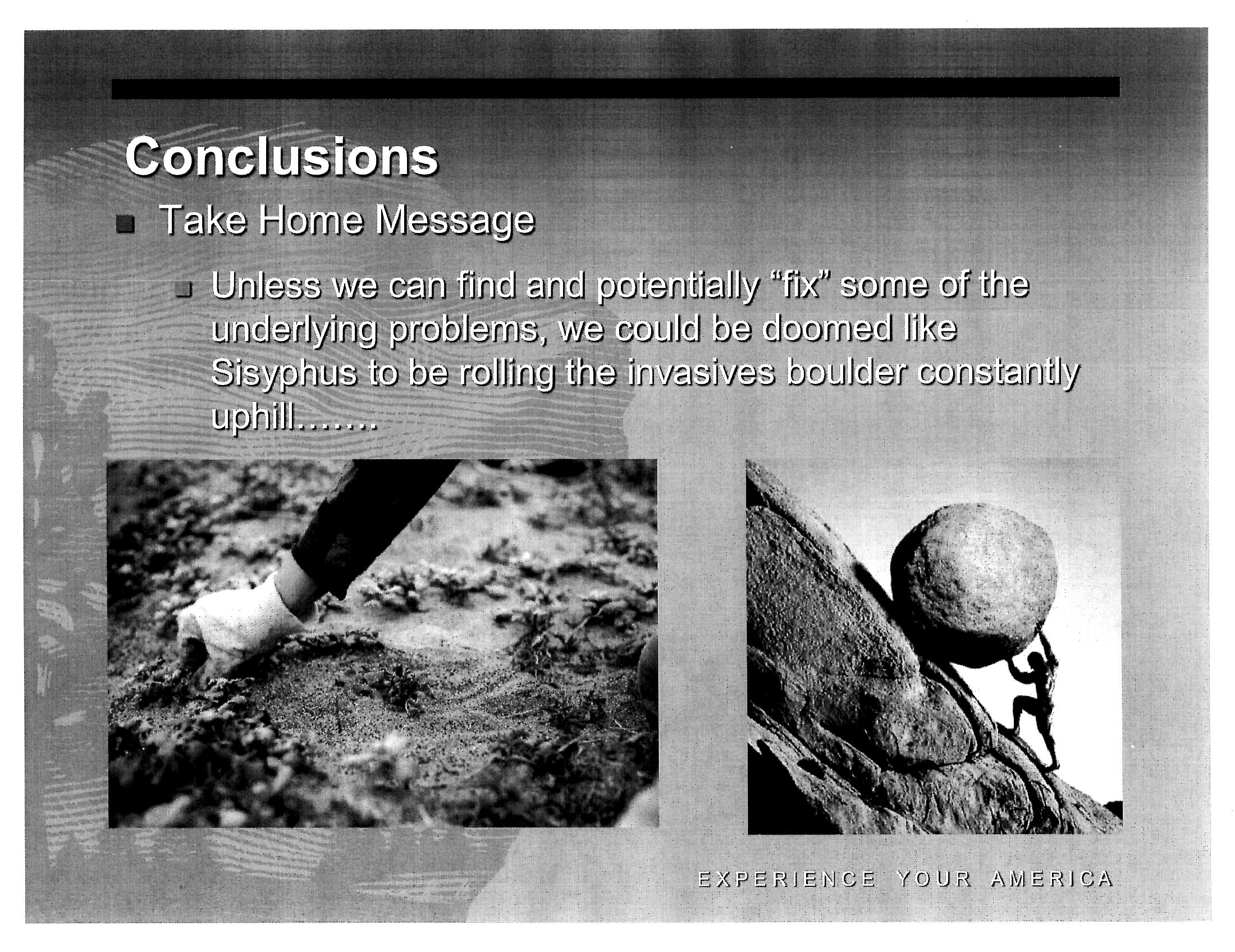
The presentation of this study concluded with this happy-face slide. (see below) It looks like a cartoonish marketing ad to me:

Harmless aquatic plants being pointlessly eradicated

A USDA research ecologist stationed at UC Davis made a presentation about the most effective way to kill an aquatic plant with herbicides, but that wasn’t the message I came away with. 

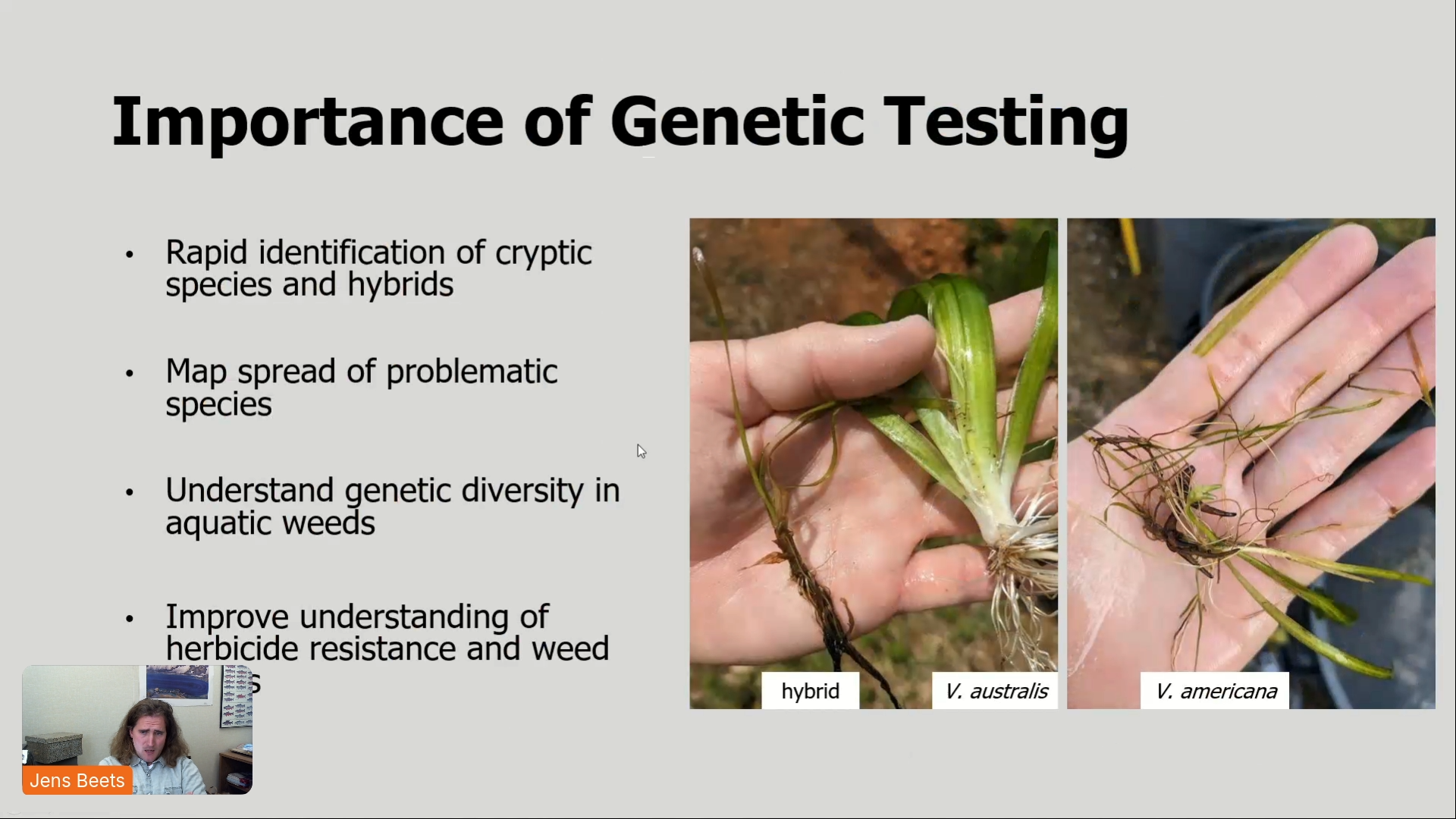
Jens Beets told us about a species of aquatic plant that is native to the East and Gulf coasts of the US, but is considered a “noxious weed” in California, solely because it isn’t native.  He said the plant is considered very useful where it is native.  (see below)
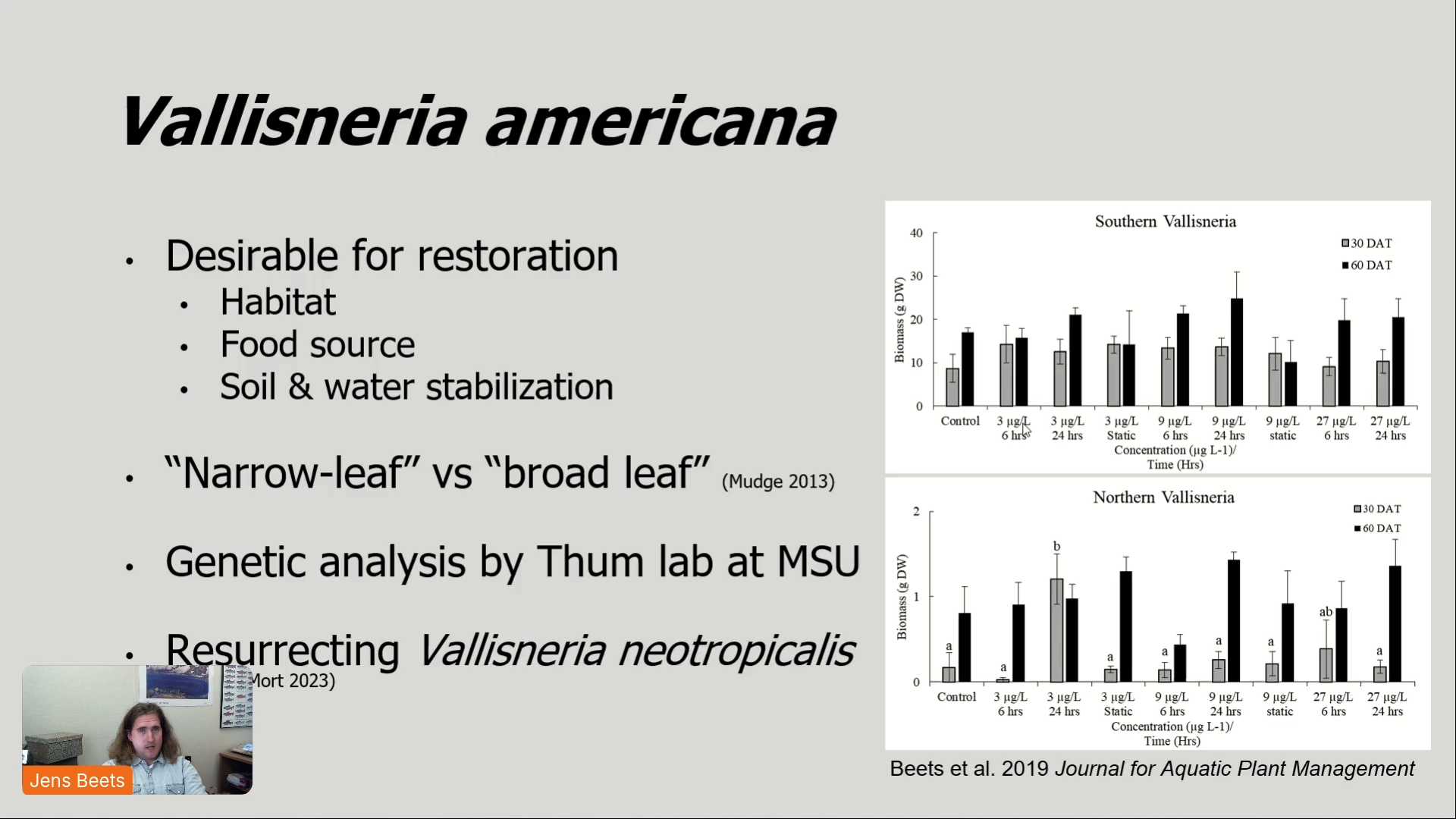
Where Vallisneria americana is native, it is considered a valuable plant for habitat restoration because it is habitat for vertebrates and invertebrates and it stabilizes soil and water levels.  The canvasback duck is named for this plant species because it is preferred habitat for the native duck that is found in California during the winter.

 Vallisneria americana looks very similar to other species in the genus considered native in California.  For that reason, native species of Vallisneria have been mistakenly killed with herbicide because applicators didn’t accurately identify the target plant as native.  Jens Beets recommended that genetic tests be performed before plants in this genus are sprayed with herbicide.
This story probably sounds familiar to regular readers of Conservation Sense and Nonsense.  The story is identical to the pointless and futile effort to eradicate non-native species of Spartina marsh grass in the San Francisco Bay.  The species being eradicated in California is native to the East and Gulf coasts, where it protects the coasts from extreme storm surges and provides valuable habitat for a genus of bird that is plentiful on the East Coast, but endangered in California.  The 20-year effort to eradicate non-native Spartina has killed over 50% of the endangered bird species in the San Francisco Bay. 

Throwing good money after bad

Because the hybrid is indistinguishable from the native species of Spartina on the West Coast. 7,200 genetic tests have been performed in the past 12 years before hybrid Spartina was sprayed with herbicide. Taxpayers have spent $50 million to eradicate Spartina over 20 years.  Recently, California state grants of $6.7 million were awarded to continue the project for another 10 years.  A portion of these grants are given to the California Invasive Plant Council to administer the grants.

Plants are sprayed with herbicide because they aren’t native, not because they are harmful.  Even if the target species is needed by birds and other animals, it is still killed and animals along with it.  The target species looks the same as the native species and only genetic testing can identify it is as a non-native.  The non-native is the functional equivalent of the native.  It is only genetically different because natural selection has adapted it to the conditions of a specific location. 

Pesticide regulation in the US is a hit or miss proposition

The final session of the symposium was a carefully orchestrated apologia for herbicides, a defensive tirade that suggested Cal-IPC believes its primary tool is in jeopardy.  Two presentations were made by employees of regulatory agencies.  Their assignment was to reassure the public that pesticides are safe because they are regulated by government agencies. 

The fact that many countries have banned pesticides that are routinely used in the US does not speak well for our regulatory system.  America’s pesticide regulators rarely deny market access to new pesticides.  A recent change in policies of California’s Department of Pesticide Regulation made a commitment to the continued use of pesticides for another 25 years. 

In 1996, Congress ordered the U.S. Environmental Protection Agency (EPA) to test all pesticides used on food for endocrine disruption by 1999. The EPA still doesn’t do this today. Twenty-five years later, the EPA has not implemented the program, nor has it begun testing on 96% of registered pesticides.  In 2022, an organization that represents farm workers sued the EPA to conduct the legally mandated evaluation of chemicals.   The lawsuit has forced the EPA to make a commitment to conduct these evaluations of chemicals for hormone disruption.   

The Cal-IPC presenters got some badly needed push back from attendees.   One attendee informed the audience that all the testing of herbicides is bought by the manufacturers, not the regulators who don’t do any testing.  Another attendee pointed out that herbicides have not been evaluated for the damage they are doing to the soil, damage that makes it difficult to grow native plants in the dead soil.  The “pesticide regulator” agreed with those observations.

Fire safety or native plant restoration?

The Interim Deputy Director of the Laguna Canyon Foundation was the final presenter for the Symposium, speaking on a Friday afternoon at 4:30 pm, when there were less than 100 attendees left of the 690 registrants.  His presentation was about the blow back that his organization gets from the public about herbicide applications.  Criticism of herbicides escalated after a wet year that increased vegetation considered a fire hazard.  This photo (below) is an example of the visible effects of fuels management by Laguna Canyon Foundation using herbicides.
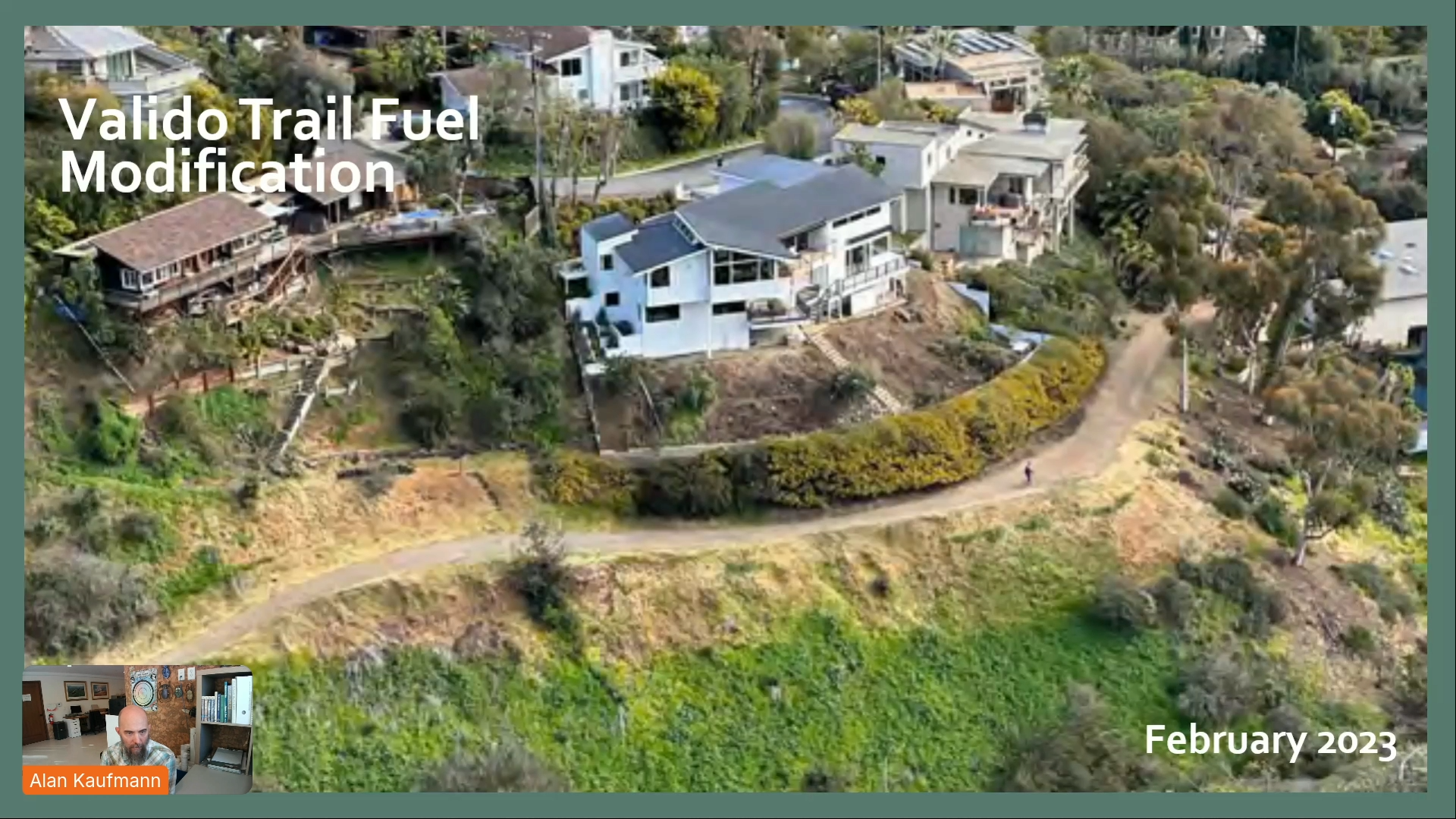
It seems likely that a fuels management project was selected for this presentation because it’s easier to justify herbicide use for fuels management than for eradicating harmless plants solely because they aren’t native. 

I recently supported Oakland’s Vegetation Management Plan that will use herbicides for the first time on 300 miles of roadsides and 2,000 acres of public parks and open space in Oakland.  Previously, herbicide applications were only allowed on medians in Oakland.  I tracked the development of the Vegetation Management Plan for 7 years through 4 revisions to avoid nativist versions of fuels management such as leaving dead thatch after herbicide applications on grassland or destroying non-native trees, while leaving highly flammable bay laurel trees behind or destroying broom, while leaving more flammable coyote brush behind.

However, using herbicides for the sole purpose of killing non-native plants is much harder to justify.  The irrational preference for native species has put us on the pesticide treadmill. Every plant species now targeted for eradication with herbicides should be re-evaluated, taking into consideration the following criteria:

  • Is it futile to attempt to eradicate a plant species that is deeply entrenched in plant communities?
  • Will the attempt to eradicate the plant species do more harm than good?
  • Is the targeted plant species better adapted to current environmental and climate conditions?
  • Is the targeted non-native plant making valuable contributions to the ecosystem and its animal inhabitants?

If these questions cannot be satisfactorily answered, the bulls-eye on the targeted plant should be removed. Limiting the number of plants now being sprayed with herbicide is the only way to reduce pesticide use. If the plant isn’t a problem, there is no legitimate reason to spray it with herbicide.

Pot calls kettle black

The Cal-IPC presentation was a detailed criticism of the public’s complaints about herbicides used in their community.  The intention of the presentation was to arm herbicide applicators with defenses against the public’s complaints.  Herbicide applicators were encouraged to recognize these arguments (below) and participate in the “education” of the public about the righteousness of their task.
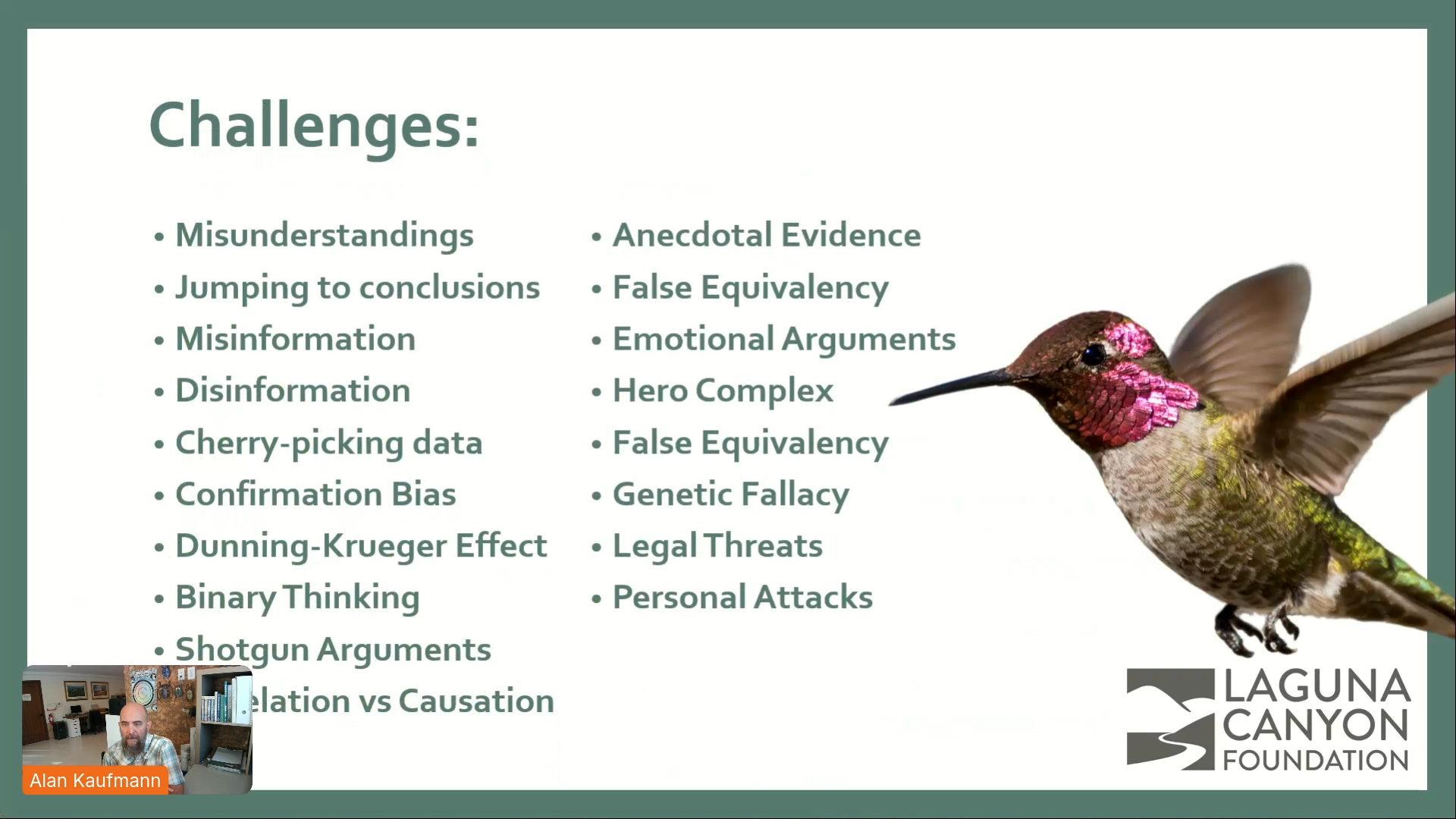
The presenter then showed a series of slides making specific accusations, such as these:  (see below)
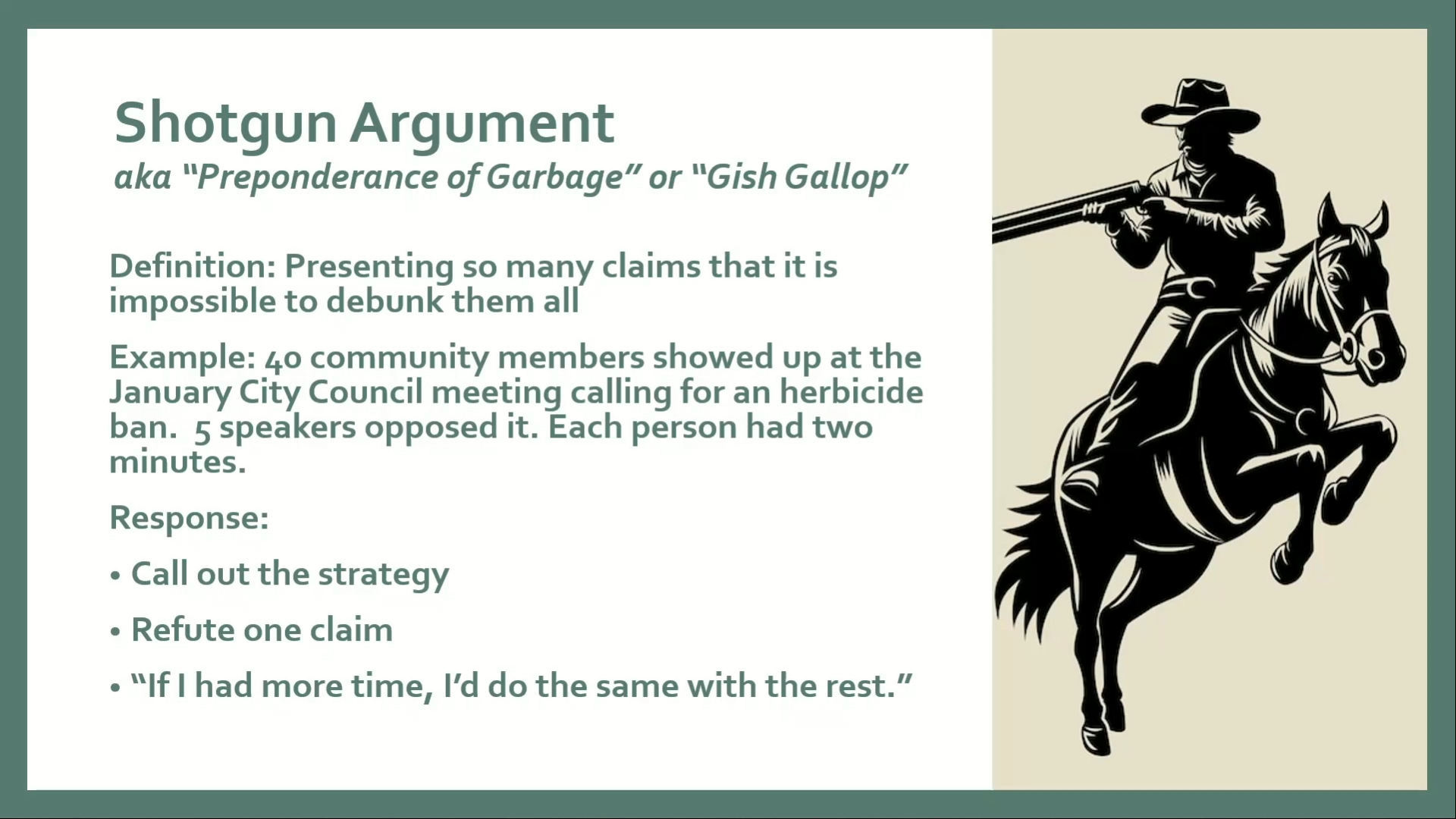
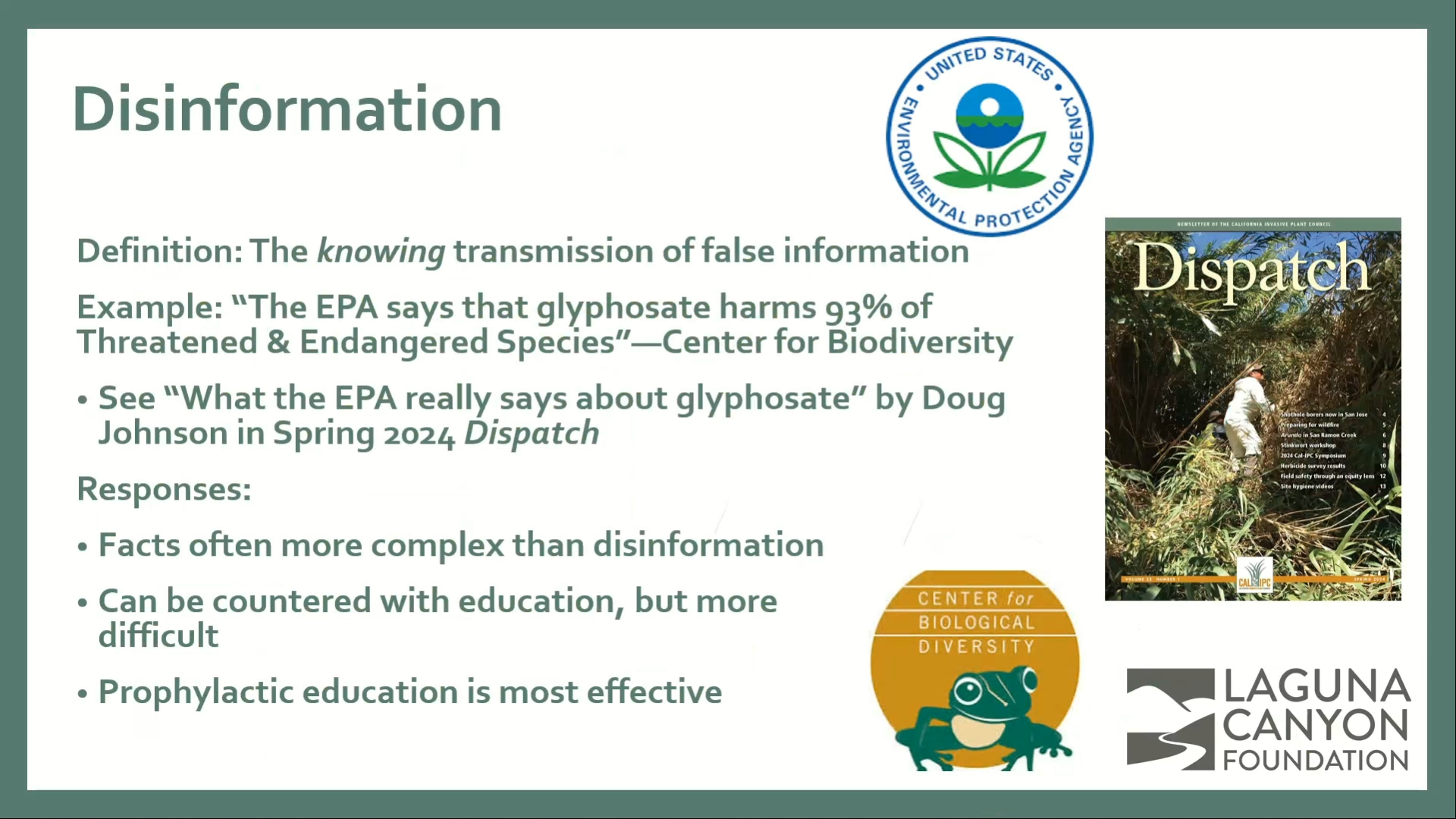
Those who object to the pointless destruction of nature can also cite similar distortions and misrepresentations of facts (AKA lies) by those who engage in these destructive projects;

  • Nativists fabricated a myth that eucalyptus kills birds to support their demand that eucalyptus in California be destroyed.  There is no evidence that myth is true
  • Nativists also fabricated a myth that burning eucalyptus in the 1991 firestorm in the East Bay cast embers that started spot fires 12 miles away from the fire front.  There is no evidence that myth is true.
  • Nativists exaggerate the success of their projects by setting a low bar for success, conducting no post-project monitoring, and restricting access to their completed projects.  
  • The EPA justified the dumping of rodenticides on off-shore islands by inaccurately claiming that the rodenticides do not end up in the water, killing marine animals.  There is ample evidence that island eradications have killed many marine animals because rodenticide lands in the water when applied by helicopters. 
  • USFWS justified the killing of 500,000 barred owls in western forests by claiming they are an “invasive species.”  In fact, barred owls migrated from the East to the West Coasts via the boreal forests of Canada.  These forests were not planted by humans and have existed since the end of the last Ice Age, some 10,000 years ago.  The arrival of barred owls on the West Coast was a natural phenomenon.  Barred owls are therefore not “invasive species.” In a rapidly changing climate, many animals must move to survive.
  • Nativists claim that most insects are “specialists” that require native plants.  That claim is a gross exaggeration of the dependence of insects on native plants, which are sometimes confined to a family of plants containing thousands of both native and non-native species. 
  • Pesticide applicators also complain about “personal attacks.”  They are not alone.  I (and others) have been called “nature haters,” “chemophobes,” and “climate change deniers.”  Pesticide applicators feel abused.  So do I. 

I could go on.  The list of bogus claims of the superiority of native plants and animals is long and getting longer as more and more public money is available to conduct misnamed “restorations.”  Suffice to say, there is plenty of misinformation floating around invasion biology and most of it is used to defend destructive “restoration” projects.  The war on nature is also a war of words. 


(1) ­Justin Luong, et.al., “Lessons learned from an interdisciplinary evaluation of long-term restoration outcomes on 37 coastal grasslands in California.” Biological Conservation, February 2022.
Flawed Data: Garbage in, garbage out

Even the most dedicated academic invasion biologists—such as Daniel Simberloff and Doug Tallamy—concede that not all introduced plants are invasive.  However, they claim that all introduced plants have the potential to become invasive. 

Early in the rise of invasive biology, over 25 years ago, much research effort was devoted to determining the factors that could predict which plants would become invasive.  Theoretically, if we could predict an invasive future for an introduced plant we could make an early effort to eradicate them before they became entrenched, naturalized members of an ecosystem.  At that point, most invasion biologists concede that landscape-scale attempts to eradicate non-native plants are futile.

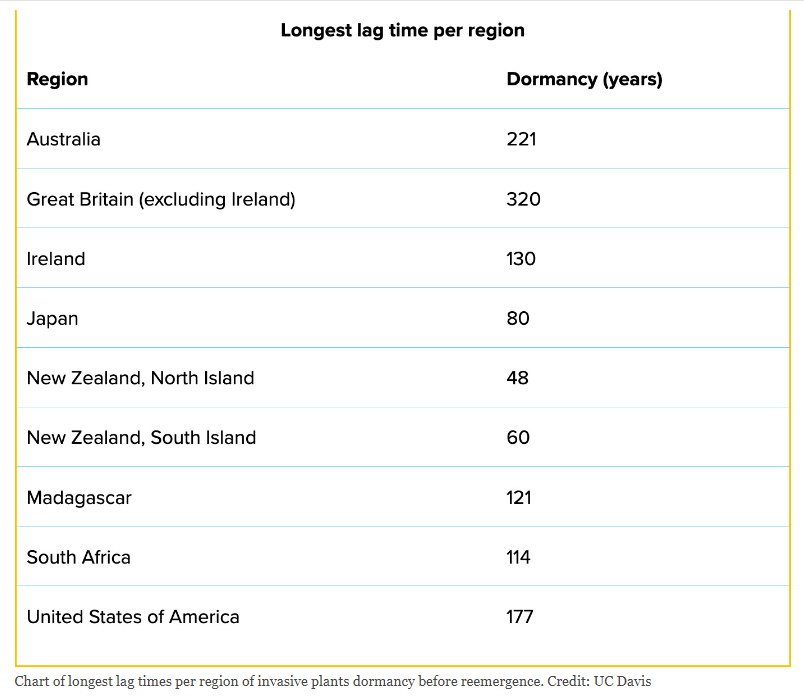
The most recent attempt to identify the factors that contribute to “invasability” is a study led by Assistant Professor Moshen Mesgaran in the Department of Plant Sciences at UC Davis:  “Invading plants remain undetected in a lag phase while they explore suitable climates.” (1)  This study claims that it can take hundreds of years for non-native plants to become “invasive,” which the authors call “lag time.” 

The study got my attention because it seemed obvious that the behavior of all plants, whether native or non-native, has changed greatly in the past 300 years, because of many changes in the environment, most notably climate change.  What is described by the study as “lag time” between the time of the introduction of a non-native plant and its invasive behavior, seems primarily the predictable response of plants to climate and other changes that we should expect. 

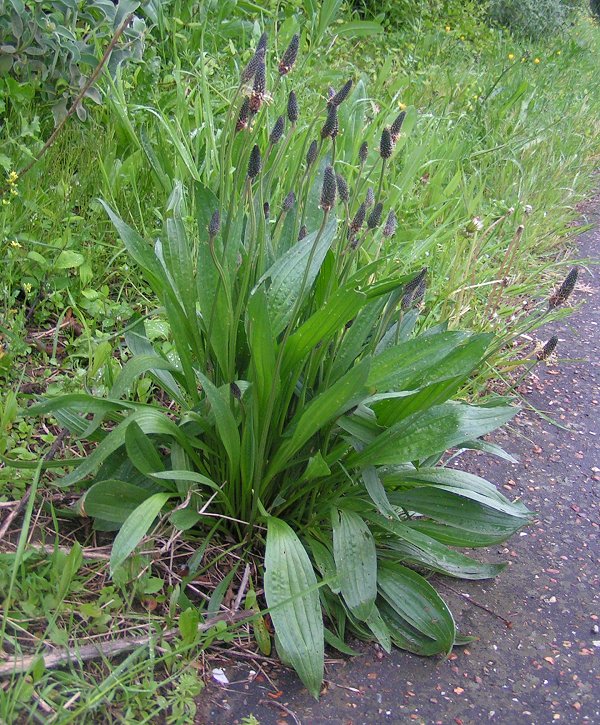
When I mentioned this study to one of my scientific advisors, he pointed out the most obvious flaw in the study, which casts doubt on the study’s conclusions.  The study claims that plantain (Plantago lanceolata) had lag time of 177 years, the longest of any introduced plant in the United States:  “Consider the common lawn weed Plantago lanceolata, otherwise known as ribwort or buckhorn plantain, which has the longest dormancy in the United States, according to the report. Noxious to livestock and native plants, the plant was introduced in the United States in 1822 and is found widely here.” (2)

Plantago lanceolata. Source: Wikipedia

In fact, plantain arrived in the US long before 1822 and was quickly widespread shortly after its arrival in the 17th century.  Plantain arrived first to the East Coast with early settlers, along with many other weeds.  John Josselyn visited New England in 1638 and 1663 and made a record of English weeds in New England—including Plantago lanceolata—that was published in the 19th century. 

 Native Americans of the Northeast also made a record of the arrival and spread of plantain in New England:  Plantain “was called ‘Englishman’s foot’ by the Amerindians of both New England and Virginia, who believed in the seventeenth century that it would grow only where the English ‘have trodden & was never known to grow before the English came into this country.’” (3)

The arrival and rapid spread of plantain in the US is also immortalized by American popular literature.  Henry Wadsworth Longfellow described the simultaneous arrival of white people and plantain, in the epic poem, Song of Hiawatha, published in 1855:  “Wheresoe’er they tread, beneath them/Springs a flower unknown among us/Springs the White-man’s Foot in bloom.”

More recently, Daniel Mason described in his novel, North Woods, the arrival of plantain in the ballast of an English ship and its subsequent spread in the New World:   “And there are seeds, uncountable, scattered in the humid loam:  red clover, groundsel, spurrey, trefoil, meadow fescue, dandelion, hedge parsley, nonesuch, plantain. The voyage takes two months. On landing, the ballast is removed and dumped into the harbor.  Much of it—the stones, the shells, the beads, the spectacles—sinks to the bottom of the bay.  But the seeds, many of the seeds, enough of the seeds, rinsed loose of their swaddling earth, are freed into the breakers and float to shore.” (4)

Plantain arrived in the western US in the early 19th century, when the Spanish brought many weeds to the West from Mexico along with their herds of cattle.  Weeds from the Old World were noticed and recorded by John C. Fremont when he visited the Sacramento Valley in 1844.  He also mentioned that his horses ate the weeds, and “even the squaws he met ate it [red-stemmed filaree].” (3)

English plantain “was one of the nine sacred herbs of the Anglo-Saxons, and Chaucer and Shakespeare cited its medicinal qualities.  It grows wild today in all the continents but Antarctica, as well as in New Zealand and a number of islands.  It rates as one of the very hardiest of weeds in the world, and it will be with us forever, apparently.” (3)

Buckeye butterfly. Source: Wikipedia

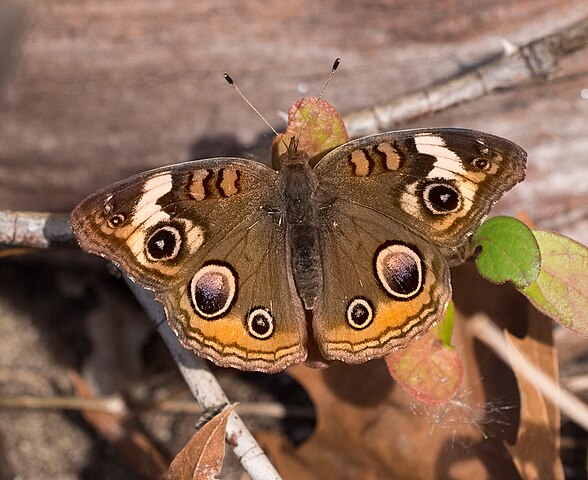
“English plantain is a major host of the buckeye butterfly from coast to coast, and in New York and perhaps elsewhere it is being used by the Eastern Baltimore Checkerspot, Euphydryas phaeton, previously considered monophagous on the wetland Scroph Turtlehead, Chelone glabra. This provided an escape from a very narrow niche!” (5)  There are many instances of butterflies using plantain as their host plant in scientific literature (6)

We also question the characterization of plantain by Professor Mesgaran’s research team as a “noxious weed” that is harmful to livestock.  English plantain is not listed as a “noxious weed” by the state of California (7) and its “invasiveness” is considered “Limited” by the California Invasive Plant Council. English plantain is not considered toxic to horses or cattle, according to the results of internet searches. 

Plantain arrived in the New World soon after it was discovered by the Old World.  It spread quickly and is now a valued member of American ecosystems, as well as most ecosystems all over the world.  As we often say in defense of harmless non-native plants, “What’s the beef?” 

Professor Mesgaran’s study used herbarium and climate data to analyze “over 5,700 time series (species × regions) in 3,505 naturalized plant species from nine regions in temperate and tropical climates to quantify lags and test whether there have been shifts in the species’ climatic space during the transition from the lag phase to the expansion phase.” (1) This source of information was clearly not accurate in the case of English plantain, which has been in the US over 400 years and immediately spread everywhere.  I can’t speak to the study’s report of “lag times” in other global regions.

Putting aside the inaccuracy of data used by the study to report the “lag time” between the arrival of introduced plants and evidence of invasive behavior, I summarize the findings of this study:

  • The behavior of plants vary from one place to another because growing conditions vary.
  • When the climate changes, vegetation changes in response.

This study claims that it can take hundreds of years for non-native plants to become “invasive.”  The concept of “lag time” seems to suggest that all introduced plants have the potential to become invasive.  This is not a new idea among invasion biologists who consider all introduced species a problem even when there is little evidence that they are.  That school of thought expects us to prevent all plant introductions because they assume that all of them will be a problem in the future.  The contrarian view is:

  • It is impossible to prevent all introductions of non-native plants because most are dispersed unintentionally or naturally.
  • The damage that is done to the environment by futile attempts to destroy non-native species is worse than the theoretical risks that some of them will eventually become a problem. 
  • The resources used in the attempt to eradicate non-native species could be put to better use to benefit the environment, such as addressing the causes of climate change.
  • Every non-native plant contributes to biodiversity, which creates evolutionary opportunities to adapt to the changing environment.  There is far more opportunity lost when harmless non-native plants are eradicated compared to their potential to contribute to biodiversity.   
  • Many non-native plants are beneficial and are frequently functional substitutes for native species that are no longer adapted to the changed environmental conditions and climate.

Unfortunately, what might have been a straight-forward study (embedded in arcane jargon and complex statistical analysis) is flawed by inaccurate information about the “lag time” of specific plants in specific countries.  The study claims that it took 177 years for plantain to become “invasive” in the US.  In fact, plantain spread everywhere immediately after it was introduced in the 17th century and there is no evidence that it has done any harm where it lives.  If we learn anything new from this study, it is that herbarium records are not a reliable source of information about the arrival and dispersal of introduced plants. 

Much like the fossil record, herbarium collections can establish that a plant or animal lived in a specific place at a specific time, but they cannot provide negative evidence that the plant or animal wasn’t there or elsewhere prior to the time the specimen was collected.  In any case, when plantain arrived in the US, there were few herbarium collections available to record its arrival.

This is not to say that herbarium collections are not useful for botanical research.  Here are two specific examples of how herbarium collections have been used appropriately by scientists:

  • Angela Moles, an Australian scientist, used the collection of a university herbarium to measure the changes in plants that were introduced to Australia. The herbarium had samples of the same species of plants collected over a 60 year period from the same location. Professor Moles found that the plants had changed in significant ways. In a sense, they were becoming Australian plants in response to the biotic (other plants and animals) and abiotic (climate, soil, etc.) conditions of their new home. She predicted that if they weren’t yet genetically distinct from their ancestors, they soon would be. Professor Moles made a TED presentation 11 years ago about her findings that is available HERE.
  • Scientists used seeds in France’s National Botanical Conservatories collected in the 1990s and early 2000s to study how the plant had changed over a period of less than 30 years.  The plant species they studied was capable of both self-pollination and cross-pollination by insects and other animals.  They germinated the old seeds and compared their flowers with those now growing in the French countryside.  They discovered that self-pollination by that plant species had increased 27 percent since the 1990s, probably in response to the significant decline in bee populations.  That study was described by the New York Times.

No amount of obscure jargon and statistical analysis can compensate for flawed data: garbage in, garbage out.


  1. “Invading plants remain undetected in a lag phase while they explore suitable climates,” Mohsen B. Mesgaran, Nature Ecology & Evolution, February 6, 2024
  2. https://scitechdaily.com/invasive-time-bombs-scientists-uncover-hidden-ecological-threat/
  3. Alfred Crosby, Ecological Imperialism, Cambridge University Press, 2004 (second edition).  The source of the quote within the quote of Crosby is from the published writings of Reverend John Clayton, a Parson with a Scientific Mind.
  4. Daniel Mason, North Woods, Random House, 2023
  5. Email communication with Professor Emeritus Arthur M. Shapiro (UCD) with permission
  6. “Matthew and Jonathan Douglas explicitly record oviposition on plantain in “Butterflies of the Great Lakes Region” (2005). I’m sure there are earlier such mentions.” Email communication with Professor Emeritus Arthur M. Shapiro (UCD) with permission
  7. https://www.cdfa.ca.gov/plant/ipc/encycloweedia/pdf/CaliforniaNoxiousWeeds.pdf

Assembly Bill 2509 has the potential to reduce pesticide use, IF it is revised

Below is my letter to California Assemblymember, Ash Kalra (District 25, San Jose), asking him to consider revising Assembly Bill 2509 so that it will reduce the use of pesticides in California to eradicate harmless and useful non-native plants.  Please consider making this suggestion to your elected representatives in the California Legislature.  AB2509 has the potential to reduce pesticide use in California if we make an effort to revise it as needed to accomplish that goal.


Dear Assemblymember Kalra

AB2509, your bill being considered by the California Legislature, will define “Integrated Pest Management” (IPM) and “invasive species.”  The bill has the potential to reduce pesticide use in California’s parks and open spaces, but only if it is revised to accomplish that purpose. AB2509 is also an opportunity to improve the success of ecological restorations that begin by eradicating non-native plants considered “invasive,” by narrowing the target to those few species that are actually doing any harm.

In its present form (April 4, 2024), AB2509 defines invasive species, “to mean nonnative organisms that cause, or are likely to cause, economic or environmental harm, excluding humans, domestic livestock, specified domestic or domesticated species, and nonharmful nonnative organisms.”

That definition is based on Federal Executive Order 13112, which was passed 25 years ago, in 1999.  We have learned a lot in the past 25 years about invasive species and the attempt to control them:

  • The climate has changed a great deal since 1999, and with it the environment, including the plants and animals that live in it.  The native ranges of many plants and animals have changed and will continue to change.
  • We have learned that many introduced plants are often functional substitutes for native plants that are no longer adapted to the changed environment. 
  • We have learned that insects are capable of rapidly adapting and evolving to make use of introduced plants.
  • We have learned, after trying to eradicate them for over 25 years, that most naturalized introduced plants cannot be eradicated.
  •  We have learned that the herbicides being used to eradicate introduced plants are doing a great deal of harm to the environment and the animals who live in it.  We now know that herbicides damage the soil, making it difficult for new plants to survive in sterilized soil, devoid of beneficial microbes and fungi. 
  • We have learned that native plants don’t necessarily return after introduced plants have been eradicated. The damage done by eradication projects is often greater than the anticipated benefit.
  • Despite dire predictions to the contrary, there is no evidence that any introduced plant species has caused the extinction of a native plant species in California.

We need a new definition of invasive species that reflects these changes and accommodates the movement of plant and animal species needed for survival.  We need a definition that does not attempt to stop adaptation and evolution.  Like dynamic nature, our attempts to conserve nature must constantly evolve in response.  We need a definition that distinguishes between actual harm and theoretical predictions of harm.  We need a definition that does not require us to poison our public lands unnecessarily.

Please consider revising the definition of “invasive species” in AB2509 to reflect what we now know about introduced plants, such as:

“AB2509 defines invasive species to mean pathogens, diseases, and insects that are known to cause harm to plants and animals, including humans.”

In its present form, AB2509 also defines Integrated Pest Management as:  “’Integrated pest management’ means an ecosystem-based strategy that focuses on long-term prevention of pests or their damage through a combination of techniques such as biological control, habitat manipulation, modification of cultural practices, and use of resistant varieties. Pesticides are used only after monitoring indicates they are needed according to established guidelines, and treatments are made with the goal of removing only the target organism. Pest control materials are selected and applied in a manner that minimizes risks to human health, beneficial and nontarget organisms, and the environment.”

Integrated Pest Management (IPM) is not a new concept.  Most public land managers have had IPM programs for over 25 years.  Some have resulted in reduced herbicide use in developed areas, without corresponding reductions in public open space and wildlands.

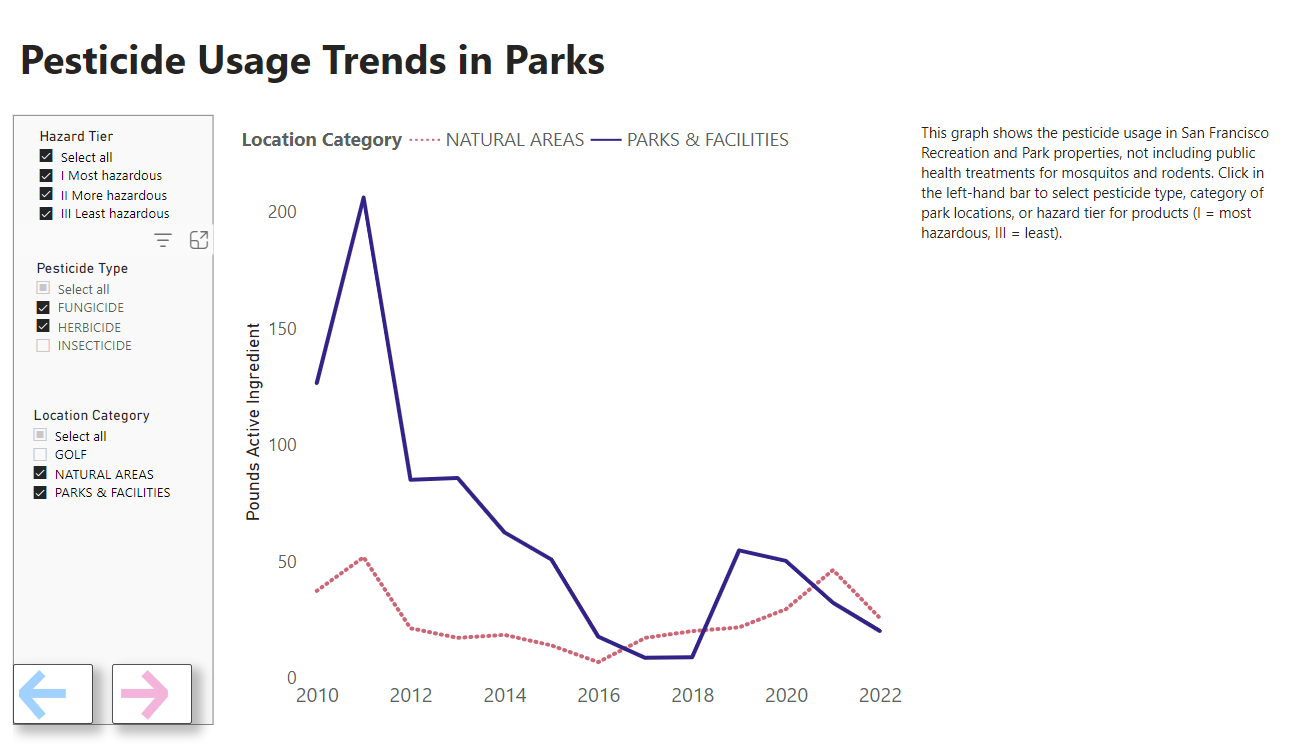
San Francisco’s IPM program has significantly reduced herbicide use on developed public land, but herbicide used to eradicate non-native plants in one-third of park acreage known as “natural areas” has changed little, as shown in this graph:

Source:  San Francisco Integrated Pest Management Program

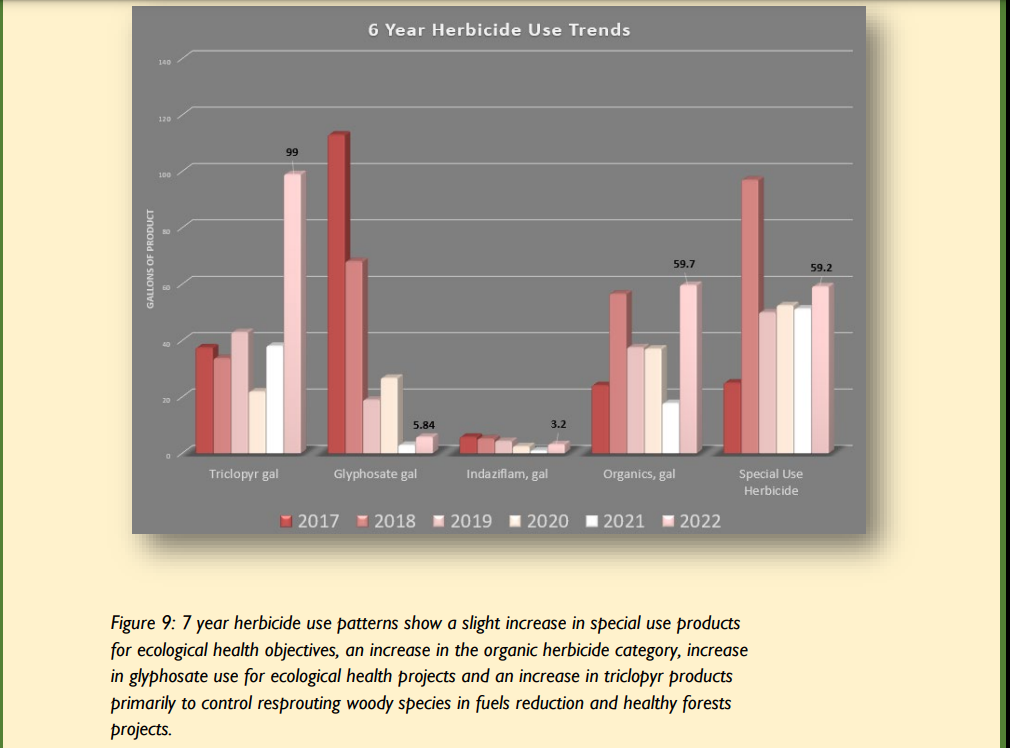
East Bay Regional Park District has also reduced its use of herbicides in developed areas of the park, such as parking lots, picnic areas, and playgrounds, without reducing their use in wildlands where non-native plants and trees are eradicated:

If we want Integrated Pesticide Management Programs to reduce the use of pesticides in our public lands, we must define IPM to achieve that purpose by:

  • Changing the definition of “invasive species” to focus only on those introduced species that are known to cause actual harm.  The expectation of “likely” harm without evidence of actual harm should not be used to justify pesticide use. 
  • Explicitly defining the “guidelines” that determine if pesticides are needed in order to prevent their use on harmless and beneficial plants.
  • Avoiding the use of vague terms that can be interpreted differently from different perspectives, such as “use of resistant species.”  Resistant to what? In whose opinion? 
  • By not making empty promises such as claiming that pesticides can be used on non-native plants without doing any damage to non-target species.  Because of drift, persistence, and mobility of pesticides in the soil, it is not possible to make such assurances, which give the public the mistaken impression that herbicides can be used without unintended consequences

Please consider a revised definition of Integrated Pesticide Management that will reduce pesticide use and preserve the vegetation that is capable of growing in today’s environment, such as:

“’Integrated pest management’ means an ecosystem-based strategy that focuses on long-term prevention of pests or their damage through a combination of techniques such as biological control, habitat manipulation, and modification of cultural practices.  Pesticides are used only after harm is documented, benefits of existing vegetation have been identified and weighed against harm, the health risks and environmental damage caused by herbicides is considered, and the outcome of eradication is determined to be positive, on balance.”

In conclusion, I will briefly describe my interest in invasion biology and the ecological restoration industry it spawned.  My interest began over 25 years ago when my neighborhood park was designated a “natural area” by San Francisco’s Recreation and Park Department.  When I moved to the East Bay, I learned that the native plant movement is equally committed to the eradication of introduced plants and the pesticides needed to accomplish that goal.  I have visited many of these projects all over the Bay Area and elsewhere in California.  I read the publications and attend the conferences of California Invasive Plant Council and California Native Plant Society so that I am as informed of their objectives and beliefs as I am of the academic criticism of invasion biology.  I have had a website since 2010 that reports to the general public what I have learned about specific projects and the scientific evaluations of them.  I invite you to visit my website to help you evaluate the advice I am sending to you today about AB2509.  I can provide references for every statement I make in this letter, on request.

Thank you for your consideration and for your effort to reduce pesticide use in California.

Sincerely,
Webmaster, Conservation Sense and Nonsense

CC:
Patty Clary, Californians for Alternatives to Toxics
Damon Connolly, Assembleymember, District 12
Jay Feldman, Beyond Pesticides
Angel Garcia, Californians for Pesticide Reform
Doug Johnson, California Invasive Plant Council
Megan Kaun, Sonoma Safe, Ag Safe Schools
Melinda MacNaughton, El Granada Advocates
Margaret Reeves, Pesticide Action Network
Jane Sellen, Californians for Pesticide Reform
Nancy Skinner, Senator, District 9
Buffy Wicks, Assemblymember, District 15
Wildlife Conservation Board


Update, April 24, 2024: 

The Assembly Agriculture Committee voted unanimously to pass AB2509 to the Appropriations Committee with no amendments. 

Doug Johnson, Executive of Cal-IPC and Marc Landgraf, Santa Clara Valley Open Space Authority, spoke in favor of AB2509.  Johnson claimed that only “small amounts of pesticide are used.”  Landgraf said most plants are killed by grazing, mowing, and volunteers pulling my hand; herbicides are used only “when needed.” 

Damon Connolly was the only committee member to speak.  He expressed concern that AB2509 not conflict with his continuing support for AB99, which has the potential to reduce roadside spraying of herbicide by Cal Trans.

There were no speakers in opposition to AB2509.  There was no acknowledgment of the public’s concern about AB2509 or of the public’s concern about herbicides being used on our public lands.


For US Fish & Wildlife Service “Management” Means Killing

“It makes me sad, but range expansions are a part of natural systems. We just happened to be watching when one occurred. Even if [we’re to blame], we’re probably going to have to live with it.”
Eric Forsman, US Forest Service

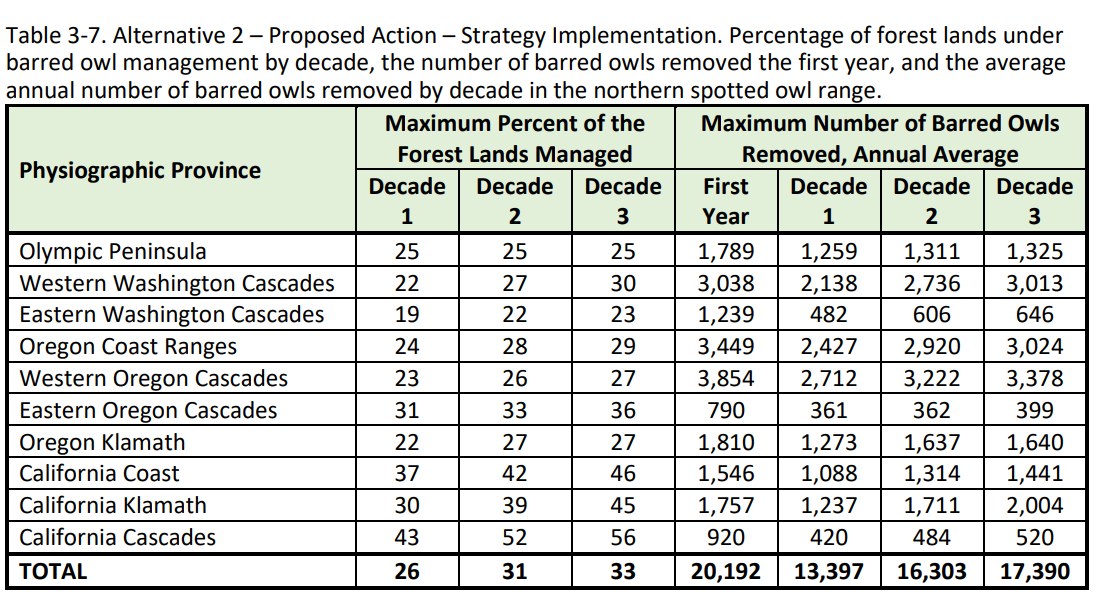
US Fish & Wildlife Service (USFWS) proposes to kill 470,000 barred owls in the next 30 years in an effort to save the northern spotted owl (NSO) and a closely related sub-species in California.  The deadline for making a comment on this proposal is January 16, 2024.  Instructions for making comments are available HERE

Today, I will tell you about this proposal, how it came about, and why I am opposed to the proposal.  I provide links to the source documents so you can read them yourself.  I hope this information will help you reach your own conclusions about the plan and submit a public comment. 

USFWS Barred Owl Management Strategy

The purpose of the Barred Owl Management Strategy is protection for the dwindling population of northern spotted owls (NSO) in the Pacific Northwest (Washington, Oregon, and Northern California).  NSOs were classified as a threatened species by USFWS in 1990.  The first Recovery Plan for NSO, published in 2011, identified habitat loss and barred owls as the primary threats to NSOs.  The most recent Recovery Plan has added “past habitat loss, continued timber harvest, and wildfire” to the list of threats to NSOs.

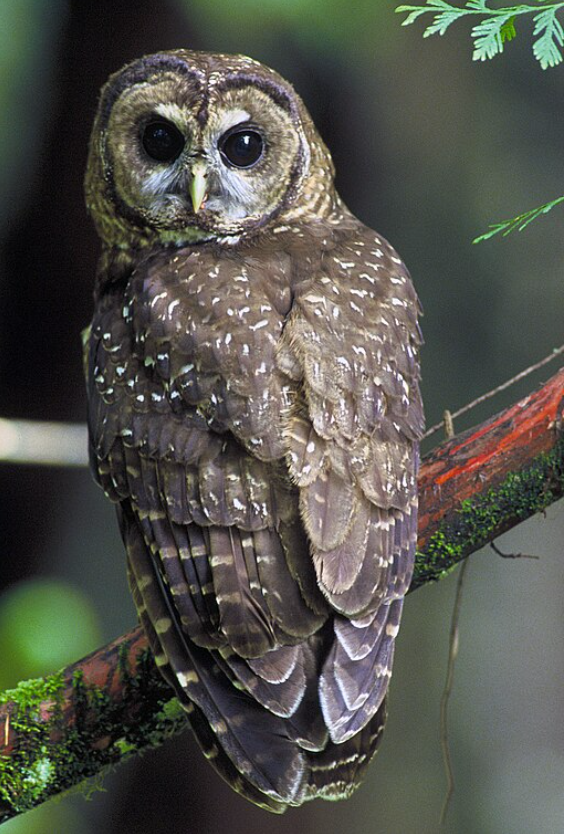
Northern spotted owl. USFWS

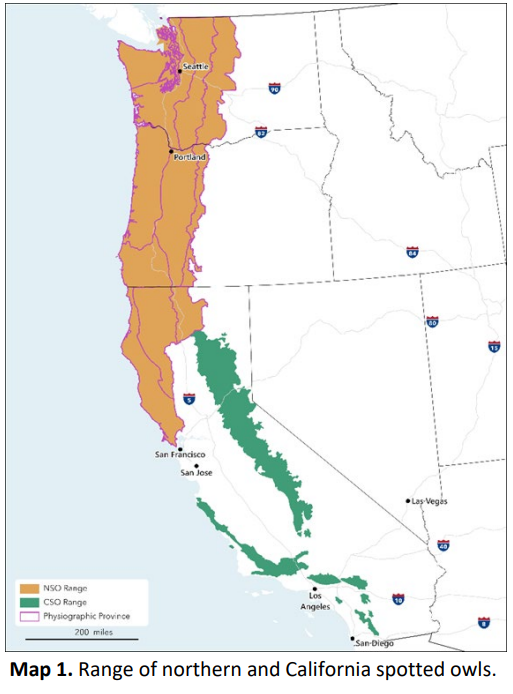
The Barred Owl Management Strategy also proposes “management” of barred owls to protect the California spotted owl (CSO), which is a subspecies of NSOs.  Although endangered status for CSO was proposed in February 2023, endangered status has not been granted.  Yet, USFWS proposes to extend the same lethal removal measures used to protect NSOs to CSOs.  In addition to the threats to NSOs, California spotted owls are also threatened by fragmented habitat and forest mortality caused by drought and correlated disease, which have killed over 300 million conifers in California in the past 10 years.

Despite the many threats to spotted owls, the Management Strategy intended to protect them addresses only one of those threats:  barred owls.   It makes no proposals for improving or expanding habitat or addressing the impact of climate change on forests.

The Barred Owl Management Strategy is a voluntary plan.  Federal agencies in spotted owl territory (Bureau of Land Management, US Forest Service, and National Park Service) will be “encouraged” to implement the plan.  If state, commercial, private property, and tribal land owners choose to participate they will be granted the same “take” permits required by the Migratory Bird Treaty Act that federal land managers will be granted, so long as they agree to follow the protocol for “removing” barred owls from their properties.

The word “removal” in the context of the Management Strategy means “lethal removal.”  The protocol requires that barred owls be found by playing a recording of their distinctive call (described as “who cooks for you?”) and shooting the owl as it flies toward the call and the shooter.  If guns are not allowed where barred owls are found, they must be captured and euthanized.  Hybrids of barred owls and spotted owls will also be killed, despite the fact that accurately identifying hybrids is considered difficult, particularly in subsequent generations.    

Because the Management Strategy is not mandatory, the total number of birds that will be killed can only be estimated.  If all property managers choose to implement the Strategy, approximately 470,000 barred owls would be killed in the next 30 years.  Although the Strategy covers only a 30 year time frame, “barred owl management will be required at same level for the long term” because “Their populations will continue to produce young that can disperse within and beyond the current range of barred owls.” (1)  The estimated current population of barred owls in study areas of the Management Strategy is only 102,000.  Clearly the lethal removal of barred owls is not expected to keep pace with the reproductive success of barred owls.  The killing of barred owls will continue forever, although there is no expectation that they will be eliminated.

How were barred owls selected as the scapegoat?

When northern spotted owls were designated as “threatened” in 1990 it triggered the legal protections conferred by the Endangered Species Act. In 1994, the Forest Service and the Bureau of Land Management published the EIS for the Northwest Forest Plan.  It created 24 million acres of reserve areas where logging was prohibited to preserve spotted owl habitat.  The reserve areas protected approximately 80 percent of the remaining old growth forests in the Pacific Northwest from timber harvesting.  Obviously, the plan had a negative impact on the timber industry and those who were employed by the industry.  Between 1980 and 1998, 23% of logging jobs were lost, triggering the Timber Wars.

The rate of decline of spotted owl populations in the Pacific Northwest decreased when most logging in old-growth forest was stopped by the Northwest Forest Plan, but began to accelerate again in about 2008.  USFWS attributes that increase in the rate of population decline to competition from barred owls and that theory is supported by several studies.

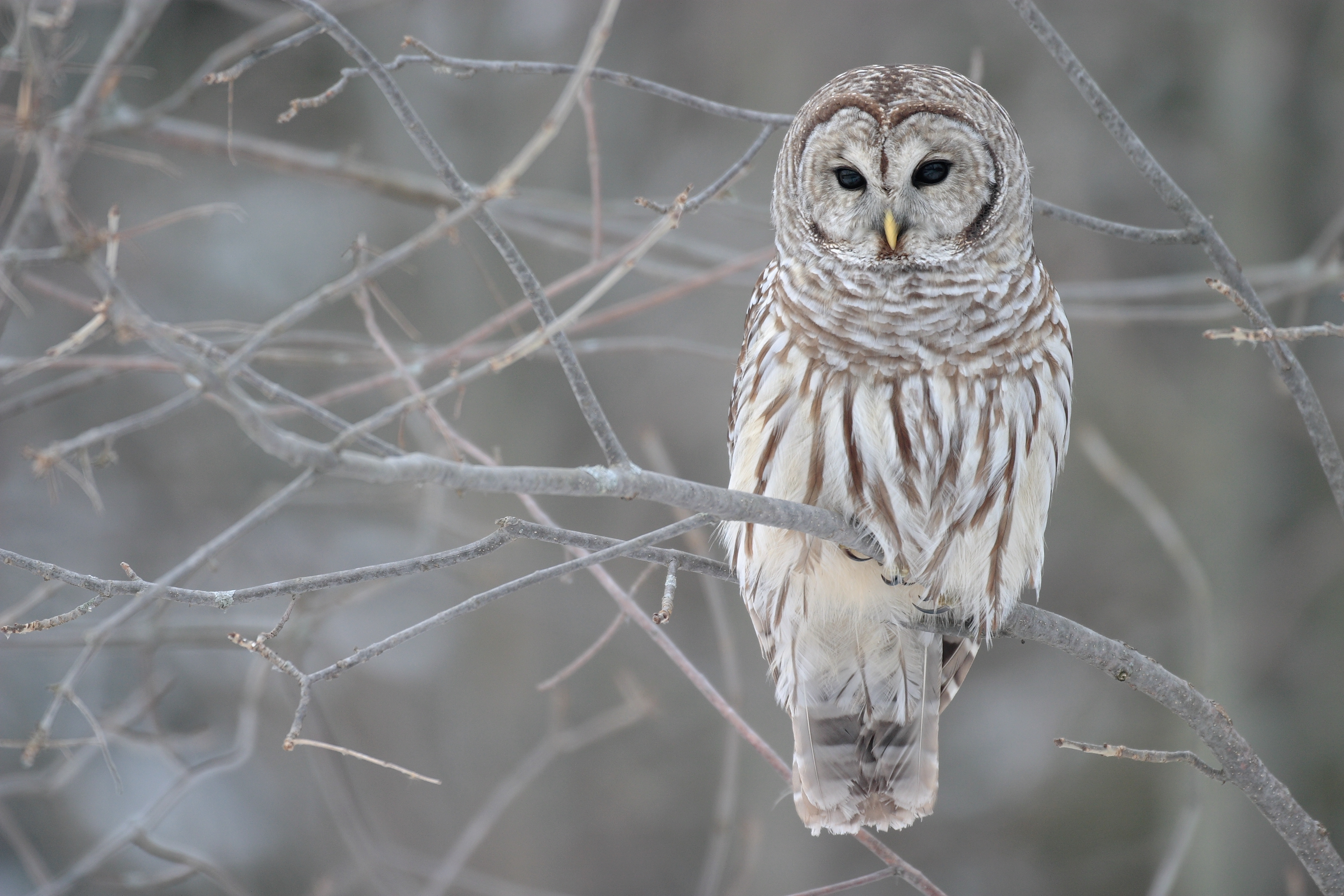
Barred Owl. GNU Free Documentation License

Barred owls are native to North America.  They have been migrating from their historic range in the north and south east of the US to the west coast of North America since about 1900.  Barred owls were first seen on the west coast of North America in British Columbia, Canada around 1959.  They were first documented in Washington in the 1970s and have continued moving south from there. 

Barred owls have successfully competed with spotted owls in their expanding territory because they are larger than spotted owls, they eat a wider variety of prey, they have greater reproductive success, and they are able to live in forests where spotted owls cannot.  Spotted owls are restricted to old-growth forests with large trees and dense canopies, while barred owls often live in second-growth (previously logged) forests and even wooded urban areas. 

The Management Strategy speculates that the omnivorous diet of barred owls will devastate the food webs in the new territory they occupy, although the Strategy offers no evidence to support that theory.  In fact, as barred owls expanded their territory through the Canadian boreal forest, such devastation was not reported.  Barred owls are not considered “invasive” in Canada.

The impact of barred owls on spotted owls was first observed by Lowell Diller, a wildlife biologist who worked as a consultant to Green Diamond Resource Co., a logging company managing timberland in Humboldt and Del Norte counties in Northern California.  Mr. Diller was also an adjunct professor in the Department of Wildlife at Humboldt State University.

Owls, including barred owls, are protected by the Migratory Bird Treaty Act.  Mr. Diller applied for permits to kill barred owls on the property of Green Diamond Resource Co. as an experiment to determine the impact of barred owls on spotted owls.  He described his project in an article in the Marin Independent Journal“In 2009,…Diller set aside patches of timberland to remove barred owls.  In other patches, he did nothing.  After four years, he would see how northern spotted owl numbers differed in the areas with and without barred owls…The study is the first to prove his treatment works.” To be clear, his “treatment” was to shoot barred owls. Mr. Diller also described how upsetting it was to kill birds. 

Green Diamond applied for permits and has continued to kill barred owls on its property.  That commitment has ensured that Green Diamond’s current rate of logging can continue.  The Green Diamond spokesman explained:  “’When you can protect and sustain a business and jobs and also conserve the northern spotted owl,’ he said, ‘why not do it.’” (Marin Independent Journal)

Sierra Pacific Industries is also killing barred owls on its property.  Sierra Pacific Industries in Shasta County is the largest private land holder in California and the second largest lumber producer in America.   

On the basis of the success of Diller’s study, USFWS approved a pilot project to kill barred owls in other places where spotted owls live.  The pilot project killed about 3,000 barred owls.  When the project was completed in 2021, they reported, “The removal of barred owls had a strong, positive effect on the survival of northern spotted owls and a positive, but weaker, effect on recruitment of spotted owls.” (2) The Barred Owl Management Strategy is based on the success of the pilot study. 

In other words, killing barred owls has enabled the timber industry in Northern California to continue their logging operations.  It has also removed the pressure to expand reserve areas to protect spotted owls, even though many scientists believe such expansion would be more effective than killing barred owls to save spotted owls“’The bottom line is that extinction rates went down when the amount of habitat went up,’ U.S. Geological Survey biologist Katie Dugger, lead author of the 2015 demographic study, said in a presentation on the findings last fall. ‘Spotted Owls cannot exist without old-growth forest. And now we’re talking about two species trying to use the same space, so in fact we need more of it.’” (3)

Specific Flaws in Barred Owl Management Strategy

The Barred Owl Management Strategy is based on several outdated notions about nature that have been cast in the concrete of American law. The Endangered Species Act is based on assumptions about nature that were conventional wisdom at the time the law was passed 50 years ago, in 1973.  Evolution was considered a series of events that occurred in the distant past and is no longer actively changing plants and animals.  At the time the ESA was passed, evolution was not believed to occur within a time frame observable by humans.  Nature was perceived as reaching an “equilibrium state” that was stable over long periods of time.  Early conservation efforts were therefore based on the assumption that once achieved, an equilibrium state could be sustained if left undisturbed in nature preserves. (4)

We now know that these assumptions are mistaken.  In the past 50 years, climate change and advances in paleontology have taught us that nature is inherently dynamic and we are usually powerless to stop it from changing even when we try.  When a law is designed to control nature, we should expect some conflict between static law and dynamic nature.  Fifty years after the Endangered Species Act was passed, that conflict is becoming progressively more apparent and problematic. 

These are the specific flaws in the Barred Owl Management Strategy that are the result of mistaken assumptions about nature:

  • Barred owls should not be considered “invasive” on the west coast of the US because the expansion of its range is a natural phenomenon that cannot and should not be stopped.

USFWS designates barred owls on the west coast as “invasive” by fabricating a story about the route barred owls took from their historic range in the east to their expanded range in the west that is not consistent with the facts.  Although USFWS admits that the route that facilitated expansion is “not well documented,” they claim there is evidence of anthropogenic change across the Midwestern Prairie that supports that specific route:  “…the historical lack of trees in the Great Plains acted as a barrier to the range expansion and that increases in forest caused by the anthropogenic impact of European settlement enabled the westward extension of the barred owl range. These include anthropogenic impacts such as fire exclusion and suppression, bison and beaver extirpation, deer and elk overhunting, establishment of riparian forests, and extensive planting of trees and shelterbelts in the northern Great Plains…” (2)    Although that is an accurate description of anthropogenic changes in the Midwestern Prairie, it is irrelevant to the expansion of the range of barred owls, because that wasn’t the route they took to the west coast.

The legal definition of invasive species enables USFWS to designate barred owls on the west coast as “invasive” based on their claim that the expansion route was through the American Midwest as a result of anthropogenic change. If non-indigenous humans are considered the cause of a change in ranges of plants and animals, the species is considered “invasive” where it did not exist prior to the arrival of Europeans. Labelling any plant or animal “invasive” makes it a target for eradication.   However, the theory of a midwestern expansion route for barred owls is not consistent with the facts:

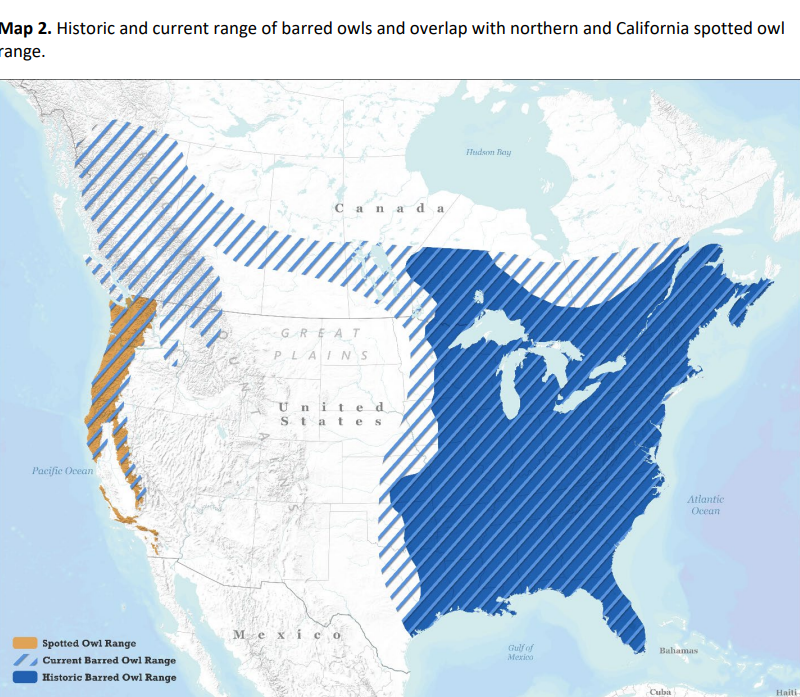
This map clearly shows that the route used by barred owls to expand their range to the west coast was through the boreal forests of Canada, which were not the result of anthropogenic change.  The boreal forests of Canada have existed since the Ice Age ended 10,000 years ago.  The map does not show the historic or current existence of barred owls in the American Midwest. 

The expansion route of barred owls to the west coast through Canadian forests is also consistent with the record of their arrival on the west coast.  They were seen first in the west in 1959 in British Columbia, Canada, at the northern edge of their current range.  They were first seen in the US in Washington in the 1970s.  Their range expansion continues to the south.  This sequence of events is not consistent with the claim that they arrived on the west coast via the American Midwest.

Claiming that barred owls are “invasive” enables USFWS to justify their extermination, as many of their eradication projects do:  “Yes, wildlife removal has been used as a management tool by many agencies across the country to control invasive species such as invasive carp, Burmese python, feral hogs, rats, mongoose, and nutria. Invasive species can thrive in areas where they do not naturally occur.” (1) That list of animals being killed by USFWS is far from complete. 

This is not a trivial matter.  Climate change requires that plants and animals move to find the conditions needed for their survival.  Preventing the migration of plants and animals as the climate and the environment change will doom them to extinction.  Designating barred owls on the west coast “invasive” has dangerous implications for many plants and animals that must move to survive in a rapidly changing climate.  The Management Strategy should not set this dangerous precedent. 

  • Interbreeding of spotted owls and barred owls is a natural phenomenon that cannot and should not be stopped.  Hybrids of spotted and barred owls should not be killed.

Hybridization is not only common, it can result in the creation of new species more rapidly than other forces of evolution, such as mutation and natural selection:  “Hybridisation also offers shortcuts on the long march to speciation that do not depend on natural selection at all.” (5)

More than 99% of all species that ever lived on Earth, amounting to over five billion species, are estimated to have died out. Yet there are currently around 8.7 million species of eukaryote (organisms whose cells have a membrane-bound nucleus) globally. (Wikipedia) Biodiversity on Earth has increased partly because of hybridization, which has often enabled adaptation to changed environmental conditions.

There are many important examples of hybridization among animal species, most notably the history of hybridization of our species, Homo sapiens.  Humans are now the sole surviving species of genus Homo.  Our genome contains the relicts of the genes of other members of our genus that are now extinct, which indicates hybridization with other hominoid species.  The modern human genome contains 1-4% of Neanderthal genes. (5)

There are also many examples of hybridization of plant species that contributed to biodiversity.  In a recently published study of the evolution of oaks, scientists traced the 56 million year evolutionary history of roughly 435 species of oak across 5 continents where they are found todayHybridization was instrumental in the formation of oak species and the ability of oaks to survive in different climate conditions.  The article in Scientific American about the genetic study of oak species concludes:  “A firm grasp of when, where and how oaks came to be so diverse is crucial to understanding how oaks will resist and adapt to rapidly changing environments. Oaks migrated rapidly as continental glaciers receded starting around 20,000 years ago, and hybridization between species appears to have been key to their rapid response. The insights we can gain from elucidating the adaptive benefits of gene flow are critical to predicting how resilient oaks may be as climate change exposes them to fungal and insect diseases with which they did not evolve.”

The bias against hybrids is a reflection of nativist ideology in the natural world.  Nativists call hybridization “genetic pollution.”  Unfortunately, hybridization is seen by nativists as the loss of a “pure” native species rather than the potential for a new species that is better adapted to changing environmental conditions.  The proposal to kill hybrids of barred and spotted owls is a symptom of the nativist bias that is typical of most public agencies. 

Barred and spotted owls are closely related.  They are in the same genus, just as Neanderthals and Homo sapiens were in the same genus.  Their interbreeding is both predictable and potentially beneficial to spotted owls because barred owls are better adapted to current conditions. The hybrid has the potential to produce a new species that is better adapted to compromised forest conditions than the spotted owl.  Although there is risk in hybrids, in the case of spotted owls the risk is worth taking because many scientists predict that the northern spotted owl will soon be extinct.  Hybridization may be more helpful to the spotted owl species than killing barred owls.

  • The Barred Owl Management Strategy should not be extended to California spotted owls.

The Barred Owl Management Strategy depends on the legal protections of the Endangered Species Act.  Both barred owls and spotted owls are protected by the Migratory Bird Treaty Act.  Therefore, “take” permits must be granted to kill barred owls.  The protected status of northern spotted owls justifies take permits, but should not be extended to California spotted owls (CSO) that are not legally protected.  Issuing take permits to kill barred owls to save California spotted owls makes a mockery of both the ESA and the Migratory Bird Treaty Act.  It implies that USFWS can find loopholes in environmental laws intended to protect nature, whenever they wish.  It undermines the public’s faith in government when public agencies are perceived as arbitrary and capricious.

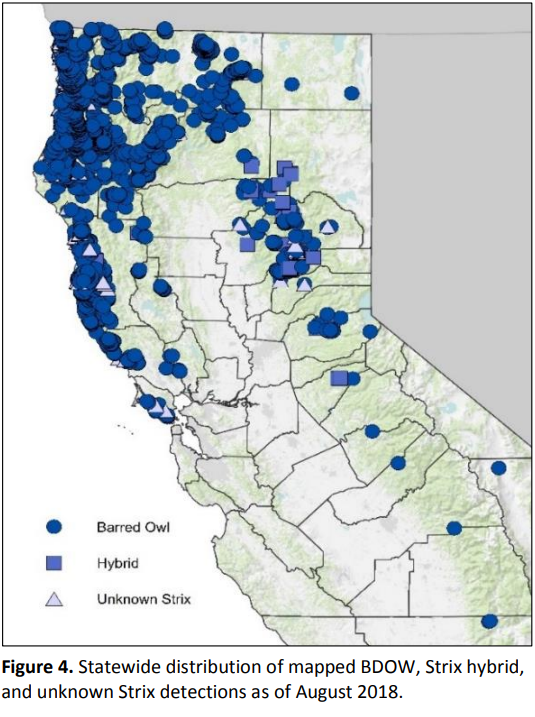
Killing barred owls in CSO territory cannot be justified because there are few barred owls in their territory and threats to the CSO population are unrelated to the existence of a few barred owls. (See map of barred owl distribution in California below.) Shooting barred owls will not stop the wildfires, droughts and diseases killing their habitat.  The proposed Management Strategy is irrelevant to the survival of CSO. 

  • There is no reason to kill barred owls in Marin and Sonoma counties in the San Francisco Bay Area because the population of Northern Spotted Owls is stable and there are very few barred owls. 

The Marin/Sonoma County Management Zone designated by the Management Strategy includes all lands within the named counties. Conditions in Marin and Sonoma County are substantially different from the rest of the northern spotted owl range. This is the only portion of the northern spotted owl range where barred owls are very uncommon.

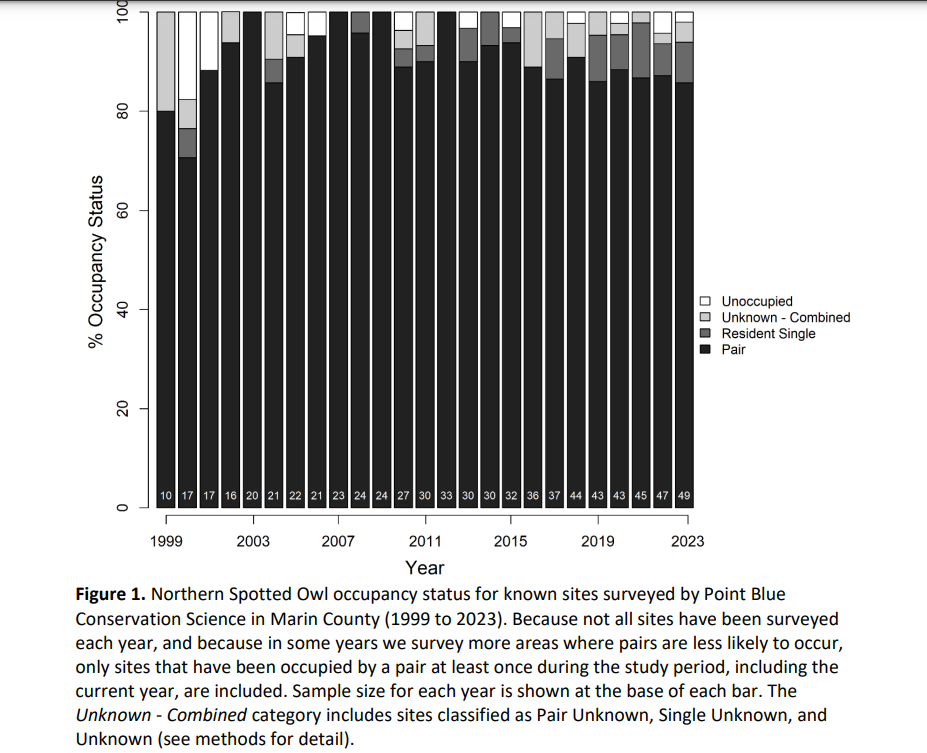
The recently completed survey of northern spotted owls in Marin County reports that the population is stable. The survey found nesting pairs of NSOs in all 48 inventory sites.  A small decline in nesting success was not statistically significant.  Two unpaired barred owls were detected on or near Marin County Property or Marin Watershed Property in 2023.  One was removed, the other was not detected a second time. (6)

Source:  Northern Spotted Owl Monitoring on Marin County Parks and Marin Municipal Water Department lands, 2023 Report, Point Blue Conservation.

Despite the lack of evidence that northern spotted owls are threatened by barred owls in Marin County, the Barred Owl Management Strategy considers it the highest priority to kill the few transitory barred owls detected in Marin County.  This is unnecessary overkill that should be removed from the Management Strategy.  It contributes to the public’s perception that the strategy of USFWS is extreme and inconsistent with environmental laws that protect nature.

In conclusion, the Barred Owl Management Strategy is a reflection of the extreme nativist bias of USFWS.  Like many of their projects, USFWS has selected an animal scapegoat for the declining population of northern spotted owls that are not well adapted to changed forest conditions. Selecting an animal scapegoat enables timber companies to continue logging and it is an easy way to avoid addressing the much more complex reasons for challenges to northern spotted owls. For example, killing barred owls won’t do anything to reduce the greenhouse gases causing climate change or restore logged or burned forests. The Barred Owl Management Strategy will employ an army of snipers, but is unlikely to benefit the environment or its inhabitants.  USFWS cannot stop evolution, nor should it try.

Although I have low expectations that 2024 will be more peaceful than last year, in the spirit of hope, I wish you Happy New Year.  Thank you for your readership.

Update, July 2025:  The Northwest Forest Plan has been amended.  The amendment to the plan will enable more logging in the Pacific Northwest.  Https://www.chronline.com/stories/proposed-changes-would-allow-more-logging-on-federal-land-in-the-pacific-northwest,372393

The amendment began during the Biden administration and was approved in May 2025.  The point of the amendment is to “manage” the forest to reduce wildfire hazards.  https://www.fs.usda.gov/r06/planning/northwest-forest-plan-amendment

The stated purposed of the USFWS plan to kill 500,000 barred owls was to save endangered spotted owls.  The plan was created by the timber industry in the Pacific Northwest because killing barred owls on their properties enabled them to get permits needed to continue logging on their properties.

On October 30, 2025, the US Senate rejected an effort to halt the implementation of the Barred Owl Management Plan by a vote of 25-72: https://worldanimalnews.com/2025/10/30/stop-the-slaughter-450000-barred-owls-face-mass-killing-for-so-called-conservation/

However, The Trump administration has also cancelled some grants that funded the plan to kill barred owls in the Pacific Northwest:  https://washingtonstatestandard.com/2025/07/22/plans-to-shoot-thousands-of-barred-owls-in-doubt-after-feds-cancel-grants/

Confusing, isn’t it? The plan lives, but some of the funding for implementation is gone. That’s my best guess.

There is some logic to this sequence of events.  However, I doubt that logic was used to reach this conclusion.  In any case, I am pleased that barred owls will be spared the planned massacre.  However, the loss of federal funding to kill barred owls will not prevent private land owners from killing barred owls.  The revision of the Northwest Forest Plan to enable more logging might make killing barred owls on private land unnecessary. 


  1. Frequently Asked Questions about the Barred Owl Management Strategy
  2. Barred Owl Management Strategy
  3. Sarah Gilman, “Evidence of Absence:  Northern Owls are still vanishing from the Northwest,” Living Bird, April 12, 2016
  4. Holly Doremus, “The Endangered Species Act:  Static Law Meets Dynamic World,” Journal of Law & Policy, Vol. 32: 175-235, 2010.
  5. The Economist, “Match and mix, hybrids and evolution,” October 3-9, 2020, page 67-70. 
  6. Northern Spotted Owl Monitoring on Marin County Parks and Marin Municipal Water Department lands, 2023 Report, Point Blue Conservation.

A Cornerstone of Invasion Biology Crumbles

Over 20 years ago a study was published about the economic costs of introduced species. The study by David Pimentel et.al. (1) claimed that the economic costs of introduced species in the United States are $137 billion per year.   Despite many critiques of that study by academic scientists, the study remains a cornerstone of invasion biology and the “restoration” industry it spawned. 

The study has been cited by other academic scientists over 4,500 times and an update of the study published in 2005 has been cited over 5,800 times.  In addition to being influential with academic scientists, most media articles about “invasive species” begin with reference to that study and comments from native plant advocates on Conservation Sense and Nonsense often begin by quoting that study.  In other words, the bloated estimate of the economic costs of introduced species in the US is a powerful tool that continues to fuel attempts to eradicate non-native plants and animals in the US.  Therefore, a new study by Demetrio Boltovskoy et. al. (2) that critiques this estimate is of interest to us and we report that study to you today. 

The abstract of the new study (2) outlines the critique of Pimentel’s study by an international (Argentina, Canada, Switzerland, and US) team of scientists:

“The economic costs of non-indigenous species (NIS) are a key factor for the allocation of efforts and resources to eradicate or control baneful invasions. Their assessments are challenging, but most suffer from major flaws. Among the most important are the following:

  • the inclusion of actual damage costs together with various ancillary expenditures which may or may not be indicative of the real economic damage due to NIS;
  • the inclusion of the costs of unnecessary or counterproductive control initiatives;
  • the inclusion of controversial NIS-related costs whose economic impacts are questionable;
  • the assessment of the negative impacts only, ignoring the positive ones that most NIS have on the economy, either directly or through their ecosystem services. Such estimates necessarily arrive at negative and often highly inflated values, do not reflect the net damage and economic losses due to NIS, and can significantly misguide management and resource allocation decisions.”

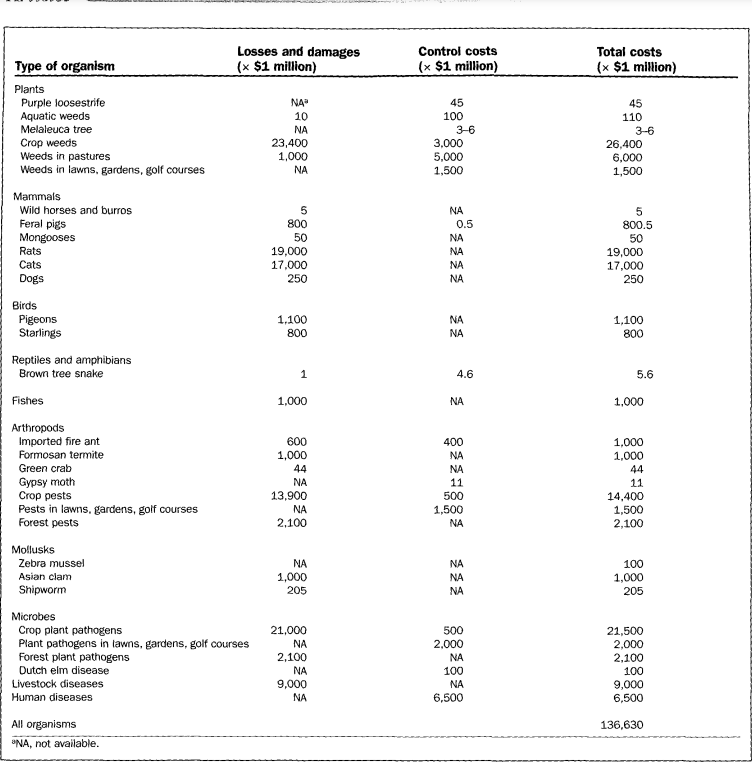
The Pimental study misrepresents the economic impact of introduced plant and animal species in the US.  The most significant flaw in the evaluation of costs is that it does not take into consideration the benefits of introduced species.  Pimentel’s formula for evaluating economic impacts of introduced species is simplistic:

Losses & Damages + Control Costs = Total Costs

Source:  David Pimentel, et.al., “Environmental and Economic Costs of Nonindigenous Species in the United States” (1)

We need look no further than Pimentel’s study to see how the absence of economic benefits of introduced species in that equation distorts the evaluation of the economic impact of introduced species.  Pimentel has included the pests of agricultural crops and livestock in his calculation of total economic costs of $137 billion per year.  He calculates the cost of agricultural weeds, insect pests and pathogens as well as livestock diseases as $77.3 billion per year, which is 57% of his estimate of total costs of introduced species. 

In the same study, Pimentel says that 98% of the “US food system” are introduced species (corn, wheat, rice, cattle, and poultry) and he reported that the value of those products was $800 billion per year at the time of his study in 2000.  In other words, if the benefits of agricultural products had been included in Pimentel’s formula, the net benefit to the American economy of introduced species would be $663.4 billion per year ($800 billion of benefits – $136.6 billion of costs = $663.4 net benefit). (3) Similar calculations for most items on Pimentel’s hit list of introduced species would be required to accurately assess the economic costs of introduced species:

Purple loosestrife. GNU Free
  • The Boltovskoy study considers purple loosestrife an “innocuous species.” Studies have shown that purple loosestrife thrives where nutrient pollution feeds it and its presence reduces nutrient pollution, which is a benefit to the ecosystem in which it thrives.  Poisoning loosestrife to control it increases pollutants in the ecosystem.  Controlling the sources of nutrient pollution, such as leaky septic tanks and agricultural runoff, is the only long-term method to control purple loosestrife.
  • Millions of starlings are killed in the US every year because they eat crops, but they also eat insect predators of crops.  When the economic benefits of insect control by starlings are subtracted from the costs of crop predation, European countries choose not to kill starlings.
  • Zebra and Quagga mussels are on Pimentel’s list of troublemakers because they clog the water intake pipes of industrial, water, and power plants.  But there are substantial economic benefits of these mussels“these invasive bivalves significantly clarify the water of lentic waterbodies, which can mitigate phytoplankton blooms, including toxic Cyanobacteria…lessening the costs of [purifying drinking] water, and enhancing recreational activities…” (2) They are also a major source of food for waterfowl and have contributed to significant increases in waterfowl populations.  There are mechanical methods of preventing mussels from clogging water intake pipes.
  • Cats are often the target of eradication efforts, and they also appear on Pimentel’s list.  A fair assessment of the economic costs of cats should include their benefit as predators of rats and rabbits.  Cats are a non-toxic method of rodent control.  In their absence, rodenticides are used to kill rodents and rodenticides are known killers of birds.  Do rodenticides kill as many birds as cats?  Maybe. 
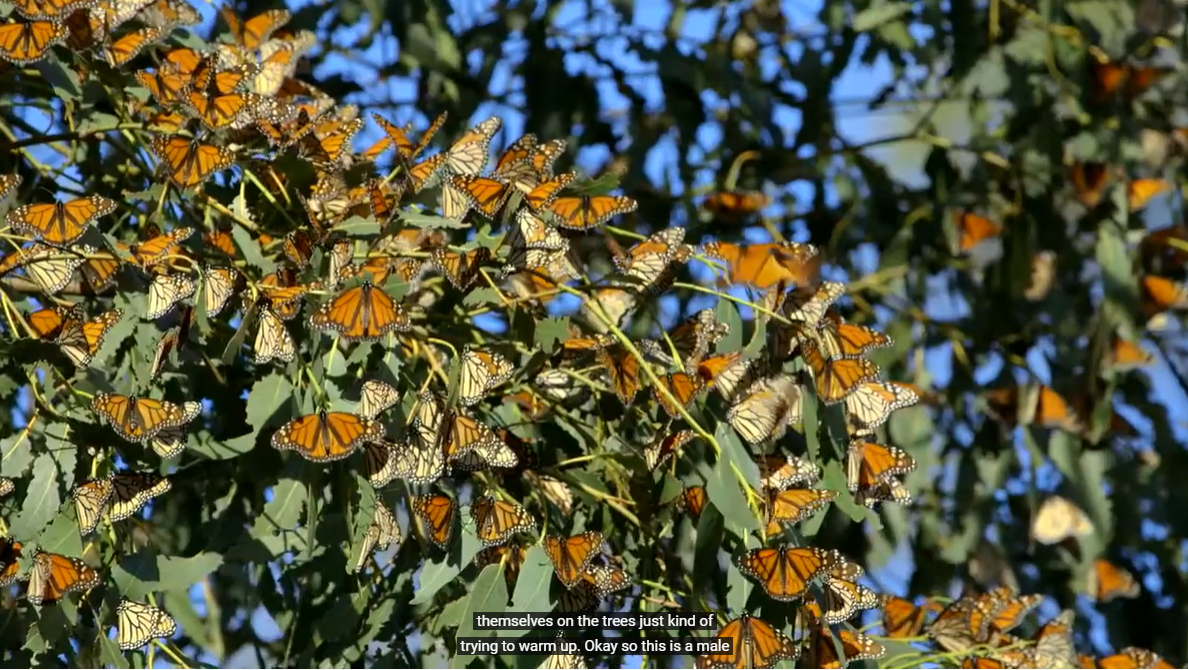
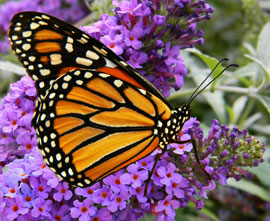
  • Many introduced plants are providing valuable food and habitat for animals, including native animals.  Eucalyptus that provide nectar during winter months, when little else is blooming, is essential to hummingbirds, bees, and other animals.  Eucalyptus are the also the winter homes of migrating monarch butterflies in California.  Yet, they are being destroyed by many public land managers because they are introduced.  Likewise, many berry-producing plants that are important food sources for birds and other animals are being eradicated by native plant advocates.
Monarchs roosting in eucalyptus, Pismo Beach, November 2021

Although the costs of control methods are included in Pimentel’s calculation of the economic costs of introduced species, the collateral damage of control methods are not.  Here are a few examples of the collateral costs associated with methods used to control introduced species.

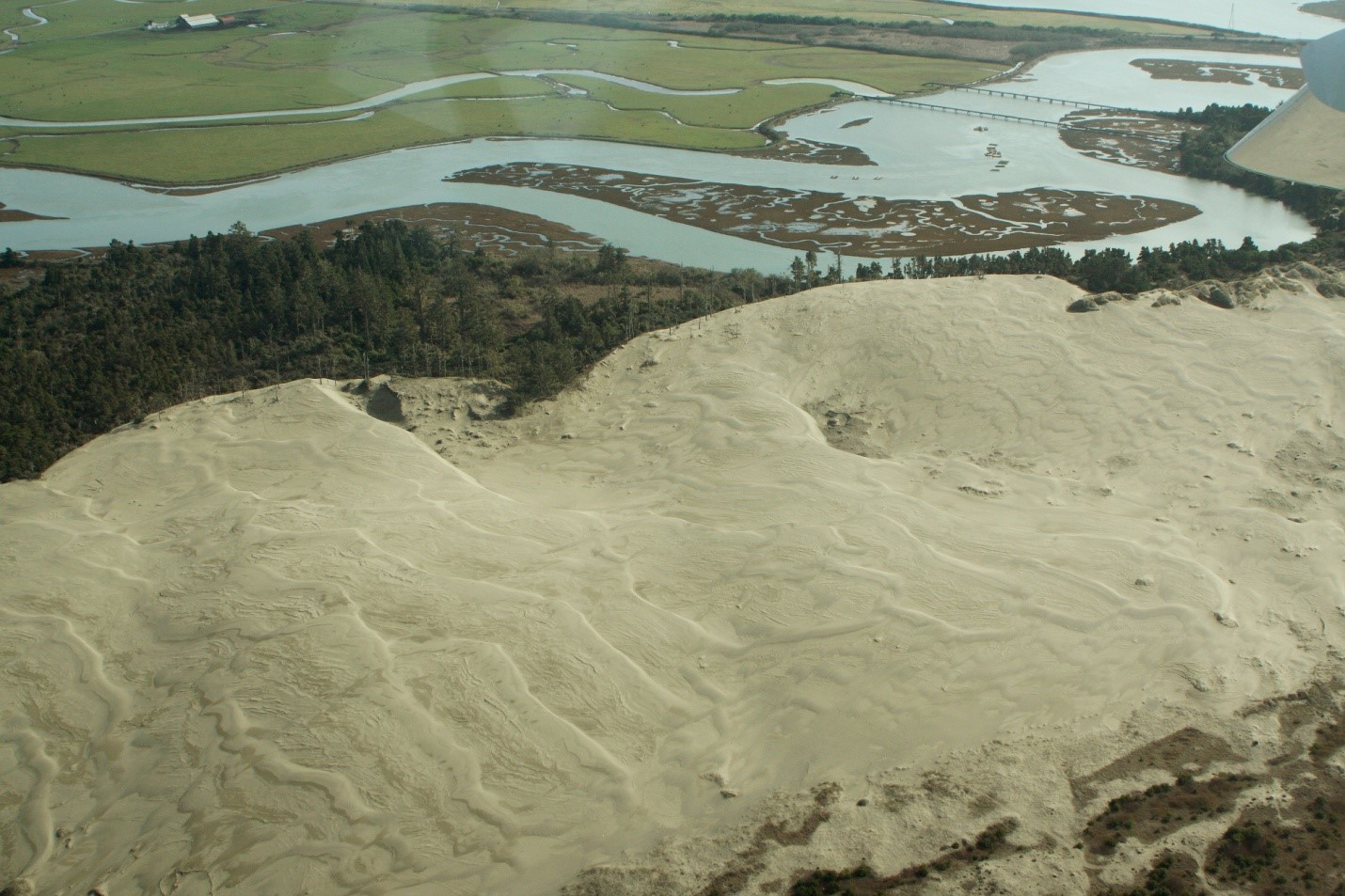
Lanphere Dunes and Mad River Slough

In summary, a more accurate cost/benefit analysis of introduced species would look something like this:

(Losses & Damages + Control Costs) – Benefits – Damage of Control Methods = Total Cost or Benefit

In the absence of such an accurate assessment, scarce public resources will continue to be wasted on eradication projects that do more harm than good.  “Admittedly, [such an accurate assessment] requires much more knowledge of the effectives of nonindigenous species, yet it does not justify using [Pimentel’s] numbers for weighting the risks and harms involved, let alone using them for engaging in potentially feckless and wasteful eradication and control initiatives.” (2)


  1. David Pimentel, et.al., “Environmental and Economic Costs of Nonindigenous Species in the United States,” BioScience, January 2000
  2. Demetrio Boltovskoy, et.al., “Misleading estimates of economic impacts of biological invasions:  Including the costs but not the benefits,” Ambio, 2022
  3. It seems likely that Pimentel’s estimate of the value of agricultural products is the net value after costs of controlling agricultural pests are subtracted from gross value.  In other words, a more accurate calculation of the economic benefit of agricultural products in Pimentel’s formula is probably $800 billion + $77.3 billion (pest control costs). 

Conference of the California Invasive Plant Council: Fallacies and Failures

The California Invasive Plant Council held their 27th annual conference in Monterey in November.  It was their biggest conference, with about 400 attendees and more sponsors than ever before.  Clearly the industry that promotes the eradication of non-native plants is alive and well.  However, a closer look at the conference presentations suggests otherwise.  Eradication efforts are growing, but eradication success is not and establishing a native landscape after eradication is proving elusive.

A few common themes emerged from the presentations:

  • Eradication cannot be accomplished without using pesticides.
  • When eradication is achieved with pesticides, non-natives are rarely replaced by native plants.
  • Planting natives after non-natives are eradicated reduces re-invasion, but secondary invasions of different non-native plants are common.
  • “Managing” forests with prescribed burns did not result in more biodiversity than leaving the forest alone.

Goals of these eradication projects have shifted in response to these failures to achieve original goals:

  • Replacement plantings after eradication are sometimes a mix of natives and non-natives.
  • Inability to establish native grassland has given way to different goals.
  • Language used to describe the projects are evolving to be more appealing to potential volunteers.

Here are a few examples of presentations that illustrate these themes:

Eradicating beach grass in Point Reyes National Seashore

About 60% of sand dunes in the Point Reyes National Seashore were covered in European beach grass when the eradication effort began in 2000.  The goal of the project was to restore native dune plants and increase the population of endangered snowy plovers that nest on bare sand.

The project began by manually pulling beach grass from 30 acres of dunes at Abbott’s Lagoon.  The grass grew back within one year, presumably because the roots of the beach grass are about 10 feet long.  Manually pulling the grass from the surface does not destroy the roots.

A new method was devised that was more successful with respect to eradicating the beach grass.  The grass and its roots were plowed up by bulldozers and buried deep in the sand.  The cost of that method was prohibitively expensive at $25,000 to $30,000 per acre and the barren sand caused other problems.

The barren dunes were mobile in the wind.  Sand blew into adjacent ranches and residential areas, causing neighbors of the park to object to the project.  The sand also encroached into areas where there were native plants, burying them.  The bare sand was eventually colonized by “secondary invaders.”  Different non-native plants replaced the beach grass because they were more competitive than the desired native plants.

In 2011, the National Park Services adopted a third strategy for converting beach grass to native dune plants.  They sprayed the beach grass with a mixture of glyphosate and imazapyr.  At $2,500 to $3,000 per acre, this eradication method was significantly cheaper than the mechanical method.

However, it resulted in different problems that prevented the establishment of native dune plants.  The poisoned thatch of dead beach grass was a physical barrier to successful seed germination and establishment of a new landscape.  Where secondary invaders were capable of penetrating the dead thatch, the resulting vegetation does not resemble native dunes.

Presentation at California Invasive Plant Council conference regarding attempt to eradicate European beach grass at Point Reyes National Seashore

The concluding slides of this presentation were stunning.  They said it is a “Restoration fallacy that killing an invader will result in native vegetation.”  My 20 years of watching these futile efforts confirm this reality.  However, I never expected to hear that said by someone actually engaged in this effort.  The presenter mused that such projects are like Sisyphus trying to roll a boulder up hill. 

Presentation at California Invasive Plant Council conference regarding attempt to eradicate European beach grass at Point Reyes National Seashore

Attempting to plant Douglas fir after eradication of broom

Over a period of 5.5 years, broom was eradicated in plots in Oregon by spraying glyphosate.  The plots were then planted with Douglas fir seedlings that soon died.  They were replanted the following year and died in the second year.

There were two theories about why the plantings failed, both broadly described as “legacy” effects in the soil left by the broom.  One theory is that nitrogen levels were too high for successful growth of Douglas fir.  That theory is consistent with the fact that broom is a nitrogen fixer.  That is, broom—like all legumes—have the ability to transfer nitrogen in the atmosphere to nitrogen in the soil with the help of bacteria that facilitate that transfer.  Nitrogen generally benefits plant growth, but there can also be too much nitrogen.

The second theory is that Douglas fir requires a specific suite of mycorrhizal fungi for successful growth.  Mycorrhizal fungi live in roots of plants and trees.  They transfer moisture and nutrients from the soil to the plants.  Plants with a healthy suite of mycorrhizal fungi are more drought tolerant because they extract more moisture from the soil.

Neither of these theories has been successfully proven by this project.  They remain unanswered questions.  We were struck that the researchers had not considered the possibility that the repeated use of glyphosate could have been a factor in the failure of the Douglas fir.  Glyphosate is known to kill bacteria in the soil.  Could it also kill mycorrhizal fungi?  (We know that triclopyr kills mycorrhizal fungi.) That possibility was not considered by this project. Did the project consider that glyphosate also changes the consistency of the soil by binding certain minerals together?  It is more difficult for roots and water to penetrate the hard soil.  Were soil samples taken before and after repeated applications of glyphosate to determine how the soil had been changed by pesticide applications?

The published abstract for this project made this observation:  “It is typically assumed that once an invasive species is successfully removed, the impact of that species on the community is also eliminated.  However, invasive species may change the environment in ways that persist, as legacy effects, long after the species itself is gone.”  In fact, it seems likely that the pesticides used to eradicate the “invasive” species could also be the source of the “legacy effects.”

Does “managing” a forest result in greater biodiversity in the understory?

California State Parks tested that hypothesis by conducting prescribed burns in some of their forests in the Sierra Nevada 20 years ago, while leaving other portions of the forest “unmanaged.”

The abstract for this presentation describes the goals and expectations for the prescribed burns:  “Prescribed fire is a tool used to reduce fuels in the forests in the Sierra Nevada and mimic the low and moderate severity wildfires that burned before the onset of fire suppression.  A manager’s hope is that prescribed fire will create the disturbance necessary to stimulate the development of species rich understory communities and increase species richness, compared to unburned forests, which are often viewed as species depauperate.”

Twenty years after the burns, abundance and species composition of the understory in the burned areas were compared to the unburned areas.  They found little difference in the biodiversity of the understory of burned areas compared to unmanaged forests:

  • “Species richness was highly variable within burned and passively managed areas but was not statistically different.”
  • “Passively managed areas did not appear to be depauperate in understory species diversity compared to areas managed with prescribed fire.”
  • “Fire did not appear to reduce or enhance species richness numbers in burned areas, as compared to passively managed areas.”

No fires occurred in either the burned areas or the unmanaged areas during the 20-year period.  Therefore, this study did not test the theory that prescribed burning reduces fire hazards in forests.  This study found no significant differences in diversity of forest understory resulting from prescribed burns.

There are significant risks associated with prescribed burns.  They cause air pollution and they frequently escape the controlled perimeter of the fire, becoming wildfires that destroy far more than intended.  This study does not provide evidence that would justify taking those risks.  In fact, available evidence supports the “leave-it-alone” approach to land management.

Moving the goal posts

If at first you don’t succeed, you have the option of redefining success.  Here are a few of the projects presented at the conference that seemed to take that approach.

Make projects so small that success can be achieved

Eric Wrubel introduced himself as the National Park Service staff who is responsible for prioritizing invasive plants for removal in the National Parks in the Bay Area (GGNRA, PRNS, Muir Woods, and Pinnacles).  His work is based on the premise that the most successful eradications are those that are small.  The bigger the infestation, the greater the investment of time and resources it takes to eradicate it and the smaller the likelihood of success.  This is illustrated by a graph showing this inverse relationship between the size of the invasive population and the success of eradication.

Source: Rejmanek and Pitcairn, “When is eradication of an exotic pest plant a realistic goal?,” 2002

The process of prioritizing eradication projects began over 10 years ago with a survey of over 100 species of plants considered invasive.  Cal-IPC’s “watch list” was used to identify the plants that are not yet widely spread in California, but considered a potential problem in the future.  Cal-IPC’s risk assessment was the third element in the analysis.  Plants with “High” risk ratings by Cal-IPC were put higher on the priority list than those with “Moderate” or “Limited” ratings.  Plants that did not exist elsewhere in the region or watershed were also given higher priority, based on the assumption that re-invasion was less likely.

This is the list of eradication projects in the National Parks in the Bay Area that was presented at the conference of the California Invasive Plant Council. The projects marked with the red symbol for crossing out are completed projects. Nearly half of the plants on this hit list are not considered invasive in California.

The priority list showed that the highest priority eradication projects were quite small.  Some were just a few acres.  Buddleia jumped out as the 7th highest priority on only 13 acres.  Buddleia was recently added to a new category of plants on Cal-IPC’s “invasive” inventory.  It is not considered invasive in California, although it is considered invasive elsewhere.

In placing buddleia on its “hit list,” Cal-IPC illustrates one of the fundamental weaknesses of its evaluation method.  Cal-IPC does not evaluate pros and cons of non-native plants.  Only traits considered negative are taken into consideration.

Monarch sanctuary in Monterey, California. November 2018

Buddleia is one of the most useful nectar plants for pollinators in California.  We took the time to visit the monarch butterfly sanctuary in Monterey while attending the conference.  The monarchs are arriving now to begin their winter roost in the eucalyptus, Monterey pine and cypress in this small grove.  At the entrance to the sanctuary a sign instructs visitors to plant only native milkweed as the monarch’s host plant and only native flowers for nectar.  Fortunately whoever planted the flowering shrubs in the sanctuary didn’t follow the advice of the sign-makers.  They planted buddleia and other flowering non-natives such as bottle-brush.  Several species of butterflies and hummingbirds were enjoying those plants in the Sanctuary. Strict adherence to the native plant agenda is not beneficial to wildlife because animals do not share our prejudices.

Monarch nectaring on butterfly bush. butterflybush.com

Acknowledging the difficulties of converting non-native annual grass to native perennial grass

Pinnacles National Park acquired 2000 acres of former ranchland in 2006.  The park wanted to convert the non-native annual grasses and yellow-star thistle on the former ranch to perennial bunch grasses and oak woodland.  They were able to reduce the amount of yellow-star thistle by burning and spraying with herbicide, but cover of native species remained low.  Conversion of grasses from non-native annuals to native perennial grass has been tried many times, in many places, and for long periods of time.  These projects were notoriously unsuccessful.

The project at Pinnacles has changed its goal to plant forbs (herbaceous flower plants) instead of grasses and they report that they are having some success.   They justify that shift in goal on soil analysis that suggests forbs were more prevalent than perennial grasses in inland valleys in California than previously thought.

This change in goal could be described as “adaptive management,” which adjusts methods and goals in response to observable outcomes of existing methods.  You could also call it “trial and error.”  We would like to see more land managers make such adjustments to their strategies, rather than doing the same thing over and over again and expecting a different outcome.

Recruiting volunteers with appealing messages

There were several presentations about effective methods of recruiting volunteers to participate in restoration projects.  Some of their messages seem to acknowledge that the language used in the past may have alienated some potential volunteers.  Speaking from personal experience, I can confirm that observation.  Here are just a few of the cringe-worthy native plant mottos that I hope have been abandoned in favor of a more positive message:

  • “That plant doesn’t belong here.”
  • “That is a good plant and the other is a bad plant.”
  • “The invasive landscape is sick and requires chemotherapy.” (to justify the use of pesticides)
  • “That’s a trash bird.” (said of common, introduced birds, such as starlings and house sparrows)

The speaker advised those who work with volunteers to focus on why an unwanted plant is a problem rather than where it comes from.  Unfortunately, the list of problems is heavily influenced by the preferences of native plant advocates.  If their criticisms are not accurate, or they don’t acknowledge the advantages of the plant, little has been achieved by using euphemisms.  Here are a few of the inaccurate criticisms made of eucalyptus:

What was missing?

Ecological restoration is a major industry. Thousands of people are employed by the industry, which is funded by many different sources of public money.  Whether individual projects are successful or not, the industry will survive and thrive as long as it is funded.  Greater care should be taken to design and implement projects that will be successful.

Stepping back from the conference presentations of specific restoration projects, here are a few issues that were conspicuously absent from the conference. 

  • Pesticides are being widely used by the restoration industry. When projects don’t achieve desired outcomes, pesticides should be considered as a factor.  Did pesticides alter the soil?  Were beneficial microbes and fungi killed? How persistent was the pesticide in the soil?  How mobile was the pesticide in the soil?  Was pesticide applied in the right manner?  Could aerial drift account for death of non-target plants?  There are many other useful questions that could be asked.

Update:  The California Invasive Plant Council has published “Land Manager’s Guide to Developing an Invasive Plant Management Plan.”  It says very little about the disadvantages of using herbicides to eradicate plants they consider “invasive” other than a vague reference to “unintended consequences,” without discussion of what they are or how to avoid them. 

However, it does give us another clue about why eradication efforts are often unsuccessful. When herbicides are used repeatedly, as they have been in the past 20 years, weeds develop resistance to them:   “The International Survey of Herbicide Resistant Weeds (2018) reports there are currently 496 unique cases (species x site of action) of herbicide-resistant weeds globally, with 255 species…Further, weeds have evolved resistance to 23 of the 26 known herbicide sites of action and to 163 different herbicides.”  The Guide therefore recommends that land managers rotate herbicides so that the “invasive” plants do not develop resistance to any particular herbicide.  The Guide gives only generic advice to use “herbicide X” initially and “herbicide Y or Z” for subsequent applications.

In other words, the California Invasive Plant Council continues to promote the use of herbicides to kill plants they consider “invasive.”  They give advice about ensuring the effectiveness of herbicides, but they do not give advice about how to avoid damaging the soil, killing insects, and harming the health of the public and the workers who apply the herbicides.  May 20, 2019

  • Are workers who apply pesticides being adequately trained and supervised by certified applicators? The safety of workers should be one of many goals of restoration projects.
  • When non-native plants are eradicated, serious thought should be given in advance to the probable outcome. Will native plants return?  Will wildlife be harmed?  Will the risks of failure outweigh the potential benefits of success?
  • Is climate change taken into consideration when planning the replacement landscape? Are the plants that grew in the project location 200 years ago still adapted to that location?  Is there enough available water?
  • If new plantings require irrigation to be established, what is the water source? Is it recycled water with high salt content that will kill many plants, including redwoods?
  • Are the new plantings vulnerable to new infectious diseases, such as phytopthera or infestations of new insects such as shot-hole borer?
  • Does the project team have sufficient horticultural knowledge to choose plants that can survive in current conditions? Does the project team know the horticultural needs of the plants they are planting?  Is there enough sunlight, water and wind protection for the trees they are planting?

The public is investing heavily in the “restoration” of ecosystems.  We can only hope that our investment is being used wisely and that projects will not do more harm than good.  Cal-IPC can play a role in raising the questions that have the potential to improve projects and enable them to succeed.  The long-term survival of the “restoration” industry depends on it.


Most quotes are from abstracts of presentations published in the conference program.

Public reactions to conferences on invasive species are always illuminating

I am publishing a guest post by Jacques Tassin, who tells us of his personal experiences with presenting his findings about invasive species in public forums.  Jacques Tassin is a French ecologist. He has been working on invasive species for more than twenty years, especially on islands in the West Indian Ocean and Pacific Ocean.

Jacques Tassin

Dr.Tassin agreed to tell us about his interactions with the public because he believes the public’s views of invasive species are poorly understood and that improved understanding of the public’s views would improve communication about this controversial topic. 

I must add that my personal experiences with such interactions have revealed the same themes.  The public feels strongly that it is possible—even necessary—to control nature.  And much of that sentiment is based on guilt about the damage that humans have done to nature and a desire for redemption.  I prefer to respond to that viewpoint by informing the public of the damage being done in the name of “restoration.”  We cannot redeem ourselves by doing yet more damage.  However, I share Dr. Tassin’s frustration with scientists who are unwilling to speak to the public in ways that the public can comprehend.

Jacques Tassin is a new voice on Million Trees.  I am grateful for his participation in our discussion of invasion biology.

Million Trees


It takes much energy for a scientist to go down to the arena to meet the general public, for example in the form of a conference. But it is well worth it. On the one hand, because it allows scientists to hear a different kind of discourse than media coverage of the issue. On the other hand, because the comments and questions from the public are often very significant.

Following the publication of my book La Grande invasion: qui a peur des espèces invasives ? (The Great Invasion: Who Fears Invasive Species?) published in editions Odile Jacob in 2014, I was often invited to such meetings. I can distinguish several types of public reactions to my conferences.

The main one is the public’s seeming intolerance of the idea that we can agree to do nothing about the progression of an invasive species, even if it is proven that nothing can be done about it, or that the species in question does not have a clearly negative ecological or economic impact. Farmers and hunters are particularly opposed to this view of not intervening and therefore not controlling the environment. For these people, it is a question of putting nature in its place.

The public also strongly rejects the possibility that we cannot redeem our faults, or that we may not be able to undo what we have done, if we do not deal with invasive species. This reaction is the result of an activist stance that is particularly present in nature conservation associations. The remark that comes up most often is “we’re not going to sit back and watch.”

Finally, the third most frequent reaction is the belief that each invasive species introduced somewhere necessarily takes the place of another species. This principle of musical chairs seems deeply rooted in everyone’s mind. It is not certain that this is due to the theories of Robert MacArthur and E.O. Wilson’s about island biogeography. It seems much more likely that, deep in our imagination, the arrival of an intruder will end up with the departure of one of us.

In any case, it seems to me that the debate about invasion biology is far more concerned with social psychology than with the science of invasions. I am now certain that those who focus their discourse on the biological and ecological dimension of invasive species are headed in the wrong direction. Today, invasion biology is more in the field of psychology and beliefs than it is a question of a rational discourse. But it is clear that scientists are particularly ill-suited for this dialogue. Journalists who are used to talking to hundreds of thousands of listeners on the radio or in the press are much better equipped to do so. Scientists must learn from journalists how to communicate with the public about invasive species, whatever the public’s opinion of invasive species.

Jacques Tassin

Further Reading:

Tassin J., Thompson K., Carroll S.P., Thomas C.D. (2017). Determining whether the impacts of introduced species are negative cannot be based solely on science: a response to Russell and Blackburn. Trends in Ecology and Evolution, 32 (4) : 230-231.

Tassin, J. and C. Kull (2015). Facing the boader dimensions of biological invasions. Land Use Policy 42 : 165-169.

Tassin, J. (2014). La grande invasion. Qui a peur des espèces invasives ? Editions Odile Jacob. Paris, 216 p.

Beyond Pesticides: The voice of reason about pesticides

Beyond Pesticides logo

I attended my first Beyond Pesticides forum in 2014 in Portland, Oregon.  I have been a member of and donor to Beyond Pesticides ever since.  And I have purchased only organic food since attending that forum, because of a field trip to a community of farm workers that convinced me that growing our food without using pesticides benefits both consumers and producers of America’s food.  

In a recent letter to the National Invasive Species Council, Beyond Pesticides describes their organization and mission:

Founded in 1981 as a national, grassroots, membership organization that represents community-based organizations and a range of people seeking to bridge the interests of consumers, farmers and farmworkers, Beyond Pesticides advances improved protections from pesticides and alternative pest management strategies that reduce or eliminate a reliance on pesticides.” (The letter is available HERE: Beyond Pesticides – ISAC Comment )

 I receive emails from Beyond Pesticides at least once a week, alerting me to opportunities to influence the laws and policies that regulate pesticide use in America.  As you might expect, the frequency of those alerts has accelerated a great deal in the past year, as the federal government is actively engaged in the process of dismantling many federal regulations, including those that regulate pesticides.

 The National Invasive Species Council recently invited the public to submit public comments in answer to a few specific questions, in preparation for the next meeting of the Invasive Species Advisory Council.  Today I am publishing an excerpt of the letter of Beyond Pesticides in answer to those questions (some emphasis added).  I am doing so because I consider this letter a wise and informed critique of the entire concept of “invasive species” and the pesticides used to eradicate them.

 I am also alerting the readers of Million Trees to the opportunity to attend the annual forum of Beyond Pesticides in Irvine, California, April 13-14, 2018.  Information about that meeting is available below.

 Million Trees


“The National Invasive Species Council (NISC) posed four questions for public input to the forthcoming meeting of the Invasive Species Advisory Council (ISAC). We find it most helpful to begin with the fourth: “How can NISC foster the development and application of innovative tools and technologies to enable the prevention, eradication, and control of invasive species in a more timely and effective manner?”

In order to address this question, NISC and ISAC need to first address the question, “What is an ‘invasive species’?”

‘Invasive species’ have frequently provided a reason for dispersing toxic chemicals in the environment, often with a sense of urgency and an assumed indisputable benefit. This unsupported (and sometimes unstated) assertion of benefit is a claim to virtue that allows environmental harm instead of preventing it.

In the context of other federal, state, and local laws, the regulatory definition of ‘invasive species’ gives broad authority to agencies to use all means at their disposal to rid the jurisdiction of non-native organisms causing economic harm, as well as harm to health and the environment. Many local ordinances that ban or restrict pesticide use make an exception for ‘invasive species,’ presumably under the mistaken assumption that in doing so they are protecting the environment. Instead, they are allowing environmental harm through the spread of toxic substances.

The use of the term ‘invasive species’ as a claim to virtue that is used to promote any and every attempt to exterminate any unwanted organisms is very disturbing. It is important to understand the problems that lead to the use of toxic chemicals, beginning with the cause. In the case of situations involving so-called ‘invasive species,’ we find that few, if any, involve species that are truly ecologically invasive—that is, capable of invading and persisting in intact ecosystems. Instead, such situations usually involve species that can take advantage of disturbed habitats (‘weeds’ or ‘weedy species’). As such, the emphasis should be placed on healing the disturbance (to which end, so-called ‘invasives’ may sometimes be helpful), rather than killing the opportunist colonizer.

We do not take the position that such opportunist colonizers should never be removed or managed. We do believe that the decision concerning whether such action should be taken should be based on the situation at hand and not on a claim to virtue that makes extermination of non-natives a righteous cause.

Redefining ‘invasive species’ to be limited to those species that can invade and damage intact ecological communities will directly ‘foster the development and application of innovative tools and technologies to enable the prevention, eradication, and control of invasive species in a more timely and effective manner’ (NISC) because resources will be directed only at those species that truly present an ecological threat. It will prevent those resources from being squandered in ways that are ecologically destructive.

The sharper focus that this redefinition will bring to the NISC and ASIC will enable them to explore approaches such as those that Beyond Pesticides has used in working with National Parks, local governments, and tribes to manage ecological problems in a way that is truly protective of biodiversity.”

Terry Shistar, Ph.D.
Board of Directors
Beyond Pesticides


Beyond Pesticides will soon hold its annual forum in Irvine, California, April 13-14, 2018.  As usual, the forum will include highly qualified speakers who are knowledgeable about so-called “invasive species,” and the evolutionary principles that raise questions about the necessity and futility of trying to eradicate them.   Two of the speakers are important to our local effort to stop the use of pesticides to eradicate non-native plant species:  Dr. Scott Carroll and Professor Tyrone Hayes.

Dr. Scott Carroll is an evolutionary biologist affiliated with UC Davis.  He has published several influential studies about the speed of adaptation and evolution that enables introduced plants to join native ecosystems without long-term negative consequences of their introduction.  He has coined the concept of “Conciliation Biology,” which advocates that we turn from efforts to eradicate non-native species in favor of a new approach which manages the co-existence of native and non-native species. 

Professor Tyrone Hayes (UC Berkeley) is best known for his criticism of the herbicide, atrazine, which is harmful to the frogs that he studies.  Unfortunately, Professor Hayes’ opposition to atrazine does not extend to the pesticides being used in the San Francisco Bay Area to eradicate non-native trees and prevent them from resprouting.  Professor Hayes accepts the premise that eucalyptus trees are detrimental to native plants, which justifies the use of herbicides to destroy them, in his opinion.  The herbicide that is used for that purpose (Garlon with active ingredient triclopyr) is just as toxic as atrazine.  Both are organochlorine products that bioaccumulate, persist in the environment for decades, and are endocrine disruptors. 

The Beyond Pesticides forum is likely to generate some lively discussion of the issues that are relevant in the San Francisco Bay Area.  Details about the conference are available HERE.  Beyond Pesticides makes every effort to make these forums affordable for activists.  I have attended two of these conferences.  They were excellent opportunities to learn more about pesticides, to meet other activists, and to get ideas about how to advocate more effectively for more responsible pesticide use in our community.

I am very grateful to Beyond Pesticides for their leadership in the effort to reduce pesticide use in the United States.  They are a reliable source of information about pesticides and their activism is an inspiration to those who are engaged in this effort on a local level.

Million Trees

Unseen City: A tribute to urban nature

It was pure pleasure to read Unseen City (1).  Unlike most nature writing, Nathanael Johnson asks readers to notice and appreciate the urban nature that we tend to take for granted.  Ironically, the plants and animals that we see every day and in great numbers do not get the attention they deserve.  Most nature writing tends to focus on rare and remote species to which we have little access and often laments their absence where we live.  Conservationists often advocate for expensive programs to reintroduce rare species to urban centers where they haven’t lived for decades, if not centuries.

Johnson’s focus on the ordinary species around us is refreshing.  We were happy to take a break from the usual hand-wringing about loss of biodiversity and instead enjoy the richness and beauty of the nature we have.  It is our loss when we ignore the nature we have. Johnson’s intense focus on urban species reveals that they are every bit as interesting as the rare species we seldom see.  Johnson’s approach to nature is analogous to the optimist’s “glass-half-full” approach to life.

Another appealing aspect of Johnson’s approach is that his story is told from the perspective of a young father, introducing his toddler daughter to the mysteries of nature.  One of our primary concerns about the museumification of our parks by native plant advocates is that children are being deprived of the opportunity to interact with nature.  Being required to stay on trails or observe from behind fences is no way for children to appreciate the complexity and beauty of the natural world.  Johnson takes his daughter deep into the weeds to experience nature in a physical, tactile way. 

A few examples of the homely creatures in our cities

Johnson wrote his book while living in San Francisco and then in Berkeley.  So, the species he encounters and studies are those with which we are all familiar.  Here are some of the creatures he tells us about, with a few of the interesting things we learn about them.

  • Pigeons are reviled by many serious bird watchers. In fact, they are remarkable creatures in many ways.  They mate for life and they are extremely devoted parents.  They tend to nest in the same place and their ability to find and return to that nest from long distances is one of the reasons why humans have formed intense relationships with them.  There is a long tradition of keeping homing pigeons that are raced by their keepers in competitions that occur all over the world.  The pigeons are taken long distances from their nests and then timed on how long it takes them to return home.  Johnson tells remarkable stories about how pigeons overcome challenging attempts to prevent them from finding their way home.
  • Eastern grey squirrel. Creative Commons

    Squirrels are both extremely agile and very resourceful. Here is an example of how squirrels defeated an attempt to keep them out of a bird feeder: “…squirrels had to climb up through a vertical pipe, leap onto a blade of a spinning windmill, cling to it, and then sail off on the right trajectory to land on a platform.  Then they had to go paw over paw upside down along a suspended chain that passed through a series of spinning disks, negotiate a revolving door, run through a slack canvas tube, and keep their balance while crossing a pole covered with slick spinning rollers.  From there, it was a six-foot jump to another tunnel, through which they had to ride a sliding vehicle made to look like a rocket ship by pushing it along with their paws.  Finally, there was an eight-foot jump to the food.” (1)  I retell this to story to spare our readers the pointless effort of trying to prevent squirrels from raiding their bird feeders.

  • Turkey vulture in San Jose, California by Dan DeBold. Creative Commons

    The turkey vulture is another underappreciated bird. They eat primarily dead animals and many of those animals died of diseases or toxic chemicals and are rotten and maggot infested when they are finally found (by smell) and eaten by the vulture.  The digestive and immune system of the vulture is capable of detoxifying chemicals and killing bacteria and viruses in the dead animal.  In other words, the vulture is cleaning up the remains of dead animals.  India has learned the value of vultures the hard way.  They killed many of their vultures with an anti-inflammatory drug they were feeding to their livestock.  When their vulture population dwindled, they were buried in dead animals, many dangerously diseased and toxic.  We eradicate animals at our peril because we often don’t understand the roles they are playing in the ecosystem.

Defending novel ecosystems

In addition to asking his readers to appreciate the positive qualities of the creatures in our cities, he also asks us to reconsider the deep prejudice against them that has become the conventional wisdom.  Plants and animals that people believe were transplanted by humans into places where they did not exist in the distant past are considered “alien invaders” that dominate their predecessors, driving them out and reducing biodiversity.

This narrative, which originated in academic science as “invasion biology” in the 1960s, has become a popular story with the media, which is always attracted to scary stories.  The media is significantly less interested in the peaceful resolution of their horror stories.  With few exceptions, an introduced species that initially seems to be a problem eventually fades into the woodwork to become just another player in the ecosystem.  Johnson uses the Argentine ant as one of many examples of an introduced species that spread rapidly, but 20 years later has nearly disappeared.  In other cases, a species initially considered an unwelcome intruder becomes a valuable asset, such as zebra mussels which filter pollution from lakes and have become a source of food for diving birds.

Novel ecosystems are the future

Johnson concludes his book with this reminder that novel ecosystems have been created by human disturbance and that we should be grateful for the plants and animals that are capable of surviving our abusive treatment of the planet:

“The species that I’ve written about here are, at best, invisible, and at worst, reviled.  We honor least the nature that is closest to us.  As Courtney Humphries put it in Superdove, ‘We create and destroy habitat, we shape genomes, we aid the worldwide movement of other species.  And yet we seem disappointed and horrified when those plants and animals respond by adapting to our changes and thriving in them.’

“Because they are associated with human disruption, the organisms that spring up from our footprints look like corruptions of nature.  But I’ve come to see it the other way around:  These species represent nature at its most vital and creative.

“Nature never misses an opportunity to exploit a catastrophe.  When humans bulldoze and pave, nature sends in a vanguard of species that can tough it out in the new environment.  These invasive species are not nature’s destroyers, but rather its creators.  They begin setting up food webs, they evolve and diverge into new species.  Because humans purposefully import exotic plants—along with the insects, seeds, and microbes we accidentally bring in from around the world—cities are remarkable centers of biodiversity.  These creatures crossbreed, hybridize, eat one another, form cooperative relationships, and evolve.  And so, at a time when thousands of species are at risk of extinction because of our destruction of wilderness, new species are springing up in the new habitats we have created.” (1)

Worshipping the rare at the expense of the common

The ONLY known Raven’s manzanita plant is in the San Francisco Presidio. Its exact location is a secret to protect it.

Vast sums of money are being spent in often futile attempts to reintroduce rare plants and animals to urban environments where they have not lived for a long time.  The National Park Service and San Francisco’s Natural Resources Division are having little success with their efforts to reintroduce Mission Blue butterflies.  After over 30 years, the National Park Service has still not successfully germinated endangered Raven’s manzanita from seed.  These fruitless efforts are not just wasteful of resources, they also inflict damage on the environment by using pesticides and setting fires to eliminate competition and destroying trees to increase sunlight on rare plants and host plants of rare insects.

The veneration of rare plants and animals is often at the expense of the plants and animals that are adapted to present environmental conditions.  In Unseen City Nathanael Johnson invites us to place greater value on the ordinary creatures who are capable of living with us.  We can treat them with the respect they deserve by not destroying them in pursuit of a fantasy landscape populated by fantasy creatures that are not capable of surviving the changes we have made in the environment.


  1. Nathanael Johnson, Unseen City: The majesty of pigeons, the discreet charm of snails and other wonders of the urban wilderness, Rodale Wellness, 2016

Embers start spot fires: The real and the imagined stories

Bay Nature recently published an article about the 1991 fire in the East Bay Hills and the closely related belief that such a fire can be prevented in the future by destroying all non-native trees.  To Bay Nature’s credit, it was a more balanced article than most.  Although the article was heavily weighted in favor of those who want to destroy all non-native trees in the hills, several defenders of our urban forest were also interviewed.

However, the article contains a fantasy about future fires that feeds into the fear of fire that has been fostered by those who advocate for removing all non-native trees:

“A strong wind begins blowing over the hills from the east. And then somehow—maybe a spark from a car, maybe a tossed cigarette—the whole dry, airy mess catches fire.  Now the flames on the ground are 30 feet high and even higher off the boughs, roaring like a jet engine. At the fire’s edges, trees appear to explode as the volatile oils in their leaves reach their boiling point and vaporize. The heat of the fire forms a convection column, with 60-mile-per-hour winds that rip burning strips of bark from the trees and toss them upward. This is another of blue gums’ talents—its bark makes ideal braziers. Tucked away inside a rolled-up strip of bark, a fire might live for close to an hour and fly 20 miles.” (1)

Although we have read many times in the plans to destroy trees that eucalyptus casts embers starting spot fires, we have never seen such an extreme description of how far embers could travel while still on fire and capable of starting a spot fire.  So, we tracked down the source of this theoretical scenario with the help of the author who cited this as the source of the theoretical scenario:  “The potential for an internally convoluted cylinder of bark to be transported tens of kilometres in a continuously flaming state is indicated by the sample that maintained flaming combustion for the entire experiment…This would correspond to a flameout time of almost 2000 s for a sample 2700 mm long, a lofted height of 9600 m and a spotting distance of ~37 km.” (2)

First let’s translate that quote into measurements we commonly use to appreciate how extreme this particular test was:  “This would correspond to a flameout time of almost 33 minutes for a sample 9 feet long, a lofted height of 6 miles and a spotting distance of 23 miles, traveling at 41 miles per hour.”  That is a very long ember, lofted a great distance at a great speed (but NOT 60 mph), staying lit for a long time (but NOT “close to an hour”).  

Theory vs. Reality

The study that was the source of the extreme prediction in Bay Nature about the distance that burning embers can travel was conducted on samples of Eucalyptus viminalis bark (NOT Blue Gum Eucalyptus, E. globulus) “tethered in a vertical wind tunnel.”  These are not real-world conditions.  So, how does this theoretical study compare to real-world conditions?

The FEMA Technical Report about the 1991 fire in the East Bay Hills contains a map of the full extent of the 1991 fire.  As you can see on this map, the maximum distance from the northern-most edge of the fire to the southern edge of the fire is less than 3 miles…not remotely close to 20 miles.  In other words, embers could not have started fires 20 miles away because the fire wasn’t even close to 20 miles long.

1991-fire-map-2

The FEMA Technical Report doesn’t tell us what the wind speeds were during the 1991 fire, although they describe the wind as being strong at several times during the fire.  If there is any evidence that winds were as much as 60 miles per hour, it’s not evidence we have been able to find.  We found a source of wind speeds measured on the Bay Bridge, including historical records.  This website says the strongest wind measured since 2010 was 31 miles per hour in April 2013.  That suggests that 60 mph winds are probably unusual in the San Francisco Bay Area.

The FEMA Technical Report doesn’t report any observations of firebrands or burning embers from eucalyptus.  The report mentions embers twelve times, but identifies the source of those embers only once.  In that one case, the source of embers was “a growth of brush”….not a eucalyptus tree or any tree, for that matter.  There are anecdotal reports of finding debris from the fire as  far as San Francisco, but no reports that the debris was still on fire or that it started another fire.

US Forest Service study of embers in actual fires

US Forest Service participated in a comprehensive study of “spotting ignition by lofted firebrands” based on actual wildfires all over the world, including the 1991 fire in the East Bay Hills. (3)  There is nothing in that study that corroborates the claim that eucalyptus bark embers are capable of travelling 20 miles while remaining lit and therefore capable of starting spot fires:

  • “In the wildland-urban interface fires in California—Berkeley in 1923, Bel-Air in 1961, Oakland 1991—wooden shingles which were popular in California as roof material, assisted fire spread. Wooden shingles increase fire hazard owing to both ease of ignition and subsequent firebrand production.
  • “Unlike the flying brush brands which are often consumed before rising to great heights, the flat wood roofing materials soared to higher altitudes carried by strong vertical drafts…”
  • The only specific firebrand found in the 1991 Oakland Hills fire was found approximately 1 km (.6 mile) west from the perimeter of the fire, “though it may have travelled several  kilometres [1.86 mile].” It was a cedar shingle.  Here is a photograph of that shingle:  ember-1991-fire-2
  • Cylinder shaped embers do not travel as far as flat particles. Firebrands in the shape of cylinders were found to have a maximum spotting distance of 2050 meters, because “cylinders always fall tumbling.”
  • “The increased burning time inherent in larger firebrands was cancelled out by an increased time of flight because larger firebrands move more slowly.”
  • In a study of 245 extinguished fires, experiments and simulations, and observing 48 wildfires, “The longest spotting distance was observed as 2.4 km.”

This comprehensive study of actual wildfires all over the world finds no evidence of embers capable of travelling 20 miles while still burning and starting spot fires.  It reports that wooden shingles were the only observed burning embers in the 1991 fire and that wooden shingles are particularly vulnerable to being lofted as embers in a wildfire.  There are countless houses in the East Bay Hills covered in wooden shingles, yet instead of addressing that obvious source of embers, we are destroying blameless trees.

Developing the Cover Story

Claims about the extreme flammability of eucalyptus have escalated in the past 15 years as opposition to destroying trees and associated pesticide use has escalated.  Nativists have become increasingly dependent on flogging the fear factor as their other storylines have been dismantled by empirical studies and reality:

  • Monarch butterflies roosting in eucalyptus tree.
    Monarch butterflies roosting in eucalyptus tree.

    The “invasiveness” of eucalyptus has been downgraded by the California Invasive Plant Council from “moderate” to “limited,” their lowest rating. There is little evidence that eucalyptus is invasive unless planted along streams and swales that carry their seeds.

  • There are many empirical studies that find that all forms of wildlife—such as insects and birds—are served equally well by both native and non-native plants. Some iconic species—such as Monarch butterflies, bees, hummingbirds, hawks, owls—are dependent upon eucalyptus for winter nectar and safe nesting habitat.
  • Huge global studies of biodiversity report that the introduction of non-native species has resulted in no net loss of biodiversity. This is particularly true of introduced plants.  There is not a single instance of extinction caused by a non-native plant in the continental United States.
  • Climate change is making nativism increasingly irrelevant. California’s native conifers, oaks, and redwoods are dying by the millions.  Unless we want a treeless landscape, we must plant tree species that are capable of tolerating changed climate conditions.

    Owl nesting in eucalyptus, courtesy urbanwildness.com
    Owl nesting in eucalyptus, courtesy urbanwildness.com

These studies have left nativists with few tools to justify the eradication of non-native plants.  We can see the development of the FIRE!! cover story in the archives of the conferences of the California Invasive Plant Council.  In 2004 Cal-IPC held a workshop regarding exotic trees and shrubs.  Over 30 representatives of major managers of public lands attended, such as National Park Service, San Francisco’s Natural Areas Program, Marin County Open Space, etc.  The record of this meeting reflects the dependence upon fire to justify the eradication of non-native shrubs and trees:  “Golden Gate National Recreation Area:  ‘inform public ahead of time; use threat of fire danger to help build support for invasive plant removal projects.’”  The Golden Gate National Recreation Area—a National Park–advises other land managers to frighten the public into accepting the loss of their trees. 

Subterfuge is also recommended to land managers to hide the eradication of shrubs and trees from the public:  “To avoid public upset, drilling around into tree buttress roots and injecting 25% glyphosate…Trees die slow and branches fall slowly, so won’t pose an immediate hazard.”  In other words, land managers were advised to kill trees using a method that won’t be visible to the public. 

Perhaps most disturbing of all is that those who attended this workshop admit that they don’t really know if eucalyptus trees are more flammable than native vegetation and some doubt that they are:  “People are afraid of fire.  Help them understand Eucalyptus trees and other invasive plants are very fire hazardous.  Is there any solid research about Eucalyptus and fire?  Are Eucalyptus and brooms any greater fire danger than native chaparral?”  In other words, even those who wish to destroy non-native shrubs and trees seem to understand that fire is a cover story for which no supporting evidence exists. The evidence has been fabricated to support the cover story.

We now seem to live in a fact-free world in which various interests can make things up and distribute them on the internet with impunity.  The mainstream press is dying and is being replaced by fact-free social media.  If we are to protect ourselves from such manipulation, we must drill down into these storylines.  In the case of eucalyptus, we have debunked the myth that it is more dangerous than the replacement landscape.  Now it’s up to us to disseminate that information far and wide as an antidote to fear-driven nativism. 


  1. Zach St George, “Burning Question in the East Bay Hills: Eucalyptus is flammable compared to what? Bay Nature, October-December 2016
  2. James Hall, et. al., “Long-distance spotting potential of bark strips of a ribbon gum (Eucalyptus viminalis), International Journal of Wildland Fire, 2015, 24, 1109-1117
  3. Eunmo Koo, et. al., “Firebrands and spotting ignition in large-scale fires,” International Journal of Wildland Fire, 2010, 19, 818-843