The New York Times published an op-ed by a member of their Editorial Board on Sunday, September 8, 2013, entitled, “Hey, You Calling Me an Invasive Species?” It is a spirited defense of non-native plants. Surely this is an indication that our challenge of the native plant movement is now mainstream. We will touch on a few of the op-ed’s main themes, but we urge you to read the op-ed here.
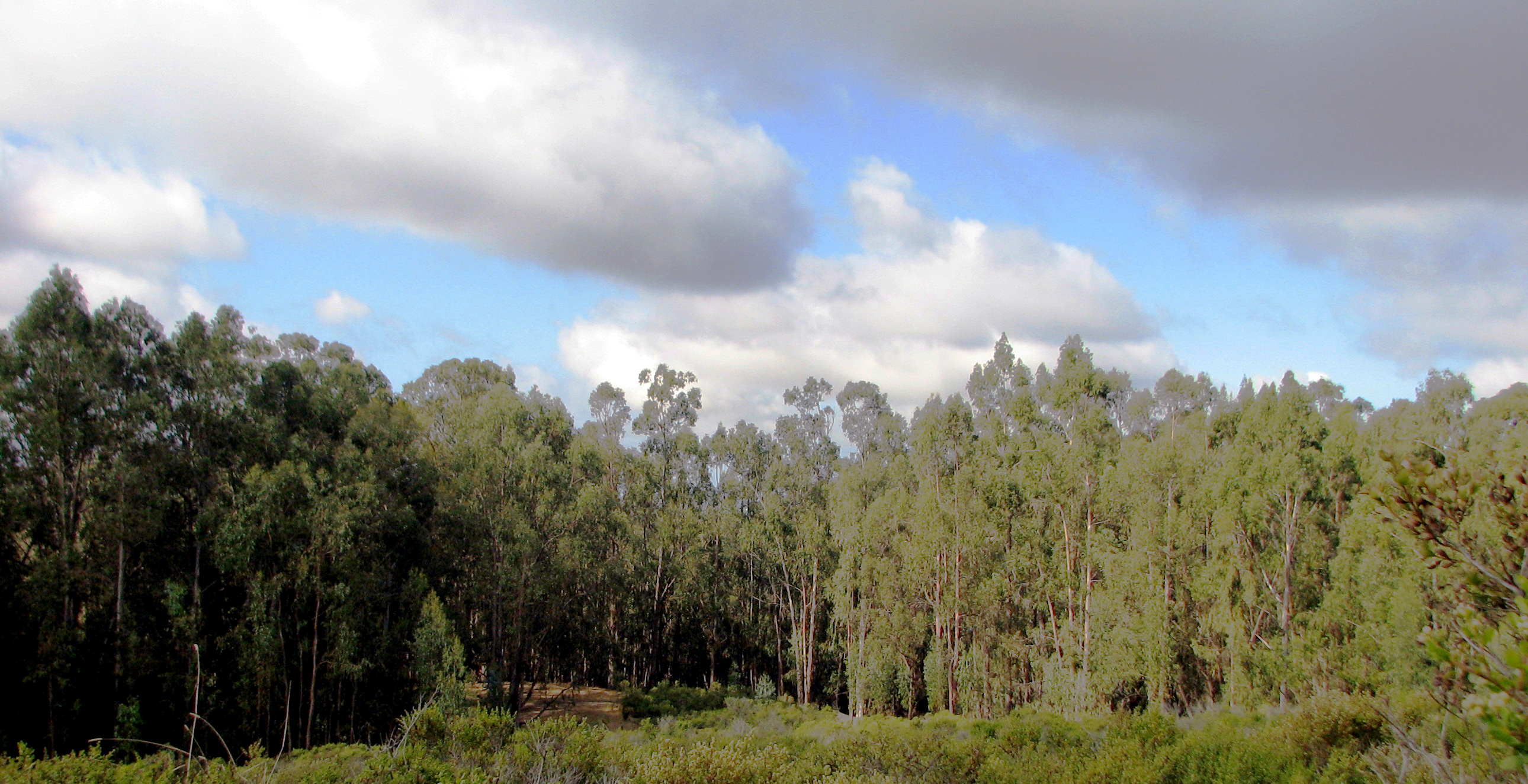
Mount Sutro Forest is threatened with destruction because it is not native. Courtesy Save Sutro Forest.
Using the eucalyptus forest on Mount Sutro as an example. the Editorial Board member, Verlyn Klinkenborg, makes the point that many of our non-native plants have been here for hundreds of years. Since they have been here for several generations of humans, most of us no longer consider them foreigners:
“But the trees on Mount Sutro have been there within the memory of every living San Franciscan, and to the generations who have grown up within view of them, it seems almost perverse to insist that they are alien.”
The distinction between native and non-native depends upon an arbitrarily selected “snapshot” of our landscape taken just prior to the arrival of Europeans. On the East Coast, that’s the early 16th Century. In the San Francisco Bay Area, that’s 1769, when Portola’s men saw the San Francisco Bay. The Times op-ed reminds us that this particular snapshot is becoming more and more irrelevant because of climate change. If plants and animals don’t move in response to that change they will not survive:
“As plants and their pests adjust their range under the influence of global warming, what becomes of the distinction between native and nonnative? To any individual species, it doesn’t matter whether it’s native or not. The only thing that matters is whether its habitat is suitable.”
Finally, Mr. Klinkenborg takes us on a verbal tour of Central Park to make the point that our open spaces are a mélange of native and non-native plants and animals. We can see with our eyes that they are living in harmony and to pluck only those considered non-native from their midst would be needlessly destructive and disruptive of the peace that reigns there:
“Nature in Central Park can’t be divided into native or nonnative species, and neither can it be on Mount Sutro. The eucalyptus trees that grow there may be naturalized rather than native, but try telling that to all the other creatures that live in those woods or the people who hike there.”
Mr. Klinkenborg’s final sentence reminds us that we are the original “invaders:”
“And when it comes to the distinction between native and nonnative, we always leave one species out: call us what you will—native, naturalized, alien or invasive.”
The absurdity of nativism is becoming more and more evident. Our objections to its destructive consequences will eventually be heard. It’s just a matter of time.
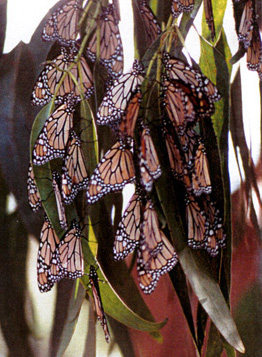
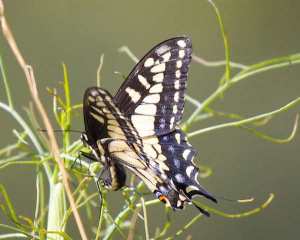
Monarch butterflies over-winter in California’s eucalyptus groves
The East Bay Express has published an op-ed in defense of the much maligned eucalyptus. “The Eucalyptus is Part of California” is by Gregory Davis, a Berkeley resident. We summarize the main points for our readers:
University of California, Berkeley’s plan to destroy all non-native trees—primarily eucalyptus, Monterey pine, and acacia—is characterized as a “meat-axe approach.”
Applying herbicides repeatedly to prevent regrowth of non-natives is “tantamount to opening a can of worms.” We don’t know the consequences of dousing our public land with toxic chemicals, just as we didn’t know that using Agent Orange during the War in Vietnam would permanently damage that country and its citizens.
The moderate approach advocated by the Hills Conservation Network is more reasonable. Thinning and selective removal will do less damage.
Flammability of eucalyptus groves has been greatly exaggerated.
Eucalyptus has lived in California longer than most of us have been alive. They are more native than we are.
The loss of the “beauty and majesty” of eucalyptus in the hills will make hiking in the East Bay hills a less pleasant experience. “Anyone who has hiked up the trail under the green canopy of these tall, stately, plumed-top, evergreen trees knows how precious they are.”
Thank you, Mr. Davis, for writing this article and to the East Bay Express for publishing it. Critics of the native plant movement are learning that they must speak up if we are to save our trees. The projects that destroy our trees finally became so big and so visible, that more people are aware of them and are more willing to defend our trees.
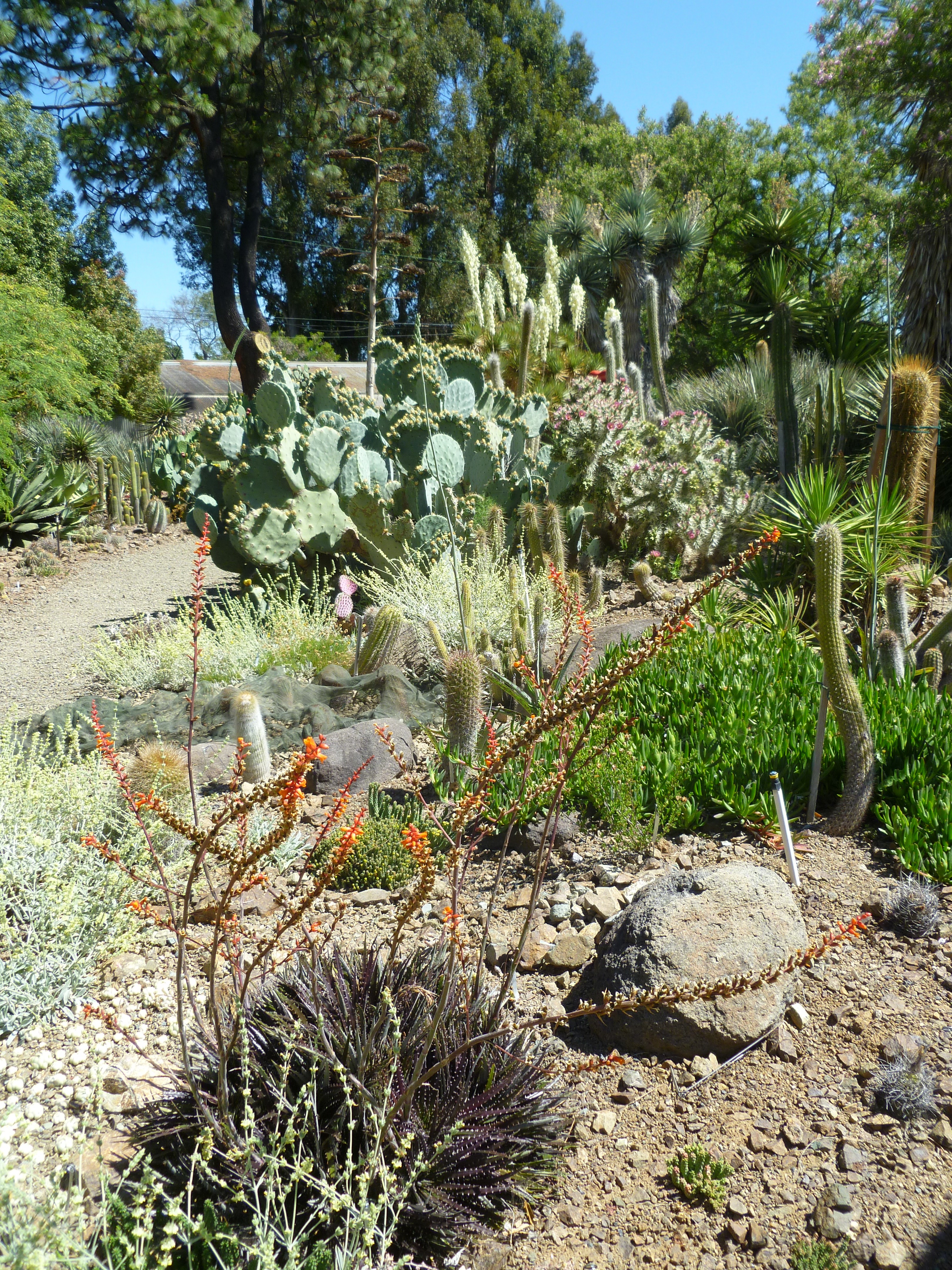
Ruth Bancroft Garden is a mix of native and non-native plants
The following exchange of emails was recently posted to the faculty email list at City College of San Francisco. The first email was sent by a student at City College to the President of the Board of Trustees of the College and the Chancellor. (Written communications to public employees are in the public record.) The second email was sent by the Chairman of the Environmental Horticulture and Floristry program at City College.
Hello President Rizzo, Chancellor Scott-Skillman and Sustainability Committee members,
Today I spoke with Environmental Horticulture instructor Gus Broucaret while his class was removing plants outside the Environmental Horticulture building. He indicated his plan was to replant similar non-native plants. I pointed out that the CCSF Sustainability Plan calls for planting native plants and urged him to reconsider his plant choices. If no one has done so, I suggest you request that all Environmental Horticulture faculty and staff be asked to follow principles of the Sustainability Plan. That includes planting [local] native plants, removing and avoiding invasive plants, conserving resources like water, and the like.
At the same time, I heard that a native plant installation had been designed for the front of EHD. The plan was drafted and did go through certain review processes, only to have been shelved. I suggest you ask the EHD chair to present the written plan for a native plant installation in front of EHD, so that interested stakeholders may see it and discuss it further. It is entirely possible to create a local native plant landscape that yields cut flowers, berries and greens for flower arrangement classes.
The online CCSF employee directory does not show an email address for Mr. Broucaret, so I intend to call him to inform him of my mention of his name in this email.
Denise Louie has no business interrupting instructors during class times, period. She has done so several times now.
This student doesn’t know anything about what she is talking about. And she does not represent the sustainability committee.
My instructors have all been advised to call the campus police if she interrupts them.
She has been removed from our department in the past and has had instructions not to be here.
I have filled out paper work many times to try to end this harassment.
I had no idea this incident had occurred until now.
I am extremely upset about this and will be looking into hiring an attorney to sue the school for not taking steps to prevent this behavior. This harassment has gone on for three years now!
We have cooperated with the sustainability plan which is a guide. Title five is law, the Ed code is law.
This has to stop”
The Chairman of the Environmental Horticulture & Retail Floristry program is featured in a video about the program on the CCSF website. In that video, he explains that “Horticulture is the decorative use of plants…We teach our students how to use plants in an urban landscape and how to maintain that landscape.” This suggests that students in that program can expect to learn about both native plants and the thousands of species of non-native plants that are planted in our gardens. A horticulture program that uses exclusively native plants would not provide its students with the education they need to be gardeners.
In the 15 years in which we have been engaged in the effort to prevent the destruction of our non-native urban forest we have witnessed and been subjected to harassment from native plant zealots. We have been threatened and accused of wrongdoing of which we are innocent. Therefore, we sympathize with the Chairman of the CCSF horticulture program.
At the same time, we acknowledge that there is a wide range of both opinion and behavior amongst native plant advocates, just as there is a wide range within the community of their critics. We do not wish to paint native plant advocates with a broad brush. We only wish to remind them that such attempts at intimidation do not reflect well on their community.
Above and below the middle ground are trees that will be destroyed by the FEMA project. The middle ground is a preview of the landscape these projects hope to achieve. Photo taken from Grizzly Peak Blvd, south of Claremont Blvd, looking north to Frowning Ridge.
We received many more comments than usual during the public comment period for the FEMA projects in the East Bay Hills. We posted many of the comments we received from supporters of the project. We did not post comments from those who called us names and/or threatened us. When we refused to post those comments, the threats and name-calling escalated, making it even less likely that we would post their inflammatory comments.
Another theme in the dialogue with native plant advocates, which was repeated by some media coverage of this episode, is their deep state of denial of the strength of the opposition to the destructive projects they demand. They repeatedly portray critics of these projects as a “tiny band” and similar minimizing descriptions.
They are very mistaken. The primary supporter of the FEMA projects, The Claremont Canyon Conservancy, claims in its public comment (available on CCC’s website) to represent 500 families. Yet, the Conservancy’s on-line petition supporting the FEMA projects has less than 500 signatures. In contrast, the petition which criticizes the FEMA projects has over 5,700 signatures. The opposition to these projects has overwhelmed the support, which will surely be reflected in the public comments. As these projects get bigger, greater numbers of trees are in jeopardy, and the devastating consequences are more apparent, the opposition will also get bigger and noisier. We will eventually be heard.
The public comment period for the FEMA project in the East Bay that proposes to destroy nearly half a million trees will close on Monday, June 17, 2013, at midnight. If you want to express your opinion of these projects, it’s time to do so. Detailed information about the projects and how to comment on them is available HERE.
The projects have drawn quite a bit of media coverage, starting with Beyond the Chronblog in mid-May and quickly picked up by many other internet sources of information. Most of those internet sources referred their readers to the Million Trees blog for more information. In May we had over 12,000 visitors to our articles about these projects.
Both the Oakland Tribune and the San Francisco Chronicle covered the story. The Tribune coverage was appallingly inaccurate and biased. The Chronicle coverage was more balanced than it usually is about native plant restoration projects, which the Chronicle usually supports without reservation.
The winner of the booby prize for balanced and fair reporting of the projects goes to the Sierra Club Yodelerwhich expressed its unqualified support for the projects at the same time it demonstrated total ignorance of the projects (or chose to misrepresent them):
Sierra Club said, “We want to avoid past mistakes, when agencies simply stripped off vegetation and then walked away, leaving the land clear for exotic and even more-flammable vegetation.” This is precisely what these projects plan to do…destroy everything then walk away without planting anything.
Sierra Club said, “The Park District is now implementing that program, and we are monitoring the progress.” If they are monitoring that program, why don’t they know what the Park District is doing?
Sierra Club said, “The preferred alternative involves application of the herbicide glyphosate (trade name Roundup) to the stumps to prevent re-sprouting. There is no practical way to eliminate eucalyptus infestations without herbicide, and glyphosate is relatively low in toxicity.” The Sierra Club is simply wrong. These projects will use Garlon (with active ingredient triclopyr) and/or Stalker (with active ingredient imazapyr)—not glyphosate (Roundup)–to prevent the trees from resprouting. Both products are rated by the EPA as more toxic, more persistent, and more mobile in the soil than glyphosate. Glyphosate (Roundup) will be foliar sprayed on non-native vegetation. Recent studies report that glyphosate (Roundup) is not a benign pesticide.
There are some scathing comments on the Yodeler article from people who know enough about the project plans to inform the Club that they have run off the rails…into the weeds!! The Club seems not to have noticed this attempt to set them straight. When someone called them weeks later to ask about the projects, they repeated the same misinformation to the caller.
(Update: One of our readers informed the Sierra Club of the inaccuracy of its Yodeler report about the FEMA projects in the East Bay (see comment below). We are pleased to report that the Sierra Club has revised its Yodeler report on June 19, 2013. It now acknowledges that native plants will not be planted by these projects. Consistent with the Draft Environmental Impact Statement for these projects, the Yodeler now claims that native plants will be “recruited” into the areas in which non-native plants and trees will be destroyed.
We think that is an unlikely outcome of these projects and FEMA’s environmental consultant agrees with us about that (explained here). However, at least the Yodeler article is now consistent with the written plans for the project.
The Yodeler also acknowledges the use of Garlon to kill the roots of the trees that will be destroyed.
Thanks to our readers for alerting the Sierra Club to the inaccuracy of their description of this project. We are sorry that the Sierra Club continues to support the project now that they have a better understanding of the written plans. 6/19/13)
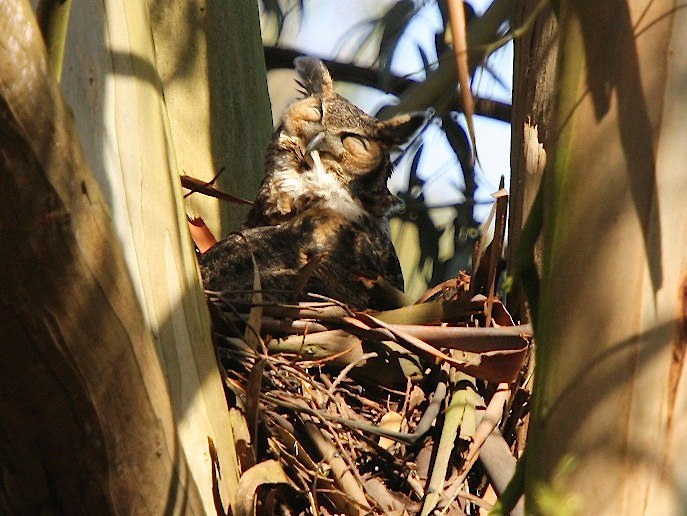
Owl nesting in eucalyptus, courtesy urbanwildness.com
On the positive side of the ledger, we commend the East Bay Expressfor its article about these projects. The author deserves credit for actually reading about the projects before she wrote her report!!! She read the letter from FEMA’s environmental consultant which we reported to our readers here. In a nutshell, the consultant said that UC Berkeley’s project could increase fire hazards by leaving a 2-foot wood chip mulch on the ground and that conversion to a native landscape was an improbable outcome of the project since nothing will be planted.
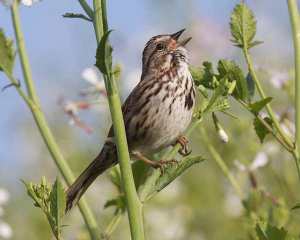
Song Sparrow in non-native wild radish
Our personal favorite for coverage of this project is Nathan J. Winograd’s article, “Biological Xenophobia: The Environmental Movement’s War on Nature,” which was published by the Huffington Post. Mr. Winograd is highly qualified to express his opinion of these projects. He has devoted his personal and professional life to the welfare of animals. He is best known for his advocacy for “no-kill” shelters for our animals. He was the lawyer for the SPCA in San Francisco when the GGNRA started to destroy non-native trees and fence the public out of their properties to protect their fragile native plant museums. So, he has been a long-time observer of the destructive and restrictive consequences of native plant projects. He was prompted to write this article by this latest round of destruction, that is, the FEMA projects in the East Bay.
Here are a few choice phrases from Mr. Winograd’s excellent article:
“Invasion biologists believe that certain plants and animals should be valued more than others if they were at a particular location ‘first.” When the species that were there ‘first’ are in the same habitat with a species that came later, they assert that the latter should be eradicated.”
“And the nativist movement is getting worse and increasingly violent, both in rhetoric (fish they don’t value are called ‘missiles with fins’) and in deeds. At a time of climate change, in a country that needs more trees, not less, nativists in the San Francisco Bay Area are proposing the clear cutting of upwards of half a million trees on San Francisco’s Mount Sutro and in the Oakland and Berkeley hills as part of their ongoing war against the Eucalyptus. After the trees are clear-cut thousands of gallons of toxic herbicides, will be spread throughout wildlife corridors in order to prevent resprouting.”
“An authentic environmentalism would not advocate that humans seek out and destroy living things for simply obeying the dictates of the natural world, such as migration and natural selection. It would not condone the killing of those plants and animals who find themselves in parts of the world where, for whatever arbitrary reason — be they economic, commercial or aesthetic — some humans do not want them to be. An authentic environmentalism would not exacerbate suffering, call for killing and seek the destruction of natural places.”
“Indeed, “invasion biology” is a faux environmentalism, used to disguise the ugly truth about what is really motivating its adherents: an intolerance of the foreign that we have rejected in our treatment of one another, a biological xenophobia that seeks to scapegoat plants and animals for the environmental destruction caused by one species and one species alone: humans.”
There are nearly 500 comments on Mr. Winograd’s article and they are as interesting as the article itself. They are a microcosm of this debate between nativists and those with a more cosmopolitan view of nature. We aren’t disinterested observers, so our opinion of the comments of nativists may not be entirely objective. However, we find many of their comments condescending and uninformed, a contradictory mix of sentiments.
We thank our readers for informing themselves about the FEMA projects and we hope that you now have the information you need to write your public comment by the deadline, June 17, 2013. Here is where you can send your comment:
These public lands belong to you and the money that will be used to implement these projects is your tax dollars. So, please tell the people who work for you what you think of these projects.
Girdling a tree by cutting through the outer layer of bark into the woody trunk eventually kills the tree by interrupting the channel through which the tree receives moisture and nutrients from its roots. The bigger the tree, the longer it takes to die, but the death of a girdled tree is inevitable.
Girdled trees, Bayview Hill, San Francisco
Between about 1998 and 2003, approximately 1,200 non-native trees in San Francisco were girdled by native plant advocates, including a few who were employees of the Recreation and Park Department’s so-called Natural Areas Program. This vandalism was finally stopped after one of the native plant advocates was caught and prosecuted and the Recreation and Park Department was embarrassed by the media coverage.
In addition to killing trees by girdling them, an entomologist has published a study which reports that Australian pests of eucalypts were intentionally and illegally introduced to California for the purpose of killing non-native eucalypts. These stories are told here.
More recently, we have learned that native plant advocates are also spraying non-native vegetation in public parks in San Francisco with herbicides, in violation of San Francisco’s policy regarding pesticide use. The people who are spraying these herbicides are not authorized to do so. They are not posting notices of the application of herbicides as required by law. They are also using herbicides that are not approved for use in San Francisco’s public properties. That story is told here.
Guerilla Gardening in the East Bay
These guerilla tactics have recently spread to the East Bay. Shortly before Christmas in December 2010, the neighbors of Garber Park (Evergreen Lane) in the Oakland hills were shocked when an enormous crane pulled up to their park and began to take down several huge eucalyptus trees. The neighbors had been told nothing about their destruction and they had no idea why they were being destroyed. A little frantic investigation revealed that one of their neighbors had requested that the trees be removed and, because she was willing to pay for their removal, the City of Oakland obliged her without any further consultation with her neighbors. Needless to say, many neighbors were not pleased with this undemocratic method of altering their neighborhood landscape. That story was reported in the Hills Conservation Network newsletter which is available here.
Eucalypts destroyed in Garber Park, December 2010. Photo by Michael Wallman
The removal of those trees was the first step in an ambitious project to eradicate non-native plants and trees in Garber Park and replace them with native plants. That project is described on the website of the “Garber Park Stewards.”
Garber Park native plant “restoration”
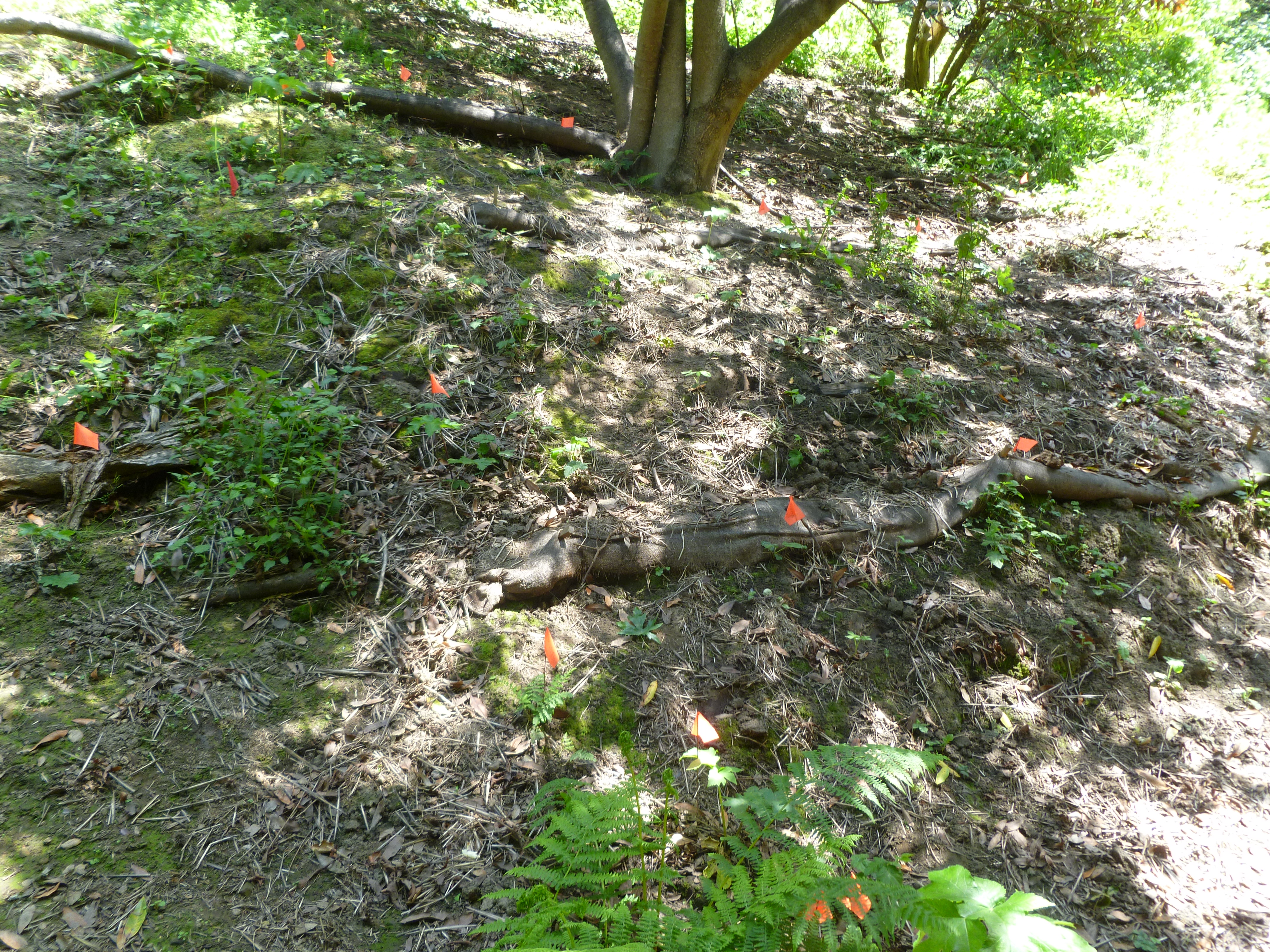
On a recent visit to this wild 13-acre park, we saw little evidence of this effort. A rough, barely passable trail meanders through the park. Most of the trees are native oaks, bays, big leaf maples, and buckeyes. The tangled understory is a mix of natives (cow parsnip, horsetail, poison oak, etc) and non-natives (annual grasses, forget-me-knots, etc). The only evidence of the work of the stewards was typical of these projects: a small patch of bare ground with colored flags.
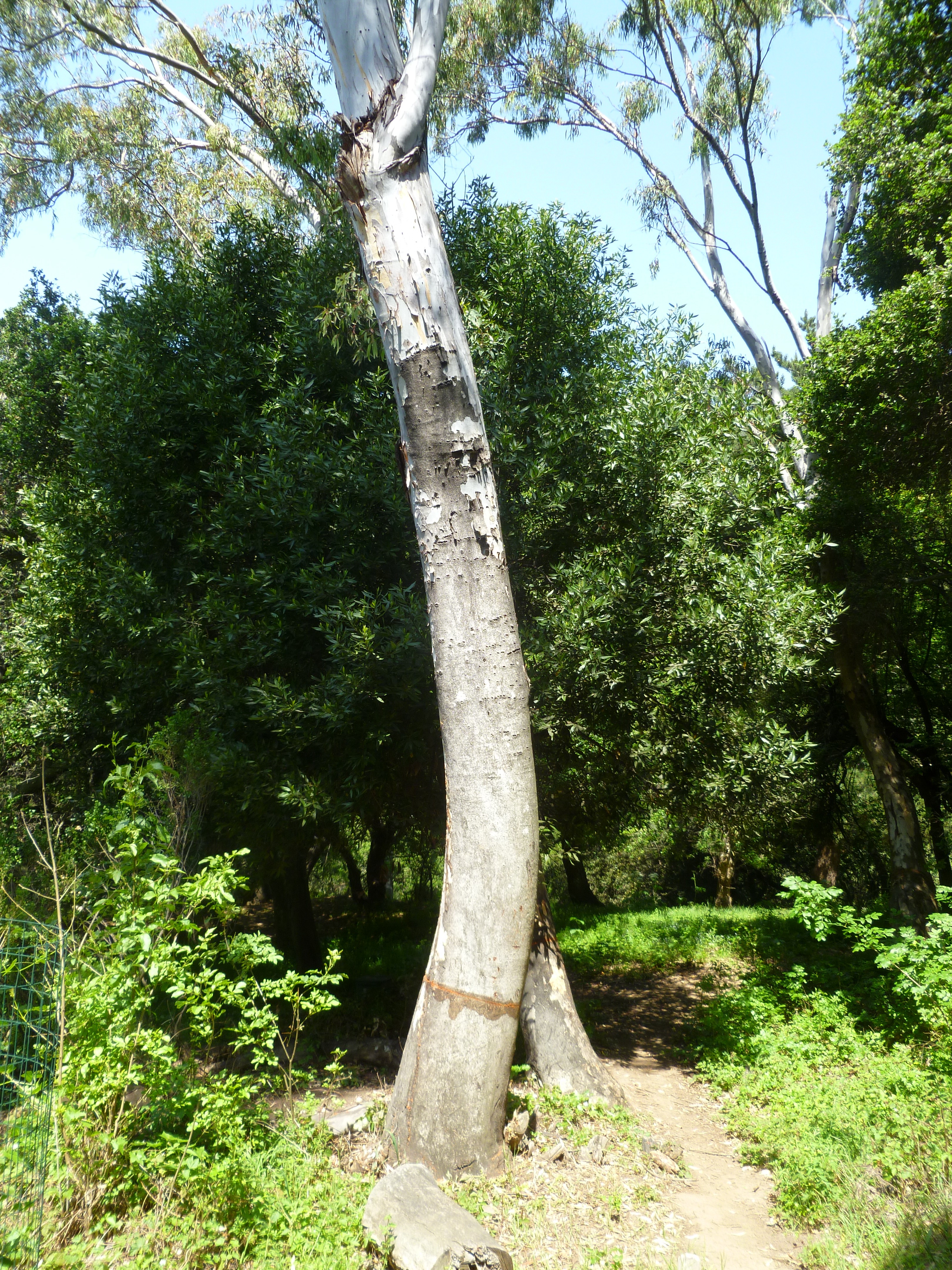
Girdled tree, Garber Park
Now more eucalypts are being destroyed in Garber Park by girdling them. A chain saw was apparently used to cut into the cambium of the tree, which is the channel that carries nutrients from the roots of the trees to its canopy. Something was painted or sprayed into the cuts which we speculate is an herbicide that will accelerate the death of the trees.
We speculate that the girdling of these trees was not authorized by the City of Oakland. The neighbors of the park say they were not informed that the trees were going to be destroyed. Therefore, we assume that this is a case of vandalism which we hope will be reported to the police as such.
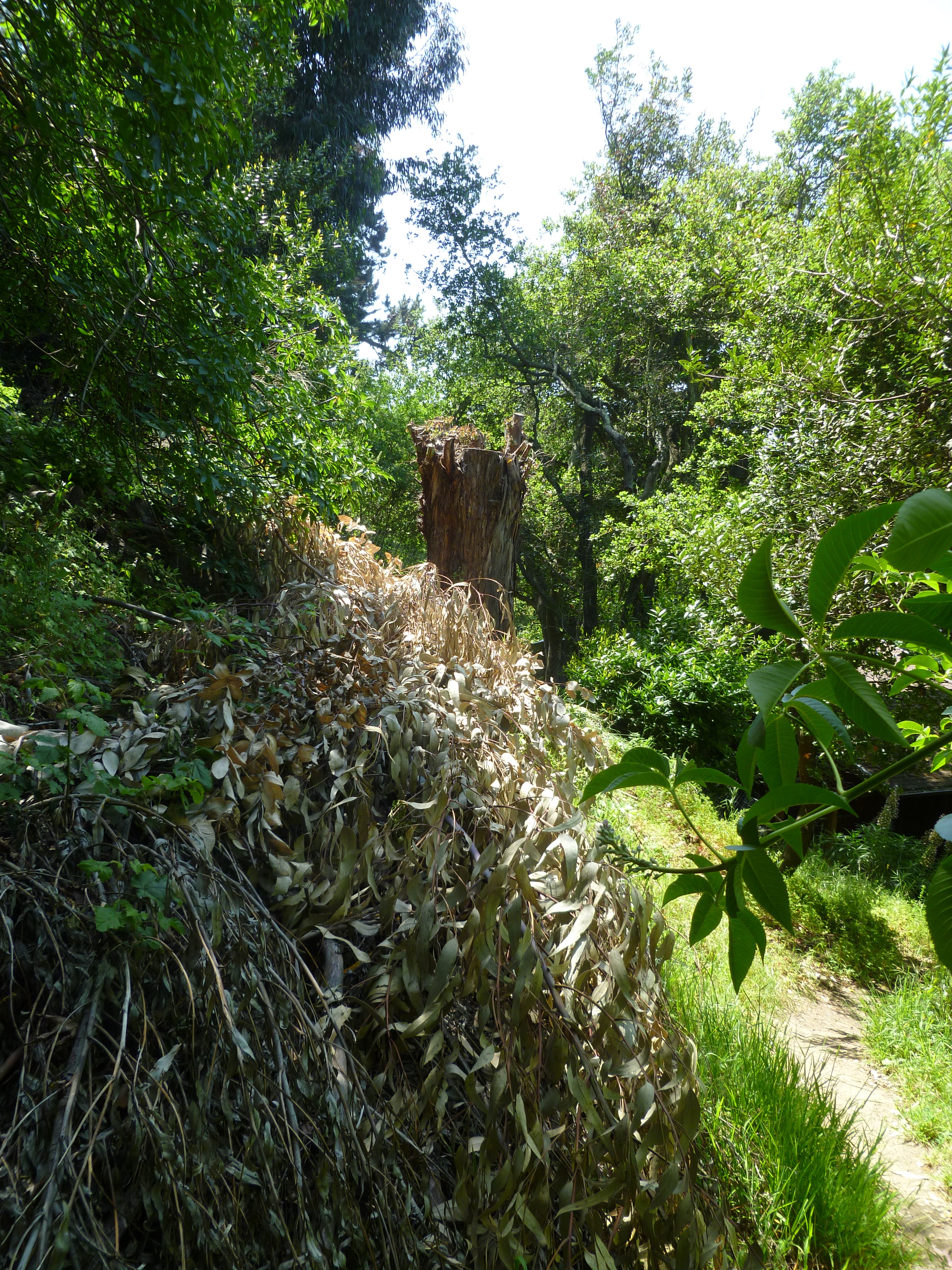
Eucalyptus stump and dead litter, Garber Park. If you were concerned about fire hazard, would you leave dead litter in the park for over 2 years?
We have no idea who girdled the trees in Garber Park. We therefore make no accusations. However, based on our experience in San Francisco, we speculate that whoever killed these trees believes their destruction will enhance the native plant restoration project. There are few eucalypts in this park. We saw only one that was not either girdled or a stump. We wonder what harm these few trees could do in this wild place. They are clearly not spreading
We repeat the Million Trees mantra
We say at every opportunity that we like native plants and trees and we encourage native plant advocates to plant them. We ask only that they stop destroying the plants and trees that have lived peacefully in the San Francisco Bay Area for over 100 years and are performing valuable ecological functions. We remind native plant advocates that we live in a democracy and that our public lands belong to all of us. If the landscape is to be permanently altered, a democratic process should be used to reach that conclusion.
Mistletoe has a mixed reputation. On the one hand, we associate it with the Christmas folk tradition of obliging those who stand beneath it to be kissed. But foresters have always considered it a parasite that sucks the life from the trees in which it lives. Today we have the pleasure of reporting the result of a study in Australia which exonerates mistletoe of this crime.* It’s our Christmas gift to our readers.
David Watson, an ecologist at Sturt University in New South Wales, Australia, had long suspected that his favorite plant, mistletoe didn’t deserve its reputation as a harmful plant. In 2004 he set out to prove his hunch. He removed all the mistletoe from 17 woodlands and compared them with 11 woodlands in which the mistletoe remained and 12 woodlands in which there was no naturally occurring mistletoe.
Removing the mistletoe was a huge task which took two years. A dozen people, using cherry-pickers and clippers removed 40 tons of mistletoe. They waited three years to study the differences in the three types of forest.
They found that there were more birds, mammals, and reptiles in the forests where the mistletoe remained. But the most significant difference in the three types of forest was that the number of insects on the forest floor where the mistletoe remained was much greater.
Mistletoe in silver birch. Creative Commons
There are more insects on the forest floor where mistletoe resides because the leaves of the mistletoe contain more nutrients than the leaves of the tree that it occupies. The tree uses the water and nutrients in its leaves before the leaves fall, whereas the fallen leaves of the mistletoe are both more abundant and contain more nutrients. The leaves of the mistletoe also fall throughout the year when many of the trees are dormant. Hence, there’s more food on the forest floor occupied by mistletoe for the insects that live there.
Mistletoe is found everywhere in the world except Antarctica. There are 1,400 species of mistletoe in 5 families. Fossil pollen grains indicate that mistletoe has existed in North America for millions of years. Although a controlled experiment has not been done in North America, some scientists have noticed the benefits of mistletoe to forest life. David Shaw, at Oregon State University, has noticed that the endangered northern spotted owl nests in mistletoe.
Science tests our assumptions
This study of mistletoe is a nifty little example of the power of science to test our assumptions. Our assumptions are often mistaken. We should keep an open mind about any assumption that has not been tested empirically.
Native plant advocates assume that native plants are inherently superior to non-natives and conversely, that non-native plants are not beneficial to wildlife. Their assumptions are not supported by scientific studies. In fact, when their assumptions are tested empirically, they are often proven to be wrong.The native plant movement is an ideology that is not based on science. It is a horticultural preference which should compete in the marketplace of ideas with all other horticultural preferences.
************************
*Alanna Mitchell, “Beyond the kiss, Mistletoe Helps Feed Forests, Study Suggests,” New York Times, December 17, 2012. Available here.
Conservation biology is being revised so rapidly that we are struggling to keep up with it. In our previous post, we introduced our readers to Professor Scott Carroll’s proposal that a more realistic approach to conservation would accommodate non-native species because they are often better adapted to present conditions than their native predecessors. He calls his approach Conciliation Biology.
Today, we are introducing our readers to another proposal to redefine wilderness to a new standard which acknowledges that the environment has been radically altered by man. The author of this proposal is Nigel Dudley, a practicing British conservationist. He calls his new standard “authenticity,” which he defines as follows:
“An authentic ecosystem is a resilient ecosystem with the level of biodiversity and range of ecological interactions that can be predicted as a result of the combination of historic, geographic and climatic conditions in a particular location.”*
Let’s focus for a moment on this portion of that definition: “…historic, geographic and climatic conditions in a particular location.” Mr. Dudley explains this particular parameter of his definition of authenticity: “…some ecosystems have unusually high levels of diversity…through being isolated or undisturbed for exceptionally long periods. Other ecosystems have already been hugely changed and in some cases impoverished…it will not always be possible either to recover lost elements or to remove additions. What an ecosystem is likely to contain in the future needs to be based on current realities…”
Clearly places like the Berkeley Meadow are not candidates for “authenticity.” This particular native plant museum was the former garbage dump for the city of Berkeley, built on landfill. This seems an extreme example of denial of current realities.
The Berkeley Meadow, a 72-acre fenced pen for native plants on the former city garbage dump
Choosing candidates for authenticity
Dudley’s point in proposing this new standard is to focus conservation efforts where they are most likely to be fruitful. Our interest in this new standard is in the stark contrast it provides to the local projects which fail by every measure introduced by Mr. Dudley in his book about authenticity.
Natural species composition: Virtually all predators and grazing animals are gone from the urbanized San Francisco Bay Area. San Francisco’s Natural Areas Program claims to have designated only “remnants of native vegetation” as natural areas. In fact, vegetation cover in the 1,105 acres of natural areas is on average only 46% native. Some of the 31 natural areas are populated by as little as 11% native vegetation.
Migrant composition: Some bird migrations are intact, but others have been changed by existing vegetation such as the tall, non-native trees of which there were few in the native landscape. Migrations of ungulates are long gone.
Invasive species: Non-native plants and trees outnumber native species throughout the Bay Area.
Chemical composition: Air, water, and soil composition are vastly different than they were 200 years ago.
Functioning food web: The food web has been radically altered by the loss of top predators and ungulates and cannot be recreated in a densely populated urban environment. Bears may be welcome in the zoo, but are not wandering our streets looking for their next meal.
Functioning ecological processes: Funneling most creeks into underground culverts is an example of a lost ecological process in the urban environment.
Regeneration process: Fire is a regeneration process that is lost in the urban environment. Prescribed burns are allowed by some managers of public land in the Bay Area, but San Francisco’s Natural Areas Program has reluctantly agreed not to conduct prescribed burns.
Resilience: Although the original goal of San Francisco’s Natural Areas Program was that once “restored” the natural areas would be self-sustaining, fifteen years later, NAP concedes that on-going maintenance will be required to sustain the natural areas. Dudley says, “Ideally, authentic ecosystems should also be self-sustaining: they should not need constant and often expensive manipulation to maintain their values.” Clearly, the “natural areas” in San Francisco’s parks do not meet this criterion for authenticity.
Area: Most of the restoration projects in the Bay Area are too small to be sustainable. The average size of San Francisco’s 31 natural areas is only 35 acres. The smallest is only one-third of an acre. Size is a proxy for the ability to isolate a restored site from repeated re-invasion. The natural areas are small and are surrounded by non-native vegetation which will quickly return.
Connectivity: Virtually every restoration project in urbanized Bay Area is physically isolated.
It may be possible to compensate for these bad odds of a sustainable, authentic restoration project in the urbanized San Francisco Bay Area. If so, it will be extremely costly, which is undoubtedly why most projects have not been successful. The National Park Service has had some success with its projects because they seem to have greater resources than other managers of public land. But is this the top priority of taxpayers? As the presidential election season heats up and the debate rages about raising taxes and cutting federal spending, one wonders why these projects are not in the budget-cutting cross-hairs.
Looking on the bright side
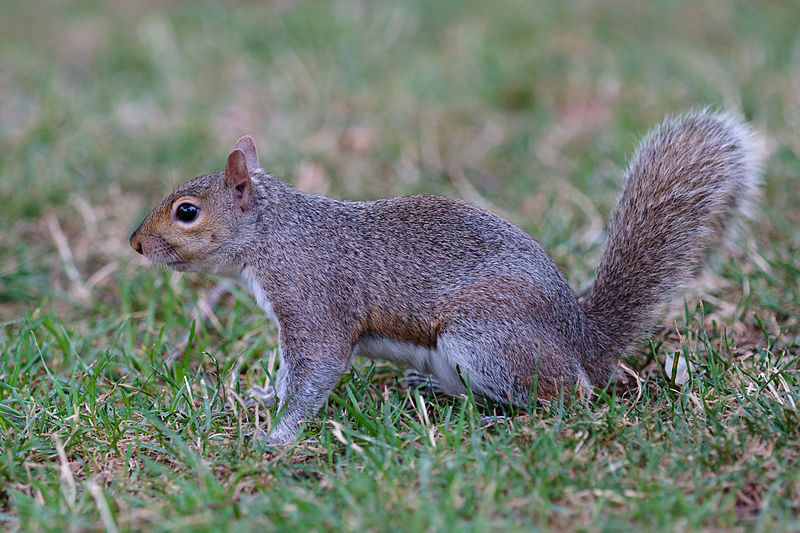
Grey squirrel. Creative Commons
We make every effort to end each story with a positive outlook. In this case, we turn to Mr. Dudley to remind our readers that the environment is not necessarily destroyed by the mere existence of non-native species. Being British, he uses British examples to make his point. The North American grey squirrel is considered an invasive species in Britain and the native red squirrel is now rare. While the British are not happy about the loss of their native squirrel, Mr. Dudley reminds them that the non-native grey squirrel is performing the same ecological functions as its native predecessor. There is apparently no evidence that the environment has been harmed by this substitution.
We don’t like change. But is change actually doing any harm? If not, let’s accept it, because fighting against it is costly and probably futile. That is the definition of wisdom: that we accept what we cannot change.
************************
*Nigel Dudley, Authenticity in Nature. Earthscan, 2011
Our interest in invasion biology is primarily in its application, specifically to “restoration” projects. Therefore, as science revises the assumptions of invasion biology we are equally interested in the implications for ecological restorations.
Professor Scott Carroll (UC Davis) is a particularly good candidate to lead the way in revising ecological restoration practices, as informed by current scientific theories of invasion biology. His study of rapid evolution of the native soapberry bug to accommodate use of non-native vegetation puts him in the forefront of the effort to integrate evolutionary theory into invasion biology.
And so we introduce to our readers, Professor Carroll’s proposal that we turn from efforts to eradicate non-native species in favor of a new approach which manages the co-existence of native and non-native species. He calls this approach Conciliation Biology.*
Conciliation Biology is based on these premises:
The environment has been radically altered by the activities of humans
The environment will continue to change in the future.
It is not feasible to eradicate non-native species.
The cost of attempting to do so is prohibitive.
These are familiar themes on Million Trees and we will not belabor them in this post. Rather we will focus on those aspects of Professor Carroll’s proposal that are new to us.
Rapid evolution can resolve apparent ecological problems
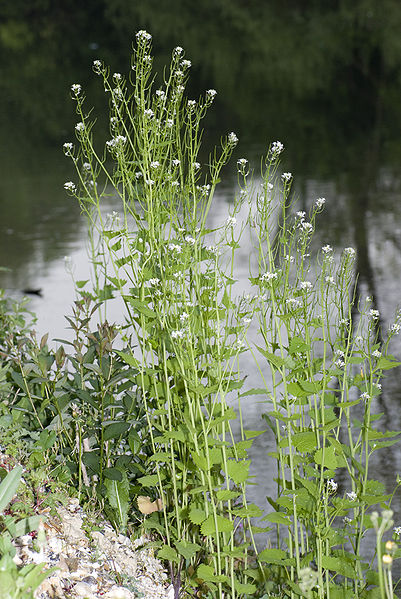
Garlic mustard. GNU Free
Garlic mustard is an invasive non-native plant which tolerates shade and emits a powerful root toxin known to inhibit the germination of other plants, notably forest trees. This chemical tool to reduce competition is known as allelopathy, a weapon used by many plant species, both native and non-native.
Since garlic mustard arrived first in the eastern US and spread slowly west, scientists compared the allelopathic toxicity of a population of garlic mustard known to have arrived 50 or more years ago with a population which arrived only 10 years ago. The toxicity of the recently arrived garlic mustard was significantly greater than that of the older population. In fact, the understory and seedling germination were rebounding in the forest with the older population of garlic mustard.
New exotic species are sometimes better adapted to the changed environment
Professor Carroll cites a study of two aquatic species (Phragmite and Hydrilla) which provide superior ecological services than their native counterparts because of changes in the environment. The extreme weather events associated with climate change are subjecting our coasts to unprecedented storm surges. Native species of marsh grass are not as successful in protecting the coast against the ravages of these storm surges.
We have our own local example of the same phenomenon. Non-native Spartina marsh grass is being eradicated along the entire west coast of the country. It grows taller and thicker than native Spartina and it does not die back during the winter months as the native species does. Since storm surges occur during the winter months, surely the non-native Spartina provides superior protection to our coast. We have yet to see a scientific experiment which proves this point, but common sense tells us that it is a study that needs to be done, particularly since ornithologists have reported that the eradication of non-native Spartina has been harmful to our dwindling population of endangered California Clapper Rail.
The harmful effects of eradication efforts
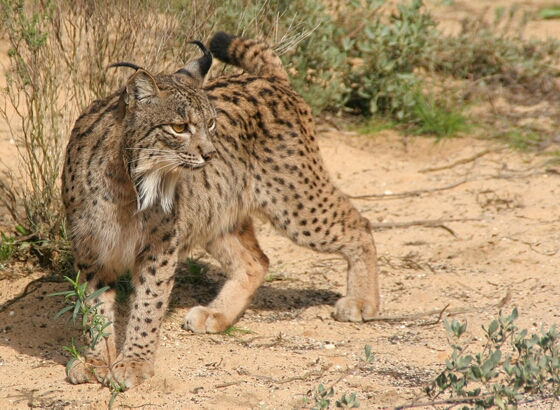
Iberian lynx. Creative Commons
We have seen many such harmful consequences of eradication efforts, but Professor Carroll provides his own example. Iberian rabbits are native to Spain. They were intentionally imported to Australia where they quickly became a problem. The Australians imported a virus from South America that killed the rabbits. The virus was also introduced to Britain for the same purpose. The virus has spread back to Spain where it is killing the rabbits in their native range. The rabbits are prey of several rare species of animals in Spain, including the Iberian lynx. The absence of their prey is now decimating those native predator populations as well.
Biological controls are one of many dangerous games being played by those who share in the fantasy that it is possible to eradicate non-native species without paying a price. Sometimes that price is greater than whatever cost may be associated with the non-native species.
Simply eradicating non-native species will not necessarily result in the return of natives
Professor Carroll tells us the story of the failed attempt to save the Large Blue butterfly in Britain from extinction to illustrate this point. This was apparently a spectacularly beautiful butterfly, and so the British spent 50 years trying to bring it back from extinction. They failed because they figured out too late that the butterfly is dependent upon an ant which lives only in heavily grazed vegetation. The ant population no longer existed within the range of the butterfly because grazing had long ago been abandoned.
How many other pointless efforts to reintroduce endangered species are there? We recently told our readers about the effort to reintroduce the endangered Mission Blue butterfly to Twin Peaks in San Francisco. This is a radically altered environment with high levels of nitrogen and carbon dioxide associated with the urban environment. The annual brush fires of pre-settlement San Francisco are no longer capable of sustaining the scrub required by the butterfly and the prescribed burns, which are the artificial equivalent, are not allowed in San Francisco. The scrub is therefore maintained with repeated applications of pesticides which are unlikely to benefit the endangered butterfly.
What is Conciliation Biology
Conservation biology has been “constrained by often futile efforts to restore historical communities, and [does] not appreciate the unavoidable and dynamic contributions of ongoing adaptive evolution.” * Conciliation biology proposes to address these shortcomings by:
Taking a longer-term view of the chronic effects of changes in the environment.
Making greater use of evolutionary theory
Fostering ongoing adaptation by accepting the hybridization that increases genetic variability
Identifying and supporting community mechanisms that increase resiliency
Improving the effectiveness of the science of invasion biology by using a multidisciplinary approach
How long will It take for this new approach to filter into the minds of those who are busily destroying non-native vegetation and damaging the environment in the process? How much damage will be done before these destructive methods are abandoned in favor of an approach that accommodates the reality, inevitability, and often the advantages of change?
*****************************
*Carroll, Scott, “Conciliation biology: the eco-evolutionary management of permanently invaded biotic systems,”Evolutionary Applications, 2011, 184-199.
We recently reported the history of vandalism by native plant advocates in public parks in San Francisco such as cutting down trees as well as killing trees by girdling them. We were prompted to recount this history by a recent study reporting the probable intentional and unauthorized introduction of Australian insect pests of eucalyptus.
Now we must report a more recent incident in San Francisco’s parks. A park visitor observed and photographed a “volunteer” spraying herbicide on non-native plants early in the morning (6:30 am). The herbicide that he was spraying is not included in the city’s list of approved pesticides. We are reprinting with permission the story of this incident published recently by the San Francisco Forest Alliance (with 3 edits in brackets).
Native plant advocates are treating San Francisco’s parks like their personal property, destroying plants they don’t like and endangering the public with pesticides that are not approved for use in the city.
******************************************
Some time back, we’d posted an article about the puzzling brown spot in Glen Canyon Park, around a rock near a trail. It looked like herbicide use, but regular visitors to the park hadn’t seen the signs SF Rec and Park must post before spraying herbicides. Also, as the picture below shows, it was close to a trail. Both the Natural Areas Program and the Department of the Environment had said there would be no spraying for 15 feet on either side of a trail. We asked them what was going on, and got no answer.
Now we know.
A “volunteer” was spotted spraying the area early one morning.We’d heard anecdotal reports, but this time, an actual incident was reported to us with evidence of unsupervised use of unapproved productswithout warning notices, and without public records, in a place where pesticides are not supposed to be sprayed.
Rock formation in Glen Canyon Park
These pictures show the pesticide being used in precisely the area we were concerned about.
So in addition to the recorded herbicide use by the Natural Areas Program, there’s unrecorded and unquantified toxins being used in Glen Canyon by sympathizers.
It is not on the Department of the Environment’s approved list of pesticides for use on city-owned properties.
WHAT IS ROUNDUP READY-TO-USE PLUS?
[ETA: This is an actual photograph of the person seen spraying herbicide in Glen Park.]This product contains Glyphosate (the main ingredient in all types of Roundup products, which we’ve described in an earlier article). It also contains Pelargonic Acid, which the University of Florida IFAS extension described as “like diquat.”
About pelargonic acid, the Material Safety Data Sheet (linked here as a PDF) says “Potential for mobility in soil is very high.” This means it doesn’t stay where it’s sprayed. It moves around.It also says it is slightly toxic to marine organisms – fish and amphibians.
Besides glyphosate and pelargonic acid, Roundup Ready-to-Use Plus contains “other ingredients” that the manufacturer, Monsanto, does not (and is not required to) reveal.
HOW MUCH TOXIN IN GLEN CANYON?
This makes it clear that no one actually knows how much (or what) pesticides are being sprayed in Glen Canyon.
The Natural Areas Program (NAP) sprayed this park at least 6 times in 2011. Clearly, sympathizers are also spraying it with unapproved products not safe for pets and wildlife, without posting warning notices, and without keeping any public records. It’s likely that they are spraying even more frequently than the NAP [judging by the many dead spots scattered around the park for which no signs were posted] – which is apparently turning a blind eye to the problem.
The NAP is based on community “stewardship.” Evidently, this has encouraged its “volunteers” to take matters into their own hands and work unsupervised in ways that threaten our environment.
In our debates with native plant advocates, the scientist who is most often quoted to support their beliefs is Doug Tallamy who wrote an influential book, Bringing Nature Home: How Native Plants Sustain Wildlife in our Gardens. Professor Tallamy is an entomologist at the University of Delaware.
Professor Tallamy’s hypothesis is that native insects require native plants because they have evolved together “over thousands of generations.” Because insects are an essential ingredient in the food web, he speculates that the absence of native plants would ultimately result in “ecological collapse” as other animals in the food web are starved by the loss of insects. (1)
Professor Tallamy freely admits that his theory is based on his anecdotal observations in his own garden, not on scientific evidence: “How do we know the actual extent to which our native insect generalists are eating alien plants? We don’t until we go into the field and see exactly what is eating what. Unfortunately, this important but simple task has been all but ignored so far.” (1)
This research has now been done to Professor Tallamy’s satisfaction by a Master’s Degree student under his direction. The report of that study does not substantiate Professor Tallamy’s belief that insects eat only native plants. In his own words, Professor Tallamy now tells us:
“Erin [Reed] compared the amount of damage sucking and chewing insects made on the ornamental plants at six suburban properties landscaped primarily with species native to the area and six properties landscaped traditionally. After two years of measurements Erin found that only a tiny percentage of leaves were damaged on either set of properties at the end of the season….Erin’s most important result, however, was that there was no statistical difference in the amount of damage on either landscape type.” (2)
Corroborating Evidence
This finding that insects are equally likely to eat native and non-native plants may be new to Professor Tallamy, but it isn’t new to the readers of Million Trees. We have reported many studies which are consistent with this finding.
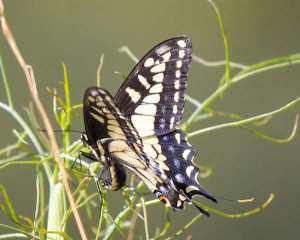
Anise Swallowtail butterfly in non-native fennel
Professor Arthur Shapiro (UC Davis) reports that 82 of 236 (35%) total species of California butterflies have been observed either laying their eggs or feeding on non-native plants.
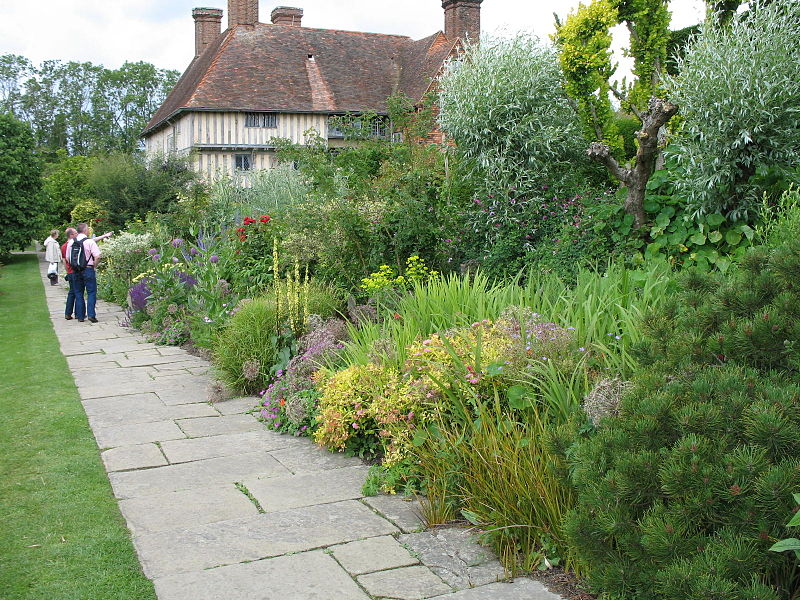
The English garden, where plants from all over the world are welcome
Specialists vs. Generalists
When debating with native plant advocates, one quickly learns that the debate isn’t ended by putting facts such as these on the table. In this case, the comeback is, “The insects using non-native plants are generalists. Insects that are specialists will not make that transition.” Generalists are insects that eat a wide variety of plants, while specialists are limited to only one plant or plants in the same family which are chemically similar.
Professor Tallamy offers in support of this contention that only “…about 10 percent of the insect herbivores in a given ecosystem [are not specialists],” implying that few insects are capable of making a transition to another host plant.
However, categorizing insects as specialists or generalists is not a dichotomy. At one extreme, there are some insects that choose a single species of plant as its host or its meal. At the other extreme, there are insects that feed on more than three different plant families. It is only that extreme category which has been estimated at only 10% of all phytophagous (plant-eating) insects. The majority of insects are in the middle of the continuum. They are generally confined to a single plant family in which the plants are chemically similar.
Putting that definition of “specialist” as confined to one plant family into perspective, let us consider the size of plant families. For example, there are 20,000 plant members of the Asteraceae family, including the native sagebrush (Artemisia) and the non-native African daisy. In other words, the insect that confines its diet to one family of plants is not very specialized.
Soapberry bug on balloon vine. Scott Carroll. UC Davis
Professor Tallamy offers his readers an explanation for why specialist insects cannot make the transition from native to non-native plants. He claims that many non-native plants are chemically unique and therefore insects are unable to adapt to them. He offers examples of non-native plants and trees which “are not related to any lineage of plants in North America.” One of his examples is the goldenrain tree (Koelreuteria paniculata). This is the member of the soapberry (Sapindaceae) family to which the soapberry bug has made a transition from a native plant in the soapberry family in less than 100 generations over a period of 20 to 50 years. Professor Tallamy’s other examples of unique non-native plant species are also members of large plant families which probably contain native members. Professor Tallamy is apparently mistaken in his assumption that most or all non-native plants are unique, with no native relatives.
The pace of evolution
Even if insects are “specialists” we should not assume that their dependence on a native plant is incapable of changing over time. Professor Tallamy’s hypothesis about the mutually exclusive relationships between native animals and native plants is based on an outdated notion of the slow pace of evolution. The assumption amongst native plant advocates is that these relationships are nearly immutable.
In fact, evolution continues today and is sometimes even visible within the lifetime of observers. Professor Tallamy provides his readers with examples of non-native insects that made quick transitions to native plants:
The hemlock wooly adelgids from Asia have had a devastating effect on native hemlock forests in the eastern United States.
The Japanese beetle introduced to the United States is now eating the foliage of over 400 plants (according to Professor Tallamy), some of which are native (according to the USDA invasive species website).
These insects apparently made transitions to chemically similar native plants without evolutionary adaptation. If non-native insects quickly adapt to new hosts, doesn’t it seem likely that native insects are capable of doing the same? That is both logical and consistent with our experience. For example, the native soapberry bug mentioned above has undergone rapid evolution of its beak length to adapt to a new host.
Although Professor Tallamy tells us that the relationship between insects and plants evolved over “thousands of generations,” he acknowledges much faster changes in plants when he explains why non-native plants become invasive decades after their arrival: “Japanese honeysuckle, for example, was planted as an ornamental for 80 years before it escaped cultivation. No one is sure why this lag time occurs. Perhaps during the lag period, the plant is changing genetically through natural selection to better fit its new environment.” Does it make sense that the evolution of plants would be much more rapid than the evolution of insects? Since the lifetime of most insects is not substantially longer than the lifetime of most plants, we don’t see the logic in this assumption.
Beliefs die hard
Although Professor Tallamy now concedes that there is no evidence that insects are dependent upon native plants, he continues to believe that the absence of native plants will cause “ecological collapse.” In the same book in which he reports the study of his graduate student, Professor Tallamy repeats his mantra: “…our wholesale replacement of native plant communities with disparate collections of plants from other parts of the world is pushing our local animals to the brink of extinction—and the ecosystems that sustain human societies to the edge of collapse.”
This alarmist conclusion is offered without providing examples of any animals being “pushed to the brink of extinction.” In fact, available scientific evidence contradicts this alarmist conclusion. (3)
Here are more articles about the mistaken theories of Doug Tallamy:
Doug Tallamy claims that non-native plants are “ecological traps for birds.” HERE is an article that disputes that theory.
Doug Tallamy claims that native and non-native plants in the same genus are not equally useful to wildlife, but he is wrong about that. Story is HERE.
Doug Tallamy advocates for the eradication of butterfly bush (Buddleia) because it is not native. He claims it is not useful to butterflies, but he is wrong about that. Story is HERE.
Doug Tallamy publishes a laboratory study that he believes contradicts field studies, but he is wrong about that. Story is HERE.
Doug Tallamy speaks to Smithsonian Magazine, Art Shapiro responds, Million Trees fills in the gaps: HERE
Doug Tallamy’s Nature’s Best Hope perpetuates the myth that berry-producing non-native plants must be eradicated because they are less nutritious than the berries of native plants. Available HERE.
Doug Tallamy believes we must prevent hybridization. Hybridization is a natural process that increases biodiversity and enables plants and animals to adapt to changes in the environment. Available HERE.
There is NO evidence to support Doug Tallamy’s claim that insect populations are declining because of the existence of non-native plants. Available HERE.
(2) Tallamy, Doug, “Flipping the Paradigm: Landscapes that Welcome Wildlife,” chapter in Christopher, Thomas, The New American Landscape, Timber Press, 2011




 Conservation Sense and Nonsense