Ecological “restoration” projects: Scientific or public policy decisions?

Invasive and Introduced Plants and Animals:  Human Perceptions and Approaches to Management is edited by two British academics.  It is a collection of articles written by invasion biologists as well as scientists who are critical of invasion biology.  It attempts to present the entire spectrum of opinion on the debate that is the primary subject of the Million Trees blog:  “Our intention is to stimulate the reader to question ideas and received wisdom [about invasion biology], and to try to establish the interface between objective science and subjective sociocultural fashions and values.  (1)  That is, the evaluation of invasion biology involves both science and public opinion.

Using both criteria, the authors evaluate conservation projects in their concluding chapter of the book:  “We perceive that present approaches:

  • Generally lack scientific rigour in their justification;
  • Fail to inform and engage and call upon all stakeholders…;
  • Rarely provide a holistic (for example, catchment wide) context or strategy;
  • Almost always lack financial or human resources to be long-term effective;
  • Have no realistic long-term targets, and if they do, no effective monitoring towards achievement…”   

This evaluation of ecological “restoration” projects fits perfectly with our opinion of projects in the San Francisco Bay Area.  These projects are not based on sound science. They are initiated behind the public’s back and are therefore rarely supported by the public. Most importantly, they are usually unsuccessful.  Typically, the projects are far more destructive than constructive.  We are losing the trees we value and the habitat needed by wildlife and in return we are usually left with barren, weedy messes.

Based on these shortcomings, the authors point to new approaches that address past failures. 

Acknowledge ambiguity and change

First, we must accept that the distinction between native and exotic plants is often ambiguous and the distinction between plants that are harmful and those that are not is even less clear.  Dividing up the natural world into good and bad, is a fool’s errand that does not acknowledge that such judgments are ultimately a matter of opinion. 

How many times have we heard native plant advocates say, “I hate eucalyptus”?  More often, they dress up their hatred in more valid arguments, such as eucalyptus is flammable, or they aren’t healthy, or they kill other plants or they aren’t useful to wildlife.  Those who defend eucalyptus know that these accusations are not true or equally true of some native trees.  Therefore, that argument can’t be resolved with facts because in the end there is a range of subjective opinion that can’t be changed with facts.
The Berkeley Meadow is a 72-acre native plant garden on a former garbage dump on landfill.

Secondly, we must accept that returning landscapes to prehistoric conditions is impossible.  Nature moves forward, not back.  Humans have fundamentally altered the environment and reversing those changes is not physically possible.  If we have unrealistic goals for conservation projects, we can expect failures.  When native plant gardens are installed on landfill that served as garbage dumps for decades (as they have been in the East Bay), we should not be surprised when they are unsuccessful.

Setting realistic goals

Ironically, the authors recommend larger projects rather than smaller projects.  Because ecosystems are integrated, attempts to change only a segment of an integrated system are doomed to fail.  The 1,100 acres of city-managed park land that have been designated as “natural areas” in San Francisco are chopped into 32 pieces, some as small as one-third of an acre.  When non-native plants are eradicated, these tiny plots are quickly repopulated with the same weeds from adjacent areas.  Sharp Park in Pacifica is the only “natural area” that may be capable of functioning as an ecosystem in the long-term because of its size and its relative physical isolation.

Letting the public decide

Finally, we must acknowledge that the alteration of our public lands is not a scientific decision.  It is a public policy decision.  In a democracy this means that the public must decide.  In the vast majority of cases, the public has not been given the opportunity to make the decision because the managers of our public lands have been making these decisions for us.  They do so by claiming that it is a scientific, not a public policy decision and that their expertise puts them in a position to impose their will on the public.  The authors of the book we are reviewing today challenge this claim:  “Yet in interventions conservation practice hides behind a veneer of pseudoscience and certainly challenges democratic processes.”  Hear, hear!!!  Thank you for this astute observation, which we see played out repeatedly in the San Francisco Bay Area.

The authors conclude with this advice to those who are responsible for ecological “restorations”:  “It is important to recognize the subjectivity of decision-making processes, and the cultural and historical origins of many of today’s problem species.”

*********************************

(1)    Invasive & Introduced Plants and Animals:  Human Perspectives, Attitudes, and Approaches to Management, editors Ian Rotherham, Robert Lambert, Earthscan Publishing, London, Washington, DC, 2011.
When the cure is worse than the disease: Incompetent pesticide use

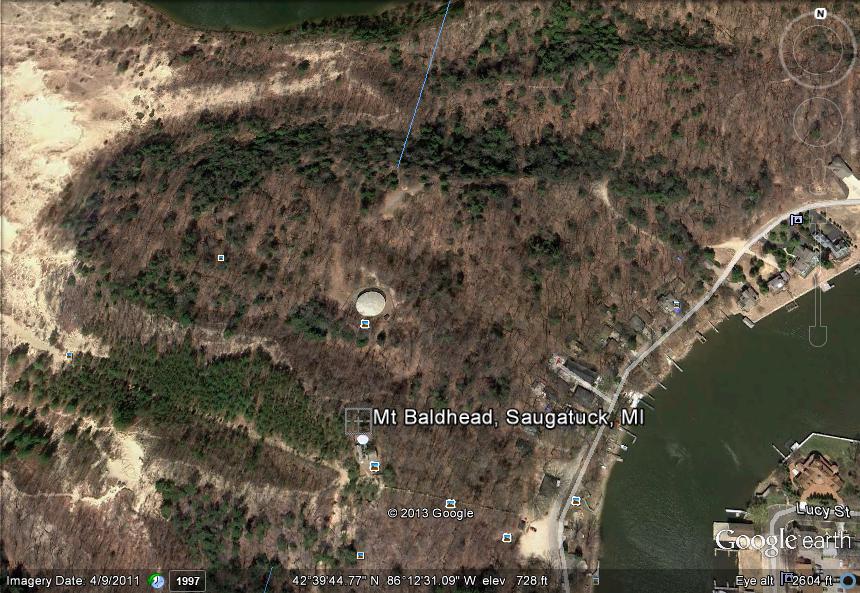
One of our readers sent us a link to an article about a “restoration” project gone awry in his neighborhood. Mount Baldhead is a city-owned park in Saugatuck, Michigan. US Fish & Wildlife funded a $700,000 federal grant to eradicate non-native plants on Mount Baldhead and several other municipal parks in the area. The grant was used to hire “certified applicators” to spray the non-native plants with imazapyr. Mount Baldhead was sprayed in summer 2010 and again in fall 2011. In spring 2012, the native oaks and maples, under which the non-native plants had grown and were sprayed, began to show signs of damage. Now a significant portion of the native forest is leafless and barren.

Mount Baldhead, Saugatuck, Michigan.  A clearer view of the damage is available in the article to which we provide a link.  We were denied permission to publish that picture.
Mount Baldhead, Saugatuck, Michigan. A clearer view of the damage is available in the article to which we provide a link above. We were denied permission to publish that picture.

The soil on Mount Baldhead is being studied to determine how far the pesticide has seeped into areas where it was not sprayed. This information may predict the extent of the eventual damage to the native forest. The ultimate fate of the trees that have been damaged is not known. There is no antidote to the pesticide. Will the trees survive? We don’t know yet.

What does it mean to be a “certified applicator” of pesticides?

This story is of interest to us because imazapyr is being widely used in the San Francisco Bay Area and its use has increased substantially in the past year.

Because imazapyr is being used heavily, we have read the manufacturer’s label for the formulated products (Habitat and Polaris) and the federally mandated Material Safety Data Sheet.

Therefore, we know that imazapyr should not be sprayed under trees you do not want to kill. This is a product that is mobile in the soil. It is capable of traveling from the roots of the plant on which it is sprayed into the roots of adjacent plants on which it has not been sprayed, killing or damaging plants that were not the intended targets of the spraying.

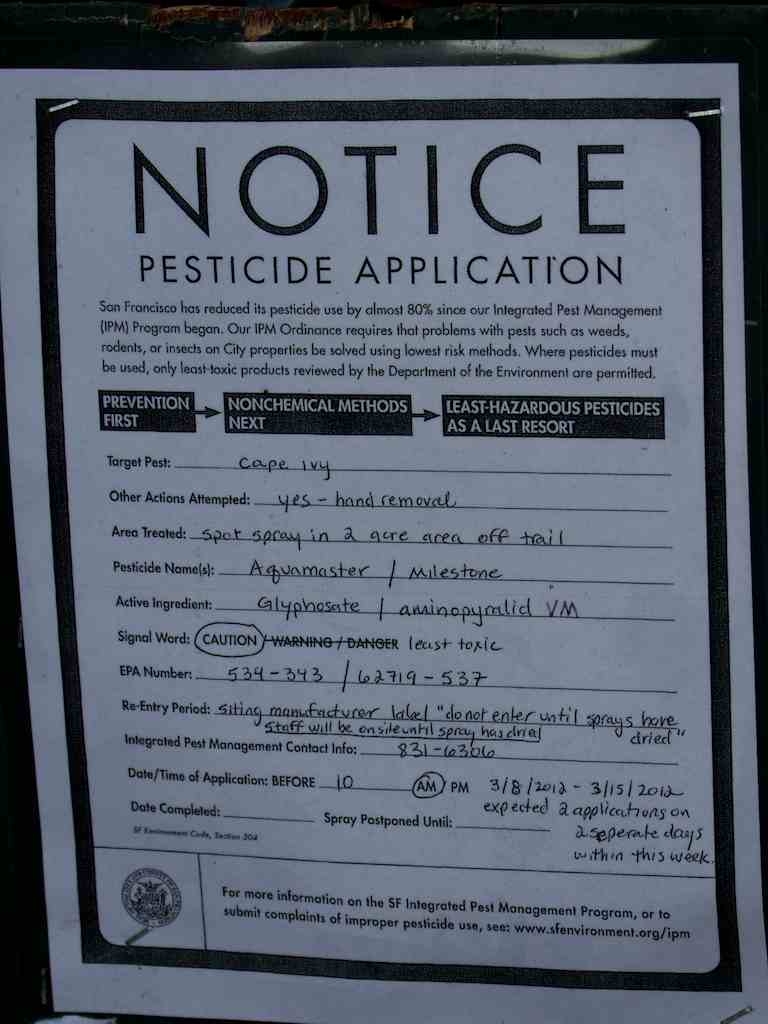
In December 2011, we witnessed imazapyr being used in San Francisco’s public parks for the first time. It was being sprayed on cape ivy under native willow trees. We doubt that the willows were the intended targets of the spraying since they are native. We wonder if the willows will survive in the long run.

These incidents make us ask what, if anything, it means to be a “certified applicator” of pesticides. Does the certification require the applicator to read the manufacturer’s label? If so, does the certification require the applicator to actually follow the directions on the manufacturer’s label? Clearly, this isn’t happening and there don’t seem to be any consequences for the “certified applicator” who kills plants and trees that he/she wasn’t hired to destroy. So, we conclude that such certification is meaningless.

The Million Trees mantra

Native plant advocates believe their projects benefit the environment. We do not see the benefit they claim. This is what we see:

• Increasing use of toxic pesticides is required to kill non-native vegetation. These pesticides are inherently hazardous and their incompetent use makes them even more hazardous.
• The wildlife that lives in our open spaces is being poisoned by these pesticides and they are losing their homes and their sources of food.
• The results of these projects do not justify these dangerous practices. The projects often look more dead than alive.

Our urban forest is under siege

The urban forest on Mt. Davidson is slated for destruction.

According to California Trees (1) the US Forest Service has determined that tree cover in the country’s urban areas is decreasing by 4 million trees a year.  Although no research has been done on tree loss throughout California, the US Forest Service reported a one-percent decline in trees and shrubs in Los Angeles despite a big campaign to plant one million trees there.

You might think that the loss of trees in urban areas is the result of increasing development and you would probably be at least partially correct.  But many trees are lost for more trivial reasons that we think could be easily prevented.  Here are some local examples of trees in the Bay Area that were needlessly destroyed or soon will be.

  • The City of Oakland has a “view ordinance” which guarantees homeowners the preservation of their view at the time they purchased their home.  This view ordinance was invoked by a resident in the Oakland hills who demanded that her neighbor and the City of Oakland destroy trees obstructing her view.  Her neighbor purchased her house because of its forested view.  Yet, the desire for a forested view was trumped by her neighbor’s desire for a treeless view.  The law required that 25 trees be destroyed on private property and 21 trees on city property in order to restore the view of a 95-year old property owner who no longer lives in her home.  When trees are destroyed for such trivial reasons, we should not be surprised by the following compendium of absurd excuses to destroy trees.  (The story is here.)
  • The people of San Francisco are trying to prevent the destruction of their urban forest which is almost entirely non-native.  The City of San Francisco is systematically destroying non-native trees in order to return the landscape to its historical origins as grassland and dune scrub.  The latest battle in this long war is a particular park, Glen Canyon, in which the City proposes to destroy about 160 trees in the short -run and 300 trees in the long-run.  A handful of the trees are hazardous and aren’t disputed, but most have been evaluated as “poor suitability” which is the latest euphemism used by native plant advocates to describe non-native trees.  They propose to replace most of the trees with native shrubs and a few tall trees that are native to California, but not to San Francisco, such as Douglas Fir and Cottonwoods.  It remains to be seen if either of these species will survive in San Francisco.  Douglas Fir requires more rainfall than San Francisco receives and Cottonwoods are hot-climate trees which don’t tolerate mild temperatures without seasonal fluctuations.  We suspect that is the strategy, i.e., to plant trees for the sole purpose of placating the public without any intention that the trees will survive.  (The story is here.)
  • The space shuttle Endeavor was recently retired from service.  Its permanent home is now a museum in Los Angeles, where 400 street trees were destroyed to accommodate the delivery of the space shuttle from the airport to the museum.  The neighbors were not pleased, as you might imagine.  They unfortunately live in a blighted part of Los Angeles, so they didn’t have the clout needed to save their trees.  Do you think these trees would have been destroyed in Beverly Hills?  We doubt it.  (The story is here.)
  • The neighbors of Dimond Park in Oakland are trying to save the trees in their park from being destroyed by a “restoration.”  We often marvel at the use of the word “restoration” to describe projects which are more accurately described as “destruction.”  This is yet another native plant project, which is hell bent to remake nature to its liking.  In this case 42 trees would be destroyed, of which 27 are native, including 17 redwood trees.  Please help the neighbors save their trees by signing their petition which is available here.
  • Finally, we share the story of a property owner on 65th St in Oakland who with a great deal of courage and tenacity was able to save most of the street trees on her block from being destroyed by the City of Oakland.  The trees weren’t posted as required by Oakland’s ordinance.  The crew who came to cut them down couldn’t tell her why they were being cut down, nor could they tell her who owned the trees.  We encourage you to read her story because it will give you a brief lesson on the difficulty of advocating against the needless destruction of trees.

Deforestation causes climate change

We have been accumulating these stories in the past few months, but are finally inspired to share them with our readers because of the recent storm on the East Coast, Sandy, which caused over $50 billion in damage and the lives of over 100 people.  What’s the connection?  The connection is that Sandy has finally forced people to take the threats of climate change more seriously. 

When will this new interest in climate change translate to an interest in saving our trees?   Probably not soon, because few people understand that globally, deforestation contributes 20% of greenhouse gases that cause climate change.  The public and its elected representatives are focused primarily on transportation as the source of climate change.  Transportation contributes only 10% of greenhouse gases globally. 

Here in California, we are gearing up to put our climate change law (AB 32) into action by creating a cap and trade auction which will enable emitters of greenhouse gases to purchase carbon offsets.  Ironically, one of the things that carbon emitters can do to offset their contribution to greenhouse gases is to plant trees.  Yet, those who destroy trees are not being required to purchase carbon offsets.  Until the people who destroy trees are required to pay for the damage they do to the environment, we are unlikely to see a change in the cavalier attitude that governments seem to have about destroying trees.   

************************************

(1)    California Trees, Winter 2012, Vol 20, no 2

Authenticity: A modern definition of wilderness

Conservation biology is being revised so rapidly that we are struggling to keep up with it.  In our previous post, we introduced our readers to Professor Scott Carroll’s proposal that a more realistic approach to conservation would accommodate non-native species because they are often better adapted to present conditions than their native predecessors.  He calls his approach Conciliation Biology.

Today, we are introducing our readers to another proposal to redefine wilderness to a new standard which acknowledges that the environment has been radically altered by man.  The author of this proposal is Nigel Dudley, a practicing British conservationist.  He calls his new standard “authenticity,” which he defines as follows:

“An authentic ecosystem is a resilient ecosystem with the level of biodiversity and range of ecological interactions that can be predicted as a result of the combination of historic, geographic and climatic conditions in a particular location.”*

Let’s focus for a moment on this portion of that definition:  “…historic, geographic and climatic conditions in a particular location.”  Mr. Dudley explains this particular parameter of his definition of authenticity:  “…some ecosystems have unusually high levels of diversity…through being isolated or undisturbed for exceptionally long periods.  Other ecosystems have already been hugely changed and in some cases impoverished…it will not always be possible either to recover lost elements or to remove additions.  What an ecosystem is likely to contain in the future needs to be based on current realities…”   

Clearly places like the Berkeley Meadow are not candidates for “authenticity.”  This particular native plant museum was the former garbage dump for the city of Berkeley, built on landfill.  This seems an extreme example of denial of current realities.

The Berkeley Meadow, a 72-acre fenced pen for native plants on the former city garbage dump

Choosing candidates for authenticity

Dudley’s point in proposing this new standard is to focus conservation efforts where they are most likely to be fruitful.  Our interest in this new standard is in the stark contrast it provides to the local projects which fail by every measure introduced by Mr. Dudley in his book about authenticity.

  • Natural species composition:  Virtually all predators and grazing animals are gone from the urbanized San Francisco Bay Area.  San Francisco’s Natural Areas Program claims to have designated only “remnants of native vegetation” as natural areas.  In fact, vegetation cover in the 1,105 acres of natural areas is on average only 46% native.  Some of the 31 natural areas are populated by as little as 11% native vegetation.
  • Migrant composition:  Some bird migrations are intact, but others have been changed by existing vegetation such as the tall, non-native trees of which there were few in the native landscape.  Migrations of ungulates are long gone.
  • Invasive species:  Non-native plants and trees outnumber native species throughout the Bay Area.
  • Chemical composition:  Air, water, and soil composition are vastly different than they were 200 years ago.
  • Functioning food web:  The food web has been radically altered by the loss of top predators and ungulates and cannot be recreated in a densely populated urban environment.  Bears may be welcome in the zoo, but are not wandering our streets looking for their next meal.
  • Functioning ecological processes:    Funneling most creeks into underground culverts is an example of a lost ecological process in the urban environment.
  • Regeneration process:  Fire is a regeneration process that is lost in the urban environment.  Prescribed burns are allowed by some managers of public land in the Bay Area, but San Francisco’s Natural Areas Program has reluctantly agreed not to conduct prescribed burns.
  • Resilience:  Although the original goal of San Francisco’s Natural Areas Program was that once “restored” the natural areas would be self-sustaining, fifteen years later, NAP concedes that on-going maintenance will be required to sustain the natural areas.  Dudley says, “Ideally, authentic ecosystems should also be self-sustaining:  they should not need constant and often expensive manipulation to maintain their values.”  Clearly, the “natural areas” in San Francisco’s parks do not meet this criterion for authenticity.
  • Area:  Most of the restoration projects in the Bay Area are too small to be sustainable.  The average size of San Francisco’s 31 natural areas is only 35 acres.  The smallest is only one-third of an acre.  Size is a proxy for the ability to isolate a restored site from repeated re-invasion.  The natural areas are small and are surrounded by non-native vegetation which will quickly return.
  • Connectivity:  Virtually every restoration project in urbanized Bay Area is physically isolated.

It may be possible to compensate for these bad odds of a sustainable, authentic restoration project in the urbanized San Francisco Bay Area.  If so, it will be extremely costly, which is undoubtedly why most projects have not been successful.  The National Park Service has had some success with its projects because they seem to have greater resources than other managers of public land.  But is this the top priority of taxpayers?  As the presidential election season heats up and the debate rages about raising taxes and cutting federal spending, one wonders why these projects are not in the budget-cutting cross-hairs.

Looking on the bright side

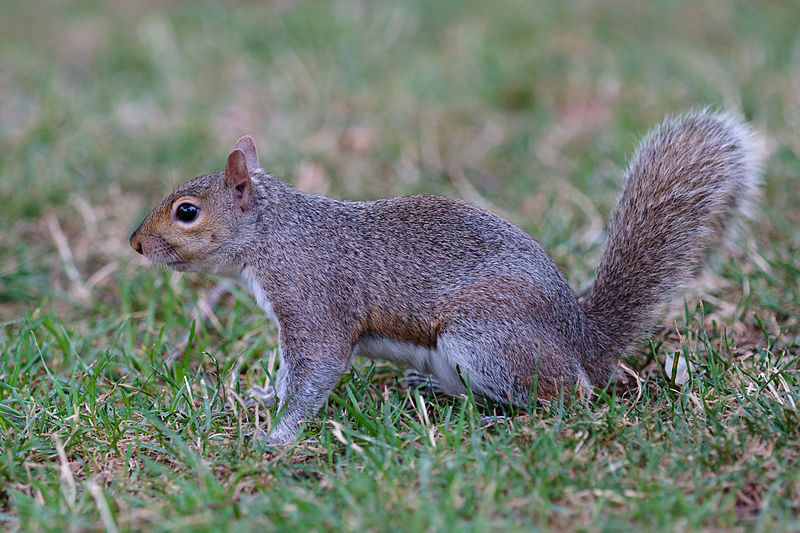
Grey squirrel. Creative Commons

We make every effort to end each story with a positive outlook.  In this case, we turn to Mr. Dudley to remind our readers that the environment is not necessarily destroyed by the mere existence of non-native species.  Being British, he uses British examples to make his point.  The North American grey squirrel is considered an invasive species in Britain and the native red squirrel is now rare.  While the British are not happy about the loss of their native squirrel, Mr. Dudley reminds them that the non-native grey squirrel is performing the same ecological functions as its native predecessor.  There is apparently no evidence that the environment has been harmed by this substitution.

We don’t like change.  But is change actually doing any harm?  If not, let’s accept it, because fighting against it is costly and probably futile.  That is the definition of wisdom:  that we accept what we cannot change.

************************

*Nigel Dudley, Authenticity in Nature. Earthscan, 2011

Conciliation Biology: Revising Conservation Biology

Our interest in invasion biology is primarily in its application, specifically to “restoration” projects.  Therefore, as science revises the assumptions of invasion biology we are equally interested in the implications for ecological restorations.

Professor Scott Carroll (UC Davis) is a particularly good candidate to lead the way in revising ecological restoration practices, as informed by current scientific theories of invasion biology.  His study of rapid evolution of the native soapberry bug to accommodate use of non-native vegetation puts him in the forefront of the effort to integrate evolutionary theory into invasion biology.

And so we introduce to our readers, Professor Carroll’s proposal that we turn from efforts to eradicate non-native species in favor of a new approach which manages the co-existence of native and non-native species.  He calls this approach Conciliation Biology.*

Conciliation Biology is based on these premises:

  • The environment has been radically altered by the activities of humans
  • The environment will continue to change in the future.
  • It is not feasible to eradicate non-native species.
  • The cost of attempting to do so is prohibitive.

These are familiar themes on Million Trees and we will not belabor them in this post.  Rather we will focus on those aspects of Professor Carroll’s proposal that are new to us.

Rapid evolution can resolve apparent ecological problems

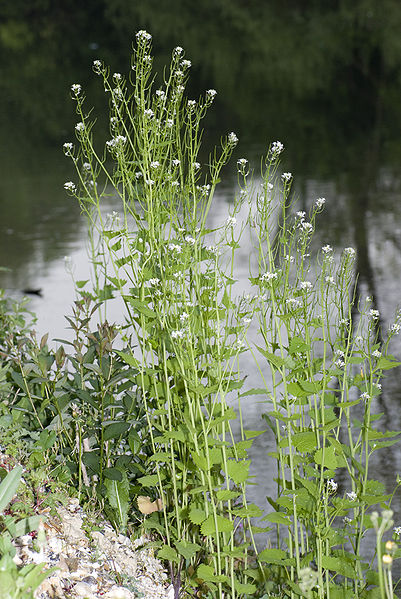
Garlic mustard. GNU Free

Garlic mustard is an invasive non-native plant which tolerates shade and emits a powerful root toxin known to inhibit the germination of other plants, notably forest trees.  This chemical tool to reduce competition is known as allelopathy,  a weapon used by many plant species, both native and non-native.

Since garlic mustard arrived first in the eastern US and spread slowly west, scientists compared the allelopathic toxicity of a population of garlic mustard known to have arrived 50 or more years ago with a population which arrived only 10 years ago.  The toxicity of the recently arrived garlic mustard was significantly greater than that of the older population.  In fact, the understory and seedling germination were rebounding in the forest with the older population of garlic mustard.

In other words, science informs us that ecological problems caused by the arrival of new exotic species can resolve themselves over time.

New exotic species are sometimes better adapted to the changed environment

Professor Carroll cites a study of two aquatic species (Phragmite and Hydrilla) which provide superior ecological services than their native counterparts because of changes in the environment.  The extreme weather events associated with climate change are subjecting our coasts to unprecedented storm surges.  Native species of marsh grass are not as successful in protecting the coast against the ravages of these storm surges.

We have our own local example of the same phenomenon.  Non-native Spartina marsh grass is being eradicated along the entire west coast of the country.  It grows taller and thicker than native Spartina and it does not die back during the winter months as the native species does.  Since storm surges occur during the winter months, surely the non-native Spartina provides superior protection to our coast.  We have yet to see a scientific experiment which proves this point, but common sense tells us that it is a study that needs to be done, particularly since ornithologists have reported that the eradication of non-native Spartina has been harmful to our dwindling population of endangered California Clapper Rail.

The harmful effects of eradication efforts

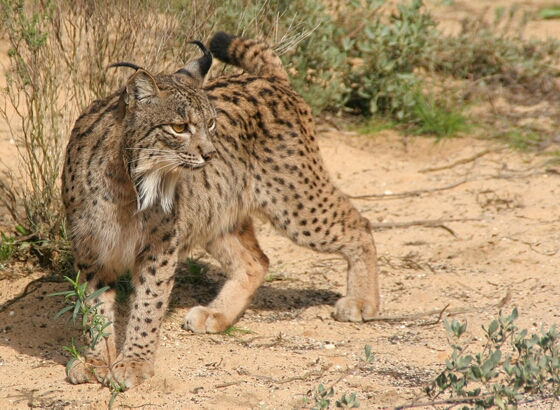
Iberian lynx. Creative Commons

We have seen many such harmful consequences of eradication efforts, but Professor Carroll provides his own example.  Iberian rabbits are native to Spain.  They were intentionally imported to Australia where they quickly became a problem.  The Australians imported a virus from South America that killed the rabbits.  The virus was also introduced to Britain for the same purpose.  The virus has spread back to Spain where it is killing the rabbits in their native range.  The rabbits are prey of several rare species of animals in Spain, including the Iberian lynx.  The absence of their prey is now decimating those native predator populations as well.

Biological controls are one of many dangerous games being played by those who share in the fantasy that it is possible to eradicate non-native species without paying a price.  Sometimes that price is greater than whatever cost may be associated with the non-native species.

Simply eradicating non-native species will not necessarily result in the return of natives

Professor Carroll tells us the story of the failed attempt to save the Large Blue butterfly in Britain from extinction to illustrate this point.  This was apparently a spectacularly beautiful butterfly, and so the British spent 50 years trying to bring it back from extinction.  They failed because they figured out too late that the butterfly is dependent upon an ant which lives only in heavily grazed vegetation.  The ant population no longer existed within the range of the butterfly because grazing had long ago been abandoned.

How many other pointless efforts to reintroduce endangered species are there?  We recently told our readers about the effort to reintroduce the endangered Mission Blue butterfly to Twin Peaks in San Francisco.  This is a radically altered environment with high levels of nitrogen and carbon dioxide associated with the urban environment.  The annual brush fires of pre-settlement San Francisco are no longer capable of sustaining the scrub required by the butterfly and the prescribed burns, which are the artificial equivalent, are not allowed in San Francisco.  The scrub is therefore maintained with repeated applications of pesticides which are unlikely to benefit the endangered butterfly.

What is Conciliation Biology

Conservation biology has been “constrained by often futile efforts to restore historical communities, and [does] not appreciate the unavoidable and dynamic contributions of ongoing adaptive evolution.” * Conciliation biology proposes to address these shortcomings by:

  • Taking a longer-term view of the chronic effects of changes in the environment.
  • Making greater use of evolutionary theory
  • Fostering ongoing adaptation by accepting the hybridization that increases genetic variability
  • Identifying and supporting community mechanisms that increase resiliency
  • Improving the effectiveness of the science of invasion biology by using a multidisciplinary approach

How long will It take for this new approach to filter into the minds of those who are busily destroying non-native vegetation and damaging the environment in the process?  How much damage will be done before these destructive methods are abandoned in favor of an approach that accommodates the reality, inevitability, and often the advantages of change?

*****************************

*Carroll, Scott, “Conciliation biology:  the eco-evolutionary management of permanently invaded biotic systems,”  Evolutionary Applications, 2011, 184-199.

Biological Control: Another dangerous method of eradicating non-native species

We were recently reminded of the use of biological controls to eradicate non-native species when we learned that Australian insects may have been illegally imported to California to kill eucalyptus, which had been virtually pest free until 1983.  So, an article in the New York Times about the development of a fungus for the purpose of killing cheatgrass (Bromus tectorum) caught our attention.  The fungus has been given the ominous name, Black Fingers of Death, for the black stubs of cheatgrass infected with the fungus.

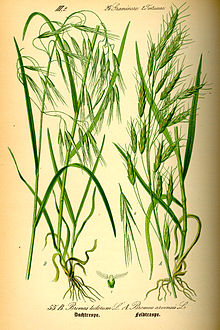
Cheatgrass, Bromus tectorum

Cheatgrass is one of the non-native grasses that have essentially replaced native grasses throughout the United States.  It was probably introduced with ship ballast and wheat seed stock in about 1850.  As we have reported, native grasses were quickly replaced by the non-native grasses which tolerate the heavy grazing of domesticated animals brought by settlers.    Native Americans had no domesticated animals.

Biological controls have frequently caused more serious damage than the problems they were intended to solve.  Therefore, we would hope that their intended target is doing more damage than the potential damage of its biological control.   We must ask if the cure is worse than the disease.  And in this case, we don’t think the damage done by cheatgrass justifies inflicting it with the Black Fingers of Death.

The track record of biological control

Biological control is the intentional introduction of animals, pests, microbes, fungi, pathogens, etc., for the purpose of killing a plant or animal which is perceived to be causing a problem.  The ways in which some of these biocontrols have gone badly wrong are as varied and as many as the methods used.

Introduced species of plants are said to have an initial advantage in their new home because their pests and competitors are not always introduced with them.  This is the “enemy release hypothesis” popular amongst native plant advocates to explain the tendency of non-native plants to be invasive.  However, this is usually a temporary advantage which is exaggerated by native plant advocates who do not seem to recognize the speed with which native species can adapt to new species, and vice versa.

Therefore, a popular method of biological control is to import the predator or competitor of the non-native species which is considered invasive.  This is only effective if the pest is selective in its host.  There are many examples of such introductions which did not prove to be selective:  “For the United States mainland, Hawaii, and the Caribbean region, Pemberton (2000) listed 15 species of herbivorous biocontrol insects that have extended their feeding habits to 41 species of native plants…” (1)  Although most of the unintended hosts were related to the intended hosts, some were not.

Similar shifts from target to nontarget species have occurred for biocontrol agents of animal pests:  “For parasitoids introduced to North America for control of insect pests Hawkins and Marino (1997) found that 51 (16.7%) of the 313 introduced species were recorded from nontarget hosts.  For Hawaii, 37 (32.3%) of 115 parasitoid species were noted to use nontarget hosts…biological control introductions are considered to be responsible for extinctions of at least 15 native moth species [in Hawaii].”  (1)

There are also several cases of biological controls escaping from the laboratory setting before they had been adequately tested and approved for release.   A virus escaped the laboratory in Australia and killed 90% of the rabbits in its initial spread through the wild population.  Very quickly, the virus evolved to a less fatal strain that killed less than 50% of the rabbits it infected.  A second virus was then tested and also escaped its laboratory trial and has spread through the rabbit population throughout Australia.

A fly being considered for introduction to control yellow starthistle apparently escaped and damaged a major cash crop of safflower in California according to a study published in 2001, illustrating the risks of biocontrols to agriculture.

This is but a brief description of the diverse ways in which nature has foiled the best efforts of the scientists designing biological controls for non-native species of plants and animals.  The source of this information (1) therefore concludes, “…many releases of species have inadequate justification…The first goal of research must be to show that the introduced biological control agent will not itself cause damage.”  Given this wise advice, we will return to the question, “What damage is being done by cheatgrass and does that damage justify the introduction of The Black Fingers of Death?”

Why is cheatgrass considered a problem?

Cheatgrass is one of the many non-native annual grasses which have replaced the native grasses which were not adapted to the grazing of domesticated animals.  Cheatgrass is a valuable nutritional source for grazing animals when it is green and loses much of its nutritional value when it dries.

Grazing is only one of the types of disturbance which create opportunities for non-native grasses to expand their range into unoccupied ground.  Fire is another disturbance which gives cheatgrass a competitive advantage over native grasses because it uses available moisture and germinates before native grasses can gain a foothold on the bare ground cleared by fire.

Cheatgrass is said to increase fire frequency by increasing fuel load and continuity.  Unfortunately, increasing levels of CO₂ (carbon dioxide) in the atmosphere is increasing the fuel load of cheatgrass:  “…the indigestible portion of aboveground plant material [of cheatgrass] …increased with increasing CO₂.” (2)

Carbon dioxide is the predominant greenhouse gas which is contributing to climate change.  And increasing frequency of wildfires is one of the consequences of the higher temperatures associated with climate change.  Therefore, one of the causes of the expanding range of cheatgrass is increasing levels of the greenhouse gases contributing to climate change.  Rather than address the underlying cause, we are apparently planning to poison the cheatgrass with a deadly fungus.

If we are successful in killing the cheatgrass, what will occupy the bare ground?  Will native grasses and shrubs return?  Will whatever occupies the bare ground be an improvement over the cheatgrass which has some nutritional value to grazing animals?  The US Forest Service plant database gives us this warning, “Care must be taken with methods employed to control cheatgrass so that any void left by cheatgrass removal is not filled with another nonnative invasive species that may be even less desirable.” 

Recapitulating familiar themes

The project to develop a deadly fungus to kill cheatgrass is another example of the issues that we often discuss on Million Trees:

  • Are the risks of the methods used to eradicate non-native species being adequately assessed and evaluated before projects are undertaken?
  • Are the underlying conditions—such as climate change–that have contributed to an “invasion” being addressed by the methods used to eradicate them?  If not, will the effort be successful?
  • Is the damage done by the “invasion” greater than the damage done by the methods used to eradicate the invader?  Is the cure worse than the disease?

We do not believe that these questions are being addressed by the many “restoration” projects we see in the San Francisco Bay Area.  Consequently, we believe that these projects often do more harm than good.

*************************

(1)    Cox, George W., Alien Species and Evolution, Island Press, 2004

(2)    Ziska, L.H.; Reeves III, J.B.; Blank, R.R. (2005), “The impact of recent increases in atmospheric CO2 on biomass production and vegetative retention of cheatgrass (B. tectorum): Implications for fire disturbance.”, Global Change Biology. 11 (8): 1325–1332,

The futility of eradicating non-native species

We tend to focus on the native plant “restorations” in our neighborhood, but we should not lose track of the fact that similar efforts are taking place all over the world.  The native plant movement is international and if it loses momentum, we should expect to see loss of support for its destructive projects elsewhere.  So, today we will tell our readers about several recent developments that suggest that scientists all over the world are having second thoughts about invasion biology, which is the scientific underpinning of the native plant movement. 

Second Thoughts:  The Hawaiian Case

We have reported to our readers about the many “restoration” projects in Hawaii.  There is some logic to focusing such efforts on islands, because they are the places most vulnerable to the loss of native species attributed to introduced species and theoretically they are also the places where re-invasion should be easiest to control.

Scientists have recently published the results of a ten-year effort to return an “invaded” forest to its native origins.  They spent about 5 years clearing the forest of all non-natives.  They planted the scorched earth with natives and then they walked away from it to observe the long-term sustainability of their effort.  Five years later they report that the composition of the forest—with respect to its nativity—has essentially returned to its original state.

They tested several hypotheses while observing the changes in the forest during the second half of the project.  Conventional wisdom had been that the more densely natives occupied the ground, the less vulnerable it would be to re-invasion.  Much to their surprise, this was not the outcome of their experiment.  The more densely natives occupied the ground, the greater the population of non-natives in the final analysis.  They conclude that the same conditions which encouraged the growth of native plants were equally beneficial to the growth of non-native plants.

This study was conducted by the US Forest Service.  We hope they learned something from this experience.  Specifically, we hope that the US Forest Service now understands that native plant “restorations” are not a one-shot deal.  They are a permanent commitment to garden that restoration with the same amount of effort.  That’s why scientists—such as Professors Arthur Shapiro and Peter Del Tredici—tell us that large scale projects are not sustainable in the long term.  A small scale native plant garden as an historical illustration is a worthwhile effort.  Gardening our vast public lands is like “plowing the sea,” as Professor Shapiro told us recently.

Second Thoughts:  The New Zealand Case

New Zealand has made herculean efforts to save its native species from “invasions” by non-native species:  “New Zealand is a very weedy country.  Indigenous plant species are matched in number by naturalized exotic species and about 20 new invaders are discovered each year.  Thus, a weed eradication program has been under way for the past 10 years, but eradicating an unwanted plant species is much more difficult than it might seem.” (1)

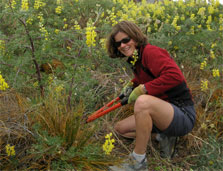
Eradicating yellow tree lupin, New Zealand Dept of Conservation

How successful have these efforts been?  According to a recent study, they have had very little success:  “The current issue of the journal Invasive Plant Science and Management assesses the progress of 111 weed eradication programs carried out by New Zealand’s Department of Conservation.  Only four of these programs have met with success, while 21 have been discontinued and the rest remain an ongoing challenge.”

The report concludes, “After a decade, New Zealand’s weed eradication strategy has yet to yield significant results.”  Anyone who has been watching similar efforts all over the San Francisco Bay Area will not be the least bit surprised by this conclusion.  With the exception of small gardens which are irrigated and intensively gardened, these projects are weedy messes, usually behind fences.

Second Thoughts:  The Australian Case

Scotia Sanctuary, Australia

Emma Marris interviewed the manager of one of many “restoration” projects in Australia for her book, Rambunctious Garden.  He told her about the 18 month process of killing all non-native animals in a 15-square mile sanctuary enclosed by a prison-like fence, “sturdy, tall, and electrified.”  (This was half of the Scotia Sanctuary)

“He was able to shoot out the goats in a matter of days.  Rabbits were harder…he put out carrot bait…the rabbits…would learn to trust the new food source…[then] the carrots would be poisoned…[He] repeated this routine three times, running through 12,500 pounds of carrots…For each fox, he learned its habits and was eventually able to find perfect places to trap or poison them.  He also trapped cats…The key to making it work, he says, was ‘perseverance, perseverance, perseverance.’” (2)

It was necessary to kill all the non-native animals before taking on the more difficult task of returning the land to native plants because of the interaction between the plants and animals.  The non-native animals are considered a continuing and permanent threat to the sanctuary.  The expectation is that this 250 acre restoration will require human intervention indefinitely into the future.

Australia is a huge place, so the prospect of this labor-intensive process being replicated on a nationwide basis is absurd.  Therefore, it seems inevitable that Australian scientists would begin to question the efficacy of such efforts. 

Just two months ago, an Australian scientist, Angela Moles, gave a TED (Technology, Entertainment, and Design) presentation suggesting that it is time to grant Australian citizenship to introduced species.  Click here to see the video.

Her reasoning is based on the relatively new understanding of the speed with which evolution occurs.  Her laboratory used the collection of a university herbarium to measure the changes in the plants that were introduced to Australia.  The herbarium had samples of the same species of plants collected over a 60 year period from the same location.  They found that the plants had changed in significant ways.  In a sense, they were becoming Australian plants in response to the biotic (other plants and animals) and abiotic (climate, soil, etc) conditions of their new home.  She predicted that if they weren’t yet genetically distinct from their ancestors, they soon would be.   In other words, they are becoming distinct, new species…..Australian species.

She showed a slide of her son who is a 2nd generation Australian.  He is considered an Australian by law and custom.  Then she showed a slide of clover which has changed significantly since its introduction.  After 130 generations, it is still not considered Australian.  After showing a few of the massive eradication projects and describing the scale and futility of those efforts, she suggested that it is long past time to accept the clover and other introduced species as Australian.

And, of course, we agree.  Let us abandon the destructive and futile war on non-native species.  The sooner we do, the less damage will be done to the environment and to the animals that live in it, including us.  

*************************

(1)    “Eradicating Weed Species in New Zealand Poses a Larger Challenge Than Expected,” Science Daily, July 21, 2012

(2)    Emma Marris, Rambunctious Garden, Bloomsbury, 2011

The Natural Areas Program harms wildlife by violating its Streambed Alteration Permit

It’s spring.  Have you noticed that the birds are singing?  This is the time of year when they are most vocal.  They are staking out their nesting sites and attracting their mates with their songs.  They are quieter when they have laid their eggs as they try to avoid detection.  Migratory birds are also passing through, on their way to their breeding homes.  The food they find along the way is important to their survival on their long and physically challenging journeys from their winter to their summer homes.

Subscribers to Wildcare recently received an email newsletter reminding them that pruning trees and shrubs at this time of year is dangerous for the birds that are hiding their nests in them.  Wildcare is a local organization which treats sick or injured animals and educates the public about “how to live peacefully with wildlife.” 

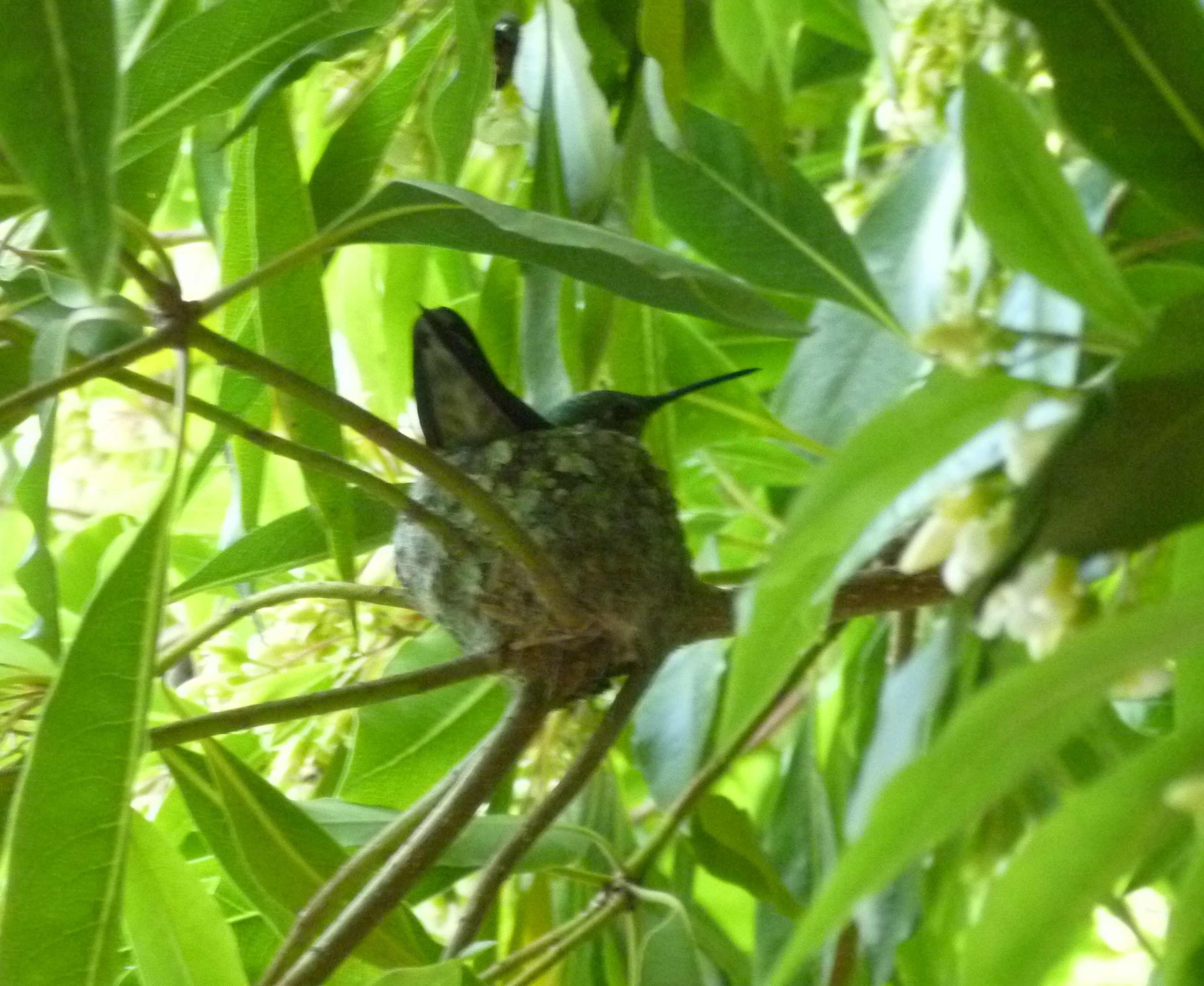
Hummingbird nest in Pittosporum, March 2012

We were recently reminded of the vulnerability of birds at this time of year in our own yard when a hummingbird selected our flowering, non-native Victorian Box tree (Pittosporum undulatum) to build her nest.  Her nest was completely invisible to us, but we spotted her darting in and out of it as she built her nest.  We were able to take this picture of her sitting on her nest by crawling into the understory of the tree.

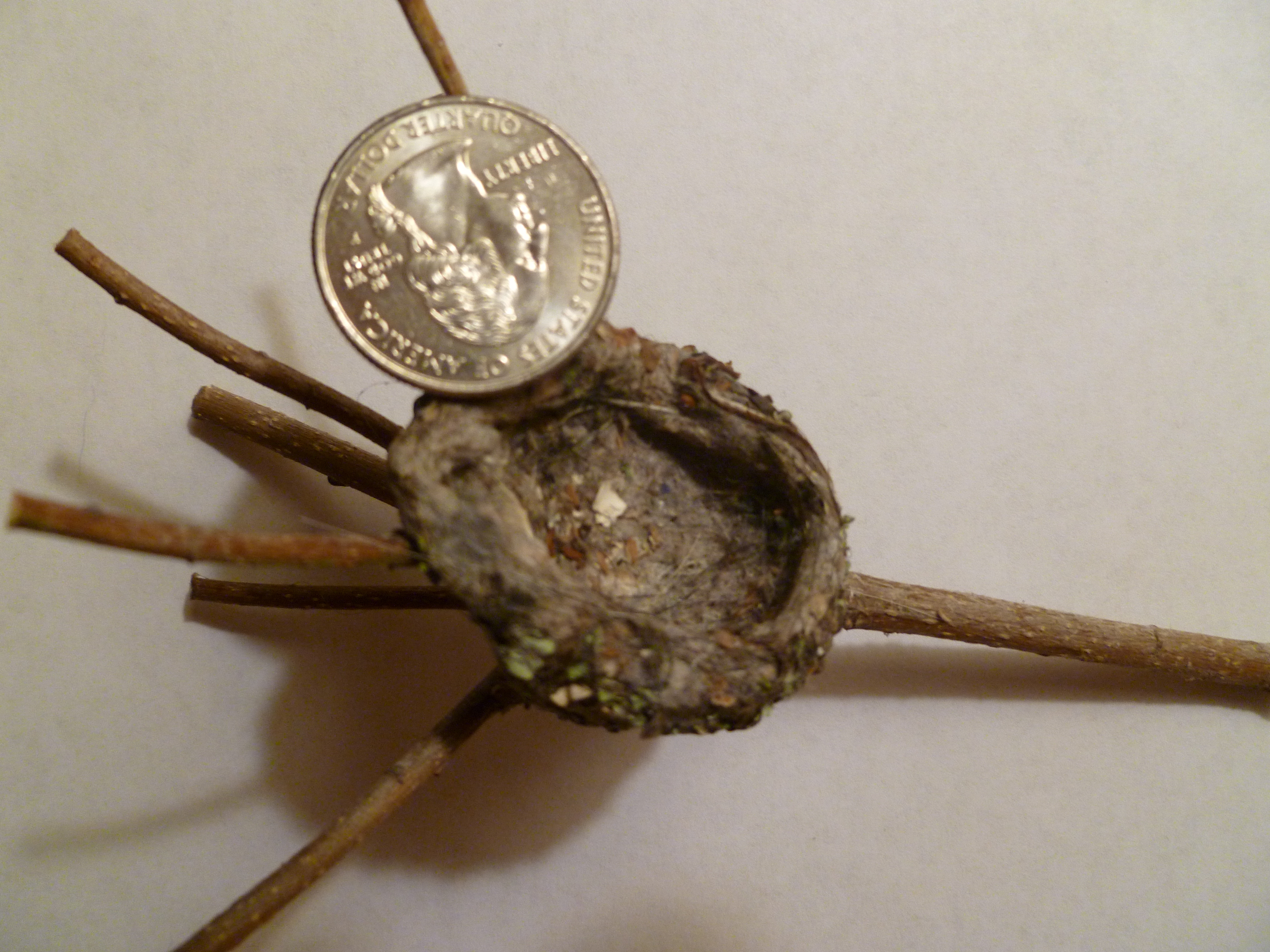
Hummingbird nest is not much bigger than a quarter!

Then disaster struck.  An early spring storm tore a huge branch from the tree and sent her nest tumbling to the ground.  We watched with heavy hearts while the hummingbird made anxious, noisy flights into the fallen branch.  When she gave up, we carefully lifted the fallen branch to find her tiny, empty nest.  As sad as this event was in our lives and hers, at least we knew that the failure of her nest was no fault of ours.   San Francisco’s Natural Areas Program cannot say the same of their destructive project in Glen Canyon Park.

The Natural Areas Program violates their Streambed Alteration Permit

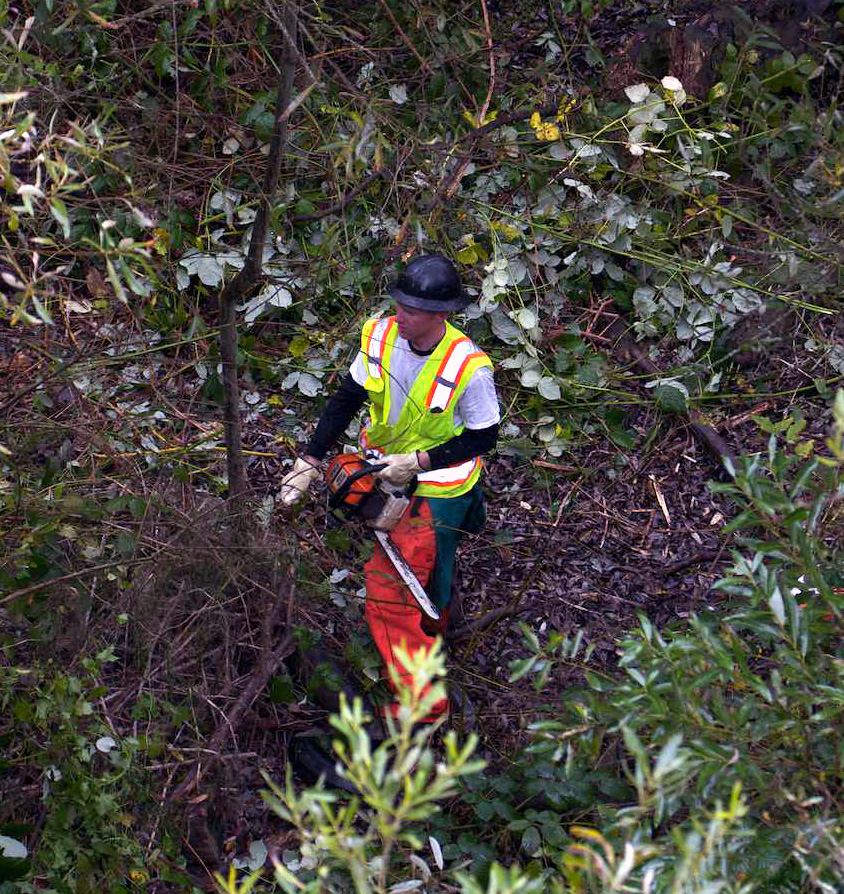
Destroying vegetation with chainsaws in Glen Canyon Park, November 2011

The Natural Areas Program began to destroy the non-native vegetation in Glen Canyon Park in San Francisco in November 2011.  In addition to destroying valuable habitat with chainsaws, they also sprayed herbicides.  The San Francisco Forest Alliance (SFFA) protested this destructive project many times but it has continued unabated to as recently as April 27, 2012, when they pruned trees and sprayed herbicides.

Earlier in April, SFFA learned from a public records request that this project violated a legal commitment to the California Department of Fish & Game.  The Natural Areas Program made the following commitment to mitigate harm to wildlife in Glen Canyon Park in its Streambed Alteration Permit:

It is the policy of RPD’s Natural Areas Program that no new projects will begin during the breeding season (December to May).  Follow up work in previously cleared areas may be done during the breeding season, however, because areas will have been cleared previously. Wildlife will not likely be using these areas for breeding.  This protocol has been effective in reducing impacts to breeding wildlife.”

SFFA brought this violation of its commitment to the attention of the General Manager of the Recreation and Park Department immediately.  The head of the Natural Areas Program said that the violation was necessary because the grant funding for the project was about to expire.  To avoid losing the funding for the project, the birds and animals of Glen Canyon Park were subjected to this destructive project during their breeding and nesting season. 

SFFA has brought this violation to the attention of the California Department of Fish & Game.  Their regulations require them to enforce the terms of the Streambed Alteration Permit, including the mitigation of potential harm to wildlife.  Violations of the terms of the permit are subject to “civil penalties” according to the regulations:  “A person who violates this chapter is subject to a civil penalty of not more than twenty-five thousand dollars ($25,000) for each violation.” 

One month after SFFA informed California Department of Fish & Game of the violation, nothing seems to be done about it.  In fact, weeks after SFFA sent this information to Fish & Game, another episode of destruction occurred in Glen Canyon Park on April 27, 2012.

The consequences of native plant “restorations” to wildlife

We will never know how many birds and animals were harmed by the destruction in Glen Canyon Park.  The management plan for the Natural Areas Program tells us (Appendix D) there are 18 species of birds that are found in and/or breed in Glen Canyon Park that are considered “Species of Local Concern.”  That is, the Audubon Society considers them rare in San Francisco. 

We also know that migratory birds will find less food in Glen Canyon Park this year than they have found in the past as they pass through San Francisco on their way to their breeding homes.  Many of the flowering and berry producing non-native plants that have thrived in Glen Canyon Park in the past have been destroyed by this destructive project, which is described by the Natural Areas Program in its Streambed Alteration Permit application as “…the ‘Scorched Earth’ method, in which all above-ground vegetation including natives, are removed.”  

Ironically, this project was partially funded by a grant program of the State of California entitled “Habitat Conservation Fund.”  We believe this project was a grotesque misuse of this fund.  The wildlife of Glen Canyon Park did not benefit from this project.  In fact, we believe they have been harmed by it.

Low doses of pesticides are also hazardous to our health

We are reprinting, with permission, an article on the Save Sutro website about recent research reporting that even low doses of chemicals can be harmful to our health.  This research has serious implications for the pesticides being used by the many “restoration” projects in the San Francisco Bay Area.  This article is focused on pesticide use by San Francisco’s misnamed Natural Areas Program.  In fact, every manager of public land in the Bay Area that engages in native plant “restorations” uses pesticides to eradicate non-native species. 

*******************************

When we speak up against the Natural Area Program’s frequent pesticide use, its supporters frequently tell us that – compared with say commercial agriculture – the Natural Areas Program (NAP) uses small amounts of toxic chemicals. “The dose makes the poison,” they argue.

But it’s not true.

For now, we’ll leave aside the question of whether it’s reasonable to compare NAP to  commercial agriculture (where fears of chemicals are driving a growing Organic movement). What we’d like to talk about today is recent research about pesticides, specifically, endocrine disruptors. Here’s a quote from the abstract of a study by a group of scientists:

“For decades, studies of endocrine-disrupting chemicals (EDCs) have challenged traditional concepts in toxicology, in particular the dogma of “the dose makes the poison,” because EDCs can have effects at low doses that are not predicted by effects at higher doses….

“…Whether low doses of EDCs influence certain human disorders is no longer conjecture, because epidemiological studies show that environmental exposures to EDCs are associated with human diseases and disabilities. We conclude that when nonmonotonic dose-response curves occur, the effects of low doses cannot be predicted by the effects observed at high doses.”

[Ref: Hormones and Endocrine-Disrupting Chemicals: Low-Dose Effects and Nonmonotonic Dose Responses, Vandeberg et al, in Endocrine Reviews, March 2012]

WHY WE’RE CONCERNED

The NAP uses several pesticides rated as “Hazardous” or “Most Hazardous” by San Francisco’s Department of the Environment. But the one they’ve favored is glyphosate — better known as Roundup or Aquamaster.

It’s strongly suspected of being an endocrine disruptor.

Here’s a 2009 study: Glyphosate-based herbicides are toxic and endocrine disruptors in human cell lines.

Another study, also published in 2009, looked at puberty and testosterone: Prepubertal exposure to commercial formulation of the herbicide glyphosate alters testosterone levels and testicular morphology. The abstract of the study ends with this sentence, “These results suggest that commercial formulation of glyphosate is a potent endocrine disruptor in vivo, causing disturbances in the reproductive development of rats when the exposure was performed during the puberty period.”

And here’s a study published in 2007, reflecting the research of a group of scientists from Texas A&M: Alteration of estrogen-regulated gene expression in human cells induced by the agricultural and horticultural herbicide glyphosate

THE NATURAL AREAS PROGRAM DEFENDS PESTICIDE USE

Most people weren’t aware that pesticides were being used in so-called “Natural Areas.” The notices were small and well below eye-level. You had to be looking for them, which isn’t likely for most people out hiking or jogging by, or keeping an eye on small kids. In recent months, the labeling has improved, with taller posts and clearer information.

Now that people are beginning to notice, they’re also objecting. The response we hear most often is “Why would they use herbicides in a natural area?”

So the NAP has started posting explanations, justifying its use of toxic herbicides justifiable against “invasive plants.”

These plants, they say, are “a handful of non-native species” that are “displacing the rich biodiversity of native flora and degrading our natural heritage.”

WHY WE DISAGREE

We have several problems with this statement.

  • If it’s a “handful,” the NAP must have very big hands. From the pesticide application records, we’ve counted nearly twenty-five different plant species under attack by chemicals — including a couple that aren’t actually non-native.
  • There’s no evidence that all these plants are invasive and that they’re “displacing the rich biodiversity.” Native plants and non-native plants thrive together in natural mixed ecosystems. NAP can never eliminate all the non-native plants; the best it can achieve is a different mix, precariously maintained through intensive gardening.
  • There’s also no evidence it’s working. Using chemicals to kills things is cheap and easy, but it leaves a gap where something else will grow. Given that San Francisco’s environment has changed greatly since the 1776 cut-off used to define “native” plants, it’s not going to be those plants. Rather, what will naturally grow back will be the most invasive plant at the site. An excuse for more herbicides.
  • The NAP is destroying habitat in its quest to kill native plants. Many of the plants destroyed are bushes that provide cover and nesting places, or flowering plants that offer nectar to butterflies, bees and other pollinators and the birds and animals that feed on them. The “native flora” don’t necessarily provide much of either, even if they can be successfully gardened.

Conservation Refugees: The misanthropy of ecological “restorations”

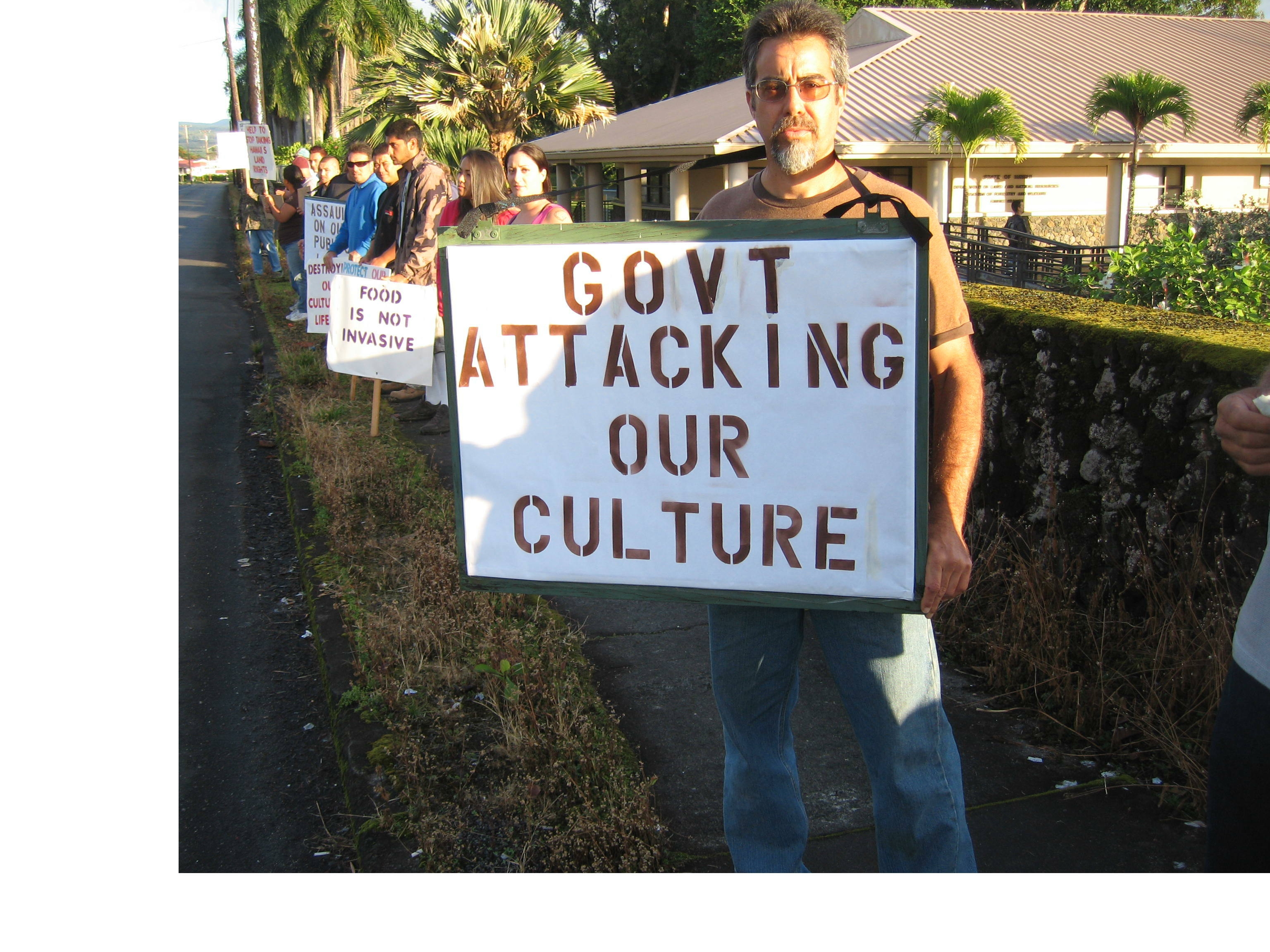
Hawaiians protest confiscation of public lands

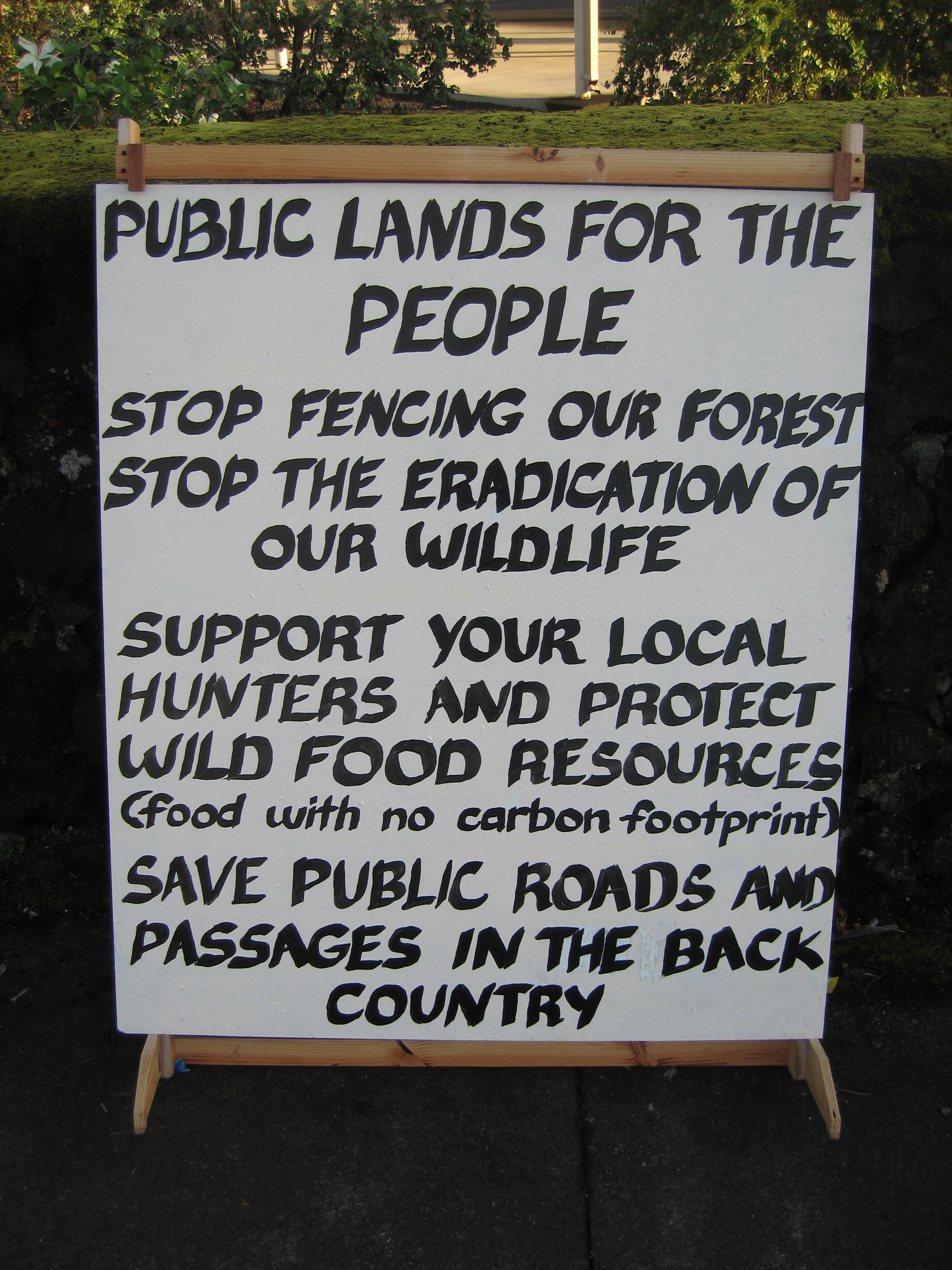
We recently told our readers about the controversial “restoration” projects in Hawaii.  Now our colleagues in Hawaii have sent us photographs of a public protest in Hawaii and The Hawaii Reporter tells us why they are protesting.  Hawaii’s Department of Land and Natural Resources (DLNR) is fencing the public out of another 17 square miles of prime forest on the Big Island.  All the non-native animals—sheep, goats, pigs—will be exterminated and all their non-native food—strawberry guava, passion fruit, etc—will be eradicated in that fenced enclosure.   The people who hunted the animals and gathered fruit in the forest are protesting the loss of this source of food. 

In addition to the loss of food, the protestors also object to the loss of an activity that is central to the Hawaiian culture of foraging and hunting for food.   DLNR’s response to that particular complaint is that the historical record indicates that Hawaiians didn’t hunt prior to the arrival of Europeans because they raised animals as their own. 

In other words, not only does DLNR wish to stop the biological clock, they also wish to freeze-frame the Hawaiian culture to a pre-European standard.  They don’t seem to have considered that the Europeans essentially confiscated the land of the Hawaiians when they arrived, which deprived the Hawaiians of the land needed to raise animals.  That’s too bad.  The Hawaiians are not allowed to hunt now because they didn’t hunt 250 years ago.   As absurd as creating botanical museums seems to us, the suggestion that culture must also be prevented from evolving strikes us as utterly ridiculous.

Hawaiians protest loss of access to public lands

Conservation Refugees

Hawaii’s cost of living has always been one of the highest in the country because virtually all of its food must be imported.   And now Hawaiians are being deprived of an important source of food by the confiscation of public lands.  Will these Hawaiians join the ranks of the millions of conservation refugees all over the world who have been displaced in the name of conservation?

We were introduced to conservation refugees by Mark Dowie in 2004.  He told us that the belief that wilderness is not compatible with human community originated with John Muir, who demanded that Native Americans living in Yosemite be removed from the valley.  Native Americans were also removed from Yellowstone when the National Park was created.  These Native Americans were the first conservation refugees, but not the last.

Dowie told us that the worldwide official protected areas—parks, reserves, wildlife sanctuaries, biodiversity corridors—had expanded from 1,000 in 1962 to 108,000 in 2004.  The total number of indigenous people displaced by the creation of these protected areas is not known because most countries make no attempt to quantify the impact.  In Chad an estimated 600,000 indigenous people became conservation refugees when the amount of protected areas increased from 0.1 to 9.1 percent of total national land in the 1990s.  India admits to creating 1.6 million conservation refugees as a result of creating new protected areas and the Indian government estimates that 2 or 3 million more will be displaced in this decade.

Dowie visited some of the communities that have been displaced by the confiscation of their ancestral land.  The loss of their land is also the loss of their way of life.  Hunters/gatherers are deprived of their source of food.  Likewise, farmers lose their croplands.  They wander into shanty towns where they lack the skills to survive in the modern world.  They create shabby squatter camps on the perimeter of their homeland where they live without sanitation or water.  The fabric of their communities is shattered.

Emma Marris* observes the irony of these evictions of traditional cultures which have tended these remnants of the wilderness for generations.  These places were targets for conservation because they had been preserved by traditional cultures that had learned to co-exist with nature.  This is how they are rewarded for their stewardship of the land.

What is accomplished?

What is gained when Hawaiians are thrown out of their public lands, depriving them of a source of food?  Are these projects successful?  Are the plants and animals that existed in Hawaii several hundred years ago returning to the fenced reserves that have been created for them?

Emma Marris visited one of these projects in Hawaii.  A small test plot was cleared of all non-native plants, requiring the removal of about half of all the vegetation.  That process took about a week per thousand square feet and then “epic bouts of weeding thereafter.”

 The theory was that the removal of all the non-natives would enable the natives to thrive without the competition for sunlight and water.  Five years later, there is little evidence that native plants have benefited from the eradication of all non-native plants:

“Disappointingly, the mature native trees had grown very little.  As [the project directors] put it, ‘The native trees may either be responding to the treatments very slowly and still undetectably, or they may be unable to respond at all.’”

The directors of this project also told Marris, “I think that people that are interested in protecting Hawaii’s flora and fauna have resigned themselves to it being in postage-stamp sized reserves.”   Apparently Hawaii’s Department of Land and Natural Resources hasn’t gotten this message.  They are now creating another 17 square mile reserve with the intention of eradicating everything non-native in it.  Nothing is likely to be accomplished by all that death and destruction and some Hawaiians will also go hungry.

The slippery slope of nativism

Perhaps we should be grateful that the “restoration” projects in the San Francisco Bay Area aren’t depriving us of our homes and our livelihoods.  We are just being fenced out of our public parks.  We are just losing our trees.  Our public parks are just being poisoned with pesticides.

But we watch these projects all over the world and we listen to the demands of local native plant advocates and we wonder where this is headed.  In San Francisco, for example, native plant advocates are demanding that all of the public lands in the city be managed as “natural areas.”  In addition to destroying the trees in our parks, would we lose the trees on all our public properties?  We also know that native plant advocates want plant nurseries to quit selling to the public the approximately 200 plants that they have categorized as “invasive.”  Will we lose the right to plant what we want in our own backyards?  Given what we see happening around the world, it doesn’t seem farfetched. 


* Emma Marris, Rambunctious Garden, Bloomsbury Publishing, 2011