On December 15,2016, the San Francisco Planning commission will hold a public hearing to consider certification of the Environmental Impact Report for the Natural Areas Program. If the EIR is certified, the Recreation and Park Commission will consider formally adopting the management plan for the Natural Areas Program at the same hearing. The Recreation and Park Commission will have the option of adopting one of the alternatives to the management plan. The San Francisco Forest Alliance will ask that the Maintenance Alternative be adopted by the Recreation and Park Commission because it is the “environmentally superior” alternative which will destroy the least number of trees and use the least amount of pesticides.
If you can attend this hearing and make public comment, please contact the SF Forest Alliance (sfforestnews@gmail.com) for the details about where and when the hearing will take place. If you can’t attend the hearing, please consider sending an email to the Recreation and Park Commission (recpark.commission@sfgov.org) by Monday, December 12, 2016 (the deadline for submission of written public comments to be included in the agenda packet of the commissioners).
We lived in San Francisco for nearly 30 years and our local park was designated a “natural area” in 1997. Based on our experience with the Natural Areas Program, we have sent the following email to the Recreation and Park Commission. We hope that our letter will help you write your own public comment.
Subject: Approve the Maintenance Alternative for SNRAMP
Dear Recreation and Park Commissioners,
Since the Natural Areas Program was created 20 years ago, hundreds of healthy trees have been destroyed and over one thousand trees died slowly after being surreptitiously girdled by vandals calling themselves native plant advocates in the 32 so-called “natural areas.” Hundreds of gallons of herbicide have been sprayed on harmless plants, many that provided valuable habitat and food for wildlife. Trails have been closed and big signs installed instructing park visitors to stay on the trails that remain. Fences have been installed in some parks to enforce those restrictions.
This sign in a “natural area” has been altered to express the public’s opinion of the Natural Areas Program. Courtesy San Francisco Forest Alliance.
After all that destruction and restriction, what has been accomplished? Non-native plants have been repeatedly eradicated in the “natural areas” and native plants were planted. These native plant gardens have repeatedly failed: the native plants die and the non-native plants return, in some cases many times. Native trees have been planted in a few “natural areas” but most have died, despite being irrigated during an extreme drought. After wasting millions of dollars and the associated labor, there is little to show for that investment after 20 years.
Therefore, I am writing to ask the Recreation and Park Commission to vote to adopt the Maintenance Alternative as provided by the Environmental Impact Report that was 10 years in the making. The Maintenance Alternative would enable the Recreation and Park Department to continue to take care of the “natural areas” they have already created, but it would prevent further tree destruction, further restrictions on recreational access, and require fewer pesticide applications.
Besides the obvious lack of success of the Natural Areas Program after 20 years of effort, there are many other reasons why it would be wise for the Recreation and Park Department to quit throwing good money after bad money. Here are some of those reasons:
The Natural Areas Program was predicated on the mistaken assumption that native plants are superior to non-native plants as habitat for animals. In fact, in the past 20 years multitudes of empirical studies have been conducted that prove that wildlife has no preference for native plants. Wildlife is just as likely to use non-native plants as they are native plants.
The Natural Areas Program also assumed that greater biodiversity would be achieved by eradicating non-native plants. They were mistaken in that assumption as well. Studies have been conducted all over the world in the past 20 years that find no decrease in plant biodiversity resulting from introduced plants.
The climate has changed since Europeans arrived in the Bay Area in 1769 and it will continue to change. The plants that existed here in the distant past are no longer adapted to current conditions. The ranges of native plants and animals must change if they are to survive in the long run. Therefore, demanding that historical landscapes be re-created serves no useful purpose.
The native trees of California are dying by the millions. The US Forest Service informs us that 102 million native conifers have died in the Sierra Nevada in the past 6 years. University of Cambridge recently published a study about Sudden Oak Death in which they reported that 5 million oak trees have died in California since 1995 and that the epidemic is “unstoppable.” There are SOD infections in Golden Gate Park and the Arboretum. The US Forest Service tells us that Coast Live Oaks will be virtually gone from California by 2060. A study of redwoods predicts that its native range will shift north into Oregon by the end of this century. In other words, if we want trees in California, many of them will have to be non-native trees adapted to a hotter, drier climate.
Environmental conditions in a densely populated urban area such as San Francisco are also incompatible with the unrealistic goals of the Natural Areas Program. The heat island effect of urban areas exacerbates climate change. Increased levels of soil nitrogen caused by the burning of fossil fuels promotes the growth of weeds.
The Natural Areas Program was a good idea that has outlived its usefulness. We may try to keep it alive for sentimental reasons, but expanding it would be rewarding failure. Please adopt the Maintenance Alternative.
Bay Nature recently published an article about the 1991 fire in the East Bay Hills and the closely related belief that such a fire can be prevented in the future by destroying all non-native trees. To Bay Nature’s credit, it was a more balanced article than most. Although the article was heavily weighted in favor of those who want to destroy all non-native trees in the hills, several defenders of our urban forest were also interviewed.
However, the article contains a fantasy about future fires that feeds into the fear of fire that has been fostered by those who advocate for removing all non-native trees:
“A strong wind begins blowing over the hills from the east. And then somehow—maybe a spark from a car, maybe a tossed cigarette—the whole dry, airy mess catches fire. Now the flames on the ground are 30 feet high and even higher off the boughs, roaring like a jet engine. At the fire’s edges, trees appear to explode as the volatile oils in their leaves reach their boiling point and vaporize. The heat of the fire forms a convection column, with 60-mile-per-hour winds that rip burning strips of bark from the trees and toss them upward. This is another of blue gums’ talents—its bark makes ideal braziers. Tucked away inside a rolled-up strip of bark, a fire might live for close to an hour and fly 20 miles.” (1)
Although we have read many times in the plans to destroy trees that eucalyptus casts embers starting spot fires, we have never seen such an extreme description of how far embers could travel while still on fire and capable of starting a spot fire. So, we tracked down the source of this theoretical scenario with the help of the author who cited this as the source of the theoretical scenario: “The potential for an internally convoluted cylinder of bark to be transported tens of kilometres in a continuously flaming state is indicated by the sample that maintained flaming combustion for the entire experiment…This would correspond to a flameout time of almost 2000 s for a sample 2700 mm long, a lofted height of 9600 m and a spotting distance of ~37 km.” (2)
First let’s translate that quote into measurements we commonly use to appreciate how extreme this particular test was: “This would correspond to a flameout time of almost 33 minutes for a sample 9 feet long, a lofted height of 6 miles and a spotting distance of 23 miles, traveling at 41 miles per hour.” That is a very long ember, lofted a great distance at a great speed (but NOT 60 mph), staying lit for a long time (but NOT “close to an hour”).
Theory vs. Reality
The study that was the source of the extreme prediction in Bay Nature about the distance that burning embers can travel was conducted on samples of Eucalyptus viminalis bark (NOT Blue Gum Eucalyptus, E. globulus) “tethered in a vertical wind tunnel.” These are not real-world conditions. So, how does this theoretical study compare to real-world conditions?
The FEMA Technical Report about the 1991 fire in the East Bay Hillscontains a map of the full extent of the 1991 fire. As you can see on this map, the maximum distance from the northern-most edge of the fire to the southern edge of the fire is less than 3 miles…not remotely close to 20 miles. In other words, embers could not have started fires 20 miles away because the fire wasn’t even close to 20 miles long.
The FEMA Technical Report doesn’t tell us what the wind speeds were during the 1991 fire, although they describe the wind as being strong at several times during the fire. If there is any evidence that winds were as much as 60 miles per hour, it’s not evidence we have been able to find. We found a source of wind speeds measured on the Bay Bridge, including historical records. This website says the strongest wind measured since 2010 was 31 miles per hour in April 2013. That suggests that 60 mph winds are probably unusual in the San Francisco Bay Area.
The FEMA Technical Report doesn’t report any observations of firebrands or burning embers from eucalyptus. The report mentions embers twelve times, but identifies the source of those embers only once. In that one case, the source of embers was “a growth of brush”….not a eucalyptus tree or any tree, for that matter. There are anecdotal reports of finding debris from the fire as far as San Francisco, but no reports that the debris was still on fire or that it started another fire.
US Forest Service study of embers in actual fires
US Forest Service participated in a comprehensive study of “spotting ignition by lofted firebrands” based on actual wildfires all over the world, including the 1991 fire in the East Bay Hills. (3) There is nothing in that study that corroborates the claim that eucalyptus bark embers are capable of travelling 20 miles while remaining lit and therefore capable of starting spot fires:
“In the wildland-urban interface fires in California—Berkeley in 1923, Bel-Air in 1961, Oakland 1991—wooden shingles which were popular in California as roof material, assisted fire spread. Wooden shingles increase fire hazard owing to both ease of ignition and subsequent firebrand production.”
“Unlike the flying brush brands which are often consumed before rising to great heights, the flat wood roofing materials soared to higher altitudes carried by strong vertical drafts…”
The only specific firebrand found in the 1991 Oakland Hills fire was found approximately 1 km (.6 mile) west from the perimeter of the fire, “though it may have travelled several kilometres [1.86 mile].” It was a cedar shingle. Here is a photograph of that shingle:
Cylinder shaped embers do not travel as far as flat particles. Firebrands in the shape of cylinders were found to have a maximum spotting distance of 2050 meters, because “cylinders always fall tumbling.”
“The increased burning time inherent in larger firebrands was cancelled out by an increased time of flight because larger firebrands move more slowly.”
In a study of 245 extinguished fires, experiments and simulations, and observing 48 wildfires, “The longest spotting distance was observed as 2.4 km.”
This comprehensive study of actual wildfires all over the world finds no evidence of embers capable of travelling 20 miles while still burning and starting spot fires. It reports that wooden shingles were the only observed burning embers in the 1991 fire and that wooden shingles are particularly vulnerable to being lofted as embers in a wildfire. There are countless houses in the East Bay Hills covered in wooden shingles, yet instead of addressing that obvious source of embers, we are destroying blameless trees.
Developing the Cover Story
Claims about the extreme flammability of eucalyptus have escalated in the past 15 years as opposition to destroying trees and associated pesticide use has escalated. Nativists have become increasingly dependent on flogging the fear factor as their other storylines have been dismantled by empirical studies and reality:
Monarch butterflies roosting in eucalyptus tree.
The “invasiveness” of eucalyptus has been downgraded by the California Invasive Plant Council from “moderate” to “limited,” their lowest rating. There is little evidence that eucalyptus is invasive unless planted along streams and swales that carry their seeds.
There are many empirical studies that find that all forms of wildlife—such as insects and birds—are served equally well by both native and non-native plants. Some iconic species—such as Monarch butterflies, bees, hummingbirds, hawks, owls—are dependent upon eucalyptus for winter nectar and safe nesting habitat.
Climate change is making nativism increasingly irrelevant.California’s native conifers, oaks, and redwoods are dying by the millions. Unless we want a treeless landscape, we must plant tree species that are capable of tolerating changed climate conditions.
Owl nesting in eucalyptus, courtesy urbanwildness.com
These studies have left nativists with few tools to justify the eradication of non-native plants. We can see the development of the FIRE!! cover story in the archives of the conferences of the California Invasive Plant Council. In 2004 Cal-IPC held a workshop regarding exotic trees and shrubs. Over 30 representatives of major managers of public lands attended, such as National Park Service, San Francisco’s Natural Areas Program, Marin County Open Space, etc. The record of this meeting reflects the dependence upon fire to justify the eradication of non-native shrubs and trees: “Golden Gate National Recreation Area: ‘inform public ahead of time; use threat of fire danger to help build support for invasive plant removal projects.’”The Golden Gate National Recreation Area—a National Park–advises other land managers to frighten the public into accepting the loss of their trees.
Subterfuge is also recommended to land managers to hide the eradication of shrubs and trees from the public: “To avoid public upset, drilling around into tree buttress roots and injecting 25% glyphosate…Trees die slow and branches fall slowly, so won’t pose an immediate hazard.” In other words, land managers were advised to kill trees using a method that won’t be visible to the public.
Perhaps most disturbing of all is that those who attended this workshop admit that they don’t really know if eucalyptus trees are more flammable than native vegetation and some doubt that they are: “People are afraid of fire. Help them understand Eucalyptus trees and other invasive plants are very fire hazardous. Is there any solid research about Eucalyptus and fire? Are Eucalyptus and brooms any greater fire danger than native chaparral?” In other words, even those who wish to destroy non-native shrubs and trees seem to understand that fire is a cover story for which no supporting evidence exists. The evidence has been fabricated to support the cover story.
We now seem to live in a fact-free world in which various interests can make things up and distribute them on the internet with impunity. The mainstream press is dying and is being replaced by fact-free social media. If we are to protect ourselves from such manipulation, we must drill down into these storylines. In the case of eucalyptus, we have debunked the myth that it is more dangerous than the replacement landscape. Now it’s up to us to disseminate that information far and wide as an antidote to fear-driven nativism.
Zach St George, “Burning Question in the East Bay Hills: Eucalyptus is flammable compared to what? Bay Nature, October-December 2016
James Hall, et. al., “Long-distance spotting potential of bark strips of a ribbon gum (Eucalyptus viminalis), International Journal of Wildland Fire, 2015, 24, 1109-1117
Eunmo Koo, et. al., “Firebrands and spotting ignition in large-scale fires,” International Journal of Wildland Fire, 2010, 19, 818-843
In September 2016, the State of California passed a law that allocated $1.2 billion to create a cap and trade program to reduce Greenhouse Gas (GHG) emissions. The California Natural Resources (CNR) Agency was allocated $80 million to fund green infrastructure projects that reduce GHG emissions. The CNR Agency is creating an Urban Greening Program to fund grants to cities, counties, and other entities such as non-profit organizations in URBAN settings. 75% of the funding must also be spent in economically disadvantaged communities.
These grants must reduce GHG emissions using at least one of these specific methods:
Sequester and store carbon by planting trees
Reduce building energy use from strategically planting trees to shade buildings
Reduce commute, non-recreational and recreational vehicle miles travelled by constructing bicycle paths, bicycle lanes, or pedestrian facilities.
Clearly, planting trees is one of the primary objectives of this grant program. That sounds like good news for the environment and everyone who lives in it until you read the draft program guidelines which are available HERE.
Unfortunately, as presently drafted, the grant program will NOT increase California’s urban tree canopies, because the program requires the planting of “primarily” native trees. That requirement is explicitly stated several times in the draft guidelines, but there are also places in the draft where the reader might be misled to believe the requirement applies only to plants and not to trees. Therefore, I asked that question of the CNR Agency staff and I watched the public hearing that was held in Sacramento on October 31st. CNR Agency staff responded that the requirement that grant projects plant “primarily” native species applies to both plants and trees.
The good news is that the grant program guidelines are presently in draft form and the public has an opportunity to comment on them. If you agree with me that we need our urban forest, you will join me in asking the CNR Agency to revise their grant program guidelines to remove restrictions against planting non-native trees. Public comment must be submitted by December 5, 2016. Send comments to: Urban Greening Grant Program c/o The California Natural Resources Agency Attn: Bonds and Grants Unit 1416 Ninth Street, Suite 1311 Sacramento, CA 95814 Phone: (916) 653-2812, OR Email: urbangreening@resources.ca.gov Fax: (916) 653-8102
Here are a few of the reasons why limiting trees to native species will not increase tree canopies in urban areas in California:
Many places in California were virtually treeless prior to the arrival of Europeans. Non-native trees were planted by early settlers in California because most of our native trees will not grow where non-native trees are capable of growing. According to Matt Ritter’s California’s Guide to the Trees Among Us, only 6% of California’s urban trees are native to California:
Draft guidelines for the Urban Greening grants refers applicants to the California Native Plant Society for their plant palette (see page 24 of guidelines). If applicants use this as the source of their plant palate, they will find few trees on those lists. This is another way to understand that if you want trees in California, most of them must be non-native.
Most California native trees are not suitable as street trees because of their horticultural requirements and growth habits.
The approved list of street trees for the City of San Francisco includes no trees native to San Francisco. There are many opportunities to plant more trees in San Francisco because it has one of the smallest tree canopies in the country (12%). The US Forest Service survey of San Francisco’s urban forest reported that 16% are eucalyptus, 8% are Monterey pine, and 4% are Monterey cypress. None of these tree species is native to San Francisco.
The approved list of street trees for the City of Oakland includes 48 tree species of which only two are natives. Neither seem appropriate choices: (1) toyon is a shrub, not a tree and the approved list says it will “need training to encourage an upright form.” It is wishful thinking to believe that toyon can be successfully pruned into a street tree; (2) coast live oak is being killed by the millions by Sudden Oak Death and the US Forest Service predicts coast live oaks will be virtually gone in California by 2060.
Climate change requires native plants and trees to change their ranges if they are to survive. One of the indicators of the impact of climate change on our landscapes is that 70 million native trees have died in California because of drought, insect infestations, and disease. The underlying cause of these factors is climate change.
66 million native conifers have died in the Sierra Nevada in the past 4 years because of drought and native bark beetles that have spread because winters are no longer cold enough to keep their population in check. Update: A new survey of California’s trees now reports that 102 million trees are now dead. That’s one-third of California’s trees. 62 million trees died in 2016 alone, which is an accelerating rate of death. These trees are still standing and they pose an extreme fire hazard. These are NATIVE TREES being killed by a combination of drought and NATIVE BARK BEETLES.
5 million native oaks have died since 1995 because of Sudden Oak Death. A study of SOD by University of Cambridge said in spring 2016 that the SOD epidemic is “unstoppable” and predicted that most oaks in California would eventually be killed by SOD. The Oak Mortality Task Force reported the results of its annual survey for 2016 recently. They said that SOD infections increased greatly in 2016 and that infections that were dormant in 2015 are active again. This resurgence of the pathogen causing SOD is caused by increased rain in 2016.
Scientists predict that redwood trees will “relocate from the coast of California to southern Oregon” in response to changes in the climate.
If you care about climate change, please join us in this effort to create a grant program that will expand our urban forests and reduce the greenhouse gas emissions that are causing climate change. Restrictions against planting non-native trees must be removed from grant guidelines in order to increase our tree canopies in California’s urban environments.
Update: Final guidelines for California State Urban Greening grant applications were published on March 1, 2017, and are available HERE. That program will distribute $76 million to cities that reduce greenhouse gas emissions by planting trees or reducing fossil fuels emissions. The deadline for grant applications is May 1, 2017. There will be a workshop for applicants at the Lake Temescal Beach House (6500 Broadway, Oakland) on March 27, 2017.
Final guidelines are improved from the draft guidelines. Draft guidelines would have required applicants to plant only native trees. The State agency received 62 public comments on the draft. 27 of those comments asked that the guidelines be revised to permit planting non-native trees as well as native trees. One of the 27 comment letters was signed by 33 tree-advocacy non-profit organizations.
Final guidelines reflect the public’s opposition to prohibiting the planting of non-native trees, which would have severely limited the number of trees that would survive. Native trees have specific horticultural requirements that limit the places where they can be planted.
Final guidelines now say that only “invasive” trees cannot be planted by grant projects. If the granting agency uses the classification of the California Invasive Plant Council to determine “invasiveness,” applicants would not be allowed to plant 15 specific tree species. However, the California Invasive Plant Council is revising its inventory of “invasive” plants, so we don’t know if the number of “invasive” trees will be increased by that revision.
Update #2: The California Invasive Plant Council has published the proposed revision to its list of “invasive” species. There were about 200 plants on the existing list. Now they propose to add another 99 species. Ten of those species are added based on their current impacts in California. One of the ten is a tree (glossy privet). 87 of the species are proposed for addition “based on risk of becoming invasive” in the future in California. Twelve of the 89 potentially invasive plants are trees.
There were 15 trees on the original list of “invasive” species. That means that the revised list of “invasive” trees will now include a total of 28 trees that cannot be planted by Urban Greening projects that are applying for grant funds.
The revised inventory of “invasive” plants was just published. Public comments can be submitted on the proposed revisions by May 8. The proposed revisions and how to make comments on the proposal are available HERE.
Personally, I object to the introduction of a new category of 89 plants that are not presently having any “impact” according to Cal-IPC but are predicted to in the future. These revisions will increase the inventory of “invasive” plants by 50%. It represents a significant escalation of the crusade against non-native plants in the California.
Nativist bias is not entirely absent from the revised guidelines for the Urban Greening program. Applicants are required to explain why they plan to plant non-native trees. However, applicants are also required to have a certified arborist or comparable horticultural expert certify that the plant list is appropriate to the planting location. Hopefully, that will prevent the wasteful planting of native trees where they will not survive.
If the owners of our public lands in the East Bay hills are finally successful in implementing their plans to destroy our urban forest, what will the hills look like? The land owners tell us in their written plans that the forests will be replaced by grassland with islands of shrubs. They also say they will preserve existing oak-bay woodlands. However, their plans make no commitments to plant anything. They predict that this conversion will take place naturally, without further intervention.
The Sierra Club, which advocates for the destruction of our urban forest, is more specific about their desire for a native landscape. The Sierra Club says, “Existing native plants in the understory will be preserved and replaced naturally. Grass and shrub land will be restored…with more naturally fire-resistant native trees and plants.”
Are these realistic predictions for the future of the East Bay hills if most of the non-native forests are destroyed? That’s the question we will ponder today.
Grassland in California
We predict that grassland is the likely immediate outcome of tree removals. The grassland will quickly succeed to shrubs in the absence of grazing and periodic fires. However, that grassland won’t be native because grassland in California has not been native for over 150 years. Here are a few of the sources of that information:
“…only about 1% of [California] grassland today could be considered pristine [AKA native]” (1)
“Non-native species are widespread and often the dominant plants in California’s grasslands…it is clear that annual grasses…are dominant over enormous portions of the state.” (2)
David Amme is one of the co-founders of The California Native Grass Association and one of the authors of East Bay Regional Park District’s “Wildfire Hazard Reduction and Resource Management Plan” at a time when he was employed by EBRPD. In an article he wrote for Bay Nature he lists a few small remnants of native grasses in the East Bay and advises those who attempt to find them, “As you go searching for these native grasses, you’ll see firsthand that the introduction of the Mediterranean annual grasses is the juggernaut that has forever changed the balance and composition of our grasslands.” (3)
In a video recording of a lecture given to ecology students at UC Berkeley, Professor Joe McBride tells the students that an inventory of grassland in Strawberry Canyon found that it is 97% non-native annual grasses. (4)
Trees were destroyed here by UC Berkeley over 10 years ago. The landscape is now non-native annual grasses. This is the typical outcome of tree removals on sunny hills without a water source.Along the roads and riparian corridors, where trees have been destroyed, tall weeds reign. Poison hemlock and thistle are 8 feet tall where not sprayed with herbicide. Site 29, May 2016.
Why were native perennial bunchgrasses quickly replaced by non-native annual grasses?
David Amme explains why non-native annual grasses quickly replaced native bunch grasses in his article in Bay Nature:
“The Mediterranean annual grasses grow faster and bigger than the native bunchgrasses. Established annual grass stands produce ten times the amount of seed as do native grass stands of equal area, and most important, their seeds are five to ten times larger, giving them a big jump on establishment and fast growth. Another advantage they have is their shallow, weblike root system, which quickly exploits the moisture near the surface of the soil, rendering tiny, slow-growing native perennial seedlings helpless.” (3)
Serpentine Prairie on Skyline Blvd is one of the small remnants of native bunch grasses in the East Bay. Serpentine soil suppresses the growth of annual grasses. About 8 years ago 500 trees (including many oaks) were destroyed there to begin a restoration attempt. It is being weeded by hand. Mowing will be required during the restoration. Prescribed burns will be required to maintain it as prairie.
Stromberg says land use changes were also instrumental in the replacement of native grasses by non-native annual grasses:
“…drought, combined with intensification of crop agriculture and intensive year-round livestock grazing resulted in a dramatic decline in native perennial grasses over a relatively short period. Diaries of early explorers such as John Muir also suggest that dramatic change occurred relatively rapidly in the mid 1800s. Native species were presumably replaced with non-native annuals whose seeds had become widespread as a result of transport by livestock, contaminations of seed crops, or active planting as forage crops.” (2)
European annual grasses evolved with a 40,000 year history of association with human disturbance in Eurasia and are therefore pre-adapted to take advantage of a highly disturbed environment such as agricultural and urban environments. They are also much more drought tolerant than California native grassland. (2)
Another factor in the dominance of non-native annual grassland is that many are known to be capable of transferring atmospheric nitrogen into the soil (called “nitrogen-fixers”). Modern burning of fossil fuels has increased atmospheric nitrogen levels. These two factors combine to increase levels of nitrogen in the soil. High levels of nitrogen in the soil “promotes fast-growing exotic annual grasses to the exclusion of native species.” (2)
What are the prospects of restoring native bunch grasses in the Bay Area?
Given the competitive advantages of non-native annual grasses, is it realistic to expect native bunch grasses to “naturally” colonize the landscape when the forests are destroyed without being planted? Probably not.
Stromberg reports on 18 grassland restoration projects on 943 acres in California in California Grasslands. All eighteen of those projects planted native plants after using various methods to eradicate non-native annual grasses. 78% of the projects used herbicides. 61% of the projects also used grazing. 56% of the projects also used some combination of mowing, disking, or burning. 11% of the projects also irrigated. None of these projects resulted in exclusively native grassland and none predicted permanent return of native grassland. (2)
Dunnigan Test Plot, August 2011. The result of an eight-year effort to restore native grassland. Does it look “biodiverse?” Courtesy ecoseed.com.
We reported on a project in which nearly $500,000 was spent to convert 2 acres of non-native annual grasses to native grasses over a period of 8 years. Every possible combination of planting and eradication was used. When they ran out of money, they described their success as 50% native grasses that were predicted to last for 10 years.
We turn to David Amme again to describe the prospects of converting non-native to native grassland:
“…the Mediterranean annual grasses are a permanent part of the Californian grasslands, and they now are as much a part of California’s grasslands as the native perennial grasses once were. The time is long overdue for an official naturalization ceremony. Despite the losses suffered by native plants in the face of exotic grasses, the East Bay annual grasslands remain a tremendously productive ecosystem, in terms of producing great volumes of both forage and seed.” (3)
And apparently East Bay Regional Park District agrees with that assessment, judging by this sign posted at Inspiration Point in Tilden Park:
Sign at Inspiration Point, Tilden Park: “By the 1860s [native grasslands] were largely replaced by Mediterranean grasses –‘supercompetitors’ that can be managed by grazing or burning, but never eliminated.”
And the future of grassland is bleak
Researchers at Stanford University conducted a study of the future of grasslands in California by mimicking carbon dioxide and temperature levels that are predicted in the future: “In the course of a 17-year experiment on more than 1 million plants, scientists put future global warming to a real-world test.”
Here is what they learned: “The results aren’t pretty…the plants…didn’t grow more or get greener. They also didn’t remove the pollution and store more of it in the soil…Plant growth tended to decline with rising temperature….grassland ecosystems will likely not be able to tolerate the higher temperatures and increased drought stress.” (5)
Bay Nature published an interview with Elizabeth Hadly, Stanford University Paleoecologist and recently appointed faculty director of Stanford’s Jasper Ridge Ecological Reserve, where that research study was conducted. Professor Hadly told Bay Nature, “Global change is in motion and there is no going back, no ‘restoration’ to some historic state. I want to anticipate the future. How do we anticipate the future of the nature reserve in this place?” (6)
We agree with Professor Hadly. In a rapidly changing climate, conservation efforts should look to the future, not to the past. The past is increasingly irrelevant to conservation.
Ignorance or Strategy?
Why does the Sierra Club believe that our urban forests will be replaced by native grassland? Are they ignorant of the fact that our grassland is almost entirely non-native annual grassland? Are they unaware of the fact that none of the owners of our public land in the East Bay has any intention to plant native plants? Are they unaware of the competitive advantages of non-native grasses and the notorious failures of attempts to convert grassland from non-native to native?
Or is their ignorance actually a strategy? Do they want to seduce their followers into believing that destroying non-native trees will result in the return of a native landscape?
We don’t claim to know the motivation of those who demand the destruction of our urban forest. But we know this: destroying our urban forest will not magically produce a native landscape. Claims that it will are either dishonest or delusional.
In our next post we will address the claim that oak woodlands will also expand as a result of destroying our non-native forests. Preview: the claim that oak woodlands will expand is also delusional.
Alan Schoenherr, A Natural History of California, UC Press, 1992, page 520
Mark Stromberg, et. al., California Grasslands, UC Press, 2007, page 67
We republish with permission a Huffington Post article by Jennifer and Nathan Winograd about the cancellation of FEMA funding for the destruction of hundreds of thousands of trees on the properties of UC Berkeley and the City of Oakland. We are grateful to the Winograds and to the thousands of people who participated in the effort to prevent these projects from being implemented, including the Hills Conservation Network, which bravely filed the expensive lawsuit that resulted in this outcome.
It remains to be seen if the City of Oakland and UC Berkeley will implement their plans using other fund sources. We therefore urge our readers to continue to follow the issue until we have some assurance that the plans have been abandoned.
The Winograds have also provided the following introduction to their Huffington Post article, which explains that this outcome could have been avoided if those who demanded the destruction of our urban forest had been willing to engage in a meaningful dialogue about the projects.
“Many of us tried to engage in meaningful dialog with Bay Area politicians and land managers about our objections to the clear cutting and poisoning of the hills. We were rebuffed. Some, like Mayor Libby Schaaf, did not even extend the courtesy of a reply. Others, like Dan Kalb, Oakland City Councilmember, calls anyone who disagrees with him “stupid.” We tried to engage the media — local newspapers, television and radio, magazines — and with few exceptions, our objections were largely ignored. When we were mentioned, we were ridiculed. Refusing to give us a fair hearing, the Contra Costa Times and San Francisco Chronicle claimed we were indifferent to public safety. Regardless of how many experts — including the U.S. Forest Service, the EPA, and former firefighters — substantiated our concerns, they remained defiant, insisting that even more forests should be clear cut and more poisons be spread. With local politicians, the media, and proponents refusing to engage in reasonable dialog, this left opponents no choice but to force the discussion in a court of law. That lawsuit, filed by Hills Conservation Network, ultimately prevailed with FEMA, which withdrew millions of dollars in funding to the City of Oakland and UC Berkeley. That’s a good thing and here’s why:”
FEMA Pulls Funding for Oakland, Berkeley Clear Cutting
Eucalyptus forest, Lake Chabot
The City of Oakland just lost millions of dollars in federal funding. Given what the intended use of that money was for, that’s a good thing. Combined with similar funding for UC Berkeley and the East Bay Regional Parks District (EBRPD), over 400,000 trees across seven Bay Area cities were to be chopped down and thousands of gallons of cancer-causing herbicides spread on their stumps to prevent regrowth. Slated for eradication were the vast forests above the Caldecott Tunnel and Caldecott Field, North Hills Skyline, Strawberry and Claremont Canyons in Berkeley, and 11 regional parks including Sibley, Huckleberry, and Redwood in Oakland. Costing nearly $6 million, the plan would have radically transformed the character and appearance of the Oakland hills. Why?
The Scripps Ranch Fire of 2003 burned 150 homes but none of the Eucalyptus abutting those homes.
If you believe proponents, it is because the trees pose a heightened risk of fire. Since the infamous Firestorm of 1991 which burned scores of homes and killed 25 people, they have worked tirelessly to turn public opinion in the East Bay against Eucalyptus and Monterey Pine trees. Chief among their claims is that these trees were to blame for the ferocity of that fire because they are alleged to possess unusually high quantities of volatile oils that make them more flammable and prone to shooting off embers which enable the spread of fire. These claims have been repeated so many times they are often regarded as self-evident, even though the evidence does not support them, nor does the history relating to the ignition and spread of past fires. Indeed, the 1991 fire itself (and a later 2008 fire) started in grasses, the very sort of vegetation that clearcutting is intended to proliferate throughout the hills. In fact, the stated aim of the deforestation effort is to replace Oakland forests containing species of trees that are among some of the tallest in the world with shallow grasses that are highly susceptible to fire and which the EBRPD admits are “one of the most dangerous vegetation types for firefighter safety due to the rapid frontal spread of fire that can catch suppression personnel off guard.”
In a report highlighting the heightened fire risk which would have resulted from this plan, David Maloney, former Chief of Fire Prevention at the Oakland Army Base, criticized the spread of misinformation about these trees as motivated by native plant ideology, calling it “a land transformation plan disguised as a wildfire hazard mitigation plan” that will “endanger firefighters and the general public” and “be an outrageous waste of taxpayer money.” And he’s not alone in his concerns.
The U.S. Forest Service objected, saying it would “increase the probability of [fire] ignition over current conditions” because “removal of the overstory trees can introduce changes to the environment which increase fire behavior in undesirable ways.”
The U.S. Fire Administration Technical Report on the 1991 Fire led to the conclusion that removal of the trees would lead to growth of highly flammable brush species, noting that “brush fuel types played a significant role in the progression of the fire” and that brushland made up “a large portion of the available fuel.”
The Environmental Protection Agency stated that it is predicated on “extensive use of herbicides” and “risks posed to human health and the environment from that use.” It went on to express concern about the “potential impacts of climate change,” including “the length and severity of the fire season.”
FEMA itself admitted that the plan would result in “unavoidable adverse impacts … to vegetation, wildlife and habitats, protected species, soils, water quality, aesthetics, community character, human health and safety, recreation, and noise.”
During the summer, 5,200 California firefighters battled 14 fires across the state. The vast majority of the fires were in grass and brush, with a few in so-called “native” Oak woodlands.
But you would not know any of this by reading Bay Area newspapers, watching Bay Area television news programs, listening to local radio stations, reading local magazines, or hearing Bay Area politicians. These are discussions those who oppose this plan tried to engage in with the Mayor, the Oakland City Council, the media and even plan supporters in order to find a compromise, but were rebuffed. Instead, the “need” for deforestation and herbicide use was deemed “self-evident” and opponents were labeled as indifferent to public safety who debased the memory of those who died in the 1991 Firestorm.
In the absence of public discussion about the expertly substantiated criticism that the plan would have increased rather than reduced fire risk, exposed citizens to huge amounts of dangerous chemicals, released over 17,000 metric tons of greenhouse gases into our environment, poisoned and displaced wildlife, radically altered the appearance of our parks, threatened homeowners values by degrading the aesthetics upon which those values depended, eliminated erosion control for hillside homes, and caused a variety of other harms, the public was denied information that would have allowed them to make a sound and informed choice. This troubling bias does not honor the memory of those who died in that tragic fire 25 years ago; it shames it. Their loss should have served to embolden our resolve to prevent a recurrence of their tragedy through rigorous public debate, rather than hobbled us with emotionally charged rhetoric that stifled discussion before it was allowed to begin and threatened to turn the response to that fire into the root cause of yet another disaster.
For while opponents sought to elevate the discussion on this plan to prevent a future tragedy, local media, politicians, and supporters proved themselves incapable of moving beyond a narrative that was so sensationalist and even after more than two decades, so raw, that the abandonment of caution, reason, and critical analysis were paradoxically and counterproductively portrayed as the moral high ground. It left opponents no choice but to force the discussion in a court of law, a point of view that ultimately prevailed with FEMA. Whether the Mayor, City Council, deforestation advocates, and Bay Area media outlets learn from their failings going forward remains to be seen. But one thing is abundantly clear. If the result of the lawsuit proves anything, it proves opponents of deforestation and poisoning were right.
We are grateful to Keith McAllister for this guest post about the history of redwood trees in the East Bay. One of many myths that we often hear repeated by native plant advocates is that all of our non-native trees can be and should be replaced by redwoods.* Although we like redwoods a great deal, this wish is unrealistic because redwoods cannot grow in most places where non-native trees are thriving because they require more water and they do not tolerate wind. The strongest evidence that redwoods are not suitable substitutes for our non-native forests is where they grew before Europeans arrived in the East Bay and where they grow now. Thank you, Keith, for this valuable contribution to our knowledge of the natural history of the East Bay.
Redwoods of the East Bay Hills
The first Europeans to visit the East Bay Hills late in the 18th century found forests of magnificent old redwood trees (Sequoia sempervirens), with some trees 32 feet in diameter and over 300 feet tall. However, contrary to the mythology of native plant enthusiasts, the hills were never covered with redwoods. The redwoods of 1776 were essentially where the redwoods are today, in three forests: the western slopes where Joaquin Miller Park now sits, the canyon of Redwood Creek which now comprises Redwood Regional Park, and the canyon of upper San Leandro Creek near the town of Canyon. The entire forested region lay within an area about 3 ½ miles long and ½ to 2 miles wide, less than five square miles. For context, Oakland and Berkeley cover 95.7 square miles. The hills were primarily grasslands.
The East Bay redwoods were first seen by the de Anza expedition in April, 1776, on its fruitless attempt to get “around” San Francisco Bay to Marin County. The Carquinez Straits and the San Joaquin/Sacramento delta were an unpleasant surprise. A map of the bay drawn a few weeks later by Jose de Canizares, pilot for Juan Manuel de Ayala on the ship San Carlos, showed forests on the east side of the bay.
Map of San Francisco bay by Canizares, 1776
Some timbers from East Bay trees were used in the construction of Mission San Jose at the beginning of the 19th century, but logging operations did not affect the forests for some time. Contrary to urban legend, East Bay redwoods were not used to construct the presidio or mission in San Francisco. Redwood lumber was exported from Ft Ross, Monterey, and the Santa Cruz area in the 1820’s, primarily to the Sandwich Islands (now Hawaii), but there is no historical evidence of any export from the East Bay.
Redwood trees in Oakland. Creative Commons
There is evidence of logging in the East Bay from 1840-41, with the lumber sent to Yerba Buena (now San Francisco) for export. With a mere twenty houses in Yerba Buena, local demand couldn’t support much logging. East Bay logging virtually ceased from 1842 to 1846 when John Sutter expanded his logging operations at Fort Ross and flooded the market with lumber at lower cost than East Bay lumber.
East Bay redwood logging flourished in 1848 and 1849 as the Bay Area population grew with the discovery of gold in the Sierra foothills. Yerba Buena and other towns around the bay grew rapidly, and some disappointed gold seekers found they could make a living selling lumber for the building boom. Some of the lumber was hauled east, into Contra Costa County and the towns of Benicia and Martinez. Still, at the end of 1849, after almost ten years of on-and-off logging, the East Bay redwood forests were essentially intact. Up to this point all sawing was done with the power of human muscle.
Logging changed radically in the East Bay in 1850 with the introduction of steam-powered sawmills. The early 1850’s witnessed a frenzy of boom-and-bust logging. Lumber mills were the center of economic activity in the East Bay. Lumber prices cycled through periods of $350-$600 to $150-$300 to $40-$50 per 1000 board feet. There were many bankruptcies. But through it all, the powerful and efficient steam sawmills chewed through the forests. By 1860 the magnificent redwood forests were reduced to “a sea of stumps.”
Although we will not see giants like those of 1776 in our lifetimes, the redwoods have grown from resprouts of their predecessors in the same locations they formerly inhabited. The needs of redwood trees are the same as they were in 1776, primarily water and shelter from the wind. Those requirements are still met in the same locations, and those locations now have fine second and third growth forests. There is even an “old growth” tree on a steep, over-grown slope above the York trail in Leona Heights Park. It’s stunted and straggly looking, and only 450-500 years old, but still it is a tree that survives from 1776. There are also many redwoods where they didn’t exist in 1776; they were widely planted in the early and middle 20th century. We are fortunate to have handsome redwood groves on the UC campus, the Mountain View Cemetery, and landscaped areas throughout the East Bay.
Keith McAllister
Oakland
Notes on sources:
Most of the information in this article is taken from “The Forgotten Redwoods of the East Bay” by Sherwood D. Burgess, published in the California Historical Society Quarterly, March 1951.
Further information was provided by Dennis Evanosky on a walk sponsored by the Oakland Heritage Alliance in July, 2016.
A good visual representation of the historical locations of redwoods, and other vegetation types, is provided by an interactive, touch-screen map in the Natural Sciences section of the Oakland Museum of California.
*There are many comments on Million Trees from native plant advocates about replacing all non-native trees with native trees, including redwoods. Here is just one example: “The East Bay Regional Park Wildfire Hazard Reduction and Resource Management Plan is shrouded in bureaucratic speak but does not seem (I can’t get through the many segments down-loadable only one at a time) to incorporate the idea of replacing highly flammable eucalyptus with elegant redwoods and sequoias that are the most enduring and least flammable of trees.”
The Marin Municipal Water District stopped using herbicides on its properties in about 2005, in response to the public’s concerns. MMWD then hired consultants to evaluate the risks of using herbicides. As a result of those studies, MWWD decided in 2015 to make a permanent commitment to NOT using herbicides on its properties.
A member of the Board of Directors of MMWD has written a public comment for the East Bay Municipal Utilities District Master Plan in which he explains why MMWD made this decision. His letter is available here: MMWD – public comment from Board member
Here is a summary of the reasons why MMWD no longer uses herbicides on its properties:
The International Agency for Research on Cancer reclassified glyphosate as a “probable carcinogen.”
The California Office of Environmental Health Hazard Assessment has recommended that glyphosate be listed under Proposition 65.
A study conducted by researchers at UC Davis found that glyphosate persisted for at least 84 days when applied to foliage. “The clear inference from this study is that glyphosate could well migrate to water courses and streams which feed MMWD’s reservoirs.”
The toxicity of herbicides to aquatic life and habitat is well documented.
The persistent toxicity of many herbicides decreases soil biota which reduces CO2 absorption. “Hence, it appears that the non-pesticide approach may well assist with society’s ongoing efforts to remediate GHG through regenerative forestry practices.”
Thank you, MMWD, for writing this letter to EBMUD about their use of pesticides on our watershed in the East Bay. EBMUD should follow your lead!
Please write your own public comment on the East Bay Municipal Utilities District Master Plan. Public comments are due by Friday, September 16, 2016. Comments should be sent to watershedmasterplan@ebmud.com or by mail to Doug Wallace, EBMUD, 375 11th St, Oakland, CA 94607.
There is also a petition to EBMUD that we encourage you to sign:
Our family contributed to several mainstream environmental organizations for decades. We were Sierra Club members because we wanted clean water and clean air. We were Audubon Society members because we care about birds and other wildlife.
About ten years ago, we learned that these organizations were actively participating in projects demanded by native plant advocates to destroy our non-native urban forest and fence the public out of its public parks in order to turn our parks into native plant museums. When we learned about the huge quantities of pesticides used by these projects that was the last straw.
The Berkeley Meadow is a 72-acre native plant garden on a former garbage dump on landfill.
We spent several years trying to convince these organizations that they were making a mistake by supporting projects that are doing far more damage to the environment than any theoretical benefit of native plants. Much of our effort was directed to the Sierra Club because they claim to be a democratically run organization. After several years of futile attempts to change the policies of these organizations, we quit because we did not want to contribute to the damage they are doing to the environment.
Logo of The Nature Conservancy.
The Nature Conservancy was the only environmental organization to which we were still contributing. Below is our “resignation” letter to The Nature Conservancy, which explains why we finally gave up on them as well. This was not an easy letter to write because we care deeply about the environment and the animals who live in it. We believe that environmentalism has an extremely important role to play in society and we would like to participate in an organization that is focusing on the environmental issues of our time, particularly climate change.
September 2016
Mark Tercek, Executive Director
The Nature Conservancy
Dear Mr. Tercek,
We have been contributors to The Nature Conservancy for decades. In the past few years we increased our donations because of the publications of TNC’s former Chief Scientist, Peter Kareiva.
While other mainstream environmental organizations were actively supporting destructive and restrictive ecological “restorations,” Mr. Kareiva was questioning that conservation strategy. In his publication, “What is Conservation Science?” Mr. Kareiva said, “Our vision of conservation science differs from earlier framings of conservation biology in large part because we believe that nature can prosper so long as people see conservation as something that sustains and enriches their own lives. In summary, we are advocating conservation for people rather than from people.” Mr. Kareiva was also articulating that revised mission for conservation in presentations around the country (which we attended), in TNC’s publications, and in mainstream media.
As you know, Kareiva’s viewpoint was in conflict with the old guard of conservation biologists who subscribe to the tenets of invasion biology. This conflict resulted in a confrontation of the old guard against TNC that was reported by the New Yorker in 2014. TNC resolved that conflict by making a commitment to quit publishing Mr. Kareiva’s viewpoint in mainstream media and by restoring eradication of “invasive” plants to its budget. That agreement foretold Kareiva’s departure from TNC. Not publishing is tantamount to career suicide for scientists. Mr. Kareiva has left TNC, as any self-respecting scientist would who has been deprived of his freedom to publish.
While this battle between competing visions of conservation played out, the country’s foremost invasion biologist, Daniel Simberloff, conducted a survey of TNC project managers to determine what, if any, impact Kareiva’s leadership was having on TNC’s conservation strategies. Most survey respondents (95%) reported that they “manage” non-native species and nearly all reported that they would devote more effort to that task if more resources were made available. Project managers devote a “substantial proportion” of their resources to “managing” non-native species and they expressed skepticism about “academic research and the invasion management controversy in particular.” Simberloff did not ask project managers what methods they are using and so we have no insight into the use of pesticides by TNC. This is probably information that Simberloff would rather we not have. Invasion biologists prefer to ignore the destructive methods that are used in the fruitless attempt to eradicate non-native plants.
Ecological “restorations” are damaging the environment by destroying useful habitat, poisoning open spaces with pesticides, and killing animals perceived to be competitors of native animals. These projects are usually futile because the plants and animals that are being eradicated are adapted to current environmental conditions that are not reversed by their elimination. The “native” ranges of plants and animals must change in response to changes in the environment, most notably climate change. So-called “invasive” species are symptoms of change, not causes of change.
Here in the San Francisco Bay Area, our urban forest is being destroyed because it is predominantly non-native. Native plant advocates have fabricated an elaborate cover story to mask nativism because widespread destruction of plants and animals does not appeal to the public. Our public lands and open spaces are being poisoned with pesticides to kill vegetation and prevent trees from resprouting after they are destroyed. We are unwilling to support that agenda by contributing to organizations that engage in these projects.
Therefore, we will not renew our TNC membership and we will not contribute further to TNC. If and when TNC abandons its attempts to eradicate plants and animals that are performing valuable ecological functions, we would gladly renew our contributions.
Sincerely,
[Former Members of The Nature Conservancy]
Referenced sources:
D.T. Max, “Green is Good,” New Yorker, May 12, 2014
Sara Kuebbing and Daniel Simberloff, “Missing the bandwagon: Nonnative species impacts still concern managers,” NeoBiota , April 14, 2015
East Bay Municipal Utilities District (EBMUD) is the public utility that supplies our water in the East Bay. To accomplish that task, EBMUD manages thousands of acres of watershed land. Like most open space in the Bay Area, the vegetation on EBMUD’s land is a mix of native and non-native species.
EBMUD is revising its Master Plan. The draft Master Plan makes a commitment to destroy all eucalyptus and Monterey pines in favor of native vegetation. The draft Master Plan is available HERE. EBMUD is accepting written public comments on the draft Master Plan until September 2, 2016 extended to Friday, September 16, 2016. Comments should be sent to watershedmasterplan@ebmud.com or by mail to Doug Wallace, EBMUD, 375 11th St, Oakland, CA 94607.
There is also a petition to EBMUD that we encourage you to sign:
Sign the petition!
One of the reasons why we are concerned about the revised East Bay Watershed Master Plan (EBWMP) is that EBMUD is using a lot of pesticide now. The draft Master Plan says that “pesticides have been detected in District reservoirs.”The Master Plan renews its commitment to “replace non-native forests with native species over the long term.” In this post, we will tell you about the pesticides that EBMUD is using now and explain how destroying trees is likely to increase their pesticide use.
How much pesticide is EBMUD using now?
We have obtained the Pesticide Use Reports (PURs) that EBMUD submitted to Alameda and Contra Costa Agriculture Departments, as required by law. According to these Pesticide Use Reports, EBMUD applied herbicides 647 times in 2015. It used 700.91 gallons and 205.75 lbs. of herbicide in 2015. Of that total herbicide quantity, 255 gallons were glyphosate products.
That is probably an underestimate of the amount of pesticide EBMUD used because:
Many of the PURs did not provide any information about the number of applications. Therefore, the total number of applications is higher than 647.
EBMUD (and all other “permittees”) is not required to report to the county pesticide applications done by contractors. For example, EBMUD’s PURs do not include any rodenticide applications, which EBWMP says it uses. That is an indication that the reports are not complete.
Is that a lot of pesticide?
Compared to other public land managers, EBMUD is using a LOT of pesticide. East Bay Regional Park District (EBRPD) is an appropriate reference point. EBRPD used 193 gallons of herbicide (glyphosate, Garlon, Oryzalin) in 2015 (and smaller quantities of specialty herbicide for specific projects). EBRPD has 120,536 acres of property. EBRPD’s reports include most pesticide applications done by contractors, according to EBPRD.
In contrast, EBMUD used 700.91 gallons and 205.75 lbs of herbicide on only 28,000 acres of property. In other words, EBMUD pesticide use looks extreme when compared to EBRPD pesticide use. The fact that EBMUD is responsible for supplying our drinking water (and the park district is not) makes the discrepancy that much more disturbing. It seems that they should be using significantly less than they are using now.
The loss of shade will put EBMUD onto the pesticide treadmill
Destroying all non-native trees will promote the growth of weeds because shade is the most benign method of suppressing weed growth. Most herbicide applications are for the purpose of killing weeds. We have experience in the East Bay with the rampant growth of weeds where trees have been destroyed. UC Berkeley destroyed all eucalyptus on the south side of Claremont Blvd at signpost 29 about 10 years ago. They spread several feet of wood chips on the ground where they destroyed the trees, hoping to suppress the growth of weeds. Signpost 29 is now dominated by weeds, including where wood chips were piled high. Here are a few pictures that illustrate that weeds quickly colonize the bare ground when trees are destroyed. Note that the weeds are dead where they have been sprayed with herbicide. Dead weeds are more flammable than weeds that are still green, so killing them before they are dormant needlessly increases fire hazards.
Logs of trees that were destroyed line the road. Weeds are brown where they were sprayed with herbicide. Site 29, May 2016Milk thistle was sprayed with herbicide., Site 29, May 2016Poison hemlock and thistle are 8 feet tall where not sprayed with herbicide. Site 29, May 2016.
Destroying trees will eliminate shade. The loss of shade will increase the growth of weeds. More weeds will require more herbicide applications to destroy the weeds. Using more herbicide will contaminate the watershed and reduce water quality. Shade is the most benign method of controlling weeds.
How will EBMUD prevent resprouts without using more pesticide?
One of the “Guidelines for Eucalyptus Management” in the Master Plan is: “Prior to any harvest activities, ensure that adequate stump-sprouting control methods are available to reduce fire hazards and protect water quality.” This is an artful and fundamentally dishonest dodge. EBMUD must inform the public of the methods they intend to use. If herbicides are used for this purpose, EBMUD’s use of pesticides will increase substantially.
Courtesy Hills Conservation Network
The majority of public land managers are now using Garlon to prevent eucalyptus resprouts, i.e., East Bay Regional Park District, City of Oakland, UC Berkeley, and National Park Service. East Bay Regional Park District said in the Environmental Impact Statement for the FEMA project that it planned to use 2,250 gallons of Garlon for that purpose.
Garlon, with the active ingredient triclopyr, is one of the most toxic herbicides on the market. The risk assessment of triclopyr that was done for Marin Municipal Water District says that Garlon is acutely toxic to aquatic life and moderately toxic to birds and bees. It is also known to damage mycorrhizal fungi in the soil, which will retard the growth of anything planted when the trees are destroyed. The risk assessment done for the California Invasive Plant Council says that Garlon “poses developmental and reproductive risks” to female applicators.
Garlon is sprayed on the tree stump shortly after the tree is destroyed, while the cambium layer is still alive and capable of transporting the herbicide into the roots of the trees. It prevents resprouts by killing the roots. This usually has to be done several times. Garlon is known to be mobile in the soil, which is why it frequently damages non-target trees that are growing closely enough that their root structure intertwines with the roots of eucalyptus.
The only public land manager that has made a commitment to destroy approximately 15,000 eucalyptus without using herbicides is UCSF for its open space on Mount Sutro in San Francisco (to our knowledge). They have been destroying eucalyptus on their properties for several years. You can visit their property to see that they are not successfully controlling resprouts of the trees they have destroyed.
Marin Municipal Water District (MMWD) recently made a commitment to not using any herbicides on its properties. It did not make that commitment willingly. It was forced to make that commitment by its customers, who fought for years to accomplish that ban on herbicide use. EBMUD should take heed. The more pesticide EBMUD uses, the more likely the public will protest that use. I don’t know if MMWD has stopped destroying eucalyptus on its property. Given that it cannot use pesticides, it would be wise to stop destroying eucalyptus trees.
If EBMUD persists with its plans to destroy all eucalyptus trees on its properties it must inform the public of what method it intends to use to prevent resprouts. EBMUD must choose between two bad options if it destroys the trees. If it uses herbicides to prevent resprouts, it will contaminate our water supply. If it controls resprouts by cutting them down once or twice a year, it will substantially increase its labor costs. The best option is to abandon the foolish plan to destroy all eucalyptus on its property.
What is EBMUD’s job?
The main mission of EBMUD is to supply clean drinking water to communities in the East Bay. Any other objective—such as conservation of native plants—must be considered secondary to the mission of providing clean water. If the conservation or restoration of native plants is in conflict with EBMUD’s obligation to provide clean drinking water, it must abandon or revise that commitment so that it is consistent with EBMUD’s main mission.
Please sign the petition and send a written public comment to EBMUD by September 2, 2016 extended to Friday, September 16, 2016. Thank you for your help.
East Bay Municipal Utilities District (EBMUD) is the public utility that supplies our water in the East Bay. To accomplish that task, EBMUD manages thousands of acres of watershed land. Like most open space in the Bay Area, the vegetation on EBMUD’s land is a mix of native and non-native species.
Lafayette Reservoir, one of many EBMUD properties in the East Bay
EBMUD is revising its Master Plan. The draft Master Plan renews its commitment to destroying all eucalyptus and Monterey pines in favor of native vegetation. The draft Master Plan is available HERE. EBMUD is accepting written public comments on the draft Master Plan until September 2 extended to Friday, September 16, 2106. Comments should be sent to watershedmasterplan@ebmud.com or by mail to Doug Wallace, EBMUD, 375 11th St, Oakland, CA 94607.
EBMUD held a public meeting about its draft Master Plan on Monday, August 15, 2016. That meeting was attended by over 200 people. Most of the crowd seemed to be there to defend their access to EBMUD trails by bicycles.
There were 10 speakers who defended our trees against pointless destruction and the consequent pesticide use to prevent their resprouting. As usual, the Sierra Club came to object to increased access for bicycles and to demand the eradication of our trees. As usual, claims of extreme flammability of non-native trees was their stated reason for demanding the destruction of the trees. Update: HERE is a video of speakers at the EBMUD meeting for and against tree destruction and pesticide use.
Furthermore, our native trees are dying of drought and disease. This article in the East Bay Times informs us that 70 million native trees have died in the past four drought years and that the millions of dead trees have substantially increased fire hazards. In other words, it is profoundly stupid to destroy healthy, living trees at a time when our native trees are dying and pose a greater fire hazard.
We are grateful to Save the East Bay Hills for permitting us to publish their excellent letter to EBMUD about their misguided plans to destroy our urban forest. We hope that their letter will inspire others to write their own letters to EBMUD by September 2, 2016. Save the East Bay Hills is a reliable source of information about our issue. Thank you, Save the East Bay Hills for all you do to defend our urban forest against pointless destruction.
Update: Save the East Bay Hills has also created a petition to EBMUD that we hope you will sign and share with others. The petition is available HERE.
Sign the petition!
August 15, 2016
Douglas I. Wallace
Environmental Affairs Officer
Master Plan Update Project Manager
East Bay Municipal Utility District
375 11th Street
Oakland, CA 94607
Dear Mr. Wallace,
This letter serves as our response to the East Bay Municipal Utility District’s invitation for the public to review and comment on the draft of the East Bay Watershed Master Plan (“Draft Master Plan”) update. There is much in the plan to recommend itself and much that leaves a lot to be desired.
We are grateful that the Draft Master Plan recognizes the value of trees regardless of their historical antecedents, specifically noting that,
“Eucalyptus trees provide a source of nectar and pollen that attracts insects, which in turn serve as a prey base for birds and other animals. Hummingbirds and many migratory bird species feed extensively on the nectar. In addition, eucalyptus trees produce an abundant seed crop. These tall trees are used as roosting sites for birds. Bald eagles have roosted in eucalyptus groves in the San Pablo Reservoir watershed, and a great blue heron rookery exists in the eucalyptus trees at Watershed
Headquarters in Orinda. A great blue heron and great egret rookery was active near the northern arm of Chabot Reservoir in the recent past.”
The Draft Master Plan recognizes, “the ecological value and likely permanence of certain nonnative species and habitats,” including Eucalyptus and Monterey Pine. It recognizes that these two species of trees, especially Monterey Pine “provide stability to watershed soils” and “provide erosion control with a widespreading root system.”
It recognizes that they provide “protection from solar exposure, wind, and noise.”
It recognizes that they “provide biodiversity value (bald eagle and other raptor species) on District watershed lands.” For example, “Monterey Pine seeds provide food for small rodents, mammals and birds…”
It cites to the EBMUD Fire Management Plan which recognizes the value of trees in mitigating fire: “They do not represent a significant fire hazard when the understory is maintained for low fire intensities… Stands that are well spaced with light understory, proper horticultural practices, and maintenance of trees, e.g. spacing and above-ground clearance, can serve to minimize fire hazard.”
It admits that removing the trees would lead to inevitable grasses and shrubs which increase the risk of fire: “The most susceptible fuels are the light fuels (grasses, small weeds, or shrubs)…”
Finally, it recognizes that these tall trees occupy a very small portion of District lands: 1% for Eucalyptus and 2% for Monterey Pines.
Given their immense beauty, the habitat they provide, their mitigation against fire, the erosion control, all the other recognized benefits, and the fact that they occupy such a small percentage of overall District lands, why does the Draft Master Plan propose that they be eradicated over time?
The answer appears to be nothing more than perceived public will:
“As this species is considered a nonnative pyrophyte, regional pressure is present to reduce the number of Monterey Pine stands.”
“As a nonnative pyrophyte, eucalyptus plantations are a target of regional public pressure for removal.”
This is a misreading of the public will. The Draft Master Plan is elevating the nativist agenda of a loud, vocal minority over good sense, good science, ecological benefit, protection against fire, and the desires of the vast majority of residents and users of District lands. How do we know?
The City of Oakland, the University of California, and the East Bay Regional Park District have also proposed eradicating Monterey Pine and Eucalyptus trees and of the 13,000 comments received by FEMA during the public comment period following its draft plan, roughly 90% were in opposition by FEMA’s own admission. Moreover, over 65,000 people have petitioned the City of Oakland to abandon its effort to remove the trees.
That EBMUD does not hear from people who find beauty, shade, and benefit in the trees is not because they do not care; rather, it is because most members of the public do not understand the extent to which these trees are under siege by nativists, nor the level of cooperation these individuals are receiving from public lands managers to see their vision prevail.
For most members of the public, it simply strains credulity that those tasked with overseeing our public lands would cooperate with efforts to destroy not only large numbers of perfectly healthy trees, but given their height and beauty, trees that are the most responsible for the iconic character of East Bay public lands and the appeal of our most beloved hiking trails. And for what end? To treat our public lands as the personal, native plant gardens of those who subscribe to such narrow views. In short, there is no widespread desire to get rid of these trees and they should not be removed.
Indeed, the Draft Master Plan recognizes several “emerging challenges” as a result of climate change including, but not limited to, “increasing average temperatures, prolonged droughts, erosion, decreased soil moisture, and augmented risk of fires.” Tall trees like Eucalyptus and Monterey Pine help mitigate these challenges. For example, fog drip falling from Monterey Pines in the East Bay has been measured at over 10 inches per year. In San Francisco, fog drip in the Eucalyptus forest was measured at over 16 inches per year.
Moreover, Eucalyptus trees are an important nesting site for hawks, owls and other birds and are one of the few sources of nectar for Northern California bees in the winter. Over 100 species of birds use Eucalyptus trees as habitat, Monarch butterflies depend on Eucalyptus during the winter, and Eucalyptus trees increase biodiversity. A 1990 survey in Tilden Park found 38 different species beneath the main canopy of Eucalyptus forests, compared to only 18 in Oak woodlands. They also prevent soil erosion in the hills, trap particulate pollution all year around, and sequester carbon.
Many of these benefits are especially important in light of Sudden Oak Death which the Draft Master Plan admits is an ongoing challenge and is likely to increase because of climate change. If Sudden Oak Death impacts oak woodlands and EBMUD intentionally cuts down Eucalyptus and Monterey Pine which are proving themselves more suitable for the environment, it risks a treeless landscape, which would not only be a loss of beauty and loss of wildlife habitat, but exacerbate the challenges already faced by EBMUD as a result of climate change.
We also object to the Draft Master Plan accepting the labels “native” and “non-native” and making decisions based on that fact alone. “Non-native” and “invasive species” are terms that have entered the lexicon of popular culture and become pejorative, inspiring unwarranted fear, knee-jerk suspicion, and a lack of thoughtfulness and moral consideration. They are language of intolerance, based on an idea we have thoroughly rejected in our treatment of our fellow human beings — that the value of a living being can be reduced merely to its place of ancestral origin.
Each species on Earth, writes Biology Professor Ken Thompson, “has a characteristic distribution on the Earth’s land surface… But in every case, that distribution is in practice a single frame from a very long movie. Run the clock back only 10,000 years, less than a blink of an eye in geological time, and nearly all of those distributions would be different, in many cases very different. Go back only 10 million years, still a tiny fraction of the history of life on Earth, and any comparison with present-day distributions becomes impossible, since most of the species themselves would no longer be the same.”
This never-ending transformation — of landscape, of climate, of plants and animals — has occurred, and continues to occur, all over the world, resulting from a variety of factors: global weather patterns, plate tectonics, evolution, natural selection, migration, and even the devastating effects of impacting asteroids. The geographic and fossil records tell us that there is but one constant to life on Earth, and that is change.
Even if one were to accept that the terms “native” and “non-native” have value, however, not only do they not make sense as it relates to Monterey Pine and Eucalyptus, but the outcome would not change for three reasons. First, Monterey Pine and Eucalyptus provide numerous tangible benefits as previously discussed, while the claimed “problem” of their foreign antecedents is entirely intangible. That a plant or animal, including the millions of humans now residing in North America, may be “non-native” is a distinction without any practical relevance beyond the consternation such labels may inspire in those most prone to intolerance; individuals, it often seems, who demand that our collectively owned lands be forced to comply to their rigid and exiguous view of the natural world. What does it matter where these trees once originated if they provide such tremendous beauty and benefit here and now?
Second, the fossil record demonstrates that Monterey Pine are, in fact, “native” to the East Bay. (See, e.g., http://evolution.berkeley.edu/evolibrary/article/montereypines_01.) Monterey Pine fossils from the middle Miocene through the Pleistocene have been found in several East Bay locations. Similarly, since Eucalyptus readily hybridizes with other species, many experts now claim that California Eucalyptus hybrids could rightly be considered native, too.
Of more immediate concern, however, is that the five narrowly defined “native” stands of Monterey Pine — the Año Nuevo-Swanton area in San Mateo and Santa Cruz Counties, the Monterey Peninsula and Carmel in Monterey County, Cambria in San Luis Obispo County, and Guadalupe and Cedros Islands off Baja California in Mexico — are in danger. In light of escalating temperatures due to climate change, to save Monterey Pine requires “a new foundation for conservation strategies of the species and its associated ecosystems. If Monterey pine has long existed in small, disjunct populations and if these have regularly shifted in location and size over the California coast in response to fluctuating climates… then it would be consistent to extend our conservation scope…” “Areas not currently within its [narrowly defined so-called] native range could be considered suitable habitats for Monterey pine conservation.” (Millar, C., Reconsidering the Conservation of Monterey Pine, Fremontia, July 1998.)
As tree lovers and environmentalists in Cambria are banding together to determine how, if at all, they can save their precious remaining Monterey Pines now dying from drought in record numbers, here in the East Bay – less than 224 miles away – land managers at EBMUD are considering plans to willfully destroy them in record numbers. It is ecologically irresponsible and for those of us who dearly love the stunning, even arresting, beauty of these trees, it is also truly heartbreaking.
Third, and perhaps more importantly, removing Eucalyptus and restoring “native” plants and trees is not only predicated on the ongoing use of large amounts of toxic pesticides, it does not work, a fact acknowledged by cities across the country. In the last ten years, the City of
Philadelphia has planted roughly 500,000 trees, many of which are deemed “non-native” precisely because “native” trees do not survive. “[R]ather than trying to restore the parks to 100 years ago,” noted the City’s Parks & Recreation Department, “the city will plant non-native trees suited to warmer climates.”
For all these reasons, we oppose the elimination of Monterey Pine and Eucalyptus, even if phased over time as proposed, and likewise oppose EBMUD’s participation in the destruction of similar Pine and Eucalyptus forests in the Caldecott Tunnel area, in partnership with outside agencies. We ask that these be stricken from the Master Plan.
Finally, we oppose the ongoing and, if the trees are cut down, potentially increasing use of pesticides and ask that a ban on their use be put in effect in the final Master Plan, for the following reasons:
● Extremely low levels of pesticide exposure can cause significant health harms, particularly during pregnancy and early childhood.
● Children are more susceptible to hazardous impacts from pesticides than are adults and compelling evidence links pesticide exposures with harms to the structure and functioning of the brain and nervous system and are clearly implicated as contributors to the rising rates of attention deficit/hyperactivity disorder, widespread declines in IQ, and other measures of cognitive function.
● Cancer rates among children are increasing at an alarming rate and pesticide exposure contributes to childhood cancer, as well as other increasingly common negative health outcomes such as birth defects and early puberty.
● Approximately 4,800,000 children in the United States under the age of 18 have asthma, the most common chronic illness in children, and the incidence of asthma is on the rise. Emergence science suggests that pesticides may be important contributors to the current epidemic of childhood asthma.
● Animals, including wildlife and pets, are at great risk from exposure to pesticides, including lethargy, excessive salivation, liver damage, blindness, seizures, cancer, and premature death.
● Pesticides contain toxic substances, many of which have a detrimental effect on animal health, including pets, raptors, deer, and other wildlife, which is compounded when the bodies of poisoned animals are ingested by subsequent animals.
● The U.S. Environmental Protection Agency has recommended non-chemical approaches, such as sanitation and maintenance.
These concerns are compounded by the fact that pesticides are to be administered near reservoirs, threatening the safety and integrity of our water supply and the water supply of the plants and animals who also depend on it. These reasons are why the Marin Municipal Water District removed the use of herbicides from further consideration in its Draft Plan and maintained the pesticide ban it has had in place for several years.
Pesticides are not only dangerous, they are also incredibly cruel. Rodenticides, for example, are opposed by every animal protection group in the nation because not only do they kill animals, but they do so in one of the cruelest and most prolonged ways possible, causing anywhere from four to seven days of suffering before an animal finally comes to the massive internal bleeding these poisons facilitate. This long sickness period often includes abnormal breathing, diarrhea, shivering and trembling, external bleeding and spasms, suffering and death that is perpetuated when their dead bodies are ingested by subsequent animals, such as owls and raptors. Put simply, EBMUD should not be in the business of targeting any healthy animals, trees, and plants for elimination; and doing so by pesticides harms animals well beyond the target species, including humans.
In summary, public agencies overseeing public lands have a responsibility to minimize harm and reject radical transformations of those lands and the ecosystems they contain, especially in absence of any clear public mandate. Not only have these lands been handed down in trust from prior generations for us to enjoy, preserve, and bequeath to future generations, but there is a reasonable expectation on the part of most citizens that those overseeing our collectively owned lands not undertake agendas to destroy large numbers of healthy trees, kill healthy animals, and poison our environment. Regardless of how Eucalyptus and Monterey Pine trees may be maligned by the extreme few, they are beloved by the many, being in large part responsible for the East Bay’s beauty, iconic character and treasured, shady walking trails and picnic areas.
In the case of EBMUD, this orientation is even more alarming and a violation of the public trust because it elevates the ideological driven, nativist agenda of the few above the agency’s primary mandate and interests of the many: ensuring the integrity and safety of our water supply and the plants and animals who reside there. Adopting plans to alter pre-existing landscapes through the use of toxic pesticides in order to placate unreasonable and xenophobic demands on lands that contain the public’s precious reserves of drinking water is a deep inversion of priorities.
We respectfully request that these proposed ends and means be stricken from the Master Plan.
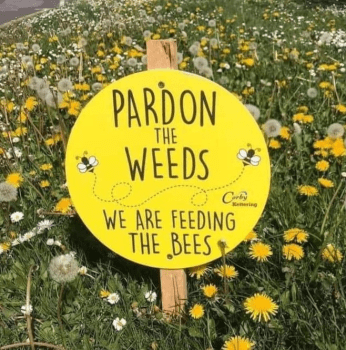
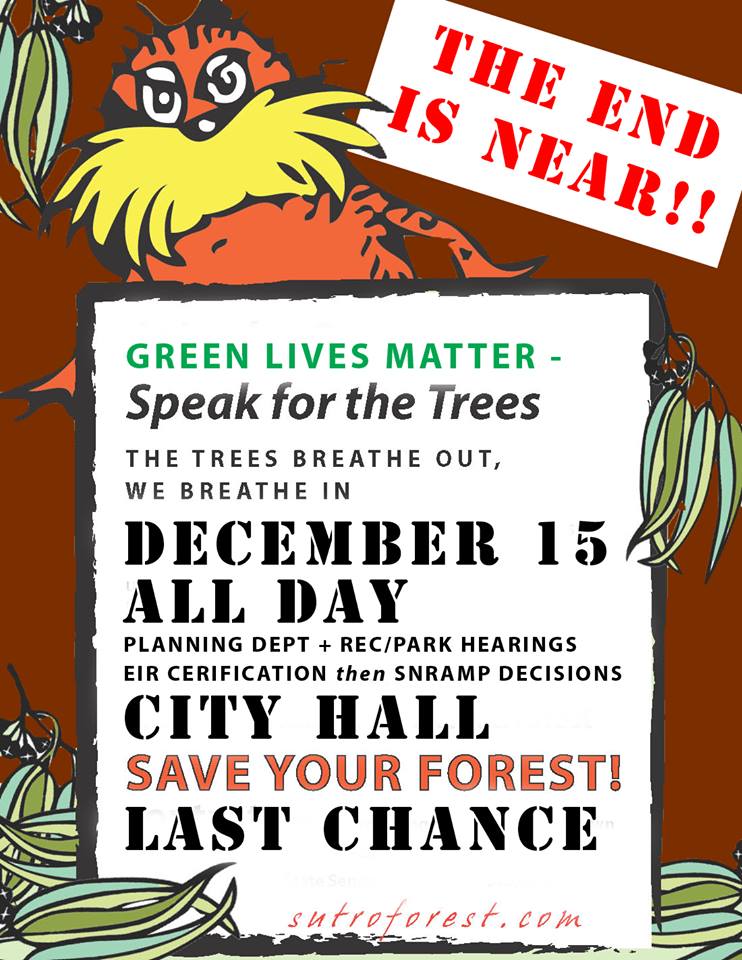 On December 15, 2016, the San Francisco Planning commission will hold a public hearing to consider certification of the Environmental Impact Report for the Natural Areas Program. If the EIR is certified, the Recreation and Park Commission will consider formally adopting the management plan for the Natural Areas Program at the same hearing. The Recreation and Park Commission will have the option of adopting one of the alternatives to the management plan. The San Francisco Forest Alliance will ask that the Maintenance Alternative be adopted by the Recreation and Park Commission because it is the “environmentally superior” alternative which will destroy the least number of trees and use the least amount of pesticides.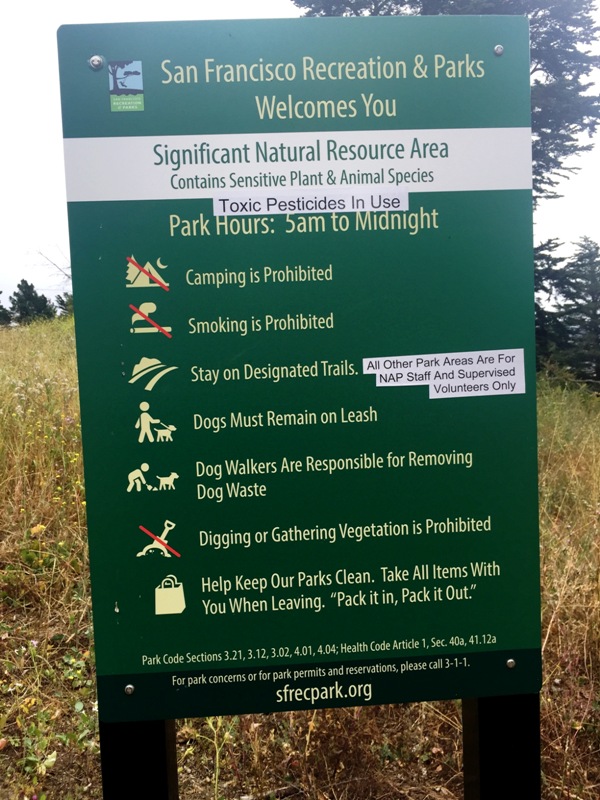
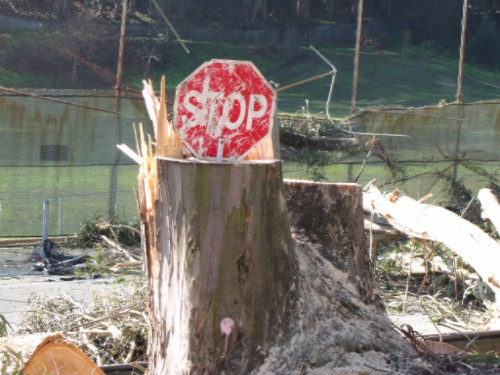


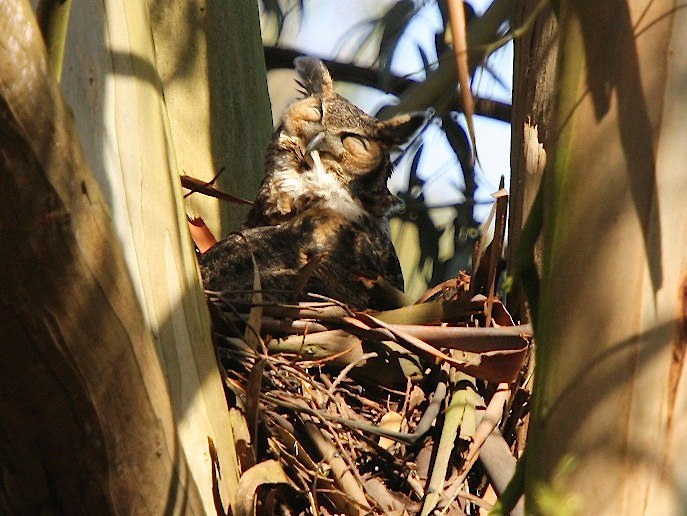
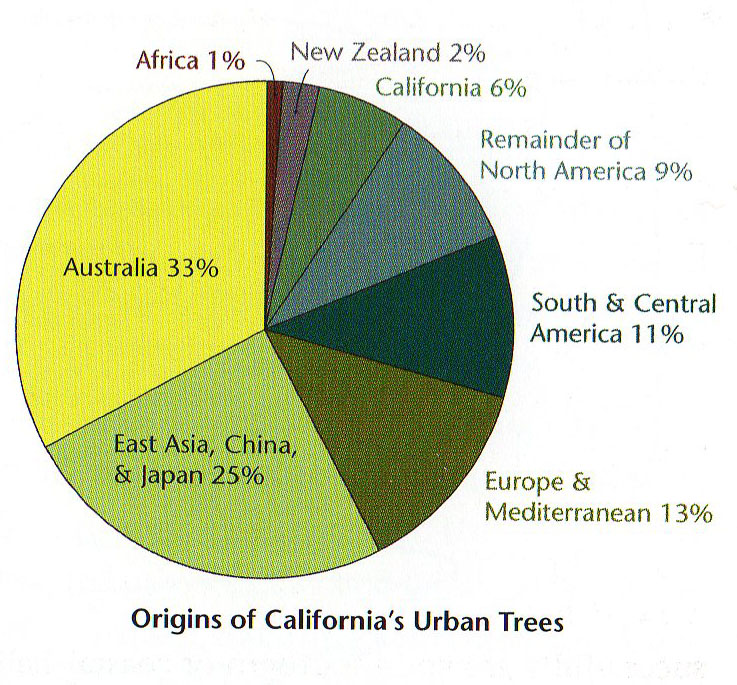
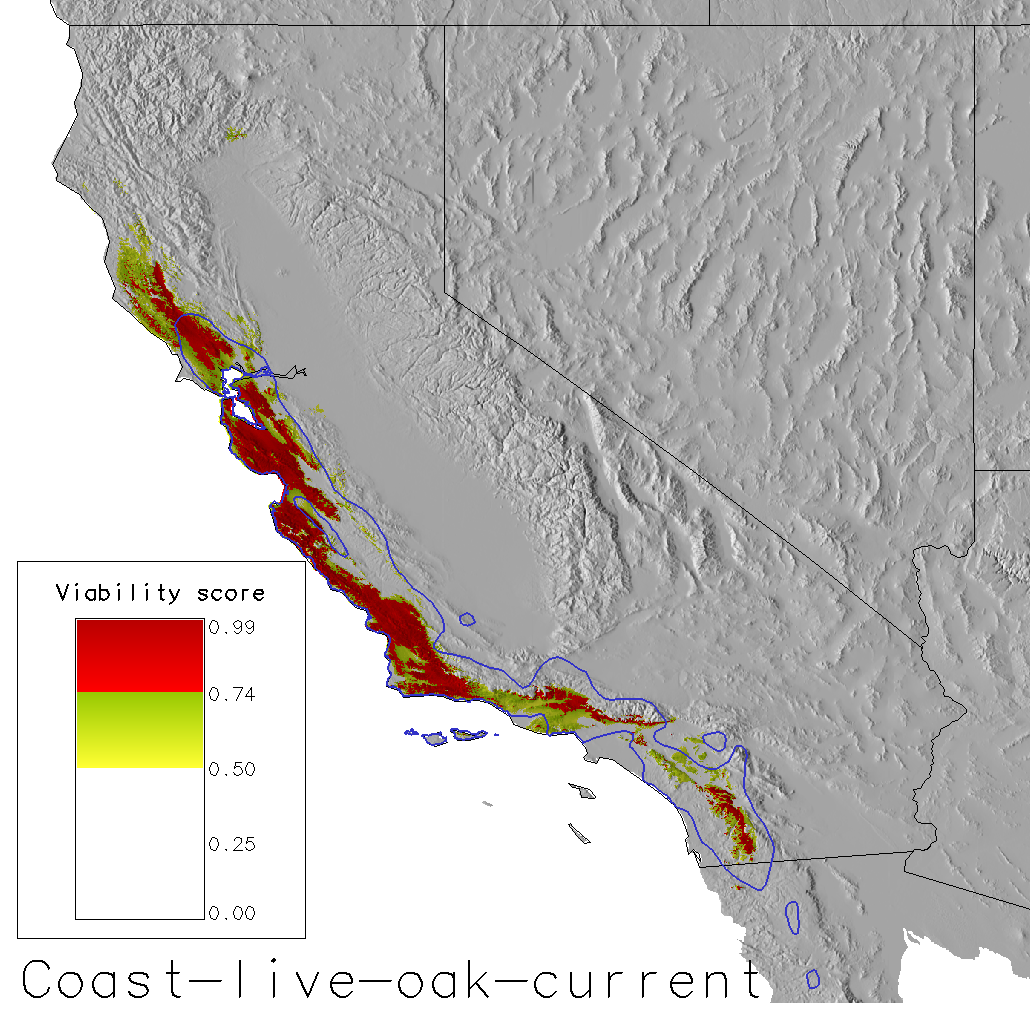
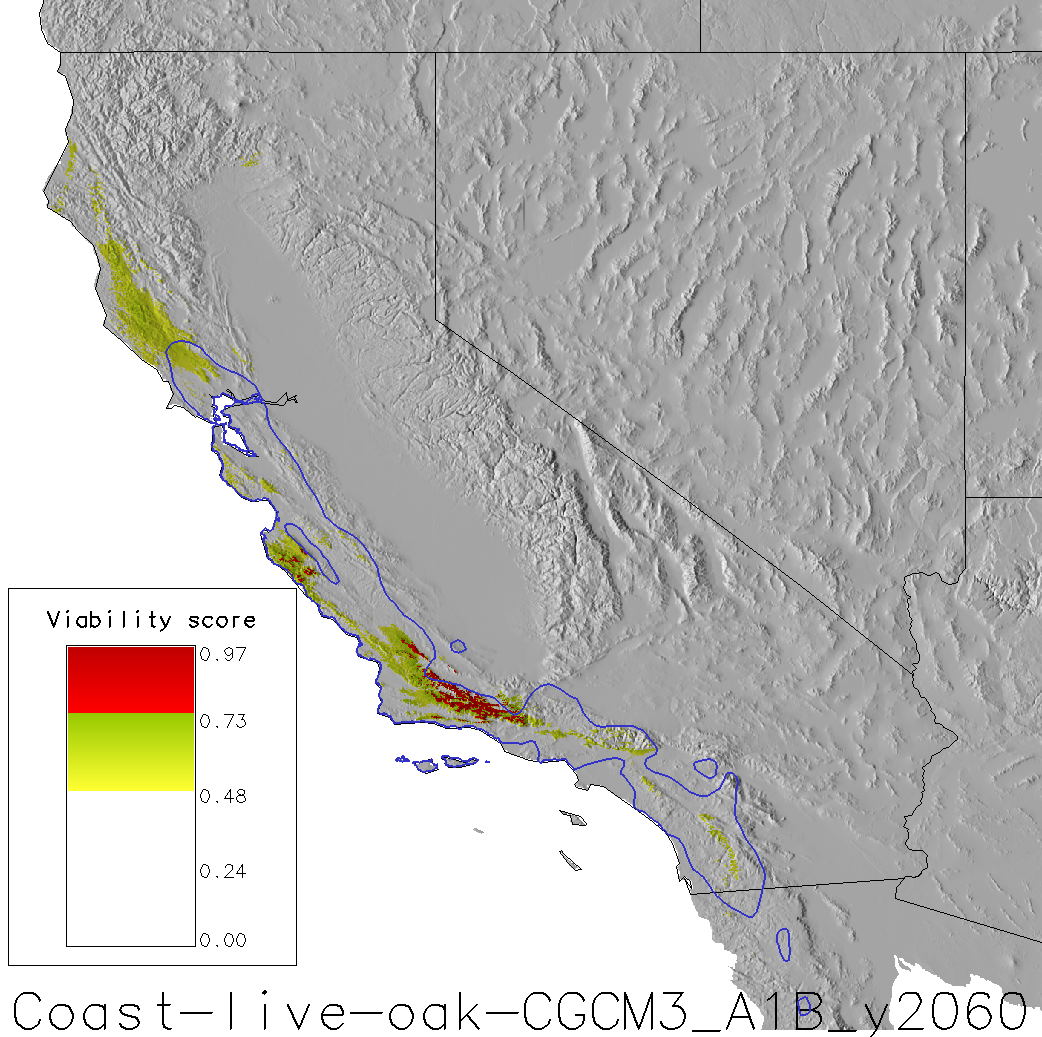
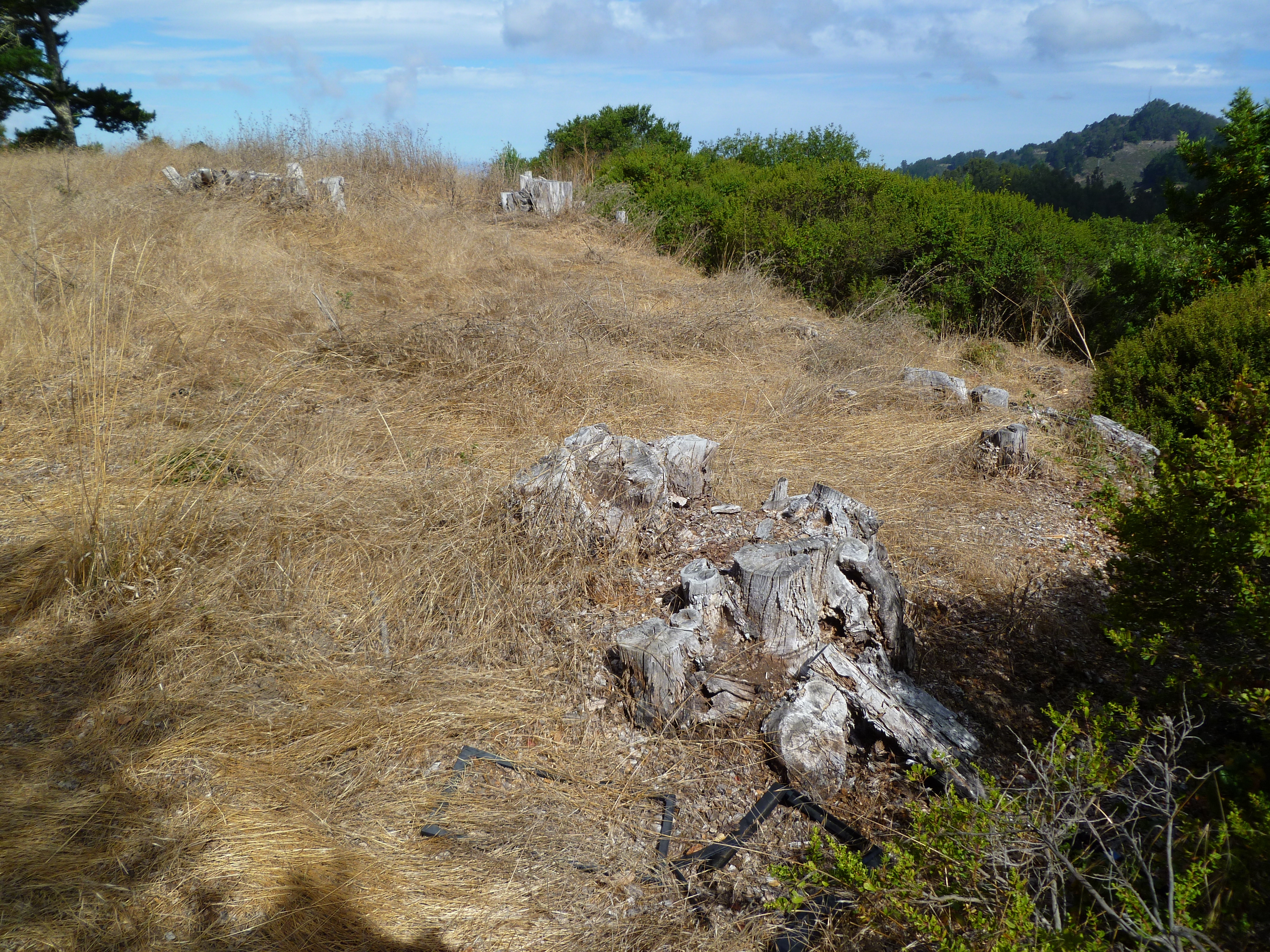
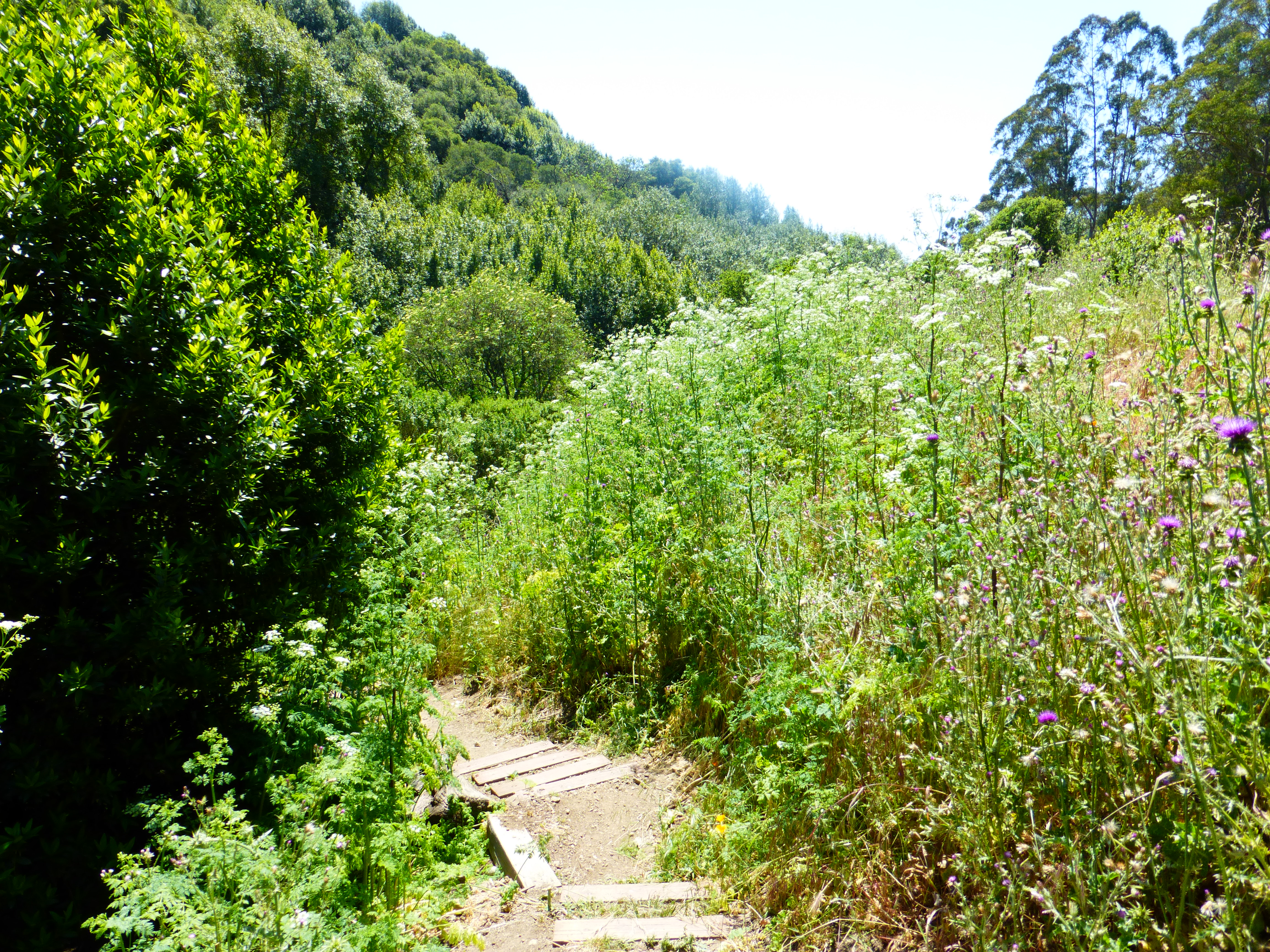
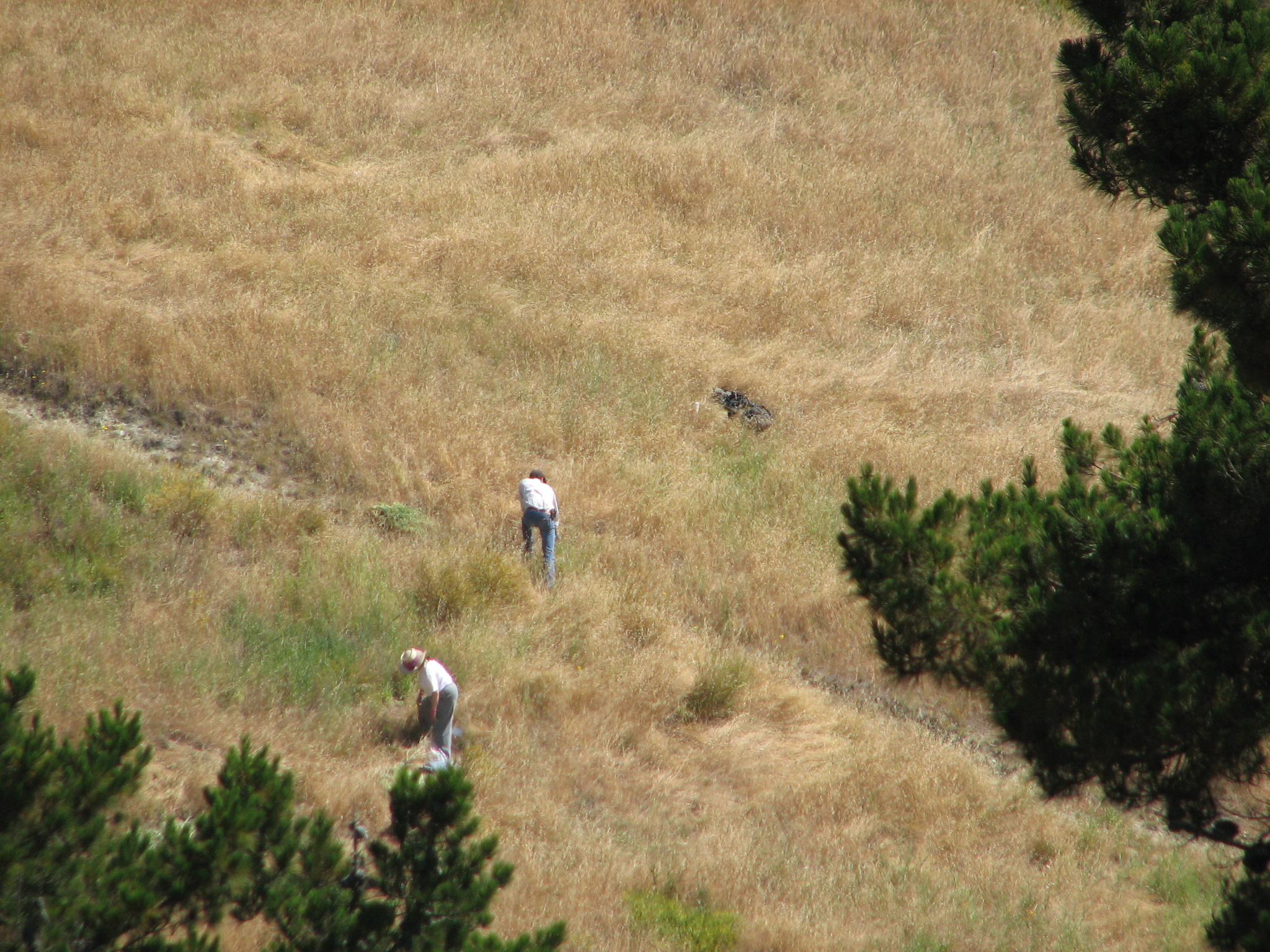
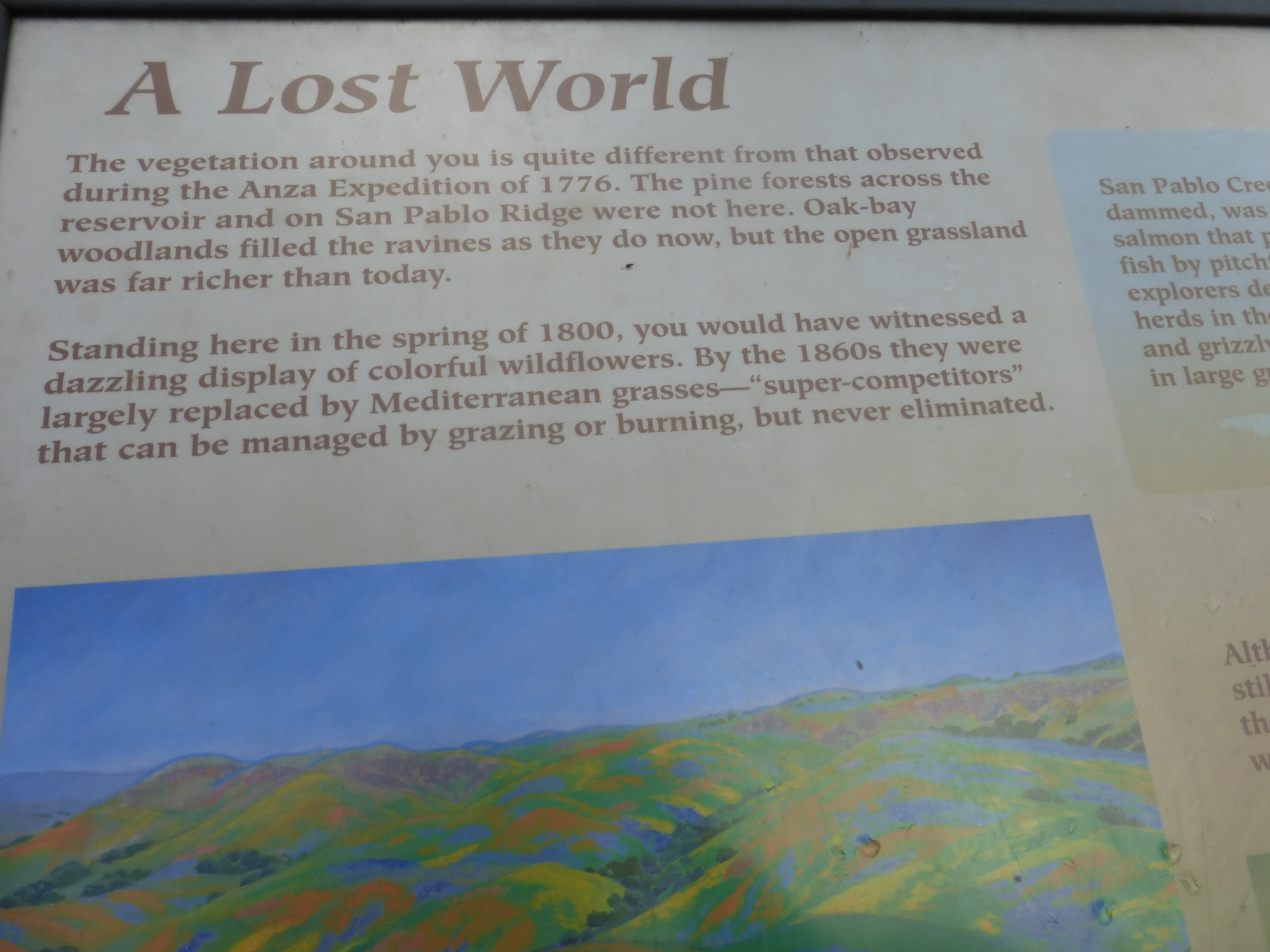
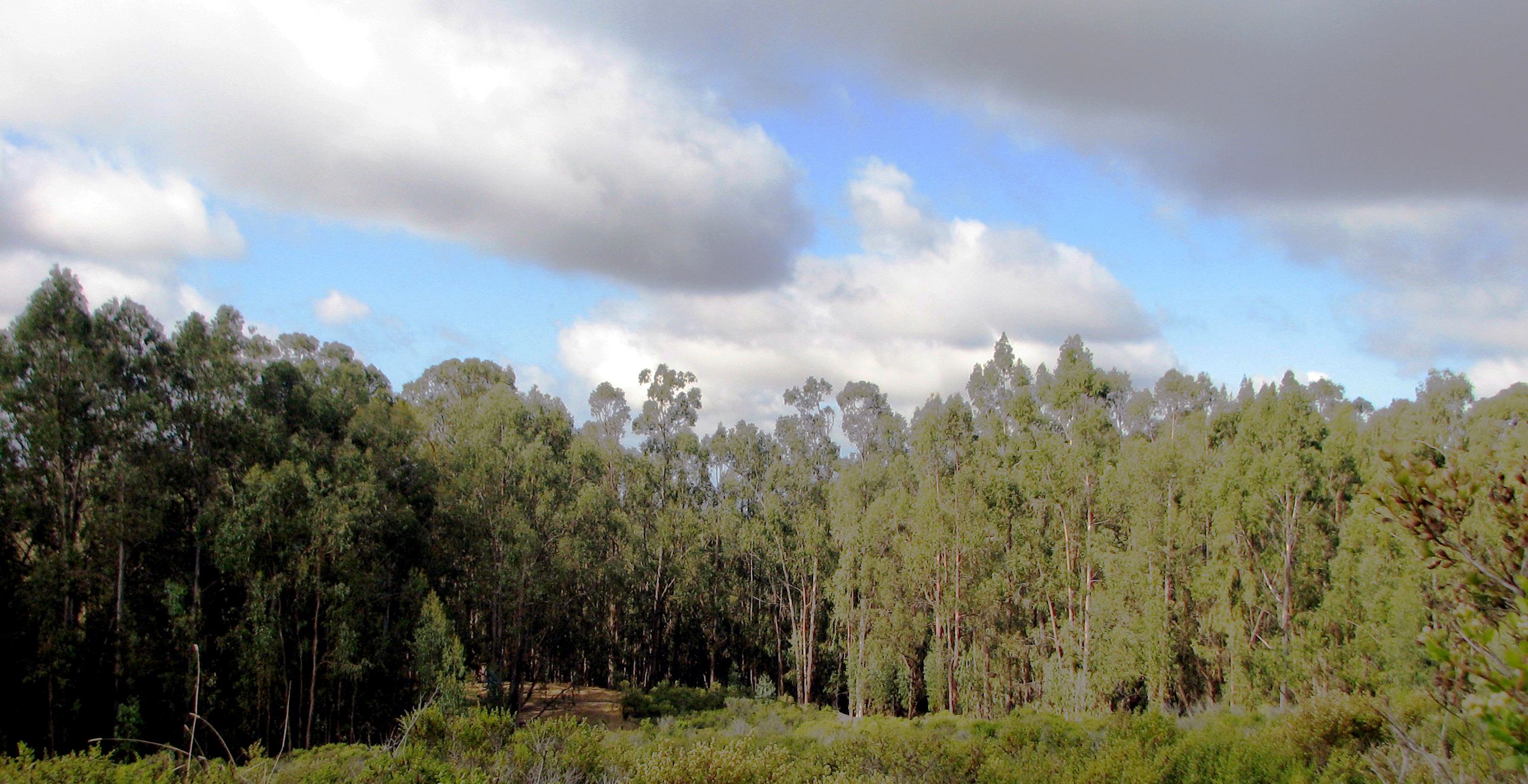

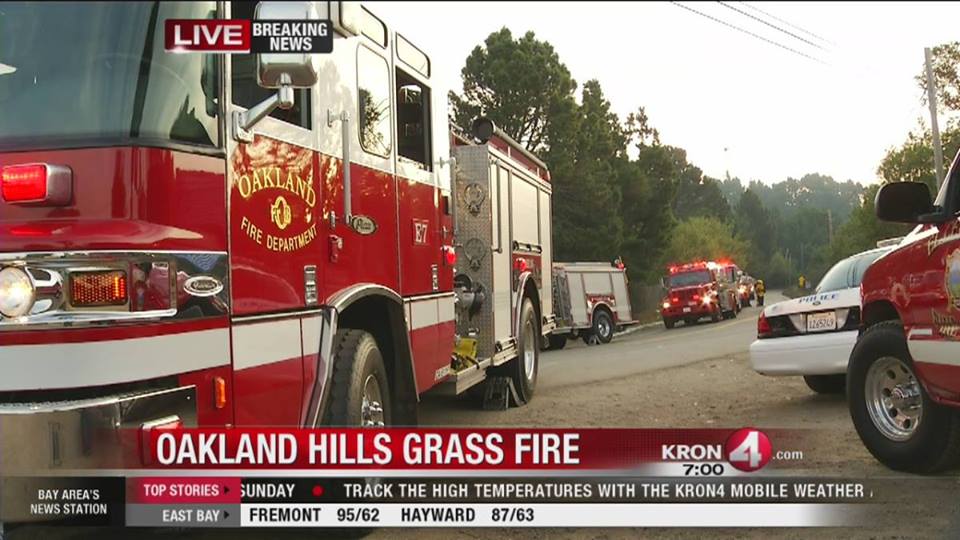


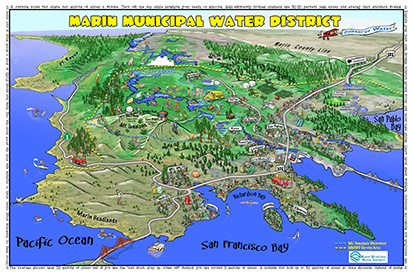
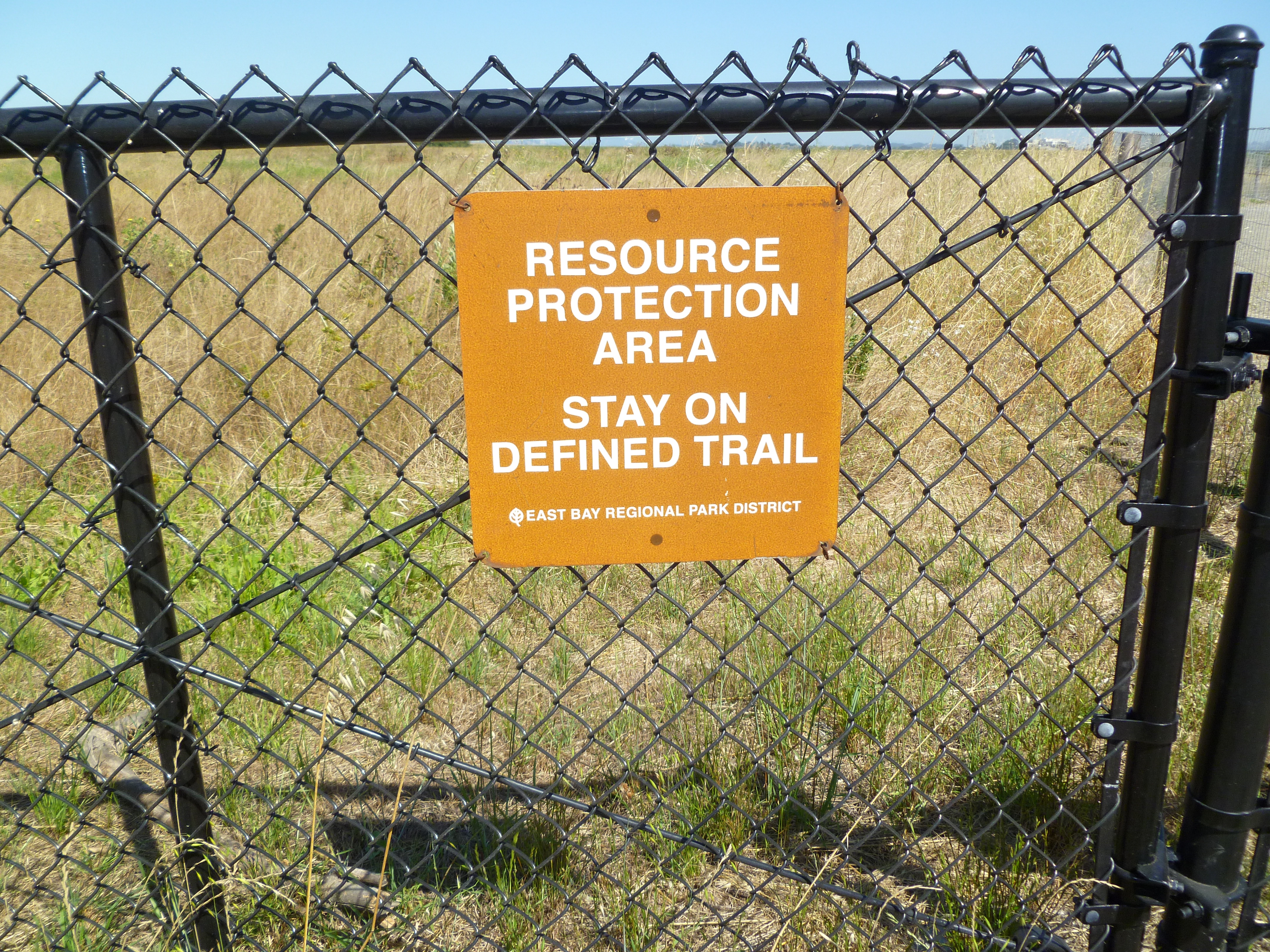


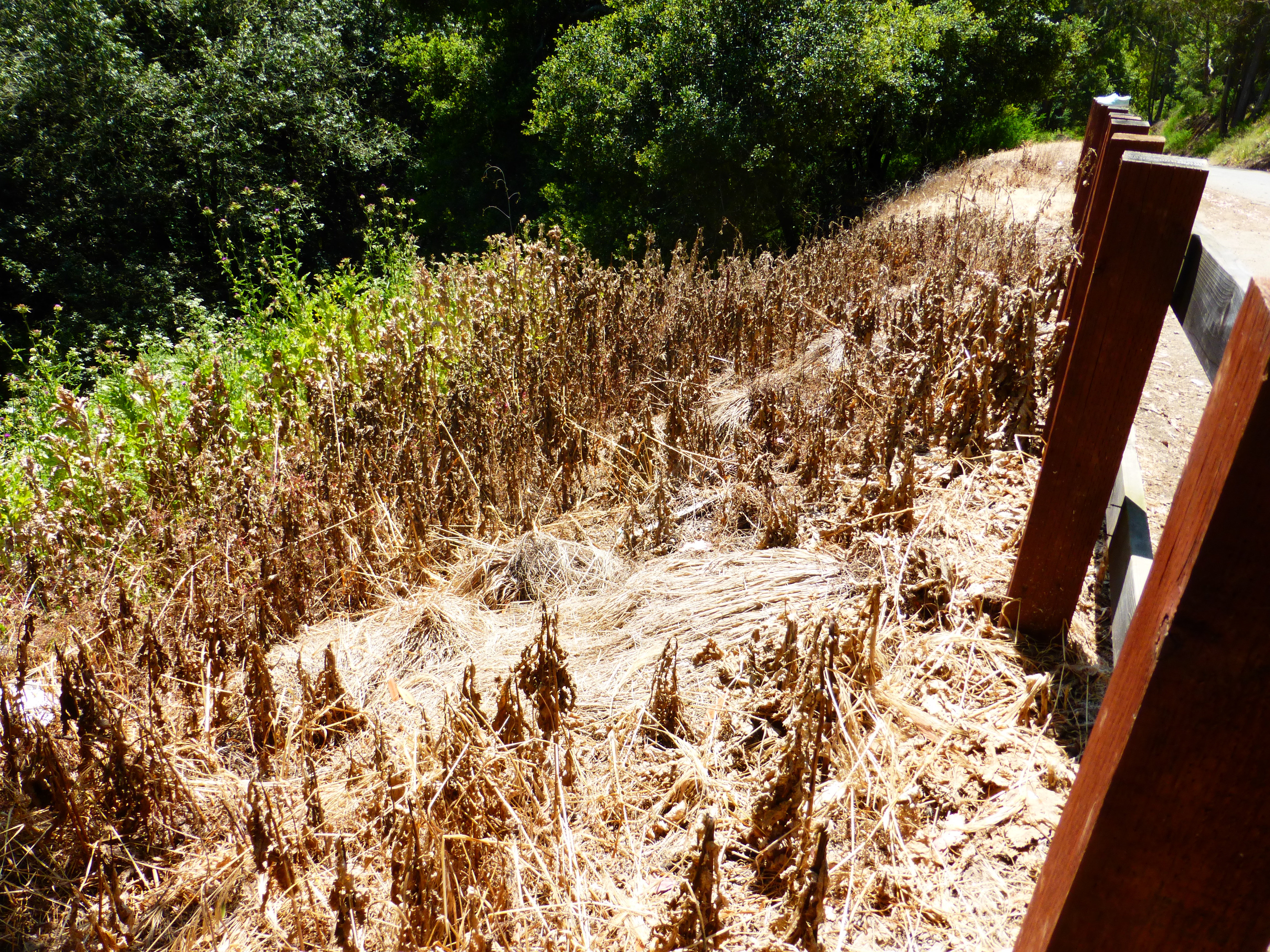

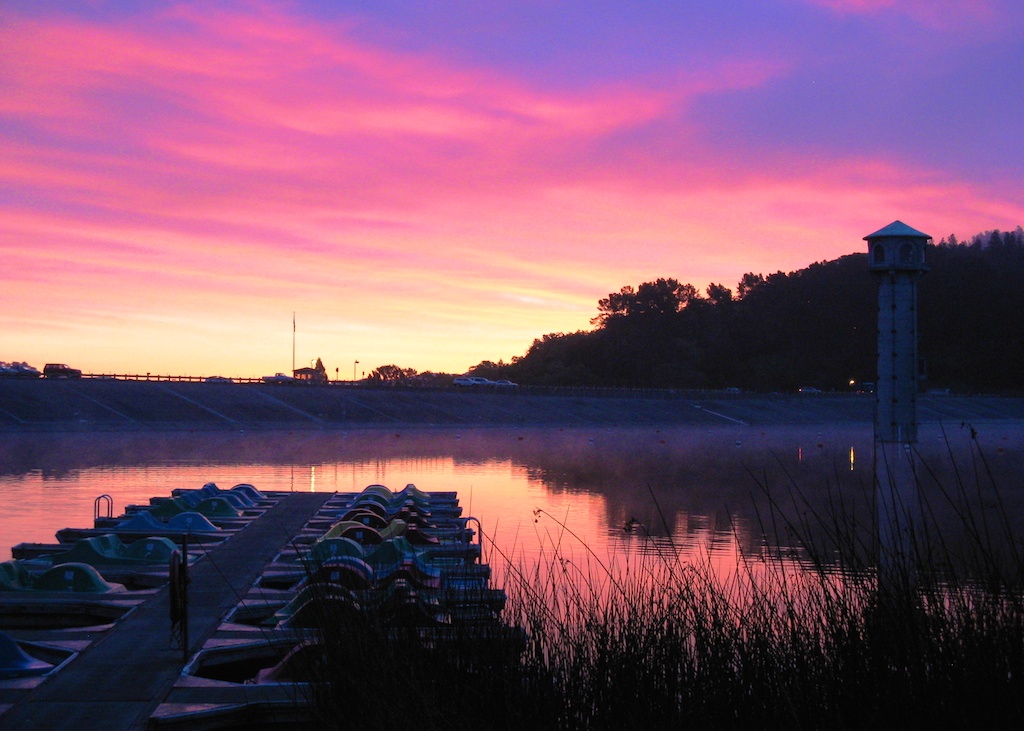
 Conservation Sense and Nonsense