InfoWar: UC Berkeley bombards us with propaganda against trees

First we must recapitulate the long history of UC Berkeley’s destruction of non-native trees on its property.

UC Berkeley (UCB) started destroying non-native trees on its property in the East Bay hills in 2000 and continued destroying trees until 2005, when it applied for FEMA grant funding to complete the destruction of all non-native trees.  UCB published detailed reports of its first phase of tree destruction, which reported the destruction of about 18,000 trees on 150 acres on Panoramic Hill, Claremont Canyon, Frowning Ridge, Chaparral Hill, and Lower Strawberry Canyon.

UCB completed the first phase without completing an Environmental Impact Report, which is what enabled it to avoid informing the public in advance of the destruction.  When UCB applied for FEMA funding it expected to be able to continue those projects without completing an environmental impact report. UCB’s FEMA grant application proposed to destroy 54,000 trees on 284 acres in Strawberry and Claremont canyons and Frowning Ridge. But the public was now alerted to UCB’s intentions and objected to the project being done without environmental review.  After completing the Environmental Impact Statement required by federal law, the FEMA grant to UCB was cancelled after a successful legal challenge of the project. 

UCB tried to implement its plans with its own funding without completing an Environmental Impact Report, as required by California State law.  Again, they lost a legal challenge that prohibits it from implementing its plans without an EIR. 

UCB’s most recent demonstration of its continued commitment to destroying all non-native trees on its property was a legal complaint filed in June 2017, which demands that FEMA reinstate the grants that were cancelled about one year ago.  At the same time, UCB has launched a new public relations effort to convince the public to support its projects.  In this post we will take a closer look at UCB’s recent round of propaganda.

New “informational” signs in Strawberry Canyon

We learned of new “informational” signs along the fire trail in Strawberry Canyon in July 2017, but we don’t know precisely when they were installed.  Those who often visit Strawberry Canyon tell us the signs are recent. This sign about “biodiversity” is an example of the message UCB is sending to the public.

Many of the statements on this sign are inaccurate:

  • Monarch butterflies roosting in eucalyptus tree.

    The sign claims that native plants “provide food and habitat for native wildlife” but that non-native plants “provide food and habitat for other non-native species.” Neither of these statements is accurate.  If a native plant provides food and habitat for native wildlife, it also provides both to non-native wildlife.  Conversely, if a non-native plant provides food and habitat for non-native wildlife, it also provides both to native wildlife. The notion that wildlife makes such distinctions is ridiculous.  Wildlife does not know or care what humans consider native or non-native.  If the plant is edible, it is food.  If the plant provides cover, it is useful habitat.

  • The sign also claims that the roots of native plants are deep, but the roots of non-native plants are shallow. These are equally ridiculous statements.  The depth of roots may vary, but that variation is completely unrelated to whether or not the plant is native.

Tree roots

Nativists often claim that the roots of eucalyptus trees are shallow (except when they claim they are very deep in order to make the opposite case that they use more water than other tree species).  So, we will digress briefly to provide some information about tree roots from a reputable, scientific source.

According to a study of tree roots by Harvard’s forestry research institution, Arnold Arboretum, (1) tree roots vary little by species.  The configuration of tree roots varies somewhat over the life of trees.  Early in their life, trees often have a deep tap root, but the tap root is slowly replaced by a wide, lateral network of fine roots around the perimeter of the tree, usually far wider than the tree canopy.  To the extent that the root system varies, it is more a reflection of soil conditions.  If the soil is very compact or the tree is planted in a rock or concrete basin, the width of the root system will be physically constrained.  If the tree is unstable in the ground, it is usually because of where it has been planted.

UC Alumni Magazine gins up fire hysteria

 In June 2017, the UC alumni magazine published an article in defense of its plans to destroy all non-native trees in the East Bay hills.  (Available here: UC Alumni Mag – Glen Martin interviews Scott Stephens)  Curiously, this article appeared in an edition devoted to climate change and adaptation to the changing climate.  You might think that concern about climate change would predict a greater respect for our urban forest, which stores the carbon that will contribute to greenhouse gases when the trees are destroyed.  Again, don’t look for consistency in the nativist viewpoint.  You won’t find it.

Here are a few of the absurd statements made in the article in the alumni magazine:

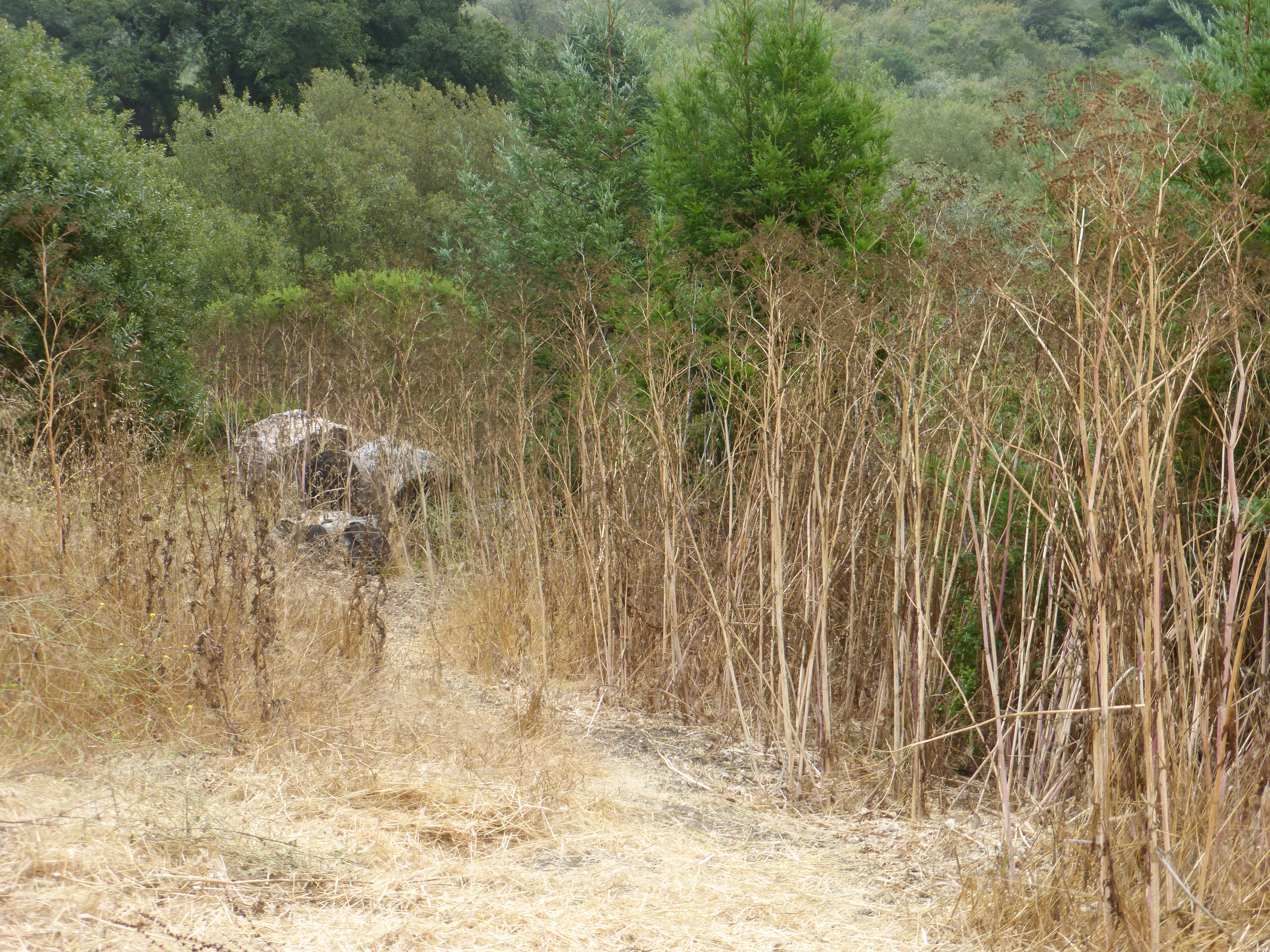
  • The article claims that the 150 acres where UCB destroyed trees over 15 years ago are now covered in native trees and shrubs that “came in” on their own when the trees were destroyed. All of these areas are easily visited and observed.  They are occupied by non-native weeds and piles of wood chips.  Here is a picture of one of those areas taken on August 6, 2017.
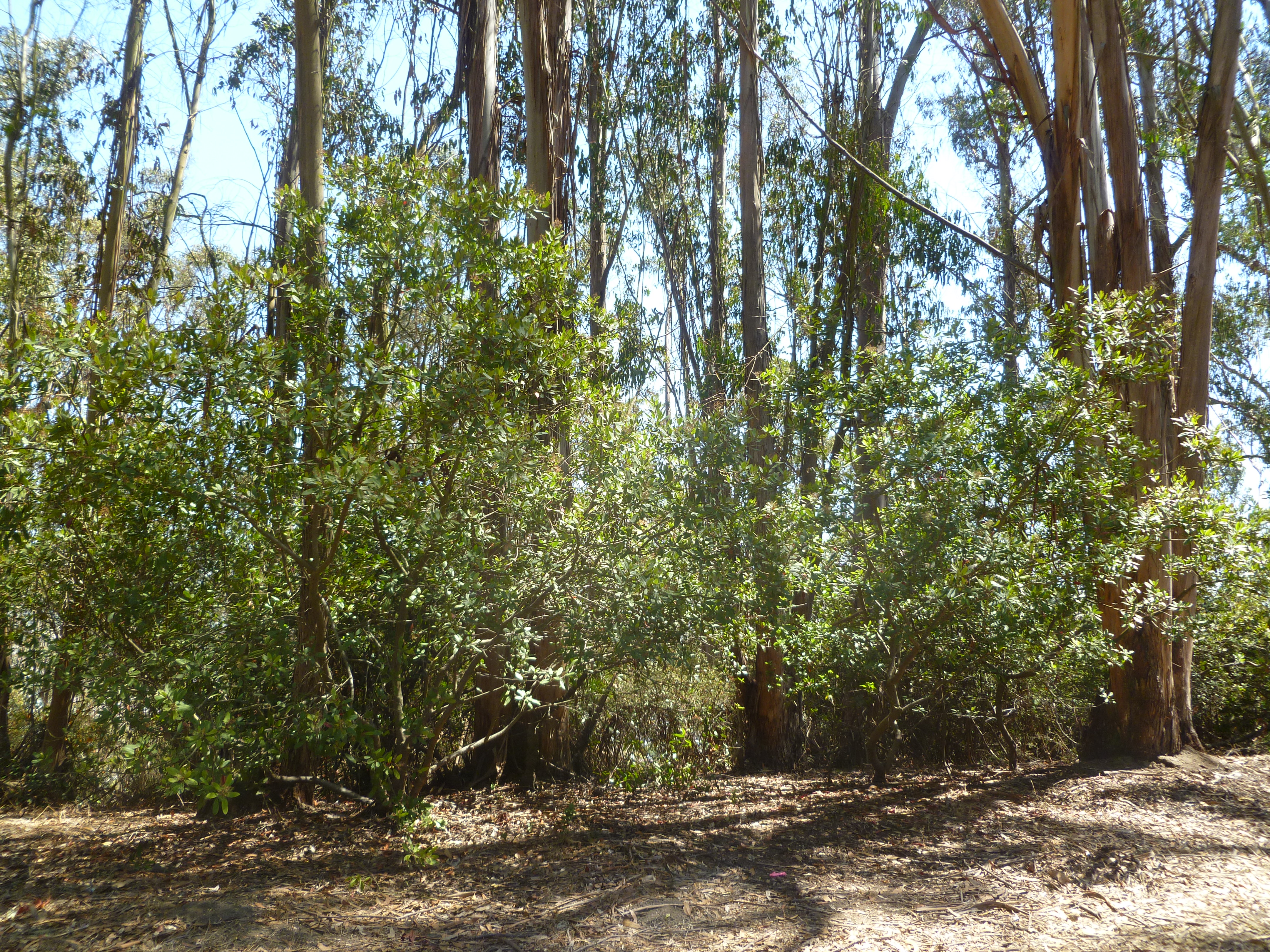
Site 29. The tall, dry weeds are the remains of poison hemlock that dominates this site where eucalyptus was destroyed by UCB. Shade is lost when trees are destroyed and weeds thrive in the full sun. The weeds dry out during dry summer months and become fuel for summer fires.
  • The article repeats the ridiculous claim that eucalypts are called “gasoline trees” in Australia. The word “gasoline” is not used in Australia.  As in all British Commonwealth nations, what we call gasoline is called petrol.  Calling eucalyptus trees “gasoline trees” is an American rhetorical device.  A native plant advocate probably made it up, then it was shared in their closed community until it became a “fact” in their minds.  It is a means of generating fear.  It is a tool used by native plant advocates to support their demand to destroy all non-native trees in California.
  • The article describes the huge die off of native conifers in California, caused by climate change and related infestation of native bark beetles and it predicts that they will be replaced by different species of trees that are adapted to present climate conditions. These observations are made with no apparent understanding of how it contradicts UCB’s strategy here in the Bay Area.  If the climate is changing in California and its landscape must change along with it, why is UCB trying to install the landscape that existed here 250 years ago?

UCB’s latest propaganda installment

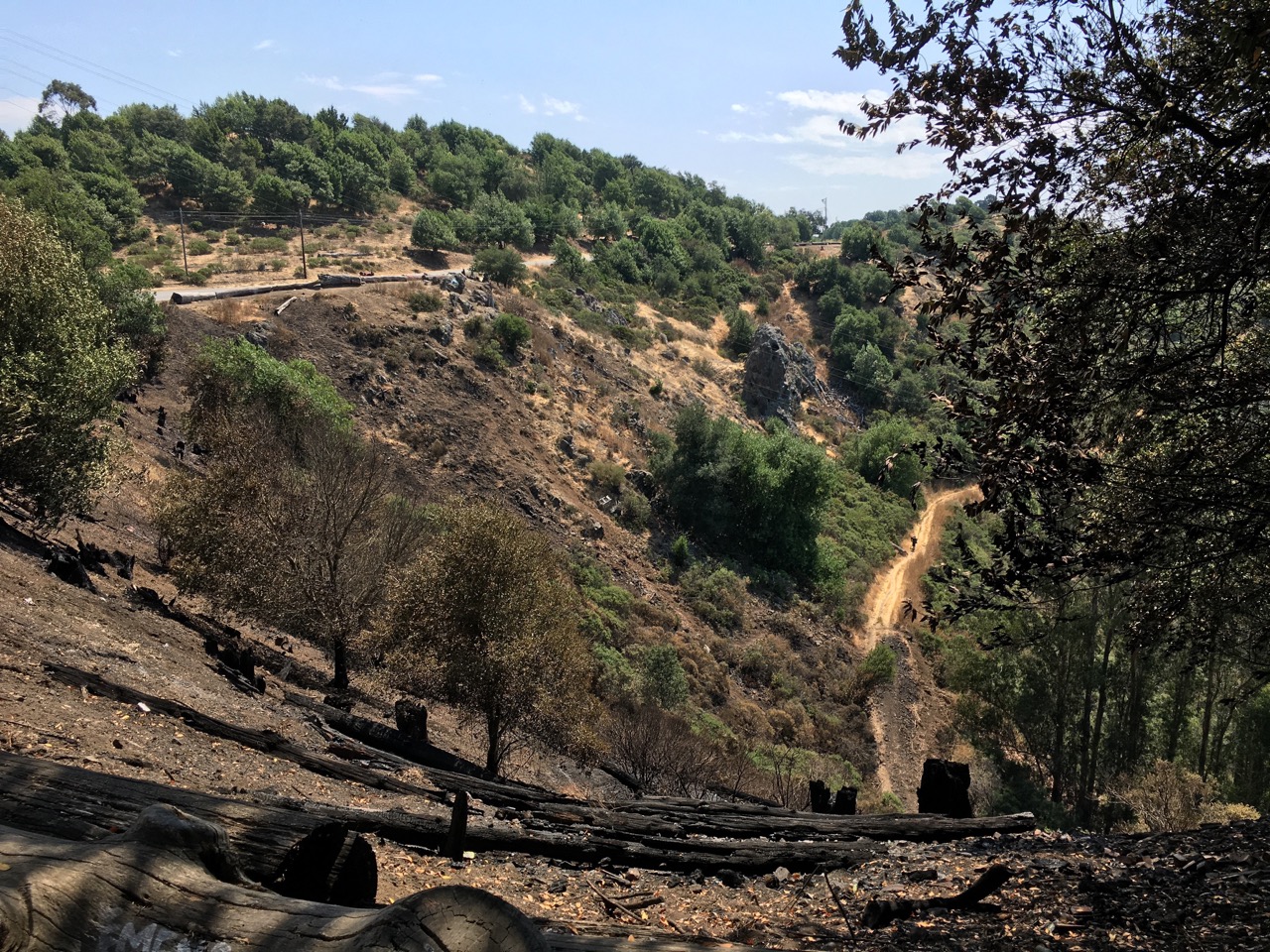
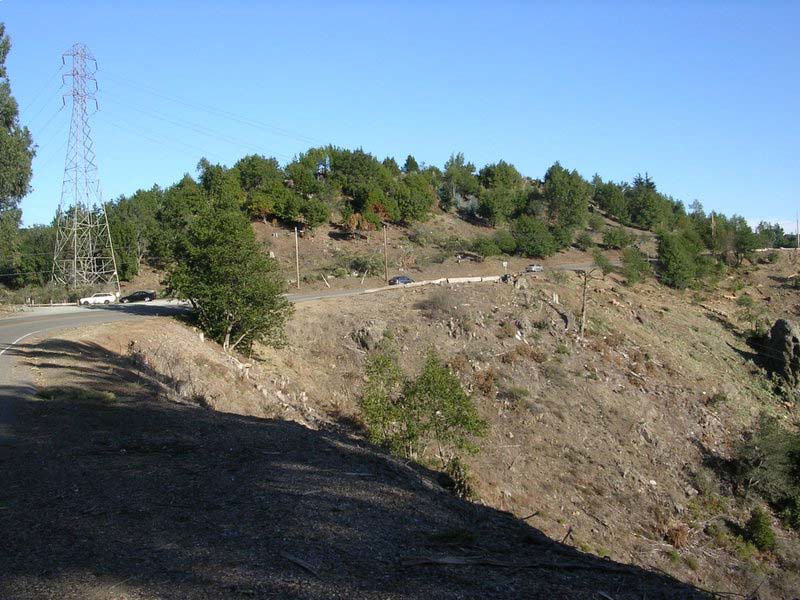
The recent fire in the East Bay Hills was another opportunity for UCB to gin up the fear machine against non-native trees.  The fire started on Grizzly Peak Blvd where UC Berkeley destroyed 1,900 eucalyptus trees on 11 acres in 2004.  When the trees were destroyed, the ground was quickly colonized by non-native annual grasses and the road was lined with the trunks of the trees they had destroyed.  The dried grass and the dead logs were the fuel of the fire that started on August 2, 2017.  The fire was stopped when it crossed the road into the eucalyptus forest in Tilden Park.

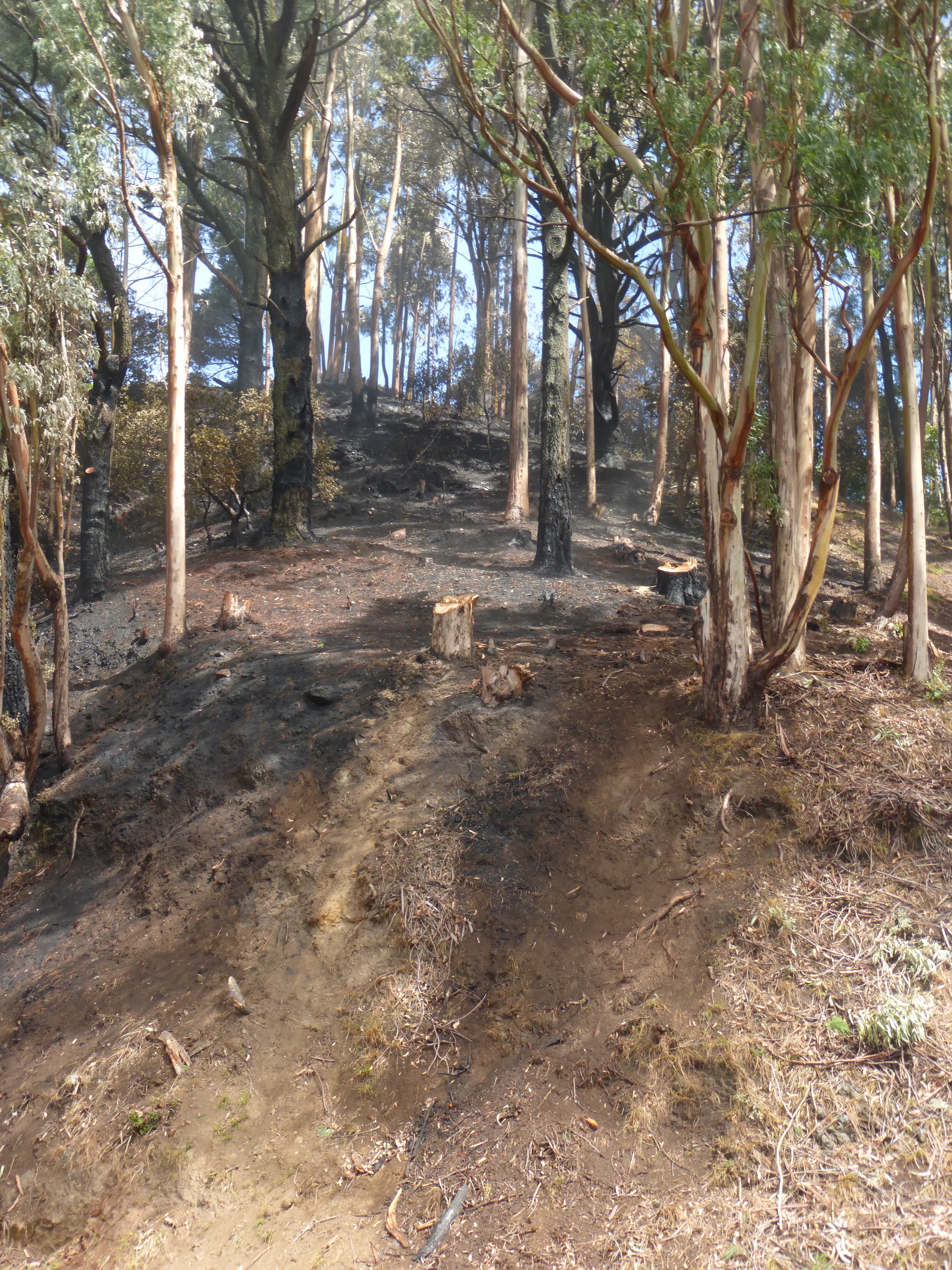
This area on the west side of Grizzly Peak is known as Frowning Ridge. It is one of the first areas that was clear-cut by UC Berkeley over 10 years ago. Destroying the trees did not prevent the grass and shrubs from igniting in the August 2017 fire. Pictures of that area before and after the trees were destroyed are available here: https://milliontrees.me/2013/06/08/guest-article-about-fema-projects-by-a-student-of-the-forest/

UCB now writes in its alumni magazine that there was no major damage to property and no loss of life because of UC’s “fuels management program” that destroyed the trees.  The fire risk to life and property was increased by the “fuels management program,” as facts on the ground tell us.  Scott Stephens, speaking for UCB, speculates that the fire “would have thrown embers miles ahead, starting hundreds of spot fires that would also burn explosively and merge.  That’s what happened in 1991.”

In fact, that’s NOT what happened in 1991.  The only source of embers identified by the FEMA Technical Report on the 1991 fire was “brush.”  That report also says the maximum distance of the fire spread was less than 3 miles, so if embers started spot fires, they did not travel many miles.

A study by US Forest Service of embers starting spot fires during wildfires all over the world included the 1991 fire.  The only known ember reported in the ‘91 fire was a wooden shingle from one of the homes that burned.  That study said of urban fires in California, “In the wildland-urban interface fires in California—Berkeley in 1923, Bel-Air in 1961, Oakland 1991—wooden shingles which were popular in California as roof material, assisted fire spread. Wooden shingles increase fire hazard owing to both ease of ignition and subsequent firebrand production.” (2)

But here is the kicker to this rewriting of fire history by Scott Stephens.  Less than a month ago, Stephens was interviewed about the many wildfires in California this year.  He blamed the wildfires on the heavy rains that produced a lot of grass and he said forests are less likely to burn: “UC Berkeley Fire Science Professor Scott Stephens says most of the fires so far have been in grassland areas that were revived from the rain, then dried out early during triple-digit heat waves… He says forests are better at retaining moisture and the Sierra will be more resilient this year because of the rains.” 

Stephens knows what is causing wildfires in California, but he chooses to misrepresent the fire in the East Bay Hills last week, presumably in the service of UCB’s desire to destroy our urban forest.  Perhaps it is naïve of me to expect more from a faculty member at California’s most prestigious research and educational institution.  But I find it disappointing.

Please join Million Trees in rejecting fear as the maker of public policy.  Be suspicious when you are asked to be afraid of something.  Are you being manipulated?  Do the fear mongers have ulterior motives? 


  1. Thomas O. Perry, “Tree Roots:  Facts and Fallacies,” Arnold Arboretum, Harvard University
  2. Eunmo Koo, et. al., “Firebrands and spotting ignition in large-scale fires,” International Journal of Wildland Fire, 2010, 19, 818-843

Fire in the East Bay Hills, August 2017

On Wednesday, August 2, 2017, a fire started in the Berkeley/Oakland hills in the San Francisco Bay Area.  This is an area with a history of catastrophic wildfires and so the media and the public paid close attention to the fire as firefighters fought to contain it. 

The East Bay Times reported that the fire began on Grizzly Park Blvd near mileage sign marker 14 and spread to 20 acres until it was contained late Friday, August 4, 2017. 

Dan Grassetti, the President of the Board of Directors of Hills Conservation Network, monitored the fire while it was in progress and when the road was opened again, he wrote the following report about the fire and what we can learn from it.  We are grateful to Dan for the photos he took and for sharing his observations about the fire.

The Hills Conservation Network is a 501C3 non-profit which advocates for fire safety in the East Bay.  Visit their website to see how they advocate for reducing fire hazards without clear cutting trees and using pesticides.  

Million Trees


I was able to tour the site today and took some photos. The fire was split between an area that had previously been treated [by removing all eucalyptus] by UC and an adjacent area that still had some eucalyptus. The fire took out all the ground fuels, including the dead tree carcasses [logs] that Tom Klatt [of UC Berkeley] had left there from years ago. Apparently what the experts tell us about live trees not being fuel while dead trees being fuel is true! [Despite what Tom Klatt tells us about UC’s projects, which leave the logs on the ground.]

This area on the west side of Grizzly Peak is known as Frowning Ridge. It is one of the first areas that was clear-cut by UC Berkeley over 10 years ago. Destroying the trees did not prevent the grass and shrubs from igniting in the August 2017 fire. Pictures of that area before and after the trees were destroyed are available here: https://milliontrees.me/2013/06/08/guest-article-about-fema-projects-by-a-student-of-the-forest/
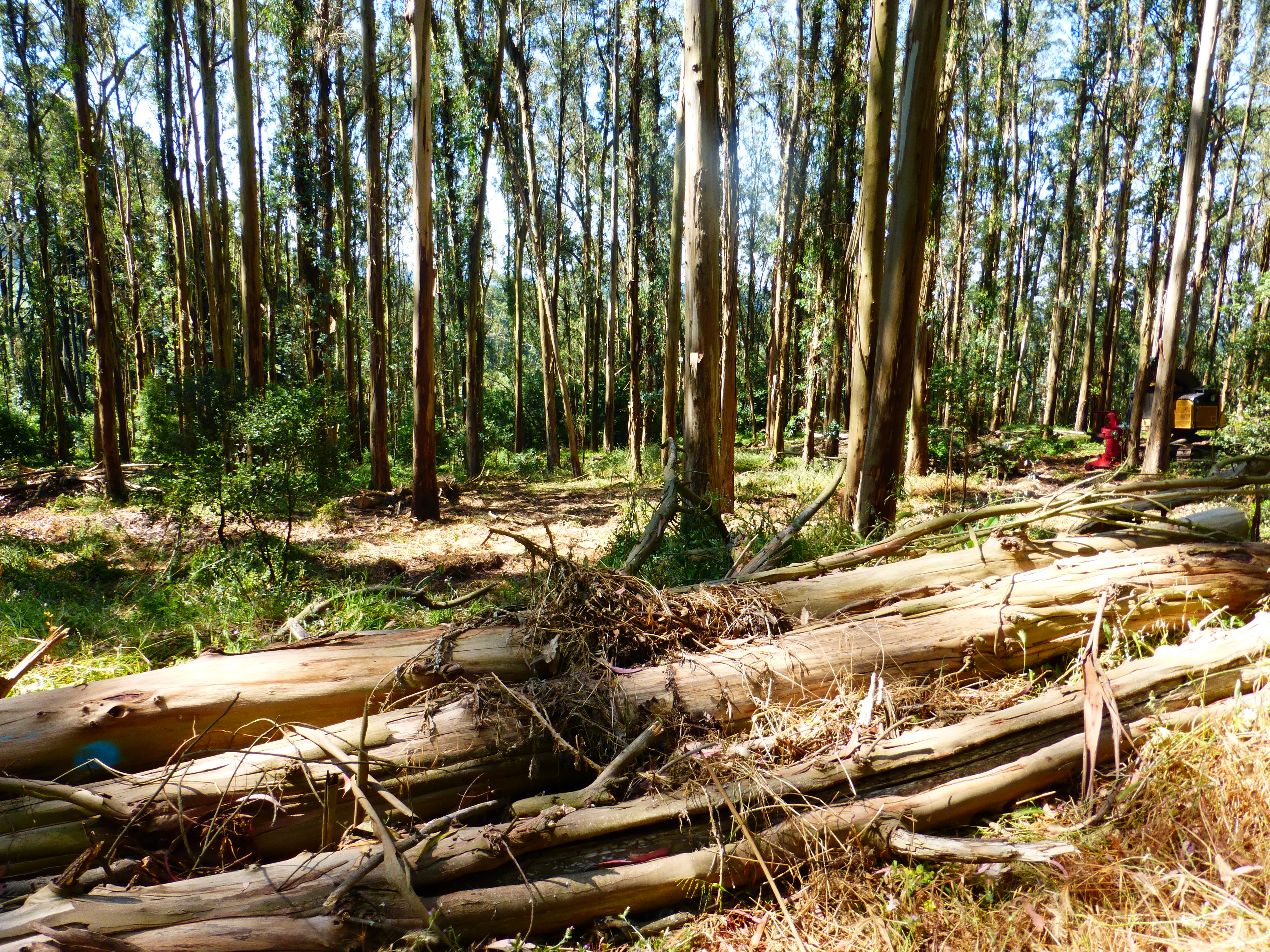
When UCB destroys trees, they leave the logs lying on the ground. Note that some of those logs burned in the August 2017 fire.

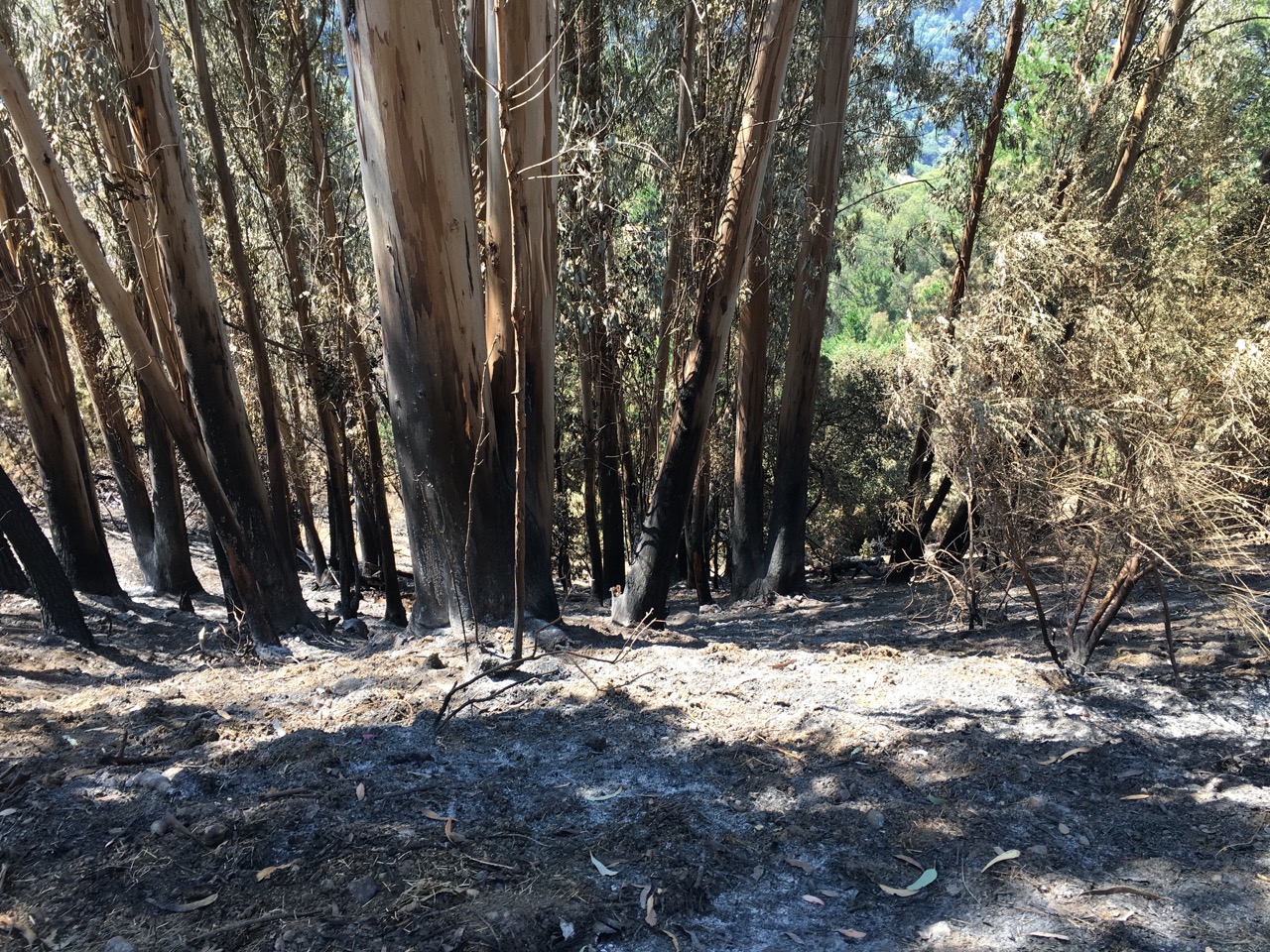
You will note that the fire burned under a number of trees, including Monterey pines and eucalyptus without igniting them. This is the same pattern we have seen in every fire site we’ve walked since the ’91 disaster.

On the east side of Grizzly Peak where eucalypts are still standing, the fire burned the understory and scorched the trunks of the trees, but did not ignite the trees. We have seen that pattern several times in past fires since 1991.

The lessons seem clear. Roadside party sites attract folks who start fires. If you’re going to have these zones you pretty much have to create a vegetation free zone a goodly distance from these sites. What burns in a wild land fire are the ground level fine fuels. Tall trees provide shade which tends to lessen the amount of ground level fine fuels.

Dan Grassetti, Hills Conservation Network

August 5, 2017


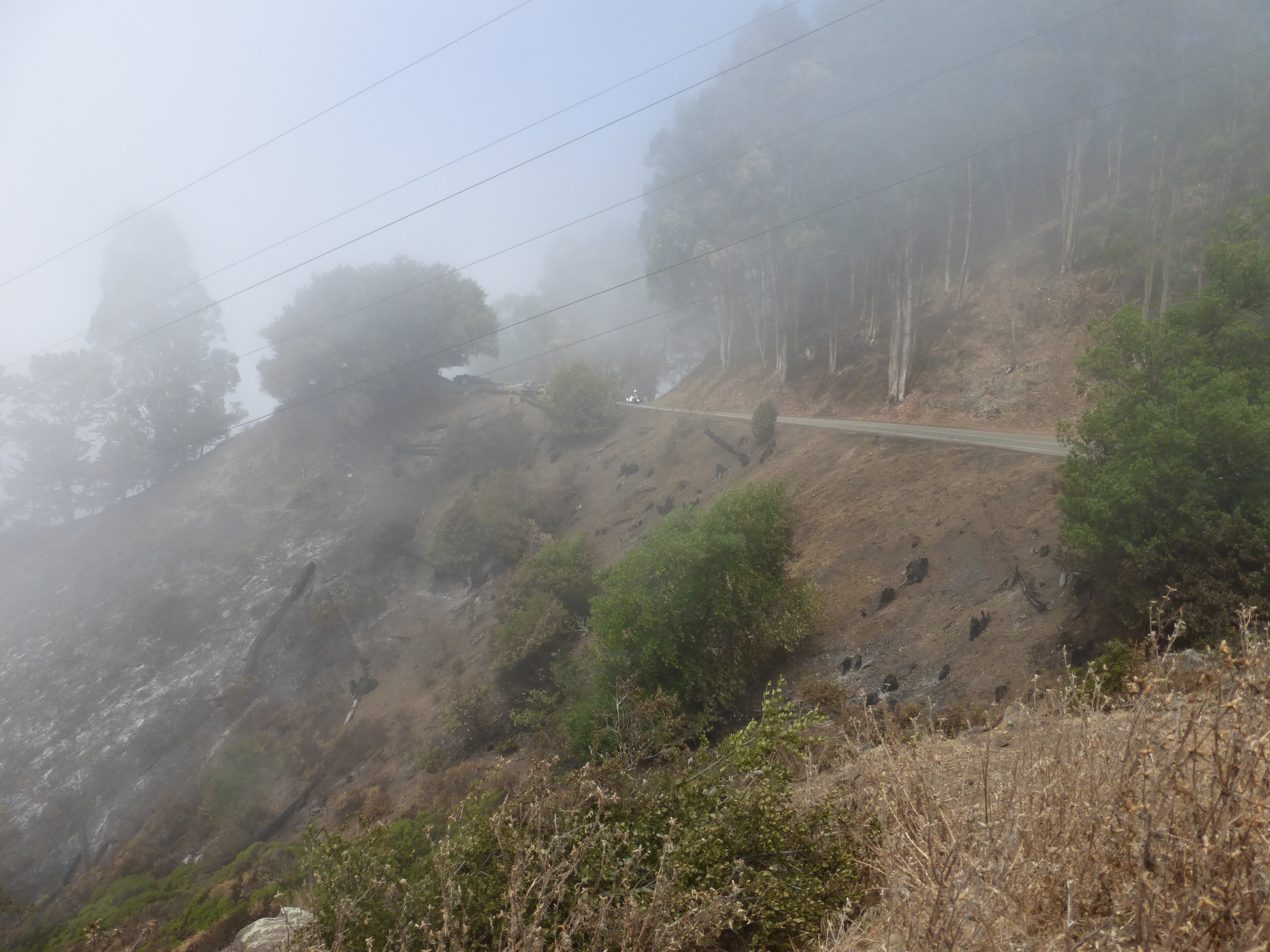
Addendum:  It’s foggy in the East Bay Hills today, August 6, 2017.  At midday, Frowning Ridge is barely visible through the fog. 


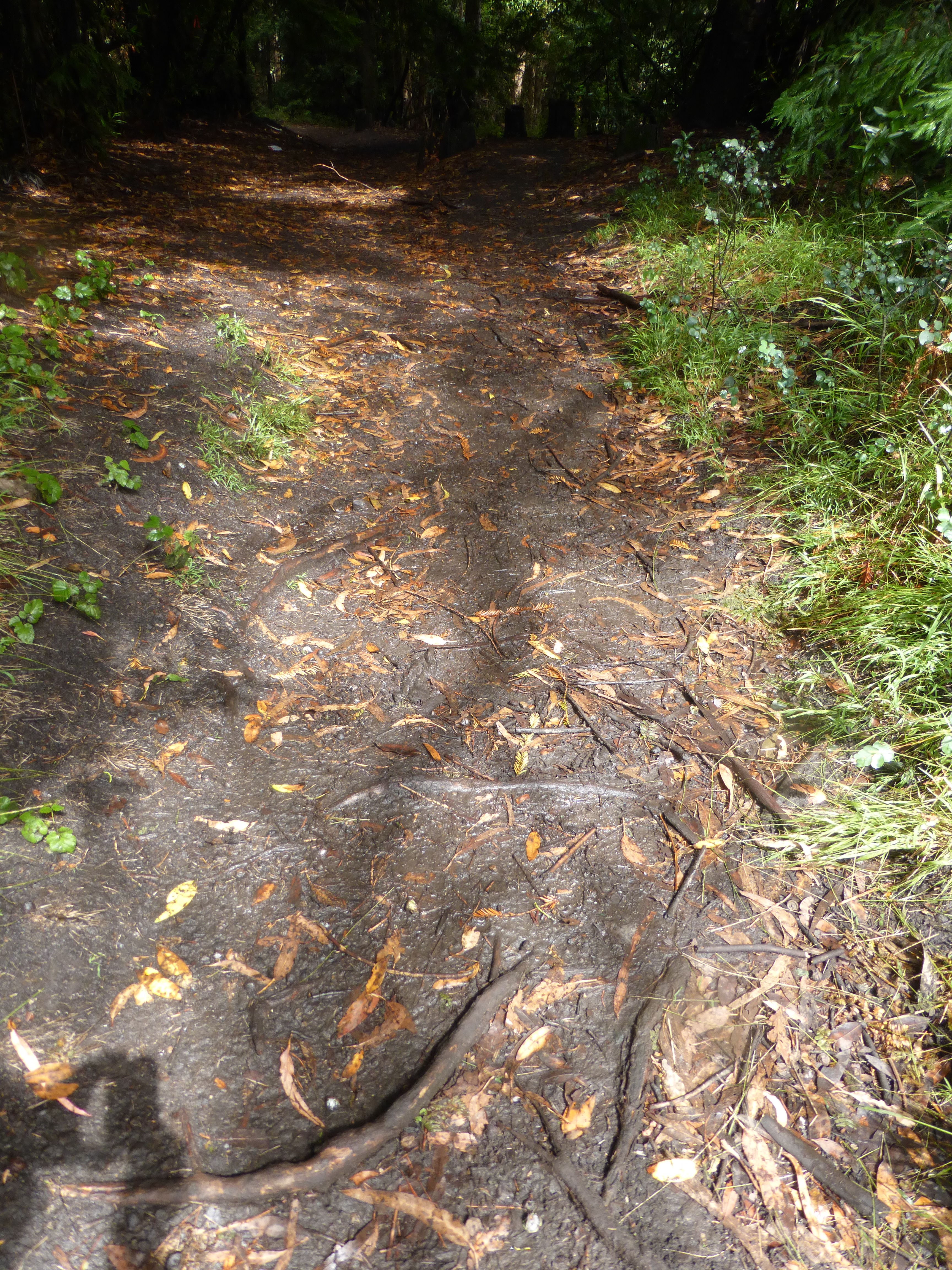
 Across the road, in Tilden Park, the trail is muddy under the trees that are dripping the fog from above.   The moist ground prevents fires from igniting and spreading.


A few trees were cut down by fire fighters on the east side of Grizzly Peak, in Tilden Park.  Their stumps are visible.


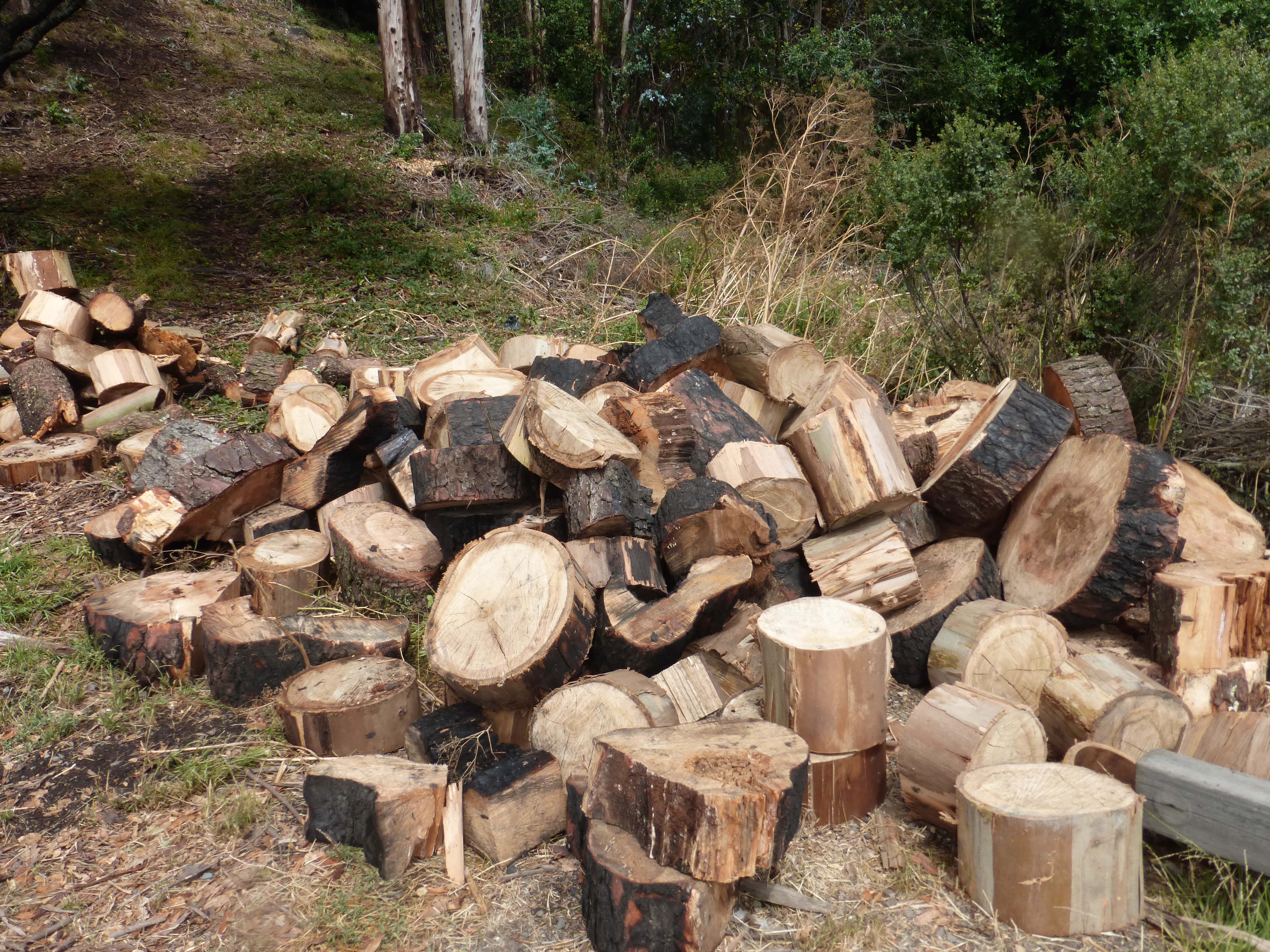
The trees that were cut down have been cut into pieces and stacked beside the road.  You can see that the bark of trees is charred by the fire in places, but the heart of the tree did not burn.


Million Trees

Tamarisk beetle: A case study in the dangers of biological controls to eradicate non-native species

Our readers were introduced to Matt Chew in his guest post about the economic interests of ecological “restorations.”  Dr. Chew is a faculty member of Arizona State University’s Center for Biology and Society and an instructor in the ASU School of Life Sciences. 

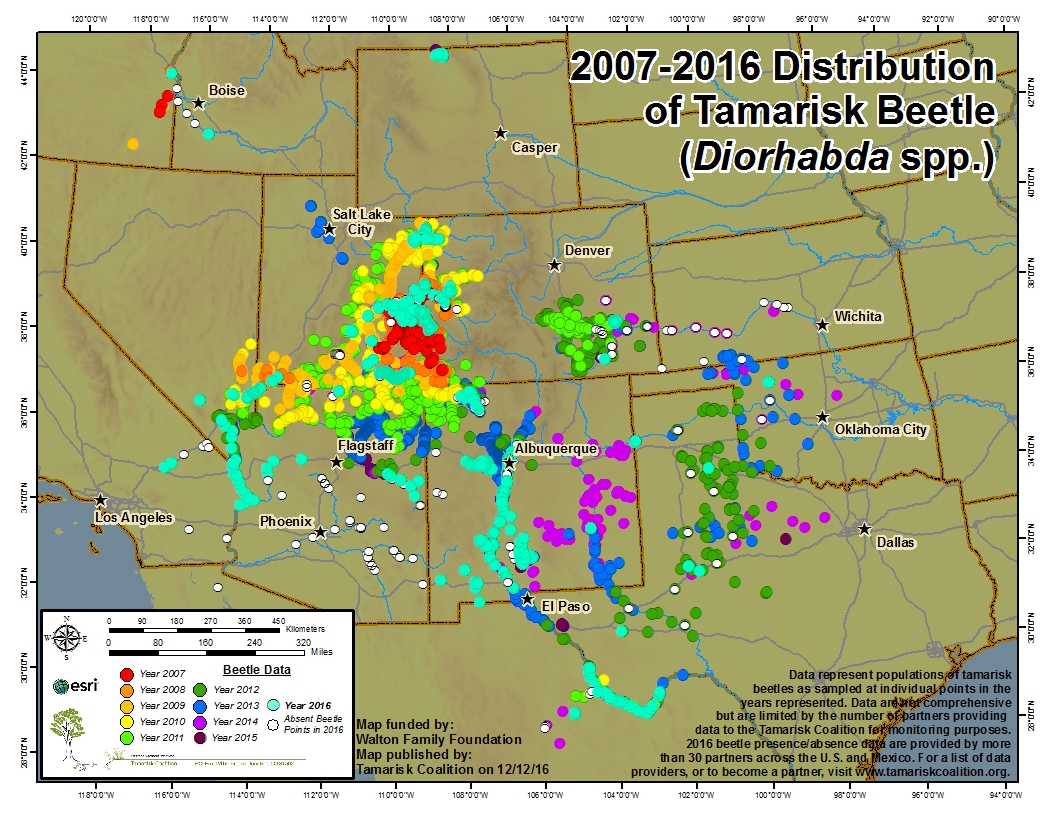
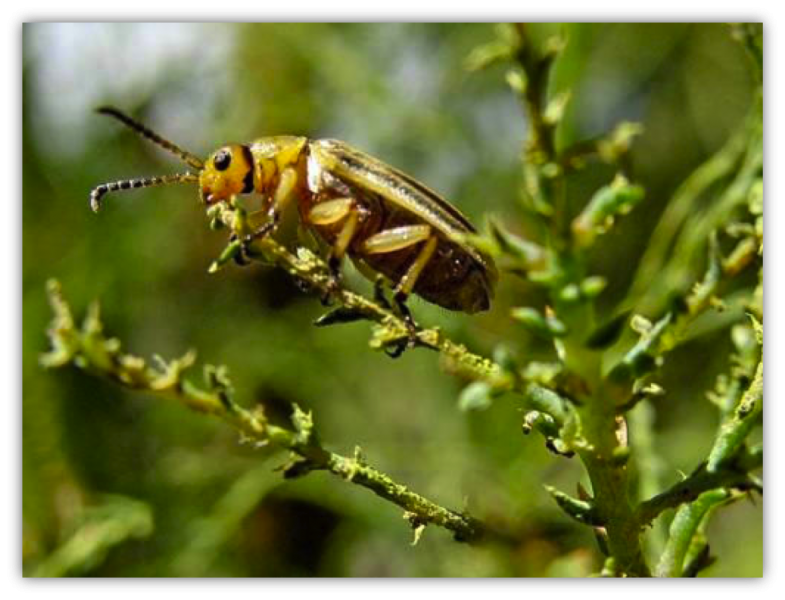
The most recent newsletter (see page 8) of the California Invasive Plant Council (Cal-IPC) informed us that the beetle that was introduced in Arizona to eradicate tamarisk has spread to California, where it was not introduced.  When the beetle was originally introduced, its spread beyond where it was introduced was not predicted, based on climatic restrictions on its life cycle.  As usual, evolution overturns the best laid plans.  According to Cal-IPC, Rapid evolution in this developmental trait, however, allowed beetles to stay active later in the season and thus facilitated their expansion southward…”   

Tamarisk defoliated by tamarisk leaf beetle along Colorado River, near Needles, California

The rapid defoliation of tamarisk throughout the southwest, including California, is an immediate threat to the endangered Southwestern willow flycatcher, which long ago adapted to tamarisk in the absence of its native host, willow.  The native willow requires a great deal more water than tamarisk. Therefore, willow died off when water throughout the southwest was diverted out of riparian corridors for human consumption and agricultural production.

Dr. Chew is an expert on tamarisk and the role it plays in the ecosystems of the southwest and so we asked him to write another guest post for us on this topic.  He has generously obliged with this detailed history of biocontrols and their use to eradicate non-native species. 

Biocontrols are also topical because a new biocontrol was recently approved by the USDA to eradicate cape ivy.  This biocontrol was eagerly anticipated by native plant advocates and is likely to be widely used by land managers in California.  Therefore, this is a timely opportunity to learn about the pros and cons of biocontrols.  How long will it take the introduced insect to start feeding on the many other species of ivy that are not considered “invasive?”

Evolution and natural selection are wild cards in attempts to eradicate non-native plants and animals.  Although there are many dangerous consequences of using pesticides, the role that evolution plays in rendering pesticides useless is less understood and taken into consideration.  Much like the hungry beetle that now is running rampant in the southwest, the weeds that are continuously sprayed with herbicide are also adapting and evolving defenses against the chemicals being used to eradicate them.  There are now millions of acres of agricultural crop land infested by weeds that are immune to the pesticides that were sprayed on them for decades.  Our pesticides are now useless on these “superweeds.” Instead of getting off the pesticide treadmill, we are developing stronger—and therefore more toxic—herbicides.

There are many reasons why we object to the eradication of non-native plants and animals.  The tamarisk beetle is an example that illustrates a few of our objections:

  • Many of the plants being eradicated are providing food and habitat for animals. The animals that depend upon them are being harmed by their elimination.
  • The methods used to eradicate non-native species often have unintended, negative consequences, such as breeding “superweeds” that cannot be eradicated.
  • The puny tools of humans are often powerless against the much stronger forces of nature, such as natural selection and evolution. These forces of nature should be treated with greater respect, particularly by people who call themselves “scientists.”

Million Trees


Southwestern willow flycatcher

From California to Texas and occasionally beyond, tamarisks are among the most talked-about introduced plants in the US. Most of that discussion consists of familiar anti-alien dogma, augmented by the long-obsolete assertion that tamarisks are profligate water-guzzlers. Suffice for now to say that anti-tamarisk sentiment led to state and federal suppression policies beginning around 1940, and eventually to legislation at both levels. Little more than accumulated bad reputation of tamarisk and its presence in the region of interest led the US Fish and Wildlife Service to include tamarisks among the supposed threats to the persistence of the Southwestern Willow Flycatcher (Empidonax traillii extimus) when that subspecies was formally listed “endangered” in 1993. All of that meant both political will and appropriations were applied to the US Department of Agriculture’s search for biological control agents to deploy as “counter-pests” against tamarisks. By 1998 they had their critter, an Asian leaf-eating beetle that putatively specialized on tamarisks and would rather die than eat anything else.

By that time, though, circumspection had set in, because especially in southern Arizona the endangered birds had taken to nesting in tamarisk stands. USDA promised USFWS that their armored foreign legion would not jeopardize flycatcher populations. USDA argued that the beetles they were about to propagate and release by the multi-millions were genetically incapable of surviving below 38° North latitude. In addition to famously dividing North from South Korea, that frontier runs from near the tip of Point Reyes through Stockton and Mono Lake; just south of Tonopah, Nevada; south of Canyonlands Nation Park; through Moffat and Swink, Colorado; on through the Garden City Kansas and increasingly irrelevant points east. Southern Arizona would surely never see a tamarisk leaf beetle. “Because SCIENCE!” Hold that thought.

In 1952 the otherwise obscure and perhaps pseudonymous writer Rose Bonne copyrighted a succinct cautionary account of biological pest control. Perhaps it was read or sung or shown to you as a child: I know an Old Lady [who swallowed a fly].  Ms. Bonne denied knowing how or why the old lady swallowed the fly, but considered it portentous: “Perhaps she’ll die!” Subsequent actions had definite (if sometimes puzzling) rationales. The next four animals consumed represented a hopeful trophic cascade: the Old Lady swallowed a spider to catch the fly, then a bird to catch the spider, a cat to catch the bird and a dog to catch the cat. At that point, distended and incoherent, she panicked, swallowing a goat to catch the dog, a cow to catch the goat, then finally, fatally, a horse. (Revisionists inserted a pig between the goat and the cow. If you doubt me, Google it.)

The history of biocontrols

We can barely pause to consider the long and checkered history of biological control. Its inception required a few conditions, which may have arisen in different orders in different places.  A sense of ownership, territorial claims or resource collection rights seems necessary, as does dissatisfaction with the dictates of fate. Why attempt to affect an outcome without expecting to benefit from the effort? A bit of empirical, practical natural history knowledge is also indispensable. Together they add up to the possibility of acting on the basis that “the enemy of my enemy is my friend,” to garner a greater share of whatever natural product seems desirable. Dogs to guard flocks and cats to discourage rodents are biological controls. The more organized and concentrated agriculture became, the greater the need for knowledge of “natural enemies” to enlist as economic allies. Even after revolutions in industrial chemistry offered alternatives, better living was still sometimes available through biology.

With private property rights come boundary disputes, complaints about trespass and spillover effects of management decisions. Public property, especially where subject to intensive multiple use mandates, adds complexity and diversity (if not novelty) to the mix. Rights collide with powers and authorities. Politically compromised jurisdictions—like U.S. state authority over wildlife except where superseded by federal laws and treaties or licensed to private parties—are endless fodder for litigation and finger pointing. All the while, science reconstructs what is known or considered knowable, changing expectations, affecting policies and destabilizing political balances.

Modern civilizations depend upon the plants they have introduced

Modern agricultural, horticultural and forestry practices are all legacies of the Renaissance, Reformation and Enlightenment motivations underpinning European colonialism. Empires were assembled and contested primarily for their economic advantages. During the past half-millennium they generated new wealth and new social classes that developed new governments. Among the array of actions those governments continue to undertake is facilitating the redistribution of valuable plants and animals. A visit to any retail food market reveals our near-total embrace of that redistribution. Almost every staple ingredient in every foodstuff is raised or grown far from its “wild” point of origin. Even insistent locavores prefer locally raised food, not locally evolved food. A negligible fraction of us recognize never-transported, never-domesticated edible organisms. Fewer still could survive on them as hunter-gatherers. Such are among the generally intended, hoped-for, positive outcomes of imperial colonialism. Famine is unnecessary, though it is a political tool, deployable as a weapon.

Fish, meat and leather, plant and animal fibers, timber, pulp and derived products can still be wild harvested, but are mostly and increasingly farmed. Anything worth gathering is worth cultivating, from redwood trees to bison to sugarcane to minks to soybeans to insects, yeasts, and bacteria. Even aspirational exceptions like native plant gardening are actually impossible to accomplish: seed intentionally transported from one location to another has been biogeographically rerouted; plants sold by native plant nurseries are raised in multi-source, formulated soils in plastic pots. Even simply deciding to leave a plant where it was found can render it an artifact, and there may no longer be any wilderness so remote that the configuration of its biota remains uninfluenced by human agency.

Benefits of introduced species often outweigh harm

We are told that some of the consequences of all this redistributed and reconfigured biota are marginally negligible. Others are cutting into the profits. Some organisms are moved around unintentionally and unknowingly (zebra mussels, various “blight” fungi) often because unaware transportation technology designers and operators never prevented their distribution. Many intentionally abducted and marooned populations are behaving in unexpected ways, thriving without always accomplishing their intended purposes (alligator apples and cane toads in Australia; house sparrows and wild carrots in North America) or even significantly over-achieving (“Asian” carps and kudzu in North America; rhododendrons and grey squirrels in Britain). Even where post-colonial inclinations to recover and reinstate pre-colonial values are tolerated, they hardly withstand translation into economic choices.  We are adeptly, fundamentally invested in moving things around. We are likewise invested in competition, and building coalitions and alliances to help us win competitions. Especially competitions we thoughtlessly or accidentally set in motion.

Tamarisk on the Colorado River

The Old Lady who swallowed the fly would probably have been fine had she not overthought the problem. The fly was doubtless well on its way to being digested by the time she found a spider, which was likewise moribund before a bird came to hand. Maybe should could have swallowed a willow flycatcher (already protected by the Migratory Bird Treaty Act) and skipped the spider? Had the US Army Corps of Engineers, the USDA and others not overthought the problem in the late 19th and early 20th centuries, they might have come up with suitable alternatives to planting tamarisks to stabilize Texas barrier islands, deepening Four Corners arroyos and fly-away Dust Bowl topsoils. Yes, tamarisks, too, were brought to us to biologically control problems of our own making and conception. Then we needed a beetle…

As things turned out, USDA scientists were either mistaken or disingenuous regarding the latitudinal limits of their tamarisk leaf beetles. Likewise, even about the identity of the beetles, which is why I haven’t inflicted their Latin epithets on you yet. By 2010, sniping between USFWS and USDA, abetted by various conflicting conservation NGOs, led to a new “Biological Assessment” for the federally imposed tamarisk leaf beetle invasion. (I usually avoid using “invasion” in such circumstances, because invading exceeds many capacities of so-called “invasive species.” This was a real invasion, though, planned and carried out by people, not beetles. Beetles merely bred and spread.) One species of beetle became five, four which had been introduced: Diorhabda carinulata; D. elongata; D. sublineata; and D. carinata. Some were quite well-adapted to life in southern Arizona (31-32° N) and beyond. Furthermore, the endangered birds were also nesting in tamarisks in southern Utah, c. 37° N. USDA washed its hands of the federal program and revoked federal permits to release beetles; but that had no effect on the State of Colorado, which was heavily invested in producing them and continues to do so.

Distribution of tamarisk leaf beetle. Tamarisk Coalition
Tamarisk leaf beetle

Fast-forward to 2017. Tamarisk leaf beetles have been spreading along Arizona waterways at rates up to ten times faster than their most ardent cheerleaders imagined they could, and from multiple directions. They will arrive in almost every known Southwestern Willow Flycatcher nesting area sometime this year. By next spring those riparian thickets will be defoliated just at the point when the nestlings most require thermal cover (i.e., shade). Thanks to Reclamation-Era water diversion projects, attempts to re-vegetate those areas with willows will require constant gardening. Reclamation replaced willow habitat with tamarisk habitat. Nevertheless, the birds persisted. Beetle releases suppressed the tamarisks, but will almost certainly fail to eliminate them entirely. Beetles are just another evolutionary pressure on a tamarisk population that is already unlike any other in the world due to unforeseen hybridizing among several species. New tamarisks and new beetles are evolving. Maybe the beetles will try a bite of something else. They’re in California now; could they find something there? Maybe the birds will evolve to eat the beetles, although that hasn’t happened yet. Perhaps the day will come when the Southwestern Willow Flycatcher gives way to the Tamarisk Beetlebird. It might not even take very long. But don’t bet on it. And don’t bet on biologists, bureaucrats or any other ambitious adults to re-learn the lesson of unintended consequences they laughed at as children, then (like so many other lessons) forgot.

Matt Chew

The Natural History of America’s Urban Forests

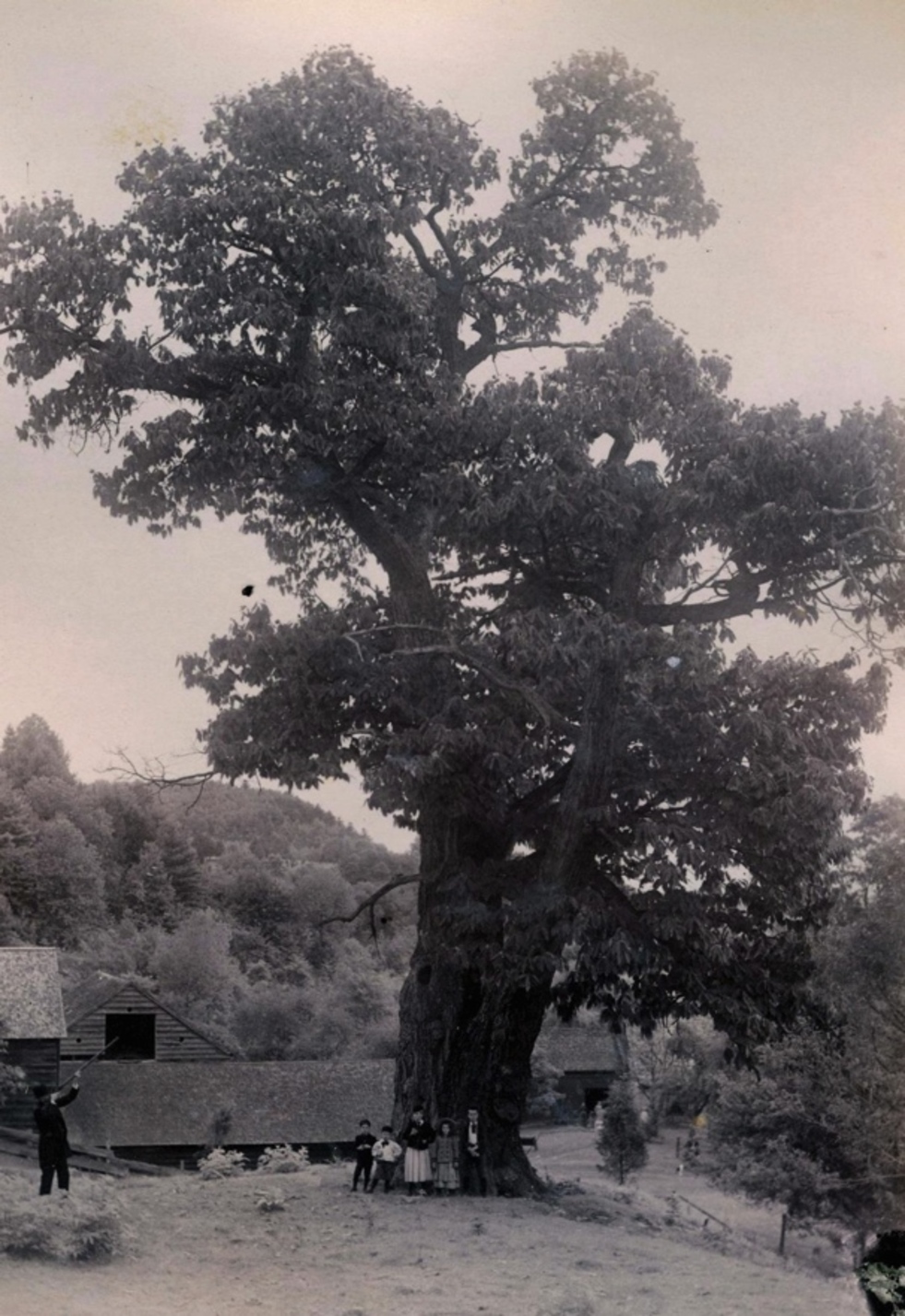
American chestnut

The story of America’s urban forests, as told in a book by the same name (1), is a story of loss and redemption.

The loss of America’s trees

The American chestnut was the first of our iconic trees to be lost to us.  Between 3 and 4 billion chestnut trees were killed in their natural range by a blight caused by a fungus imported in an Asian species of chestnut (2).  With the exception of a few isolated chestnuts outside their natural range, all American chestnuts died in the first half of the 20th Century.  Over one hundred years after the epidemic began, scientists believe they have finally developed an American chestnut that will survive the fungal infection.  They have achieved this by the addition of a single gene to the 38,000 genes of American chestnut.  They are applying for regulatory approval of the EPA and USDA to plant the genetically modified tree in the wild, a process they expect to take several years.

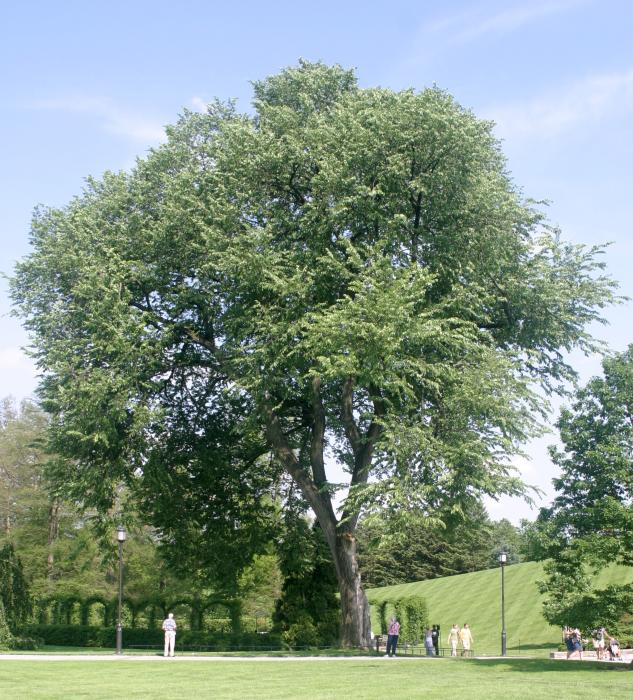
American elm. Creative Commons

Dutch elm disease (DED) was introduced in America from Europe in logs and furniture in the 1930s.  DED is a fungal disease spread by a beetle.  The natural range of American elm was much larger than chestnuts and they were widely planted as park and street trees in cities because of their tolerance for challenging urban conditions. Therefore, their loss was devastating to many communities.  Most communities tried to save their elms by removing diseased trees in an attempt to isolate the disease.  By the 1990s, the majority of American elms were dead.  Many scientists have tried to develop a DED-resistant variety of American elm by cross-breeding them with species that are not vulnerable to the disease.  Several DED-resistant varieties of elms are being planted and their fate will determine the future of American elms.

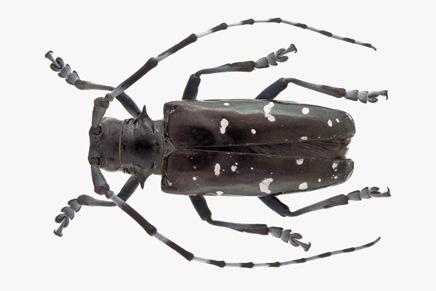
Asian long-horned beetle (ALB) arrived in North America in the late 1990s on wood packing material, such as wooden pallets.  It is less selective about its tree hosts than the beetle that carries the elm fungus, although it has a preference for maples.  Once again, destroying infested trees was the preferred control method.  “Over 1,550 trees in Chicago have been cut down and destroyed to eradicate ALB from Chicago. In New York, over 6,000 infested trees resulted in the removal of over 18,000 trees; New Jersey’s infestation of over 700 trees led to the removal and destruction of almost 23,000 trees, but infested trees continue to be discovered.” (2) Injections of a pesticide (imidacloprid, a neonicotinoid insecticide) were also used on infected trees.

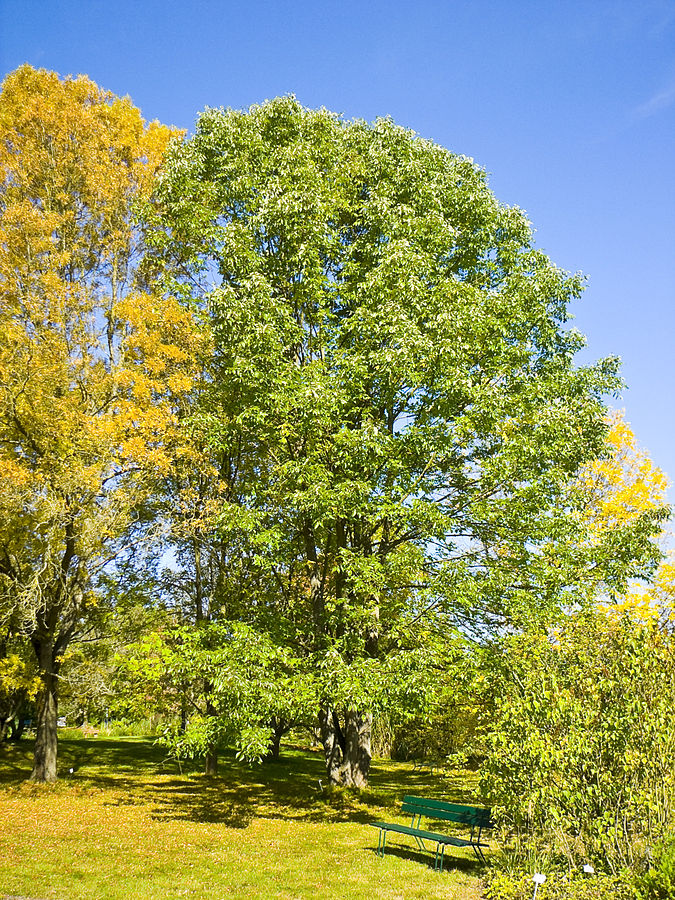
White ash. Creative Commons

Emerald ash borer (EAB) also arrived in North America in the 1990s, but it has spread far more rapidly than the long-horned beetle.  Little was known about EAB when it arrived from Asia because it does not kill Asian species of ash, which have developed a resistance to the beetle predators after centuries of co-existence.  In North America, the EAB threatens the entire ash genus: “It has killed at least tens of millions of ash trees so far and threatens to kill most of the 8.7 billion ash trees throughout North America. Emerald ash borer kills young trees several years before reaching their seeding age of 10 years.” (2)  Ironically, ash trees were widely planted in urban areas to replace the elms that were destroyed by DED.

Here in California, we have lost 5 million of our oak trees to the pathogen that causes Sudden Oak Death since 1995.  Also, over 100 million conifer trees in the Sierra Nevada have died in the past 5 years of a combination of drought and native bark beetles.

A digression:  Turnabout is fair play

Some of our readers might be surprised by our reporting about the devastating consequences of introducing pathogens and insects to our urban forests.  After all, aren’t we usually defenders of introduced species?  So, let’s take this detour to explain how this topic is consistent with the mission of Million Trees:

Asian long-horned beetle

There is a lesson in these stories about the relationships between insects and trees.  Insects introduced from distant places, such as Asia, quickly attacked our native tree species that do not exist in the native ranges of the insects.  It didn’t take thousands of years of co-evolution for the insects to find the native trees that they killed.  They came, they saw, and they feasted on our trees.  In most cases, the insects found trees here in the same genus as the trees in their home ranges that were chemically similar. And in most cases, the insects were not nearly as damaging to trees in their home ranges because their host trees had developed resistance to the insects.

Now let’s turn this story around.  Native plant advocates who wish to destroy non-native plants claim that they will become “invasive” because they don’t have insect predators here.  They claim that native insects “co-evolve” exclusive relationships with native trees and are unwilling and/or unable to use introduced plants and trees.

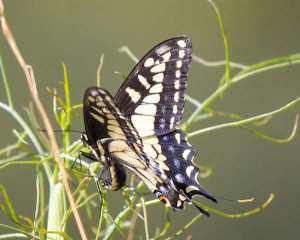
Anise Swallowtail butterfly in non-native fennel

Not only is there little empirical evidence to prove that native insects do not use introduced plants, it doesn’t make sense.  If introduced insects are quick to attack our native trees, why should we assume that native insects are not just as quick to attack introduced plants?

Furthermore, when introduced plants are attacked by our native insects, they are more vulnerable to the native insects because they have not had an opportunity to develop defenses against them.  The Asian insects that are killing our native trees are not a serious problem in their home ranges because the trees in their home ranges are resistant to them

In other words, claims that introduced plants are invasive because they have no insect predators are contradicted by reality.  In fact, introduced plants are at a disadvantage when confronted by the insect predators in their new home.  Once again, we find little logic in the unproven hypotheses of invasion biology.

Redemption of our urban forests

Efforts to restore America’s urban forests began in earnest in the 1960s, partly as a response to the loss of chestnuts and elms and partly as a growing interest in the environment.  These efforts are too numerous to mention, but we will pay tribute to a few of them.

Arbor Day is celebrated all over the country. This is a park in Minneapolis.

Early interest in America’s trees was reflected in the creation of Arbor Day in Nebraska in the 1870s.  Celebration of Arbor Day spread slowly across America until it was observed in nearly every state of the nation.  Sterling Morton was the organizer of the first Arbor Day and he was also instrumental in the creation of one of our most important research arboretums, the Morton Arboretum in Illinois.  Harvard’s research arboretum, Arnold Arboretum, was founded in 1872 and to this day is responsible for much of our knowledge of our trees.

Private enterprise has also made significant contributions to our knowledge of trees.  Davey Tree Experts was founded in 1880 by a tree-evangelist who was inspired by butchered trees to write practical guides to inform citizens about how to take care of their trees properly.  Bartlett Tree Experts was founded in 1907 and is also a respected provider of tree care.  Much of the damage done in our urban forests is caused by people who don’t know how to take care of their trees.  Hiring a certified arborist to take care of your trees is money well spent.

The US Forest Service is the source of much of our knowledge about the value of our urban forests.  David Nowak and Greg McPherson of the US Forest Service were responsible for groundbreaking research about the carbon stored by trees, the pollution that trees remove from the air, the contribution that trees make to the value of our properties and to our health and well-being.

Armed with this new improved understanding of the value of our trees, an army of volunteers and a proliferation of non-profit organizations are now engaged in the effort to preserve our urban forests.  Tree People in Los Angeles was among the first of these organizations.  One of their first projects was to plant one million trees for the 1984 Olympics in Los Angeles.  Since then they have planted millions of trees in Los Angeles.

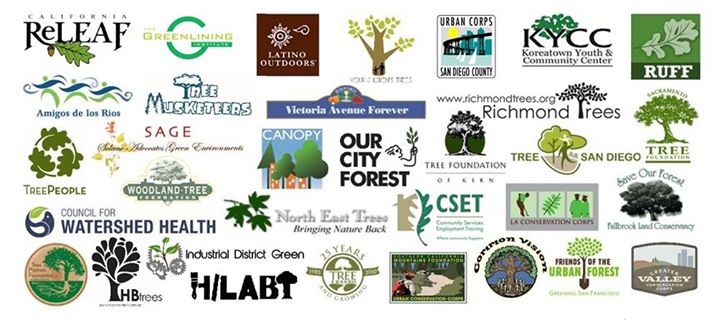
We recently had an opportunity to appreciate how many non-profit organizations there are in California, devoted to the care and preservation of our urban forests.  Thirty-three non-profit tree advocacy organizations collaborated in a public comment on California’s Urban Greening Grant Program, which will give California cities $76 million to plant trees to increase carbon storage and reduce greenhouse gas emissions.  The letter of the non-profits acknowledged the importance of introduced trees in our urban forests:  “Native trees are generally not suited to urban conditions. They have difficulty adapting to the urban environment, thereby substantially reducing survivability. According to California’s Guide to the Trees Among Us, only 6% of California’s urban trees are native to California. As an example, the approved list of street trees for the City of San Francisco includes no trees native to San Francisco. In Oakland, two of the 48 allowed species are native.”

These are the forestry non-profit organizations that signed the letter to the Urban Greening Grant Program

Introduced trees are the foundation of California’s urban forests.  Efforts to eradicate non-native trees will doom us to a treeless landscape and all that implies about our environment:  more pollution, more noise, more wind, more greenhouse gas emissions, more erosion, less habitat for wildlife, and less beauty in our landscapes.


  1. Jill Jonnes, Urban Forests: A natural history of trees and people in the American cityscape, Viking, 2016
  2. Wikipedia

Another legal victory in the long fight to save our urban forest

The Hills Conservation Network (HCN) has won the third legal battle against the many attempts to destroy the urban forest in the East Bay.  Every lawsuit they have filed has resulted in significant victories that have prevented three public land managers from destroying as many trees as they wanted.  We will briefly describe HCN’s early victories and end by telling you about their most recent victory.  Finally, we will explain the implications of those legal successes for the threats to the urban forest that are still anticipated.

East Bay Regional Park District

Frowning Ridge after 1,900 trees were removed from 11 acres in 2004.  This is one of UC Berkeley’s first projects to destroy all non-native trees on its properties.

When UC Berkeley clear cut all non-native trees on about 150 acres of their properties in the hills over 10 years ago, there was no opportunity for the public to object to those projects because there was no environmental impact review.  Those projects were a preview of the damage that other public land managers intended and they helped to mobilize opposition to the projects when they were formally presented to the public.

The East Bay Regional Park District (EBRPD) published its “Wildfire Hazard Reduction and Resource Management Plan” in 2009.  That plan proposed to radically thin and/or clear cut all non-native trees on several thousand park acres.  Along with HCN, I was one of the members of the public who objected to those plans for many reasons:  the loss of stored carbon and carbon storage going forward, the pesticides used to poison the non-native trees and vegetation, the increased fire hazard resulting from grassy vegetation that occupies the unshaded forest floor when the trees are destroyed.

Tilden Park, Recommended Treatment Area TI001, June 5, 2016. This in one of the projects of East Bay Regional Park District, in process.

EBRPD chose to ignore our objections and published an Environmental Impact Report based on the unrevised plans.  We repeated our objections to the project when the EIR was published.  The Hills Conservation Network filed their first lawsuit against the EBRPD EIR, which did not adequately address the environmental impacts of the plans.  HCN and EBRPD engaged in a long and arduous negotiation which resulted in a settlement that saved many trees in Claremont Canyon and some in other project areas.  EBRPD continues to implement their plans as revised by the HCN settlement. 

UC Berkeley and City of Oakland

Meanwhile, UC Berkeley and City of Oakland wrote their own plans and applied to FEMA for grants to implement their plans.  Their plans were more extreme than those of EBPRD.  They proposed to clear cut ALL non-native trees on their project acres. 

Once again, along with HCN, I asked that FEMA not fund those grants to UC Berkeley and City of Oakland because of the environmental damage they would do and the increased fire hazard that would result if the projects were implemented.  FEMA’s response to our objections was to require an Environmental Impact Study (the federal equivalent of an EIR) for the projects.

I joined HCN in recruiting over 13,000 public comments on the Draft Environmental Impact Study (EIS).  About 90% of those public comments were opposed to the projects.  Despite that public opposition, the EIS was approved with a few small concessions.  A few project acres would be “thinned” over a 10-year period, but ultimately all non-native trees would be destroyed on the project acres of UC Berkeley and City of Oakland.

HCN sued FEMA to prevent the funding of the projects as described by the EIS.  The Sierra Club prevented any negotiation from taking place by counter-suing.  The Sierra Club lawsuit demanded that EBRPD clear-cut ALL non-native trees.  The Sierra Club was not satisfied with the radical thinning that EBRPD is doing on most project acres.  These competing lawsuits produced a stalemate that lasted until September 2016, when FEMA cancelled all grant funding to UC Berkeley and City of Oakland in settlement of HCN’s lawsuit against FEMA.

That was truly a fantastic victory that was not anticipated.  In fact HCN’s lawsuit only asked that UC Berkeley and City of Oakland scale back their plans to use the same “thinning” strategy being used by EBRPD.  To this day, it feels like a gift.

Sierra Club’s lawsuit to force EBRPD to clear cut non-native trees on their property was dismissed by the same judge who approved the FEMA settlement.  The Sierra Club has filed an appeal of that dismissal.  Sierra Club remains fully committed to its agenda of destroying all non-native trees and using pesticides to prevent them from resprouting.

UC Berkeley’s response to losing FEMA grant

UC Berkeley attempted to satisfy CEQA requirements for an Environmental Impact Report for their FEMA project by writing an addendum to their Long Range Development Plan.  They claimed that their Long Range Development Plan adequately evaluated environmental impacts of their planned tree removals.  If they had succeeded, they would have been in a position to implement their plan without FEMA funding. 

The Hills Conservation Network filed their third lawsuit against UC Berkeley on the grounds that a brief addendum to UC’s long-range development plan did not meet legal requirements for an EIR.  The judge who heard arguments for a permanent injunction to delay implementation of the project until completion of a full EIR, agreed with HCN.  He pointed out to UC Berkeley’s lawyer that the description of the project in the long-range development plan bore little resemblance to the project presently planned.  The judge had done his homework.

The final chapter in this legal saga was that UC Berkeley attempted to avoid paying HCN’s legal fees.  California’s environmental law (CEQA) requires that the losing party pay the legal fees of the winning party.  This provision is intended to enable small citizen groups to challenge deep pocket corporations and institutions.  HCN (and its legal representative) had been adequately compensated in its first two legal battles, but UC Berkeley thought it could refuse.

The judge thought otherwise.  Not only did he require UC Berkeley to pay for its illegal attempt to avoid environmental impact review, he commended HCN for its public service:  “The Court determines that Petitioners were a successful party in this action, and that this case resulted in enforcement of important public rights and conferred a significant benefit on the public.” Yes, indeed, HCN has performed a valuable public service and we are grateful for the judge’s recognition.

For the moment, we believe that UC Berkeley’s plans to destroy all non-native trees are on hold.  They have several options.  They can complete an EIR for the original plans.  Or they can revise or abandon their plans.  We will watch them closely.

Update:  On June 14, 2017, UC Berkeley filed a lawsuit against FEMA and California Office of Emergency Services to reverse the settlement that cancelled the FEMA grants to destroy all non-native trees on UC Berkeley project acres.  (Media report on UCB lawsuit is available HERE.)  HCN is developing a legal strategy to address this latest move by UC Berkeley.  UC Berkeley’s lawsuit implies that they are still committed to their original plans to destroy all non-native trees. 

City of Oakland’s response to loss of FEMA grants

The reaction of City of Oakland to the cancellation of their FEMA grant was thankfully very different from UC Berkeley’s reaction.  In November 2016, they signed a contract to write a vegetation management plan for the purpose of reducing fire hazards.  That contract makes a commitment to conducting a complete public process, including an environmental impact review.  The contractor has already held two public meetings and an on-line survey.  We will participate in this process and we urge others to participate.  Sign up HERE to be notified of the public meetings.

The Oakland Fire Department has announced the next public meeting regarding the development of the vegetation management plan on Thursday, June 29, 2017 to provide project updates and offer an opportunity to ask questions/provide feedback. Project staff will be available to give a summary of the community survey responses received in March/April 2017, and to provide an update on Vegetation Management Plan development, methodologies, and work completed and underway.

  • Public Meeting: June 29, 2017, 5:30 PM – 7:30 PM
    Richard C. Trudeau Conference Center
    11500 Skyline Blvd
    Oakland, CA 94619
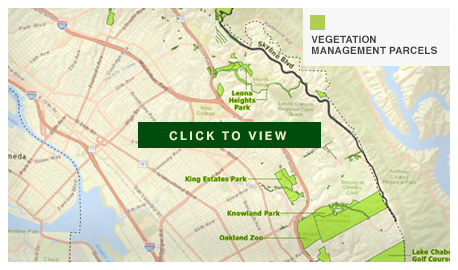
These are the Oakland city properties that will be covered by the vegetation management plan: 1,400 acres of parks and open spaces and 300 miles of roadsides.  Interactive map is available here: https://oaklandvegmanagement.org/

We are hopeful that Oakland’s vegetation management plan will be one that we can live with.  The City of Oakland should understand that another lawsuit is an alternative if the vegetation management plan is as destructive as their original plans. 

Although I contributed to the cost of HCN’s lawsuits (along with many others), I don’t have the stomach to engage in them.  Therefore, I am deeply grateful to HCN for their courage and fortitude in preventing the total destruction of our urban forest.  Although I was skeptical of legal challenges as the way to prevent the destruction of our urban forest, I am now a convert.  The HCN lawsuits were the most effective tool we had.

The evolving goals of ecological “restorations”

We are publishing a “progress report” from a member of our tree team who attended a Weed Management Workshop on June 3, 2017.  This report suggests that the goal of local ecological “restorations” may be more realistic than they were in the past and potentially less destructive. 


Friends,

I attended a Weed Management Workshop this morning that was co-sponsored by East Bay Regional Park District and the California Invasive Plant Council.  It was attended by about 70 people, representing many of the “stewardship” organizations engaged in native plant “restorations.”  The main speakers were Doug Johnson, Executive Director of the California Invasive Plant Council and Pam Beitz, a member of the Integrated Pest Management staff of the East Bay Regional Park District.

The primary purpose of the workshop was to recruit new volunteers for the many “restoration” projects in the East Bay.  Similar workshops will be offered in Mill Valley (June 17), San Jose (June 24), and Portola Valley (July 15).  Since volunteers do not use pesticides or heavy equipment, those methods of eradicating “invasive” plants were not discussed. [Information about remaining workshops available HERE.]

Although the usual accusations about the negative impact of “invasive” plants were discussed, the speakers made several acknowledgements about limitations on their objectives that represent significant progress in the 25-year debate about invasion biology.

In the spirit of encouragement, I will tell you about a few of them.

Doug Johnson set the tone at the beginning of the workshop when he said, “Non-native plants aren’t evil.  It’s important not to get ideological about this.”  The audience did not react negatively to his appeal to base judgments about non-native plants on their ecological function and impacts on ecosystems.

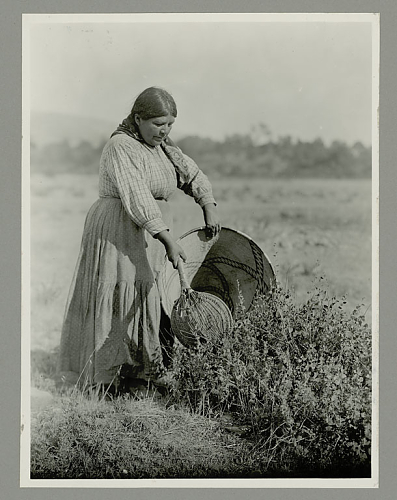
Pomo gathering seeds, 1924. Smithsonian photo archieve

Pam Beitz acknowledged that the historical landscapes, which “restorations” attempt to recreate were, in fact, manmade.  She provided several observations from Kat Anderson’s Tending the Wild to illustrate that point.  Native Americans intensively gardened the landscape to foster the plants they needed for food, shelter, and tools.  The implication of that history of our landscape is that ecological “restoration” must make a permanent commitment to managing the landscape. [HERE is an article on Million Trees about “Tending the Wild.”]

Beitz said the goal of these weed management projects is to eliminate “invasive” plants from a small enough area that it can be managed for the long term.  She said it is no longer considered feasible to eradicate “invasive” plants.

In answer to the question, “Why manage the wildlands?” Beitz said, “Because we are driven to alter our environment.”  She also said that human disturbance maximizes biodiversity, citing a study by Joe Connell that found the greatest diversity where there are intermediate levels of disturbance.  This is a radical departure from the earlier view that the most effective conservation eliminates all human activities.

There were also many representatives of local “restoration” projects who described their projects and recruited more volunteers.  Some of their presentations indicated the shifting emphasis of native plant “restorations.”

  • Margot Cunningham of Friends of Albany Hill said that 50% of the 300 plants on Albany Hill are natives, despite the fact that it is heavily forested in eucalyptus, and that many of those native plants are growing under the eucalypts.  She said there are 100 species of butterflies and moths and that monarchs roost in the eucalyptus trees.  There are 80 species of birds.  Her organization is trying to eliminate plants they consider invasive, such as ivy. [HERE is an article on the Million Trees blog about Albany Hill, which corroborates the view of Friends of Albany Hill.]  

    Native toyon under eucalyptus on Albany Hill
  • Wendy Tokuda is one of the most prominent native plant advocates in the East Bay.  She described several of the projects she has been working on for about 10 years, such as trying to eliminate broom along 3 miles of a trail in EBRPD.  She emphasized the importance of focusing one’s effort on a small enough area that the goal can be both attained and sustained. [HERE is an article on the Million Trees blog about the 10-year attempt to eradicate broom on a trail in the East Bay Regional Park District.]  
Broom on EBRPD trail after 10 years of effort, April 2017
  • Friends of Five Creeks said, “In a city, stewardship is forever.”

I have been following the native plant movement for over 20 years.  I believe this workshop articulated some significant departures from their original agenda:

  • There is a new understanding that the historical landscape was created by humans.
  • Any attempt to recreate the historic landscape will require a permanent commitment to manage the landscape.
  • Because of the scale of such an undertaking, it is not realistic to transform all open space to pre-settlement conditions.  Projects must be scaled to match available resources.

Anonymous member of the tree team


The observation that humans are “driven to alter our environment” struck a chord.  We are in the camp that prefers not to interfere with the workings of nature any more than necessary because we believe that human knowledge is inadequate to presume to make better management decisions than natural processes.  There are pros and cons to every change in nature.  Some plant and animal species will benefit and some will be harmed.  It’s like flipping a coin.  I prefer to put the coin in the hands of nature, rather than the hands of humans.  However, we understand and are sympathetic to the human desire to “help” nature. 

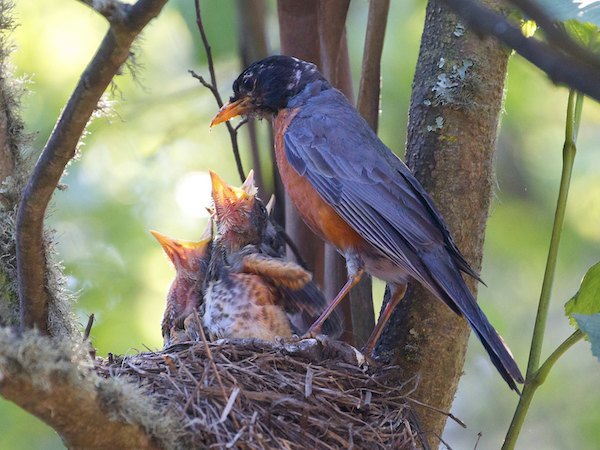
Robin and chicks. Courtesy SF Forest Alliance

A recent article in the New York Times provided a good example of how the good intentions of humans often lead to intrusions into the natural world.  The author explained how she became the self-appointed guardian of birds nesting in her garden.  Her small dog was a predator of fledgling birds.  She felt obligated to identify all the nests in her garden so that she could keep her dog indoors when the birds left the nest. 

When her dog died, she discovered that she could not give up that role.  If one bird was competing with another for a nesting spot, she found herself choosing sides, although she knew she had no business choosing winners and losers in the natural world:   “It is wrongheaded to interfere in nature when something is neither unnatural nor likely to upset the natural order.  I can’t help myself…It’s humiliating, all the ways I’ve interfered.”

We know that volunteers in “restoration” projects mean well.  Since they don’t use pesticides or have access to the heavy equipment needed to destroy trees, we don’t argue with them directly.  Our advocacy for the preservation of our urban forest is aimed at the managers of our public lands because we are as much the owners of those lands as anyone else and our tax dollars are used to fund their projects.

Million Trees

Where is the invasion biology debate headed?

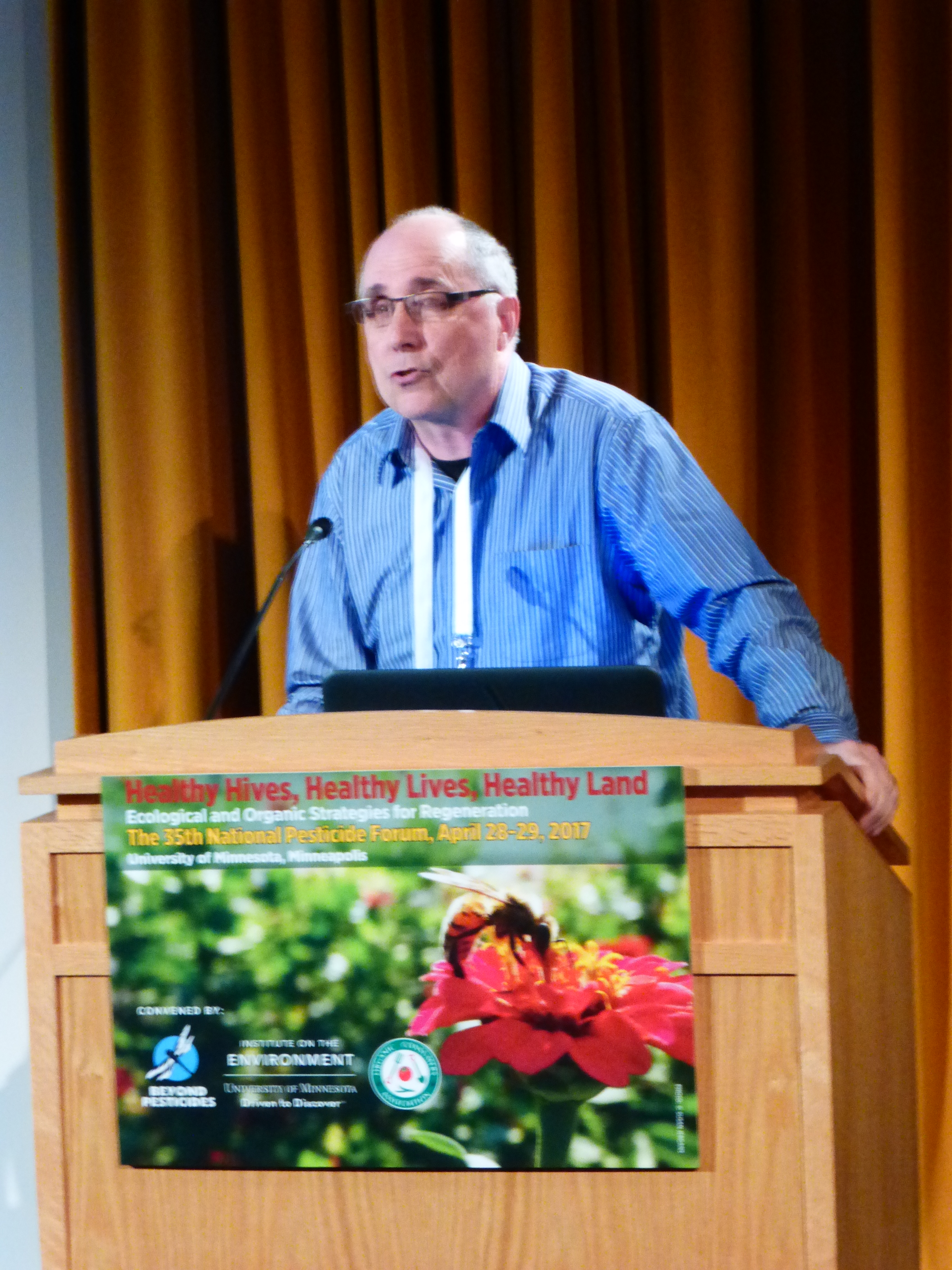
Mark Davis speaking at Beyond Pesticides conference, April 2017

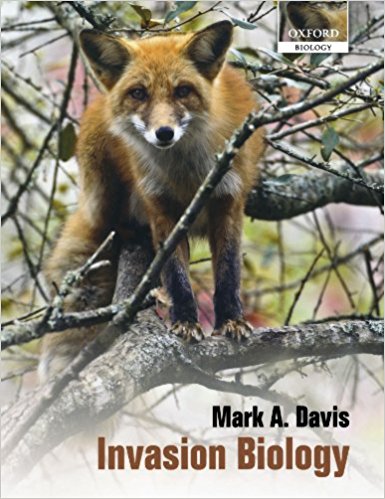
Mark Davis is Professor of Biology at Macalester College in St. Paul, Minnesota.  He is one of the first academic ecologists to publicly express skepticism of invasion biology.  His book, Invasion Biology, was published by Oxford University Press in 2009.  It was the first critique of invasion biology written by an academic scientist. Professor Davis cites the many empirical studies that find little evidence supportive of the hypotheses of invasion biology. 

In 2011, Nature magazine published an essay written by Professor Davis and 18 coauthors entitled, “Don’t Judge Species on their Origins.”  This essay suggested that conservationists evaluate species based on their ecological impact, rather than whether or not they are natives.  The essay initiated an intense debate in the academic community of ecologists that continues today. 

Professor Davis spoke at the Beyond Pesticides conference in Minneapolis at the end of April 2017. (Video available HERE) He described invasion biology as an irrational ideology that is based on nostalgia for the past and a belief that wildlands are being damaged by “alien invaders.”  In fact, the perceived damage is largely in the eye of the beholder, depending largely on one’s membership in a group benefiting from the nativism paradigm, such as chemical manufacturers, conservation organizations, government agencies, and employees.  Some academic careers are also at stake.  Futile attempts to re-create historical landscapes always have the potential to make things worse.  In many instances, it is more sensible to change one’s attitude about the changing landscape than trying to change nature.

We invited Professor Davis to write a guest post for publication on Million Trees.  We asked him to express his opinion on these questions: 

  • Has the status of invasion biology changed much since Nature published your essay 2011?
  • Has increased knowledge of climate change had an impact on the status of invasion biology in academia?
  • What do you think is the future of invasion biology both as an academic discipline and as public policy?

Professor Davis’s guest post addresses these questions.  We are grateful to Professor Davis for his many contributions to our understanding of the fallacies of invasion biology and for his thoughtful guest post.

Million Trees


Competition to define nature

In the past few years, a new perspective has been taking hold in the field of ecology.  Referred to as ‘ecological novelty’ it emphasizes that many factors are producing ecologically novel environments.  Climate change (which includes changes in temperatures and patterns of precipitation), increased atmospheric carbon dioxide, which affects photosynthetic rates, increased atmospheric deposition of nitrogen (the whole earth is being fertilized due to the increased nitrogen we are pouring into the atmosphere), and the introduction of new species are all rapidly changing our environments.

A strength of the term ecological novelty is that unlike the invasion vocabulary it is simply descriptive.  It simply states that ecosystems are changing and are different than they were in the past, even the recent past.  It says nothing about whether this change is good or bad.  In this paradigm, species can be referred to as novel species, new arrivals, or long-term residents.

The less biased ecological novelty paradigm differs dramatically from the more ideological nativism paradigm.  It differs in the language it uses and it differs in the implied direction that land management should proceed.  More generally, it forsakes the normative atmosphere that permeates restoration ecology, conservation biology, and invasion biology, all of which have been substantially guided by the nativism paradigm.

The Sutro Forest in San Francisco is a good example of a novel ecosystem. It is a thriving mix of native and non-native species. Much of it will be destroyed by the irrational belief that native species are superior to non-native species.  Million Trees

Currently, invasion biologists are trying to discredit ecological novelty as a valid or valuable perspective.  This is hardly surprising since the ecological perspective would displace the nativism paradigm, and many stakeholders have much to lose if the nativism paradigm were abandoned, e.g. chemical companies, restoration and management companies, local, state, and national agencies, to name just a few.  Not surprisingly, articles trying to shore up invasion ecology and to keep it relevant have been common in recent years.

While the public may not be aware of it, there exists a heated competition to define natureWhich side wins will significantly determine how nature is managed.  Given that the redistribution of species is only going to increase in upcoming decades, it is hard to imagine that people will still be so preoccupied with origins by the middle of the century.  Like the notion of wilderness, the nativism paradigm is more of a twentieth century concept, while the construct of ecological novelty is more fitting for the twenty first century.

Undoubtedly, nativist groups will still exist and will still be preoccupied with trying to restore their vision of the past.  But, due to the number of species being moved to new regions, much more attention likely will be given to the function of species than their origins, if only for pragmatic reasons.  For people coming of age now, cosmopolitanization is the new normal, both with respect to people and other species.  We will still carry our predispositions to divide the world into us and them, but it should be clear to most that the nativism perspective will be obsolete and that beyond the creation of museums, restoring the past will not be possible, whether a city or a forest.

Currently Earth is the only planet we know of where life exists.  In this context, the desire and practice of declaring some species as aliens, exotics, or invaders seems sadly provincial and even unseemly.  Roman playwrite Publius Terentius Afer (aka Terence) wrote in his play Heauton Timorumenos, “Homo sum, humani nihil a me alienum puto”, or “I am human, and nothing of that which is human is alien to me.” To those who still see such value in distinguishing native from alien species, I say, “I am of the planet Earth and nothing of that which is earthly is alien to me.”

Mark Davis

Status report on the invasion biology debate

Mark Davis, Macalester College

Mark Davis is Professor of Biology at Macalester College in St. Paul, Minnesota.  He is one of the first academic ecologists to publicly express skepticism of invasion biology.  His book, Invasion Biology, was published by Oxford University Press in 2009.  It was the first critique of invasion biology written by an academic scientist. Professor Davis cites the many empirical studies that find little evidence supportive of the hypotheses of invasion biology. 

In 2011, Nature magazine published an essay written by Professor Davis and 18 coauthors entitled, “Don’t Judge Species on their Origins.”  This essay suggested that conservationists evaluate species based on their ecological impact, rather than whether or not they are natives.  The essay initiated an intense debate in the academic community of ecologists that continues today. 

Professor Davis spoke at the Beyond Pesticides conference in Minneapolis at the end of April 2017. (Video available HERE) He described invasion biology as an irrational ideology that is based on nostalgia for the past and a belief that wildlands are being damaged by “alien invaders.”  In fact, the perceived damage is largely in the eye of the beholder, depending largely on one’s membership in a group benefiting from the nativism paradigm, such as chemical manufacturers, conservation organizations, government agencies, and employees.  Some academic careers are also at stake.  Futile attempts to re-create historical landscapes always have the potential to make things worse.  In many instances, it is more sensible to change one’s attitude about the changing landscape than trying to change nature.

Mark Davis speaking at Beyond Pesticides conference, April 2017

We invited Professor Davis to write a guest post for publication on Million Trees.  We asked him to express his opinion on these questions: 

  • Has the status of invasion biology changed much since Nature published your essay 2011?
  • Has increased knowledge of climate change had an impact on the status of invasion biology in academia?
  • What do you think is the future of invasion biology both as an academic discipline and as public policy?

Professor Davis’s guest post addresses these questions.  We are grateful to Professor Davis for his many contributions to our understanding of the fallacies of invasion biology and for his thoughtful guest post.

Million Trees


Competition to define nature

In the past few years, a new perspective has been taking hold in the field of ecology.  Referred to as ‘ecological novelty’ it emphasizes that many factors are producing ecologically novel environments.  Climate change (which includes changes in temperatures and patterns of precipitation), increased atmospheric carbon dioxide, which affects photosynthetic rates, increased atmospheric deposition of nitrogen (the whole earth is being fertilized due to the increased nitrogen we are pouring into the atmosphere), and the introduction of new species are all rapidly changing our environments.

A strength of the term ecological novelty is that unlike the invasion vocabulary it is simply descriptive.  It simply states that ecosystems are changing and are different than they were in the past, even the recent past.  It says nothing about whether this change is good or bad.  In this paradigm, species can be referred to as novel species, new arrivals, or long-term residents.

The less biased ecological novelty paradigm differs dramatically from the more ideological nativism paradigm.  It differs in the language it uses and it differs in the implied direction that land management should proceed.  More generally, it forsakes the normative atmosphere that permeates restoration ecology, conservation biology, and invasion biology, all of which have been substantially guided by the nativism paradigm.

The Sutro Forest in San Francisco is a good example of a novel ecosystem. It is a thriving mix of native and non-native species. Much of it will be destroyed by the irrational belief that native species are superior to non-native species.  Million Trees

Currently, invasion biologists are trying to discredit ecological novelty as a valid or valuable perspective.  This is hardly surprising since the ecological perspective would displace the nativism paradigm, and many stakeholders have much to lose if the nativism paradigm were abandoned, e.g. chemical companies, restoration and management companies, local, state, and national agencies, to name just a few.  Not surprisingly, articles trying to shore up invasion ecology and to keep it relevant have been common in recent years.

While the public may not be aware of it, there exists a heated competition to define natureWhich side wins will significantly determine how nature is managed.  Given that the redistribution of species is only going to increase in upcoming decades, it is hard to imagine that people will still be so preoccupied with origins by the middle of the century.  Like the notion of wilderness, the nativism paradigm is more of a twentieth century concept, while the construct of ecological novelty is more fitting for the twenty first century.

Undoubtedly, nativist groups will still exist and will still be preoccupied with trying to restore their vision of the past.  But, due to the number of species being moved to new regions, much more attention likely will be given to the function of species than their origins, if only for pragmatic reasons.  For people coming of age now, cosmopolitanization is the new normal, both with respect to people and other species.  We will still carry our predispositions to divide the world into us and them, but it should be clear to most that the nativism perspective will be obsolete and that beyond the creation of museums, restoring the past will not be possible, whether a city or a forest.

Currently Earth is the only planet we know of where life exists.  In this context, the desire and practice of declaring some species as aliens, exotics, or invaders seems sadly provincial and even unseemly.  Roman playwrite Publius Terentius Afer (aka Terence) wrote in his play Heauton Timorumenos, “Homo sum, humani nihil a me alienum puto”, or “I am human, and nothing of that which is human is alien to me.” To those who still see such value in distinguishing native from alien species, I say, “I am of the planet Earth and nothing of that which is earthly is alien to me.”

Mark Davis

Unseen City: A tribute to urban nature

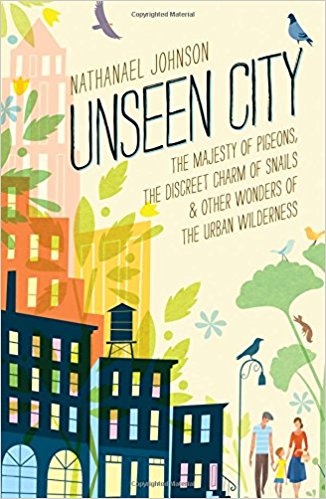
It was pure pleasure to read Unseen City (1).  Unlike most nature writing, Nathanael Johnson asks readers to notice and appreciate the urban nature that we tend to take for granted.  Ironically, the plants and animals that we see every day and in great numbers do not get the attention they deserve.  Most nature writing tends to focus on rare and remote species to which we have little access and often laments their absence where we live.  Conservationists often advocate for expensive programs to reintroduce rare species to urban centers where they haven’t lived for decades, if not centuries.

Johnson’s focus on the ordinary species around us is refreshing.  We were happy to take a break from the usual hand-wringing about loss of biodiversity and instead enjoy the richness and beauty of the nature we have.  It is our loss when we ignore the nature we have. Johnson’s intense focus on urban species reveals that they are every bit as interesting as the rare species we seldom see.  Johnson’s approach to nature is analogous to the optimist’s “glass-half-full” approach to life.

Another appealing aspect of Johnson’s approach is that his story is told from the perspective of a young father, introducing his toddler daughter to the mysteries of nature.  One of our primary concerns about the museumification of our parks by native plant advocates is that children are being deprived of the opportunity to interact with nature.  Being required to stay on trails or observe from behind fences is no way for children to appreciate the complexity and beauty of the natural world.  Johnson takes his daughter deep into the weeds to experience nature in a physical, tactile way. 

A few examples of the homely creatures in our cities

Johnson wrote his book while living in San Francisco and then in Berkeley.  So, the species he encounters and studies are those with which we are all familiar.  Here are some of the creatures he tells us about, with a few of the interesting things we learn about them.

  • Pigeons are reviled by many serious bird watchers. In fact, they are remarkable creatures in many ways.  They mate for life and they are extremely devoted parents.  They tend to nest in the same place and their ability to find and return to that nest from long distances is one of the reasons why humans have formed intense relationships with them.  There is a long tradition of keeping homing pigeons that are raced by their keepers in competitions that occur all over the world.  The pigeons are taken long distances from their nests and then timed on how long it takes them to return home.  Johnson tells remarkable stories about how pigeons overcome challenging attempts to prevent them from finding their way home.
  • Eastern grey squirrel. Creative Commons

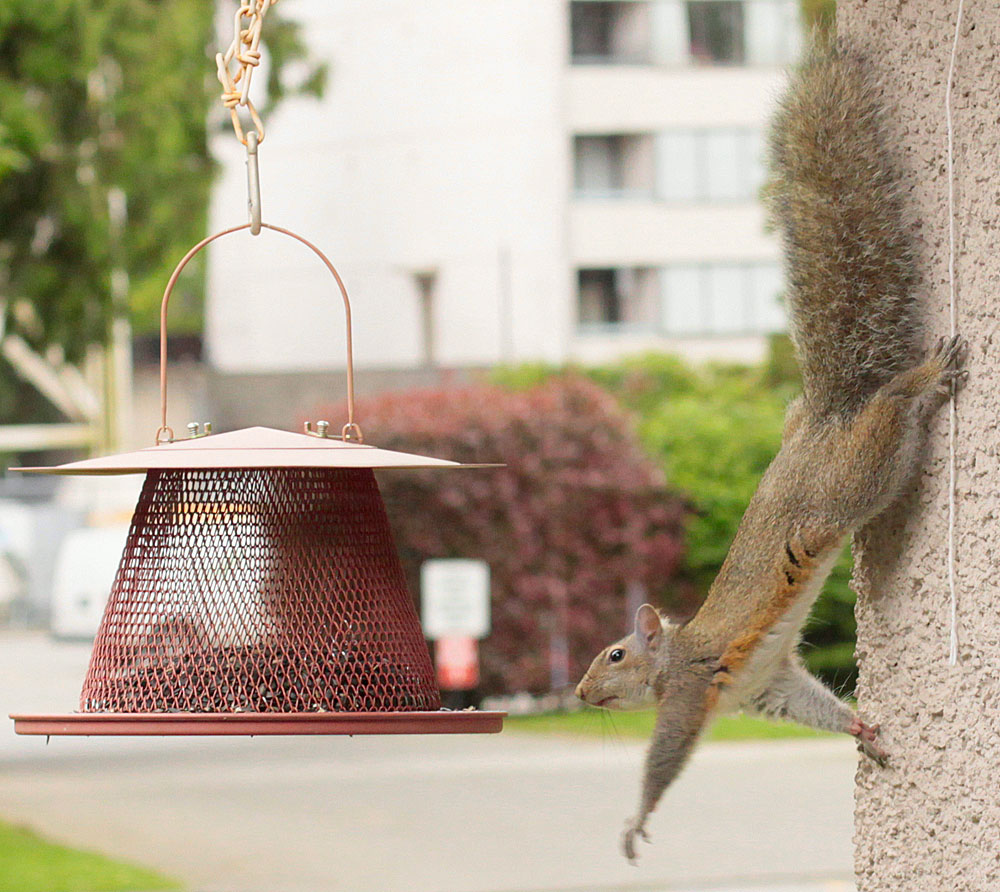
    Squirrels are both extremely agile and very resourceful. Here is an example of how squirrels defeated an attempt to keep them out of a bird feeder: “…squirrels had to climb up through a vertical pipe, leap onto a blade of a spinning windmill, cling to it, and then sail off on the right trajectory to land on a platform.  Then they had to go paw over paw upside down along a suspended chain that passed through a series of spinning disks, negotiate a revolving door, run through a slack canvas tube, and keep their balance while crossing a pole covered with slick spinning rollers.  From there, it was a six-foot jump to another tunnel, through which they had to ride a sliding vehicle made to look like a rocket ship by pushing it along with their paws.  Finally, there was an eight-foot jump to the food.” (1)  I retell this to story to spare our readers the pointless effort of trying to prevent squirrels from raiding their bird feeders.

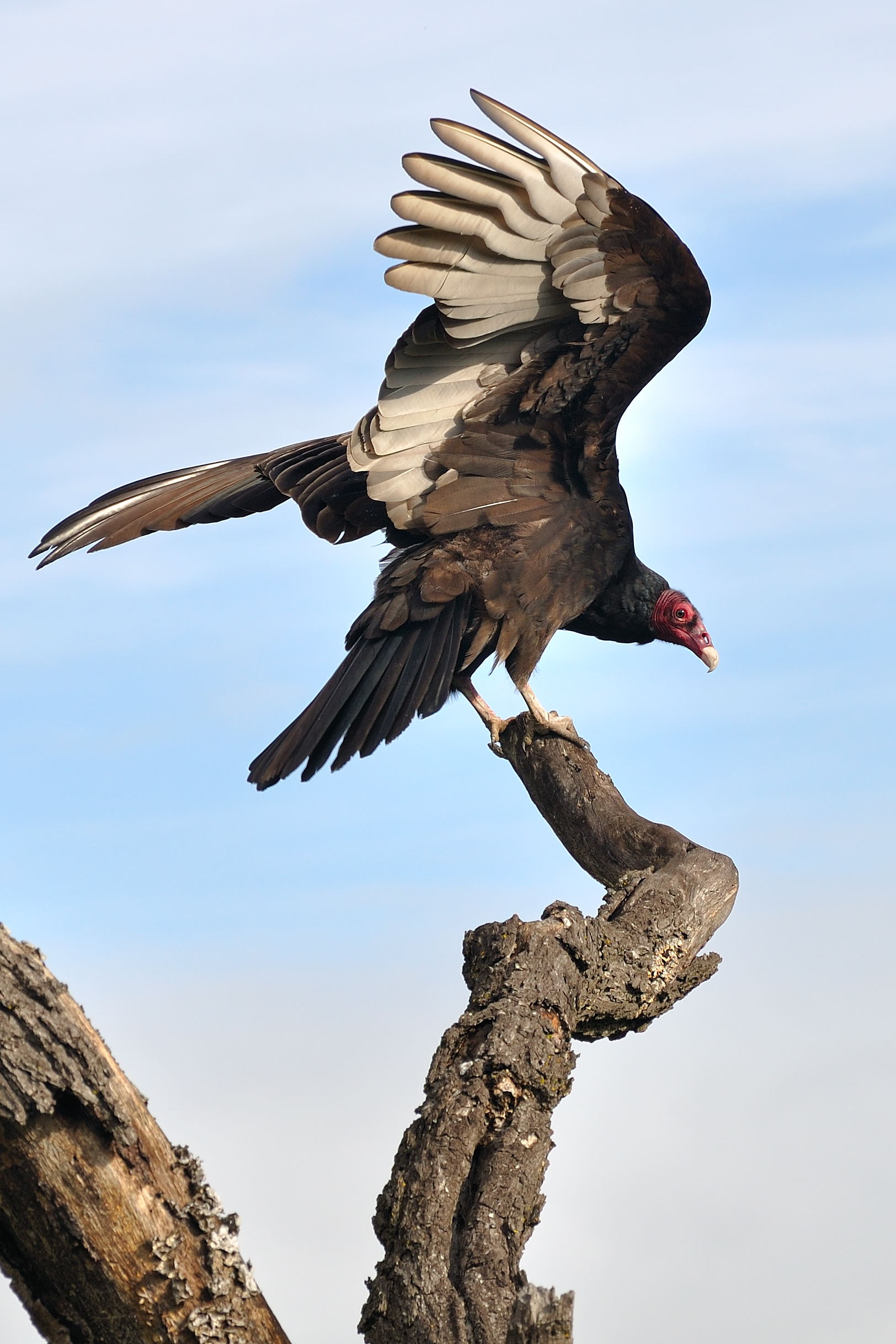
  • Turkey vulture in San Jose, California by Dan DeBold. Creative Commons

    The turkey vulture is another underappreciated bird. They eat primarily dead animals and many of those animals died of diseases or toxic chemicals and are rotten and maggot infested when they are finally found (by smell) and eaten by the vulture.  The digestive and immune system of the vulture is capable of detoxifying chemicals and killing bacteria and viruses in the dead animal.  In other words, the vulture is cleaning up the remains of dead animals.  India has learned the value of vultures the hard way.  They killed many of their vultures with an anti-inflammatory drug they were feeding to their livestock.  When their vulture population dwindled, they were buried in dead animals, many dangerously diseased and toxic.  We eradicate animals at our peril because we often don’t understand the roles they are playing in the ecosystem.

Defending novel ecosystems

In addition to asking his readers to appreciate the positive qualities of the creatures in our cities, he also asks us to reconsider the deep prejudice against them that has become the conventional wisdom.  Plants and animals that people believe were transplanted by humans into places where they did not exist in the distant past are considered “alien invaders” that dominate their predecessors, driving them out and reducing biodiversity.

This narrative, which originated in academic science as “invasion biology” in the 1960s, has become a popular story with the media, which is always attracted to scary stories.  The media is significantly less interested in the peaceful resolution of their horror stories.  With few exceptions, an introduced species that initially seems to be a problem eventually fades into the woodwork to become just another player in the ecosystem.  Johnson uses the Argentine ant as one of many examples of an introduced species that spread rapidly, but 20 years later has nearly disappeared.  In other cases, a species initially considered an unwelcome intruder becomes a valuable asset, such as zebra mussels which filter pollution from lakes and have become a source of food for diving birds.

Novel ecosystems are the future

Johnson concludes his book with this reminder that novel ecosystems have been created by human disturbance and that we should be grateful for the plants and animals that are capable of surviving our abusive treatment of the planet:

“The species that I’ve written about here are, at best, invisible, and at worst, reviled.  We honor least the nature that is closest to us.  As Courtney Humphries put it in Superdove, ‘We create and destroy habitat, we shape genomes, we aid the worldwide movement of other species.  And yet we seem disappointed and horrified when those plants and animals respond by adapting to our changes and thriving in them.’

“Because they are associated with human disruption, the organisms that spring up from our footprints look like corruptions of nature.  But I’ve come to see it the other way around:  These species represent nature at its most vital and creative.

“Nature never misses an opportunity to exploit a catastrophe.  When humans bulldoze and pave, nature sends in a vanguard of species that can tough it out in the new environment.  These invasive species are not nature’s destroyers, but rather its creators.  They begin setting up food webs, they evolve and diverge into new species.  Because humans purposefully import exotic plants—along with the insects, seeds, and microbes we accidentally bring in from around the world—cities are remarkable centers of biodiversity.  These creatures crossbreed, hybridize, eat one another, form cooperative relationships, and evolve.  And so, at a time when thousands of species are at risk of extinction because of our destruction of wilderness, new species are springing up in the new habitats we have created.” (1)

Worshipping the rare at the expense of the common

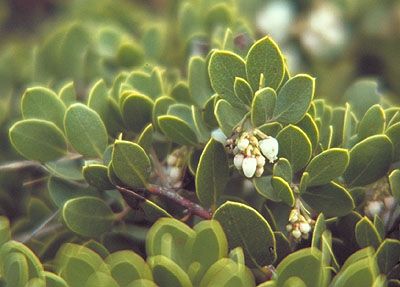
The ONLY known Raven’s manzanita plant is in the San Francisco Presidio. Its exact location is a secret to protect it.

Vast sums of money are being spent in often futile attempts to reintroduce rare plants and animals to urban environments where they have not lived for a long time.  The National Park Service and San Francisco’s Natural Resources Division are having little success with their efforts to reintroduce Mission Blue butterflies.  After over 30 years, the National Park Service has still not successfully germinated endangered Raven’s manzanita from seed.  These fruitless efforts are not just wasteful of resources, they also inflict damage on the environment by using pesticides and setting fires to eliminate competition and destroying trees to increase sunlight on rare plants and host plants of rare insects.

The veneration of rare plants and animals is often at the expense of the plants and animals that are adapted to present environmental conditions.  In Unseen City Nathanael Johnson invites us to place greater value on the ordinary creatures who are capable of living with us.  We can treat them with the respect they deserve by not destroying them in pursuit of a fantasy landscape populated by fantasy creatures that are not capable of surviving the changes we have made in the environment.


  1. Nathanael Johnson, Unseen City: The majesty of pigeons, the discreet charm of snails and other wonders of the urban wilderness, Rodale Wellness, 2016

The Ecological “Restoration” Industry: Follow the money

Matt Chew is one of many professional academics that criticize invasion biology.  Unlike most, he emphasizes explaining the weaknesses of eco-nativism using scientific, historical, and philosophical methods, depending on the issue.  This has made him a useful collaborator and resource for like-minded but primarily science-oriented colleagues. Million Trees is deeply grateful for his willingness to speak publically about the fallacies of invasion biology, including the generous gift of his time in writing this guest post for us.

Dr. Chew is a faculty member of Arizona State University’s Center for Biology and Society and an instructor in the ASU School of Life Sciences.  He teaches courses including the History of Biology, Biology and Society, and a senior conservation biology course in “novel ecosystems,” described HERE on the university’s “ASU Now” news website.

He was also a speaker at the 2013 annual conference of Beyond Pesticides.  A video of his presentation is available HERE (go to 24:40).  He says that “invasive” plants are convenient scapegoats that are presenting a marketing opportunity for the manufacturers of pesticides. Invasion biology is at the core of the greening of pesticides.

In his guest post, Matt helps us to understand how he chose to pursue a multidisciplinary critique of one topic rather than adopting a single disciplinary approach and identity. He began his professional career as a practicing conservation biologist, experiencing firsthand the sometimes startling disconnects between laws, policies, aspirations, public expectations, and realities “on the ground.” 

We celebrate April Fool’s Day with Matt Chew’s article.  When we waste our money on ecological “restorations” the joke is on us!

Million Trees

Matt Chew with his class in novel ecosystems

Those familiar with my academic work know I invest most of my efforts documenting and explaining the flaws and foibles of “invasion biology.” But I got into this messy business as a practical conservation biologist, a natural resources planner “coordinating” the Arizona State Natural Areas Program during the late 1990s. I found the toxic nativism of natural areas proponents morbidly fascinating, and the practical politics of natural areas acquisition and management morbidly galling. I chose to follow my fascination. But as “Death of a Million Trees” marks the end of its seventh year as a WordPress blog, and in light of recent decisions by Bay Area authorities, it’s time for a galling reminder:  Follow the money.

Authorities responsible for suburban fire suppression and recovery necessarily view stands of living trees as liabilities. They can’t see the forest for the fuels. The prospect of eliminating them merely drives their value further into the negative. That it must be subsidized is ironic because eucalyptus and Monterey pine are plantation grown in many countries for timber or pulp. But they aren’t traditional sources of California wood products and a glut of more familiar drought-killed trees awaits salvage far from finicky neighbors.

So condemned trees can’t just be disappeared by pointing them out to eager loggers. “Concept planning” can be fairly vague, but “action planning” must be very specific. A job this big requires both general and sub-contracting. It requires hiring and training and supervising. Capital equipment will be acquired, maintained and repaired. Affected areas must be surveyed and material volumes estimated. Before trees can be felled, access routes must be surveyed and created. After trees are felled they must be sectioned, staged, loaded and hauled away for disposal. More often they are shredded in place. At every step, someone pays and someone profits.

Where “ecological restoration” is the objective, stumps must be pulled or blasted and roots must be excavated. The eucalyptus seed bank will need to be eliminated or rendered inert. Perhaps even a century’s accumulation of organic topsoil will need amending, or removing and replacing to reconstitute prehistoric substrates. Seed suppliers and nurseries will be contracted to provide plant “native” materials. After the armies of tree-fellers and stump-blasters will come waves of laborers, tractors, diggers, spreaders, and planters in an endless relay of trucks. Ecological restoration is farming, all the more so in proximity to a cityscape arrayed in exotic plants. If all goes well and the rain falls in judicious quantities at auspicious times, planting will be followed by perpetual weeding. At every step, someone pays and someone profits.

It’s hardly surprising that FEMA has no intention of underwriting restoration on that scale. Their plans envision minimally spreading shredded wood, leaving a layer up to two feet deep to gradually decompose, and hoping whatever oaks and other present understory plants they haven’t accidentally fractured or flattened will thrive in the sudden absence of big trees. Two feet of material will gradually compact, but assurances that it will rot into organic soil within a few years are pretty optimistic. Whether and when it will support anything resembling a native plant assemblage is dubious. Meanwhile, some viable stumps will require recurring treatment with the herbicide du jour and occasional supplemental felling. It’s not a reset-and-forget strategy. It’s just the first step of a long and contentious cycle of interventions. And of course, at every step, someone pays and someone profits.

Whenever public property and expenditure is concerned there should be an open procurement process with a clear data trail. A call for proposals is written and published, bids are received, contracts awarded, and work commences. But we can be certain that by the time the prospect of deforesting the Bay Area was openly discussed by policymakers, potential bidders were positioning themselves to influence the shape of the emerging policy and take advantage of it. And various interest groups who saw deforesting the hillsides as a means to their ends became a de facto coalition of advocates. Some acted more openly than others, and some to greater effect. But prominent nonprofit organizations expect returns on their investments. Nothing happens unless someone pays and someone profits.

Some of the premises underlying the logic of the program will inevitably be faulty. Should it falter at any step due to unforeseen events (e.g., meteorological, horticultural, ecological, economic or political), contingencies will be implemented… if funds are available. There are only three certainties. Firstly, no action occurs unless someone pays and someone profits. Secondly, nature, within which I include all aspects of human society, is complex and capricious. No one can predict with much certainty how a post-deforestation landscape will look or function. Finally, a coalition of the discontented will emerge and agitate for improvements that require someone to pay, and allow someone to profit.  As Nancy Pelosi recently reminded us, “we’re capitalist and that’s just the way it is.”   

Matt Chew