Integrated Pest Management is a sham!!

Many thanks to Marg Hall for this guest post about the pesticides being used by the supplier of our drinking water in the East Bay and for the research she did to inform the public that there is a BIG gap between written policies and the reality of pesticide use on our public lands.


One day last winter, I came upon a crew cutting down about 50 eucalyptus trees on what appeared to be EBMUD lands in the East Bay hills. (East Bay Municipal Utility District, EBMUD, manages the local drinking water lands and infrastructure.) Knowing that rain was predicted, and that the standard procedure is to apply the nasty herbicide Garlon to the cut tree stumps to prevent re-sprouting, I stopped to ask the workers about the job.  The contractor (Expert Tree Service) refused to answer my questions, even the most basic one: who hired them?

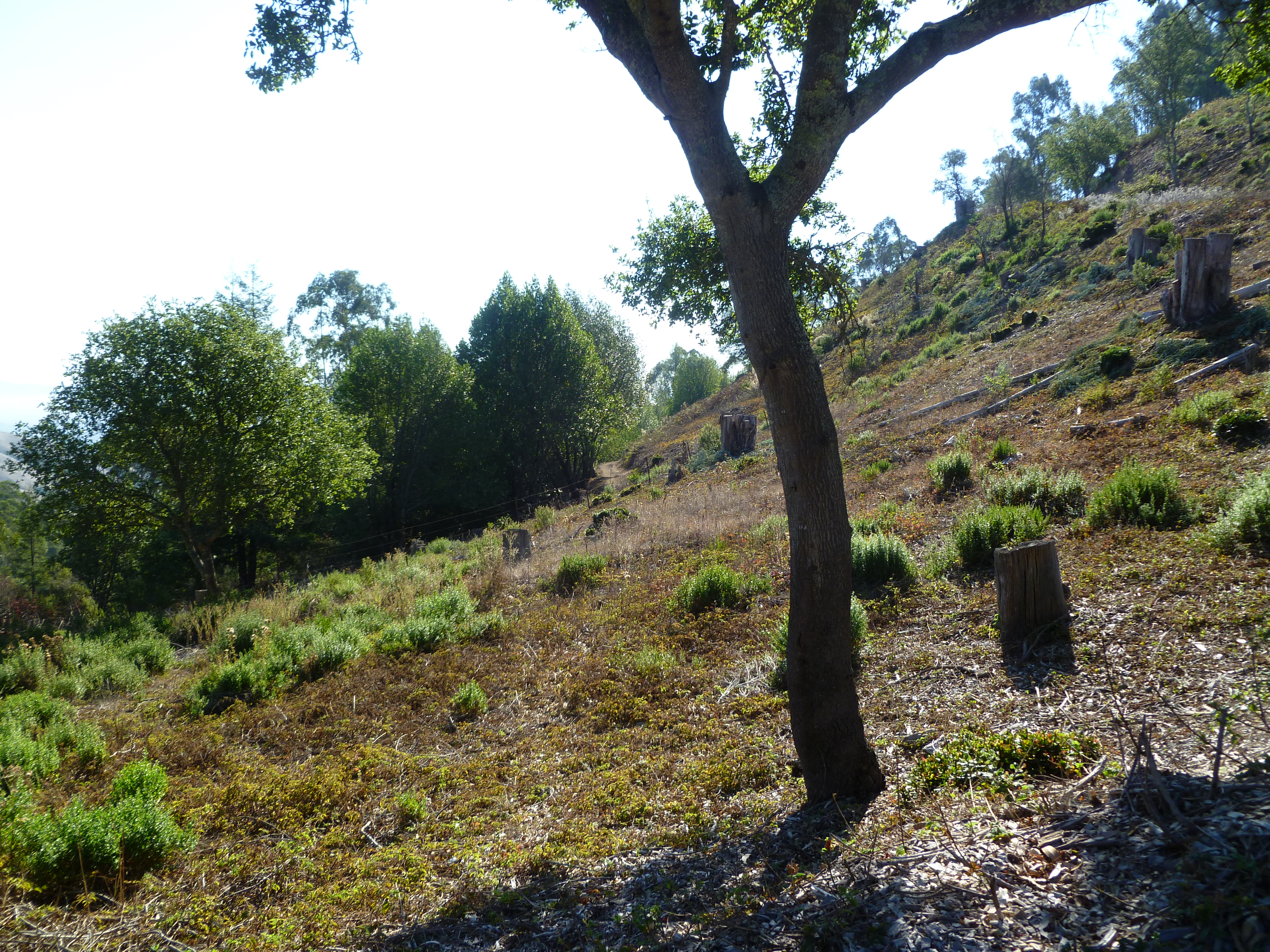
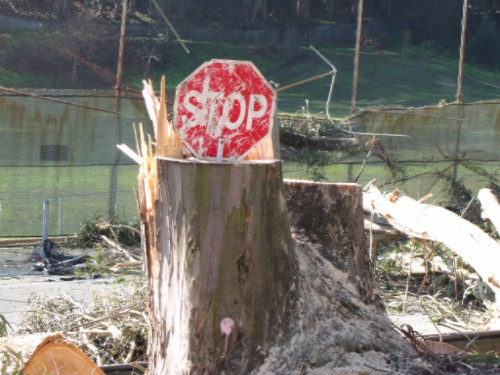
Tree removals done by EBMUD on Grizzly Peak Blvd
Tree removals done by EBMUD on Grizzly Peak Blvd (prior to the incident reported by Marg Hall)

I thought it an especially bad idea to apply Garlon in the drinking water watershed during the rainy season, so I stopped them by simply refusing to leave the work area until I got some answers. It was easy. I was polite but firm. The police were called. After being threatened by the contractor with per-minute fines for delaying the work, and a trip to jail from the police, I left them to their destruction. This is how I became interested in the management of EBMUD lands.

On a personal note, I had just been diagnosed with breast cancer. Ironically, I’d been looking for hiking trails where I didn’t have to confront the risk of cancer-causing pesticide applications. The whole situation made me very grumpy.

Following up, I was assured by EBMUD staff that they do NOT allow contractors to apply herbicides to cut eucalyptus stumps, and that very few, in fact almost no, herbicides are used in the drinking watershed lands. OK, that sounded pretty good. Wanting to verify this claim, I filed a public records request to EBMUD.

Aerial spraying pesticides on public parks

Meanwhile, we (FAB, The Forest Action Brigade, a grass roots group with which I am affiliated) heard of a plan by East Bay Regional Park District (EBRPD) to aerial spray from a helicopter (yes, you read that correctly!) an herbicide named Milestone (which is prohibited for use in New York State because it is very persistent and mobile in the soil). This was to be done in Briones Park, an area that directly supplies two creeks that feed into the Briones water reservoir.

Mobilizing public support, we were able to stop that spraying, but among our growing concerns we now added the safety of our drinking water. Even though this spray was planned by the East Bay Regional Parks District (EBRPD), the staff from the Water District (EBMUD) knew about it, and didn’t try to stop it…until we raised the issue.

Management of wastershed land by supplier of our drinking water

Last summer, EBMUD invited public comment on a draft update of their Watershed Management Master Plan. In this document, an Integrated Pest Management (IPM) program was referenced (available here: ebmud-ipm-program). Curious, we obtained copies of this document.

On paper it looks pretty solid. Like most IPM programs, this one contained written assurances that only minimal pesticides will be used, and then only as a last resort. Quarterly meetings of the IPM committee would provide oversight, meet and compile reports of pesticide usage. Among committee goals are: approve pesticide use requests, ensure consistency among work groups regarding pest management, and advise on pest management strategies. The guidelines require that pesticides be used only after certain damage thresholds are reached, with follow-up evaluations of effectiveness, and documentation of adverse side effects on non-targeted organisms.

Reading this leads one to the conclusion that the land management practices are just a step below organic gardening practices. With such controls and alternatives, what could possibly go wrong?

Control of pesticide use is more theoretical than real

As I soon learned when I started asking for public records, the IPM program as outlined in the EBMUD Watershed Management draft plan is a “paper only” plan. The oversight committee has not met in 15 years, and in fact only actually met for several years (the program started in 1996). There has been no oversight, no annual report, and wildly inconsistent use has developed over the various work units at EBMUD. They do follow minimal state reporting and training requirements, but that’s it.

I found no comprehensive evaluation of pesticide use, no analysis of levels of use, or experiments with alternatives, as one would expect in an “integrated” approach. Instead I received pages and pages of daily logs by individual workers documenting pesticide use. There appear to be no restrictions on use as long as the applicators documented applications, and the pesticides used were on the approved list of pesticides. The list of approved pesticides is long and includes known carcinogens.

Since nobody at EBMUD was keeping track, several of us embarked on a labor-intensive project to sort through records ourselves and tally an annual pesticide total. We focused on EBMUD properties in Alameda and Contra Costa Counties and usage for the year 2015. We were disheartened by our findings. In these areas, EBMUD made 647 applications by truck, backpack or by hand of herbicides totaling over 700 gallons and 205 pounds.

We compared the use of pesticides by EBMUD with those used by EBRPD.  EBRPD used significantly less herbicide than EBMUD in 2015. EBRPD used 193 gallons of herbicide (glyphosate, Garlon, Oryzalin) in 2015 (and smaller quantities of specialty herbicide for specific projects).  EBRPD has 120,536 acres of property compared to only 28,000 acres of EBMUD property.

Many environmentalists concerned about pesticide use had thought EBMUD carried out a more environmentally respectful philosophy of land management. This is not true. While the Watershed and Recreation work unit reported using only 8 gallons of pesticides that year, they constitute only one of several work units. EBMUD staff in the Watershed and Recreational work unit believe that is the sum total of pesticides used in “the watershed” and that pesticide usage is low. While some of the maintenance operations are outside of the drinking water watershed lands, some are not. Nevertheless this distinction is meaningless since all land is a “watershed” whether it drains to Briones reservoir or the San Francisco Bay. Furthermore, applications of pesticide are routinely done in areas open to the public.

One such application was documented last fall by someone walking on a public road in her neighborhood who took this video (If the video won’t play for you, try clicking on this link to the video HERE:

In it you see vast quantities of Roundup (glyphosate), applied from a truck-mounted tank using a garden hose. That method of application explains why the volume of EBMUD’s pesticide use is so high.  Competent and responsible pesticide applicators use a spray nozzle to reduce the flow and spread the herbicide more evenly.

Inexplicably, the worker was soaking bare ground along the side of a road. It is pointless to apply Roundup to bare ground.  It is a foliar spray that must be applied to actively growing plants.  It has no effect on seeds, roots, or tubers in the ground.  This is explained clearly on the manufacturer’s label for the product.

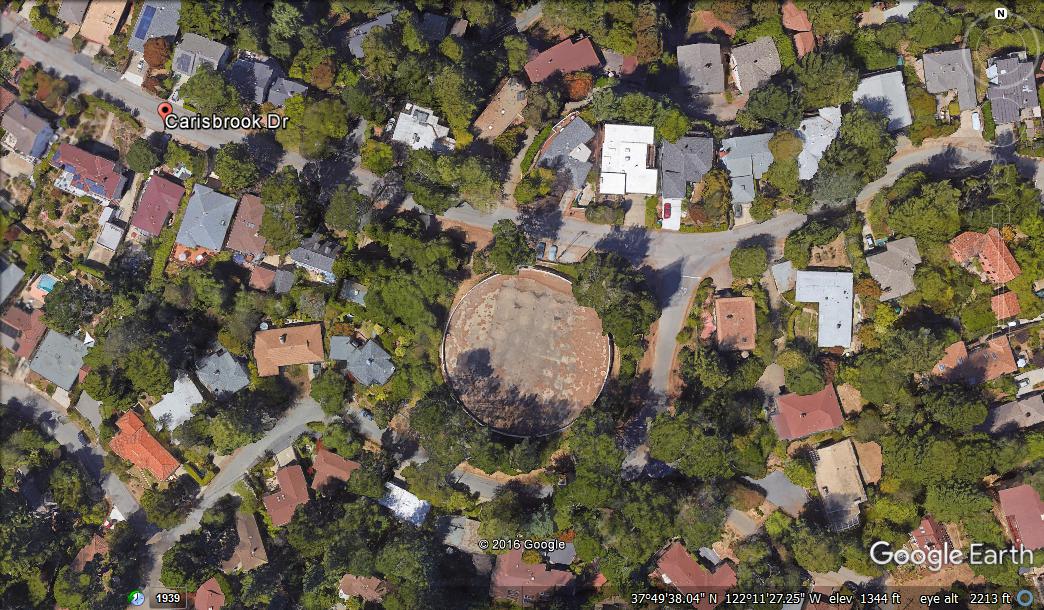
This spraying was done in a residential neighborhood (Carisbrook Road, Montclair area of Oakland). No pesticide application notices were posted before, during or after the application in violation of EBMUD’s IPM guidelines, which say, “If there is likely to be public contact with the area to be sprayed with pesticide, adequate notification or posting should be conducted.”

Carisbrook Reservois on Carisbrook Road in Montclair, Oakland, where pesticides were sprayed by East Bay Municipal Utilities District
Carisbrook Reservoir on Carisbrook Road in Montclair, Oakland, where pesticides were sprayed by East Bay Municipal Utilities District

The video was sent to EBMUD board members. EBMUD’s response was a defense of this application as consistent with existing policy and regulation. They also claimed that the herbicide was not sprayed on a pedestrian path.  In fact, the spraying occurred on a public road in a residential neighborhood that was used as a path by those who live in the neighborhood, such as the woman who recorded the video.

How to achieve REAL control over pesticide use on public land

That raises the obvious question: if this pesticide application is acceptable, what good is an IPM program except as a means to mislead the public into thinking we are being protected?

There’s an easier, simpler way to obtain the kind of protection we need: Forget IPM. Institute a total ban. No pesticides.  PERIOD.  It can be done.

Marin Municipal Water District has banned all pesticide use on their properties.  Organic farmers do it. Why not demand this from our local land managers?

Public Policy is in OUR hands

In recent decades, public land managers have been using public tax money to apply more and more pesticides in public spaces. In the years ahead, as the Republicans dismantle the Environmental Protection Agency, destroying what little (pathetic) regulation that we now have, we local activists will need to do our own protecting.

It starts here, in our own backyards. We know there is tremendous popular support for this. People really don’t like to be exposed to pesticides when they visit public parks. Robust local activism is our only hope. Yes, we can!!

Marg Hall

The forest is greater than the sum of its parts

hidden-life-of-treesThe Hidden Life of Trees was written by a German forester, Peter Wohlleben.  After completion of formal academic training as a forester, he took a government job managing a 3,000 acre public forest.  After 20 years of managing that forest for timber production with chainsaws, bulldozers, and insecticides, he decided about 10 years ago that he could not continue damaging the forest he had fallen in love with.

He resolved to manage a forest for the benefit of the forest, rather than for economic benefit.  In fact, he was able to do both.  The community for which he had been managing its forest for timber, decided to change its mission to forest preservation: “So, 10 years ago, the municipality took a chance. It ended its contract with the state forestry administration, and hired Mr. Wohlleben directly. He brought in horses, eliminated insecticides and began experimenting with letting the woods grow wilder. Within two years, the forest went from loss to profit, in part by eliminating expensive machinery and chemicals.” (1)

The forest educates the forester

In the decades that Mr. Wohlleben has cared for the forest, he has learned a great deal about the trees, and more importantly how the trees function as a community in the forest:  “…in nature, trees operate less like individuals and more as communal beings. Working together in networks and sharing resources, they increase their resistance.” (1)

In The Hidden Life of Trees, Mr. Wohlleben tells us how the trees communicate and share resources in the forest. When foresters interrupt these functions by artificially spacing out the trees, they can disconnect the trees from their networks, depriving them of their natural resilience mechanisms.

How do trees communicate?

Creative Commons. Photo by Steve Garvie.

Scent is one of the means of communication between trees.  On the African savannah Acacia trees are one of the favorite food of giraffes.  When the giraffes start munching on the Acacia, the tree pumps a powerful toxin into its leaves that makes it unpalatable to the giraffes.  The scent of that toxin is wafted to neighboring Acacia trees, which triggers them to start pumping that toxin into their leaves, making them unpalatable before the giraffes even get to them.  If the distance between the trees is increased beyond the range of the scent message, the Acacias are unprepared for the giraffes when they arrive after being repelled by the toxic defense of their distant neighbors.

Hope Jahren tells a similar story in Lab Girl about the role of scent in the defense of an entire forest in an infestation of tent caterpillars in a research forest in Washington.  The initial attack of the caterpillars defoliated entire trees and fatally damaged others.  The wounded trees emitted a powerful acid that made the caterpillars sick.  The scent of that acid warned healthy trees a full mile away.  The spread of the caterpillars throughout the forest was halted by this scent message, making the healthy trees equally unpalatable to the caterpillars.

The underground communication and defense system

The roots of trees radiate out from the trunk forming a perimeter of roots that is often twice as big as the canopy.  In the forest, the root systems of neighboring trees often intersect and grow into one another.  The trees in the forest are also connected underground by a web of fungi that connect the roots of a tree to its neighbors.  These connections transmit signals from one tree to the next, “helping the trees exchange news about insects, drought, and other dangers.” (2)

Photosynthesis. Creative Commons

This network of roots and fungi is also how trees share resources in the forest.  Every tree in the forest lives in a slightly different environment such as the nutrients in the soil, the physical composition of the soil, the available light, etc.  Despite these differences in available resources, researchers at the Institute for Environmental Research in Germany discovered that the trees distribute available resources throughout the forest so that every tree was photosynthesizing* at the same rate. That is, every tree in the forest was sharing an equal amount of the sugar produced by photosynthesis:  “Their enormous networks act as gigantic redistribution mechanisms.  It’s a bit like the way social security systems operate to ensure individual members of society don’t fall too far behind.”  (2)  (The scientist who documented this sharing of resources by trees gave a TED talk about her research, which is available HERE.)

Wohlleben’s analogy, suggesting that the sharing economy of the forest is comparable to our social safety net is thought provoking.  Let’s think about it.  Are the trees being generous to their neighbors in the forest by alerting them to dangers and sharing resources with them?  No, because by benefiting their neighbors, the trees also benefit themselves:  “This is because a tree can be only as strong as the forest that surrounds it…Their well-being depends on their community, and when the supposedly feeble trees disappear, the others lose as well.  When that happens, the forest is no longer a single closed unit.  Hot sun and swirling winds can now penetrate to the forest floor and disrupts the moist, cool climate.”  (2)

Challenging the conventional wisdom

If the trees in the forest benefit by being close to one another, why do the local managers of our public lands keep telling us that “thinning” the forest will be good for the forest?  Wohlleben tells us that the conventional wisdom that thinning the forest is good for the trees originates with the timber industry:  “In commercial forests, trees are supposed to grow thick trunks and be harvest ready as quickly as possible.  And to do that, they need a lot of space and large, symmetrical, rounded crowns.  In regular five-year cycles, any supposed competition is cut down so that the remaining trees are free to grow.  Because these trees will never grow old—they are destined for the sawmill when they are only about a hundred [in Germany]—the negative effects of this management practice are barely noticeable.”  (2)

Our urban forest is not “destined for the sawmill,” so thinning the urban forest does not benefit either the trees that remain or the forest as a whole.  The “thinning” strategy being used by the managers of our public lands is damaging both the forest and the environment:

  • The trees that remain are damaged by the pesticides that are used to kill the roots of their neighbors when they are destroyed. The pesticides that are sprayed on the stumps of the destroyed trees kill the roots of the tree and also travel through the interconnected root systems to damage the trees that remain.
  • The trees that remain are subjected to more wind when their neighbors are destroyed, which increases the potential for windthrow and therefore public safety hazards.
  • The forest is less capable of retaining moisture when shade is reduced, which also stresses the trees that remain.
  • Valuable habitat for wildlife is lost when trees are destroyed.

The Hidden Life of Trees informs us that the forest is greater than the sum of its parts.  Every tree contributes to forest health just as every member of society contributes to the well-being of our communities.


*Photosynthesis is the process used by plants to convert light energy into chemical energy that is stored in carbohydrate molecules, such as sugars.  The sugars are the fuel that enable plants to live and grow.  (Wikipedia)

  1. “German Forest Ranger Finds That Trees Have Social Networks, Too,” New York Times, January 29, 2016. 
  2. Peter Wohlleben, The Hidden Life of Trees: What They Feel, How They Communicate, Greystone Book, 2016 (originally published in German in 2015)

Lab Girl: A tribute to the challenges of science

lab-girlLab Girl is a memoir of a scientist, Hope Jahren.  Jahren is a geobiologist, which is the scientific discipline that “explores the interactions between the physical Earth and the biosphere [global ecosystems].” (1) She describes the arduous journey from curious student to full-fledged scientist.  That transition involved physically demanding collection expeditions, digging deep into the soil for the samples that informed her research into the complex relationships between the soil and the plants that live in it.  Then long, tedious hours in the laboratory are required to analyze the soil and plant samples to develop the hypotheses needed to explain those relationships.  Finally, complicated laboratory tests are needed to test the hypotheses.

If you don’t already have a deep respect for the demands of science, Lab Girl will help you to appreciate the dedication of the scientists engaged in the process of refining our scientific knowledge.  At a time in our social history when science is being questioned by those with political agendas, Lab Girl is an antidote to skepticism about science and scientific expertise.

Familiar Themes

Jahren alternates chapters about her career with chapters about the plants she studies.  As we might expect, Jahren has a profound respect for trees and so her book is relevant to the mission of Million Trees.  She eloquently makes many of the same observations we make on Million Trees.  Here are a few:

On the value of observation and the complexity and changeability of nature:

“Time has changed me, my perception of my tree, and my perception of my tree’s perception of itself.  Science has taught me that everything is more complicated than we first assume, and that being able to derive happiness from discovery is a recipe for a beautiful life.  It has convinced me that carefully writing everything down is the only real defense we have against forgetting something important that once was and is no more, including the spruce tree that should have outlived me but did not.” (2)

On the importance of fungi to forest health:

“Underneath every mushroom is a web of stringy hyphae that may extend for kilometers, wrapping around countless clumps of soil and holding the landscape together.  The ephemeral mushroom appears briefly above the surface while the webbing that anchors it lives for years within a darker and richer world.  A very small minority of these fungi—just five thousand species—have strategically entered into a deep and enduring truce with plants.  They cast their stringy webbing around and through the roots of trees, sharing the burden of drawing water into the trunk.  They also mine the soil for rare metals, such as manganese, copper, and phosphorous, and then present them to the tree as precious gifts of the magi.” (2)

Placing blame for “invasive” weeds where it belongs:  ON US!

“A plant that lives where it should not live is a weed.  We don’t resent the audacity of the weeds, as every seed is audacious; we resent its fantastic success. Humans are actively creating a world where only weeds can live and feigning shock and outrage upon finding so many.  This mixed message is irrelevant:  there is already a revolution taking place in the plant world as invasives effortlessly supplant natives within every human-modified space.  Our impotent condemnation of weeds will not stop this revolution.  We aren’t getting the revolution we want; we are getting the one that we triggered. (2)

On the future of our forests:

“Every year since 1990 we have created more than eight billion new stumps.  If we continue to fell healthy trees at this rate, less than six hundred years from now, every tree on the planet will have been reduced to a stump.  My job is about making sure there will be some evidence that someone cared about the great tragedy that unfolded during our age.” (2)

And that is the job of Million Trees as well…to make this record of fighting to preserve our urban forests.  We echo Hope Jahren’s final message in Lab Girl:  “Here is my personal request to you:  If you own any private land at all, plant one tree on it this year.  If you are renting a place with a yard, plant a tree in it and see if your landlord notices.  If he does, insist to him that it was always there.  Throw in a bit about how exceptional he is for caring enough about the environment to have put it there.” (2)

Hope for 2017

We have had some big disappointments in 2016, and it isn’t easy to find something useful to do to improve the political climate in our country.  Planting a tree is something positive that many people are in a position to do.  When you feel discouraged about the future of our country, go visit your tree and pat yourself on the back for making an investment in the future of our country.

Happy New Year

fireworks-colors-100701-02


  1. https://en.wikipedia.org/wiki/Geobiology
  2. Hope Jahren, Lab Girl, Alfred Knopf, 2016

An epilogue to the saga of the San Francisco Natural Areas Program

On December 15, 2016, the San Francisco Planning Commission approved the Environmental Impact Report for the Natural Areas Program and the Recreation and Parks Commission approved the management plan for the Natural Areas Program.  The public hearing was over 6 hours long and is available for viewing HERE.  Although we watched the hearing, we won’t try to summarize it here because readers can watch it if they wish.  Rather we will comment on a few conspicuous observations about the hearing.

The most noteworthy feature of the hearing was that virtually all of the supporters of the EIR and the Natural Areas Program were allowed to speak first.  Critics of the program were called on last.  If you have spoken at such a hearing, you know that speakers submit a speaker’s card on which they indicate their support or opposition for the agenda item when they arrive.  Typically, speakers are called in the order in which they arrive at the hearing.  This usual procedure was apparently not followed in this case.

The main disadvantage of not being called upon in the order in which speakers arrive is that when a hearing is 6 hours long, many people with other responsibilities—such as work or family obligations—are forced to leave before their names are called.  In the case of this hearing, I heard a number of names called of people whom I knew to be critics of NAP, who did not speak, presumably because they waited their turn but weren’t called in the order of their arrival.

Another conspicuous feature of this hearing was that the vast majority of speakers in favor of the EIR and the management plan either work directly for the program or are affiliated with it.  Many supporting speakers were representatives of non-profits that conduct similar projects or they bring children into the parks to “educate” them about native plants.  Their presence at the hearing was therefore a work responsibility which enabled them to spend an unlimited amount of time at the hearing.

This is an illustration of the biggest obstacle to the realization that nativism is a destructive agenda based on outdated scientific hypotheses for which there is no empirical evidence.  In a word, “restoration” ecology is now a multi-million dollar industry in which many people are employed.  Therefore, there is vested economic interest in continuing such efforts whether or not they are successful or beneficial.

Criticisms of the Natural Areas Program and its EIR

The speakers who opposed the approval of the management plan and its EIR were members of the general public who are neighbors of the so-called “natural areas.”  They mentioned the destruction of trees (and the subsequent loss of sequestered carbon) and the use of herbicides as their primary objection to the plans.  Another important issue was the restrictions on recreational access such as the closure of 10 miles of trails and the requirement that all access be confined to the trails that remain.  These are issues with which our readers are familiar, so we won’t elaborate.

Comments based on personal experience with specific “natural areas” seemed most effective.  One fellow said he had participated as a volunteer in several big plantings of native plants in a natural area.  The plants died each time and presently few plants have survived several attempts to “restore” this so-called natural area.  This experience had led this speaker to conclude that attempts to “restore” this park to native plants were futile.

A neighbor of Glen Canyon Park showed pictures of the impact on her neighborhood of the destruction of trees in the park several years ago.  Her neighborhood has lost its windbreak and therefore dust from the bare ground is blowing into their homes.  Their beautiful view of the trees has been replaced by bare ground.

The Natural Areas Program began 20 years ago and has been fully staffed and funded since its inception.  Therefore, it should be judged by what it has accomplished.  It has closed trails, destroyed trees, and built fences.  It has repeatedly destroyed vegetation with herbicides and planted those areas with native plants.  The native plants have died, in some cases several times in 20 years.  In other words, it has little useful to show for 20 years of investment of effort and money.  Since it has not been successful after 20 years, it seems insane to invest another 20 years of money and effort.  Remember that one definition of insanity is doing the same thing over and over and expecting a different outcome.

Support for the Natural Areas Program

We hesitate to use the word “lie” to describe the justifications for the Natural Areas Program, but after listening to hours of testimony by its supporters, we will use that word to describe a few of their claims:

  • The most effective lie is that all the trees they destroy will be replaced with native trees. In fact, no such commitment is made in the management plan, which says explicitly that the natural areas will be converted to grassland and dune scrub.  This “replacement” fiction is mentioned in the EIR.  However, the EIR makes no commitment to planting the replacement trees in the areas or even the same parks where the trees are destroyed.  This important caveat to the commitment to replace the trees was not mentioned by any of the speakers in support of the plans, including NAP’s leadership.  In the case of the 15,000 trees that will be destroyed at Sharp Park, calling those removals anything other than a clear-cut is a lie.
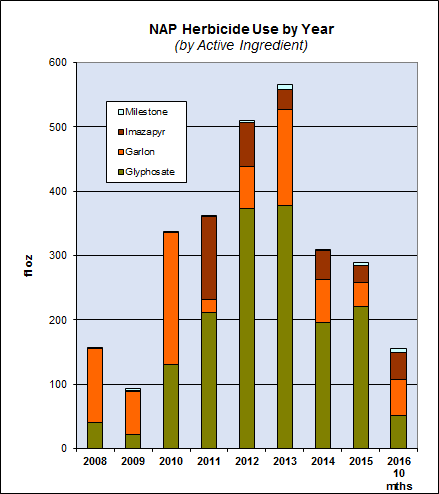
  • Inaccurate descriptions of NAP’s use of herbicides also qualify as lies. The executive director claimed during the hearing that only 2.67 quarts of “active ingredient” were used in the natural areas in 2016. In fact, public records requests inform us that NAP used 1 gallon (4 quarts) of active ingredient from January 2016 to October 2016.  The “active ingredient” is only a fraction of the amount of the formulated product.  The “inert” ingredients in the formulated product are often considered hazardous.  In other words, reporting only the volume of active ingredient underestimates the amount of herbicide being applied.  The number of pesticide applications done by NAP is another way to evaluate the magnitude of pesticides used by NAP.  From January 2016 to October 2016, pesticides were applied in the natural areas 111 times, which is 85% of all pesticide applications in park areas other than Harding Park (which is a golf course maintained to professional competition standards with contractual obligations regarding turf maintenance).  A full report of NAP’s pesticide use is available HERE.

    Courtesy San Francisco Forest Alliance
    Courtesy San Francisco Forest Alliance
  • Claims that the forest in the natural areas will be “managed” for forest health are false. The management plan says explicitly that the trees will be removed for the purpose of expanding native plant gardens that require full sun.  These areas will not be “thinned” as supporters claim.  Rather they will be removed along the leading edge of the forest in order to create more unshaded ground for planting native plants.  The health of the trees is not the criterion for their removal.  These tree removals will not benefit the forest.

However, most of the statements made by supporters are not lies.  Rather they are faithful repetitions of an ideology that most of them probably believe.  Here are a few examples:

  • Nativists believe that native animals require native plants. There is no empirical evidence to support that belief.  All empirical studies find equal numbers of insects, birds, amphibians, etc., using non-native plants.
  • Nativists claim that native pollinators require specific native plants. With few exceptions this belief is mistaken.  The monarch butterfly, for example, is as willing and able to use one of the many non-native species of milkweed as it is a native species.  Some butterflies require a specific genus of plant as its host, but a genus is typically composed of hundreds of species of which many are not native.
  • Nativists believe that the immutable relationship between specific animals and specific plants has evolved over “thousands of years.” They are mistaken.  Animals adapt much more quickly to changes in the environment.  Many changes in plants and animals have been observed over a period of years, rather than a period of centuries, let alone millennia.

Many of the supporters of the NAP plans mentioned that native plants would somehow mitigate climate change.  This is a mysterious notion that I cannot explain.  If we are destroying tens of thousands of trees that store tons of carbon, how can we claim this will reduce climate change?  The grassland that is the goal of these “restoration” projects will store a small fraction of the amount of carbon stored by the trees.  Is this absurd claim a reflection of ignorance about carbon storage?  Or is it a strategy intended to confuse the public?  Whatever the motivation, the claim that native plants mitigate climate change is NOT true.

The nativists apparently do not understand that the ranges of native plants and animals have changed in response to changes in the climate and they will continue to change.  They aren’t stopping climate change by planting native plants.  In fact, climate change requires that the concept of “native” be redefined.  That’s why their projects are unrealistic and futile because they are based on a climate that no longer exists.

The epilogue

The San Francisco Forest Alliance has announced its intention to appeal the certification of the Environmental Impact Report to the San Francisco Board of Supervisors.  This appeal will be heard sometime in 2017.  You will be notified of the hearing if you will subscribe to the Forest Alliance website:  http//sfforest.org.

Meanwhile, the Forest Alliance will ask the City of San Francisco to prohibit the use of the most toxic herbicides in the city’s parks.  There will be two public hearings regarding the city’s pesticide policies and practices:

  • Monday, December 19, 2016, 5 pm. This is a public hearing by San Francisco’s Integrated Pest Management (IPM) Program.  Details about that hearing are available HERE.
  • Tuesday, January 24, 2017. The Commission on the Environment will consider the recommendations of the IPM Program at this hearing.  The Forest Alliance will publish the details of that hearing when they are available.

Best Wishes for a BETTER 2017

The certification of the EIR and the approval of the NAP management plan is not the holiday gift that we were hoping for.  In fact, the entire year of 2016 wasn’t much of a gift to those who believe government has an important and valuable job to do.  We look forward to a better year in 2017 and we wish our readers all the best for the New Year.

christmas-holly-4

An announcement from the San Francisco Forest Alliance about their plans

We are publishing the following email message from the San Francisco Forest Alliance.  They are thanking their supporters for their help at the public hearing about the Natural Areas Program and its Environmental Impact Report.  They are announcing their intention to appeal that decision to the San Francisco Board of Supervisors.  And they inform their supporters of an opportunity to ask the Integrated Pest Management (IPM) Program to prohibit the use of the most toxic types of herbicide in the city’s so-called “natural areas.”  That hearing will take place on Monday, December 19, 2016.  Please help them if you can.


San Francisco SFFA supporters / concerned residents:

Thank you for sending in your letters and braving the rain to sit through the hours long joint meeting of the Planning Commission and SF Recreation and Parks Commission.

Yes, we lost last Thursday and now, with a heavy heart, but with a sense of pride and integrity, please rest assured that we did everything we could to convince the two commissions to see our side.

Thank you for your efforts and for working together, in solidarity and with gratitude from the SFFA leadership.  We will appeal the decision to approve the EIR and will go before the Board of Supervisors next year with an emotional plea that they do the right thing. The City cannot implement the SNRAMP while the EIR is under appeal.

In the meantime, and because the SNRAMP cannot operate without the use of herbicides in city parks, there is something we can now do:

Attend an important hearing on Monday Dec 19th in City Hall at 5 PM.

San Francisco’s Integrated Pest Management (IPM) Program is hearing public input on the guidelines for Tier 1 herbicides and on the approved pesticide list for 2017.

This hearing on the Integrated Pest Management program will be at City Hall on Monday, Dec. 19th at 5 pm, room 408.

We hope you can come because this is our main chance to influence any policy decisions about herbicides for the coming year.

If you plan to attend and make public comment please use our email box  sfforestnews@gmail.com  and leave us your name and phone number so we can coordinate our public input – it is not too late

Important Reading Materials: For those who are planning to speak – those of us who are concerned about pesticide use in our city, please read Attachments B and C(click to access the documents)

B. Draft 2017 San Francisco Reduced Risk Pesticide List, including Draft Restrictions on “most hazardous” (Tier I) herbicides

C. Summary of issues raised regarding pest management for City properties, with agency responses

Note:  It is important that you read these documents prior to making any public comments!

Public opinion does make a difference!

San Francisco Forest Alliance

BE INFORMED – GET INVOLVED – TELL YOUR NEIGHBORS

If you’re on Facebook, please “like” our page: https://www.facebook.com/ForestAlliance

Please sign our petition if you have not already done so.


A tragic fire is an opportunity to revise our fire safety policies

When a warehouse in Oakland burned to the ground, killing 36 young people on December 2, 2016, we learned that the City of Oakland is not inspecting many buildings for fire safety, as required by law.  In fact, this particular warehouse had never been inspected because it wasn’t even on the database for such inspections.  If it had been inspected, “they would have seen what visitors and former residents called a death trap and a tinder box: piles of wood, shingles and old furniture, extension cords and often-sparking electrical wires running willy-nilly throughout the structure, welding equipment and propane tanks scattered about — the kind of fire code violations that could have led inspectors to shutter the building immediately.”  (East Bay Times, 12/8/16)

This tragic loss of young lives is an opportunity for Oakland to examine its priorities with respect to fire safety.  Oakland, like most cities, does not have unlimited resources to address every public safety issue.  Therefore, it must set priorities and in this case, Oakland needs to refocus its efforts where serious fire safety issues exist and where genuine economic need requires the city’s help.  Specifically, we should stop destroying harmless trees and spend our limited resources on identifying and repairing unsafe living conditions that create fire hazards.

Our letter (below) to the elected and city officials of Oakland asking them to revise their priorities regarding fire safety, speaks for itself.  If you agree with us about this issue, please write your own letter to your district council representative if you live in Oakland.

December 9, 2016

Dear Mayor Schaaf, (officeofthemayor@oaklandnet.com)

The recent fire in a warehouse that killed 36 young people should be a wakeup call for city officials who say they are concerned about mitigating fire hazards.  The City of Oakland wasted 10 years defending an indefensible plan to clear cut trees in the Oakland hills, based on the claim that it would reduce fire hazards.  After cancellation of the FEMA grants that would have funded that project, Oakland has made a contractual commitment to spend $800,000 to develop a new plan for “vegetation management.”

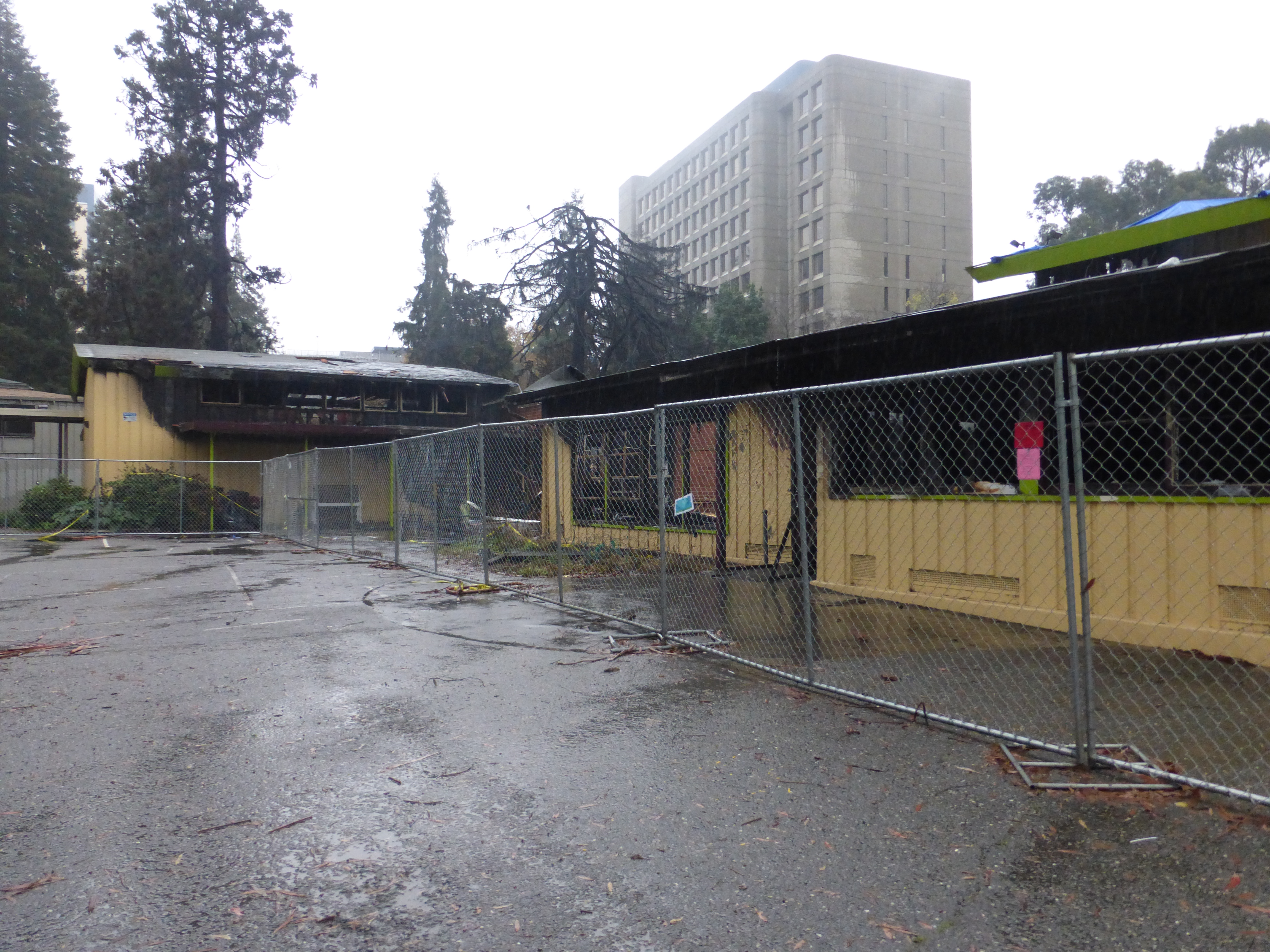
Mosswood Recreation Center was gutted by fire on November 26, 2016

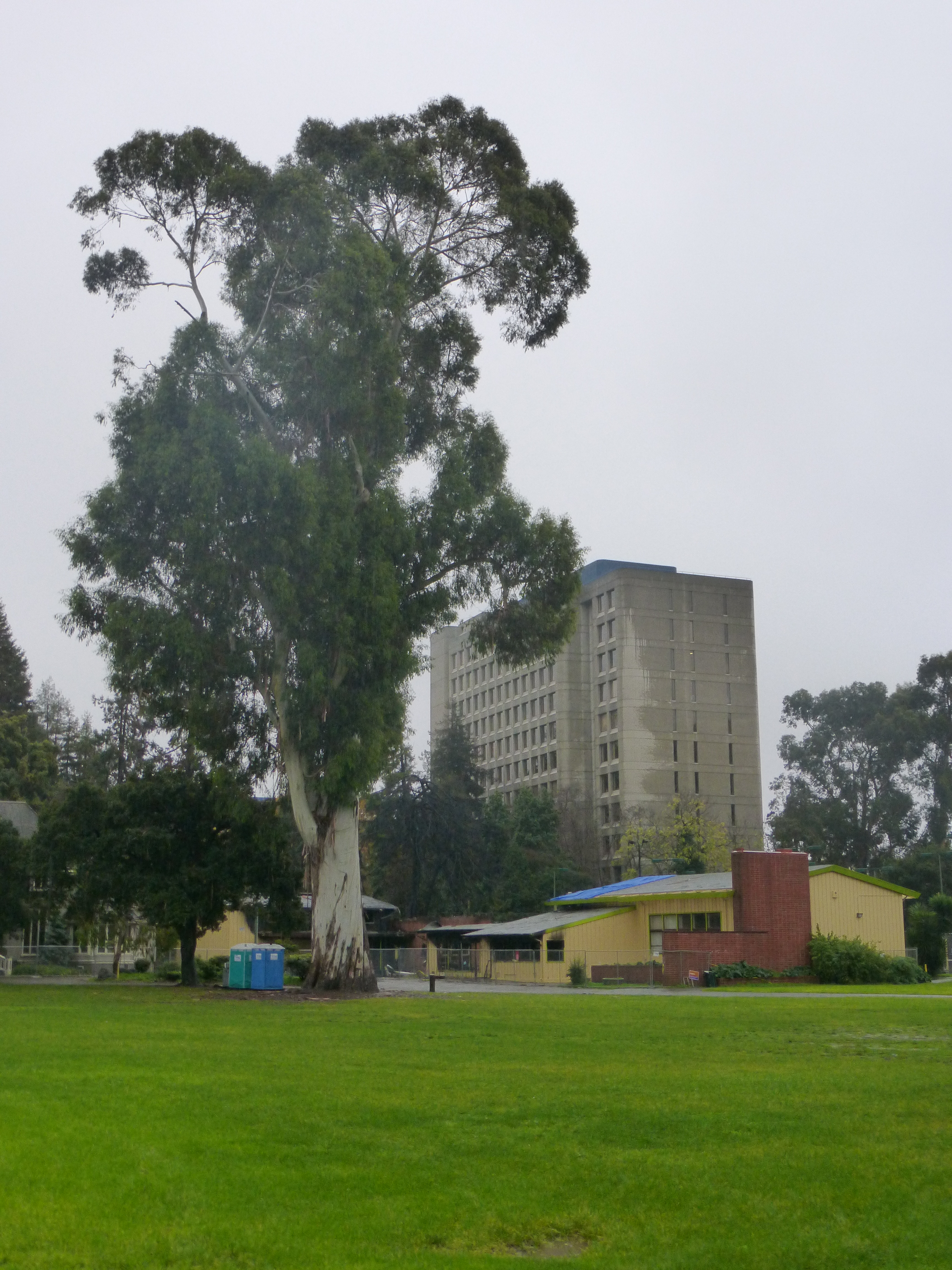
Meanwhile, we have had many major fires of residential properties in the flat lands where trees played no role in the fires.  On November 26, 2016, the recreation center at Mosswood Park burned to the ground, just 50 feet away from a huge eucalyptus tree that was not ignited by that fire.

Trees around the Mosswood Recreation Center were not ignited by the fire, including this huge eucalyptus tree.

And last Friday, a warehouse that should not have been rented to tenants and should not have been used to stage huge parties, burned to the ground.   Although many complaints had been lodged about that warehouse, no inspections or code enforcement corrected the many safety violations.  The media also informs us that there are many other warehouses in Oakland being used illegally with potentially unsafe conditions.  We also understand that the City of Oakland does not have the staff needed to conduct inspections or ensure enforcement of building codes.

In other words, when it comes to fire safety, the City of Oakland is focusing on the wrong issues in the wrong places.  Residents in the hills have the financial resources to create defensible space around their homes.  Young people in the flatlands, do not have the resources to pay for safe housing.  This is both a safety AND an equity issue.

Therefore, the City of Oakland should redirect its limited resources where serious safety issues exist and genuine economic need requires the City’s help.  I am writing to ask that the contract to develop a “vegetation management plan” be cancelled and the money be spent to conduct inspections and to subsidize the mitigation of real fire hazards.

 Thank you for your consideration.

Oakland, CA

Cc:  Councilman Dan Kalb (dkalb@oaklandnet.com) , Fire Chief Theresa DeLoach Reed (tdeloachreed@oaklandnet.com), Assistant to the Chief Angela Robinson Pinon (arobinsonpinon@oaklandnet.com)

The final episode in the 20-year saga of San Francisco’s “Natural Areas Program”

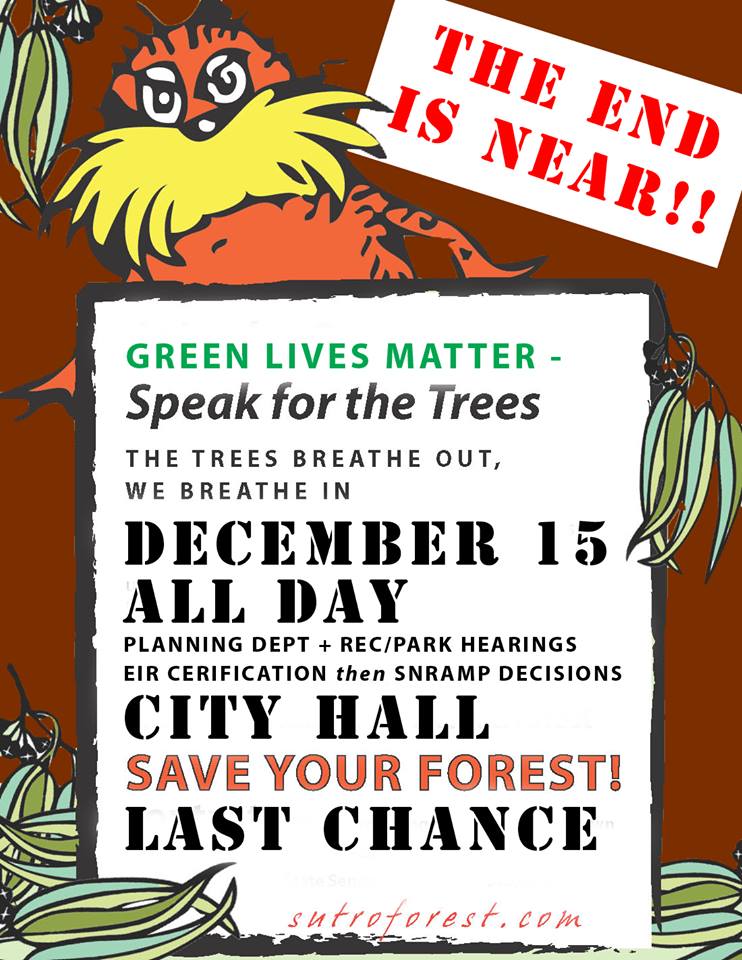
the-end-is-nearOn December 15, 2016, the San Francisco Planning commission will hold a public hearing to consider certification of the Environmental Impact Report for the Natural Areas Program. If the EIR is certified, the Recreation and Park Commission will consider formally adopting the management plan for the Natural Areas Program at the same hearing.  The Recreation and Park Commission will have the option of adopting one of the alternatives to the management plan.  The San Francisco Forest Alliance will ask that the Maintenance Alternative be adopted by the Recreation and Park Commission because it is the “environmentally superior” alternative which will destroy the least number of trees and use the least amount of pesticides. 

If you can attend this hearing and make public comment, please contact the SF Forest Alliance (sfforestnews@gmail.com) for the details about where and when the hearing will take place.  If you can’t attend the hearing, please consider sending an email to the Recreation and Park Commission (recpark.commission@sfgov.org) by Monday, December 12, 2016 (the deadline for submission of written public comments to be included in the agenda packet of the commissioners). 

We lived in San Francisco for nearly 30 years and our local park was designated a “natural area” in 1997.  Based on our experience with the Natural Areas Program, we have sent the following email to the Recreation and Park Commission.  We hope that our letter will help you write your own public comment.


Subject:  Approve the Maintenance Alternative for SNRAMP

Dear Recreation and Park Commissioners,

Since the Natural Areas Program was created 20 years ago, hundreds of healthy trees have been destroyed and over one thousand trees died slowly after being surreptitiously girdled by vandals calling themselves native plant advocates in the 32 so-called “natural areas.”  Hundreds of gallons of herbicide have been sprayed on harmless plants, many that provided valuable habitat and food for wildlife.  Trails have been closed and big signs installed instructing park visitors to stay on the trails that remain. Fences have been installed in some parks to enforce those restrictions.

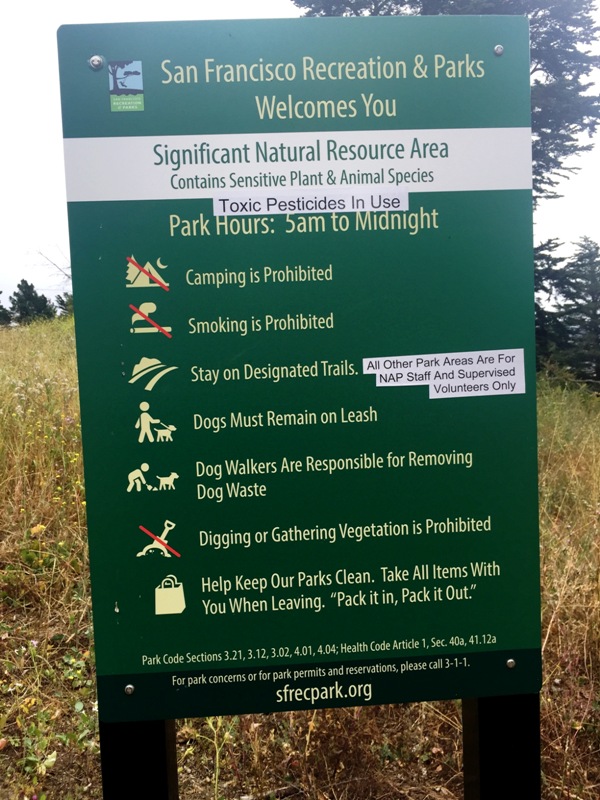
This sign in a "natural area" has been altered to express the public's opinion of the Natural Areas Program. Courtesy San Francisco Forest Alliance.
This sign in a “natural area” has been altered to express the public’s opinion of the Natural Areas Program. Courtesy San Francisco Forest Alliance.

After all that destruction and restriction, what has been accomplished?  Non-native plants have been repeatedly eradicated in the “natural areas” and native plants were planted.  These native plant gardens have repeatedly failed:  the native plants die and the non-native plants return, in some cases many times.  Native trees have been planted in a few “natural areas” but most have died, despite being irrigated during an extreme drought.  After wasting millions of dollars and the associated labor, there is little to show for that investment after 20 years.

Therefore, I am writing to ask the Recreation and Park Commission to vote to adopt the Maintenance Alternative as provided by the Environmental Impact Report that was 10 years in the making.  The Maintenance Alternative would enable the Recreation and Park Department to continue to take care of the “natural areas” they have already created, but it would prevent further tree destruction, further restrictions on recreational access, and require fewer pesticide applications.

Besides the obvious lack of success of the Natural Areas Program after 20 years of effort, there are many other reasons why it would be wise for the Recreation and Park Department to quit throwing good money after bad money.  Here are some of those reasons:

  • The Natural Areas Program was predicated on the mistaken assumption that native plants are superior to non-native plants as habitat for animals. In fact, in the past 20 years multitudes of empirical studies have been conducted that prove that wildlife has no preference for native plants.  Wildlife is just as likely to use non-native plants as they are native plants.
  • The Natural Areas Program also assumed that greater biodiversity would be achieved by eradicating non-native plants. They were mistaken in that assumption as well.  Studies have been conducted all over the world in the past 20 years that find no decrease in plant biodiversity resulting from introduced plants.
  • The climate has changed since Europeans arrived in the Bay Area in 1769 and it will continue to change. The plants that existed here in the distant past are no longer adapted to current conditions.  The ranges of native plants and animals must change if they are to survive in the long run.  Therefore, demanding that historical landscapes be re-created serves no useful purpose.
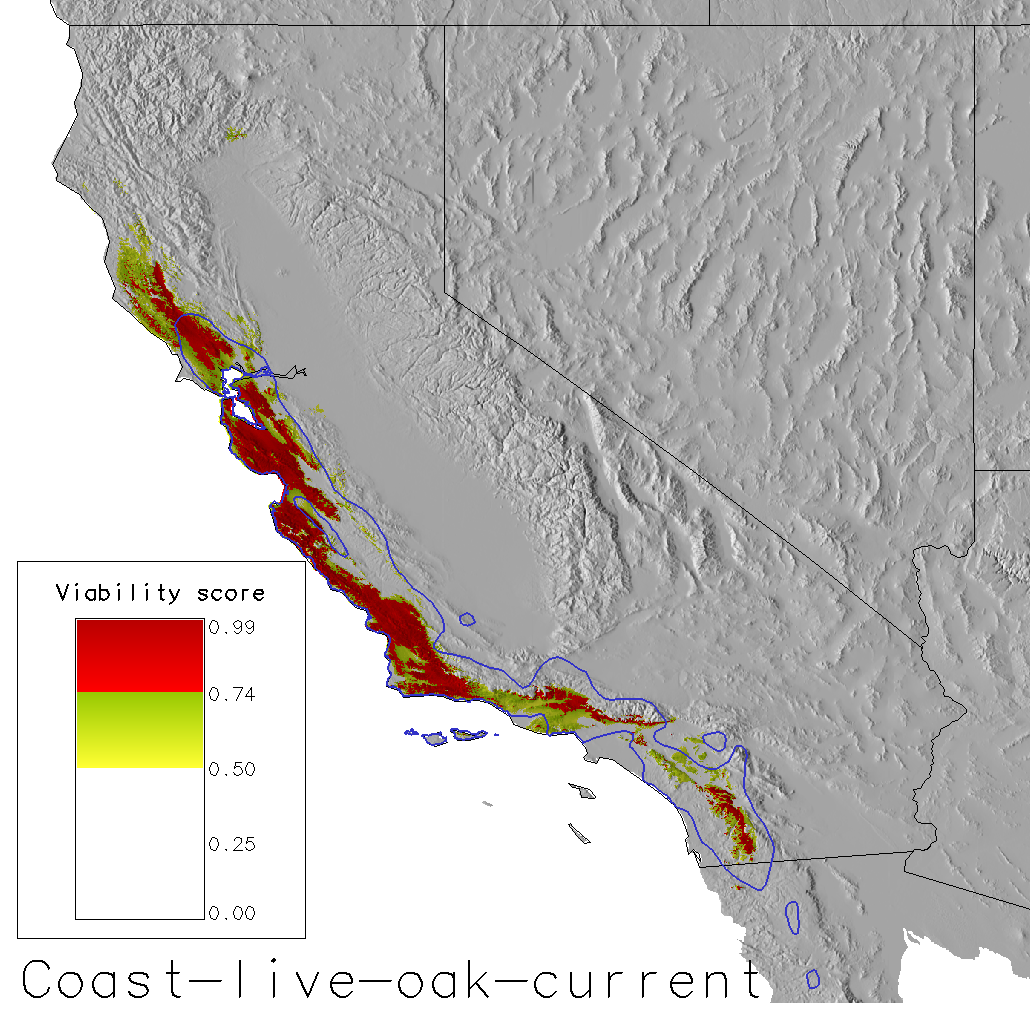
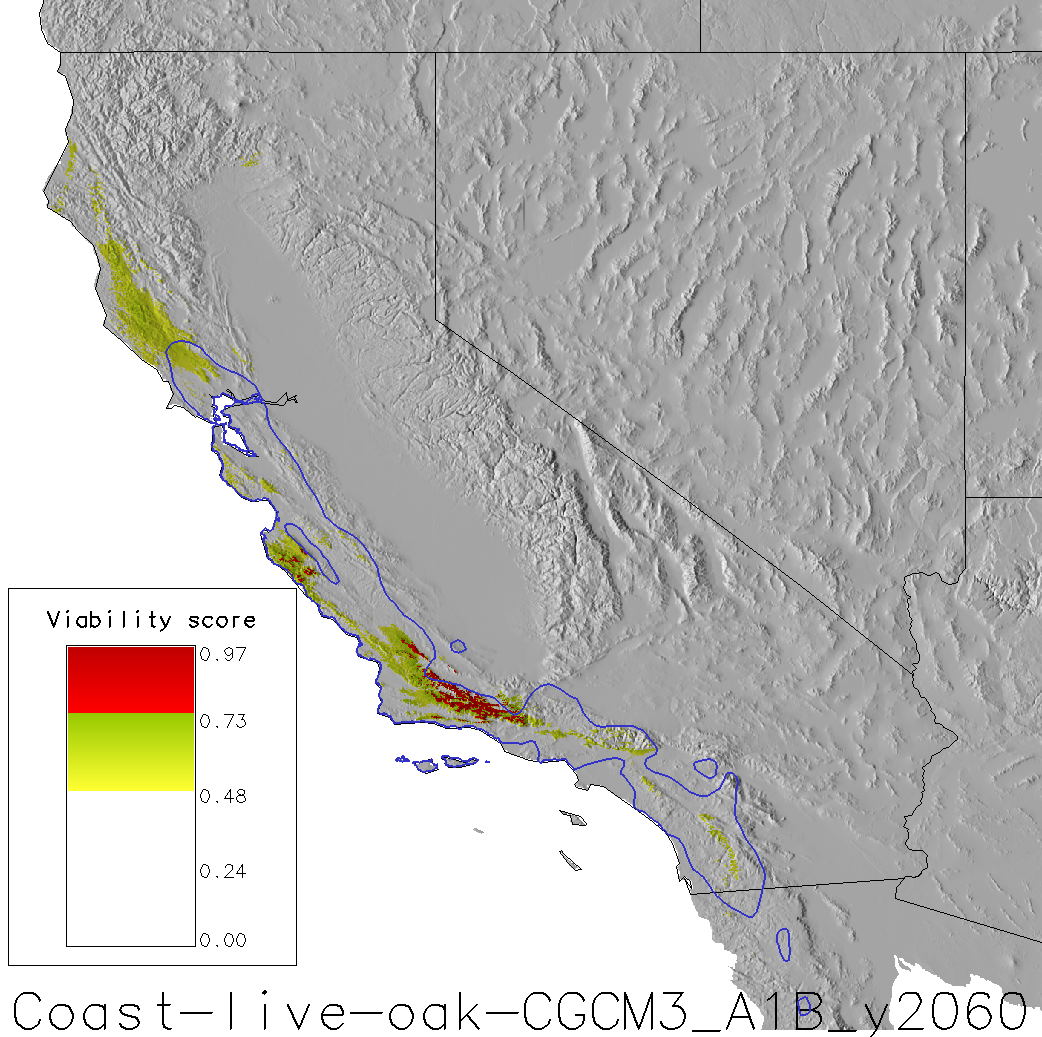
  • The native trees of California are dying by the millions. The US Forest Service informs us that 102 million native conifers have died in the Sierra Nevada in the past 6 years.  University of Cambridge recently published a study about Sudden Oak Death in which they reported that 5 million oak trees have died in California since 1995 and that the epidemic is “unstoppable.”  There are SOD infections in Golden Gate Park and the Arboretum.  The US Forest Service tells us that Coast Live Oaks will be virtually gone from California by 2060.  A study of redwoods predicts that its native range will shift north into Oregon by the end of this century.  In other words, if we want trees in California, many of them will have to be non-native trees adapted to a hotter, drier climate. 
  • Environmental conditions in a densely populated urban area such as San Francisco are also incompatible with the unrealistic goals of the Natural Areas Program. The heat island effect of urban areas exacerbates climate change.  Increased levels of soil nitrogen caused by the burning of fossil fuels promotes the growth of weeds.

The Natural Areas Program was a good idea that has outlived its usefulness.  We may try to keep it alive for sentimental reasons, but expanding it would be rewarding failure.  Please adopt the Maintenance Alternative.

Thank you for your consideration.

stop-destroying-trees

Embers start spot fires: The real and the imagined stories

Bay Nature recently published an article about the 1991 fire in the East Bay Hills and the closely related belief that such a fire can be prevented in the future by destroying all non-native trees.  To Bay Nature’s credit, it was a more balanced article than most.  Although the article was heavily weighted in favor of those who want to destroy all non-native trees in the hills, several defenders of our urban forest were also interviewed.

However, the article contains a fantasy about future fires that feeds into the fear of fire that has been fostered by those who advocate for removing all non-native trees:

“A strong wind begins blowing over the hills from the east. And then somehow—maybe a spark from a car, maybe a tossed cigarette—the whole dry, airy mess catches fire.  Now the flames on the ground are 30 feet high and even higher off the boughs, roaring like a jet engine. At the fire’s edges, trees appear to explode as the volatile oils in their leaves reach their boiling point and vaporize. The heat of the fire forms a convection column, with 60-mile-per-hour winds that rip burning strips of bark from the trees and toss them upward. This is another of blue gums’ talents—its bark makes ideal braziers. Tucked away inside a rolled-up strip of bark, a fire might live for close to an hour and fly 20 miles.” (1)

Although we have read many times in the plans to destroy trees that eucalyptus casts embers starting spot fires, we have never seen such an extreme description of how far embers could travel while still on fire and capable of starting a spot fire.  So, we tracked down the source of this theoretical scenario with the help of the author who cited this as the source of the theoretical scenario:  “The potential for an internally convoluted cylinder of bark to be transported tens of kilometres in a continuously flaming state is indicated by the sample that maintained flaming combustion for the entire experiment…This would correspond to a flameout time of almost 2000 s for a sample 2700 mm long, a lofted height of 9600 m and a spotting distance of ~37 km.” (2)

First let’s translate that quote into measurements we commonly use to appreciate how extreme this particular test was:  “This would correspond to a flameout time of almost 33 minutes for a sample 9 feet long, a lofted height of 6 miles and a spotting distance of 23 miles, traveling at 41 miles per hour.”  That is a very long ember, lofted a great distance at a great speed (but NOT 60 mph), staying lit for a long time (but NOT “close to an hour”).  

Theory vs. Reality

The study that was the source of the extreme prediction in Bay Nature about the distance that burning embers can travel was conducted on samples of Eucalyptus viminalis bark (NOT Blue Gum Eucalyptus, E. globulus) “tethered in a vertical wind tunnel.”  These are not real-world conditions.  So, how does this theoretical study compare to real-world conditions?

The FEMA Technical Report about the 1991 fire in the East Bay Hills contains a map of the full extent of the 1991 fire.  As you can see on this map, the maximum distance from the northern-most edge of the fire to the southern edge of the fire is less than 3 miles…not remotely close to 20 miles.  In other words, embers could not have started fires 20 miles away because the fire wasn’t even close to 20 miles long.

1991-fire-map-2

The FEMA Technical Report doesn’t tell us what the wind speeds were during the 1991 fire, although they describe the wind as being strong at several times during the fire.  If there is any evidence that winds were as much as 60 miles per hour, it’s not evidence we have been able to find.  We found a source of wind speeds measured on the Bay Bridge, including historical records.  This website says the strongest wind measured since 2010 was 31 miles per hour in April 2013.  That suggests that 60 mph winds are probably unusual in the San Francisco Bay Area.

The FEMA Technical Report doesn’t report any observations of firebrands or burning embers from eucalyptus.  The report mentions embers twelve times, but identifies the source of those embers only once.  In that one case, the source of embers was “a growth of brush”….not a eucalyptus tree or any tree, for that matter.  There are anecdotal reports of finding debris from the fire as  far as San Francisco, but no reports that the debris was still on fire or that it started another fire.

US Forest Service study of embers in actual fires

US Forest Service participated in a comprehensive study of “spotting ignition by lofted firebrands” based on actual wildfires all over the world, including the 1991 fire in the East Bay Hills. (3)  There is nothing in that study that corroborates the claim that eucalyptus bark embers are capable of travelling 20 miles while remaining lit and therefore capable of starting spot fires:

  • “In the wildland-urban interface fires in California—Berkeley in 1923, Bel-Air in 1961, Oakland 1991—wooden shingles which were popular in California as roof material, assisted fire spread. Wooden shingles increase fire hazard owing to both ease of ignition and subsequent firebrand production.
  • “Unlike the flying brush brands which are often consumed before rising to great heights, the flat wood roofing materials soared to higher altitudes carried by strong vertical drafts…”
  • The only specific firebrand found in the 1991 Oakland Hills fire was found approximately 1 km (.6 mile) west from the perimeter of the fire, “though it may have travelled several  kilometres [1.86 mile].” It was a cedar shingle.  Here is a photograph of that shingle:  ember-1991-fire-2
  • Cylinder shaped embers do not travel as far as flat particles. Firebrands in the shape of cylinders were found to have a maximum spotting distance of 2050 meters, because “cylinders always fall tumbling.”
  • “The increased burning time inherent in larger firebrands was cancelled out by an increased time of flight because larger firebrands move more slowly.”
  • In a study of 245 extinguished fires, experiments and simulations, and observing 48 wildfires, “The longest spotting distance was observed as 2.4 km.”

This comprehensive study of actual wildfires all over the world finds no evidence of embers capable of travelling 20 miles while still burning and starting spot fires.  It reports that wooden shingles were the only observed burning embers in the 1991 fire and that wooden shingles are particularly vulnerable to being lofted as embers in a wildfire.  There are countless houses in the East Bay Hills covered in wooden shingles, yet instead of addressing that obvious source of embers, we are destroying blameless trees.

Developing the Cover Story

Claims about the extreme flammability of eucalyptus have escalated in the past 15 years as opposition to destroying trees and associated pesticide use has escalated.  Nativists have become increasingly dependent on flogging the fear factor as their other storylines have been dismantled by empirical studies and reality:

  • Monarch butterflies roosting in eucalyptus tree.
    Monarch butterflies roosting in eucalyptus tree.

    The “invasiveness” of eucalyptus has been downgraded by the California Invasive Plant Council from “moderate” to “limited,” their lowest rating. There is little evidence that eucalyptus is invasive unless planted along streams and swales that carry their seeds.

  • There are many empirical studies that find that all forms of wildlife—such as insects and birds—are served equally well by both native and non-native plants. Some iconic species—such as Monarch butterflies, bees, hummingbirds, hawks, owls—are dependent upon eucalyptus for winter nectar and safe nesting habitat.
  • Huge global studies of biodiversity report that the introduction of non-native species has resulted in no net loss of biodiversity. This is particularly true of introduced plants.  There is not a single instance of extinction caused by a non-native plant in the continental United States.
  • Climate change is making nativism increasingly irrelevant. California’s native conifers, oaks, and redwoods are dying by the millions.  Unless we want a treeless landscape, we must plant tree species that are capable of tolerating changed climate conditions.

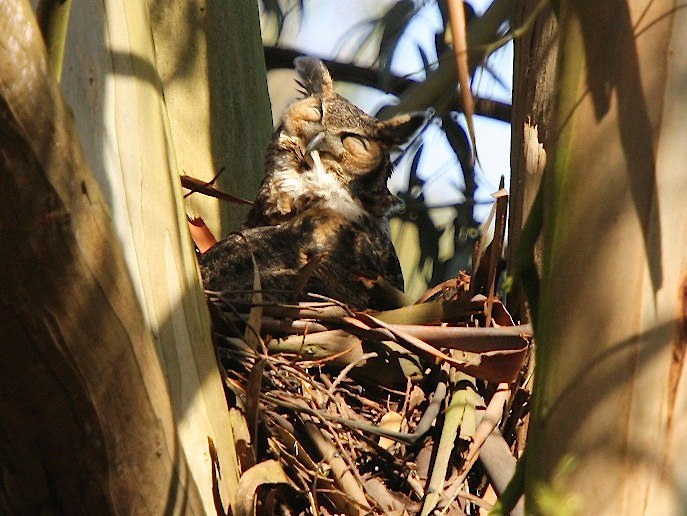
    Owl nesting in eucalyptus, courtesy urbanwildness.com
    Owl nesting in eucalyptus, courtesy urbanwildness.com

These studies have left nativists with few tools to justify the eradication of non-native plants.  We can see the development of the FIRE!! cover story in the archives of the conferences of the California Invasive Plant Council.  In 2004 Cal-IPC held a workshop regarding exotic trees and shrubs.  Over 30 representatives of major managers of public lands attended, such as National Park Service, San Francisco’s Natural Areas Program, Marin County Open Space, etc.  The record of this meeting reflects the dependence upon fire to justify the eradication of non-native shrubs and trees:  “Golden Gate National Recreation Area:  ‘inform public ahead of time; use threat of fire danger to help build support for invasive plant removal projects.’”  The Golden Gate National Recreation Area—a National Park–advises other land managers to frighten the public into accepting the loss of their trees. 

Subterfuge is also recommended to land managers to hide the eradication of shrubs and trees from the public:  “To avoid public upset, drilling around into tree buttress roots and injecting 25% glyphosate…Trees die slow and branches fall slowly, so won’t pose an immediate hazard.”  In other words, land managers were advised to kill trees using a method that won’t be visible to the public. 

Perhaps most disturbing of all is that those who attended this workshop admit that they don’t really know if eucalyptus trees are more flammable than native vegetation and some doubt that they are:  “People are afraid of fire.  Help them understand Eucalyptus trees and other invasive plants are very fire hazardous.  Is there any solid research about Eucalyptus and fire?  Are Eucalyptus and brooms any greater fire danger than native chaparral?”  In other words, even those who wish to destroy non-native shrubs and trees seem to understand that fire is a cover story for which no supporting evidence exists. The evidence has been fabricated to support the cover story.

We now seem to live in a fact-free world in which various interests can make things up and distribute them on the internet with impunity.  The mainstream press is dying and is being replaced by fact-free social media.  If we are to protect ourselves from such manipulation, we must drill down into these storylines.  In the case of eucalyptus, we have debunked the myth that it is more dangerous than the replacement landscape.  Now it’s up to us to disseminate that information far and wide as an antidote to fear-driven nativism. 


  1. Zach St George, “Burning Question in the East Bay Hills: Eucalyptus is flammable compared to what? Bay Nature, October-December 2016
  2. James Hall, et. al., “Long-distance spotting potential of bark strips of a ribbon gum (Eucalyptus viminalis), International Journal of Wildland Fire, 2015, 24, 1109-1117
  3. Eunmo Koo, et. al., “Firebrands and spotting ignition in large-scale fires,” International Journal of Wildland Fire, 2010, 19, 818-843

California’s Urban Greening Grant Program: An opportunity to speak for the trees

In September 2016, the State of California passed a law that allocated $1.2 billion to create a cap and trade program to reduce Greenhouse Gas (GHG) emissions.  The California Natural Resources (CNR) Agency was allocated $80 million to fund green infrastructure projects that reduce GHG emissions.  The CNR Agency is creating an Urban Greening Program to fund grants to cities, counties, and other entities such as non-profit organizations in URBAN settings.  75% of the funding must also be spent in economically disadvantaged communities.

These grants must reduce GHG emissions using at least one of these specific methods:

  1. Sequester and store carbon by planting trees
  2. Reduce building energy use from strategically planting trees to shade buildings
  3. Reduce commute, non-recreational and recreational vehicle miles travelled by constructing bicycle paths, bicycle lanes, or pedestrian facilities.

Clearly, planting trees is one of the primary objectives of this grant program.  That sounds like good news for the environment and everyone who lives in it until you read the draft program guidelines which are available HERE.

Unfortunately, as presently drafted, the grant program will NOT increase California’s urban tree canopies, because the program requires the planting of “primarily” native trees.   That requirement is explicitly stated several times in the draft guidelines, but there are also places in the draft where the reader might be misled to believe the requirement applies only to plants and not to trees.    Therefore, I asked that question of the CNR Agency staff and I watched the public hearing that was held in Sacramento on October 31st.  CNR Agency staff responded that the requirement that grant projects plant “primarily” native species applies to both plants and trees.

The good news is that the grant program guidelines are presently in draft form and the public has an opportunity to comment on them.  If you agree with me that we need our urban forest, you will join me in asking the CNR Agency to revise their grant program guidelines to remove restrictions against planting non-native trees.   Public comment must be submitted by December 5, 2016.  Send comments to:  Urban Greening Grant Program c/o The California Natural Resources Agency Attn: Bonds and Grants Unit 1416 Ninth Street, Suite 1311 Sacramento, CA 95814 Phone: (916) 653-2812, OR Email: urbangreening@resources.ca.gov Fax: (916) 653-8102

Here are a few of the reasons why limiting trees to native species will not increase tree canopies in urban areas in California:

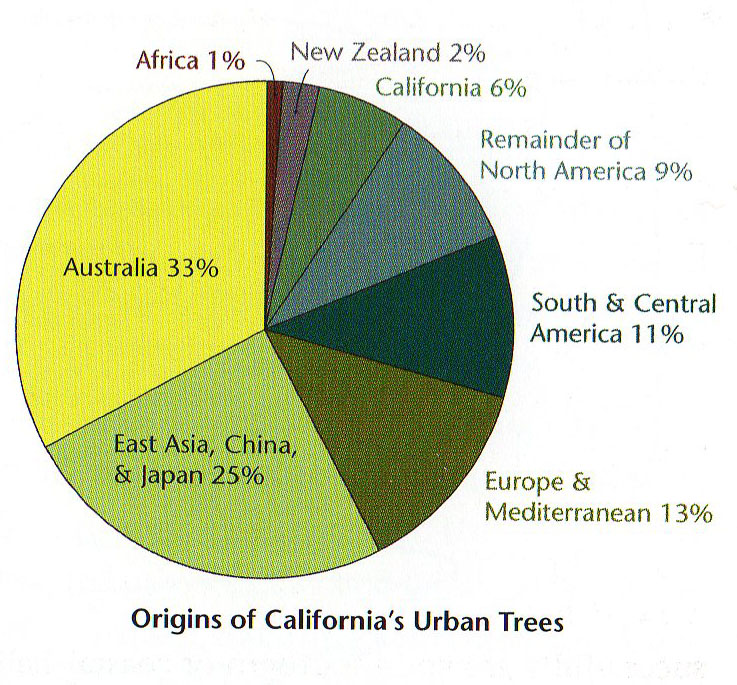
Many places in California were virtually treeless prior to the arrival of Europeans.  Non-native trees were planted by early settlers in California because most of our native trees will not grow where non-native trees are capable of growing.  According to Matt Ritter’s California’s Guide to the Trees Among Us, only 6% of California’s urban trees are native to California:

urban-trees-origins

Draft guidelines for the Urban Greening grants refers applicants to the California Native Plant Society for their plant palette (see page 24 of guidelines).  If applicants use this as the source of their plant palate, they will find few trees on those lists.  This is another way to understand that if you want trees in California, most of them must be non-native.

Most California native trees are not suitable as street trees because of their horticultural requirements and growth habits. 

  • The approved list of street trees for the City of San Francisco includes no trees native to San Francisco.  There are many opportunities to plant more trees in San Francisco because it has one of the smallest tree canopies in the country (12%).  The US Forest Service survey of San Francisco’s urban forest reported that 16% are eucalyptus, 8% are Monterey pine, and 4% are Monterey cypress.  None of these tree species is native to San Francisco.
  • The approved list of street trees for the City of Oakland includes 48 tree species of which only two are natives. Neither seem appropriate choices:  (1) toyon is a shrub, not a tree and the approved list says it will “need training to encourage an upright form.”  It is wishful thinking to believe that toyon can be successfully pruned into a street tree; (2) coast live oak is being killed by the millions by Sudden Oak Death and the US Forest Service predicts coast live oaks will be virtually gone in California by 2060.

coast-live-oak-current

coast-live-oak-2060

Climate change requires native plants and trees to change their ranges if they are to survive.  One of the indicators of the impact of climate change on our landscapes is that 70 million native trees have died in California because of drought, insect infestations, and disease.  The underlying cause of these factors is climate change.

  • 66 million native conifers have died in the Sierra Nevada in the past 4 years because of drought and native bark beetles that have spread because winters are no longer cold enough to keep their population in check.  Update:  A new survey of California’s trees now reports that 102 million trees are now dead.  That’s one-third of California’s trees.  62 million trees died in 2016 alone, which is an accelerating rate of death.  These trees are still standing and they pose an extreme fire hazard.  These are NATIVE TREES being killed by a combination of drought and NATIVE BARK BEETLES.  
  • 5 million native oaks have died since 1995 because of Sudden Oak Death. A study of SOD by University of Cambridge said in spring 2016 that the SOD epidemic is “unstoppable” and predicted that most oaks in California would eventually be killed by SOD. The Oak Mortality Task Force reported the results of its annual survey for 2016 recently.  They said that SOD infections increased greatly in 2016 and that infections that were dormant in 2015 are active again.  This resurgence of the pathogen causing SOD is caused by increased rain in 2016.
  • Scientists predict that redwood trees will “relocate from the coast of California to southern Oregon” in response to changes in the climate.

If you care about climate change, please join us in this effort to create a grant program that will expand our urban forests and reduce the greenhouse gas emissions that are causing climate change.  Restrictions against planting non-native trees must be removed from grant guidelines in order to increase our tree canopies in California’s urban environments. 

Update:  Final guidelines for California State Urban Greening grant applications were published on March 1, 2017, and are available HERE.  That program will distribute $76 million to cities that reduce greenhouse gas emissions by planting trees or reducing fossil fuels emissions.  The deadline for grant applications is May 1, 2017.  There will be a workshop for applicants at the Lake Temescal Beach House (6500 Broadway, Oakland) on March 27, 2017.

Final guidelines are improved from the draft guidelines.  Draft guidelines would have required applicants to plant only native trees.  The State agency received 62 public comments on the draft.  27 of those comments asked that the guidelines be revised to permit planting non-native trees as well as native trees.  One of the 27 comment letters was signed by 33 tree-advocacy non-profit organizations. 

Final guidelines reflect the public’s opposition to prohibiting the planting of non-native trees, which would have severely limited the number of trees that would survive.  Native trees have specific horticultural requirements that limit the places where they can be planted.

Final guidelines now say that only “invasive” trees cannot be planted by grant projectsIf the granting agency uses the classification of the California Invasive Plant Council to determine “invasiveness,” applicants would not be allowed to plant 15 specific tree species.  However, the California Invasive Plant Council is revising its inventory of “invasive” plants, so we don’t know if the number of “invasive” trees will be increased by that revision.

Update #2:  The California Invasive Plant Council has published the proposed revision to its list of “invasive” species.  There were about 200 plants on the existing list.  Now they propose to add another 99 species.  Ten of those species are added based on their current impacts in California.  One of the ten is a tree (glossy privet).  87 of the species are proposed for addition “based on risk of becoming invasive” in the future in California.  Twelve of the 89 potentially invasive plants are trees. 

There were 15 trees on the original list of “invasive” species.  That means that the revised list of “invasive” trees will now include a total of 28 trees that cannot be planted by Urban Greening projects that are applying for grant funds. 

The revised inventory of “invasive” plants was just published.  Public comments can be submitted on the proposed revisions by May 8.  The proposed revisions and how to make comments on the proposal are available HERE

Personally, I object to the introduction of a new category of 89 plants that are not presently having any “impact” according to Cal-IPC but are predicted to in the future.  These revisions will increase the inventory of “invasive” plants by 50%.  It represents a significant escalation of the crusade against non-native plants in the California. 


Nativist bias is not entirely absent from the revised guidelines for the Urban Greening program.  Applicants are required to explain why they plan to plant non-native trees.  However, applicants are also required to have a certified arborist or comparable horticultural expert certify that the plant list is appropriate to the planting location.  Hopefully, that will prevent the wasteful planting of native trees where they will not survive. 

What will the East Bay Hills look like if our forests are destroyed?

If the owners of our public lands in the East Bay hills are finally successful in implementing their plans to destroy our urban forest, what will the hills look like?  The land owners tell us in their written plans that the forests will be replaced by grassland with islands of shrubs.  They also say they will preserve existing oak-bay woodlands.  However, their plans make no commitments to plant anything.  They predict that this conversion will take place naturally, without further intervention.

The Sierra Club, which advocates for the destruction of our urban forest, is more specific about their desire for a native landscape.  The Sierra Club says, “Existing native plants in the understory will be preserved and replaced naturally. Grass and shrub land will be restored…with more naturally fire-resistant native trees and plants.”

Are these realistic predictions for the future of the East Bay hills if most of the non-native forests are destroyed?  That’s the question we will ponder today.

Grassland in California

We predict that grassland is the likely immediate outcome of tree removals.  The grassland will quickly succeed to shrubs in the absence of grazing and periodic fires.  However, that grassland won’t be native because grassland in California has not been native for over 150 years.  Here are a few of the sources of that information:

  • “…only about 1% of [California] grassland today could be considered pristine [AKA native]” (1)
  • “Non-native species are widespread and often the dominant plants in California’s grasslands…it is clear that annual grasses…are dominant over enormous portions of the state.” (2)
  • David Amme is one of the co-founders of The California Native Grass Association and one of the authors of East Bay Regional Park District’s “Wildfire Hazard Reduction and Resource Management Plan” at a time when he was employed by EBRPD. In an article he wrote for Bay Nature he lists a few small remnants of native grasses in the East Bay and advises those who attempt to find them, “As you go searching for these native grasses, you’ll see firsthand that the introduction of the Mediterranean annual grasses is the juggernaut that has forever changed the balance and composition of our grasslands.” (3)
  • In a video recording of a lecture given to ecology students at UC Berkeley, Professor Joe McBride tells the students that an inventory of grassland in Strawberry Canyon found that it is 97% non-native annual grasses. (4)
Trees were destroyed here by UC Berkeley over 10 years ago. The landscape is now non-native annual grasses. This is the typical outcome of tree removals on sunny hills without a water source.
Poison hemlock and thistle are 8 feet tall where not sprayed with herbicide. Site 29, May2016.
Along the roads and riparian corridors, where trees have been destroyed, tall weeds reign.  Poison hemlock and thistle are 8 feet tall where not sprayed with herbicide. Site 29, May 2016.

Why were native perennial bunchgrasses quickly replaced by non-native annual grasses?

David Amme explains why non-native annual grasses quickly replaced native bunch grasses in his article in Bay Nature: 

“The Mediterranean annual grasses grow faster and bigger than the native bunchgrasses. Established annual grass stands produce ten times the amount of seed as do native grass stands of equal area, and most important, their seeds are five to ten times larger, giving them a big jump on establishment and fast growth. Another advantage they have is their shallow, weblike root system, which quickly exploits the moisture near the surface of the soil, rendering tiny, slow-growing native perennial seedlings helpless.(3)

Serpentine Prairie being weeded by hand. Mowing will be required during the restoration. Prescribed burns will be required to maintain it as prairie.
Serpentine Prairie on Skyline Blvd is one of the small remnants of native bunch grasses in the East Bay.  Serpentine soil suppresses the growth of annual grasses.  About 8 years ago 500 trees (including many oaks) were destroyed there to begin a restoration attempt.  It is being weeded by hand. Mowing will be required during the restoration. Prescribed burns will be required to maintain it as prairie.

Stromberg says land use changes were also instrumental in the replacement of native grasses by non-native annual grasses:

“…drought, combined with intensification of crop agriculture and intensive year-round livestock grazing resulted in a dramatic decline in native perennial grasses over a relatively short period.  Diaries of early explorers such as John Muir also suggest that dramatic change occurred relatively rapidly in the mid 1800s.  Native species were presumably replaced with non-native annuals whose seeds had become widespread as a result of transport by livestock, contaminations of seed crops, or active planting as forage crops.”  (2)

European annual grasses evolved with a 40,000 year history of association with human disturbance in Eurasia and are therefore pre-adapted to take advantage of a highly disturbed environment such as agricultural and urban environments.  They are also much more drought tolerant than California native grassland.  (2)

Another factor in the dominance of non-native annual grassland is that many are known to be capable of transferring atmospheric nitrogen into the soil (called “nitrogen-fixers”). Modern burning of fossil fuels has increased atmospheric nitrogen levels.  These two factors combine to increase levels of nitrogen in the soil.  High levels of nitrogen in the soil “promotes fast-growing exotic annual grasses to the exclusion of native species.”  (2)

What are the prospects of restoring native bunch grasses in the Bay Area?

Given the competitive advantages of non-native annual grasses, is it realistic to expect native bunch grasses to “naturally” colonize the landscape when the forests are destroyed without being planted?  Probably not.

Stromberg reports on 18 grassland restoration projects on 943 acres in California in California GrasslandsAll eighteen of those projects planted native plants after using various methods to eradicate non-native annual grasses.  78% of the projects used herbicides.  61% of the projects also used grazing.  56% of the projects also used some combination of mowing, disking, or burning.  11% of the projects also irrigated.  None of these projects resulted in exclusively native grassland and none predicted permanent return of native grassland.  (2)

Dunnigan Test Plot, August 2011. The result of an eight-year effort to restore native grassland. Does it look "biodiverse?" ecoseed.com.
Dunnigan Test Plot, August 2011. The result of an eight-year effort to restore native grassland. Does it look “biodiverse?” Courtesy ecoseed.com.

We reported on a project in which nearly $500,000 was spent to convert 2 acres of non-native annual grasses to native grasses over a period of 8 years.  Every possible combination of planting and eradication was used.  When they ran out of money, they described their success as 50% native grasses that were predicted to last for 10 years.

We turn to David Amme again to describe the prospects of converting non-native to native grassland:

“…the Mediterranean annual grasses are a permanent part of the Californian grasslands, and they now are as much a part of California’s grasslands as the native perennial grasses once were. The time is long overdue for an official naturalization ceremony. Despite the losses suffered by native plants in the face of exotic grasses, the East Bay annual grasslands remain a tremendously productive ecosystem, in terms of producing great volumes of both forage and seed.”  (3)

And apparently East Bay Regional Park District agrees with that assessment, judging by this sign posted at Inspiration Point in Tilden Park:

Sign at Inspiration Point, Tilden Park:
Sign at Inspiration Point, Tilden Park:  “By the 1860s [native grasslands] were largely replaced by Mediterranean grasses –‘supercompetitors’ that can be managed by grazing or burning, but never eliminated.”

 And the future of grassland is bleak

Researchers at Stanford University conducted a study of the future of grasslands in California by mimicking carbon dioxide and temperature levels that are predicted in the future: “In the course of a 17-year experiment on more than 1 million plants, scientists put future global warming to a real-world test.”

Here is what they learned: “The results aren’t pretty…the plants…didn’t grow more or get greener. They also didn’t remove the pollution and store more of it in the soil…Plant growth tended to decline with rising temperature….grassland ecosystems will likely not be able to tolerate the higher temperatures and increased drought stress.” (5)

Bay Nature published an interview with Elizabeth Hadly, Stanford University Paleoecologist and recently appointed faculty director of Stanford’s Jasper Ridge Ecological Reserve, where that research study was conducted.  Professor Hadly told Bay Nature, Global change is in motion and there is no going back, no ‘restoration’ to some historic state.  I want to anticipate the future.  How do we anticipate the future of the nature reserve in this place?”  (6)

We agree with Professor Hadly.  In a rapidly changing climate, conservation efforts should look to the future, not to the past.  The past is increasingly irrelevant to conservation.

Ignorance or Strategy?

Why does the Sierra Club believe that our urban forests will be replaced by native grassland?  Are they ignorant of the fact that our grassland is almost entirely non-native annual grassland?  Are they unaware of the fact that none of the owners of our public land in the East Bay has any intention to plant native plants?  Are they unaware of the competitive advantages of non-native grasses and the notorious failures of attempts to convert grassland from non-native to native?

Or is their ignorance actually a strategy?  Do they want to seduce their followers into believing that destroying non-native trees will result in the return of a native landscape?

We don’t claim to know the motivation of those who demand the destruction of our urban forest.  But we know this:  destroying our urban forest will not magically produce a native landscape.  Claims that it will are either dishonest or delusional.

In our next post we will address the claim that oak woodlands will also expand as a result of destroying our non-native forests.  Preview:  the claim that oak woodlands will expand is also delusional.


  1. Alan Schoenherr, A Natural History of California, UC Press, 1992, page 520
  2. Mark Stromberg, et. al., California Grasslands, UC Press, 2007, page 67
  3. David Amme, “Grassland Heritage,” Bay Nature, April 1, 2004
  4. https://youtube/aBnvjDFT6X0
  5. http://www.dailymail.co.uk/sciencetech/article-3774958/Future-climate-change-field-test-doesnt-make-Earth-greener.html
  6. “Elizabeth Hadly Turns to the Future,” Bay Nature, October-December 2016