Dr. Scott Carroll: Ecological communities rapidly adapt to new species

We are republishing an article from the San Francisco Forest Alliance with permission.  This excellent summary of Dr. Carroll’s presentation was approved by Dr. Carroll.  Dr. Carroll is a leader in the scientific community in identifying rapid evolution as a mechanism which enables introduced species to rapidly adapt to their new environment as well as the ability of their new neighbors to adapt to them.


Dr. Scott Carroll of UC Davis, and the founder of the Institute for Contemporary Evolution in Davis, spoke at the Commonwealth Club as part of the series “The Science of Conservation and Biodiversity in the 21st Century.” His main message:

Mixed communities, consisting of non-native and native species of plants, animals and other organisms, are here to stay. We need to find ways to live with these new neighbors. Once they are introduced, they will evolve, and so will the species that were already there. Trying to eradicate “invasive” and non-native species is expensive, likely to cause unforeseen problems, and have uncertain success – in part because evolution will make a moving target of an introduced species.

Read on for notes from Dr. Carroll’s talk. (There are also links to his Powerpoint presentation, and to the audio recording from the Commonwealth Club.)


CONCILIATION BIOLOGY:
THE ECO-EVOLUTIONARY MANAGEMENT OF PERMANENTLY INVADED BIOTIC SYSTEMS

(Notes from a talk by Dr Scott Carroll)

Plants and animals have always moved around the planet, but gradually enough that the world had distinct bio-regions with their own indigenous species. About 500 years ago, shipping greatly increased the pace – people deliberately or inadvertently introduced species into new places. It’s what people do.

historical bioregions - dr scott carroll talk at commonwealth club 2014Invasion biology” as a discipline originated with Charles Elton’s 1958 book. The response to Invasion Biology is a deeply emotional one, coming from a sense of how an ecosystem should look and how species should interact. The transfer of species around the globe has been called the greatest ecological spasm since the extinction of the dinosaurs. But is it?

brown earthIn fact, there’s been a much more important change. The amount of wilderness on the earth’s surface has fallen sharply, from around 50% in the 1700s, to around 20% by the year 2000. The rest is cultivated or range lands or built-up. We need to look at invasion biology – permanently mixed communities of native and introduced organisms – in the context of that land use change.

These land use changes drastically altered the environment for all species, with a major impact on all species and ecological relationships. Natural selection picks new winners: Changed environments have different fitness criteria, so plants or animals that were successful before may become losers. If populations decline, it reduces their chances of evolving to meet the new environment: fewer individuals mean a smaller gene pool, fewer potentially beneficial random mutations, and fewer offspring. Some species go extinct.

But others don’t. They adapt and evolve and use the resources the new environment or new introduced species provide. Some players in these novel interactions have the capacity to solve their own problems, restoring more balanced kinds of ecological interactions than one would expect from the terms “invasion” and “takeover” and “destruction.”

DEFINING “INVASIVE SPECIES”

How do we define an “Invasive Species”?

It’s a species not native to a bio-region that are:

  • Introduced
  • Reproducing independent of our assistance (naturalized, in the case of plants) and
  • Very specifically, they are doing something that we do not like.

This means that it has to be defined with reference to who “we” are. The definition of “invasive” must include who is doing the defining.

In some cases there’s broad agreement. Nearly everyone agrees on fighting invasive disease-causing insects, for instance. In the case of plants and trees and animals, people may diverge sharply in their opinions. Eucalyptus is an example; those who dislike it make consider it invasive; others would disagree vehemently.

The ‘eradication’ arm of Invasion Biology – i.e. those looking to destroy introduced species, perhaps 90% of invasion biologists – is fighting a very difficult battle. It’s extremely expensive, and risks doing much more harm than good.

THE RISKS OF “ERADICATION”

What are the problems of Eradication policies? Here are 8 issues:

1. It’s extremely expensive, both in time and effort.
Even in cases that seem possible – eliminating rats on an island, for instance, it may be an uphill battle. The first 75% are easy to kill. The next 20% are more difficult. By the time you’re down to the last 5%, your team is exhausted and you’ve “spent $3.2 mn of your $2.7 mn budget.” You haven’t seen a rat recently, so you leave. And then – the 2% of the rats that remain reproduce and repopulate the entire island in five years.

2. It doesn’t necessarily solve the problem.
Even if you succeed in killing off the invader, it won’t necessarily bring back the ecosystem that existed before. For instance, soil conditions may have changed so instead of native plants returning, other non-native plants – or nothing at all – grows.

3. It can disrupt ecological systems.
For instance, an introduced predator may have been keeping an introduced plant-feeding prey species in check. Once the predator is eliminated, the prey may destroy vegetation and the ecosystem as it exists.

4. It can disrupt replacement ecological relationships that existing plants and animals may have developed with the “invaders.” They may be providing food, seed dispersal, pollination, cover and other ecosystem services. For instance, if a native plant species is declining because of climate change, an introduced species can provide food for birds, animals and insects.

Loggerhead_sea_turtle_hatchlings_caretta_caretta public domain5. Sometimes, the new species provide a new ecosystem service to existing species, and destroying them would hurt the native species too. For instance, beachside non-native trees may protect turtle hatchlings from artificial lights that can disorient them, and so improve their survival rates. Or the non-native species may be controlling a different non-native species that might otherwise become a pest.

6. Trying to kill off non-natives can drive them to evolve resistance to the agent used to kill them. This is a common problem when herbicides are widely used to kill “invasive” plants.

7. Killing non-natives may reduce biodiversity of the area by reducing the pressure on native species to diversify and become new species.

8. The new species may directly increase biodiversity in the area, and eradicating them reduces this biodiversity.

THE CAUTIONARY TALE OF THE MYXOMATOSIS VIRUS

rabbit public domain clipartA story that illustrates many of these problems is that of the myxoma virus, used to control Australia’s huge rabbit population.

The Iberian (or European) rabbit was introduced into Australia by Europeans in the 19th century, and eventually bred so prolifically that it started to destroy the environment. In the 1950s, the Australian government introduced the myxoma virus, a New World rabbit disease lethal to European rabbits. Initially, that killed 99.5% of infected rabbits, and the population plummeted.

But the surviving rabbits continued to breed until the next time the disease went around. With each successive outbreak, the mortality declined. Frank Fenner, the scientist overseeing the project, found that the virus was attenuating – becoming less lethal – while the rabbits were developing resistance to it. Eventually, each outbreak killed only 20% of the rabbits in the area.

In 1952, a landowner in France introduced the virus on his farm to control rabbits. Soon it spread across that country, and then to Britain, where it killed 95% of the rabbit population.

Large Blue Butterfly - wikimedia commons cca3 - PJC&coThis led to the extinction of the British population of the Large Blue Butterfly. The butterfly is an unusual species whose caterpillars mimic larvae of the ant species Myrmica sabuleti, so they get carried into the ant’s nests where they eat the larvae. Rabbits cropping meadow-grasses had kept them short, providing ideal conditions for the ants. With the rabbits gone, the grass grew, ants declined, and the Large Blue Butterflies vanished.

iberian lynx wikimedia commons cca25-klia Meanwhile, the myxoma virus also reached the Iberian peninsula, where it devastated the native rabbit population. The rare Iberian lynx, which depends solely on rabbits as a food source, became critically endangered, and the Iberian eagle – which also preyed on rabbits – declined sharply. Aquila_adalberti wikimedia commons cca3Officials are looking to vaccinate the wild rabbit population against myxomatosis.

Another unforeseen consequence occurred on Macquarie Island. This desolate Australian island was a breeding place for seals and sea-birds. Human introductions of rats (inadvertently), rabbits (for food), and cats (to combat the rats) impacted the sea-bird populations. The eradicators first introduced fleas to the island as a vector for the myxoma virus, and then the actual virus in 1978. Then they eradicated the cats. However, the cats had been hunting the rabbits, and now the rabbits multiplied out of control reversing years of conservation efforts. The myxoma virus had likely attenuated, and failed to control the rabbit numbers. The rabbits grazing destroyed the hillsides where the penguins nested, causing landslides that harmed their breeding success.

CONCILIATION WITH SOAPBERRY BUGS

The story of the soapberry bug is more encouraging.

Soapberries are a plant family with a number of separate species, two of which are invasive vines in Australia. They invade along water-courses, and grow over trees in those areas. One vine species reached Northern Australia around 1680; the other, much taller species arrived in Eastern Australia around in the 1920s and has become particularly damaging to the forests there.

soapberry bug smSoapberry plants have fruit of varying sizes with nutritious (to insects) seeds at the center. Soapberry bugs are specialized soapberry eaters, with long beaks to pierce the fruit and reach the seed. The beak-lengths of these bugs are evolved to fit the particular species of soapberry they prey on.

When the introduced soapberry plants arrived in Australia, the native soapberry bugs had beaks too small to use the new food source. But with time, they started to evolve.

In Eastern Australia, it took 30 years for the soapberry bug’s beak to evolve from 7 mm to 7.5 mm. That doesn’t sound like much, but an increase of 0.5 mm doubles the number of seeds the bug can reach.

In Northern Australia, where the bugs have had over 300 years to evolve, their beaks have grown from about 5.5 mm in length to around 8 mm – exactly the length they need to attack the introduced soapberry plant. They match as well as if the soapberry plant was native.

It’s the same species of bug.

One interesting experiment would be to see if breeding the two strains would help the Eastern bugs grow a longer beak and control the soapberry vines better. Dr. Carroll recommended stopping the plant eradication program in Northern Australia to protect the long-beaked soapberry bugs there while evaluating whether interbreeding the two bug strains could accelerate the evolution to slow the spread of the large vine in Eastern Australia.

MORE INFORMATION

Dr. Carroll stopped his presentation there because time ran out. But if you would like to see his PowerPoint slides, they are here (in ppt and pptx formats). The Commonwealth Club’s Audio recording of his talk is also linked here. (There’s a lively question and answer session at the end, which isn’t included in these notes.)

Powerpoint presentation in ppt format: S Carroll Commonwealth Club Jan 2014

Powerpoint presentation in pptx format:S Carroll Commonwealth Club Jan 2014 (2)

Audio recording from Dr Carroll’s Commonwealth Club talk: http://www.commonwealthclub.org/events/archive/podcast/scott-carroll-conciliation-biology-13014

Destroying trees causes erosion and landslide risk

We are republishing with permission a post from the Save Mount Sutro Forest blog.  At the end of the Save Sutro post we add an example of erosion in the East Bay caused by tree removals by UC Berkeley. 


When UCSF  (or SF Recreation and Parks Department) discusses “Safety” in the forests on Mt Sutro and Mt Davidson,  they generally focus on fire hazard (relatively low in these damp cloud forests), or on the risk of being hit by a falling tree (about half the risk of being hit by lightning). Tree removal could actually increase both those risks, by drying out the forest and by increasing windthrow – the risk of  the remaining trees being blown over.

But what we want to talk about in this post is landslide risk.

Two weeks ago, a horrible mudslide in Washington State engulfed homes and took lives. Some scientists think logging trees in the area contributed to the tragedy. This has implications for Sutro Forest, which grows on a steep hill – and also for the other San Francisco forest, Mount Davidson. Tree removal, ongoing and planned, could destabilize the mountainsides.

Mount Sutro forest viewed from southeast (Twin Peaks)LOGGING AND LANDSLIDES

On March 22, 2014, a huge landslide destroyed the small Washington community of Oso. Rain was of course a factor, as was erosion at the base of the slope. But it’s probable that tree-cutting above the slide area was an important factor too. An article in the Seattle Times quotes a report from Lee Benda, a University of Washington geologist. It said tree removal could increase soil water “on the order of 20 to 35 percent” — and that the impact could last 16-27 years, until new trees matured. Benda looked at past slides on the hill and found they occurred within five to 10 years of harvests [i.e. felling trees for timber].

There had been red flags before. The area was second growth forest, grown back from logging in the 1920s/30s. Over 300 acres were again logged in the late 1980s.

  • The first time regulators tried to stop logging on the hill was in 1988. But the owner of the timber successfully argued that measures could be taken to mitigate the risk. Eventually, the state only blocked it from logging some 48 acres, and the owners  gave in on that.
  • In 2004, new owners applied to cut 15 acres; when the Department of Natural Resources (DNR) objected, they halved the area and re-located the cut. DNR gave approval, subject to no work during heavy rain and for a day afterward. The tree-cutting finished in August 2005.
  • In January 2006, there was a major landslide 600 feet from the cut zone. The state built a log wall to shore up the slope.
  • The owners continued logging. In 2009, they removed 20% of the trees. In 2011, they removed another 15%. In 2014, the hillside collapsed.

The regulators were aware of the risk; they thought they were mitigating it with their restrictions and reaching a compromise with the owners. But it wasn’t enough. Destabilizing the mountainside is a long-term thing; the effects can show up in months, but it’s more likely to take years.

THE LESSON FOR SAN FRANCISCO

We know our hills are prone to slides. Here’s a geological map of Mt Sutro and surrounding areas. The blue zones show where there’s a potential landslide risk:

Blue areas show "potential for permanent ground displacements..."
Blue areas show “potential for permanent ground displacements…”

This next map is from a UCSF document. The pink areas and wiggly arrows indicate landslide risk. The double-arrows show where actual landslides seem to have occurred in the past.

Pink areas and wiggly arrows show landslide risk; double line arrows show past landslides.
Landslide under blue tarp. South Ridge at top left.

This slope in the Forest Knolls neighborhood was covered in a blue tarp for months after the slope became destabilized by tree removal…

This other blue tarp is on the hillside above Medical Center Way. It was installed soon after some extensive work on the trail in that area, with undergrowth being cleared and trails realigned. When we enquired why it was there, UCSF said there had been some rock slides, and this was a temporary solution.

This photograph was taken in March 2013. A year later, the blue tarp is still there.

blue tarp above Medical Center WayFor more evidence, there’s the ongoing situation in Twin Peaks, where erosion and rockfalls in rainy weather are ongoing. There, it matters less, because it’s not falling on homes. Landslides on Mt Sutro or Mt Davidson have the potential to damage homes.

rockslide
rockslide

YEARS OF INCREASED RISK

While it’s possible that a slide could happen within months of the tree-felling, it could also happen 6-8 years later as the root systems rot away. It could happen in any year until the trees grow back and conditions are right for water-logging. On that fateful Washington slope, the average was 5-10 years. No one wants to find out the average for San Francisco slopes.

We ask the land managers for these forests to stop removing trees and large shrubs that have successfully stabilized our hillsides for decades.


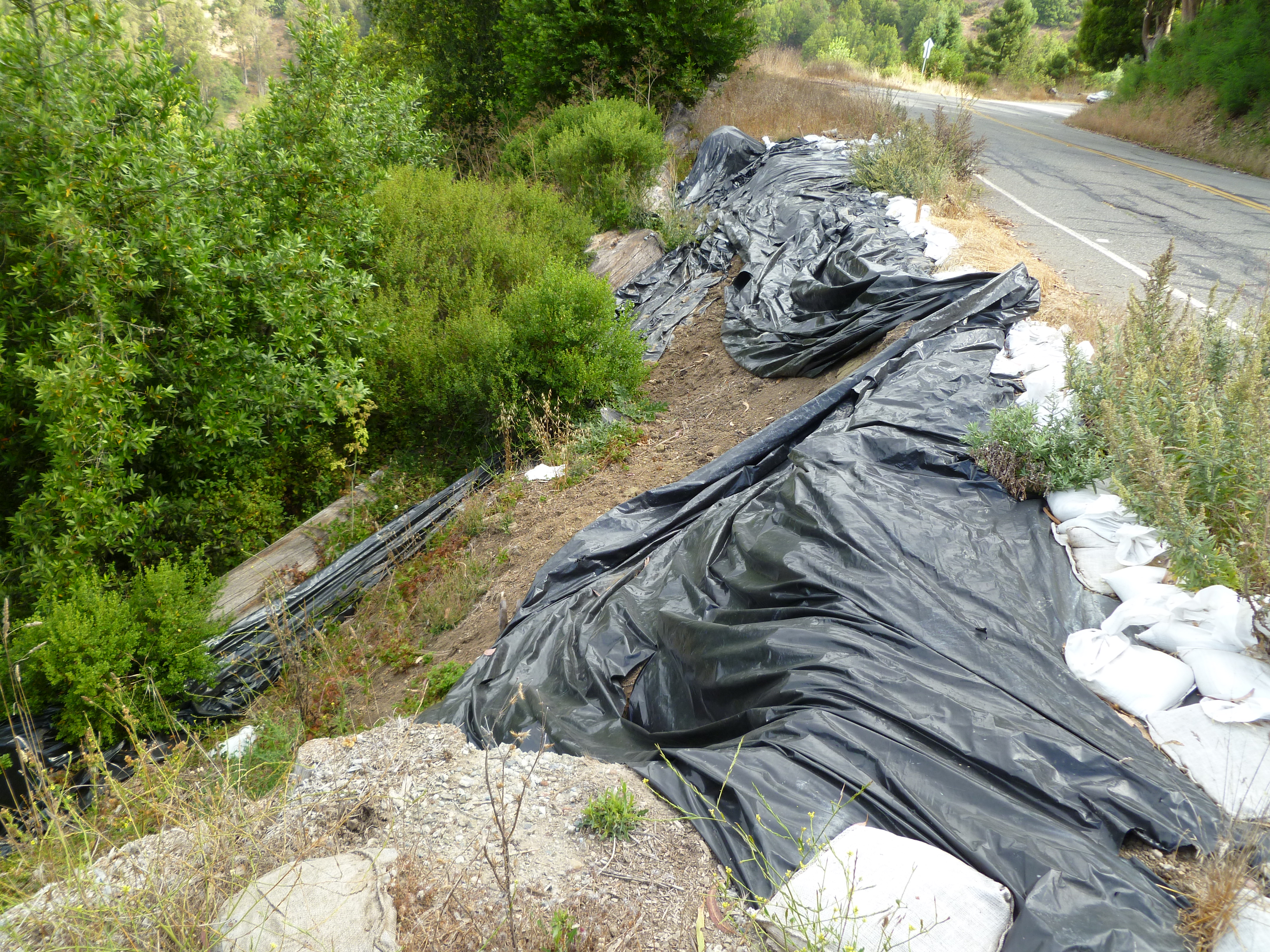
Addendum:  About 10 years ago, UC Berkeley removed about 18,000 trees on 150 acres of its property.  This is a photo of erosion that resulted from that tree removal on Grizzly Peak Blvd close to the intersection with Claremont Ave.  This erosion has been getting steadily worse for at least 5 years.  The only remediation has been plastic and sandbags, which are clearly not capable of preventing further erosion. 

Grizzly Peak Blvd, south of Claremont Ave.  Berkeley, California
Grizzly Peak Blvd, south of Claremont Ave. Berkeley, California

Californian-Australian Exchange

With a little help from our friends, we have discovered a new resource to help us understand why Blue Gum eucalyptus was brought to California from Australia.  True Gardens of the Gods:  Californian-Australian Environmental Reform 1860-1920 was written by an Australian historian, Ian Tyrrell.  Although we have read other accounts of the introduction of eucalyptus to California (most recently Jared Farmer’s Trees in Paradise), the perspective of an Australian on this history was new to us.

Those who despise eucalyptus often portray its introduction to California as a horrible mistake to be regretted and reversed.  Ian Tyrrell helps us to understand that there are actually good reasons for the introduction of eucalyptus that make sense in the context of the geographic and cultural realities of the historical period in which it was introduced. 

Historical geography of eucalyptus introduction

The gold rush in California and Australia occurred nearly simultaneously in 1849.  As these gold rushes played out, there was considerable travel of hopeful miners and their support structures between the two continents.  Naturally, they brought things with them that they considered useful to their enterprises and seeds of the Blue Gum were amongst their baggage from Australia to California.  Although there is speculation about the precise time and means of initial introduction, they remain theories.

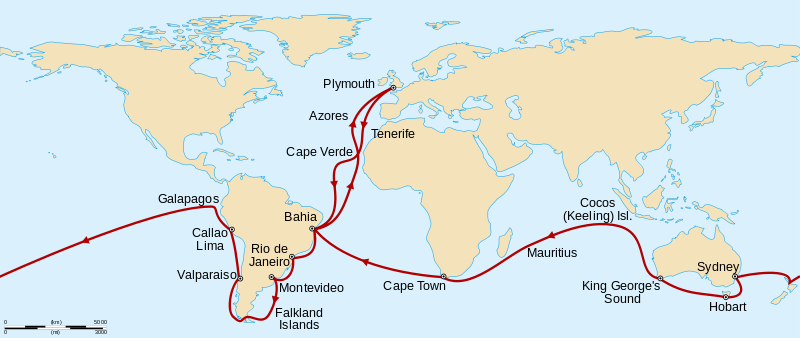
Presently we think of Australia as being far away because our primary means of transportation is air travel and that trip is much longer than the trip to the East Coast of the US.  However, at the time of the gold rush, travel by ship was the primary means of transportation and the trip to Australia by ship was much shorter than the trip to our East Coast.  The trip around the horn of South America was both long and extremely dangerous.  In Richard Henry Dana’s Two Years Before the Mast, we share his terror during that voyage in the 1830s.

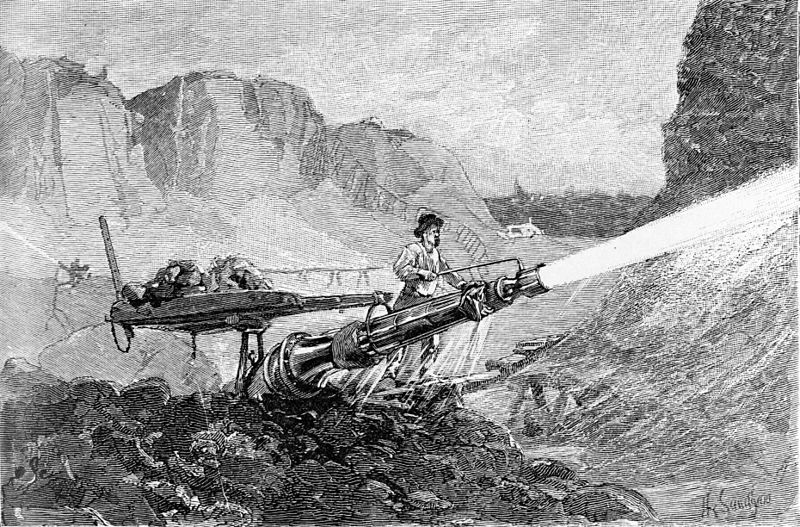
Hydraulic gold mining in California.

This shared experience of a gold rush meant that California and Australia also shared the environmental damage caused by the methods used to extract gold from the land.  Hydraulic mining was the primary method of extraction.  This method uses high-powered water pumps to erode riparian corridors to expose the gold in the soil.  Erosion is the result of this method of mining.

Ian Tyrrell tells us that the initial motivation for planting eucalyptus in California was to heal environmental damage caused by the gold rush.  Eucalyptus was an attractive choice for this task because it grows quickly and is well adapted to California which shares the same Mediterranean climate as much of Australia.  It seems ironic that the initial motivation for planting eucalyptus in California was to repair environmental damage, given that today the same trees are blamed for environmental damage by native plant advocates and mainstream environmental organizations such as the Sierra Club.

Our East Coast remained inaccessible to California until the completion of the transcontinental railroad in 1869.  The Panama Canal (completed in 1914) accommodated movement of large shipments of goods between the West and East coasts.

The cultural context

Tyrrell also introduces us to the intellectuals on both continents who were the environmentalists of the era of the gold rush.  George Perkins Marsh in America and Baron Ferdinand von Mueller in Australia were the environmental leaders of that period.  They were both committed to introducing species to their respective countries to improve the environment by creating “gardens of the gods”:  “These were pragmatic thinkers who leaned toward afforestation rather than preservation when the opportunity presented itself.  Early conservationists were, at bottom, advocates of a constructed landscape that would improve nature, not preserve.  In short, they were advocates for the garden concept.”   (1)

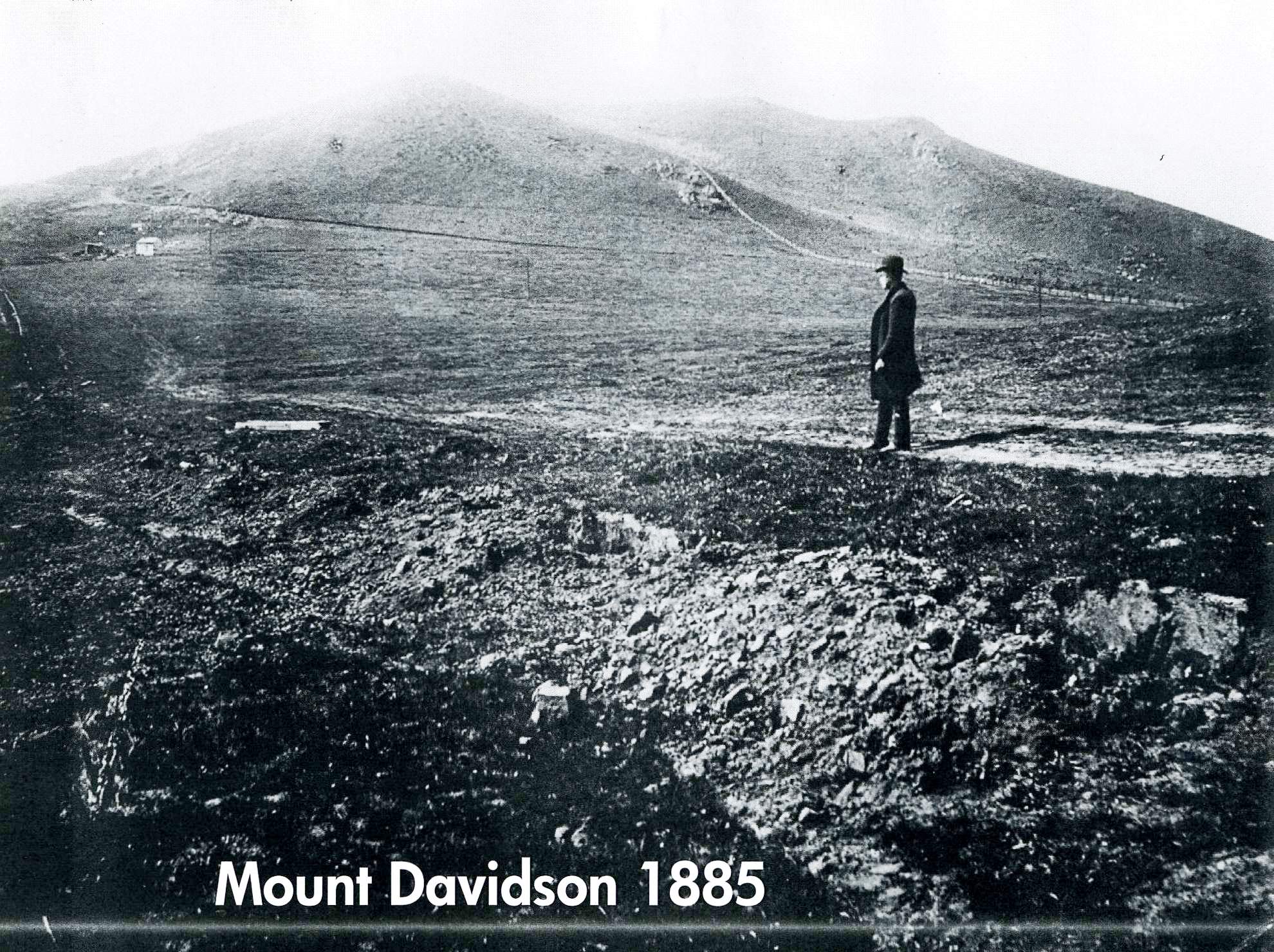
Mount Davidson, San Francisco, 1885.

In California, the desire to import tree species from outside California was supported by the fact that much of California is naturally treeless.  Many species of trees that are native to California are not well adapted to many microclimates.  For example, if you want trees on a windward facing hill along the coast of California, you must plant a non-native.  So, cultural preference for introduced trees was supported by horticultural requirements of native tree species.

Timber famine

A second phase of afforestation with eucalyptus occurred towards the end of the 19th century when there was widespread fear in America that we had severely depleted our timber resources and would soon experience a shortage of timber needed to build our new communities.  Eucalyptus was considered an attractive substitute for native timber sources because it grew quickly.  Plantations of eucalyptus were planted throughout California based on the belief that a valuable market for the timber was just around the corner.

This period of speculative investment in eucalyptus came to an abrupt end around 1914 for several reasons:

  • Young eucalyptus does not make suitable lumber for building purposes.  We have since learned that eucalyptus makes valuable lumber at about 80 years of age.  We have also perfected kiln-drying techniques that produce high-quality eucalyptus lumber.
  • The economic value of eucalyptus forest for timber was also reduced because of the limited ability of eucalyptus to regenerate naturally:  “The eucalyptus bore ‘seeds abundantly, but apparently the latter does not find, as a rule, the proper conditions for germination…Except with the aid of the hand of man, therefore, the eucalyptus will not sensibly encroach upon the treeless area’” (1)  (This is yet more evidence that eucalyptus is NOT invasive, as native plant advocates claim.)
  • The demand for timber declined precipitously when alternative building materials were developed such as iron and cement.

Australia on the receiving end

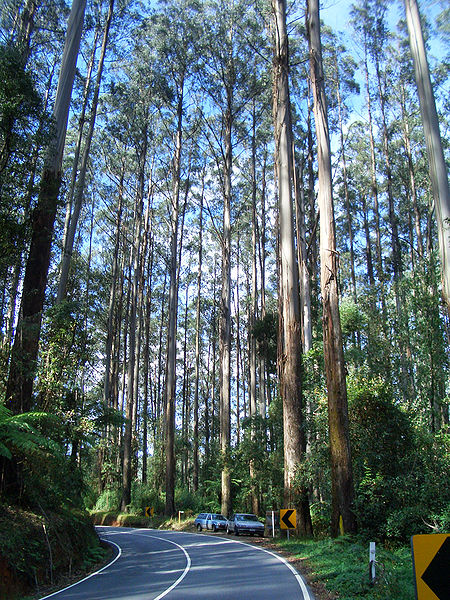
Australian eucalyptus forest (Eucalyptus regnans). Victoria, Australia

As eucalyptus was introduced to California, Australians were importing the Monterey pine for timber.  Monterey pine is planted all over the world for timber.  It is the predominant timber species in New Zealand, but it never became as popular in Australia because it is softwood.  Eucalyptus is a hardwood and Australian’s developed a preference for hardwood that could not be satisfied with Monterey pine.  Unfortunately, that preference for hardwood has decimated the old-growth eucalyptus forests of Australia.

There is a lesson in this for us.  One of the advantages of introducing non-native trees is to protect native forests.  If we use our non-native trees to fulfill practical needs such as lumber and firewood, we are taking the pressure off the need to destroy our native forests.  Eucalyptus is still planted in many developing countries where firewood is still needed for fuel.  Wouldn’t we rather that these countries burn fast-growing eucalyptus than their native forests?

What can we learn from the Californian-Australian exchange?

Environmentalism is a cultural construct.  Its meaning has changed and will undoubtedly continue to change because culture is dynamic, just as nature is dynamic.  Mid-Nineteenth Century environmentalism was not wedded to native species, as is contemporary environmentalism.  Fifty years ago, when Rachel Carson’s Silent Spring was published, pesticide use was considered harmful to the environment.  Now we find that mainstream environmental organizations are actively promoting the use of pesticides to support their demands for eradication of non-native plants and trees.

We tend to look back at historical ways of doing things—such as planting eucalyptus—with a condescending attitude: “How could they be so stupid?”  Another way to look at the past is to look at the historical context in which those choices were made.  If we had sufficient knowledge of the historical context, perhaps those choices would make good sense.

Finally, if we look around the world at what is being planted today, we must acknowledge that planting non-native tree species often has practical advantages.  Non-native tree species might grow where native species won’t grow and where we need trees for windbreaks, visual and sound screens, erosion and pollution control, carbon sequestration, etc.  Or non-native tree species might protect native species by fulfilling specific needs that would otherwise require the use of native species.

As we often do on Million Trees, we reach the conclusion that more knowledge often results in more tolerance.  Thanks to Ian Tyrrell for these insights and to our friends for alerting us to this valuable resource.


(1) Ian Tyrrell, True Gardens of the Gods:  Californian-Australian Environmental Reform, 1860-1930, University of California Press, 1999

“In Jeopardy: The Future of Organic, Biodynamic, Transitional Agriculture”

We are publishing a guest post by Virginia Daley and Fritzi Cohen of the Fearless Fund.  They explain that pesticides used by ecological “restorations” are having a negative impact on organic agriculture. 


The ever expanding war on “invasive species” is giving “green cover” to the widespread use of inadequately tested pesticides that threaten the health of the very soil and water that sustain all life.

Wherever man migrated he brought plants prized for food, fiber, medicine and ornament. With world exploration and trade, the exchange of flora and fauna became ever wider, and after 1492, the ecosystems of the continents were transformed.

Importation was encouraged by presidents and agencies such as the United States Office of Plant Introduction. The US Department of Agriculture planted the now vilified kudzu, and tamarisk for erosion control, fodder and other useful purposes. Today, 98% of our crops and many plants we think of as American as apple pie are actually from somewhere else –including the apples in that pie.

USDA photo
USDA photo

At the beginning of the 20th century, however, laws were passed “to protect crops and livestock from the wilds of Nature.” Mid-century, in a climate of war and fear of foreign attack, the theory of invasion biology branded alien species “invaders.”

National Invasive Species Council

But all-out war was declared on “invasive species” in 1999 with Executive Order 13112, which authorized billion dollar funds and a massive network of agencies to “rapidly respond” to “alien species whose introduction does or is likely to cause economic or environmental harm or harm to human health.” The National Invasive Species Council was created, whose co-chairs include the secretaries of Interior, Agriculture, and Commerce, State, Defense and Homeland Security, Treasury, Transportation, Health and Human Services as well as Administrators of the EPA, USAID, and the US Trade Representative. Programs coordinate and collaborate with federal, state, county and environmental organizations with a variety of funding sources. Washington State has one of the most sophisticated invasive species networks, and has cannibalized the commission on biodiversity.

More often than not, this war employs chemical weapons. Mike Ludwig exposes the very cozy relationship among government, conservationists and the biotech industry that manufacture herbicides in the Truthout Special Investigation: The Pesticides and Politics of America’s Eco-War. Pesticide profiteers have been involved in this offensive from the beginning. One might question whether the chemicals are merely a method of combat or motive for the war.

Ecologists have begun to raise objections to this approach. Some point out it is ideology rather than sound science that drives the targeting of certain species. Some reveal that many of these demonized species are not inherently harmful and in fact provide environmental services as water filters, soil cleansers, stabilizers, enhancers, protectors, and air purifiers. Others remind us the real drivers of plant  “invasions” are frequently man made: climate change, nitrogen eutrophication, increased ubanization and other land-use changes. Evolutionary biologists warn against shortsightedness: ecosystems are constantly changing. Species and communities naturally come and go.

And, of course, there is the warning against the use of dangerous compounds as a solution to perceived problems. As Timothy Scott writes in Invasive Plant Medicine, “[E]ven if the poisons are carefully applied (and they aren’t most of the time) they eventually contaminate the water, soil and air and enter the food chain, affecting microorganisms up through to our dinner plates.” Furthermore, these costly eradication efforts often fail, affect unintended species, (including nearby plants and bees) and actually create superweeds that then require more and stronger herbicides.

Non-native species have been intentionally introduced to hundreds of millions of acres in the US:

  • Wheat [from the Near East and Ethiopia] 58 million acres
  • Soybeans [from East Asia] 76.6 million acres
  • Sorghum [from Africa] 5.6 million acres
  • Corn [mostly genetically engineered and therefore from nowhere] 92 million acres.

Yet no one calls these monocultures, pesticide-purged of biodiversity, “invasive.”

Thus the label of “invasive species” is political, not ecological. It masks complex issues of land usage and legal questions. And it is exploited to justify an arsenal of control methods that may indeed cause-not prevent-economic, environmental and harm to plant, animal and human health.

Let’s examine some of the featured invasive non-natives in Washington State:

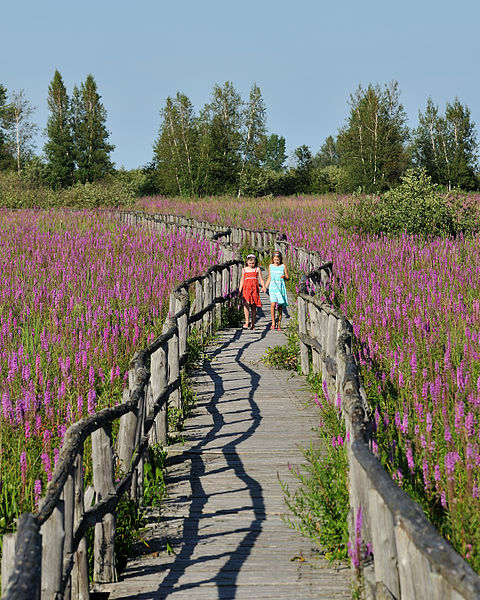
Purple loosestrife.  GNU Free
Purple loosestrife. GNU Free

In his paper, Should we care about purple loosestrife?, Claude LaVoie, professor of Environmental Management at Université Laval, Canada describes a massive media campaign to condemn purple loosestrife and refutes the “science” behind it. He calls the depiction of purple loosestrife in scientific studies “(lacking definition) far removed from that in newspapers (alarming)” describing this plant’s negative impacts on wetlands as “probably exaggerated” and pointing out that of the studies done most were somewhat biased, relied on anecdotal information and were not formally reviewed. He considers only one review to be really impartial, “and this one painted an inconclusive picture of the species.”

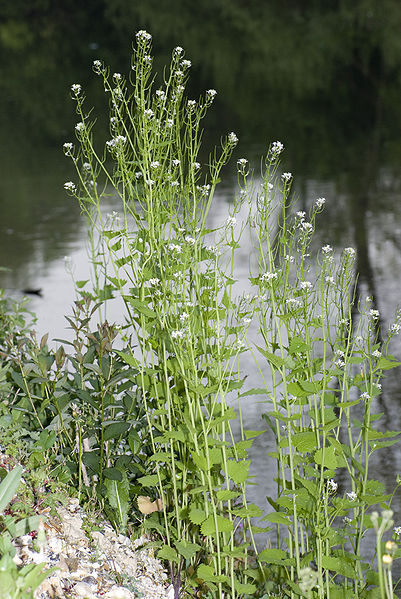
Though Washington State requires its eradication, edible garlic mustard contains more vitamin C than orange juice, more A than spinach, and shares the medicinal benefits of both garlic and mustard.

Garlic mustard.  GNU Free
Garlic mustard. GNU Free

On the Hoh River, Japanese knotweed is injected and/or sprayed with glyphosate and imazapyr in the name of salmon restoration. Despite this righteous intent, we have been unable to find any scientific support for Japanese knotweed’s interference with salmon. There is also an assumption that water quality and the water community are unaffected by chemically laced vegetation decaying on waterbanks. The impact of glyphosate and imazapyr on phytoplankton and marine organisms has never been scientifically examined. On the other hand, the virtues of Japanese knotweed have been ignored.  Long planted a along riverbanks for stability and shade, beekeepers value the flowers as an important nectar source when little else is flowering. This plant has been used for centuries as a gentle laxative and is an excellent source of the potent antioxidant resveratrol, and it is now used in treating Lyme disease.  It exemplifies Tim Scott’s caution that in attacking “invasives,” we may be “destroying potent medicinal remedies.”

Fritzi Cohen owns Moby Dick Hotel and Oyster Farm on Willapa Bay in Nahcotta, WA. For 20 years, she has been fighting the use of insufficiently studied pesticide combinations sprayed by the state and county that have contaminated her tidal flats and oyster beds in order to eliminate a non-native grass, Spartina alterniflora. This eradication project was based on politics, not science. Dr. James Morris, Director of Baruch Institute of Marine and Coastal Science, has demonstrated that contrary to the claims that this grass harms the ecosystem, it provides economic benefits that outweigh the costs of controlling it. This purge has cost taxpayers well over 25 million dollars, degrading Willapa Bay and certainly not helping the health of the ocean.

Chemical warfare campaigns are being waged against so-called “invasive species” on vast tracts of public, tribal, and conservancy land throughout the country which add to the proliferation of pesticides accompanying agricultural GMOs and habitat restoration.

Whether by drift, seepage, runoff or court order, it is an invasion of chemicals, not plants, we should be worried about. The escalating use of pesticides is putting the future of organic, biodynamic, and transitional agriculture in jeopardy. It looks to us as if this is a war on everything ORGANIC.

It is time to reexamine the underlying assumptions and motivations for the ‘war on invasive species’, consider its collateral damage, and explore creative rather than destructive responses to changes in our environment.

We must rely on science not self-interest in distinguishing harm from hype. And realize that the term ‘invasive’ can be arbitrary, ‘harm’ subjective and ‘safety’ unproven. We must abandon eco-illogical practices that throw precaution to the wind and water and soil and if controls are judged -based on fact not fear-to be necessary, we must use methods that safeguard the environment and all creatures in the food chain.

Short of stopping global trade and travel, preventing new introductions will be difficult at best and without reversing global warming species will be migrating and mutating to adapt to climate change.  And we are not returning to some imaginary ‘pristine’ Eden. The genie is not going back in the bottle.

Shouldn’t we embrace the possible benefit of these newcomers: as food, fiber, medicine,  biofuel, carbon sequestration, erosion control, coastline protection, new industry?

Before embracing “invasiveness” as a claim to virtue that justifies all means of extermination, perhaps we should reflect on the catastrophic changes following the invasion of the Americas by our own European culture.

Visit fearlessfund.info for details For color pictures of the plants described see: http://www.nwcb.wa.gov/

Virginia Daley, Acting Executive Director, Fearless Fund

Fritzi Cohen, President


We have added bold for emphasis, photos, and links to articles about some of the specific issues.  Thanks to Ms. Daley and Ms. Cohen for sharing their concerns with the readers of Million Trees.

What is “biodiversity?”

We are republishing an article from the San Francisco Forest Alliance with their permission and the permission of the author of the article, Professor Arthur Shapiro, UC Davis. 


 There’s been a lot of talk of ‘biodiversity’ in San Francisco recently. The city’s ‘Recreation and Open Space Element’ (ROSE) mentions it without clearly defining it. The Natural Areas Program claims to preserve it. There’s a new position, the Biodiversity Coordinator (currently Peter Brastow, formerly of Nature in the City) within San Francisco’s Department of the Environment.

One of our readers, puzzled by all the discussion, asked a simple question of UC Davis Professor Arthur Shapiro, who gave a talk at the Commonwealth Club a few days ago. Instead of the two-line answer they expected, he sent this detailed response — which he kindly permitted us to publish.

WHAT IS BIODIVERSITY? BY ARTHUR M.SHAPIRO
A buzzword. Biodiversity means whatever you want it to mean. I hate the word. Here’s why.

The following is from the introductory biology textbook we use at U.C. Davis, Life: The Science of Biology, (10th edition, Sadava et al., p.1229 — yes, I said p. 1229!):

“…the term BIODIVERSITY, a contraction of ‘biological diversity,’ has multiple definitions. We may speak of biodiversity as the degree of genetic variation within a species….Biodiversity can also be defined in terms of species richness in a particular community. At a larger scale, biodiversity also embraces ecosystem diversity–particularly the complex interactions within and between ecosystems….One conspicuous manifestation of biodiversity loss is species extinction…”

Got that?

The glossary at the back of the book defines “biodiversity hot spot” (itself ambiguous, conflating numbers of species and degree of endemism), but NOT biodiversity itself. One can see why.

Where did this verbal monstrosity come from?

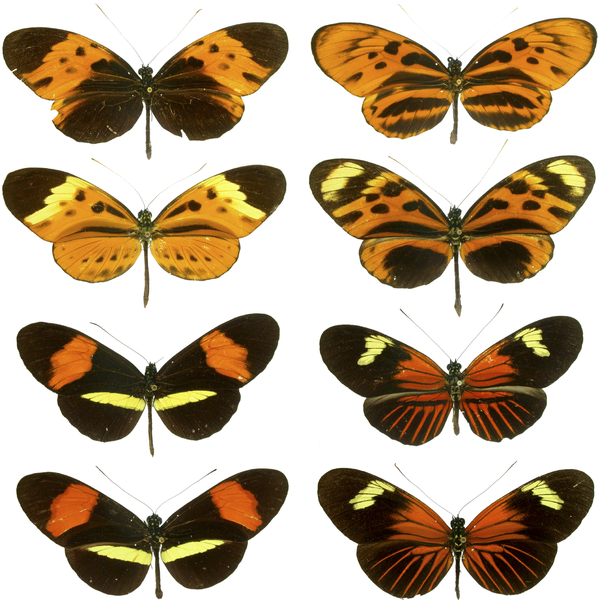
Heliconius mimicry.  Creative Commons Generic 2.0
Heliconius mimicry. Creative Commons Generic 2.0

The raw number of species in a defined area or system – what many of us call “species richness“–is a useful number. There are more species of butterflies in Brazil than in California, and more in California than in Alaska. That is true even if we pro-rate species number by area, and it is not trivial to ask why.

But there is more to biodiversity than mere numbers of species.  Ecologists are also interested in how individuals are divided among species, that is, the distribution of commonness and rarity among species. You can have a  “community” consisting of exactly two species.  It could have, say, 50 individuals of each species, or it could have 99 of one and 1 of the other–or any ratio in between. Does this matter? Why? What can those numbers tell us?

QUANTIFYING DIVERSITY – A DIVERSITY INDEX

A century ago a Danish plant ecologist named Christen Raunkiaer observed that there was a statistical regularity to this; he called it the “law of frequency.” In subsequent years it was found to hold for bird censuses and moths collected at lights, as well as for old-field plants. A whole series of mathematical models developed over the years attempted to account for this regularity by means of assumptions about how species interacted–competing for resources, for example.  These exercises were at the core of community ecology for several decades, and were seen as immensely important.

During World War II an applied mathematician named Claude Shannon, working on war-related communications problems at Bell Labs, developed a formula that concisely expressed the information content of a message. Ecologists discovered the Shannon formula in the 1960s and realized it could easily be adapted to give a single number that combined the number of species in a community and their relative abundances.

Thus whole communities could be compared efficiently, a potentially informative and useful tactic in trying to understand how multispecies systems worked. The number generated by the Shannon formula came to be called diversity, and the formula became the first and most widely-used of several diversity indices. I learned it in high school and I still use it in teaching. Diversity had two components, then:

  • Species richness and
  • “Equitability,” (the difference between a 50:50 and a 99:1 community).

And we were off and running. Now everything could be quantified with a diversity index: “foliage height diversity” in a forest canopy, or “aspect diversity” in moth faunas (how many wing shape-pattern themes could be recognized?). The number of uses and abuses of the term multiplied like rabbits. By 1971 things had gotten so bad that a paper was published caustically titled “The nonconcept of species diversity.” It was widely applauded for its candor.  Unfortunately, the author ended up inventing his own new measure of diversity–one he thought was better than the old ones.

MORE LEVELS OF ‘BIODIVERSITY’

But things could get worse. And they did. With the passage of the Endangered Species Act, which opened the door to protection of endangered subspecies (keep in mind that there is no concept of the subspecies; a subspecies is whatever some taxonomist says it is) and even “distinct population segments” (no one knows what that means), genetics got in on the diversity game. Now we would not be content with diversity at the species level; we needed to
get inside species.

In the scramble to define what might be protectable, a search was launched for “evolutionarily significant units.” With modern molecular-genetic tools, we quickly learned that taxonomic subspecies may be genomically nearly identical, while organisms indistinguishable by the naked eye may be wildly different. Defining diversity at the genetic level is still, well, challenging.

One very useful dimension of biodiversity is known as alpha, beta and gamma diversity:

  • Alpha diversity is species richness at the local level.
  • Beta diversity is a measure of how much the biota of different localities within a region differ among themselves–that is, how quickly species composition “turns over” in space [i.e. when you have many different little ecosystems next to each other].
  • Gamma diversity is at a large spatial scale.

The Bay Area has phenomenally high beta diversity in almost everything.

THE BOTTOM LINE

So what is biodiversity? It’s species richness, plus the distribution of abundance and rarity, plus the geography of all that, plus the amount of genetic variation in selected species of interest, plus whatever you please.

Somehow or other concepts of “quality” have gotten mixed in, too. When you clear-cut a redwood forest (which has very low species richness), the early-successional communities that develop on the site, which may be dominated by “invasive weeds,” will have both much higher species numbers and a richer distribution of species abundances than the forest they replaced. But early-successional communities don’t get any respect despite being more diverse and despite the supposition that biodiversity is good. Because they’re made up of the ‘wrong’ species–whatever that means.

Because biodiversity, after all, is only a buzzword.


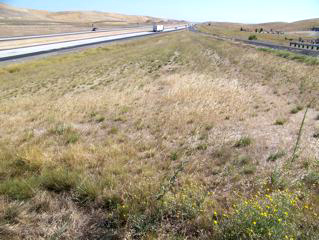
Dunnigan Test Plot, Augusst 2011.  The result of an eight-year effort to restore native grassland.  Does it look "biodiverse?"  ecoseed.com.
Dunnigan Test Plot, August 2011. The result of an eight-year effort to restore native grassland. Does it look “biodiverse?” ecoseed.com.

Addendum:  We have recently learned that Peter Brastow, San Francisco’s Biodiversity Program Coordinator, has applied for an Urban Greening Planning Grant for the City of San Francisco to fund the creation of a Biodiversity and Ecology Master Plan.  This grant application was submitted to the State of California’s Strategic Growth Council for $250,000.

This Master Plan would “identify land owners at the parcel level” (including your backyard;  see below*) for “consolidating ownership and/or management of wild lands and natural areas into as few departments as possible in order to facilitate coherent and higher quality habitat restoration and management.”  The Natural Areas Program “serves as a model for extending this work beyond Recreation and Park Department lands.”  (Quotes are directly from the grant application.)  In other words, the Biodiversity and Ecology Master Plan will extend the work of the Natural Areas Program to all open space in San Francisco, regardless of the current ownership of the land.

The complete document is available here:  Biodiversity Action Plan – grant application questions.final.  We find this a horrifying prospect.  The Natural Areas Program is extremely controversial because it destroys existing habitat, uses large quantities of toxic herbicides, and restricts access to designated trails.  Applying these policies into all open space in the city is a bad idea

– Million Trees

*The grant application says, “We will review the potential of rear yard open space, green roofs, green walls, landscaping, street trees, mini and pocket parks, and other urban design potential to enhance biodiversity in the urban landscape.”

Nest Predation: Be skeptical of conventional wisdom

We have fond memories of the good old days when we could read the newspaper without questioning everything we read.  That was over 15 years ago, before we became engaged in our effort to save our urban forest from being needlessly destroyed because it is predominantly non-native.  Since then we have learned the uncomfortable lesson that it is necessary to be skeptical about every conventional belief about nature.  Today we will examine two such beliefs related to how birds are killed in nature.

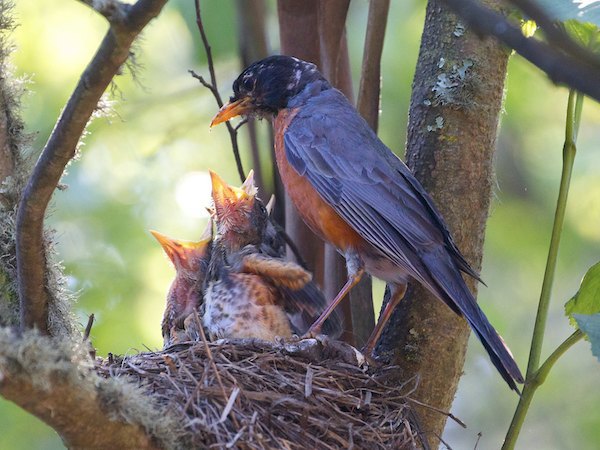
Robin and chicks.  Courtesy SF Forest Alliance
Robin and chicks. Courtesy SF Forest Alliance

Cats are presumed to be the primary predator of birds

To illustrate how pervasive the belief is that cats kill birds, we start with an internet search, “cats kill birds.”  Here’s a selection of articles available on the internet that make that claim:

  • “Cats kill 3.7 billion birds annually”
  • “Outdoor cats kill between 1.4 billion and 3.7 billion birds a year”
  • “Cats kill more than one billion birds each year”
  • “Cats are Birds No. 1 Enemy, Study Says”

We have examined the specific claim about the number of birds killed by cats in an earlier post, so we won’t repeat it here.  Instead, we will tell you about a meta-analysis of 8 studies of nest predators of song birds in North America.  These studies used video cameras to identify the predators of 242 depredation events, that is, nests in which the eggs were destroyed or nestlings killed.  These studies were conducted all over North America in different vegetation types, such as forests, shrublands, and grasslands.   These studies report that these were the predators of the nests:

  • 88 mammals
  • 86 snakes
  • 52 birds
  • 16 insects

Only one of the 88 mammals was a domestic cat.  The detailed list of all 242 predators is fascinating reading, which we recommend to you.

We understand that nest predation is not the only cause of bird mortality.  However, most bird death occurs in the first year of life according to the Cornell Laboratory of Ornithology, so clearly nest predation is an important factor in bird mortality.  And if video cameras find virtually no evidence that cats are nest predators, then we must wonder if cats are the bird killers they are made out to be.

Like so many other assumptions of nature lovers, we wonder if people are misled by their personal experiences.  In this case, most people live in urban areas and there are probably more cats in urban areas, so it seems probable that people are more likely to witness bird-death-by-cat than snakes, for example.  But empirical studies suggest that we should not extrapolate from that personal experience to conclude that cats are responsible for most bird mortality.  We will reserve judgment on that question, although we encourage cat owners to keep their cats indoors.

Are cowbirds another scapegoat for bird death?

We have also reported earlier that cowbirds are scapegoated for declining populations of song birds.  Cowbirds are nest parasites, which means they lay their eggs in the nests of other species of birds.  Their chicks are often bigger than the chicks of other species so they out-compete them in the nest, which implies that cowbirds could reduce the reproductive success of other species of birds.  In fact, a study of a 30-year attempt to eradicate cowbirds did not find evidence that killing over 125,000 cowbirds increased the population of a rare songbird.

Yellow-billed Cuckoo.  NPS photo
Yellow-billed Cuckoo. NPS photo

Today we tell our readers about a study of another nest parasite, the cuckoo, which could explain why killing nest parasites does not benefit other species of birds.  The study of cuckoos was conducted over a 16-year period.  It did not find evidence that cuckoos were reducing the population of other species of birds.  The study hypothesizes that cuckoo chicks emit a foul-smelling substance that repels nest predators, thereby protecting its nest mates as well as the cuckoo from nest predators.  So, the disadvantage of the cuckoo chick competing for food with its nest-mates is counteracted by the protection the cuckoo chick confers on the nest.

Lessons we have learned

In the past 15 years, we have learned to be skeptical.  Here are a few lessons we have learned from questioning everything we read and hear about nature:

  • People seem to have a knee-jerk need to scapegoat someone or something without thinking carefully about the underlying causes of the problems we observe in nature.
  • When we hear a particular animal being blamed for a problem in nature, we turn to the scientific literature for verification to determine if there is any empirical evidence that supports that assessment.  We frequently find no evidence to support the conventional wisdom.  Sometimes we find evidence that contradicts the assumptions.
  • Even then, we must keep in mind that science is always moving forward.  Science only hypothesizes and every hypothesis must be repeatedly tested.  Hypotheses are often overturned as we learn more.
  • We do not think it is ethical to kill one animal based on the assumption that it will benefit another animal.  Aside from the presumption of deciding which animal is worthy of living, we think these projects are often mistaken in the assumption that a particular animal will benefit.  We believe that nature is far wiser than we are.

Anthropocene: The Sixth Extinction

There have been five major episodes of massive extinctions in the 4.5 billion years that our planet has existed.  All occurred within the past 500 million years because there was little known as “life” prior to that time.  We are now experiencing the sixth massive extinction episode which began approximately 50,000 years ago with the dispersal of humans around the world.  The causes of prehistoric extinctions are not fully known, unlike the current episode.  We know that we are the cause of the sixth extinction, but we seem to be incapable of preventing it.

Prehistoric extinctions

The fifth and most recent massive extinction event occurred about 65 million years ago. It brought the age of dinosaurs to an abrupt end.  There were no humans or even our primate ancestors at that time.  The cause of that extinction was only recently discovered in the 1980s and even more recently accepted by most scientists.  There is now general agreement that the entire environment of the planet was radically and suddenly altered by the impact of a huge asteroid that landed on what is now the Yucatan peninsula in Mexico.  The impact raised a huge dust cloud that engulfed the earth and precipitated the equivalent of a nuclear winter, killing most vegetation and the animals adapted to a much warmer climate.  As with all massive extinctions, it took many millions of years for the environment to recover from that event and for plants and animals to slowly evolve adaptations to the new environment.

Update:  There is an alternate theory about the cause of the fifth extinction.  Huge volcanic eruptions in India may have been the cause, or perhaps a contributing factor.  Explained HERE.

Scale of dinosaurs compared to human. Creative Commons - Share Alike
Scale of dinosaurs compared to human. Creative Commons – Share Alike

The third and biggest extinction event occurred about 250 million years ago at the end of the Permian geologic period.  Paleontologists tell us that about 90% of all living plant and animal species died as a result of that extinction event.   Like the fifth extinction, the End-Permian extinction was precipitated by a sudden and radical alteration in the climate.  However, less is known about what caused that change in the climate.  Like our current round of climate change, there was a massive release of carbon into the atmosphere with a related drop in oxygen.  These changes caused temperatures to soar and the chemistry of the oceans to acidify.  Although there is not yet consensus amongst scientists, current speculation in the scientific community is that the changes in atmospheric conditions were the result of huge volcanic eruptions in what is now Siberia that emitted carbon dioxide into the atmosphere. (2)

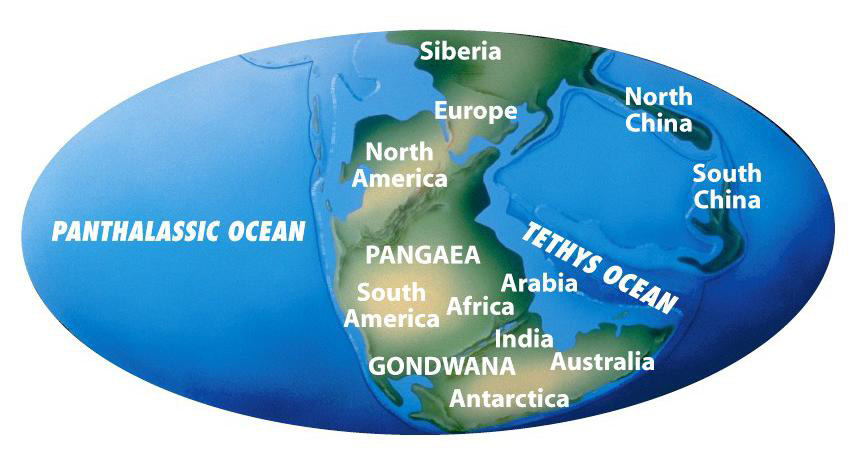
The first massive extinction occurred about 450 million years ago just 50 million years after the first land plants began to emerge on the planet.  In fact, the plants may have been a factor in the climate change that caused the extinction at the end of the Ordovician geologic period.  The cooling of the climate that caused the extinction was associated with a sharp drop in carbon dioxide levels which may have been partially the result of plants that convert CO₂ to oxygen.  The movement of the continents is also thought to have been a factor in the cooling because the breakup of the unified continent, Pangaea, changed the circulation of ocean currents which affect the climate on land.

All of the massive prehistoric extinctions were associated with sudden changes in climate, although human perception of time should not be imposed on the word “sudden.”  These events occurred over thousands of years and are only “sudden” when compared to the 4.5 billion years of the existence of our planet.

Extinctions of the Anthropocene

Genus Homo evolved into its only surviving species, Homo sapiens, about 200,000 years ago.  That’s us…humans.  However, we didn’t begin to extinguish plant and other animal species until our population grew and dispersed throughout the world.  And when we did, the first victims of our ability to hunt cooperatively with weapons were the megafauna, now largely gone from the world.

Megafauna are the huge animals now known primarily from their fossil remains that were so large they had no predators until humans brought their intelligence to the task of hunting which was previously limited by size and speed.  Megafauna reproduction wasn’t capable of keeping up with the pace of human hunting because they had long gestation periods, many years to sexual maturity, and small numbers of offspring.

Humans reached the Australian continent about 50,000 years ago.  When they arrived, Australia had its own megafauna:  giant kangaroos and other enormous herbivores.  Within 10,000 years the megafauna were gone and the landscape changed as grazing was significantly reduced:  “With no more large herbivores around to eat away at the forest, fuel built up, which led to more frequent and more intense fires.  This, in turn, pushed the vegetation toward fire-tolerant species.”  (1) Conversion to grassland savanna was also accelerated by the frequent fires intentionally set by humans to facilitate their hunting.

Eurasian Mammoth on left; American Mastodon on right. Creative Commons -dantheman9758

The same shift in vegetation occurred in North America when humans arrived about 13,000 years ago and American megafauna such as mastodons and giant sloths were hunted to extinction.  Grassland found in North America when Europeans arrived thousands of years later in the 16th century was therefore not adapted to heavy grazing and was largely destroyed by domesticated animals brought by early settlers.  Native Americans did not have domesticated animals. 

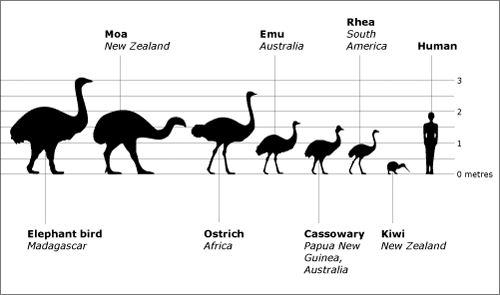
Similar scenarios played out around the world as humans arrived, most recently on the Pacific Islands where Polynesians arrived as recently as 1,500 years ago.  Huge flightless birds were found on New Zealand until they were hunted by humans just 500 years ago.

The second wave of extinctions caused by humans occurred during the age of exploration, beginning in the 16th century.  Humans wiped out many species of animals all over the world to feed their explorations and early settlements.  Huge turtles were brought on board ships to feed the crew on long voyages.  Passenger pigeons and American bison were killed by early settlers for food, leather, and sport.

As humans developed agriculture and domesticated animal-herding, hunting wild animals decreased.  In developed countries, extinctions today are largely by-products of western civilization, through mechanisms such as climate change and global exchange of diseases and pathogens…all equally deadly to other living things.

Modern Extinctions

There are no longer any physical barriers to the exchange of pathogens and pests.  Invasion biology is based on the fiction that such exchanges can be prevented or even reversed.  The most deadly invasions prove otherwise:

  • Amphibians, especially frogs, are being wiped out all over the world by a fungal disease that is traveling fast.  It is now known to exist in Central, South, and North America, as well as Australia.  The means of transmission is not yet known.
  • Bats are dropping dead by the tens of thousands primarily in New England as they succumb to a different fungal disease.  Nothing is known about how this disease is transmitted.  We should probably assume that it will also spread beyond its current range.
  • Insects, such as the emerald ash borer that is killing millions of ash trees in the United States, have been accidentally introduced as a result of global trade.

We should expect the loss of these species to reverberate throughout the food web, although little is known about the secondary effects of the loss of species.  For example, when bats are no longer available to eat insects, what will those insects eat?  And what will the animals that ate frogs eat when the frogs are gone?  These animals may be playing roles about which we know little and therefore cannot predict the consequences of their loss.

The spread of pathogens and insects that prey on plants could be related to climate change.  For example, the pine bark beetle is a native insect that has become a serious problem in the forests of North America because mild winters associated with global warming are not cold enough to cause an annual die-back of the insects.  The range of the pine bark beetle has expanded and is killing millions of acres of forests in North America.

Ecosystems are being fragmented by agricultural development.  Much of the Amazonian rainforest has been reduced to isolated fragments which are not large enough to support the diverse plants and animals that occupied intact ecosystems.

Climate change…the silent killer

When we look to the distant past, we can see how levels of carbon dioxide in the atmosphere have caused massive extinctions of plant and animal species.  Low levels of carbon dioxide have been associated with a cooling phase and high levels of carbon dioxide have caused temperatures to rise.  We are now in a period of a huge increase in carbon dioxide levels caused by the activities of humans, particularly emissions associated with the burning of fossil fuels and deforestation.  There is scientific consensus that the climate has changed and will continue to change as well as about the causes of those changes.  However, we still know little about the long-term consequences of climate change.

Coral reef. Creative Commons - Share Alike
Coral reef. Creative Commons – Share Alike

One consequence of increased levels of carbon dioxide is well known and that is the acidification of the oceans.  The laws of chemistry tell us that when carbon dioxide dissolves in water it forms carbonic acid.  Carbonic acid dissolves shells and coral.  Aquatic animals such as mussels, clams, oysters, crabs, and lobsters will be incapable of building the shells that protect their bodies when levels of carbonic acid increase.  Australian scientists report that coral cover of the Great Barrier Reef has decreased 50% in the past 30 years.  A paper published in 2008 predicted the imminent extinction of one-third of 800 reef-building species as a result of increased water temperature and acidity of the oceans.  An estimated one-half million to 9 million species “spend at least half their lives on coral reefs.” (1)

So why are we destroying trees?

As disturbing as it is to witness the death of plants and animals which are innocent by-standers to the choices made by humans, we have some sympathy and understanding for why our political system has been incapable of the fundamental changes needed to stop the process.  We burn the fossil fuels that emit carbon dioxide and other greenhouse gases to keep us warm in the winter and cool in the summer, to transport us to work and play, to power our industrial processes and many other vital functions.

But, we cannot understand why we continue to destroy millions of healthy trees (that we planted) essentially because they are out of fashion. These trees are storing tons of carbon that will be released into the atmosphere when the trees are destroyed and we will lose their ability to store carbon in the future.

We loved these trees as recently as 50 years ago.  Now many people have decided that they “don’t belong” because they aren’t native.  Eucalyptus is only one of many targets of this fad.  Norway maples are being destroyed in communities in eastern United States for the same reason.  And most of the trees being destroyed in the Midwest (because people wish to “restore” the prairie artificially maintained by Native American fires) are even native to the Midwest.

In the case of eucalyptus, the trees are expected to live in California for several hundred more years.  How will the climate have changed in 300 years?  Will any of the plants presently considered “native” even exist?  On our present climate trajectory, the answer to that question is clearly “no.”

****************************

Most information in this post is from these two sources:

(1)    Elizabeth Kolbert, The Sixth Extinction, An unnatural history, Henry Holt and Company, 2014

(2)    “Where have all the species gone?” University of California Museum of Paleontology, short course, March 1, 2014

Are non-native plants “ecological traps” for birds? — Part II

We previewed this post last week in our response to Doug Tallamy’s belief that some bird species require caterpillars for their survival.  We are continuing our critique of a claim that non-native plants are “ecological traps” for birds.

Northern Cardinal, Male.  Creative Commons - Share Alike
Northern Cardinal, Male. Creative Commons – Share Alike

In “Nonnative plants:   Ecological Traps,” Amanda Rodewald is quoted as saying that non-native honeysuckle significantly reduces the nesting success of cardinals by increasing nest predation:

Typically in the wild, male cardinals that are in the best condition grab the best territories and nesting spots and breed earliest in the year. They also successfully rear more young than their less-fit competitors—an example of natural selection at work. But this pattern changes when honeysuckle invades a forest. Because honeysuckle leafs out sooner in spring than most plants, the fittest cardinals rush to mate and nest in the shrubs’ dense foliage. But instead of a gain in reproductive success, these birds pay a price. The early nesters in honeysuckle rear 20 percent fewer young than those that nest in native plants.”  (1) (emphasis added)

She speculates that the probable reason for this reduced success is nest predation which she believes is greater earlier in nesting season because there are fewer nests.

We don’t know if Ms. Rodewald was accurately quoted in her interview or if she has changed her mind.  However, Ms. Rodewald has published a study which says exactly the opposite:

“…these results provide no evidence that urban forests were acting like ecological traps for cardinals.  Instead, cardinals in urban and rural forests had similar numbers of nesting attempts, young fledged over the breeding season, and apparent annual survival rates.  Thus, these findings do not support the idea that urban forests in Central Ohio represent ecological traps for synanthropic understory birds” [birds that live in artificial habitats created by humans].  (2)

Urban forest sites in her study contained far more exotic vegetation than rural forest study sites:  “Understory woody vegetation was over 50% more dense, with nearly 3 times greater numbers of exotic shrub stems than rural forests.”  Exotic vegetation in this study was described as predominantly honeysuckle and multiflora rose.  There was no statistical relationship between the number of nesting attempts and the composition of the landscape:  “There were no significant differences in either the number of nesting attempts among years or between [urban and rural] landscapes.” (2)

This study offers several possible explanations for the reproductive success of cardinals in urban forests dominated by exotic shrubs:

  • “…urban forests in this study contained denser understory vegetation than rural forests.” 
  • Therefore, there is “…increased cover provided by exotic shrubs in the urban forest.”
  • “…winter microclimates may be particularly important for resident birds…cities may be favorable thermal climates for birds because cities may act as ‘heat islands.’”
  • Urban sites…probably provided more food sources for wintering birds.  Urban forests had nearly 3 times more fruit and nearby birdfeeders than rural forests.  Cardinals… were regularly seen feeding on fruits of exotic shrubs (e.g., honeysuckle, multiflora rose).  Previous studies have indicated that supplemental food sources…can improve overwinter survival rates, body mass, and nutritional condition…Such changes in winter food and microclimate may explain increases in species richness and abundance of birds wintering in urbanizing landscapes around Columbus. Ohio.”

In her published study, Ms. Rodewald also contradicts her statement that greater nest predation in honeysuckle is the cause of reduced reproductive success of cardinals.  In her published study, she says, “…high rates of nest predation frequently documented in urban landscapes do not necessarily translate to reduced productivity or survival.”

Ms. Rodewald’s statement that early nesting in honeysuckle is more likely to result in predation is also contradicted by another study.  (3) Although this study was conducted in Ithaca, New York, the study site was also dominated by honeysuckle.  This study found that the most fit cardinal males bred earliest in the nesting season and their nesting success for the entire nesting season was therefore greater than pairs starting later in the season:  “These results confirm that an earlier breeding date is associated with producing more offspring in a season regardless of any possible effect vegetation density may have on nest initiation date.” (3)

Northern Cardinal, Female.  Creative Commons - Share Alike
Northern Cardinal, Female. Creative Commons – Share Alike

Ms. Rodewald’s published study is consistent with a similar study:  “Predation on Northern Cardinal nests:  Does choice of nest site matter?”  This study was also conducted in Ohio in a mixed landscape of both native and non-native shrubs.  Non-native shrubs were predominantly honeysuckle and multiflora rose, as they were in Ms. Rodewald’s study.  This study was trying to find a relationship between predation and the location of nests.  Many hypotheses were tested relative to these variables:  height of nest, concealment of nest, accessibility of nest, common vs. rare shrub location, proximity to habitat edge, distance to human activity.  It found no such relationship:  “Several hypotheses to explain differences between the location of the successful and failed nests were tested.  None of these explained why the contents of particular nests were taken.”  (4)

Multiflora rose.  NPS
Multiflora rose. NPS
Although cardinals had the choice of nesting in native or non-native shrubs in this 80 hectare bird sanctuary (Aullwood  Audubon Center and Farm), 65% of the 121 nests in this study were in non-native honeysuckle or multiflora rose.  The study tested for an association between plant species and probability of nest success by dividing all nests into two categories, one for the two dominant species of non-native plants and the other for all other plant species:  “The probability of success was not associated with [plant] species category.”  (4)

Only 25% of the 121 nests were successful.  Although that sounds like a low success rate, it is consistent with other sources of information about reproductive success of cardinals:  “Northern Cardinals have a very low nesting success rate with only 15–37% of their nests succeeding in fledging young.” (5)

This publication (4) had a very interesting theory about why nest location is unrelated to nesting success.  The cardinal is unusual in having a very long nesting season from April to late-September.  They have as many as 6 broods.  When a nest fails, they start building a new nest in another location within 5-7 days.  The female chooses the nest.  Essentially, she is rolling the dice.  She makes a nearly random choice of nest site and her long-term odds of nest success is primarily because she rolls the dice many more times than other species of birds:  “We propose that a high incidence of predation by a rich guild of nest predators precludes the existence of predictably safe nests for cardinals.  Instead, the cardinals appear simply to be well-adapted to renest rapidly in response to the near randomness of nest predation.”  There are trade-offs for every potential nest location.  For example, a low nest is more accessible to ground-dwelling predators such as snakes or rodents while a nest high in a tree is more accessible to nest parasites such as cowbirds.  So, the cardinal mom takes her chances by making different choices and her eventual success is largely a question of luck.

Looking for “ecological traps”

We have been unable to find evidence that non-native plants are “ecological traps” for birds.  When we find such claims, we turn to scientific literature for evidence.  We find many studies begin with hypotheses which predict ecological harm done by non-native plants.  But we have yet to find empirical studies that reach that conclusion.   

The article we have critiqued in this post is a case-in-point.  It starts with the report that the population of cardinals has exploded where honeysuckle has invaded.  Despite that fact, the article concludes that the cardinal population is somehow harmed by honeysuckle.  One wonders how the authors of that article reconcile this contradiction.  Doesn’t the increased population speak for itself?

In any case, in the absence of evidence of harm, we do not believe that the destruction of existing landscapes can be justified, particularly since doing so requires large amounts of herbicide.  Given the probability that the herbicides are harmful to animals, particularly soil microbes and insects, how can such destruction be justified?

Range map of Northern Cardinal.  public domain
Range map of Northern Cardinal. public domain
Range map of Japanese honeysuckle.  USDA
Range map of Japanese honeysuckle. USDA

************************

(1)    John Carey, “Nonnative Plants: Ecological Traps Offering alluring habitat for songbirds, exotic plants may actually decrease the animals’ long-term survival and fitness,” National Wildlife Federation, January 14, 2013

(2)    Lionel Leston, Amanda Rodewald, “Are urban forests ecological traps for understory birds?  An examination using northern cardinals,  Biological Conservation, 131 (2006), 566-574

(3)    L. LaReesa Wolfenbarger, “Red coloration of male northern cardinas correlates with mate quality and territory quality,” Behavioral Ecology, Vol. 10 No. 1 (1999), 80-90

(4)    Tamatha Filliator, Randall Breitwisch, Paul Nealon, “Predation northern cardinal nests:  Does choice of nest site matter?,” The Condor, 96, 761-768, 1994

(5)    Wild Birds Unlimited

Are non-native plants “ecological traps” for birds?

One of the reasons why native plant advocates want the managers of our public lands to destroy non-native plants and replace them with native plants is that they believe native plants provide superior habitat for birds.  However, empirical studies do not support this belief, as we have explained in earlier posts.  Today we will examine an article recently published in an advocacy magazine, making the claim that non-native plants are “ecological traps” for birds:  “Nonnative Plants: Ecological Traps Offering alluring habitat for songbirds, exotic plants may actually decrease the animals’ long-term survival and fitness” (1)

Japanese honeysuckle.  Attribution William Rafti
Japanese honeysuckle. Attribution William Rafti

The article begins auspiciously with the good news that populations of some bird species have increased significantly in recent decades because of the spread of non-native plant species which are valuable sources of food:  “…a 2011 paper, published in the journal Diversity and Distributions, concluding that the number of fruit-eating birds such as cardinals, robins and catbirds tripled during the past three decades in parts of central Pennsylvania due to the spread of nonnative honeysuckles.”  (1)  And then the article attempts to contradict this good news by turning to the usual nativist caveats.

Generalists vs. Specialists

Nativists claim that the animal kingdom is divided into generalists and specialists.  The generalists are theoretically omnivores—they have a varied diet—and so depriving them of native plants will not prevent their survival.  Specialists, on the other hand, are dependent upon a narrow range of plant or animal species for survival.  We are expected to believe that specialists far outnumber generalists and that we doom them to extinction when one particular species of native plant or animal is unavailable to them.

Monarch butterfly caterpillar - Creative Commons - Share Alike
Monarch butterfly caterpillar – Creative Commons – Share Alike

Doug Tallamy is the purveyor of the generalist vs. specialist overstatement.  We have critiqued his assumptions in an earlier post.  In a nutshell, there are few mutually exclusive relationships in nature because they are a risky evolutionary strategy.  The plant or animal that is dependent upon one other species is significantly less likely to survive in the long term than an animal with more dietary options.  The perception that there are immutable relationships between insects and plants also underestimates the speed of adaptation and evolution, particularly of insects with large populations and short lifespans.

For example, a bird that eats insects usually eats all manner of insects as well as spiders.  They are not dependent solely upon caterpillars as Mr. Tallamy seems to believe:  “…warblers and chickadees rely on caterpillars for 90 percent of their diet during the breeding season, eating hundreds per day. ‘That’s a lot of insects,’ Tallamy says. ‘If you don’t have those insects, you don’t have the birds.’” (1)

According to Cornell Ornithology Lab–America’s most prestigious research institution for birds–warblers and chickadees have a much more varied diet than Mr. Tallamy believes.  (We chose specific species with ranges and abundant populations in Delaware where Mr. Tallamy lives.  However, the diet of all species of chickadees and warblers are similar.)

  • Black-capped Chickadee:  “In winter Black-capped Chickadees eat about half seeds, berries, and other plant matter, and half animal food (insects, spiders, suet, and sometimes fat and bits of meat from frozen carcasses). In spring, summer, and fall, insects, spiders, and other animal food make up 80-90 percent of their diet. At feeders they take mostly sunflower seeds, peanuts, suet, peanut butter, and mealworms.” (2)
  • Orange-crowned Warbler:  “insects and spiders.” (2) Most insects are not caterpillars and many are not herbivores.
Black-capped Chickadee - Creative Commons - Share Alike
Black-capped Chickadee – Creative Commons – Share Alike

No evidence that insects require native plants

Mr. Tallamy is focused on caterpillars because they are herbivores, that is, they eat plants.  Just as he believes that the birds need native plants, he also believes that plant-eating insects need native plants.  However, Mr. Tallamy disproved his own theory about an immutable relationship between native plants and insects when he supervised a graduate student whose thesis concluded: 

Erin [Reed] compared the amount of damage sucking and chewing insects made on the ornamental plants at six suburban properties landscaped primarily with species native to the area and six properties landscaped traditionally.  After two years of measurements Erin found that only a tiny percentage of leaves were damaged on either set of properties at the end of the season….Erin’s most important result, however, was that there was no statistical difference in the amount of damage on either landscape type.” (3)

This empirical study, supervised by Mr. Tallamy, was unable to find evidence that there are more plant-eating insects in a native garden than in a landscaped garden of non-native cultivars.  Yet, Mr. Tallamy continues to claim that insects require native plants and birds require those insects for their survival:  “Tallamy’s research shows that birds also may be harmed indirectly because nonnative plants affect insects. He has found that the number and diversity of plant-eating insects, especially caterpillars, drops dramatically when exotic plants invade…[Tallamy said,] ‘My prediction is that birds that specialize on insect herbivores will take a bigger hit than those that eat other insects,’” (1)

The study by Mr. Tallamy’s student about the relationship between native plants and insects is not the only empirical evidence that his assumption is incorrect.  We have published several articles about local studies that have found no such relationship:

Native plant advocates have also offered “evidence” of insect populations in the local eucalyptus forest.  UCSF produced a video to promote their original plan to destroy most of the eucalypts on Mount Sutro (now on hold indefinitely).  An arborist shows us eucalyptus leaves that have been chewed by insects.  He claims that a drastically thinned forest will be healthier because it will have fewer insect predators.  So, there are insects in the eucalyptus forest when it suits native plant advocates’ purposes and there are no insects in the eucalyptus forest when it does not.  They want more insects when they are advocating on behalf of birds and they want fewer insects when they are demanding that trees be destroyed.  It’s rather confusing.

Insects ARE important to birds

We agree with Mr. Tallamy that insects are very important to birds because they are a major source of food, especially during the nesting season when their high-protein content is vital to nestlings.  Therefore, we believe that Mr. Tallamy should join us in making climate change our highest environmental priority.  Because insects are cold-blooded, they are particularly vulnerable to the extreme weather conditions associated with climate change.  They cannot adjust their body temperature as warm-blooded animals can in response to such fluctuations in temperature.  A recent study predicts devastating consequences for insect populations in coming decades:  “Our predictions are that some species [of insects] would disappear entirely in the next few decades, even when they have a fairly wide distribution that currently covers hundreds of kilometers.” (4)

We believe that a single-minded focus on native plants is misguided because in a rapidly changing climate the entire concept of “native” becomes meaningless.  Just as insects are unlikely to survive radical changes in temperature, the ranges of native plants must change if species are to survive.

Stay tuned for Part II

In our next post, we will continue our critique of the article that theorizes that non-native plants are “ecological traps.”  We will tell our readers about the published research that contradicts statements in the article about predation of cardinal nests in non-native honeysuckle.  The author of one of the studies is quoted in this article, saying something completely different than her own published study.  It’s an intriguing contradiction.

**********************************

(1)    John Carey, “Nonnative Plants: Ecological Traps Offering alluring habitat for songbirds, exotic plants may actually decrease the animals’ long-term survival and fitness,” National Wildlife Federation, January 14, 2013

(2)    Cornell Ornithology Laboratory, Guide to Birds

(3)     Tallamy, Doug, “Flipping the Paradigm:  Landscapes that Welcome Wildlife,” chapter in Christopher, Thomas, The New American Landscape, Timber Press, 2011

(4)    “Extreme weather caused by climate change decides distribution of insects, study shows,”  Science Digest, February 20, 2014

“Feds Target Egrets and Owls for Eradication”

We are publishing a guest article by Sydney Ross Singer, Director, Good Shepherd Foundation.  Dr. Singer has been a tireless defender of non-native species in Hawaii, where he lives.  Nativism in Hawaii is even more destructive than similar projects in the San Francisco Bay Area.

***********************

Barn Owl.  Creative Commons 2.0 Generic.
Barn Owl. Creative Commons 2.0 Generic.

Tens of thousands of innocent Owls and Egrets will be executed in Hawaii by the US Fish and Wildlife Service unless President Obama issues a pardon.

Cattle egrets and barn owls are an important part of Hawaii’s environment, consuming large amounts of rodent and insect pests as they were meant to do when first introduced by the government to these islands back in the 1950′s. They are protected by international migratory bird treaties, and are admired and prized by people wherever they are found.

Unfortunately, they are now being targeted for destruction statewide by the same invasive species eradicators who are killing our other introduced wildlife.

Egret.  Creative Commons Share Alike.
Egret. Creative Commons Share Alike.

Currently, whenever there is a conflict between egrets or owls and endangered species or airports, there have been permits required for their control in the local area where they are a problem. The US Fish and Wildlife Service has proposed lifting this permit requirement to allow the egrets and barn owls to be killed anywhere they are found, even if they are not causing any problems. It is killing the innocent today to prevent a potential problem in the future.

This is a reminder of ethnic cleansing and genocide. It is not what our great nation is about.

This slaughter of innocent egrets and owls is a crime against nature and against the people who live with and admire these magnificent birds. Making matters even worse, one of the methods that will be used to kill the birds is to attract them to slaughter areas by broadcasting their bird calls. Owls will be attracted from miles away to be shot. Egret colonies will be massacred for no reason other than their existence in Hawaii.

This “final solution” for the egrets and owls, not only controlling them where they are a problem but everywhere they live throughout the Hawaiian Islands, can only be stopped by President Obama issuing a stay on their execution. It is the Federal Government’s Fish and Wildlife Service that wants to allow unlimited open season on these birds. It is up to the President of our country to intervene on the behalf of these innocent, magnificent creatures.

Please help spread the word. Sign our Change.org petition. And visit our website http://www.DontKilltheBirds.org. Together we can help save these wonderful birds from needless slaughter.

************************

Photos and bold emphasis added.