Collaboration triumphs over competition in the forest

“Ecosystems are so similar to human societies—they’re built on relationships. The stronger those are, the more resilient the system.” Suzanne Simard, Finding the Mother Tree

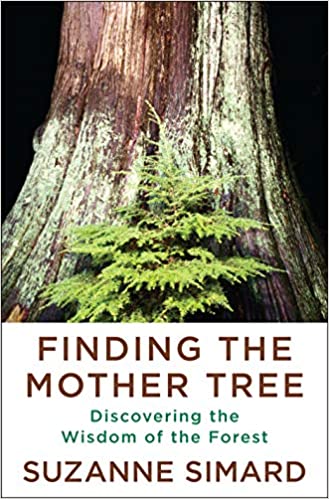
Suzanne Simard is an academic scientist of forestry of some renown because her research has revealed that the forest is a community of plants and trees that share resources to their mutual and communal benefit.  Her recently published memoir, Finding the Mother Tree, about her 40-year career in forestry is deeply personal and informative. 

Simard grew up in the forests of British Columbia in an extended family of traditional loggers who used manual methods to selectively remove individual trees, leaving forests intact.  This is physically demanding and dangerous work, making it a predominantly male occupation. 

After her education as a forester, Simard joined the Canadian Forest Service and a profession dominated by men and committed to maximizing profit by clear cutting patches of forest with mechanized methods.  This policy requires the destruction of all vegetation in clear cuts considered potential competition for the next crop of timber.  After mechanical removal, the ground is sprayed with herbicide from helicopters before being replanted with tree seedlings.  This policy is called “free to grow,” a misnomer that was eventually revealed by Simard’s research.  The plant and tree neighbors of the seedlings are their collaborators in the enterprise of the entire forest, functioning as an ecosystem that creates a home for every life form in the community.

Suzanne Simard’s lonely professional journey in forestry

One of Simard’s first assignments as a forester was to assess the health of seedlings planted in a clear cut.  The seedlings were not doing well.  It became her mission to find out why.  A lifetime of observing healthy forests had taught her that the soil is occupied by vast networks of fungi that connect the plants and trees.  These mycorrhizal fungi transfer moisture and nutrients from the soil to the trees and plants, to their benefit.  She speculated that the destruction of all vegetation in clear cuts was eliminating that support structure and she designed experiments to test her hypothesis. 

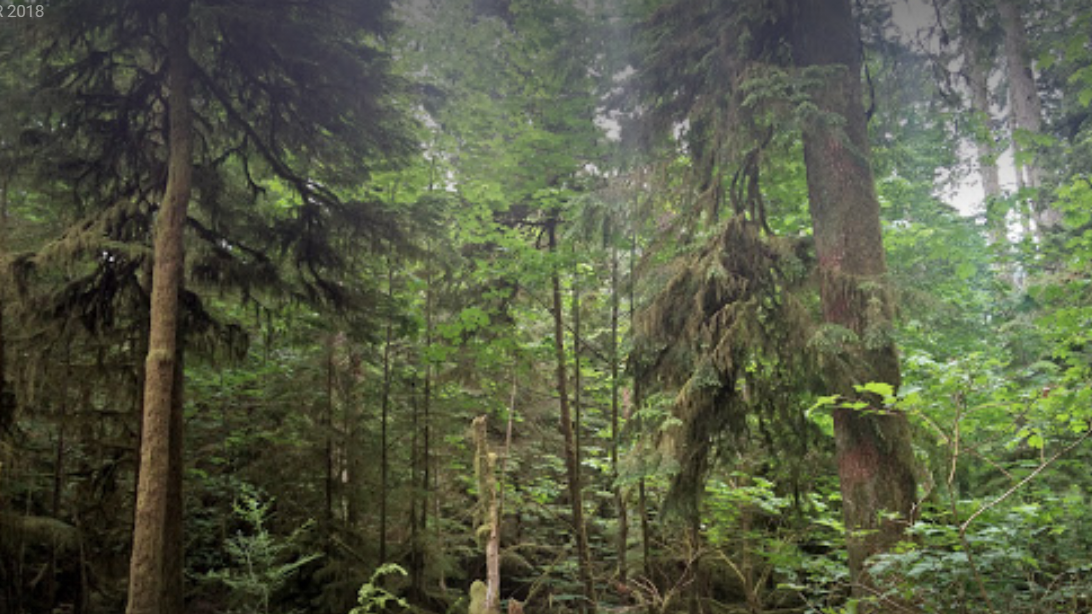
Douglas fir forest, MacMillan Provincial Forest, Vancouver, British Columbia

Her experimental plots were divided into areas with varying degrees of vegetation clearance.  At one extreme, seedlings were isolated by sheets of metal buried deep into the soil that prevented development of mycorrhizal networks to support the seedlings.  Decades later, these isolated seedlings were the most likely to have died.  The seedlings that survived most often were on the perimeter of clear cuts, with access to the surrounding intact forest.

The relationships between tree and plant species and their mycorrhizal networks vary by plant and fungi species.  There are thousands of mycorrhizal fungi species associated with trees and about half are generalists that associate with most tree species.  Specialist species of fungi are confined to a narrower range of tree species, genera, or families.  There are fewer species of mycorrhizae associated with plants and most are generalists. 

The specifics of fungal associations between trees also varies, which requires that we describe a specific relationship.  Simard’s original studies focused on the fungal associations between Douglas fir and birch trees.  Birch trees were destroyed in the clear cuts that were then planted with Douglas fir seedlings that were not doing well.  Simard’s experiments eventually revealed that birch trees and firs mutually benefit one another through their fungal networks.  Carbon stored and the sugar produced by photosynthesis by firs are shared with deciduous birch during winter months while they are leafless.  In summer months when birch are foliated, they store more carbon that is shared with firs.  Birch is resistant to a root pathogen to which firs are susceptible.  In a sharing fungal relationship between birch and firs, birch confers some of that resistance to the root pathogen onto their fir neighbors.

Nitrogen is essential to plant and tree health, but not all species are capable of converting atmospheric nitrogen to soil nitrogen available to plants.  When a nitrogen-fixing plant is associated with a plant without that capability, it can share its nitrogen with its neighbor through their fungal network. 

A mature tree can store more moisture than its young seedlings without extensive root structure.  The mature tree can share its stored moisture with struggling seedlings through its fungal network.  Seedlings with access to that network are more likely to survive while establishing their own root structures.  Research of Simard’s graduate students and collaborators eventually found that such sharing of resources between mature and young trees occurs more frequently within the same species, but sharing also occurs with unrelated tree species.  The mature trees nurture their offspring, enabling their survival and the survival of the species.  They are, in effect, Mother Trees.

MacMillan Provincial Forest, Vancouver, British Columbia

Herbicides used to kill vegetation in clear cuts

Another early assignment by the forest service required that Simard determine the most effective herbicide regimen to kill plants in clear cuts perceived to be potential competitors of the seedlings of the next timber crop.  Simard and her sister applied several different concentrations of herbicide to vegetation and predictably determined that the most concentrated formulation of herbicide was the most deadly.  Glyphosate is the most commonly used herbicide for this purpose.

This particular episode in Simard’s early career was disturbing in view of the fact that she eventually developed breast cancer that nearly killed her.  Simard and her sister were uncomfortable about their assignment and they suited up cautiously as best they knew how while applying herbicide.  The Simard sisters felt ill after an application and they sought medical help from whom they learned that their masks did not contain the necessary filters.  Required safety measures for herbicide applicators are only as good as the knowledge on which they are based.  That knowledge moves slowly forward and becomes more alarming as we learn more.

What has the timber industry learned from Simard’s research?

The short answer to that question is very little.  The strategy of the timber industry in both Canada and the US remains clear cuts that destroy all trees and vegetation followed by herbicide application by helicopter to kill all herbaceous vegetation before seedlings are planted.  Simard reports that concentrations of herbicide have been reduced recently.  She also says that a few large, mature trees are sometimes spared by clear cuts. 

Recent knowledge of the health effects of glyphosate is causing some concern, but few changes in policy or practice have been made.  Declining moose populations in a region of Canada led to decreased herbicide applications.  Legislators in the State of Maine recently passed a law to ban herbicide applications in timber clear cuts.  That legislation was then vetoed by the Governor of Maine.

Strangely, none of these reports of reduced herbicide use by the timber industry mention that herbicides are known to damage mycorrhizae.  Health concerns are cited as the sole reason for reducing herbicide use despite the fact that we now know the importance of mycorrhizal networks to the health and survival of forests.  While Simard opposes the use of herbicides in forests, she does not explicitly connect herbicides with the destruction of mycorrhizal networks that enable the survival of tree seedlings. 

Are these studies relevant to our urban forest?

Those who are looking for support for our urban forest in Simard’s work will be disappointed.  Her focus is on the health and preservation of native forests. In fact, she has harsh words for “exotic weed invasions:” She says they are accelerating the decline of native grassland “possibly by sending the native grasses some poisons or an infection to finish the murder.  Or starving them, taking over their energy, degrading the native prairie. Like the invasion of the body snatchers.  Or the colonization of the Americas by Europeans.”  Note that her indictment is speculative and not the conclusion of an empirical study.   

But the principles of Simard’s findings are relevant to our concerns for the destruction of our urban forests and the herbicides used for that purpose.  Mycorrhizal fungi are as essential to urban forests as they are to native forests.  Herbicides used in our urban forests are as damaging to fungal networks as they are to clear cuts of native forests. 

Trees, Truffles, and Beasts (1) was written by academic foresters in Oregon and Australia who are primarily concerned about the destructive consequences of destroying native forests and replacing them with timber plantations, often of another, faster growing species.  Ironically, in the case of old growth eucalyptus forests in Australia, the choice of replacement species is often Monterey pines.  Since some species of mycorrhizal fungi are specific to certain species or types of trees, this change of species is not successful without the inoculation of appropriate species of fungi.  For example, some of the mycorrhizal fungi that grow on the roots of conifers are not found on eucalyptus species.

I corresponded with the authors of Trees, Truffles, and Beasts to confirm that fungi are found in the eucalyptus forests of California.  Since eucalyptus was brought to California as seeds, rather than potted plants, I needed confirmation that our eucalyptus forests are also enjoying the benefits of mycorrhizal fungi.  We are grateful that the authors replied.  They report that eucalyptus forests in California are indeed populated with generalist fungi, including some species that are native to Australia.  Therefore, we can assure our readers that our description of how the forest functions as a community applies to the eucalyptus forest in California, as well as in Australia.

When eucalyptus is destroyed in California their stumps are immediately sprayed with herbicide (usually Garlon) so the tree does not resprout.  The herbicide is carried into the roots of the tree through the cambium layer that is briefly functional after the tree is destroyed.  Garlon is known to damage mycorrhizal fungi.

Herbicide is also used to destroy the non-native vegetation that thrives in the full sun after trees are destroyed.  Glyposate that is commonly used for that purpose is known to kill microbes that are essential to soil health, handicapping any replacement planting. 

Suzanne Simard’s mission

Before leaving the Canadian Forest Service, Suzanne Simard made every effort to inform her colleagues of the damage being done by the timber industry and the potential for more successful planting of a new generation of timber if policy and practice were revised to preserve soil health.  In a male-dominated profession that was committed to the methods being used, her message fell on deaf ears.  In fact, her colleagues were openly hostile to her message, making the offer of an academic position welcome relief that gave her more freedom to conduct research and deliver her message.

After recovering from a nearly fatal bout of breast cancer, Simard became more committed to bringing her research to the attention of the public.  She has delivered inspiring and wildly successful TED talks and she was immortalized as the heroine of The Overstory (2), the barely fictional account of defenders of the forest that made Simard’s research accessible to the general public.

Finding the Mother Tree, Suzanne Simard’s memoir, is a sad reminder of the difficulty of bucking conventional wisdom that is deeply rooted in the profit motive.  In the case of the timber industry, competition remains the dominant narrative that drives policy and the consequences of that approach are unnecessarily destructive.    


  1. Chris Maser, Andrew W. Claridge, James M. Trappe, Trees, Truffles, and Beasts, Rutgers University Press, 2008
  2. The Overstory, Richard Powers, W.W. Norton and Company, 2019.

Nativism turns a blind eye to climate change

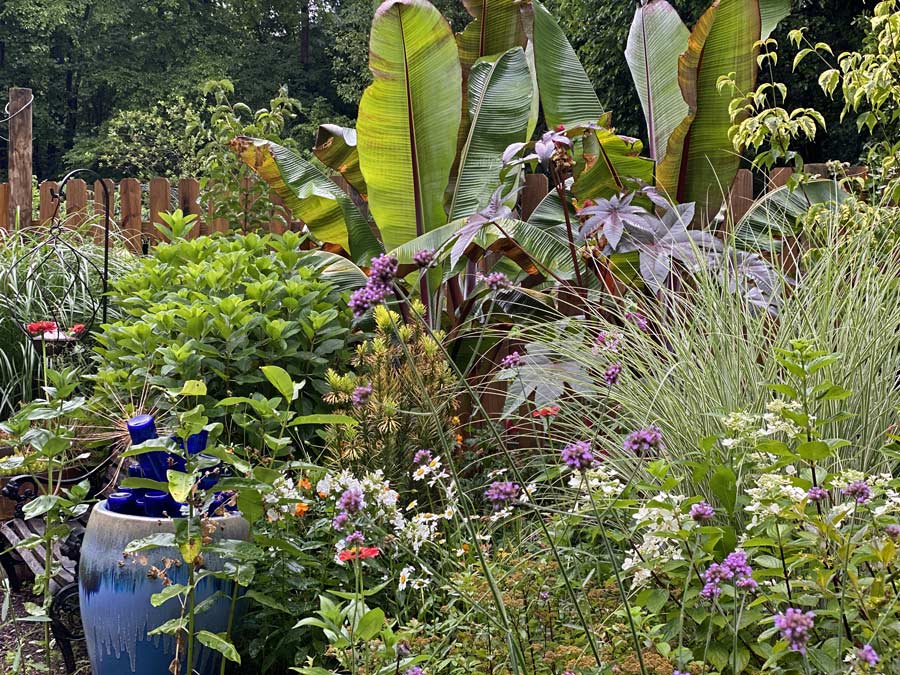
“Reflexive demonization of alien species ignores the beautiful but complex truth that nature fights to find a way—and for a planet navigating the pressures of climate change and overpopulation, that just might be our saving grace.” – Marianne Willburn, Garden Rant

Margaret Renkl writes an opinion column for the New York Times that I usually enjoy because she frequently writes about nature, often based on observations of wildlife in her own garden.  She lives in her childhood home in Nashville, Tennessee.  Much of her garden was planted with non-native plants and trees decades ago by her deceased mother.  Yet, in a recent column, Ms. Renkl blames non-native plants for a variety of crimes against nature. 

  • She suggests that non-native trees are blooming earlier than native trees, which she says has “skewed our experience of spring.”  She is apparently unaware that spring does indeed arrive earlier than it has in the past because of climate change.  Warmer weather arrives earlier, triggering the blooms of spring, not vice versa.  Both native and non-native plants are blooming earlier than they did in the past. 
  • She suggests that gardens planted with non-native plants are “blooming wastelands where the flowers feed nobody at all,” yet her columns are usually filled with the wildlife that lives in her own garden, with introduced plant species.
  • Although she does not use pesticides in her own garden, she believes that her neighbors’ non-native gardens require them to use pesticides that kill wildlife.  She says, “The typical suburban yard is actually worse than a wasteland. It’s a death trap.” She does not seem to know that most herbicide is used to kill non-native plants, not native plants nor does she seem to realize the contradiction in her indictment of gardening with non-native plants.  If there are more insects living in native gardens than non-native gardens, why would more pesticide be needed in non-native gardens?  If people could learn to love the clover, dandelions, and English daisies in their lawns as much as I do, they would use less “weed killers” on their lawns.

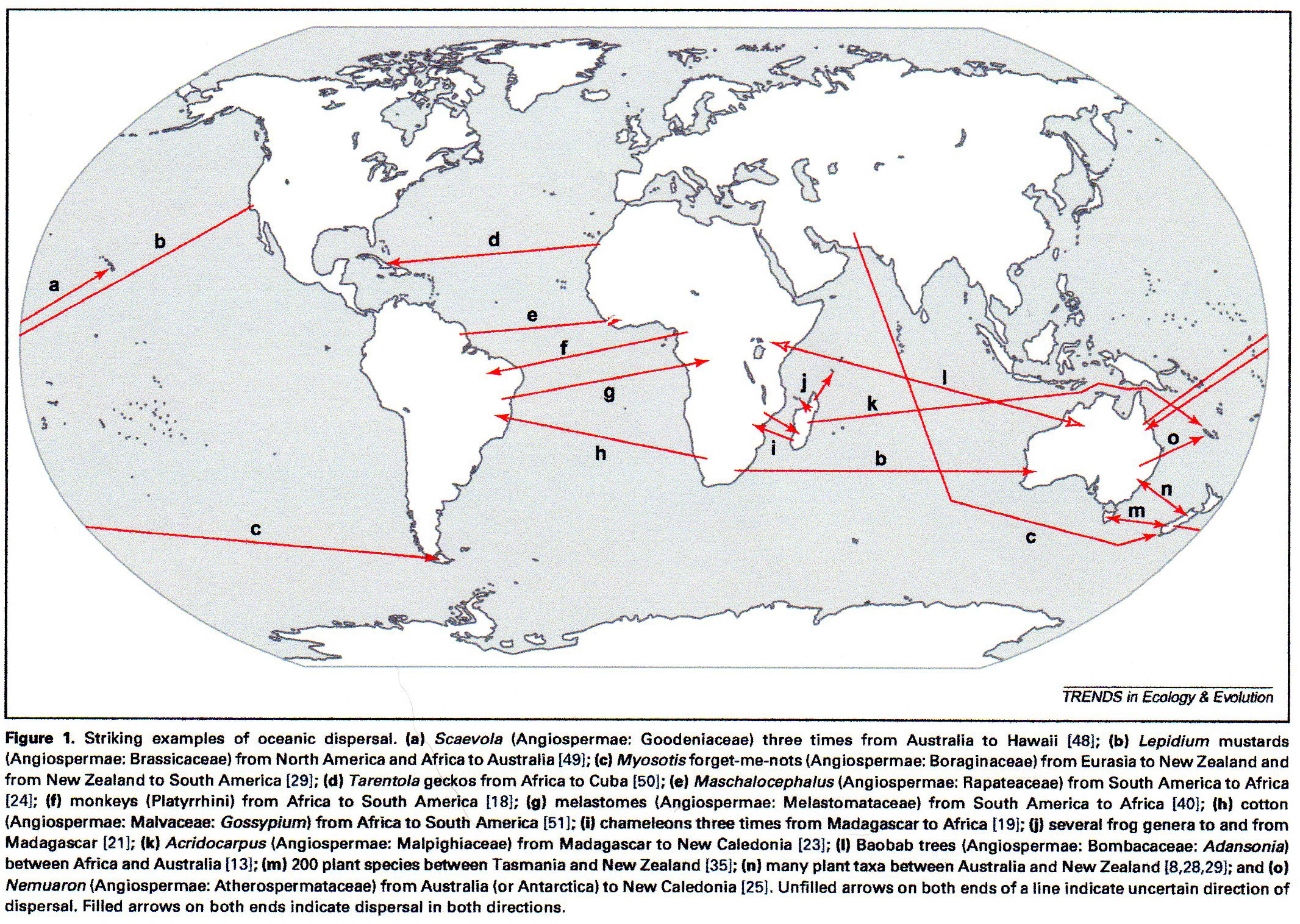
Ms. Renkl’s misperceptions about non-native plants seem to be based on a mistaken belief in their origins.  She says, “Ambulatory and omnivorous, human beings are a migratory species. That’s not true for the vast majority of plants.”  In fact, plants are just as mobile as animals, including humans.  Plants are carried by birds, animals, wind, ocean currents, etc.  They come and go as the climate changes, as it has many times in the past 500 million years that plants have existed on Earth.  Plants now considered non-native existed here in the distant past, in a different climate.  Here are a few examples of such dispersals; most occurred before humans even existed:

The ability to migrate is essential to the survival of plant and animal species.  As the climate changes, this survival strategy is quickly becoming even more important.  When we demand that plants be restricted to their historical “native” ranges, we doom them to extinction because when the climate changes, the vegetation must change.

Where did Ms. Renkl learn these myths?

Ms. Renkl’s cites Doug Tallamy’s Nature’s Best Hope as one of the sources of her mistaken beliefs.  Tallamy considers the existence of non-native plants the root of all evil in nature.  He calls them “ecological tumors.” He blames non-native plants for declining populations of both native plants and insects, and by extension to declining populations of birds that eat insects. 

In Nature’s Best Hope, Tallamy says, “…we must not use climate change as an excuse to do nothing.  Most species of plants and animals are far more resilient to climate variability than we give them credit for.  Besides, increasing the number and biomass of the plantings in our yards and public spaces is one of our most accessible and convenient tools to fight climate change.”  The problem with Tallamy’s dogma is that it inspires the public and land managers to eradicate established landscapes that are not native based on Tallamy’s claims that non-natives are “crowding out” native species and depriving wildlife of food. All native plant “restorations” begin by eradicating non-native plants, usually with herbicides that retard new growth.  In other words, the native plant ideology is causing the loss of vegetation and therefore the loss of stored carbon and the reduced capacity for carbon sequestration in the future.  The native plant ideology is not increasing biodiversity, nor is it “fighting climate change.”  It is more destructive than constructive. 

I’m not looking for “an excuse to do nothing.”  On the contrary, I believe every effort must be made to stop or at least slow down the inexorable advance of climate change.  The most basic effort we can make is to stop destroying functional vegetation, especially trees.  Then, there is a lengthy list of what we should be doing to reduce greenhouse gas emissions, which is another, equally important topic. 

Native plant advocates consider climate change irrelevant because they believe the existence of non-native plants is the sole culprit of all problems in the environment.  They see every environmental issue through the narrow lens of their dogma.  This comment on an article about the value of non-native plants by Marlene Condon published in [Chesapeake] Bay Journal is an example of such a misinterpretation of an environmental issue:

“English ivy is an evergreen, non-native, invasive groundcover that has demolished undisturbed natural areas…In salmon country that’s the difference between clean, cold streams and warmer streams filled with sediment.”

Eradicating ivy on stream banks is likely to produce more sediment because it will take some time for replacement vegetation to cover the ground, especially if herbicides are used to eradicate the ivy. Water is warmer in streams because of climate change and because there is less water due to water diversion and droughts. There are many other reasons for declining populations of salmon, particularly dams that prevent salmon from reaching their spawning grounds upstream.

Treat the cause, not the symptom

The native plant ideology ignores the underlying causes of changing ecosystems. Most changes are caused by the activities of humans, such as agriculture, development, water diversion, and pesticides.  Climate change is the underlying cause of some changes in nature and it will steadily become a more important factor.  Eradicating non-native plants will not reverse any of those changes nor will it prevent changes in the climate.    


  1. Alan de Queiroz, “The resurrection of oceanic dispersal in historical biogeography,” Trends in Ecology and Evolution, 20 No. 2, February 2005

Photo credit for featured photo: Garden Rant, Marianne Willburn

Science meets the “restoration” industry

I was encouraged to hear a presentation by an academic scientist at the recent Beyond Pesticides Forum that was another indication of the paradigm shift in invasive species management toward a less destructive approach.  Dr. Bernd Blossey is a Professor at Cornell University, where he directs the Ecology and Management of Invasive Plants Program in the Department of Natural Resources.  His many years of studying invasive plants, such as purple loosestrife, garlic mustard, water chestnut, Japanese knotweed, and phragmites have convinced him that there are often “multiple stressors” that contribute to such invasions.  Some factors such as the presence of earthworms and deer can be more important factors in the Northeast than the non-native plants themselves. 

Based on his research experience, Dr. Blossey delivered wise advice to land managers at the Beyond Pesticide Forum.  The featured photo at the top of this article was his introductory slide. 

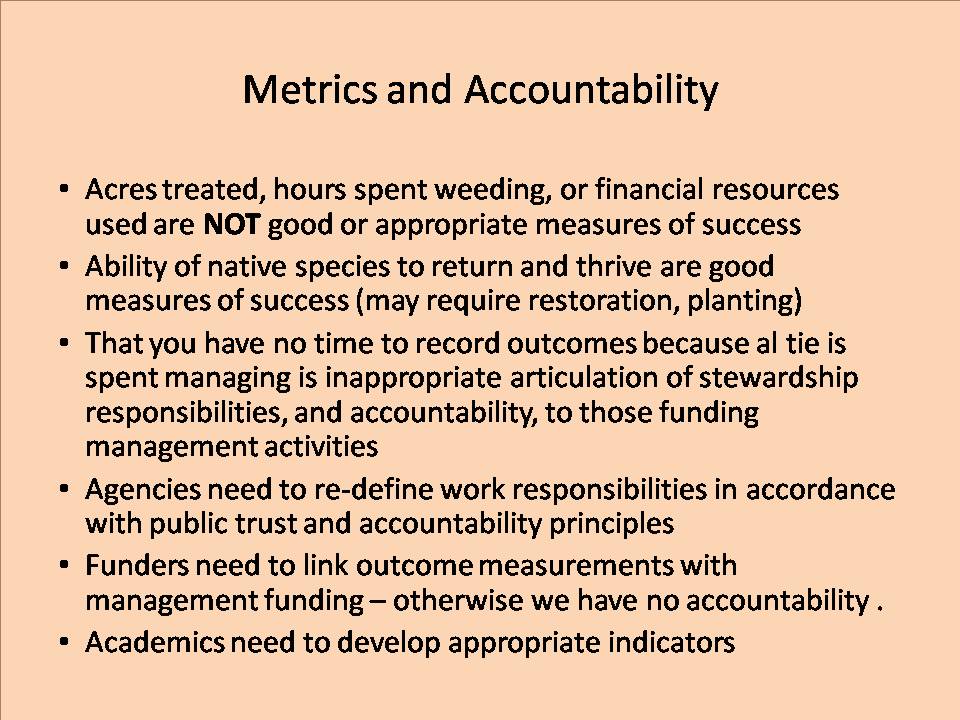
Before a restoration project begins, these questions should be asked and answered:

Source: Dr. Blossey’s presentation to Beyond Pesticides Forum on June 8, 2021

If the project seems worthwhile after such analysis is done, this is Dr. Blossey’s advice about monitoring the project and measuring its success:

Source: Dr. Blossey’s presentation to Beyond Pesticides Forum on June 8, 2021

Practicing what he preaches

Dr. Blossey used these principles in his study of garlic mustard in the forests of the northeast. (1) Over a period of more than 10 years, Dr. Blossey and his collaborators measured the abundance of garlic mustard in 16 plots from New Jersey to Illinois where no attempt had been made to control or eradicate it.  They found that growth rates initially increased, but decreased over time and eventually the population started to decline.  Dr. Blossey explained their findings in a recent webinar that is available HERE:

Garlic mustard was first recorded in North America in 1868 on Long Island, New York.  It spread west from there and is now found from southern Canada to Georgia and from New York and Quebec to Oregon, British Columbia and Alaska.  Because land managers believed that garlic mustard suppresses populations of native plants, they have been trying to eradicate garlic mustard in northern forests for decades, with little long term success.  Dr. Blossey addressed that concern in his webinar. 

Source: Dr. Blossey’s webinar about garlic mustard

Earthworms are the prerequisite for garlic mustard invasion.  Earthworms in northern forests are also considered alien invaders because they were killed, along with forests, by advancing glaciers during the Ice Age.  When forests returned after the Ice Age over 10,000 years ago, they evolved without earthworms that were reintroduced by European settlers less than 500 years ago. 

When deer are excluded from areas by fencing plots with garlic mustard populations, abundance of native vegetation does not decline.  Deer have a strong preference for native vegetation.  Absent deer, garlic mustard does not seem to suppress the growth of native plants in northern forests.

In other words, garlic mustard is not guilty as charged.  Dr. Blossey explains the disadvantages of attempting to eradicate it.  The decline of garlic mustard abundance over time is attributed to negative soil feedback that builds over time as the soil microbial community responds to the new plant. Removing garlic mustard episodically prolongs the process of building that negative soil feedback.  When groups of well-meaning young people are sent into the forest to pull garlic mustard, they trample the very native plants they are trying to save. 

Are there lessons for land managers in the Bay Area?

Because garlic mustard doesn’t exist in California and our native earthworms are considered beneficial to soil health, you might wonder if this study is relevant here.  California was not glaciated during the Ice Age.  Our earthworms survived the Ice Age and they evolved with our forests. 

So, what can we learn from this study?  The pattern of initial growth and eventual decline of populations of introduced plants is not unique to garlic mustard“A phenomenon that has received increased attention is whether introduced species go through boom and bust cycles, ultimately becoming non-threatening members of local communities.” (1)  One recently published study was based on nearly 5,000 vegetation inventories collected in 49 National Parks in the eastern United States.  It reported that non-native plants appeared to decline after 100-200 years: 

Residence time appears a core part of invasion that interacts with other mechanisms, such as climate matching, propagule pressure and empty niche. Initially, time appears to benefit non-native species as they establish in a novel range. They likely face low enemy loads, and any successful dispersal increases their populations and invaded range. As they spread, initial barriers, such as distance or suboptimal habitat, were overcome, as was resistance from native relatives. However, their biggest challenge appeared to be time, as they all declined after ~1 to 2 centuries, suggesting that pathogens and herbivores caught up with them.” (2)

The message for land managers everywhere is that patience is needed to judge the impact of introduced species.  Most will fit into ecosystems eventually and attempts to speed up that process often do more harm than good.  We can’t judge changes in nature by the short-term perspective of human lifetimes because the evolution of nature is a continual process that began long before humans existed and is likely to persist long after we are gone. 

Applying Dr. Blossey’s “Core Knowledge” to local projects

What if Dr. Blossey’s “Core Knowledge” had been applied to projects in the San Francisco Bay Area?  Here are examples of local eradication projects that might have benefitted:

  • San Francisco has been trying to eradicate oxalis in its parks for over 20 years by spraying a selective herbicide (Garlon).  There seems to be more oxalis now than there was 20 years ago.  Oxalis is visible only about 2 months of the year.  When it dies back in the spring it leaves behind the native plants with which it co-exists.  If a control plot had been set aside before they started eradicating oxalis perhaps we would know the answer to these important questions:  Does oxalis suppress the growth of native plants?  Does attempting to eradicate oxalis produce more or less oxalis?
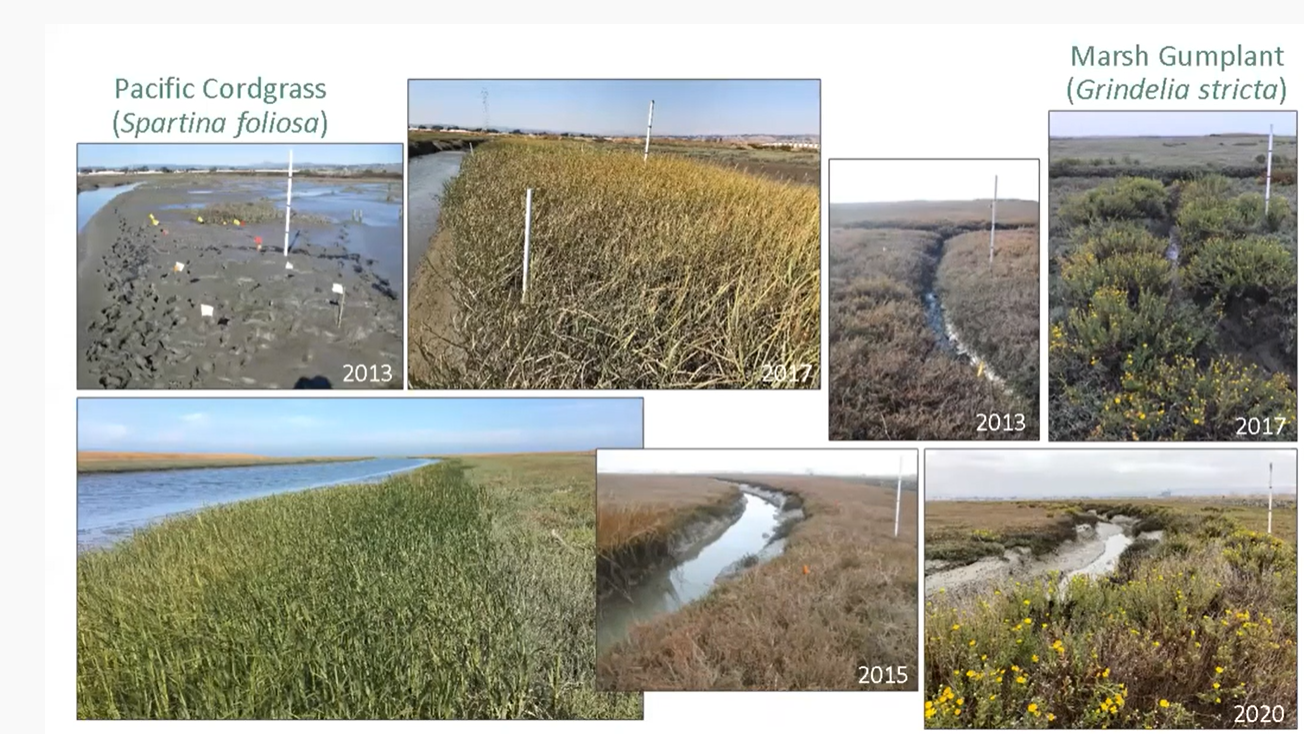
  • California, Oregon, and Washington have been trying to eradicate non-native spartina marsh grass along the entire West Coast for over 20 years.  Here in the Bay Area, non-native species of spartina have been 99% eradicated, but a hybrid of the native and the non-native remains and is poisoned with imazapyr annually.  According to a recent presentation by the Invasive Spartina Project, the hybrid is visually indistinguishable from the native and it occupies the same elevation of the marsh.  Over 500 genetic tests are needed every year to distinguish the hybrid from the native in order to poison the hybrid.  Dr. Blossey’s approach might ask these important questions:  What harm is hybrid spartina doing?  Do more or fewer animals live in hybrid spartina?  What effect has 20 years of spraying imazapyr had on the soil and the microbes that live in it?  Is the eradication project doing more harm than good? 
oxalis bloom, February 2021

We don’t know the answers to these important questions because projects were initiated and implemented without the analysis and monitoring metrics needed to answer the questions.  The projects continue without being accountable for the damage they are doing.  Public money is funding these projects without requiring the projects to be accountable for the consequences. 

California has made a commitment to spend billions of dollars on “nature based solutions” and achieving “biodiversity goals.”  This is an opportunity to start new projects off on the right foot by:

  • Requiring the analysis needed to determine the impacts and causes of perceived problems in the environment.
  • Requiring control plots so that the effects of the project can be compared with the option of not doing the project.
  • Requiring that projects be monitored, using established metrics so that the success of the project can be measured.

  1. Bernd Blossey, et. al., “Residence time determines invasiveness and performance of garlic mustard (Alliaria petiolota) in North America, Ecology Letters, February 2021.  
  2. Robert Warren, et. al., “Multiple mechanisms in woodland plant species invasion,”  Plant Ecology, April 2019.

Improvements in pesticide use by supplier of water in the East Bay

Four years ago, a small group of activists brought their concerns about the use of pesticides to the attention of the Board of East Bay Municipal Utilities Department (EBMUD), the supplier of our water in the East Bay. 

In particular, we showed EBMUD officials photos of inappropriate applications of herbicide, specifically RoundUp (glyphosate).  The photos showed that District employees were spraying RoundUp in residential neighborhoods without posting pesticide application notices.  They weren’t wearing protective gear.  They were spraying RoundUp on bare ground, which is not how RoundUp should be applied because it is not a pre-emergent that is effective on seeds or roots.  It must be sprayed on green vegetation during the growing season.  In one case, the District employee was spraying RoundUp from an ordinary garden hose, which means far more herbicide was being applied than necessary, even if anything were growing there.  In other words, the manner in which RoundUp was being applied suggested that District employees didn’t understand what they were doing.

EBMUD officials were responsive to our report.  They hired a Pesticide Control Advisor as a consultant to evaluate their program who identified several significant deficiencies in the District’s IPM program.  The District responded by making many improvements in their use of pesticides, such as:

  • There is now a comprehensive, annual training program for all employees who apply pesticides.
  • There are now more accurate and complete records of EBMUD’s pesticide use.
  • The PCA consultant was retained on a contractual basis to monitor some pesticide applications for compliance with product labels and District policies.
  • An annual report of the District’s pesticide use, including quantities and products, is presented to the Board at an annual meeting and posted to the District’s website. (1)
  • The District’s IPM Program guidelines were updated and posted to the website in April 2021. (2)
  • The revised guidelines are more comprehensive and detailed.  Requirements for posting notices of pesticide applications are clearer. (2)

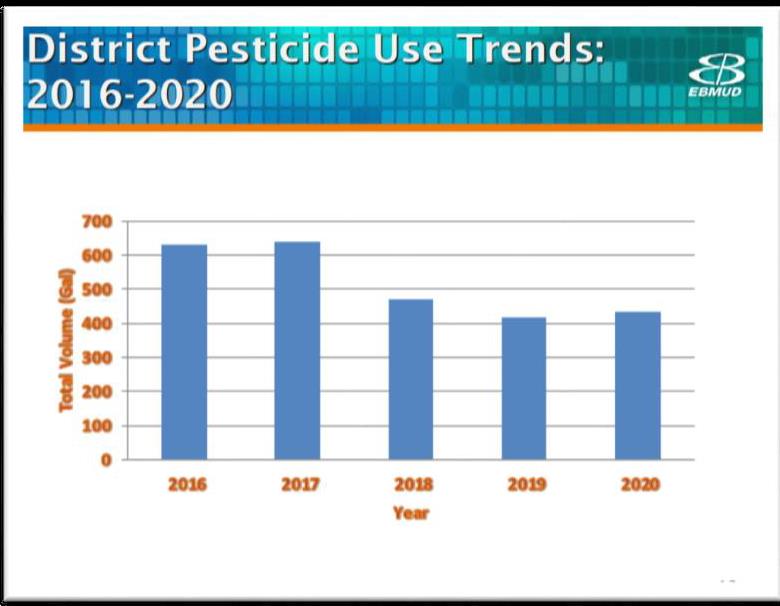
Some of these improvements have probably contributed to the decrease in pesticide use in the past five years from over 600 gallons per year to over 400 gallons per year.  Most pesticide used by EBMUD is herbicide and most herbicide used by EBMUD is glyphosate products. 

EBMUD is still using a lot of herbicide, but their practices are safer for their employees and the public.  Their pesticide applications are more visible to the public and the public now has access to information about their pesticide applications. 

EBMUD uses pesticides primarily to maintain their facilities.  Little pesticide is used on EBMUD’s watershed property.  EBMUD does not use herbicide to prevent eucalyptus and bay laurel resprouts when those tree species are destroyed.  Most trees destroyed by EBMUD are intended to reduce fire hazards and many of the tree removals are requested by Cal Fire.   

Lessons Learned

It pays for the public to pay attention to what is happening on our public lands and to speak up if you see something that doesn’t make sense to you.  There are usually mechanisms for figuring out what is happening, asking questions, and making your concerns known. 

Changing public policy isn’t easy, but it can be done.  It’s often frustratingly slow and it takes persistence. Personally, I have found it more effective to be consistently polite and as patient as needed to get your message through. In the case of EBMUD’s pesticide use practices, there is more they can do to reduce their use of pesticides, so the public should continue to pay attention because the quality of our water is extremely important to our health.


  1. Annual IPM Report is available HERE. Scroll down to to “Integrated Pest Management” and lick on “Annual IPM Report.”
  2. IPM Guidelines are available HERE.  Scroll down to “Integrated Pest Management” and click on “IPM Guidelines 2021.”

Looking for Godot: Finding achievable restoration goals

There are chemical and non-chemical approaches to native plant restoration. Neither succeeds.  Non-chemical methods are labor-intensive, which makes them prohibitively expensive.  Chemicals are cheaper and they kill non-native plants, but they don’t restore native plants because they kill them and damage the soil. Either strategy must be repeated continuously to be maintained. This article is the 25-year story of reaching the conclusion that neither chemical nor non-chemical approaches are capable of restoring native plants on a landscape scale.  Where do we go from here?

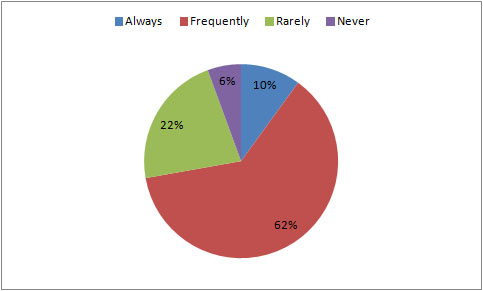
In 2014, the California Invasive Plant Council (Cal-IPC) conducted a survey of land managers to learn what methods they were using to control plants they considered “invasive.”  The Cal-IPC survey reported that herbicides are used by 94% of land managers and 62% use them frequently.  Glyphosate was the most frequently used herbicide by far. In 2014, no other eradication method was used more frequently than herbicides.

Frequency of herbicide use by land managers in California to kill “invasive” plants. Source California Invasive Plant Council, 2014

We have learned a great deal about the dangers of herbicides since 2014. 

  • The World Health Organization has categorized the most frequently used herbicide—glyphosate—as a probable carcinogen.
  • The manufacturer of glyphosate, Monsanto-Bayer, was successfully sued by terminally ill users of glyphosate.  These product liability lawsuits resulted in multi-million dollar awards for damages. The awards were reduced on appeal but ultimately upheld.  Monsanto has agreed to pay more than $10 billion to settle close to 100,000 product liability claims. 
  • The US Environmental Protection Agency has finally published its Biological Evaluation (BE) of the impact of glyphosate products (all registered formulations of glyphosate products were studied) on endangered animals (mammals, birds, amphibians, reptiles, fish, invertebrates) and plants. The BE reports that 1,676 endangered species are “likely adversely affected” by glyphosate products. That is93% of the total of 1,795 endangered species evaluated by the study. Both agricultural and non-agricultural uses of glyphosate products were evaluated by the BE. Although only endangered plants and animals were evaluated by the BE, we should assume that all other plants and animals are likewise harmed by glyphosate because the botanical and physiological functions of plants and animals are the same, whether or not they are endangered. 

How have land managers responded to the dangers of herbicides?

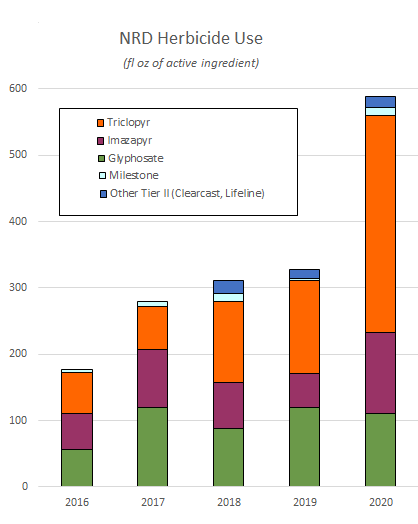
San Francisco’s Recreation and Park Department has increased the use of herbicides in public parks every year since 2016.  In 2020, herbicide use increased significantly from 243 applications in 2019 to 295 applications in 2020.  SF RPD has been spraying herbicides on non-native plants for over 20 years.  They have been using hazardous herbicides on some 50 target plant species year after year. The longer they use them, the more resistance to the herbicides the plant develops.

Herbicides used by Natural Resource Division of San Francisco Recreation and Parks Department. Source San Francisco Forest Alliance based on public records of pesticide use

Chris Geiger, director of the integrated pest management program at the San Francisco Department of the Environment, told San Francisco Public Press that although the city has reduced its use of glyphosate outside parks, it won’t ban glyphosate because it hasn’t found a more efficient or safer alternative for controlling some weeds. He said, “In habitat management, there are certain plants you cannot remove from a natural area by hand.”

San Francisco’s IPM program recently published  “Pest Prevention by Design Guide” that illustrates the bind they are in with respect to promoting native plants while trying to reduce pesticide use.  On the one hand, the Guide promotes the use of native plants in landscape design plans by making the usual claim that “Native species are generally best suited to supporting local insect populations and ecosystems.”  On the other hand, the Guide recommends the use of “pest resistant” species that are not eaten by insects and grazing animals and are capable of outcompeting weeds.  Can’t have it both ways, folks!!  

East Bay Regional Park District has made a commitment to phase out the use of glyphosate in developed areas such as parking lots, playgrounds and picnic areas.  However, EBRPD remains committed to using glyphosate and other herbicides to eradicate non-native plants on undeveloped park land. In 2020, no glyphosate was used in developed areas, but about 23 gallons of glyphosate were used to eradicate non-native plants on undeveloped park land. Twenty-one gallons of triclopyr were also used to eradicate non-native shrubs and to prevent non-native trees from resprouting after they were cut down. They continued the 15-year effort to eradicate spartina marsh grass with imazapyr. A few other selective herbicides were used on other eradication projects. (2)

In the San Francisco Bay Area, most land managers are still committed to using herbicides, particularly in so-called “natural areas,” regardless of the damage herbicides do to human health, wildlife, and native plants.  In fact, the City of Oakland is planning to begin using herbicides on 2,000 acres of public parks and open spaces for the first time to implement its vegetation management plan.  The vegetation management plan is both a fuels reduction program and a “resource protection” program, which is a euphemism for native plant “restoration.”

Given what we now know about the dangers of herbicides, why are public land managers still committed to using herbicides?  The City of Oakland explains in the EIR for its vegetation management plan why it is proposing the use of herbicides where they were prohibited in the past:

“It is estimated that if the City were to rely on hand removal and mechanical treatments in place of herbicide, it would cost the City up to 40 times more to treat these areas than under the VMP. The cost for herbicide treatments, not including any associated physical treatments, is approximately $250-$500 per acre. This reflects a range of potential vegetation conditions, vegetation types, and densities. The cost for hand removal and mechanical treatments is estimated at approximately $1,000-$4,000 per acre, using the same range of site-specific conditions.” (page 5-9)

In other words, herbicides are the preferred method of killing non-native plants because it is the cheapest method.  However, there is another reason why herbicides are preferred to non-chemical methods.  There isn’t a non-chemical method that is more effective than using herbicides.

Looking for an alternative to herbicides

As we should expect, new information about glyphosate has increased the public’s awareness of the dangers of pesticides.  California Invasive Plant Council has responded to the public’s growing awareness and concern about the herbicides to which they are exposed in our public parks and open spaces.  They recently published a comprehensive 300-page brochure entitled “Best Management Practices for Non-Chemical Weed Control.”  (1) Many highly qualified land managers participated in the preparation of this credible publication.  The Cal-IPC brochure is credible because it frankly admits that no method of eradication is without problems.  Irrigation and intensive planting are required for good results, but without continuing regular maintenance the results are only temporary.  Few land managers have the resources needed for success.

If you wonder why herbicides are the preferred method of eradicating non-native plants, reading Cal-IPC’s brochure about non-chemical methods will tell you why.  There is no non-chemical method that achieves better results than using herbicide. 

Herbicides are not a magic bullet

Herbicides are the most frequently used method of killing non-native plants, but using herbicides does NOT result in a native landscape.  “Lessons learned from invasive plant control experiments:  a systematic review and meta-analysis,” analyzed 355 studies published from 1960 to 2009 to determine which control efforts were most effective at eradicating the target plants and which method was most successful in restoring native plants. The analysis found that “More than 55% of the studies applied herbicide for invasive plant control.” Herbicides were most effective at reducing invasive plant cover, “but this was not accompanied by a substantial increase in native species,” because, “Impacts to native species can be greatest when programs involve herbicide application.”  It’s not possible to kill non-native plants without simultaneously killing native plants and damaging the soil.

Reaching a dead—and deadly—end

Public land managers in the San Francisco Bay Area have been trying to restore native landscapes for over 25 years.  Every project begins by eradicating non-native plants, usually with herbicides.  Our public parks have been poisoned repeatedly, but native landscapes have not replaced the plants that were killed.  Meanwhile, we have learned that herbicides are dangerous to our health and animals who live in our parks. 

Oyster Bay is a park in San Leandro that was built on a former garbage dump on landfill in the San Francisco Bay.  The garbage was capped with barren soil and many acres were planted with native bunch grass, as shown in these photos.  This “restoration” method is called competitive planting. The bunch grasses did not survive and the ground was quickly colonized by weeds that were then sprayed with herbicides. 

The only viable alternative to using herbicides to “restore” native plants is to change the goals for native plant restorations such that herbicides won’t be required: 

  • An exclusively native landscape cannot be achieved where native plants have never existed, such as the many parks along the bay waterfront that were built on landfill.  It is an unrealistic goal.
  • Given that no effective method of achieving this unrealistic goal has been found after 25 years and the most popular method is poisoning our environment, it is time to stop trying.
  • Smaller, achievable goals must be set.  Landscape scale projects should be abandoned and replaced with small scale projects where native plants already exist. 
  • Smaller areas can be managed without using herbicides because they will be affordable to manage with labor-intensive methods that are more expensive.
  • If smaller projects are more successful, they will be less controversial.  The projects are unpopular partly because they aren’t successful. 

The native plant movement in the San Francisco Bay Area has bitten off more than it can chew.  Native plant advocates need to back out of their dead end and regroup with plans that are less destructive and more realistic.  As the Economist magazine said in 2015, “you can garden in a garden, but you can’t garden nature.”


(1) California Invasive Plant Council is offering free video training for non-chemical methods of killing “invasive” plants on May 4, 2021, 1-5 pm.  Sign up HERE. 

(2) 2020 IPM Report, East Bay Regional Park District available HERE.   

Nobody cares where a pretty wildflower is from

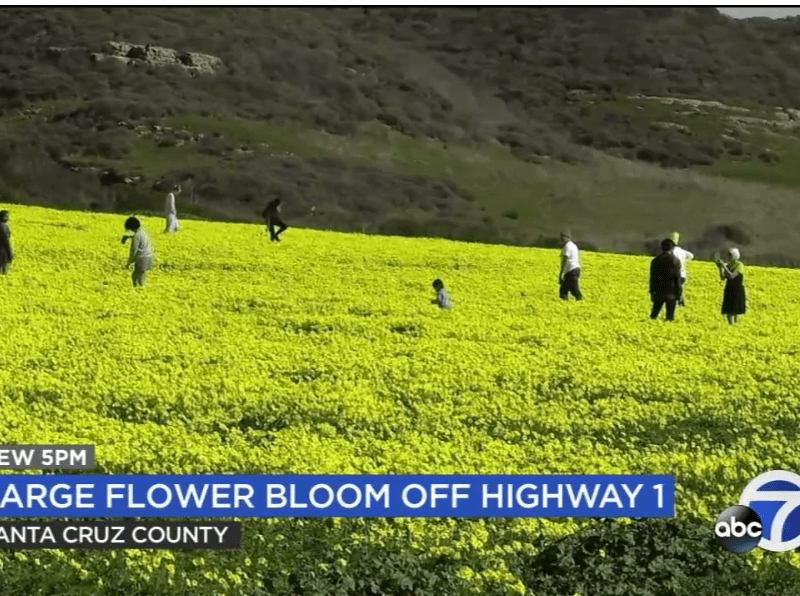
The feel-good ending of the local news broadcast on Channel 7 (ABC) on February 17, 2021, featured this video of a huge field of oxalis (Bermuda buttercup, Oxalis pes-caprae) blooming on the roadside of Highway 1 in Santa Cruz County.  People were stopping along the road to admire the bright yellow blooms of spring and photograph them.  No one said anything about where the plant “belongs,” and no bad words were spoken about this useful plant that native plant advocates love to hate.

Click on the picture to activate the video

Despite its beauty and utility, oxalis is sprayed with one of the most toxic herbicides on the market in public parks and open spaces in the Bay Area.  San Francisco’s Recreation and Parks Department has been spraying oxalis in several public parks for over 15 years.  San Francisco Forest Alliance (SFFA) published a brilliant article about this pointless and destructive crusade that was republished by Conservation Sense and Nonsense in 2015.  That article about the many benefits of oxalis is one of the most popular articles on this blog; it has been viewed by over 10,000 readers and many more on the SFFA website.  We invite you to visit it and we summarize it briefly here:

  • Oxalis blooms briefly in early spring and dies back before summer begins, leaving the ground to other plants. It does not kill other plants, rather it co-exists briefly during its annual bloom.
  • Oxalis is very useful to pollinators and its tuberous roots (bulbils) are eaten by ground dwelling animals such as gophers.
  • Oxalis is called sour-grass because of its pleasant-tasting tang and it is often eaten by children.
  • Triclopyr is the active ingredient in the herbicide that is used on oxalis during its blooming season. It damages the soil by killing beneficial fungi and microbes, and it is toxic to many animals.

The annual poisoning of oxalis on Mount Davidson was recently videotaped by Ron Proctor and published by the San Francisco Forest Alliance. A crew of 5 men was hired to do the deed.  Ironically, this spraying of oxalis on Mount Davidson in San Francisco was taking place at the same time that tourists were admiring oxalis in a neighboring county.

Click on picture to activate the video.

Oxalis is not an isolated example of a non-native plant that is admired by the public, but hated by native plant advocates and public land managers who do their bidding.  As a member of the Sierra Club, I receive emails alerting me to opportunities to advocate for the protection of the environment.  The most recent email featured a picture of a yellow wildflower in the foreground of a photograph of a Bay Area landscape:

The yellow wildflower in the foreground is Black Mustard (Brassica nigra).  I responded to the Sierra Club’s email:

“The plant in the foreground of your photograph appears to be Brassica nigra:  ‘Brassica nigra, or black mustard, is an annual plant cultivated for its black or dark brown seeds, which are commonly used as a spice. It is native to tropical regions of North Africa, temperate regions of Europe, and parts of Asia.’ Wikipedia

“I hope the use of this photo in this Sierra Club email to its members means that the Sierra Club is finally prepared to accept the reality of the presence of non-native plants in our public parks and open spaces.  The Sierra Club’s support for unnecessary and destructive eradication projects has been regrettable, particularly because they require the use of harmful herbicides.  I hope this email is an indication that the Sierra Club is finally ready to reconsider this futile crusade.”

I received this disappointing reply from the Sierra Club:  The staffer who puts together our newsletter isn’t a plant buff and wouldn’t have known the difference. But I am a plant buff and review the newsletter and know the difference between a mustard and a native plant. I somehow just overlooked that photo entirely. Thanks for bringing it to my attention. I’ll be more careful in my review of the newsletter in the future (look more carefully at the photos). And we’ll change the online version.”

The beauty and resilience of weeds

Dandelion by Mona Caron. Click on the picture to see more murals by Mona Caron.  Mona is a Swiss artist who became a muralist in her adoptive hometown San Francisco, California.  She is best known for her multi-story murals celebrating the rebellious resilience of weeds.

 The Bottom Line

The general public doesn’t care where plants came from.  The public recognizes and values beauty wherever it is found.  Unfortunately, our public lands are in the death grip of the native plant movement and environmental organizations that should be objecting to the use of herbicides in our public parks and not promoting that destructive agenda.  The crusade against non-native plants has been responsible for spraying our public lands with dangerous pesticides for over 20 years.  They have little to show for their toxic crusade, perhaps because the herbicides damage the soil and make the survival of native plants even less likely.


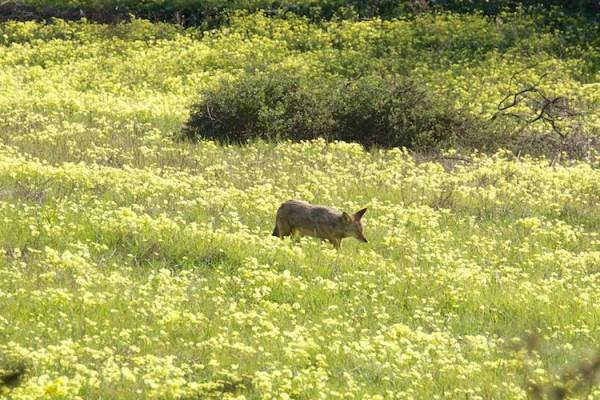
The featured photo at the top of this article was taken in Glen Canyon, another public park in San Francisco where oxalis has been sprayed annually for many years.  The copyright photo of a coyote in a field of oxalis was taken by Janet Kessler and is shown with her permission.

Migration: Life on the move

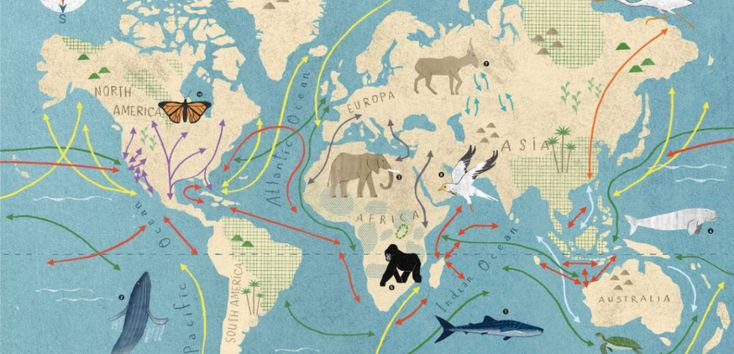
Sonia Shah’s recently published book, The Next Great Migration: The Beauty and Terror of Life on the Move, takes a deep dive into the past to trace the ancient history of migrating life on Earth. For as long as life has existed on Earth, life has been on the move, as needed to survive the constantly changing environment in which all plants and animals live.

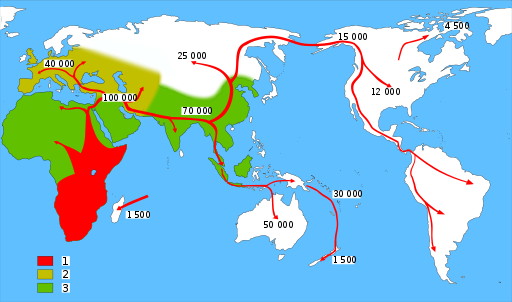
1 Homo sapiens
2 Neanderthals
3 Homo erectus

Shah’s is an ambitious attempt to tell this story, not confined to human migration, but encompassing plants and animals as well because all of these migrations are connected. Scientists speculate the earliest migrations of human ancestors, some 100,000 years ago out of Africa, were in pursuit of the migrating animals that humans hunted.  On balance, the movements of plants and animals are beneficial to life on Earth because they are necessary to survive. When they aren’t beneficial, the problems are usually short-lived and humans are usually unable to stop them because nature is more powerful than we are.

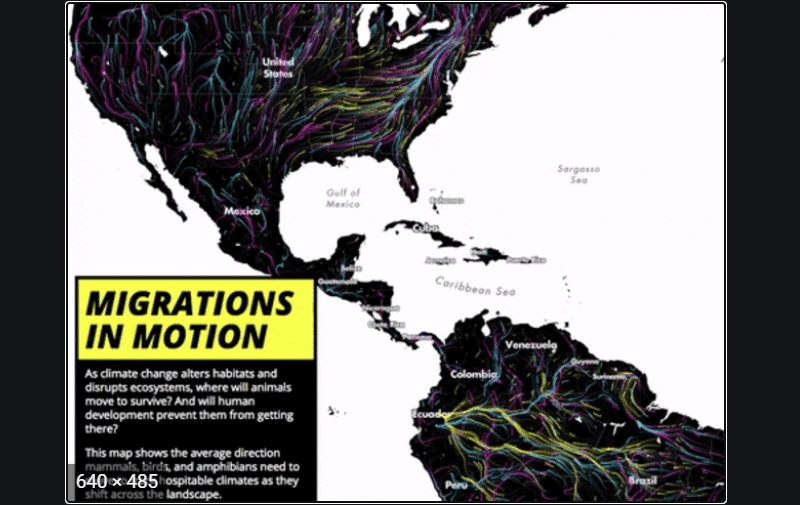
Click on map for animated movement of animals in response to changing climate conditions.

Migrations are even more frequent at a time of rapid and extreme climate change. As crops fail in the withering heat and drought caused by global warming, farmers are abandoning their farms to find the food they need to survive. Hence, Shah’s prediction that we are about to witness the “next great migration” because of the challenges of climate change. When the climate changes, the vegetation changes. When the vegetation changes, animals must move to find the food they need. Humans wish to put ourselves in a special category that denies our kinship with animals. But we are as dependent upon our food as any animal and the changing climate will challenge our existence as much as other forms of life.

Shah also traces the brief history of human knowledge of migrations about which little was known before the development of the scientific tools to study it.  Paleontology could dig up fossils that would raise more questions than answers about the residents of deep time, but it wasn’t until the development of molecular analysis that fossils could inform scientists of the evolutionary history of and close relationships among plants and animals that reflect migrations in the distant past.  New technology is capable of tracing the movements of animals that were unknown in the distant past, when animals seemed to mysteriously disappear at the end of one season and returned at the beginning of another season.

Invasion Biology is based on ignorance of migration

The fact that animal migration was largely unknown led to some fundamental misunderstandings about nature, including the unfortunate rise of nativism in the natural world that was spawned by the mistaken hypotheses of invasion biology. Shah explained the consequences of inadequate knowledge of migration in a recently published article in New York Times Magazine:

“When scientists considered movements across barriers and borders, they characterized them as disruptive and outside the norm, even in the absence of direct evidence of either the movements themselves or the negative consequences they purportedly triggered…Influential subdisciplines of biological inquiry focused on the negative impact of long-distance translocations of wild species, presuming that the most significant of these occurred not through the agency of animals on the move but when human trade and travel inadvertently deposited creatures into novel places.  The result, experts in invasion biology and restoration biology said, could be so catastrophic for already-resident species that the interlopers should be repelled or, if already present, eradicated, even before they could cause any detectable damage.”

In turn, Invasion Biology spawned pointless and destructive eradication projects

Conservation Sense and Nonsense has followed the destructive and futile attempts to eradicate plants and animals that nativists say “don’t belong here:”

  • Hawaii is an extreme case of attempts to eradicate non-native plants and animals: frogs, owls, egrets, seals, fruit trees, mangroves, parrots, etc.  These eradication projects often do more harm than good.  The “logic” for these projects is muddled, partly because the Hawaiian Islands emerged from the sea as barren volcanoes.  The question of “what belongs there” is a matter of opinion and debate in Hawaii and elsewhere.

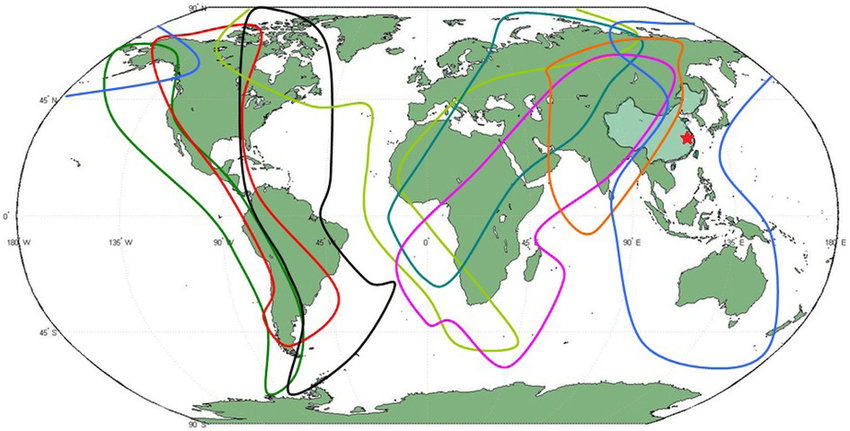
Bird migration routes

Migration enables survival

I hope that improved knowledge of migration will help people understand that migration is a natural phenomenon that is essential to the survival of all life on Earth.  Migration enables life to adapt to changes in the environment, facilitating evolution and reducing frequency of extinction.

Final chapter for Oakland’s Vegetation Management Plan? Maybe not.

The draft Environmental Impact Report (DEIR) for Oakland’s Vegetation Plan (OVMP) has been published.  When the DEIR is approved and funding is identified, implementation will finally begin after a process that began four years ago.  The plan and its EIR are available HERE.  The deadline for public comments on the DEIR is January 22, 2021.  The email address for submitting public comments is DEIR-comments@oaklandvegmanagement.org

The primary purpose of the plan is to reduce fire hazards in High Fire Hazard Zones in Oakland by reducing fuel loads on about 2,000 acres of public land and 300 miles of roadside.  Although there were many issues, the primary battle lines were drawn by these issues at the beginning of the process and they remain:

  • On one side, some people were concerned by the scale of tree removals that were considered and the herbicides that would be needed to control the resprouts of the trees after removal. If the plan as proposed is approved, herbicides will be permitted in places where they were prohibited in the past.
  • On the other side, some survivors of the 1991 Oakland wildfire and native plant advocates who are their allies, want all non-native trees to be destroyed and replaced with native plants. They are not satisfied with plans to thin trees around structures and roadsides.

The consequences of destroying Oakland’s urban forest

The survivors of the 1991 fire in Oakland asked that the OVMP be radically revised at a public hearing about the OVMP DEIR on December 16, 2020.  They called their version of a vegetation management plan Alternative 5.  It is an alternative that does not exist in the DEIR.  These are the major elements of what they asked for:

  • They ask that all non-native trees be destroyed everywhere in the treatment areas. They ask that the trees be clear-cut rather than thinned, as proposed by the plan. They ask that tree removals not be confined to defensible space around structures, as proposed by the plan.
  • They ask that removed trees and non-native vegetation be replaced with native trees and vegetation.
  • They ask that roadside clearance of vegetation occur 100 feet from both sides of the road rather than 30 feet as the OVMP proposes.
  • They expressed concern about dead trees. They are apparently unaware of the epidemic of Sudden Oak Death that has killed 50 million native oaks in the past 15 years and is spreading rapidly.

The OVMP DEIR is responsive to some of these concerns. 

  • The OVMP DEIR makes a commitment to seeding areas that are steep and barren after vegetation removal with seeds of native plants. The purpose of this seeding is to minimize the potential for erosion.
  • The OVMP DEIR makes a commitment to replant trees removed in riparian areas as required by Oakland’s ordinance to protect creeks.
  • The OVMP makes a commitment to remove all dead trees in treatment areas. Sudden Oak Death (SOD) is the probable cause of the dead trees described at the public hearing.  SOD has been found in many treatment areas in the plan:  Garber Park, Shepherds Canyon, Dimond Canyon Park, Joaquin Miller Park, Leona Heights Park, Knowland Park, and Sheffield Village. (OVMP DEIR 3.4-87)

Increasing roadside clearance to 100 feet would increase the acreage of roadside tree removals and vegetation required by the OVMP by 233%.  The consequences of such extensive removals can be seen on Claremont Ave, west of Grizzly Peak.  These removals were done by UC Berkeley.  Catastrophic erosion after intense rainfall looks inevitable.

Claremont Ave, West of Grizzly Peak Blvd. November 2020

Huge piles of wood chips and logs must be disposed of.  Such piles of wood chips are known fire hazards until they are spread or disposed of.  The wood chip piles resulting from roadside clearance on Claremont Ave cannot be spread because the quantity exceeds available land.  UC Berkeley has made a commitment to build a biofuels plant to burn the wood chips to generate electricity for campus facilities.  The OVMP does not make a commitment to build a biofuels plant to properly dispose of wood chips and it mandates a limit of 6 inches of wood chip mulch on the ground. Please look at these pictures of some of the wood debris created by clearcutting less than one mile of roadside on Claremont Ave.  Then consider that the OVMP proposes to treat 300 miles of roadside.  Multiply these piles of wood chips and logs by 300 to consider the consequences of “Alternative 5.”

Update:  Since publishing this article, I have learned that UC Berkeley has NOT built a biofuels plant to dispose of the wood debris to meet Cal Fire grant requirements for reducing greenhouse gas emissions.  Nor does UC Berkeley intend to build a biofuels plant.  The disposition of the wood debris from this project has not yet been determined.  This is the final paragraph of my formal complaint to Cal Fire about this project:  “In conclusion, the grant application for this project makes a commitment to reducing greenhouse gas emissions that is based on the assumption that a biofuels plant will generate electricity from the wood debris.  Such a plant has not been built and UC Berkeley apparently does not intend to build such a plant.  Other claims made in the grant application about carbon storage are based on inaccurate claims about carbon storage.  Grant guidelines state, “Failure to meet the agreed upon terms of achieving required GHG reduction may result in project termination and recovery of funds.”  In other words, Cal Fire should terminate this project and recover any funds that have been remitted to UC Berkeley.  The project is a misuse of grant funds because it will increase fire hazards and increase greenhouse gas emissions.  Without imputing motives, on the face of it, the grant application looks fraudulent.” The full story of how this project has violated grant guidelines as well as the description of the project itself in the grant application is told HERE.  January 18, 2021 

One of many piles of wood chips, Claremont Ave, November 2020

One of many piles of logs, Claremont Ave., December 2020. Photo by Doug Prose, courtesy Hills Conservation Network.

Oakland does not want a biofuels plant because it will significantly increase pollution.  Sierra Club Magazine reports that “The manufacturing of biomass-energy wood pellets requires drying the logged material in a wood-fired process, then pressing the dried wood into pellets—and every step emits significant amounts of air pollution. According to the Environmental Integrity Project study, the emissions from the facilities include fine particulate matter, nitrogen oxides, carbon monoxide, and volatile organic compounds. Wood-pellet manufacturing emits a form of soot and dust called PM 2.5, which can pass deep into the lungs and depress lung function, worsen asthma, and cause heart attacks. Volatile organic compounds, when exposed to sunlight, transform into ozone, which is especially dangerous to children and the elderly.”

This aerial view of the clear cut on Claremont Ave makes it clear that this is a native plant “restoration,” not fire hazard mitigation.  The north side of the road has been clear cut 100 feet from the road where the trees were non-native.  There has been no comparable clearance on the south side of the road where the trees are native.  The native trees are predominantly native bay laurels that are known to be highly flammable.  The leaves of bay laurel contain more oil than the leaves of eucalyptus and the branches grow to the ground, providing a fire ladder to the tree canopy.  If fire hazard mitigation were the goal of this project, both sides of the road would have been treated the same.

This picture of the Claremont Ave project was taken from the west December 2020.  Photo by Doug Prose, courtesy Hills Conservation Network.

The cost of Alternative 5 would be prohibitive. The plan would need to be rewritten and a new EIR prepared.  The first plan took four years to prepare; the second will take nearly as long after new funding is secured for it. Funding for implementing the OVMP has not been identified.  The City of Oakland is currently running an annual budget deficit of $62 million.  Budget cuts are planned to address the deficit, including 10 mandatory furlough days for police and firemen.

One of many reasons why I love my home, Oakland, is its deep commitment to equity.  If Oakland had the resources to fund restoration of approximately 2,000 acres of public land and 300 miles of roadside to native vegetation, it is unlikely to spend those resources in the wealthiest communities in Oakland on a project that would bring little benefit for the poorest communities in Oakland.  Oakland’s Equitable Climate Action Plan (ECAP) is a case in point.  Its forestry section is devoted to planting trees in the poorest neighborhoods that suffer the most air pollution and have the fewest trees, as it should be.

I am sympathetic to the survivors of the 1991 Oakland fire as well as to those who have been injured by chemicals to which they were exposed.  Fire survivors have had a traumatic experience that has irrevocably altered their perception about the causes of wildfire.  There are also other survivors of the 1991 fire who watched native redwoods and oaks burn.  Their understanding of wildfire is therefore different, but it is more consistent with the wildfires of the past 5 years that have occurred in predominantly native vegetation.  Native vegetation in California is fire adapted and fire dependent.  Non-native vegetation is not inherently more flammable than native vegetation.

Public Policy requires compromise

Thinning of non-native forests and herbicide treatment to prevent resprouting is not without risks.  We will lose some of our protection from wind.  The trees that remain will be more vulnerable to windthrow.  There may be some erosion in steep areas.  The herbicide that is usually used to prevent resprouts (triclopyr) kills tree roots by traveling from the freshly cut stump through the roots of the tree.  The roots of trees are intertwined with the roots of their neighbors that are often damaged by the herbicide and sometimes killed.  The herbicide kills mycorrhizal fungi that live on the roots as well as microbes in the soil.  Their loss reduces the health of the soil, handicapping the survival of remaining and new plants. This damage to soil is one of many reasons why native plant “restorations” are frequently unsuccessful after scorched earth eradications. Both triclopyr and imazapyr are on the list (California Code of Regulations 6800) of pesticides that have “the potential to contaminate groundwater” because they are very mobile and persistent in the soil.

I accept these risks in the interests of reducing fire hazards.  I have asked for a few tweaks to the plan, including continuing to prohibit foliar spraying of herbicides in public parks and open spaces.  These are the compromises that must be made to make public policy.  We cannot paralyze ourselves by letting the perfect be the enemy of the good.  Oakland needs a Vegetation Management Plan that is effective, affordable, and safer than other alternatives.  That’s what the Oakland Vegetation Management Plan is. 

Doug Tallamy’s Blame Game

The fact that insect populations are declining in many places around the world is well known, but the reasons for the decline are not well known.  Where there is uncertainty, there is speculation and where there is speculation, there is debate.

Doug Tallamy recently stepped into that debate by publishing a review article about insects and their use of plants.  The article is a mind-numbing list of studies that find both positive and negative relationships between insects and non-native plants.

Tallamy contends those studies add up to support for his belief that non-native plants are bad for insects and native plants are good for insects.  He suggests that declining populations of native plants should be considered one of the reasons for declining populations of insects, but then he goes one step further. Tallamy suggests that non-native plants are responsible for declining populations of native plants.  It follows that Tallamy blames non-native plants for the disappearance of insects.

My interpretation of the studies in Tallamy’s review is different.  The studies tell me that there is too much variation in insect-plant relationships to generalize about the relative value of native vs. non-native plants to insects.  A more accurate conclusion would be that sometimes insects make a successful transition from a native to a non-native plant—especially in the absence of a native in the same lineage—and sometimes they don’t…or at least they haven’t yet.

Anise swallowtail butterfly is one of many insects that have made a successful transition from a disappearing native plant to an introduced non-native plant in the same lineage. Prior to that transition, swallowtails were able to lay eggs only once a year, when the native was available. The introduced non-native is available year around, which enables the swallowtail to lay its eggs year around. Courtesy urbanwildlife.org

Since evolution is a process and not a historical event, these insect/plant relationships will continue to change.  There are many studies that document such transitions and Tallamy cites some of them in his review.  Tallamy assumes insects will be forever handicapped, if not killed, by whatever deficiencies there are in the non-native substitute.  I assume the insect is more likely to adapt and eventually evolve to cope with those deficiencies.  Both our assumptions are just guesses.  Tallamy considers nature immutable, while I consider it dynamic.  Where Tallamy sees doom and gloom, I see opportunity.

Professor Art Shapiro’s (Distinguished Professor of Evolution and Ecology, UC Davis) assessment of Tallamy’s review article is less equivocal than mine.  Keep in mind when reading his assessment that he is far more knowledgeable than I am:

  1. “There is little evidence known to me of alien plants (‘invasives’) competitively displacing natives in ‘communities’ except in highly disturbed environments, except in the case of ‘ecological engineer’ species like Japanese honeysuckle, Himalayan Blackberry, climbing fern in Florida, Purple Loosestrife, etc. — things that drastically alter the ground rules for structuring the vegetation by smothering or prompting fire.

  2. “The use of natives and non-natives by insects has a long and venerable history, going back to T.R.E. Southwood and his comparisons of insect faunas on British trees to Godwin’s history of the British flora, Azevedo’s student study at SF State, etc. — demonstrating overall that enemies accumulate in time on naturalized aliens, but it may be a very slow process if there is no phylogenetic or chemical bridge to their colonization. Experiments using haphazardly-selected species to examine acceptability are basically silly, and very easy to ‘stack’ if one knows one’s phytochemistry.

  3. “As I have repeatedly pointed out, ‘weed’ eradication would lead rapidly to the extirpation of nearly all of the non-tree-feeding urban and suburban butterfly fauna in lowland California (and many other places).”

Why are insect populations declining?

A 2017 study revealed a shocking 76 percent decline in the biomass of flying insects over 27 years in protected areas in Germany.  The German study does not offer specific explanations for the significant decline in insects, but it speculates about probable cause: Agricultural intensification (e.g. pesticide usage, year-round tillage, increased use of fertilizers and frequency of agronomic measures) that we could not incorporate in our analyses, may form a plausible cause. The reserves in which the traps were placed are of limited size in this typical fragmented West-European landscape, and almost all locations (94%) are enclosed by agricultural fields. Part of the explanation could therefore be that the protected areas (serving as insect sources) are affected and drained by the agricultural fields in the broader surroundings (serving as sinks or even as ecological traps). Increased agricultural intensification may have aggravated this reduction in insect abundance in the protected areas over the last few decades.”  Presumably “protected areas” in Germany are not landscaped with non-native plants, rendering the use of this study to corroborate Tallamy’s hypothesis irrelevant.

A comprehensive review of 73 reports of declining insect populations around the globe was published in 2019. These studies report the reasons for declining populations: “The main drivers of species declines appear to be in order of importance: i) habitat loss and conversion to intensive agriculture and urbanization; ii) pollution, mainly that by synthetic pesticides and fertilisers; iii) biological factors, including pathogens and introduced species; and iv) climate change. The latter factor is particularly important in tropical regions, but only affects a minority of species in colder climes and mountain settings of temperate zones.” The “introduced species” are usually insects rather than plants.

In a Yale e360 article about Tallamy’s review, one commenter offers his opinion that the over-population of deer and their preference for eating native vegetation is likely a greater threat to native plants than the existence of non-native plants that provide an alternative source of food for deer, thereby reducing predation of native plants.  Tallamy seems to agree that deer are a problem for native plants, while rejecting deer as a greater threat to native plants than the existence of non-native plants.

The list of reasons for declining insect populations is long and will probably get longer as more research is done.  If the existence of non-native plants is on that list, it is unlikely to be higher on a prioritized list than the pesticides that are being used to eradicate non-native plants.  The more herbicide that is used to eradicate non-native plants, the more harm is done to insects.

EPA Biological Evaluation of glyphosate is a black eye for native plant “restorations” that use herbicide

The Environmental Protection Agency has finally published its Biological Evaluation (BE) of the impact of glyphosate products (all registered formulations of glyphosate products were studied) on endangered animals (mammals, birds, amphibians, reptiles, fish, invertebrates) and plants. The BE reports that 1,676 endangered species are “likely adversely affected” by glyphosate products. That is 93% of the total of 1,795 endangered species evaluated by the study. Of the total of 792 critical habitats of endangered species, 759 (96%) were “likely adversely affected” by glyphosate products.  Most of those critical habitats probably contain predominantly native plants that are clearly not benefiting from herbicides used to kill their competitors.

Both agricultural and non-agricultural uses of glyphosate products were evaluated by the BE. Although only endangered plants and animals were evaluated by the BE, we should assume that all other plants and animals are likewise harmed by glyphosate because the botanical and physiological functions of plants and animals are the same, whether or not they are endangered. Herbicides, specifically glyphosate products, are used by the majority of projects that attempt to eradicate non-native plants. As a result, the crusade against non-native plants is undoubtedly a far more important factor in the decline of insect populations than their mere existence.

Why are native plant populations declining?

There are many reasons why native plant populations are declining, but there is little evidence that non-native plants are the cause of declining populations of native plants. Many of the causes of declining insect populations are also causes of declining populations of native plants. A recent study reports that 65 taxa of native plants in the US and Canada are thought to be extinct. The study did not report a single case in which the extinction was caused by the existence of non-native plants. Sixty-four percent of extinct plants were single-site endemics. The same drivers cited by recent insect studies appear on the list of causes of plant extinctions. Nearly half of the extinctions occurred more than 100 years ago, long before introduced plants were considered an issue.

Butterfly bush is a host plant of Variable checkerspot butterflies. It is also an important source of nectar for butterflies and bees. It is being eradicated on public land because it is not a native plant. butterflybush.com

My New Year’s Wish

Nature is too complex to be reduced to a single cause for changes in the environment.  Human knowledge is insufficient to identify all of the causes.  That’s why we make many mistakes when trying to fix a perceived problem in nature.  Our own priorities influence our evaluation of changes in the environment.  We should not automatically assume that a change is a problem or that it must be reversed.

The existence of novel ecosystems is a case in point.  They can as easily be seen as positive or negative.  If a native plant or animal is no longer adapted to changes in the environment, such as climate change, we should be grateful that a non-native substitute is capable of tolerating the change.  Where some see enemies, others see friends.

I wish you all a very happy New Year in 2021.  I can’t wish 2020 a fond farewell.  I can only say good riddance!  I am hopeful for a more peaceful year, one in which we befriend our enemies and work together for a better world for nature and for humanity.  I am grateful for your readership.

Invasion Biology vs. The “Restoration” Industry

Daniel Simberloff gave the keynote address to the symposium of the California Invasive Plant Council (Cal-IPC), entitled “Invasive Species Denialism and the Future of Invasion Management.”  Simberloff is the most vocal academic defender of invasion biology.  His presentation to Cal-IPC contains interesting clues about more effective strategies for the critics of invasion biology, of which I am one.  In a nutshell, Simberloff dismisses critics easily with a few waves of his hand, but he stumbles when faced with the economic and ecological costs of the methods used to eradicate so-called “invasive species.”  He can defend the theoretical hypotheses of invasion biology, but he finds it difficult to defend the “restoration” industry that invasion biology spawned, specifically the use of pesticides.

Simberloff opened his presentation with this rogue’s gallery of the critics of invasion biology.  Some readers will recognize some of these “deniers.”  If not, you might recognize some of the many books the “deniers” have published.

Simberloff categorized the criticisms of invasion biology then flipped them off, one by one.  Keep in mind as you read Simberloff’s summary that it does not do justice to the actual criticisms of invasion biology.

  • Critics say that most non-native species aren’t harmful.
    • Simberloff says we don’t know how harmful non-native species are because few are studied, their impacts are often subtle, and there is often a time lag before they become harmful. He believes that all non-native plants are potentially harmful to ecosystems.
  • Critics say that some non-native species are beneficial.
    • Simberloff says that critics only report the benefits, while ignoring the negative impacts of non-native species.  (Actually, most critics are proposing a cost/benefit analysis that acknowledges both positive and negative impacts.)
  • Critics say that invasion biology is xenophobic.
    • Simberloff says that if you’re looking for xenophobia, you often see it. He calls this the “law of instrument” or if your instrument is a hammer, everything looks like a nail.  (Frankly, I didn’t understand the point he was trying to make, but I have tried to describe it accurately based on what he said.)
  • Critics say that trying to eradicate non-native species is futile.
    • Simberloff says this argument ignores the progress that has been made in the technology of eradication methods. He used the “early detection and rapid response” strategy as an example of progress in eradicating non-native plants.  That strategy focuses on small populations of non-native plants, basically acknowledging the futility of trying to eradicate large areas of well-established non-native plants.
    • Much of Simberloff’s presentation was devoted to describing many developments in genetic engineering, such as CRISPR to drive species to extinction and gene silencing. All of the examples of such developments were aimed at killing insects (such as mosquitoes) and animals (such as rats and mice), with one exception. He was particularly enthusiastic about island eradications of which there are hundreds, and hundreds more on the drawing boards.  Only one gene-editing project on plants is trying to develop a genetic method to eradicate phragmites.

Things finally became interesting, when Simberloff took questions:  “Dan, you mention the “futility” argument, but what about the notion that the cost in environmental damage (e.g, pesticide use and nontarget impacts) is too high for some well-established invaders?”  Simberloff’s answer to this question was surprising and encouraging to critics of pesticide use to kill non-native species:

“Absolutely, it’s a huge problem, not only on non-target species, but also the fact that evolution of resistance leads to greater use of pesticides before they are useful and leads to greater impact on non-target species.  I didn’t talk about this, but yes, of course the cost both economically and ecologically might be too great even if management eradication is feasible.  But that’s not what denialism is about.  Denialism willfully denies that there are impacts or they confound arguments about values as if it is an argument about science.”

The Executive Director of Cal-IPC recognized the dangers of Simberloff’s answer because pesticides are the primary tool used by the “restoration” industry and much of the conference was devoted to telling over 650 employees of the “restoration” industry about new developments in pesticide use.  Those new developments are not good news to those who are concerned about the dangers of pesticides.  For example, a new “drizzle” technique increases the concentration of the active ingredient and lowers the volume of the application, increasing toxicity of the application.  Another alarming presentation described the use of drones to spray herbicides on hundreds of acres of phragmites in the Suisun Marsh.

The absence of good alternatives to pesticide use in eradication projects is another source of pressure on the “restoration” industry and therefore on Cal-IPC:

  • Jon Keeley’s presentation about the interaction of fire, fire prevention, and plant invasions included the observation that using prescribed burns to eradicate non-native plants results in more non-native plants, not more native plants.
  • A land manager in Southern California acknowledged that pressures to reduce pesticide use threaten the future of his project: “Natural herbicides result in more time intensive and costly weed control, with less confidence of success. Where herbicide application is completely restricted, other weed control methods like hand weeding or mowing can be implemented successfully, but they often fall short of herbicide in effectiveness. This resulting reduction in effective weed control must be taken into account in future plans for habitat restoration and management, and our existing programs will have to reevaluate the proposed efforts, cost of those efforts, and expectations for success, both short and long term.” (Scott McMillan, abstract)
  • Finally, with the exception of a few timid questions from participants, no mention was made about the threat of climate change on the future of native ecosystems. Simberloff likened critics of invasion biology to “climate change deniers.”  In fact, it’s fair to say that those who demand that we replicate native ranges existing 250-500 years ago are more accurately called climate change deniers.

The Executive Director of Cal-IPC tried to save the day by portraying those who oppose pesticides as extremists, based on what he considers “unscientific” studies.  But Simberloff wouldn’t take the bait.  He wasn’t willing to dismiss the concerns about pesticides.  Instead, Simberloff passed the buck:

“I’ll beg off on answering that question on grounds that I’m not a social scientist or psychologist.  This is not my area of expertise.  There is some reason for the extremists because Monsanto has sometimes lied to us and there have been problems associated with pesticides.  I leave this question to policy scientists.”

Simberloff reveals the flaw in the “restoration” industry

As a critic of invasion biology and the use of pesticides, I have always been frustrated that critics of invasion biology do not use the damage done by eradications as a reason for their criticism.  With the exception of Tao Orion’s Beyond the War on Invasive Species, none of the books written by critics have used this argument.  It is a missed opportunity and Simberloff’s presentation to Cal-IPC is an indication that it is the strongest argument against eradication projects that are inspired by invasion biology.

Invasion biology is a theoretical construct.  It does no harm to ecosystems until it justifies the use of harmful methods to eradicate non-native species.  I humbly ask that critics of invasion biology wake up to this opportunity.  Pesticides are a winning argument against “restoration” projects that eradicate non-native plants.  Any cost/benefit analysis of new eradication projects should include the ecological and economic costs of pesticides in the equation.

Beyond Pesticides points the way forward

I try not to leave the field without offering a compromise because opposition without solutions is not constructive.  I offer this sage advice from Beyond Pesticides about case-by-case evaluations of weed invasions that will reduce damage to ecosystems.  Beyond Pesticides responded to this question:  “I’m working on a pesticide policy in my community and am interested in how you might suggest we deal with “invasive” species. Can you point us in the right direction? Martin, Boston, MA.”  This is BP’s thoughtful answer:

“It’s Beyond Pesticides position that invasives, or opportunistic species, should be dealt with on a case-by-case basis, with established priorities and a plan. With any unwanted species, there needs to be an understanding of the ecological context. We need to be asking the right questions: What role is the plant currently playing in a landscape—what niche is it currently filling? If we remove this plant, what will fill that niche? Will we be replanting the right native species to fill that niche? What are the detrimental impacts of letting it spread? Is there a way we can isolate it to stop its spread? Can we ever remove this plant altogether, or will we be working at control indefinitely? These are important questions that we need to be asking before we even consider management methods. Regarding policy, requiring an individualized invasive species management plan seems to be the right answer, though unfortunately many pesticide reform policies sidestep the issue and simply exempt invasives to avoid opposition. Just like all organic approaches, we’ll want to place a focus on prevention and working with ecological systems, rather than against them, making even least-toxic pesticide use a last resort. There is a strong potential to undermine the stability of an ecosystem if we simply go in and immediately break out the strongest tools in the toolbox without a plant replacement strategy. On a turf system with common weeds a simple answer is grass plants. But, in forested areas already subject to intrusion (from construction/logging, etc.), rights-of-way, and urban areas, the focus is on alternative vegetation or ground cover. Sometimes, little should be done except simple mechanical cutting to keep these species in balance. This is an interesting and, at times, contentious issue that environmentalists grapple with, so there is certainly room for fresh ideas on how to approach opportunistic species without the use of toxic pesticides. For more information, we encourage you to watch the talk given at Beyond Pesticides 37th National Pesticide Forum in New York City by Peter Del Tredici, PhD, senior research scientist at Harvard’s Arnold Arboretum (www.bp-dc.org/ invasives).”