What is the goal of ecological “restorations?”

In the not-so-distant past, the goal of ecological “restoration” was usually described as the re-creation of an historical landscape that was believed to have been undamaged by humans, presumed to be “in balance” and therefore sustainable after “restoration” without further human management.  In North America, the pre-European landscape is usually selected as the ideal landscape to be replicated, based on the assumption it had not been radically altered by Native Americans.  New knowledge has overturned this model:

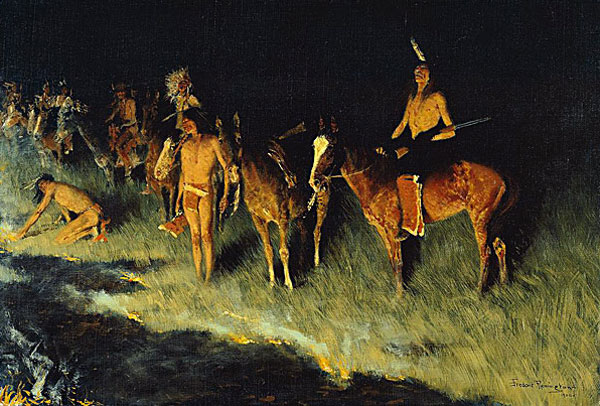
Native Americans setting grass fire, painting by Frederic Remington, 1908

Oddly, many invasion biologists accept these new understandings of ecological science without changing their deep commitment to eradicating all non-native plants and animals.  Daniel Simberloff published an article about the current status of the concept of “balance of nature” simultaneously with the publication of his defense of invasion biology.  He described the current thinking about this concept: “…a widespread rejection of the idea of balance of nature by academic ecologists, who focus rather on a dynamic, often chaotic nature buffeted by constant disturbances.”

Invasion biologists have therefore revised their goal for ecological “restorations” to accommodate their new understanding of the dynamic nature of ecosystems.

The revised goal of ecological “restorations”

If the return to an equilibrium state is no longer the goal of ecological “restorations,” what is the new goal?  This is how invasion biologists writing in defense of their discipline described their goal: “…we should seek to reestablish – or emulate, insofar as possible – the historical trajectory of ecosystems, before they were deflected by human activity, and to allow the restored system to continue responding to various environmental changes…” (1)

In this post we will deconstruct this new definition of the goal of ecological “restorations.”  Our first problem with this new definition is that we don’t know the “historical trajectory” of a landscape because it is fundamentally unknowable.  We would have to reconstruct all the events and changes in the environment in the Bay Area in the past 250 years in the imagined absence of any Europeans.  Even if we knew what would have happened without our presence, we cannot then ensure the continuation of that imagined environment because, the fact is, WE ARE HERE AND WE AREN’T GOING AWAY!

Because we cannot reconstruct an imagined environment that has not been “deflected by human activity,” restorationists—who are the practitioners of invasion biology–focus on the one element in the environment of which there is sufficient historical knowledge, i.e., plants.  Most local restoration projects eradicate all non-native plants and trees, usually using herbicides to accomplish that task.  They rarely plant anything after this eradication attempt because they don’t have the resources to do so.  Those few projects that re-plant after non-natives are eradicated usually irrigate the new landscape for several years.  Here is an incomplete list of everything these projects do not do to replicate an historical landscape:

  • Soils are not restored for many reasons:
    • We have no way of knowing the composition of soil 250 years ago.
    • Soils have been altered by the plants that have been growing in them and by the herbicides used to kill those plants.
    • Urban soils have high nitrogen levels resulting from exposure to fossil fuel exhaust.
  • The atmosphere is not restored:
    • There are much higher levels of ozone and carbon dioxide than there were 250 years ago.
  • The climate is not restored:
    • The temperature is higher than it was 250 years ago.
    • The timing of seasons has therefore changed.
    • Precipitation and fog have changed in known and unknown ways.
  • The disturbance events that sustained historical landscapes or set them on another evolutionary course are not restored:
    • We cannot set fire to urban landscapes annually without polluting our air and endangering our lives.
    • We cannot allow our creeks and rivers to overflow in urban areas without damaging our properties.
  • Most occupants of the historical landscape are not reintroduced:
    • The grazing animals that helped to sustain grassland are gone and cannot be returned to urban landscapes.
    • The top predators such as bears and wolves that kept grazing and other animals in balance with available resources cannot be returned without threatening our safety in an urban setting.
    • Many insects that lived in these historical landscapes are unknown to us and some are extinct.
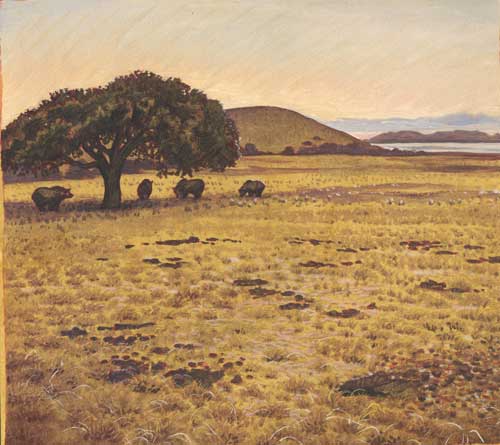
The El Cerrito Plaza with the Albany Hill in the background, centuries ago.  Oil painting by Laura Cunningham, with permission
Bears roamed the grasslands in the Bay Area, preventing over-population of grazing animals. The El Cerrito Plaza with the Albany Hill in the background, centuries ago. Oil painting by Laura Cunningham, with permission

In other words, destroying plants will not “restore” an historical landscape.  Nor will it return that landscape to its “historical trajectory” even if that trajectory were known or knowable.  Plants live in complex communities in which they are interacting with everything in the environment.  Local “restoration” projects do not “restore” an historical landscape because they do not and cannot change anything other than the plants that occupy the space.  Because most environmental variables have not been altered by these projects, the landscape will quickly return to its unrestored state unless it is intensively gardened.  In that case, the landscape will be continuously “deflected by human activity,” which violates the original goal of invasion biologists.

Misanthropic premise of invasion biology

The revised goal of invasion biology is unattainable because the absence of humans is a prerequisite for its attainment.  We cannot know and we cannot replicate a theoretical historical trajectory for ecosystems in which humans were not present.  And when we modify ecosystems in an attempt to do so, human activities will determine their future trajectory. The premise of invasion biology is that success of ecological “restorations” depends upon the absence of humans. Therefore, invasion biology has no practical application in the real world.   


  1. Carolina Murcia, James Aronson, Gustavo Kattan, David Moreno-Mateos, Kingsley Dixon, Daniel Simberloff, “A critique of the ‘novel ecosystem’ concept,”Trends in Ecology and Evolution, October 2014, Vol. 29, No. 10

A defensive tirade from invasion biologists

Pesticide use by land managers in California.  Source California Invasive Plant Council
Pesticide use by land managers in California. Source California Invasive Plant Council

An international team of invasion biologists has just published a defense of their academic turf, invasion biology.  (1) Daniel Simberloff, an American member of the team, is the most relentless defender of the crusade to eradicate all non-native species, wherever they are found, all over the world.  Their publication acknowledges the mounting criticism of this crusade and attempts to respond to that criticism, but what is most notable is what is missing from their attempt to defend their opinions.  They make no mention of the harmful methods used to eradicate non-native species:

Keep these damaging methods in mind as we visit the hypocritical and contradictory arguments used to justify the projects for which these invasion biologists advocate.  They set up “novel ecosystems” as the straw man to which they compare the goals of invasion biology.  They define novel ecosystems as “a new species combination that arises spontaneously and irreversibly in response to anthropogenic land-use changes, species introductions, and climate change, without correspondence to any historical ecosystem.”

“Lack of rigorous scrutiny”

Their primary criticism of the concept of “novel ecosystems” is that it has not been “subjected to the scrutiny and empirical validation inherent in science” and its definition is “impaired by logical contradictions and ecological imprecisions.”   These criticisms apply equally to invasion biology.

Hypothesis n % of supporting studies % of decline in support
Invasional meltdown

30

77%

41%

Novel weapons

23

74%

25%

Enemy release

106

54%

10%

Biotic resistance

129

29%

5%

Tens rule

74

28%

10%

Island Susceptibility

9

11%

25%

Although support is strongest for the invasional meltdown hypothesis, recent studies are less supportive than early studies, indicating substantial decline in supporting evidence.  Declining evidence of invasional meltdown is consistent with the fact that exotic species are eventually integrated into the food web which reduces their populations, stabilizing their spread. There is apparently little evidence that islands are more susceptible to invasion than continents and few studies have been done to test the hypothesis.

If empirical validation and semantic precision are required to establish the credibility of scientific hypotheses, invasion biology has failed that test.

“Precautionary principle of conservation and restoration”

These invasion biologists define the precautionary principle of conservation and restoration as follows:  “we should seek to reestablish –or emulate, insofar as possible—the historical trajectory of ecosystems, before they were deflected by human activity.”  This is an unusual use of the precautionary principle, which is more typically defined as avoiding damage to the environment by not using potentially harmful methods, even in the absence of solid evidence of such harm.  The precautionary principle was not used when the following “restoration” projects were defined or implemented:

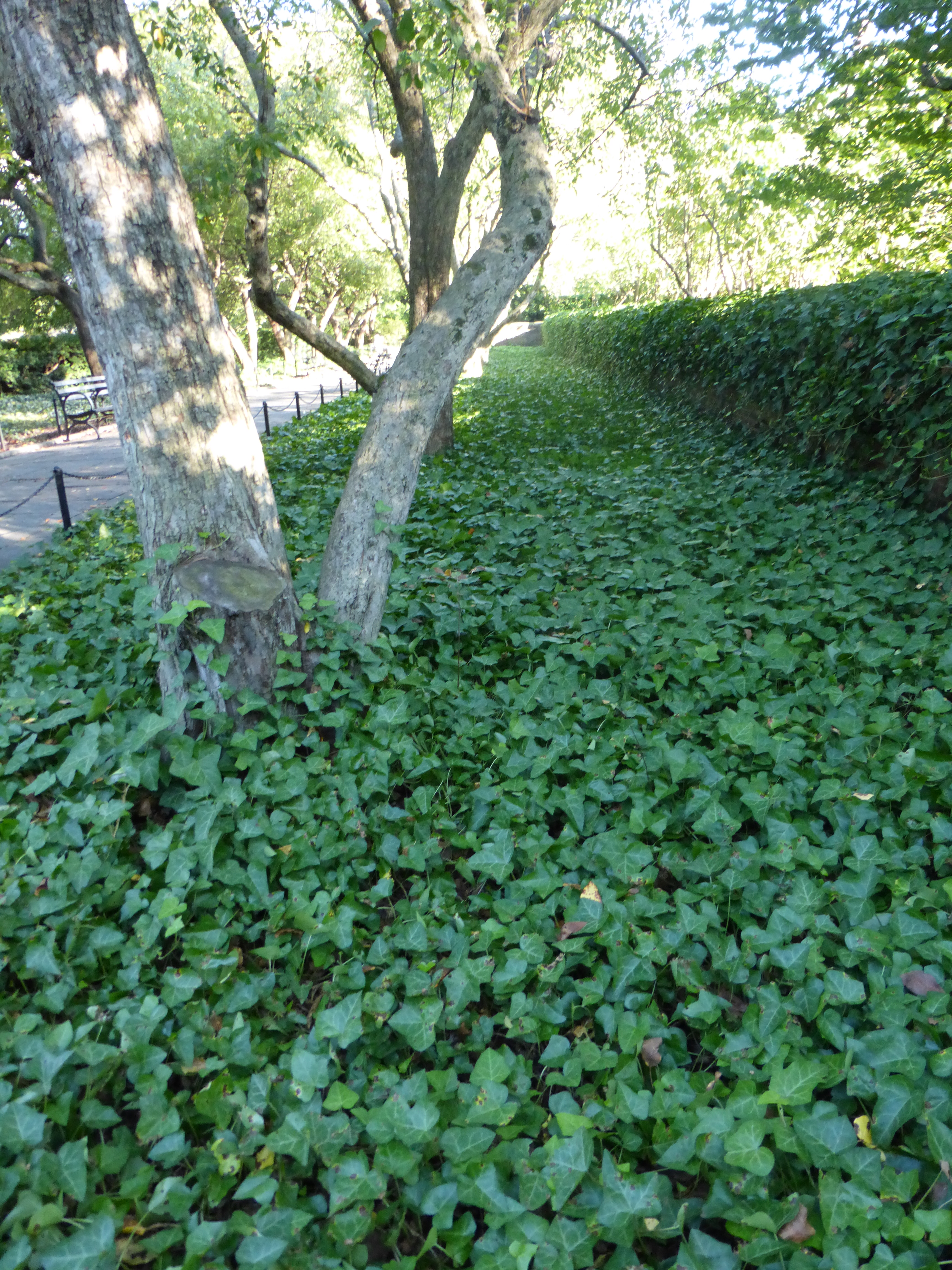
Ivy in the Conservatory in Central Park, New York City

In 1996, Daniel Simberloff made this statement in his publication about the hazards of biological controls:  “…are there any protocols for biological-control introductions that would prevent all disasters?  Probably not…” (2) Yet, in 2013, he expressed his support for the introduction of non-native insects to control cape ivy at a conference at UC Davis sponsored by the California Department of Food and Agriculture.  Although cape ivy is despised by native plant advocates, it is not an agricultural pest and therefore causes no economic damage to ecosystems, unless money is wasted on attempts to eradicate it.

“All ecosystems should be considered candidates for restoration”

In response to those who find value in novel ecosystems, these invasion biologists find none.  They reject the possibility that there is ever a point at which it may not be possible to re-create a historical landscape.  They continue to believe that ANY and ALL radically altered landscapes CAN and SHOULD be considered candidates for restoration.  Their only caveat to this universal goal is that “damaged ecosystems…should be evaluated for feasibility, desirability, and cost-effectiveness, on a case-by-case basis, so that informed and science-based policy decisions can be made, in consultations with scientists, restoration practitioners, stakeholders, and advisors.”

These criteria for potential “restoration” have nothing to do with reality:

  • Most projects in the San Francisco Bay Area have not provided cost estimates when they were planned. The public demanded cost estimates for the projects of the Natural Areas Program in San Francisco, but these demands were ignored.  Therefore, “cost-effectiveness” is not usually considered when these projects have been shoved down the public’s throat.
  • We consider the public to be “stakeholders” in decisions to radically alter our public open spaces. We are the visitors to these areas and our tax dollars pay for their acquisition, maintenance, and “restoration.”  Yet, managers of public land are consistently making those decisions without taking the public’s opinion into consideration.  Most projects are planned and executed without any public participation.  In the few cases in which there are environmental impact reviews, the projects are implemented regardless of overwhelming opposition of the public.

 “Human-damaged ecosystems can be at least partially restored”

The demonstrated futility of “restoration” projects is one of many reasons why there is waning public support for attempting them.  Yet, invasion biologists who authored this diatribe claim that “restored sites recovered on average 80-86% of biodiversity and ecosystem services…and showed improvements of 125-144% over degraded ones.”  This claim is contradicted both by other scientific studies and by experience with local projects:

  • “…this paper analyses 249 plant species reintroductions worldwide by assessing the methods used and the results obtained from these reintroduction experiments…Results indicate that survival, flowering and fruiting rates of reintroduced plants are generally quite low (on average 52%, 19%, and 16% respectively). Furthermore, our results show a success rate decline in individual experiments with time.  Survival rates reported in the literature are also much higher (78% on average) than those mentioned by survey participants (33% on average).” (3)
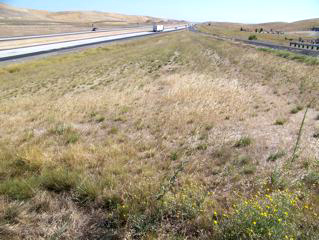
  • Dunnigan Test Plot, Augusst 2011.  The result of an eight-year effort to restore native grassland.  Does it look "biodiverse?"  ecoseed.com.
    Dunnigan Test Plot, August 2011. The result of an eight-year effort to restore native grassland. Does it look “biodiverse?” ecoseed.com.

    There is frequently a discrepancy between the success rates claimed in papers and those actually observed. For example, Cal-Trans gave researchers at UC Davis $450,000 to restore 2 acres of non-native annual grassland to native grassland.  UC Davis researchers spent 8 years and used multiple methods to achieve this transition.  When they ran out of money, they declared success in their published report.  They defined success as 50% native plants which they expected to last 10 years before being entirely replaced by non-native annual grasses again.  Do you consider that a success?

  • On a more anecdotal level, we watch established landscapes that have required no maintenance in the past being transformed into weedy messes by failed “restoration” projects. Then, adding insult to injury, we hear those who are responsible for these failures tell us how successful they are.

“Inadequate political will”

The authors of this publication conclude:

“No proof of ecological thresholds that would prevent restoration has ever been demonstrated.  Often the threshold that obstructs a restoration project is not its ecological feasibility, but its cost, and the political will to commit to such cost.” (1)

We are reminded of an old football adage:  “The best defense is a good offense.”  In other words, invasion biology is under fire, but the reaction of invasion biologists is to demand more….more money, more effort, and the commitment of public land managers to “restore” all ecosystems, regardless of what the public wants.  And in support of that aggressive strategy, they refuse to acknowledge the damage that is being done to the environment and the animals that live in it, by the projects they demand.

The authors of this defensive tirade have hammered another nail in the coffin of invasion biology.


  1. Carolina Murcia, James Aronson, Gustavo Kattan, David Moreno-Mateos, Kingsley Dixon, Daniel Simberloff, “A critique of the ‘novel ecosystem’ concept,” Trends in Ecology and Evolution, October 2014, Vol. 29, No. 10
  2. Daniel Simberloff and Peter Stiling, “How Risky is Biological Control?” Ecology, 77(7), 1996, pp 1965-1974
  3. Sandrine Godefroid, et. al., “How successful are plant species reintroductions?” Biological Conservation,   144, Issue 2, February 2011

Evolutionary advantage of introduced species

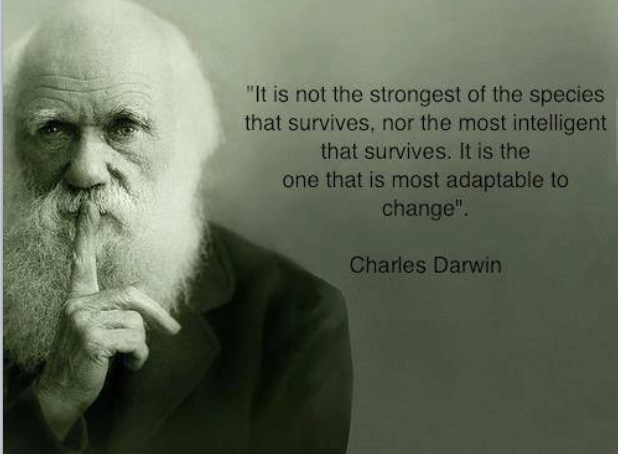
We have often wondered why so many plants and animals introduced to North America become invasive, compared to species introduced to Europe.  In California, there are about 200 plants on the inventory of “invasive” plants.  In Britain, there are only about a dozen plants considered “invasive.”  In past articles, we have speculated that Americans are using different standards to determine invasiveness and that may be a factor.  But now scientists, Jason Fridley and Dov Sax have recently reported the empirical evidence that suggests some regions are more vulnerable to invasion than others because of competitive advantages of species from regions with longer evolutionary histories.  In fact, Charles Darwin is the original author of this theory:

“Darwin (1859) observed that because ‘natural selection acts by competition, it adapts the inhabitants of each country only in relation to the degree of perfection of their associates, such that, we need feel no surprise at the inhabitants of any one country…being beaten and supplanted by naturalized productions from another land.’  Darwin’s view, one of the earliest on biological invasions, presents invasion as an expectation of natural selection – a view largely absent from modern invasion biology.  Darwin further suggested that species from larger regions, represented by more individuals, has ‘consequently been advanced through natural selection and competition to a higher stage of perfection of dominating power’ and therefore be expected to beat ‘less powerful’ forms found in other regions.” (1)

Darwin2

Based on Darwin’s speculation, Fridley and Sax formulated the evolutionary imbalance hypothesis, based on three postulates:

  • Evolution is essentially an infinite series of experiments as each generation is tested by the conditions they encounter. The more tests the species passes by surviving and reproducing, the more fit the species is to face the next test.
  • The number of such experiments vary by region that differ in size and biotic history, which influences the intensity of competition each species encounters.
  • “Similar sets of ecological conditions exist around the world” thereby facilitating the movement of species from their native ranges to new ranges.

It follows from these postulates that when species from previously isolated habitats are mixed, some species will be more fit than others for any given set of conditions.  In other words, they have an evolutionary advantage by virtue of having faced more competition for a longer period of time.   These are the environmental conditions that are likely to confer such an evolutionary advantage:

  • Larger regions with large expanses of habitat usually have larger populations of species. Larger populations have more genetic variation, which provides more opportunities for natural selection to choose a “winning” genetic combination.
  • Also, more stable environments enable lineages to survive for longer periods of time. The longer the opportunity for natural selection to operate, the more fit the surviving lineage.
  • The greater the competition each species experiences, the more fit the surviving species is likely to be. Therefore, species occupying diverse habitats are likely to be more fit than species in less diverse habitats.

The authors of this new study tested these hypotheses in three geographic areas that have well-documented non-native floras, including Eastern North American, the Czech Republic, and New Zealand.  For example, the climate of the Northeast of America is similar to East Asia.  Some of the most destructive invasive species in the Northeast are from East Asia, such as the emerald ash borer.  Yet species from North America do not become invasive when introduced to East Asia.  Species from East Asia have a much longer evolutionary history than species native to the Northeast because much of the United States was buried in glaciers during the Ice Ages, while East Asia was not.  (2)  The longer evolutionary history of East Asia makes East Asian species “fitter” and more likely to be successful in North America, while North American species are less successful in East Asia.

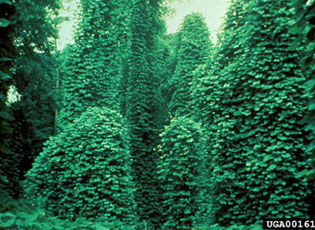
Kudzu evolved in Japan.  USDA
Kudzu evolved in Japan. USDA

Failure of the competing theory

Invasion biology is the competing theory of why introduced species become invasive when introduced outside their native ranges.  It is a theory that turns its back on evolutionary theory by assuming that plants and animals are incapable of adapting to changed conditions.  Invasion biology assumes that introduced plants become invasive because they leave their predators behind.  This is the predator release theory which also implies that introduced plants are not useful to native animals.

The problem with the predator release theory is that there is no empirical evidence that supports it.  For example, equal numbers of insects are consistently found in native and non-native habitats.  And when empirical studies claim to have found evidence of predator release, sampling errors have discredited those studies:

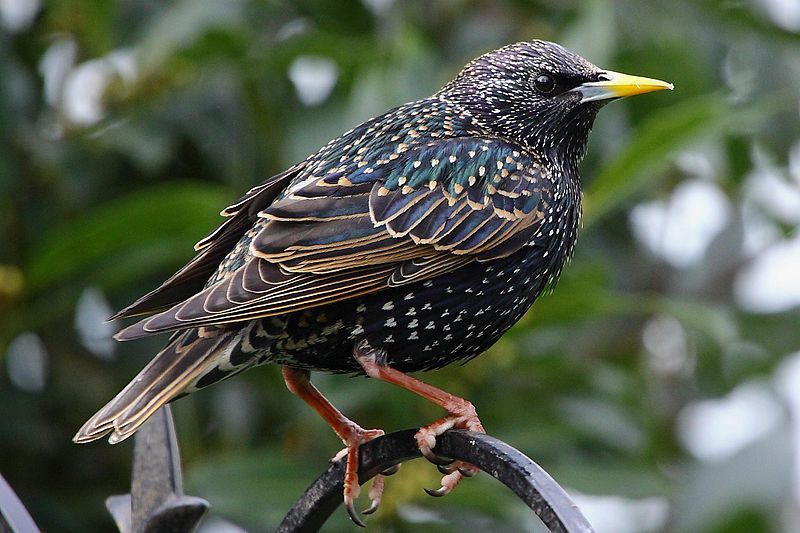
“For example, one study found fewer parasitic worms in introduced starlings in North America than in the entire native range of Europe and Asia.  But once allowance was made for the actual local source of the starlings, the difference disappears:  various evidence suggests starlings arrived in North America via Liverpool, and American starlings have most of the parasites of Liverpool starlings, plus quite a few others, either American natives or European parasites introduced with other birds.  In fact, American starlings have more parasites than are found in the likely source population.”  (3)

Starling in breeding plumage.  Creative Commons - Share Alike
Starling in breeding plumage. Creative Commons – Share Alike

“Resistance is futile”

And so we add the evolutionary imbalance hypothesis to the long list of reasons why we are opposed to fruitless attempts to eradicate well established non-native species of plants and animals:

And now we know that many invasive species have evolutionary advantages over the native species they have displaced:  “The evolutionary imbalance hypothesis…could have a grim implication for conservation biologists trying to preserve native species:  They may be fighting millions of years of evolution.  If that’s true, the phrase ‘Resistance is futile’ comes to mind.” (2)


  1. Jason Fridley and Dov Sax, “The imbalance of nature: revisiting a Darwinian framework for invasion biology,” Global Ecology and Biogeography, 23, 1157-1166, 2014
  2. Carl Zimmer, “Turning to Darwin to Solve the Mystery of Invasive Species,” New York Times, October 9, 2014
  3. Ken Thompson, Where do camels belong?, Greystone Books, 2014

Polarized views of nature mirror our politics

We recently posted an article about our on-going debate with the Audubon Society regarding its misguided support for the projects that are destroying the urban forest in the San Francisco Bay Area.  That article provided a few examples of our widely divergent views of nature:

  • We don’t see how birds will benefit from the destruction of tens of thousands of trees and countless plants that provide food and cover for birds and animals.
  • We don’t enjoy walking in nature with a judgmental eye, which points fingers at plants and animals that others claim “don’t belong there.” We are unwilling to divide nature into “good” and “bad” categories.
  • We don’t think humans have the right to pass a death sentence on wild animals because they prefer another animal, which they claim will benefit from the death of a potential competitor.
  • We don’t consider a “managed” forest a “more natural forest.” We don’t think humans are capable of improving what nature can accomplish without our interference.  We don’t think a public park that is routinely sprayed with herbicides can be accurately described as a “natural area.”
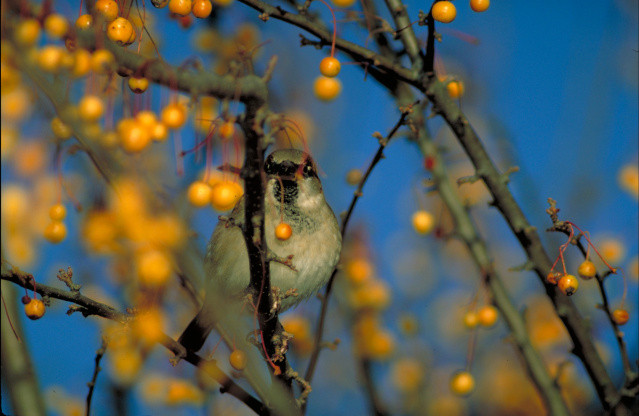
English sparrow.  US Fish & Wildlife photo
English sparrow. US Fish & Wildlife photo

However, these widely divergent viewpoints about nature are not inconsistent with the extremes of our polarized politics in America.  Just as we don’t expect to change the minds of those at the opposite end of the political spectrum, we don’t expect to change the minds of those who view nature through the darkly colored lens of nativism.  Just as elections for public office are decided by the independents in the middle of the political spectrum, the debate about the future of our public lands will be decided by those who have not yet formed an opinion about what is best for nature.  Today’s post is addressed to them.  We will tell the “independents” about two recent op-eds published by The New York Times which represent the two extreme viewpoints about nature.  Both op-eds use sparrows as representatives of the natural world, which we hope will make the differences in these viewpoints starker and therefore clearer.

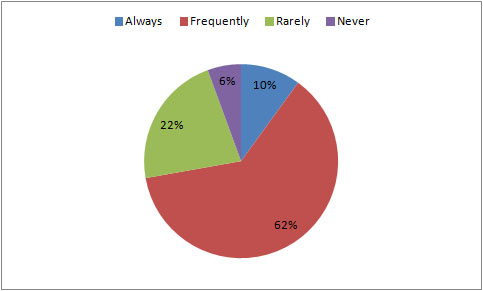
First a word about how important the “independents” are to the debate about the ecological “restorations” which are dictated by invasion biology.  Political independents are usually not more than a third of the electorate.  But, a survey conducted by University of Florida suggests the majority of the public are still open to learning more about “invasive species.”  They report that 62% of Floridians they surveyed said they are not knowledgeable or only slightly knowledgeable about invasive species.  Ironically, the same survey claimed that “a majority voiced support for raising sales tax to combat invasive species.”  One wonders why voters who acknowledge that they know nothing or next to nothing about invasive species would be willing to tax themselves to combat something they don’t understand.  In any case, if Floridians are typical, the majority of the public needs to know more about invasion biology.  We hope they have access to balanced information that is not written by those who make their living killing animals and poisoning our public lands.  Million Trees was created over four years ago for that purpose.

“The Truth About Sparrows”

Some time ago, we told the story of how sparrows were brought to America in the 1850s by people who believed they would eat the insects that were killing trees.  We concluded that article by saying that 150 years later house sparrows are no longer despised as alien intruders.  We were wrong.

In May 2014, the New York Times published an op-ed entitled “The Truth About Sparrows.”  The op-ed was written by Peyton Marshall, whose mother was an exterminator of house sparrows.  This was no idle pastime for Ms. Marshall’s mother.  It was her mission.

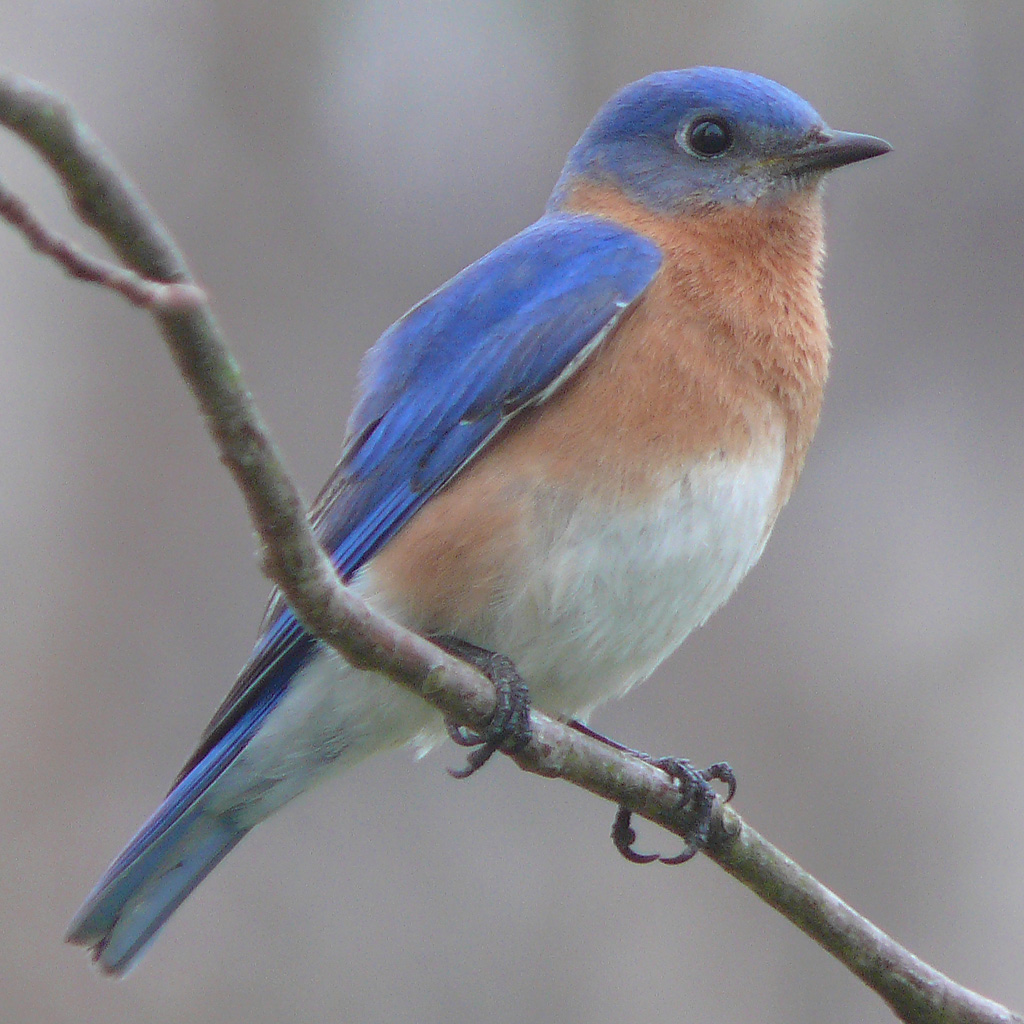
Eastern bluebird, public domain

Mom’s crusade against house sparrows began when Ms. Marshall was a child.  Mom loved bluebirds at a time when their population was dwindling in the east where they lived.  Mom decided that house sparrows were to blame and so she took it upon herself to kill every house sparrow that had the misfortune of entering her yard or within reach of it.

Mom began by trapping the house sparrows.  “Good” birds caught in the traps were freed, but the house sparrows were put into plastic garbage bags and asphyxiated.  Mom started the family car in the garage and wrapped the open end of the garbage bag around the tailpipe.  When the birds did not die, she consulted her husband who informed her that the car was a diesel and would not produce enough carbon monoxide to kill the birds.

So, mom took her operation on the road.  She helped elderly ladies with their groceries in the parking lot in exchange for a shot at their tailpipe.  When dropping off her children for play dates and birthday parties, she asked their parents if she could make brief use of their cars to kill birds.  Polite parents watched in horror as they became accessories to this execution.

Ms. Marshall concludes her story by noting that the population of bluebirds has rebounded since she was a child.  But mom continues to trap house sparrows in her yard and now uses a less public means of killing them:  “Now, she uses a carving knife and cutting board, at her leisure, in the privacy of her own kitchen.”

Although Ms. Marshall doesn’t say so, we doubt that the recovery of the bluebird population has much to do with the extermination of house sparrows in her mother’s backyard.  The recovery of the bluebird population is attributed to building nest boxes that substitute for the dead trees which are their preferred nest sites.  There are few dead trees in urban and suburban areas because people consider them hazardous and unsightly.  Once again, animals pay the price for the choices of humans.

“What the Sparrows Told Me”

The New York Times published “What the Sparrows Told Me” in August 2014.  It is a fitting antidote to the grisly tale of the sparrow exterminator.

Trish O’Kane, the author, was a human rights investigative journalist in Central America for 10 years before moving to New Orleans to teach journalism.  Less than a month after arriving in New Orleans, she and her family were displaced by hurricane Katrina in 2005.  Four months after the hurricane, she rented a room in a dry part of town so that she could return to her teaching job.  It was a hard time for everyone in New Orleans, but her gloom was deepened by learning of her father’s terminal cancer which would kill him in a matter of months.

Ms. O’Kane had never had an interest in birds before, but she knew she needed “to focus on something beautiful, something positive, something alive,” and so she did:

“I bought two bird feeders.  Each morning I sat on that back stoop and watched those sparrows.  Instead of wondering what was going to happen to the city, to the Gulf Coast, to the planet, I started wondering why one sparrow was hogging all the seed.  I started thinking about their resilience, their pluck, their focus on immediate needs.  If they couldn’t find food, they went somewhere else.  If they lost a nest, they built another.  They had no time or energy for grief.  They clung to the fence in raggedy lines heckling one another like drunken revelers on Bourbon Street.  Their sparring made me laugh.“

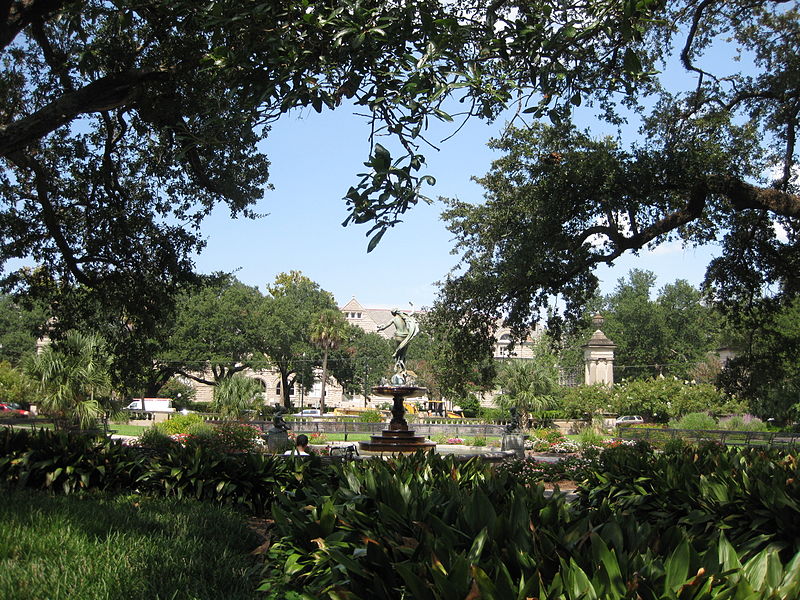
Audubon Park, New Orleans.  Public domain
Audubon Park, New Orleans. Public domain

Ms. O’Kane started holding her classes in Audubon Park, named for John James Audubon.  Her students began to find the same solace in watching the birds going about their business, finding a way to survive, carrying on.  And that gave her and her students the strength and the will to do the same at a time when life was hard in New Orleans.

Ms. O’Kane is now a doctoral student in environmental studies at University of Wisconsin, Madison.  She has found a way to connect her interest in human rights with her new found interest in birds.  She teaches an undergraduate course in environmental justice in which she pairs undergraduate students with middle school students in a mentoring program called Nature Explorers.  Many of the middle school children are immigrants from Central America.  She finds that they enjoy learning about the birds that migrate between Central America and Wisconsin, just as their families did.  The birds, like the people of America, are citizens of the world.

Ms. O’Kane tells us that many of her undergraduate students are frightened of the future of our planet.  She likes to start each new class with the story of the sparrows in New Orleans:  “I tell them that the birds are a gift to help them get through each day, a way to enjoy the world while we change it so that young people, everywhere, have a chance.”

Whose eyes do you choose to look through?

It’s no secret that our viewpoint regarding nature is more closely aligned with Ms. O’Kane’s.  If you haven’t yet taken a stand on the issue of what plants and animals are welcome in your ideal nature, think for a moment.  Which of these starkly different viewpoints do you prefer?

Invasive Species?

We spent nearly two months analyzing the California Invasive Plant Council’s draft reassessment of blue gum eucalyptus and informing our readers of the fallacious reasoning used to continue its classification of blue gum as “invasive.”  We are badly in need of comic relief and we assume our readers could use some as well.  We are republishing with permission an article by Robert Platt Bell from his blog, “Living Stingy.”  Mr. Platt is a patent attorney on Jekyll Island, Georgia. His blog gives advice about “how to live a better life with less money.”  

His sarcastic criticism of invasion biology reveals that he is a man of considerable good sense.  Although we tend to use scientific arguments on Million Trees to critique invasion biology, Mr. Platt’s article demonstrates that a little common sense is really all that’s needed.  Mr. Platt ends his article with the disclaimer that he doesn’t have a cat and we will do the same.  We don’t have a cat, never have, never will. 


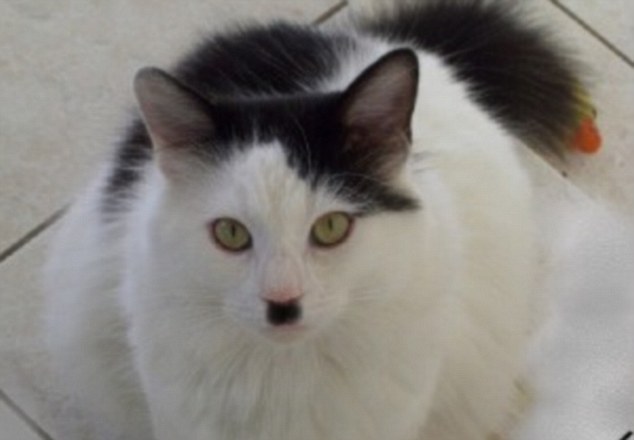
Some folks claim that the ordinary house cat is an "invasive species"
Some folks claim that the ordinary house cat is an “invasive species”

Your tax dollars at work.   Here on the island, they have attached little cameras to cats to monitor their behavior.  The University of Georgia is funding the study, which in turn is funded by your taxes.

They also have sent out a “feral cat awareness survey” to everyone on the island, and again, this is funded by UGA.   The “survey” is more of a “push-poll” in that it asks questions that are more answers than questions.  “Did you know that cats are responsible for killing billions of songbirds every year?” – that sort of thing, courtesy of the bureau of specious statistics.

Actually, the results of “kitty-cam” so far are that cats (1) lick themselves a lot, (2) sleep, and (3) eat cat food.   Only one cat has been caught killing for food, and no word on whether it was a rodent or a bird.

But the oddest thing about this “poll” was that they were trying to characterize house cats as “invasive species” by the way the questions were asked.

“Invasive Species”  is the hot, new, trendy term for biologists and wildlife managers to use – and one they use to justify poisoning the air, water, and soil, all in the name of “preserving nature”.

We are told (get this) that some species are “native” and others are “invasive” and that the latter need to be slaughtered, as they will push out the “native” species over time.

This may or may not be true.   The point is, the species doesn’t consider itself “invasive” anymore than the species it is displacing (which at one time was no doubt “invasive” as well).

Some try to put a spin on this based on a human vector.   If the species is relocated due to some act of mankind, then it is “invasive”, whereas if it just migrated here, I guess it is natural.  This also is a load of hooey, as the vectors that move species from one area to another have little to do with whether the species would eventually get there under its own power, or whether it would adapt to the new environment.

And speaking of “invasive species,” this sort of discussion usually neglects to address the most invasive species on the planet – a species that has occupied every ecological nook and cranny on the planet and adapted itself to harsh environments and even space.

Yea, I’m talking about you and me – human beings.   We have over-run the planet, but no one talks about euthanizing or neutering people on a massive scale.

On the other hand, we can poison some trees or a carp or whatever, and that’s going to fix everything up just Jim-Dandy!

I think biologists who believe that have their head up their ass, or are just looking for grant money.

In the Northeast, we are told the Zebra Mussel is “invasive” – but it has turned murky brown lakes crystal clear.   The powerplant that has to clean its inlet screens, we are told, is justification for dumping poison in the water, or for fining some unwitting fisherman hundreds of dollars for dragging a piece of seaweed on his boat trailer.  The upshot is, the zebra mussels are winning, much as the lamprey eels are (and the snakehead fish).

In the Everglades, we watched as “wildlife managers” drilled holes in trees and filled them with poison.   Their crime?  Being non-native.   Whether this will permanently kill off these trees is debatable, and the long-term effect of poisoning nature is something not studied.   And the cost of this “cure” is pretty staggering.

Nature expands into environments where it can adapt, and you can’t stop that.  It is like Boyle’s law about gas – it expands to fill a vessel.   Trying to hold back the tide of species is pointless and fruitless (pardon the pun) as nature will sneak around at every turn, as soon as you let your guard down.

Yes, it is bad there are Boas in the Everglades.   It is also irrelevant whether they got there as escaped pets or were dropped from an airplane or swam over from South America.   They are there, and trying to extinguish them is going to be a long, difficult, and expensive job that will never get done.

Here on the island, a couple runs a program that captures and neuters cats and then releases them.  It has been effective as the cat population has plummeted from the 1990’s until today.   (They did a similar thing in Key West, and now there is no cat problem, just a chicken problem).

But on the other hand, we are being overrun by deer – and not in the sense that “the deer ate my flowers” nonsense.   We simply have more deer than the island can support, and they are becoming smaller and more sickly as a result (and more brave, as they are not afraid of humans at all).   New breeding stock was brought in to try to reverse the trend, but it has not really helped.   Talk of managing the deer population or relocating deer is shouted down as “inhumane”.

But apparently, it is open season on cats.

(Disclaimer:  I do not presently own any cats.  I like them, but don’t like cleaning out litter boxes.  Hence I have no cats).

Birds and butterflies in the eucalyptus forest

The deadline for sending comments to the California Invasive Plant Council (Cal-IPC) about their draft reassessment of blue gum eucalyptus is Thursday, July 31, 2014 (send to info@cal-ipc.org).  We are hoping to inspire you to write your own comment by sharing our personal favorites of some of the goofy statements Cal-IPC uses to justify its classification of blue gum as “moderately invasive.”

Eucalyptus trees do NOT kill birds!

Our regular readers have heard the absurd claim that eucalyptus trees kill birds by “gumming” up their noses or beaks with the nectar of the eucalyptus flowers.  We have published detailed critiques of this claim, so we won’t repeat them because you can visit those posts by clicking HERE and HERE.

Of course, all of this detailed information was provided to Cal-IPC when the original request to reconsider their classification of blue gum was submitted in December 2013.  In their draft reassessment, Cal-IPC now sinks to a new low by claiming Ted Williams as the source of the claim that eucalypts kill birds.  Mr. Williams writes an opinion column published by Audubon magazine, which is appropriately entitled “Incite.”  In 2002, Audubon magazine published Mr. Williams’s opinion of eucalyptus, which he called “America’s Largest Weed.” 

Ted Williams is not a scientist or a journalist.  He is a commentator. His column in Audubon magazine is not entitled “Insight,” because it is intentionally inflammatory.  It engages in rhetoric and hyperbole in support of Mr. Williams’s opinion.  In an article in High Country News, Mr. Williams describes “Incite” as a “muckraking column” and he calls himself an “environmental extremist.”  Citing Mr. Williams as a source of information undermines the credibility of Cal-IPC’s draft reassessment.  Quoting Mr. Williams on the subject of eucalyptus is a bit like quoting Rush Limbaugh on the subject of immigration.

But let’s be more specific with examples of the absurd statements Mr. Williams makes and the evidence that these statements are not factually correct.

The truth about Anna’s hummingbirds

Hummingbird in eucalyptus flower.  Courtesy Melanie Hofmann
Hummingbird in eucalyptus flower. Courtesy Melanie Hofmann

Cal-IPC’s draft reassessments says, “Williams reported that PRBO found that 50% of the Anna’s hummingbird nests [in eucalyptus] are shaken out by the wind, while only 10% of nests are destroyed by wind in native vegetation.”

Cal-IPC’s quotes from Williams are not found in any publication of the Point Reyes Bird Observatory (PRBO), which Williams claims as the source of the information.  Statements about the nests of Anna’s hummingbird are explicitly contradicted by Cornell Ornithology Laboratory, America’s preeminent research institution of bird biology and behavior:

  • “In the first half of the 20th century, the Anna’s Hummingbird bred only in northern Baja California and southern California.  The planting of exotic flowering trees provided nectar and nesting sites, and allowed the hummingbird to greatly expand its breeding range.”
  • “Anna’s Hummingbird populations increased by almost 2% per year between 1966 and 2010, according to the North American Breeding Bird Survey…The Anna’s Hummingbird is the most common hummingbird on the West Coast, and it has thrived alongside human habitation.  Its range has increased dramatically since the 1930s, when it was found only in California and Baja California.  Thanks to widespread backyard feeders and introduced trees such as eucalyptus, it now occurs in healthy numbers all the way to Vancouver, Canada.”
  • “Females choose the nest site, usually a horizontal branch of trees or shrubs 5-20 feet off the ground (occasionally higher) near a source of nectar.  They often build nests in oak, sycamore, or eucalyptus trees…”
  • “They [Anna’s Hummingbirds] are notably common around eucalyptus trees, even though eucalyptus was only introduced to the West Coast in the mid-nineteenth century.”

In other words, the nation’s most prestigious ornithological research institution tells us that Anna’s Hummingbirds have benefited greatly from eucalyptus trees, which provide both winter sources of nectar not otherwise available in California as well as safe, secure nesting habitat.  Since Anna’s Hummingbirds nest preferentially in eucalyptus, their populations would not be increasing if 50% of their nests were destroyed, as Mr. Williams claims.

Red-tailed hawk nesting in eucalyptus.  Courtesy urbanwildness.org
Red-tailed hawk nesting in eucalyptus. Courtesy urbanwildness.org

Furthermore, the implication that eucalypts provide a less stable nest site than native trees is also explicitly contradicted by a study that Cal-IPC cites elsewhere in its draft reassessment.  Stephen Rottenborn studied the nesting choices and reproductive success of red-shouldered hawks in Santa Clara County.  He found that the hawks prefer eucalypts to native trees and that their nests were more successful when they made that choice.  He attributes that greater success rate to the fact that eucalypts are “large, sturdy trees” that provide “greater stability and protective cover.”

“Fourteen of 27 nests in 1994 and 38 of 58 nests in 1995 were in exotic trees, predominantly eucalyptus.  Nesting and fledging success were higher in exotic trees than in native trees in both years, owing in part to greater stability and protective cover.  Most nest trees in upland areas were exotics, and even in riparian habitats, where tall native cottonwoods and sycamores were available, Red-shouldered Hawks selected eucalyptus more often than expected based on their availability.  Of the habitat and nest-tree variables measured at each nest, only nest-tree height and diameter were significantly associated with reproductive success, suggesting that large, sturdy trees provided the best nest sites.  Red-shouldered Hawk populations in the study area have likely benefited from the planting of exotic eucalyptus and fan palms.” (1)

 Magic!  Turning 2 dead birds into 300

Cal-IPC’s draft reassessment says, “Stallcup reported finding two dead warblers and ‘about 300 moribund warblers with eucalyptus glue all over their faces’ over the years, including ‘a large number of gummed-up Townsend’s warblers, yellow-rumped warblers, ruby-crowned kinglets, Anna’s and Allen’s hummingbirds, and a few Bullock’s orioles. Anyone who birds around eucalyptus trees sees it all the time’ (Williams 2002).”

This particular quote from Ted Williams is easily discredited because Rich Stallcup published his theory about birds being harmed by eucalyptus trees (available HERE).  In this publication, Mr. Stallcup reports seeing just two dead birds (one hummingbird and one ruby-crowned kinglet) in the eucalyptus forest during his long, illustrious career as an amateur birder.  He says nothing about seeing “300 moribund warblers” in his publication.  A small measure of common sense enables the reader to evaluate Mr. Williams’s claim:  If Mr. Stallcup had seen 300 dying birds, why would he say he had only seen 2 dead birds in his published article in which he is trying to make the case for removal of eucalyptus?

Overwintering monarch butterflies use predominantly eucalyptus

Monarch butterflies roosting in eucalypus tree.

Cal-IPC’s draft reassessment says, “Natural experimental evidence from mixed stands (native trees mixed with eucalyptus) show that Monarchs do not consistently cluster preferentially on eucalyptus, and at times, appear to prefer native trees in some seasons and locations. (Griffiths & Villablanca 2013)”

This is a misleading statement because it implies that monarchs have the option of overwintering in native trees.  In fact, the reference cited by Cal-IPC is speaking specifically of three species of native trees with small native ranges:  Monterey pine, Monterey cypress, and redwoodsThe study is reporting observations of monarchs within the native ranges of these three tree species.  These tall trees provide a similar microclimate to overwintering monarchs.     However, the native ranges of these tree species are small.

Monterey pines are native in “three disjunct populations in San Mateo and Santa Cruz counties, Monterey County, and San Luis Obispo County.  The native population of Monterey cypress is significantly smaller:  “The native range of the species was confined to two small relict populations, at Cypress Point in Pebble Beach and at Point Lobos near Carmel, California.” Where Monterey pine and cypress have been planted outside their native range, they are being eradicated by the same public land managers who are eradicating eucalyptus.

For example, when UC Berkeley destroyed approximately 18,000 non-native trees over 10 years ago, many were Monterey pines.  Their plans to eradicate 80,000 more trees include all Monterey pines in the project area.  In San Francisco, the plans (SNRAMP) of the Natural Areas Program propose to destroy many Monterey cypresses on Mount Davidson.  The GGNRA has destroyed about 500 Monterey pines on Hawk Hill in Marin County and many Monterey cypresses throughout their properties.

Furthermore, both Monterey pine and Monterey cypress have much shorter lives than eucalyptus.  Monterey pine lives at most 150 years and Monterey cypress about 250 years, compared to E. globulus, which lives in its native range from 200-500 years.  Therefore, even where they are not being eradicated, they will die long before E. globulus and are unlikely to be replanted outside their small native range by public land managers who are committed to a “natives-only” policy.

We are unaware of any attempts to eradicate redwoods outside their native range, in the few locations where they still exist. They seem to have escaped the wrath of nativism. However, the range of redwoods is very narrow:  “The redwoods occupy a narrow strip of land approximately 450 miles (724 km) in length and 5 to 35 miles (8-56 km) in width.  The northern boundary of its range is marked by two groves…within 15 miles (25 km) of the California-Oregon border.  The southern boundary of redwood’s range is marked by a grove…Monterey County, California.”

Although native plant advocates may be willing to plant redwoods outside their native range, they do not have that option because of the horticultural requirements of redwoods.  Redwoods require more water than Monterey pine and cypress and they do not tolerate wind, which prevents them from being successful in many coastal locations, where monarchs overwinter.  Redwoods cannot be successfully grown south of Monterey County where the climate is warmer and drier than its native range.

In other words, monarchs do not have the option of roosting in native trees in most of the places in California where they overwinter.  This is a more accurate description of the behavior of overwintering monarchs and the alternatives that are available to them in about 300 locations along the entire coast of California, where they have overwintered in the past:

Three types of trees were used most frequently by roosting monarchs:  eucalyptus (75% of the habitats primarily Eucalyptus globulus), pine (20% of the habitats; primarily Pinus radiata), and cypress (16% of the Cupressus macrocarpa).  Twelve other tree species were identified…with a combined prevalence of only 10%…The negative sign for this indicator means that habitats had smaller populations when the roosting tree type was a species other than eucalyptus, pine, or cypress…our long-term analysis showed that abundance has historically been greater at habitats dominated by eucalyptus, pines, or cypress than at those with ‘other’ species.  Stands of these three signature taxa may be more likely to produce a community structure and associated microclimate that increases the residence time of monarchs.  Furthermore, these taxa may produce a more attractive landscape architecture in terms of sensory cues to migratory monarchs arriving in a certain region.” (2)

For the record, we will add that we would be happy to have more Monterey pines and cypress and if public land managers would quit destroying them, we would consider them attractive alternatives to eucalyptus.  However, for the moment, we must assume that the crusade against all non-native trees will continue unabated.

What is your personal favorite?

We have shared our personal favorites with you, but everyone comes to this issue from a different place.  We have been flabbergasted by the unfounded claims that the eucalyptus forest is devoid of life.  We wonder if the people who say that, really believe it.  Or is it just one of the many strategies used to justify their demands that our non-native landscape be destroyed?

Please choose your own personal favorite and write your own comment by Thursday, July 31, 2014.  Are you primarily concerned about the herbicides that are needed to prevent the trees from resprouting when they are destroyed?  Are you concerned about the loss of your protection from wind or noise?   Or do you value eucalyptus as a sight screen or for shade in an otherwise treeless environment?  Are you concerned about the carbon loss that will contribute to climate change?  Please help us to save our urban forest from being needlessly destroyed by telling Cal-IPC why they should take blue gum eucalyptus off their “hit list.”

Thank you for your help to save our urban forest.

Update:  On March 13, 2015, the California Invasive Plant Council published its final reassessment of Blue Gum Eucalyptus (available HERE).  Cal-IPC has downgraded its rating of invasiveness and ecological impact from “moderate” to “limited.”  Although the detailed assessment is less than perfect, the over all rating itself is an improvement.  Thanks to those who sent comments to Cal-IPC.


(1)    Stephen Rottenborn, “Nest-Site selection and reproductive success of urban red-shouldered hawks in Central California,” J. Raptor Research, 34(1):18-25

(2)    Dennis Frey and Andrew Schaffner, “Spatial and Temporal Pattern of Monarch Overwintering Abundance in Western North America,” in The Monarch Butterfly Biology and Conservation, Cornell University Press, 2004.

Tracking down the truth about blue gum eucalyptus

Last week, we told our readers about the California Invasive Plant Council’s (Cal-IPC) draft reassessment of blue gum eucalyptus, Eucalyptus globulus. (available HERE) Cal-IPC is accepting comments on its draft until July 31, 2014 (send to info@cal-ipc.org).  Although Cal-IPC now acknowledges that blue gum has “low invasive potential” and its population is stable in California, it proposes to maintain its over-all classification of “moderately invasive.”  You might wonder how Cal-IPC manages to accomplish this sleight of hand, so we will tell you how its scoring system enables it to maintain its overall rating of blue gum.

Cal-IPC has three main evaluation categories:  “Impact,” “Invasiveness,” and “Distribution,” which are combined to produce an over-all rating.  Cal-IPC’s draft lowers the rating of “invasiveness” to “limited,” but it has changed its rating of “impact” from “moderate” to “severe.”  These changes cancel one another, enabling them to reach the same over-all rating of “moderately invasive.”  In this post, we will focus your attention on Cal-IPC’s opinion of the “impact” of blue gum so that you can see how they arrived at their conclusion. 

Drought is on our minds

Epicormic sprouts on trees in Glen Canyon Park, June 2014

As we told our readers recently, the drought in California is making water use an important issue that is getting a lot of attention, as it should.  Native plant advocates have not hesitated to jump on that band wagon.  For example, they now claim that eucalypts in San Francisco are dying of drought.  With the help of a highly qualified arborist, we evaluated that claim in a recent post and reported that the trees are reacting to the loss of their understory and their neighboring trees, as well as the herbicides used to kill the understory and prevent their former neighboring trees from resprouting from their stumps.

Given this recent experience, we weren’t surprised to find that Cal-IPC has introduced accusations of extreme water use into their assessment of blue gum for the first time, and this new issue helps them to claim that blue gums have a “severe” impact on the environment.  Now let’s drill down into this claim, examine the source of the claim and tell you why we believe this is another bogus issue used to vilify eucalyptus.

Tracking down the truth about water use by blue gums was a bit like a game of gossip.  Starting with the final version of the rumor in Cal-IPC’s draft reassessment, we tracked that version back to its original source.  We found exaggeration at each iteration of the rumor, from its source to its landing in the Cal-IPC draft.  The final version bore little resemblance to the original version.  The original version is over 100 years old and therefore describes circumstances that have since changed substantially.

Exaggerated and outdated description of root structures

Cal-IPC’s draft assessment of “impact on hydrology” is: “Eucalyptus globulus is adept at tapping into deep groundwater, even under drought conditions (DiTomaso & Healy 2007), altering water availability to depths of 45 feet and distances of 100 feet from the trunk.”

The first distortion of evidence occurs with Cal-IPC’s exaggeration of its cited source.  Here’s what DiTomaso & Healy actually said about the roots of blue gum:   “In deep soils with high water tables or other deep soil water source, lateral roots grow toward the moisture source and can deeply penetrate soil to 14 m deep.”  In other words, DiTomaso and Healy say that such deep roots occur only in certain conditions of “deep soil,” “high water table,” or a “moisture source.”

The source of DiTomaso & Healy’s description of the roots of blue gum is a similar statement in Bean & Russo, who wrote an evaluation of blue gum for the Nature Conservancy in 1989:  “Large roots have been discovered at a depth of 45 feet below the surface, and surface roots frequently spread over 100 feet away from the trunk. (Sellers 1910)”

Bean & Russo provide a reference for their statement, which takes us to the original version of this rumor.  A book about eucalyptus in California by C.H. Sellers was published in 1910.  Here is what Sellers actually says about the roots of E. globulus, grown in the State of California

“The root system consists mostly of numerous strong laterals; the tap root rarely penetrates to a depth of more than 10 feet.  Abundant supply of moisture is demanded and as the roots grow quickly toward water Eucalyptus globulus should never be planted near wells, cisterns, water pipes, irrigating ditches or similar water impounding structures.  In loose, sandy or gravelly soils the large lateral roots penetrate to great depth, and extend almost incredible distances.  In digging wells large roots have been discovered at a depth of 45 feet below the surface and the surface roots of large trees frequently spread over 100 feet from the trunk of the tree.” (1)

In other words, the extreme root lengths reported by DiTomaso & Healy are an anomaly, only found in specific conditions and unusual cases.  The roots of E. globulus are “rarely” deeper than 10 feet, according to this original source of information regarding the roots of E. globulus

Contemporary sources which are not trying to make a case against E. globulus describe its roots in a less extreme manner: “Bluegum eucalyptus generally does not form a taproot.  It produces roots throughout the soil profile, rooting several feet deep in some soils.” (Esser 1993)  Also:  Bluegum eucalyptus generally does not form a taproot. It produces roots throughout the soil profile, rooting several feet deep on soils that permit it, or shallowly otherwise.” (Skolmen & Ledig 1990)  Esser and Skolmen wrote their evaluations of blue gum for the US Forest Service.

Bringing Sellers up to date

We will assume that Sellers’s observations are accurate, but we will now consider the possibility that an observation that is over 100 years old may not be relevant to present conditions. For a more contemporary perspective on blue gum, we turn to R.G. Florence, an Australian academic scientist who studies eucalyptus and was also a visiting professor at UC Berkeley.  R.G. Florence helps us to understand why the observations of Sellers may be very different from more recent observations:  “As a tree develops through the sapling and pole stages it will tend to form a main root which penetrates vertically downward, but this main root is rarely significant in a large tree.“ (2) Florence reports that E. globulus uses more water during early stages of growth, when it is growing quickly, than it does as a mature tree.  Sellers was reporting in 1910 at a time when most eucalypts in California were young.  Their roots may have been longer during these early stages of growth.  Since E. globulus has not been planted in California for decades and is no longer available for planting, its root structure at early stages of development is irrelevant to evaluating its behavior in California presently.

Is blue gum drought tolerant?

Cal-IPC denies that blue gum is drought tolerant:  “E. globulus is able to withstand prolonged dry summers by tapping into deep water reservoirs; they do not economize in the use of water but have far-reaching root systems and can extract water from the soil at even higher soil moisture tensions than most mesophytic plants (Pryor 1976, Florence 1996).”

Once again, Cal-IPC misquotes its cited sources.  R.G. Florence does not make the statement that Cal-IPC attributes to him.  Rather, this is how Florence describes the water needs of eucalypts:  “…the eucalypt might be generally characterized as being a drought-tolerant mesophyte, that is, it tends to maintain transpiration and cell metabolism under conditions of developing drought.”  (2)

Florence says drought tolerance and water use varies by species of eucalyptus.  He places E. globulus in this category of drought tolerance:  “coastal zone species with high rates of growth and water use, but with somewhat wider environmental [drought] tolerance.”  He makes these observations about water use by E. globulus:

  • Water use is greatest when the trees are young and generally tapers off as the tree grows, between 10-15 years of age.  As we have said, only mature E. globulus exists in California presently or will in the future.
  • E. globulus has been observed to regulate water use by opening and closing its stomata in response to temperature and moisture:  “Water use may be regulated in this way.” (2)

Pryor’s description of drought tolerance of eucalypts was published 20 years earlier than Florence at a time when variations in drought tolerance of different species of eucalyptus had not yet been studied.  He therefore, does not report on the ability of E. globulus to withstand drought, as Florence does in 1996.  He acknowledges some variability with respect to drought tolerance in genus Eucalyptus, which is consistent with Florence’s later report specifically about E. globulus, although Pryor says nothing specifically about E. globulus.

Self-watering blue gums

Sutro forest on a typical summer day.  Courtesy Save Sutro Forest.
Sutro forest on a typical summer day. Courtesy Save Sutro Forest.

E. globulus was planted most widely along the coast of California.  Most of the coast of California is foggy during summer months, when there is little if any rainfall.  Tall eucalypts are known to condense the moisture in the fog which has been measured to double annual rainfall. (3) In these regions, eucalyptus is essentially self-watering.  Ironically, Cal-IPC acknowledges this self-watering feature of eucalypts:  “The volume of water channeled down the stem is about eight times more than that of falling rain, so soil at the base of trunks receives relatively large quantities of water…” (May & Ash, see “allelopathy” section of Cal-IPC draft).

A recent study conducted in 24 parks in San Francisco measured moisture in the soil in the late summer months (August to September), when the soil would be driest in the absence of fog condensation.  That study reported that the greatest amount of moisture (15%) was found in the parks with eucalyptus forests.  Soil in parks vegetated with grassland or scrub contained significantly less moisture.  In other words, even late in the dry season mature eucalypts were not draining all available moisture from the soil.  Their water needs were met by the condensation of moisture from the fog during the dry summer season. (4)

Please come to the defense of our urban forest!

We hope that we have made the case that the draft reassessment is not a fair evaluation of the predominant tree in our urban forest, blue gum eucalyptus.  We ask that you write to Cal-IPC by July 31st about their biased reassessment.  Tell them why you think our urban forest is important to the environment and the people and animals living in it.  Ask them to remove blue gum eucalyptus from their “hit list” which is being used by managers of our public lands to justify the destruction of our urban forest. 

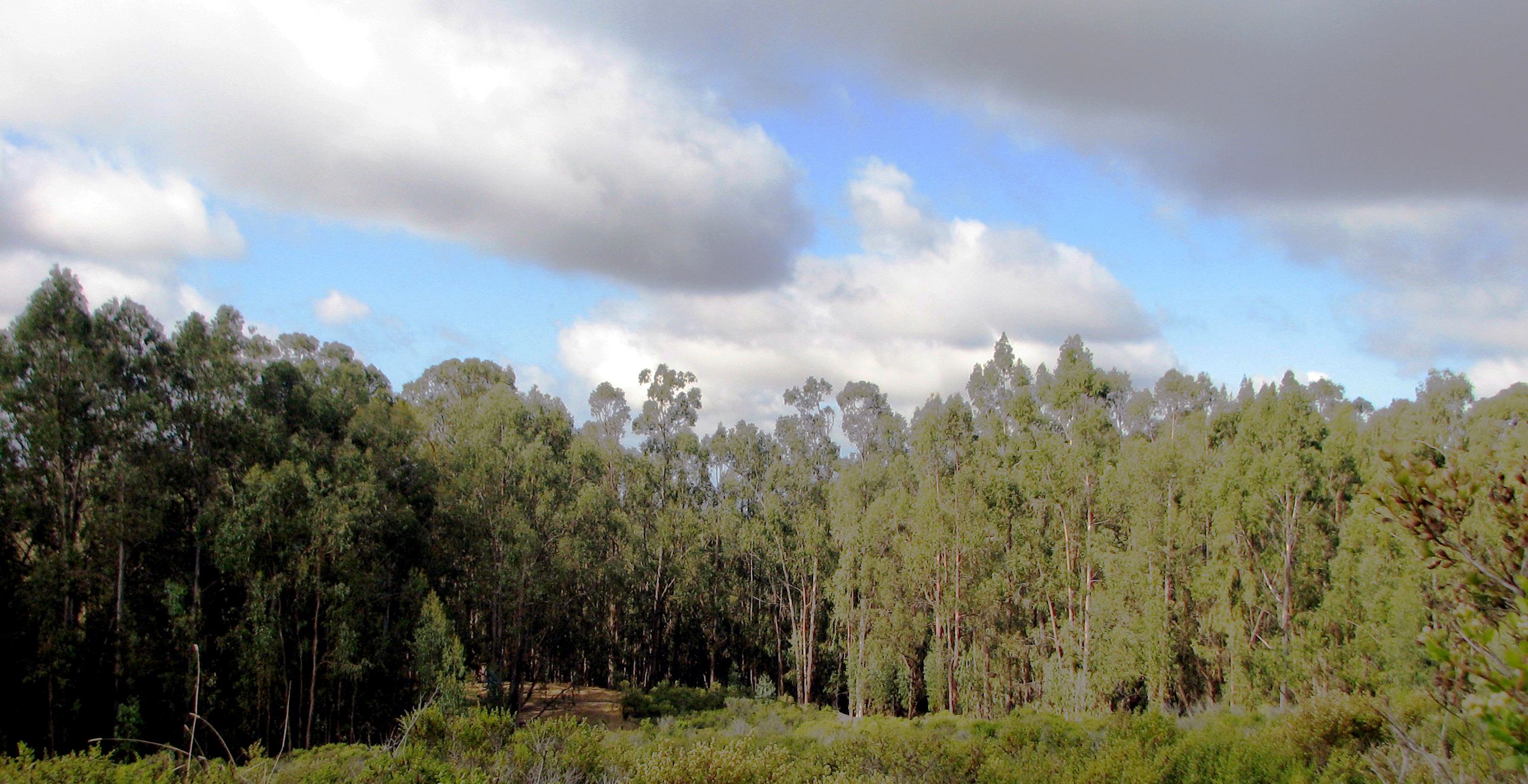
Eucalyptus forest, Lake Chabot

Thank you for your help to save our urban forest from being needlessly destroyed.

Update:  On March 13, 2015, the California Invasive Plant Council published its final reassessment of Blue Gum Eucalyptus (available HERE).  Cal-IPC has downgraded its rating of invasiveness and ecological impact from “moderate” to “limited.”  Although the detailed assessment is less than perfect, the over all rating itself is an improvement.  Thanks to those who sent comments to Cal-IPC.


(1)    C.H. Sellers, Eucalyptus:  Its history, growth and utilization, published by A.J. Johnston, Sacramento, CA, 1910

(2)    R.G. Florence, Ecology and Silviculture of Eucalypt Forests, CSIRO, 1996

(3)    Page 37, Weather of the San Francisco Bay Area, Harold Gilliam, 2002

(4)    Kevin M. Clarke, et.al., “The influence of urban park characteristics on ant communities,” Urban Ecosyst., 11:317-334, 2008


California Invasive Plant Council sticks to its guns aimed at eucalyptus

Monarch butterflies roosting in eucalyptus tree.

In December 2013, one of our collaborators in the effort to save our urban forest from pointless destruction submitted a request to the California Invasive Plant Council to reconsider its evaluation of blue gum eucalyptus (Eucalyptus globulus) as “moderately invasive.” 

The California Invasive Plant Council (Cal-IPC) has responded to that request with a draft reassessment which is available here:  http://www.cal-ipc.org/ip/inventory/eucalyptus.phpCal-IPC’s draft maintains the same over-all rating of blue gum as “moderately invasive.”   Cal-IPC is inviting “substantive comments and questions” by July 31st to info@cal-ipc.org.

Today we are publishing with permission the cover letter of a public comment that will be submitted by one of our collaborators.  We hope it will inspire you to write your own public comment by the deadline of July 31, 2014. 


From the perspective of humans, there are pros and cons to most species of plant and animal.  E. globulus is no exception to this general rule.  Cal-IPC reaches a negative conclusion regarding blue gum by exaggerating negative issues and de-emphasizing or omitting positive issues.  Cal-IPC now acknowledges that blue gum has “low invasive potential” only in specific conditions and that its population in California is stable, but it has introduced new issues and intensified others so that it can maintain its overall rating of “moderately invasive.”  I remind Cal-IPC that its name is Invasive Plant Council, not fire council or hydrology council.

Cal-IPC also fails to take into consideration the negative side-effects of attempting to eradicate eucalyptus.  There are environmental benefits associated with leaving blue gums alone.  These damaging consequences of eucalyptus removal should appear on the “asset” side of the ledger:

It is also not in Cal-IPC’s strategic best interests to continue to advocate for the eradication of eucalyptus in California:

  • As the eradication projects get progressively more destructive, the public’s negative reaction to the destruction becomes progressively more aggressive.  There are now thousands of us all over the State and all over the country, working to stop this destruction and we are often effective in preventing these projects from being approved or funded.  An op-ed in the New York Times in September 2013, expressed support for our opinion that the word “invasive” has become a destructive tool and is inappropriately applied to eucalyptus in California.
  • The scientific community has also become progressively more critical of the attempts to eradicate eucalyptus.  Last fall, Nature  magazine quoted several well-known academic scientists in an article that criticized plans to destroy 30,000 eucalypts on Mount Sutro in San Francisco.  In May 2014, the CEO and Chief Scientist of the Nature Conservancy expressed their opinion on TNC’s website that destroying eucalypts in California is unnecessary.
  • Since blue gum eucalyptus is no longer available in nurseries in California and has not been planted for many decades, it has no long-term future in California.  To the extent that eucalyptus is a problem, it is a problem that will resolve itself in time.

Cal-IPC’s continued support for these projects is no longer in the mainstream of scientific or public opinion.  Removing eucalyptus from Cal-IPC’s “hit list” would significantly improve Cal-IPCs chances of success with the plants that remain on its inventory of invasive plants.  The public is unlikely to expend the same amount of energy opposing the eradication of broom, for example.

Cal-IPC has an opportunity to defuse a controversy that is handicapping the success of its venture.  Cal-IPC would be wise to abandon its crusade aganst blue gum eucalyptus.

Update:  On March 13, 2015, the California Invasive Plant Council published its final reassessment of Blue Gum Eucalyptus (available HERE).  Cal-IPC has downgraded its rating of invasiveness and ecological impact from “moderate” to “limited.”  Although the detailed assessment is less than perfect, the over all rating itself is an improvement.  Thanks to those who sent comments to Cal-IPC.

Dr. Scott Carroll: Ecological communities rapidly adapt to new species

We are republishing an article from the San Francisco Forest Alliance with permission.  This excellent summary of Dr. Carroll’s presentation was approved by Dr. Carroll.  Dr. Carroll is a leader in the scientific community in identifying rapid evolution as a mechanism which enables introduced species to rapidly adapt to their new environment as well as the ability of their new neighbors to adapt to them.


Dr. Scott Carroll of UC Davis, and the founder of the Institute for Contemporary Evolution in Davis, spoke at the Commonwealth Club as part of the series “The Science of Conservation and Biodiversity in the 21st Century.” His main message:

Mixed communities, consisting of non-native and native species of plants, animals and other organisms, are here to stay. We need to find ways to live with these new neighbors. Once they are introduced, they will evolve, and so will the species that were already there. Trying to eradicate “invasive” and non-native species is expensive, likely to cause unforeseen problems, and have uncertain success – in part because evolution will make a moving target of an introduced species.

Read on for notes from Dr. Carroll’s talk. (There are also links to his Powerpoint presentation, and to the audio recording from the Commonwealth Club.)


CONCILIATION BIOLOGY:
THE ECO-EVOLUTIONARY MANAGEMENT OF PERMANENTLY INVADED BIOTIC SYSTEMS

(Notes from a talk by Dr Scott Carroll)

Plants and animals have always moved around the planet, but gradually enough that the world had distinct bio-regions with their own indigenous species. About 500 years ago, shipping greatly increased the pace – people deliberately or inadvertently introduced species into new places. It’s what people do.

historical bioregions - dr scott carroll talk at commonwealth club 2014Invasion biology” as a discipline originated with Charles Elton’s 1958 book. The response to Invasion Biology is a deeply emotional one, coming from a sense of how an ecosystem should look and how species should interact. The transfer of species around the globe has been called the greatest ecological spasm since the extinction of the dinosaurs. But is it?

brown earthIn fact, there’s been a much more important change. The amount of wilderness on the earth’s surface has fallen sharply, from around 50% in the 1700s, to around 20% by the year 2000. The rest is cultivated or range lands or built-up. We need to look at invasion biology – permanently mixed communities of native and introduced organisms – in the context of that land use change.

These land use changes drastically altered the environment for all species, with a major impact on all species and ecological relationships. Natural selection picks new winners: Changed environments have different fitness criteria, so plants or animals that were successful before may become losers. If populations decline, it reduces their chances of evolving to meet the new environment: fewer individuals mean a smaller gene pool, fewer potentially beneficial random mutations, and fewer offspring. Some species go extinct.

But others don’t. They adapt and evolve and use the resources the new environment or new introduced species provide. Some players in these novel interactions have the capacity to solve their own problems, restoring more balanced kinds of ecological interactions than one would expect from the terms “invasion” and “takeover” and “destruction.”

DEFINING “INVASIVE SPECIES”

How do we define an “Invasive Species”?

It’s a species not native to a bio-region that are:

  • Introduced
  • Reproducing independent of our assistance (naturalized, in the case of plants) and
  • Very specifically, they are doing something that we do not like.

This means that it has to be defined with reference to who “we” are. The definition of “invasive” must include who is doing the defining.

In some cases there’s broad agreement. Nearly everyone agrees on fighting invasive disease-causing insects, for instance. In the case of plants and trees and animals, people may diverge sharply in their opinions. Eucalyptus is an example; those who dislike it make consider it invasive; others would disagree vehemently.

The ‘eradication’ arm of Invasion Biology – i.e. those looking to destroy introduced species, perhaps 90% of invasion biologists – is fighting a very difficult battle. It’s extremely expensive, and risks doing much more harm than good.

THE RISKS OF “ERADICATION”

What are the problems of Eradication policies? Here are 8 issues:

1. It’s extremely expensive, both in time and effort.
Even in cases that seem possible – eliminating rats on an island, for instance, it may be an uphill battle. The first 75% are easy to kill. The next 20% are more difficult. By the time you’re down to the last 5%, your team is exhausted and you’ve “spent $3.2 mn of your $2.7 mn budget.” You haven’t seen a rat recently, so you leave. And then – the 2% of the rats that remain reproduce and repopulate the entire island in five years.

2. It doesn’t necessarily solve the problem.
Even if you succeed in killing off the invader, it won’t necessarily bring back the ecosystem that existed before. For instance, soil conditions may have changed so instead of native plants returning, other non-native plants – or nothing at all – grows.

3. It can disrupt ecological systems.
For instance, an introduced predator may have been keeping an introduced plant-feeding prey species in check. Once the predator is eliminated, the prey may destroy vegetation and the ecosystem as it exists.

4. It can disrupt replacement ecological relationships that existing plants and animals may have developed with the “invaders.” They may be providing food, seed dispersal, pollination, cover and other ecosystem services. For instance, if a native plant species is declining because of climate change, an introduced species can provide food for birds, animals and insects.

Loggerhead_sea_turtle_hatchlings_caretta_caretta public domain5. Sometimes, the new species provide a new ecosystem service to existing species, and destroying them would hurt the native species too. For instance, beachside non-native trees may protect turtle hatchlings from artificial lights that can disorient them, and so improve their survival rates. Or the non-native species may be controlling a different non-native species that might otherwise become a pest.

6. Trying to kill off non-natives can drive them to evolve resistance to the agent used to kill them. This is a common problem when herbicides are widely used to kill “invasive” plants.

7. Killing non-natives may reduce biodiversity of the area by reducing the pressure on native species to diversify and become new species.

8. The new species may directly increase biodiversity in the area, and eradicating them reduces this biodiversity.

THE CAUTIONARY TALE OF THE MYXOMATOSIS VIRUS

rabbit public domain clipartA story that illustrates many of these problems is that of the myxoma virus, used to control Australia’s huge rabbit population.

The Iberian (or European) rabbit was introduced into Australia by Europeans in the 19th century, and eventually bred so prolifically that it started to destroy the environment. In the 1950s, the Australian government introduced the myxoma virus, a New World rabbit disease lethal to European rabbits. Initially, that killed 99.5% of infected rabbits, and the population plummeted.

But the surviving rabbits continued to breed until the next time the disease went around. With each successive outbreak, the mortality declined. Frank Fenner, the scientist overseeing the project, found that the virus was attenuating – becoming less lethal – while the rabbits were developing resistance to it. Eventually, each outbreak killed only 20% of the rabbits in the area.

In 1952, a landowner in France introduced the virus on his farm to control rabbits. Soon it spread across that country, and then to Britain, where it killed 95% of the rabbit population.

Large Blue Butterfly - wikimedia commons cca3 - PJC&coThis led to the extinction of the British population of the Large Blue Butterfly. The butterfly is an unusual species whose caterpillars mimic larvae of the ant species Myrmica sabuleti, so they get carried into the ant’s nests where they eat the larvae. Rabbits cropping meadow-grasses had kept them short, providing ideal conditions for the ants. With the rabbits gone, the grass grew, ants declined, and the Large Blue Butterflies vanished.

iberian lynx wikimedia commons cca25-klia Meanwhile, the myxoma virus also reached the Iberian peninsula, where it devastated the native rabbit population. The rare Iberian lynx, which depends solely on rabbits as a food source, became critically endangered, and the Iberian eagle – which also preyed on rabbits – declined sharply. Aquila_adalberti wikimedia commons cca3Officials are looking to vaccinate the wild rabbit population against myxomatosis.

Another unforeseen consequence occurred on Macquarie Island. This desolate Australian island was a breeding place for seals and sea-birds. Human introductions of rats (inadvertently), rabbits (for food), and cats (to combat the rats) impacted the sea-bird populations. The eradicators first introduced fleas to the island as a vector for the myxoma virus, and then the actual virus in 1978. Then they eradicated the cats. However, the cats had been hunting the rabbits, and now the rabbits multiplied out of control reversing years of conservation efforts. The myxoma virus had likely attenuated, and failed to control the rabbit numbers. The rabbits grazing destroyed the hillsides where the penguins nested, causing landslides that harmed their breeding success.

CONCILIATION WITH SOAPBERRY BUGS

The story of the soapberry bug is more encouraging.

Soapberries are a plant family with a number of separate species, two of which are invasive vines in Australia. They invade along water-courses, and grow over trees in those areas. One vine species reached Northern Australia around 1680; the other, much taller species arrived in Eastern Australia around in the 1920s and has become particularly damaging to the forests there.

soapberry bug smSoapberry plants have fruit of varying sizes with nutritious (to insects) seeds at the center. Soapberry bugs are specialized soapberry eaters, with long beaks to pierce the fruit and reach the seed. The beak-lengths of these bugs are evolved to fit the particular species of soapberry they prey on.

When the introduced soapberry plants arrived in Australia, the native soapberry bugs had beaks too small to use the new food source. But with time, they started to evolve.

In Eastern Australia, it took 30 years for the soapberry bug’s beak to evolve from 7 mm to 7.5 mm. That doesn’t sound like much, but an increase of 0.5 mm doubles the number of seeds the bug can reach.

In Northern Australia, where the bugs have had over 300 years to evolve, their beaks have grown from about 5.5 mm in length to around 8 mm – exactly the length they need to attack the introduced soapberry plant. They match as well as if the soapberry plant was native.

It’s the same species of bug.

One interesting experiment would be to see if breeding the two strains would help the Eastern bugs grow a longer beak and control the soapberry vines better. Dr. Carroll recommended stopping the plant eradication program in Northern Australia to protect the long-beaked soapberry bugs there while evaluating whether interbreeding the two bug strains could accelerate the evolution to slow the spread of the large vine in Eastern Australia.

MORE INFORMATION

Dr. Carroll stopped his presentation there because time ran out. But if you would like to see his PowerPoint slides, they are here (in ppt and pptx formats). The Commonwealth Club’s Audio recording of his talk is also linked here. (There’s a lively question and answer session at the end, which isn’t included in these notes.)

Powerpoint presentation in ppt format: S Carroll Commonwealth Club Jan 2014

Powerpoint presentation in pptx format:S Carroll Commonwealth Club Jan 2014 (2)

Audio recording from Dr Carroll’s Commonwealth Club talk: http://www.commonwealthclub.org/events/archive/podcast/scott-carroll-conciliation-biology-13014

“In Jeopardy: The Future of Organic, Biodynamic, Transitional Agriculture”

We are publishing a guest post by Virginia Daley and Fritzi Cohen of the Fearless Fund.  They explain that pesticides used by ecological “restorations” are having a negative impact on organic agriculture. 


The ever expanding war on “invasive species” is giving “green cover” to the widespread use of inadequately tested pesticides that threaten the health of the very soil and water that sustain all life.

Wherever man migrated he brought plants prized for food, fiber, medicine and ornament. With world exploration and trade, the exchange of flora and fauna became ever wider, and after 1492, the ecosystems of the continents were transformed.

Importation was encouraged by presidents and agencies such as the United States Office of Plant Introduction. The US Department of Agriculture planted the now vilified kudzu, and tamarisk for erosion control, fodder and other useful purposes. Today, 98% of our crops and many plants we think of as American as apple pie are actually from somewhere else –including the apples in that pie.

USDA photo
USDA photo

At the beginning of the 20th century, however, laws were passed “to protect crops and livestock from the wilds of Nature.” Mid-century, in a climate of war and fear of foreign attack, the theory of invasion biology branded alien species “invaders.”

National Invasive Species Council

But all-out war was declared on “invasive species” in 1999 with Executive Order 13112, which authorized billion dollar funds and a massive network of agencies to “rapidly respond” to “alien species whose introduction does or is likely to cause economic or environmental harm or harm to human health.” The National Invasive Species Council was created, whose co-chairs include the secretaries of Interior, Agriculture, and Commerce, State, Defense and Homeland Security, Treasury, Transportation, Health and Human Services as well as Administrators of the EPA, USAID, and the US Trade Representative. Programs coordinate and collaborate with federal, state, county and environmental organizations with a variety of funding sources. Washington State has one of the most sophisticated invasive species networks, and has cannibalized the commission on biodiversity.

More often than not, this war employs chemical weapons. Mike Ludwig exposes the very cozy relationship among government, conservationists and the biotech industry that manufacture herbicides in the Truthout Special Investigation: The Pesticides and Politics of America’s Eco-War. Pesticide profiteers have been involved in this offensive from the beginning. One might question whether the chemicals are merely a method of combat or motive for the war.

Ecologists have begun to raise objections to this approach. Some point out it is ideology rather than sound science that drives the targeting of certain species. Some reveal that many of these demonized species are not inherently harmful and in fact provide environmental services as water filters, soil cleansers, stabilizers, enhancers, protectors, and air purifiers. Others remind us the real drivers of plant  “invasions” are frequently man made: climate change, nitrogen eutrophication, increased ubanization and other land-use changes. Evolutionary biologists warn against shortsightedness: ecosystems are constantly changing. Species and communities naturally come and go.

And, of course, there is the warning against the use of dangerous compounds as a solution to perceived problems. As Timothy Scott writes in Invasive Plant Medicine, “[E]ven if the poisons are carefully applied (and they aren’t most of the time) they eventually contaminate the water, soil and air and enter the food chain, affecting microorganisms up through to our dinner plates.” Furthermore, these costly eradication efforts often fail, affect unintended species, (including nearby plants and bees) and actually create superweeds that then require more and stronger herbicides.

Non-native species have been intentionally introduced to hundreds of millions of acres in the US:

  • Wheat [from the Near East and Ethiopia] 58 million acres
  • Soybeans [from East Asia] 76.6 million acres
  • Sorghum [from Africa] 5.6 million acres
  • Corn [mostly genetically engineered and therefore from nowhere] 92 million acres.

Yet no one calls these monocultures, pesticide-purged of biodiversity, “invasive.”

Thus the label of “invasive species” is political, not ecological. It masks complex issues of land usage and legal questions. And it is exploited to justify an arsenal of control methods that may indeed cause-not prevent-economic, environmental and harm to plant, animal and human health.

Let’s examine some of the featured invasive non-natives in Washington State:

Purple loosestrife.  GNU Free
Purple loosestrife. GNU Free

In his paper, Should we care about purple loosestrife?, Claude LaVoie, professor of Environmental Management at Université Laval, Canada describes a massive media campaign to condemn purple loosestrife and refutes the “science” behind it. He calls the depiction of purple loosestrife in scientific studies “(lacking definition) far removed from that in newspapers (alarming)” describing this plant’s negative impacts on wetlands as “probably exaggerated” and pointing out that of the studies done most were somewhat biased, relied on anecdotal information and were not formally reviewed. He considers only one review to be really impartial, “and this one painted an inconclusive picture of the species.”

Though Washington State requires its eradication, edible garlic mustard contains more vitamin C than orange juice, more A than spinach, and shares the medicinal benefits of both garlic and mustard.

Garlic mustard.  GNU Free
Garlic mustard. GNU Free

On the Hoh River, Japanese knotweed is injected and/or sprayed with glyphosate and imazapyr in the name of salmon restoration. Despite this righteous intent, we have been unable to find any scientific support for Japanese knotweed’s interference with salmon. There is also an assumption that water quality and the water community are unaffected by chemically laced vegetation decaying on waterbanks. The impact of glyphosate and imazapyr on phytoplankton and marine organisms has never been scientifically examined. On the other hand, the virtues of Japanese knotweed have been ignored.  Long planted a along riverbanks for stability and shade, beekeepers value the flowers as an important nectar source when little else is flowering. This plant has been used for centuries as a gentle laxative and is an excellent source of the potent antioxidant resveratrol, and it is now used in treating Lyme disease.  It exemplifies Tim Scott’s caution that in attacking “invasives,” we may be “destroying potent medicinal remedies.”

Fritzi Cohen owns Moby Dick Hotel and Oyster Farm on Willapa Bay in Nahcotta, WA. For 20 years, she has been fighting the use of insufficiently studied pesticide combinations sprayed by the state and county that have contaminated her tidal flats and oyster beds in order to eliminate a non-native grass, Spartina alterniflora. This eradication project was based on politics, not science. Dr. James Morris, Director of Baruch Institute of Marine and Coastal Science, has demonstrated that contrary to the claims that this grass harms the ecosystem, it provides economic benefits that outweigh the costs of controlling it. This purge has cost taxpayers well over 25 million dollars, degrading Willapa Bay and certainly not helping the health of the ocean.

Chemical warfare campaigns are being waged against so-called “invasive species” on vast tracts of public, tribal, and conservancy land throughout the country which add to the proliferation of pesticides accompanying agricultural GMOs and habitat restoration.

Whether by drift, seepage, runoff or court order, it is an invasion of chemicals, not plants, we should be worried about. The escalating use of pesticides is putting the future of organic, biodynamic, and transitional agriculture in jeopardy. It looks to us as if this is a war on everything ORGANIC.

It is time to reexamine the underlying assumptions and motivations for the ‘war on invasive species’, consider its collateral damage, and explore creative rather than destructive responses to changes in our environment.

We must rely on science not self-interest in distinguishing harm from hype. And realize that the term ‘invasive’ can be arbitrary, ‘harm’ subjective and ‘safety’ unproven. We must abandon eco-illogical practices that throw precaution to the wind and water and soil and if controls are judged -based on fact not fear-to be necessary, we must use methods that safeguard the environment and all creatures in the food chain.

Short of stopping global trade and travel, preventing new introductions will be difficult at best and without reversing global warming species will be migrating and mutating to adapt to climate change.  And we are not returning to some imaginary ‘pristine’ Eden. The genie is not going back in the bottle.

Shouldn’t we embrace the possible benefit of these newcomers: as food, fiber, medicine,  biofuel, carbon sequestration, erosion control, coastline protection, new industry?

Before embracing “invasiveness” as a claim to virtue that justifies all means of extermination, perhaps we should reflect on the catastrophic changes following the invasion of the Americas by our own European culture.

Visit fearlessfund.info for details For color pictures of the plants described see: http://www.nwcb.wa.gov/

Virginia Daley, Acting Executive Director, Fearless Fund

Fritzi Cohen, President


We have added bold for emphasis, photos, and links to articles about some of the specific issues.  Thanks to Ms. Daley and Ms. Cohen for sharing their concerns with the readers of Million Trees.