Doug Tallamy speaks…Art Shapiro responds…Million Trees fills in the gaps

Smithsonian Magazine published an interview with Professor Doug Tallamy, the entomologist who is committed to the eradication of non-native plants and most influential with native plant advocates in the United States.  The Smithsonian article gives Professor Art Shapiro an inadequate opportunity to respond to Tallamy’s assertions about the superiority of native plants.  Million Trees steps up to fill in the gaps in response to Tallamy.

  • The Smithsonian article says, “As a scientist, Tallamy realized his initial obligation was to prove his insight empirically. He began with the essential first step of any scientific undertaking, by applying for research grants, the first of which took until 2005 to materialize. Then followed five years of work by relays of students.”

The first study that Tallamy conducted is not mentioned in this article because it disproved his hypothesis:  “Erin [Reed] compared the amount of damage sucking and chewing insects made on the ornamental plants at six suburban properties landscaped primarily with species native to the area and six properties landscaped traditionally.  After two years of measurements Erin found that only a tiny percentage of leaves were damaged on either set of properties at the end of the season….Erin’s most important result, however, was that there was no statistical difference in the amount of damage on either landscape type.” (1)

  • The Smithsonian article says, “… insects tend to be specialists, feeding on and pollinating a narrow spectrum of plant life, sometimes just a single species. ‘Ninety percent of the insects that eat plants can develop and reproduce only on the plants with which they share an evolutionary history’…:”
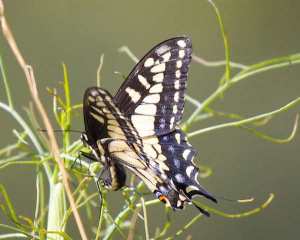
Anise Swallowtail butterfly in non-native fennel. Courtesy urbanwildness.org

A “specialist” insect is rarely confined to using a single plant species.  Mutually exclusive relationships in nature are very rare because they are usually evolutionary dead-ends.  The study in which this claim about “specialization” originated, actually concluded:  “More than 90 percent of all insects sampled associate with just one or two plant families.”* There are over 600 plant families and thousands of plant species within those families.  Most plant families include both native and non-native plant species.  An insect that uses one or two plant families, is therefore capable of using both native and non-native plant species.  For example, there are 20,000 plant members of the Asteraceae family, including native sagebrush (Artemisia) and non-native African daisy.  In other words, the insect that confines its diet to one family of plants is not very specialized.

  • The Smithsonian article says, But he [Tallamy] thinks this [transition of insects to non-native plants] is likely to take thousands of generations to have an impact on the food web. Shapiro maintains he has seen it occur within his own lifetime.”

There are many empirical studies that document the transition that insects make from native to non-native plants within generations.  Professor Tallamy provides a few examples of such rapid transitions in his first book, Bringing Nature Home:  wooly adelgids from Asia have had a devastating effect on native hemlock forests in the eastern United States; Japanese beetles introduced to the United States are eating the foliage of over 400 plant species (according to Professor Tallamy), some of which are native (according to the USDA invasive species website).
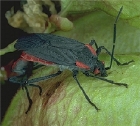
Soapberry bug on balloon vine. Scott Carroll, UC Davis

The soapberry bug made a transition from a native plant in the soapberry family in less than 100 generations over a period of 20 to 50 years. The soapberry bug-balloon vine story is especially instructive because it entailed very rapid morphological as well as behavioral change; the beak length was quickly (a few years) selected for the dimensions of the fruit of the new host. (2)

  • Doug Tallamy claims that Art Shapiro’s findings are “anecdotal.” They are not.  Art Shapiro’s published study is based on nearly 40 years of data. (3)
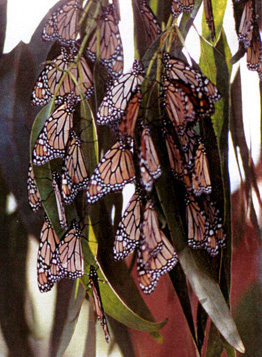
Monachs in eucalyptus, Pacific Grove Museum

In a recent NY Times article about declining populations of monarch butterflies on the West Coast, an academic scientist explains how he used Professor Shapiro’s data set to study the decline:  “The monarch’s decline is part of a larger trend among dozens of butterfly species in the West, including creatures with names like field crescents, large marbles and Nevada skippers,” said Matt Forister, an insect ecologist at the University of Nevada, Reno, whose conclusions are based on a nearly 50-year set of data compiled by Art Shapiro, a researcher at the University of California, Davis. “The monarch is very clearly part of a larger decline of butterflies in the West.”  Clearly, other academic entomologists do not consider Professor Shapiro’s data “anecdotal.”

The Burghardt/Tallamy study (4) does not contradict the findings of Professor Art Shapiro because Professor Shapiro is studying butterflies (not moths) in “natural areas” that have not been artificially created by choosing a limited number of plant species, as Tallamy’s study did.  In other words, the adult and larvae stages of butterflies that Professor Shapiro studies have more options, and when they do they are as likely to choose a non-native plant as a native plant for both host plant and food plant.  You might say, Professor Shapiro’s study occurs in the “real world” and the Burghardt/Tallamy study occurs in an artificially created world.

Dismissing observations as anecdotal is a well-worn rhetorical device.  Creationists often claim that evolution cannot be proven because the theory is based on millions of observations, rather than empirically tested by experiments. Yet, virtually all scientists are firm believers in the validity of evolutionary principles.

  • Tallamy dismisses climate change as a factor in plant and animal extinctions, preferring to place the blame solely on the mere existence of non-native plants.

This claim is contradicted by a multitude of studies, such as a collection of studies recently reported by Yale E360 that concludes:  “A growing number of studies show that warming temperatures are increasing mortality in creatures ranging from birds in the Mojave Desert, to mammals in Australia, to bumblebees in North America. Researchers warn that heat stress could become a major factor in future extinctions.”

Climate change is the environmental issue of our time.  When the climate changes, the vegetation changes.  When the vegetation changes, wildlife adapts or dies.  Non-native plants are one of the consequences, not the cause of climate change or plant and animal extinctions.


*Professor Shapiro has provided a caveat to this definition of specialization of insects in a private communication, published with his permission:  A couple of observations: Hardly any insects feed on entire plant families. Rather, they feed on specific lineages within those families, typically defined by secondary chemistry (which is the necessary releaser for oviposition and/or feeding behavior). The relationship was summed up symbolically by A.J.Thorsteinson half a century ago: feeding=presence of nutrients+presence of required secondary chemicals-deterrents-antifeedants-toxins. Thus the Anise Swallowtail species-group feeds on the carrot family, Apiaceae, but NOT on Apiaceae lacking the proper chemistry.But they DO feed on some Rutaceae (including Citrus) that, though unrelated, are chemically similar. That was worked out by Vincent Dethier in the 1940s and further developed by John Thompson at UC Santa Cruz. A whole slew of things require iridoid glycosides as oviposition and feeding stimulants. Most plants containing these were in the family Scrophulariaceae before DNA systematics led to its dismemberment, but one whole branch of Scrophs is chemically unsuitable. Milkweed bugs eat milkweed, but they also eat the Brassicaceous genera Erysimum and Cheiranthus, which are chemically similar to milkweeds but not to other Brassicaceae…and so on. Native vs. non-native has nothing to do with it.”  (emphasis added)

  1. Tallamy, Doug, “Flipping the Paradigm:  Landscapes that Welcome Wildlife,” chapter in Christopher, Thomas, The New American Landscape, Timber Press, 2011
  2. Carroll, Scott P., et. al., “Genetic architecture of adaptive differentiation in evolving host races of the soapberry bug, Jadera haematoloma,” Genetica, 112-113: 257-272, 2001
  3. SD Graves and AM Shapiro, “Exotics as host plants of the California butterfly fauna,” Biological Conservation, 110 (2003) 413-433
  4. Karin Burghardt, Doug Tallamy, et. al., “Non-native plants reduce abundance, richness, and host specialization in lepidopteran communities,” Ecosphere,November 2010

Forest Action Brigade: “Oakland’s Vegetation Management Plan is significantly improved”

The City of Oakland began the process of developing a Vegetation Management Plan (VMP) over three years ago.  The purpose of the VMP is “to evaluate the specific wildfire hazard factors in the Plan Area [2,000 acres of city-owned parks and open space and 300 miles of roadsides] and provide a framework for managing vegetative fuel loads…such that wildfire hazard is reduced and negative environmental effects resulting from vegetation management activities are avoided or minimized.” (revised VMP, page 3)

The first draft of the VMP was published in June 2018.  There were significant issues with the first draft that were described by Million Trees HERE.

The VMP was revised and published on November 1, 2019.  It is available HERE.  Written comments can be submitted until December 12, 2019. Scoping comments may be submitted by email (arobinsonpinon@oaklandca.gov) or by mail to Angela Robinson Piñon, 250 Frank H. Ogawa Plaza, Suite 4314, Oakland California 94612.  “Scoping” is the first step in the process of preparing an Environmental Impact Report (EIR). The purpose of scoping is to identify the issues that must be evaluated by the EIR.

The Forest Action Brigade accepts the revised VMP because fire hazards are real and compromise is needed to address them.  Public comments submitted by the Forest Action Brigade regarding scoping for the EIR explain our reasoning. See below. We believe the revised VMP will reduce fire hazards in Oakland without destroying more trees than necessary and limiting herbicide use primarily to preventing trees from resprouting after they are removed.  It is counterproductive to destroy more trees than necessary because climate change has made wildfires more frequent and destructive and carbon sequestered by mature trees is one of the most effective means of reducing greenhouse gas emissions causing climate change.

TO: Angela Robinson Pinon, Oakland Fire Department
arobinsonpinon@oaklandca.gov
FROM: Forest Action Brigade
RE: Oakland’s Vegetation Management Plan, Scoping Comments for EIR

The revised Vegetation Management Plan is a significant improvement over the first draft.  We accept the revised Vegetation Management Plan for the City of Oakland because:

  • Standards for creating and maintaining defensible space around structures, along roadsides, and on ridgelines are reasonable and consistent with both fire science and State law.
  • Forests will be thinned, but “broad based tree removal is not proposed.” Mature trees will be retained, which reduces carbon loss.  Fire ladders to tree canopies will be eliminated.
  • Forest canopy will be retained so the forest floor is shaded and growth of flammable understory grasses and shrubs is suppressed. Density of the canopy will be reduced, but the canopy will be intact.
  • Herbicide will be used to prevent resprouts of trees that are removed, but foliar spraying will be “minimized.” The VMP acknowledges that vegetation killed by foliar spraying is left in place and becomes dry, easily ignited fuel.
  • Best Management Practices for herbicide use require that all applications be done by certified applicators and requests for herbicide application be approved by a licensed pest control advisor.
  • The revised VMP acknowledges that the flammability of plants and trees is unrelated to the nativity of the species. The VMP classifies some species of both native and non-native plants and trees as “pyrophytic.” Non-native plants are not inherently more flammability than native plants.  Flammability is related to the physical and chemical characteristics of plants, not their nativity.
  • The VMP clearly states that the implementation of the VMP is the responsibility of the Oakland Fire Department. OFD is not obligated to respond to the wishes of advocacy organizations unless their proposals are consistent with fire hazard mitigation.

The revised VMP will reduce fuel loads and risk of ignition.  The revised VMP is a fire hazard reduction project with one exception:  the VMP continues to propose the destruction of individual non-native trees within stands of native trees.    However, that proposal is ranked as Priority 3 and is therefore unlikely to be funded. Oakland’s Tree Services Division is inadequately funded and severely understaffed.  Tree Services does not have the resources to remove trees unless they are dead or pose a hazard to the public.  Neither Tree Services nor this VMP is responsible for landscape type conversion: “This VMP does not propose vegetation type conversion as an end goal or strategy…” (Page 1)  Moreover, such unnecessary removal of mature trees damages the surrounding environment, especially in riparian areas, and increases carbon loss, contributing to climate change.

If the VMP is ultimately funded by renewal of the parcel tax for fuels management, revenues should not be used to hire contractors to destroy individual non-native trees within stands of native trees because that would not reduce fire hazards.  The previous parcel tax was cancelled by voters partly because it was misused to fund native plant projects that conflict with fire hazard mitigation.  When native plant advocates plant rare, protected plants in Oakland’s parks and open spaces (which they do), they then oppose fuels management that threatens the plants they prefer.  It is not possible to mow a meadow of grass to prevent ignition without simultaneously destroying individual plants in that meadow.  We saw that principle at work at the public hearing by the Planning Commission on November 20, 2019.  The parcel tax that we would vote for would explicitly prohibit the use of the revenue for vegetation type conversion that is incompatible with fire hazard mitigation.

Scoping Issues

These issues must be addressed by the Environmental Impact Report for the revised VMP, as required by CEQA State law:

  • Carbon loss resulting from tree removals must be estimated. Mitigation for carbon loss must be proposed or negative environmental impact must be acknowledged and estimated. Carbon loss contributes to climate change and climate change is making wildfires more frequent and intense.  Therefore carbon loss increases wildfire hazards and must be estimated by the EIR for this project.
  • The EIR must identify the herbicides and estimate the quantities that will be used to implement the VMP. The amount and impact of pesticides to be used in the VMP should be compared with Oakland’s current levels of herbicide use in the city, including roadside applications. Known hazards of the herbicides that will be used should be acknowledged by the EIR, such as collateral damage to non-target trees and vegetation, damage to the soil, risks to wildlife and human health, mobility and persistence in the environment, etc.  The EIR should mitigate for the increased herbicide use by providing mechanisms for accountability to the public, such as a yearly publicly accessible report on pesticides used in this project, including brand names, location, date, method of application, and quantities. Prohibition of herbicide applications by “volunteers” who are not employees or contractors of the City of Oakland should also be added to Best Management Practices to prevent unauthorized herbicide applications in Oakland.
  • CEQA requires that alternative plans must be considered by an EIR. Typically, “no project” is one of the alternatives.  A third alternative should be less destructive, not more destructive than the proposed project.  For example, an alternative to destroying only non-native trees, as proposed by the VMP, would be to destroy bay laurels that are also a pyrophytic species, as well as vectors for Sudden Oak Death that has killed 50 million oaks in California since 1995.  In 2019, the rate of SOD infection increased from 1% to 12% in one year in sampled trees between Richmond and San Leandro.   Source:  https://www.sfchronicle.com/environment/article/Sudden-oak-death-spreading-fast-California-s-14815683.php?cmpid=gsa-sfgate-result

There are several advantages to thinning bays and Monterey pines rather than eucalyptus:

  • Every dead oak becomes fuel. Therefore, reducing SOD infections prevents oaks from becoming fuel.
  • Bays branch to the ground, providing fuel ladders that are difficult to eliminate because the tree trunk often sprawls on the ground.
  • Removing bays instead of eucalyptus also reduces carbon loss because bays are smaller trees and they have shorter lives than eucalyptus trees, which are expected to live another 200-300 years in the Bay Area based on their longevity in their native range.
  • Monterey pine has a shorter lifespan than eucalyptus and it is a soft-wood tree. Therefore, removal of Monterey pine will result is less carbon loss than destruction of eucalyptus. Furthermore, Monterey pines do not resprout after destruction.  Therefore, they will not require herbicide treatment to prevent resprouts as eucalyptus does.  Many Monterey pines in the East Bay are nearing the end of their lives because of when they were planted as well as pine pitch canker infection.
  • “We ask that a 4th alternative be considered by the EIR.  A “no pesticides” alternative would acknowledge the public’s concerns about the potential for increased pesticide use in Oakland that could be enabled by the completion of the EIR.  That alternative must propose a method of preventing tree resprouts without using herbicides.  There are precedents for such methods.  East Bay Municipal Utilities District does not use herbicides to prevent resprouts.  UCSF does not use any pesticides in the Sutro Forest where thousands of trees have been destroyed and thousands more will be destroyed in the future.”  Addendum 12/2/19
  • CEQA requires that cumulative impacts of similar projects be identified by the EIR. Fuels management projects similar to the VMP are being implemented all over the East Bay. Tree removals by PG&E should be included. The cumulative impact of all fuels management projects in the East Bay must be acknowledged by the EIR.

We hope the revised VMP will survive the public process required to bring it to fruition because we believe it will reduce fire hazards in its present form.  We believe that fire hazards are real and that compromise is needed to address them.  We congratulate the consultants who prepared the VMP and OFD for shepherding it to completion. Those who were involved in its preparation listened patiently and were responsive to the public’s concerns.  We are grateful.

Forest Action Brigade

Tilden Park, October 2016. East Bay Regional Park District has thinned this area to distances of 25 feet between remaining trees. The forest floor is still shaded because the canopy is intact.

Study design determines study findings

Million Trees can never resist a response to misinformation we find in Jake Sigg’s Nature News. (In this case, the statement originates with one of Jake’s readers, not Jake himself.)

“This study takes some of the life out of Art Shapiro’s ecological fitting theory:  Non‐native plants supported significantly fewer caterpillars of significantly fewer specialist and generalist species even when the non‐natives were close relatives of native host plants.”  “Non-native plants reduce abundance, richness, and host specialization in lepidopteran communities” by Karin Burghardt, Doug Tallamy, et, al. (Ecosphere, November 2010).

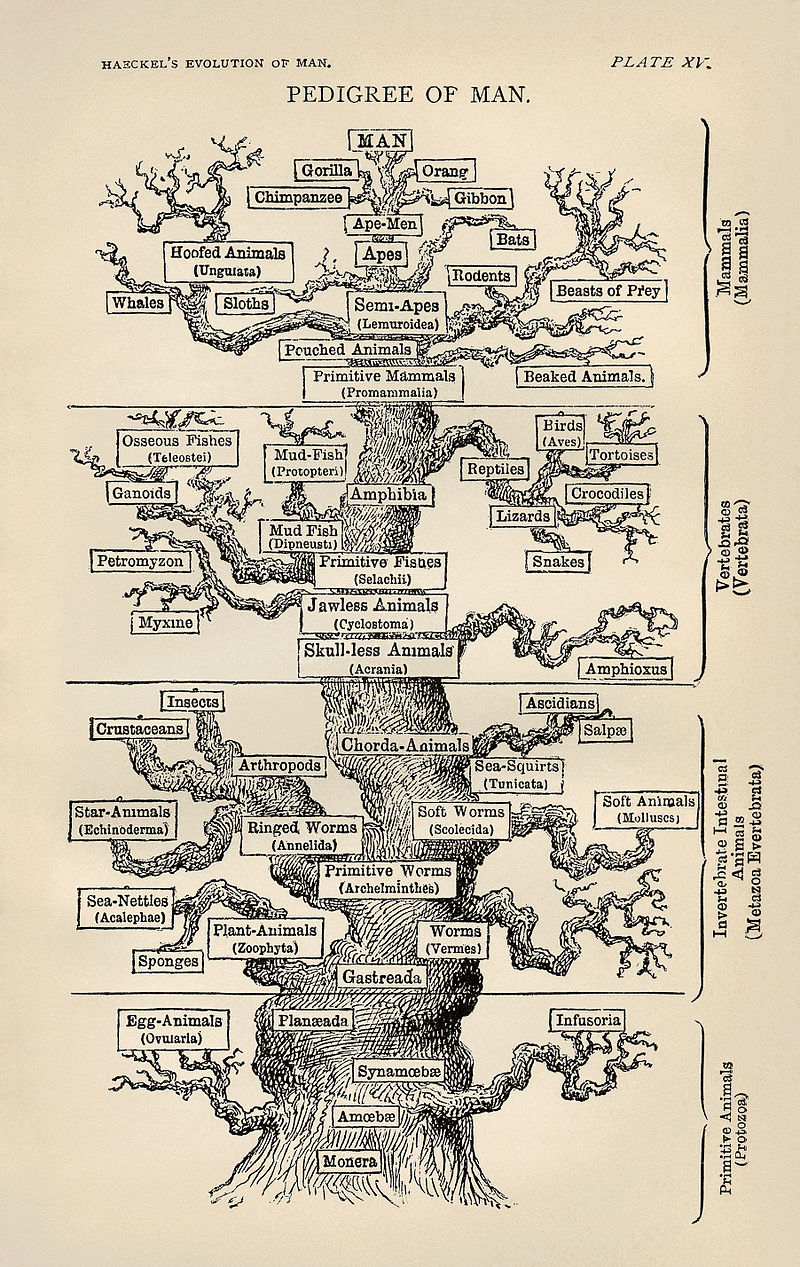
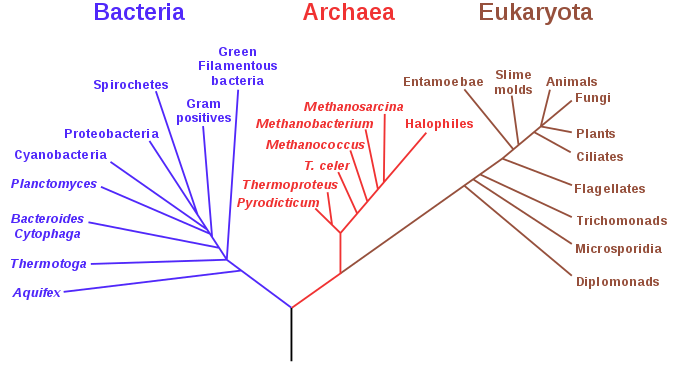
We’ll get to the study later, but first let’s address the statement about ecological fitting.  Ecological fitting is more accurately described as an observation, rather than a theory or hypothesis and it does not originate with Art Shapiro.  The first observation of ecological fitting was recorded by Dan Janzen in 1980 and described by other ecologists as “the process whereby organisms colonize and persist in novel environments, use novel resources or form novel associations with other species as a result of the suites of traits that they carry at the time they encounter the novel condition.” (1) Ecological fitting is an alternative to the view that relationships between plants and insects and parasites and hosts are the result of co-evolution.  It is consistent with the observation that adaptation to new arrivals in an ecosystem often occurs without evolutionary change and can occur more rapidly than co-evolution would require.

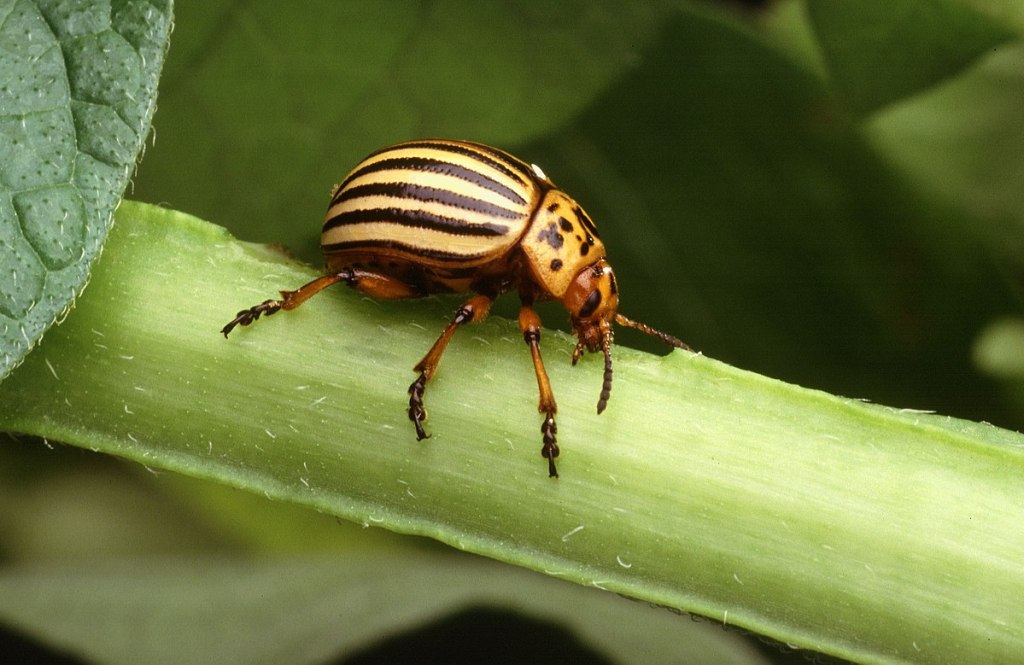
The Colorado potato beetle readily devours an introduced relative of its Solanum hosts as a result of ecological fitting.  (Hsiao, T. H. (1978). “Host plant adaptations among geographic populations of the Colorado potato beetle”. Entomologia Experimentalis et Applicata. 24 (3)) USDA photo

Ecological Laboratory Science

The Burghardt/Tallamy study is a laboratory experiment in the sense that it creates an artificial environment by planting a garden in which it chooses the plant species and then inventories the insect visitors to the garden.  In one garden, native plant species were paired with a closely related species of non-native plant in the same genus (called congeners).  In another, distant garden, native plant species were paired with unrelated species of non-native plants.  The insect visitors that were counted are specifically the larvae stages (caterpillars) of lepidoptera (moths and butterflies).  The adult stage of the caterpillars (moths and butterflies) were not inventoried, nor were members of the other 28 insect orders.

Source: handsontheland.org

The study considers caterpillars “specialists” if they feed on three or fewer plant families.  The authors make this determination based on scientific literature and on observations of their artificially created garden.  Using scientific literature, 30% of visiting caterpillar species to the experimental garden were specialists.  Using actual visits to their experimental garden, 64% of visiting caterpillars were specialists.  The difference is as we should expect because the scientific literature is based on the behavior of caterpillars in the field, but the study confines the choices of the caterpillars to a few specific plant species chosen by the authors of the study.  In other words, caterpillars in the experimental garden had fewer choices of plant species.

The inventory of caterpillars was conducted over two summer months in 2008 and three summer months in 2009.  Findings were very different in the two years of the study:  “We found no difference between the total Lepidoptera larvae supported by native plants and their non-native congeners in 2008, but found over three fold more larvae on natives in 2009.  In 2008 there was no difference in the abundance of generalists on native and non-native congeners, but natives supported more than twice as many generalists as non-natives in 2009.” (2) Similar results were reported for species richness (number of different larvae species).  When paired with unrelated non-native plants, caterpillars showed a significant preference for native plant species, as we should expect because the plants were not chemically similar.

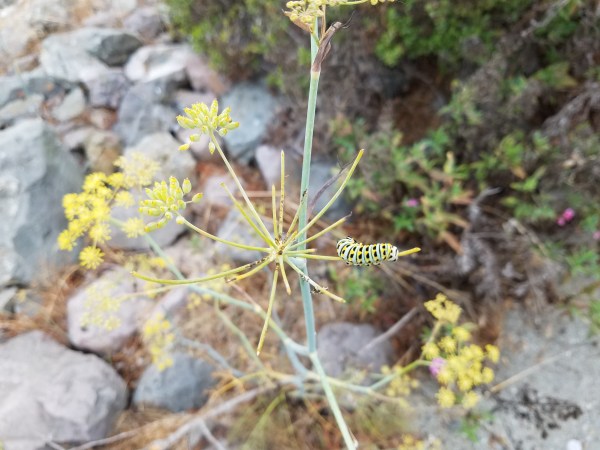
Caterpillar of Anise swallowtail butterfly on its host plant, non-native fennel. Berkeley, California

Although on average, native species attracted more caterpillars than the non-native congener with which they were paired, the strength of that difference varied significantly.  One matched pair attracted eight times as many caterpillars to the native plant compared to the non-native plant.  Another matched pair attracted slightly more caterpillars to the non-native plant compared to the native plant.  

The study authors interpret the significant differences between findings in the first and second years as an indication that caterpillars accumulated more rapidly on native plants than on non-native plants.  They speculate that a longer study would have found even greater preferences for native plants compared to non-native congeners.  Given that adaptation to introduced species occurs over time that is a counter-intuitive prediction.  In fact, many studies find that insects have made a successful transition from native to non-native hosts within a few generations.

Limitations of laboratory studies

The Burghardt/Tallamy study is often cited by native plant advocates in support of their belief that insects require native plants for survival.  This generalization is not supported by the results of the Burghardt/Tallamy study because:

  • The study results are not relevant to all insects.  The findings apply only to the larvae stages of moths and butterflies.  The adult stages of moths and butterflies also require nectar and pollen from a much broader range of plants than their host plant, where the adult lays its eggs and caterpillars feed before becoming flying adults.  At the adult stage of their lives, they become pollinators.  Studies of the preferences of pollinators consistently find that a diverse garden that prolongs the blooming period is most useful to them. 
  • The study does not support the claim that caterpillars consistently choose native plants in preference to closely related non-native plants over time.  In fact, other studies find such preferences fade over longer periods of time.
  • Statements made by native plant advocates about the degree to which caterpillars are “specialized” are often exaggerated.  When a diverse landscape is available to caterpillars, scientific literature reports that specialization to a few plant families is found in only 30% of the 72 caterpillar species identified by this study. 
  • The Burghardt/Tallamy study was conducted on the East Coast where the climate is different than California.  It snows in the winter and it rains during the summer, unlike most of California.  Our native plants are therefore different from natives on the East Coast.  The Burghardt/Tallamy study was conducted in the summer months from June to August.  Native plants in California are no longer blooming and many are dormant during summer months unless they are irrigated.  The findings of the Burghardt/Tallamy study are therefore not applicable to California unless they can be replicated here.
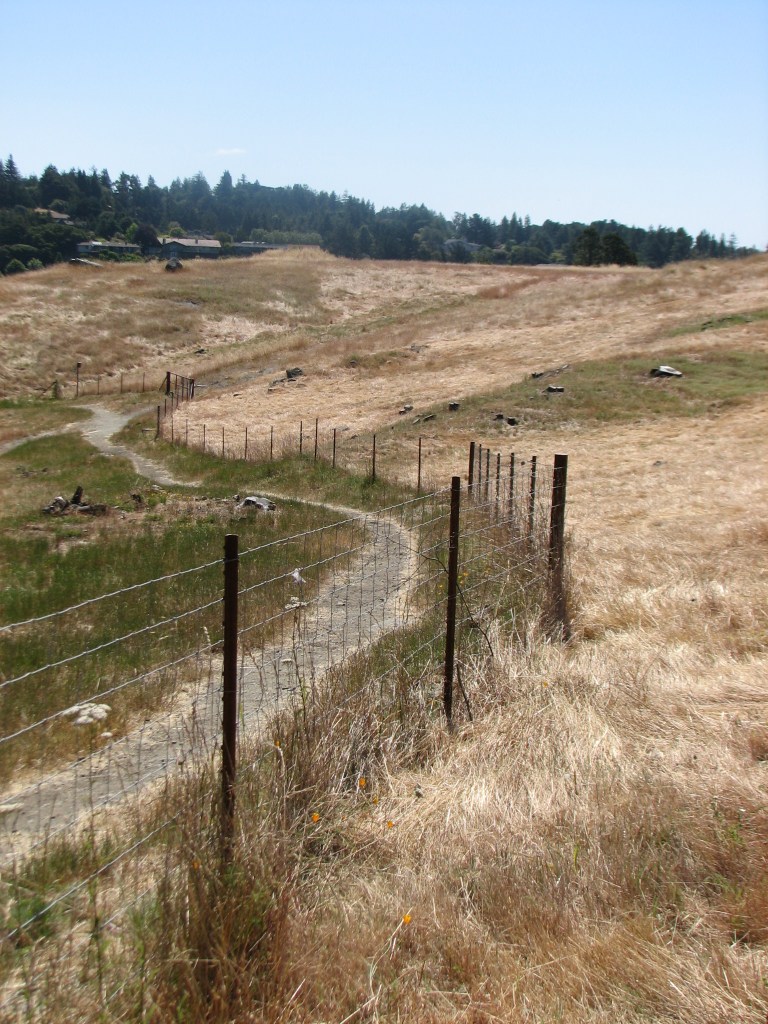
This is the Serpentine Prairie in Oakland. It is one of the native plant “restorations” done by East Bay Regional Park District. About 500 trees (including native oaks) were destroyed to return the prairie to native grassland. This is what it looks like in June.

Comparison of laboratory with field studies

The Burghardt/Tallamy study does not contradict the findings of Professor Art Shapiro because Professor Shapiro is studying butterflies (not moths) in “natural areas” that have not been artificially created by choosing a limited number of plant species.  In other words, the adult and larvae stages of butterflies that Professor Shapiro studies have more options, and when they do they are as likely to choose a non-native plant as a native plant for both host plant and food plant.  You might say, Professor Shapiro’s study occurs in the “real world” and the Burghardt/Tallamy study occurs in an artificially created world. 

Anise Swallowtail butterfly in non-native fennel. Courtesy urbanwildness.org

The credibility and relevance of Professor Shapiro’s studies are also based on 47 years of visiting his research plots at least 250 days per year, that is, year around.  During that period of time, he recorded his observations and they were statistically analyzed for the study he published in 2003. (3)  His study is of particular interest as the climate changes rapidly because the length of the study also enables us to observe the impact of climate change on our butterfly population in the Bay Area.  In contrast the Burghardt/Tallamy study was conducted in a total of 5 months over a total of two years.  Population trends cannot be determined from such a short study.

Burghardt/Tallamy study is consistent with mission of Million Trees

The Burghardt/Tallamy study does not contradict anything Million Trees advocates for.  Decisions to plant a particular species and the decision to eradicate a particular species are entirely different.  Gardeners should plant whatever they prefer, in my opinion.  When planting decisions are made for public land, I prefer that plants be capable of surviving current local and climate conditions.  When my tax dollars are being spent, I prefer that they not be wasted. Besides, I hate watching plants and trees die in the parks I visit.

This study is consistent with my view that non-native plants don’t threaten the survival of insects unless they replace native plants that insects prefer.  The Burghardt/Tallamy study quite rightly does not say that they do.  Local experience in the Bay Area informs me that they rarely do.  To the extent that they have replaced native plants, they are better adapted to current conditions in a specific location.  Eradicating them rarely results in native plants successfully replacing them.  As the climate continues to rapidly change, the failure of native plant “restorations” is inevitable because vegetation changes when the climate changes.

Site 29 on Claremont Blvd in Oakland is one of the places where UC Berkeley destroyed about 19,000 trees about 14 years ago. Non-native weeds thrive in the sun where trees were destroyed. Poison hemlock and thistle (both non-native) are 8 feet tall where not sprayed with herbicide. Site 29, May 2016.

The Burghardt/Tallamy study does not justify eradication of non-native plants because it does not take into account the damage done by the methods used to eradicate non-native plants.  Since most eradication projects use herbicides, we speculate that more harm is done to insects by herbicides than by the existence of non-native plants.

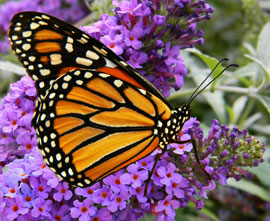
The decision to eradicate non-native plants must also take into consideration whatever benefit the plants may provide, such as food for wildlife.  For example, even if a plant species isn’t a host plant, it might be a food plant. Butterfly bush (Buddleia) is an example of a plant that is very useful to pollinators, including butterflies, but native plant activists advocate for its eradication. 

Monarch nectaring on butterfly bush. butterflybush.com

Many thanks to Jake Sigg for creating this opportunity for dialogue with native plant advocates.  I am grateful for the window into the community of native plant advocates that Jake’s Nature News provides.

  1. Agosta, Salvatore J.; Jeffrey A. Klemens (2008). “Ecological fitting by phenotypically flexible genotypes: implications for species associations, community assembly and evolution”. Ecology Letters11 (11): 1123–1134. 
  2. “Non-native plants reduce abundance, richness, and host specialization in lepidopteran communities” by Karin Burghardt, Doug Tallamy, et, al. (Ecosphere, November 2010).
  3. SD Graves and AM Shapiro, “Exotics as host plants of the California butterfly fauna,” Biological Conservation, 110 (2003) 413-433

“San Francisco’s Natural History”: A mixed bag of fact and fiction

Million Trees breaks its self-imposed silence to bring you this book review of San Francisco’s Natural History:  Sand Dunes to Streetcars, by Harry G Fuller.  It was frustrating to read this book because I had high expectations that I would like it and learn from it.  And to some extent, I did.  However, the book also repeats old myths about eucalyptus that have long ago been debunked and fabricates a new myth.  It also supports deadly and dangerous “restoration” projects in the Bay Area without acknowledging the loss of wildlife they cause. On the other hand, historical records of San Francisco’s natural history seem to be accurately reported by Fuller and he paints the picture of pre-settlement San Francisco as drifting sand dunes and treeless grass and chaparral. 

Persistent myths about eucalyptus

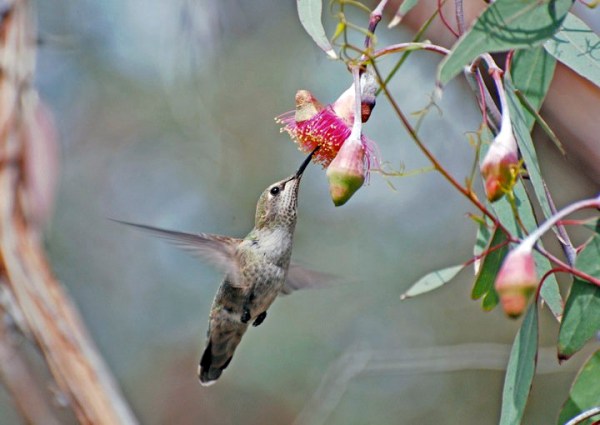
Fuller says, “There is evidence…that eucalyptus trees may be deadly to both wintering birds and monarch butterflies…At the same time the trees provide necessary shelter, their chemical make-up and their sticky leaves may prove deadly.”

Hummingbird in eucalyptus flower. Courtesy Melanie Hoffman

Fuller does not provide the “evidence” for this statement, so we must speculate about what he means.  It seems likely that he is repeating the 23-year old claim that eucalyptus kills birds by suffocating them with their sticky nectar when eucalyptus blooms in winter months. (Neither the nectar, nor the leaves of eucalyptus is sticky.)  A local birder reported seeing two dead birds in eucalyptus forest over the course of his long career as a serious birder and parlayed those isolated observations into the generalization that birds are killed by eucalyptus trees.  Decades of research was required to put that accusation to rest. (1, 2) Officially, the myth died when the California Invasive Plant Council updated the classification of eucalyptus in 2015.  The claim that eucalyptus kills birds was deleted from Cal-IPC’s revised classification. It was aggravating to see this claim repeated by Mr. Fuller in his book, which was published in 2017.

Fuller’s claim that eucalyptus is also deadly to monarch butterflies is unprecedented.  I have heard innumerable stories about the bad habits of eucalyptus, but I have never heard that eucalyptus kills monarch butterflies.  You won’t find that accusation anywhere on the internet and you won’t find it anywhere in the scientific literature.  I confirmed with Art Shapiro, Distinguished Professor of Ecology and Evolution at UC Davis and author of Field Guide to Butterflies of the San Francisco Bay and Sacramento Valley Regions, that he had never heard that claim either. 

In fact, available empirical evidence contradicts that claim. Eucalypts are the preferred trees for over-wintering monarchs in California:  “Three types of trees were used most frequently by roosting monarchs:  eucalyptus (75% of the habitats primarily Eucalyptus globulus), pine (20% of the habitats primarily Pinus radiata), and cypress (16% of the habitats Cupressus macrocarpa).  Twelve other tree species were identified…with a combined prevalence of only 10%.” (3)  Monarchs migrate down the coast of California during the winter months, when eucalyptus is flowering at a time when there is little else blooming in California.  They are an essential source of nectar during the monarch migration. 

Fuller says, “The eucalyptus’s natural herbicides prevent many other plants from growing beneath their canopy.”   

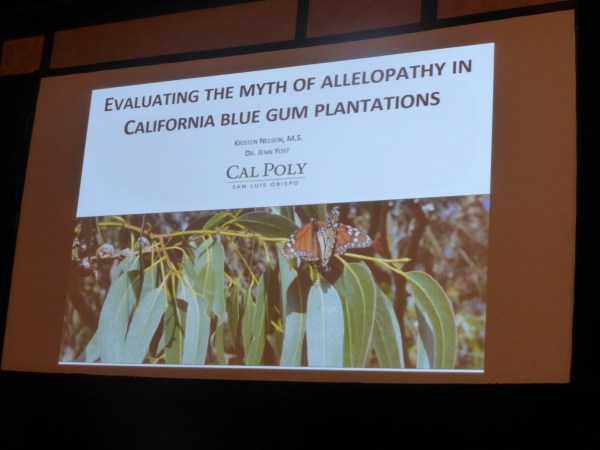
This is another accusation that has been repeatedly disproven by empirical research.  The eucalyptus forest is as biodiverse as native oak woodland (4).  The 2015 revision of the California Invasive Plant Council assessment of eucalyptus deleted previous mention of the allelopathic (the scientific term for “natural herbicide”) properties of eucalyptus.  A rigorous study at Cal Poly concluded, “In these experiments, we found that germination and seedling growth of the species tested were not inhibited by chemical extracts of blue gum foliage, either at naturally-occurring or artificially concentrated levels.” (5)  This study was presented by its author at the most recent conference of the California Native Plant Society, which should establish its credibility with native plant advocates.

Presentation at conference of California Native Plant Society

Fuller says in support of his “natural herbicide” theory, “You never see moss or lichen on a healthy eucalyptus trees.”

We don’t see moss or lichen on eucalyptus tree trunks because the thin, papery bark on the trunk sloughs off annually, leaving the trunk bare.  Moss and lichen grow slowly on tree trunks in the bark that remains on the tree throughout the tree’s life.

Spartina (aka cordgrass) eradication

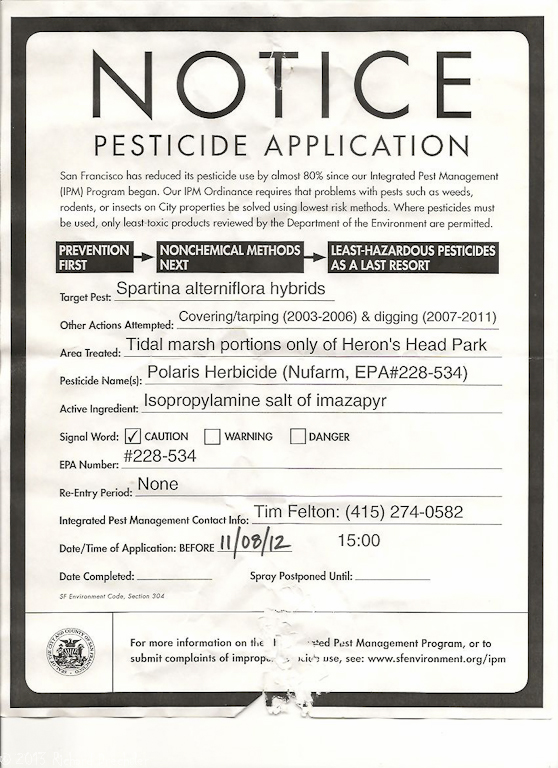
Ironically, Mr. Fuller prefaces his strong support for cordgrass eradication with this admonition:  “Do not forgive ignorance, please.”  Then, he displays profound ignorance of the consequences of cordgrass eradication in the San Francisco Bay Area.  Fuller is a professional birder, yet he is seemingly unaware of the fact that the eradication of cordgrass has nearly wiped out the population of endangered Ridgway Rail (formerly Clapper Rail) in the Bay Area.  He is also unaware of the huge quantities of herbicide that have been used to eradicate cordgrass.  Elsewhere in his book, he expresses concern about pesticides and other forms of pollution, yet in the case of cordgrass eradication he turns a blind eye.  (6)

Pesticide Application Notice, Heron’s Head, 2012

Eradication of mice on Farallon Islands

Mr. Fuller also supports plans to eradicate mice on the Farallon Islands:  “The latest effort to return the Farallones to a more natural preserve is an attempt to remove all the house mice.”  He is either unaware of plans to aerial bomb rodenticides on the Farallons to kill the mice or he chooses to use the euphemism “remove” to avoid the issue.  Elsewhere in the book, he mentions that rodenticides used in Golden Gate Park to kill rats also killed Great Horned Owls that ate the dead or dying rats.  He seems to understand that non-target birds are killed by rodenticides, yet he apparently supports the use of rodenticides on the Farallons, a national marine sanctuary.  (7)

Farallon Islands, NOAA

A Cautionary Tale

Mr. Fuller displays a sincere concern for the wildlife of San Francisco throughout his book.  He also acknowledges the very real threats of climate change and pollution for the future of the environment in the Bay Area.  I do not doubt his sincerity and I believe he has written a valuable book that is unfortunately damaged by his uncritical acceptance of inaccurate versions of several important environmental issues in the Bay Area.  I believe Mr. Fuller has been a victim of “incestuous amplification” in his acceptance of these myths.  Let that be a lesson to all of us to look deeply at every issue and to verify any tale you are told by an amateur or someone with a vested interest in those issues, such as employment. 

I cannot recommend this book to anyone who is not prepared to read it critically.  If you don’t already have a basic knowledge of the natural history of San Francisco you could easily be led astray by baseless rumors. 

  1. https://milliontrees.me/2013/11/05/eucalyptus-trees-do-not-kill-birds/
  2. https://milliontrees.me/2014/07/26/birds-and-butterflies-in-the-eucalyptus-forest/
  3. Dennis Frey and Andrew Schaffner, “Spatial and Temporal Pattern of Monarch Overwintering Abundance in Western North America,” in The Monarch Butterfly Biology and Conservation, Cornell University Press, 2004.
  4. https://milliontrees.me/2011/02/04/biodiversity-another-myth-busted-2/
  5. https://milliontrees.me/2018/02/06/highs-and-lows-of-the-2018-conference-of-the-california-native-plant-society/
  6. https://milliontrees.me/2014/06/02/spartina-eradication-herbicides-are-their-dirty-little-secret/
  7. https://milliontrees.me/2014/01/10/the-mouse-eradication-project-on-the-farallon-islands-the-con-in-conservation/

Eradicating non-native plants does NOT benefit insects

We briefly reactivate the Million Trees blog to publish an interesting and important debate between Jake Sigg and Professor Art Shapiro about the relationship between insects and native plants.  Their debate was initiated by this statement published in Jake Sigg’s Nature News on April 26, 2019:

“Did you know that 90 percent of insects can only eat the native plant species with which they’ve co-evolved?”

Jake Sigg has been the acknowledged leader of the native plant movement in the San Francisco Bay Area for 30 years.  He is a retired gardener for the Recreation and Parks Department in San Francisco. Art Shapiro is Distinguished Professor of Ecology and Evolution at UC Davis.  He has studied the butterflies of Central California for 50 years. 

Jake and Art are both passionately committed to the preservation of nature, but their divergent viewpoints reflect their different experiences.  Jake’s viewpoint is based on his personal interpretation of his observations.  As a gardener, his top priority is the preservation of plants rather than the animals that need plants.  As a scientist, Art’s viewpoint is based on empirical data, in particular, his records of plant and butterfly interactions over a period of 47 years as he walked his research transects about 250 days per year. The survival of butterflies is Art’s top priority.

Although their discussion is informative, it does not resolve the questions it raises because Jake and Art “agree to disagree.”  Therefore, Million Trees will step into the vacuum their discussion creates to state definitively that it is patently false to say that “90% of insects can only eat native plants.” That statement grossly exaggerates the degree of specialization of insects and underestimates the speed of adaptation and evolution.

There are several reasons why insects do not benefit from the eradication of non-native plants:

  • Insects use both native and non-native plants.
  • Pesticides used to eradicate non-native plants are harmful to both plants and insects as well as the entire environment.
  • There is no evidence that insects are being harmed by the existence of non-native plants.

Insects use both native and non-native plants

This statement was recently made in an article published by Bay Nature magazine about Jake Sigg:  “More than 90 percent of all insects sampled associate with just one or two plant families.”  (7,500 insect species were sampled by the cited study.  There are millions of insect species and their food preferences are largely unknown.)  This exaggerated description of specialization of insects seems the likely origin of the subsequent, inappropriate extrapolation to the statement that specialized insects require native plants.

Anise Swallowtail butterfly in non-native fennel. Courtesy urbanwildness.org

There are over 600 plant families and thousands of plant species within those families.  Most plant families include both native and non-native plant species.  An insect that uses one or two plant families, is therefore capable of using both native and non-native plant species.

We will use the Oxalidaceae plant family to illustrate that insects can and do use both native and non-native plants.  Oxalidaceae is a small family of about 5 genera and 600 plant species.  We choose that family as an example because Jake Sigg’s highest priority for eradication is a member of that plant family, Oxalis pes-caprae (Bermuda buttercup is the usual common name)In a recent Nature News (April 9, 2019), Jake explained why:  Oxalis is not just another weed; this bugger has a great impact on the present and it will determine the future of the landscapes it invades.” 

Five members of the Oxalis genus in the Oxalidaceae family are California natives. An insect that uses native oxalis can probably also use the hated Bermuda buttercup oxalis because they are chemically similar. 

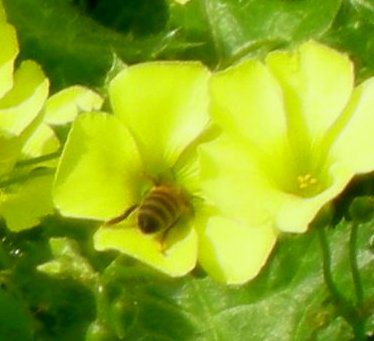
Honeybee on oxalis flower, another non-native plant being eradicated with herbicide.

The consequences of eradicating non-native plants

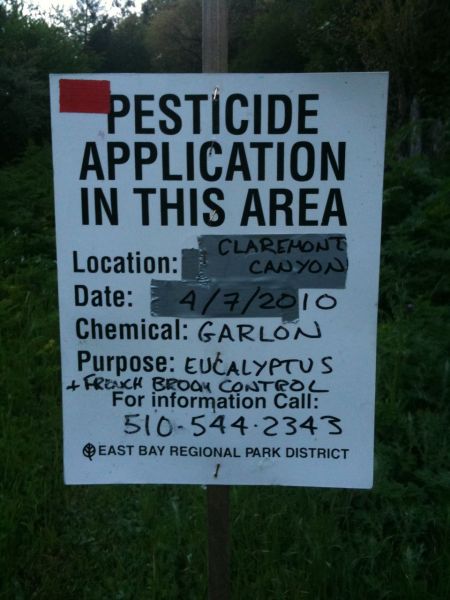
Partly because of Jake’s commitment to eradicating non-native oxalis, San Francisco’s Recreation and Parks Department has been spraying it with herbicide for 20 years Garlon (triclopyr) is the herbicide that is used for that purpose because it is a selective herbicide that does not kill grasses in which oxalis usually grows.  Garlon is one of the most toxic herbicides available on the market.  More is known about Round Up (glyphosate) because it is the most widely used of all herbicides.  However, according to a survey of land managers conducted by California Invasive Plant Council in 2014, Garlon is the second-most commonly used herbicide to eradicate non-native plants. 

Garlon is toxic to bees, birds, and fish.  It is an endocrine-disrupter that poses reproductive and developmental risks to female applicators.  It damages the soil by killing mycorrhizal fungi that are essential to plant health by facilitating the transfer of nutrients and moisture from the soil to plant roots. 

A recent article in the quarterly newsletter of Beyond Pesticides explains that insecticides are not the only killers of insects: “Insecticides kill insects, often indiscriminately and with devastating consequences for biodiversity, ecosystem stability, and critical ecosystem services. Herbicides and chemical fertilizers extinguish invaluable habitat and forage critical to insect survival. Taken together, insecticides, fungicides, herbicides and chemical fertilizers make large and growing swaths of land unlivable for vast numbers of insect species and the plants and animals they sustain.” The loss of insects where herbicides are used to kill non-native plants are undoubtedly contributing to the failure of attempts to “restore” native plants which require pollinators and insect predator control as much as non-native plants.

In other words, eradicating non-native oxalis is damaging the environment and the animals that live in the environment.  Furthermore, after twenty years of trying to eradicate it, Jake Sigg admits that there is more of it now than there was when this crusade began:  “Maybe you’ve noticed that there’s more and more of it every year, and fewer and fewer other plants.  That is unlikely to reverse.”  (Nature News, April 9, 2019).

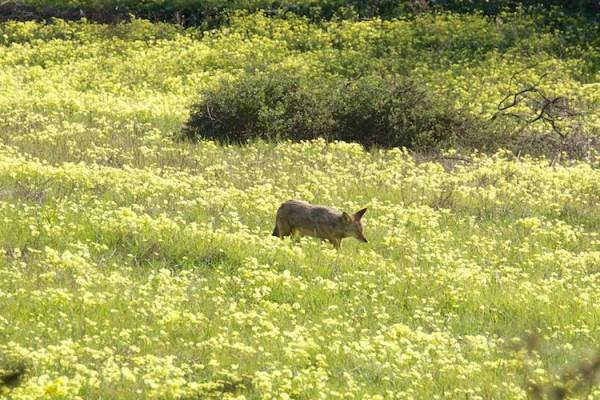
coyote in oxalis field. Copyright Janet Kessler

In fact, local failure of eradication efforts mirrors global failures of similar attempts:  “…despite international policies aimed at mitigating biological invasions, the implementation of national- and regional-scale measures to prevent or control alien species has done little to slow the increase in extent of invasions and the magnitude of impacts.” (1)

Update:  The California Invasive Plant Council has published “Land Manager’s Guide to Developing an Invasive Plant Management Plan.”  It says very little about the disadvantages of using herbicides to eradicate plants they consider “invasive” other than a vague reference to “unintended consequences,” without discussion of what they are or how to avoid them. 

However, it does give us another clue about why eradication efforts are often unsuccessful. When herbicides are used repeatedly, as they have been in the past 20 years, weeds develop resistance to them:   “The International Survey of Herbicide Resistant Weeds (2018) reports there are currently 496 unique cases (species x site of action) of herbicide-resistant weeds globally, with 255 species…Further, weeds have evolved resistance to 23 of the 26 known herbicide sites of action and to 163 different herbicides.”  The Guide therefore recommends that land managers rotate herbicides so that the “invasive” plants do not develop resistance to any particular herbicide.  The Guide gives only generic advice to use “herbicide X” initially and “herbicide Y or Z” for subsequent applications.

In other words, the California Invasive Plant Council continues to promote the use of herbicides to kill plants they consider “invasive.”  They give advice about ensuring the effectiveness of herbicides, but they do not give advice about how to avoid damaging the soil, killing insects, and harming the health of the public and the workers who apply the herbicides. 

Do insects benefit from eradicating non-native plants?

There is no question that insects are essential members of every ecosystem.  They are the primary food of birds and other members of wildland communities.  They perform many vital functions in the environment, such as consuming much of our waste that would otherwise accumulate. 

The Economist magazine has reported the considerable evidence of declining populations of insects in many places all over the world.  (However, the Economist points out that the evidence does not include large regions where insect populations have not been studied. The Economist is therefore unwilling to conclude that the “insect apocalypse” is a global phenomenon.) The report includes the meta-analysis of 73 individual studies that describe declines of 50% and more over decades. The meta-analysis concluded that there are four primary reasons for those declines, in order of their importance:  habitat loss, intensive farming, pesticide use, and spread of diseases and parasites.  The existence of non-native plants is conspicuously absent from this list of threats to insect populations.

In other words, although the preservation of insects is extremely important, there is no evidence that the eradication of non-native plants would benefit insects.  In fact, eradication efforts are detrimental to insects because of the toxic chemicals that are used and the loss of the food the plants are providing to insects.

Jake Sigg and Art Shapiro discuss insects and native plants

The discussion begins on April 26, 2019, with this statement published in Jake’s Nature News:

“Did you know that 90 percent of insects can only eat the native plant species with which they’ve co-evolved?”

On April 26, 2019, Arthur Shapiro wrote:

“No, I didn’t know 90% of insects can only eat the native plants with which they’ve co-evolved. I’ve only been studying insect-plant relationships and teaching about them for 50 years and that’s news to me, especially since on a global basis we don’t know what the vast majority of insects species eat, period! That’s even true for butterflies and moths, which are probably the best-studied group. And it’s even true here in California, one of the best-studied places on the planet (though way behind the U.K. and Japan). Where on earth did that bit of non-information come from?”

Jake Sigg responds:

“Art, I did my best to run down source for that statement.  As I suspected, it may lack academic precision.  That kind of precision is hard come by, and what exists is not entirely relevant.  Most of the information comes from Doug Tallamy.  But the statement is not accurate; it should have read “…90 percent of plant-eating insects eat only the native plants they evolved with”.  Whether that is true or not I don’t know, but it accords with my understanding and I am willing to go along with it, even if proof is lacking.  If you wait for scientific proof on everything you may wait a long time and lose a lot of biodiversity.  I have had too much field experience to think that exotic plants can provide the sustenance that natives do.

I expect you will be unhappy with this response.”

On May 2, 2019, Art Shapiro replies:

“If Tallamy said “90% of the plant-eating insects that I have studied…”  or “90% of the plant-eating insects that have been studied in Delaware…” or some such formulation I might take him more seriously. The phenomenon of “ecological fitting,” as described by Dan Janzen, is widespread if not ubiquitous. “Ecological fitting” occurs when two species with no history of coevolution or even sympatry (co-occurrence) are thrown together and “click.”  A.J.Thorsteinson summed up some 60 years ago what is needed for an insect to switch onto a new host plant: the new plant must be nutritionally adequate, possess the requisite chemical signals to trigger egg-laying and feeding, not possess any repellents or antifeedants and not be toxic. That set of circumstances is met very frequently. To those of us who study it, it seems to happen every other Tuesday.  As we showed, the urban-suburban California butterfly fauna is now overwhelmingly dependent on non-native plants. The weedy mallows (Malva) and annual vetches (Vicia) are fed upon by multiple native butterfly species and are overall the most important butterfly hosts in urban lowland California. . Within the past decade, our Variable Checkerspot has begun breeding spontaneously and successfully on Butterfly Bush (Buddleia davidii). The chemical bridge allowing this is iridoid glycosides. When I was still back East I published that the Wild Indigo Dusky Wing skipper, Erynnis baptisiae, had switched onto the naturalized European crown vetch (Coronilla varia) which had converted it from a scarce and local pine-barrens endemic to a widespread and common species breeding on freeway embankments. And the hitherto obscure skipper Poanes viator, the Broad-Winged Skipper, went from being a rare and local wetland species best collected from a boat to becoming the most abundant early-summer butterfly in the New York metropolitan area by switching from emergent aquatic grasses and sedges to the naturalized Mesopotamian strain of Common Reed, Phragmites australis. I can go on, and on, and on. If you find a sponsor for me to give a lecture about this in the Bay Area, I’ll gladly do it. If you promise to come!

I won’t snow you under with pdfs. Here’s just one, a serendipitous one that resulted from my walking near Ohlone Park in Berkeley. And one from the high Andes in Argentina. That paper cites one of mine in Spanish demonstrating that the southernmost butterfly fauna in the world, in Tierra del Fuego and on the mainland shore of the Straits of Magellan, is breeding successfully on exotic weeds.-! Copy on request.”

On May 2, 2019, Jake Sigg published his last reply:

“I believe many of your statements, Art, and many of these cases I am familiar with.  A conspicuous local example is the native Anise Swallowtail butterfly that still lays eggs on native members of the Umbelliferae, the parsley family, but which also breeds on the exotic fennel, which is an extremely aggressive weed that in only a few years can transform a healthy and diverse grassland supporting much wildlife into a plant monoculture—that, btw, won’t even support the butterfly, which shuns laying eggs where its larval food plant is too numerous and easy target for a predator, like yellow jackets.

What puzzles me is why you can keep your equanimity at the prospect of losing acres of very diverse habitat to a monoculture of fennel.  You live in the heart of the world’s breadbasket where for hundreds of miles both north and south there are almost no native plants except those planted by humans.  That would tend to distort one’s view.  I don’t mean to be flip, but it is not normal for even an academic to be indifferent about a loss of this magnitude.  I have worked hands-on on the land (I was raised on a ranch) all my life and still work every Wednesday maintaining our natural habitat in San Francisco—a task that hundreds of citizens pitch in on because they value the quality and diversity of the areas.  And why do you remain indifferent, are you just a contrarian?  You cite examples to bolster your view, but the examples are too small a percentage to be meaningful and wouldn’t stand up against a representative presentation.

I got my view from life.  I type this in my second-floor sunroom, which looks into a coast live oak growing from an acorn I planted in the late 1960s, about 50 years ago and which is immediately on the other side of the window.  It is alive with birds of many different species—flocks of bushtits, chickadees, juncos every day (plus individuals of other species), which species-number balloons in the migratory season.  What I can’t figure out is how the tree can be so productive as to stand up to this constant raiding.  I will take instances of this sort as my guide rather than the product of academic lucubrations.  And I will throw in Doug Tallamy; the world he portrays is one I recognize and love.

I think our battle lines are drawn.  This discussion could go on, as we have not even scratched the surface of a deep and complex subject.  But will either of us change our minds?  No.”

“Jake Sigg:  N.B.  Art responded with another long epistle, not for posting.  It clarified some of the points that were contentious and seemed to divide us.  We differ, but not as much as would appear from the above discussion.”


(1) “A four-component classification of uncertainties in biological invasions: implications for management,” G. LATOMBE , S. CANAVAN, H. HIRSCH,1 C. HUI, S. KUMSCHICK,1,3 M. M. NSIKANI, L. J. POTGIETER, T. B. ROBINSON, W.-C. SAUL, S. C. TURNER, J. R. U. WILSON,  F. A. YANNELLI, AND D. M. RICHARDSON, Ecosphere, April 2019.

Happy New Year and Farewell

The Million Trees blog is folding its tent and moving on because most of the projects in the San Francisco Bay Area that I have followed for 20 years have been approved, funded, and are being implemented.  Every public land manager in the Bay Area has made a commitment to destroying most non-native trees and using pesticides for that purpose.

If you wish to continue following the development of these projects, I recommend these websites:  San Francisco Forest Alliance Defend East Bay Forests, Save the East Bay Hills, and Hills Conservation Network.

For the record, this is a brief summary of my beliefs about the environment:

If I return to the blogosphere in the future, the title and mission of a new blog would change.  The focus would be the science that informs my commitment to the cosmopolitan landscape that exists, rather than the fantasized landscape of the past.  I will also continue to inform readers of new studies that find evidence of the damage that pesticides do to the environment and its inhabitants.  If you are a subscriber to the Million Trees blog, you will be informed if I publish a new blog.

Thank you for your readership.

Million Trees

Conference of the California Invasive Plant Council: Fallacies and Failures

The California Invasive Plant Council held their 27th annual conference in Monterey in November.  It was their biggest conference, with about 400 attendees and more sponsors than ever before.  Clearly the industry that promotes the eradication of non-native plants is alive and well.  However, a closer look at the conference presentations suggests otherwise.  Eradication efforts are growing, but eradication success is not and establishing a native landscape after eradication is proving elusive.

A few common themes emerged from the presentations:

  • Eradication cannot be accomplished without using pesticides.
  • When eradication is achieved with pesticides, non-natives are rarely replaced by native plants.
  • Planting natives after non-natives are eradicated reduces re-invasion, but secondary invasions of different non-native plants are common.
  • “Managing” forests with prescribed burns did not result in more biodiversity than leaving the forest alone.

Goals of these eradication projects have shifted in response to these failures to achieve original goals:

  • Replacement plantings after eradication are sometimes a mix of natives and non-natives.
  • Inability to establish native grassland has given way to different goals.
  • Language used to describe the projects are evolving to be more appealing to potential volunteers.

Here are a few examples of presentations that illustrate these themes:

Eradicating beach grass in Point Reyes National Seashore

About 60% of sand dunes in the Point Reyes National Seashore were covered in European beach grass when the eradication effort began in 2000.  The goal of the project was to restore native dune plants and increase the population of endangered snowy plovers that nest on bare sand.

The project began by manually pulling beach grass from 30 acres of dunes at Abbott’s Lagoon.  The grass grew back within one year, presumably because the roots of the beach grass are about 10 feet long.  Manually pulling the grass from the surface does not destroy the roots.

A new method was devised that was more successful with respect to eradicating the beach grass.  The grass and its roots were plowed up by bulldozers and buried deep in the sand.  The cost of that method was prohibitively expensive at $25,000 to $30,000 per acre and the barren sand caused other problems.

The barren dunes were mobile in the wind.  Sand blew into adjacent ranches and residential areas, causing neighbors of the park to object to the project.  The sand also encroached into areas where there were native plants, burying them.  The bare sand was eventually colonized by “secondary invaders.”  Different non-native plants replaced the beach grass because they were more competitive than the desired native plants.

In 2011, the National Park Services adopted a third strategy for converting beach grass to native dune plants.  They sprayed the beach grass with a mixture of glyphosate and imazapyr.  At $2,500 to $3,000 per acre, this eradication method was significantly cheaper than the mechanical method.

However, it resulted in different problems that prevented the establishment of native dune plants.  The poisoned thatch of dead beach grass was a physical barrier to successful seed germination and establishment of a new landscape.  Where secondary invaders were capable of penetrating the dead thatch, the resulting vegetation does not resemble native dunes.

Presentation at California Invasive Plant Council conference regarding attempt to eradicate European beach grass at Point Reyes National Seashore

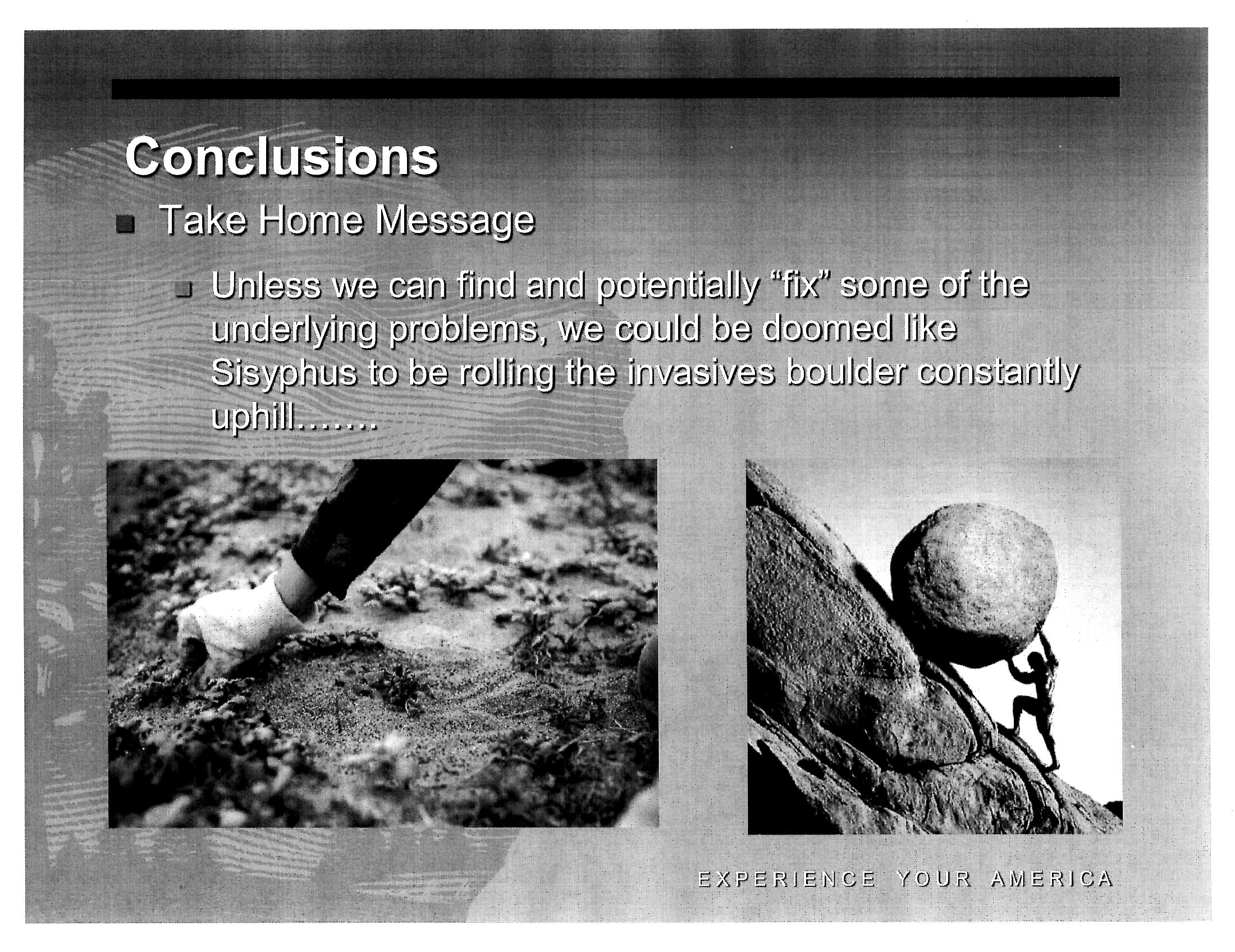
The concluding slides of this presentation were stunning.  They said it is a “Restoration fallacy that killing an invader will result in native vegetation.”  My 20 years of watching these futile efforts confirm this reality.  However, I never expected to hear that said by someone actually engaged in this effort.  The presenter mused that such projects are like Sisyphus trying to roll a boulder up hill. 

Presentation at California Invasive Plant Council conference regarding attempt to eradicate European beach grass at Point Reyes National Seashore

Attempting to plant Douglas fir after eradication of broom

Over a period of 5.5 years, broom was eradicated in plots in Oregon by spraying glyphosate.  The plots were then planted with Douglas fir seedlings that soon died.  They were replanted the following year and died in the second year.

There were two theories about why the plantings failed, both broadly described as “legacy” effects in the soil left by the broom.  One theory is that nitrogen levels were too high for successful growth of Douglas fir.  That theory is consistent with the fact that broom is a nitrogen fixer.  That is, broom—like all legumes—have the ability to transfer nitrogen in the atmosphere to nitrogen in the soil with the help of bacteria that facilitate that transfer.  Nitrogen generally benefits plant growth, but there can also be too much nitrogen.

The second theory is that Douglas fir requires a specific suite of mycorrhizal fungi for successful growth.  Mycorrhizal fungi live in roots of plants and trees.  They transfer moisture and nutrients from the soil to the plants.  Plants with a healthy suite of mycorrhizal fungi are more drought tolerant because they extract more moisture from the soil.

Neither of these theories has been successfully proven by this project.  They remain unanswered questions.  We were struck that the researchers had not considered the possibility that the repeated use of glyphosate could have been a factor in the failure of the Douglas fir.  Glyphosate is known to kill bacteria in the soil.  Could it also kill mycorrhizal fungi?  (We know that triclopyr kills mycorrhizal fungi.) That possibility was not considered by this project. Did the project consider that glyphosate also changes the consistency of the soil by binding certain minerals together?  It is more difficult for roots and water to penetrate the hard soil.  Were soil samples taken before and after repeated applications of glyphosate to determine how the soil had been changed by pesticide applications?

The published abstract for this project made this observation:  “It is typically assumed that once an invasive species is successfully removed, the impact of that species on the community is also eliminated.  However, invasive species may change the environment in ways that persist, as legacy effects, long after the species itself is gone.”  In fact, it seems likely that the pesticides used to eradicate the “invasive” species could also be the source of the “legacy effects.”

Does “managing” a forest result in greater biodiversity in the understory?

California State Parks tested that hypothesis by conducting prescribed burns in some of their forests in the Sierra Nevada 20 years ago, while leaving other portions of the forest “unmanaged.”

The abstract for this presentation describes the goals and expectations for the prescribed burns:  “Prescribed fire is a tool used to reduce fuels in the forests in the Sierra Nevada and mimic the low and moderate severity wildfires that burned before the onset of fire suppression.  A manager’s hope is that prescribed fire will create the disturbance necessary to stimulate the development of species rich understory communities and increase species richness, compared to unburned forests, which are often viewed as species depauperate.”

Twenty years after the burns, abundance and species composition of the understory in the burned areas were compared to the unburned areas.  They found little difference in the biodiversity of the understory of burned areas compared to unmanaged forests:

  • “Species richness was highly variable within burned and passively managed areas but was not statistically different.”
  • “Passively managed areas did not appear to be depauperate in understory species diversity compared to areas managed with prescribed fire.”
  • “Fire did not appear to reduce or enhance species richness numbers in burned areas, as compared to passively managed areas.”

No fires occurred in either the burned areas or the unmanaged areas during the 20-year period.  Therefore, this study did not test the theory that prescribed burning reduces fire hazards in forests.  This study found no significant differences in diversity of forest understory resulting from prescribed burns.

There are significant risks associated with prescribed burns.  They cause air pollution and they frequently escape the controlled perimeter of the fire, becoming wildfires that destroy far more than intended.  This study does not provide evidence that would justify taking those risks.  In fact, available evidence supports the “leave-it-alone” approach to land management.

Moving the goal posts

If at first you don’t succeed, you have the option of redefining success.  Here are a few of the projects presented at the conference that seemed to take that approach.

Make projects so small that success can be achieved

Eric Wrubel introduced himself as the National Park Service staff who is responsible for prioritizing invasive plants for removal in the National Parks in the Bay Area (GGNRA, PRNS, Muir Woods, and Pinnacles).  His work is based on the premise that the most successful eradications are those that are small.  The bigger the infestation, the greater the investment of time and resources it takes to eradicate it and the smaller the likelihood of success.  This is illustrated by a graph showing this inverse relationship between the size of the invasive population and the success of eradication.

Source: Rejmanek and Pitcairn, “When is eradication of an exotic pest plant a realistic goal?,” 2002

The process of prioritizing eradication projects began over 10 years ago with a survey of over 100 species of plants considered invasive.  Cal-IPC’s “watch list” was used to identify the plants that are not yet widely spread in California, but considered a potential problem in the future.  Cal-IPC’s risk assessment was the third element in the analysis.  Plants with “High” risk ratings by Cal-IPC were put higher on the priority list than those with “Moderate” or “Limited” ratings.  Plants that did not exist elsewhere in the region or watershed were also given higher priority, based on the assumption that re-invasion was less likely.

This is the list of eradication projects in the National Parks in the Bay Area that was presented at the conference of the California Invasive Plant Council. The projects marked with the red symbol for crossing out are completed projects. Nearly half of the plants on this hit list are not considered invasive in California.

The priority list showed that the highest priority eradication projects were quite small.  Some were just a few acres.  Buddleia jumped out as the 7th highest priority on only 13 acres.  Buddleia was recently added to a new category of plants on Cal-IPC’s “invasive” inventory.  It is not considered invasive in California, although it is considered invasive elsewhere.

In placing buddleia on its “hit list,” Cal-IPC illustrates one of the fundamental weaknesses of its evaluation method.  Cal-IPC does not evaluate pros and cons of non-native plants.  Only traits considered negative are taken into consideration.

Monarch sanctuary in Monterey, California. November 2018

Buddleia is one of the most useful nectar plants for pollinators in California.  We took the time to visit the monarch butterfly sanctuary in Monterey while attending the conference.  The monarchs are arriving now to begin their winter roost in the eucalyptus, Monterey pine and cypress in this small grove.  At the entrance to the sanctuary a sign instructs visitors to plant only native milkweed as the monarch’s host plant and only native flowers for nectar.  Fortunately whoever planted the flowering shrubs in the sanctuary didn’t follow the advice of the sign-makers.  They planted buddleia and other flowering non-natives such as bottle-brush.  Several species of butterflies and hummingbirds were enjoying those plants in the Sanctuary. Strict adherence to the native plant agenda is not beneficial to wildlife because animals do not share our prejudices.

Monarch nectaring on butterfly bush. butterflybush.com

Acknowledging the difficulties of converting non-native annual grass to native perennial grass

Pinnacles National Park acquired 2000 acres of former ranchland in 2006.  The park wanted to convert the non-native annual grasses and yellow-star thistle on the former ranch to perennial bunch grasses and oak woodland.  They were able to reduce the amount of yellow-star thistle by burning and spraying with herbicide, but cover of native species remained low.  Conversion of grasses from non-native annuals to native perennial grass has been tried many times, in many places, and for long periods of time.  These projects were notoriously unsuccessful.

The project at Pinnacles has changed its goal to plant forbs (herbaceous flower plants) instead of grasses and they report that they are having some success.   They justify that shift in goal on soil analysis that suggests forbs were more prevalent than perennial grasses in inland valleys in California than previously thought.

This change in goal could be described as “adaptive management,” which adjusts methods and goals in response to observable outcomes of existing methods.  You could also call it “trial and error.”  We would like to see more land managers make such adjustments to their strategies, rather than doing the same thing over and over again and expecting a different outcome.

Recruiting volunteers with appealing messages

There were several presentations about effective methods of recruiting volunteers to participate in restoration projects.  Some of their messages seem to acknowledge that the language used in the past may have alienated some potential volunteers.  Speaking from personal experience, I can confirm that observation.  Here are just a few of the cringe-worthy native plant mottos that I hope have been abandoned in favor of a more positive message:

  • “That plant doesn’t belong here.”
  • “That is a good plant and the other is a bad plant.”
  • “The invasive landscape is sick and requires chemotherapy.” (to justify the use of pesticides)
  • “That’s a trash bird.” (said of common, introduced birds, such as starlings and house sparrows)

The speaker advised those who work with volunteers to focus on why an unwanted plant is a problem rather than where it comes from.  Unfortunately, the list of problems is heavily influenced by the preferences of native plant advocates.  If their criticisms are not accurate, or they don’t acknowledge the advantages of the plant, little has been achieved by using euphemisms.  Here are a few of the inaccurate criticisms made of eucalyptus:

What was missing?

Ecological restoration is a major industry. Thousands of people are employed by the industry, which is funded by many different sources of public money.  Whether individual projects are successful or not, the industry will survive and thrive as long as it is funded.  Greater care should be taken to design and implement projects that will be successful.

Stepping back from the conference presentations of specific restoration projects, here are a few issues that were conspicuously absent from the conference. 

  • Pesticides are being widely used by the restoration industry. When projects don’t achieve desired outcomes, pesticides should be considered as a factor.  Did pesticides alter the soil?  Were beneficial microbes and fungi killed? How persistent was the pesticide in the soil?  How mobile was the pesticide in the soil?  Was pesticide applied in the right manner?  Could aerial drift account for death of non-target plants?  There are many other useful questions that could be asked.

Update:  The California Invasive Plant Council has published “Land Manager’s Guide to Developing an Invasive Plant Management Plan.”  It says very little about the disadvantages of using herbicides to eradicate plants they consider “invasive” other than a vague reference to “unintended consequences,” without discussion of what they are or how to avoid them. 

However, it does give us another clue about why eradication efforts are often unsuccessful. When herbicides are used repeatedly, as they have been in the past 20 years, weeds develop resistance to them:   “The International Survey of Herbicide Resistant Weeds (2018) reports there are currently 496 unique cases (species x site of action) of herbicide-resistant weeds globally, with 255 species…Further, weeds have evolved resistance to 23 of the 26 known herbicide sites of action and to 163 different herbicides.”  The Guide therefore recommends that land managers rotate herbicides so that the “invasive” plants do not develop resistance to any particular herbicide.  The Guide gives only generic advice to use “herbicide X” initially and “herbicide Y or Z” for subsequent applications.

In other words, the California Invasive Plant Council continues to promote the use of herbicides to kill plants they consider “invasive.”  They give advice about ensuring the effectiveness of herbicides, but they do not give advice about how to avoid damaging the soil, killing insects, and harming the health of the public and the workers who apply the herbicides.  May 20, 2019

  • Are workers who apply pesticides being adequately trained and supervised by certified applicators? The safety of workers should be one of many goals of restoration projects.
  • When non-native plants are eradicated, serious thought should be given in advance to the probable outcome. Will native plants return?  Will wildlife be harmed?  Will the risks of failure outweigh the potential benefits of success?
  • Is climate change taken into consideration when planning the replacement landscape? Are the plants that grew in the project location 200 years ago still adapted to that location?  Is there enough available water?
  • If new plantings require irrigation to be established, what is the water source? Is it recycled water with high salt content that will kill many plants, including redwoods?
  • Are the new plantings vulnerable to new infectious diseases, such as phytopthera or infestations of new insects such as shot-hole borer?
  • Does the project team have sufficient horticultural knowledge to choose plants that can survive in current conditions? Does the project team know the horticultural needs of the plants they are planting?  Is there enough sunlight, water and wind protection for the trees they are planting?

The public is investing heavily in the “restoration” of ecosystems.  We can only hope that our investment is being used wisely and that projects will not do more harm than good.  Cal-IPC can play a role in raising the questions that have the potential to improve projects and enable them to succeed.  The long-term survival of the “restoration” industry depends on it.


Most quotes are from abstracts of presentations published in the conference program.

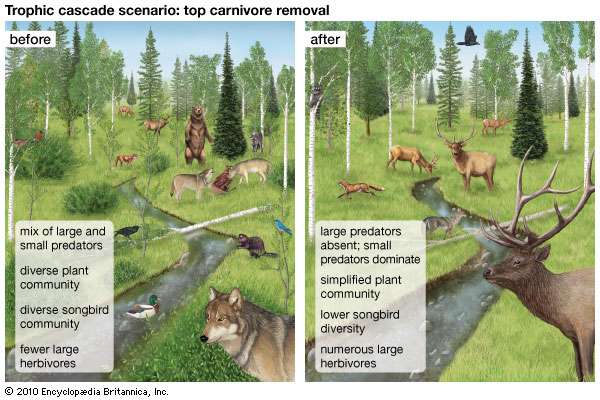
Trophic cascades are initiated by pesticide use

Although the Environmental Protection Agency requires that pesticides be tested before they can be sold in the US, we know that the required tests are inadequate to determine if the pesticide is dangerous to human health and the environment.  The tests are only as accurate as the test protocols and procedures.  There are many flaws in the testing methods required by federal law.  Here are a few of them:

  • Tests are conducted on laboratory animals in which the dose is limited to a single chemical. In the real world, humans and other animals are subjected to many chemicals simultaneously in doses that are unknown and unknowable, because little testing is done of contamination in the environment. Only the active ingredient in pesticide is tested, not the formulated product that is a cocktail of many chemicals.
  • Tests are done for relatively short periods of time, compared to the long lives of humans during which chemicals accumulate in our bodies.
  • The chemical threshold deemed “safe” is not the dose at which no adverse effect occurred. It is only the dose at which no adverse effect was observed:  “Subclinical affects—reduced fertility, compromised immune systems, and reduced intelligence, for example—are not observed not because they have not occurred but because they are seldom sought.” (1) In other words, the testing regimen does not test for many potential health problems.
  • The testing regimen is also limited to a few animal species at certain stages of development. For example, bees are the only species of insect on which pesticide tests are required and they are only tested at the adult stage.  Bee keepers will tell you that larvae stages of bee development are far more vulnerable to pesticides than adult bees, yet no tests are required on that stage of development.  Bees are probably less vulnerable to pesticides than caterpillars which eat vegetation, but caterpillars are not tested.  If caterpillars are killed, there are no moths and butterflies.

A proposal for a new testing standard of the impact on the entire ecosystem

Beyond Pesticides has published a review of many scientific studies about the impact of pesticides on the entire ecosystem in which they are applied.  The article reports substantial empirical evidence that pesticides are initiating trophic cascades in the entire ecosystem in which pesticides are used.  The article concludes that such studies of the entire food web are needed to identify and prevent such damage. (2)

What is a trophic cascade?

A change in the population of one member of an ecosystem can trigger a trophic cascade by altering the balance of the entire food web. 

The classic example of a “top-down” trophic cascade is the sequence of events in Yellowstone National Park when wolves were exterminated in the park.  In the absence of the top predator in the ecosystem, the population of elk that were their prey exploded.  The grazing animals ate trees and shrubs that were the food of the beavers.  The beaver population declined, which altered the hydrology of the ecosystem.  Wetlands maintained by beaver dams dried up and the community of plants and animals in the wetlands died off.  Although there were other predators of the grazing animals, such as bears and mountain lions, the packs of wolves subjected the herds of grazing animals to harassment that kept them moving, reducing damage to the vegetation.

Wolves have returned to Yellowstone National Park because of the Endangered Species Act that protected them and the ecosystem has been restored by the natural forces of predator and prey relationships.  The endangered status that protected wolves was recently rescinded in response to the demands of ranchers with domesticated animals.  Although wolves may not be killed inside Yellowstone, they may be killed when they leave the park.  We may eventually see a reversal of the improvements in an ecosystem ruled by wolves.


Update:  Emma Marris has critiqued the theory that the absence of wolves in Yellowstone National Park caused a trophic cascade that damaged the entire ecosystem in Yellowstone National Park and the reintroduction of wolves restored the ecosystem.  Her article, entitled “A good story:  Media bias in trophic cascade research in Yellowstone National Park,” was published in Peter Kareiva’s et al. new book, Effective Conservation Science, Data not Dogma.

Marris details the lack of data supporting the existence of a trophic cascade or its reversal when wolves were reintroduced.  She calls those claims speculative, an unproven hypothesis.  More importantly, Marris believes that proof of that hypothesis is unattainable:  “…even ecosystems as well studied as Yellowstone remain beyond our ken…lifetimes will be required to understand them and even then they may always remain, by virtue of changing faster than we are able to follow, essentially unknowable.”

More humility is needed to guide conservation.  If we are to avoid damaging the environment further, we need to keep in mind how little we know.  Nature may be far wiser in managing itself than humans presume to be. 


There are also examples of “bottom-up” trophic cascades when increases or decreases in the abundance of microscopic plants and animals disrupt the entire food web, ultimately impacting the top of the food chain.

Insects are also near the bottom of the food chain.  They are essential food for birds, particularly to young nestlings.  Scientists began noticing that insect populations were disappearing some time ago, but their anecdotal observations were not empirically tested until 2016 when an entomological society in Germany published a study about the decline:  “The German study found that, measured simply by weight, the overall abundance of flying insects in German nature reserves had decreased by 75 percent over just 27 years.” (3)  Although there are undoubtedly many reasons for this rapid disappearance of insects, including pesticides, there is almost no research being done to determine the causes:  “Rob Dunn, an entomologist at North Carolina State University…recently searched for studies showing the effect of pesticide spraying on the quantity of insects living in nearby forests.  He was surprised to find that no such studies existed.  ‘We ignored really basic questions,’ he said.  ‘It feels like we’ve dropped the ball in some giant collective way.’” (3)  Professor Dunn should not feel badly.  Almost no research is being done on the effects of pesticides on anyone, any animal or anything in the environment  Turning a blind eye to the possibility of such harm done by pesticides is one of the ways in which the industry is shielded from regulation.

Trophic cascades caused by pesticides

The review article published by Beyond Pesticides reports that many empirical studies have discovered trophic cascades initiated by pesticide applications.  Here is one example from agriculture:

“Mesleard et al. (2005) found that the insecticide fipronil, used to control midge pests in conventional rice fields, causes a trophic cascade that reduces the nutritional value of the area for waterfowl. Comparing a chemical intensive rice field to one managed organically, the trophic cascade ultimately neutralized the efficacy of synthetic pesticide use in the first place.

“Direct toxicity from fipronil reduced the number of invertebrate predators in chemical-intensive rice fields. This led to a trophic cascade that allowed herbivorous animals to flourish. On the surface, organic and chemically-managed rice fields both contained the same amount of invertebrate biomass. However, in chemical-intensive fields, this biomass was primarily in the form of gastropods (snails and slugs). When researchers surveyed the fields in late summer, only 12% of the invertebrate community were predators, while in organic fields that proportion was 70%. Slugs and snails are not a major food source for the most common waterfowl in the region studied, the heron, making organic plots a more valuable source of sustenance.” (2)

The review article also provides examples of trophic cascades initiated by pesticides in aquatic environments and in “invasive species” control projects.  Both herbicides and insecticides have initiated trophic cascades.  The effect on the food web of one pesticide is sometimes different from another.  The timing of a pesticide application sometimes has different impacts on the food web.  The effects of pesticides vary widely and are very complex.

A local example of a trophic cascade

There are many aquatic weeds in the Delta where the Sacramento and San Joaquin rivers slowly meander into the San Francisco Bay.  The weeds come from warmer climates and they are thriving here because of climate change.  Lower water levels are also a factor because shallower water is warmer.  The water level is lower because of drought and the diversion of water from the rivers and the Delta to irrigate agricultural crops.  Annual spring floods that cleansed the Delta system in the distant past have been stopped by upstream dams that keep water levels constant.

Instead of addressing the underlying reasons why the aquatic weeds have become a problem, the powers that be (State Parks Division of Boating and Waterways and approved by US Fish & Wildlife Service) have been spraying the aquatic weeds with pesticide and dumping pesticide pellets into the water.  These pesticide applications have been steadily increasing:  “Charts provided by the state show a 50 percent hike in the amount of pellets used from 2014 to 2017 and a 66 percent increase in the amount of spray that was administered during the same time period.” 

Fortunately, there are thousands of fishermen in the Delta who have noticed massive die-offs of fish, turtles, goats, ducks, muskrats, and otters since the spring. They have reported these deaths to California State Parks, who deny knowledge of such die-offs.

The fishermen have formed an organization, Norcal Delta Anglers Coalition.  They have organized to document this trophic cascade that was probably initiated by unnecessary pesticide applications.  We wish them luck.  We hope they have more success than we have had convincing public land managers that they are damaging the environment and its inhabitants with pesticides.

Testing and evaluation of pesticides must be improved

This important review article (1) concludes that pesticides can upset and imbalance ecosystem health and stability.  Studies find “increased risk of disease transmission, dangers to declining species, algae blooms, the loss of ecosystem services like nutrient cycling, and importantly, ineffective pest management.”  Therefore, there is a “critical need for EPA to consistently assess ecosystem level trophic effects as part of the pesticide registration process.” In the absence of a truly precautionary system where independent science is adequately considered by regulators, pesticides are likely to cause trophic cascades or other ecosystem disruption.

Such ecosystem evaluations of pesticides are not going to happen in the foreseeable future.  The 180-degree turn in American politics that would be required to improve pesticide regulation is unlikely.  Although most of the meager federal regulation we had in place prior to 2017 has been dismantled, regulation in the prior administration was also inadequate.

Courtesy Beyond Pesticides

Therefore, our fallback position should be DON’T USE ANY MORE PESTICIDE THAN ABSOLUTELY NECESSARY.  Buy organic food to protect your family and to put industrial agriculture using pesticides out of business.  Fight for rigorous pesticide regulation locally, in your city, your county and your state.

The end of another nativist myth

Native plant advocates promote the use of pesticides to eradicate non-native plants.  The myth they use to justify their use of pesticides is that damage is confined to the target plant or animal.  Clearly that is not true. Pesticides can be aimed at a specific plant, but non-target plants are often killed unintentionally because pesticides are mobile in the soil, they drift in the air and they are carried by the roots of the target plant to the intertwined roots of non-target plants.

Furthermore, killing one plant or animal in an ecosystem ultimately effects the entire community of plants and animals.  The collateral damage to the entire ecosystem caused by pesticides can be devastating to the entire food web.  Clearly the word “restoration” is a misnomer when used to describe eradication projects using pesticides.

Given the inevitable damage to entire ecosystems, the claim that native plant “restorations” benefit wildlife is clearly unlikely, if not patently false. 


  1. Joe Thornton, Pandora’s Poison, MIT Press, 2000
  2. Drew Toher, “Pesticide Use Harming Key Species Ripples through the Ecosystem,” Pesticides and You, Summer 2018.
  3. Brooks Jarvis, “The Insect Apocalypse Is Here,” New York Times, November 27, 2018

Action Opportunity: Speak up about Oakland’s Vegetation Management Plan

The stated purpose of Oakland’s Vegetation Management is to reduce fire hazards in Oakland.  Oakland’s Vegetation Management Plan will determine the fate of 2,000 acres of public parks and open spaces and 300 miles of roadside in Oakland.  It will also substantially increase the use of pesticides if approved in its present form.  Two public meetings will take place in November to discuss revisions of the draft plan:

Date: Thursday, November 15, 2018
Time: 5:30-7:30 PM
Location: Richard C. Trudeau Training Center, 11500 Skyline Blvd, Oakland, CA 94619

Date: Tuesday, November 20, 2018
Time: 5:30-7:30 PM
Location: Oakland City Hall, 1 Frank Ogawa Plaza, Hearing Room 2, Oakland, CA 94612

The agenda for these meetings has been carefully crafted to accommodate the wishes of native plant advocates, as expressed in their public comments on the draft plan.  This is the agenda for these public meetings:

  1. “The Plan should better incorporate the role of volunteers and stewardship groups that actively maintain vegetation at various City-managed parks/open space areas. The City should conduct additional outreach to such groups to continue to receive their input and feedback.”
  2. “The Plan should include more specificity regarding vegetation management recommendations at each City-managed parcel.”
  3. “The Plan should include cost estimates, or a range of potential costs, for the recommended treatments to assist the City for longer-term work budgeting and planning. The cost estimates and site-specific plans for City-managed parks would also help identify activities that volunteers can conduct.”

The first meeting on November 15th is “targeted towards the park steward/volunteer groups working on City-owned parcels.”  The second meeting on November 20th “will focus on the issue of plan specificity.  It is requested that participants come prepared to discuss their recommended edits/comments.  At each meeting we will briefly discuss each project site/area, and your feedback will be collected and considered for the revised draft Plan to be released in 2019.”

In other words, the public process that will result in a Vegetation Management Plan for Oakland is now entirely in the hands of native plant advocates (“park stewards/volunteer groups”), despite the fact that there were other important issues raised in the public comments.  Only the public comments of native plant advocates are being considered in the revision of the draft.  None of their requested revisions have anything to do with reducing fire hazards.  Their revisions are intended to greatly increase Oakland’s commitment to native plant “restorations.”

These are the issues being ignored

If you are an Oakland resident with a sincere interest in fire hazard mitigation, who does not believe the draft plan will reduce fire hazards, please attend one of these meetings.  These are the issues we believe are being ignored and must be addressed by the City of Oakland.

  • Pesticides are being used in the parks of the East Bay Regional Park District after completion of an Environmental Impact Report in 2009. The pesticide applications of the Park District are a preview of what will happen in Oakland city parks if the Vegetation Management Plan is approved as presently drafted.

    Pesticide use in Oakland city parks and open spaces is presently prohibited by Oakland’s city ordinance because no Environmental Impact Report has been completed for a revision of the ordinance that was proposed by the City Council in 2005. If the draft Vegetation Management Plan is approved and an Environmental Impact Report is completed as planned, pesticides will be permitted in Oakland’s parks, open spaces, and roadsides. 

  • Pesticide use will increase greatly because pesticides are required to prevent the tens of thousands of trees that the draft plan proposes to destroy from resprouting. Pesticides will also be needed to eradicate the flammable weeds that will colonize the unshaded ground.
  • Native plant advocates are opposed to goat grazing because goats eat both native and non-native plants. Goat grazing is a non-toxic alternative to pesticides.  Shade is the most benign method of weed control.
  • Native plant “restorations” do not mitigate fire hazards because native vegetation is as flammable as non-native vegetation. When non-native trees are destroyed, as proposed by the plan, no native trees will be planted to replace them.  Therefore, the moist forest will be replaced by grassland that ignites more easily than forests.
  • Every wildfire we have witnessed in California in the past 20 years has occurred exclusively in native vegetation. Wildfires in California have become more frequent and more intense because of climate change.  Deforestation is the second greatest cause of climate change because trees release the carbon they have stored throughout their lives, and in their absence carbon storage is reduced in the future.

The native plant movement has a death grip on our public lands in the San Francisco Bay Area.  Few would object to their advocacy if their projects were as constructive as they are destructive.  They are welcome to plant whatever they want, but they should not have the right to destroy everything that is non-native, particularly using pesticides, which is their preferred method.

I would like to believe that public policy is in our hands if we will participate in the political process.  It is becoming more difficult to believe in that ideal.  Please attend one of these meetings, if only to keep our democracy alive and well.

All life on Earth is related

Today we will take a deep dive into evolutionary history to talk about the origins of life on Earth.  Drawing from David Quammen’s new book, The Tangled Tree, we will tell you about “a radical new history of life,” as promised by the subtitle of his book. (1)

Categorizing Nature

Throughout written history, humans have demonstrated a compelling need to name and categorize everything in our world, including nature.  Naming and categorizing passes for understanding and enables us to talk about issues using commonly understood definitions.

Linnaean taxonomy was one of the first and most influential attempts to classify the natural world into three kingdoms:  plants, animals, and minerals.  Since Systema naturae was published by Carl Linnaeus in the 18th century, many other classification systems have been proposed by subsequent generations of scientists.

The conventional wisdom about classifying nature changed radically after the discovery of the molecular structure of DNA in the 1950s and the molecular analysis that it enabled in the 1960s.  Genetic analysis revealed the evolutionary relationships between organisms, enabling the development of phylogenetic “trees” depicting those relationships.

Haeckel’s Tree of Life, 1879

The revolutionary work of Charles Darwin was instrumental in initiating such speculation about evolutionary history.  Such theories about the history of life on Earth were often depicted as “trees of life,” showing the progression of evolution.  One of the earliest of such “trees” was published in the 1870s, shortly after the publication of Darwin’s Origin of Species in 1859.

In 1977, using molecular analysis, Carl Woese published his hypothesis of a new kingdom of life, Archaea.  He proposed a new categorization of all life on Earth, which he called domains:  Bacteria, Archaea, Eucarya.  Bacteria and Archaea are one-celled organisms without a nucleus.  Eucarya are every other living organism, including plants, animals, and fungi. Kingdoms of life were relegated to the second level of taxonomy (the classification of organisms).

The hypothesis of Woese was challenged, often contentiously, for decades, but is now conventional wisdom among scientists of phylogenetics, as the genetics of evolution is called.  However, as tidy as these new categories might appear, they aren’t.  As human intellectual constructs often are, many species of life defy neat categorization.  Around the edges of every domain there are many species of life that don’t entirely fit the criteria.  Likewise, around the edges of every genus and species, there are many gray areas.  Just as the distinction between “native” and “non-native” is often ambiguous, so is the categorization of many organisms.  This is a reminder that we must use such definitions with humility, always being prepared to consider a new hypothesis that improves our understanding.

Domains of life

Revising the mechanisms of evolution

Molecular analysis has also radically altered our understanding of how evolution proceeds.  Charles Darwin’s hypothesis about evolution was that change in organisms occurs through genetic variation from one generation to the next.  Occasional genetic mutations from one generation to the next was later added to what is called “vertical evolution.”  Each subsequent generation of a species is tested by the environment and that test is called natural selection.  The individual member of a species that is best adapted to the environment survives to reproduce, while less well-adapted individuals do not survive to reproduce.

Scientists have more recently observed that species in one domain of life also exchange genetic material with another domain of life, as well as exchanges between different species within domains.  This is called “horizontal gene transfer.”  The discovery of horizontal gene transfer (HGT) has revolutionized how we think about evolution.  Natural selection remains as the mechanism that confers success or failure on such changes in genes from one generation to another.

Significance of horizontal gene transfer

Horizontal gene transfers occurred in deep time, but are known to be a significant issue at the present time.  Horizontal gene transfer is the primary mechanism for the spread of antibiotic resistance in bacteria and plays an important role in the evolution of bacteria that can degrade synthetic compounds such as pesticides. Antibiotic resistance in one species of bacteria can be transferred to another species of bacteria, multiplying the incidence of antibiotic resistance. (2)

The introduction of chloroplasts into plant cells roughly 3.5 billion years ago was one of the most significant events in the evolution of life on Earth.  The introduction of chloroplasts into plant cells was an example of a horizontal gene transfer from a bacteria cell into eucarya cells.  Chloroplasts are the organelles (specialized structures inside eucarya cells that perform specific functions) that perform photosynthesis in plant cells.  Photosynthesis enables plants to convert the energy of the sun into carbohydrates that feed the plant and emit oxygen as its waste product.  Photosynthesis converts carbon dioxide into oxygen.  This neat trick of photosynthesis radically altered the atmosphere by reducing carbon dioxide and increasing oxygen.  Just as increased carbon dioxide in the atmosphere is now increasing temperatures on Earth, lower carbon dioxide levels in the atmosphere reduced temperatures.  This so-called “Great Oxidization Event” was the probable cause of one of the five great extinctions hundreds of millions of years ago. (3)

The horizontal gene transfer of mitochondria from bacteria cells to eucarya cells was equally significant to the evolution of life on Earth.  Mitochondria are organelles in eucarya cells that perform respiration and energy production functions in most eucarya species of both plants and animals. (2)

The list of such horizontal gene transfers is long.  Here are some examples to help you understand that HGT is an extremely important evolutionary mechanism, perhaps even more important than vertical evolution (2):

• From bacteria to fungi
• From bacteria to plants
• From organelle to organelle
• From plant to plant
• Fungi to insects
• From bacteria to insects
• From viruses to plants
• From bacteria to animals
• From plants to animals
• From plant to fungus

Implications of horizontal gene transfer

Our bodies contain more microbes, such as bacteria, than they do human cells.  Those microbes are interacting with our own cells.  Sometimes the microbes cause problems and sometimes they solve problems.  The microbes in our bodies cannot be called enemies or friends.  Sometimes their interactions with our cells permanently alter our genes and are inherited by our offspring.  Such permanent alterations of our genes are called horizontal gene transfer.  Such interactions between microbes and cells occurs in all life forms, altering plants, animals, etc. 

What are the implications of these interactions?

  • All life forms on Earth are related. No life form on Earth can be considered “alien.”  Every organism on Earth is constantly undergoing change, as it interacts with other organisms.  No “species” is immutable in the long term.
  • Critics of genetic engineering say it is “unnatural” and risky because it introduces genes into organisms in which they did not evolve naturally. But horizontal gene transfer does exactly the same thing and it is a “natural” process.  Genetic engineering is risky, just as HGT is, but it is mimicking a natural process.
  • Many pesticides are known to kill bacteria. Since bacteria are resident in our bodies in huge numbers and are known to sometimes be beneficial, it seems unnecessarily risky to kill them with pesticides.   As with genetic engineering, the risk should be weighed against potential benefits.  Are the risks worth taking?
  • Epidemiological studies report correlation between increased pesticide applications and increased birth defects in humans. Laboratory studies on rats report birth defects in rats exposed to low doses of glyphosate as well as birth defects in subsequent generations of the exposed rats: “A 2018 study of pregnant rats exposed to low doses of glyphosate-based herbicides revealed that the rats had difficulties in getting pregnant and surviving the pregnancy. The second generation offspring suffered from being smaller than normal. They were also afflicted with abnormalities developed before birth. This means the glyphosate-based weed killers inoculate their victims with monstrosities.” (4) These studies suggest that genes may have been altered by pesticide exposure.

  1. David Quammen, The Tangled Tree: A radical new history of life, Simon & Schuster, 2018
  2. Specific examples of these HGTs are available HERE.
  3. http://www.growingpassion.org/2010/04/evolution-of-chloroplasts-endosymbiosis.html
  4. https://sustainablepulse.com/2018/10/24/the-specter-of-genetic-catastrophe/?utm_source=newsletter&utm_medium=email&utm_campaign=gmos_and_pesticides_global_breaking_news&utm_term=2018-10-24#.W9B55ktKg2x