We recently published an article in defense of hybridization, inter-breeding of two different species. Conservation Sense and Nonsense defends hybridization because it is under fire from the native plant movement. Many projects that needlessly destroy non-native plants (or one locally perceived as such) do so to prevent them from hybridizing with a native plant, which has the potential to cause a localized loss of a variant of a native plant species.
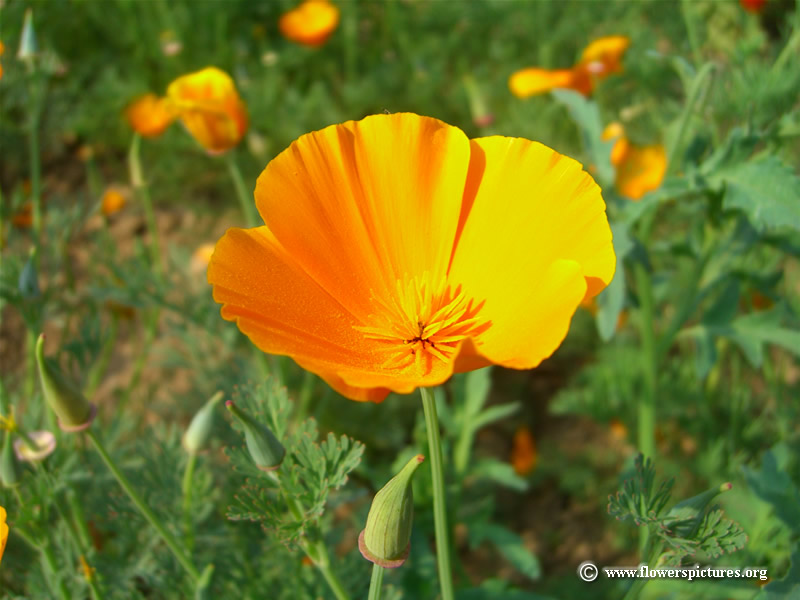
This classic California poppy is eradicated in the Presidio in San Francisco because of fear it could hybridize with a sub-species of poppy that is considered “native” to the Presidio.
We are revisiting the topic because The Economist magazine recently published a comprehensive article about recent discoveries of the prevalence of hybrids among both plants and animals. Until the advent of DNA analysis in the 1970s, the extent to which plant and animal species were the result of inter-breeding was largely unknown. Also, conventional wisdom was that such inter-breeding was usually an evolutionary dead-end because offspring were often sterile, as exemplified by mules, the offspring of horses and donkeys. In general, the consequences of hybridization were assumed to be negative.
Recent advances in DNA analysis have largely disproved these assumptions. Hybridization is not only common, it can result in the creation of new species more rapidly than other forces of evolution, such as mutation and natural selection: “Hybridisation also offers shortcuts on the long march to speciation that do not depend on natural selection at all.” (1)
Both the positive and negative effects of hybridization are real. In plants, the effects of hybridization are often beneficial because of plants’ unusually flexible genetics. Plants, for instance, are frequently polyploid—meaning that each nucleus contains genomic copies in greater multiples than those of animals. Polyploidy provides spare copies of genes for natural selection to work on, providing additional possibilities for selection.
Polyploidy confers another advantage. It creates a barrier to breeding with either parent species. That gives a new, emerging species a chance to establish itself without being reabsorbed into one of the parental populations. Recent evidence suggests that hybridization between two plant species in the distant past, followed by a simple doubling of the number of chromosomes in their offspring, may be responsible for much of the diversity in flowering plants that is seen today.
Plants seem to benefit from hybridization more often than animals. “For many animals, however—and for mammals in particular—extra chromosomes serve not to enhance things, but to disrupt them. Why, is not completely clear. Cell division in animals seems more easily confounded by superfluous chromosomes than it is in plants, so this may be a factor. Plants also have simpler cells, which are more able to accommodate extra chromosomes. Whatever the details, animal hybrids appear to feel the effects of genetic incompatibility far more acutely than do plants.” (1)
The Economist provides many important examples of hybridization among animal species, most notably the history of hybridization of our species, Homo sapiens. We are now the sole surviving species of genus Homo. Our genome contains the relicts of the genes of other members of our genus that are now extinct, which indicates hybridization with other hominoid species. The modern human genome contains 1-4% of Neanderthal genes.
The Economist article concludes, “This is a more complex conception of evolutionary history, but also a richer one. Few things in life are simple—why should life itself be?” Keep your eyes and your mind open to new scientific knowledge that improves our understanding of life.
The bottom line
Biodiversity is the mantra of the native plant movement. Native plant advocates claim that the primary purpose of saving native plants is preserving biodiversity. But is it? When non-native plants are eradicated, aren’t we depriving native plants of the opportunity to breed with a hardy new comer? Are we preventing the creation of a new species by eliminating potential mates? Are we dooming the native plant that is not adapted to survive the changing climate by depriving it of the opportunity to improve its survivability?
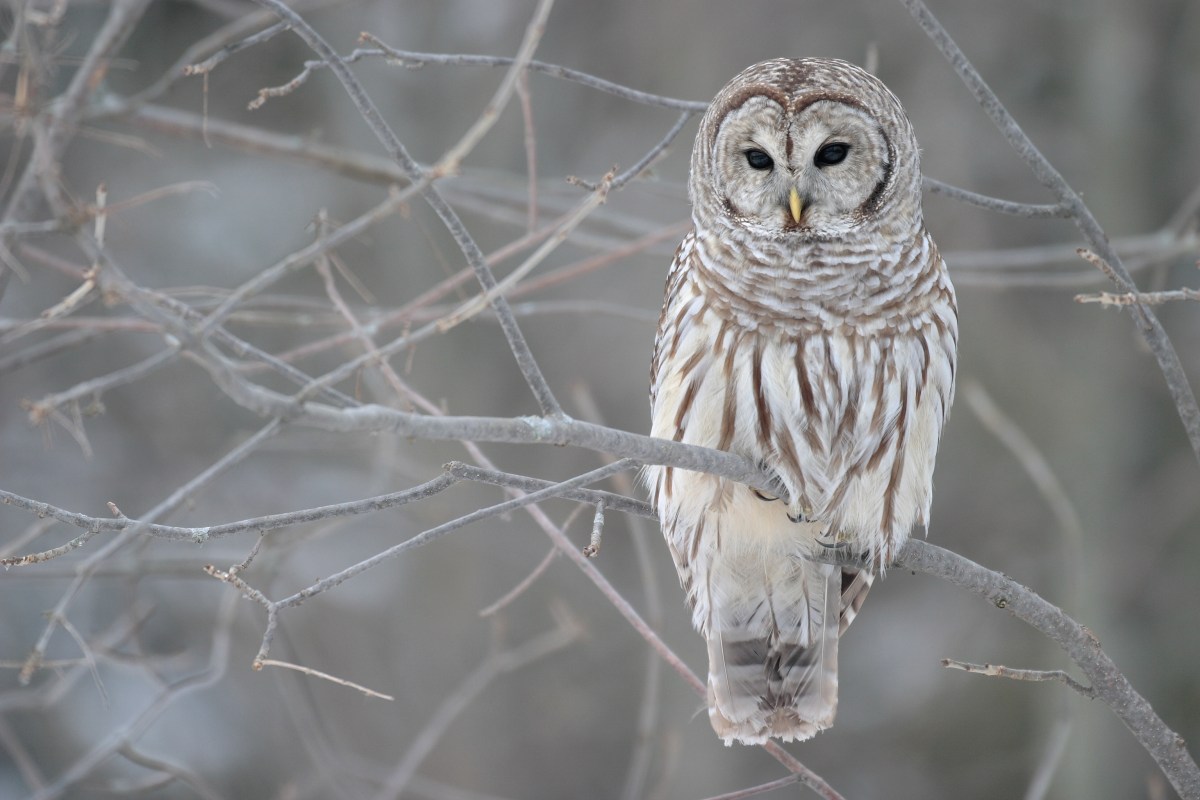
There is a community of birders in Central Park in New York City who are famous around the country because the New York Times often reports on significant events in their community. If you are a birder you know that the arrival of a rare bird in your vicinity generates a lot of excitement. In the case of the barred owl, its arrival in Central Park was such an event. Ironically, elsewhere in the country, the barred owl isn’t unusual because it is a species that is rapidly expanding its range and becoming a target for eradication where it is perceived as an “invader.” The article in the New York Times was oblivious to this irony, so I took on the task of telling NYT readers about it. Here is the dialogue that my comment generated in NYT.
[My Comment] Oakland, CA Nov. 17
Barred owls are expanding their range. Good thing this barred owl didn’t show up here in the San Francisco Bay Area where barred owls are being shot because they are considered competitors with a rare, legally protected bird. The legally protected owl is so rare that logging was stopped in many western forests. The timber industry figured out how to place the blame on the barred owl. They hired someone to conduct a study to prove that the mere presence of the barred owl was correlated with the dwindling population of the rare owl. The study resulted in a program to shoot barred owls and the timber industry was once again allowed to log in the forests where the rare owl used to live. Here on the west coast, barred owls are one of the scapegoats that enable the fiction that endangered species are being protected. [1]
[Response]
Vancouver, BC
The “rare owl” is the Spotted Owl. When mates are scarce it will actually interbreed with the Barred Owl – another threat to its continued existence. Of course the scarcity of the Spotted Owl is human-caused as you point out – the presence of Barred Owls just accelerates their disappearance
[My First Reply] Oakland, CA Nov. 17
Yes, I know the species that is legally protected. Ironically, spotted owls would benefit greatly by hybridizing with barred owls because it is a hardier species. Hybridization is a natural, evolutionary process that often improves the survivability of the species that are breeding with more common species in order to breed. Advances in molecular analysis are reporting that hybridization is more common than previously thought and that it results in better adaptation to the environment, increasing chances for survival. Nativist attempts to prevent hybridization is futile and harmful. We can’t stop evolution, nor should we try,
[Second Response]
Vancouver, BC Nov. 17
You didn’t originally mention what the “rare owl” is called. Other people might like to know what you were talking about. Extensive hybridization with a far more numerous species will not “strengthen” the spotted owl as a species. On the contrary it will lead to the disappearance of the spotted owl as a separate species, as its genetics are swamped by those of the larger population. That’s what happened to the southeastern Red Wolf in the 1960s – when their numbers dropped very low, they began mating with coyotes, the last act in their genetic disappearance as a wolf species. “Nativism”, a political concept, has zero to do with this biological phenomenon. You say, “Hybridization is a natural, evolutionary process that often improves the survivability of the species” Well yes, in the face of human disturbance and habitat destruction, animals better adapted to the disturbed/replaced habitat will survive better… but the more sensitive species may eventually disappear, one way or another. Pigeons and rats are models of survivability – they’re highly adapted to commensal life with people – they thrive in human-altered landscapes. I wouldn’t casually class human-caused extinction as “evolution”, i.e. as a natural phenomenon and no cause for concern.
[My Second Reply]
Oakland, CA Nov. 17
The expanding range of barred owls is not caused by humans. It is also a natural phenomenon. The purpose of shooting barred owls is to enable the continued timber harvesting in the forests where spotted owls lived in the past. In other words, if “natural” processes are your goal, you might want to start by stopping the harvesting of the forests that spotted owls lived in. Spotted owls are choosing barred owls as their breeding partners. What’s more “natural” than that? Here is an article in Economist Magazine about the evolutionary value of hybridization: The Economist, “Match and mix, hybrids and evolution,” October 3-9, 2020, page 67-70. It’s not an idea that originates with me. Many articles like it are based on molecular analysis that traces the evolutionary history of hybridization for 500 million years of life on Earth.
You say, “’Nativism’, a political concept, has zero to do with this biological phenomenon.” I disagree. Nativism begins with a human prejudice against plants and animals (including humans) perceived as foreign. It becomes political when it becomes government policy and law, as it has in the case of shooting barred owls. That program was initiated and administered by US Fish and Wildlife. Likewise, attempts to abolish all forms of human immigration to the US is a policy of the federal government. I seem to have attracted the attention of members or admirers of the “restoration” industry. I’m glad. You should know that your deadly projects are not universally admired. They are misguided and they are usually based on specious reasoning masquerading as “science.” When they kill animals and use pesticides to kill plants, they are damaging the environment and the animals that live in it.
Barred owls moved north and west in the late 20th century because of the forestation of what was historically prairie and other treeless habitats. That’s about as clearly “caused by humans” as anything.
[And receives assistance from Vermont]
Middlebury, VT Nov. 18
Yellow Barred Owls only occur on the West Coast because Europeans planted trees across the great plains as windbreaks and parkland, allowing the owls to spread across the formerly treeless region. Prior to that, the species was confined to the East Coast–their expansion to the Pacific is entirely the result of human interferance in the ecosystem. They should not be in the West and their removal, along with strong habitat protection, is the best hope for the Northern Spotted Owl to survive as a species.
[I got the last word]
Oakland, CA Nov. 18
The forests in which barred owls live along the West Coast were not planted. They are native conifer forests. As for pre-settlement prairie now occupied by forests, they are the result of natural succession from grassland to shrubland and ultimately forests in the absence of indigenous burning and grazing by native ungulates. They weren’t planted either. In the view of the “restoration” industry, natural processes such as succession, hybridization, and evolution are not consistent with the goal of re-creating a pre-settlement landscape. It’s a fool’s errand, even in the absence of a rapidly changing climate which makes it delusional. The only thing constant about nature is change. There’s nothing natural about humans killing animals they have decided “don’t belong there.”
According to this map of barred owl distribution, the route the barred owl took from the East to the West Coast was via the boreal forests of Canada. Source: Cornell Ornithology Lab
Addendum: The barred owl is the pin-up photo for the January page of Audubon’s 2021 calendar. Here’s what Audubon says about the conservation status of the barred owl: “The rich baritone hooting of the Barred Owl is a characteristic sound – one that some birders may already hear less of due to loss of parts of the bird’s southern swamp habitat to climate-related threats, including wildfires, spring heat waves, and urbanization. Audubon is passing clean energy legislation in the South, including landmark solar energy bills in Arkansas and South Carolina, ensuring a healthier future for these states and birds, like the Barred Owl, that depend on them.”
We often find contradictions between the national policies of environmental organizations such as Audubon and their local chapters. In this case local Audubon chapters are actively engaged in shooting barred owls that are expanding their range into cooler, northern climates, while the national organization understands that the barred owl must change its range to survive climate change. Well-meaning people often don’t have the big picture when making conservation decisions and they are resistant to changes in nature. The instinct seems to be to freeze nature into place. Nature won’t stand for that. January 2021
[1] Green Diamond Resource Co, a lumber company managing timberland in Humboldt, Del Norte and Trinity counties, is the author of the plan to “manage” barred owls in their forests. (“Managing” or “removing” barred owls is the euphemism used to describe the killing of barred owls by shooting them.) Lowell Diller, a biologist and contractor for the Green Diamond Resource Co., was responsible for the “study” that resulted in the “management” plan. He designed the study and literally executed it by shooting barred owls. When interviewed by the Bay Area News Group, Green Diamond Resource Co. explained, “When you can protect and sustain a business and jobs and also conserve the northern spotted owl,” he said, “why not do it?” (source: “California biologists shoot scores of bully owls to protect endangered spotted owls,” East Bay Times, August 15, 2016)
I published an article recently about a race for a seat on the Board of the East Bay Regional Park District between Norman La Force and Elizabeth Echols. Based on my personal experience with La Force and with the help of a considerable public record, I recommended that voters in that Park District vote for Elizabeth Echols because Norman La Force has a long track record as an aggressive—often litigious—opponent of traditional park uses. La Force prefers parks behind fences, with no public access and he frequently sues the Park District to impose his personal preference that public parks be reserved for wildlife in which people are not welcome.
My article was read by over 2,500 people and may have helped Elizabeth Echols win that race with about 60% of the vote. Recreational users of the parks probably deserve the most credit for Echols’ victory. La Force has spent decades trying to prevent kitesurfing, kayak launches, biking, and dog walking in the parks in the district he wanted to represent. These recreational users of the parks weren’t having it.
I learned a lot about La Force during that campaign and everything I learned confirmed my judgment that he is an enemy of our urban parks with a fundamentally misanthropic view about the role of humans in nature. I will share a few of the stories about La Force with readers because La Force’s leadership role in the Sierra Club still gives him some power to launch his crusades against land use decisions that do not conform to his purist view of urban nature.
La Force horror stories
Berkeleyside published four op-eds about the race for the Park District Board seat; three endorsed Echols and one endorsed La Force. (1) The comments on those op-eds were instructive. Many people who participate in land use issues stepped forward to tell their personal stories about their bad experiences with La Force.
This comment tells the story of the Sierra Club, led by La Force, trying to prevent a high school girl’s crew team from rowing at Aquatic Park in Berkeley about 20 years ago: “I attended a meeting of Berkeley planning staff when the Berkeley High girls crew team was proposing to rent and renovate the club house in Aquatic Park. The team was already rowing on Aquatic Lagoon–indeed, the lagoon is public trust land and they couldn’t be stopped. I had no real interest in that project, but I watched Norman verbally attack the representative of the girl’s team and call him a liar. He later threatened the city with a lawsuit if they leased the clubhouse to the girls team. The City backed down, the clubhouse remained vacant, and the girls were left with a very bad taste in their mouth about the Sierra Club and Norman in particular.” Jim McGrath
This comment tells the story of the Sierra Club, led by La Force, trying (unsuccessfully) to prevent a dog park at Cesar Chavez Park in Berkeley: “I first “met” Norman LaForce over 25 years ago when, as a member of a Mayor’s Task Force on Dog Use in Parks, I phoned to invite him to attend our kickoff meeting. I knew that he, in his position in the Sierra Club, had opposed a plan for an off leash area in Cesar Chavez. So I thought it would be good to get both sides to the table. Sounds reasonable, yes? That was a very rude (in more than one way) awakening to learn about what kind of person he is. He was livid, yelling and swearing at me, he was so loud that my family got to hear his vitriolic outburst as well. Needless to say he didn’t accept my invitation and did everything in his power to stop this dog park from happening—and being who Norman was and is, that means using the backdoor into city hall to thwart it.” Claudia Kawczynska (with permission)
This kitesurfer tells the story of La Force trying to prevent boating access to the bay: “I am a kitesurfer who, along with hundreds of local kiters, make heavy use of the VERY limited number of local launch sites in the East Bay. Although we have an incredible opportunity to improve launches and build new launches to expand non-motorized access to the bay and expose more people safely to this vast natural resource, La Force has not only opposed launches, he’s tried to establish a legal basis to fundamentally prohibit non-motorized access to the bay by arguing, among other things, that we destroy eel grass. Most non-motorized sailors, kiters, windsurfers, kayakers and swimmers are keenly aware of and supportive of the environment we recreate in. These are exactly the kinds of coalitions we need to build in order to create the right balance between environmental preservation, ecological health, recreational use of and strong support for our local parks.” Andrew Sullivan
This comment disputes La Force’s claim of responsibility for the creation of the McLaughlin East Shoreline Park: “I ultimately supported the plan in public—I could not oppose Sylvia McLaughlin and Dwight Steele who I revered. That’s how the dynamic on the plan really worked–Dwight and Sylvia commanded respect, and talked to everyone, Robert Cheasty cut the deals, and Norman ranted… I first met Norman at the first Coastal Conservancy charrette for what became the McLaughlin State Park. It was clear from day one that he was an advocate for wildlife and committed to keeping people out of the new park. It is not unusual to see many people claim credit for an undertaking like the park, which required many people. What is astonishing to me is Norman’s willingness to misrepresent, or perhaps forget, the positions he took at the time and represent himself as a consensus builder. Sylvia was much more of a people person, and would not be pleased to see the park named for her with so many fences that keep people out.” Jim McGrath
Of course, supporters of La Force also commented, but their comments corroborated La Force’s extremism. Some don’t want dogs in parks. Some believe boating threatens eel grass. One commenter believes that public access to parks threatens biodiversity. Many of their comments used the same antagonistic approach for which La Force is famous.
Another can of worms
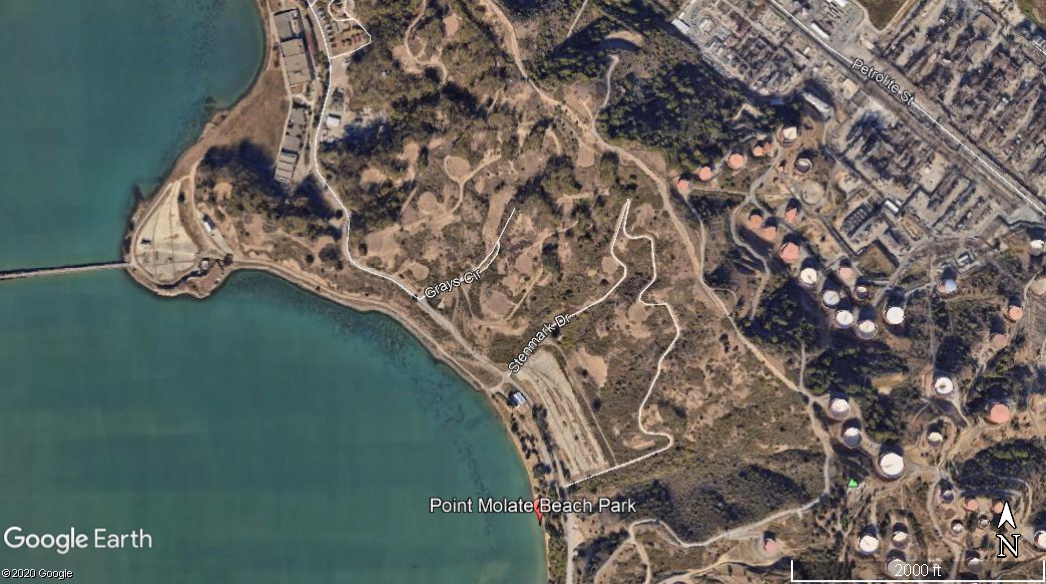
The debate about this race opened another can of worms. Point Molate in Richmond is one of the most hotly contested scraps of land in the park district that will be represented by the Board seat that La Force wanted.
Point Molate, Richmond
The City of Richmond would like to build housing at Point Molate. (Full disclosure: I consider new housing a high priority in the Bay Area where the cost of housing is prohibitive.) La Force and the Sierra Club are opposed to building any new housing in the Bay Area, whether it is urban infill or suburban open space. La Force’s original strategy in preventing this project was to promote the building of a huge gambling casino and resort on the property. He and his allies made a deal with the developers of the gambling casino that they would fund the removal of “invasive species” and the installation of native landscape in exchange for Sierra Club support for the gambling casino. (2)
The City of Richmond held a voters’ referendum to prevent a gambling casino from being built and developed a new plan for housing that would have preserved 70% of the land for parks and open space. La Force and his allies were forced to develop a new strategy. Now they claim that the site is a fire hazard with insufficient exits to evacuate in the event of fire. There was no fire hazard when La Force advocated for a gambling casino with parking for 7,500, a hotel with 1,100 rooms, entertainment complex and retail stores, but now there is, according to La Force and the Sierra Club. This is the subject of yet another La Force/Sierra Club lawsuit, filed against the City of Richmond, less than a month before the November 3, 2020 election.
La Force’s use of fear of fire as a tool to get what he wants is not new. He has used the same argument to justify the destruction of all non-native trees in the Bay Area. Anyone who is paying attention knows that virtually all the wildfires in California occur in native vegetation. Flammability of tree species has nothing to do with nativity of the species and everything to do with the characteristics of the species. For example, native bay laurels are more flammable than eucalyptus.
The SF Chronicle recently reported the new strategy of “environmentalists” of using fear of fire to prevent new housing from being built in suburban open space. The article quite rightly points out that the same people are equally opposed to building dense housing in urban transit corridors.
There is a grain of truth to concern about building housing in fire/wind corridors. But given the Sierra Club’s track record of using fear of fire to get what they want, would you trust them to tell us accurately where housing can be safely built? The Sierra Club has cried wolf too often. They are no longer a credible source of information regarding safe placement of new housing because they don’t want any housing…or any non-native trees.
Lessons Learned
I learned from following this race that recreational users of our urban parks will fight like hell to retain their access to the parks. They are less concerned about the loss of our urban forest to nativism or the use of herbicides in the parks, perhaps because herbicides aren’t used in dog parks. They want another park at Point Molate, rather than housing. Aside from helping to document the confrontational approach of La Force to impose his will on our public lands, I give credit to recreational park users for defeating Norman La Force in this race.
I hope that Norman La Force has learned something too. I hope he understands that his aspirations for political power are over. Maybe he also understands the cost of his confrontational behavior and lawsuits that force public agencies to waste taxpayers’ money to defend their sovereignty.
Most importantly, I hope the Sierra Club understands that it has paid dearly for La Force’s behavior. La Force has tarnished the reputation of the San Francisco Chapter of the Sierra Club. The endorsements of the Sierra Club for candidates for public office are no longer something to be proud of. They are an indication that the candidate is an extremist who views people as intruders in nature. This damage to the reputation of the Sierra Club is a loss to everyone because a strong and influential environmental organization is needed, but only if its objectives are to protect the environment rather than furthering the interests of a specific person who has been given more power than he can be trusted with.
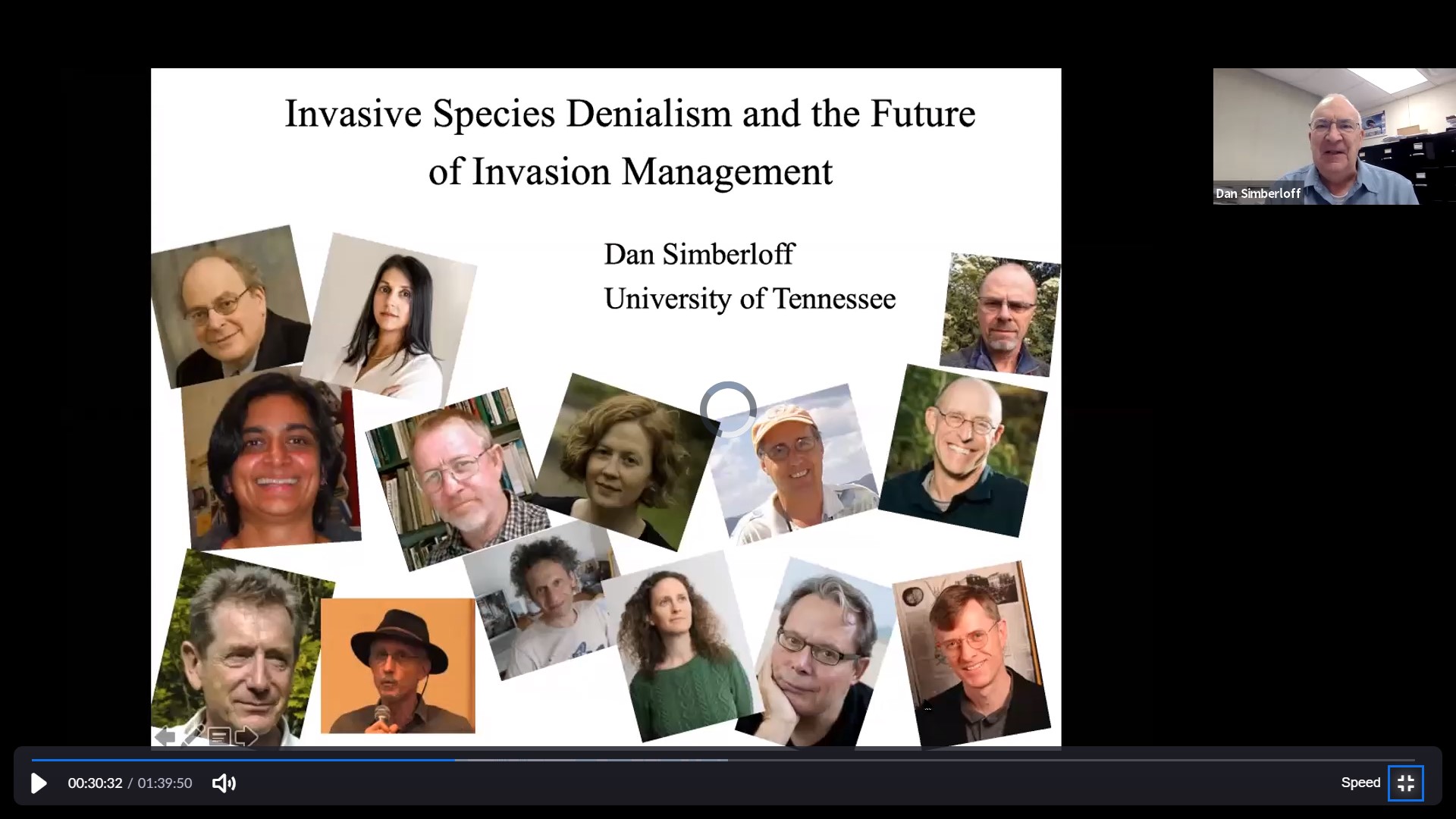
Daniel Simberloff gave the keynote address to the symposium of the California Invasive Plant Council (Cal-IPC), entitled “Invasive Species Denialism and the Future of Invasion Management.” Simberloff is the most vocal academic defender of invasion biology. His presentation to Cal-IPC contains interesting clues about more effective strategies for the critics of invasion biology, of which I am one. In a nutshell, Simberloff dismisses critics easily with a few waves of his hand, but he stumbles when faced with the economic and ecological costs of the methods used to eradicate so-called “invasive species.” He can defend the theoretical hypotheses of invasion biology, but he finds it difficult to defend the “restoration” industry that invasion biology spawned, specifically the use of pesticides.
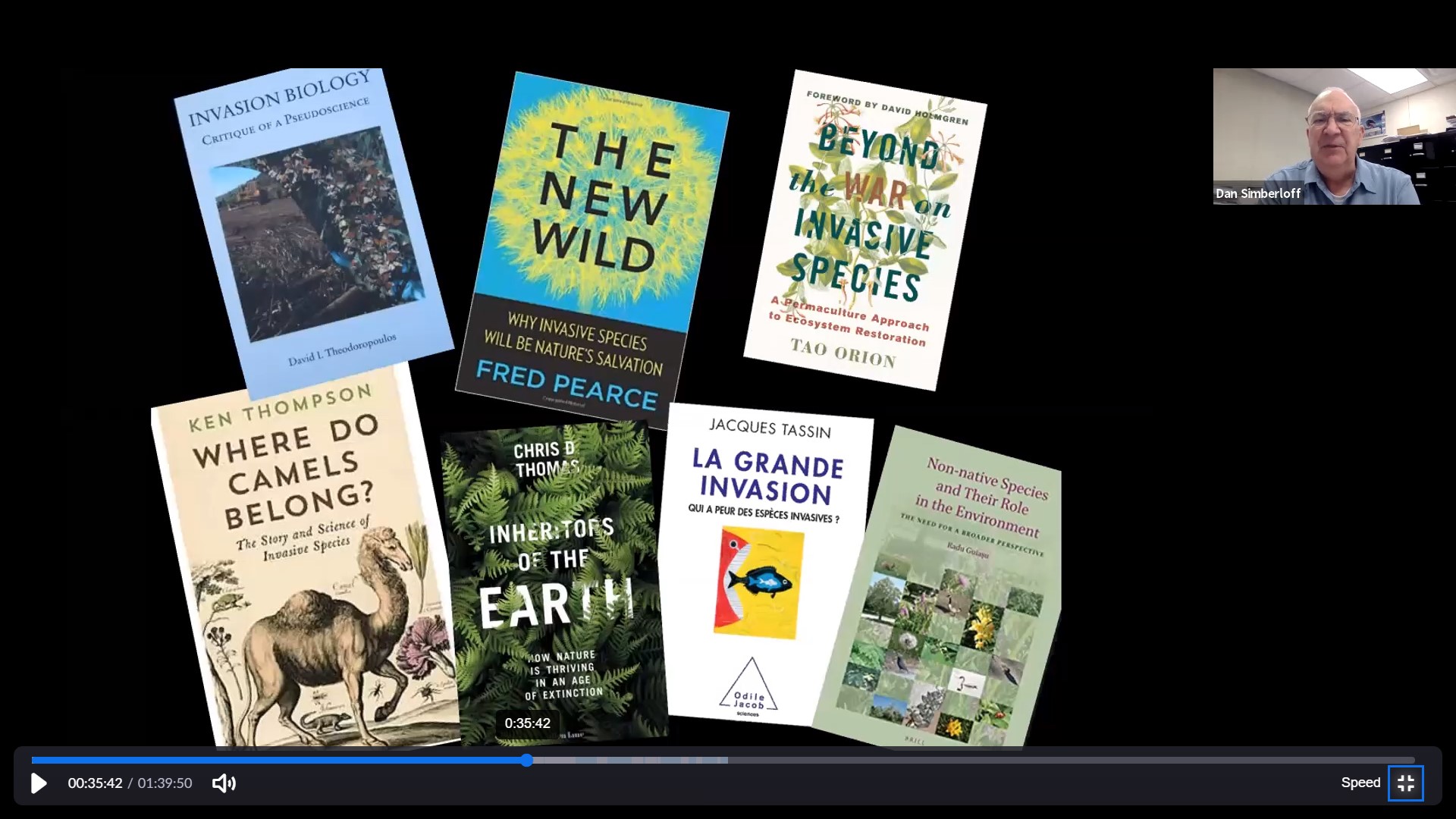
Simberloff opened his presentation with this rogue’s gallery of the critics of invasion biology. Some readers will recognize some of these “deniers.” If not, you might recognize some of the many books the “deniers” have published.
Simberloff categorized the criticisms of invasion biology then flipped them off, one by one. Keep in mind as you read Simberloff’s summary that it does not do justice to the actual criticisms of invasion biology.
Critics say that most non-native species aren’t harmful.
Simberloff says we don’t know how harmful non-native species are because few are studied, their impacts are often subtle, and there is often a time lag before they become harmful. He believes that all non-native plants are potentially harmful to ecosystems.
Critics say that some non-native species are beneficial.
Simberloff says that critics only report the benefits, while ignoring the negative impacts of non-native species. (Actually, most critics are proposing a cost/benefit analysis that acknowledges both positive and negative impacts.)
Critics say that invasion biology is xenophobic.
Simberloff says that if you’re looking for xenophobia, you often see it. He calls this the “law of instrument” or if your instrument is a hammer, everything looks like a nail. (Frankly, I didn’t understand the point he was trying to make, but I have tried to describe it accurately based on what he said.)
Critics say that trying to eradicate non-native species is futile.
Simberloff says this argument ignores the progress that has been made in the technology of eradication methods. He used the “early detection and rapid response” strategy as an example of progress in eradicating non-native plants. That strategy focuses on small populations of non-native plants, basically acknowledging the futility of trying to eradicate large areas of well-established non-native plants.
Much of Simberloff’s presentation was devoted to describing many developments in genetic engineering, such as CRISPR to drive species to extinction and gene silencing. All of the examples of such developments were aimed at killing insects (such as mosquitoes) and animals (such as rats and mice), with one exception. He was particularly enthusiastic about island eradications of which there are hundreds, and hundreds more on the drawing boards. Only one gene-editing project on plants is trying to develop a genetic method to eradicate phragmites.
Things finally became interesting, when Simberloff took questions: “Dan, you mention the “futility” argument, but what about the notion that the cost in environmental damage (e.g, pesticide use and nontarget impacts) is too high for some well-established invaders?” Simberloff’s answer to this question was surprising and encouraging to critics of pesticide use to kill non-native species:
“Absolutely, it’s a huge problem, not only on non-target species, but also the fact that evolution of resistance leads to greater use of pesticides before they are useful and leads to greater impact on non-target species. I didn’t talk about this, but yes, of course the cost both economically and ecologically might be too great even if management eradication is feasible. But that’s not what denialism is about. Denialism willfully denies that there are impacts or they confound arguments about values as if it is an argument about science.”
The Executive Director of Cal-IPC recognized the dangers of Simberloff’s answer because pesticides are the primary tool used by the “restoration” industry and much of the conference was devoted to telling over 650 employees of the “restoration” industry about new developments in pesticide use. Those new developments are not good news to those who are concerned about the dangers of pesticides. For example, a new “drizzle” technique increases the concentration of the active ingredient and lowers the volume of the application, increasing toxicity of the application. Another alarming presentation described the use of drones to spray herbicides on hundreds of acres of phragmites in the Suisun Marsh.
The absence of good alternatives to pesticide use in eradication projects is another source of pressure on the “restoration” industry and therefore on Cal-IPC:
Jon Keeley’s presentation about the interaction of fire, fire prevention, and plant invasions included the observation that using prescribed burns to eradicate non-native plants results in more non-native plants, not more native plants.
A land manager in Southern California acknowledged that pressures to reduce pesticide use threaten the future of his project: “Natural herbicides result in more time intensive and costly weed control, with less confidence of success. Where herbicide application is completely restricted, other weed control methods like hand weeding or mowing can be implemented successfully, but they often fall short of herbicide in effectiveness. This resulting reduction in effective weed control must be taken into account in future plans for habitat restoration and management, and our existing programs will have to reevaluate the proposed efforts, cost of those efforts, and expectations for success, both short and long term.” (Scott McMillan, abstract)
Finally, with the exception of a few timid questions from participants, no mention was made about the threat of climate change on the future of native ecosystems. Simberloff likened critics of invasion biology to “climate change deniers.” In fact, it’s fair to say that those who demand that we replicate native ranges existing 250-500 years ago are more accurately called climate change deniers.
The Executive Director of Cal-IPC tried to save the day by portraying those who oppose pesticides as extremists, based on what he considers “unscientific” studies. But Simberloff wouldn’t take the bait. He wasn’t willing to dismiss the concerns about pesticides. Instead, Simberloff passed the buck:
“I’ll beg off on answering that question on grounds that I’m not a social scientist or psychologist. This is not my area of expertise. There is some reason for the extremists because Monsanto has sometimes lied to us and there have been problems associated with pesticides. I leave this question to policy scientists.”
Simberloff reveals the flaw in the “restoration” industry
As a critic of invasion biology and the use of pesticides, I have always been frustrated that critics of invasion biology do not use the damage done by eradications as a reason for their criticism. With the exception of Tao Orion’s Beyond the War on Invasive Species, none of the books written by critics have used this argument. It is a missed opportunity and Simberloff’s presentation to Cal-IPC is an indication that it is the strongest argument against eradication projects that are inspired by invasion biology.
Invasion biology is a theoretical construct. It does no harm to ecosystems until it justifies the use of harmful methods to eradicate non-native species. I humbly ask that critics of invasion biology wake up to this opportunity. Pesticides are a winning argument against “restoration” projects that eradicate non-native plants. Any cost/benefit analysis of new eradication projects should include the ecological and economic costs of pesticides in the equation.
Beyond Pesticides points the way forward
I try not to leave the field without offering a compromise because opposition without solutions is not constructive. I offer this sage advice from Beyond Pesticides about case-by-case evaluations of weed invasions that will reduce damage to ecosystems. Beyond Pesticides responded to this question: “I’m working on a pesticide policy in my community and am interested in how you might suggest we deal with “invasive” species. Can you point us in the right direction? Martin, Boston, MA.” This is BP’s thoughtful answer:
“It’s Beyond Pesticides position that invasives, or opportunistic species, should be dealt with on a case-by-case basis, with established priorities and a plan. With any unwanted species, there needs to be an understanding of the ecological context. We need to be asking the right questions: What role is the plant currently playing in a landscape—what niche is it currently filling? If we remove this plant, what will fill that niche? Will we be replanting the right native species to fill that niche? What are the detrimental impacts of letting it spread? Is there a way we can isolate it to stop its spread? Can we ever remove this plant altogether, or will we be working at control indefinitely? These are important questions that we need to be asking before we even consider management methods. Regarding policy, requiring an individualized invasive species management plan seems to be the right answer, though unfortunately many pesticide reform policies sidestep the issue and simply exempt invasives to avoid opposition. Just like all organic approaches, we’ll want to place a focus on prevention and working with ecological systems, rather than against them, making even least-toxic pesticide use a last resort. There is a strong potential to undermine the stability of an ecosystem if we simply go in and immediately break out the strongest tools in the toolbox without a plant replacement strategy. On a turf system with common weeds a simple answer is grass plants. But, in forested areas already subject to intrusion (from construction/logging, etc.), rights-of-way, and urban areas, the focus is on alternative vegetation or ground cover. Sometimes, little should be done except simple mechanical cutting to keep these species in balance. This is an interesting and, at times, contentious issue that environmentalists grapple with, so there is certainly room for fresh ideas on how to approach opportunistic species without the use of toxic pesticides. For more information, we encourage you to watch the talk given at Beyond Pesticides 37th National Pesticide Forum in New York City by Peter Del Tredici, PhD, senior research scientist at Harvard’s Arnold Arboretum (www.bp-dc.org/ invasives).”
Marlene A. Condon is the author/photographer of The Nature-friendly Garden: Creating a Backyard Haven for Plants, Wildlife, and People (Stackpole Books 2006; information at www.marlenecondon.com). Please visit her blog, In Defense of Nature. You can reach her at marlenecondon@aol.com
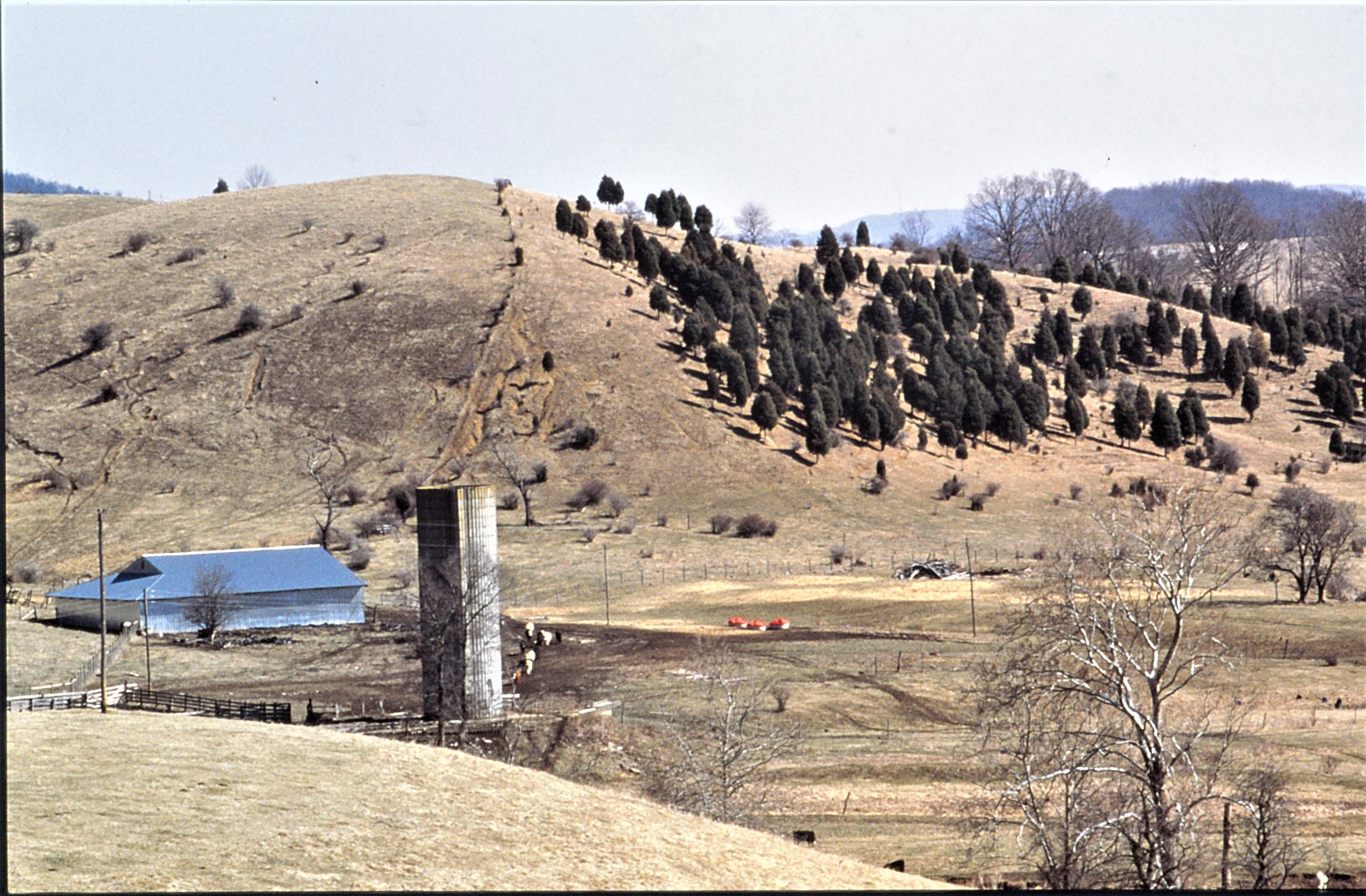
To the farmer’s eye, Eastern Redcedar trees “invade” his cow fields where he would prefer only grass to grow. To the ecologist’s eye, the trees signify the need for soil remediation. Photo credit Marlene A. Condon
Prefatory Comments
When I was a student in the mid-1970s at Virginia Tech, small farms surrounded the town of Blacksburg. I spent time at many of the cow farms, where I constantly heard complaints by agriculturalists about the Eastern Redcedar (Juniperous virginiana) perpetually invading their fields.
After getting my degree in physics, I moved north to Charlottesville, a 140-mile highway drive through rural areas. In the ensuing decades, numerous small farms were abandoned as it became more difficult for farmers to make a living from them.
On frequent trips back to Blacksburg, I watched as the forsaken cow fields began to fill with cedar trees. Then, as time went on, Autumn Olive (Eleagnus umbellata) shrubs began to show up as well. It took decades for those fields to become a forest of cedars, olives, or a mix of both; succession was a slow process because the soils had been emptied of their nutrients, and they were compacted by the generations of half-ton animals that had trod upon them.
What the farmers didn’t understand in the 70s, and what most people still don’t understand today, is that Mother Nature tries constantly to replenish degraded areas by sending in colonizers—plants capable of growing in and enriching exhausted soil. Because very few kinds of plants can perform this natural restorative work, their presence in an area is a sure sign of impoverished land.
Virginia Cedar, Virginia Pine (Pinus virginiana), and Broomsedge (Andropogon virgincus) comprise the most-common native species that move into old Virginia cow fields, sometimes accompanied by Black Locust (Robinia pseudoacacia) that is somewhat beyond its original range. But Autumn Olive, from Asia, is a far superior restorer. It not only enriches the soil with nitrogen, an essential nutrient for plant growth, but also provides for wildlife far better than these other plants. I can’t think of another species that feeds such an abundance of pollinators in the spring with its fragrant blooms, and birds and mammals in mid-to-late summer with fruits and again in late winter by way of its buds.
Yet Autumn Olive is one of the most despised plants of people going after so-called invasive-plant species, the presence of which in our environment they don’t understand and have misinterpreted. For example, University of Delaware entomology professor Doug Tallamy starts Bringing Nature Home (published in 2007) with an explanation of how he came to write his book: He and his wife had moved seven years earlier to 10 acres in southeastern Pennsylvania where he found “at least 35 percent of the vegetation on our property (yes, I measured it) consisted of aggressive plant species from other continents that were replacing what native plants we did have.”
Despite his knowledge that the area “had been farmed for centuries before being subdivided and sold to people like [him and his wife]”, this entomologist clearly had no clue about the full story of the landscape he had bought. The presence of Multiflora Rose (Rosa multiflora), Autumn Olive, and other much denigrated alien species that occupied about a third of his property revealed a prior history that Dr. Tallamy and other invasion proponents ignore.
The farmer’s land had obviously stood idle for some years, giving the variety of plants mentioned plenty of time to move in to rehabilitate the soil. These alien species didn’t suddenly appear and grow to full size overnight; we know the plants had been growing for a long time because the author tells us: “In places on [his] land, bittersweet…was supported at the base by vines with six-inch diameters.”
They weren’t “taking over the land” by “push[ing] out any existing natives,” as Dr. Tallamy erroneously asserts. Ecological succession is defined as “a gradual and orderly process of change brought about by the progressive replacement of one community [herbaceous plants to woody shrubs] by another until a stable climax [forest] is established.” (1) If Professor Tallamy truly understood how the natural world works, he would realize he can now grow his preferred climax community of native trees only because the alien “invaders” prepared the site for him to do so.
It’s unfortunate that Doug Tallamy’s false version of nature has been given much credence and publicity. Thanks to conservationists and governments at all levels rallying around his contrived version of reality, huge areas of well functioning habitat have been, and continue to be, destroyed throughout the United States. Adding insult to injury, the “mission” to get rid of supposedly invasive plants has usually been accomplished with the use of herbicides deadly to wildlife.
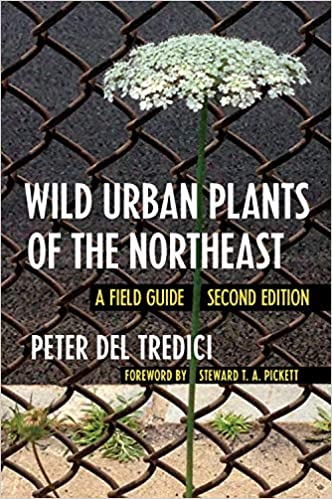
Book review ofWild Urban Plants of the Northeast by Peter Del Tredici
The natural world would currently be in far better shape if years ago the press had instead taken note of urban ecologist and Harvard botanist Peter Del Tredici’s book, Wild Urban Plants of the Northeast (first published by Cornell Press in 2010, with an expanded version out this year). Unlike Dr. Tallamy, Dr. Del Tredici recognizes the substantial modifications to our environment wrought by development and climate change, such as soil degradation that goes hand in hand with construction, and drought that is more severe and more frequent due to climate warming.
Anyone knowledgeable about plants should recognize that these changes are quite consequential for these organisms. Perhaps Professor Tallamy doesn’t “get it” because he’s focused only on insects and knows very little about animal/plant relationships. For example, he erroneously writes (2) that the Tulip Poplar tree (Liriodendron tulipifera) “is one of the least productive forest species in terms of its ability to support wildlife—insects and vertebrates alike.” He doesn’t know Tulip Poplar blooms feed a myriad of insects along with hummingbirds, and its seeds are taken by the Eastern Gray Squirrel and other rodents, as well as birds like the Carolina Chickadee, the mascot for his cause célѐbre.
It’s a shame that Wild Urban Plants of the Northeast is referred to as a field guide on its cover and in advertisements. People are bound to think this book is mainly for identification of plants growing in urban areas, but it is so much more. Conservationists and gardeners throughout the entire country—and certainly students learning about plants—would do well to read the 29-page “Introduction”.
The true value of this work lies in the author’s explanatory text about why the 268 covered species show up in the cracks and crevices of city sidewalks and deserted parking lots, as well as from the walls of decrepit buildings. It’s an ecology lesson that is far more illustrative than the dry text you might read in a book devoted to the subject for the classroom.
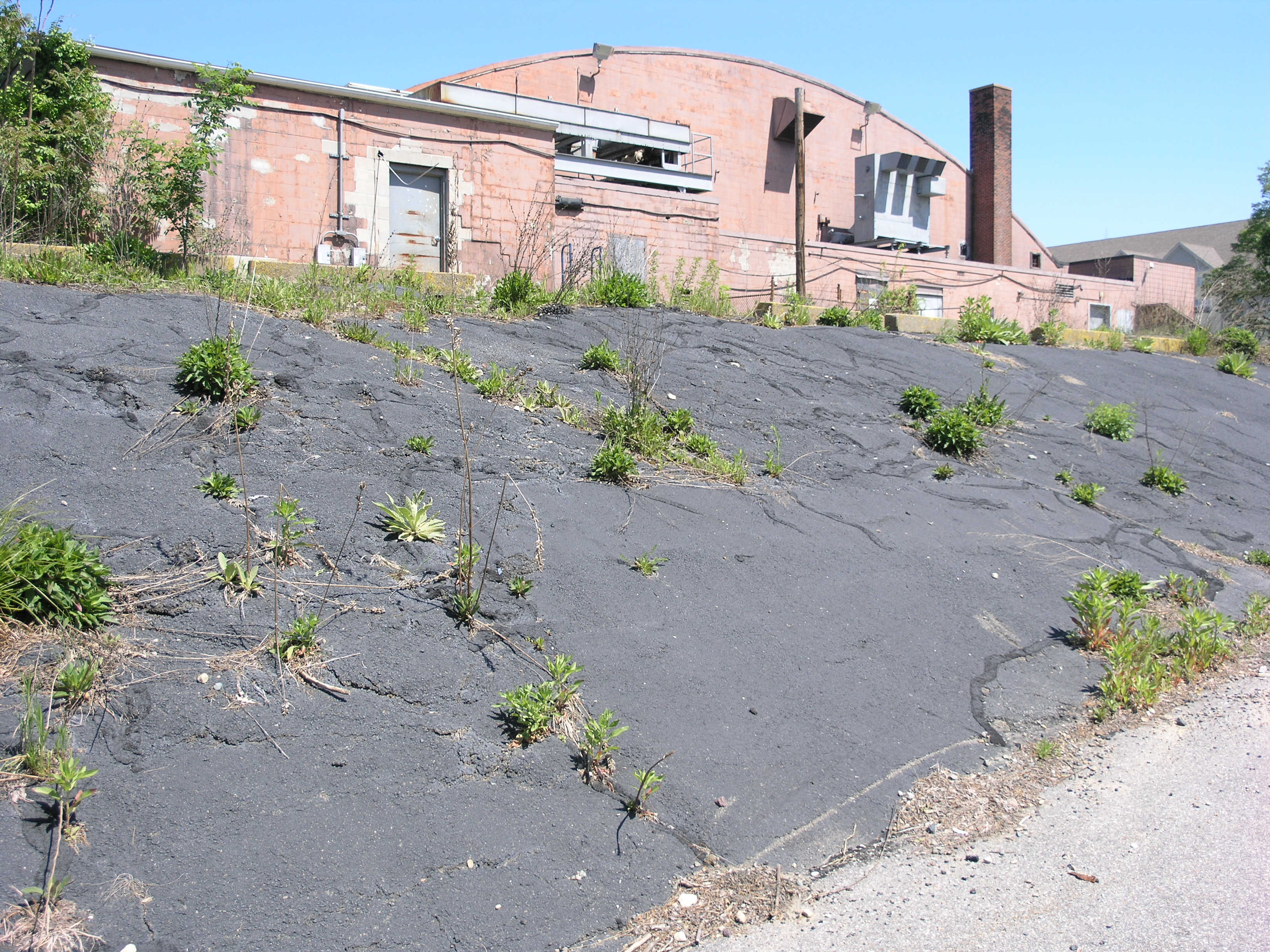
An urban Krakatoa. This sea of urban blacktop is like a volcanic lava flow, and the plants that grow here, including mullein (Verbascum thapsus) , chicory (Cichorium intybus), New England hawkweed (Hiercium saubadum), and white heath aster (Symphyotrichum pilosum), can tolerate extreme heat and drought. Courtesy Peter Del Tredici
For example, in Wild Urban Plants, the reader views a photo of an abandoned building with its fissured parking lot in which a variety of wildflowers grow. The caption likens the “sea of urban blacktop” to “a volcanic lava flow” where plants must be able to tolerate extreme heat and drought. What a superb metaphor! It conveys the environmental conditions to which these plants are subjected while also making very clear to the reader why only certain plants germinate and survive well in such places.
Princess Tree (Paulownia tomentosa) colonizing an abandoned building in New London, Connecticut. From the plants’ perspective, a decaying brick wall is just a limestone cliff. Courtesy Peter Tredici.
In Wild Urban Plants, Princess Tree (Paulownia tomentosa) is seen growing out the side of a neglected painted-brick building in New London, Connecticut. The caption informs us that, “From the plants’ perspective, a decaying brick wall is just a limestone cliff.” How marvelously enlightening!
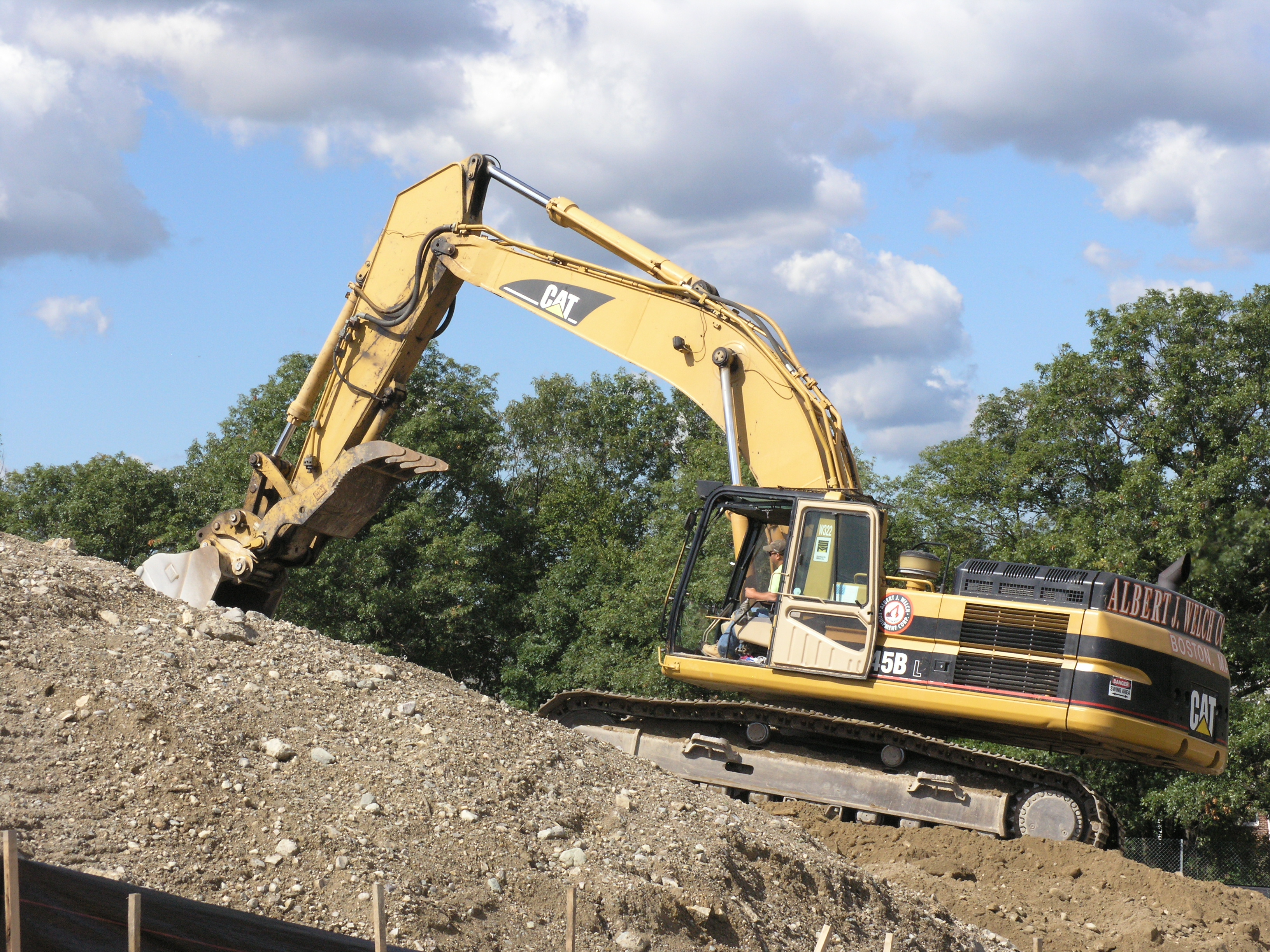
The urban glacier leaves a trail of compacted glacial till in its wake. Courtesy Peter Del Tredici
Perhaps the most unique metaphor of all can be found in the picture of a backhoe sitting atop a hill of dirt. The author tells us “The urban glacier [referring to the backhoe] leaves a trail of compacted glacial till in its wake.” A conglomerate of unsorted broken rocks, till does not provide amenable growing conditions for very many species of plants.
The author doesn’t go into this subject, but moss is often the first colonizing organism to move in. It secretes organic acids that break down the rocks into soil, paving the way for plants with the ability to fix nitrogen to come in, and over time, as plants die, the soil is enriched via their nitrogen, allowing other kinds of plants to live here. An understanding of this process is sorely lacking among those conservationists who insist that “invasive” plant species serve no useful purpose in the environment. In fact, it’s a darned good thing they are here, given their ability to flourish under present environmental conditions. This is the explanation, after all, for their apparent invasiveness.
Dr. Tredici’s “Introduction” should be required reading for everyone involved in conservation. With a better comprehension of how the natural world works, people should be able to realize that the United States is wasting many millions of taxpayer dollars every year to remove alien plants. And annually putting millions of pounds of herbicides into our environment (according to a 2012 Environmental Protection Agency report (3)) manifests a horrendous crime against nature.
This counterproductive war on nonnative plants must be stopped quickly; far too much damage has already been done. Spread the word about this book to everyone you know.
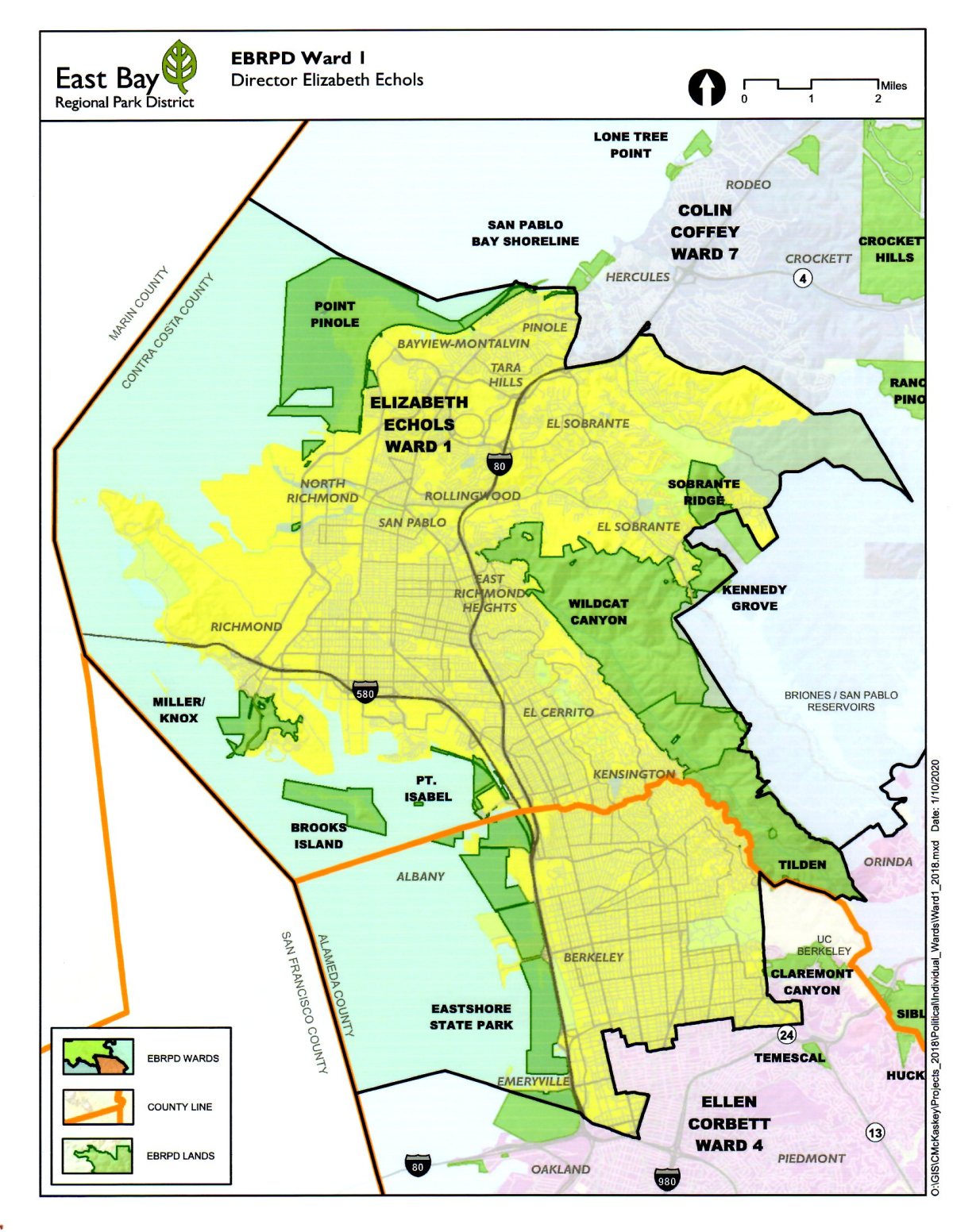
If you live in Ward 1 of the East Bay Regional Park District, you will have an opportunity to vote for your representative to the Park District’s Board of Directors on November 3rd. Many of the most heavily visited parks in the East Bay–such as Tilden Park, Point Isabel, Point Pinole, Eastshore Park–are in Ward 1. The future of those parks will be in the hands of the Board member who wins this election.
Elizabeth Echols is the incumbent who is running for election. Echols was appointed to the Board by the Board after the unfortunate death of Whitney Dotson.** Dotson had represented Ward 1 with distinction since 2008, after defeating Norman La Force in the race for that seat on the Board. Now Echols must be elected to keep her seat on the Board.*
There was intense competition for the temporary appointment to the Board when Echols was appointed by the Board. Norman La Force asked for the temporary appointment, but was not selected by the Board. La Force has a long track-record that probably explains why the Board did not appoint him:
Norman La Force advocates for the destruction of non-native trees in East Bay Regional Parks and the use of herbicides to eradicate non-native plants and prevent trees from resprouting after they have been destroyed.
As a lawyer and the co-founder and CEO of SPRAWLDEF, Norman La Force has sued East Bay Regional Park District many times to impose his personal vision on the parks. These lawsuits were costly to taxpayers and the Park District and they delayed the implementation of park improvements.
Norman La Force is consistently opposed to many types of recreation. He advocates for parks that prohibit public access.
Norman La Force has an antagonistic attitude toward park visitors who do not share his personal vision.
Norman La Force sued FEMA and the Park District to destroy all non-native trees
East Bay Regional Park District (EBRPD) is thinning non-native trees to mitigate wildfire hazards by reducing fuel loads and FEMA is funding many of these projects. Norman La Force is not satisfied with merely thinning trees. He sued EBRPD and FEMA to force the removal of all non-native trees on 3,500 acres of park land. That lawsuit is available HERE. La Force appealed after losing the lawsuit, but lost again on appeal.
Norman La Force tried to make Sierra Club endorsement of the renewal of a parcel tax to fund the Park District contingent on a commitment to destroy all non-native trees rather than thin them:
“Hence, the Sierra Club believes it is critical that in any renewal of Measure CC funding for vegetation management should be increased for the removal of non-natives such as eucalyptus and their replacement with restored native habitat. If the Park District wants to continue with a program that merely thins the non-native ecualyputs (sic) and other non-native trees, then it must find other funds for those purposes. Future tax money from a renewal of Measure CC funds should not be used to thin eucalyptus but must be allocated to the restoration of native habitat.” La Force’s full letter is available HERE.
Norman LaForce sued the Park District to prevent recreational improvements at Albany Beach
In an op-ed published by Berkeleyside, one of La Force’s many lawsuits against the Park District is described. The lawsuit attempted to prevent the construction of a path with recreational access: “SPRAWLDEF is an acronym for Sustainability, Parks, Recycling and Wildlife Legal Defense Fund. On Jan. 17, [2013] the group, founded by Norman La Force and David Tam, filed a lawsuit against the East Bay Regional Park District, opposing a plan to acquire a small strip of property along the shoreline behind the track to complete a missing link in the Bay Trail between Berkeley and Richmond. The Park District’s Plan would also add some parking to the Albany Beach area, build some wheelchair access to the water’s edge, and expand and protect the dune area behind the beach. There’s something in this lawsuit to alienate just about everyone: Bicyclists and hikers who use the Bay Trail; environmentalists with an interest in dune habitat; kayakers and kiteboarders who launch from the Albany shoreline; the ADA constituency who find beach access generally impossible; and, most of all, dogs and their owners who rely on Albany beach for a place to play in the water. Read the filing. It has all the earmarks of a spoiled child throwing a tantrum because they did not get their way.” Emphasis added.
According to this article in the East Bay Times, the SPRAWLDEF lawsuit to prevent the Albany Beach project was eventually dismissed after two unsuccessful SPRAWLDEF appeals. The Park District’s defense of the project required the preparation of a second, Supplemental EIR. Park District resources were wasted to defend the project against Norman La Force’s frivolous lawsuits.
In response to a public records request, the Park District provided this estimate of the cost of defending the District against La Force’s lawsuits regarding Albany Beach: “In total, we estimate that the attorney’s fees incurred directly as a result of the litigation filed by SPRAWLDEF relating to Albany Beach were between $321,358 and $346,358. In addition, the court ordered the Park District to pay Petitioner SPRAWLDEF $60,587.50 in attorneys’ fees as the prevailing party in the 2013 litigation.” The Park District was forced to waste nearly $400,000 of taxpayers’ money to defend its improvement project at Albany Beach. The project was needlessly delayed by the lawsuits and money that could have been used to improve parks was wasted.
Norman La Force does not want people in the parks
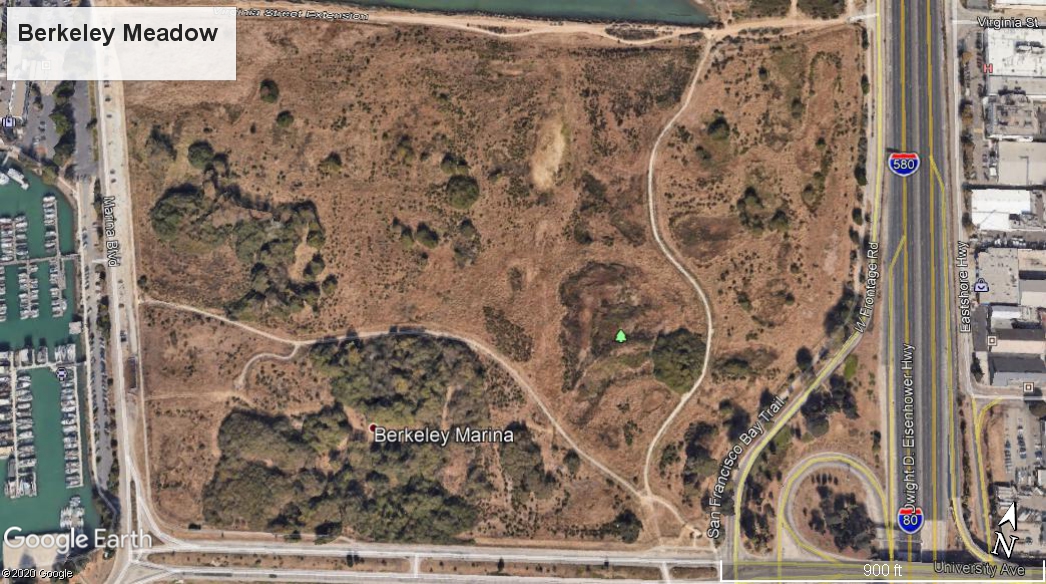
Norman La Force was instrumental in creating the Berkeley Meadow at the foot of University Ave. in Berkeley. The Berkeley Meadow was at one time part of the San Francisco Bay, until it was created with landfill and used as a city dump until the 1960s. Over a period of 5 years at a cost of $6 million “non-native vegetation was scraped away, then the land capped with clean fill and contoured to form naturally filling seasonal ponds.” Then the meadow was planted with native grasses and shrubs to create an “approximation of the historic landscape that might have been present a half mile inland.” The Berkeley Meadow is surrounded by a fence. Public access is restricted to two narrow, fenced trails running diagonally through the 72-acre fenced enclosure. Bicycles and people walking dogs on or off-leash are prohibited on the fenced trails.
The Berkeley Meadow is a 72-acre fenced vacant lot.
Berkeleyside described the Berkeley Meadow and contrasted it with a heavily visited adjacent park, owned by the City of Berkeley: “What you won’t see [in the Berkeley Meadow] is more than a handful of the 2 million annual state park visitors, though this prime spot is just a short bike ride from West Berkeley. The adjacent, city-owned César Chávez Park on the north waterfront gets most of the visitors along its paved trail. But here, only a few hundred yards away, the Meadow, our state park managed by the East Bay Regional Parks District, is an almost wild place, trisected by two wheel-chair accessible paths.” Indeed, the Berkeley Meadow does look wild, much like a vacant lot looks wild.
Norman La Force has a confrontational attitude toward park visitors
In his letter to FEMA objecting to the withdrawal of funding for a tree-removal project that was implemented before being authorized by FEMA, Norman La Force says that those with whom he disagrees are “like climate change deniers.” Ironically, he is defending the unauthorized clear cutting of approximately 150 trees in his letter, actions that contribute to climate change. La Force is actually the “climate change denier” in his accusatory letter. The letter is available HERE.
In an earlier letter to FEMA about the same projects, La Force begins by asking FEMA to ignore those with whom he disagrees: “We urge FEMA to discount the views of any individual or group that uses sophomoric name calling tactics in the press or in their FEMA scoping comments to categorize people or advocacy groups as ‘nativists’ (or other similar pejorative labels)…” The letter is available HERE: FEMA-DEIS for East Bay Hills predisaster mitigation – public comments
When La Force ran for the Ward 1 Board seat in 2008, Berkeley Daily Planet published an op-ed by someone who had observed Norman La Force in action. Here are a few relevant quotes from her op-ed (emphasis added):
“La Force is not only ‘a thorn in the side of park officials,’ he is fiercely aggressive and known for vengeful acts.”
“If La Force is elected, he will threaten the park access of every person who walks a dog, rides a horse, seeks accessible trails, and bikes on the lands of the East Bay Regional Parks. His scientific background is nothing, as he has demonstrated in public hearings many times. He has worked harder to keep humans out of parks than any other “park proponent” I know. He definitely will try to crush any “opponent,” including the disabled, the young and the elderly. Not because they are right or wrong, but because they oppose him. I urge everyone to watch their back if he’s elected.”
“One can have honest debates about how to create urban edge ecosystems that allow both human uses and wild life to thrive together (yes, it can be done beautifully), but Norman’s rigidity will never consider other perspectives or creative solutions.”
Vote for Elizabeth Echols for the Park District Board of Directors
On November 3rd, please vote for the parks in the East Bay, not against them. Please do not install an enemy of the parks who does not want people or trees in our parks and is willing to spray our parks with herbicide to get the landscape he prefers. When we vote for President of the United States on November 3rd, we must decide who to vote for at the same time we are voting against another candidate. Both decisions are equally important.
The meetings of the Board of Directors of the Park District are open to the public. They are collegial events in which the Board works cooperatively with the staff and the public is treated with respect. The Park District does not deserve to have a “spoiled child throwing a tantrum” imposed on them, especially not someone who has sued them many times to get what he wants. East Bay Regional parks are open to everyone with a wide range of recreational interests. Let’s keep them that way by voting for Elizabeth Echols on November 3rd.
*Full Disclosure: I have not met Elizabeth Echols. I do not know her. I have not consulted with her about the preparation of this article. I have no reason to believe she would agree with my assessment of her opponent in the race for the Board seat in Ward 1. My recommendation to vote for her is based primarily on the fact that she was selected by the Board for her temporary appointment to the Board, which suggests that she is supported by the Board and Park District staff. I have read her credentials on her candidacy website and I have watched her participation in Board meetings since she was appointed to the Board. This limited information about her gives me confidence that she will represent Ward 1 well.
**Update: I have been informed that Elizabeth Echols was appointed to the Board after Whitney Dotson retired and that Mr. Dotson died about 2 weeks after Ms. Echols was appointed. September 30, 2020
Update:East Bay Times endorsed Elizabeth Echols for the seat on the Board of East Bay Regional Park District to represent Ward 1. Their explanation for their endorsement is half praise for Echols and half condemnation of Norman La Force. The article is behind a paywall, so here are a few quotes: “In approach, she and her opponent, attorney and former El Cerrito Councilman Norman La Force, couldn’t be more different. At the park district, La Force is best known as the guy who files legal challenges. La Force claims in his campaign material that he led the Sierra Club campaign to have the district purchase more land to double the size of the Point Isabel Dog Park, perhaps the East Bay’s most popular escape for canine owners. Actually, when the park at Point Isabel was expanded in the early 2000s, La Force sought to block dog access to the new area.”
After explaining some of the many lawsuits La Force has filed against the Park District, East Bay Times concludes, “Now, La Force says, he wants to join the board so he can change the park district from the inside and lead it in a different direction. But we’re quite happy with the district’s current direction. Echols is the candidate who will keep it on track.” September 30, 2020
Update: Tom Butt, the Mayor of Richmond, has endorsed Elizabeth Echols for the seat on the Board of the Park District. In his newsletter, he explains why he has endorsed Echols:
“The editorial in the East Bay Times at the bottom of this email recommends Elizabeth Echols for the District that includes Richmond. I agree that Echols is the only reasonable choice for this position. Echols is opposed by a really bad candidate, Norman La Force, who is no friend of Richmond.”
Mayor Butt explains why La Force is persona non grata in Richmond in his newsletter to the people of Richmond:
“In 2010, Citizens for East Shore Parks (CESP) entered into a litigation settlement agreement with Upstream Point Molate, the prospective developer of the gigantic and sprawling Point Molate Casino, including parking garages for over 7,500 vehicles. The settlement agreement that LaForce negotiated traded unqualified early support of the casino for tens of millions of dollars targeted for acquisition of open space at other locations. At the time, LaForce was a founding member of the CESP board. He was able to get other environmental organizations, including the Sierra Club to support the settlement terms in exchange for sharing the settlement proceeds.See Contra Costa County Case No. MSN09-0080”
Mayor Butt explains why the Sierra Club backed the agreement with casino developers, according to Richmond Confidential: “The plan for the casino has made strange bedfellows over the years it’s been debated. Some environmental groups, including the Sierra Club, have backed the plan to develop Point Molate as a massive gaming resort complex because the plan would fund extra protections for native habitats and the removal of invasive plant species.”
Mayor Butt describes the casino project in his newsletter. Does this project sound like it protects the environment? “The project includes a 4,000-slot machine casino, 1,100 hotel rooms, a convention center, a performing arts center, entertainment venues, retail space, a tribal government center and tribal housing. Under the agreement, three-fourths of the 412-acre site would be preserved as open space. The tribe has agreed to restore and protect natural habitat and to provide a continuous shoreline trail that would be a new addition to the Bay Trail.”
Mayor Butt concludes, “La Force has proven himself as someone who would sell out Richmond in a heartbeat.” September 30, 2020. Posted October 3, 2020.
Update: Berkeleyside has published 4 op-eds about the race for a seat on the Board of East Bay Regional Park District. Here, in the order in which they were published:
Although the op-eds are instructive, the comments on the op-eds are far more revealing. Many influential stakeholders in land use decisions in the East Bay have stepped forward to tell us about their personal experiences with Norman La Force during specific land use policy debates, going back decades. It isn’t a pretty picture. The few who defend La Force appreciate his confrontational style of civic engagement and they applaud lawsuits as a means to get what they want.
The debates on these op-eds are a window into the Bay Area community of “environmentalists.” It is an extreme version of environmentalism that believes the purpose of urban public parks is to provide protected reserves for native plants and animals. It’s a misanthropic approach that opposes all new housing and views humans as intruders in nature.
I’ve been a nature writer/photographer in Crozet, Virginia, for more than 25 years. My freelance articles have been published in numerous national and state magazines and newspapers, and I’ve written nature columns for many newspapers, as well as Virginia Wildlife, the magazine of our state wildlife department. My yard was featured on Virginia PBS stations in 1994 and again in 2005, and is the basis of my book, The Nature-friendly Garden: Creating a Backyard Haven for Plants, Wildlife, and People (Stackpole Books, 2006). In all of these venues, I discussed nonnative plants, including some considered “invasive”, without suffering much, if indeed any, blowback.
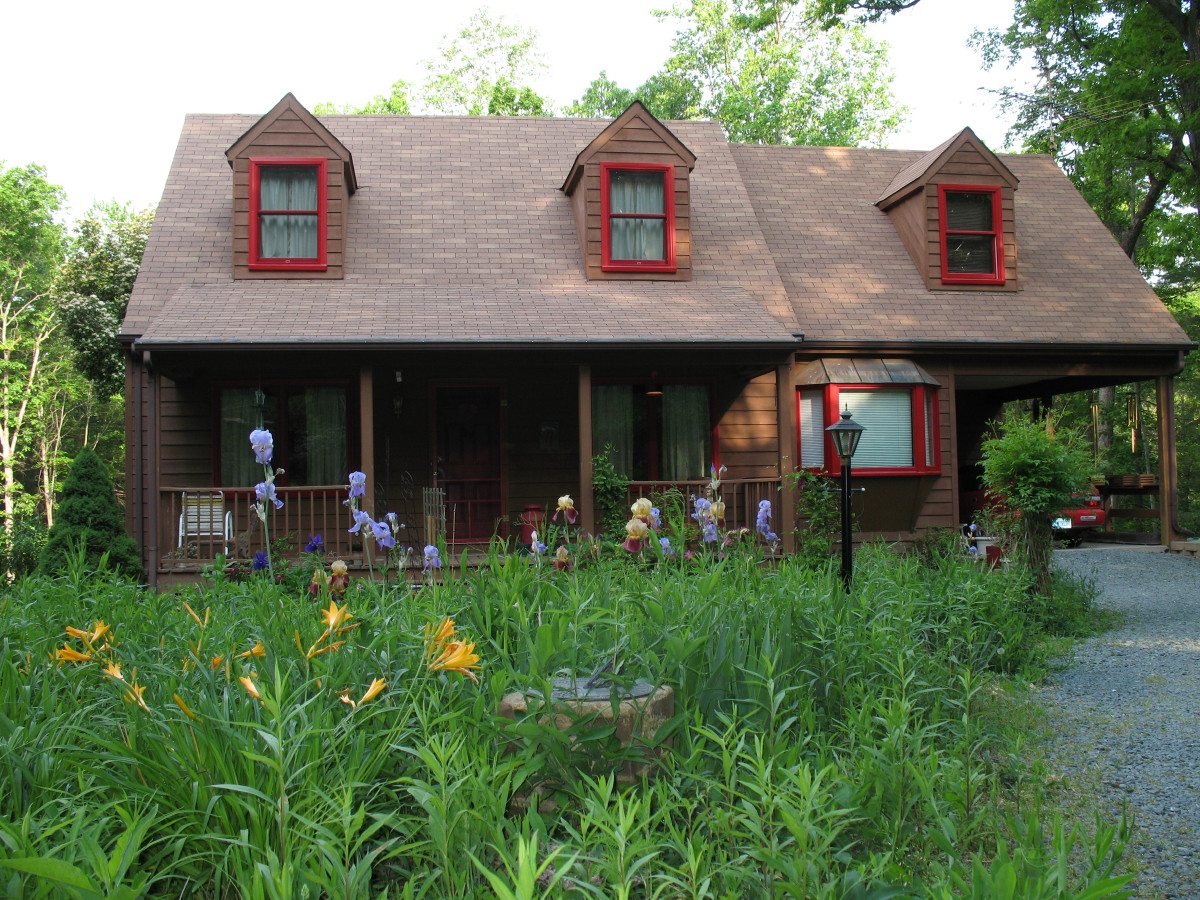
Home of Marlene Condon in Crozet, Virginia. Photo credit Marlene Condon
However, over the past quarter century, there has been more-and-more of a push by native-plant societies to get government entities and environmental groups to rid the natural world of so-called invasive plants, including even native plants considered “thugs” because their growth is exuberant. Because I was concerned about the destruction of habitat and the often-extensive use of pesticides to accomplish their mission, I started writing explicitly about this movement, as in the article below.
After the publication of this article last year, nativists mounted a smear campaign against me personally, a sure sign of how weak their invasive-plant arguments are. The lead writer never even publicly disclosed her affiliation with the Blue Ridge PRISM, a group “targeting common invasive plants in the Blue Ridge”, which would have allowed readers to question whether her comments about me were suspect. My editor certainly was duped, placing a headline of “Blue Ridge Naturalist–NOT!” over their comments. And perhaps not coincidentally, shortly thereafter, he fired me, even though I’d written for–and received high praise from–him for 11 years.
Since then, I’ve found it virtually impossible to write openly about any nonnative plants. Media and environmental groups are cowed by these people, thanks to their numbers and involvement with various organizations and governments (local, state, and federal). Sadly, this movement is highly detrimental to our natural world that is already in very bad shape and can hardly withstand yet more negative impacts upon it. Folks who understand the senselessness of destroying functioning habitat and poisoning the Earth with pesticides must speak out publicly for the benefit of nature.
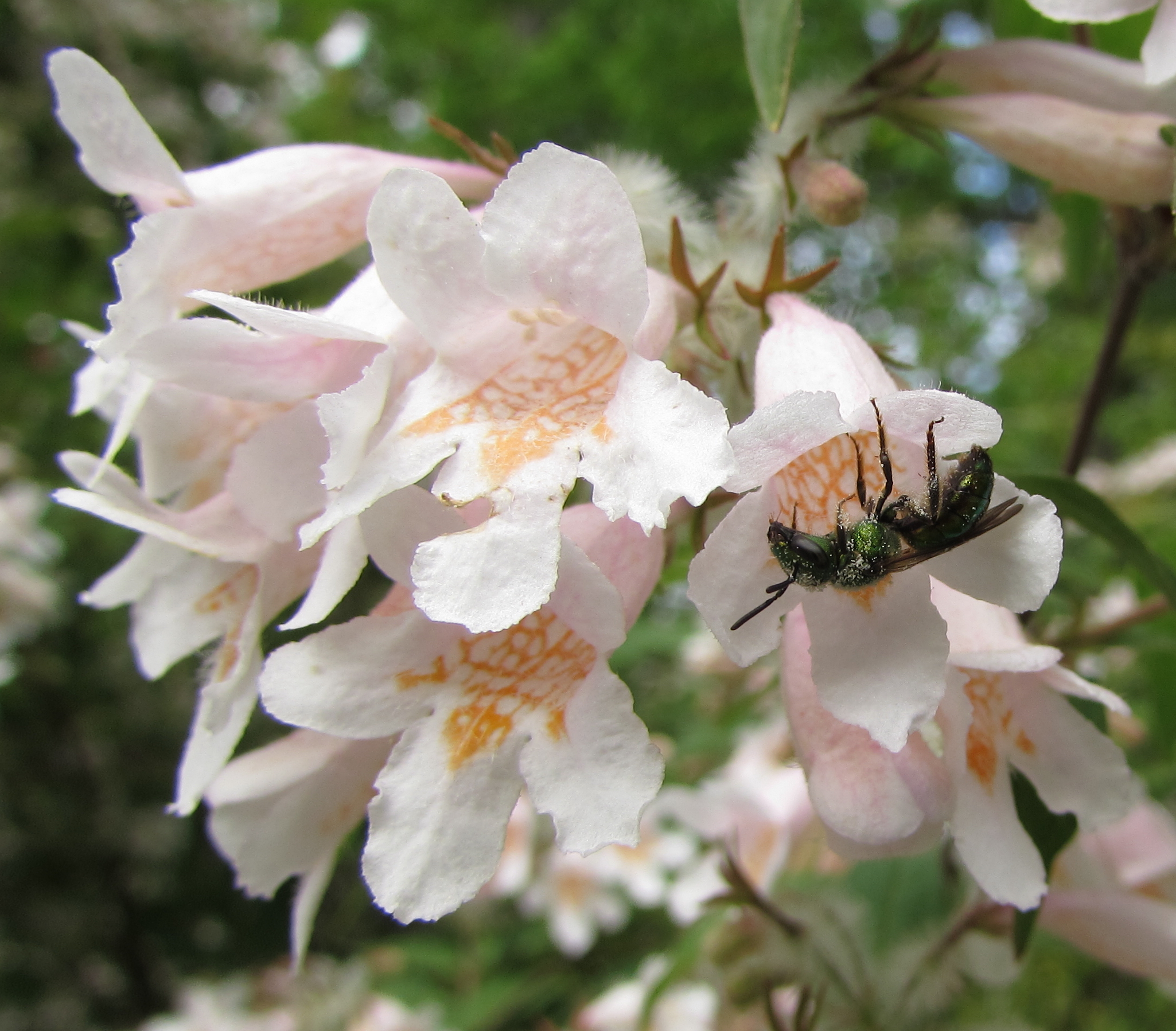
Bees and other kinds of insects obtain nourishment from the blooms of Weigela, a spring-blooming shrub native to Asia. Photo credit Marlene Condon
Ecologists Recognizing Value of Alien Plants
Scientists are either waking up to what I’ve been saying for years, or finally becoming brave enough to speak out against the wide-spread invasive-plant movement. In an opinion piece signed by 19 ecologists in the journal Nature, they argue that “policy and management decisions must take into account the positive effects of many invaders.”
Recognizing that “It is impractical to try to restore ecosystems to some ‘rightful’ historical state”, they go on to point out that eradicating or drastically reducing the abundance of invasive plants is “an impossible goal.”
Critical thinking is a must for deciding invasive-plant policy to avoid harming wildlife and wasting millions in tax dollars. A situation in California illustrates the foolishness of blindly pushing an agenda without giving any thought to the real-world consequences of doing so.
Monarchs originally roosted in native conifer stands of Monterey Pine (Pinus radiata), Monterey Cypress (Cupressus maculatum) and Coast Redwood (Sequoia sempervirens). Sadly, extensive development, logging, and poor land-management decisions have reduced the number of these native-tree stands, leaving the butterflies to rely upon non-native Eucalypts.
Ignoring the fact that overwintering Monarchs are very much dependent upon isolated stands of these trees, government plans are mandating removal of them. Does this make environmental sense? Absolutely not; eradication of the Eucalypts means no wintering habitat for Monarchs, which means they will die.
In other words, this deliberate destruction of habitat is taking place because of ideology, an illustration of the danger posed by people who have been led to believe they are part of an environmentally moral crusade. Native-plant folks out west have managed, as they have here in the East, to convince environmental organizations and government entities at every level that it is a moral imperative to remove plants deemed invasive.
But, the whole point of conservation of the environment is conservation of wildlife, without which the environment cannot function properly. Yet, absolutely no thought is given to how much so-called invasive plants support wildlife or serve important environmental functions in degraded areas.
Thus, for example, in the city of Waynesboro, Virginia, the Parks and Rec department decided it had to remove Japanese Knotweed (Fallopia japonica, formerly known as Polygonum cuspidatum) from growing along the South River greenway (Waynesboro News Virginian, March 9, 2018, “War on Weeds”). The main reason given for the removal of these plants was that they are preventing native plants from growing, but this statement is nothing more than invasive-plant folklore that gains credence by the act of repetition.
Read about virtually any “invasive” species and you will find that these plants are typically growing in disturbed areas where man or a weather event destroyed the original soil profile. As a result, the plants that had been growing there previously did not come back because they could not handle the altered physical conditions of the site. It’s why you see so-called invasive plants mainly along roadways, in parks, and along river trails—all areas easily seen by people who then mistakenly believe the exotic plants pushed out native species.
The newspaper stated that knotweed is a “formidable culprit to the river’s health”, but the true threat lies in its removal. This plant has superbly performed erosion control of soil in which native plants struggle to grow; feeds numerous kinds of pollinators when it blooms; and provides wonderful cover and nesting sites for numerous species of birds and the non-herbivorous insects that feed them. One need only to walk the trail with open eyes and an open mind to ascertain the truth of this statement.
Additionally, park employees would use herbicides to kill the knotweed. How can poisoning the Earth be less harmful than allowing alien plants to grow in areas where they are currently the most suited to thrive and thus provide badly needed habitat for wildlife?
You might wonder how the invasive-plant movement became so entrenched in environmental and governmental circles. The answer lies in the treatment of it as a moral cause in which those who agree with removing “bad” plants are virtuous; those who disagree must be bad like the plants themselves. Under these circumstances, it is difficult for folks to take a stand in opposition; no one wants to be considered immoral.
However, this undertaking is deeply flawed. Rather than critically analyzing each situation and dealing with it in the most appropriate manner, plant nativists (people who practice a policy of favoring native plants over nonnative) take the simplistic approach that demands removal of every plant designated as “invasive”, no matter what function it is fulfilling in the local environment or how well it fills what would be an otherwise empty ecological niche.
Earlier this year, for example, someone removed a Leatherleaf Mahonia (Mahonia bealei) that was growing in a swath of red dirt along the road where I exercise. It was one of the few plants that had survived the highway department’s installation of a new guardrail. No native plants had been able to grow in the poor, dry soil exposed a few years earlier by construction, leaving an area several feet wide and long mostly devoid of plants to assist wildlife.
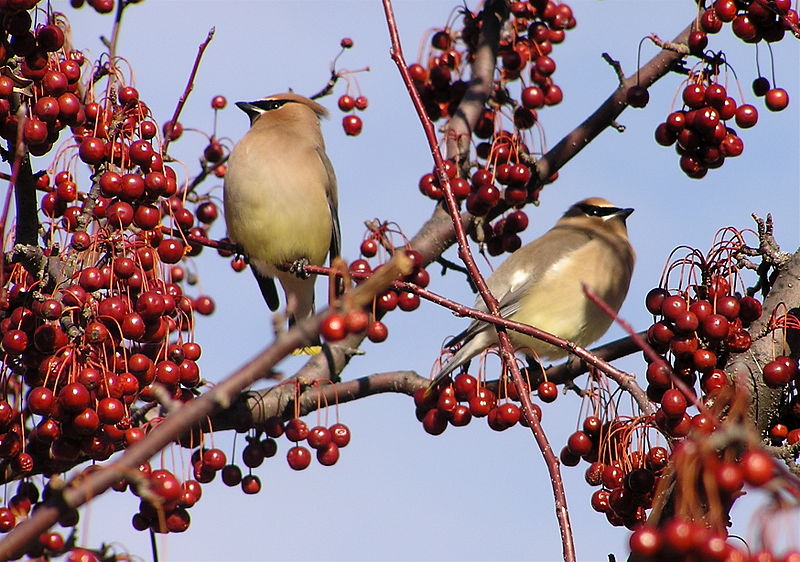
The Mahonia (a native of China) would have provided a very early source of nectar desperately needed by the first pollinators to become active in spring at a time when native plants in bloom are very few. Its fruits would later feed birds, such as Cedar Waxwings and American Robins. Now, not much exists in this area to feed either insects or birds, making the land a wasted resource.
Native or not, plants provide habitat whereas bare ground does not. Nativists disregard the reality that native plants struggle to survive under the adverse conditions of road salt, mowing, drought, and disturbed, compacted, and depleted soil. They would do better by the environment if, instead of pulling and pesticiding, they focused on eliminating the actual causes of alien-plant spread.
Removing the Mahonia near the bridge resulted in no benefit to the environment, whereas it very much negatively impacted ease of survival for many insects and birds. And in California, removing Eucalypts may well doom the wintering Monarch butterfly population.
In Nature’s Best Hope, Doug Tallamy concedes that there is no evidence of extinctions of native plants being caused by the introduction of non-native plants in the Continental US. However, he accuses non-native plants of something more nefarious: “There is one biological phenomenon associated with some plant invasions that is so pernicious, even continental scales are not protecting natives from invasive species. I speak of…introgressive hybridization, where the invasive species hybridizes with a closely related native, and then through repeated backcrosses and directional gene flow, the gene pool moves closer and closer to that of the invader.”
Jake Sigg calls this phenomenon, genetic pollution. Both Tallamy and Sigg consider such hybridization a loss of the native species and, indeed, it can be the end of localized variants of a species. However, hybridization is often instrumental in the creation of a new species, one that is often superior to its ancestors because it is better adapted to present environmental conditions.
In a recently published study of the evolution of oaks, scientists traced the 56 million year evolutionary history of roughly 435 species of oak across 5 continents where they are found today. Oaks are wind-pollinated, leaving pollen fossil records of their presence where they may no longer live. Using DNA analysis of fossil pollen, scientists tell us when and where oaks have lived. Their presence or absence was determined by changes in climate that created or eliminated land bridges between continents enabling movement of plants and animals, as well as providing the climate conditions in which oaks can survive.
Hybridization was instrumental in the formation of oak species and the ability of oaks to survive in different climate conditions. The article in Scientific American about the genetic study of oak species concludes: “A firm grasp of when, where and how oaks came to be so diverse is crucial to understanding how oaks will resist and adapt to rapidly changing environments. Oaks migrated rapidly as continental glaciers receded starting around 20,000 years ago, and hybridization between species appears to have been key to their rapid response. The insights we can gain from elucidating the adaptive benefits of gene flow are critical to predicting how resilient oaks may be as climate change exposes them to fungal and insect diseases with which they did not evolve.”
In fact, a recent study suggests that assisted species migration and intentional hybridization are necessary to prevent the extinction of plants in Arctic regions, where the climate is warming the fastest. Intentionally planting species from warmer regions into colder regions in anticipation of climate warming is called assisted migration. It is not a new concept. The study acknowledges that intentional hybridization is a radical suggestion that contradicts conventional wisdom: “Traditionally, hybridization is viewed as negative and leading to a loss of biodiversity, even though hybridization has increased biodiversity over geological times.” This study acknowledges the role that hybridization plays in increasing biodiversity.
In the Bay Area, we are surrounded by examples of hybridization, some intentional and tolerated and some natural, but not tolerated:
Sycamore. Selectree.
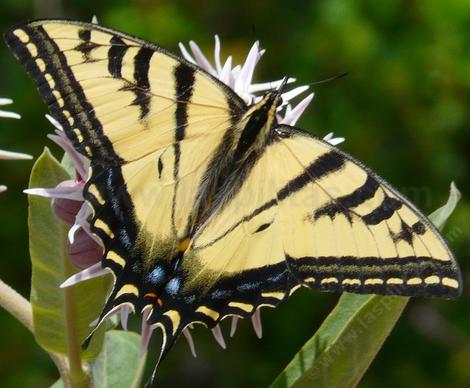
Sycamores are the most common street tree in the United States and we have many here in the Bay Area. They are a hybrid of London Plane Trees and our native Sycamore. The California native was intentionally bred with the London Plane Tree to increase its drought tolerance. Sycamore street trees are one of the most popular because they are extremely hardy and tolerant of challenging conditions in urban settings. They are also the host trees of one of our native butterflies, Western Tiger Swallowtail. The Tiger Swallowtail probably used our native Sycamore in the past, but made a seamless transition to the hybrid.
Update: I learned about the hybrid origins of our local Sycamore street tree in an urban forestry class at UC Berkeley. Peter Del Tredici has sent me this correction: “The london plane tree, Platanus x acerifolia is generally considered to be a hybrid between the european species, P. orientalis and the eastern species, P. occidentalis. the west coast species, P. racemosa is not part of the mix.”
Western tiger swallowtail. Wikimedia
Spartina alterniflora is a marsh grass that is native on the East Coast. It grows taller and denser than our native marsh grass, Spartina foliosa that also dies back in winter, unlike the East Coast native that does not. In other words, non-native spartina is superior protection from winter storm surges compared to native spartina. Yet, non-native spartina is being eradicated using herbicides along the entire West Coast of the country because it hybridizes with the native spartina species. The herbicide used for that purpose has been sprayed for about 15 years, which is probably why attempts to plant native spartina as a replacement have been unsuccessful. The result of the eradication project has been bare mud that provides no protection from erosion caused by rising sea levels and more intense winter storms. In other words, if non-native spartina were permitted to hybridize with native spartina on the West Coast, the result would be a new species that is better adapted to face the threats of rising sea levels and intense storm surges.
Doug Tallamy’s closing photo of his keynote speech to the California Native Plant Society Conference, 2018
Fear of hybridization is akin to fear of mongrelization–the mixing of races–by racists and xenophobes. It is closely related to the fear of non-native plant and animal species, a short-step away from the fear of human immigrants. Concern about racial purity is not far from fear of “genetic pollution.” State laws in the US prohibiting interracial marriage were not repealed until 1967, when the US Supreme Court ruled in Loving v. Virginia that such laws were unconstitutional in the 16 states in which these laws still remained. These are cultural fears, not grounded in biological science.
In conclusion
Doug Tallamy’s intended audience is home gardeners. Although he urges his readers to remove invasive species, he does not endorse the use of herbicides. Unfortunately, his work is used by public land managers to justify their eradication projects that usually use herbicides. If Tallamy’s work stayed in its home gardening lane, it would do less damage to the environment.
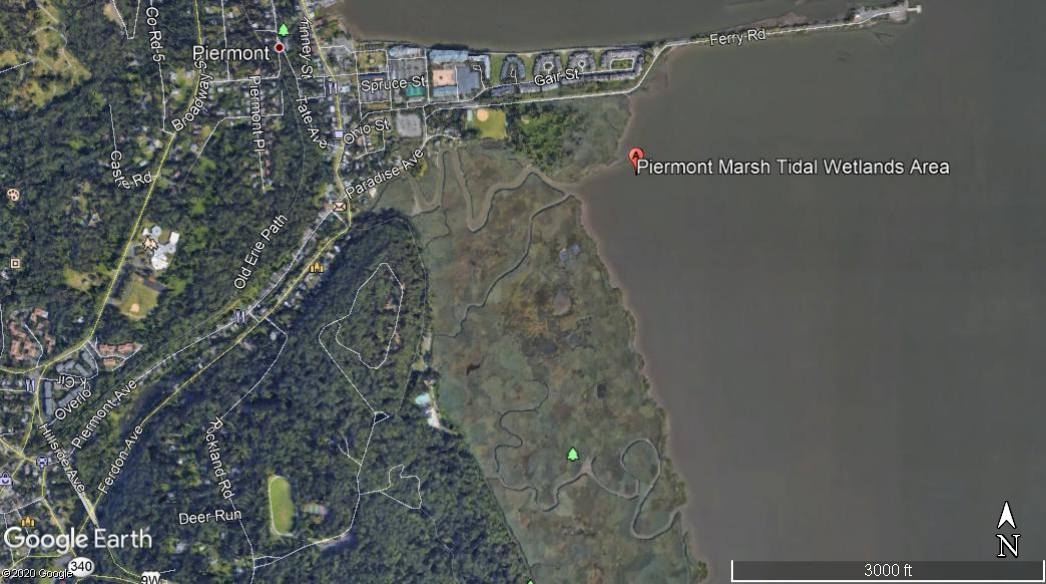
New York State agencies have been trying to destroy the Piermont Marsh since 2013, because most of the marsh grass is not native. Piermont Marsh is adjacent to the small village of Piermont on the west side of the Hudson River, less than 30 miles north of New York City.
The community of Piermont organized to prevent the destruction of their marsh for two reasons:
They believed that the marsh had protected them from the devastating storm surge caused by Hurricane Sandy in 2011. The village sustained damages of $11.8 million in that storm, but villagers believed it would have been much worse without the protection of the marsh.
The initial plan to eradicate 200 acres of non-native phragmites proposed the use of herbicides to kill the marsh grass. The villagers were concerned about large quantities of herbicides being sprayed into their waterways.
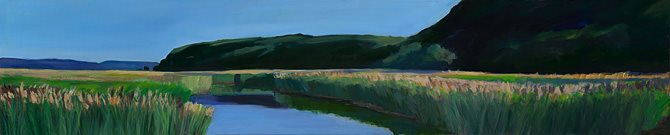
The Piermont Marsh is also very beautiful.
I have followed the attempt to save the Piermont Marsh because it is nearly identical to our West Coast version of the same issue. Non-native spartina grass has been nearly eradicated on the entire West Coast using herbicides over the past 15 years. After witnessing the unintended consequences of the eradication of spartina, I was sympathetic to the community of Piermont and hopeful that their organized resistance might be successful.
Opposition to the proposed project to destroy the Piermont Marsh has accomplished a great deal. The first round of public comment and negotiation resulted in a reduction in the size of the project from 200 acres to 40 acres. The Piermont community was also given a commitment to conduct an analysis of the damage done to the village by the destructive storm surge in the 2011 hurricane Sandy to determine the role the marsh played in protecting the village from even greater damage.
The scientist who conducted that study reported the results of the study in July 2020. He concluded that “the presence of the Marsh is estimated to have avoided $902,000 worth of property damage and loss.” (1) He made other significant observations:
The native marsh grass that the project wishes to restore does not provide as much storm protection in the spring: “Typha [the native species of marsh grass] shows far more seasonal variation than phragmites. Unlike phragmites, which maintains its height and density year-round, Typha is shorter and sparser in the spring.” (1)
The scientist predicted that by 2100 the Piermont Marsh will likely be overwhelmed by sea level rise. Whatever vegetation is at the Piermont Marsh, it will be gone within 80 years.
For the moment, the Piermont Marsh project is on hold: “[The plan] will be redrafted and the new draft should be presented to the public in 2021.” (1) Meanwhile, herbicides will not be used in the marsh and experiments will be conducted to kill marsh grass by covering it with a geotextile that deprives the vegetation of light. However, project managers have not made a commitment to avoid herbicides in the future.
Based on my experience with opposition to such destructive projects, delays are often ultimately victories. Funding priorities often change and more scientific information becomes available to inform a better decision. For example, the current draft plan contains outdated information about glyphosate. It claims that “Glyphosate is a non-selective, systemic herbicide that controls weeds by inhibiting a specific pathway for amino acid synthesis that is unique to plants and not present in animals.”
We now know that the claim about a “unique pathway” for glyphosate existing only in plants is not true. In 2020, plaintiffs in a class-action suit against Monsanto alleging that it falsely advertised that the active ingredient in Roundup only affects plants were awarded $39.5 million. The settlement also requires that the inaccurate claim be removed from the labels of all glyphosate products: “…[plaintiff] says Monsanto falsely claimed through its labeling that glyphosate, the active ingredient in Roundup, targets an enzyme that is only found in plants and would therefore not affect people or pets. According to the suit, that enzyme is in fact found in people and pets and is critical to maintaining the immune system, digestion and brain function.”
In defense of phragmites
According to a study conducted in 2017, phragmites is playing the same ecological roles as their native predecessors:
“An invasive species of marsh grass that spreads, kudzu-like, throughout North American wetlands, may provide similar benefits to protected wetlands as native marsh grasses. According to new research from North Carolina State University, the invasive marsh grass’s effects on carbon storage, erosion prevention and plant diversity in protected wetlands are neutral… studies have shown that Phragmites may help reduce shoreline erosion in marshlands and store carbon at faster rates than native grasses…The team found no significant differences between ecosystem services of the marshes they studied, indicating that Phragmites’ effect was largely neutral.”
Rising sea levels as ice melts in warmer temperatures are bringing the benefits of phragmites into focus: “Some scientists have been arguing that phragmites…could be a key line of defense against rising sea level, particularly in areas like the Mid-Atlantic where land is sinking while water continues to rise… Research from 20 years ago found that phragmites help marshes elevate faster than some other plants…”
The herbicides used to kill phragmites are aerial sprayed from helicopters, killing both native and non-native plants, resulting in barren mudflats that are more vulnerable to erosion: “The herbicide treatment of phragmites can also mean other native plants become casualties in the process, leaving an unvegetated landscape behind. With no plants to hold sediment in place, an open mudflat can be extremely vulnerable to flooding in the face of storms or unsuccessful regrowth… ‘You know, the Phrag marsh is certainly a whole lot better than no marsh,’ [a Rutgers scientist] said.”
Trying to eradicate phragmites no longer makes sense. So why is it continuing to happen? A Rutgers marine biologist explains: “Well, might I say…there’s a whole army of environmental consultants that get paid to remove phragmites and don’t get paid to leave it alone.” That is really the heart of the matter. The projects are designed to create jobs and apply for government funds, not to protect the environment.
The West Coast version of marsh grass eradication
If the word “spartina” is substituted for the word “phragmites” the Piermont Marsh project and the questions it raises apply to similar projects on the West Coast. For over 15 years, non-native spartina marsh grass has been eradicated using herbicides along the entire West Coast. The result of spartina eradication projects on the West Coast is also barren mud shoreline that is poisoned with herbicide and miles of coastline that is vulnerable to rising sea levels and erosion.
The Ridgway Rail was collateral damage of the spartina eradication project. The population of this endangered bird plummeted because its nesting habitat was destroyed.
There is another similarity between the East Coast and West Coast versions of eradicating marsh grass. Like the native typho (cattail) that is the goal of the East Coast project, native spartina that was the goal of the West Coast project is inferior protection of the coastline against storm surges. The native species of spartina on the West Coast that was the theoretical goal of the eradication project is shorter and less dense than the non-native species. It also dies back in the winter, unlike the non-native species that persists throughout the year. In other words, the native species does not provide the same protection for the shoreline that is provided by the non-native species. In any case, plantings of the native species failed in the poisoned ground, so its benefits claimed by the project are entirely irrelevant.
These eradication projects don’t make any more sense on the West Coast than their mirror image on the East Coast.
The Piermont Marsh Alliance Report on July 16 Webinar regarding Piermont Marsh
Doug Tallamy’s latest book, Nature’s Best Hope, continues his crusade against non-native plants. He now calls invasive plants “ecological tumors.” You might be tempted to respond that invasive plants are a small subset of non-native plants until you realize that Tallamy calls 3,300 plant species in North America “invasive.” There are approximately 6,500 species of native plants in California, which reminds us that introduced plants are often a significant portion of our urban landscapes. The title of Tallamy’s book is a misnomer. Nature is not confined to native plants, as Tallamy wishes it to be.
Tallamy makes no meaningful distinction between “invasive” and “non-native.” The classification of berry-producing non-native plants as “invasive” is a case in point. Although Himalayan blackberries are invasive, most other berry-producing non-natives in California are not. Cotoneaster, pyracantha, and holly are a few examples of berry-producing plants being eradicated in the Bay Area that are not inherently “invasive.” They spread because birds eat the berries and deposit the seeds elsewhere.
Cedar Waxwings in crab apple tree. Wikimedia Commons
Eradicating berry-producing plants deprives birds of an important source of food. If herbicides are used to kill the plant, the birds are also exposed to harmful chemicals, known to reduce reproductive success and cause other sub-lethal health issues in wildlife. In the case of Himalayan blackberries, they are frequently eaten by children and adults, who are then exposed to the herbicides used to kill the shrubs that are often widespread in our parks and open spaces. San Francisco’s Recreation and Park Department sprayed blackberries in San Francisco’s parks and open spaces 23 times in 2019.
Tallamy and his nativist allies claim that native plants are beneficial to wildlife, especially birds. How can they claim that eradicating berry-producing plants benefits birds? They do so by claiming that native berries are more nutritious than non-native berries. In particular, they claim that native berries contain more fat than sugar and that migrating birds require berries with high fat content. Tallamy cites one study in support of that claim, a study that compared fat and sugar levels in the berries of 9 species of plants in the Northeast, 5 native species and 4 introduced species. They found that the native species they analyzed had more fat content than the introduced species they analyzed. (1)
Generalizations unsupported by evidence
From that single study of nine plant species, Tallamy generalizes that berries of plants that are considered native in Asia are less nutritious for migrating birds than the berries of native plants in North America are. (None of the nine plant species studied occurs in California.) Does that generalization make sense?
Tallamy does not provide any evidence that there are fewer migratory birds in Asia, or that the nutritional needs of migratory birds in Asia are different than those in North America. In fact, looking at the migratory patterns of birds confirms that migratory routes of birds span several continents. The intercontinental flights of birds sometimes span both Asia and North America. There is no logical or evidentiary explanation for berries of native plants in Asia being uniformly less nutritious than native plants in North America.
However, Tallamy offers evidence of the similarity between plants in Asia and closely related plants in North America. Wooly adelgids quickly made a transition to native hemlocks when they arrived in North America from Asia because its native host in Asia is closely related to the American native. The adelgid has “all but eliminated hemlocks” in America, according to Tallamy. The emerald ash borer has killed millions of ash trees in America when it arrived from Asia, where its native host was closely related. On one hand, Tallamy claims that native plants in America are unique, completely different from plants in Asia, yet he recognizes that insects from Asia rapidly adapt to closely related host plants in America.
Asian species are not so foreign to America as Tallamy wishes us to believe. There are relicts of vegetation that extended completely around the Northern Hemisphere about 50 million years ago that were broken up by a combination of mountain-building and climate change. Tree of Heaven, Gingko, and Dawn Redwood, now considered introduced trees from Asia, occurred here naturally during that geologic period. Tallamy says we must confine our choices to plants that “share an evolutionary history.” In fact, many plants now considered non-native shared an evolutionary history with plants now considered native. Trees are time travelers, marching to the beat of the Earth’s geologic and climate drum. Now they must be on the move to survive our changing climate. We should not stand in their way.
Such generalizations unsupported by evidence are typical of Tallamy’s work. In “Native plants improve breeding and foraging habitat for an insectivorous bird,” Tallamy and his collaborators conclude, “We demonstrate that residential yards dominated by nonnative plants have lower arthropod abundance…that function as population sinks for insectivorous birds.” The data provided do not support such a broad generalization. They studied one species of bird, in one geographic location, in a short period of time. They inventoried arthropods for two years in a single month time-frame. They quantify only one variable (plant foliage biomass) in addition to the nativity of plants, the abundance of insects, and the breeding success of one bird species. They have not taken into consideration intervening variables such as variations in temperature, rainfall, pesticide use, etc. The bird species studied is abundant within its range. Its conservation status is “Least Concern.” The abundance of this bird species does not justify the dire predictions of Tallamy’s study.
In conclusion
I have focused on just one of the many controversies discussed in Doug Tallamy’s new book. I haven’t touched on the two most fundamental errors in Tallamy’s work:
Tallamy underestimates the speed of adaptation and evolution. There is ample evidence of rapid adaptation to non-native vegetation, including Tallamy’s examples of wooly adelgid and emerald ash borer making a quick transition to North American native trees after arriving from Asia.
He exaggerates the degree of specialization among insects. For example, he claims that 30% of native bees are “host-plant specialists,” yet Bees of the World(Michener, Johns Hopkins University) estimates a global average of 9% of bee species use plants within the same genus and it is “exceedingly rare” for bee species to be confined to only one plant species.
We have explored those issues in Tallamy’s work in previous articles:
Doug Tallamy claims that insects eat only native plants, yet his own study proves otherwise: HERE
Doug Tallamy claims that non-native plants are “ecological traps for birds.” HERE is an article that disputes that theory.
Doug Tallamy claims that native and non-native plants in the same genus are not equally useful to wildlife, but he is wrong about that. Story is HERE.
Doug Tallamy advocates for the eradication of butterfly bush (Buddleia) because it is not native. He claims it is not useful to butterflies, but he is wrong about that. Story is HERE.
Doug Tallamy publishes a laboratory study that he believes contradicts field studies, but he is wrong about that. Story is HERE.
Doug Tallamy speaks to Smithsonian Magazine, Art Shapiro responds, Million Trees fills in the gaps: HERE
(1) B. Smith, et. al., “The value of native and invasive fruit-bearing shrubs for migrating birds,” Northeastern Naturalist, 2013, 20(1): 171-84.