Creating Tree Graveyards in San Francisco

At 13.7% of tree canopy coverage, San Francisco has one of the smallest tree canopies of any major city in the country.  When San Francisco’s Urban Forestry Council (UFC) announced its goal of planting 30,000 new street trees in the next 20 years, it seemed a modest goal.  Yet, Jake Sigg, the leader of native plant advocates in San Francisco, immediately objected to even this modest goal in his Nature News.  He announced the meeting of the UFC to consider the proposal and pronounced it a bad idea:

“JS:  Let’s start taking climate change seriously.  There is a prejudice—it is nothing more than that—that trees sequester more carbon than other life forms.  That is a simplistic view that, when looked at more closely, is found wanting.  To counter climate change we need to remove carbon from the air and put it where it will be for a millennium or more.  Removing it for a few decades or a century is pointless. 

“There are many reasons to plant trees on San Francisco streets, and many of our streets need them.  Climate change is not a stand-alone phenomenon; it is intimately related to diversity of biological elements.  That argues for planting native plants to invite dispossessed wildlife back into the city and you do that by planting the plants they need.  There are trees, shrubs, and perennials that ought to line our street to function in this way.  Carbon removal should not be a factor in our street plantings—biodiversity should be Number 1.”

Jake Sigg, Nature News, July 2, 2022
Yes, Jake, biodiversity is important because a diverse ecosystem is more resilient in a changing climate, but destroying all non-native plants does not make an ecosystem more diverse.  Climate change is the greatest long term threat to biodiversity, which makes addressing climate change a prerequisite to preserving biodiversity. 

I attended the Urban Forestry Council meeting of July 5, 2022, when this proposal was considered.  I was expecting to hear objections from Jake Sigg’s followers. Instead, the handful of written public comments objected to the meager commitment to plant only 30,000 new trees in San Francisco in the next 40 years. I learned more about the plan to plant more street trees in San Francisco:

  • There are presently an estimated 125,000 street trees in San Francisco.
  • Because the mortality of street trees is high, the expectation is that 50,000 street trees would need to be planted in the next 20 years to replace dead street trees.
  • According to the Urban Forestry Council it costs $1,500 to plant a tree and an additional $2,500 to water it for three years until it is established.
  • 4,000 trees would need to be planted every year to keep pace with expected tree mortality and to add 30,000 more street trees. 

These goals exist only on paper.  Between 1,500 and 2,000 trees per year are being planted in the city and no funding has been identified to increase this number.  After delivering this bad news about the sorry state of San Francisco’s urban forest, one member of the UFC spoke some much needed common sense.  Nicholas Crawford said we should “hold onto shabby trees” that are established and storing carbon.  He suggested that San Francisco should not remove trees that are at least stable because there are no trees to replace them. 

Existing trees in our urban forest are more valuable than ever.  They are storing more carbon than a replacement tree will store for at least 20 years.  They don’t need to be irrigated because they have the root and fungal networks needed to supply the tree with the moisture it needs.  Existing trees have proven themselves.  The fact that they are alive and well after 10 years of extreme drought proves they are adapted to current climate conditions.  So why destroy them? 

Jake Sigg acknowledged the value of forests to address the challenges of climate change in a recent newsletter:  “In order to have an impact on climate we need to stop deforestation and preserve, strengthen, and restore what is already here.” (Nature News, July 6, 2022)  But that principle does not apply to San Francisco for Sigg and his followers because the trees of San Francisco are predominantly non-native and they place a higher value on restoring pre-settlement treeless grassland and coastal scrub.  Because of the power and influence of the native plant movement in San Francisco our urban forest is being destroyed and planting trees is resisted.

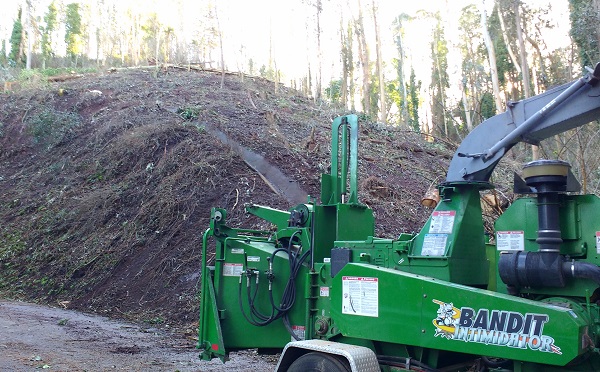
San Francisco has made a commitment to destroying more than 18,000 non-native trees in San Francisco’s public parks.  The stated goal of that program is a landscape of native grassland and scrub.  UC San Francisco has also made a commitment to destroy most of the non-native forest on Mount Sutro.  Thousands of trees have been destroyed on Mount Sutro and more will be destroyed in the future.  The Executive Director of Sutro Stewards, the non-profit organization that is implementing the plans for destruction of the non-native forest on Mount Sutro is represented on the Urban Forestry Council, an odd choice for a citizen’s advisory council theoretically committed to the urban forest.

Tree destruction on Mount Sutro, January 2021.  Courtesy San Francisco Forest Alliance

McLaren Park:  A Case Study

Today Conservation Sense and Nonsense will visit a relatively new project in McLaren Park that has destroyed non-native trees in order to create a small native plant garden.  We drill down into the project to understand why San Francisco’s urban forest is being destroyed.  We visit this project because it is an example of many similar projects that are planned in San Francisco. 

This is one of many attempts to plant native plant gardens on Sunset Blvd in San Francisco. The functional windbreak of Monterey cypress is dying of old age. Rather than replace the windbreak, native shrubs are being planted on Sunset Blvd that will not function as a windbreak in the windiest district in San Francisco. The lack of maintenance that you see here is typical of these gardens, which makes them unpopular with neighbors.

At 312 acres, McLaren Park is one of the largest parks in San Francisco.  Fifty-three percent (165 acres) of McLaren Park is designated as a “natural area,” which means that a commitment was made nearly 25 years ago to transform it into a native plant garden.  The new native plant garden that we visit today is not actually inside one of the designated “natural areas.”  The reach of the native plant movement in San Francisco extends far beyond the 1,100 park acres of “natural areas” that were claimed in 1998. 

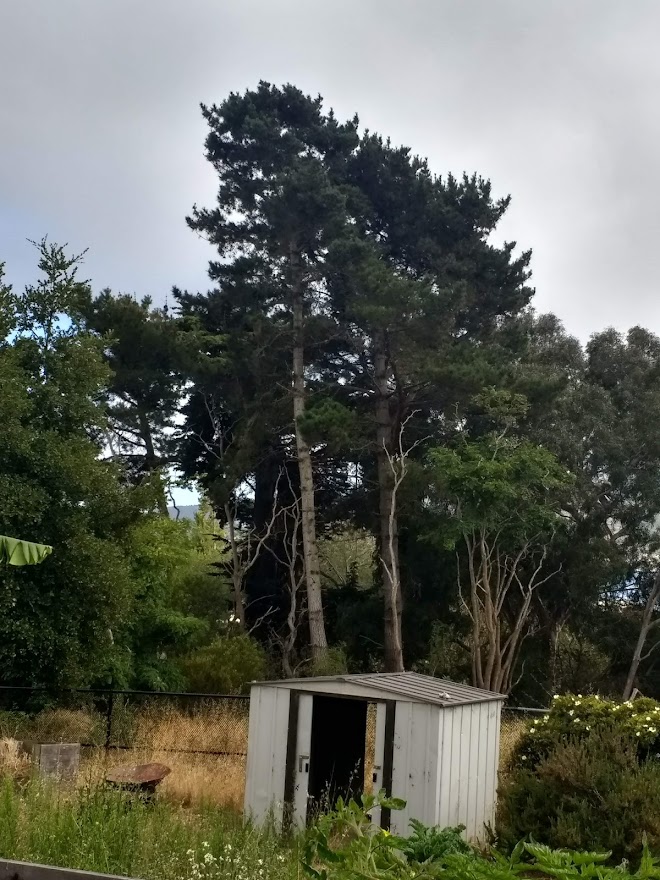
The new native plant garden is located in the southeast corner of McLaren, south of the community garden at the intersection of Visitation Ave and Hahn St.  This is a photo of some of the trees that were destroyed to create the native garden:

©Lance Mellon with permission.  July 2020

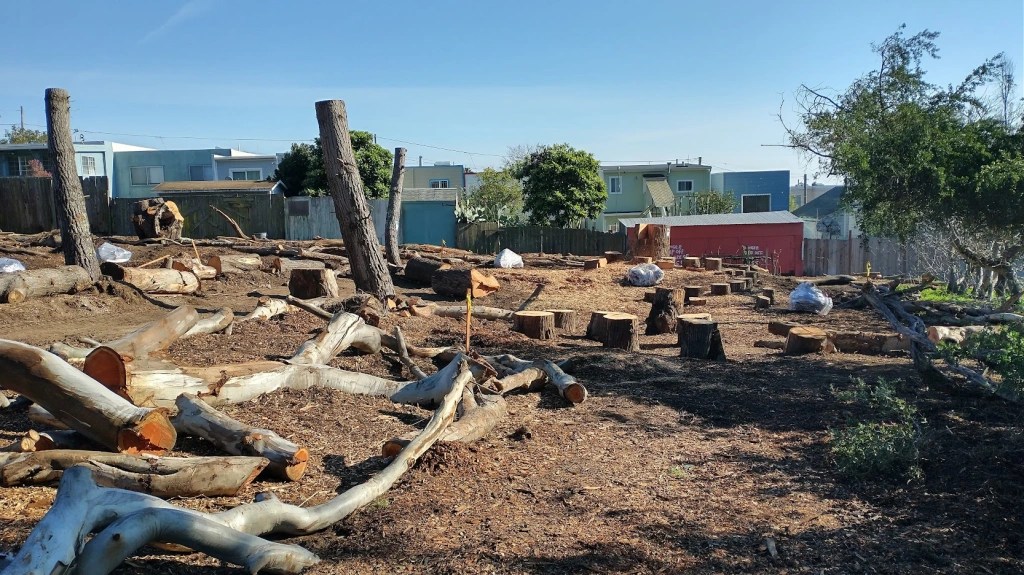
And this is a photo taken in December 2021, after the trees deemed “non-native” were destroyed:

© Lance Mellon with permission

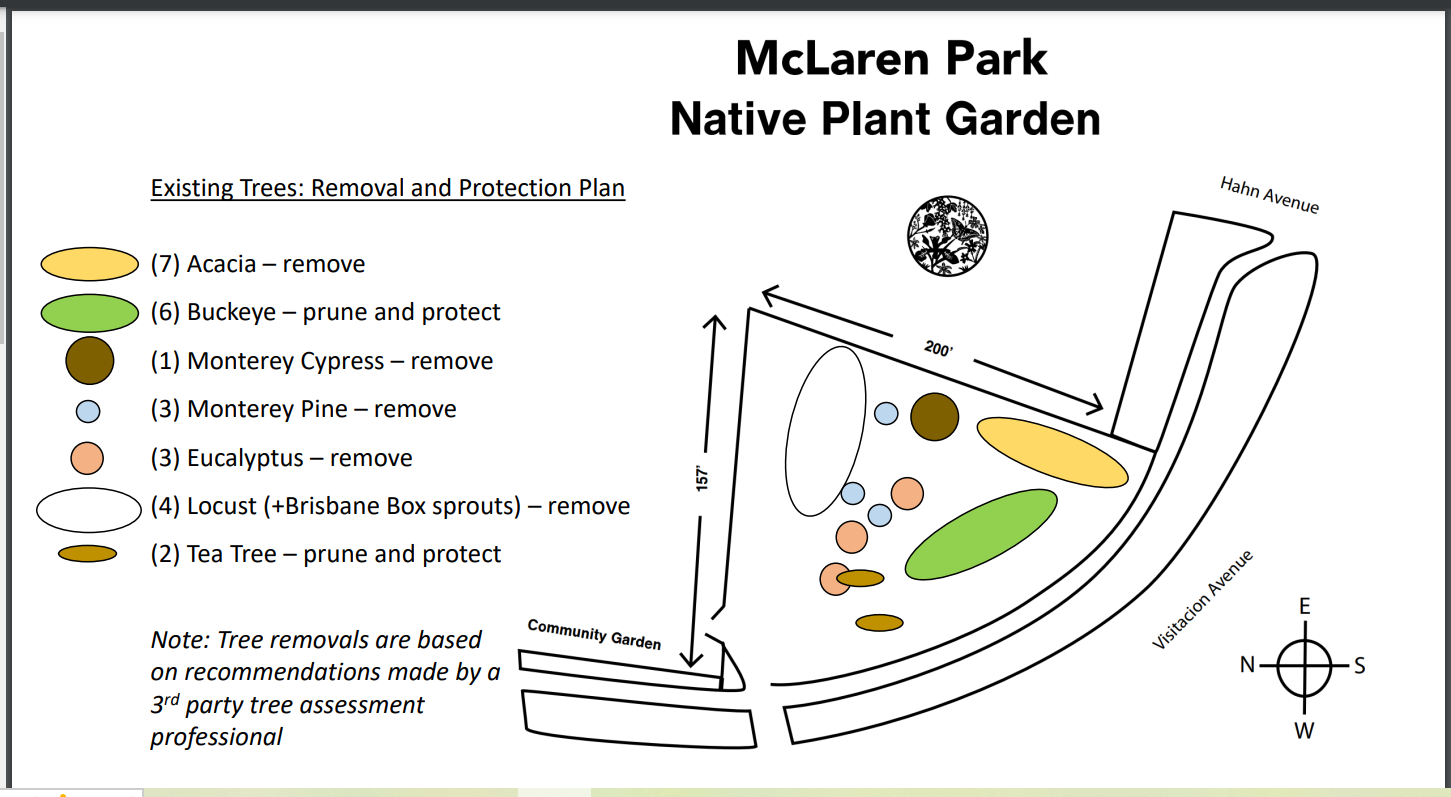
The plans for the native plant garden say that 18 non-native trees would be destroyed and 6 native trees would be retained.  The plan claims that tree removals of all non-native trees were based on “professional assessments.”  Such “assessments” are routinely used by the Recreation and Park Department to justify the removal of non-native trees.  Photos of the trees indicate otherwise.  Retention of only native trees suggests that assessments aren’t even-handed.  The claim does not pass the smell test. 

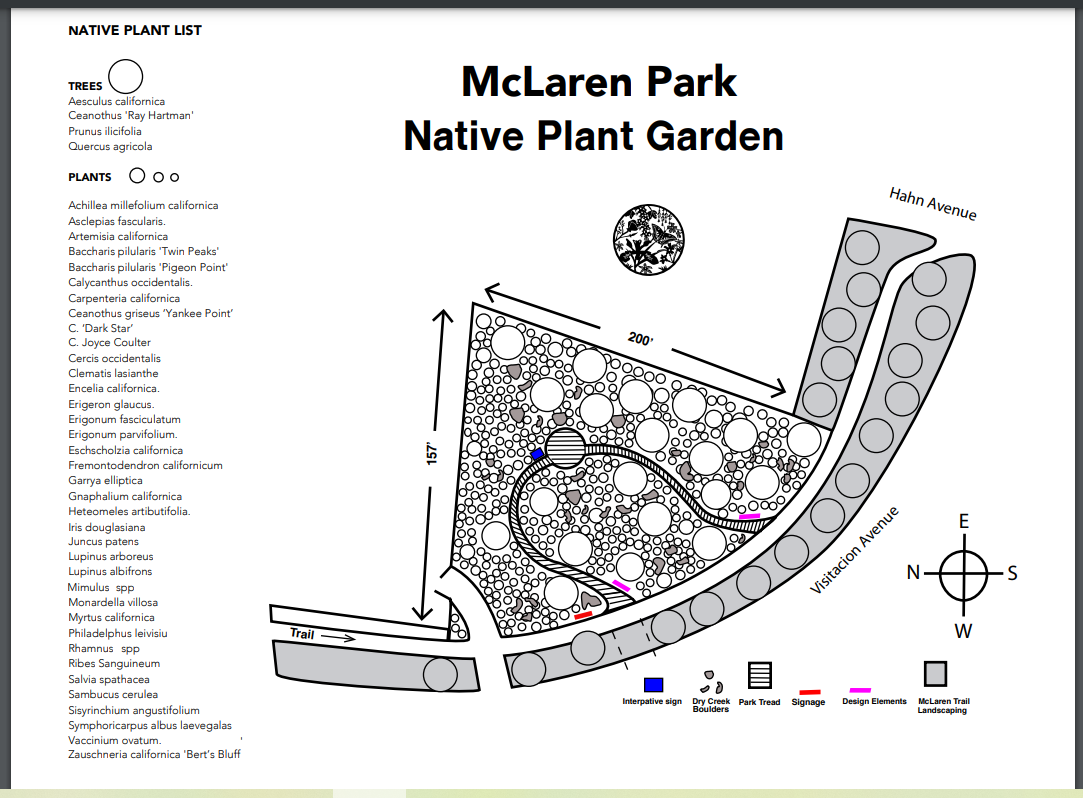
Plans for the native plant garden indicate that more native trees will be planted:

The trees will need to be irrigated for at least 3 years to establish their root systems and ensure their survival.  The entire garden will need to be irrigated if it is to survive.  Let’s be clear:  an established grove of trees with an understory of annual grasses that did not require irrigation or maintenance was destroyed and replaced with new plants and trees that will require irrigation.  Is that a suitable use of scarce water resources during an extreme drought that is expected to get worse, if not be a permanent change in the climate?  That is the question we consider today.

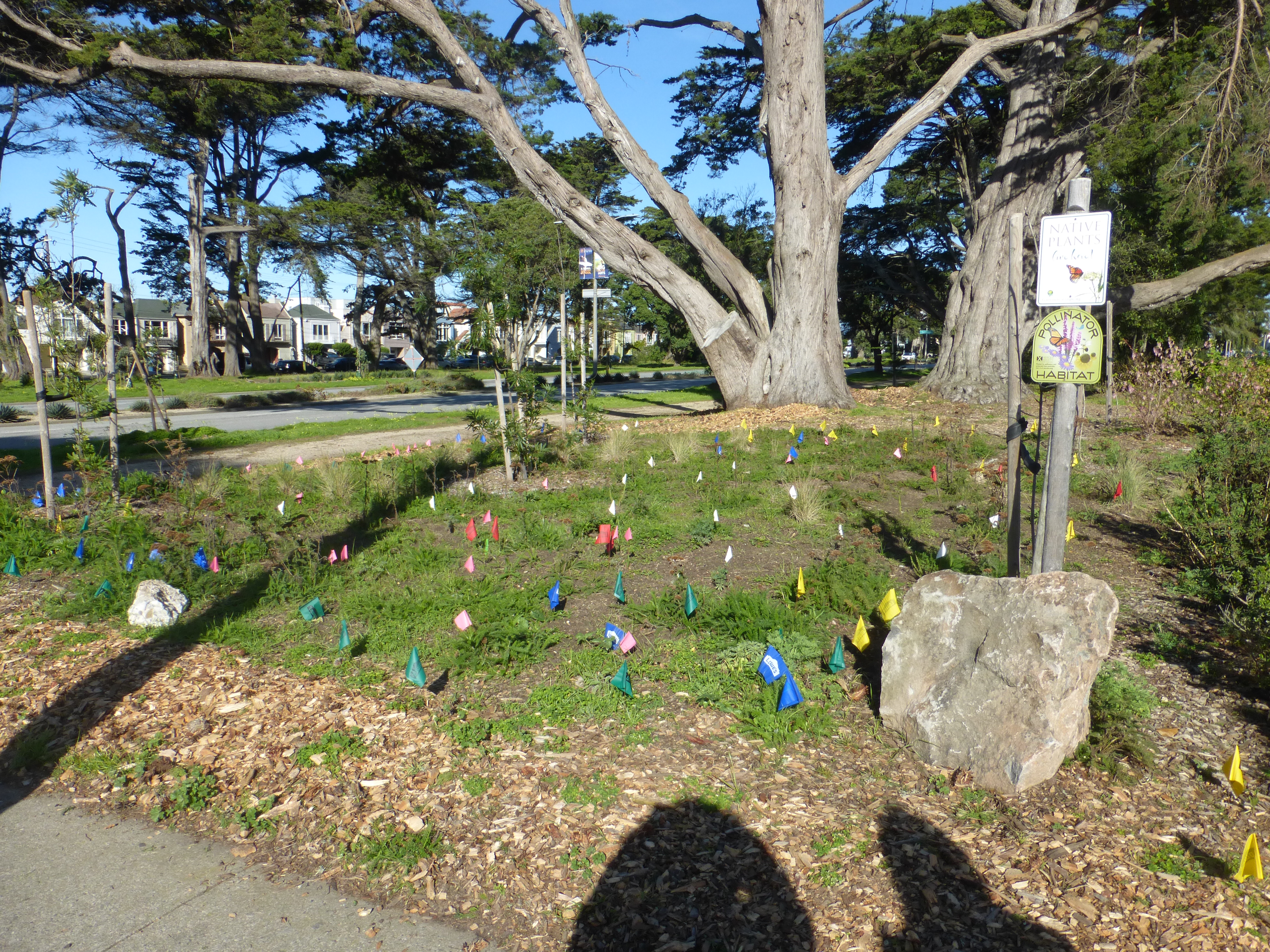
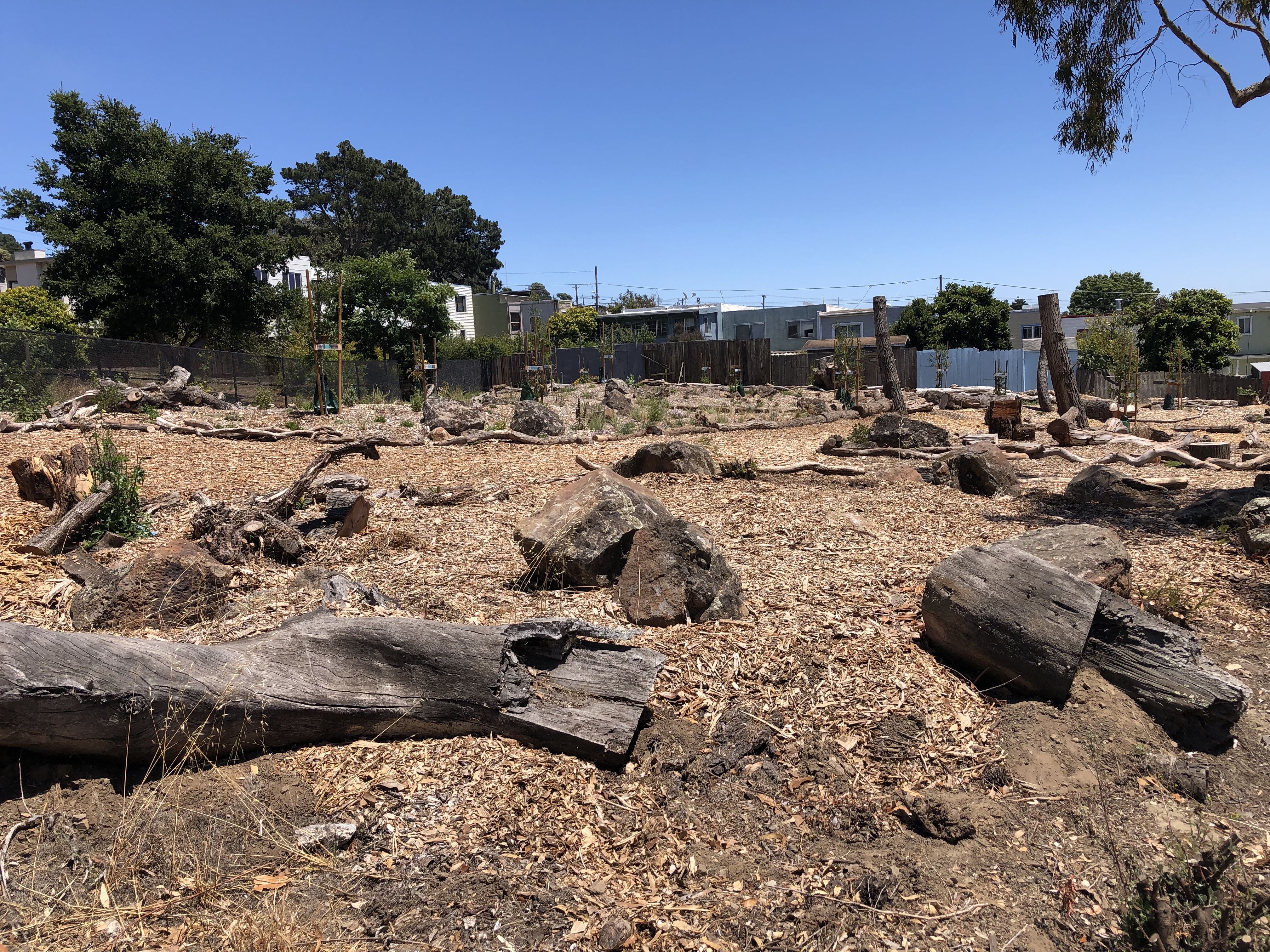
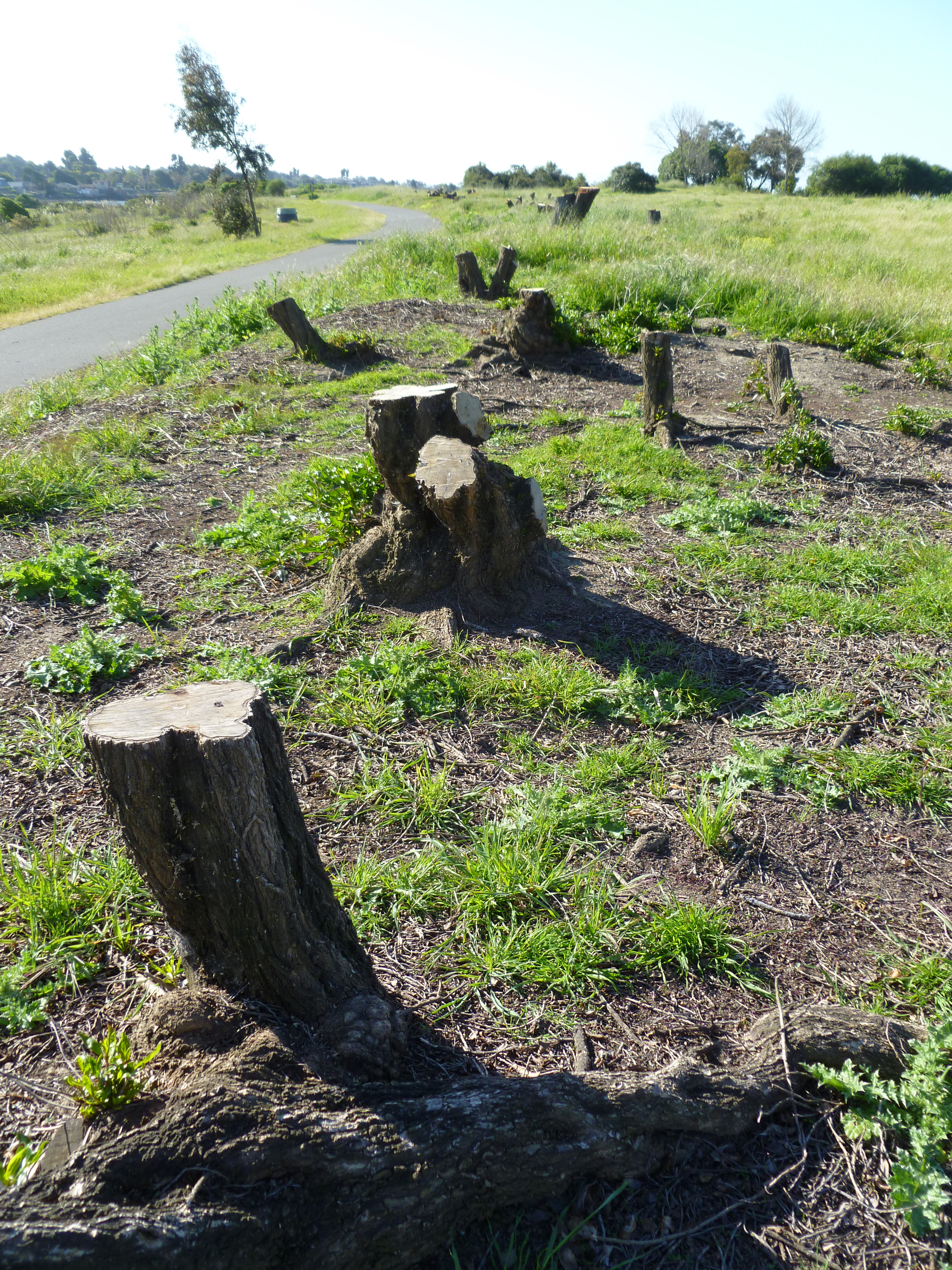
About 9 months later, the “native plant garden” looks more like a tree graveyard:

McLaren Native Plant Garden, July 2022
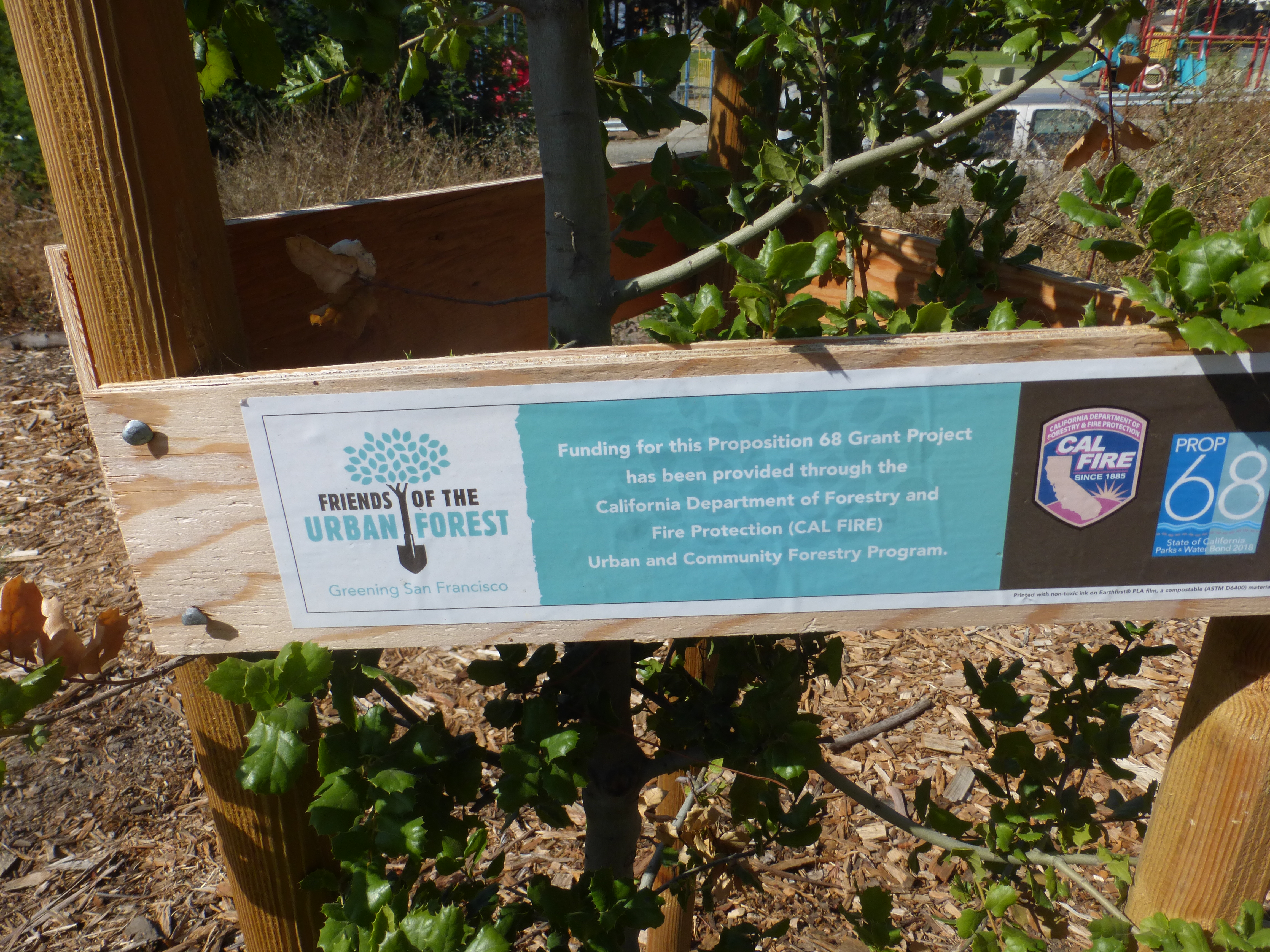
Some of the newly planted trees are holly leaf cherry. Signs on the trees indicate that the project was paid for with a CAL FIRE grant. One wonders how a garden full of dead wood is less flammable than a garden full of living trees.

Granted, the native plant garden is likely to look better as plants grow.  However, it will only look better if it is irrigated and taken care of.  Why should we expect it to be taken better care of than the existing garden that required no maintenance?  Wishful thinking will not make it so.

Update March 29, 2024:

This video of the native plant garden was made on March 27, 2024. It still looks like a tree graveyard, nearly 2 years after a functional forest was destroyed to create a native plant garden.

The death grip of nativism

Climate change is the environmental issue of our time.  We are seemingly incapable of doing anything substantive to address climate change.  Political gridlock prevents us from controlling the greenhouse gas emissions causing climate change.  The Supreme Court recently ruled that the Environmental Protection Agency does not have the authority to regulate polluting emissions from power plants. 

We focus on the preservation of our forests because it is the only tool we have left to absorb carbon emissions from the fossil fuels to which we are wedded.  Native plant advocates have taken that tool away from us.  Our urban forests are being destroyed and replaced with grassland and scrub.  Claims that grassland and scrub store more carbon than forests are ridiculous.  Those claims earn native plant advocates the label of climate change deniers.  As the drought continues to plague California, established landscapes that required no water are being destroyed and replaced with native plants that require irrigation. 

Monarch Mysteries Update

“I am sick to death of being told you must use natives, especially if a butterfly has no more interest in it than a fire hydrant.” –Professor Arthur Shapiro, Bay Nature, June 2022
Monarch butterfly populations are studied and quantified during the winter, when they are roosting in the shelter of trees, and during the summer breeding season in warmer climates.  These studies tell different stories.  The breeding population in North America seems to be holding steady since the 1990s in many parts of the country, but the over-wintering population has been steadily dwindling during the same period.  As an academic ecologist recently told the New York Times, “’So it’s not really a production problem,’ said Dr. Davis, an author of the new paper. ‘We don’t have fewer monarchs. We have fewer monarchs reaching the wintering colonies.’”

The most recent study of the breeding population of monarchs is based on a huge data set of 135,000 observations in 403 different sites in North America, partly collected by volunteers of the North American Butterfly Association (NABA) annual summer butterfly count since 1993.  The analysis of current population trends reveals interesting clues about the future of monarchs and probably many other butterfly species:

  • The study “used federal data to estimate how much glyphosate was being used in the area around each survey site. They found that in some regions, especially in parts of the Midwest, glyphosate use was associated with declines in abundance.”
  • “But they also documented a countervailing force: climate change. In the northern part of the United States, increasing temperatures were correlated with increases in monarch abundance. This effect was especially pronounced in the Midwest, suggesting that the warming climate might have partly offset the effects of glyphosate in that region.”

The study of monarch breeding populations in North America found that the Southwest was one of the regions in the US where monarch population declines were greatest.  That finding is consistent with the study of academic entomologists, Matt Forister and Arthur Shapiro, of butterfly populations in the West.  They analyzed data from over 40 years of counting butterfly populations (including NABA data) to learn that 450 butterfly species in western states have declined 1.6% per year in the past 20 years, for a cumulative total of 25% fewer butterflies. Although there are several factors—such as habitat loss and pesticides—their study determined that the strongest factor was climate change, particularly warmer temperatures in the fall.

Professor Shapiro explained during an interview on KALW why extreme heat is harmful to butterflies, although the reasons have not been proven yet. Monarchs are one of the butterfly species that is dormant during winter months. They breed in spring when temperatures begin to warm and days become longer. Warmer winter temperatures are reducing the length of dormancy, which increases their need for year-around food and weakens them if there is inadequate food. Extreme heat and drought have an impact on plants, reducing available food for all butterflies.

Studies of Migrating Monarchs

How do studies of migrating monarchs compare to studies of breeding populations in North America?  There are two major migrations of monarchs in North America.  The migration east of the Rocky Mountains spends the winter in Mexico and the migration west of the Rockys spends the winter on the coast of California.  Both of the overwintering populations have plummeted since the 1990s until the winter of 2022 when the population stabilized in Mexico and increased substantially in California.
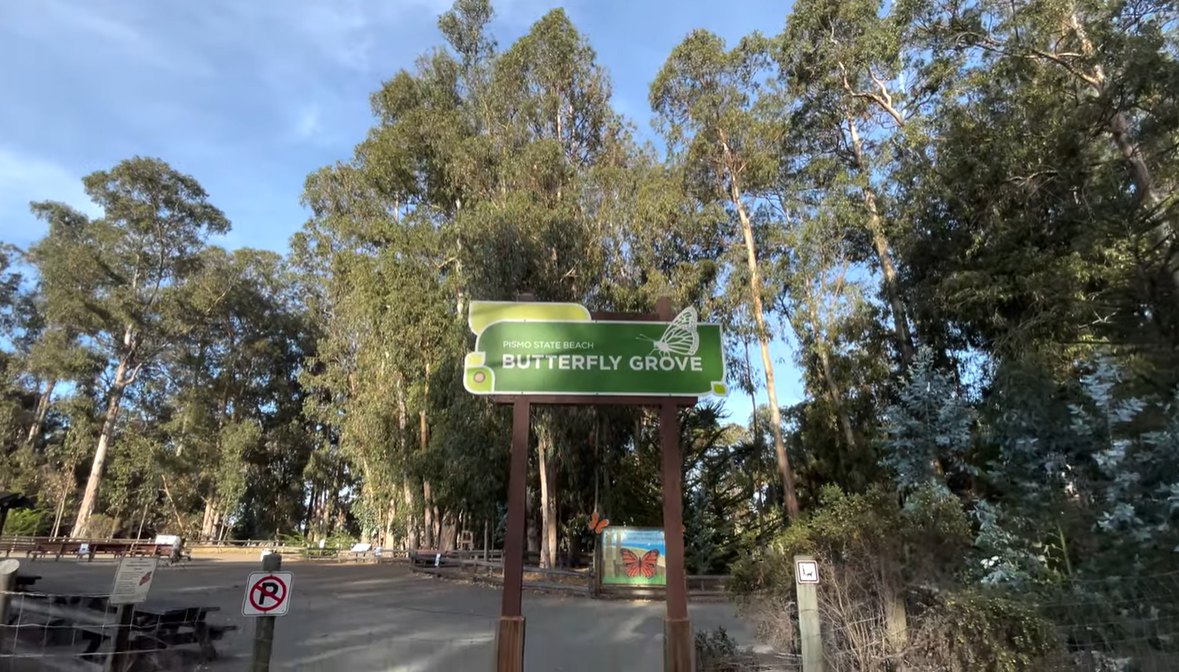
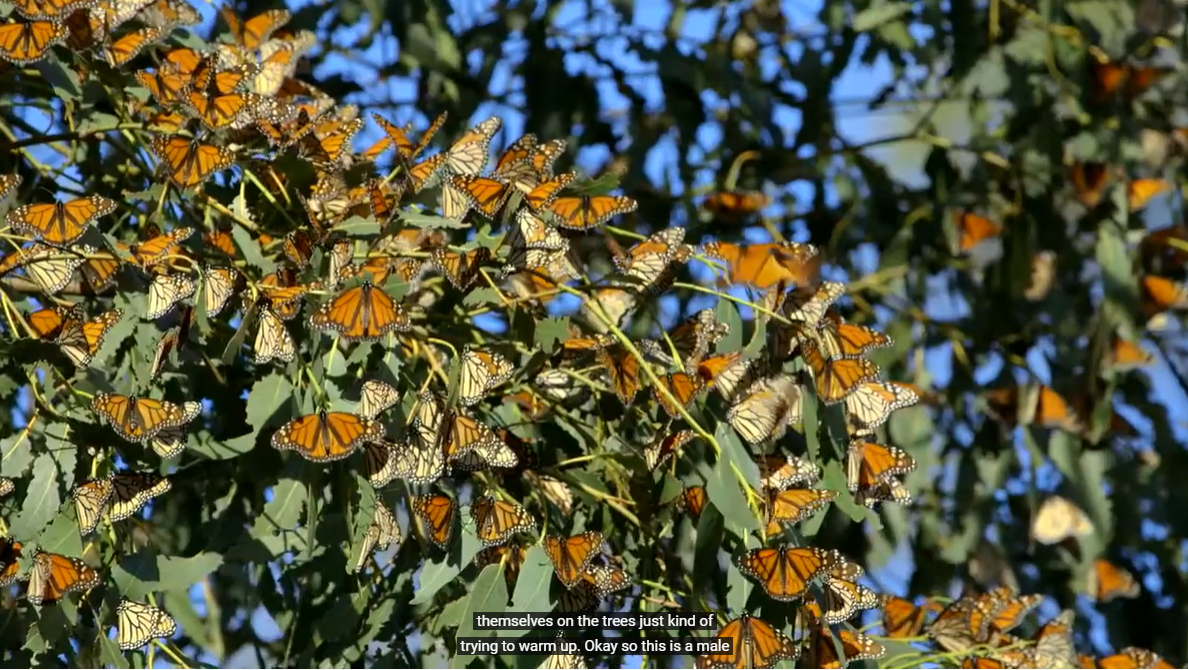
The increase in the California monarch migration was described by Jessica Griffiths in an article published by the Sierra Club’s national magazine.  That article is significant for several reasons.  The particular roosting site where the population increase was greatest was a eucalyptus grove in Pismo Beach, California:   “We are standing in a eucalyptus grove on a small patch of undeveloped land bordered by farms near the town of Pismo Beach, on the central California coast. The air smells faintly of brussels sprouts and compost, with an overlay of something like Vicks VapoRub—the distinct scent of eucalyptus. Griffiths gazes up at the branches and smiles. There are so many butterflies.”  The irony is that Jessica Griffiths is the author of a deeply flawed study that claims that monarchs prefer native conifer trees to eucalyptus trees for their winter roost.  One wonders if Jessica Griffiths experienced cognitive dissonance as she counted 17,845 monarch butterflies roosting in a eucalyptus grove where only nine monarchs roosted the previous year.

Jessica Griffiths provides an important clue to changes in the monarch migration in the Sierra Club article.  She says monarchs roost in the trees until the temperature rises to about 55⁰ Fahrenheit, when their body temperatures rise enough that they can actively seek the nectar they need to survive.  She says, “They are basically solar powered,” which is another way of saying they are cold-blooded animals that require the heat of the sun to be active.  In the eucalyptus groves that monarchs prefer as their winter roost in California, nectar is close at hand because eucalyptus blooms during winter months, at a time when little else is blooming.

Pismo Beach, November 2021 Source: https://youtu.be/Su2Ma2lUWFY

When the climate changes, entire ecosystems change with it

When days become shorter in the fall, monarchs in California stop breeding and begin their migration to the coast.  Breeding resumes when days become longer in the spring.  But hours of daylight are not the only determinant of the monarch breeding season.  Warmer temperatures at night are triggering the monarch breeding season earlier than in the past.  In fact, some entomologists hypothesize that many monarchs are now breeding year around. The presence or absence of milkweed does not trigger the breeding season, which is determined by hours of daylight and temperature. 

If the warming climate enables monarchs to breed year around, why would we object?  The more monarchs, the merrier, right?  Unfortunately, hobbyist naturalists DO object to altering the timing and location of the breeding of monarchs.  This is a Letter to the Editor of the Yodeler, the newsletter of the San Francisco Bay Chapter of the Sierra Club:

Sierra Club Yodeler, Summer 2022
The author of the letter to the editor of the Yodeler asks us NOT to plant milkweed near the coast or monarch overwintering sites, presumably because she doesn’t want the monarch’s breeding season to begin when and where it has not occurred in the past.  The fact is, the climate has changed and monarchs are responding to those changes.  Who are we to argue with monarchs about what they need to do to survive?

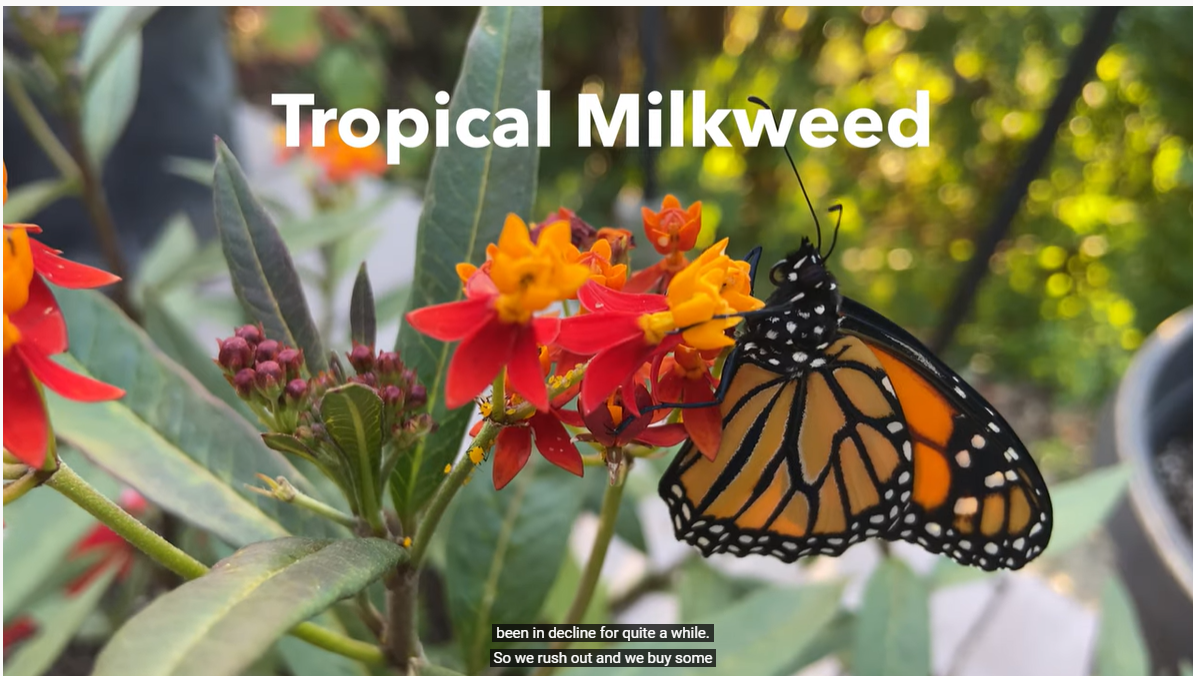
Bay Nature has published an article about monarchs seen in Marin County during their breeding season, where they have over-wintered in the past, but not bred historically.  The warming climate and the availability of perennial tropical milkweed is making Marin County suitable breeding habitat:  “A lot of people have this feeling that without the migration, the monarch is nothing,” says James. “That’s not necessarily true. If we got rid of the migration, the butterflies could still continue. For humans, that would be a pity. But in the ecology of things…it’s not that bad.”  The author of the article welcomes monarchs to Marin County, “A new Bay Area neighbor, adapting to a changing world, making do with what is available, as we all must.”

The monarch migration is not sacrosanct.  Monarch butterflies also live in Central and South America, in the Caribbean, in Australia, and even in parts of Europe and New Guinea. But all of these monarch populations are sedentary, meaning they stay in one place and don’t migrate.  If changes in climate enable monarchs to live and breed year around, why would we want to prevent them from doing so? 

If monarchs can find what they need year around, why should they be forced to migrate? Migration is physically demanding, depleting the physical resources of an animal.  If survival of a species doesn’t require migration, more physical resources are available for other functions, such as increased reproduction or less need for food to fuel the migration.  Images of struggling human migrants come to mind.  Wouldn’t they all be better off if circumstances at home would enable them to stay home? 

A comparable change has occurred in the life cycle of Anise Swallowtail butterflies.  Prior to the introduction of non-native fennel to California, Anise Swallowtails bred only once each year because its native host plant—closely related to non-native fennel–was not available during most of the year.  Non-native fennel is a perennial plant that is available year-around, making it possible for Anise Swallowtails to breed throughout the year.  Thanks to non-native fennel, we enjoy the company of many more Anise Swallowtails.  We should not think of the life cycles of plant and animal species as immutable.  Rather, they are constantly changing to adapt to changes in their environment and adaptation is what will ensure their survival. 

Native vs. Non-native Milkweed?

Hobbyist naturalists also ask that we plant only native milkweed, the host plant for monarch caterpillars.  Such restrictive advice is not beneficial to the survival of monarch populations.  Although a popular opinion among hobbyists, advice against planting non-native milkweed for monarchs is contradicted by scientific sources: 

  • …there is little evidence to support the idea that planting Tropical Milkweeds will weaken Monarch populations and NO evidence to support the idea that Tropical Milkweeds are “trapping” Monarchs and stopping them from migrating…”  American Butterflies, magazine of the North American Butterfly Association
  • A study of lifespan of monarchs breeding on non-native milkweed compared to native milkweed found that monarchs raised on tropical milkweed (A. curassavica) lived as long or longer than monarchs raised on other species of milkweed. They were less likely to be infected, and once infected, tolerated the infection well. (Leiling Tao et.al., “Disease ecology across soil boundaries: effects of below-ground fungi on above-ground host—parasite interactions,” Proceedings of Royal Society of Britain, 282: 2015.1993.)
  • An article from the UC Davis Bug Squad says they plant tropical milkweed and two species of native milkweed. Monarchs have a strong preference for tropical milkweed: “In July, we collected 11 caterpillars from the narrowleaf [native] milkweed; we rear them to adulthood and release them into the neighborhood. But in the numbers game, the tropical milkweed won. From July through today, we have collected a whopping 43 eggs or caterpillars from [non-native] A. curassavica. How many from [native] A. speciosa? Sadly, none.”

Hobbyists theorize that tropical milkweed harbors more parasites than native milkweed because tropical milkweed is a perennial plant, which suggests that parasites could accumulate from one year to the next. If gardeners are concerned about the potential for accumulation of parasites, they are advised to cut tropical milkweed back during winter months. Because tropical milkweed is a perennial, it is available for monarch breeding earlier in the spring than annual native milkweed.  If monarchs breed earlier in the spring, tropical milkweed accommodates earlier breeding.

How to help monarchs

The future of monarchs is uncertain, just as the future of all life in our changing climate is uncertain.  I am betting that monarchs have a future partly because they have survived many changes in the environment for some 50 million years since butterflies evolved from moths.  We can best help monarchs by staying out of their way.  They would also probably benefit if we would stop destroying their habitat, particularly eucalyptus trees and tropical milkweed.

Vegetation changes as the climate changes and animals follow the vegetation they need as they must to survive.  Breeding season of butterflies and other wildlife is also likely to change with the climate. The rebounding monarch population is probably another case of animals moving to find what they need. We should not stand in their way.  They know what they need better than we do.

“Restoring Our Forests by Trusting in Nature”

“The world’s forests will be restored not by trying to recreate the past, but by providing the space for such forests to find their own new future.” –Fred Pearce

Fred Pearce is the author of The New Wild, which challenged the conventional wisdom that native species are inherently superior to non-native species and the closely related assumption that all non-native species are competitors of native species.  The New Wild is the most effective of the many critiques of invasion biology, which made his latest book required reading (for me).    

A Trillion Trees:  Restoring Our Forests by Trusting in Nature (1) examines the popular notion that planting one trillion trees around the world can deliver us from the death grip of climate change.  Once again, Fred Pearce challenges the conventional wisdom.  The claim that planting a trillion trees can compensate for our continuing burning of fossil fuels is an oversimplification, but with much truth at its core.

Forest Accounting:  Debits and Credits

Pearce begins by reminding us of the ecological value of forests and the role they play in reducing greenhouse gas emissions causing climate change.  In addition to absorbing carbon dioxide from the atmosphere during photosynthesis, forests also release water into the atmosphere in the form of water vapor.  Trees pump moisture from the ground into their leaves where excess moisture is transpired from pores (stomata) in leaves, moistening the atmosphere and returning moisture to the Earth as rain.  In a time and place where extreme drought is a major issue, this is a strong argument for retaining our forests.

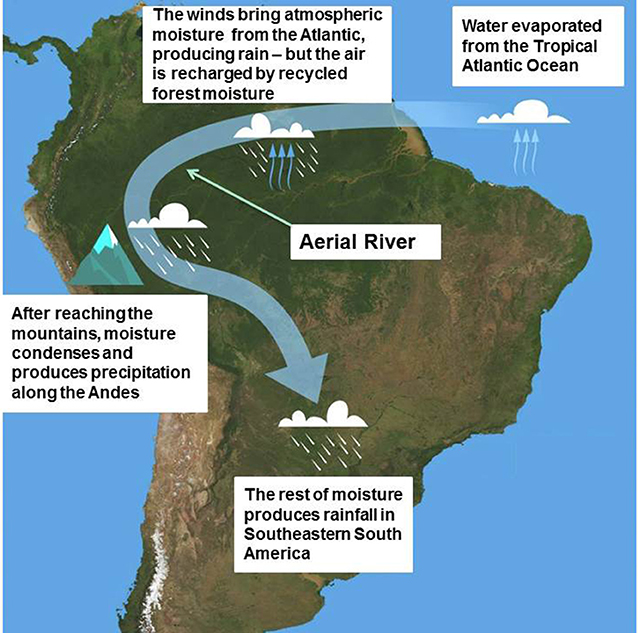
On a global scale, forests are responsible for carrying moisture from coastal forests irrigated by moist sea breezes into drier regions on streams of moisture transpired by forests, Pearce calls flying rivers.  Where coastal forests are destroyed, this moisture delivery system is interrupted, resulting in drought in interior regions.  Observational data confirms this cycle:  “Air coming from forested areas delivered more than twice as much rain as deforested areas.  Forests make rain; taking them away creates if not deserts, then certainly aridity.”

The aerial river of moisture transpired by forests is carried by the wind and forests contribute to the wind.  Transpiration emits buoyant water vapor that condenses to water as it rises and cools.  Liquid water takes up much less space than water vapor, causing a pressure drop where water vapor becomes liquid water, resulting in wind. Some scientists believe that this “biotic pump” creates stronger wind than the winds that are created by cool ocean breezes meeting hot continental air.  These theories are controversial, but Pearce finds them credible. 

All trees emit volatile organic compounds, commonly abbreviated VOCs. VOCs neutralize a chemical known to neutralize methane, resulting in increased methane emissions from forests. Methane is the most potent greenhouse gas, although it does not persist in the atmosphere as long as carbon dioxide. 

Source: Wikipedia

Although forests create their own cooling environment with shade and moisture, they also absorb heat from the sun.  Albedo is the technical term used to measure light reflection and absorption. Because dark colors absorb heat and light colors reflect heat, this balance of cooling and heating factors varies. In Northern and Southern latitudes where winter snows reflect sunlight, dark forest canopies absorb more sunlight than treeless snow-covered ground.  Likewise, desert sand reflects more light than dark forest canopy.  Measuring the net effect of the many intervening factors such as albedo on climate change is controversial, even speculative at this time.

Evaluating Planting Projects

Pearce visited tree planting projects around the world and concluded that many are counterproductive in the short term and others are not sustainable in the long term. 

  • Some projects are planting plantations of fast growing trees such as eucalyptus and pine with the intention of logging them within about 10 years to produce timber, pulp, or biofuels.  The short term objectives of these projects do not address the long term problem of climate change. 
  • Some projects are planting single tree species that aren’t necessarily well adapted to local conditions.  The resulting monoculture is more vulnerable to disease, insects, and changed climate conditions.
  • Many huge projects exist only on paper.  Elaborate plans don’t necessarily produce new forests. 

Israel’s strong commitment to planting trees on its desert land illustrates the pros and cons of tree-planting projects.  Trees are important in Jewish culture.  Jews around the world celebrate an annual holiday of trees, Tu BiShvat.  A national nonprofit group created in 1901 bought land to support the Zionist cause and has planted 250 million trees on a quarter-million acres in the desert in what is now Israel. 

Yatir Forest in Israel. Source: Wikimedia Commons

One such project has planted 4 million Aleppo pines on the slopes of Mount Hebron near Tel Aviv since 1964.  Aleppo pines grow naturally in wetter Mediterranean regions.  They cope with drought by growing only briefly during spring rains in Israel and are dormant during most of the dry, hot year.  There are limits to this adaptation.  A year-long drought in 2010 killed 10% of the forest.  Because of the slow growth of the forest, the carbon storing capacity of the forest has yet to match the heat the forest absorbs that would otherwise be reflected by light-yellow desert sands.  Scientists who study this forest do not expect the forest to attain net cooling advantage for another 80 years.  There is some doubt that the forest will live that long, given rapidly rising temperatures and associated drought. 

Deforestation and Rewilding

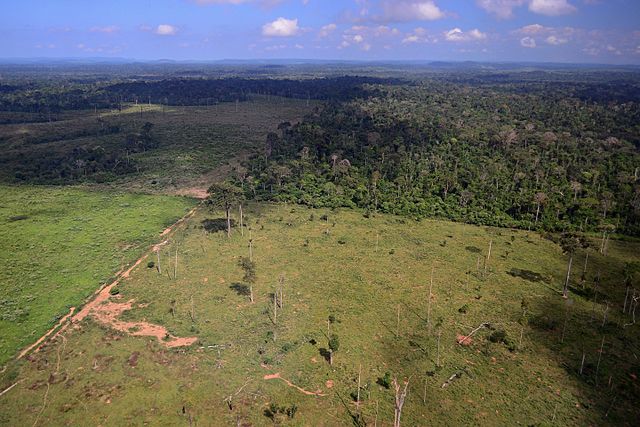
Pearce also visited places where forests are being destroyed in Indonesia, South America, and Africa.  In Indonesia, the economic value of the trees themselves is the primary motivation for destroying forests.  In Brazil, the primary goal of deforestation is to convert forests to pastures for livestock and agricultural fields for commodity crops that feed animals. 

Developed nations have exported much of their agricultural and animal production to undeveloped nations.  As agricultural land in developed nations is abandoned, forests have regenerated.  In New England, for example forest cover was only 30% by the mid-19th century after 200 years of timber exploitation and clearance of agricultural land.  Industrialization brought farmers into cities and marginal agricultural land was abandoned.  Today most of New England is forested again.  As that transition from an agricultural to an industrial economy was made in developed nations, forests in undeveloped nations were destroyed to produce agricultural products exported to developed nations. 

Deforestation in Para State, Brazil. Source: Wikimedia Commons

In Brazil, the rewilding of agricultural land is already occurring.  Forests were cleared and seeded with grass for cattle pastures, but the poor soil is quickly exhausted and grass won’t grow after a couple of years.  These abandoned pastures recover their forests even on exhausted soil, but they won’t be mature rainforests again for many years. When forests cleared for agricultural crops lose most of their rainfall, agricultural crops fail.

Pearce visited agricultural communities in Africa that have figured out that it isn’t necessary to destroy forests in order to grow crops.  Farmers had to ignore the dictates of their government to clear their land before planting crops to learn that planting crops within groves of trees is just as productive.  The trees provide shade and moisture that shelter crops as well as create a more comfortable home for the community. 

Forests that are embedded in indigenous communities are more safeguarded than forests in so-called protected areas, where indigenous people have been evicted.  If forests are sustainably used by the community, the community has a direct economic interest in its preservation.  When indigenous people are evicted from forests, a handful of salaried rangers can’t provide the same level of surveillance, making forests more vulnerable to poaching and corrupt encroachment.  People have tended their forests for eons and community forestry is an extension of that relationship.  They understand the forest as no outsider could. 

 Pearce’s Message

Pearce believes that protecting the forests we have and allowing forests to regenerate naturally where agricultural land can be abandoned is preferable to planting trees because:

  • Planting trees where trees have never grown in the past is not likely to create a sustainable forest. If soil and climate conditions have not supported trees in the past, it is probably an unsuitable location for trees.
  • Huge projects that plant millions of trees are often creating monocultures of a single species of fast-growing trees.  Such monocultures are vulnerable to pathogens, insect infestations, and changes in climate.  Forests that regenerate naturally are more diverse, although they aren’t necessarily the same species as in the past because of epidemics of pests and pathogens.  “However clever the foresters were, the planted trees were less well suited to the space they were occupying than those chosen by nature” and “Natural regeneration helps species to shift and adapt to climate change.”
  • Newly planted trees require more support than a forest that is regenerating from roots and seedbanks.  They must be irrigated while they are establishing the fungal networks that give them access to moisture in the soil.  They don’t benefit from moisture and carbon resources shared by their mature neighbors.  They aren’t members of an existing, sharing community of trees.

Much of what is done in the name of “conservation” is destructive.  Pearce makes a strong case for natural recovery rather than active intervention in natural processes:  “Most of the fifteen-percent increase in forest cover across the eastern United States in the past four decades has come from natural regeneration rather than planting.” However, urban areas in America have lost 175,000 acres of trees cover each year for the past decade, according to the US Forest Service.  We have experienced such loss of our urban forests here in the San Francisco Bay Area. 

Bringing it home

Pearce’s message is consistent with my personal experience based on observations of tree-planting projects in the San Francisco Bay Area.  Our urban forests are being destroyed for many reasons:  to make way for development, to reduce fire hazards, and to eradicate non-native trees.  Little planting is done when trees are destroyed.  The tree species that are planted are often not suitable for the location.  When new trees aren’t irrigated regularly, they don’t survive.

Point Isabel is one of many parks in the East Bay Regional Park District where redwoods have been planted that died because they are not well adapted to places where they are directly exposed to salty, ocean winds.

More effort should be devoted to preserving forests because replacing them is largely a fiction. 

When East Bay Regional Park District acquired Oyster Bay in San Leandro, they destroyed the wind breaks of non-native trees.
Over 10 years later, the attempt to create a wind break of native trees at Oyster Bay has made little progress. This is another coastal location with salty ocean winds that are not hospitable to native tree species. Most of coastal California was treeless grassland prior to European settlement.

  1. Fred Pearce, A Trillion Trees:  Restoring Our Forests by Trusting in Nature, Greystone Books, 2021.  All quotes in this article are from this book. 

Starlings, vagrants, and dead birds

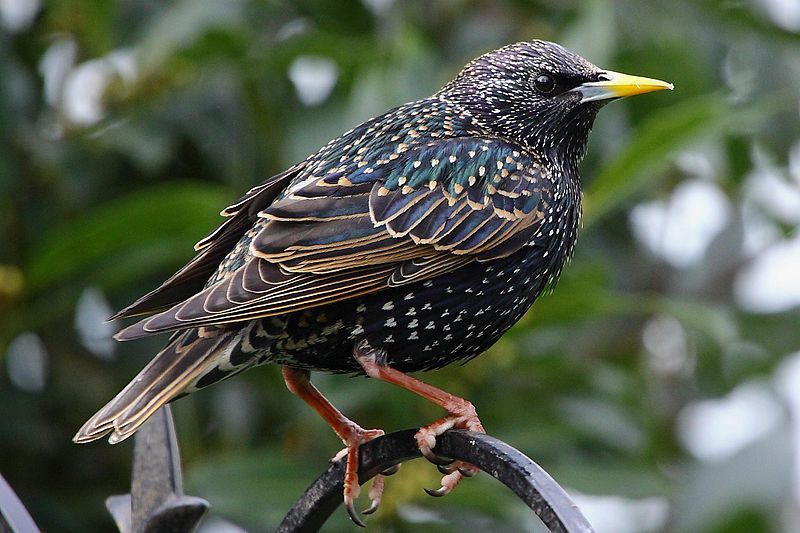
I was introduced to the nativist mindset about birds over 30 years ago by an ominous encounter with a birder in Florida. The sound of gunfire drew our attention to a man with a shot gun on the lawn of our motel.  Starlings were falling around him, where he quickly finished them off with a vigorous stomp of his booted foot.  We were unfamiliar with the hatred of non-native species at that time and asked him why he was killing the birds.  He seemed stunned to be questioned.  He explained, as though speaking to retarded children, that the starlings were “trash birds” that must be killed.  Following a basic rule of survival, we walked away from a person wielding a gun.

Starling in breeding plumage. Creative Commons – Share Alike

I was reminded of that incident by a recent article in the magazine of the Cornell Ornithology Laboratory.  The author of the article studied starlings for her Ph.D. dissertation.  She was well aware of their reputation as competitors of native birds and consumers of agricultural crops, but belatedly she was having second thoughts about their reputation as invaders:  “Our national conversations about racial equity and political dissent in the last year reminded me that I must change my behavior in response to crises. It has also encouraged me to consider my impact on others, human and starling alike.”  She wondered if calling starlings “aliens” might contribute to the negative opinion of human immigrants:  “But I can’t help thinking of the parallels with countless stories about human “aliens.” Whether we intend this comparison or not, labeling immigrants “invaders” and “aliens” iso­lates those who cross a border in search of a safer, stabler life.”

Comments on the article dispel doubts that such a connection between humans and birds perceived as “alien” exists in the minds of at least some nativists. This is the concluding response to my attempt to discuss the issue with a nativist:  “I am glad I will not live to see your crap filled America of endless third world suburbs, starlings, and house sparrows.  I wish I could live long enough to see it gasp its last breath.”  Strangely, this person seems to be angry about something that he fears will happen in the future, but isn’t visible to him now.

The recent fatal shooting of 10 African-American citizens by an 18-year-old self-avowed white supremacist was also an opportunity to witness the fear, hatred, and violence generated by the use of the word “invasion” to describe immigration, as reported by National Public Radio’s News Hour shortly after the shooting:  “The alleged Buffalo gunman isn’t the first mass shooter to talk about an “invasion” of non-whites. Last week’s mass shooting in Buffalo has turned attention once again to something known as the replacement theory. It’s a baseless and racist conspiracy theory that powerful elites are trying to replace white Americans with nonwhites and that these elites are allowing a so-called invasion of nonwhite immigrants. That word, invasion, has been used a lot lately by some Republicans and immigration hard-liners”   

This racist conspiracy theory bears a remarkable resemblance to the theory of invasion biology, which claims that the mere existence of non-native plants and animals is a threat to native species.  Although there is little empirical evidence of that threat, the myth persists and is used to justify the destructive attempts to eradicate harmless plants and animals.   

The consequences of fear, anger, and dread

The misnamed USDA Wildlife Services killed over 1.7 million animals in 2021, including 1,028,648 starlings and “dispersed” 10,631,600 starlings.  Only 400,000 of the animals they killed were native; 1.3 million were considered “invasive.”  The mission of USDA Wildlife Services is “to provide Federal leadership and expertise to resolve wildlife conflicts to allow people and wildlife to coexist.”  Since 1886, Wildlife Services has killed millions of animals every year that are considered pests by humans. 

Is all that killing effective?  Does it actually reduce populations of the species perceived as a threat?  What does it accomplish?

Farmers have been at war with birds for as long as humans have engaged in agriculture, some 10,000 years.  Crows, grackles, blackbirds, and starlings are often targets of efforts to eliminate them in agricultural areas.  Between 1939 and 1945 about 3.8 million crows in Oklahoma were killed by dynamiting their roosts.  A study of that effort found no evidence that either the population of crows or crop production was affected by that campaign because nature adjusts:  “Destroy a chunk of a population, now there’s more food for the ones who remain.  Through a variety of physiological responses—shorter gestation periods, larger broods, delayed implantation—a well-fed individual produces more offspring than one that’s struggling or just getting by.” (1)  This balancing act is known to be true of many other animal species, such as coyotes and rodents.

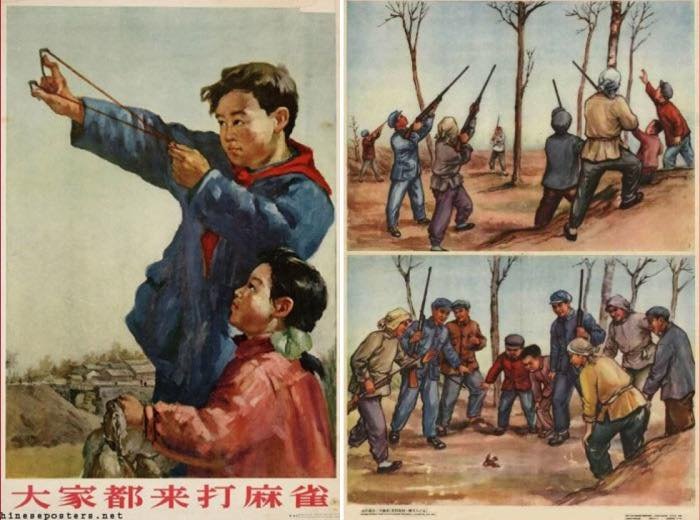
The Four Pests campaign was one of the first actions taken in the Great Leap Forward in China from 1958 to 1962. The four pests to be eliminated were rats, flies, mosquitoes, and sparrows. The campaign depleted the sparrow population nearly to extinction. The sparrows had eaten insects that killed the crops. In the absence of sparrows a plague of locusts contributed to the Great Chinese Famine, killing tens of millions of Chinese between 1958 and 1962.  Ironically, the Chinese ended up importing 250,000 sparrows from the Soviet Union to replenish the population. 

As is often the case with attempts to kill animals, the decision is usually made without understanding the role the animal is playing in the ecosystem. There are usually positive as well as negative impacts of every member of the food web.  When we focus only on the negative impact, there are often unintended negative consequences of eliminating a member of an ecological community.

Starlings are considered an agricultural pest in the US, but they are not routinely killed in England or Europe where they are native, although they probably eat just as much agricultural crops there.  The New York Times recently published an article about starling murmurations in Europe.  The videos and photographs of these huge flocks of starlings moving in coordinated patterns are beautiful and remarkable.  They draw crowds of people who are transfixed by the spectacle. 

A study of the impact of starlings in Europe explains why starlings are usually not killed in Europe:  “Starlings that cause damage on migration or in winter may have bred in countries, some of them outside the EEC, where the birds cause no damage and are held in esteem on account of their valued role as insect predators, their educational and their aesthetic values. Claims from countries where Starlings winter that breeding populations should, by some means, be limited are unlikely to be received sympathetically by those to the northeast who eagerly await the Starlings’ return in spring… On grounds of effectiveness, feasibility, cost, humaneness and environmental safety a population limitation strategy is unlikely to be an appropriate solution…The potential for Starlings to reestablish large flocks at good feeding sites after heavy mortality has been inflicted locally indicates that even local population reduction is only temporarily effective in reducing damage.

The popular urban legend about starlings is that they were brought to the US in the 19th century by a dedicated fan of Shakespeare who wanted to introduce all the birds mentioned by Shakespeare to America.  Over one hundred years later, scientists have used molecular analysis to disprove that myth.  In fact, starlings were brought to America earlier by more than one person to more than one location, including to New York by a Shakespeare fan.  This is a reminder that there is always more to know and that we must remain open minded to learn new information as science moves inexorably forward. 

Words matter:  Vagrants or Scouts?

Birders get excited about seeing birds where they don’t usually see them.  When they do, they usually call them “vagrants,” a word that is a synonym for tramps, drifters, beggars, hobos, even homeless people.  It’s not a surprising word choice in a crowd that is heavily biased in favor of natives. 

An article in New York Times suggests that the word “vagrant” is no longer an accurate description of the birds being seen where they haven’t been seen in the past.  The explanation for their surprise visit is often an indication that they are adapting to changes in the environment, including climate change and associated changes in vegetation and insect populations.  They are in unfamiliar territory in search of what they need to survive.  Perhaps their usual nesting site is now a parking lot.  Or perhaps the vegetation they need did not survive a severe drought. Or pesticides have killed the insects they need to feed their chicks during nesting season.  They are scouts, not vagrants.  They aren’t lost. They are seeking a safe haven.

As the climate changes and human activities continue to encroach on the natural world, plants and animals must move, adapt, or die.  The least we can do is stay out of their way.  The fact that birds are the most mobile animal class is something to celebrate, not lament.  Their mobility makes them more likely to survive changes in the environment.   A recent study reported that 13% of bird species are threatened with extinction, compared to 25% of mammal species, 21% of reptiles and 40% of amphibians. 


  1. Mary Roach, Fuzz, W.W. Norton & Company, 2021

New funding creates new threats to eucalyptus trees

I recently received a message, asking for help to save a grove of eucalyptus trees on the Napa River from destruction:  “I live in Napa on the river where eucalyptus trees are going to be cut down that are home to owls, ravens, herons, egrets and more for over 50 years.  Could you please help save these beautiful trees and wildlife? Any suggestions or ideas would be greatly appreciated.”

Eucalyptus trees on Milton Road on the Napa River
Owls nest in the trees on Milton Road

I learned a few more details by speaking with the neighbor of the trees.  The trees are on State property and the project was going to be funded by California Department of Fish & Wildlife (CDFW).  There are few trees in this neighborhood and therefore few alternatives for the birds that roost and nest in the eucalyptus trees

Eucalyptus grove on the Napa River in which many birds nest and roost

The neighbors asked if herbicides would be used to prevent the trees from resprouting.  That was a concern partly because the well that supplies their drinking water is within 60 feet of the trees.  Before they received an answer to that question, they were informed that “CDFW has decided to halt their project of cutting down the eucalyptus trees on Milton Road!”  We don’t know why CDFW changed its mind, but we would like to believe the questions raised by the neighbors may have helped.  Thanks and congratulations to the neighbors of the eucalyptus grove on the Napa River.

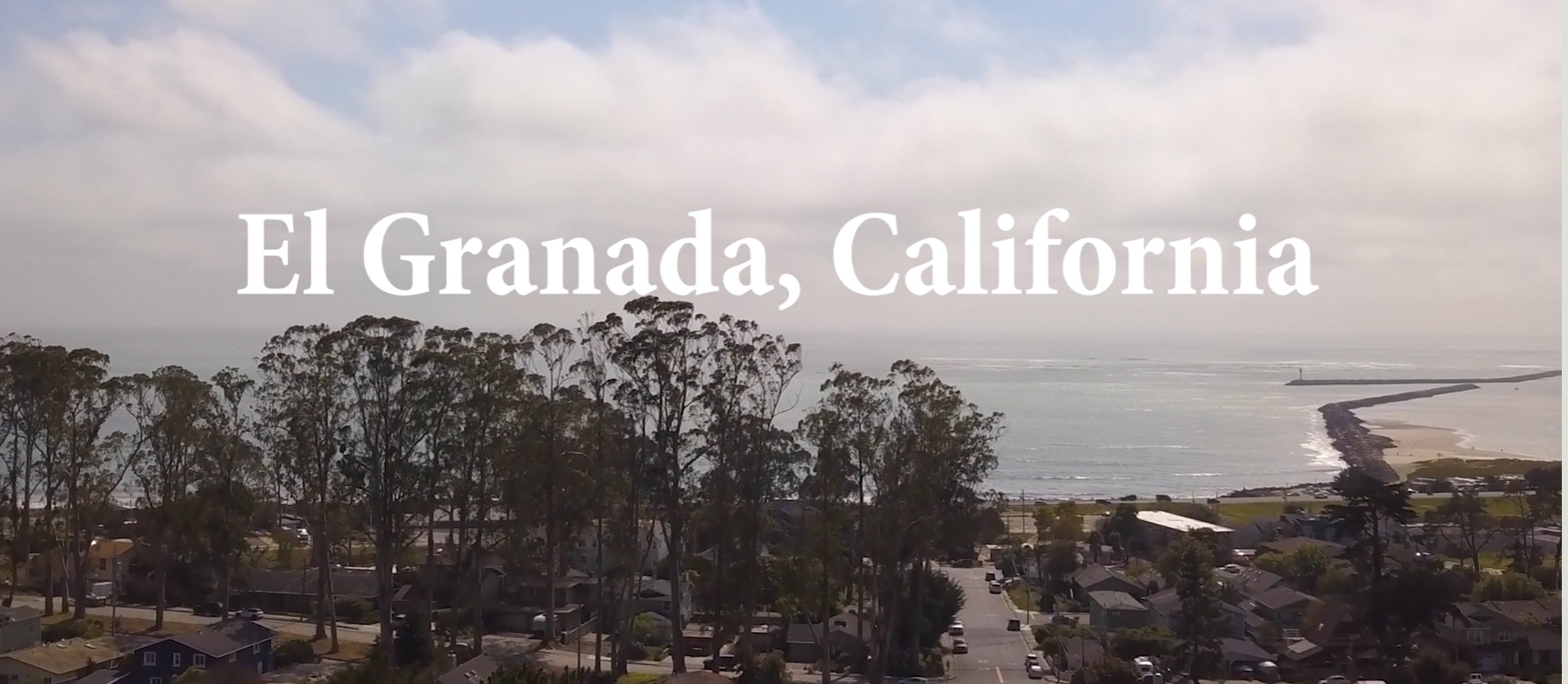
Eucalyptus trees threatened in El Granada

Shortly before I heard from folks in Napa, I learned about a project to destroy eucalyptus in a small community on the coast of San Mateo County.  It’s a foggy coastal location, much like Mount Sutro in San Francisco, where fog drip from the trees during summer months keeps the ground moist and reduces fire hazards. 

The community has made a video (available HERE) about the project and the issues it raises.  It is an even-handed presentation that acknowledges the fire hazards of dense forests in the hills surrounding their community and contrasts that risk with the lower risk of the widely spaced trees in the medians of their village on flat land.  The video explains the many important functions that trees perform to store carbon, improve air quality, provide wind protection and habitat for birds.  The people of El Granada would like the project to reduce fire hazards in the hills, but retain the trees in their street medians because of their ecological value.  It’s a reasoned and reasonable approach.

Source: El Granda Advocates. http://egadvocates.org

The people of El Granada ask for your help to save some of their trees.  Their website (available HERE) invites you to sign their petition.

Predictable…and probably only the beginning

The State of California has committed billions of dollars in fire hazard mitigation, climate change, and biodiversity.  We watched the budgetary plans for these projects being developed in the past year and the plans were recently approved.  Now communities all over California are applying for State grants to implement projects like the two I have described today.  Now it’s up to communities to watch as plans are developed and participate in the process to ensure that the plans reflect their wishes.  It’s your money and your community.  Pay attention and engage in the process.

Postscript…different, but the same

Days before publishing this article, I received an email from Santa Barbara:  Well it is with great sadness we have to report that The University of California at Santa Barbara (UCSB) is again trying to destroy hundreds of Eucalyptus trees here at the University.  They want to destroy what is known as “The Eucalyptus Curtain” the boundary between the University and Isla Vista the college town here.” 

“Eucalyptus Curtain,” UC Santa Barbara. Source: localwiki.org

Some people who are trying to save this grove of eucalyptus are appealing to the California Coastal Commission.  They suggest those who share their opinion contact the CCC HERE.

In this case, the motivation for destroying these trees is not the usual allegation that they are a fire hazard.  According to this article in localwiki, the trees will be destroyed to build more student and faculty housing.  There is no question in my mind that we need more housing and I am rarely opposed to any housing project, including this one.  However, the consequences of destroying these trees are the same regardless of the motivation:

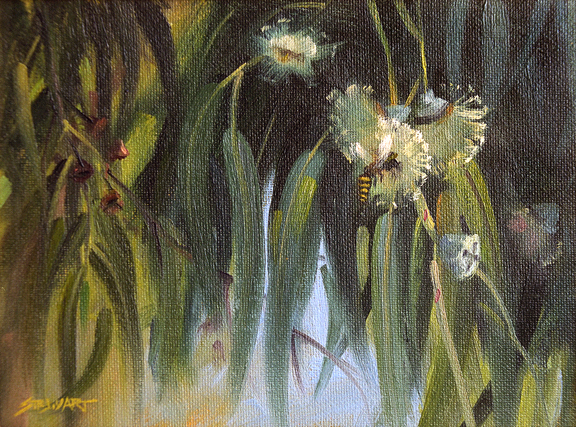
Eucalyptus and Bee, painting by Brian Stewart

The Dawn and Dusk of the Age of Mammals

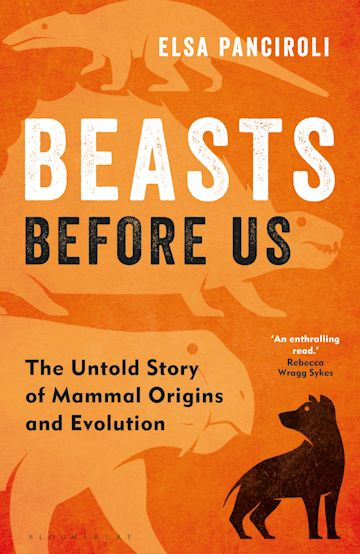
In Beasts Before Us, paleontologist, Elsa Panciroli, traces the evolutionary history of the mammal class of the animal kingdom, of which humans are members, to its origins about 300 million years ago.  It’s a tedious recitation of multitudes of now extinct species from their earliest ancestors up to the dawn of the age of mammals that began 66 million years ago after the abrupt end of the age of dinosaurs. But it’s also a rewarding read because it reminds us of our close relationships with other animals as well as the ways in which we are different.  Those differences predict which mammals will survive the forthcoming sixth great extinction that humans have inflicted on life on Earth.

Mammals living today have in common only one characteristic that distinguishes them from other classes of close relatives.  The subdivisions of mammals alive today have mammary glands that produce milk to feed their young.  The three subdivisions of mammals are monotremes, marsupials, and placentals.  Monotreme species alive today are platypus and echidna whose young are hatched from eggs, but are milk fed by their mothers.  Marsupials are born at an undeveloped stage and carried to term in their mothers’ pouch.  By far the largest group, placentals carry their developing offspring inside the mothers’ abdomen until birth. 

The earliest ancestors of mammals were four-legged vertebrates called amniotes. Amniotes were named for the membrane that lined the hard shells of their eggs, protecting the embryo.  The development of the amniotic membrane provided protection needed to lay and hatch eggs on land rather than the ocean where earlier forms of life lived.  This evolutionary development was associated with the transition of life from the ocean to the land.  The earliest amniotes diverged to take two different evolutionary paths, one as reptiles and dinosaurs (sauropsids) and the other as mammals (synapsids).  Pause here briefly to contemplate our close relationships with other animals. 

The Science of Paleontology

Beasts Before Us is also interesting as a history of paleontology, the branch of science that studies fossils of plants and animals to determine the evolutionary history of life.  Beasts focuses on advances in modern paleontology, but this article takes readers further back in time to appreciate how recently we learned about the scale of past extinctions that predict future extinctions.

Prior to the 19th century, an understanding of extinction was inconsistent with prevailing Western belief that the world was created by God as complete, perfect, and unchangeable.  In the late 17th century fossils of extinct animals were discovered that appeared to be unlike any living species.  Inquiring minds began the search for an explanation for what happened to these unknown species. 

George Cuvier is credited with establishing the modern concept of extinction in a lecture to the French Institute in 1796.  Cuvier is sometimes called the “founding father of paleontology.”  He rejected the theories of evolution, believing instead that extinctions could be explained by “cyclical creations” and catastrophic natural events such as floods. 

The fossil record is limited in what it can tell us about life in deep time because it does not preserve the remains of extinct species with equal reliability.  Bones survive to tell the tale with greater accuracy than soft tissues and plants.  Paleontology is developing techniques to compensate for gaps in the fossil record, drawing from other scientific disciplines, such as botany, biochemistry, mathematics, and engineering. 

Since more than 99% of all species that ever lived on Earth—more than five billion species–are now extinct, we can only imagine the difficulty of the task of piecing together the complete phylogenetic tree of life.  Beasts Before Us gives us a current view of what has been accomplished to date.  Clearly it is not the end of the story and much of the story is still speculative. 

Divergent Evolution

The 300-million year journey from the first ancestors of mammals to modern mammals of today is a story of divergent evolution, the accumulation of differences between closely related populations within species that lead to new species. Tracing that long process was until recently dependent upon the fossil record and was therefore focused on changes in bone structure, particularly teeth, jaws, and skulls for which the fossil record is more intact. 

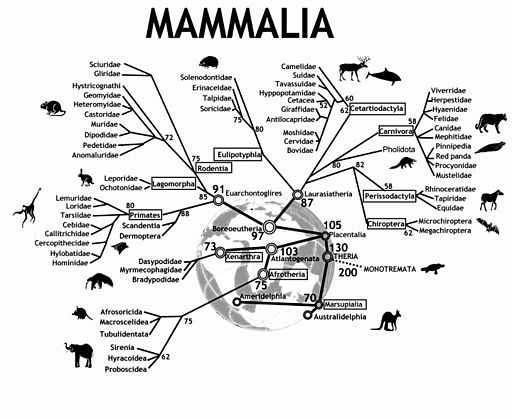
Evolutionary tree of mammals. Wikimedia Commons

These bone structures are important clues about the diet of animals. The teeth of herbivores, insectivores, and carnivores are different.  “Mammal fossils can be distinguished and named based on their teeth alone.” (1) Nearly half of all mammal species are rodents, a name that comes from the Latin word for gnaw.  Their long front teeth grow continuously as they are ground down by gnawing on tough plant material such as tree bark in the case of beavers or the wooden shingles on my home in the case of squirrels.

The digestive systems of mammals also diverged to accommodate their different diets (or vice versa).  Carnivores typically have a short intestinal track where digestion is accomplished with enzymes and resident microbial communities.  Herbivores have a longer digestive system in which plant material is fermented in a series of separate chambers in the case of ruminants (cows, sheep, deer, etc.). 

Divergent evolution creates diverse species with diverse abilities to exploit different ecological niches while reducing competition between species.  Shortly after the divergence of mammal and reptile lineages, the characteristic most consequential to the fate of those lineages was endothermy (warm-bloodedness) in mammals and ectothermy (cold-bloodedness) in reptiles. The divergence of this characteristic occurred about 250 million years ago, shortly after the divergence of mammal and reptile lineages. 

Only mammals and birds are generally capable of generating their body heat internally.  Over millions of years they also evolved insulation that conserves body heat with fur, feathers, and blubber in the case of marine mammals. A diet high in sugar and fat also helps to maintain body heat. Cold blooded animals depend on external heat sources such as sunlight to be active.  These crucial differences in mammals and reptiles relegate them to different ecological niches to which they are suited, for example:

  • Mammals and birds can survive in colder climates than reptiles.
  • Mammals and birds can be more active at night when it is cooler.
  • Mammals and birds can be more active for longer periods of time than reptiles.
  • Mammals and birds can live below ground where it is colder in summer and warmer in winter than above-ground temperatures.
  • On the other hand, mammals and birds must eat more and more frequently than reptiles. 

These significant differences are partly responsible for the sudden transition from the age of dinosaurs to the age of mammals 66 million years ago.  During the age of dinosaurs, mammals were small, lived below ground, and ate primarily insects.  This lifestyle avoided competition with huge dinosaurs that dominated the land. 

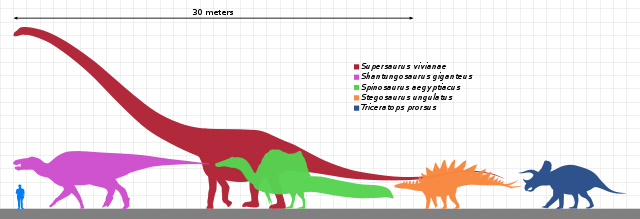
Scale diagram comparing a human and the largest-known dinosaurs of five major clades Creative Commons Attribution-Share Alike 4.0 International license.

When the asteroid hit the Earth 66 million years ago, the climate was suddenly and drastically transformed from a tropical climate to a cool, partly sunless climate.  Vegetation adapted to a tropical climate quickly died, depriving dinosaurs of their food if they weren’t killed outright by the impact. 

Beasts paints a vivid and dire picture of the cataclysmic event that ended the age of dinosaurs.  The asteroid created a crater almost 100 miles in diameter and 12 miles deep.  “An earthquake larger than any recorded in human history would have made the Earth reverberate like a bell.  The thermal shockwave would have flash-fried all life for hundreds of miles.  The blast of air probably flattened forests as much as 1,000 kilometers away…[the impact] created a mega-tsunami at least 330 feet in height…[that] mounted the coasts of North American and barreled inland like a liquid steam-roller…The dust in the atmosphere swirled its way around the planet until it enclosed all life in its smothering grip.  The sun rose, but as little as half of its light could penetrate the dust in the atmosphere.  The sulphur in the dust combined with water droplets to rain sulphuric acid on the land, burning away the green vegetation…Few animals bigger than a Labrador dog survived the extinction event.”  (1; not verbatim)
The fifth extinction predicts the consequences of the sixth extinction

Small mammals were safely below ground and they didn’t require the great quantities of plant food required by dinosaurs.  Mammals inherited the Earth and over millions of years they evolved into some 5,500 mammal species today of which 90% are still small bodied, most of them rodents.

The final chapter of Beasts uses the consequences of the fifth extinction that ended the age of dinosaurs to predict the consequences of the anticipated sixth extinction because “Humans are replicating many of the conditions of previous mass extinctions.” (1)

  • Animals are likely to become more active at night, when temperatures are cooler.
  • Animals are likely to find some respite by living below ground where temperatures are more moderate in winter and summer. 
  • Animals will move to more temperate regions if they can.

The animals that are most likely to survive will be small generalists, who need less food, are not fussy about what they eat, and are more capable of tolerating heat. Think rats. Beasts advises, “If I were you, I’d say goodbye to any wild animal bigger than a pig—zoos are likely to be the only refuges for them in the future we are creating.”

Birds were the only descendants of dinosaurs to survive the fifth great extinction.  They are expected to fare better in the sixth extinction for much the same reason:  they can be active at night; they eat insects as well as plants; they are more mobile than most classes of animals.  We often hear dire predictions of the fate of birds, but in fact they are less threatened than other classes of animals.  A recent study reported that 21% of reptiles are threatened with extinction, a higher risk than birds (of which about 13 percent of species are threatened with extinction) and slightly less than mammals (25 percent). Amphibian species are at highest risk with about 40 percent of species in danger of extinction.  We hear more about birds because their popularity motivates greater media coverage about them.

I will also presume to give my readers some advice. 

  • Quibbling about whether native plants are superior to non-native plants is like arguing about the color of the lifeboat. It really doesn’t matter.  Soon enough we will be glad to have ANY vegetation that is capable of living in the climate we have created. The universe is indifferent to the survival of any specific species of life.
  • You can do more for the environment and the animals that live in it by stopping the use of pesticides than by planting native plants. 
  • Be humble about what you think you know.  Many important scientific concepts such as evolution and extinction are less than 200 years old and the cause of the extinction of dinosaurs was discovered less than 50 years ago.  What you learned 50 years ago may need to be reconsidered and revised.  A rapidly changing situation requires that we keep an open mind to new information.
  • Set meaningful prioritiesClimate change is an existential threat to all life on Earth.  Ask yourself how we can justify the destruction of healthy trees that sequester the carbon that contributes to climate change? 

  1. Elsa Panciroli, Beasts Before Us: The Untold Story of Mammal Origins and Evolution, Bloomsbury Sigma, 2021

History of Earth predicts its future

My interest in the native plant movement began about 25 years ago when my neighborhood park was designated as a “natural area” by San Francisco’s Recreation and Park Department.  My park was only one of 33 parks in San Francisco that were designated as a “natural area.” 

What did it mean to be a “natural area?”  As I studied the plans, my reaction was primarily to the proposed destruction of non-native plants and trees.  Later I realized that the eradication of non-native plants and trees would be accomplished with herbicides. 

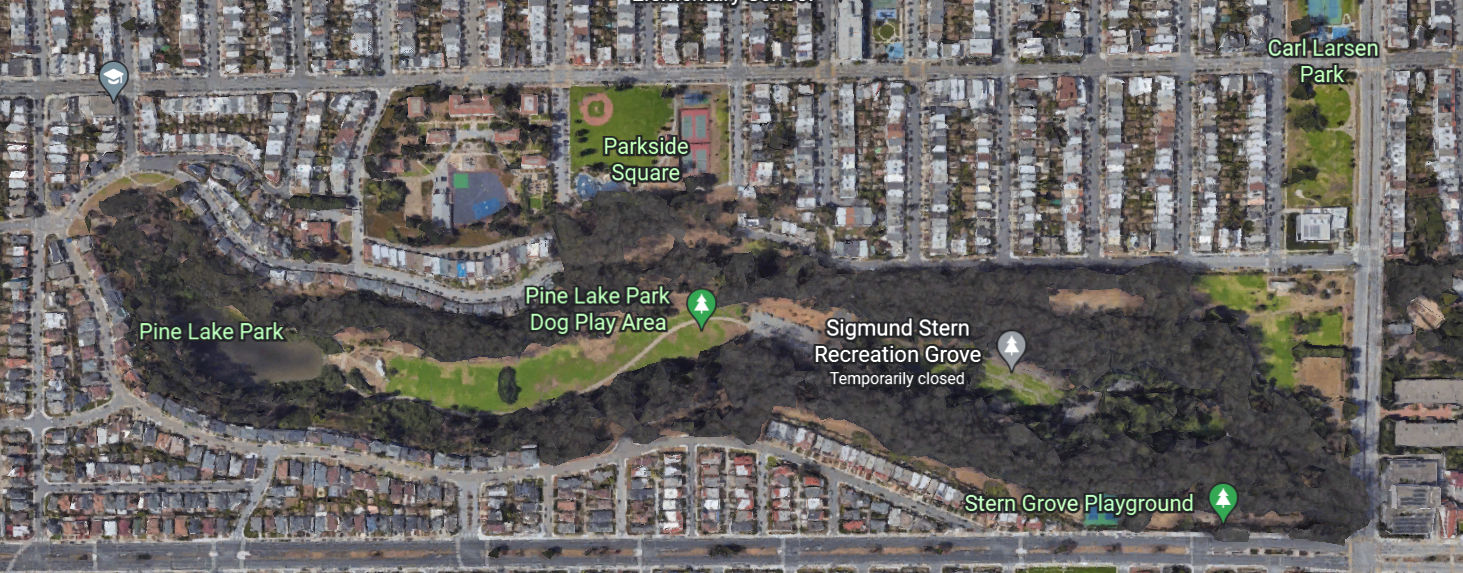
Stern Grove Park in San Francisco was my neighborhood park where I began my long journey to understand why anyone would want to destroy trees in a treeless neighborhood. 

How could the creation of native plant gardens justify the destruction of our urban forest using herbicides?  I have spent the last 25 years trying to answer that question.  There are many useful lines of inquiry in the search for the answer, but the approach that has been most helpful to my understanding of the futility of the undertaking has been the study of the physical and biological forces that created Earth and its inhabitants.  Today, I will take you on an abbreviated journey of the past 4.6 billion years of events on Earth that have resulted in present-day nature, drawing from A Brief History of Earth by Andrew Knoll, Professor of Natural History at Harvard University. (1)

Gravity “created” the Earth

“Gravity is the architect of our universe.”  Gravity is the attraction of objects to one another in proportion to their mass and proximity that over billions of years accumulated the elements dispersed in Earth’s universe.  As these dispersed objects coalesced into stars, planets, moons, and asteroids, Earth was formed about 4.6 billion years ago.

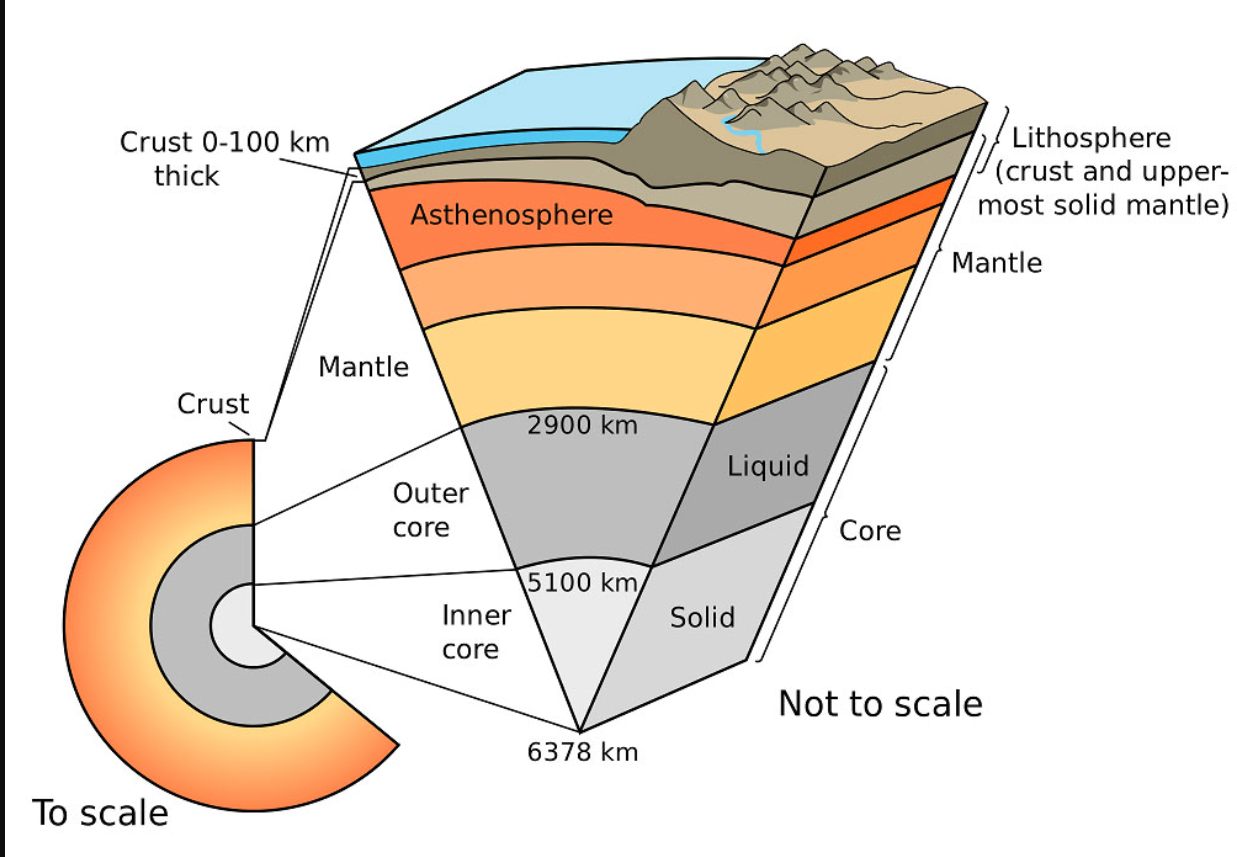
Cross-section of Earth. Source: USGS

“Earth is a rocky ball.”  Its inner core is solid, composed mostly of iron.  Earth’s molten outer core moves by convection as hotter, denser material near the base rises and cooler, less dense matter toward the top sinks.  This circular motion generates electrical current that creates the Earth’s magnetic field.  The mantle is composed of the molten magma that emerges on the surface crust of Earth where tectonic plates are separating and when volcanoes erupt where tectonic plates submerge into the mantle. The crust of Earth that is visible to us is only 1% of Earth’s mass.

Physical Earth

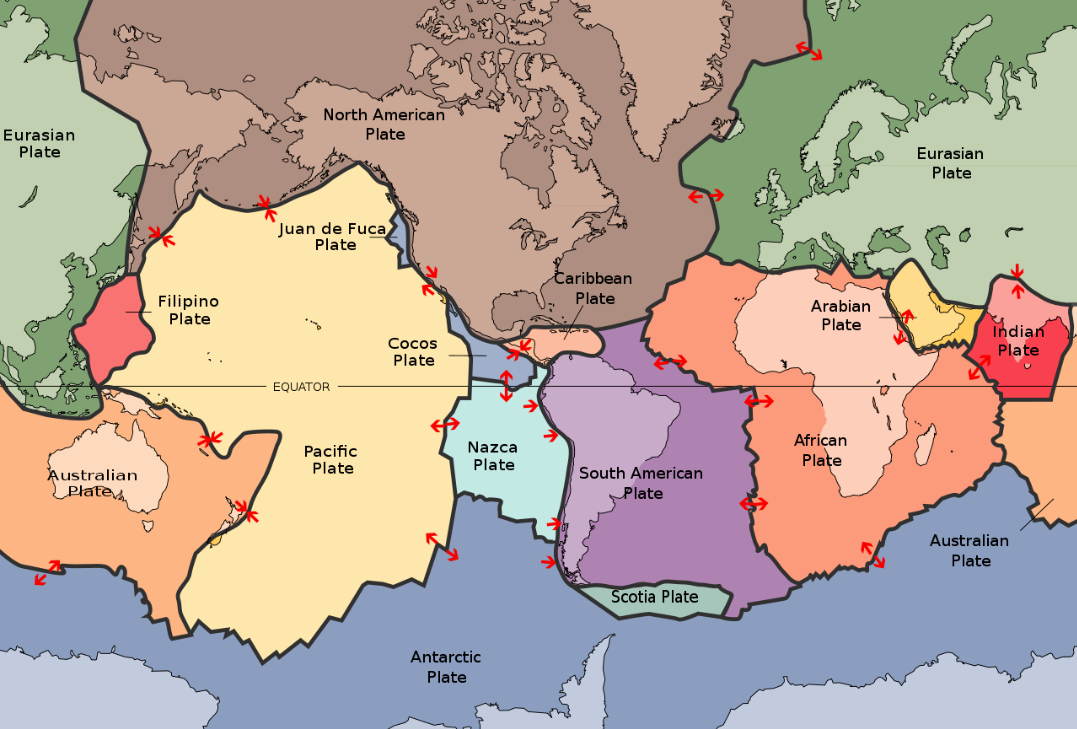
Simplified map of Earth’s principal tectonic plates, which were mapped in the second half of the 20th century (red arrows indicate direction of movement at plate boundaries).  Source:  USGS

The crust of Earth is composed of plates that are moved on the surface of the Earth by the convection current of the mantle.  Some of the plates are moving away from one another where they meet.  As the plates separate, molten magma from the mantle is pushed through the crust, forming new crust.  The North American and Eurasian plates are moving apart in the middle of the Atlantic Ocean at the rate of about 1 inch per year. 

Since the Earth is not getting bigger, the expanding crust collides with adjacent plates.  In some places, the collision of the plates pushes up the crust into mountain ranges.  The Himalayan mountain range is the result of the collision of the Indo-Australian and the Eurasian Plates, a process that continues today.

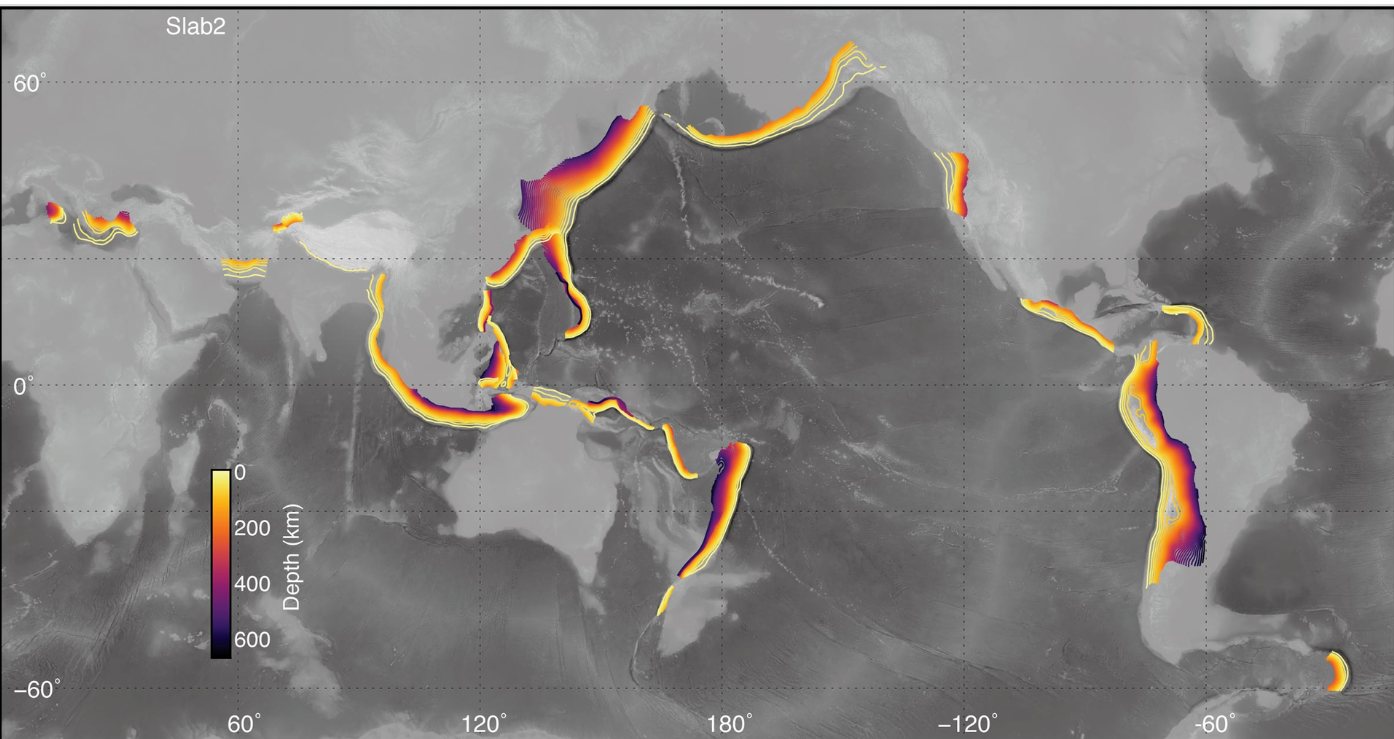
Map of subducted slabs, contoured by depth, for most active subduction zones around the globe. Source:  USGS

In other places, the expanding crust is pushed below the adjacent plate in subduction zones, where the crust dives below the crust into the mantle.  Earthquakes are common in subduction zones and the subducting plate triggers volcanic eruptions in the overriding plate.  Earthquakes are also common where adjacent plates are grinding against one another in opposite directions, as is the case on the coast of California.

Pangea super-continent

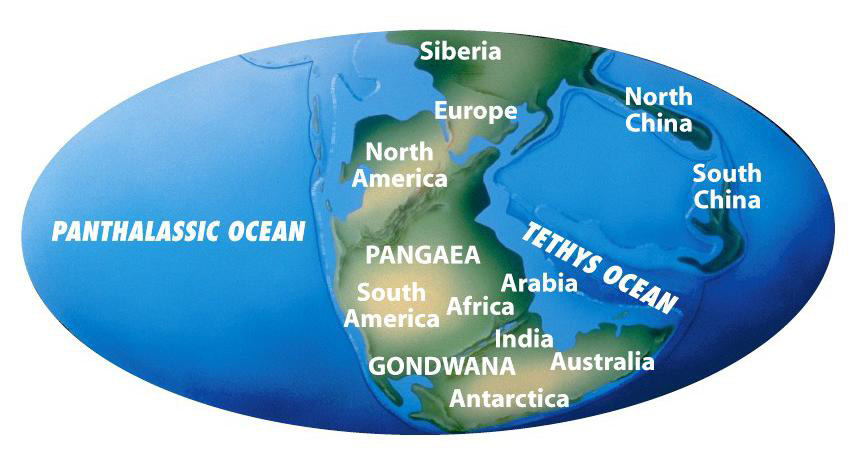
The movement of tectonic plates has assembled and reassembled the Earth’s continents many times. The entire history of the configuration of continents is not known to us because of the cycle of the crust emerging from the mantle only to return to the mantle about 180 million years later.  We know that all continents were fused into a single continent, named Pangea, about 350 million years ago and began to break up 200 million years ago.  Much of life as we know it evolved on Earth while the continents were fused, which is one of the reasons why all life on Earth is related.  Geographic isolation of species results in more biodiversity as genetic drift and different environments result in greater speciation.  Geologists believe such continental mergers are likely in the distant future.  

Earth’s oceans and atmosphere were formed within the first 100 million years of its birth.  Continents were visible above oceans, but small compared to their present size.  The absence of oxygen in the air at that early stage was the most significant difference between present and early Earth.

Biological Earth

Life, as presently defined, requires growth and reproduction, metabolism, and evolution. (I say, “presently defined” because debate continues about defining viruses as life since they do not meet all criteria.)  The chemical components required to perform the functions of life and the natural processes to combine them (such as heat and lightning) were available on Earth for millions of years before they combined to perform the functions of life.  Precisely how and when that happened on Earth is studied intensely, but not conclusively known, although Professor Knoll describes theoretical possibilities. 

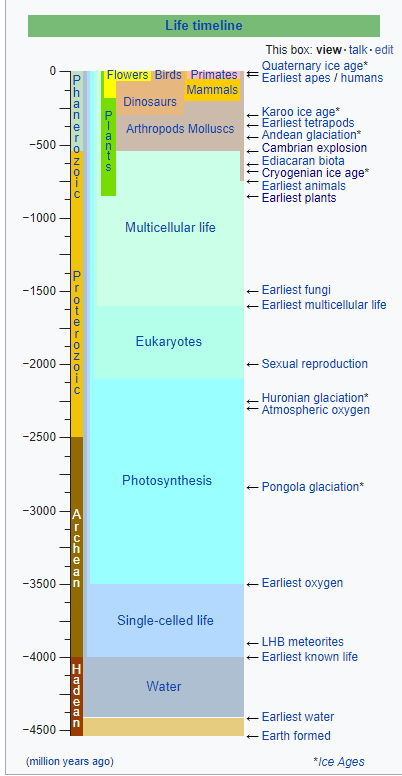
The geological record suggests that “Earth has been a biological planet for most of its long history.” Microbes may have been living on Earth 4 billion years ago.  Climate on Earth was warm at that time for the same reason the climate is warming today.  The atmosphere was composed primarily of carbon dioxide (the greenhouse gas that traps heat on the surface of the Earth) and nitrogen:  “…life emerged on an Earth barely recognizable to the modern eye—lots of water and not much land, lots of carbon dioxide but little or no oxygen…”

Oxygen Earth

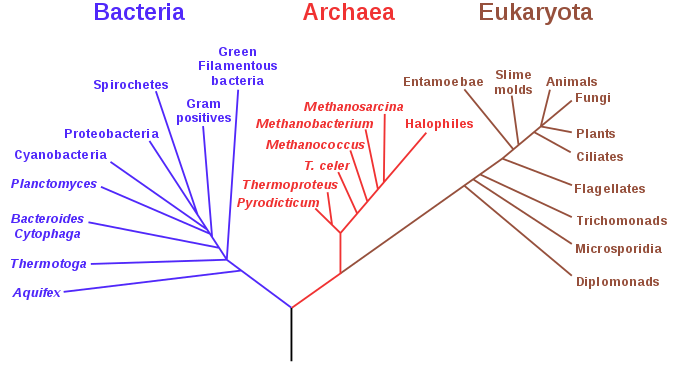
Phylogenetic tree of life based on Carl Woese et al. rRNA analysis. The vertical line at bottom represents the last universal common ancestor.

Two of the three domains of life were capable of living without oxygen:  archaea and bacteria.  Archaea are single-cells without nuclei.  We are all too familiar with bacteria, as they are as much a part of our bodies as our own cells.  Oxygen was the prerequisite for the evolution of the third domain of life, eukarya.  The kingdoms of eukarya most familiar to us are plants, animals, and fungi. 

Oxygen arrived on Earth when early life forms evolved the ability to photosynthesize, the process by which plants (and some other organisms) use sunlight to synthesize food from carbon dioxide and water, generating oxygen as a byproduct.  This transition occurred about 2.4 billion years ago, as measured by the absence of iron on the seafloor after that time. 

Photosynthesis alone could not have accomplished the transformation of Earth’s atmosphere to the balance of carbon dioxide and oxygen needed to support complex life on our planet because photosynthesis also requires nutrients as well as sunlight and water.  Phosphorous weathers from rocks, a process that was initially limited by the small amount of land above sea level.  As the planet matured, more land emerged from the sea, making more phosphorous available to photosynthesizing organisms.  Photosynthesis was also enhanced when some bacteria and archaea evolved the ability to convert nitrogen gas into biologically usable molecules, a process called nitrogen-fixing.  Many plants in the legume family are capable of nitrogen-fixing today.

Extinctions of the past predict extinctions of the future

There have been five major extinction events in the past 500 million years that changed the course of evolution of life on Earth and at least 20 mass extinctions in total (2).  The first representatives of all modern animal phyla (a taxonomic classification between kingdom and class) evolved during the Cambrian Period (541-486 million years ago).  All extinction events were associated with radical changes in the climate.  Many of the changes in the climate were caused by changes in the balance of carbon dioxide and oxygen in the atmosphere.  All these catastrophic events were natural events, not caused by the activities of humans because they all occurred long before the advent of human evolution. 

The third and biggest extinction event occurred 252 million years ago at the end of the Permian geologic period, when more than 90% of marine animals and 70% of terrestrial species disappeared.  At that time, continents were fused into the single supercontinent of Pangea.  The extinction of most life on Earth was caused by the sudden and catastrophic change in the atmosphere–and therefore the climate–by an episode of volcanism in Siberia “a million times greater than any volcanism ever witnessed by humans” or our primate ancestors.  Gases emitted by volcanism at the end of the Permian period rapidly increased the carbon dioxide content of the atmosphere and oceans by several times greater than before that event.  “It would take 10 million years for life to reassemble into something approaching the complexity of the ecosystems that preceded it. The world that emerged from the volcanic dust was unlike anything that came before.” (2) The current increase of carbon dioxide in the atmosphere caused by the burning of fossil fuels by human activities is comparable to this event and is expected to cause the sixth great extinction on Earth.  

The fifth and most recent massive extinction event occurred 66 million years ago, bringing 170 million years of dinosaur evolution to an abrupt end. The entire environment of the planet was radically and suddenly altered by the impact of an asteroid 7 miles in diameter that landed on what is now the Yucatan peninsula in Mexico.  The impact engulfed Earth in a dust cloud that precipitated the equivalent of a nuclear winterkilling most vegetation and animals adapted to a much warmer climate.  As with all massive extinctions, it took millions of years for plants and animals to slowly evolve adaptations to the new environment.  Dinosaurs did not evolve again, a reminder that evolution does not necessarily repeat itself (although birds evolved from dinosaurs).  Although there were small mammals during the dinosaur age, the disappearance of dinosaurs and corresponding changes in the climate introduced the age of mammals, including the human lineage about 300,000 years ago.  When multiple animal groups disappear it creates opportunities by reducing competition between groups.

What can we learn from the history of Earth?

If a native plant advocate were reading this abbreviated history of Earth, these are the lessons I would hope they might learn from it:


  1. Andrew H. Knoll, A Brief History of Earth, 2021.  All quotes in this article are from this excellent book unless otherwise indicated.
  2. Elsa Panciroli, Beasts Before Us: The Untold Story of Mammal Origins and Evolution, Bloomsbury Sigma, 2021.

Weeds are making a comeback!

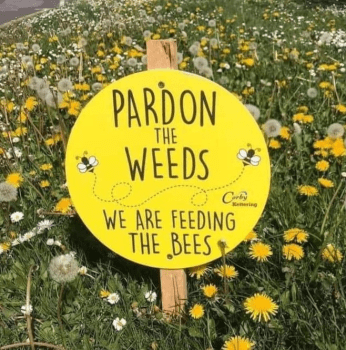
While the native plant movement remains strong in California and locally in the San Francisco Bay Area, some communities are waking up to the fact that weeds make valuable contributions to our gardens and the wildlife that lives in them.  The British have always been ahead of us in welcoming plants from all over the world in their gardens.  The British have been enthusiastic importers of plants from all over the world for hundreds of years.  They had one of the biggest empires in the world, spanning the globe from India to Africa, Australia, New Zealand, and America, which put them in a unique position to sample the botanical riches of the world.

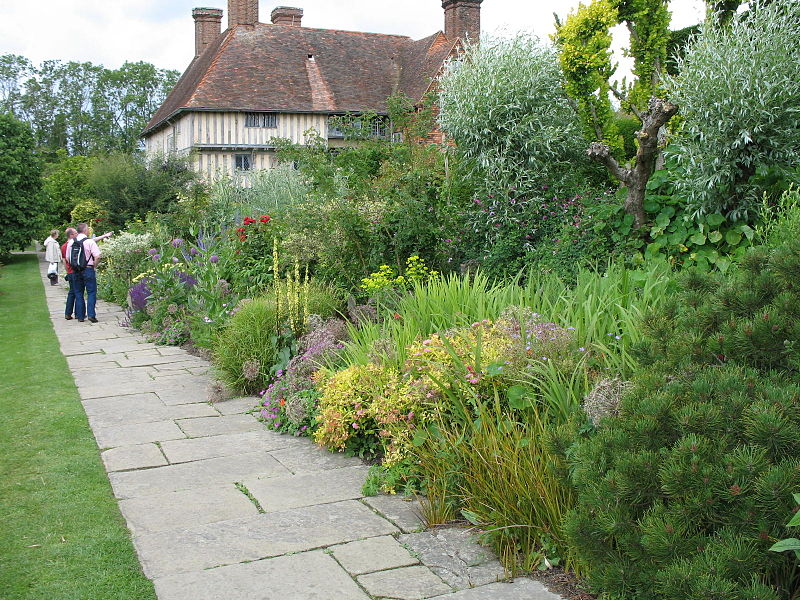
The English garden, where plants from all over the world are welcome

In a recent article in The Guardian, an English gardener describes her journey from fighting the weeds in her garden to her new relationship with them:  “I remember writing, many years ago, about my fight to get rid of these dandelions. Clearly, I didn’t win. Now, when I am greeted by them, I am glad I lost the battle. These days, I truly consider them friends…they are welcome in my garden, because I know they do more good than harm.”

The English gardener reminds us that the war on weeds began only recently.  Going deep into agricultural history, weeds were natural forage that were a part of our diet. Weeds fed our domesticated animals, stuffed our mattresses and made twine and rope. Many have medicinal properties, but most have marketable substitutes now. They were tolerated on the edges of agricultural fields and in our gardens.

The typical American lawn, maintained with pesticides and fertilizer is not habitat for pollinators or other insects. Source: Pristine Lawn Care Plus

The war on weeds began after World War II, when chemicals were introduced to agriculture.  Pesticides were considered benign for decades.  We have learned only recently of the dangers of some pesticides. The promotion of pesticides changed the aesthetics of gardening, initiating an era in which weeds were banished from our agricultural fields and our gardens.  

Note the drone hovering over the children in a strawberry field. Drones are the latest development in chemical warfare. They are used to spot non-native plants in open space as well as to aerial spray pesticides. They are cheaper than other methods of application and for that reason are likely to increase the use of pesticides.

Do not underestimate the power of propaganda to promote the use of pesticides:  “A publishing company linked to the most powerful agricultural lobby group in the U.S. is releasing children’s books extolling the benefits of pesticides and nitrogen fertilizers.”  Industrial agriculture begins the indoctrination of the public at childhood. 

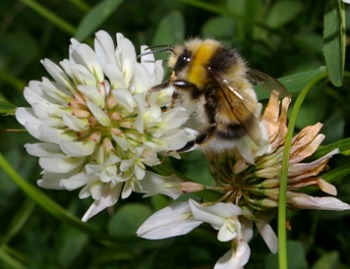
Bumblebee in clover. Source: buzzaboutbees.net

Weeds made their way back into our gardens partly by evolving resistance to the pesticides we used for decades to kill them.  There is growing awareness of the impact of pesticides on insects and wildlife.  As populations of pollinators decline, we are more willing to indulge their preference for weeds such as dandelions and clover.  Weeds are often the first to arrive in the spring garden, as native bees are emerging from their winter hibernation in ground nests.  Weeds prolong the blooming season in our gardens, providing nectar and pollen before cultivated plants are blooming. 

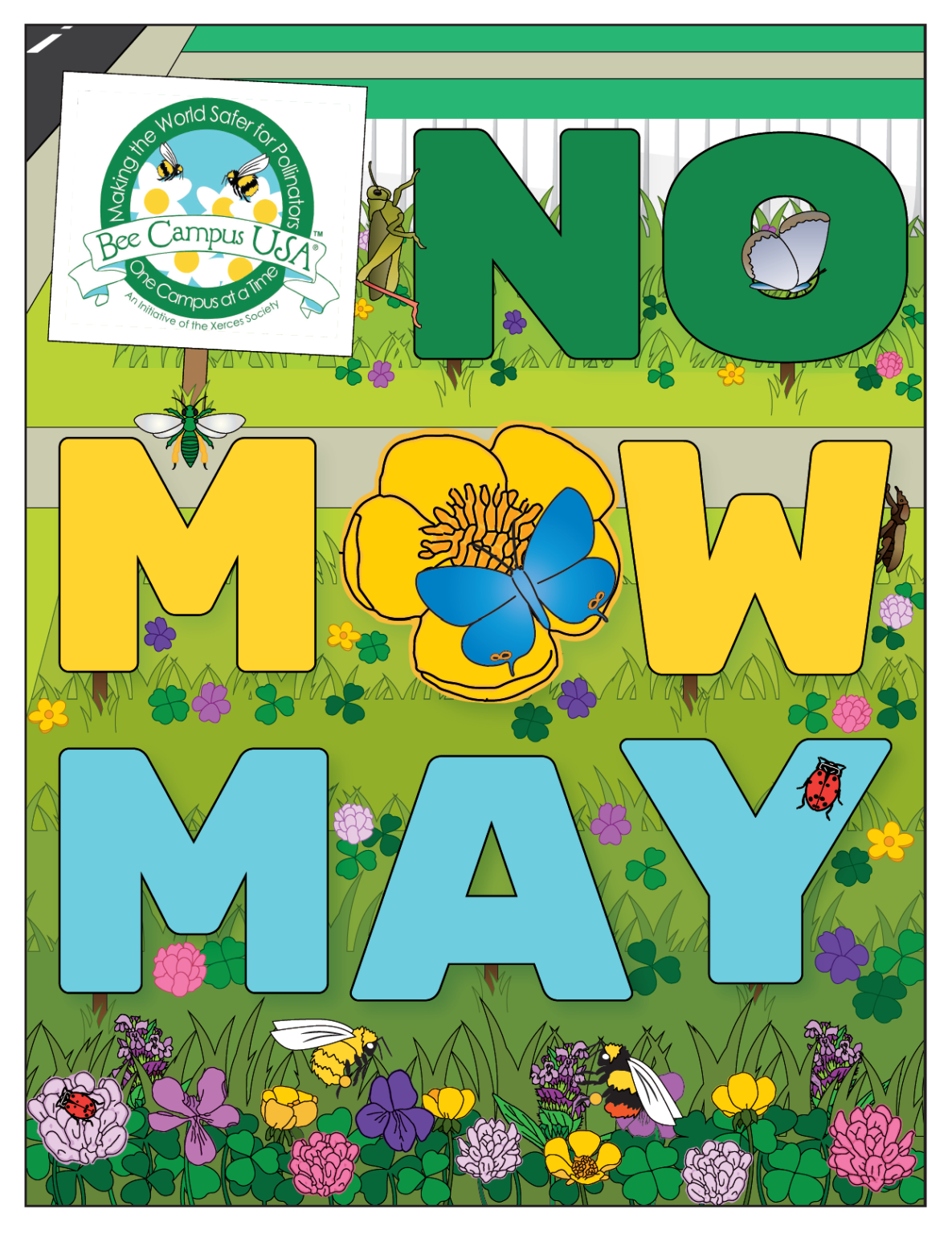
“No Mow May” comes to America!

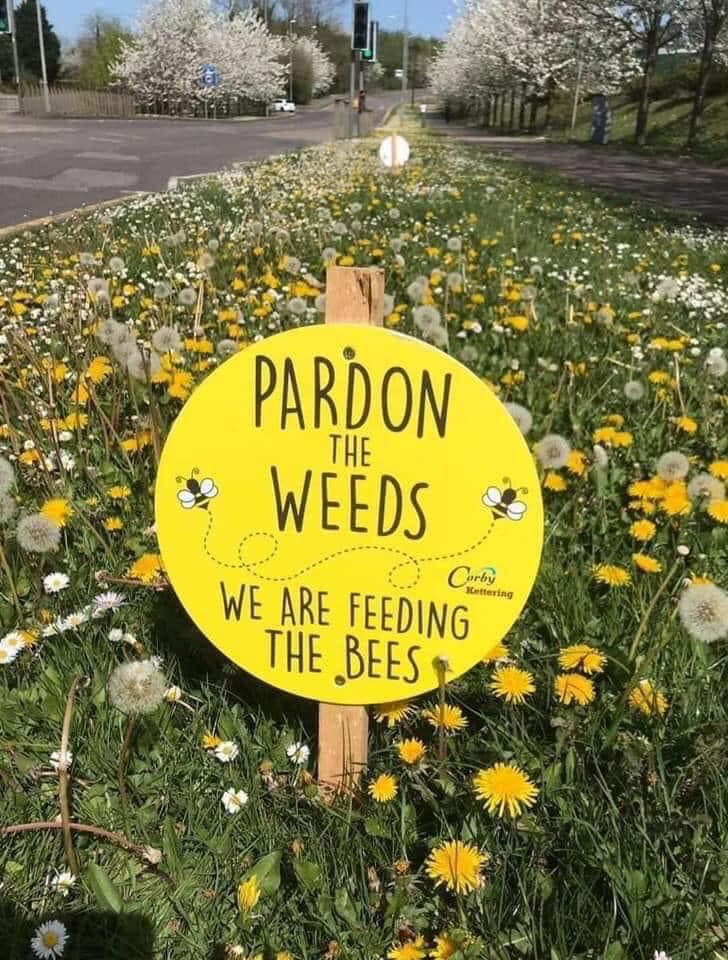
“No Mow May” originated in Britain out of concern for declining populations of bees.  Communities make a commitment to stop mowing their lawns in May to let the weeds dominate their lawns.  Weeds such as dandelions and clover give the bees an early boost in the spring that studies show increases bee populations.  Lawns maintained with pesticides and fertilizers provide poor habitat for bees. 

Two professors in the Midwest of the US introduced “No Mow May” to their community in Wisconsin in 2020.  They signed up 435 residences to participate in “No Mow May” and studied the impact:  “They found that No Mow May lawns had five times the number of bees and three times the bee species than did mown parks. Armed with this information, they asked other communities to participate.”  According to the New York Times, “By 2021, a dozen communities across Wisconsin had adopted No Mow May. It also spread to communities in Iowa, Minnesota, Illinois and Montana.”

Farmers climb on board

Hedgerows are the backbone of the English countryside.  They are a complex bramble of woody and herbaceous plants that traditionally served as fences, separating roads from agricultural fields and confining domesticated animals.  They nearly disappeared when industrial agriculture dictated that fields be cultivated from edge to edge. They are making a comeback in the English countryside as farmers realize that their loss contributed to the loss of wildlife.  The concept of hedgerows as vital habitat is slowly making its way to America.

US Department of Agriculture reports improvements in agricultural practices in the past 10 years:  more no-till farming that reduces fossil fuel use and carbon loss from the soil; more efficient irrigation methods; broader field borders for pollinators and wildlife; more crop rotations that reduce disease and insect pests; reduction of nitrogen and phosphorous run-off; reduction in diesel fuel use, etc.  These are all well-known methods of reducing environmental damage from industrial agriculture, but there is now evidence that farmers are actually adopting them. 

Nativists are late to the game

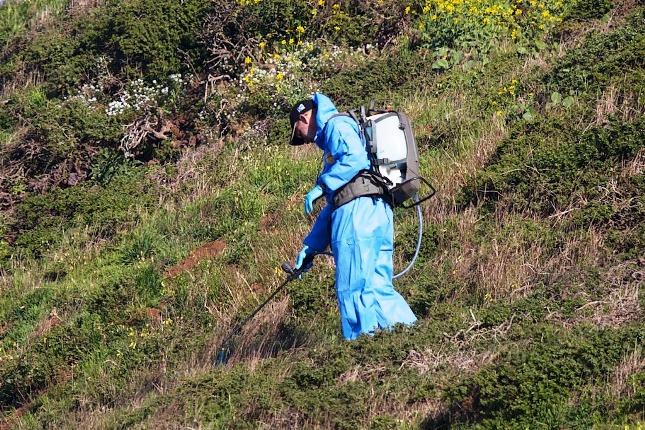
We see progress being made to reduce pesticide use and provide more diverse habitat for wildlife, but nativists drag their feet.  They continue to use pesticide to eradicate non-native plants and they deny the value of non-native plants to insects and wildlife, despite overwhelming evidence to the contrary. 

In a recent comment posted on Conservation Sense and Nonsense, a nativist explains the justification for using herbicides to eradicate non-native plants:  “No one likes herbicides, but in the absence of a labor force willing to abandon its modern conveniences to do very hard work, they are important tools in restoration ecology, and methods are improving as a result of careful science to determine how the least amount of them could be used to gain the greatest amount of benefits to the maximum amount of species. Throwing those tools away is about like tossing chemotherapy or vaccinations because of that “all-or-nothing” black or white point of view that native plant supporters are being (unjustly) accused of.”

For nativists, the harm done by non-native plants is greater than the harm done by pesticides.  This equation does not take into consideration the benefits of many non-native plants to wildlife and it underestimates the damage caused by pesticides to the environment and its inhabitants.   

Argentine Ants: An “invasion” that wasn’t

Bay Nature article about Argentine ants

Bay Nature published an article about Argentine ants with an alarming title and disturbing accusations, such as:

  • “…from its home range around the Paraná River region in Northern Argentina, this ant has spread to six continents and numerous islands, including Hawaii. In numbers, it is probably the most successful invasive nonhuman creature in California.”  
  • “Argentine ants have been documented aggressively going after other, bigger species of ants.”
  • “…most native ants cannot resist well and are wiped out by the Argentine ants.”
  • When native ants are displaced, it can disrupt whole ecosystems and reduce the diversity of other arthropods in the region.”

After establishing the Argentine ant’s credentials as a dangerous “invasive species,” the article abruptly changes directions by contradicting itself.  According to a 30-year monitoring survey of Argentine ant populations at the 1,200 acre Jasper Ridge Biological Reserve, “…the ants had, counter to expectations, actually retreated from some areas they had occupied in previous years at Jasper Ridge…”  Early survey data showed the Argentine ants spreading rapidly in the preserve.  They reached a stable distribution around 2001, and have since declined. 

The monitoring survey at Jasper Ridge speculates that the decline in Argentine ant populations was caused by drought.  However, that theory is not consistent with similar declines in Argentine ant populations elsewhere, where and when there was no drought. 

Jasper Ridge is just one of many places that have reported declining populations of Argentine ants over many years.  In 2011, Scientists in New Zealand reported the disappearance of the Argentine ant from 40% of sites they populated in the past and their populations have shrunk significantly where they are still found.  Native ants have “reinvaded” the areas vacated by the Argentine ant.  The scientists reporting this finding “concluded the species naturally collapses after 10 to 20 years.”

In an unpublished communication in 2011 with an entomologist at UC Davis, I learned that Argentine ant populations in Davis were declining. 

In 2008, a study of ants in San Francisco’s “natural areas” in city parks reported that the existence of non-native Argentine ants does not have a negative impact on populations of native ants. (1) They report that Argentine ants occupy the perimeter of the “natural areas” where native ants generally are not found.  This observation contradicts the usual nativist claims that non-native plant and animal species have negative impacts on native species.

The “invasion” curve

Introduced species are often accused of being invasive and there is a range of explanations, including the bias against non-native species that assumes every non-native species will eventually becoming invasive.  In some cases, a new species spreads aggressively because it is better adapted to disturbed conditions to which it has been introduced.  The initial success of an introduced species is sometimes enabled by the absence of its predators in its new home.  This is called “predator release,” which does not confer permanent protection to a new species that will eventually encounter new predators.  These and likely other factors are probably operating simultaneously. 

Like most so-called “invasions,” introduced plants and animals may briefly expand, but eventually most find their niche in the ecosystem without causing permanent harm to their neighbors.  The assumption that introduced plants and animals threaten native species is usually unsupported by empirical evidence 

Journalistic due diligence

If the author of the Bay Nature article about Argentine ants had searched research literature about Argentine ants, she could have learned that the negative tone of the article and its hyperbolic title were not justified.  In the author’s defense, the demonization of non-native plants and animals is routine in mainstream media.  The bad news about introduced species always precedes their eventual participation in ecosystems and the record is seldom corrected when they do, as in the case of Argentine ants. The reader can compensate for this journalistic bias by reserving judgment about non-native species until more is known about their fate. 


  • Kevin M. Clarke, et. al., “The influence of urban park characteristics on ant communities,” Urban Ecosyst, 11:317-334, 2008

A Natural History of the Future

“The way out of the depression and grief and guilt of the carbon cul-de-sac we have driven down is to contemplate the world without us. To know that the Earth, that life, will continue its evolutionary journey in all its mystery and wonder.” Ben Rawlence in The Treeline

Using what he calls the laws of biological nature, academic ecologist Rob Dunn predicts the future of life on Earth. (1)  His book is based on the premise that by 2080, climate change will require that hundreds of millions of plant and animal species—in fact, most species–will need to migrate to new regions and even new continents to survive.  In the past, conservation biologists were focused on conserving species in particular places.  Now they are focused on getting species from where they are now to where they need to go to survive.

In Dunn’s description of ecology in the future, the native plant movement is irrelevant, even an anachronism.  Instead of trying to restore native plants to places where they haven’t existed for over 100 years, we are creating wildlife corridors to bypass the obstacles humans have created that confine plants and animals to their historical ranges considered “native.” 

The past is the best predictor of the future. Therefore, Dunn starts his story with a quick review of the history of the science that has framed our understanding of ecology.  Carl Linnaeus was the first to create a widely accepted method of classifying plants and animals in the 18th century.  Ironically, he lived in Sweden, one of the places on the planet with the least plant diversity.  Colombia, near the equator, is twice the size of Sweden but has roughly 20 times the number of plant species because biodiversity is greatest where it is hot and wet.

Global Diversity of Vascular Plants. Source: Wilhelm Barthlott, et. al., “Global Centers of Vascular Plant Diversity,” Nova Acta Leopoldina, 2005


Humans always have paid more attention to the plants that surround us and the animals most like us.  Dunn calls this the law of anthropocentrism.  We are the center of our own human universe.  Consequently, our awareness of the population of insects that vastly outnumber us came late to our attention in the 20th century.  In the 21st century we learned that all other forms of life are outnumbered by the microbial life of bacteria, viruses, and fungi that preceded us by many millions of years.  Our knowledge of that vast realm of life remains limited although it is far more important to the future of the planet than we realize because those forms of life will outlast our species and many others like us.

Tropical regions are expanding into temperate regions

The diversity and abundance of life in hot and wet tropical climates give us important clues about the future of our warming climate.  We tend to think of diversity as a positive feature of ecosystems, but we should not overlook that tropical regions are also the home of many diseases, such as malaria, dengue fever, zika, and yellow fever that are carried by insects that prey on animal hosts, including humans.  In the past, the range of these disease-carrying insects was restricted to tropical regions, but the warming climate will enable them to move into temperate regions as they warm. The warming climate will also enable the movement of insects that are predators of our crops and our forests into temperate regions.  For example, over 180 million native conifers in California have been killed in the past 10 years by a combination of drought and native bark beetles that were killed during cold winters in the past, but no longer are.  Ticks are plaguing wild animals and spreading disease to humans in the Northeast where they did not live in the cooler past. 

Human populations are densest in temperate regions“The ‘ideal’ average annual temperature for ancient human populations, at least from the perspective of density, appears to have been about 55.4⁰F, roughly the mean annual temperature of San Francisco…” (1) This is where humans are most comfortable, free of tropical diseases, and where our food crops grow best.  As tropical regions expand into temperate regions, humans will experience these issues or they will migrate to cooler climates if they can.

Our ability to cope with the warming climate is greatly complicated by the extreme variability of the climate that is an equally important feature of climate change.  It’s not just a question of staying cool.  We must also be prepared for episodic extreme cold and floods alternating with droughts. Animals stressed by warmer temperatures are more easily wiped out by the whiplash of sudden floods or drought.

Diversity results in resiliency

Diversity can be insurance against such variability.  If one type of crop is vulnerable to an insect predator, but another is not, growing both crops simultaneously increases resiliency.  That principle applies equally to crops that are sensitive to heat, cold, drought, or floods. 

Agricultural biodiversity. Source: Number of harvested crops per hectar combining 175 different crops. Source: Monfreda et al. 2008. “Farming the planet: Geographic distribution of crop areas, yields, physiological types, and net primary production in the year 2000”. Global Biogeochemical Cycles, Vol. 22.

Historically, cultures that grew diverse crops were less likely to experience famine than those that cultivated monocultures.  The Irish potato famine of the mid-19th century is a case in point.  The Irish were dependent upon potatoes partly because other crops were exported to Britain by land owners. When the potato crop was killed by blight, more than one million people died in Ireland and another million left Ireland.  The population dropped about 20-25% due to death and emigration.  The diversity of crops in the United States (where corn is the commodity crop) and Brazil (where soy is the commodity crop) is very low, compared to other countries.  This lack of diversity makes us more vulnerable to crop failure and famine, particularly in an unpredictable climate.

Change in total use of herbicides, antibiotics, transgenic pesticide producing crops, glyphosate, and insecticides globally since 1990. Source: A Natural History of the Future

Instead of increasing crop diversity, we have elected to conduct chemical warfare on the predators of our crops by using biocides, such as pesticides for agricultural weeds and insects and antibiotics for domesticated animals.  The scale of our chemical warfare has increased in response to growing threats to our food supply.  This is a losing strategy because as we increase the use of biocides we accelerate evolution that creates resistance to our biocides. We are breeding superweeds, insects, and bacteria that cannot be killed by our chemicals.  This strategy is ultimately a dead end.

Evolution determines winners and losers

Inevitably, evolution will separate the survivors of climate change from its victims. Dunn reminds us that “The average longevity of animal species appears to be around two million years…” for extinct taxonomic groups that have been studied.  In the short run, Dunn bets on the animals that are most adaptable, just as Darwin did 160 years ago.  The animals most capable of inventing new strategies to cope with change and unpredictability will be more capable of surviving.  In the bird world, that’s corvids (crows, ravens, jays, etc.) and parrots.  In the animal world that’s humans and coyotes.  We aren’t helping adaptable animals survive because we are killing abundant animals based on a belief it will benefit rare animals.  Even in our urban setting, the East Bay Regional Park District contracts Federal Wildlife Services to kill animals it considers “over-abundant,” including gulls, coyotes, free-roaming cats, non-native foxes, and other urban wildlife throughout the Park District.  We are betting on evolutionary losers.


If and when humans create the conditions that cause our extinction, many of our predators are likely to disappear with us.  Bed bugs and thousands of other human parasites are unlikely to survive without us.  Many domestic animals will go extinct too, including our dogs.  On the bright side, Dunn predicts that cats and goats are capable of surviving without us.             

Timeline of the evolution of life. Source: CK-12 Foundation

However, in the long run Dunn bets on microbial life to outlast humans and the plants and animals with which we have shared Earth.  Humans are late to the game, having evolved from earlier hominoids only 300,000 years ago, or so.  The plants and animals that would be recognizable to us preceded us by some 500 million years, or so.  But microbial life that is largely invisible to us goes back much further in time and will undoubtedly outlast us.  Dunn says microbial life will give a big, metaphorical sigh of relief to see us gone and our environmental pollutants with us.  Then microbial life will begin again the long process of rebuilding more complex life with their genetic building blocks and the tools of evolution. 

Some may consider it a sad story.  I consider it a hopeful story, because it tells me that no matter what we do to our planet, we cannot kill it.  For the moment, it seems clear that even if we are not capable of saving ourselves at least we can’t kill all life on Earth.  New life will evolve, but its features are unfathomable because evolution moves only forward, not back and it does not necessarily repeat itself. 


  1. A Natural History of the Future, Rob Dunn, Basic Books, 2021