For US Fish & Wildlife Service “Management” Means Killing

“It makes me sad, but range expansions are a part of natural systems. We just happened to be watching when one occurred. Even if [we’re to blame], we’re probably going to have to live with it.”
Eric Forsman, US Forest Service

US Fish & Wildlife Service (USFWS) proposes to kill 470,000 barred owls in the next 30 years in an effort to save the northern spotted owl (NSO) and a closely related sub-species in California.  The deadline for making a comment on this proposal is January 16, 2024.  Instructions for making comments are available HERE

Today, I will tell you about this proposal, how it came about, and why I am opposed to the proposal.  I provide links to the source documents so you can read them yourself.  I hope this information will help you reach your own conclusions about the plan and submit a public comment. 

USFWS Barred Owl Management Strategy

The purpose of the Barred Owl Management Strategy is protection for the dwindling population of northern spotted owls (NSO) in the Pacific Northwest (Washington, Oregon, and Northern California).  NSOs were classified as a threatened species by USFWS in 1990.  The first Recovery Plan for NSO, published in 2011, identified habitat loss and barred owls as the primary threats to NSOs.  The most recent Recovery Plan has added “past habitat loss, continued timber harvest, and wildfire” to the list of threats to NSOs.
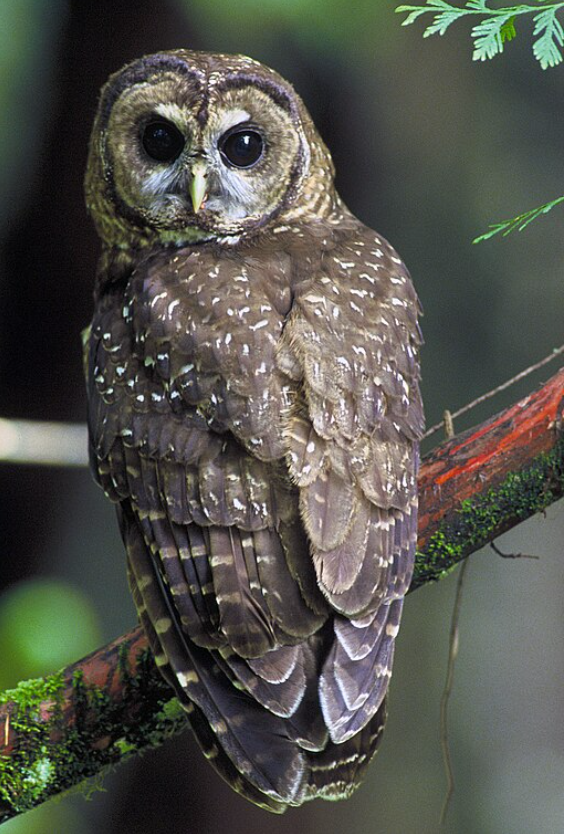
Northern spotted owl. USFWS

The Barred Owl Management Strategy also proposes “management” of barred owls to protect the California spotted owl (CSO), which is a subspecies of NSOs.  Although endangered status for CSO was proposed in February 2023, endangered status has not been granted.  Yet, USFWS proposes to extend the same lethal removal measures used to protect NSOs to CSOs.  In addition to the threats to NSOs, California spotted owls are also threatened by fragmented habitat and forest mortality caused by drought and correlated disease, which have killed over 300 million conifers in California in the past 10 years.
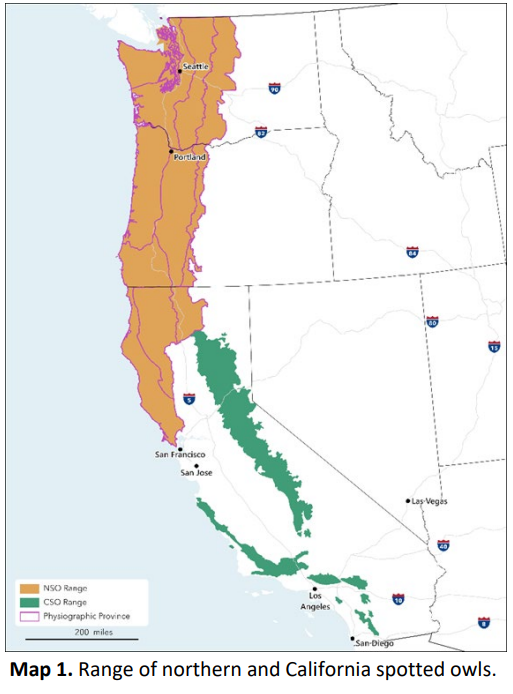
Despite the many threats to spotted owls, the Management Strategy intended to protect them addresses only one of those threats:  barred owls.   It makes no proposals for improving or expanding habitat or addressing the impact of climate change on forests.

The Barred Owl Management Strategy is a voluntary plan.  Federal agencies in spotted owl territory (Bureau of Land Management, US Forest Service, and National Park Service) will be “encouraged” to implement the plan.  If state, commercial, private property, and tribal land owners choose to participate they will be granted the same “take” permits required by the Migratory Bird Treaty Act that federal land managers will be granted, so long as they agree to follow the protocol for “removing” barred owls from their properties.

The word “removal” in the context of the Management Strategy means “lethal removal.”  The protocol requires that barred owls be found by playing a recording of their distinctive call (described as “who cooks for you?”) and shooting the owl as it flies toward the call and the shooter.  If guns are not allowed where barred owls are found, they must be captured and euthanized.  Hybrids of barred owls and spotted owls will also be killed, despite the fact that accurately identifying hybrids is considered difficult, particularly in subsequent generations.    

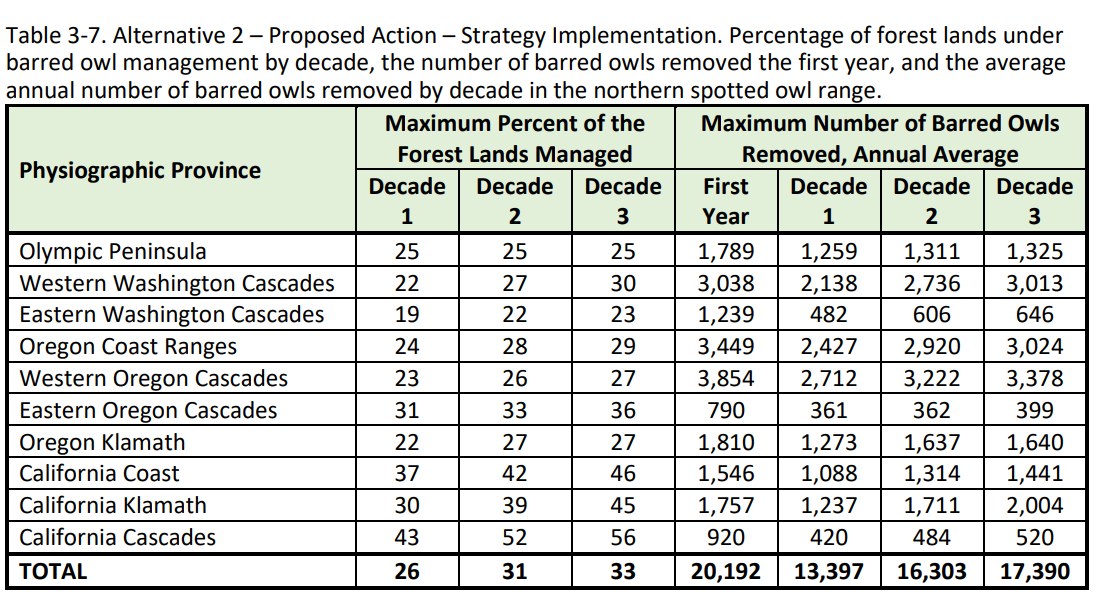
Because the Management Strategy is not mandatory, the total number of birds that will be killed can only be estimated.  If all property managers choose to implement the Strategy, approximately 470,000 barred owls would be killed in the next 30 years.  Although the Strategy covers only a 30 year time frame, “barred owl management will be required at same level for the long term” because “Their populations will continue to produce young that can disperse within and beyond the current range of barred owls.” (1)  The estimated current population of barred owls in study areas of the Management Strategy is only 102,000.  Clearly the lethal removal of barred owls is not expected to keep pace with the reproductive success of barred owls.  The killing of barred owls will continue forever, although there is no expectation that they will be eliminated.
How were barred owls selected as the scapegoat?

When northern spotted owls were designated as “threatened” in 1990 it triggered the legal protections conferred by the Endangered Species Act. In 1994, the Forest Service and the Bureau of Land Management published the EIS for the Northwest Forest Plan.  It created 24 million acres of reserve areas where logging was prohibited to preserve spotted owl habitat.  The reserve areas protected approximately 80 percent of the remaining old growth forests in the Pacific Northwest from timber harvesting.  Obviously, the plan had a negative impact on the timber industry and those who were employed by the industry.  Between 1980 and 1998, 23% of logging jobs were lost, triggering the Timber Wars.

The rate of decline of spotted owl populations in the Pacific Northwest decreased when most logging in old-growth forest was stopped by the Northwest Forest Plan, but began to accelerate again in about 2008.  USFWS attributes that increase in the rate of population decline to competition from barred owls and that theory is supported by several studies.
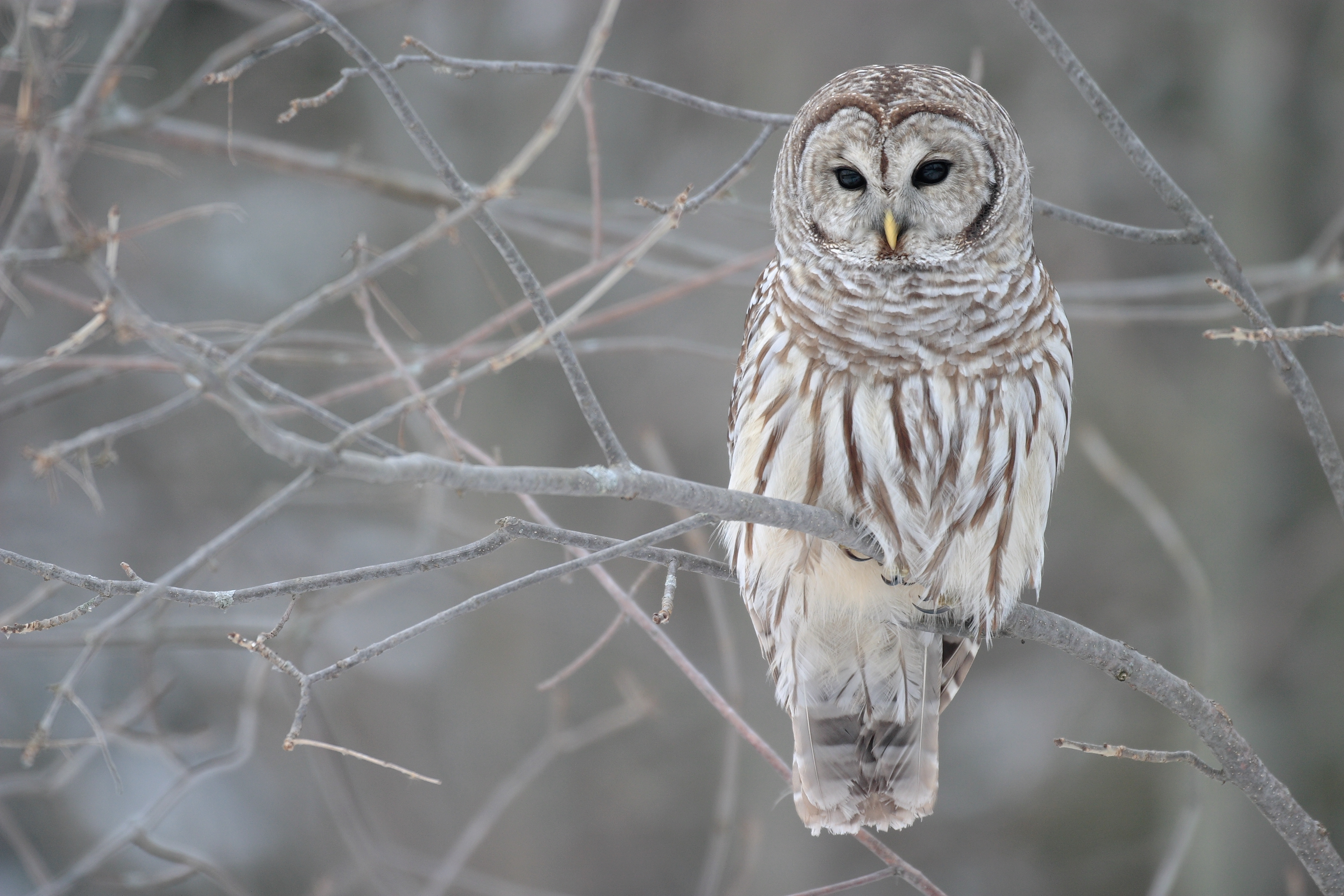
Barred Owl. GNU Free Documentation License

Barred owls are native to North America.  They have been migrating from their historic range in the north and south east of the US to the west coast of North America since about 1900.  Barred owls were first seen on the west coast of North America in British Columbia, Canada around 1959.  They were first documented in Washington in the 1970s and have continued moving south from there. 

Barred owls have successfully competed with spotted owls in their expanding territory because they are larger than spotted owls, they eat a wider variety of prey, they have greater reproductive success, and they are able to live in forests where spotted owls cannot.  Spotted owls are restricted to old-growth forests with large trees and dense canopies, while barred owls often live in second-growth (previously logged) forests and even wooded urban areas. 

The Management Strategy speculates that the omnivorous diet of barred owls will devastate the food webs in the new territory they occupy, although the Strategy offers no evidence to support that theory.  In fact, as barred owls expanded their territory through the Canadian boreal forest, such devastation was not reported.  Barred owls are not considered “invasive” in Canada.

The impact of barred owls on spotted owls was first observed by Lowell Diller, a wildlife biologist who worked as a consultant to Green Diamond Resource Co., a logging company managing timberland in Humboldt and Del Norte counties in Northern California.  Mr. Diller was also an adjunct professor in the Department of Wildlife at Humboldt State University.

Owls, including barred owls, are protected by the Migratory Bird Treaty Act.  Mr. Diller applied for permits to kill barred owls on the property of Green Diamond Resource Co. as an experiment to determine the impact of barred owls on spotted owls.  He described his project in an article in the Marin Independent Journal“In 2009,…Diller set aside patches of timberland to remove barred owls.  In other patches, he did nothing.  After four years, he would see how northern spotted owl numbers differed in the areas with and without barred owls…The study is the first to prove his treatment works.” To be clear, his “treatment” was to shoot barred owls. Mr. Diller also described how upsetting it was to kill birds. 

Green Diamond applied for permits and has continued to kill barred owls on its property.  That commitment has ensured that Green Diamond’s current rate of logging can continue.  The Green Diamond spokesman explained:  “’When you can protect and sustain a business and jobs and also conserve the northern spotted owl,’ he said, ‘why not do it.’” (Marin Independent Journal)

Sierra Pacific Industries is also killing barred owls on its property.  Sierra Pacific Industries in Shasta County is the largest private land holder in California and the second largest lumber producer in America.   

On the basis of the success of Diller’s study, USFWS approved a pilot project to kill barred owls in other places where spotted owls live.  The pilot project killed about 3,000 barred owls.  When the project was completed in 2021, they reported, “The removal of barred owls had a strong, positive effect on the survival of northern spotted owls and a positive, but weaker, effect on recruitment of spotted owls.” (2) The Barred Owl Management Strategy is based on the success of the pilot study. 

In other words, killing barred owls has enabled the timber industry in Northern California to continue their logging operations.  It has also removed the pressure to expand reserve areas to protect spotted owls, even though many scientists believe such expansion would be more effective than killing barred owls to save spotted owls“’The bottom line is that extinction rates went down when the amount of habitat went up,’ U.S. Geological Survey biologist Katie Dugger, lead author of the 2015 demographic study, said in a presentation on the findings last fall. ‘Spotted Owls cannot exist without old-growth forest. And now we’re talking about two species trying to use the same space, so in fact we need more of it.’” (3)

Specific Flaws in Barred Owl Management Strategy

The Barred Owl Management Strategy is based on several outdated notions about nature that have been cast in the concrete of American law. The Endangered Species Act is based on assumptions about nature that were conventional wisdom at the time the law was passed 50 years ago, in 1973.  Evolution was considered a series of events that occurred in the distant past and is no longer actively changing plants and animals.  At the time the ESA was passed, evolution was not believed to occur within a time frame observable by humans.  Nature was perceived as reaching an “equilibrium state” that was stable over long periods of time.  Early conservation efforts were therefore based on the assumption that once achieved, an equilibrium state could be sustained if left undisturbed in nature preserves. (4)

We now know that these assumptions are mistaken.  In the past 50 years, climate change and advances in paleontology have taught us that nature is inherently dynamic and we are usually powerless to stop it from changing even when we try.  When a law is designed to control nature, we should expect some conflict between static law and dynamic nature.  Fifty years after the Endangered Species Act was passed, that conflict is becoming progressively more apparent and problematic. 

These are the specific flaws in the Barred Owl Management Strategy that are the result of mistaken assumptions about nature:

  • Barred owls should not be considered “invasive” on the west coast of the US because the expansion of its range is a natural phenomenon that cannot and should not be stopped.

USFWS designates barred owls on the west coast as “invasive” by fabricating a story about the route barred owls took from their historic range in the east to their expanded range in the west that is not consistent with the facts.  Although USFWS admits that the route that facilitated expansion is “not well documented,” they claim there is evidence of anthropogenic change across the Midwestern Prairie that supports that specific route:  “…the historical lack of trees in the Great Plains acted as a barrier to the range expansion and that increases in forest caused by the anthropogenic impact of European settlement enabled the westward extension of the barred owl range. These include anthropogenic impacts such as fire exclusion and suppression, bison and beaver extirpation, deer and elk overhunting, establishment of riparian forests, and extensive planting of trees and shelterbelts in the northern Great Plains…” (2)    Although that is an accurate description of anthropogenic changes in the Midwestern Prairie, it is irrelevant to the expansion of the range of barred owls, because that wasn’t the route they took to the west coast.

The legal definition of invasive species enables USFWS to designate barred owls on the west coast as “invasive” based on their claim that the expansion route was through the American Midwest as a result of anthropogenic change. If non-indigenous humans are considered the cause of a change in ranges of plants and animals, the species is considered “invasive” where it did not exist prior to the arrival of Europeans. Labelling any plant or animal “invasive” makes it a target for eradication.   However, the theory of a midwestern expansion route for barred owls is not consistent with the facts:
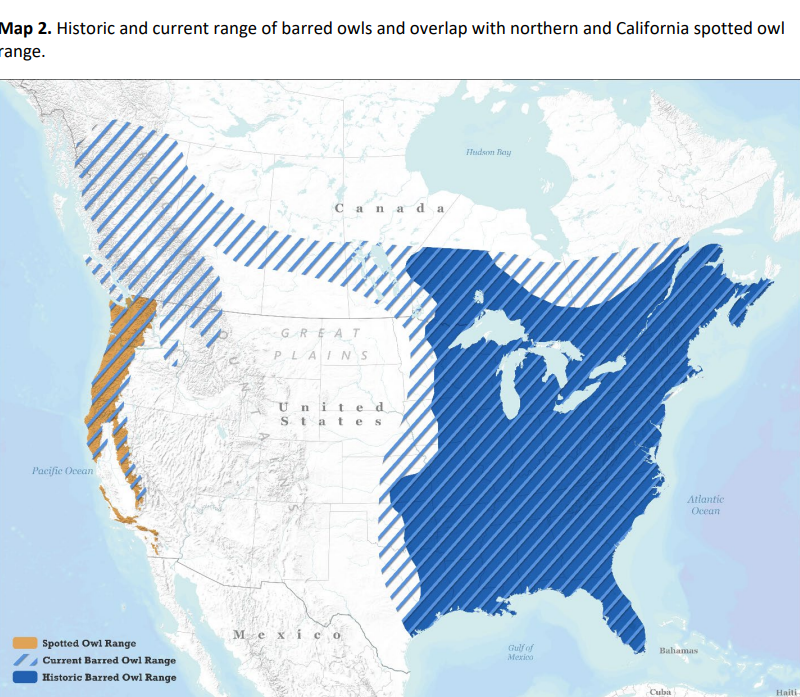
This map clearly shows that the route used by barred owls to expand their range to the west coast was through the boreal forests of Canada, which were not the result of anthropogenic change.  The boreal forests of Canada have existed since the Ice Age ended 10,000 years ago.  The map does not show the historic or current existence of barred owls in the American Midwest. 

The expansion route of barred owls to the west coast through Canadian forests is also consistent with the record of their arrival on the west coast.  They were seen first in the west in 1959 in British Columbia, Canada, at the northern edge of their current range.  They were first seen in the US in Washington in the 1970s.  Their range expansion continues to the south.  This sequence of events is not consistent with the claim that they arrived on the west coast via the American Midwest.

Claiming that barred owls are “invasive” enables USFWS to justify their extermination, as many of their eradication projects do:  “Yes, wildlife removal has been used as a management tool by many agencies across the country to control invasive species such as invasive carp, Burmese python, feral hogs, rats, mongoose, and nutria. Invasive species can thrive in areas where they do not naturally occur.” (1) That list of animals being killed by USFWS is far from complete. 

This is not a trivial matter.  Climate change requires that plants and animals move to find the conditions needed for their survival.  Preventing the migration of plants and animals as the climate and the environment change will doom them to extinction.  Designating barred owls on the west coast “invasive” has dangerous implications for many plants and animals that must move to survive in a rapidly changing climate.  The Management Strategy should not set this dangerous precedent. 

  • Interbreeding of spotted owls and barred owls is a natural phenomenon that cannot and should not be stopped.  Hybrids of spotted and barred owls should not be killed.

Hybridization is not only common, it can result in the creation of new species more rapidly than other forces of evolution, such as mutation and natural selection:  “Hybridisation also offers shortcuts on the long march to speciation that do not depend on natural selection at all.” (5)

More than 99% of all species that ever lived on Earth, amounting to over five billion species, are estimated to have died out. Yet there are currently around 8.7 million species of eukaryote (organisms whose cells have a membrane-bound nucleus) globally. (Wikipedia) Biodiversity on Earth has increased partly because of hybridization, which has often enabled adaptation to changed environmental conditions.
There are many important examples of hybridization among animal species, most notably the history of hybridization of our species, Homo sapiens.  Humans are now the sole surviving species of genus Homo.  Our genome contains the relicts of the genes of other members of our genus that are now extinct, which indicates hybridization with other hominoid species.  The modern human genome contains 1-4% of Neanderthal genes. (5)

There are also many examples of hybridization of plant species that contributed to biodiversity.  In a recently published study of the evolution of oaks, scientists traced the 56 million year evolutionary history of roughly 435 species of oak across 5 continents where they are found todayHybridization was instrumental in the formation of oak species and the ability of oaks to survive in different climate conditions.  The article in Scientific American about the genetic study of oak species concludes:  “A firm grasp of when, where and how oaks came to be so diverse is crucial to understanding how oaks will resist and adapt to rapidly changing environments. Oaks migrated rapidly as continental glaciers receded starting around 20,000 years ago, and hybridization between species appears to have been key to their rapid response. The insights we can gain from elucidating the adaptive benefits of gene flow are critical to predicting how resilient oaks may be as climate change exposes them to fungal and insect diseases with which they did not evolve.”

The bias against hybrids is a reflection of nativist ideology in the natural world.  Nativists call hybridization “genetic pollution.”  Unfortunately, hybridization is seen by nativists as the loss of a “pure” native species rather than the potential for a new species that is better adapted to changing environmental conditions.  The proposal to kill hybrids of barred and spotted owls is a symptom of the nativist bias that is typical of most public agencies. 

Barred and spotted owls are closely related.  They are in the same genus, just as Neanderthals and Homo sapiens were in the same genus.  Their interbreeding is both predictable and potentially beneficial to spotted owls because barred owls are better adapted to current conditions. The hybrid has the potential to produce a new species that is better adapted to compromised forest conditions than the spotted owl.  Although there is risk in hybrids, in the case of spotted owls the risk is worth taking because many scientists predict that the northern spotted owl will soon be extinct.  Hybridization may be more helpful to the spotted owl species than killing barred owls.

  • The Barred Owl Management Strategy should not be extended to California spotted owls.

The Barred Owl Management Strategy depends on the legal protections of the Endangered Species Act.  Both barred owls and spotted owls are protected by the Migratory Bird Treaty Act.  Therefore, “take” permits must be granted to kill barred owls.  The protected status of northern spotted owls justifies take permits, but should not be extended to California spotted owls (CSO) that are not legally protected.  Issuing take permits to kill barred owls to save California spotted owls makes a mockery of both the ESA and the Migratory Bird Treaty Act.  It implies that USFWS can find loopholes in environmental laws intended to protect nature, whenever they wish.  It undermines the public’s faith in government when public agencies are perceived as arbitrary and capricious.

Killing barred owls in CSO territory cannot be justified because there are few barred owls in their territory and threats to the CSO population are unrelated to the existence of a few barred owls. (See map of barred owl distribution in California below.) Shooting barred owls will not stop the wildfires, droughts and diseases killing their habitat.  The proposed Management Strategy is irrelevant to the survival of CSO. 
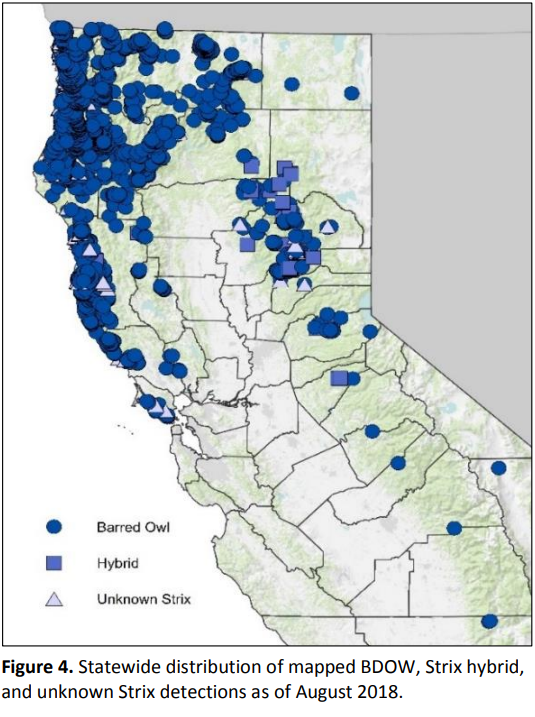
  • There is no reason to kill barred owls in Marin and Sonoma counties in the San Francisco Bay Area because the population of Northern Spotted Owls is stable and there are very few barred owls. 

The Marin/Sonoma County Management Zone designated by the Management Strategy includes all lands within the named counties. Conditions in Marin and Sonoma County are substantially different from the rest of the northern spotted owl range. This is the only portion of the northern spotted owl range where barred owls are very uncommon.

The recently completed survey of northern spotted owls in Marin County reports that the population is stable. The survey found nesting pairs of NSOs in all 48 inventory sites.  A small decline in nesting success was not statistically significant.  Two unpaired barred owls were detected on or near Marin County Property or Marin Watershed Property in 2023.  One was removed, the other was not detected a second time. (6)
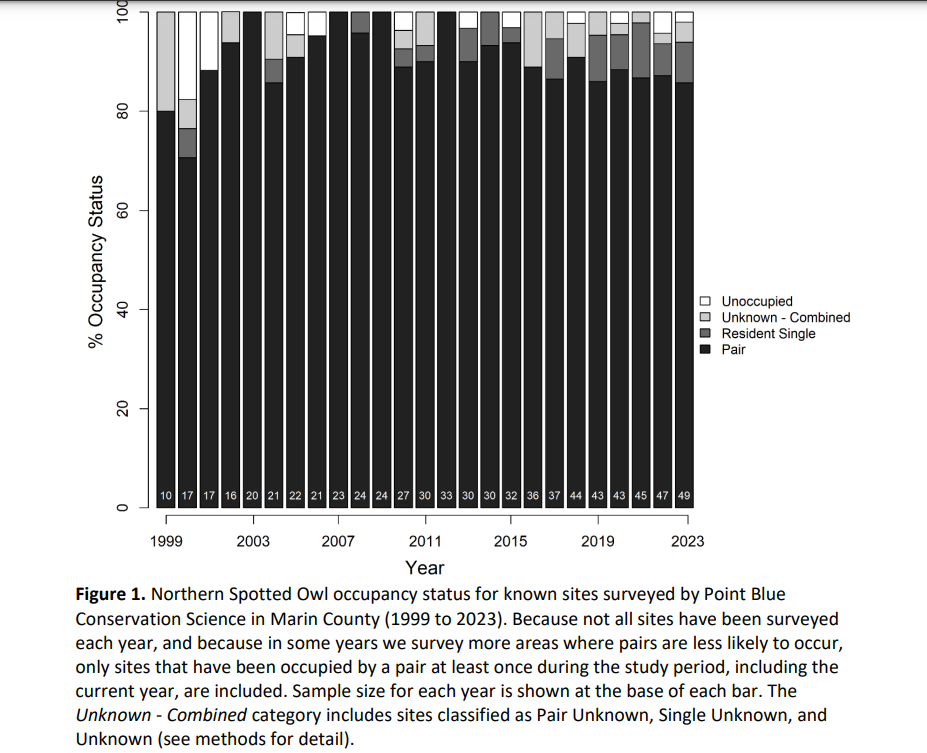
Source:  Northern Spotted Owl Monitoring on Marin County Parks and Marin Municipal Water Department lands, 2023 Report, Point Blue Conservation.
Despite the lack of evidence that northern spotted owls are threatened by barred owls in Marin County, the Barred Owl Management Strategy considers it the highest priority to kill the few transitory barred owls detected in Marin County.  This is unnecessary overkill that should be removed from the Management Strategy.  It contributes to the public’s perception that the strategy of USFWS is extreme and inconsistent with environmental laws that protect nature.

In conclusion, the Barred Owl Management Strategy is a reflection of the extreme nativist bias of USFWS.  Like many of their projects, USFWS has selected an animal scapegoat for the declining population of northern spotted owls that are not well adapted to changed forest conditions. Selecting an animal scapegoat enables timber companies to continue logging and it is an easy way to avoid addressing the much more complex reasons for challenges to northern spotted owls. For example, killing barred owls won’t do anything to reduce the greenhouse gases causing climate change or restore logged or burned forests. The Barred Owl Management Strategy will employ an army of snipers, but is unlikely to benefit the environment or its inhabitants.  USFWS cannot stop evolution, nor should it try.

Although I have low expectations that 2024 will be more peaceful than last year, in the spirit of hope, I wish you Happy New Year.  Thank you for your readership.

Update, July 2025:  The Northwest Forest Plan has been amended.  The amendment to the plan will enable more logging in the Pacific Northwest.  Https://www.chronline.com/stories/proposed-changes-would-allow-more-logging-on-federal-land-in-the-pacific-northwest,372393

The amendment began during the Biden administration and was approved in May 2025.  The point of the amendment is to “manage” the forest to reduce wildfire hazards.  https://www.fs.usda.gov/r06/planning/northwest-forest-plan-amendment

The stated purposed of the USFWS plan to kill 500,000 barred owls was to save endangered spotted owls.  The plan was created by the timber industry in the Pacific Northwest because killing barred owls on their properties enabled them to get permits needed to continue logging on their properties.

On October 30, 2025, the US Senate rejected an effort to halt the implementation of the Barred Owl Management Plan by a vote of 25-72: https://worldanimalnews.com/2025/10/30/stop-the-slaughter-450000-barred-owls-face-mass-killing-for-so-called-conservation/

However, The Trump administration has also cancelled some grants that funded the plan to kill barred owls in the Pacific Northwest:  https://washingtonstatestandard.com/2025/07/22/plans-to-shoot-thousands-of-barred-owls-in-doubt-after-feds-cancel-grants/

Confusing, isn’t it? The plan lives, but some of the funding for implementation is gone. That’s my best guess.

There is some logic to this sequence of events.  However, I doubt that logic was used to reach this conclusion.  In any case, I am pleased that barred owls will be spared the planned massacre.  However, the loss of federal funding to kill barred owls will not prevent private land owners from killing barred owls.  The revision of the Northwest Forest Plan to enable more logging might make killing barred owls on private land unnecessary. 


  1. Frequently Asked Questions about the Barred Owl Management Strategy
  2. Barred Owl Management Strategy
  3. Sarah Gilman, “Evidence of Absence:  Northern Owls are still vanishing from the Northwest,” Living Bird, April 12, 2016
  4. Holly Doremus, “The Endangered Species Act:  Static Law Meets Dynamic World,” Journal of Law & Policy, Vol. 32: 175-235, 2010.
  5. The Economist, “Match and mix, hybrids and evolution,” October 3-9, 2020, page 67-70. 
  6. Northern Spotted Owl Monitoring on Marin County Parks and Marin Municipal Water Department lands, 2023 Report, Point Blue Conservation.
Deadly Dogma:  Revisiting the Farallon Islands Unnecessary Eradication Project

“The more we know about plans to eradicate harmless mice on the Farallon Islands with rodenticide, the less sense it makes.” – Conservation Sense and Nonsense

Plans to eradicate mice on the Farallon Islands with rodenticide were approved by the California Coastal Commission (CCC) two years ago, on December 16, 2021.  Although CCC approval was contingent on a few conditions intended to reduce the inevitable death of non-target birds and marine animals, it is unclear if CCC will be able to enforce the conditions. Plans seem to be moving forward behind closed doors, so Conservation Sense and Nonsense continues to be concerned about this project. 

First a brief reminder of the project and our objections to it.  House mice were introduced to the Farallon Islands over 100 years ago by ships visiting the island.  There is no evidence that mice harm birds on the Farallons.  The mice are an integral part of the food web, eating primarily vegetation and supplementing that diet with insects during summer months when vegetation is sparse.  The mice are also the prey of hundreds of thousands of birds that live on the islands as well as birds that stop over on their migratory routes.  The mouse population varies throughout the year, dwindling during winter months and increasing in the fall.  When the mouse population declines, food sources for their predators also decline.  That’s when burrowing owls are said to prey on the nestlings of ashy storm petrels.  Though the mice are blameless, the project proposes to kill them all based on the assumption that burrowing owls will not overstay their migratory stop over if food sources are significantly reduced.  The project is expected to kill hundreds—perhaps thousands—of non-target birds who will eat poisoned pellets directly and/or poisoned mice.

The project has always seemed absurd and nothing we’ve learned about it in the past 2 years has made it seem otherwise.  Our last article of 2023 will report new information learned since the project was approved.

Contamination of the food web

Robert Boesch is a retired Pesticide Regulator for the Environmental Protection Agency, region 9 and the Hawaii Department of Agriculture.  Presently, he is Visiting Colleague at University of Hawaii at Manoa.  Based on his research and experience, he has written a discussion paper about island eradications using rodenticides, which he has shared with the California Coastal Commission and many other agencies and organizations.  This entire discussion document is available below as a footnote and this is his summary of “Eradication Programs Eliminating Invasives and their Predators and Scavengers!”

  • Eradication programs for mice and Polynesian Rats are planned for the Farallon Islands, Midway and Wake Island.
  • Brodifacoum, a potent, persistent and bioaccumulative anticoagulant poison is the toxicant. [This is the rodenticide that will be used on the Farallon Islands to kill mice. There are no rats on the Farallons.]
  • Brodifacoum residues have been detected in almost all fish that were collected following treatment of Palmyra, and trace levels were found in 10 percent of the fish after treatment of Wake.
  • Brodifacoum residues in fish caught at Wake increased from trace levels to detectable residues over 3 years.
  • Diphacinone is a greater threat of secondary poisoning to mammals than brodifacoum.
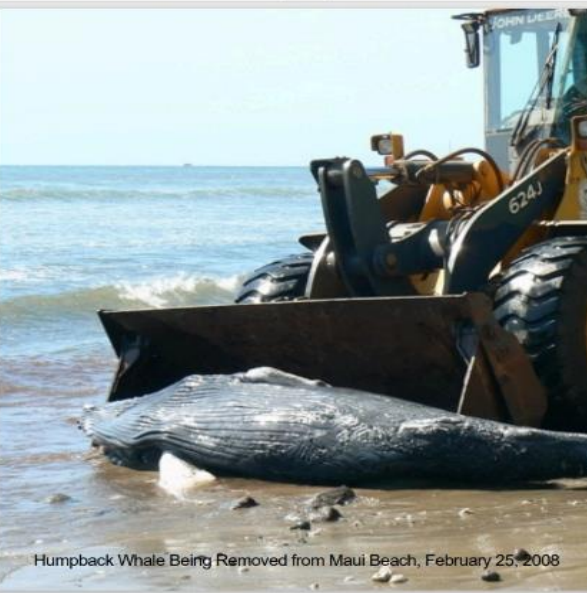
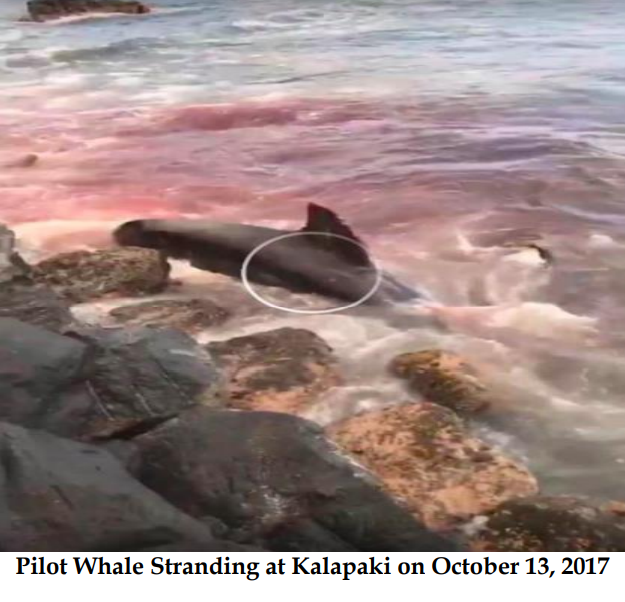
  • Strandings of whales, some hemorrhaging, occurred within 60 days following anticoagulant bombardment.
  • Unusual mass strandings of hemorrhaging dolphins occurred in San Diego and Hawaii years after anticoagulant bombardment.
  • There is very little known about the fate of anticoagulant residues in the oceans.

Our knowledge of contamination of the food web caused by rodenticide drops on islands is limited because monitoring is usually short-term and frequently done by the same contractors who implemented the project, with little motivation to report the extent or persistence of contamination.  For the same reasons, we have limited knowledge of how successful the projects are.
Track record of island eradications

About 1,200 island eradications have been done all over the world over the last 30 years.  Our evaluation of the proposed project on the Farallon Islands is based on the success or failure of those projects.

The aerial application of rodenticide to kill rats on Anacapa Island in 2001-2002 was the first of its kind in North America.  The project was also unique because it was complicated by the need to spare a population of endemic native deer mice on Anacapa.  Over 1,000 native mice were captured before the aerial application of rodenticide and released back on the island after the poison was no longer effective.  Although post-project monitoring reported successful eradication of rats, they were not confident that all of the mice that were left on the island had been killed. (1)

Attempts to eradicate mice have been consistently less successful than attempts to eradicate rats.  A study of 139 attempted eradications of animals on 107 Mediterranean islands in eight countries found that eradication projects targeted 13 mammal species. The black rat was the target of over 75% of the known attempted eradications in the Mediterranean Basin. The most widely used technique was poisoning (77% of all eradications), followed by trapping (15%) and hunting (4%).  Techniques were largely target-specific.

The average failure rate of the projects was about 11%, but success was defined only as the death of animals living on the islands at the time of the project. However, this percentage varied according to species. The failure rate of house mouse eradication was 75%. Reinvasion occurred after 15% of eradications initially considered successful. (2)

Island eradications considered initially successful, are often failures in the long run.  A recent visitor to Anacapa Island has reported seeing two dead rodents as her escorted group was leaving the island. One was identified as a deer mouse. The other rodent was not identified. Have rats returned to Anacapa?  Are native deer mice still being killed by residues of rodenticide? (3)

The eradication of rats on Anacapa Island is relevant to the planned project on the Farallon Islands because rats were killed, but mice were saved.  Although the Anacapa project considered rats a threat to birds, it did not consider mice a problem.  Rats were killed, but mice were saved by trapping and removing them from the island before the rodenticide was dropped.  Mice on the Farallon Islands are not a threat to birds.  They will be killed only because they are non-native.

Mice are members of the food web

Mice on the Farallon Islands are as much a part of the food web as they are on Anacapa Island.  They are prey of the birds and they are mainly predators of vegetation.  On the Farallon Islands, mouse predation of vegetation is considered a problem, but on Anacapa Island it is not considered a problem.  On the Farallon Islands, the study of the diet of mice reports that mice also eat insects when vegetation becomes scarce in the fall.  (4)
The study of the mouse diet on the Farallons also reports that 63%-80% of the vegetation on the Farallons is non-native.  That’s why Roundup (glyphosate) has been used on the Farallon Islands every year since 1988.  Between 2001-2005, an average of 226 gallons of herbicide were used annually (5.4 gallons per acre per year), according to the annual report of the Farallon National Wildlife Refuge. (5)

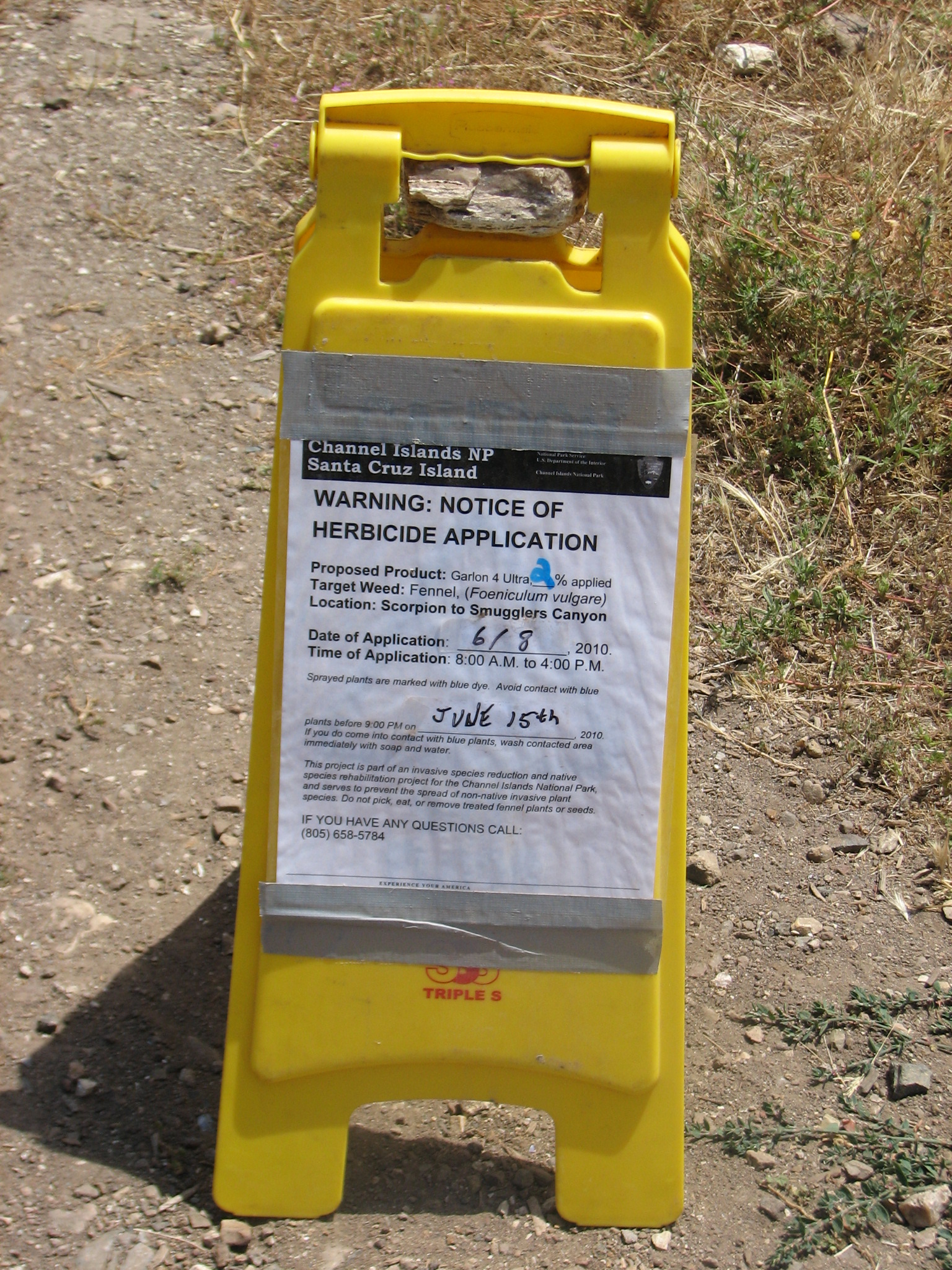
I took this photo on Santa Cruz Island in 2010, while visiting with an escorted group.

The Farallon Islands have never been inhabited and there has been no public access to the islands for over 100 years.  Non-native plants were not brought to the Farallons by humans.  Their seeds were brought by birds in their stomachs, in their feathers, on their feet and by wind and ocean currents.  Non-native plants dominate vegetation on the Farallons partly because non-native plants are eaten by birds.  The plants are members of the food web and their eradication is depriving birds and other animals in the ecosystem of food.  If non-native plants were not being eradicated with herbicides, it probably would not be necessary for mice to eat insects, which are not their preferred food.  We can safely assume that herbicides are harmful to the animals that consume plants that have been sprayed. (6)

Consequences of fiddling with the food web

There were also feral cats on the Farallons before they were killed.  Predictably, the population of mice increased after the cats were killed.  When 6,000 feral pigs were killed by sharp shooters on Santa Cruz Island, Golden Eagles substituted for that plentiful food source by preying on the rare, native Channel Island Fox.  Golden Eagles were captured and relocated to the mainland.  The fox population was restored to the island by a captive breeding problem.  The same could be done on the Farallons to eliminate the only known threat to ashy storm petrels.  The small population (approximately 6-10) of burrowing owls that are the only known predators of the petrels could be trapped and removed to the mainland as the Golden Eagles were on Santa Cruz Island.

Restoration plans for any ecosystem should begin with a thorough analysis of the food web.  Plucking single species of plants and animals out of complex ecosystems without understanding their role in the food web results in unintended and harmful consequences.

The Farallons project is based on mistaken assumptions

The Farallons project is based on the mistaken assumptions of invasion biology.  Most of the vegetation on the island is being killed with herbicide because it is non-native.  The vegetation is clearly essential to all the animals living on the island, but invasion biology asks us to believe that it is not, solely because it is non-native.  If the mice are killed on the island, it is only because they are non-native, not because they are harmful to birds.  They are an important source of food for the birds, but invasion biology asks us to believe they are not, solely because they are not native.  These assumptions are wrong, yet 50 years of nativist ideology still has a death grip on our public lands. 

This deadly dogma is losing its grip, but apparently too slowly to prevent the destruction of the food web on the Farallon Islands.  I always attend the conferences of the California Invasive Plant Council (Cal-IPC) and the California Native Plant Society (CNPS) to give native plant advocates every opportunity to convince me of their ideology.  Consistently, I find more support for my contrarian viewpoint than I do for invasion biology.  A presentation about the salt marsh harvest mouse at the Cal-IPC conference in October 2023, is an example.

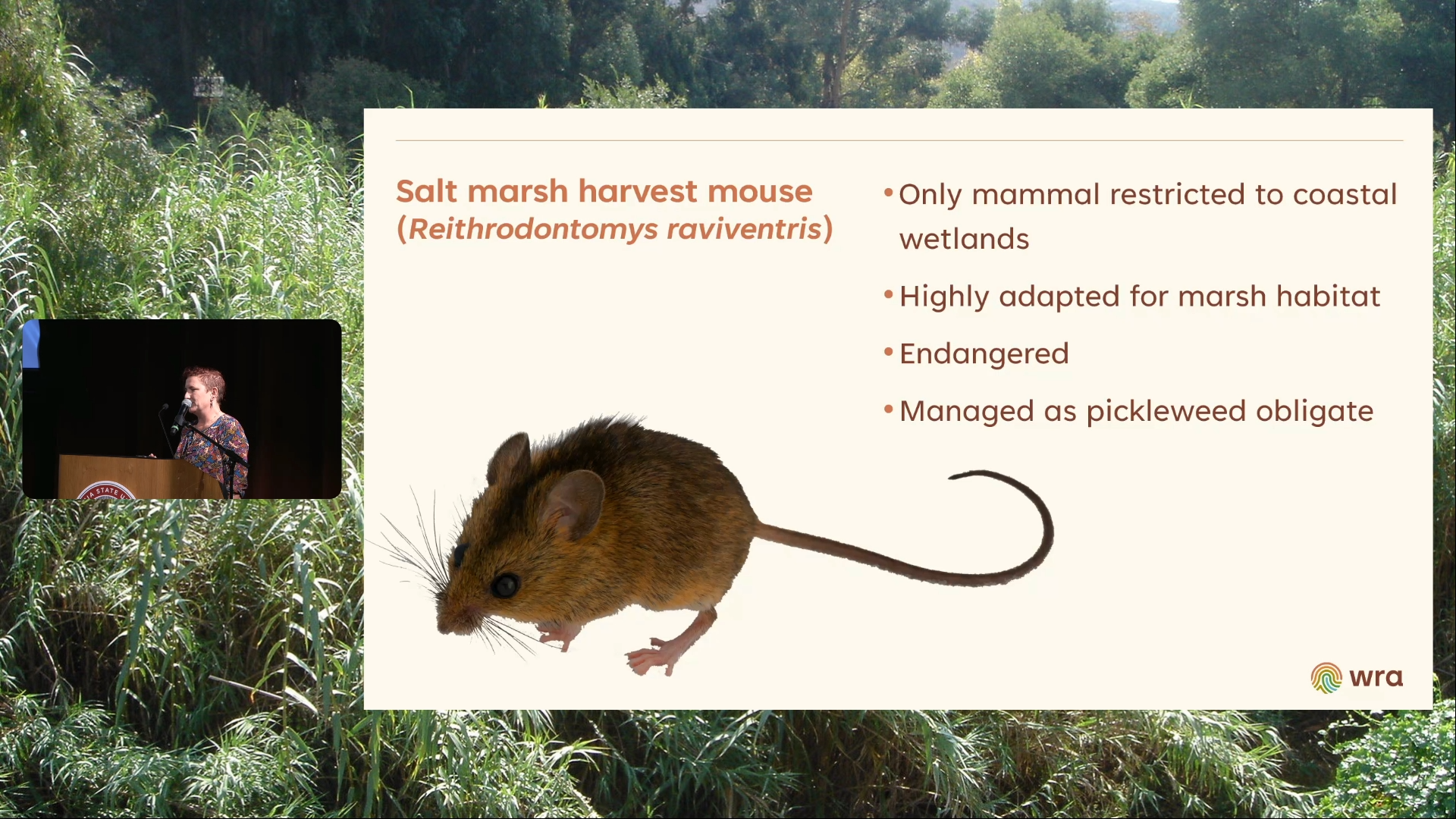
California Department of Fish and Wildlife collaborated with UC Davis to study the food preferences of salt marsh harvest mouse (SMHM), an endangered native animal that lives in the wetlands of the San Francisco Bay. It has always been presumed to be entirely dependent on native pickleweed for food and habitat. The legally mandated recovery plan is based on that mistaken assumption.
Presentation to California Invasive Plant Council conference in October 2023

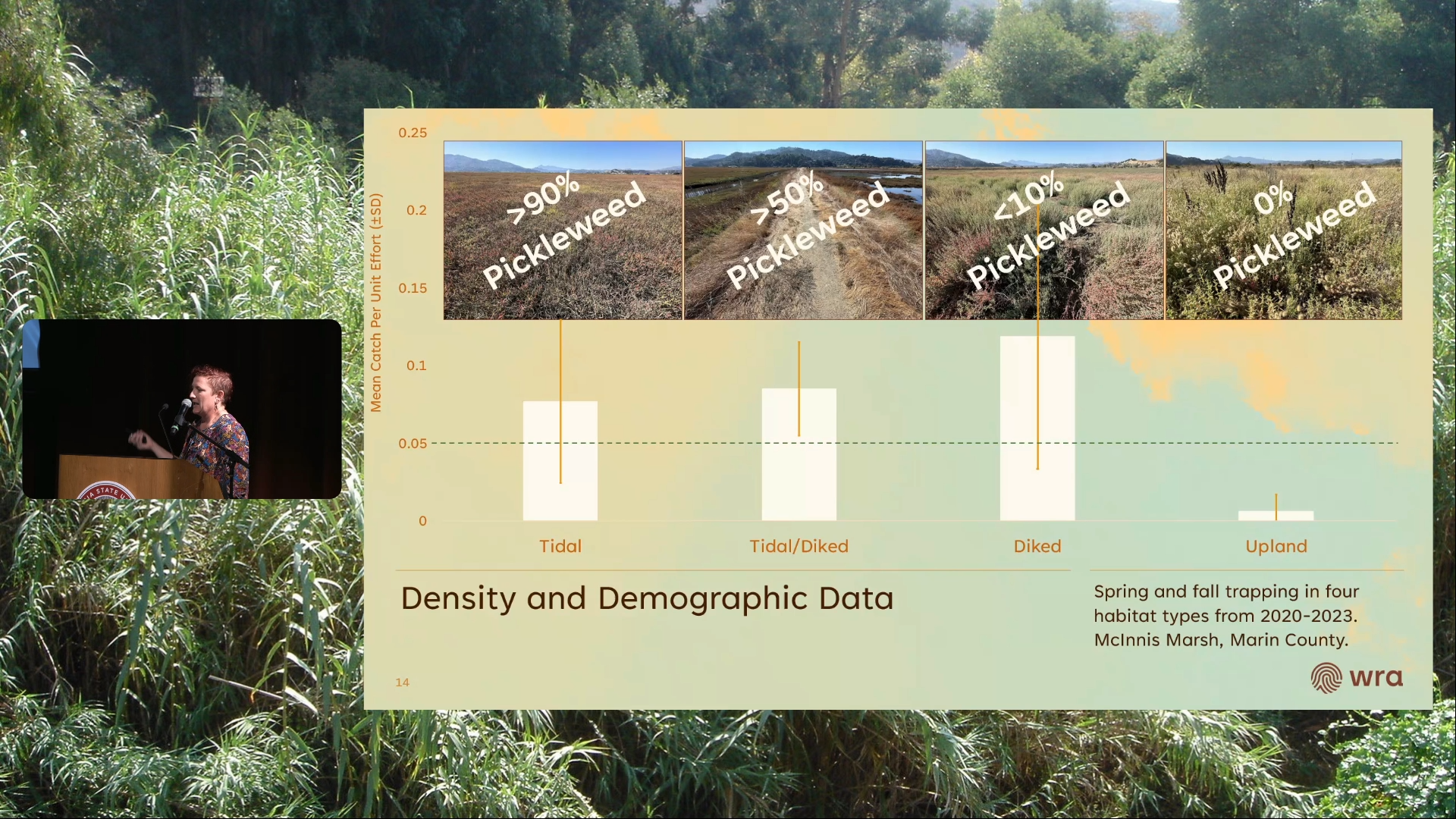
The study reported to Cal-IPC shows clearly that SMHM is NOT dependent on pickleweed for either food or habitat. SMHM is an extreme omnivore. SMHM ate 39 species of native and non-native plants as well as insects in empirical trials. In fact, it ate EVERY plant it was offered. A fecal study of SMHM living in the wild confirmed that finding. Fecal analysis found SMHM had eaten 48 native and non-native plant genera as well as some insects.

Presentation to California Invasive Plant Council conference in October 2023

SMHM have no preference for native plants for either food or nesting habitat. The most SMHM’s captured in the study were found where there was less than 10% pickleweed.

This was an absurdly simple experiment in which SMHM were captured and fed a variety of plants. It could have been done by anyone with little knowledge or fancy equipment. Why does this foolish mistake, caused by nativist bias, matter? Because “restoration” projects all around the San Francisco Bay have been eradicating non-native plants, claiming it would benefit the endangered SMHM.

For example, the spartina eradication project has been hunting for and poisoning hybrid spartina marsh grass for nearly 20 years, as well as planting pickleweed for SMHM. Since herbicides are used to kill non-native plants before pickleweed is planted, there’s little doubt that SMHM populations were harmed by the eradication of their food and shelter, if not directly harmed by the pesticides that are used.

Nativism in the natural world is not benefiting wildlife. Rather it seems to benefit only the army of “restorationists” who earn their living killing harmless plants and animals.  As long as they continue to receive public funding for their projects, they have job security because they have spent over 20 years trying to do something that cannot be done. Evolution moves inexorably forward. The puny efforts of humans to regress landscapes to arbitrarily selected historical standards cannot change the forward trajectory.

There were two presentations about difficulties with native plant restorations on Anacapa and Santa Rosa Islands at the CNPS conference in October 2022.  More than 20 years after non-native iceplant, rabbits, and rats were killed on Anacapa, native flora and fauna are still described as degraded, “Due to the cumulative and severe impacts to the soil and native seedbank, native vegetation communities have not recovered on their own…”  On Santa Rosa Island the “restoration” community has installed artificial fog fences to replicate a historical cloud forest to improve survival of native chaparral plants. (7)

Alternatives to rodenticide drop on Farallon Islands

It is not necessary to kill mice on the Farallon Islands because they are not harmful to birds.  If non-native vegetation weren’t killed with herbicides, there would probably be enough vegetation for omnivorous house mice as well as birds.  Both mice and vegetation are being killed only because they are non-native.  If the nativist ideology were removed from the agenda, dumping rodenticides on mice and herbicides on non-native vegetation would not be necessary.

If the protection of ashy storm petrels really were the goal of the proposed project on the Farallon Islands, the most obvious solution would be to remove the small population of burrowing owls that are the only known predators of the petrels.  Keep in mind that ashy storm petrels are not considered threatened or endangered and that two applications for protected status have been denied. (8)

There is a non-lethal alternative to reducing populations of rodents using rodenticides that kill non-target birds and other animals.  Academic scientists at Arizona State University have developed birth control for rodents that can be used on the Farallons to reduce the population of mice.  (WISDOM Good Works)

In Summary

Killing house mice on the Farallon Islands with rodenticide is unnecessary and will be harmful to the ecosystem and its inhabitants because:

  • Aerial dropping 1.5 tons of rodenticide will poison the entire ecosystem, killing hundreds of non-target birds and marine animals.
  • House mice on the Farallon Islands do not need to be killed because they are food for birds and they are harmless.
  • If burrowing owls are killing nestlings of ashy storm petrels, they could be removed and relocated.
  • The nearly 40-year attempt to kill non-native vegetation with herbicide should be stopped because the vegetation is a vital element in the food web of the Farallon Islands.

Happy Holidays and thank you for your readership.


  1. https://www.cambridge.org/core/journals/oryx/article/eradication-of-black-rats-rattus-rattus-from-anacapa-island/F1E46767D0EEC9A6357D414DD84ABE28
  2. https://onlinelibrary.wiley.com/doi/abs/10.1111/mam.12190
  3. https://myricopia.com/2023/11/21/anacapa-island-conservation/
  4. https://www.biorxiv.org/content/10.1101/2022.02.23.481645v1.full
  5. https://drive.google.com/file/d/1XoPcS104SeOUIyfbPT_NbardctNyWAgs/view
  6. https://www.nrdc.org/sites/default/files/opinion-glyphosate-20220617.pdf “As to ecological risk, it finds potential risks to animals and plants and ‘requires’ mitigation in light of those risks, laying out specific language for glyphosate product labels.”
  7. https://www.nps.gov/chis/learn/nature/cloud-forest.htm
  8. https://www.endangeredspecieslawandpolicy.com/u-s-fish-and-wildlife-service-denies-endangered-species-act-protection-for-ashy-storm-petrel

https://wisdomgoodworks.org/2023/10/611/

Going Toe to Toe with Doug Tallamy

In June 2023, Washington Post published an opinion piece advocating for the use of herbicides to kill non-native plants, in which Doug Tallamy was quoted as saying that spraying herbicide on non-native plants is “chemotherapy,”  equating non-native plants with cancer and pesticides with medical therapy.  Tallamy. and more broadly his viewpoint, received some blowback from Conservation Sense and Nonsense and others.

Thomas Christopher and Doug Tallamy collaborate on their shared mission of promoting the use of native plants and the closely related goal of eradicating non-native plants they consider a threat to native plants and insects. In October 2023, Tom Christopher (TC) gave Doug Tallamy (DT) an opportunity to respond to criticism of native plant dogma on his Growing Greener podcast that is available HERE.  Christopher also invited listeners to send him feedback on the podcast.  Professor Art Shapiro, whose work was central to the interview, has responded separately and his response is available as a footnote.  Conservation Sense and Nonsense (CSN) sent Christopher an email, which I hope he shared with Tallamy.  The following is an excerpt from that email. 


Hi Tom, Thanks for the air time for opposition to eradicating non-native plants in your interview with Doug Tallamy and for this opportunity to respond.  I’m flattered that criticism of native plant dogma has attracted some attention on the East Coast.  I’ve transcribed most of your interview with Doug Tallamy as best I can and provided some feedback to Tallamy’s viewpoint.  I sent Art Shapiro the podcast and he has responded separately.

TC:  Some people say that non-native plants are just as effective as natives in supporting food webs.  For example, buddleia that is spreading throughout the East and West is used by butterflies.

CSN:  Buddleia davidii is on California’s list of invasive plants, but it is not considered invasive in California.  It was put on California’s list because it is considered invasive elsewhere, making the point that invasive plant behavior varies depending on local conditions, such as climate.  Sweeping generalizations about invasiveness are rarely accurate. If gardeners are concerned about the potential for invasive behavior, they can plant a cultivar of buddleia that does not reproduce. 

DT:  We shouldn’t call all insects pollinators.  Just because an insect visits a flower for nectar doesn’t mean it’s pollinating that flower.  There are more visitors to flowers than there are pollinators.  Butterflies visiting buddleia are just there to sip nectar.

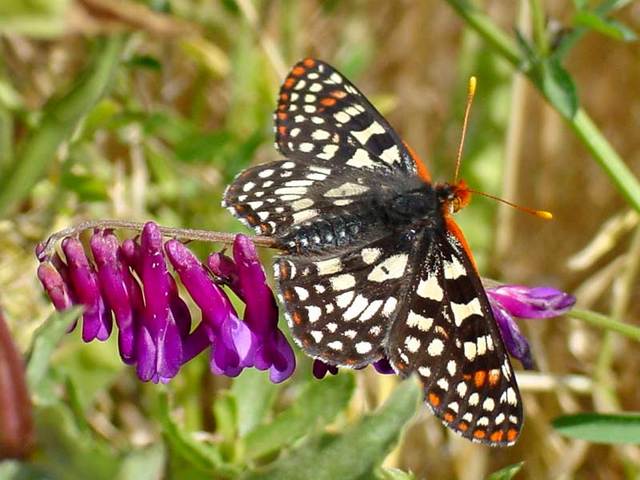
Euphydryas chalcedona
Variable checkerspot. Photo by Roger Hall

CSN:  Buddleia davidii is native to Central China.  Non-native buddleia is used by a butterfly species that is native to California and other states in the Western US.

The first actual observation of checkerspot butterflies breeding spontaneously and successfully on buddleia was in Mariposa County, California in the Sierra Nevada foothills.  Checkerspot bred there successfully on buddleia in 2005 and in subsequent years.  This colony of checkerspot on buddleia was reported in 2009:  “We conclude that buddleia davidii [and other species of buddleia] represents yet another exotic plant adopted as a larval host by a native California butterfly and that other members of the genus may also be used as the opportunity arises.” (1)

In 2017, a gardener in Mendocino County, California also reported the use of buddleia as the host plant of checkerspot:  “By now I am questioning how it was that butterfly larvae were using my butterfly bush as a host plant, completely against everything I’d ever heard. How was this possible? I emailed Art Shapiro, a very well-known butterfly expert and author, sending him a pic. He wrote back to confirm they were butterfly larvae, but added, ‘These are not mourning cloak butterflies. They are checkerspots. And the only time I’m aware this has happened [like, ever, except one in a lab in 1940…] is in Mariposa County.’” (2)

Buddleia is available as the host plant of checkerspot butterflies with a native range from Alaska south along the Pacific Coast through California and Arizona to Baja California and Mexico; east to Montana, the Dakotas, Wyoming, Colorado, New Mexico.  This is a clear case of a widespread native butterfly choosing a non-native plant as its host. 

  1.  Arthur M. Shapiro and Katie Hertfelder, “Use of Buddleia as Host Plant by Euphydryas chalcedona in the Sierra Nevada foothills, California,” News of the Lepidopterists’ Society, Spring 2009
  2. http://plantwhateverbringsyoujoy.com/never-pull-up-and-discard-what-you-cannot-identify/

DT:  Most bees that people see in their gardens are honeybees that are there to get pollen and sometimes nectar.  These are generalist bees but specialist bees that require pollen from particular plants (always native plants) can’t be supported by those at all. 

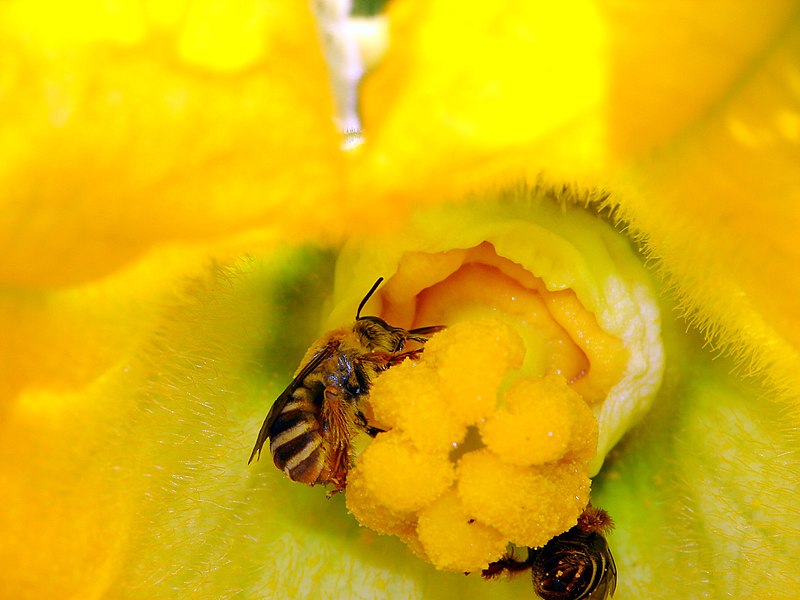
Squash bee. USDA public domain

CSN:  Specialization of insects is exaggerated by Tallamy.  For example, he would probably call a squash bee a specialist.  As its name implies, its host plant is squash plants in the squash family, with 98 genera and 975 species.  The squash bee is considered an excellent pollinator of zucchini and butternut squash, both native to Central and South America.  However, they do not usually visit melon plants, according to Wikipedia.  Again, we are reminded to avoid broad generalizations when describing the complex and diverse natural world. 

Likewise, the native alkali bee is a particularly effective pollinator of alfalfa, which is native to the Mediterranean region. Alkali bees also pollinate members of the large legume family with over 16,000 species that are native all over the world.  If you are interested in such associations, you can find an exhaustive list of native butterflies and their many non-native host plants in Art Shapiro’s butterfly guide for Central California and the Bay Area.  It is not true that bees Tallamy considers “specialists” require pollen from only native plants.
DT:  Sometimes butterflies adopt a new host plant as a caterpillar host.  For example, black swallowtail butterflies caterpillars eat carrots or parsley or dill.  What’s going on?   There are two different kind of hosts:  1) The caterpillar has not adopted a new host at all because it was already adapted to that particular host.  2) Actual host switching from one plant to another is very rare.  It happens on a time-scale of thousands of years.  It requires a mutation or an adaptation to chemical defenses of new host plants.

CSN:  Tallamy tries to make a distinction to avoid acknowledging that insects make use of introduced plants because they are chemically similar to the native plants they have used in the past, which in some cases are no longer available. The butterfly has, in fact, adopted a new host, a plant that wasn’t there before and is now hosting the caterpillar. There are many cases of rapid evolution that enable such transitions, but both cases are clearly transitions from native to non-native plants.  If the original native host is still available, it isn’t necessarily abandoned in favor of a non-native.  Such transitions are useful because they increase the population of available insect hosts and are essential if the original native host is no longer available.

TC:  Pushback from California cites research of Professor Art Shapiro reporting that spontaneous spread of non-native plants has benefited native butterflies.  He reports that 82 of 236 California native butterfly species (34%) are laying their eggs on introduced plant taxa, so caterpillars feed on them and many more butterflies use introduced plants as nectary sources.

DT:  Great!  These are host range expansions.  Agriculture in California has eliminated the host plants of a lot of butterflies and it’s a good thing we had close relatives of natives so butterflies could expand their host range and use them.  But if 34% of native butterflies are using introduced plants that means 66% are not.  If all plants were introduced, we would lose 66% of butterflies in California.  This is not the direction I want to go.  I would choose 60% rather than 34%.

CSN:  Christopher and Tallamy seem to have read one sentence in the abstract of Shapiro’s study without reading subsequent sentences: “Interactions with introduced plant taxa are not distributed evenly among butterfly species. Alpine and desert butterflies interact with relatively few introduced plants because few exotic plant species have reached and successfully colonized these habitats. Other California butterfly species are specialists on particular plant families or genera with no exotic representatives in California and have thus far failed to recognize any introduced plants as potential foodplants. Some California butterflies have expanded their geographic ranges and/or extended their flight seasons by feeding on exotic plants.”  In other words, where there are more introduced plants and some are closely related to native plant hosts, more native butterflies use introduced plants.   

TC:  What do you say to the claims that introduced plants stay greener longer than native plants adapted to wet or dry seasons so that introduced plants give rise to extra generations of caterpillars?

DT:  This is only true if caterpillars can use those plants and in host range expansions they can.  Shapiro is also right about extending availability of nectar.  For example, monarchs that migrate need forage along the way.  The minus is that we’ve been so hard on native flora.  These insects were doing just fine before we brought in non-native plants.  It’s a Band-Aid we’re putting on an environment that has been ravaged by taking out native species that were here before.  Let’s put native species back too.
CSN:  The claim that non-native plants are driving native plants to extirpation or extinction goes to the heart of the controversy.  Native plant advocates believe that accusation, although there is little evidence to support it.  The greatest threat to native plants and insects is habitat loss, particularly converting wildlands to agricultural fields.  The second greatest threat is the pesticides that are used by agriculture.  Remember that Tallamy is an enthusiastic promoter of herbicides to eradicate non-native plants.  He calls it “chemotherapy” in a recent opinion column in the Washington Post.  Pesticides kill both plants and the animals that feed on them, they are anathema to biodiversity and the food web that Tallamy believes he is supporting. 

Marcel Rejmanek (UC Davis) is the author of the most recent report on plant extinctions in California, published in 2017.  At that time there were 13 plant species and 17 sub-species native to California known to be globally extinct and another 30 species and sub-species extirpated in California but still found in other states.  Over half the globally extinct taxa were reported as extinct over 100 years ago.  Although grassland in California had been converted to Mediterranean annual grasses by grazing domesticated animals decades before then, most of the plants now designated as “invasive” in California were not widespread over 100 years ago.

Most of the globally extinct plant species had very small ranges and small populations.  The smaller the population, the greater the chances of extinction.  Most of the globally extinct plants were originally present in lowlands where most of the human population and habitat destruction are concentrated. Although there are many rare plants at higher altitudes, few are extinct.  Plants limited to special habitats, like wetlands, seem to be more vulnerable to extinction. The primary drivers of plant extinction in California are agriculture, urbanization and development in general.  Non-native plants are the innocent bystanders to disturbance.

“Invasive species” are mentioned only once in the inventory of extinct plants published by California Native Plant Society and only in combination with several other factors. However, the identity of this “invasive species” is not clear.  Rejmanek suggests that the “invasive species” rating refers to animal “invasions” by predators and grazers.  He says, “Indeed, one needs quite a bit of imagination to predict that any native plant species may be driven to extinction by invasive plants per se.” (Marcel Rejmanek, “Vascular plant extinctions in California: A critical assessment,” Diversity and Distributions, Journal of Conservation Biogeography, 2017)

TC:  90% of all insect species are specialists that have evolved in concert with only one or a few plant lineages.  How can they cope with the loss of native plants?

DT:  Native plants are adapting in evolutionary time.  Specialization is a continuum.  Few insects are confined to a single plant species, some are confined to one or two genera, and others are confined to one or two families of plants.  But if you are looking at the number of plants available to them, only about 7% of plants they are adapted to are available to them.   93% of available plants are not viable hosts for insects.  Everything is a specialist on one level of another.

CSN:  That sounds like an argument for a diverse garden, with many plant species that offer more food sources for insects.  That doesn’t seem a sound argument for eradicating non-native plants. 

TC:  I understand that some native plants are more useful to insects than others?

DT:  These are the keystone species.  Many native plants don’t support insects because plants are well-defended against them.  Keystone species are making most of the food for the food web.  Just 14% of native plants across the country are making 90% of food that drive the food web.  86% of the native plants are not driving the food web.  Insect food comes from the big producers, like oaks, black cherries, hickories, and birches.

CSN:  That is a mind-boggling admission!!  Earlier Tallamy complained that non-native plants are hosting only 34% of butterflies in California.  Now he says that only 14% of native plants are useful to insects.  He asks home gardeners to plant only native plants as well as limit our plantings to a small subset of native plants. 

Tallamy’s ideology is antithetical to the goal of biodiversity, which could be the salvation of ecosystems in a changing climate. Since we can’t predict the climate of the future, biodiversity provides more evolutionary options, which increases the chances that some species will survive. Tallamy asks us to put a few eggs in the huge basket of our ecosystems, reducing their ability to survive the challenges of our changing climate. 

For example, in Oakland, California, where I live, there were approximately 10 species of native trees prior to settlement.  In 1993, there were 350 tree species in Oakland. (David Nowak, “Historical vegetation change in Oakland and its implications for urban forest management,” Journal of Arboriculture, September 1993)  The recently published draft of Oakland’s Urban Forest Plan reports that there are now over 500 tree species in Oakland.  I can’t fathom why Oakland would want to limit the planting of trees to only 10 native species. 

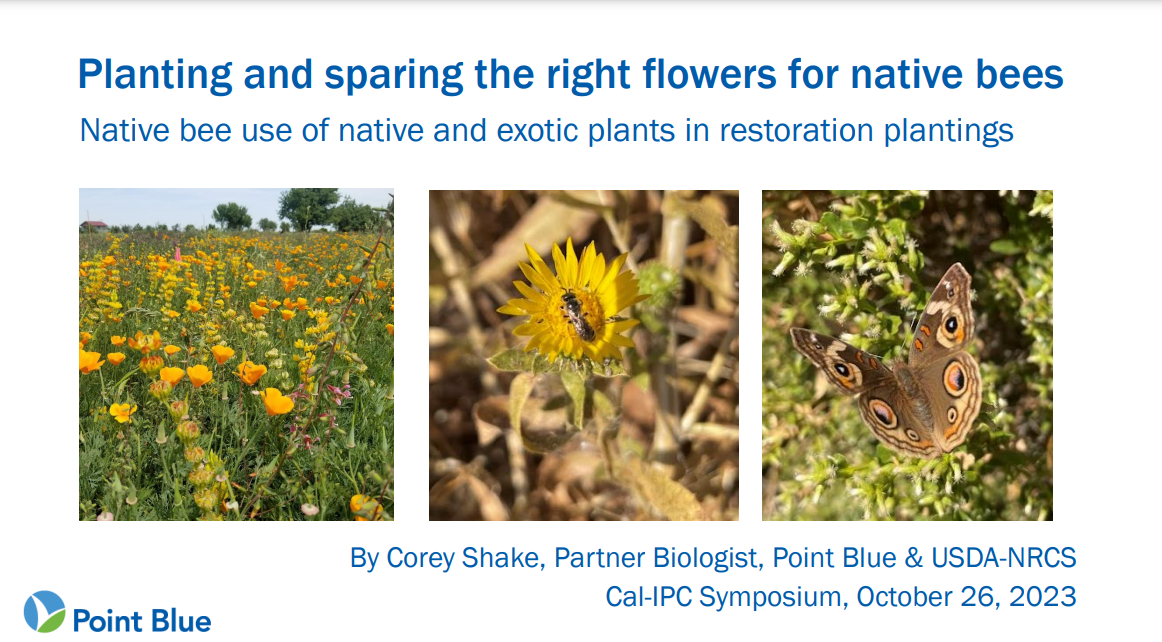
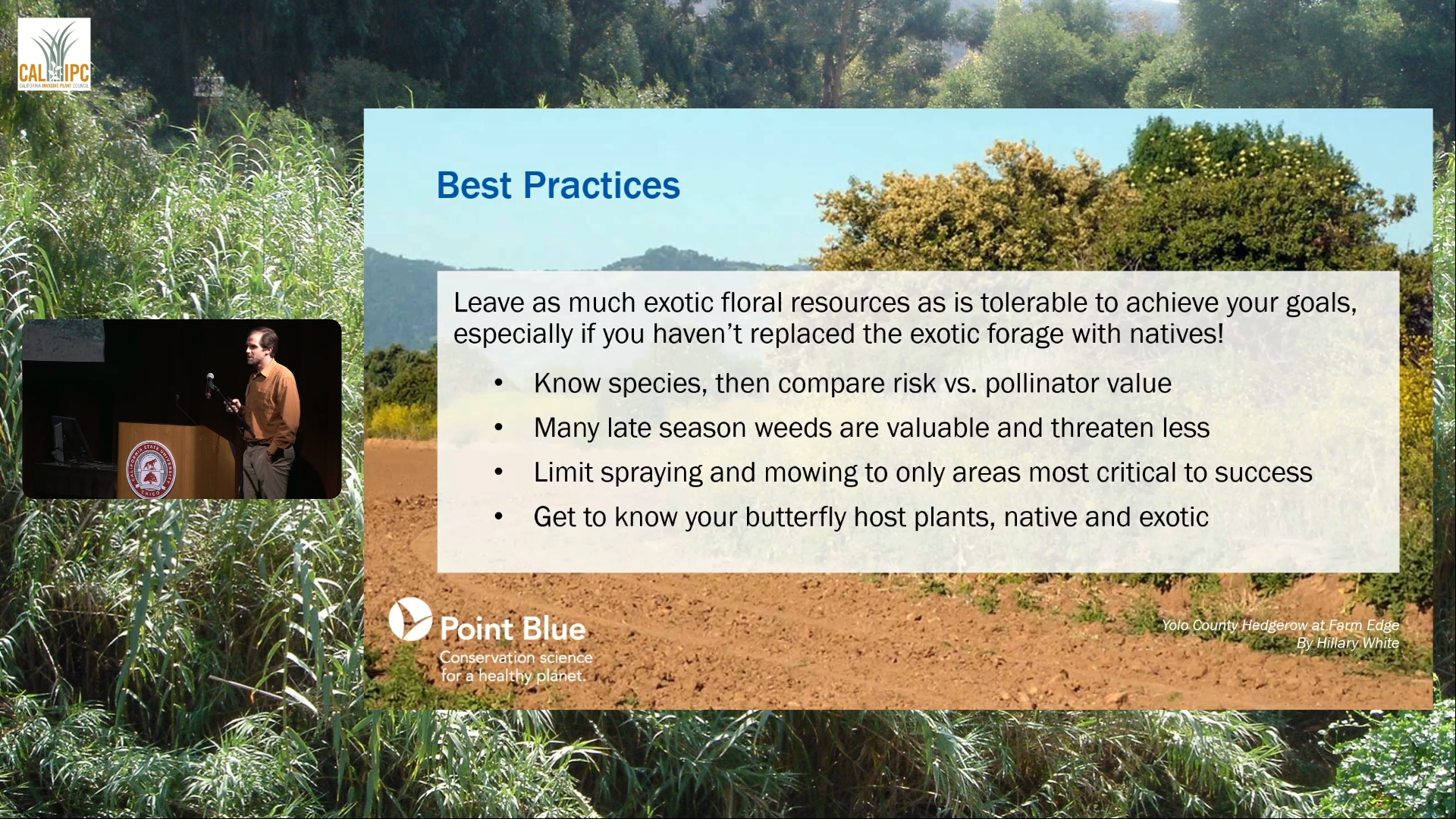
I agree with Tallamy that many native plants are not useful to insects.  I attend the annual conference of California Invasive Plant Council to give native plant advocates every opportunity to convince me of their viewpoint.  At the most recent conference at the end of October, Corey Shake of Point Blue Conservation made a presentation about his project to “Evaluate native bee preference for common native and exotic plants.” 

He designed 16 hedgerows around agricultural fields in Yolo County to determine if native bees have a preference for native plants or exotic plants, by controlling for availability of native plants compared to exotic plants.  Here is his abstract:

“Farm edge restoration monitoring in Sacramento Valley highlights native bee use of some exotic plant floral resources. Corey Shake. Point Blue Conservation Science. cshake@pointblue.org

“Research of native bee preference for native versus exotic plant floral resources in California’s Sacramento Valley has shown mixed results. No studies have demonstrated a preference for exotic plants by native bees there, but some have highlighted the importance of exotic plant floral resources in plant-pollinator networks and expressed concern that rapid removal of exotic plants without restoring native plant populations could have negative impacts on native bees. We have been collecting native bee flower visitation, plant species, and floral abundance data on 16 farm edge restoration projects in Yolo County, California since 2019, which will allow us to assess bee preferences for some key native and exotic plants relative to their floral abundance. In our preliminary analysis, we see some important trends: (1) relative to their floral abundance in our plots, some native plant species are more frequently visited by native bees than other native plants that are infrequently or rarely visited, and (2) there is significant native bee visitation to some exotic plants relative to their floral abundance. We will further evaluate these data as well as our butterfly diversity and abundance data to provide plant-species specific insights to restoration practitioners and weed management specialists to help them reduce harmful impacts to native pollinators when executing restoration projects and managing weeds.” 

In other words, not all species of native plants are useful to native bees and some species of non-native plant species are useful to native bees.  Tallamy’s sweeping generalizations about the usefulness of native plants to insects are not supported by empirical or field studies.  Although the characteristics of plants vary widely, the variation is unrelated to the national origins of plants. 

From Micro to Macro Perspective

I recognize my voice in the questions Tom Christopher asked of Doug Tallamy, as well as Art Shapiro’s.  Speaking for myself, not for Art, this interview misses the point of my criticism of native plant ideology.  I like native plants as much as I like any plant and I encourage everyone to plant whatever they prefer.  I only object to the pointless destruction of harmless non-native plants that thrive because they are best adapted to the conditions where they have naturalized.  Non-native plants do particularly well in the wake of disturbance.  Where they have replaced native plants, the natives were destroyed by disturbance, not by the hardy non-native plants that can tolerate disturbance. Non-native plants are a symptom of change, not the cause. 

I object to destructive eradication projects because they poison the soil with herbicides, making it even less likely that non-native plants will be replaced by fragile native plants.  I object to the loss of biodiversity which is a hedge against extinction in a rapidly changing climate.  We don’t know which plants will be capable of surviving in the changed climate.  We should not be taking cards out of the deck while we gamble with the future of the environment and everything that lives in it.

Unfortunately, native plant advocates take offense when anything positive is said about introduced plants.  A positive statement about a non-native is routinely interpreted as a negative statement about native plants.  It shouldn’t be.  The emphasis on the negative assessment of introduced plants results in harmful land management decisions.  The pros and cons of all plants should be considered before we condemn non-natives with a death sentence.  Like our justice system for human society, all plants should be presumed innocent until proven guilty.

Thanks again for airing this debate on your podcast. I hope you will forward my email to Doug Tallamy

Webmaster, Conservation Sense and Nonsense


Gardening with the help of nature

Juliet Stromberg is a plant ecologist who specialized in wetland and riparian ecosystems of the American Southwest.  Her friends call her Julie and I will presume to do the same.  She has retired from her position at Arizona State University, but her husband, Matt Chew, is still teaching ecology from a historical perspective at ASU.  He is very much her partner in their 20-year project to restore 4-acres of dead citrus grove and an 80-year old Spanish colonial house, long abandoned and derelict.  The property came with water rights, without which their project would not have been possible.

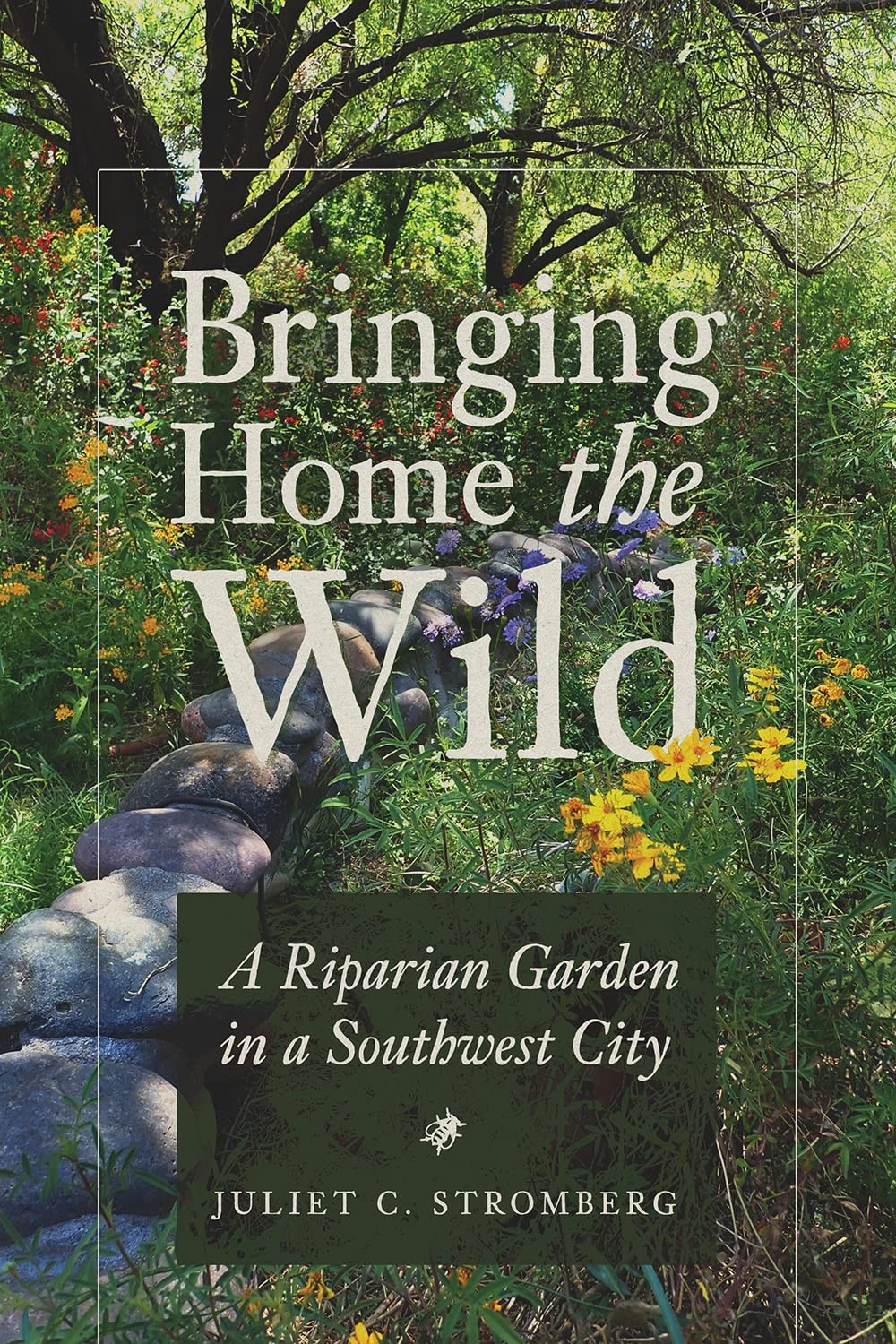
In her recently published book, Bringing Home the Wild:  A Riparian Garden in a Southwest City, Julie tells us how she and her partner transformed—with the help of natural processes–this dead patch of land in South Phoenix, Arizona into the oasis that it is today.  The first step was to restore the irrigation system, which immediately brought much of the dormant seed bank back to life. 

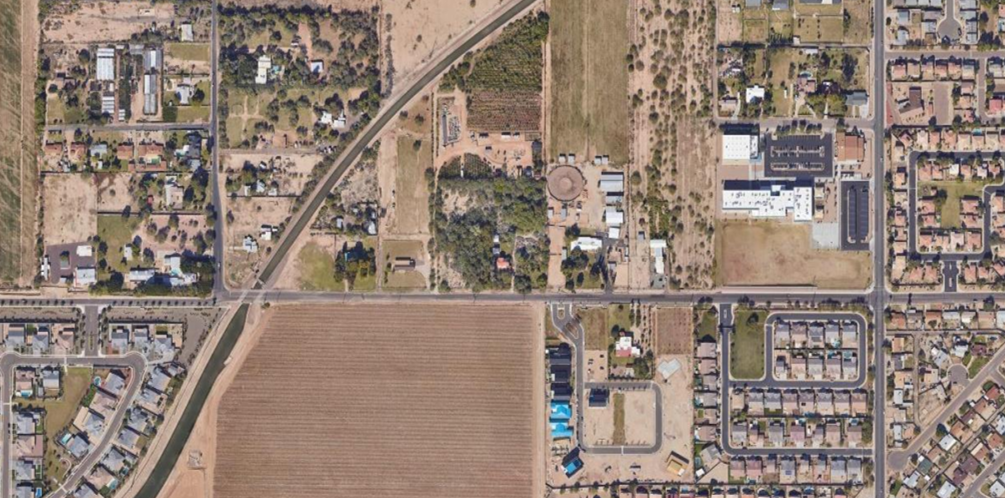
Julie & Matt’s garden is in the center of this aerial view

Using the riparian vegetation of the Salt River—the source of their water—as her reference, she chose a half-dozen tree species as the foundation of their garden, such as Fremont cottonwood, Gooding’s willow, and velvet mesquite.  Twenty years later, there are now 300 trees, sheltering a community of plants and animals.  How did they get there? 

The seeds of some trees such as blue elderberry and mulberry were brought from neighboring gardens by birds and small animals. Julie and Matt have seen 157 species of birds in their garden, so we can assume birds have done some of the planting.  The seeds of some plants are aerodynamically shaped and were blown in by the wind, adding to the diversity of the garden.

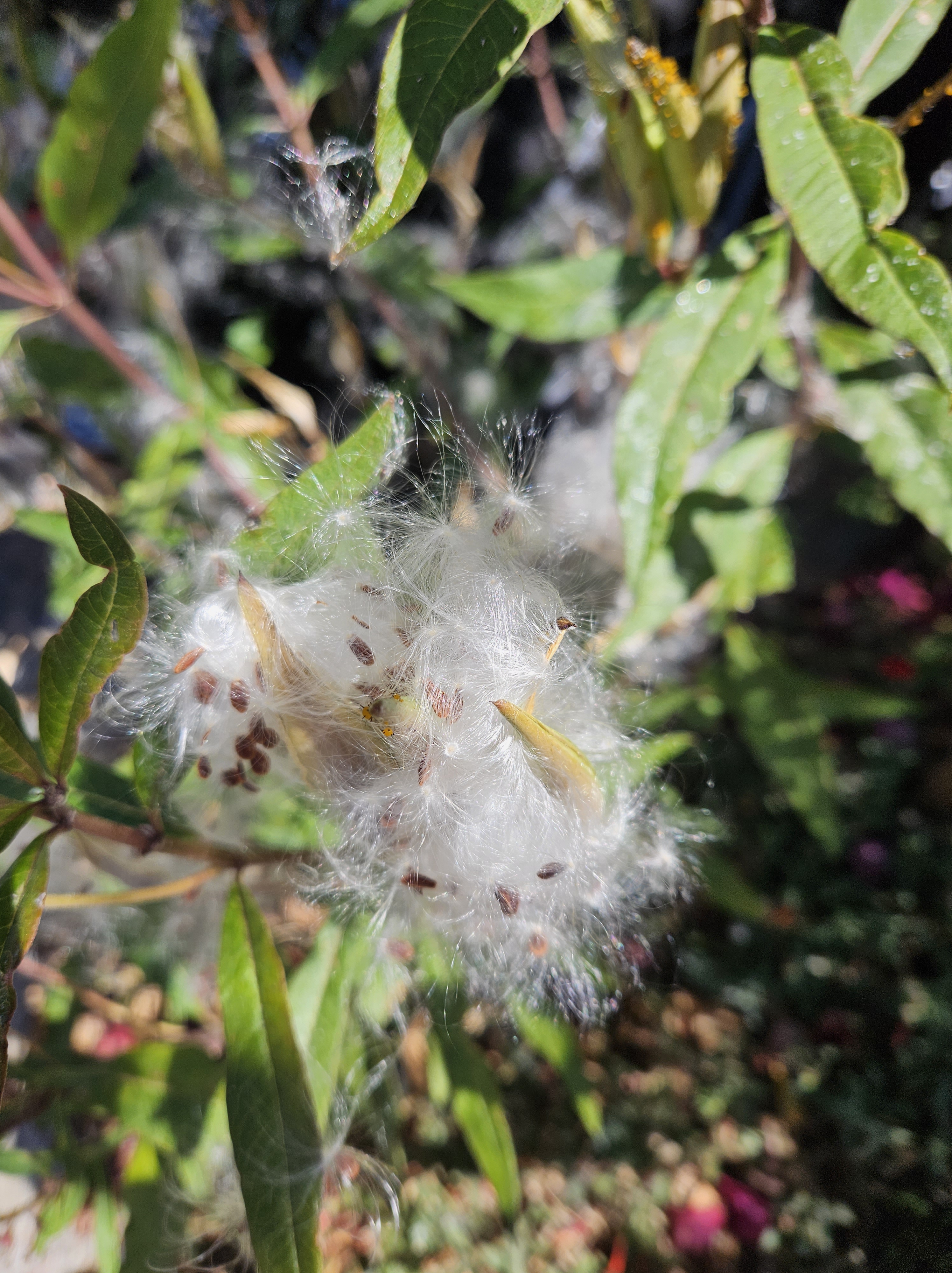
Tropical milkweed seeds ready to be launched by the wind from a neighbor’s front yard.  Conservation Sense and Nonsense, Oakland, CA, October 2023

Many of the trees are American in origin, but others are not.  Regardless of the method of dispersal, most introductions are welcome in Julie’s garden. She spares her readers the tedious recitation of which plants are considered native and which are not.  The Southwestern desert is not an ecosystem with which I am familiar.  I was glad to have a tour of Julie’s garden without irrelevant information about the nationality of every plant.  For the same reason, I like to travel in distant places where I can’t distinguish natives from non-natives.  Everything looks great to me and nothing brings me down more than a guide who wants to inform us of what “belongs” and what doesn’t. 

Julie and Matt also planted a fruit orchard and a vegetable garden that bring more birds, insects, and animals to the garden as well as providing food for their table. Eating the fruits of our labors in the garden deepens our respect for what plants do for us and establishes our working relationship with the land. 

Managing a wild garden

In keeping with Julie’s opinion that ecological restoration is a form of “glorified gardening,” she actively manages her garden.  A few plants that annoy members of her community of plants and animals—such as puncture vine and tumbleweed—are not welcome. 

When the delicate balance between predator and prey becomes unbalanced, some protective measures are necessary.  If coyotes and dogs can’t keep up with the rabbit population, it’s sometimes necessary to put vulnerable plants into cages to protect them.  The root balls of some plants are covered in wire mesh to protect them from hungry gophers. 

Plants also assist in their own defense.  Where mesquite is grazed by cattle, the tree responds by growing longer thorns to repel the cattle.  When plants are attacked by plant-eating insects, some emit a toxin to render themselves inedible.  The scent of the chemical wafts to neighboring plants, alerting them to the arrival of predators.  These natural defenses are an important line of scientific inquiry that has potential to substitute nature-based solutions for synthetic chemicals. 

The population of roof rats in Julie’s home is kept in check with liquid birth control, lest they chew on electrical wires or build nests in car engines. 

Gardening with the help of friends

Julie’s is not a manicured garden, but it requires constant pruning to keep trails clear and provide light and space for plants to thrive. The annual scouring of the flood plain by spring floods is one of the natural processes that Julie and Matt could not use to restore their land because irrigation water is channelized and confined by concrete.  Julie has come to appreciate the flies and other insects who are the decomposing crew, helping to reduce the accumulation of debris in the absence of annual scouring floods.  Sixty-six species of flies assist with decomposition as well as pollination in Julie’s garden. 

Julie is happy to have coyotes in her garden, but her dogs disagree.  Violent and fatal confrontations between these closely related species required building a wall that confines dogs close to the house at night, while coyotes safely roam most of the garden. 

Dogs are an important part of Julie and Matt’s life.  Early in the book’s introduction Julie warns readers that they should put her book down “NOW!” if they don’t want to hear dog stories.  Julie has walked thousands of dogs in a nearby animal shelter.  In addition to her own 4 dogs, there are also occasional foster dogs who need to recover from traumatic experiences to be adoptable.  In Julie’s refuge, these traumatized dogs learn to trust again. 

Peaceful co-existence

Julie is a recovering academic scientist.  Before she retired, she felt that her focus on the accumulation of data needed for scientific analysis was causing her to lose track of the big picture.  She needed to stop and smell the flowers, so to speak. 

She received her graduate education during the heyday of invasion biology. Julie slowly shifted away from native purism based on her experiences in the field.  She has rejected that doctrine, and regrets teaching her students to fear “those who came from somewhere else.” 

Julie has a vivid memory of the first step she took on that journey to her gardening ethic of peaceful coexistence.  She had been instructed to pull tree tobacco from land along the Salt River that was being restored.  The nicotine in the plant was making her feel sick, which seemed to bring her to her senses.  She began to wonder what she was doing, “following orders to kill creatures she barely knew.” 

Fly on desert tobacco. Photo courtesy Juliet Stromberg

Part of Julie’s skepticism about such eradication projects is based on her understanding of how little we know.  She realizes that the harm done by non-native species is exaggerated and their benefits are underestimated.  Given the limits of our knowledge, we should be obligated to give introduced plants the benefit of the doubt before killing them.  She now appreciates the beauty of tree tobacco, which also feeds birds, fixes carbon, and stabilizes the soil.   Its seeds were naturally dispersed to Julie’s garden and tree tobacco is welcome there.

Imperatives imposed by climate change

Julie says, “The preoccupation with provenance diverts conservationists and gardeners from critical issues,” such as climate change, food security, and extinction (which, studies show, are not caused by introduced plants).  Living in the Southwest, Julie has a front row seat on climate change.  It’s always (within the context of our lifetime) been hot there, but now it is blisteringly hot during summer months.  She watches hummingbirds in her garden seek shelter in the shade, close to the irrigation drip.  She watches dogs panting, birds gasping for breath and plants wither and die in the heat.  And she knows that both native and non-native plants store carbon that would otherwise contribute to greenhouse gases causing climate change. Carbon storage varies according to certain plant characteristics, but those characteristics are unrelated to the nationality of plants. 

Those who insist on replicating the landscape that existed 200-400 years ago in America are depriving nature of the evolutionary opportunities that will enable survival.  We don’t know what life will be capable of living in the climate of the near-future.  Nature needs as many alternatives as possible to find the species that can survive.  Plants and animals are blameless in this struggle of survival of the fittest.  The least we can do is to get out of their way as natural selection finds the life that is adapted to the current and future climate.

Showing respect for nature

Julie does not use any pesticides in her garden….no herbicides, fungicide, or insecticide.  She is concerned about the pesticides used by her neighbor across the road who grows cotton.  She notices the blue cotton seeds scattered on the ground and surmises that they were coated in insecticide or herbicide that will infuse pesticide into the plant as it grows.  The poisoned seed can kill seed-eating birds and other animals and the plant itself will be poisonous as it grows.  The dust from the cotton field blows into her property when the field is plowed and after the cotton is harvested because no cover crops are grown to tamp down the dust and prevent the loss of carbon stored in the soil.  Julie can see firsthand the damage caused by industrial agriculture and is confirmed in her commitment to avoid using pesticides.

Julie shows her respect for everything living in her garden by her choice of pronouns to describe them:  “who” not “what,”  “she/her” not “it.”  She asks her readers to show the same respect for plants and animals, regardless of their nationality.  Avoiding the use of pesticides in our gardens is another way to show our respect for the plants and animals on which we depend, with the added benefit of not poisoning ourselves.

Thank you, Juliet Stromberg, for telling us about your garden and congratulations for what you have accomplished and learned from the experience of nurturing it back to life with the help of nature. 

Talking back to nativism

Dana Milbank is a political columnist for the Washington Post. He broke out of his political mold on April 7, 2023 to write an article about gardening published by the Post, which repeats every myth of the nativist ideology. 

A team of dismayed critics of invasion biology has responded to excerpts of Milbank’s column:

  • Marlene A. Condon is a garden writer based in Virginia and the author of The Nature Friendly Garden. She has a degree in physics. Her entire critique of Milbank’s column is available on her website.  Her comments address the reader.
  • Carol Reese is a retired Extension Horticulture Specialist who conducted her 27 year career from the University of Tennessee’s West Tennessee AgResearch and Education Center in Jackson, where a large and diverse display garden gave her the opportunity to observe biodiversity in action on an enormous range of plant species from other parts of the world. She describes herself as a farm raised country girl tomboy who has looked at the natural world in hundreds of settings and landscapes, natural and manmade, and read countless books and articles. She has written for several magazines, newspapers, articles for Garden Rant as well as university publications.  Her speaking engagements around the country have allowed her to engage with many other green industry professionals. Dana Milbank’s column prompted her to email him directly with her concerns, directly addressing some of his assertions. I publish some excerpts here from her emails sent directly to Milbank.
  • Conservation Sense and Nonsense is the webmaster of this website.  I have studied invasion biology and the native plant movement it spawned for over 25 years. I’ve watched forests of healthy, non-native trees in California be destroyed and replaced by weedy grassland.  I have used what I have learned to advocate for a less destructive approach to restoration, a word I am reluctant to use to describe projects that use herbicides to eradicate harmless plants and trees. My comments are addressed to the reader.

What follows are excerpts from Dana Milbank’s column with responses from Marlene Condon, Carol Reese, and Conservation Sense and Nonsense, just three of many skeptics of invasion biology.  To summarize the point of our criticism:

  • Insects are not dependent on native plants.  They are just as likely to use related non-native plants in the same genus or even plant family with similar chemical properties and nutritional value. 
  • While some non-native plants have potential to be harmful, many are beneficial. There are pros and cons to both native and non-native plants and that judgment varies from one animal species to another, including humans. For example, we don’t like mosquitoes, but they are important food for bats and birds.  
  • All plants, whether native or non-native convert carbon dioxide to oxygen and store carbon. Destroying them contributes to greenhouse gases causing climate change.
  • When the climate changes, vegetation must also change.  Many non-native plants are better adapted to current climate and environmental conditions in disturbed ecosystems.

Conservation Sense and Nonsense


“I’m no genius about genuses, but your garden is killing the Earth”
By Dana Milbank
Washington Post, April 7, 2023

Milbank:  I did almost everything wrong.

ReeseI’m so sorry you thought this!

Milbank:  For 20 years, I found the latest, greatest horticultural marvels at garden centers and planted them in my yard: sunny knock-out roses, encore azaleas, merlot redbud, summer snowflake viburnum, genie magnolia, firepower nandina

In between them flowed my lush, deep-green lawn. I hauled sod directly from the farm and rolled it out in neat rows. I core-aerated, I conditioned, I thatched, I overseeded, I fertilized. I weeded by hand, protecting each prized blade of tall fescue from crabgrass and clover.

In this season, a symphony of color performs in my yard. The fading daffodils, cherry blossoms, saucer magnolias, hyacinths and camellias meet the arriving tulips, lilacs, creeping phlox and azaleas, with the promise of rhododendrons, peonies, hydrangeas, day lilies and roses to debut in the coming weeks.

But this year, the bloom is off the rose. And the hydrangea. And the rhododendron. And all the rest. It turns out I’ve been filling my yard with a mix of ecological junk food and horticultural terrorists.

Condon:  When Mr. Milbank posits that he’s “been filling his yard with a mix of ecological junk food and horticultural terrorists,” he’s channeling the kind of words Bringing Nature Home author Doug Tallamy loves to employ:  Biased expressions that implant negative images in the reader’s mind so he will become yet another minion of this scientist.  Nowadays you can’t read a garden or environmental column without being accosted with the same words or variations thereof, as if everyone has become a mouthpiece for Doug Tallamy, which I’ve never seen done more obviously than in this column by Dana Milbank. 

Conservation Sense and Nonsense:  Milbank’s lengthy list of “bad” plants in his garden paints with too broad a brush.  For example, instead of identifying a particular species of hydrangea and rhododendron, Milbank condemns an entire genus.  Both hydrangea and rhododendron genera have several native species within the genus.  Most (all?) species of phlox are also native to North America. 

Milbank:  When it comes to the world’s biodiversity crisis — as many as 1 million plant and animal species face near-term extinction because of habitat loss ― I am part of the problem. I’m sorry to say that if you have a typical urban or suburban landscape, your lawn and garden are also dooming the Earth.

Reese:  YIKES! This is pretty extreme, and dare I say inaccurate? No, home gardeners are part of the solution, no matter the plants in their garden. Doom will come from lack of diverse green space. Doom will come from climate warming as a result, as well as from pollution, tillage, factory farming and development.

Milbank:  I came to understand the magnitude of my offenses after enlisting in nature boot camp this spring. I’m in “basic training” with the state-sponsored Virginia Master Naturalist program. While others sleep in on rainy weekend mornings, my unit, the Arlington Regional Master Naturalists, has us plebes out in the wetlands distinguishing a yellow-bellied sap sucker from a pileated woodpecker.

I’m no genius with genuses, but I know a quercus from a kalmia, and because of my gardening experience, I began the program with confidence. Instead, I’ve discovered that all the backbreaking work I’ve done in my yard over the years has produced virtually nothing of ecological value — and some things that do actual harm.

A few of the shrubs I planted were invasive and known to escape into the wild. They crowd out native plants and threaten the entire ecosystem. Our local insects, which evolved to eat native plants, starve because they can’t eat the invasive plants or don’t recognize the invaders as food.

Anise swallowtail on non-native fennel. Courtesy urbanwildness.org “Papilio zelicaon, the anise swallowtail, typically has one to two generations in the mountains and foothills of California where it feeds on native apiaceous hosts. However, along the coast, in the San Francisco Bay Area and the urbanized south coastal plains and in the Central Valley, P. zelicaon feeds on introduced sweet fennel, Foeniculum vulgare, and produces four to six or more generations each year… the use of exotics has greatly extended the range of P. zelicaon in lowland California.” SD Graves and A Shapiro, “Exotics as host plants of the California butterfly fauna,” Biological Conservation, 2003.

Reese:  It sounds so logical, but is sooo inaccurate. Ask any entomologist that has spent their careers “fighting pests” on valued crop or ornamental plants. Remember Pangea [when all continents were fused into one]? More recently, have you thought about the exchange of plants and animals across Berengia when we were still connected to Asia? We can trace those relationships/kinships of our plants to Asian/Eurasian plants now through DNA. They eventually differentiated into species (a continuum of change caused by climate and geologic pressures until we [Man] declare it as a different species, though biologically it is still basically the same nutritional makeup)

Condon also dissects Milbank’s statement: 

  • “They crowd out native plants and threaten the entire ecosystem.”  Read virtually any description of where you find so-called invasive plant species and you will find the word “disturbed.”  This tells you the soil profile has been negatively impacted by people, animals, or weather, and usually means the topsoil is gone.  Only very tough plants—known as colonizers—can grow in disturbed areas because the soil is nutrient-poor and is typically compacted.  Consequently, these areas may fill with a mix of native and nonnative plants, or mainly one or the other—but every single plant is a colonizer that is working to rehabilitate the land for the benefit of the native plants that require topsoil in which to grow.  “Invasiveness” is nothing more than a derogatory word used by people with contempt for alien-plant colonization.  Conclusions:  Alien plants can’t “crowd out” native plants because once the soil is disturbed and thus degraded, most of our native plants can’t grow there and thus are not there to be crowded out.  As for “threatening the entire ecosystem,” to the contrary, alien colonizers are helping to restore it.
  • “Our local insects, which evolved to eat native plants, starve because they can’t eat the invasive plants or don’t recognize the invaders as food.”  This oft-repeated distorted premise comes straight out of Bringing Nature Home, in which Doug Tallamy deceptively writes about “an excellent demonstration of how restricted a specialist’s [an insect with particular food preference] diet is.” Tallamy tells the story of Eastern Tent caterpillars on a cherry tree denuded of its own leaves but hosting a Japanese Honeysuckle vine.  He writes that the caterpillars didn’t recognize the honeysuckle as food (sound familiar?)  But, of course, they didn’t because this species of insect can only eat plants in the Rose Family, which does not include honeysuckle.  What Doug Tallamy doesn’t tell the reader is that the tent caterpillars could certainly have eaten the so-called invasive Multiflora Rose, which I’ve documented in the photo below.  Conclusion:  Native insects did not evolve to eat only local (native) plants, but rather can typically feed upon dozens, if not hundreds or thousands, of plants related to each other by family classification, even though they grow in other countries.
Tent caterpillar on multiflora rose.  Photo by Marlene Condon.

Milbank:  This in turn threatens our birds, amphibians, reptiles, rodents and others all the way up the food chain. Incredibly, nurseries still sell these nasties — without so much as a warning label.

Reese:  As I read, I also watch the many birds on my lawn, the fence lizards on my decks, the insects humming among the flowers in my diverse collection of native cultivars and introduced plants. 

Hummingbird in eucalyptus flower. Eucalyptus blooms from November to May. It is one of the few sources of nectar and pollen for birds and bees during the winter months when little else is blooming. Courtesy Melanie Hoffman
Eucalyptus leaf litter makes excellent camouflage for this garter snake. Courtesy Urban Wildness

Milbank:  Most of my other plants, including my beloved lawn, are ecological junk food.

Reese:  Now, now! Many (most) natives do not supply useful forage either. All plants supply some benefit. They provide shelter, create, improve and anchor soil, cleanse air and water, make oxygen and cool the planet. The plant must be judged on benefits versus detriments in each situation. If a nonnative plant is the only thing that will flourish in bombed out rubble, or contaminated soil, if it is providing many benefits, shall we rip it out because caterpillars won’t eat it? If we let it get established, will it ready the site for other species with more benefits to become established? Shall we get out of the way and let nature do what she does, which is heal herself?

Milbank:  The trees, shrubs and perennials are mostly “naturalized” plants from Asia or Europe or “cultivars,” human-made varieties of native plants bred to be extra showy or disease resistant but lacking genetic diversity or value to animals. I, like other gardeners I know, planted them after mistaking them for their native cousins. They’re not doing harm, but neither are they doing anything to arrest the spiral toward mass extinction.

Reese:  Please know that the most influential native plant botanical garden in the country (Mt. Cuba Center)  has trialed the cultivars of native plants for their ecological benefits and found as should be expected, that each cultivar must be judged on its own merits. Some are better than the straight native as in the coneflowers where ‘Fragrant Angel’ scored tops for pollinators and many others were very close to being as good as straight species. These cultivars were even better than the other species of Echinacea tested. BTW, I grow E. purpurea, pallida, paradoxa, tennesseensis and laevigata as well as many cultivars. Remember that cultivars should also be judged on not just nutritional value, but other factors that increase benefits, such as length of bloom period, numbers of blooms, drought resistance, heat tolerance, hardiness, ease of production (cost) and durability. Please ask to speak to Sam Hoadley there as he leads the research on beneficial cultivars and has completed and undertaken several studies of different native species. Great guy and great speaker. 

Please be aware that many cultivars originated as naturally occurring deviations in seedling populations, and as we know this actually diversifies the genetic pool, allowing Mother Nature to select the better form. We sometimes agree with her, and other times we may move along that diversifying form by crossing it with others that are demonstrating genetic variance. Logically, this actually furthers the cause of a broader genetic pool that can help in today’s crisis in showing which can cope and flourish.

Milbank:  To get a sense of my missteps, I asked Matt Bright, who runs the nonprofit Earth Sangha, a native-plant nursery in Fairfax County (and a lecturer on botany for my nature boot camp) to walk through my yard with me.

He took aim at my day lilies: “I would remove them all. Those have also become badly invasive.”

He spied my creeping jenny on a slope: “Another nasty invasive.”

He condemned to death my rose of Sharon shrubs (natural areas “have really been torn up by these guys”) and my innocuously named summer snowflake viburnum.

Worst was my row of nandinas — “heavenly bamboo” — along the foundation. “You definitely want to remove it,” he advised. Its cyanide-laced berries poison birds.

Condon:  This tactic is typical of the followers of Tallamy who want folks to perceive supposedly invasive plants as “bad” even though no evidence exists to support their accusations, especially in this instance.  Mr. Milbank and Mr. Bright, who obviously supplied this information, have misspoken here.  A study out of the University of North Carolina, Chapel Hill, published in 2022, explains that Cedar Waxwings are the only birds that might be poisoned, and that’s only going to happen if someone grows so many nandinas that these birds consume large numbers of fruits in a single feeding bout.  If you grow just one or even a few plants, you are not going to poison waxwings.

Conservation Sense and Nonsense:  Here in California, most berry-producing, non-native plants are considered “invasive” based on the assumption that birds eat the berries and spread the plants.  Nandina was briefly on the list of invasive plants in California until knowledgeable people informed the California Invasive Plant Council that birds don’t eat the toxic berries.  Nandina was removed from the invasive plant inventory long ago.

Bumblebee on Cotoneaster, Albany, CA. Cotoneaster is one of many berry-producing non-native plants on the list of invasive plants in California. Himalayan blackberries are another target for eradication in California. They are frequently sprayed with herbicide in public parks where children and other park visitors eat the blackberries.

I also have personal experience with nandina and cedar waxwings.  Flocks of waxwings visited my holly trees in San Francisco every year.  They did not touch my three nandina plants.

California buckeye (Aesculus californica) is an example of a native tree that is toxic.  Its flowers are toxic to honeybees and its big brown seeds for which it is named were used by Indigenous people to stun fish to make them easier to catch.  The bark, leaves, and fruits contain neurotoxic glycoside aesculin.  Every negative characteristic attributed to some non-native plant species is equally true of some native plant species.  No one mentions buckeye’s toxic characteristics because it’s a beautiful native tree.  Photo Sacramento Tree Foundation

Condon:   I’ve had a Rose of Sharon (Hibiscus syriacus) growing in my yard since I moved to my home in Virginia almost 40 years ago. In all this time, only one seedling from the plant I brought here has ever “volunteered” to become a second yard denizen.  During the past 37 years, pollinators have fed at the original plant and then also at its offspring. What I’ve found by experience in my yard is that few plants can successfully move into a space that’s already filled with other plants. (Proving what physics tells us–that no two physical objects can occupy the same space).  I’ve brought home numerous so-called invasive plants, only to have them disappear or simply stay put where I planted them. That’s because hundreds, if not thousands, of plants fill my yard. 

Conservation Sense and Nonsense:  Virginia is one of only four states in which rose of Sharon is considered invasive.  Condon’s experience with rose of Sharon in Virginia suggests that lists of “invasive plants” are either inaccurate or are serving another purpose (perhaps both).  The longer the list of “invasive plants” the more work is created for the “restoration” (AKA eradication) industry.

Rose of Sharon is not considered invasive in California. This is a reminder that the behavior of plants varies because of the wide range of climate and environmental conditions.  Nearly one third of the plants on California’s list of invasive plants are not considered invasive in California.  They are on the list because they are considered invasive in Hawaii, a state with a warmer, wetter climate than California.  In naming rose of Sharon as a dangerous invasive, a media resource with a national readership has made a generalization that red-lines more plants than necessary.  They become targets for eradication with herbicide and they deprive us of the biodiversity that is particularly important in a changing climate in which biodiversity ensures resiliency.

Milbank:  Bright did praise two “good” species I have that contribute to biodiversity: a sycamore and a catalpa as well as a “great” American elm and a “phenomenal” dogwood. (I couldn’t take much pride in them, though, because all four were here long before I arrived.) And Bright assured me I wasn’t a particularly egregious offender; my one-sixth acre lot in town is typical of the urban/suburban landscape.

●  ●  ●

Lawns, and those useless, ubiquitous cultivars of trees, shrubs and perennials sold by the major garden centers, are squelching the genetic variety nature needs to adapt to climate change.

Reese:  It’s actually the opposite. We need more plants in the mix. We need “the tumult of nature” to decide. We aren’t the jury, and we continue to interfere with our well-intended assumptions that we know best.

Lawns are full of wildlife when management is minimal. Mow. That’s all. Mow judiciously when “lawn weeds” are blooming. Watch birds feed on the many insects in the lawn including lepidopteran larvae. Realize that many moths pupate underground. Think of your lawn as haven for them and for the grubs birds relish as millions of acres across our country are being tilled for factory farms. Remember that the best habitat is mixed. Open areas bordered by wooded areas and most species love the borders. Our suburban landscapes are ideal if we just stop killing things.

This is a lawn that serves pollinators. Homestead Stencil Company

Milbank:  The resulting loss of native plants in our fragmented urban and suburban landscapes deprives both plants and wildlife of the contiguous habitats they need to breed and, over time, to migrate in response to climate change.

The deck is stacked against nature in this fight.

●  ●  ●

If possible, you should remove the nastiest of the invasive plants if you have them: burning bush, Japanese barberry, Asian bush honeysuckle, English ivy, callery (Bradford) pear and a few others.

But leave the rest of your plants alone, for now. Tallamy ultimately wants to cut lawn acreage in half, but “there is room for compromise,” he said. Think of your noninvasive plants and cultivars as “decorations.”

Janet Davis, who runs Hill House Farm & Nursery in Castleton, Va., has a similar message for the purists who make you feel bad about your blue hydrangea. “Don’t give me crap about something that’s not native but not invasive,” she said. “I’m never going to tell you you can’t have your grandmother’s peony.”

Thus absolved, I shed my guilt about my yard full of ecological empty calories. I kept my hydrangeas, azaleas and roses but pulled out the truly bad stuff. I dug up the nandinas and replaced them with native winterberry holly, red chokeberry and maple-leaf viburnum. I removed the rose of Sharon and substituted American hazelnut and witch hazel. I uprooted the invasive viburnum and planted a native arrowwood viburnum in its place.

I also took a small step in the painful task of killing my beloved lawn. I used landscape fabric to smother about 400 square feet of turf. In its place, I planted a smattering of canopy trees (two white and two northern red oaks), understory trees (ironwood, eastern redbud), shrubs (wild hydrangea, black haw viburnum) and various perennials and grasses (Virginia wild rye, blue-stemmed goldenrod, American alumroot, woodrush, spreading sedge).

My 38 plants cost $439 at Earth Sangha. But these natives, adapted to our soil and conditions, don’t require fertilizer, soil amendments or, eventually, much watering. Over time, I’ll save money on mulch and mowing.

Reese:  This one is so oft repeated and so very wrong. It depends on the plant, and it depends on the site. Plants in the wild require no input to succeed whether native or not because we have not messed up the soil and we have let the natural cycles of plant debris/decay improve the soil as it was meant to, creating a live, moist, interaction of microorganisms that work symbiotically to support the plant, which, btw has also been selected by nature for that site. It has absolutely nothing to do with origins. In fact, why would nonnative plants become “invasive” if they did not adapt as well or better than the native plants? I want to snort with laughter!

Milbank:  Right now, my seedlings look pretty sad. Where once there were healthy lawn and vibrant shrubs, there is now mud and scrawny sprigs poking from the ground every few feet. I put up chicken wire to keep the kids (and me) from trampling them. The carcasses of my invasive plants lie in a heap on the gravel.

Condon:  This statement supports my contention that ridding your yard (and, in the case of government, natural areas and parks) of “invasive” plants destroys habitat, leaving our wildlife high and dry.  Follow the advice of Doug Tallamy, via Dana Milbank (and many others) and you make the environment far less hospitable to our wildlife by removing plants that supplied habitat NOW when our critters need it to survive.

Conservation Sense and Nonsense:  This description of Milbank’s ravaged garden is consistent with my 25 years of observing native plant “restorations” on public land.  They all begin with destruction, usually accomplished with herbicides.  The first stage of these projects is often described as “scorched earth.”  Years later, there is rarely habitat comparable to what was destroyed.  Colored flags usually outnumber plants. 

This is what a native plant garden on Sunset Blvd in San Francisco looked like after two years of effort: more colored flags than plants. The sign claims it is “pollinator habitat.” Since when do pollinators eat flags?

Milbank:  But in a couple of seasons, if all goes well, my yard will be full of pollinators, birds and other visitors in need of an urban oasis. Years from now, those tender oak seedlings, now 6-inch twigs, will stretch as high as 100 feet, feeding and sheltering generations of wild animals struggling to survive climate change and habitat loss.

Conservation Sense and Nonsense:  Destroying harmless vegetation contributes to climate change by releasing carbon stored in the living vegetation and reducing the capacity to sequester more carbon.  Above-ground carbon storage is proportional to the biomass of the living vegetation.  Destroying large, mature plants and trees releases more greenhouse gases in the atmosphere than the young plants and trees can sequester.  Meanwhile, the climate continues to change and the native plants that Milbank prefers are less and less likely to be adapted to conditions.  Native plant ideology is a form of climate-change denial. 

A small forest of non-native trees was destroyed in a San Francisco park to create a native plant garden. Nine months later, this is what the project looked like: a tree graveyard.

Milbank:  I won’t be alive to see it. Yet even now, my infant oaks give me something the most stunning cherry blossom never could: a sense of hope.

Conservation Sense and Nonsense:  I feel bad for Dana Milbank.  He has been successfully guilt-tripped into believing he has damaged the environment.  He hasn’t, but destroying his harmless garden WILL damage the environment. 

We hope he will find his way back to a less gloomy outlook on nature, which will outlast us all in the end.  Altered perhaps, but always knowing best what it takes to survive.  The way back from the cliff he is standing on is through a study of evolutionary change through deep time to appreciate the dynamic resilience of nature, which may or may not include humans in the distant future.  Our message is “Embrace the change because change will enable survival.”

Suggested reading for those standing on the steep cliff created by nativism in the natural world:

California’s “Sustainable Pest Management Roadmap” is a 25-year poisonous pathway

California’s Department of Pesticide Regulation (DPR) has published a draft of a policy that would replace its Integrated Pest Management policy with a Sustainable Pest Management (SPM) policy that is different in name only.  SPM makes a commitment to continue using pesticides in California until 2050, and by implication, beyond.  It makes NO commitment to reduce pesticide use or reconsider the current targets of pesticide applications.  It claims that the health hazards and damage to the environment will be reduced by identifying “Priority Pesticides” for possible substitution or “eventual elimination.”  It doesn’t commit to identifying any specific number of dangerous pesticides nor does it provide specific criteria for selecting these dangerous products.  It claims that increased testing and development of new products will result in safer products and puts these judgments into the hands of “stakeholders” with “experiential and observational knowledge” rather than scientists with expertise in soil science, endocrinology, toxicology, epidemiology, biology, botany, horticulture, etc.  The “stakeholder” committee that wrote the SPM proposal for urban areas included the manufacturer of pesticides and other users and promoters of pesticides. 

That’s not an exhaustive list of the many faults of SPM and the dangers that lurk in it.  I hope you will read it yourself and consider writing your own public comment by the deadline on Monday, March 13, 2023, at 5 pm.  The document is available HERE.  It’s less than 100 pages long and it is a quick read because it is basically a collection of bullet-points.

This is how to comment:  “DPR is accepting public comments to inform the prioritization and implementation of the Roadmap’s recommendations through March 13, 2023 at 5 p.m. Comments can be shared in writing to alternatives@cdpr.ca.gov or by mail to the department at 1001 I Street, P.O. Box 4015, Sacramento, CA 95812-4015.” Please note that Department of Pesticide Regulations is not offering revisions, only “prioritization and implementation.” 

My public comment on California’s “Sustainable Pest Management Roadmap”

 A summary of my public comment is below.  A link to the entire comment is provided at the end of the summary:

Public Comment on
“Sustainable Pest Management Roadmap”
(AKA “Pathway to poisoning the environment for another 25 years”)

My public comment is focused on pesticide use in urban areas because of my personal experience and knowledge of pesticide use where I live.  These are the broad topics I will cover in detail with specific examples later in my comment:

  • Since glyphosate was classified as a probable carcinogen by the World Health Organization in 2015 and the manufacturer of glyphosate settled 100,000 product liability lawsuits by awarding $11 billion to those who were harmed by glyphosate, public land managers have been engaged in the process of substituting other, usually equally or more dangerous herbicides for glyphosate to deflect the public’s concerns.  The Sustainable Pest Management Roadmap (SPM) formalizes this process of substitution without addressing the fundamental problems caused by pesticides. 
  • SPM endorses the status quo that exists now.  Affixing the word “Accelerating” to SPM is an extreme case of double-speak that deliberately obscures, disguises, distorts, or reverses the meaning of words.  SPM ensures that toxic pesticides will be used in California for more than 25 years, to 2050, and likely beyond.  SPM therefore accelerates the damage to the environment that is occurring now.  Given that climate change will enable the movement of more pests into areas where they are now suppressed by weather, greater use of pesticides should be anticipated so long as the underlying issue is not addressed.
  • The underlying issue is that pests have been identified for eradication that in some cases cannot be eradicated and in other cases should not have been identified as pests either because they are innocuous or because of the valuable ecological functions they perform.  The key question that SPM does not address is whether pesticide use is truly necessary in the first place.  Unless we focus on whether a pesticide is actually necessary, all other issues are merely window dressing for perpetual pesticide use. 
  • SPM proposes to identify “Priority Pesticides” for possible substitution without any clear definition of “Priority Pesticides,” a process that is ripe for manipulation. Given the substitutions that are occurring now, we cannot assume that further substitutions would be less toxic. SPM puts the classification of “Priority Pesticides” into the hands of “stakeholders” without clearly identifying who stakeholders are.  SPM says “stakeholders” were involved in the development of the proposed policy.  Those stakeholders included only users and promoters of pesticide use.  There was no representation on the Urban Sub-Group of organizations such as Californians for Pesticide Reform, California Environmental Health Initiative, Beyond Pesticides, Center for Environmental Health, Environmental Working Group, etc.  Nor was there any visible expertise in the fields of science that are capable of analyzing and evaluating the impact of pesticides, such as soil science, endocrinology, toxicology, entomology, botany, biology, or horticulture.  SPM ensures that this exclusion will continue during the implementation phase by suggesting that “experiential and observational” knowledge should be represented on an equal footing with undefined “science.”  The word “science” is being used and abused by advocates for pesticide use who dangle it as a magic talisman, conferring fraudulent credibility. 

My entire public comment is available here:

Money and Fire: 2022 Conference of California Native Plant Society

The California Native Plant Society (CNPS) held a conference in October for the first time since 2018.  There were two main themes of the conference:

Money:  The State of California is making a huge investment in the environment with many interrelated goals:

  • “30 X 30” is shorthand for the goal of protecting 30% of California’s land and coastal waters by 2030.
  • Developing “nature-based solutions” to address the threats of climate change.
  • Vegetation and forest management to reduce wildfire hazards.
  • Protecting and enhancing California’s biodiversity.

Fire:  The frequency and intensity of wildfire is of concern to all Californians, but the California Native Society has a particular interest in fire because it is viewed as a tool to enhance native plant abundance and control the spread of non-native plants that outcompete native plants.

Money

If attendance were the sole measure of success, the conference was a resounding success.  The conference was sold out with record-breaking attendance of 1,200 people.  That’s a 50% increase in attendance since 2018, when 800 people attended.  People came to learn about the many opportunities for public funding of their “restoration” projects and they were not disappointed.

Jennifer Norris, Deputy Secretary for Biodiversity and Habitat for the California Natural Resources Agency (CNRA) was one of the keynote speakers.  She and many other staff of CNRA made presentations at the conference to inform the community of native plant advocates about the many new opportunities to obtain grants for their projects.  This slide (below) shown at the conference, itemized by state agencies the $1.631 Billion budget for just the 30 X 30 portion of the CNRA’s environmental grant programs.  It does not include Cal-Fire funding for forestry projects to reduce wildfire hazards and address climate change.  Nor does it include $10 million of new funding for Weed Management Areas, which funds projects that attempt to eradicate non-native plants and $10 million of new funding for the state council for invasive species. State funding is also supplemented by new federal funding in support of a national goal of achieving 30 X 30. 

But money isn’t the only element of this state program that native plant advocates are excited about.  They have also been gifted a three-year moratorium on requirements for Environmental Impact Reports for their projects.  There will therefore be no requirements for a public process to review plans and comment on them. 

An anxious applicant for state grant funding asked a speaker representing the Wildlife Conservation Board about a rumor that projects using herbicides would not be funded.  The speaker’s reassuring answer was, “We are not rejecting projects using herbicides.” Applicants are being asked to complete a questionnaire about herbicides they plan to use, but the speaker was quick to add, “We have not rejected any [such applications] so far.”  She assured the audience that “You are all careful” in your use of herbicides.

Huge buckets of money are being distributed with no restrictions on the use of herbicides and no vetting process such as an environmental impact review with opportunities for the public to comment.  It seems inevitable that some of the projects will unintentionally do more harm than good, and the public will have nothing to say about which projects are funded. 

Fire

Alexii Sigona was the first keynote speaker for the conference.  He is a member of the Amah Mutsun-Ohlone Tribal Band (not a federally recognized tribe) and a Ph.D. candidate at UC Berkeley in the Department of Environmental Science.  He explained that there are 600 recognized members of the Amah Mutsun Band in a wide region around Pescadero, Hollister, and San Juan Bautista.  They collaborate with organizations such as CNPS because they don’t have the resources to manage their ancestral tribal lands.  He described some of the projects they engage in:

  • Landscape scale removal of “invasive” plants.
  • Plug planting of 120,000 native grass plants.
  • Creating “native hedgerows” for food sources.
  • Removal of native Douglas Firs “encroaching” on grassland.  They have removed 5,000 native Douglas fir trees.  He acknowledged that this project caused some concern about erosion and aesthetics.  Removal of native Douglas fir was mentioned by several other speakers during the conference.  It is an example of the preference of native plant advocates for grassland because it is the pre-settlement vegetation.  Native coyote brush is another target of eradication projects that attempt to prevent natural succession of grassland to other vegetation types. 

There is great interest among native plant advocates in the land management practices of Native Americans because controlled burns were Native Americans’ most important tool to maintain grassland species needed for food and for their prey.  Controlled burns are important to native plant advocates because they believe they are beneficial to native plants and help to control non-native plants.  Prescribed burns are also currently popular with many public land managers and they are the current fad among many fire scientists. 

Two presentations at the conference suggest that prescribed burns are not compatible with the preservation of native chaparral, nor are they capable of converting non-native grassland to native grassland.

This (above) is the concluding slide of Jon E. Keeley’s presentation.  Dr. Keeley is a respected fire scientist with US Geological Service with expertise in chaparral species.  He explained that 60% of native chaparral species (notably manzanita and ceanothus) are obligate seeders that do not resprout after fire and therefore depend on the existence of their dormant seed bank for regeneration.  In recent decades the fire interval in chaparral has decreased due to climate change and associated drought.  In many places, the fire interval has become too short to establish the seed bank needed for regeneration.  In those places Dr. Keeley has observed vegetation type conversion to non-native annual grasses. 

Dr. Keeley Is concerned that vegetation type conversion from forests in some cases and shrublands in others to non-native annual grassland may be the result of shortening fire intervals further “because of the upsurge in state and federal programs to utilize prescription burning to reduce fire hazard.” (1) This concern extends to some conifer species that do not resprout.  Some are serotinous conifers whose cones are sealed shut and do not release their seeds in the absence of fire. 

This is a familiar theme for much of Dr. Keeley’s research.  He asks that land managers balance the conflicting goals of resource management and fire hazard reduction. 

This (above) is the concluding slide (sorry for the poor quality of my photo) of a presentation about a 20-year effort at the Santa Rosa Plateau Ecological Reserve to convert non-native annual grassland to native grassland, using annual (sometimes bi-annual) prescribed burns.  Many different methods were used, varying timing, intensity, etc.  The abstract for this presentation reports failure of the 20-year effort:  “Non-native grass cover significantly decreased after prescribed fire but recovered to pre-fire cover or higher one year after fire.  Native grass cover decreased after prescribed fire then recovered to pre-burn levels within five years, but never increased over time.  The response of native grass to fire (wild and prescribed) was different across time and within management units, but overall native grass declined.” (1)

The audience was audibly unhappy with this presentation.  One person asked if the speaker was aware of other places where non-native grass was successfully converted to native grass.  The speaker chuckled and emphatically said, “NO.  I am not aware of any place where native grasses were successfully reintroduced.” 

Another questioner prefaced her question with the admission that “I’m new here and all this is new to me.”  Then she suggested that Native Americans are having some success using prescribed fire and that they should be consulted.  The speaker graciously replied that she planned to do so. 

Keep in mind that Native Americans weren’t historically using prescribed fire to convert annual grasses to native grasses.  Their burns were intended to maintain native grassland in the absence of competing non-native annual grassland.  Their objectives were different and they were operating in a very different climate and environment. 

Estimates of the pre-settlement population of Native Americans in California range from 138,000 to 750,000.  The population of Native Americans is estimated to have been reduced to as few as 25,000 after the arrival of Europeans due to disease and violence.  There are now over 39 million Californians and only 630,000 of them were Native Americans in the 2020 census.  Land management practices that are suitable for a population of less than 1 million seasonally migrating Californians are not necessarily suitable for a population of over 39 million sedentary Californians.   

The futility of trying to eradicate non-native plants

The Invasive Spartina Project (ISP) is another 20-year eradication project that is doomed to failure.  The presentation about the ISP was bravely made by Dr. Debra Ayres, one of the creators of the ISP in 1998.  With intensive effort and hundreds of gallons of herbicide (imazapyr), non-native spartina marsh grass has been greatly reduced in the San Francisco Bay, but the hybrid of non-native S. alterniflora and native S. foliosa persists.  Dr. Ayres explained why:

The spartina hybrid is reproductively stronger in every way than either of its parent species.  Dr. Ayres predicts that the hybrid will eventually replace both of its parent species:

If the goal of this project was to eradicate non-native spartina, hybrid spartina will accomplish that goal. You might think that this prediction would end the futile attempt to eradicate the hybrid, but you would be wrong.  There is no intention of abandoning this 20-year project.  More funding is assured by the California Coastal Conservancy and the project continues to provide well-paid jobs. 

Dr. Ayres ended her presentation with this enigmatic statement:  Evolution doesn’t stop just because we think it has to.”  She seems to acknowledge that humans cannot stop evolution, yet she seems to recommend that we continue to try doing so.  If those positions seem contradictory, that’s because they are.  The bottom line is that as long as public funding continues to be available, this project will continue.

A central theme of the nativist agenda is the futile desire to prevent hybridization because it has the potential to replace a species considered “native.”  They fail to understand that hybridization is an important evolutionary tool that helps plant and animal species adapt to changes in environmental conditions by favoring traits that are better adapted to new conditions.  Humans cannot stop evolution, nor should we try.

San Francisco

I have a special interest in San Francisco because I lived there for nearly 30 years.  The native plant movement is very strong in San Francisco and there were several presentations about the success of the movement at the conference.

Sunset Blvd being built on barren sand in 1931

One of the projects is trying to turn Sunset Blvd on the western side of San Francisco into a native plant garden.  I lived in that district and am therefore familiar with Sunset Blvd as the major north-south traffic artery through the district.  It is important as the only wind break in the windiest district of the city, which is only 13 short blocks from the ocean.  The district is virtually treeless because of wind conditions and the pre-settlement landscape of barren sand.  Sunset Blvd is therefore the oasis of the Sunset District.  In the past, it was the only place to take a long walk in the shelter of the tall Monterey pines and cypress and tall-shrub understory.  The lawn beneath the trees was the only place for children to play close to their homes.

San Francisco’s Department of Public Works (DPW) is responsible for maintaining the medians in San Francisco.  It was therefore DPW’s responsibility to replace the wind break on Sunset Blvd that is dying of old age.  That’s not what they chose to do.  They are replacing the lawn with native shrubs and the tall trees with small native trees that won’t provide shelter from the wind. 

The spokesperson for DPW acknowledged that the project is controversial.  Neighbors of Sunset Blvd valued the sheltered recreational space provided by the 2.5 mile-long and wide median.  Native plant advocates and their allies want to create a wildlife corridor through the western edge of the city.  The spokesperson for DPW said that their plans are a compromise between these different viewpoints.  I don’t know if the neighbors agree, but I can say that native plant advocates are thrilled with the new native plant gardens on Sunset Blvd based on their presentation at the CNPS conference.

Planting Sunset Blvd. with native plants, December 2020

Native plant advocates prevailed on Sunset Blvd because CNPS bought or raised all the native plants and provided volunteers to plant them and maintain them for 3 years.  DPW couldn’t look their gift horse in the mouth. DPW hired 6 new gardeners to support maintenance of Sunset Blvd. This is an example of how the money that is flowing into such projects will transform many places into native plant gardens. 

Sunset Blvd and Taraval, spring 2022

So, let’s look at the result of these projects.  Presenters of these projects showed many beautiful pictures of newly planted native gardens on Sunset Blvd (above).  The pictures were taken in spring, when native plants briefly flower.  But that’s not what these places look like most of the year.  They will look better if they are irrigated year-round, but that would defeat the purpose of replacing the lawn to reduce water usage.  Unlike native plants, lawn turns brown during the dry season if it isn’t watered, but it is still functional as walkable ground. 

Here’s what that garden at Sunset Blvd and Taraval looks like most of the year:

Sunset Blvd & Taraval, October 23, 2022

There was also a presentation by a spokesperson from San Francisco’s Public Utilities Commission (PUC) about the creation of rain gardens in San Francisco.  San Francisco’s sewer system was built long ago when regulations did not require the separation of street run off from residential sewage.  When it rains, the sewage treatment plant is overwhelmed by street run off.  The sewage treatment plant releases untreated sewage and run off into the ocean, in violation of federal standards for water treatment. 

Rain garden on Sunset Blvd as shown at the CNPS Conference
Rain Garden on Sunset Blvd in August 2022. They aren’t pretty year around.

The PUC is developing rain gardens to redirect street run off away from sewage treatment plants into the ground so that treatment plants are not overwhelmed during heavy rain.  The San Francisco Chronicle recently reported that 151 rain gardens have been installed so far. It seems a very good idea, but native plant advocates are not happy with the rain gardens because the PUC has not made a commitment to plant exclusively native plants in the rain gardens.  The audience pressured the speaker about this issue.  He advised them to lobby the PUC to make a commitment to plant only native plants in the rain gardens.  I have no doubt that they will take his advice.  Given their influence and their access to public funding, I would be surprised if the PUC continues to resist their demands.

Conclusion

I have undoubtedly exhausted your patience, although there is much more I could tell you about, including several projects that look promising because they are exploring the importance of soil health to achieve successful results.

The conference themes in 2022 were consistent with the previous two conferences I have attended since 2015.  This is my summary of the fundamental errors of the nativist agenda in the natural world.  They are as apparent in 2022 as they were in 2015: 

  • The futility of trying to eradicate non-native plants that are better adapted to current environmental conditions.
  • The futile and harmful attempts to prevent natural succession and hybridization.
  • The contradictory goals of fuels management and resource management.
  • The lack of understanding that vegetation changes when the climate changes.  The ranges of native plants have changed and will continue to change.  The pre-settlement landscape of the 18th century cannot be recreated.
  • The lack of understanding of the importance of soil health to ecological restoration and associated ignorance (or denial) of the damage that pesticides do to the soil. 

(1) Abstracts for all presentations are available on the CNPS website.

The Dawn and Dusk of the Age of Mammals

In Beasts Before Us, paleontologist, Elsa Panciroli, traces the evolutionary history of the mammal class of the animal kingdom, of which humans are members, to its origins about 300 million years ago.  It’s a tedious recitation of multitudes of now extinct species from their earliest ancestors up to the dawn of the age of mammals that began 66 million years ago after the abrupt end of the age of dinosaurs. But it’s also a rewarding read because it reminds us of our close relationships with other animals as well as the ways in which we are different.  Those differences predict which mammals will survive the forthcoming sixth great extinction that humans have inflicted on life on Earth.

Mammals living today have in common only one characteristic that distinguishes them from other classes of close relatives.  The subdivisions of mammals alive today have mammary glands that produce milk to feed their young.  The three subdivisions of mammals are monotremes, marsupials, and placentals.  Monotreme species alive today are platypus and echidna whose young are hatched from eggs, but are milk fed by their mothers.  Marsupials are born at an undeveloped stage and carried to term in their mothers’ pouch.  By far the largest group, placentals carry their developing offspring inside the mothers’ abdomen until birth. 

The earliest ancestors of mammals were four-legged vertebrates called amniotes. Amniotes were named for the membrane that lined the hard shells of their eggs, protecting the embryo.  The development of the amniotic membrane provided protection needed to lay and hatch eggs on land rather than the ocean where earlier forms of life lived.  This evolutionary development was associated with the transition of life from the ocean to the land.  The earliest amniotes diverged to take two different evolutionary paths, one as reptiles and dinosaurs (sauropsids) and the other as mammals (synapsids).  Pause here briefly to contemplate our close relationships with other animals. 

The Science of Paleontology

Beasts Before Us is also interesting as a history of paleontology, the branch of science that studies fossils of plants and animals to determine the evolutionary history of life.  Beasts focuses on advances in modern paleontology, but this article takes readers further back in time to appreciate how recently we learned about the scale of past extinctions that predict future extinctions.

Prior to the 19th century, an understanding of extinction was inconsistent with prevailing Western belief that the world was created by God as complete, perfect, and unchangeable.  In the late 17th century fossils of extinct animals were discovered that appeared to be unlike any living species.  Inquiring minds began the search for an explanation for what happened to these unknown species. 

George Cuvier is credited with establishing the modern concept of extinction in a lecture to the French Institute in 1796.  Cuvier is sometimes called the “founding father of paleontology.”  He rejected the theories of evolution, believing instead that extinctions could be explained by “cyclical creations” and catastrophic natural events such as floods. 

The fossil record is limited in what it can tell us about life in deep time because it does not preserve the remains of extinct species with equal reliability.  Bones survive to tell the tale with greater accuracy than soft tissues and plants.  Paleontology is developing techniques to compensate for gaps in the fossil record, drawing from other scientific disciplines, such as botany, biochemistry, mathematics, and engineering. 

Since more than 99% of all species that ever lived on Earth—more than five billion species–are now extinct, we can only imagine the difficulty of the task of piecing together the complete phylogenetic tree of life.  Beasts Before Us gives us a current view of what has been accomplished to date.  Clearly it is not the end of the story and much of the story is still speculative. 

Divergent Evolution

The 300-million year journey from the first ancestors of mammals to modern mammals of today is a story of divergent evolution, the accumulation of differences between closely related populations within species that lead to new species. Tracing that long process was until recently dependent upon the fossil record and was therefore focused on changes in bone structure, particularly teeth, jaws, and skulls for which the fossil record is more intact. 

Evolutionary tree of mammals. Wikimedia Commons

These bone structures are important clues about the diet of animals. The teeth of herbivores, insectivores, and carnivores are different.  “Mammal fossils can be distinguished and named based on their teeth alone.” (1) Nearly half of all mammal species are rodents, a name that comes from the Latin word for gnaw.  Their long front teeth grow continuously as they are ground down by gnawing on tough plant material such as tree bark in the case of beavers or the wooden shingles on my home in the case of squirrels.

The digestive systems of mammals also diverged to accommodate their different diets (or vice versa).  Carnivores typically have a short intestinal track where digestion is accomplished with enzymes and resident microbial communities.  Herbivores have a longer digestive system in which plant material is fermented in a series of separate chambers in the case of ruminants (cows, sheep, deer, etc.). 

Divergent evolution creates diverse species with diverse abilities to exploit different ecological niches while reducing competition between species.  Shortly after the divergence of mammal and reptile lineages, the characteristic most consequential to the fate of those lineages was endothermy (warm-bloodedness) in mammals and ectothermy (cold-bloodedness) in reptiles. The divergence of this characteristic occurred about 250 million years ago, shortly after the divergence of mammal and reptile lineages. 

Only mammals and birds are generally capable of generating their body heat internally.  Over millions of years they also evolved insulation that conserves body heat with fur, feathers, and blubber in the case of marine mammals. A diet high in sugar and fat also helps to maintain body heat. Cold blooded animals depend on external heat sources such as sunlight to be active.  These crucial differences in mammals and reptiles relegate them to different ecological niches to which they are suited, for example:

  • Mammals and birds can survive in colder climates than reptiles.
  • Mammals and birds can be more active at night when it is cooler.
  • Mammals and birds can be more active for longer periods of time than reptiles.
  • Mammals and birds can live below ground where it is colder in summer and warmer in winter than above-ground temperatures.
  • On the other hand, mammals and birds must eat more and more frequently than reptiles. 

These significant differences are partly responsible for the sudden transition from the age of dinosaurs to the age of mammals 66 million years ago.  During the age of dinosaurs, mammals were small, lived below ground, and ate primarily insects.  This lifestyle avoided competition with huge dinosaurs that dominated the land. 

Scale diagram comparing a human and the largest-known dinosaurs of five major clades Creative Commons Attribution-Share Alike 4.0 International license.

When the asteroid hit the Earth 66 million years ago, the climate was suddenly and drastically transformed from a tropical climate to a cool, partly sunless climate.  Vegetation adapted to a tropical climate quickly died, depriving dinosaurs of their food if they weren’t killed outright by the impact. 

Beasts paints a vivid and dire picture of the cataclysmic event that ended the age of dinosaurs.  The asteroid created a crater almost 100 miles in diameter and 12 miles deep.  “An earthquake larger than any recorded in human history would have made the Earth reverberate like a bell.  The thermal shockwave would have flash-fried all life for hundreds of miles.  The blast of air probably flattened forests as much as 1,000 kilometers away…[the impact] created a mega-tsunami at least 330 feet in height…[that] mounted the coasts of North American and barreled inland like a liquid steam-roller…The dust in the atmosphere swirled its way around the planet until it enclosed all life in its smothering grip.  The sun rose, but as little as half of its light could penetrate the dust in the atmosphere.  The sulphur in the dust combined with water droplets to rain sulphuric acid on the land, burning away the green vegetation…Few animals bigger than a Labrador dog survived the extinction event.”  (1; not verbatim)

The fifth extinction predicts the consequences of the sixth extinction

Small mammals were safely below ground and they didn’t require the great quantities of plant food required by dinosaurs.  Mammals inherited the Earth and over millions of years they evolved into some 5,500 mammal species today of which 90% are still small bodied, most of them rodents.

The final chapter of Beasts uses the consequences of the fifth extinction that ended the age of dinosaurs to predict the consequences of the anticipated sixth extinction because “Humans are replicating many of the conditions of previous mass extinctions.” (1)

  • Animals are likely to become more active at night, when temperatures are cooler.
  • Animals are likely to find some respite by living below ground where temperatures are more moderate in winter and summer. 
  • Animals will move to more temperate regions if they can.

The animals that are most likely to survive will be small generalists, who need less food, are not fussy about what they eat, and are more capable of tolerating heat. Think rats. Beasts advises, “If I were you, I’d say goodbye to any wild animal bigger than a pig—zoos are likely to be the only refuges for them in the future we are creating.”

Birds were the only descendants of dinosaurs to survive the fifth great extinction.  They are expected to fare better in the sixth extinction for much the same reason:  they can be active at night; they eat insects as well as plants; they are more mobile than most classes of animals.  We often hear dire predictions of the fate of birds, but in fact they are less threatened than other classes of animals.  A recent study reported that 21% of reptiles are threatened with extinction, a higher risk than birds (of which about 13 percent of species are threatened with extinction) and slightly less than mammals (25 percent). Amphibian species are at highest risk with about 40 percent of species in danger of extinction.  We hear more about birds because their popularity motivates greater media coverage about them.

I will also presume to give my readers some advice. 

  • Quibbling about whether native plants are superior to non-native plants is like arguing about the color of the lifeboat. It really doesn’t matter.  Soon enough we will be glad to have ANY vegetation that is capable of living in the climate we have created. The universe is indifferent to the survival of any specific species of life.
  • You can do more for the environment and the animals that live in it by stopping the use of pesticides than by planting native plants. 
  • Be humble about what you think you know.  Many important scientific concepts such as evolution and extinction are less than 200 years old and the cause of the extinction of dinosaurs was discovered less than 50 years ago.  What you learned 50 years ago may need to be reconsidered and revised.  A rapidly changing situation requires that we keep an open mind to new information.
  • Set meaningful prioritiesClimate change is an existential threat to all life on Earth.  Ask yourself how we can justify the destruction of healthy trees that sequester the carbon that contributes to climate change? 

  1. Elsa Panciroli, Beasts Before Us: The Untold Story of Mammal Origins and Evolution, Bloomsbury Sigma, 2021

History of Earth predicts its future

My interest in the native plant movement began about 25 years ago when my neighborhood park was designated as a “natural area” by San Francisco’s Recreation and Park Department.  My park was only one of 33 parks in San Francisco that were designated as a “natural area.” 

What did it mean to be a “natural area?”  As I studied the plans, my reaction was primarily to the proposed destruction of non-native plants and trees.  Later I realized that the eradication of non-native plants and trees would be accomplished with herbicides. 

Stern Grove Park in San Francisco was my neighborhood park where I began my long journey to understand why anyone would want to destroy trees in a treeless neighborhood. 

How could the creation of native plant gardens justify the destruction of our urban forest using herbicides?  I have spent the last 25 years trying to answer that question.  There are many useful lines of inquiry in the search for the answer, but the approach that has been most helpful to my understanding of the futility of the undertaking has been the study of the physical and biological forces that created Earth and its inhabitants.  Today, I will take you on an abbreviated journey of the past 4.6 billion years of events on Earth that have resulted in present-day nature, drawing from A Brief History of Earth by Andrew Knoll, Professor of Natural History at Harvard University. (1)

Gravity “created” the Earth

“Gravity is the architect of our universe.”  Gravity is the attraction of objects to one another in proportion to their mass and proximity that over billions of years accumulated the elements dispersed in Earth’s universe.  As these dispersed objects coalesced into stars, planets, moons, and asteroids, Earth was formed about 4.6 billion years ago.

Cross-section of Earth. Source: USGS

“Earth is a rocky ball.”  Its inner core is solid, composed mostly of iron.  Earth’s molten outer core moves by convection as hotter, denser material near the base rises and cooler, less dense matter toward the top sinks.  This circular motion generates electrical current that creates the Earth’s magnetic field.  The mantle is composed of the molten magma that emerges on the surface crust of Earth where tectonic plates are separating and when volcanoes erupt where tectonic plates submerge into the mantle. The crust of Earth that is visible to us is only 1% of Earth’s mass.

Physical Earth

Simplified map of Earth’s principal tectonic plates, which were mapped in the second half of the 20th century (red arrows indicate direction of movement at plate boundaries).  Source:  USGS

The crust of Earth is composed of plates that are moved on the surface of the Earth by the convection current of the mantle.  Some of the plates are moving away from one another where they meet.  As the plates separate, molten magma from the mantle is pushed through the crust, forming new crust.  The North American and Eurasian plates are moving apart in the middle of the Atlantic Ocean at the rate of about 1 inch per year. 

Since the Earth is not getting bigger, the expanding crust collides with adjacent plates.  In some places, the collision of the plates pushes up the crust into mountain ranges.  The Himalayan mountain range is the result of the collision of the Indo-Australian and the Eurasian Plates, a process that continues today.

Map of subducted slabs, contoured by depth, for most active subduction zones around the globe. Source:  USGS

In other places, the expanding crust is pushed below the adjacent plate in subduction zones, where the crust dives below the crust into the mantle.  Earthquakes are common in subduction zones and the subducting plate triggers volcanic eruptions in the overriding plate.  Earthquakes are also common where adjacent plates are grinding against one another in opposite directions, as is the case on the coast of California.

Pangea super-continent

The movement of tectonic plates has assembled and reassembled the Earth’s continents many times. The entire history of the configuration of continents is not known to us because of the cycle of the crust emerging from the mantle only to return to the mantle about 180 million years later.  We know that all continents were fused into a single continent, named Pangea, about 350 million years ago and began to break up 200 million years ago.  Much of life as we know it evolved on Earth while the continents were fused, which is one of the reasons why all life on Earth is related.  Geographic isolation of species results in more biodiversity as genetic drift and different environments result in greater speciation.  Geologists believe such continental mergers are likely in the distant future.  

Earth’s oceans and atmosphere were formed within the first 100 million years of its birth.  Continents were visible above oceans, but small compared to their present size.  The absence of oxygen in the air at that early stage was the most significant difference between present and early Earth.

Biological Earth

Life, as presently defined, requires growth and reproduction, metabolism, and evolution. (I say, “presently defined” because debate continues about defining viruses as life since they do not meet all criteria.)  The chemical components required to perform the functions of life and the natural processes to combine them (such as heat and lightning) were available on Earth for millions of years before they combined to perform the functions of life.  Precisely how and when that happened on Earth is studied intensely, but not conclusively known, although Professor Knoll describes theoretical possibilities. 

The geological record suggests that “Earth has been a biological planet for most of its long history.” Microbes may have been living on Earth 4 billion years ago.  Climate on Earth was warm at that time for the same reason the climate is warming today.  The atmosphere was composed primarily of carbon dioxide (the greenhouse gas that traps heat on the surface of the Earth) and nitrogen:  “…life emerged on an Earth barely recognizable to the modern eye—lots of water and not much land, lots of carbon dioxide but little or no oxygen…”

Oxygen Earth

Phylogenetic tree of life based on Carl Woese et al. rRNA analysis. The vertical line at bottom represents the last universal common ancestor.

Two of the three domains of life were capable of living without oxygen:  archaea and bacteria.  Archaea are single-cells without nuclei.  We are all too familiar with bacteria, as they are as much a part of our bodies as our own cells.  Oxygen was the prerequisite for the evolution of the third domain of life, eukarya.  The kingdoms of eukarya most familiar to us are plants, animals, and fungi. 

Oxygen arrived on Earth when early life forms evolved the ability to photosynthesize, the process by which plants (and some other organisms) use sunlight to synthesize food from carbon dioxide and water, generating oxygen as a byproduct.  This transition occurred about 2.4 billion years ago, as measured by the absence of iron on the seafloor after that time. 

Photosynthesis alone could not have accomplished the transformation of Earth’s atmosphere to the balance of carbon dioxide and oxygen needed to support complex life on our planet because photosynthesis also requires nutrients as well as sunlight and water.  Phosphorous weathers from rocks, a process that was initially limited by the small amount of land above sea level.  As the planet matured, more land emerged from the sea, making more phosphorous available to photosynthesizing organisms.  Photosynthesis was also enhanced when some bacteria and archaea evolved the ability to convert nitrogen gas into biologically usable molecules, a process called nitrogen-fixing.  Many plants in the legume family are capable of nitrogen-fixing today.

Extinctions of the past predict extinctions of the future

There have been five major extinction events in the past 500 million years that changed the course of evolution of life on Earth and at least 20 mass extinctions in total (2).  The first representatives of all modern animal phyla (a taxonomic classification between kingdom and class) evolved during the Cambrian Period (541-486 million years ago).  All extinction events were associated with radical changes in the climate.  Many of the changes in the climate were caused by changes in the balance of carbon dioxide and oxygen in the atmosphere.  All these catastrophic events were natural events, not caused by the activities of humans because they all occurred long before the advent of human evolution. 

The third and biggest extinction event occurred 252 million years ago at the end of the Permian geologic period, when more than 90% of marine animals and 70% of terrestrial species disappeared.  At that time, continents were fused into the single supercontinent of Pangea.  The extinction of most life on Earth was caused by the sudden and catastrophic change in the atmosphere–and therefore the climate–by an episode of volcanism in Siberia “a million times greater than any volcanism ever witnessed by humans” or our primate ancestors.  Gases emitted by volcanism at the end of the Permian period rapidly increased the carbon dioxide content of the atmosphere and oceans by several times greater than before that event.  “It would take 10 million years for life to reassemble into something approaching the complexity of the ecosystems that preceded it. The world that emerged from the volcanic dust was unlike anything that came before.” (2) The current increase of carbon dioxide in the atmosphere caused by the burning of fossil fuels by human activities is comparable to this event and is expected to cause the sixth great extinction on Earth.  

The fifth and most recent massive extinction event occurred 66 million years ago, bringing 170 million years of dinosaur evolution to an abrupt end. The entire environment of the planet was radically and suddenly altered by the impact of an asteroid 7 miles in diameter that landed on what is now the Yucatan peninsula in Mexico.  The impact engulfed Earth in a dust cloud that precipitated the equivalent of a nuclear winterkilling most vegetation and animals adapted to a much warmer climate.  As with all massive extinctions, it took millions of years for plants and animals to slowly evolve adaptations to the new environment.  Dinosaurs did not evolve again, a reminder that evolution does not necessarily repeat itself (although birds evolved from dinosaurs).  Although there were small mammals during the dinosaur age, the disappearance of dinosaurs and corresponding changes in the climate introduced the age of mammals, including the human lineage about 300,000 years ago.  When multiple animal groups disappear it creates opportunities by reducing competition between groups.

What can we learn from the history of Earth?

If a native plant advocate were reading this abbreviated history of Earth, these are the lessons I would hope they might learn from it:


  1. Andrew H. Knoll, A Brief History of Earth, 2021.  All quotes in this article are from this excellent book unless otherwise indicated.
  2. Elsa Panciroli, Beasts Before Us: The Untold Story of Mammal Origins and Evolution, Bloomsbury Sigma, 2021.

A Natural History of the Future

“The way out of the depression and grief and guilt of the carbon cul-de-sac we have driven down is to contemplate the world without us. To know that the Earth, that life, will continue its evolutionary journey in all its mystery and wonder.” Ben Rawlence in The Treeline

Using what he calls the laws of biological nature, academic ecologist Rob Dunn predicts the future of life on Earth. (1)  His book is based on the premise that by 2080, climate change will require that hundreds of millions of plant and animal species—in fact, most species–will need to migrate to new regions and even new continents to survive.  In the past, conservation biologists were focused on conserving species in particular places.  Now they are focused on getting species from where they are now to where they need to go to survive.

In Dunn’s description of ecology in the future, the native plant movement is irrelevant, even an anachronism.  Instead of trying to restore native plants to places where they haven’t existed for over 100 years, we are creating wildlife corridors to bypass the obstacles humans have created that confine plants and animals to their historical ranges considered “native.” 

The past is the best predictor of the future. Therefore, Dunn starts his story with a quick review of the history of the science that has framed our understanding of ecology.  Carl Linnaeus was the first to create a widely accepted method of classifying plants and animals in the 18th century.  Ironically, he lived in Sweden, one of the places on the planet with the least plant diversity.  Colombia, near the equator, is twice the size of Sweden but has roughly 20 times the number of plant species because biodiversity is greatest where it is hot and wet.

Global Diversity of Vascular Plants. Source: Wilhelm Barthlott, et. al., “Global Centers of Vascular Plant Diversity,” Nova Acta Leopoldina, 2005


Humans always have paid more attention to the plants that surround us and the animals most like us.  Dunn calls this the law of anthropocentrism.  We are the center of our own human universe.  Consequently, our awareness of the population of insects that vastly outnumber us came late to our attention in the 20th century.  In the 21st century we learned that all other forms of life are outnumbered by the microbial life of bacteria, viruses, and fungi that preceded us by many millions of years.  Our knowledge of that vast realm of life remains limited although it is far more important to the future of the planet than we realize because those forms of life will outlast our species and many others like us.

Tropical regions are expanding into temperate regions

The diversity and abundance of life in hot and wet tropical climates give us important clues about the future of our warming climate.  We tend to think of diversity as a positive feature of ecosystems, but we should not overlook that tropical regions are also the home of many diseases, such as malaria, dengue fever, zika, and yellow fever that are carried by insects that prey on animal hosts, including humans.  In the past, the range of these disease-carrying insects was restricted to tropical regions, but the warming climate will enable them to move into temperate regions as they warm. The warming climate will also enable the movement of insects that are predators of our crops and our forests into temperate regions.  For example, over 180 million native conifers in California have been killed in the past 10 years by a combination of drought and native bark beetles that were killed during cold winters in the past, but no longer are.  Ticks are plaguing wild animals and spreading disease to humans in the Northeast where they did not live in the cooler past. 

Human populations are densest in temperate regions“The ‘ideal’ average annual temperature for ancient human populations, at least from the perspective of density, appears to have been about 55.4⁰F, roughly the mean annual temperature of San Francisco…” (1) This is where humans are most comfortable, free of tropical diseases, and where our food crops grow best.  As tropical regions expand into temperate regions, humans will experience these issues or they will migrate to cooler climates if they can.

Our ability to cope with the warming climate is greatly complicated by the extreme variability of the climate that is an equally important feature of climate change.  It’s not just a question of staying cool.  We must also be prepared for episodic extreme cold and floods alternating with droughts. Animals stressed by warmer temperatures are more easily wiped out by the whiplash of sudden floods or drought.

Diversity results in resiliency

Diversity can be insurance against such variability.  If one type of crop is vulnerable to an insect predator, but another is not, growing both crops simultaneously increases resiliency.  That principle applies equally to crops that are sensitive to heat, cold, drought, or floods. 

Agricultural biodiversity. Source: Number of harvested crops per hectar combining 175 different crops. Source: Monfreda et al. 2008. “Farming the planet: Geographic distribution of crop areas, yields, physiological types, and net primary production in the year 2000”. Global Biogeochemical Cycles, Vol. 22.

Historically, cultures that grew diverse crops were less likely to experience famine than those that cultivated monocultures.  The Irish potato famine of the mid-19th century is a case in point.  The Irish were dependent upon potatoes partly because other crops were exported to Britain by land owners. When the potato crop was killed by blight, more than one million people died in Ireland and another million left Ireland.  The population dropped about 20-25% due to death and emigration.  The diversity of crops in the United States (where corn is the commodity crop) and Brazil (where soy is the commodity crop) is very low, compared to other countries.  This lack of diversity makes us more vulnerable to crop failure and famine, particularly in an unpredictable climate.

Change in total use of herbicides, antibiotics, transgenic pesticide producing crops, glyphosate, and insecticides globally since 1990. Source: A Natural History of the Future

Instead of increasing crop diversity, we have elected to conduct chemical warfare on the predators of our crops by using biocides, such as pesticides for agricultural weeds and insects and antibiotics for domesticated animals.  The scale of our chemical warfare has increased in response to growing threats to our food supply.  This is a losing strategy because as we increase the use of biocides we accelerate evolution that creates resistance to our biocides. We are breeding superweeds, insects, and bacteria that cannot be killed by our chemicals.  This strategy is ultimately a dead end.

Evolution determines winners and losers

Inevitably, evolution will separate the survivors of climate change from its victims. Dunn reminds us that “The average longevity of animal species appears to be around two million years…” for extinct taxonomic groups that have been studied.  In the short run, Dunn bets on the animals that are most adaptable, just as Darwin did 160 years ago.  The animals most capable of inventing new strategies to cope with change and unpredictability will be more capable of surviving.  In the bird world, that’s corvids (crows, ravens, jays, etc.) and parrots.  In the animal world that’s humans and coyotes.  We aren’t helping adaptable animals survive because we are killing abundant animals based on a belief it will benefit rare animals.  Even in our urban setting, the East Bay Regional Park District contracts Federal Wildlife Services to kill animals it considers “over-abundant,” including gulls, coyotes, free-roaming cats, non-native foxes, and other urban wildlife throughout the Park District.  We are betting on evolutionary losers.


If and when humans create the conditions that cause our extinction, many of our predators are likely to disappear with us.  Bed bugs and thousands of other human parasites are unlikely to survive without us.  Many domestic animals will go extinct too, including our dogs.  On the bright side, Dunn predicts that cats and goats are capable of surviving without us.             

Timeline of the evolution of life. Source: CK-12 Foundation

However, in the long run Dunn bets on microbial life to outlast humans and the plants and animals with which we have shared Earth.  Humans are late to the game, having evolved from earlier hominoids only 300,000 years ago, or so.  The plants and animals that would be recognizable to us preceded us by some 500 million years, or so.  But microbial life that is largely invisible to us goes back much further in time and will undoubtedly outlast us.  Dunn says microbial life will give a big, metaphorical sigh of relief to see us gone and our environmental pollutants with us.  Then microbial life will begin again the long process of rebuilding more complex life with their genetic building blocks and the tools of evolution. 

Some may consider it a sad story.  I consider it a hopeful story, because it tells me that no matter what we do to our planet, we cannot kill it.  For the moment, it seems clear that even if we are not capable of saving ourselves at least we can’t kill all life on Earth.  New life will evolve, but its features are unfathomable because evolution moves only forward, not back and it does not necessarily repeat itself. 


  1. A Natural History of the Future, Rob Dunn, Basic Books, 2021