Adventures in the Anthropocene

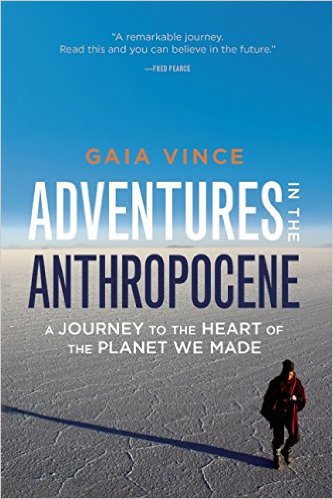
Adventures in the AnthropoceneAdventures in the Anthropocene:  A Journey to the Heart of the Planet We Made is, indeed, a journey. (1) Its author, Gaia Vince, traveled the globe for two years to witness first-hand the impact of human civilization on the planet.  It is an even-handed account, in which grim realities are described but are balanced with optimistic predictions of the innovations that will ultimately enable us to cope with them.

Ms. Vincent takes us to remote corners of the Earth where undeveloped communities are further impoverished by climate change and related changes in the environment.  Rising temperatures and reduced rainfall have forced many agricultural communities off their ancestral lands and into a more marginal existence.  In Bolivia, for example, former farmers have been displaced into brutal mines where life span is typically shortened by health and safety hazards.  Some Pacific and Indian Ocean islands have been drowned by rising sea levels, forcing mass evacuations onto those that remain.  Their protective reefs are dissolving in the increasingly acidic ocean.

Meanwhile, enterprising people are responding to threats their communities are facing.  In the Indian Himalayas, for example, artificial glaciers are being created to replace those that are melting.  Glaciers were the irrigation system that enabled agriculture in marginal conditions.  Torrential downpours caused by climate change are frozen on dammed, flat plains to create artificial glaciers that perform the same function.  In a remote village in Nepal, a villager returns from his Western education to bring his impoverished community into the 21st century by creating a wi-fi network that provides internet access.  The internet brings education to a village that could not afford teachers.  It is powered by a small hydroelectric generator in a glacial stream.  The stream is expected to disappear when the glacier melts in a decade or two, a problem yet to be solved.

These stories and a multitude of others are both sobering and inspiring, but we will focus on the issues relevant to Million Trees.

Harvesting fog with trees

The coast of Peru is one of the driest places on the earth.  There are places in Peru where no rain has been recorded.  The city of Lima is near the coast and its climate is similar to San Francisco.  There is little rain, but there is a great deal of fog.  Lima, like many cities in undeveloped countries, is surrounded by shanty towns in which poor people build make-shift shacks and live without modern services such as water, power, and sewage systems.

Demonstrating once again, that poverty is sometimes the mother of invention, the people of one of these shanty towns are attempting to grow a forest on their sand dune.  The trees are being irrigated with water harvested by huge fog nets, which are also supplying the community with drinking and washing water.  Within four years, the community expects the trees to be large enough to harvest the fog without the help of the fog nets, “producing a self-sustaining run-off that will replenish ancient wells and provide water for the community for the first time in 500 years.” (1)

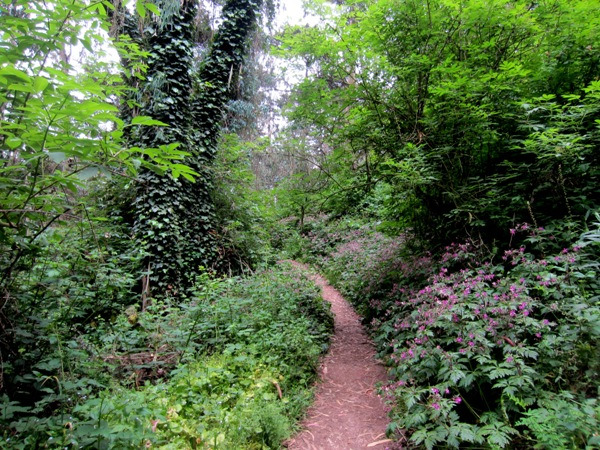
Sutro forest on a typical summer day. Courtesy Save Sutro Forest.

This is a familiar scenario to the readers of Million Trees.  Fog drip in the eucalyptus forests in San Francisco has been measured at over 16 inches per year.  In the driest months of the year, soil moisture in San Francisco’s eucalyptus forest has been measured at over 10%, while soil moisture in grassland was only 2% and 4% in shrubs.  (2)

The value of forests and the dangers of deforestation

Each chapter of Adventures in the Anthropocene is devoted to a different ecosystem.  Each ecosystem is introduced with a description of the importance of that ecosystem and the way in which is it being compromised by the activities of humans in the Anthropocene.  Here are a few excerpts from the chapter about forests, which will be familiar to the readers of Million Trees.

  • “Forests play an important role in local and global climate. The world’s forests absorb 8.8 billion tonnes of carbon dioxide each year through photosynthesis—about one-third of humanity’s greenhouse gas emissions.”
  • “…their canopies provide shelter from the sun and wind, making forests much wetter, cooler environments than surrounding treeless areas. This nurtures streams and rivers, provides habitat for a range of amphibians and other life, helps cool the regional and global atmosphere, and recycles water.”
  • “Although forests help create the climate, they are also exquisitely sensitive to it—and the smaller a forest gets, the less resilient it is. When trees are chopped down, sunlight enters in the gap and dries the soils. Drought upsets the forests’ delicate water cycle—trees start to die and the entire ecosystem can tip from rainforest to grass-dominated savannah.”
  • “Deforestation emits carbon dioxide from soils and decaying plant matter, and is responsible for around 20% of all carbon dioxide emissions.”

One point bears repeating because it is relevant to our local version of deforestation.  In some cases, native plant advocates have succeeded in their demand to destroy 100% of our urban forest because it is predominantly non-native.  In other cases, they have only been able to convince land managers to “thin” the forests, although “thinning” does not seem an accurate description of destruction of 90% of the trees.  In any case, we should all understand that the ultimate likely outcome of the “thinning” strategy is an eventual clear-cut because “when trees are chopped down, sunlight enters in the gap and dries the soils….trees start to die and entire ecosystem can tip” from forest to grassland.  The drying of the soil is only one factor in this prediction.  The remaining trees also will be vulnerable to wind throw.  And the herbicides used to prevent the destroyed trees from resprouting are mobile in the soil and are likely to damage the trees that remain.  Plans to “thin” the forest are either based on ignorance or are a strategy designed to achieve the same goals as a clear-cut with less public opposition.

Are invasive species a problem?

We were gratified that there was barely a mention of “invasive” species in the detailed accounts of the impact of human civilization on the planet.  The conventional wisdom that “invasive” species are one of the primary causes of species extinction is waning and this book reflects that fact. 

Galapagos Islands
Galapagos Islands

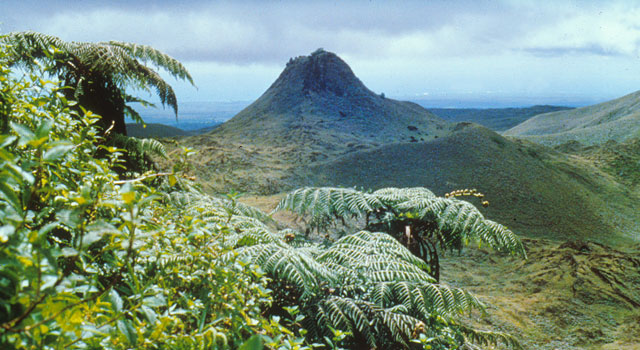
The pros and cons of introduced plant species are debated in the context of the Galapagos Islands, where biodiversity is worshipped because it was instrumental in Darwin’s theory of evolution.  Ms. Vince interviewed the conservationist who has been battling invasive plant species on the Galapagos for 20 years.  He recently decided that attempts to eradicate introduced plants are futile and he now calls them native plants.  His surrender to this reality is controversial, but he is resolute.  He is supported in this decision by scientists who have studied novel ecosystems and find ecological value in them.  The rebuttal to such defense of novel ecosystems is that the globalization of ecosystems is homogenizing the world’s biota.

Ms. Vince concludes that proponents of eradicating non-native plants are losing the battle against the “McDonaldization” of nature:  “From the Galapagos to Hawaii, conservationists are switching tack and starting to embrace the introduced species of Anthropocene ecosystems…” because “In some places, invasives have enhanced the landscapes, reducing erosion, providing handy cash crops or food and habitat for other wildlife.”

We can only hope that our local version of “conservation” in the San Francisco Bay Area will catch up with this new realistic perspective in time to save our urban forests from being needlessly destroyed.

Epilogue

The final chapter of Adventures in the Anthropocene is an epilogue, which takes place in 2100 in London.  The author’s son muses at the age of 87 about which of his mother’s many predictions occurred in the 21st Century.  As we would expect, it was a tumultuous century, one in which drastic changes were made to accommodate the changing climate.

We notice that 22nd Century vegetation of London is tropical:  “Now, carpets of sedges and mosses fill the spaces, interspersed by grasses grazed by capybara, and the planted fig and mango trees, noisy with wild birds.”     We marvel that people claiming to be environmentalists are blissfully unaware of the fact that the native plants they are demanding we restore are not adapted to current climate conditions, let alone the climate foreseen in the near future.

We conclude with the final paragraph of Adventures in the Anthropocene, because it is the most optimistic prediction in this excellent book:

…the world has become a kinder place.  The terrible wars, the famines, the terrorism, extremism and hate, the drownings and deaths of hundreds of thousands of migrants the humanitarian crises…they seem to be over now…The great global mix-up of people that has occurred as a result of climate migration, urbanization, and online networks has produced a new, socially mobile, egalitarian society.  The world’s giant cities force people to live together in close but diverse communities, and it has generated a spirit of cooperation.”

We look forward to a time of greater equality for humanity as well as for the natural world, when the meaningless and unnecessary distinction between native and non-native will be retired from our vocabulary.


(1) Gaia Vince, Adventures in the Anthropocene:  A Journey to the Heart of the Planet We Made, Milkweed Editions, 2014

(2) Kevin M. Clarke, et. al., “The influence of urban park characteristics on ant communities,” Urban Ecosyst, 11:317-334, 2008

Beyond the War on Invasive Species

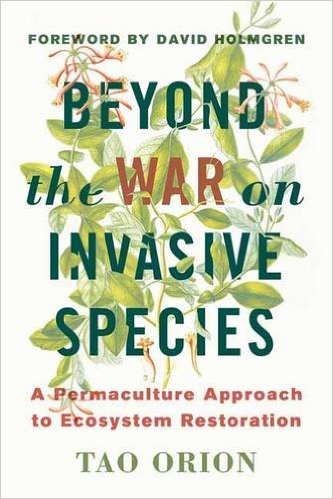
Tao Orion is the author of Beyond the War on Invasive Species:  A Permaculture Approach to Ecosystem Restoration, the latest in the rapidly growing literature about the futile and destructive attempts to eradicate non-native species.  Ms. Orion will give a workshop at a PLACE for Sustainable Living on Thursday, September 17, 2015:

“Rethinking Invasive Species from a Permaculture Perspective”

Thursday, September 17, 2015, 6-8 pm

PLACE for Sustainable Living

1121 64th St, Oakland, CA 94608

Donations $12-$25 requested

Update:  This is the answer PLACE for Sustainable Living gave to a question about wheelchair accessibility:  “It is not wheel chair accessible yet – we have carried wheelchair persons up the steps with their wheelchairs – we can arrange for that. And the yard is filled with chipwood, wheel chairs have rolled over fine, but not sure if everyone in them can push through. Our friend, male, can push through fine.”  Please contact PLACE for Sustainable Living directly if you have specific questions about accessibility.  (addendum dated 9/10/15)

Update #2:  Ms. Orion’s presentation has been cancelled because the venue is not wheelchair accessible.  CUIDO (an organization which represents disabled people) asked that it be moved to a facility with wheelchair accessibility or cancelled.  Such a facility could not be found, so it has been cancelled.  

Update #3:  Some adjustments have been made in plans for Ms. Orion’s presentation which are apparently acceptable to at least some members of the disabled community.  Ms. Orion has therefore decided against cancelling it.  Sorry for the confusion.

Ms. Orion is visiting the Bay Area from the Willamette Valley in Oregon, where she has a small farm in the country.  She has a degree in agroecology and sustainable agriculture from UC Santa Cruz and she has studied at the Columbines School of Botanical Studies in Eugene, Oregon.  She teaches permaculture design at Oregon State University and a non-profit sustainable-living educational organization.  She has also worked as a permaculture designer for ecological restorations.

Beyond the War on Invasive Species

Beyond the War on Invasive SpeciesThe first chapter of Ms. Orion’s book is a breakthrough because it is an explicit indictment of pesticides used by so-called “restoration” projects.  Although previously published books were critical of invasion biology and the ecological industry it spawned, pesticides were barely mentioned in them.  In contrast, it is primarily the use of pesticides in ecological “restorations” that convinced Ms. Orion that the war on invasive species is doing more harm than good.

Concern about unwanted plants – AKA weeds – is as old as human engagement in agriculture, that is, thousands of years old. And most of the plant and animal species now considered “invasive” were introduced by humans to serve a variety of purposes, including aesthetics, such as mute swans and multiflora roses.  Some of these introduced plants and animals had unintended consequences such as competing with native plants and animals for available resources.  Concern – even regret – about these introductions has increased greatly in the past 25 years.  Attempts to manage these introductions has escalated from import limitations to fines and penalties and finally to attempts to eradicate plants and animals with pesticides.

The role of the pesticide industry in the escalating war on “invasive” species

Ms. Orion turns to the public record to make the case that the current focus on eradicating introduced species using pesticides was influenced by business interests.  She points out that the federal Invasive Species Advisory Committee is a consortium of academic, professional, and business interests, including at least two people who are employed by manufacturers of pesticides.  They make invasive species management policy recommendations to the National Invasive Species Council (NISC), created by Executive Order in 1999.  The federal government is spending over $1 billion annually on research and control of “invasive” species, including pesticide applications.

National Invasive Species Council

The NISC is modeled after the California Exotic Pest Plant Council, created in 1992.  That Council is now known as the California Invasive Plant Council (Cal-IPC).  Cal-IPC brought together representatives from government agencies and non-profit environmental organizations, as well as manufacturers of pesticides and spray equipment:  “Monsanto has sponsored Cal-IPC since its inception and both DuPont and Dow AgroSciences have also supported the group.”  (1)

The first annual conference of Cal-IPC in 1993 featured an employee of Monsanto, Dr. Nelroy Jackson.  Jackson’s presentation to Cal-IPC stated that “chemical weed control is the optimal method for control and removal of exotic plant species during…most native habitat restoration projects.” 

Jackson’s involvement in escalating attempts to eradicate introduced species is troubling, but is not the only example of such collaboration between the “restoration” industry and the manufacturers of pesticides.  The Weed Science Society, which advocates for “research, education, and awareness of weeds in managed and natural ecosystems,” has employees of Dow Agrosciences, Syngenta, and Dow Chemical on its board of directors.  Those manufacturers of pesticides, as well as Monsanto, Bayer Crop Science, Dupont, and BASF Corp are also donors to the weed society, at the highest levels of donations.

The manufacturers of pesticides also influence the “restoration” industry by investing and participating in the consulting firms that write environmental impact reports for ecological “restoration” projects, such as Tetra Tech (which wrote the draft Environmental Impact Report for San Francisco’s so-called Natural Areas Program).

The manufacturers of pesticides influence public policy regarding ecological “restoration” by making large tax-deductible contributions to many land-grant universities that conduct research on agriculture:  “A 2012 Report from Food and Water Watch found that nearly 25% of funding for agricultural research at public universities comes from private companies.”  (1) This is one of many reasons why there is so little research done on non-chemical approaches to ecological restoration.

As disturbing as this collaboration between the government and the pesticide industry is, the evidence of the relationships between trusted non-profit environmental organizations and corporate interests is even more so.  Nature Conservancy, National Audubon Society, and Ducks Unlimited all have close relationships with the manufacturers of pesticides and receive funding from them.

Ms. Orion then describes the use of pesticides by the “restoration” industry.  She also describes some of the damage pesticides are known to do, such as killing microbes in the soil and binding minerals in the soil.  She describes the persistence and mobility of pesticides in the environment.  She describes the inadequacy of testing and regulation of pesticides in the United States.  These issues are well known to the readers of Million Trees, so we won’t repeat them here, but new readers can click on the blue links to visit posts about those issues.

All introduced species are presumed to be harmful

Ms. Orion’s next chapters are more similar to the books that precede hers.  There are several examples of specific “invasions” that illustrate the point that “invasive” species are usually symptoms of changes in the environment, rather than causes of those changes.  Attempting to eradicate them does not reverse the changes in the environment and often causes more environmental damage.  “Invasive” species are often performing valuable ecological functions that are not understood until they are eradicated.  We have reported many examples of these issues and won’t repeat them here.  However, Ms. Orion’s telling of the history of Asian Carp in the Mississippi River and the Great Lakes was new to us and is well worth a retelling.

Song dynasty painting attributed to Liu Cai (c.1080–1120). Contains various types of fish and other marine animals, such as goldfish, perch, catfish, carp, minnows, bass, and shrimp.

Asian carp has been a mainstay in the diet of the Chinese for several thousand years, according to their historical literature.  Asian carp are well adapted to aquaculture techniques, so they have the potential to replace or supplement other sources of protein.  They were introduced to the Midwest in the early 1800s and they spread throughout the Mississippi River many decades ago.  Although they are prevalent in the Mississippi River, they have not driven any native fish to extinction.  Yet, despite their usefulness and the lack of evidence that they have caused any harm, they suddenly became the latest invasion crisis when it was feared they would soon enter the Great Lakes.  A government fisheries biologist put that fear into perspective:

“We are trying to keep invasive Chinese carps out of the Great Lakes, to protect an invasive (yet purposefully stocked) Pacific salmon fishery, which was stocked as a management tool to control hyper-abundant alewifes, another invasive fish species, because the native piscivore, the Lake Trout, was nearly wiped out by another invasive species, the sea lamprey, because people built the Welland Canal around Niagara Falls to promote intercontinental shipping deep into the Great Lakes basin.” (1)

It makes the head spin to follow the “logic” of this sequence of events, which we paraphrase, “we solved one problem by creating another, then we solved that problem by creating another…ad infinitum.“  This is an ecosystem that has been radically altered by man, including reversing the flow of the Chicago River which connects the Mississippi River to the Great Lakes to solve Chicago’s sewage problems.   The water is warmer, polluted with agricultural runoff, and there is no longer a seasonal, cleansing water surge.  These changes in the environment set the stage for the arrival of Asian Carp in the Great Lakes.  The habitat for native fish has been radically altered such that removal of Asian carp from the river is an irrelevant, inconsequential improvement of habitat needed by native fish.

Despite what would seem overwhelming evidence that Asian carp could be a valuable food source and that being rid of them is unlikely to benefit anyone, here is a brief list of what has been done so far to try to prevent them from entering the Great Lakes:

Fish kill using rotenone. http://www.encyclopedia.com/doc/1E1-X-rotenone.html
  • US Army Corps of Engineers constructed a submerged electric fence to shock and kill the fish as they enter the Great Lakes. The fence cost millions of dollars but is largely ineffective.
  • The Illinois Department of Natural Resources dumped 2,200 gallons of rotenone into sanitary and ship canals feeding into the Great Lakes. This poison kills all gilled animals. The result:  “Among the tens of thousands of dead fish, researchers found one Asian carp.” (1) This fiasco cost $3 million.
  • Other researchers have suggested a system of strobe lights and bubble and sound barriers to stop the northward migration of Asian carp.

Permaculture philosophy

Ms. Orion’s closing chapters reflect her training in permaculture design.  She considers the tending of the wild by Native Americans a model for ideal stewardship of the land.  And she advocates for land management strategies that reflect the realities of our changed environment and are sustainable into the future.  We will let her speak for herself:

“Holistic restoration planning requires an honest accounting of what has come to pass as well as a comprehensive view of what we can do about it.  The problems are complex, and the solutions are likely to be more so…Navigating from a paradigm that views invasive species as scourges to one that looks at them as opportunities for deeper ecological and economic engagement will take time and commitment, especially because the old paradigm is so entrenched politically, economically, and academically.  The tide is shifting though, as more and more of us are coming to realize that the herbicide-based eradication approach to restoration is outmoded—a futile attempt to regain an imagined past—and we need to be focusing our time, resources, and energy on adapting to the future.” (1)

Please show your support for Tao Orion and her book by attending her workshop on Thursday, September 17th.


(1) Tao Orion, Beyond the War on Invasive Species:  A Permaculture Approach to Ecosystem Restoration, Chelsea Green Publishing, 2015 

“Weed Whackers, Monsanto, glyphosate, and the war on invasive species”

coyote in oxalis field. Copyright Janet Kessler

Harper’s Magazine describes itself: “the oldest general-interest monthly in America, explores the issues that drive our national conversation, through long-form narrative journalism and essays…”  Harper’s has just published an article by Andrew Cockburn, an experienced investigative journalist with an impressive track-record of informing the public of some of the darkest secrets in our country.  The article is available here:  Cockburn – Weed Whackers

Invasion biology and the “restoration” industry it has spawned deserved his attention and we are indeed fortunate that he has brought his journalistic skills to this task.   The public is largely unaware of the billions of dollars of taxpayers’ money being wasted on futile attempts to eradicate “invasive” plants.  There is even less knowledge of the quantities of pesticides being used by these projects or the toxicity of those pesticides.

Mr. Cockburn has interviewed many of the key players in this crusade against nature, on both sides of the controversy.  And he has visited specific projects to illustrate one of his key points:  “invasive” species are symptoms of environmental change, not the cause of them.

This article ( Cockburn – Weed Whackers )  deserves to be read, so we will not summarize it further.  Please share it with your friends, whether they are native plant advocates or critics of invasion biology.  We are deeply grateful to Mr. Cockburn for his even-handed treatment of this controversial issue, which is dividing communities in the San Francisco Bay Area.

Mount Sutro Forest. Courtesy Save Sutro

The Sierra Club must STOP advocating for deforestation and pesticide use in San Francisco Bay Area

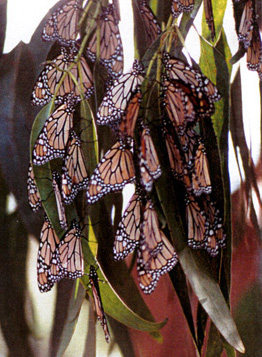
Monarch butterflies over-winter in California's eucalyptus groves
Monarch butterflies over-winter in California’s eucalyptus groves

Million Trees is sponsoring a petition to the national leadership of the Sierra Club in collaboration with San Francisco Forest Alliance.  The petition asks the Sierra Club to quit advocating for the destruction of the urban forest and the use of pesticides in the San Francisco Bay Area.  It also asks the Sierra Club to withdraw its suit against FEMA, which demands the destruction of 100% of all “non-native” trees (eucalyptus, Monterey pine, acacia).  This is an on-line petition which can be signed HERE.  If you are signing this petition and you are a present or former member of the Sierra Club, please mention it in your comments.

sign petition to sierra club

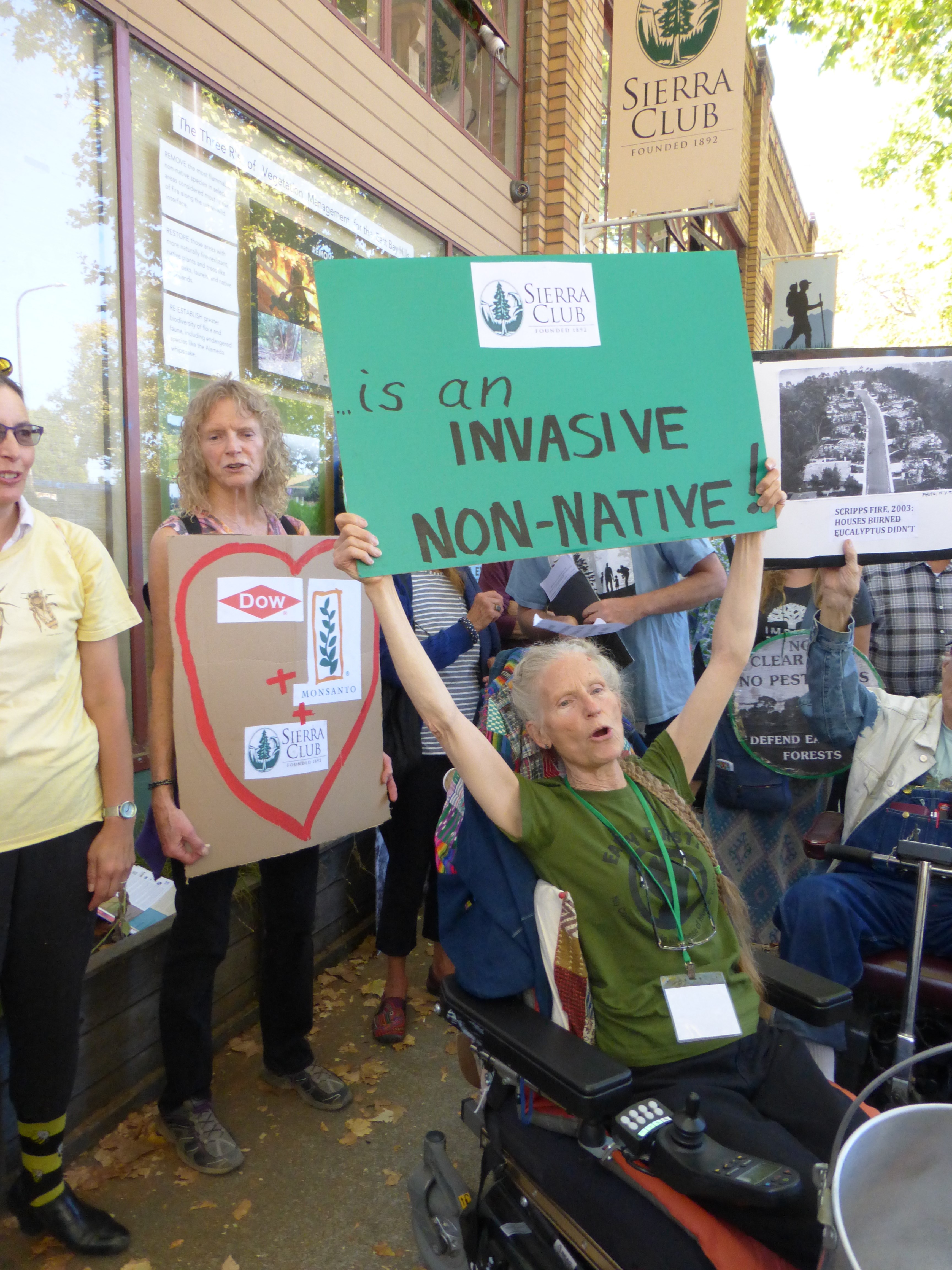
There will be a demonstration by supporters of this petition at the headquarters of the San Francisco Bay Area Chapter of the Sierra Club on Tuesday, August 25, 2015, at 4 pm, 2530 San Pablo Ave, Suite I, Berkeley, CA.  Please join us if you can.

If you are a regular reader of Million Trees, you probably understand why we are making this request of the Sierra Club.  For the benefit of newer readers, we recap the long history of trying to convince the San Francisco Bay Area Chapter of the Sierra Club that its support for the destruction of our urban forest, as well as the pesticides used to prevent its return, contradicts the mission of the Sierra Club as a protector of the environment.

  • This “open letter” was sent to the leadership of the local chapter of the Sierra Club. It informs the Sierra Club of many misstatements of fact in the chapter’s newsletter about the “Wildfire Hazard Reduction and Resource Management Plan” of the East Bay Regional Park District.
  • This article is about the Sierra Club’s public comment on the “Wildfire Hazard Reduction and Resource Management Plan” of the East Bay Regional Park District. The Sierra Club instructs EBRPD to put the “restoration of native plant communities” on an equal footing with fire hazard reduction.  It also specifically endorses the use of pesticides for this project.  In other words, native plants are more important than public safety in the opinion of the Sierra Club. 
  • This “open letter” is about misstatements of fact in the chapter newsletter about San Francisco’s Natural Areas Program. We wrote that “open letter” because the newsletter refused to publish our letter to the editor.
  • This article is about misstatements of fact in the chapter newsletter about the FEMA projects in the East Bay Hills. This incident occurred during the brief period of time when the on-line version of the newsletter was accepting on-line comments.  That opportunity to communicate with the chapter enabled a correction of inaccurate statements in the newsletter.

Sierra Club’s suit against FEMA, which demands the destruction of 100% of all “non-native” trees in the East Bay Hills was the proverbial straw that broke the camel’s back.  Chronic annoyance at the club’s endorsement of destructive and poisonous projects was suddenly elevated to outrage.  HERE is the Club’s description of its suit, which is available in its on-line newsletter.  Attempts to communicate our outrage to the Club by posting comments on that article failed.  That is, the Club is no longer publishing comments it doesn’t like, thereby cutting off any means of communicating with them.  Our petition is the only means of communication left to us.  The text of the petition follows and it can be signed HERE.  Please distribute this petition to your friends and neighbors who share our concern about the destruction and poisoning of our public lands in the San Francisco Bay Area.


Title:     Sierra Club must STOP advocating for deforestation and pesticide use in San Francisco Bay Area

Petition by:        Million Trees and San Francisco Forest Alliance

To be delivered to:
Michael Brune, Executive Director, Sierra Club, michaelbrune@sierraclub.org
Aaron Mair, President, Board of Directors, Sierra Club, aaronmair@gmail.com

We are environmentalists who ask the Sierra Club to quit advocating for the destruction of the urban forest and the use of pesticides in the San Francisco Bay Area.  We also ask that the Sierra Club withdraw its suit against FEMA, which demands the destruction of 100% of all “non-native” trees (eucalyptus, Monterey pine, acacia).  If you are signing this petition and you are a present or former member of the Sierra Club, please mention it in your comments.

Over the past 15 years, tens of thousands of trees have been destroyed on public lands in the San Francisco Bay Area.  Now hundreds of thousands of trees in the East Bay are in jeopardy of being destroyed by a FEMA grant to three public land managers.  The Bay Area Chapter of the Sierra Club has actively supported all of these projects and now it has sued FEMA to demand the destruction of 100% of all “non-native” trees.

These projects have already used hundreds of gallons of herbicide to prevent the trees from resprouting and to kill the weeds that grow when the shade of the canopy is destroyed.  Now, the FEMA project intends to use thousands of gallons of herbicide for the same purpose.  These herbicides (glyphosate, triclopyr, imazapyr) are known to be harmful to wildlife, pets, and humans.

This environmental disaster will release tons of carbon into the atmosphere, thereby contributing to climate change.  It will destroy valuable habitat for wildlife, introduce poisons into our watershed, cause erosion, and eliminate our windbreak.  We call on the national leadership of the Sierra Club to prevent the active participation of the Bay Area Chapter of the Sierra Club in this environmental disaster.

Petition background:

The San Francisco Bay Area was virtually treeless prior to the arrival of Europeans.  The landscape was predominantly grassland, scrub, and chaparral.  Trees grew only in ravines where they were sheltered from the wind and water was funneled to them.  The trees that were brought from other areas of California and from other countries were chosen because they are the species that are best adapted to our local conditions.  John Muir, the Founder of the Sierra Club, also planted these tree species around his home in Martinez and was as fond of those trees as many of us are still today.

The Sierra Club has now turned its back on this cosmopolitan view of nature in favor of returning our landscape to the pre-settlement landscape of grassland, scrub, and chaparral.  This approach has led to the destruction of tens of thousands of trees and the use of herbicides to prevent them from resprouting.

In the East Bay, native plant advocates have also falsely claimed that “non-native” trees are more flammable than native plants.  Although fire hazard reduction was the stated purpose of the FEMA grants, fire hazards will be increased by the clear-cuts of our urban forest for the following reasons:

  • Tons of dead, dry wood chips will be scattered on the ground to a depth of 24 inches.
  • The fog drip which is condensed by the tall trees moistens the ground and will be lost when the canopy is destroyed. The ground vegetation will therefore be drier and more likely to ignite.
  • The tall trees provide a windbreak which has been demonstrated repeatedly to be capable of stopping a wind-driven fire, which is typical of California wildfires.
  • The project does not intend to plant any replacement plants or trees. Therefore, the most likely colonizers of the bare ground are annual grasses which ignite easily during the dry season and in which most fires in California start and spread.
Hummingbird in eucalyptus flower.  Courtesy Melanie Hoffman
Hummingbird in eucalyptus flower. Courtesy Melanie Hoffman

Many empirical studies document the rich biodiversity of our urban forest today.  Bees, hummingbirds, and monarch butterflies require eucalyptus trees during the winter months when there are few other sources of nectar.  Raptors nest in our tall “non-native” trees and an empirical study finds that their nesting success is greater in those trees than in native trees.

In short, the Bay Area Chapter of the Sierra Club is promoting an environmental disaster that is adamantly opposed by tens of thousands of people.  FEMA received over 13,000 public comments on its draft Environmental Impact Statement, over 90% in opposition to this project, according to FEMA’s own estimate.  The signers of this petition are also opposed to this project as presently described by FEMA grant applications and its Environmental Impact Statement.

Environmentalists in the San Francisco Bay Area have been denied due process by the local chapter of the Sierra Club.  The Bay Area Chapter has blocked every effort to communicate with them:  they ignore our emails, block our comments on their blog, refuse our letters to the editor of their newsletter, and do not answer our phone calls.  We believe that the national leadership has an obligation to consider our complaint because the actions of the local chapter are inconsistent with the mission of the Sierra Club.  The local chapter is actively contributing to climate change and endorsing the use of toxic pesticides in our environment.

Xenophobia is Killing Our Planet

We are publishing a guest post from South Africa with mixed feelings.  We are glad to welcome another like-minded person into our effort to prevent the pointless destruction of the plants that have been members of our communities for generations, solely because they are not considered “native.”  On the other hand, we are saddened to learn that other communities are experiencing the same destruction that we are witnessing here in the San Francisco Bay Area. This guest post is an article that was published by The Witness, which the author describes as “South Africa’s oldest daily newspaper.”


Xenophobia is Killing Our Planet

Xenophobia (both human and ecological) is raging worldwide. Yet we are all Earthlings and life on Earth has always migrated. The Khoisan are the first known inhabitants of Africa, and African elephants and lions once roamed North America; America’s bison, bear and deer immigrated from Eurasia, while horses, which evolved in the States, radiated outwards, returning home to be shot as aliens.

Historically, the mass hysteria of rhetoric-spurred xenophobia has sucked reason and compassion from sections of whole countries. Propaganda supporting Hitler’s racial-purity infected Germans to hate Jews who were vilified as pigs. In Rwanda, the genocide of the Tutsi tribe began with the Hutus defaming them as cockroaches. In South Africa, foreign nationals have been slandered as lice and ticks. While in ecological warfare, exotic plants are demonized as cancers and monsters. Those brainwashed by this illogical prejudice, tend to overlook their own ancestral origins and their personal culpability about the very things they fear and denounce in more recent arrivals in our war-torn world now over-flowing with desperate refugees.

Essentially we are all settlers at any given time. Definitions of nativeness are changed at whim by invasion biologists who measure other creatures via a creed they themselves do not exemplify. ‘Alien’ plant species are destroyed country-wide, drastically disrupting ecosystems for the slightest inconvenience to native species or commercial interests. South Africa’s multi-billion rand [1 US $ = 12.64 S. African rand] Working for Water, the world’s largest ever tree-cutting campaign, is a terrifying example. Levelling countless rain-drawing trees on a planet already suffering from tree-loss-induced global warming, is tantamount to blood-letting an already haemorrhaging patient. Far from saving water, the dire rainfall deficit has devastated South Africa with widespread drought causing a conservatively-estimated R400 million  loss to livestock and crops in KwaZulu-Natal alone.

Unprecedented ferocious winds, fires, floods, heat waves, violent storms and catastrophic disasters are battering our over-populated planet, our ice caps melting faster, its creatures dying. And it is no wonder: armed with poisons, the world’s chemical corporations have dressed themselves in Xenophobia, using it as a front to motivate and mask their hugely-profitable, unceasing nature destruction. In a study published in the journal Science this year, 18 international researchers found that human abuse has so disrupted complex interactions between oceans, land and atmosphere that the earth is becoming inhospitable to life. Johan Rockstrom, professor of environmental science at Stockholm University, gravely concluded that, for the first time in human history, we risk destabilizing the entire planet.

Only enough ecosystems, essential for regulating Earth’s climate, keep our civilization from extinction, and scientists estimate we’d have to return as much as 40% of all land to nature to regain long-term stability. Britain’s James Lovelock says we can all help by letting portions of our gardens go wild. Forest ecologist at Stellenbosch University, Dr Coert Geldenhuys, explained in an article how alien infestations repair forests when indigenous trees can’t fill the pioneering role, rehabilitating the soil before dying out, allowing natives to return. This Earth-healing is harmless, sustainable and free, yet fanatics continue mutilating and polluting, with depraved indifference leaving countless creatures, (both native and alien, seen and unseen) homeless, poisoned and dying – as recently verified by scores of dead baby weaver birds strewn amid an axed casaurina forest. Yet ever more prominent ecologists the likes of David Theodoropoulos, Mark Davis, Matthew Chew, Ken Thompson and Dov Sax, see a bigger picture with the role of invasive aliens far more complex and beneficial than generally believed. Fred Pearce (author of THE NEW WILD) puts it all in a nutshell: invasives re-boot Earth’s man-damaged ecosystems to help nature withstand global warming.

AT WAR WITH NATURE, a powerful exposé by New Zealand conservationist W F Benfield (available on AMAZON) reveals that the chemical industry in league with blindly-believing invasion followers who manufacture the crises needed to justify saturating our planet with poisons, are now offering their lethal services to the uninhabited islands of other lands. They were recently enlisted to rid our own Marion Island of mice. But this ‘extinction industry’ as Benfield succinctly describes it, uses deceit, staged photographs and chemicals to do far more harm to resident wildlife than any pest explosion ever could. (Watch POISONING PARADISE on YouTube.) The shockingly inhumane poison 1080 (banned in most countries) is regularly released over New Zealand where corporate conservation plans to render the entire country predator-free. Naturally, once predators are eradicated, their prey will multiply to plague proportions – creating unending opportunities for ever-hungry chemical corporations.

Man’s agriculture is presently eating away so much of the planet’s diminishing wilderness that the European Union and United Nations called for a global shift to a vegan diet to alleviate global warming caused by livestock farming and chemical poisoning. Recently the World Health Organization finally verified a study linking Roundup to cancer after hundreds of studies with similar findings were skewed or suppressed for 30 years. This tumour-causing herbicide was also connected to a mystery kidney disease which killed up to 20,000 farmworkers labouring in extreme heat in Central America, India and Sri Lanka. Scores of Argentinean farmers are suing Monsanto over their infant children’s birth defects, including cerebral palsy, Down’s syndrome, psychomotor retardation, missing fingers and blindness.

Roundup leaches nutrients from the soil, damages micro-organisms, kills earth worms and stimulates unstoppable super weeds. In Australasia it has killed 3 frog species, and, according to World Health statistics, the mere careless use of glyphosate-containing herbicides sickens and kills hundreds of thousands of people worldwide annually. Besides damaging the digestive tracts of animals and humans, incidences of once-rare diseases have soared since its use, linking it to Alzheimer’s, attention deficit disorder, autism, asthma and infertility. Workers spraying from backpacks are at risk simply by breathing in spray drift. Destroying harmless naturalized vegetation with chainsaws and deadly carcinogens, xenophobia, in bed with the chemical industry, is a danger to all life.

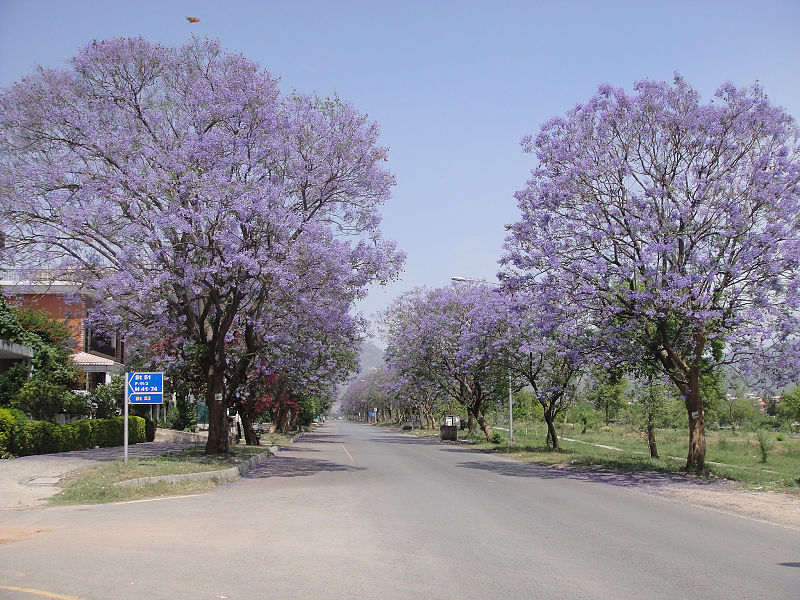
Jacaranda street trees in bloom in Pakistan.  Creative Commons - Share Alike
Jacaranda street trees in bloom in Pakistan. Creative Commons – Share Alike

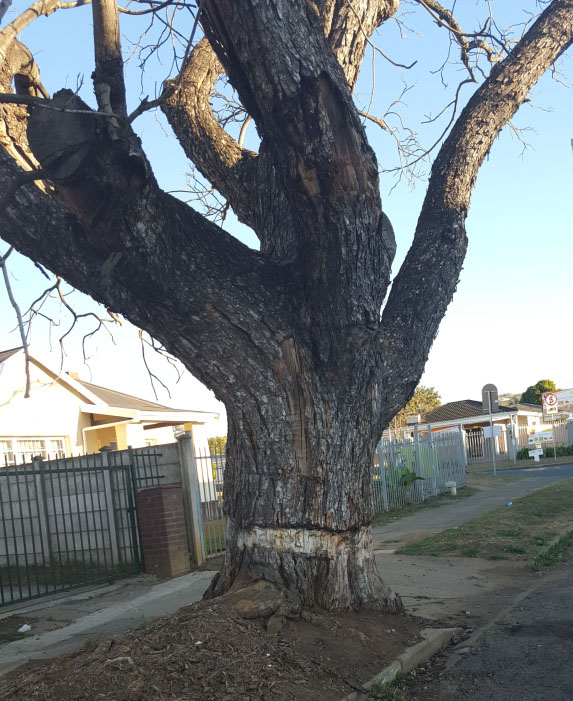
Pietermaritzburg’s beloved Art in the Park has to move next year because the original river-side site has been so degraded by felled trees, and everywhere gracious Jacaranda trees lining our streets stand tragically ring-barked and dying. In the decades since this merciless ethnic cleansing started, our bees have been poisoned to the edge of extinction, our butterflies, birds, rare frogs and chameleons as well as common-place insects and microscopic organisms essential to planet life, vanishing from our shrinking vegetation, while our polluted waterways and seas have vast chemical dead-zones, and scores of fish suffocate when poison-sprayed water-plants suck oxygen from the water whilst dying en masse.

Ring-barked (AKA girdled) jacaranda tree in South Africa.
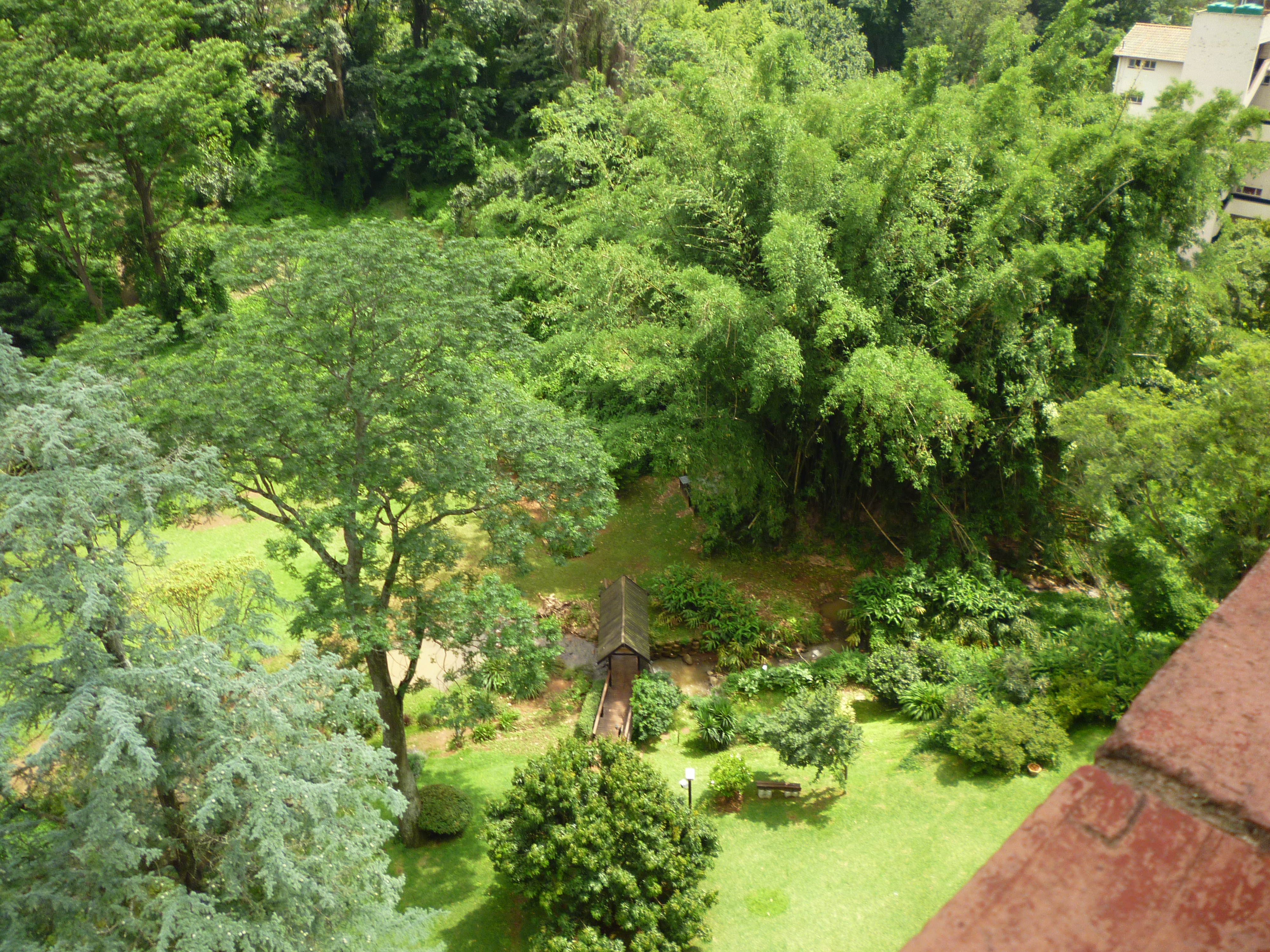
Bamboo before it was killed with herbicide.

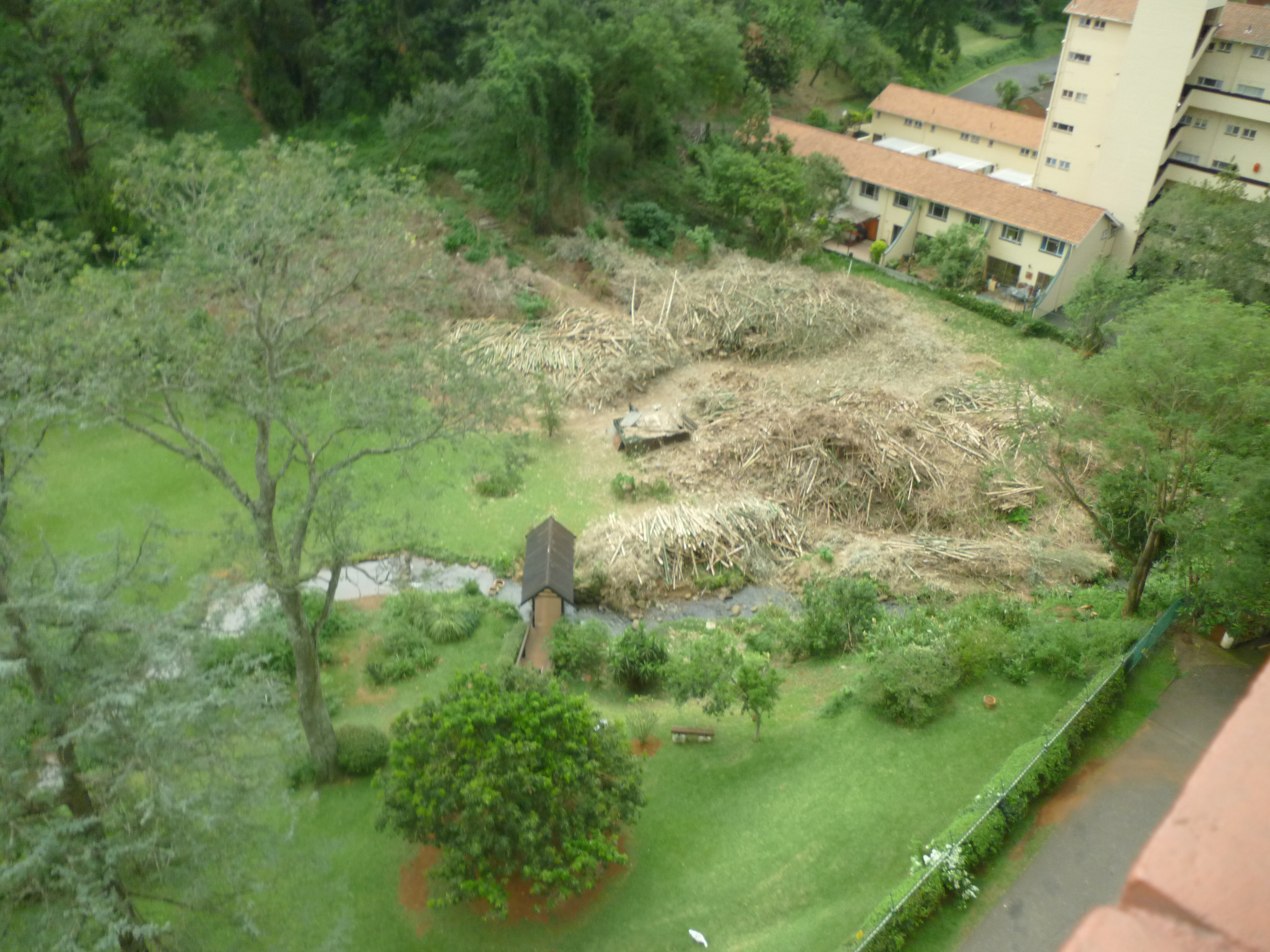
In Pietermaritzburg, magnificent five-storey tall bamboo in the once-beautiful stream-side park behind the Beacon Hill apartment block, were recently hacked and poisoned, risking the stream and its life-forms and resident geese and ducks, as well as the city’s ground water. Helicopters dropped clouds of poisonous herbicide on dagga growing amid hill-side food crops belonging to impoverished KwaZulu-Natal villagers. In the US, tons of chemicals dumped into Lake Michigan to kill one ‘alien’ fish, killed hundreds of thousands while brain-washed con-servationists and scientists cheered. American animal advocate, Nathan Winograd, reflected that in the hopeless battle to return America to a mythical ecological state, slaughter without end has been proposed. 

Bamboo after being killed with herbicide.

The effects of removing everything arbitrarily judged to be foreign are incalculable. Migrating thousands of miles, the incredible monarch butterfly – a precious natural wonder – has dropped an astounding 90% in numbers since milk weed was killed by herbicides. The worldwide massacre of plants and creatures sometimes just miles ‘out of place’ have evoked unlikely alliances between hunters and vegans who fear Earth’s animals are being wiped out. Andrew Tyler, Britain’s Animal Aid director, believes that the growing appetite for ‘alien’ blood is driving the slaughter of animals scapegoated for human-committed environmental abuses.

America’s Agricultural Department recently revealed that since 1997 it has destroyed a staggering 27 million animals by aerial snipers, poisons and traps, to help dessert bighorn sheep, deer and pronghorn. This alien killing mania spread quickly to unwanted natives. Elk, cougar, fox, bobcats, coyotes, badgers, prairie dogs, bears, wolves, wild longhorn, burros and horses – creatures which once filled us with wonder – among those left to rot that.  Alien disdain is worldwide: mustangs are killed lest they damage native plants, Britain’s grey squirrels destroyed to bring back the red, its deer culled to protect wildflowers, Canada Geese shot for dropping scat on pathways, while South Africa’s own shameful hit list includes the endangered black Kenya rhinoceros. Are purist’s any better than rhino poachers?

This madness, instigated and exonerated by invasion biology, is done at the unknowing tax-payer’s expense. With our living green world turning into a dead planet there have been increasing calls from the public, social sciences and ecology itself, for invasion biology to end. It is the only ‘scientific’ field ever doubted, and this, as they themselves admit, via a virtual ‘cottage industry’ of critical scientific articles, and even death-wishing obituaries in well-respected publications. Many regard this unproved discipline as money-making deceptive hype, xenophobic, immoral, cruel, nonsensical, climate changing and earth endangering. An English review of the book LA GRANDE INVASION explains the inspiring perspective of French ecologist, Jacques Tassin, who adjures conservationists to reconcile man to a new alliance with the living world, including invasives, which he believes are symptoms of pollution testifying to ‘ a richness for tomorrow’.

Invasion Biology has given chemical corporations an excuse to devastate our beautiful planet on a scale never seen before. We’ve become a world at war with itself. If this anti-life pseudo-science is not abolished, Earth’s millions of life-forms are doomed. Humanity has forgotten the spirit and intelligence innate in the wild: before it is too late we should unshackle nature to help heal itself. It’s time we all denounced what we’ve unknowingly allowed to happen. Mahatma Gandhi said: ‘Be the change you wish to see in the world.’ We should empathize with terrified foreign nationals and innocent creatures persecuted and killed through xenophobia’s ugly ethos, and remember that Christ himself identified with the alien Samaritans of this world, declaring: ‘What ye do unto the least of these my brethren, ye do also unto me.’

Gloria Keverne is a South African environmental activist and the international bestselling author of A MAN CANNOT CRY and BROKEN WINGS. In xenophobic riots in South Africa this year seven foreign-national human beings tragically lost their lives, while for decades countless trees, animals and insects have perished, poisoned and deprived of habitat by this prejudiced mind-set.  She can be emailed at glory@chrysalis-dreams.co.za.  If you agree with her viewpoint, please take a minute to thank her for defending her local landscape and wish her good luck in preventing its needless destruction.

More public comments on FEMA projects in the East Bay Hills

We are publishing a few more of our favorite public comments on the Draft Environmental Impact Statement for the FEMA projects in the East Bay Hills which will destroy nearly a half-million trees if implemented as presently described.

Over 13,000 public comments were submitted to FEMA.  FEMA estimates that 90% of the comments are opposed to the project.  We have selected a few which demonstrate expertise as well as knowledge of the areas that will be irreparably harmed by the destruction of hundreds of thousands of trees and the spraying of toxic herbicides.  All of the comments are in the public record and can be read HERE.

You can help to prevent this project from being implemented as presently planned by making a contribution to the suit of the Hills Conservation Network.  Visit the HCN website HERE to make a contribution.

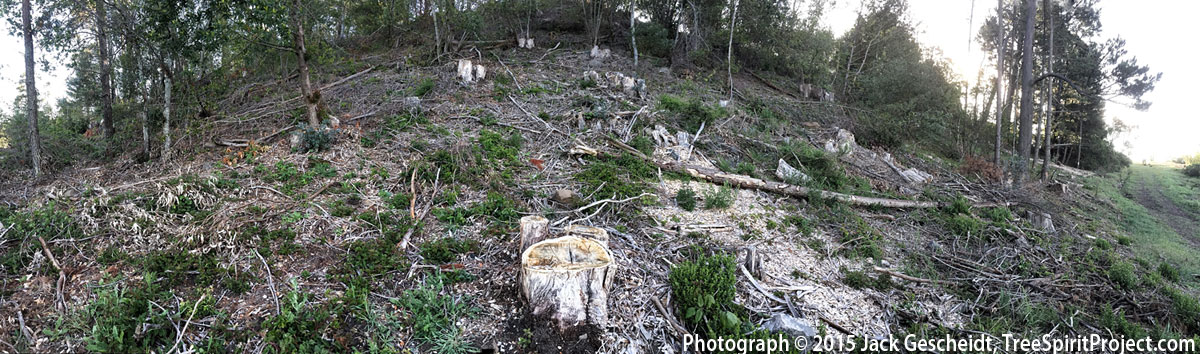
clearcut-East-Bay-hills-Jack Gescheidt


From:                    [Name redacted by Million Trees]

To:                          EBH-EIS-FEMA-RIX

Subject:               Berkeley Hills

Date:                     Friday, June 14, 2013 11:52:35 PM

I am a resident of Berkeley, California. I oppose the use of FEMA funds to cut trees in the Berkeley and Oakland Hills. I am an environmental science teacher at Berkeley High School. We know that these trees provide important habitat for many kinds of wildlife, and cutting them down will not prevent fires. Clear-cutting in the Berkeley and Oakland Hills is a very bad idea. It may cause mud slides, destroy the landscape, harm wildlife, destroy hikers’ aesthetic enjoyment of our wildlands; the planned use of pesticides is unconscionable. Please do not fund any of this clear-cutting. It is a waste of money, will not prevent fires, and will cause harm.


From:                    [Name redacted by Million Trees]

To:                          EBH-EIS-FEMA-RIX

Subject:               FEMA “fire hazard reduction” NO!!!!

Date:                     Friday, May 17, 2013 11:45:15 AM

Hello,

As a trained wildlands firefighter, I am familiar with the management techniques of wildland fires. Clear-cutting is not one of them. I could potentially support implementing a permanent firebreak of the standard size: about the width of a road. Cutting more than that is unnecessarily destructive, and destroys natural heritage which belongs to our children. Applying herbicide is likewise completely unrelated to standard, approved wildlands fire management, and presents unknown environmental dangers. I recommend consulting the county fire department for their recommendations, which based on my experience, will likely consist of bringing out a CCC or convict crew to cut a firebreak seasonally.

My family and I STRONGLY OPPOSE the current plan.

[Name redacted by Million Trees]

Berkeley resident


From:                    [Name Redacted by Million Trees]

To:                          EBH-EIS-FEMA-RIX

Subject:               Halt the land clearing!

Date:                     Friday, May 17, 2013 2:30:22 PM

Absolutely do not go forward with plans to clearcut the Strawberry and Claremont Canyons. These trees provide far more beneficial ecosystem services, like cooling, attracting moisture, and providing beauty, oxygen and habitat.

Do not use Round up on this land, it is an extremely hazardous toxic pollution.

The proposed management is extremely misguided and very irresponsible destruction, and would cause far greater ecological harm. The loss of this forest would be a great impoverishment to all the surrounding communities. Leave these trees alone!!

[Name redacted by Million Trees], Natural Areas Manager

A retired university planner critiques the FEMA projects in the East Bay Hills

We recently finished reading all of the 13,000 public comments on the FEMA draft EIS.  FEMA says that about 90% of the comments are opposed to the project and having read the comments that seems about right. 

It was a very rewarding experience to read the comments and we recommend it to anyone who is discouraged or doubtful that we can prevent the destruction of our urban forest in the East Bay (available HERE).

There were many excellent comments, many from people with specific expertise and knowledge of the issues that inform our opposition to these projects.  We plan to publish a few of them, as we obtain permission from their authors.  Today, we publish the public comment of Christopher Adams, with his permission.  We hope you are as impressed with his astute analysis as we are.


 Comments on Hazardous Fire Risk Reduction, East Bay Hills, CA,

Draft EIS

Prepared by Christopher Adams

Introduction:

My comments here are made solely in my capacity as a private citizen, but I think it is germane to state my background. I am a retired university planner, and for several years I directed the office which was responsible for review of every environmental document prepared by all the campuses and other facilities of the University of California. In addition, I was directly involved with the drafting, the public hearings, and the response to comments and preparation of two major Environmental Impact Reports, prepared under the California Environmental Quality Act for a UC campus. I also live near the EB Hills in an area subject to wild fires and share the concerns of others about the risk of fire.

Summary:

The Hazardous Fire Risk Reduction, East Bay Hills, CA, Draft EIS is a deficient document, beginning with its basic premise. While purportedly for the purposes of fire management, the proposed actions appear to be mostly motivated by a dream of a restoring the EB Hills to some imagined Eden prior to the European and American colonization of California. Instead of applying scientific and policy analysis to the impacts of the proposed actions the DEIS authors appear to have decided that the proposed clear cutting and herbicide measures are the right ones for fire protection and then cherry‐picked evidence, whether in the description of existing conditions or the possible alternatives solutions, which supports this conclusion. The DEIS rejects out of hand fire management alternatives that do not involve clear cutting and massive application of herbicides. In so doing the DEIS is a classic example of post hoc rationalization. Unless the DEIS is re‐issued with corrections and additions responding to the comments below, I believe that FEMA is seriously exposed to potential litigation. More significantly, if FEMA does not consider other less draconian and less expensive fire management measures, it will not be serving the interests of the citizens most impacted by fire danger, not to mention the taxpayers who will ultimately foot the bill.

Specific Comments:

The DEIS fails to note the existence of native trees which are specifically susceptible to the effects of one of the herbicides proposed for use. Section 4.2.2.2.1 notes that the native trees in the woodlands include madrone (Arbutus menziesii). However, in Section 3.4.2.1.1 Strawberry Canyon‐PDM there is no mention of madrones in the list of trees in the “native forest” (first paragraph of section). This is a significant omission, because there are madrones in Strawberry  Canyon, yet in the third paragraph of this same section one of the two herbicides proposed for use to stifle stump regeneration is Stalker (imazapyr) which has been identified elsewhere as being used specifically to eliminate madrones. According to the EPA Reregistration Eligibility Decision for Imazapyr: “Imazapyr use at the labeled rates on non‐crop areas when applied as a spray or as a granular to forestry areas present risks to non‐target plants located adjacent to treated areas.” (1)

The DEIS fails to acknowledge the growing threat of French broom in the UCB area.

While the presence of eucalyptus, Monterey pine, and acacia is repeatedly discussed, there is almost no mention of the rapid invasion of French broom. It is mentioned only in passing and without its scientific name in the discussion in Section 4.2.2.2.3 under “Northern Coastal Scrub.” While French broom has been rapidly increasing in the upper slopes of the Strawberry Canyon PDM and Claremont PDM areas, there is no mention of it at these locations in the DEIS. This plant is an active pyrophyte which chokes out native vegetation, can be poisonous to livestock, and is of limited benefit to native animals. The increase in sunlight from the proposed removal of large amounts of eucalyptus will encourage its spread. There is no mention of the fire risk from French broom in the discussion of fire risk in Northern Coastal Scrub, Section 4.3.3.2.5, and I could find no mention of its removal anywhere in the document.

The UCB project description does not explain if a fuel break is planned in the UCB areas and if so to describe it.

Section 1.1.1 UCB states that it will follow the “same general approach…which is included in Oakland’s grant application (see Section 1.1.2 below).” In Section 1.1.2 it is stated there the Oakland PDM would “create a fuel break on the west side of Grizzly Peak Boulevard north and east of the Caldecott Tunnel [presumably this means the west entrance to the tunnel].” UCB Strawberry Canyon properties also abut Grizzly Peak Boulevard, so the statement of “the same general approach” implies that UCB also proposes a “fuel break,” but none is described. Since the term “fuel break” implies clearing to the bare soil, with potential significant environmental impacts, this is a serious omission.

The DEIS fails to consider the impact on global climate change by the wholesale destruction of trees. The DEIS states that for UCB Strawberry Canyon alone 12,000 trees will be destroyed. Because trees absorb CO2 at an average rate of 13 pounds per year, this represents a potential loss in CO2 absorption of 78 tons per year. Given the growth patterns of native trees in Berkeley, which tend to be riparian or to grow on north facing slopes in a widely scattered pattern, the number of replacement trees will not come close to compensating for those destroyed. The difference should be estimated and calculated.

The DEIS fails to consider an actual and accomplished fuel management program when dismissing the alternative described in Section 3.3.1.1.

The Lawrence Berkeley National Laboratory (LBNL) is located on 175 acres on the north side of Strawberry Canyon immediately adjacent to the UCB and EBRPD areas described in the DEIS. LBNL, which is managed by the University of California, employs more than 4,000 persons on this site in laboratory buildings and with equipment that is worth several billion dollars. LBNL has recently completed a fire management program which is essentially what is described in Section 3.3.1.1 of the DEIS, Removal of Brush, Surface Fuels, Lower Limbs and Small Trees. The entire project was completed within the LBNL maintenance budget without special grants and has given the laboratory a great deal of fire security, according to its professional fire personnel. Yet there is no reference to this in the DEIS. The LBNL program is further described in the following links. This first links to a powerpoint slides; the second to a video discussion of the slides. http://www.lbnl‐cag.org/docManager/1000000159/Berkeley%20Lab%20Fire%20Safe%20Vegetati on%2C%20Lab%20Fire%20Marshal.pdf

http://www.lbnl‐cag.org/Content/10024/preview.html

The links convey much more effectively than my comments how an alternative to massive clear cutting and massive application of herbicides will effectively accomplish the goal of managing fire in the East Bay Hills.

The DEIS is incomplete and verging on the dishonest about the use of herbicides.

“Management of resprouts without herbicides is expensive….and thus was removed from further study.” This ignores the management of resprouts used successfully by LBNL as described in the above referenced powerpoint and video. There is no study about the use of herbicides at the scale proposed, e.g. 12,000 trees in Strawberry Canyon alone, on human populations, let alone native plants and animals.

The DEIS fails completely to discuss the realities of encouraging native plants after the clear cutting and heavy and repeated application of herbicides.

1) Restoration ecology is barely in its infancy, yet this DEIS expects us to accept on faith alone that when the clear cutting is done and the slopes sprayed with herbicides the native vegetation will miraculously reappear.

2) At the present time live oaks and bays are common on the north side (south facing side) of Strawberry Canyon under eucalyptus. This is probably because the fog drip from the eucalyptus and the shade encourage their growth in what would otherwise be a very dry area. Compare, for example, on slopes of similar aspect in portions of the EB Hills behind El Cerrito or Fremont. There is nothing in the DEIS to explain how native trees will increase or survive after the clear cutting has destroyed their source of water and shade.

3) Because of the abundance of deer in Strawberry Canyon and adjacent areas, small trees need to be protected against browsing. (See the LBNL powerpoint for an illustration of wire protective cages. http://www.lbnl‐ cag.org/docManager/1000000159/Berkeley%20Lab%20Fire%20Safe%20Vegetati on%2C%20Lab%20Fire%20Marshal.pdf) The DEIS says nothing about preventing deer browsing.

4) California native oaks of several species, including Quercus agrifolia are subject to the fungal disease Sudden Oak Death Syndrome (SODS), which has been found in the East Bay Hills. The DEIS fails to discuss the existence of SODS or its impact on replacement vegetation after the clear cutting and application of herbicides.

5) The DEIS states that “alleopathic oils” in the leaves and bark of eucalyptus suppress the growth of other vegetation. Yet the DEIS fails to state how covering slopes two feet deep with eucalyptus slash will not inhibit growth of new “native” plants.

6) Native California bunch grasses have largely been supplanted by European annual grasses, many of which form mats which choke out other plants. Similarly native shrubs such as coyote bush (Baccharis species) are being supplanted by invasive plants such as broom. The DEIS fails to explain how native plants will succeed in competition for sun and water with these plants.

The DEIS fails to consider the aesthetic impact to views from the trails and roads within the canyon and from houses near it after the clear cutting.

Section 4.12.2 of the DEIS states that a goal of the UCB LRDP (2005) is to “Maintain the visual primacy of the natural landscape in the hill campus” but there is no mention of the impact of clear cutting on this natural landscape. The north side of the lower portion of Strawberry Canyon forms the main campus of Lawrence Berkeley National Laboratory (LBNL). While individual buildings at LBNL are attractive in design, the overall effect of the site is essentially industrial, similar to an office park one might see along a freeway. The views of LBNL from the fire road that winds through the canyon are now largely screened by the large trees which will be destroyed by clear cutting. The trees also offer cooling shade to those using the area for recreation. The fire road is a major recreation amenity for UCB students, employees, and neighbors, used daily by hundreds of hikers, joggers, dog walkers, and mountain bikers. Removal of most of the trees as proposed will completely change the views enjoyed from the fire road. The DEIR provides absolutely no analysis of this impact either verbally or by providing illustrations of any viewing point in Strawberry Canyon. Most of the discussion of Section 5.8 is oriented to views over the hills from high points to the bay, which indeed may be improved by clear cutting. There is no discussion of views from within the areas to be clear cut and no reference to Strawberry Canyon.

The DEIS bases its list of plant species slated for destruction on incomplete and inaccurate botanical and fire danger information.

The authors of the DEIS seem not to understand the difference between “native” and “endemic” and they seem to have arbitrarily selected some “native” plants to extirpate while keeping others based on criteria having little or no relationship to fire hazards. Section 3.4.2.1.1 states that “Non native trees, including all eucalyptus, Monterey pine, and acacia would be cut down.” The Jepson Manual  (2), which is the definitive source for California plants divides the state into geographic areas. According to Jepson Monterey pines (Pinus radiata) are native to California, and while not endemic to the EB Hills, they are native in the geographic area CCo, which includes both portions of Monterey County and the EB Hills with similar climatic conditions. Coast redwoods (Sequoia sempervirens) are also found in Strawberry Canyon but not as an endemic. They are also native to the geographic area (CCo). In contrast to Monterey pines, however, Coast Redwoods appear to escape destruction by clear cutting; at least there is no mention of such action in the DEIS. Another native and Strawberry Canyon endemic, California Bay (Umbellularia californica), is specifically listed in the DEIS to be retained. But in a publication of the University of California Cooperative Extension (3) it is listed as a “High Fire Hazard Native Tree.” Note that these comments are not meant to imply favoring destruction of redwoods or bay trees but to further illustrate the inaccurate information and the arbitrary nature of the DEIS conclusions. Similarly cypress species which grow in parts of Strawberry Canyon are also listed as pyrophites in this UC document, but the DEIS does not propose their extirpation.

The DEIS fails to consider the impact on Strawberry Creek of run‐off from the predicted massive amounts of slash, from the standpoint of hydrology and flood control or the impact on the biota of the creek.

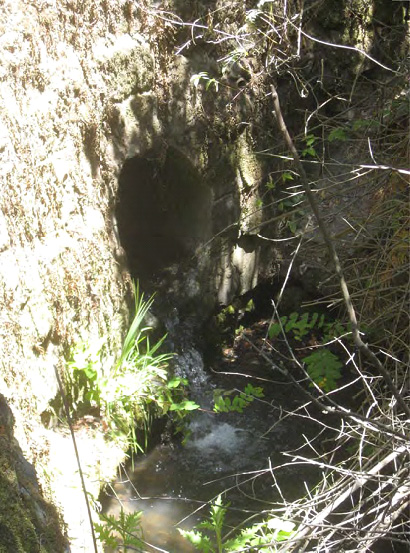
Section 3.4.2.1 of the DEIS states within Strawberry Canyon there will be clear cutting on 56 acres and that the downed trees will be chipped and left on 20% of the site at a depth of 2 feet. Based on these numbers the cumulative amount of material on the ground will be 975,744 cubic feet (.2 x 56 x 43,560 x 2). If merely 1% of this material is washed away in a storm, which seems a very conservative estimate considering the slopes where the material would be placed, there could be more than 1,000 cubic yards of slash material washed into Strawberry Creek. The DEIS does not discuss the impact on the biota of the creek of this potential massive amount of new material. Nor does the DEIS discuss the impact of this material on stream flow in storm conditions. Given that the culverts in the lower levels of the creek, near the Haas Clubhouse and the University Botanic Garden, are only about 9.5 square feet in cross section (See Figure 1.), there is a strong likelihood that the slash material would block the culverts and cause flooding. Section 3.4.2.1 states that “if the site yields a large number of large tree trunks,” some “may” be removed or used for other purposes than left on the site; however, the DEIS fails to state the criteria for determining what the “large number” is that would trigger such action. The hydrologic and ecological impacts are presumably left to the loggers to evaluate.

FEMA comment - Adams 1 copy

Figure 1, Culvert on lower fire trail, near Botanic Garden


The DEIS implies that trees other than eucalyptus, Monterey pines, and acacias will not be cut, but current actions in Strawberry Canyon suggest that UCB will cut anything at any time regardless of environmental regulations. The DEIS must be amended and re‐issued to include other UCB actions as part of cumulative impacts.

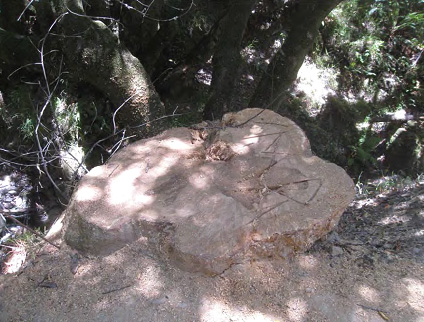
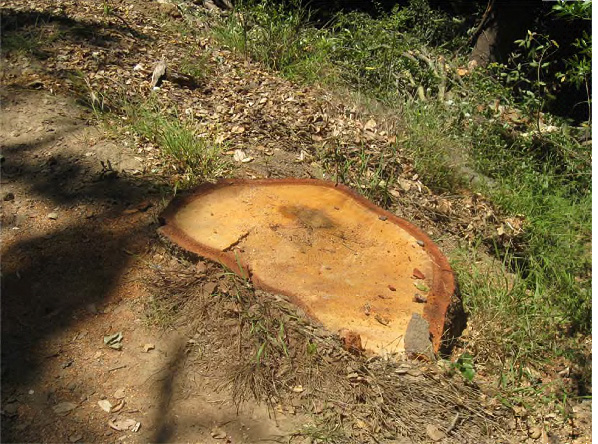
During the past week (June 6‐13, 2013) I have personally observed the cutting of at least six healthy, mature California live oaks, bays, and cypresses in Strawberry Canyon. (See Figures 2 and 3.) The oaks were particularly magnificent, and their destruction is tragic. I am familiar with the needs for passage of fire trucks as I own woodland property on a narrow privately maintained road. None of the trees just cut would have prevented passage of trucks, but I was told by one of the tree cutters that the excuse was “Fireman.” To my knowledge this cutting was done without any compliance with the California Environmental Quality Act (CEQA), which is the state equivalent of NEPA and applies to all UCB actions. This cutting constitutes a violation of the CEQA Guidelines Section 15304, which states that exemptions from CEQA apply only to actions “which do not involve the removal of healthy, mature, scenic trees.” If UCB is flagrantly cutting trees now, while the DEIS is out for public comment, what can we expect once the NEPA process is completed?

FEMA comment - Adams 2 copy

Figure 2. Bay stump on lower fire trail, cut on or about June 11 2013, diameter +/‐42”

FEMA comment - Adams 3 copy

Figure 3. Live oak stump on lower fire trail, cut on June 10, 2013, diameter +/‐ 38”

(1) EPA 738‐R‐06‐007, 2006

(2) The Jepson Manual of Vascular Plants of California, 2nd Edition, UC Press, 2012

(3) Pyrophytic vs. Fire Resistant Plants, FireSafe Marin in Cooperation with University of California Cooperative Extension, October 1998


Thank you, Mr. Adams, for taking the time and trouble to write this excellent public comment on the FEMA draft EIS.


Saving our Urban Forest: A small step forward

 The San Francisco Forest Alliance (SFFA) has announced (see below) the successful conclusion of a year-long process of developing a policy for the management of San Francisco’s urban forest by the city’s Urban Forestry Council (UFC).  If you have not been closely following the development of this policy it may be difficult to appreciate the importance of this accomplishment. Native plant advocates made every effort to prevent the UFC from adopting a policy that would make a commitment to the preservation of the urban forest.  As our readers know, native plant advocates want the entire urban forest to be destroyed because it is non-native, so they can attempt to recreate native grassland and scrub that existed at the end of the 18th century, prior to the arrival of Europeans. Native plant advocates tried several different strategies to make the case to the UFC for the destruction of the forest.  This is the sequence of the many bogus narratives they attempted to sell to the UFC:

  • They started with the claim that the forest is diseased and dying and must be destroyed.  With the help of arborists and our usual independent research, we were able to disprove this particular story line.
  • Then they claimed that forest health would be improved by radical thinning of the forest.  Again, our research was able to prove that mature forests do not benefit from thinning because mature trees are unable to respond positively to increased light and wind.  The trees that remain are actually more vulnerable to windthrow because they are not adapted to increased wind.
  • Then they claimed that the forest is dying of drought and must be destroyed to prevent the dead trees from becoming a fire hazard.  Again, our research was able to prove that our eucalyptus forest is drought-tolerant and is actually more likely to survive the drought than the native plants which will not precipitate as much fog drip as tall trees.  However, the final document contains an erroneous claim that the drought has “serious negative effects to mature trees.”  In fact, young trees require more water than mature trees.

In December 2014, after listening to six months of these horror stories, it seemed that the UFC was headed in the wrong direction.  Their questions and comments, as well as the meetings we were able to arrange, seemed to indicate they were prepared to endorse the destruction of our urban forest.  In January 2015, the first draft of the UFC policy confirmed our worst fears.  They endorsed “land conversion” from forest to native grassland and scrub and the use of herbicides to prevent the resprouting of the forest.

Having done everything we could to prevent this outcome, we despaired.  And then the UFC produced a revised draft in April 2015 which was a 180-degree turn from the first draft.  We will never know what turned the UFC around, but we surely had a hand in it.  Even if there was some unseen influence operating in the background, our viewpoint was confirmed and vindicated by the final outcome.

The UFC then postponed approval of their document, saying they were waiting for public comments from one of the stakeholders.  I presume this delay was requested by the Recreation and Park Department, because the final revision of the document accommodated its so-called Natural Areas Program by stating that “management priorities and decisions for some of the mature and historic tree stands [within the “natural areas”] may be different from management practices for other areas of the urban forest.”  However, written comments from the Recreation and Park Department were not visible to us.

We are taking the time to tell you about this accomplishment because we hope you will be encouraged by it.  Sometimes the odds seem overwhelmingly against our efforts to save our urban forest.  But with tenacity and commitment, it is possible to prevent bad things from happening.  We are deeply grateful to those who participated in this successful effort to prevent the development of an official city policy that could have endorsed the destruction of our urban forest.

Much remains to be done.  Do not give up hope that we can save our urban forest.  Please renew your commitment to our efforts


SFFA UFC policy

Greetings to SFFA Supporters and Members

This week the Urban Forestry Council of the Dept. of Environment accepted a document now called “Guidelines for Managing Mature and Historic Tree Stands,” which had originally been called “Best Management Practices for Urban Forests.” It was written largely by John Leffingwell of HORT Science who sits on the Council, with assistance from Mei Ling Hui, staff member from Dept. of Environment; John Flanagan, Chair of the Council; and Igor Lacan, who also sits on the Council and works for the San Mateo-San Francisco Cooperative Extension service.

The document went through several iterations, starting back with its first draft in January 2015, which followed six months of meetings and presentations in 2014. By April 2015 it had been completely revised and had moved away from its earlier endorsement of restoration ecology and the native plant agenda of destroying blue gum eucalyptus forests. Unfortunately, it was passed including one section called “Competing Land Use Priorities” that provides a disclaimer for the Natural Areas Program to treat its trees differently than other urban forests in the name of “protecting San Francisco’s ‘remnant fragments’ of its original landscape.” That section could, at some later date, be used by Rec and Park as endorsement of their destructive plans in the Natural Areas.

However, there is much in the document that would mitigate against that destruction, including a section called “Protect and sustain iconic forest stands.” This section argues that our mature and historic tree stands “are character defining features of the city that provide unique experiences to those who enjoy them” and should be “protected and managed for their cultural and social benefits to residents and visitors.” Their importance is “evidenced by community groups formed around the protection and management of these sites” [Note: that would probably mean the SF Forest Alliance and Concerned Citizens for the Maintenance Alternative.] Although this document may not sound important, it is. It will be used as a guideline by the Urban Forestry Council whenever issues or plans related to the urban forests are brought before them. Potentially, the Board of Supervisors might refer to it as well when there is an appeal of the EIR for the Natural Areas Program’s management plan.

It took a year’s worth of volunteer hours from SF Forest Alliance leaders who attended meetings, made comments and presentations. Additionally, others, including Dr. Joe R. McBride and members of the Hills Conservation Network made presentations before the Council supporting our point of view. We see it as a small step in the right direction. 

Thanks for your continued support!

San Francisco Forest Alliance

STAYING IN TOUCH

1) We encourage you to visit our Blog at http://sfforest.net.  Enter your email address as the top right (“sign me up”) in order to receive our updates directly to our email.

2) If you’re on Facebook, please “Like” our page http://www.facebook.com/Forest Alliance.  We currently have 424 “likes.”  Help us to take it over 450!

3) We can be reached at this email address:  sfforestnews@gmail.com

We welcome your interest and support!

Retreat from invasion biology becomes a stampede

The New Wild by Fred Pearce (1) is the third book to be published in three years which challenges the conventional wisdom that native species are inherently superior to non-native species and the closely related corollary assumption that all non-native species are competitors of native species.  These are the assumptions that underlie invasion biology.  Each book has been progressively more pointed in its criticism of this ideology, masquerading as a scientific discipline.

Rambunctious Garden

Rambunctious GardenThe first book to be published in 2011—Rambunctious Garden by Emma Marris (2)—was timid in its approach in comparison to The New Wild.  Ms. Marris visited “restoration” projects all over the world.  She described unsuccessful efforts to eradicate non-native plants and animals as well as extreme attempts to “rewild” that are often a mishmash of plant and animal species from different native ranges and time periods.  She implied that these projects were futile as well as artificial, but she was not explicitly critical.  Despite her cautious approach, she has been subjected to intense criticism from both academics and practitioners of invasion biology.   The following excerpt of a reader’s review of Marris’s book found on Amazon.com is typical of the criticism:

“Earth as cookie jar”

“Emma Marris, the author of Rambunctious Garden (RG), loves the nature hiding in back street alleys and along the highway median strip. Marris believes it’s time to abandon (or de-emphasize) what she sees as outdated and naïve conservation strategies such as creation of national parks and wilderness reserves. She feels the biggest obstacles to a bold new world of “designer” and “novel” ecosystems is the “wilderness cult” that naively wants to preserve “natural” landscapes–which she says do not exist anymore.

Marris espouses the anthropocentric perspective that the Earth is more or less a resource cookie jar for humans–to be used carefully to be sure–but she doesn’t really question whether ethically or ecologically this is ultimately a good idea…

However, by moving the goalposts to vacant city lots as an acceptable desired future condition of the landscape, she implicitly, if not explicitly, provides cover for all manner of environmental degradation.”

Most of the 35 readers’ reviews about Rambunctious Garden on Amazon.com are equally critical.  This particular review was rated as “helpful” by 141 other readers and 21 comments were also posted in support of the critical review.  Marris and her book have been thrashed in many other venues, including conferences where she is called out by name as an enemy of nature by invasion biologists.

Where do camels belong?

Where do camels belongThe second book, which challenges the assumptions of invasion biology, was published in September 2014.  Where do camels belong? by Ken Thompson, a British academic, (3) is much more explicit in its criticism of invasion biology.  One of its strong suits is the examples of the ambiguity and absurdity of the often muddy distinction between native and non-native.  As we might expect, this distinction is less clear in Britain because it has a much longer history of “invasion” than North America (only because invasion biologists have chosen to define “native” in North America as any species that precedes the arrival of Europeans).  Professor Thompson offers some comic examples of how status as a native has been conferred in Britain and the contortions that are required to provide preferential treatment to these “natives.”

Despite kicking up the level of criticism of invasion biology a notch, reviews of Professor Thompson’s book are far more positive than those of Ms. Marris’s book.

The New Wild


Pearce
The New Wild was published in the US in April 2015.  Fred Pearce does not pull his punches in The New Wild.  He methodically lays out all the reasons why invasion biology no longer deserves the status of a scientific discipline.  The readers of Million Trees are familiar with all of these arguments, so we will summarize them here and provide links to articles on Million Trees that illustrate each issue:

Although The New Wild is a full frontal assault on invasion biology, it has been very favorably received by reviewers on Amazon.com.  Here is a review by a reader for whom the book was an epiphany:

“An important—even essential—look at our global challenges”

“Let me cut to the chase: read this book. I want to follow that statement with several exclamation points, but I’m trying to control my enthusiasm. Perhaps the book seems so important to me because I was so ignorant when I first started reading it. Perhaps my level of ignorance is extraordinary, but I just checked the websites of several environmental organizations I respect and it looks to me like they too need to read the book. Certainly it is provocative, controversial, and challenging. It will anger some, but it is not an ad hominem attack against anyone. Whatever you think of Fred Pearce, Daniel Simberloff, and others on either side of this debate, it is clear that the debate is important, even urgent. It made clear to me that I have put too much faith in environmental organizations to ferret out the facts and explicate the issues for me. Clearly, I have allowed myself to be misled. Even more important, scientific standards are not being rigorously followed. Have you noticed the headlines about all the “invasive” species that “need” to be eradicated? About the billions of dollars that are required to do this purportedly important work? I have been asking why so much killing is necessary. Pearce states that it isn’t. In fact, he goes further and suggests that the species targeted for eradication may be our salvation precisely because they have the adaptability and resilience to survive in environments disturbed and dramatically changed by mankind. His arguments are articulate and persuasive.

Environmental writers and organizations sometimes make conclusory and inflammatory claims about the damage done by those species they choose to characterize as invasive. And supporters such as myself accept those claims unquestioningly. As Pearce points out in his eye-opening treatment of the subject, too often one environmentalist repeats or even amplifies the unsubstantiated claims of another, and when this happens again and again with no one questioning the science along the way, dangerous, counterfactual conclusions are spread and soon become gospel. Pearce’s probing, incisive exploration into several of those claims in his seventh chapter, “Myths of the Aliens” is alone worth the price of the book.

Pearce woke me up. I respect the scientific method and believe it must be adhered to without fail in environmental writings. I have naively accepted that other environmentalists feel the same. We cannot make intelligent decisions if we are uninformed about true facts. False allegations have no value for any of us. “Invasive” species need new, clear-eyed, unbiased consideration by environmentalists. We need to look again at our underlying assumptions. What does “native” really mean? Which species are natural to an area? Which can survive in the “wild”? Pearce asserts that there is a “New Wild” and that we will do better to respect it sooner rather than later, to work with it rather than against it. I learned so much from Pearce not only about the facts of our situation, but also about new ways of looking at our extremely challenged world. I highly recommend this book and hope you get the opportunity to read Pearce’s insightful and creative ideas.”

This reader understands for the first time that the environmental organizations he/she had previously trusted had misled him/her into believing that non-native species are the cause of environmental damage rather than symptoms of that damage.  He/She was always uncomfortable about all the killing that was motivated by that viewpoint, which is perhaps what opened his/her mind to Pearce’s message.  This sequence of realizations describes my own journey to the other side of invasion biology.  I was initially appalled by the killing, but I did not realize that the justification for the killing was entirely bogus until I began to do my own research.  I initially assumed that they knew what they were doing.  After reading innumerable books and studies, I began to understand that there is little evidence supporting their claims that non-native species are damaging the environment.  Quite the opposite is true.  We hope that Pearce’s book will start many other readers on the same journey of discovery.

(To be fair, the first critique of invasion biology was Invasion Biology:  Critique of a Pseudoscience by David Theodoropoulos, published in 2003.  Although it was ahead of its time, virtually every criticism of invasion biology in that book remains true to this day.  However, at that point in time there were few empirical studies testing the hypotheses of invasion biology and few “restorations” based on those hypotheses.  It was therefore more difficult to make the case against invasion biology.  Theodoropoulos foretold the fate of invasion biology as a discredited ideology based primarily on his personal observations in nature.)

Progress!!

In just three years, three hard-hitting books have been published which confront the unfounded assumptions of invasion biology.  Although each book is progressively more aggressive and explicit in its criticism, the reaction of the public has been progressively more positive.

We admired all three of these books, so we are reluctant to conclude that the more favorable reaction to the more recent books is because of improved quality.  Perhaps the more explicit criticism of the more recent books makes it easier for readers to appreciate the strength of the argument.  Although we are deeply grateful to Emma Marris for leading the way, Rambunctious Garden requires the reader to reach the conclusion she only implies. The New Wild makes no such demands on the reader’s judgment.

However, we have our own optimistic theory about why readers are welcoming The New Wild.  The more experience the public has with the destructive projects which attempt to eradicate non-native species, the more likely they are to understand the futility and the damage being done to the environment.  We choose to interpret the positive reception for The New Wild as an indication that the public is ready to abandon the fantasy of returning our public lands to some mythical ideal landscape.


  1. Fred Pearce, The New Wild, Beacon Press, April 2015
  2. Emma Marris, Rambunctious Garden, Bloomsbury, 2011
  3. Ken Thompson, Where do camels belong?, Greystone Books, 2014

“Drought-Adapted Eucalyptus NOT Dying by the Thousand”

Native plant advocates in the Bay Area have always had trouble convincing the public and their elected representatives that it is necessary to destroy every non-native tree in our urban forest.  They have therefore resorted to fear-mongering to convince the public that it is necessary to eradicate all non-native trees for public safety. 

Fear of fire has been effective in the East Bay where there have been fires, although claims they were caused by non-native trees are a distortion of the facts.  For the past year, native plant advocates in San Francisco have been using a variation on that theme to support their demands to destroy all non-native trees.  They now claim our eucalyptus forest is dying of drought and must be destroyed before it causes a disastrous fire.  You can read that story line in Jake Sigg’s Nature News (here) or in his recent public comments to San Francisco’s Urban Forestry Council (here), which is in the process of developing Best Management Practices for San Francisco’s urban forest.

It is our pleasure to republish this post from Save Mount Sutro Forest, responding to those claims.  As usual, it is meticulously researched and documented.  We only wish to add this small bit of common sense: The drought is hard on all plants.  If the drought were capable of singling out one species of tree to kill, it would not be the drought-tolerant eucalyptus. 


Jake Sigg, retired San Francisco Recreation and Parks Department (SFRPD) gardener who is considered the doyen of the Native Plant movement in San Francisco, has a widely circulated email newsletter. In it, he has been pushing the argument that thousands of eucalyptus trees in San Francisco are dying of drought, as evidenced by epicormic growth on these trees: “2015 is the year of decision, forced upon us by 20,000 to 30,000 dead trees.” He is suggesting they will be a fire hazard and that SFRPD must act, presumably by cutting down the trees. In a recent post, he published a picture of a tree covered in young blue-green leaves, and predicted it would be dead within a year.

But he’s mistaken.

Eucalyptus trees are drought-adapted, and the shedding of mature leaves followed by sprouting of juvenile leaves (epicormic sprouting) is one of their defense mechanisms. These trees survive in areas far drier than San Francisco, where fog-drip provides an important source of summer moisture.

2015-05-27 ab eucalyptus with epicormic growth wordEUCALYPTUS RESPONSE TO DROUGHT

Eucalyptus trees are adapted to drought. They shed mature leaves and twigs so they don’t lose water through transpiration (the tree version of breathing, which takes place mainly in the leaves.) Later, they can replace the lost branches and leaves through “epicormic sprouting.”

Blue gum eucalyptus trees have buds buried deep under their bark. When the tree is stressed, they may shed adult leaves and later sprout new leaves along their branches. When you see a eucalyptus tree that seems to have shaggy light bluish-green new leaves along its branches or trunk – that’s epicormic sprouting.

Here’s what Jake Sigg said in a recent newsletter: “According to arborists, the trees produce these abnormal shoots from epicormic buds when their lives are seriously threatened. In this case, the tree is expected to be dead by the end of 2015. On Bayview Hill, barring heavy unseasonal rain, hundreds of the trees will be dead this year. Yet the City continues to not see a problem.”

We asked UC Berkeley Professor Emeritus Joe McBride and California’s leading expert on eucalyptus for his opinion. He’s observed this condition in trees along the edge of the Presidio forest and explains, “This response is common in blue gum as a mechanism to reduce transpiration rates in order to survive drought years.”

He continues: “I am not convinced that the trees will die in large numbers.

bayview-hill-2010 smTHE GIRDLED TREES OF BAYVIEW HILL

As an aside, we find it ironic that Mr Sigg should be so concerned with dead trees on Bayview Hill, given that’s where nativists girdled hundreds of healthy eucalyptus trees to kill them. Two girdled trees

(This is done by cutting around the tree, thus starving it of nutrients that are carried only in the outer layers of the tree-trunk.) It’s clearly visible in the two photographs here, both taken on Bayview Hill.

EUCALYPTUS ADAPTS

In fact, one of the reasons eucalyptus is so widely planted – including in climates both hotter and drier than in San Francisco – is that it adapts to a wide range of conditions.

Eucalyptus globulus thrives in Southern California, Spain, Portugal, India – all places hotter and drier than San Francisco.

Here’s a quote from R.G. Florence’s textbook, Ecology and Silviculture of Eucalyptus Forests:

florence quoteFrom p.121 of the same book: “… they regulate their water usage in hot dry summers by closing their stomata [breathing pores in the leaves] during the day and lowering their rates of gaseous exchange. They adapt by their elastic cell structure to water stress.”

EPICORMIC SPROUTING IS IMPORTANT IN EUCALYPTUS

Mr Sigg describes “how to identify a dying blue gum” as follows: “Look for trees with thinning foliage and copious juvenile leaves (called coppice shoots) hugging the main stems. These coppice shoots are easy to see because of their blue color and tight clustering, as opposed to the adult leaves, which are 6-8 inches-long, dull-olive-colored and sickle-shaped and which hang from the ends of long branches. These coppice shoots are the give-away that the tree is in trouble and is destined to die soon…” (He later corrected “coppice shoots” to epicormic growth.)

But again, this is not actually true.

In fact, epicormic sprouting allows eucalyptus to survive not only drought, as described above, but even fire. The epicormic sprouting grows into new branches to replace the ones that have been damaged in the fire. This is from Wikipedia: “As one of their responses to frequent bushfires which would destroy most other plants, many Eucalypt trees found widely throughout Australia have extensive epicormic buds which sprout following a fire, allowing the vegetative regeneration of branches from their trunks.[4][5] These epicormic buds are highly protected, set deeper beneath the thick bark than in other tree species, allowing both the buds and vascular cambium to be insulated from the intense heat.[4]”

(The references are: [4] “Effects of fire on plants and animals: individual level”. Fire ecology and management in northern Australia. Tropical Savannas CRC & Bushfire CRC. 2010. Retrieved 27 December 2010. [5] “Learn about eucalypts”. EUCLID – Eucalypts of Australia. Centre for Plant Biodiversity Research. Retrieved 27 December 2010.)

And sometimes, dead branches and leaves and epicormic growth don’t even indicate stress – it’s part of the normal growth cycle. R.G. Florence’s book on eucalyptus says: the “mature crown of a eucalypt maintains itself by the continual production of new crown units, which die in turn. There will always be some dead branches in a healthy mature crown.” He goes on to say an “undue proportion of dead branches is an unhealthy sign” but a “reasonable proportion of death of crown units should be accepted as normal.” He also discusses the “epicormic shoots from dormant buds on the top and sides of the branch develop into leaf-bearing units of the mature crown.” (p.13) Eucalypts go through stages of development that include extensive self-thinning, particularly in younger trees. (p. 194)

Another reason for epicormic sprouts on eucalyptus is increased light. From Wikipedia, with references: “Epicormic buds lie beneath the bark, their growth suppressed by hormones from active shoots higher up the plant. Under certain conditions, they develop into active shoots, such as when damage occurs to higher parts of the plant or light levels are increased following removal of nearby plant. Epicormic buds and shoots occur in many woody species, but are absent from many others, such as most conifers.” [The Wikipedia article references the Encyclopedia Britannica.]

We have seen these epicormic sprouts in eucalyptus trees around the clubhouse in Glen Canyon after many trees were removed.

epicormic sprouts on eucalyptus when nearby trees removed

We also saw them on Mount Sutro near where 1,200 trees were removed for “fire safety.”

MISTAKING DEFENSES FOR DEATH THROES

In summary, then, epicormic sprouting does not indicate that the tree is near death. It may indicate that the tree is responding to drought (or even to other stresses like pesticide use or damage to its root systems) with defensive measures. It’s like declaring that everyone who has a fever is bound to die of it. The trees below are the same ones featured in the picture at the start of this article – one year later, they’re surviving, not dying.

Epicormic sprouting on eucapyptus 2014In some cases, epicormic sprouting may indicate nothing at all, except that the tree is going through a normal growth phase, or changed light conditions following removal of nearby trees.

LIVING WITH A FEW DEAD TREES

We asked Dr McBride if it made sense to cut down these trees. “I do not think the city would be justified in cutting trees down as a fire prevention action,” he says. “Cutting down drought-stressed trees at this point would be much more costly, sprouting would be difficult to control without herbicides, and the litter on the ground would have to be removed to decrease the fire hazard.”

“The problem as I see it is the accumulation of leaves, bark, and small branches on the ground. This material presents a serious fuel problem when it dries out sufficiently.” However, he points out that “In many eucalyptus stands in San Francisco the eucalyptus ground fuel (leaves, bark, and small branches) seldom dries to a point that it can be ignited because of summer fog and fog drip.” In dry areas, the best course is to “launch a program of ground fuel reduction by removing the litter from beneath eucalyptus stands.”

The eucalyptus-tree nest hole of the red-shafted flicker - San Francisco. Janet Kessler
Eucalyptus-tree nest hole of red-shafted flicker – San Francisco. Copyright Janet Kessler

A few trees may indeed die, with the drought or without it. If you think of a forest as a normal population, you expect to find some trees that are thriving and some that are hanging on, and some that are dying – just like in any population. And dead and dying trees are very valuable to wildlife: They’re more likely to have cavities that are suitable for nesting (and are easier to excavate for woodpeckers and other cavity-building species). They also have bugs that come to feast on the decaying wood, and that’s bird-food.