“Restoration is just horticulture dressed up to look like ecology”

Peter Del Tredici was invited to speak at a conference sponsored by the Presidio Trust in San Francisco, “Bridging the Nature-Culture Divide Conference by the Cultural Landscape Foundation,” January 23, 2015.  Professor Del Tredici recently retired as senior research scientist at Harvard’s Arnold Arboretum after 35 years of service.  He is an Associate Professor in Landscape Architecture at the Harvard Graduate School of Design where he teaches courses on soils, plants and urban ecology.  He advocates for a pragmatic approach to urban landscapes, which values novel ecosystems for the functions they perform and their sustainability in stressful environments.

Professor Del Tredici’s presentation at the Presidio Conference was entitled, “Saving Nature in a Humanized World.”  The presentation is available on YouTube.

We attended his presentation, which was warmly received by an audience of about 180 people.  We paraphrase some of his key points.

Update:  Professor Del Tredici has requested that the following statement be added to this post:  “Professor Del Tredici has graciously allowed us to paraphrase–for educational purposes only–some of his key points in his lecture. In no way should his permission to reprint the lecture on this website be considered an endorsement of the political or ecological agenda of “Death of a Million Trees”


Professor Del Tredici began his presentation by complimenting the Presidio for what it has accomplished in the past 20 years and congratulating the Presidio for “…what it has become.  But I’m going to do something very different today.  I hope you’re ready for this.”

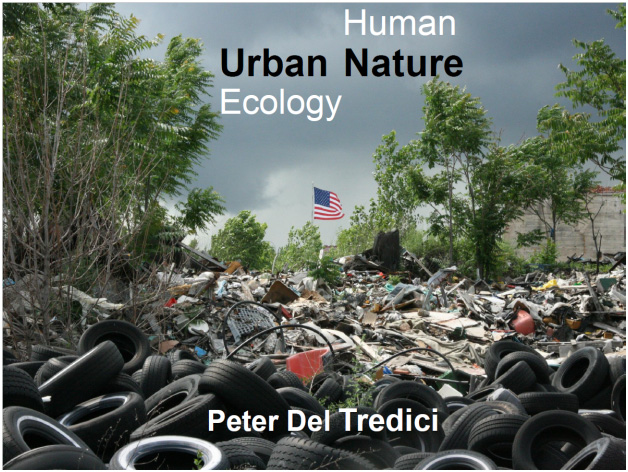
Professor Del Tredici spoke about spontaneous urban nature, some of which we control but a lot we do not control.  What does spontaneous nature look like?  The reason why this is important is because it’s about the future.  What is the world going to look like 20 years from now?  The answer to that question is in urbanized nature.

Del Tredici 1 copy

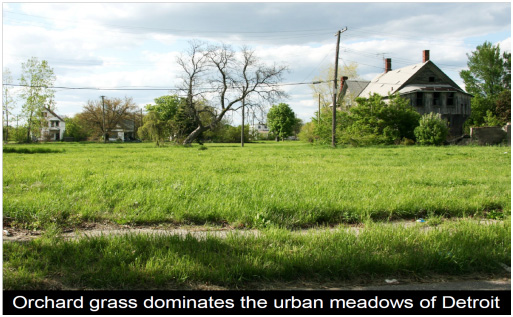
Detroit is a depressing place from a sociological standpoint.  It is so economically depressed that the land has lost its value.  Forty percent of the land is no longer occupied or managed by public or private entities. From the standpoint of a botanist, it is a fascinating place because we can see how nature develops without human interaction.  Detroit is a case study for urban ecology.

Del Tredici 2 copy

Globalized Ecology

The vegetation of most cities is as cosmopolitan as its human population.  Asa Gray’s “Manual of Botany” reports that 10.7% of plant species in Northeastern United States were non-native in 1856.  By the 1990s, 25-35% of plant species were non-native.  This number is not going down.  It’s a strongly upward trend over the past 150 years.  We can create little islands of native plants by eradicating non-native species, but the reality is that our ecology is becoming as globalized as our economy.  These changes mirrored the changes in the ethnic and racial composition of American cities.  The same forces that produce socio-economic changes in cities are also changing the biological environment.

Urbanized Environment

A significant portion of land area in the Northeast is fully urbanized.  Urbanization in the West is just as rampant as the Northeast.  Looking at an aerial view of Los Angeles, you can see that it is completely developed.  You can talk about what used to grow there, but the concept that there is a vegetation that is native to these current conditions, Professor Del Tredici said, “Personally I find that an absurdity.  I hate to be so harsh, but nothing is native to LA as it now exists.”

Del Tredici 3 copy

  • Cities have distinctive environmental characteristics, such as the urban heat island effect. Cities are significantly warmer than rural adjacent areas, which means they are important predictors of the impact of climate change because they have already warmed as much as other places are projected to in the future.
  • Urbanized areas can also be defined by the amount of impervious surface they contain. When 25% or more of the land is covered with an impervious surface such as roads, parking lots, houses etc., the environment is urbanized from the standpoint of the vegetation because impervious surface fragments the environment, compacts the soil, and interrupts the hydrology.   Using the definition of 30% impervious surface, urbanization describes not only our cities, but also many of our suburbs.
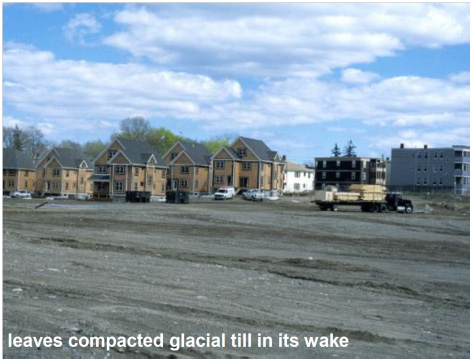
  • Glaciation is analogous to the urbanized environment because the heavy equipment that is used to clear the land leaves in its wake compacted glacial till. What you find after the glaciers recede is barren land; the vegetation has to come back from nothing—a condition known as primary succession.

Del Tredici 4 copy

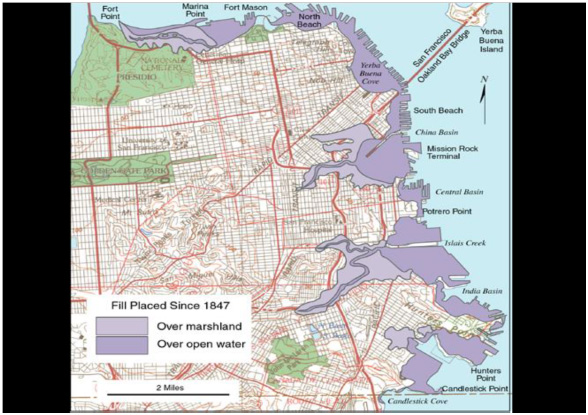
  • One-sixth of the city of Boston is built on land fill. What is the native vegetation of filled soil?  There is no going back when you’re talking about filled urban landscapes.  Not quite as much of San Francisco is built on landfill, but most of the eastern and northern edges of the city are on landfill.

Del Tredici 5 copy

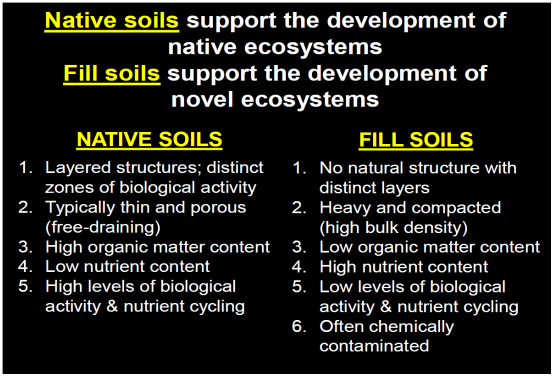
  • There is a huge difference between native soils and fill soils. Fill soils support the development of novel ecosystems. Native ecosystems cannot be created without native soils.  There are some native species that are adapted to urban conditions, such as roadside areas.  Urbanized vegetation is a cosmopolitan mix of native and non-native.  Urbanization favors species that grow well in soils that are relatively fertile, dry, sunny, and alkaline.

Del Tredici 6 copy

  • Where it snows, the roads are repeatedly salted to prevent dangerous, icy conditions. This creates alkaline conditions along roadsides to which many plant species are not adapted.

Urban Ecology

Professor Del Tredici studies modern urban ecology which was born in post-war Germany, where urban environments were reduced to rubble and ecologists began to study what was growing in that rubble.  That was the birth of modern urban ecology.  It’s important to study, not for what it used to be, but for what it is now and what it can become in the future.  Nature reclaiming the urban environment on its own terms is an interesting process, an evolutionary process that we should pay attention to.  Post industrial succession—the process of rebuilding ecology in an intensively urban environment– should be studied with the same level of academic intensity as we studied the post-agricultural succession in the Northeast.

Novel Ecosystems

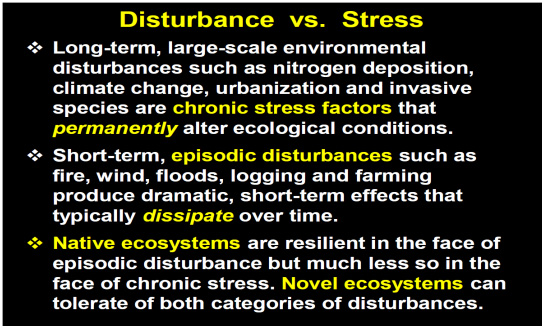
When native forests are converted to urban ecosystems and then abandoned—as seen in Detroit– they don’t go back to their original state, rather they become novel ecosystems.  There is no going back.  Once we achieve the level of compaction and impervious surface of an urbanized environment we have limited what the landscape can become in the future.  Some of these changes are permanent.  There are long term disturbances caused by chronic stress factors that permanently alter ecological conditions.  Professor Del Tredici said, “These conditions are not reversible.  Invasive species aren’t going anywhere.  If you remove invasive species you are gardening.  When you garden you are deciding who lives and who dies.  You are just playing god.  This gives you the illusion of control, but it is a never-ending effort to control a process that can’t be controlled.”

Del Tredici 7 copy

In 1996 the Arnold Arboretum was given a 24 acre parcel of derelict land, called Bussey Brook Meadow. In 2011, Del Tredici succeeded in preserving it as a site for research on urban ecology by leaving it alone.  The land had a 300 year history of use and abuse, all left more or less alone.  Plant species—both native and non-native–have sorted themselves out and restored a functional wetland in the middle of the site.  It doesn’t matter that it isn’t a native landscape if it is providing the necessary ecological functions.

The Bottom Line

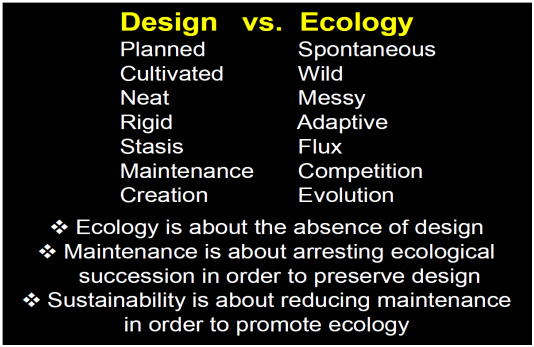
Ecology is not about stasis, it’s about flux.  Stasis is achieved by maintenance, but the natural state is flux.  Evolution is based on competition, which species is the best adapted to current conditions.  Sustainability is about reducing maintenance in order to promote ecology.  Landscape architects look at the Bussey Meadow site and ask, “When are you going to fix it?”  Professor Del Tredici’s answer is, “I’m not sure this site needs to be fixed.  It has value just the way it is.”

Del Tredici 8 copy


We have quoted Professor Del Tredici’s work in previous articles and we consider it important everywhere, but we bring this presentation to your attention today primarily because of where it was delivered.  The Presidio Trust has engaged in some of the most aggressive “restorations” in the San Francisco Bay Area and some of the most successful: Inspiration Point, El Polin Spring, Thompson Reach, etc.  All fish in Mountain Lake were recently poisoned in order to “restore” the lake to exclusively native species.  Pacific chorus frogs were recently reintroduced.  The intention is to reintroduce the Western Pond Turtle to Mountain Lake, a species that is notoriously easily disturbed and being considered for endangered status.  It is also a species that requires hundreds of meters of unshaded nesting habitat in proximity to its water source.

Tennessee Hollow
Tennessee Hollow “Restoration” is 270 acres, 20% of the Presidio. Presidio Trust photo.

These projects have required the destruction of thousands of trees because the native vegetation is grassland and scrub.  However, the Presidio has also made a commitment to the preservation of its historic, non-native forest which was planted by the military over 100 years ago.  Major investments have been made in reforestation of the aging forest with similar tree species.

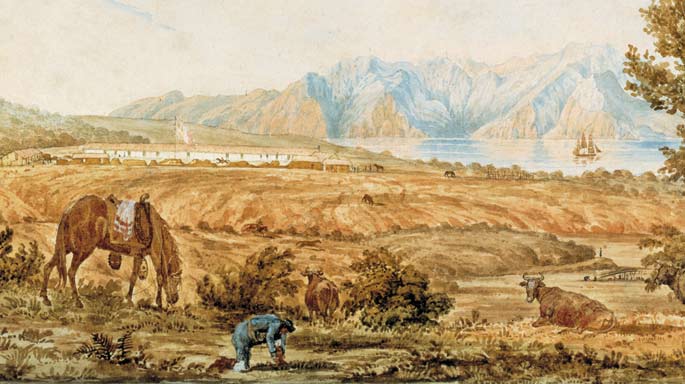
The San Francisco Presidio, painting by Richard Beechey, 1826

In other words, the Presidio Trust seems to have assigned itself a schizophrenic mission to simultaneously destroy an existing landscape in order to re-create it and preserve that same landscape: the re-creation of an idealized landscape vs. preservation of the novel ecosystem within the historic forest.   We suppose that is one definition of “balance.”  However, we would like to believe that the invitation to Professor Del Tredici to speak of the sustainability of urbanized novel ecosystems is an indication that the Presidio Trust will assign more value to what exists and less effort to attempts to re-create an historic landscape that may no longer be adapted to the real world.

“Five Reasons it’s Okay to Love Oxalis – and Stop Poisoning It”

The San Francisco Forest Alliance has published an excellent article about the pointless and harmful attempt to eradicate oxalis in San Francisco’s so-called “natural areas.”  We are grateful to SFFA for their outstanding research and permission to republish the article. 


The oxalis season is over, and the perky yellow flowers have vanished for another year. These Bermuda buttercups will be back next year to herald the spring, bringing joy to those who love them, irritation to those who hate them, and Tier I herbicides targeted at them in San Francisco’s so-called “Natural” Areas.

oxalis 1

THOSE WHO HATE OXALIS AND WANT TO POISON IT WITH GARLON

These flowers are so visible in spring that Bay Nature magazine did an article about them in March 2015: A Natural History of the Little Yellow Flower that’s Everywhere Right Now. It quoted Jake Sigg, the retired SF Recreation and Parks gardener who is considered the doyen of San Francisco’s native plant movement. He hates oxalis pes caprae, which he considers extremely invasive. The article quotes him as saying that, without intervention, “in X many years Twin Peaks would just be one solid mass of yellow, and there wouldn’t be any other plants there…” The article suggested that an oxalis-dominated  landscape “drives away coyotes, hawks and owls that feed on grassland foragers, and the situation is especially dire for endangered Mission blue butterflies, which depend heavily on native wildflowers.” Most of those ‘facts’ about oxalis are mistaken as we’ll explain below.

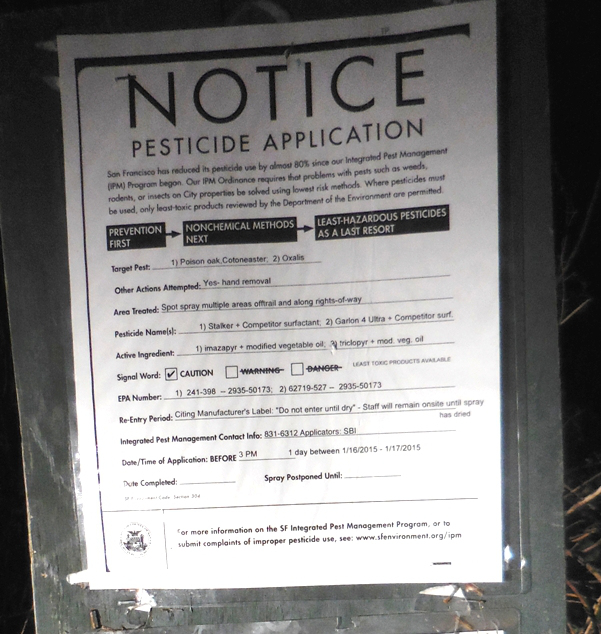
Mr Sigg’s theories align with those of the Natural Areas Program (NAP) of the San Francisco Recreation and Parks Department (SFRPD), which uses the herbicide, Garlon (triclopyr) to battle oxalis despite its dubious efficacy for the purpose.  San Francisco’s Department of the Environment classifies Garlon 4 Ultra as Tier I: Most Hazardous. It’s listed as HIGH PRIORITY TO FIND AN ALTERNATIVE (their caps). Since oxalis is the main reason NAP uses Garlonthe alternative we propose is – don’t use Garlon or anything else on oxalis.

An article on SaveSutro.com, based on a detailed study by the Marin Municipal Water Department, describes some of the issues with Garlon:

  • Garlon “causes severe birth defects in rats at relatively low levels of exposure.” Baby rats were born with brains outside their skulls, or no eyelids. Exposed adult female rats also had more failed pregnancies.
  • Rat and dog studies showed damage to the kidneys, the liver, and the blood.
  • About 1-2% of Garlon falling on human skin is absorbed within a day. For rodents, it is absorbed twelve times as fast. It’s unclear what happens to predators such as hawks that eat the affected rodents.
  • Dogs  may be particularly vulnerable; their kidneys may not be able to handle Garlon as well as rats or humans.  Dow Chemical objected when the Environmental Protection Agency noted decreased red-dye excretion as an adverse effect, so now it’s just listed as an “effect.”
  • It very probably alters soil biology. “Garlon 4 can inhibit growth in the mycorrhizal fungi…” (soil funguses that help plant nutrition)
  • It’s particularly dangerous to aquatic creatures: fish (particularly salmon); invertebrates; and aquatic plants.
  • Garlon can persist in dead vegetation for up to two years.
Natural Areas Program uses Garlon on oxalis

First, a little about the actual natural history of oxalis. This plant doesn’t set seed in California, and spreads entirely by sending out roots and forming little bulbils (like tiny potatoes) underground. It’s usually found where the soil has been disturbed by activities such as road-building, gardening, or trail-building. In some cases, the disturbance comes from landslides or something similar. It can’t stand frost. If we do nothing, it would tend to die down rather than spreading uncontrollably.

In disturbed landscapes, it can spread fast. For this reason it can be a nuisance in gardens. People don’t want to leave their gardens alone for years to let nature take its course with the oxalis, and not every garden design includes brilliant yellow as the dominant color for a few weeks. The only way to eradicate it in the short term is to dig it out carefully every time you see it, and make sure you get most of the bulbils. Or use strong herbicides, which may not work.

In a natural landscape, though, it’s a different story and here’s why.

1) OXALIS IS GOOD FOR BEES AND BUTTERFLIES

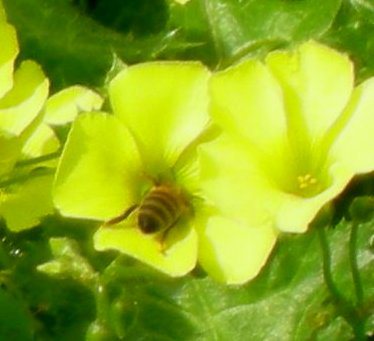
Honeybee on oxalis flower

Oxalis is actually an excellent plant for bees and butterflies.  When blooming, it provides “copious nectar.” In fact, it generously gives away its nectar. Since it doesn’t set seed, it doesn’t benefit from pollinators – but it’s a food source for honey bees, bumblebees and butterflies. (You can read a rather technical description of the plant HERE in a 2-page PDF note from UCLA’s Barry A. Prigge and Arthur C. Gibson.)

Bumblebee on oxalis flower

In fact, a recent 2014 study shows that plant communities with exotic plants had more plant species as well as more pollinators, that pollinators didn’t prefer native plants, and that even some specialist pollinators depended on introduced plant species.

It’s true the Mission Blue butterfly needs (native) lupine as its nursery plant. (It doesn’t depend on any other native wildflowers – only three varieties of lupine.  Incidentally, one of the key nectar sources for the Mission Blue butterfly is an invasive non-native Italian thistle: Carduus pycnocephalus).

Butterfly on oxalis flower

Lupine has been planted on Twin Peaks as NAP attempts to reintroduce the Mission Blue butterfly there. But lupine is also a plant of disturbed areas, which means that NAP must maintain it or it will die out as the area stabilizes. They have to keep planting it, weeding, and trimming the grass around the lupine patches to make it attractive to the butterfly. An SFRPD report on the reintroduction project said “unmanaged habitat deteriorates quickly.” Presumably, they don’t use Garlon near the lupine patches, since it would likely kill that too. Despite what is implied in the Bay Nature article, it’s not oxalis that’s the issue. The real problem is another native plant, the coyote bush which takes over grasslands in a natural succession.

2) OXALIS IS GOOD FOR WILDLIFE

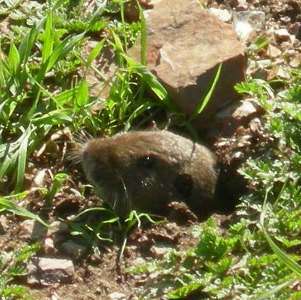
Oxalis bulbils are a food source for wildlife. Gophers and other rodents eat them. In fact, the Bay Nature article says, “Their spread is abetted by pocket gophers and scrub jays, which have been spotted carrying the bulbs and caching them in the ground—effectively planting them in new areas.”

Since gophers are a foundation species in the food web, being dinner for predators from hawks to coyotes to great blue herons, these plants actually provide habitat benefits whether or not they’re flowering, because the bulbils are there all year.

oxalis 6

Where there are gophers, the predators follow. Like the coyotes in these pictures, which clearly haven’t been driven away by a landscape dominated by oxalis.

coyote pouncing in oxalis field. Copyright Janet Kessler
coyote in oxalis field. Copyright Janet Kessler

3)  OXALIS DOESN’T LEAVE THE GROUND BARE

The article says that oxalis leaves “bare ground during the six months of the year oxalis doesn’t flower.” That’s not true either.

oxalis 9

oxalis 10The spectacular yellow bloom of the oxalis – valuable because the mass of color attracts honey bees and bumblebees – gives the impression that it’s the only plant there.  But though it visually takes over the landscape when it’s in bloom, it naturally grows interspersed with grasses and other plants. Like in the picture above.

In fact, oxalis tends to enrich the soil with phosphorus, which is good for grass.

So when it finishes blooming, as it has by now – you don’t get bare ground. The picture below shows the same area as the first picture in this article – but it’s after the oxalis bloom is over. It’s grassland.

oxalis 11

4)  OXALIS HAS LITTLE IMPACT ON “NATIVE” PLANTS

One argument – related  to the ‘bare ground’ argument – is that oxalis takes over grasslands and destroys them, particularly the native grasses. However, grasslands in most of California including San Francisco are dominated by non-native grasses. The change occurred over 100 years ago, when these grasses were planted for pasture. So the grassland that NAP is defending with herbicides is primarily non-native anyway.

oxalis 12

But anyway, what’s the evidence that oxalis is actually damaging native plants?

It’s true some European studies do suggest that an increase in oxalis is associated with a decrease in native plants diversity –though whether it’s a cause is unclear. It may just be benefiting from human activities that disrupt the landscape. Another study put oxalis head-to-head with a native annual grass, lolium rigidum. The native grass tended to dominate. Their conclusion: “Oxalis is a poor competitor. This is consistent with the preferential distribution of Oxalis in disturbed areas such as ruderal habitats, and might explain its low influence on the cover of native species in invaded sites.

The California Invasive Plant Council rates its invasiveness as “moderate,” considering it as somewhat invasive in sand dunes and less so in coastal bluff areas.

In San Francisco, every place where oxalis grows is already a disturbed environment, a mix of non-native grasses and plants with native plants (some of which have been artificially planted).  Here,  oxalis appears to grow happily with other plants – including, for instance, the native California poppy in the picture above.

5) KIDS LOVE IT AND IT’S EDIBLE

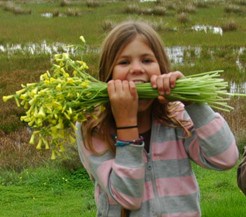
Children love oxalis, both for its pretty flower and for the sour taste of its edible stems.

oxalis 13

oxalis 14Even small children love gathering posies of Bermuda buttercups (though picking flowers is technically prohibited in Natural Areas). The flowers are surprisingly hardy for wildflowers, and in a glass of water last quite well as cut-flowers.

The plant is edible, and its tart leaves make a nice addition to salad. People enjoy snacking on its sour stems. Besides Bermuda buttercup, it’s also called ‘sourgrass’ and ‘soursob.’ It does contain oxalic acid (as does spinach, for instance), and so you probably wouldn’t want to make a meal of it. Though in South Africa it’s made into soup.

Adding Garlon to it is probably a bad thing.

Photo credit: Badjonni (Creative Commons – Flickr)

CONCLUSION

From our current evidence, there’s no sign that oxalis has a negative impact on wildlife, and plenty of evidence it’s already part of the ecological food web of our city.  The evidence also suggests it’s not having a negative effect on other plants in San Francisco either. Lots of people find this flower attractive; one writer described it as the city smiling with Bermuda buttercups.

In any case, even Doug Johnson of the California Invasive Plant Council doesn’t think it’s worth attacking at a landscape level: the payoff isn’t worth the expense. Removing it from the hundreds of acres in Natural Areas isn’t as simple as eradicating it from a small yard where it’s clashing with the garden design. It requires a lot of work, a lot of powerful herbicides, a multi-year effort – and for what?

The justification for using strong pesticides like Garlon to control it is weak. We call on NAP to stop using Tier I and Tier II herbicides altogether.


Science in the National Parks

We were so encouraged by our reader’s report about the conference of the California Native Plant Society (CNPS) that we decided to attend the conference of the National Park Service (NPS), “Science for Parks, Parks for Science” at UC Berkeley, March 26-27, 2015.  As we have reported many times, the National Park Service is heavily engaged in native plant “restorations.”  Their projects are some of the most aggressive in the Bay Area and some of the most successful, because they seem to have greater resources than other local managers of public land.  Therefore, we were curious about their assessment of those efforts.  Are they starting to have doubts, as expressed by some of the presentations at the CNPS conference?  This is a brief summary of what we learned.

The angry old guard

The keynote speaker was E.O. Wilson, the granddaddy of “biodiversity.”  He spoke of his desire to safeguard biodiversity by preserving one-half of the Earth as “protected areas” and the closely related goal to connect all protected areas. This lofty goal should be compared to the current figure of 13% of the earth which is presently protected and the internationally agreed-upon goal of 17%, according to the second speaker, Ernesto Enkerlin, Chair of the IUCN World Commission on Protected Areas.

The moderator, Steven Beissinger, Professor of Conservation Biology at UC Berkeley, asked Professor Wilson a few pointed questions:

  • “Can working landscapes play a role in conservation?” Professor Wilson said. “That is a stupid, dangerous way of looking at conservation.  Parks cannot be evaluated in terms of their value to humanity.  The natural world is valuable in its own right.  Emma Marris and Peter Kareiva of the Nature Conservancy are pushing this; they have the least experience with studying the natural world.  This dangerous thinking must be countered immediately.”  Granted, Emma Marris is a science journalist, but Peter Kareiva was an academic scientist at University of Washington for decades before becoming Chief Scientist at the Nature Conservancy.
  • “Must protected areas be devoid of people?” Professor Wilson said “Of course not.  Indigenous people might be included.”  In fact, indigenous people have been evicted from many protected areas around the globe.  Furthermore, virtually the entire population of the US is not indigenous.  Where does that leave us?
  • “Given the challenges faced by conservation, is triage necessary to prioritize projects to focus on the most important and threatened species?” Professor Wilson said with some feeling, “That’s ridiculous!  We CAN bring them all back, we must SAVE THEM ALL!”

Professor Daniel Simberloff, the well-known invasion biologist, was another speaker who believes it is necessary and possible to eradicate all non-native plants and animals in our public lands.  He also called out by name Marris, Kareiva and others for their criticism of invasion biology.  Frankly, we think these personal attacks are unseemly in the context of what should be considered a scientific debate about the most effective methods of conservation.  The moderator, Professor Holly Doremus (UC Berkeley, Boalt Hall), asked Professor Simberloff a few tough questions as well:

Most other speakers at the conference had a less sanguine view of our ability to “save every species” and “eradicate every non-native species.”  The need for “triage” was repeated in many presentations and descriptions of past and present projects were often pessimistic about the prospects of success.  Climate change and its impact on the environment was the dominant theme of the conference.

All loss, no gain

Mission Blue butterfly.  Wikimedia Commons
Mission Blue butterfly. Wikimedia Commons

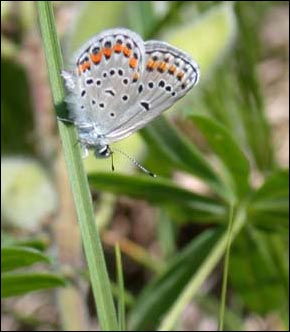
The endangered Mission Blue butterfly exists only in a few locations in the San Francisco Bay Area:  Twin Peaks, San Bruno Mountain, Milagro Ridge in San Mateo County, and the headlands of Marin County.  We recently reported that the 32-year effort to restore butterfly habitat on San Bruno Mountain has been plagued by natural succession to native coyote brush that competes with the butterfly’s host plant, 3 species of lupine.  The status of the butterfly population on San Bruno Mountain is unknown because of inadequate monitoring.  Save Mount Sutro Forest has reported that the butterfly population on Twin Peaks remains very small despite repeated attempts to move butterflies from San Bruno Mountain.  We learned at the NPS science conference that the effort to restore butterfly habitat in the Marin Headlands in order to increase the butterfly population there has experienced its own difficulties.

The restoration of butterfly habitat to the Marin Headlands was controversial because about 500 Monterey pines were destroyed to make way for the lupine scrub required by the butterflies.  The pines had been planted by the military over 100 years ago.  They were heavily used by raptors during their annual fall migration through the Bay Area.  The Marin chapter of the Audubon Society was therefore opposed to their destruction.  As usual, this opposition was ignored by the National Park Service, which manages that property, and the trees were destroyed in about 2009.

NPS has been engaged in the effort to restore the habitat needed by the Mission Blue since the trees were removed.  Those engaged in that effort presented a poster at the NPS science conference which reported:

  • In 2010, NPS and its collaborators attempted to promote the growth of the 3 species of lupine required by the Mission Blue by removing all vegetation mechanically and with prescribed burns, then seeding with lupine.
  • Neither burn nor mechanical treatments resulted in increased lupine species cover after one or three years. In fact, both mechanical and burn treatment resulted in increased cover of non-native forbs and grasses after three years.

In other words, 500 trees were destroyed, which were heavily used by migrating raptors, but Mission Blue butterflies did not benefit from the destruction of these trees because efforts to restore the habitat they require have been completely unsuccessful.  This is a familiar scenario:  all loss and no gain.

Karner blue butterfly - USFWS
Karner blue butterfly – USFWS

We also heard a presentation about a 20-year effort to “restore” the habitat required by an endangered butterfly (Karner blue) at Indiana Dunes National Lakeshore.  The complete failure of that effort is attributed to changes in the climate, considered “abnormal:”

Despite advances in our understanding of habitat needs of the Karner blue, and extensive management to meet those needs, Karner numbers at Indiana Dunes have fallen more than 99% over the past fifteen years, with precipitous declines associated with historically abnormal weather in 2012. We have documented a role phenological [seasonal] mismatching between the butterfly and its host plant plays in this population decline and the sensitivity of this species to habitat fragmentation.”

One wonders what “abnormal” weather means during a time of extreme changes in the climate, which are not expected to return to “normal.”  The speaker predicted that the likely outcome for the Karner blue at Indiana Dunes is its complete disappearance and probable replacement with a different butterfly species which is better adapted to the new climate.

Reality Check

Doug Johnson, Executive Director of the California Invasive Plant Council, made a presentation about new digital tools to identify populations of plants considered “invasive:”  CalWeedMapper and WHIPPET.  These tools will enable land managers to set priorities for attempts to eradicate these plants.  Using  a thistle species as an example, he showed a map that indicated this “invasive” plant is present everywhere in northern California, but there are isolated pockets of it south of there.  These small, isolated populations represent potential opportunities to prevent its spread before it is so widespread that eradication is impossible.  This is an example of triage, which was the dominant theme of the conference. 

Oxalis in Glen Canyon Park, San Francisco

Mr. Johnson was recently interviewed by Bay Nature about a non-native species of oxalis, which San Francisco’s so-called Natural Areas Program has been attempting to eradicate for many years by spraying it with Garlon.  Garlon is the most hazardous pesticide used by the Natural Areas Program.  Mr. Johnson expressed his opinion to Bay Nature that it is futile to attempt to eradicate oxalis: “‘It’s not a target for landscape-level eradication because it’s way too widespread.’”

On March 13, 2015, the California Invasive Plant Council published its final reassessment of Blue Gum Eucalyptus (available HERE).  Cal-IPC has downgraded its rating of invasiveness and ecological impact from “moderate” to “limited.”  Although the detailed assessment is less than perfect, the overall rating itself is an improvement.  We are grateful to our readers who sent comments to Cal-IPC on its deeply flawed first draft of the reassessment.

In other words, the California Invasive Plant Council seems to have entered a new era of realistic expectations.  This looks like a BIG step forward to us, because if that viewpoint is adopted by land managers it should mean less destruction and less use of pesticides.

The Take Away

The old guard is unprepared to compromise their firm belief that it is possible to save every species of native plant and animal and that every non-native plant and animal must be killed to achieve that lofty goal. They defend their indefensible opinion by attacking those who are looking for a more realistic approach to conservation. However, climate change is bringing more and more converts to this viewpoint, which was best expressed by one of the plenary speakers, Hugh Possingham, Professor of Mathematics and Ecology, University of Queensland in Australia.  He was asked how his model of “ecological parks” fits with the mission of the National Park Service to preserve the parks “unimpaired.”  We paraphrase Professor Possingham’s answer:

“The Australian conservation ethic is similar to the United States’.  We yearn for pre-invasion days.  When I grew up in Adelaide we had 7.5 hectares of pristine vegetation for the entire city, which had 750 species at one time and now there are 500 species left.  It’s a museum.  It isn’t a functioning ecosystem.  So, we have got to embrace the creation of ecosystems that are not particularly natural.  However, I’ve learned that the birds don’t care where the plants come from.  Where weeds have been ripped out, bird diversity has plummeted.  I have been converted to the European viewpoint of disturbed landscapes: that is, these new plants have value.  Australia is completely over-run with non-native plants and animals.  Australians would be willing to shoot all the feral cats, but the fact is it’s not possible because we don’t have the resources to attempt it, let alone succeed at it.”

Thank you, Professor Possingham, for your frank acknowledgement of the value of new species to wildlife and your acceptance of more realistic goals for conservation in the 21st Century.


Videos of the plenary speakers are available on the conference website, as well as abstracts of posters and presentations.

Conference of the California Native Plant Society

In January 2015, the California Native Plant Society (CNPS) celebrated its 50th anniversary by holding a gigantic conference.  About 700-1,000 people attended.  There were several hundred short presentations and many posters describing research and “restoration” projects.  The abstracts of these presentations are available on the CNPS website.  We are publishing a brief description of a few of the presentations sent to us by one of our readers who attended the conference.  We publish with permission but without attribution, on request.  We have added a few edits in brackets and italics as well as a few links to relevant articles on Million Trees.


I was very impressed with the quality of the presentations at the CNPS conference.  Some were given by academic scientists or their graduate students. Many were given by land managers and managers of “restoration” projects.  There were about 225 presentations in 5 simultaneous sessions, so it was possible to hear only about 45 of them. There were also many short “lightning” presentations and nearly 50 posters.  Please consider this an impression of the conference, rather than a comprehensive report.

Michael Soulé was the opening speaker.  You might recognize his name as one of the proponents of invasion biology who is angry about growing acceptance of “novel ecosystems” and the ecological functions they perform.  [Million Trees has posted articles about this debate among academic scientists.  Soulé is one of the invasion biologists who demanded that the Nature Conservancy abandon their support for novel ecosystems.]   His objection to any acceptance of non-native plants was the main focus of his presentation.  He closed by saying that he “cannot live” without wild nature.  Since his definition of “nature” seems to exclude non-native plants, one wonders how he will manage to survive.   Perhaps he lives in an alternate universe populated solely by native plants.

Trees in Paradise, by Jared Farmer

Jared Farmer was the speaker at the conference dinner.  His subject was the history of eucalyptus in California.  His presentation was similar to his treatment of the subject in his book, Trees in Paradise.  [Million Trees has posted articles about Farmer’s book.]  Like his book, his presentation was even-handed in its treatment of eucalyptus.  That enraged the audience, which booed every time he said something positive about eucalyptus.  One wonders why he was invited to speak to this audience.  Were the organizers of the conference interested in promoting a more balanced view of eucalyptus?  Or did they just want a provocative speaker to wake up a sleepy audience after hours of a fund-raising auction?

Many of the presentations were surprisingly frank about the difficulties experienced by “restoration” projects.  CNPS deserves credit for inviting speakers who described some stunning failures of their effort to “restore” native landscapes.  I’ll describe just a few of the themes of speakers I heard.

San Francisco’s Public Utilities Commission

I was surprised to learn that San Francisco’s Public Utilities Commission (PUC) is heavily engaged in native plant “restorations.”  The PUC is responsible for managing thousands of acres of open space in the watershed that supplies San Francisco’s drinking water.  Common sense suggests that the PUC’s top priority would be the purity and safety of the water supply.  The PUC presentations at the conference suggest otherwise.  The PUC’s commitment to native plant “restorations” seems to trump the goal of clean water.

The PUC attempted to “restore” 100 acres of wetland and riparian habitat in San Mateo, Alameda, and Santa Clara counties by planting over 500,000 native plants, obtained from several different nurseries.  They claim to have followed a strict protocol which theoretically should have prevented the introduction of diseased plants.  Their protocol obviously failed.  The fact that many of the plants were infected with Phytophthora was not discovered until they were planted in the ground.  Phytophthora is the pathogen that is causing Sudden Oak Death.  The PUC is now faced with the difficult—if not impossible—task of trying to contain the spread of a fatal pathogen for which there is no known cure.

This project was funded by a “mitigation” grant for capital projects elsewhere in San Francisco.  Environmental laws require the builders of new development to “mitigate” for the impact they have on the environment by funding projects elsewhere, which are considered beneficial to the environment.  This often looks like legalized extortion to me.  It also increases the cost of infrastructure improvements, which limits the number of improvements we can make.  In this case, there clearly was no benefit to the environment.  It was both money down the drain and a poke in the environment’s eye.

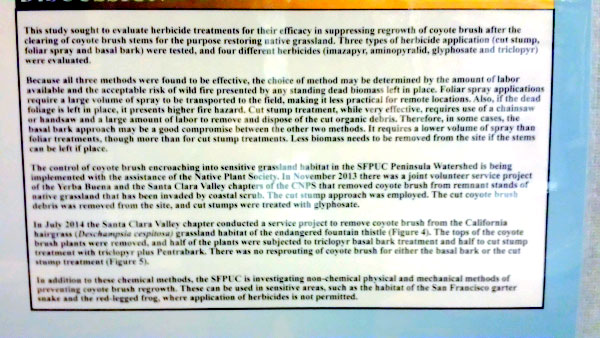
As pointless as that project seemed, the other project presented by the PUC seemed even more pointless.  They presented a poster describing an experiment intended to determine the most effective application method and type of herbicide to eradicate coyote brush.  They used several different methods and types of herbicide, including Garlon (triclopyr) [which is known to be very toxic to aquatic life] and Milestone (aminopyralid) [which is banned in the State of New York because it is persistent and very mobile in the soil].

Detail of poster about PUC project, CNPS Conference

As you know, coyote brush is a native plant, so one wonders why it was necessary to eradicate it.  According to PUC’s poster, it’s another example of trying to prevent natural succession from grassland to scrub.  You might ask why the PUC is obligated to maintain grassland?  You might also ask how the PUC can justify using toxic herbicides in our watershed?  I can’t answer those questions.  It doesn’t make sense to me.

San Bruno Mountain

Mission Blue butterfly. Wikimedia Commons

There was also a discouraging presentation by the folks who have been engaged in the effort to “restore” San Bruno Mountain in order to preserve and maintain a population of several species of rare butterflies, including the endangered Mission Blue butterfly.  This project officially began 32 years ago when the Habitat Conservation Plan was created by federal environmental protection laws.  The goal was to restore native grassland required by the rare butterflies.  The speaker said this goal remains largely unfulfilled.  As for the butterflies, their current status is largely unknown because monitoring efforts are not sufficient to determine the size of the population.

While non-native plants considered “invasive” are a part of the problem in achieving the goal of this project, the biggest problem is, in fact, a native plant.  Once again, natural succession from grassland to native scrub, dominated by coyote brush, is the main reason why grassland continues to shrink on San Bruno Mountain:

“Although the last mapping effort in 2004 reported 1296 acres of grassland, we believe that many of these areas are in imminent threat of scrub encroachment and could be converted to scrub after a good coyote brush recruitment year. Large patches of contiguous grassland with less than 2% scrub cover are quickly vanishing…Baccharis pilularis (coyote brush) accounts for the majority of the scrub encroachment observed on San Bruno. It seems to follow the well documented pattern of episodic establishment in wet seasons when roots can more quickly tap into needed soil water. Once seedlings have survived the first critical year, mortality drops quickly and full establishment plays out over the next 5-7 years (Williams et al. 1987). During this process of establishment, grassland resources decline and eventually disappear. Soil changes such as increased nitrogen and allelopathic compounds often follow scrub encroachment (Zavaleta and Kettley 2006, Weidenhamer and Callaway 2010) reducing the ability of grasslands to successfully re-establish without an intermediate disturbance such as a fire or intensive browsing (Hobbs and Mooney 1986).” (1)

San Bruno Mountain from Daly City. Wikimedia Commons

It’s seems almost comic that when all is said and done, the main threat to native grassland “restoration” is apparently a native plant that is just doing what comes naturally…”invading” grassland in the absence of fire or grazing.

Hybridization:  Friend or foe?

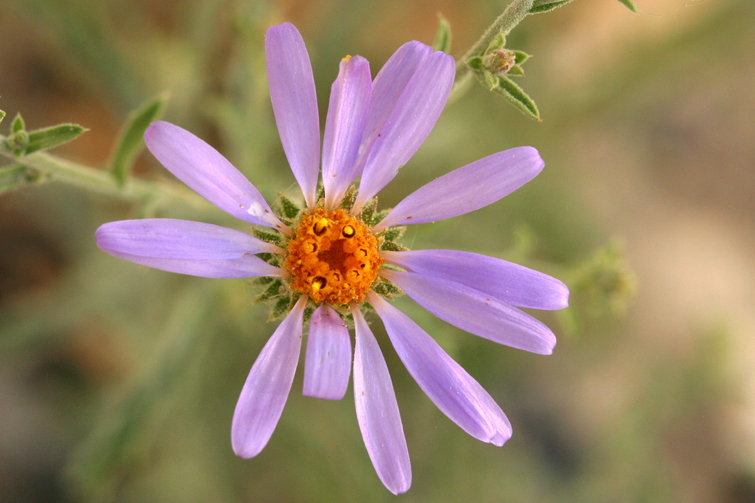
Dieteria canescens variety canescens, native to Wyoming and other western states. Photo by Stephen Perry.
Dieteria canescens variety canescens, native to Wyoming. Photo by Stephen Perry.

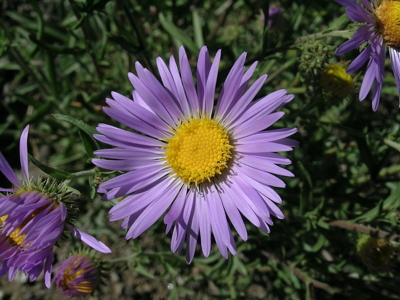
I also attended the presentation of a native plant advocate from Mammoth Lake, on the eastern side of the Sierras.  She is engaged in a futile crusade to prevent the hybridization of a new plant, which she considers non-native, with a closely related native plant.  When this new plant arrived in her neighborhood, she recognized that it was different, but she was unable to identify it.  It wasn’t easy to find someone who could identify it.  Eventually, she found a botanist in Wyoming (where it is native) who was able to tell her that the new plant is a variety of a plant that is native at Mammoth Lake.  These plants are in the aster family.  The native is Dieteria canescens.  The new plant considered a non-native invader is Dieteria canescens var. canescens.  In other words, they are the same species!

From a horticultural standpoint, the new plant is superior to the native in every way: it is a bigger plant with more flowers; the flowers are bigger with more rays; the flowers are a deeper color.  So, why must it be eradicated?  Because native plant advocates fear that it will hybridize with the native aster and “swamp” it genetically, i.e., wipe it out.  Would that be such a terrible thing?  That is a matter of opinion.

Dieteria canescens, native to Mammoth Lake. Photo by Steve Mason

One person in the audience asked why the new plant was not being accepted as an adaptation to climate change that would probably increase the likelihood of the survival of the species.  The speaker’s answer was that she could not accept the loss of the variety she considers native.  Another person in the audience asked this rhetorical question:  “What is our narrative here?  How can we expect the public to understand that it is necessary to eradicate a plant that is the same species?” The speaker agreed that it is not an easy sell.  I was encouraged by these questions.  They seem to be a glimmer of common sense.  I hope they are prophetic of the future of the native plant movement.

On that happy note, I close with an invitation to visit the CNPS website to read the abstracts of the hundreds of posters and presentations at this excellent conference.


  1. “Assessment of the past 30 years of habitat management and covered species monitoring efforts associated with the San Bruno Mountain Habitat Conservation Plan (Draft),” Creekside Science, October 21, 2014.

“Tending the Wild:” Our changing relationship with nature

We recently introduced our readers to a book about the land management practices of Native Americans in California, Tending the Wild:  Native American Knowledge and the Management of California’s Natural Resources.  (1) Drawing from this valuable resource, we will describe how the relationship of humans with nature has changed several times since the arrival of humans in California approximately 12,000 years ago.  We will conclude by raising questions about our current relationship with nature, as reflected in our land management practices.

The relationship of Native Americans with nature

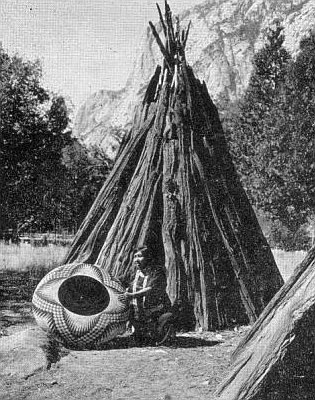
Basket CA Native AmericanWe will let the author of Tending the Wild speak for Native Americans, based on her extensive research of their culture and land-management practices:

“Although native ways of using and tending the earth were diverse, the people were nonetheless unified by a fundamental land use ethic:  one must interact respectfully with nature and coexist with all life-forms.  This ethic transcended cultural and political boundaries and enabled sustained relationships between human societies and California’s environments over millennia.  The spiritual dimension of this ethic is a cosmology that casts humans as part of the natural system, closely related to all life-forms.  In this view, all non-human creatures are ‘kin’ or ‘relatives,’ nature is the embodiment of the human community, and all of nature’s denizens and elements—the plants, the animals, the rocks, and the water—are people.  As ‘people,’ plants and animals possessed intelligence, which meant that they could serve in the role of teachers and help humans in countless ways—relaying messages, forecasting the weather, teaching what is good to eat and what will cure an ailment.” (1)

We emphasize that Native American culture considered humans a part of nature because this viewpoint provides contrast to modern interpretations of the relationship between humans and nature. 

Exploitation of nature by early settlers

When Europeans began to establish settlements in California in the late 18th century, they brought with them an entirely different viewpoint about their relationship with nature.  Natural resources were to be exploited and humans were the master of the natural world which was in their service.

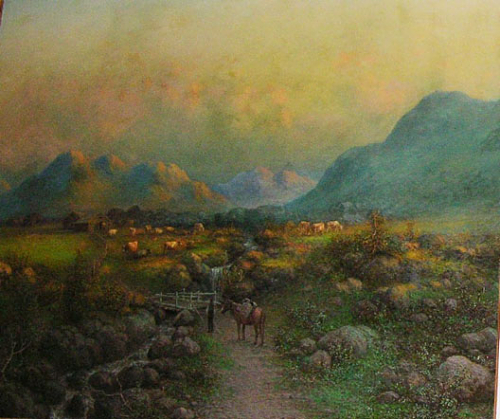
Western pioneer ranch
Western pioneer ranch. Painting by John Olson Hammerstad, 1842-1925.


The first phase of European settlement was the importation of huge herds of livestock by the Spanish coming from Mexico:

“During the Mission era…grazing was among the activities that caused the greatest damage.  Coastal prairies, oak savannas, prairie patches in coastal redwood forests, and riparian habitats, all rich in plant species diversity and kept open and fertile through centuries of Indian burning, became grazing land for vast herds of cattle, sheep, goats, hogs, and horses owned by Spanish missions and rancheros.  By 1832 the California missions had more than 420,000 head of cattle, 320,000 sheep, goats, and hogs, and 60,000 horses and mules…overgrazing eliminated native plant populations, favored alien annuals, and caused erosion…A great variety of alien [plant] species were introduced inadvertently during the Mission Period.  Research has shown that European forbs and grasses…were brought into California at this time, contained in adobe bricks, livestock feed, livestock bedding, and other materials.  Soon these alien [plants] overwhelmed the native species, markedly changing the character and diversity of grasslands and other habitats west of the inner Coast Ranges.”  (1)

Tending the Wild reports that during this early phase of European settlement, Native Americans were quick to adapt to the changing landscape.  They incorporated useful new plants into their diets.  Likewise, we see today new plants and animals quickly enter the food web.


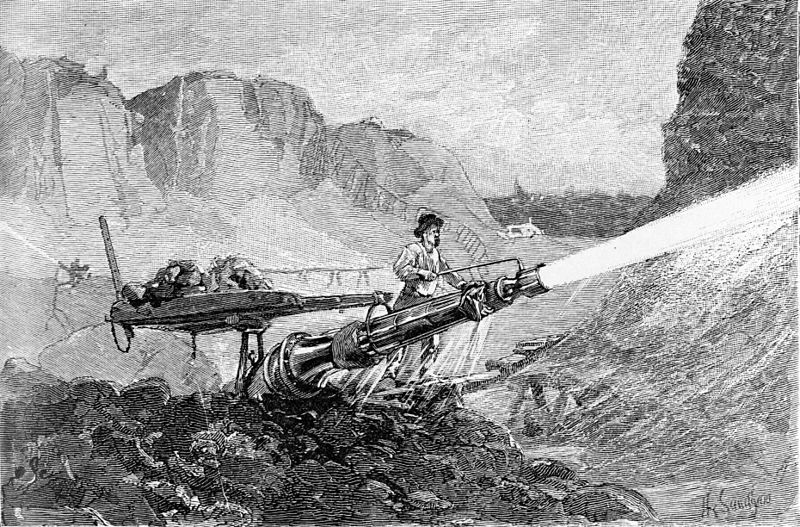
Hydraulic gold mining in California.

These changes in the landscape paled in comparison to the exploitation of the land that began in 1849 when gold was discovered in California and the huge influx of Americans of diverse European descent arrived.  Here are a few examples:

  • “…by the 1870s ‘more men made their living in the broader geography and economy of farming—48,000—than in all the mines of the Sierra footholls—36,000.’ To accommodate the acreage devoted to growing crops, marshes were drained, underground water was tapped by artesian wells, streams and rivers were dammed and diverted for irrigation, and lands were fenced.  In the process huge tracts of former native grasslands, riparian corridors, and vernal pools were converted to artificial, human-managed agricultural systems.” (1)
  • “Five million acres of wetland in California have been reduced by 91% through diking, draining, and filling for agriculture, housing, or other purposes.” (1)
  • By 1900, 40% of California’s 31 million acres of forest were logged.
  • “By the early 1900s, the numbers of marine mammals, wildfowl, elk, deer, bear, and other birds and mammals had been so drastically reduced that Joseph Grinnell would write, ‘Throughout California we had been forcibly impressed with the rapid depletion everywhere evident among the game birds and mammals.’” (1)
  • Between 1769 and 1845, the population of Native Americans in California dropped from an estimated 310,000 to 150,000. Between 1845 and 1855, the population of Native Americans dropped from 150,000 to 50,000.

Romanticizing Nature

Meanwhile, in Europe and the East Coast of the US, a new view of nature was being articulated.  The Romantic movement viewed nature as an escape from the stress of urban life, a tranquil retreat from civilization.  In California, John Muir was strongly influenced by Romanticism: 

“Muir and those with similar views responded to the destruction and exploitation of California’s natural resources with a preservationist ethic that valued nature above all else but which defined nature as that which was free of human influenceThus while he championed the setting aside of parks as public land, Muir also contributed to the modern notion that the indigenous inhabitants of the state had no role in shaping its natural attributes.” (1)

Muir was unable to fit Native Americans into his idealized view of nature.  He wrote this account of Miwok Indians in the Sierra Nevada in 1869:

“’We had another visitor from Browns’ Flat to-day, an old Indian woman with a basket on her back.  Her dress was calico rags, far from clean.  In every way she seemed sadly unlike Nature’s neat well-dressed animals, though living like them on the bounty of wilderness.  Strange that mankind alone is dirty.  Had she been clad in fur, or cloth woven of grass or shreddy bark, like the juniper or libocedrus mats, she might have seemed a rightful part of wilderness; like a good wolf at least, or bear.  But no point of view that I have found are such debased fellow beings a whit more natural than the glaring tailored tourists we saw that frightened the birds and the squirrels.’” (1)

Sharp Park, Pacifica, CA.  Photo by Erica Reder, SF Public Press
Sharp Park, Pacifica, CA. Photo by Erica Reder, SF Public Press

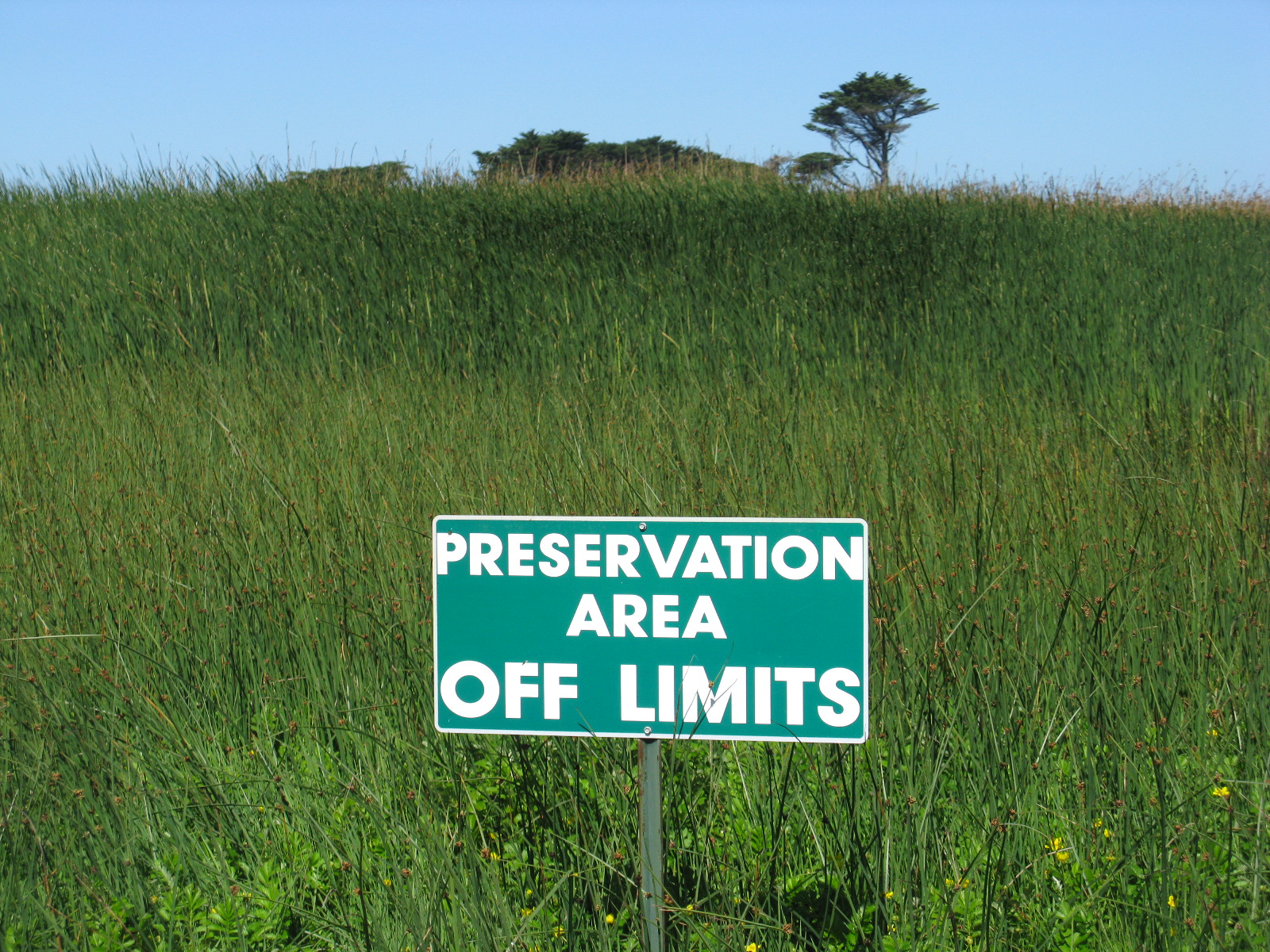
In this romanticized view of nature, humans are not welcome Humans defile the purity of nature.  This is the prevailing viewpoint today among those who consider themselves environmentalists, park advocates, and conservationists.  They advocate for “wilderness” where “humans may visit, but not remain.”  They post signs, advising visitors to look but not touch.  Their “restoration” projects put nature behind a fence.  They complain about immigration.

The condescending attitude articulated by John Muir toward Native Americans was instrumental in our ignorance of their land management practices.  Europeans considered Native Americans primitive and therefore did not expect to learn anything useful from them.  Europeans imported and grew their own food from their original homes because they were unaware of how local food sources could be grown and used.  Our knowledge of Native American culture is recent and it comes too late to ever be fully informed because those who tended the land are long since gone.  Furthermore, this new knowledge of land management practices of Native Americans is not well known, certainly not among native plant advocates who are attempting to re-create a landscape which was created by methods they do not understand.

Redefining ecological “restoration”

The author of Tending the Wild admires Native American culture as well as the landscape that was created by their land management practices.  Therefore, she concludes her book with a proposal that we adopt their land management methods:

“What then, should be the goal of ecological restoration?  Restoring landscapes and ecosystems to a ‘natural’ condition may be impossible if that natural condition never existed…Restorationists must at the very least acknowledge the indigenous influence in shaping the California landscape.  This chapter advocates an additional step—using indigenous people’s knowledge and methods to carry out the restoration process, to return landscapes to historical conditions and restore the place of humans in this continuing management.”  (1)

In our previous post, we described some of the land management practices of Native Americans, particularly the importance of setting fires.  Adopting these management practices for ecological restorations would require us to make a permanent commitment to setting fires.  Fires pollute the air, release greenhouse gases into the atmosphere, and endanger lives and property.  Therefore, this is surely not a proposition that can be reasonably applied to our densely populated urban parks.  The maximum population of Native Americans prior to the arrival of Europeans is estimated to have been 310,000.  The population of California was estimated to be over 38 million in 2013.  Land management practices that were appropriate for a human population of only 310,000 are not appropriate for a population of over 38 million.

Furthermore, the land management practices of Native Americans were useful for their culture.  They tended the landscape in order to feed, clothe, heal, and house themselves.  If that specific landscape is no longer useful for those purposes, why would we consider it an ideal landscape?  In what sense would it be superior to the landscape that occurs naturally without setting fires or intensively gardening our open spaces?

A more realistic paradigm is needed

We believe a more sustainable paradigm for managing nature is needed.  Although we won’t presume to define this new paradigm, we will suggest some parameters:

  • Humans are as much a part of nature as any other animal. Therefore, conservation goals must accommodate the presence of humans.  However, humans must respect plants and animals as equal partners in achieving conservation goals.
  • Since we live in a free society, we must assume that human populations will grow in proportion to the choices of humans. And since we are a nation of laws, we must assume that immigration will occur as allowed by our laws.  Conservation goals must be consistent with the realities of human population density.
  • Conservation goals should look forward, not back. Goals should reflect the changes in the environment that have already taken place and anticipate the changes that are expected in the future.
  • The distinction between native and non-native species should be only one of several criteria to determine whether a species “belongs here.” If plants and animals are sustaining themselves without human subsidy, we should acknowledge and appreciate the functions they perform in the ecosystem.  This approach will reduce the use of herbicides, now being used to eradicate plants perceived to be “non-native,” in our parks and open spaces.
  • Conservation goals should be realistic within the confines of available resources and in competition with other priorities.
  • There are pros and cons to every change we make in the landscape. Whenever we alter the landscape, if our land management methods damage the environment by using pesticides, killing animals or destroying their food resources and homes, contributing to greenhouse gases, restricting recreational access, etc., we must have solid evidence that the benefits to the environment will be greater than the damage we foresee.  If there is no net benefit, we should leave it be.

Can you add to or suggest revisions of this list of a new conservation ethic?  Surely there are as many opinions as there are readers of Million Trees.  We would like to hear your ideas.


  1. M. Kat Anderson, Tending the Wild: Native American Knowledge and the Management of California’s Natural Resources, University of California Press, 2005 (This is the source of most of the information in this article.)

“Tending the Wild:” Implications of land management by Native Americans in California

In our last post we told our readers about the usefulness of non-native plants which are closely associated with human civilization and are therefore found everywhere, but are considered weeds.  We don’t wish to leave our readers with the impression that native plants are not at least equally useful, so we will counter-balance our last post with this report based on a book about California Native Americans:  Tending the Wild:  Native American Knowledge and the Management of California’s Natural Resources. (1)  The author, M. Kat Anderson, is the national ethnoecologist of the United States Department of Agriculture’s Natural Resources Conservation Service and an Associate in the Department of Plant Science at UC Davis.

Aboriginal societies have been categorized by anthropologists as either hunter-gatherer or agricultural societies.  California Native Americans were considered hunter-gatherer societies because they were not sedentary, tied to a specific site where they tilled the land to grow crops, and they had no domesticated animals.  Tending the Wild challenges this categorization based on an exhaustive survey of the land management practices of California Native Americans.  The author proposes a middle-ground between the dichotomous categories to reflect the many ways in which Native Americans essentially gardened wild plants to produce their food and other utilitarian objects, while also acknowledging the seasonal mobility of Native American society.

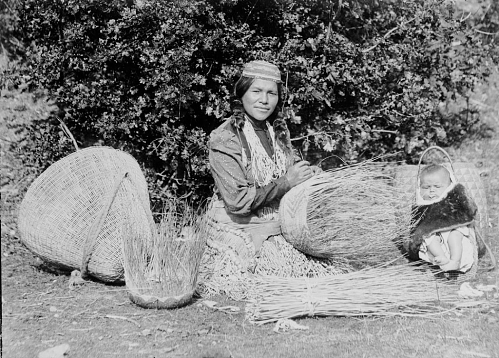
Karok basket maker, 1894.  Smithsonian photo archive
Karok basket maker, 1894. Smithsonian photo archive

Fire was the essential tool

Million Trees has reported many times that California Native Americans intentionally set fires, but until reading Tending the Wild we did not appreciate how essential fires were to their culture, nor did we understand the many purposes for which fires were set.  Here is an incomplete list of the many reasons why Native Americans set fires:

  • Fires maintained grassland by eliminating shrubs that naturally encroach on grassland in the absence of fire.
  • In the absence of fire, thatch of dried grass accumulates when grasses die back during the dry season. This thatch retards the germination of a new crop of young grass.
  • Young grass which sprouts after a fire is attractive to grazing animals which were hunted. Young grass was also preferable for basket-making because it is straight and pliable.
  • Fire reduces shrub vegetation which competes with grasses for light and water. Land cleared by fires was then seeded with the plants most useful to Native Americans.
  • Fire recycles nutrients in the soil.
  • Fire was used to smoke small mammals from their burrows.
  • Fires were used to corral grasshoppers and other insects considered edible for harvesting.
  • Fire was used to reduce insect populations that feed on the plants eaten by Native Americans. For example, the duff beneath oaks was burned before acorns fell so that acorns were not eaten by insects.
  • Fire was used to germinate seeds of the many species of native plants that require fire for germination.
  • Periodic fire was considered a means of preventing wildfires fueled by accumulated dead vegetation.

Other land management methods

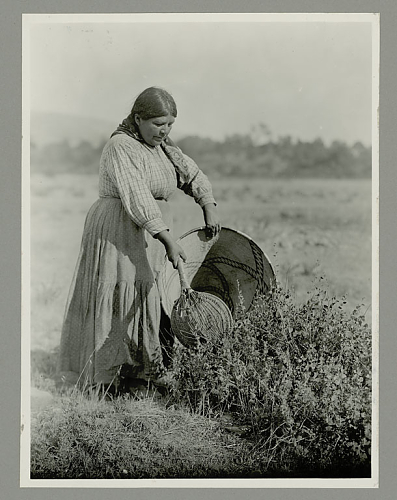
Pomo gathering seeds, 1924.  Smithsonian photo archive
Pomo gathering seeds, 1924. Smithsonian photo archive

Fire was one of many management methods used by California Native Americans to foster the plants that were most useful to them.  In some cases, these practices maximized their food sources and in others they produced useful materials such as those needed to make baskets or plants thought to have medicinal properties.

Tending the Wild reports that 60-70% of the diet of California Native Americans was from plants.  Miwoks report using 48 species of plants for fresh greens compared to just a dozen salad greens typically found in a modern market.  California Native Americans ate 15 of 31 native clover species. Clover seed was broadcast-seeded onto burned ground because it improved the fertility of the soil by restoring nitrogen to the burned soil.

Miwok mortars where seeds and nuts were ground.  Smithsonian archive
Miwok mortars where seeds and nuts were ground. Smithsonian archive

Baskets were equally important to their culture.  Every family typically had 22 different types of baskets for a variety of purposes such as storage, food gathering, beating seeds from plants, cooking, water storage and transport, fish traps, small-animal traps, etc.  Seventy-eight plant species were used by California Native Americans to make these baskets.

Here is an incomplete list of the methods used to foster the plants most useful to California Native Americans:

  • The seeds of favorite plants were planted to be available close to living quarters. Native tobacco is an example of a plant found around Native American settlements, presumably planted there.
  • The seeds, bulbs, corms, rhizomes etc., of favorite plants were collected and transplanted close to settlements.
  • Bulbs, corms, roots, rhizomes were harvested selectively to preserve the plants which were stimulated by the thinning of the plant.
  • Fields of useful plants were weeded to create monocultures that made harvesting more efficient.
  • Plants were pruned and coppiced to maximize fruit production.
  • Plants were pruned to produce the straight twigs and grasses useful to make baskets and arrow shafts.
  • Plants were irrigated to promote growth and maximize fruit production.
  • Plants were treated by cooking, soaking, etc., to remove toxins so they could be safely eaten.

Impact on the landscape

Over the thousands of years that California Native Americans practiced these land management practices, the landscape was altered by them:

  • Plants that did not tolerate frequent fires died out, creating a landscape that is dominated by plants that are adapted to fire. Jon Keeley (USGS) informs us that over 200 native plant species are “fire endemics,” requiring fire to germinate and dying out within a few years after a fire. (2)
  • The Europeans arriving at the end of the 18th Century found a landscape dominated by grassland because repeated fires prevented succession to shrubs and forests. The absence of shade produced a landscape of native plant species that require full sun.
  • Forests were open and park-like with little understory, which had been repeatedly cleared by frequent fires.
  • The plants which were most useful to Native Americans were more likely to survive than those that were not useful because they were tended and competing vegetation burned or weeded.
  • The natural ranges of the plants which were useful were altered by the land management practices of Native Americans. They were transplanted and grown from seed where they were accessible to the community.

What are the implications for ecological “restorations?”

The landscape selected by native plant advocates as the goal of ecological “restorations” is the landscape that existed in 1769 when Europeans first laid eyes on San Francisco Bay.  Now we know that it was a landscape that had been altered by thousands of years of occupation and cultivation by California Native Americans.  There are at least two major flaws in the selection of this landscape as the goal of “restoration:”

  • Native ranges reflect the choices made by the Native Americans. They do not necessarily reflect the forces of nature.  The modern obsession with “where plants belong” is based on a fantasy of why plants were found where they were when Europeans arrived in California.
  • The land management practices of Native Americans are no longer being practiced, which means that the plants they preferred are no longer receiving the care that ensured their survival in the past. Humans no longer set fire to the landscape every year.  Therefore, the landscape has changed and will continue to change to correspond to changed practices:

The relationship between humans and nature has changed since California was occupied solely by Native Americans.  Consequently, nature has changed in ways that reflect how humans now use the land.  The author of Tending the Wild acknowledges that her book conflicts with the goals of ecological “restoration:”

“If restoration is aimed at returning ecosystems to the condition in which they existed before Western settlement degraded them, then that condition is surely not an entirely natural one.  As we now know, many of the classic landscapes of California—coastal prairies, majestic valley oak groves, montane meadows, the oak-meadow mosaic of Yosemite Valley—were in fact shaped by the unremitting labor of generations of native people.  Moreover, these and other communities were managed intensively and regularly by these people, and that many have disappeared or changed radically in the absence of management shows they were not self-sustaining.” (1)

In our next post, we will think about how our relationship with nature has changed and what that means for the future of the management of our remaining open spaces. Given this revised understanding of the “native” landscape, how must we revise our goals for ecological “restoration?”


  1. M. Kat Anderson, Tending the Wild: Native American Knowledge and the Management of California’s Natural Resources, University of California Press, 2005 (This is the source of most of the information in this article.)
  2. Jon Keeley, et. al., Fire in Mediterranean Ecosystems, Cambridge University Press, 2012

Another round of tree removals by UC Berkeley

Hikers in the Berkeley Hills have stumbled on another round of tree removals by UC Berkeley.  Once again, these tree removals violate theoretical commitments UC Berkeley made in the Environmental Impact Statement (EIS) for the FEMA projects in the East Bay Hills.  Our readers have alerted FEMA to this new violation of policies UC Berkeley has claimed in the EIS they are following. The EIS is apparently a big pile of paper with no relationship to what is actually happening on the ground.  


January 26, 2015

Alessandro Amaglio
Region IX Environmental Officer
Federal Emergency Management Agency
Oakland, CA

RE: East Bay Hills – Environmental Impact Statement – FEMA – RIX

Dear Mr. Amaglio,

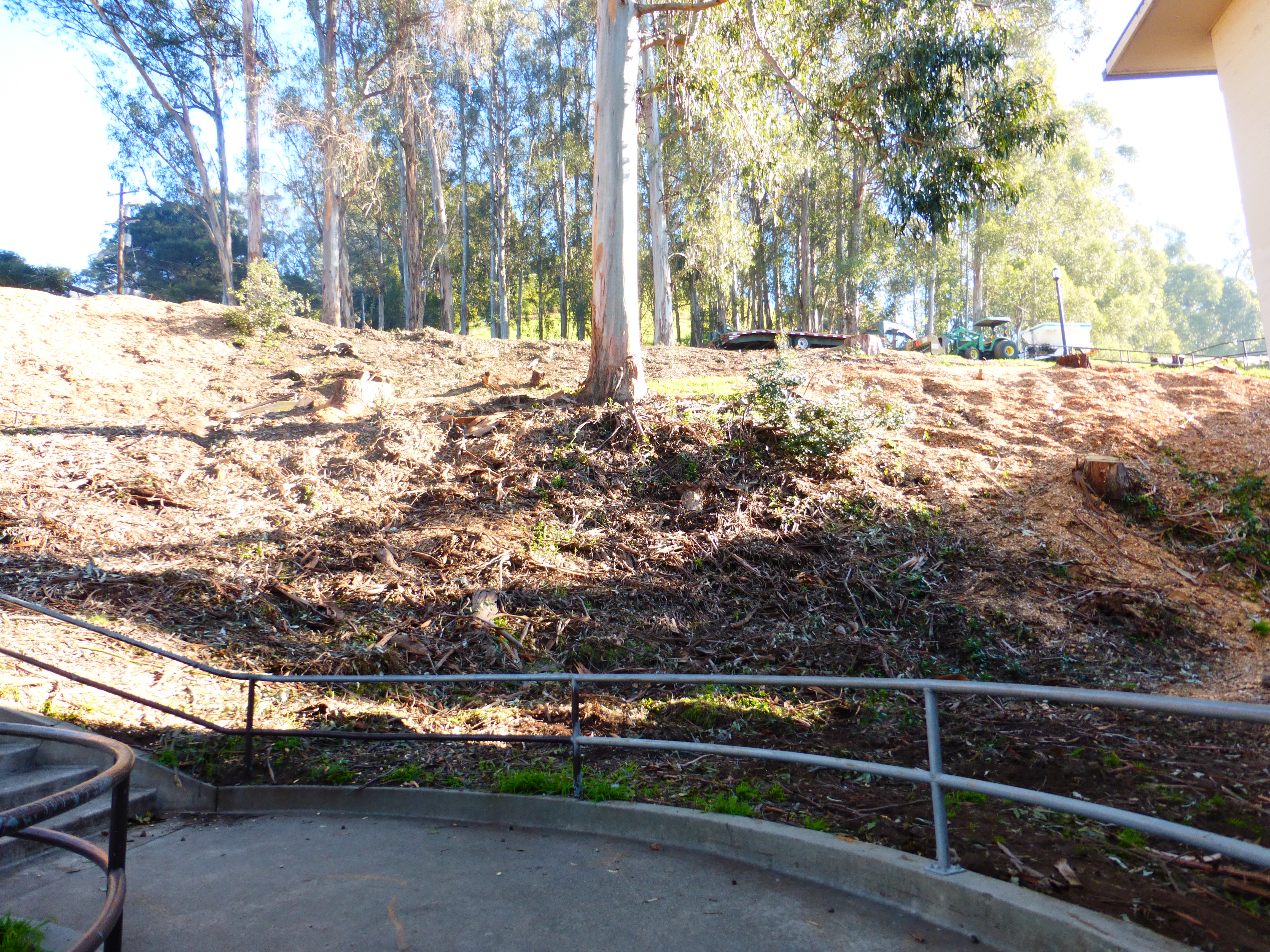
Once again we must alert you to a new round of tree removals by UC Berkeley on their property. Within the past two weeks or so, UC Berkeley has removed about 25 trees on their property south of Dwight Way at the intersection of Sports Lane.

P1010738P1010747

Since this property is not in the project area for the proposed FEMA grants, you might wonder how it is relevant to FEMA’s consideration of those grants. There are several reasons why this latest round of tree removals is relevant to FEMA’s impending decision:

• The stumps of the trees that were removed have been dribbled with green dye, indicating they were sprayed with herbicide to prevent them from resprouting.  However, no herbicide application notices were posted at the site as required by law and as described in the Final Environment Impact Statement for the FEMA grants: “In addition to the herbicide application measures, the subapplicants would follow procedures for public notification and education, including posting the timing, location, and appropriate amounts and types of pesticides or other chemicals to be applied at least 24 hours in advance.” (EIS, page 5.10-14)

P1010749

• The Final EIS also states that “in general” most tree removals will be done “from August to November to avoid the wet season and the bird nesting and fledging season.” (EIS page 3-34) This commitment made by UC Berkeley in the EIS has been violated by this round of tree removals in January after heavy rains.

• In addition to the approximately 25 trees that were recently destroyed, we counted over 100 stumps that have been destroyed in this area in the past. This area is not described in the Cumulative Impact Section (EIS 6.0) of the EIS. In other words, cumulative impact of the proposed FEMA projects is underestimated by the EIS.

Once again, UC Berkeley has demonstrated that they are not following the policies and practices that are described by the EIS and the cumulative impact of those projects has not been accurately described by the EIS.

We ask that this information be made available to those who are considering the Decision of Record of the FEMA grants in the East Bay Hills.

Thank you,
[Concerned Citizens]

Cc: Sal Genito, Associate Director, Grounds, Custodial, Environmental Services, UCB
Robert Newell, Acting Assistant Vice Chancellor, Physical Plant, UCB

Weed Worshipers vs. Weed Warriors

Wild Wisdom of WeedsNative plant advocates who volunteer to pull weeds often call themselves “Weed Warriors.”  Now there is a countervailing movement of weed advocates who find value in the same plants that are detested by the native plant movement.  Weed worshippers are found in the permaculture community because they share a desire to avoid the use of herbicides.  We also find them amongst foragers who think of weeds as a source of nutritious, free food.  These origins of weed worship come together into a coherent botanical philosophy in a recently published book, The Wild Wisdom of Weeds:  13 Essential Plants for Human Survival, by Katrina Blair. (1)

Ms. Blair grew up in Colorado, in a family that lived close to nature.  She developed her interest in wild plants early and has spent her life cultivating that interest both with her formal education and her experiences.  She is the founder of Turtle Lake Refuge in Durango, Colorado.   This is the mission of Turtle Lake Refuge:

“Our mission is to celebrate the connection between personal health and wild lands. We manifest this goal through promoting and practicing sustainable practices. Examples of our work include growing, harvesting and preparing local, wild and living food for the community, educating about the great values of the wild edible abundance available in our area, providing local micro-greens for the public schools, restaurants and stores…and educating about organic land stewardship practices.”

Turtle Lake Refuge serves lunch in their community twice each week.  Here is a sample menu from a spring lunch, which reflects their commitment to “wild edible abundance:”

– Comfrey and hollyhock Green Juice:

Comfrey, hollyhock, lemon and honey

– Miso Soup:

Miso, tamari, fresh chives, cabbage and red onion

– Quinoa Beet Salad:

Sprouted Quinoa, beets, tamari, sunflower oil, ginger and garlic

– Sushi Roll:

Seed cheese, beets, buckwheat sprouts, pea sprouts and avocado

Poppy seed Lemon Bar:

Buckwheat flour, honey, lemons, cashews psyllium and poppy seeds

*+*+*+*+*+*+*+*+*+*+*+*+

Why weeds?

Ms. Blair explains why she has selected 13 weeds for her book which are found all over the globe, wherever human civilization is found, that is every continent except Antarctica.  They are therefore representative of the plants that often arrive with humans and are capable of surviving whatever changes in the environment accompany human civilization.  In a sense, they are symbols of resilience and adaptation in a rapidly changing world.  She also tells us why weeds are just as important as the native plants that preceded the arrival of humans:

“Humans are creating change on a large scale at an exceedingly rapid rate, and yet if we try to hold back nature by eradicating every new species that appears on a barren land, we block nature’s progression of adaptation.  There is an accepted perspective that change is negative and therefore justifies momentous efforts to block diversity from becoming established for fear that it will alter the native habitat.  It is important to remember that “native” habitat only represents a moment in time.  All habitats evolve and are changing constantly.  If the wild weeds are resilient enough to be able to handle the climate and take root, they play an important role in the evolutionary aspect of nature.” (1)

Dandelions

The thirteen weeds that Ms. Blair chooses to tell us about in her book are:  amaranth, chickweed, clover, dandelion, dock, grass, knotweed, lambsquarter, mallow, mustard, plantain, purslane, and thistle.  We have chosen the dandelion to illustrate the usefulness of weeds because it is plentiful and well known in the San Francisco Bay Area.

Dandelion
Dandelion

Dandelions are found everywhere.  The origins of its English name are found in its name in romance languages:  diente de leon (Spanish), dent-de-lion (French), diente di leone (Italian).  These names all translate to “teeth of the lion” in English, a name that surely derives from the deeply jagged leaf, which apparently suggested the shape of the teeth of the lion.  When named by the English, that reference to the shape of the leaf was lost in translation.

Photo by Greg Hume
Photo by Greg Hume

Dandelion seeds may have been brought by humans to new homes because they were known to be useful.  But dandelions are not dependent upon intentional transport.  Their wooly seed heads are dispersed by the wind and readily attach themselves to grazing animals.  I remember blowing them into the wind as a child, oblivious to the fact that I was dispersing their seeds in the process.

An early reference to dandelions is found in the writing of the Roman military commander and naturalist, Pliny the Elder in 77 AD.  He explained the healing properties of dandelions.  Dandelions are used in Chinese herbal medicine—possibly for thousands of years—as well as in Indian traditional medicine, ayurvedic medicine.  Ms. Blair uses dandelions to treat a wide variety of medical conditions, from a laxative to an anti-inflammatory which reduces swelling.

Every part of the dandelion, from its roots to its leaves is edible, according to Ms. Blair.  The roots are used to make dandelion beer for the annual Dandelion Festival at Turtle Lake Refuge.  Dandelion ice cream is also popular at the festival.  Ms. Blair provides recipes for Dandelion Pesto, Dandelion Quiche, Dandy Candy, and Dandelion Root Stew.  We are most familiar with dandelions as a salad green which adds bite to any salad.

Photo by Greg Hume
Photo by Greg Hume

Dandelion is equally useful to bees and butterflies because it is one of the first flowers in the spring.

The Druid’s Garden recently published a post about the usefulness of dandelions, including a description of how they can restore degraded soil.

Ms. Blair makes a similar case for the usefulness of the other 12 members of her weed family.

Opposition to herbicides follows….

As you might expect, if you eat wild plants you are probably opposed to use of herbicides in the places where you forage for your food:

“My deep passion for honoring the wild weeds intensified due to our local city and county’s practices in weed control.  Hundreds of gallons of herbicides were being sprayed on the plants in town and on nearby wildlands with the intention of eradicating plant species considered weeds.  Since I grew up loving all plants equally, I found it tragic to witness a once healthy plant that was contributing so much richness to our landscape become a twisted and dying being due to poisoning from herbicides.  My passion for all plants inspired me to do what I could to change the discriminatory treatment of these noble weeds, who I have come to know as the true heroes of our time.” (1)

Ms. Blair tells the story of how she and her collaborators were successful in convincing the City of Durango to quit using herbicides in public parks.  It is both an interesting story and one from which we can learn.  They began by showing people how to use the weeds they were killing.  The “Dandelion Brigade” harvested dandelions from their neighbors’ lawns and showed them how to make dandelion lemonade and other taste treats.  They started an organic lawn service called “Grassroots” which made and distributed organic compost.  These efforts convinced the city to create its first chemical-free public park, and eventually a second park.  Then their efforts stalled because the city decided these two parks gave the public sufficient chemical-free options.

The second stage of their effort began with a ballot measure that, if passed, would have banned all herbicide use from every public park in Durango, including golf courses.  They spent many months lobbying in support of that new ordinance and were confident that it would pass.  Apparently the city was afraid it would pass as well and therefore began to negotiate with the supporters of the ordinance.  This negotiation resulted in a compromise which accomplished much of what supporters of the ordinance set out to do.  Although they still believed in the ordinance as originally written, they decided that a compromise would ultimately result in greater support throughout the community.  The first phase of the compromise plan converted over one-third of the parks to organic management.  The second phase would slowly transition most parks—except golf courses—to organic management methods.

The process of changing city policies regarding herbicide use was long and difficult.  It required both patience and a willingness to meet people halfway by showing them how to substitute for herbicide use and by being willing to compromise.    

Local foragers

Ms. Blair is not alone.  She is a member of a big and growing movement. The favorable review of Ms. Blair’s book in the New York Times is an indication that foraging and respect for weeds are now in mainstream culture.    Closer to home, we have our own contingent of lovers of wild food, which often includes plants commonly considered weeds:

  •  “The Wild Kitchen is a roving underground supper club. From a roof-deck in the Mission one week to a houseboat in Sausalito the next, The Wild Kitchen knows no geographic bounds. One hundred diners sit around the communal table, enjoying eight course meals, each course highlighting a sustainably foraged ingredient from the local landscape. These meals connect the eater with their natural surroundings in a new way. The Wild Kitchen brings eaters together to grow community around the foods nature provides.”
  • “Reaping without Sowing: Urban Foraging and Berkeley Open Source Food” is a research project at UC Berkeley which is “studying the availability, nutritional value, and possible toxicity of wild edibles that volunteer in urban food deserts.  Our research hypothesis is that in many such areas, there is a free, abundant source of nutritious fresh food: edible weeds.”  The project identifies both native and non-native edible plants growing wild in the San Francisco Bay Area.
  • Quinoa plant - photo by Christian Guthier from Flickr
    Quinoa plant – photo by Christian Guthier from Flickr

    Quinoa is a specialty food item, found in high-end stores such as Whole Foods.  It is growing wild along roadsides in Los Angeles because it is a plant that thrives on disturbance.  Quinoa is an example of a plant that is adapted to human civilization and is also a source of food.

We hope that the foraging movement will grow and eventually become as strong and influential as the native plant movement has been in the past.  And we hope that herbicide use in our public lands will be abandoned in the process of making the transition from venerating native plants to respecting ALL plants.


  1. Katrina Blair, The Wild Wisdom of Weeds: 13 Essential Plants for Human Survival, Chelsea Green, 2014

2014 Wrap-Up and 2015 Preview

Our last post of 2014 will summarize wins and losses in our effort to save our urban forest and preview the local issues that remain unresolved.  2014 has been a year of many accomplishments, but there have been disappointments as well.

2014 Accomplishments

Good news always comes first!  We are most grateful for the hard work of the San Francisco team with whom we collaborate.  After herculean effort, they completed most of the presentations to the members of the Board of Supervisors about the forthcoming approval process for the Environmental Impact Review of San Francisco’s Natural Areas Program, which has been in the works for eight years…and still counting.  We are advocating for the Planning Commission and the Board of Supervisors to approve the “environmentally superior” Maintenance Alternative, which would enable the Natural Areas Program to maintain the native gardens they have created in the past 15 years, but would prohibit expansion of those gardens.  The Maintenance Alternative could save about 18,500 healthy non-native trees from being needlessly destroyed and significantly decrease herbicide use in our parks.

Because native plant advocates have succeeded in convincing many politicians that their projects are “science-based,” the San Francisco team was particularly glad to have three lectures at the Commonwealth Club by academic scientists, which challenged the unfounded assumptions of the native plant ideology:

These presentations were very well attended, including by native plant advocates.  They were entirely successful from our standpoint, though they seem to have had little influence on the opinions of native plant advocates, many of whom seemed not to understand the scientific information being presented.

The dense and healthy Sutro Forest

 In March 2014, UCSF announced that they have put their plans to destroy most trees on Mount Sutro on indefinite hold.  This decision was made in response to the public’s overwhelming opposition to these plans during the public comment period for the Draft Environmental Impact Report in March 2013.  However, UCSF has destroyed about 1,200 trees during the past 18 months which they claimed would mitigate immediate hazards.  UCSF has also made a commitment to not using herbicides on Mount Sutro.  UCSF has provided no estimated time frame for announcing a new plan. Please visit Save Mount Sutro Forest for a more detailed description of that announcement.  We consider this a “holding pattern” because we know that UCSF is under constant pressure from those who want the Sutro Forest to be destroyed.

Invasion biology is being revised by academic scientists who inform us that empirical studies do not support the hypotheses of invasion biology.  Here are a few of the highlights from the scientific literature:

Likewise, mainstream media has become more even-handed in its coverage of invasion biology and native plant “restorations.”  Here are a few specific examples:

2014 Disappointments

The publication of the final Environmental Impact Statement for FEMA projects in the East Bay Hills was the biggest disappointment of 2014.  There were over 13,000 public comments on the draft and they were overwhelmingly opposed to the proposed projects.  Yet, the projects are fundamentally unchanged by the final EIS, which will be officially approved by a “Decision of Record” on January 5, 2015.  We are grateful to the Hills Conservation Network for their continuing opposition to these projects and we urge our readers to support their effort.

Some of the hundreds of trees destroyed by UC Berkeley in August 2014

We were outraged by UC Berkeley’s destruction of hundreds of non-native trees on their property in August 2014, prior to the approval of these FEMA grants.  And we were also appalled by the letters sent to FEMA by elected officials in the East Bay in July, demanding that funding be immediately released and approved for use to destroy all non-native trees on their properties.

In San Francisco, our biggest disappointment of 2014 was the approval of the revised Recreation and Open Space Element (ROSE) of the city’s General Plan, which has committed the city to managing all open space as “natural areas.”  The ROSE defines “natural areas” so broadly that it includes not only areas that currently contain existing remnants of SF’s pre-settlement habitat, but also areas that could support native plants if they were planted there, or, in other words, nearly all open space in SF, including people’s back yards. This policy commits the city to managing nearly ALL open space in San Francisco, including that in private hands, the same way as the Natural Areas Program manages its lands.  As disappointing as that decision was, it was also instrumental in producing one of the biggest accomplishments of 2014.  We were successful in convincing the State of California to decline to fund a grant application which would have implemented the plans to convert all open space in San Francisco to native plant gardens.  That so-called “biodiversity program” continues, but is presumably handicapped by the loss of that fund source.

Looking forward in 2015

In the past six months, the San Francisco team has devoted a great deal of time and effort to influencing the city’s Urban Forestry Council (UFC) to adopt “best management practices” that would discourage the destruction of healthy trees.  The UFC has hosted a “listening series” of presentations by those who advocate for the eradication of eucalyptus forests as well as those who are opposed to that destruction.  Native plant advocates have introduced new justifications for destroying the eucalyptus forests:

  • They claim that eucalyptus forests are dying of disease, drought, old-age, etc. We have sought the advice of many professional arborists and academic ecologists who assure us these claims are inaccurate.
  • They claim that the health of the eucalyptus forests would be improved by radical “thinning.” The scientific literature informs us that mature forests do not benefit from thinning because mature trees are unable to respond positively to increased light and wind.  Thinning is only beneficial to young trees and even then, the disturbance can damage the trees that remain.  Radical thinning of the mature eucalyptus forest is likely to destroy the few trees that will remain.

The UFC has completed its listening series and will probably reach its conclusions in 2015.  Based on the meetings we have attended and the conversations we have had with members of the UFC, we are not hopeful about the outcome.  They seem to be sympathetic to the demands of those who want the non-native forests of San Francisco to be destroyed.   In that case, their “best management practices” could be specifically supportive of the plans of the Natural Areas Program to destroy 18,500 trees in San Francisco and Pacifica.  If you would like to express your opinion to the Urban Forestry Council, you can write to them here:  SFUrbanForestCouncil@sfgov.org.

We also expect the final Environmental Impact Report for San Francisco’s Natural Areas Program to be published in 2015.  We will make our best effort to convince the Planning Commission and the Board of Supervisors to approve the Maintenance Alternative.  However, we should all understand that the lack of an approved EIR does not seem to have prevented the Natural Areas Program from destroying trees whenever and wherever they wish.  Many trees (perhaps a few hundred) in Glen Canyon Park, McLaren Park and Pine Lake in Stern Grove have been destroyed without an approved Environmental Impact Report.  In other words, the Environmental Impact Report seems increasingly irrelevant to what is actually being done in our parks.

A few of the trees destroyed recently in Pine Lake "natural area"
A few of the trees destroyed recently in Pine Lake “natural area”

The President of the San Francisco Forest Alliance, Carolyn Johnston, ran for a seat on the Executive Committee of the San Francisco Group of the Sierra Club.  If you follow the controversy about the Natural Areas Program in San Francisco, you may be aware of the Sierra Club’s role in supporting the nativist agenda (HERE is an example of their role).  Carolyn lost by only 6 votes.  If everyone in San Francisco who abandoned the Sierra Club because of its support for turning urban parks into native plant gardens, would renew their membership, maybe we could win a seat next year.  We are grateful to Carolyn for running.

We also expect a final response from the California Invasive Plant Council to our request that Blue Gum eucalyptus be removed from its list of “invasive” plants.

In summary

Science is rapidly revising the unfounded assumptions of invasion biology and climate change is making the concept of “native” meaningless.  But these realities are having no apparent influence on public policy, which seems to be immune to such facts.  Popular culture always lags behind science.

Million Trees is changing its emphasis in response to these political realities.  In 2015, we will focus on the science that is revising invasion biology because that’s where progress is being made.  This type of research is both difficult and time-consuming for us because we do the background reading to understand the scientific literature and produce accurate reports that are accessible to the layperson.  We therefore expect to publish new articles only once each month in 2015.  As always, we invite guest authors to step forward with news of new developments that we are not covering.

Thank you for your readership in 2014 and for any help you gave us in 2014 on our various initiatives.  We wish you all a Happy New Year in 2015.

Taking a mushroom break for the holidays

Let’s take a break for the holidays from the often unpleasant chore of debunking invasion biology and reporting on the destructive projects it spawns.  We will share some photos of the mushrooms in our neighborhood.  There is a bumper crop this year because of the heavy rains after several years of dry weather.  They don’t last long, so let’s enjoy them while they’re here.

We know next to nothing about mushrooms and in the spirit of a holiday break we haven’t done any research in preparation for this post.  If there is someone amongst our readers who knows something about mushrooms, we invite you to correct anything we’re saying or add any information that might interest others.   And in the interest of public safety, our readers should understand that we assume none of the mushrooms we have photographed are edible.

Mushrooms are the “fruiting bodies” of the fungi that live underground.  They emerge briefly to distribute the spores that will disperse fungi farther afield.  In other words, mushrooms are sort of analogous to the flowers and fruits of plants, where reproduction occurs.

Here are a few mushrooms now blooming in our neighborhood:


mushrooms3

mushrooms
mushrooms nestled in dandelions
mushrooms nestled in oxalis
Not the prettiest mushroom, but one of the biggest.  This one was over 12 inches wide.
Not the prettiest mushroom, but one of the biggest. This one was over 12 inches wide.
This colony of mushrooms was even bigger!
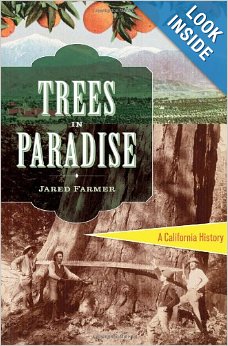
Hundreds of tiny mushrooms growing out of the trunk of a big magnolia tree.


Here are a few mushrooms taken in San Francisco’s parks in December 2012 by Janet Kessler and published by the San Francisco Forest Alliance.  We republish here with permission.

mushrooms SFFA 4 mushrooms SFFA 2 mushrooms SFFA 1 mushrooms SFFA 3

Addendum:  One of our readers has sent us pictures of mushrooms taken recently in her neighborhood in San Francisco.  She has identified these mushrooms.  

Mature Parasols - note hand for size comparison
Mature Parasols – note hand for size comparison
Stinkhorn
Stinkhorn
Cage fungus.  The odor will attract flies into the cage.
Cage fungus. The odor will attract flies into the cage.

Happy Holidays and thank you for your readership!

christmas-holly-4