Do insects prefer native plants?

We follow Doug Tallamy’s publications closely because he is the academic scientist most often quoted by native plant advocates to support their belief that insects require native plants and that the absence of the native plants will result in the collapse of entire ecosystems:   “…our wholesale replacement of native plant communities with disparate collections of plants from other parts of the world is pushing our local animals to the brink of extinction—and the ecosystems that sustain human societies to the edge of collapse.” (1)

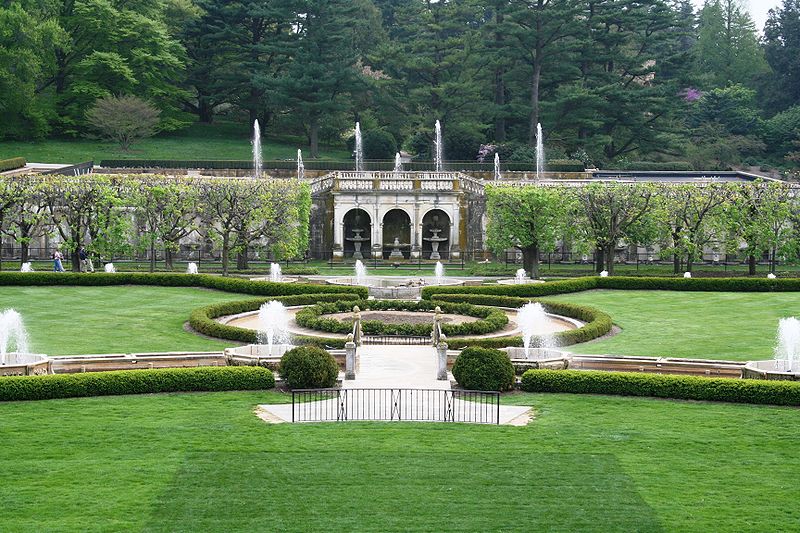
Main fountains of Longwood Gardens.  Creative Commons - Share Alike
Main fountains of Longwood Gardens. Creative Commons – Share Alike

Tallamy co-authored his most recent publication, The Living Landscape:  Designing for Beauty and Diversity in the Home Garden, with Rick Darke, curator of plants at Longwood Gardens for 20 years.  Longwood is a formal garden outside of Philadelphia, which seems at odds with the exclusively native gardens for which Tallamy advocates.  And so we were intrigued by this unlikely team.  Darke’s introduction to the book implies a departure from Tallamy’s usual mantra:

“Is this a book only about gardening with native plants?  No.  It’s a book about how native plants can play essential roles in gardens designed for multiple purposes, with a focus on proven functionality.  For better and worse, the native plant movement in North America has evolved in the last decade…One of the most important functionalities is durability:  the capacity to thrive over a long time without dependence on resource-consuming maintenance regimes.  Claims that natives are always better than exotics fail to take into account radically altered environmental conditions in many suburban landscapes…In most cases and most places, the design of broadly functional ecologically sound, resource-conserving residential gardens requires a carefully balanced mix of native and non-native plants.  It’s time to stop worrying about where plants come from and instead focus on how they function in today’s ecology.  After all, it’s the only one we have.”  (2)

Tallamy writes his own introduction to The Living Landscape, which suggests a softening of his hard-line insistence upon gardening exclusively with native plants:

“What is native in any given place today wasn’t native if we look back far enough in time, and it is certain that what will be native in that same place in the future will be different from what is native now.  Functional ecological relationships take a long time to evolve—often thousands of years—but they do evolve.  Humanity’s challenge is to reduce its introduction of rapid environmental changes that are currently causing extinctions to occur faster than the evolution of new species.”  (2)   

Has Tallamy’s viewpoint evolved?

When we reported on Tallamy’s previous publication in 2012, we quoted him as saying that a graduate student under his direction could not find any evidence that native plants were eaten by insects more frequently than non-native plants:

“Erin [Reed] compared the amount of damage sucking and chewing insects made on the ornamental plants at six suburban properties landscaped primarily with species native to the area and six properties landscapes traditionally.  After two years of measurements Erin found that only a tiny percentage of leaves were damaged on either set of properties at the end of the season…Erin’s most important result, however, was that there was no statistical difference in the amount of damage on either landscape type.”  (1)

May we conclude that Tallamy no longer believes that native plants are required by insects?  No, we may not.  In Living Landscape he takes a different approach to this question.  He collaborated in three studies which found more insects in native gardens than in non-native gardens:

  • Significantly more caterpillars of butterflies and moths were found in suburban gardens of predominantly native plants compared to gardens of predominantly non-native plants. This study also quantified the number of birds found in these gardens and concluded that “…the negative relationship between non-native plant abundance and bird community integrity is apparent in managed ecosystems as well, regardless of whether the non-native species are invasive.”  This seemed a leap of faith, given that the inventory of insects was done in a six-week period in August and September and the inventory of birds was done in a six-week period in June and July, rendering a cause-and-effect relationship dubious.
  • Two other studies were conducted in a constructed garden in which native and non-native plants were paired for comparisons. Some of the pairs were in the same genus.  Again, significantly more caterpillars and other plant-eating arthropods were found on native plants, although the differences were much smaller when the plants were in the same genus, which are often—but not always–chemically similar.

Reconciling apparent contradictions

So, how are we to reconcile these studies which find more insects on native plants with other studies which report otherwise?

  • Here in the San Francisco Bay Area, we rely on the research of Professor Arthur Shapiro to inform us of which plants are useful to our butterflies. He tells us:  “Most California natives in cultivation are of no more butterfly interest than nonnatives, and most of the best butterfly flowers in our area are exotic.” (3) The difference between Professor Shapiro’s studies and those cited by Professor Tallamy is that Professor Shapiro has been studying butterflies in “natural areas” rather than cultivated gardens.  Most of the plants that he finds butterflies using are considered weeds, such as non-native fennel and star thistle, which we wouldn’t find in suburban gardens.  We speculate that this difference accounts for some of the difference in findings. 
  • Furthermore, the studies reported by Professor Tallamy only seem contradictory. In fact, if we look at them closely we find that one reports no difference in what caterpillars eat, but considerable difference in where they are found.  And this strange difference is consistent with the scientific literature.  A meta-analysis of hundreds of studies of insect-plant interactions published by Annual Review of Entomology reports these findings:  “Herbivore densities are lower on invasive plants than on native plants, but there is no evidence that invasive plants overall suffer from less damage inflicted by native herbivores.” (4)

Go figure!  More herbivores are found on native plants, but they don’t eat more native plants than they do non-native plants.

A parting shot

Professor Tallamy urges suburban gardeners to take insects into account when making their gardening choices and, of course, we agree.  However, he closes his pitch for gardening with natives in The Living Landscape with a story which seems superficially compelling but doesn’t hold up to close scrutiny.

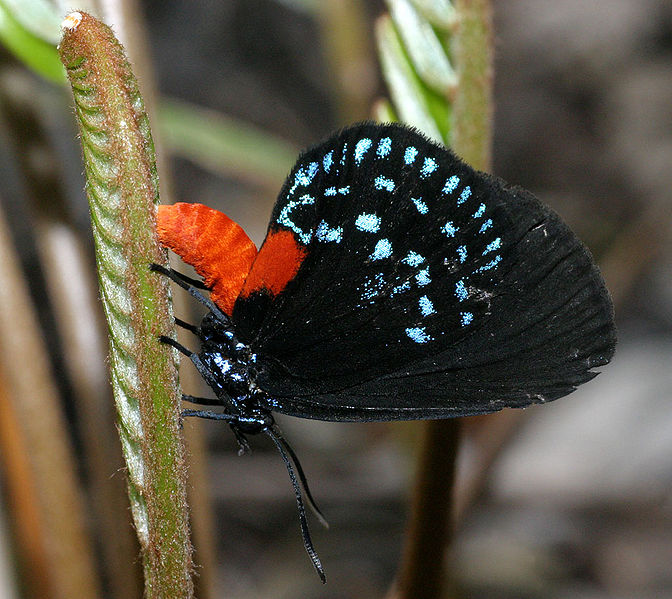
Eumaeus atala butterfly laying eggs on coontie.  Creative Commons - Share Alike
Eumaeus atala butterfly laying eggs on coontie. Creative Commons – Share Alike

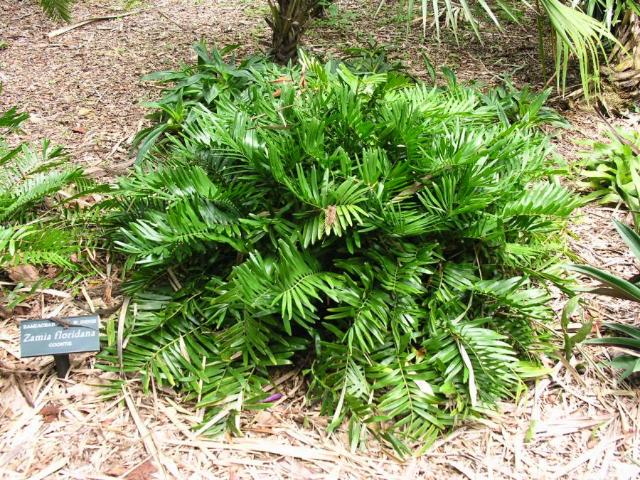
There is a beautiful butterfly (Eumaeus atala) in Florida that was historically dependent upon a particular native plant, coontie, which is a species of cycad.  Coontie was popular with early settlers as a food flavoring and was nearly wiped out early in the 20th century, along with the atala butterfly which was dependent upon it as its host plant.  Tallamy claims that the atala made a comeback when coontie became a popular plant for suburban gardens.  This makes a powerful case for how suburban gardeners can participate in efforts to conserve our native butterfly fauna.

Coontie.  Photo by Dan Culbert, University of Florida
Coontie. Photo by Dan Culbert, University of Florida

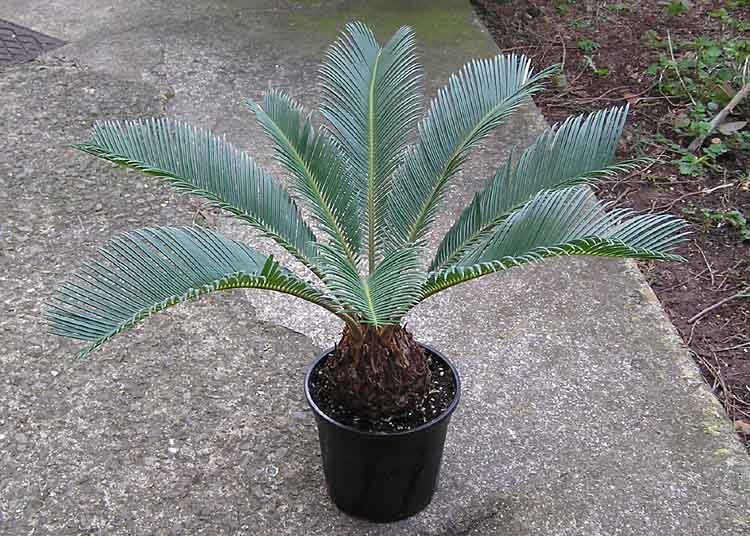
But is it true?  Wikipedia says it’s not:  “The atala is now common locally in southeast Florida rebounding to some extent as it has begun to use ornamental cycads planted in suburban areas.”    This is an example of how chemically similar plants can be useful to native insects, whether they are native plants or introduced, non-native, ornamental plants.

Sago cycad palm
Sago cycad palm is an example of an ornamental cycad

We apologize for being repetitive, but for the record we will close with the reminder that Million Trees urges everyone to plant whatever they want in their own gardens.  In public open spaces, which belong to everyone, we ask only that land managers quit destroying trees and using pesticides for the sole purpose of attempting to eradicate non-native plants.  The audience for Professor Tallamy’s publications is private gardeners, so we don’t really have a beef with him.  We critique his rationale for his preference for native plants only because it is often cited by those who demand the eradication of non-native plants and trees in our public open spaces.

The Living Landscape is a beautiful book, which we recommend to our readers for its lovely photos of naturalistic landscapes.


  1. Doug Tallamy, “Flipping the Paradigm:  Landscapes that Welcome Wildlife,” chapter in Christopher, Thomas,The New American Landscape, Timber Press, 2011
  2. Rick Darke and Doug Tallamy, The Living Landscape: Designing for Beauty and Diversity in the Home Garden, Timber Press, 2014
  3. Arthur Shapiro, Field Guide to Butterflies of the San Francisco Bay and Sacramento Valley Regions, University of California Press, 2007
  4. Martijn Bezemer, et. al., “Response to Native Insect Communities to Invasive Plants,” Annual Review of Entomology, January 2014.

Parks of New York City

Perhaps it’s a bit of an exaggeration to say that New York City is the center of America’s cultural universe, but when it comes to park history and design, it’s an accurate accolade.  It is the home of the first major park in the country, Central Park, as well as the most modern park innovation, High Line Park, an elevated railroad re-purposed into an urban trail park.  We will visit those parks in today’s post and think about what has changed and what remains the same in the 150 years that separate the design of those quintessentially American parks.

Central Park

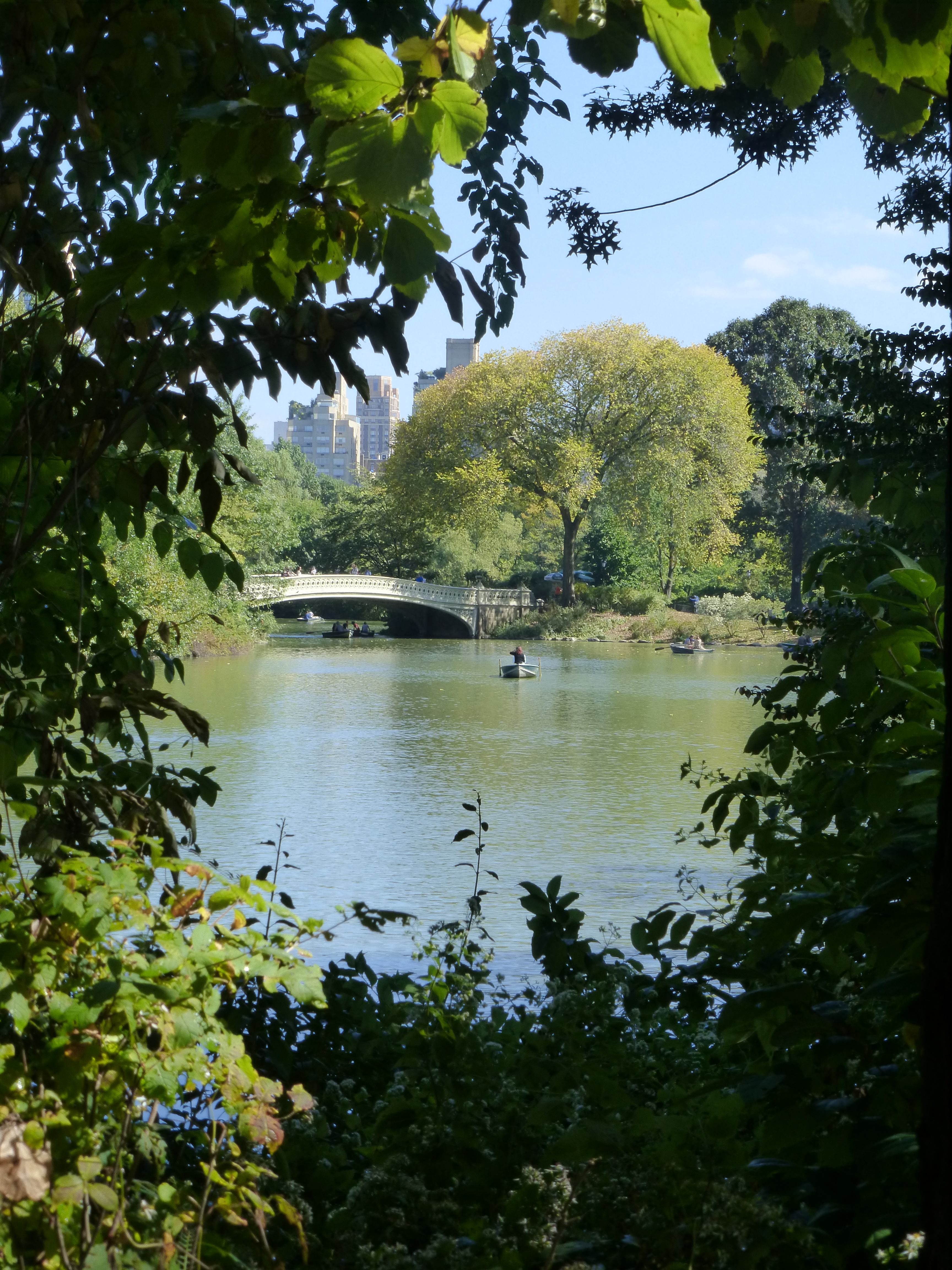
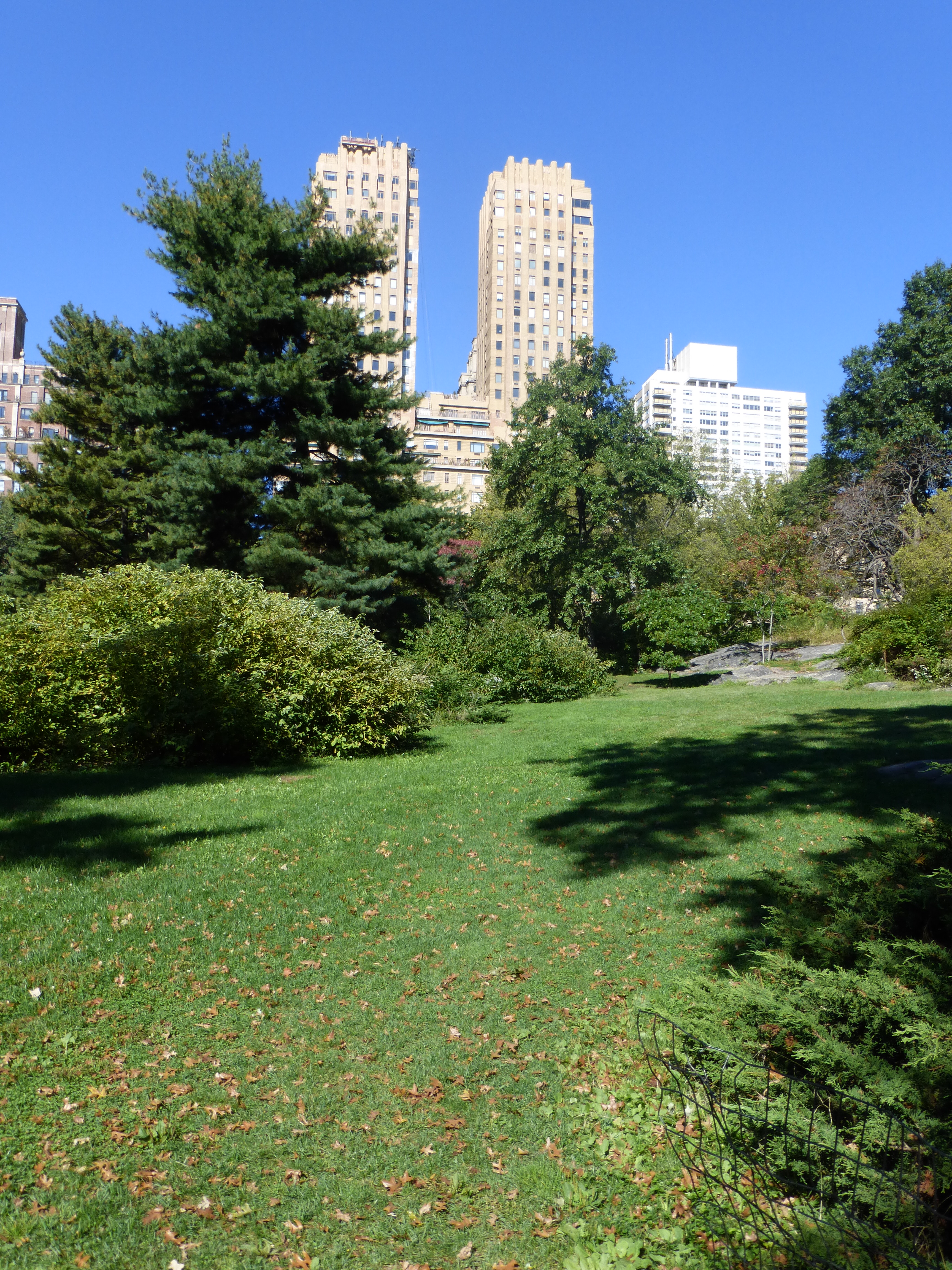
Central Park was designed and built by Frederick Law Olmstead and Albert Vaux before the Civil War.  It opened in 1857 to great fanfare and has been as central to the vitality of New York City as its name implies, since its opening.  It reflects the design sensibilities of Olmstead and the engineering genius of Vaux.  It looks completely natural, but virtually everything in it—its lakes, its streams, its hills—was constructed.

Central Park
Central Park

Olmstead was partial to a green landscape with long vistas across meadows and lakes.   He wasn’t inclined to plant colorful flowerbeds, though he could oblige when his clients demanded it.  The trees and plants he chose for Central Park were as likely to be native to New York as not.  His previous experience in agriculture informed his choices so survival of the landscape was ensured.

P1010588
Central Park

It’s not a coincidence that Olmstead’s plant list was not confined to native species because the concept of “nativeness” wasn’t defined when Central Park was designed.  “The modern division of species into native and alien first appears in the writings of Hewett Cottrell (H.C.) Watson in the mid-nineteenth century.” Watson was an amateur British botanist who was aware that some plant species had been introduced to Britain and he decided that some sort of classification system was needed to keep track of such species.  “He was the first to define ‘native’ in the modern sense:  ‘apparently an aboriginal British species, there being little or no reason for supposing it to have been introduced by human agency.’”  (1)

Watson acknowledged that distinguishing between aboriginal and introduced species wasn’t easy and he did not consider introduced species inferior to aboriginal species.  For the next one hundred years, opinions of the relative merits of aliens and natives varied.  Sometimes aliens were considered a problem and sometimes they were considered a benefit to ecosystems.  Sometimes such problems were attributed to the introduced plants and sometimes they were attributed to underlying factors.

All this changed in 1958 with the publication of Charles Elton’s book The Ecology of Invasions by Animals and Plants.  Today’s invasion biologists, if questioned, generally claim Elton’s book as their inspiration, and it has been described as signaling ‘the beginning of the field of invasion biology…’  But in many ways it is an odd book.  It isn’t a scientific book in the usually accepted sense, nor is it a textbook.  It is in fact a popular polemic, based to a large extent on a series of radio talks that Elton gave to the BBC.  But what is not in doubt is that it sits squarely in the tradition of blaming introduced species for practically any environmental ill you care to mention…” (1)

Olmstead was not burdened by the constraints of nativism in the 1850s and so he was free to plant whatever he considered beautiful and suited to the climate and conditions in New York.  We are fortunate to have this living evidence today that native and non-native plants survive  and thrive together in Central Park.  Central Park is the home of hundreds of species of birds and the temporary home of hundreds more species of migratory birds every spring and fall.

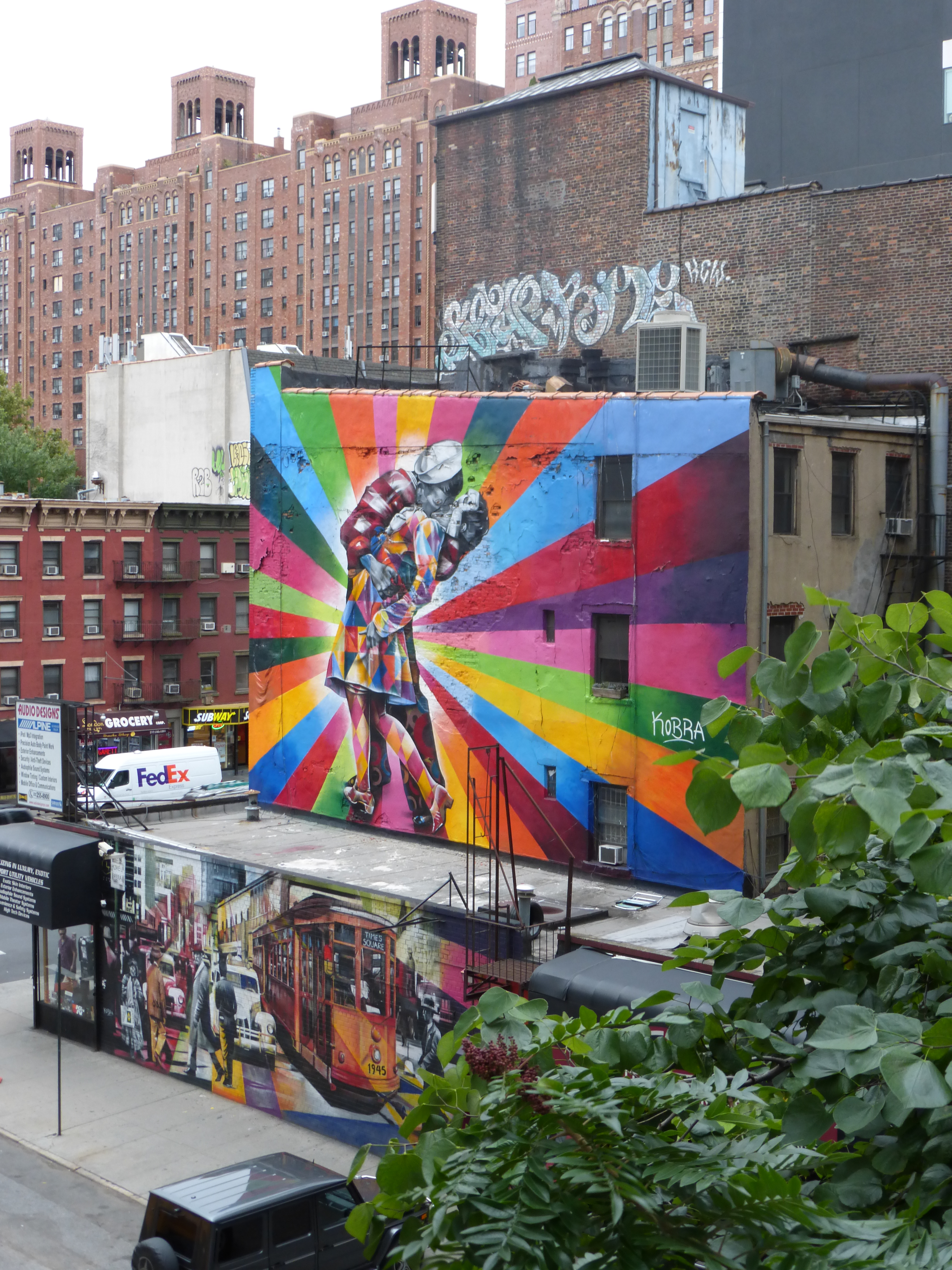
High Line Park

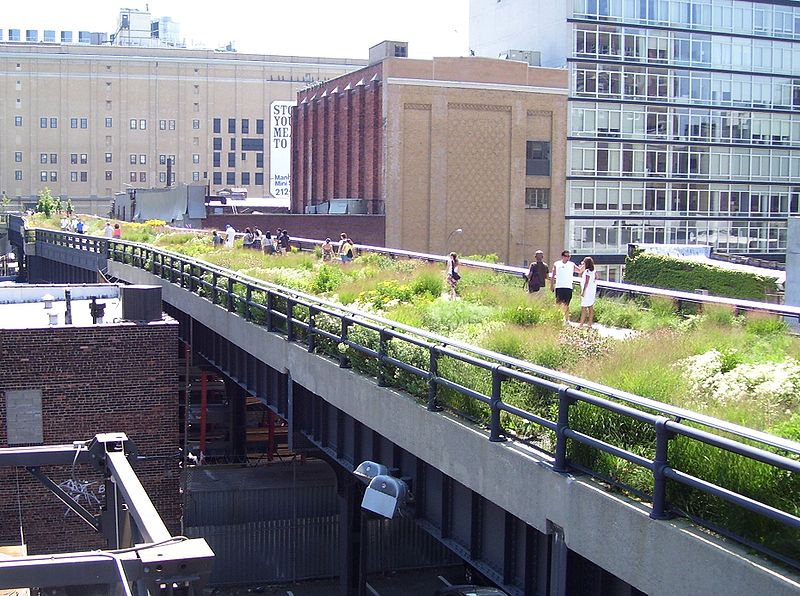
The High Line began in 1846 as a railroad line on the West Side of Manhattan, which transported unprocessed meat to the meat processing district and processed meats out of Manhattan.  In 1934, after many people were killed in collisions with the train, 13 miles of train were elevated 30 feet above the street, bypassing the cross-traffic from 34th Street to St. John’s Park Terminal at Spring Street.  In 1980, the last train on the High Line transported frozen turkeys from the meat processing district.  Soon thereafter, neighbors organized to prevent the demolition of the High Line.  The re-creation of the High Line as a park began in 2006.

High Line Park, New York City
High Line Park, New York City. Creative Commons – Share Alike
Landscape of first phase of High Line Park

The first phase of High Line Park opened in 2009, the second phase in 2011, and the third opened on September 21, 2014.   All three phases opened to rave reviews.  The park became an instant success both with New Yorkers and with tourists.  Over 5 million people visit the High Line every year.  Having seen it, we can report it is no mystery why it is so popular.  It is a safe walk above the congested streets of New York with fabulous views of the Hudson River, the surrounding neighborhood, and the dramatic skyline of the Manhattan.

But the beauty and functionality of the park is not its only virtue.  It has transformed this formerly industrial neighborhood.  The surrounding neighborhood is dotted with cranes engaged in building valuable new residential properties.  Existing buildings are now covered with art to entertain visitors to the High Line.  The entire neighborhood has been revitalized by the development of this new, innovative re-creation of the City’s past.  It was atrociously expensive to transform the High Line into a park, but the park has already repaid the investment.

View from High Line Park
Self-Seeded landscape of Phase 3 of High Line Park

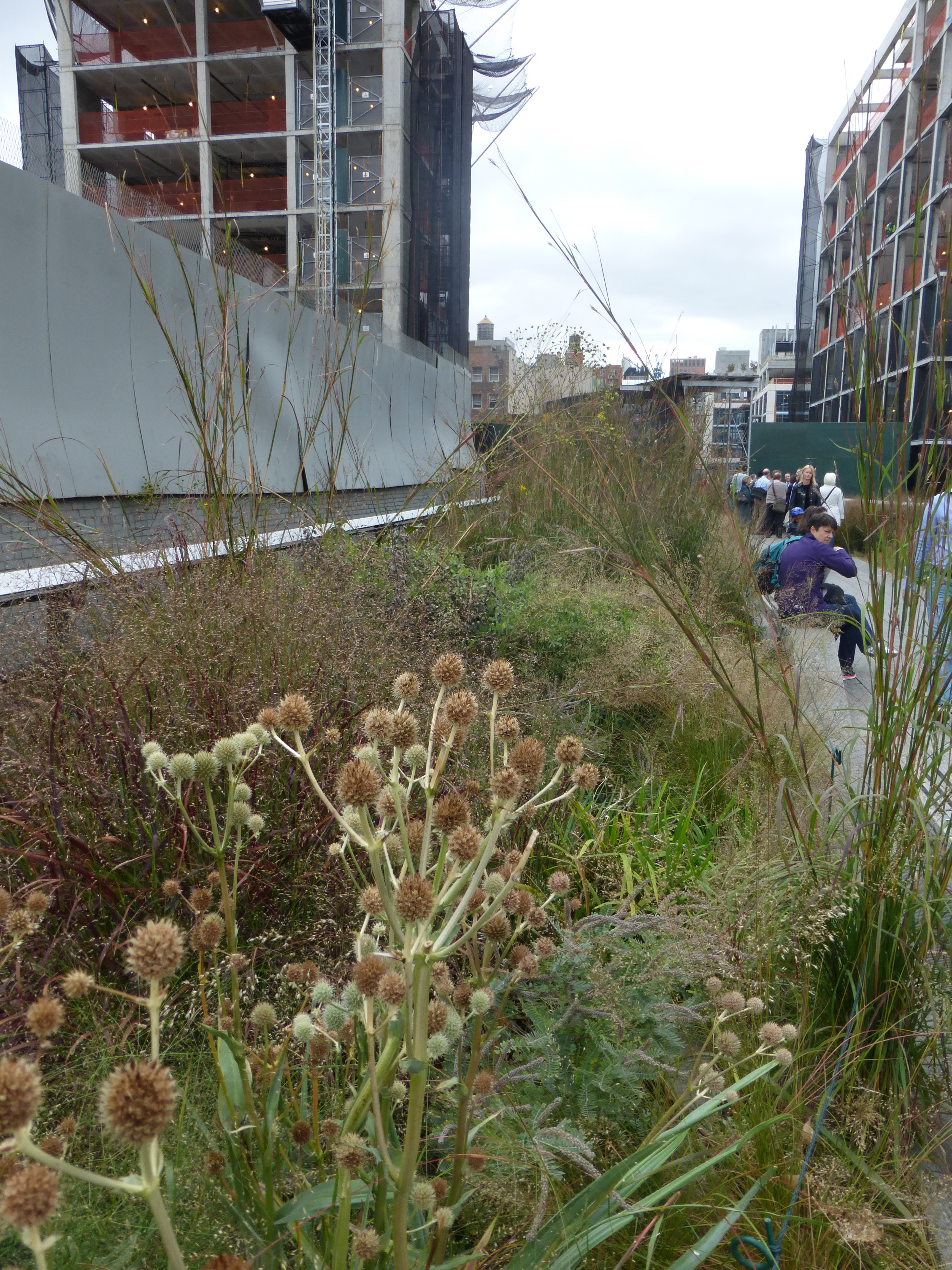
The design of the third and final portion of the High Line is different from its predecessorsPerhaps to reduce costs, the third section has retained many of the original structures of the railroad, including its weedy landscape.  The landscape is described as “self-seeded,” which is another way of saying that it is populated by the weeds that blew into the railroad ties during its 30-year fallow period.  The plant list of the High Line reflects its eclectic origins.  It is a mix of natives and non-natives, including many reviled by native plant advocates such as Tree of Heaven.  What is remarkable about the landscape in the third section is how similar it is to the earlier sections, which were planted.  In other words, achieving a “naturalistic” landscape bears some resemblance to the weeds of a vacant lot.  The final section of the High Line is no less charming and beautiful than its landscaped predecessors.

The High Line, like many parks in New York City, contains many enterprises that provide food and entertainment to its visitors.  Such enterprises are very controversial in San Francisco, where many park advocates consider them intruders.  We enjoyed a handmade cup of coffee on the High Line and wondered why San Franciscans have such a purist view of what “belongs” in their parks.

Comparing New York City with San Francisco

As we said when we began, we consider New York City the center of America’s cultural universe.  We are therefore encouraged that we found no evidence that New York City’s park system is dominated by nativism.  Their parks are both more beautiful and better maintained than those in San Francisco.  We suspect that San Francisco’s obsession with native plants has handicapped its ability to maintain beautiful parks because the plants that are native to San Francisco are brown and dormant much of the year.  New Yorkers looked back to their city’s 19th Century past to resurrect the High Line, while some San Franciscans are demanding a return to an 18th century landscape.

We also believe that San Franciscan’s objection to enterprises in their parks is one of the reasons why there isn’t enough money to maintain the parks to the same standard as the parks of New York City.

There are undoubtedly other factors at play.  The parks of New York City are heavily subsidized by wealthy foundations.  Its wealthy residents have been generous with the parks of New York City.  However, San Francisco is rapidly becoming as expensive a place to live as New York, so we wonder why our parks can’t enjoy the same level of support.  Is San Francisco’s “natives-only” approach to landscaping making our parks less attractive to potential donors?

Can you think of other reasons why San Francisco’s parks look so seedy compared to the parks of New York City?


(1) Ken Thompson, Where do camels belong?, Greystone Books, 2014

Climate change requires plants and animals move to survive

Our readers know that we consider climate change the most critical environmental issue of our time.  We also believe that the native plant ideology is antithetical to our concern about climate change for two reasons:

  • The changing climate requires that plants and animals move in order to survive. Therefore, the demand that historical ranges of native plants and animals be restored and maintained is both unrealistic and harmful.  It is unrealistic because the environment has changed in the past 250 years since the arrival of Europeans on the West Coast and it will continue to change.  Therefore, we cannot assume that the native plants that existed here in 1769 are still capable of surviving here.  It is harmful because animals can and do move as the climate changes.  Therefore, eradicating the plants they need for survival is harmful to them.
  • The eradication of non-native plants and trees is exacerbating climate change by releasing their stored carbon into the atmosphere, thereby contributing to the greenhouse gases that cause climate change. When prescribed burns are used to eradicate non-native plants or prevent natural succession the release of carbon into the atmosphere by the plants that are burned is immediate.  When large, mature trees are destroyed, the carbon they have stored as they grew is released into the atmosphere as the wood decays.  Furthermore, their ability to store carbon in the future is lost to us going forward.  Since carbon storage is directly proportional to biomass, whatever we plant in their place is incapable of storing as much carbon as the mature trees.
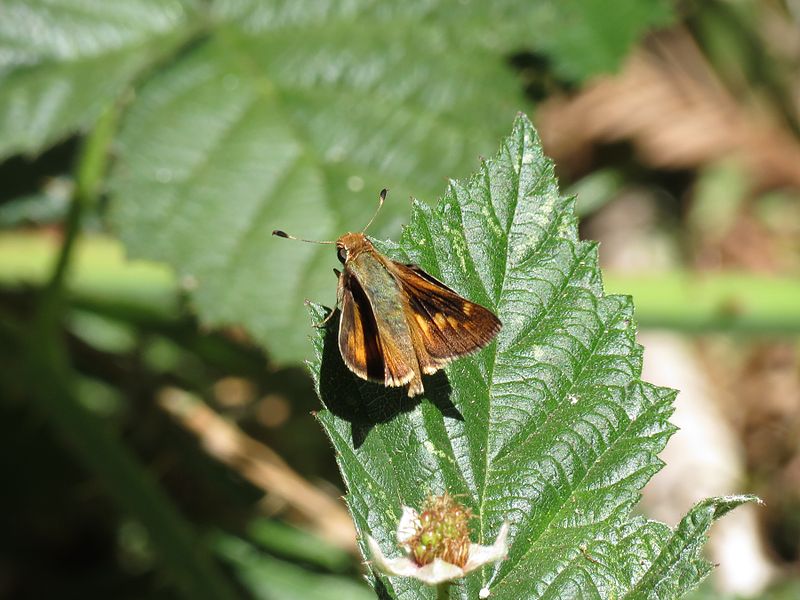
The umber skipper has adapted to Bermuda grass in lawns in the East Bay.  Creative Commons
The umber skipper has adapted to Bermuda grass in lawns in the East Bay. Creative Commons

There is an important caveat that we must add to our first bullet point.  Changing location is not the only mechanism that can ensure species survival in a changing climate.  Many species are probably “pre-adapted” to the changed climate.  That is, they may be capable of surviving changes in the climate.  Secondly, species can adapt and/or evolve in response to changes in the environment, which is another mechanism that facilitates species survival.  We invite our readers to visit our post about the rapid evolution of finches in the Galopagos Islands in response to extreme weather conditions that caused selection events.

Today we will inform our readers of the scientific record regarding the need for plants and animals to move as the climate changes.  We will use the recently released fifth report of the Intergovernmental Panel on Climate Change as our source.

Intergovernmental Panel on Climate Change

First we will establish the credibility of the Intergovernmental Panel on Climate Change (IPCC).  The IPCC was formed in 1988 by the United Nations.  It is composed of thousands of scientists from all over the world, representing the 190 member nations of the UN.  The IPCC does not conduct original research.  Rather it compiles thousands of peer-reviewed scientific studies into reports that represent a consensus viewpoint of the global scientific community.  Typically, scientists from 120 countries participate in marathon sessions in which consensus must be reached before reports can be published.  The IPCC has published 5 reports since 1988, the most recent earlier in 2014.

How the climate has changed and how it will continue to change

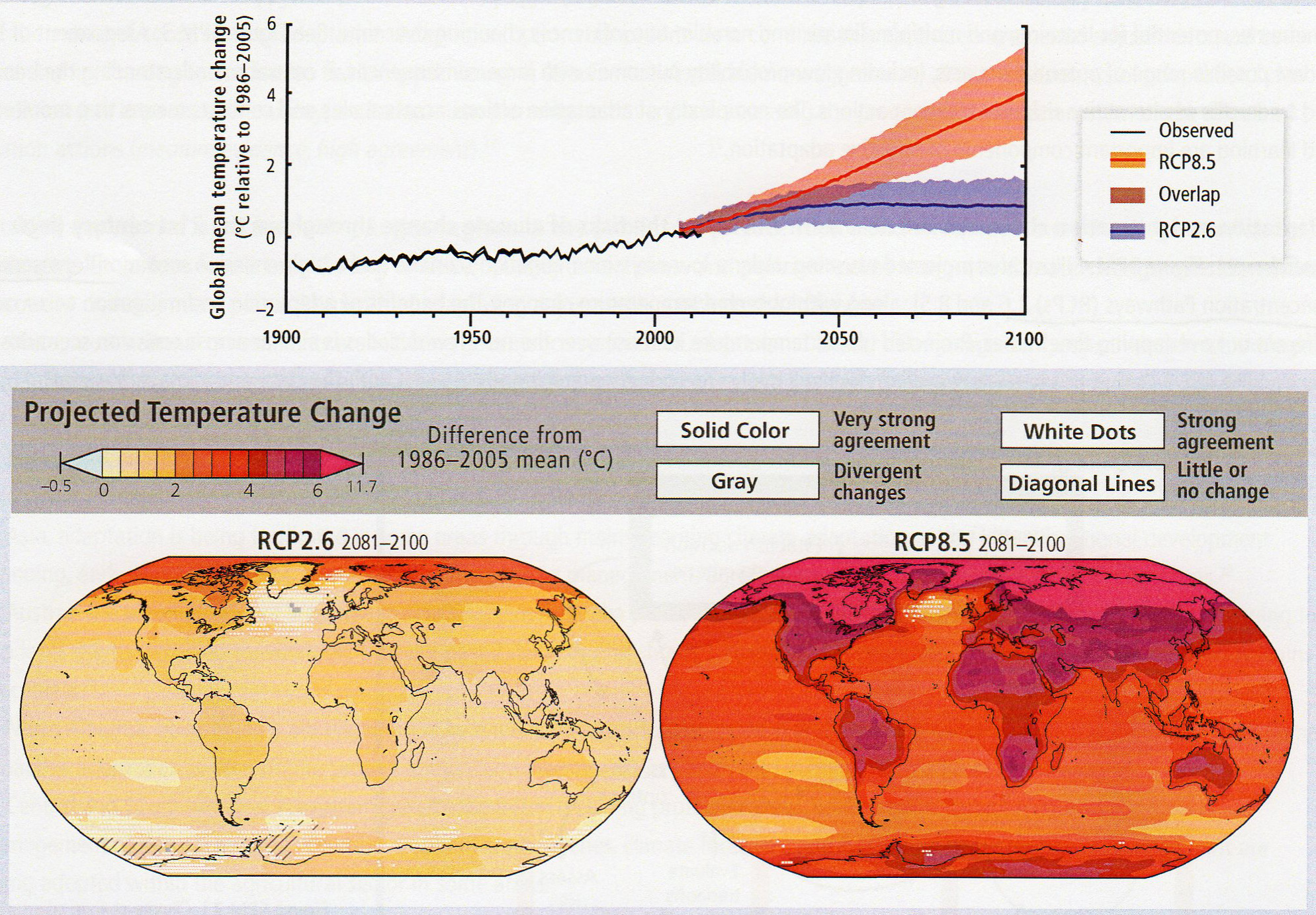
The IPCC compiled several different sources of data to report how the climate has changed from 1900 to the present.  Then they modeled the multitude of variables that influence climate to predict different trajectories for the climate going forward to 2100.  The many variables that influence climate interact in complex ways that are not entirely predictable.  There is therefore some uncertainty in those predictions, as there is in any prediction of the future.  Therefore, future temperature is depicted by the following graph as “bands” of probability.  The bands become wider as the graph depicts further into the future, as we would expect; that is, the distant future is less predictable than the near future.

Observed and projected temperature change, IPCC 2014

Here’s what we learn from this graph:

  • The graph reports that the average global temperature has increased by 1° Celsius (1.8° Fahrenheit) from 1900 to the present.  Graphs depicting the more distant past indicate that the climate began to warm around the time of the industrial revolution, about 1850.  Therefore the total increase in temperature is greater than that depicted by this graph.  However, the rate of increase has accelerated greatly in the past 50 years.
  • The upper range of projected temperature increases on the graph is labeled RCP8.5 (Representative Concentration Pathway 8.5). That pathway is based on the assumption that present levels of greenhouse gas emissions will continue to increase at the same rate as they have in the recent past.  The mean prediction of that pathway is a global temperature increase from the present to the end of the century of 3.7° Celsius (4.6° Fahrenheit).
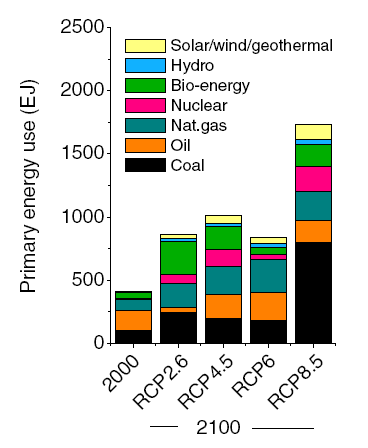
  • The lower range of the projected temperature increases on the graph is labeled RCP2.6 (Representative Concentration Pathway 2.6). The mean prediction of that pathway is a temperature increase to the end of the century of 1° Celsius (1.8° Fahrenheit).  That pathway is based on the assumption that greenhouse gas emissions are radically reduced, beginning immediately, as represented by the following graph from The Guardian.  This graph also depicts two intermediate emission scenarios between the present trajectory(RCP 8.5) and the maximum predicted reductions in emissions (RCP 2.6)
Projected energy use

Movements needed for survival in a changing climate

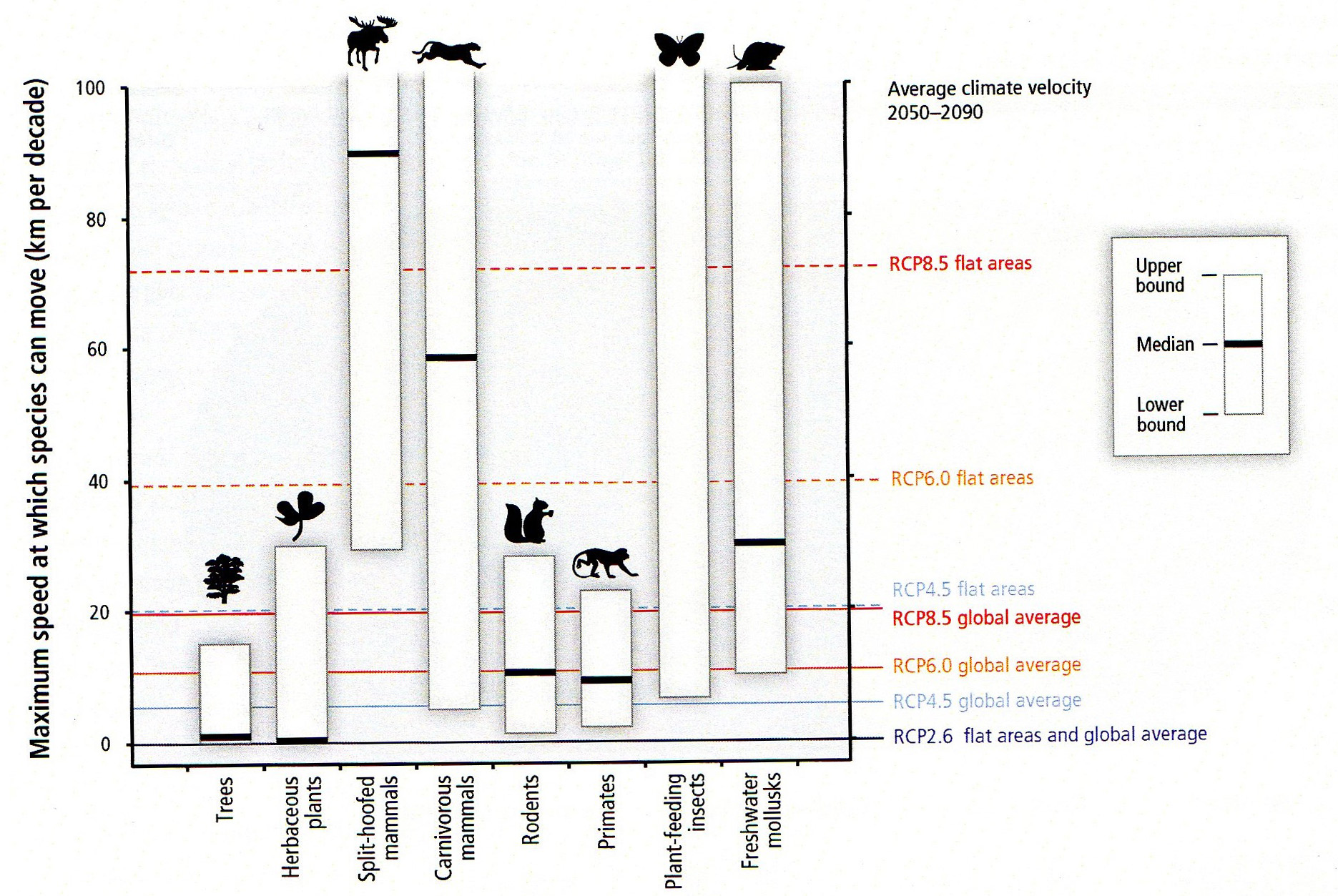
The world has done little to reduce greenhouse gas emissions and America has done even less.  According to a recent Gallup Poll, only 39% of Americans are “concerned believers” in climate change.  Another 36% of Americans believe the climate is changing, but don’t believe it will affect them.  Twenty-five percent (25%) of Americans do not believe the climate is changing.  Therefore, for the time being, it seems extremely unlikely that our polarized politics in America will be capable of responding effectively to the grim reality of climate change.  Within that context, we inform you of the final graph from the IPCC report about the need for plants and animals to move from their present ranges in response to climate change and their variable ability to do so.

Adaptation to Climate Change.  IPCC
Adaptation to Climate Change. IPCC

On the vertical axis, the graph depicts the ability of plants and animals to move, measured in kilometers per decade.  The horizontal lines depict the need of plants and animals to move in response to various scenarios of climate change as we described earlier.  The bars depict the ability of plants and animals to move and the height of each bar informs us of the variable ability of plants and animals to move.  Trees are the least able to move, unless we have the wisdom to plant them outside their native ranges—at higher latitudes or elevations–where they are more likely to survive in the future. 

For example, if we radically reduce greenhouse gas emissions immediately (RCP2.6), most species of trees and plants will be sustainable at their present latitudes and elevations.  But if greenhouse gas emissions continue on their current trajectory (RCP8.5), most species of trees and plants will not be capable of moving far enough, fast enough to survive as the climate warms.  Although trees and plants are capable of moving only very slowly, most animals are capable of moving more rapidly.  Will they have the plants they need to survive in their new ranges?

 Putting our heads in the sand

Surely there aren’t many native plant advocates in the San Francisco Bay Area who don’t believe in the reality of climate change.  The Gallup Poll reports that most people who don’t believe in climate change are Republicans and in the San Francisco Bay Area Republicans are a small minority.  And so we ask native plant advocates this question:  How do you reconcile the reality of climate change with your demand that native plants be restored and maintained where they existed 250 years ago in a very different climate?


“Restoring” vegetation does not restore an ecosystem

One of the persistent questions in our interminable debate with native plant advocates is whether or not native vegetation provides superior habitat for wildlife compared to existing non-native vegetation.  At the heart of that question is the closely related question of whether or not more insects are found in native vegetation than in non-native vegetation.  That’s because insects (and other arthropods) are near the bottom of the food web.  If there are fewer insects, there are probably fewer birds and other animals that eat insects. We have told our readers about many studies that find equal abundance and diversity of insects in native compared to non-native vegetation, so we won’t repeat them, but here’s a brief list of those studies and links to them for new readers:

Does “restoration” of native vegetation increase insect populations?

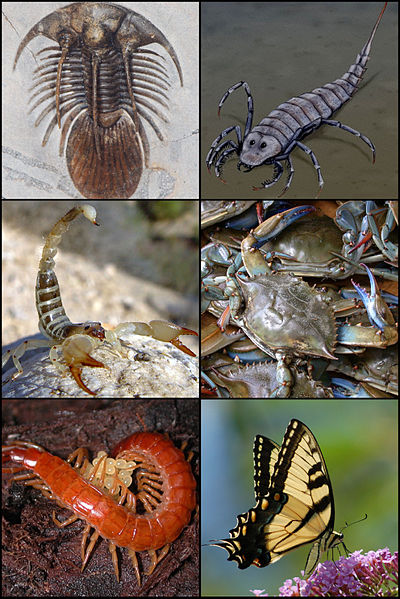
Arthropods - Creative Commons Share Alike
Arthropods – Creative Commons Share Alike

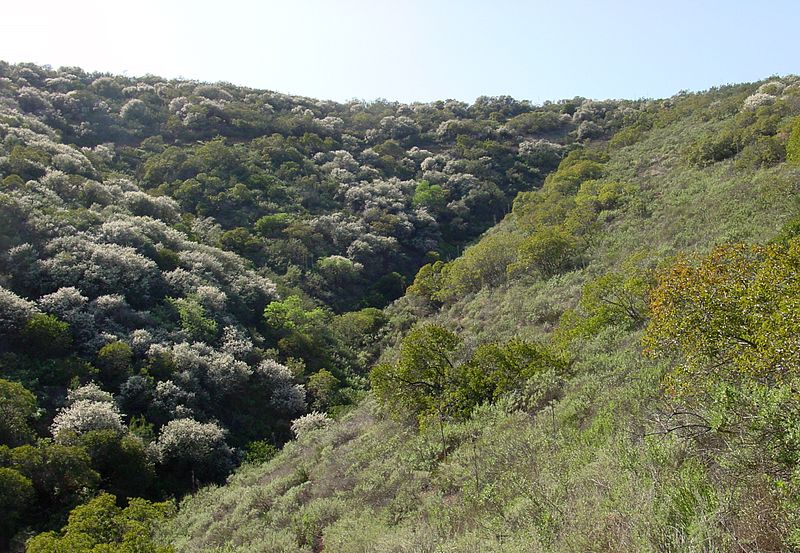
In this post we will consider this issue from a slightly different angle:  can insect population or diversity be increased by “restoration” of native vegetation?  Even if we accept the premise of native plant advocates that native vegetation supports greater abundance and diversity of insects, can that population be “restored” by eradicating non-native vegetation and replacing it with native vegetation?  That question is answered with a resounding “NO” by a study that compared arthropod abundance and diversity in undisturbed (predominantly native vegetation), disturbed (predominantly non-native vegetation), and disturbed sites 5 and 15 years after restoration. (1) Restoration methods described in the study are mowing followed by disking and seeding, disking and seeding, planting of container stock, and clearance by hand.  All sites were irrigated initially.  No mention is made of herbicide use or prescribed burns to eradicate non-native vegetation. The vegetation type in all 15 sites in Southern California was coastal sage scrub.  This is the dominant vegetation type along the coast of California and is the goal of many restoration projects in the San Francisco Bay Area.  Many species of both native and non-native vegetation in the study sites also exist in the Bay Area.

Coastal sage scrub in Southern California - Creative Commons Share Alike
Coastal sage scrub in Southern California – Creative Commons Share Alike

The study used pitfall traps to collect arthropods in these sites.  Arthropods are invertebrates that include insects, arachnids (spiders), and crustaceans (aquatic species not relevant to this study).  Arthropods are further divided into guilds such as herbivores, predators, scavengers, and parasites.  Because of the method of collecting in pitfall traps, few herbivores were found. Here are some of the findings of this study:

  • “Arthropod diversity at undisturbed and disturbed sites was greater than at sites that were 5 and 15 years following restoration.”
  • “Number of arthropod species was not significantly different among undisturbed, disturbed, and restored sites.”
  • “Vegetation at disturbed and undisturbed sites differed significantly; older restorations did not differ significantly from undisturbed in diversity, percent cover, or structural complexity.”
  • “Vegetation characteristics did not differ significantly between the newly restored site and disturbed sites.”
  • “…arthropod communities at all restored sites were, as a group, significantly different from both disturbed and undisturbed sites.”
  • “As found in other studies of other restoration sites, arthropod communities are less diverse and have altered guild structure.”

Here is the concluding discussion of this study:

“Of the restoration sites sampled, none had developed an arthropod community that resembled undisturbed or disturbed native coastal sage scrub. Restoration sites in general exhibited lower arthropod diversity and a preponderance of exotic arthropod species. The time elapsed since revegetation effort had no discernible effect on arthropod community structure; there was no gradual return of the community to a more natural structure over time”.

 “Restorations” do not improve arthropod abundance or diversity

This study found that arthropod population and diversity was the same in disturbed (non-native) and undisturbed (native) vegetation.  When disturbed vegetation was “restored” arthropod population was maintained but the composition of the arthropod community was significantly changed even 15 years after the restoration was completed.  There were more “exotic” species of arthropods in the restored sites even though the vegetation was similar to the undisturbed sites of native vegetation.  The restored vegetation was native, but its arthropod occupants weren’t.

However, the birds and other animals that prey on those insects don’t care if the insects are native or non-native.  Much like humans, animals are not concerned with the nativity of their food.  The non-native apple you are eating is just as tasty whether you are eating it in its native range in Central Asia or where it has been introduced.  If you have an apple tree, you know the birds and squirrels enjoy the apples too and the bees and other pollinators enjoy the apple blossoms.   Most of what we eat is not native, yet many people are obsessed with the nativity of vegetation, claiming that animals require native vegetation even though humans don’t.

An important caveat

The predominant vegetation type in the San Francisco Bay Area is coastal scrub, which is also the vegetation type in the study of arthropod populations.  This suggests that if a similar study were conducted here, the results might be similar.  However, there is one very important difference between the restorations studied in Southern California and the restorations in the Bay Area.   Land managers in the San Francisco Bay Area are using large amounts of herbicides to destroy non-native vegetation.  The study in Southern California reports no herbicide use in restoration sites. It seems likely that herbicides sprayed in restoration projects in the Bay Area would decrease the population of arthropods.  We would like to see a study that tests that hypothesis. 

There is more to an ecosystem than plants

The veneration of native plants has become a national obsession.  Demands for eradication of non-native plants are supported by many fictions to justify these destructive projects.  One of those fictions is that wildlife requires native vegetation.  We have found no empirical evidence to support that assumption.   The study we are reporting today is yet more evidence that restoring native plants does not restore an ecosystem. In this case, after 15 years of effort, land managers were eventually successful in establishing a population of native plants.  However, these “restored” native landscapes did not support a population of insects and spiders that were comparable to either the undisturbed native landscape or the unrestored non-native landscape.  We have been looking for some legitimate reason to engage in these destructive projects for over 15 years.  We have yet to find any justification for spraying our public lands with herbicides or destroying hundreds of thousands of healthy trees.  We will keep looking.


(1)    Travis Longcore, “Terrestrial Arthropods as Indicators of Ecological Restoration Success in Coastal Sage Scrub (California, USA),” Restoration Ecology, December 2003, Vol. 11 No 4, pp.397-409

Krakatoa: A case study of species dispersal

Islands are intensively studied by ecologists because they are hothouses for evolution.  Physical isolation results in the evolution of new species that are related to their mainland ancestors and the result is many endemic species of plants and animals which exist only on that island. 

Some islands originated when continents broke up into smaller pieces as a result of continental drift.  Madagascar and New Zealand are examples of islands that were originally attached to a continent.  These islands brought some of the inhabitants of the continent with them.  But many islands arose from the ocean as a result of volcanic activity and were therefore born bare as a newborn babe without vegetation or inhabitants.  All subsequent life on these volcanic islands arrived by dispersal from elsewhere via ocean currents, winds, or carried by traveling animals, most recently by humans.

Krakatoa map

Krakatoa is such a volcanic island in the Indonesian archipelago.  It has a long record of volcanic eruptions which both destroyed much of the island and created new islands.  Many of these eruptions occurred during prehistoric periods, but many have been recorded by human history.  These recent eruptions have created an evolutionary laboratory that enables us to answer the perplexing question of how quickly the dispersal of species occurs. 

The cataclysm of 1883

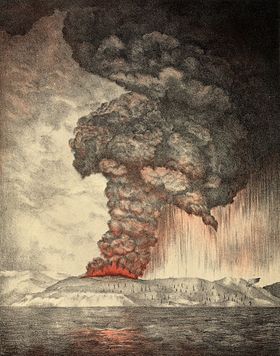
Krakatoa eruption, lithograph 1888

In August 1883 a series of volcanic eruptions on Krakatoa produced one of the most cataclysmic events of recorded human history.  The force of the blast was the equivalent of 13,000 times the nuclear bomb that devastated Hiroshima in 1945.  The blast could be heard as far as 3,000 miles away.  Shock waves from the blast reverberated around the planet 7 times.  The blast sent an ash cloud 50 miles into the atmosphere. The weather of the entire planet was altered by the ash cloud.  The temperature dropped by 1.2 Degrees Celsius in the year after the eruption and the climate did not return to normal until 1888.  The blast and subsequent tsunami killed over 36,000 people and destroyed two-thirds of the island.

 Scientists believe that nothing living survived the blast:  “no plant, no animal, no seed, no spore.” (1)  The first scientists visited Krakatoa nine months after the blast.  They reported finding nothing alive except a single spider.  Spiders are notoriously successful dispersers because the webs they weave can become sails on the wind.

Krakatoa is quickly repopulated

In 1886—three years after the eruption—the first botanical expedition arrived on Krakatoa.  They found mosses, algae, flowering plants and eleven species of fern.  They speculated that the arrival of algae enabled the spores of ferns to become established on the otherwise bare ground.  Amongst the plants there were two species of grasses.  Scientists assume that most of these plants arrived via wind, but some species could have arrived as seeds carried by the surf.

Further colonization of the barren island then began to accelerate.  By 1887, young trees were found as well as dense grassland and many ferns.  Butterflies, beetles, flies and a single monitor lizard were found in 1889.   The species of monitor lizard found in 1889 is known to be a good swimmer and is a “versatile opportunist” on land, which means it’s not a fussy eater and it can eat less often than other lizards.

By 1906, there were a hundred species of vascular plants, covering the summit in green and a grove of trees along the shore, including tamarisk and coconut palm.  The coconut is found on virtually any sunny beach in the Pacific because its seeds float in their large protective shell wherever the current carries them.

Fifty years after the eruptions of 1883, the island was home to 171 species of plants.  One botanist estimated that 40% of the plants came on the wind, 30% floated on the sea and most of the remainder were brought by animals.   The eruption of 1883 produced huge quantities of pumice–a lightweight, sponge-like volcanic glass—that floated on the ocean creating rafts that were observed for years after the eruption:  “…a ship’s captain…who encountered pumice on the Indian Ocean, lowered a boat for a closer look, ‘It was curious and interesting to note how it had been utilized by animals and low types of life as habitations and breeding places.’”  (1)

These early arrivals were effective dispersers, but they also had to be capable of surviving inhospitable conditions on arrival.  The order of arrival is therefore an important factor in determining successful establishment.  For example, animals won’t survive if they arrive before needed food resources.  The plants most likely to survive are capable of self-pollinating, that is they don’t require a partner to reproduce.

San Francisco is not an island

How does this experience on Krakatoa compare to our experience in the San Francisco Bay Area?  We’re so glad you asked!!

The many projects all over the Bay Area that destroy non-native vegetation are not isolated islands.  They are surrounded by more non-native vegetation which quickly re-populates the bare ground created by these projects.  Dispersal into small plots of land within San Francisco is much easier than onto isolated Krakatoa.  The majority of these projects do not have the resources to replant the areas in which non-native vegetation is eradicated.  The fiction is that native plants will magically reappear when non-natives are destroyed.  But we can see that the result is the return of the hardiest non-native weeds such as hemlock, star thistle, oxalis, and broom.  These hardy creatures don’t need to be planted.  Their seeds are carried by the wind or remain dormant in the ground to germinate when someone foolishly destroys the trees that provide shade and suppress germination of weeds.

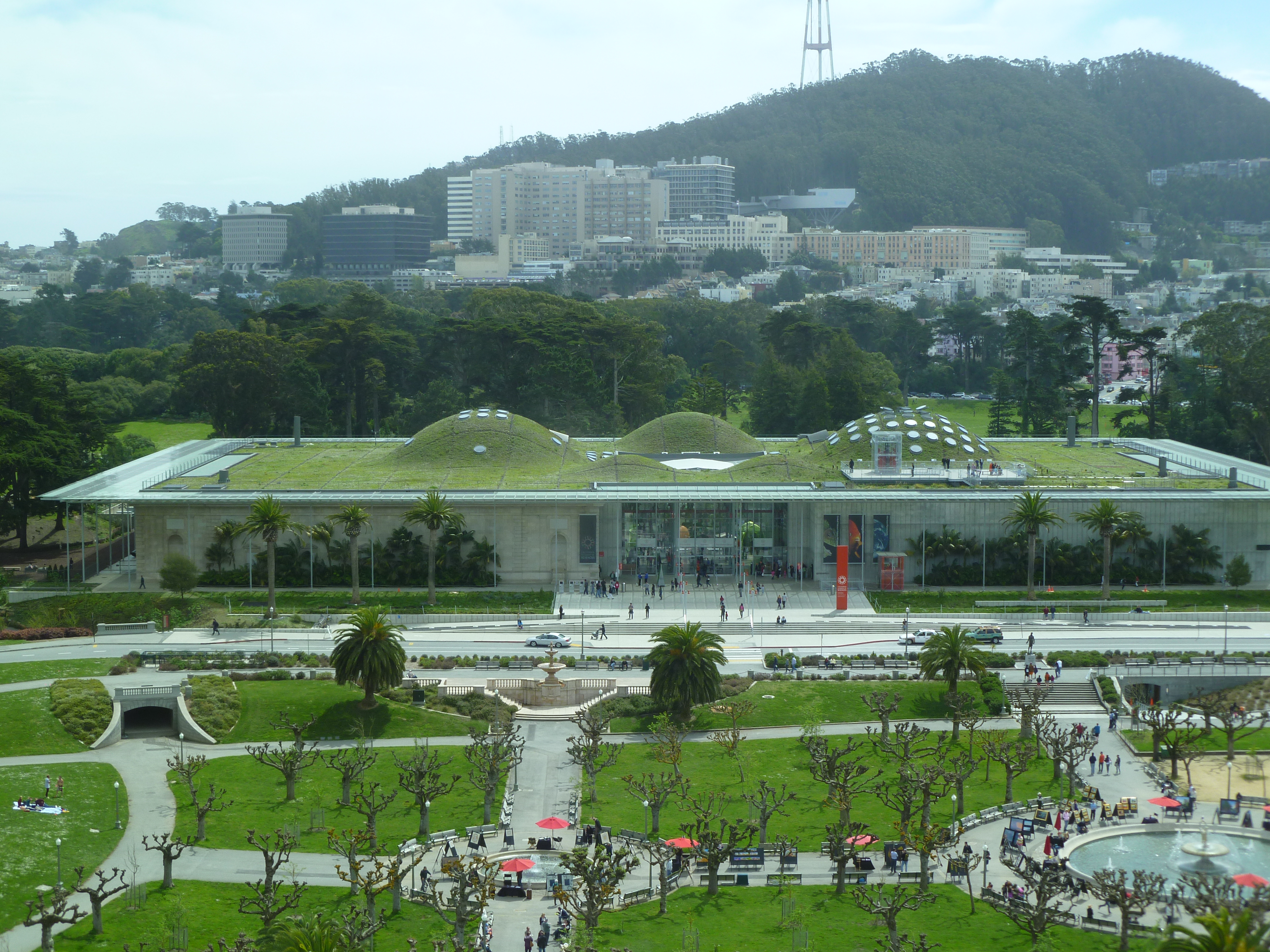
California Academy of Sciences, April 2011

Even when natives are planted, they are quickly out-competed by non-natives.  The best local example of that hard, cold fact is the living roof on the California Academic of Sciences.    When the California Academy of Sciences reopened in San Francisco in August 2008, its “living roof” was considered its most unique feature.  Thirty species of native plants were candidates for planting on the roof.  They were planted in test plots with conditions similar to the planned roof and monitored closely.  Only nine species of native plants were selected for planting on the roof because they were the only plants that were capable of self-sowing from one season to another, implying that they were “sustainable.”  A living demonstration of “sustainability” was said to be the purpose of the living roof.

Two of six of the predominant species on the roof after 2-1/2 years were native.  Four of six of the predominant species were mosses that are “cosmopolitan,” which means they are found everywhere.  They weren’t planted on the roof and were therefore “volunteers.”

The monitoring project divided the roof into four quadrants.  In February 2011, non-natives outnumbered natives in two of the quadrants.  Although natives outnumbered non-natives in the other two quadrants, non-natives were also growing in these quadrants.

The consultant who advised the Academy about what to plant on the roof would not be surprised by this monitoring report.  He advised the Academy to walk the streets of San Francisco and identify the plants growing from the cracks in the sidewalks.  These are the plants he advised the academy to plant because these are the plants that are adapted to current conditions in the city.  The Academy rejected this advice because they were committed to planting exclusively natives on the roof.

The many projects that are destroying non-native vegetation are not sustainable.  They are surrounded by non-native vegetation which is better adapted to current climate, soil, and atmospheric conditions.  Non-native vegetation will out-compete the natives that are not adapted to current conditions.  If these projects were merely futile, perhaps we could shrug and move on.  But we can’t turn a blind eye because these projects are harmful to the environment.  They use huge quantities of toxic herbicide and they are destroying healthy trees that are performing many valuable ecological functions.  These are not harmless experiments.


(1)    David Quammen, Song of the Dodo, Scribner, 1996.

(2) Some information for this post is from Wikipedia

No consensus on the definition of “native” or “invasive” species

We recently republished an article from the Garden Rant blog about the overuse and misuse of the word “invasive” to describe plants.  That article objected to the exclusive use of that pejorative word to describe non-native plants, when native plants often behave in exactly the same way.  The article also pointed out that the behavior of plants varies depending upon local conditions such that labeling any plant “invasive” beyond a specific locality is bound to be inaccurate.

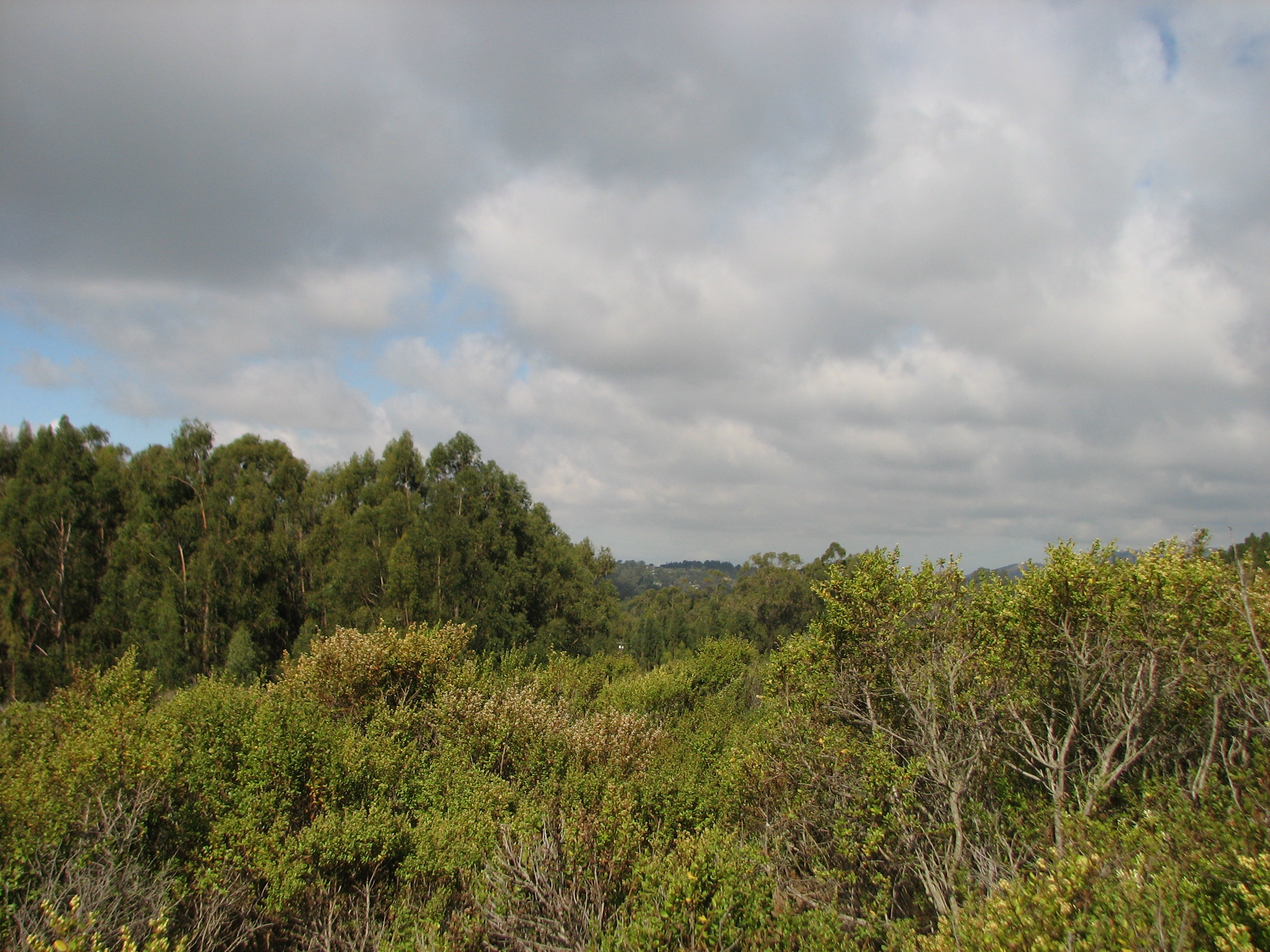
A huge expanse of coyote brush at Lake Chabot, an example of a native plant that would be called "invasive" if it were not native.
A huge expanse of coyote brush at Lake Chabot, an example of a native plant that would be called “invasive” if it were not native.

Today we will tell our readers about a new study which explains why the word “invasive” is causing confusion.(1)  Four scientists in Zurich, Switzerland conducted structured interviews with 26 academic invasion biologists and landscape professionals and found no consensus about the definition of “invasive.”   Nor is there any agreement about the definition of “native,” which is surely contributing to the confusion about the appropriate use of the word “invasive.”  Finally, the authors of the study compared this lack of consensus with the scientific literature of invasion biology.  They found a conspicuous discrepancy between the uncertainty expressed in the interviews with experts and the conservation policies that are theoretically based on the scientific literature.

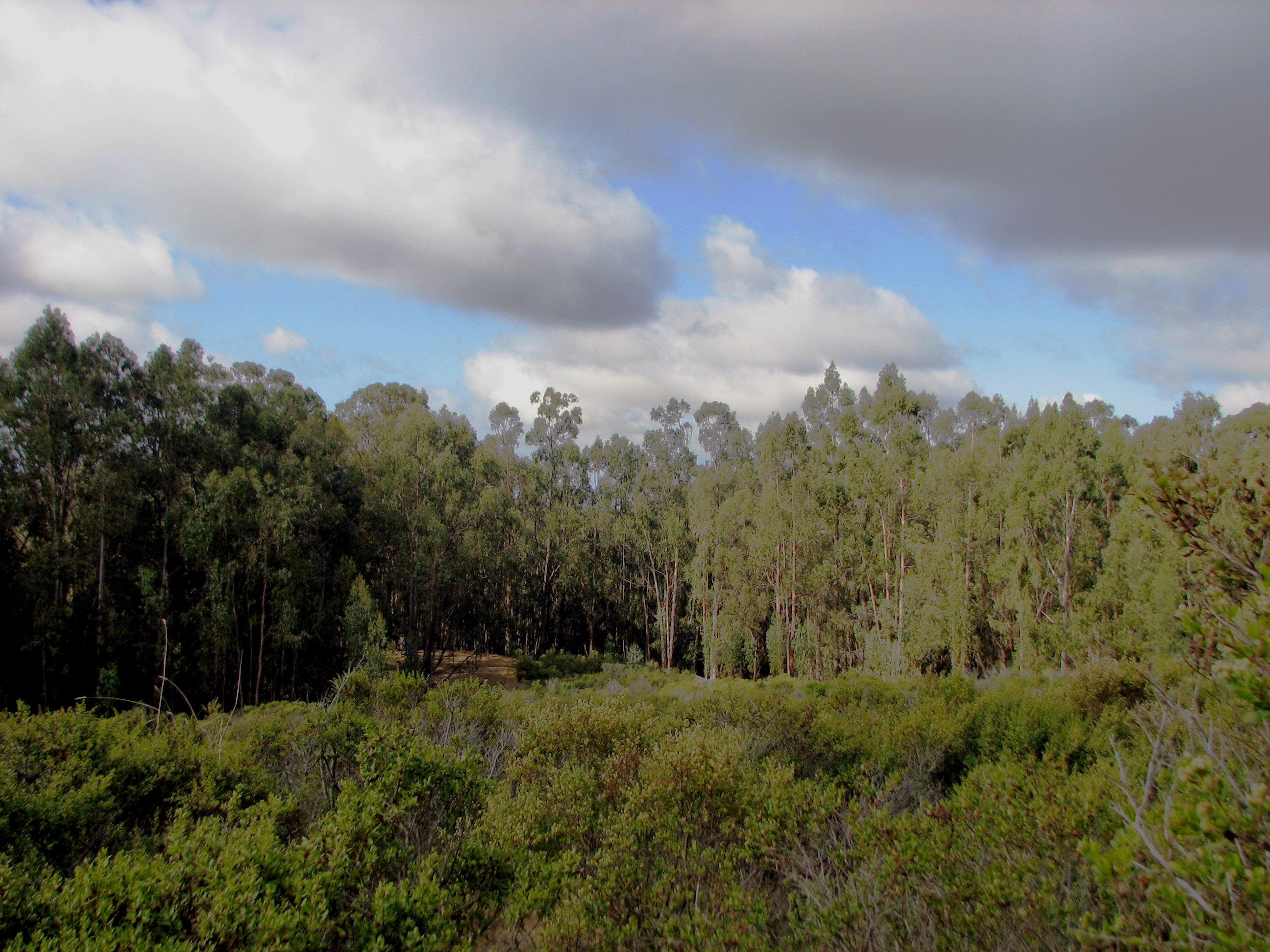
And the eucalyptus forest behind the coyote brush at Lake Chabot which is called "invasive" but in fact, rarely invades.
And the eucalyptus forest behind the coyote brush at Lake Chabot which is called “invasive” but in fact, rarely invades.

What is the difference between native and non-native species?

Although there was some agreement amongst invasion biologists that non-native species arrived with the help of humans, there was less agreement about the timing and location of arrival.  Some said non-natives arrived after the last glacial period (about 10,000 years ago) and others said after 1500 A.D. (post-Columbian exchange).  Landscape professionals were more likely to say that species are native which arrived prior to the life-span of humans, a significantly shorter period of time, obviously.  This is consistent with the tendency for landscape professionals to consider human perception the source of such categorization.

There was little agreement about a spatial definition of native species Some invasion biologists define native species within the context of political units (such as countries) while others use biogeographic definitions such as continents or on either side of a continental divide.

There is also disagreement about the means of movement used to define a species as non-native.  Some invasion biologists consider species non-native if their range has changed as a result of climate change because of the anthropogenic origin of contemporary climate change.  Such movement is now rapidly occurring so this particular definition is likely to result in the changed status of many species presently considered native, a change that is likely to make them targets for eradication.

When is a non-native species “invasive?”

There was little agreement about the criteria for calling a non-native species “invasive.”  Some invasion biologists did not think that an “invasive” species need behave any differently than a native species to be categorized as “invasive.”  Others believed it is appropriate to call a non-native species “invasive” if it spreads, even if that species has no negative impact on the ecosystem.  When asked to evaluate the impact of non-native species, more invasion biologists and landscape professionals considered the impact “neutral” (56%) than those who considered the impact “negative” (32%).  Invasion biologists tended to assess the affect of non-native species more negatively than landscape professionals.

The interviewees were then asked on what they based their judgment of the impact of non-native species.  This is perhaps the most telling question of all.   Both groups of experts lamented the absence of empirical evidence of the impact of non-native species:  “In almost a third (32%) of all assessments, experts could not recall any effects of non-native invasive species on ecosystem services.”  Most admitted that their judgment was based on “intuition” informed by their “general knowledge” or “extrapolating” from related knowledge:  “most experts were prepared to assume that non-native invasive species have a generally negative effect upon native biodiversity.” (emphasis added)

 Are non-native “invasive” species a serious problem? 

This is the question for which the answers of invasion biologists and landscape professionals were most divergent.  Invasion biologists consider non-native “invasive” species a serious problem which is underestimated by the public and politicians.  In contrast, landscape professionals said the problem is overestimated“…particularly due to anxiety and xenophobic feelings among the public.” 

The consequences of this lack of clarity 

The authors of this study then examined the publications of invasion biologists to see if this lack of consensus is apparent in the scientific literature of invasion biology.  They observed that invasion biologists start their publications with a definition of non-native and invasive species, but “in the rest of the text this definition was rarely strictly applied.”  They tend to use the terms “non-native” and “invasive” interchangeably.  They compare the spreading of native species to non-native species without indicating that the native species is also invasive.

The authors conclude that both the categorization of species as native or non-native and their designation as “invasive” are largely value judgments that reflect cultural values, not scientific judgments.  They suggest that invasion biologists “acknowledge the uncertainties and engage transparently with stakeholders and the public in deliberations about conflicting opinions.  Here invasion biologists should take the role of ‘honest brokers of policy alternatives,’ taking into account different prevalent values and policy preferences rather than adopting the role of ‘issue advocates.’” 

In other words, the conservation policies which are theoretically based on the scientific literature of invasion biology should acknowledge the uncertainty that pervades the discipline.  Given that uncertainty, the value judgments of the public should be on an equal footing with the value judgments of those who have a vested interest in the projects that are destroying existing landscapes.  There are alternatives to those destructive projects and the public’s opinion must be taken into account in considering those alternatives.

Of course, we agree.  As we have said many times on Million Trees, invasion biology is not a scientific discipline. Rather it is a set of value judgments based on a belief that native species (whatever they are) are superior to non-native species.  This is not just a question of semantics.  Many species are being killed because of what someone chooses to call them and irreparable damage is being done to our environment in the process of killing them.

 *********************************

(1)    Franziska Humair, et.al., “Understanding misunderstandings in invasion science:  why experts don’t agree on common concepts and risk assessments,” NeoBiota, 20, 1-30, 2014

“The trouble with the word ‘invasive'”

We are republishing an article from the Garden Rant blog with permission of the author, Susan Harris.  Susan is a professional garden writer who lives in the Washington DC area.  Garden Rant is an award-winning garden blog with a huge readership of garden writers, landscape professionals, and home gardeners.  They report over 80,000 readers per day. 

In this article, Garden Rant enters the controversial debate about the arbitrary use of the word “invasive.”  We agree that this word is both over-used and misused.  However, this is more than a semantic debate.  It’s an important debate because the word is being used to justify huge destructive projects that are damaging the environment by needlessly attempting to eradicate non-native plants, using polluting methods such as herbicides and prescribed burns.

If you have never debated with native plant advocates, you might find the comments posted to this article of interest.  They are typical of the many dialogues we have had with native plant advocates in the past.  

*********************************

This is a long-simmering rant about the many ways the term “invasive” causes confusion, and more.  DO weigh in with alternatives, pushback, and rants of your own.

“Invasive” as synonym for “nonnative”

Google “native versus invasive” and the 5.6 million hits confirms my observation that this is a common usage, and it’s led to a common misperception in the public that the opposite of native is indeed invasive.  QED: nonnatives ARE invasive.  Even regular garden writers sometimes use this juxtaposition, which should more accurately be “native versus nonnative” or I guess, “exotic.”

That great leveler, Wikipedia, confirms this problem about the term “invasive”: “The first definition, the most used, applies to introduced species (also called “non-indigenous” or “non-native”) that adversely affect the habitats and bioregions they invade economically, environmentally, and/or ecologically.”  At least their second definition is more accurate and even includes native species like deer.  No argument there.

Defining away the invasive behavior by natives

Can native plants be invasive?  Sure, as evidenced by the above-mentioned deer or in the plant world, wild grape.  But when native plants are termed invasive someone invariably pipes up to correct the writer because by definition, they’re nonnatives only.  And sure enough, legally, by the official U.S. government definition, only nonnative plants can be deemed invasive – for purposes of qualifying for money to remove them.  The 1999 Federal Executive Order on Invasive Species defines an invasive species as a “species that is not native to a particular ecosystem…”

Invasive plant lists covering large regions – even continents!

We all know that plant behavior depends on the exact conditions the plant is growing in, as well as more broadly, the region.  So some plants that behave well in the North are overly vigorous in the South.  Or some, like the infamous purple loosestrife, are vigorous in wet spots, not in dry ones.  Examples abound.

Spirea and Doublefile Viburnum (L), Lespedeza (R)

Spirea and Doublefile Viburnum (L), Lespedeza (R)

Yet this site by the U. Georgia and many other sources, including the National Park Service, don’t distinguish by region, and the resulting list of “invasives” includes these surprises to gardeners near me: several viburnums, two verbascums, several veronicas, red and white clo0ver, Japanese yew, 3 spireas (MOST on the market), various salvias, willows, nandina, grape hyacinth, Miscanthus sinensis (without specifying that it’s only the early-bloomers that spread), Lespedeza thumbergii, Pee Gee Hydrangea, cotoneaster, and strangely, littlestem bluegrass (Andropogon virginicus).  Yet native thugs like trumpet creeper are encouraged and they’re not invasive?

That designation of Spirea really bothers me because it’s such a self-sustaining, easy, low-maintenance and well behaved shrub, one I’ve grown for 30+ years with no signs of trouble.  And yet another source – the  USDA National Invasive Species Information Center – also targets Spirea Japonica and says this about it: “Spreads rapidly and forms dense stands that crowd out native species.” This and other contradictions between official reports and in-garden experiences growing targeted plants is puzzling to me.

Adding to the overly broad regionality of invasive-plant designations, there’s a new book on invasive plants, written for a national audience.

Shouldn’t invasiveness be designated locally?  And sometimes, for certain conditions?

“Invasive” used instead of “spreading”

I’ve heard garden-club members describing their passalong plants at plant swaps as “invasive” if they spread at all.  Which leads to said garden club being accused of encouraging the use of “invasives,” among other things.

Methods of “invasion” all lumped together

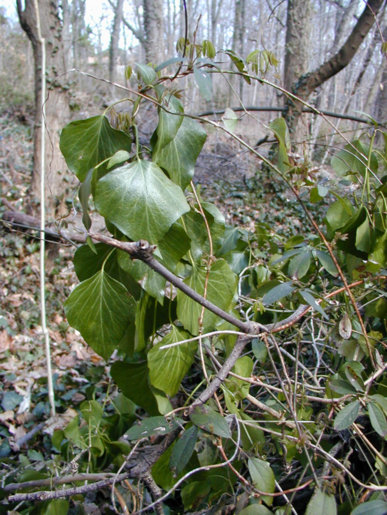
Mature Ivy
Mature Ivy

The  USDA lists these characteristics of invasive plants: “produce large numbers of new plants each season; tolerate many soil types and weather conditions; spread easily and efficiently, usually by wind, water, or animals; grow rapidly, allowing them to displace slower growing plants; spread rampantly when they are free of the natural checks and balances found in their native range.”

Yet some of those qualities are valued in the garden – especially tolerance of many conditions.  And for the gardener on a budget, especially one trying to replace their lawn with another groundcover, spreading is a good thing and it’s usually described more positively as “fills in quickly.”

What if the standard were: Does the plant spread in a way that causes harm to natural areas?  For example, plants that are spread by birds, like English ivy, so that the seeds can go everywhere and harm natural areas.  Unlike Spirea and Nandina that spread by rhizome and produce a couple of offspring every year, if that – just like Itea does?  Or if it’s simply spreading in the garden, is it impossible to control, like running bamboo?

daylily-550x412For example, “Invasive Species of Concern” in Maryland includes mostly plants we’d all agree are thugs and not even considered garden plants, but daylily?  As a sun-lover, it won’t spread into the woods and even out in the sun, how hard is it to dig up?

Or a plant could be harmless in a townhouse garden on Capitol Hill but potentially harmful if planted on the edge of a forest.

I wish there were several terms used to describe spreading behavior by plants, rather than the single term “invasive.”  How’s a gardener to choose between groundcovers like pachysandra, periwinkle and English ivy, when they’re lumped together as equally thuggish when only one of them will grow virtually to strangle trees, set seed and spread indiscriminately?

More science-based info, please

In researching the topic of “native versus exotic” I came across one example of the type of reporting on invasive species I’d like to see more of – based on research, not scare tactics.  Just one quote from this article by Cornell will piss off some readers, but here goes:  “A small percentage of plants exhibit invasive tendencies, while the majority of plant introductions are benign or beneficial.”

Solutions for “invasiveness” coming?

Plant breeders are hard at work breeding out invasiveness in popular garden plants, as reported on the Native Plants and Wildlife  Gardens blog.  Though controversial, especially among native-plant advocates, this type of breeding is recognized by pragmatists as a step in the right direction.

Daylily photo credit.

Critique of native plant ideology from the permaculture community

Toby Hemenway is the author of Gaia’s Garden: A Guide to Home-Scale Permaculture and the founder of Pattern Literacy, an organization which sponsors courses and workshops in permaculture design and practice. We share many of the same opinions about the native plant movement. Visit one of our earlier posts to learn more about permaculture.

We are republishing an article from Toby’s Pattern Literacy website today with his permission. Readers of Million Trees will find many of the themes in Toby’s article familiar, but his examples are from Oregon, rather than our usual examples in the San Francisco Bay Area. We hope Toby’s examples help to make the point that the native plant ideology doesn’t make much sense wherever it is applied.

*********************************
Native Plants: Restoring to an Idea

Let me tell you about the invasive plant that scares me more than all the others. It’s one that has infested over 80 million acres in the US, usually in virtual monocultures. It is a heavy feeder, depleting soil of nutrients. Everywhere it grows, the soil is badly eroded. The plant offers almost no wildlife habitat, and since it is wind pollinated, it does not provide nectar to insects. It’s a plant that is often overlooked on blacklists, yet it is responsible for the destruction of perhaps more native habitat than any other species. Research shows that when land is lost to this species, native plants rarely return; they can’t compete with it. It should go at the top of every native-plant lover’s list of enemies. This plant’s name: Zea mays, or corn. Corn is non-native. It’s from Central America. Next on my list is the soybean, with 70 million acres of native habitat lost to this invasive exotic. Following those two scourges on this roll call of devastating plants is the European invader called wheat.

Cornfield
Cornfield

Wait, you say: these plants are deliberately spread by people; that’s different! But to an ecologist, it is irrelevant that the dispersion vector of these plants is a primate. After all, we don’t excuse holly or Autumn olive, even though without bird dispersal, they could not spread. Why are corn, soy, and wheat not on any blacklists? Because we think of them differently than plants spread by non-humans. This suggests that an invasive species is an idea, a product of our thinking, not an objective phenomenon. When we restore land, we restore to an idea, not to objective criteria.

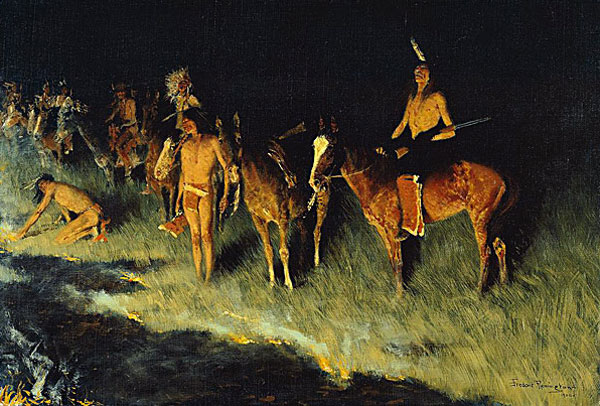
Let me give another example of how our ideas dictate which species we’ll tolerate and which we won’t. The wooded hillside in rural Oregon where I once lived was thick with 40- to 120-year-old Douglas fir and hemlock. But as I walked these forests, I noticed that scattered every few acres were occasional ancient oak trees, four to six feet in diameter, much older than the conifers and now being overtopped by them. I realized that in these ancient oaks I was seeing the remnants of the oak savanna that had been maintained for millennia by fire set by the original inhabitants, the Calapuya people. The fir forest moved in when the whites arrived and drove off the Calapuya, and suppressed fire. So what I was seeing was a conifer forest created by human-induced fire-suppression, and it had replaced the oak savanna that had been preserved by human fire setting. Which was the native landscape? Both were made by people. If we say, let’s restore to what existed before humans altered it, we’d need to go back to birches and willows, since humans arrived as the glaciers retreated. But clearly that’s not appropriate.

Native Americans setting grass fire, painting by Frederic Remington, 1908
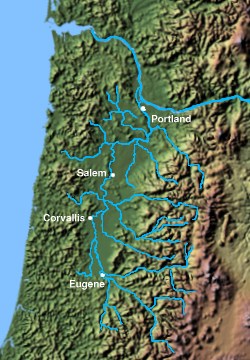
Willamette Valley, Oregon
Willamette Valley, Oregon. Creative Commons

In a similar vein, one of the rarest and most valued ecosystems in the Northwest are the native prairies, such as those found in the Willamette and other valleys. Yet these prairies are also the product of human manipulation. Prairies were predominant in the Willamette over 5000 years ago, but began to disappear not long after that. Ecologist Mark Wilson has written “As climate turned cooler and moister 4,000 years ago, oak savanna and prairie ecosystems were maintained only by frequent fires set by native people to stimulate food plants and help in hunting.” The local people used fire technology to maintain an environment that supported them even when the climate no longer supported that ecosystem.

So I applaud and encourage efforts to preserve native prairie in the region—they are valuable as endangered species habitat, examples of cultural heritage, and a way of preserving planetary biological wisdom. But we should restore these prairies with the strict recognition that we are creating—not recreating or restoring–a state that can not be supported by current climate and other conditions. Prairies are artificial in the Willamette Valley. The preservation of prairies there isn’t a matter of simply repairing and replanting a degraded landscape and then watching the prairie thrive, but constructing a species community and an environment for it that must remain on intensive life support, with constant intervention, for it to survive at all, as long as the climate remains unsuitable to it. The Willamette prairie remnants can’t be considered native; the only criteria they meet is that they were here in small patches when botanists first catalogued them. But so were dandelions. Botanists knew dandelions weren’t native, but they didn’t know that the prairies were human created, so the prairies were catalogued as native. Prairies in the Northwest haven’t been indigenous for 4000 years.

We love the local prairies and I firmly believe in the efforts to preserve them. But I want us to be clear that we are restoring to an idea. We are restoring because we want these things here, and not because there is a master blueprint that says they are the right ecosystem for the place. Ecosystems exist because current conditions favor those particular assemblages. Change the conditions, and the ecosystems will, absolutely, change. Both the climate and humans have changed the conditions plenty. Environmental change is the driving force behind shifting species makeup. With plants and most animal species, no evil species showed up and through sheer cussedness, killed off the locals. Instead, the conditions changed.

The very concept of wild land, for most Americans, is founded on a misunderstanding: a very brief ecological moment during which a once-managed ecosystem was at the height of its degradation due to loss of its keystone species. The dark and tangled primeval forests, written about by Thoreau and Emerson, are simply the declining remnants of open and spacious Eastern food forests, turned to thicket after a century or two of neglect once their human tenders were killed. But this idea of wilderness is deep in our mythology, national imagery, and consciousness.

Let’s look at some of the causes of species change. First: terminology. The word “invasive” is loaded. We hate invaders. The term also places focus solely on the incoming species, yet the ability of a species to survive is due to interactions with the biological and physical environment. So I prefer a more neutral, and I think, ecological more correct and descriptive term, such as opportunistic. Kudzu is not a problem in its native habitat, but it will take advantage of opportunities.

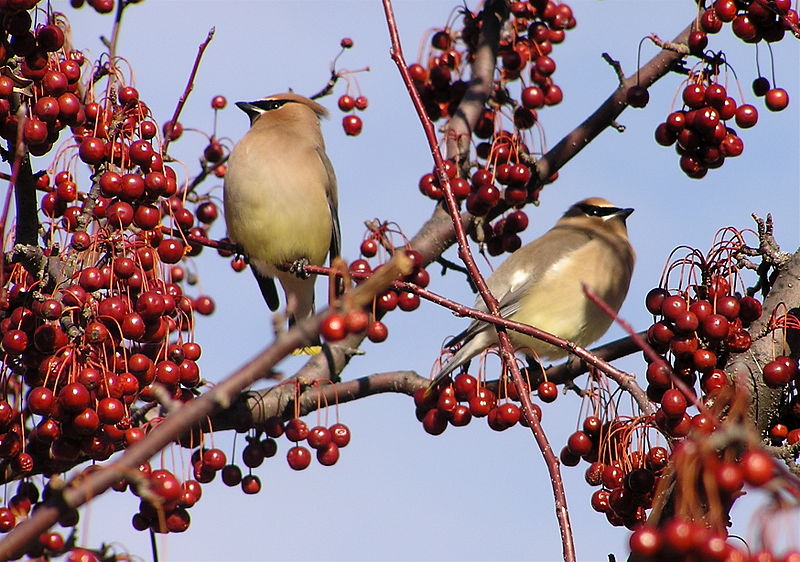
Cedar Waxwings in crab apple tree.  Wikimedia Commons
Cedar Waxwings in crab apple tree. Wikimedia Commons

What creates those opportunities for species shifts? Intact ecosystems are notoriously hard to invade. We know this because, for example, seed dispersal rates are truly astounding. Birds are a major dispersal agent. They can carry seeds from multiple plant species in their gut, stuck to their feathers, and in mud on their feet. So picture billions and billions of birds, for 60 million years or so, traveling tens to thousands of miles, seeds dropping off of them every wing-beat of the way. Add to that bats, which are actually more effective at seed dispersal, per bat, than birds. Plus land-animal dispersals, not as far-ranging as birds but bringing much larger seed loads via droppings and fur. Include water-rafted trees and other plants, wind-dispersed species, and more.

This gives a picture of the whole planet crisscrossed with billions of birds and animals for millions of years, seeds and spores going everywhere, eggs being carried to new environments, dispersal, dispersal, dispersal! So why isn’t the whole planet a weedy thicket? Because the mere arrival of a new species, even in large numbers, is not what causes a successful colonization. Ecosystems are very hard to invade, and several conditions must be present for that to happen.

A major reason for ecosystems being tough to invade is that nearly all the resources in undisturbed ecosystems are being exploited. Nearly every niche is filled, every nutrient flow is being consumed, almost every opportunity is taken. Two major changes make ecosystems invasible: disturbance, and the appearance of new resources. Take disturbance. Perennially disturbed places, like riparian zones, are sensitive to opportunistic species. So is farmland, or developed areas, or anywhere that humans or nature cause disturbance. It drives me nuts when I read that “species X” has destroyed 50,000 acres of habitat. When you do a little digging you find that, no, that area was farmed, or new roads cut, or logged, or polluted, or otherwise disturbed, and then the new species moved in.

Brown tree snake, Guam.  Wikimedia Commons
Brown tree snake, Guam. Wikimedia Commons

For example, one poster child of invasion biologists is the brown tree snake, blamed for invading Guam and killing off several species of birds. The untold story is that for decades the US Navy used over half of the island as a bombing range, leaving most of it unfit for life. Much of what remained was crowded by displaced people, and developed by the military, and thus turned into poor and disturbed habitat. The tree snake just cleaned up the struggling remnants that were vulnerable in their poor habitat and already in serious decline.

Stop the disturbance, and you’ll almost always eliminate or reduce the effect of the new species. Land I lived on was clear-cut in the early 1970s and not replanted with fir until the 1980s, and was covered with patches of Himalayan blackberry and Scotch broom when I arrived in the early 1990s. By the late 1990s, both species were gone from most places and nearly dead everywhere else, because the trees had grown back and shaded them out. The problem is disturbance, not that a species pushes out others because it’s tough or mean.

This suggests that we need to take care of naturally disturbed areas like riverbanks, since most of the species we’ve labeled as problematical thrive on disturbance. Even in these riparian zones, though, conditions are altered from what they once were because of the loss of the beaver and from damming. Thus nature is just trying to deal with our changes as best as she can, and she’ll use whatever resources she can find. A return to the former, natural disturbance regime may allow the once-present vegetation to return, if that is our choice for that land,

Purple loosestrife, Cooper Marsh, Cornwall, Ontario.  GNU Free
Purple loosestrife, Cooper Marsh, Cornwall, Ontario. GNU Free

The second cause of successful invasion is the appearance of new resources. Often the new resources that allow an otherwise intact ecosystem to be colonized are pollution and fertilizer runoff. For example, a number of aquatic opportunists, such as purple loosestrife, thrive in more polluted and higher-nutrient environments than the plants they replace. Many species that evolved in clean water are harmed by pollutants and they then decline. Loosestrife, though, has high rates of nutrient uptake, and this trait allows it to out-compete many other species in polluted water. But in permaculture, we say that every problem carries within it the seeds of its own solution. And so loosestrife can be used in constructed wetlands and in natural environments to clean nutrient-rich water. They are an indicator of a problem, a response to it, and nature’s way of solving a problem, not the problem itself. If you really hate loosestrife and want it to go away, clean up the water. Without doing that, you’ll be flailing away at the problem forever. Spraying and yanking is not an effective strategy to remove unwanted species. Nature is far more patient and persistent, and has a bigger budget, than we do. To remove an unwanted species, change the conditions that made it more favored than the desired vegetation.

Unwanted species generally arrive because humans have changed the environment to make conditions more favorable for the new species. And when we “restore” landscapes, or more often, introduce a set of species that we have decided are the ones we want to see there, we are altering the landscape to suit our idea of what should be there, not to match some divine plan. These two understandings burden us with a huge responsibility to make intelligent choices, but more importantly, to recognize that we are often arbitrarily making a choice based on our own preferences, not because there is only one right choice for a landscape, When we put resources into landscape management, however, we direct the shape of that landscape toward only one choice. That’s the best we can do. Thus I’d like to see us be less dogmatic in the way we cling to those choices.

Unfortunately, dogma is present on all sides. Friends of mine approached the Portland city government with a plan to create some edible plant corridors along Springwater Trail, a 40-mile bicycle and pedestrian loop around the city. Their idea was for bikers and pedestrians to be able to snack on berries and fruit. The city official in charge said, “Nope, we have a natives-only policy on the trail.” The trail is a paved pathway that goes through industrial areas and along backyards, road right-of-ways, and scrubby vacant lots. It probably goes through a dozen or more different environments, based on soil, water, sunlight, and all the other factors that determine what plant communities will grow there. But the policy is natives only. Wouldn’t it make sense for the primary species that will be using that trail to have a habitat that suits that species’ needs for food and comfort, particularly since it’s in a busy urban area? But instead the landscaping is to be driven by an idea, by dogma. I totally support the idea of having natives-only areas on the trail. But let’s allow the new landscaping to serve those that it’s being built for, too.

I began this with corn and soybeans. One of my favorite snarky questions for natives-only people is: “What did you eat for breakfast?” I ask that because it is our choices that determine how much of our landscape is going to be consumed by non-native species. I didn’t eat camas cakes with pink-flowering currant syrup this morning, and I’ll bet you didn’t eat any local plants either. Of course, I’d rather see someone growing indigenous species in their yard rather than having a sterile, resource gobbling lawn. But my urban yard is not, in my or several other lifetimes, going to be part of a natural ecosystem. I might be able to cultivate some endangered native species in an attempt to pull a rare plant back from extinction. That’s one good reason I can see for growing indigenous plants in my yard. But the most frequent native plants I see grown in yards are salal, Oregon grape, and others that are in no danger of extinction and don’t, to my knowledge, support specialist species dependent only upon them. And since much of my yard is watered, it is inappropriate for me to grow natives that are adapted to our dry summers. It’s always struck me as bizarre to see Northwest natives being irrigated.

But even more than indigenous plants, I’d rather see someone providing for some of their own needs from their yard. When we eat a bowl of cornflakes for breakfast, or oatmeal, or store-bought eggs, we are commissioning with our dollars the conversion of wild land into monoculture farms. I’ll bet that a large percentage of people reading this buy local food, shop organic, and so forth. But the farms growing that food are almost all moncultures, and out of the urban matrix. In other words, it is farmland that, if consumption decreased, has a far better chance of being restored to a functioning ecosystem than does a home lot. If I grow some of my own food, that means that somewhere out in the country, a farmer won’t have to plow so close to the riverbank, or could let some of that back field go wild. That land has a far better chance of functioning as an ecosystem than my yard will. Oh, I have visions of how city and suburban landscapes could be functional ecosystems, but that’s another subject. My point is, we need to be putting money and energy into growing indigenous species where they will do the most good, where they can truly contribute to ecosystems and their functions. Many of our efforts in eliminating exotics are a terrible waste of resources at best, and at worst are repeated use of poisons to destroy a hybrid habitat whose function we don’t yet grasp. Let’s be honest at what we are restoring to: an idea of what belongs in a place. If we want to get rid of an invasive exotic, let’s get rid of some monocultured corn, and let a bit of farmland return to being a real ecosystem.

Recommended Viewing: Video: Native Plants and Permaculture
Copyright 2007 by Toby Hemenway
(presented at the Native Plants and Permaculture Conference, Lost Valley Educational Center, Dexter, Oregon, in May 2007.)

[emphasis and pictures added]

Scientists critique UCSF’s plans for Mount Sutro and native plant advocates react

Nature is considered one of the top journals in science globally.  So, we were very excited about the article they published in their September 2013 edition about Mount Sutro. (1) The article starts with every bogus claim UCSF makes to justify the destruction of the forest, i.e., that it is flammable, that it is diseased, that it will store more carbon when most of it is destroyed.  We have responded to those claims many times on Million Trees, so we won’t repeat those arguments here.  (We have provided links to our articles about each of these issues, so you can read them if you wish by clicking on each issue.)

Sutro forest before recent tree removals.  Courtesy Save Sutro
Sutro forest before recent tree removals. Courtesy Save Sutro

After faithfully repeating UCSF’s storyline, Nature turns to the opposite side of this debate, starting with the welcome introduction of critics of the Sutro project as “environmentalists and ecologists” for whom “a hardline devotion to preserving native ecosystems is giving way to a more post-modern idea of what constitutes a natural landscape.”  The author of the Nature article interviewed scientists who agree with this new perspective:

  • “’Mount Sutro is part of a larger story,’ says Richard Hobbs, an ecolo­gist at the University of Western Australia in Crawley. ‘What some people see as a weed-filled blot on the landscape, others see as something extremely valuable, worthy of managing in its own right. People are increasingly moving away from the belief that a native ecosystem is always best….There is a lot of tension about how to deal with situations like these right now,’ he says. ‘With so much non-native habitat, the old views — that everything must be natural — no longer apply.’”
  • “In the early 1990s, Patricia Kennedy of Oregon State University in Corvallis helped to develop management guidelines for northern goshawks. She found that the raptors do not strictly need old-growth forests; land used for timber harvesting can work, too. She says that, at the time, accept­ing the idea felt like a move to the ‘dark side’. ‘The whole culture in wildlife biology and conservation circles has been that you can’t approximate Mother Nature,’ she says.  But those ideas are changing today, with altered ecosystems such as Mount Sutro’s providing a case in point.”
  • Joe Mascaro, an ecologist at Stanford University in California [2] who has been publicly critical of UCSF’s management plans, says that Mount Sutro has long since given way to a completely new ecosystem. ‘Restoring it to an original state would be borderline impossible, so why stop the succession that is already in place?’”
  • “Resistance to such a heretical idea runs deep among ecologists, but growing num­bers are embracing altered ecosystems in the name of pragmatism. ‘You can reach more win–win situations if you don’t insist on purity,’ says Katharine Suding, an ecologist at the University of Califor­nia, Berkeley, who specializes in restoring human-affected areas. ‘It doesn’t have to be a natural versus non-natural dichotomy.’”
Same section of Sutro forest after tree and understory removal at the end of August 2013.  Courtesy Save Sutro
Same section of Sutro forest after tree and understory removal at the end of August 2013. Courtesy Save Sutro

The reaction of native plant advocates

As pleased as we were to hear from the international scientific community, we didn’t fully appreciate the significance of the article until we read the reaction of native plant advocates in Jake Sigg’s Nature News:

“On Sep 15, 2013, at 4:13 PM, Peter Brastow wrote (re NYT editorial on Mt Sutro):
‘Yes, and recall that the NYT article linked to an awful piece in Nature. I see this as PhD Academicians liking the sound of their own voice, and certain members of the media who, likewise, don’t actually know anything about on-the-ground land management. To boot, their arguments support continued environmental destruction around the world, whether for palm plantations, bio-fuel production, cattle grazing, suburban development, you name it. Do you think these same people advocate letting the Amazon rainforest be clearcut from end to end?’” 
(Jake Sigg’s Nature News, September 21, 2013)

It seems that native plant advocates disliked the Nature article as much as we liked it. This comment from a prominent native plant advocate in San Francisco is more evidence of the growing gap between restorationists and the scientists of invasion biology who spawned the native plant movement.  We have noted before the inevitable tension between theoretical science and its practical application and in the case of ecological restoration in the Bay Area, it is becoming more and more distant from its scientific underpinnings.

What is San Francisco’s Biodiversity Program?

You might think that the loss of scientific support for the projects in the Bay Area which are attempting to convert non-native to native landscapes would weaken the local native plant movement.  You would be mistaken.  Peter Brastow, the author of this comment, is employed by the City of San Francisco as the Director of Biodiversity in the Department of the Environment.  The creation of this program and the selection of Mr. Brastow as its first director suggest official endorsement of these projects and imply their expansion beyond their present footprint.  This is the mission of San Francisco’s Biodiversity Program according to the Department of Environment’s website:

“The mission of the Biodiversity Program is to conserve the biodiversity, habitats and ecological integrity of San Francisco’s natural environment, toward a comprehensive watershed- and ecosystem-based natural resources management, stewardship and education program.

Our approach is to advance collaboration and coordination for biodiversity policy development and interagency conservation planning and management.

San Francisco’s indigenous biodiversity exists among diverse open lands and habitats in a complex urban geography of parklands, natural areas, urban forests, community gardens and backyards. The scope of the program includes protection of all of the City’s biological diversity and natural lands, and for strategic integration of nature conservation best practices into planning, implementation and education for the built environment.

We hope to raise the bar on integrating considerations for nature and biodiversity into the operations of every City Department as well as into every aspect of city life, including making significant increases in public and City employee awareness.”

Our interpretation of this vague, abstract description is that the goal of San Francisco’s Biodiversity Program is to extend the native plant restorations of the Recreation and Park Department’s Natural Areas Program to all city departments and all city-owned open space, perhaps even to your backyard.

Since we think the Natural Areas Program has been a miserable failure, with respect to successfully converting naturalized non-native landscapes to native plant gardens, we have serious doubts about expanding the program to the entire city.  And since the Natural Areas Program is using a great deal of pesticide, destroying many healthy trees, and plans to destroy thousands more, we are not enthusiastic about subjecting more public land to such damage.

We are equally alarmed by the dismissal of scientists by the Director of Biodiversity, Peter Brastow, as people who like to hear themselves talk.  This suggests that the Director of Biodiversity isn’t listening to the rapidly changing science of invasion biology.  You might wonder what Peter Brastow’s qualifications are to enable him to dismiss academic scientists as a resource for the application of invasion biology to native plant restorations.  You can visit his resume on the internet to satisfy that curiosity.

Pot-calls-kettle-black

For the record, we are not supporters of the “environmental destruction” of which Mr. Brastow accuses the scientists who are quoted in the Nature article.  We do not “advocate letting the Amazon rainforest be clearcut from end to end,” as Mr. Brastow claims.  We are confident that no one else with whom we collaborate does so either.  The only clearcutting we have witnessed first-hand was done in response to the demands of native plant advocates; these projects have already destroyed 18,000 non-native trees in the East Bay hills and are determined to clearcut about 80,000 more.  This looks like a classic case of “pot-calls-kettle-black.”

**************************************

(1)    Danielle Venton, “Forest management plans in a tangle,” Nature, September 2013, Vol. 501

(2)    When Mr. Mascaro was interviewed, he was at the Carnegie Institute of Research in Stanford, California.

“Hey, You Calling Me an Invasive Species?”

The New York Times published an op-ed by a member of their Editorial Board on Sunday, September 8, 2013, entitled, “Hey, You Calling Me an Invasive Species?”  It is a spirited defense of non-native plants.  Surely this is an indication that our challenge of the native plant movement is now mainstream.  We will touch on a few of the op-ed’s main themes, but we urge you to read the op-ed here.

Mount Sutro Forest is threatened with destruction because it is not native.  Courtesy Save Sutro Forest.
Mount Sutro Forest is threatened with destruction because it is not native. Courtesy Save Sutro Forest.

Using the eucalyptus forest on Mount Sutro as an example. the Editorial Board member, Verlyn Klinkenborg, makes the point that many of our non-native plants have been here for hundreds of years.  Since they have been here for several generations of humans, most of us no longer consider them foreigners: 

“But the trees on Mount Sutro have been there within the memory of every living San Franciscan, and to the generations who have grown up within view of them, it seems almost perverse to insist that they are alien.” 

The distinction between native and non-native depends upon an arbitrarily selected “snapshot” of our landscape taken just prior to the arrival of Europeans.  On the East Coast, that’s the early 16th Century.  In the San Francisco Bay Area, that’s 1769, when Portola’s men saw the San Francisco Bay.  The Times op-ed reminds us that this particular snapshot is becoming more and more irrelevant because of climate change.  If plants and animals don’t move in response to that change they will not survive: 

“As plants and their pests adjust their range under the influence of global warming, what becomes of the distinction between native and nonnative?  To any individual species, it doesn’t matter whether it’s native or not.  The only thing that matters is whether its habitat is suitable.”

Finally, Mr. Klinkenborg takes us on a verbal tour of Central Park to make the point that our open spaces are a mélange of native and non-native plants and animals.  We can see with our eyes that they are living in harmony and to pluck only those considered non-native from their midst would be needlessly destructive and disruptive of the peace that reigns there:

“Nature in Central Park can’t be divided into native or nonnative species, and neither can it be on Mount Sutro.  The eucalyptus trees that grow there may be naturalized rather than native, but try telling that to all the other creatures that live in those woods or the people who hike there.”

Mr. Klinkenborg’s final sentence reminds us that we are the original “invaders:” 

And when it comes to the distinction between native and nonnative, we always leave one species out:  call us what you will—native, naturalized, alien or invasive.”

The absurdity of nativism is becoming more and more evident.  Our objections to its destructive consequences will eventually be heard.  It’s just a matter of time.