We are republishing an article from the Garden Rant blog with permission of the author, Susan Harris. Susan is a professional garden writer who lives in the Washington DC area. Garden Rant is an award-winning garden blog with a huge readership of garden writers, landscape professionals, and home gardeners. They report over 80,000 readers per day.
In this article, Garden Rant enters the controversial debate about the arbitrary use of the word “invasive.” We agree that this word is both over-used and misused. However, this is more than a semantic debate. It’s an important debate because the word is being used to justify huge destructive projects that are damaging the environment by needlessly attempting to eradicate non-native plants, using polluting methods such as herbicides and prescribed burns.
If you have never debated with native plant advocates, you might find the comments posted to this article of interest. They are typical of the many dialogues we have had with native plant advocates in the past.
*********************************
This is a long-simmering rant about the many ways the term “invasive” causes confusion, and more. DO weigh in with alternatives, pushback, and rants of your own.
“Invasive” as synonym for “nonnative”
Google “native versus invasive” and the 5.6 million hits confirms my observation that this is a common usage, and it’s led to a common misperception in the public that the opposite of native is indeed invasive. QED: nonnatives ARE invasive. Even regular garden writers sometimes use this juxtaposition, which should more accurately be “native versus nonnative” or I guess, “exotic.”
That great leveler, Wikipedia, confirms this problem about the term “invasive”: “The first definition, the most used, applies to introduced species (also called “non-indigenous” or “non-native”) that adversely affect the habitats and bioregions they invade economically, environmentally, and/or ecologically.” At least their second definition is more accurate and even includes native species like deer. No argument there.
Defining away the invasive behavior by natives
Can native plants be invasive? Sure, as evidenced by the above-mentioned deer or in the plant world, wild grape. But when native plants are termed invasive someone invariably pipes up to correct the writer because by definition, they’re nonnatives only. And sure enough, legally, by the official U.S. government definition, only nonnative plants can be deemed invasive – for purposes of qualifying for money to remove them. The 1999 Federal Executive Order on Invasive Species defines an invasive species as a “species that is not native to a particular ecosystem…”
Invasive plant lists covering large regions – even continents!
We all know that plant behavior depends on the exact conditions the plant is growing in, as well as more broadly, the region. So some plants that behave well in the North are overly vigorous in the South. Or some, like the infamous purple loosestrife, are vigorous in wet spots, not in dry ones. Examples abound.
Spirea and Doublefile Viburnum (L), Lespedeza (R)
Yet this site by the U. Georgia and many other sources, including the National Park Service, don’t distinguish by region, and the resulting list of “invasives” includes these surprises to gardeners near me: several viburnums, two verbascums, several veronicas, red and white clo0ver, Japanese yew, 3 spireas (MOST on the market), various salvias, willows, nandina, grape hyacinth, Miscanthus sinensis (without specifying that it’s only the early-bloomers that spread), Lespedeza thumbergii, Pee Gee Hydrangea, cotoneaster, and strangely, littlestem bluegrass (Andropogonvirginicus). Yet native thugs like trumpet creeper are encouraged and they’re not invasive?
That designation of Spirea really bothers me because it’s such a self-sustaining, easy, low-maintenance and well behaved shrub, one I’ve grown for 30+ years with no signs of trouble. And yet another source – the USDA National Invasive Species Information Center – also targets Spirea Japonica and says this about it: “Spreads rapidly and forms dense stands that crowd out native species.” This and other contradictions between official reports and in-garden experiences growing targeted plants is puzzling to me.
Adding to the overly broad regionality of invasive-plant designations, there’s a new book on invasive plants, written for a national audience.
Shouldn’t invasiveness be designated locally? And sometimes, for certain conditions?
“Invasive” used instead of “spreading”
I’ve heard garden-club members describing their passalong plants at plant swaps as “invasive” if they spread at all. Which leads to said garden club being accused of encouraging the use of “invasives,” among other things.
Methods of “invasion” all lumped together
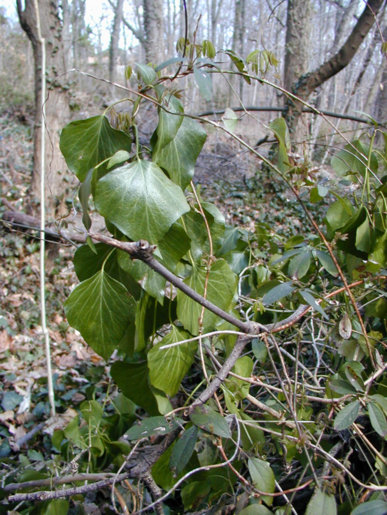
Mature Ivy
The USDA lists these characteristics of invasive plants: “produce large numbers of new plants each season; tolerate many soil types and weather conditions; spread easily and efficiently, usually by wind, water, or animals; grow rapidly, allowing them to displace slower growing plants; spread rampantly when they are free of the natural checks and balances found in their native range.”
Yet some of those qualities are valued in the garden – especially tolerance of many conditions. And for the gardener on a budget, especially one trying to replace their lawn with another groundcover, spreading is a good thing and it’s usually described more positively as “fills in quickly.”
What if the standard were: Does the plant spread in a way that causes harm to natural areas? For example, plants that are spread by birds, like English ivy, so that the seeds can go everywhere and harm natural areas. Unlike Spirea and Nandina that spread by rhizome and produce a couple of offspring every year, if that – just like Itea does? Or if it’s simply spreading in the garden, is it impossible to control, like running bamboo?
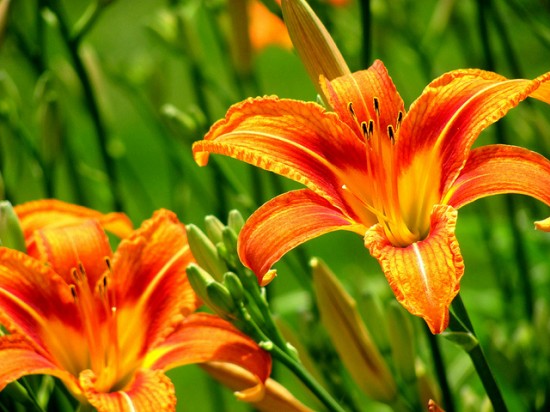
For example, “Invasive Species of Concern” in Maryland includes mostly plants we’d all agree are thugs and not even considered garden plants, but daylily? As a sun-lover, it won’t spread into the woods and even out in the sun, how hard is it to dig up?
Or a plant could be harmless in a townhouse garden on Capitol Hill but potentially harmful if planted on the edge of a forest.
I wish there were several terms used to describe spreading behavior by plants, rather than the single term “invasive.” How’s a gardener to choose between groundcovers like pachysandra, periwinkle and English ivy, when they’re lumped together as equally thuggish when only one of them will grow virtually to strangle trees, set seed and spread indiscriminately?
More science-based info, please
In researching the topic of “native versus exotic” I came across one example of the type of reporting on invasive species I’d like to see more of – based on research, not scare tactics. Just one quote from this article by Cornell will piss off some readers, but here goes: “A small percentage of plants exhibit invasive tendencies, while the majority of plant introductions are benign or beneficial.”
Solutions for “invasiveness” coming?
Plant breeders are hard at work breeding out invasiveness in popular garden plants, as reported on the Native Plants and Wildlife Gardens blog. Though controversial, especially among native-plant advocates, this type of breeding is recognized by pragmatists as a step in the right direction.
Toby Hemenway is the author of Gaia’s Garden: A Guide to Home-Scale Permaculture and the founder of Pattern Literacy, an organization which sponsors courses and workshops in permaculture design and practice. We share many of the same opinions about the native plant movement. Visit one of our earlier posts to learn more about permaculture.
We are republishing an article from Toby’s Pattern Literacy website today with his permission. Readers of Million Trees will find many of the themes in Toby’s article familiar, but his examples are from Oregon, rather than our usual examples in the San Francisco Bay Area. We hope Toby’s examples help to make the point that the native plant ideology doesn’t make much sense wherever it is applied.
********************************* Native Plants: Restoring to an Idea
Let me tell you about the invasive plant that scares me more than all the others. It’s one that has infested over 80 million acres in the US, usually in virtual monocultures. It is a heavy feeder, depleting soil of nutrients. Everywhere it grows, the soil is badly eroded. The plant offers almost no wildlife habitat, and since it is wind pollinated, it does not provide nectar to insects. It’s a plant that is often overlooked on blacklists, yet it is responsible for the destruction of perhaps more native habitat than any other species. Research shows that when land is lost to this species, native plants rarely return; they can’t compete with it. It should go at the top of every native-plant lover’s list of enemies. This plant’s name: Zea mays, or corn. Corn is non-native. It’s from Central America. Next on my list is the soybean, with 70 million acres of native habitat lost to this invasive exotic. Following those two scourges on this roll call of devastating plants is the European invader called wheat.
Cornfield
Wait, you say: these plants are deliberately spread by people; that’s different! But to an ecologist, it is irrelevant that the dispersion vector of these plants is a primate. After all, we don’t excuse holly or Autumn olive, even though without bird dispersal, they could not spread. Why are corn, soy, and wheat not on any blacklists? Because we think of them differently than plants spread by non-humans. This suggests that an invasive species is an idea, a product of our thinking, not an objective phenomenon. When we restore land, we restore to an idea, not to objective criteria.
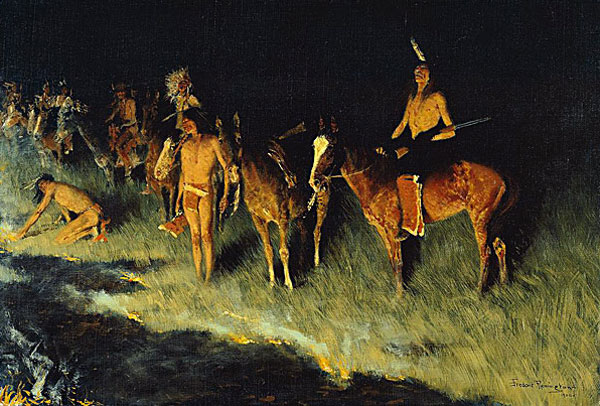
Let me give another example of how our ideas dictate which species we’ll tolerate and which we won’t. The wooded hillside in rural Oregon where I once lived was thick with 40- to 120-year-old Douglas fir and hemlock. But as I walked these forests, I noticed that scattered every few acres were occasional ancient oak trees, four to six feet in diameter, much older than the conifers and now being overtopped by them. I realized that in these ancient oaks I was seeing the remnants of the oak savanna that had been maintained for millennia by fire set by the original inhabitants, the Calapuya people. The fir forest moved in when the whites arrived and drove off the Calapuya, and suppressed fire. So what I was seeing was a conifer forest created by human-induced fire-suppression, and it had replaced the oak savanna that had been preserved by human fire setting. Which was the native landscape? Both were made by people. If we say, let’s restore to what existed before humans altered it, we’d need to go back to birches and willows, since humans arrived as the glaciers retreated. But clearly that’s not appropriate.
Native Americans setting grass fire, painting by Frederic Remington, 1908Willamette Valley, Oregon. Creative Commons
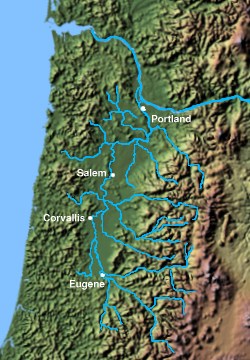
In a similar vein, one of the rarest and most valued ecosystems in the Northwest are the native prairies, such as those found in the Willamette and other valleys. Yet these prairies are also the product of human manipulation. Prairies were predominant in the Willamette over 5000 years ago, but began to disappear not long after that. Ecologist Mark Wilson has written “As climate turned cooler and moister 4,000 years ago, oak savanna and prairie ecosystems were maintained only by frequent fires set by native people to stimulate food plants and help in hunting.” The local people used fire technology to maintain an environment that supported them even when the climate no longer supported that ecosystem.
So I applaud and encourage efforts to preserve native prairie in the region—they are valuable as endangered species habitat, examples of cultural heritage, and a way of preserving planetary biological wisdom. But we should restore these prairies with the strict recognition that we are creating—not recreating or restoring–a state that can not be supported by current climate and other conditions. Prairies are artificial in the Willamette Valley. The preservation of prairies there isn’t a matter of simply repairing and replanting a degraded landscape and then watching the prairie thrive, but constructing a species community and an environment for it that must remain on intensive life support, with constant intervention, for it to survive at all, as long as the climate remains unsuitable to it. The Willamette prairie remnants can’t be considered native; the only criteria they meet is that they were here in small patches when botanists first catalogued them. But so were dandelions. Botanists knew dandelions weren’t native, but they didn’t know that the prairies were human created, so the prairies were catalogued as native. Prairies in the Northwest haven’t been indigenous for 4000 years.
We love the local prairies and I firmly believe in the efforts to preserve them. But I want us to be clear that we are restoring to an idea. We are restoring because we want these things here, and not because there is a master blueprint that says they are the right ecosystem for the place. Ecosystems exist because current conditions favor those particular assemblages. Change the conditions, and the ecosystems will, absolutely, change. Both the climate and humans have changed the conditions plenty. Environmental change is the driving force behind shifting species makeup. With plants and most animal species, no evil species showed up and through sheer cussedness, killed off the locals. Instead, the conditions changed.
The very concept of wild land, for most Americans, is founded on a misunderstanding: a very brief ecological moment during which a once-managed ecosystem was at the height of its degradation due to loss of its keystone species. The dark and tangled primeval forests, written about by Thoreau and Emerson, are simply the declining remnants of open and spacious Eastern food forests, turned to thicket after a century or two of neglect once their human tenders were killed. But this idea of wilderness is deep in our mythology, national imagery, and consciousness.
Let’s look at some of the causes of species change. First: terminology. The word “invasive” is loaded. We hate invaders. The term also places focus solely on the incoming species, yet the ability of a species to survive is due to interactions with the biological and physical environment. So I prefer a more neutral, and I think, ecological more correct and descriptive term, such as opportunistic. Kudzu is not a problem in its native habitat, but it will take advantage of opportunities.
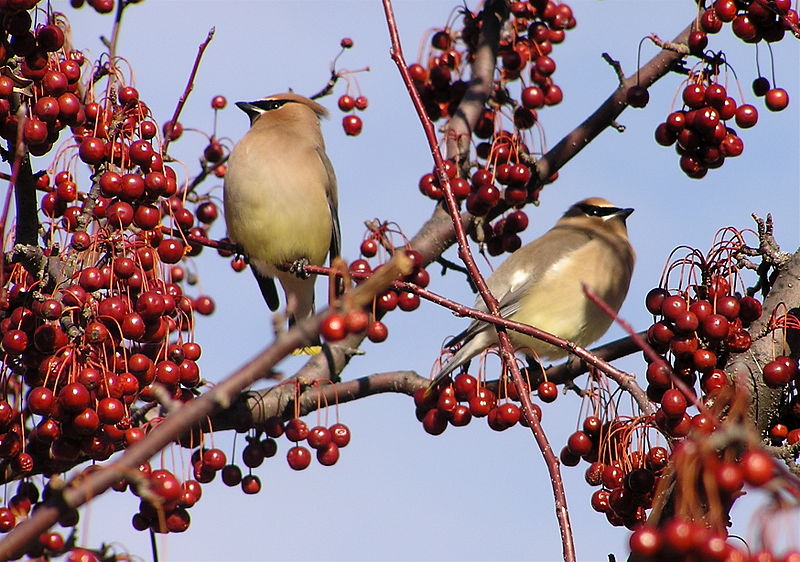
Cedar Waxwings in crab apple tree. Wikimedia Commons
What creates those opportunities for species shifts? Intact ecosystems are notoriously hard to invade. We know this because, for example, seed dispersal rates are truly astounding. Birds are a major dispersal agent. They can carry seeds from multiple plant species in their gut, stuck to their feathers, and in mud on their feet. So picture billions and billions of birds, for 60 million years or so, traveling tens to thousands of miles, seeds dropping off of them every wing-beat of the way. Add to that bats, which are actually more effective at seed dispersal, per bat, than birds. Plus land-animal dispersals, not as far-ranging as birds but bringing much larger seed loads via droppings and fur. Include water-rafted trees and other plants, wind-dispersed species, and more.
This gives a picture of the whole planet crisscrossed with billions of birds and animals for millions of years, seeds and spores going everywhere, eggs being carried to new environments, dispersal, dispersal, dispersal! So why isn’t the whole planet a weedy thicket? Because the mere arrival of a new species, even in large numbers, is not what causes a successful colonization. Ecosystems are very hard to invade, and several conditions must be present for that to happen.
A major reason for ecosystems being tough to invade is that nearly all the resources in undisturbed ecosystems are being exploited. Nearly every niche is filled, every nutrient flow is being consumed, almost every opportunity is taken. Two major changes make ecosystems invasible: disturbance, and the appearance of new resources. Take disturbance. Perennially disturbed places, like riparian zones, are sensitive to opportunistic species. So is farmland, or developed areas, or anywhere that humans or nature cause disturbance. It drives me nuts when I read that “species X” has destroyed 50,000 acres of habitat. When you do a little digging you find that, no, that area was farmed, or new roads cut, or logged, or polluted, or otherwise disturbed, and then the new species moved in.
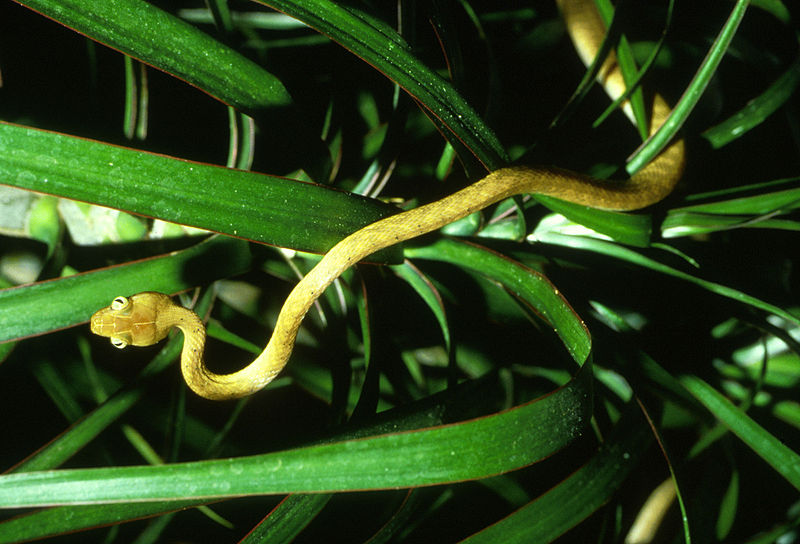
Brown tree snake, Guam. Wikimedia Commons
For example, one poster child of invasion biologists is the brown tree snake, blamed for invading Guam and killing off several species of birds. The untold story is that for decades the US Navy used over half of the island as a bombing range, leaving most of it unfit for life. Much of what remained was crowded by displaced people, and developed by the military, and thus turned into poor and disturbed habitat. The tree snake just cleaned up the struggling remnants that were vulnerable in their poor habitat and already in serious decline.
Stop the disturbance, and you’ll almost always eliminate or reduce the effect of the new species. Land I lived on was clear-cut in the early 1970s and not replanted with fir until the 1980s, and was covered with patches of Himalayan blackberry and Scotch broom when I arrived in the early 1990s. By the late 1990s, both species were gone from most places and nearly dead everywhere else, because the trees had grown back and shaded them out. The problem is disturbance, not that a species pushes out others because it’s tough or mean.
This suggests that we need to take care of naturally disturbed areas like riverbanks, since most of the species we’ve labeled as problematical thrive on disturbance. Even in these riparian zones, though, conditions are altered from what they once were because of the loss of the beaver and from damming. Thus nature is just trying to deal with our changes as best as she can, and she’ll use whatever resources she can find. A return to the former, natural disturbance regime may allow the once-present vegetation to return, if that is our choice for that land,
Purple loosestrife, Cooper Marsh, Cornwall, Ontario. GNU Free
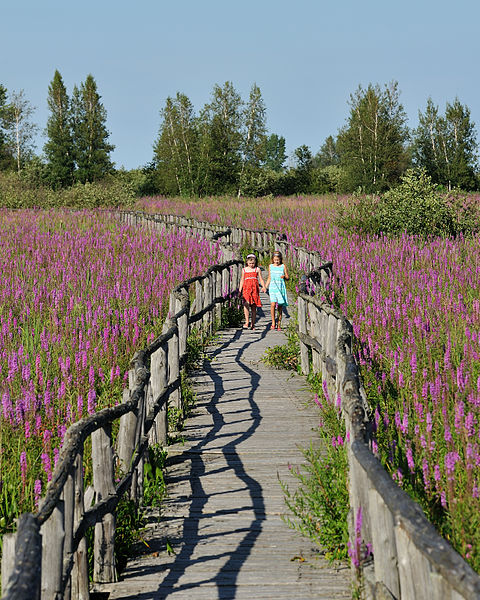
The second cause of successful invasion is the appearance of new resources. Often the new resources that allow an otherwise intact ecosystem to be colonized are pollution and fertilizer runoff. For example, a number of aquatic opportunists, such as purple loosestrife, thrive in more polluted and higher-nutrient environments than the plants they replace. Many species that evolved in clean water are harmed by pollutants and they then decline. Loosestrife, though, has high rates of nutrient uptake, and this trait allows it to out-compete many other species in polluted water. But in permaculture, we say that every problem carries within it the seeds of its own solution. And so loosestrife can be used in constructed wetlands and in natural environments to clean nutrient-rich water. They are an indicator of a problem, a response to it, and nature’s way of solving a problem, not the problem itself. If you really hate loosestrife and want it to go away, clean up the water. Without doing that, you’ll be flailing away at the problem forever. Spraying and yanking is not an effective strategy to remove unwanted species. Nature is far more patient and persistent, and has a bigger budget, than we do. To remove an unwanted species, change the conditions that made it more favored than the desired vegetation.
Unwanted species generally arrive because humans have changed the environment to make conditions more favorable for the new species. And when we “restore” landscapes, or more often, introduce a set of species that we have decided are the ones we want to see there, we are altering the landscape to suit our idea of what should be there, not to match some divine plan. These two understandings burden us with a huge responsibility to make intelligent choices, but more importantly, to recognize that we are often arbitrarily making a choice based on our own preferences, not because there is only one right choice for a landscape, When we put resources into landscape management, however, we direct the shape of that landscape toward only one choice. That’s the best we can do. Thus I’d like to see us be less dogmatic in the way we cling to those choices.
Unfortunately, dogma is present on all sides. Friends of mine approached the Portland city government with a plan to create some edible plant corridors along Springwater Trail, a 40-mile bicycle and pedestrian loop around the city. Their idea was for bikers and pedestrians to be able to snack on berries and fruit. The city official in charge said, “Nope, we have a natives-only policy on the trail.” The trail is a paved pathway that goes through industrial areas and along backyards, road right-of-ways, and scrubby vacant lots. It probably goes through a dozen or more different environments, based on soil, water, sunlight, and all the other factors that determine what plant communities will grow there. But the policy is natives only. Wouldn’t it make sense for the primary species that will be using that trail to have a habitat that suits that species’ needs for food and comfort, particularly since it’s in a busy urban area? But instead the landscaping is to be driven by an idea, by dogma. I totally support the idea of having natives-only areas on the trail. But let’s allow the new landscaping to serve those that it’s being built for, too.
I began this with corn and soybeans. One of my favorite snarky questions for natives-only people is: “What did you eat for breakfast?” I ask that because it is our choices that determine how much of our landscape is going to be consumed by non-native species. I didn’t eat camas cakes with pink-flowering currant syrup this morning, and I’ll bet you didn’t eat any local plants either. Of course, I’d rather see someone growing indigenous species in their yard rather than having a sterile, resource gobbling lawn. But my urban yard is not, in my or several other lifetimes, going to be part of a natural ecosystem. I might be able to cultivate some endangered native species in an attempt to pull a rare plant back from extinction. That’s one good reason I can see for growing indigenous plants in my yard. But the most frequent native plants I see grown in yards are salal, Oregon grape, and others that are in no danger of extinction and don’t, to my knowledge, support specialist species dependent only upon them. And since much of my yard is watered, it is inappropriate for me to grow natives that are adapted to our dry summers. It’s always struck me as bizarre to see Northwest natives being irrigated.
But even more than indigenous plants, I’d rather see someone providing for some of their own needs from their yard. When we eat a bowl of cornflakes for breakfast, or oatmeal, or store-bought eggs, we are commissioning with our dollars the conversion of wild land into monoculture farms. I’ll bet that a large percentage of people reading this buy local food, shop organic, and so forth. But the farms growing that food are almost all moncultures, and out of the urban matrix. In other words, it is farmland that, if consumption decreased, has a far better chance of being restored to a functioning ecosystem than does a home lot. If I grow some of my own food, that means that somewhere out in the country, a farmer won’t have to plow so close to the riverbank, or could let some of that back field go wild. That land has a far better chance of functioning as an ecosystem than my yard will. Oh, I have visions of how city and suburban landscapes could be functional ecosystems, but that’s another subject. My point is, we need to be putting money and energy into growing indigenous species where they will do the most good, where they can truly contribute to ecosystems and their functions. Many of our efforts in eliminating exotics are a terrible waste of resources at best, and at worst are repeated use of poisons to destroy a hybrid habitat whose function we don’t yet grasp. Let’s be honest at what we are restoring to: an idea of what belongs in a place. If we want to get rid of an invasive exotic, let’s get rid of some monocultured corn, and let a bit of farmland return to being a real ecosystem.
Recommended Viewing: Video: Native Plants and Permaculture
Copyright 2007 by Toby Hemenway
(presented at the Native Plants and Permaculture Conference, Lost Valley Educational Center, Dexter, Oregon, in May 2007.)
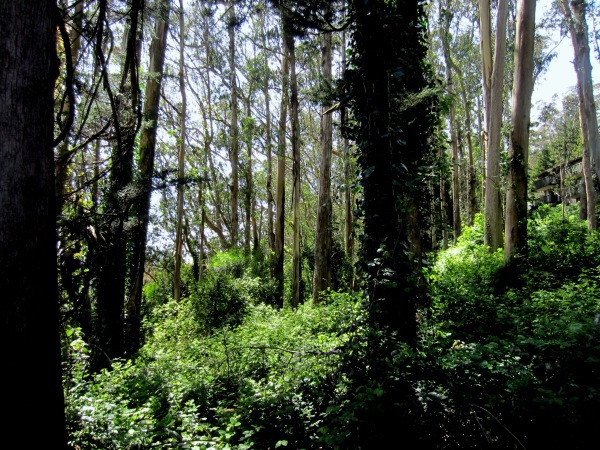
Nature is considered one of the top journals in science globally. So, we were very excited about the article they published in their September 2013 edition about Mount Sutro. (1) The article starts with every bogus claim UCSF makes to justify the destruction of the forest, i.e., that it is flammable, that it is diseased, that it will store more carbon when most of it is destroyed. We have responded to those claims many times on Million Trees, so we won’t repeat those arguments here. (We have provided links to our articles about each of these issues, so you can read them if you wish by clicking on each issue.)
Sutro forest before recent tree removals. Courtesy Save Sutro
After faithfully repeating UCSF’s storyline, Nature turns to the opposite side of this debate, starting with the welcome introduction of critics of the Sutro project as “environmentalists and ecologists” for whom “a hardline devotion to preserving native ecosystems is giving way to a more post-modern idea of what constitutes a natural landscape.” The author of the Nature article interviewed scientists who agree with this new perspective:
“’Mount Sutro is part of a larger story,’ says Richard Hobbs, an ecologist at the University of Western Australia in Crawley. ‘What some people see as a weed-filled blot on the landscape, others see as something extremely valuable, worthy of managing in its own right. People are increasingly moving away from the belief that a native ecosystem is always best….There is a lot of tension about how to deal with situations like these right now,’ he says. ‘With so much non-native habitat, the old views — that everything must be natural — no longer apply.’”
“In the early 1990s, Patricia Kennedy of Oregon State University in Corvallis helped to develop management guidelines for northern goshawks. She found that the raptors do not strictly need old-growth forests; land used for timber harvesting can work, too. She says that, at the time, accepting the idea felt like a move to the ‘dark side’. ‘The whole culture in wildlife biology and conservation circles has been that you can’t approximate Mother Nature,’ she says. But those ideas are changing today, with altered ecosystems such as Mount Sutro’s providing a case in point.”
“Joe Mascaro, an ecologist at Stanford University in California [2] who has been publicly critical of UCSF’s management plans, says that Mount Sutro has long since given way to a completely new ecosystem. ‘Restoring it to an original state would be borderline impossible, so why stop the succession that is already in place?’”
“Resistance to such a heretical idea runs deep among ecologists, but growing numbers are embracing altered ecosystems in the name of pragmatism. ‘You can reach more win–win situations if you don’t insist on purity,’ says Katharine Suding, an ecologist at the University of California, Berkeley, who specializes in restoring human-affected areas. ‘It doesn’t have to be a natural versus non-natural dichotomy.’”
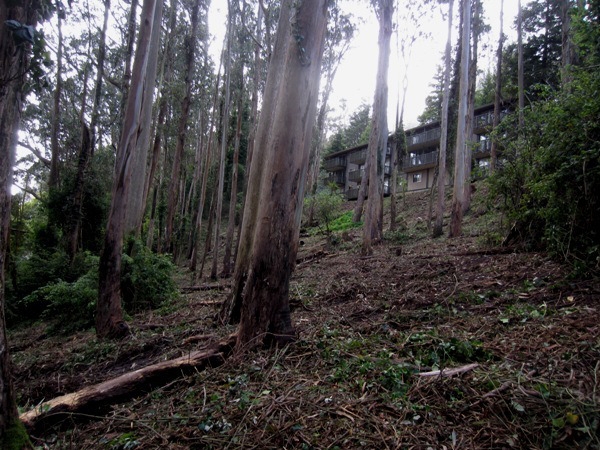
Same section of Sutro forest after tree and understory removal at the end of August 2013. Courtesy Save Sutro
The reaction of native plant advocates
As pleased as we were to hear from the international scientific community, we didn’t fully appreciate the significance of the article until we read the reaction of native plant advocates in Jake Sigg’s Nature News:
“On Sep 15, 2013, at 4:13 PM, Peter Brastow wrote (re NYT editorial on Mt Sutro):
‘Yes, and recall that the NYT article linked to an awful piece in Nature. I see this as PhD Academicians liking the sound of their own voice, and certain members of the media who, likewise, don’t actually know anything about on-the-ground land management. To boot, their arguments support continued environmental destruction around the world, whether for palm plantations, bio-fuel production, cattle grazing, suburban development, you name it. Do you think these same people advocate letting the Amazon rainforest be clearcut from end to end?’” (Jake Sigg’s Nature News, September 21, 2013)
It seems that native plant advocates disliked the Nature article as much as we liked it. This comment from a prominent native plant advocate in San Francisco is more evidence of the growing gap between restorationists and the scientists of invasion biology who spawned the native plant movement. We have noted before the inevitable tension between theoretical science and its practical application and in the case of ecological restoration in the Bay Area, it is becoming more and more distant from its scientific underpinnings.
What is San Francisco’s Biodiversity Program?
You might think that the loss of scientific support for the projects in the Bay Area which are attempting to convert non-native to native landscapes would weaken the local native plant movement. You would be mistaken. Peter Brastow, the author of this comment, is employed by the City of San Francisco as the Director of Biodiversity in the Department of the Environment. The creation of this program and the selection of Mr. Brastow as its first director suggest official endorsement of these projects and imply their expansion beyond their present footprint. This is the mission of San Francisco’s Biodiversity Program according to the Department of Environment’s website:
“The mission of the Biodiversity Program is to conserve the biodiversity, habitats and ecological integrity of San Francisco’s natural environment, toward a comprehensive watershed- and ecosystem-based natural resources management, stewardship and education program.
Our approach is to advance collaboration and coordination for biodiversity policy development and interagency conservation planning and management.
San Francisco’s indigenous biodiversity exists among diverse open lands and habitats in a complex urban geography of parklands, natural areas, urban forests, community gardens and backyards. The scope of the program includes protection of all of the City’s biological diversity and natural lands, and for strategic integration of nature conservation best practices into planning, implementation and education for the built environment.
We hope to raise the bar on integrating considerations for nature and biodiversity into the operations of every City Department as well as into every aspect of city life, including making significant increases in public and City employee awareness.”
Our interpretation of this vague, abstract description is that the goal of San Francisco’s Biodiversity Program is to extend the native plant restorations of the Recreation and Park Department’s Natural Areas Program to all city departments and all city-owned open space, perhaps even to your backyard.
We are equally alarmed by the dismissal of scientists by the Director of Biodiversity, Peter Brastow, as people who like to hear themselves talk. This suggests that the Director of Biodiversity isn’t listening to the rapidly changing science of invasion biology. You might wonder what Peter Brastow’s qualifications are to enable him to dismiss academic scientists as a resource for the application of invasion biology to native plant restorations. You can visit his resume on the internet to satisfy that curiosity.
Pot-calls-kettle-black
For the record, we are not supporters of the “environmental destruction” of which Mr. Brastow accuses the scientists who are quoted in the Nature article. We do not “advocate letting the Amazon rainforest be clearcut from end to end,” as Mr. Brastow claims. We are confident that no one else with whom we collaborate does so either. The only clearcutting we have witnessed first-hand was done in response to the demands of native plant advocates; these projects have already destroyed 18,000 non-native trees in the East Bay hills and are determined to clearcut about 80,000 more. This looks like a classic case of “pot-calls-kettle-black.”
The New York Times published an op-ed by a member of their Editorial Board on Sunday, September 8, 2013, entitled, “Hey, You Calling Me an Invasive Species?” It is a spirited defense of non-native plants. Surely this is an indication that our challenge of the native plant movement is now mainstream. We will touch on a few of the op-ed’s main themes, but we urge you to read the op-ed here.
Mount Sutro Forest is threatened with destruction because it is not native. Courtesy Save Sutro Forest.
Using the eucalyptus forest on Mount Sutro as an example. the Editorial Board member, Verlyn Klinkenborg, makes the point that many of our non-native plants have been here for hundreds of years. Since they have been here for several generations of humans, most of us no longer consider them foreigners:
“But the trees on Mount Sutro have been there within the memory of every living San Franciscan, and to the generations who have grown up within view of them, it seems almost perverse to insist that they are alien.”
The distinction between native and non-native depends upon an arbitrarily selected “snapshot” of our landscape taken just prior to the arrival of Europeans. On the East Coast, that’s the early 16th Century. In the San Francisco Bay Area, that’s 1769, when Portola’s men saw the San Francisco Bay. The Times op-ed reminds us that this particular snapshot is becoming more and more irrelevant because of climate change. If plants and animals don’t move in response to that change they will not survive:
“As plants and their pests adjust their range under the influence of global warming, what becomes of the distinction between native and nonnative? To any individual species, it doesn’t matter whether it’s native or not. The only thing that matters is whether its habitat is suitable.”
Finally, Mr. Klinkenborg takes us on a verbal tour of Central Park to make the point that our open spaces are a mélange of native and non-native plants and animals. We can see with our eyes that they are living in harmony and to pluck only those considered non-native from their midst would be needlessly destructive and disruptive of the peace that reigns there:
“Nature in Central Park can’t be divided into native or nonnative species, and neither can it be on Mount Sutro. The eucalyptus trees that grow there may be naturalized rather than native, but try telling that to all the other creatures that live in those woods or the people who hike there.”
Mr. Klinkenborg’s final sentence reminds us that we are the original “invaders:”
“And when it comes to the distinction between native and nonnative, we always leave one species out: call us what you will—native, naturalized, alien or invasive.”
The absurdity of nativism is becoming more and more evident. Our objections to its destructive consequences will eventually be heard. It’s just a matter of time.
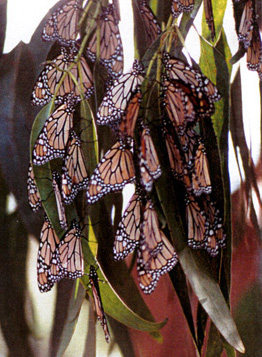
Monarch butterflies over-winter in California’s eucalyptus groves
The East Bay Express has published an op-ed in defense of the much maligned eucalyptus. “The Eucalyptus is Part of California” is by Gregory Davis, a Berkeley resident. We summarize the main points for our readers:
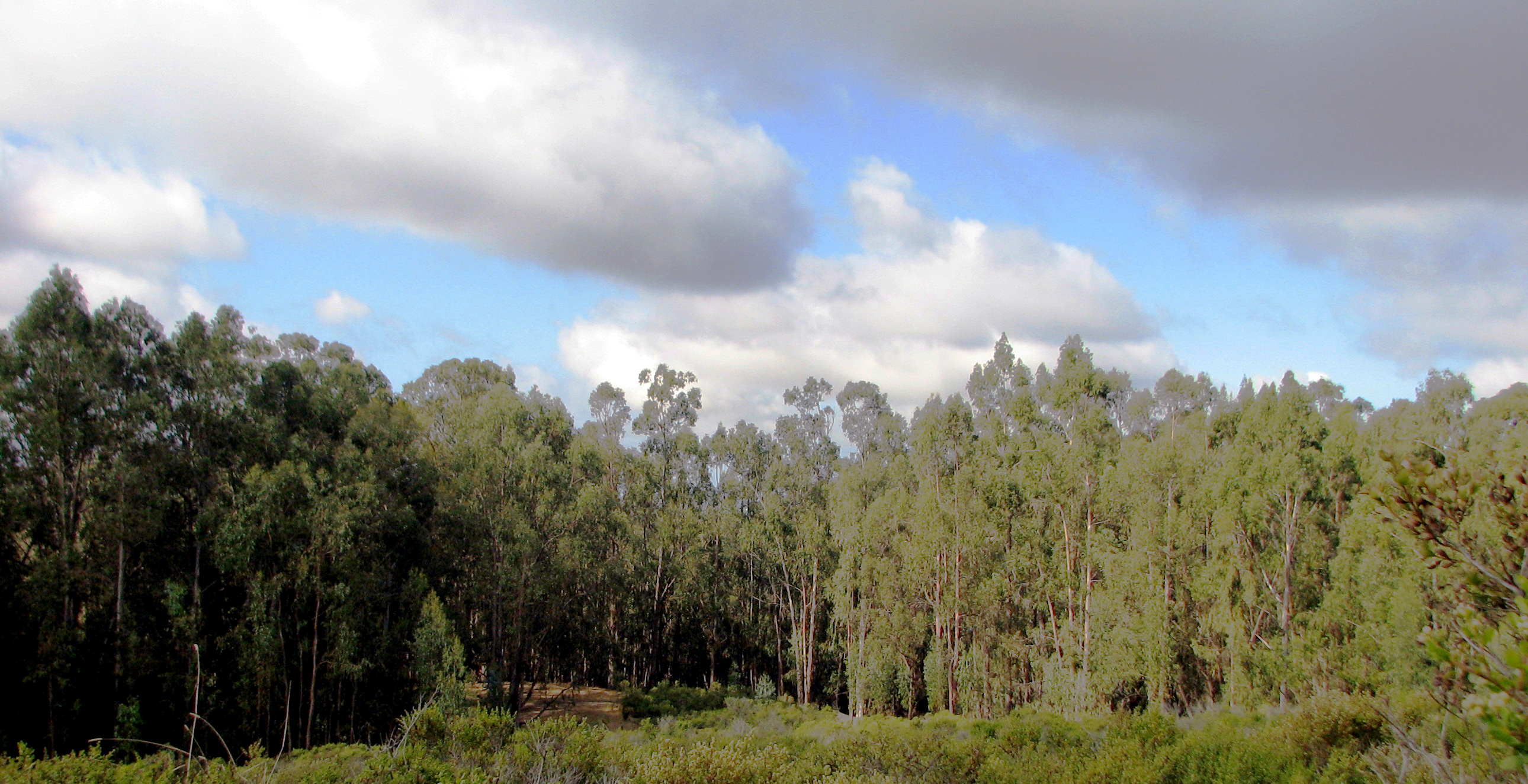
University of California, Berkeley’s plan to destroy all non-native trees—primarily eucalyptus, Monterey pine, and acacia—is characterized as a “meat-axe approach.”
Applying herbicides repeatedly to prevent regrowth of non-natives is “tantamount to opening a can of worms.” We don’t know the consequences of dousing our public land with toxic chemicals, just as we didn’t know that using Agent Orange during the War in Vietnam would permanently damage that country and its citizens.
The moderate approach advocated by the Hills Conservation Network is more reasonable. Thinning and selective removal will do less damage.
Flammability of eucalyptus groves has been greatly exaggerated.
Eucalyptus has lived in California longer than most of us have been alive. They are more native than we are.
The loss of the “beauty and majesty” of eucalyptus in the hills will make hiking in the East Bay hills a less pleasant experience. “Anyone who has hiked up the trail under the green canopy of these tall, stately, plumed-top, evergreen trees knows how precious they are.”
Thank you, Mr. Davis, for writing this article and to the East Bay Express for publishing it. Critics of the native plant movement are learning that they must speak up if we are to save our trees. The projects that destroy our trees finally became so big and so visible, that more people are aware of them and are more willing to defend our trees.
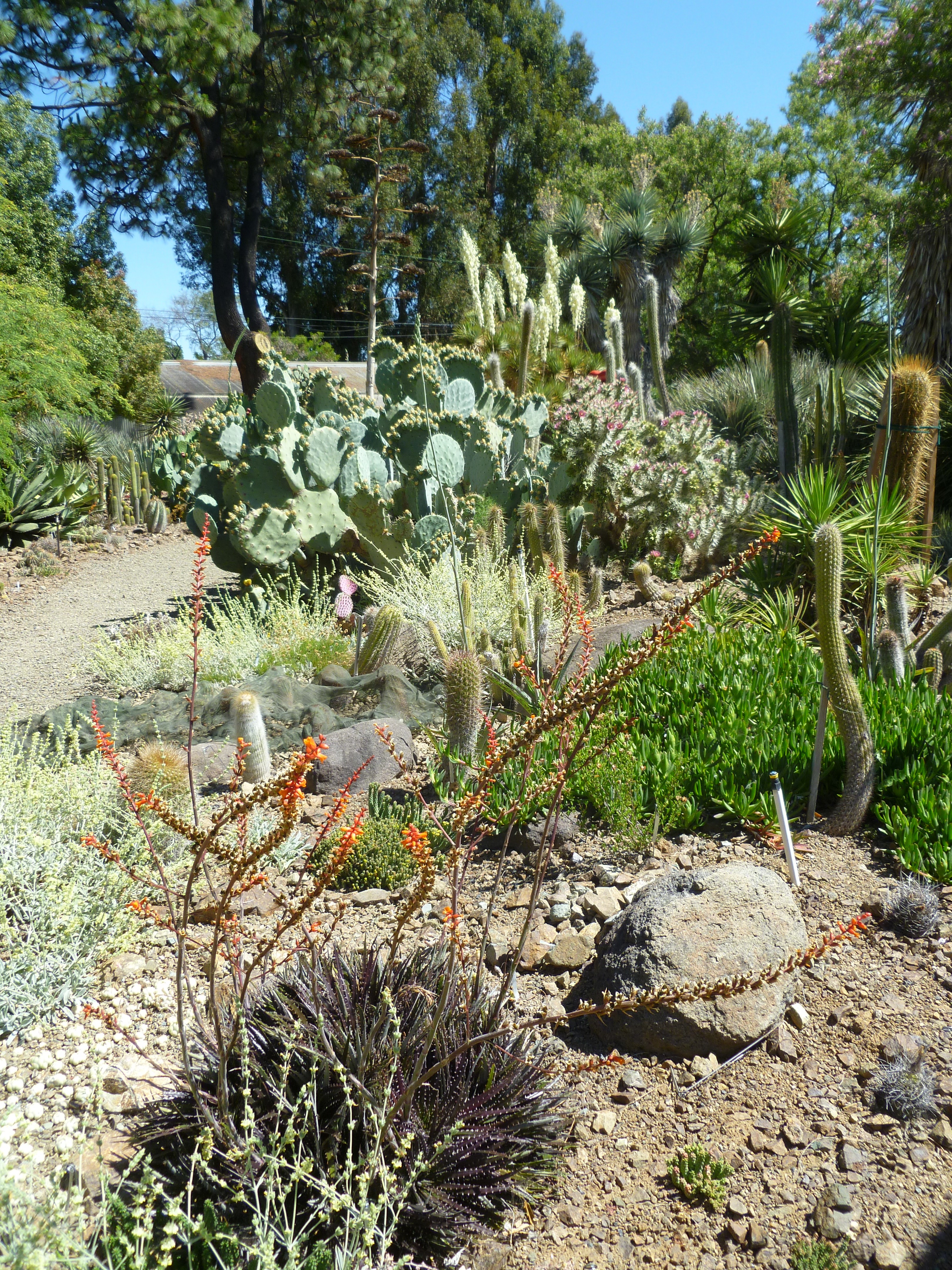
Ruth Bancroft Garden is a mix of native and non-native plants
The following exchange of emails was recently posted to the faculty email list at City College of San Francisco. The first email was sent by a student at City College to the President of the Board of Trustees of the College and the Chancellor. (Written communications to public employees are in the public record.) The second email was sent by the Chairman of the Environmental Horticulture and Floristry program at City College.
Hello President Rizzo, Chancellor Scott-Skillman and Sustainability Committee members,
Today I spoke with Environmental Horticulture instructor Gus Broucaret while his class was removing plants outside the Environmental Horticulture building. He indicated his plan was to replant similar non-native plants. I pointed out that the CCSF Sustainability Plan calls for planting native plants and urged him to reconsider his plant choices. If no one has done so, I suggest you request that all Environmental Horticulture faculty and staff be asked to follow principles of the Sustainability Plan. That includes planting [local] native plants, removing and avoiding invasive plants, conserving resources like water, and the like.
At the same time, I heard that a native plant installation had been designed for the front of EHD. The plan was drafted and did go through certain review processes, only to have been shelved. I suggest you ask the EHD chair to present the written plan for a native plant installation in front of EHD, so that interested stakeholders may see it and discuss it further. It is entirely possible to create a local native plant landscape that yields cut flowers, berries and greens for flower arrangement classes.
The online CCSF employee directory does not show an email address for Mr. Broucaret, so I intend to call him to inform him of my mention of his name in this email.
Denise Louie has no business interrupting instructors during class times, period. She has done so several times now.
This student doesn’t know anything about what she is talking about. And she does not represent the sustainability committee.
My instructors have all been advised to call the campus police if she interrupts them.
She has been removed from our department in the past and has had instructions not to be here.
I have filled out paper work many times to try to end this harassment.
I had no idea this incident had occurred until now.
I am extremely upset about this and will be looking into hiring an attorney to sue the school for not taking steps to prevent this behavior. This harassment has gone on for three years now!
We have cooperated with the sustainability plan which is a guide. Title five is law, the Ed code is law.
This has to stop”
The Chairman of the Environmental Horticulture & Retail Floristry program is featured in a video about the program on the CCSF website. In that video, he explains that “Horticulture is the decorative use of plants…We teach our students how to use plants in an urban landscape and how to maintain that landscape.” This suggests that students in that program can expect to learn about both native plants and the thousands of species of non-native plants that are planted in our gardens. A horticulture program that uses exclusively native plants would not provide its students with the education they need to be gardeners.
In the 15 years in which we have been engaged in the effort to prevent the destruction of our non-native urban forest we have witnessed and been subjected to harassment from native plant zealots. We have been threatened and accused of wrongdoing of which we are innocent. Therefore, we sympathize with the Chairman of the CCSF horticulture program.
At the same time, we acknowledge that there is a wide range of both opinion and behavior amongst native plant advocates, just as there is a wide range within the community of their critics. We do not wish to paint native plant advocates with a broad brush. We only wish to remind them that such attempts at intimidation do not reflect well on their community.
Above and below the middle ground are trees that will be destroyed by the FEMA project. The middle ground is a preview of the landscape these projects hope to achieve. Photo taken from Grizzly Peak Blvd, south of Claremont Blvd, looking north to Frowning Ridge.
We received many more comments than usual during the public comment period for the FEMA projects in the East Bay Hills. We posted many of the comments we received from supporters of the project. We did not post comments from those who called us names and/or threatened us. When we refused to post those comments, the threats and name-calling escalated, making it even less likely that we would post their inflammatory comments.
Another theme in the dialogue with native plant advocates, which was repeated by some media coverage of this episode, is their deep state of denial of the strength of the opposition to the destructive projects they demand. They repeatedly portray critics of these projects as a “tiny band” and similar minimizing descriptions.
They are very mistaken. The primary supporter of the FEMA projects, The Claremont Canyon Conservancy, claims in its public comment (available on CCC’s website) to represent 500 families. Yet, the Conservancy’s on-line petition supporting the FEMA projects has less than 500 signatures. In contrast, the petition which criticizes the FEMA projects has over 5,700 signatures. The opposition to these projects has overwhelmed the support, which will surely be reflected in the public comments. As these projects get bigger, greater numbers of trees are in jeopardy, and the devastating consequences are more apparent, the opposition will also get bigger and noisier. We will eventually be heard.
The public comment period for the FEMA project in the East Bay that proposes to destroy nearly half a million trees will close on Monday, June 17, 2013, at midnight. If you want to express your opinion of these projects, it’s time to do so. Detailed information about the projects and how to comment on them is available HERE.
The projects have drawn quite a bit of media coverage, starting with Beyond the Chronblog in mid-May and quickly picked up by many other internet sources of information. Most of those internet sources referred their readers to the Million Trees blog for more information. In May we had over 12,000 visitors to our articles about these projects.
Both the Oakland Tribune and the San Francisco Chronicle covered the story. The Tribune coverage was appallingly inaccurate and biased. The Chronicle coverage was more balanced than it usually is about native plant restoration projects, which the Chronicle usually supports without reservation.
The winner of the booby prize for balanced and fair reporting of the projects goes to the Sierra Club Yodelerwhich expressed its unqualified support for the projects at the same time it demonstrated total ignorance of the projects (or chose to misrepresent them):
Sierra Club said, “We want to avoid past mistakes, when agencies simply stripped off vegetation and then walked away, leaving the land clear for exotic and even more-flammable vegetation.” This is precisely what these projects plan to do…destroy everything then walk away without planting anything.
Sierra Club said, “The Park District is now implementing that program, and we are monitoring the progress.” If they are monitoring that program, why don’t they know what the Park District is doing?
Sierra Club said, “The preferred alternative involves application of the herbicide glyphosate (trade name Roundup) to the stumps to prevent re-sprouting. There is no practical way to eliminate eucalyptus infestations without herbicide, and glyphosate is relatively low in toxicity.” The Sierra Club is simply wrong. These projects will use Garlon (with active ingredient triclopyr) and/or Stalker (with active ingredient imazapyr)—not glyphosate (Roundup)–to prevent the trees from resprouting. Both products are rated by the EPA as more toxic, more persistent, and more mobile in the soil than glyphosate. Glyphosate (Roundup) will be foliar sprayed on non-native vegetation. Recent studies report that glyphosate (Roundup) is not a benign pesticide.
There are some scathing comments on the Yodeler article from people who know enough about the project plans to inform the Club that they have run off the rails…into the weeds!! The Club seems not to have noticed this attempt to set them straight. When someone called them weeks later to ask about the projects, they repeated the same misinformation to the caller.
(Update: One of our readers informed the Sierra Club of the inaccuracy of its Yodeler report about the FEMA projects in the East Bay (see comment below). We are pleased to report that the Sierra Club has revised its Yodeler report on June 19, 2013. It now acknowledges that native plants will not be planted by these projects. Consistent with the Draft Environmental Impact Statement for these projects, the Yodeler now claims that native plants will be “recruited” into the areas in which non-native plants and trees will be destroyed.
We think that is an unlikely outcome of these projects and FEMA’s environmental consultant agrees with us about that (explained here). However, at least the Yodeler article is now consistent with the written plans for the project.
The Yodeler also acknowledges the use of Garlon to kill the roots of the trees that will be destroyed.
Thanks to our readers for alerting the Sierra Club to the inaccuracy of their description of this project. We are sorry that the Sierra Club continues to support the project now that they have a better understanding of the written plans. 6/19/13)
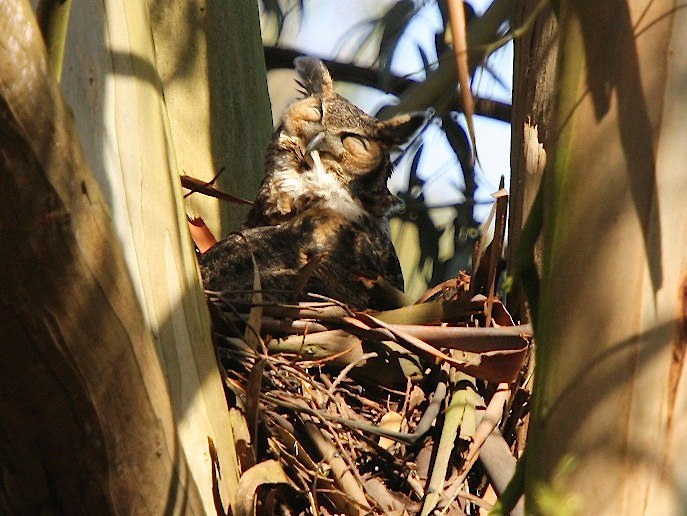
Owl nesting in eucalyptus, courtesy urbanwildness.com
On the positive side of the ledger, we commend the East Bay Expressfor its article about these projects. The author deserves credit for actually reading about the projects before she wrote her report!!! She read the letter from FEMA’s environmental consultant which we reported to our readers here. In a nutshell, the consultant said that UC Berkeley’s project could increase fire hazards by leaving a 2-foot wood chip mulch on the ground and that conversion to a native landscape was an improbable outcome of the project since nothing will be planted.
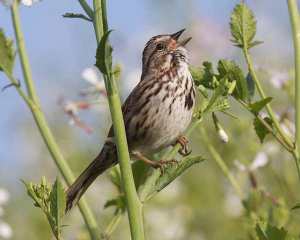
Song Sparrow in non-native wild radish
Our personal favorite for coverage of this project is Nathan J. Winograd’s article, “Biological Xenophobia: The Environmental Movement’s War on Nature,” which was published by the Huffington Post. Mr. Winograd is highly qualified to express his opinion of these projects. He has devoted his personal and professional life to the welfare of animals. He is best known for his advocacy for “no-kill” shelters for our animals. He was the lawyer for the SPCA in San Francisco when the GGNRA started to destroy non-native trees and fence the public out of their properties to protect their fragile native plant museums. So, he has been a long-time observer of the destructive and restrictive consequences of native plant projects. He was prompted to write this article by this latest round of destruction, that is, the FEMA projects in the East Bay.
Here are a few choice phrases from Mr. Winograd’s excellent article:
“Invasion biologists believe that certain plants and animals should be valued more than others if they were at a particular location ‘first.” When the species that were there ‘first’ are in the same habitat with a species that came later, they assert that the latter should be eradicated.”
“And the nativist movement is getting worse and increasingly violent, both in rhetoric (fish they don’t value are called ‘missiles with fins’) and in deeds. At a time of climate change, in a country that needs more trees, not less, nativists in the San Francisco Bay Area are proposing the clear cutting of upwards of half a million trees on San Francisco’s Mount Sutro and in the Oakland and Berkeley hills as part of their ongoing war against the Eucalyptus. After the trees are clear-cut thousands of gallons of toxic herbicides, will be spread throughout wildlife corridors in order to prevent resprouting.”
“An authentic environmentalism would not advocate that humans seek out and destroy living things for simply obeying the dictates of the natural world, such as migration and natural selection. It would not condone the killing of those plants and animals who find themselves in parts of the world where, for whatever arbitrary reason — be they economic, commercial or aesthetic — some humans do not want them to be. An authentic environmentalism would not exacerbate suffering, call for killing and seek the destruction of natural places.”
“Indeed, “invasion biology” is a faux environmentalism, used to disguise the ugly truth about what is really motivating its adherents: an intolerance of the foreign that we have rejected in our treatment of one another, a biological xenophobia that seeks to scapegoat plants and animals for the environmental destruction caused by one species and one species alone: humans.”
There are nearly 500 comments on Mr. Winograd’s article and they are as interesting as the article itself. They are a microcosm of this debate between nativists and those with a more cosmopolitan view of nature. We aren’t disinterested observers, so our opinion of the comments of nativists may not be entirely objective. However, we find many of their comments condescending and uninformed, a contradictory mix of sentiments.
We thank our readers for informing themselves about the FEMA projects and we hope that you now have the information you need to write your public comment by the deadline, June 17, 2013. Here is where you can send your comment:
These public lands belong to you and the money that will be used to implement these projects is your tax dollars. So, please tell the people who work for you what you think of these projects.
Girdling a tree by cutting through the outer layer of bark into the woody trunk eventually kills the tree by interrupting the channel through which the tree receives moisture and nutrients from its roots. The bigger the tree, the longer it takes to die, but the death of a girdled tree is inevitable.
Girdled trees, Bayview Hill, San Francisco
Between about 1998 and 2003, approximately 1,200 non-native trees in San Francisco were girdled by native plant advocates, including a few who were employees of the Recreation and Park Department’s so-called Natural Areas Program. This vandalism was finally stopped after one of the native plant advocates was caught and prosecuted and the Recreation and Park Department was embarrassed by the media coverage.
In addition to killing trees by girdling them, an entomologist has published a study which reports that Australian pests of eucalypts were intentionally and illegally introduced to California for the purpose of killing non-native eucalypts. These stories are told here.
More recently, we have learned that native plant advocates are also spraying non-native vegetation in public parks in San Francisco with herbicides, in violation of San Francisco’s policy regarding pesticide use. The people who are spraying these herbicides are not authorized to do so. They are not posting notices of the application of herbicides as required by law. They are also using herbicides that are not approved for use in San Francisco’s public properties. That story is told here.
Guerilla Gardening in the East Bay
These guerilla tactics have recently spread to the East Bay. Shortly before Christmas in December 2010, the neighbors of Garber Park (Evergreen Lane) in the Oakland hills were shocked when an enormous crane pulled up to their park and began to take down several huge eucalyptus trees. The neighbors had been told nothing about their destruction and they had no idea why they were being destroyed. A little frantic investigation revealed that one of their neighbors had requested that the trees be removed and, because she was willing to pay for their removal, the City of Oakland obliged her without any further consultation with her neighbors. Needless to say, many neighbors were not pleased with this undemocratic method of altering their neighborhood landscape. That story was reported in the Hills Conservation Network newsletter which is available here.
Eucalypts destroyed in Garber Park, December 2010. Photo by Michael Wallman
The removal of those trees was the first step in an ambitious project to eradicate non-native plants and trees in Garber Park and replace them with native plants. That project is described on the website of the “Garber Park Stewards.”
Garber Park native plant “restoration”
On a recent visit to this wild 13-acre park, we saw little evidence of this effort. A rough, barely passable trail meanders through the park. Most of the trees are native oaks, bays, big leaf maples, and buckeyes. The tangled understory is a mix of natives (cow parsnip, horsetail, poison oak, etc) and non-natives (annual grasses, forget-me-knots, etc). The only evidence of the work of the stewards was typical of these projects: a small patch of bare ground with colored flags.
Girdled tree, Garber Park
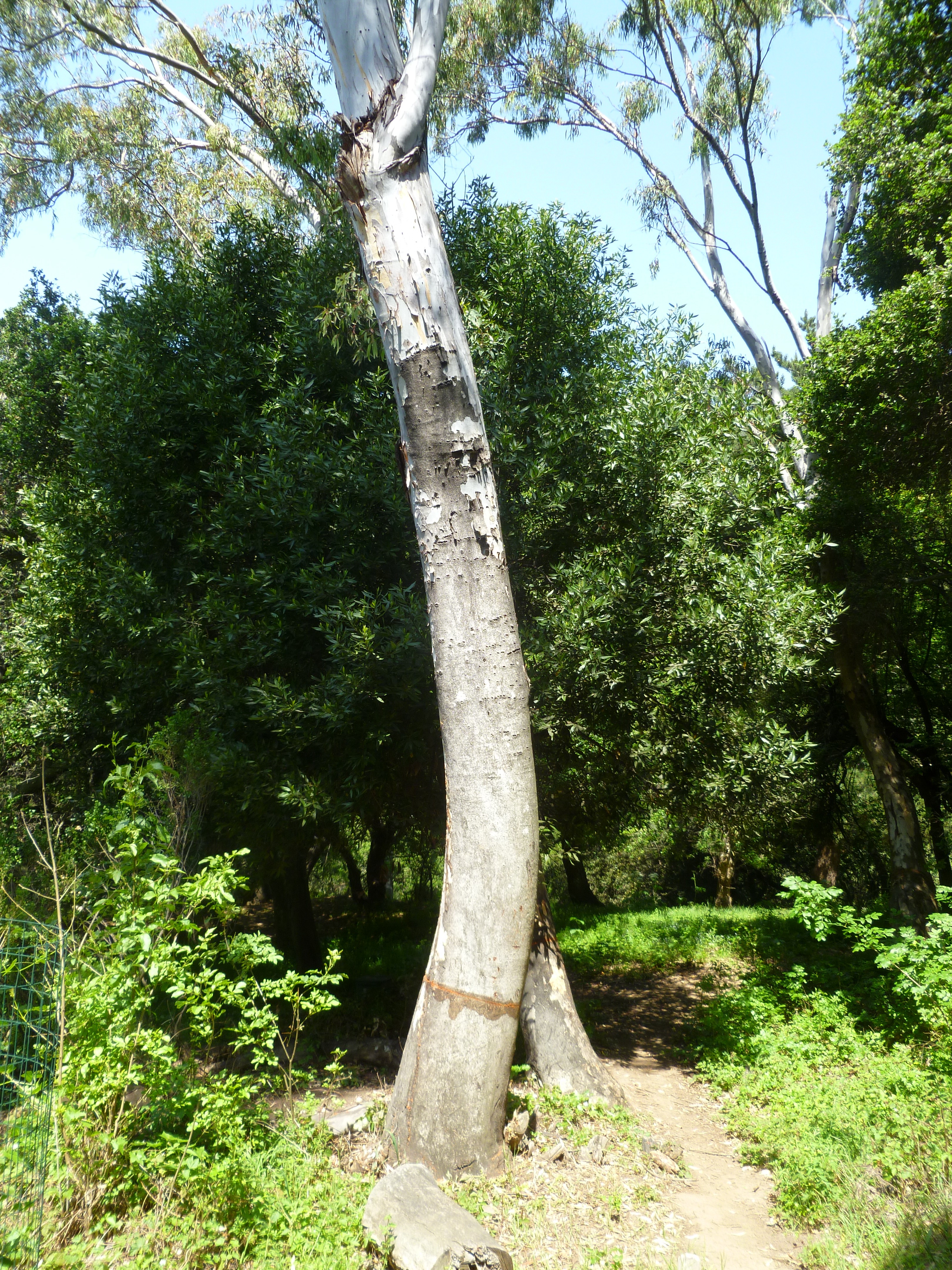
Now more eucalypts are being destroyed in Garber Park by girdling them. A chain saw was apparently used to cut into the cambium of the tree, which is the channel that carries nutrients from the roots of the trees to its canopy. Something was painted or sprayed into the cuts which we speculate is an herbicide that will accelerate the death of the trees.
We speculate that the girdling of these trees was not authorized by the City of Oakland. The neighbors of the park say they were not informed that the trees were going to be destroyed. Therefore, we assume that this is a case of vandalism which we hope will be reported to the police as such.
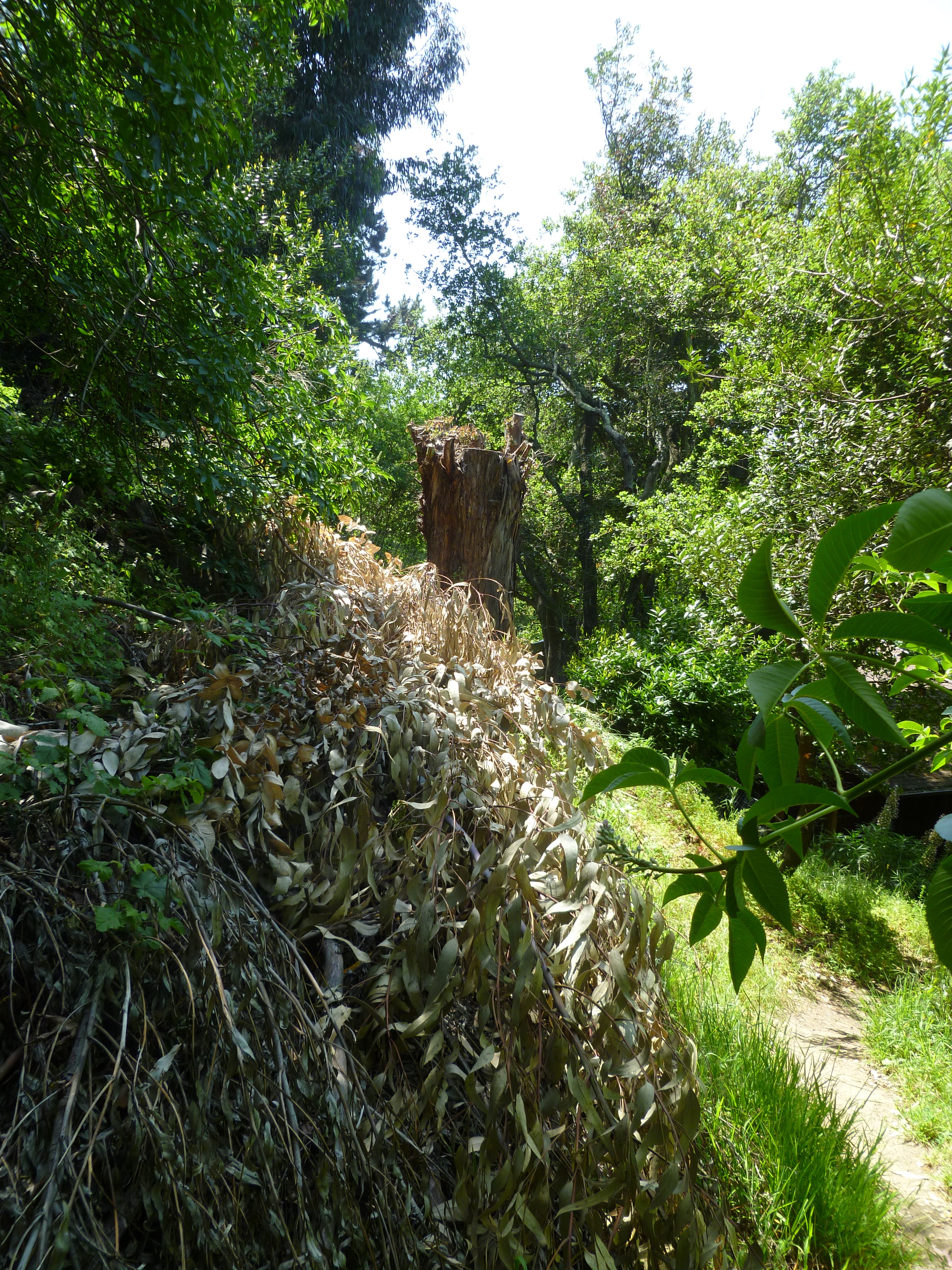
Eucalyptus stump and dead litter, Garber Park. If you were concerned about fire hazard, would you leave dead litter in the park for over 2 years?
We have no idea who girdled the trees in Garber Park. We therefore make no accusations. However, based on our experience in San Francisco, we speculate that whoever killed these trees believes their destruction will enhance the native plant restoration project. There are few eucalypts in this park. We saw only one that was not either girdled or a stump. We wonder what harm these few trees could do in this wild place. They are clearly not spreading
We repeat the Million Trees mantra
We say at every opportunity that we like native plants and trees and we encourage native plant advocates to plant them. We ask only that they stop destroying the plants and trees that have lived peacefully in the San Francisco Bay Area for over 100 years and are performing valuable ecological functions. We remind native plant advocates that we live in a democracy and that our public lands belong to all of us. If the landscape is to be permanently altered, a democratic process should be used to reach that conclusion.
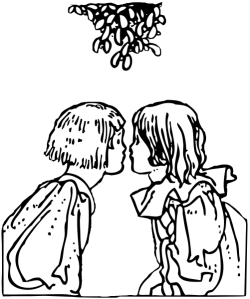
Mistletoe has a mixed reputation. On the one hand, we associate it with the Christmas folk tradition of obliging those who stand beneath it to be kissed. But foresters have always considered it a parasite that sucks the life from the trees in which it lives. Today we have the pleasure of reporting the result of a study in Australia which exonerates mistletoe of this crime.* It’s our Christmas gift to our readers.
David Watson, an ecologist at Sturt University in New South Wales, Australia, had long suspected that his favorite plant, mistletoe didn’t deserve its reputation as a harmful plant. In 2004 he set out to prove his hunch. He removed all the mistletoe from 17 woodlands and compared them with 11 woodlands in which the mistletoe remained and 12 woodlands in which there was no naturally occurring mistletoe.
Removing the mistletoe was a huge task which took two years. A dozen people, using cherry-pickers and clippers removed 40 tons of mistletoe. They waited three years to study the differences in the three types of forest.
They found that there were more birds, mammals, and reptiles in the forests where the mistletoe remained. But the most significant difference in the three types of forest was that the number of insects on the forest floor where the mistletoe remained was much greater.
Mistletoe in silver birch. Creative Commons
There are more insects on the forest floor where mistletoe resides because the leaves of the mistletoe contain more nutrients than the leaves of the tree that it occupies. The tree uses the water and nutrients in its leaves before the leaves fall, whereas the fallen leaves of the mistletoe are both more abundant and contain more nutrients. The leaves of the mistletoe also fall throughout the year when many of the trees are dormant. Hence, there’s more food on the forest floor occupied by mistletoe for the insects that live there.
Mistletoe is found everywhere in the world except Antarctica. There are 1,400 species of mistletoe in 5 families. Fossil pollen grains indicate that mistletoe has existed in North America for millions of years. Although a controlled experiment has not been done in North America, some scientists have noticed the benefits of mistletoe to forest life. David Shaw, at Oregon State University, has noticed that the endangered northern spotted owl nests in mistletoe.
Science tests our assumptions
This study of mistletoe is a nifty little example of the power of science to test our assumptions. Our assumptions are often mistaken. We should keep an open mind about any assumption that has not been tested empirically.
Native plant advocates assume that native plants are inherently superior to non-natives and conversely, that non-native plants are not beneficial to wildlife. Their assumptions are not supported by scientific studies. In fact, when their assumptions are tested empirically, they are often proven to be wrong.The native plant movement is an ideology that is not based on science. It is a horticultural preference which should compete in the marketplace of ideas with all other horticultural preferences.
************************
*Alanna Mitchell, “Beyond the kiss, Mistletoe Helps Feed Forests, Study Suggests,” New York Times, December 17, 2012. Available here.
Conservation biology is being revised so rapidly that we are struggling to keep up with it. In our previous post, we introduced our readers to Professor Scott Carroll’s proposal that a more realistic approach to conservation would accommodate non-native species because they are often better adapted to present conditions than their native predecessors. He calls his approach Conciliation Biology.
Today, we are introducing our readers to another proposal to redefine wilderness to a new standard which acknowledges that the environment has been radically altered by man. The author of this proposal is Nigel Dudley, a practicing British conservationist. He calls his new standard “authenticity,” which he defines as follows:
“An authentic ecosystem is a resilient ecosystem with the level of biodiversity and range of ecological interactions that can be predicted as a result of the combination of historic, geographic and climatic conditions in a particular location.”*
Let’s focus for a moment on this portion of that definition: “…historic, geographic and climatic conditions in a particular location.” Mr. Dudley explains this particular parameter of his definition of authenticity: “…some ecosystems have unusually high levels of diversity…through being isolated or undisturbed for exceptionally long periods. Other ecosystems have already been hugely changed and in some cases impoverished…it will not always be possible either to recover lost elements or to remove additions. What an ecosystem is likely to contain in the future needs to be based on current realities…”
Clearly places like the Berkeley Meadow are not candidates for “authenticity.” This particular native plant museum was the former garbage dump for the city of Berkeley, built on landfill. This seems an extreme example of denial of current realities.
The Berkeley Meadow, a 72-acre fenced pen for native plants on the former city garbage dump
Choosing candidates for authenticity
Dudley’s point in proposing this new standard is to focus conservation efforts where they are most likely to be fruitful. Our interest in this new standard is in the stark contrast it provides to the local projects which fail by every measure introduced by Mr. Dudley in his book about authenticity.
Natural species composition: Virtually all predators and grazing animals are gone from the urbanized San Francisco Bay Area. San Francisco’s Natural Areas Program claims to have designated only “remnants of native vegetation” as natural areas. In fact, vegetation cover in the 1,105 acres of natural areas is on average only 46% native. Some of the 31 natural areas are populated by as little as 11% native vegetation.
Migrant composition: Some bird migrations are intact, but others have been changed by existing vegetation such as the tall, non-native trees of which there were few in the native landscape. Migrations of ungulates are long gone.
Invasive species: Non-native plants and trees outnumber native species throughout the Bay Area.
Chemical composition: Air, water, and soil composition are vastly different than they were 200 years ago.
Functioning food web: The food web has been radically altered by the loss of top predators and ungulates and cannot be recreated in a densely populated urban environment. Bears may be welcome in the zoo, but are not wandering our streets looking for their next meal.
Functioning ecological processes: Funneling most creeks into underground culverts is an example of a lost ecological process in the urban environment.
Regeneration process: Fire is a regeneration process that is lost in the urban environment. Prescribed burns are allowed by some managers of public land in the Bay Area, but San Francisco’s Natural Areas Program has reluctantly agreed not to conduct prescribed burns.
Resilience: Although the original goal of San Francisco’s Natural Areas Program was that once “restored” the natural areas would be self-sustaining, fifteen years later, NAP concedes that on-going maintenance will be required to sustain the natural areas. Dudley says, “Ideally, authentic ecosystems should also be self-sustaining: they should not need constant and often expensive manipulation to maintain their values.” Clearly, the “natural areas” in San Francisco’s parks do not meet this criterion for authenticity.
Area: Most of the restoration projects in the Bay Area are too small to be sustainable. The average size of San Francisco’s 31 natural areas is only 35 acres. The smallest is only one-third of an acre. Size is a proxy for the ability to isolate a restored site from repeated re-invasion. The natural areas are small and are surrounded by non-native vegetation which will quickly return.
Connectivity: Virtually every restoration project in urbanized Bay Area is physically isolated.
It may be possible to compensate for these bad odds of a sustainable, authentic restoration project in the urbanized San Francisco Bay Area. If so, it will be extremely costly, which is undoubtedly why most projects have not been successful. The National Park Service has had some success with its projects because they seem to have greater resources than other managers of public land. But is this the top priority of taxpayers? As the presidential election season heats up and the debate rages about raising taxes and cutting federal spending, one wonders why these projects are not in the budget-cutting cross-hairs.
Looking on the bright side
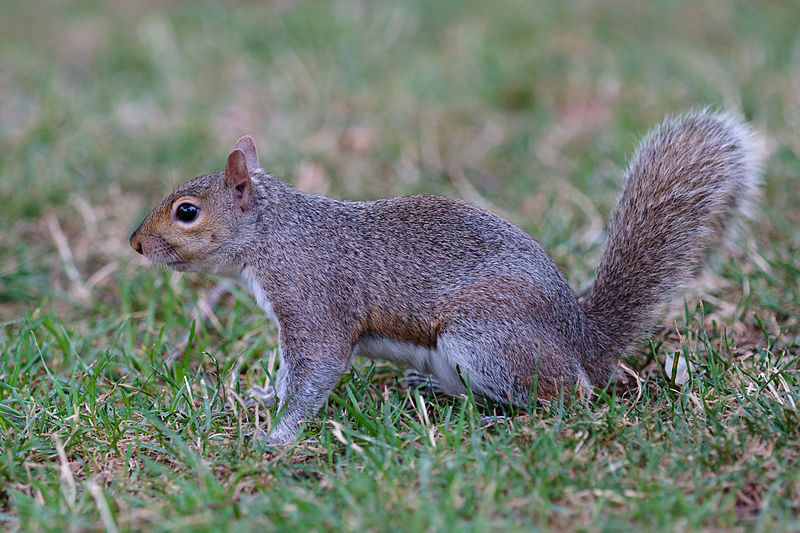
Grey squirrel. Creative Commons
We make every effort to end each story with a positive outlook. In this case, we turn to Mr. Dudley to remind our readers that the environment is not necessarily destroyed by the mere existence of non-native species. Being British, he uses British examples to make his point. The North American grey squirrel is considered an invasive species in Britain and the native red squirrel is now rare. While the British are not happy about the loss of their native squirrel, Mr. Dudley reminds them that the non-native grey squirrel is performing the same ecological functions as its native predecessor. There is apparently no evidence that the environment has been harmed by this substitution.
We don’t like change. But is change actually doing any harm? If not, let’s accept it, because fighting against it is costly and probably futile. That is the definition of wisdom: that we accept what we cannot change.
************************
*Nigel Dudley, Authenticity in Nature. Earthscan, 2011

 For example, “Invasive Species of Concern” in Maryland includes mostly plants we’d all agree are thugs and not even considered garden plants, but daylily? As a sun-lover, it won’t spread into the woods and even out in the sun, how hard is it to dig up?